- Physics Lab Equipment
- Chemistry Lab Equipment
- Biology Lab Equipment
- Anatomical Lab Equipment
- Learning
- Educational Lab Equipment
- Magnets
- Agriculture
- Astronomy
- Earth Science
- Geography Lab Equipment
- Safety Lab Coat
- Laboratory
- Meteorological
- Electricity & Magnetism
- Heat
- School Lab Equipment
- Lab Glassware
- Science Lab Equipment
- Tvet Lab Equipment
- Robotics Kits Supplier and Manufacturer for Schools India
- Math Lab Equipment Manufacturers and Exporters in Ambala
- STEM Kits Manufacturers and Supplier India
- Engineering Lab Equipment
- Hospital Lab Equipment
- Water, Sanitation & Hygiene Supplies
- Cold Chain, Solar & Communication Equipment
- Nutrition
Last updated: 22 October 2026
Quick Answer
Jain Scientific Equipments Pvt Ltd (ScienceLab), Ambala, Haryana, a laboratory glassware supplier in India, lists 65 burettes, flasks, bottles, beakers and funnels, with the brushes, clamps, tongs and stands used with them, for college, university, research, testing and school laboratories, in 5 sub-ranges from Class-A and Class-B burettes and conical, distillation and culture flasks to BOD and reagent bottles, beakers and separatory funnels. 57 of the items are manufactured by ScienceLab at its factory at Saha, Ambala, and 8 are supplied by ScienceLab. Each sub-range has its own page, linked in the tables below and in the sub-range list under this description, and every item has its own product page. The company supplies buyers in India and in 110 countries.
Quick links: Request a quotation · Jump to the sub-ranges · Open your enquiry cart
Explore the Laboratory Glassware Range
| Range | Items | What it covers |
|---|---|---|
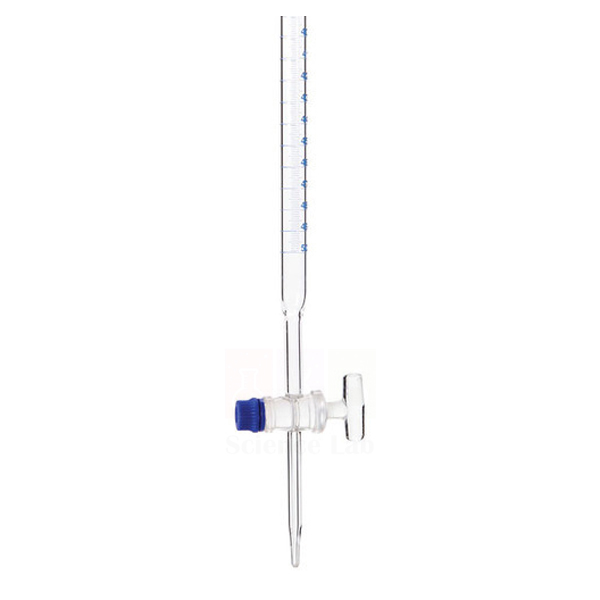
| Glassware Burettes | 11 | Class-A and Class-B burettes from 5 ml to 100 ml with glass-key, PTFE-key, detachable or PTFE needle valve stopcocks, Schellbach-stripe versions, Class-A micro burettes, a burette brush and a die-cast burette clamp. |
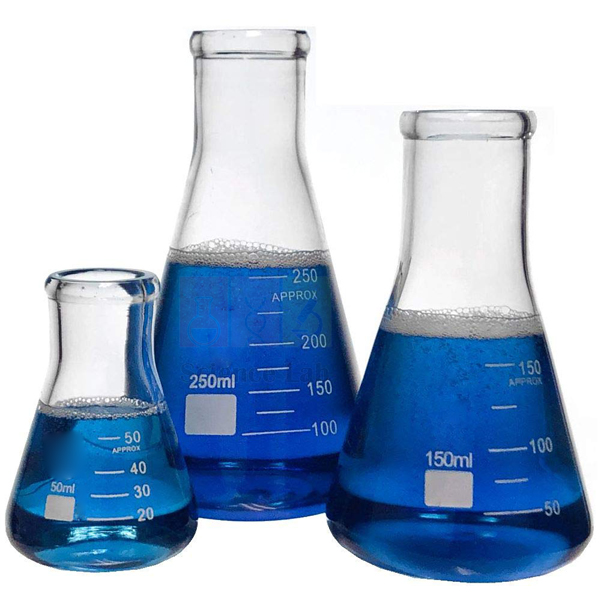
| Glassware Flasks | 17 | Borosilicate conical, wide-neck, screw-cap and filter flasks, round-bottom, flat-bottom, pear-shaped and two-neck flasks, distillation, evaporating, iodine and baffled culture flasks, a Pyrex conical flask and cork-lined flask tongs. |
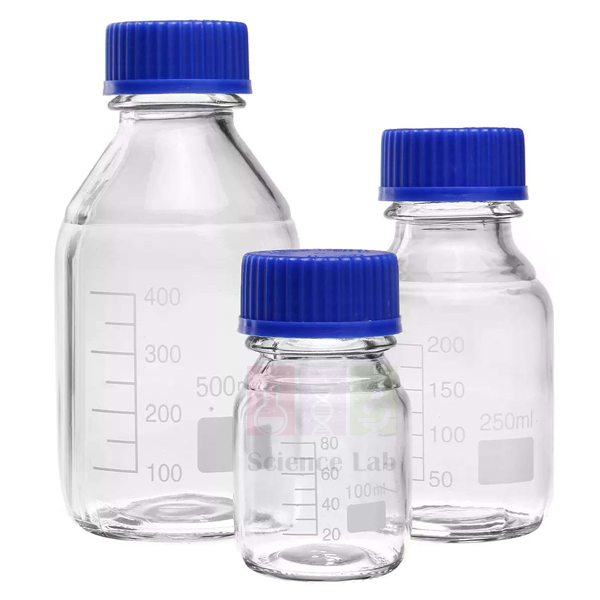
| Glassware Bottles | 16 | BOD and gas washing bottles, clear and amber reagent, dropping and pipette dropper bottles, McCartney bottles, polypropylene aspirator bottles, an LDPE wash bottle, glass delivery tubes and cleaning brushes. |
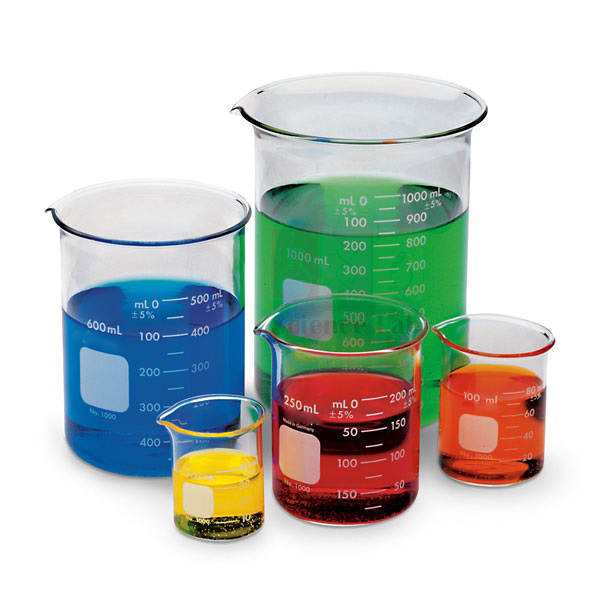
| Glassware Beaker | 12 | Borosilicate glass beakers in standard and tall forms and a set of five, Pyrex low-form beakers and a Pyrex set, polypropylene beakers and pitchers, crucible and beaker tongs and a beaker brush. |
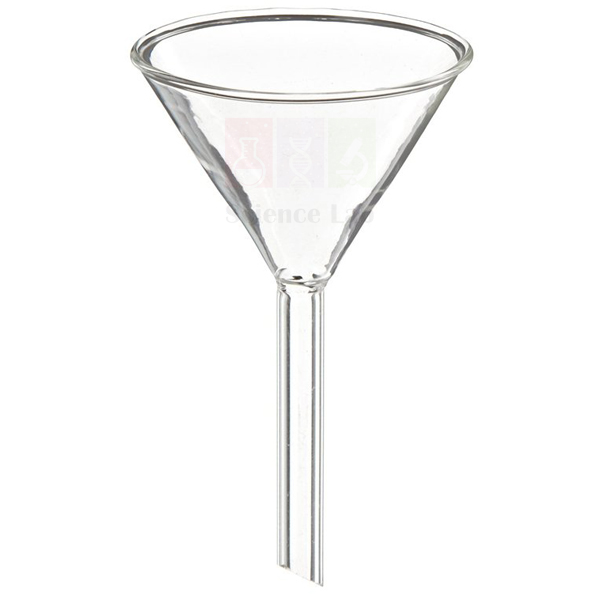
| Glassware Funnels | 9 | Short-stem glass funnels, plastic and powder funnels, porcelain and polypropylene Buchner funnels, Squibb-style and standard separatory funnels, an HDPE funnel and a double funnel stand. |
| Total | 65 | All items listed in the Lab Glassware range and its sub-ranges |
Laboratory Glassware Specifications
Key specifications below are taken from each product's own page; open a product for its full specifications and product code.
Glassware Burettes (11)
| Product | Key specification |
|---|---|
| Burette, Class-B, with Glass Key | Capacities: 10 ml, 25 ml, 50 ml, 100 ml; Accuracy class: Class B; Material: Heavy-duty borosilicate glass |
| Burette, Class-B, with PTFE Key Stopcock | Capacities: 5 ml, 10 ml, 25 ml, 50 ml, 100 ml; Stopcock: PTFE key; Scale: Graduated |
| Burettes | Capacities: 5 ml, 10 ml, 50 ml, 100 ml; Accuracy class: Class A; Material: Heavy-duty borosilicate glass |
| Burettes Detachable Stopcock | Capacities: 5 ml, 10 ml, 25 ml, 50 ml, 100 ml; Stopcock key: PTFE; Scale: Graduated |
| Micro Burettes, Class-A | Capacities: 5 ml, 10 ml; Accuracy class: Class A; Material: Heavy-duty borosilicate glass |
A further 6 items in this sub-range are listed on the Glassware Burettes page.
Glassware Flasks (17)
| Product | Key specification |
|---|---|
| Conical Flask | Capacities: 10 ml, 25 ml, 50 ml, 100 ml, 250 ml, 500 ml, 1000 ml, 2000 ml, 4000 ml, 5000 ml; Material: Borosilicate glass |
| Distillation Flask | Capacities: 100 mL, 125 mL, 250 mL, 500 mL; Material: Borosilicate glass; Resistance: Heat resistant and chemical resistant |
| Evaporating Flask | Capacities: 100 ml, 250 ml, 500 ml, 1000 ml, 5000 ml; Material: Borosilicate glass; Scale: Graduated |
| Flat Bottom Flask, Wide Neck | Capacities: 50 ml, 100 ml, 250 ml, 500 ml, 1000 ml, 2000 ml; Material: Borosilicate glass; Bottom / neck: Flat bottom, wide neck |
| Pear Shaped Flask | Capacities: 50 ml, 100 ml, 250 ml, 500 ml; Material: Borosilicate glass, for chemical resistance and thermal performance |
A further 12 items in this sub-range are listed on the Glassware Flasks page.
Glassware Bottles (16)
| Product | Key specification |
|---|---|
| Aspirator Bottles | Capacities: 0.5 L, 1.5 L, 5 L, 10 L, 20 L; Material: Polypropylene (much lighter than glass); Build: Sturdy and dependable |
| Bottle, McCartney | Capacity: 1 oz (29.5 ml); Height: 3.1 in; Diameter: 1.3 in |
| Brush, Beaker, Nylon | Handle: Wooden, 40 cm long; Head size: 65 x 45 x 150 mm; Pack: Pack of 10 |
| Gas Washing Bottle | Capacities: 100 ml, 125 ml, 250 ml, 500 ml; Material: Borosilicate glass; Joints: Interchangeable |
| Wash Bottle LDPE with Narrow Mouth | Capacities: 250 ml, 500 ml; Material: LDPE (low-density polyethylene); Mouth: Narrow mouth |
A further 11 items in this sub-range are listed on the Glassware Bottles page.
Glassware Beaker (12)
| Product | Key specification |
|---|---|
| Crucible & Beaker Tongs | Length: 8 in; Material: Nickel plated steel; Handles: Hot crucibles, evaporating dishes, flasks and small beakers |
| Glass Beaker | Capacities available: 50 ml, 100 ml, 150 ml, 250 ml, 400 ml, 500 ml, 600 ml, 1000 ml, 2000 ml; Material: Borosilicate glass |
| Pitcher, Polypropylene, 500 ml | Capacity: 500 ml; Graduations: 25 ml steps, from 25 ml to 500 ml; Height: Approximately 11 cm |
| Pyrex Beaker Set of 5 | Supplied as: Set of 5 beakers; Material: Pyrex glass; Heat resistance: Heat resistant |
| Tall Form Beaker | Capacities: 10 ml, 25 ml, 50 ml, 100 ml, 250 ml, 500 ml, 1000 ml, 2000 ml; Material: Borosilicate glass; Form: Tall form |
A further 7 items in this sub-range are listed on the Glassware Beaker page.
Glassware Funnels (9)
| Product | Key specification |
|---|---|
| Buchner Funnel, 90 mm, Polypropylene | Diameter: 90 mm; Capacity: About 300 ml; Stem: Tapers from about 13 mm OD at the end to 18 mm OD at the cone |
| Buchner Funnel, 90 mm, Porcelain | Diameter: 90 mm; Capacity: About 200 ml; Stem: Tapers from about 22 mm OD at the end to 30 mm OD at the cone |
| Plastic Funnel | Diameters: 35 mm, 65 mm, 100 mm; Stem (as described): 30 mm stem with a 3 mm diameter opening; Material: Plastic |
| Powder Funnel | Diameter: 80 mm; Stem opening: 12.5 mm; Stem length: 30 mm |
| Separatory Funnel, Squibb style | Stopper: Polyethylene, size 19/26; Capacities: 250 ml, 500 ml, 1000 ml; Style: Squibb, conical shape |
A further 4 items in this sub-range are listed on the Glassware Funnels page.
Related Equipment in Other ScienceLab Ranges
Glassware set-ups usually also need these items, which are listed in other ScienceLab ranges:
Who Buys This Range
Colleges and universities stock burettes, conical and round-bottom flasks, beakers and funnels for titration, distillation, filtration and separation practicals. Analytical, water-testing and microbiology laboratories use Class-A micro burettes, Schellbach-stripe burettes, iodine flasks, BOD bottles, McCartney bottles and baffled culture flasks. Schools equip chemistry rooms with glass beaker sets, conical flasks, dropping bottles, delivery tubes and plastic funnels. Laboratory dealers and distributors order glassware by capacity in bulk for supply contracts and tenders.
Other ScienceLab Equipment Ranges
| Range | What it covers |
|---|---|
| Measuring Cylinders | Glass and polypropylene measuring cylinders from 10 to 1000 ml, and gas jars |
| Scientific Lab Plasticware | Plastic beakers, wash bottles, carboys and racks for the laboratory |
| Stand bases, Rods and Rings | Stand bases, H-frames, support rods, tripods, rings and burette stands |
| Retort Clamp | Retort clamps in standard, three-prong and four-prong patterns with cork- or rubber-lined jaws |
| Heating Mantle | Mantles that heat round-bottom flasks, with digital, stirring and multi-position models |
| Chemistry Lab Equipment | The full chemistry range, arranged by topic from burners and titration to consumables and lab safety |
| Clinical Laboratory | Blood collection, haematology, ELISA and biosafety items for clinical laboratories |
| Laboratory Instruments | Bench instruments such as a UV-VIS spectrophotometer, colorimeter and DO meter, plus fume cupboards and an incubator |
Frequently Asked Questions
What does the Lab Glassware range include?
65 listed items in 5 sub-ranges: burettes, flasks, bottles, beakers and funnels, each with the brushes, clamps, tongs or stands used with them, from Class-A micro burettes and iodine flasks to McCartney bottles and Buchner funnels.
Which glassware does ScienceLab manufacture?
57 of the 65 items are manufactured by ScienceLab, including all the glass burettes, the borosilicate conical, round-bottom, distillation, iodine and culture flasks, the BOD, gas washing, reagent and dropping bottles, the glass and tall form beakers, and every funnel in the range, from glass and powder funnels to Buchner and separatory funnels.
Which items are supplied rather than manufactured?
8 items are supplied rather than manufactured: the Pyrex Beaker, Low Form, the Pyrex Beaker Set of 5, the Pyrex conical flask and five cleaning brushes for burettes, bottles, beakers and test tubes.
Which burette types and capacities can I choose?
Burettes are offered in Class A and Class B, mostly in 5, 10, 25, 50 and 100 ml capacities, with glass-key, PTFE-key, detachable or PTFE needle valve stopcocks. Schellbach-stripe versions make the meniscus easier to read, and Class-A micro burettes come in 5 ml and 10 ml for micro chemistry.
What flask sizes are listed?
Borosilicate conical flasks are listed from 10 ml to 5000 ml, round-bottom flasks from 50 ml to 1000 ml with a two-neck version up to 2000 ml, and the distillation flask from 100 mL to 500 mL. The Baffled Culture Flask has four baffles and is suitable for repeated autoclave cycles at 121°C.
Which items suit analytical and water-testing work?
The 60 ml BOD bottles with pennyhead or robotic stoppers hold water samples during BOD testing, the Iodine Flask has a ground joint and stopper for iodine determinations, and the Squibb-style separatory funnel has a PTFE stopcock for separating immiscible liquids.
Do you accept bulk, tender and export orders for glassware?
Yes. Glassware can be ordered by capacity in bulk, tender enquiries and export orders are accepted, and product specifications are provided on request so they can be checked against your tender documents.
What should a glassware quotation request include?
Product names or codes (for example SLE/GBu/02 for the Micro Burettes, Class-A), the capacity and quantity of each item, the delivery location and any tender specification.
Request a Quote
Send product names or codes and quantities through the contact page, or add items to your enquiry cart and submit it.
ScienceLab (Jain Scientific Equipments Pvt Ltd)
1226/1-5, Bengali Mohalla, Science Market, Ambala Cantt, Haryana 133001, India
Phone: +91-7082934803
Email: sales@scilabexport.com