- Physics Lab Equipment
- Chemistry Lab Equipment
- Biology Lab Equipment
- Anatomical Lab Equipment
- Learning
- Educational Lab Equipment
- Magnets
- Agriculture
- Astronomy
- Earth Science
- Geography Lab Equipment
- Safety Lab Coat
- Laboratory
- Meteorological
- Electricity & Magnetism
- Heat
- School Lab Equipment
- Lab Glassware
- Science Lab Equipment
- Tvet Lab Equipment
- Robotics Kits Supplier and Manufacturer for Schools India
- Math Lab Equipment Manufacturers and Exporters in Ambala
- STEM Kits Manufacturers and Supplier India
- Engineering Lab Equipment
- Hospital Lab Equipment
- Water, Sanitation & Hygiene Supplies
- Cold Chain, Solar & Communication Equipment
- Nutrition
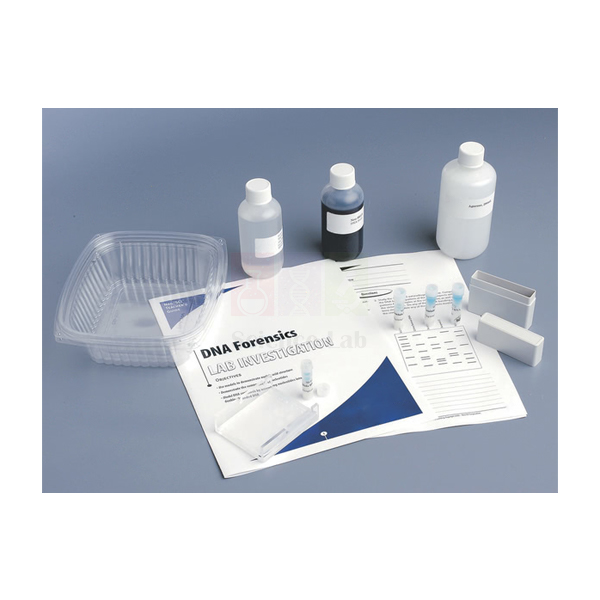
DNA Forensics Lab Investigation
The DNA Forensics Lab Investigation (Product Code: SLE/CH/120) explores how DNA technology is used to solve crimes. Students act as forensic scientists in a scenario-based DNA murder mystery, comparing the electrophoretic results of DNA samples from a “crime scene” with those from several suspects and using the fragment patterns on the gel to identify the culprit. With materials for up to 40 students, this genetics experiment kit India teachers can run with a whole class also opens a discussion about the ethics of powerful new technology. It is supplied by Jain Scientific Equipments Pvt Ltd (ScienceLab), Ambala.
Key Details
| Parameter | Detail |
|---|---|
| Theme | DNA technology in crime solving |
| Scenario | DNA murder mystery with a crime scene and suspects |
| Class size | Materials for up to 40 students |
| Core procedure | Simplified DNA fingerprinting; comparison of electrophoretic results |
| Concepts covered | DNA structure and extraction, gel electrophoresis, autoradiography, and why DNA fingerprinting is so accurate |
| Discussion element | Ethical considerations of using cutting-edge DNA technology |
Typical Use
A typical sequence starts with the case file: a crime has been committed, DNA has been recovered from the scene, and samples are available from the suspects. Before any analysis, students review how DNA is structured and how it is extracted from cells, then follow the simplified fingerprinting procedure and study the fragment patterns revealed on the gel. By lining up the crime-scene pattern against each suspect, they reach a verdict and explain which bands support it. Autoradiography is introduced as part of how fragment patterns have been visualised in forensic laboratories.
The closing discussion is what sets this activity apart. Groups debate questions such as who should hold DNA records, how evidence could be misused and how much weight a jury should give a match. Mixing hands-on analysis with this debate makes it suitable for biology, chemistry and general-studies classes alike. For schools building up an electrophoresis kit school India programme, it works well as the scenario lesson that follows a technique-focused practical.
Supplier
The DNA Forensics Lab Investigation is supplied by Jain Scientific Equipments Private Limited, the company behind the ScienceLab name, located in Ambala, Haryana, India. It manufactures teaching apparatus and supplies investigation kits to schools, colleges and distributors. Details are on our company profile.
Related Chemistry Lab Equipment
Kits and models that build the same DNA and forensics topic:
- DNA Fingerprinting Electrophoresis Lab Activity — a wet-lab gel electrophoresis activity for 8 groups
- DNA Murder Mystery Lab Investigation — a reusable pop-bead simulation of the fingerprinting protocol
- DNA extraction lab kit — lets students carry out the extraction step themselves
- DNA Activity Model — a hands-on model for teaching DNA structure beforehand
- Crime Scene Investigation — broadens the forensic unit beyond DNA evidence
Explore more in our Chemistry Lab Equipment category.
Frequently Asked Questions
How many students does it cover?
The investigation contains materials for up to 40 students.
Which topics does it teach?
DNA structure and extraction, gel electrophoresis, autoradiography, the basic concepts of DNA fingerprinting and why the process is so accurate, plus the ethical questions it raises.
What exactly is in the kit, and do I need electrophoresis equipment?
The individual components are not itemised in our current product notes. Request the contents list through our contact page and we will also confirm any equipment you need to provide.
How is it different from the DNA Murder Mystery Lab Investigation?
The Murder Mystery uses a completely reusable pop-bead model to simulate each step, whereas this investigation has students compare electrophoretic results of DNA samples and read the fragment patterns on a gel.
Does it include a discussion or ethics element?
Yes. It is designed to stimulate discussion on the ethical considerations of using cutting-edge DNA technology.
Which courses is it suited to?
It fits courses that cover DNA structure and biotechnology; compare the listed topics with your syllabus, and ask us if you need help matching it.
Can multiple kits be supplied for a school group or overseas?
Yes. We quote multi-kit orders for India and international markets.
Request a Quote
For availability and pricing on the DNA Forensics Lab Investigation, use our contact page or add it to the enquiry cart with related DNA kits.
Last updated: 24 September 2026