- Physics Lab Equipment
- Chemistry Lab Equipment
- Biology Lab Equipment
- Anatomical Lab Equipment
- Learning
- Educational Lab Equipment
- Magnets
- Agriculture
- Astronomy
- Earth Science
- Geography Lab Equipment
- Safety Lab Coat
- Laboratory
- Meteorological
- Electricity & Magnetism
- Heat
- School Lab Equipment
- Lab Glassware
- Science Lab Equipment
- Tvet Lab Equipment
- Robotics Kits Supplier and Manufacturer for Schools India
- Math Lab Equipment Manufacturers and Exporters in Ambala
- STEM Kits Manufacturers and Supplier India
- Engineering Lab Equipment
- Hospital Lab Equipment
- Water, Sanitation & Hygiene Supplies
- Cold Chain, Solar & Communication Equipment
- Nutrition
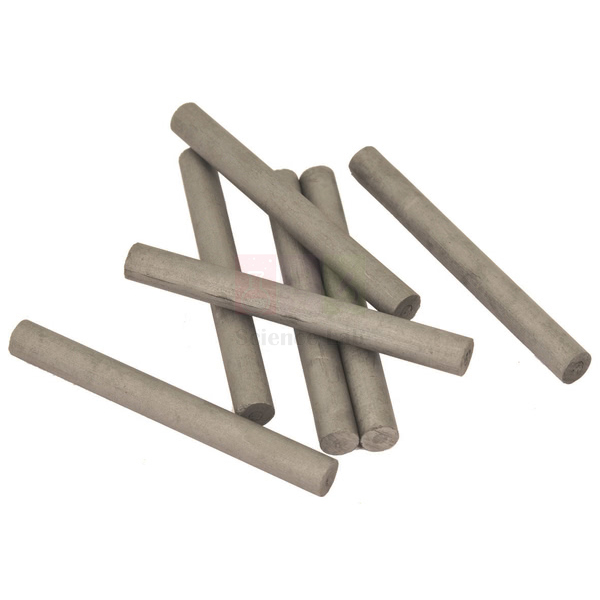
Electrode, Carbon Rod
Electrode, Carbon Rod (Product Code: SLE/CH/123) is a cylindrical carbon electrode for electrolysis experiments, packed 50 to a pack so that a teacher can equip every bench in a practical class and still keep spares on the shelf. Carbon conducts electricity yet stays largely unreactive in the electrolytes used in school practicals, which is why carbon rods remain the usual inert electrode for studying what happens at the anode and cathode. The rods are supplied by Jain Scientific Equipments Pvt Ltd (ScienceLab), Ambala, India, to secondary schools, junior colleges and teacher-training centres building up their school chemistry lab equipment in India.
Specifications
| Parameter | Detail |
|---|---|
| Material | Carbon |
| Shape | Cylindrical rod |
| Dimensions | 100 x 5 mm |
| Application | Electrolysis experiments |
| Pack size | 50 rods per pack |
Typical Use
In a typical practical, two rods are mounted so that they stand parallel in a beaker of electrolyte without touching, then connected to a low-voltage DC source with crocodile-clip leads. Students watch for gas bubbles, colour changes or metal deposits at each rod – for example copper plating onto the cathode from copper(II) sulphate solution, or bubbles forming during the electrolysis of dilute acids and salt solutions. Because the carbon itself takes no part in most of these reactions, the observations can be linked directly to the ions present in the solution.
Keep the metal clips above the liquid so that only carbon touches the electrolyte, rinse the rods with distilled water after each run and let them dry before storage. An anode that gives off oxygen or chlorine slowly wears and roughens over repeated use; buying from a chemistry consumables supplier in India in packs of 50 means worn pieces can be swapped out without interrupting a practical session.
Supplier
Electrode, Carbon Rod is supplied by Jain Scientific Equipments Private Limited, which trades under the name ScienceLab and is based in Ambala, Haryana, India. Vendor registration details for the supplying company are GSTIN 06AAECJ8618A1ZT and Importer-Exporter Code AAECJ8618A issued by the DGFT, under which shipments to overseas buyers are handled. More about the company is available in our company profile.
Related Chemistry Lab Equipment
Items that complete an electrolysis set-up built around these carbon rods:
- Electrode, Carbon, Pair — a paired format when a bench needs just two electrodes rather than a bulk pack
- Electrode Rod Holders — for mounting rod electrodes securely during a run
- Crocodile Clips & Leads — to connect each rod to the power source
- Brownlee Electrolysis Apparatus — a dedicated apparatus for class demonstrations of electrolysis
- Glass Beaker — the vessel that holds the electrolyte
Browse the complete Chemistry Lab Equipment range for more electrochemistry apparatus.
Frequently Asked Questions
How many electrodes come in one pack?
Fifty. Each pack holds 50 cylindrical carbon rods of 100 x 5 mm, so larger schools can order several packs to cover multiple sections.
Which experiments are these rods suited to?
Electrolysis of aqueous solutions where an inert electrode is needed, such as copper(II) sulphate, sodium chloride solution or dilute acids. The rods let students attribute every product they see to the electrolyte rather than to the electrode.
Can the rods be reused?
Yes, in most cases. Rinse and dry them after each practical; replace a rod once it becomes visibly pitted or crumbly, which happens first at anodes that release oxygen or chlorine.
Are holders, leads or a power supply included?
No – this listing covers the pack of 50 rods only. Holders, leads and electrolysis apparatus are available separately (see the related items above), and we can quote them together on request.
Is the grade or purity of the carbon specified?
The grade is not stated in this listing. If your syllabus or tender needs a particular grade, please ask through our contact page before ordering.
Do you supply schools in bulk or ship overseas?
Yes. We supply institutions across India and in international markets; include the product code SLE/CH/123, the number of packs and your delivery location in your enquiry so we can prepare an accurate quotation.
Request a Quote
To order Electrode, Carbon Rod, send your quantity and delivery details through our contact page, or add the item to the enquiry cart together with other laboratory items for a combined quotation.
Last updated: 24 September 2026