- Physics Lab Equipment
- Chemistry Lab Equipment
- Biology Lab Equipment
- Anatomical Lab Equipment
- Learning
- Educational Lab Equipment
- Magnets
- Agriculture
- Astronomy
- Earth Science
- Geography Lab Equipment
- Safety Lab Coat
- Laboratory
- Meteorological
- Electricity & Magnetism
- Heat
- School Lab Equipment
- Lab Glassware
- Science Lab Equipment
- Tvet Lab Equipment
- Robotics Kits Supplier and Manufacturer for Schools India
- Math Lab Equipment Manufacturers and Exporters in Ambala
- STEM Kits Manufacturers and Supplier India
- Engineering Lab Equipment
- Hospital Lab Equipment
- Water, Sanitation & Hygiene Supplies
- Cold Chain, Solar & Communication Equipment
- Nutrition
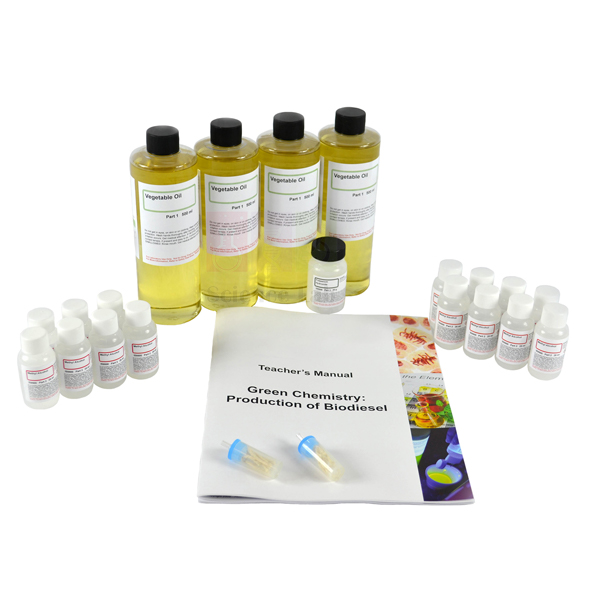
Green Chemistry: Production Of Biodiesel
Green Chemistry: Production Of Biodiesel (Product Code: SLE/CH/143) is a classroom kit in which students carry out a two-phase process to produce small batches of crude biodiesel. The fuel they make is of sufficient quality to demonstrate the burning qualities of both biodiesel and vegetable oil, and an optional small-scale washing exercise lets classes go through the full process needed to reach the quality levels required for use in vehicles. Sufficient materials are included for 15 groups, together with a teacher’s manual and student copy masters. It suits teachers looking for a chemistry experiment kit in India that connects reaction chemistry with renewable energy, and it is supplied by Jain Scientific Equipments Pvt Ltd (ScienceLab), Ambala.
Specifications
| Parameter | Detail |
|---|---|
| Groups served | Sufficient materials for 15 groups |
| Process | Two-phase production of small batches of crude biodiesel |
| Demonstration | Burning qualities of biodiesel compared with vegetable oil |
| Optional extension | Small-scale washing procedure for the crude biodiesel |
| Teaching material | Teacher’s manual and student copy masters |
Typical Use
The activity gives a concrete example of green chemistry: turning a renewable raw material, vegetable oil, into a usable fuel. In general terms, biodiesel is made by chemically converting the fats in the oil into a thinner, more easily burned liquid, leaving a glycerol by-product behind. Students work through the two phases of the process in their groups, then compare how the crude biodiesel and the original vegetable oil burn, which makes the difference between the two liquids easy to see rather than just read about.
Classes with extra time can add the optional washing exercise, which shows why fuel sold for vehicles needs further purification than the crude product. The kit also works as an environmental science kit for school energy topics, prompting discussion of renewable feedstocks, emissions and the trade-offs of biofuels. Run the practical in a well-ventilated room, have students wear eye protection, and keep the burning comparison under close teacher supervision on a heat-resistant surface.
Supplier
ScienceLab is the trading name of Jain Scientific Equipments Private Limited, a company based in Ambala, Haryana; for vendor registration, its details are CIN U29309HR2020PTC087597 and GSTIN 06AAECJ8618A1ZT. Chemistry activity kits such as this one are supplied from Ambala to schools and colleges in India and international markets. More detail is on our company profile.
Related Laboratory Equipment
These items support the same green chemistry lessons, from a companion kit to the apparatus and protection used during the practical.
- Greener Synthesis Of Acetylsalicylic Acid — a second green chemistry practical built on a renewable starting material.
- Organic Chemistry Kit — broader organic practicals for the same course.
- Separating Funnel (Separator) — handy for separating liquid layers if you run the optional washing step.
- Magnetic Stirrer With Hot Plate — mixing and gentle warming where the manual calls for it.
- Safety Goggles — eye protection throughout the practical and burning test.
More kits are listed in our Chemistry Lab Equipment category.
Frequently Asked Questions
How many groups can use one kit?
The kit has sufficient materials for 15 groups.
Can the biodiesel students make be used in a vehicle?
No. The kit produces crude biodiesel intended for classroom demonstration of burning qualities. The optional washing exercise shows the extra steps needed to reach vehicle-quality fuel, but the classroom product should not be put into an engine.
Is the washing procedure required?
No, it is optional. Use it if you want students to experience the full process of producing biodiesel.
What teaching support is included?
A teacher’s manual and student copy masters, so you can photocopy the student instructions for each group.
What will the school need to provide?
The list of school-supplied items is not given on this page. Ask through our contact page and we will send it with your quotation.
How should the kit materials be stored until use?
Follow the labels and the teacher’s manual; if you need storage information before delivery, please ask us.
What should a tender or purchase enquiry include?
The product code SLE/CH/143, number of kits, delivery address and your institution’s purchase format. The company registration details above can be added to vendor forms.
Request a Quote
To request pricing for Green Chemistry: Production Of Biodiesel, send your details through the contact page or place the kit in the enquiry cart with any glassware and safety items for the practical.
Last updated: 24 September 2026