- Physics Lab Equipment
- Chemistry Lab Equipment
- Biology Lab Equipment
- Anatomical Lab Equipment
- Learning
- Educational Lab Equipment
- Magnets
- Agriculture
- Astronomy
- Earth Science
- Geography Lab Equipment
- Safety Lab Coat
- Laboratory
- Meteorological
- Electricity & Magnetism
- Heat
- School Lab Equipment
- Lab Glassware
- Science Lab Equipment
- Tvet Lab Equipment
- Robotics Kits Supplier and Manufacturer for Schools India
- Math Lab Equipment Manufacturers and Exporters in Ambala
- STEM Kits Manufacturers and Supplier India
- Engineering Lab Equipment
- Hospital Lab Equipment
- Water, Sanitation & Hygiene Supplies
- Cold Chain, Solar & Communication Equipment
- Nutrition
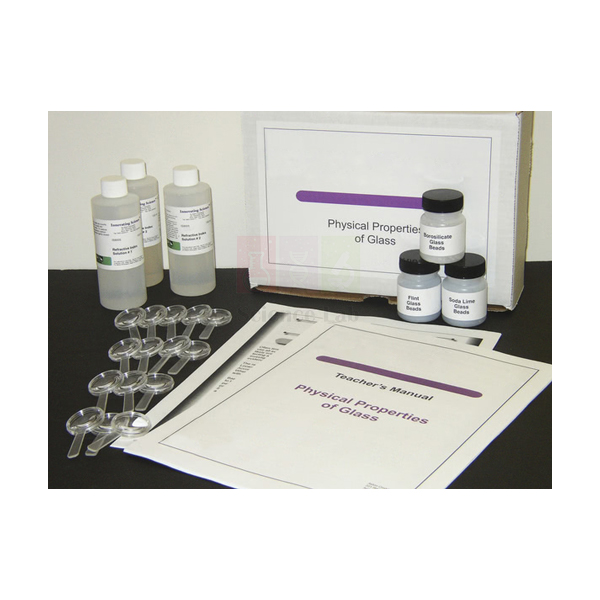
Physical Properties of Glass
Physical Properties of Glass (Product Code: SLE/CH/167) is a forensic science activity in which students learn about the different chemical and physical characteristics and properties of glass, and find out how forensic scientists use these differences to help provide evidence that solves crimes. There is enough material for 15 groups, and the activity comes with a Teachers Manual and Student Guide and Analysis copy-masters. It is supplied by Jain Scientific Equipments Pvt Ltd (ScienceLab), Ambala, India, as a science kit with manual support for chemistry and forensic science classes.
Key Details
| Parameter | Detail |
|---|---|
| Type | Forensic chemistry activity kit |
| Subject | Chemical and physical characteristics and properties of glass |
| Forensic application | How differences between glasses are used as evidence in criminal investigations |
| Group capacity | Enough material for 15 groups |
| Teaching material | Teachers Manual; Student Guide and Analysis copy-masters |
Typical Use
During a criminal investigation, police and crime scene investigators use every available tool and piece of evidence to work backwards and build the most likely picture of what happened, and each type of evidence supplies a different piece of the puzzle. Glass is a common example: a broken window, bottle or headlamp can leave fragments at a scene and on a suspect. In this activity students examine how glasses differ in their chemical and physical properties and then apply that knowledge the way a forensic examiner would – deciding whether two samples could share a source.
The Teachers Manual sets out the lesson, while the Student Guide and Analysis copy-masters give each group a structured record of observations and conclusions. With material for 15 groups, one kit can serve a full class working in pairs or threes, which makes it practical school chemistry lab equipment for a forensic-themed unit. Treat any glass samples with care: wear eye protection, handle pieces with tweezers or gloves, and put broken fragments in a dedicated broken-glass container.
Supplier
This forensic activity reaches schools through Jain Scientific Equipments Private Limited, the Ambala, Haryana company that trades as ScienceLab and sources practical kits and consumables alongside the apparatus it builds. Our company profile gives the background.
Related Chemistry Lab Equipment
Kits and tools for a complete forensic science unit:
- Crime Scene Investigation — a wider scenario in which glass can be one line of evidence
- Forensic Science Lab Investigation — further forensic techniques for the same course
- Forensic Comparison Microscope — views two samples side by side for detailed comparison
- Forensic Chemistry of Dusting for Fingerprints — adds fingerprint evidence to the investigation
- Crime Scene Tape — marks out a mock scene for role-play
See more in Chemistry Lab Equipment.
Frequently Asked Questions
How many student groups does one kit serve?
There is enough material for 15 groups, so a typical class can work in small teams at the same time.
What teacher and student material comes with it?
A Teachers Manual plus Student Guide and Analysis copy-masters, which you can reproduce for each group.
Which properties of glass do students test?
The activity covers chemical and physical characteristics of glass; the specific procedures are set out in the Teachers Manual. For a detailed list of tests and materials before ordering, please ask through our contact page.
Can the kit be used with more than one class?
The copy-masters can be reused, but the practical material is sized for 15 groups. Contact us about replacement materials if you plan to run the activity again.
What safety precautions apply?
Eye protection, careful handling of any glass pieces, and disposal of fragments in a broken-glass container. Follow your school’s laboratory rules for any reagents used.
Do you supply forensic kits to institutions abroad?
Yes. We supply schools and colleges in India and international markets; tell us your destination and quantity when you enquire.
Request a Quote
Ask for pricing through our contact page, or add this activity to the enquiry cart with other forensic kits.
Last updated: 24 September 2026