- Physics Lab Equipment
- Chemistry Lab Equipment
- Biology Lab Equipment
- Anatomical Lab Equipment
- Learning
- Educational Lab Equipment
- Magnets
- Agriculture
- Astronomy
- Earth Science
- Geography Lab Equipment
- Safety Lab Coat
- Laboratory
- Meteorological
- Electricity & Magnetism
- Heat
- School Lab Equipment
- Lab Glassware
- Science Lab Equipment
- Tvet Lab Equipment
- Robotics Kits Supplier and Manufacturer for Schools India
- Math Lab Equipment Manufacturers and Exporters in Ambala
- STEM Kits Manufacturers and Supplier India
- Engineering Lab Equipment
- Hospital Lab Equipment
- Water, Sanitation & Hygiene Supplies
- Cold Chain, Solar & Communication Equipment
- Nutrition
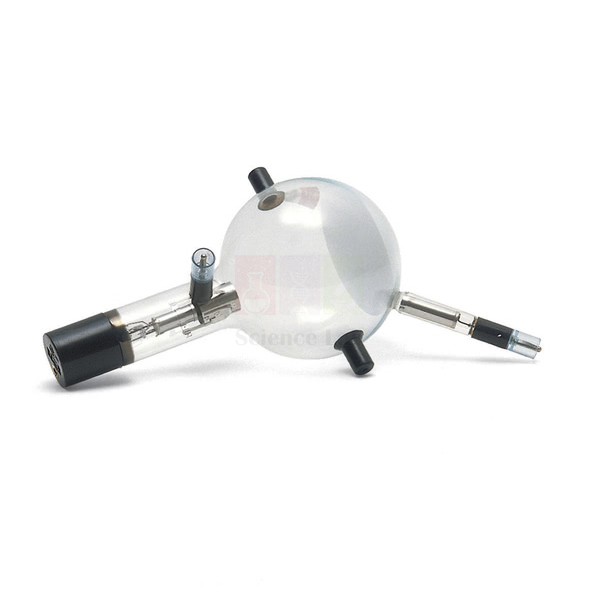
Teltron Perrin Tube D
Teltron Perrin Tube D (Product Code: SLE/PHY/308) is an evacuated electron tube from the Teltron D range used to reproduce Jean Perrin's cathode-ray experiment, which shows that the electron beam carries negative charge, in university and senior school physics teaching. As a D-range tube it has its electrical connections fixed on the tube itself, and it fits into a sequence of D-range tubes that takes students from cathode rays to the properties of the electron. It is supplied by Jain Scientific Equipments Pvt Ltd (ScienceLab), Ambala, as part of its range of physics lab equipment in India.
Key Details
| Parameter | Detail |
|---|---|
| Product type | Evacuated electron tube for Perrin's experiment |
| Range | Teltron D range, with connections fixed on the tube |
| Brand | Teltron (third-party brand) |
| Specification sheet | Sent on request with your quotation |
| Product code | SLE/PHY/308 |
| Supplied by | Jain Scientific Equipments Pvt Ltd (ScienceLab), Ambala, India |
What Is the Teltron Perrin Tube D Used For?
Before the electron was identified, physicists argued over whether cathode rays were charged particles or a kind of wave. Perrin settled part of the question by catching the rays in an insulated collector and showing that it gained negative charge. In the classic teaching arrangement, a magnetic field steers the beam into the collector, a connected electroscope or electrometer responds, and when the beam is steered away the charging stops, tying the charge to the beam itself.
Among physics lab instruments in India, a tube like this is normally used as a teacher-led demonstration. It needs a suitable high-voltage supply, a D-range holder, a magnetic field source and a charge indicator, and the glass envelope must be handled with care. Confirm the operating voltages and accessory needs with us before ordering, as we send the specification with each quotation.
What to Specify When Ordering
- Whether you already have a Teltron D-range holder and Helmholtz coils.
- The high-voltage supply your laboratory uses, so we can check it suits the tube.
- Which charge indicator you will connect, such as an electroscope.
- The number of tubes required.
Supplier
Jain Scientific Equipments Private Limited, which operates under the ScienceLab name, supplies the Teltron Perrin Tube D from Ambala, Haryana, India to physics departments in India and international markets. Teltron is a third-party brand and the tube is sourced, not made, by us; we check the specification and the D-range accessories it needs before we quote. Our company profile has more about the company.
Related Physics Lab Equipment
Accessories and companion tubes for a Perrin demonstration:
- Teltron Perrin Tube S — the S-range version, with connections on the stand.
- Teltron Tube Holder D — holds D-range tubes during the demonstration.
- Teltron Helmholtz Pair of Coils D — a magnetic field source to steer the beam.
- EHT Power Supply — high-voltage supply for Teltron electron tubes.
- Electroscope in Flask, Gold Leaf — a charge indicator of the kind used in Perrin's experiment.
Browse further in Physics Lab Equipment.
Frequently Asked Questions
Which experiment is the Teltron Perrin Tube D designed for?
The Teltron Perrin Tube D is designed for Perrin's experiment, in which the electron beam is collected and shown to carry negative charge. It gives students experimental evidence that cathode rays are streams of negatively charged particles.
What does the D in Teltron Perrin Tube D mean?
The D identifies the original Teltron D range, in which the electrical connections are fixed on the tube itself. The Teltron Perrin Tube D therefore uses a D-range holder, whereas the S-range version makes its connections on the stand.
Where can I find the specifications of the Teltron Perrin Tube D?
Ask us through the contact page for the current specification sheet of the Teltron Perrin Tube D, including its voltages. We confirm the figures in writing with the quotation rather than publishing unverified values on this page.
What accessories does the Teltron Perrin Tube D need?
The Teltron Perrin Tube D generally needs a D-range holder, a high-voltage supply, a magnetic field source such as Helmholtz coils, and a charge indicator such as an electroscope. List what you already own and we will confirm the rest.
Does ScienceLab manufacture the Teltron Perrin Tube D?
No. The Teltron Perrin Tube D carries the Teltron brand, which belongs to a third party. Jain Scientific Equipments Pvt Ltd (ScienceLab) of Ambala, India supplies it to colleges, universities and schools that teach the discovery of the electron.
Can the Teltron Perrin Tube D be ordered for export?
Yes. The Teltron Perrin Tube D can be quoted for institutions in India and international markets. Send the quantity, accessories and delivery destination through our contact page and we will reply with a quotation.
Request a Quote
Ask for a quotation on the Teltron Perrin Tube D through our contact page, or add it to the enquiry cart along with any holder, coils or supply you need.
Last updated: 24 September 2026