- Physics Lab Equipment
- Chemistry Lab Equipment
- Biology Lab Equipment
- Anatomical Lab Equipment
- Learning
- Educational Lab Equipment
- Magnets
- Agriculture
- Astronomy
- Earth Science
- Geography Lab Equipment
- Safety Lab Coat
- Laboratory
- Meteorological
- Electricity & Magnetism
- Heat
- School Lab Equipment
- Lab Glassware
- Science Lab Equipment
- Tvet Lab Equipment
- Robotics Kits Supplier and Manufacturer for Schools India
- Math Lab Equipment Manufacturers and Exporters in Ambala
- STEM Kits Manufacturers and Supplier India
- Engineering Lab Equipment
- Hospital Lab Equipment
- Water, Sanitation & Hygiene Supplies
- Cold Chain, Solar & Communication Equipment
- Nutrition
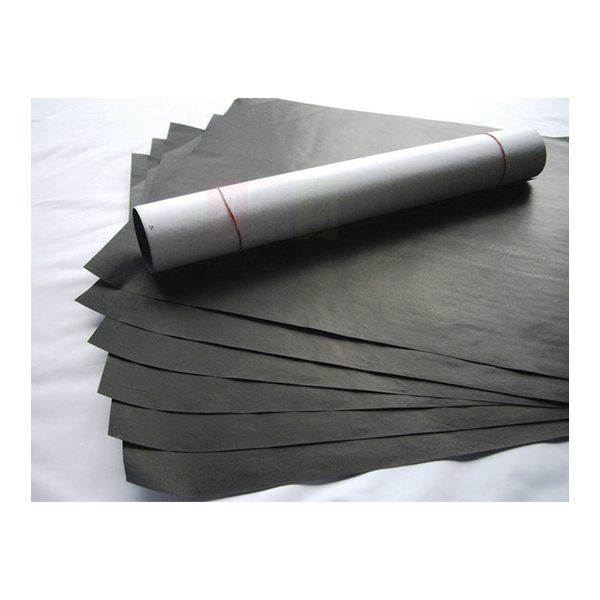
Conductive Paper
Conductive Paper (Product Code: SLE/PHY/147) is a resistive paper used to map electric fields by the equipotential points method in school and college physics labs. It comes as sheets of 38 cm x 53 cm, packed ten to a pack, and can also be cut into strips to make simple home-made resistors for electricity investigations. It is supplied by Jain Scientific Equipments Pvt Ltd (ScienceLab), Ambala, India.
Specifications
| Parameter | Detail |
|---|---|
| Material | Conductive paper sheet |
| Sheet size | 38 cm x 53 cm |
| Pack | Pack of 10 sheets |
| Main use | Plotting electric fields by the equipotential points method |
| Other use | Producing home-made strip resistors |
| Product code | SLE/PHY/147 |
| Supplied by | Jain Scientific Equipments Pvt Ltd (ScienceLab), Ambala, India |
What Is Conductive Paper Used For?
To plot a field, two electrodes are fixed on the sheet and connected to a low-voltage DC supply. A probe linked to a voltmeter or centre-zero galvanometer is moved across the paper to find points at the same potential; students mark them, join them into equipotential lines, and then sketch field lines at right angles. Changing the electrode shapes, such as two points, two parallel bars, or a point and a ring, shows how the field pattern follows the geometry.
Cut into strips, the same paper becomes a cheap resistor whose resistance rises with length and falls with width, which makes a neat investigation for physics lab equipment in India at secondary level. Store the sheets flat and dry, avoid folding or creasing them, and handle them by the edges to keep the surface even.
What to Specify When Ordering
- The number of packs (each pack holds 10 sheets of 38 cm x 53 cm).
- Whether a probe, galvanometer or voltmeter is needed for field plotting.
- Whether a low-voltage DC power supply should be quoted as well.
Supplier
Jain Scientific Equipments Private Limited, trading as ScienceLab, supplies conductive paper from Ambala, Haryana, as a consumable for electrostatics and electricity practicals. Schools, colleges, dealers and importers in India and international markets can order it together with the meters and supplies used in field-plotting work. Company information is on the ScienceLab profile page.
Related Physics Lab Equipment
Apparatus used with conductive paper:
- Galvanometer, Centre Zero Universal Meter — null indicator for locating equipotential points.
- Jockey with Insulated Handle (Single) — insulated probe for touching points on the sheet.
- Power Supply, Stepped — low-voltage source for the electrodes.
- Standard Digital Multimeter — reads potential at each point or the resistance of a strip.
- Conductive Putty — another shape-it-yourself conductor for resistance experiments.
See more in the Physics Lab Equipment category.
Frequently Asked Questions
What size is Conductive Paper and how many sheets are in a pack?
Conductive Paper comes in sheets of 38 cm x 53 cm, with 10 sheets in each pack. One sheet can be cut into smaller pieces so several student groups can plot fields or make strip resistors at the same time.
How is Conductive Paper used to plot electric fields?
On Conductive Paper, two electrodes are connected to a DC supply and a probe finds points of equal potential using a meter or galvanometer. Joining those points gives equipotential lines, and field lines are drawn at right angles to them.
Can Conductive Paper be used to make resistors?
Yes, Conductive Paper can be cut into strips to produce home-made resistors. Students can compare strips of different lengths and widths to see how resistance depends on the shape of a conductor, using a multimeter to take the readings.
What else is needed with Conductive Paper?
To use Conductive Paper for field plotting you need electrodes, a low-voltage DC power supply, connecting leads, a probe and a voltmeter or centre-zero galvanometer. These are ordered separately and can be quoted together with the paper.
How should Conductive Paper be stored?
Store Conductive Paper flat in a dry cupboard, away from damp and direct sunlight. Avoid folding or creasing the sheets and handle them by the edges, because a damaged surface can distort the equipotential pattern during an experiment.
Who supplies Conductive Paper?
Conductive Paper is supplied by Jain Scientific Equipments Pvt Ltd (ScienceLab), Ambala, Haryana, India. Schools, colleges, dealers and importers can order it in packs of 10 sheets alongside the meters and power supplies used with it.
What should a Conductive Paper quotation request include?
A Conductive Paper quotation request should give the product code SLE/PHY/147, the number of packs, any meters, probes or power supplies you want added, and the delivery address in India or abroad.
Request a Quote
For a price on Conductive Paper, get in touch through the contact page or add it to the enquiry cart with the rest of your electricity consumables.
Last updated: 24 September 2026