- Physics Lab Equipment
- Chemistry Lab Equipment
- Biology Lab Equipment
- Anatomical Lab Equipment
- Learning
- Educational Lab Equipment
- Magnets
- Agriculture
- Astronomy
- Earth Science
- Geography Lab Equipment
- Safety Lab Coat
- Laboratory
- Meteorological
- Electricity & Magnetism
- Heat
- School Lab Equipment
- Lab Glassware
- Science Lab Equipment
- Tvet Lab Equipment
- Robotics Kits Supplier and Manufacturer for Schools India
- Math Lab Equipment Manufacturers and Exporters in Ambala
- STEM Kits Manufacturers and Supplier India
- Engineering Lab Equipment
- Hospital Lab Equipment
- Water, Sanitation & Hygiene Supplies
- Cold Chain, Solar & Communication Equipment
- Nutrition
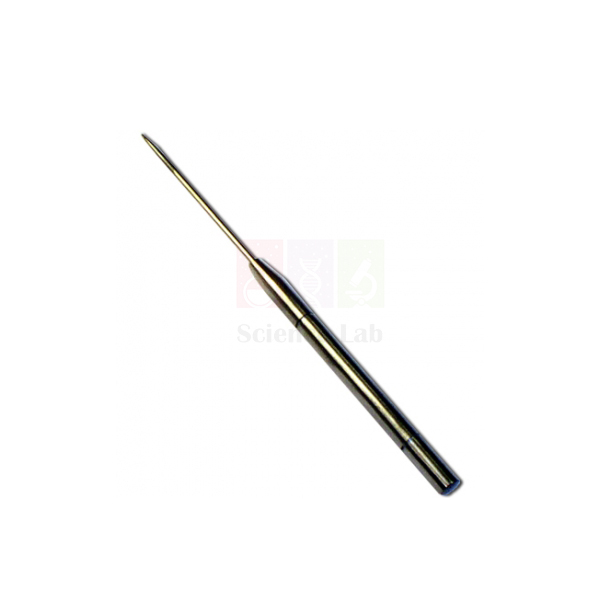
Dissecting Needle
Dissecting Needle (Product Code: SLE/EDE/13) is a sturdy steel needle used to tease apart tissue, separate fibres and lift fine structures during dissection and slide preparation. The listing gives two lengths: 125 mm long, and 130 mm long with handle. Equally at home as zoology or botany lab equipment in India, it is made by Jain Scientific Equipments Pvt Ltd (ScienceLab), Ambala, for school, college and university practicals.
Specifications
| Parameter | Detail |
|---|---|
| Product type | Dissecting needle |
| Material | Steel |
| Build | Sturdy |
| Sizes listed | 125 mm long; 130 mm long (with handle) |
| Suitable for | Teasing tissue, separating fibres and lifting small structures |
Typical Use
In zoology practicals the needle separates muscle bundles, frees nerves from connective tissue and lifts small ducts so they can be identified. On the microscope bench, two needles used together pull a sample apart in a drop of water or stain, which is how students spread plant tissue, separate anthers or tease out fibres before placing a cover slip.
Work with light, short strokes and let the point do the separating rather than forcing it through tissue. Because the needle is steel, dry it immediately after washing and store it dry; a light wipe before putting it away keeps the point clean for the next class. Labs that buy school biology lab equipment in India usually allow two needles per student for teasing work.
Manufacturer
The needle is manufactured by Jain Scientific Equipments Private Limited, which does business as ScienceLab from Ambala in Haryana and supplies teaching institutions with instruments, apparatus and models. The company profile introduces the company in more detail.
Related Dissection Equipment
Other needles and probes that complement this item:
- Dissecting Needle Plastic Handle — a version with a plastic grip for longer sessions.
- Teasing Needle (Probe) — a teasing needle listed in the zoology range.
- Probe, Chrome — a steel teasing probe for tracing structures.
- Needle, Stainless Steel — a stainless steel needle option.
- Dissecting Awl — for piercing tougher material before the needle is used.
The Dissection Equipment category lists all needles, probes and sets.
Frequently Asked Questions
Which lengths are available?
The listing states 125 mm long, and 130 mm long with handle. Mention the length you need in your enquiry so the correct version is quoted.
What is the needle made of?
It is made of steel and described as sturdy, so it resists bending during normal teasing work.
How should it be stored to avoid rust?
Dry it straight after washing and keep it in a dry case or drawer, away from damp cloths and specimen fluids.
How is a needle different from a seeker or probe?
A needle has a point for teasing and separating fine tissue. Blunter seekers and probes are preferred for tracing structures without piercing them, and many students keep both.
Is there a warranty on needles?
Terms are given in our quotation for each order. Contact us through the contact page if you need them documented.
Can you supply class packs or export quantities?
Yes. Send code SLE/EDE/13, the length, quantity and destination; we quote for buyers in India and international markets.
Request a Quote
For Dissecting Needle pricing, use the contact page or add the needle to the enquiry cart together with probes or sets.
Last updated: 24 September 2026