- Physics Lab Equipment
- Chemistry Lab Equipment
- Biology Lab Equipment
- Anatomical Lab Equipment
- Learning
- Educational Lab Equipment
- Magnets
- Agriculture
- Astronomy
- Earth Science
- Geography Lab Equipment
- Safety Lab Coat
- Laboratory
- Meteorological
- Electricity & Magnetism
- Heat
- School Lab Equipment
- Lab Glassware
- Science Lab Equipment
- Tvet Lab Equipment
- Robotics Kits Supplier and Manufacturer for Schools India
- Math Lab Equipment Manufacturers and Exporters in Ambala
- STEM Kits Manufacturers and Supplier India
- Engineering Lab Equipment
- Hospital Lab Equipment
- Water, Sanitation & Hygiene Supplies
- Cold Chain, Solar & Communication Equipment
- Nutrition
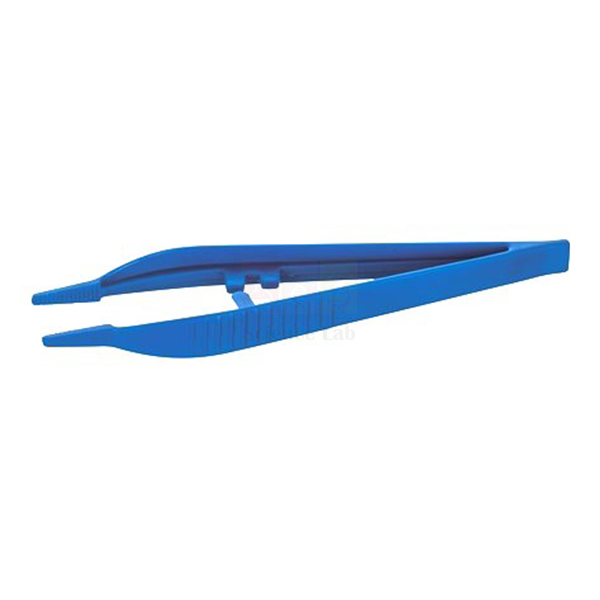
Forceps, Nylon
The Forceps, Nylon (Product Code: SLE/EDE/25) are straight forceps made of glass-filled nylon, with a blunt tip. Being non-metallic and blunt, they let students pick up and move delicate material — soft specimens, seeds, small invertebrates, filter paper or cover slips — with less risk of piercing or scratching it. They are a sensible, student-friendly choice within biology lab equipment for school labs in India, manufactured by Jain Scientific Equipments Pvt Ltd (ScienceLab), Ambala.
Specifications
| Parameter | Detail |
|---|---|
| Type | Forceps |
| Material | Nylon, glass filled |
| Shape | Straight |
| Tip | Blunt |
Typical Use
Nylon forceps come into their own wherever metal tips would do harm. In the biology lab they are used to lift leaves, petals and seeds for observation, to transfer preserved specimens between dishes, and to place or remove cover slips without chipping the glass. Glass filling makes the nylon stiffer than an unfilled plastic, so the arms spring back and grip evenly, while the blunt tip keeps younger students from puncturing soft tissue.
They also work well in field and classroom collections — for example as part of an insect collection kit for school, where small, fragile specimens must be handled gently. Rinse the forceps in water after use, wipe dry, and keep them away from open flames and hot plates, since heat can soften or distort nylon.
Manufacturer
Jain Scientific Equipments Private Limited, which trades as ScienceLab, manufactures laboratory teaching equipment in Ambala, Haryana. The company is incorporated under CIN U29309HR2020PTC087597, and production takes place at its licensed factory at 449, HSIIDC Industrial Area, Saha, Ambala (Factory Licence AMB-ONLINE-CHD-J-414). More about the business is on our company profile.
Related Dissection Equipment
Other handling tools and the containers they are typically used with:
- Forceps (Tweezers) — metal forceps for firmer gripping during dissection
- Forceps (Tweezers) Bent — a bent-tip version for reaching into specimens
- Petri Dish Glass With Lid — for holding specimens being moved or examined
- Specimen Container, PP — for storing collected material
- Hand Lens — to examine small specimens held in the forceps
For metal forceps, scalpels and full sets, browse Dissection Equipment.
Frequently Asked Questions
What are these forceps made of?
Glass-filled nylon, with straight arms and a blunt tip.
Why choose nylon forceps over stainless steel?
Nylon is non-metallic and, with a blunt tip, handles fragile items such as cover slips, seeds and soft specimens with less risk of scratching or piercing. Steel forceps remain the better choice for firm gripping during dissection.
How long are the forceps?
The length is not stated in the product listing. Please contact us and we will confirm the dimensions.
Can they be flamed or autoclaved?
Do not flame them, as nylon softens with heat. If your lab needs to sterilise plastic tools by another method, ask us before ordering so we can advise on suitability.
Are they resistant to laboratory chemicals?
Chemical compatibility is not specified in the listing. Tell us which solutions you plan to use and we will check before you order.
Do you supply them in bulk?
Yes, nylon forceps can be quoted in class quantities for schools, colleges and distributors in India and international markets; reference code SLE/EDE/25.
Request a Quote
For a quotation on Forceps, Nylon, reach us through the contact page or add them to the enquiry cart along with the rest of your lab list.
Last updated: 24 September 2026