- Physics Lab Equipment
- Chemistry Lab Equipment
- Biology Lab Equipment
- Anatomical Lab Equipment
- Learning
- Educational Lab Equipment
- Magnets
- Agriculture
- Astronomy
- Earth Science
- Geography Lab Equipment
- Safety Lab Coat
- Laboratory
- Meteorological
- Electricity & Magnetism
- Heat
- School Lab Equipment
- Lab Glassware
- Science Lab Equipment
- Tvet Lab Equipment
- Robotics Kits Supplier and Manufacturer for Schools India
- Math Lab Equipment Manufacturers and Exporters in Ambala
- STEM Kits Manufacturers and Supplier India
- Engineering Lab Equipment
- Hospital Lab Equipment
- Water, Sanitation & Hygiene Supplies
- Cold Chain, Solar & Communication Equipment
- Nutrition
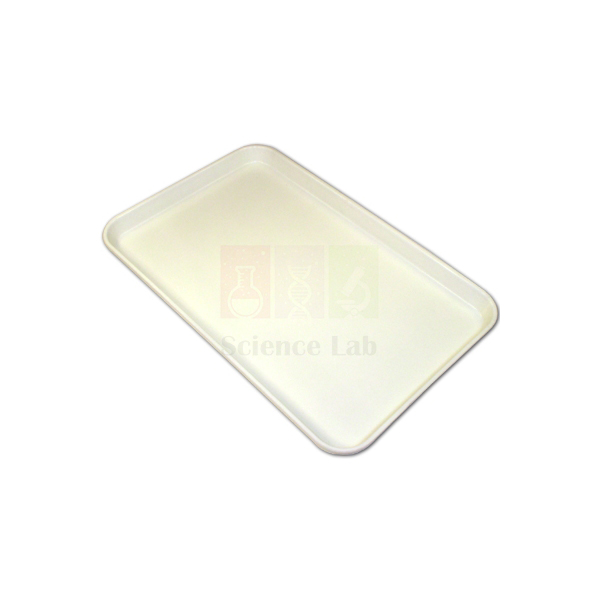
Invertebrate Sampling Tray
Invertebrate Sampling Tray (Product Code: SLE/EZ/16) is a large, flat-bottomed fibreglass pan used for hand-picking macroinvertebrates and other small critters from stream and pond samples in biology fieldwork. Measuring 11-7/16 x 17-3/4 x 3/4 in, it has metal reinforcement rods that stop it warping, so the sample stays evenly spread. It is supplied by Jain Scientific Equipments Pvt Ltd (ScienceLab), Ambala, for schools, colleges and environmental study groups within its school biology lab equipment in India.
Specifications
| Parameter | Detail |
|---|---|
| Material | Fibreglass |
| Reinforcement | Metal rods to prevent warping |
| Base | Flat-bottomed |
| Size | 11-7/16 x 17-3/4 x 3/4 in |
| Intended use | Hand-picking macroinvertebrates or other small critters |
| Product code | SLE/EZ/16 |
| Supplied by | Jain Scientific Equipments Pvt Ltd (ScienceLab), Ambala, India |
What Is the Invertebrate Sampling Tray Used For?
In a stream survey, a kick sample or net sweep brings up gravel, leaves and a mix of animals such as mayfly and caddisfly larvae, snails and worms. Spreading that sample thinly over a broad, flat tray gives students room to see every animal and pick it out by hand with soft forceps or a pipette. Because some of these animals tolerate pollution and others do not, the picked sample can be used to judge the water quality of the site.
The reinforcing rods keep the base flat, so a shallow layer of water covers the sample evenly instead of pooling at one end. Set the tray on level ground in the shade, add just enough water to cover the debris, and move picked animals to smaller sorting trays for counting. Rinse it after use and avoid dropping it on rocks, which can chip fibreglass. It is a sturdy piece of zoology lab equipment for field courses in India and abroad.
Supplier
This invertebrate sampling tray is supplied by Jain Scientific Equipments Private Limited, trading as ScienceLab, from Ambala, Haryana, India. Schools, universities, environmental monitoring projects and dealers can order it with nets, sorting trays and identification keys on one quotation, for delivery within India or to international markets. Learn more on the company profile page.
Related Zoology Equipment
Equipment that completes a macroinvertebrate sampling workflow:
- Net, Basic Fish Dip — a D-shaped net for collecting the sample from the stream bed.
- Sorting Tray — small white trays for separating the picked animals by type.
- Forceps (Tweezers) — for lifting delicate larvae out of the debris.
- Key to Identifying Water Invertebrates — for naming what has been found.
The Zoology category lists more nets, trays and field items.
Frequently Asked Questions
What are the dimensions of the Invertebrate Sampling Tray?
The Invertebrate Sampling Tray measures 11-7/16 x 17-3/4 x 3/4 in. The large, shallow area lets a whole net sample be spread thinly, so students can see and hand-pick every small animal in it.
What is the Invertebrate Sampling Tray made of?
The Invertebrate Sampling Tray is a fibreglass pan with metal reinforcement rods. The rods prevent warping, so the tray stays flat and water spreads evenly across the base during sorting.
What are macroinvertebrates and why pick them with this tray?
Macroinvertebrates are animals without backbones that are large enough to see without a microscope, such as insect larvae, snails and worms. The Invertebrate Sampling Tray gives a flat, open surface for hand-picking them from stream or pond debris.
Can the Invertebrate Sampling Tray be used in the lab as well as outdoors?
Yes. The Invertebrate Sampling Tray works on a lab bench for sorting samples brought back from the field, and outdoors on level ground beside the water. Keep it in the shade so the sample stays cool.
Who supplies the Invertebrate Sampling Tray?
The Invertebrate Sampling Tray is supplied by Jain Scientific Equipments Pvt Ltd (ScienceLab) of Ambala, Haryana, India. Schools, colleges, research groups and dealers in India and international markets can request a quotation.
What should I include in an enquiry for the Invertebrate Sampling Tray?
For an Invertebrate Sampling Tray quotation, include the number of trays, your delivery location and any nets, sorting trays or keys you need with them. You can send this through the contact page or the enquiry cart.
Request a Quote
Ask for a price on the Invertebrate Sampling Tray through our contact page, or add it to the enquiry cart with other stream-survey equipment.
Last updated: 24 September 2026