- Physics Lab Equipment
- Chemistry Lab Equipment
- Biology Lab Equipment
- Anatomical Lab Equipment
- Learning
- Educational Lab Equipment
- Magnets
- Agriculture
- Astronomy
- Earth Science
- Geography Lab Equipment
- Safety Lab Coat
- Laboratory
- Meteorological
- Electricity & Magnetism
- Heat
- School Lab Equipment
- Lab Glassware
- Science Lab Equipment
- Tvet Lab Equipment
- Robotics Kits Supplier and Manufacturer for Schools India
- Math Lab Equipment Manufacturers and Exporters in Ambala
- STEM Kits Manufacturers and Supplier India
- Engineering Lab Equipment
- Hospital Lab Equipment
- Water, Sanitation & Hygiene Supplies
- Cold Chain, Solar & Communication Equipment
- Nutrition
Last updated: 22 October 2026
Quick Answer
Jain Scientific Equipments Pvt Ltd (ScienceLab), Ambala, Haryana, lists 32 zoology items in its range of school biology lab equipment in India, for school biology rooms, college zoology practicals and field-study groups, arranged in 7 groups from natural-bone skeletons and lifecycle mounts to insect nets, pond-sampling gear, live-animal habitats and slide tools. 7 of the items are manufactured by ScienceLab at its factory at Saha, Ambala, and 25 are supplied by ScienceLab. Each item has its own product page, linked from the product listing under this description. The company supplies buyers in India and in 110 countries.
Quick links: Request a quotation · Jump to specifications by group · Open your enquiry cart
Explore the Zoology Range
| Range | Items | What it covers |
|---|---|---|
| Animal skeletons and frog model | 6 | Mounted natural-bone bat, frog, lizard, pigeon and snake skeletons on bases with acrylic covers, and a life-sized take-apart frog model with 22 removable parts. |
| Insect mounts and lifecycle blocks | 4 | Honeybee and silkworm lifecycle plastomounts in acrylic blocks, a grasshopper lifecycle in clear resin and a cased set of mounted insects and other arthropods. |
| Insect collecting and pinning | 5 | An economy insect net, a collecting net with collapsible handle, a class insect lab kit with pins, spreading board and forceps, a wooden insect pin holder and a gridded bug box with 2x and 4x magnification. |
| Fish nets, seines and traps | 6 | An aquarium dip net, a D-frame fish dip net, a knotless nylon minnow seine, a wire-mesh minnow trap, a bucket aerator for keeping samples oxygenated and a mini fish measuring board. |
| Sampling trays and identification | 4 | A fibreglass invertebrate sampling tray, a white HDPE sorting tray, a plastic tray for picking critters and a laminated A3 key to identifying water invertebrates. |
| Live-animal habitats | 4 | An AntWorks gel ant habitat, a giant ant farm with tunnelling sand, a two-chamber choice container with lid and a clear polystyrene mini aquarium tank. |
| Magnifier and slide tools | 3 | A 3x and 6x bifocal hand lens, pre-cleaned 22 mm x 22 mm microscope cover slips and a stainless steel teasing needle with plastic handle. |
| Total | 32 | All items listed in the Zoology range |
Zoology Specifications
Key specifications below are taken from each product's own page; open a product for its full specifications and product code.
Animal skeletons and frog model (6)
| Product | Key specification |
|---|---|
| Bat Skeleton | Specimen: Natural bone, mounted; Display: On a base with an acrylic cover; Included: Key card |
| Frog Skeleton | Case size: 155 x 115 x 82 mm; Specimen: Natural bone, mounted; Base and cover: On a base with an acrylic cover |
| Lizard Skeleton | Case size: 230 x 77 x 30 mm; Specimen: Natural bone; Mounting: Mounted in natural position |
| Mi-Own Frog Model | Grade level: Grades 6–12; Height: 8 in; Removable parts: 22, referenced on a key card |
| Pigeon Skeleton | Case size: 150 x 130 x 210 mm; Specimen: Natural bone, mounted; Display: On a base with an acrylic cover |
| Snake Skeleton | Case size: 300 x 98 x 30 mm; Material: Natural bone; Posture: Mounted in natural position |
Insect mounts and lifecycle blocks (4)
| Product | Key specification |
|---|---|
| Grasshopper Lifecycle | Blocks included: One specimen block, 6 1/2 x 3 x 1 in; Overall size (as listed): 8 1/4 x 4 3/4 x 1 1/2 in |
| Honeybee Lifecycle Plastomount | Size: 140 x 64 x 18 mm; Weight: 190 g; Stages shown: Egg, larva, pupa, worker, drone and adult forms |
| Insect Mount Set | Contents: Mounted insect and arthropod specimens (full list below); Case: Die-cut foam inserts and sturdy handle |
| Silkworm Lifecycle Plastomount | Stages shown: Egg, larva, caterpillar, pupa and adult; Also included: Mulberry leaves; samples of raw silk and silk fabric |
Insect collecting and pinning (5)
| Product | Key specification |
|---|---|
| Bug Box, Gridded | Jar diameter: 6 cm; Magnification: 2x; 4x with the second lens folded down; Jar material: Acrylic |
| Collapsible Handle Economy Model | Handle length: 14.5 in to 30 in; Diameter: 14.5 in approx.; Length: 38.5 in approx. |
| Insect Lab Kit | Group size: For groups of 12–24; Pins: Insect pins, sizes 1, 2 and 3; Mounting: Spreading board; Riker mount, small |
| Insect Net, Economy | Handle length: 36 in; Handle diameter: 5/8 in; Hoop diameter: 10-1/2 in |
| Insect Pin Holder | Holes: 12; Size: 9 x 10 x 4 cm; Material: Wood |
Fish nets, seines and traps (6)
| Product | Key specification |
|---|---|
| Aquarium Dip Net | Net size: 3 x 4 in; Net: Fine mesh; Handle: Extra-strong, three-ply, vinyl-covered |
| Bucket Aerator | Air hose: 24 ft; Container: Can work in a 5-gallon bucket; Function: Keeps samples oxygenated in the field |
| Gee Minnow Trap | Material: Galvanised 1/4 in square wire mesh; Length: 16 in; Width: 9 in |
| Mini Fish Measuring Board | Size (as listed): 15 in long; 16 x 5 x 1.5 in; Material: Lightweight PVC; Scale printing: Silk-screened in high-resolution black |
| Minnow Seine, Thrifty | Length: 4 ft; Mesh size: 1/4 in; Net material: Green knotless nylon mesh |
| Net, Basic Fish Dip | Handle: Aluminium, 4 ft long; Bow size: 16 in wide x 18 in long; Bag depth: 24 in |
Sampling trays and identification (4)
| Product | Key specification |
|---|---|
| Invertebrate Sampling Tray | Size: 11-7/16 x 17-3/4 x 3/4 in; Material: Fibreglass; Reinforcement: Metal rods to prevent warping |
| Key to Identifying Water Invertebrates | Guide series: Key Identification Guides K1 - 5; Sheet size: A3; Finish: Laminated, wipe-clean |
| Sorting Tray | Size: 5 x 7 in; Colour: White; Base: Flat-bottomed |
| Tray | Size: 22.5 x 25 cm; Material: Plastic; Intended use: Picking critters; studying small objects |
Live-animal habitats (4)
| Product | Key specification |
|---|---|
| Antworks Deluxe Kit | Observation: 3-D tunnelling visible through the gel; Tunnelling medium: Translucent, highly nutritious, non-toxic gel |
| Chamber with Lid | Layout: Two chambers connected by a passageway; Passageway: Escape-proof; Closure: Tight-fitting lid to contain the critters |
| Giant Ant Farm | Size: 15 x 10 in; Connecting tube: 24-inch, clear; Tunnelling medium: Clean tunnelling sand |
| Mini Aquarium Tank | Material: Clear polystyrene; Form: Pan with rounded rim; Reuse: Reusable, or economical enough to discard |
Magnifier and slide tools (3)
| Product | Key specification |
|---|---|
| Lens | Magnification: 3x and 6x; Lens diameter: 175 mm; Handle: Highly polished chrome |
| Microscope Cover Slips | Dimensions: 22 mm x 22 mm; Thickness: 0.13 – 0.16 mm; Condition: Pre-cleaned |
| Teasing Needle (Probe) | Needle: Stainless steel; Handle: Plastic; Sold as: Individual pieces (eaches) |
Related Equipment in Other ScienceLab Ranges
Zoology practicals and field studies often also need these items from other ScienceLab ranges:
Who Buys This Range
Schools use the natural-bone frog, pigeon and snake skeletons for spotting exercises, the Mi-Own Frog Model for grades 6–12 and the ant habitats and bug boxes in classrooms and science clubs. Colleges and universities add the insect mount set, lifecycle plastomounts and the Insect Lab Kit, sized for groups of 12–24 students, to undergraduate zoology and entomology practicals. Field-study, ecology and environmental science groups take the dip nets, seines, minnow trap, sampling trays and invertebrate key to ponds and streams. Dealers, distributors and tender suppliers order class quantities of nets, needles and trays along with specimen sets.
Other ScienceLab Equipment Ranges
| Range | What it covers |
|---|---|
| Dissection Equipment | Dissecting sets, scalpels, forceps, trays and pins |
| Animal Model | Zoology models, including frog, fish and rat dissection models and heart and brain sets |
| Prepared Slides | Histology, botany, cell division and microorganism slide sets |
| Microscope | Monocular, binocular, trinocular, stereo and digital microscopes |
| Botany | Plant models, potometers, a clinostat and hormone and nutrition kits |
| Biology Kits | Ready investigations on cells, blood typing, kidney filtration and microbes |
| Biology Lab Equipment | Apparatus for respiration, soil ecology and phototropism |
| Biology Lab Equipment | Biology lab equipment in sub-ranges, from DNA models and dissecting sets to prepared slides, kits and botany apparatus |
Frequently Asked Questions
What does the Zoology range include?
32 items in 7 groups: natural-bone animal skeletons and a frog model, insect and lifecycle mounts, insect collecting and pinning tools, fish nets, seines and traps, sampling trays, live-animal habitats, and a magnifier, cover slips and a teasing needle.
Which items does ScienceLab manufacture and which are supplied?
7 items are manufactured by ScienceLab: the Insect Net, Economy, the Collapsible Handle Economy Model collecting net, the Aquarium Dip Net, the D-frame Net, Basic Fish Dip, the Minnow Seine, Thrifty, the Insect Pin Holder and the Teasing Needle (Probe). The other 25 items, including the natural-bone skeletons, lifecycle plastomounts, the Insect Lab Kit, the ant habitats and the sampling trays, are supplied by ScienceLab.
Are the animal skeletons real bone?
Yes. The Bat, Frog, Lizard, Pigeon and Snake skeletons are natural bone, mounted on a base under an acrylic cover; the frog case is 155 x 115 x 82 mm and the snake case 300 x 98 x 30 mm. For a model rather than a specimen, the Mi-Own Frog Model is life-sized with 22 removable parts.
Which lifecycle and insect specimens are available?
The Honeybee Lifecycle Plastomount shows egg, larva, pupa, worker, drone and adult with honeycomb, beeswax and honey, and the Silkworm Lifecycle Plastomount adds mulberry leaves, raw silk and silk fabric. The Grasshopper Lifecycle shows incomplete metamorphosis in a resin block, and the Insect Mount Set includes spiders, scorpions, crabs, shrimps, beetles, wasps, a monarch butterfly and a dragonfly.
What is used for pond and stream field work?
The Net, Basic Fish Dip has a 4 ft aluminium handle, a 16 x 18 in D-shaped bow and 1/4 in knotless nylon mesh; the Minnow Seine, Thrifty is 4 ft long (poles not included) and the Gee Minnow Trap is 16 in long. Catches are sorted on the fibreglass Invertebrate Sampling Tray and named with the laminated Key to Identifying Water Invertebrates.
Is there a class kit for insect collecting?
Yes. The Insect Lab Kit is sized for groups of 12–24 and contains insect pins in sizes 1, 2 and 3, a spreading board, a small Riker mount, entomology forceps, rulers, 3-lens magnifiers, vials and glassine envelopes. The Insect Net, Economy has a 36 in handle and a 10-1/2 in hoop, and the Insect Pin Holder keeps pins sorted in 12 holes.
Do you accept bulk, tender and export orders?
Yes. Bulk quantities, tender enquiries and export orders are accepted, including class sets of nets and needles, and product specifications are provided on request so they can be checked against your tender documents.
What should I include in a quotation request?
Product names or codes (for example SLE/EZ/04 for the Insect Lab Kit), quantities, the class size or number of groups, the delivery location and any tender specification.
Request a Quote
Send product names or codes and quantities through the contact page, or add items to your enquiry cart and submit it.
ScienceLab (Jain Scientific Equipments Pvt Ltd)
1226/1-5, Bengali Mohalla, Science Market, Ambala Cantt, Haryana 133001, India
Phone: +91-7082934803
Email: sales@scilabexport.com
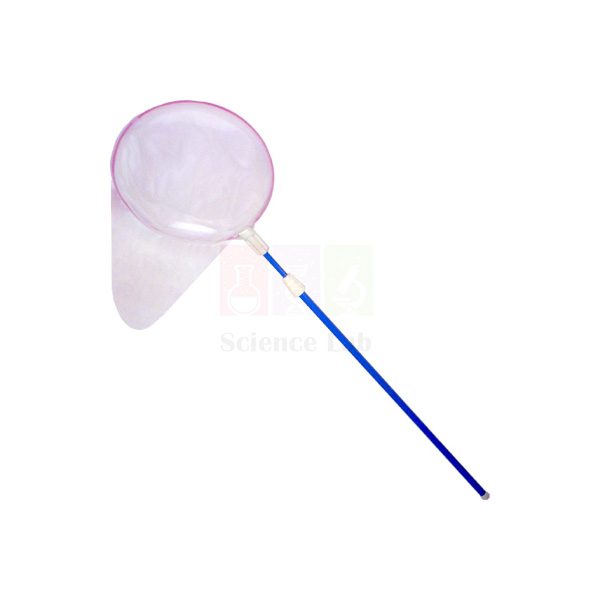
Collapsible Handle Economy Model
Collapsible Handle Economy Model (Product Code: SLE/EZ/01) is an economy-model field collecting net with a collapsible handle, used to catch insects and other small animals during zoology and ecology fieldwork. It has a diameter of about 14.5 in, a length of about 38.5 in, and a handle that adjusts between 14.5 and 30 in, so it packs down small for travel and extends for sweeping. This zoology lab equipment is made by Jain Scientific Equipments Pvt Ltd (ScienceLab), the OEM, at its licensed factory at 449, HSIIDC Industrial Area, Saha, Ambala, India.
Specifications
| Parameter | Detail |
|---|---|
| Model | Economy |
| Handle | Collapsible |
| Handle length | 14.5 in to 30 in |
| Diameter | 14.5 in approx. |
| Length | 38.5 in approx. |
| Product code | SLE/EZ/01 |
| Manufacturer | Jain Scientific Equipments Pvt Ltd (ScienceLab) — OEM |
| Country of origin | India (made in Ambala, Haryana) |
What Is the Collapsible Handle Net Used For?
Field nets are the basic tool for studying insect diversity outdoors. Students sweep the net through grass and low plants, or swing it to catch flying insects, then transfer what they catch to viewing boxes or collecting jars for identification, counting and release. A collapsible handle is the practical feature here: shortened, the net fits in a school bag or kit box for field trips; extended to its full 30 in, it gives more reach into vegetation and over water margins.
For a class survey, give each group one net and a viewing box, agree a fixed number of sweeps per habitat so results can be compared, and empty the net carefully by turning the bag over into a container. Shake out debris and let the net dry after use. As an economical piece of biology teaching equipment in India, it lets a school equip a whole class for insect-sampling practicals.
What to Specify When Ordering
- The number of nets required, for example one per student group.
- Any matching items for the same field trip, such as bug boxes, sorting trays or an insect lab kit.
- If you need details beyond the listed dimensions (net material or mesh), ask us before ordering.
OEM Manufacturer
ScienceLab, the trading name of Jain Scientific Equipments Private Limited, is the OEM of this economy-model net and makes it at its own licensed factory at Saha, Ambala, Haryana, India. Schools, colleges, nature education centres and dealers in India and international markets buy it factory-direct rather than through a trader.
Nets can be combined with viewing and mounting items in one consignment, and repeat orders or questions about spares are handled by the manufacturer itself — ask us. See the ScienceLab profile page for company details.
Related Zoology Equipment
Complete an insect field-study set with these items:
- Insect Net, Economy — another economy net for comparing options.
- Bug Box, Gridded — for viewing and measuring catches under magnification.
- Sorting Tray — for sorting the contents of the net back at the bench.
- Insect Lab Kit — pins, spreading board and mounts for preparing a collection.
See more field and specimen equipment in the Zoology category.
Frequently Asked Questions
What are the dimensions of the Collapsible Handle Economy Model?
The Collapsible Handle Economy Model has a diameter of about 14.5 in and a length of about 38.5 in. Its collapsible handle adjusts from 14.5 in to 30 in, so it can be shortened for carrying and extended for use in the field.
What is the Collapsible Handle Economy Model used for?
The Collapsible Handle Economy Model is a field collecting net for catching insects and other small animals during outdoor biology lessons, ecology surveys and zoology practicals. Catches are usually moved to viewing boxes or jars for study and then released.
Why choose a collapsible handle?
A collapsible handle, as on the Collapsible Handle Economy Model, shortens to 14.5 in for storage and transport in kit boxes or bags, then extends to 30 in for reaching into tall grass, shrubs or pond edges during sampling.
What is the net made of?
The listing for the Collapsible Handle Economy Model does not state the net fabric or mesh size. If your practical needs a particular mesh, for example for very small insects, please ask us through the contact page before placing an order.
Who manufactures the Collapsible Handle Economy Model?
Jain Scientific Equipments Pvt Ltd (ScienceLab) is the OEM manufacturer of the Collapsible Handle Economy Model, making it at its licensed factory at 449, HSIIDC Industrial Area, Saha, Ambala, Haryana, India, and supplying it factory-direct to schools, colleges and distributors, singly or in class quantities.
Request a Quote
To order class quantities, contact us through the contact page, or add the Collapsible Handle Economy Model to the enquiry cart with your other field equipment. Quotations come directly from the manufacturer.
Last updated: 24 September 2026
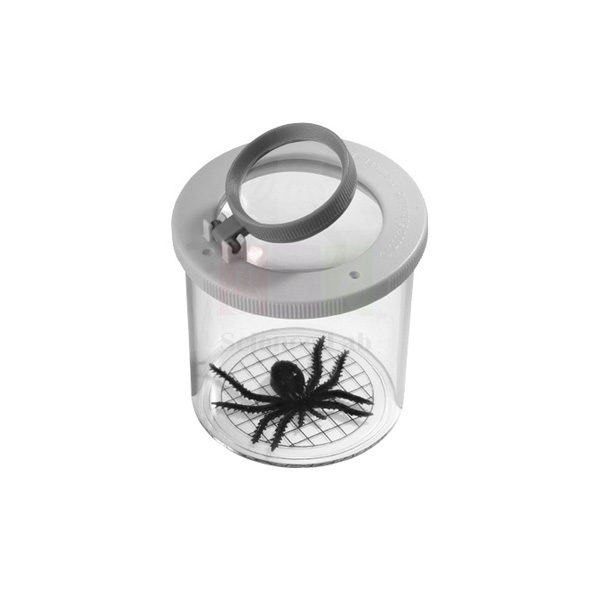
Bug Box, Gridded
Bug Box, Gridded (Product Code: SLE/EZ/02) is a small acrylic viewing jar with magnifying lenses, used to hold live insects and other minibeasts so students can examine and measure them in the classroom or the field. The first lens gives 2x magnification, a second fold-down lens raises it to 4x, and a measuring grid on the bottom of the 6 cm jar lets learners estimate body length. It is supplied by Jain Scientific Equipments Pvt Ltd (ScienceLab), Ambala, India, a biology lab equipment supplier in India.
Specifications
| Parameter | Detail |
|---|---|
| Jar material | Acrylic |
| Jar diameter | 6 cm |
| Magnification | 2x; 4x with the second lens folded down |
| Base | Measuring grid on the bottom |
| Product code | SLE/EZ/02 |
| Supplied by | Jain Scientific Equipments Pvt Ltd (ScienceLab), Ambala, India |
What Is the Gridded Bug Box Used For?
A bug box lets children and students look closely at a living insect, spider or snail without handling it. Start at 2x to find the animal and watch how it moves, then fold down the second lens for a 4x view of legs, mouthparts, wing veins or body segments. The grid printed on the base turns observation into measurement: learners can count squares to estimate the animal’s length and record it alongside a sketch, which suits primary science, middle-school biology and ecology survey work.
Keep the box out of direct sun, observe for a short time and release animals where they were found. Wipe the acrylic with a soft damp cloth rather than solvents to avoid clouding. Used with a collecting net and a sorting tray, gridded bug boxes give each group a simple kit for insect study, and a class set is a useful biology teaching aid for schools in India.
What to Specify When Ordering
- The number of bug boxes, for example one per student or per pair.
- Whether you also need collecting nets or sorting trays for field sessions.
- The delivery location and any packing requirements for classroom sets.
Supplier
Jain Scientific Equipments Private Limited, trading as ScienceLab, supplies the Bug Box, Gridded from Ambala, Haryana, to primary and secondary schools, colleges, nature clubs and distributors in India and international markets. Class quantities can be quoted together with other zoology field items on one order. Read more on the company profile page.
Related Zoology Equipment
Items that complete a minibeast study session:
- Collapsible Handle Economy Model — a field net for catching insects to view.
- Sorting Tray — for sorting catches before choosing animals to examine.
- Bug Box — a simpler viewing pot for younger children.
- Centered Magnifier for Insects — an alternative hand-held insect viewer.
Find more items in the Zoology category.
Frequently Asked Questions
What magnification does the Bug Box, Gridded give?
The Bug Box, Gridded magnifies insects 2x through its first lens. Folding down the second lens increases the magnification to 4x, so students can first locate the animal and then look at fine details such as legs and wing veins.
How big is the Bug Box, Gridded?
The Bug Box, Gridded has an acrylic jar 6 cm in diameter, which suits small beetles, ants, spiders and caterpillars from the school grounds while still fitting easily in a child’s hand or a field bag.
What is the grid on the Bug Box, Gridded for?
The measuring grid on the bottom of the Bug Box, Gridded lets students estimate the size of the animal inside by counting grid squares, so they can record measurements and compare specimens during a survey.
How should the Bug Box, Gridded be cleaned?
Clean the Bug Box, Gridded with a soft cloth and mild soapy water, then rinse and dry it. Avoid solvents and abrasive cleaners, which can cloud or scratch the acrylic jar and lenses.
Who supplies the Bug Box, Gridded?
Jain Scientific Equipments Pvt Ltd (ScienceLab), Ambala, Haryana, India supplies the Bug Box, Gridded in single units or class sets to schools, colleges and dealers in India and international markets.
Request a Quote
Send your required quantity through our contact page, or add the Bug Box, Gridded to the enquiry cart with other field-study items.
Last updated: 24 September 2026
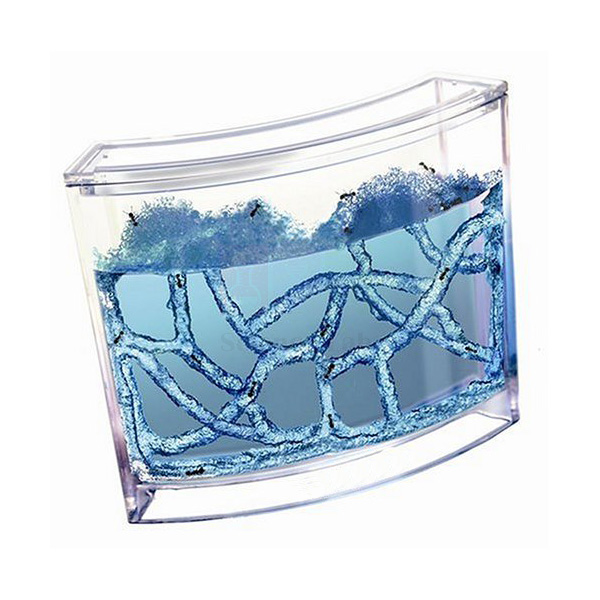
Antworks Deluxe Kit
Antworks Deluxe Kit (Product Code: SLE/EZ/03) is a clear ant habitat filled with translucent nutrient gel, used to let students watch ants dig and extend a 3-D tunnel network in classrooms and science clubs. Instead of sand or soil, the habitat uses a highly nutritious, non-toxic gel, so every tunnel stays visible from the sides. This branded observation kit is supplied by Jain Scientific Equipments Pvt Ltd (ScienceLab), Ambala, as part of its school biology lab equipment in India.
Key Details
| Parameter | Detail |
|---|---|
| Type | Ant habitat (AntWorks), deluxe kit |
| Tunnelling medium | Translucent, highly nutritious, non-toxic gel |
| Closure | Lid, secured after the ants are inserted |
| Set-up | Prod small starting-point holes in the gel to start the tunnel network |
| Observation | 3-D tunnelling visible through the gel |
| Product code | SLE/EZ/03 |
| Supplied by | Jain Scientific Equipments Pvt Ltd (ScienceLab), Ambala, India |
What Is the AntWorks Kit Used For?
An ant habitat turns animal behaviour into something a class can watch over days and weeks. Once ants are placed on the gel and the lid is secured, they start excavating; because the gel is translucent, students can follow each tunnel as it branches and deepens, note how the ants share work, and see how they carry excavated gel to the surface. It supports lessons on social insects, habitats, animal behaviour and the scientific method, with students keeping observation diaries and drawing the tunnel system as it develops.
To set up, use a thin probe to make a few small starting holes in the gel surface, add a small group of ants collected from one colony, and close the lid. Keep the habitat at room temperature, out of direct sunlight and away from heaters. Local rules on collecting and keeping insects should be followed, and ants should be released near where they were found at the end of the study.
What to Specify When Ordering
- The number of kits, for example one per class or per science club group.
- Whether you want related viewing items, such as bug boxes or hand lenses, on the same order.
- Ask us to confirm the full contents of the deluxe kit before ordering, as they are not itemised in the listing.
Supplier
The Antworks Deluxe Kit is a third-party branded product that ScienceLab, the trading name of Jain Scientific Equipments Private Limited, Ambala, Haryana, sources and supplies to schools, colleges, hobby science centres and dealers in India and international markets. We can add it to a wider zoology or science kit order. Company information is on the ScienceLab profile page.
Related Zoology Equipment
Other items for studying ants and small invertebrates:
- Giant Ant Farm — a sand-based ant farm with a connecting tube for longer projects.
- Bug Box, Gridded — for collecting ants and looking at them under 2x or 4x.
- Hand Lens — for close observation of tunnel walls and individual ants.
- Chamber with Lid — a closed chamber for keeping other small invertebrates.
Browse more items in the Zoology category.
Frequently Asked Questions
How does the Antworks Deluxe Kit work?
The Antworks Deluxe Kit is an ant habitat filled with a translucent, non-toxic nutrient gel. You make small starting holes in the gel, insert ants and secure the lid; the ants then dig a 3-D tunnel network that stays visible through the gel.
Are live ants included with the Antworks Deluxe Kit?
The listing for the Antworks Deluxe Kit does not say that live ants are included, so plan to collect a small group of local ants from one colony. Please confirm the kit contents with us through the contact page before ordering.
What is the gel in the Antworks Deluxe Kit?
The Antworks Deluxe Kit uses a highly nutritious, non-toxic, translucent gel in place of sand or soil. It serves as the material the ants tunnel through and as a nutrient source, and its clarity lets students see every tunnel.
Which age groups is the Antworks Deluxe Kit suitable for?
The Antworks Deluxe Kit suits primary and secondary classes and science clubs studying insects and behaviour, with adult supervision for collecting and inserting ants. Its listing gives no age grading, so teachers should judge suitability for their students.
Who supplies the Antworks Deluxe Kit?
Jain Scientific Equipments Pvt Ltd (ScienceLab), Ambala, Haryana, India supplies the Antworks Deluxe Kit, a third-party branded ant habitat, to schools, colleges and dealers in India and international markets.
Request a Quote
Ask for a quotation through our contact page, or add the Antworks Deluxe Kit to the enquiry cart with other biology teaching items.
Last updated: 24 September 2026
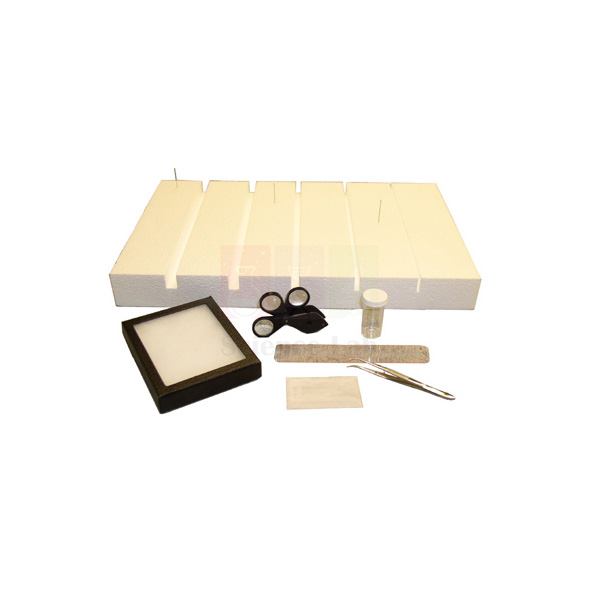
Insect Lab Kit
Insect Lab Kit (Product Code: SLE/EZ/04) is a class kit of entomology tools and consumables used to collect, pin, spread, label and study insects in school and college zoology practicals. Sized for groups of 12 to 24 students, it combines insect pins, a spreading board, entomology forceps, rulers, 3-lens magnifiers, vials, glassine envelopes and a small Riker mount, making it a ready insect collection kit for schools. It is supplied by Jain Scientific Equipments Pvt Ltd (ScienceLab), Ambala, India.
Key Details
| Parameter | Detail |
|---|---|
| Group size | For groups of 12–24 |
| Pins | Insect pins, sizes 1, 2 and 3 |
| Mounting | Spreading board; Riker mount, small |
| Handling | Entomology forceps |
| Measuring and viewing | Clear plastic rulers; 3-lens magnifiers |
| Storage | Clear plastic vials; glassine envelopes, medium |
| Product code | SLE/EZ/04 |
| Supplied by | Jain Scientific Equipments Pvt Ltd (ScienceLab), Ambala, India |
Kit contents as listed:
- Insect pins, 1, 2, 3
- Spreading board
- Entomology forceps
- Clear plastic rulers
- 3-lens magnifiers
- Clear plastic vials
- Glassine envelopes, medium
- Riker mount, small
What Is the Insect Lab Kit Used For?
Building an insect collection teaches classification, anatomy and careful technique in one project. After specimens are collected in the field, students handle them with the entomology forceps, examine features such as antennae, mouthparts and wing venation through the 3-lens magnifiers, and measure body and wing length with the plastic rulers. Hard-bodied insects are pinned with the appropriately sized insect pin, while butterflies and moths are set on the spreading board so the wings dry in a flat, open position.
Small or soft specimens go into the clear vials, and folded glassine envelopes keep butterfly and dragonfly wings intact until they can be spread. Finished specimens can be displayed in the Riker mount for the class reference collection. Divide the pins, envelopes and vials among groups at the start of the lesson and collect the forceps and magnifiers at the end, so the kit can be reused for the next class.
What to Specify When Ordering
- Your class or group size, so that the number of kits matches the 12–24 student range.
- Whether you need extra consumables, such as more pins, vials or envelopes, for repeat classes.
- Ask us for item quantities within the kit, as they are not given in the listing.
Supplier
ScienceLab, the trading name of Jain Scientific Equipments Private Limited, Ambala, Haryana, supplies the Insect Lab Kit to schools, colleges, universities and science distributors in India and international markets. Institutions adding us as a vendor can use GSTIN 06AAECJ8618A1ZT and Legal Entity Identifier 3358004HRD1JIVXKYX49 for Jain Scientific Equipments Private Limited. Company background is on the ScienceLab profile page.
Related Zoology Equipment
These items extend an insect collection project:
- Collapsible Handle Economy Model — a field net for collecting specimens.
- Insect Pin Holder — keeps pins of different sizes sorted at the bench.
- Sorting Tray — for sorting catches before pinning.
- Insect Mount Set — a ready-made reference set for identification practice.
More items are listed in the Zoology category.
Frequently Asked Questions
What is included in the Insect Lab Kit?
The Insect Lab Kit includes insect pins in sizes 1, 2 and 3, a spreading board, entomology forceps, clear plastic rulers, 3-lens magnifiers, clear plastic vials, medium glassine envelopes and a small Riker mount. Ask us for the quantity of each item.
How many students can use one Insect Lab Kit?
One Insect Lab Kit is designed for groups of 12 to 24 students. For larger classes or several sections, order additional kits or extra consumables such as pins, vials and envelopes so every group has enough material.
What is the spreading board in the Insect Lab Kit for?
The spreading board in the Insect Lab Kit holds butterflies, moths and other winged insects while their wings are pinned open and left to dry flat, so the wing pattern is displayed clearly for identification and display.
Are live or preserved insects supplied with the Insect Lab Kit?
No insects are listed in the Insect Lab Kit; it contains tools and consumables for students to prepare their own specimens. For ready-made specimens, see the Insect Mount Set or ask us through the contact page.
Who supplies the Insect Lab Kit?
Jain Scientific Equipments Pvt Ltd (ScienceLab), Ambala, Haryana, India supplies the Insect Lab Kit to schools, colleges and dealers in India and international markets, together with nets, trays and other zoology equipment when required.
Request a Quote
Send your class size and number of kits through our contact page, or add the Insect Lab Kit to the enquiry cart with related field equipment.
Last updated: 24 September 2026
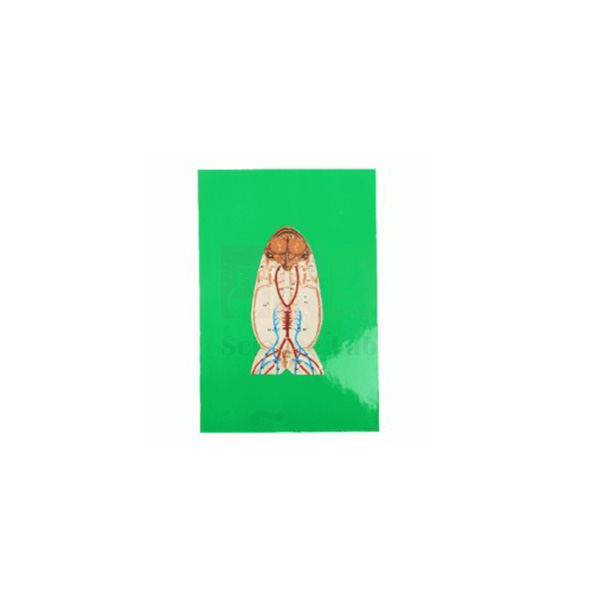
Mi-Own Frog Model
Mi-Own Frog Model (Product Code: SLE/EZ/05) is a life-sized, take-apart frog anatomy model used to teach amphibian external and internal structure to students in grades 6 to 12. The 8 in high model has 22 removable parts referenced on a key card and comes with reproducible student worksheets and a teacher’s guide, so it works as a reusable, dissection-free lesson. It is supplied by Jain Scientific Equipments Pvt Ltd (ScienceLab), Ambala, India, among its animal models for biology labs.
Specifications
| Parameter | Detail |
|---|---|
| Grade level | Grades 6–12 |
| Scale | Life-sized |
| Height | 8 in |
| Removable parts | 22, referenced on a key card |
| Durability | Washable and reusable; will not chip, tear or break |
| Teaching materials | Reproducible student worksheets, teacher’s guide, key card |
| Product code | SLE/EZ/05 |
| Supplied by | Jain Scientific Equipments Pvt Ltd (ScienceLab), Ambala, India |
What Is the Mi-Own Frog Model Used For?
The frog is the classic vertebrate for teaching organ systems, and this model lets students take one apart and put it back together as often as needed. Working in small groups, learners remove the 22 parts in sequence, match each to the key card, and see how the internal organs sit in relation to one another. Because the model is life-sized, students get a realistic sense of scale before, or instead of, a preserved-specimen dissection.
The reproducible worksheets give each student a record of what they identified, and the teacher’s guide helps plan the lesson and check answers. After class, the model can simply be washed and stored. It suits middle and high school biology, and colleges that want a durable, dissection-free alternative among their animal models for the biology lab.
What to Specify When Ordering
- The number of models, for example one per group of students.
- Whether you also need a frog skeleton or anatomy chart for the same unit.
- The delivery address for your school, college or dealership.
Supplier
The Mi-Own Frog Model is sourced and supplied by ScienceLab, the trading name of Jain Scientific Equipments Private Limited, Ambala, Haryana. The company supplies zoology models, skeletons and specimens to schools, colleges and dealers in India and international markets, so a complete amphibian teaching set can be ordered together. More about the company is on the ScienceLab profile page.
Related Zoology Equipment
Other frog teaching resources that pair well with this model:
- Frog Skeleton — shows the bones that support the organs seen in the model.
- Frog Dissection Model — an enlarged, sectioned view of the internal organs.
- Anatomy Of Frog — a wall chart for whole-class explanation.
- Frog Dissection — a preserved dissected specimen for comparison with the model.
Explore more in the Zoology category.
Frequently Asked Questions
How many parts does the Mi-Own Frog Model have?
The Mi-Own Frog Model has 22 removable parts. A key card that comes with the model references each part, so students can identify the organs as they take the model apart and reassemble it.
What size is the Mi-Own Frog Model?
The Mi-Own Frog Model is life-sized and 8 in high, which gives students a realistic sense of the size of a frog’s organs while still being easy to handle on a desk.
What teaching materials come with the Mi-Own Frog Model?
The Mi-Own Frog Model comes with reproducible student worksheets and a teacher’s guide, as well as the key card for the 22 parts. The worksheets can be copied for every student in the class.
Which grades is the Mi-Own Frog Model designed for?
The Mi-Own Frog Model is designed for grades 6 to 12, covering middle-school introductions to vertebrate anatomy through to more detailed high school biology on amphibian organ systems.
How durable is the Mi-Own Frog Model?
The Mi-Own Frog Model is washable and reusable, and its parts will not chip, tear or break with normal classroom use. Wipe or wash the parts after handling and store them together with the key card.
Who supplies the Mi-Own Frog Model?
Jain Scientific Equipments Pvt Ltd (ScienceLab), Ambala, Haryana, India supplies the Mi-Own Frog Model to schools, colleges and dealers in India and international markets, alongside frog skeletons, charts and other zoology teaching aids.
Request a Quote
Request a quotation through our contact page, or add the Mi-Own Frog Model to the enquiry cart with other zoology items.
Last updated: 24 September 2026
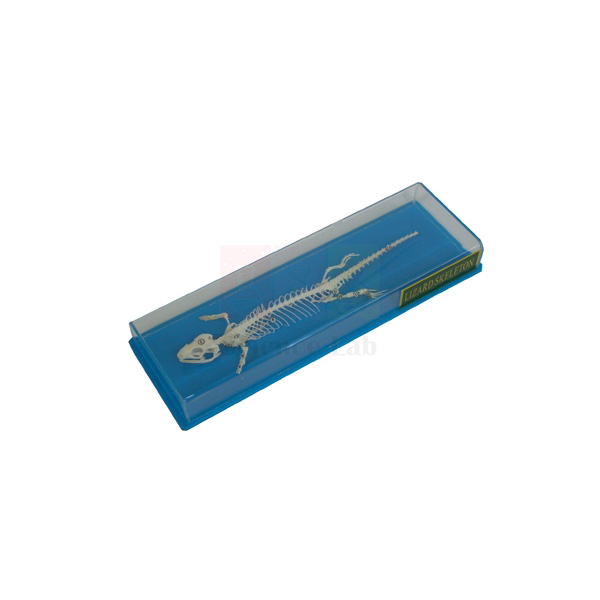
Lizard Skeleton
Lizard Skeleton (Product Code: SLE/EZ/06) is a real lizard skeleton, mounted in its natural position, used to teach reptile anatomy in school and college zoology laboratories. Teachers and students use it to study the skull, backbone, ribs and sprawling limbs of a reptile, presented on a base under an acrylic cover in a 230 x 77 x 30 mm case. It is supplied by Jain Scientific Equipments Pvt Ltd (ScienceLab), Ambala, India, as part of its zoology lab equipment range.
Specifications
| Parameter | Detail |
|---|---|
| Specimen | Natural bone |
| Mounting | Mounted in natural position |
| Presentation | On a base with acrylic cover |
| Case size | 230 x 77 x 30 mm |
| Product code | SLE/EZ/06 |
| Supplied by | Jain Scientific Equipments Pvt Ltd (ScienceLab), Ambala, India |
What Is the Lizard Skeleton Used For?
In a vertebrate practical, the lizard skeleton lets students pick out the features that mark a reptile: limbs that project sideways from the body, a long tail built from many small vertebrae, and ribs running along much of the trunk. Because the bones are mounted in the animal's natural stance, learners can see how the shoulder and hip girdles hold the body close to the ground, and relate that posture to how lizards move and hunt.
Teachers often place it next to amphibian and snake skeletons so a class can sort the three by limb structure and body plan, which makes it a practical lab specimen for biology teaching in India and elsewhere. Pass the case around rather than opening it, and use a hand lens for the fine toe bones and teeth. Keep it away from direct sunlight, and dust the acrylic with a soft, dry cloth.
Supplier
Jain Scientific Equipments Private Limited, which trades as ScienceLab, supplies this natural lizard skeleton from Ambala, Haryana. Schools, colleges, universities and distributors can source it together with other vertebrate skeletons and zoology teaching aids, for delivery across India and to international markets. More about the company is on the company profile page.
Related Zoology Equipment
Items that pair well with the lizard skeleton in a vertebrate comparison lesson:
- Snake Skeleton — a limbless reptile to compare with the lizard's four limbs and girdles.
- Frog Skeleton — an amphibian skeleton for contrasting ribs, spine and limb proportions.
- Lizard Dissection — a preserved specimen showing the soft organs the skeleton supports.
- Magnifying Glass — for close viewing of small bones such as toes and teeth.
The Zoology category lists more skeletons, nets, trays and field-study equipment.
Frequently Asked Questions
Is the Lizard Skeleton made from real bone?
Yes. The Lizard Skeleton (SLE/EZ/06) is natural bone, mounted in the animal's natural position rather than cast in plastic. As with any real specimen, small differences in size and bone detail from one piece to the next are normal.
What size is the Lizard Skeleton case?
The Lizard Skeleton is presented on a base with an acrylic cover in a case measuring 230 x 77 x 30 mm. The compact case suits bench-top display and can be passed around a class for close viewing.
Can students handle the bones of the Lizard Skeleton?
The Lizard Skeleton is meant to be viewed through its acrylic cover rather than handled. Keeping the cover in place protects the fine limb, toe and tail bones, so the same specimen can serve many classes over the years.
Which lizard species is used for the Lizard Skeleton?
The listing does not name the species used for the Lizard Skeleton. If your syllabus needs a particular species, ask through our contact page before ordering and we will tell you what can be supplied.
How should the Lizard Skeleton be stored?
Store the Lizard Skeleton in a dry cupboard away from heat and direct sunlight, and clean only the acrylic cover with a soft, dry cloth. Avoid solvent cleaners, which can cloud acrylic, and keep the cover closed.
Who supplies the Lizard Skeleton?
The Lizard Skeleton is supplied by Jain Scientific Equipments Pvt Ltd (ScienceLab), Ambala, Haryana, India. The company quotes single pieces and sets of vertebrate skeletons to schools, colleges and dealers in India and international markets.
What does a quotation request for the Lizard Skeleton need?
To quote the Lizard Skeleton we need the quantity, the delivery city or country, and any other zoology specimens you want on the same order. Send these details through the contact page or add the item to the enquiry cart.
Request a Quote
For a quotation on the Lizard Skeleton, send the quantity and delivery location through our contact page, or add it with other specimens to the enquiry cart.
Last updated: 24 September 2026
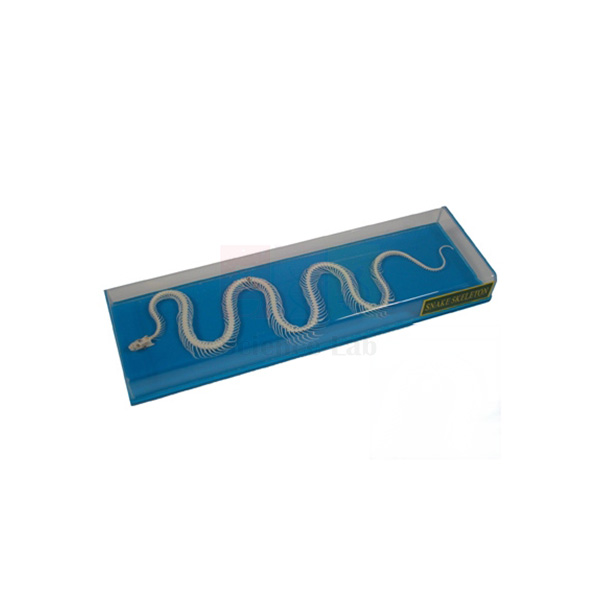
Snake Skeleton
Snake Skeleton (Product Code: SLE/EZ/07) is a natural-bone snake skeleton used to show how a limbless vertebrate is built in school zoology classrooms and college practicals. Mounted in a natural position on a base with an acrylic cover, it sits in a 300 x 98 x 30 mm case that displays the long chain of vertebrae and paired ribs. It is supplied by Jain Scientific Equipments Pvt Ltd (ScienceLab), Ambala, as biology lab equipment in India for labs that want real vertebrate specimens.
Specifications
| Parameter | Detail |
|---|---|
| Material | Natural bone |
| Posture | Mounted in natural position |
| Display | Base with an acrylic cover |
| Case size | 300 x 98 x 30 mm |
| Product code | SLE/EZ/07 |
| Supplied by | Jain Scientific Equipments Pvt Ltd (ScienceLab), Ambala, India |
What Is the Snake Skeleton Used For?
A snake's body is built almost entirely from one repeated unit: a vertebra with a pair of ribs. Seeing that pattern on a real specimen helps students understand how snakes move by bending the body in waves, and why they need no limbs to travel, climb or swim. The skull is worth a close look too, because the loosely joined jaw bones explain how a snake can swallow prey wider than its own head.
In evolution and classification lessons the snake skeleton is often set beside a lizard skeleton, so learners can discuss limb loss within the reptiles. It is a useful addition to school biology lab equipment in India for Class 9 to 12 and undergraduate zoology. Ask students to sketch a short section of the spine through the cover, using a hand lens to pick out where each rib meets its vertebra.
Supplier
ScienceLab is the trading name of Jain Scientific Equipments Private Limited, based in Ambala, Haryana. The company supplies this snake skeleton to schools, colleges, museums of teaching specimens and resellers, and can combine it with other skeletons and field equipment on one quotation for buyers in India and international markets. See the company profile for background.
Related Zoology Equipment
Specimens and tools that extend a lesson built around the snake skeleton:
- Lizard Skeleton — a limbed reptile for comparing girdles, limbs and tail.
- Pigeon Skeleton — a bird skeleton that shows a very different vertebrate body plan.
- Frog Skeleton — an amphibian with a short spine, useful as a contrast to the snake's long one.
- Hand Lens — for examining individual vertebrae, ribs and teeth through the cover.
Browse the Zoology category for more vertebrate specimens and animal-study equipment.
Frequently Asked Questions
Is the Snake Skeleton a real specimen?
Yes. The Snake Skeleton (SLE/EZ/07) is made of natural bone, mounted in a natural position on a base. Because it is a real animal, the exact length, curve and bone detail can vary slightly from one specimen to the next.
What are the case dimensions of the Snake Skeleton?
The Snake Skeleton comes in a case measuring 300 x 98 x 30 mm, with the bones on a base under an acrylic cover. The slim case fits easily on a lab bench or in a specimen cupboard.
Does the Snake Skeleton come with a label or key card?
The listing for the Snake Skeleton does not mention a key card or bone labels. If you need labelling for teaching, please ask through our contact page and we will confirm what is included before you order.
Can students count vertebrae on the Snake Skeleton?
Yes, students can count vertebrae and ribs on the Snake Skeleton through its acrylic cover, ideally over a short marked section with a hand lens. Handling the bones directly is not recommended, as the cover protects the delicate ribs.
How do I care for the Snake Skeleton?
Keep the Snake Skeleton in a dry place out of direct sunlight, and wipe the acrylic cover with a soft, dry cloth only. Do not use solvent-based cleaners on the cover, and avoid stacking heavy items on the case.
Can the Snake Skeleton be ordered with other vertebrate skeletons?
Yes. The Snake Skeleton can be quoted together with the lizard, frog, pigeon and bat skeletons in the same range, which suits a vertebrate-classes display. Tell us the quantity of each when you request a quotation.
Request a Quote
To price the Snake Skeleton, share the quantity and delivery location on our contact page, or list it with other specimens in the enquiry cart.
Last updated: 24 September 2026
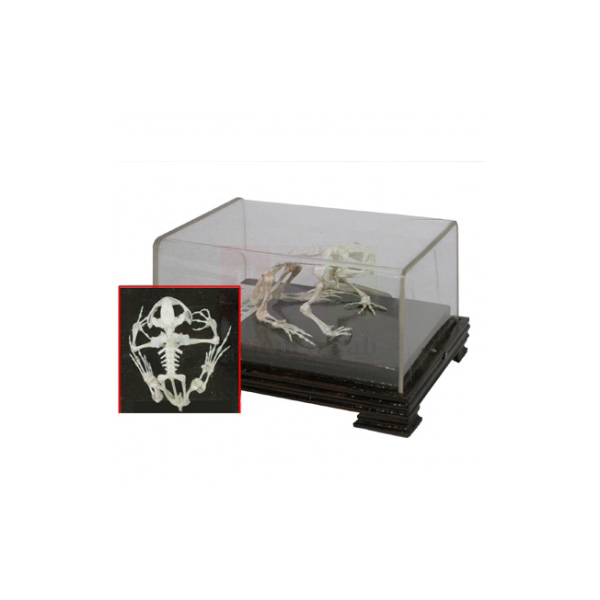
Frog Skeleton
Frog Skeleton (Product Code: SLE/EZ/08) is a mounted natural-bone frog skeleton used to teach amphibian anatomy in school biology rooms and undergraduate zoology practicals. It is popular for spotting exercises, where students identify bones and adaptations at a glance, and it rests on a base under an acrylic cover in a 155 x 115 x 82 mm case. It is supplied by Jain Scientific Equipments Pvt Ltd (ScienceLab), Ambala, a biology lab equipment supplier in India, as a real lab specimen for biology teaching.
Specifications
| Parameter | Detail |
|---|---|
| Specimen | Natural bone, mounted |
| Base and cover | On a base with an acrylic cover |
| Case size | 155 x 115 x 82 mm |
| Product code | SLE/EZ/08 |
| Supplied by | Jain Scientific Equipments Pvt Ltd (ScienceLab), Ambala, India |
What Is the Frog Skeleton Used For?
The frog is a classic type specimen in Indian zoology courses, and its skeleton shows clearly how the body is shaped for jumping. Students can trace the very short backbone ending in a rod-like urostyle, the long hind limbs, the broad, flat skull and the absence of true ribs. Comparing forelimb and hind limb bones also opens a discussion of how landing forces are absorbed.
Teachers use the skeleton for bone identification, labelled drawings and viva questions, and it pairs naturally with a frog dissection model where hands-on dissection is not practised. View it from the side as well as from above to see the limb girdles clearly. Keep it dry and out of strong sunlight, and clean only the acrylic cover with a soft cloth.
Supplier
This frog skeleton is supplied by Jain Scientific Equipments Private Limited, which trades as ScienceLab from Ambala, Haryana. Schools, colleges and universities can order it singly or as part of a set of vertebrate skeletons, with delivery across India and to international markets. Company details are on the company profile page.
Related Zoology Equipment
Useful companions for a frog anatomy practical:
- Frog Dissection Model — shows the internal organs that sit within the skeleton.
- Frog Dissection — a preserved specimen for demonstrating soft-tissue anatomy.
- Mi-Own Frog Model — another frog teaching aid from the same zoology range.
- Lizard Skeleton — a reptile skeleton for amphibian-versus-reptile comparisons.
More animal-study items are listed in the Zoology category.
Frequently Asked Questions
Is the Frog Skeleton made of real bone?
Yes. The Frog Skeleton (SLE/EZ/08) is natural bone, mounted on a base and protected by an acrylic cover. Being a real specimen, each piece can differ slightly in size and fine detail from the one pictured.
How big is the Frog Skeleton case?
The Frog Skeleton case measures 155 x 115 x 82 mm. The case lets students view the skeleton from several angles without opening the acrylic cover, which keeps the fine bones protected.
Is the Frog Skeleton suitable for zoology spotting practicals?
Yes. The Frog Skeleton suits spotting and viva sessions in school and undergraduate zoology, where students identify features such as the urostyle, girdles and limb bones. Place it at a numbered station with a question card for each feature.
Are the bones of the Frog Skeleton labelled?
The listing for the Frog Skeleton does not mention bone labels or a key card. If labelled specimens are required, ask us through the contact page and we will confirm what can be provided.
How should the Frog Skeleton be looked after?
Keep the Frog Skeleton in a dry cupboard away from heat and direct sunlight. Dust the acrylic cover with a soft, dry cloth, avoid solvent cleaners, and handle the case by its base rather than the cover.
Who supplies the Frog Skeleton?
The Frog Skeleton is supplied by Jain Scientific Equipments Pvt Ltd (ScienceLab), Ambala, Haryana, India. The company quotes schools, colleges, universities and dealers in India and international markets, and can add other vertebrate skeletons to the same quotation.
Request a Quote
Request a price for the Frog Skeleton by sending the quantity and delivery address through our contact page, or add it with related models to the enquiry cart.
Last updated: 24 September 2026
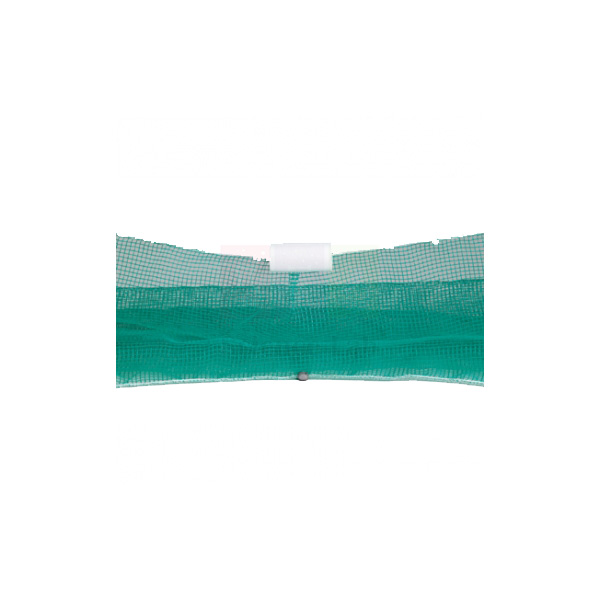
Minnow Seine, Thrifty
Minnow Seine, Thrifty (Product Code: SLE/EZ/09) is a small seine net used to capture minnows and other small fish in lakes, streams and ponds during school and college field studies. Built from green knotless nylon mesh with floats and weights, it is 4 ft long with a 1/4 in mesh; poles are not included. It is made by Jain Scientific Equipments Pvt Ltd (ScienceLab), an OEM manufacturer, at its own factory in Ambala, India.
Specifications
| Parameter | Detail |
|---|---|
| Purpose | Capturing minnows and other small fish in lakes, streams or ponds |
| Net material | Green knotless nylon mesh |
| Fittings | Floats and weights |
| Length | 4 ft |
| Mesh size | 1/4 in |
| Poles | Not included |
| Product code | SLE/EZ/09 |
| Manufacturer | Jain Scientific Equipments Pvt Ltd (ScienceLab) — OEM |
| Country of origin | India (made in Ambala, Haryana) |
What Is the Minnow Seine Used For?
A seine is a wall of netting held upright in the water: the floats keep the top edge at the surface while the weights hold the bottom edge on the bed. Two students each hold one end, wade slowly through shallow water and sweep the net towards the bank, then lift both ends together so the small fish collect in the middle. The catch is counted, identified and returned, which makes the seine a practical tool for fish diversity surveys and ecology projects.
Knotless mesh is gentler on scales and fins than knotted netting, which matters when fish are to be released. Choose calm, shallow water with a firm bottom, keep the weighted edge down during the sweep, and move the catch quickly into a bucket of water. Always supervise students near open water, and rinse and fully dry the net before storing it away from sunlight.
What to Specify When Ordering
- The number of seines needed, usually one for every pair of students in the field group.
- Poles for each end, since they are not included with the net — ask us if you want them quoted.
- Companion items such as a fish dip net, a measuring board or a bucket aerator for the same trip.
OEM Manufacturer
Jain Scientific Equipments Private Limited, trading as ScienceLab, is the original equipment manufacturer (OEM) of this minnow seine. The company makes its field-study nets at its own licensed factory at Saha, Ambala, Haryana, India, rather than sourcing them from a trader, and supplies them factory-direct to schools, colleges, field-study centres, dealers and importers. Replacement nets and repeat orders are handled by the manufacturer itself, so just ask us. See the company profile for more.
Related Zoology Equipment
Other items that complete a small-fish sampling kit:
- Net, Basic Fish Dip — for scooping fish and invertebrates from margins and weed beds.
- Gee Minnow Trap — a passive trap that can be left in place while the seine is used.
- Mini Fish Measuring Board — for recording the length of each fish before release.
- Bucket Aerator — keeps the holding bucket oxygenated while the catch is processed.
See the full Zoology category for more nets, traps and trays.
Frequently Asked Questions
Does the Minnow Seine, Thrifty come with poles?
No. The Minnow Seine, Thrifty is supplied as the net with its floats and weights, and poles are not included. Schools often use two straight wooden or metal poles, one at each end; ask us if you would like poles added to the quotation.
What are the length and mesh size of the Minnow Seine, Thrifty?
The Minnow Seine, Thrifty is 4 ft long and has a 1/4 in knotless nylon mesh. That size suits minnows and other small fish in shallow ponds, streams and lake margins, where a short net is easy for two students to handle.
Why does the Minnow Seine, Thrifty use knotless mesh?
Knotless nylon mesh, as used on the Minnow Seine, Thrifty, has a smoother surface than knotted net, so it is less likely to rub scales or catch fins and debris. That helps keep fish in good condition for counting and release.
How many people are needed to use the Minnow Seine, Thrifty?
Two people are normally needed for the Minnow Seine, Thrifty, one holding each end. They sweep the net through shallow water towards the bank with the weighted edge on the bottom, then lift both ends together to bring in the catch.
Who manufactures the Minnow Seine, Thrifty?
The Minnow Seine, Thrifty is manufactured by Jain Scientific Equipments Pvt Ltd (ScienceLab), the OEM, at its own licensed factory in Saha, Ambala, Haryana, India. Quotations, repeat orders and replacement nets come straight from the manufacturer.
How should the Minnow Seine, Thrifty be stored after fieldwork?
Rinse the Minnow Seine, Thrifty in clean water to remove mud and plant matter, let it dry completely, and store it loosely folded away from direct sunlight. Drying before storage helps prevent odour and mildew on the netting.
Request a Quote
Quotations for the Minnow Seine, Thrifty come direct from the manufacturer. Send the quantity and delivery location through our contact page, or add the seine and its companion items to the enquiry cart.
Last updated: 24 September 2026
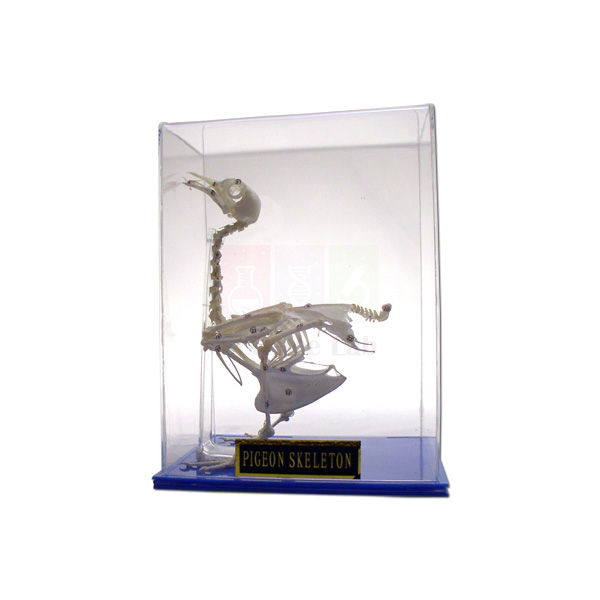
Pigeon Skeleton
Pigeon Skeleton (Product Code: SLE/EZ/10) is a real bird skeleton used to show the skeletal adaptations for flight in school biology and college zoology classes. The pigeon is the standard bird type in many Indian syllabi, and this natural-bone mount stands on a base under an acrylic cover in a 150 x 130 x 210 mm case. It is supplied by Jain Scientific Equipments Pvt Ltd (ScienceLab), Ambala, among its zoology lab equipment for institutions and school biology lab equipment in India.
Specifications
| Parameter | Detail |
|---|---|
| Specimen | Natural bone, mounted |
| Display | On a base with an acrylic cover |
| Case size | 150 x 130 x 210 mm |
| Product code | SLE/EZ/10 |
| Supplied by | Jain Scientific Equipments Pvt Ltd (ScienceLab), Ambala, India |
What Is the Pigeon Skeleton Used For?
Birds carry a set of skeletal features that make flight possible, and a pigeon skeleton shows them in one place. Students can find the deep keel on the breastbone that anchors the flight muscles, the wishbone formed by the fused collarbones, the stiff, partly fused back and hip region, and the short tail bone that supports the tail feathers. The toothless beak and large eye sockets are easy talking points as well.
The specimen works well in lessons on the classification of vertebrates and in practical exams where students name a bone and explain its role in flight. Place it beside a bat skeleton to discuss how birds and mammals arrived at flight in different ways. Stand the case on a stable, level surface, view it at eye level, and keep it in a dry cupboard away from direct sunlight.
Supplier
Jain Scientific Equipments Private Limited supplies the pigeon skeleton under its ScienceLab name from Ambala, Haryana, India. It is available to schools, colleges, universities and resellers as a single display piece or as part of a vertebrate skeleton collection, for delivery within India and to international markets. Read about the company on the company profile page.
Related Zoology Equipment
Pair the pigeon skeleton with these items for a comparative vertebrate display:
- Bat Skeleton — a flying mammal for comparing wing structure with the bird's.
- Lizard Skeleton — a reptile for discussing features birds share with their relatives.
- Frog Skeleton — an amphibian that completes a class-by-class comparison.
- Magnifying Glass — for inspecting the keel, wishbone and fused bones in detail.
The Zoology category has more skeletons and animal-study resources.
Frequently Asked Questions
Is the Pigeon Skeleton a natural specimen?
Yes. The Pigeon Skeleton (SLE/EZ/10) is made of natural bone and mounted on a base with an acrylic cover. As it comes from a real bird, its exact size and bone detail can vary a little between pieces.
What size is the Pigeon Skeleton case?
The Pigeon Skeleton case measures 150 x 130 x 210 mm. Check that your display shelf or cupboard has room for these dimensions before the specimen arrives.
Which flight adaptations can be seen on the Pigeon Skeleton?
On the Pigeon Skeleton students can see the keeled breastbone, the wishbone, the fused bones of the back and hip, and the short tail bone. Together these give a light but rigid frame and anchor the flight muscles.
Does the Pigeon Skeleton include a key card?
The listing for the Pigeon Skeleton does not mention a key card or labels. If you need one for student use, ask through our contact page and we will confirm the details before quoting.
How should the Pigeon Skeleton be cleaned?
Clean only the outside of the Pigeon Skeleton case, wiping the acrylic cover with a soft, dry cloth. Avoid solvents that can cloud acrylic, and keep the case closed so dust does not settle on the fine bones.
Who supplies the Pigeon Skeleton?
The Pigeon Skeleton is supplied by Jain Scientific Equipments Pvt Ltd (ScienceLab) of Ambala, Haryana, India. Schools, colleges and dealers in India and international markets can request a quotation for single pieces or class collections.
Request a Quote
For a Pigeon Skeleton quotation, send the quantity and delivery location through our contact page, or place it in the enquiry cart with other skeletons.
Last updated: 24 September 2026
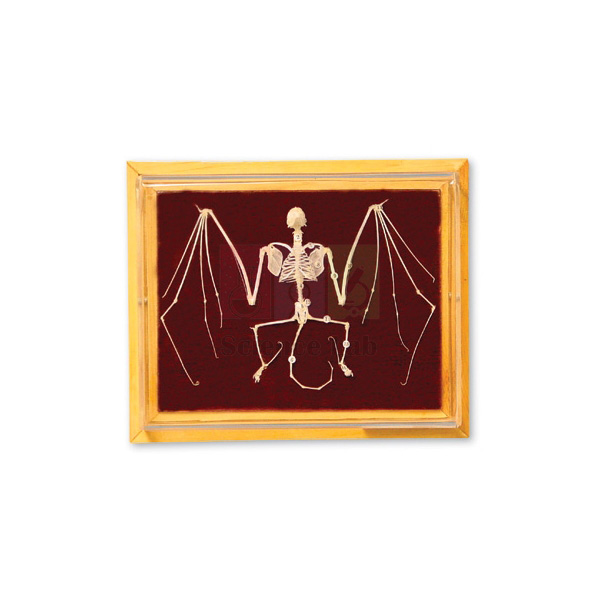
Bat Skeleton
Bat Skeleton (Product Code: SLE/EZ/11) is a natural-bone bat skeleton used to show how a mammal's forelimb has been modified into a wing, in school biology and university zoology teaching. Mounted on a base with an acrylic cover, it comes with a key card that helps students put names to the bones. It is supplied by Jain Scientific Equipments Pvt Ltd (ScienceLab), Ambala, India, for classrooms and teaching collections.
Key Details
| Parameter | Detail |
|---|---|
| Specimen | Natural bone, mounted |
| Display | On a base with an acrylic cover |
| Included | Key card |
| Product code | SLE/EZ/11 |
| Supplied by | Jain Scientific Equipments Pvt Ltd (ScienceLab), Ambala, India |
What Is the Bat Skeleton Used For?
A bat's wing is essentially a hand: the upper arm and forearm bones are followed by greatly lengthened finger bones that stretch the wing membrane, while the short thumb stays free. Seeing this on a real skeleton gives students a clear example of homologous structures, the same basic set of bones reshaped for different jobs. The hind limbs, turned so the knees face backwards, also explain how bats hang upside down at rest.
Teachers use the bat skeleton in evolution lessons alongside a human hand and a horse forelimb, and in flight comparisons with a bird skeleton, where the wings look similar but are built very differently. The key card turns the specimen into a self-guided station for group work. Keep the cover closed, since the finger bones are slender, and store the mount somewhere dry and shaded.
Supplier
ScienceLab, the trading name of Jain Scientific Equipments Private Limited in Ambala, Haryana, supplies this bat skeleton to schools, colleges, universities and education dealers. It can be combined with other natural skeletons and comparative anatomy models in one consignment for customers in India and international markets. Visit the company profile to learn more.
Related Zoology Equipment
Specimens and models that support a homology or flight lesson with the bat skeleton:
- Pigeon Skeleton — a bird wing for comparing two independent routes to flight.
- Horse Forelimb Skeleton — a forelimb built for running, from the same basic bone plan.
- Human Skeletal Hand Model — the human version of the bones that form the bat's wing.
- Lizard Skeleton — a reptile limb plan to widen the comparison across vertebrate classes.
Find more in the Zoology category.
Frequently Asked Questions
What is included with the Bat Skeleton?
The Bat Skeleton (SLE/EZ/11) comes as a natural-bone skeleton mounted on a base with an acrylic cover, together with a key card. The key card helps students identify the bones without opening the cover.
Is the Bat Skeleton real bone or a replica?
The Bat Skeleton is real, natural bone rather than a plastic replica. Because every specimen comes from an individual animal, slight differences in size, posture and bone detail between pieces are to be expected.
What are the dimensions of the Bat Skeleton case?
The listing does not give case dimensions for the Bat Skeleton. If you need the size for shelving or display planning, ask through our contact page and we will confirm it with the quotation.
How does the Bat Skeleton help teach homologous structures?
The Bat Skeleton shows the same upper-arm, forearm and finger bones found in a human hand, stretched to carry a wing membrane. Setting it beside a human hand or horse forelimb lets students see one bone plan adapted for different uses.
How should the Bat Skeleton be stored?
Store the Bat Skeleton flat in a dry, shaded cupboard with the acrylic cover closed, as the wing bones are slender. Keep the key card with the specimen and clean the cover with a soft, dry cloth only.
Who supplies the Bat Skeleton?
The Bat Skeleton is supplied by Jain Scientific Equipments Pvt Ltd (ScienceLab), Ambala, Haryana, India. The company quotes schools, colleges, universities and resellers in India and international markets, singly or with other vertebrate skeletons.
Request a Quote
To receive a price for the Bat Skeleton, send your quantity and delivery location through the contact page, or add it to the enquiry cart with other specimens.
Last updated: 24 September 2026
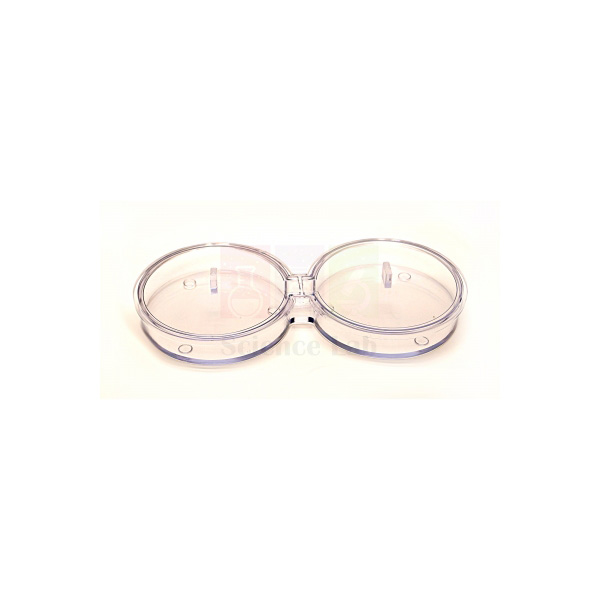
Chamber with Lid
Chamber with Lid (Product Code: SLE/EZ/12) is a two-chamber container used to hold small animals and observe how they choose between conditions in school biology and animal behaviour practicals. The two chambers are joined by an escape-proof passageway, and a tight-fitting lid keeps the critters contained while students watch. It is supplied by Jain Scientific Equipments Pvt Ltd (ScienceLab), Ambala, India, as part of its zoology equipment for schools.
Key Details
| Parameter | Detail |
|---|---|
| Layout | Two chambers connected by a passageway |
| Passageway | Escape-proof |
| Closure | Tight-fitting lid to contain the critters |
| Supplied with | Lid |
| Product code | SLE/EZ/12 |
| Supplied by | Jain Scientific Equipments Pvt Ltd (ScienceLab), Ambala, India |
What Is the Chamber with Lid Used For?
Two linked chambers let a class run a simple choice experiment: make conditions different on each side, release a few small animals, and record where they settle over time. Typical comparisons are damp against dry, dark against light, or two different food sources. Because the animals can move freely through the passageway but cannot escape, the results reflect their own preference, which leads naturally into discussions of habitat and survival.
Woodlice, beetles and other small invertebrates collected in the school grounds suit this kind of test. Line each chamber with a paper towel, moisten one or cover one to darken it, and count the animals in each side at regular intervals. Move animals with a soft brush or spoon, keep the lid closed between counts, and release them where they were found afterwards. It is a low-cost way to add insect collection and behaviour work to school biology lab equipment.
Supplier
Jain Scientific Equipments Private Limited, trading as ScienceLab, supplies the chamber with lid from Ambala, Haryana, India. Schools, science centres, colleges and distributors can order single units or class quantities, and add collecting nets and trays to the same quotation, with delivery across India and to international markets. More information is on the company profile page.
Related Zoology Equipment
Items for collecting and observing the animals used in the chamber:
- Bug Box, Gridded — for holding and measuring individual minibeasts after collection.
- Insect Net, Economy — for catching flying and grass-dwelling insects to study.
- Sorting Tray — a white tray for sorting the catch before it goes into the chamber.
- Giant Ant Farm — for a longer study of ant tunnelling and colony behaviour.
The Zoology category lists more animal-study equipment.
Frequently Asked Questions
How many chambers does the Chamber with Lid have?
The Chamber with Lid has two chambers joined by an escape-proof passageway. Animals can move between the two sides freely, which is what makes it suitable for choice and preference experiments in biology classes.
Will small animals escape from the Chamber with Lid?
The Chamber with Lid is designed to contain them: it has a tight-fitting lid and the passageway between chambers is escape-proof. Keep the lid closed between observations and check it is seated properly after each count.
Which animals can be used in the Chamber with Lid?
The Chamber with Lid suits small invertebrates such as woodlice, beetles and other minibeasts found around the school. Use only a few animals at a time, keep them for a short session, and release them where they were collected.
What are the material and dimensions of the Chamber with Lid?
The listing does not state the material or size of the Chamber with Lid. Please ask through our contact page and we will confirm both before you place an order.
Who supplies the Chamber with Lid?
The Chamber with Lid is supplied by Jain Scientific Equipments Pvt Ltd (ScienceLab), Ambala, Haryana, India. It is available to schools, colleges and dealers in India and international markets, alone or with other zoology items.
What information is needed to quote the Chamber with Lid?
For a Chamber with Lid quotation, tell us how many units you need, your delivery location, and any collecting equipment you want with them. The enquiry cart lets you list several zoology items in one request.
Request a Quote
To order the Chamber with Lid, send the quantity and delivery details through our contact page, or build a list in the enquiry cart.
Last updated: 24 September 2026
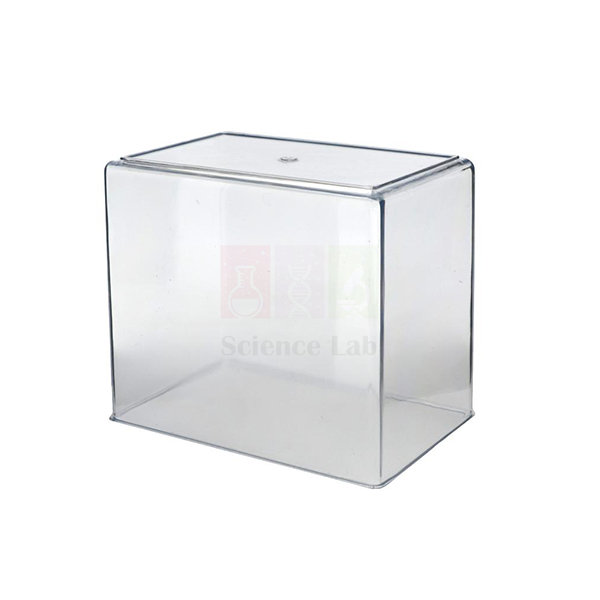
Mini Aquarium Tank
Mini Aquarium Tank (Product Code: SLE/EZ/13) is a clear polystyrene pan used as a small, temporary aquarium for observing aquatic animals and plants in school biology lessons and field sessions. It has a rounded rim and is sturdy enough to use over and over, yet economical enough to discard after a messy experiment; ordering two lets one serve as a cover. It is supplied by Jain Scientific Equipments Pvt Ltd (ScienceLab), Ambala, India.
Specifications
| Parameter | Detail |
|---|---|
| Material | Clear polystyrene |
| Form | Pan with rounded rim |
| Wall thickness | Listed as 0.03 (unit not stated — ask us to confirm) |
| Size | Listed as 4.5 x 8 in with a further 3 in figure — ask us to confirm length, width and depth |
| Reuse | Reusable, or economical enough to discard |
| Cover | No separate lid; order two and use one as a cover |
| Product code | SLE/EZ/13 |
| Supplied by | Jain Scientific Equipments Pvt Ltd (ScienceLab), Ambala, India |
What Is the Mini Aquarium Tank Used For?
A clear, shallow tank lets a group watch pond snails, water fleas, tadpoles or insect larvae up close, from the side as well as from above. Teachers use these tanks for short observation sessions after pond dipping, for recording how animals move and feed, and for simple water-plant experiments on the classroom windowsill. Because each tank is inexpensive, every group can have its own instead of crowding around one large aquarium.
Fill the tank with pond water rather than tap water, and keep it out of direct sunlight so the water does not overheat. Polystyrene is not meant for hot liquids or solvent cleaners, so wash it with mild soap and cool water. When a lid is needed to keep in humidity or stop insects escaping, invert a second tank over the first. These tanks suit schools building up an ecology or environmental science kit on a modest budget.
What to Specify When Ordering
- The number of tanks, counting two per group if each tank needs a matching cover.
- Confirmation of the exact tank dimensions and wall thickness if they matter for your set-up.
- Any nets or trays you want with the tanks for the same field or lab session.
Supplier
This mini aquarium tank is supplied by Jain Scientific Equipments Private Limited, which trades as ScienceLab, from Ambala, Haryana, India. Schools, colleges, nature clubs and distributors can order it in class quantities, alongside nets and sampling trays, with shipment across India and to international markets. See the company profile for more about the company.
Related Zoology Equipment
Equipment that works with the mini aquarium tank in pond and aquatic-life studies:
- Aquarium Dip Net — a small net for moving animals into and out of the tank.
- Net, Basic Fish Dip — for collecting the animals from a pond or stream.
- Bucket Aerator — keeps collected water oxygenated before it is shared into tanks.
- Invertebrate Sampling Tray — a larger flat tray for the first sort of the catch.
Explore the Zoology category for more aquatic and field equipment.
Frequently Asked Questions
Does the Mini Aquarium Tank come with a lid?
No separate lid is supplied with the Mini Aquarium Tank. The listing suggests ordering two tanks and inverting one over the other as a cover, which keeps in moisture and stops small animals climbing out.
Is the Mini Aquarium Tank reusable?
Yes. The Mini Aquarium Tank is substantial enough to be washed and used again, yet economical enough to discard after a messy or contaminated experiment. Clean it with mild soap and cool water, never with solvents.
What material is the Mini Aquarium Tank made from?
The Mini Aquarium Tank is a clear polystyrene pan with a rounded rim. Polystyrene gives good clarity for viewing animals, but it should be kept away from hot water, strong sunlight and solvent cleaners.
What size is the Mini Aquarium Tank?
The listing gives the Mini Aquarium Tank as 4.5 x 8 in with a further 3 in figure, which is not clearly labelled. Ask through our contact page and we will confirm the exact dimensions before you order.
Which animals can be kept in the Mini Aquarium Tank?
The Mini Aquarium Tank suits small aquatic animals for short observation, such as pond snails, water fleas, tadpoles and insect larvae. Return animals to their habitat after the lesson rather than keeping them for long periods.
Who supplies the Mini Aquarium Tank?
The Mini Aquarium Tank is supplied by Jain Scientific Equipments Pvt Ltd (ScienceLab), Ambala, Haryana, India, to schools, colleges and dealers in India and international markets. Class quantities can be quoted together with nets and trays.
Request a Quote
For a quotation on the Mini Aquarium Tank, send the number of tanks and your delivery location through the contact page, or add them to the enquiry cart.
Last updated: 24 September 2026
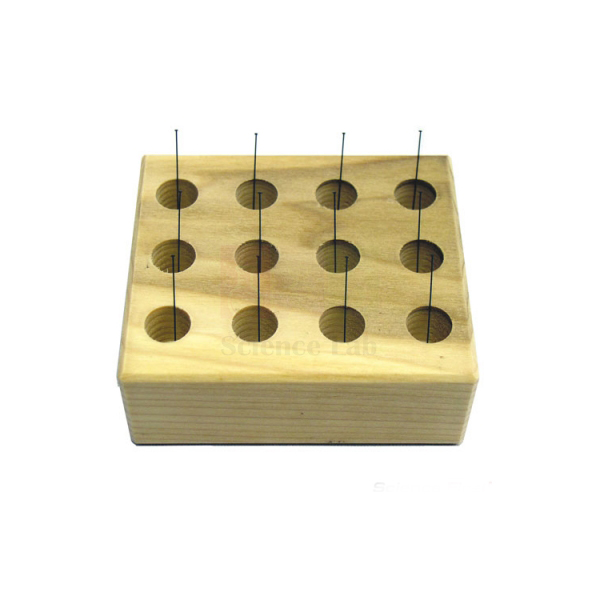
Insect Pin Holder
Insect Pin Holder (Product Code: SLE/EZ/14) is a 12-hole wooden block used to keep entomology pins of different sizes, and other small objects, sorted and within reach while insects are being mounted. Students, teachers and collection curators use it at the pinning bench; its bevelled sides and corners and 9 x 10 x 4 cm size make it easy to handle. It is made by Jain Scientific Equipments Pvt Ltd (ScienceLab), an OEM manufacturer, at its own factory in Ambala, India.
Specifications
| Parameter | Detail |
|---|---|
| Material | Wood |
| Holes | 12 |
| Edges | Bevelled sides and corners |
| Size | 9 x 10 x 4 cm |
| Holds | Many pin sizes and other small objects |
| Product code | SLE/EZ/14 |
| Manufacturer | Jain Scientific Equipments Pvt Ltd (ScienceLab) — OEM |
| Country of origin | India (made in Ambala, Haryana) |
What Is the Insect Pin Holder Used For?
Mounting an insect collection means switching between pins of several thicknesses, and loose pins on a bench are easily mixed up or spilled. With one size in each of the twelve holes, students can pick the right pin at a glance, and the block keeps every pin upright and ready while they work over a pinning board. Spare holes can take other small items, such as a fine brush, a labelling pen or a spare needle.
Write the pin size beside each hole with a fine marker so the sorting stays consistent from one class to the next. Keep the holder on the side of the bench away from the specimen so hands do not reach across fragile insects. As a wooden item it should be kept dry and wiped rather than washed. It is a small but useful part of an insect collection kit for school and college biology labs.
OEM Manufacturer
ScienceLab is the trading name of Jain Scientific Equipments Private Limited, the original equipment manufacturer (OEM) of this insect pin holder. It is produced at the company's own licensed factory at Saha, Ambala, Haryana, India, and supplied direct from the manufacturer to schools, colleges, museums, dealers and importers, not through a trading middleman. Repeat orders for matching lab sets are handled by the factory team, so ask us. Background is on the company profile page.
Related Zoology Equipment
Tools that sit alongside the pin holder when insects are collected and mounted:
- Dissecting T-Pins — pins to sort into the holder for pinning and spreading work.
- Forceps (Tweezers) — for positioning legs and wings once the insect is pinned.
- Insect Net, Economy — for collecting the specimens in the first place.
- Insect Mount Set — ready-made reference specimens to compare with student collections.
More entomology and animal-study items are in the Zoology category.
Frequently Asked Questions
How many holes does the Insect Pin Holder have?
The Insect Pin Holder has 12 holes in a wooden block measuring 9 x 10 x 4 cm. That is enough to keep several pin sizes apart, with spare holes for a brush, marker or other small tools used during mounting.
Does the Insect Pin Holder come with pins?
The listing for the Insect Pin Holder describes the wooden holder only and does not mention pins. Insect or T-pins can be quoted separately; tell us the sizes and quantities you need when you send an enquiry.
Can the Insect Pin Holder hold different pin sizes?
Yes. The Insect Pin Holder is described as useful for many pin sizes and other objects, so one block can hold a full range of entomology pins, one size per hole, for quick selection at the bench.
Who manufactures the Insect Pin Holder?
The Insect Pin Holder is manufactured by Jain Scientific Equipments Pvt Ltd (ScienceLab), the OEM, at its own licensed factory in Saha, Ambala, Haryana, India. Quotations and repeat orders come straight from the manufacturer.
How should the Insect Pin Holder be cleaned?
Wipe the Insect Pin Holder with a dry or slightly damp cloth and let it air-dry. Do not soak the wooden block or put it in a dishwasher, and store it in a dry drawer with the pins in place.
Can schools order the Insect Pin Holder in class sets?
Yes. Schools and colleges often order one Insect Pin Holder per workstation. Send the number of stations and delivery location, and we will quote the holders together with any pins or collecting equipment you need.
Request a Quote
Prices for the Insect Pin Holder come direct from the manufacturer. Share your quantity and delivery location through our contact page, or add it to the enquiry cart.
Last updated: 24 September 2026
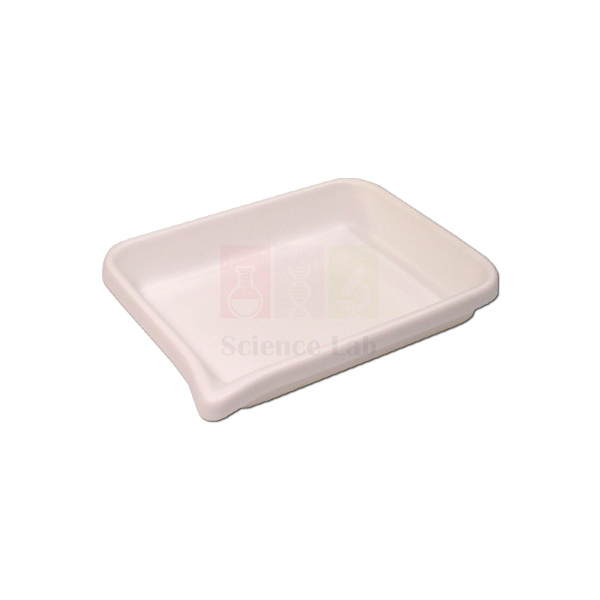
Sorting Tray
Sorting Tray (Product Code: SLE/EZ/15) is a small white, flat-bottomed pan used to spread out and sort pond, stream or leaf-litter samples in the field or the classroom. Made of high density polyethylene, it measures 5 x 7 in and has a moulded pour spout and a generous lift rim on all sides, which suits students working in pairs. It is supplied by Jain Scientific Equipments Pvt Ltd (ScienceLab), Ambala, India, for school and college biology fieldwork.
Specifications
| Parameter | Detail |
|---|---|
| Colour | White |
| Base | Flat-bottomed |
| Material | High density polyethylene (HDPE) |
| Features | Moulded pour spout; generous lift rim on all sides |
| Size | 5 x 7 in |
| Use | Field or class |
| Product code | SLE/EZ/15 |
| Supplied by | Jain Scientific Equipments Pvt Ltd (ScienceLab), Ambala, India |
What Is the Sorting Tray Used For?
After a net sweep, the catch is tipped into a little water in a white tray, where dark-bodied animals such as snails, larvae and beetles stand out clearly against the pale base. Students then separate them by type using a spoon or pipette, count each group, and identify them with a key. At this 5 x 7 in size, each pair can have its own tray, which keeps sorting quick and reduces crowding at the pond edge.
The moulded pour spout lets students drain excess water or tip animals gently back into the pond, and the lift rim gives a secure grip when the tray is moved while full. Use only a shallow layer of water, keep trays in the shade so the water stays cool, and rinse them in clean water after each session. They are handy, low-cost pieces of school biology lab equipment for ecology practicals.
Supplier
Jain Scientific Equipments Private Limited, known by its trading name ScienceLab, supplies the sorting tray from Ambala, Haryana, India. Schools, colleges, outdoor-education centres and distributors can source it in class sets with other pond-dipping equipment, for delivery across India and to international markets. Company background is on the company profile page.
Related Zoology Equipment
Items used with the sorting tray during a pond or stream survey:
- Invertebrate Sampling Tray — a larger tray for the first spread-out of the whole catch.
- Net, Basic Fish Dip — for sweeping through water plants to collect the sample.
- Key to Identifying Water Invertebrates — for naming the animals once they are sorted.
- Lens — a 3x and 6x magnifier for checking small features.
Visit the Zoology category for more fieldwork equipment.
Frequently Asked Questions
What size is the Sorting Tray?
The Sorting Tray measures 5 x 7 in and has a flat bottom, so it sits steadily on a bench or on level ground. The small size suits one pair of students sorting a share of the catch.
What is the Sorting Tray made of?
The Sorting Tray is made of high density polyethylene (HDPE) in white. The white surface makes small, dark aquatic animals easy to see, and the plastic can be rinsed clean after each fieldwork session.
What is the pour spout on the Sorting Tray for?
The moulded pour spout on the Sorting Tray lets students drain excess water or return animals gently to the pond without spilling over the side. It also helps when combining samples from several trays.
Can the Sorting Tray be used outdoors?
Yes. The Sorting Tray is intended for use in the field or in class. Its lift rim on all sides gives a firm grip when carrying a tray of water, and it is light enough to pack into a field kit.
How does the Sorting Tray differ from the Invertebrate Sampling Tray?
The Sorting Tray is a small 5 x 7 in HDPE pan for sorting by pairs, while the Invertebrate Sampling Tray is a much larger fibreglass tray for spreading out a whole sample. Many schools use both together.
Who supplies the Sorting Tray?
The Sorting Tray is supplied by Jain Scientific Equipments Pvt Ltd (ScienceLab), Ambala, Haryana, India. The company quotes class sets to schools, colleges and dealers in India and international markets, together with nets and identification keys.
Request a Quote
To order Sorting Trays, send the quantity and delivery location through our contact page, or list them with other pond-dipping items in the enquiry cart.
Last updated: 24 September 2026
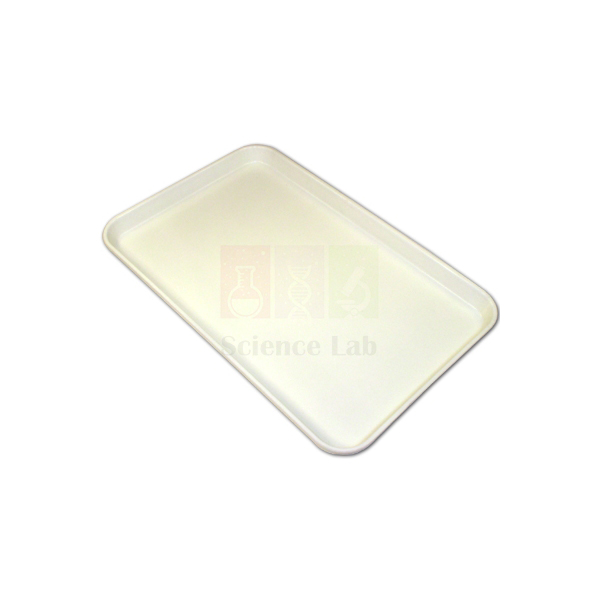
Invertebrate Sampling Tray
Invertebrate Sampling Tray (Product Code: SLE/EZ/16) is a large, flat-bottomed fibreglass pan used for hand-picking macroinvertebrates and other small critters from stream and pond samples in biology fieldwork. Measuring 11-7/16 x 17-3/4 x 3/4 in, it has metal reinforcement rods that stop it warping, so the sample stays evenly spread. It is supplied by Jain Scientific Equipments Pvt Ltd (ScienceLab), Ambala, for schools, colleges and environmental study groups within its school biology lab equipment in India.
Specifications
| Parameter | Detail |
|---|---|
| Material | Fibreglass |
| Reinforcement | Metal rods to prevent warping |
| Base | Flat-bottomed |
| Size | 11-7/16 x 17-3/4 x 3/4 in |
| Intended use | Hand-picking macroinvertebrates or other small critters |
| Product code | SLE/EZ/16 |
| Supplied by | Jain Scientific Equipments Pvt Ltd (ScienceLab), Ambala, India |
What Is the Invertebrate Sampling Tray Used For?
In a stream survey, a kick sample or net sweep brings up gravel, leaves and a mix of animals such as mayfly and caddisfly larvae, snails and worms. Spreading that sample thinly over a broad, flat tray gives students room to see every animal and pick it out by hand with soft forceps or a pipette. Because some of these animals tolerate pollution and others do not, the picked sample can be used to judge the water quality of the site.
The reinforcing rods keep the base flat, so a shallow layer of water covers the sample evenly instead of pooling at one end. Set the tray on level ground in the shade, add just enough water to cover the debris, and move picked animals to smaller sorting trays for counting. Rinse it after use and avoid dropping it on rocks, which can chip fibreglass. It is a sturdy piece of zoology lab equipment for field courses in India and abroad.
Supplier
This invertebrate sampling tray is supplied by Jain Scientific Equipments Private Limited, trading as ScienceLab, from Ambala, Haryana, India. Schools, universities, environmental monitoring projects and dealers can order it with nets, sorting trays and identification keys on one quotation, for delivery within India or to international markets. Learn more on the company profile page.
Related Zoology Equipment
Equipment that completes a macroinvertebrate sampling workflow:
- Net, Basic Fish Dip — a D-shaped net for collecting the sample from the stream bed.
- Sorting Tray — small white trays for separating the picked animals by type.
- Forceps (Tweezers) — for lifting delicate larvae out of the debris.
- Key to Identifying Water Invertebrates — for naming what has been found.
The Zoology category lists more nets, trays and field items.
Frequently Asked Questions
What are the dimensions of the Invertebrate Sampling Tray?
The Invertebrate Sampling Tray measures 11-7/16 x 17-3/4 x 3/4 in. The large, shallow area lets a whole net sample be spread thinly, so students can see and hand-pick every small animal in it.
What is the Invertebrate Sampling Tray made of?
The Invertebrate Sampling Tray is a fibreglass pan with metal reinforcement rods. The rods prevent warping, so the tray stays flat and water spreads evenly across the base during sorting.
What are macroinvertebrates and why pick them with this tray?
Macroinvertebrates are animals without backbones that are large enough to see without a microscope, such as insect larvae, snails and worms. The Invertebrate Sampling Tray gives a flat, open surface for hand-picking them from stream or pond debris.
Can the Invertebrate Sampling Tray be used in the lab as well as outdoors?
Yes. The Invertebrate Sampling Tray works on a lab bench for sorting samples brought back from the field, and outdoors on level ground beside the water. Keep it in the shade so the sample stays cool.
Who supplies the Invertebrate Sampling Tray?
The Invertebrate Sampling Tray is supplied by Jain Scientific Equipments Pvt Ltd (ScienceLab) of Ambala, Haryana, India. Schools, colleges, research groups and dealers in India and international markets can request a quotation.
What should I include in an enquiry for the Invertebrate Sampling Tray?
For an Invertebrate Sampling Tray quotation, include the number of trays, your delivery location and any nets, sorting trays or keys you need with them. You can send this through the contact page or the enquiry cart.
Request a Quote
Ask for a price on the Invertebrate Sampling Tray through our contact page, or add it to the enquiry cart with other stream-survey equipment.
Last updated: 24 September 2026
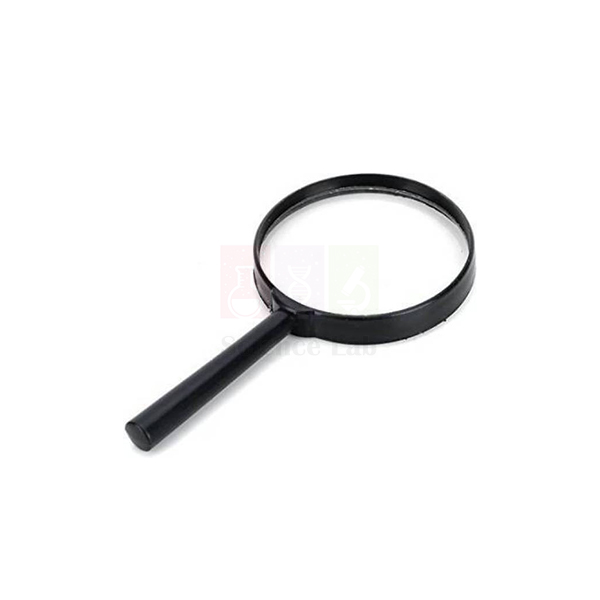
Lens
Lens (Product Code: SLE/EZ/17) is a rimless bifocal hand magnifier used to examine insects, skeletons, leaves and other specimens in biology classrooms and on field trips. It combines 3x and 6x magnification in a 175 mm diameter lens, has a highly polished chrome handle listed in 8 in, 5 in and 3 in lengths, and comes with a neoprene carrying case. It is supplied by Jain Scientific Equipments Pvt Ltd (ScienceLab), Ambala, India.
Specifications
| Parameter | Detail |
|---|---|
| Type | Rimless bifocal magnifier |
| Magnification | 3x and 6x |
| Lens diameter | 175 mm |
| Handle | Highly polished chrome |
| Handle length | 8 in, 5 in, 3 in (as listed) |
| Case | Neoprene carrying case |
| Product code | SLE/EZ/17 |
| Supplied by | Jain Scientific Equipments Pvt Ltd (ScienceLab), Ambala, India |
What Is the Bifocal Lens Used For?
Two powers in one lens let students move from an overview to fine detail without changing tools: 3x shows the whole of a beetle, leaf or small skull, while 6x brings out hairs, veins, scales or tooth rows. The rimless design leaves the edge of the field of view clear, which helps when scanning across a tray of pond animals or a pinned insect. It is a convenient hand lens magnifier for school labs in India and for teachers leading nature walks.
For the sharpest image, hold the lens steady and move the object, or your head, until it comes into focus. Never leave a magnifier lying in direct sunlight, as it can focus the sun's rays and scorch surfaces. Wipe the lens with a soft lens cloth, keep fingers off the optical surface, and return it to its neoprene case after each session to protect it from scratches.
What to Specify When Ordering
- The handle length you need — 8 in, 5 in or 3 in, as listed.
- The quantity, for example one per group or one per student for field trips.
- Any lens cloths or specimen sets to be quoted alongside the magnifiers.
Supplier
Jain Scientific Equipments Private Limited, under its ScienceLab trading name, supplies this bifocal lens from Ambala, Haryana, India. Schools, colleges, nature education centres and resellers can order it singly or in class quantities, with delivery across India and to international markets. More about the company is on the company profile page.
Related Zoology Equipment
Other magnifiers and items to use with the lens:
- Hand Lens — a simpler alternative for issuing to every student.
- Magnifying Glass — another magnifier option for general classroom viewing.
- Microfiber Lens Cloth — for cleaning the lens without scratching it.
- Insect Mount Set — ready-made specimens that reward close inspection at 6x.
Browse the Zoology category for more specimen and fieldwork equipment.
Frequently Asked Questions
What magnification does the Lens (SLE/EZ/17) give?
The Lens (SLE/EZ/17) is a bifocal magnifier offering both 3x and 6x magnification. Use 3x to view a whole specimen and 6x to study small features such as insect mouthparts, leaf veins or fine bones.
What is the diameter of the Lens (SLE/EZ/17)?
The Lens (SLE/EZ/17) is listed with a 175 mm diameter. A large lens like this lets two students look through it together, which is handy for group work at a specimen station.
Which handle lengths are available for the Lens (SLE/EZ/17)?
The Lens (SLE/EZ/17) is listed with handle lengths of 8 in, 5 in and 3 in, with a highly polished chrome finish. Please state the length you want when you ask for a quotation.
Does the Lens (SLE/EZ/17) come with a case?
Yes. The Lens (SLE/EZ/17) comes with a neoprene carrying case, which protects the lens from scratches in a field bag or drawer. Return the magnifier to the case after each use.
How should the Lens (SLE/EZ/17) be cleaned?
Clean the Lens (SLE/EZ/17) with a soft microfibre or lens cloth, breathing lightly on the surface if needed. Avoid paper towels and abrasive cleaners, and do not leave the magnifier in direct sunlight.
Who supplies the Lens (SLE/EZ/17)?
The Lens (SLE/EZ/17) is supplied by Jain Scientific Equipments Pvt Ltd (ScienceLab), Ambala, Haryana, India. The company quotes single pieces and class sets to schools, colleges and dealers in India and international markets.
Request a Quote
For a quotation on the Lens, tell us the handle length, quantity and delivery location through our contact page, or add it to the enquiry cart.
Last updated: 24 September 2026
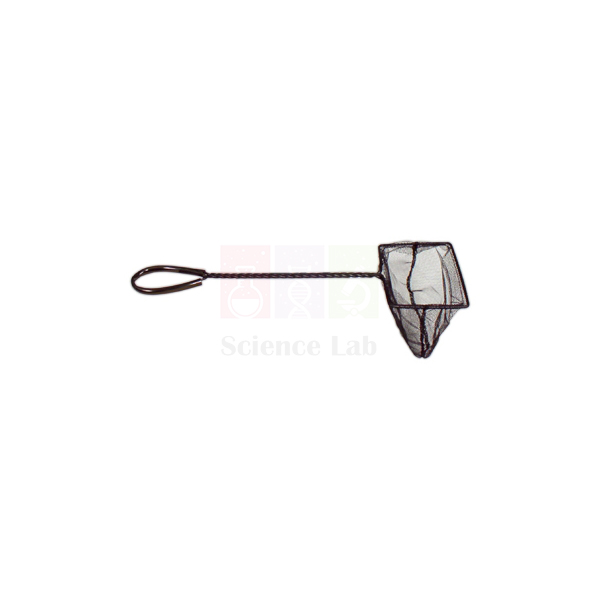
Aquarium Dip Net
Aquarium Dip Net (Product Code: SLE/EZ/18) is a small fine-mesh hand net used to catch and transfer fish, tadpoles and aquatic invertebrates in classroom aquaria and outdoor pond work. It has a 3 x 4 in net on an extra-strong, three-ply, vinyl-covered handle, and schools typically buy twelve or more so each group has its own. It is made by Jain Scientific Equipments Pvt Ltd (ScienceLab), an OEM manufacturer, at its own factory in Ambala, India.
Specifications
| Parameter | Detail |
|---|---|
| Net | Fine mesh |
| Net size | 3 x 4 in |
| Handle | Extra-strong, three-ply, vinyl-covered |
| Use | Indoors or outdoors |
| Class quantity | Suited to buying twelve or more |
| Product code | SLE/EZ/18 |
| Manufacturer | Jain Scientific Equipments Pvt Ltd (ScienceLab) — OEM |
| Country of origin | India (made in Ambala, Haryana) |
What Is the Aquarium Dip Net Used For?
In a classroom aquarium, a small net is the gentlest way to move a fish or snail to an observation tank, isolate an animal, or lift out uneaten food. Outdoors, the same net scoops water boatmen, tadpoles and larvae from the edge of a pond or from a sampling tray into smaller pots for closer study. Its fine mesh holds tiny animals securely, while the vinyl-covered handle is comfortable for younger hands.
Guide the animal into the net slowly rather than chasing it, and transfer it quickly so it spends as little time out of water as possible. Rinse the net in clean water between tanks to avoid carrying algae or disease from one aquarium to another, then hang it to dry. A set of these nets makes pond and aquarium work practical for a whole class of biology students.
What to Specify When Ordering
- The number of nets, bearing in mind that twelve or more suits a typical class.
- Whether you also need tanks or trays to receive the animals.
- Your delivery location, so the quotation includes freight.
OEM Manufacturer
The aquarium dip net is manufactured by Jain Scientific Equipments Private Limited, which trades as ScienceLab and acts as the original equipment manufacturer (OEM). Production takes place at the company's own licensed factory at Saha, Ambala, Haryana, India, and the nets go factory-direct to schools, colleges, aquarium-keeping clubs, dealers and importers. Class sets and replacement nets are quoted by the manufacturer itself — just ask. Read more on the company profile page.
Related Zoology Equipment
Items that go with the aquarium dip net in aquatic-life lessons:
- Mini Aquarium Tank — a clear pan to hold the animals the net collects.
- Net, Basic Fish Dip — a long-handled D-net for sampling larger stretches of water.
- Sorting Tray — a white tray from which small animals can be picked with the dip net.
- Bucket Aerator — keeps animals in a holding bucket supplied with oxygen.
See more in the Zoology category.
Frequently Asked Questions
What size is the Aquarium Dip Net?
The Aquarium Dip Net has a 3 x 4 in fine-mesh net. That small size makes it easy to reach into a classroom aquarium or observation tank and catch a single fish, snail or tadpole without disturbing the rest.
What is the handle of the Aquarium Dip Net made of?
The Aquarium Dip Net has an extra-strong, three-ply handle with a vinyl covering. The covering gives a comfortable grip for students and is easy to rinse clean after use in pond or aquarium water.
Can the Aquarium Dip Net be used outdoors?
Yes. The Aquarium Dip Net can be used inside or out, for aquarium maintenance in class or for scooping small animals from pond edges and sampling trays during fieldwork. Rinse and dry it after each outing.
How many Aquarium Dip Nets should a school order?
Schools usually order twelve or more Aquarium Dip Nets, so that each group in a class has its own net during pond dipping or aquarium work. Tell us your class size and we can quote a suitable quantity.
Who manufactures the Aquarium Dip Net?
The Aquarium Dip Net is manufactured by Jain Scientific Equipments Pvt Ltd (ScienceLab), the OEM, at its own licensed factory in Saha, Ambala, Haryana, India. Orders and repeat supplies are handled directly by the manufacturer.
How do I stop the Aquarium Dip Net spreading disease between tanks?
Rinse the Aquarium Dip Net thoroughly in clean water after each tank and let it dry before the next use. Where possible, keep a separate net for each aquarium so algae and disease are not carried between them.
Request a Quote
Quotes for the Aquarium Dip Net come direct from the manufacturer. Send the number of nets and your delivery location through our contact page, or add them to the enquiry cart.
Last updated: 24 September 2026
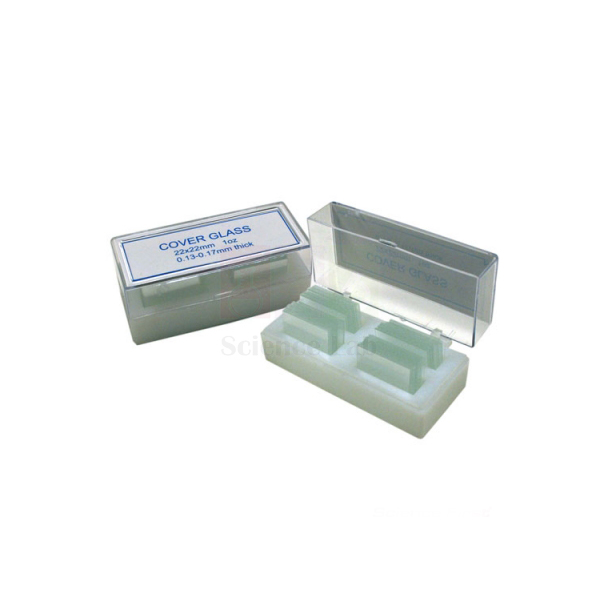
Microscope Cover Slips
Microscope Cover Slips (Product Code: SLE/EZ/19) are thin, pre-cleaned covers placed over specimens on microscope slides to flatten and protect wet mounts in school, college and teaching laboratories. Each slip measures 22 x 22 mm with a thickness of 0.13 to 0.16 mm, and they are described as non-fogging and non-sticking, with no bubbles, scratches or striations. They are supplied by Jain Scientific Equipments Pvt Ltd (ScienceLab), Ambala, as a routine microscopy consumable within its range of biology lab equipment in India.
Specifications
| Parameter | Detail |
|---|---|
| Dimensions | 22 mm x 22 mm |
| Thickness | 0.13 – 0.16 mm |
| Condition | Pre-cleaned |
| Surface | Non-fogging, non-sticking |
| Quality | No bubbles, scratches or striations |
| Pack size | Not stated — confirmed on quotation |
| Product code | SLE/EZ/19 |
| Supplied by | Jain Scientific Equipments Pvt Ltd (ScienceLab), Ambala, India |
What Are Microscope Cover Slips Used For?
Almost every temporary mount in a biology practical, from onion peel and cheek cells to pond water and stained tissue, needs a cover slip. It spreads the drop of water or stain into a thin, even layer, keeps the specimen flat so it stays in focus, slows drying under the lamp, and stops liquid touching the objective lens. Thin cover slips leave room for higher-power objectives to focus close to the specimen.
To avoid trapped air, touch one edge of the slip to the drop and lower it slowly with a needle or probe. Hold slips by their edges, or pick them up with forceps, as fingerprints show up clearly under magnification. Cover slips are fragile, so collect broken pieces in a dedicated glass-waste container. They are an everyday item on any list of microscope slides and school microscopy supplies in India.
What to Specify When Ordering
- The quantity you need; the pack size is not listed, so we confirm it on the quotation.
- Plain or cavity microscope slides to be supplied with the cover slips.
- Any mounting tools, such as teasing needles or droppers, for the same practical.
Supplier
Jain Scientific Equipments Private Limited, trading as ScienceLab, supplies these microscope cover slips from Ambala, Haryana, India. Schools, colleges, pathology teaching labs and distributors can add them to orders for slides, microscopes and dissection tools, with dispatch across India and to international markets. Company information is on the company profile page.
Related Zoology Equipment
Everything else needed to prepare and view a wet mount:
- Microscope Slides Glass — plain slides to carry the specimen under the cover slip.
- Microscope Slides Depression — cavity slides for thicker samples and living organisms.
- Teasing Needle (Probe) — for spreading the specimen and lowering the slip without bubbles.
- Dropper — for adding water or stain to the slide.
- Compound Microscope — for viewing the finished mount.
More items are in the Zoology category.
Frequently Asked Questions
What size are the Microscope Cover Slips?
The Microscope Cover Slips measure 22 mm x 22 mm and are 0.13 to 0.16 mm thick. This size covers the specimen area of a standard microscope slide and is common in school and college practicals.
Do the Microscope Cover Slips need cleaning before use?
No. The Microscope Cover Slips are supplied pre-cleaned and described as free from bubbles, scratches and striations. Handle them by the edges or with forceps so fingerprints do not undo that cleaning.
How many Microscope Cover Slips are in a pack?
The listing does not state a pack size for the Microscope Cover Slips. Tell us how many you need through our contact page, and the quotation will confirm the pack size and number of packs.
How do I avoid air bubbles under Microscope Cover Slips?
Place a drop of water or stain on the specimen, touch one edge of the Microscope Cover Slip to the drop, and lower it slowly with a teasing needle. The liquid spreads ahead of the slip and pushes air out.
Are Microscope Cover Slips reusable?
Microscope Cover Slips are usually treated as consumables in teaching labs, because they are thin and break easily during cleaning. Collect used or broken slips in a glass-waste container rather than a general bin.
Who supplies the Microscope Cover Slips?
The Microscope Cover Slips are supplied by Jain Scientific Equipments Pvt Ltd (ScienceLab), Ambala, Haryana, India. Schools, colleges and dealers in India and international markets can order them alone or with slides and microscopes.
Request a Quote
To order Microscope Cover Slips, send the quantity and delivery location through our contact page, or add them with slides to the enquiry cart.
Last updated: 24 September 2026
28.jpg)
Teasing Needle (Probe)
Teasing Needle (Probe) (Product Code: SLE/EZ/20) is a stainless steel needle with a plastic handle used to tease apart tissue, spread specimens on slides and probe structures during dissection in biology practicals. School and college students use it for slide preparation and animal or plant dissections, and it is sold individually, so labs can buy exactly the number of workstations they need. It is made by Jain Scientific Equipments Pvt Ltd (ScienceLab), an OEM manufacturer, at its own factory in Ambala, India.
Specifications
| Parameter | Detail |
|---|---|
| Needle | Stainless steel |
| Handle | Plastic |
| Sold as | Individual pieces (eaches) |
| Product code | SLE/EZ/20 |
| Manufacturer | Jain Scientific Equipments Pvt Ltd (ScienceLab) — OEM |
| Country of origin | India (made in Ambala, Haryana) |
What Is the Teasing Needle Used For?
Teasing means gently pulling a tissue apart into fine strands so its cells or fibres can be seen under the microscope, as in a muscle-fibre or root-tip preparation. The same needle spreads an onion peel flat, pushes air bubbles out from under a cover slip, and lowers the slip slowly onto a drop of stain. In dissection it acts as a probe for lifting nerves and vessels or tracing a structure without cutting it.
Stainless steel stands up to repeated contact with water and stains, and the plastic handle gives a light, steady grip for fine work. Wipe the needle clean and dry after each class, push the point into a cork for storage, and count needles out and back in at the end of the lesson. Teasing needles belong in every dissection kit used in school labs in India, alongside forceps, scissors and a scalpel.
OEM Manufacturer
Jain Scientific Equipments Private Limited, trading as ScienceLab, is the original equipment manufacturer (OEM) of this teasing needle. It is made at the company's own licensed factory at Saha, Ambala, Haryana, India, and supplied factory-direct — not through a trader — to schools, colleges, dissection-kit assemblers, dealers and importers. Replacement needles for existing kits and repeat orders are handled by the manufacturer, so ask us. Visit the company profile for background.
Related Zoology Equipment
Tools and consumables used with the teasing needle:
- Dissecting Needle — an alternative needle from the dissection equipment range.
- Dissecting Needle Plastic Handle — a similar plastic-handled needle for comparison.
- Microscope Cover Slips — the cover slips the needle helps to lower without bubbles.
- Dissecting Tray with Wax — a wax base for pinning specimens during probing.
- Dissecting Set, Student — a full student set of dissection instruments.
The Zoology category lists more practical equipment.
Frequently Asked Questions
What is the Teasing Needle (Probe) made of?
The Teasing Needle (Probe) has a stainless steel needle fitted in a plastic handle. Stainless steel resists rust after contact with water and stains, and the plastic handle is light and easy to clean between practical classes.
Is the Teasing Needle (Probe) sold singly or in packs?
The Teasing Needle (Probe) is sold in eaches, meaning individually. Schools can therefore order the exact number required for their workstations or to replace missing needles in existing dissection kits.
What is the difference between teasing and dissecting with the Teasing Needle (Probe)?
Teasing with the Teasing Needle (Probe) separates tissue into fine strands for microscope viewing, while in dissection the needle is used as a probe to lift and trace structures without cutting them. The same tool serves both tasks.
How should the Teasing Needle (Probe) be cleaned and stored?
After use, rinse the Teasing Needle (Probe), wipe it dry and, if your lab practice requires, wipe the tip with alcohol. Store it with the point pushed into a cork or in a kit slot to protect the tip and prevent pricks.
Who manufactures the Teasing Needle (Probe)?
The Teasing Needle (Probe) is manufactured by Jain Scientific Equipments Pvt Ltd (ScienceLab), the OEM, at its own licensed factory in Saha, Ambala, Haryana, India. Quotations and repeat orders come straight from the manufacturer.
Can the Teasing Needle (Probe) be ordered for export?
Yes. The Teasing Needle (Probe) is supplied to schools, colleges, kit assemblers and dealers in India and international markets. Share the quantity and destination country, and we will include freight options in the quotation.
Request a Quote
Prices for the Teasing Needle (Probe) come direct from the manufacturer. Send the quantity and delivery location through our contact page, or add it to the enquiry cart with other dissection tools.
Last updated: 24 September 2026
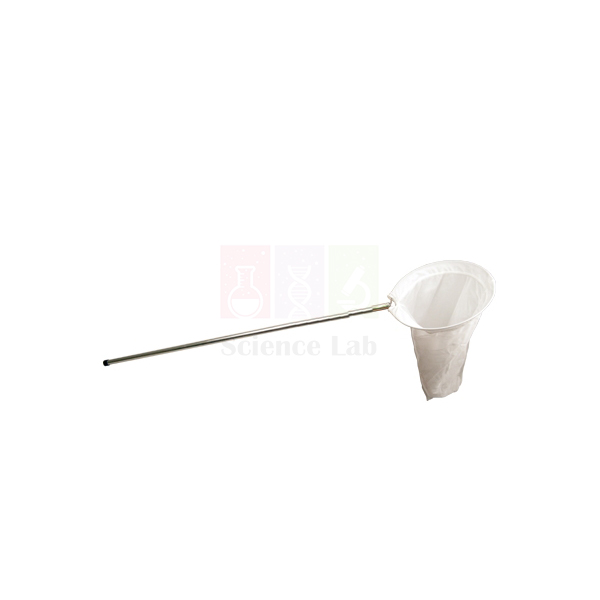
Insect Net, Economy
Insect Net, Economy (Product Code: SLE/EZ/21) is a lightweight collecting net used to catch butterflies, grasshoppers and other insects for study in school biology projects and college entomology fieldwork. It pairs a 36 in handle, 5/8 in in diameter, with a soft micromesh bag 16 in deep on a 10-1/2 in hoop, and it is easy to carry on field trips. It is made by Jain Scientific Equipments Pvt Ltd (ScienceLab), an OEM manufacturer, at its own factory in Ambala, India.
Specifications
| Parameter | Detail |
|---|---|
| Handle length | 36 in |
| Handle diameter | 5/8 in |
| Net | Soft micromesh |
| Hoop diameter | 10-1/2 in |
| Bag depth | 16 in |
| Weight class | Lightweight, easy to carry |
| Product code | SLE/EZ/21 |
| Manufacturer | Jain Scientific Equipments Pvt Ltd (ScienceLab) — OEM |
| Country of origin | India (made in Ambala, Haryana) |
What Is the Insect Net Used For?
An insect net is the starting point for most entomology activities: sweeping through long grass to sample the insects living there, or catching a single butterfly or dragonfly in flight. After each sweep or swing, a quick turn of the wrist folds the deep bag over the hoop and traps the catch until it can be moved into a viewing box. The soft micromesh is gentle on delicate wings and legs, which matters when insects are to be released after study.
Class sweep-net surveys work well when every group uses the same net and the same number of sweeps, so results can be compared between habitats. Keep the net away from thorny bushes and water, check the bag for snags after each outing, and store it hung up and dry. Together with viewing boxes and pins, it forms the core of an insect collection kit for schools.
OEM Manufacturer
This economy insect net is made by Jain Scientific Equipments Private Limited, the company behind the ScienceLab name and the original equipment manufacturer (OEM) of the product. Nets are assembled at its own licensed factory at Saha, Ambala, Haryana, India, and sold factory-direct to schools, colleges, nature clubs, dealers and importers. Class quantities and replacement nets are arranged by the manufacturer itself, so ask us. More is on the company profile page.
Related Zoology Equipment
Items for holding, viewing and preserving what the net catches:
- Bug Box, Gridded — for viewing and measuring a live insect before release.
- Chamber with Lid — a two-chamber container for simple behaviour tests on the catch.
- Insect Pin Holder — keeps entomology pins sorted when specimens are mounted.
- Insect Mount Set — reference specimens for identifying what was caught.
The Zoology category has more collecting and observation equipment.
Frequently Asked Questions
What are the dimensions of the Insect Net, Economy?
The Insect Net, Economy has a 36 in handle with a 5/8 in diameter, a 10-1/2 in hoop and a soft micromesh bag 16 in deep. The deep bag lets the net be folded over the hoop to trap insects after a swing.
Is the Insect Net, Economy suitable for younger students?
Yes. The Insect Net, Economy is lightweight and easy to carry, which suits school groups on nature walks. Show students how to swing it clear of others and how to transfer insects gently into a viewing box.
Can the Insect Net, Economy be used for sweep netting?
Yes. The Insect Net, Economy can be swept through grass and low plants to sample the insects living there. Use a set number of sweeps in each habitat so a class can compare results fairly.
How should the Insect Net, Economy be cared for?
After use, shake out plant debris, check the micromesh for snags, and hang the Insect Net, Economy up to dry and store. Keeping it away from thorns and water helps the soft bag last longer.
Who manufactures the Insect Net, Economy?
The Insect Net, Economy is manufactured by Jain Scientific Equipments Pvt Ltd (ScienceLab), the OEM, at its own licensed factory in Saha, Ambala, Haryana, India. Quotations for single nets or class sets come direct from the manufacturer.
What should a quotation request for the Insect Net, Economy include?
For an Insect Net, Economy quotation, send the number of nets, your delivery location in India or abroad, and any viewing boxes or pins you want added. Use the contact page or the enquiry cart.
Request a Quote
Quotes for the Insect Net, Economy come direct from the manufacturer. Share your quantity and delivery location through our contact page, or add it to the enquiry cart.
Last updated: 24 September 2026
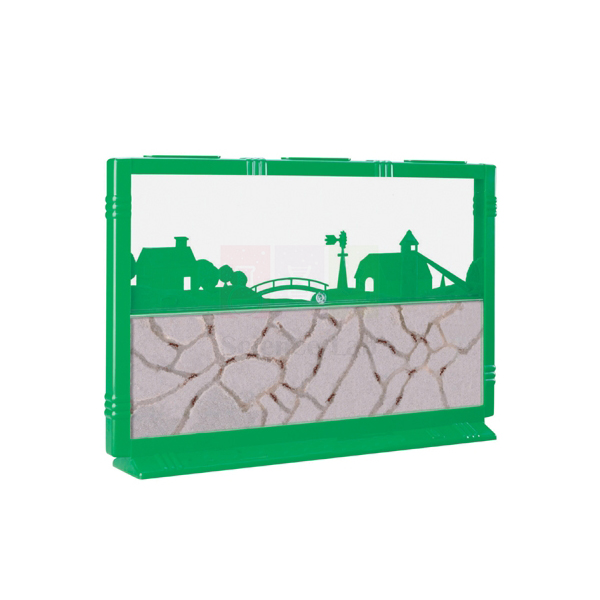
Giant Ant Farm
Giant Ant Farm (Product Code: SLE/EZ/22) is a large ant habitat used to watch ants dig tunnels and organise their colony over several weeks in classrooms and science clubs. At 15 x 10 in, it comes with clean tunnelling sand, a 24-inch clear connecting tube, a tunnel starter tool and a water feeder, giving students everything needed except the ants to begin observing. It is supplied by Jain Scientific Equipments Pvt Ltd (ScienceLab), Ambala, India.
Specifications
| Parameter | Detail |
|---|---|
| Size | 15 x 10 in |
| Tunnelling medium | Clean tunnelling sand |
| Connecting tube | 24-inch, clear |
| Tools | Tunnel starter tool |
| Watering | Water feeder |
| Live ants | Not listed as included — ask us |
| Product code | SLE/EZ/22 |
| Supplied by | Jain Scientific Equipments Pvt Ltd (ScienceLab), Ambala, India |
What Is the Giant Ant Farm Used For?
Ants are social insects, and an ant farm lets a class see what normally happens underground: workers digging and extending tunnels, carrying sand grains to the surface, moving food and caring for the colony. Because the tunnels change from day to day, students can sketch or photograph the farm at the same time each day and build a record of how the network grows, a long-running project in social insect behaviour.
Use the tunnel starter tool to make a few shallow openings that encourage the ants to begin digging, and keep the sand lightly moist with the water feeder. Keep the farm out of direct sunlight and away from heaters, feed sparingly, and never mix ants from different colonies, as they will fight. It adds a living element to school biology lab equipment and nature study.
What to Specify When Ordering
- The number of ant farms, for example one per class or one per science club.
- Whether you need help with a source of ants, since live ants are not listed as included.
- Any viewing boxes or magnifiers you want on the same order.
Supplier
Jain Scientific Equipments Private Limited, trading as ScienceLab, supplies the giant ant farm from Ambala, Haryana, India. Schools, colleges, activity centres and educational dealers can order it alongside other insect-study equipment, with delivery across India and to international markets. Company details are on the company profile page.
Related Zoology Equipment
Other insect-study items that complement the ant farm:
- Antworks Deluxe Kit — another ant habitat option from the same zoology range.
- Chamber with Lid — for short choice experiments with ants or other small insects.
- Bug Box, Gridded — for measuring individual ants and other minibeasts.
- Lens — a 3x and 6x magnifier for watching ants at work up close.
Explore the Zoology category for more.
Frequently Asked Questions
What comes with the Giant Ant Farm?
The Giant Ant Farm comes with clean tunnelling sand, a 24-inch clear connecting tube, a tunnel starter tool and a water feeder. The habitat itself measures 15 x 10 in, large enough for a class to watch at the same time.
Are live ants included with the Giant Ant Farm?
The listing for the Giant Ant Farm does not include live ants. Please ask through our contact page before ordering; many schools collect a small number of local ants from one colony under a teacher's supervision.
What is the tunnel starter tool on the Giant Ant Farm for?
The tunnel starter tool supplied with the Giant Ant Farm is used to make a few shallow openings in the sand. These give newly added ants a place to begin digging, so tunnels appear sooner.
How do I keep ants healthy in the Giant Ant Farm?
Keep the Giant Ant Farm out of direct sunlight and away from heat, keep the sand lightly moist using the water feeder, and give only small amounts of food. Remove uneaten food so mould does not develop.
What can students learn from the Giant Ant Farm?
The Giant Ant Farm lets students observe social insect behaviour, including tunnelling, division of work and food handling. Daily sketches or photos turn it into a long-running project on animal behaviour and data recording.
Who supplies the Giant Ant Farm?
The Giant Ant Farm is supplied by Jain Scientific Equipments Pvt Ltd (ScienceLab), Ambala, Haryana, India, to schools, colleges and dealers in India and international markets. It can be quoted with other insect-study items.
Request a Quote
To request a price for the Giant Ant Farm, send the quantity and delivery location through our contact page, or add it to the enquiry cart.
Last updated: 24 September 2026
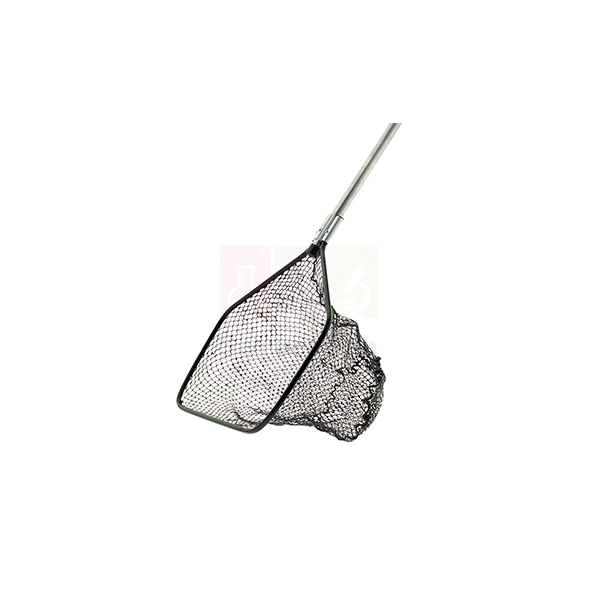
Net, Basic Fish Dip
Net, Basic Fish Dip (Product Code: SLE/EZ/23) is a long-handled D-frame dip net used to sample fish and aquatic invertebrates from ponds, streams and tanks in biology and environmental science fieldwork. It has a 4 ft aluminium handle, a D-shaped monorail bow 16 in wide by 18 in long, and a 24 in deep bag of 1/4 in knotless nylon mesh encased in the bow for protection. It is made by Jain Scientific Equipments Pvt Ltd (ScienceLab), an OEM manufacturer and biology lab equipment supplier in India, at its own factory in Ambala.
Specifications
| Parameter | Detail |
|---|---|
| Handle | Aluminium, 4 ft long |
| Bow shape | D-shaped monorail bow |
| Bow size | 16 in wide x 18 in long |
| Bag depth | 24 in |
| Mesh | 1/4 in knotless nylon |
| Net protection | Net encased in the bow as a natural guard; bow prevents abrasion from tanks, rocks and sand |
| Product code | SLE/EZ/23 |
| Manufacturer | Jain Scientific Equipments Pvt Ltd (ScienceLab) — OEM |
| Country of origin | India (made in Ambala, Haryana) |
What Is the Fish Dip Net Used For?
The flat edge of a D-shaped frame sits flush against a stream bed, pond floor or tank bottom, so very little escapes underneath. Students use it for kick sampling, where the net is held on the bed while the gravel just upstream is disturbed so that dislodged animals drift in, and for sweeping through weed beds and along banks to catch small fish, nymphs and snails. The 4 ft handle lets them reach out from the bank while keeping their feet on firm ground.
Because the net is encased in the monorail bow, it is not dragged directly over stones and sand, which reduces wear on the mesh. Empty the catch by turning the bag inside out into a tray of water, and rinse the net before moving to a new site. Hang it to dry after use. It is a dependable part of an ecology science kit for school and college stream studies.
OEM Manufacturer
Jain Scientific Equipments Private Limited, trading as ScienceLab, is the original equipment manufacturer (OEM) of this basic fish dip net. It is made at the company's own licensed factory at Saha, Ambala, Haryana, India, and reaches schools, colleges, fisheries teaching departments, dealers and importers directly from the manufacturer rather than through a trader. Replacement bags, repeat orders and class sets are quoted by the factory — ask us. See the company profile for more.
Related Zoology Equipment
Equipment that works alongside the fish dip net on a stream or pond survey:
- Invertebrate Sampling Tray — a wide tray to empty the net into for hand-picking.
- Minnow Seine, Thrifty — a seine for sampling open shallow water that the dip net cannot cover.
- Mini Fish Measuring Board — for measuring fish lengths before release.
- Key to Identifying Water Invertebrates — for identifying the invertebrates collected.
Browse the Zoology category for more field equipment.
Frequently Asked Questions
What are the dimensions of the Net, Basic Fish Dip?
The Net, Basic Fish Dip has a 4 ft aluminium handle, a D-shaped bow 16 in wide and 18 in long, and a bag 24 in deep made of 1/4 in knotless nylon mesh. The deep bag holds the catch securely while the net is lifted.
Why does the Net, Basic Fish Dip have a D-shaped bow?
The flat side of the D-shaped bow on the Net, Basic Fish Dip rests flush on a stream bed or tank floor, leaving little gap for animals to escape beneath. That makes it well suited to kick sampling and bottom sweeps.
How is the net protected from wear on the Net, Basic Fish Dip?
On the Net, Basic Fish Dip the nylon net is encased in a monorail bow, which acts as a natural guard. The bow takes the contact with rocks, sand and tank walls instead of the mesh, reducing abrasion.
Can the Net, Basic Fish Dip be used for invertebrates as well as fish?
Yes. The Net, Basic Fish Dip, with its 1/4 in knotless nylon mesh, collects small fish as well as larger aquatic invertebrates such as nymphs, snails and beetles, which can then be sorted in a tray.
Who manufactures the Net, Basic Fish Dip?
The Net, Basic Fish Dip is manufactured by Jain Scientific Equipments Pvt Ltd (ScienceLab), the OEM, at its own licensed factory in Saha, Ambala, Haryana, India. Quotations, replacement bags and repeat orders are handled directly by the manufacturer.
How should the Net, Basic Fish Dip be cleaned after use?
Rinse the Net, Basic Fish Dip in clean water to remove mud, plants and small animals, especially before sampling a different site. Then hang it up to dry fully before storage to prevent odour and mildew.
Request a Quote
Quotations for the Net, Basic Fish Dip come direct from the manufacturer. Send the number of nets and your delivery location through our contact page, or add it to the enquiry cart.
Last updated: 24 September 2026
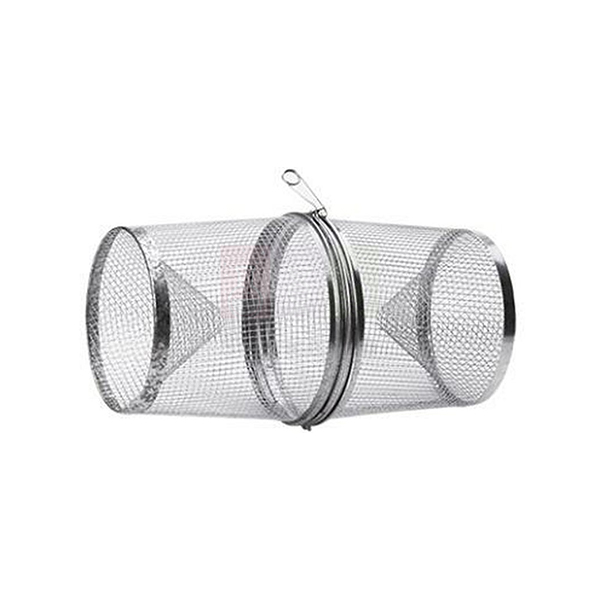
Gee Minnow Trap
Gee Minnow Trap (Product Code: SLE/EZ/24) is a no-frills wire-mesh trap used to catch small fish passively in ponds and streams for biology and fisheries fieldwork. Students set it in the water and return later, instead of netting actively; it is made of galvanised 1/4 in square wire mesh, measures 16 in long by 9 in wide, and has a 7/8 in entrance hole. It is supplied by Jain Scientific Equipments Pvt Ltd (ScienceLab), Ambala, India.
Specifications
| Parameter | Detail |
|---|---|
| Type | Passive minnow trap |
| Material | Galvanised 1/4 in square wire mesh |
| Length | 16 in |
| Width | 9 in |
| Entrance hole | 7/8 in |
| Operation | Set it up and return at your convenience |
| Product code | SLE/EZ/24 |
| Supplied by | Jain Scientific Equipments Pvt Ltd (ScienceLab), Ambala, India |
What Is the Minnow Trap Used For?
A minnow trap samples small fish without anyone standing in the water: fish swim in through the entrance hole, often drawn by a little bait, and find it hard to swim back out. That makes it useful where banks are steep or water is too deep for a seine, and for comparing catches between sites or times of day. Traps set side by side in different habitats give a simple, repeatable survey method for a school or college ecology project.
Place the trap in shallow water near cover such as weeds or roots, and tie it to the bank with cord so it can be recovered. Check it within a few hours rather than leaving fish inside for long, then count, measure and release them where they were caught. The galvanised mesh copes with repeated wetting; rinse and dry it after use. Always check local rules on fish sampling and supervise students near water.
Supplier
Jain Scientific Equipments Private Limited, which trades as ScienceLab, supplies the Gee Minnow Trap from Ambala, Haryana, India. Schools, colleges, fisheries and environmental study programmes and dealers can source it together with nets, measuring boards and aerators on one quotation, for delivery across India and to international markets. More about the company is on the company profile page.
Related Zoology Equipment
Items that support a small-fish survey with the minnow trap:
- Minnow Seine, Thrifty — an active sampling method to compare with the trap's passive catch.
- Net, Basic Fish Dip — for lifting fish out of the trap and sampling the margins.
- Mini Fish Measuring Board — for recording fish lengths before release.
- Bucket Aerator — keeps fish in a holding bucket supplied with oxygen.
More fieldwork items are in the Zoology category.
Frequently Asked Questions
What is the Gee Minnow Trap made of?
The Gee Minnow Trap is made of galvanised 1/4 in square wire mesh. The galvanised coating helps the trap cope with repeated use in water, and the small mesh holds minnows and other small fish once they are inside.
What size is the Gee Minnow Trap?
The Gee Minnow Trap is 16 in long and 9 in wide, with a 7/8 in entrance hole. It is compact enough to carry several traps in one field bag and set them at different points around a pond.
How does the Gee Minnow Trap work?
Small fish swim into the Gee Minnow Trap through its entrance hole and find it difficult to swim back out. Students simply set the trap in the water, leave it for a short time, and return to count the catch.
How long should the Gee Minnow Trap be left in the water?
For teaching surveys, check the Gee Minnow Trap within a few hours so fish are not held for long. Record, measure and release the catch at the same spot, and remove the trap when the session ends.
Does the Gee Minnow Trap come with bait or cord?
The listing for the Gee Minnow Trap describes the wire-mesh trap only and does not mention bait or cord. Most groups use a length of cord to anchor it to the bank; ask us if you need accessories.
Who supplies the Gee Minnow Trap?
The Gee Minnow Trap is supplied by Jain Scientific Equipments Pvt Ltd (ScienceLab), Ambala, Haryana, India. Schools, colleges and dealers in India and international markets can order it through the contact page.
Request a Quote
For a Gee Minnow Trap quotation, send the number of traps and your delivery location through our contact page, or add them to the enquiry cart with other fieldwork items.
Last updated: 24 September 2026
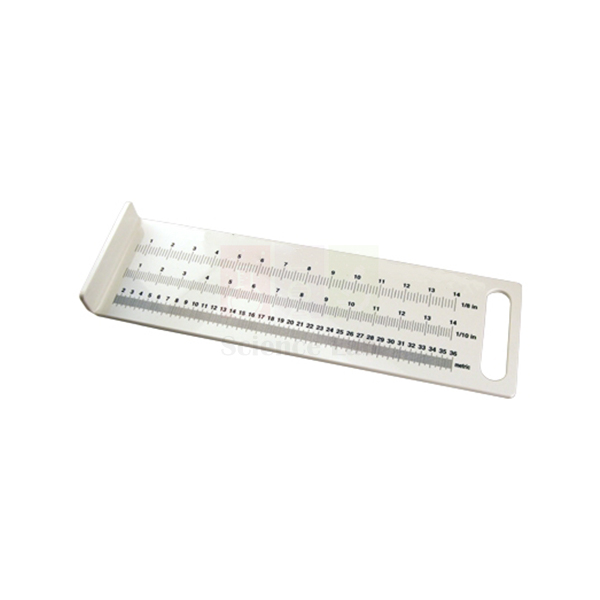
Mini Fish Measuring Board
Mini Fish Measuring Board (Product Code: SLE/EZ/25) is a lightweight PVC board used to measure the length of small fish quickly and consistently during fisheries, ecology and zoology fieldwork. A raised lip positions the fish, a built-in handle makes it easy to carry, and three scales — in eighths of an inch, tenths of an inch and centimetres — are silk-screened in high-resolution black. It is supplied by Jain Scientific Equipments Pvt Ltd (ScienceLab), Ambala, as part of its range of biology lab equipment in India.
Specifications
| Parameter | Detail |
|---|---|
| Material | Lightweight PVC |
| Scales | Three: eighths (in), tenths (in) and centimetres |
| Scale printing | Silk-screened in high-resolution black |
| Fish positioning | Raised lip |
| Handle | Built-in |
| Size (as listed) | 15 in long; 16 x 5 x 1.5 in |
| Product code | SLE/EZ/25 |
| Supplied by | Jain Scientific Equipments Pvt Ltd (ScienceLab), Ambala, India |
What Is the Fish Measuring Board Used For?
Fish length is one of the most useful measurements in a freshwater survey: it shows the size range of a population, helps separate young fish from adults, and can be plotted as a length-frequency chart back in class. On a measuring board, the fish lies on its side with its snout pushed gently against the raised lip, and the length is read where the tail ends, so every student measures in the same way.
Having inch and centimetre scales on one board lets a group record in the unit their worksheet asks for, or practise converting between them. Wet the board before each fish so the protective slime layer is not rubbed off, measure quickly, and return the fish to water straight away. Rinse the board in clean water afterwards and let it dry. It is a handy addition to zoology lab equipment used on fisheries and pond-study courses.
Supplier
This mini fish measuring board is supplied by Jain Scientific Equipments Private Limited, trading as ScienceLab, of Ambala, Haryana, India. Schools, colleges, fisheries training centres and dealers can order it in field-kit quantities, with nets, traps and aerators on the same quotation, for customers in India and international markets. Company background is on the company profile page.
Related Zoology Equipment
Items used before and after measuring fish in the field:
- Minnow Seine, Thrifty — for catching the small fish to be measured.
- Gee Minnow Trap — a passive trap that supplies fish for measurement.
- Bucket Aerator — keeps fish in good condition while they wait to be measured.
- Bony Fish Model — for learning fish body parts, such as the snout and tail fin, in class.
See the Zoology category for more.
Frequently Asked Questions
Which scales are printed on the Mini Fish Measuring Board?
The Mini Fish Measuring Board carries three scales: inches in eighths, inches in tenths and centimetres. They are silk-screened in high-resolution black, so students can read and record lengths in whichever unit their survey uses.
What size is the Mini Fish Measuring Board?
The Mini Fish Measuring Board is listed as 15 in long and 16 x 5 x 1.5 in. The listing does not make clear which figure is the scale length, so ask through our contact page if the exact measuring range matters.
What is the raised lip on the Mini Fish Measuring Board for?
The raised lip on the Mini Fish Measuring Board acts as a stop for the fish's snout. With the snout against the lip, the length is read at the tail, giving consistent measurements between students.
What material is the Mini Fish Measuring Board made from?
The Mini Fish Measuring Board is made of lightweight PVC with a built-in handle. PVC can be rinsed after each use, and the light weight suits carrying the board to ponds and streams.
How do I measure a fish without harming it on the Mini Fish Measuring Board?
Wet the Mini Fish Measuring Board first, lay the fish on its side with the snout against the lip, read the length quickly and return the fish to water at once. Wet hands also help protect its slime layer.
Who supplies the Mini Fish Measuring Board?
The Mini Fish Measuring Board is supplied by Jain Scientific Equipments Pvt Ltd (ScienceLab), Ambala, Haryana, India, to schools, colleges and dealers in India and international markets. It can be quoted with nets, traps and aerators.
Request a Quote
To order the Mini Fish Measuring Board, send the quantity and delivery location through our contact page, or add it to the enquiry cart.
Last updated: 24 September 2026
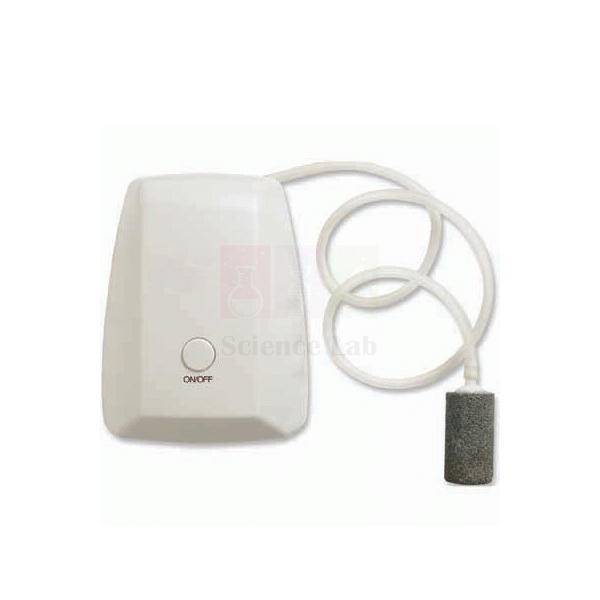
Bucket Aerator
Bucket Aerator (Product Code: SLE/EZ/26) is a portable air pump used to keep fish and other aquatic animals oxygenated in a bucket of water during field sampling and transport. Suitable for fresh and salt water, it pairs a quiet diaphragm pump with a 24 ft air hose and can work in a 5-gallon bucket. It is supplied by Jain Scientific Equipments Pvt Ltd (ScienceLab), Ambala, India, for school, college and fisheries fieldwork.
Specifications
| Parameter | Detail |
|---|---|
| Function | Keeps samples oxygenated in the field |
| Pump type | Quiet diaphragm pump |
| Air hose | 24 ft |
| Water type | Fresh and salt water |
| Container | Can work in a 5-gallon bucket |
| Power source | Not stated — confirmed on quotation |
| Product code | SLE/EZ/26 |
| Supplied by | Jain Scientific Equipments Pvt Ltd (ScienceLab), Ambala, India |
What Is the Bucket Aerator Used For?
Fish and invertebrates held in a bucket quickly use up the oxygen in the water, especially on a warm day or when several animals share one container. A bucket aerator pumps air through a hose into the water, where the rising bubbles replace lost oxygen and keep the catch in good condition while it is sorted, measured and returned. It is equally useful for carrying live samples back to the lab for a classroom aquarium.
The long air hose lets the pump sit on the bank or in the vehicle while the hose runs to the bucket. Keep the pump dry and above the water level, shade the bucket, and avoid overcrowding it. After use in salt water, flush the hose with fresh water and let it dry. Pair it with a dissolved oxygen meter if students want to measure the effect of aeration directly.
Supplier
Jain Scientific Equipments Private Limited, known as ScienceLab, supplies the bucket aerator from Ambala, Haryana, India. Schools, colleges, fisheries courses, research groups and distributors can source it with nets, traps and measuring boards on one quotation, with delivery within India and to international markets. More details are on the company profile page.
Related Zoology Equipment
Items that go with the aerator on a fish-sampling trip:
- Minnow Seine, Thrifty — catches the small fish that the aerated bucket will hold.
- Gee Minnow Trap — a passive trap whose catch can wait in the bucket.
- Aquarium Dip Net — for lifting individual fish out of the bucket.
- Digital Dissolved Oxygen Meter — for measuring oxygen levels in the bucket or at the site.
Browse the Zoology category for more fieldwork equipment.
Frequently Asked Questions
What size bucket does the Bucket Aerator work with?
The Bucket Aerator can work in a 5-gallon bucket, a practical size for holding a morning's catch of small fish during fieldwork. Use a bucket with a lid or cover for transport, leaving a gap for the air hose.
Can the Bucket Aerator be used in salt water?
Yes. The Bucket Aerator is listed for both fresh and salt water. After salt-water use, flush the air hose through with fresh water and let everything dry, so salt does not build up in the line.
How long is the air hose on the Bucket Aerator?
The Bucket Aerator comes with a 24 ft air hose. The long hose lets the quiet diaphragm pump stay on dry ground or in a vehicle while the air is delivered to the bucket.
How is the Bucket Aerator powered?
The listing for the Bucket Aerator does not state its power source. Please ask through our contact page, and we will confirm the power requirements with the quotation so you can plan for fieldwork away from mains supply.
Is the Bucket Aerator noisy?
The Bucket Aerator uses a quiet diaphragm pump, which suits use in a classroom or near other groups during fieldwork. Stand the pump on a firm, dry surface to keep vibration and noise to a minimum.
Who supplies the Bucket Aerator?
The Bucket Aerator is supplied by Jain Scientific Equipments Pvt Ltd (ScienceLab), Ambala, Haryana, India. Schools, colleges and dealers in India and international markets can order it alone or with other fish-sampling equipment.
Request a Quote
For a Bucket Aerator quotation, send the quantity and delivery location through our contact page, or add it to the enquiry cart with nets and traps.
Last updated: 24 September 2026
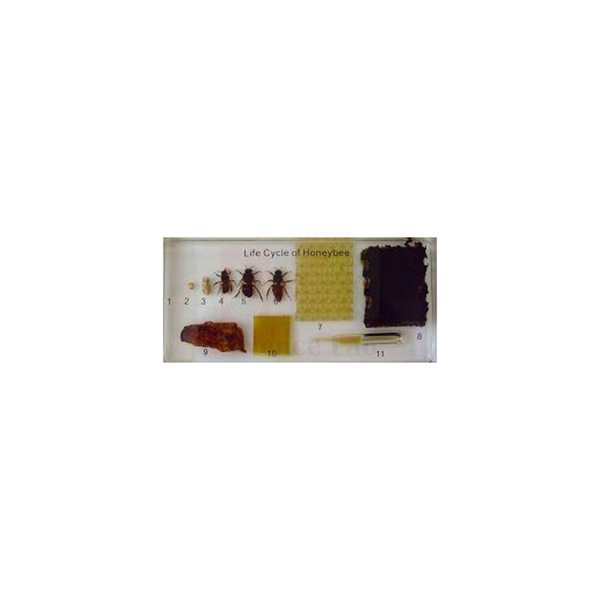
Honeybee Lifecycle Plastomount
Honeybee Lifecycle Plastomount (Product Code: SLE/EZ/27) is a labelled set of real honeybee specimens embedded in an acrylic block, used to teach complete metamorphosis and bee biology in school and college zoology classes. It shows the egg, larva, pupa, worker, drone and adult forms, together with samples of honeycomb, beeswax and honey, in a 140 x 64 x 18 mm block weighing 190 g. It is supplied by Jain Scientific Equipments Pvt Ltd (ScienceLab), Ambala, India.
Specifications
| Parameter | Detail |
|---|---|
| Stages shown | Egg, larva, pupa, worker, drone and adult forms |
| Bee products included | Honeycomb, beeswax and honey samples |
| Labelling | Labelled set |
| Encasement | Acrylic block, listed as unbreakable; protects specimens from decay |
| Size | 140 x 64 x 18 mm |
| Weight | 190 g |
| Product code | SLE/EZ/27 |
| Supplied by | Jain Scientific Equipments Pvt Ltd (ScienceLab), Ambala, India |
What Is the Honeybee Lifecycle Plastomount Used For?
The honeybee passes through four distinct stages — egg, larva, pupa and adult — and this block lets students see all of them side by side, which makes complete metamorphosis far easier to grasp than from a diagram. Including both worker and drone adults opens a discussion of the division of labour in a colony, while the comb, wax and honey samples link the biology to apiculture and the economic importance of bees, a topic in many Indian zoology syllabi.
Because the specimens are sealed in acrylic, the block can be handed round a class, placed under a hand lens or set out at a practical station without risk of damage to the insects. Wipe it with a soft, damp cloth, avoid solvents that can cloud acrylic, and keep it out of long exposure to strong sunlight. It is a durable lab specimen for biology teaching that lasts through many batches of students.
Supplier
Jain Scientific Equipments Private Limited, which trades as ScienceLab, supplies the honeybee lifecycle plastomount from Ambala, Haryana, India. Schools, colleges, agriculture and apiculture training institutes, and educational dealers can order it on its own or with other insect lifecycle blocks, with delivery across India and to international markets. Company background is on the company profile page.
Related Zoology Equipment
Specimens that build a fuller lesson on insect life cycles and bees:
- Silkworm Lifecycle Plastomount — another complete-metamorphosis insect, linked to sericulture.
- Grasshopper Lifecycle — an incomplete-metamorphosis life cycle for contrast.
- Bee, Part of the Mouth, Whole Body — a microscope preparation for studying bee mouthparts.
- Bee, Hind Leg — shows the leg structures bees use to carry pollen.
More specimens are in the Zoology category.
Frequently Asked Questions
Which stages are shown in the Honeybee Lifecycle Plastomount?
The Honeybee Lifecycle Plastomount shows the egg, larva, pupa, worker, drone and adult forms of the honeybee in a labelled set. Samples of honeycomb, beeswax and honey are included in the same acrylic block.
What size is the Honeybee Lifecycle Plastomount?
The Honeybee Lifecycle Plastomount measures 140 x 64 x 18 mm and weighs 190 g. The compact block fits comfortably in one hand and stores easily in a specimen drawer.
Are the specimens in the Honeybee Lifecycle Plastomount real?
Yes, the Honeybee Lifecycle Plastomount holds real specimens encased in an acrylic block, which protects them from decay and handling damage. Small natural differences between blocks are normal.
Can students handle the Honeybee Lifecycle Plastomount?
Yes. The Honeybee Lifecycle Plastomount is sealed in acrylic listed as unbreakable, so students can hold it and view it through a hand lens. Avoid dropping it on hard floors and clean it with a soft, damp cloth only.
What does the Honeybee Lifecycle Plastomount teach about metamorphosis?
The Honeybee Lifecycle Plastomount shows complete metamorphosis, where a larva turns into an adult through a pupal stage. Setting it beside a grasshopper life cycle helps students compare complete and incomplete metamorphosis.
Who supplies the Honeybee Lifecycle Plastomount?
The Honeybee Lifecycle Plastomount is supplied by Jain Scientific Equipments Pvt Ltd (ScienceLab), Ambala, Haryana, India. Schools, colleges and dealers in India and international markets can request a quotation through the contact page.
Request a Quote
For a quotation on the Honeybee Lifecycle Plastomount, send the quantity and delivery location through our contact page, or add it to the enquiry cart with other lifecycle specimens.
Last updated: 24 September 2026
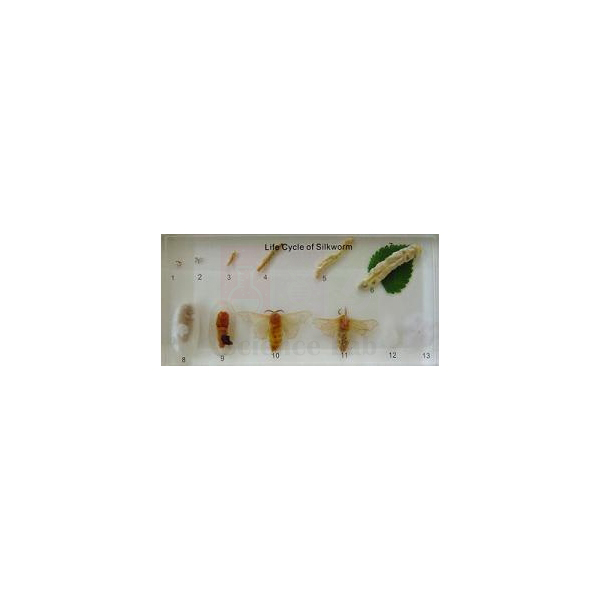
Silkworm Lifecycle Plastomount
Silkworm Lifecycle Plastomount (Product Code: SLE/EZ/28) is a labelled set of real silkworm specimens sealed in an acrylic block, used to teach the silkworm's metamorphosis and the basics of sericulture in school and college zoology. It shows the egg, larva, caterpillar, pupa and adult, and adds mulberry leaves plus samples of raw silk and silk fabric, so students follow the story from food plant to finished cloth. It is supplied by Jain Scientific Equipments Pvt Ltd (ScienceLab), Ambala, with its range of school biology lab equipment in India.
Key Details
| Parameter | Detail |
|---|---|
| Stages shown | Egg, larva, caterpillar, pupa and adult |
| Also included | Mulberry leaves; samples of raw silk and silk fabric |
| Labelling | Labelled set |
| Encasement | Acrylic block, listed as unbreakable; protects specimens from decay |
| Block size | Not stated — ask us |
| Product code | SLE/EZ/28 |
| Supplied by | Jain Scientific Equipments Pvt Ltd (ScienceLab), Ambala, India |
What Is the Silkworm Lifecycle Plastomount Used For?
Sericulture, the rearing of silkworms for silk, is a standard topic in economic zoology, and this block turns it into something students can hold. They can trace the growth from tiny egg to feeding larva and mature caterpillar, then the pupa and the adult moth, and see why the mulberry leaf matters as the larva's food. The raw silk and fabric samples complete the chain from insect to textile, which helps connect biology lessons with India's silk industry.
Use the block at a practical station with a worksheet asking students to name each stage and describe what happens between them, then compare it with a grasshopper life cycle to contrast complete and incomplete metamorphosis. Since the specimens are sealed, the block can be passed around freely. Clean it with a soft, damp cloth and store it away from strong sunlight. It is a long-lasting addition to zoology lab equipment in India.
Supplier
The silkworm lifecycle plastomount is supplied by Jain Scientific Equipments Private Limited, trading as ScienceLab, from Ambala, Haryana, India. Schools, colleges, sericulture and agriculture training institutes, and dealers can order it singly or as part of an insect lifecycle collection, for delivery across India and to international markets. See the company profile for more about the company.
Related Zoology Equipment
Other resources for lessons on insect life cycles and sericulture:
- Honeybee Lifecycle Plastomount — a second economically important insect with complete metamorphosis.
- Grasshopper Lifecycle — an incomplete-metamorphosis example for comparison.
- Silk Worm (Life Cycle) — a wall chart of the silkworm life cycle for whole-class teaching.
- Lens — a 3x and 6x magnifier for examining the smaller stages.
Explore the Zoology category for more specimens.
Frequently Asked Questions
What stages does the Silkworm Lifecycle Plastomount show?
The Silkworm Lifecycle Plastomount shows the egg, larva, caterpillar, pupa and adult of the silkworm in a labelled set. Seeing every stage in one block helps students describe complete metamorphosis in order.
What else is included in the Silkworm Lifecycle Plastomount?
Besides the life stages, the Silkworm Lifecycle Plastomount includes mulberry leaves, the silkworm's food plant, and samples of raw silk and silk fabric. These link the insect's biology to silk production.
Are the specimens in the Silkworm Lifecycle Plastomount real?
Yes. The Silkworm Lifecycle Plastomount contains real specimens encased in an acrylic block, which protects them from decay. As natural material, the specimens can vary slightly in size and colour between blocks.
What size is the Silkworm Lifecycle Plastomount?
The listing for the Silkworm Lifecycle Plastomount does not give the block dimensions. If you need them for storage or display planning, ask through our contact page and we will confirm with the quotation.
Is the Silkworm Lifecycle Plastomount suitable for student handling?
Yes. The Silkworm Lifecycle Plastomount is sealed in acrylic listed as unbreakable, so it can be passed around a class. Clean it with a soft, damp cloth and keep it away from long exposure to strong sunlight.
Who supplies the Silkworm Lifecycle Plastomount?
The Silkworm Lifecycle Plastomount is supplied by Jain Scientific Equipments Pvt Ltd (ScienceLab), Ambala, Haryana, India. Schools, colleges, training institutes and dealers in India and international markets can request a quotation.
Request a Quote
To get a price for the Silkworm Lifecycle Plastomount, send the quantity and delivery location through our contact page, or add it to the enquiry cart.
Last updated: 24 September 2026
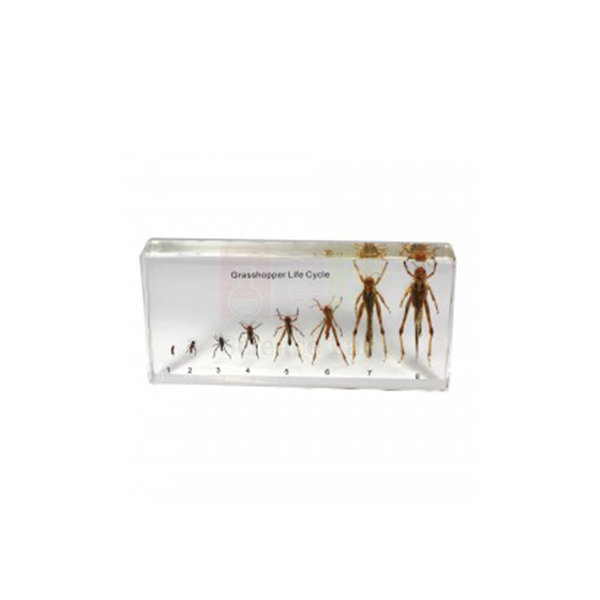
Grasshopper Lifecycle
Grasshopper Lifecycle (Product Code: SLE/EZ/29) is a teaching kit with preserved grasshopper specimens in a clear resin block, used to show incomplete metamorphosis in school and college biology lessons. One 6 1/2 x 3 x 1 in specimen block holds different stages of the grasshopper Oxya chinensis, and the kit's overall size is listed as 8 1/4 x 4 3/4 x 1 1/2 in. It is supplied by Jain Scientific Equipments Pvt Ltd (ScienceLab), Ambala, India, as a durable lab specimen.
Specifications
| Parameter | Detail |
|---|---|
| Topic | Life cycle of the grasshopper (incomplete metamorphosis) |
| Species | Oxya chinensis |
| Specimens | Different stages of the grasshopper, preserved |
| Encasement | Clear resin |
| Blocks included | One specimen block, 6 1/2 x 3 x 1 in |
| Overall size (as listed) | 8 1/4 x 4 3/4 x 1 1/2 in |
| Product code | SLE/EZ/29 |
| Supplied by | Jain Scientific Equipments Pvt Ltd (ScienceLab), Ambala, India |
What Is the Grasshopper Lifecycle Used For?
Grasshoppers develop by incomplete metamorphosis: a nymph hatches from the egg looking like a small, wingless version of the adult, then grows through a series of moults, with wing buds getting larger each time, until it becomes a winged adult. There is no pupal stage. A resin block of real specimens lets students line these stages up and see the gradual change for themselves, which is much clearer than a textbook drawing.
Oxya chinensis is a grasshopper of rice fields, so the block also suits lessons on crop pests in agricultural zoology. Teachers often place it beside a honeybee or silkworm lifecycle block and ask students to list the differences between complete and incomplete metamorphosis. The resin protects the specimens during handling; wipe it with a soft cloth and store it away from strong sunlight.
Supplier
Jain Scientific Equipments Private Limited, which trades as ScienceLab, supplies the grasshopper lifecycle kit from Ambala, Haryana, India. Schools, colleges, agricultural institutes and educational distributors can order it with other insect specimens and collecting equipment, for delivery across India and to international markets. More about the company is on the company profile page.
Related Zoology Equipment
Items for comparing life cycles and studying live grasshoppers:
- Honeybee Lifecycle Plastomount — a complete-metamorphosis life cycle for direct comparison.
- Silkworm Lifecycle Plastomount — another complete-metamorphosis insect with a pupal stage.
- Insect Net, Economy — for catching live grasshoppers and nymphs in the school grounds.
- Insect Mount Set — a wider set of insects and other arthropods for classification work.
See the Zoology category for more.
Frequently Asked Questions
What type of metamorphosis does the Grasshopper Lifecycle kit show?
The Grasshopper Lifecycle kit shows incomplete metamorphosis, in which young nymphs resemble small adults and grow through moults without a pupal stage. It contrasts well with insects such as bees and silkworms that pass through a pupa.
Which grasshopper species is used in the Grasshopper Lifecycle kit?
The Grasshopper Lifecycle kit uses specimens of Oxya chinensis, a grasshopper associated with rice fields. The different stages are preserved and encased in clear resin in a single specimen block.
How many specimen blocks are in the Grasshopper Lifecycle kit?
The Grasshopper Lifecycle kit includes one specimen block measuring 6 1/2 x 3 x 1 in. The overall size is listed as 8 1/4 x 4 3/4 x 1 1/2 in, so allow for that when planning storage.
Which stages are included in the Grasshopper Lifecycle block?
The listing says the Grasshopper Lifecycle block contains the different stages of the grasshopper but does not list them individually. Ask through our contact page if you need the exact stages confirmed before ordering.
How should the Grasshopper Lifecycle block be cared for?
Wipe the Grasshopper Lifecycle resin block with a soft, dry or slightly damp cloth, avoid solvents, and store it away from strong sunlight and heat. Handle it over a table so it is not dropped on a hard floor.
Who supplies the Grasshopper Lifecycle kit?
The Grasshopper Lifecycle kit is supplied by Jain Scientific Equipments Pvt Ltd (ScienceLab), Ambala, Haryana, India. Schools, colleges and dealers in India and international markets can order it on its own or with other insect specimens.
Request a Quote
For a Grasshopper Lifecycle quotation, send the quantity and delivery location through our contact page, or place it in the enquiry cart with other lifecycle specimens.
Last updated: 24 September 2026
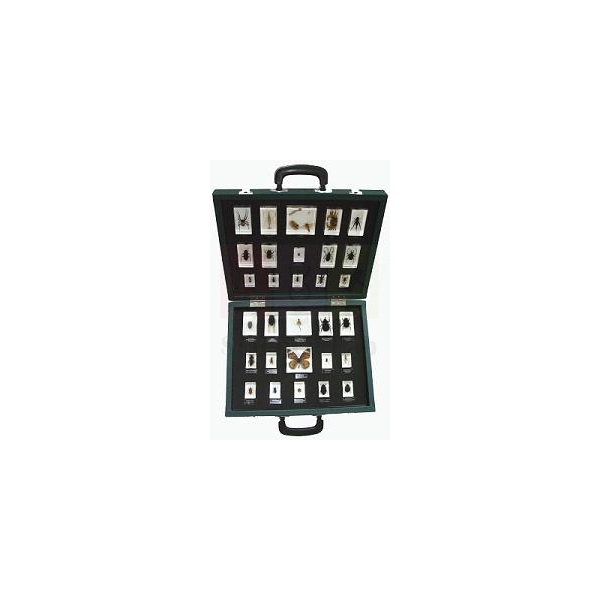
Insect Mount Set
Insect Mount Set (Product Code: SLE/EZ/30) is a versatile collection of mounted insects and other arthropods, including spiders, scorpions, crabs and shrimps, used for identification and classification work in school and college zoology. Beetles, wasps, a monarch butterfly, a dragonfly and many more are held in a carrying case with die-cut foam inserts and a sturdy handle, so the set travels safely between classrooms. It is supplied by Jain Scientific Equipments Pvt Ltd (ScienceLab), Ambala, India.
Key Details
| Parameter | Detail |
|---|---|
| Contents | Mounted insect and arthropod specimens (full list below) |
| Case | Die-cut foam inserts and sturdy handle |
| Mounting method | Not stated — ask us |
| Product code | SLE/EZ/30 |
| Supplied by | Jain Scientific Equipments Pvt Ltd (ScienceLab), Ambala, India |
Specimens in the set, grouped here to help with teaching:
- Arachnids: spider, scorpion
- Crustaceans: shrimp, crab
- Beetles: stag beetle, longhorned beetle, antler horned beetle, wood tiger beetle, green tiger beetle, rhino beetle, dung beetle, bamboo weevil, grey weevil, ladybug, great diving beetle, chafer beetle
- Ants, bees and wasps: ant, honeybee, giant hornet wasp, paper wasp
- Crickets and grasshoppers: cricket, mole cricket, grasshopper
- Bugs and cicadas: shield bug, cicada
- Other insects: silkworm, cockroach, onion fly, dragonfly, monarch butterfly
What Is the Insect Mount Set Used For?
Because the set mixes true insects with spiders, scorpions, crabs and shrimps, it is ideal for the classic classification question: what makes an insect an insect? Students count legs and body sections, look for antennae and wings, and sort the specimens into arachnids, crustaceans and insects before going further into insect orders such as beetles, bees and wasps, crickets, true bugs, flies, dragonflies and butterflies.
The set also supports lessons on adaptation, from the digging forelegs of the mole cricket and the swimming legs of the diving beetle to the long jumping legs of the grasshopper. Place specimens at numbered stations with a dichotomous key and a hand lens, and return each to its foam slot afterwards. It serves well as a reference collection alongside a school insect collection kit.
Supplier
Jain Scientific Equipments Private Limited, trading as ScienceLab, supplies the insect mount set from Ambala, Haryana, India. Schools, colleges, museums, nature centres and educational dealers can order it with lifecycle blocks, nets and magnifiers on one quotation, with delivery across India and to international markets. Background on the company is on the company profile page.
Related Zoology Equipment
Items that extend work with the insect mount set:
- Lens — a 3x and 6x magnifier for examining legs, antennae and mouthparts.
- Insect Anatomy Slide Set of 9 — microscope slides showing insect body parts in finer detail.
- Insect Net, Economy — for collecting live insects to compare with the reference set.
- Insect Pin Holder — for students who go on to pin their own specimens.
Browse the Zoology category for more specimens and tools.
Frequently Asked Questions
Which specimens are in the Insect Mount Set?
The Insect Mount Set includes a spider, scorpion, shrimp, crab, many beetles and weevils, an ant, honeybee, wasps, crickets, a grasshopper, shield bug, cicada, silkworm, cockroach, onion fly, dragonfly and monarch butterfly. The full list is shown above.
Does the Insect Mount Set include animals that are not insects?
Yes. The Insect Mount Set also contains arachnids (spider and scorpion) and crustaceans (shrimp and crab). This makes it useful for teaching how insects differ from other arthropods in legs, body sections and antennae.
How are the specimens in the Insect Mount Set stored?
The Insect Mount Set comes in a case with die-cut foam inserts, which hold each specimen in its own slot, and a sturdy handle for carrying. Return every specimen to its slot after use so none are lost.
Are the specimens in the Insect Mount Set in resin blocks?
The listing does not say how the specimens in the Insect Mount Set are mounted. Please ask through our contact page, and we will confirm the mounting method and specimen sizes before you order.
What age group is the Insect Mount Set suitable for?
The Insect Mount Set suits middle and senior school biology as well as undergraduate zoology, since it supports both simple sorting activities and detailed classification into insect orders. Younger pupils can use it with teacher guidance.
Who supplies the Insect Mount Set?
The Insect Mount Set is supplied by Jain Scientific Equipments Pvt Ltd (ScienceLab), Ambala, Haryana, India. Schools, colleges, museums and dealers in India and international markets can request a quotation through the contact page or the enquiry cart.
Request a Quote
For an Insect Mount Set quotation, send the quantity and delivery location through our contact page, or add it to the enquiry cart with other specimens.
Last updated: 24 September 2026
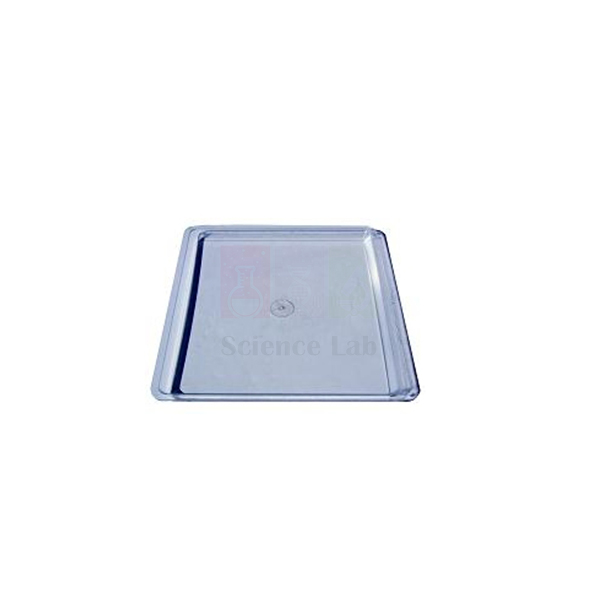
Tray
Tray (Product Code: SLE/EZ/31) is a 22.5 x 25 cm plastic tray used for picking out small critters from field samples and for studying small objects on the bench in biology and general science classes. Teachers use it to give each group a defined work area that keeps animals, seeds, shells or soil samples together and contains spills. It is supplied by Jain Scientific Equipments Pvt Ltd (ScienceLab), Ambala, as practical, everyday school biology lab equipment in India.
Specifications
| Parameter | Detail |
|---|---|
| Material | Plastic |
| Size | 22.5 x 25 cm |
| Intended use | Picking critters; studying small objects |
| Product code | SLE/EZ/31 |
| Supplied by | Jain Scientific Equipments Pvt Ltd (ScienceLab), Ambala, India |
What Is the Plastic Tray Used For?
A leaf-litter or soil sample tipped onto a tray can be spread out and searched a little at a time, so students find the woodlice, springtails, beetles and worms hiding in it. The same tray works for a scoop of pond water, a handful of seeds to sort, or shells and pebbles to examine under a lens. Keeping everything inside the tray means fewer lost specimens and a cleaner bench at the end of the lesson.
At 22.5 x 25 cm, this tray is larger than a pocket sorting tray but still easy to pass between students. Use soft forceps or a small brush to move animals, keep live specimens in the shade, and return them to where they were found. Wash the tray with mild soap and water afterwards. A set of trays is a simple, low-cost way to organise group practicals in school biology lab equipment.
Supplier
This plastic tray is supplied by Jain Scientific Equipments Private Limited, which trades as ScienceLab, from Ambala, Haryana, India. Schools, colleges, activity centres and educational dealers can order it in class sets alongside nets, magnifiers and sorting trays, for delivery within India and to international markets. More information is on the company profile page.
Related Zoology Equipment
Tools that are handy alongside the tray:
- Sorting Tray — a smaller white tray for separating critters into groups.
- Invertebrate Sampling Tray — a large fibreglass tray for whole stream samples.
- Forceps, Plastic — gentle forceps for lifting small animals from the tray.
- Lens — a 3x and 6x magnifier for studying small objects in the tray.
More equipment is listed in the Zoology category.
Frequently Asked Questions
What size is the Tray (SLE/EZ/31)?
The Tray (SLE/EZ/31) measures 22.5 x 25 cm. That gives a group enough room to spread out a leaf-litter, soil or pond sample and search it thoroughly, while still fitting easily on a shared bench.
What is the Tray (SLE/EZ/31) made of?
The Tray (SLE/EZ/31) is made of plastic, so it is light to carry and can be washed with mild soap and water after each practical. Avoid very hot water and solvent cleaners to keep it in good shape.
What can students do with the Tray (SLE/EZ/31)?
Students use the Tray (SLE/EZ/31) to pick critters out of field samples and to study small objects such as seeds, shells or pebbles. It keeps specimens together in one place and contains any spilled water or soil.
What colour is the Tray (SLE/EZ/31) and is it deep enough for water?
The listing for the Tray (SLE/EZ/31) does not give its colour or depth. If you plan to use it with pond water, ask through our contact page and we will confirm these details before quoting.
How is the Tray (SLE/EZ/31) different from the Sorting Tray?
The Tray (SLE/EZ/31) is a 22.5 x 25 cm plastic tray, while the Sorting Tray is a smaller 5 x 7 in white HDPE pan with a pour spout. Many classes use the larger tray first and the smaller one for sorting.
Who supplies the Tray (SLE/EZ/31)?
The Tray (SLE/EZ/31) is supplied by Jain Scientific Equipments Pvt Ltd (ScienceLab), Ambala, Haryana, India. Schools, colleges and dealers in India and international markets can order class sets through the contact page or the enquiry cart.
Request a Quote
To order the Tray, send the quantity and delivery location through our contact page, or add it to the enquiry cart.
Last updated: 24 September 2026
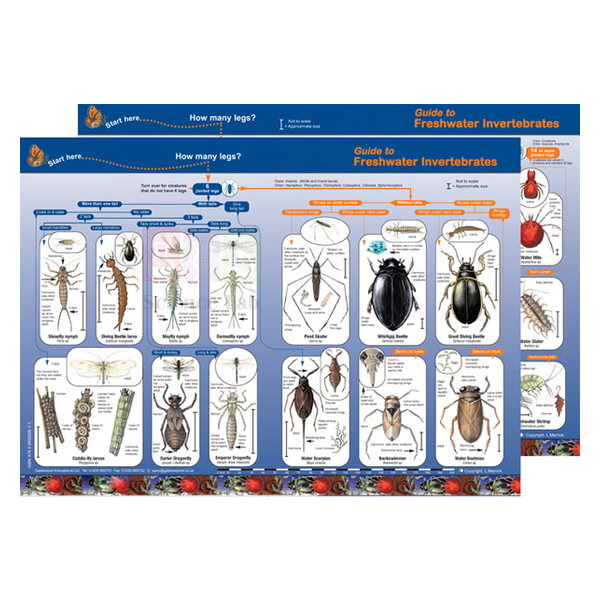
Key to Identifying Water Invertebrates
Key to Identifying Water Invertebrates (Product Code: SLE/EBT/16) is a folded, laminated identification chart used to name the small freshwater animals caught during pond dipping in school biology and field-study lessons. Part of the Key Identification Guides K1 - 5 series, it is an A3 sheet printed on both sides, with easy-to-follow key questions and clear, original full colour illustrations. It is supplied by Jain Scientific Equipments Pvt Ltd (ScienceLab), Ambala, India, as part of its zoology lab equipment for schools in India and abroad.
Specifications
| Parameter | Detail |
|---|---|
| Guide series | Key Identification Guides K1 - 5 |
| Sheet size | A3 |
| Finish | Laminated, wipe-clean |
| Layout | Folded; printed on both sides |
| Identification method | Key questions that are easy to follow |
| Artwork | Clear, original full colour illustrations |
| Handling | Robust and easy to handle |
| Intended users | Schools and nature lovers of all ages |
| Product code | SLE/EBT/16 |
| Supplied by | Jain Scientific Equipments Pvt Ltd (ScienceLab), Ambala, India |
What Is the Water Invertebrates Key Used For?
A pond-dipping session usually starts with a net swept gently through water plants and along the bottom, after which the catch is emptied into a shallow white tray of pond water. Students pick out individual animals, such as snails, worms, beetles or insect nymphs, and work through the key questions for each one, noting how many of every type they find. Because some freshwater invertebrates tolerate pollution while others need clean, well-oxygenated water, the list of animals found gives a simple picture of the habitat's health, which makes the chart a useful companion to an ecology or environmental science kit in school.
The laminated sheet copes with wet hands on the bank and can be wiped dry afterwards. Teachers often clip it to a board beside the sorting trays so it stays flat and visible to the whole group. Supervise students closely near open water, have them wash their hands after the session, and return all animals to the pond once they have been recorded.
Supplier
Jain Scientific Equipments Private Limited, which trades as ScienceLab, supplies this identification key from Ambala, Haryana, India. Schools, colleges, field-study groups and distributors can source the chart together with the nets, trays and lenses a pond-dipping day needs, in single copies or class quantities, for delivery across India and to international markets. Background on the company is on the company profile page.
Related Zoology Equipment
Everything else a class needs for a freshwater invertebrate survey:
- Net, Basic Fish Dip — for sweeping through water plants to collect invertebrates.
- Invertebrate Sampling Tray — a shallow tray for holding the catch while it is identified.
- Sorting Tray — for separating animals into groups before counting.
- Magnifying Glass — for checking the small features the key questions ask about.
- Key to Identifying Dispersal of Fruits & Seeds — a companion guide from the same Key Identification Guides series for plant fieldwork.
The Zoology category lists more nets, trays, specimens and animal-study resources.
Frequently Asked Questions
Can the Key to Identifying Water Invertebrates get wet during pond dipping?
Yes, splashes are not a problem. The Key to Identifying Water Invertebrates is laminated and wipe-clean, so it can be used with wet hands on the bank or beside the sorting trays. Wipe it dry before folding it away to keep the sheet in good order.
What size is the Key to Identifying Water Invertebrates?
The Key to Identifying Water Invertebrates opens to an A3 sheet printed on both sides, carrying the key questions and full colour illustrations. It then folds down so it can travel in a field bag or be clipped to a board at the pond edge.
Does the water invertebrates key come with a net or tray?
No. The Key to Identifying Water Invertebrates is the identification guide only. Dip nets, sampling trays and sorting trays are listed separately in the Zoology range and can be added to the same enquiry so a class has a complete pond-dipping set.
Which animals are covered by the Key to Identifying Water Invertebrates?
The current listing does not publish the full list of animals covered by the Key to Identifying Water Invertebrates. Please ask through our contact page and we will share the details before you place an order.
Can the water invertebrates key be used for water quality surveys?
Identifying which invertebrates are present is the first step in a simple water quality survey, and the Key to Identifying Water Invertebrates supports that step. The listing does not say whether a scoring index is included, so ask us if your survey needs one.
Is the Key to Identifying Water Invertebrates suitable for young children?
Yes. The Key to Identifying Water Invertebrates is intended for schools and nature lovers of all ages, and its illustrated key questions are easy to follow, so younger pupils can use it successfully with an adult guiding the pond-dipping session.
Who supplies the Key to Identifying Water Invertebrates?
The Key to Identifying Water Invertebrates is supplied by Jain Scientific Equipments Pvt Ltd (ScienceLab) of Ambala, Haryana, India. The company quotes single copies and class sets to schools, colleges and distributors in India and international markets through its contact page.
Request a Quote
To order the Key to Identifying Water Invertebrates, alone or with nets and trays, send the number of copies and your delivery location via our contact page, or build a list in the enquiry cart.
Last updated: 24 September 2026