- Physics Lab Equipment
- Chemistry Lab Equipment
- Biology Lab Equipment
- Anatomical Lab Equipment
- Learning
- Educational Lab Equipment
- Magnets
- Agriculture
- Astronomy
- Earth Science
- Geography Lab Equipment
- Safety Lab Coat
- Laboratory
- Meteorological
- Electricity & Magnetism
- Heat
- School Lab Equipment
- Lab Glassware
- Science Lab Equipment
- Tvet Lab Equipment
- Robotics Kits Supplier and Manufacturer for Schools India
- Math Lab Equipment Manufacturers and Exporters in Ambala
- STEM Kits Manufacturers and Supplier India
- Engineering Lab Equipment
- Hospital Lab Equipment
- Water, Sanitation & Hygiene Supplies
- Cold Chain, Solar & Communication Equipment
- Nutrition
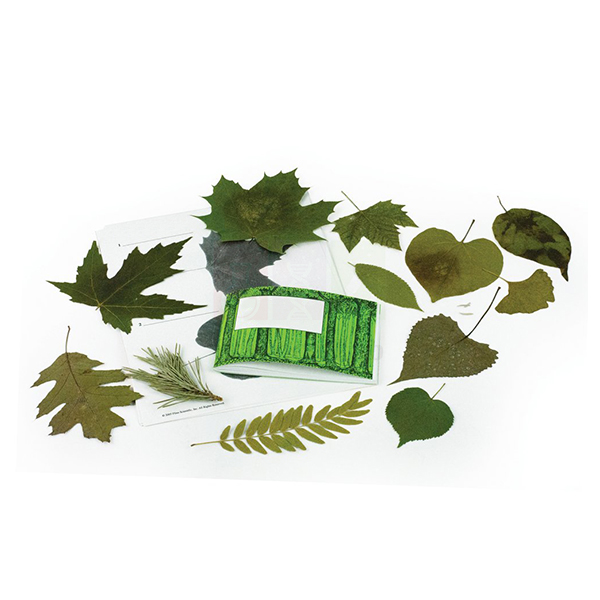
Leaf Identification Kit
Leaf Identification Kit (Product Code: SLE/EBT/02) is a set of real tree leaf specimens used to teach students to classify and identify trees from their leaves in school biology and nature-study lessons. Designed for grades 3-12, it holds 39 carded, labelled and bagged tree leaves with a 61-page Tree Finder book and a leaf key. It is supplied by Jain Scientific Equipments Pvt Ltd (ScienceLab), Ambala, India, among its biology teaching aids.
Specifications
| Parameter | Detail |
|---|---|
| Grade level | Grades 3-12 |
| Specimens | 39 real tree leaves |
| Specimen presentation | Carded, labelled and bagged |
| Reference book | 61-page Tree Finder book |
| Identification aid | Leaf key |
| Learning activity | Classify and identify real leaves |
| Product code | SLE/EBT/02 |
| Supplied by | Jain Scientific Equipments Pvt Ltd (ScienceLab), Ambala, India |
What Is the Leaf Identification Kit Used For?
Identifying a tree from its leaf teaches careful observation. Students look at whether a leaf is simple or compound, how leaflets are arranged, the shape of the blade, the margin (smooth, toothed or lobed) and the pattern of veins, then follow the leaf key step by step, choosing between paired descriptions until they reach a name. The Tree Finder book supports the same process and helps students check their answers. Because the kit deals with the real world around students, it keeps learners of all ages engaged.
Younger classes can sort the carded specimens into groups by shape or margin before using the key; older students can time themselves against the key, discuss where it was ambiguous, or build their own simple dichotomous key. The labels give the teacher an instant answer check. As part of the botany lab equipment for a classification unit, the kit also prepares students for a schoolyard or park walk to identify local trees. Keep specimens in their bags between lessons so they stay flat and intact.
Supplier
ScienceLab is the trading name of Jain Scientific Equipments Private Limited, an Ambala, Haryana company that supplies natural-specimen resources such as this leaf collection to schools and colleges in India and international markets. Buyers can have the kit quoted together with microscopes, models and other botany items in a single enquiry. Read more on the company profile.
Related Botany Equipment
Teachers often combine the leaf kit with these items in a plant classification unit:
- Seed Identification Kit — the matching kit of real tree seeds with a seed key.
- Leaf & Seed Games — leaf and seed activities for the youngest grades.
- Plant Dicot Leaf — an enlarged dicot leaf model on a solid base for whole-class discussion.
- Key to Identifying Dispersal of Fruits & Seeds — a laminated identification guide for field use.
- Hand Lens — for looking closely at veins, margins and leaf hairs.
More resources are in the Botany category.
Frequently Asked Questions
What is included in the Leaf Identification Kit?
The Leaf Identification Kit (SLE/EBT/02) includes 39 real tree leaves, each carded, labelled and bagged, together with a 61-page Tree Finder book and a leaf key that students follow step by step to name each specimen.
Which grades is the Leaf Identification Kit designed for?
The Leaf Identification Kit is designed for grades 3-12. Younger pupils sort the carded leaves by shape and edge, while older students work through the leaf key and the Tree Finder book independently to reach a name.
Which tree species are in the kit?
The species list for the Leaf Identification Kit is not published in this listing. Ask through the contact page and ScienceLab will share the names of the 39 tree leaves with your quotation, so you can check them against your syllabus.
How should the leaf specimens be stored?
Store the Leaf Identification Kit specimens flat in their bags, away from damp and direct sunlight, and handle the cards by their edges. Dried leaves become brittle, so careful storage keeps all 39 specimens usable for future classes.
Who supplies the Leaf Identification Kit?
The Leaf Identification Kit is supplied by Jain Scientific Equipments Pvt Ltd (ScienceLab), Ambala, Haryana, India. The company serves schools and colleges in India and international markets and can quote the kit together with other botany resources.
How many kits does a class need?
The number of Leaf Identification Kits a class needs depends on group size; many teachers plan one kit per group. Tell us your class size and code SLE/EBT/02 in your enquiry and we will suggest a suitable quantity.
Request a Quote
For a price on the Leaf Identification Kit, contact ScienceLab or add it to the enquiry cart along with other botany resources.
Last updated: 24 September 2026