- Physics Lab Equipment
- Chemistry Lab Equipment
- Biology Lab Equipment
- Anatomical Lab Equipment
- Learning
- Educational Lab Equipment
- Magnets
- Agriculture
- Astronomy
- Earth Science
- Geography Lab Equipment
- Safety Lab Coat
- Laboratory
- Meteorological
- Electricity & Magnetism
- Heat
- School Lab Equipment
- Lab Glassware
- Science Lab Equipment
- Tvet Lab Equipment
- Robotics Kits Supplier and Manufacturer for Schools India
- Math Lab Equipment Manufacturers and Exporters in Ambala
- STEM Kits Manufacturers and Supplier India
- Engineering Lab Equipment
- Hospital Lab Equipment
- Water, Sanitation & Hygiene Supplies
- Cold Chain, Solar & Communication Equipment
- Nutrition
Last updated: 22 October 2026
Quick Answer
Jain Scientific Equipments Pvt Ltd (ScienceLab), Ambala, Haryana, lists 24 items of plant biology lab equipment for botany lessons and practicals in schools, colleges and universities, arranged in 5 groups from enlarged plant anatomy models and plant physiology apparatus to nutrition and hormone kits, growing trays and leaf and seed identification kits. 13 of the items are manufactured by ScienceLab at its factory at Saha, Ambala, and 11 are supplied by ScienceLab. Each item has its own product page, linked from the product listing under this description. The company supplies buyers in India and in 110 countries.
Quick links: Request a quotation · Jump to specifications by group · Open your enquiry cart
Explore the Botany Range
| Range | Items | What it covers |
|---|---|---|
| Plant anatomy and flower models | 6 | Enlarged models of a dicot flower, dicot leaf and dicot plant bundle at 8x, a longitudinal section of a monocot stem, a typical flower model with removable parts and a vertical-section flower model on a base. |
| Plant physiology apparatus | 5 | An electric clinostat for geotropism and phototropism studies, a student potometer and a Ganong's potometer for transpiration, a panel-mounted photosynthesis apparatus and a volumeter respirometer for oxygen consumption. |
| Nutrition, hormones and plant cells | 4 | A plant hormones set with auxin pastes, Sach's water culture media for mineral deficiency studies, an enzymes in seeds kit with pea and bean seeds, and a plant cell study kit with specimen vials, slides, cover slips and stains. |
| Growing and propagation | 4 | A hydroponic tray with its own 54 watt fluorescent grow light, a replacement Greenbox planting tray, a plant propagation kit and a 12 inch teaching tank for observing roots, worms or ants. |
| Identification and tree study | 5 | Leaf and seed identification kits with real tree specimens, leaf and seed games for young children, a laminated key to the dispersal of fruits and seeds, and a tree ring dating kit with simulated tree cores. |
| Total | 24 | All items listed in the Botany range |
Botany Specifications
Key specifications below are taken from each product's own page; open a product for its full specifications and product code.
Plant anatomy and flower models (6)
| Product | Key specification |
|---|---|
| Plant Dicot Cnct Bundle | Magnification: 8x; Size: 300 x 200 x 138 mm; Mounting: On base stand |
| Plant Dicot Flower | Magnification: 8x; Type: Enlarged model of a dicot flower |
| Plant Dicot Leaf | Magnification: 8x; Size: 420 x 300 x 112 mm; Mounting: Solid base |
| Plant Monocot Stem | Size: 420 x 300 x 115 mm; Section shown: Longitudinal cross section; Depicts: Cellular anatomy of a generalized monocot |
| Typical Flower Model | Removable parts: All parts removable for better viewing; Ovary: Bisected to show internal structures |
| Typical Flower V.S. Model | Weight: 650 g; Mounting: Mounted on base; Type: Vertical section (V.S.) model of a flower |
Plant physiology apparatus (5)
| Product | Key specification |
|---|---|
| Clinostat (Electric) | Drive: Electric motor, 5 revolutions per hour; Angle adjustment: By thumb screw; Cover: Clear plastic cover |
| Photosynthesis Apparatus | Size: 190mm x 150mm (19 cm x 15 cm); Mounting: Plastic panel; Gas measurement: Calibrated capillary tube |
| Potometer Apparatus | Demonstrates: Transpiration occurring in small plant shoots; Glass components: One only – the capillary tube |
| Potometer Apparatus (Ganong's) | Base: 20 x 80mm; Capillary bore: 1mm; Shoot fitting: Plant shoot sealed into a stopper that fits the end tube |
| Volumeter Respirometer | Measuring principle: Changes in gas volume within a closed system; Main measurement: Volume of oxygen consumption over time |
Nutrition, hormones and plant cells (4)
| Product | Key specification |
|---|---|
| Enzymes In Seeds Kit | 3-part plastic test dishes: 15; Pans with pea seeds: 5; Pans with bean seeds: 5 |
| Plant Cell Study Kit | Specimen vials: Monocot cross section (1 vial); dicot cross section (1 vial); macerated stem tissues (1 vial); Cover slips: 90 |
| Plant Hormones Set | Auxin pastes: 0.1% IAA in lanolin paste; 0.01% IAA in lanolin paste; Level: Suitable for GCSE students |
| Sach's Water Culture Mineral Deficiency | Number of tubes: Eight; Quantity per tube: Sufficient material to prepare four litres of liquid medium |
Growing and propagation (4)
| Product | Key specification |
|---|---|
| Greenbox Repl. Planting Tray | Material: Resistant polypropylene; Drainage: Comes with drain holes; Construction: Provides rigidity and stability |
| Hydroponic Tray | Growing space: 700 square inches; Grow light: 54 watt fluorescent, high power, fitted on mounting arms |
| Plant Propagation Kit | Suitable for: School and college botany and biology practicals; Type: Botany teaching kit |
| Teaching Tank 12 Inch Basic | Size: 12 inch (Basic version); Add-on: 12" Expansion Kit for a wider variety of hands-on experiments; Included: Teacher’s insert |
Identification and tree study (5)
| Product | Key specification |
|---|---|
| Key to Identifying Dispersal of Fruits & Seeds | Series: Key Identification Guides K1 - 5; Format: A3, laminated and folded; Printing: Printed on both sides |
| Leaf & Seed Games | Grade level: Pre-K to grade 4; Games: Series of 8 games; Leaf specimens: 20 |
| Leaf Identification Kit | Grade level: Grades 3-12; Specimens: 39 real tree leaves; Reference book: 61-page Tree Finder book |
| Seed Identification Kit | Grade level: Grades 3-12; Specimens: 39 real tree seeds, carded, labelled and bagged; Identification aid: Seed key |
| Tree Ring Dating Kit | Type A simulated tree cores: 15; Type B simulated tree cores: 15; Student worksheets: 30 |
Related Equipment in Other ScienceLab Ranges
Botany practicals also use these microscopes, slides and models, which are listed in other ScienceLab ranges:
Who Buys This Range
Pre-primary and primary schools use the Leaf & Seed Games, designed for Pre-K to grade 4, and the teaching tank for simple root observations. Secondary schools add the leaf and seed identification kits (grades 3-12), the tree ring dating kit, the potometer, the photosynthesis apparatus and the enzymes in seeds kit for practical work. Colleges, universities and teacher-training labs use the enlarged plant anatomy models, the Ganong's potometer, the clinostat, the volumeter respirometer and the mineral deficiency and plant hormone sets. Laboratory dealers and distributors order the range for new biology labs and tender supplies.
Other ScienceLab Equipment Ranges
| Range | What it covers |
|---|---|
| Biology Lab Equipment | The biology hub of eight sub-ranges, from DNA models and dissecting sets to prepared slides, kits and botany apparatus |
| Biology Lab Equipment | The core biology apparatus sub-range, for respiration, soil ecology and phototropism |
| Cell Biology Equipments | Plant, animal and prokaryotic cell models, relief plaques and mitosis models |
| Prepared Slides | Prepared microscope slides, including histology, botany, cell division and microorganism sets |
| Biology Kits | Ready class investigations on cells, blood typing, kidney filtration and microbes |
| Zoology | Nets, seines, animal skeletons, insect mounts and pond kits |
| Microscope | Monocular, binocular, trinocular, stereo and digital microscopes, with slides, magnifiers and cameras |
| Biology Lab | Biology lab items for school and college labs, including microscopes, glassware, reagents and charts |
Frequently Asked Questions
What does the Botany range include?
24 items in 5 groups: enlarged plant anatomy and flower models, plant physiology apparatus for transpiration, photosynthesis, respiration and tropisms, nutrition, hormone and plant cell kits, growing trays, and leaf, seed and tree identification kits.
Which botany items does ScienceLab manufacture and which are supplied?
ScienceLab manufactures the plant anatomy and flower models, the Clinostat (Electric), both potometers, the Photosynthesis Apparatus, the Volumeter Respirometer, the Hydroponic Tray and the Tree Ring Dating Kit. The identification kits and games, the dispersal key, the Plant Hormones Set, the Sach's water culture set, the Enzymes In Seeds Kit, the Plant Cell Study Kit, the Plant Propagation Kit, the Greenbox planting tray and the teaching tank are supplied by ScienceLab.
What sizes are the plant anatomy models?
The dicot flower, leaf and bundle models are enlarged 8x; the Plant Dicot Leaf measures 420 x 300 x 112 mm, the Plant Monocot Stem 420 x 300 x 115 mm and the Plant Dicot Cnct Bundle 300 x 200 x 138 mm. The Typical Flower V.S. Model weighs 650 g and is mounted on a base.
Which apparatus is used for transpiration, photosynthesis and tropism practicals?
Transpiration is measured with the Potometer Apparatus, whose only glass part is the capillary tube, or demonstrated with the Ganong's potometer with a 1mm capillary bore. The Photosynthesis Apparatus collects gas from aquatic plants in a calibrated capillary tube, and the clinostat turns seedlings at 5 revolutions per hour for geotropism and phototropism studies.
Is the range suitable for primary schools as well as colleges?
Yes. The Leaf & Seed Games are designed for Pre-K to grade 4 and the leaf and seed identification kits for grades 3-12, while the Enzymes In Seeds Kit suits secondary and pre-university labs. The Ganong's potometer, the volumeter respirometer and the mineral deficiency set are used in college botany practicals.
Do the nutrition and hormone kits have a shelf life?
The Plant Hormones Set and the Sach's Water Culture Mineral Deficiency set contain chemicals whose shelf life depends on the chemical, its grade and storage. The expiry date of the batch is given with the quotation.
Do you accept bulk, tender and export orders?
Yes. Bulk quantities, tender enquiries and export orders are accepted; product specifications are provided on request. Botany items can be combined with microscopes, prepared slides and cell models in one quotation for a new biology lab.
What should I include in a quotation request?
Product names or codes (for example SLE/EBT/21 for the Potometer Apparatus), the quantity of each, the class level, the delivery location and any tender specification.
Request a Quote
Send product names or codes and quantities through the contact page, or add items to your enquiry cart and submit it.
ScienceLab (Jain Scientific Equipments Pvt Ltd)
1226/1-5, Bengali Mohalla, Science Market, Ambala Cantt, Haryana 133001, India
Phone: +91-7082934803
Email: sales@scilabexport.com
989.jpg)
Clinostat (Electric)
Clinostat (Electric) (Product Code: SLE/BL/14) is a motor-driven plant physiology instrument used to study geotropism and phototropism on seedlings, cut shoots and small potted plants in school and college botany labs. Seedlings pinned to its cork-faced disc turn slowly at 5 revolutions per hour on 220V, 50Hz mains, so gravity or light no longer acts from one fixed direction. It is made by Jain Scientific Equipments Pvt Ltd (ScienceLab), an OEM manufacturer of school biology lab equipment in India, at its own factory in Ambala.
Specifications
| Parameter | Detail |
|---|---|
| Application | Geotropism and phototropism studies on seedlings, cut shoots and small potted plants |
| Specimen disc | Cork-lined/faced disc with a fitting to take a specimen tube; seedlings are pinned to the cork |
| Cork disc diameter | Listed as both 70 mm and 100 mm in our catalogue data; confirm at enquiry |
| Drive | Electric motor, 5 revolutions per hour |
| Angle adjustment | By thumb screw |
| Cover | Clear plastic cover |
| Power supply | 220V, 50Hz; complete with 3-core cable |
| Height | 300 mm |
| Product code | SLE/BL/14 |
| Manufacturer | Jain Scientific Equipments Pvt Ltd (ScienceLab) — OEM |
| Country of origin | India (made in Ambala, Haryana) |
What Is the Electric Clinostat Used For?
For a geotropism experiment, germinate seeds such as peas or beans on damp cotton until the roots and shoots are a few centimetres long, pin them to the cork disc and set the axis horizontal with the thumb screw. As the disc turns at 5 revolutions per hour, each seedling experiences gravity from every side in turn, so roots and shoots keep growing in the direction they were placed. A second set pinned to a stationary cork board shows the normal response, with roots curving down and shoots curving up, for direct comparison.
Phototropism is demonstrated the same way: a plant rotating beside a window grows straight, while a stationary control bends towards the light. The clear plastic cover helps hold humidity around the specimens during longer runs. As with any mains-powered botany lab equipment, connect the 3-core cable to an earthed socket, keep water away from the motor housing and switch off before repositioning seedlings.
OEM Manufacturer
Jain Scientific Equipments Private Limited, trading as ScienceLab, is the OEM (original equipment manufacturer) of this electric clinostat and builds it at its own licensed factory at Saha, Ambala, Haryana, India. Schools, colleges, universities, dealers and importers buy it factory-direct rather than through a trader. Questions about a spare cork disc, cover or repeat order are handled by the manufacturer itself; just ask us. Learn more on our company profile.
Related Botany Equipment
These items support the same plant growth and response practicals:
- Plant Hormones Set — IAA and other growth regulators for experiments on the hormones behind tropic responses.
- Hydroponic Tray — seed trays under a grow light for raising seedlings ahead of clinostat runs.
- Kit for Demonstrating Seed Respiration in Germination — a companion practical on germinating seeds.
- Photosynthesis Apparatus — measures gas evolved by aquatic plants, for a second light-response lesson.
- Potometer Apparatus — measures transpiration by cut shoots in the same plant physiology unit.
This clinostat is listed with other plant science apparatus in our Botany category.
Frequently Asked Questions
What plant material can be mounted on the Clinostat (Electric)?
The Clinostat (Electric) takes seedlings, cut shoots and small potted plants. Seedlings are pinned to the cork-faced disc, and a fitting on the disc accepts a specimen tube, so both pinned and tube-held material can be rotated.
How fast does the Clinostat (Electric) rotate?
The motor of the Clinostat (Electric) turns the disc at 5 revolutions per hour, slow enough to avoid spinning effects while evening out the gravity or light stimulus acting on the seedlings over time.
What is the diameter of the cork disc?
Our catalogue data for the Clinostat (Electric) lists the cork disc as both 70 mm and 100 mm in diameter, so please confirm the disc size with us through the contact page before ordering if it matters for your specimens.
What power supply does the Clinostat (Electric) need?
The Clinostat (Electric) runs on 220V, 50Hz mains and comes complete with a 3-core cable. If your laboratory uses a different mains supply, raise it with us before ordering so the quotation matches your site.
Can the axis angle of the clinostat be changed?
Yes. On the Clinostat (Electric) a thumb screw adjusts the angle, so the disc can be set horizontally for geotropism work or at other angles for comparison runs, with the clear plastic cover protecting the specimens.
Who manufactures the Clinostat (Electric)?
Jain Scientific Equipments Pvt Ltd (ScienceLab) is the OEM manufacturer of the Clinostat (Electric), building it at its own licensed factory at Saha, Ambala, Haryana, India, and supplying schools, colleges and dealers directly.
Is a calibration certificate available for the Clinostat (Electric)?
The Clinostat (Electric) is a teaching instrument rather than a measuring device. If your institution needs any documentation, including a calibration certificate, discuss it with us at enquiry stage; quotations for India and international markets come direct from the manufacturer.
Request a Quote
Request manufacturer-direct pricing for the Clinostat (Electric) through our contact page, or add it to the enquiry cart with other plant physiology apparatus.
Last updated: 24 September 2026
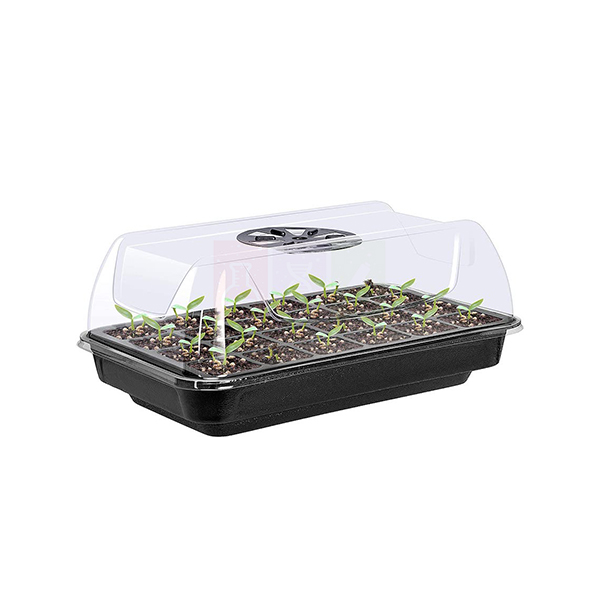
Plant Propagation Kit
Plant Propagation Kit (Product Code: SLE/EBT/01) is a botany teaching kit used to study how new plants are raised from seeds and from parts of an existing plant in school and college practicals. Biology teachers use it to turn propagation into a hands-on project, and the current contents list is confirmed with every quotation. It is supplied by Jain Scientific Equipments Pvt Ltd (ScienceLab), Ambala, India, as part of its botany lab equipment for schools.
Key Details
| Parameter | Detail |
|---|---|
| Type | Botany teaching kit |
| Purpose | Classroom study of plant propagation |
| Contents | Current contents list confirmed on enquiry |
| Suitable for | School and college botany and biology practicals |
| Product code | SLE/EBT/01 |
| Supplied by | Jain Scientific Equipments Pvt Ltd (ScienceLab), Ambala, India |
What Is the Plant Propagation Kit Used For?
Propagation lessons usually compare two routes to a new plant. Sexual propagation starts from seed, which brings genetic variation. Vegetative propagation starts from a stem cutting, a leaf cutting, a runner, a bulb or a divided clump, and produces plants identical to the parent. A practical project lets students take cuttings, watch roots form and record which methods succeed for which plants, turning a textbook topic into a plant growth experiment carried out over several weeks.
Good results depend on simple habits: clean cuts, a moist but well-drained medium, steady warmth and indirect light, and a daily observation log with dates and measurements. Teachers often split a class into groups, give each group a different method, and compare rooting time and survival at the end of the unit. The work links naturally to lessons on plant hormones, nutrition and plant reproduction.
Supplier
Jain Scientific Equipments Private Limited, which trades as ScienceLab, supplies this propagation kit from Ambala, Haryana, to schools and colleges in India and international markets. Because kit contents can change, the company sends the current contents list with each quotation so buyers know exactly what will arrive before they order. Learn more on the company profile.
Related Botany Equipment
These items support the same propagation and plant growth lessons:
- Plant Hormones Set — experiments include rooting cuttings and breaking seed dormancy.
- Greenbox Repl. Planting Tray — a polypropylene tray with drain holes for raising seedlings and cuttings.
- Hydroponic Tray — soil-free growing to compare with soil propagation.
- Seed Identification Kit — real tree seeds and a sprouting seed kit for the seed side of the topic.
- Sach’s Water Culture Mineral Deficiency — shows how nutrients affect young plant growth.
Find more teaching aids in the Botany category.
Frequently Asked Questions
What is included in the Plant Propagation Kit?
The contents of the Plant Propagation Kit (SLE/EBT/01) are confirmed with each quotation rather than listed on this page. Ask through the contact page and ScienceLab will send the current contents list before you place an order.
Which propagation methods can students study with the kit?
Plant propagation lessons normally cover seed sowing and vegetative methods such as stem and leaf cuttings, layering and division. Tell us which methods your syllabus requires, and we will explain how the Plant Propagation Kit supports them before you order.
Does the Plant Propagation Kit include live plants or seeds?
Whether the Plant Propagation Kit includes seeds or plant material is shown on the contents list sent with your quotation. For cuttings, many schools also use fresh local plants so the material is in good condition on the day of the lesson.
Which classes is the Plant Propagation Kit suitable for?
The Plant Propagation Kit is intended for school and college botany and biology practicals on plant reproduction and growth. Share the grade level and class size in your enquiry and we will confirm whether the kit suits your course.
Who supplies the Plant Propagation Kit?
The Plant Propagation Kit is supplied by Jain Scientific Equipments Pvt Ltd (ScienceLab) of Ambala, Haryana, India, which serves schools, colleges and institutions in India and international markets and confirms the current kit contents with every quotation.
What should a quotation request for the kit include?
A quotation request for the Plant Propagation Kit should state code SLE/EBT/01, the number of kits, how many students each kit must serve and the delivery location, so the contents list and price can be matched to your class.
Request a Quote
To receive the contents list and a price for the Plant Propagation Kit, contact ScienceLab or add it to the enquiry cart with other botany items.
Last updated: 24 September 2026
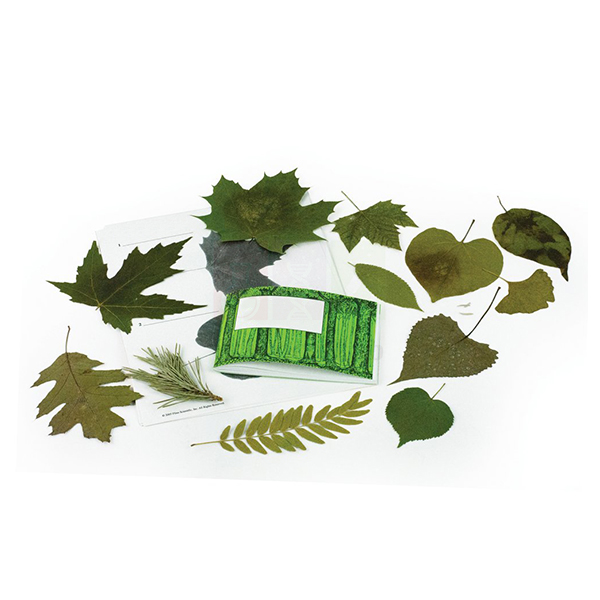
Leaf Identification Kit
Leaf Identification Kit (Product Code: SLE/EBT/02) is a set of real tree leaf specimens used to teach students to classify and identify trees from their leaves in school biology and nature-study lessons. Designed for grades 3-12, it holds 39 carded, labelled and bagged tree leaves with a 61-page Tree Finder book and a leaf key. It is supplied by Jain Scientific Equipments Pvt Ltd (ScienceLab), Ambala, India, among its biology teaching aids.
Specifications
| Parameter | Detail |
|---|---|
| Grade level | Grades 3-12 |
| Specimens | 39 real tree leaves |
| Specimen presentation | Carded, labelled and bagged |
| Reference book | 61-page Tree Finder book |
| Identification aid | Leaf key |
| Learning activity | Classify and identify real leaves |
| Product code | SLE/EBT/02 |
| Supplied by | Jain Scientific Equipments Pvt Ltd (ScienceLab), Ambala, India |
What Is the Leaf Identification Kit Used For?
Identifying a tree from its leaf teaches careful observation. Students look at whether a leaf is simple or compound, how leaflets are arranged, the shape of the blade, the margin (smooth, toothed or lobed) and the pattern of veins, then follow the leaf key step by step, choosing between paired descriptions until they reach a name. The Tree Finder book supports the same process and helps students check their answers. Because the kit deals with the real world around students, it keeps learners of all ages engaged.
Younger classes can sort the carded specimens into groups by shape or margin before using the key; older students can time themselves against the key, discuss where it was ambiguous, or build their own simple dichotomous key. The labels give the teacher an instant answer check. As part of the botany lab equipment for a classification unit, the kit also prepares students for a schoolyard or park walk to identify local trees. Keep specimens in their bags between lessons so they stay flat and intact.
Supplier
ScienceLab is the trading name of Jain Scientific Equipments Private Limited, an Ambala, Haryana company that supplies natural-specimen resources such as this leaf collection to schools and colleges in India and international markets. Buyers can have the kit quoted together with microscopes, models and other botany items in a single enquiry. Read more on the company profile.
Related Botany Equipment
Teachers often combine the leaf kit with these items in a plant classification unit:
- Seed Identification Kit — the matching kit of real tree seeds with a seed key.
- Leaf & Seed Games — leaf and seed activities for the youngest grades.
- Plant Dicot Leaf — an enlarged dicot leaf model on a solid base for whole-class discussion.
- Key to Identifying Dispersal of Fruits & Seeds — a laminated identification guide for field use.
- Hand Lens — for looking closely at veins, margins and leaf hairs.
More resources are in the Botany category.
Frequently Asked Questions
What is included in the Leaf Identification Kit?
The Leaf Identification Kit (SLE/EBT/02) includes 39 real tree leaves, each carded, labelled and bagged, together with a 61-page Tree Finder book and a leaf key that students follow step by step to name each specimen.
Which grades is the Leaf Identification Kit designed for?
The Leaf Identification Kit is designed for grades 3-12. Younger pupils sort the carded leaves by shape and edge, while older students work through the leaf key and the Tree Finder book independently to reach a name.
Which tree species are in the kit?
The species list for the Leaf Identification Kit is not published in this listing. Ask through the contact page and ScienceLab will share the names of the 39 tree leaves with your quotation, so you can check them against your syllabus.
How should the leaf specimens be stored?
Store the Leaf Identification Kit specimens flat in their bags, away from damp and direct sunlight, and handle the cards by their edges. Dried leaves become brittle, so careful storage keeps all 39 specimens usable for future classes.
Who supplies the Leaf Identification Kit?
The Leaf Identification Kit is supplied by Jain Scientific Equipments Pvt Ltd (ScienceLab), Ambala, Haryana, India. The company serves schools and colleges in India and international markets and can quote the kit together with other botany resources.
How many kits does a class need?
The number of Leaf Identification Kits a class needs depends on group size; many teachers plan one kit per group. Tell us your class size and code SLE/EBT/02 in your enquiry and we will suggest a suitable quantity.
Request a Quote
For a price on the Leaf Identification Kit, contact ScienceLab or add it to the enquiry cart along with other botany resources.
Last updated: 24 September 2026
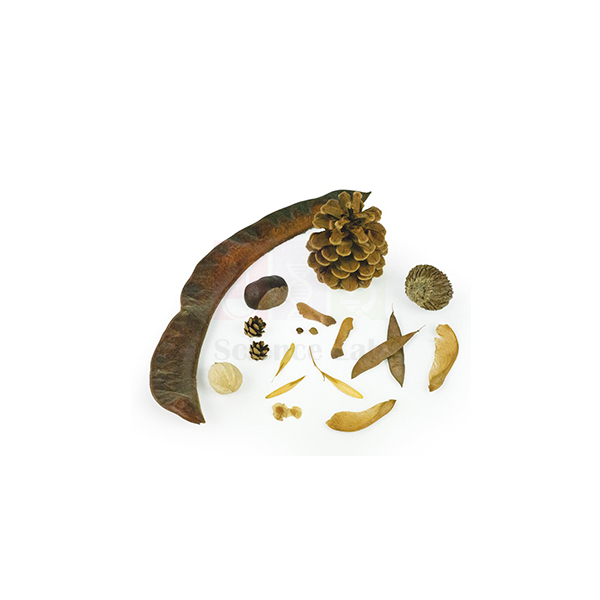
Seed Identification Kit
Seed Identification Kit (Product Code: SLE/EBT/03) is a collection of real tree seeds used to teach students to classify and identify seeds, from nuts and acorns to berries, in school botany lessons. Built for grades 3-12, it pairs 39 carded, labelled and bagged tree seeds with a seed key, a sprouting seed kit and a Teachers' Guide, so it also works as a seed germination kit for school classes. It is supplied by Jain Scientific Equipments Pvt Ltd (ScienceLab), Ambala, as part of its range of biology lab equipment in India.
Specifications
| Parameter | Detail |
|---|---|
| Grade level | Grades 3-12 |
| Specimens | 39 real tree seeds, carded, labelled and bagged |
| Seed types | Nuts, berries, acorns and other tree seeds |
| Identification aid | Seed key |
| Practical component | Sprouting seed kit |
| Teacher support | Teachers' Guide with hands-on activities |
| Product code | SLE/EBT/03 |
| Supplied by | Jain Scientific Equipments Pvt Ltd (ScienceLab), Ambala, India |
What Is the Seed Identification Kit Used For?
Seeds vary enormously, and that variety is the lesson. Students compare size, shape, colour and seed coat, then look for adaptations for dispersal: hard shells that animals carry and bury, fleshy berries that are eaten, or wings and hooks that catch the wind or fur. Working through the seed key, they narrow each specimen down to its tree, and the labels on the cards let them check their own answers.
The sprouting seed kit takes the class from identification to life cycle. Students set up seeds to germinate, record when the root and shoot appear, and connect what they see to the seed parts studied earlier. The Teachers' Guide suggests hands-on activities for different ages, so one kit can serve a primary nature lesson and a senior plant biology practical alike. Return specimens to their bags after use so the collection stays complete.
Supplier
Jain Scientific Equipments Private Limited trades as ScienceLab and supplies this seed collection from Ambala, Haryana, to schools and colleges in India and international markets. For vendor registration, the supplying company is Jain Scientific Equipments Private Limited (CIN U29309HR2020PTC087597, GSTIN 06AAECJ8618A1ZT). More background is on the company profile.
Related Botany Equipment
Items that extend a seed study into dispersal, germination and physiology:
- Leaf Identification Kit — the companion kit of real tree leaves with a leaf key.
- Key to Identifying Dispersal of Fruits & Seeds — an illustrated key focused on how seeds travel.
- Enzymes In Seeds Kit — pea and bean seeds for investigating enzyme activity during germination.
- Kit for Demonstrating Seed Respiration in Germination — shows that germinating seeds respire.
- Hand Magnifier — for examining seed coats and surface features.
Browse more in the Botany category.
Frequently Asked Questions
What comes in the Seed Identification Kit?
The Seed Identification Kit (SLE/EBT/03) contains 39 real tree seeds, carded, labelled and bagged, including nuts, berries and acorns, plus a seed key, a sprouting seed kit and a Teachers' Guide with hands-on activities.
Which grades can use the Seed Identification Kit?
The Seed Identification Kit is designed for grades 3-12. Its Teachers' Guide offers hands-on activities that let one kit serve a primary lesson on seed shapes as well as a senior practical on seed structure and germination.
Can the specimen seeds be planted?
The carded seeds in the Seed Identification Kit are reference specimens for identification; germination work uses the separate sprouting seed kit. Keep the specimens on their cards so the labelled collection stays complete for future classes.
Is a list of the tree species available?
A species list for the 39 tree seeds in the Seed Identification Kit is not given in this listing. ScienceLab can share it with your quotation on request through the contact page.
Who supplies the Seed Identification Kit?
The Seed Identification Kit is supplied by Jain Scientific Equipments Pvt Ltd (ScienceLab), Ambala, Haryana, India, to schools and colleges in India and international markets, and it can be quoted together with the Leaf Identification Kit for a complete classification unit.
How should the Seed Identification Kit be stored?
Store the Seed Identification Kit in a dry, cool cupboard with every specimen in its bag, away from insects and moisture. Check the cards after each lesson so the collection of 39 seeds stays complete.
Request a Quote
For pricing on the Seed Identification Kit, contact ScienceLab or add it to the enquiry cart with the Leaf Identification Kit and other botany items.
Last updated: 24 September 2026
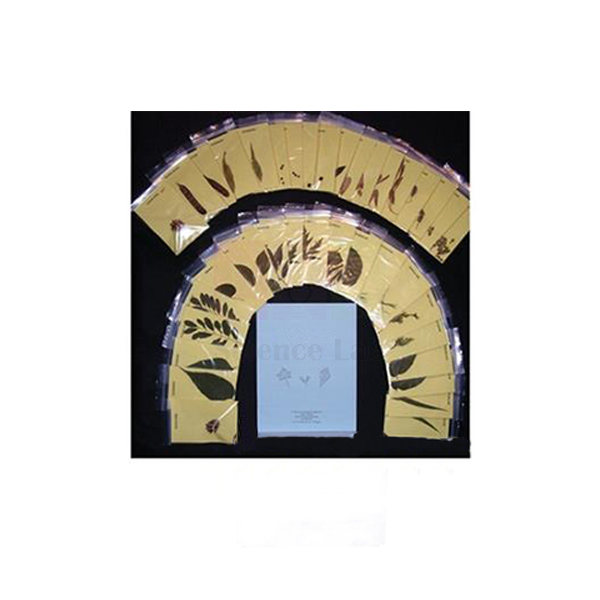
Leaf & Seed Games
Leaf & Seed Games (Product Code: SLE/EBT/04) is a science activity kit used to teach young children to predict, classify, measure and collect data with real leaves and seeds in pre-primary and primary classrooms. Aimed at grades Pre-K to 4, it offers a series of 8 games built around 20 leaf and 20 seed specimens, with instructions and an activity guide. It is supplied by Jain Scientific Equipments Pvt Ltd (ScienceLab), Ambala, India.
Specifications
| Parameter | Detail |
|---|---|
| Grade level | Pre-K to grade 4 |
| Games | Series of 8 games |
| Leaf specimens | 20 |
| Seed specimens | 20 |
| Specimen presentation | Carded, labelled and bagged |
| Teacher support | Instructions and a guide with hands-on activities |
| Skills practised | Predicting, classifying, measuring and collecting data |
| Product code | SLE/EBT/04 |
| Supplied by | Jain Scientific Equipments Pvt Ltd (ScienceLab), Ambala, India |
What Are Leaf & Seed Games Used For?
At this age, science is about noticing and sorting. Games built around real leaves and seeds invite children to guess which seed belongs to which kind of plant, group leaves by shape or edge, line specimens up from smallest to largest, and count or tally what they find. Each game turns a basic science skill into play, and across the series of eight children practise predicting, classifying, measuring and recording data with objects they can also find in their own playground.
Teachers can run a game as a whole-class circle activity, set up stations for small groups, or send pairs outside to find similar leaves and compare them with the cards. As a hands-on science kit for primary school classrooms, it works well before a nature walk or a seed-planting activity. Supervise the youngest children so that seeds are not put in mouths, and return each specimen to its bag after play.
Supplier
ScienceLab, the trading name of Jain Scientific Equipments Private Limited in Ambala, Haryana, supplies this game set to nurseries, primary schools and early-years centres in India and international markets. Buyers can combine it with other primary science resources in one quotation. See the company profile for more about the company.
Related Botany Equipment
Resources that follow on from the games as children grow:
- Leaf Identification Kit — real tree leaves with a leaf key for grades 3-12.
- Seed Identification Kit — real tree seeds, a seed key and a sprouting kit for older pupils.
- Magnifier, Foldable — an upright magnifier for looking at specimens.
- Typical Flower Model — a large flower model with removable parts to show where seeds form.
See more in the Botany category.
Frequently Asked Questions
How many games and specimens come in Leaf & Seed Games?
Leaf & Seed Games (SLE/EBT/04) contains a series of 8 games with 20 leaf specimens and 20 seed specimens, all carded, labelled and bagged, plus instructions and a guide with hands-on activities for the teacher.
What age group is Leaf & Seed Games for?
Leaf & Seed Games is aimed at grades Pre-K to 4. Teachers choose the games that match the skill their class is practising, whether that is predicting, sorting into groups, comparing sizes or recording simple data.
Are the specimens safe for small children?
The Leaf & Seed Games specimens are real natural leaves and seeds, carded and bagged. Adult supervision is recommended with young children so that seeds are not put in mouths, and each specimen should go back in its bag after play.
How do I keep the set complete?
To keep Leaf & Seed Games complete, count the 20 leaf and 20 seed specimens back into their bags after each session and store the kit in a dry cupboard, away from damp that can spoil natural material.
Who supplies Leaf & Seed Games?
Leaf & Seed Games is supplied by Jain Scientific Equipments Pvt Ltd (ScienceLab), Ambala, Haryana, India, to nurseries, primary schools and education departments in India and international markets, alongside the company's other early-years science resources.
Can I see the game instructions before buying?
Details of the Leaf & Seed Games instructions can be requested before purchase. Ask through the contact page, quoting code SLE/EBT/04, and ScienceLab will share what is available with your quotation.
Request a Quote
To order Leaf & Seed Games, contact ScienceLab for a price or add it to the enquiry cart with other early-years science resources.
Last updated: 24 September 2026
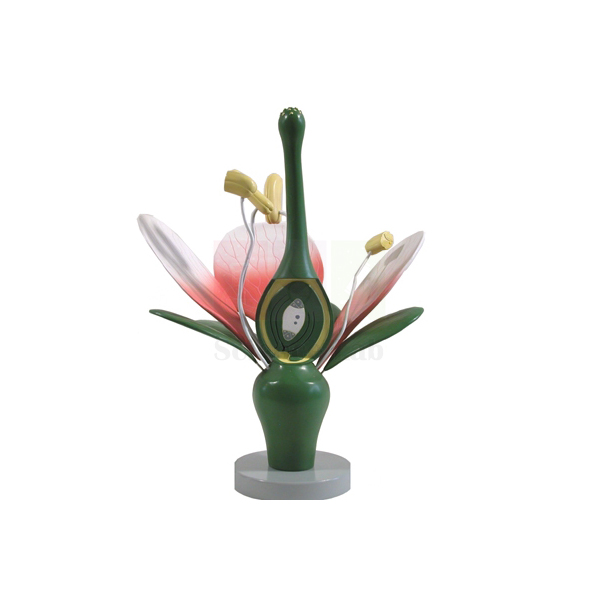
Plant Dicot Flower
Plant Dicot Flower (Product Code: SLE/EBT/05) is an enlarged botany model used to teach the structure of a dicotyledonous flower to whole classes in school and college biology labs. Teachers choose it because it shows the flower at 8x magnification and is listed at 460 x 350 x 300 overall, large enough to be seen from the back of the room. It is made by Jain Scientific Equipments Pvt Ltd (ScienceLab), an OEM manufacturer, at its own factory in Ambala, India.
Specifications
| Parameter | Detail |
|---|---|
| Type | Enlarged model of a dicot flower |
| Magnification | 8x |
| Size (as listed) | 460 x 350 x 300 (unit not stated in our listing) |
| Product code | SLE/EBT/05 |
| Manufacturer | Jain Scientific Equipments Pvt Ltd (ScienceLab) — OEM |
| Country of origin | India (made in Ambala, Haryana) |
What Is the Dicot Flower Model Used For?
A real flower is small and fragile, and by the time it is passed round a class it is often damaged. An 8x enlarged model gives every student the same clear view while the teacher names the parts from outside to inside: sepals, petals, the stamens with their anthers and filaments, and the pistil with its stigma, style and ovary. From there the lesson moves to how pollen reaches the stigma, how the ovary develops into a fruit and how ovules become seeds.
The model is especially useful for the dicot-versus-monocot comparison. Dicot flowers typically have floral parts in fours or fives, while monocot flowers have them in threes; students can count parts on the model, then check real flowers from the school garden. As one of a set of plant anatomy models, it also helps revision before practical exams. Dust it with a soft brush and keep it covered in a cupboard when not in use.
OEM Manufacturer
Jain Scientific Equipments Private Limited, trading as ScienceLab, is the OEM (original equipment manufacturer) of the Plant Dicot Flower and produces it at its own licensed factory at Saha, Ambala, Haryana. Schools, colleges, dealers and importers buy it factory-direct, so questions about finish, packing or the matching leaf, stem and bundle models in the same dicot series are answered by the maker, not a middleman. See the company profile.
Related Botany Equipment
Models and slides that teachers use in the same flower and plant structure lessons:
- Plant Dicot Leaf — a matching enlarged dicot leaf model on a solid base.
- Plant Monocot Stem — monocot anatomy for dicot-versus-monocot comparison.
- Typical Flower V.S. Model — a vertical section of a flower mounted on a base.
- Dicotyledonous Flower Pattern — a model for teaching pollen and pollination.
- Basic Plant Anatomy Slide Set — microscope slides including anther and ovary sections.
More models are in the Botany category.
Frequently Asked Questions
How large is the Plant Dicot Flower model?
The Plant Dicot Flower model is listed at 460 x 350 x 300 overall, with the flower shown at 8x magnification. The unit is not stated in our listing, so ask through the contact page if you need confirmed dimensions or the packed carton size.
What does 8x magnification mean on this model?
On the Plant Dicot Flower, 8x magnification means the flower is represented at eight times its natural size, so sepals, petals, stamens and pistil can be pointed out to a whole class. It is a teaching model, not an optical instrument.
Does the model come apart?
The listing for the Plant Dicot Flower (SLE/EBT/05) does not describe dissectible parts. If a take-apart flower is essential, compare the Typical Flower Model with removable parts, or ask us to confirm the construction with photographs before ordering.
Who manufactures the Plant Dicot Flower?
The Plant Dicot Flower model is manufactured by Jain Scientific Equipments Pvt Ltd (ScienceLab), the OEM, at its own licensed factory in Saha, Ambala, Haryana, India, and is supplied factory-direct to schools, colleges, dealers and importers.
How should the model be cleaned?
Clean the Plant Dicot Flower model with a soft, dry brush or a lightly damp cloth, avoid solvents, and store it covered and away from direct sunlight so its colours and fine surface detail stay clear for future lessons.
Can you supply several models or export orders?
Yes. The Plant Dicot Flower can be ordered in quantity for several schools or for export; send code SLE/EBT/05, the number of models and the destination, and ScienceLab will quote directly as the manufacturer for India and international markets.
Request a Quote
For a price on the Plant Dicot Flower model, contact ScienceLab or add it to the enquiry cart together with other botany models; the quotation comes straight from the manufacturer.
Last updated: 24 September 2026
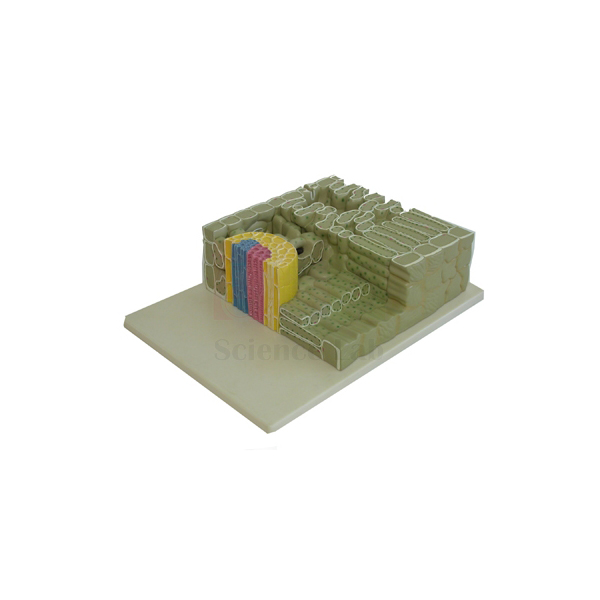
Plant Dicot Leaf
Plant Dicot Leaf (Product Code: SLE/EBT/06) is an enlarged plant anatomy model of a dicotyledonous leaf used to teach leaf structure in school, college and teacher-training botany labs. Magnified 8x and measuring 420 x 300 x 112 mm on a solid base, it gives students a large, steady reference to set beside their own microscope sections. It is made by Jain Scientific Equipments Pvt Ltd (ScienceLab), an OEM manufacturer and biology lab equipment supplier in India, at its own factory in Ambala.
Specifications
| Parameter | Detail |
|---|---|
| Type | Enlarged model of a dicot (dicotyledonous) plant leaf |
| Magnification | 8x |
| Size | 420 x 300 x 112 mm |
| Mounting | Solid base |
| Product code | SLE/EBT/06 |
| Manufacturer | Jain Scientific Equipments Pvt Ltd (ScienceLab) — OEM |
| Country of origin | India (made in Ambala, Haryana) |
What Is the Dicot Leaf Model Used For?
In secondary and undergraduate botany lessons the model usually sits on the demonstration bench while students prepare and examine their own leaf sections under a microscope. Moving between the 8x model and real tissue helps learners recognise how a dicot leaf is organised and why its structure suits photosynthesis and gas exchange. It also works well for revision sessions, open-day displays and viva practice, where a large, steady model saves time compared with drawing on the board.
For comparative lessons, pair it with a monocot specimen and ask students to list the differences they notice, such as the net-like venation typical of dicot leaves against the parallel venation of monocots. Schools building up their botany lab equipment often keep it beside other plant models so comparisons can be made in one session. The solid base lets it stand on a shelf without extra support; keep it out of strong direct sunlight when not in use.
OEM Manufacturer
ScienceLab is the trading name of Jain Scientific Equipments Private Limited, the OEM (original equipment manufacturer) behind this leaf model. The company builds its plant anatomy models at its own licensed factory in Saha, Ambala, Haryana, and sends them direct to schools, colleges, teacher-training institutes and overseas importers with no trader in between. Enquiries about additional units or companion dicot models are answered by the manufacturer itself. The company profile has more.
Related Botany Equipment
These items are often used in the same plant anatomy lessons as the Plant Dicot Leaf model:
- Plant Dicot Cnct Bundle — a companion 8x model for moving from the leaf to other dicot plant tissues.
- Plant Dicot Flower — extends the dicot series to reproductive structures.
- Ts Of Dicot Leaf — a transverse-section item to compare against the enlarged model.
- Monocular Biological Microscope 400x — for examining real leaf sections after the model demonstration.
- Leaf Identification Kit — connects internal structure with the leaf shapes students find outdoors.
See the complete Botany category for more plant study models and kits.
Frequently Asked Questions
What does the 8x magnification mean?
The Plant Dicot Leaf is represented at eight times natural scale, so features that are tiny in a real leaf become large enough to identify from across a classroom. The 8x figure describes the model's scale; it is not an optical instrument.
What are the dimensions of the Plant Dicot Leaf model?
The Plant Dicot Leaf model measures 420 x 300 x 112 mm and is fixed to a solid base, so it stands on an ordinary laboratory bench or cupboard shelf without any extra support or clamp.
Are labels or a key card included?
Labelling and an accompanying key are not specified in the listing for the Plant Dicot Leaf (SLE/EBT/06). Ask through our contact page and we will confirm exactly what is supplied with the model before you order.
Can the model replace microscope practicals?
No. The Plant Dicot Leaf model supports microscope work by giving students a large reference view of leaf structure, but examining real stained leaf sections remains essential for developing practical skills and for most exam syllabuses.
Who manufactures the Plant Dicot Leaf model?
The Plant Dicot Leaf model is manufactured by Jain Scientific Equipments Pvt Ltd (ScienceLab), which is the OEM and makes it at its own licensed factory at Saha, Ambala, Haryana, India. Quotations and repeat orders come straight from the manufacturer.
Is a calibration certificate provided?
A calibration certificate does not apply to the Plant Dicot Leaf, because it is a teaching model rather than a measuring instrument. If your purchase process needs other documents, list them in your enquiry through the contact page.
Can schools order several units or have them shipped overseas?
Yes. The Plant Dicot Leaf can be ordered in multiples for departments or shipped to international markets; include the quantity and destination in your enquiry so ScienceLab can quote packing and freight with the price.
Request a Quote
To receive a quotation for the Plant Dicot Leaf model direct from the manufacturer, send your quantity, institution name and delivery address through our contact page, or add it to the enquiry cart together with other botany items you need.
Last updated: 24 September 2026
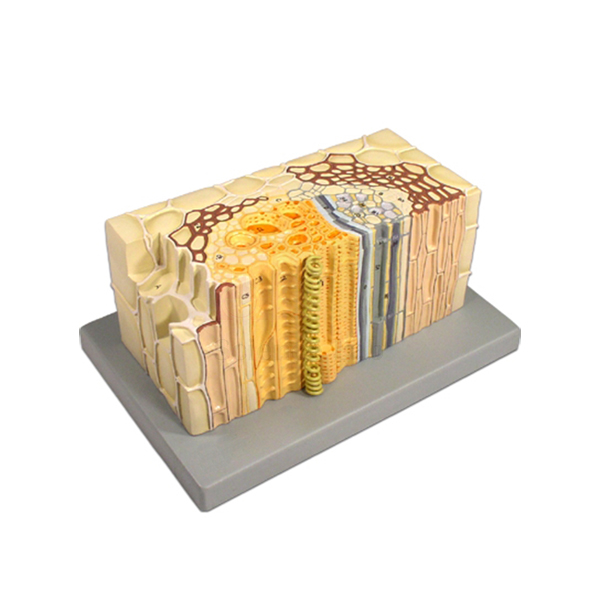
Plant Dicot Cnct Bundle
Plant Dicot Cnct Bundle (Product Code: SLE/EBT/07) is a bench-sized botany model used to show how tissues are grouped into bundles inside dicotyledonous plants during school and college lessons. It presents the bundle at 8x magnification on a base stand measuring 300 x 200 x 138 mm, a compact piece of plant biology lab equipment that fits on a group table beside microscopes. It is made by Jain Scientific Equipments Pvt Ltd (ScienceLab), an OEM manufacturer, at its own factory in Ambala, India.
Specifications
| Parameter | Detail |
|---|---|
| Type | Enlarged model of a dicot plant bundle |
| Magnification | 8x |
| Size | 300 x 200 x 138 mm |
| Mounting | On base stand |
| Product code | SLE/EBT/07 |
| Manufacturer | Jain Scientific Equipments Pvt Ltd (ScienceLab) — OEM |
| Country of origin | India (made in Ambala, Haryana) |
What Is the Dicot Bundle Model Used For?
In dicotyledonous plants, the tissues that carry water and dissolved food are grouped into bundles, and the way these bundles are built is a regular topic in school and first-year college botany. This model gives students a large, fixed example to examine before they move to thin sections under the microscope, which makes it easier to recognise the same arrangement in real tissue. Many teachers pass it between groups during a practical so each table can sketch it while waiting for microscope time.
Because it stands on its own base stand and measures 300 x 200 x 138 mm, it sits comfortably on a student bench without crowding microscopes and slide boxes. For a fuller set of biology teaching aids, combine it with leaf and stem models so learners can follow tissue systems through the whole plant body. Handle it by the base rather than the model itself, and store it covered to keep dust off fine surface detail.
OEM Manufacturer
Jain Scientific Equipments Private Limited, trading as ScienceLab, is the OEM (original equipment manufacturer) of this bundle model and makes it at its own licensed factory at 449, HSIIDC Industrial Area, Saha, Ambala. The company is a registered MSME manufacturer (Udyam UDYAM-HR-01-0003714) and ships export orders under DGFT Importer-Exporter Code AAECJ8618A. Education buyers, dealers and importers deal with the factory directly, including for repeat orders; see the company profile.
Related Botany Equipment
Items that complement this model in lessons on dicot and monocot plant tissues:
- Plant Dicot Leaf — a larger 8x model in the same series for leaf structure.
- Plant Monocot Stem — for contrasting dicot and monocot tissue arrangement.
- T.S Dicot Stem, Root, Leaf — section material for matching the model to real dicot organs.
- Basic Plant Anatomy Slide Set — prepared slides for the microscope stage of the lesson.
- Monocular Microscope 1000x, LED light — to view those sections in detail.
More plant study models, kits and apparatus are listed in the Botany category.
Frequently Asked Questions
What does "Cnct" in the product name refer to?
"Cnct" is an abbreviation carried in the catalogue name of the Plant Dicot Cnct Bundle. To confirm exactly which tissues the model shows, request a product photograph through our contact page before ordering.
How large is the Plant Dicot Cnct Bundle?
The Plant Dicot Cnct Bundle measures 300 x 200 x 138 mm including its base stand, which makes it one of the more compact models in the dicot series and easy to place on a student group table.
What magnification is used?
The Plant Dicot Cnct Bundle shows the tissue bundle at 8x, which keeps the internal arrangement large enough to discuss in class while the overall model remains bench-sized and easy to pass between groups.
Can it be used alongside prepared slides?
Yes. The Plant Dicot Cnct Bundle works best when students compare it directly with stained sections of dicot stems or roots under a microscope, matching each region on the model to what they see on the slide.
Who manufactures the Plant Dicot Cnct Bundle?
The Plant Dicot Cnct Bundle is manufactured by Jain Scientific Equipments Pvt Ltd (ScienceLab) as the OEM, at its own licensed factory in Saha, Ambala, Haryana, India, and is sold factory-direct to schools, colleges, dealers and importers.
What should an institutional enquiry include?
An enquiry for the Plant Dicot Cnct Bundle should give code SLE/EBT/07, the quantity, the delivery city or country and any vendor-registration forms you need completed; ScienceLab supplies buyers in India and international markets.
Request a Quote
For pricing, write to us through the contact page or place the Plant Dicot Cnct Bundle in the enquiry cart along with any matching models or slides. Quotations are issued directly by the manufacturer.
Last updated: 24 September 2026
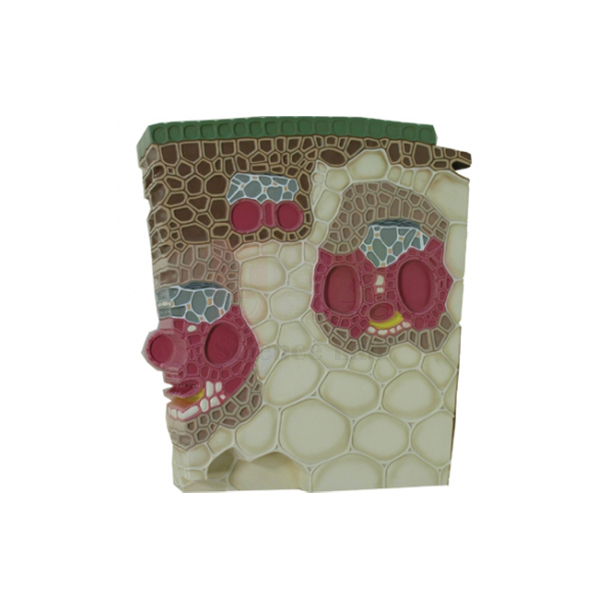
Plant Monocot Stem
Plant Monocot Stem (Product Code: SLE/EBT/08) is a sectional botany model used to teach the cellular anatomy of a generalized monocot stem in school and college laboratories. Presented as a longitudinal cross section and measuring 420 x 300 x 115 mm, it lets students follow tissues along the stem as well as across it. It is made by Jain Scientific Equipments Pvt Ltd (ScienceLab), an OEM manufacturer, at its own factory in Ambala, India, as one of its biology teaching aids.
Specifications
| Parameter | Detail |
|---|---|
| Type | Sectional model of a monocot plant stem |
| Section shown | Longitudinal cross section |
| Depicts | Cellular anatomy of a generalized monocot |
| Size | 420 x 300 x 115 mm |
| Product code | SLE/EBT/08 |
| Manufacturer | Jain Scientific Equipments Pvt Ltd (ScienceLab) — OEM |
| Country of origin | India (made in Ambala, Haryana) |
What Is the Monocot Stem Model Used For?
Monocot stems, such as those of grasses and maize, are organised differently from dicot stems: their vascular bundles are generally scattered through the ground tissue instead of forming a single ring, and most do not show the secondary thickening seen in woody dicots. A model built around a generalized monocot lets teachers point out these shared features without tying the lesson to one species, and the longitudinal view helps students understand that the cells in a thin transverse slice actually run as long strands through the stem.
A common lesson plan is to display the model first, then have students cut or examine sections of a grass or maize stem and match what they see to the model. At 420 x 300 x 115 mm it is large enough for a lecture-room demonstration, making it a practical addition to the botany lab equipment of schools and colleges preparing students for plant anatomy practicals. Place it next to a dicot model on the same bench to set up a quick compare-and-contrast exercise.
OEM Manufacturer
Jain Scientific Equipments Private Limited, which trades as ScienceLab, manufactures the Plant Monocot Stem as the OEM at its own licensed factory in Saha, Ambala, Haryana. Its botany and zoology models go straight from that factory to schools, colleges, distributors and importers in India and international markets, so repeat orders and matching models are arranged with the maker itself rather than through a reseller. More on the company profile.
Related Botany Equipment
Products that support the same monocot stem practical, from section material to microscopes:
- Ts Of Monocot Stem — transverse-section material to match against the longitudinal model.
- T.S Monocot Root, Stem, Leaf — extends the study to other monocot organs.
- Plant Dicot Cnct Bundle — a dicot model for side-by-side comparison.
- Dissecting Set, Student — tools for students cutting their own hand sections of grass or maize stems.
- Monocular Microscope, 400x, With Coaxial Knobs — for viewing those sections at cell level.
Browse the Botany category for further plant anatomy models and experiment kits.
Frequently Asked Questions
What does "generalized monocot" mean on this model?
On the Plant Monocot Stem, "generalized monocot" means the model shows features common to monocot stems in general rather than copying one species, so it suits any syllabus that teaches monocot stem anatomy, whatever local examples the class uses.
Which section of the stem is shown?
The Plant Monocot Stem model is described as a longitudinal cross section showing cellular anatomy. For a photograph of the exact cut and colouring before you order, ask through our contact page and quote code SLE/EBT/08.
How big is the Plant Monocot Stem model?
The Plant Monocot Stem measures 420 x 300 x 115 mm, a size that works for front-of-class demonstration in a lecture room as well as close study by a small group on a laboratory bench.
Is a dicot model available for comparison?
Yes. The Plant Dicot Cnct Bundle and other dicot models in the Botany range pair well with the Plant Monocot Stem, letting students set scattered monocot vascular bundles beside the dicot arrangement in one practical.
Who manufactures the Plant Monocot Stem?
The Plant Monocot Stem is manufactured by Jain Scientific Equipments Pvt Ltd (ScienceLab), the OEM, at its own licensed factory in Saha, Ambala, Haryana, India. Departments order it factory-direct, and questions about companion models go straight to the maker.
How should the model be stored?
Keep the Plant Monocot Stem on a stable shelf, covered or in its carton, away from direct sunlight and damp. Clean it with a soft dry cloth only, since solvents can dull the fine surface detail of the cells.
Can you supply several models for a department or an overseas buyer?
Yes. ScienceLab handles department and bulk orders of the Plant Monocot Stem for India and international markets; state the quantity and destination when you enquire so packing and freight can be quoted with the price.
Request a Quote
Ask for a manufacturer's price on the Plant Monocot Stem model via our contact page, or collect it with related models and slides in the enquiry cart and send one combined request.
Last updated: 24 September 2026
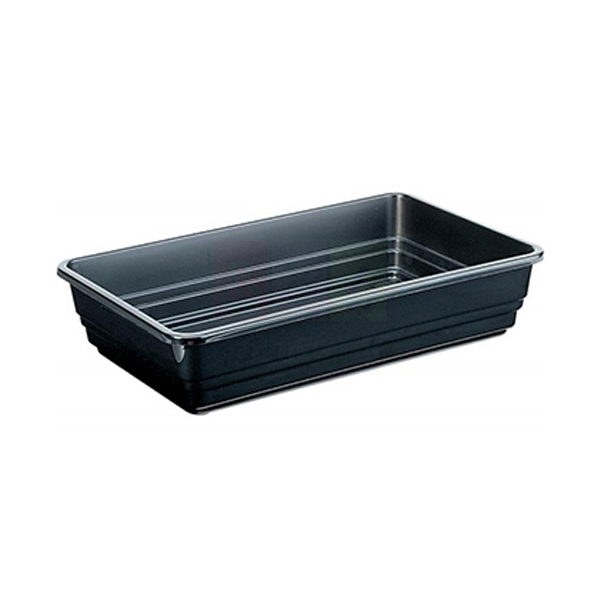
Greenbox Repl. Planting Tray
Greenbox Repl. Planting Tray (Product Code: SLE/EBT/09) is a replacement polypropylene tray used to sow seeds and raise seedlings in Greenbox growing activities in school and college botany classes. Made from resistant polypropylene with drain holes, it keeps the growing medium from waterlogging and stays rigid and stable when students carry it, which suits any plant growth experiment. It is supplied by Jain Scientific Equipments Pvt Ltd (ScienceLab), Ambala, as part of its range of school biology lab equipment in India.
Key Details
| Parameter | Detail |
|---|---|
| Type | Replacement planting tray (Greenbox) |
| Material | Resistant polypropylene |
| Drainage | Comes with drain holes |
| Construction | Provides rigidity and stability |
| Suitable for | Seed sowing, germination and early seedling growth activities |
| Product code | SLE/EBT/09 |
| Supplied by | Jain Scientific Equipments Pvt Ltd (ScienceLab), Ambala, India |
What Is the Greenbox Planting Tray Used For?
Students fill the tray with compost or potting mix, sow their seeds and water from above or below. The drain holes stop water collecting at the bottom, which matters because waterlogged compost starves roots of air and can make seeds rot before they germinate. A rigid, stable tray is also easier for young learners to carry between the windowsill and the bench without flexing, so seedlings are not disturbed when groups check and record growth each day.
For a seed germination kit in a school setting, the tray makes a convenient unit for comparing conditions: one tray in light and one in shade, or trays watered on different schedules. Stand it on a saucer or shallow dish to catch drainage, and label the rim with the group name and sowing date. Replacement trays let a school swap out worn or cracked ones, or add trays so more groups can sow at the same time.
What to Specify When Ordering
- The details of your Greenbox unit, so the fit of the replacement tray can be confirmed.
- The number of trays needed, for example one per student group.
- Whether you also need compost, seeds or drip trays, which are not listed with the tray.
Supplier
This tray is supplied by Jain Scientific Equipments Private Limited, the Ambala, Haryana company that trades as ScienceLab. Because it is a replacement part for Greenbox growing units, ScienceLab sources it and supplies it with the rest of its botany range, so schools in India and international markets can keep seed-growing activities running from one source. See the company profile for more about ScienceLab.
Related Botany Equipment
Other items used in seed-raising and plant growth projects:
- Plant Propagation Kit — for extending sowing work to propagation of new plants.
- Hydroponic Tray — a soil-free growing system for comparison experiments.
- Plant Hormones Set — for investigating how hormones affect seedling growth.
- Soil Analysis Kit — for testing the growing medium before sowing.
More growing, plant study and identification products are in the Botany category.
Frequently Asked Questions
Will this tray fit my existing Greenbox unit?
The Greenbox Repl. Planting Tray is listed as a replacement tray for Greenbox units. Because tray sizes can differ, send your unit details through our contact page so ScienceLab can confirm the fit before dispatch.
What is the tray made of?
The Greenbox Repl. Planting Tray is made from resistant polypropylene, a light plastic that is easy to wash between projects and gives the tray the rigidity and stability students need when carrying seedlings.
Does the tray have drainage?
Yes. The Greenbox Repl. Planting Tray comes with drain holes so excess water can escape from the compost. Stand it on a saucer or drip tray when it is used indoors on a windowsill or bench.
What are the dimensions and how many cells does it have?
Dimensions and cell count for the Greenbox Repl. Planting Tray are not stated in the current listing. Contact ScienceLab with code SLE/EBT/09 and we will share the measurements before you place an order.
Who supplies the Greenbox Repl. Planting Tray?
The Greenbox Repl. Planting Tray is supplied by Jain Scientific Equipments Pvt Ltd (ScienceLab), Ambala, Haryana, India, as a replacement part for schools and colleges in India and international markets running Greenbox seed-growing activities.
How should the tray be cleaned between projects?
Empty the Greenbox Repl. Planting Tray after each project, brush out old compost, wash it in warm soapy water, rinse and let it dry completely so fungus is not carried into the next sowing.
Request a Quote
For a quotation on replacement trays, contact us through the enquiry form or add the Greenbox Repl. Planting Tray to the enquiry cart with any other growing supplies you need.
Last updated: 24 September 2026
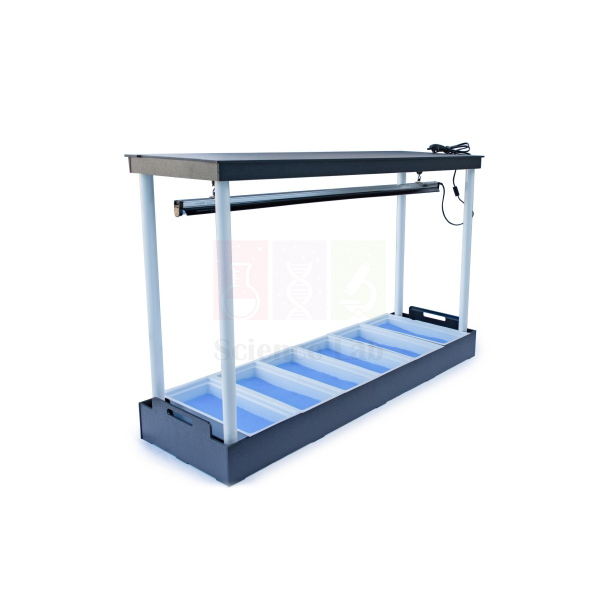
Hydroponic Tray
Hydroponic Tray (Product Code: SLE/EBT/10) is a watertight, all-plastic growing unit with its own 54 watt fluorescent grow light, used to raise seedlings and grow plants without soil in school and college botany labs. It offers 700 square inches of growing space, comes with 6 seed trays holding 12 seedlings each, and accepts up to 12 Root Tanks for a complete plant growth experiment kit. It is made by Jain Scientific Equipments Pvt Ltd (ScienceLab), an OEM manufacturer, at its own factory in Ambala, India.
Specifications
| Parameter | Detail |
|---|---|
| Growing space | 700 square inches |
| Grow light | 54 watt fluorescent, high power, fitted on mounting arms |
| Seed trays | 6 included, each holds 12 seedlings; removable seed tray |
| Root Tank capacity | Holds up to 12 Root Tanks (available separately) |
| Watertightness | Fully watertight for hydroponics farming |
| Construction | Robust, all plastic; easy to clean; impervious to rot and rust |
| Assembly | Assembles in minutes |
| Product code | SLE/EBT/10 |
| Manufacturer | Jain Scientific Equipments Pvt Ltd (ScienceLab) — OEM |
| Country of origin | India (made in Ambala, Haryana) |
What Is the Hydroponic Tray Used For?
Hydroponics grows plants with their roots in a nutrient solution instead of soil, so students can watch root growth directly and change one factor at a time. A typical project begins with seeds sown in the seed trays under the grow light; once the seedlings are established they can be moved into Root Tanks, where groups compare growth in different nutrient mixtures, record height and leaf number, and relate the results to what plants normally take from the soil. Because the unit carries its own light, the work does not depend on a sunny window and can continue in any season.
The all-plastic body will not rot or rust under constant moisture and can simply be rinsed between crops. Keep the light's electrical parts dry, top up solutions carefully rather than overfilling, and give each student group its own seed tray so observations stay organised. For a school biology lab setup that needs a year-round growing station, the tray offers a controlled space that is quick to assemble and easy to supervise.
What to Specify When Ordering
- The number of Hydroponic Tray units required for your lab or classes.
- Whether Root Tanks should be quoted with the tray, and how many (the tray holds up to 12).
- Your country and mains supply, so the configuration of the grow light can be confirmed.
OEM Manufacturer
Jain Scientific Equipments Private Limited, which trades as ScienceLab, is the OEM (original equipment manufacturer) of the Hydroponic Tray and produces it at its own licensed factory at Saha, Ambala, Haryana, India, rather than reselling a trader's stock. Schools, colleges, dealers and importers in India and international markets buy it factory-direct, and questions about replacement seed trays or repeat orders are answered by the manufacturer itself — just ask us. Read more on the ScienceLab company profile.
Related Laboratory Equipment
Useful additions for soil-free and nutrient experiments:
- Sach’s Water Culture Mineral Deficiency — a water-culture study of how missing minerals affect plants, a natural extension of hydroponic work.
- Greenbox Repl. Planting Tray — for running a soil-grown control group alongside the hydroponic plants.
- Plant Propagation Kit — for raising additional plants to transfer into the system.
- Digital Thermometer — for logging the temperature of the growing area alongside growth data.
More growing and plant physiology equipment is listed in the Botany category.
Frequently Asked Questions
Are Root Tanks included with the Hydroponic Tray?
No. The Hydroponic Tray holds up to 12 Root Tanks, but they are available separately and are not part of the standard unit. Mention how many Root Tanks you need when you request a quotation so they can be priced together with the tray.
How many seedlings can the Hydroponic Tray start at once?
The Hydroponic Tray comes with 6 seed trays, and each seed tray holds 12 seedlings, so a whole class can sow seeds in a single session. The seed tray is removable, which makes it easy to move seedlings on once they are established.
What kind of light does the Hydroponic Tray use?
The Hydroponic Tray uses a high power 54 watt fluorescent grow light carried on mounting arms above its 700 square inch growing area, so plants can be grown indoors without relying on daylight from a classroom window.
Who manufactures the Hydroponic Tray?
The Hydroponic Tray is manufactured by Jain Scientific Equipments Pvt Ltd (ScienceLab), the OEM, at its own licensed factory at Saha, Ambala, Haryana, India. Buyers deal directly with the manufacturer for quotations, repeat orders and questions about replacement parts.
What mains supply does the Hydroponic Tray grow light need?
The operating voltage of the Hydroponic Tray grow light is not stated in the product listing. Tell us your country and mains supply through our contact page so the correct configuration can be confirmed before you order.
Is a nutrient solution supplied with the Hydroponic Tray?
A nutrient solution is not listed among the Hydroponic Tray contents, so plan to prepare or buy a suitable plant nutrient solution separately. Contact us if you would like advice on solutions for school use when you request your quotation.
How is the Hydroponic Tray cleaned between crops?
The Hydroponic Tray has an all-plastic construction that is easy to clean and impervious to rot and rust. Empty and rinse the trays between crops, and keep the grow light and its cable dry while cleaning and refilling.
Request a Quote
Quotations for the Hydroponic Tray come straight from the manufacturer. Send the quantity and delivery location through our contact page, or add the tray to the enquiry cart together with any Root Tanks or accessories you need.
Last updated: 24 September 2026
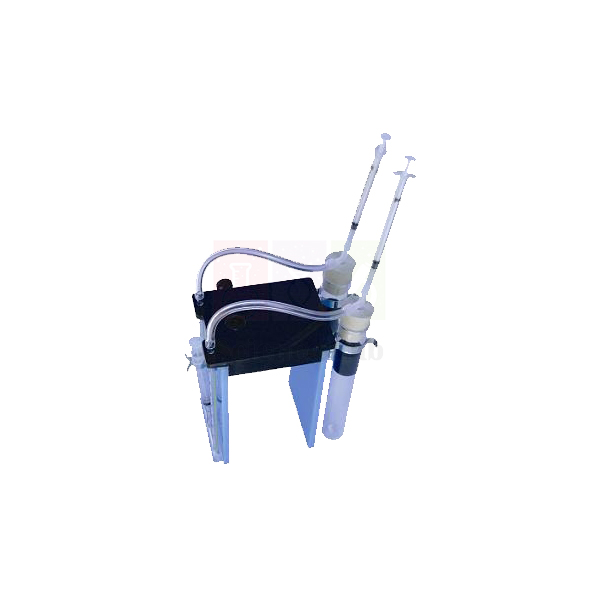
Volumeter Respirometer
Volumeter Respirometer (Product Code: SLE/EBT/11) is a closed-system gas-volume apparatus used to measure oxygen consumption over time by small plants and animals in school and college biology practicals. Its control and experimental test tubes sit side by side, clipped to a plastic frame, so both share the same conditions during a respiration run. It is made by Jain Scientific Equipments Pvt Ltd (ScienceLab), an OEM manufacturer, at its own factory in Ambala, India, as part of its biology lab equipment range.
Specifications
| Parameter | Detail |
|---|---|
| Measuring principle | Changes in gas volume within a closed system |
| Main measurement | Volume of oxygen consumption over time |
| Applications | Metabolic rate of small plants and animals; fermentation rates; photosynthesis |
| Tube arrangement | Side-by-side control and experimental test tubes |
| Frame | Test tubes clipped to a plastic frame |
| Product code | SLE/EBT/11 |
| Manufacturer | Jain Scientific Equipments Pvt Ltd (ScienceLab) — OEM |
| Country of origin | India (made in Ambala, Haryana) |
What Is the Volumeter Respirometer Used For?
In a standard respiration practical, germinating seeds or small invertebrates go into the experimental tube, usually with a carbon dioxide absorbent, while the control tube holds an equal volume of inert material. As the organisms take up oxygen and the carbon dioxide they release is absorbed, the gas volume in the closed system falls, and students record the change at fixed intervals. With both tubes on the same frame, warmth from hands or a drift in room temperature affects them equally and can be subtracted from the result.
The same apparatus supports follow-up investigations: comparing respiration at different temperatures, measuring gas production by fermenting yeast, or observing volume changes when green plant material photosynthesises in light. Let the tubes settle to room temperature before the first reading, keep the frame still during a run, and return any animals to their habitat promptly afterwards.
OEM Manufacturer
The Volumeter Respirometer is an original product of Jain Scientific Equipments Private Limited, the company behind the ScienceLab name, which acts as OEM and builds it at its own licensed factory at Saha, Ambala, Haryana, India. Because there is no trading intermediary, schools, universities, dealers and importers receive quotations and repeat supplies directly from the maker. For institutional and tender buyers who need vendor registration details, the company's GSTIN is 06AAECJ8618A1ZT and its Legal Entity Identifier is 3358004HRD1JIVXKYX49. See the company profile for background.
Related Laboratory Equipment
Equipment commonly used in the same respiration and gas-exchange practicals:
- Respirometer — an alternative respirometer design for comparing methods.
- Kit for Demonstrating Seed Respiration in Germination — a demonstration kit built around germinating seeds, a typical respirometer specimen.
- Photosynthesis Apparatus — for measuring gas evolved by aquatic plants in the complementary photosynthesis practical.
- Stopwatch, Digital — for timing readings at regular intervals.
For further plant physiology apparatus, visit the Botany category.
Frequently Asked Questions
What does the Volumeter Respirometer measure?
The Volumeter Respirometer measures changes in gas volume within a closed system. In respiration practicals this shows the volume of oxygen consumed by small plants or animals over time, from which students compare metabolic rates.
Why does the Volumeter Respirometer have two test tubes?
The Volumeter Respirometer uses side-by-side control and experimental test tubes clipped to one plastic frame. Because both tubes experience the same temperature and pressure, students can subtract any change seen in the control and attribute the remaining change to the organisms.
Can the Volumeter Respirometer be used for fermentation or photosynthesis?
Yes. Besides metabolic rate studies of small plants and animals, the Volumeter Respirometer can be used to determine fermentation rates and to follow gas volume changes linked to photosynthesis in green plant material.
Are chemicals or specimens included with the Volumeter Respirometer?
No carbon dioxide absorbent, seeds or organisms are listed with the Volumeter Respirometer. Schools normally prepare these locally; contact us if you would like suitable consumables quoted alongside the apparatus.
Who manufactures the Volumeter Respirometer?
The Volumeter Respirometer is manufactured by Jain Scientific Equipments Pvt Ltd (ScienceLab), acting as the OEM, at its own licensed factory at Saha, Ambala, Haryana, India. Quotations, repeat orders and spare-part questions are handled directly by the manufacturer.
Is a calibration certificate available for the Volumeter Respirometer?
The product listing for the Volumeter Respirometer does not state a scale value or mention a calibration certificate. Please ask through our contact page if your institution needs calibration documentation, and we will discuss what can be arranged.
Can the Volumeter Respirometer be ordered as class sets or for export?
Yes. The Volumeter Respirometer can be quoted in class-set quantities for schools and colleges in India and international markets. State the number of units and the delivery destination in your enquiry so we can prepare an accurate quotation.
Request a Quote
Pricing for the Volumeter Respirometer comes direct from the manufacturer: send your requirement through the contact page, or add it to the enquiry cart if you are building a complete respiration and photosynthesis practical set.
Last updated: 24 September 2026
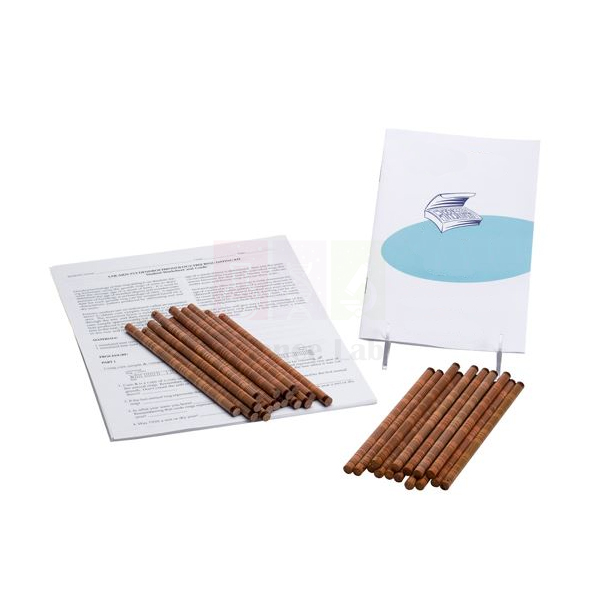
Tree Ring Dating Kit
Tree Ring Dating Kit (Product Code: SLE/EBT/12) is a classroom dendrochronology kit used to teach how the annual growth rings of trees record age and past growing conditions, using simulated tree cores instead of drilled wood. It contains 15 Type A and 15 Type B simulated cores, 30 student worksheets and an instruction manual, making it a ready-to-run environmental science kit for schools. It is made by Jain Scientific Equipments Pvt Ltd (ScienceLab), an OEM manufacturer of school biology lab equipment in India, at its own factory in Ambala.
Specifications
| Parameter | Detail |
|---|---|
| Topic | Dendrochronology (tree ring dating) |
| Type A simulated tree cores | 15 |
| Type B simulated tree cores | 15 |
| Student worksheets | 30 |
| Instruction manual | Included |
| Product code | SLE/EBT/12 |
| Manufacturer | Jain Scientific Equipments Pvt Ltd (ScienceLab) — OEM |
| Country of origin | India (made in Ambala, Haryana) |
What Is the Tree Ring Dating Kit Used For?
In temperate climates a tree usually adds one growth ring each year, and the width of that ring reflects how favourable the season was: wide rings suggest good rainfall and growth, narrow rings point to drought or stress. Working from the simulated cores, students count rings, note bands of wide and narrow growth, and compare cores to find matching sequences, the technique scientists call cross-dating. The worksheets lead them from simple counting to interpreting what a pattern says about past climate, and the instruction manual explains how the Type A and Type B cores are used.
The lesson links naturally to plant growth, climate change and the use of evidence in science, and runs in an ordinary classroom without specialist apparatus. A ruler and a hand lens help students measure and inspect narrow rings. Collect the cores at the end of each lesson and keep them together in the kit so the full set is ready for the next group.
OEM Manufacturer
ScienceLab is the trading name of Jain Scientific Equipments Private Limited, the OEM that makes the Tree Ring Dating Kit at its own licensed factory at Saha, Ambala, Haryana, India. Because the kit is assembled by the manufacturer rather than sourced from a trader, schools, education departments, dealers and importers can buy it factory-direct and ask the same team about additional components or repeat orders. Company details are on the ScienceLab profile page.
Related Laboratory Equipment
Products that pair well with a tree ring investigation:
- Tilia (Linden Tree), 1-year-old Stalk, Cross Section — shows how growth tissue looks in a real woody stem.
- Tilia (Linden Tree), 3-year-old stalk, Cross Section — lets students see annual growth layers building up.
- Magnifying Glass — for examining narrow rings on the cores.
- Ruler, White Vinyl — for measuring ring widths when recording data.
Find more plant science kits in the Botany category.
Frequently Asked Questions
What is included in the Tree Ring Dating Kit?
The Tree Ring Dating Kit contains 15 Type A simulated tree cores, 15 Type B simulated tree cores, 30 student worksheets and an instruction manual, so a class can work through the dendrochronology activity in small groups.
Why does the Tree Ring Dating Kit use simulated cores rather than real wood?
The Tree Ring Dating Kit uses simulated tree cores so every group gets consistent, readable samples without boring into living trees. The cores are not used up by the activity, so they can be collected after the lesson and used again.
What is the difference between the Type A and Type B cores?
The Tree Ring Dating Kit supplies two core types, 15 of each, so students can compare samples; the instruction manual explains how each type is used in the activity. Contact us before ordering if you need more detail on the two core types.
Who manufactures the Tree Ring Dating Kit?
The Tree Ring Dating Kit is manufactured by Jain Scientific Equipments Pvt Ltd (ScienceLab), the OEM, at its own licensed factory at Saha, Ambala, Haryana, India, and is supplied factory-direct to schools, colleges, dealers and importers.
What else is needed to run the Tree Ring Dating Kit activity?
Only basic classroom items are needed with the Tree Ring Dating Kit: pencils for the worksheets, a ruler for measuring ring widths and, ideally, a magnifier for inspecting narrow rings. No specialist laboratory apparatus is required.
Which subjects can use the Tree Ring Dating Kit?
The Tree Ring Dating Kit fits biology lessons on plant growth, geography and environmental studies on past climate, and general science lessons on dating methods and the use of evidence, from secondary school to introductory college level.
Can extra worksheets or cores be ordered for the Tree Ring Dating Kit?
Ask us about additional worksheets or simulated cores for the Tree Ring Dating Kit when you enquire through our contact page. As the manufacturer, we can confirm which components can be quoted separately for your order.
Request a Quote
For a price on the Tree Ring Dating Kit, straight from the manufacturer, send your requirements through our contact page or add the kit to the enquiry cart with any magnifiers or rulers your classes need.
Last updated: 24 September 2026
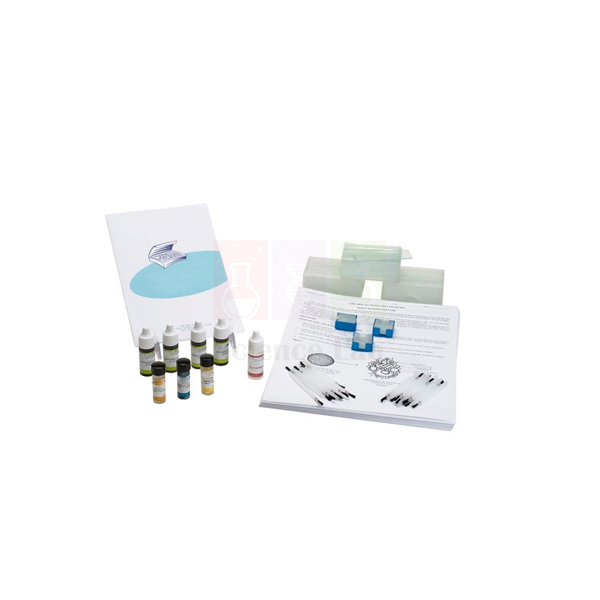
Plant Cell Study Kit
Plant Cell Study Kit (Product Code: SLE/EBT/13) is a microscopy kit used to prepare and examine temporary mounts of plant tissue in school and college biology practicals. It combines vials of monocot and dicot cross sections and macerated stem tissue with 90 slides, 90 cover slips, 30 transfer brushes, four bottles of stain and glycerine, making it a complete temporary slides biology kit. It is supplied by Jain Scientific Equipments Pvt Ltd (ScienceLab), Ambala, India.
Specifications
| Parameter | Detail |
|---|---|
| Specimen vials | Monocot cross section (1 vial); dicot cross section (1 vial); macerated stem tissues (1 vial) |
| Microscope slides | 90 |
| Cover slips | 90 |
| Tissue transfer brushes | 30 |
| Stain | 4 drop-controlled bottles |
| Glycerine | 1 drop-controlled bottle |
| Student worksheets | 30 |
| Documentation | Instruction manual with MSDS |
| Shelf life | Shelf life depends on the chemical, its grade and storage conditions; ask us for the expiry date of the batch you are quoted. |
| Product code | SLE/EBT/13 |
| Supplied by | Jain Scientific Equipments Pvt Ltd (ScienceLab), Ambala, India |
What Is the Plant Cell Study Kit Used For?
Working in pairs or small groups, students lift a section or a little macerated tissue from a vial onto a clean slide with a tissue transfer brush, add a drop of stain from one of the drop-controlled bottles, and then a drop of glycerine as the mounting medium. Lowering the cover slip at an angle from one edge pushes out air and avoids bubbles. Under the microscope, the monocot and dicot cross sections let learners compare how vascular tissue is arranged in the two plant groups, while the macerated stem tissue separates individual cells so their shapes and wall thickening are easy to see.
The worksheets structure observation and labelled drawing, so the kit delivers a plant cell and tissue practical without hand-cutting sections. Read the MSDS in the instruction manual before the lesson, have students wear gloves and aprons when handling stains, and keep the bottles capped between uses. Collect used slides and cover slips in a separate container for safe disposal of broken glass.
Supplier
Jain Scientific Equipments Private Limited, which trades as ScienceLab from Ambala, Haryana, supplies the Plant Cell Study Kit as part of the specimens, stains and consumables it sources for schools and colleges, so a biology department can order the kit, microscopes and refills through one enquiry. Buyers in India and international markets can read more on the company profile.
Related Laboratory Equipment
A microscope is needed for this kit, and these items help with refills and follow-up lessons:
- Monocular Biological Microscope 400x, LED — a student microscope for viewing the stained mounts.
- Microscope Slides Glass — extra slides once the kit's supply is used.
- Glass Cover Slips — replacement cover slips for further practicals.
- Plant Cell Model — a three-dimensional model for explaining the cell structures students see.
Explore the Botany category for more plant study kits and models.
Frequently Asked Questions
What does the Plant Cell Study Kit contain?
The Plant Cell Study Kit contains one vial each of monocot cross section, dicot cross section and macerated stem tissues, 90 microscope slides, 90 cover slips, 30 tissue transfer brushes, 4 drop-controlled stain bottles, a drop-controlled glycerine bottle, 30 student worksheets and an instruction manual with MSDS.
Is a microscope included with the Plant Cell Study Kit?
No. The Plant Cell Study Kit does not include a microscope; a compound microscope is needed to view the stained mounts. Student microscopes can be quoted separately in the same enquiry if your lab needs them.
Which stains come with the Plant Cell Study Kit?
The Plant Cell Study Kit includes four drop-controlled bottles of stain, but the individual stains are not named in the product listing. Ask through our contact page if your syllabus requires particular stains, and we will confirm before quoting.
What is the shelf life of the stains in the Plant Cell Study Kit?
Shelf life of the Plant Cell Study Kit stains and glycerine depends on the chemical, its grade and storage conditions, so no single expiry period applies. Ask us for the expiry date of the batch you are quoted, and store the bottles capped, upright and away from sunlight.
Who supplies the Plant Cell Study Kit?
The Plant Cell Study Kit is supplied by Jain Scientific Equipments Pvt Ltd (ScienceLab), Ambala, Haryana, India, which sources specimens, stains and consumables so that schools can order complete practical kits and related laboratory items from one supplier.
Is safety information provided with the Plant Cell Study Kit?
Yes. The Plant Cell Study Kit comes with an instruction manual that includes MSDS information. Teachers should read it before the lesson and make sure students wear gloves and aprons when handling the stains.
Can the Plant Cell Study Kit be shipped outside India?
The Plant Cell Study Kit can be quoted for India and international markets. Because it contains stains and glycerine, tell us the destination country so the packing and shipping method can be checked before the quotation is issued.
Request a Quote
To price the Plant Cell Study Kit, with or without microscopes, use our contact page or place the items in the enquiry cart and submit them as one request.
Last updated: 24 September 2026
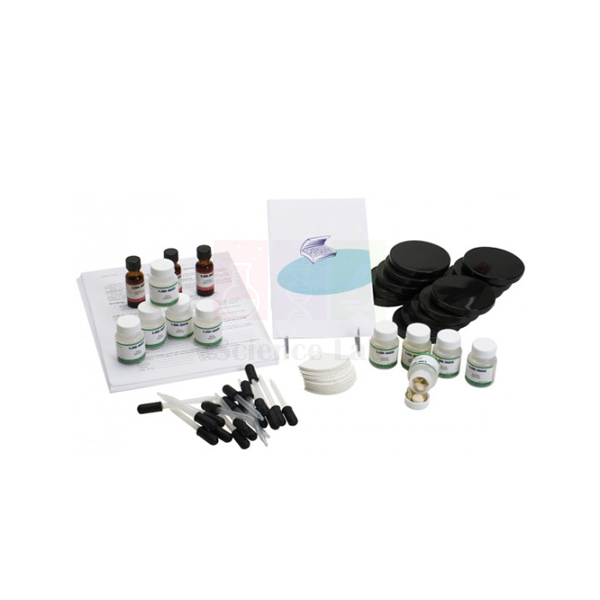
Enzymes In Seeds Kit
Enzymes In Seeds Kit (Product Code: SLE/EBT/14) is a class practical kit used to show how enzymes break down stored starch in germinating seeds in secondary and pre-university biology labs. Students test pea and bean seeds with Lugol's solution in 15 three-part plastic test dishes, guided by 30 worksheets, which makes it a ready enzyme experiment kit for school classes. It is supplied by Jain Scientific Equipments Pvt Ltd (ScienceLab), Ambala, India.
Specifications
| Parameter | Detail |
|---|---|
| 3-part plastic test dishes | 15 |
| Pans with pea seeds | 5 |
| Pans with bean seeds | 5 |
| Absorbent paper | Included |
| Lugol's solution | 3 bottles |
| Student worksheets | 30 |
| Shelf life | Shelf life depends on the chemical, its grade and storage conditions; ask us for the expiry date of the batch you are quoted. |
| Product code | SLE/EBT/14 |
| Supplied by | Jain Scientific Equipments Pvt Ltd (ScienceLab), Ambala, India |
What Is the Enzymes In Seeds Kit Used For?
Seeds store food largely as starch, and when they take up water and start to germinate, enzymes such as amylase convert that starch into sugars the young plant can use. The worksheets set out the procedure; a typical approach is to place seeds on moist absorbent paper, leave some to soak and sprout while others stay dry, and then test cut seeds with a drop of Lugol's solution. Iodine turns blue-black where starch is present, so a paler reaction in germinating seeds is visible evidence that enzymes have been at work. The three compartments of each test dish hold dry, soaked and sprouting seeds side by side for a fair comparison.
Testing both peas and beans adds a second variable and prompts discussion about differences between seed types. As an enzyme activity kit for biology classes, it links neatly to lessons on digestion, where the same starch-to-sugar reaction occurs. Lugol's solution stains skin and clothing, so students should wear gloves and eye protection, and seeds used in experiments must not be eaten.
What to Specify When Ordering
- The number of kits, bearing in mind each kit has 15 test dishes and 30 worksheets.
- Whether extra iodine reagent is wanted beyond the 3 bottles of Lugol's solution in each kit.
- The delivery country, since the kit contains a reagent and seeds that may be subject to import rules.
- Any safety documentation your school requires for the reagent.
Supplier
This kit is supplied by Jain Scientific Equipments Private Limited, the Ambala, Haryana company trading as ScienceLab. It brings together a reagent, seeds and simple plasticware sourced for schools and colleges in India and international markets, so a teacher can order a complete enzyme practical in one step. The company profile has more information.
Related Botany Equipment
Refills and companion kits for seed and germination practicals:
- Potassium Iodine-Iodine Solution — an iodine reagent for further starch tests once the kit's bottles run low.
- Kit for Demonstrating Seed Respiration in Germination — shows what germinating seeds do with the sugars released.
- Kit for Demonstrating CO2 Emission and Heat Production in Germinating Seeds — extends the topic to carbon dioxide and heat output.
- Seed Identification Kit — for comparing seed structure across species before testing.
Further plant physiology kits are listed in the Botany category.
Frequently Asked Questions
What does the Enzymes In Seeds Kit demonstrate?
The Enzymes In Seeds Kit demonstrates enzyme activity in seeds: as pea and bean seeds germinate, their stored starch is broken down into sugars, and students detect the change because Lugol's solution stains starch blue-black.
What is included in the kit?
The Enzymes In Seeds Kit includes 15 three-part plastic test dishes, 5 pans with pea seeds, 5 pans with bean seeds, absorbent paper, 3 bottles of Lugol's solution and 30 student worksheets.
How many students can use it at once?
With 15 test dishes and 30 worksheets, the Enzymes In Seeds Kit suits a class of 30 working in pairs, each pair using one three-part dish to compare seeds side by side.
What is the shelf life of the Lugol's solution?
Shelf life of the Lugol's solution in the Enzymes In Seeds Kit depends on the chemical, its grade and storage conditions. Ask us for the expiry date of the batch you are quoted, and keep bottles tightly capped away from light.
Who supplies the Enzymes In Seeds Kit?
The Enzymes In Seeds Kit is supplied by Jain Scientific Equipments Pvt Ltd (ScienceLab), Ambala, Haryana, India, which sources reagents, seeds and apparatus as ready-to-use practical kits for schools and colleges in India and international markets.
Are safety data sheets available?
Safety documentation is not listed among the Enzymes In Seeds Kit contents. If your school requires a safety data sheet for the Lugol's solution, request it through our contact page when you ask for a quotation.
Can the kit be exported?
Yes. The Enzymes In Seeds Kit can be supplied to international markets; because it contains a reagent and seeds, share the destination country in your enquiry so ScienceLab can advise on packing and any import requirements.
Request a Quote
Send your quantity and delivery details for the Enzymes In Seeds Kit through the contact page, or add it to the enquiry cart with any refill reagents you would like quoted.
Last updated: 24 September 2026
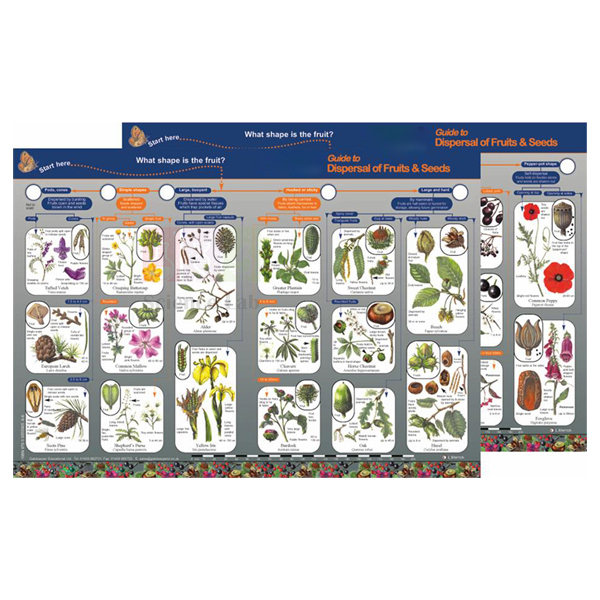
Key to Identifying Dispersal of Fruits & Seeds
Key to Identifying Dispersal of Fruits & Seeds (Product Code: SLE/EBT/15) is a fold-out identification guide used to work out how a fruit or seed is spread, in classroom botany and outdoor field study. Part of the Key Identification Guides K1 - 5 series, it is a wipe-clean A3 laminated sheet printed on both sides, with easy key questions and full colour illustrations for a school biology chart set. It is supplied by Jain Scientific Equipments Pvt Ltd (ScienceLab), Ambala, a biology lab equipment supplier in India.
Specifications
| Parameter | Detail |
|---|---|
| Series | Key Identification Guides K1 - 5 |
| Format | A3, laminated and folded |
| Printing | Printed on both sides |
| Surface | Wipe-clean |
| Illustrations | Clear, original full colour illustrations |
| Identification method | Key questions that are easy to follow |
| Suitable for | Schools and nature lovers of all ages |
| Product code | SLE/EBT/15 |
| Supplied by | Jain Scientific Equipments Pvt Ltd (ScienceLab), Ambala, India |
What Is the Fruit and Seed Dispersal Key Used For?
Plants cannot move, so they rely on their fruits and seeds to reach new ground. Some are carried by wind on wings or parachutes, some float on water, some hook onto animal fur or are eaten and passed on, and others are flung out when a pod bursts. A common lesson begins with a collecting walk around the school grounds; back in class, students take each fruit or seed through the key question by question until they reach its dispersal method, then record and compare their findings. Because the key relies on observable features, it also trains the step-by-step reasoning used in all biological identification.
The guide is a natural starting point for ecology fieldwork and simple investigations, such as timing how long different winged fruits take to fall or testing which seeds float. Robust and easy to handle, it can be wiped with a damp cloth after outdoor use, and the folded format fits in a clipboard folder or bag. Keep several copies so each group has its own during practical sessions.
Supplier
ScienceLab is the trading name of Jain Scientific Equipments Private Limited, which supplies this laminated key and other field-study resources from Ambala, Haryana, to schools, eco-clubs and nature groups in India and international markets. For vendor registration and export paperwork, the supplying company's details are Importer-Exporter Code AAECJ8618A (DGFT) and GSTIN 06AAECJ8618A1ZT. See the company profile for more.
Related Botany Equipment
Items that support seed and field identification activities:
- Seed Identification Kit — for closer study of the seeds students collect.
- Leaf & Seed Games — activity-based practice of identification skills for younger learners.
- Key to Identifying Water Invertebrates — a companion key from the same guide series for pond work.
- Plastic Container with a Magnifying Glass Lid — for collecting and inspecting small fruits and seeds in the field.
- Stopwatch, Digital — for timing the fall of winged fruits in follow-up investigations.
Visit the Botany category for more plant identification resources.
Frequently Asked Questions
What size and format is the guide?
The Key to Identifying Dispersal of Fruits & Seeds is an A3 sheet, laminated, printed on both sides and folded, so it can be opened on a desk for group work or carried in a bag or clipboard folder on field trips.
Can the guide be taken outdoors?
Yes. The Key to Identifying Dispersal of Fruits & Seeds is wipe-clean, robust and easy to handle, so mud or rain can simply be wiped from the laminate with a damp cloth after a collecting walk.
How does an identification key work?
The Key to Identifying Dispersal of Fruits & Seeds works through easy-to-follow questions about features users can see; each answer leads to the next question until the answer is reached, so no prior botanical knowledge is needed.
Which fruits and seeds are illustrated?
The full list of fruits and seeds illustrated in the Key to Identifying Dispersal of Fruits & Seeds is not given in the current listing. Ask through our contact page and ScienceLab will share details before you order.
Who supplies the Key to Identifying Dispersal of Fruits & Seeds?
The Key to Identifying Dispersal of Fruits & Seeds is supplied by Jain Scientific Equipments Pvt Ltd (ScienceLab), Ambala, Haryana, India, to schools, eco-clubs and field-study groups in India and international markets, singly or as class sets.
Are other guides in the series available?
The Key to Identifying Dispersal of Fruits & Seeds belongs to the Key Identification Guides K1 - 5 series. The Key to Identifying Water Invertebrates is also listed on our site; contact us to ask about the other titles.
Request a Quote
For a quotation on single copies or class sets, reach us through the contact page or add this key to the enquiry cart alongside other field study items.
Last updated: 24 September 2026
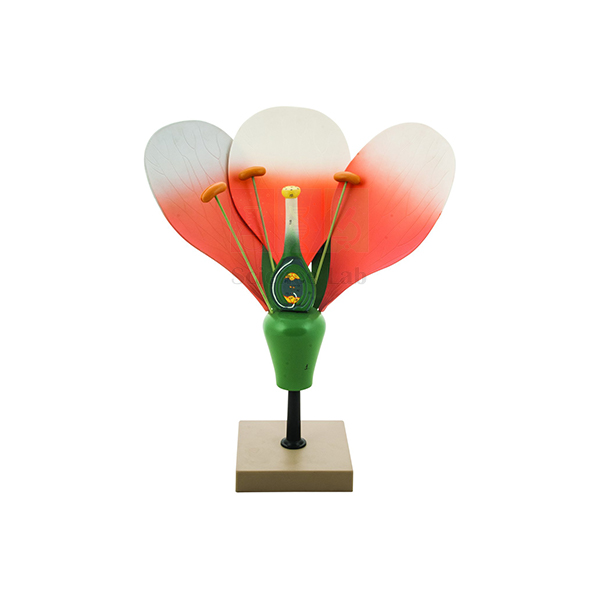
Typical Flower Model
Typical Flower Model (Product Code: SLE/EBT/17) is a large size teaching model used for detailed study of the structure and functional parts of a flower in school and college biology classes. Every part is removable for better viewing and the ovary is bisected to reveal internal structures, so teachers can dismantle the flower whorl by whorl as a hands-on plant anatomy model. It is made by Jain Scientific Equipments Pvt Ltd (ScienceLab), an OEM manufacturer, at its own factory in Ambala, India.
Key Details
| Parameter | Detail |
|---|---|
| Type | Large size model of a typical flower |
| Purpose | Detailed study of the structure and functional parts of a flower |
| Removable parts | All parts removable for better viewing |
| Ovary | Bisected to show internal structures |
| Product code | SLE/EBT/17 |
| Manufacturer | Jain Scientific Equipments Pvt Ltd (ScienceLab) — OEM |
| Country of origin | India (made in Ambala, Haryana) |
What Is the Typical Flower Model Used For?
Teachers usually take the model apart in the same order a botanist would dissect a real flower: first the outer whorls that protect and attract, then the male parts, and finally the female parts at the centre. Lifting each removable piece away lets the class see where it attaches and how it relates to its neighbours, which is much harder to show with a drawing. The bisected ovary then opens the discussion on ovules, fertilisation and how the ovary develops into a fruit after pollination.
After the demonstration, students can reassemble the model themselves as a quick check of their understanding, or use it as a reference while dissecting a real flower with forceps and a hand lens. Among biology teaching aids in school labs across India, a removable-part flower model is a practical way to prepare students for labelled-diagram questions. Count the parts at the end of each lesson and store the model assembled so no pieces are lost.
OEM Manufacturer
Jain Scientific Equipments Private Limited, known by its trading name ScienceLab, is the OEM (original equipment manufacturer) of the Typical Flower Model, which is produced at the company's own licensed factory at Saha, Ambala, Haryana. Schools, colleges, dealers and importers order it direct from the maker, and questions about a missing piece or a repeat order are handled by the manufacturer itself — just ask us. See the company profile for more.
Related Botany Equipment
Items used with this model in lessons on flower structure and reproduction:
- Typical Flower V.S. Model — a vertical-section model on a base, showing the flower cut through its centre.
- Plant Dicot Flower — for comparing the general plan with a dicot flower.
- Flower Formation in Angiosperms — extends the lesson to how flowers develop.
- Dissecting Set, Student — tools for dissecting real flowers after the model demonstration.
- Magnifying Glass 2 — for inspecting pollen, anthers and stigmas on fresh flowers.
For more flower and plant models, browse the Botany category.
Frequently Asked Questions
Which parts of the Typical Flower Model can be removed?
All parts of the Typical Flower Model are removable for better viewing, so a teacher can take the flower apart during a lesson and students can rebuild it afterwards as a quick check of what they have learned.
What does the bisected ovary show?
The bisected ovary of the Typical Flower Model opens to reveal its internal structures, which helps a teacher explain where ovules sit and how fertilisation leads to seed and fruit formation after pollination.
What are the exact dimensions?
The Typical Flower Model is described as large size, but exact dimensions are not stated in our listing. Ask through our contact page with code SLE/EBT/17 and ScienceLab will confirm the measurements and packed size.
How does it differ from the Typical Flower V.S. Model?
The Typical Flower Model has removable parts and a bisected ovary for hands-on dismantling, whereas the Typical Flower V.S. Model shows a fixed vertical section mounted on a base. Many departments use both side by side.
Who manufactures the Typical Flower Model?
The Typical Flower Model is manufactured by Jain Scientific Equipments Pvt Ltd (ScienceLab), the OEM, at its own licensed factory in Saha, Ambala, Haryana, India, so buyers deal with the maker directly for quotations and follow-up questions.
Can a lost part be replaced?
If a piece of the Typical Flower Model goes missing, contact ScienceLab with code SLE/EBT/17 and a description of the part; as the manufacturer, the company will advise whether a replacement can be supplied.
Can you supply several models to one institution?
Yes. ScienceLab supplies the Typical Flower Model in quantity to schools, colleges and distributors in India and international markets; include the number of models and delivery location in your enquiry for a factory-direct quotation.
Request a Quote
Request a price for the Typical Flower Model on our contact page, or add it to the enquiry cart together with the V.S. model and dissecting tools for a complete flower lesson; quotations come straight from the manufacturer.
Last updated: 24 September 2026
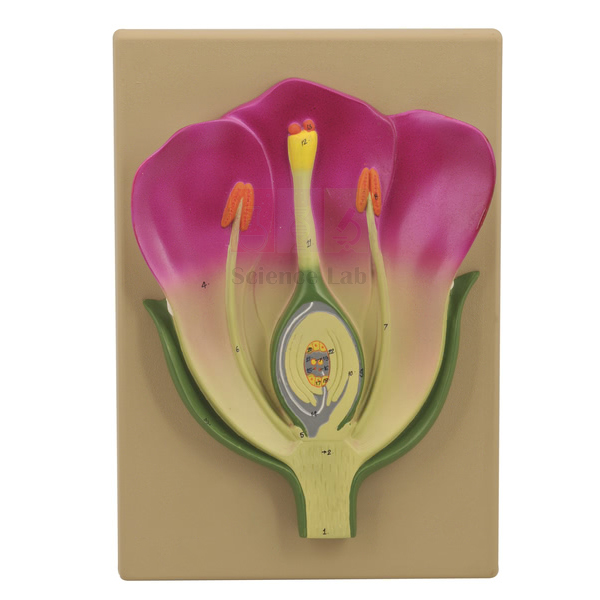
Typical Flower V.S. Model
Typical Flower V.S. Model (Product Code: SLE/EBT/18) is a vertical-section model of a flower used to show how every floral part is arranged, from receptacle to stigma, in school and college botany lessons. Mounted on a base and weighing 650 g, it stands securely for demonstrations yet is light enough to pass along a bench. It is made by Jain Scientific Equipments Pvt Ltd (ScienceLab), an OEM manufacturer, at its own factory in Ambala, India, as part of its botany lab equipment range.
Specifications
| Parameter | Detail |
|---|---|
| Type | Vertical section (V.S.) model of a flower |
| Mounting | Mounted on base |
| Weight | 650 g |
| Dimensions | 330 x 250 x 50 (as listed; unit not stated) |
| Product code | SLE/EBT/18 |
| Manufacturer | Jain Scientific Equipments Pvt Ltd (ScienceLab) — OEM |
| Country of origin | India (made in Ambala, Haryana) |
What Is the Flower V.S. Model Used For?
A vertical section is the view most textbooks and examinations use for flower structure, because it shows at a glance how the sepals, petals, stamens and carpel are attached to the receptacle and where the ovary sits in relation to the other parts. With the model on the bench, a teacher can trace the route a pollen grain takes from the stigma down the style to an ovule, and students can copy a labelled V.S. drawing from a three-dimensional example rather than from another diagram.
It is especially useful just before students cut their own vertical sections of fresh flowers with a scalpel, since they know what they are aiming to see. As one of the everyday biology teaching aids on a demonstration table or display shelf, it stays upright on its base, and its modest weight makes it easy for groups to share. Dust it regularly with a soft brush and avoid placing it where it may be knocked off a high shelf.
OEM Manufacturer
ScienceLab, the trading name of Jain Scientific Equipments Private Limited, is the OEM (original equipment manufacturer) of this sectional flower model and produces it at its own licensed factory in Saha, Ambala, Haryana. The company sells its biology, chemistry and physics models straight from the factory to schools, colleges, dealers and importers, and repeat orders are arranged with the maker rather than a trading intermediary. The company profile has more.
Related Botany Equipment
Complementary items for teaching flower structure:
- Typical Flower Model — a large model with removable parts to accompany the sectional view.
- Dicotyledonous Flower Pattern — for relating the general plan to dicot flowers.
- Monocotyledonous Flower Pattern — for comparing with monocot flower arrangement.
- Hand Lens — for examining students' own flower sections after the demonstration.
See the Botany category for further flower and plant anatomy models.
Frequently Asked Questions
What does V.S. stand for?
V.S. stands for vertical section: the Typical Flower V.S. Model shows a flower as if cut lengthwise down its centre, revealing how sepals, petals, stamens and carpel are attached and where the ovary sits.
How much does the Typical Flower V.S. Model weigh?
The Typical Flower V.S. Model weighs 650 g, so it is easy to carry between classrooms and to pass along a bench, while its base keeps it stable during a demonstration.
What are the dimensions?
The listed dimensions of the Typical Flower V.S. Model are 330 x 250 x 50. The unit is not stated in our listing, so ask through our contact page to confirm the measurements and the packed carton size.
Does it have removable parts?
Removable parts are not listed for the Typical Flower V.S. Model, which shows a fixed sectional view. If you need a flower that can be taken apart, the Typical Flower Model with removable parts is listed alongside it.
Who manufactures the Typical Flower V.S. Model?
The Typical Flower V.S. Model is manufactured by Jain Scientific Equipments Pvt Ltd (ScienceLab), the OEM, at its own licensed factory in Saha, Ambala, Haryana, India, and is supplied factory-direct to schools, colleges, dealers and importers.
How should the model be cleaned?
Clean the Typical Flower V.S. Model with a soft brush or dry cloth, avoid solvents, and never immerse it in water. Keep it on a low, stable shelf where it cannot be knocked off.
What details should an institutional order include?
An order for the Typical Flower V.S. Model should give code SLE/EBT/18, quantity, billing entity and delivery address; ScienceLab then quotes directly as the manufacturer for buyers in India and international markets.
Request a Quote
Ask for a manufacturer's quotation on the Typical Flower V.S. Model through the contact page, or place it in the enquiry cart with any other botany models you plan to buy.
Last updated: 24 September 2026
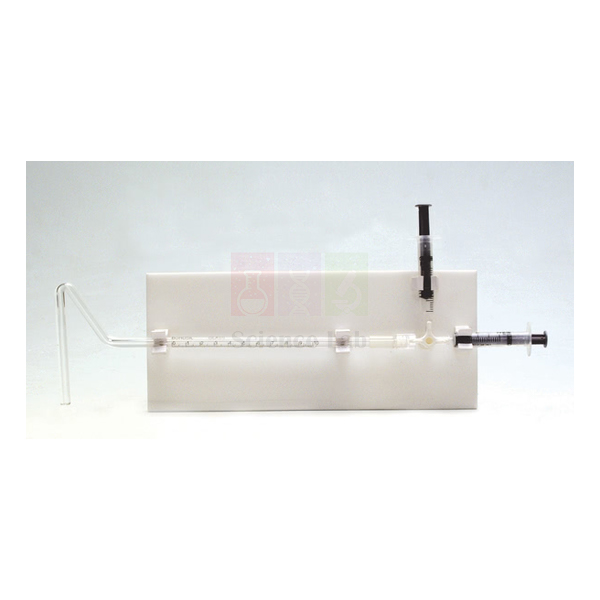
Photosynthesis Apparatus
Photosynthesis Apparatus (Product Code: SLE/EBT/19) is a panel-mounted teaching apparatus used to measure and collect the gas evolved by aquatic plants during photosynthesis in school and college biology laboratories. Students read the gas volume in a calibrated capillary tube and draw the gas off for analysis with plastic syringes, all fixed on a compact 190mm x 150mm plastic panel. It is made by Jain Scientific Equipments Pvt Ltd (ScienceLab), an OEM manufacturer and biology lab equipment supplier in India, at its own factory in Ambala, as a photosynthesis experiment kit for class practicals.
Specifications
| Parameter | Detail |
|---|---|
| Purpose | Measurement and collection of gas evolved by aquatic plants during photosynthesis |
| Mounting | Plastic panel |
| Size | 190mm x 150mm (19 cm x 15 cm) |
| Gas measurement | Calibrated capillary tube |
| Gas sampling | Plastic syringes for drawing off the gas for analysis |
| Product code | SLE/EBT/19 |
| Manufacturer | Jain Scientific Equipments Pvt Ltd (ScienceLab) — OEM |
| Country of origin | India (made in Ambala, Haryana) |
What Is the Photosynthesis Apparatus Used For?
The apparatus turns the rate of photosynthesis into a number students can record. A freshly cut sprig of pondweed is placed in water in the apparatus and lit by a lamp; as the plant photosynthesises it gives off gas, which collects in the calibrated capillary tube where the length of the gas column is read over a fixed time. Repeating the reading with the lamp at different distances, or with the water at different temperatures, turns a simple observation into an investigation of limiting factors with results that can be graphed and compared between groups.
Once enough gas has collected, the plastic syringes let students draw it off so it can be analysed separately. For steadier data, allow the plant a few minutes to settle under each new condition before timing, keep the water temperature constant when light is the variable, and use a stem with a freshly cut end. As a piece of plant biology lab equipment it suits both class practicals and coursework investigations.
OEM Manufacturer
ScienceLab is the trading name of Jain Scientific Equipments Private Limited, the OEM (original equipment manufacturer) of this Photosynthesis Apparatus. The company produces it at its own licensed factory at Saha, Ambala, Haryana, India, and sells it factory-direct to schools, colleges, dealers and importers rather than through a trading intermediary.
Because the maker handles every order itself, questions about repeat class sets or replacement parts such as syringes go straight to the people who build the apparatus — just ask us. Read more about the company on the company profile.
Related Botany Equipment
Items that fit into the same photosynthesis and respiration practicals:
- Kit for Demonstration of Aquatic Plant Respiration — the matching respiration practical with aquatic plants.
- Apparatus for Photosynthesis — an alternative photosynthesis set-up for comparing methods.
- Volumeter Respirometer — measures gas volume changes in closed-system respiration studies.
- Potometer Apparatus — a companion plant physiology practical on transpiration.
- Stopwatch, Digital — for timing gas collection at each light setting.
More plant physiology apparatus is listed in the Botany category.
Frequently Asked Questions
What does the Photosynthesis Apparatus measure?
The Photosynthesis Apparatus measures the gas evolved by aquatic plants during photosynthesis. The gas collects in a calibrated capillary tube, where students read its volume, so the rate of gas production can be compared under different light or temperature conditions.
What are the plastic syringes on the Photosynthesis Apparatus for?
The plastic syringes on the Photosynthesis Apparatus are used to draw off the gas collected from the aquatic plant, so that it can be taken out of the capillary tube and analysed separately by the students.
Are a plant and a lamp included with the Photosynthesis Apparatus?
No plant material or light source is listed with the Photosynthesis Apparatus. Schools normally use a common aquatic plant such as pondweed and a bench lamp; mention any accessories you need on the contact page and we will advise.
How big is the Photosynthesis Apparatus?
The Photosynthesis Apparatus is mounted on a plastic panel measuring 190mm x 150mm, about 19 cm by 15 cm, so it sits comfortably on a student bench and several units can run side by side in one practical.
What are the capillary graduations, and is a calibration certificate available?
The graduation interval of the Photosynthesis Apparatus capillary tube is not stated in our listing, and calibration certificate availability should be discussed with us before ordering. Please ask through the contact page and we will confirm.
Who manufactures the Photosynthesis Apparatus?
The Photosynthesis Apparatus is manufactured by Jain Scientific Equipments Pvt Ltd (ScienceLab) as the OEM, at its own factory at Saha, Ambala, Haryana, India. Quotations, repeat orders and spare-part enquiries are handled directly by the manufacturer.
How should the Photosynthesis Apparatus be cleaned?
After each practical, flush the capillary tube and syringes of the Photosynthesis Apparatus with clean water, drain them fully and let the panel dry before storage. This stops algae and deposits building up and keeps the capillary easy to read.
Can the Photosynthesis Apparatus be ordered in class sets?
Yes. The Photosynthesis Apparatus is supplied in class-set quantities to schools, colleges, dealers and importers in India and international markets. State the number of units and the delivery destination so the quotation can be prepared correctly.
Request a Quote
For a quotation on the Photosynthesis Apparatus, send your requirement through the contact page or add it to the enquiry cart with any timers or respiration apparatus you need. Quotes come direct from the manufacturer.
Last updated: 24 September 2026
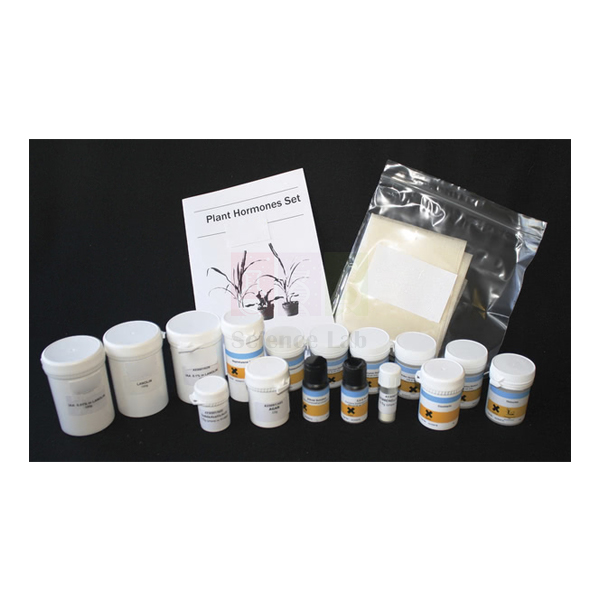
Plant Hormones Set
Plant Hormones Set (Product Code: SLE/EBT/20) is a collection of plant growth regulators and supporting materials used to show how plant hormones affect plant growth and development in school and college biology laboratories. Suitable for GCSE students, it covers four experiments — breaking dormancy in seeds, rooting cuttings, killing weeds and preventing leaves from dropping — with IAA pastes, N.A.A., 2,4-D, gibberellic acid and culture materials in one plant growth experiment kit. It is supplied by Jain Scientific Equipments Pvt Ltd (ScienceLab), Ambala, India.
Specifications
| Parameter | Detail |
|---|---|
| Purpose | Understanding how plant hormones affect plant growth and development |
| Experiments | Breaking dormancy in seeds; rooting cuttings; killing weeds; preventing leaves from dropping |
| Level | Suitable for GCSE students |
| Auxin pastes | 0.1% IAA in lanolin paste; 0.01% IAA in lanolin paste |
| Shelf life | Depends on the chemical, its grade and storage conditions; ask us for the expiry date of the batch you are quoted |
| Product code | SLE/EBT/20 |
| Supplied by | Jain Scientific Equipments Pvt Ltd (ScienceLab), Ambala, India |
Contents:
- Culture Medium
- Indol-3-yl acetic acid (IAA)
- Lanolin
- Gibberellic acid
- Sucrose
- 0.1% IAA in lanolin paste
- Coumarin
- N.A.A.
- 0.01% IAA in lanolin paste
- Thiourea
- 2,4-D
- Ethrel ‘e’
- Tetrazolium chloride
- Agar
What Is the Plant Hormones Set Used For?
Each group of chemicals supports a different investigation. Gibberellic acid and thiourea are widely used to break seed dormancy, while coumarin acts as a germination inhibitor for comparison; seeds can be set on agar prepared with the culture medium and sucrose so that germination is easy to observe. The IAA pastes in lanolin, at 0.1% and 0.01%, and N.A.A. are auxins that students apply to cuttings to encourage root formation, or smear on a leaf stalk to show how auxin delays leaf fall.
2,4-D is a synthetic auxin used as a selective weedkiller, which makes the killing-weeds experiment a direct link to agriculture, and Ethrel releases ethylene, the hormone behind ripening and leaf drop. Tetrazolium chloride turns living seed tissue red, so students can check seed viability before a germination trial.
As a biology experiment kit for students, the set is easiest to run when teachers prepare dilutions in advance and give each group a clear control. Wear gloves and eye protection, label every container, keep the chemicals away from food areas and store them tightly closed in a cool, dry, dark cupboard.
Supplier
ScienceLab is the trading name of Jain Scientific Equipments Private Limited, Ambala, Haryana, India, which supplies chemical sets such as this one to schools, colleges and distributors in India and international markets. For vendor registration, the supplying company is Jain Scientific Equipments Private Limited (CIN U29309HR2020PTC087597, GSTIN 06AAECJ8618A1ZT). More details are on the company profile.
Related Botany Equipment
Useful items for running the hormone experiments:
- Petri Dish Glass With Lid — for setting seeds on agar in dormancy and germination tests.
- Greenbox Repl. Planting Tray — for growing treated and control seedlings side by side.
- Forceps, Plastic — for handling seeds and small cuttings without contaminating them.
- Clinostat (Electric) — for a follow-on study of how shoots and roots respond to gravity.
- Safety Goggles — eye protection while students handle the growth regulators.
Browse the Botany category for more plant physiology kits.
Frequently Asked Questions
Which experiments can be done with the Plant Hormones Set?
The Plant Hormones Set supports four experiments: breaking dormancy in seeds, rooting cuttings, killing weeds and preventing leaves from dropping. Together they show students how different plant hormones and growth regulators control germination, root formation, weed growth and leaf fall.
What level is the Plant Hormones Set designed for?
The Plant Hormones Set is suitable for GCSE students and equivalent secondary-level biology courses. Teachers can also adapt the same experiments for introductory college plant physiology practicals, preparing dilutions in advance so that each group works with a clear treatment and control.
What does the Plant Hormones Set contain?
The Plant Hormones Set contains culture medium, indol-3-yl acetic acid, lanolin, gibberellic acid, sucrose, 0.1% and 0.01% IAA in lanolin paste, coumarin, N.A.A., thiourea, 2,4-D, Ethrel ‘e’, tetrazolium chloride and agar. Quantities are not stated, so ask us to confirm them before ordering.
What is the shelf life of the Plant Hormones Set?
Shelf life depends on the chemical, its grade and storage conditions, so the Plant Hormones Set carries no single expiry period. Ask us for the expiry date of the batch you are quoted, and keep every container sealed, cool, dry and away from light.
Is safety information included with the Plant Hormones Set?
Safety documentation is not listed with the Plant Hormones Set. Request safety data for the chemicals when you enquire, have a teacher prepare 2,4-D and other concentrated reagents, and make sure students wear gloves and eye protection throughout the practical.
Who supplies the Plant Hormones Set?
The Plant Hormones Set is supplied by Jain Scientific Equipments Pvt Ltd (ScienceLab), Ambala, Haryana, India. The company sources chemical sets for school and college biology laboratories and sends quotations to institutions and distributors in India and international markets.
Can the Plant Hormones Set be shipped internationally?
Yes, the Plant Hormones Set is supplied to India and international markets. Because it contains chemicals, tell us the destination country when you enquire so that packing and shipping requirements can be checked before a quotation is issued.
Request a Quote
Request a quotation for the Plant Hormones Set through our contact page, or add it to the enquiry cart with dishes, trays and eye protection for a complete plant growth practical.
Last updated: 24 September 2026
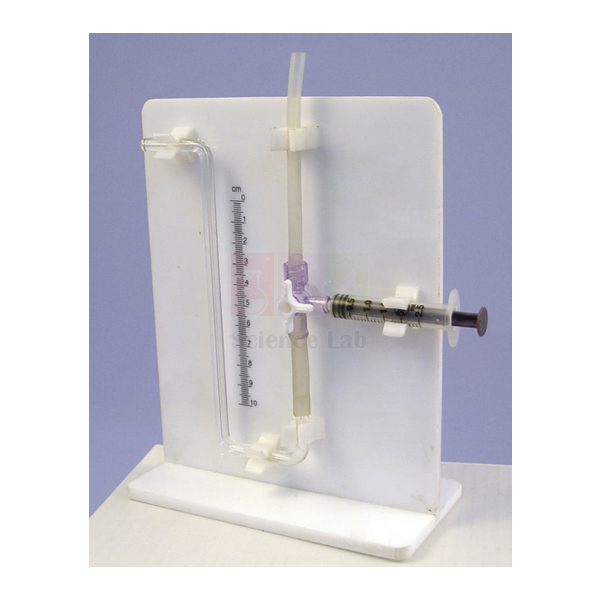
Potometer Apparatus
Potometer Apparatus (Product Code: SLE/EBT/21) is a low-breakage student potometer used to measure transpiration in small plant shoots during school and college biology practicals. Its only glass component is the capillary tube, mounted on a strong backing plate, and a syringe zeros the scale between readings. It is made by Jain Scientific Equipments Pvt Ltd (ScienceLab), an OEM manufacturer, at its own factory in Ambala, India, as a transpiration experiment kit that groups can use with minimal risk of breakage.
Specifications
| Parameter | Detail |
|---|---|
| Type | Potometer for measuring transpiration |
| Demonstrates | Transpiration occurring in small plant shoots |
| Glass components | One only – the capillary tube |
| Mounting | Strong backing plate |
| Reading method | Movement of the bubble within the capillary as transpiration occurs |
| Set-up | Apparatus is submerged and the specimen placed in the tube |
| Zeroing | Scale is zeroed using a syringe |
| Additional use | Can measure humidity when a porous pot is connected |
| Design focus | Minimal risk of breakage during student use |
| Product code | SLE/EBT/21 |
| Manufacturer | Jain Scientific Equipments Pvt Ltd (ScienceLab) — OEM |
| Country of origin | India (made in Ambala, Haryana) |
What Is the Potometer Used For?
Teachers use this potometer to show that leaves lose water continuously and that the rate changes with the surroundings. A typical practical compares how far the bubble travels in a fixed time with the shoot in still air, beside a fan, in bright light and in shade, so students can link wind, light and humidity to the rate of water loss. Because the apparatus is assembled under water, air is kept out of the system, and the syringe brings the bubble back to zero between runs without dismantling anything.
For reliable results, cut the shoot under water so that air does not enter the stem, fit it firmly before lifting the apparatus out, and blot the leaves dry before taking readings. Strictly, a potometer measures the water taken up by the shoot; this closely follows transpiration because most absorbed water leaves through the leaves — a useful discussion point for older students. With a porous pot connected in place of the shoot, the same unit can be used to compare humidity.
What to Specify When Ordering
- The number of potometers needed, usually one per student group.
- Whether you plan humidity measurements, so we can confirm whether a porous pot is included or should be added.
- Whether a teacher-demonstration model such as the Ganong’s potometer is also required.
- The delivery location and any tender or purchase-order format you use.
OEM Manufacturer
Jain Scientific Equipments Private Limited, trading as ScienceLab, is the OEM (original equipment manufacturer) of this Potometer Apparatus. The potometer is produced at the company’s own licensed factory at Saha, Ambala, Haryana, India, and goes factory-direct to schools, colleges, dealers and importers, so there is no trader between the buyer and the maker.
If a capillary tube or syringe needs replacing after years of class use, ask us — spares and repeat orders are dealt with by the manufacturer itself. Background on the business is on our company profile.
Related Botany Equipment
Items commonly used alongside this potometer in transpiration and plant physiology practicals:
- Potometer Apparatus (Ganong’s) — a Ganong-pattern alternative suited to teacher demonstrations of absorption and transpiration rates.
- Stopwatch, Digital — for timing the bubble’s movement consistently in each condition.
- Digital Hygrometer - Thermometer — records humidity and temperature around the shoot during each trial.
- Glass Beaker — holds water while shoots are cut and kept fresh before fitting.
- Photosynthesis Apparatus — a companion plant physiology practical for the same unit of study.
See the complete Botany equipment range for more plant science teaching apparatus.
Frequently Asked Questions
What does the Potometer Apparatus measure?
The Potometer Apparatus measures how quickly a small plant shoot takes up water, shown by a bubble moving along the capillary tube. Since most absorbed water is lost from the leaves, this rate is used in class as a practical measure of transpiration.
Why is the Potometer Apparatus described as low-breakage?
The Potometer Apparatus has only one glass part, the capillary tube, and it is mounted on a strong backing plate. That leaves far less fragile glassware to damage in student hands, although the capillary itself should still be handled with care.
How is the reading reset between trials on the Potometer Apparatus?
On the Potometer Apparatus a syringe is used to bring the bubble back to zero on the scale. The shoot stays in place, so repeated readings under different conditions such as light, shade or moving air can be taken quickly.
Can the Potometer Apparatus measure anything besides transpiration?
Yes. The Potometer Apparatus can also be used to measure humidity by connecting a porous pot. Please ask on the contact page whether a porous pot is included with your order or should be added to the quotation.
Who manufactures the Potometer Apparatus?
The Potometer Apparatus is manufactured by Jain Scientific Equipments Pvt Ltd (ScienceLab), the OEM, at its own factory in Saha, Ambala, Haryana, India. Buyers deal directly with the maker for quotations, class sets and replacement parts.
Is a calibration certificate available for the Potometer Apparatus?
Calibration certificate availability for the Potometer Apparatus, which is a teaching instrument, should be discussed with us before ordering. Send your requirement through the contact page and we will tell you what documentation can accompany the supply.
Can the Potometer Apparatus be supplied for export or tenders?
Yes. The Potometer Apparatus is supplied to schools, colleges and distributors in India and international markets. Send the quantity, delivery location and any tender format so that a manufacturer’s quotation can be prepared for you.
Request a Quote
To request a quotation for the Potometer Apparatus, send your requirement through our contact page or add the item to the enquiry cart with the other laboratory items you need. Quotes come straight from the manufacturer.
Last updated: 24 September 2026
242.jpg)
Potometer Apparatus (Ganong's)
Potometer Apparatus (Ganong's) (Product Code: SLE/EBT/22) is a Ganong-pattern potometer used to demonstrate transpiration rates and the rate of water absorption by a cut shoot under various external conditions in school and college botany laboratories. Its 1mm capillary bore and glass stopcock reservoir let a teacher reset the air bubble and compare several conditions with the same shoot, which makes it dependable plant biology lab equipment for comparative work. It is made by Jain Scientific Equipments Pvt Ltd (ScienceLab), an OEM manufacturer, at its own factory in Ambala, India.
Specifications
| Parameter | Detail |
|---|---|
| Type | Ganong's potometer, demonstration apparatus |
| Purpose | Demonstrating transpiration rates and rates of water absorption by a cut shoot under various external conditions |
| Base | 20 x 80mm |
| Capillary bore | 1mm |
| Shoot fitting | Plant shoot sealed into a stopper that fits the end tube |
| Bubble adjustment | Glass stopcock admits water from the reservoir to reposition the air bubble |
| Operation | Whole apparatus filled with water; open end of the capillary tube dipped into a beaker of water |
| Mounting | Varnished wooden base, apparatus held by spring clips |
| Product code | SLE/EBT/22 |
| Manufacturer | Jain Scientific Equipments Pvt Ltd (ScienceLab) — OEM |
| Country of origin | India (made in Ambala, Haryana) |
What Is the Ganong's Potometer Used For?
The Ganong design is usually set up by the teacher at the front bench, where one shoot can be taken through a sequence of conditions in a single lesson – still room air, then moving air from a fan, then a darkened box, or leaves smeared with petroleum jelly on one surface to show where water is lost. Between stages, opening the glass stopcock lets water in from the reservoir and pushes the air bubble back along the capillary, so the class sees a fresh run without the shoot being disturbed. That makes it a practical transpiration experiment for India's school and college syllabuses, where comparing conditions matters more than a single reading.
Because the capillary bore is 1mm, students can go beyond distance-per-minute and estimate the volume of water taken up, using the cross-sectional area of the bore multiplied by the distance the bubble moves. For a good seal, cut the shoot under water, push it into the stopper while still submerged, and check that no bubbles appear at the joint. Keep the open end of the capillary under the water surface in the beaker throughout, otherwise air enters and the run must be restarted.
OEM Manufacturer
Jain Scientific Equipments Private Limited, which trades as ScienceLab, is the OEM (original equipment manufacturer) of this Ganong's potometer. The apparatus is made and assembled at the company's own licensed factory at Saha, Ambala, Haryana, India, rather than bought in from a trader, and it is supplied factory-direct to schools, colleges, university botany departments, dealers and importers in India and international markets.
Because the maker handles enquiries itself, quotations, repeat orders for additional lab sets and questions about replacement glass parts come straight to the manufacturer – just ask us. Read more on the company profile page.
Related Botany Equipment
Other items that fit into the same water-uptake and transpiration demonstration:
- Glass Beaker — holds the water into which the open end of the capillary is dipped.
- Potometer Apparatus — a backing-plate potometer with a single glass component, suited to student groups.
- Bench Stopwatch — a timer the whole class can see while the bubble is tracked.
- Digital Hygrometer - Thermometer — records humidity and temperature when comparing external conditions.
- Volumeter Respirometer — a follow-on plant physiology apparatus for respiration practicals.
Browse the full Botany category for further plant science apparatus and teaching aids.
Frequently Asked Questions
How is the Potometer Apparatus (Ganong's) different from the standard Potometer Apparatus?
The Potometer Apparatus (Ganong's) has a reservoir with a glass stopcock for resetting the air bubble and sits on a varnished wooden base with spring clips, suiting front-bench demonstrations. The standard Potometer Apparatus has only one glass component, the capillary tube, on a strong backing plate for student groups.
What is the capillary bore of the Potometer Apparatus (Ganong's)?
The Potometer Apparatus (Ganong's) has a 1mm capillary bore. Knowing the bore lets students convert the distance the air bubble travels into an approximate volume of water absorbed by the shoot, turning a simple observation into a quantitative transpiration result.
How do I reset the air bubble on a Ganong's potometer?
On the Potometer Apparatus (Ganong's), open the glass stopcock briefly to admit water from the reservoir; the air bubble moves back along the capillary. Close the stopcock again and restart timing, so the same shoot can be tested under the next condition without being disturbed.
Is a beaker supplied with the Potometer Apparatus (Ganong's)?
The Potometer Apparatus (Ganong's) is used with a beaker of water, but a beaker is not listed as part of the apparatus. A suitable Glass Beaker can be added to the same order; contact us to confirm exactly what is included.
Who manufactures the Potometer Apparatus (Ganong's)?
The Potometer Apparatus (Ganong's) is manufactured by Jain Scientific Equipments Pvt Ltd (ScienceLab), the OEM, at its own licensed factory at Saha, Ambala, Haryana, India. Schools, dealers and importers buy it factory-direct, with quotations and repeat orders handled by the maker.
How should a Ganong's potometer be cleaned and stored?
After each lesson, rinse the glass parts of the Potometer Apparatus (Ganong's) with clean water, drain them fully and store the apparatus dry with the stopcock clean. Keep the varnished wooden base away from standing water to protect its finish.
Is a calibration certificate available for the Potometer Apparatus (Ganong's)?
The Potometer Apparatus (Ganong's) is a demonstration apparatus rather than a measuring instrument sold with documents. If your procurement process needs calibration or inspection paperwork, please discuss it with us through our contact page before ordering.
Request a Quote
For pricing and availability of the Potometer Apparatus (Ganong's), write to us via the contact page or place it in the enquiry cart. Quotations come direct from the manufacturer; mention the quantity and delivery location so we can reply in one step.
Last updated: 24 September 2026

Sach's Water Culture Mineral Deficiency
Sach's Water Culture Mineral Deficiency (Product Code: SLE/EBT/23) is a set of eight tubes of culture material used to grow plants in liquid media that each lack one mineral element, so students can compare deficiency symptoms against a complete-medium control in botany practicals. Each tube holds sufficient material to prepare four litres of liquid medium, which makes the set a ready plant growth experiment kit for senior school and college mineral-nutrition lessons. It is supplied by Jain Scientific Equipments Pvt Ltd (ScienceLab), Ambala, India.
Specifications
| Parameter | Detail |
|---|---|
| Type | Water culture media set for mineral deficiency studies |
| Number of tubes | Eight |
| Quantity per tube | Sufficient material to prepare four litres of liquid medium |
| Deficiency media | One tube lacking each of phosphorus, nitrogen, calcium, potassium, magnesium, iron or sulphur |
| Control | One tube of complete medium |
| Shelf life | Depends on the chemical, its grade and storage conditions; ask us for the expiry date of the batch you are quoted |
| Product code | SLE/EBT/23 |
| Supplied by | Jain Scientific Equipments Pvt Ltd (ScienceLab), Ambala, India |
Contents of the set:
- Complete medium (control)
- Medium lacking phosphorus
- Medium lacking nitrogen
- Medium lacking calcium
- Medium lacking potassium
- Medium lacking magnesium
- Medium lacking iron
- Medium lacking sulphur
What Is the Sach's Water Culture Set Used For?
Each tube is dissolved in water to make its own culture solution, and the eight solutions are placed in separate, clearly labelled culture vessels. Seedlings of a fast-growing species are supported so that their roots hang in the solution, and the vessels are kept side by side under the same light and temperature. Over the following weeks students record height, leaf colour, leaf size and root growth, then compare each deficient plant with the complete-medium control. Typical observations include yellowing of older leaves where nitrogen is missing and pale young leaves where iron is missing.
For clearer results, cover the culture vessels to keep light off the roots and reduce algal growth, top up with water as it evaporates, and aerate the solutions gently if possible. Running the practical as a whole-class project, with one group responsible for each medium, turns the set into shared plant biology lab equipment for a full unit on mineral nutrition.
Supplier
Jain Scientific Equipments Private Limited trades as ScienceLab from Ambala, Haryana, India, and supplies this water-culture set to schools, colleges and distributors in India and international markets. It can be quoted together with the glassware and growing trays the experiment needs, so a department receives everything for the practical in one consignment. See the company profile for more about the company.
Related Botany Equipment
Apparatus that supports setting up and observing a water-culture deficiency experiment:
- Greenbox Repl. Planting Tray — for raising seedlings before they are moved into the culture solutions.
- Hydroponic Tray — a soil-free growing option for related water-culture activities.
- Glass Measuring Cylinder — for measuring the water used to make up each medium.
- Glass Beaker — for dissolving tube contents before transfer to the culture vessels.
- Magnifying Glass — for close inspection of leaf symptoms as deficiencies develop.
More plant science resources are listed in our Botany range.
Frequently Asked Questions
What does the Sach's Water Culture Mineral Deficiency set contain?
The Sach's Water Culture Mineral Deficiency set contains eight tubes: seven media that each lack one mineral – phosphorus, nitrogen, calcium, potassium, magnesium, iron or sulphur – and one tube of complete medium that acts as the control for the experiment.
How much culture solution does each tube of the Sach's water culture set make?
Each tube in the Sach's Water Culture Mineral Deficiency set contains sufficient material to prepare four litres of liquid medium, so one set gives eight separate culture solutions for a full side-by-side comparison of mineral deficiencies.
Are culture jars, seeds or supports included with the Sach's water culture set?
No. The Sach's Water Culture Mineral Deficiency set consists of the eight tubes of material only; culture vessels, seedlings and supports are not listed. They are arranged separately, so contact us if you would like vessels quoted with the set.
Why does the Sach's water culture set include a complete-medium tube?
The complete-medium tube in the Sach's Water Culture Mineral Deficiency set is the control. Plants grown in it show normal growth, so any difference seen in the other seven vessels can be linked to the single mineral missing from that medium.
What is the shelf life of the Sach's Water Culture Mineral Deficiency set?
Shelf life depends on the chemical, its grade and storage conditions, so no single expiry period applies to the Sach's Water Culture Mineral Deficiency set. Ask us for the expiry date of the batch you are quoted, and keep unused tubes closed, labelled, cool and dry.
Can one Sach's water culture set serve several student groups?
Each medium in the Sach's Water Culture Mineral Deficiency set makes four litres, so depending on the size of your culture vessels one set may be shared across a few set-ups. For many parallel groups, order one set per group.
Who supplies the Sach's Water Culture Mineral Deficiency set?
The Sach's Water Culture Mineral Deficiency set is supplied by Jain Scientific Equipments Pvt Ltd (ScienceLab), Ambala, Haryana, India. Institutions and distributors in India and international markets can request a quotation with the number of sets and the delivery location.
Request a Quote
Ask for a quotation for Sach's Water Culture Mineral Deficiency sets through our contact page, or add it to the enquiry cart together with your other botany requirements.
Last updated: 24 September 2026
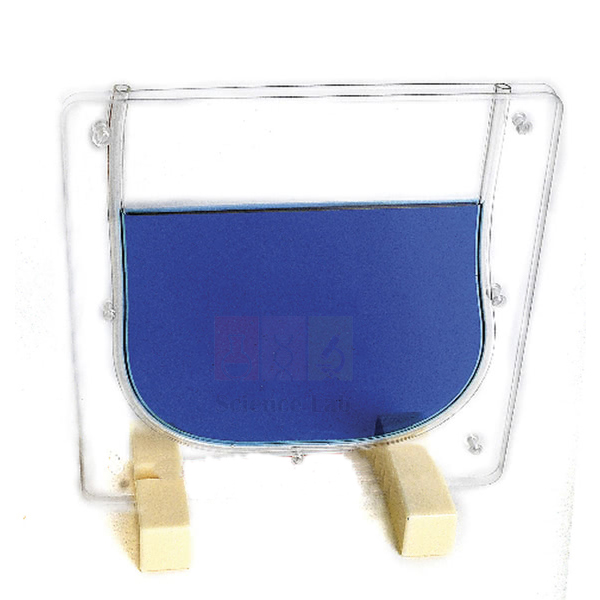
Teaching Tank 12 Inch Basic
Teaching Tank 12 Inch Basic (Product Code: SLE/EBT/24) is a 12 inch classroom observation tank used to run easy experiments on roots, worms or ants and to build basic skills of observation and conceptual learning. It includes a Teacher’s insert, can be turned into a small aquarium, and suits learners from nursery to college. It is supplied by Jain Scientific Equipments Pvt Ltd (ScienceLab), Ambala, India, as part of its range of biology teaching aids for schools.
Specifications
| Parameter | Detail |
|---|---|
| Size | 12 inch (Basic version) |
| Type | Teaching tank for observation-based classroom experiments |
| Observation uses | Roots, worms or ants |
| Included | Teacher’s insert |
| Add-on | 12" Expansion Kit for a wider variety of hands-on experiments |
| Other use | Can be set up as a small aquarium |
| Level | Nursery to college |
| Product code | SLE/EBT/24 |
| Supplied by | Jain Scientific Equipments Pvt Ltd (ScienceLab), Ambala, India |
What Is the Teaching Tank Used For?
In early years and primary classes the tank is filled with moist soil and a few seeds are planted close to the viewing side, so children can draw the roots and shoots each day and notice that roots grow downwards whichever way the seed was placed. Later the same tank can become a wormery with layers of soil and sand, letting pupils watch earthworms mix the layers, or an ant habitat for observing tunnelling. Each set-up practises the same core skill — careful, repeated observation recorded in a notebook.
Set up as a small aquarium, it can hold pond water with aquatic plants and small invertebrates for lessons on habitats and food chains. Keep the tank out of direct sunlight, return living animals to their habitat after the study, and wash the tank between projects. Adding the 12" Expansion Kit widens the range of experiments, making the tank a flexible item in a school biology lab setup.
What to Specify When Ordering
- The number of Teaching Tank 12 Inch Basic units, for example one per class or per group.
- Whether the 12" Expansion Kit should be quoted with the tanks.
- Whether you also want a dedicated aquarium tank for a permanent class aquarium.
- The delivery address and any tender or purchase-order format required.
Supplier
The Teaching Tank 12 Inch Basic is sourced and supplied by Jain Scientific Equipments Private Limited, which trades as ScienceLab from Ambala, Haryana, India, and serves schools, colleges and distributors in India and international markets. For vendor registration, the supplying company’s GSTIN is 06AAECJ8618A1ZT, and export consignments are shipped under Importer-Exporter Code AAECJ8618A issued by the DGFT. See our company profile for more details.
Related Botany Equipment
Useful companions for observation projects and aquarium work with this tank:
- Mini Aquarium Tank — a dedicated tank when a class wants an aquarium running permanently.
- Aquarium Dip Net — for gently moving small aquatic animals in and out of the tank.
- Key to Identifying Water Invertebrates — helps pupils name the pond organisms they observe.
- Plant Propagation Kit — for starting seedlings and cuttings for root-growth observations.
- Magnifying Glass 2 — for close-up viewing of roots, worms and ants.
Explore the wider Botany collection for more plant and nature study resources.
Frequently Asked Questions
What comes with the Teaching Tank 12 Inch Basic?
The Teaching Tank 12 Inch Basic includes a Teacher’s insert with the tank. For a complete list of the parts supplied in the box, please ask through our contact page before placing an order.
Is the 12" Expansion Kit included with the Teaching Tank 12 Inch Basic?
No. The 12" Expansion Kit is an add-on that extends the Teaching Tank 12 Inch Basic for a wider variety of hands-on experiments. Ask us about its availability if you want the tank and the kit quoted together.
Which age groups is the Teaching Tank 12 Inch Basic suitable for?
The Teaching Tank 12 Inch Basic is intended for learners from nursery to college, so the same tank can support simple root and worm observation in early years and more structured investigations with older students.
Can the Teaching Tank 12 Inch Basic be used as an aquarium?
Yes, the Teaching Tank 12 Inch Basic can be turned into a small aquarium. Fill it gradually, keep it on a level surface away from direct sunlight, and avoid overcrowding the aquatic plants and animals kept in it.
How should the Teaching Tank 12 Inch Basic be cleaned?
Empty the Teaching Tank 12 Inch Basic, wash it with lukewarm water and a soft cloth, rinse well and let it dry fully. Avoid abrasive pads and harsh solvents, which can mark the viewing surfaces.
Who supplies the Teaching Tank 12 Inch Basic?
The Teaching Tank 12 Inch Basic is supplied by Jain Scientific Equipments Pvt Ltd (ScienceLab), Ambala, Haryana, India, to schools, colleges and distributors in India and international markets. Company details are on the profile page.
What should a quotation request for the Teaching Tank 12 Inch Basic include?
A quotation request for the Teaching Tank 12 Inch Basic should give the number of tanks, whether 12" Expansion Kits are needed, and the delivery address, so that we can prepare an accurate price for schools or distributors.
Request a Quote
To receive a price for the Teaching Tank 12 Inch Basic, use our contact page or add it to the enquiry cart together with any other classroom science items you need.
Last updated: 24 September 2026