- Physics Lab Equipment
- Chemistry Lab Equipment
- Biology Lab Equipment
- Anatomical Lab Equipment
- Learning
- Educational Lab Equipment
- Magnets
- Agriculture
- Astronomy
- Earth Science
- Geography Lab Equipment
- Safety Lab Coat
- Laboratory
- Meteorological
- Electricity & Magnetism
- Heat
- School Lab Equipment
- Lab Glassware
- Science Lab Equipment
- Tvet Lab Equipment
- Robotics Kits Supplier and Manufacturer for Schools India
- Math Lab Equipment Manufacturers and Exporters in Ambala
- STEM Kits Manufacturers and Supplier India
- Engineering Lab Equipment
- Hospital Lab Equipment
- Water, Sanitation & Hygiene Supplies
- Cold Chain, Solar & Communication Equipment
- Nutrition
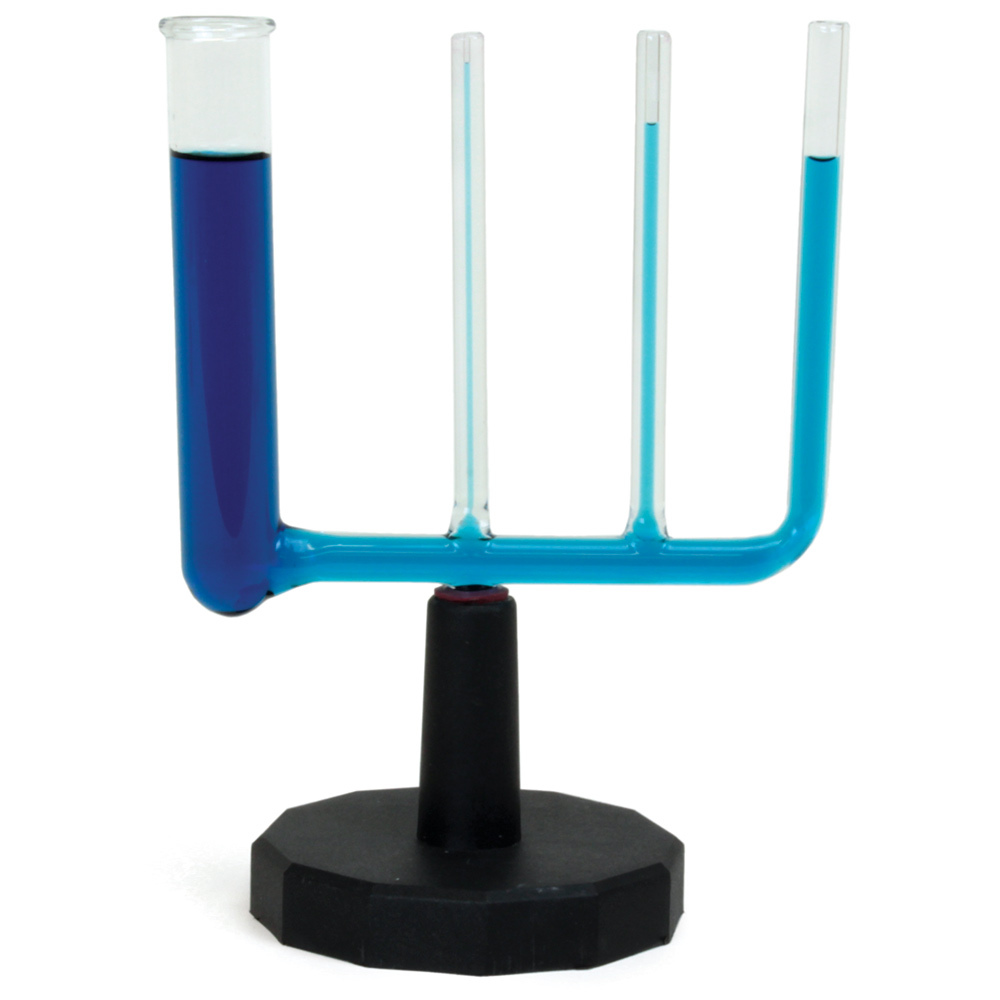
Set of Capillary Tubes
Set of Capillary Tubes (Product Code: SCL1240/016) is a device of three interconnected tubes, each 20 cm long, with different diameters of 1 mm, 1.5 mm and 2 mm, mounted on a plastic stand. When coloured water is poured in, the liquid settles at different heights in the three tubes – highest in the narrowest – so capillarity and surface tension become visible at a glance. The set is made by Jain Scientific Equipments Pvt Ltd (ScienceLab), Ambala, for any school running a capillary tube experiment in India.
Specifications
| Parameter | Detail |
|---|---|
| Type | Three interconnected capillary tubes |
| Tube length | 20 cm |
| Tube diameters | 1 mm, 1.5 mm and 2 mm |
| Mounting | Plastic stand |
Typical Use
Because the tubes are connected, students might expect the water to stand at one common level, as it does in ordinary communicating vessels. Instead, it climbs highest in the 1 mm tube, less in the 1.5 mm tube and least in the 2 mm tube. Measuring each height with a ruler lets the class show that the rise gets larger as the bore gets smaller, which introduces the balance between surface tension pulling the liquid up and the weight of the raised column pulling it down. The same effect explains water moving up through soil, paper towels, lamp wicks and the fine vessels of plants.
Clean tubes are essential: any trace of grease lowers the rise and makes the levels uneven, so rinse with clean water after use and let the set drain and dry upright on its stand. A drop of food colour makes the meniscus easy to see from the back of the room. Alongside other surface tension apparatus in India's school physics labs, the set gives a quick, reliable demonstration that needs no power or pump.
Manufacturer
Jain Scientific Equipments Private Limited produces this set under its ScienceLab trade name at Ambala in Haryana, where it develops properties-of-matter apparatus for secondary and senior secondary science. Learn more on the company profile.
Related Lab Equipment
Items that support a capillarity and fluids lesson:
- Metal Ruler — for measuring the height of the liquid in each tube.
- Glass Beaker — to hold and pour the coloured water.
- Capillary Tube Apparatus — an alternative apparatus for studying capillary rise.
- Pascal's Sphere — another liquid-properties demonstration for the same unit.
Other demonstration apparatus is available in our Lab Equipment category.
Frequently Asked Questions
What are the tube sizes?
Three tubes, each 20 cm long, with diameters of 1 mm, 1.5 mm and 2 mm, joined together and mounted on a plastic stand.
Why does water rise highest in the narrowest tube?
Surface tension lifts the liquid around the edge of the meniscus, and in a narrower tube that lift supports a taller column relative to its weight, so the rise is greater.
Which liquid works best?
Clean water with a little colouring is ideal for class use and makes the levels easy to compare.
How should the set be cleaned?
Rinse with clean water after each use, avoid oily or greasy substances, and let it drain upright on its stand. Do not push anything into the fine tubes.
What are the tubes made of?
The tube material is not listed in the current specification. Please ask through the contact page if your order needs it confirmed.
Can you supply sets for every lab group?
Yes. We quote class sets and bulk quantities for schools, colleges and distributors in India and international markets.
Request a Quote
For a price on the Set of Capillary Tubes, reach us through the contact page or add the item to your enquiry cart with other properties-of-matter apparatus.
Last updated: 24 September 2026