- Physics Lab Equipment
- Chemistry Lab Equipment
- Biology Lab Equipment
- Anatomical Lab Equipment
- Learning
- Educational Lab Equipment
- Magnets
- Agriculture
- Astronomy
- Earth Science
- Geography Lab Equipment
- Safety Lab Coat
- Laboratory
- Meteorological
- Electricity & Magnetism
- Heat
- School Lab Equipment
- Lab Glassware
- Science Lab Equipment
- Tvet Lab Equipment
- Robotics Kits Supplier and Manufacturer for Schools India
- Math Lab Equipment Manufacturers and Exporters in Ambala
- STEM Kits Manufacturers and Supplier India
- Engineering Lab Equipment
- Hospital Lab Equipment
- Water, Sanitation & Hygiene Supplies
- Cold Chain, Solar & Communication Equipment
- Nutrition
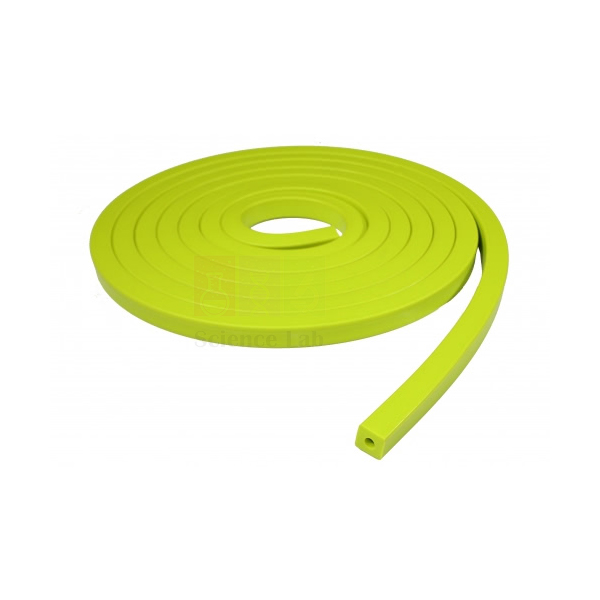
Vacuum Tubing
Vacuum Tubing (Product Code: SLE/LI/15) is heavy-wall laboratory tubing used to connect vacuum pumps to filter flasks, desiccators and other apparatus in chemistry, biology and physics laboratories. Made from a polymer blend with an 8 mm internal diameter and a 6 mm wall, it is designed to replace natural rubber vacuum tubing, resists UV and has a square outer profile that lies flat on the bench. It is supplied by Jain Scientific Equipments Pvt Ltd (ScienceLab), Ambala, a laboratory equipment supplier in India.
Specifications
| Parameter | Detail |
|---|---|
| Material | Polymer blend |
| Internal diameter | 8 mm |
| Wall thickness | 6 mm |
| External profile | Square, sits flat on the bench |
| UV resistance | Yes |
| Tensile strength | 7.5 MPa |
| Tear strength | 17 kN/m |
| Specific gravity | 1.16 ± 0.05 g/cm³ |
| Rebound resilience | 60% |
| Temperature range | -50 to 200 °C |
| Replaces | Natural rubber vacuum tubing; described as lasting many times longer |
| Product code | SLE/LI/15 |
| Supplied by | Jain Scientific Equipments Pvt Ltd (ScienceLab), Ambala, India |
What Is Vacuum Tubing Used For?
Vacuum tubing links a vacuum source to apparatus that must work under reduced pressure — for example a pump to a filter flask during Buchner filtration, to a vacuum desiccator, or to a distillation set-up run under reduced pressure. Thin-walled tubing collapses when air is drawn out, which is why the 6 mm wall matters: it keeps the bore open so the vacuum reaches the apparatus. Schools and colleges buy it as one of their routine lab consumables for filtration and drying practicals.
Cut lengths cleanly with a sharp blade, push the tubing fully over each hose connector, and route it so clamps or bench edges do not kink or pinch it. The polymer blend is intended to outlast natural rubber, but check the ends for splits from time to time and trim them back when needed. The square profile also stops the tubing rolling off the bench.
What to Specify When Ordering
- The total length required, or the number of vacuum set-ups to equip.
- The hose connector sizes on your pumps, flasks and desiccators, to check against the 8 mm bore.
- The delivery city or country.
Supplier
ScienceLab is the trading name of Jain Scientific Equipments Private Limited, which supplies this vacuum tubing from Ambala, Haryana, to schools, colleges, research laboratories, dealers and importers. Tubing is usually ordered with the pump, filter flasks and funnels for a filtration station, and the complete set can be quoted at once. See the company profile for more.
Related Laboratory Instruments
Apparatus that the tubing connects in a vacuum set-up:
- Vacuum Pump, Electric — a powered vacuum source for the tubing.
- Vacuum Pump, Hand — a manual option for small set-ups.
- Conical Filter Flask — the side-arm flask used for vacuum filtration.
- Buchner Funnel, 90 mm, Porcelain — the funnel that sits on the filter flask.
- Vacuum Desiccator — for drying samples under reduced pressure.
More items are in Laboratory Instruments.
Frequently Asked Questions
What size is the Vacuum Tubing?
The Vacuum Tubing has an 8 mm internal diameter and a 6 mm wall thickness. The heavy wall helps the tubing keep its bore open under vacuum, and the square external profile lets it sit flat on the bench.
What is the vacuum tubing made of?
The Vacuum Tubing is made from a polymer blend designed to replace natural rubber vacuum tubing. It is described as lasting many times longer than natural rubber, with UV resistance, 7.5 MPa tensile strength and 17 kN/m tear strength.
What temperature range can the vacuum tubing handle?
The Vacuum Tubing is listed for a temperature range of -50 to 200 °C. For hot or chemically demanding applications, tell us the conditions so we can confirm whether this tubing suits your set-up before you order.
How is the vacuum tubing sold?
Length and pack size for the Vacuum Tubing are confirmed at quotation. Tell us the total length you need, or the number of vacuum set-ups to equip, through our contact page and we will quote accordingly.
Who supplies the Vacuum Tubing?
The Vacuum Tubing is supplied by Jain Scientific Equipments Pvt Ltd (ScienceLab), Ambala, Haryana, India, to schools, colleges, research laboratories, dealers and importers in India and international markets.
Will the tubing fit my pump and filter flask?
The Vacuum Tubing has an 8 mm bore, so it suits hose connectors of a matching size. Check the hose barb on your vacuum pump, filter flask or desiccator, and send us the sizes if you are unsure about the fit.
Request a Quote
To get a price for the Vacuum Tubing, send the length or number of set-ups through our contact page, or add it to the enquiry cart with pumps and filtration glassware.
Last updated: 24 September 2026