- Physics Lab Equipment
- Chemistry Lab Equipment
- Biology Lab Equipment
- Anatomical Lab Equipment
- Learning
- Educational Lab Equipment
- Magnets
- Agriculture
- Astronomy
- Earth Science
- Geography Lab Equipment
- Safety Lab Coat
- Laboratory
- Meteorological
- Electricity & Magnetism
- Heat
- School Lab Equipment
- Lab Glassware
- Science Lab Equipment
- Tvet Lab Equipment
- Robotics Kits Supplier and Manufacturer for Schools India
- Math Lab Equipment Manufacturers and Exporters in Ambala
- STEM Kits Manufacturers and Supplier India
- Engineering Lab Equipment
- Hospital Lab Equipment
- Water, Sanitation & Hygiene Supplies
- Cold Chain, Solar & Communication Equipment
- Nutrition
Last updated: 22 October 2026
Quick Answer
Jain Scientific Equipments Pvt Ltd (ScienceLab), Ambala, Haryana, lists 40 laboratory instruments in India for colleges, universities, testing laboratories, technical institutes and senior-school labs, arranged in 7 groups from analytical instruments such as a colorimeter, UV-VIS spectrophotometer and Karl Fischer titrimeter to fume cupboards, incubation and drying units, shakers and vacuum pumps, bench accessories and eye protection. 14 of the items are manufactured by ScienceLab at its factory at Saha, Ambala, and 26 are supplied by ScienceLab. Each item has its own product page, linked from the product listing under this description. The company supplies buyers in India and in 110 countries.
Quick links: Request a quotation · Jump to specifications by group · Open your enquiry cart
Explore the Laboratory Instruments Range
| Range | Items | What it covers |
|---|---|---|
| Analytical instruments | 8 | A digital photo colorimeter with five filters, a single beam UV-VIS spectrophotometer, a digital dissolved oxygen meter, an auto Karl Fischer titrimeter, automatic and digital melting point apparatus and two moisture analysers. |
| Microbiology and field testing | 3 | A digital colony counter for Petri dishes, a briefcase water and soil analysis kit for pH, conductivity, TDS, ORP and temperature, and a handheld thermo-anemometer for air velocity. |
| Fume cupboards and safety cabinets | 7 | Ductless and ducted polypropylene fume cupboards, an inverted mobile fume cabinet, a Class II A2 biosafety cabinet, a replacement acid filter and a mobile stand for 1200 mm fume cabinets. |
| Incubation, drying and heating | 4 | A 100-litre incubator with visibility door, a 43 litre forced-convection oven, a drying and warming cabinet for glassware and a block heater for a 100 ml round bottom flask. |
| Shakers, vacuum pumps and tubing | 6 | A digital orbital shaker, a variable-speed tube roller, electric rotary and hand vacuum pumps, heavy-wall vacuum tubing and red rubber tubing. |
| Bench accessories | 9 | A screw-operated laboratory jack, horizontal and vertical wooden pipette stands, a Z-type test tube rack, a bottle-mounted reagent dispenser, weighing trays, a sink-liner lab cushion, a blue gun and coil for deionisers and a 6V DC power adapter. |
| Eye protection and safety screen | 3 | Polycarbonate safety spectacles, safety goggles with adjustable strap and a hinged three-panel polycarbonate safety screen for demonstrations. |
| Total | 40 | All items listed in the Laboratory Instruments range |
Laboratory Instruments Specifications
Key specifications below are taken from each product's own page; open a product for its full specifications and product code.
Analytical instruments (8)
| Product | Key specification |
|---|---|
| Auto Karl Fischer Titrimeter | Sample size: 1–50 mg of water; KF dispensing: 0.05 ml; Burette: Auto zero burette |
| Automatic Melting Point Apparatus | Range: 40 °C to 350 °C; Readability: 1 °C; Accuracy: 1% |
| Digital Dissolved Oxygen Meter | Range (DO): 0 to 20.0 ppm; Resolution (DO): 0.1 ppm; Accuracy (DO): 0.1 ppm + 1 count |
| Digital Photo Colorimeter 5 Filters | Wavelength range: 400–700 nm; Output: Optical density (OD) 0 to 1.99; Resolution: 0.01 OD |
| Melting Point Apparatus, Digital | Temperature range: Ambient to 300 °C; Temperature accuracy: ± 1.0 °C at 20 °C; ± 2.5 °C at 300 °C; Display resolution: 0.1 °C |
| Moisture Analyser | Weighing capacity: 160 g; Weighing resolution: 0.001 g (0.01%); Linearity: ± 0.003 g |
| Moisture Analyser, 200g | Capacity: 200 g; Readability: 0.01 g / 0.05%; Repeatability: 0.02 g |
| Single Beam Microprocessor UV-VIS Spectrophotometer | Wavelength range: 195 to 1000 nm; Light sources: Tungsten halogen lamp and deuterium (D2) lamp; Spectral bandwidth: 2 nm |
Microbiology and field testing (3)
| Product | Key specification |
|---|---|
| Digital Colony Counter | Display: 4-digit LED; Memory and functions: 125 memory; hold and count correction; Dish size: 110 mm |
| Thermo-Anemometer | Air velocity range: 0.4 to 30 m/s; 1.4 to 108 km/h; 0.9 to 67 MPH; 0.8 to 58 knots; 80 to 5900 ft/min; Data update: 300 ms |
| Water And Soil Analysis Kit | Parameters measured: 5: pH, conductivity, TDS, ORP and temperature; Display: 3½ digit LCD; Power: Battery cum mains operated |
Fume cupboards and safety cabinets (7)
| Product | Key specification |
|---|---|
| Acid Filter for Inverted Mobile Fume Hood | For use with: Inverted Mobile Fume Hood; Purpose: Replaces a used acid filter in the hood |
| Biosafety Cabinet Class 2 | Cabinet type: Class II A2 biological safety cabinet; Outer dimensions (W x D x H): 1220 x 800 x 1500 mm (48 x 31.5 x 59 in) |
| Fume Cupboard, Ductless | External dimensions (W x D x H): 900 x 750 x 1223 mm; Front sash opening: 570 mm high, 770 mm wide; Air velocity: 0.5 m/s |
| Fume Cupboard, Ductless, Polypropylene | Air velocity: 0.6 m/s; Noise level: Below 52 dB; Power supply: 220 V |
| Polypropylene Ducted Fume Cupboard | Size: 1200 mm; External dimensions (W x D x H): 1200 x 805 x 2320 mm; Workspace dimensions (W x D x H): 1000 x 630 x 1170 mm |
| Polypropylene Inverted Mobile Fume Cabinet | Workspace dimensions: 985 x 500 x 860 mm (listed as H x D x W); Front sash maximum opening: 625 x 865 mm (H x W) |
| Stand for 1200mm Fume Cabinet | Designed for: 1200 mm fume cabinets (fume hoods); Frame: Powder-coated aluminium; Mobility: Four castors, each with a brake |
Incubation, drying and heating (4)
| Product | Key specification |
|---|---|
| Block Heater, Round Bottom Flasks | Flask size: 100 ml; Capacity: One flask; Heat source: Suitable for hotplates and magnetic stirrers |
| Laboratory Drying/Warming Cabinet | Capacity: 113 L; Temperature control: Adjustable, up to approx. 50 °C; External dimensions: 545 x 730 x 360 mm |
| Laboratory Incubator With Visibility Door | Capacity: 100 litres; Maximum temperature: 100 °C; Fluctuation: 0.75 °C |
| Oven, 43 litre | Chamber capacity: 43 litre; Operating temperature range: Room temperature +10 °C to 250 °C; Temperature resolution: 0.1 °C |
Shakers, vacuum pumps and tubing (6)
| Product | Key specification |
|---|---|
| Orbital Shaker, Digital | Maximum shaking weight: 3 kg; Instrument weight: 3.1 kg; Drive: Brushless DC motor, described as long-life and maintenance-free |
| Rubber Tubing | Bore diameter: 8 mm; Wall thickness: 4.5 mm; Supplied as: 10 m roll |
| Tube Roller, Variable Speed | Number of rollers: 6; Roller length: 280 mm; Speed range: 0 – 70 rpm, variable |
| Vacuum Pump, Electric | Pumping speed: 1 litre per second; Displacement: 1 litre per second; Pumped volume: 3.5 m³/h |
| Vacuum Pump, Hand | Volume per stroke: 15 cm³; Positive pressure: Gauge pressures up to 2 atm; Operation: Hand operated, lightweight |
| Vacuum Tubing | Internal diameter: 8 mm; Wall thickness: 6 mm; Tensile strength: 7.5 MPa |
Bench accessories (9)
| Product | Key specification |
|---|---|
| Blue Gun and Coil for Deionisers | Items: Coil and dispensing gun (blue gun) |
| Bottle Top Dispenser | Volume range: 2.5 to 25 ml; Graduation: 0.5 ml; Maximum vapour pressure: 500 mbar |
| Lab Cushion | Mat size (L × W × D): 210 × 210 × 10 mm; Pack: 4 mats; Indentation hardness: 60 ± 5 Shore A |
| Laboratory Jack | Top plate: 150 × 135 mm; Minimum height: 60 mm; Maximum elevation: 250 mm |
| Pipette Stand, Horizontal | Holding capacity: 12 pipettes; Height: 230 mm; Width: 260 mm |
| Pipette Stand, Vertical | Holding capacity: 24 pipettes; Height: 410 mm; Width: 360 mm |
| Power Adapter, 6V DC | Power input: 110 V AC, 60 Hz; Power output: 6 V DC, 200 mA; Output type: Direct current (DC) |
| Test Tube Rack, Z Type | Holes: 5 holes of 28 mm, 6 holes of 20 mm and 8 holes of 13 mm diameter; Overall height: 75 mm; Length: 200 mm |
| Weighing Tray | Dimensions: 140 × 140 mm; Pack size: 250 trays; Material: High-impact polystyrene |
Eye protection and safety screen (3)
| Product | Key specification |
|---|---|
| Premium Safety Spectacles | Lens material: High-grade polycarbonate; Lens surface: Scratch resistant; Protection (as described): Impact and UV rays |
| Safety Goggles | Material: Polycarbonate; Strap: Adjustable; Intended use: Laboratory eye protection — not for medical use |
| Safety Screen | Section widths: 225 mm, 300 mm and 225 mm; Panel thickness: 4 mm; Overall height: 610 mm |
Related Equipment in Other ScienceLab Ranges
These items from other ScienceLab ranges are often ordered with the instruments above:
Who Buys This Range
Colleges and universities equip analytical chemistry, biochemistry and microbiology labs with the colorimeter, UV-VIS spectrophotometer, melting point apparatus, colony counter, incubator and orbital shaker. Pharmaceutical, quality-control and testing laboratories use the Auto Karl Fischer Titrimeter and the moisture analysers to measure water and moisture content. Schools order ductless fume cupboards, safety screens, goggles, hand vacuum pumps and bench items such as the laboratory jack and pipette stands. Environmental and agricultural courses use the Water And Soil Analysis Kit in the field or the laboratory and the thermo-anemometer for air-flow readings. Dealers and tender buyers combine several of these instruments on one order.
Other ScienceLab Equipment Ranges
| Range | What it covers |
|---|---|
| Balances | Physical, chemical and electronic balances and mass sets |
| Water Bath | Electric, serological, digital, thermostatic and ultrasonic water baths |
| Centrifuges | From a hand centrifuge for schools to clinical, micro and high-speed centrifuges |
| Autoclave Lab Equipment | Electric, gas, portable and stainless steel autoclaves |
| Laboratory Stirrer | Mini and heated magnetic stirrers and a vortex mixer |
| Clinical Laboratory | Clinical laboratory items for blood collection, haematology, ELISA and biosafety |
| Measuring | Classroom measuring tools for mass, length, volume, temperature, time and pH |
| Safety Lab Coat | Cotton lab coats, rubberized and PVC aprons, acid-proof clothing and coveralls |
| Chemistry Lab | School chemistry lab equipment, from apparatus and glassware to reagents and safety items |
Frequently Asked Questions
What does the Laboratory Instruments range include?
40 listed items in 7 groups, from analytical instruments such as the Digital Photo Colorimeter 5 Filters, the UV-VIS spectrophotometer and the Auto Karl Fischer Titrimeter to ducted and ductless fume cupboards, a Class II A2 biosafety cabinet, an incubator, an oven, vacuum pumps, pipette stands and safety goggles.
Which instruments does ScienceLab manufacture?
14 of the 40 items are manufactured by ScienceLab: the Digital Photo Colorimeter 5 Filters, Digital Dissolved Oxygen Meter, Auto Karl Fischer Titrimeter, Digital Colony Counter, Automatic Melting Point Apparatus, Water And Soil Analysis Kit, Laboratory Incubator With Visibility Door, Laboratory Drying/Warming Cabinet and Block Heater, plus the laboratory jack, both pipette stands, the Z-type test tube rack and the safety screen.
Which items are supplied rather than manufactured?
26 items are supplied by ScienceLab, including the Single Beam Microprocessor UV-VIS Spectrophotometer, all the fume cupboards and the Biosafety Cabinet Class 2, the 43 litre oven, both moisture analysers, the digital orbital shaker and tube roller, the electric and hand vacuum pumps, the bottle-mounted reagent dispenser and the safety goggles and spectacles.
Should I choose the colorimeter or the UV-VIS spectrophotometer?
The Digital Photo Colorimeter 5 Filters works from 400 to 700 nm through glass filters at 420, 480, 540, 620 and 680 nm and reads optical density from 0 to 1.99. The UV-VIS spectrophotometer covers 195 to 1000 nm with tungsten halogen and deuterium lamps and measures absorbance, % transmission and concentration.
Which fume cupboards are available?
Two mobile ductless polypropylene fume cupboards, the Polypropylene Ducted Fume Cupboard (1200 mm, with services, extracting through a duct to the outside) and the Polypropylene Inverted Mobile Fume Cabinet on four lockable castors. A replacement acid filter and a mobile stand for 1200 mm fume cabinets are listed as accessories.
What are the incubation and drying options?
The Laboratory Incubator With Visibility Door has a 100-litre chamber up to 100 °C with a PID digital controller, the Oven, 43 litre uses forced convection up to 250 °C, and the Laboratory Drying/Warming Cabinet (113 L) dries washed glassware at up to about 50 °C.
Which items suit school laboratories?
Schools usually start with the ductless fume cupboards, the Safety Screen, safety goggles, the hand vacuum pump, the laboratory jack, pipette stands and the Z-type test tube rack. The Karl Fischer titrimeter, moisture analysers and biosafety cabinet are aimed at college, pharmaceutical and testing laboratories.
What should I include in a quotation request?
Product names or codes (for example SLE/LI/05 for the Digital Dissolved Oxygen Meter), quantities, the delivery location and any tender specification. Bulk quantities, tender enquiries and export orders are accepted; product specifications are provided on request.
Request a Quote
Send product names or codes and quantities through the contact page, or add items to your enquiry cart and submit it.
ScienceLab (Jain Scientific Equipments Pvt Ltd)
1226/1-5, Bengali Mohalla, Science Market, Ambala Cantt, Haryana 133001, India
Phone: +91-7082934803
Email: sales@scilabexport.com
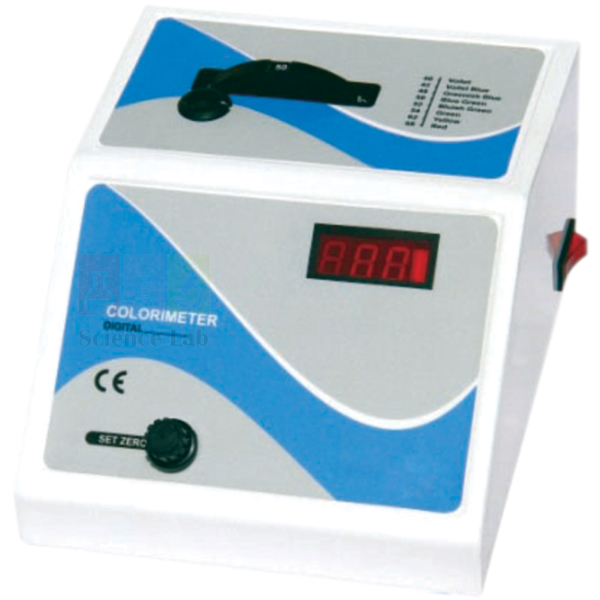
Digital Photo Colorimeter 5 Filters
Digital Photo Colorimeter 5 Filters (Product Code: SLE/LI/01) is a mains-operated colorimeter used to measure the optical density of coloured solutions and work out their concentration in school, college and quality-control laboratories. It covers 400 to 700 nm with five glass filters, shows OD from 0 to 1.99 on a 2½ digit LED display and needs only 1 ml of solution per reading. It is made by Jain Scientific Equipments Pvt Ltd (ScienceLab), an OEM manufacturer and laboratory equipment supplier in India, at its own factory in Ambala.
Specifications
| Parameter | Detail |
|---|---|
| Wavelength range | 400–700 nm |
| Filters | 5 standard glass filters: 420, 480, 540, 620 and 680 nm |
| Output | Optical density (OD) 0 to 1.99 |
| Resolution | 0.01 OD |
| Accuracy | 0.5% FSI |
| Display | 2½ digit LED |
| Minimum sample volume | 1 ml |
| Detector | Selenium photocell |
| Light source | 6.8 V, 300 mA |
| Power | 230 V ±10%, 50 Hz AC (mains operated) |
| Accessories | Test tube set of 5, spare lamp, dust cover, manual |
| Product code | SLE/LI/01 |
| Manufacturer | Jain Scientific Equipments Pvt Ltd (ScienceLab) — OEM |
| Country of origin | India (made in Ambala, Haryana) |
What Is a Digital Photo Colorimeter Used For?
A colorimeter passes light of a chosen colour through a solution and measures how much is absorbed; by the Beer–Lambert law, the optical density rises with concentration. Students prepare a set of standards, plot a calibration line and read unknown samples against it, for example copper sulphate solutions read with the 620 nm filter. The same instrument follows reaction rates, supports colour-reagent water tests and runs biochemistry practicals, which is why a colorimeter is a staple instrument in lab teaching across India.
Choose the filter whose colour is complementary to the solution, zero the display with a blank in the same kind of test tube, and wipe each tube clean before inserting it. Let the lamp stabilise for a few minutes before taking readings, and replace the dust cover after the session.
What to Specify When Ordering
- The number of colorimeters needed for your student groups
- Any extra test tubes or spare lamps beyond the included test tube set of 5 and spare lamp
- Your mains supply, if it differs from 230 V, 50 Hz AC
- The delivery destination in India or abroad
OEM Manufacturer
Jain Scientific Equipments Private Limited, which trades as ScienceLab, is the OEM (original equipment manufacturer) of the Digital Photo Colorimeter 5 Filters. The instrument is built at the company's own licensed factory at Saha, Ambala, Haryana, India, and shipped directly to schools, colleges, testing labs, dealers and importers without a middle trader. Spare lamps, test tubes and repeat orders can be requested from the manufacturer itself. See our company profile for more.
Related Laboratory Instruments
Items used alongside the colorimeter in solution analysis:
- Single Beam Microprocessor UV-VIS Spectrophotometer — for continuous wavelength selection and UV work beyond fixed filters.
- Test Tube Rack — keeps standards and samples in order during a run.
- Brush Test Tube — for cleaning the sample tubes between readings.
- Micropipette — for preparing accurate standard dilutions.
Browse all Laboratory Instruments for more analytical equipment.
Frequently Asked Questions
Which filters come with the Digital Photo Colorimeter 5 Filters?
The Digital Photo Colorimeter 5 Filters (SLE/LI/01) comes with 5 standard glass filters at 420, 480, 540, 620 and 680 nm, covering the 400 to 700 nm range used for most coloured-solution tests in teaching and routine labs.
What does the Digital Photo Colorimeter 5 Filters display, and how precise is it?
The Digital Photo Colorimeter 5 Filters displays optical density from 0 to 1.99 on a 2½ digit LED display, with a resolution of 0.01 OD and a listed accuracy of 0.5% FSI.
How much sample does the Digital Photo Colorimeter 5 Filters need?
The Digital Photo Colorimeter 5 Filters measures as little as 1 ml of solution in the test tubes supplied, which helps when reagents or samples are limited or expensive to prepare in a student practical.
What accessories are included with the Digital Photo Colorimeter 5 Filters?
The Digital Photo Colorimeter 5 Filters is supplied with a test tube set of 5, a spare lamp, a dust cover and a manual, in addition to its 5 standard glass filters and selenium photocell detector.
Who manufactures the Digital Photo Colorimeter 5 Filters?
Jain Scientific Equipments Pvt Ltd (ScienceLab) is the OEM manufacturer of the Digital Photo Colorimeter 5 Filters, building it at its own licensed factory at Saha, Ambala, Haryana, India, and supplying it factory-direct to institutions, dealers and importers.
Is a calibration certificate available for the Digital Photo Colorimeter 5 Filters?
Whether a calibration certificate can be supplied with the Digital Photo Colorimeter 5 Filters should be discussed with us before you order. Please mention it in your enquiry through our contact page.
What does a quotation for the Digital Photo Colorimeter 5 Filters need?
For a Digital Photo Colorimeter 5 Filters quotation, tell us the quantity, any extra test tubes or lamps, your mains supply if not 230 V AC, and the delivery destination. Send the details through the enquiry cart or contact page.
Request a Quote
Quotes for the Digital Photo Colorimeter 5 Filters (SLE/LI/01) are prepared directly by the manufacturer. Add it to the enquiry cart or write to us through the contact page.
Last updated: 24 September 2026
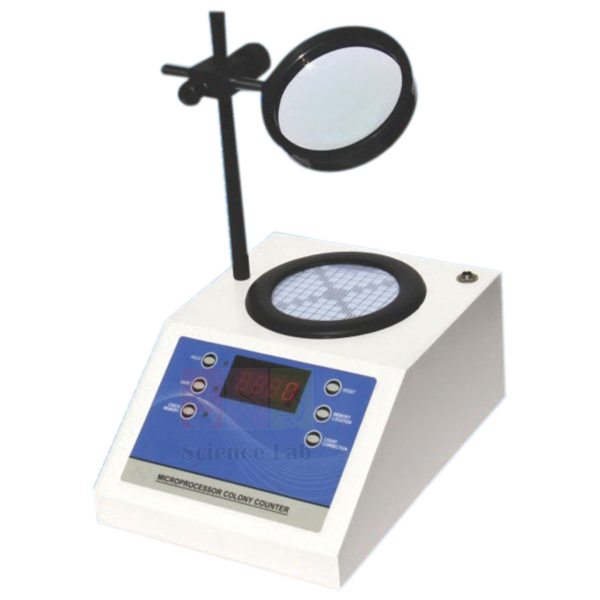
Digital Colony Counter
Digital Colony Counter (Product Code: SLE/LI/02) is a bench instrument used to count bacterial and fungal colonies on Petri dishes in microbiology, food, water-testing and teaching laboratories. It keeps a running total on a 4-digit LED display with hold and count-correction functions, and a x1.7 magnifier lens helps with small colonies on 110 mm dishes. It is made by Jain Scientific Equipments Pvt Ltd (ScienceLab), an OEM manufacturer, at its own factory in Ambala, India, for buyers of microbiology lab equipment in India and abroad.
Specifications
| Parameter | Detail |
|---|---|
| Display | 4-digit LED |
| Count range | 0–9999 (the specification table also lists 999 maximum count; please confirm) |
| Memory and functions | 125 memory; hold and count correction |
| Power failure | Data restored after power failure |
| Dish size | 110 mm |
| Magnification | x1.7 |
| Power | 230 V ± 10% AC, 50 Hz, 40 W |
| Accessories | Marking pen (1 no.), magnifier lens (1 no.) |
| Dimensions | L 210 x B 270 x H 125 mm (approx.) |
| Weight | 3 kg (approx.) |
| Packaging | 23 cm x 28 cm x 20 cm |
| Product code | SLE/LI/02 |
| Manufacturer | Jain Scientific Equipments Pvt Ltd (ScienceLab) — OEM |
| Country of origin | India (made in Ambala, Haryana) |
What Is a Digital Colony Counter Used For?
After incubation, each visible colony on an agar plate represents a colony-forming unit, and counting them gives the microbial load of the original sample. A digital colony counter speeds up plate counts for drinking water, milk and food testing, antibiotic and disinfectant trials, and undergraduate microbiology practicals. Marking each colony with the pen as it is counted prevents double counting, and the count-correction facility removes accidental entries.
Place the dish upside down so you mark the base, not the lid, and work systematically across the plate in sectors. Keep the magnifier lens clean and free of fingerprints. Wipe the pen marks off the dish afterwards if the plate is to be examined again.
OEM Manufacturer
ScienceLab, the trading name of Jain Scientific Equipments Private Limited, is the OEM (original equipment manufacturer) of the Digital Colony Counter. Units are made at the company's licensed factory at Saha, Ambala, Haryana, India, and go factory-direct to universities, microbiology departments, food and water testing laboratories, dealers and importers. Replacement marking pens, magnifier lenses and repeat orders are handled by us as the manufacturer — just ask. Visit the company profile for details.
Related Laboratory Instruments
Equipment for the full plate-count workflow:
- Petri Dish Glass With Lid — reusable plates for pouring and incubating cultures.
- Laboratory Incubator With Visibility Door — grows colonies to countable size.
- Electric Autoclave — sterilises media and plates before and after use.
- Biosafety Cabinet Class 2 — for handling cultures and pouring plates safely.
- Petri Dish Rack — stores and carries stacks of plates.
See all Laboratory Instruments for related bench equipment.
Frequently Asked Questions
What is the count range of the Digital Colony Counter?
The Digital Colony Counter (SLE/LI/02) counts on a 4-digit LED display with a listed range of 0 to 9999. Its specification table also mentions 999 maximum count, so please confirm the counting limit of the quoted unit with us before ordering.
Does the Digital Colony Counter keep counts after a power cut?
Yes. The Digital Colony Counter restores its data even after a power failure, and it offers hold and count-correction facilities along with 125 memory, so an interrupted plate count does not have to be started again.
What dish size does the Digital Colony Counter take?
The Digital Colony Counter takes 110 mm Petri dishes and comes with a magnifier lens giving x1.7 magnification, which makes small or closely spaced colonies easier to see and mark accurately.
What is included with the Digital Colony Counter, and how big is it?
The Digital Colony Counter comes with one marking pen and one magnifier lens. It measures about L 210 x B 270 x H 125 mm, weighs about 3 kg and runs on 230 V ± 10% AC, 50 Hz, 40 W.
Who manufactures the Digital Colony Counter?
Jain Scientific Equipments Pvt Ltd (ScienceLab) is the OEM manufacturer of the Digital Colony Counter, producing it at its own licensed factory at Saha, Ambala, Haryana, India, and supplying it directly to laboratories, dealers and importers.
How do I get a quotation for the Digital Colony Counter?
To get a Digital Colony Counter quotation, send the quantity, any spare marking pens or lenses you want, and the delivery destination in India or abroad through our contact page or the enquiry cart.
Request a Quote
The manufacturer quotes the Digital Colony Counter (SLE/LI/02) directly. Place it in the enquiry cart or contact us on the contact page with your requirement.
Last updated: 24 September 2026
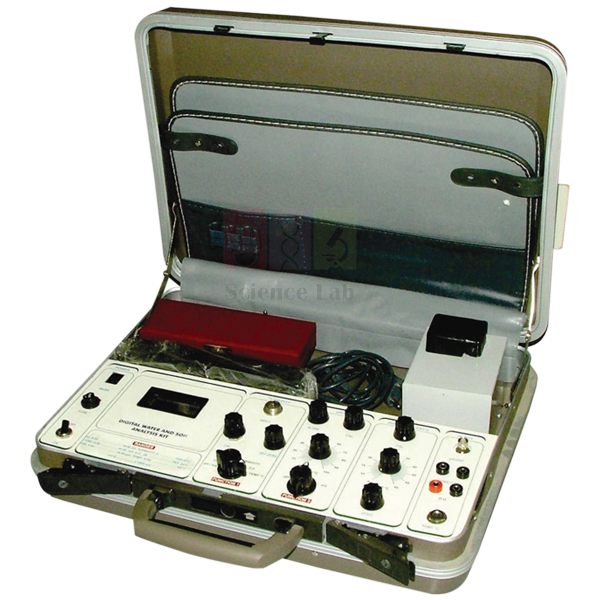
Water And Soil Analysis Kit
Water And Soil Analysis Kit (Product Code: SLE/LI/03) is a portable digital meter kit used to test water samples and soil extracts in the field or the laboratory for environmental, agricultural and teaching work. It measures five parameters — pH, conductivity, TDS, ORP and temperature — on a single 3½ digit LCD display, runs on battery or mains, and comes fitted in a briefcase with its accessories. It is made by Jain Scientific Equipments Pvt Ltd (ScienceLab), an OEM manufacturer and laboratory instruments supplier in India, at its own factory in Ambala.
Specifications
| Parameter | Detail |
|---|---|
| Parameters measured | 5: pH, conductivity, TDS, ORP and temperature |
| Display | 3½ digit LCD |
| Power | Battery cum mains operated |
| Presentation | Fitted in a briefcase, complete with accessories |
| Product code | SLE/LI/03 |
| Manufacturer | Jain Scientific Equipments Pvt Ltd (ScienceLab) — OEM |
| Country of origin | India (made in Ambala, Haryana) |
What Is the Water and Soil Analysis Kit Used For?
This kit gives students and field staff a quick picture of water and soil quality. pH shows acidity or alkalinity, conductivity and TDS indicate dissolved salts, ORP reflects oxidising or reducing conditions such as those in chlorinated water, and temperature puts every reading in context. It works well as an environmental science kit for schools and colleges, for agriculture students checking soil suitability, and for surveys of wells, ponds and tap water.
For soil, stir a sample with distilled water, let the particles settle and measure the clear liquid; your practical method will set the soil-to-water ratio. Rinse the sensing parts with distilled water between samples, carry spare batteries on field trips and switch to mains power back in the lab.
What to Specify When Ordering
- The accessories you expect in the briefcase (for example probes and calibration solutions), so we can confirm the configuration quoted
- Whether the kit will be used mainly in the field on battery or in the lab on mains
- The number of kits needed for your student groups or survey teams
- The delivery destination in India or abroad
OEM Manufacturer
Jain Scientific Equipments Private Limited, trading as ScienceLab, is the OEM (original equipment manufacturer) of the Water And Soil Analysis Kit, producing it at its own licensed factory at Saha, Ambala, Haryana, India. Kits are sent factory-direct to schools, colleges, agricultural institutes, environmental departments, dealers and importers, and repeat orders or replacement parts are arranged by the manufacturer on request. For tender and vendor registration, the company's GSTIN is 06AAECJ8618A1ZT and its Legal Entity Identifier (LEI) is 3358004HRD1JIVXKYX49. More about us on the company profile.
Related Laboratory Instruments
Useful additions for water and soil studies:
- Soil Analysis Kit — adds chemical soil tests to the meter readings.
- Garden Auger Soil — for collecting soil samples from different depths.
- Digital Dissolved Oxygen Meter — measures dissolved oxygen, which this kit does not cover.
- Digital Photo Colorimeter 5 Filters — for colour-reagent tests on water samples.
Explore more in Laboratory Instruments.
Frequently Asked Questions
Which parameters does the Water And Soil Analysis Kit measure?
The Water And Soil Analysis Kit (SLE/LI/03) measures 5 parameters — pH, conductivity, TDS (total dissolved solids), ORP (oxidation-reduction potential) and temperature — and shows each reading on a 3½ digit LCD display.
Can the Water And Soil Analysis Kit be used outside the lab?
Yes. The Water And Soil Analysis Kit is battery cum mains operated and comes fitted in a briefcase with its accessories, so it can be carried to wells, ponds, fields and school grounds, then run from mains back in the laboratory.
How is soil tested with the Water And Soil Analysis Kit?
To test soil with the Water And Soil Analysis Kit, stir a soil sample with distilled water, let the particles settle and measure the clear liquid for pH, conductivity, TDS, ORP and temperature. Your practical method sets the soil-to-water ratio and settling time.
What accessories are included with the Water And Soil Analysis Kit?
The Water And Soil Analysis Kit is listed as complete with accessories in its briefcase. The exact accessory list depends on the configuration quoted, so ask us through the contact page to confirm it before ordering.
Who manufactures the Water And Soil Analysis Kit?
Jain Scientific Equipments Pvt Ltd (ScienceLab) is the OEM manufacturer of the Water And Soil Analysis Kit, making it at its own licensed factory at Saha, Ambala, Haryana, India, and supplying it directly to institutions, dealers and importers.
Can the Water And Soil Analysis Kit be supplied for tenders or bulk orders?
Yes. The Water And Soil Analysis Kit can be quoted in bulk for school, college and government tenders and for dealers in India and international markets. Share the quantity, accessory needs and delivery destination through the enquiry cart or contact page.
Request a Quote
Quotations for the Water And Soil Analysis Kit (SLE/LI/03) come straight from the manufacturer. Send your requirement via the contact page or add the kit to the enquiry cart.
Last updated: 24 September 2026
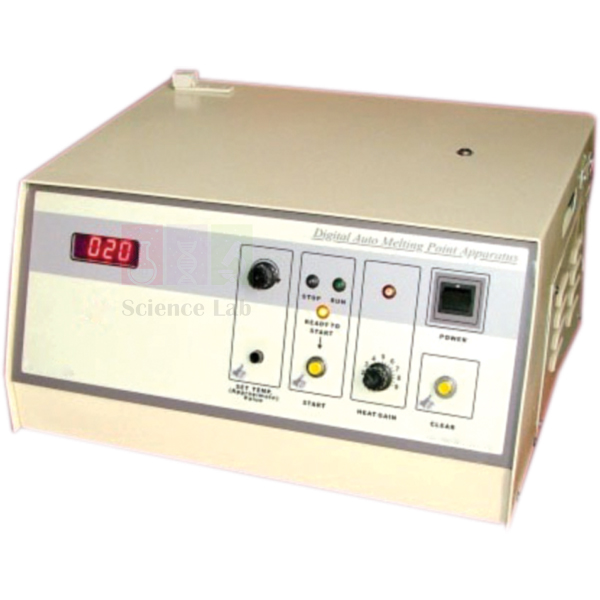
Automatic Melting Point Apparatus
Automatic Melting Point Apparatus (Product Code: SLE/LI/04) is a fully automatic instrument used to determine the melting point of solid organic and pharmaceutical samples in chemistry, pharmacy and quality-control laboratories. It covers 40 °C to 350 °C with 1 °C readability, needs no silicone oil or other heating media, and shows the result on a bright 3½ digit LED display. It is made by Jain Scientific Equipments Pvt Ltd (ScienceLab), an OEM manufacturer, at its own factory in Ambala, India.
Specifications
| Parameter | Detail |
|---|---|
| Range | 40 °C to 350 °C |
| Readability | 1 °C |
| Accuracy | 1% |
| Operation | Fully automatic |
| Display | Digital 3½ digit bright LED on the front panel, showing the melting point |
| Heating medium | No silicone oil or heating media required |
| Furnace control | Automatic furnace cut-off with audio and visual indication |
| Power | 230 V ± 10%, 50 Hz |
| Accessories | Capillary tubes (100 nos), cleaning tool (1 no.) |
| Dimensions | L 405 x B 360 x H 235 mm (approx.) |
| Weight | 5 kg (approx.) |
| Product code | SLE/LI/04 |
| Manufacturer | Jain Scientific Equipments Pvt Ltd (ScienceLab) — OEM |
| Country of origin | India (made in Ambala, Haryana) |
What Is an Automatic Melting Point Apparatus Used For?
A pure crystalline compound melts sharply at a characteristic temperature, while impurities lower and broaden the melting range, so melting point is a quick check of identity and purity. Chemistry students use it after recrystallisation, synthesis labs use it to confirm products, and pharmacy colleges and quality-control teams use it among their pharma testing instruments to screen raw materials.
Dry the sample and grind it to a fine powder, then pack a short, firm column into a capillary tube by tapping it gently. Because the apparatus heats without an oil bath, there is no oil to spill, smoke or replace. Let the furnace cool after the cut-off signal before the next run, and use the cleaning tool to keep the sample block clear.
What to Specify When Ordering
- The number of units for your laboratory or practical batch
- Extra capillary tubes beyond the 100 supplied with each unit
- Your mains supply, if it differs from 230 V, 50 Hz
OEM Manufacturer
The Automatic Melting Point Apparatus is manufactured by ScienceLab, the trading name of Jain Scientific Equipments Private Limited, as the OEM (original equipment manufacturer). Each unit comes from the company's own licensed factory at Saha, Ambala, Haryana, India, and is supplied factory-direct to universities, pharmacy colleges, industrial QC laboratories, dealers and importers. Capillary tubes, cleaning tools and repeat orders are handled by the manufacturer — ask us whenever you need them. Read more on the company profile.
Related Laboratory Instruments
Items that support melting point work:
- Melting-Point Tubes — replacement capillaries for sample loading.
- Melting Point Apparatus, Digital — an alternative digital model for comparison.
- Pestle And Mortar — for grinding crystals to a fine powder before loading.
- Vacuum Desiccator — keeps recrystallised samples dry before measurement.
Browse the full Laboratory Instruments range.
Frequently Asked Questions
What temperature range does the Automatic Melting Point Apparatus cover?
The Automatic Melting Point Apparatus (SLE/LI/04) measures from 40 °C to 350 °C with a readability of 1 °C and a listed accuracy of 1%, showing the melting point on a bright 3½ digit LED display on the front panel.
Does the Automatic Melting Point Apparatus need silicone oil?
No. The Automatic Melting Point Apparatus needs no silicone oil or other heating media, so there is no oil bath to fill, replace or clean, which is a practical advantage in busy student laboratories.
How does the Automatic Melting Point Apparatus signal the end of heating?
The Automatic Melting Point Apparatus has an automatic furnace cut-off with audio and visual indication, and it displays the melting point on the front panel, so the operator does not need to watch the sample continuously during a fully automatic run.
What accessories come with the Automatic Melting Point Apparatus?
The Automatic Melting Point Apparatus is supplied with 100 capillary tubes and 1 cleaning tool. It measures about L 405 x B 360 x H 235 mm, weighs about 5 kg and runs on 230 V ± 10%, 50 Hz.
Who manufactures the Automatic Melting Point Apparatus?
Jain Scientific Equipments Pvt Ltd (ScienceLab) is the OEM manufacturer of the Automatic Melting Point Apparatus, producing it at its own licensed factory at Saha, Ambala, Haryana, India, and supplying it directly to laboratories, dealers and importers.
Is a calibration certificate available for the Automatic Melting Point Apparatus?
Whether a calibration certificate can be provided with the Automatic Melting Point Apparatus should be discussed with us before ordering. Please raise it through our contact page together with the quantity you need.
What does an Automatic Melting Point Apparatus quotation need?
For an Automatic Melting Point Apparatus quotation, send the number of units, any extra capillary tubes, your mains supply if not 230 V, and the delivery destination. Use the enquiry cart or contact page to send the details.
Request a Quote
Get a quotation for the Automatic Melting Point Apparatus (SLE/LI/04) directly from the manufacturer through the contact page, or add it to the enquiry cart.
Last updated: 24 September 2026
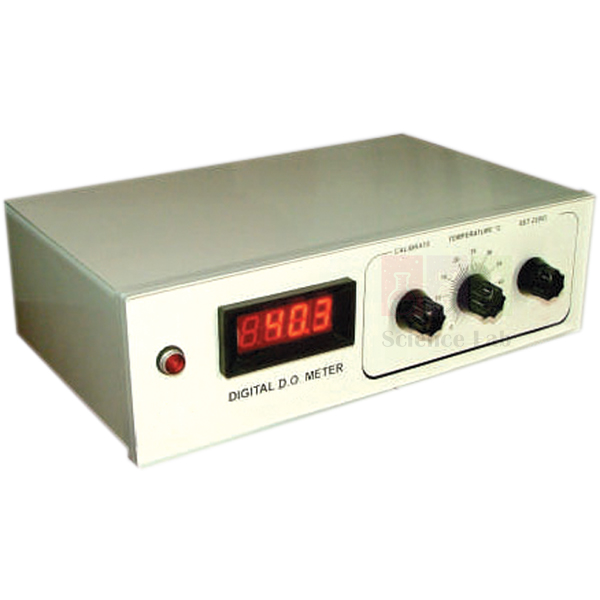
Digital Dissolved Oxygen Meter
Digital Dissolved Oxygen Meter (Product Code: SLE/LI/05) is a table-model instrument used to measure the oxygen dissolved in water, an index of the biological and physical processes taking place in it, in environmental, microbiology and teaching laboratories. It reads 0 to 20.0 ppm with 0.1 ppm resolution through an amperometric gold/silver membrane probe, with temperature compensation from 0 °C to 50 °C. It is made by Jain Scientific Equipments Pvt Ltd (ScienceLab), an OEM manufacturer, at its own factory in Ambala, India.
Specifications
| Parameter | Detail |
|---|---|
| Range (DO) | 0 to 20.0 ppm |
| Resolution (DO) | 0.1 ppm |
| Accuracy (DO) | 0.1 ppm + 1 count |
| Sensor | Amperometric gold/silver membrane DO probe |
| Temperature compensation | 0 °C to 50 °C |
| Manual compensation (DO) | +3% |
| Display | 3½ digit LED |
| Model | Table model |
| Power | 230 V AC, 50 Hz |
| Weight | 2 kg |
| Product code | SLE/LI/05 |
| Manufacturer | Jain Scientific Equipments Pvt Ltd (ScienceLab) — OEM |
| Country of origin | India (made in Ambala, Haryana) |
What Is a Dissolved Oxygen Meter Used For?
Dissolved oxygen is one of the clearest signs of water health: fish and aerobic microbes need it, and organic pollution uses it up. Laboratories use a dissolved oxygen meter in India for river and lake surveys, effluent treatment monitoring, aquaculture tanks and the BOD test, where the oxygen in sealed BOD bottles is measured before and after incubation. Environmental engineering, microbiology and zoology departments also use it in practical classes.
Keep the probe membrane clean, moist and free of trapped air bubbles, and move the probe gently or stir the sample so fresh water keeps reaching the membrane. Note the sample temperature, since oxygen solubility changes with it. Rinse the probe with distilled water after use.
OEM Manufacturer
Jain Scientific Equipments Private Limited, trading as ScienceLab, is the OEM (original equipment manufacturer) of this Digital Dissolved Oxygen Meter and supplies it factory-direct to universities, environmental laboratories, water-treatment teams, dealers and importers. The company is incorporated under CIN U29309HR2020PTC087597, and its works at 449, HSIIDC Industrial Area, Saha, Ambala operates under Factory Licence AMB-ONLINE-CHD-J-414. Probes, spare parts and repeat orders can be requested from the manufacturer directly. Read more on our profile page.
Related Laboratory Instruments
Items that complete a water-quality bench:
- BOD Bottles with Penny Head Stopper — sealed bottles for BOD incubation and DO readings.
- Water And Soil Analysis Kit — adds pH, conductivity, TDS, ORP and temperature readings.
- pH mV and Temperature Meter — for pH and temperature checks alongside DO.
- Magnetic Stirrer — keeps the sample moving gently past the probe.
See all Laboratory Instruments for more analytical equipment.
Frequently Asked Questions
What range and resolution does the Digital Dissolved Oxygen Meter have?
The Digital Dissolved Oxygen Meter (SLE/LI/05) measures dissolved oxygen from 0 to 20.0 ppm with a resolution of 0.1 ppm and a listed accuracy of 0.1 ppm + 1 count, shown on a 3½ digit LED display.
What type of probe does the Digital Dissolved Oxygen Meter use?
The Digital Dissolved Oxygen Meter uses an amperometric DO probe with a gold/silver membrane sensor. Keeping the membrane clean, moist and free of trapped air bubbles helps the probe give stable readings.
Does the Digital Dissolved Oxygen Meter compensate for temperature?
Yes. The Digital Dissolved Oxygen Meter has temperature compensation from 0 °C to 50 °C, because the amount of oxygen water can hold changes with temperature; a manual DO compensation of +3% is also listed.
Can the Digital Dissolved Oxygen Meter be used for BOD testing?
Yes. The Digital Dissolved Oxygen Meter can measure the dissolved oxygen in BOD bottles before and after incubation, which is how biochemical oxygen demand is worked out. BOD bottles and an incubator are ordered separately.
Is the Digital Dissolved Oxygen Meter portable?
The Digital Dissolved Oxygen Meter is a table model weighing 2 kg and powered from 230 V AC, 50 Hz mains, so it suits laboratory benches; water samples collected in the field are brought back to the lab for measurement.
Who manufactures the Digital Dissolved Oxygen Meter?
Jain Scientific Equipments Pvt Ltd (ScienceLab) is the OEM manufacturer of the Digital Dissolved Oxygen Meter, producing it at its licensed factory at Saha, Ambala, Haryana, India, and supplying it directly to laboratories, dealers and importers in India and international markets.
What does a Digital Dissolved Oxygen Meter quotation need?
For a Digital Dissolved Oxygen Meter quotation, send the number of meters, any related items such as BOD bottles, and the delivery destination. Use our contact page or the enquiry cart to share the details.
Request a Quote
Quotations for the Digital Dissolved Oxygen Meter (SLE/LI/05) are issued directly by the manufacturer. Contact us through the contact page or add the meter to the enquiry cart.
Last updated: 24 September 2026
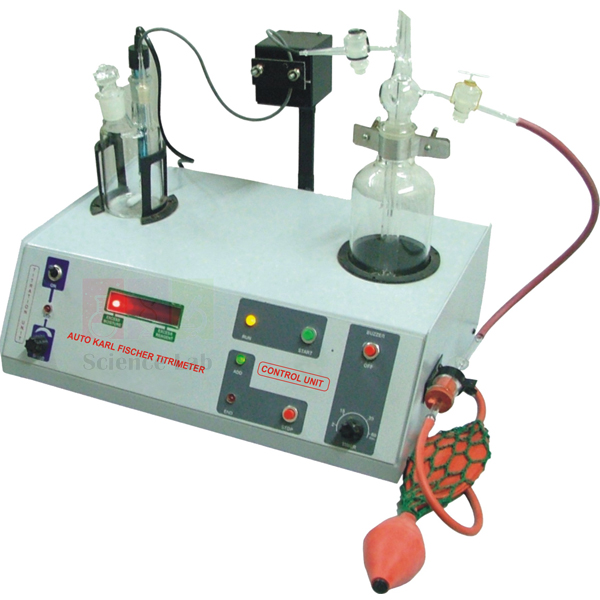
Auto Karl Fischer Titrimeter
Auto Karl Fischer Titrimeter (Product Code: SLE/LI/06) is an automatic titration instrument used to determine the water content of liquids and solids by Karl Fischer titration in pharmaceutical, chemical, food and teaching laboratories. It handles samples containing 1 to 50 mg of water, with 0.05 ml KF reagent dispensing from an auto-zero burette and a dual platinum electrode to sense the end point. It is made by Jain Scientific Equipments Pvt Ltd (ScienceLab), an OEM manufacturer, at its own factory in Ambala, India.
Specifications
| Parameter | Detail |
|---|---|
| Sample size | 1–50 mg of water |
| KF dispensing | 0.05 ml |
| Burette | Auto zero burette |
| Electrode | Dual platinum electrode |
| Stirring | Inbuilt stirrer |
| Timer | Adjustable |
| Status indication | RUN, ADD and END shown in auto mode |
| Display | Array of 10 LEDs in line |
| Power | 230 V AC ± 10%, 50 Hz |
| Size | 435 x 305 x 150 mm |
| Weight | 5 kg (approx.) |
| Accessories | Supplied with other accessories (confirm the list with your quotation) |
| Product code | SLE/LI/06 |
| Manufacturer | Jain Scientific Equipments Pvt Ltd (ScienceLab) — OEM |
| Country of origin | India (made in Ambala, Haryana) |
What Is a Karl Fischer Titrimeter Used For?
Karl Fischer titration measures water specifically: iodine in the KF reagent reacts with water in the sample, and once all the water is used up, excess iodine changes the signal at the dual platinum electrode to mark the end point. Pharmaceutical QC teams use it for moisture in drugs and excipients, chemical plants for solvents and raw materials, and food and oil laboratories for product quality; it is also a standard Karl Fischer titrator for teaching labs in India.
Keep the titration vessel closed so room humidity does not enter, and standardise the reagent before a series of samples. Choose a sample weight that brings the expected water content into the 1 to 50 mg range. Follow the RUN, ADD and END lights in auto mode, and use the adjustable timer to confirm a stable end point.
What to Specify When Ordering
- The typical water content and sample weights you test, so we can confirm they suit the 1–50 mg range
- The accessory list you expect with the unit
- Whether you want KF reagent quoted with the instrument
- The number of units and the delivery destination
OEM Manufacturer
ScienceLab is the trading name of Jain Scientific Equipments Private Limited, the OEM (original equipment manufacturer) of the Auto Karl Fischer Titrimeter. It is built at the company's own licensed factory at Saha, Ambala, Haryana, India, rather than sourced through a trader, and supplied factory-direct to pharmaceutical units, colleges, testing laboratories, dealers and importers. Electrodes, burette parts and repeat orders are handled by the manufacturer itself, so ask us whenever you need them. Visit our company profile for more.
Related Laboratory Instruments
Items that support moisture determination:
- Analytical Balance — for weighing samples accurately before titration.
- Moisture Analyser — a loss-on-drying alternative for routine moisture checks.
- Bottle Top Dispenser — for dispensing solvent into the titration vessel.
- Glass Bottle, for Liquid Reagents Narrow Mouth — for closed storage of solvents and reagents.
Explore more in Laboratory Instruments.
Frequently Asked Questions
What sample range does the Auto Karl Fischer Titrimeter handle?
The Auto Karl Fischer Titrimeter (SLE/LI/06) is designed for samples containing 1 to 50 mg of water, with KF reagent dispensing of 0.05 ml, so choose a sample weight that brings the expected water content into that range.
How does the Auto Karl Fischer Titrimeter detect the end point?
The Auto Karl Fischer Titrimeter senses the end point with a dual platinum electrode while the inbuilt stirrer mixes the sample. In auto mode its line of 10 LEDs shows RUN, ADD and END so the operator can follow the titration.
Is Karl Fischer reagent included with the Auto Karl Fischer Titrimeter?
Karl Fischer reagent is not listed as included with the Auto Karl Fischer Titrimeter; ask us if you want it quoted. Shelf life depends on the chemical, its grade and storage conditions, so ask us for the expiry date of the batch you are quoted.
How big is the Auto Karl Fischer Titrimeter and what power does it need?
The Auto Karl Fischer Titrimeter measures 435 x 305 x 150 mm, weighs about 5 kg and runs on 230 V AC ± 10%, 50 Hz, so it fits on a standard laboratory bench next to the balance used for weighing samples.
Who manufactures the Auto Karl Fischer Titrimeter?
Jain Scientific Equipments Pvt Ltd (ScienceLab) is the OEM manufacturer of the Auto Karl Fischer Titrimeter, building it at its own licensed factory at Saha, Ambala, Haryana, India, and supplying it directly to laboratories, dealers and importers.
Is a calibration certificate available for the Auto Karl Fischer Titrimeter?
Whether a calibration certificate can accompany the Auto Karl Fischer Titrimeter should be discussed with us before ordering. Please mention it in your enquiry through our contact page together with your sample details.
Request a Quote
The manufacturer quotes the Auto Karl Fischer Titrimeter (SLE/LI/06) directly. Send your requirement through the contact page or add it to the enquiry cart, mentioning whether reagent should be included.
Last updated: 24 September 2026
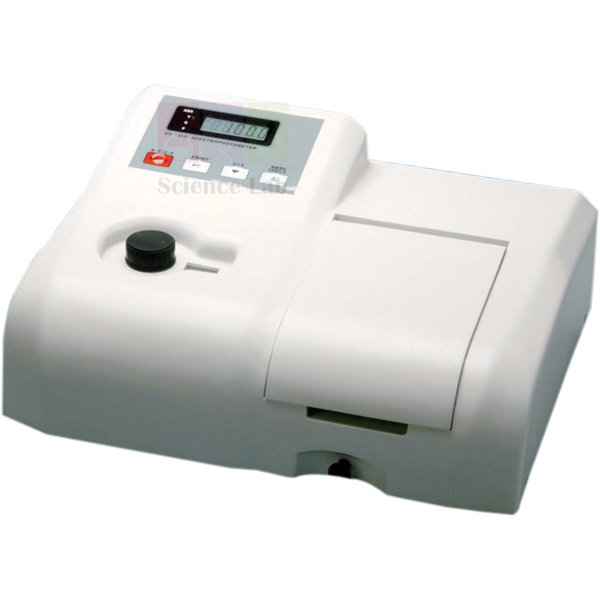
Single Beam Microprocessor UV-VIS Spectrophotometer
Single Beam Microprocessor UV-VIS Spectrophotometer (Product Code: SLE/LI/07) is a benchtop optical instrument used to measure the absorbance, percentage transmission and concentration of solutions from 195 to 1000 nm in college, research and quality-control laboratories. Chemistry, biochemistry and pharmacy departments rely on it for quantitative analysis, and it pairs a tungsten halogen lamp with a deuterium lamp so both the ultraviolet and visible regions are covered. This UV visible spectrophotometer is supplied by Jain Scientific Equipments Pvt Ltd (ScienceLab), Ambala, a laboratory equipment supplier in India.
Specifications
| Parameter | Detail |
|---|---|
| Wavelength range | 195 to 1000 nm |
| Measurement modes | Absorbance, % transmission and automatic concentration |
| Wavelength selection | Manual wavelength calibration and selection |
| Light sources | Tungsten halogen lamp and deuterium (D2) lamp |
| Optics | Complete mirror optics with a 1200 grooves/mm grating |
| Spectral bandwidth | 2 nm |
| Wavelength accuracy | ± 0.5 nm |
| Wavelength repeatability | ± 0.3 nm |
| Resolution | 0.1 nm |
| Photometric range | %T: 0 to 100%; Abs: 0 to 1.999; Conc.: 0 to 1999; K-factor: 0 to 1999 |
| Photometric accuracy | ± 0.005 Abs at 1.0 Abs; a second figure of ± 0.010 Abs is also listed — confirm its reference point with your quotation |
| Stray light | Less than 0.1% Abs at 320 nm |
| Readability | ± 1 count |
| Detector | Wide-range silicon photodiode |
| Sample holder | 4-position adjustable holder with selector control, for 10 mm path length cuvettes |
| Cuvettes provided | Set of 2 quartz and 4 glass cuvettes |
| Display | Single-line LCD |
| Keyboard | 4 keys, soft-touch membrane type |
| Interfaces | RS-232C serial interface; printer interface |
| Software | Included |
| Power | 230 V ± 10%, 50 Hz AC |
| Dimensions (L x B x H) | 420 x 350 x 240 mm (approx.) |
| Weight | 10 kg (approx.) |
| Product code | SLE/LI/07 |
| Supplied by | Jain Scientific Equipments Pvt Ltd (ScienceLab), Ambala, India |
What Is the UV-VIS Spectrophotometer Used For?
The UV-VIS spectrophotometer is used for Beer-Lambert law experiments, building calibration curves and estimating the concentration of coloured or UV-absorbing compounds. Typical teaching work includes absorbance of biomolecules in the ultraviolet region, dye and colour analysis in the visible region, and reaction kinetics followed as a change in absorbance over time. The concentration and K-factor modes let students read results directly once a standard has been measured.
Use the quartz cuvettes for readings in the ultraviolet range, because ordinary glass absorbs UV light; the glass cuvettes suit visible-range work. Let the lamps warm up, zero the instrument with a solvent blank, and wipe the cuvette faces with lint-free tissue before every reading. The RS-232C port and included software allow readings to be transferred to a computer, which helps analytical lab instruments fit into record-keeping routines.
What to Specify When Ordering
- The mains supply at your site — the listed unit runs on 230 V ± 10%, 50 Hz AC.
- Whether you need spare cuvettes in addition to the supplied set of 2 quartz and 4 glass cuvettes.
- Whether a printer or computer connection is planned, so the RS-232C and printer interfaces can be discussed.
- Quantity per laboratory and the delivery city or country.
Supplier
Jain Scientific Equipments Private Limited trades under the ScienceLab name and supplies this spectrophotometer from Ambala, Haryana, to schools, colleges, research institutes, dealers and importers. Analytical instruments like this one can be added to the same order as other teaching-lab items, so a department deals with a single supplier for its bench equipment. Read more about the company on our company profile.
Related Laboratory Instruments
These items support photometric analysis and sample preparation alongside the spectrophotometer:
- Digital Photo Colorimeter 5 Filters — a filter-based option for visible-range colour measurements in school labs.
- Ultra Violet/Visible (UV/VIS) Spectrophotometer — another UV-VIS model to compare before ordering.
- Volumetric Flask — for making up standard solutions for calibration curves.
- Bottle Top Dispenser — repeat dispensing of solvent or reagent when many samples are prepared.
See the full Laboratory Instruments range for more bench instruments.
Frequently Asked Questions
What is the wavelength range of the Single Beam Microprocessor UV-VIS Spectrophotometer?
The Single Beam Microprocessor UV-VIS Spectrophotometer covers 195 to 1000 nm using a tungsten halogen lamp and a deuterium lamp. It offers a 2 nm spectral bandwidth, 0.1 nm resolution and ± 0.5 nm wavelength accuracy for both ultraviolet and visible measurements.
Which cuvettes come with the UV-VIS spectrophotometer?
The Single Beam Microprocessor UV-VIS Spectrophotometer is provided with a set of 2 quartz and 4 glass cuvettes for a 10 mm path length. The 4-position sample holder takes these cuvettes; use the quartz ones for ultraviolet readings. Ask us if extra cuvettes should be quoted.
Can this spectrophotometer be connected to a computer or printer?
Yes. The Single Beam Microprocessor UV-VIS Spectrophotometer has an RS-232C serial interface and a printer interface, and software is included. Mention your computer set-up when you request a quotation so the connection requirements can be discussed before dispatch.
Who supplies the Single Beam Microprocessor UV-VIS Spectrophotometer?
The Single Beam Microprocessor UV-VIS Spectrophotometer is supplied by Jain Scientific Equipments Pvt Ltd (ScienceLab), Ambala, Haryana, India. The company supplies laboratory instruments to schools, colleges, institutions, dealers and importers in India and international markets.
Is a calibration certificate available with the spectrophotometer?
Calibration-certificate availability for the Single Beam Microprocessor UV-VIS Spectrophotometer should be discussed with us before ordering. The instrument itself provides manual wavelength calibration, and we will confirm what documentation accompanies the unit you are quoted. Please ask through our contact page.
What power supply and bench space does the UV-VIS spectrophotometer need?
The Single Beam Microprocessor UV-VIS Spectrophotometer runs on 230 V ± 10%, 50 Hz AC. It measures about 420 x 350 x 240 mm and weighs approximately 10 kg, so a standard laboratory bench close to a mains socket is sufficient.
What should a quotation request for this spectrophotometer include?
A quotation request for the Single Beam Microprocessor UV-VIS Spectrophotometer should state the quantity, delivery city or country, any spare cuvettes needed and whether the instrument is for a teaching, research or industrial laboratory. Send these details through our contact page for a quick reply.
Request a Quote
For a quotation on the Single Beam Microprocessor UV-VIS Spectrophotometer, send your quantity and delivery location through our contact page, or add it to the enquiry cart together with the other laboratory instruments you need.
Last updated: 24 September 2026
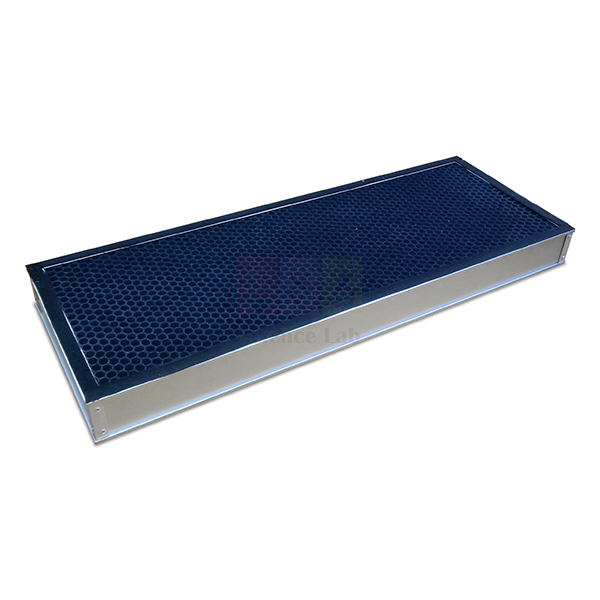
Acid Filter for Inverted Mobile Fume Hood
Acid Filter for Inverted Mobile Fume Hood (Product Code: SLE/LI/08) is a replacement filter used to renew the acid-fume filtration of an inverted mobile fume hood in school, college and research laboratories. Laboratory technicians order it when the acid filter already in the hood is due for change, so the unit stays ready for work with acids and acid vapours. This lab equipment spare part is supplied by Jain Scientific Equipments Pvt Ltd (ScienceLab), Ambala, India.
Key Details
| Parameter | Detail |
|---|---|
| Item | Replacement acid filter |
| For use with | Inverted Mobile Fume Hood |
| Purpose | Replaces a used acid filter in the hood |
| Product code | SLE/LI/08 |
| Supplied by | Jain Scientific Equipments Pvt Ltd (ScienceLab), Ambala, India |
What Is the Acid Filter Used For?
A mobile fume hood that works by filtration depends on its filter to trap fumes before air is released back into the room. The acid filter is the part that deals with acid vapours, so it matters in chemistry practicals and preparation rooms where acids are poured, diluted or warmed inside the hood. Fitting a fresh filter restores the hood's ability to take on acid work.
Plan filter changes around how often the hood runs and which acids are handled, and follow the hood's own indicator or maintenance schedule where it has one. Wear gloves and eye protection when taking out a used filter, bag it for disposal under your laboratory's chemical-waste procedure, and keep a spare on the shelf so practical classes are not interrupted.
What to Specify When Ordering
- The make and model (or a photograph) of your inverted mobile fume hood, so the filter fit can be confirmed.
- How many replacement filters you need per hood.
- The delivery city or country.
Supplier
ScienceLab is the trading name of Jain Scientific Equipments Private Limited, which supplies this replacement acid filter from Ambala, Haryana. Laboratories that bought a mobile fume cabinet from ScienceLab can re-order filters from the same supplier, which keeps routine maintenance straightforward. Company details are on our company profile.
Related Laboratory Instruments
Items that go with fume-hood maintenance and safe acid handling:
- Polypropylene Inverted Mobile Fume Cabinet — the mobile fume cabinet in our range; confirm filter fit when ordering.
- Thermo-Anemometer — for checking air velocity at the hood opening after a filter change.
- Safety Goggles — eye protection while handling acids and used filters.
- Acid Proof Aprons, Lab Coat, Pants, Shoe Covers and Sleeves — protective clothing for acid work.
More bench equipment is listed under Laboratory Instruments.
Frequently Asked Questions
What is the Acid Filter for Inverted Mobile Fume Hood?
The Acid Filter for Inverted Mobile Fume Hood is a replacement filter for the Inverted Mobile Fume Hood. It is fitted in place of a used acid filter so the hood can continue to be used for practical work involving acids and acid fumes.
How often should the acid filter be replaced?
Replacement frequency for the Acid Filter for Inverted Mobile Fume Hood depends on how often the hood runs and which acids are handled. Follow the hood's filter indicator or maintenance schedule, and contact us for guidance on the particular unit your laboratory uses.
Will this acid filter fit my fume hood?
The Acid Filter for Inverted Mobile Fume Hood is listed as a replacement for the Inverted Mobile Fume Hood. Share the make, model or a photograph of your hood through our contact page so we can confirm the fit before you order.
Who supplies the Acid Filter for Inverted Mobile Fume Hood?
The Acid Filter for Inverted Mobile Fume Hood is supplied by Jain Scientific Equipments Pvt Ltd (ScienceLab), Ambala, Haryana, India, to schools, colleges, laboratories, dealers and importers in India and international markets.
Can several acid filters be ordered at once?
Yes. The Acid Filter for Inverted Mobile Fume Hood can be quoted in the quantity your laboratory needs, for example a spare for each hood. State the number of hoods and filters required and your delivery location when you request a quotation.
How should a used acid filter be handled?
Remove a used Acid Filter for Inverted Mobile Fume Hood while wearing gloves and eye protection, seal it in a bag and dispose of it under your institution's chemical-waste rules, because it may hold acid residues from earlier work.
Request a Quote
To price replacement acid filters, send the hood details and quantity through our contact page, or place the Acid Filter for Inverted Mobile Fume Hood in the enquiry cart with any other laboratory items you need.
Last updated: 24 September 2026
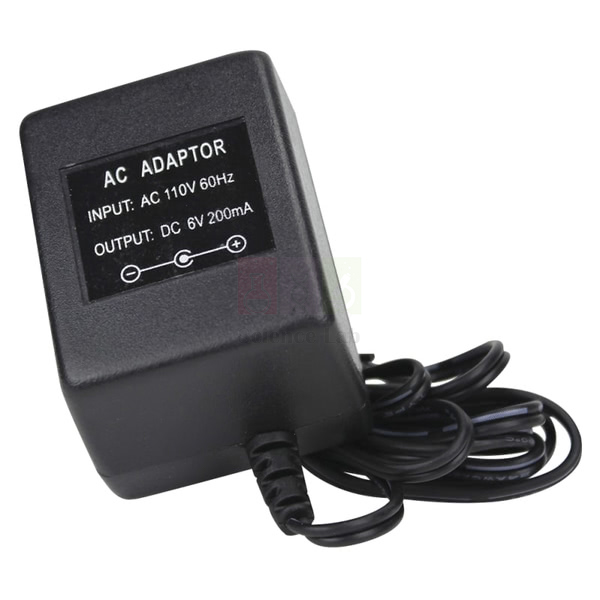
Power Adapter, 6V DC
Power Adapter, 6V DC (Product Code: SLE/LI/09) is a plug-in mains adapter used to power small laboratory and classroom devices that need a 6 V DC supply in schools, colleges and workshops. It takes 110 V AC at 60 Hz and delivers 6 V DC at up to 200 mA, which makes it a fit for sites on 110 V mains. The adapter is supplied by Jain Scientific Equipments Pvt Ltd (ScienceLab), Ambala, a laboratory equipment supplier in India.
Specifications
| Parameter | Detail |
|---|---|
| Power input | 110 V AC, 60 Hz |
| Power output | 6 V DC, 200 mA |
| Output type | Direct current (DC) |
| Product code | SLE/LI/09 |
| Supplied by | Jain Scientific Equipments Pvt Ltd (ScienceLab), Ambala, India |
What Is the 6V DC Power Adapter Used For?
A 6 V DC adapter takes the place of batteries or a bench power supply unit in the lab when a small device needs a steady low-voltage feed for long periods, for example during a demonstration or a long recording session. Because the output is limited to 200 mA, it suits low-current electronics rather than heaters, motors or other loads that draw more than that.
Before connecting, check that the device is rated for 6 V DC, that its current demand stays within 200 mA, and that the plug and polarity match the device socket. Confirm the mains supply as well: this adapter is listed for a 110 V AC, 60 Hz input, so sites on a different mains voltage should tell us before ordering. Unplug it when the equipment is idle.
What to Specify When Ordering
- Your mains supply — this listing is for a 110 V AC, 60 Hz input.
- The device it will power, with its voltage and current rating, so the 6 V DC, 200 mA output can be checked against it.
- The connector type and polarity your device needs.
- The number of adapters required.
Supplier
Jain Scientific Equipments Private Limited, known by its trading name ScienceLab, supplies this 6 V DC adapter from Ambala, Haryana. Small electrical accessories like this one can be added to an order for laboratory instruments or classroom apparatus, so an institution receives everything in one consignment. Background on the company is on our company profile.
Related Laboratory Instruments
Alternatives and test equipment for low-voltage work:
- Precision Variable Power Supply — an adjustable bench supply when voltages other than 6 V are needed.
- Switched Power Supply — a bench unit for class experiments that need more flexibility than a fixed adapter.
- Standard Digital Multimeter — to check the adapter's output voltage before a device is connected.
Browse the Laboratory Instruments category for related items.
Frequently Asked Questions
What output does the Power Adapter, 6V DC provide?
The Power Adapter, 6V DC provides a 6 V direct-current output at up to 200 mA. It suits low-current devices designed for a 6 V DC supply; check that your device's current demand stays within 200 mA before connecting it.
What mains input does the 6V DC power adapter need?
The Power Adapter, 6V DC is listed for a 110 V AC, 60 Hz mains input. If your laboratory uses a different mains voltage or frequency, tell us before ordering so we can advise on a suitable option for your site.
Which devices can the 6V DC adapter power?
The Power Adapter, 6V DC can power devices rated for 6 V DC that draw no more than 200 mA. Share the device name, its socket type and the polarity it needs so we can confirm compatibility before you place an order.
Who supplies the Power Adapter, 6V DC?
The Power Adapter, 6V DC is supplied by Jain Scientific Equipments Pvt Ltd (ScienceLab), Ambala, Haryana, India, which supplies laboratory accessories to schools, colleges, dealers and importers in India and international markets.
Can the 6V DC adapter be ordered for a whole class?
Yes. The Power Adapter, 6V DC can be quoted in class-set or institutional quantities. Include the number of adapters, the devices they will power and your delivery location in the request you send through our contact page.
How should the adapter be used safely?
Use the Power Adapter, 6V DC only with devices rated for 6 V DC, keep it dry, avoid loading it beyond 200 mA and unplug it from the mains when it is not in use. Stop using the adapter if its cable or casing is damaged.
Request a Quote
Send the quantity, your mains supply and the device details through our contact page for a quotation on the Power Adapter, 6V DC, or add it to the enquiry cart along with other items for your laboratory.
Last updated: 24 September 2026
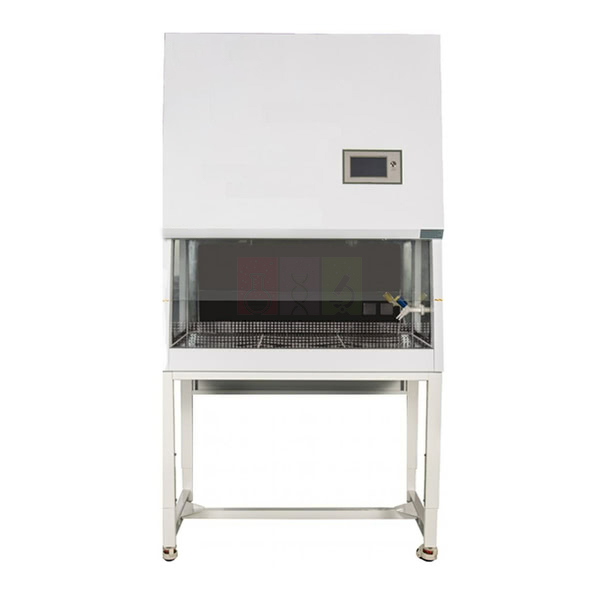
Biosafety Cabinet Class 2
Biosafety Cabinet Class 2 (Product Code: SLE/LI/10) is a Class II A2 biological safety cabinet used to protect laboratory staff, the environment and sensitive work processes when biological agents are handled in microbiology, biotechnology and research laboratories. Its welded white polypropylene body with a stainless steel 304 worktop is easy to clean, and two HEPA filters with a 70% downflow / 30% exhaust airflow pattern provide contamination protection. This bio safety cabinet is supplied by Jain Scientific Equipments Pvt Ltd (ScienceLab), Ambala, a laboratory equipment supplier in India.
Specifications
| Parameter | Detail |
|---|---|
| Cabinet type | Class II A2 biological safety cabinet |
| Outer dimensions (W x D x H) | 1220 x 800 x 1500 mm (48 x 31.5 x 59 in) |
| Inner dimensions (W x D x H) | 1135 x 600 x 640 mm (44.7 x 23.6 x 25.2 in) |
| Cabinet material | Welded white polypropylene structure with stainless steel 304 worktop |
| Filtration | Two HEPA filters, typical efficiency 99.9995% at 0.1 µm; HEPA/ULPA filters listed |
| Airflow pattern | 70% downflow (circulation), 30% exhaust |
| Downflow velocity | 0.45 m/s (90 fpm) |
| Inflow velocity | 0.5 m/s (100 fpm) |
| Front sash opening | 450 mm (17.7 in) |
| Noise level | Below 52 dB |
| Illumination | 800 lux, LED lighting |
| Fan | EC fan motor |
| Control system | Touch-screen control with alerts for periodic maintenance and device replacement |
| Energy saving | Programmable night mode that shuts down unnecessary consumption and holds vital components at the required safety level |
| Power supply | 230 V, 60 Hz, single phase |
| Product code | SLE/LI/10 |
| Supplied by | Jain Scientific Equipments Pvt Ltd (ScienceLab), Ambala, India |
What Is the Class 2 Biosafety Cabinet Used For?
A Class II biosafety cabinet is used for handling microbial cultures, cell lines and other biological material when the operator, the room and the sample all need protection. Air drawn in at the front opening keeps aerosols away from the operator, filtered downflow keeps the work surface clean, and filtered exhaust protects the room. Typical tasks in microbiology lab equipment set-ups include pouring and inoculating plates, subculturing and preparing samples.
Switch the cabinet on and let the airflow settle before starting, keep the front grille clear and work well inside the opening. Load only what the task needs, wipe the stainless steel worktop before and after each session, and act on the touch-screen alerts so filters and devices are replaced when due. The night mode reduces electricity use between sessions.
What to Specify When Ordering
- The mains supply at your site — the listed unit is 230 V, 60 Hz, single phase.
- Room space and doorway sizes for a cabinet measuring 1220 x 800 x 1500 mm.
- Your filter preference, as HEPA/ULPA filtration is listed, and whether spare filters should be quoted.
- Quantity and delivery location.
Supplier
ScienceLab is the trading name of Jain Scientific Equipments Private Limited, which supplies this Class II A2 cabinet from Ambala, Haryana, to universities, research institutes, colleges, dealers and importers. Room layout, mains supply and filter choice differ between laboratories, so these points are worth settling with us before a quotation is prepared. More about the company is on our company profile.
Related Laboratory Instruments
Equipment that fits the same culture-handling workflow:
- Thermo-Anemometer — for spot-checking air velocity at the cabinet opening.
- Laboratory Incubator With Visibility Door — for incubating cultures prepared in the cabinet.
- Petri Dish, Triple Vent — culture plates poured and handled under the cabinet's clean downflow.
- Digital Colony Counter — for counting colonies after incubation.
- Polypropylene Inverted Mobile Fume Cabinet — for chemical fumes, which a biosafety cabinet is not meant to handle.
See all items in Laboratory Instruments.
Frequently Asked Questions
What class is the Biosafety Cabinet Class 2?
The Biosafety Cabinet Class 2 is a Class II A2 biological safety cabinet. It uses two HEPA filters and a 70% downflow, 30% exhaust airflow pattern to protect the operator, the laboratory environment and the work inside the cabinet.
What are the dimensions of the Class 2 biosafety cabinet?
The Biosafety Cabinet Class 2 measures 1220 x 800 x 1500 mm outside (W x D x H) and gives a 1135 x 600 x 640 mm work zone inside. The front sash opening is 450 mm, so check doorways and room space before ordering.
What filters does the biosafety cabinet use?
The Biosafety Cabinet Class 2 uses two HEPA filters with a typical efficiency of 99.9995% at 0.1 µm, and HEPA/ULPA filtration is listed. Its touch-screen control system alerts users when periodic maintenance and device replacement are due.
What power supply does the Biosafety Cabinet Class 2 need?
The Biosafety Cabinet Class 2 is listed for 230 V, 60 Hz, single-phase power. Its LED lighting and EC fan motor are low-energy parts, and a programmable night mode cuts unnecessary consumption. Confirm your local mains supply with us before ordering.
Who supplies the Biosafety Cabinet Class 2?
The Biosafety Cabinet Class 2 is supplied by Jain Scientific Equipments Pvt Ltd (ScienceLab), Ambala, Haryana, India, to research institutes, universities, colleges, dealers and importers in India and international markets.
Is a calibration certificate or airflow report available with the cabinet?
Documentation for the Biosafety Cabinet Class 2, such as a calibration certificate or airflow report, should be discussed with us before ordering. We will confirm what accompanies the unit you are quoted; please raise it through our contact page.
What should a quotation request for the biosafety cabinet include?
A quotation request for the Biosafety Cabinet Class 2 should state the quantity, your mains supply, room and doorway sizes, any spare filters required and the delivery location. Sending these details together helps the quotation match your site.
Request a Quote
Request a quotation for the Biosafety Cabinet Class 2 through our contact page, or add it to the enquiry cart with other microbiology and laboratory items you plan to order.
Last updated: 24 September 2026
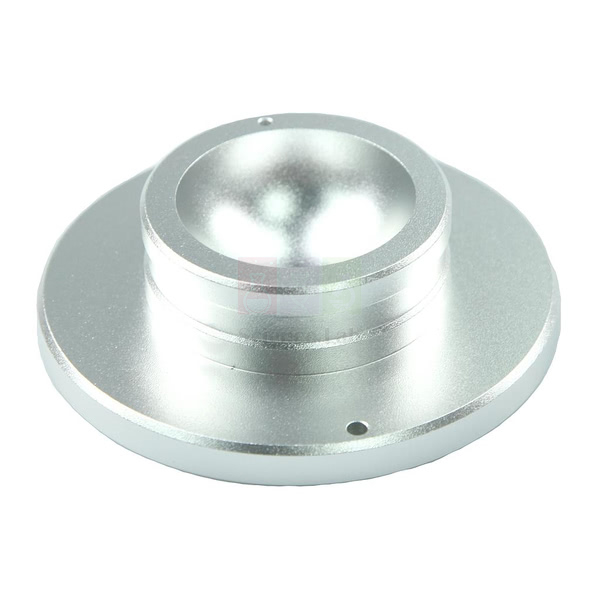
Block Heater, Round Bottom Flasks
Block Heater, Round Bottom Flasks (Product Code: SLE/LI/11) is a reaction block used to hold and heat a single 100 ml round bottom flask on a hotplate or magnetic stirrer in chemistry teaching and research laboratories. Organic chemistry students and technicians use it for reflux and warming work, where a round-bottomed flask cannot sit securely on a flat plate. It is made by Jain Scientific Equipments Pvt Ltd (ScienceLab), an OEM manufacturer, at its own factory in Ambala, India.
Specifications
| Parameter | Detail |
|---|---|
| Type | Reaction block for round bottom flasks |
| Flask size | 100 ml |
| Capacity | One flask |
| Heat source | Suitable for hotplates and magnetic stirrers |
| Product code | SLE/LI/11 |
| Manufacturer | Jain Scientific Equipments Pvt Ltd (ScienceLab) — OEM |
| Country of origin | India (made in Ambala, Haryana) |
What Is the Round Bottom Flask Block Heater Used For?
A round-bottomed flask touches a flat hotplate at only a small point, so heating it directly is slow and uneven. The block heater surrounds the lower part of a 100 ml flask and carries heat from the plate into the glass, giving steadier warming for reflux, simple distillation, dissolving solids and small-scale reactions. Used on a hot plate magnetic stirrer, a stir bar can mix the flask contents while they heat.
Centre the block on the plate, seat the flask fully before heating and still clamp the neck to a stand — the block supports the flask but is not a substitute for a clamp. Raise the plate temperature gradually, and handle the block with heat-resistant gloves, since it stays hot for some time after the plate is switched off.
What to Specify When Ordering
- The number of blocks per laboratory — each block takes one 100 ml flask.
- The hotplate or magnetic stirrer model it will sit on, so plate size can be checked.
- Whether 100 ml round bottom flasks should be quoted with the blocks.
OEM Manufacturer
ScienceLab is the trading name of Jain Scientific Equipments Private Limited, the OEM (original equipment manufacturer) of this block heater. The company makes it at its own licensed factory at Saha, Ambala, Haryana, and supplies it factory-direct to schools, colleges, institutions, dealers and importers instead of routing orders through a trader.
The company is a registered MSME (Udyam UDYAM-HR-01-0003714), and its export consignments move under Importer-Exporter Code AAECJ8618A issued by the DGFT. For repeat orders or replacement blocks, ask the manufacturer directly; company details are on our company profile.
Related Laboratory Instruments
Items used in the same heating and reflux set-up:
- Round Bottom Flask — glass flasks for the block, which takes the 100 ml size.
- Magnetic Stirrer With Hot Plate — a heat source that can also stir the flask contents.
- Magnetic Stirrer Bar — for mixing inside the flask while it is heated.
- Laboratory Jack — to raise or lower the plate and block beneath a clamped flask.
More items are listed in Laboratory Instruments.
Frequently Asked Questions
What size flask does the Block Heater, Round Bottom Flasks hold?
The Block Heater, Round Bottom Flasks holds one 100 ml round bottom flask. It is a single-flask reaction block, so laboratories that heat several flasks at the same time normally order one block for each hotplate position.
Can the block heater be used on a magnetic stirrer?
Yes. The Block Heater, Round Bottom Flasks is suitable for hotplates and magnetic stirrers. On a hotplate stirrer, a magnetic stir bar in the 100 ml flask can mix the contents while the block transfers heat to the glass.
Who manufactures the Block Heater, Round Bottom Flasks?
The Block Heater, Round Bottom Flasks is manufactured by Jain Scientific Equipments Pvt Ltd (ScienceLab), an OEM manufacturer, at its own licensed factory at Saha, Ambala, Haryana, India. Quotations and repeat orders are handled directly by the manufacturer.
Does the block heater replace a clamp and stand?
No. The Block Heater, Round Bottom Flasks supports and heats the base of a 100 ml flask, but the flask neck should still be clamped to a retort stand, particularly when a condenser is fitted for reflux work.
Are round bottom flasks included with the block heater?
The listing for the Block Heater, Round Bottom Flasks covers the reaction block for one 100 ml flask. If you need flasks as well, add them to your enquiry and the block and glassware can be quoted together.
Can the block heater be ordered in bulk for a teaching lab?
Yes. The Block Heater, Round Bottom Flasks can be quoted in the quantity a teaching laboratory needs, directly from the manufacturer. Tell us the number of blocks, the hotplates they will sit on and the delivery location through our contact page.
Request a Quote
Quotations for the Block Heater, Round Bottom Flasks come straight from the manufacturer. Send your quantity through our contact page, or add the block to the enquiry cart with the flasks and stirrers for the same set-up.
Last updated: 24 September 2026
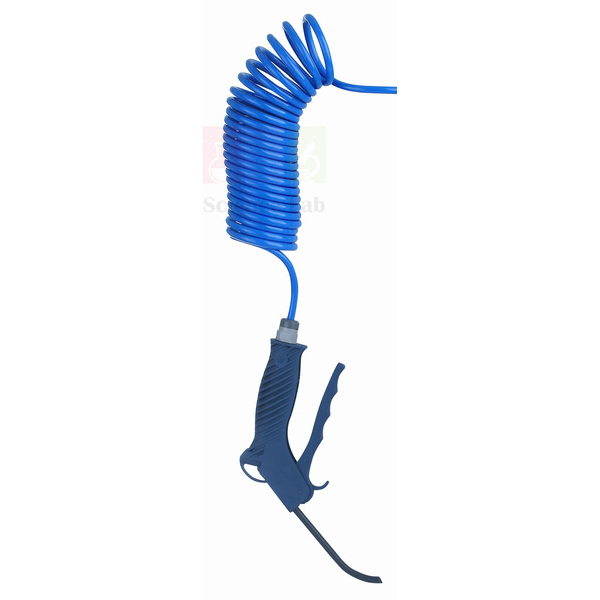
Blue Gun and Coil for Deionisers
Blue Gun and Coil for Deionisers (Product Code: SLE/LI/12) is a coiled delivery line with a dispensing gun used to draw purified water from a laboratory deioniser in school, college and research labs. It is described as suitable for any of the range of deionisers, making the deionising unit easier to use while reducing the chance of wasted water. This lab equipment accessory is supplied by Jain Scientific Equipments Pvt Ltd (ScienceLab), Ambala, India.
Key Details
| Parameter | Detail |
|---|---|
| Items | Coil and dispensing gun (blue gun) |
| For use with | Deionisers — described as suitable for any of the range; confirm fit for your unit |
| Benefit | Increases the usability of the deionising unit and reduces the chance of waste |
| Product code | SLE/LI/12 |
| Supplied by | Jain Scientific Equipments Pvt Ltd (ScienceLab), Ambala, India |
What Is the Deioniser Gun and Coil Used For?
Without a dispensing gun, deionised water is usually drawn from a fixed outlet, which makes filling wash bottles and volumetric flasks or rinsing chemistry lab glassware awkward. A coiled line stretches from the deioniser to the point of use and draws back when released, while the gun lets the user start and stop the flow by hand, so less purified water runs to waste.
Position the deioniser so the coil reaches the sink or bench without being pulled tight, and rest the gun where its nozzle will not touch the bench or sink between uses. After a long idle period, run a little water through the line before collecting water for analytical work.
What to Specify When Ordering
- The make and model of your deioniser, so the fit can be confirmed.
- The number of gun-and-coil sets required.
- The delivery city or country.
Supplier
Jain Scientific Equipments Private Limited, trading as ScienceLab, supplies this gun and coil set from Ambala, Haryana, to laboratories, schools, dealers and importers. Water-purification accessories are often ordered together with bottles and carboys for storing deionised water, and these can be quoted in the same enquiry. More on the company is on our company profile.
Related Laboratory Instruments
Items for storing and dispensing purified water at the bench:
- Polypropylene Carboys — for holding a larger stock of deionised water.
- Azlon Dispensing Bottle — a bench bottle to fill from the gun for rinsing glassware.
- Bottle Top Dispenser — for measured volumes dispensed from a bottle.
Explore the Laboratory Instruments category for more.
Frequently Asked Questions
What does the Blue Gun and Coil for Deionisers include?
The Blue Gun and Coil for Deionisers consists of a coiled line and a dispensing gun for drawing water from a deioniser. Ask us to confirm any fittings needed for your particular deioniser before ordering, as installations vary from lab to lab.
Will the gun and coil fit my deioniser?
The Blue Gun and Coil for Deionisers is described as suitable for any of the range of deionisers. Because outlets differ between makes, send the make, model or a photograph of your deioniser through our contact page so the fit can be confirmed.
Why add a dispensing gun to a deioniser?
A dispensing gun and coil increase the usability of a deionising unit and reduce the chance of waste. With the Blue Gun and Coil for Deionisers, users direct purified water exactly where it is needed and stop the flow as soon as a vessel is full.
Who supplies the Blue Gun and Coil for Deionisers?
The Blue Gun and Coil for Deionisers is supplied by Jain Scientific Equipments Pvt Ltd (ScienceLab), Ambala, Haryana, India, to schools, colleges, research laboratories, dealers and importers in India and international markets.
Can several gun and coil sets be ordered together?
Yes. The Blue Gun and Coil for Deionisers can be quoted in the quantity your laboratories need, for example one set per deioniser. State the number of sets, the deioniser models and the delivery location in your quotation request.
Request a Quote
Ask for a quotation on the Blue Gun and Coil for Deionisers through our contact page, including your deioniser details, or add it to the enquiry cart with other laboratory items.
Last updated: 24 September 2026
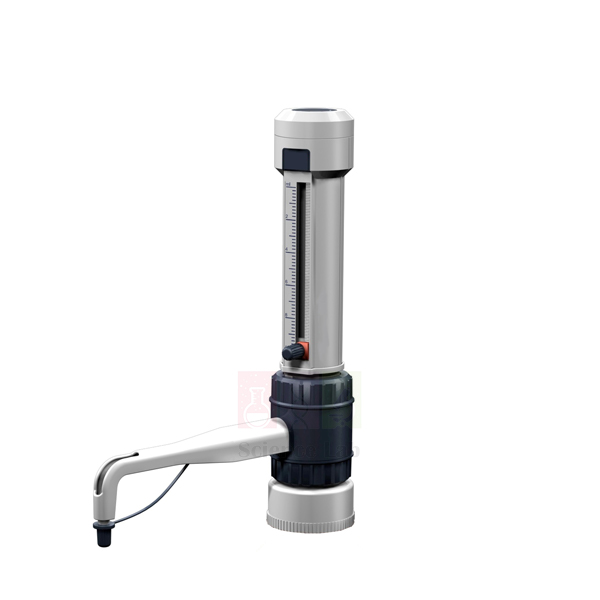
Bottle Top Dispenser
Bottle Top Dispenser (Product Code: SLE/LI/13) is a bottle-mounted liquid dispenser used to deliver repeated, preset volumes of reagents and solvents from 2.5 to 25 ml straight from the reagent bottle in chemistry, biology and quality-control laboratories. Technicians and students use it for routine additions during titrations and sample preparation, and it comes with S40, GL25, GL28, GL32 and GL38 bottle adapters. The dispenser is supplied by Jain Scientific Equipments Pvt Ltd (ScienceLab), Ambala, a laboratory instruments supplier in India.
Specifications
| Parameter | Detail |
|---|---|
| Volume range | 2.5 to 25 ml |
| Graduation | 0.5 ml |
| Accuracy | ≤ ±0.5% (reference volume to be confirmed with your quotation) |
| Coefficient of variation | ≤ 0.1% (reference volume to be confirmed with your quotation) |
| Maximum vapour pressure | 500 mbar |
| Maximum viscosity | 500 mm²/s |
| Maximum density | 2.2 g/cm³ |
| Maximum liquid temperature | 40 °C |
| Tube length | 295 mm |
| Adapters supplied | S40: 45/40 mm; GL25: 32/25 mm; GL28: 32/28 mm; GL32: 45/32 mm; GL38: 45/38 mm |
| Product code | SLE/LI/13 |
| Supplied by | Jain Scientific Equipments Pvt Ltd (ScienceLab), Ambala, India |
What Is the Bottle Top Dispenser Used For?
A bottle top dispenser screws onto a reagent bottle so the same volume can be delivered again and again without pouring or pipetting. As part of chemistry lab equipment for practical classes, it speeds up adding acids, buffers or solvents to a row of flasks, and in quality-control work it keeps additions consistent from one sample to the next. The 2.5–25 ml range with 0.5 ml graduations covers volumes typical of titration and sample-preparation steps.
Keep the liquid within the listed limits — vapour pressure up to 500 mbar, viscosity up to 500 mm²/s, density up to 2.2 g/cm³ and temperature up to 40 °C — and ask us about chemical compatibility before dispensing aggressive reagents. Fit the adapter that matches your bottle neck, discard the first few strokes to prime the dispenser, and operate the piston smoothly to avoid air bubbles.
What to Specify When Ordering
- Your bottle neck thread, to confirm which of the S40, GL25, GL28, GL32 or GL38 adapters you will use.
- The reagents to be dispensed, so compatibility and the listed limits can be checked.
- The number of dispensers required.
- Whether reagent bottles should be quoted with the dispensers.
Supplier
ScienceLab, the trading name of Jain Scientific Equipments Private Limited, supplies this dispenser from Ambala, Haryana, to schools, colleges, testing laboratories, dealers and importers. Dispensers are often ordered with reagent bottles and glassware when a chemistry lab is being equipped, and the whole list can be quoted together. See our company profile for background.
Related Laboratory Instruments
Bottles and tools used with a bottle-mounted dispenser:
- Reagent Bottle, Narrow Mouth — glass reagent bottles; check the neck thread against the adapters.
- Reagent Bottle Narrow Mouth, Amber Glass — for light-sensitive reagents.
- Automatic Titrating Burette — for titrations where the volume is read continuously rather than preset.
- Safety Goggles — eye protection when dispensing acids and solvents.
Find more in Laboratory Instruments.
Frequently Asked Questions
What volume range does the Bottle Top Dispenser cover?
The Bottle Top Dispenser covers a volume range of 2.5 to 25 ml with 0.5 ml graduations. It suits repeated additions of reagents and solvents in teaching and quality-control laboratories where the same volume is needed many times.
Which bottle adapters come with the bottle top dispenser?
The Bottle Top Dispenser is supplied with five adapters: S40 (45/40 mm), GL25 (32/25 mm), GL28 (32/28 mm), GL32 (45/32 mm) and GL38 (45/38 mm). Check your bottle's neck thread against these sizes before ordering.
What liquids can the bottle top dispenser handle?
The Bottle Top Dispenser is listed for liquids with a vapour pressure up to 500 mbar, viscosity up to 500 mm²/s, density up to 2.2 g/cm³ and temperature up to 40 °C. Ask us about compatibility with specific reagents before use.
How accurate is the Bottle Top Dispenser?
The Bottle Top Dispenser is listed with an accuracy of ≤ ±0.5% and a coefficient of variation of ≤ 0.1%. The reference volumes behind these figures should be confirmed with your quotation, so ask us for the full performance data when you enquire.
Who supplies the Bottle Top Dispenser?
The Bottle Top Dispenser is supplied by Jain Scientific Equipments Pvt Ltd (ScienceLab), Ambala, Haryana, India, to schools, colleges, testing laboratories, dealers and importers in India and international markets.
Is a calibration certificate available for the dispenser?
Calibration-certificate availability for the Bottle Top Dispenser should be discussed with us before ordering. We will confirm what documentation accompanies the unit you are quoted; send your request through our contact page with the quantity required.
Request a Quote
For a quotation on the Bottle Top Dispenser, share your bottle thread, reagents and quantity through our contact page, or add it to the enquiry cart with matching reagent bottles.
Last updated: 24 September 2026
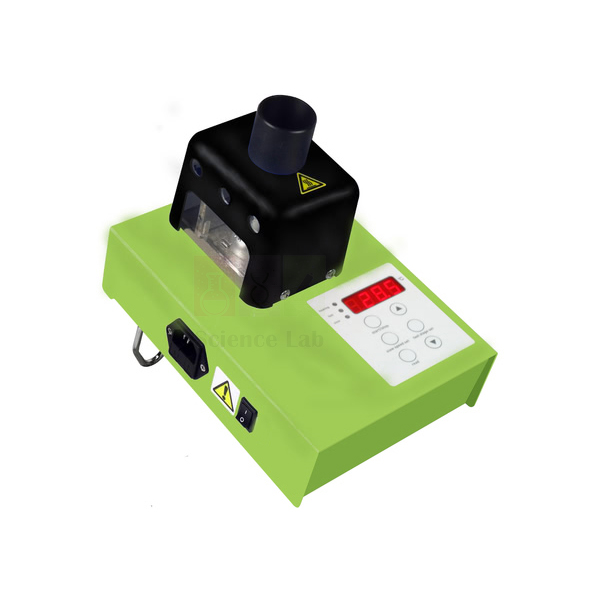
Melting Point Apparatus, Digital
Melting Point Apparatus, Digital (Product Code: SLE/LI/14) is a bench instrument used to find the melting point of solid samples in capillary tubes, from ambient temperature to 300 °C, in chemistry, pharmacy and quality-control laboratories. Students and analysts use it to identify compounds and check their purity, and it tests three samples at once with a 0.1 °C display resolution. This digital melting point apparatus is supplied by Jain Scientific Equipments Pvt Ltd (ScienceLab), Ambala, India.
Specifications
| Parameter | Detail |
|---|---|
| Temperature range | Ambient to 300 °C |
| Temperature accuracy | ± 1.0 °C at 20 °C; ± 2.5 °C at 300 °C |
| Temperature control | Precise thermistor control system |
| Display | Four-digit LED |
| Display resolution | 0.1 °C |
| Number of samples | 3, measured simultaneously |
| Fast ramp rate | 20 °C/min, fixed |
| Slow ramp rates | Adjustable between 1 and 10 °C/min |
| Heating speeds | Two |
| Readout hold | Yes |
| Viewing | Internal LED light source, magnifying lens and tilting rear feet |
| Dimensions (W x D x H) | 160 x 220 x 170 mm |
| Net weight | 1.8 kg |
| Electrical supply | 230 V, 50 Hz, 75 W |
| Product code | SLE/LI/14 |
| Supplied by | Jain Scientific Equipments Pvt Ltd (ScienceLab), Ambala, India |
What Is the Digital Melting Point Apparatus Used For?
Melting point is one of the quickest checks on the identity and purity of an organic solid: a pure compound melts sharply near its known value, while impurities lower and broaden the melting range. Among chemistry lab instruments, this apparatus is used in organic practicals, pharmacy labs and quality-control rooms to test synthesised products, recrystallised samples and incoming raw materials against reference values.
For an efficient run, use the fixed 20 °C/min ramp to approach the expected value, then switch to a slow rate between 1 and 10 °C/min for the final few degrees so the reading is precise. Pack each capillary to a similar small height, watch the three samples through the magnifying lens under the LED light, and use the readout hold to capture the temperature at the moment of melting.
What to Specify When Ordering
- The mains supply at your site — the listed unit runs on 230 V, 50 Hz, 75 W.
- Whether melting-point capillary tubes should be quoted with the apparatus.
- The number of units per laboratory and the delivery location.
Supplier
Jain Scientific Equipments Private Limited supplies this apparatus under its ScienceLab trading name from Ambala, Haryana, to schools, colleges, pharmacy institutes, dealers and importers. Capillary tubes and other consumables for melting-point work can be added to the same quotation. Our company profile has more about the business.
Related Laboratory Instruments
Consumables and alternative models for melting-point determination:
- Melting-Point Tubes — capillaries for loading the samples.
- Capillary Tube Set — a general capillary set for school practicals.
- Automatic Melting Point Apparatus — an automatic model to compare before ordering.
- Analogue Melting Point — a simpler analogue option for basic teaching labs.
Browse the full Laboratory Instruments range.
Frequently Asked Questions
What temperature range does the Melting Point Apparatus, Digital cover?
The Melting Point Apparatus, Digital measures from ambient temperature up to 300 °C. Its display resolution is 0.1 °C, with a listed accuracy of ± 1.0 °C at 20 °C and ± 2.5 °C at 300 °C.
How many samples can the digital melting point apparatus test at once?
The Melting Point Apparatus, Digital is designed to measure three samples simultaneously. Running a sample alongside a reference compound or a duplicate helps students and analysts compare melting behaviour within a single heating run.
What heating rates does the melting point apparatus offer?
The Melting Point Apparatus, Digital has two heating speeds: a fixed fast ramp of 20 °C/min and slow ramp rates adjustable between 1 and 10 °C/min. Use the fast ramp to approach the expected melting point, then the slow ramp for the final reading.
Are capillary tubes included with the apparatus?
The listing for the Melting Point Apparatus, Digital does not state that capillary tubes are included. Melting-point tubes can be quoted separately in the quantity you need; add them to your enquiry through our contact page along with the apparatus.
Who supplies the Melting Point Apparatus, Digital?
The Melting Point Apparatus, Digital is supplied by Jain Scientific Equipments Pvt Ltd (ScienceLab), Ambala, Haryana, India, to schools, colleges, pharmacy institutes, dealers and importers in India and international markets.
Is a calibration certificate available for the melting point apparatus?
Calibration-certificate availability for the Melting Point Apparatus, Digital should be discussed with us before ordering. Many labs also check performance with a reference substance of known melting point; ask us what documentation comes with the unit you are quoted.
Request a Quote
Request a quotation for the Melting Point Apparatus, Digital through our contact page, or place it in the enquiry cart together with melting-point tubes for your practical classes.
Last updated: 24 September 2026
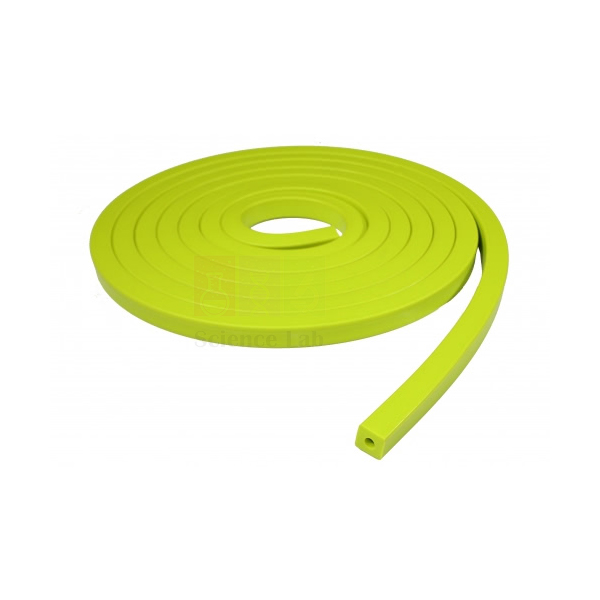
Vacuum Tubing
Vacuum Tubing (Product Code: SLE/LI/15) is heavy-wall laboratory tubing used to connect vacuum pumps to filter flasks, desiccators and other apparatus in chemistry, biology and physics laboratories. Made from a polymer blend with an 8 mm internal diameter and a 6 mm wall, it is designed to replace natural rubber vacuum tubing, resists UV and has a square outer profile that lies flat on the bench. It is supplied by Jain Scientific Equipments Pvt Ltd (ScienceLab), Ambala, a laboratory equipment supplier in India.
Specifications
| Parameter | Detail |
|---|---|
| Material | Polymer blend |
| Internal diameter | 8 mm |
| Wall thickness | 6 mm |
| External profile | Square, sits flat on the bench |
| UV resistance | Yes |
| Tensile strength | 7.5 MPa |
| Tear strength | 17 kN/m |
| Specific gravity | 1.16 ± 0.05 g/cm³ |
| Rebound resilience | 60% |
| Temperature range | -50 to 200 °C |
| Replaces | Natural rubber vacuum tubing; described as lasting many times longer |
| Product code | SLE/LI/15 |
| Supplied by | Jain Scientific Equipments Pvt Ltd (ScienceLab), Ambala, India |
What Is Vacuum Tubing Used For?
Vacuum tubing links a vacuum source to apparatus that must work under reduced pressure — for example a pump to a filter flask during Buchner filtration, to a vacuum desiccator, or to a distillation set-up run under reduced pressure. Thin-walled tubing collapses when air is drawn out, which is why the 6 mm wall matters: it keeps the bore open so the vacuum reaches the apparatus. Schools and colleges buy it as one of their routine lab consumables for filtration and drying practicals.
Cut lengths cleanly with a sharp blade, push the tubing fully over each hose connector, and route it so clamps or bench edges do not kink or pinch it. The polymer blend is intended to outlast natural rubber, but check the ends for splits from time to time and trim them back when needed. The square profile also stops the tubing rolling off the bench.
What to Specify When Ordering
- The total length required, or the number of vacuum set-ups to equip.
- The hose connector sizes on your pumps, flasks and desiccators, to check against the 8 mm bore.
- The delivery city or country.
Supplier
ScienceLab is the trading name of Jain Scientific Equipments Private Limited, which supplies this vacuum tubing from Ambala, Haryana, to schools, colleges, research laboratories, dealers and importers. Tubing is usually ordered with the pump, filter flasks and funnels for a filtration station, and the complete set can be quoted at once. See the company profile for more.
Related Laboratory Instruments
Apparatus that the tubing connects in a vacuum set-up:
- Vacuum Pump, Electric — a powered vacuum source for the tubing.
- Vacuum Pump, Hand — a manual option for small set-ups.
- Conical Filter Flask — the side-arm flask used for vacuum filtration.
- Buchner Funnel, 90 mm, Porcelain — the funnel that sits on the filter flask.
- Vacuum Desiccator — for drying samples under reduced pressure.
More items are in Laboratory Instruments.
Frequently Asked Questions
What size is the Vacuum Tubing?
The Vacuum Tubing has an 8 mm internal diameter and a 6 mm wall thickness. The heavy wall helps the tubing keep its bore open under vacuum, and the square external profile lets it sit flat on the bench.
What is the vacuum tubing made of?
The Vacuum Tubing is made from a polymer blend designed to replace natural rubber vacuum tubing. It is described as lasting many times longer than natural rubber, with UV resistance, 7.5 MPa tensile strength and 17 kN/m tear strength.
What temperature range can the vacuum tubing handle?
The Vacuum Tubing is listed for a temperature range of -50 to 200 °C. For hot or chemically demanding applications, tell us the conditions so we can confirm whether this tubing suits your set-up before you order.
How is the vacuum tubing sold?
Length and pack size for the Vacuum Tubing are confirmed at quotation. Tell us the total length you need, or the number of vacuum set-ups to equip, through our contact page and we will quote accordingly.
Who supplies the Vacuum Tubing?
The Vacuum Tubing is supplied by Jain Scientific Equipments Pvt Ltd (ScienceLab), Ambala, Haryana, India, to schools, colleges, research laboratories, dealers and importers in India and international markets.
Will the tubing fit my pump and filter flask?
The Vacuum Tubing has an 8 mm bore, so it suits hose connectors of a matching size. Check the hose barb on your vacuum pump, filter flask or desiccator, and send us the sizes if you are unsure about the fit.
Request a Quote
To get a price for the Vacuum Tubing, send the length or number of set-ups through our contact page, or add it to the enquiry cart with pumps and filtration glassware.
Last updated: 24 September 2026
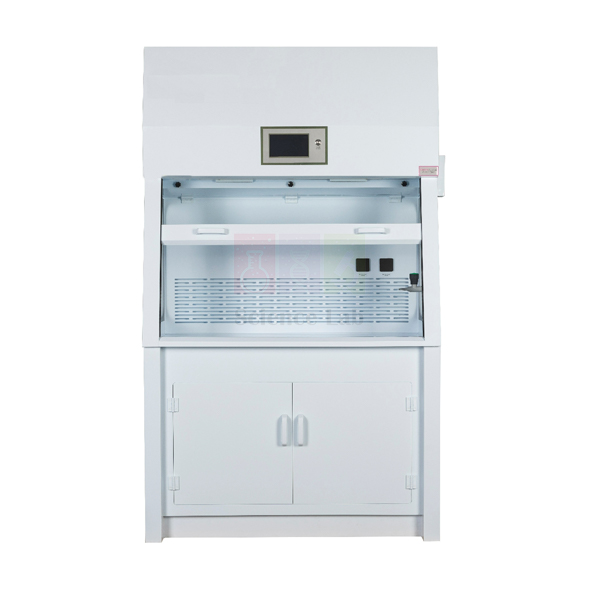
Fume Cupboard, Ductless, Polypropylene
Fume Cupboard, Ductless, Polypropylene (Product Code: SLE/LI/16) is a mobile ductless fume cupboard used to draw fumes away from the user and through filters during chemical work in school, college and research laboratories. Built entirely from highly chemical-resistant polypropylene, it has two power sockets, an integral LED light and a fully adjustable fan, and it needs no specialist fitting. This chemical fume cupboard is supplied by Jain Scientific Equipments Pvt Ltd (ScienceLab), Ambala, India.
Specifications
| Parameter | Detail |
|---|---|
| Type | Mobile ductless fume cupboard |
| Construction | Fully polypropylene, highly chemical resistant |
| Air velocity | 0.6 m/s |
| Noise level | Below 52 dB |
| Power supply | 220 V |
| Power sockets | Two |
| Lighting | Integral LED light |
| Fan | Fully adjustable |
| Filter change | Every 600 hours, or sooner if considered necessary |
| Installation | Simple to use; no specialist fitting required; lightweight for easy manoeuvring |
| Mounting | Benchtop, or fully mobile when coupled with the fume cupboard stand |
| Product code | SLE/LI/16 |
| Supplied by | Jain Scientific Equipments Pvt Ltd (ScienceLab), Ambala, India |
What Is the Ductless Fume Cupboard Used For?
A ductless fume cupboard lets a school or college carry out fume-producing chemistry without building an exhaust duct through a wall or roof. The fan draws air in at the front at about 0.6 m/s, carrying vapours away from the user and through the filters before the air returns to the room. As a fume cupboard for schools, it suits demonstrations and small-scale practicals such as heating, dissolving and reactions that release odours or vapours, provided the filters match the chemicals used.
Log running hours so the filters are changed every 600 hours, or sooner if odours become noticeable, and keep containers and apparatus well inside the front opening. The two built-in sockets can power a stirrer or hotplate inside the cupboard, and the adjustable fan lets the airflow be set for each task.
What to Specify When Ordering
- Benchtop use, or mobile use with the fume cupboard stand (ask us which stand suits this unit).
- The chemicals you plan to handle, so filter suitability can be discussed.
- The mains supply at your site — the listed unit runs on 220 V.
- Whether spare filters should be quoted, and the number of cupboards required.
Supplier
Jain Scientific Equipments Private Limited, trading as ScienceLab, supplies this polypropylene fume cupboard from Ambala, Haryana, to schools, colleges, laboratories, dealers and importers. Institutions registering a new vendor can use the company's GSTIN 06AAECJ8618A1ZT and its Importer-Exporter Code AAECJ8618A issued by the DGFT. More details are on our company profile.
Related Laboratory Instruments
Other fume-control options and accessories:
- Fume Cupboard, Ductless — a larger ductless model with an airflow alarm.
- Polypropylene Ducted Fume Cupboard — a ducted option where an exhaust duct can be installed.
- Stand for 1200mm Fume Cabinet — a fume cabinet stand in our range; ask which stand suits this cupboard.
- Thermo-Anemometer — for checking the air velocity at the front opening.
See more in Laboratory Instruments.
Frequently Asked Questions
What is the air velocity of the Fume Cupboard, Ductless, Polypropylene?
The Fume Cupboard, Ductless, Polypropylene is listed with an air velocity of 0.6 m/s and a noise level below 52 dB. Its fully adjustable fan lets users set the airflow to suit the task in hand.
How often should the filters be changed?
Filters in the Fume Cupboard, Ductless, Polypropylene should be changed every 600 hours of use, or sooner if you feel it is necessary. Keeping a simple log of running hours makes filter replacements easy to plan.
Does the ductless fume cupboard need installation?
No specialist fitting is needed for the Fume Cupboard, Ductless, Polypropylene. It is simple to use, runs on a 220 V supply and can sit on a bench or become a mobile unit when coupled with the fume cupboard stand.
Which chemicals can be used in the fume cupboard?
Suitability of the Fume Cupboard, Ductless, Polypropylene depends on the filters fitted and the chemicals handled. Its body is highly chemical-resistant polypropylene; send a list of the chemicals you plan to use through our contact page so filter suitability can be discussed.
Who supplies the Fume Cupboard, Ductless, Polypropylene?
The Fume Cupboard, Ductless, Polypropylene is supplied by Jain Scientific Equipments Pvt Ltd (ScienceLab), Ambala, Haryana, India, to schools, colleges, laboratories, dealers and importers in India and international markets.
What should a quotation request for this fume cupboard include?
A quotation request for the Fume Cupboard, Ductless, Polypropylene should state the quantity, benchtop or mobile use, whether spare filters and a stand are needed, the chemicals to be handled and the delivery location.
Request a Quote
Send your requirements for the Fume Cupboard, Ductless, Polypropylene through our contact page, or add it to the enquiry cart with spare filters and other laboratory items.
Last updated: 24 September 2026
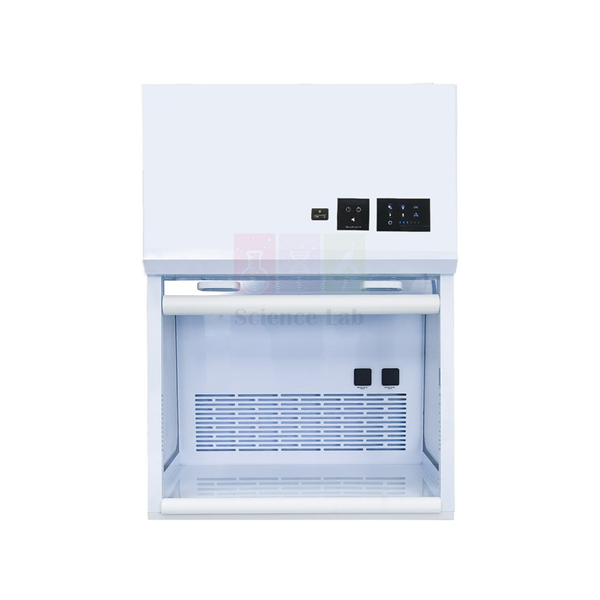
Fume Cupboard, Ductless
Fume Cupboard, Ductless (Product Code: SLE/LI/17) is a duct-free fume cupboard used to protect students and staff from chemical vapours during practical work in schools, colleges and research laboratories. This 900 mm-wide polypropylene unit adds an airflow alarm to the usual LED light, twin sockets and adjustable fan, with a 570 x 770 mm front sash opening and a 0.5 m/s air velocity. It is supplied by Jain Scientific Equipments Pvt Ltd (ScienceLab), Ambala, a laboratory equipment supplier in India.
Specifications
| Parameter | Detail |
|---|---|
| Type | Mobile ductless fume cupboard |
| Construction | Fully polypropylene, highly chemical resistant |
| External dimensions (W x D x H) | 900 x 750 x 1223 mm |
| Workspace (W x D x H) | Listed as 885 x 610 x 695 mm and as 840 x 640 x 660 mm — confirm with your quotation |
| Front sash opening | 570 mm high, 770 mm wide |
| Air velocity | 0.5 m/s |
| Noise level | Below 52 dB |
| Power supply | 220 V |
| Weight | 120 kg |
| Features | Two power sockets, integral LED light, fully adjustable fan, airflow alarm |
| Mounting | Benchtop, or fully mobile when coupled with the fume cupboard stand |
| Installation | Simple to use; no specialist fitting required |
| Product code | SLE/LI/17 |
| Supplied by | Jain Scientific Equipments Pvt Ltd (ScienceLab), Ambala, India |
What Is the Ductless Fume Cupboard with Airflow Alarm Used For?
This laboratory fume hood is used wherever fume-producing chemistry must be contained but ducting to the outside is impractical, such as older school buildings, preparation rooms and temporary labs. Air enters through the 570 x 770 mm sash opening at about 0.5 m/s, moves vapours away from the operator and passes through the unit's filtration before returning to the room. The airflow alarm warns users when airflow is inadequate, so work can stop before exposure becomes a risk.
At 120 kg, the cupboard is best placed once on a sturdy bench, or fitted to the fume cupboard stand when it needs to move between rooms. Use the two internal sockets for small electrical apparatus, keep the sash as low as practical while working, and never ignore the alarm — check the fan setting and filters before carrying on.
What to Specify When Ordering
- Benchtop placement, or mobile use with the fume cupboard stand.
- The workspace size you need — two workspace figures are listed, so confirm the internal dimensions.
- The chemicals you will handle, so filter choice can be discussed.
- Your mains supply (the listed unit runs on 220 V) and the delivery location.
Supplier
ScienceLab is the trading name under which Jain Scientific Equipments Private Limited supplies this ductless fume cupboard from Ambala, Haryana. Schools, colleges, research laboratories, dealers and importers can combine it with filters, safety wear and bench apparatus in a single quotation. Visit our company profile for more about the business.
Related Laboratory Instruments
Alternatives and accessories for safe fume handling:
- Fume Cupboard, Ductless, Polypropylene — a ductless model listed with 0.6 m/s air velocity.
- Polypropylene Inverted Mobile Fume Cabinet — a mobile cabinet with sink, taps and touch-screen control.
- Thermo-Anemometer — for spot-checking air velocity at the sash.
- Safety Screen — an extra barrier during demonstrations.
Browse Laboratory Instruments for more.
Frequently Asked Questions
What are the dimensions of the Fume Cupboard, Ductless?
The Fume Cupboard, Ductless measures 900 x 750 x 1223 mm (W x D x H) externally, with a front sash opening 570 mm high and 770 mm wide. Two workspace sizes are listed, so confirm the internal dimensions when you request a quotation.
Does the ductless fume cupboard have an airflow alarm?
Yes. The Fume Cupboard, Ductless includes an airflow alarm along with two power sockets, an integral LED light and a fully adjustable fan. The alarm helps users notice when airflow is not adequate so they can pause work and check the unit.
How heavy is the Fume Cupboard, Ductless?
The Fume Cupboard, Ductless weighs 120 kg. It can be used as a benchtop unit on a strong bench, or turned into a mobile unit by coupling it with the fume cupboard stand when it has to move between rooms.
What air velocity does the fume cupboard provide?
The Fume Cupboard, Ductless is listed with an air velocity of 0.5 m/s and a noise level below 52 dB, running on a 220 V supply. A thermo-anemometer can be used to spot-check the velocity at the sash opening.
Who supplies the Fume Cupboard, Ductless?
The Fume Cupboard, Ductless is supplied by Jain Scientific Equipments Pvt Ltd (ScienceLab), Ambala, Haryana, India, to schools, colleges, research laboratories, dealers and importers in India and international markets.
What should a quotation request for the ductless fume cupboard include?
A quotation request for the Fume Cupboard, Ductless should list the quantity, the chemicals to be handled, benchtop or stand-mounted use, your mains supply and the delivery location. Send it through our contact page for a tailored reply.
Request a Quote
Ask for a price on the Fume Cupboard, Ductless via our contact page, or add it to the enquiry cart with the stand, filters and safety items you need.
Last updated: 24 September 2026
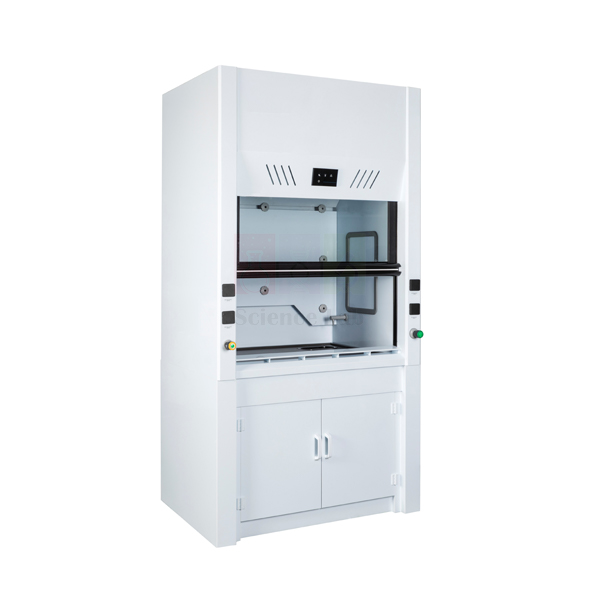
Polypropylene Ducted Fume Cupboard
Polypropylene Ducted Fume Cupboard (Product Code: SLE/LI/18) is a 1200 mm fume cupboard with services, used to extract chemical fumes to the outside through a duct in school, college and industrial laboratories. Its polypropylene work surface and polypropylene base cabinet with doors stand up to chemical attack, and LED illumination lights a 1000 x 630 x 1170 mm workspace. This fume hood for chemistry labs is supplied by Jain Scientific Equipments Pvt Ltd (ScienceLab), Ambala, India.
Specifications
| Parameter | Detail |
|---|---|
| Type | Ducted fume cupboard, with services |
| Size | 1200 mm |
| External dimensions (W x D x H) | 1200 x 805 x 2320 mm |
| Workspace dimensions (W x D x H) | 1000 x 630 x 1170 mm |
| Illumination | LED |
| Work surface | Polypropylene (PP) |
| Base cabinet | Polypropylene, with doors |
| Product code | SLE/LI/18 |
| Supplied by | Jain Scientific Equipments Pvt Ltd (ScienceLab), Ambala, India |
What Is the Ducted Polypropylene Fume Cupboard Used For?
A ducted fume cupboard removes fumes from the room altogether by exhausting them through ductwork, which makes it the usual choice for chemistry laboratories that work with acids, solvents and reactions producing corrosive or toxic vapours on a regular basis. Polypropylene suits acid work, and the base cabinet with doors gives storage directly beneath the work surface. As a piece of laboratory furniture, it becomes a fixed fume-handling station for the room.
Plan the installation before ordering: the room needs space for a 1200 x 805 x 2320 mm unit, a route for the exhaust duct to the outside and an extract arrangement suited to the duct run. Keep the sash lowered when nobody is working at the cupboard, avoid cluttering the 1000 mm-wide workspace, and store only compatible chemicals in the base cabinet.
What to Specify When Ordering
- The services you need at the cupboard, as this model is listed "with services".
- Ceiling height and door access, given the 2320 mm overall height.
- The duct route to the outside, and whether ducting and extraction should be discussed in the quotation.
- Quantity and delivery location.
Supplier
Jain Scientific Equipments Private Limited supplies this ducted cupboard under its ScienceLab trading name from Ambala, Haryana, to schools, colleges, industrial laboratories, dealers and importers. Ducting, room layout and services vary from building to building, so the scope of supply is agreed with each buyer before a quotation is issued. Company details are on our company profile.
Related Laboratory Instruments
Other fume-control options and items for acid work:
- Fume Cupboard, Ductless, Polypropylene — for rooms where ducting cannot be installed.
- Polypropylene Inverted Mobile Fume Cabinet — a mobile option with its own sink and taps.
- Thermo-Anemometer — for checking air velocity at the sash after installation.
- Acid Proof Aprons, Lab Coat, Pants, Shoe Covers and Sleeves — protective clothing for acid work at the cupboard.
The full Laboratory Instruments category lists more items.
Frequently Asked Questions
What size is the Polypropylene Ducted Fume Cupboard?
The Polypropylene Ducted Fume Cupboard is a 1200 mm model measuring 1200 x 805 x 2320 mm externally (W x D x H), with a 1000 x 630 x 1170 mm workspace. Check ceiling height and doorways before ordering.
What does "with services" mean for this fume cupboard?
The Polypropylene Ducted Fume Cupboard is listed as 1200 mm with services, which refers to service outlets at the cupboard. The exact services and fittings included should be confirmed with us when you request a quotation, based on what your experiments need.
Is ducting included with the ducted fume cupboard?
Ducting and exhaust arrangements for the Polypropylene Ducted Fume Cupboard depend on your building. Tell us the duct route and distance to the outside through our contact page, and we will confirm what the quotation covers before you order.
What materials is the fume cupboard made from?
The Polypropylene Ducted Fume Cupboard has a polypropylene (PP) work surface and a PP base cabinet with doors, with LED illumination inside the workspace. Polypropylene is widely used in laboratories where acids and corrosive chemicals are handled.
Who supplies the Polypropylene Ducted Fume Cupboard?
The Polypropylene Ducted Fume Cupboard is supplied by Jain Scientific Equipments Pvt Ltd (ScienceLab), Ambala, Haryana, India, to schools, colleges, industrial laboratories, dealers and importers in India and international markets.
What information is needed for a quotation?
A quotation for the Polypropylene Ducted Fume Cupboard needs the quantity, required services, room dimensions, ceiling height, duct route and delivery location. Photographs or a layout drawing of the laboratory help us understand the site before quoting.
Request a Quote
Send your room details and requirements for the Polypropylene Ducted Fume Cupboard through our contact page, or add it to the enquiry cart along with other laboratory items.
Last updated: 24 September 2026
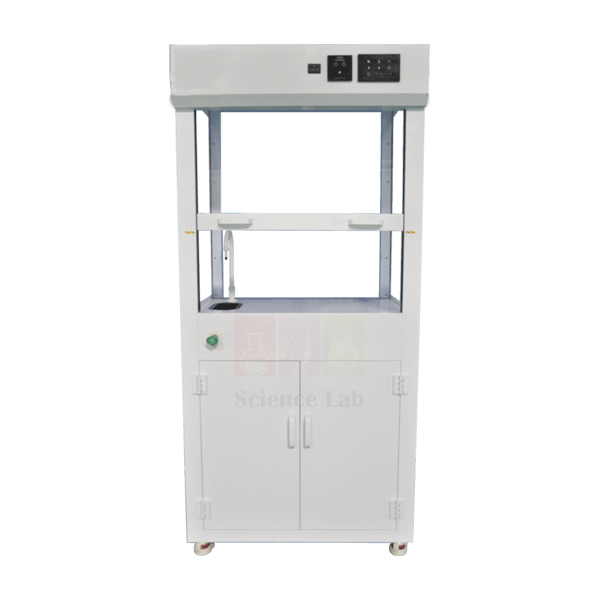
Polypropylene Inverted Mobile Fume Cabinet
Polypropylene Inverted Mobile Fume Cabinet (Product Code: SLE/LI/19) is a ductless fume cabinet on four lockable castors, used to give staff and students a protected space for working with a wide range of chemicals, and it is especially suited to schools. Built from welded virgin polypropylene, it combines a 5-inch colour touch-screen with a low-airflow alarm, a large oval PP sink, a swan-neck water tap and gas taps. It is supplied by Jain Scientific Equipments Pvt Ltd (ScienceLab), Ambala, a laboratory equipment supplier in India.
Specifications
| Parameter | Detail |
|---|---|
| Type | Ductless mobile fume cabinet |
| External dimensions | 1000 x 720 x 1900 mm (listed as H x D x W; confirm the order with your quotation) |
| Workspace dimensions | 985 x 500 x 860 mm (listed as H x D x W) |
| Front sash maximum opening | 625 x 865 mm (H x W) |
| Weight | 120 kg (excluding filters) |
| Cabinet and work surface | Welded white virgin polypropylene, for chemical and corrosion resistance, lighter weight and lower noise |
| Control system | 5-inch full-colour capacitive touch-screen, wipe-clean, with digital airflow velocity display, audible and visual low-airflow alarm and filter change indicators |
| Face airflow velocity | 0.5 ± 0.1 m/s (100 ± 20 fpm) |
| Filters | Range of carbon or HEPA filters available |
| Standard fittings | 1 gas tap, 1 swan-neck water tap, large oval PP sink, 1 power socket |
| Tap controls | Surface-mounted gas taps and water tap with remote controls outside the workspace |
| Base cabinet | Lower cabinet with 2 hinged doors, 100% polypropylene including hinges and handles |
| Mobility | 4 lockable castors |
| Sash and visibility | Sliding sash with full-height entry for easy cleaning; 360° visibility |
| Illumination | LED lights |
| Power supply | 240 V or 110 V, supplied with a plug of your choice; plugs into a standard 13A socket; internal mains socket with universal fitting |
| Product code | SLE/LI/19 |
| Supplied by | Jain Scientific Equipments Pvt Ltd (ScienceLab), Ambala, India |
What Is the Mobile Fume Cabinet Used For?
This mobile unit brings fume protection to any room with a standard socket: it can be wheeled between laboratories, locked in place on its castors and used for practical chemistry that releases vapours, with carbon or HEPA filters chosen to suit the work. The sink and taps let students rinse apparatus inside the cabinet, and 360° visibility makes it practical for teacher demonstrations to a whole class. As a fume hood with storage, its polypropylene base cabinet keeps related materials beneath the work surface.
Watch the digital airflow display during work — face velocity is listed at 0.5 ± 0.1 m/s — and stop if the low-airflow alarm sounds. Change filters when the indicator shows, use the full-height sash entry when cleaning inside, and wipe the touch-screen panel with a damp cloth. Lock all four castors before starting an experiment.
What to Specify When Ordering
- Power supply (240 V or 110 V) and the plug type you need.
- Carbon or HEPA filters, according to the chemicals or particles handled.
- The water, drain and gas connections available where the cabinet will be used.
- Door and lift access for a 120 kg cabinet listed at 1000 x 720 x 1900 mm.
- Quantity and delivery location.
Supplier
ScienceLab is the trading name of Jain Scientific Equipments Private Limited, which supplies this mobile fume cabinet from Ambala, Haryana, to schools, colleges, laboratories, dealers and importers. When filters need replacing later, ask the same supplier for a quotation on carbon or HEPA filters to suit the cabinet. Learn more on our company profile.
Related Laboratory Instruments
Filters, test equipment and alternative fume-control options:
- Acid Filter for Inverted Mobile Fume Hood — a replacement acid filter listed for the inverted mobile hood; confirm fit.
- Thermo-Anemometer — an independent check of face airflow.
- Polypropylene Ducted Fume Cupboard — a fixed, ducted alternative.
- Fume Cupboard, Ductless — a benchtop ductless option with an airflow alarm.
- Premium Safety Spectacles — eye protection for students working at the cabinet.
Explore the Laboratory Instruments category.
Frequently Asked Questions
Is the Polypropylene Inverted Mobile Fume Cabinet ductless?
Yes. The Polypropylene Inverted Mobile Fume Cabinet is a ductless mobile unit that uses carbon or HEPA filters, chosen from a range, instead of an exhaust duct. It plugs into a standard 13A mains socket and moves on four lockable castors.
What controls and alarms does the mobile fume cabinet have?
The Polypropylene Inverted Mobile Fume Cabinet uses a 5-inch full-colour capacitive touch-screen with a digital airflow velocity display, an audible and visual low-airflow alarm and filter change indicators. The wipe-clean panel is used instead of membrane switches.
What services are built into the fume cabinet?
The Polypropylene Inverted Mobile Fume Cabinet comes with one gas tap, one swan-neck water tap, a large oval polypropylene sink and one power socket as standard. The gas and water taps have remote controls outside the workspace.
What power supply options are available?
The Polypropylene Inverted Mobile Fume Cabinet is offered for a 240 V or 110 V supply and is supplied with a plug of your choice. State your mains voltage and preferred plug type when you request a quotation.
What are the size and weight of the mobile fume cabinet?
The Polypropylene Inverted Mobile Fume Cabinet is listed at 1000 x 720 x 1900 mm externally, with a 985 x 500 x 860 mm workspace and a 625 x 865 mm maximum sash opening. It weighs 120 kg without filters; confirm the dimension order with your quotation.
Who supplies the Polypropylene Inverted Mobile Fume Cabinet?
The Polypropylene Inverted Mobile Fume Cabinet is supplied by Jain Scientific Equipments Pvt Ltd (ScienceLab), Ambala, Haryana, India, to schools, colleges, laboratories, dealers and importers in India and international markets.
What should a quotation request for the fume cabinet include?
A quotation request for the Polypropylene Inverted Mobile Fume Cabinet should state the quantity, power supply and plug type, carbon or HEPA filter choice, the chemicals to be handled and the delivery location. Send it through our contact page.
Request a Quote
Request pricing for the Polypropylene Inverted Mobile Fume Cabinet through our contact page, or add it to the enquiry cart together with filters and safety wear.
Last updated: 24 September 2026
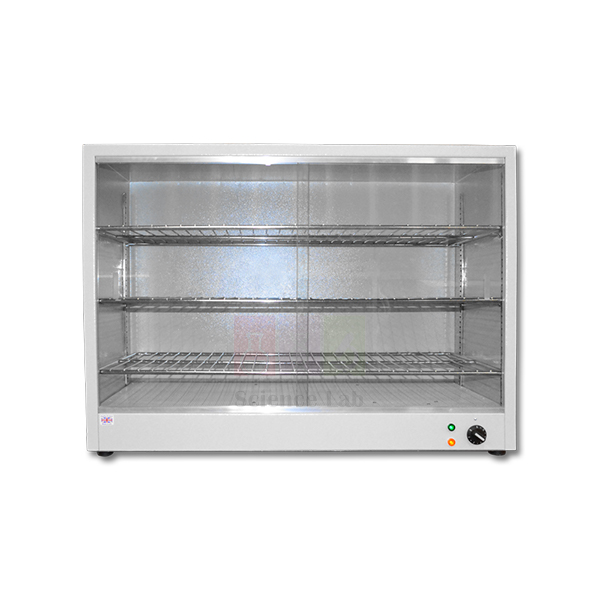
Laboratory Drying/Warming Cabinet
Laboratory Drying/Warming Cabinet (Product Code: SLE/LI/20) is a heated steel cabinet used to dry washed glassware and gently warm materials at up to about 50 °C in school, college and research laboratories. It offers 113 litres of space on two adjustable wire shelves, inside a single-skin sheet steel body finished in easy-clean grey stove paint. It is made by Jain Scientific Equipments Pvt Ltd (ScienceLab), an OEM manufacturer, at its own factory in Ambala, India.
Specifications
| Parameter | Detail |
|---|---|
| Capacity | 113 L |
| Temperature control | Adjustable, up to approx. 50 °C |
| External dimensions | 545 x 730 x 360 mm |
| Internal dimensions | 460 x 728 x 341 mm |
| Shelves | 2 wire shelves, adjustable |
| Construction | Single-skin sheet steel, easy-clean grey stove paint finish |
| Power | 240 V, 500 W |
| Product code | SLE/LI/20 |
| Manufacturer | Jain Scientific Equipments Pvt Ltd (ScienceLab) — OEM |
| Country of origin | India (made in Ambala, Haryana) |
What Is the Drying/Warming Cabinet Used For?
After washing, beakers, flasks and measuring cylinders need to dry before the next practical, and a warm, enclosed cabinet does this faster and more cleanly than an open rack. Because the temperature stays at or below about 50 °C, the cabinet can also warm items gently — for example drying papers or samples that should not meet the higher heat of a lab drying oven.
Set the wire shelves to suit tall cylinders or small vessels, stand glassware mouth-down or on its side so water drains, and leave gaps between items for warm air to circulate. Do not put flammable solvents or solvent-wet items inside. Wipe the painted interior from time to time to keep it clean.
What to Specify When Ordering
- Your mains supply — the listed cabinet is rated 240 V, 500 W.
- Whether 113 litres and two shelves suit your glassware load, or extra shelves should be discussed.
- The number of cabinets and the delivery location.
OEM Manufacturer
ScienceLab is the trading name of Jain Scientific Equipments Private Limited, the OEM (original equipment manufacturer) of this drying/warming cabinet. It is fabricated and assembled at the company's own factory at 449, HSIIDC Industrial Area, Saha, Ambala, Haryana, and dispatched factory-direct to schools, colleges, institutions, dealers and importers.
The company is incorporated under CIN U29309HR2020PTC087597, and production takes place in licensed factory premises under Factory Licence AMB-ONLINE-CHD-J-414. Replacement shelves and repeat orders are handled by the manufacturer itself — just ask us — and company details are on our company profile.
Related Laboratory Instruments
Items for washing, drying and temperature checks:
- Drying Rack — for draining glassware before it goes into the cabinet.
- Test Tube Rack With Drying Pegs — holds test tubes upside down while they drain.
- Oven, 43 litre — a compact laboratory oven to compare for other heating tasks.
- Digital Thermometer — for checking the temperature inside the cabinet.
Browse the Laboratory Instruments category for more.
Frequently Asked Questions
What temperature does the Laboratory Drying/Warming Cabinet reach?
The Laboratory Drying/Warming Cabinet has adjustable temperature control up to approximately 50 °C. That gentle range suits drying washed glassware and warming items that should not be exposed to the higher temperatures of a laboratory oven.
What is the capacity of the drying cabinet?
The Laboratory Drying/Warming Cabinet has a capacity of 113 litres, with internal dimensions of 460 x 728 x 341 mm and two adjustable wire shelves. Its external dimensions are 545 x 730 x 360 mm.
Who manufactures the Laboratory Drying/Warming Cabinet?
The Laboratory Drying/Warming Cabinet is manufactured by Jain Scientific Equipments Pvt Ltd (ScienceLab), an OEM manufacturer, at its own licensed factory at Saha, Ambala, Haryana, India. Quotations, repeat orders and spare-part requests are handled directly by the manufacturer.
What power supply does the drying cabinet need?
The Laboratory Drying/Warming Cabinet is listed for a 240 V supply with a 500 W rating. If your laboratory runs on a different mains voltage, mention it when requesting a quotation so the supply can be confirmed.
Can the shelves be adjusted for tall glassware?
Yes. The wire shelves in the Laboratory Drying/Warming Cabinet are adjustable, so the two shelves can be spaced to accommodate glassware and other items of different sizes, from small beakers to taller measuring cylinders.
How can schools order the drying cabinet in bulk?
Schools and colleges can order the Laboratory Drying/Warming Cabinet in bulk directly from the manufacturer. Send the number of units, your mains supply and the delivery address through our contact page to receive a quotation.
Request a Quote
Quotations for the Laboratory Drying/Warming Cabinet come direct from the manufacturer. Use our contact page, or add the cabinet to the enquiry cart with drying racks and other laboratory items.
Last updated: 24 September 2026
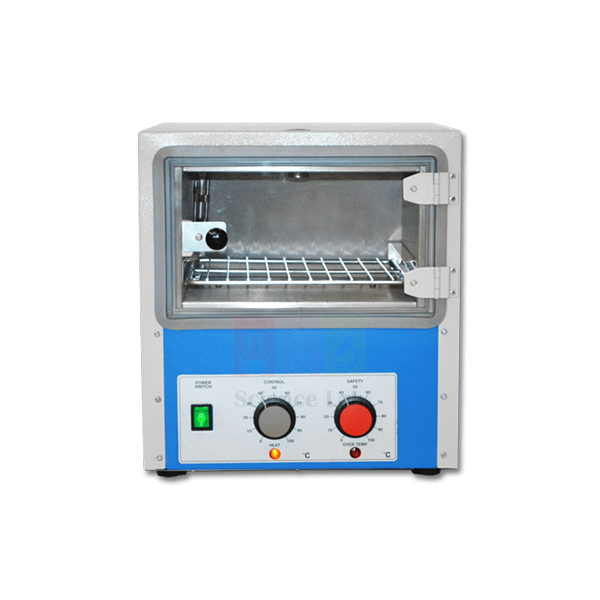
Laboratory Incubator With Visibility Door
Laboratory Incubator With Visibility Door (Product Code: SLE/LI/21) is a 100-litre general-purpose incubator used for incubation, drying, heating and other temperature-controlled work up to 100 °C in school, college and research laboratories. Biology and microbiology departments rely on it for routine culture work, and its PID digital controller shows set and actual values together with programmable ramp and dwell. It is made by Jain Scientific Equipments Pvt Ltd (ScienceLab), an OEM manufacturer, at its own factory in Ambala, India.
Specifications
| Parameter | Detail |
|---|---|
| Capacity | 100 litres |
| Maximum temperature | 100 °C |
| Fluctuation | 0.75 °C |
| Controller | PID digital controller with dual display (set and actual) and programmable ramp and dwell |
| Safety | Direct-reading thermostats for control and overheat safety protection |
| Indicator lamps | Power, heating and safety protection |
| Chamber | Aluminium-clad steel |
| Exterior | Sheet steel with powder-coat paint, durable and easy to clean |
| Shelves | Plated steel, adjustable on fixed shelf runners; listed as 4 shelves and 3 shelf positions |
| Maximum load height | 360 mm |
| Access port | Top vent/access port for thermometers and monitoring probes |
| External dimensions (H x W x D) | 735 x 590 x 567 mm |
| Internal dimensions (H x W x D) | 445 x 490 x 460 mm |
| Power | 750 W |
| Product code | SLE/LI/21 |
| Manufacturer | Jain Scientific Equipments Pvt Ltd (ScienceLab) — OEM |
| Country of origin | India (made in Ambala, Haryana) |
What Is the Laboratory Incubator Used For?
In teaching and research labs, this unit is most often used as a bacteriological incubator for growing cultures on agar plates and in broth tubes at a steady set temperature, but it also serves for drying and warming samples, glassware and media up to 100 °C. The visibility door lets staff check on plates and tubes without opening the chamber, and the listed 0.75 °C fluctuation keeps conditions stable over long incubations.
Use the programmable ramp and dwell functions to bring the chamber up to temperature gradually and hold it for a set period, and insert a thermometer or monitoring probe through the top vent/access port for an independent reading. Keep loads below the 360 mm maximum load height, spread plates across the adjustable shelves, and investigate at once if the safety protection lamp lights.
What to Specify When Ordering
- The mains voltage at your site — the listed unit is rated at 750 W.
- The shelf arrangement you need, as 4 shelves and 3 shelf positions are listed.
- Whether thermometers or monitoring probes for the top access port should be quoted.
- The number of incubators and the delivery location.
OEM Manufacturer
Jain Scientific Equipments Private Limited, which trades as ScienceLab, is the OEM (original equipment manufacturer) of this incubator and lists it among its own general-purpose laboratory incubators. The unit is built at the company's own licensed factory at Saha, Ambala, Haryana, rather than bought in from a trader.
Incubators are supplied factory-direct to schools, colleges, institutions, dealers and importers, and requests for spare parts such as shelves or indicator lamps go straight to the manufacturer — ask us. Read more on our company profile.
Related Laboratory Instruments
Items used before, during and after incubation:
- Petri Dish, Triple Vent — culture plates for incubation.
- Petri Dish Rack — keeps stacks of plates organised on the shelves.
- Digital Thermometer — for independent temperature checks.
- Digital Colony Counter — for counting colonies after incubation.
- Biosafety Cabinet Class 2 — for preparing cultures before they go into the incubator.
See the whole Laboratory Instruments range.
Frequently Asked Questions
What is the capacity of the Laboratory Incubator With Visibility Door?
The Laboratory Incubator With Visibility Door has a 100-litre aluminium-clad steel chamber with internal dimensions of 445 x 490 x 460 mm (H x W x D) and a maximum load height of 360 mm. External dimensions are 735 x 590 x 567 mm.
What temperature range does the incubator offer?
The Laboratory Incubator With Visibility Door reaches a maximum of 100 °C with a listed fluctuation of 0.75 °C. Its PID digital controller shows set and actual temperatures together and supports programmable ramp and dwell settings.
What safety features does the laboratory incubator have?
The Laboratory Incubator With Visibility Door has thermostats for both temperature control and overheat safety protection, plus indicator lamps for power, heating and safety protection. These let staff see at a glance whether the unit is heating normally.
Who manufactures the Laboratory Incubator With Visibility Door?
The Laboratory Incubator With Visibility Door is manufactured by Jain Scientific Equipments Pvt Ltd (ScienceLab), an OEM manufacturer, at its own licensed factory at Saha, Ambala, Haryana, India, and is supplied factory-direct to institutions, dealers and importers.
How many shelves does the incubator have?
The Laboratory Incubator With Visibility Door is listed with 4 plated steel shelves and 3 shelf positions on fixed runners. Please confirm the shelf arrangement you need when requesting a quotation, as the two figures should be checked together.
Is a calibration certificate available for the incubator?
Calibration-certificate availability for the Laboratory Incubator With Visibility Door should be discussed with us before ordering. The top vent/access port lets a reference thermometer or probe be inserted for your own checks; ask through our contact page.
Request a Quote
Quotations for the Laboratory Incubator With Visibility Door come direct from the manufacturer. Send your requirements through our contact page, or add the incubator to the enquiry cart with plates and racks.
Last updated: 24 September 2026
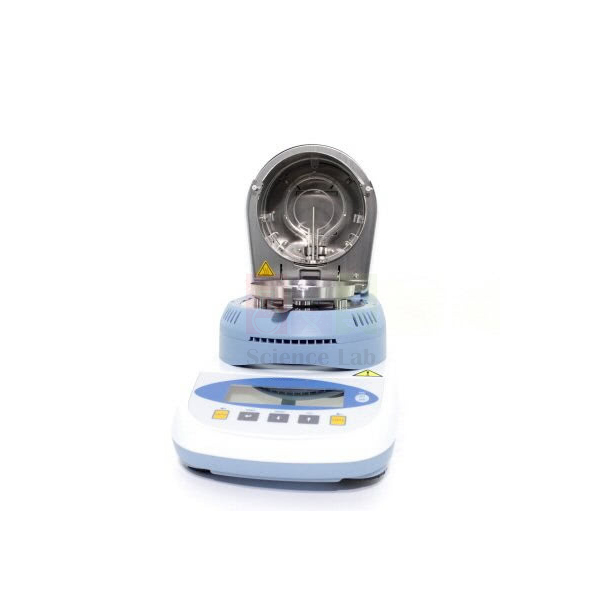
Moisture Analyser
Moisture Analyser (Product Code: SLE/LI/22) is a benchtop weighing-and-drying instrument used to determine the moisture content of raw materials and finished samples in quality-control and teaching laboratories. Food, cosmetics and ceramics laboratories rely on it, as do agriculture and construction testing rooms, and it weighs samples of up to 160 g at 0.001 g resolution while a halogen-infrared lamp dries them. This moisture analyzer is supplied by Jain Scientific Equipments Pvt Ltd (ScienceLab), Ambala, India.
Specifications
| Parameter | Detail |
|---|---|
| Weighing capacity | 160 g |
| Weighing resolution | 0.001 g (0.01%) |
| Repeatability | 0.002 (unit not stated in the listing; confirm with us) |
| Linearity | ± 0.003 g |
| Pan diameter | 110 mm |
| Display | LCD with backlight |
| Heat source | Halogen-infrared lamp |
| Temperature sensor | PT-100 |
| Drying temperature range | 50 °C – 160 °C in 1 °C steps (the product summary also quotes 35 °C – 160 °C; confirm the lower limit with us) |
| Temperature compensation (2 points) | 80 °C – 150 °C |
| Temperature slew rate | 30 °C/min |
| Moisture range / readability | 0.00% – 100% / 0.01% |
| Dry residual range / readability | 100.00% – 0.00% / 0.01% |
| ATRO display ranges | 0% – 999% and 100% – 999% (as listed) |
| Moisture precision | 0.05% – 0.5% for sample weights of 2 g – 10 g |
| Data interface | RS232 |
| Operating temperature | 5 °C – 35 °C |
| Product code | SLE/LI/22 |
| Supplied by | Jain Scientific Equipments Pvt Ltd (ScienceLab), Ambala, India |
What Is the Moisture Analyser Used For?
The instrument works on the loss-on-drying principle: a weighed sample sits on the 110 mm pan, the halogen-infrared lamp heats it, and the built-in balance tracks the falling mass until drying is complete. The result can be read as percentage moisture, percentage dry residue or an ATRO value, so one run answers the question a food technologist, cosmetic formulator or ceramics technician actually needs answered.
Typical jobs include checking incoming raw materials, confirming that finished batches meet a drying target, and testing agricultural or construction samples. For repeatable figures, spread the sample thinly and evenly, keep it within the 2 g – 10 g band for which precision is quoted, and use the same temperature setting each time you compare batches. In teaching laboratories it is also a clear way to show students how gravimetric moisture determination works.
What to Specify When Ordering
- Whether the 160 g capacity suits your samples, or whether the higher-capacity model listed below fits better.
- The drying temperatures your methods call for, so we can confirm the lower limit of the range.
- Whether you will connect the RS232 port to a computer or printer.
- Your mains supply and the number of units required per laboratory.
Supplier
Jain Scientific Equipments Private Limited, which trades under the ScienceLab name, sources this moisture analyser and supplies it from Ambala, Haryana to industrial quality labs, colleges, research units and dealers in India and international markets. Our team can help you compare it with the higher-capacity version and answer questions about sample preparation before you order. Learn more about the company on the ScienceLab company profile.
Related Laboratory Instruments
Moisture work often combines a fast drying balance with reference methods and sample handling items. These products fit the same workflow:
- Moisture Analyser, 200g — higher-capacity alternative with USB and RS-232 interfaces and stored test programs.
- Auto Karl Fischer Titrimeter — titration method for water determination when a chemical reference is required.
- Oven, 43 litre — forced-convection oven for conventional oven-drying of larger sample sets.
- Moisture Tins — containers for holding samples during oven-drying moisture tests.
See the full range of Laboratory Instruments for other analytical and general lab equipment.
Frequently Asked Questions
What does the Moisture Analyser measure?
The Moisture Analyser measures how much mass a sample loses when heated and reports it as moisture percentage, dry residue percentage or an ATRO value. Moisture and dry residue are both read to 0.01%, which suits routine quality checks on food, cosmetic, ceramic and construction samples.
What sample weight can the Moisture Analyser handle?
The Moisture Analyser weighs up to 160 g with a resolution of 0.001 g. Its stated moisture precision of 0.05% to 0.5% applies to sample weights between 2 g and 10 g, so most routine tests use a small, evenly spread portion within that band.
How does the Moisture Analyser heat the sample?
The Moisture Analyser heats samples with a halogen-infrared lamp controlled by a PT-100 temperature sensor. Drying temperatures are set in 1 °C steps up to 160 °C; because the listing gives two different lower limits, ask us to confirm the lowest setting if your method needs it.
Can the Moisture Analyser send results to a computer?
Yes, the Moisture Analyser has an RS232 interface for connecting to a computer or printer. Tell us what you plan to connect when you enquire, so we can confirm which cable or accessories you may need alongside the instrument.
Is a calibration certificate available with the Moisture Analyser?
Calibration-certificate availability for the Moisture Analyser should be discussed with us before you order. Mention in your enquiry whether you need a certificate and for which parameters, and we will tell you what can be provided with your supply.
Who supplies the Moisture Analyser?
The Moisture Analyser is supplied by Jain Scientific Equipments Pvt Ltd (ScienceLab), based in Ambala, Haryana. The company serves laboratories, colleges, industries and dealers in India and international markets, and quotes directly for single units or larger orders.
Request a Quote
For a quotation on the Moisture Analyser (SLE/LI/22), send your quantity, delivery location and intended drying temperatures through our contact page, or add the item to the enquiry cart together with any other instruments you need.
Last updated: 24 September 2026
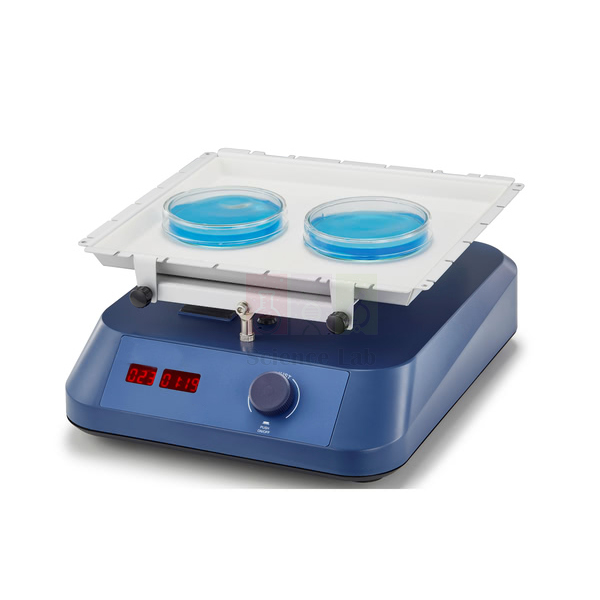
Orbital Shaker, Digital
Orbital Shaker, Digital (Product Code: SLE/LI/23) is a compact bench shaker used to mix liquids gently and continuously in culture dishes, flasks and beakers in biology, microbiology and chemistry laboratories. Teaching and research labs choose it for its quiet, smooth motion from a brushless DC motor and a maximum shaking load of 3 kg, with the platform included. It is supplied by Jain Scientific Equipments Pvt Ltd (ScienceLab), Ambala, a laboratory instruments supplier in India serving Indian and international markets.
Specifications
| Parameter | Detail |
|---|---|
| Motion | Orbital shaking (the range listing also mentions linear shaking; confirm the motion you need) |
| Drive | Brushless DC motor, described as long-life and maintenance-free |
| Maximum shaking weight | 3 kg |
| Suitable vessels | Culture dishes, flasks and beakers |
| Platform | Included |
| Instrument weight | 3.1 kg |
| Dimensions | 270 × 330 × 110 mm |
| Product code | SLE/LI/23 |
| Supplied by | Jain Scientific Equipments Pvt Ltd (ScienceLab), Ambala, India |
What Is the Digital Orbital Shaker Used For?
An orbital shaker moves its platform in a small circle so that liquid swirls evenly inside every vessel without splashing. Laboratories use it to keep cell or bacterial cultures in suspension, dissolve powders into buffers, mix reagents during incubation steps and wash or stain samples that must stay covered by liquid. Because the motion is steady and hands-free, results from one flask to the next are more consistent than hand swirling.
For even mixing, spread vessels evenly across the platform, keep the combined weight of glassware and liquid within 3 kg, and fill flasks to a modest level so the orbit can aerate the contents. The small 270 × 330 mm footprint lets it sit on a crowded bench or share space inside a cabinet; as microbiology lab equipment in India goes, it is a practical first shaker for a teaching laboratory.
What to Specify When Ordering
- Whether you need orbital motion only or also linear shaking.
- The flask, beaker or dish sizes you plan to load, so we can check they fit the included platform.
- Your mains supply details and the quantity required for each laboratory.
Supplier
ScienceLab is the trading name of Jain Scientific Equipments Private Limited, which sources this digital orbital shaker and supplies it from Ambala, Haryana to schools, colleges, hospitals, research labs and dealers. For vendor registration, the supplying company can be listed with GSTIN 06AAECJ8618A1ZT and LEI 3358004HRD1JIVXKYX49. Company background is on the ScienceLab profile page.
Related Laboratory Instruments
These items are commonly used alongside a shaker when growing, mixing or processing samples:
- Baffled Culture Flask — baffles break up the swirl and improve aeration of shaken cultures.
- Petri Dish, Triple Vent — culture dishes that sit flat on the shaker platform.
- Laboratory Incubator With Visibility Door — holds cultures at temperature between shaking steps.
- Tube Roller, Variable Speed — rolling and rocking motion for tubes and bottles rather than open vessels.
Browse all Laboratory Instruments for shakers, incubators, fume cupboards and analytical equipment.
Frequently Asked Questions
What vessels can the Orbital Shaker, Digital hold?
The Orbital Shaker, Digital is designed for culture dishes, flasks and beakers placed on its included platform. Spread the vessels evenly and keep the total weight of glassware plus contents within the 3 kg maximum shaking load for smooth, quiet running.
What is the maximum load of the Orbital Shaker, Digital?
The Orbital Shaker, Digital accepts a maximum shaking weight of 3 kg, which includes the vessels and the liquid inside them. The instrument itself weighs 3.1 kg, so it stays light enough to move between benches when needed.
What speed range does the Orbital Shaker, Digital offer?
The product listing for the Orbital Shaker, Digital does not state a speed range. Tell us the mixing speed your protocol requires through the contact page, and we will confirm the speed details of the unit we quote before you place an order.
Does the Orbital Shaker, Digital need regular maintenance?
The Orbital Shaker, Digital runs on a brushless DC motor that the listing describes as long-life and maintenance-free. Routine care is simply wiping spills from the platform promptly, keeping vents clear and switching off before loading or unloading vessels.
How much bench space does the Orbital Shaker, Digital need?
The Orbital Shaker, Digital measures 270 × 330 × 110 mm, so it fits on most laboratory benches or inside a cabinet. Leave some free space around the platform so moving flasks cannot touch nearby equipment during operation.
Who supplies the Orbital Shaker, Digital?
The Orbital Shaker, Digital is supplied by Jain Scientific Equipments Pvt Ltd (ScienceLab) of Ambala, Haryana. The company quotes directly to schools, colleges, research laboratories and dealers, and handles orders for India and international markets.
Request a Quote
For a quotation on the Orbital Shaker, Digital (SLE/LI/23), send the quantity, vessel types and delivery location through the contact page, or place it in the enquiry cart with your other laboratory items.
Last updated: 24 September 2026
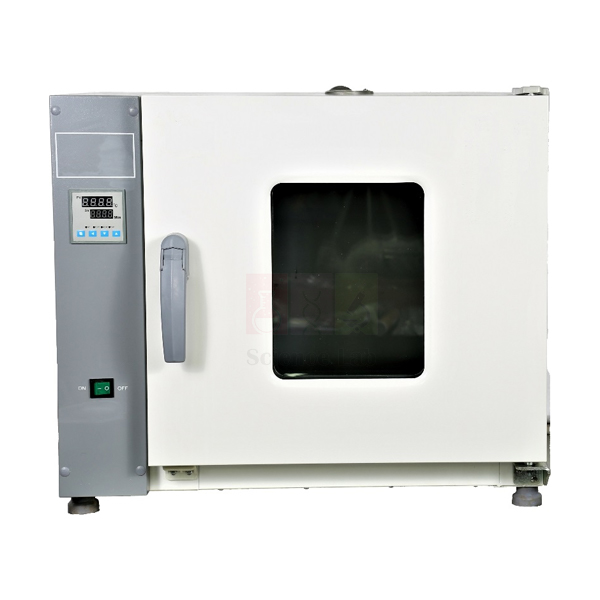
Oven, 43 litre
Oven, 43 litre (Product Code: SLE/LI/24) is a forced-convection laboratory hot air oven used to dry glassware, samples and materials at controlled temperatures in school and college laboratories. It suits science departments that need a mid-sized chamber, circulating air through a side air channel and working from 10 °C above room temperature up to 250 °C. The oven is supplied by Jain Scientific Equipments Pvt Ltd (ScienceLab), Ambala, India.
Specifications
| Parameter | Detail |
|---|---|
| Chamber capacity | 43 litre |
| Air circulation | Forced convection through a side air channel |
| Operating temperature range | Room temperature +10 °C to 250 °C |
| Temperature resolution | 0.1 °C |
| Temperature fluctuation | ± 1 °C |
| Temperature distribution accuracy | ± 2.5% |
| Intended use | School laboratory drying and heating work |
| Product code | SLE/LI/24 |
| Supplied by | Jain Scientific Equipments Pvt Ltd (ScienceLab), Ambala, India |
What Is the 43 Litre Lab Oven Used For?
In a school or college laboratory the oven handles the everyday heating jobs that a hotplate cannot: drying washed glassware, bringing soil, food or chemical samples to constant weight, drying precipitates before weighing and dry-heat treatment of glassware. Forced convection moves heated air around the chamber, so trays on different shelves dry at a similar rate and results are easier to compare between student groups.
For accurate drying, preheat the oven to the set point, load items with space between them for air to circulate, and avoid opening the door more often than necessary. Never place flammable solvents or sealed containers inside, and let hot glassware cool on a heat-resistant surface. Handle trays with gloves or tongs, because the chamber and shelves reach the set temperature.
What to Specify When Ordering
- The highest working temperature your practicals need, to confirm the 250 °C ceiling is enough.
- The number of shelves or trays you would like, as the listing does not state them.
- Your mains supply and the number of ovens required for each laboratory.
Supplier
This 43 litre oven is sourced and supplied by Jain Scientific Equipments Private Limited, the company behind the ScienceLab name in Ambala, Haryana. Schools, colleges, laboratory contractors and dealers in India and international markets can order it alongside the rest of their lab setup, and our team will answer questions on chamber size and electrical needs before you buy. See the company profile for more about ScienceLab.
Related Laboratory Instruments
Drying and heating tasks usually need safe handling items and, sometimes, a gentler or faster alternative. Consider these:
- Laboratory Drying/Warming Cabinet — lower-temperature option for drying glassware and warming items gently.
- Moisture Analyser — faster moisture results on small samples instead of oven drying to constant weight.
- Moisture Tins — containers that hold samples during oven-drying moisture tests.
- Double Oven Gloves — hand protection when removing hot trays and glassware.
- Flask Tongs — grip hot flasks without touching them.
View all Laboratory Instruments for incubators, cabinets and other heating equipment.
Frequently Asked Questions
What temperature range does the Oven, 43 litre cover?
The Oven, 43 litre works from 10 °C above room temperature up to 250 °C, with a temperature resolution of 0.1 °C. That span covers routine drying of glassware and samples as well as higher-temperature heating tasks in school and college laboratories.
How even is the temperature inside the Oven, 43 litre?
The Oven, 43 litre uses forced convection through a side air channel, with a stated temperature fluctuation of ± 1 °C and temperature distribution accuracy of ± 2.5%. Leaving space between items helps the circulating air reach every tray evenly.
What can a school laboratory use the Oven, 43 litre for?
A school can use the Oven, 43 litre to dry washed glassware, dry samples and precipitates to constant weight, and demonstrate moisture determination by loss on drying. Its 43 litre chamber is sized for school laboratory requirements.
How many shelves come with the Oven, 43 litre?
The listing for the Oven, 43 litre does not state the number of shelves or the internal dimensions. Ask us through the contact page before ordering, and tell us how many trays you need so we can confirm what is supplied with the oven.
Who supplies the Oven, 43 litre?
The Oven, 43 litre is supplied by Jain Scientific Equipments Pvt Ltd (ScienceLab), based in Ambala, Haryana. The company provides it to schools, colleges, laboratories and dealers in India and international markets, and can include it in a complete laboratory order.
What should my quotation request for the Oven, 43 litre include?
A quotation request for the Oven, 43 litre should give the quantity, your mains supply, the delivery address and any shelf or tray requirements. Mentioning the other laboratory items you need lets us quote everything together in a single reply.
Request a Quote
Ask for a quotation on the Oven, 43 litre (SLE/LI/24) through our contact page, or add it to the enquiry cart and send your full laboratory list in one enquiry.
Last updated: 24 September 2026
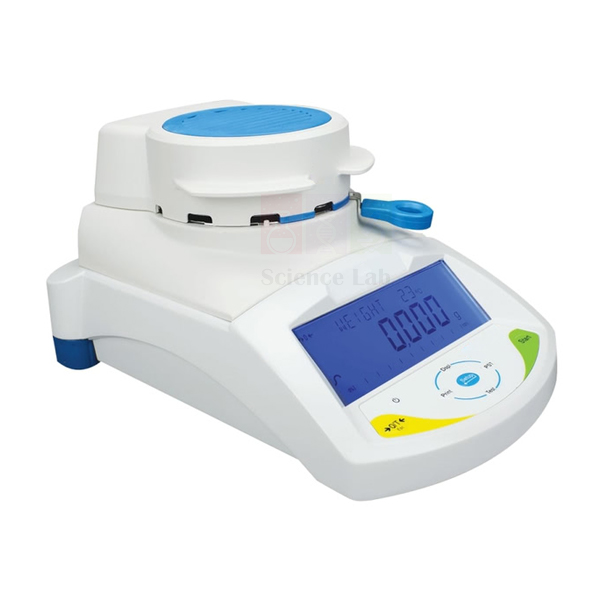
Moisture Analyser, 200g
Moisture Analyser, 200g (Product Code: SLE/LI/25) is a programmable halogen moisture analyzer used to measure moisture and solids content of samples up to 200 g in quality-control, production and college laboratories. It is aimed at users who test the same materials repeatedly, storing 49 user settings and 99 results, heating with a single 400 W halogen lamp and connecting through USB and RS-232. The instrument is supplied by Jain Scientific Equipments Pvt Ltd (ScienceLab), Ambala, India.
Specifications
| Parameter | Detail |
|---|---|
| Capacity | 200 g |
| Readability | 0.01 g / 0.05% |
| Repeatability | 0.02 g |
| Linearity | 0.02 g |
| Pan size | 100 mm diameter, with pan lifter |
| Heating technology | Single 400 W halogen lamp |
| Temperature range | 50 °C to 160 °C in 1 °C increments |
| Heating profiles | Ramp-up, stepped temperatures and single temperature |
| Preset drying modes | Seven |
| Weighing units | g, %M, %S, ATRO %M, ATRO %S |
| Interfaces | RS-232 and USB (USB interface for data communication; USB host for memory card or flash drive) |
| Memory | 99 test results and 49 programmable user settings stored internally; further results and settings on an external USB drive |
| Display | Backlit LCD, 24 mm digit height, programmable backlight (always on, always off or on only when weighing), capacity tracker, multilingual menus |
| Operating features | Colour-coded keys, zero tracking, audible overload alarm, test start on lid closing, automatic recall of test settings |
| Calibration | External calibration; calibration functions for temperature and weight |
| Stabilisation time | 3.0 (unit not stated in the listing) |
| Operating temperature | 0 °C to 40 °C |
| Construction | Die-cast aluminium with scratch-resistant aluminium housing |
| Power supply | Mains power cord |
| Net weight | 6 kg |
| Overall dimensions (W × D × H) | 250 × 360 × 185 mm |
| Product code | SLE/LI/25 |
| Supplied by | Jain Scientific Equipments Pvt Ltd (ScienceLab), Ambala, India |
What Is the 200 g Moisture Analyser Used For?
This analyser is built for routine, repeated moisture testing. Once a method has been saved as one of the 49 user settings, an operator can recall it, place the sample with the pan lifter and close the lid to start the test automatically, so every shift runs the same procedure. Results can be shown as moisture, solids or ATRO values and sent over USB or RS-232 to a computer or printer; no extra software is needed simply to take readings, which makes it practical on a production floor or at a field station.
The three heating profiles help with awkward materials: ramp-up heating suits samples that would scorch or skin over if heated abruptly, stepped temperatures suit materials that release water in stages, and a single temperature keeps simple methods fast. The seven preset drying modes give a starting point for common products. Keep the 100 mm pan clean between runs and let the chamber cool before back-to-back tests for the most consistent figures.
What to Specify When Ordering
- The sample types and drying temperatures you plan to use.
- Whether results will go to a computer, a printer or a USB drive.
- Any calibration documentation you need with the instrument.
- Quantity and delivery location.
Supplier
ScienceLab, the trading name of Jain Scientific Equipments Private Limited in Ambala, Haryana, sources this 200 g moisture analyser and supplies it to quality-control and teaching laboratories, colleges and dealers in India and international markets. Share your sample types when you enquire and we will help you decide whether this programmable model or a simpler unit fits your testing. More about the company is on the ScienceLab profile.
Related Laboratory Instruments
These products support the same moisture-testing workflow, from weighing samples to cross-checking results:
- Moisture Analyser — alternative model with finer weighing resolution for smaller samples.
- Auto Karl Fischer Titrimeter — chemical water determination to cross-check loss-on-drying results.
- Oven, 43 litre — conventional oven drying when many samples must be processed together.
- Electronic Compact Balance — general weighing during sample preparation.
Explore the complete Laboratory Instruments range for analytical and general-purpose lab equipment.
Frequently Asked Questions
What are the capacity and readability of the Moisture Analyser, 200g?
The Moisture Analyser, 200g weighs up to 200 g with a readability of 0.01 g, or 0.05% on the moisture scale. Its stated repeatability and linearity are both 0.02 g, and samples sit on a 100 mm diameter pan.
Can the Moisture Analyser, 200g store test methods and results?
Yes. The Moisture Analyser, 200g keeps 49 programmable user settings and up to 99 test results in internal memory, and an external USB drive holds further results and settings. Saved methods can be recalled without reprogramming, which speeds up repeat testing.
What heating options does the Moisture Analyser, 200g offer?
The Moisture Analyser, 200g heats with a single 400 W halogen lamp from 50 °C to 160 °C in 1 °C steps. It offers ramp-up, stepped and single-temperature profiles, plus seven preset drying modes as starting points for different products.
Does the Moisture Analyser, 200g need computer software?
No additional software is needed to take readings on the Moisture Analyser, 200g. Its USB and RS-232 interfaces connect to a computer or printer when you want to store or print results, and a USB drive can hold data away from the bench.
How is the Moisture Analyser, 200g calibrated?
The Moisture Analyser, 200g uses external calibration and includes calibration functions for both temperature and weight. If you need a calibration certificate with the supply, discuss it with us at the enquiry stage and we will confirm what documentation can be provided.
Who supplies the Moisture Analyser, 200g?
The Moisture Analyser, 200g is supplied by Jain Scientific Equipments Pvt Ltd (ScienceLab) of Ambala, Haryana. The company quotes directly to laboratories, colleges and dealers, and ships orders within India and to international markets.
Request a Quote
Request a quotation for the Moisture Analyser, 200g (SLE/LI/25) on our contact page with your quantity and sample details, or add it to the enquiry cart along with other instruments for your laboratory.
Last updated: 24 September 2026
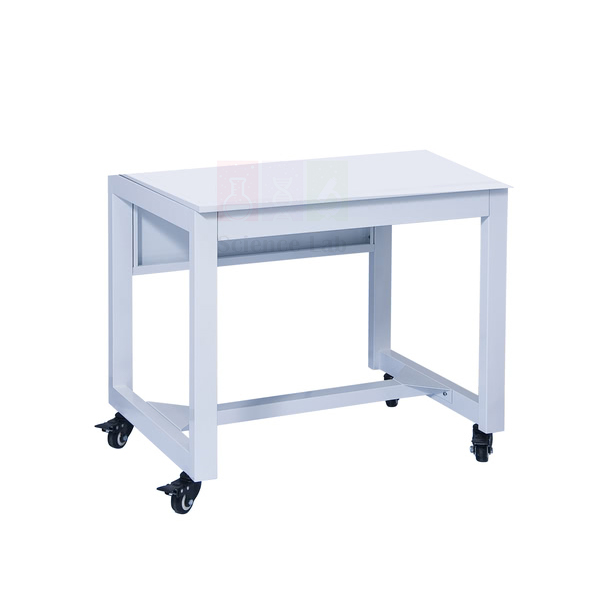
Stand for 1200mm Fume Cabinet
Stand for 1200mm Fume Cabinet (Product Code: SLE/LI/26) is a mobile support frame used to hold a 1200 mm fume cabinet or fume hood at a usable height in school, college and research laboratories. Labs that lack a spare bench, or that want to move a fume cabinet between rooms, use this piece of laboratory furniture, which is built from powder-coated aluminium and rolls on four braked castors. It is supplied by Jain Scientific Equipments Pvt Ltd (ScienceLab), Ambala, India.
Key Details
| Parameter | Detail |
|---|---|
| Designed for | 1200 mm fume cabinets (fume hoods) |
| Frame | Powder-coated aluminium |
| Mobility | Four castors, each with a brake |
| Product code | SLE/LI/26 |
| Supplied by | Jain Scientific Equipments Pvt Ltd (ScienceLab), Ambala, India |
What Is a Fume Cabinet Stand Used For?
A benchtop fume cabinet needs a firm, level base at a comfortable working height before students or technicians can use it safely. This stand provides that base without tying up bench space, and its castors let a department share one fume cabinet between laboratories or push it aside when the room is used for other lessons. The powder-coated aluminium frame has a finish that is easy to wipe down after practical work.
Before each session, roll the stand into position, apply the brakes on all four castors and check that it does not rock. Move it only when the cabinet is switched off and empty of chemicals and glassware, and keep cables and any ducting clear of the wheels. For ducted installations, confirm that the duct run allows for the stand's height before ordering.
What to Specify When Ordering
- The make or model and outer footprint of the fume cabinet that will sit on the stand.
- The approximate weight of the loaded cabinet, so we can confirm suitability.
- Whether you are ordering the stand with a new fume cabinet or for one you already own.
Supplier
Jain Scientific Equipments Private Limited, known to customers as ScienceLab, sources this fume cabinet stand and supplies it from Ambala, Haryana to schools, colleges, laboratory planners and dealers. Export shipments are handled under Importer-Exporter Code AAECJ8618A (DGFT), and the supplying company's GSTIN for vendor registration is 06AAECJ8618A1ZT. Read about the company on the ScienceLab profile page.
Related Laboratory Instruments
The stand is one part of a fume extraction setup. Check the width of any cabinet you choose against this 1200 mm stand:
- Polypropylene Inverted Mobile Fume Cabinet — mobile fume cabinet to consider alongside this stand.
- Fume Cupboard, Ductless — filter-based cabinet that needs no external duct.
- Fume Cupboard, Ductless, Polypropylene — polypropylene-bodied ductless option.
- Acid Filter for Inverted Mobile Fume Hood — replacement filter for acid work in a mobile hood.
See every fume cupboard and cabinet in our Laboratory Instruments range.
Frequently Asked Questions
What is the Stand for 1200mm Fume Cabinet made of?
The Stand for 1200mm Fume Cabinet has a powder-coated aluminium frame mounted on four braked castors. The coated finish wipes clean easily, while the brakes hold the stand still once the fume cabinet is in its working position.
Which fume cabinets fit the Stand for 1200mm Fume Cabinet?
The Stand for 1200mm Fume Cabinet is designed for 1200 mm fume cabinets and fume hoods. Because footprints differ between models, send us the make and outer dimensions of your cabinet so we can confirm the fit before you order.
Can the Stand for 1200mm Fume Cabinet be moved while in use?
No, the Stand for 1200mm Fume Cabinet should be moved only when the cabinet is switched off and empty. Its four castors make repositioning easy between sessions, and the brakes on every castor should be locked before any work begins.
What load and height does the Stand for 1200mm Fume Cabinet have?
The listing for the Stand for 1200mm Fume Cabinet does not state its height or load rating. Tell us the weight of your cabinet and the working height you need through the contact page, and we will confirm suitability with the quotation.
Who supplies the Stand for 1200mm Fume Cabinet?
The Stand for 1200mm Fume Cabinet is supplied by Jain Scientific Equipments Pvt Ltd (ScienceLab), Ambala, Haryana. The company can quote the stand on its own or together with a fume cabinet, for customers in India and international markets.
Request a Quote
To receive a quotation for the Stand for 1200mm Fume Cabinet (SLE/LI/26), share your cabinet details and delivery location on our contact page, or add the stand to the enquiry cart with any fume cupboard you are ordering.
Last updated: 24 September 2026
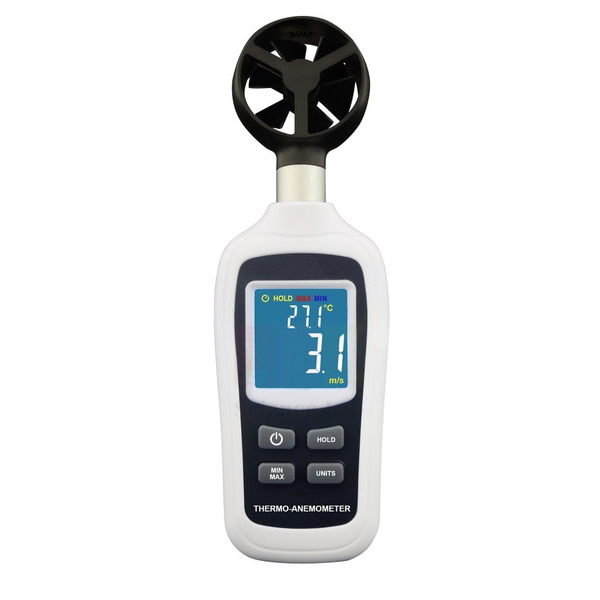
Thermo-Anemometer
Thermo-Anemometer (Product Code: SLE/LI/27) is a handheld digital meter used to measure air velocity, such as wind speed or airflow from fans and vents, in science classrooms, field studies and laboratories. Physics, geography and environmental science teachers use it because it reads from 0.4 to 30 m/s in five selectable units on a large backlit colour LCD. This pocket-sized member of our digital measuring instruments range is supplied by Jain Scientific Equipments Pvt Ltd (ScienceLab), Ambala, a laboratory equipment supplier in India.
Specifications
| Parameter | Detail |
|---|---|
| Measurement | Air velocity (the listing gives no temperature specification; confirm the temperature function with us) |
| Selectable units | m/s, ft/min, km/h, MPH, knots |
| Air velocity range | 0.4 to 30 m/s; 1.4 to 108 km/h; 0.9 to 67 MPH; 0.8 to 58 knots; 80 to 5900 ft/min |
| Air velocity accuracy | ± 3% or 0.3 m/s (± 3% or 1.0 km/h, 0.4 MPH, 0.4 knots, 40 ft/min) |
| Resolution | 0.1 m/s, 0.1 km/h, 0.1 MPH, 0.1 knots, 1.0 ft/min |
| Data update | 300 ms |
| Display | Large backlit colour LCD, 30 × 28 mm |
| Functions | MAX/MIN record, data hold, low battery indicator |
| Auto power off | After 15 minutes of inactivity; can be disabled |
| Battery | 3 × AAA (included); average life about 60 hours of continuous use |
| Operating conditions | -20 to +60 °C, 10 to 90% RH |
| Storage conditions | -20 to +60 °C, 10 to 75% RH |
| Meter dimensions | 178.5 × 56 × 30.5 mm (packed: 247 × 130 × 40 mm) |
| Weight | 114.5 g including batteries (packed: 169 g) |
| Product code | SLE/LI/27 |
| Supplied by | Jain Scientific Equipments Pvt Ltd (ScienceLab), Ambala, India |
What Is a Thermo-Anemometer Used For?
In lessons on weather and climate, students hold the meter into the wind at different heights or locations around the school and compare readings, then convert between m/s, km/h and knots to link their data to weather reports. Indoors, the same meter shows how air speed changes across a fan, at an air-conditioning vent or at the opening of a fume cupboard, which makes airflow and ventilation topics measurable rather than abstract.
The MAX/MIN record captures gusts that are too brief to read by eye, and data hold freezes a value so it can be written down. Face the sensing end squarely into the airflow, hold it still for a few seconds while the 300 ms updates settle, and take several readings to average. Turn auto power off back on after long logging sessions to save the batteries.
Supplier
Jain Scientific Equipments Private Limited, trading as ScienceLab from Ambala, Haryana, supplies this compact air velocity meter to schools, colleges, environmental science departments and dealers in India and international markets. It can be added to a wider order of classroom and laboratory instruments so that one quotation covers the whole list. Read more on the ScienceLab company profile.
Related Laboratory Instruments
Airflow and weather measurements are often taken alongside temperature and humidity readings, or in wind-tunnel practicals. These products complement the meter:
- Digital Hygrometer - Thermometer — records humidity and temperature for a complete weather log.
- Indoor/Outdoor Thermometer — compares inside and outside temperatures during field work.
- Flight Demonstration Wind Tunnel — airflow experiments where air speed readings add real data.
- Fume Cupboard, Ductless — lab ventilation unit whose airflow can be demonstrated with the meter.
Find more measuring and analytical equipment in the Laboratory Instruments category.
Frequently Asked Questions
What does the Thermo-Anemometer measure?
The Thermo-Anemometer measures air velocity from 0.4 to 30 m/s and shows it in m/s, ft/min, km/h, MPH or knots. Its name indicates a temperature function, but the listing gives no temperature range, so please ask us to confirm this before ordering.
How accurate is the Thermo-Anemometer?
The Thermo-Anemometer has a stated air velocity accuracy of ± 3% or 0.3 m/s, with a resolution of 0.1 m/s and a display update every 300 ms. Equivalent accuracy figures are listed for km/h, MPH, knots and ft/min.
What batteries does the Thermo-Anemometer use?
The Thermo-Anemometer runs on three AAA batteries, which are included, with an average life of about 60 hours of continuous use. A low battery indicator warns when replacements are needed, and auto power off after 15 idle minutes can be enabled or disabled.
Can the Thermo-Anemometer be used outdoors?
Yes, the Thermo-Anemometer is rated for operation from -20 to +60 °C at 10 to 90% relative humidity, which covers most outdoor field work. Store it at 10 to 75% relative humidity and keep it dry between sessions.
How big and heavy is the Thermo-Anemometer?
The Thermo-Anemometer measures 178.5 × 56 × 30.5 mm and weighs 114.5 g with its batteries fitted, so students can carry it easily on field trips. Its 30 × 28 mm colour LCD is backlit for reading in shade or low light.
Who supplies the Thermo-Anemometer?
The Thermo-Anemometer is supplied by Jain Scientific Equipments Pvt Ltd (ScienceLab), Ambala, Haryana. Schools, colleges and dealers in India and international markets can request a quotation directly from the company for single meters or class sets.
Request a Quote
For a quotation on the Thermo-Anemometer (SLE/LI/27), tell us how many meters you need and where to deliver them through the contact page, or add it to the enquiry cart with your other instruments.
Last updated: 24 September 2026
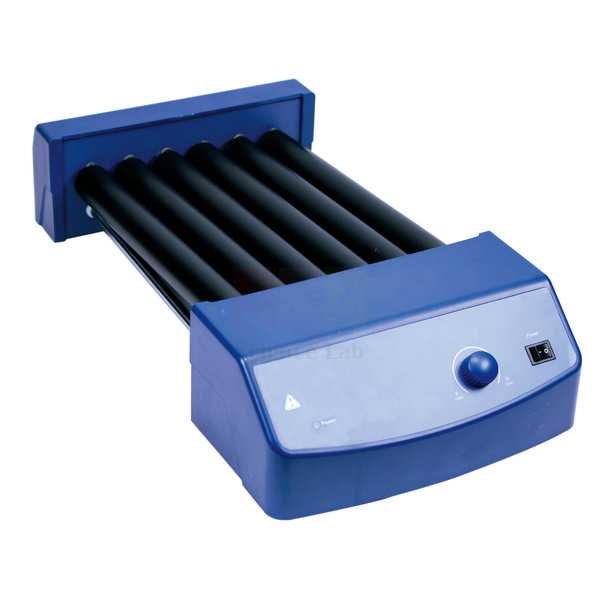
Tube Roller, Variable Speed
Tube Roller, Variable Speed (Product Code: SLE/LI/28) is a benchtop mixer used to rock and roll sample tubes and bottles gently and continuously in university, industrial and medical laboratories. Its six 280 mm rollers take most tubes, including Bijoux, Universals and centrifuge tubes, and the speed is adjustable from 0 to 70 rpm. The roller is supplied by Jain Scientific Equipments Pvt Ltd (ScienceLab), Ambala, India.
Specifications
| Parameter | Detail |
|---|---|
| Motion | Rocking and rolling |
| Number of rollers | 6 |
| Roller length | 280 mm |
| Speed range | 0 – 70 rpm, variable |
| Speed display | Analogue |
| Amplitude | 24 mm |
| Maximum load | 4 kg |
| Operation | Continuous |
| Motor | Brushless DC motor |
| Power | 25 W |
| Supply (as listed) | 240 V AC, 60 Hz — confirm against your local mains |
| Suitable vessels | Most tubes, including Bijoux, Universals and centrifuge tubes, and bottles |
| Dimensions (D × W × H) | 450 × 260 × 120 mm |
| Weight | 4.5 kg |
| Permissible working temperature | 5 – 40 °C |
| Product code | SLE/LI/28 |
| Supplied by | Jain Scientific Equipments Pvt Ltd (ScienceLab), Ambala, India |
What Is a Tube Roller Used For?
A tube roller turns closed tubes on their side while tilting them slightly, so the contents mix end to end without the foaming or splashing that vigorous shaking can cause. Laboratories use it to keep blood and other samples uniformly mixed before analysis, to hold cell or particle suspensions evenly dispersed, and to dissolve or blend reagents in bottles over long periods. Because operation is continuous, tubes can be left rolling while other work goes on.
Lay tubes across the rollers so they are supported along their length, keep caps tight, and start at a low speed before raising it to the level the sample tolerates. Keeping the total load within 4 kg and the room within 5 – 40 °C protects the motor. The compact 450 × 260 mm footprint makes this a practical piece of lab equipment for research groups with limited bench space.
What to Specify When Ordering
- The tube or bottle types and diameters you plan to roll.
- Your local mains voltage and frequency, since the listing gives 240 V AC at 60 Hz.
- The number of rollers needed per laboratory.
Supplier
This tube roller is supplied by Jain Scientific Equipments Private Limited, which operates under the ScienceLab brand in Ambala, Haryana. The company sources it for university departments, industrial labs, hospital laboratories and dealers in India and international markets, and can quote it together with tubes, racks and centrifuges. Company details are on the ScienceLab profile.
Related Laboratory Instruments
Tubes that are rolled are usually filled, capped, spun or stored with the items below:
- Universal Bottle Pp Cap — Universal-type bottles that lie across the rollers.
- Oak Ridge Centrifuge Tubes — capped tubes that can be mixed before centrifuging.
- Laboratory Centrifuge — separates samples after mixing on the roller.
- Orbital Shaker, Digital — swirling motion for open flasks, beakers and dishes.
See more mixers and bench instruments in the Laboratory Instruments category.
Frequently Asked Questions
Which tubes fit the Tube Roller, Variable Speed?
The Tube Roller, Variable Speed takes most tubes, including Bijoux, Universals and centrifuge tubes, as well as bottles. It has six rollers, each 280 mm long; if you use an unusual diameter, send us the size and we will confirm how it sits on the rollers.
What speed range does the Tube Roller, Variable Speed offer?
The Tube Roller, Variable Speed runs from 0 to 70 rpm, set with an analogue speed display. Its rocking and rolling motion has a 24 mm amplitude, which mixes contents end to end while staying gentle on delicate samples.
How much weight can the Tube Roller, Variable Speed carry?
The Tube Roller, Variable Speed accepts a maximum load of 4 kg spread across its six rollers. Distribute tubes evenly along the rollers rather than bunching them at one end, so the motion stays smooth and the motor is not strained.
What power supply does the Tube Roller, Variable Speed need?
The listing for the Tube Roller, Variable Speed gives 240 V AC at 60 Hz with a power rating of 25 W. Confirm your local mains voltage and frequency when you enquire, so we can check the supply specification of the unit we quote.
Can the Tube Roller, Variable Speed run for long periods?
Yes, the Tube Roller, Variable Speed is rated for continuous operation, and its brushless DC motor runs quietly and smoothly with reduced maintenance. Keep the room between 5 and 40 °C, which is its permissible working temperature range.
Who supplies the Tube Roller, Variable Speed?
The Tube Roller, Variable Speed is supplied by Jain Scientific Equipments Pvt Ltd (ScienceLab) of Ambala, Haryana. The company quotes directly to universities, industrial and medical laboratories and dealers in India and international markets.
Request a Quote
Request a quotation for the Tube Roller, Variable Speed (SLE/LI/28) through the contact page, including your mains supply and tube types, or add it to the enquiry cart.
Last updated: 24 September 2026
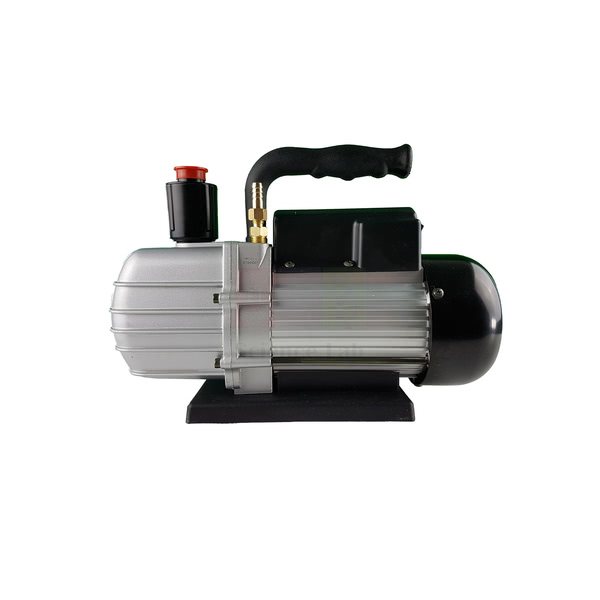
Vacuum Pump, Electric
Vacuum Pump, Electric (Product Code: SLE/LI/29) is a rotary vacuum pump used to evacuate air from filtration flasks, desiccators and other sealed apparatus in general laboratory work. It suits college, research and industrial labs that want a quiet, low-energy pump, with a 250 W motor giving a pumping speed of 1 litre per second and a pressure limit of 0.067 Pa. The pump is supplied by Jain Scientific Equipments Pvt Ltd (ScienceLab), Ambala, a laboratory equipment supplier in India.
Specifications
| Parameter | Detail |
|---|---|
| Pump type | Rotary vacuum pump |
| Pumping speed | 1 litre per second |
| Displacement | 1 litre per second |
| Pumped volume | 3.5 m³/h |
| Pressure limit | 0.067 Pa |
| Vacuum limit | 0.01 (unit not stated in the listing) |
| Rotational speed | 1300 rpm |
| Motor power | 250 W |
| Power supply | 230 V |
| Recommended oil | HFV-1 |
| Operation | Very quiet, low energy consumption |
| Product code | SLE/LI/29 |
| Supplied by | Jain Scientific Equipments Pvt Ltd (ScienceLab), Ambala, India |
What Is an Electric Vacuum Pump Used For?
Most chemistry and biology laboratories need a vacuum source at some point. Connected by thick-walled tubing, this pump speeds up Buchner filtration by drawing liquid through the filter paper, removes air from vacuum desiccators so samples dry without moisture pick-up, degasses liquids before measurement, and powers physics demonstrations such as sound in a partial vacuum. Its quiet running makes it comfortable to use in a teaching room.
Place a trap or filter flask between the apparatus and the pump so liquids and corrosive vapours cannot reach the oil. Check the oil level before each session, top up or change it with the recommended HFV-1 grade when it looks cloudy or dark, and release the vacuum in the apparatus before switching off so oil is not drawn back into the line.
What to Specify When Ordering
- The apparatus you will evacuate, such as filter flasks, desiccators or a bell jar.
- Whether you need vacuum tubing and a supply of HFV-1 oil with the pump.
- Your mains supply, since the pump is listed for 230 V.
- Quantity per laboratory and delivery location.
Supplier
Jain Scientific Equipments Private Limited, trading as ScienceLab, sources this electric vacuum pump and supplies it from Ambala, Haryana as part of its work as a laboratory equipment supplier in India and to international markets. Colleges, research institutions, industrial labs and dealers can order it with matching tubing, flasks and desiccators in one consignment. Background on the company is on the ScienceLab profile page.
Related Laboratory Instruments
A vacuum pump works with the connecting tubing and glassware below:
- Vacuum Tubing — thick-walled tubing that connects the pump to your apparatus.
- Conical Filter Flask — side-arm flask for vacuum filtration and for use as a trap.
- Buchner Funnel, 90 mm, Porcelain — filter funnel that sits on the flask during suction filtration.
- Vacuum Desiccator — sealed vessel evacuated by the pump for moisture-free drying.
- Vacuum Pump, Hand — portable manual option for light-duty demonstrations.
Browse the Laboratory Instruments category for more general laboratory equipment.
Frequently Asked Questions
How fast does the Vacuum Pump, Electric evacuate apparatus?
The Vacuum Pump, Electric has a pumping speed and displacement of 1 litre per second and a listed pumped volume of 3.5 m³/h, with the rotor turning at 1300 rpm. Actual evacuation time depends on the volume of your apparatus and the tubing used.
What vacuum level can the Vacuum Pump, Electric reach?
The Vacuum Pump, Electric has a stated pressure limit of 0.067 Pa. The listing also gives a vacuum limit of 0.01 without a unit, so if your method depends on a particular ultimate pressure, ask us to confirm it before ordering.
What oil does the Vacuum Pump, Electric use?
HFV-1 is the recommended oil for the Vacuum Pump, Electric. Check the oil level before use and replace the oil when it becomes cloudy or dark, since contaminated oil reduces the vacuum the pump can reach and shortens its working life.
What power supply does the Vacuum Pump, Electric need?
The Vacuum Pump, Electric runs from a 230 V supply and has a 250 W motor. It is described as very quiet with low energy consumption, which makes it comfortable to run in classrooms and shared laboratories during long filtration or drying work.
Can the Vacuum Pump, Electric pump solvent or acid vapours?
The Vacuum Pump, Electric should be protected by a trap or filter flask so liquids and corrosive vapours do not reach the pump oil. If your work involves large amounts of solvent or acid vapour, tell us when you enquire so we can advise on a suitable setup.
Who supplies the Vacuum Pump, Electric?
The Vacuum Pump, Electric is supplied by Jain Scientific Equipments Pvt Ltd (ScienceLab), Ambala, Haryana. The company provides it to colleges, research and industrial laboratories and dealers in India and international markets, often together with tubing and glassware.
Request a Quote
Send your requirement for the Vacuum Pump, Electric (SLE/LI/29) through our contact page, or add the pump and its accessories to the enquiry cart for a combined quotation.
Last updated: 24 September 2026
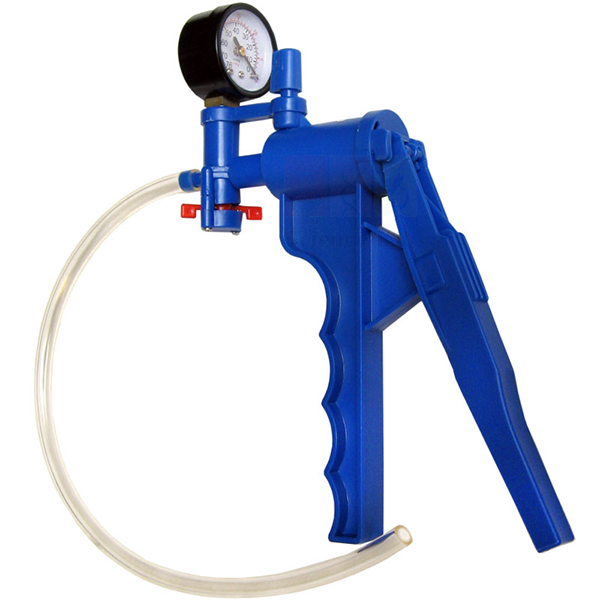
Vacuum Pump, Hand
Vacuum Pump, Hand (Product Code: SLE/LI/30) is a lightweight manually operated pump used to draw a partial vacuum, or build up air pressure, in small vessels during school and college science practicals. Teachers use it where no power socket is available or where students should feel the effort of pumping, since each stroke moves 15 cm³ of air, reaching a maximum vacuum of 50 mmHg or a positive gauge pressure of up to 2 atm. It is supplied by Jain Scientific Equipments Pvt Ltd (ScienceLab), Ambala, India.
Specifications
| Parameter | Detail |
|---|---|
| Operation | Hand operated, lightweight |
| Volume per stroke | 15 cm³ |
| Maximum vacuum | 50 mmHg (as listed) |
| Positive pressure | Gauge pressures up to 2 atm |
| Power | None required (manual) |
| Product code | SLE/LI/30 |
| Supplied by | Jain Scientific Equipments Pvt Ltd (ScienceLab), Ambala, India |
What Is a Hand Vacuum Pump Used For?
In physics lessons a hand pump makes air pressure visible: students can partly evacuate a small bell jar or flask and watch a balloon expand, see water boil at reduced pressure, or connect a manometer and read the pressure change after each stroke. Reversed to pressure mode, the same pump pushes air into a sealed vessel to show how gas pressure rises as more air is added, which links neatly to lessons on the gas laws.
Because it needs no electricity, this piece of physics lab equipment works on any bench, in a field station or during an outdoor demonstration. Connect it with thick-walled tubing, keep every joint tight, and pump steadily rather than in jerks. Stay within 2 atm when pressurising, and never pressurise glassware that is not designed for internal pressure; for larger volumes or deeper vacuum, an electric pump is the better tool.
Supplier
This manual pump is supplied by Jain Scientific Equipments Private Limited, the company that trades as ScienceLab from Ambala, Haryana. Schools, colleges, science centres and dealers in India and international markets can order it on its own or with tubing, bell jars and manometers for a complete demonstration kit. Institutional buyers who need vendor registration details can record the supplier under GSTIN 06AAECJ8618A1ZT and Legal Entity Identifier 3358004HRD1JIVXKYX49. More about us is on the ScienceLab profile.
Related Laboratory Instruments
Pressure and vacuum demonstrations usually combine the pump with the items below:
- Vacuum Tubing — thick-walled tubing that will not collapse under suction.
- Bell In Glass Jar and Base — classic demonstration of sound needing a medium.
- Manometer, Glass — shows the pressure difference produced by each stroke.
- Vacuum Pump with Pressure Gauge — alternative with a built-in gauge for reading vacuum directly.
- Vacuum Pump, Electric — motorised rotary pump for larger volumes and deeper vacuum.
More equipment is listed under Laboratory Instruments.
Frequently Asked Questions
How much air does the Vacuum Pump, Hand move per stroke?
The Vacuum Pump, Hand draws 15 cm³ of air with each stroke. That small volume per stroke gives fine control and lets students count strokes against pressure readings, but it also means large vessels take many strokes to evacuate.
What vacuum can the Vacuum Pump, Hand produce?
The Vacuum Pump, Hand is listed with a maximum vacuum of 50 mmHg. It is intended for small vessels and classroom demonstrations; for deeper vacuum or large apparatus, the Vacuum Pump, Electric in the same range is the more suitable choice.
Can the Vacuum Pump, Hand also create pressure?
Yes, the Vacuum Pump, Hand can produce positive gauge pressures up to 2 atm as well as suction. Use only vessels and tubing designed to hold internal pressure, keep all connections secure, and release the pressure slowly after the demonstration.
Does the Vacuum Pump, Hand need electricity?
No, the Vacuum Pump, Hand is operated entirely by hand and needs no power supply. Its light weight makes it easy to carry between classrooms, laboratories and outdoor teaching areas, and there is no motor to service.
Which experiments suit the Vacuum Pump, Hand?
The Vacuum Pump, Hand suits small-scale demonstrations such as expanding a balloon in a partly evacuated jar, boiling water at reduced pressure, reading pressure changes on a manometer and showing gas pressure rising in a sealed vessel.
Who supplies the Vacuum Pump, Hand?
The Vacuum Pump, Hand is supplied by Jain Scientific Equipments Pvt Ltd (ScienceLab), Ambala, Haryana. The company quotes directly to schools, colleges and dealers, and supplies single pumps or class quantities to India and international markets.
Request a Quote
To order the Vacuum Pump, Hand (SLE/LI/30), send the quantity and any accessories you need through our contact page, or add it to the enquiry cart and we will reply with a quotation.
Last updated: 24 September 2026
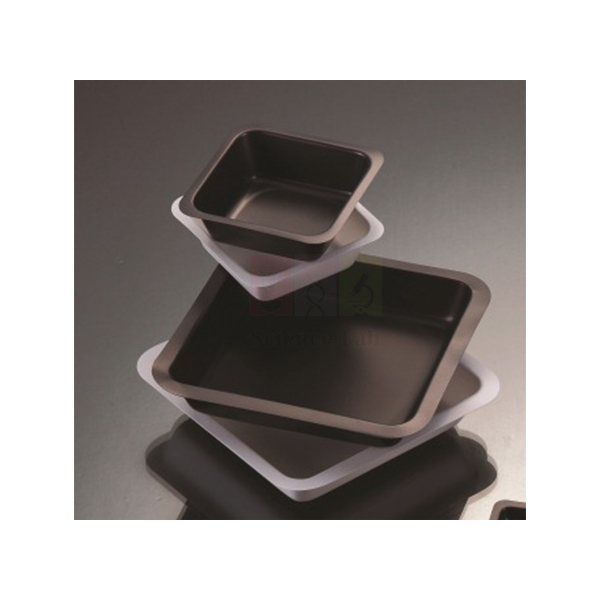
Weighing Tray
Weighing Tray (Product Code: SLE/LI/31) is a square high-impact polystyrene tray used to hold powders, granules and small solid samples while they are weighed on a laboratory balance. Chemistry, biology and pharmacy labs use such trays for routine weighing; this one comes in packs of 250, and its 140 × 140 mm size leaves room for larger portions without spilling. These trays are supplied by Jain Scientific Equipments Pvt Ltd (ScienceLab), Ambala, India.
Specifications
| Parameter | Detail |
|---|---|
| Material | High-impact polystyrene |
| Dimensions | 140 × 140 mm |
| Pack size | 250 trays |
| Product code | SLE/LI/31 |
| Supplied by | Jain Scientific Equipments Pvt Ltd (ScienceLab), Ambala, India |
What Is a Weighing Tray Used For?
Placing a sample straight onto a balance pan contaminates the pan and makes it hard to transfer every particle afterwards. A weighing tray solves both problems: set it on the pan, press tare, add the solid with a spatula, then carry the tray to the beaker or flask and pour. Using a fresh tray for each chemical keeps samples from mixing, which matters when a class of students weighs out different reagents on shared balances.
Pair it with a digital weighing balance whose pan and capacity comfortably take a 140 mm tray, and keep the tray level while adding material so nothing slides off. Polystyrene is attacked by solvents such as acetone, so weigh solvent-wet or hot material in a glass or porcelain dish instead. Store unused trays in their pack to keep them clean and dust-free.
What to Specify When Ordering
- The number of packs of 250 you need for the term or year.
- The balances they will be used on, so we can check the 140 × 140 mm size suits the pans.
- Any other weighing accessories, such as spatulas, to include in the same order.
Supplier
Jain Scientific Equipments Private Limited supplies these weighing trays under its ScienceLab trading name from Ambala, Haryana. As a lab consumables supplier in India, the company sources them for schools, colleges, pharmacy and research laboratories and dealers, and ships to India and international markets alongside balances and other bench items. Read about the company on the ScienceLab profile page.
Related Laboratory Instruments
Weighing trays are used together with a balance and a way to transfer the sample:
- Electronic Compact Balance — compact digital balance for everyday weighing with a tray.
- Physical Balance (Digital) — digital balance for student practical work.
- Spatula, Spoon End — scoops powders onto the tray in small amounts.
- Spatula, Polypropylene — plastic spatula for samples that should not touch metal.
See the full Laboratory Instruments range, or browse Balances for weighing equipment.
Frequently Asked Questions
What size is the Weighing Tray?
The Weighing Tray measures 140 × 140 mm and is made from high-impact polystyrene. The square shape gives a generous area for larger portions of powder or granules and makes it easy to pour the weighed sample neatly into a beaker or flask.
How many trays are in a pack of the Weighing Tray?
The Weighing Tray is supplied in packs of 250. When you request a quotation, state how many packs you need so the order covers a full term or academic year of weighing for your laboratory.
Which balances can I use the Weighing Tray on?
The Weighing Tray can be used on any laboratory balance whose pan and capacity comfortably hold a 140 × 140 mm tray. Place the empty tray on the pan, press tare, and then add your sample so the display shows only the sample mass.
Can the Weighing Tray hold solvents or hot material?
The Weighing Tray is polystyrene, which solvents such as acetone attack and heat can deform. Use it for dry solids at room temperature, and weigh solvent-wet or hot material in a glass or porcelain dish instead.
Should a Weighing Tray be reused?
A Weighing Tray is normally used once per chemical and then discarded, which prevents one sample contaminating the next. Buying packs of 250 keeps a steady supply on hand, so students can take a fresh tray for every reagent they weigh.
Who supplies the Weighing Tray?
The Weighing Tray is supplied by Jain Scientific Equipments Pvt Ltd (ScienceLab), Ambala, Haryana. The company provides it to schools, colleges, research laboratories and dealers in India and international markets, and can combine it with balances and spatulas in one order.
Request a Quote
Request a quotation for the Weighing Tray (SLE/LI/31) by sending the number of packs through our contact page, or add it to the enquiry cart with your other laboratory consumables.
Last updated: 24 September 2026
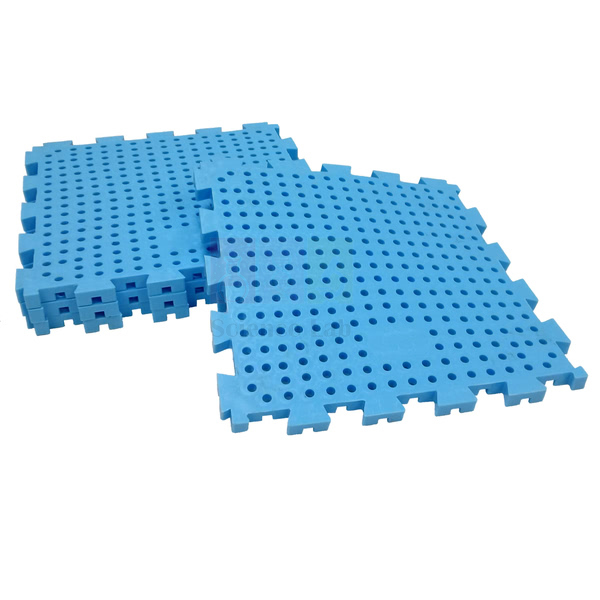
Lab Cushion
Lab Cushion (Product Code: SLE/LI/32) is an interlocking polymer sink-liner mat used to cushion glassware and trap small objects at the bottom of laboratory sinks. Technicians and teachers fit it to cut breakages during washing-up and to stop stoppers, stirrer bars or glass fragments from blocking waste pipes and traps; each pack holds four 210 × 210 × 10 mm mats that join and trim to size. It is supplied by Jain Scientific Equipments Pvt Ltd (ScienceLab), Ambala, India.
Specifications
| Parameter | Detail |
|---|---|
| Type | Multi-purpose interlocking sink-liner mat |
| Mat size (L × W × D) | 210 × 210 × 10 mm |
| Pack | 4 mats |
| Material | Blended vulcanised polymer |
| Indentation hardness | 60 ± 5 Shore A |
| Tear strength | 17 kN/m |
| Tensile strength | 7.5 MPa |
| Elongation at break | 300% |
| Rebound resilience | 60% |
| Specific gravity | 1.16 ± 0.05 g/cm³ |
| Linear shrinkage rate | 3.2 – 3.6% |
| Fitting | Join the required number of pieces to cover the sink base, then cut to size |
| Product code | SLE/LI/32 |
| Supplied by | Jain Scientific Equipments Pvt Ltd (ScienceLab), Ambala, India |
What Is a Lab Cushion Used For?
Hard ceramic or steel sinks are where much laboratory glassware gets chipped or broken, usually when a beaker slips from wet hands during washing. Lining the sink base with these resilient mats gives dropped items a softer landing, and because the mat sits over the outlet it catches stoppers, magnetic stirrer bars, pipette tips and broken glass before they can lodge in the waste pipe or trap. Lift the mats regularly to clear what they have caught and rinse them.
The mats were designed as sink liners, but users have also put them to work as a draining rack for washed glassware, as bench protection matting and as a gripper for handling items. No temperature rating is listed, so check with us before using the matting with hot glassware. For wide or double sinks, order enough packs to interlock across the whole base before trimming the edges.
What to Specify When Ordering
- The inside length and width of each sink, so we can estimate how many packs of four mats you need.
- The number of sinks or benches to be lined.
- Any intended use with hot items, so we can confirm suitability.
Supplier
These sink-liner mats are supplied by Jain Scientific Equipments Private Limited, the Ambala, Haryana company that trades as ScienceLab. The company sources lab equipment accessories like this for schools, colleges, hospital and industrial laboratories and dealers, and delivers across India and to international markets together with washing and drying equipment. Visit the ScienceLab company profile for more.
Related Laboratory Instruments
The Lab Cushion is part of the glassware washing and drying routine. These items complete it:
- Brush Test Tube — cleans the inside of test tubes over the cushioned sink.
- Drying Rack — holds washed glassware upright to drain and dry.
- Drying Rack Glass & Plastic Ware — rack for mixed glass and plastic items after washing.
- Draining Basket — basket for draining small items and loading them for further processing.
More equipment is available in the Laboratory Instruments category.
Frequently Asked Questions
What does the Lab Cushion do in a laboratory sink?
The Lab Cushion lines the bottom of a sink to cushion glassware that is dropped during washing, reducing breakages. It also traps small objects such as stoppers, stirrer bars and glass fragments that would otherwise block the waste pipe or trap.
What size are the Lab Cushion mats and how many come in a pack?
Each Lab Cushion mat measures 210 × 210 × 10 mm, and a pack contains four mats. The pieces interlock, so you can join as many as you need to cover the full base of a larger sink before cutting the edges to fit.
How is the Lab Cushion fitted?
The Lab Cushion is fitted by joining enough interlocking pieces to cover the sink base and then cutting the outer edges to size. Measure the inside of the sink first, and trim gradually so the mats sit flat without buckling at the sides.
What material is the Lab Cushion made from?
The Lab Cushion is made from a blended vulcanised polymer with a hardness of 60 ± 5 Shore A, tensile strength of 7.5 MPa, elongation at break of 300% and rebound resilience of 60%, giving a firm but cushioning surface.
Can the Lab Cushion be used with hot glassware?
Customers have used the Lab Cushion matting as a heat-proof gripper, but the listing gives no temperature rating. If you plan to place hot glassware or apparatus on it, contact us first so we can confirm whether it suits your temperatures.
Who supplies the Lab Cushion?
The Lab Cushion is supplied by Jain Scientific Equipments Pvt Ltd (ScienceLab), Ambala, Haryana. The company quotes directly to schools, colleges, laboratories and dealers in India and international markets, for single packs or enough to line every sink in a building.
Request a Quote
To get a quotation for the Lab Cushion (SLE/LI/32), send your sink sizes and the number of packs through our contact page, or add it to the enquiry cart.
Last updated: 24 September 2026
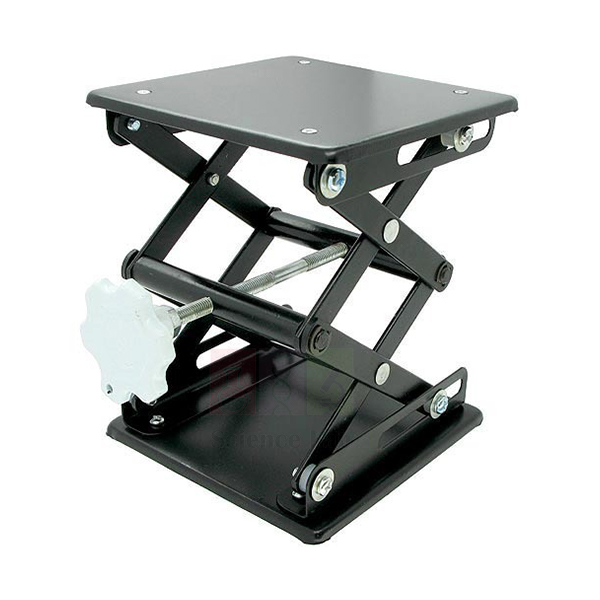
Laboratory Jack
Laboratory Jack (Product Code: SLE/LI/33) is a screw-operated scissor lift used to raise, lower and hold equipment at a precise height on the bench in chemistry, physics and biology laboratories. Students and technicians use it to set heating mantles, baths and apparatus under clamped glassware, adjusting from 60 mm to 250 mm and supporting up to 25 kg on a 150 × 135 mm top plate. It is made by Jain Scientific Equipments Pvt Ltd (ScienceLab), an OEM manufacturer, at its own factory in Ambala, India.
Specifications
| Parameter | Detail |
|---|---|
| Mechanism | Screw-operated scissor action |
| Top plate | 150 × 135 mm |
| Minimum height | 60 mm |
| Maximum elevation | 250 mm |
| Maximum load | 25 kg |
| Function | Strong, stable support for laboratory equipment |
| Product code | SLE/LI/33 |
| Manufacturer | Jain Scientific Equipments Pvt Ltd (ScienceLab) — OEM |
| Country of origin | India (made in Ambala, Haryana) |
What Is a Laboratory Jack Used For?
In a distillation or reflux setup the flask is clamped to a retort stand, and the heating mantle or water bath beneath it sits on a laboratory jack. Winding the jack up brings the heat source into contact with the flask; winding it down lets you remove the heat quickly if a reaction runs too hard, without unclamping any glassware. The same fine height control is useful for positioning a magnetic stirrer under a beaker, lining up lenses and screens on a physics bench, or bringing a sample up to a detector.
Place the load centrally on the top plate, stay within the 25 kg limit, and turn the screw steadily so the scissor arms rise evenly. Lower the jack fully before moving it, and keep the thread free of spilled chemicals so it continues to run smoothly. As everyday chemistry lab equipment, one jack per working bench makes heating practicals safer and quicker to set up.
OEM Manufacturer
ScienceLab is the trading name of Jain Scientific Equipments Private Limited, the OEM (original equipment manufacturer) of this laboratory jack. The jack is made and assembled at the company's own licensed factory at Saha, Ambala, Haryana, and supplied factory-direct to schools, colleges, research institutions, dealers and importers, so buyers deal with the maker rather than a trader. As a scientific lab equipment manufacturer in Ambala, the company also handles repeat orders and questions about replacement parts itself; ask us for details.
For institutional vendor records, the company's GSTIN is 06AAECJ8618A1ZT and its Legal Entity Identifier is 3358004HRD1JIVXKYX49. Learn more on the ScienceLab company profile.
Related Laboratory Instruments
A laboratory jack is usually one part of a heating or support setup. These items complete it:
- Retort Stand — holds the clamped flask above the jack.
- Three Prong Swivel Clamp — grips the flask neck on the retort stand.
- Digital Heating Mantle With Stirrer — heat source raised and lowered on the jack.
- Magnetic Stirrer — stirs solutions at the height the jack sets.
- Water Bath — gentle heating bath that can be brought up to a clamped vessel.
See all Laboratory Instruments for further bench equipment.
Frequently Asked Questions
How high does the Laboratory Jack lift?
The Laboratory Jack adjusts from a minimum height of 60 mm to a maximum elevation of 250 mm. The screw-operated scissor mechanism lets you stop at any point in that range, so equipment can be set to exactly the height a clamped flask or instrument needs.
How much weight can the Laboratory Jack support?
The Laboratory Jack supports a maximum load of 25 kg on its 150 × 135 mm top plate. Keep heavy items such as filled water baths centred on the plate and within that limit so the jack stays stable while it is raised.
How is the height of the Laboratory Jack adjusted?
The height of the Laboratory Jack is adjusted by turning its screw, which opens or closes the scissor arms. The screw holds the platform in position once you stop turning, so the equipment on top stays at the set height during an experiment.
What material is the Laboratory Jack made from?
The listing for the Laboratory Jack describes its mechanism, dimensions and load rating but does not state the material or finish. If your laboratory needs a particular material, tell us through the contact page and we will confirm the construction with the quotation.
Who manufactures the Laboratory Jack?
The Laboratory Jack is manufactured by Jain Scientific Equipments Pvt Ltd (ScienceLab), the OEM, at its own licensed factory in Saha, Ambala, Haryana, India. Schools, colleges, dealers and importers buy it factory-direct from the manufacturer for India and international markets.
Can I order the Laboratory Jack in bulk for several labs?
Yes, the Laboratory Jack can be ordered in class or institution quantities, and quotations come directly from the manufacturer. State the number of jacks, the delivery location and any related items such as retort stands or heating mantles so everything is quoted together.
Request a Quote
Quotations for the Laboratory Jack (SLE/LI/33) come direct from the manufacturer. Send your quantity through our contact page, or add the jack to the enquiry cart with the rest of your laboratory list.
Last updated: 24 September 2026
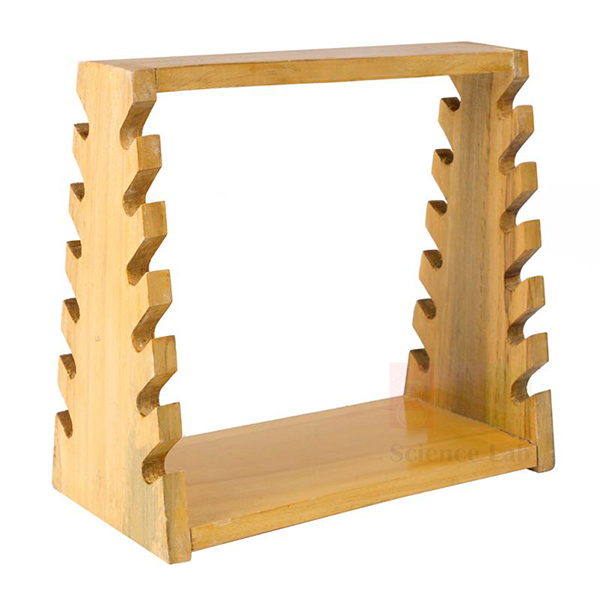
Pipette Stand, Horizontal
Pipette Stand, Horizontal (Product Code: SLE/LI/34) is a polished wooden rack used to store pipettes lying flat, off the bench and away from contamination, in chemistry, biology and clinical teaching laboratories. Its two-sided design holds 12 pipettes horizontally within a compact 260 mm wide frame, which keeps tips from rolling or chipping during titration and volumetric work. It is made by Jain Scientific Equipments Pvt Ltd (ScienceLab), an OEM manufacturer and laboratory equipment supplier in India, at its own factory in Ambala.
Specifications
| Parameter | Detail |
|---|---|
| Type | Horizontal, two-sided |
| Material | Polished wood |
| Holding capacity | 12 pipettes |
| Height | 230 mm |
| Width | 260 mm |
| Depth | 120 mm |
| Product code | SLE/LI/34 |
| Manufacturer | Jain Scientific Equipments Pvt Ltd (ScienceLab) — OEM |
| Country of origin | India (made in Ambala, Haryana) |
What Is a Horizontal Pipette Stand Used For?
A pipette left on the bench rolls, collects dust on its tip and is easily knocked to the floor. A horizontal stand gives each pipette its own resting place, lying flat, so clean pipettes are ready for the next titration and graduated and bulb pipettes of different sizes can be told apart at a glance. With pipettes supported on both sides, a pair of students can share one stand on a practical bench.
Rest pipettes on the stand only after they have been rinsed and drained, with the tips pointing the same way, and keep a separate stand for pipettes used with strong acids or stains. Wipe the polished wood with a damp cloth and dry it straight away; avoid soaking it or leaving spilled reagents on the surface. As chemistry lab equipment for schools, it pairs naturally with a pipette filler at every titration station.
OEM Manufacturer
This horizontal pipette stand is an original product of Jain Scientific Equipments Private Limited, which trades as ScienceLab and acts as its OEM (original equipment manufacturer). The stand is produced at the company's own licensed factory in Saha, Ambala, Haryana, and sent factory-direct to schools, colleges, laboratories, dealers and importers without a middle trader. Quotations, repeat orders and requests for matching stands come straight from the manufacturer, and you can ask us about replacement parts. Company details are on the ScienceLab profile page.
Related Laboratory Instruments
Pipette storage works alongside the tools used to fill pipettes and hold other volumetric glassware:
- Pipette Stand, Vertical — upright stand with a larger capacity, useful for draining after washing.
- Pipette Filler — draws liquid into the pipette safely without mouth pipetting.
- Pipette Stand Rotary — carousel-style stand for keeping many pipettes within reach.
- Burette Stand and Funnel Stand — holds the burette for the titration the pipette feeds.
Browse the Laboratory Instruments category for more stands, racks and bench equipment.
Frequently Asked Questions
How many pipettes does the Pipette Stand, Horizontal hold?
The Pipette Stand, Horizontal holds 12 pipettes lying flat. It is two-sided, so pipettes rest on both faces of the stand and a pair of students working at the same bench can each reach their own set without crossing over.
What are the dimensions of the Pipette Stand, Horizontal?
The Pipette Stand, Horizontal is 230 mm high, 260 mm wide and 120 mm deep. That compact footprint fits beside a titration setup or at the back of a practical bench without taking space needed for flasks and burettes.
What is the Pipette Stand, Horizontal made of?
The Pipette Stand, Horizontal is made of polished wood. To keep the finish in good condition, wipe it with a damp cloth and dry it immediately, and do not leave acids, stains or other reagents standing on the surface after a practical.
Should I choose the horizontal or vertical pipette stand?
Choose the Pipette Stand, Horizontal for keeping clean pipettes flat and ready at the bench. The vertical version stands pipettes upright, holds more of them and suits draining after washing, so many laboratories use one of each.
Who manufactures the Pipette Stand, Horizontal?
The Pipette Stand, Horizontal is manufactured by Jain Scientific Equipments Pvt Ltd (ScienceLab), the OEM, at its own licensed factory in Saha, Ambala, Haryana, India. It is supplied factory-direct to schools, colleges, dealers and importers in India and international markets.
Can schools order the Pipette Stand, Horizontal in bulk?
Yes, schools and colleges can order the Pipette Stand, Horizontal in class quantities, with quotations prepared directly by the manufacturer. Give the number of stands and your delivery location, and add pipette fillers or other stands if you want one combined quotation.
Request a Quote
Get a manufacturer-direct quotation for the Pipette Stand, Horizontal (SLE/LI/34) by sending your quantity on our contact page, or add it to the enquiry cart with your other laboratory items.
Last updated: 24 September 2026
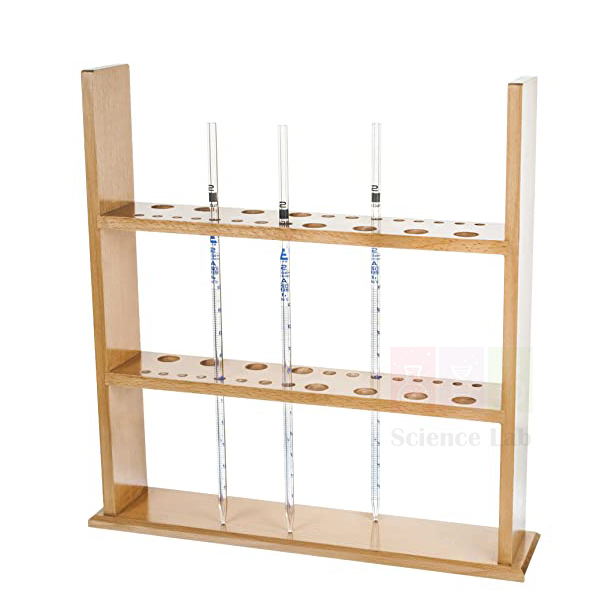
Pipette Stand, Vertical
Pipette Stand, Vertical (Product Code: SLE/LI/35) is an upright polished wooden stand used to hold pipettes vertically for storage and draining in school, college and clinical laboratories. It suits labs that need a whole class set in one place, holding 24 pipettes on a 410 mm tall frame that stands steady on four rubber feet. The stand is made by Jain Scientific Equipments Pvt Ltd (ScienceLab), an OEM manufacturer, at its own factory in Ambala, India.
Specifications
| Parameter | Detail |
|---|---|
| Type | Vertical |
| Material | Polished wood |
| Feet | Four rubber feet |
| Holding capacity | 24 pipettes |
| Height | 410 mm |
| Width | 360 mm |
| Depth | 110 mm |
| Product code | SLE/LI/35 |
| Manufacturer | Jain Scientific Equipments Pvt Ltd (ScienceLab) — OEM |
| Country of origin | India (made in Ambala, Haryana) |
What Is a Vertical Pipette Stand Used For?
After a titration practical, a class may have two dozen pipettes to rinse. Standing them upright in this rack lets the last water drain away from the bore, keeps every tip off the bench and shows at a glance whether all pipettes have been returned. Because it stores pipettes vertically, the stand takes up only a 360 × 110 mm strip of bench, leaving the rest free for burettes, flasks and notebooks.
Set the stand on a level surface with a drip tray or absorbent cloth beneath it when draining freshly rinsed pipettes, and group pipettes by volume so students pick the right one first time. The four rubber feet help it stay put when the bench is wet. Wipe the polished wood after use and dry it, rather than letting water or reagents stand on it.
OEM Manufacturer
Jain Scientific Equipments Private Limited, trading as ScienceLab, is the original equipment manufacturer (OEM) of this vertical pipette stand. It is built at the company's licensed factory at Saha, Ambala, Haryana, and institutions, dealers and importers buy it straight from the factory rather than through intermediaries. As a school lab equipment manufacturer, the company quotes directly for single stands or full laboratory sets; ask us about replacement rubber feet or matching stands. Read more on the ScienceLab company profile.
Related Laboratory Instruments
Complete a pipetting station with these filling and storage items:
- Pipette Stand, Horizontal — two-sided stand that keeps clean pipettes lying flat at the bench.
- Bulb Type, Pipette Filler — squeeze-bulb filler for drawing liquid into glass pipettes.
- Pipette Controller — motorised filler for frequent pipetting of larger volumes.
- Pipette Carousel Stand — rotating stand for keeping pipettes within easy reach.
Find more racks and bench items under Laboratory Instruments.
Frequently Asked Questions
How many pipettes does the Pipette Stand, Vertical hold?
The Pipette Stand, Vertical holds 24 pipettes upright, enough for a full class set in most school practicals. Grouping pipettes by volume across the stand helps students find the right size quickly and makes it easy to check that all have been returned.
What are the dimensions of the Pipette Stand, Vertical?
The Pipette Stand, Vertical is 410 mm high, 360 mm wide and 110 mm deep. Its narrow depth means it can stand against the wall or at the back of a bench while still holding pipettes securely in an upright position.
Why does the Pipette Stand, Vertical have rubber feet?
The Pipette Stand, Vertical sits on four rubber feet that help it grip the bench and resist sliding, even when the surface is wet after washing up. The feet also lift the polished wooden base slightly clear of spills.
Can the Pipette Stand, Vertical be used for draining pipettes?
Yes, the Pipette Stand, Vertical is well suited to draining rinsed pipettes because they stand upright. Place a drip tray or absorbent cloth under the stand, and wipe the wood dry afterwards so water does not stand on the polished surface.
Who manufactures the Pipette Stand, Vertical?
The Pipette Stand, Vertical is manufactured by Jain Scientific Equipments Pvt Ltd (ScienceLab), its OEM, at the company's own licensed factory in Saha, Ambala, Haryana, India. Schools, colleges, dealers and importers order it direct from the manufacturer.
What should I include in a quotation request for the Pipette Stand, Vertical?
A quotation request for the Pipette Stand, Vertical should state the number of stands, the delivery location and any matching items, such as horizontal stands or pipette fillers. The manufacturer then prepares a single quotation for India or international delivery.
Request a Quote
Ask the manufacturer directly for a quotation on the Pipette Stand, Vertical (SLE/LI/35) through our contact page, or place it in the enquiry cart together with your other laboratory items.
Last updated: 24 September 2026
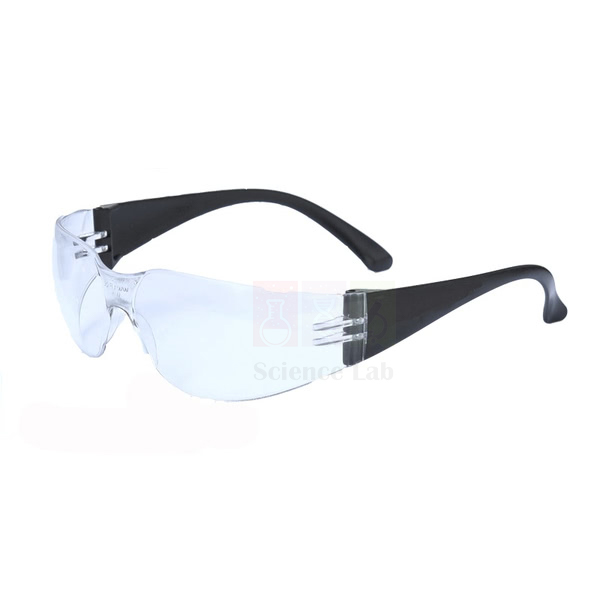
Premium Safety Spectacles
Premium Safety Spectacles (Product Code: SLE/LI/36) are lightweight protective glasses used to shield the eyes from flying particles and UV rays during practical work in school, college and research laboratories. Teachers, students and technicians choose them for their high-grade, scratch-resistant polycarbonate lens and wrap-around coverage that protects the sides of the eyes as well as the front. They are supplied by Jain Scientific Equipments Pvt Ltd (ScienceLab), Ambala, India.
Key Details
| Parameter | Detail |
|---|---|
| Lens material | High-grade polycarbonate |
| Lens surface | Scratch resistant |
| Protection (as described) | Impact and UV rays |
| Design | Lightweight, wrap-around coverage |
| Product code | SLE/LI/36 |
| Supplied by | Jain Scientific Equipments Pvt Ltd (ScienceLab), Ambala, India |
What Are Safety Spectacles Used For?
Eye protection is the first item on most laboratory safety lists. These spectacles are worn whenever there is a risk of small fragments or particles reaching the eyes, such as when glass tubing is cut or snapped, a crucible spits during heating, or a workshop-style practical produces chips. The wrap-around shape covers the sides of the eyes, which ordinary glasses leave exposed, and the light frame means students are more willing to keep them on for a full lesson.
Spectacles are not a sealed barrier. For work with corrosive liquids where splashes are likely, many schools in India issue safety goggles or use a safety screen as well. Clean the polycarbonate lens with water and a soft cloth, avoid abrasive paper, and store each pair in a clean drawer or case so the lens stays clear between practicals.
What to Specify When Ordering
- The number of pairs needed, for example one per student plus spares for visitors.
- Whether any wearers need to use them over prescription glasses, so we can confirm fit.
- Any eye-protection standard your institution requires, so we can check before quoting.
Supplier
Jain Scientific Equipments Private Limited, which does business as ScienceLab from Ambala, Haryana, sources these safety spectacles and supplies them to schools, colleges, research laboratories and dealers in India and international markets, often as part of a complete lab safety order. Institutions that register suppliers before purchase can record the company's GSTIN, 06AAECJ8618A1ZT, and its LEI, 3358004HRD1JIVXKYX49. Further company information is on the ScienceLab profile page.
Related Laboratory Instruments
Eye protection is one layer of laboratory safety. These items complete the set:
- Safety Goggles — enclosed eye protection for tasks where splashes are a concern.
- Safety Screen — bench-mounted barrier for demonstrations and reactive experiments.
- Lab Coat — protects clothing and skin during practical work.
- Gloves, Chemical Resistant — hand protection when handling chemicals.
See the full Laboratory Instruments range, or visit Safety Lab Coat for protective clothing.
Frequently Asked Questions
What are the Premium Safety Spectacles made of?
The Premium Safety Spectacles have a high-grade polycarbonate lens with a scratch-resistant surface, set in a lightweight wrap-around design. Polycarbonate is a tough, light lens material, which makes the spectacles comfortable for students to wear throughout a practical lesson.
What do the Premium Safety Spectacles protect against?
The Premium Safety Spectacles are described as protecting the eyes from impact and UV rays, with wrap-around coverage at the sides. They are open spectacles rather than sealed goggles, so for work where liquid splashes are likely, use enclosed safety goggles instead.
Do the Premium Safety Spectacles meet a particular eye-protection standard?
The listing for the Premium Safety Spectacles does not state a standard rating. If your school or employer requires eyewear rated to a specific standard, tell us through the contact page before ordering and we will check what can be supplied.
Can the Premium Safety Spectacles be worn over prescription glasses?
The listing for the Premium Safety Spectacles does not say whether they fit over prescription glasses. Let us know how many wearers need this when you enquire, so we can confirm the fit or suggest another type of eye protection.
How should the Premium Safety Spectacles be cleaned?
Clean the Premium Safety Spectacles with water and a soft cloth, then let them dry before storing. Although the polycarbonate lens is scratch resistant, avoid abrasive paper or gritty cloths, and store each pair in a clean drawer or case between lessons.
Who supplies the Premium Safety Spectacles?
The Premium Safety Spectacles are supplied by Jain Scientific Equipments Pvt Ltd (ScienceLab), Ambala, Haryana. The company quotes directly to schools, colleges, laboratories and dealers for class sets or larger quantities, with delivery in India and international markets.
Request a Quote
For a quotation on the Premium Safety Spectacles (SLE/LI/36), send the number of pairs and your delivery location through our contact page, or add them to the enquiry cart with your other safety items.
Last updated: 24 September 2026
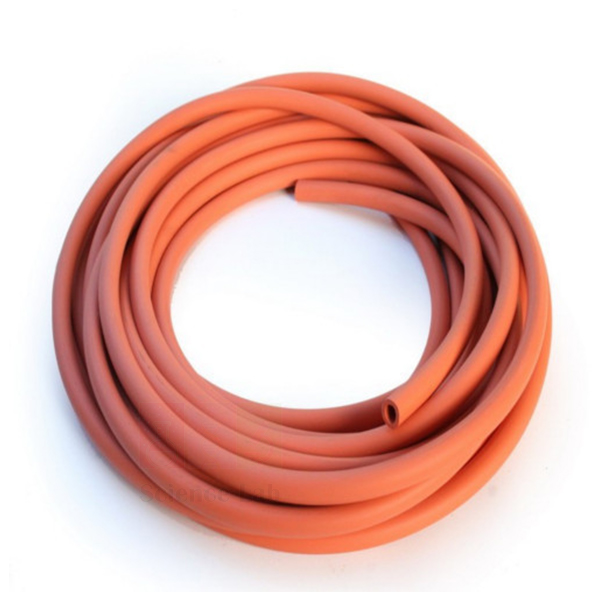
Rubber Tubing
Rubber Tubing (Product Code: SLE/LI/37) is a heavy-duty, high-pressure red rubber tube used to make flexible connections between taps, pumps, glassware and apparatus in laboratory set-ups. It has an 8 mm bore with a thick 4.5 mm wall and comes as a 10 m roll, so each lab can cut lengths to suit its benches. It is supplied by Jain Scientific Equipments Pvt Ltd (ScienceLab), Ambala, India, a lab consumables supplier in India for schools, colleges and dealers.
Specifications
| Parameter | Detail |
|---|---|
| Material | Rubber |
| Colour | Red |
| Bore diameter | 8 mm |
| Wall thickness | 4.5 mm |
| Type | Heavy-duty, high-pressure tubing |
| Supplied as | 10 m roll |
| Product code | SLE/LI/37 |
| Supplied by | Jain Scientific Equipments Pvt Ltd (ScienceLab), Ambala, India |
What Is Rubber Tubing Used For?
In teaching and routine laboratories, rubber tubing carries water or air between fixed fittings and apparatus: linking a condenser to the water tap and drain, joining a water filter pump to a filter flask, or running a delivery line from a gas-generation flask to a collecting vessel. The 4.5 mm wall resists kinking where a line bends around the bench, and a roll kept in the preparation room covers most connections a school lab setup in India needs during practical sessions.
Cut lengths square with a sharp blade, and ease the tube onto glass nozzles wetted with a little water rather than forcing it, so the glass does not snap. Fit a screw clip where flow must be regulated or shut off. For gas taps and Bunsen burners, use tubing intended for gas connections, such as our burner tubing listed below.
What to Specify When Ordering
- The number of 10 m rolls needed for your laboratories
- That the 8 mm bore suits the outside diameter of your nozzles and glass tubes
- Whether you also need screw clips, a filter pump or filter flasks on the same order
- Delivery location, and whether the order is for one institution, a dealer or export
Supplier
Jain Scientific Equipments Private Limited trades under the ScienceLab name and supplies this red rubber tubing from Ambala, Haryana, alongside the glassware and apparatus it connects. Laboratories can add rolls to a wider equipment order so that tubing, clips and flasks arrive together. Company background is on our ScienceLab company profile.
Related Laboratory Instruments
These items are used with rubber tubing in water, suction and gas-delivery set-ups:
- Hoffman Screw Clip — squeezes the tubing to regulate or stop flow.
- Filter Pump, Borosilicate Glass — tap-mounted pump that the tubing links to a filter flask.
- Conical Filter Flask — side-arm flask that receives the suction line.
- Vacuum Tubing — purpose-made alternative for dedicated vacuum lines.
- Bunsen Burner Tubing — for connecting burners to the gas tap.
Browse the full Laboratory Instruments range for more bench equipment.
Frequently Asked Questions
What size is this rubber tubing?
The ScienceLab Rubber Tubing (SLE/LI/37) has an 8 mm bore and a 4.5 mm wall thickness. It is made of red rubber and described as heavy-duty, high-pressure tubing, so it suits firm connections on glass nozzles and taps of matching size.
How much tubing is in one order unit?
Rubber Tubing SLE/LI/37 is supplied in a 10 m roll. Laboratories cut it into short lengths for condensers, filter pumps and delivery tubes, so order several rolls when equipping more than one lab or stocking a central store.
Can this rubber tubing be used for vacuum filtration?
Heavy-walled Rubber Tubing such as SLE/LI/37 is often used between a water filter pump and a filter flask, but its listing gives no vacuum rating. For dedicated vacuum lines, compare our Vacuum Tubing, or ask us which tubing suits your pump.
Is this tubing suitable for gas burners?
For Bunsen burners and gas taps, choose tubing supplied for gas connections, such as our Bunsen Burner Tubing. The red Rubber Tubing SLE/LI/37 is intended for general laboratory connections; tell us your application and we will confirm the right tubing.
How should rubber tubing be stored and looked after?
Store Rubber Tubing away from direct sunlight, heat, oils and solvents, all of which age rubber. Before each practical, flex the ends and replace any length that is cracked, hardened or sticky, cutting a fresh square end instead of reusing a split one.
Who supplies Rubber Tubing SLE/LI/37?
Jain Scientific Equipments Pvt Ltd (ScienceLab), Ambala, Haryana, India supplies this Rubber Tubing to schools, colleges, laboratories and dealers. It can be combined with glassware and apparatus in one quotation for institutional, bulk and export orders.
What does a quotation for this tubing need?
To quote Rubber Tubing SLE/LI/37, send the number of 10 m rolls, any clips or glassware to add, and the delivery location through our contact page. Bulk and export supply to India and international markets is quoted on request.
Request a Quote
Send your requirement through our contact page or add Rubber Tubing to the enquiry cart with the number of rolls you need. We reply with a quotation for supply within India and to international markets.
Last updated: 24 September 2026
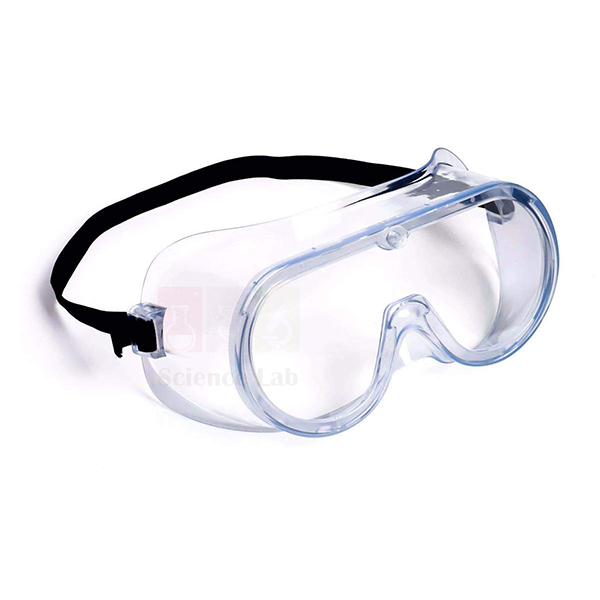
Safety Goggles
Safety Goggles (Product Code: SLE/LI/38) are polycarbonate protective eyewear worn to help protect the eyes during practical work in school, college and general laboratories. An adjustable strap lets one design fit different wearers across a class, and the goggles are meant for laboratory use, not for medical use. They are supplied by Jain Scientific Equipments Pvt Ltd (ScienceLab), Ambala, India, for institutions buying safety goggles for school labs in India.
Key Details
| Parameter | Detail |
|---|---|
| Material | Polycarbonate |
| Strap | Adjustable |
| Intended use | Laboratory eye protection — not for medical use |
| Product code | SLE/LI/38 |
| Supplied by | Jain Scientific Equipments Pvt Ltd (ScienceLab), Ambala, India |
What Are Safety Goggles Used For?
Goggles belong on every face whenever a practical involves heating liquids, pouring acids or alkalis, crushing solids or working near glassware that could crack. Because they enclose the eye area more fully than ordinary spectacles, many schools make them compulsory for chemistry sessions, and they are among the first items on any list of school chemistry lab equipment in India.
Adjust the strap so the goggles sit snugly before the practical starts, put them on before any reagent bottle is opened, and keep them on until the whole bench has finished and cleared up. After class, wash them in mild soapy water, dry them with a soft cloth and store them in a closed box so the polycarbonate does not pick up scratches.
Supplier
ScienceLab is the trading name of Jain Scientific Equipments Private Limited, which supplies these polycarbonate goggles from Ambala, Haryana, together with other lab safety items and apparatus. Schools setting up or restocking a laboratory can order goggles in class quantities with the rest of their equipment list. Learn more on our company profile.
Related Laboratory Instruments
Other protective items that are worn or set up alongside safety goggles:
- Premium Safety Spectacles — spectacle-style alternative eyewear for the lab.
- Safety Screen — clear bench shield placed in front of demonstrations.
- Lab Coat — body protection worn together with goggles.
- Transparent Plastic Laboratory Apron — splash protection for practical work.
- Eye Wash Station — emergency eye-rinsing point for the laboratory.
See the complete Laboratory Instruments category for more equipment.
Frequently Asked Questions
What are these safety goggles made of?
The ScienceLab Safety Goggles (SLE/LI/38) are made of polycarbonate and fitted with an adjustable strap. Polycarbonate is a tough, clear plastic commonly chosen for laboratory eyewear because it stays light to wear through a full practical session.
Can one size fit a whole class?
Safety Goggles SLE/LI/38 have an adjustable strap, so the same goggles can be tightened or loosened for different head sizes in a class. For very young children or special fitting needs, contact us before ordering class sets.
Are these safety goggles suitable for medical use?
No. The Safety Goggles SLE/LI/38 are laboratory eye protection and are not for medical use. They are intended for school, college and general laboratory practicals; buyers who need clinical protective equipment should discuss their requirement with us.
How should the goggles be cleaned?
Clean the Safety Goggles with mild soap and lukewarm water, rinse, and let them air-dry or wipe them with a soft cloth. Avoid solvents and abrasive pads, which can cloud polycarbonate, and keep the goggles in a closed box between classes.
Do the goggles fit over prescription glasses?
The listing for Safety Goggles SLE/LI/38 does not state whether they fit over prescription spectacles. If some students or staff wear glasses, mention it when you enquire and we will advise on suitable eyewear from our range.
Who supplies Safety Goggles SLE/LI/38?
Jain Scientific Equipments Pvt Ltd (ScienceLab), Ambala, Haryana, India supplies these Safety Goggles to schools, colleges, laboratories and dealers, and can include them in larger lab equipment orders delivered across India and to international markets.
What information is needed for a quotation?
For a Safety Goggles quotation, send the number of pairs, any other safety items or apparatus you need, and the delivery address. Class-set, bulk and export enquiries are handled through our contact page.
Request a Quote
Ask for prices on Safety Goggles through our contact page, or place them in the enquiry cart with your other laboratory items so everything is quoted together.
Last updated: 24 September 2026
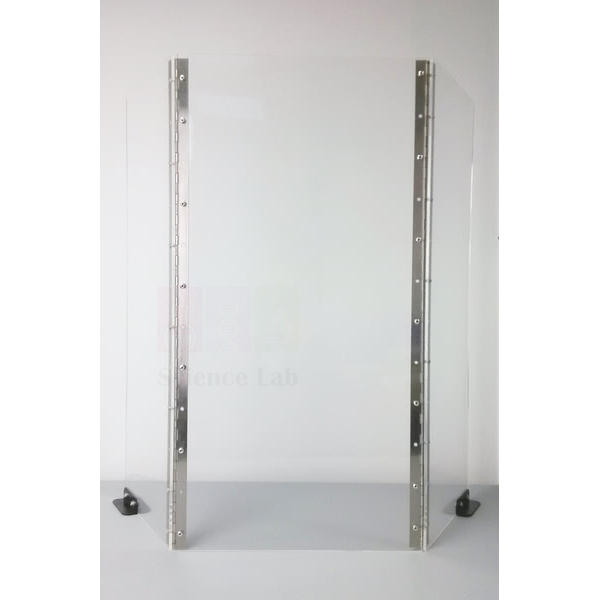
Safety Screen
Safety Screen (Product Code: SLE/LI/39) is a transparent polycarbonate shield used to put a clear barrier between a demonstration and the people watching it in school and college laboratories. A 300 mm central panel is hinged to two 225 mm side panels, all 4 mm thick and 610 mm high, so the screen can be angled around the apparatus. It is made by Jain Scientific Equipments Pvt Ltd (ScienceLab), an OEM scientific instruments manufacturer in India, at its own factory in Ambala, as part of its school chemistry lab equipment.
Specifications
| Parameter | Detail |
|---|---|
| Material | Transparent polycarbonate |
| Construction | Central panel and two side panels connected with hinges |
| Section widths | 225 mm, 300 mm and 225 mm |
| Panel thickness | 4 mm |
| Overall height | 610 mm |
| Product code | SLE/LI/39 |
| Manufacturer | Jain Scientific Equipments Pvt Ltd (ScienceLab) — OEM |
| Country of origin | India (made in Ambala, Haryana) |
What Is a Safety Screen Used For?
A bench safety screen stands in front of demonstrations that might spit, splash or crack glassware — reactive metals in water, vigorous exothermic reactions, or apparatus being heated or run under reduced pressure. The clear polycarbonate lets a whole class follow each stage while the panels sit between the apparatus and the audience.
Face the central panel towards the observers and fold the hinged side panels back to close off the sides. The screen adds to goggles and a fume cupboard; it never replaces them. For cleaning, use mild soap and water only, because solvents such as acetone can craze polycarbonate. It is a sensible addition to chemistry lab equipment for schools in India where teachers demonstrate reactions to full classes.
OEM Manufacturer
The Safety Screen is produced by Jain Scientific Equipments Private Limited, which trades as ScienceLab and is the original equipment manufacturer (OEM) of this item. It is made at the company's own licensed factory at Saha, Ambala, Haryana, India, rather than bought in from a trader, and is supplied factory-direct to schools, colleges, institutions, dealers and importers.
Because the maker handles enquiries itself, questions about replacement panels or repeat orders for more demonstration benches go straight to the manufacturer — just ask us. Read more on our company profile.
Related Laboratory Instruments
Equipment used with a safety screen during demonstrations:
- Safety Goggles — eye protection still worn behind the screen.
- Premium Safety Spectacles — alternative eyewear for observers.
- Fume Cupboard, Ductless — for demonstrations that give off fumes.
- Retort Stand — holds apparatus steady behind the screen.
- Transparent Plastic Laboratory Apron — splash protection for the demonstrator.
More items are listed under Laboratory Instruments.
Frequently Asked Questions
What are the dimensions of the Safety Screen?
The ScienceLab Safety Screen (SLE/LI/39) has three sections 225 mm, 300 mm and 225 mm wide, made from 4 mm thick polycarbonate, with an overall height of 610 mm. The two side panels are hinged to the central panel.
Why is polycarbonate used for the Safety Screen?
The Safety Screen SLE/LI/39 uses transparent polycarbonate so that students can watch a demonstration clearly through the panels. Polycarbonate is a tough plastic widely used for laboratory shields, and the 4 mm panels form a rigid, clear barrier on the bench.
Does a safety screen replace goggles or a fume cupboard?
No. The Safety Screen SLE/LI/39 is an extra barrier between a demonstration and its observers. The demonstrator and students should still wear safety goggles, and any reaction that releases fumes belongs in a fume cupboard.
How do I clean the Safety Screen?
Wipe the Safety Screen with mild soap and water and dry it with a soft cloth. Avoid acetone and other organic solvents or abrasive cleaners, which can craze or scratch polycarbonate and spoil the clear view through the panels.
Who manufactures the Safety Screen SLE/LI/39?
Jain Scientific Equipments Pvt Ltd (ScienceLab) is the OEM manufacturer of the Safety Screen and makes it at its own licensed factory at Saha, Ambala, Haryana, India. Schools, dealers and importers buy it directly from the manufacturer.
Can replacement panels be supplied?
For replacement panels or hinges for the Safety Screen SLE/LI/39, contact us with the product code and the part you need. As the manufacturer, we will confirm what can be supplied and quote it directly.
What should a quotation request include?
For a Safety Screen quotation, send the number of screens, any related safety items such as goggles, and your delivery location. Bulk orders for several schools and export enquiries from international markets are welcome through our contact page.
Request a Quote
Quotations for the Safety Screen come direct from the manufacturer. Write to us via the contact page or add the screen to the enquiry cart, and we will reply with pricing for India or export delivery.
Last updated: 24 September 2026

Test Tube Rack, Z Type
Test Tube Rack, Z Type (Product Code: SLE/LI/40) is a three-tier, Z-shaped steel stand used to hold test tubes and wider tubes upright on the bench during experiments in school and college laboratories. Its powder-coated steel sheet carries holes of three diameters — 28 mm, 20 mm and 13 mm — so tubes of different sizes share one rack. It is made by Jain Scientific Equipments Pvt Ltd (ScienceLab), an OEM manufacturer, at its own factory in Ambala, India, as a test tube rack for school labs in India.
Specifications
| Parameter | Detail |
|---|---|
| Material | Steel sheet |
| Finish | Powder coated |
| Design | Z shape with three tiers |
| Holes | 5 holes of 28 mm, 6 holes of 20 mm and 8 holes of 13 mm diameter |
| Overall height | 75 mm |
| Length | 200 mm |
| Product code | SLE/LI/40 |
| Manufacturer | Jain Scientific Equipments Pvt Ltd (ScienceLab) — OEM |
| Country of origin | India (made in Ambala, Haryana) |
What Is a Z Type Test Tube Rack Used For?
The rack keeps tubes upright and apart while reagents are added, reactions are watched, or samples wait their turn for testing. With three hole sizes on one stand, a student group can park narrow tubes in the 13 mm holes and wider tubes in the 20 mm and 28 mm rows, which suits practicals such as salt analysis and precipitation reactions. It works equally well as biology lab equipment in schools, where food tests are run in rows of tubes.
Check the outside diameter of your tubes against the three hole sizes before ordering. The compact 200 mm length leaves room on busy benches for burners and reagent bottles. Rinse off spills promptly and dry the rack; the powder coating protects the steel, so do not leave acids standing on it.
What to Specify When Ordering
- The number of racks needed, for example one per student group
- That your tube diameters suit the 28 mm, 20 mm and 13 mm holes
- Whether you also need test tubes, a test tube brush or a tube holder
OEM Manufacturer
Jain Scientific Equipments Private Limited, the company behind the ScienceLab brand, is the OEM (original equipment manufacturer) of this Z type rack. The rack is made at the company's own licensed factory at Saha, Ambala, Haryana, India, and reaches schools, colleges, dealers and importers factory-direct.
Buying from the manufacturer means school orders, dealer stock and export consignments are quoted by the maker itself, and repeat orders for extra racks go straight back to the factory — just ask us. Visit our company profile to learn more.
Related Laboratory Instruments
Items used with this rack in everyday test-tube work:
- Test Tube Racks — other rack styles for different benches.
- Test Tube Stand 3 Tier — an alternative three-level stand.
- Test Tubes With Rim — tubes to fill the rack.
- Brush Test Tube — for cleaning tubes after the practical.
- Alloy Test Tube and Thermometer Holder — grips a tube while it is heated.
Explore more equipment in the Laboratory Instruments category.
Frequently Asked Questions
How many tubes does the Z Type Test Tube Rack hold?
The Test Tube Rack, Z Type (SLE/LI/40) has 5 holes of 28 mm, 6 holes of 20 mm and 8 holes of 13 mm diameter across its three tiers, so it holds tubes of three different sizes at the same time.
What is the Z Type rack made of?
The Test Tube Rack, Z Type is made from steel sheet shaped into a Z with three tiers and finished with a powder coating. The coating gives a smooth surface that is easy to wipe clean after practical work.
What are the overall dimensions?
The Test Tube Rack, Z Type (SLE/LI/40) has an overall height of 75 mm and a length of 200 mm. Its compact footprint leaves room on a shared bench for burners, reagent bottles and notebooks.
Which tube sizes fit the rack?
The Test Tube Rack, Z Type accepts tubes whose outside diameter is smaller than its 28 mm, 20 mm or 13 mm holes. Measure your tubes before ordering, or send us their sizes and we will confirm the fit.
Who manufactures the Test Tube Rack, Z Type?
Jain Scientific Equipments Pvt Ltd (ScienceLab) is the OEM manufacturer of the Test Tube Rack, Z Type, making it at its own licensed factory at Saha, Ambala, Haryana, India, and supplying schools, dealers and importers directly.
Can you supply the racks in bulk or for export?
Yes, the Test Tube Rack, Z Type (SLE/LI/40) can be quoted in class-set and bulk quantities for schools, dealers and tenders, and for export to international markets. Send quantities and delivery details through our contact page.
Request a Quote
Get a manufacturer-direct quotation for the Test Tube Rack, Z Type by writing to us on the contact page, or add it to the enquiry cart with the rest of your laboratory list.
Last updated: 24 September 2026