- Physics Lab Equipment
- Chemistry Lab Equipment
- Biology Lab Equipment
- Anatomical Lab Equipment
- Learning
- Educational Lab Equipment
- Magnets
- Agriculture
- Astronomy
- Earth Science
- Geography Lab Equipment
- Safety Lab Coat
- Laboratory
- Meteorological
- Electricity & Magnetism
- Heat
- School Lab Equipment
- Lab Glassware
- Science Lab Equipment
- Tvet Lab Equipment
- Robotics Kits Supplier and Manufacturer for Schools India
- Math Lab Equipment Manufacturers and Exporters in Ambala
- STEM Kits Manufacturers and Supplier India
- Engineering Lab Equipment
- Hospital Lab Equipment
- Water, Sanitation & Hygiene Supplies
- Cold Chain, Solar & Communication Equipment
- Nutrition
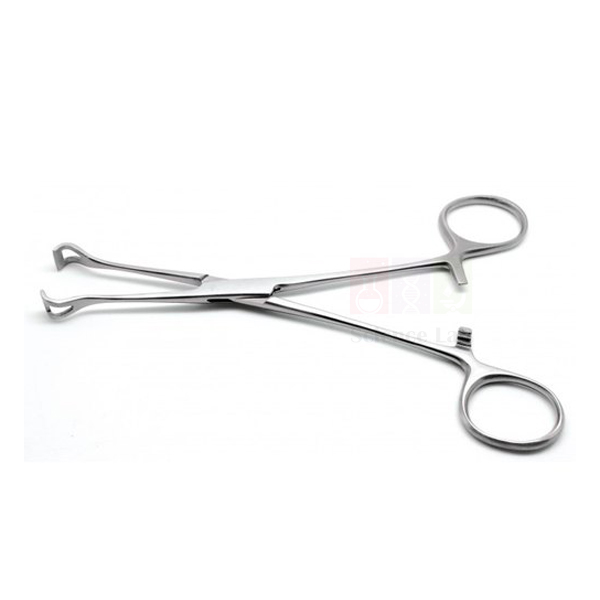
Babcock Tissue Forceps
Babcock Tissue Forceps (Product Code: SLE/SI/25) is a springy tissue- and organ-holding forceps used to grasp lungs, intestines and other soft organs during open surgery. At 20 cm, with flexible arms and a lockable soft ratchet, it gives surgeons and theatre nurses more reach than shorter tissue forceps, while its ridged, triangular-aperture grippers stay non-traumatic. It is supplied by Jain Scientific Equipments Pvt Ltd (ScienceLab), Ambala, India, which also works as a lab equipment exporter for overseas hospital buyers.
Specifications
| Parameter | Detail |
|---|---|
| Type | Tissue and organ holding forceps (gripping forceps, springy) |
| Grippers | Ridged with triangular aperture; pronounced but non-traumatic ridges |
| Arms | Flexible |
| Ratchet | Soft ratchet, lockable |
| Length | 20 cm |
| Material | Martensitic steel (quenched, magnetic) |
| Composition | 0.20% carbon; 13% chromium |
| Intended use | Gripping soft and delicate tissues (lungs and intestines) and organs |
| Product code | SLE/SI/25 |
| Supplied by | Jain Scientific Equipments Pvt Ltd (ScienceLab), Ambala, India |
What Is a Babcock Forceps Used For?
Babcock forceps are the usual choice when a tubular or spongy structure has to be encircled and lifted rather than pinched: a loop of small bowel, a segment of lung, or an organ being mobilised. The open triangular jaws cradle the tissue, and the flexible arms spread the closing pressure so the grip is secure but gentle.
The 20 cm length helps in the chest and the deeper abdomen, where a shorter forceps would bring the hand into the operator's line of sight. Surgical skills labs that buy from a laboratory instruments supplier in India also place Babcock forceps on their teaching trays. Inspect the ratchet and the alignment of the jaws before each use, and reprocess the instrument according to your facility's protocol.
Supplier
Jain Scientific Equipments Private Limited trades under the name ScienceLab from Ambala, Haryana. For the Babcock Tissue Forceps the company acts as supplier, sourcing the instrument for operating theatres, training institutions and dealers and shipping to customers in India and international markets. Company background is on our profile page.
Related Surgical Instruments
Other instruments a theatre team typically sets out with Babcock forceps:
- Collin Tissue Forceps — a shorter 16 cm tissue forceps for delicate intestinal work
- Doyen Intestinal Clamp Forceps Curved — occludes a bowel section during an anastomosis
- Balfour Abdominal Retractor 3 Blades — self-retaining retractor that keeps the abdominal wound open
- Metzenbaum Nelson Scissors Curved Blunt/Blunt — curved blunt/blunt scissors for dissection around the organ
See every forceps, retractor and scissor pattern in our Surgical Instruments category.
Frequently Asked Questions
How long is the Babcock Tissue Forceps?
The Babcock Tissue Forceps is 20 cm long. That extra reach, compared with the 16 cm Collin Tissue Forceps, makes it convenient for grasping lung tissue, bowel and organs lying deeper in the chest or abdomen.
Which tissues is the Babcock Tissue Forceps designed to hold?
The Babcock Tissue Forceps is designed to grip soft and delicate tissues such as the lungs and intestines, and to hold organs. Its ridged grippers with a triangular aperture have pronounced ridges that are non-traumatic, and its flexible arms help keep the grip gentle.
What material is used for the Babcock Tissue Forceps?
The Babcock Tissue Forceps is made of martensitic steel, which is quenched and magnetic, with a composition of 0.20% carbon and 13% chromium. Please ask us if your tender or purchase file requires additional material information.
Does the Babcock Tissue Forceps have a locking ratchet?
Yes. The Babcock Tissue Forceps has a soft, lockable ratchet, so the jaws can be left closed on tissue while the surgeon or assistant uses their hands for other tasks. The springy arms reopen the jaws when the ratchet is released.
Can the Babcock Tissue Forceps be exported?
Yes, Jain Scientific Equipments Pvt Ltd (ScienceLab) supplies the Babcock Tissue Forceps to buyers in India and international markets. Give us the quantity, destination and any documentation your import process needs, and we will prepare a quotation.
Who supplies the Babcock Tissue Forceps?
The Babcock Tissue Forceps is supplied by Jain Scientific Equipments Pvt Ltd, which trades as ScienceLab and is based in Ambala, Haryana, India. It can be quoted on its own or together with other forceps, scissors and retractors.
Request a Quote
For a price on the Babcock Tissue Forceps, write to us through the contact page or place it in the enquiry cart along with the other theatre instruments you need.
Last updated: 24 September 2026