- Physics Lab Equipment
- Chemistry Lab Equipment
- Biology Lab Equipment
- Anatomical Lab Equipment
- Learning
- Educational Lab Equipment
- Magnets
- Agriculture
- Astronomy
- Earth Science
- Geography Lab Equipment
- Safety Lab Coat
- Laboratory
- Meteorological
- Electricity & Magnetism
- Heat
- School Lab Equipment
- Lab Glassware
- Science Lab Equipment
- Tvet Lab Equipment
- Robotics Kits Supplier and Manufacturer for Schools India
- Math Lab Equipment Manufacturers and Exporters in Ambala
- STEM Kits Manufacturers and Supplier India
- Engineering Lab Equipment
- Hospital Lab Equipment
- Water, Sanitation & Hygiene Supplies
- Cold Chain, Solar & Communication Equipment
- Nutrition
Surgical instruments in this range are individual, mainly steel hand instruments for gynaecological and general surgical work, bought by hospitals, maternity units, health centres and the medical and nursing colleges that train their staff. Jain Scientific Equipments Pvt Ltd (ScienceLab), Ambala, supplies them one by one, from a Graves speculum and Hegar dilators to artery forceps, a needle holder and abdominal retractors, together with a dental mirror and scaler. Hospitals that already use ScienceLab as a laboratory instruments supplier in India can add them to the same order.
What Does the Surgical Instruments Range Include?
| Type | What it covers | Example products |
|---|---|---|
| Gynaecological instruments | Speculum, vaginal retractors, uterine forceps, sound, dilators, curette and scoop | Auvard Vaginal Retractor; Museux Uterine Forceps Curved; Sims Uterine Curette Sharp; Martin Uterine Sound |
| Artery forceps and clamps | Straight and curved haemostatic forceps, an intestinal clamp and a towel clamp | Kelly Artery Forceps Curved; Halsted Mosquito Artery Forceps Curved; Doyen Intestinal Clamp Forceps Curved; Backhaus Towel Clamp |
| Tissue and dressing forceps | Tissue-holding forceps in several patterns and dressing forceps | Allis Tissue Forceps; Babcock Tissue Forceps; Cheron Dressing Forceps |
| Surgical scissors | Deaver, Mayo, Metzenbaum-Nelson and gynaecological scissors, straight or curved | Deaver Scissors Straight Sharp/Blunt; Mayo Scissors Curved Blunt/Blunt; Metzenbaum Nelson Scissors Curved Blunt/Blunt |
| Retractors and general instruments | Abdominal and Farabeuf retractors, scalpel handle and blade, probe, spatula and suction tube | Balfour Abdominal Retractor 3 Blades; Farabeuf Retractor Double Ended Pair; Scalpel Handle No. 3 |
| Dental | Instruments for dental clinics and hospital dental units | Dental Mirrors, Plastic; Dental Scaler |
Featured Surgical Instruments
| Product | Product Code | Typical Use |
|---|---|---|
| Graves Vaginal Speculum | SLE/SI/03 | Examining the vaginal walls and cervix |
| Hegar Uterine Dilator Double Ended | SLE/SI/34 | Set of 8 double-ended cervical dilators in a canvas roll |
| Mayo Hegar Needle Holder Straight | SLE/SI/17 | Holding suture needles while stitching |
| Kocher Artery Forceps Straight | SLE/SI/29 | General gripping and haemostasis |
| Yankauer Suction Tube | SLE/SI/13 | Aspirating fluids from the operative area |
| Sterile Disposable Scalpel Blade No. 22 | SLE/SI/15 | Single-use blade for a standard scalpel handle |
Supply & Company Details
ScienceLab, the trading name of Jain Scientific Equipments Private Limited in Ambala, Haryana, supplies these surgical instruments to hospitals, health programmes, colleges, dealers and importers in India and international markets. Each product page lists the instrument's steel type (austenitic or martensitic), composition and main dimensions, which helps buyers match a tender specification. Instruments can be ordered singly or in quantity, and quotations come directly from the company.
Related Ranges
- Hospital Lab Equipment — the parent range covering furniture, devices, kits and consumables for hospitals and clinics.
- Medical Kits — ready-assembled dressing, suture, delivery, curettage, basic surgery and abdominal instrument sets; choose this page for single instruments or replacements.
- Medical Utensils — stainless-steel instrument and dressing trays, bowls and kidney basins.
- Hospital Furniture — Mayo-type and two-tray instrument tables and dressing trolleys.
- Dissection Equipment — dissecting instruments for biology teaching rather than surgical use.
Frequently Asked Questions
What is included in the Surgical Instruments range?
The Surgical Instruments range lists individual gynaecological instruments (speculum, retractors, uterine forceps, dilators, curette), artery, tissue and dressing forceps, surgical scissors, abdominal retractors, a scalpel handle and blade, a needle holder and a suction tube, plus a dental mirror and dental scaler.
How is this range different from the surgical sets in Medical Kits?
Surgical Instruments are sold one at a time, for adding or replacing single items, while Medical Kits contain pre-assembled sets such as the dressing, suture, delivery and abdominal sets. Order a kit for a complete set and use this range to top it up.
What steel are the Surgical Instruments made of?
Most Surgical Instruments in this range are listed in austenitic (non-magnetic) or martensitic (quenched, magnetic) steel, with the steel composition and length given on each product page. The dental mirror is plastic, and the dental scaler is listed as stainless steel.
Who supplies these Surgical Instruments?
Jain Scientific Equipments Pvt Ltd (ScienceLab), Ambala, supplies the Surgical Instruments range to hospitals, health centres, medical and nursing colleges, NGOs, dealers and importers in India and abroad. ScienceLab sources and supplies these instruments; they are not part of its own manufactured range.
What should a Surgical Instruments quotation request include?
A Surgical Instruments quotation request should give each instrument's name and product code, the quantity, any tender requirement such as pattern, length or steel type, and the delivery destination, so the quotation matches the specification line by line.
Request a Quote or Catalogue
Send your instrument list through the contact page, or add items to the enquiry cart and submit it for a quotation or catalogue.
Last updated: 24 September 2026

Curette Uterine Sharp & Blunt
Curette Uterine Sharp & Blunt (Product Code: SLE/BL/15) is a stainless steel gynaecological curette in sharp and blunt patterns, used to scrape or sample the uterine lining within gynaecology instrument sets and for instrument-identification practice in medical and nursing training. It suits instrument rooms, nursing schools and paramedical institutes that want a dimensionally accurate, strongly constructed curette. It is supplied by Jain Scientific Equipments Pvt Ltd (ScienceLab), Ambala, India, a laboratory equipment supplier to institutions.
Key Details
| Parameter | Detail |
|---|---|
| Type | Uterine curette, sharp and blunt pattern |
| Material | Stainless steel |
| Construction | Dimensionally accurate and strongly constructed |
| Sterility | Not stated — treat as non-sterile unless confirmed in writing |
| Product code | SLE/BL/15 |
| Supplied by | Jain Scientific Equipments Pvt Ltd (ScienceLab), Ambala, India |
What Is the Uterine Curette Used For?
A uterine curette is drawn along the uterine wall to scrape or sample tissue. The sharp pattern has a cutting edge and the blunt pattern a rounded one, which is why gynaecology instrument sets commonly carry both. In medical, nursing and paramedical teaching, the same instrument is used for identification tests, tray-preparation exercises and handling practice, where students learn to tell the two edge profiles apart and pass the instrument safely.
Stainless steel stays in good condition when it is cleaned promptly after each session, rinsed, dried thoroughly and stored in a dry tray; long soaks in strong chloride or bleach solutions should be avoided because they can mark the surface. Inspect the working edge before every use and set aside any instrument that is bent or nicked.
Supplier
Jain Scientific Equipments Private Limited trades as ScienceLab from Ambala, Haryana, India, and supplies this uterine curette as part of its surgical instruments range for teaching institutions, instrument rooms and distributors. Any clinical-use, sterility or packaging requirement should be raised at enquiry stage so it can be checked before a quotation is issued. Company background is on our company profile.
Related Surgical Instruments
Other gynaecology-pattern instruments often listed alongside a uterine curette:
- Sims Uterine Curette Sharp — a sharp-only curette pattern for comparison
- Hegar Uterine Dilator Double Ended — dilators that usually sit in the same gynaecology set
- Martin Uterine Sound — a probe-type instrument taught alongside curettes
- Museux Uterine Forceps Curved — holding forceps from the same instrument group
- Graves Vaginal Speculum — a speculum commonly included in gynaecology trays
Browse the Surgical Instruments range for more stainless steel instruments.
Frequently Asked Questions
Is the Curette Uterine Sharp & Blunt one double-ended instrument or two pieces?
Our product details for the Curette Uterine Sharp & Blunt name both sharp and blunt patterns but do not state whether they come as one double-ended instrument or two separate curettes. Please confirm the format through our contact page before ordering.
What material is the Curette Uterine Sharp & Blunt made from?
The Curette Uterine Sharp & Blunt is made of stainless steel and is described as dimensionally accurate and strongly constructed. Stainless steel suits instruments that are cleaned and dried repeatedly, provided they are not left soaking in bleach or chloride solutions.
Is the Curette Uterine Sharp & Blunt supplied sterile?
Sterile supply is not described in our product details for the Curette Uterine Sharp & Blunt, so treat it as non-sterile unless ScienceLab confirms otherwise in writing. Discuss any clinical-use or packaging requirement with us before you place an order.
Which sizes of the Curette Uterine Sharp & Blunt are available?
Sizes of the Curette Uterine Sharp & Blunt are not listed in our current product details. Send the size or pattern your department needs through the contact page and we will check what can be supplied before preparing a quotation.
How should the Curette Uterine Sharp & Blunt be cared for?
Clean the Curette Uterine Sharp & Blunt promptly after each use, rinse it, dry it completely and store it in a dry instrument tray. Avoid prolonged soaking in bleach or other chloride solutions, which can mark stainless steel surfaces over time.
Who supplies the Curette Uterine Sharp & Blunt?
The Curette Uterine Sharp & Blunt is supplied by Jain Scientific Equipments Pvt Ltd (ScienceLab), Ambala, Haryana, India. The company sources surgical-pattern instruments for training institutes, colleges, instrument rooms and distributors in India and international markets.
What should a quotation request for the Curette Uterine Sharp & Blunt include?
A quotation request for the Curette Uterine Sharp & Blunt should state product code SLE/BL/15, the quantity, whether you need the sharp pattern, the blunt pattern or both, and the delivery location, so availability and dispatch can be confirmed.
Request a Quote
For a quotation on the Curette Uterine Sharp & Blunt, contact us or add it to the enquiry cart with the rest of your gynaecology instrument list.
Last updated: 24 September 2026
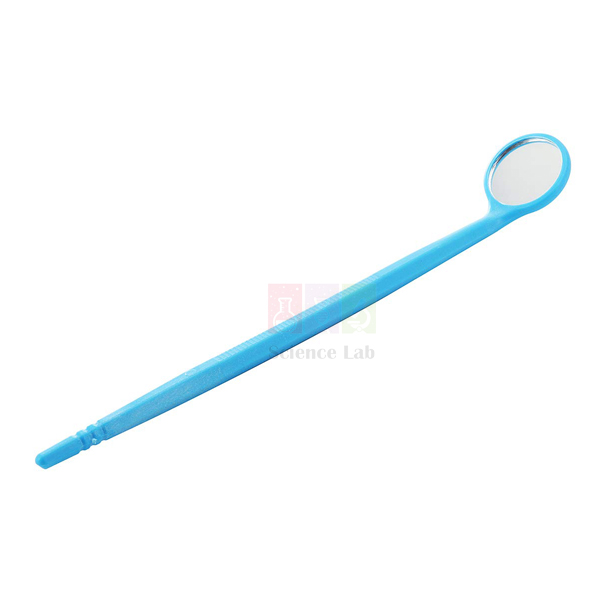
Dental Mirrors, Plastic
Dental Mirrors, Plastic (Product Code: SLE/BL/16) are hand-held mouth mirrors used to view and light up the teeth and oral tissues during examinations in hospitals and dental clinics. Being made of plastic, they are light to hold and suit routine check-ups as well as the teaching of oral examination technique. They are supplied by Jain Scientific Equipments Pvt Ltd (ScienceLab), Ambala, India, a laboratory instruments supplier in India.
Key Details
| Parameter | Detail |
|---|---|
| Material | Plastic |
| Instrument type | Dental mouth mirror |
| Intended settings | Hospitals and dental clinics |
| Product code | SLE/BL/16 |
| Supplied by | Jain Scientific Equipments Pvt Ltd (ScienceLab), Ambala, India |
What Are Plastic Dental Mirrors Used For?
A dental mirror gives indirect vision of surfaces that cannot be seen straight on, such as the tongue side of the lower front teeth, the back surfaces of molars and the palatal side of the upper teeth. It also reflects light onto the area being examined and gently holds the cheek or tongue aside to widen the working field.
Hold the mirror in a pen grasp and keep it steady against a finger rest. Warming or wiping the mirror face reduces fogging from breath. Because this listing does not say whether the mirrors are single-use or reusable, confirm that with us and follow your facility's own cleaning and sterilisation procedure. Dental colleges and clinics that buy from a supplier of scientific & laboratory instruments often order mirrors together with scalers so each chair or student has a basic set.
Supplier
ScienceLab is the trading name of Jain Scientific Equipments Private Limited, Ambala, Haryana. The company sources and supplies these plastic dental mirrors to hospitals, dental clinics, training institutions, distributors and importers, and can place them on one quotation with other examination items.
Mirror size, handle style and packing are confirmed with each quotation – just ask. More about us is on our company profile.
Related Surgical Instruments
Items commonly ordered with dental mirrors for examinations and teaching:
- Dental Scaler — stainless steel instrument used together with a mirror during tooth cleaning
- Examination Gloves — hand protection during oral examinations
- Instrument Tray Stainless Steel — to lay out mirrors and other instruments at the chair
- Human Tooth Set — model for teaching tooth identification
- Dental Caries Model — for explaining tooth decay to students and patients
Other hand instruments for clinics and theatres are listed under Surgical Instruments.
Frequently Asked Questions
What are Dental Mirrors, Plastic made of?
Dental Mirrors, Plastic are made of plastic, which keeps them light in the hand during examinations. Details such as mirror diameter, handle design and the type of reflective surface are not listed here, so ask us to confirm them in your quotation.
Where are Dental Mirrors, Plastic used?
Dental Mirrors, Plastic are used in hospitals and dental clinics for oral examinations, where the mirror gives indirect vision of hard-to-see tooth surfaces, reflects light into the mouth and helps hold back the cheek or tongue.
Are Dental Mirrors, Plastic disposable or sterile?
This listing for Dental Mirrors, Plastic does not state whether they are single-use or supplied sterile. Please confirm this with us before ordering, and always follow your facility's own cleaning and sterilisation procedure when handling dental instruments.
Can Dental Mirrors, Plastic be used for teaching?
Yes, Dental Mirrors, Plastic can be used when teaching oral examination technique, for example practising indirect vision and cheek retraction on dental models under supervision. Pair them with a tooth set or caries model for classroom demonstrations.
Who supplies Dental Mirrors, Plastic?
Dental Mirrors, Plastic are supplied by Jain Scientific Equipments Pvt Ltd (ScienceLab), Ambala, Haryana, India, to hospitals, clinics, institutions and distributors in India and international markets.
How do I get a quotation for Dental Mirrors, Plastic?
To get a quotation for Dental Mirrors, Plastic, send us the quantity, any preferred mirror size or handle style, your packing needs and the delivery destination. We will confirm what is available and quote accordingly.
Request a Quote
Ask for a quotation on Dental Mirrors, Plastic through our contact page, or add them to the enquiry cart along with other clinic supplies.
Last updated: 24 September 2026
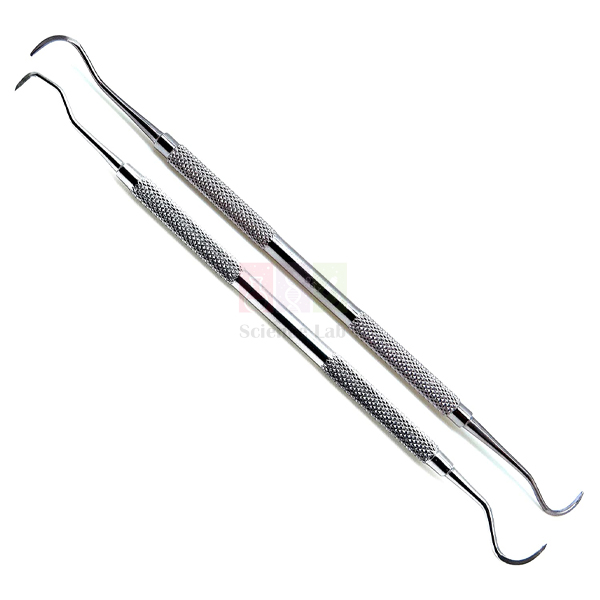
Dental Scaler
Dental Scaler (Product Code: SLE/BL/21) is a stainless steel hand instrument used to remove calculus (tartar) and other deposits from tooth surfaces during dental treatment in clinics and hospitals. Dentists, hygienists and dental students use it for scaling, and the listing describes it as meeting the diverse needs of dental treatments and surgery. It is supplied by Jain Scientific Equipments Pvt Ltd (ScienceLab), Ambala, India, a supplier of scientific & laboratory instruments for clinics and dental colleges.
Key Details
| Parameter | Detail |
|---|---|
| Material | Stainless steel |
| Instrument type | Hand dental scaler |
| Application | Dental treatments and surgery |
| Product code | SLE/BL/21 |
| Supplied by | Jain Scientific Equipments Pvt Ltd (ScienceLab), Ambala, India |
What Is a Dental Scaler Used For?
Scaling removes hardened calculus, plaque and stain from the enamel above the gum line. A hand scaler has a narrow working end that reaches into the spaces between teeth; the clinician places the edge just beyond the deposit and draws it away in short, controlled strokes, working around each tooth in turn.
Inspect the working end before each session and set aside any instrument with a bent or damaged tip. Clean and sterilise reusable instruments according to your facility's protocol. Dental teaching departments often buy scalers with mirrors so every trainee has a basic examination and scaling pair; as a lab equipment exporter, ScienceLab can quote both on one order.
What to Specify When Ordering
- How many scalers you need
- Preferred tip pattern or working-end design, as this page does not specify one
- Whether matching dental mirrors or other dental instruments are needed
- Delivery city or port
Supplier
Jain Scientific Equipments Private Limited, trading as ScienceLab, supplies the Dental Scaler from Ambala, Haryana. We source dental hand instruments for clinics, hospitals, dental colleges, distributors and importers, and state the pattern offered in each quotation.
Learn more about the company on our company profile.
Related Surgical Instruments
Useful companions for scaling work and dental teaching:
- Dental Mirrors, Plastic — mouth mirrors for indirect vision while scaling
- Examination Gloves — protective gloves for chairside use
- Instrument Tray Stainless Steel — keeps scalers and mirrors organised on the work surface
- Human Tooth Set — for teaching tooth anatomy alongside scaling practice
Browse more clinical hand instruments in Surgical Instruments.
Frequently Asked Questions
What is the Dental Scaler made of?
The Dental Scaler is made of stainless steel, a corrosion-resistant metal widely used for reusable dental hand instruments. Its pattern, handle design and length are not listed on this page, so ask us to confirm them in your quotation.
What is a Dental Scaler used for?
A Dental Scaler is used to remove calculus, plaque and stain from tooth surfaces during dental treatment. The listing for this Dental Scaler states that it meets the diverse needs of dental treatments and surgery in clinics and hospitals.
Is the Dental Scaler supplied sterile?
The listing for the Dental Scaler does not state that it is supplied sterile. Treat it as an instrument to be cleaned and sterilised under your facility's protocol before clinical use, and ask us if you need packing details.
Can the Dental Scaler be used by dental students?
Yes, the Dental Scaler can be used in dental teaching clinics and simulation labs, where students practise scaling strokes on models before treating patients under supervision. Ordering it with dental mirrors gives each trainee a basic instrument pair.
Who supplies the Dental Scaler?
The Dental Scaler is supplied by Jain Scientific Equipments Pvt Ltd (ScienceLab), Ambala, Haryana, India, to clinics, hospitals, dental colleges and distributors across India and international markets.
What should a quotation request for the Dental Scaler include?
A quotation request for the Dental Scaler should state the quantity, any preferred tip pattern, whether mirrors or other dental instruments are needed on the same order, and the delivery address or port.
Request a Quote
Request a quotation for the Dental Scaler on our contact page, or add it to the enquiry cart and send your full dental instrument list at once.
Last updated: 24 September 2026

Handle Skin Grafting Small
Handle Skin Grafting Small (Product Code: SLE/BL/36) is a small stainless steel handle for a skin grafting instrument — the hand-held tool used to cut thin sheets of skin for covering wounds and burns — used in surgical instrument sets and in instrument training. Our product details describe it as corrosion proof and highly reliable for medical application, and nursing, paramedical and surgical teaching units also use it for recognition practice. It is supplied by Jain Scientific Equipments Pvt Ltd (ScienceLab), Ambala, India.
Key Details
| Parameter | Detail |
|---|---|
| Type | Skin grafting handle, small |
| Material | Stainless steel |
| Property | Corrosion proof |
| Intended application | Medical application |
| Blade | Not mentioned in our product details — confirm compatibility when enquiring |
| Product code | SLE/BL/36 |
| Supplied by | Jain Scientific Equipments Pvt Ltd (ScienceLab), Ambala, India |
What Is the Skin Grafting Handle Used For?
The handle carries the cutting part of a free-hand skin grafting instrument. In a grafting procedure the donor area is prepared, the instrument is drawn across the skin at a shallow angle, and a thin graft is lifted and moved to the wound or burn that needs covering.
In a skills lab the small handle is laid out with other surgical instruments so that trainees learn to name it, hold it correctly and understand where it fits in the procedure; pairing it with a burn model helps explain why grafts are needed. Wash the handle after each session, dry it thoroughly and follow your institution's own cleaning and sterilisation procedure if it is to be used clinically.
What to Specify When Ordering
- Which handle pattern you need — this Small handle or the Eschman Type in the same range
- The grafting blades or knives you already use, so fit can be checked
- Quantity per instrument set or training group
- Whether the handle is for teaching sets or clinical use, and any documentation you need
Supplier
Jain Scientific Equipments Private Limited, trading as ScienceLab from Ambala, Haryana, India, supplies this small skin grafting handle within its surgical instruments range. As a laboratory instruments supplier in India, the company quotes it for nursing and paramedical colleges, hospital training units and distributors; clinical procurement requirements should be raised before ordering. More detail is on our company profile.
Related Surgical Instruments
Instruments and models used alongside a skin grafting handle:
- Handle Skin Grafting Eschman Type — the Eschman-pattern alternative in the same range
- Scalpel Handle No. 3 — another bladed-instrument handle for recognition practice
- Tissue Forceps Standard Straight — for handling the graft during a demonstration
- Instrument Tray Stainless Steel — for laying out the handle with other instruments
- Human Skin with Burn Pathologies Model — shows the burn injuries that grafting is used to treat
Browse the Surgical Instruments range for more stainless steel instruments.
Frequently Asked Questions
What is the Handle Skin Grafting Small made of?
The Handle Skin Grafting Small is made of stainless steel that our product details describe as corrosion proof and highly reliable for medical application. Stainless steel tolerates repeated washing and drying, which suits both instrument rooms and teaching sets.
Does the Handle Skin Grafting Small come with a blade?
No blade is mentioned for the Handle Skin Grafting Small; the listing covers the handle only. Tell us which grafting blades or knives you use through our contact page so ScienceLab can confirm fit before you place an order.
How is the Handle Skin Grafting Small different from the Eschman Type?
The Handle Skin Grafting Small and the Handle Skin Grafting Eschman Type are two separate handle patterns in the same surgical instruments range. Neither listing gives dimensions, so contact us if you need the two compared before choosing one for your department.
Can the Handle Skin Grafting Small be sterilised?
A sterilisation method is not stated for the Handle Skin Grafting Small, and it is not described as supplied sterile. Follow your institution's own procedure for stainless steel instruments and ask us if you need further guidance before ordering.
Is the Handle Skin Grafting Small for clinical use or for teaching?
Our product details describe the Handle Skin Grafting Small for medical application, and it is also used in instrument-recognition sets for teaching. Buyers with clinical procurement requirements should discuss the documentation they need with ScienceLab before ordering.
Who supplies the Handle Skin Grafting Small?
The Handle Skin Grafting Small is supplied by Jain Scientific Equipments Pvt Ltd (ScienceLab), Ambala, Haryana, India. The company sources it for nursing and paramedical colleges, hospital training units and distributors in India and international markets.
Request a Quote
For a quotation on the Handle Skin Grafting Small, use our contact page or add it to the enquiry cart with any other instruments on your list.
Last updated: 24 September 2026

Handle Skin Grafting Eschman Type
Handle Skin Grafting Eschman Type (Product Code: SLE/BL/38) is an Eschman-pattern stainless steel handle for a skin grafting instrument, used for cutting split-thickness skin grafts in surgical practice and for teaching instrument recognition in theatre and surgical nursing courses. Institutions that list handles by pattern name order it to match their sets, and our product details describe its steel as corrosion proof and highly reliable for medical application. It is supplied by Jain Scientific Equipments Pvt Ltd (ScienceLab), Ambala, India.
Key Details
| Parameter | Detail |
|---|---|
| Type | Skin grafting handle |
| Pattern | Eschman type |
| Material | Stainless steel |
| Property | Corrosion proof |
| Intended application | Medical application |
| Blades and dimensions | Not stated — please confirm at enquiry |
| Product code | SLE/BL/38 |
| Supplied by | Jain Scientific Equipments Pvt Ltd (ScienceLab), Ambala, India |
What Is the Eschman Skin Grafting Handle Used For?
Operating-theatre and surgical nursing courses teach students to recognise instruments by pattern name, because a theatre list may call for a particular handle rather than just "a grafting knife". Having an Eschman-type handle in the teaching set lets trainees see and hold that pattern, practise laying it out on a tray in the correct order and learn how it is passed safely to the operator. A skin section model then shows where the graft is taken from and how thin it is compared with the full skin layers.
For clinical units, the handle is described for medical application; teams should check blade fit and reprocessing steps against their own theatre protocols before first use. Rinse off tissue and fluids promptly, clean, dry fully and inspect the handle before it goes back into the set.
Supplier
ScienceLab is the trading name of Jain Scientific Equipments Private Limited, Ambala, Haryana, India, which supplies this Eschman-type handle alongside the small grafting handle, stainless steel trays and anatomical skin models — so a surgical-skills lab can source instruments and teaching models in one enquiry. Blade fit and any documentation requirement should be confirmed before ordering. Read more on our company profile.
Related Surgical Instruments
Instruments and models used in the same surgical-skills session:
- Handle Skin Grafting Small — the small handle pattern in the same range
- Human Skin Section Model — shows the skin layers a split graft is cut through
- Dressing Tray Stainless Steel — for holding instruments and dressings at the bedside or bench
- Surgical Instruments, Basic Surgery /SET — a wider instrument set to build the tray around
- Allis Tissue Forceps — a holding instrument often taught in the same session
More instruments are in the Surgical Instruments category.
Frequently Asked Questions
What does "Eschman type" mean for this skin grafting handle?
Eschman type names the handle pattern of the Handle Skin Grafting Eschman Type. Hospitals and colleges replacing an existing handle usually order by pattern name so the new one matches their set; contact us if you need details compared before ordering.
Which blades fit the Handle Skin Grafting Eschman Type?
Blade compatibility for the Handle Skin Grafting Eschman Type is not stated in our product details. Send the blade or knife reference your theatre or skills lab uses, and ScienceLab will confirm fit before you place an order.
Why is the Handle Skin Grafting Eschman Type made of stainless steel?
The Handle Skin Grafting Eschman Type is made of stainless steel described as corrosion proof, which suits instruments that are cleaned and handled often. Rinse off tissue and fluids promptly, clean, dry fully and inspect the handle before returning it to the set.
Does the Handle Skin Grafting Eschman Type come with a case or tray?
No case or tray is mentioned for the Handle Skin Grafting Eschman Type. Stainless steel dressing trays and a basic surgery instrument set are available separately in our range and can be added to the same enquiry if you need them.
Who supplies the Handle Skin Grafting Eschman Type?
The Handle Skin Grafting Eschman Type is supplied by Jain Scientific Equipments Pvt Ltd (ScienceLab), Ambala, Haryana, India, to hospital training units, nursing and medical colleges and distributors in India and international markets.
What should a quotation request for the Handle Skin Grafting Eschman Type include?
A quotation request for the Handle Skin Grafting Eschman Type should give product code SLE/BL/38, the quantity, the delivery address and any documentation your purchasing department needs, so ScienceLab can respond in one step.
Request a Quote
Request pricing for the Handle Skin Grafting Eschman Type on our contact page, or add it to the enquiry cart together with the rest of your instrument list.
Last updated: 24 September 2026
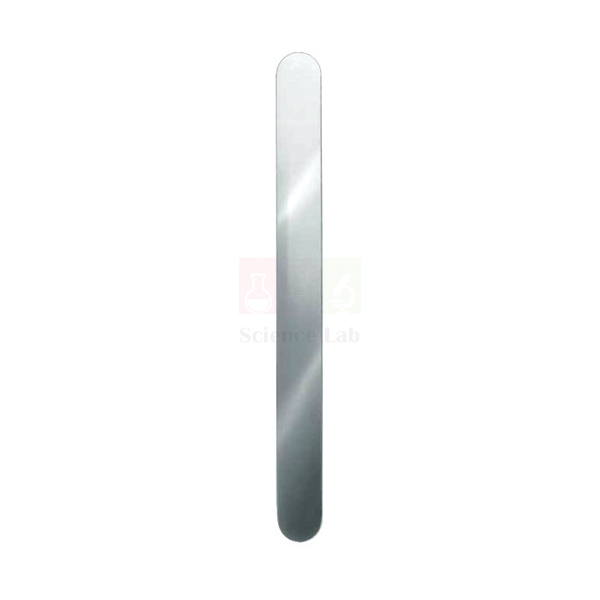
Abdominal Spatula Malleable
Abdominal Spatula Malleable (Product Code: SLE/SI/01) is a flat, bendable surgical spatula used to hold open fatty tissue, muscle or viscera after an abdominal incision in operating theatres. It is a rectangular depressor spatula with rounded ends, about 25 x 250 mm, made of non-magnetic austenitic steel that can be shaped by hand. It is supplied by Jain Scientific Equipments Pvt Ltd (ScienceLab), Ambala, India, a lab equipment exporter serving hospitals and training centres.
Specifications
| Parameter | Detail |
|---|---|
| Material | Austenitic steel (non-quenched, non-magnetic) |
| Composition | 16–18% chromium; 10–14% nickel; 2–3% molybdenum |
| Form | Depressor spatula, rectangular with rounded ends; malleable |
| Size | Approx. 25 x 250 mm |
| Reprocessing | Clean and disinfect after each use; sterilise in a steam steriliser |
| Intended use | Holding open fatty tissue, muscle or viscera after an abdominal incision |
| Product code | SLE/SI/01 |
| Supplied by | Jain Scientific Equipments Pvt Ltd (ScienceLab), Ambala, India |
What Is a Malleable Abdominal Spatula Used For?
During open abdominal operations the assistant bends the blade to the curve the wound needs and uses it to hold fat, muscle or bowel away from the operative field, improving the surgeon's access and view. The rounded ends and smooth, flat blade present no sharp corners to the tissue being held.
Shape the blade gradually by hand rather than kinking it, and check it for creases or surface damage after each case. The item must be cleaned and disinfected after each use and then sterilised in a steam steriliser. Hospitals buying from a laboratory instruments supplier in India often include one in each general-surgery set.
What to Specify When Ordering
- Quantity per theatre or instrument set
- Confirmation that the approx. 25 x 250 mm size suits your procedures
- Companion retractors, such as Collin or Balfour abdominal retractors
Supplier
ScienceLab is the trade name of Jain Scientific Equipments Private Limited in Ambala, Haryana. The company supplies this malleable spatula and matching general-surgery instruments to hospitals, surgical training institutions, distributors and importers, grouping them on one consolidated quotation where helpful.
Visit our company profile for more about the company.
Related Surgical Instruments
Instruments and equipment used with the spatula in abdominal surgery:
- Collin Abdominal Retractor 3 Blades — self-retaining retractor to hold the incision open
- Balfour Abdominal Retractor 3 Blades — an alternative self-retaining abdominal retractor
- Surgical Instruments, Abdominal SET — a set of instruments for abdominal procedures
- Autoclave Stainless Steel — steam steriliser for the reprocessing this spatula requires
- Instrument Tray Stainless Steel — to organise instruments before and after use
See the complete range of retractors, forceps and scissors in Surgical Instruments.
Frequently Asked Questions
What size is the Abdominal Spatula Malleable?
The Abdominal Spatula Malleable measures approximately 25 x 250 mm. It is a rectangular depressor spatula with rounded ends, so the blade offers a broad, smooth surface for holding tissue without sharp corners.
What material is the Abdominal Spatula Malleable made of?
The Abdominal Spatula Malleable is made of austenitic steel in a non-quenched, non-magnetic condition, containing 16 to 18% chromium, 10 to 14% nickel and 2 to 3% molybdenum. The non-quenched condition keeps the blade bendable so it can be shaped by hand.
How should the Abdominal Spatula Malleable be reprocessed?
The Abdominal Spatula Malleable must be cleaned and disinfected after each use and then sterilised in a steam steriliser. Follow your hospital's validated reprocessing procedure and inspect the blade for kinks or surface damage before returning it to the set.
Can the Abdominal Spatula Malleable be bent to shape?
Yes, the Abdominal Spatula Malleable is meant to be bent by hand to the curve a wound requires. Bend it gradually and avoid repeated sharp bends at the same point, which can weaken any malleable metal over time.
Who supplies the Abdominal Spatula Malleable?
The Abdominal Spatula Malleable is supplied by Jain Scientific Equipments Pvt Ltd (ScienceLab), Ambala, Haryana, India, for hospitals, surgical training centres, distributors and importers in India and international markets.
What details do you need to quote the Abdominal Spatula Malleable?
To quote the Abdominal Spatula Malleable we need the quantity, confirmation that the approximate 25 x 250 mm size suits your procedures, any companion retractors required, and the delivery destination for the consignment.
Request a Quote
Enquire about the Abdominal Spatula Malleable through our contact page, or add it to the enquiry cart with the rest of your theatre instrument list.
Last updated: 24 September 2026
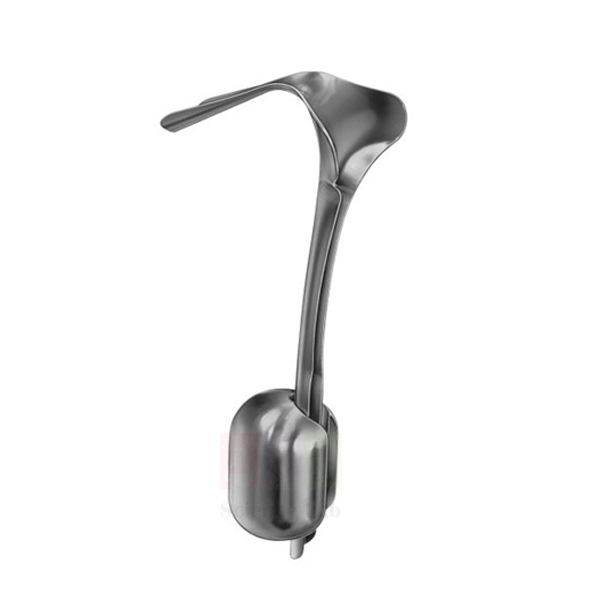
Auvard Vaginal Retractor
Auvard Vaginal Retractor (Product Code: SLE/SI/02) is a weighted vaginal speculum used to spread and open the posterior vaginal wall so the cervix can be seen during gynaecological procedures. Its blade is about 80 mm long and 38 mm wide, with a weight on the shank that holds it in position, and it is made of non-magnetic austenitic steel. It is supplied by Jain Scientific Equipments Pvt Ltd (ScienceLab), Ambala, India, one of the lab equipment exporters serving hospitals and clinics.
Specifications
| Parameter | Detail |
|---|---|
| Material | Austenitic steel (non-quenched, non-magnetic) |
| Composition | 18–20% chromium; 8–10% nickel |
| Design | Wide vaginal speculum with a weight fitted on the shank of the blade |
| Blade length | Approx. 80 mm |
| Blade width | Approx. 38 mm |
| Intended use | Spreading and opening the posterior vaginal wall to visualise the cervix; displaying the cervix in operations of the uterine cavity |
| Product code | SLE/SI/02 |
| Supplied by | Jain Scientific Equipments Pvt Ltd (ScienceLab), Ambala, India |
What Is an Auvard Speculum Used For?
In operations on the uterine cavity, the Auvard retractor is placed against the posterior wall of the vagina. The weight keeps the blade down without an assistant holding it, so the cervix stays exposed while it is grasped with forceps and the procedure continues.
It is normally used with the patient in the lithotomy position and is often combined with a separate anterior retractor when more exposure is needed. Medical and nursing colleges also include it in obstetrics and gynaecology instrument-identification teaching. Reprocess it according to your facility's protocol between cases, like every reusable speculum.
What to Specify When Ordering
- Number of retractors needed
- Whether the approx. 80 x 38 mm blade suits your procedures
- Companion instruments for the procedure set, such as uterine forceps, a uterine sound or dilators
Supplier
ScienceLab is the trading name under which Jain Scientific Equipments Private Limited, Ambala, Haryana, sources and supplies gynaecological instruments such as this Auvard retractor. Hospitals, maternity units, medical colleges, distributors and importers can order it on its own or with the rest of a procedure set.
See our company profile for more.
Related Surgical Instruments
Instruments used alongside the Auvard retractor in uterine procedures:
- Doyen Vaginal Retractor — a separate vaginal retractor when additional exposure is needed
- Graves Vaginal Speculum — self-retaining speculum for vaginal and cervical examination
- Museux Uterine Forceps Curved — for grasping the cervix once it is exposed
- Martin Uterine Sound — measures uterine cavity depth in the same procedure
- Surgical instruments Curettage /SET — a set for uterine curettage procedures
More gynaecological and general surgical instruments are available in Surgical Instruments.
Frequently Asked Questions
What size is the Auvard Vaginal Retractor blade?
The Auvard Vaginal Retractor has a blade approximately 80 mm long and approximately 38 mm wide. A weight fitted on the shank of the blade makes it a wide, weighted vaginal speculum rather than a hand-held one.
Why is the Auvard Vaginal Retractor weighted?
The Auvard Vaginal Retractor carries a weight on the shank of the blade so that, once placed against the posterior vaginal wall, it stays in position under its own weight. This frees the operator's hands to work on the cervix and uterine cavity.
Which steel is the Auvard Vaginal Retractor made from?
The Auvard Vaginal Retractor is made of austenitic steel, a non-quenched, non-magnetic grade containing 18 to 20% chromium and 8 to 10% nickel. Ask us if your facility needs further material documentation with the quotation.
When is the Auvard Vaginal Retractor used?
The Auvard Vaginal Retractor is used to spread and open the posterior wall of the vagina to visualise the cervix, and to display the cervix during operations of the uterine cavity. It should be used by trained clinicians following facility protocols.
Who supplies the Auvard Vaginal Retractor?
Jain Scientific Equipments Pvt Ltd (ScienceLab) of Ambala, Haryana, India supplies the Auvard Vaginal Retractor. The company supplies it to hospitals, maternity units, medical colleges, distributors and importers, on its own or with the rest of a procedure set.
Can the Auvard Vaginal Retractor be ordered with other gynaecology instruments?
Yes, the Auvard Vaginal Retractor can be quoted with other items. Send the quantity, the companion gynaecological instruments you need on the same order, packing preferences and the delivery destination in India or abroad.
Request a Quote
To obtain a quotation for the Auvard Vaginal Retractor, use our contact page or add it to the enquiry cart together with the other instruments in your gynaecology set.
Last updated: 24 September 2026
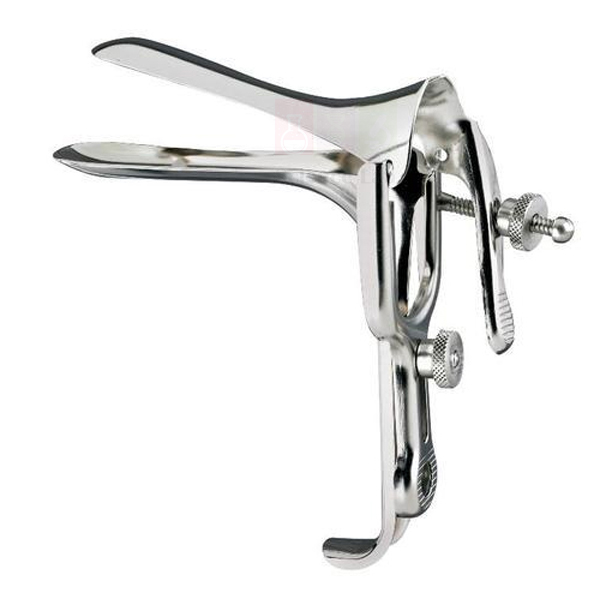
Graves Vaginal Speculum
Graves Vaginal Speculum (Product Code: SLE/SI/03) is a double-beaked, self-retaining speculum used to examine the walls of the vagina and the cervix in gynaecology clinics and hospitals. Its blades are about 115 mm long and 35 mm wide, and it is made of non-magnetic austenitic steel containing chromium, nickel and molybdenum. It is supplied by Jain Scientific Equipments Pvt Ltd (ScienceLab), Ambala, India, a laboratory instruments supplier in India for clinics and teaching hospitals.
Specifications
| Parameter | Detail |
|---|---|
| Material | Austenitic steel (non-quenched, non-magnetic) |
| Composition | 16–18% chromium; 10–14% nickel; 2–3% molybdenum |
| Type | Double-beaked, self-retaining vaginal speculum, Graves pattern |
| Blade length | Approx. 115 mm |
| Blade width | Approx. 35 mm |
| Intended use | Examination of the walls of the vagina and the cervix of the uterus |
| Product code | SLE/SI/03 |
| Supplied by | Jain Scientific Equipments Pvt Ltd (ScienceLab), Ambala, India |
What Is a Graves Speculum Used For?
The closed blades are inserted, then opened and set so that both vaginal walls are held apart without an assistant. This gives a clear view of the vaginal walls and cervix for inspection and for minor procedures carried out through the speculum.
Choose the blade size to suit the patient, and warm the speculum to body temperature before use for comfort. Clinical skills labs in medical and nursing colleges use the Graves pattern to teach speculum examination on training models. Buyers sourcing lab equipments in India for a new clinic often order it with gloves and examination-room furniture.
What to Specify When Ordering
- How many specula each clinic or ward needs
- Blade size check: approx. 115 x 35 mm, or ask about other sizes
- Whether retractors, a uterine sound or gynaecological gloves are also required
Supplier
Jain Scientific Equipments Private Limited, which trades as ScienceLab, supplies the Graves speculum from Ambala, Haryana, to gynaecology departments, primary health centres, medical and nursing colleges, distributors and importers.
We quote it individually or grouped with other examination instruments, and confirm size and finish on the quotation. Our company profile explains who we are.
Related Surgical Instruments
Items that complete a gynaecological examination or procedure setup:
- Auvard Vaginal Retractor — weighted retractor for posterior-wall exposure during uterine procedures
- Doyen Vaginal Retractor — hand-held retractor when extra exposure is required
- Martin Uterine Sound — for measuring uterine depth once the cervix is exposed
- Gloves, Gynecological, Powdered Free — gloves intended for gynaecological examinations
- Gynaecology Table Delivery With Accessories — examination and delivery table for the procedure room
Find matching retractors, forceps and uterine instruments in Surgical Instruments.
Frequently Asked Questions
What size are the blades of the Graves Vaginal Speculum?
The Graves Vaginal Speculum has blades approximately 115 mm long and approximately 35 mm wide. If your clinic needs a different blade size for particular patients, ask us what can be quoted alongside this pattern.
What does self-retaining mean on the Graves Vaginal Speculum?
Self-retaining means the Graves Vaginal Speculum stays open on its own once the double-beaked blades are opened and set, so the examiner does not need to hold the blades apart. Both hands remain free for inspection or sampling.
What is the Graves Vaginal Speculum made of?
The Graves Vaginal Speculum is made of austenitic steel, which is non-quenched and non-magnetic, with a composition of 16 to 18% chromium, 10 to 14% nickel and 2 to 3% molybdenum.
What is the Graves Vaginal Speculum used for?
The Graves Vaginal Speculum is used to examine the walls of the vagina and the cervix of the uterus. It is a common examination instrument in gynaecology clinics, maternity units and clinical skills training.
How should the Graves Vaginal Speculum be cleaned between patients?
The Graves Vaginal Speculum should be cleaned and reprocessed according to your facility's own validated protocol between patients. This listing does not state a sterilisation method, so check with us if you are unsure whether your process is suitable.
Who supplies the Graves Vaginal Speculum?
Jain Scientific Equipments Pvt Ltd (ScienceLab), based in Ambala, Haryana, India, supplies the Graves Vaginal Speculum to hospitals, clinics, training institutions and distributors in India and international markets.
Request a Quote
For availability and a quotation on the Graves Vaginal Speculum, contact us through the contact page or add it to the enquiry cart, stating the quantity and delivery location.
Last updated: 24 September 2026
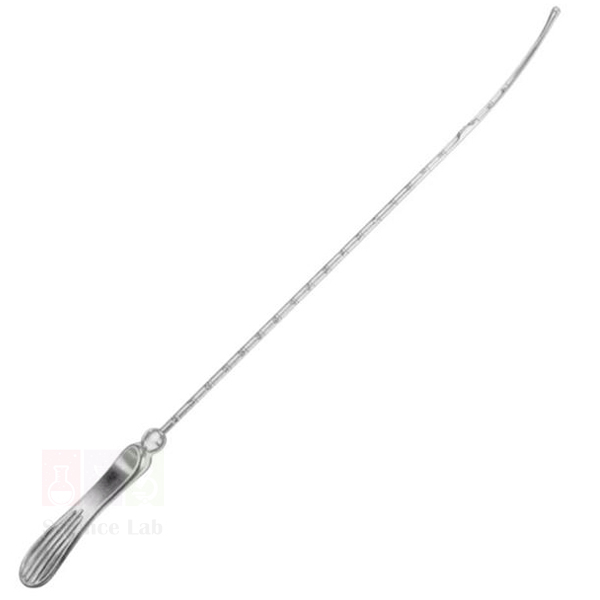
Martin Uterine Sound
Martin Uterine Sound (Product Code: SLE/SI/04) is a malleable, centimetre-graduated probe used to measure the depth of the uterine cavity through the vagina in gynaecological procedures. It is about 32 cm long, with a silver-coated copper shaft ending in a bulbous tip and mounted on a brass handle. It is supplied by Jain Scientific Equipments Pvt Ltd (ScienceLab), Ambala, India, a laboratory instruments supplier in India.
Specifications
| Parameter | Detail |
|---|---|
| Material | Silver-coated copper with brass handle |
| Shaft | Malleable metal, graduated in cm |
| Tip | Bulbous distal end |
| Length | Approx. 32 cm |
| Type | Uterine sound, malleable, Martin pattern, mounted on a handle |
| Intended use | Measuring, via the vagina, the depth of the uterine cavity |
| Product code | SLE/SI/04 |
| Supplied by | Jain Scientific Equipments Pvt Ltd (ScienceLab), Ambala, India |
What Is a Uterine Sound Used For?
Before instruments such as dilators or curettes are introduced, the clinician passes the sound gently through the cervix to find the depth and direction of the uterine cavity. The centimetre graduations give the depth reading, and the blunt, bulbous tip is designed to follow the cavity rather than cut.
The malleable shaft can be given a gentle curve to follow the axis of the uterus; hold the handle lightly and never force the instrument. Clean the silver-coated surface with non-abrasive methods to protect the coating, and reprocess according to your facility's protocol. Medical colleges that order from lab equipment exporters also use the sound in gynaecology instrument teaching.
What to Specify When Ordering
- Number of sounds required
- Whether an approx. 32 cm instrument fits your procedure sets
- Companion instruments such as dilators, uterine forceps or curettes
Supplier
ScienceLab – the trading name of Jain Scientific Equipments Private Limited – supplies the Martin uterine sound from Ambala, Haryana. We source it for hospitals, maternity services, medical colleges, distributors and importers, and can list it on one quotation with dilators, uterine forceps and curettes.
Company background is on our company profile.
Related Surgical Instruments
Instruments typically used in the same uterine procedure:
- Hegar Uterine Dilator Double Ended — dilators used after sounding to open the cervical canal
- Museux Uterine Forceps Curved — holds the cervix steady while the sound is passed
- Graves Vaginal Speculum — exposes the cervix before sounding
- Sims Uterine Curette Sharp — curette used in uterine procedures
- Surgical instruments Curettage /SET — a set for curettage procedures
The full list of gynaecological and general theatre instruments is in Surgical Instruments.
Frequently Asked Questions
How long is the Martin Uterine Sound?
The Martin Uterine Sound is approximately 32 cm long. Its malleable shaft is graduated in centimetres and the distal end is bulbous, so the depth reached can be read from the markings once the sound is in place.
Which materials are used in the Martin Uterine Sound?
The Martin Uterine Sound is made of silver-coated copper with a brass handle. The shaft is a malleable metal, which allows the clinician to adjust its curve to follow the direction of the uterine cavity.
What does the Martin Uterine Sound measure?
The Martin Uterine Sound measures, via the vagina, the depth of the uterine cavity. The centimetre graduations along the shaft show how far the bulbous tip has travelled, giving a depth reading used when planning procedures on the uterus.
Can the shaft of the Martin Uterine Sound be bent?
Yes, the shaft of the Martin Uterine Sound is malleable, so the clinician can shape a gentle curve before use. Form curves smoothly rather than kinking the metal, and check that the graduations remain legible after reshaping.
Who supplies the Martin Uterine Sound?
Jain Scientific Equipments Pvt Ltd (ScienceLab) supplies the Martin Uterine Sound from Ambala, Haryana, India, to hospitals, clinics, medical colleges and distributors in India and international markets.
How can I order the Martin Uterine Sound with other instruments?
To order the Martin Uterine Sound with other instruments, send the quantity, any companion instruments such as dilators, uterine forceps or curettes, and the delivery destination. We then confirm availability and quote the complete list.
Request a Quote
Send your requirement for the Martin Uterine Sound via our contact page, or build a full procedure list in the enquiry cart and submit it in one go.
Last updated: 24 September 2026
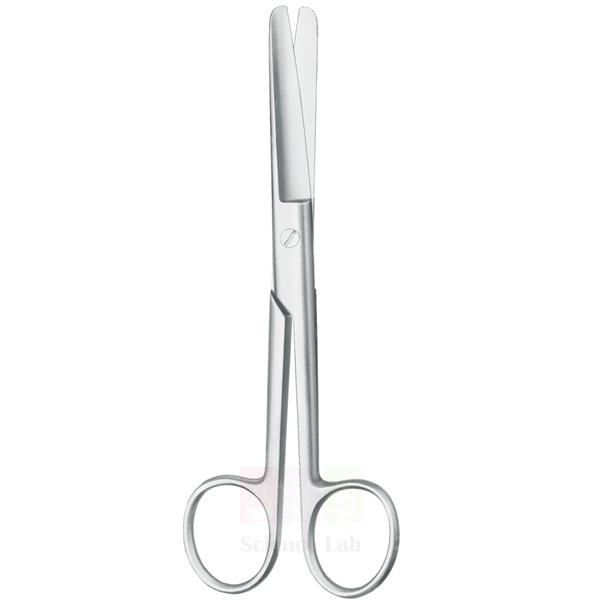
Gynecological Scissors Curved Blunt/Blunt
Gynecological Scissors Curved Blunt/Blunt (Product Code: SLE/SI/05) are 20 cm curved surgical scissors with blunt-ended blades used in obstetrics to cut the perineal skin and tissue (episiotomy) and ease the passage of the foetal head. They are made of quenched, magnetic martensitic steel with 0.40% carbon and 14% chromium. They are supplied by Jain Scientific Equipments Pvt Ltd (ScienceLab), Ambala, India, a lab equipment exporter to hospitals and maternity units.
Specifications
| Parameter | Detail |
|---|---|
| Material | Martensitic steel (quenched, magnetic) |
| Composition | 0.40% carbon; 14% chromium |
| Blades | Curved, with blunt ends |
| Length | 20 cm |
| Type | Surgical scissors, gynaecological |
| Stated uses | Cutting the perineal skin and tissue (episiotomy) to facilitate passage of the foetal head; also listed for decapitation of a dead foetus |
| Product code | SLE/SI/05 |
| Supplied by | Jain Scientific Equipments Pvt Ltd (ScienceLab), Ambala, India |
What Are Gynecological Scissors Used For?
Their main use is episiotomy. Blunt ends are chosen for this work because the lower blade is introduced alongside delicate tissue, and the curve and 20 cm length help the operator angle the cut within the delivery field.
The listing also names these scissors for decapitation of a dead foetus, a destructive obstetric procedure performed only by trained specialists. Labour rooms usually keep them within delivery instrument sets together with needle holders and forceps for the repair. Maternity hospitals and midwifery schools ordering through a laboratory instruments supplier in India often buy them as part of such sets.
What to Specify When Ordering
- Number of pairs for each labour room
- Whether they are wanted singly or as part of delivery instrument sets
- Suturing instruments needed for episiotomy repair, such as needle holders
Supplier
Jain Scientific Equipments Private Limited trades as ScienceLab and supplies these gynaecological scissors from Ambala, Haryana, for labour rooms, maternity hospitals, midwifery and medical colleges, distributors and importers.
Orders can combine them with delivery-room furniture and instrument sets, and every quotation states the exact pattern and length offered. See our company profile.
Related Surgical Instruments
Delivery-room items that are ordered with these scissors:
- Surgical Instruments, Delivery /SET — a delivery-room instrument set
- Mayo Hegar Needle Holder Straight — for suturing the episiotomy repair
- Labour Delivery Bed With Accessories — delivery bed for the labour room
- Gloves, Gynecological, Powdered Free — gloves for gynaecological and obstetric work
- Mayo Scissors Curved Blunt/Blunt — another curved blunt/blunt pattern for general surgical cutting
More obstetric and general theatre instruments are listed in Surgical Instruments.
Frequently Asked Questions
What are the Gynecological Scissors Curved Blunt/Blunt used for?
The Gynecological Scissors Curved Blunt/Blunt are used to cut the perineal skin and tissue in an episiotomy, to facilitate passage of the foetal head during delivery. The listing also names them for decapitation of a dead foetus, a specialist obstetric procedure.
How long are the Gynecological Scissors Curved Blunt/Blunt?
The Gynecological Scissors Curved Blunt/Blunt are 20 cm long, with curved blades that have blunt ends. The length gives reach in the delivery field, while the blunt ends avoid presenting a sharp point to tissue.
What steel are the Gynecological Scissors Curved Blunt/Blunt made from?
The Gynecological Scissors Curved Blunt/Blunt are made of martensitic steel, quenched and magnetic, containing 0.40% carbon and 14% chromium. Martensitic steels are hardened by quenching, which is why they are chosen for instruments that need a cutting edge.
Are the Gynecological Scissors Curved Blunt/Blunt magnetic?
Yes, the Gynecological Scissors Curved Blunt/Blunt are magnetic because they are made of quenched martensitic steel. This is normal for cutting instruments and differs from the non-magnetic austenitic steel used for many retractors and specula.
Who supplies the Gynecological Scissors Curved Blunt/Blunt?
Jain Scientific Equipments Pvt Ltd (ScienceLab) in Ambala, Haryana, India supplies the Gynecological Scissors Curved Blunt/Blunt to maternity hospitals, labour rooms, training colleges and distributors, with supply to international markets as well.
Can the Gynecological Scissors Curved Blunt/Blunt be supplied within delivery sets?
The Gynecological Scissors Curved Blunt/Blunt can be quoted singly or within delivery sets. Tell us the quantity, which option you prefer, any suturing instruments needed for repair, and the delivery destination.
Request a Quote
Enquire about the Gynecological Scissors Curved Blunt/Blunt through our contact page, or add them to the enquiry cart with your delivery-room requirements.
Last updated: 24 September 2026
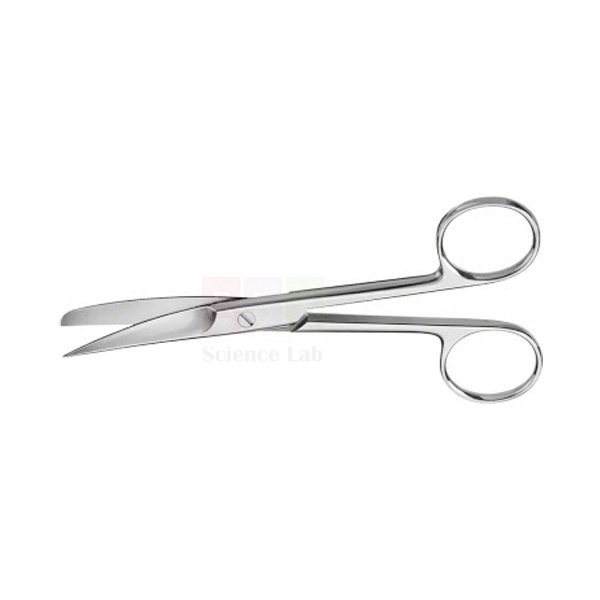
Deaver Scissors Curved Sharp/Blunt
Deaver Scissors Curved Sharp/Blunt (Product Code: SLE/SI/06) are 14 cm operating scissors with curved blades, one pointed and one blunt at the tip, used for basic surgical operations in theatres, wards and clinics. The blunt blade can pass beneath tissue or dressings while the pointed blade gives a fine tip for starting a cut; both are martensitic steel with 0.40% carbon and 14% chromium. They are supplied by Jain Scientific Equipments Pvt Ltd (ScienceLab), Ambala, India, one of the lab equipments exporters serving hospitals at home and abroad.
Specifications
| Parameter | Detail |
|---|---|
| Material | Martensitic steel (quenched, magnetic) |
| Composition | 0.40% carbon; 14% chromium |
| Blades | Curved, with one pointed and one blunt end |
| Length | 14 cm |
| Type | Operating (surgical) scissors, Deaver pattern |
| Intended use | Basic surgical operations |
| Product code | SLE/SI/06 |
| Supplied by | Jain Scientific Equipments Pvt Ltd (ScienceLab), Ambala, India |
What Are Curved Deaver Scissors Used For?
Curved Deaver scissors are general operating scissors for cutting tissue, sutures and dressings during minor and basic procedures. The curve keeps the tips in view when working on a surface or in a shallow wound, and the compact 14 cm length gives close control for superficial work.
Hold them with the curve facing upward so the tips stay visible, and keep them for tissue and soft materials rather than wire or paper, which dull the edges. Nursing schools and skills labs that buy from educational laboratory suppliers use them for instrument-handling practice and identification.
What to Specify When Ordering
- Pairs required per theatre or clinic
- Curved pattern, straight pattern or both
- Whether they are needed within a basic surgery set
Supplier
ScienceLab is the trading name of Jain Scientific Equipments Private Limited, Ambala, Haryana, which supplies Deaver operating scissors to hospitals, dispensaries, surgical training centres, distributors and importers.
More about the company is on our company profile.
Related Surgical Instruments
Instruments that work alongside curved Deaver scissors:
- Deaver Scissors Straight Sharp/Blunt — the straight version of the same pattern
- Metzenbaum Nelson Scissors Curved Blunt/Blunt — dissecting scissors for finer tissue work
- Scalpel Handle No. 3 — for the initial incision before scissors are used
- Tissue Forceps Standard Straight — to hold tissue while cutting
- Surgical Instruments, Basic Surgery /SET — a basic surgery set these scissors complement
Browse all scissors, forceps and retractors in Surgical Instruments.
Frequently Asked Questions
What does Sharp/Blunt mean on the Deaver Scissors Curved Sharp/Blunt?
On the Deaver Scissors Curved Sharp/Blunt, one blade ends in a sharp point and the other in a blunt tip. The pointed blade starts cuts or enters small openings, while the blunt blade can pass beneath tissue or dressings without a sharp point catching.
How long are the Deaver Scissors Curved Sharp/Blunt?
The Deaver Scissors Curved Sharp/Blunt are 14 cm long, a compact length suited to superficial work and basic surgical operations where the instrument does not need to reach deep into a cavity.
Should I choose the curved or straight Deaver scissors?
Choose the Deaver Scissors Curved Sharp/Blunt when you want a clearer view of the tips while cutting on a surface or in a shallow wound. The straight Deaver pattern cuts in a direct line and is often preferred for trimming sutures.
What steel are the Deaver Scissors Curved Sharp/Blunt made of?
The Deaver Scissors Curved Sharp/Blunt use martensitic steel in the quenched, magnetic condition, listed as 0.40% carbon and 14% chromium. This type of steel can be hardened, which suits blades that must take and hold an edge.
Who supplies the Deaver Scissors Curved Sharp/Blunt?
Jain Scientific Equipments Pvt Ltd (ScienceLab), Ambala, Haryana, India supplies the Deaver Scissors Curved Sharp/Blunt. It supplies these operating scissors to hospitals, dispensaries, surgical training centres, distributors and importers.
What do you need from me to quote the Deaver Scissors Curved Sharp/Blunt?
To quote the Deaver Scissors Curved Sharp/Blunt we need the quantity, whether the straight version or a complete basic surgery set is also wanted, and your delivery destination in India or abroad.
Request a Quote
Get a quotation for the Deaver Scissors Curved Sharp/Blunt through our contact page, or add them to the enquiry cart along with the rest of your instrument order.
Last updated: 24 September 2026
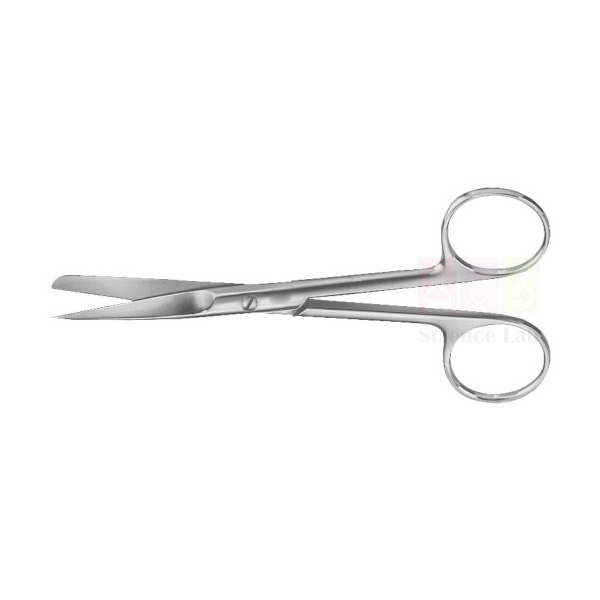
Deaver Scissors Straight Sharp/Blunt
Deaver Scissors Straight Sharp/Blunt (Product Code: SLE/SI/07) are 14 cm straight operating scissors, one blade pointed and one blunt, used for basic surgical operations such as cutting sutures, dressings and superficial tissue. Their straight blades cut in a direct line, which suits suture trimming and ward work, and they are made of quenched, magnetic martensitic steel with 14% chromium. They are supplied by Jain Scientific Equipments Pvt Ltd (ScienceLab), Ambala, India, a supplier of scientific & laboratory instruments.
Specifications
| Parameter | Detail |
|---|---|
| Material | Martensitic steel (quenched, magnetic) |
| Composition | 0.40% carbon; 14% chromium |
| Blades | Straight, with one pointed and one blunt end |
| Length | 14 cm |
| Type | Operating (surgical) scissors, Deaver pattern |
| Intended use | Basic surgical operations |
| Product code | SLE/SI/07 |
| Supplied by | Jain Scientific Equipments Pvt Ltd (ScienceLab), Ambala, India |
What Are Straight Deaver Scissors Used For?
Straight scissors are the everyday choice where a clean, direct line of cut matters: trimming suture ends after the knot is tied, cutting dressings and tapes, and dividing superficial tissue during minor procedures. The pointed blade slips into a suture loop, while the blunt blade rests against skin or dressings as the cut is made.
Many theatres keep a dedicated straight pair for sutures so that tissue scissors stay sharp. Hold them with thumb and ring finger in the bows and the index finger along the shank for steady control. Clinics and nursing schools ordering from lab equipment exporters often buy them with needle holders and forceps for suturing trays.
What to Specify When Ordering
- Total pairs needed
- Straight pattern, curved pattern or both
- Whether they are needed within a suture set with needle holders and forceps
Supplier
Jain Scientific Equipments Private Limited supplies these straight Deaver scissors under its ScienceLab name from Ambala, Haryana. Clinics, operating theatres, nursing schools, distributors and importers can order them singly or with needle holders and forceps for a complete suturing tray.
Further information about ScienceLab is on our company profile.
Related Surgical Instruments
Suturing and dressing instruments that pair with straight scissors:
- Deaver Scissors Curved Sharp/Blunt — curved version for work where tip visibility matters
- Mayo Hegar Needle Holder Straight — holds the needle while suturing; the scissors then trim the thread
- Tissue Forceps Standard Straight — grips tissue during suturing
- Dressing Forceps Standard Straight — handles dressings and swabs
- Surgical Instruments, suture /SET — a ready-assembled suture set
Complete your instrument list from the Surgical Instruments category.
Frequently Asked Questions
What are Deaver Scissors Straight Sharp/Blunt used for?
Deaver Scissors Straight Sharp/Blunt are operating scissors for basic surgical operations. Their straight blades suit tasks where a direct line of cut matters, such as trimming sutures, cutting dressings and dividing superficial tissue in minor procedures.
How long are the Deaver Scissors Straight Sharp/Blunt?
The Deaver Scissors Straight Sharp/Blunt measure 14 cm. This compact length gives good control for minor procedures, suturing and ward use, without the reach of longer dissecting scissors.
When should I choose Deaver Scissors Straight Sharp/Blunt over the curved version?
Choose the Deaver Scissors Straight Sharp/Blunt when you mainly cut sutures, dressings or tissue in a straight line; choose the curved version when you need a clearer view of the tips on a surface. Keeping both lets staff pick the right one for each task.
What are the tips of the Deaver Scissors Straight Sharp/Blunt like?
The Deaver Scissors Straight Sharp/Blunt have one pointed blade and one blunt blade. The pointed tip can enter a small gap or a suture loop, while the blunt tip rests against the skin or dressing as the cut is made.
What material are the Deaver Scissors Straight Sharp/Blunt made of?
Deaver Scissors Straight Sharp/Blunt are made of martensitic steel, quenched and therefore magnetic, with 14% chromium and 0.40% carbon listed in the composition. Check with us if you need material documentation for a tender.
Who supplies the Deaver Scissors Straight Sharp/Blunt?
Deaver Scissors Straight Sharp/Blunt are supplied by Jain Scientific Equipments Pvt Ltd (ScienceLab) of Ambala, Haryana, India, for hospitals, clinics, nursing and medical colleges, and distributors in India and international markets.
Request a Quote
Send an enquiry for the Deaver Scissors Straight Sharp/Blunt from our contact page, or add them to the enquiry cart with needle holders and forceps for a full suturing tray quotation.
Last updated: 24 September 2026
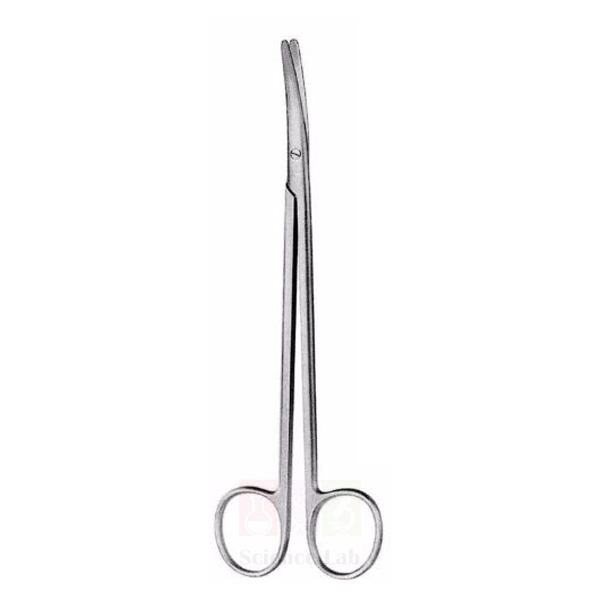
Metzenbaum Nelson Scissors Curved Blunt/Blunt
Metzenbaum Nelson Scissors Curved Blunt/Blunt (Product Code: SLE/SI/08) are 23 cm surgical dissecting scissors used for cutting or dissecting tissue in operating theatres. Their thin, curved blades with blunt ends and long reach suit dissection in deeper fields, and they are made of quenched martensitic steel with 0.40% carbon and 14% chromium. They are supplied by Jain Scientific Equipments Pvt Ltd (ScienceLab), Ambala, India, a supplier of scientific & laboratory instruments to hospitals and teaching institutions.
Specifications
| Parameter | Detail |
|---|---|
| Material | Martensitic steel (quenched, magnetic) |
| Composition | 0.40% carbon; 14% chromium |
| Pattern | Metzenbaum / Nelson surgical dissecting scissors |
| Blades | Thin, curved, with blunt ends |
| Length | 23 cm |
| Intended use | Cutting or dissecting tissue |
| Product code | SLE/SI/08 |
| Supplied by | Jain Scientific Equipments Pvt Ltd (ScienceLab), Ambala, India |
What Are Metzenbaum Scissors Used For?
Metzenbaum-type scissors combine long handles with comparatively short, thin blades, giving fine control at a distance. Surgeons use them to cut soft tissue and, with the blades closed, to push into a tissue plane and then open them to spread tissue apart. The 23 cm length reaches into deep abdominal and chest cavities.
Reserve them for tissue: cutting sutures, drapes or dressings dulls and misaligns the thin blades, so keep a Mayo or Deaver pair for those jobs. Store them with the tips protected. Surgical skills centres that buy through lab equipment exporters use them to teach dissection technique on training models.
What to Specify When Ordering
- Quantity for each theatre
- Confirmation that the 23 cm length suits your procedures, or other lengths you want compared
- Companion tissue and artery forceps
Supplier
Jain Scientific Equipments Private Limited, known by its ScienceLab trade name, supplies Metzenbaum Nelson dissecting scissors from Ambala, Haryana, to operating theatres, surgical departments, medical colleges, distributors and importers.
Dissecting scissors are often bought with matching tissue and artery forceps, and our quotations can cover the full list in one document. For company details, visit our company profile.
Related Surgical Instruments
Instruments used with dissecting scissors in open surgery:
- Mayo Scissors Curved Blunt/Blunt — sturdier scissors for tougher tissue and materials
- Babcock Tissue Forceps — tissue forceps for holding structures during dissection
- Halsted Mosquito Artery Forceps Curved — clamps small vessels met during dissection
- Surgical Instruments, Abdominal SET — instrument set for abdominal operations
- Deaver Scissors Curved Sharp/Blunt — shorter operating scissors for superficial work
Explore the rest of our Surgical Instruments range.
Frequently Asked Questions
What is the purpose of Metzenbaum Nelson Scissors Curved Blunt/Blunt?
Metzenbaum Nelson Scissors Curved Blunt/Blunt are surgical dissecting scissors for cutting or dissecting tissue. Surgeons use them both to cut soft tissue and to spread tissue planes apart with the blunt tips during open operations.
How long are the Metzenbaum Nelson Scissors Curved Blunt/Blunt?
The Metzenbaum Nelson Scissors Curved Blunt/Blunt are 23 cm long, giving reach for dissection in deeper operative fields. Their blades are thin and curved with blunt ends, so the long instrument still has a fine working tip.
Can Metzenbaum Nelson Scissors Curved Blunt/Blunt be used to cut sutures?
Metzenbaum Nelson Scissors Curved Blunt/Blunt should be kept for tissue rather than sutures, wire or dressings, because heavy materials can dull or misalign their thin blades. Use a separate pair of operating scissors, such as a Mayo or Deaver pattern, for those tasks.
What are the Metzenbaum Nelson Scissors Curved Blunt/Blunt made of?
The Metzenbaum Nelson Scissors Curved Blunt/Blunt are made of martensitic steel in the quenched, magnetic condition, with a listed composition of 0.40% carbon and 14% chromium.
Who supplies the Metzenbaum Nelson Scissors Curved Blunt/Blunt?
Metzenbaum Nelson Scissors Curved Blunt/Blunt are supplied by Jain Scientific Equipments Pvt Ltd (ScienceLab), Ambala, Haryana, India, to hospitals, surgical training centres and distributors in India and international markets.
Can other lengths of Metzenbaum Nelson Scissors Curved Blunt/Blunt be quoted?
Other lengths or patterns alongside the Metzenbaum Nelson Scissors Curved Blunt/Blunt can be discussed. List the quantity, the lengths or patterns you want compared, companion forceps, and the delivery destination in your enquiry.
Request a Quote
For a quotation on the Metzenbaum Nelson Scissors Curved Blunt/Blunt, write to us via the contact page or add them to the enquiry cart with your forceps and retractor requirements.
Last updated: 24 September 2026
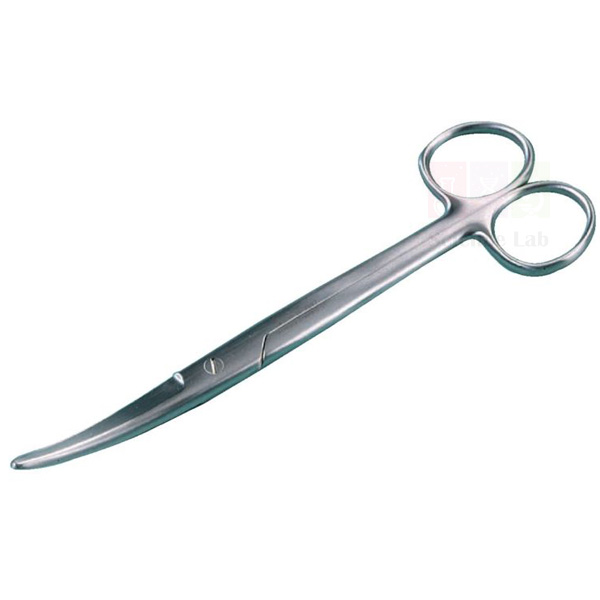
Mayo Scissors Curved Blunt/Blunt
Mayo Scissors Curved Blunt/Blunt (Product Code: SLE/SI/09) is a pair of 23 cm operating scissors used to cut threads and dressings and for general cutting work in operating theatres and surgical wards. Theatre nurses and surgeons pick this pattern because both blade tips are rounded, so it cuts by shearing without a point that could catch drapes or tissue. It is supplied by Jain Scientific Equipments Pvt Ltd (ScienceLab), Ambala, India, as part of its range of scientific & laboratory instruments.
Specifications
| Parameter | Detail |
|---|---|
| Material | Martensitic steel (quenched, magnetic) |
| Composition | 0.40% carbon; 14% chromium |
| Blades | Curved, with blunt ends (blunt/blunt) |
| Cutting action | Shearing; operating and dissecting scissors |
| Length | 23 cm |
| Intended use | Cutting threads and dressings; general use |
| Product code | SLE/SI/09 |
| Supplied by | Jain Scientific Equipments Pvt Ltd (ScienceLab), Ambala, India |
What Are Mayo Scissors Used For?
Mayo scissors are the all-round cutters of the instrument tray. The curved 23 cm version is typically picked up to trim suture ends once a knot is tied, to cut dressing material to size and to take on routine cutting where finer dissecting scissors would be blunted. The curve lets the user keep the tips in view while cutting close to a surface.
Medical and nursing colleges place a pair at suturing and dressing practice stations so students learn to cut threads to a sensible length. Keep one pair for materials and another for tissue, wipe the blades after each use and check that the joint closes smoothly before the scissors go back on the tray. Buyers comparing a laboratory equipment supplier in India for mixed hospital and teaching orders can list these scissors with the forceps and needle holders they need.
Supplier
Jain Scientific Equipments Private Limited, which trades as ScienceLab, sources and supplies Mayo operating scissors from Ambala, Haryana, to hospitals, nursing schools, medical colleges and distributors in India and international markets. Scissors are usually ordered together with forceps, needle holders and trays, and one quotation can cover the whole list.
Background on the company is available on our company profile.
Related Surgical Instruments
Instruments that work alongside Mayo scissors during suturing and dressing:
- Mayo Hegar Needle Holder Straight — holds the suture needle before the scissors trim the thread
- Metzenbaum Nelson Scissors Curved Blunt/Blunt — finer scissors kept for tissue dissection
- Dressing Forceps Standard Straight — handles dressing material while it is cut and applied
- Surgical Instruments, suture /SET — a grouped set for suturing work
- Instrument Tray Stainless Steel — keeps the scissors and companion instruments together during a procedure
See the complete Surgical Instruments category.
Frequently Asked Questions
What are Mayo Scissors Curved Blunt/Blunt used for?
Mayo Scissors Curved Blunt/Blunt are used for cutting threads and dressings and for general cutting in theatre and ward work. They are operating scissors that cut by shearing, and their rounded tips make them a sensible choice near drapes and patients.
How long are the Mayo Scissors Curved Blunt/Blunt?
The Mayo Scissors Curved Blunt/Blunt measure 23 cm in length. That length gives enough reach to trim suture ends inside a moderately deep wound while the curved blades keep the cutting tips visible to the user.
What does blunt/blunt mean on these scissors?
Blunt/blunt means both blade tips of the Mayo Scissors Curved Blunt/Blunt are rounded rather than pointed. Patterns such as sharp/blunt have one pointed tip for piercing material, whereas the blunt/blunt version reduces the risk of accidental punctures.
What steel are the Mayo Scissors Curved Blunt/Blunt made from?
The Mayo Scissors Curved Blunt/Blunt are made from quenched martensitic steel, which is magnetic, with a listed composition of 0.40% carbon and 14% chromium. Quenched steel of this kind is chosen for cutting instruments because it can hold an edge.
Who supplies the Mayo Scissors Curved Blunt/Blunt?
Mayo Scissors Curved Blunt/Blunt are supplied by Jain Scientific Equipments Pvt Ltd (ScienceLab) of Ambala, Haryana, India. The company quotes them to hospitals, nursing and medical colleges, and distributors in India and international markets.
What should a quotation request for Mayo Scissors Curved Blunt/Blunt include?
A quotation request for Mayo Scissors Curved Blunt/Blunt should state the quantity, the delivery destination and any companion instruments you want priced, such as needle holders or forceps. Send the list through our contact page.
Request a Quote
To price the Mayo Scissors Curved Blunt/Blunt, send your requirement through the contact form or add the item to the enquiry cart together with the other surgical instruments on your list.
Last updated: 24 September 2026
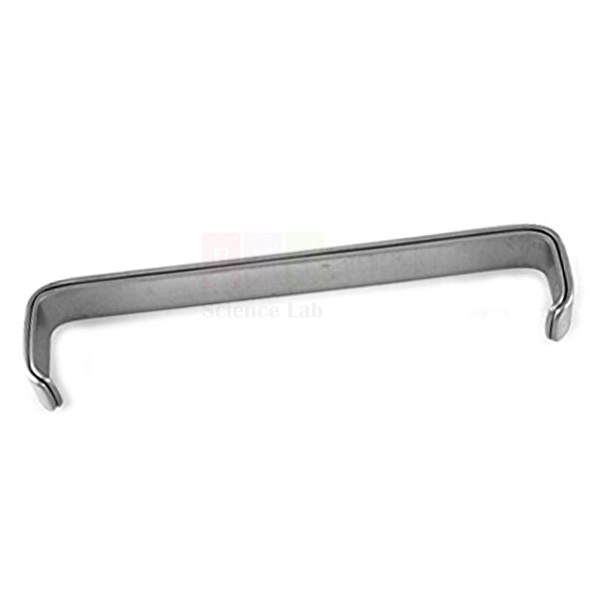
Farabeuf Retractor Double Ended Pair
Farabeuf Retractor Double Ended Pair (Product Code: SLE/SI/10) is a set of two hand-held, double-ended retractors used to hold back skin, fatty tissue, muscle or viscera during superficial surgery in hospital theatres. Surgical assistants work the two retractors together, and the pair is always supplied as two pieces in the large size of approximately 15 cm. It is supplied by Jain Scientific Equipments Pvt Ltd (ScienceLab), Ambala, India, a laboratory instruments supplier in India to hospitals and medical colleges.
Specifications
| Parameter | Detail |
|---|---|
| Material | Austenitic steel (non-quenched, non-magnetic) |
| Composition | 18 to 20% chromium; 8 to 10% nickel |
| Design | Double-ended retractor |
| Supply | Always supplied in pairs |
| Size | Large: approximately 15 cm |
| Intended use | Retracting skin, fatty tissue, muscles or viscera during superficial surgery |
| Product code | SLE/SI/10 |
| Supplied by | Jain Scientific Equipments Pvt Ltd (ScienceLab), Ambala, India |
What Is the Farabeuf Retractor Used For?
A Farabeuf retractor is held by an assistant to draw the edges of a shallow incision apart so the surgeon can see and work in the field. Because each instrument is double-ended, the assistant can turn it round and use the other end without reaching for a new instrument. Used as a pair, one on each side of the wound, the retractors open the field evenly.
In teaching hospitals and surgical skills labs the pair is a routine part of a basic instrument set, and trainees learn to retract with steady, gentle tension rather than force. Clean the retractors promptly after each list and store them together so a pair is never split. Institutions issuing laboratory equipment tenders in India can enter the pair as a single line item.
What to Specify When Ordering
- Number of pairs required (the retractors are only supplied as pairs)
- Confirmation that the large size, approximately 15 cm, suits your procedures
- Companion instruments to be quoted for the same set, such as scalpel handles and tissue forceps
- Delivery address or port
Supplier
Jain Scientific Equipments Private Limited supplies the Farabeuf Retractor Double Ended Pair under its trading name, ScienceLab, from Ambala, Haryana, to hospitals, surgical training centres, dealers and importers.
You can read more about us on the company profile page.
Related Surgical Instruments
Other instruments used when opening and working in a superficial field:
- Scalpel Handle No. 3 — carries the blade that makes the incision before retraction begins
- Tissue Forceps Standard Straight — toothed forceps for lifting the tissue edges
- Collin Abdominal Retractor 3 Blades — a self-holding retractor for deeper abdominal work
- Backhaus Towel Clamp — secures the drapes around the operative field
- Surgical Instruments, Basic Surgery /SET — a grouped set for basic surgical procedures
Browse all items in Surgical Instruments.
Frequently Asked Questions
Why is the Farabeuf Retractor Double Ended Pair sold as a pair?
The Farabeuf Retractor Double Ended Pair is always supplied as two retractors because they are normally used together, one on each side of an incision. Holding both edges back at once opens a superficial wound evenly and gives the surgeon a clear view.
How big is the Farabeuf Retractor Double Ended Pair?
The Farabeuf Retractor Double Ended Pair offered here is the large size, approximately 15 cm long. Each retractor is double-ended, so the assistant can switch to the other end during a procedure without changing instruments.
What is the Farabeuf Retractor Double Ended Pair made of?
The Farabeuf Retractor Double Ended Pair is made of austenitic steel in the non-quenched, non-magnetic condition, containing 18 to 20% chromium and 8 to 10% nickel. A retractor needs no cutting edge, so an unhardened steel of this type suits it.
Is the Farabeuf Retractor Double Ended Pair meant for deep abdominal surgery?
The Farabeuf Retractor Double Ended Pair is intended for superficial surgery, retracting skin, fatty tissue, muscle or viscera close to the surface. For deeper abdominal fields a self-holding design, such as the Collin Abdominal Retractor 3 Blades, is the usual choice.
Who supplies the Farabeuf Retractor Double Ended Pair?
Jain Scientific Equipments Pvt Ltd (ScienceLab), Ambala, Haryana, India, supplies the Farabeuf Retractor Double Ended Pair to hospitals, medical and nursing colleges, dealers and importers in India and international markets.
How do I get a quotation for the Farabeuf Retractor Double Ended Pair?
To get a quotation for the Farabeuf Retractor Double Ended Pair, state the number of pairs, the delivery address or port and any other instruments for the same set, then send the list through our contact page.
Request a Quote
Ask for pricing on the Farabeuf Retractor Double Ended Pair through the contact page, or place the pair in the enquiry cart and submit your full surgical instrument list in one enquiry.
Last updated: 24 September 2026
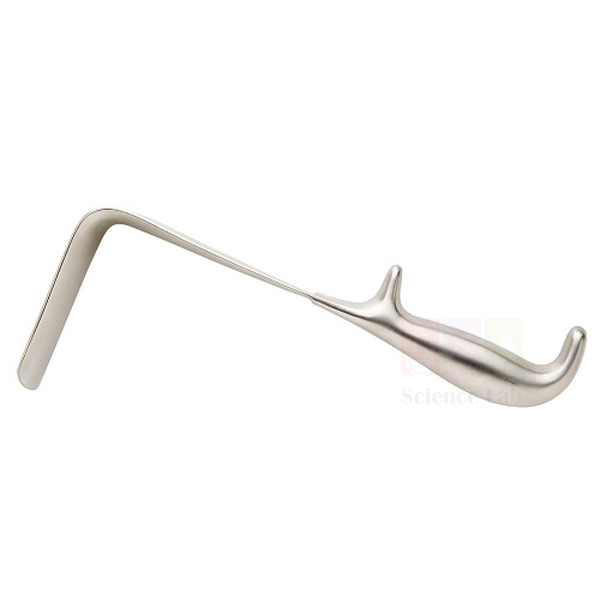
Doyen Vaginal Retractor
Doyen Vaginal Retractor (Product Code: SLE/SI/11) is a gynaecological retractor used to expose the vaginal cavity in gynaecology theatres and maternity units. Gynaecologists and obstetric teams rely on its broad blade, approximately 45 mm wide and 85 mm long, whose lateral edges must be blunt so the vaginal walls are held back without being cut. It is supplied by Jain Scientific Equipments Pvt Ltd (ScienceLab), Ambala, India, which handles lab equipment export from India as well as domestic orders.
Specifications
| Parameter | Detail |
|---|---|
| Material | Austenitic steel (non-quenched, non-magnetic) |
| Composition | 18 to 20% chromium; 8 to 10% nickel |
| Type | Vaginal retractor, Doyen pattern |
| Lateral edges | Blunt |
| Blade width | Approximately 45 mm |
| Blade length | Approximately 85 mm |
| Intended use | Exposing the vaginal cavity |
| Product code | SLE/SI/11 |
| Supplied by | Jain Scientific Equipments Pvt Ltd (ScienceLab), Ambala, India |
What Is the Doyen Vaginal Retractor Used For?
The Doyen retractor is placed against one vaginal wall and held by an assistant so the operator can see into, and work within, the vaginal cavity. It is often paired with a second retractor or a weighted posterior blade, such as the Auvard pattern, so that both walls are held apart during gynaecological procedures.
The broad blade spreads pressure over a wide area, while the blunt lateral edges avoid cutting or pinching the tissue. Before every use, run a gloved finger along the edges to confirm they are still smooth and free of burrs. Midwifery schools and nursing faculties that buy lab equipment for college teaching in India also use the retractor on pelvic training models to show correct positioning.
Supplier
ScienceLab is the trading name of Jain Scientific Equipments Private Limited, which supplies the Doyen Vaginal Retractor from Ambala, Haryana, to maternity hospitals, gynaecology departments, training institutions and importers. Gynaecology instruments are usually bought as a group, so your enquiry can combine retractors, specula, uterine forceps and sounds for one quotation.
Company background is on our profile page.
Related Surgical Instruments
Gynaecology instruments often used with the Doyen retractor:
- Auvard Vaginal Retractor — a second retractor for holding the opposite wall
- Graves Vaginal Speculum — an alternative way to open the vaginal cavity for examination
- Museux Uterine Forceps Curved — grips and steadies tissue once the field is exposed
- Martin Uterine Sound — a sound used after exposure has been achieved
- Surgical instruments Curettage /SET — a grouped set for curettage procedures
View every item in the Surgical Instruments range.
Frequently Asked Questions
What is the Doyen Vaginal Retractor used for?
The Doyen Vaginal Retractor is used to expose the vaginal cavity. An assistant holds its blade against a vaginal wall so the gynaecologist has a clear view and room to work, often with a second retractor on the opposite side.
What are the blade dimensions of the Doyen Vaginal Retractor?
The blade of the Doyen Vaginal Retractor is approximately 45 mm wide and approximately 85 mm long. These are nominal values, so ask us if your department needs the exact dimensions checked against an existing instrument before ordering.
Why must the edges of the Doyen Vaginal Retractor be blunt?
The lateral edges of the Doyen Vaginal Retractor must be blunt so the blade can hold the vaginal wall back without cutting or pinching it. Users should check the edges before each use and withdraw any instrument that shows burrs or damage.
What material is the Doyen Vaginal Retractor made of?
The Doyen Vaginal Retractor is made of austenitic steel in the non-quenched, non-magnetic condition, with 18 to 20% chromium and 8 to 10% nickel. A retractor needs strength rather than a cutting edge, which is why this steel type is used.
Who supplies the Doyen Vaginal Retractor?
The Doyen Vaginal Retractor is supplied by Jain Scientific Equipments Pvt Ltd (ScienceLab), Ambala, Haryana, India, to hospitals, maternity units, nursing and medical colleges, and distributors in India and international markets.
Can the Doyen Vaginal Retractor be quoted with other gynaecology instruments?
Yes, the Doyen Vaginal Retractor can be quoted together with specula, uterine forceps, sounds and curettage instruments. List every item and quantity with your delivery location and send it through our contact page.
Request a Quote
For a price on the Doyen Vaginal Retractor, contact us through the enquiry form or add it to the enquiry cart with the rest of your gynaecology instrument list.
Last updated: 24 September 2026
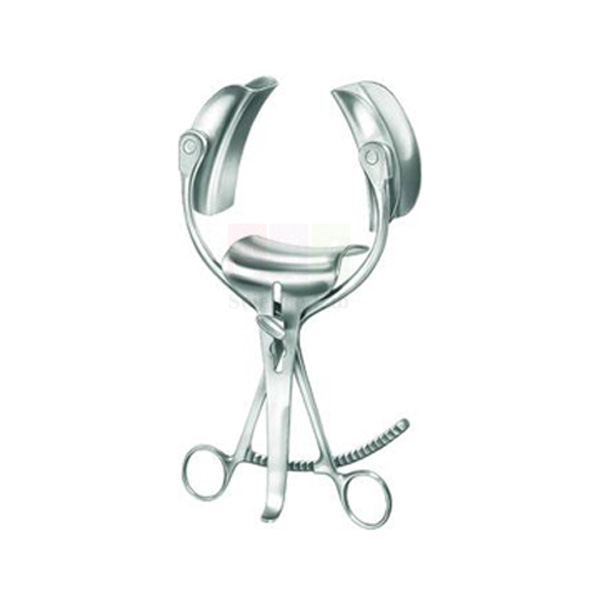
Collin Abdominal Retractor 3 Blades
Collin Abdominal Retractor 3 Blades (Product Code: SLE/SI/12) is a self-holding abdominal retractor used to keep skin, fatty tissue, muscle and viscera drawn back after the incision so the operative field stays exposed during abdominal surgery. General surgeons and obstetric teams value its locking mechanism, two mobile side blades and removable middle blade, which open a wound to approximately 100 mm. It is supplied by Jain Scientific Equipments Pvt Ltd (ScienceLab), Ambala, India, a laboratory equipment exporter from India.
Specifications
| Parameter | Detail |
|---|---|
| Material | Martensitic steel (quenched, magnetic) |
| Composition | 0.50% carbon; 13% chromium; 0.60 to 0.90% molybdenum |
| Mechanism | Locking, self-holding |
| Blades | 3: two mobile side blades and a removable middle blade |
| Centre blade (solid) | Approximately 38 x 55 mm |
| Lateral blades (solid) | Approximately 38 x 60 mm |
| Maximum wound opening | Approximately 100 mm |
| Intended use | Retracting skin, fatty tissue, muscles or viscera after the incision to expose the operative field |
| Product code | SLE/SI/12 |
| Supplied by | Jain Scientific Equipments Pvt Ltd (ScienceLab), Ambala, India |
What Is the Collin Abdominal Retractor Used For?
Once the abdominal wall is opened, the two side blades are placed against the wound edges and spread apart, and the lock holds them there without an assistant. The middle blade can then be fitted to hold back the lower or upper end of the wound, or left off when it is not needed. This frees the assistant's hands for suction, swabbing or handing instruments during a laparotomy or caesarean section.
Open the frame gradually rather than to its full 100 mm span at once, and release the lock before removing the blades. Operating-room technicians should practise fitting and releasing the middle blade on the bench; surgical skills courses often cover this as part of lab equipment training in India before staff use the retractor in theatre.
What to Specify When Ordering
- Quantity of complete retractors, each with its three blades
- Any spare middle blades you wish to discuss, since that blade is removable
- Whether you also want the Balfour three-blade pattern quoted for comparison
- Other abdominal instruments for the same set
Supplier
Jain Scientific Equipments Private Limited, known to customers as ScienceLab, supplies the Collin Abdominal Retractor 3 Blades from Ambala, Haryana, to general and maternity hospitals, surgical departments, dealers and importers. Retractors, spatulas and clamp forceps for abdominal work can be priced together on one quotation.
Learn more on our company profile.
Related Surgical Instruments
Instruments that complete an abdominal surgery setup:
- Balfour Abdominal Retractor 3 Blades — another three-blade self-retaining pattern to compare
- Abdominal Spatula Malleable — holds or shields viscera inside the opened abdomen
- Doyen Intestinal Clamp Forceps Curved — clamps bowel once the field is exposed
- Farabeuf Retractor Double Ended Pair — hand-held retractors for the superficial layers
- Surgical Instruments, Abdominal SET — a grouped instrument set for abdominal operations
More instruments are listed under Surgical Instruments.
Frequently Asked Questions
What does self-holding mean on the Collin Abdominal Retractor 3 Blades?
Self-holding means the Collin Abdominal Retractor 3 Blades has a locking mechanism that keeps the blades open once they are set. The retractor holds the wound edges apart on its own, so no assistant needs to pull on it throughout the operation.
How wide can the Collin Abdominal Retractor 3 Blades open a wound?
The Collin Abdominal Retractor 3 Blades gives a maximum wound opening of approximately 100 mm. The two side blades are mobile and are spread to the required width before the lock is engaged.
What are the blade sizes of the Collin Abdominal Retractor 3 Blades?
The Collin Abdominal Retractor 3 Blades has a solid centre blade of approximately 38 x 55 mm and two solid lateral blades of approximately 38 x 60 mm. The centre blade is removable and the lateral blades are mobile.
What steel is used in the Collin Abdominal Retractor 3 Blades?
The Collin Abdominal Retractor 3 Blades is made of quenched, magnetic martensitic steel with 0.50% carbon, 13% chromium and 0.60 to 0.90% molybdenum. This hardened steel gives the frame and locking mechanism the rigidity a self-holding retractor needs.
Who supplies the Collin Abdominal Retractor 3 Blades?
The Collin Abdominal Retractor 3 Blades is supplied by Jain Scientific Equipments Pvt Ltd (ScienceLab), Ambala, Haryana, India, to hospitals, medical colleges, dealers and importers across India and international markets.
What information is needed to quote the Collin Abdominal Retractor 3 Blades?
To quote the Collin Abdominal Retractor 3 Blades we need the number of retractors, any spare-blade questions, other abdominal instruments to include and the delivery destination. Send these details through our contact page.
Request a Quote
Request a price for the Collin Abdominal Retractor 3 Blades via our contact page, or add it to the enquiry cart with any other abdominal surgery instruments you need.
Last updated: 24 September 2026
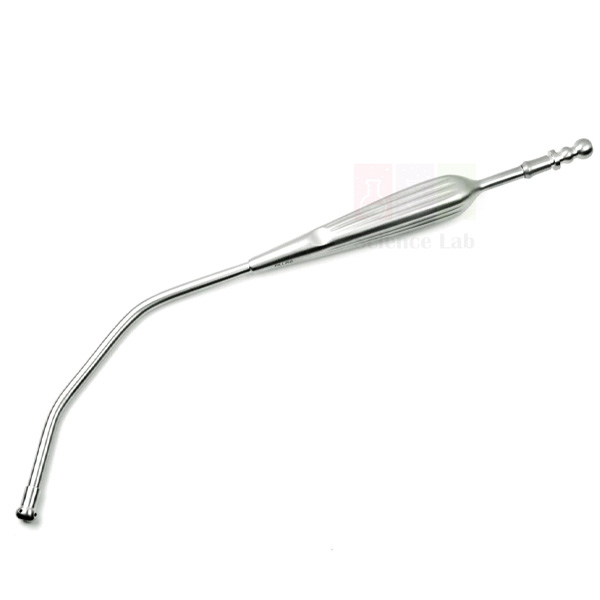
Yankauer Suction Tube
Yankauer Suction Tube (Product Code: SLE/SI/13) is a curved, rigid suction instrument used to aspirate fluids and secretions from the operative area in hospital theatres. Surgeons, anaesthetists and scrub nurses connect it to a suction source; this version has a removable tip and a tubing connector, is approximately 27 cm long and comes in a diameter of approximately 6 mm or 8 mm. It is supplied by Jain Scientific Equipments Pvt Ltd (ScienceLab), Ambala, India, to hospitals and lab equipment distributors in India and abroad.
Specifications
| Parameter | Detail |
|---|---|
| Material | Austenitic steel (non-quenched, non-magnetic) |
| Composition | 16 to 18% chromium; 10 to 14% nickel; 2 to 3% molybdenum |
| Shape | Curved |
| Construction | Suction tube with removable tip and tubing connector |
| Length | Approximately 27 cm |
| Diameter | Approximately 6 mm or 8 mm |
| Intended use | Aspirating fluids and secretions from the operative area |
| Product code | SLE/SI/13 |
| Supplied by | Jain Scientific Equipments Pvt Ltd (ScienceLab), Ambala, India |
What Is the Yankauer Suction Tube Used For?
The Yankauer is the standard hand-held suction wand of the operating theatre. Connected by tubing to a suction pump, it clears blood, irrigation fluid and secretions so the surgeon keeps a clear view, and the same pattern is used to clear the mouth and throat during anaesthesia and resuscitation. Its curve lets the user reach round structures while the hand stays out of the line of sight.
Because the tip and connector come off, the channels can be taken apart for thorough cleaning after each case; flush the tube straight after use so secretions do not dry inside. Choose the 8 mm diameter where larger volumes must be cleared and the 6 mm for finer work. When you enquire, mention any lab equipment spare parts you would like quoted, such as extra tips, so they can be considered with the main order.
What to Specify When Ordering
- Diameter: approximately 6 mm or approximately 8 mm (or how many of each)
- Total quantity per theatre or ward
- The suction pump and tubing the tube will be connected to
- Any additional tips you want priced
Supplier
Jain Scientific Equipments Private Limited trades as ScienceLab and supplies the Yankauer Suction Tube from Ambala, Haryana, to operating theatres, emergency departments, nursing colleges and importers. The company can quote suction tubes together with suction pumps and disposable tubing so a complete suction line is covered in one offer.
Further company information is on our profile page.
Related Surgical Instruments
Equipment needed to put the Yankauer tube to work:
- Suction Pump Surgical 1 Bottle w access — an electric suction source with a single collection bottle
- Suction Pump Surgical 2 Bottles w/access — a two-bottle suction unit for longer procedures
- Suction Pump Foot Operated Single Piston — a manual suction source where power is unreliable
- Tube, Suction, L50cm, Sterile, Disposable — a sterile, disposable suction tube from our consumables range
- Collin Abdominal Retractor 3 Blades — keeps the field open while it is being cleared
Explore our Surgical Instruments category for more.
Frequently Asked Questions
What is the Yankauer Suction Tube used for?
The Yankauer Suction Tube is used for aspirating fluids and secretions from the operative area. Connected to a suction pump through tubing, it keeps the surgical field clear, and the same curved pattern is widely used to clear the mouth and throat.
Which diameters are available for the Yankauer Suction Tube?
The Yankauer Suction Tube is listed in a diameter of approximately 6 mm or approximately 8 mm. State which diameter you need, or the split between the two, when you request a quotation.
How long is the Yankauer Suction Tube?
The Yankauer Suction Tube is approximately 27 cm long and curved. That length lets the user reach into the operative area or the oral cavity while holding the instrument comfortably clear of the surgeon's working space.
Can the Yankauer Suction Tube be taken apart for cleaning?
Yes, the Yankauer Suction Tube has a removable tip and a tubing connector, so it can be dismantled after use. Flush it promptly and then reprocess it according to your hospital's own cleaning and sterilisation procedure.
What is the Yankauer Suction Tube made of?
The Yankauer Suction Tube is made of non-quenched, non-magnetic austenitic steel containing 16 to 18% chromium, 10 to 14% nickel and 2 to 3% molybdenum.
Who supplies the Yankauer Suction Tube?
The Yankauer Suction Tube is supplied by Jain Scientific Equipments Pvt Ltd (ScienceLab), Ambala, Haryana, India. Hospitals, colleges and distributors in India and international markets can request a quote through our contact page.
Request a Quote
To receive a price for the Yankauer Suction Tube, tell us the diameter and quantity on the contact page or add it to the enquiry cart along with any suction pumps and tubing you need.
Last updated: 24 September 2026
Double Ended Probe
Double Ended Probe (Product Code: SLE/SI/14) is a slender surgical probe and dilator used to explore a surgical wound or to follow the path of a fistula in operating theatres and minor-procedure rooms. Surgeons choose it for its fine 2 mm diameter and bulbous tip at both ends, on an instrument approximately 145 mm long. It is supplied by Jain Scientific Equipments Pvt Ltd (ScienceLab), Ambala, India, to hospitals and alongside lab equipment for technical institutes and medical colleges.
Specifications
| Parameter | Detail |
|---|---|
| Material | Austenitic steel (non-quenched, non-magnetic) |
| Composition | 16 to 18% chromium; 10 to 14% nickel; 2 to 3% molybdenum |
| Type | Probe / dilator |
| Diameter | 2 mm |
| Ends | Bulbous shape at both ends |
| Length | Approximately 145 mm |
| Intended use | Exploring a surgical wound or following the path of a fistula |
| Product code | SLE/SI/14 |
| Supplied by | Jain Scientific Equipments Pvt Ltd (ScienceLab), Ambala, India |
What Is a Double Ended Probe Used For?
A surgical probe lets the operator feel the depth and direction of a wound track or sinus without cutting. The rounded, bulbous ends are designed to follow an existing channel rather than create a new one, which is why the probe is used to trace a fistula from its outer opening before it is laid open or treated. With a bulb at each end, either end can be used.
Advance the probe gently along the natural path and never force it, as the instrument is meant to explore, not to pierce. After use, check that the shaft is straight and the bulbs are smooth. For school biology practicals, departments building a dissection kit for schools in India normally choose a simpler chrome dissecting probe instead of this surgical instrument.
Supplier
The Double Ended Probe is supplied by Jain Scientific Equipments Private Limited, which operates under the ScienceLab name from Ambala, Haryana, to hospitals, surgical training units, distributors and importers.
Visit our company profile for more details.
Related Surgical Instruments
Instruments commonly laid out with a probe for wound exploration:
- Tissue Forceps Standard Straight — lifts the wound edge while the probe is advanced
- Farabeuf Retractor Double Ended Pair — holds a superficial wound open for inspection
- Scalpel Handle No. 3 — carries the blade used once the track has been mapped
- Surgical Instruments, Basic Surgery /SET — a grouped set for basic surgical procedures
- Probe, Chrome — a dissection probe for biology teaching labs
The full range is in our Surgical Instruments category.
Frequently Asked Questions
What is a Double Ended Probe used for in surgery?
The Double Ended Probe is used to explore a surgical wound or to follow the path of a fistula. It works as a probe and dilator, letting the surgeon judge the depth and direction of a track without cutting tissue.
What are the dimensions of the Double Ended Probe?
The Double Ended Probe has a diameter of 2 mm and a length of approximately 145 mm. The fine gauge suits narrow tracks, and the length gives enough reach while keeping the instrument easy to control.
Why does the Double Ended Probe have bulbous ends?
The Double Ended Probe has a bulbous shape at both ends so it slides along an existing channel instead of piercing tissue. Having a bulb at each end means either end of the probe can be used.
What material is the Double Ended Probe made from?
The Double Ended Probe is made from non-quenched, non-magnetic austenitic steel with 16 to 18% chromium, 10 to 14% nickel and 2 to 3% molybdenum.
Is the Double Ended Probe the same as a biology dissecting probe?
No, the Double Ended Probe is a surgical instrument with a fine 2 mm shaft and bulbous ends. School biology dissection usually uses a simpler dissecting probe, such as our Probe, Chrome, listed in the dissection range.
Who supplies the Double Ended Probe and how can I get a quote?
Jain Scientific Equipments Pvt Ltd (ScienceLab), Ambala, Haryana, India, supplies the Double Ended Probe in India and international markets. Send the quantity and delivery location through our contact page for a quotation.
Request a Quote
To obtain pricing for the Double Ended Probe, use the contact page or add it to the enquiry cart with the forceps, retractors and scalpel handles you need.
Last updated: 24 September 2026
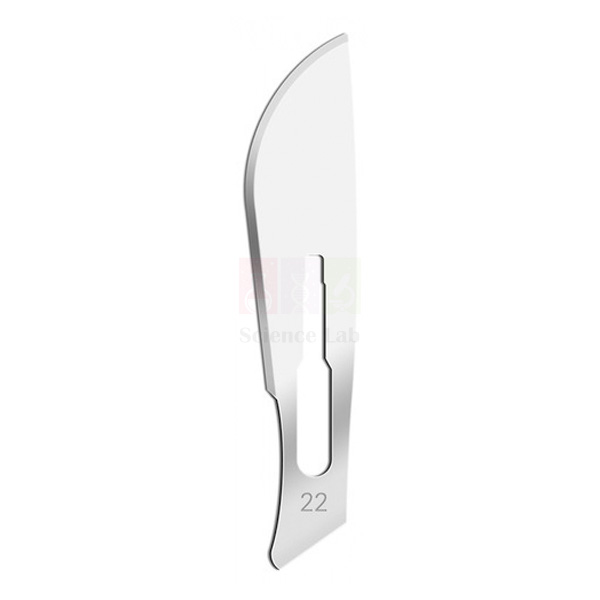
Sterile Disposable Scalpel Blade No. 22
Sterile Disposable Scalpel Blade No. 22 (Product Code: SLE/SI/15) is a single-use surgical blade used as the basic cutting instrument for surgical incisions in operating theatres and procedure rooms. Surgeons and theatre staff fit it to a standard scalpel handle; the blade is martensitic steel hardened to 50 to 58 HRC and initially sterilised with ethylene oxide gas. It is supplied by Jain Scientific Equipments Pvt Ltd (ScienceLab), Ambala, India, as part of its disposable lab equipment and hospital consumables range.
Specifications
| Parameter | Detail |
|---|---|
| Blade number | No. 22 |
| Material | Martensitic steel |
| Composition | 0.40% carbon; 14% chromium |
| Hardness | 50 HRC to 58 HRC |
| Fitting | For use with a standard scalpel handle |
| Condition | Sterile; disposable; single use only |
| Initial sterilisation method | Ethylene oxide gas |
| Intended use | Basic cutting instrument for surgical incisions |
| Product code | SLE/SI/15 |
| Supplied by | Jain Scientific Equipments Pvt Ltd (ScienceLab), Ambala, India |
What Is the No. 22 Scalpel Blade Used For?
A No. 22 blade has a large, curved cutting edge and is used for making skin incisions and other straightforward cuts where a broad belly of blade is useful. Because it is disposable, a fresh, sharp blade is opened for each patient and discarded afterwards, so there is no resharpening or reprocessing of the cutting edge.
The supplier's safety instructions are specific: wear gloves, always fit the blade to the handle and remove it with forceps rather than fingers, use aseptic technique, and put used blades into a sealed container to prevent injuries. Those sealed containers are then collected and destroyed by incineration in a controlled environment. As a lab consumables supplier in India, we can quote nitrile gloves and sharps containers in the same offer as the blades.
What to Specify When Ordering
- Blade number (this listing is No. 22) and total quantity required
- The scalpel handle you use, so the fitting can be confirmed
- Pack size preferences, which we will confirm in the quotation
- Sharps containers or gloves to be quoted with the blades
Supplier
Jain Scientific Equipments Private Limited, which does business as ScienceLab, supplies the Sterile Disposable Scalpel Blade No. 22 from Ambala, Haryana, to hospitals, clinics, nursing and medical colleges, and distributors. Blades are consumables that institutions reorder regularly, and the company can quote them together with handles, gloves and sharps containers.
See our company profile for background.
Related Surgical Instruments
Items that support safe use and disposal of the blade:
- Sharp Container Leak Proof Plastic — a leak-proof plastic container for collecting used blades
- Gloves, W/o Powder, Nitrile, L, Disposable — gloves to wear when handling blades
- Kocher Artery Forceps Straight — straight forceps that can grip the blade while it is fitted or removed
- Instrument Tray Stainless Steel — holds the loaded scalpel between cuts
- Surgical Instruments, Basic Surgery /SET — a grouped set for basic surgical procedures
Find more in Surgical Instruments.
Frequently Asked Questions
Is the Sterile Disposable Scalpel Blade No. 22 reusable?
No, the Sterile Disposable Scalpel Blade No. 22 is for single use only. After use it should be placed in a sealed container to prevent injuries, and the sealed containers destroyed by incineration in a controlled environment.
How is the Sterile Disposable Scalpel Blade No. 22 sterilised?
The Sterile Disposable Scalpel Blade No. 22 is supplied sterile, and its initial sterilisation method is ethylene oxide gas. Open it using aseptic technique immediately before use and do not attempt to re-sterilise a used blade.
Which handle fits the Sterile Disposable Scalpel Blade No. 22?
The Sterile Disposable Scalpel Blade No. 22 is made for use with a standard scalpel handle. Handle numbers determine which blade fittings they accept, so tell us the handle you use and we will confirm the match before you order.
How hard is the Sterile Disposable Scalpel Blade No. 22?
The Sterile Disposable Scalpel Blade No. 22 has a hardness of 50 HRC to 58 HRC. It is made of martensitic steel with 0.40% carbon and 14% chromium, a steel type widely used for surgical cutting edges.
How should the Sterile Disposable Scalpel Blade No. 22 be fitted and removed?
Wear gloves and always fit or remove the Sterile Disposable Scalpel Blade No. 22 using forceps, never your fingers. This keeps hands away from the edge and reduces the risk of cuts during loading and disposal.
Who supplies the Sterile Disposable Scalpel Blade No. 22?
The Sterile Disposable Scalpel Blade No. 22 is supplied by Jain Scientific Equipments Pvt Ltd (ScienceLab), Ambala, Haryana, India. Send quantities and delivery details through our contact page for a quotation in India or international markets.
Request a Quote
For a quotation on the Sterile Disposable Scalpel Blade No. 22, write to us through the contact page or add it to the enquiry cart with handles, gloves and sharps containers.
Last updated: 24 September 2026
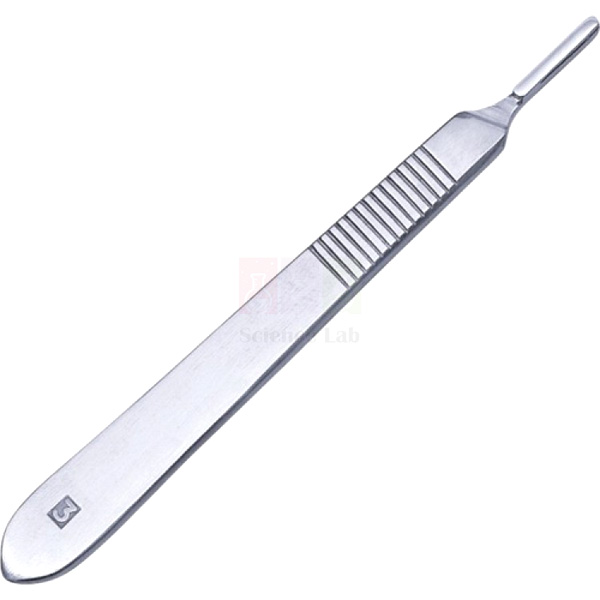
Scalpel Handle No. 3
Scalpel Handle No. 3 (Product Code: SLE/SI/16) is a reusable bistoury handle used to hold an interchangeable blade for surgical incisions in hospitals, clinics and surgical training labs. Surgeons select a handle by its number, which describes the shape of the distal end and so decides which blades it takes; this No. 3 handle is approximately 13.5 cm long. It is supplied by Jain Scientific Equipments Pvt Ltd (ScienceLab), Ambala, India, one of the educational laboratory instrument suppliers serving medical and nursing colleges.
Specifications
| Parameter | Detail |
|---|---|
| Handle number | No. 3 (the number indicates the distal-end fitting and therefore the choice of blade) |
| Type | Bistoury handle for interchangeable blade |
| Material | Austenitic steel (non-quenched, non-magnetic) |
| Length | Approximately 13.5 cm |
| Intended use | Holding the blade for surgical incisions |
| Product code | SLE/SI/16 |
| Supplied by | Jain Scientific Equipments Pvt Ltd (ScienceLab), Ambala, India |
What Is a No. 3 Scalpel Handle Used For?
A scalpel handle turns a detachable blade into a controllable cutting instrument. The blade slides onto the fitting at the distal end, is used for the incision, and is then removed and discarded while the handle is cleaned and used again. Because the fitting differs between handle numbers, a No. 3 handle only accepts blades made for that fitting, so check blade and handle numbers together before ordering either.
The approximately 13.5 cm length suits fine, pen-grip work on the surface. Always load and unload blades with forceps, and put removed blades straight into a sharps container. Colleges buying school and college lab equipments for anatomy or zoology dissection can also choose the handle listed in our dissection range.
What to Specify When Ordering
- Handle number required (this listing is No. 3) and quantity
- The blade numbers you intend to use, so we can confirm they fit a No. 3 handle
- Whether blades, forceps or sharps containers should be quoted with the handles
Supplier
Jain Scientific Equipments Private Limited, trading as ScienceLab, supplies the Scalpel Handle No. 3 from Ambala, Haryana, to hospitals, surgical skills centres, medical and veterinary teaching departments, and distributors. Because handles are reused and blades are consumed, many buyers place one handle order and arrange blade supplies separately; both can be discussed in the same enquiry.
For more about us, see the company profile.
Related Surgical Instruments
Items used with a scalpel handle during incision and blade changes:
- Kocher Artery Forceps Straight — straight forceps for gripping a blade while loading or removing it
- Sharp Container Leak Proof Plastic — collects blades once they are taken off the handle
- Tissue Forceps Standard Straight — steadies tissue in the other hand while cutting
- Surgical Instruments, Basic Surgery /SET — a grouped set for basic surgical procedures
- Scalpel Handle no.3 — the handle offered in our dissection equipment range for biology teaching
Browse the whole Surgical Instruments category.
Frequently Asked Questions
What does the number on the Scalpel Handle No. 3 mean?
The number on the Scalpel Handle No. 3 indicates the characteristic of its distal end, the part the blade fits onto. That fitting decides which blades the handle accepts, so the handle number and the blade numbers must be matched.
Which blades fit the Scalpel Handle No. 3?
The Scalpel Handle No. 3 accepts only blades made for its distal-end fitting. Tell us the blade numbers you plan to use and we will confirm whether they suit this handle before you place an order.
How long is the Scalpel Handle No. 3?
The Scalpel Handle No. 3 is approximately 13.5 cm long. It is a bistoury handle for interchangeable blades, held like a pen for controlled incisions near the surface.
What is the Scalpel Handle No. 3 made of?
The Scalpel Handle No. 3 is made of austenitic steel in the non-quenched, non-magnetic condition. The handle itself does not cut, so it does not need the hardened steel used for blades.
Is the Scalpel Handle No. 3 reusable?
Yes, the Scalpel Handle No. 3 is a reusable handle for interchangeable blades. The blade is removed with forceps and discarded after use, while the handle is cleaned and reprocessed under your facility's own procedures.
Who supplies the Scalpel Handle No. 3?
The Scalpel Handle No. 3 is supplied by Jain Scientific Equipments Pvt Ltd (ScienceLab), Ambala, Haryana, India, to hospitals, colleges and distributors in India and international markets. Request prices through our contact page.
Request a Quote
Get a quotation for the Scalpel Handle No. 3 by sending your quantity and blade numbers via the contact page, or add it to the enquiry cart with other instruments.
Last updated: 24 September 2026
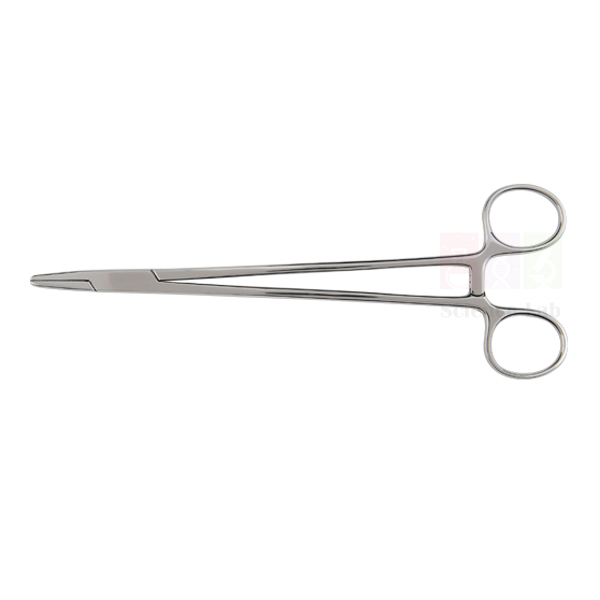
Mayo Hegar Needle Holder Straight
Mayo Hegar Needle Holder Straight (Product Code: SLE/SI/17) is an 18 cm straight needle holder used to grip suture needles while stitching in operating theatres, emergency rooms and suturing workshops. Surgeons and trainees rely on its ridged jaws, a longitudinal groove that protects the needle from deterioration, and a ratchet that sets the grip at varying tightness. It is supplied by Jain Scientific Equipments Pvt Ltd (ScienceLab), Ambala, India, a laboratory equipment supplier in India for hospitals and clinical skills labs.
Specifications
| Parameter | Detail |
|---|---|
| Material | Martensitic steel (quenched, magnetic) |
| Composition | 0.20% carbon; 13% chromium |
| Jaws | Pronounced ridges, with a well-defined longitudinal groove to prevent deterioration of the needle |
| Lock | Ratchet allowing the needle to be gripped with varying tightness |
| Shape | Straight |
| Length | 18 cm |
| Intended use | Holding suture needles while stitching |
| Product code | SLE/SI/17 |
| Supplied by | Jain Scientific Equipments Pvt Ltd (ScienceLab), Ambala, India |
What Is the Mayo Hegar Needle Holder Used For?
A needle holder clamps a curved suture needle so it can be driven through tissue with a controlled wrist rotation. The Mayo Hegar pattern looks like a short, heavy-jawed forceps: the ridged jaws stop the needle from twisting, the longitudinal groove seats it without flattening it, and the ratchet holds the chosen grip so the surgeon does not need to squeeze throughout each bite.
Grip the needle about two-thirds of the way back from the point, engage only the first notches of the ratchet for finer needles, and release fully before repositioning. The instrument is also used for instrument-tied knots. Medical and nursing colleges choosing lab equipment for college suturing practice in India pair it with toothed forceps and suture scissors at each student station.
Supplier
Under its ScienceLab brand, Jain Scientific Equipments Private Limited supplies the Mayo Hegar Needle Holder Straight from Ambala, Haryana, to theatres, emergency departments, clinical skills centres and distributors. Suturing instruments are often ordered as complete student or ward sets, and the company can price every component in one quotation.
Company details are on our profile page.
Related Surgical Instruments
Instruments that complete a suturing setup:
- Tissue Forceps Standard Straight — holds the wound edge while the needle passes through
- Mayo Scissors Curved Blunt/Blunt — trims the thread after each knot
- Surgical Instruments, suture /SET — a grouped set for suturing work
- Allis Tissue Forceps — grips soft tissue that needs holding during closure
- Dressing Forceps Standard Straight — applies the dressing once the wound is closed
See more in Surgical Instruments.
Frequently Asked Questions
What is the Mayo Hegar Needle Holder Straight used for?
The Mayo Hegar Needle Holder Straight is used for holding suture needles while stitching. It clamps the needle firmly so it can be driven through tissue, and it is also used to tie knots with the instrument.
How long is the Mayo Hegar Needle Holder Straight?
The Mayo Hegar Needle Holder Straight is 18 cm long with straight jaws. This general-purpose length suits skin and superficial closure and is a common size for suturing practice in teaching labs.
Why do the jaws of the Mayo Hegar Needle Holder Straight have a groove?
The jaws of the Mayo Hegar Needle Holder Straight have a well-defined longitudinal groove to prevent deterioration of the needle. The groove seats the needle, while the pronounced ridges on the jaws stop it from rotating.
How does the ratchet on the Mayo Hegar Needle Holder Straight work?
The ratchet on the Mayo Hegar Needle Holder Straight locks the handles at successive notches, so the needle can be gripped with varying tightness. A lighter setting suits fine needles and a firmer one suits heavier needles.
What steel is the Mayo Hegar Needle Holder Straight made of?
The Mayo Hegar Needle Holder Straight is made of quenched, magnetic martensitic steel with 0.20% carbon and 13% chromium, a hardened steel type commonly used for instrument jaws.
Who supplies the Mayo Hegar Needle Holder Straight?
The Mayo Hegar Needle Holder Straight is supplied by Jain Scientific Equipments Pvt Ltd (ScienceLab), Ambala, Haryana, India, to hospitals, colleges and distributors in India and international markets. Ask for a quote through our contact page.
Request a Quote
Price the Mayo Hegar Needle Holder Straight by sending your quantity through the contact page, or add it to the enquiry cart with the forceps and scissors for your suturing sets.
Last updated: 24 September 2026
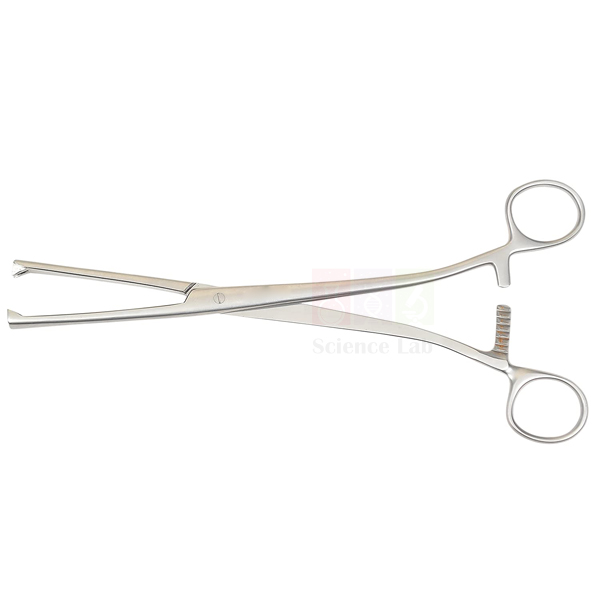
Museux Uterine Forceps Curved
Museux Uterine Forceps Curved (Product Code: SLE/SI/18) is a toothed uterine traction forceps, of the vulsellum or tenaculum type, used to grip and immobilise thick tissue in gynaecology theatres and procedure rooms. Gynaecologists use its sideways curve, 2 x 2 precisely adjusted teeth on 8-10 mm jaws and lockable hard ratchet on a 24 cm instrument. It is supplied by Jain Scientific Equipments Pvt Ltd (ScienceLab), Ambala, India, a lab equipment exporter in India serving hospitals and training institutions.
Specifications
| Parameter | Detail |
|---|---|
| Material | Martensitic steel (quenched, magnetic) |
| Composition | 0.20% carbon; 13% chromium |
| Type | Uterine traction forceps (vulsellum / tenaculum), gripping forceps with teeth |
| Teeth | 2 x 2, with precise adjustment |
| Shape | Curved sideways |
| Lock | Hard ratchet, lockable |
| Jaws | 8-10 mm |
| Length | 24 cm |
| Intended use | Gripping and immobilising thick tissue |
| Product code | SLE/SI/18 |
| Supplied by | Jain Scientific Equipments Pvt Ltd (ScienceLab), Ambala, India |
What Are Museux Uterine Forceps Used For?
Museux forceps take hold of the cervix or other firm tissue and let the operator apply steady traction, so the uterus is straightened and held still for sounding, dilatation or curettage. The paired teeth bite into thick tissue and the hard ratchet keeps the grip locked while the instrument is under tension. The sideways curve keeps the handles away from the line of sight through a speculum.
Close the ratchet only as far as needed to hold the tissue, and inspect the teeth after each use to be sure they still meet evenly, since precise tooth alignment is what gives these forceps a secure bite. Hospitals issuing a lab equipment tender in India for gynaecology sets can list the Museux alongside specula, sounds and dilators.
Supplier
Jain Scientific Equipments Private Limited supplies the Museux Uterine Forceps Curved under the ScienceLab name from Ambala, Haryana, to maternity hospitals, gynaecology departments, midwifery schools and importers.
Read about the company on our profile page.
Related Surgical Instruments
Instruments used with uterine traction forceps:
- Graves Vaginal Speculum — opens the vagina so the cervix can be reached
- Martin Uterine Sound — passed while the forceps steady the uterus
- Hegar Uterine Dilator Double Ended — dilates the cervical canal under traction
- Duplay Uterine Forceps Curved — a longer, double-curved traction forceps to compare
- Surgical instruments Curettage /SET — a grouped set for curettage procedures
Find the rest of the range under Surgical Instruments.
Frequently Asked Questions
What are Museux Uterine Forceps Curved used for?
Museux Uterine Forceps Curved are used to grip and immobilise thick tissue as uterine traction forceps. They hold the tissue steady so the operator can apply controlled traction during gynaecological procedures such as sounding, dilatation or curettage.
How many teeth do the Museux Uterine Forceps Curved have?
The Museux Uterine Forceps Curved have 2 x 2 teeth with precise adjustment, so the teeth of each jaw meet cleanly. Paired teeth give a secure bite in thick tissue while traction is applied.
What are the dimensions of the Museux Uterine Forceps Curved?
The Museux Uterine Forceps Curved are 24 cm long with jaws of 8-10 mm. They are curved sideways, which keeps the handles out of the operator's line of sight during the procedure.
Do the Museux Uterine Forceps Curved lock?
Yes, the Museux Uterine Forceps Curved have a hard, lockable ratchet. Once closed on the tissue, the ratchet holds the grip so traction can be maintained without the user squeezing the handles.
How do Museux and Duplay uterine forceps differ?
Museux Uterine Forceps Curved are 24 cm long, curved sideways, with 2 x 2 teeth, while the Duplay Uterine Forceps Curved are longer and double curved. Both are traction forceps of the vulsellum or tenaculum type.
Who supplies the Museux Uterine Forceps Curved?
Museux Uterine Forceps Curved are supplied by Jain Scientific Equipments Pvt Ltd (ScienceLab), Ambala, Haryana, India, to hospitals and distributors in India and international markets. Send your quantity through our contact page for a quotation.
Request a Quote
To receive a quotation for the Museux Uterine Forceps Curved, use our contact page or add the forceps to the enquiry cart with the other gynaecology instruments you need.
Last updated: 24 September 2026
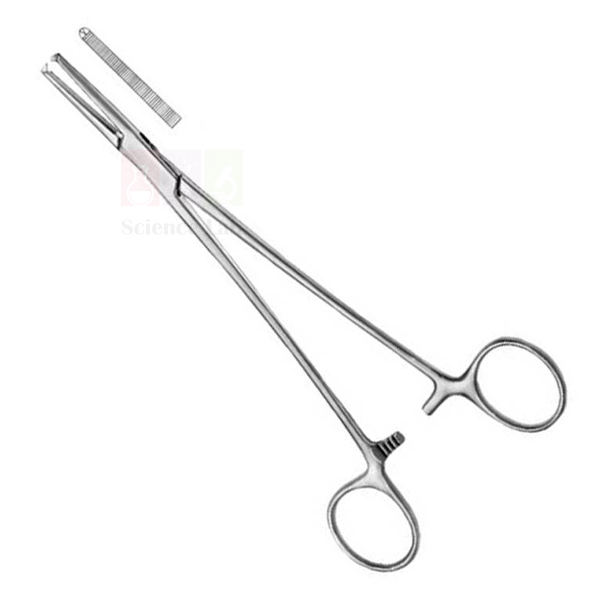
Phaneuf Uterine Forceps Curved
Phaneuf Uterine Forceps Curved (Product Code: SLE/SI/19) is a haemostatic clamp used for haemostasis of arteries, especially the uterine arteries, in gynaecology and obstetric theatres. Surgeons clamp vessels with its slightly springy, flexible arms, jaws curved and angled on the flat with 1 x 2 teeth, and a lockable ratchet with variable settings on a 21.5 cm instrument. It is supplied by Jain Scientific Equipments Pvt Ltd (ScienceLab), Ambala, India, a supplier of scientific & laboratory instruments to hospitals in India and abroad.
Specifications
| Parameter | Detail |
|---|---|
| Material | Martensitic steel (quenched, magnetic) |
| Composition | 0.20% carbon; 13% chromium |
| Type | Haemostatic forceps, slightly springy, with flexible arms |
| Jaws | Curved, angled on the flat, 1 x 2 teeth; jaws adjusted |
| Lock | Ratchet with variable setting, lockable |
| Length | 21.5 cm |
| Intended use | Haemostasis of arteries, especially the uterine arteries |
| Product code | SLE/SI/19 |
| Supplied by | Jain Scientific Equipments Pvt Ltd (ScienceLab), Ambala, India |
What Are Phaneuf Uterine Forceps Used For?
Phaneuf forceps are clamps designed for the uterine vessels. The jaws are angled on the flat so they can be placed across the vessel pedicle at the side of the uterus, and the 1 x 2 teeth stop the clamp slipping off once it is closed. The clamp stays in place while the pedicle is cut and a ligature is tied beneath it, and it is then released.
The slightly springy, flexible arms and variable ratchet let the surgeon choose how firmly the clamp closes. After use, confirm that the jaws still align and that each ratchet step engages cleanly. Overseas hospitals arranging lab equipment export from India can order these clamps together with artery forceps and needle holders in one consignment.
Supplier
ScienceLab, the trading name of Jain Scientific Equipments Private Limited, supplies the Phaneuf Uterine Forceps Curved from Ambala, Haryana, to gynaecology and obstetric units, surgical training departments, dealers and importers. Haemostatic clamps are usually bought as part of a wider instrument list, which we can quote as a single offer.
Company information is available on our company profile.
Related Surgical Instruments
Instruments used around vessel clamping and ligation:
- Kelly Artery Forceps Curved — curved artery forceps for general bleeding points
- Rochester Pean Artery Forceps Curved — another curved artery forceps to compare for clamping tissue
- Mayo Hegar Needle Holder Straight — drives the needle for the ligature under the clamp
- Doyen Vaginal Retractor — provides exposure in vaginal procedures
- Surgical Instruments, Abdominal SET — a grouped set for abdominal operations
Discover more in the Surgical Instruments category.
Frequently Asked Questions
What are Phaneuf Uterine Forceps Curved used for?
Phaneuf Uterine Forceps Curved are used for haemostasis of arteries, especially the uterine ones. They are haemostatic clamps placed across a vessel or pedicle to control bleeding while it is cut and ligated.
How long are the Phaneuf Uterine Forceps Curved?
The Phaneuf Uterine Forceps Curved are 21.5 cm long. Their jaws are curved and angled on the flat, giving access to vessels at the side of the uterus.
What teeth do the Phaneuf Uterine Forceps Curved have?
The Phaneuf Uterine Forceps Curved have 1 x 2 teeth at the jaw tips. The teeth interlock when the clamp is closed, helping it stay on the tissue rather than sliding off the pedicle.
Why are the Phaneuf Uterine Forceps Curved slightly springy?
The Phaneuf Uterine Forceps Curved have slightly springy, flexible arms combined with a ratchet of variable setting. Together these let the user adjust how firmly the jaws close on the vessel before locking.
What are the Phaneuf Uterine Forceps Curved made from?
The Phaneuf Uterine Forceps Curved are made from quenched, magnetic martensitic steel with 0.20% carbon and 13% chromium, the same steel family listed for our other gripping forceps.
Who supplies the Phaneuf Uterine Forceps Curved?
Jain Scientific Equipments Pvt Ltd (ScienceLab) of Ambala, Haryana, India, supplies the Phaneuf Uterine Forceps Curved to hospitals and distributors in India and international markets. Request a quotation through our contact page.
Request a Quote
For pricing on the Phaneuf Uterine Forceps Curved, write to us via the contact page or add them to the enquiry cart along with other clamps and forceps.
Last updated: 24 September 2026
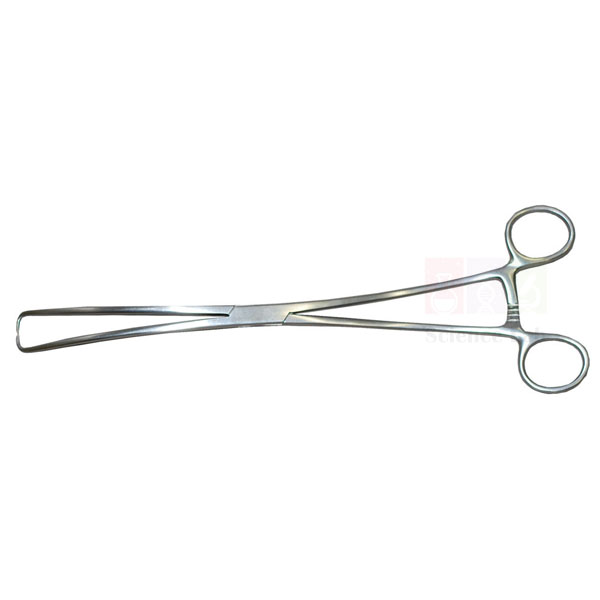
Duplay Uterine Forceps Curved
Duplay Uterine Forceps Curved (Product Code: SLE/SI/20) is a long, double-curved uterine traction forceps of the vulsellum or tenaculum type, used for gripping and immobilising thick tissue in gynaecological procedures. At 28 cm it gives extra reach, and its hard, lockable ratchet keeps the grip closed while traction is applied. It is supplied by Jain Scientific Equipments Pvt Ltd (ScienceLab), Ambala, India, and appears in its lab equipment catalogue for India and export customers.
Specifications
| Parameter | Detail |
|---|---|
| Material | Martensitic steel (quenched, magnetic) |
| Composition | 0.20% carbon; 13% chromium |
| Type | Uterine traction forceps (vulsellum / tenaculum); gripping forceps |
| Shape | Double curved |
| Lock | Hard ratchet, lockable |
| Length | 28 cm |
| Intended use | Gripping and immobilisation of thick tissue |
| Product code | SLE/SI/20 |
| Supplied by | Jain Scientific Equipments Pvt Ltd (ScienceLab), Ambala, India |
What Are Duplay Uterine Forceps Used For?
Like other tenaculum forceps, the Duplay grasps the cervix so the operator can draw the uterus into line and hold it steady for instruments passed through the cervical canal. Its double curve bends the shaft away from the axis of the vagina, so the handles sit clear of the speculum and the operator's view, which is especially useful with its 28 cm length.
Apply traction smoothly rather than in jerks, and release the ratchet completely before removing the forceps. Wipe the jaws and ratchet clean after every procedure and check that the lock still engages positively. A lab equipment distributor in India equipping district hospitals or midwifery schools can bundle the Duplay with specula, sounds and curettes.
Supplier
Jain Scientific Equipments Private Limited, whose trade name is ScienceLab, supplies the Duplay Uterine Forceps Curved from Ambala, Haryana, to hospitals, maternity units, teaching institutions, dealers and importers. Where a buyer is choosing between traction forceps patterns, one quotation can include several for comparison.
More information is on our company profile.
Related Surgical Instruments
Instruments used in the same gynaecological procedures:
- Museux Uterine Forceps Curved — a shorter, sideways-curved traction forceps with 2 x 2 teeth
- Graves Vaginal Speculum — gives access to the cervix before the forceps are applied
- Martin Uterine Sound — passed while the forceps hold the uterus steady
- Sims Uterine Curette Sharp — a curette used under traction
- Surgical instruments Curettage /SET — a grouped set for curettage procedures
Visit the Surgical Instruments category for the full range.
Frequently Asked Questions
What are Duplay Uterine Forceps Curved used for?
Duplay Uterine Forceps Curved are used for gripping and immobilising thick tissue as uterine traction forceps. They hold the cervix steady so the operator can straighten the uterus and pass other instruments during gynaecological procedures.
How long are the Duplay Uterine Forceps Curved?
The Duplay Uterine Forceps Curved are 28 cm long. The extra length, combined with the double curve, keeps the handles well clear of the vaginal speculum and the operator's line of sight.
What does double curved mean on the Duplay Uterine Forceps Curved?
Double curved means the shaft of the Duplay Uterine Forceps Curved bends in two places. This offsets the handles from the jaws, so the forceps can hold the cervix while leaving the view down the vaginal canal open.
Do the Duplay Uterine Forceps Curved have a locking ratchet?
Yes, the Duplay Uterine Forceps Curved have a hard ratchet that locks. Once the jaws are closed on the tissue, the ratchet holds them shut so steady traction can be kept up without constant hand pressure.
What steel are the Duplay Uterine Forceps Curved made of?
The Duplay Uterine Forceps Curved are made of quenched martensitic steel, which is magnetic, with a composition of 0.20% carbon and 13% chromium. Quenching is the hardening treatment that gives this type of steel its stiffness.
Who supplies the Duplay Uterine Forceps Curved?
The Duplay Uterine Forceps Curved are supplied by Jain Scientific Equipments Pvt Ltd (ScienceLab), Ambala, Haryana, India, to hospitals and distributors in India and international markets. Send your enquiry through our contact page.
Request a Quote
Ask for a price on the Duplay Uterine Forceps Curved using the contact page, or add them to the enquiry cart with any specula, sounds or curettes you need.
Last updated: 24 September 2026
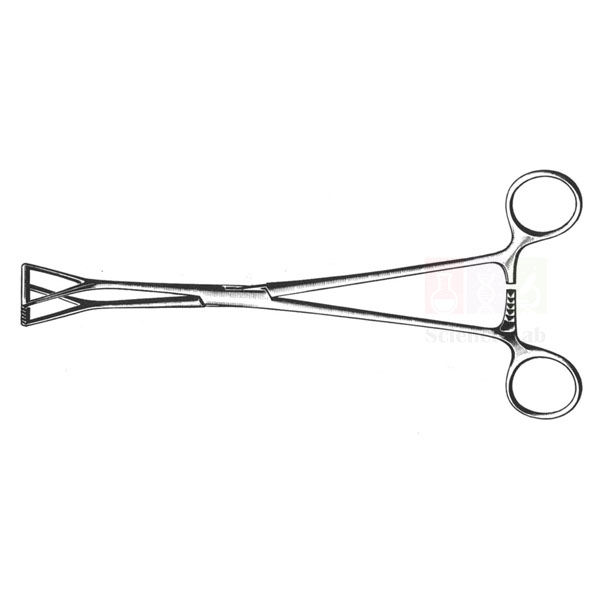
Duval Tissue Forceps
Duval Tissue Forceps (Product Code: SLE/SI/21) is a 23 cm springy gripping forceps used to hold soft, delicate tissue such as lung and intestine during thoracic and abdominal surgery. Surgeons choose it for its triangular, open-aperture grippers of approximately 27 mm, whose ridges are pronounced yet non-traumatic, plus flexible arms and a soft lockable ratchet. It is supplied by Jain Scientific Equipments Pvt Ltd (ScienceLab), Ambala, India, which serves hospitals across India and, as a lab equipment exporter, international buyers.
Specifications
| Parameter | Detail |
|---|---|
| Material | Martensitic steel (quenched, magnetic) |
| Composition | 0.20% carbon; 13% chromium |
| Type | Gripping forceps, springy, with flexible arms |
| Grippers | Ridged, with triangular aperture; ridges pronounced but non-traumatic |
| Jaw | Approximately 27 mm |
| Lock | Soft ratchet, lockable |
| Length | 23 cm |
| Intended use | Gripping soft and delicate tissues (lungs and intestines) |
| Product code | SLE/SI/21 |
| Supplied by | Jain Scientific Equipments Pvt Ltd (ScienceLab), Ambala, India |
What Are Duval Tissue Forceps Used For?
Duval forceps are made for organs that tear or bruise easily. The triangular, open grippers wrap around a fold of lung or bowel instead of pinching it at one point, and the ridges hold without teeth. Surgeons use them to lift and steady lung tissue during chest operations and to hold loops of intestine during bowel work.
Use the soft ratchet only on its first steps and let the springy arms do the holding; this pattern is not intended for tough fascia or skin, where toothed forceps such as the Allis are more appropriate. Surgical skills labs that buy from educational laboratory suppliers often include one Duval alongside a Babcock so trainees can compare atraumatic grips.
Supplier
Jain Scientific Equipments Private Limited, operating as ScienceLab, supplies the Duval Tissue Forceps from Ambala, Haryana, to thoracic and general surgery departments, teaching hospitals, dealers and importers. Tissue forceps of different grip types can be combined in one quotation so theatres can equip a full tray at once.
Learn about the company on our profile page.
Related Surgical Instruments
Other instruments for handling delicate organs:
- Babcock Tissue Forceps — another atraumatic pattern for bowel and tubular structures
- Allis Tissue Forceps — a toothed alternative for firmer soft tissue
- Doyen Intestinal Clamp Forceps Curved — clamps the bowel once it has been positioned
- Collin Abdominal Retractor 3 Blades — holds the abdomen open while tissue is handled
- Surgical Instruments, Abdominal SET — a grouped set for abdominal operations
Our complete Surgical Instruments range is listed here.
Frequently Asked Questions
What are Duval Tissue Forceps used for?
Duval Tissue Forceps are used to grip soft and delicate tissues such as the lungs and intestines. Their triangular, ridged grippers hold a fold of tissue gently, which is why they are a standard pattern in chest and bowel surgery.
Are Duval Tissue Forceps traumatic to tissue?
Duval Tissue Forceps have gripper ridges that are pronounced but non-traumatic, and the grippers have a triangular aperture instead of teeth. Correct use still matters: close the soft ratchet only as far as needed to hold the tissue.
What size are the Duval Tissue Forceps?
The Duval Tissue Forceps are 23 cm long with a jaw of approximately 27 mm. The long shaft reaches into the chest or abdomen, and the broad triangular jaw spreads the grip over a wider area.
What kind of ratchet do Duval Tissue Forceps have?
Duval Tissue Forceps have a soft, lockable ratchet combined with springy, flexible arms. The soft ratchet lets the forceps stay closed on delicate tissue with a lighter holding force than a hard ratchet.
What steel are Duval Tissue Forceps made of?
Duval Tissue Forceps are made of quenched martensitic steel, which is magnetic, with 0.20% carbon and 13% chromium. This is the listed material for these gripping forceps; ask us if you need any further material information.
Who supplies Duval Tissue Forceps?
Duval Tissue Forceps are supplied by Jain Scientific Equipments Pvt Ltd (ScienceLab), Ambala, Haryana, India, to hospitals, colleges and distributors in India and international markets. Request prices through our contact page.
Request a Quote
Obtain a quotation for the Duval Tissue Forceps via the contact page, or add them to the enquiry cart with the other tissue forceps on your list.
Last updated: 24 September 2026
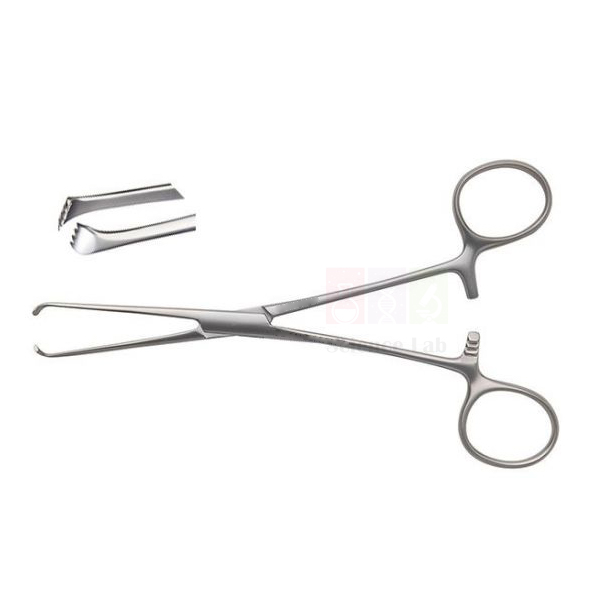
Allis Tissue Forceps
Allis Tissue Forceps (Product Code: SLE/SI/22) is a 15 cm toothed gripping forceps used to grasp and hold soft tissue during general surgery, wound closure and minor procedures. Surgeons and assistants rely on its 4 x 5 interlocking teeth, precisely adjusted so the jaws meet evenly, and a hard lockable ratchet that keeps the grip without hand pressure. It is supplied by Jain Scientific Equipments Pvt Ltd (ScienceLab), Ambala, India, alongside the laboratory instruments it offers hospitals and colleges in India.
Specifications
| Parameter | Detail |
|---|---|
| Material | Martensitic steel (quenched, magnetic) |
| Composition | 0.20% carbon; 13% chromium |
| Type | Gripping forceps |
| Teeth | 4 x 5, with precise adjustment |
| Lock | Hard ratchet, lockable |
| Length | 15 cm |
| Intended use | Gripping soft tissue |
| Product code | SLE/SI/22 |
| Supplied by | Jain Scientific Equipments Pvt Ltd (ScienceLab), Ambala, India |
What Are Allis Tissue Forceps Used For?
Allis forceps are the everyday grasping clamp of general surgery. The row of small interlocking teeth takes a firm hold on the edge of soft tissue, fascia or a lesion that is being removed, and the ratchet keeps that hold so the instrument can be left hanging on the tissue as a handle for traction. At 15 cm they suit superficial and moderately deep work.
Because the teeth grip firmly, Allis forceps are best kept for tissue that is being removed or that can tolerate a secure hold; more delicate organs call for a Duval or Babcock pattern. Nursing and medical schools buying lab equipment for college skills rooms in India often include Allis forceps in suturing and excision practice kits.
Supplier
Jain Scientific Equipments Private Limited, trading as ScienceLab, supplies the Allis Tissue Forceps from Ambala, Haryana, to hospitals, surgical training centres, dealers and importers.
Further background is on our company profile.
Related Surgical Instruments
Instruments often laid out with Allis forceps:
- Duval Tissue Forceps — a non-traumatic ridged pattern for lung and intestine
- Babcock Tissue Forceps — a gentler grasping pattern to compare
- Tissue Forceps Standard Straight — springy dissecting forceps for handling tissue edges
- Mayo Scissors Curved Blunt/Blunt — operating scissors for threads and dressings
- Surgical Instruments, Basic Surgery /SET — a grouped set for basic surgical procedures
Explore the Surgical Instruments category.
Frequently Asked Questions
What are Allis Tissue Forceps used for?
Allis Tissue Forceps are used to grip soft tissue. Their interlocking teeth and locking ratchet let the surgeon hold tissue firmly and apply traction, for example on tissue being excised or on the edges of a wound during closure.
How many teeth do Allis Tissue Forceps have?
Allis Tissue Forceps have 4 x 5 teeth, with precise adjustment so they interlock evenly when the jaws close. The multiple small teeth spread the grip across the tissue edge instead of concentrating it at one point.
How long are Allis Tissue Forceps?
These Allis Tissue Forceps are 15 cm long. That length suits superficial and moderately deep surgical work and fits comfortably on a standard instrument tray or in a student practice kit.
Do Allis Tissue Forceps lock?
Yes, Allis Tissue Forceps have a hard, lockable ratchet. Once engaged, it keeps the jaws closed so the forceps can stay attached to the tissue while the surgeon's hands are free for other steps.
What steel are Allis Tissue Forceps made of?
Allis Tissue Forceps are made of quenched, magnetic martensitic steel with 0.20% carbon and 13% chromium. For any additional material documentation your tender requires, ask us through the contact page before ordering.
Who supplies Allis Tissue Forceps?
Allis Tissue Forceps are supplied by Jain Scientific Equipments Pvt Ltd (ScienceLab), Ambala, Haryana, India, to hospitals, colleges and distributors in India and international markets, with quotations issued on request.
Request a Quote
For a quotation on Allis Tissue Forceps, send quantities through our contact page or add them to the enquiry cart together with other forceps and scissors.
Last updated: 24 September 2026
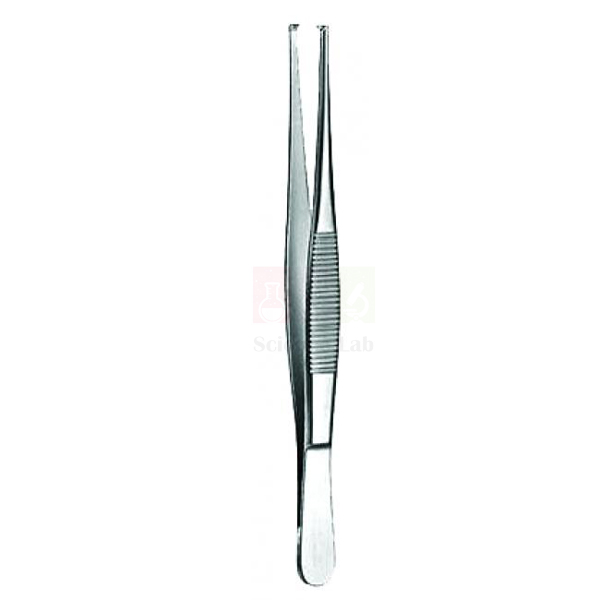
Tissue Forceps Standard Straight
Tissue Forceps Standard Straight (Product Code: SLE/SI/23) is a springy, toothed dissecting forceps used in surgery and nursing for gripping and dissecting tissue and for coagulation of vessels. Surgeons and nurses use its 1 x 2 teeth, well-adjusted gripping jaws and flexible arms on a straight 25 cm instrument, with the teeth making it suited to thick tissue. It is supplied by Jain Scientific Equipments Pvt Ltd (ScienceLab), Ambala, India, which provides school and college lab equipments as well as hospital instruments.
Specifications
| Parameter | Detail |
|---|---|
| Material | Martensitic steel (quenched, magnetic) |
| Composition | 0.20% carbon; 13% chromium |
| Type | Dissecting forceps, springy, with flexible arms |
| Teeth | 1 x 2, with good adjustment |
| Jaws | Good gripping |
| Shape | Straight |
| Length | 25 cm |
| Intended use | Surgery and nursing: gripping and dissecting tissue, coagulation of vessels; toothed forceps for dissecting thick tissues |
| Product code | SLE/SI/23 |
| Supplied by | Jain Scientific Equipments Pvt Ltd (ScienceLab), Ambala, India |
What Are Straight Tissue Forceps Used For?
Toothed tissue forceps are held like a pen in the non-dominant hand to pick up and steady tissue while the other hand cuts or sutures. The single tooth on one jaw fits between the two on the other, so skin, fascia and other thick layers are held without slipping. The same forceps can grasp a small bleeding vessel so it can be coagulated.
Use the teeth on tough layers and avoid them on bowel or other delicate organs, where a non-toothed or atraumatic pattern is kinder. Because the arms are springy, only light finger pressure is needed; squeezing hard tires the hand and can bend the tips. Nursing schools comparing a laboratory instruments supplier in India for wound-care training can order these forceps with dressing forceps and needle holders.
Supplier
Jain Scientific Equipments Private Limited, better known as ScienceLab, supplies the Tissue Forceps Standard Straight from Ambala, Haryana, to operating theatres, wards, nursing and medical colleges, dealers and importers. Forceps are often ordered in quantity for student kits and dressing trolleys, and the company can quote them alongside the rest of your list.
For more about us, visit the company profile.
Related Surgical Instruments
Instruments used with toothed tissue forceps:
- Dressing Forceps Standard Straight — companion forceps for handling dressings on the ward
- Mayo Hegar Needle Holder Straight — drives the needle while the forceps hold the wound edge
- Metzenbaum Nelson Scissors Curved Blunt/Blunt — dissecting scissors used in the other hand
- Electrosurgical Unit w/access — an electrosurgical unit for theatres where vessels are coagulated
- Surgical Instruments, suture /SET — a grouped set for suturing work
View all Surgical Instruments.
Frequently Asked Questions
What are Tissue Forceps Standard Straight used for?
Tissue Forceps Standard Straight are used in surgery and nursing for gripping and dissecting tissue and for coagulation of vessels. Because they have teeth, they are the forceps of choice for dissecting thick tissues such as skin and fascia.
What teeth do Tissue Forceps Standard Straight have?
Tissue Forceps Standard Straight have 1 x 2 teeth: one tooth on one jaw meshes between two on the other. The teeth are well adjusted, so the jaws close evenly and grip thick tissue securely.
How long are the Tissue Forceps Standard Straight?
These Tissue Forceps Standard Straight are 25 cm long and straight. The length gives reach into deeper layers while the springy, flexible arms keep the grip light and controllable.
Can Tissue Forceps Standard Straight be used on delicate organs?
Tissue Forceps Standard Straight are toothed forceps intended for thick tissues. For bowel, lung or other delicate structures, a non-toothed or atraumatic pattern, such as Duval or Babcock forceps, is the usual choice.
What material are Tissue Forceps Standard Straight made from?
Tissue Forceps Standard Straight are made from quenched, magnetic martensitic steel containing 0.20% carbon and 13% chromium, the listed specification for these springy dissecting forceps.
Who supplies Tissue Forceps Standard Straight?
Tissue Forceps Standard Straight are supplied by Jain Scientific Equipments Pvt Ltd (ScienceLab), Ambala, Haryana, India, to hospitals, nursing schools and distributors in India and international markets. Ask for a quote via our contact page.
Request a Quote
Request pricing for the Tissue Forceps Standard Straight on our contact page, or add them to the enquiry cart with any needle holders, scissors or dressing forceps you need.
Last updated: 24 September 2026
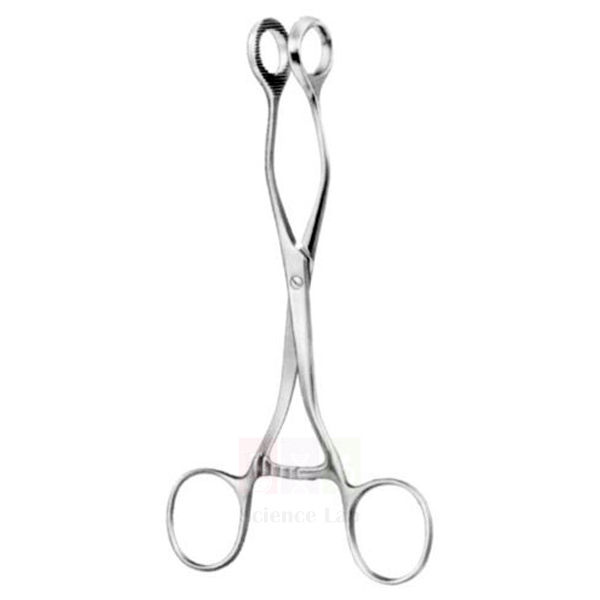
Collin Tissue Forceps
Collin Tissue Forceps (Product Code: SLE/SI/24) is a springy, ratcheted gripping forceps used to hold soft and delicate tissues such as the intestines during open surgery. Surgeons, theatre nurses and surgical teaching departments choose it for its 16 cm length and ridged grippers with triangular apertures, whose pronounced ridges are non-traumatic. It is supplied by Jain Scientific Equipments Pvt Ltd (ScienceLab), Ambala, India, as part of its range of scientific & laboratory instruments for hospitals and medical colleges.
Specifications
| Parameter | Detail |
|---|---|
| Type | Gripping (tissue-holding) forceps, springy |
| Grippers | Ridged, each with a triangular aperture; pronounced but non-traumatic ridges |
| Ratchet | Soft ratchet, lockable |
| Length | 16 cm |
| Material | Martensitic steel (quenched, magnetic) |
| Composition | 0.20% carbon; 13% chromium |
| Intended use | Gripping soft and delicate tissues (intestines) |
| Product code | SLE/SI/24 |
| Supplied by | Jain Scientific Equipments Pvt Ltd (ScienceLab), Ambala, India |
What Is the Collin Tissue Forceps Used For?
The Collin forceps is applied where tissue has to be held firmly without being crushed, most typically loops of bowel that the surgeon needs to lift, turn or keep in position. The triangular openings in the jaws let a fold of tissue sit inside the grip, the ridges add traction, and the lockable soft ratchet keeps the hold steady so the hands are free for the next step.
At 16 cm it suits open abdominal work at moderate depth, and nursing and surgical training programmes use it to teach how tissue-holding forceps differ from haemostats. Medical colleges ordering from a laboratory instruments supplier in India often add it to instrument-identification sets. After use, clean the ratchet and the ridged jaws carefully and reprocess the forceps according to your facility's protocol.
Supplier
ScienceLab is the trading name of Jain Scientific Equipments Private Limited, based in Ambala, Haryana. The company sources and supplies the Collin Tissue Forceps together with other general-surgery instruments for hospitals, surgical training centres, distributors and importers in India and international markets. Read more about the company on our company profile.
Related Surgical Instruments
Instruments often laid out with the Collin forceps for bowel and abdominal procedures:
- Babcock Tissue Forceps — a longer 20 cm tissue and organ holding forceps for lungs and intestines
- Allis Tissue Forceps — an alternative tissue-holding pattern for the same set
- Doyen Intestinal Clamp Forceps Curved — closes off a section of intestine while an anastomosis is sutured
- Mayo Hegar Needle Holder Straight — holds the needle for suturing
Browse forceps, retractors, scissors and gynaecology instruments in Surgical Instruments.
Frequently Asked Questions
What is the Collin Tissue Forceps used for?
The Collin Tissue Forceps is used to grip soft and delicate tissues, particularly the intestines, during surgery. Its springy action, ridged grippers with triangular apertures and lockable soft ratchet let the operator hold tissue securely while the ridges remain non-traumatic.
How long is the Collin Tissue Forceps?
The Collin Tissue Forceps is 16 cm long. This length suits handling bowel and other soft tissue in open procedures; if a longer tissue-holding forceps is needed for deeper work, the 20 cm Babcock Tissue Forceps can be quoted alongside it.
What steel is the Collin Tissue Forceps made of?
The Collin Tissue Forceps is made of martensitic steel, a quenched and magnetic grade with a composition of 0.20% carbon and 13% chromium. If your purchasing department needs material documentation, mention it in your enquiry so we can confirm what is available.
Does the Collin Tissue Forceps lock?
Yes, the Collin Tissue Forceps has a soft ratchet that locks, so the jaws stay closed on tissue without constant hand pressure. The springy arms open the grippers again as soon as the ratchet is released by the user.
Who supplies the Collin Tissue Forceps?
Jain Scientific Equipments Pvt Ltd (ScienceLab), Ambala, Haryana, India, supplies the Collin Tissue Forceps to hospitals, medical and nursing colleges, dealers and importers. Orders can be combined with other surgical instruments on a single quotation.
What information is needed for a Collin Tissue Forceps quotation?
To quote the Collin Tissue Forceps we need the quantity, any other instruments you want on the same order, your delivery location in India or abroad and any packing or documentation requirements. Send these through our contact page.
Request a Quote
Send your requirement for the Collin Tissue Forceps via our contact page, or add it to the enquiry cart with the rest of your surgical instrument list.
Last updated: 24 September 2026
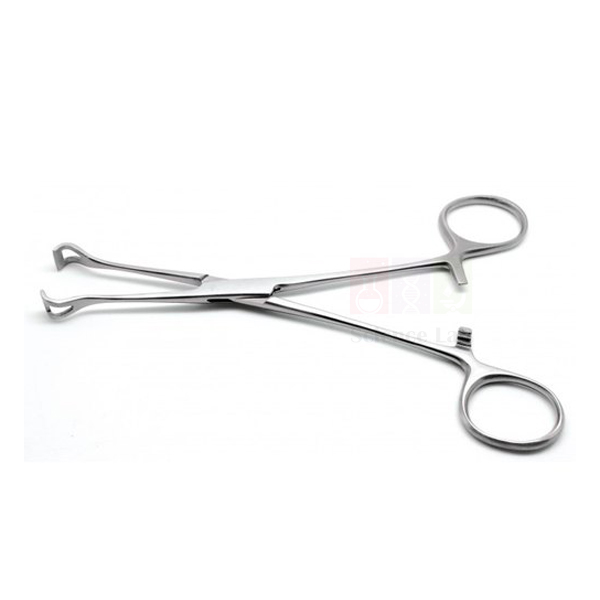
Babcock Tissue Forceps
Babcock Tissue Forceps (Product Code: SLE/SI/25) is a springy tissue- and organ-holding forceps used to grasp lungs, intestines and other soft organs during open surgery. At 20 cm, with flexible arms and a lockable soft ratchet, it gives surgeons and theatre nurses more reach than shorter tissue forceps, while its ridged, triangular-aperture grippers stay non-traumatic. It is supplied by Jain Scientific Equipments Pvt Ltd (ScienceLab), Ambala, India, which also works as a lab equipment exporter for overseas hospital buyers.
Specifications
| Parameter | Detail |
|---|---|
| Type | Tissue and organ holding forceps (gripping forceps, springy) |
| Grippers | Ridged with triangular aperture; pronounced but non-traumatic ridges |
| Arms | Flexible |
| Ratchet | Soft ratchet, lockable |
| Length | 20 cm |
| Material | Martensitic steel (quenched, magnetic) |
| Composition | 0.20% carbon; 13% chromium |
| Intended use | Gripping soft and delicate tissues (lungs and intestines) and organs |
| Product code | SLE/SI/25 |
| Supplied by | Jain Scientific Equipments Pvt Ltd (ScienceLab), Ambala, India |
What Is a Babcock Forceps Used For?
Babcock forceps are the usual choice when a tubular or spongy structure has to be encircled and lifted rather than pinched: a loop of small bowel, a segment of lung, or an organ being mobilised. The open triangular jaws cradle the tissue, and the flexible arms spread the closing pressure so the grip is secure but gentle.
The 20 cm length helps in the chest and the deeper abdomen, where a shorter forceps would bring the hand into the operator's line of sight. Surgical skills labs that buy from a laboratory instruments supplier in India also place Babcock forceps on their teaching trays. Inspect the ratchet and the alignment of the jaws before each use, and reprocess the instrument according to your facility's protocol.
Supplier
Jain Scientific Equipments Private Limited trades under the name ScienceLab from Ambala, Haryana. For the Babcock Tissue Forceps the company acts as supplier, sourcing the instrument for operating theatres, training institutions and dealers and shipping to customers in India and international markets. Company background is on our profile page.
Related Surgical Instruments
Other instruments a theatre team typically sets out with Babcock forceps:
- Collin Tissue Forceps — a shorter 16 cm tissue forceps for delicate intestinal work
- Doyen Intestinal Clamp Forceps Curved — occludes a bowel section during an anastomosis
- Balfour Abdominal Retractor 3 Blades — self-retaining retractor that keeps the abdominal wound open
- Metzenbaum Nelson Scissors Curved Blunt/Blunt — curved blunt/blunt scissors for dissection around the organ
See every forceps, retractor and scissor pattern in our Surgical Instruments category.
Frequently Asked Questions
How long is the Babcock Tissue Forceps?
The Babcock Tissue Forceps is 20 cm long. That extra reach, compared with the 16 cm Collin Tissue Forceps, makes it convenient for grasping lung tissue, bowel and organs lying deeper in the chest or abdomen.
Which tissues is the Babcock Tissue Forceps designed to hold?
The Babcock Tissue Forceps is designed to grip soft and delicate tissues such as the lungs and intestines, and to hold organs. Its ridged grippers with a triangular aperture have pronounced ridges that are non-traumatic, and its flexible arms help keep the grip gentle.
What material is used for the Babcock Tissue Forceps?
The Babcock Tissue Forceps is made of martensitic steel, which is quenched and magnetic, with a composition of 0.20% carbon and 13% chromium. Please ask us if your tender or purchase file requires additional material information.
Does the Babcock Tissue Forceps have a locking ratchet?
Yes. The Babcock Tissue Forceps has a soft, lockable ratchet, so the jaws can be left closed on tissue while the surgeon or assistant uses their hands for other tasks. The springy arms reopen the jaws when the ratchet is released.
Can the Babcock Tissue Forceps be exported?
Yes, Jain Scientific Equipments Pvt Ltd (ScienceLab) supplies the Babcock Tissue Forceps to buyers in India and international markets. Give us the quantity, destination and any documentation your import process needs, and we will prepare a quotation.
Who supplies the Babcock Tissue Forceps?
The Babcock Tissue Forceps is supplied by Jain Scientific Equipments Pvt Ltd, which trades as ScienceLab and is based in Ambala, Haryana, India. It can be quoted on its own or together with other forceps, scissors and retractors.
Request a Quote
For a price on the Babcock Tissue Forceps, write to us through the contact page or place it in the enquiry cart along with the other theatre instruments you need.
Last updated: 24 September 2026
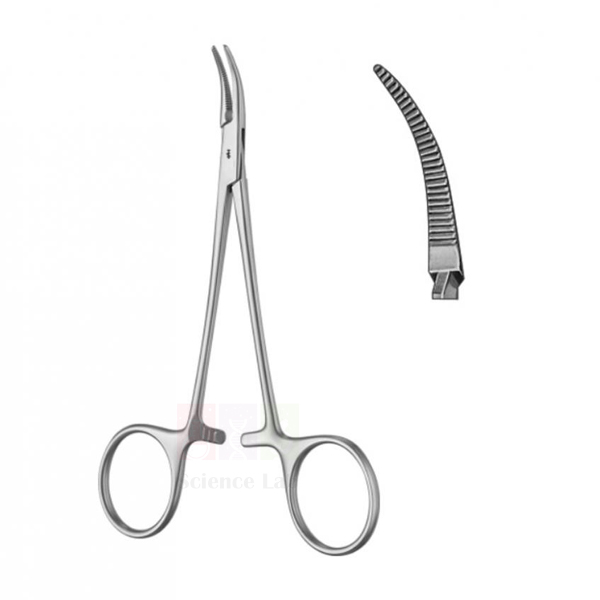
Halsted Mosquito Artery Forceps Curved
Halsted Mosquito Artery Forceps Curved (Product Code: SLE/SI/26) is a slim, curved haemostatic forceps used to clamp small bleeding vessels during surgery. Measuring 12.5 cm, shorter than the 14 cm Kelly and Kocher patterns, it has non-traumatic jaws without teeth, flexible arms and a lockable ratchet with variable settings, which suits surgeons working on fine vessels. It is supplied by Jain Scientific Equipments Pvt Ltd (ScienceLab), Ambala, India, to hospitals, dealers and institutions buying through laboratory equipment tenders in India or importing directly.
Specifications
| Parameter | Detail |
|---|---|
| Type | Haemostatic (artery) forceps, springy |
| Shape | Slim and curved, without teeth |
| Jaws | Non-traumatic |
| Arms | Flexible |
| Ratchet | Variable setting, lockable |
| Length | 12.5 cm |
| Material | Martensitic steel (quenched, magnetic) |
| Composition | 0.20% carbon; 13% chromium |
| Intended use | Haemostasis |
| Product code | SLE/SI/26 |
| Supplied by | Jain Scientific Equipments Pvt Ltd (ScienceLab), Ambala, India |
What Is a Mosquito Forceps Used For?
Mosquito forceps catch and hold small bleeding points so that they can be tied or coagulated. The slim curved tips pick up a vessel with very little surrounding tissue, and the variable ratchet lets the operator decide how firmly the jaws close before they lock.
Because it is only 12.5 cm long, the Halsted mosquito is used close to the surface in fine and superficial work, while longer haemostats such as the Rochester Pean take over in deep cavities. Nursing schools and colleges that buy scientific & laboratory instruments for skills training often begin instrument-handling classes with this forceps. Keep the fine tips protected in storage so they continue to meet evenly.
Supplier
ScienceLab is the trade name of Jain Scientific Equipments Private Limited in Ambala, Haryana, which sources and supplies the Halsted mosquito forceps for operating theatres, minor-procedure rooms, teaching hospitals and distributors in India and international markets.
More about the company is on our company profile.
Related Surgical Instruments
Other haemostatic and suturing instruments from the same range:
- Kelly Artery Forceps Curved — a 14 cm curved haemostat that is also used for inserting drains
- Kocher Artery Forceps Straight — a 14 cm straight haemostat for general use
- Rochester Pean Artery Forceps Curved — an approximately 24 cm haemostat for deep surgery
- Mayo Hegar Needle Holder Straight — for suturing once bleeding is controlled
All haemostats, tissue forceps and retractors are grouped under Surgical Instruments.
Frequently Asked Questions
How long is the Halsted Mosquito Artery Forceps Curved?
The Halsted Mosquito Artery Forceps Curved is 12.5 cm long. It is a slim, curved haemostatic forceps intended for small vessels and fine work; for deep cavities a longer haemostat such as the Rochester Pean pattern is normally used instead.
Does the Halsted Mosquito Artery Forceps Curved have teeth?
No. The Halsted Mosquito Artery Forceps Curved is a slim curved forceps without teeth, and its jaws are non-traumatic. They are meant for haemostasis, clamping small vessels rather than taking a firm hold of tissue.
How does the ratchet on the Halsted Mosquito Artery Forceps Curved work?
The Halsted Mosquito Artery Forceps Curved has a ratchet with variable settings that can be locked. The operator chooses how far to close the springy, flexible arms, and the ratchet holds that position until it is released.
What steel is the Halsted Mosquito Artery Forceps Curved made from?
The Halsted Mosquito Artery Forceps Curved is made of martensitic steel, a quenched, magnetic steel with 0.20% carbon and 13% chromium. Contact us if your facility requires further material details before placing an order.
Who supplies the Halsted Mosquito Artery Forceps Curved?
Jain Scientific Equipments Pvt Ltd (ScienceLab) of Ambala, Haryana, India supplies the Halsted Mosquito Artery Forceps Curved. It sources the forceps for operating theatres, minor-procedure rooms, teaching hospitals and distributors in India and international markets.
How do I order the Halsted Mosquito Artery Forceps Curved in bulk?
To order the Halsted Mosquito Artery Forceps Curved in bulk, send the number of pieces, any companion forceps or needle holders, and your delivery destination in India or abroad. We will reply with a quotation covering the complete list.
Request a Quote
Ask for a quotation on the Halsted Mosquito Artery Forceps Curved from our contact page, or collect it with other haemostats in the enquiry cart and send one request.
Last updated: 24 September 2026
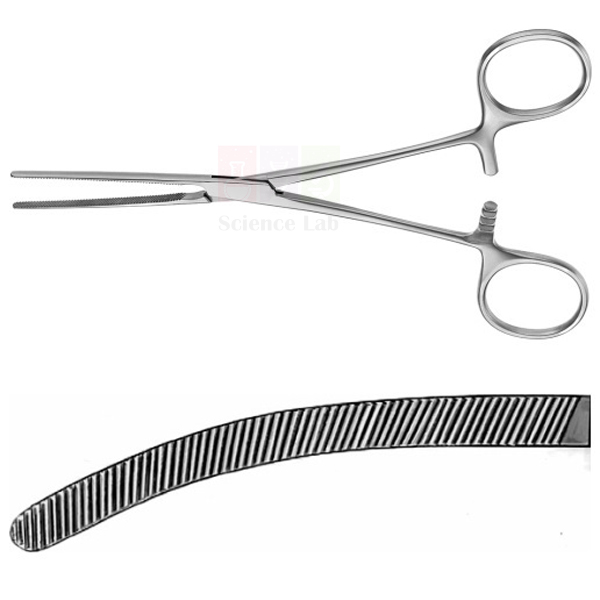
Doyen Intestinal Clamp Forceps Curved
Doyen Intestinal Clamp Forceps Curved (Product Code: SLE/SI/27) is a curved, non-traumatic intestinal clamp used to occlude a section of bowel crosswise while an anastomosis is being sutured in abdominal surgery. General and gastrointestinal surgeons rely on its very springy, soft jaws on a 23 cm instrument, which close precisely and hold the bowel through the grip of the jaw surface. It is supplied by Jain Scientific Equipments Pvt Ltd (ScienceLab), Ambala, India, which also acts as a laboratory equipment exporter from India for hospital buyers abroad.
Specifications
| Parameter | Detail |
|---|---|
| Type | Intestinal clamp, curved |
| Jaws | Very springy and soft; non-traumatic |
| Occlusion | Form and mechanical action permit precise closing |
| Adhesion | Provided by the surface of the jaws |
| Length | 23 cm |
| Material | Martensitic steel (quenched, magnetic) |
| Composition | 0.20% carbon; 13% chromium |
| Intended use | Transverse occlusion of a section of intestine while suturing an anastomosis |
| Product code | SLE/SI/27 |
| Supplied by | Jain Scientific Equipments Pvt Ltd (ScienceLab), Ambala, India |
What Is a Doyen Intestinal Clamp Used For?
When a segment of bowel is removed and the two ends are joined, the intestine has to be closed off temporarily on either side of the join. Doyen clamps are placed across the bowel for this, and their soft, springy jaws hold the lumen shut while the surgeon sutures the anastomosis, then release cleanly when the join is complete.
The curved pattern and 23 cm length give reach into the abdomen while keeping the handles clear of the working area. Precise, even closure is the key quality, so check that the jaws meet along their full length before each use. Surgical departments building abdominal sets through a laboratory instruments supplier in India usually order these clamps with tissue forceps, a needle holder and a self-retaining retractor.
Supplier
Jain Scientific Equipments Private Limited, trading as ScienceLab, is an Ambala-based company that sources and supplies intestinal clamps and other abdominal-surgery instruments. Hospitals, medical colleges, surgical dealers and importers can include the Doyen clamp in a combined order with forceps and retractors. Details of the company are on our company profile.
Related Surgical Instruments
For a bowel resection and anastomosis, buyers usually also need:
- Babcock Tissue Forceps — holds intestines and organs gently while the bowel is handled
- Mayo Hegar Needle Holder Straight — holds the needle while the anastomosis is sutured
- Balfour Abdominal Retractor 3 Blades — keeps the abdominal wound open during the procedure
- Surgical Instruments, Abdominal SET — a set of instruments for abdominal surgery
For more clamps, forceps and retractors, visit Surgical Instruments.
Frequently Asked Questions
What is the Doyen Intestinal Clamp Forceps Curved used for?
The Doyen Intestinal Clamp Forceps Curved is used for transverse occlusion of a section of intestine while an anastomosis is sutured. It closes the bowel temporarily across its width so the surgeon can join the two ends.
Is the Doyen Intestinal Clamp Forceps Curved non-traumatic?
Yes. The Doyen Intestinal Clamp Forceps Curved is described as non-traumatic: its jaws are very springy and soft, and adhesion comes from the surface of the jaws. The form and mechanical action are intended to allow precise closing.
How long is the Doyen Intestinal Clamp Forceps Curved?
The Doyen Intestinal Clamp Forceps Curved is 23 cm long, with curved jaws. This length gives reach into the abdominal cavity during bowel surgery; if your set list calls for another length, mention it in your enquiry.
What steel is the Doyen Intestinal Clamp Forceps Curved made of?
The Doyen Intestinal Clamp Forceps Curved is made of martensitic steel (quenched and magnetic) containing 0.20% carbon and 13% chromium. Ask us if your tender documents require more information on the material.
Who supplies the Doyen Intestinal Clamp Forceps Curved?
Jain Scientific Equipments Pvt Ltd (ScienceLab), based in Ambala, Haryana, India, supplies the Doyen Intestinal Clamp Forceps Curved to hospitals, medical colleges, dealers and importers in India and international markets.
What should a quotation request for the Doyen Intestinal Clamp Forceps Curved include?
A quotation request for the Doyen Intestinal Clamp Forceps Curved should include the number of clamps, other abdominal instruments needed on the same order, the delivery location and any packing or document needs. Send it through our contact page.
Request a Quote
To receive a quotation for the Doyen Intestinal Clamp Forceps Curved, contact us on the contact page or add the clamp and its companion instruments to the enquiry cart.
Last updated: 24 September 2026
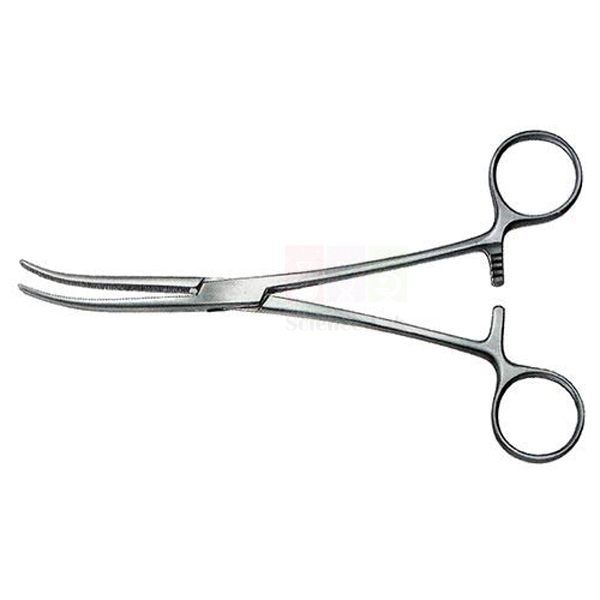
Rochester Pean Artery Forceps Curved
Rochester Pean Artery Forceps Curved (Product Code: SLE/SI/28) is a long, curved haemostatic forceps used to clamp vessels in deep operative fields during surgery. At approximately 24 cm it gives surgeons the reach that short haemostats lack, and its adjusted jaws close under a lockable ratchet with variable settings. It is supplied by Jain Scientific Equipments Pvt Ltd (ScienceLab), Ambala, India, to hospitals and institutions sourcing scientific & laboratory instruments for theatres and surgical teaching.
Specifications
| Parameter | Detail |
|---|---|
| Type | Haemostatic forceps, curved |
| Ratchet | Variable setting, lockable (locking) |
| Jaws | Adjusted jaws |
| Length | Approximately 24 cm |
| Material | Martensitic steel (quenched, magnetic) |
| Composition | 0.20% carbon; 13% chromium |
| Intended use | Haemostatic forceps in deep surgery |
| Product code | SLE/SI/28 |
| Supplied by | Jain Scientific Equipments Pvt Ltd (ScienceLab), Ambala, India |
What Is a Rochester Pean Forceps Used For?
In deep surgery the vessel that needs clamping may lie well below the skin, behind retracted tissue. The Rochester Pean reaches it: the surgeon closes the curved jaws across the vessel or pedicle, locks the ratchet at the required setting and leaves the forceps in place until the vessel has been ligated or divided.
Its length makes it a natural partner for shorter artery forceps in major-surgery sets, and it also serves as a heavier general clamp where a short haemostat would not reach. Hospitals equipping theatres through laboratory equipment tenders in India typically list it next to 14 cm haemostats. Keep the joint and ratchet clean and check that the ratchet engages cleanly at each setting.
Supplier
ScienceLab is the name under which Jain Scientific Equipments Private Limited, of Ambala in Haryana, trades. The company supplies the Rochester Pean artery forceps as part of a sourced range of haemostats, tissue forceps and retractors for theatres, medical training institutions and dealers in India and international markets. See our company profile.
Related Surgical Instruments
Instruments that work alongside a long haemostat in deep surgery:
- Mixter Artery Forceps — a 23 cm threading forceps for passing a ligature around a vessel
- Kelly Artery Forceps Curved — a 14 cm curved haemostat for bleeding points nearer the surface
- Balfour Abdominal Retractor 3 Blades — self-retaining retractor that exposes the deep field
- Deaver Scissors Curved Sharp/Blunt — curved sharp/blunt operating scissors from the same range
- Surgical Instruments, Basic Surgery /SET — a basic surgery instrument set
The complete list of artery forceps and other theatre instruments is in Surgical Instruments.
Frequently Asked Questions
How long is the Rochester Pean Artery Forceps Curved?
The Rochester Pean Artery Forceps Curved is approximately 24 cm long. The length is chosen for deep surgery, where the vessel to be clamped lies beyond the comfortable reach of short haemostats such as the 14 cm Kelly or Kocher patterns.
What is the Rochester Pean Artery Forceps Curved used for?
The Rochester Pean Artery Forceps Curved is used as a haemostatic forceps in deep surgery. It clamps vessels in deep operative fields so that bleeding is controlled while the surgeon ligates or divides them.
Does the Rochester Pean Artery Forceps Curved lock?
Yes. The Rochester Pean Artery Forceps Curved has a lockable ratchet with variable settings, so the clamping pressure can be chosen and then held. The jaws are adjusted so that they close properly when the forceps is locked.
Which material is the Rochester Pean Artery Forceps Curved made from?
The Rochester Pean Artery Forceps Curved is made of martensitic steel, a quenched and magnetic grade containing 0.20% carbon and 13% chromium. Please ask us if further material details are needed for your purchase file.
Who supplies the Rochester Pean Artery Forceps Curved?
The Rochester Pean Artery Forceps Curved is supplied by Jain Scientific Equipments Pvt Ltd (ScienceLab), Ambala, Haryana, India. Hospitals, colleges, distributors and importers can order it alone or with other haemostatic forceps.
Can the Rochester Pean Artery Forceps Curved be quoted with a full surgical set?
Yes. The Rochester Pean Artery Forceps Curved can be quoted together with other forceps, scissors and retractors. List every instrument and quantity in one enquiry, with the delivery destination, and we will return a combined quotation.
Request a Quote
Request pricing for the Rochester Pean Artery Forceps Curved through our contact page, or build your deep-surgery instrument list in the enquiry cart and submit it in one go.
Last updated: 24 September 2026
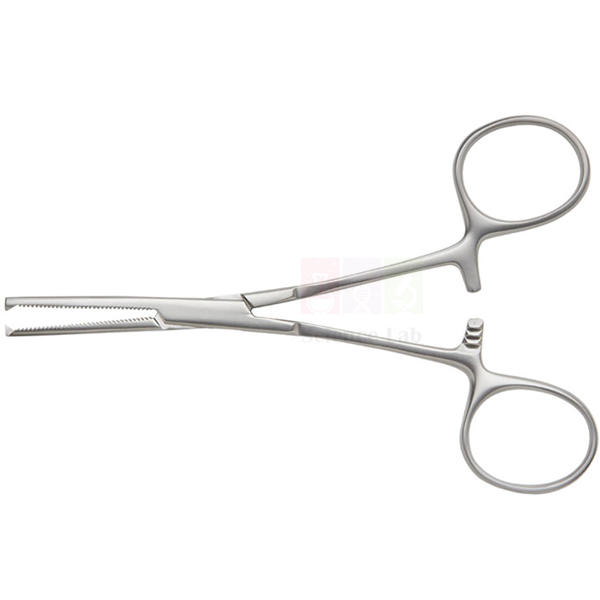
Kocher Artery Forceps Straight
Kocher Artery Forceps Straight (Product Code: SLE/SI/29) is a 14 cm straight haemostatic forceps used for general work in surgery: controlling bleeding, gripping, dissection and holding a tampon. Theatre nurses and surgeons value it as an all-purpose clamp that is slightly springy, with flexible arms, a variable ratchet and adjusted jaws. It is supplied by Jain Scientific Equipments Pvt Ltd (ScienceLab), Ambala, India, a laboratory equipment supplier in India for hospitals and training institutions.
Specifications
| Parameter | Detail |
|---|---|
| Type | Haemostatic forceps, slightly springy; straight |
| Arms | Flexible |
| Ratchet | Variable setting |
| Jaws | Adjusted jaws |
| Length | 14 cm |
| Material | Martensitic steel (quenched, magnetic) |
| Composition | 0.20% carbon; 13% chromium |
| Intended use | General use: haemostasis, gripping, dissection, tampon holder |
| Product code | SLE/SI/29 |
| Supplied by | Jain Scientific Equipments Pvt Ltd (ScienceLab), Ambala, India |
What Is a Kocher Forceps Used For?
The Kocher is the general-duty clamp of an instrument tray. It can close on a bleeding vessel, take hold of tissue, help separate layers during blunt dissection, or carry a folded swab as a tampon holder to mop or press on a bleeding area.
Its straight jaws are applied in line with the hand, which many users prefer for surface work, while the curved Kelly Artery Forceps of the same 14 cm length suits working around structures. Institutions ordering scientific & laboratory instruments for nursing and surgical training often stock straight and curved haemostats side by side. Wipe the ratchet clean after use and check that the jaws still meet evenly.
Supplier
Jain Scientific Equipments Private Limited, which trades as ScienceLab, supplies the Kocher Artery Forceps Straight from Ambala, Haryana. It is one of the general-purpose haemostats the company sources for hospitals, clinics, nursing schools, dealers and importers, and it can be packed with other tray instruments on one order. Our company profile has more background.
Related Surgical Instruments
Useful companions for a general instrument tray built around the Kocher forceps:
- Kelly Artery Forceps Curved — the curved 14 cm counterpart, also used for drains and compresses
- Halsted Mosquito Artery Forceps Curved — a slimmer 12.5 cm haemostat for small vessels
- Gauze Compress — swab material the forceps can hold as a tampon
- Instrument Tray Stainless Steel — for laying out and carrying the instruments
Find more haemostats and general forceps in Surgical Instruments.
Frequently Asked Questions
What is the Kocher Artery Forceps Straight used for?
The Kocher Artery Forceps Straight is a general-use instrument: it is used for haemostasis, for gripping, for dissection and as a tampon holder. This range of tasks makes it a general-purpose forceps rather than a specialised one.
How long is the Kocher Artery Forceps Straight?
The Kocher Artery Forceps Straight is 14 cm long with straight jaws. If you prefer curved jaws of the same length, the Kelly Artery Forceps Curved in the Surgical Instruments range can be quoted alongside it.
Is the Kocher Artery Forceps Straight springy?
The Kocher Artery Forceps Straight is described as slightly springy, with flexible arms and a ratchet with variable settings. Together these let the user choose the clamping pressure and release the jaws smoothly after use.
What steel is used in the Kocher Artery Forceps Straight?
The Kocher Artery Forceps Straight is made of martensitic steel, which is quenched and magnetic, with 0.20% carbon and 13% chromium in its composition. Ask us if your institution needs more material information with the quotation.
Who supplies the Kocher Artery Forceps Straight?
Jain Scientific Equipments Pvt Ltd (ScienceLab), Ambala, Haryana, India, supplies the Kocher Artery Forceps Straight to hospitals, training institutions, dealers and importers, both within India and in international markets.
What details should I send to get a Kocher Artery Forceps Straight quotation?
For a Kocher Artery Forceps Straight quotation, send the quantity, other forceps or tray items you want quoted, the delivery city or country and any documentation you need. Use our contact page or the enquiry cart.
Request a Quote
You can enquire about the Kocher Artery Forceps Straight on our contact page or add it to the enquiry cart together with the rest of your instrument tray.
Last updated: 24 September 2026
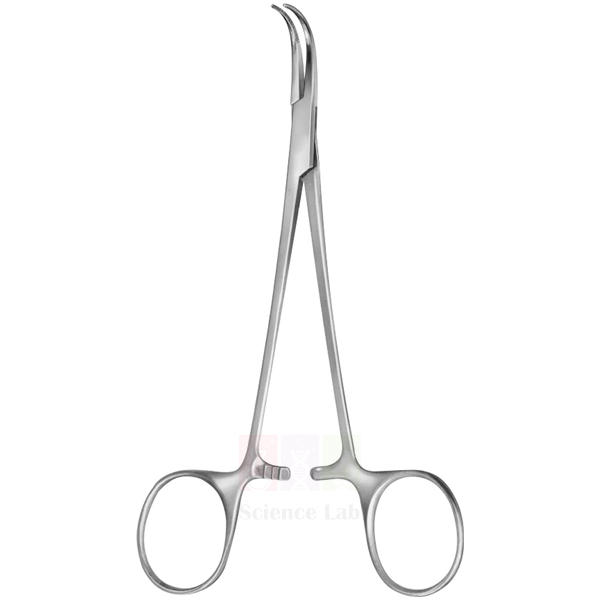
Mixter Artery Forceps
Mixter Artery Forceps (Product Code: SLE/SI/30) is a springy threading forceps used to dissect around a vein or artery and pass a ligature thread behind it during surgery. Its 23 cm length and jaws that grip thread well make it a practical choice when a vessel has to be tied in a deep field. It is supplied by Jain Scientific Equipments Pvt Ltd (ScienceLab), Ambala, India, to hospital buyers at home and through lab equipment export from India to international markets.
Specifications
| Parameter | Detail |
|---|---|
| Type | Threading forceps, springy |
| Jaws | Grip the thread well |
| Ratchet | Flexible, lockable |
| Length | 23 cm |
| Material | Martensitic steel (quenched, magnetic) |
| Composition | 0.20% carbon; 13% chromium |
| Intended use | Dissecting; passing a thread around a vein or artery |
| Product code | SLE/SI/30 |
| Supplied by | Jain Scientific Equipments Pvt Ltd (ScienceLab), Ambala, India |
What Is a Mixter Forceps Used For?
Before a vessel can be tied it has to be freed from the surrounding tissue on all sides. The surgeon works the closed tips of the Mixter forceps behind the vessel, opens them gently to separate the tissue, then grasps a ligature thread and draws it back around the vein or artery so that it can be tied.
The 23 cm length lets this be done deep in the operative field, and the lockable ratchet keeps the thread held while it is passed. Surgical skills labs that buy laboratory instruments in India can pair it with a long haemostat for ligation practice. Keep the jaw surfaces clean and undamaged, because worn jaws hold thread less reliably.
Supplier
Jain Scientific Equipments Private Limited trades as ScienceLab and supplies the Mixter Artery Forceps from Ambala, Haryana, as part of the vessel-ligation instruments it sources for theatres, training centres, dealers and importers.
Company details are on our profile page.
Related Surgical Instruments
Instruments that pair with the Mixter forceps during vessel ligation:
- Rochester Pean Artery Forceps Curved — an approximately 24 cm haemostat that clamps vessels in deep surgery
- Metzenbaum Nelson Scissors Curved Blunt/Blunt — curved blunt scissors for dissecting around the vessel
- Mayo Hegar Needle Holder Straight — for suture ligatures and closure
- Surgical Instruments, suture /SET — a set of instruments for suturing
Other artery forceps and dissecting instruments are listed in Surgical Instruments.
Frequently Asked Questions
What is the Mixter Artery Forceps used for?
The Mixter Artery Forceps is used for dissecting and for passing a thread around a vein or artery. It is a threading forceps, so its jaws are made to grip the ligature thread well while it is drawn behind the vessel.
How long is the Mixter Artery Forceps?
The Mixter Artery Forceps is 23 cm long. The length allows the surgeon to dissect around and ligate vessels that lie deep in the operative field, where shorter forceps would be awkward to use.
Does the Mixter Artery Forceps have a locking ratchet?
Yes. The Mixter Artery Forceps has a flexible ratchet that can be locked, and the forceps itself is springy. Locking lets the jaws keep hold of the thread while it is passed around the vessel.
What is the Mixter Artery Forceps made of?
The Mixter Artery Forceps is made of martensitic steel, a quenched, magnetic steel whose composition is 0.20% carbon and 13% chromium. If you need further material information for procurement, ask us when requesting the quotation.
Who supplies the Mixter Artery Forceps?
Jain Scientific Equipments Pvt Ltd (ScienceLab) in Ambala, Haryana, India supplies the Mixter Artery Forceps. The company sources it with other vessel-ligation instruments for operating theatres, training centres, dealers and importers.
Can the Mixter Artery Forceps be supplied to other countries?
Yes. Jain Scientific Equipments Pvt Ltd (ScienceLab) supplies the Mixter Artery Forceps to India and international markets. Share the quantity, destination port or city and your document needs, and we will prepare an export quotation.
Request a Quote
For the Mixter Artery Forceps, send your enquiry through the contact page or add the item to the enquiry cart with any haemostats and scissors you need.
Last updated: 24 September 2026
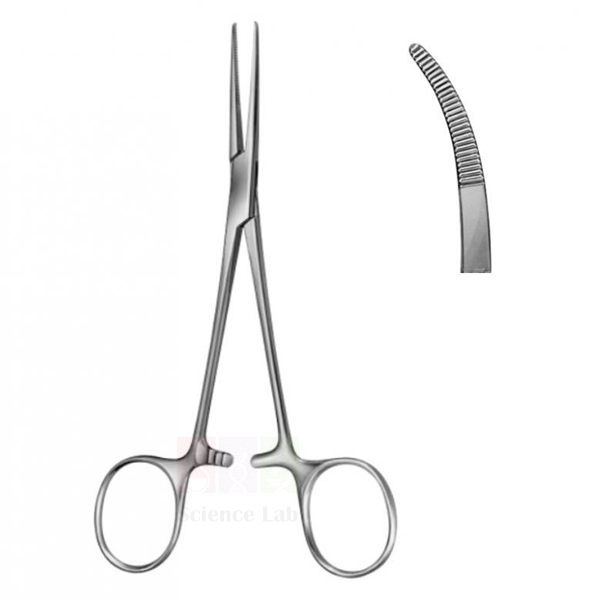
Kelly Artery Forceps Curved
Kelly Artery Forceps Curved (Product Code: SLE/SI/31) is a 14 cm curved haemostatic forceps used to control bleeding, insert drains and hold a compress as a tampon during surgery. Surgeons and scrub nurses pick the curved Kelly when they need to work around tissue rather than straight in; it has slightly springy, flexible arms, adjusted jaws and a lockable ratchet with variable settings. It is supplied by Jain Scientific Equipments Pvt Ltd (ScienceLab), Ambala, India, which ships surgical instruments to hospitals and dealers as a lab equipment exporter.
Specifications
| Parameter | Detail |
|---|---|
| Type | Haemostatic forceps, slightly springy |
| Shape | Curved |
| Arms | Flexible |
| Ratchet | Variable settings, lockable |
| Jaws | Adjusted jaws |
| Length | 14 cm |
| Material | Martensitic steel (quenched, magnetic) |
| Composition | 0.20% carbon; 13% chromium |
| Intended use | Haemostasis; inserting drains; holding a compress used as a tampon |
| Product code | SLE/SI/31 |
| Supplied by | Jain Scientific Equipments Pvt Ltd (ScienceLab), Ambala, India |
What Is a Kelly Forceps Used For?
Clamping a bleeding vessel is the Kelly's everyday job, and the curve lets the tips be placed around a structure while the hand stays out of view. The same forceps guides a drain into position and holds a folded compress as a tampon, for pressing on or mopping an oozing area.
At 14 cm it matches the straight Kocher pattern in length: choose the curve when the approach is around tissue and the straight version when it is direct. For fine vessels the slimmer Halsted mosquito is lighter. Nursing colleges that source from a laboratory equipment supplier in India often order curved and straight haemostats together for instrument-handling practice. Clean the ratchet and jaws thoroughly after every use.
Supplier
ScienceLab is the trading name of Jain Scientific Equipments Private Limited, Ambala, Haryana. The company sources and supplies the Kelly Artery Forceps Curved to operating theatres, minor-surgery rooms, medical training institutions, dealers and importers in India and international markets. Visit our company profile to learn more.
Related Surgical Instruments
Items commonly used together with the Kelly forceps:
- Kocher Artery Forceps Straight — straight 14 cm haemostat for general use
- Halsted Mosquito Artery Forceps Curved — 12.5 cm slim haemostat for small vessels
- Compress, Gauze, 10x10cm, Sterile — compresses the forceps can hold as a tampon
- Kidney Basin Stainless Steel — receives used swabs and instruments beside the operator
Compare all curved and straight haemostats in Surgical Instruments.
Frequently Asked Questions
What is the Kelly Artery Forceps Curved used for?
The Kelly Artery Forceps Curved is used for haemostasis, for inserting drains and for holding a compress that is used as a tampon. Its curved jaws help the user reach around tissue while keeping the hand clear of the field.
What is the length of the Kelly Artery Forceps Curved?
The Kelly Artery Forceps Curved measures 14 cm. It is the same length as the Kocher Artery Forceps Straight, so the two can be chosen according to whether a curved or a straight approach suits the procedure.
How does the ratchet on the Kelly Artery Forceps Curved function?
The Kelly Artery Forceps Curved has a ratchet with variable settings that locks. Combined with slightly springy, flexible arms and adjusted jaws, it lets the user set and hold the clamping pressure on a vessel, drain or compress.
What material is the Kelly Artery Forceps Curved made of?
The Kelly Artery Forceps Curved is made of martensitic steel (quenched, magnetic) with a composition of 0.20% carbon and 13% chromium. For additional material data required by your purchasing process, please contact us before ordering.
Who supplies the Kelly Artery Forceps Curved?
Jain Scientific Equipments Pvt Ltd (ScienceLab), Ambala, Haryana, India, supplies the Kelly Artery Forceps Curved. Hospitals, colleges, distributors and importers can order it by itself or with other haemostatic forceps.
How do I request a quote for the Kelly Artery Forceps Curved?
To request a quote for the Kelly Artery Forceps Curved, send the quantity, any matching straight forceps or compresses, and your delivery destination through our contact page, or add the item to the enquiry cart.
Request a Quote
Get a quotation for the Kelly Artery Forceps Curved by writing to us on the contact page, or list it in the enquiry cart with the other haemostats for your trays.
Last updated: 24 September 2026
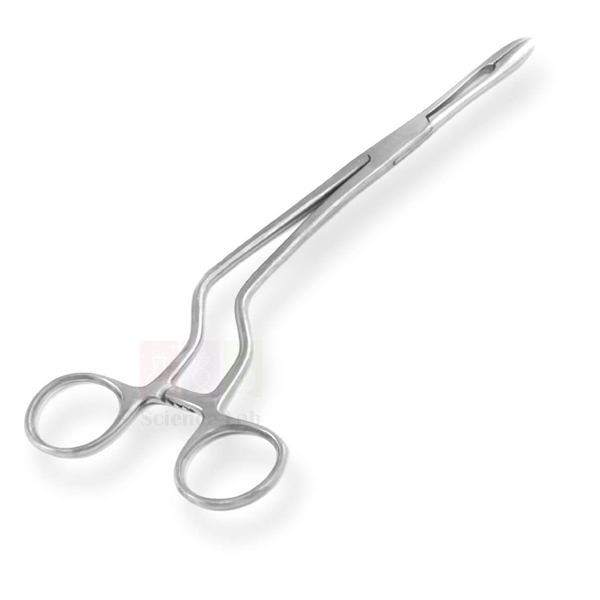
Cheron Dressing Forceps
Cheron Dressing Forceps (Product Code: SLE/SI/32) is a 25 cm vaginal dressing forceps used to hold swabs for dressing and swabbing the vagina before a surgical intervention, and also as a serving forceps kept in a jar for forceps. Gynaecology theatres and nursing staff use its long flexible arms, adjusted jaws and lockable variable ratchet to keep a swab firmly held. It is supplied by Jain Scientific Equipments Pvt Ltd (ScienceLab), Ambala, India, which serves hospitals as a laboratory equipment supplier in India and abroad.
Specifications
| Parameter | Detail |
|---|---|
| Type | Vaginal dressing forceps |
| Arms | Flexible |
| Ratchet | Variable setting, lockable |
| Jaws | Adjusted jaws |
| Length | 25 cm |
| Material | Martensitic steel (quenched, magnetic) |
| Composition | 0.20% carbon; 13% chromium |
| Intended use | Dressing / swabbing of the vagina in preparation for surgical intervention; serving forceps (used with a jar for forceps) |
| Product code | SLE/SI/32 |
| Supplied by | Jain Scientific Equipments Pvt Ltd (ScienceLab), Ambala, India |
What Is the Cheron Forceps Used For?
Before a gynaecological procedure the vagina is prepared by swabbing. The Cheron forceps holds the swab at the end of its 25 cm arms, locked in the ratchet so it cannot slip, and the long reach keeps the user's hand well back from the patient during preparation.
Between procedures the same forceps can stand in a forceps jar as a serving forceps, used to pick up and pass dressings or instruments from a tray. Midwifery and nursing schools that buy scientific & laboratory instruments for practical training can include it in their gynaecology instrument sets. Release the ratchet before cleaning so the jaws and joint can be reached easily.
Supplier
Jain Scientific Equipments Private Limited, Ambala, Haryana, trades as ScienceLab and supplies the Cheron Dressing Forceps within a sourced range of gynaecology and dressing instruments. Hospitals, maternity and nursing institutions, distributors and importers can combine it with specula, retractors and bowls on a single order. More information is on our company profile.
Related Surgical Instruments
Items used with the Cheron forceps when preparing for a gynaecological procedure:
- Graves Vaginal Speculum — exposes the vagina and cervix for swabbing
- Auvard Vaginal Retractor — weighted retractor for the posterior vaginal wall
- Dressing Forceps Standard Straight — 25 cm springy dissecting forceps without teeth
- Bowl Stainless Steel — holds swabs during preparation
Gynaecology forceps, specula and retractors are collected in Surgical Instruments.
Frequently Asked Questions
What is the Cheron Dressing Forceps used for?
The Cheron Dressing Forceps is used for dressing and swabbing the vagina in preparation for a surgical intervention. It is also used as a serving forceps kept in a jar for forceps, for picking up and passing dressings.
How long is the Cheron Dressing Forceps?
The Cheron Dressing Forceps is 25 cm long. The length gives comfortable reach for vaginal swabbing and dressing, and it keeps the user's hand well back from the patient while the swab is applied.
Does the Cheron Dressing Forceps lock onto a swab?
Yes. The Cheron Dressing Forceps has a lockable ratchet with variable settings and adjusted jaws, so a swab or dressing can be clamped at the required pressure and held securely during use.
What is the Cheron Dressing Forceps made of?
The Cheron Dressing Forceps is made of martensitic steel, quenched and magnetic, with 0.20% carbon and 13% chromium. Contact us if your institution needs more material information for its purchasing records.
Is a forceps jar included with the Cheron Dressing Forceps?
The Cheron Dressing Forceps is listed as the forceps only; its description mentions use with a jar for forceps but does not list a jar as included. Ask us through the contact page if you need a suitable jar quoted with it.
Who supplies the Cheron Dressing Forceps?
Jain Scientific Equipments Pvt Ltd (ScienceLab) of Ambala, Haryana, India supplies the Cheron Dressing Forceps to hospitals, nursing and midwifery schools, dealers and importers in India and international markets.
Request a Quote
Send us your Cheron Dressing Forceps requirement on the contact page, or add it to the enquiry cart along with the speculum, retractor or bowls for the same set.
Last updated: 24 September 2026
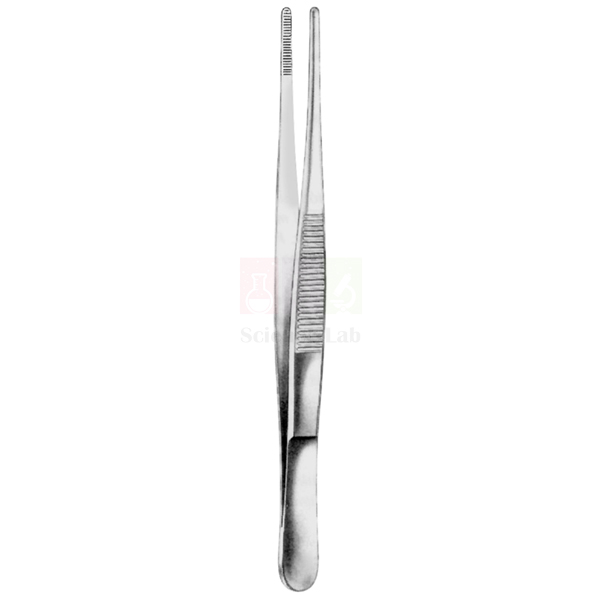
Dressing Forceps Standard Straight
Dressing Forceps Standard Straight (Product Code: SLE/SI/33) is a 25 cm springy dissecting forceps without teeth, used to grip and dissect delicate tissue and to hold vessels for coagulation in surgery and nursing care. Surgeons and nurses pick it for its long, flexible arms and jaws that grip well even without teeth. It is supplied by Jain Scientific Equipments Pvt Ltd (ScienceLab), Ambala, India, a supplier of scientific & laboratory instruments for hospitals, wards and nursing schools.
Specifications
| Parameter | Detail |
|---|---|
| Type | Dissecting forceps, springy |
| Tips | Without teeth |
| Jaws | Good gripping |
| Arms | Flexible |
| Length | 25 cm |
| Material | Martensitic steel (quenched, magnetic) |
| Composition | 0.20% carbon; 13% chromium |
| Intended use | Dissecting delicate tissues; gripping, dissecting tissue and coagulation of vessels; used in surgery and nursing |
| Product code | SLE/SI/33 |
| Supplied by | Jain Scientific Equipments Pvt Ltd (ScienceLab), Ambala, India |
What Are Straight Dressing Forceps Used For?
Held like a pen and closed by finger pressure, the springy arms of this forceps pick up tissue, a dressing or a vessel and let go as soon as the pressure is eased. Because the tips have no teeth, it is the pattern chosen for delicate tissue and for holding a vessel while it is coagulated.
On wards and in dressing rooms the 25 cm length is useful for handling dressings at a distance from the wound; in theatre it gives reach for deeper dissection. Hospitals and nursing schools sourcing laboratory instruments in India can order it together with the matching dressing tray. Check that the tips still close evenly along their length, and clean the jaws after every use.
Supplier
Jain Scientific Equipments Private Limited, trading as ScienceLab from Ambala, Haryana, sources and supplies the Dressing Forceps Standard Straight for theatres, wards, nursing schools, distributors and importers in India and international markets. It can be quoted together with dressing trays, trolleys and other ward instruments. See our company profile for background.
Related Surgical Instruments
Other items for dressing and ward procedures:
- Cheron Dressing Forceps — 25 cm ratcheted forceps for swabbing and for serving from a forceps jar
- Tissue Forceps Standard Straight — a tissue forceps in the same standard straight pattern
- Dressing Tray Stainless Steel — holds dressings and instruments during a procedure
- Surgical Instruments, Dressing /SET — a set of instruments for dressing work
- Dressing Trolley SS 2 Trays — mobile trolley for dressing rounds
Browse more forceps for theatre and ward use in Surgical Instruments.
Frequently Asked Questions
Does the Dressing Forceps Standard Straight have teeth?
No. The Dressing Forceps Standard Straight has jaws without teeth that still grip well. Forceps without teeth are used for dissecting delicate tissues, so this pattern suits work where toothed jaws could damage tissue.
How long is the Dressing Forceps Standard Straight?
The Dressing Forceps Standard Straight is 25 cm long, with straight, flexible, springy arms. The length allows dressings and tissue to be handled at a comfortable distance and gives reach for deeper dissection.
What is the Dressing Forceps Standard Straight used for?
The Dressing Forceps Standard Straight is used for gripping, for dissecting tissue and for coagulation of vessels, and it is used in both surgery and nursing. It is a springy dissecting forceps that closes under finger pressure.
What steel is the Dressing Forceps Standard Straight made from?
The Dressing Forceps Standard Straight is made from martensitic steel, a quenched and magnetic grade with 0.20% carbon and 13% chromium. Ask us if your purchase documentation calls for further material details.
Who supplies the Dressing Forceps Standard Straight?
The Dressing Forceps Standard Straight is supplied by Jain Scientific Equipments Pvt Ltd (ScienceLab), based in Ambala, Haryana, India, to hospitals, nursing schools, dealers and importers in India and international markets.
Can the Dressing Forceps Standard Straight be ordered in quantity for wards?
Yes. The Dressing Forceps Standard Straight can be quoted in the quantity your wards or training rooms need. Tell us the number of pieces, any trays or sets to include, and the delivery location, and we will send a quotation.
Request a Quote
Price the Dressing Forceps Standard Straight for your wards by contacting us on the contact page or by adding it, with trays and sets, to the enquiry cart.
Last updated: 24 September 2026
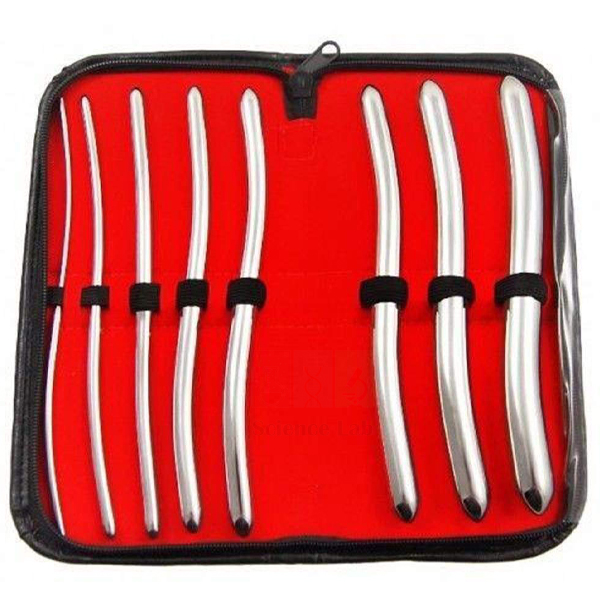
Hegar Uterine Dilator Double Ended
Hegar Uterine Dilator Double Ended (Product Code: SLE/SI/34) is a set of graduated cervical dilators used to dilate the cervix so that instruments for evacuating the uterus can be inserted. Gynaecology and obstetric units receive it as a set of 8 double-ended instruments (16 dilators) from 3–4 mm to 17–18 mm diameter in a canvas roll, with rounded, smooth, non-traumatic ends. It is supplied by Jain Scientific Equipments Pvt Ltd (ScienceLab), Ambala, India, for hospitals and for laboratory equipment tenders in India.
Specifications
| Parameter | Detail |
|---|---|
| Type | Cervical dilator, double ended |
| Set | 8 double-ended instruments (16 dilators) in a canvas roll |
| Diameter range | 3–4 mm to 17–18 mm |
| Ends | Rounded, smooth and non-traumatic |
| Material | Austenitic steel (non-quenched, non-magnetic) |
| Composition | 16–18% chromium; 10–14% nickel; 2–3% molybdenum |
| Intended use | Dilating the cervix of the uterus to make room for the insertion of instruments used in evacuation of the uterus |
| Product code | SLE/SI/34 |
| Supplied by | Jain Scientific Equipments Pvt Ltd (ScienceLab), Ambala, India |
What Is a Hegar Dilator Used For?
Before the uterus can be evacuated, the cervical canal has to be opened wide enough for a curette or scoop to pass. The clinician inserts the dilators one after another, starting with the smallest diameter and stepping up gradually until the canal accepts the instrument that will be used. The rounded, smooth ends are made to be non-traumatic.
Because each instrument carries a dilator at both ends, the set of 8 covers 16 diameters while taking up little space in its canvas roll, and the austenitic steel is non-magnetic. Gynaecology departments can order the dilator set together with a uterine sound, cervical forceps and curettes. Check the roll after each use so that every size is returned to its place.
What to Specify When Ordering
- Number of complete sets (each set is 8 double-ended instruments, 16 dilators, in a canvas roll)
- Confirmation that the 3–4 mm to 17–18 mm diameter range suits your procedures
- Companion instruments for the procedure, such as a uterine sound, uterine forceps or curettes
- Delivery destination and any documents your purchasing team requires
Supplier
ScienceLab is how Jain Scientific Equipments Private Limited of Ambala, Haryana, trades; the company sources and supplies the Hegar dilator set for hospitals, maternity units, medical colleges, distributors and importers in India and international markets.
Read more on our company profile.
Related Surgical Instruments
Instruments used in the same uterine evacuation procedure:
- Martin Uterine Sound — gauges the uterine cavity before dilation
- Museux Uterine Forceps Curved — steadies the cervix while the dilators are passed
- Simon Uterine Scoop Sharp — sharp oval scoop for removing retained products of conception
- Sims Uterine Curette Sharp — sharp fenestrated curette for the same purpose
- Surgical instruments Curettage /SET — a set for uterine curettage
More gynaecological instruments are listed in Surgical Instruments.
Frequently Asked Questions
How many dilators are in the Hegar Uterine Dilator Double Ended set?
The Hegar Uterine Dilator Double Ended is provided in sets of 8 double-ended instruments, giving 16 dilators in total. The set is supplied in a canvas roll that keeps the sizes together and in order.
What sizes does the Hegar Uterine Dilator Double Ended set cover?
The Hegar Uterine Dilator Double Ended set covers diameters from 3–4 mm up to 17–18 mm. Each instrument carries two sizes, one at each end, so the clinician can step up gradually while dilating the cervix.
What is the Hegar Uterine Dilator Double Ended used for?
The Hegar Uterine Dilator Double Ended is used to dilate the cervix of the uterus to make room for the insertion of instruments used in evacuation of the uterus. Its ends are rounded, smooth and non-traumatic.
Which steel is the Hegar Uterine Dilator Double Ended made from?
The Hegar Uterine Dilator Double Ended is made from austenitic steel, which is non-quenched and non-magnetic, containing 16–18% chromium, 10–14% nickel and 2–3% molybdenum. Ask us if you need further material information.
Can single sizes of the Hegar Uterine Dilator Double Ended be ordered?
The Hegar Uterine Dilator Double Ended is described as provided in sets of 8 in a canvas roll. If you need individual sizes or replacements, ask us through the contact page and we will check what can be quoted.
Who supplies the Hegar Uterine Dilator Double Ended?
Jain Scientific Equipments Pvt Ltd (ScienceLab), Ambala, Haryana, India, supplies the Hegar Uterine Dilator Double Ended set. The company supplies the set to hospitals, maternity units, medical colleges, distributors and importers in India and international markets.
Request a Quote
To price the Hegar Uterine Dilator Double Ended set, reach us through the contact page or add it with the rest of your evacuation instruments to the enquiry cart.
Last updated: 24 September 2026
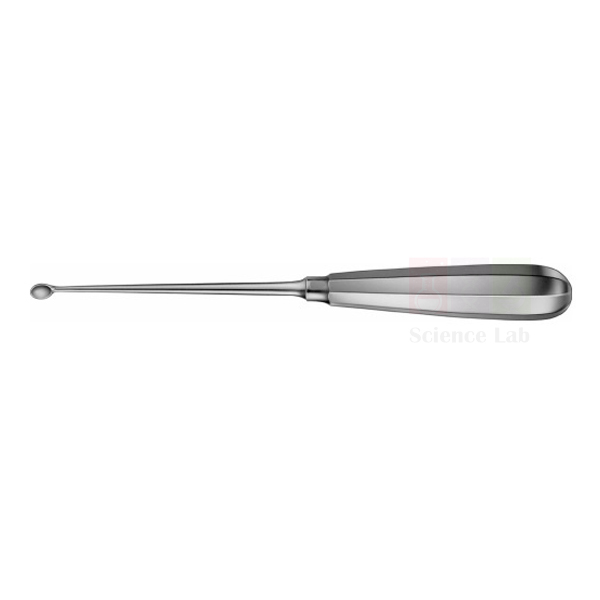
Simon Uterine Scoop Sharp
Simon Uterine Scoop Sharp (Product Code: SLE/SI/35) is a rigid uterine scoop with a sharp, oval spoon-shaped blade, used to remove retained products of conception from inside the uterus. Gynaecologists and obstetric units use it for its 12 mm spoon on a 25 cm shaft, which reaches the uterine cavity once the cervix has been dilated. It is supplied by Jain Scientific Equipments Pvt Ltd (ScienceLab), Ambala, India, which handles lab equipment export from India as well as domestic hospital orders.
Specifications
| Parameter | Detail |
|---|---|
| Type | Uterine scoop |
| Shank | Rigid |
| Blade shape | Oval, in the form of a spoon |
| Blade edge | Sharp |
| Spoon width | 12 mm |
| Shaft length | 25 cm |
| Material | Martensitic steel (quenched, magnetic) |
| Composition | 0.20% carbon; 13% chromium |
| Intended use | Removal of retained products of conception from inside the uterus |
| Product code | SLE/SI/35 |
| Supplied by | Jain Scientific Equipments Pvt Ltd (ScienceLab), Ambala, India |
What Is a Simon Uterine Scoop Used For?
After cervical dilation, the scoop is passed into the uterine cavity and its sharp oval spoon is drawn along the wall to lift out retained products of conception. The rigid shank transmits the operator's control directly to the blade, and the spoon shape gathers the material as it is removed.
Its companion, the Sims Uterine Curette Sharp, has a fenestrated oval blade of the same 12 mm width on a slightly longer shaft, so some clinicians keep both in the evacuation set to switch between a spoon and a fenestrated blade. Medical colleges ordering scientific & laboratory instruments for obstetrics teaching can order the two together. Protect the sharp edge in storage and inspect it before every use.
Supplier
Jain Scientific Equipments Private Limited trades as ScienceLab from Ambala in Haryana. It sources and supplies obstetric and gynaecological instruments such as the Simon Uterine Scoop Sharp for hospitals, maternity units, medical colleges, surgical dealers and importers in India and international markets. For company information, see our company profile.
Related Surgical Instruments
Instruments used together with the scoop in uterine evacuation:
- Hegar Uterine Dilator Double Ended — set of 8 double-ended dilators to open the cervix first
- Sims Uterine Curette Sharp — sharp fenestrated oval curette on a 26 cm shaft
- Curette Uterine Sharp & Blunt — a further uterine curette option in the range
- Kidney Basin Polypropylene — receives the removed material and used swabs
- Surgical instruments Curettage /SET — a set for uterine curettage
View the wider gynaecology range under Surgical Instruments.
Frequently Asked Questions
What is the Simon Uterine Scoop Sharp used for?
The Simon Uterine Scoop Sharp is used for removal of retained products of conception from inside the uterus. It should be used by trained clinicians following their facility's protocols, after the cervix has been dilated.
What are the dimensions of the Simon Uterine Scoop Sharp?
The Simon Uterine Scoop Sharp has a spoon 12 mm wide on a shaft 25 cm long. The blade is an oval spoon form with a sharp edge, and it is mounted on a rigid shank for direct control.
How does the Simon Uterine Scoop Sharp differ from the Sims Uterine Curette Sharp?
The Simon Uterine Scoop Sharp has an oval spoon-shaped blade on a 25 cm shaft, while the Sims Uterine Curette Sharp has an oval fenestrated blade on a slightly longer shaft. Both have a sharp edge, a 12 mm width and a rigid shank.
What steel is the Simon Uterine Scoop Sharp made of?
The Simon Uterine Scoop Sharp is made of martensitic steel, quenched and magnetic, with a composition of 0.20% carbon and 13% chromium. Please ask us if you require additional material details for procurement.
Who supplies the Simon Uterine Scoop Sharp?
Jain Scientific Equipments Pvt Ltd (ScienceLab) of Ambala, Haryana, India supplies the Simon Uterine Scoop Sharp. It can be quoted individually or with dilators, curettes and other instruments for a uterine evacuation set.
What is needed for a Simon Uterine Scoop Sharp quotation?
For a Simon Uterine Scoop Sharp quotation, tell us the quantity, the other evacuation instruments you want included, your delivery destination in India or abroad and any documents required. Send the details through our contact page.
Request a Quote
Ask for pricing on the Simon Uterine Scoop Sharp through our contact page, or place it in the enquiry cart with the dilators and curettes you need.
Last updated: 24 September 2026
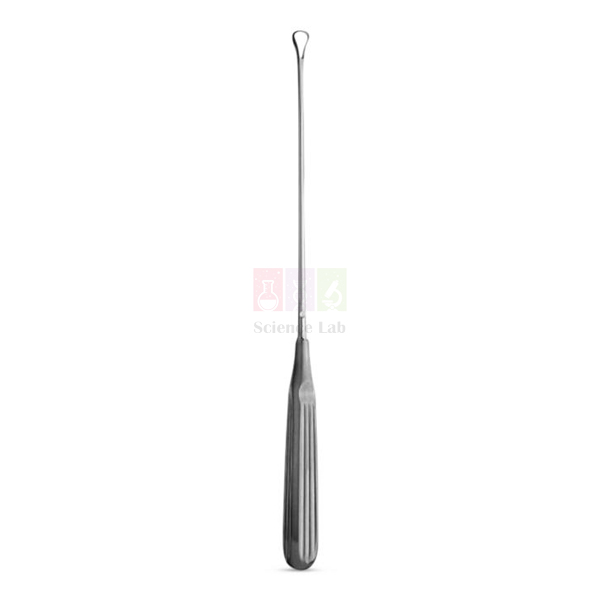
Sims Uterine Curette Sharp
Sims Uterine Curette Sharp (Product Code: SLE/SI/36) is a rigid-shank uterine curette with a sharp, oval fenestrated blade, used to remove retained products of conception from inside the uterus. Its open 12 mm blade on a 26 cm shaft sets it apart from spoon-type scoops and suits gynaecologists who prefer a fenestrated curette for evacuation. It is supplied by Jain Scientific Equipments Pvt Ltd (ScienceLab), Ambala, India, which acts as supplier and lab equipment exporter for hospital buyers.
Specifications
| Parameter | Detail |
|---|---|
| Type | Uterine curette |
| Shank | Rigid |
| Blade shape | Oval, fenestrated |
| Blade edge | Sharp |
| Spoon width | 12 mm |
| Shaft length | 26 cm |
| Material | Martensitic steel (quenched, magnetic) |
| Composition | 0.20% carbon; 13% chromium |
| Intended use | Removal of retained products of conception from inside the uterus |
| Product code | SLE/SI/36 |
| Supplied by | Jain Scientific Equipments Pvt Ltd (ScienceLab), Ambala, India |
What Is a Sims Uterine Curette Used For?
The Sims curette is used after the cervix has been dilated to clear retained products of conception from the uterine cavity. Its fenestrated blade has an open centre, so the sharp rim does the curetting along the uterine wall while the loosened tissue passes through the window.
At 26 cm the shaft is slightly longer than that of the Simon Uterine Scoop Sharp, and both share a 12 mm width, which makes them easy to pair in one evacuation set. Obstetrics departments buying through laboratory equipment tenders in India can order the curette with dilators and a uterine sound. Store it so the sharp rim is not knocked against other instruments.
Supplier
ScienceLab is the trade name of Jain Scientific Equipments Private Limited, whose office is in Ambala, Haryana. The company sources the Sims Uterine Curette Sharp and supplies it to hospitals, maternity units, teaching institutions, distributors and importers in India and international markets, alongside the other gynaecological instruments listed on this site. Our company profile gives more background.
Related Surgical Instruments
Other instruments for the same uterine evacuation set:
- Simon Uterine Scoop Sharp — sharp oval spoon, 12 mm wide on a 25 cm shaft
- Hegar Uterine Dilator Double Ended — dilates the cervix before curettage
- Martin Uterine Sound — gauges the depth of the uterine cavity
- Curette Uterine Sharp & Blunt — another uterine curette option in the range
Curettes, dilators and uterine forceps are all found in Surgical Instruments.
Frequently Asked Questions
What is the Sims Uterine Curette Sharp used for?
The Sims Uterine Curette Sharp is used for removal of retained products of conception from inside the uterus. It is intended for trained clinicians working under their facility's protocols, normally after the cervix has been dilated.
What size is the Sims Uterine Curette Sharp?
The Sims Uterine Curette Sharp has a shaft 26 cm long and a spoon 12 mm wide. The blade is oval and fenestrated with a sharp edge, and the shank is rigid so the blade follows the hand closely.
What does fenestrated mean on the Sims Uterine Curette Sharp?
On the Sims Uterine Curette Sharp, fenestrated means the oval blade has an open window instead of a closed spoon. The sharp rim of the window does the curetting, which is the main difference from the spoon-shaped Simon Uterine Scoop Sharp.
Which steel is the Sims Uterine Curette Sharp made of?
The Sims Uterine Curette Sharp is made of martensitic steel, a quenched and magnetic steel with 0.20% carbon and 13% chromium. Contact us if you need more material information for a tender or purchase file.
Who supplies the Sims Uterine Curette Sharp?
Jain Scientific Equipments Pvt Ltd (ScienceLab), Ambala, Haryana, India, supplies the Sims Uterine Curette Sharp to hospitals, medical colleges, dealers and importers in India and international markets.
Can the Sims Uterine Curette Sharp be ordered with a dilator set?
Yes. The Sims Uterine Curette Sharp can be quoted together with the Hegar Uterine Dilator Double Ended set, a uterine sound and other evacuation instruments. Send the full list and quantities through our contact page for one combined quotation.
Request a Quote
For a Sims Uterine Curette Sharp quotation, use the contact page or collect the curette and its companion instruments in the enquiry cart before sending.
Last updated: 24 September 2026
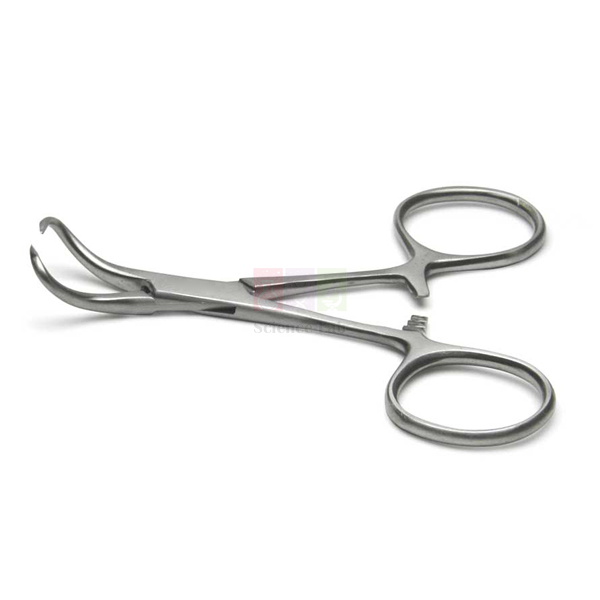
Backhaus Towel Clamp
Backhaus Towel Clamp (Product Code: SLE/SI/37) is a springy, lockable clamp used to attach surgical towels around an incision, either with or without piercing the skin. It is a compact 13 cm instrument with a hard ratchet and a fine, single tooth in each jaw, used by scrub nurses and surgeons when draping the operative field. It is supplied by Jain Scientific Equipments Pvt Ltd (ScienceLab), Ambala, India, a laboratory instruments supplier in India for hospitals and training institutions.
Specifications
| Parameter | Detail |
|---|---|
| Type | Towel clamp, springy |
| Ratchet | Hard, lockable |
| Jaws | Fine, single tooth in each jaw |
| Length | 13 cm |
| Material | Martensitic steel (quenched, magnetic) |
| Composition | 0.20% carbon; 13% chromium |
| Intended use | Attaching towels around the surgical incision, with or without piercing the skin |
| Product code | SLE/SI/37 |
| Supplied by | Jain Scientific Equipments Pvt Ltd (ScienceLab), Ambala, India |
What Is a Backhaus Towel Clamp Used For?
Once the patient has been prepared, towels are laid around the incision site and must stay exactly where they are placed. The fine teeth of the Backhaus clamp pass through the layers of towel and lock under the hard ratchet, pinning them together; where the surgeon chooses, the clamp can also take a small bite of skin to anchor the towel.
Several clamps are usually needed around one incision, so buyers generally order them in multiples, and training institutions that stock scientific & laboratory instruments include them in basic surgical sets for draping practice. Before each use, check that the ratchet still locks firmly and that the two tips meet.
Supplier
Jain Scientific Equipments Private Limited operates under the ScienceLab name in Ambala, Haryana, and supplies the Backhaus Towel Clamp as one of the theatre-preparation instruments it sources. Operating theatres, day-surgery units, training institutions, dealers and importers in India and international markets can order it with drapes and other set items. Our company profile explains more.
Related Surgical Instruments
Items that go with towel clamps when preparing an operative field:
- Drape, Surgical, Woven — woven drapes the clamps hold in place
- Scalpel Handle No. 3 — for making the incision once the field is draped
- Kocher Artery Forceps Straight — a general-use haemostat for the same set
- Instrument Tray Stainless Steel — for laying out the clamps and instruments
- Surgical Instruments, Basic Surgery /SET — a basic surgery instrument set
Clamps, forceps and retractors for theatre use are listed in Surgical Instruments.
Frequently Asked Questions
What is the Backhaus Towel Clamp used for?
The Backhaus Towel Clamp is used to attach towels around the surgical incision, either with or without piercing the skin. It keeps drapes and towels fixed in position while the operation is carried out.
How long is the Backhaus Towel Clamp?
The Backhaus Towel Clamp is 13 cm long. This compact size keeps the clamp low on the drapes, so it stays out of the way of the surgical team while holding the towels together.
How do the jaws of the Backhaus Towel Clamp grip?
The Backhaus Towel Clamp has a fine, single tooth in each jaw. The springy clamp closes these teeth through the towel layers, and a hard, lockable ratchet keeps them firmly closed until released.
What material is the Backhaus Towel Clamp made from?
The Backhaus Towel Clamp is made from martensitic steel, a quenched, magnetic steel with 0.20% carbon and 13% chromium. If your purchasing team needs more material data, please ask us when you request the quotation.
How many Backhaus Towel Clamps should I order?
The number of Backhaus Towel Clamp pieces depends on how many sets you are equipping, since several clamps are usually placed around one incision. Tell us the number of sets and clamps per set, and we will quote accordingly.
Who supplies the Backhaus Towel Clamp?
Jain Scientific Equipments Pvt Ltd (ScienceLab) of Ambala, Haryana, India supplies the Backhaus Towel Clamp to hospitals, surgical training centres, dealers and importers in India and international markets.
Request a Quote
To order the Backhaus Towel Clamp, send the quantity through our contact page or add it, with drapes and set instruments, to the enquiry cart.
Last updated: 24 September 2026
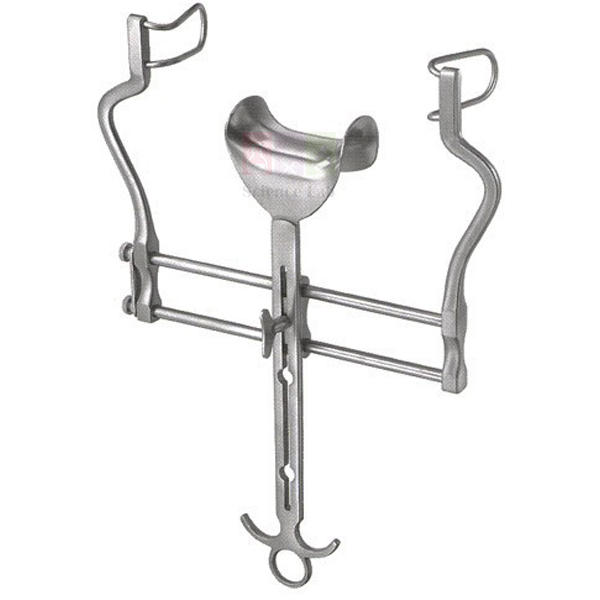
Balfour Abdominal Retractor 3 Blades
Balfour Abdominal Retractor 3 Blades (Product Code: SLE/SI/38) is a self-retaining suprapubic abdominal retractor used to hold back skin, fatty tissue, muscles or viscera after the incision so that the operative field stays exposed. Surgical teams use its two fenestrated end blades, solid centre blade and locking compass frame, which opens the wound to a maximum of approximately 180 mm. It is supplied by Jain Scientific Equipments Pvt Ltd (ScienceLab), Ambala, India, whose range of scientific & laboratory instruments also covers other retractors and abdominal instruments.
Specifications
| Parameter | Detail |
|---|---|
| Type | Suprapubic abdominal retractor, self-retaining (self-holding) |
| Blades | 3: two fenestrated end blades and one solid centre blade |
| End blades | Fenestrated, approx. 35 x 70 mm |
| Centre blade | Solid, approx. 45 x 80 mm |
| Frame | Compass (support with hinged arms) with locking mechanism |
| Maximum wound opening | Approx. 180 mm |
| Material | Martensitic steel (quenched, magnetic) |
| Composition | 0.50% carbon; 13% chromium; 0.60–0.90% molybdenum |
| Intended use | Retracting skin, fatty tissue, muscles or viscera after the incision to expose the operative field |
| Product code | SLE/SI/38 |
| Supplied by | Jain Scientific Equipments Pvt Ltd (ScienceLab), Ambala, India |
What Is a Balfour Retractor Used For?
In abdominal surgery the wound edges must be held apart for long periods. The Balfour's two fenestrated end blades are placed against the wound edges and spread on the compass frame, which locks at the chosen width up to about 180 mm; the solid centre blade then adds retraction on the third side of the wound.
Because it holds itself open, one self-retaining retractor can take the place of hand-held retractors and frees assistants for other tasks. Theatre buyers abroad can order it through ScienceLab as a laboratory equipment exporter from India, together with hand-held retractors for the superficial layers. Clean the hinged arms and locking mechanism thoroughly, and check that the lock holds before use.
What to Specify When Ordering
- Number of retractors required
- Whether the blade sizes (end blades approx. 35 x 70 mm, centre blade approx. 45 x 80 mm) suit your procedures
- Whether a maximum wound opening of approx. 180 mm is sufficient
- Companion hand-held retractors or abdominal instruments for the same set
Supplier
ScienceLab is the trading name of Jain Scientific Equipments Private Limited, an Ambala, Haryana company that sources and supplies self-retaining retractors such as the Balfour for operating theatres, surgical teaching departments, dealers and importers in India and international markets.
Further details are on our company profile.
Related Surgical Instruments
Instruments that complement the Balfour retractor in abdominal procedures:
- Collin Abdominal Retractor 3 Blades — another three-blade abdominal retractor pattern
- Farabeuf Retractor Double Ended Pair — hand-held retractors for superficial layers
- Abdominal Spatula Malleable — a malleable spatula for holding back viscera
- Doyen Intestinal Clamp Forceps Curved — for bowel work within the exposed field
- Surgical Instruments, Abdominal SET — a set of instruments for abdominal surgery
All retractors, clamps and forceps are grouped in Surgical Instruments.
Frequently Asked Questions
How wide can the Balfour Abdominal Retractor 3 Blades open?
The Balfour Abdominal Retractor 3 Blades gives a maximum wound opening of approximately 180 mm. The compass frame with hinged arms carries the blades, and a locking mechanism holds the chosen opening without an assistant.
What blade sizes does the Balfour Abdominal Retractor 3 Blades have?
The Balfour Abdominal Retractor 3 Blades has two fenestrated end blades of approximately 35 x 70 mm and a solid centre blade of approximately 45 x 80 mm. Together they retract the wound on three sides.
What is the Balfour Abdominal Retractor 3 Blades used for?
The Balfour Abdominal Retractor 3 Blades is used to retract skin, fatty tissue, muscles or viscera after the incision to expose the operative field. As a self-retaining suprapubic retractor, it keeps the wound open throughout the procedure.
What steel is the Balfour Abdominal Retractor 3 Blades made from?
The Balfour Abdominal Retractor 3 Blades is made from martensitic steel (quenched, magnetic) containing 0.50% carbon, 13% chromium and 0.60 to 0.90% molybdenum. Ask us if your tender requires further material documentation.
Who supplies the Balfour Abdominal Retractor 3 Blades?
Jain Scientific Equipments Pvt Ltd (ScienceLab), Ambala, Haryana, India, supplies the Balfour Abdominal Retractor 3 Blades. The company supplies this self-retaining retractor to operating theatres, surgical teaching departments, dealers and importers in India and international markets.
What should I include in a Balfour Abdominal Retractor 3 Blades enquiry?
A Balfour Abdominal Retractor 3 Blades enquiry should state the quantity, any companion retractors or abdominal instruments, the delivery destination in India or abroad, and any documents your procurement process needs. Send it via our contact page or the enquiry cart.
Request a Quote
Request a quotation for the Balfour Abdominal Retractor 3 Blades from our contact page, or add it to the enquiry cart with the rest of your abdominal set.
Last updated: 24 September 2026