- Physics Lab Equipment
- Chemistry Lab Equipment
- Biology Lab Equipment
- Anatomical Lab Equipment
- Learning
- Educational Lab Equipment
- Magnets
- Agriculture
- Astronomy
- Earth Science
- Geography Lab Equipment
- Safety Lab Coat
- Laboratory
- Meteorological
- Electricity & Magnetism
- Heat
- School Lab Equipment
- Lab Glassware
- Science Lab Equipment
- Tvet Lab Equipment
- Robotics Kits Supplier and Manufacturer for Schools India
- Math Lab Equipment Manufacturers and Exporters in Ambala
- STEM Kits Manufacturers and Supplier India
- Engineering Lab Equipment
- Hospital Lab Equipment
- Water, Sanitation & Hygiene Supplies
- Cold Chain, Solar & Communication Equipment
- Nutrition
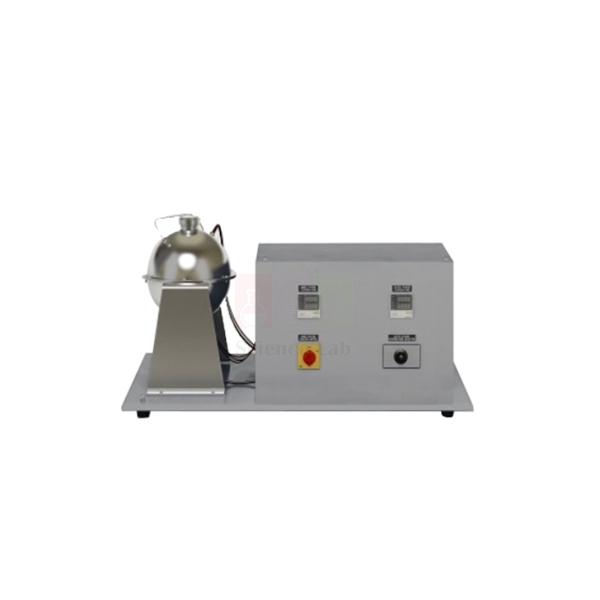
Computerized Thermal Conductivity of Powder
Computerized Thermal Conductivity of Powder (Product Code: SLE/MCE/72) is a concentric-sphere apparatus used to determine the thermal conductivity of an insulating powder in heat transfer laboratories. As lab equipment for technical institutes, it lets mechanical and chemical engineering students measure radial heat flow between a 50 mm and a 100 mm radius copper sphere using ten embedded thermocouples. It is made by Jain Scientific Equipments Pvt Ltd (ScienceLab), an OEM manufacturer, at its own factory in Ambala, India.
Specifications
| Parameter | Detail |
|---|---|
| Construction | Two thin-wall concentric copper spheres with insulating powder packed between the shells |
| Radius of inner copper sphere | 50 mm |
| Radius of outer copper sphere | 100 mm |
| Heater | Mica type: nichrome wire wound on mica sheet, housed in the inner sphere |
| Heating power | 350 W |
| Temperature limitation | 95 °C |
| Thermocouples | 4 embedded on the inner sphere and 6 on the outer sphere (10 in total) |
| Heater supply and measurement | Supplied through a dimmer stat; measured by voltmeter and ammeter |
| Test medium | Commercially available insulating powder packed between the two spheres (confirm the powder type with your quotation) |
| Measuring range – temperature | 2 × 0–325 °C |
| Measuring range – heating power | 0–450 W |
| Power supply options | 230 V, 50 Hz, 1 phase; 230 V, 60 Hz, 1 phase; or 120 V, 60 Hz, 1 phase |
| Product code | SLE/MCE/72 |
| Manufacturer | Jain Scientific Equipments Pvt Ltd (ScienceLab) — OEM |
| Country of origin | India (made in Ambala, Haryana) |
What Is the Thermal Conductivity of Powder Apparatus Used For?
Heat produced by the coil inside the inner sphere can only escape outwards through the powder layer, so once temperatures are steady the electrical input (from the voltmeter and ammeter readings) equals the heat conducted through the insulation. Using the average inner and outer surface temperatures from the ten thermocouples and the two sphere radii, students calculate the powder’s thermal conductivity from the steady-state equation for a spherical shell.
The experiment is a practical way to compare insulating materials of the kind used on pipes, furnaces and cold stores. Raise the dimmer stat gradually, record all ten thermocouples only after the readings stop drifting, and respect the 95 °C temperature limitation. Repeating the test at two or three power settings is a simple check that the conductivity value is consistent.
What to Specify When Ordering
- Power supply version: 230 V 50 Hz, 230 V 60 Hz or 120 V 60 Hz, single phase
- The insulating powder you want to test, so the filling can be confirmed in the quotation
- The computerised data logging you expect, so the arrangement can be confirmed before ordering
- Number of units required
OEM Manufacturer
Jain Scientific Equipments Private Limited is the original equipment manufacturer of this concentric-sphere apparatus and sells it under its trading name, ScienceLab. The unit is manufactured at the company’s own licensed factory at Saha, Ambala, Haryana, India, and supplied direct to engineering colleges, research laboratories, dealers and importers.
Need a replacement heater or thermocouple later? Ask us — as the maker, we deal with such requests ourselves. The ScienceLab profile has more about the company.
Related Thermodynamics & Heat Transfer Lab Equipment
Conduction studies usually extend to these related set-ups:
- Radial Heat Conduction Experiment — radial conduction in a different geometry for comparison
- Conductivity Of Liquid And Gases — extends conductivity measurement to fluids
- Unsteady State Heat Transfer — adds transient conduction to the steady-state method
- Apparatus Heat/Thermal Conductivity — a simpler conduction demonstration for introductory classes
Find more conduction, convection and radiation units in the Thermodynamics & Heat Transfer Lab Equipment category.
Frequently Asked Questions
How does the Computerized Thermal Conductivity of Powder apparatus work?
The Computerized Thermal Conductivity of Powder apparatus heats an inner copper sphere with a mica-type heater; heat flows radially through insulating powder packed between it and an outer sphere, and ten thermocouples record the temperature drop used to calculate conductivity.
What are the sphere sizes of the Computerized Thermal Conductivity of Powder apparatus?
The Computerized Thermal Conductivity of Powder apparatus uses thin-wall concentric copper spheres with radii of 50 mm (inner) and 100 mm (outer), so the powder forms a 50 mm thick spherical layer between them.
What heater does the Computerized Thermal Conductivity of Powder apparatus use?
The heater of the Computerized Thermal Conductivity of Powder apparatus is a mica type made of nichrome wire wound on mica sheet, rated 350 W, with a 95 °C temperature limitation and a 0–450 W power measuring range.
Which insulating powder is used in the Computerized Thermal Conductivity of Powder apparatus?
The Computerized Thermal Conductivity of Powder apparatus uses a commercially available insulating powder packed between the two spheres. Please confirm the powder type with us when you request a quotation, especially if you plan to test your own material.
Who manufactures the Computerized Thermal Conductivity of Powder apparatus?
Jain Scientific Equipments Pvt Ltd (ScienceLab) manufactures the Computerized Thermal Conductivity of Powder apparatus as the OEM at its own factory in Ambala, Haryana, India, and supplies it directly to institutions, dealers and importers.
Can a calibration certificate be provided for the instruments?
Please discuss calibration-certificate availability for the thermocouples, voltmeter and ammeter of the Computerized Thermal Conductivity of Powder apparatus with us before ordering, and list your requirement on the contact page so it is covered in the quotation.
Request a Quote
Tell us the quantity and delivery location for the Computerized Thermal Conductivity of Powder apparatus through the contact page, or add it to the enquiry cart. Every quotation is issued by the manufacturer itself.
Last updated: 24 September 2026