- Physics Lab Equipment
- Chemistry Lab Equipment
- Biology Lab Equipment
- Anatomical Lab Equipment
- Learning
- Educational Lab Equipment
- Magnets
- Agriculture
- Astronomy
- Earth Science
- Geography Lab Equipment
- Safety Lab Coat
- Laboratory
- Meteorological
- Electricity & Magnetism
- Heat
- School Lab Equipment
- Lab Glassware
- Science Lab Equipment
- Tvet Lab Equipment
- Robotics Kits Supplier and Manufacturer for Schools India
- Math Lab Equipment Manufacturers and Exporters in Ambala
- STEM Kits Manufacturers and Supplier India
- Engineering Lab Equipment
- Hospital Lab Equipment
- Water, Sanitation & Hygiene Supplies
- Cold Chain, Solar & Communication Equipment
- Nutrition
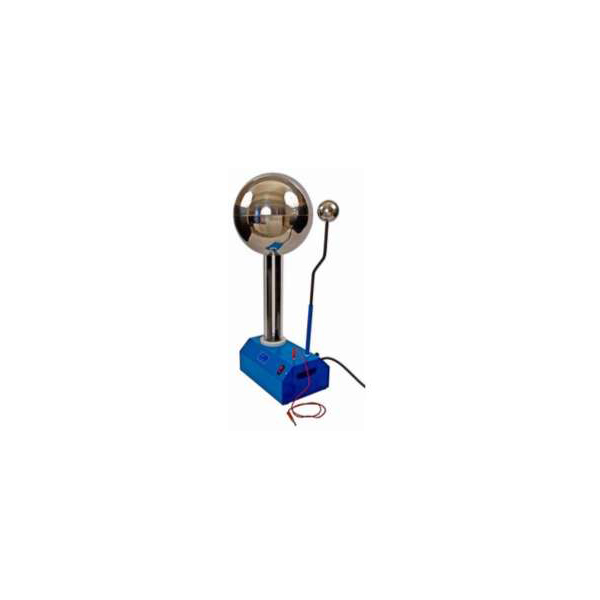
Rods (wands) to Study Electrification
Rods (wands) to Study Electrification (Product Code: SCL2309/033) are hand-held rods used in school electrostatics lessons to show how objects become charged when they are rubbed, and how charged objects attract or repel one another. Teachers use them for quick front-of-class demonstrations and students use them in simple bench activities. As part of the physics lab equipment range for schools in India, they are offered by Jain Scientific Equipments Pvt Ltd (ScienceLab), Ambala, India.
Key Details
| Parameter | Detail |
|---|---|
| Type | Rods (wands) for studying electrification |
| Purpose | Producing static charge by rubbing, and showing attraction and repulsion between charged objects |
| Supplied as | Rods for classroom electrostatics work; rod materials and quantity per set confirmed on enquiry |
| Suitable for | School physics and general science lessons on static electricity |
Typical Use
In a typical lesson a rod is rubbed briskly with a dry cloth and then held near small scraps of paper, which jump up to it. The charged rod can next be brought close to an electroscope cap to make the leaves diverge, or towards a second charged rod hung from a thread so that students see it swing away (like charges) or swing closer (unlike charges). Rods of different materials charge with opposite signs, which is how the idea of two kinds of charge is usually introduced.
Static experiments are sensitive to moisture, so work in a dry room, keep the rods clean and free of grease, and wipe them with a dry cloth before each trial. Grouping these wands with an electroscope and a small indicator gives a compact electricity experiment kit for school practicals on charging by friction and induction.
Manufacturer
ScienceLab is the brand under which Jain Scientific Equipments Private Limited, based in Ambala, Haryana, manufactures and sells school science apparatus. Buyers who must register a vendor can use the company's GSTIN 06AAECJ8618A1ZT and LEI 3358004HRD1JIVXKYX49. See the company profile for more background.
Related Lab Equipment
These items are commonly used with electrification rods in static electricity lessons:
- Electroscope with Accessories — detects the charge picked up by a rubbed rod.
- Gold Leaf Electroscope — a sensitive indicator for comparing how strongly rods are charged.
- Electrostatic Sultan — an electrostatic indicator for showing repulsion between like charges.
- Friction Rod, Brass/Ebonite — a rod with a listed material pairing, for comparing charge signs.
- Friction Rod, Perspex — an acrylic alternative for charging-by-rubbing activities.
More apparatus is listed in our Lab Equipment category.
Frequently Asked Questions
What materials are the rods made from?
The rod materials and the number of rods per set are not stated on this listing. Please contact us and we will confirm them before you order.
Is a rubbing cloth included?
Rubbing materials are not listed with this item. Ask us when you enquire and we can advise on what is supplied or recommended.
Why does the demonstration sometimes fail?
Moist air lets charge leak away quickly. Choose a dry day, keep the rods dry and clean, and rub them firmly just before testing.
Can the rods be used with an electroscope?
Yes. Bringing a charged rod near an electroscope cap is one of the standard ways to show charging, and touching it to the cap shows charging by contact.
Are the rods suitable for students to handle?
Static charges from rubbed rods are small and are routinely used in school practicals. As with any rods, students should handle them carefully and not wave them near faces.
How do I request a quotation for a school or tender?
Share the product code SCL2309/033, the quantity and your delivery address. We supply schools across India and international markets and can quote in bulk.
Request a Quote
For prices and availability of the Rods (wands) to Study Electrification, write to us through the contact page or add them to your enquiry cart.
Last updated: 24 September 2026