- Physics Lab Equipment
- Chemistry Lab Equipment
- Biology Lab Equipment
- Anatomical Lab Equipment
- Learning
- Educational Lab Equipment
- Magnets
- Agriculture
- Astronomy
- Earth Science
- Geography Lab Equipment
- Safety Lab Coat
- Laboratory
- Meteorological
- Electricity & Magnetism
- Heat
- School Lab Equipment
- Lab Glassware
- Science Lab Equipment
- Tvet Lab Equipment
- Robotics Kits Supplier and Manufacturer for Schools India
- Math Lab Equipment Manufacturers and Exporters in Ambala
- STEM Kits Manufacturers and Supplier India
- Engineering Lab Equipment
- Hospital Lab Equipment
- Water, Sanitation & Hygiene Supplies
- Cold Chain, Solar & Communication Equipment
- Nutrition
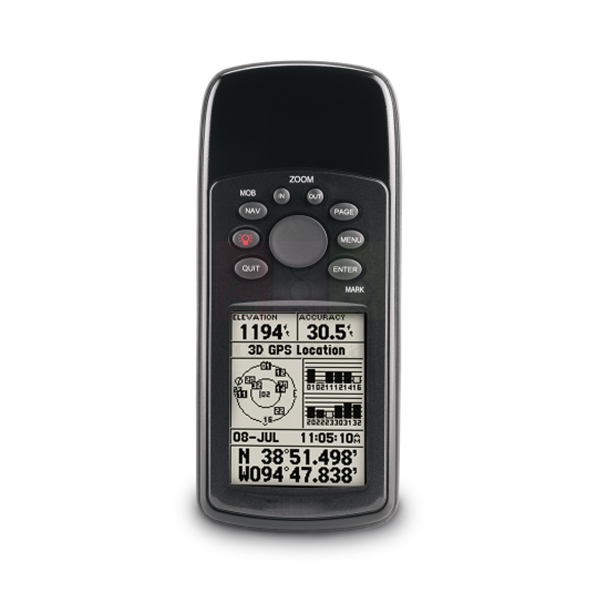
GPS Receiver, Basic
GPS Receiver, Basic (Product Code: SLE/CME/05) is a handheld basic GPS receiver used to record locations, follow routes and navigate during field operations. The unit described in our listing is a Garmin receiver that stores 500 waypoints and 50 reversible routes, and runs for up to 18 hours on 2 AA batteries. It is supplied by Jain Scientific Equipments Pvt Ltd (ScienceLab), Ambala, India, a laboratory instruments supplier in India for field and education buyers.
Specifications
| Parameter | Detail |
|---|---|
| Type | Basic GPS receiver suitable for field operations (Garmin, as described in our listing) |
| Waypoints | Up to 500 waypoints/icons, with name and graphic symbols |
| Routes | 50 reversible routes with up to 250 points each |
| Track log | 2,048 track log points; 10 saved tracks |
| Interfaces | USB, RS232 (serial) |
| Display | 41 x 56 mm, 4-level grey LCD (120 x 160 pixels) |
| Power | 2 AA batteries (not included) |
| Battery life | Up to 18 hours |
| Package includes | GPS, quick start manual, wrist strap, owner's manual on disk |
| Product code | SLE/CME/05 |
| Supplied by | Jain Scientific Equipments Pvt Ltd (ScienceLab), Ambala, India |
What Is the Basic GPS Receiver Used For?
Health outreach teams, survey staff, logistics crews and students on field trips use this handheld receiver to mark locations, follow planned routes and find their way back to recorded sites. It keeps up to 500 named waypoints with graphic symbols and 50 reversible routes of up to 250 points each, while the track log holds 2,048 points and 10 saved tracks for reviewing where a team has travelled.
The receiver runs on 2 AA batteries, which are not included, for up to 18 hours, so carry spares for long days. Recorded data can be moved to a computer through the USB or RS232 serial interface, and the wrist strap keeps the unit secure in the field. Geography and surveying departments looking for lab equipment for college field practicals in India can use it to teach coordinate recording and route planning.
What to Specify When Ordering
- The model: GPS Receiver, Basic (SLE/CME/05), and confirmation of the current receiver model offered.
- The number of receivers for your teams.
- Whether you also need map software, since base maps are loaded separately.
- AA batteries, which are not included with the receiver.
- The delivery location for the order.
Supplier
This receiver is a third-party Garmin product that ScienceLab supplies; we do not make GPS equipment ourselves. ScienceLab is the trading name of Jain Scientific Equipments Private Limited, Ambala, Haryana, and we handle quotations, order follow-up and dispatch for field programmes, colleges and institutions. Company details are on the ScienceLab company profile.
Related Cold Chain, Solar & Communication Equipment
Other equipment for teams working in the field:
- Map software for GPS receiver — worldwide base-map software for GPS receivers; ask us to confirm compatibility with this unit.
- Radio Manpack Kit — portable radio contact for teams travelling away from base.
- Mobile Station Kit — communication equipment for field vehicles.
- Solar Lamp with Phone Charger — light and phone charging for staff at remote camps.
Browse all field and communication equipment in the Cold Chain, Solar & Communication Equipment category.
Frequently Asked Questions
How much data can the GPS Receiver, Basic store?
The GPS Receiver, Basic stores up to 500 waypoints or icons with names and graphic symbols, 50 reversible routes with up to 250 points each, 2,048 track log points and 10 saved tracks.
What batteries does the GPS Receiver, Basic use?
The GPS Receiver, Basic is powered by 2 AA batteries, which are not included, and gives a battery life of up to 18 hours. Field teams should carry spare AA cells for long days or multi-day trips.
What comes in the box with the GPS Receiver, Basic?
The GPS Receiver, Basic package includes the GPS unit, a quick start manual, a wrist strap and the owner's manual on disk. AA batteries and map software are not part of this package, so plan for them separately.
How does the GPS Receiver, Basic connect to a computer?
The GPS Receiver, Basic has USB and RS232 (serial) interfaces. These let you transfer waypoints, routes and track logs between the receiver and a computer, using software suited to your system.
What kind of display does the GPS Receiver, Basic have?
The GPS Receiver, Basic has a 41 x 56 mm, 4-level grey LCD with a resolution of 120 x 160 pixels. It is a simple monochrome screen suited to basic field navigation.
Which brand is the GPS Receiver, Basic?
Our listing describes the GPS Receiver, Basic as a Garmin basic GPS receiver suitable for field operations. Receiver models change over time, so please confirm the exact make and model in your quotation before ordering.
Who supplies the GPS Receiver, Basic?
Jain Scientific Equipments Pvt Ltd (ScienceLab), Ambala, Haryana, India supplies the GPS Receiver, Basic. The company sources the receiver for its communication range and handles quotations and dispatch for buyers in India and international markets.
Request a Quote
To price the GPS Receiver, Basic, send the quantity and delivery location through the contact page, or add it to the enquiry cart together with map software or radios for your team.
Last updated: 24 September 2026
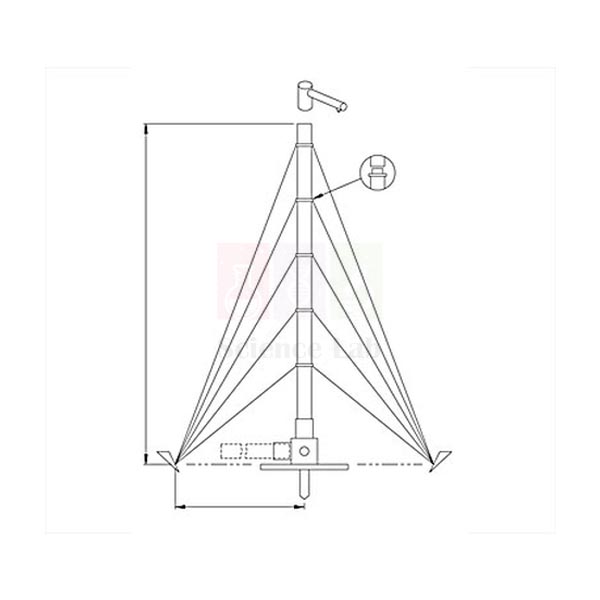
Portable Antenna Aluminium, 12m
Portable Antenna Aluminium, 12m (Product Code: SLE/CME/06) is a portable aluminium antenna mast kit used to raise radio antennas to 12 m at base stations, field camps and temporary communication sites. The four-section collapsible mast comes with rope guys, an erection kit, a ground plate, a masthead gibbet and a halyard pulley, and is rated for a 12 kg overhead load. It is supplied by Jain Scientific Equipments Pvt Ltd (ScienceLab), Ambala, India, which sources field communication hardware alongside laboratory equipment for college and institutional buyers.
Specifications
| Parameter | Detail |
|---|---|
| Kit contents | Four-section collapsible mast, rope guys, erection kit, ground plate, masthead gibbet and halyard pulley |
| Material | Aluminium |
| Height | 12 m, pulled out |
| Guy radius | 6 m |
| Wind loading | 12 kg overhead load, 144 km/h (90 mph) |
| Weight | 28.4 kg |
| Estimated weight and volume | 34.4 kg; 0.25 cbm (listed separately from the 28.4 kg weight; confirm packed figures in your quotation) |
| Product code | SLE/CME/06 |
| Supplied by | Jain Scientific Equipments Pvt Ltd (ScienceLab), Ambala, India |
What Is the 12m Portable Antenna Mast Used For?
The mast lifts a radio antenna to 12 m so that base stations, camps and temporary field sites get more radio range than an antenna fixed close to the ground. Its four sections collapse for transport, and the kit brings what is needed to raise it: rope guys, an erection kit, a ground plate, a masthead gibbet and a halyard pulley.
Plan a clear area around the base, because the guy ropes are anchored at a 6 m radius. The mast is rated for a 12 kg overhead load and wind of 144 km/h (90 mph), and it should be fully guyed before an antenna is hoisted and used. Always raise it well away from overhead power lines.
What to Specify When Ordering
- The model: Portable Antenna Aluminium, 12m (SLE/CME/06).
- The number of masts for your sites.
- The antenna you will fit, so its weight can be checked against the 12 kg overhead load.
- Site space for the 6 m guy radius and the expected wind exposure.
- The delivery location, so freight can be quoted on the listed 0.25 cbm volume.
Supplier
ScienceLab, the trading name of Jain Scientific Equipments Private Limited in Ambala, Haryana, supplies this aluminium mast kit as a sourced communication product. Buyers abroad can note that shipments move under Importer-Exporter Code AAECJ8618A, and Indian buyers can register us as a vendor with GSTIN 06AAECJ8618A1ZT. Visit our company profile for more about the business.
Related Cold Chain, Solar & Communication Equipment
Radio and power equipment used at the same sites:
- Radio Base Kit — fixed radio equipment that benefits from an elevated antenna.
- Base Station Kit — base station hardware for a permanent or semi-permanent radio room.
- Radio Mobile Kit — vehicle radio equipment that communicates with the base.
- 200 Wp Solar Power System, Complete — solar power for radio sites without a reliable grid.
- Tool Kit, f. ICT Technicians, 110 VAC Eqpt — tools for the technicians who install and maintain the radio set-up.
See the complete Cold Chain, Solar & Communication Equipment range.
Frequently Asked Questions
How tall is the Portable Antenna Aluminium, 12m?
The Portable Antenna Aluminium, 12m reaches a height of 12 m when pulled out. It is a four-section collapsible mast, so it packs down for transport and is extended section by section at the site.
What is included in the Portable Antenna Aluminium, 12m kit?
The Portable Antenna Aluminium, 12m kit includes the four-section collapsible mast, rope guys, an erection kit, a ground plate, a masthead gibbet and a halyard pulley. The antenna and radio equipment are not part of the mast kit.
How much space does the Portable Antenna Aluminium, 12m need?
The Portable Antenna Aluminium, 12m has a guy radius of 6 m, so you need a clear area of that radius around the base to anchor the rope guys, away from buildings, trees and overhead lines.
What wind and load can the Portable Antenna Aluminium, 12m take?
The wind loading of the Portable Antenna Aluminium, 12m is listed as a 12 kg overhead load at 144 km/h (90 mph). Check your antenna's weight against this figure and keep the mast fully guyed.
How heavy is the Portable Antenna Aluminium, 12m?
The Portable Antenna Aluminium, 12m weighs 28.4 kg. Our listing also gives an estimated weight of 34.4 kg and an estimated volume of 0.25 cbm, which you can use when planning transport and freight.
Who supplies the Portable Antenna Aluminium, 12m?
Jain Scientific Equipments Pvt Ltd (ScienceLab), Ambala, Haryana, India supplies the Portable Antenna Aluminium, 12m. The company sources the mast kit for its communication range and handles quotations and dispatch for buyers in India and international markets.
Request a Quote
To get a price for the Portable Antenna Aluminium, 12m, send the quantity and delivery location through the contact page, or add it to the enquiry cart with the radio and power equipment for the same site.
Last updated: 24 September 2026
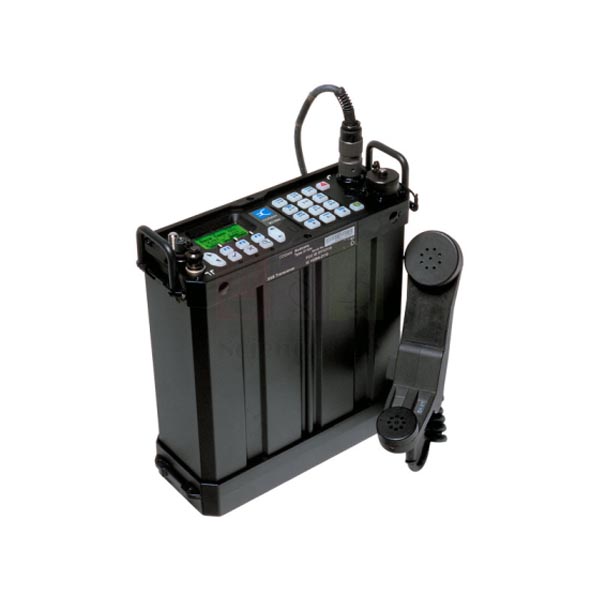
Radio Manpack Kit
Radio Manpack Kit (Product Code: SLE/CME/07) is a portable HF radio used to keep field teams on foot in voice and short-message contact with their base over long distances where there is no mobile network. Relief and project teams carry it for its 25 W PEP output on 1.6–30 MHz, 400 channels and integrated automatic tuner in an ultra-light, ruggedised and immersible set. It is supplied by Jain Scientific Equipments Pvt Ltd (ScienceLab), Ambala, India, a laboratory equipment supplier in India with a field communication range.
Specifications
| Parameter | Detail |
|---|---|
| Frequency range | 1.6–30 MHz (receive 250 kHz–30 MHz) |
| Channels | 400 |
| Output power | 25 W (PEP) |
| Power supply | 12 V DC |
| Modes | USB / LSB / AM |
| Antenna tuning | Integrated automatic tuner |
| Construction | Ultra-light weight; fully ruggedised and immersible |
| Calling functions | Selective call, group call, emergency call, phone call, message call (64 characters) |
| Link establishment | Integrated ALE (CALM) |
| Positioning | GPS enabled |
| Diagnostics and testing | Local and remote diagnostics; channel test calling |
| Product code | SLE/CME/07 |
| Supplied by | Jain Scientific Equipments Pvt Ltd (ScienceLab), Ambala, India |
What Is the Radio Manpack Kit Used For?
A manpack HF radio lets a small team stay in touch with a base station, vehicles or other teams while it moves through areas that have no mobile coverage. Signals on 1.6–30 MHz can travel well beyond line of sight, which is why HF remains the usual choice for long-range field links. The USB, LSB and AM modes cover the common HF voice modes, and the wider 250 kHz–30 MHz receive range lets operators listen outside the transmit band.
Integrated ALE (CALM) sets up a link on a working channel automatically, so operators do not have to search channels by hand. Selective, group and emergency calls reach the right people, while message calls carry short texts of up to 64 characters. Before each deployment, run the local diagnostics and a channel test call from every set.
What to Specify When Ordering
- The number of Radio Manpack Kit sets and the teams that will carry them.
- How you will provide 12 V DC power in the field, including batteries and recharging.
- The other HF stations in your network, so ALE (CALM) and selective calling can be matched.
- The frequencies licensed to your organisation, so channel set-up can be discussed.
Supplier
Jain Scientific Equipments Private Limited trades as ScienceLab and supplies the Radio Manpack Kit from Ambala, Haryana, as a sourced item in its communication equipment range. Enquiries are answered from Ambala, and orders are dispatched to buyers in India and international markets. Read more about the business on our company profile.
Related Cold Chain, Solar & Communication Equipment
Other items for the same HF radio network:
- Radio Base Kit — HF base station that field teams call back to.
- Radio Mobile Kit — HF radio for the vehicles that support teams on foot.
- Portable Antenna Aluminium, 12m — mast to raise the base antenna for better range.
- Battery, Gel-Cell, 12V/115Ah — 12 V storage battery for a radio room power supply.
- 200 Wp Solar Power System, Complete — solar power where there is no reliable grid.
Browse the full Cold Chain, Solar & Communication Equipment category.
Frequently Asked Questions
What frequency range does the Radio Manpack Kit cover?
The Radio Manpack Kit transmits on 1.6–30 MHz in the HF band and receives from 250 kHz to 30 MHz. It has 400 channels and works in USB, LSB and AM modes for long-distance voice links between field teams and base stations.
What power does the Radio Manpack Kit need?
The Radio Manpack Kit runs on 12 V DC and gives 25 W PEP output. Plan a 12 V battery and a way to recharge it in the field, and ask us which power items can be quoted together with the radio.
Does the Radio Manpack Kit have ALE and GPS?
Yes. The Radio Manpack Kit has integrated ALE (CALM) for automatic link establishment and is GPS enabled. It also offers local and remote diagnostics and channel test calling, which help operators confirm a working link before they need it.
Which call types can the Radio Manpack Kit make?
The Radio Manpack Kit supports selective call, group call, emergency call, phone call and message call, with messages of up to 64 characters. Phone calls depend on a telephone link in your radio network, so describe your network set-up when you enquire.
Is a licence needed to operate the Radio Manpack Kit?
In most countries, yes. HF transmitters such as the Radio Manpack Kit normally operate on frequencies assigned by the national telecom authority, and import permits may also apply. Check the rules in the country of use before ordering; we can share the technical details your application needs.
Who supplies the Radio Manpack Kit?
Jain Scientific Equipments Pvt Ltd (ScienceLab), Ambala, Haryana, India supplies the Radio Manpack Kit as a sourced communication product. Send the number of sets, your power arrangement and the delivery country to receive a quotation for India or international markets.
Request a Quote
For a price on the Radio Manpack Kit, share the number of sets and the destination on our contact page, or add it to the enquiry cart together with the base and vehicle radios for the same network.
Last updated: 24 September 2026
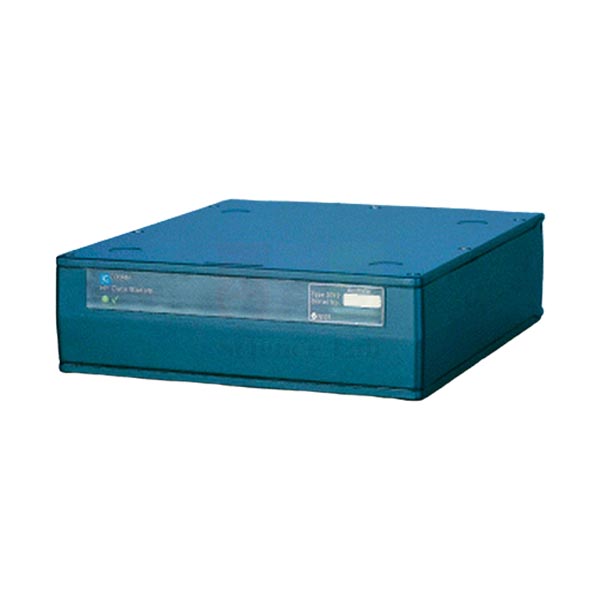
Data Modem
Data Modem (Product Code: SLE/CME/08) is a radio data modem used to send computer data over a connected radio transceiver, giving field offices a data link where no internet or telephone line exists. Radio operators connect it to the transceiver through a 9600 baud RS232 interface, and it moves data with a selective repeat ARQ protocol and in-built compression at up to 6000 bps. It is supplied by Jain Scientific Equipments Pvt Ltd (ScienceLab), Ambala, India, which also offers electronic lab instruments in India.
Specifications
| Parameter | Detail |
|---|---|
| Data mode | Selective repeat ARQ protocol |
| Modulation | QPSK |
| Link establishment | Proprietary link establishment, 80 baud CHIRP |
| Data compression | In-built |
| Data transfer rate | Up to 6000 bps (compressed); up to 1475 bps (uncompressed) |
| Transceiver interface | 9600 baud RS232; TR.29-based AT port |
| Primary power | 13.5 V DC nominal (250 mA max); 9–16 V DC operating range |
| Operating temperature | 0 °C to 55 °C |
| Size | 210 mm W × 240 mm D × 65 mm H (including rear connectors) |
| Weight | 1.8 kg |
| Product code | SLE/CME/08 |
| Supplied by | Jain Scientific Equipments Pvt Ltd (ScienceLab), Ambala, India |
What Is the Data Modem Used For?
The Data Modem turns a voice radio into a data link. It sits between your data equipment and the transceiver, converting digital data into a signal the radio can carry and back again at the far station, so remote offices can exchange reports and records without internet or telephone lines.
Radio channels are noisy, so the selective repeat ARQ protocol asks for only the damaged blocks to be sent again rather than the whole transfer. In-built compression lifts throughput to as much as 6000 bps, compared with 1475 bps uncompressed, and the 9–16 V DC input range suits the 12 V battery systems common at radio sites. Because link set-up uses a proprietary 80 baud CHIRP method, plan compatible modems at every station in the link.
What to Specify When Ordering
- The number of stations in the data link, with one modem at each end.
- The make and model of the transceiver each modem will connect to over RS232.
- The DC supply at each station, within the 9–16 V DC operating range.
- Site conditions, since the listed operating temperature is 0 °C to 55 °C.
Supplier
ScienceLab is the trading name of Jain Scientific Equipments Private Limited, Ambala, which supplies this data modem as a sourced product within its radio communication range. Project buyers can combine modems, radios and power equipment in one enquiry, and we quote for delivery in India and international markets. Company details are on our profile page.
Related Cold Chain, Solar & Communication Equipment
Radios and power items that work alongside a data modem:
- Radio Mobile Kit — HF vehicle radio listed as data ready for a data modem.
- Radio Base Kit — HF base station also listed as data ready for modem interconnection.
- Battery, Gel-Cell, 12V/115Ah — 12 V battery within the modem's DC input range.
- 200 Wp Solar Power System, Complete — off-grid power for a radio data station.
- Tool Kit, f. ICT Technicians, 220 VAC Eqpt — tools for cabling and installing the station.
See every item in Cold Chain, Solar & Communication Equipment.
Frequently Asked Questions
How fast is the Data Modem?
The Data Modem transfers data at up to 6000 bps with its in-built compression and up to 1475 bps uncompressed. Actual throughput over the air also depends on radio conditions and on how well the data compresses.
How does the Data Modem connect to a radio?
The Data Modem connects to the transceiver through a 9600 baud RS232 interface and also has a TR.29-based AT port. Tell us the radio model you use so the connection can be checked before we quote.
What power supply does the Data Modem need?
The Data Modem needs 13.5 V DC nominal and draws 250 mA at most, with an operating range of 9–16 V DC. That range lets it share the DC supply used by many radio installations.
What are the size and weight of the Data Modem?
The Data Modem measures 210 mm wide, 240 mm deep and 65 mm high including the rear connectors, and weighs 1.8 kg. It is rated for operation from 0 °C to 55 °C.
Which protocol does the Data Modem use?
The Data Modem uses a selective repeat ARQ protocol with QPSK modulation and a proprietary link establishment method based on an 80 baud CHIRP. Because the link method is proprietary, plan compatible modems at each station and ask us about your existing equipment.
Who supplies the Data Modem?
Jain Scientific Equipments Pvt Ltd (ScienceLab) in Ambala, India supplies the Data Modem as a sourced radio accessory. Quotations cover buyers in India and international markets; include the station count and radio models in your enquiry.
Request a Quote
To price the Data Modem, send the number of stations and your transceiver models through our contact page, or place it in the enquiry cart with the radios it will serve.
Last updated: 24 September 2026
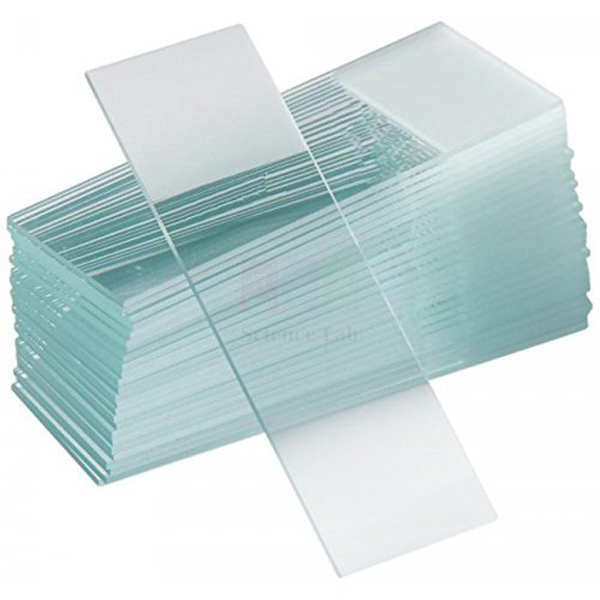
Cover Glass Slide
Cover Glass Slide (Product Code: SLE/CL/26) is a square microscopy slide cover in colourless glass, 22x22mm and 0.17mm thick, placed over a specimen on a microscope slide to flatten it and protect both the sample and the objective lens. The covers are clinical grade, washed and polished, free from nicks and scratches, and packed fibre-free in a box of 100. Pathology, haematology and microbiology benches in clinics and hospitals use them daily, as do biology practical classes. They are supplied by Jain Scientific Equipments Pvt Ltd (ScienceLab), Ambala, a lab consumables supplier India-wide for clinical and teaching laboratories.
Specifications
| Parameter | Detail |
|---|---|
| Material | Colourless glass |
| Type | Microscopy slide cover |
| Size | 22x22mm |
| Thickness | 0.17mm |
| Grade and finish | Clinical grade, non-corrosive, clean, washed and polished |
| Surface quality | Free from nicks and scratches |
| Packing | Packed fibre-free; box of 100 slide covers |
| Intended use | Cover for microscopy slides |
Typical Use
A cover glass turns a drop of liquid on a slide into a thin, even layer that the microscope can focus on. Technicians use it on wet mounts such as urine sediment, stool or skin scraping preparations, and on stained smears that are mounted in a medium for longer keeping. The 0.17mm thickness matters because high-power objectives are designed to look through a thin cover of this kind; a thicker or uneven cover makes fine detail harder to bring into focus.
To avoid air bubbles, touch one edge of the cover to the liquid and lower it slowly at an angle. Hold covers by their edges or with fine forceps so fingerprints do not end up in the field of view, and keep the box closed in a dry place so the glass stays clean and the covers do not stick together. Colleges that buy a compound microscope in India for their biology or pathology labs usually order cover glasses at the same time, because a class can use a box quickly.
Supplier
Jain Scientific Equipments Private Limited trades as ScienceLab from Ambala, Haryana, and supplies consumables like these cover glasses alongside the microscopes, slides and staining equipment it offers to clinical and educational laboratories. Ordering them together keeps a microscopy bench supplied from a single source. Visit the ScienceLab profile for more about the company.
Related Laboratory Equipment
These items complete a microscopy slide preparation bench:
- Plain Slides — the glass slides that the covers are placed on.
- Microscope Slide Cover Forceps — for picking up and lowering covers without fingerprints.
- Monocular Microscope 1000x, LED light — for examining covered preparations at high magnification.
- Slide Drying Rack — lets stained smears dry before they are mounted and covered.
- Storage Box, 100 Slides — for filing finished slides safely.
More diagnostic consumables are listed in the Clinical Laboratory category.
Frequently Asked Questions
What size and thickness are these cover glasses?
Each cover is 22x22mm and 0.17mm thick, made of colourless glass.
How many covers are in one box?
One box holds 100 slide covers, packed fibre-free so they arrive clean.
Can I use them with an oil immersion objective?
Yes, the thin 0.17mm cover suits high-power work; place the immersion oil on top of the cover glass, not beneath it, and wipe the objective after use.
Are cover glasses reusable?
They are treated as consumables. Thin glass breaks easily during cleaning, and covers used on clinical samples should be discarded as laboratory waste.
How should the boxes be stored?
Keep them closed in a dry, dust-free place. Humidity can make covers stick together or leave a haze on the glass.
Can you quote for large quantities?
Yes. Hospitals, colleges and distributors in India and international markets can request a bulk quotation through our contact page.
Request a Quote
Tell us how many boxes you need using the contact form, or add this item to the enquiry cart with your slides and microscopes.
Last updated: 24 September 2026
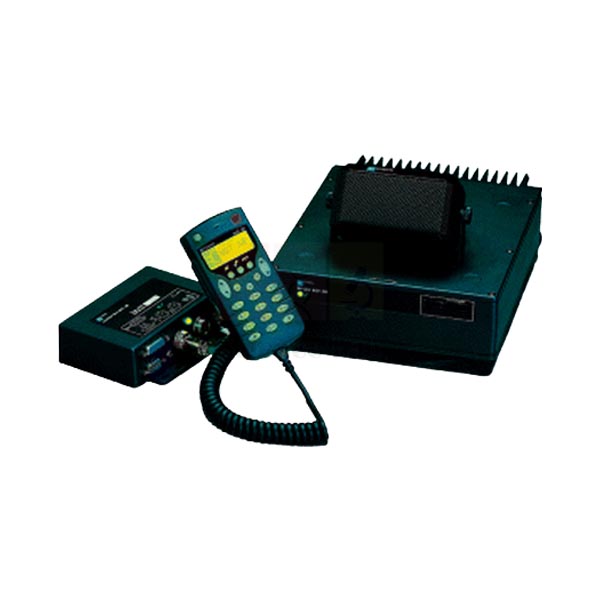
Radio Mobile Kit
Radio Mobile Kit (Product Code: SLE/CME/09) is an HF mobile station radio kit used to install long-range radio communication in vehicles working in remote areas. Fleet and field operations teams use it for its 125 W PEP output on 1.6–30 MHz with 400 channels, and it is data ready, with additional cooling fans for connecting a data modem. It is supplied by Jain Scientific Equipments Pvt Ltd (ScienceLab), Ambala, India, a laboratory equipment exporter from India that also sources vehicle radio kits.
Specifications
| Parameter | Detail |
|---|---|
| Frequency range | 1.6–30 MHz |
| Output power | 125 W PEP |
| Channels | 400 |
| Modes | USB/LSB, AM, AFSK |
| Scanning | Yes |
| Data capability | Data ready, with additional cooling fans for interconnect with a data modem |
| Calling | Standard 4/6-digit selective calling; emergency calling |
| Link establishment | ALE/CALM |
| Positioning | GPS enabled |
| Telephone interconnect | Optional |
| Kit contents | Radio with handset, RF unit, junction box, power cables with fuse, mobile antenna with two whips, coaxial cable, control cable |
| Weight | 4 kg |
| Volume | 0.2 cbm |
| Product code | SLE/CME/09 |
| Supplied by | Jain Scientific Equipments Pvt Ltd (ScienceLab), Ambala, India |
What Is the Radio Mobile Kit Used For?
Vehicles that travel between towns, camps and project sites often drive out of mobile coverage, and an HF mobile station keeps drivers and staff in contact with their base for the whole journey. HF on 1.6–30 MHz covers far longer distances than line-of-sight VHF, while scanning, ALE/CALM and 4/6-digit selective calling make it simple for a base operator to reach one particular vehicle.
The installation brings together the radio with handset, the RF unit, the junction box and the control cable, with fused power cables for the vehicle supply and a mobile antenna with two whips. Have a trained technician plan where each part sits and keep the fuses in circuit. When data is needed, the radio is data ready, with additional cooling fans for use with a connected data modem.
What to Specify When Ordering
- The number of vehicles to equip.
- Whether you need the optional telephone interconnect.
- Whether a data modem will be connected to the radio.
- The 4-digit or 6-digit selective calling format used in your network.
- The vehicle types, so antenna mounting can be planned.
Supplier
Jain Scientific Equipments Private Limited, which trades as ScienceLab, supplies the Radio Mobile Kit from Ambala, Haryana, as a sourced HF radio product. For vendor registration, institutional buyers can use GSTIN 06AAECJ8618A1ZT and LEI 3358004HRD1JIVXKYX49. See our company profile for more about the company.
Related Cold Chain, Solar & Communication Equipment
Equipment that completes a vehicle HF network:
- Data Modem — adds data transfer to this data-ready radio.
- Radio Base Kit — base station that the vehicles report to.
- Radio Manpack Kit — HF radio for teams working away from the vehicle.
- Tool Kit, f. ICT Technicians, 110 VAC Eqpt — tools for fitting and servicing vehicle radios.
View the whole Cold Chain, Solar & Communication Equipment range.
Frequently Asked Questions
What is included in the Radio Mobile Kit?
The Radio Mobile Kit includes the radio with handset, an RF unit, a junction box, power cables with fuse, a mobile antenna with two whips, coaxial cable and a control cable, so the main parts of a vehicle HF installation arrive together.
What output power and frequency range does the Radio Mobile Kit have?
The Radio Mobile Kit delivers 125 W PEP across 1.6–30 MHz, with 400 channels, scanning and USB/LSB, AM and AFSK modes. This suits long-range HF contact between moving vehicles and a base station.
Can the Radio Mobile Kit send data?
Yes, the Radio Mobile Kit is data ready, with additional cooling fans for interconnection with a data modem. A modem is not listed in the kit contents, so add a data modem to your enquiry if you need data transfer.
Does the Radio Mobile Kit connect to telephones?
Telephone interconnect is optional for the Radio Mobile Kit. State in your enquiry whether you need it, together with the 4/6-digit selective calling format your network already uses, so the quotation matches your set-up.
What are the shipping weight and volume of the Radio Mobile Kit?
The Radio Mobile Kit is listed at 4 kg with a volume of 0.2 cbm. Use these figures when planning freight, and confirm the final packed details in your quotation.
Who supplies the Radio Mobile Kit?
Jain Scientific Equipments Pvt Ltd (ScienceLab), Ambala, India supplies the Radio Mobile Kit as a sourced communication product. Quotations are prepared for fleet and project buyers in India and international markets; send the number of vehicles with your enquiry.
Request a Quote
Send your vehicle count, calling format and any data or telephone needs through the contact page, or add the Radio Mobile Kit to the enquiry cart to request a price.
Last updated: 24 September 2026
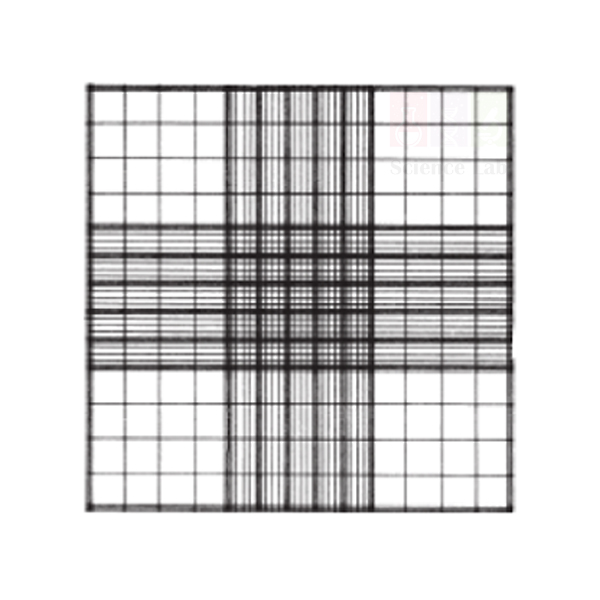
Counting Chamber Neubauer
Counting Chamber Neubauer (Product Code: SLE/CL/27) is a glass counting chamber with an improved Neubauer double grid and a chamber depth of 0.1mm, used to count cells in a known volume of diluted fluid under a microscope. Clinical laboratories with basic diagnostic activity use it for manual blood cell counts, and college laboratories use the same chamber to count yeast or cultured cells in practical work. It is made by Jain Scientific Equipments Pvt Ltd (ScienceLab), Ambala, as a dependable haemocytometer for Indian labs that still rely on manual counting or need a back-up to automated analysers.
Specifications
| Parameter | Detail |
|---|---|
| Material | Glass |
| Ruling | Double grid, improved Neubauer |
| Chamber depth | 0.1mm |
| Counting area | Approximately 9 mm² (ruled grid) |
| Intended use | Cell counting |
| Suitable for | Clinical laboratories with basic diagnostic activity |
Typical Use
The sample is first diluted in a suitable diluting fluid, a flat cover glass is placed across the raised supports, and the chamber is filled from the edge by capillary action. Once the cells settle, the technician counts them in defined squares of the grid under the microscope. Because the ruled area and the 0.1mm depth fix the volume above each square, the count can be converted into cells per unit volume by allowing for the squares counted and the dilution used. The double grid lets two separate fillings, or duplicate counts of one sample, be read on the same chamber.
Accurate counting depends on care: mix the diluted sample well before loading, avoid overfilling so liquid does not spill into the moats, and count cells touching the boundary lines on two sides only. Clean the chamber straight after use with distilled water and a soft lens tissue, and never use abrasive cleaners that could scratch the ruled surface. Laboratories in India choosing a cell counting hemocytometer for training benches often keep several chambers so students can practise in parallel.
Manufacturer
The chamber is produced by Jain Scientific Equipments Private Limited, which does business as ScienceLab from its base in Ambala, Haryana, and makes equipment for diagnostic, college and school laboratories. Buyers equipping a haematology bench can source the chamber together with microscopes, pipettors and counters. More information is available on the company profile.
Related Clinical Laboratory Products
These products are used with the counting chamber during a manual cell count:
- Binocular Biological Microscope — for viewing the grid and the cells during counting.
- Manual Differential Cell Counter — keeps a running tally as squares are counted.
- Pipettor, Variable Volume — for preparing accurate sample dilutions before loading.
- Blood Specimen Rotator — keeps blood samples evenly mixed before they are diluted.
- Transfer Pipette 3ml — a fine-tip disposable pipette for moving diluted samples.
See the full Clinical Laboratory range for more haematology equipment.
Frequently Asked Questions
What ruling and depth does this chamber have?
It carries an improved Neubauer double grid with a chamber depth of 0.1mm, made in glass.
What is the advantage of a double grid?
You can load two samples, or the same sample twice, and compare counts on one chamber. Close agreement between the two sides gives more confidence in the result.
Is a cover glass included?
The listing does not say. Counting chambers need a flat cover glass made for this purpose, as a very thin cover can bend and change the depth. Ask us via the contact page what is supplied with your order.
How is the cell concentration calculated?
Divide the number of cells counted by the volume of the squares counted (their area multiplied by the chamber depth), then multiply by the dilution factor. Your laboratory's procedure defines which squares to count for each cell type.
Can you provide a calibration certificate?
Please discuss certificate requirements with us before ordering, and we will confirm what documentation can be offered.
Do you supply chambers in quantity for colleges and hospitals?
Yes. Bulk and institutional orders are quoted for customers in India and international markets.
Request a Quote
Send your quantity and delivery location through the contact page, or add the chamber to the enquiry cart for a combined quotation.
Last updated: 24 September 2026
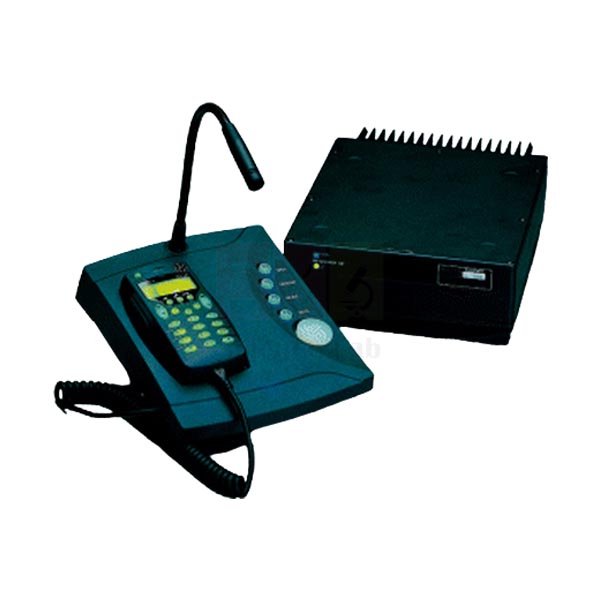
Radio Base Kit
Radio Base Kit (Product Code: SLE/CME/010) is an HF base station radio kit used to set up a fixed radio room that keeps in contact with vehicles and field teams over long distances. Offices, camps and district headquarters use it as the control point of an HF network; alongside the 125 W PEP radio, the kit includes a PSU, desk console, base antenna and lightning arrestor. It is supplied by Jain Scientific Equipments Pvt Ltd (ScienceLab), Ambala, India, a lab equipment distributor in India that also sources HF radios.
Specifications
| Parameter | Detail |
|---|---|
| Kit type | HF base station radio kit |
| Frequency range | 1.6–30 MHz |
| Output power | 125 W PEP |
| Channels | 400 |
| Modes | USB/LSB, AM, AFSK; scanning |
| Data capability | Data ready, with additional cooling fans for interconnect with a data modem |
| Calling | Standard 4/6-digit selective calling; emergency calling |
| Link establishment | ALE/CALM |
| Positioning | GPS enabled |
| Telephone interconnect | Optional |
| Kit contents | Radio with handset, RF unit, PSU, power cables with fuse, desk console, base antenna, coaxial cable, lightning arrestor |
| Weight | 6.6 kg |
| Volume | 0.2 m³ |
| Product code | SLE/CME/010 |
| Supplied by | Jain Scientific Equipments Pvt Ltd (ScienceLab), Ambala, India |
What Is the Radio Base Kit Used For?
An HF base station is the fixed hub of a radio network. From the desk console, an operator calls vehicles, manpack teams and other base stations, records their reports and passes on instructions. Selective calling with 4-digit or 6-digit addresses lets the operator ring one station without disturbing the rest, and emergency calls from the field are received at the base.
Site the base antenna as high and clear as practical, and fit the lightning arrestor in the coaxial cable run with a proper earth connection to protect the radio room from surges picked up outdoors. The kit's own PSU powers the radio at the desk, so confirm your local mains supply when ordering. Because the radio is data ready, a data modem can be added when the network needs to send data.
What to Specify When Ordering
- The number of base stations and where they will be installed.
- Your local mains supply, so the PSU can be confirmed.
- The distance from the radio desk to the antenna position, so the cable run can be checked.
- Whether an antenna mast is needed at the site.
- Whether you need the optional telephone interconnect or a data modem.
Supplier
ScienceLab, the brand of Jain Scientific Equipments Private Limited in Ambala, Haryana, supplies the Radio Base Kit as a sourced product for organisations setting up HF radio rooms. We prepare quotations for India and international markets and can group the base kit with vehicle and manpack radios in one offer. Learn more on our company profile.
Related Cold Chain, Solar & Communication Equipment
Items that connect to or support an HF base station:
- Portable Antenna Aluminium, 12m — mast that raises the base antenna for a clearer radio path.
- Radio Mobile Kit — HF vehicle station that reports to the base.
- Radio Manpack Kit — portable HF set for teams on foot.
- Data Modem — adds a data link to the data-ready base radio.
- 200 Wp Solar Power System, Complete — solar power for sites with an unreliable grid; ask us about sizing.
Explore the Cold Chain, Solar & Communication Equipment category.
Frequently Asked Questions
What is included in the Radio Base Kit?
The Radio Base Kit includes the radio with handset, an RF unit, a PSU, power cables with fuse, a desk console, a base antenna, coaxial cable and a lightning arrestor, covering the main parts of a fixed HF radio room.
What are the main radio specifications of the Radio Base Kit?
The Radio Base Kit covers 1.6–30 MHz with 125 W PEP output and 400 channels, in USB/LSB, AM and AFSK modes with scanning. It also offers 4/6-digit selective calling, emergency calling, ALE/CALM and GPS.
Why does the Radio Base Kit include a lightning arrestor?
The lightning arrestor in the Radio Base Kit is fitted in the antenna cable run to help protect the radio from surges picked up by an outdoor antenna. It needs a sound earth connection, so plan earthing at the site before installation.
Can the Radio Base Kit be used for data or telephone calls?
Yes. The Radio Base Kit is data ready, with additional cooling fans for interconnection with a data modem, and telephone interconnect is available as an option. Mention both needs in your enquiry so they are included in the quotation.
How heavy is the Radio Base Kit?
The Radio Base Kit is listed at 6.6 kg with a volume of 0.2 m³. These figures help with freight planning, and the final packed weight and size are confirmed in the quotation.
Who supplies the Radio Base Kit?
Jain Scientific Equipments Pvt Ltd (ScienceLab), Ambala, Haryana, India supplies the Radio Base Kit as a sourced HF radio product. Quotations are available for buyers in India and international markets, for the base kit alone or with matching vehicle and manpack radios.
Request a Quote
Ask for a price on the Radio Base Kit through our contact page with the number of stations and your site details, or add it to the enquiry cart.
Last updated: 24 September 2026