- Physics Lab Equipment
- Chemistry Lab Equipment
- Biology Lab Equipment
- Anatomical Lab Equipment
- Learning
- Educational Lab Equipment
- Magnets
- Agriculture
- Astronomy
- Earth Science
- Geography Lab Equipment
- Safety Lab Coat
- Laboratory
- Meteorological
- Electricity & Magnetism
- Heat
- School Lab Equipment
- Lab Glassware
- Science Lab Equipment
- Tvet Lab Equipment
- Robotics Kits Supplier and Manufacturer for Schools India
- Math Lab Equipment Manufacturers and Exporters in Ambala
- STEM Kits Manufacturers and Supplier India
- Engineering Lab Equipment
- Hospital Lab Equipment
- Water, Sanitation & Hygiene Supplies
- Cold Chain, Solar & Communication Equipment
- Nutrition
Last updated: 22 October 2026
Quick Answer
Jain Scientific Equipments Pvt Ltd (ScienceLab), Ambala, Haryana, lists 80 items of maths lab equipment and mathematics lab kits in India for primary, middle and secondary schools, arranged in 11 groups from abacuses, place value boards and fraction sets to geoboards, geometric solids, algebra tiles, clocks and probability kits. 68 of the items are manufactured by ScienceLab at its factory at Saha, Ambala, and 12 are supplied by ScienceLab. Each item has its own product page, linked from the product listing under this description. The company supplies buyers in India and in 110 countries.
Quick links: Request a quotation · Jump to specifications by group · Open your enquiry cart
Explore the Maths Lab Equipment Range
| Range | Items | What it covers |
|---|---|---|
| Maths kits | 3 | The Maths Kit Junior with 24 types of manipulatives, the Senior Maths Kit with 20 types for advanced concepts and the Upper Primary Maths Kit. |
| Counting, place value and operations | 15 | Desk and upright abacuses, a decimal abacus, a U-shaped place value abacus, a place value mat with stacking counters, Base Ten Blocks, division, factor and multiplication boards, ascending and descending card games, a 1 to 25 number mat, a Roman numbers kit and simple and scientific calculators. |
| Cubes, counters and sorting | 6 | Beads with laces, interlocking and linking cubes, stacking counters, foldable sorting rings and attribute blocks for sorting, patterns and early number work. |
| Fractions | 3 | Designer Fraction triangles, a set of six fraction dice and a non-magnetic foam fraction disc with 55 proportional pieces. |
| Algebra and integers | 6 | Algebra tiles, an algebra kit for polynomials in two variables, a student identity kit, an integer board game, two-colour integer counters and an algebra bingo game. |
| Plane shapes, geoboards and tangrams | 15 | Isometric, assorted and double-sided geoboards, tangrams and a tangram class pack, plastic and Brights pattern blocks, pentominoes, 2D shapes, colour tiles, a shapes template set, Geo Reflector mirrors, geometry sticks, Anglegs and a geometric shapes building set. |
| Circles, angles, coordinates and trigonometry | 8 | A circle kit, a parabola construction plate, a trigonometry board, a Junior Pythagoras Theorem set, a theodolite model, coordinate and graph boards and an advanced geometry bingo game. |
| Solids and mensuration | 7 | Colour, transparent and hardwood geometric solids, Relational GeoSolids, folding geometric shapes, a cone and cylinder volume set and plastic moulds. |
| Drawing instruments | 3 | A five-piece geometrical instruments set for whiteboards and chalkboards, a medium geometry set and a T-square. |
| Measurement, time and money | 11 | A mathematical balance, simple beam, rocker bucket and dish balances, a half metre scale and a folding meter stick, a geared student clock and a dummy clock, a time and work kit, dummy coins and dummy currency notes. |
| Probability and dice | 3 | A probability kit with board, spinner, dice and coins, plastic dice and transparent acrylic dice. |
| Total | 80 | All items listed in the Maths Lab Equipment range |
Maths Lab Equipment Specifications
Key specifications below are taken from each product's own page; open a product for its full specifications and product code.
Maths kits (3)
| Product | Key specification |
|---|---|
| Maths Kit Junior | Manipulative types: 24; Designed for: Teachers laying the foundation of mathematics; items correlate with the curriculum |
| Senior Maths Kit | Manipulative types: 20; Group teaching: Manipulatives sized for teaching a group |
| Upper Primary Maths Kit | Level: Upper primary classes; Users: Primary schools and institutions |
Counting, place value and operations (15)
| Product | Key specification |
|---|---|
| Abacus Upright | Working principle: Beads slide along a series of wires or rods set in a frame; Place value: Rods represent the decimal places |
| Base Ten Blocks | Rod (long): Equal to 10 units; Flat: Equal to 100 units; Cube: 10 × 10 × 10 cm |
| Decimal Abacus | Spikes: 7; Beads: 70; Material: Wood |
| Descending Card Game | Size: 29 × 25 cm; Finish: Printed; Topic: Arranging numbers in descending order |
| Game of Place Value | Wires: 6; Beads: 9 per wire, 54 in total; Size: 20 cm × 7 cm |
| Number Mat | Number range: 1 to 25; Format: Mat for children to hop on as a number line |
| Place Value Mat with Stacking Counters | Number range: 1 to 99,999; Stacking counters: 125 counters in 5 colours, colour coded; snap together vertically |
| Roman Numbers Kit | Teacher demonstration tiles: 14 pcs, big, magnetic; Student activity tiles: 270 pcs, small |
A further 7 items in this group appear in the full product listing below this description.
Cubes, counters and sorting (6)
| Product | Key specification |
|---|---|
| Attribute Blocks | Set composition: 5 shapes in 3 colours; Attributes: Colour, shape, size (big/small) and thickness (thick/thin) |
| Beads – Bobbles & Laces | Bead material: Tough plastic; Stringing: Beads threaded on colourful strings (laces) |
| Interlocking Cubes | Cube size: 2 cm (L) x 2 cm (W) x 2 cm (H); Colours: Variety of colours; Joining: Interlocking; cubes link together |
| Linking Cubes | Handling: Easy to connect, stack and build; Also explores: Numbers, area, volume and geometry; Type: Linking (connecting) cubes |
| Sorting Ring | Material: Plastic; Form: Foldable circle rings; Class levels: Elementary to higher secondary |
| Stacking Counters | Colours: 5; Counter diameter: 2 cm (20 mm); Material: Plastic |
Fractions (3)
| Product | Key specification |
|---|---|
| Designer Fraction | Pieces: 72 equilateral triangles; Colours: 3 different colours; Type: Visual, hands-on fraction manipulative |
| Fraction Dice | Dice per set: 6; Die size: 5/8 inch (about 16 mm); Fractions covered: 1/2, 1/3, 1/4, 1/5, 1/6, 1/8 and 1/12 |
| Non Magnetic Fraction Disc | Number of pieces: 55 proportional pieces; Material: Soft foam; Magnetic: No (non-magnetic) |
Algebra and integers (6)
| Product | Key specification |
|---|---|
| Algebra | Question set: 50 separate algebra questions; Materials: Enough for 30 students |
| Algebra Kit | Contents: Labelled algebra tiles; Topic: Polynomials in two variables |
| Algebra Tiles | Tile types: Three; Colours: Two for each tile type — typically red for negative and blue for positive |
| Integer Board Game | Supplied with: Dice and counters; Topic: Addition and subtraction of integers; Play: Innumerable combinations |
| Integer Counters | Diameter: 30 mm; Colours: Red on one side, yellow on the other side; Material: Plastic |
| Student Identity Kit | Identities covered: (a+b)2, (a−b)2 and a2−b2; Learning approach: Students generalise and derive each formula on their own |
Plane shapes, geoboards and tangrams (15)
| Product | Key specification |
|---|---|
| 5 Assorted Geoboards | Pin arrangements: Two different arrangements, including 5 x 5 pin; Board type: Double-sided rainbow geoboards |
| 6-Color Tangrams | Tangrams per set: 30; Colours: Six assorted: blue, red, green, yellow, orange, purple; Storage: Sturdy plastic bucket |
| Brights Tangrams Class Pack | Pieces: 210 shaped pieces; Tangrams: Enough to make 30 tangrams (set of 30); Colours: 6 vibrant colours |
| Double Sided Geoboard | Side one: 11 x 11 pin grid; Side two: 24-pin circular pattern; Material: Plastic |
| Geo Reflector Mirror | Set quantity: 24 Geo Reflectors; Surface: See-through plastic with special reflective qualities; Included: Teaching guide |
| Geometric Shapes Building Set | Sticks: 90, in 3 sizes: 2 1/4 in, 3 1/2 in and 5 1/4 in; Curves: 32, for making circles and cylinders |
| Plastic Pattern Blocks | Number of blocks: 100; Shapes and colours: 6 shapes, 6 colours; Largest shape: 2 in wide |
| Primary Shapes Template Set | Templates: 5 durable, labelled templates; Rectangle template size: 7.5 in (L) x 4.5 in (H) |
A further 7 items in this group appear in the full product listing below this description.
Circles, angles, coordinates and trigonometry (8)
| Product | Key specification |
|---|---|
| Advanced Geometry | Questions: 50 separate advanced geometry questions; Class size: Contains enough materials for 30 students |
| Circle Kit | Disc diameters: 15 cm, 10 cm and 5 cm; Contents: Set of three circular discs of different radius; Material: Foam |
| Construction of Parabola | Slots: 24 equally marked slots on each side; Size: 19 cm x 20 cm; Material: Plastic |
| Coordinate Board | Graph type: Four-quadrant coordinate graph; Supplied with: Colour counters and dice; Format: Group board game |
| Graph Board | Surface: Write-and-wipe; Format: Enlarged version of a graph; Topic: Coordinate geometry — finding and plotting points |
| Junior Pythagoras Theorem | Triangle: One plastic right-angle triangle, measure (3-4) inch; Grid: Square-inch grid printed on each square |
| Theodolite Model | Telescope: Movable, rotating telescope; Axes: Horizontal and vertical; Angle scales: Graduated circles on both axes |
| Trigonometry Board | Board size: 26 × 26 cm; Accessories: Geo sticks, connectors, pins, rubber bands and other accessories |
Solids and mensuration (7)
| Product | Key specification |
|---|---|
| 3D Colour Solid Set | Length: 10 cm; Finish: Colourful solids; Early years use: Introducing different geometric shapes to pre-schoolers |
| Folding Geometric Shapes | Pieces: 32-piece set, colourful; Set contents: Folding Geometric Shapes and Overhead Folding Geometric Shapes |
| Plastic Moulds | Set contents: 12 hollow shapes with clay; Length: 20 cm; Width: 25 cm |
| Relational GeoSolids | Set size: 14 clear plastic geometric shapes; Construction: Hollow shapes with removable stoppers; Fill material: Rice or sand |
| Transparent 3D Solid Set | Material: Transparent plastic solids; Size: Large solids for tactile classroom use |
| Volume Relation Between Cone and Cylinder | Set contents: 2 pieces (cone and cylinder) with lid; Size: 10 cm x 10 cm |
| Wooden Geometric Solids | Number of solids: Set of 19; Material and finish: Smooth hardwood; Pyramids: Square pyramid, triangular pyramid |
Drawing instruments (3)
| Product | Key specification |
|---|---|
| Geometrical Instruments Set | Contents: Set of 5 instruments; Material: Polystyrene plastic; durable and lightweight; Handles: Fitted for ease of use |
| Geometry Set | Compass: 1; Protractor: 6 in; Triangles: 2 medium-size triangles: 45° and 60° |
| T-Square | Type: T-shaped straightedge (head and blade); Purpose: Drawing horizontal and parallel lines; guiding set squares |
Measurement, time and money (11)
| Product | Key specification |
|---|---|
| Balance Mathematical | Balance height: 8.5 inches tall; Weights: Twenty weights of 10 g each |
| Dish Balance with Weight Number | Pans: 2 pans with hanger; Bear family weights: Set provided, listed as 3 g – 6 pcs; 6 g, 9 g and 12 g – 2 pcs each |
| Dummy Coins | Coins per set: 8; Denominations: 25 paise and 50 paise (2 pieces each); 1 rupee, 2 rupee, 5 rupee and 10 rupee (1 piece each) |
| Dummy Currency Notes | Denominations: Dummy currency notes from 1 to 2000; Learning focus: Money handling and everyday arithmetic through play |
| Folding Meter Stick | Folding: Folds into fourths on three hinges; Graduation: Metric units — centimetres and millimetres |
| Geared Student Clock | Mechanism: Hidden gears maintain the correct hour and minute relationship as the hands are moved |
| Half Meter Scale | Marked length: Up to 50 cm; Material: Wood; Measuring range: Any length up to half a metre |
| Time and Work Kit | Kit contents: Assorted colour right-angle triangles with one digital stopwatch; Timer: Single digital stopwatch |
A further 3 items in this group appear in the full product listing below this description.
Probability and dice (3)
| Product | Key specification |
|---|---|
| Plastic Dice | Material: Plastic; Uses: Board games; practice in probability, addition, subtraction and integers |
| Probability Kit | Probability board: 1, wooden; Spinner: 1; Dice: 4, in 4 different colours |
| Transparent Dice | Sizes: 1¼ inch, 2 inch, 2¾ inch; Material: Transparent cast acrylic; Corners: Rounded |
Related Equipment in Other ScienceLab Ranges
Maths classrooms often also need these items, which are listed in other ScienceLab ranges:
Who Buys This Range
Pre-primary and primary schools use the abacuses, number mat, beads, cubes, attribute blocks, dummy clock and dummy coins for counting, sorting, time and money. Middle and secondary schools equip maths labs with algebra tiles, integer counters, geoboards, geometric solids, the trigonometry board, the Pythagoras set and the probability kit. Teachers use the group-size maths kits and board instruments to demonstrate concepts to a whole class. Dealers, distributors and tender buyers order single manipulatives, class sets and complete maths lab supplies.
Other ScienceLab Equipment Ranges
| Range | What it covers |
|---|---|
| Primary | Primary maths learning kits for place value, times tables, fractions, decimals, geometry and money |
| Middle School | Attribute Blocks Desk Set, Integer Dice and snap-on blocks for sorting, integers and number work |
| Pre-Primary | Nursery and kindergarten aids for counting, matching, shapes, fine-motor skills and pretend play |
| Classroom Student | Student and ECD kits, slates, a double-sided blackboard, board instruments and stationery |
| Educational Kits | Class kits, from the Science and Maths Teaching Kits to school-in-a-bag |
| Measuring | Classroom measuring tools for mass, length, volume, temperature, time and pH |
| Educational Lab Equipment | Microscopes, measuring tools, lab plasticware, maths lab equipment and school lab apparatus for mechanics, heat, magnetism and light |
Frequently Asked Questions
What does the Maths Lab Equipment range include?
80 listed items in 11 groups, from abacuses, Base Ten Blocks and fraction discs to geoboards, Wooden Geometric Solids, algebra tiles, the Trigonometry Board and the Probability Kit.
Which maths lab items does ScienceLab manufacture?
68 of the 80 items are manufactured by ScienceLab, including the abacus models, Base Ten Blocks, place value, factor and division boards, geoboards, Wooden Geometric Solids, the Trigonometry Board, the Junior Pythagoras Theorem set, the clocks and balances and the three maths kits.
Which items are supplied rather than manufactured?
12 items are supplied by ScienceLab: the scientific and simple calculators, Dummy Currency Notes, the Geometry Set and T-Square, Anglegs, Relational GeoSolids, Brights Pattern Blocks, the Brights Tangrams Class Pack, a set of rainbow pentominoes and two bingo games for advanced geometry and algebra.
What are some key sizes and set contents?
Base Ten Blocks include a 10 × 10 × 10 cm cube, rods equal to 10 units and flats equal to 100 units. The Place Value Mat with Stacking Counters covers numbers from 1 to 99,999, the Wooden Geometric Solids are a set of 19 and the Transparent Dice come in 1¼, 2 and 2¾ inch sizes.
Which items suit primary classes and which suit secondary classes?
Primary classes use the Number Mat for 1 to 25, beads, interlocking cubes, attribute blocks, the Dummy Clock and Dummy Coins. Secondary classes use integer counters, algebra tiles, the Student Identity Kit for algebraic identities, the Trigonometry Board and the Construction of Parabola plate.
What is in the maths kits?
The Maths Kit Junior holds 24 types of manipulatives and the Senior Maths Kit 20 types, each sized for teaching a group. The Upper Primary Maths Kit is offered in several specifications to suit the school or institution.
Do you accept bulk, tender and export orders?
Yes. Bulk quantities for class sets and complete maths labs, tender enquiries and export orders are accepted; product specifications are provided on request.
What should I include in a quotation request?
Product names or codes (for example SLE/MAT/18 for Algebra Tiles), quantities per class or school, the delivery location and any tender specification. For the 5 Assorted Geoboards, the number of boards per set is confirmed on the quotation.
Request a Quote
Send product names or codes and quantities through the contact page, or add items to your enquiry cart and submit it.
ScienceLab (Jain Scientific Equipments Pvt Ltd)
1226/1-5, Bengali Mohalla, Science Market, Ambala Cantt, Haryana 133001, India
Phone: +91-7082934803
Email: sales@scilabexport.com
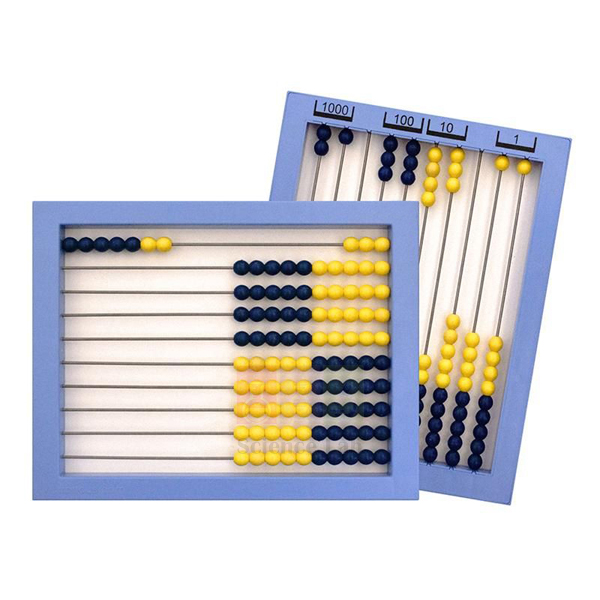
Abacus Desk/Table
Abacus Desk/Table (Product Code: SLE/MAT/01) is a bead-frame calculating instrument used to teach counting, place value and basic arithmetic at a pupil's desk or table in primary maths classrooms. Its beads slide along a series of wires or rods set in a frame, and the rods represent the decimal places, so children can see how units, tens and hundreds build up. It is made by Jain Scientific Equipments Pvt Ltd (ScienceLab), an OEM manufacturer of educational laboratory equipment in India, at its own factory in Ambala.
Key Details
| Parameter | Detail |
|---|---|
| Type | Calculating instrument (bead frame) |
| Working principle | Beads slide along a series of wires or rods set in a frame |
| Place value | Rods represent the decimal places |
| Format | Desk/table version for use on a work surface |
| Product code | SLE/MAT/01 |
| Manufacturer | Jain Scientific Equipments Pvt Ltd (ScienceLab) — OEM |
| Country of origin | India (made in Ambala, Haryana) |
What Is the Abacus Desk/Table Used For?
Placed flat in front of a pupil or a pair, the abacus turns abstract numbers into beads that can be counted and moved. Children show a number by sliding beads on each rod, add by moving more beads across, and discover exchange when a rod fills and ten beads become one bead on the next rod to the left. Subtraction with borrowing works the same way in reverse.
A simple routine helps: clear the frame by pushing all beads to one side before each sum, and always read from the units rod leftwards. Because every child can work on their own frame, the teacher can walk the room and check answers at a glance. For a maths lab, it sits naturally beside base ten blocks and place value mats as hands-on mathematics lab equipment.
OEM Manufacturer
This desk abacus comes from Jain Scientific Equipments Private Limited, the company behind the ScienceLab name, which makes it as the original equipment manufacturer at its own licensed factory in Saha, Ambala, Haryana, India. Schools ordering a class set, and dealers or importers stocking maths teaching aids, receive it direct from the maker rather than from a middleman, and repeat orders go back to the same production team. Read about the company on the ScienceLab profile.
Related Maths Lab Equipment
Teachers often combine the desk abacus with other place value resources.
- Abacus Upright — the upright version for demonstrating the same bead method to the class.
- Decimal Abacus — an alternative abacus for decimal place value work.
- Base Ten Blocks — shows units, tens and hundreds as solid pieces alongside bead work.
- Place Value Mat with Stacking Counters — a flat mat for recording numbers built on the abacus.
- Game of Place Value — a game to practise the same concept.
Explore the full Maths Lab Equipment range.
Frequently Asked Questions
What is the Abacus Desk/Table used for?
The Abacus Desk/Table is used at a pupil's desk to teach counting, place value, addition and subtraction. Sliding beads along rods lets children see each step of a calculation instead of only writing it down.
How does the Abacus Desk/Table show decimal places?
On the Abacus Desk/Table, beads slide along a series of wires or rods set in a frame, and each rod represents a decimal place. Moving beads on the right-hand rod counts units, and each rod to the left is worth ten times more.
How is the Abacus Desk/Table different from the Abacus Upright?
Both abacuses use beads sliding on rods to represent decimal places. The Abacus Desk/Table is the version for working on a desk or table, while the Abacus Upright is the upright format that suits showing the method to a group.
How many rods and beads does the Abacus Desk/Table have?
The listing for the Abacus Desk/Table does not state the number of rods or beads, the frame size or the material. Ask through the contact page and ScienceLab will confirm these details before you order.
Who manufactures the Abacus Desk/Table?
The Abacus Desk/Table is manufactured by Jain Scientific Equipments Pvt Ltd (ScienceLab), the OEM, at its own licensed factory in Saha, Ambala, Haryana, India, and is sold directly to schools, dealers and importers.
Can schools order the Abacus Desk/Table as a class set or for export?
Yes. Schools can order the Abacus Desk/Table in class quantities, and dealers can order for India and international markets. Send the number required and the delivery location through the contact page for a quotation.
Request a Quote
Tell us how many Abacus Desk/Table units you need through the contact page, or add the item to the enquiry cart. Your quotation comes directly from the manufacturer.
Last updated: 24 September 2026
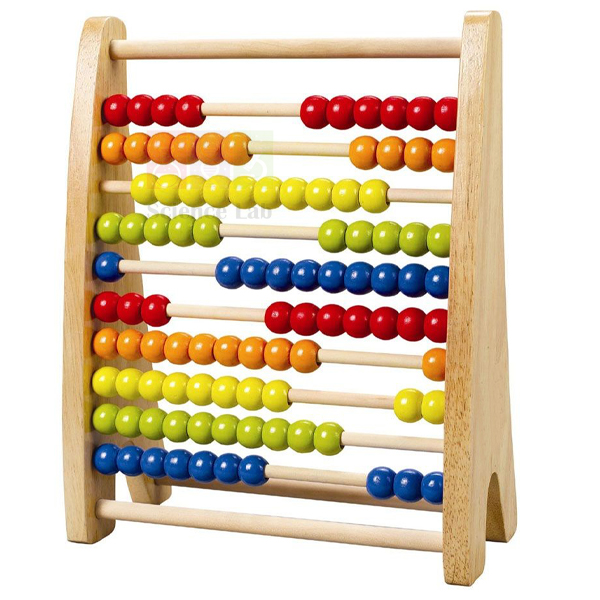
Abacus Upright
Abacus Upright (Product Code: SLE/MAT/02) is an upright bead-frame calculating instrument used for teacher-led demonstrations of place value, counting and regrouping in primary and middle-school maths rooms. Like every abacus, its beads slide along a series of wires or rods set in a frame to represent the decimal places, and the upright format suits showing each step to a group. It is manufactured by Jain Scientific Equipments Pvt Ltd (ScienceLab), an OEM manufacturer, at its own factory in Ambala, India.
Key Details
| Parameter | Detail |
|---|---|
| Type | Calculating instrument with a bead frame |
| Working principle | Beads slide along a series of wires or rods set in a frame |
| Place value | Rods represent the decimal places |
| Format | Upright version, suited to demonstrating to a group |
| Product code | SLE/MAT/02 |
| Manufacturer | Jain Scientific Equipments Pvt Ltd (ScienceLab) — OEM |
| Country of origin | India (made in Ambala, Haryana) |
What Is the Abacus Upright Used For?
With the frame standing at the front of the room, the teacher can build a number while the class counts aloud, then ask pupils what changes when one more bead is moved. Regrouping becomes visible: when a rod is full, the beads are cleared and one bead moves up to the next place. Showing that multiplying by ten simply shifts the bead pattern one rod to the left is a memorable moment for many learners.
Invite pupils to the frame to solve a sum while others check on paper or on their own desk abacus. Face the beads towards the class, use a pointer to show which rod is being changed, and keep the frame at a height the back row can see. It is an easy addition to school lab equipment for a dedicated maths room.
OEM Manufacturer
Jain Scientific Equipments Private Limited produces the Abacus Upright under its ScienceLab trading name as the original equipment manufacturer, working from its own licensed factory in Saha, Ambala, Haryana, India. Because the item is built there and not bought in from another firm, schools, education departments, dealers and importers get their quotation from the maker itself, and any later request for parts or extra frames goes back to the same factory — just ask us. Company background is on the ScienceLab profile page.
Related Maths Lab Equipment
These resources support the same place value lessons at pupils' desks.
- Abacus Desk/Table — the desk version so each pupil can copy the demonstration.
- Decimal Abacus — another abacus option for decimal place value.
- Place Value Board Multiplication — extends place value into multiplication practice.
- Stacking Counters — loose counters for building the same numbers in columns.
- Base Ten Blocks — a solid model of units, tens and hundreds.
Find more teaching aids in the Maths Lab Equipment category.
Frequently Asked Questions
What is the Abacus Upright?
The Abacus Upright is a calculating instrument whose beads slide along a series of wires or rods set in a frame to represent the decimal places. Its upright format makes it a demonstration abacus for teaching a whole group.
Why use an upright abacus instead of desk abacuses?
An upright abacus such as the Abacus Upright lets the teacher model a calculation where every pupil can follow it. Many classrooms use it at the front together with desk abacuses, so pupils repeat each step on their own frames.
How does the Abacus Upright represent place value?
On the Abacus Upright each rod represents one decimal place. Beads on the right-hand rod count units, the next rod counts tens, and so on, so a number is read by counting the beads moved on each rod.
What size is the Abacus Upright and how many beads does it have?
The listing for the Abacus Upright does not give its dimensions, bead count or frame material. Please ask through the contact page and ScienceLab will confirm the details that matter for your classroom.
Who manufactures the Abacus Upright?
The Abacus Upright is manufactured by Jain Scientific Equipments Pvt Ltd (ScienceLab), the OEM, at its own licensed factory in Saha, Ambala, Haryana, India, and is supplied factory-direct to schools, dealers and importers.
What information does a quotation for the Abacus Upright need?
For an Abacus Upright quotation, state the number of frames, any desk abacuses or other maths items to include, and the delivery address in India or abroad. Send it through the contact page for a manufacturer's quote.
Request a Quote
Request pricing for the Abacus Upright through the contact page or add it to the enquiry cart. The quotation is issued directly by ScienceLab as manufacturer.
Last updated: 24 September 2026
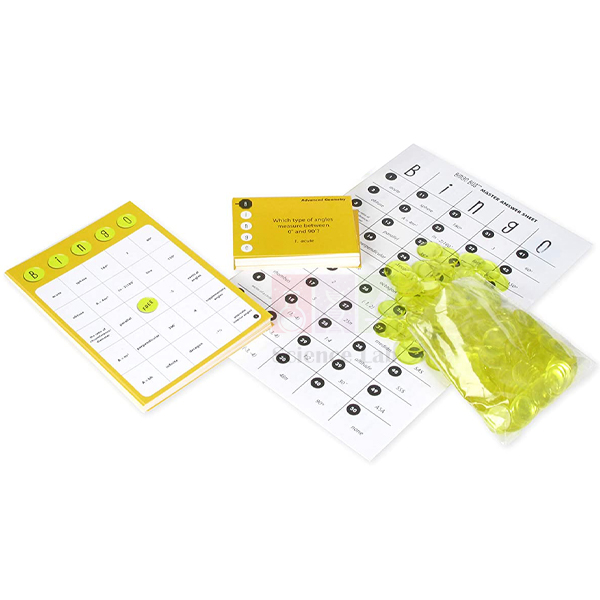
Advanced Geometry
Advanced Geometry (Product Code: SLE/MAT/03) is a classroom bingo activity used to test and revise advanced geometry skills in secondary school maths lessons. It features 50 separate geometry questions that students must solve correctly to mark their bingo cards, and it contains enough materials for 30 students, so a full class can take part at once. The activity is supplied by Jain Scientific Equipments Pvt Ltd (ScienceLab), Ambala, a school laboratory equipment supplier in India, alongside its other mathematics lab kits.
Key Details
| Parameter | Detail |
|---|---|
| Format | Bingo-style activity played with bingo cards |
| Questions | 50 separate advanced geometry questions |
| Class size | Contains enough materials for 30 students |
| Purpose | Tests students' advanced geometry skills in a fun, creative way |
| Product code | SLE/MAT/03 |
| Supplied by | Jain Scientific Equipments Pvt Ltd (ScienceLab), Ambala, India |
What Is the Advanced Geometry Bingo Activity Used For?
The teacher poses one question at a time; students work it out, and if their answer appears on their card they mark it. Because a square can only be claimed with a correct solution, the game rewards careful working rather than luck, and the first student to complete a line has to show how each marked answer was reached.
It works well as an end-of-unit review, a lively warm-up before a test, or a revision lesson near exams. Asking the winner to explain their answers lets the whole class check the reasoning, and noting which questions most students missed shows what needs reteaching. Used with rulers, protractors and solid shapes from the maths lab, it links practical geometry with problem solving.
Supplier
ScienceLab, the trading name of Jain Scientific Equipments Private Limited, supplies the Advanced Geometry activity as part of its maths lab range for schools. Teachers and purchasing departments can add it to one enquiry with instruments, models and other classroom games, and dealers can source it together with the rest of the catalogue. More about the company is on the ScienceLab profile.
Related Maths Lab Equipment
These items fit the same geometry lessons or offer a matching bingo-style activity.
- Algebra — the companion bingo activity with 50 algebra questions.
- Geometry Set — drawing instruments for working the questions on paper.
- Geometrical Instruments Set — board instruments for explaining solutions to the class.
- Wooden Geometric Solids — physical solids for questions on three-dimensional shapes.
- Trigonometry Board — supports angle and triangle work in higher classes.
See the complete Maths Lab Equipment range.
Frequently Asked Questions
What does the Advanced Geometry activity contain?
The Advanced Geometry activity features 50 separate advanced geometry questions and bingo cards on which students mark correct answers. It contains enough materials for 30 students, so one pack covers a typical class.
How many students can play Advanced Geometry at once?
The Advanced Geometry activity contains enough materials for 30 students. For larger classes, or for several classes playing on the same day, order more than one pack and state the total number of students in your enquiry.
How is the Advanced Geometry bingo activity played?
In Advanced Geometry, the teacher gives a question, students solve it, and anyone whose card shows the correct answer marks that square. A student who completes a line calls bingo and then explains the working behind each marked answer.
Which geometry topics do the questions cover?
The product listing states that Advanced Geometry has 50 advanced geometry questions but does not list the individual topics. Ask through the contact page and we will confirm the question content so you can check it against your syllabus.
Who supplies the Advanced Geometry activity?
The Advanced Geometry activity is supplied by Jain Scientific Equipments Pvt Ltd (ScienceLab), Ambala, Haryana, India, which offers it with other maths lab items to schools and dealers in India and international markets.
Can Advanced Geometry be ordered with the Algebra bingo activity?
Yes. Advanced Geometry and the Algebra activity can be quoted together in a single enquiry, along with any other maths lab equipment. Give the number of packs of each and your delivery address.
Request a Quote
Send the number of Advanced Geometry packs you need through the contact page, or add the item to the enquiry cart, and ScienceLab will reply with a quotation.
Last updated: 24 September 2026
Algebra
Algebra (Product Code: SLE/MAT/04) is a bingo-style classroom game used to practise and check algebra skills in middle and secondary school maths. Students work through 50 separate algebra questions and may mark their bingo cards only when they solve a question correctly, and the pack contains enough materials for 30 students. The game is supplied by Jain Scientific Equipments Pvt Ltd (ScienceLab), Ambala, India, for school maths labs that want a lively way to test algebra.
Key Details
| Parameter | Detail |
|---|---|
| Activity type | Bingo game solved with bingo cards |
| Question set | 50 separate algebra questions |
| Materials | Enough for 30 students |
| Aim | Tests students' algebra skills in a fun, creative and engaging way |
| Product code | SLE/MAT/04 |
| Supplied by | Jain Scientific Equipments Pvt Ltd (ScienceLab), Ambala, India |
What Is the Algebra Bingo Game Used For?
Algebra practice often means rows of similar exercises; turning the same skills into a race for a full bingo line keeps students solving question after question with real attention. Since only a correct answer lets a student mark the card, every question becomes a quick self-check, and mistakes show up straight away rather than at marking time.
Give each student rough paper for working, or let pairs share a card so stronger students explain steps to classmates who need support. Short rounds make a good lesson starter, while playing all 50 questions suits a revision period. Afterwards, go back to the questions that caused most errors and model the method on the board. Physical resources such as algebra tiles or a maths balance help students who still need to see what an equation means.
Supplier
Jain Scientific Equipments Private Limited, trading as ScienceLab, supplies this algebra game to schools, coaching centres and dealers as part of its maths lab catalogue, and it can be quoted together with other classroom resources in one order. For vendor registration, the supplying company's details are GSTIN 06AAECJ8618A1ZT and LEI 3358004HRD1JIVXKYX49. Find out more on the ScienceLab company profile.
Related Maths Lab Equipment
These hands-on items reinforce the algebra that the bingo game tests.
- Advanced Geometry — the matching bingo activity with 50 geometry questions.
- Algebra Tiles — lets students model expressions before solving them on paper.
- Algebra Kit — a broader algebra teaching kit for the same classes.
- Balance Mathematical — shows equations as a balance of equal amounts.
- Integer Counters — supports work with positive and negative numbers.
Browse the whole Maths Lab Equipment category.
Frequently Asked Questions
What is the Algebra bingo game?
Algebra (product code SLE/MAT/04) is a bingo game in which students solve 50 separate algebra questions and mark their bingo cards only for correct answers. It is designed to test algebra skills in a fun, creative way.
How many students does one Algebra pack serve?
One Algebra pack contains enough materials for 30 students. Schools running the game in several sections at the same time usually order one pack per class; state the number of students when you enquire.
Is the Algebra game the same as the Algebra Kit?
No. Algebra (SLE/MAT/04) is the bingo game with 50 questions for 30 students, while the Algebra Kit is a separate item in the maths lab range. Mention the product code in your enquiry to avoid confusion.
Which algebra topics are covered by the questions?
The listing for the Algebra game gives the number of questions, 50, but not the individual topics. Ask through the contact page and we will confirm the question content so you can match it to the classes you teach.
Who supplies the Algebra bingo game?
The Algebra bingo game is supplied by Jain Scientific Equipments Pvt Ltd (ScienceLab), Ambala, Haryana, India, to schools, institutions and dealers in India and international markets.
What should I include in a quotation request for the Algebra game?
For the Algebra game, include the number of packs, any related maths items such as Advanced Geometry, and the delivery address. Vendor registration details can be provided for institutional purchases.
Request a Quote
Ask for a price on the Algebra game through the contact page or add it to the enquiry cart with any other maths lab items you need.
Last updated: 24 September 2026
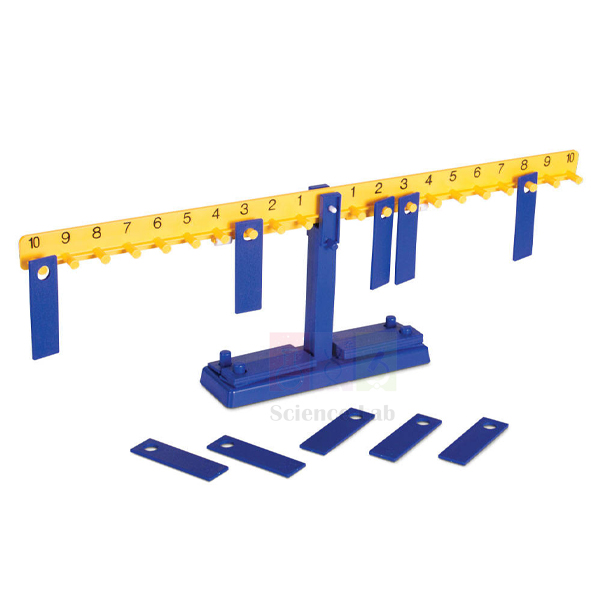
Balance Mathematical
Balance Mathematical (Product Code: SLE/MAT/05) is a number balance used to teach number relationships, equations and the properties of arithmetic in a concrete way in primary and middle-school maths classes. The set includes an 8.5 inch tall balance and twenty 10 g weights, so students can test whether two sides are equal simply by watching the beam level. It is made by Jain Scientific Equipments Pvt Ltd (ScienceLab), an OEM manufacturer, at its own factory in Ambala, India.
Specifications
| Parameter | Detail |
|---|---|
| Balance height | 8.5 inches tall |
| Weights | Twenty weights of 10 g each |
| Teaching focus | Number relationships, number operations, algebraic equations, properties of arithmetic |
| Approach | Students manipulate the balance to gain insight into abstract concepts |
| Product code | SLE/MAT/05 |
| Manufacturer | Jain Scientific Equipments Pvt Ltd (ScienceLab) — OEM |
| Country of origin | India (made in Ambala, Haryana) |
What Is the Mathematical Balance Used For?
Many pupils read the equals sign as "the answer comes next". A number balance changes that idea: three weights and four weights on one side balance seven weights on the other, so equality becomes something they can see. Swapping the order of the weights and finding that the beam still levels makes the commutative property concrete.
Missing-number problems follow naturally. Put five weights on one side and two on the other, then ask how many must be added to level the beam; writing it as x + 2 = 5 is the first step into algebraic equations. Check that the empty balance sits level before each activity, and keep the weights counted back into their set after class. It is a simple piece of mathematics lab equipment for group tables.
OEM Manufacturer
Balance Mathematical is one of the maths teaching aids that Jain Scientific Equipments Private Limited, trading as ScienceLab, makes as the original equipment manufacturer at its own licensed factory in Saha, Ambala, Haryana, India. Schools and dealers buying it therefore deal with the producer, not an intermediary, and requests for extra weights or repeat class sets are answered by the maker — ask us for what you need. Learn more on the ScienceLab profile page.
Related Maths Lab Equipment
Other balances and algebra resources that continue the same lessons.
- Balance Simple Beam — a plastic bucket balance for comparing mass of real objects.
- Balance Rocker Bucket — compares weight and volume of solids or liquids.
- Dish Balance with Weight Number — another balance option for number and measurement lessons.
- Algebra Tiles — moves from balancing equations to modelling expressions.
- Algebra — a bingo game for practising the algebra the balance introduces.
See every item in the Maths Lab Equipment category.
Frequently Asked Questions
What is included in the Balance Mathematical set?
The Balance Mathematical set includes an 8.5 inch tall balance and twenty 10 g weights. That is enough for a small group to build and compare number sentences on both sides of the beam.
How does Balance Mathematical help teach equations?
Balance Mathematical shows an equation as two sides that must level. Students add weights until the beam balances, then write what they did as a number sentence, which leads directly to solving simple algebraic equations.
Which properties of arithmetic can be shown with Balance Mathematical?
With Balance Mathematical, students can show that changing the order of addition does not change the total, that equal additions to both sides keep the balance level, and how missing numbers are found by balancing.
Is Balance Mathematical meant for weighing classroom objects?
Balance Mathematical is intended to teach number relationships with its matching 10 g weights. For comparing the mass of everyday objects, the Balance Simple Beam or Balance Rocker Bucket from the same range is the better choice.
Who manufactures Balance Mathematical?
Balance Mathematical is manufactured by Jain Scientific Equipments Pvt Ltd (ScienceLab), the OEM, at its own licensed factory in Saha, Ambala, Haryana, India, and is supplied directly to schools, dealers and importers.
Can Balance Mathematical be ordered in class quantities or for export?
Yes. ScienceLab quotes Balance Mathematical in class quantities for schools and in larger lots for dealers in India and international markets. Send the number of sets and the delivery location through the contact page.
Request a Quote
For a price on Balance Mathematical, write to us through the contact page or add it to the enquiry cart. The quotation comes straight from the manufacturer.
Last updated: 24 September 2026
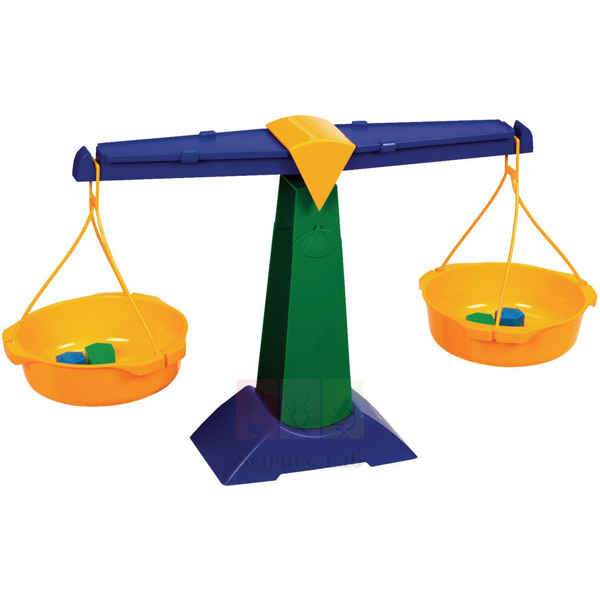
Balance Simple Beam
Balance Simple Beam (Product Code: SLE/MAT/06) is a durable plastic bucket balance used to teach measurement and the basic concepts of mass and balance in primary maths and early science lessons. Its buckets detach for easy clean-up, and a sliding compensator lets the teacher zero the beam before any comparison begins. The balance is made by Jain Scientific Equipments Pvt Ltd (ScienceLab), an OEM manufacturer, at its own factory in Ambala, India.
Key Details
| Parameter | Detail |
|---|---|
| Material | Durable plastic |
| Buckets | Detachable, for easy clean-up |
| Zero adjustment | Sliding compensator |
| Teaching focus | Measurement and the basic concept of mass and balance |
| Product code | SLE/MAT/06 |
| Manufacturer | Jain Scientific Equipments Pvt Ltd (ScienceLab) — OEM |
| Country of origin | India (made in Ambala, Haryana) |
What Is the Simple Beam Balance Used For?
Young learners first meet mass by asking "which is heavier?". With an object in each bucket, the lower side answers the question at a glance, and pupils can go on to order several objects from lightest to heaviest. Counting how many cubes or counters balance a pencil or a toy introduces the idea of measuring with units before standard weights are used.
Before each activity, slide the compensator until the empty beam rests level; this zero adjustment keeps comparisons fair. Stand the balance on a flat table away from draughts. Because the buckets lift off, loose materials such as sand, rice or beans can be emptied and the buckets washed after class. For a primary maths lab or a junior science lab, it is a practical first balance.
OEM Manufacturer
The Balance Simple Beam is produced by Jain Scientific Equipments Private Limited, which trades as ScienceLab, at its own licensed factory in Saha, Ambala, Haryana, India, where the company works as the original equipment manufacturer. Schools, dealers and importers are supplied factory-direct, and replacement buckets or repeat orders are handled by the maker itself — ask us about the parts you need. The ScienceLab profile has more about the company.
Related Maths Lab Equipment
Balances and counting materials that extend measurement lessons.
- Balance Rocker Bucket — compares weight and volume of solids or liquids, with its own weights.
- Balance Mathematical — a number balance for equations and arithmetic.
- Dish Balance with Weight Number — an alternative balance design for measurement work.
- Interlocking Cubes — handy non-standard units for balancing activities.
Browse the full Maths Lab Equipment range.
Frequently Asked Questions
What is the Balance Simple Beam made of?
The Balance Simple Beam is a durable plastic balance with detachable buckets. The plastic construction suits everyday handling by young pupils in a classroom or maths lab.
How is the Balance Simple Beam set to zero?
The Balance Simple Beam has a sliding compensator for zero adjustment. With both buckets empty, move the compensator until the beam rests level; comparisons made after that start from a true balance point.
Can the buckets of the Balance Simple Beam be removed?
Yes. The buckets of the Balance Simple Beam detach for easy clean-up, so sand, grains or other loose materials used in an activity can be emptied and the buckets washed separately.
Does the Balance Simple Beam come with weights?
The listing for the Balance Simple Beam does not mention a weight set. Many teachers begin with cubes or counters as non-standard units; ask through the contact page if you also need weights with your order.
Who manufactures the Balance Simple Beam?
The Balance Simple Beam is manufactured by Jain Scientific Equipments Pvt Ltd (ScienceLab), the OEM, at its own licensed factory in Saha, Ambala, Haryana, India, and sold directly to schools, dealers and importers.
How do I get a quotation for the Balance Simple Beam?
For a Balance Simple Beam quotation, give the number of balances, any weights or counting materials to include, and your delivery location in India or abroad. Use the contact page and the manufacturer will reply.
Request a Quote
Send your Balance Simple Beam requirement through the contact page or add it to the enquiry cart; quotations are issued directly by the manufacturer in Ambala.
Last updated: 24 September 2026
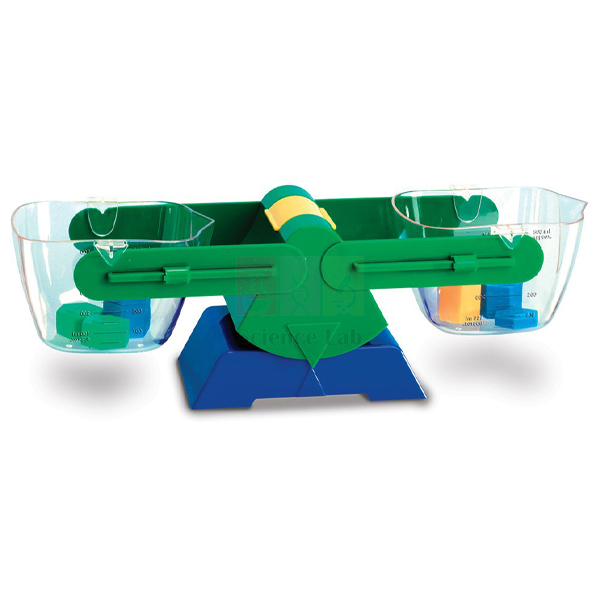
Balance Rocker Bucket
Balance Rocker Bucket (Product Code: SLE/MAT/07) is a bucket balance used to compare and measure the weight and volume of materials, solid or liquid, in school maths and science classes. It comes complete with weights of plastic and metal and has a built-in compartment for storing them, while simpler models are available on request. The balance is made by Jain Scientific Equipments Pvt Ltd (ScienceLab), an OEM manufacturer, at its own factory in Ambala, India.
Key Details
| Parameter | Detail |
|---|---|
| Use | Compare and measure the weight and volume of materials |
| Materials handled | Solids or liquids |
| Weights | Supplied complete with weights of plastic and metal |
| Storage | Built-in weight storage compartment |
| Other versions | Simpler models available on request |
| Product code | SLE/MAT/07 |
| Manufacturer | Jain Scientific Equipments Pvt Ltd (ScienceLab) — OEM |
| Country of origin | India (made in Ambala, Haryana) |
What Is the Rocker Bucket Balance Used For?
Because the buckets take liquids as well as solids, the balance can answer questions a plain beam cannot. Pupils can pour water into one bucket and find how many weights balance it, or fill both buckets to the same level with two different materials and discover that equal volumes do not always weigh the same. That observation is an early step towards the idea of density.
Keep the plastic and metal weights in the built-in compartment between activities so the set stays complete, and check that the empty buckets balance before each measurement. Wipe up spills straight away and dry the buckets after liquid work. As a hands-on item in a school maths lab, it connects measurement, estimation and recording results in a table.
What to Specify When Ordering
- Whether you need this model, complete with plastic and metal weights, or one of the simpler models available on request.
- The number of balances — for example one per group table.
- Any other balances or maths lab items to be quoted together.
OEM Manufacturer
ScienceLab is the trading name of Jain Scientific Equipments Private Limited (CIN U29309HR2020PTC087597), the original equipment manufacturer of the Balance Rocker Bucket. The balance is built at the company's own licensed factory at 449, HSIIDC Industrial Area, Saha, Ambala, Haryana (Factory Licence AMB-ONLINE-CHD-J-414), so schools, dealers and importers buy directly from the source. Requests for a simpler model, extra weights or repeat orders go to the same maker — just ask. Visit the ScienceLab profile for more.
Related Maths Lab Equipment
Items that pair with the rocker bucket balance in measurement lessons.
- Balance Simple Beam — a plastic balance with detachable buckets and a zero-adjustment compensator.
- Balance Mathematical — a number balance for equations rather than weighing.
- Dish Balance with Weight Number — another balance option for the same classes.
- Volume Relation Between Cone and Cylinder — continues the volume topic with solid shapes.
Explore more in the Maths Lab Equipment category.
Frequently Asked Questions
What can the Balance Rocker Bucket measure?
The Balance Rocker Bucket is used to compare and measure the weight and volume of materials, whether solid or liquid. That makes it suitable for activities with water and other liquids as well as with blocks, grains or everyday objects.
Are weights included with the Balance Rocker Bucket?
Yes. The Balance Rocker Bucket comes complete with weights of plastic and metal, and the balance has a built-in weight storage compartment so the weights stay with the balance between lessons.
Is a simpler version of the Balance Rocker Bucket available?
Yes, simpler models of the Balance Rocker Bucket are available on request. Tell us how the balance will be used and for which classes, and we will quote the model that suits your needs.
How should the Balance Rocker Bucket be cared for after liquid activities?
After using liquids in the Balance Rocker Bucket, empty and dry the buckets, wipe any spills from the beam and store the weights back in their compartment. This keeps the balance clean and the weight set complete.
Who manufactures the Balance Rocker Bucket?
The Balance Rocker Bucket is manufactured by Jain Scientific Equipments Pvt Ltd (ScienceLab), the OEM, at its own licensed factory in Saha, Ambala, Haryana, India, and is supplied directly to schools, dealers and importers.
Can the Balance Rocker Bucket be ordered in bulk or for export?
Yes. ScienceLab supplies the Balance Rocker Bucket in class and bulk quantities to buyers in India and international markets. Send the model, quantity and destination through the contact page for a quotation.
Request a Quote
Ask for pricing on the Balance Rocker Bucket, or on a simpler model, through the contact page or the enquiry cart. The quote is issued by the manufacturer directly.
Last updated: 24 September 2026
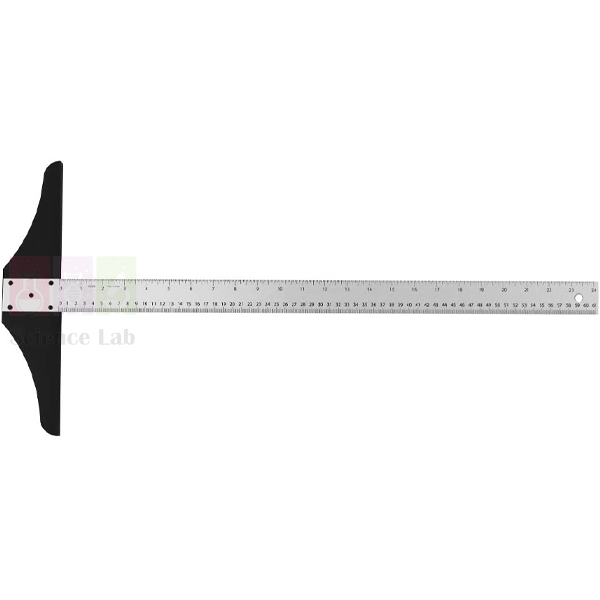
T-Square
T-Square (Product Code: SLE/MAT/08) is a T-shaped straightedge used to draw horizontal and parallel lines, and to guide set squares for perpendicular lines, in maths, geometry and technical drawing lessons. Students and teachers slide its head along the edge of a drawing board or table so every line stays square to that edge. The T-Square is supplied by Jain Scientific Equipments Pvt Ltd (ScienceLab), Ambala, as part of its maths lab range of educational laboratory equipment in India.
Key Details
| Parameter | Detail |
|---|---|
| Type | T-shaped straightedge (head and blade) |
| Purpose | Drawing horizontal and parallel lines; guiding set squares |
| Size and material | Not stated in the current listing — confirm when you enquire |
| Product code | SLE/MAT/08 |
| Supplied by | Jain Scientific Equipments Pvt Ltd (ScienceLab), Ambala, India |
What Is the T-Square Used For?
Hold the short head firmly against the left edge of the board and the long blade gives a true horizontal line. Sliding the head down the edge produces a set of parallel lines, which is the basis of graph layouts, borders and geometric constructions. Resting a set square on the blade then gives vertical lines and the standard set-square angles without measuring each one with a protractor.
For accurate work, keep the head pressed to the edge while drawing, hold the blade flat and draw along its top edge. Check the blade now and then against a known straight edge, and store the T-Square flat or hanging so it stays straight. It is a useful addition to maths lab equipment for geometry construction and early technical drawing.
Supplier
Jain Scientific Equipments Private Limited, trading as ScienceLab, supplies the T-Square to schools, colleges and dealers together with its wider range of maths lab items. Because the current listing does not give the size or material, we confirm those details in each quotation so buyers know exactly what they are ordering. Company information is on the ScienceLab profile page.
Related Maths Lab Equipment
Other measuring and drawing tools for geometry lessons.
- Geometrical Instruments Set — plastic board instruments for teacher demonstrations.
- Geometry Set — drawing instruments for students' own constructions.
- Half Meter Scale — a longer straight scale for measuring and ruling.
- Folding Meter Stick — for measuring lengths around the classroom.
See the full Maths Lab Equipment range.
Frequently Asked Questions
What is a T-Square used for?
A T-Square is used to draw straight horizontal lines and sets of parallel lines by sliding its head along the edge of a drawing board or table. With a set square resting on the blade, it also gives vertical and angled lines.
What size and material is the ScienceLab T-Square?
The current listing for the T-Square (SLE/MAT/08) does not state its length or material. Ask through the contact page and ScienceLab will confirm the size and material available before you place an order.
How is a T-Square used with a set square?
Keep the T-Square head tight against the board edge, rest the set square on the blade and draw along the set square's edge. This gives vertical lines and standard set-square angles that stay consistent across the whole drawing.
How can students keep their T-Square drawings accurate?
When using the T-Square, press the head firmly to the edge, draw along the top of the blade with a sharp pencil, and keep the blade clean and straight. Storing the T-Square flat or hanging helps it stay true.
Who supplies the T-Square?
The T-Square is supplied by Jain Scientific Equipments Pvt Ltd (ScienceLab), Ambala, Haryana, India, to schools, institutions and dealers in India and international markets, alongside its other maths lab equipment.
What should a quotation request for the T-Square include?
For a T-Square quotation, give the quantity, any preferred length or material, and your delivery address. ScienceLab will confirm the available specification in the quote before you commit to the order.
Request a Quote
Send your T-Square requirement through the contact page or add it to the enquiry cart, and we will reply with the specification and a quotation.
Last updated: 24 September 2026
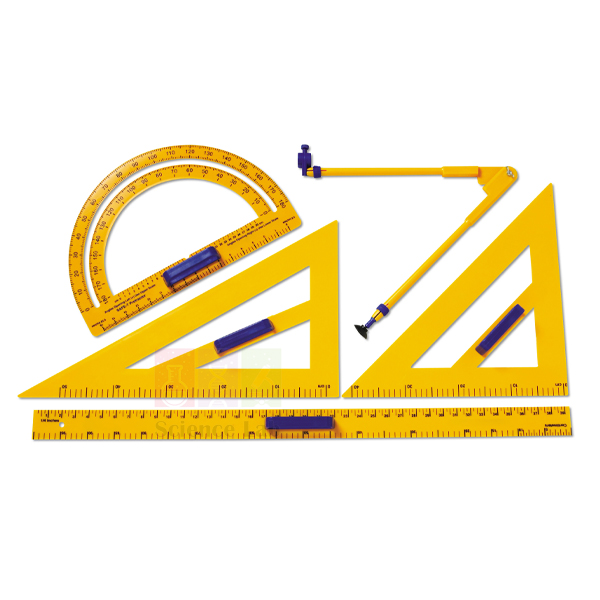
Geometrical Instruments Set
Geometrical Instruments Set (Product Code: SLE/MAT/09) is a set of 5 lightweight plastic geometry instruments used by teachers to draw and demonstrate constructions on whiteboards and chalkboards in school maths classrooms. The instruments are made from polystyrene plastic with handles for ease of use, the compass accommodates both marker and chalk, and everything is kept in a reusable storage box. The set is made by Jain Scientific Equipments Pvt Ltd (ScienceLab), an OEM manufacturer, at its own factory in Ambala, India.
Specifications
| Parameter | Detail |
|---|---|
| Contents | Set of 5 instruments |
| Material | Polystyrene plastic; durable and lightweight |
| Designed for | Whiteboards and chalkboards |
| Handles | Fitted for ease of use |
| Compass | Accommodates marker and chalk |
| Storage | Reusable storage box |
| Product code | SLE/MAT/09 |
| Manufacturer | Jain Scientific Equipments Pvt Ltd (ScienceLab) — OEM |
| Country of origin | India (made in Ambala, Haryana) |
What Is the Board Geometry Instruments Set Used For?
Constructions such as bisecting a line or an angle, drawing circles and arcs, or building a triangle from given sides are hard to follow in a textbook diagram. Drawing them step by step at board scale lets the whole class see how each arc and line is placed, then repeat the construction in their notebooks with their own geometry sets.
The handles let the teacher hold an instrument steady against the board with one hand while drawing with the other. Fit a marker in the compass for a whiteboard or chalk for a chalkboard, wipe the instruments clean after marker use, and return all five to the storage box so none go missing. For a classroom or maths lab, it is a practical board kit for everyday geometry teaching.
OEM Manufacturer
Jain Scientific Equipments Private Limited, the company that trades as ScienceLab, makes the Geometrical Instruments Set as the original equipment manufacturer at its own licensed factory in Saha, Ambala, Haryana, India. Schools equipping several classrooms, as well as dealers and importers, buy the set directly from the manufacturer, and repeat orders or replacement instruments are arranged with the same team — ask us what you need. Read more on the ScienceLab company profile.
Related Maths Lab Equipment
Drawing and shape resources that go with board demonstrations.
- Geometry Set — instruments for students to copy the constructions at their desks.
- T-Square — for ruling horizontal and parallel lines.
- Primary Shapes Template Set — templates for drawing basic shapes quickly.
- Construction of Parabola — a construction activity for higher classes.
- Half Meter Scale — a long scale for measuring and ruling.
Visit the full Maths Lab Equipment category.
Frequently Asked Questions
Which instruments are in the Geometrical Instruments Set?
The Geometrical Instruments Set contains 5 board instruments, including a compass that holds marker or chalk. The listing does not name the other four pieces, so ask through the contact page and we will confirm the exact contents.
Can the Geometrical Instruments Set be used on both whiteboards and chalkboards?
Yes. The Geometrical Instruments Set is designed for whiteboards and chalkboards, and its compass accommodates both a marker and chalk, so the same set works in rooms with either type of board.
What are the instruments in the Geometrical Instruments Set made of?
The instruments in the Geometrical Instruments Set are made from polystyrene plastic, which keeps them durable yet lightweight, and each has a handle so it can be held firmly against the board.
How is the Geometrical Instruments Set stored?
The Geometrical Instruments Set comes in a reusable storage box that holds all five instruments. Returning them to the box after each lesson keeps the set complete and protects the edges from damage.
Who manufactures the Geometrical Instruments Set?
The Geometrical Instruments Set is manufactured by Jain Scientific Equipments Pvt Ltd (ScienceLab), the OEM, at its own licensed factory in Saha, Ambala, Haryana, India, and supplied directly to schools, dealers and importers.
Can the Geometrical Instruments Set be ordered for many classrooms or for export?
Yes. ScienceLab quotes the Geometrical Instruments Set in quantities for multiple classrooms and for dealers in India and international markets. Share the number of sets and the delivery address through the contact page.
Request a Quote
Request a price for the Geometrical Instruments Set through the contact page or the enquiry cart. Quotations come directly from the manufacturer in Ambala.
Last updated: 24 September 2026
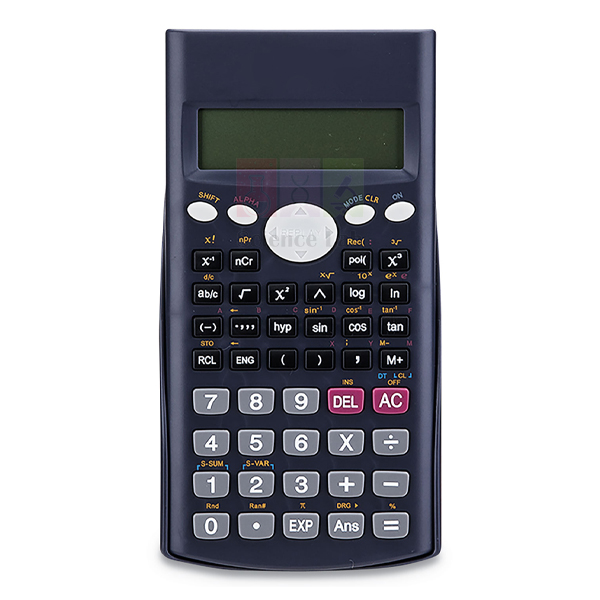
Calculator Scientific
Calculator Scientific (Product Code: SLE/MAT/10) is a battery-operated scientific calculator used for trigonometric functions, statistics and algebraic work such as permutations and combinations in secondary school and college maths. This economical model has a 10-digit display, 56 programmed functions, memory and binary, octal, decimal and hexadecimal calculation modes, and Sharp or Casio models can be requested instead. It is supplied by Jain Scientific Equipments Pvt Ltd (ScienceLab), Ambala, India.
Specifications
| Parameter | Detail |
|---|---|
| Display | 10-digit |
| Functions | 56 programmed functions |
| Memory and statistics | Memory; statistic calculation |
| Number systems | Binary, octal, decimal and hexadecimal calculations |
| Power | Battery operated, with auto shut-off |
| Typical uses | Advanced trigonometric functions; algebraic algorithms such as permutations and combinations |
| Other models | Sharp and Casio models on request |
| Product code | SLE/MAT/10 |
| Supplied by | Jain Scientific Equipments Pvt Ltd (ScienceLab), Ambala, India |
What Is the Scientific Calculator Used For?
Once students reach heights-and-distances problems, sine, cosine and tangent values are needed quickly and precisely, and a scientific calculator takes over from printed tables. The statistics functions work out averages and spread from a data set, the permutation and combination keys support probability and counting chapters, and the number-base modes let computer science students convert between binary, octal, decimal and hexadecimal.
Before any trigonometry, check whether the calculator is set to degrees or radians, since a wrong angle mode is the most common source of errors. Clear the memory at the start of a test, and let the auto shut-off save the battery between lessons. A class set kept in the maths lab means every student works with the same keys during practical sessions.
What to Specify When Ordering
- Whether you want this economical model or a Sharp or Casio model on request.
- The quantity — for example one per student for a class set.
- Any other maths lab items, such as simple calculators, to be quoted together.
Supplier
ScienceLab, the trading name of Jain Scientific Equipments Private Limited, supplies this scientific calculator to schools, colleges and dealers and can source Sharp or Casio models when a buyer asks for them. Calculators can be added to the same order as other maths and science lab items, keeping procurement to a single supplier. See the ScienceLab profile for company details.
Related Maths Lab Equipment
Items used in the same trigonometry, probability and algebra lessons.
- Calculator Simple/Hand — a basic pocket calculator for junior classes.
- Trigonometry Board — shows the angle relationships that the calculator evaluates.
- Probability Kit — hands-on experiments to check permutation and combination results.
- Algebra Kit — supports algebra topics taught alongside calculator work.
Browse the full Maths Lab Equipment category.
Frequently Asked Questions
What functions does the Calculator Scientific offer?
The Calculator Scientific has 56 programmed functions, memory, statistic calculation and binary, octal, decimal and hexadecimal modes. It handles advanced trigonometric functions and algebraic algorithms such as permutations and combinations.
What kind of display does the Calculator Scientific have?
The Calculator Scientific has a 10-digit display, which is enough for the long decimal results that appear in trigonometry, statistics and number-base conversions in school and college maths.
How is the Calculator Scientific powered?
The Calculator Scientific is battery operated and has an auto shut-off feature, which switches it off when it is left unused and helps the battery last longer in a classroom set.
Can I order a Sharp or Casio model instead?
Yes. Along with the economical Calculator Scientific, Sharp and Casio models are available on request. Name the brand or model you prefer in your enquiry and ScienceLab will include it in the quotation.
Who supplies the Calculator Scientific?
The Calculator Scientific is supplied by Jain Scientific Equipments Pvt Ltd (ScienceLab), Ambala, Haryana, India, to schools, colleges and dealers in India and international markets.
What should I include in a quotation request for scientific calculators?
For a Calculator Scientific quotation, give the quantity, whether you want this economical model or a Sharp or Casio model, and the delivery address. Send the request through the contact page.
Request a Quote
Ask for a quotation on the Calculator Scientific through the contact page or add it to the enquiry cart with the other items your maths lab needs.
Last updated: 24 September 2026
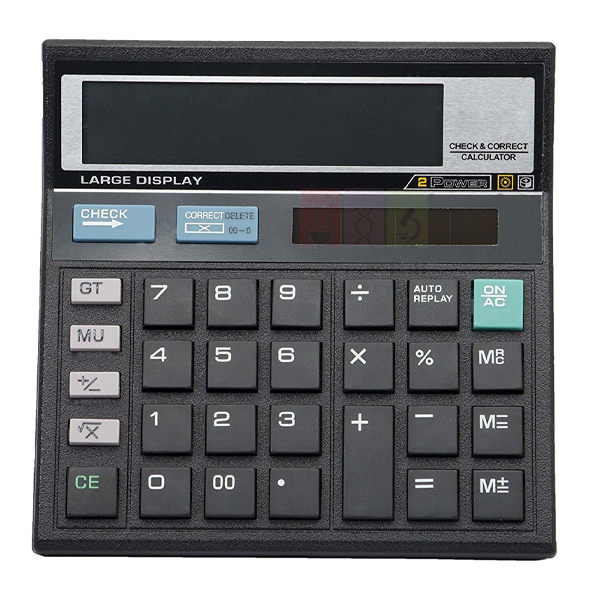
Calculator Simple/Hand
Calculator Simple/Hand (Product Code: SLE/MAT/11) is a pocket-size basic calculator used for everyday addition, subtraction, multiplication and division in primary and middle-school maths, money activities and simple lab calculations. It has a standard 10-digit display, runs on solar power with battery backup and switches itself off automatically. The calculator is supplied by Jain Scientific Equipments Pvt Ltd (ScienceLab), Ambala, as educational laboratory equipment in India for school maths labs and classrooms.
Specifications
| Parameter | Detail |
|---|---|
| Type | Basic/standard calculator for basic operations |
| Size | Pocket size |
| Display | 10-digit |
| Power | Solar power with battery backup |
| Power saving | Auto shut-off |
| Product code | SLE/MAT/11 |
| Supplied by | Jain Scientific Equipments Pvt Ltd (ScienceLab), Ambala, India |
What Is the Simple Hand Calculator Used For?
A basic calculator is most valuable when students already understand the method and need to check their answers. Ask pupils to estimate first, work the sum on paper, then confirm on the calculator; a large gap between estimate and result points to a slip in place value. In shop and money role-play, it helps pupils total bills and work out change quickly.
In science practicals the same calculator speeds up averaging repeated readings. Because it uses solar power with battery backup, it keeps working in dimmer classrooms, and the auto shut-off saves power when it is left on a bench. Keep the solar panel clean and store the calculators together in a box so a full class set is ready for the next school lab session.
Supplier
Jain Scientific Equipments Private Limited, trading as ScienceLab, supplies the Calculator Simple/Hand to schools, coaching centres and dealers along with its other maths lab items. For vendor registration, the supplying company's GSTIN is 06AAECJ8618A1ZT, and export orders are shipped under Importer-Exporter Code AAECJ8618A (DGFT). More about the company is on the ScienceLab profile page.
Related Maths Lab Equipment
Resources that pair with a basic calculator in number and money lessons.
- Calculator Scientific — a scientific calculator for trigonometry and statistics in higher classes.
- Dummy Currency Notes — for shop role-play where totals are checked on the calculator.
- Dummy Coins — adds coins to money and change activities.
- Base Ten Blocks — builds the place value understanding behind calculator answers.
See all items in the Maths Lab Equipment category.
Frequently Asked Questions
What can the Calculator Simple/Hand be used for?
The Calculator Simple/Hand is a basic/standard calculator for basic operations such as addition, subtraction, multiplication and division. It suits checking written work, money activities and simple calculations in science practicals.
How is the Calculator Simple/Hand powered?
The Calculator Simple/Hand runs on solar power with battery backup, so it keeps working when light is poor. An auto shut-off feature turns it off when it is not being used.
How large is the Calculator Simple/Hand and its display?
The Calculator Simple/Hand is pocket size and has a 10-digit display. Exact dimensions are not given in the listing; ask through the contact page if you need them for storage planning.
How is the Calculator Simple/Hand different from the Calculator Scientific?
The Calculator Simple/Hand covers basic operations only, while the Calculator Scientific adds trigonometric, statistical and number-base functions. Junior classes usually need the simple calculator; senior maths and science classes need the scientific one.
Who supplies the Calculator Simple/Hand?
The Calculator Simple/Hand is supplied by Jain Scientific Equipments Pvt Ltd (ScienceLab), Ambala, Haryana, India, to schools, institutions and dealers in India and international markets.
Can schools buy the Calculator Simple/Hand as a class set?
Yes. Schools can order the Calculator Simple/Hand in class-set quantities along with other maths lab items. State the number of calculators and your delivery address through the contact page to receive a quotation.
Request a Quote
Request a quotation for the Calculator Simple/Hand through the contact page or add it to the enquiry cart together with other classroom items.
Last updated: 24 September 2026

Beads – Bobbles & Laces
Beads – Bobbles & Laces (Product Code: SLE/MAT/12) is a bead-threading manipulative used to build early number and pattern skills in pre-primary and primary maths classrooms. Children thread tough plastic beads onto colourful strings, training fine motor control while they group, order and count. The set is made by Jain Scientific Equipments Pvt Ltd (ScienceLab), an OEM manufacturer of mathematics lab kits in India, at its own factory in Ambala.
Key Details
| Parameter | Detail |
|---|---|
| Bead material | Tough plastic |
| Stringing | Beads threaded on colourful strings (laces) |
| Skills developed | Fine motor skills, grouping, ordering, number association and identifying patterns |
| Product code | SLE/MAT/12 |
| Manufacturer | Jain Scientific Equipments Pvt Ltd (ScienceLab) — OEM |
| Country of origin | India (made in Ambala, Haryana) |
What Is the Beads and Laces Set Used For?
Threading a bead is a small, deliberate hand movement, so every string a child completes is also fine-motor practice. Teachers attach a number idea to the action: thread four beads and say “four”, or copy a short sequence started by the teacher and then continue it. Comparing two finished strings — which has more, which is longer — introduces ordering without any written work.
Before threading, children can sort the loose beads into groups and count each group, which links grouping with number association. The set fits naturally into a junior lab kit for primary school maths corners. Work at a table in small groups, and keep each lace separate in storage so strings do not knot between lessons.
OEM Manufacturer
Jain Scientific Equipments Private Limited, which trades as ScienceLab, is the original equipment manufacturer (OEM) of Beads – Bobbles & Laces. The sets are produced at the company’s own licensed factory at Saha, Ambala, Haryana, so schools and distributors buy straight from the maker instead of through a trading house.
If a class set loses beads or laces over time, ask us about replacements — your enquiry reaches the manufacturer directly. More about the company is on our company profile.
Related Maths Lab Equipment
These items extend bead work into sorting, counting and early place value:
- Stringing Beads — a pre-primary stringing set supplied with an activity write-up
- Beads, Wood — a wooden alternative for classrooms that prefer wooden beads and laces
- Sorting Ring — foldable plastic rings for grouping beads into sets
- Stacking Counters — colour counters for the next step in counting and ordering
- Abacus Upright — beads on rods for moving from counting towards place value
See the complete Maths Lab Equipment range for more early-years manipulatives.
Frequently Asked Questions
What is included with Beads – Bobbles & Laces?
Beads – Bobbles & Laces consists of tough plastic beads with colourful strings for threading. The number of beads and laces in each set is not listed on this page, so please confirm the pack contents through our contact page before ordering class sets.
Which skills does Beads – Bobbles & Laces help children develop?
Beads – Bobbles & Laces develops fine motor skills through threading and introduces grouping, ordering, number association and pattern recognition. Teachers use it for early counting, copying and extending sequences, and comparing the lengths of finished strings.
How should Beads – Bobbles & Laces be cleaned and stored?
Beads – Bobbles & Laces can be wiped with a damp cloth and dried fully before storage, since the beads are tough plastic. Keep beads and laces in a closed box so pieces are not lost and the strings do not tangle between lessons.
Who manufactures Beads – Bobbles & Laces?
Beads – Bobbles & Laces is manufactured by Jain Scientific Equipments Pvt Ltd (ScienceLab), the OEM, at its own factory in Saha, Ambala, Haryana, India. Schools, dealers and importers receive the set directly from the manufacturer rather than from a reseller.
Can schools order Beads – Bobbles & Laces in bulk?
Yes, Beads – Bobbles & Laces can be quoted in class-set or bulk quantities for schools, dealers and importers in India and international markets. Send the quantity and delivery location with your enquiry and the quotation comes straight from the manufacturer.
Request a Quote
To order Beads – Bobbles & Laces, send your quantity and delivery address through the contact page or add the item to the enquiry cart. Quotations are prepared directly by the manufacturer in Ambala.
Last updated: 24 September 2026
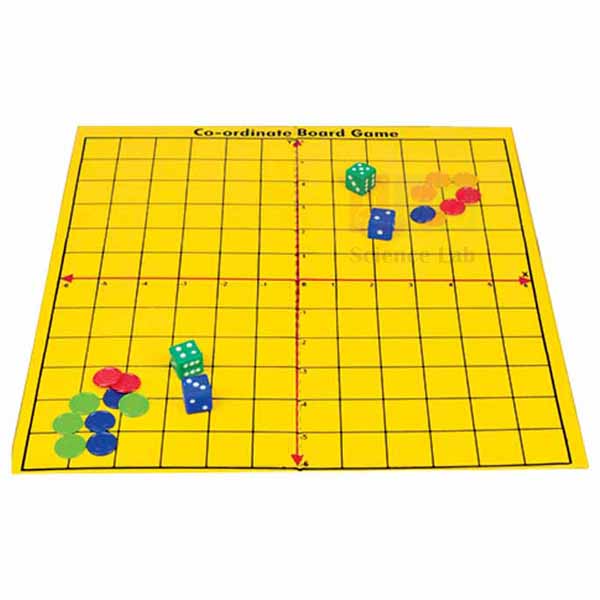
Coordinate Board
Coordinate Board (Product Code: SLE/MAT/13) is a board game used to teach plotting and naming points on a four-quadrant graph in school mathematics classes. Played in groups with colour counters and dice, it turns a routine coordinate-geometry exercise into an engaging team activity. It is made by Jain Scientific Equipments Pvt Ltd (ScienceLab), an OEM school lab equipment manufacturer, at its own factory in Ambala, India.
Key Details
| Parameter | Detail |
|---|---|
| Graph type | Four-quadrant coordinate graph |
| Supplied with | Colour counters and dice |
| Topic | Plotting coordinates and naming their points |
| Format | Group board game |
| Product code | SLE/MAT/13 |
| Manufacturer | Jain Scientific Equipments Pvt Ltd (ScienceLab) — OEM |
| Country of origin | India (made in Ambala, Haryana) |
What Is the Coordinate Board Used For?
Plotting and naming points on a four-quadrant graph is one of the most common tasks in a maths class, and the Coordinate Board makes it a game. Teachers can use the dice to generate ordered pairs; each player locates the point, marks it with a colour counter and names it aloud, while the group checks that the horizontal value was read first.
Because all four quadrants are on the board, students meet negative coordinates and the sign pattern of each quadrant early, not as an afterthought. It works well as a warm-up before written graph exercises and as a revision game within mathematics lab kits in India for middle classes.
OEM Manufacturer
ScienceLab is the trading name of Jain Scientific Equipments Private Limited, the OEM that makes the Coordinate Board at its own licensed factory at Saha, Ambala, Haryana. Institutions, dealers and importers order it factory-direct, and repeat orders or extra counters are handled by the manufacturer itself — just ask us.
Institutions registering us as a vendor can use GSTIN 06AAECJ8618A1ZT and LEI 3358004HRD1JIVXKYX49. Read the company profile for more background.
Related Maths Lab Equipment
Pair the Coordinate Board with these items for graph and number work:
- Graph Board — an enlarged write-and-wipe graph for whole-class plotting practice
- Integer Board Game — another dice-and-counter game, for adding and subtracting signed numbers
- Plastic Dice — extra dice when several groups play at once
- Trigonometry Board — a later step from coordinates into sine, cosine and tangent
Browse all Maths Lab Equipment for further geometry and algebra aids.
Frequently Asked Questions
What comes with the Coordinate Board?
The Coordinate Board is supplied with colour counters and dice for group play on a four-quadrant graph. The number of counters and dice per set is not stated on this page, so confirm the contents through our contact page before ordering several sets.
Which topic does the Coordinate Board teach?
The Coordinate Board teaches plotting points on a four-quadrant graph and naming them by their coordinates. Because all four quadrants are shown, students practise positive and negative x and y values and learn how the sign of each coordinate places a point.
Is the Coordinate Board meant for small groups or the whole class?
The Coordinate Board is designed as a group activity, so it is most practical with a small team around one desk. For whole-class plotting on a large surface, many teachers use it alongside the write-and-wipe Graph Board.
Who manufactures the Coordinate Board?
Jain Scientific Equipments Pvt Ltd (ScienceLab) manufactures the Coordinate Board as the OEM, producing the game at its own factory in Saha, Ambala, Haryana, India. Orders and quotations come directly from the manufacturer, not from a trader.
Can the Coordinate Board be supplied for several schools or for export?
Yes, the Coordinate Board can be quoted in bulk for schools, education departments, dealers and importers in India and international markets. Share the number of sets and the delivery location, and the manufacturer will prepare the quotation.
Request a Quote
For a quotation on the Coordinate Board, write to us through the contact page or add it to your enquiry cart. The quotation and terms come straight from the manufacturer.
Last updated: 24 September 2026
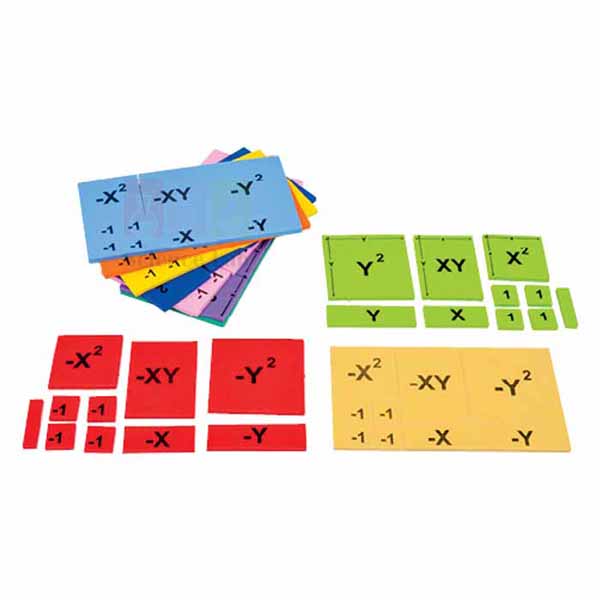
Algebra Kit
Algebra Kit (Product Code: SLE/MAT/14) is a set of labelled algebra tiles used to investigate polynomials in two variables in secondary school mathematics. It suits students moving to higher classes, where expressions with two or more variables replace simple one-variable work. The kit is made by Jain Scientific Equipments Pvt Ltd (ScienceLab), an OEM manufacturer, at its own factory in Ambala, India.
Key Details
| Parameter | Detail |
|---|---|
| Contents | Labelled algebra tiles |
| Topic | Polynomials in two variables |
| Level | Higher classes working with polynomials of two or more variables |
| Product code | SLE/MAT/14 |
| Manufacturer | Jain Scientific Equipments Pvt Ltd (ScienceLab) — OEM |
| Country of origin | India (made in Ambala, Haryana) |
What Is the Algebra Kit Used For?
The Algebra Kit lets students investigate two-variable polynomials by building them. Because every tile carries a label, a learner can name each term while laying it down, then combine like terms by grouping matching tiles. Arranging tiles into a rectangle gives a visual area model of multiplying two expressions, and reversing the process shows what factorising means.
Teachers find that working with physical tiles first makes symbolic manipulation less abstract. As part of a mathematics lab kit for Indian secondary classes, it works well in pairs: one student builds, the other writes the matching expression, then they swap roles.
OEM Manufacturer
Jain Scientific Equipments Private Limited trades as ScienceLab and is the OEM behind the Algebra Kit. The kit is produced at the company’s own licensed factory in Saha, Ambala, Haryana, and supplied factory-direct to schools, colleges, dealers and importers.
Because the maker handles the order itself, questions about tile labels or repeat orders get a direct answer — ask us. Our company profile has more about ScienceLab.
Related Maths Lab Equipment
These items support the same algebra lessons:
- Algebra Tiles — positive and negative tiles for operations, factorising and linear equations
- Algebra — a bingo-style class activity for testing algebra skills
- Senior Maths Kit — a teacher kit that includes plastic algebra cubes
- Graph Board — a write-and-wipe graph for plotting the expressions students build
The full Maths Lab Equipment page lists more algebra and geometry aids.
Frequently Asked Questions
What does the Algebra Kit contain?
The Algebra Kit contains labelled algebra tiles for exploring polynomials in two variables. The number of tiles and the exact labels are not listed on this page; please ask through our contact page for the current contents before ordering.
Which classes is the Algebra Kit suitable for?
The Algebra Kit is intended for students in higher classes who have moved on to polynomials with two or more variables. It helps them see how terms combine and how expressions multiply and factorise before they rely on symbols alone.
How is the Algebra Kit different from Algebra Tiles?
The Algebra Kit focuses on labelled tiles for polynomials in two variables. The separate Algebra Tiles product covers operations on polynomials, factorising, linear equations and integers with positive and negative tiles. Schools can keep both for different stages of the syllabus.
Who manufactures the Algebra Kit?
The Algebra Kit is an OEM product of Jain Scientific Equipments Pvt Ltd (ScienceLab), made at the company’s own factory in Saha, Ambala, Haryana, India. Institutions, dealers and importers are supplied by the manufacturer without a trading intermediary.
What information is needed for an Algebra Kit quotation?
For an Algebra Kit quotation, send the number of kits, the delivery address and whether you need other maths lab items in the same order. Quotes for India and international markets are prepared directly by the manufacturer.
Request a Quote
Request an Algebra Kit quotation through the contact page, or add the kit to the enquiry cart with other items. You will hear back from the manufacturer directly.
Last updated: 24 September 2026
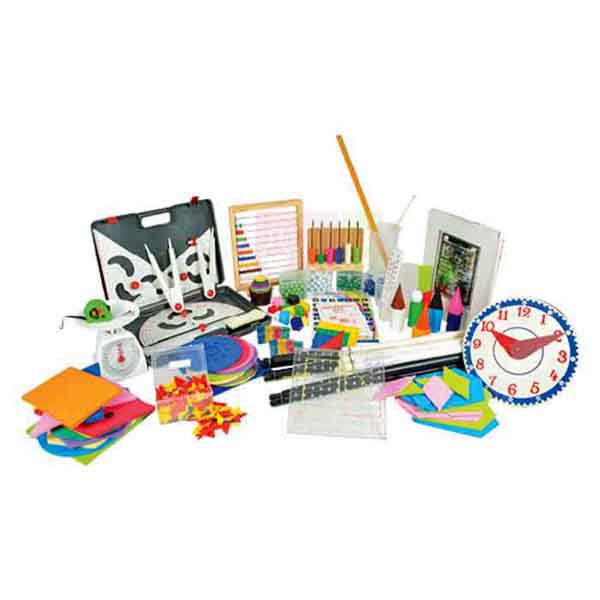
Maths Kit Junior
Maths Kit Junior (Product Code: SLE/MAT/15) is a teacher’s kit of 24 types of manipulatives used to lay the foundations of number, measurement and geometry in junior school mathematics. Each item correlates easily with the curriculum and is sized for teaching a group. The kit is made by Jain Scientific Equipments Pvt Ltd (ScienceLab), an OEM manufacturer of mathematics lab kits in India, at its own factory in Ambala.
Specifications
| Parameter | Detail |
|---|---|
| Manipulative types | 24 |
| Designed for | Teachers laying the foundation of mathematics; items correlate with the curriculum |
| Group teaching | Manipulatives sized for teaching a group |
| Product code | SLE/MAT/15 |
| Manufacturer | Jain Scientific Equipments Pvt Ltd (ScienceLab) — OEM |
| Country of origin | India (made in Ambala, Haryana) |
Kit contents:
- Solid figure set
- Geometrical instrument box
- Measuring tape
- Jug and beaker set
- Wall thermometer
- Chemical thermometer
- Kitchen balance
- Geoboard
- Skip counting board
- Designer fraction
- Abacus
- Fibre dummy clock
- Pattern of triangle
- Game of place value
- Magnetic fraction disk
- Half metre scale
- Plastic moulds
- Set of cups
- Junior Pythagoras theorem
- Geometrical stencils
- Set of pearl marbles
- Transparencies (set of 10)
- Arithmetic charts (set of 7)
- PVC charts (set of 3)
What Is the Maths Kit Junior Used For?
The Maths Kit Junior gives a teacher one box that covers most foundation topics. The abacus, game of place value and skip counting board support place value and times tables; the designer fraction and magnetic fraction disk show parts of a whole; the fibre dummy clock teaches time. The geoboard, geometrical stencils and solid figure set introduce shapes, and the junior Pythagoras theorem gives a first look at right triangles.
Measurement lessons draw on the kitchen balance, jug and beaker set, measuring tape, half metre scale and the wall and chemical thermometers, so students weigh, pour, measure and read temperatures themselves. As a junior lab kit for primary school use, it works well when the teacher demonstrates first and then passes items round the group.
What to Specify When Ordering
- How many kits you need — typically one per teacher or per classroom
- Whether this junior kit or the Senior Maths Kit suits the classes you teach
- Any single items from the list you want as extra spares (ask us)
- Delivery location, in India or abroad
OEM Manufacturer
ScienceLab, the trading name of Jain Scientific Equipments Private Limited, is the OEM that assembles the Maths Kit Junior at its own licensed factory at Saha, Ambala, Haryana. Buying from the maker means the whole kit — all 24 items — is packed and quoted by one company instead of being gathered from several traders.
Schools and distributors that need a replacement for one kit item later can ask the manufacturer directly. See our company profile for more about ScienceLab.
Related Maths Lab Equipment
These items sit alongside the junior kit or take students a step further:
- Senior Maths Kit — the follow-on kit for advanced concepts in higher classes
- Upper Primary Maths Kit — an alternative kit for upper primary classes
- Junior Pythagoras Theorem — the right-triangle aid from the kit, available on its own
- Game of Place Value — the U-shaped wire abacus for place value, sold separately
- Designer Fraction — extra triangle pieces for fraction and pattern work
Explore the wider Maths Lab Equipment range for individual manipulatives.
Frequently Asked Questions
How many items are in the Maths Kit Junior?
The Maths Kit Junior contains 24 types of manipulatives, from an abacus, geoboard and fibre dummy clock to a kitchen balance, jug and beaker set, thermometers, fraction aids, charts and transparencies. The full list is given on this page.
Does the Maths Kit Junior include measuring equipment?
Yes, the Maths Kit Junior includes a kitchen balance, jug and beaker set, measuring tape, half metre scale, wall thermometer and chemical thermometer. Together they let students measure mass, capacity, length and temperature during hands-on maths lessons.
Is the Maths Kit Junior meant for teachers or for students?
The Maths Kit Junior is designed as a teaching aid for teachers laying the foundation of mathematics. Its manipulatives are sized so a teacher can demonstrate to a group, after which students handle the items in turn.
Who manufactures the Maths Kit Junior?
Jain Scientific Equipments Pvt Ltd (ScienceLab) is the OEM manufacturer of the Maths Kit Junior and puts the complete kit together at its own factory in Saha, Ambala, Haryana, India. All 24 item types are packed and supplied by the manufacturer itself.
Can individual items of the Maths Kit Junior be ordered separately?
Some items in the Maths Kit Junior, such as the Junior Pythagoras Theorem and Game of Place Value, also have their own product pages. For any other single item or replacement part, ask us through the contact page.
Can the Maths Kit Junior be ordered in bulk for many schools?
Yes, the Maths Kit Junior can be quoted in bulk for school groups, education departments, dealers and importers in India and international markets. State the number of kits and the delivery location in your enquiry.
Request a Quote
To get a quotation for the Maths Kit Junior, contact us through the contact page or add it to the enquiry cart. Every quotation is issued by the manufacturer itself.
Last updated: 24 September 2026
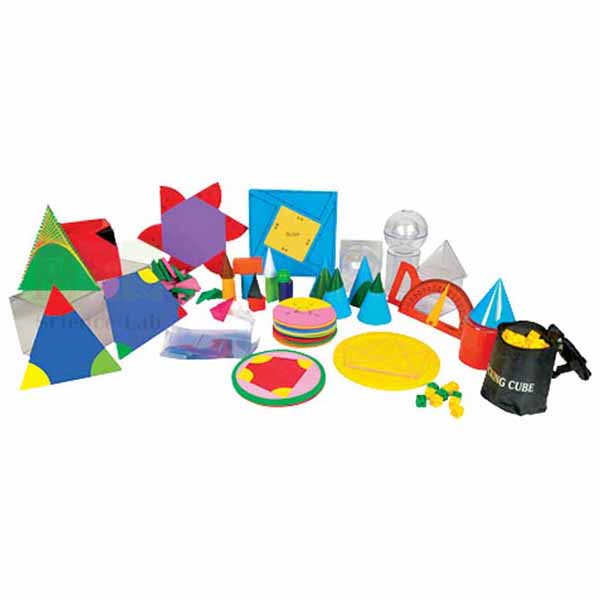
Senior Maths Kit
Senior Maths Kit (Product Code: SLE/MAT/16) is a teacher’s kit of 20 types of manipulatives used to teach advanced mathematics concepts such as mensuration, the Pythagoras theorem, heights and distances and commercial arithmetic in senior school classes. Sextant and theodolite models link classroom trigonometry with field measurement. The kit is made by Jain Scientific Equipments Pvt Ltd (ScienceLab), an OEM manufacturer of mathematics lab kits in India, at its own factory in Ambala.
Specifications
| Parameter | Detail |
|---|---|
| Manipulative types | 20 |
| Purpose | Teaching advanced concepts; items correlate with the curriculum |
| Group teaching | Manipulatives sized for teaching a group |
| Product code | SLE/MAT/16 |
| Manufacturer | Jain Scientific Equipments Pvt Ltd (ScienceLab) — OEM |
| Country of origin | India (made in Ambala, Haryana) |
Items named in the kit description:
- Geoboard
- Magnetic fraction disk
- Set of marbles
- Pythagoras theorem (magnetic)
- Dummy cheque book and pay-in slip
- Mensuration kit
- Derivation of pi (magnetic)
- Optical square
- Cross vertical staff
- Vernier calliper
- Standard time indicator
- Survey measuring tape
- Rain gauge
- Magic circle
- Mathematics charts (set of 15)
- Algebra cubes (plastic)
- Sextant model
- Theodolite model
The description names 18 items; ask us through the contact page for the complete packing list of all 20 types.
What Is the Senior Maths Kit Used For?
The Senior Maths Kit is built for topics that are hard to teach from a textbook alone. The magnetic Pythagoras theorem and derivation-of-pi aids let a teacher demonstrate results on the board, the mensuration kit and vernier calliper support area and volume work, and the plastic algebra cubes make algebraic identities visible. The dummy cheque book and pay-in slip bring banking into commercial arithmetic lessons.
For heights and distances, students take the optical square, cross vertical staff, survey measuring tape, sextant model and theodolite model outdoors and measure real angles and lengths. The rain gauge adds a data-handling project. This is school lab equipment in India that suits a senior mathematics lab shared by several sections.
What to Specify When Ordering
- Number of kits required for your senior classes
- Confirmation of the full list of 20 item types (ask us)
- Whether you also need items such as the Theodolite Model as separate pieces
- Delivery location, in India or abroad
OEM Manufacturer
Jain Scientific Equipments Private Limited, trading as ScienceLab, is the OEM of the Senior Maths Kit. The kit is manufactured at the company’s own licensed factory at Saha, Ambala, Haryana, and supplied directly to schools, colleges, dealers and importers without a middleman.
Because the manufacturer assembles the whole set, one enquiry covers every item, and requests for a replacement piece can be raised with us later. More about the company is on the company profile page.
Related Maths Lab Equipment
These items complement the senior kit or can be bought on their own:
- Theodolite Model — the angle-measuring model from the kit, available separately
- Trigonometry Board — for sine, cosine and tangent before outdoor heights-and-distances work
- Volume Relation Between Cone and Cylinder — a mensuration demonstration of cone and cylinder volumes
- Maths Kit Junior — the foundation-level kit for junior classes
See all Maths Lab Equipment for more senior mathematics aids.
Frequently Asked Questions
What is included in the Senior Maths Kit?
The Senior Maths Kit is described as 20 types of manipulatives; 18 are named on this page, including a geoboard, vernier calliper, mensuration kit, sextant model and theodolite model. Ask through our contact page for the complete packing list.
Which surveying items come in the Senior Maths Kit?
The Senior Maths Kit includes an optical square, cross vertical staff, survey measuring tape, sextant model and theodolite model. Students use them to measure angles and distances outdoors and then solve heights-and-distances problems with trigonometry.
How is the Senior Maths Kit different from the Maths Kit Junior?
The Senior Maths Kit is aimed at advanced concepts such as mensuration, trigonometric measurement and commercial arithmetic. The Maths Kit Junior is aimed at foundation topics like counting, place value, fractions and simple measurement in lower classes.
Is a calibration certificate available for the vernier calliper in the Senior Maths Kit?
The vernier calliper in the Senior Maths Kit is supplied as a teaching aid, and no calibration certificate is listed on this page. If your school needs one, discuss it with us through the contact page before ordering.
Who manufactures the Senior Maths Kit?
The Senior Maths Kit comes from Jain Scientific Equipments Pvt Ltd (ScienceLab), which manufactures the kit as the OEM at its own factory in Saha, Ambala, Haryana, India. Schools, dealers and importers are supplied factory-direct.
Can the Senior Maths Kit be quoted for export or tenders?
Yes, the Senior Maths Kit can be quoted for school tenders, dealers and importers in India and international markets. Send the quantity, delivery location and any tender item description so the manufacturer can prepare the quotation.
Request a Quote
For a Senior Maths Kit quotation, reach us via the contact page or place it in the enquiry cart. Quotes come direct from the manufacturer in Ambala.
Last updated: 24 September 2026
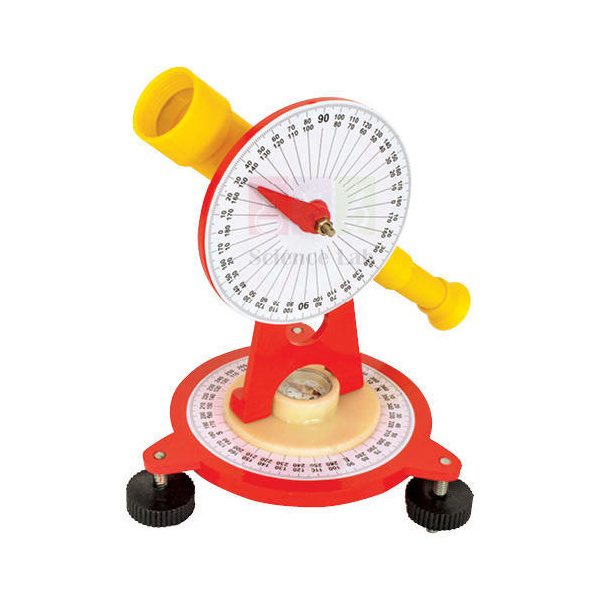
Theodolite Model
Theodolite Model (Product Code: SLE/MAT/17) is a teaching model of a theodolite used to show how horizontal and vertical angles are measured in school mathematics lessons on heights and distances. Its rotating telescope is mounted on horizontal and vertical axes, each fitted with a graduated circle. The model is made by Jain Scientific Equipments Pvt Ltd (ScienceLab), an OEM manufacturer, at its own factory in Ambala, India.
Key Details
| Parameter | Detail |
|---|---|
| Telescope | Movable, rotating telescope |
| Axes | Horizontal and vertical |
| Angle scales | Graduated circles on both axes |
| Demonstrates | Measurement of horizontal and vertical angles |
| Applications explained | Triangulation, prolonging lines, and elevation and depression of distant and near objects |
| Type | Teaching model for understanding how a theodolite works |
| Product code | SLE/MAT/17 |
| Manufacturer | Jain Scientific Equipments Pvt Ltd (ScienceLab) — OEM |
| Country of origin | India (made in Ambala, Haryana) |
What Is the Theodolite Model Used For?
A real theodolite is a surveying instrument, and this model lets students see its mechanics before they meet one in the field. They sight an object through the telescope, read the vertical circle for the angle of elevation or depression, and turn the instrument to read horizontal angles between two landmarks. The readings then feed straight into trigonometry problems on heights and distances.
Place the model on a steady, level table, turn the telescope slowly and read both circles before recording results in a table. Letting groups take their own readings builds a spirit of experimenting, which makes the model a useful part of mathematics lab kits in India for senior classes.
OEM Manufacturer
ScienceLab — the brand of Jain Scientific Equipments Private Limited — is the original equipment manufacturer of this Theodolite Model. It is made at the company’s own licensed factory at Saha, Ambala, Haryana, and supplied factory-direct to schools, colleges, dealers and importers.
Questions about the scale markings or a replacement part go straight to the people who make it — ask us. Our company profile explains more about ScienceLab.
Related Maths Lab Equipment
Use these with the Theodolite Model in angle and measurement lessons:
- Senior Maths Kit — a teacher kit that pairs the theodolite model with a sextant model and optical square
- Trigonometry Board — to build the sine, cosine and tangent ideas used with the readings
- Professional Protractor — a clear open-centre protractor for checking angles on paper
- Folding Meter Stick — for measuring the baseline distance to the object
More geometry and measurement aids are on the Maths Lab Equipment page.
Frequently Asked Questions
Can the Theodolite Model be used for real land surveying?
The Theodolite Model is a teaching model that explains how a theodolite measures horizontal and vertical angles; it is not described as a survey-grade instrument. If you need equipment for field surveying, discuss your requirement through our contact page.
Which parts of a theodolite does the Theodolite Model show?
The Theodolite Model shows a movable telescope mounted on horizontal and vertical axes, with a graduated circle on each axis. Students can see how turning the telescope about each axis changes the horizontal or vertical angle reading.
Which lessons use the Theodolite Model?
The Theodolite Model supports lessons on heights and distances, angles of elevation and depression, and the idea of triangulation. It helps students connect the trigonometric ratios they learn in class with how angles are actually measured.
What is the graduation interval of the Theodolite Model circles?
The graduation interval of the circles on the Theodolite Model is not stated on this page. Please ask through the contact page for the scale details of the current model before you finalise your order.
Who manufactures the Theodolite Model?
Jain Scientific Equipments Pvt Ltd (ScienceLab) is the OEM that makes the Theodolite Model, at its own factory in Saha, Ambala, Haryana, India. Schools, colleges, dealers and importers buy the model straight from its manufacturer.
Can the Theodolite Model be ordered in quantity?
Yes, the Theodolite Model can be quoted in quantity for schools, colleges, dealers and importers in India and international markets. Include the number of models and the delivery location in your enquiry.
Request a Quote
Ask for a Theodolite Model quotation on the contact page or add it to the enquiry cart. The quotation is sent directly by the manufacturer.
Last updated: 24 September 2026
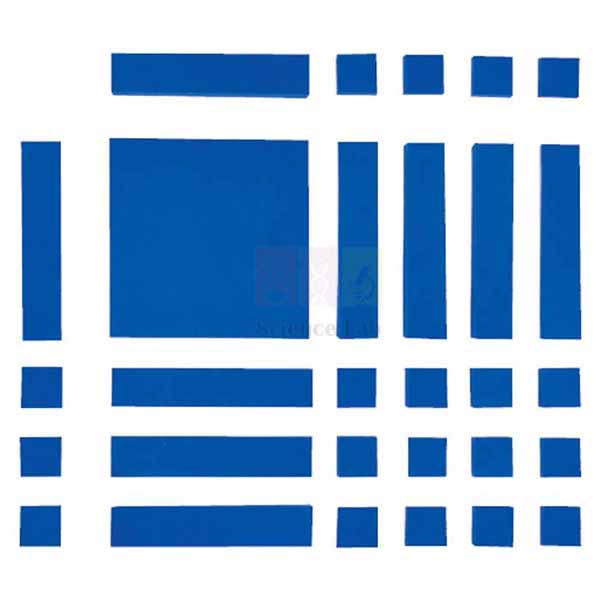
Algebra Tiles
Algebra Tiles (Product Code: SLE/MAT/18) are a hands-on manipulative used to add, subtract and multiply polynomials, factorise them, solve linear equations and model integers in school algebra lessons. The set has three types of tiles in two colours each, typically red for negative and blue for positive. They are made by Jain Scientific Equipments Pvt Ltd (ScienceLab), an OEM manufacturer of educational laboratory equipment in India, at its own factory in Ambala.
Specifications
| Parameter | Detail |
|---|---|
| Tile types | Three |
| Colours | Two for each tile type — typically red for negative and blue for positive |
| Operations covered | Adding, subtracting and multiplying polynomials; factorising polynomials |
| Other topics | Solving linear equations; concepts of integers |
| Product code | SLE/MAT/18 |
| Manufacturer | Jain Scientific Equipments Pvt Ltd (ScienceLab) — OEM |
| Country of origin | India (made in Ambala, Haryana) |
What Are Algebra Tiles Used For?
With Algebra Tiles, students model an expression by laying out tiles, and the two colours show sign at a glance: a red tile and a blue tile of the same type cancel as a zero pair. In the usual convention the three shapes stand for a unit, x and x squared, so collecting like terms becomes a matter of grouping tiles of the same shape.
For multiplication, tiles are arranged into a rectangle whose sides are the two factors; working backwards from a rectangle shows factorising. Linear equations are solved by keeping both sides balanced as tiles are added or removed. Used this way, the tiles give school maths lab equipment a real role in algebra.
OEM Manufacturer
Algebra Tiles are an OEM product of Jain Scientific Equipments Private Limited, the company behind the ScienceLab name. They are made at its own licensed factory in Saha, Ambala, Haryana, and supplied factory-direct to schools, tutoring centres, dealers and importers.
Repeat orders for further class sets are handled by the manufacturer itself, so ask us when you need more. Learn about the company on our company profile.
Related Maths Lab Equipment
These products support the same algebra and integer lessons:
- Algebra Kit — labelled tiles aimed at polynomials in two variables
- Integer Counters — two-colour counters for integer operations before algebra
- Algebra — a bingo-style activity for practising algebra questions
- Graph Board — a write-and-wipe graph for plotting linear equations solved with the tiles
Find more manipulatives on the Maths Lab Equipment page.
Frequently Asked Questions
What colours are Algebra Tiles?
Algebra Tiles come in two colours for each of the three tile types, typically red for negative tiles and blue for positive tiles. The colour contrast lets students see signs instantly and cancel a red and blue pair of the same type.
How many tiles are in a set of Algebra Tiles?
The number of tiles per set of Algebra Tiles is not listed on this page. Please ask through our contact page for the current set contents, especially when ordering enough sets for a full class.
Can Algebra Tiles be used to solve linear equations?
Yes, Algebra Tiles can be used to solve linear equations. Students model each side of the equation with tiles, then add or remove the same tiles from both sides until the variable tile stands alone.
Should I choose Algebra Tiles or the Algebra Kit?
Choose Algebra Tiles for operations on polynomials, factorising, linear equations and integers using positive and negative tiles. The Algebra Kit uses labelled tiles aimed at polynomials in two variables, so schools may use it at a later stage.
Who manufactures Algebra Tiles?
Algebra Tiles on this page are made by Jain Scientific Equipments Pvt Ltd (ScienceLab), the OEM, at its own factory in Saha, Ambala, Haryana, India. Every quotation and order for the tiles is handled directly by the manufacturer.
Can Algebra Tiles be supplied in bulk?
Yes, Algebra Tiles are available in bulk. Schools may order one set per pair or group, and dealers and importers in India and international markets can request larger quantities. Give the number of sets and the delivery location when you enquire.
Request a Quote
Request an Algebra Tiles quotation through the contact page or add them to the enquiry cart. The quotation comes directly from the manufacturer.
Last updated: 24 September 2026
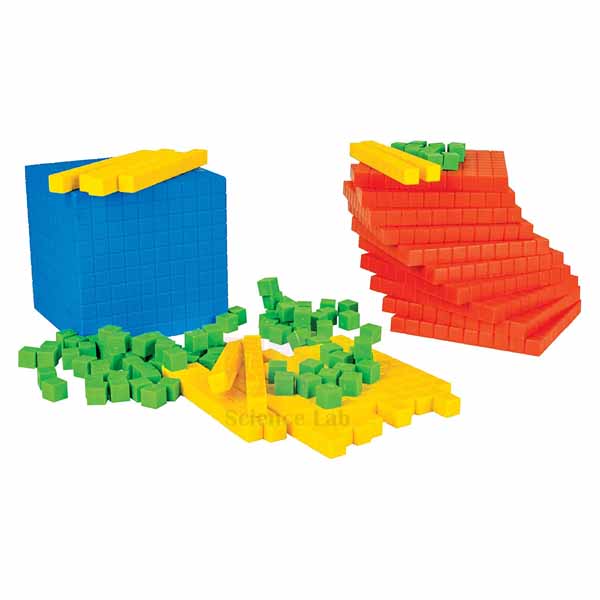
Base Ten Blocks
Base Ten Blocks (Product Code: SLE/MAT/19) are a place-value manipulative used to make the base-ten structure of the decimal number system concrete in primary school maths. The set comprises units, rods (longs) equal to 10 units and flats equal to 100 units, plus a 10 × 10 × 10 cm cube. The blocks are made by Jain Scientific Equipments Pvt Ltd (ScienceLab), an OEM manufacturer, at its own factory in Ambala, India.
Specifications
| Parameter | Detail |
|---|---|
| Pieces | Units, rods (longs), flats and a cube |
| Rod (long) | Equal to 10 units |
| Flat | Equal to 100 units |
| Cube | 10 × 10 × 10 cm |
| Topics | Place value; addition, subtraction, multiplication and division; mensuration; decimals |
| Product code | SLE/MAT/19 |
| Manufacturer | Jain Scientific Equipments Pvt Ltd (ScienceLab) — OEM |
| Country of origin | India (made in Ambala, Haryana) |
What Are Base Ten Blocks Used For?
Place value is a basic concept, and Base Ten Blocks let children hold it. Ten units equal one rod and ten rods equal one flat, so exchanging pieces shows exactly what carrying and borrowing mean in addition and subtraction. Multiplication can be built as arrays of rods and units, and division as sharing blocks into equal groups.
The same pieces serve mensuration lessons on area and volume, and decimals can be modelled by agreeing that a larger piece stands for one whole. Children learn faster and remember longer after concrete experiences, which is why this school lab equipment for primary maths suits regular, hands-on practice.
What to Specify When Ordering
- Number of sets — for example one per group of students
- Pieces per set and unit-cube size (ask us to confirm)
- Whether you also need place-value mats or counters for the same lessons
OEM Manufacturer
Jain Scientific Equipments Private Limited, known by its brand ScienceLab, manufactures Base Ten Blocks as an OEM at its own licensed factory at Saha, Ambala, Haryana. Schools, dealers and importers are supplied directly from the factory rather than through intermediaries.
The company is a registered MSME (Udyam UDYAM-HR-01-0003714), and export consignments go out under Importer-Exporter Code AAECJ8618A (DGFT). Details are on our company profile.
Related Maths Lab Equipment
These items work alongside Base Ten Blocks in place-value lessons:
- Place Value Mat with Stacking Counters — a mat, cards and counters for writing numbers in expanded form
- Game of Place Value — a wire abacus for building larger numbers
- Decimal Abacus — a wooden abacus for decimal place value
- Dienes Blocks Plastic — an alternative plastic block set for place value and algebra
- Interlocking Cubes — linking cubes for counting, patterns and measurement
The Maths Lab Equipment category lists all our number and geometry aids.
Frequently Asked Questions
What pieces are included in Base Ten Blocks?
Base Ten Blocks include units, rods (longs) equal to 10 units, flats equal to 100 units and a 10 × 10 × 10 cm cube. The number of pieces per set is not given here, so confirm the set make-up through our contact page.
Can Base Ten Blocks be used to teach decimals?
Yes, Base Ten Blocks can be used to teach decimals. The teacher chooses one piece to stand for a whole, so the smaller pieces become tenths or hundredths, and students see how decimal place value follows the same base-ten pattern.
Which operations can be taught with Base Ten Blocks?
Base Ten Blocks can be used for addition, subtraction, multiplication and division. Exchanging ten units for a rod, or a rod for ten units, shows regrouping, while arrays and equal sharing make multiplication and division visible.
Who manufactures Base Ten Blocks?
Base Ten Blocks are produced by Jain Scientific Equipments Pvt Ltd (ScienceLab) as the OEM at its own factory in Saha, Ambala, Haryana, India. Sets are supplied directly from the factory to schools, dealers and importers.
Are Base Ten Blocks available for export orders?
Yes, Base Ten Blocks can be supplied to schools, dealers and importers in India and international markets. Send the quantity and destination, and the manufacturer will quote for the order.
Request a Quote
To request a quotation for Base Ten Blocks, use the contact page or add them to the enquiry cart. Quotes are issued by the manufacturer directly.
Last updated: 24 September 2026
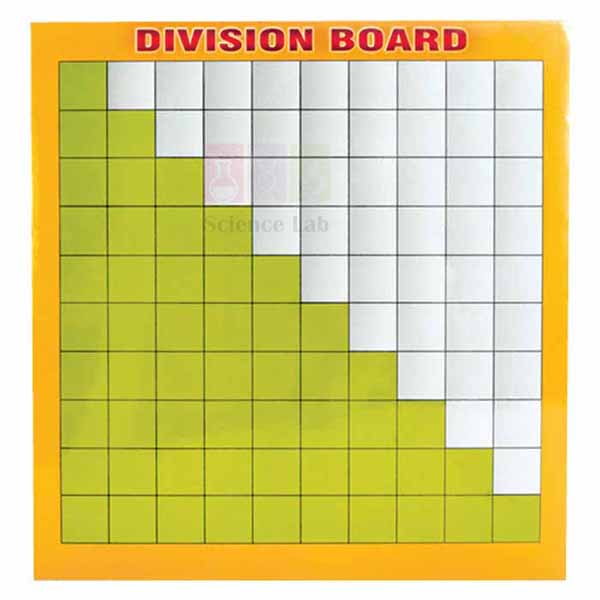
Division Board
Division Board (Product Code: SLE/MAT/20) is a maths board supplied with foam square tiles, used to introduce the concept of division in primary classrooms. Children arrange the tiles on the board into equal groups, so division becomes something they see and handle rather than a rule to memorise. It is made by Jain Scientific Equipments Pvt Ltd (ScienceLab), an OEM maker and school laboratory equipment supplier in India, at its own factory in Ambala.
Key Details
| Parameter | Detail |
|---|---|
| Supplied with | Foam square tiles |
| Topic | Introducing the concept of division |
| Aim | Laying a strong foundation in division |
| Product code | SLE/MAT/20 |
| Manufacturer | Jain Scientific Equipments Pvt Ltd (ScienceLab) — OEM |
| Country of origin | India (made in Ambala, Haryana) |
What Is the Division Board Used For?
Division is often the operation children find hardest, and the Division Board makes it concrete. A teacher gives a number of foam tiles and asks students to share them equally or to make groups of a given size; the arrangement on the board shows the answer, and any tiles left over introduce the idea of a remainder.
Once children can divide with tiles, the board helps them connect division with multiplication facts they already know. Foam tiles are light and quiet on a desk, which suits group work; count the tiles back into storage at the end of each lesson so sets stay complete.
OEM Manufacturer
ScienceLab is the brand under which Jain Scientific Equipments Private Limited manufactures the Division Board as an OEM. The board is produced at the company’s own licensed factory in Saha, Ambala, Haryana, and sent factory-direct to schools, dealers and importers.
If a set needs extra foam tiles later, ask us — the manufacturer handles such requests itself. See the company profile for more about ScienceLab.
Related Maths Lab Equipment
These items support the same arithmetic lessons:
- Factor Board — a foam-tile board for factors and multiples
- Place Value Board Multiplication — the multiplication board, for the inverse operation
- Stacking Counters — colour counters for extra grouping and sharing practice
- Calculator Simple/Hand — a basic calculator for checking answers later
Browse the Maths Lab Equipment range for more arithmetic manipulatives.
Frequently Asked Questions
What comes with the Division Board?
The Division Board is supplied with foam square tiles for grouping and sharing activities. The number of tiles and the board size are not stated on this page; please ask through our contact page for the current details.
Which concept does the Division Board teach?
The Division Board introduces the concept of division. Children share foam tiles equally or make equal groups, see the quotient on the board and meet remainders naturally, which lays a strong foundation before written division.
Can the Division Board tiles be used with the Factor Board?
The Division Board and the Factor Board are both supplied with foam square tiles. Whether the tiles are interchangeable between the two boards is not stated here, so ask us through the contact page if you plan to share them.
Who manufactures the Division Board?
The maker of the Division Board is Jain Scientific Equipments Pvt Ltd (ScienceLab), an OEM manufacturer with its own factory in Saha, Ambala, Haryana, India. Boards and foam tiles are dispatched by the manufacturer itself.
Can the Division Board be ordered for a whole school?
Yes, the Division Board can be quoted in class or school quantities for schools, dealers and importers in India and international markets. Mention the number of boards and the delivery address in your enquiry.
Request a Quote
Send a Division Board enquiry through the contact page or add the board to the enquiry cart. The manufacturer will reply with a direct quotation.
Last updated: 24 September 2026
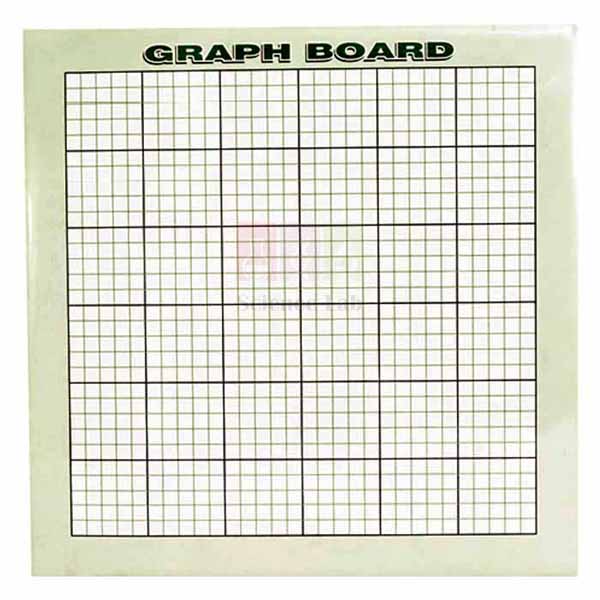
Graph Board
Graph Board (Product Code: SLE/MAT/21) is an enlarged write-and-wipe graph used to teach coordinate geometry in school maths lessons. Because the grid is larger than a notebook graph, children find and mark points more easily, and the surface wipes clean for the next problem. It is made by Jain Scientific Equipments Pvt Ltd (ScienceLab), an OEM manufacturer of mathematics lab equipment, at its own factory in Ambala, India.
Key Details
| Parameter | Detail |
|---|---|
| Surface | Write-and-wipe |
| Format | Enlarged version of a graph |
| Topic | Coordinate geometry — finding and plotting points |
| Product code | SLE/MAT/21 |
| Manufacturer | Jain Scientific Equipments Pvt Ltd (ScienceLab) — OEM |
| Country of origin | India (made in Ambala, Haryana) |
What Is the Graph Board Used For?
On the Graph Board a teacher can plot points in front of the class, then invite students up to mark their own. Tables of values become straight lines drawn in a few seconds, and mistakes can be wiped away without starting a new sheet. The larger grid squares make it easy to see whether a point sits exactly on a grid line.
Because it is reusable, one board serves many lessons and many sections. Wipe the surface after every session so marks do not linger, and store it flat. It is an easy addition to school lab equipment in India for classrooms building a maths corner.
OEM Manufacturer
The Graph Board is an OEM product of Jain Scientific Equipments Private Limited, which trades as ScienceLab. Production takes place at the company’s own licensed factory at Saha, Ambala, Haryana, and boards go factory-direct to schools, dealers and importers.
For repeat orders or questions about the board surface, ask us and the manufacturer will answer directly. Our company profile has the background.
Related Maths Lab Equipment
These items pair well with the Graph Board:
- Coordinate Board — a four-quadrant board game with counters and dice
- Construction of Parabola — a slotted plate for constructing a parabola with rubber bands
- Trigonometry Board — for moving from coordinates to trigonometric ratios
- Geometrical Instruments Set — large instruments for drawing on whiteboards and chalkboards
All geometry aids are listed on the Maths Lab Equipment page.
Frequently Asked Questions
What markers can be used on the Graph Board?
The Graph Board has a write-and-wipe surface, but the recommended marker type is not stated on this page. Ask us through the contact page which pens suit it, and wipe the board after each lesson so marks do not set.
What size is the Graph Board?
The Graph Board is an enlarged version of a graph, made so children can find points easily. Its exact dimensions and grid spacing are not listed on this page; please ask through the contact page before ordering.
How is the Graph Board different from the Coordinate Board?
The Graph Board is an enlarged, reusable write-and-wipe graph for plotting and drawing. The Coordinate Board is a four-quadrant board game played with colour counters and dice. Teachers can use the Graph Board for demonstration and the game for group practice.
Who manufactures the Graph Board?
Jain Scientific Equipments Pvt Ltd (ScienceLab) manufactures the Graph Board as the OEM at its own factory in Saha, Ambala, Haryana, India. Schools and distributors buy the board directly from its maker.
Can the Graph Board be supplied in bulk?
Yes, the Graph Board can be supplied in bulk. Because one board serves many lessons, a school may need only a few per maths room, while dealers and importers in India and international markets can request larger lots.
Request a Quote
Request a Graph Board quotation through the contact page or add it to the enquiry cart. Quotations are sent by the manufacturer directly.
Last updated: 24 September 2026
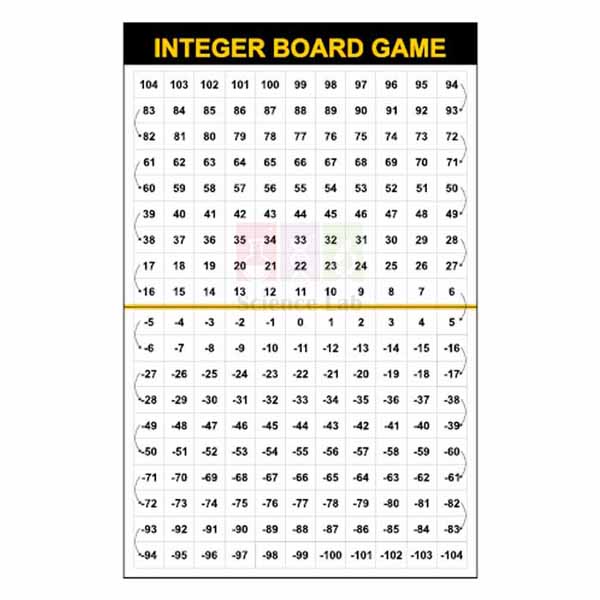
Integer Board Game
Integer Board Game (Product Code: SLE/MAT/22) is a dice-and-counter board game used to teach addition and subtraction of integers in middle school maths. Because the dice and counters produce innumerable combinations, rounds rarely repeat and students practise signed-number operations many times over. The game is made by Jain Scientific Equipments Pvt Ltd (ScienceLab), an OEM manufacturer of mathematics lab kits in India, at its own factory in Ambala.
Key Details
| Parameter | Detail |
|---|---|
| Supplied with | Dice and counters |
| Topic | Addition and subtraction of integers |
| Play | Innumerable combinations |
| Product code | SLE/MAT/22 |
| Manufacturer | Jain Scientific Equipments Pvt Ltd (ScienceLab) — OEM |
| Country of origin | India (made in Ambala, Haryana) |
What Is the Integer Board Game Used For?
Rules such as “subtracting a negative is adding” are easy to forget when learned only from a textbook, but they stick once students have played them out. In the Integer Board Game, the dice supply the numbers and the counters mark results on the board, so students test the sign rules again and again and check each other’s moves.
Teachers can treat movement one way as positive and the other as negative, so a student sees why −3 + 5 lands on 2. Played in small groups, it suits the start of the integers chapter and later revision, and it adds a game element to maths lab equipment used in middle school.
OEM Manufacturer
Jain Scientific Equipments Private Limited, trading as ScienceLab, is the OEM of the Integer Board Game and makes it at its own licensed factory at Saha, Ambala, Haryana. Schools, dealers and importers are supplied directly by the maker.
Tender and vendor-registration forms can quote the company’s GSTIN, 06AAECJ8618A1ZT, and its Legal Entity Identifier, 3358004HRD1JIVXKYX49. Read more on our company profile.
Related Maths Lab Equipment
These items support the integers chapter and related topics:
- Integer Counters — double-sided counters for modelling integer statements
- Plastic Dice — spare dice for extra groups or new games
- Coordinate Board — the next step, using negative numbers as coordinates
- Algebra Tiles — positive and negative tiles that carry integer ideas into algebra
Discover more number games in the Maths Lab Equipment range.
Frequently Asked Questions
What is included with the Integer Board Game?
The Integer Board Game comes with a board, dice and counters. The number of dice and counters per set is not listed on this page, so please confirm the contents through our contact page before ordering several sets.
Which operations does the Integer Board Game cover?
The Integer Board Game covers addition and subtraction of integers, including operations with negative numbers. Because the dice give innumerable combinations, students meet many different sums and differences in a single lesson.
Why use a board game to teach integers?
The Integer Board Game turns sign rules into moves that students make themselves, so the rules are practised rather than just memorised. Group play also means classmates check each answer, which catches sign errors quickly.
Who manufactures the Integer Board Game?
The Integer Board Game is made by the OEM, Jain Scientific Equipments Pvt Ltd (ScienceLab), at its own factory in Saha, Ambala, Haryana, India. Quotations and supply for the game come directly from the manufacturer.
Can the Integer Board Game be ordered for export?
Yes, export and domestic orders for the Integer Board Game are both handled by the manufacturer, for schools, dealers and importers in India and international markets. Include the number of sets and the destination country in your enquiry.
Request a Quote
To order the Integer Board Game, contact us via the contact page or add it to the enquiry cart. Quotations are issued directly by the manufacturer.
Last updated: 24 September 2026
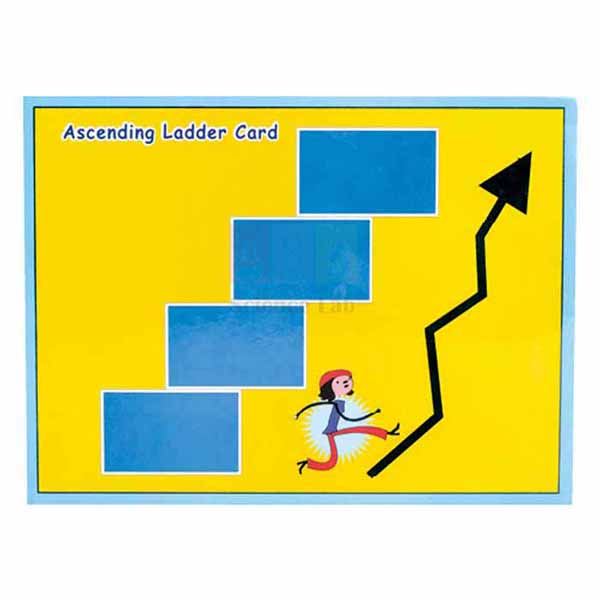
Ascending Card Game
Ascending Card Game (Product Code: SLE/MAT/23) is a number-ordering activity in which learners place number cards along a board in ascending order, used in primary maths lessons. It turns the idea of “smallest to largest” into a hands-on sequencing task that children can check for themselves. This card game is made by Jain Scientific Equipments Pvt Ltd (ScienceLab), an OEM manufacturer, at its own factory in Ambala, India.
Key Details
| Parameter | Detail |
|---|---|
| Components | Number cards and a board |
| Activity | Placing number cards in ascending order along the board |
| Topic | Ordering numbers from smallest to largest |
| Product code | SLE/MAT/23 |
| Manufacturer | Jain Scientific Equipments Pvt Ltd (ScienceLab) — OEM |
| Country of origin | India (made in Ambala, Haryana) |
What Is the Ascending Card Game Used For?
In the Ascending Card Game, a learner takes a handful of number cards and lays them along the board from the smallest to the largest. To do this correctly the child has to compare numbers digit by digit, so the game quietly reinforces place value as well as ordering.
Teachers can shuffle the cards between rounds, let pairs race to finish a row, or ask students to explain why one card comes before another. Used with its descending partner, it rounds out a set of school lab equipment for primary number work.
OEM Manufacturer
ScienceLab, the trade name of Jain Scientific Equipments Private Limited, is the OEM of the Ascending Card Game. Cards and boards are made at the company’s own licensed factory in Saha, Ambala, Haryana, and supplied factory-direct to schools, dealers and importers.
Lost cards or extra sets can be requested from the manufacturer itself — just ask us. Visit our company profile to learn more.
Related Maths Lab Equipment
These items extend number-ordering practice:
- Descending Card Game — the partner game for ordering from largest to smallest
- Number Card (101 cards) — hanging number cards for a classroom number line
- Game of Place Value — a wire abacus for building and comparing larger numbers
- Number Mat — a floor mat for hopping forward and backward counting
See the full Maths Lab Equipment range for more number games.
Frequently Asked Questions
What is included in the Ascending Card Game?
The Ascending Card Game includes number cards and a board on which learners place the cards in ascending order. The number range and card count are not stated on this page; please ask through our contact page for details.
What skill does the Ascending Card Game build?
The Ascending Card Game builds the skill of ordering numbers from smallest to largest. To place each card, children compare numbers and their digits, which strengthens number sense and place-value understanding at the same time.
Is there a descending version of the Ascending Card Game?
Yes, the Descending Card Game is the partner product, in which students order numbers from largest to smallest. Using the Ascending Card Game and the descending version together helps children see ordering in both directions.
Who manufactures the Ascending Card Game?
Jain Scientific Equipments Pvt Ltd (ScienceLab) produces the Ascending Card Game as the OEM at its own factory in Saha, Ambala, Haryana, India. Schools and distributors order the game straight from the manufacturer.
Can the Ascending Card Game be ordered in class sets?
Yes, the Ascending Card Game can be quoted in class sets or bulk for schools, dealers and importers in India and international markets. State the quantity and delivery location when you send your enquiry.
Request a Quote
Send your Ascending Card Game requirement through the contact page or add it to the enquiry cart. The manufacturer quotes you directly.
Last updated: 24 September 2026
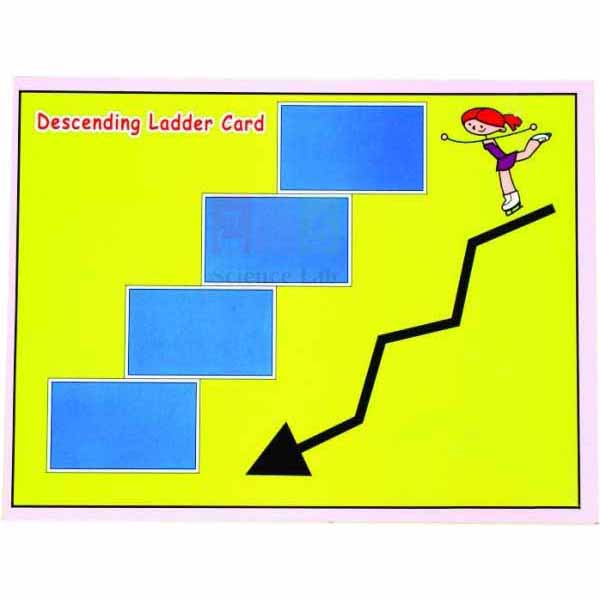
Descending Card Game
Descending Card Game (Product Code: SLE/MAT/24) is a printed card game used to teach arranging numbers in descending order, from largest to smallest, in primary mathematics. It measures 29 × 25 cm and has an interesting, easy-to-follow printed layout that students pick up quickly. It comes from Jain Scientific Equipments Pvt Ltd (ScienceLab), an OEM manufacturer with its own factory in Ambala, India.
Specifications
| Parameter | Detail |
|---|---|
| Size | 29 × 25 cm |
| Finish | Printed |
| Topic | Arranging numbers in descending order |
| Format | Card game with an easy-to-understand layout |
| Product code | SLE/MAT/24 |
| Manufacturer | Jain Scientific Equipments Pvt Ltd (ScienceLab) — OEM |
| Country of origin | India (made in Ambala, Haryana) |
What Is the Descending Card Game Used For?
Counting backwards and ordering from the largest number down is a separate skill from counting up, and the Descending Card Game gives it its own practice. Students arrange the cards from the biggest value to the smallest, learning the concept while they play rather than from a worksheet.
The 29 × 25 cm format fits comfortably on a pupil’s desk, so pairs or small groups can play side by side. Wipe the printed surface with a dry cloth and keep the game flat in storage. It sits well among mathematics lab kits in India for primary classes.
OEM Manufacturer
Jain Scientific Equipments Private Limited, which uses the brand ScienceLab, is the original equipment manufacturer of the Descending Card Game. It is manufactured at the company’s own licensed factory at Saha, Ambala, Haryana, and supplied directly to schools, dealers and importers.
Quotations and repeat orders are handled by the maker itself, so there is no trader in between. Read about the company on the company profile.
Related Maths Lab Equipment
These items round out number-ordering lessons:
- Ascending Card Game — the partner game for ordering from smallest to largest
- Empty Number Card (Set of 5) — blank cards for writing numbers with chalk
- Game of Place Value — for forming the greatest and smallest numbers from digits
- Integer Board Game — a dice game for later work with negative numbers
More number games are on the Maths Lab Equipment page.
Frequently Asked Questions
What size is the Descending Card Game?
The Descending Card Game measures 29 × 25 cm. This size fits on a student desk, so pairs or small groups can play at the same time without needing extra table space.
What does the Descending Card Game teach?
The Descending Card Game teaches students to arrange numbers in descending order, from largest to smallest. Its printed, easy-to-understand layout lets children learn the concept by playing rather than by copying from the board.
Should the Descending Card Game be used with the Ascending Card Game?
Teachers can use the Descending Card Game together with the Ascending Card Game so students practise ordering in both directions. Switching between the two also checks that children really compare values rather than memorising a sequence.
Who manufactures the Descending Card Game?
The Descending Card Game is an OEM product of Jain Scientific Equipments Pvt Ltd (ScienceLab), manufactured at the company’s own factory in Saha, Ambala, Haryana, India. Schools and distributors receive it directly from the manufacturer.
How should the Descending Card Game be cared for?
The Descending Card Game has a printed finish, so wipe it with a dry cloth rather than a wet one and store it flat in a dry place. Keeping all cards together after each lesson keeps the set complete.
Request a Quote
For a Descending Card Game quotation, use the contact page or add it to the enquiry cart. Quotes come straight from the manufacturer.
Last updated: 24 September 2026
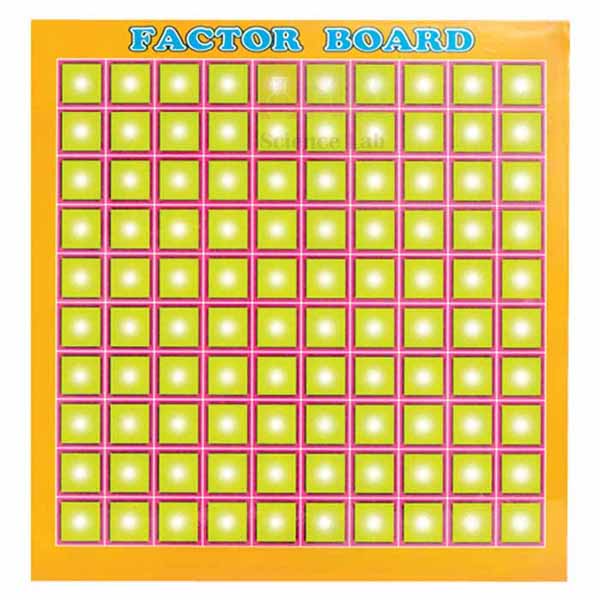
Factor Board
Factor Board (Product Code: SLE/MAT/25) is a maths board supplied with foam square tiles, used to explore factors and multiples in primary and middle school classes. Arranging the tiles into rectangular arrays shows every factor pair of a number, and the board allows innumerable combinations. The board is made by Jain Scientific Equipments Pvt Ltd (ScienceLab), an OEM manufacturer, at its own factory in Ambala, India.
Key Details
| Parameter | Detail |
|---|---|
| Supplied with | Foam square tiles |
| Topic | Factors and multiples — understanding their definitions |
| Combinations | Innumerable |
| Product code | SLE/MAT/25 |
| Manufacturer | Jain Scientific Equipments Pvt Ltd (ScienceLab) — OEM |
| Country of origin | India (made in Ambala, Haryana) |
What Is the Factor Board Used For?
On the Factor Board, students take a number of foam tiles and try to arrange all of them into rectangles. Each rectangle that works gives a factor pair, and a number that forms only a single row turns out to be prime. Seeing twelve tiles make several different rectangles explains the word “factor” better than a definition alone.
The same arrays read the other way show multiples, and comparing two numbers’ rectangles leads towards common factors. Because the combinations are innumerable, the board supports practice at several levels. It is a practical piece of school lab equipment for primary and middle classes.
OEM Manufacturer
The Factor Board is manufactured by ScienceLab, the brand of Jain Scientific Equipments Private Limited, acting as the OEM rather than a reseller. Boards and tiles go factory-direct to schools, dealers and importers.
Jain Scientific Equipments Private Limited (CIN U29309HR2020PTC087597) makes the board at its licensed factory at 449, HSIIDC Industrial Area, Saha, Ambala, which holds Factory Licence AMB-ONLINE-CHD-J-414. See our company profile for more.
Related Maths Lab Equipment
These items support the same number-theory lessons:
- Division Board — a foam-tile board for introducing division
- Place Value Board Multiplication — for multiplying whole numbers, the flip side of factors
- Colour Tile — multicoloured square tiles for area, perimeter and number operations
- Calculator Simple/Hand — a basic calculator for checking factor lists
The Maths Lab Equipment page lists more arithmetic aids.
Frequently Asked Questions
What comes with the Factor Board?
Foam square tiles come with the Factor Board so students can build arrays on it. How many tiles are included, and the board size, are not listed here, so please confirm them through our contact page before ordering.
How does the Factor Board teach factors and multiples?
The Factor Board teaches factors by having students arrange foam tiles into rectangles; the length and width of each rectangle form a factor pair. Reading the same arrays as repeated groups shows multiples and supports the definitions of both terms.
Can the Factor Board show prime numbers?
Yes, the Factor Board can show prime numbers. When a number of tiles can only be arranged as one single row, it has no other factor pair, so students discover primes and composites for themselves.
Who manufactures the Factor Board?
Jain Scientific Equipments Pvt Ltd (ScienceLab) is the OEM manufacturer of the Factor Board, making it at its own factory in Saha, Ambala, Haryana, India. Boards and tiles are sold directly by the manufacturer to schools and distributors.
Can the Factor Board be supplied in bulk or for export?
Yes, the Factor Board is available in bulk and can be ordered together with the Division Board and Place Value Board Multiplication. Dealers and importers in India and international markets can send the quantity and delivery location for a quotation.
Request a Quote
Ask for a Factor Board quotation using the contact page, or place the board in your enquiry cart. The manufacturer will respond with a quotation directly.
Last updated: 24 September 2026
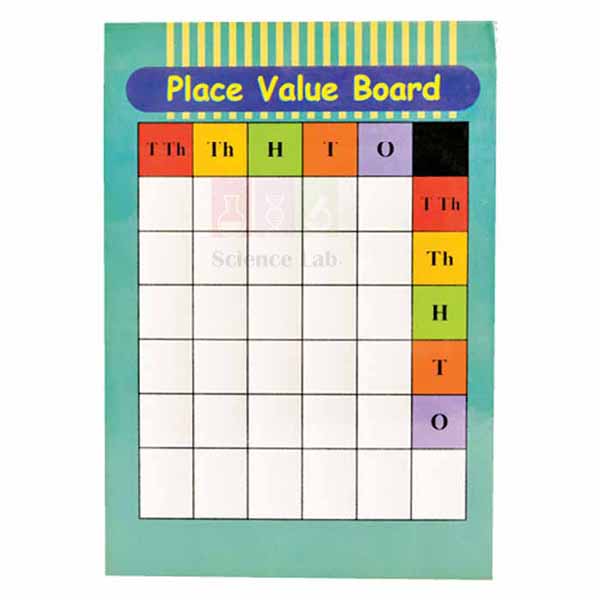
Place Value Board Multiplication
Place Value Board Multiplication (Product Code: SLE/MAT/26) is a maths board supplied with foam square tiles, used to explore multiplication of whole numbers through place value in primary classrooms. Teachers use it to give students a clear understanding of what happens in each place when a number is multiplied. The board is produced by Jain Scientific Equipments Pvt Ltd (ScienceLab), an OEM manufacturer, at its own factory in Ambala, India.
Key Details
| Parameter | Detail |
|---|---|
| Supplied with | Foam square tiles |
| Topic | Multiplication of whole numbers |
| Approach | Place-value board for hands-on multiplication |
| Product code | SLE/MAT/26 |
| Manufacturer | Jain Scientific Equipments Pvt Ltd (ScienceLab) — OEM |
| Country of origin | India (made in Ambala, Haryana) |
What Is the Place Value Board Multiplication Used For?
Written multiplication hides a lot of place-value thinking, and the Place Value Board Multiplication brings it into view. Students lay out foam tiles to build each partial product, then combine them, so they can see why digits shift and where a carried value comes from.
Children find multiplying whole numbers more fun when they can build it, and the board lets a teacher move from concrete tiles to the standard written method step by step. It is a useful addition to maths lab equipment for primary classes working on times tables and multi-digit multiplication.
OEM Manufacturer
Jain Scientific Equipments Private Limited, trading as ScienceLab, is the OEM of the Place Value Board Multiplication. The board is made at the company’s own licensed factory at Saha, Ambala, Haryana, and supplied factory-direct to schools, dealers and importers.
Extra tiles or repeat orders can be requested from the manufacturer itself — ask us. More about ScienceLab is on the company profile.
Related Maths Lab Equipment
These items work alongside the board in place-value and arithmetic lessons:
- Place Value Mat with Stacking Counters — a mat and counters for building numbers in expanded form
- Game of Place Value — a wire abacus for place value of larger numbers
- Division Board — a foam-tile board for the inverse operation
- Factor Board — foam-tile arrays for factors and multiples
Browse all Maths Lab Equipment for further number aids.
Frequently Asked Questions
What comes with the Place Value Board Multiplication?
The Place Value Board Multiplication comes with foam square tiles for building partial products. Tile quantity and board layout are not listed on this page — send a question through our contact page and the manufacturer will confirm them.
Which topic does the Place Value Board Multiplication cover?
The Place Value Board Multiplication covers multiplication of whole numbers. Students build partial products with foam tiles and see how place value explains carrying and the shifting of digits in the written method.
How is the Place Value Board Multiplication different from the Division Board?
The Place Value Board Multiplication focuses on multiplying whole numbers, while the Division Board introduces division through equal groups. Both are supplied with foam square tiles, so teachers can use them one after the other to link the two operations.
Who manufactures the Place Value Board Multiplication?
The Place Value Board Multiplication is an OEM product made by Jain Scientific Equipments Pvt Ltd (ScienceLab) at its own factory in Saha, Ambala, Haryana, India. Orders for the board and tiles are supplied directly by the manufacturer.
Can the Place Value Board Multiplication be ordered in bulk?
Yes, the Place Value Board Multiplication can be ordered in quantity for classrooms, school chains, dealers and importers in India and international markets. Mention how many boards you need and where they should be delivered.
Request a Quote
To order the Place Value Board Multiplication, contact us through the contact page or add it to the enquiry cart. You will receive a quotation direct from the manufacturer.
Last updated: 24 September 2026
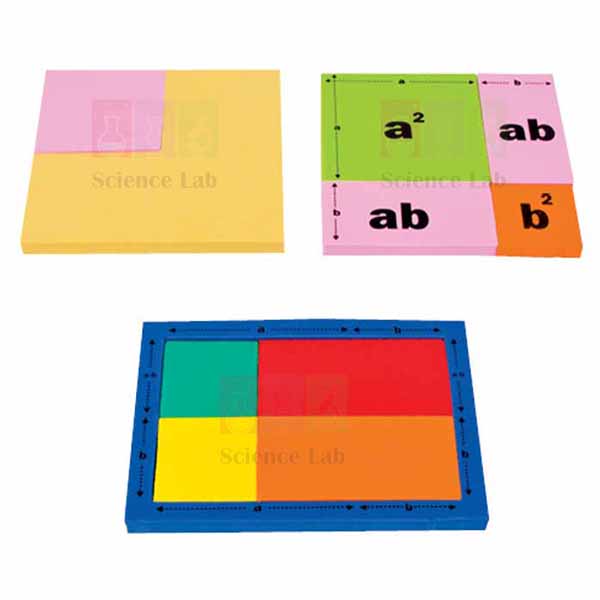
Student Identity Kit
Student Identity Kit (Product Code: SLE/MAT/27) is a hands-on algebra kit used to derive the identities (a+b)2, (a−b)2 and a2−b2 in school mathematics lessons. Designed for students, it lets learners generalise each formula on their own instead of memorising it. It is made by Jain Scientific Equipments Pvt Ltd (ScienceLab), an OEM manufacturer of mathematics lab kits in India, at its own factory in Ambala, India.
Key Details
| Parameter | Detail |
|---|---|
| Identities covered | (a+b)2, (a−b)2 and a2−b2 |
| Learning approach | Students generalise and derive each formula on their own |
| Designed for | School students learning algebraic identities |
| Product code | SLE/MAT/27 |
| Manufacturer | Jain Scientific Equipments Pvt Ltd (ScienceLab) — OEM |
| Country of origin | India (made in Ambala, Haryana) |
What Is the Student Identity Kit Used For?
The kit supports the algebra unit in which students meet the square of a sum, the square of a difference and the difference of two squares. Rather than being handed a2 + 2ab + b2 as a rule, learners work through the kit, spot the pattern and state the identity in their own words. This suits mathematics lab periods and activity-based lessons in secondary school.
A practical routine is to let small groups derive one identity each, check it with simple numbers such as a = 3 and b = 2, and then explain their reasoning to the class. As part of the lab equipment for a school mathematics room, the kit works best when its parts are kept together in one box after every lesson.
OEM Manufacturer
Jain Scientific Equipments Private Limited trades as ScienceLab and is the OEM (original equipment manufacturer) of the Student Identity Kit. The company designs and makes this kit at its own licensed factory at Saha, Ambala, Haryana, India, and supplies it factory-direct to schools, colleges, dealers and importers. Because you deal with the maker rather than a trader, questions about repeat orders or replacement parts are answered by the team that produces the kit. Learn more on the ScienceLab company profile.
Related Maths Lab Equipment
These items from the same maths lab range fit the algebra lessons in which this kit is used:
- Algebra Tiles — for modelling expressions and factorising with tiles
- Algebra Kit — for further hands-on work in the same algebra unit
- Graph Board — for plotting expressions and linking identities to graphs
- Senior Maths Kit — for equipping a secondary-level maths lab
Browse the full range of Maths Lab Equipment.
Frequently Asked Questions
What identities does the Student Identity Kit cover?
The Student Identity Kit covers three algebraic identities: (a+b)2, (a−b)2 and a2−b2. Students use it to generalise each identity and derive the formula themselves, so they understand where each expansion comes from instead of only memorising it.
What is included in the Student Identity Kit?
The current listing for the Student Identity Kit does not give a contents list or piece count. Please ask through the contact page and we will confirm exactly what the kit contains when we send your quotation.
Which students is the Student Identity Kit designed for?
The Student Identity Kit is designed for school students who are learning algebraic identities, usually when expanding brackets and the difference of squares are introduced. Teachers can demonstrate with one kit or give kits to small groups for self-directed practice in the maths lab.
Who manufactures the Student Identity Kit?
The Student Identity Kit is manufactured by Jain Scientific Equipments Pvt Ltd (ScienceLab), the OEM, at its own licensed factory in Saha, Ambala, Haryana, India. Buyers deal directly with the manufacturer for quotations, repeat orders and any questions about the kit.
Can the Student Identity Kit be ordered in bulk or for export?
Yes. The Student Identity Kit can be quoted in class-set quantities for schools, dealers and importers in India and international markets. Share the number of kits and the delivery location through the contact page so that a complete quotation can be prepared.
What should a quotation request for the Student Identity Kit include?
A quotation request for the Student Identity Kit should state the product code SLE/MAT/27, the number of kits, the delivery city or country, and any other maths lab items you need in the same shipment, so the manufacturer can quote everything together.
Request a Quote
To order the Student Identity Kit, send your requirement through the contact page or add the product to the enquiry cart. Quotations come direct from the manufacturer in Ambala, so pricing and delivery details reach you without a middleman.
Last updated: 24 September 2026
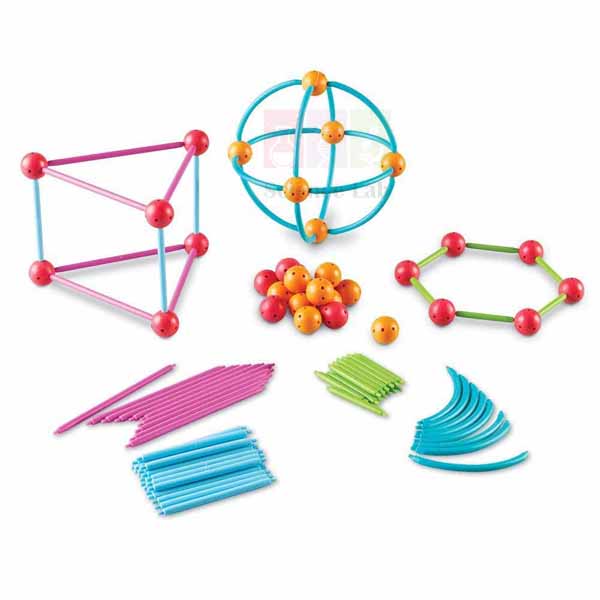
Geometric Shapes Building Set
Geometric Shapes Building Set (Product Code: SLE/MAT/28) is a construction set of sticks, curves and connectors used to build and explore 2-D and 3-D shapes in school maths classes. It contains 90 sticks in three lengths, 32 curves for circles and cylinders, and 48 connectors of two types. The set is made by Jain Scientific Equipments Pvt Ltd (ScienceLab), an OEM mathematics lab equipment manufacturer, at its own factory in Ambala, India.
Specifications
| Parameter | Detail |
|---|---|
| Sticks | 90, in 3 sizes: 2 1/4 in, 3 1/2 in and 5 1/4 in |
| Curves | 32, for making circles and cylinders |
| Connectors | 48, of 2 different types, approximately 1 in in diameter |
| Shapes possible | 2-D shapes, and 3-D shapes by combining pieces |
| Design | Child-friendly, durable sticks, curves and connectors |
| Product code | SLE/MAT/28 |
| Manufacturer | Jain Scientific Equipments Pvt Ltd (ScienceLab) — OEM |
| Country of origin | India (made in Ambala, Haryana) |
What Is the Geometric Shapes Building Set Used For?
Students join sticks with connectors to form triangles, squares, rectangles and other polygons, then add curves to close a circle or form the sides of a cylinder. Because every side is a physical stick, the class can count edges and vertices, compare side lengths across the three sizes, and see how a flat figure becomes a solid when more pieces are added. That makes the set useful for lessons on properties of shapes, perimeter and the difference between 2-D and 3-D figures.
For group work, give each table a share of the sticks and connectors and set a challenge, such as building every triangle possible from two stick sizes. Sorting the pieces back by type at the end of the lesson keeps the set complete. For a school laboratory setup in India that includes a maths corner, this open-ended building set pairs well with solid shape models.
OEM Manufacturer
The Geometric Shapes Building Set is produced by Jain Scientific Equipments Private Limited, which trades as ScienceLab and acts as the OEM (original equipment manufacturer) for its maths lab range. The set is made at the company's own licensed factory at Saha, Ambala, Haryana, India, and supplied factory-direct to schools, institutions, dealers and importers. ScienceLab is a registered MSME enterprise whose major activity is manufacturing (Udyam UDYAM-HR-01-0003714), and export shipments are handled under Importer-Exporter Code AAECJ8618A issued by DGFT. See the ScienceLab company profile for more background.
Related Maths Lab Equipment
Teachers who use this building set often pair it with these shape resources from the same range:
- Folding Geometric Shapes — for modelling solids with faces as well as edges
- Wooden Geometric Solids — for comparing skeleton models with solid shapes
- 2D Shapes — for naming and sorting flat shapes before building them
- Transparent 3D Solid Set — for follow-up work on three-dimensional solids
See all items in Maths Lab Equipment.
Frequently Asked Questions
What comes in the Geometric Shapes Building Set?
The Geometric Shapes Building Set contains 90 sticks in three sizes (2 1/4, 3 1/2 and 5 1/4 inches), 32 curves for making circles and cylinders, and 48 connectors of two different types, each approximately 1 inch in diameter.
Can the Geometric Shapes Building Set make 3-D shapes?
Yes. The Geometric Shapes Building Set is built around 2-D shapes first, and students can then combine sticks, curves and connectors into 3-D shapes such as cylinders and other skeleton solids, which helps them compare flat and solid figures.
Is the Geometric Shapes Building Set suitable for young children?
The Geometric Shapes Building Set is described as child-friendly, with durable sticks, curves and connectors intended for classroom handling. As with any set containing small parts, teachers should supervise younger pupils and count the pieces back in after each activity.
Who manufactures the Geometric Shapes Building Set?
The Geometric Shapes Building Set is manufactured by Jain Scientific Equipments Pvt Ltd (ScienceLab), the OEM, at its own licensed factory in Saha, Ambala, Haryana, India. Quotations, repeat orders and spare-piece enquiries are handled by the manufacturer itself, so just ask us.
How many Geometric Shapes Building Sets does a class need?
For the Geometric Shapes Building Set, the number depends on group size: one set can be shared by a small group, while larger classes usually order several sets. Tell us your class size through the contact page and we will quote the quantity you need.
Can the Geometric Shapes Building Set be exported?
Yes. The Geometric Shapes Building Set is supplied to buyers in India and international markets. Send the quantity, destination country and any other maths lab items through the contact page so that the export quotation can cover the full order.
Request a Quote
Request pricing for the Geometric Shapes Building Set through the contact page, or place it in the enquiry cart together with other maths lab items. Your quotation comes straight from the manufacturer at Ambala.
Last updated: 24 September 2026
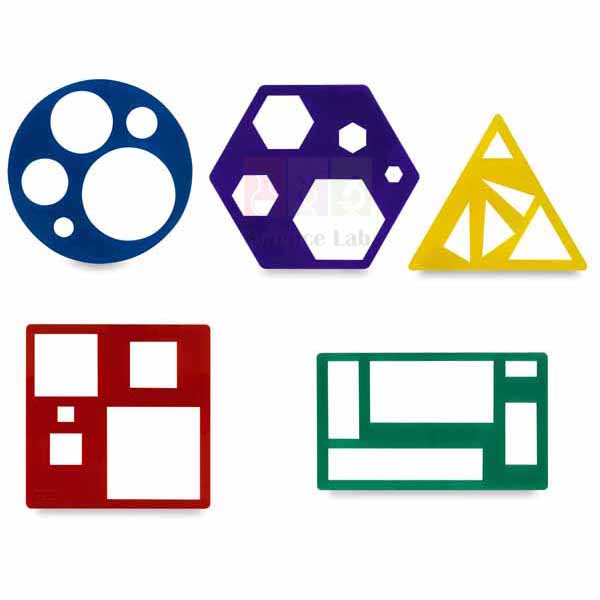
Primary Shapes Template Set
Primary Shapes Template Set (Product Code: SLE/MAT/29) is a set of transparent tracing templates used to draw and compare basic shapes in primary maths lessons. Its 5 durable, labelled templates (rectangle, triangle, circle, square and hexagon) each show one shape in several sizes and orientations. It is made by Jain Scientific Equipments Pvt Ltd (ScienceLab), an OEM manufacturer of educational laboratory equipment in India, at its own factory in Ambala, India.
Specifications
| Parameter | Detail |
|---|---|
| Templates | 5 durable, labelled templates |
| Shapes | Rectangle, triangle, circle, square and hexagon |
| Rectangle template size | 7.5 in (L) x 4.5 in (H) |
| Transparency | Transparent, so tracing lines stay visible after repositioning |
| Design | Relational shapes in varying sizes and orientations; tracing around the entire template gives the largest version |
| Product code | SLE/MAT/29 |
| Manufacturer | Jain Scientific Equipments Pvt Ltd (ScienceLab) — OEM |
| Country of origin | India (made in Ambala, Haryana) |
What Is the Primary Shapes Template Set Used For?
Each template nests several versions of one shape, so a child who traces an inner outline and then the whole template sees that a small square and a large square share the same properties. These relational examples help pupils make mental connections between size, orientation and shape name, which matters when a triangle is turned on its point and suddenly looks unfamiliar.
Because each template is transparent, pupils can slide it over lines they have already drawn and line up the next tracing precisely. Teachers use the set for shape recognition, drawing patterns and simple symmetry activities, and the printed labels reinforce shape vocabulary during independent work at the maths table.
OEM Manufacturer
ScienceLab is the trading name of Jain Scientific Equipments Private Limited, the OEM (original equipment manufacturer) of the Primary Shapes Template Set. The templates are produced at the company's own licensed factory at Saha, Ambala, Haryana, India, rather than bought in from a trader, and are sent factory-direct to schools, teacher-training institutes, dealers and importers. Replacement templates and repeat orders are handled by the manufacturer, so simply ask us when you need them. Visit the ScienceLab profile to learn about the company.
Related Maths Lab Equipment
These shape resources from the same range extend the tracing activities into sorting, building and area work:
- 2D Shapes — for handling flat shapes alongside tracing them
- Attribute Blocks — for sorting shapes by their attributes
- Geometric Shapes Building Set — for constructing the same shapes from sticks and connectors
- Upper Primary Maths Kit — for the next stage of a primary maths lab
Explore the complete Maths Lab Equipment category.
Frequently Asked Questions
Which shapes are in the Primary Shapes Template Set?
The Primary Shapes Template Set includes five durable, labelled templates: a rectangle, a triangle, a circle, a square and a hexagon. Each template shows its shape in varying sizes and orientations, and tracing around the whole template produces the largest version.
How big are the templates in the Primary Shapes Template Set?
In the Primary Shapes Template Set, the rectangle template measures 7.5 inches long by 4.5 inches high. Sizes of the other four templates are not listed, so please ask through the contact page if you need them before ordering.
Why are the Primary Shapes Template Set templates transparent?
The Primary Shapes Template Set uses transparent templates so that pupils can still see the lines they have already traced after moving the template. This makes it easier to line up new drawings, build patterns and compare the sizes of the nested shapes.
Who manufactures the Primary Shapes Template Set?
Jain Scientific Equipments Pvt Ltd (ScienceLab) manufactures the Primary Shapes Template Set as the OEM at its own licensed factory at Saha, Ambala, Haryana, India. Schools, dealers and importers receive quotations directly from the manufacturer rather than through an intermediary.
What should a quote request for the Primary Shapes Template Set include?
A quote request for the Primary Shapes Template Set should include the product code SLE/MAT/29, the number of sets, the delivery address and whether the order covers one classroom or several schools. Bulk orders for India and international markets can be quoted.
Request a Quote
Send an enquiry for the Primary Shapes Template Set through the contact page or add it to the enquiry cart. Because ScienceLab makes the set, the quotation you receive comes direct from the manufacturer.
Last updated: 24 September 2026
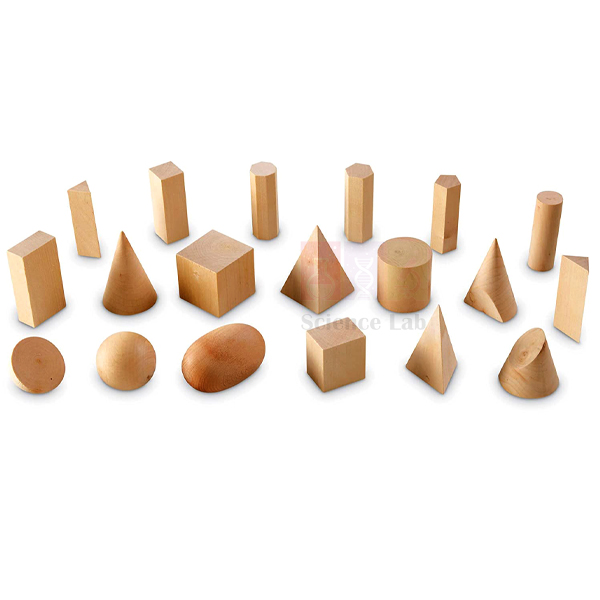
Wooden Geometric Solids
Wooden Geometric Solids (Product Code: SLE/MAT/30) is a set of 19 smooth hardwood solid shapes used to teach the faces, edges and vertices of 3-D figures in school geometry. The set ranges from a cube and eight kinds of prism to cones, cylinders, pyramids, a sphere, a hemisphere and an ellipsoid. It is made by Jain Scientific Equipments Pvt Ltd (ScienceLab), which manufactures its maths lab range as an OEM at its own factory in Ambala, India.
Specifications
| Parameter | Detail |
|---|---|
| Number of solids | Set of 19 |
| Material and finish | Smooth hardwood |
| Cube and prisms | Cube, square prism, tall rectangle prism, short rectangle prism, obtuse triangular prism, equilateral triangular prism, pentagonal prism, hexagonal prism, octagonal prism |
| Pyramids | Square pyramid, triangular pyramid |
| Cylinders and cones | Wide cylinder, narrow cylinder, cone, parabola cone, ellipsed cone |
| Round solids | Sphere, hemisphere, ellipsoid |
| Product code | SLE/MAT/30 |
| Manufacturer | Jain Scientific Equipments Pvt Ltd (ScienceLab) — OEM |
| Country of origin | India (made in Ambala, Haryana) |
What Are Wooden Geometric Solids Used For?
Teachers pass the solids around so pupils can feel the difference between flat faces and curved surfaces, count edges and vertices, and sort the shapes into prisms, pyramids and round solids. Having prisms with triangular, square, pentagonal, hexagonal and octagonal bases lets a class see how the number of faces grows with the number of sides on the base.
The set also supports lessons on naming solids, comparing a tall and a short rectangle prism, and discussing less common forms such as the ellipsoid and the parabola cone. Smooth hardwood pieces are pleasant to handle; wiping them with a dry cloth and storing them away from damp helps keep the finish smooth. The set is a practical entry on the lab equipment list of any school that teaches 3-D geometry.
OEM Manufacturer
Jain Scientific Equipments Private Limited, trading as ScienceLab, is the OEM (original equipment manufacturer) of these Wooden Geometric Solids. The set is made at the company's own licensed factory at Saha, Ambala, Haryana, India and dispatched factory-direct to schools, colleges, education departments, dealers and importers. If a piece goes missing or a school wants matching sets later, the request goes straight to the maker, so ask us about replacements and repeat orders. Read more on the ScienceLab company profile.
Related Maths Lab Equipment
For a fuller 3-D geometry unit, these items from the same range work well alongside the hardwood set:
- Relational GeoSolids — another solid-shape set for comparing related 3-D forms
- Volume Relation Between Cone and Cylinder — for showing how cone and cylinder volumes compare
- Transparent 3D Solid Set — for viewing edges and faces through clear solids
- Folding Geometric Shapes — for moving between flat and solid forms
View every product in Maths Lab Equipment.
Frequently Asked Questions
How many shapes are in the Wooden Geometric Solids set?
The Wooden Geometric Solids set contains 19 shapes: a cube, sphere, hemisphere, ellipsoid, cone, parabola cone, ellipsed cone, wide and narrow cylinders, square and triangular pyramids, and square, obtuse triangular, equilateral triangular, tall rectangle, short rectangle, pentagonal, hexagonal and octagonal prisms.
What material are the Wooden Geometric Solids made from?
The Wooden Geometric Solids are made from smooth hardwood. Individual dimensions of each solid are not listed, so if your lesson plan or tender needs sizes, please request them through the contact page before placing the order.
How should Wooden Geometric Solids be cared for?
Wooden Geometric Solids should be kept dry and cleaned with a dry or lightly damp cloth rather than soaked. Storing all 19 pieces together in a box or tray after each lesson keeps the set complete and protects the smooth hardwood finish.
Who manufactures the Wooden Geometric Solids?
Wooden Geometric Solids are manufactured by Jain Scientific Equipments Pvt Ltd (ScienceLab) as the OEM at its own licensed factory in Saha, Ambala, Haryana, India. Quotations, repeat orders and replacement enquiries are handled by the manufacturer directly.
Are Wooden Geometric Solids suitable for demonstration and group work?
Yes. Wooden Geometric Solids can be held up for a whole-class demonstration or shared among small groups for sorting and counting faces, edges and vertices. Schools can order several sets so that each group has its own complete range of 19 shapes.
Can Wooden Geometric Solids be supplied for export?
Yes. Wooden Geometric Solids are supplied to schools, dealers and importers in India and international markets. Include the number of sets and the destination in your enquiry, and the manufacturer will prepare a quotation for the full shipment.
Request a Quote
To request a price for Wooden Geometric Solids, use the contact page or add the set to the enquiry cart. Quotations are issued directly by ScienceLab as the manufacturer, which keeps communication simple for schools and dealers.
Last updated: 24 September 2026
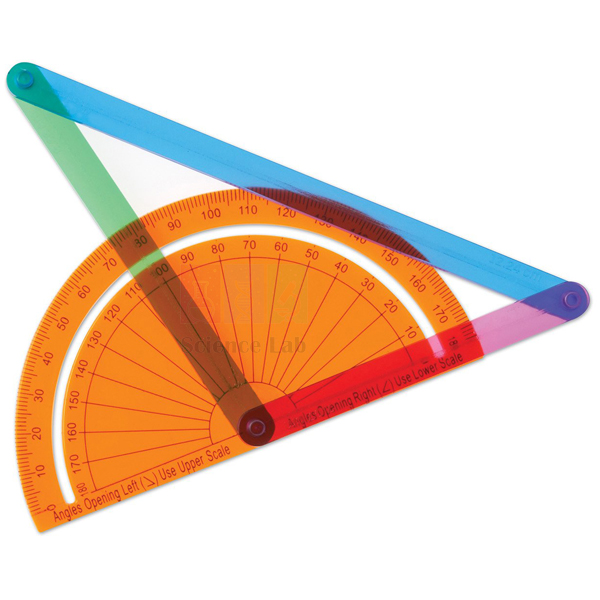
Anglegs Transparent Student Set
Anglegs Transparent Student Set (Product Code: SLE/MAT/31) is a set of clear, snap-together geometry pieces used to build angles and polygons in school plane geometry lessons. It contains 12 pieces of each of six lengths in six colours, two snap-on protractors and 15 double-sided activity cards. The set is supplied by Jain Scientific Equipments Pvt Ltd (ScienceLab), Ambala, a school laboratory equipment supplier in India, to institutions at home and abroad.
Specifications
| Parameter | Detail |
|---|---|
| Leg pieces | 12 of each of six different lengths, in six colours |
| Protractors | 2 snap-on see-through protractors |
| Activity cards | 15, double-sided |
| Construction | Clear, snap-together pieces |
| Topics | Plane geometry, shape identification, spatial reasoning, basic measurement |
| Product code | SLE/MAT/31 |
| Supplied by | Jain Scientific Equipments Pvt Ltd (ScienceLab), Ambala, India |
What Is the Anglegs Transparent Student Set Used For?
Students snap the legs together end to end to form open angles, triangles, quadrilaterals and other polygons, then attach a protractor to measure the angle at a joint. Because the pieces come in six fixed lengths, a class can test which three lengths close into a triangle and which do not, or build shapes with equal sides and compare their angles.
The 15 double-sided activity cards provide ready-made tasks for independent or paired work, which helps when one teacher is running several groups. Clear pieces let learners see lines and diagrams underneath, so a model can be laid over a worksheet or grid paper to check it. Sorting the legs by colour before packing away makes the next lesson quicker to start.
Supplier
Jain Scientific Equipments Private Limited, which trades as ScienceLab, supplies the Anglegs Transparent Student Set as part of its maths lab range. The company sources and dispatches the set from Ambala, Haryana, to schools, colleges, dealers and importers in India and international markets, and can combine it with other maths lab items in one consignment. For company background, see the ScienceLab profile.
Related Maths Lab Equipment
These items help students carry their angle and shape work from models to measurement and drawing:
- Professional Protractor — for measuring angles on paper drawings
- Geometrical Instruments Set — for moving from physical models to drawn constructions
- Geo Geometry Sticks — another stick-based resource for angle and polygon work
- Geometric Shapes Building Set — for building 2-D and 3-D shapes with sticks and connectors
More geometry resources are listed under Maths Lab Equipment.
Frequently Asked Questions
What is included in the Anglegs Transparent Student Set?
The Anglegs Transparent Student Set includes 12 leg pieces in each of six different lengths, colour-coded in six colours, two snap-on see-through protractors and 15 double-sided activity cards. Together they cover angle building, polygon construction and basic measurement tasks.
What topics can be taught with the Anglegs Transparent Student Set?
The Anglegs Transparent Student Set is used to teach plane geometry, including shape identification, spatial reasoning and basic measurement. Students build angles and polygons from the snap-together pieces and measure them with the protractors, linking hands-on models to written geometry.
Why are the pieces in the Anglegs Transparent Student Set clear?
The Anglegs Transparent Student Set uses clear pieces so that students can see lines, grids or diagrams underneath while they build. This helps when checking a model against a worksheet drawing or reading an angle with the snap-on protractor.
Who supplies the Anglegs Transparent Student Set?
The Anglegs Transparent Student Set is supplied by Jain Scientific Equipments Pvt Ltd (ScienceLab), Ambala, Haryana, India. It is offered as part of the company's maths lab range for schools, dealers and importers, and quotations come from the ScienceLab team.
What should a quotation request for the Anglegs Transparent Student Set mention?
A quotation request for the Anglegs Transparent Student Set should mention product code SLE/MAT/31, the number of student sets, the delivery location and any related maths items you need. Orders for India and international markets are quoted on request.
Request a Quote
To buy the Anglegs Transparent Student Set, send the quantity through the contact page or add it to the enquiry cart. The ScienceLab team will reply with a quotation and delivery details.
Last updated: 24 September 2026
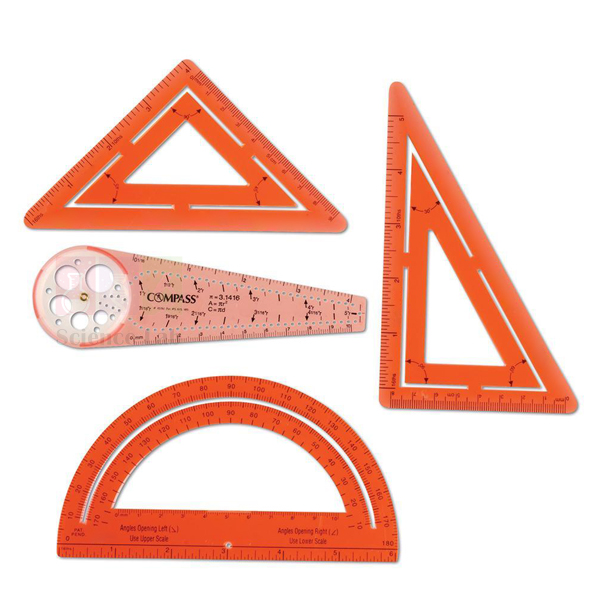
Geometry Set
Geometry Set (Product Code: SLE/MAT/32) is a medium-size student drawing kit used to construct and measure angles, lines and circles in school geometry lessons. It holds a compass, a 6 in protractor and two medium-size triangles (45° and 60°) in a vinyl wallet punched with 3-ring binder holes. The set is supplied by Jain Scientific Equipments Pvt Ltd (ScienceLab), Ambala, a laboratory equipment supplier in India.
Specifications
| Parameter | Detail |
|---|---|
| Set size | Medium set |
| Compass | 1 |
| Protractor | 6 in |
| Triangles | 2 medium-size triangles: 45° and 60° |
| Storage | Vinyl wallet with 3-ring binder holes |
| Product code | SLE/MAT/32 |
| Supplied by | Jain Scientific Equipments Pvt Ltd (ScienceLab), Ambala, India |
What Is the Geometry Set Used For?
Students use the compass to draw circles and arcs, the protractor to measure and draw angles, and the two triangles as set squares for ruling parallel and perpendicular lines. With the 45° and 60° triangles used together, several standard angles, including right angles, can be drawn without a protractor, which is a core skill in construction exercises.
Because the wallet has 3-ring binder holes, each student can keep the set inside a geometry file and bring it to every lesson, which cuts down on lost instruments. Schools can issue one set per student at the start of the year. The compass point is sharp, so it should be returned to the wallet after use.
Supplier
ScienceLab is the trading name of Jain Scientific Equipments Private Limited, which supplies this Geometry Set from Ambala, Haryana, alongside its wider range of school laboratory equipment. Schools, dealers and importers in India and international markets can order it in class quantities together with other maths items. For vendor registration, the supplying company's details are GSTIN 06AAECJ8618A1ZT and LEI 3358004HRD1JIVXKYX49. More information is on the ScienceLab profile.
Related Maths Lab Equipment
These drawing and measuring items complement the Geometry Set in a maths room:
- Geometrical Instruments Set — an alternative instrument set for construction work
- Safe-T Compass — an additional compass option for circles and arcs
- Half Meter Scale — for measuring and ruling longer lines
- T-Square — for drawing parallel lines on a drawing board
Find more classroom geometry tools in Maths Lab Equipment.
Frequently Asked Questions
What is included in the Geometry Set?
The Geometry Set includes a compass, a 6 inch protractor and two medium-size triangles, one 45° and one 60°, all stored in a vinyl wallet. These are the basic tools students need for drawing circles, measuring angles and constructing lines.
What size is the Geometry Set?
The Geometry Set is the medium set: it comes with a 6 inch protractor and medium-size triangles. If you need other sizes or larger demonstration instruments for the board, ask through the contact page and we will advise on available options.
How is the Geometry Set stored?
The Geometry Set stores in a vinyl wallet that has 3-ring binder holes, so students can keep it inside a ring binder or geometry file. This keeps the compass, protractor and triangles together and easy to carry between lessons.
Who supplies the Geometry Set?
The Geometry Set is supplied by Jain Scientific Equipments Pvt Ltd (ScienceLab), Ambala, Haryana, India. Schools, dealers and importers can order it together with other maths lab items, and vendor-registration details are provided for institutional purchasing.
Can the Geometry Set be ordered for a whole class?
Yes. The Geometry Set can be quoted in class and school quantities for buyers in India and international markets. Send product code SLE/MAT/32, the number of sets and the delivery location through the contact page to receive a quotation.
Request a Quote
Request a quotation for the Geometry Set through the contact page, or add it to the enquiry cart along with any other items for your maths room. ScienceLab will confirm pricing and dispatch details.
Last updated: 24 September 2026
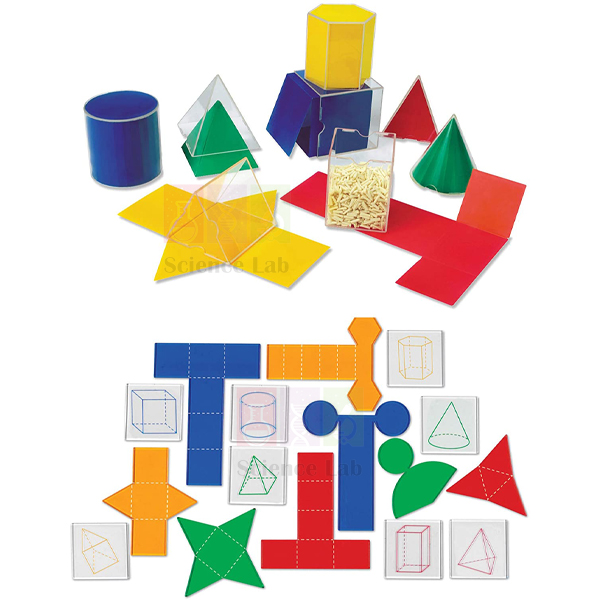
Folding Geometric Shapes
Folding Geometric Shapes (Product Code: SLE/MAT/33) is a colourful 32-piece model set used to show geometric shapes in both 2-D and 3-D form when teaching area, volume and surface area in school maths. It combines standard folding shapes with overhead versions for class demonstration, covering a cube, prisms, pyramids, a cylinder and a cone. The set is made by Jain Scientific Equipments Pvt Ltd (ScienceLab), an OEM manufacturer, at its own factory in Ambala, India.
Specifications
| Parameter | Detail |
|---|---|
| Pieces | 32-piece set, colourful |
| Set contents | Folding Geometric Shapes and Overhead Folding Geometric Shapes |
| Shapes included | Cylinder, cube, triangular prism, rectangular prism, pyramid, square, cone, hexagonal prism, triangular pyramid |
| Forms | Models shapes in both two- and three-dimensional form |
| Topics | Visualisation and spatial reasoning in measurement, area, volume and surface area |
| Product code | SLE/MAT/33 |
| Manufacturer | Jain Scientific Equipments Pvt Ltd (ScienceLab) — OEM |
| Country of origin | India (made in Ambala, Haryana) |
What Are Folding Geometric Shapes Used For?
Folding shapes let a teacher start with a solid on the desk and open it out so students can see its faces laid flat. Counting and measuring those faces turns surface area from a formula into something visible, and folding the model back up links the flat layout to the solid and its volume. The approach helps pupils who find it hard to picture a hidden face from a textbook diagram.
The overhead pieces let the whole class follow a demonstration while groups work with the standard pieces at their tables. Because prisms, pyramids, a cylinder and a cone are all in one set, a single resource can carry a unit from naming solids to calculating surface area. Mathematics lab equipment of this kind is useful from upper primary through secondary classes.
OEM Manufacturer
ScienceLab, the trading name of Jain Scientific Equipments Private Limited, is the OEM (original equipment manufacturer) behind this Folding Geometric Shapes set. It is produced at the company's own licensed factory at Saha, Ambala, Haryana, India, and supplied factory-direct to schools, colleges, dealers and importers. Working with the manufacturer gives you one point of contact for quotations, repeat orders and any replacement pieces you want to ask about. Company details are on the ScienceLab profile.
Related Maths Lab Equipment
These items from the same maths range support the rest of a 3-D geometry and measurement unit:
- Wooden Geometric Solids — solid hardwood shapes for handling and sorting
- Geometric Shapes Building Set — for building skeleton versions of the same shapes
- Volume Relation Between Cone and Cylinder — for extending the unit to comparing volumes
- Relational GeoSolids — for comparing related solids side by side
Browse the whole Maths Lab Equipment range.
Frequently Asked Questions
How many pieces are in the Folding Geometric Shapes set?
The Folding Geometric Shapes set has 32 pieces in total, made up of standard Folding Geometric Shapes and Overhead Folding Geometric Shapes. The colourful pieces cover solids such as the cube, cylinder, cone, pyramids and several prisms.
Which shapes does the Folding Geometric Shapes set include?
The Folding Geometric Shapes set includes a cylinder, cube, triangular prism, rectangular prism, pyramid, square, cone, hexagonal prism and triangular pyramid. Together these let teachers model both two-dimensional and three-dimensional forms in one lesson sequence.
What topics does the Folding Geometric Shapes set support?
The Folding Geometric Shapes set supports visualisation and spatial reasoning in measurement, area, volume and surface area. Students see how solids relate to their flat faces, which makes surface-area and volume calculations easier to understand and check.
Who manufactures the Folding Geometric Shapes set?
The Folding Geometric Shapes set is manufactured by Jain Scientific Equipments Pvt Ltd (ScienceLab), the OEM, at its own licensed factory at Saha, Ambala, Haryana, India. Schools and dealers buy directly from the manufacturer, with quotations prepared by the company itself.
What are the overhead pieces in the Folding Geometric Shapes set for?
The overhead pieces in the Folding Geometric Shapes set are intended for whole-class demonstration, while students handle the standard folding shapes at their desks. Ask us through the contact page if you need details of the overhead pieces before ordering.
Can the Folding Geometric Shapes set be ordered in bulk?
Yes. The Folding Geometric Shapes set can be quoted in multiple sets for schools, dealers and importers in India and international markets. State product code SLE/MAT/33, the quantity and the delivery location in your enquiry.
Request a Quote
Ask for a price on the Folding Geometric Shapes set through the contact page, or save it to the enquiry cart while you browse. You will receive a quotation directly from the manufacturer in Ambala.
Last updated: 24 September 2026
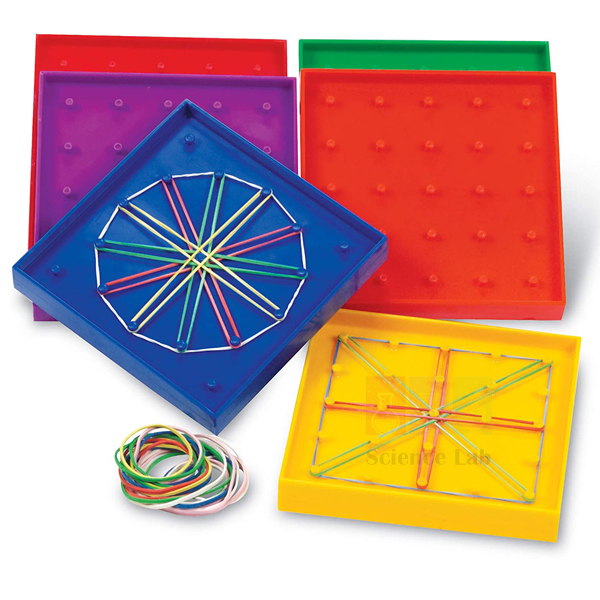
5 Assorted Geoboards
5 Assorted Geoboards (Product Code: SLE/MAT/34) is a set of double-sided rainbow geoboards used to make shapes with rubber bands on pin grids in school geometry lessons. Each board offers two different pin arrangements, including a 5 x 5 pin layout, so students can switch grids by turning the board over. The boards are made by Jain Scientific Equipments Pvt Ltd (ScienceLab), an OEM manufacturer of mathematics lab kits in India, at its own factory in Ambala.
Key Details
| Parameter | Detail |
|---|---|
| Board type | Double-sided rainbow geoboards |
| Pin arrangements | Two different arrangements, including 5 x 5 pin |
| Boards per set | Listed as a set of 6 (the product name says 5); the board count is confirmed on your quotation |
| Shape-making | With rubber bands in bright hues |
| Product code | SLE/MAT/34 |
| Manufacturer | Jain Scientific Equipments Pvt Ltd (ScienceLab) — OEM |
| Country of origin | India (made in Ambala, Haryana) |
What Are the 5 Assorted Geoboards Used For?
Students stretch rubber bands between pins to make triangles, squares, rectangles and irregular polygons, then count grid units to find perimeter and area. Because a band can be moved in seconds, a pupil can test an idea, shift one vertex and see at once how the shape and its area change. The colourful, double-sided boards also suit early lessons on symmetry and congruent shapes.
Two pin arrangements on each board mean one set covers square-grid tasks on the 5 x 5 side and a different layout on the reverse without extra boards. As part of a junior maths lab kit for primary school, geoboards work well for paired tasks; ask pupils to remove all bands at the end of the lesson so the pins stay straight.
What to Specify When Ordering
- The number of boards you need per set, as the listing shows a set of 6 while the name says 5
- Whether rubber bands should be supplied with the boards
- The number of sets required per classroom or school
OEM Manufacturer
Jain Scientific Equipments Private Limited trades as ScienceLab and is the OEM (original equipment manufacturer) of these geoboards. They are made at the company's own licensed factory at Saha, Ambala, Haryana, India, and supplied factory-direct to schools, colleges, dealers and importers, so quotations come from the maker rather than a reseller. For spare boards or matching sets later, simply ask us. See the ScienceLab company profile.
Related Maths Lab Equipment
These items pair naturally with geoboard lessons on shape, area and coordinates:
- Double Sided Geoboard — another two-sided geoboard option
- 10 Isometric Grid Pattern Geoboard — an isometric board for pattern block shapes
- Rubber Bands (Good Quality) — spare bands for stretching shapes over the pins
- Coordinate Board — for plotting points once grid work is familiar
Other geometry resources are in Maths Lab Equipment.
Frequently Asked Questions
How many geoboards are in the 5 Assorted Geoboards set?
The 5 Assorted Geoboards listing describes a set of 6 boards, while the product name says 5. Please confirm the exact board count with us through the contact page before ordering, and it will be stated on your quotation.
What pin layout do the 5 Assorted Geoboards have?
The 5 Assorted Geoboards are double-sided, with two different pin arrangements, including a 5 x 5 pin grid. Turning a board over gives students a second layout, so one board supports a wider range of shape and area activities.
Are rubber bands included with the 5 Assorted Geoboards?
The 5 Assorted Geoboards are used with brightly coloured rubber bands, but the listing does not state how many bands come with the set. Tell us whether you need bands supplied, and the quotation will specify them clearly.
Who manufactures the 5 Assorted Geoboards?
The 5 Assorted Geoboards are manufactured by Jain Scientific Equipments Pvt Ltd (ScienceLab), the OEM, at its own licensed factory in Saha, Ambala, Haryana, India. Schools and dealers order directly from the manufacturer for new sets, repeat orders and spare boards.
Which topics can be taught with the 5 Assorted Geoboards?
The 5 Assorted Geoboards support lessons on shape recognition, perimeter, area, symmetry and congruence. Students build shapes with rubber bands, compare them with a partner and adjust vertices to see how measurements change, which makes abstract geometry concrete.
Request a Quote
Send your requirement for the 5 Assorted Geoboards through the contact page or add them to the enquiry cart. Quotations come direct from the manufacturer and confirm the board count and any rubber bands included.
Last updated: 24 September 2026
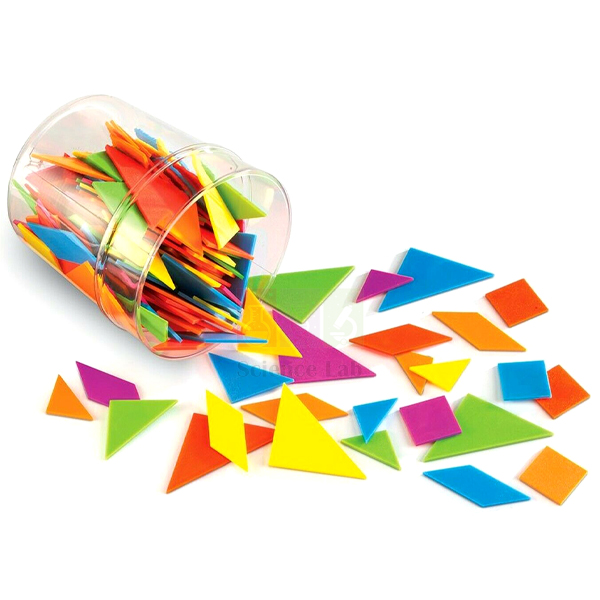
Brights Tangrams Class Pack
Brights Tangrams Class Pack (Product Code: SLE/MAT/35) is a classroom set of tangram pieces used to teach shape identification, comparison, composition and symmetry to a whole class at once. The pack holds 210 shaped pieces, enough for 30 complete tangrams, in 6 vibrant colours. It is supplied by Jain Scientific Equipments Pvt Ltd (ScienceLab), Ambala, India, for schools setting up or restocking a maths lab.
Specifications
| Parameter | Detail |
|---|---|
| Pieces | 210 shaped pieces |
| Tangrams | Enough to make 30 tangrams (set of 30) |
| Piece shapes | Small, medium and large triangles, squares and parallelograms |
| Colours | 6 vibrant colours |
| Topics | Shape identification, comparison and composition, symmetry |
| Product code | SLE/MAT/35 |
| Supplied by | Jain Scientific Equipments Pvt Ltd (ScienceLab), Ambala, India |
What Is the Brights Tangrams Class Pack Used For?
With 30 tangrams in one pack, up to 30 pupils working individually can tackle the same puzzle at the same time. Students identify each piece, compare the three triangle sizes and compose the pieces into squares, animals or letters, which builds the idea that larger shapes are made from smaller ones. Rotating and flipping the parallelogram to fit an outline is a direct, hands-on way into symmetry and transformations.
The six colours help when handing out and collecting sets, and make it easier to spot pieces that have strayed. For schools drawing up an educational lab equipment list for primary maths in India, tangrams are a natural early item because children can start without instructions and progress from simple matching to challenging silhouettes.
Supplier
ScienceLab is the trading name of Jain Scientific Equipments Private Limited, which supplies the Brights Tangrams Class Pack from Ambala, Haryana, India. The pack is sourced for schools, colleges, dealers and importers in India and international markets, and can be shipped together with other maths lab items in a single order. Company details are on the ScienceLab profile.
Related Maths Lab Equipment
These shape-puzzle and pattern resources suit the same lessons:
- 6-Color Tangrams — another 30-tangram class set, packed in a bucket
- Tangram — a tangram from the pre-primary range
- Rainbow Premier Pentominoes — for the next step in shape-composition puzzles
- Brights Pattern Blocks — for pattern, symmetry and fraction work
Browse more classroom resources in Maths Lab Equipment.
Frequently Asked Questions
How many tangrams does the Brights Tangrams Class Pack make?
The Brights Tangrams Class Pack makes 30 complete tangrams. It contains 210 shaped pieces in total, which is seven pieces for each tangram, so a whole class can work on the same activity at the same time.
Which pieces are in the Brights Tangrams Class Pack?
The Brights Tangrams Class Pack includes small, medium and large triangles, squares and parallelograms, the standard shapes used in tangram puzzles. The pieces come in 6 vibrant colours, which helps with sorting and handing out sets.
What skills does the Brights Tangrams Class Pack develop?
The Brights Tangrams Class Pack develops shape identification, comparison and composition, and symmetry. Students fit pieces into outlines, rotate and flip them to match, and discover how different shapes combine to form new figures, all through learning play.
Who supplies the Brights Tangrams Class Pack?
The Brights Tangrams Class Pack is supplied by Jain Scientific Equipments Pvt Ltd (ScienceLab), Ambala, Haryana, India. The company sources it for schools, dealers and importers and can include it in a combined maths lab consignment.
How do I get a quotation for the Brights Tangrams Class Pack?
To get a quotation for the Brights Tangrams Class Pack, send product code SLE/MAT/35, the number of class packs and your delivery location through the contact page. Orders for India and international markets are both quoted.
Request a Quote
Enquire about the Brights Tangrams Class Pack using the contact page, or place it in the enquiry cart with any other classroom resources. ScienceLab will respond with pricing and dispatch information.
Last updated: 24 September 2026
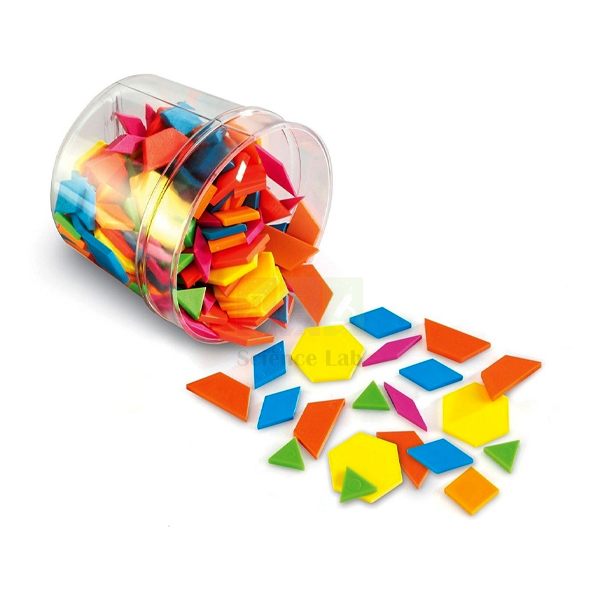
Brights Pattern Blocks
Brights Pattern Blocks (Product Code: SLE/MAT/36) is a 250-piece set of classic pattern block polygons used to teach shape identification, symmetry and fractions in primary maths. The six shapes (triangle, square, rhombus, trapezoid, parallelogram and hexagon) are 1/2 cm thick and come in neon yellow, electric blue, hot pink and other bright hues. The set is supplied by Jain Scientific Equipments Pvt Ltd (ScienceLab), Ambala, as part of its range of educational laboratory equipment in India.
Specifications
| Parameter | Detail |
|---|---|
| Pieces | 250 |
| Shapes | Triangle, parallelogram, hexagon, square, trapezoid, rhombus |
| Thickness | 1/2 cm |
| Colours | Neon yellow, electric blue, hot pink and other bright hues |
| Activity guide | Printed on the inside of the bucket label |
| Storage | Bucket |
| Topics | Shape identification, symmetry, fractions |
| Product code | SLE/MAT/36 |
| Supplied by | Jain Scientific Equipments Pvt Ltd (ScienceLab), Ambala, India |
What Are Brights Pattern Blocks Used For?
Pattern blocks are designed so that their sides fit together, which lets students cover a hexagon with two trapezoids, three rhombuses or six triangles and read those as halves, thirds and sixths. The same pieces support tiling, repeating patterns and lines of symmetry, and children learn to describe each design using the correct shape names.
With 250 pieces, a class can split the set between several tables and still have enough blocks for large designs. The activity guide inside the bucket label gives teachers starting ideas, and the bucket keeps everything together between lessons. Because the neon colours differ from traditional pattern block colours, check that they suit any printed worksheets you plan to use.
Supplier
Jain Scientific Equipments Private Limited, trading as ScienceLab, supplies Brights Pattern Blocks from Ambala, Haryana, as a school laboratory equipment supplier in India. The set is sourced for schools, early-years centres, dealers and importers in India and international markets, and can be added to a larger maths lab order. Read about the company on the ScienceLab profile.
Related Maths Lab Equipment
These items extend pattern block lessons into grids, puzzles and larger class sets:
- Plastic Pattern Blocks — a 100-block set for smaller groups
- 10 Isometric Grid Pattern Geoboard — for looping pattern block shapes with rubber bands
- Brights Tangrams Class Pack — for shape-composition puzzles
- Colour Tile — for further pattern and area activities
See the complete Maths Lab Equipment range.
Frequently Asked Questions
How many pieces are in the Brights Pattern Blocks set?
The Brights Pattern Blocks set contains 250 pieces made up of six polygons: triangles, squares, rhombuses, trapezoids, parallelograms and hexagons. That is enough for several groups to work at once or for one group to build large tiling designs.
What colours and thickness are Brights Pattern Blocks?
Brights Pattern Blocks come in neon yellow, electric blue, hot pink and other bright hues rather than traditional colours, and each block is 1/2 cm thick. Exact dimensions of each shape are not listed, so ask through the contact page if you need them.
Is an activity guide included with Brights Pattern Blocks?
Yes. Brights Pattern Blocks include an activity guide printed on the inside of the bucket label, giving teachers starting activities on shape identification, symmetry and fractions. The bucket also serves as storage for the 250 blocks.
Who supplies Brights Pattern Blocks?
Brights Pattern Blocks are supplied by Jain Scientific Equipments Pvt Ltd (ScienceLab), Ambala, Haryana, India. The company sources the set for schools, dealers and importers and quotes it on its own or together with other maths lab equipment.
What should a quote request for Brights Pattern Blocks include?
A quote request for Brights Pattern Blocks should include product code SLE/MAT/36, the number of 250-piece sets, the delivery location, and whether you also need other pattern block sets, such as Plastic Pattern Blocks, in the same order.
Request a Quote
Get a price for Brights Pattern Blocks through the contact page, or add the set to the enquiry cart and send one enquiry for all your maths items. ScienceLab will reply with a quotation.
Last updated: 24 September 2026
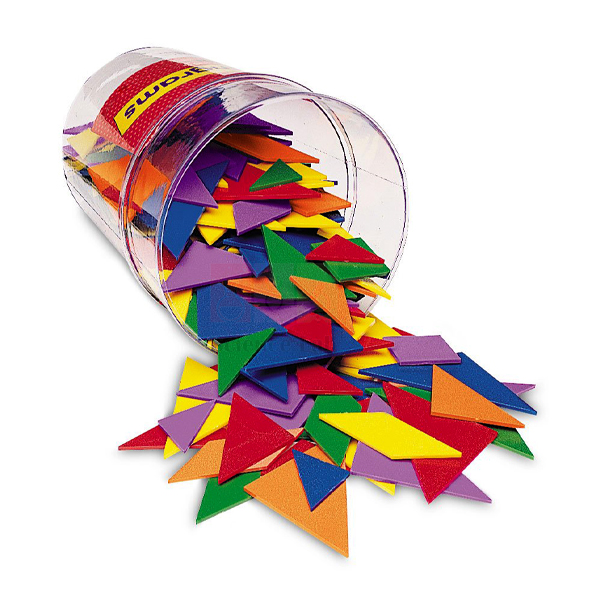
6-Color Tangrams
6-Color Tangrams (Product Code: SLE/MAT/37) is a class set of 30 tangrams used for whole-class problem-solving and shape puzzles in school maths. The tangrams come in six assorted colours (blue, red, green, yellow, orange and purple) and are stored in a sturdy plastic bucket. The set is made by Jain Scientific Equipments Pvt Ltd (ScienceLab), an OEM maker of mathematics lab kits, at its own factory in Ambala, India.
Key Details
| Parameter | Detail |
|---|---|
| Tangrams per set | 30 |
| Colours | Six assorted: blue, red, green, yellow, orange, purple |
| Storage | Sturdy plastic bucket |
| Main use | Whole-class problem-solving with tangram puzzles |
| Product code | SLE/MAT/37 |
| Manufacturer | Jain Scientific Equipments Pvt Ltd (ScienceLab) — OEM |
| Country of origin | India (made in Ambala, Haryana) |
What Are 6-Color Tangrams Used For?
A tangram is a square cut into seven pieces that can be rearranged into many outlines, from simple shapes to animals and people. With 30 tangrams in one bucket, each student in a class of up to 30 can solve the same challenge at once, compare strategies and explain how they matched the outline. The puzzles build problem-solving, spatial visualisation and the vocabulary of triangles, squares and parallelograms.
The six colours make classroom management easier: pieces can be sorted back into sets quickly, and pupils can record a finished design by colour on paper. Returning every tangram to the plastic bucket after the lesson keeps the class set complete for the next group.
OEM Manufacturer
This set of 6-Color Tangrams is manufactured by Jain Scientific Equipments Private Limited, the company behind the ScienceLab name, acting as the OEM (original equipment manufacturer). Production takes place at its own licensed factory at Saha, Ambala, Haryana, India, and sets go factory-direct to schools, colleges, dealers and importers. Buying from the manufacturer means your quotation, any repeat order and questions about replacement pieces are handled in one place, so ask us whenever you need them. The ScienceLab profile has more about the company.
Related Maths Lab Equipment
These puzzle and shape items build on the same problem-solving skills:
- Brights Tangrams Class Pack — a 210-piece class pack in vibrant colours
- Tangram — a tangram listed in the pre-primary range
- Rainbow Premier Pentominoes — for five-square shape puzzles
- 2D Shapes — for naming the flat shapes found in a tangram
Explore the rest of Maths Lab Equipment.
Frequently Asked Questions
How many tangrams are in the 6-Color Tangrams set?
The 6-Color Tangrams set contains 30 tangrams, enough for a whole class to work on the same puzzle at the same time. The tangrams are spread across six colours and packed together in a sturdy plastic bucket.
What colours are included in 6-Color Tangrams?
6-Color Tangrams come in six assorted colours: blue, red, green, yellow, orange and purple. The colours help teachers hand out and collect sets quickly and let pupils record their designs by colour after solving a puzzle.
How are 6-Color Tangrams stored?
6-Color Tangrams are packed in a sturdy plastic bucket that holds all 30 tangrams. Returning pieces to the bucket after each lesson keeps the class set complete and makes it easy to carry between classrooms.
Who manufactures 6-Color Tangrams?
6-Color Tangrams are manufactured by Jain Scientific Equipments Pvt Ltd (ScienceLab), the OEM, at its own licensed factory at Saha, Ambala, Haryana, India. Schools and dealers receive quotations and repeat-order support directly from the manufacturer.
What size are the pieces in 6-Color Tangrams?
The piece sizes and material of 6-Color Tangrams are not listed. If your lesson plan or tender specifies dimensions, please ask through the contact page and we will confirm the details with your quotation.
Can 6-Color Tangrams be ordered for several schools or for export?
Yes. 6-Color Tangrams can be quoted for several schools, dealers and importers in India and international markets. Send product code SLE/MAT/37, the number of bucket sets and the delivery locations to receive a combined quotation.
Request a Quote
To order 6-Color Tangrams, reach us through the contact page or add the set to the enquiry cart. The quotation is prepared by ScienceLab as the manufacturer, so you deal directly with the source.
Last updated: 24 September 2026
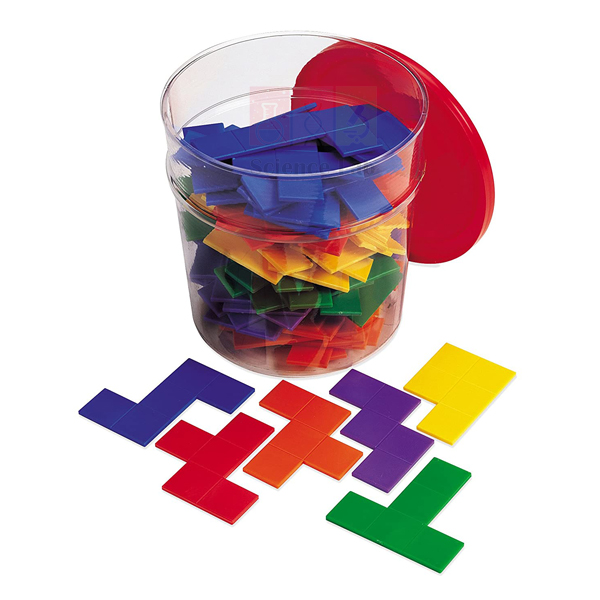
Rainbow Premier Pentominoes
Rainbow Premier Pentominoes (Product Code: SLE/MAT/38) is a 72-piece set of scored plastic pentominoes used to teach geometric concepts and problem-solving in school maths. It contains six pentomino sets of 12 pieces each, in yellow, red, green, blue, orange and purple, together with a clear plastic storage tub and an activity guide. The set is supplied by Jain Scientific Equipments Pvt Ltd (ScienceLab), Ambala, a school laboratory equipment supplier in India.
Specifications
| Parameter | Detail |
|---|---|
| Pieces | 72 |
| Pentomino sets | Six scored pentomino sets, 12 pieces per set |
| Colours | Yellow, red, green, blue, orange, purple |
| Material | Scored plastic |
| Storage | Clear plastic tub |
| Activity guide | Included |
| Topics | Geometric concepts and problem-solving skills |
| Product code | SLE/MAT/38 |
| Supplied by | Jain Scientific Equipments Pvt Ltd (ScienceLab), Ambala, India |
What Are Rainbow Premier Pentominoes Used For?
Each pentomino is made of five equal squares joined edge to edge, and the score lines on these pieces show the individual squares clearly. Students use them to explore area (every piece covers five units), differences in perimeter between pieces of equal area, and transformations as they rotate and reflect pieces to fit a rectangle or outline. Fitting several pieces into a fixed frame is a classic problem-solving challenge that rewards planning and persistence.
Because the 72 pieces form six colour-coded sets, six groups can work at the same time, each with a full set of 12 shapes, and stray pieces are easy to return to the right group. The activity guide gives teachers ready-made challenges, and the clear tub shows at a glance whether every piece is back in place.
Supplier
ScienceLab is the trading name of Jain Scientific Equipments Private Limited, which supplies Rainbow Premier Pentominoes from Ambala, Haryana, India to schools, colleges, dealers and importers. The set is sourced as part of the company's maths lab range and can travel with other classroom items in one consignment. For vendor registration, export orders are handled under Importer-Exporter Code AAECJ8618A (DGFT), and the supplying company's GSTIN is 06AAECJ8618A1ZT. See the ScienceLab profile for company details.
Related Maths Lab Equipment
These items support the area, grid and puzzle work that pentominoes introduce:
- Colour Tile — for area work alongside pentomino puzzles
- Graph Board — for recording pentomino designs on a grid
- Interlocking Cubes — for building pentomino shapes from single cubes
- 6-Color Tangrams — a 30-tangram set for further shape puzzles
Find more in the Maths Lab Equipment category.
Frequently Asked Questions
What is included in Rainbow Premier Pentominoes?
Rainbow Premier Pentominoes include 72 scored plastic pieces arranged as six pentomino sets of 12 pieces each, in yellow, red, green, blue, orange and purple. A clear plastic tub for storage and an activity guide are also included.
What does scored mean on Rainbow Premier Pentominoes?
On Rainbow Premier Pentominoes, scored means each piece is marked with lines that divide it into its five unit squares. This helps students count area, compare shapes and see how pieces fit together on a grid.
How many students can use one set of Rainbow Premier Pentominoes?
One set of Rainbow Premier Pentominoes contains six colour-coded sets of 12 pieces, so up to six groups can each work with a complete set at once. Larger classes can order additional sets; state the class size when you ask for a quotation.
Who supplies Rainbow Premier Pentominoes?
Rainbow Premier Pentominoes are supplied by Jain Scientific Equipments Pvt Ltd (ScienceLab), Ambala, Haryana, India. The company sources the set for schools, dealers and importers, and vendor-registration details such as GSTIN are available for institutional buyers.
What should a quotation request for Rainbow Premier Pentominoes include?
A quotation request for Rainbow Premier Pentominoes should include product code SLE/MAT/38, the number of 72-piece sets, the delivery location in India or abroad, and any other maths items you want quoted together.
Request a Quote
Request pricing for Rainbow Premier Pentominoes through the contact page or add the set to the enquiry cart. The ScienceLab team will send a quotation with delivery details.
Last updated: 24 September 2026
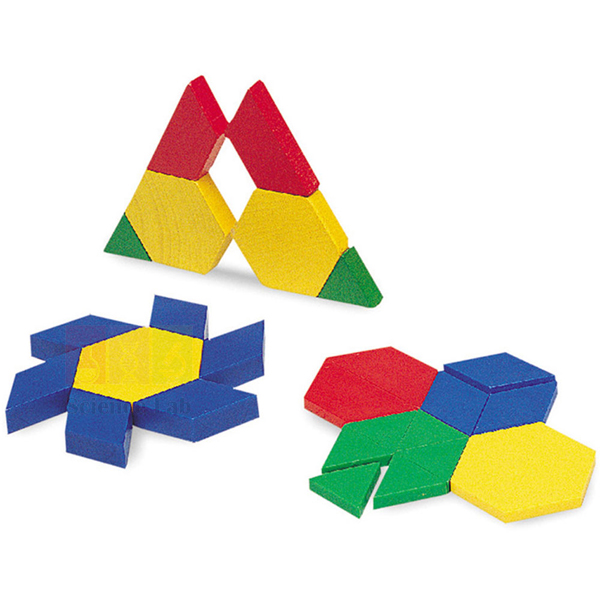
Plastic Pattern Blocks
Plastic Pattern Blocks (Product Code: SLE/MAT/39) is a set of 100 plastic pattern blocks used to analyse, compare and compose 2-D shapes in primary maths lessons. The blocks come in 6 shapes and 6 colours, and the largest shape measures 2 in wide. The set is made by Jain Scientific Equipments Pvt Ltd (ScienceLab), an OEM manufacturer of mathematics lab equipment, at its own factory in Ambala, India.
Specifications
| Parameter | Detail |
|---|---|
| Number of blocks | 100 |
| Shapes and colours | 6 shapes, 6 colours |
| Largest shape | 2 in wide |
| Material | Plastic |
| Topics | Symmetry, area measurement, analysing, comparing and composing 2-D shapes |
| Product code | SLE/MAT/39 |
| Manufacturer | Jain Scientific Equipments Pvt Ltd (ScienceLab) — OEM |
| Country of origin | India (made in Ambala, Haryana) |
What Are Plastic Pattern Blocks Used For?
Pupils place blocks edge to edge to copy and extend patterns, build designs with a line of symmetry, and find how many smaller blocks cover a larger one, which introduces area measurement without formulas. Comparing shapes by their sides and angles, then combining them into new figures, develops the reasoning behind analysing and composing 2-D shapes.
A set of 100 suits a small group or a teacher-led demonstration table, and schools running whole-class lessons can order several sets. Plastic blocks can be washed in mild soapy water and dried before storage, which helps when they are shared across classes. That makes them a practical piece of school laboratory equipment for primary maths rooms.
OEM Manufacturer
Jain Scientific Equipments Private Limited, known by its trading name ScienceLab, is the OEM (original equipment manufacturer) of these Plastic Pattern Blocks. They are made at the company's own licensed factory at Saha, Ambala, Haryana, India, and supplied factory-direct to schools, institutions, dealers and importers. Extra blocks and repeat orders are arranged with the manufacturer itself, so just ask us when your class needs more. Visit the ScienceLab company profile for more.
Related Maths Lab Equipment
These shape resources work well with pattern blocks in the same lessons:
- Brights Pattern Blocks — a larger 250-piece set in neon colours
- 10 Isometric Grid Pattern Geoboard — for outlining pattern block shapes on pins
- Attribute Blocks — for sorting and classifying shapes
- 2D Shapes — for naming and comparing flat shapes
Browse all Maths Lab Equipment.
Frequently Asked Questions
How many blocks are in the Plastic Pattern Blocks set?
The Plastic Pattern Blocks set contains 100 plastic blocks in 6 shapes and 6 colours. This quantity suits a small group or a demonstration table; for whole-class use, schools can order several sets and share them between tables.
How big are Plastic Pattern Blocks?
In the Plastic Pattern Blocks set, the largest shape measures 2 inches wide. Sizes of the smaller shapes and the block thickness are not listed, so please ask through the contact page if you need exact dimensions for a tender or worksheet.
What can students learn with Plastic Pattern Blocks?
Plastic Pattern Blocks help students explore symmetry and area measurement and learn to analyse, compare and compose 2-D shapes. Building patterns, covering larger shapes with smaller ones and describing their designs develops geometric vocabulary and reasoning.
Who manufactures Plastic Pattern Blocks?
Plastic Pattern Blocks are manufactured by Jain Scientific Equipments Pvt Ltd (ScienceLab), the OEM, at its own licensed factory in Saha, Ambala, Haryana, India. Buyers get quotations, additional blocks and repeat orders directly from the manufacturer on request.
How are Plastic Pattern Blocks different from Brights Pattern Blocks?
Plastic Pattern Blocks are a 100-block set in 6 shapes and colours, with the largest shape 2 inches wide. Brights Pattern Blocks are a separate, larger set in neon colours, so compare both listings and choose by class size and colour preference.
Can Plastic Pattern Blocks be supplied in bulk or for export?
Yes. Plastic Pattern Blocks can be quoted in multiple sets for schools, dealers and importers in India and international markets. Include product code SLE/MAT/39, the number of sets and the delivery location in your enquiry.
Request a Quote
Ask for a quotation on Plastic Pattern Blocks through the contact page, or add them to the enquiry cart with other items for your maths room. Prices come straight from the manufacturer in Ambala.
Last updated: 24 September 2026
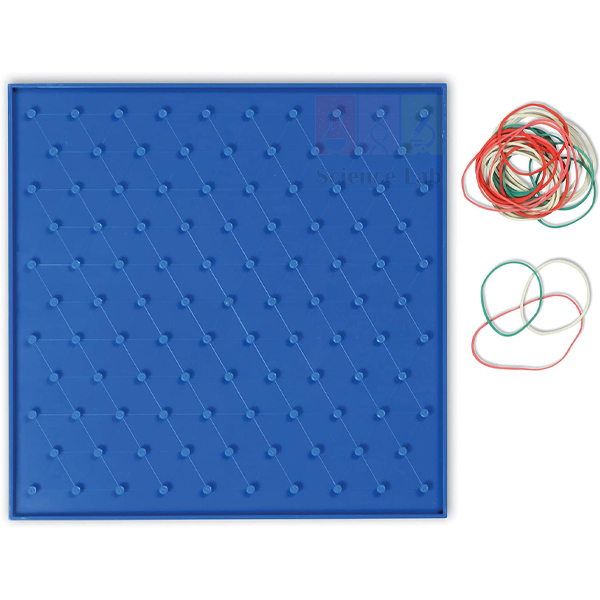
10 Isometric Grid Pattern Geoboard
10 Isometric Grid Pattern Geoboard (Product Code: SLE/MAT/40) is a two-sided geoboard used to outline pattern block shapes with bands and to explore triangles, hexagons and square-grid figures in school geometry. One face carries an isometric pin array that loops actual-size pattern block shapes, and the reverse is an 11 x 11 pin grid. It is made by Jain Scientific Equipments Pvt Ltd (ScienceLab), an OEM manufacturer, at its own factory in Ambala, India.
Key Details
| Parameter | Detail |
|---|---|
| Front face | Isometric pin array for looping actual-size pattern block shapes |
| Reverse face | 11 x 11 pin grid |
| Quantity | "10" appears in the product name; the number of boards is confirmed on your quotation |
| Used with | Rubber bands; pattern blocks for matching shapes |
| Product code | SLE/MAT/40 |
| Manufacturer | Jain Scientific Equipments Pvt Ltd (ScienceLab) — OEM |
| Country of origin | India (made in Ambala, Haryana) |
What Is the 10 Isometric Grid Pattern Geoboard Used For?
On the isometric side, pins sit at the corners of equilateral triangles, so students can stretch bands into triangles, rhombuses, trapezoids and hexagons that match real pattern blocks laid on top. This makes it easy to check a shape, show a hexagon split into fractions, or compare the angles of isometric shapes without a protractor.
Turning the board over gives an 11 x 11 square grid for rectangles, right-angled triangles, perimeter and area counting, and coordinate-style tasks. Having both grids on one board lets a class move between square and isometric geometry in the same lesson, which makes it a flexible addition to mathematics lab kits in India. Remove bands after use so the pins stay upright.
What to Specify When Ordering
- The number of boards required, since the "10" in the product name should be confirmed
- Whether rubber bands should be included with the boards
- Whether you also need pattern blocks to use on the isometric side
OEM Manufacturer
ScienceLab, the trading name of Jain Scientific Equipments Private Limited, is the OEM (original equipment manufacturer) of the 10 Isometric Grid Pattern Geoboard. The boards are made at the company's own licensed factory at Saha, Ambala, Haryana, India and go factory-direct to schools, colleges, dealers and importers. Because the maker quotes and supplies the boards itself, questions about quantities, repeat orders or replacement boards reach the right team straight away. More about the company is on the ScienceLab profile.
Related Maths Lab Equipment
These items complete an isometric and square-grid geometry station:
- Plastic Pattern Blocks — a 100-block set to lay on the isometric side
- Brights Pattern Blocks — a larger pattern block set in neon colours
- 5 Assorted Geoboards — double-sided boards with a 5 x 5 pin layout
- Rubber Bands (Good Quality) — for looping shapes over the pins
The full Maths Lab Equipment range lists more geoboards and shape sets.
Frequently Asked Questions
What grids does the 10 Isometric Grid Pattern Geoboard have?
The 10 Isometric Grid Pattern Geoboard has an isometric pin array on one side, designed to loop actual-size pattern block shapes, and an 11 x 11 pin grid on the reverse. Students switch between isometric and square-grid work by turning the board over.
Does the 10 Isometric Grid Pattern Geoboard match pattern blocks?
Yes. The isometric side of the 10 Isometric Grid Pattern Geoboard lets students loop actual-size pattern block shapes, so a real block can be placed on the pins to check a banded outline. This links hands-on blocks with banded and drawn shapes.
How many boards come with the 10 Isometric Grid Pattern Geoboard?
The product name of the 10 Isometric Grid Pattern Geoboard includes the number 10, but the listing does not state the pack quantity. Please confirm how many boards you need through the contact page, and the quotation will show the exact count.
Who manufactures the 10 Isometric Grid Pattern Geoboard?
The 10 Isometric Grid Pattern Geoboard is manufactured by Jain Scientific Equipments Pvt Ltd (ScienceLab), the OEM, at its own licensed factory in Saha, Ambala, Haryana, India. Quotations and repeat orders are handled directly by the manufacturer.
What is the 11 x 11 side of the 10 Isometric Grid Pattern Geoboard used for?
The 11 x 11 pin grid on the reverse of the 10 Isometric Grid Pattern Geoboard is used for square-grid geometry, such as rectangles, right-angled triangles, perimeter and area counting, and simple coordinate tasks with rubber bands.
Request a Quote
Send an enquiry for the 10 Isometric Grid Pattern Geoboard through the contact page or add it to the enquiry cart. The manufacturer will confirm the board quantity and quote directly.
Last updated: 24 September 2026
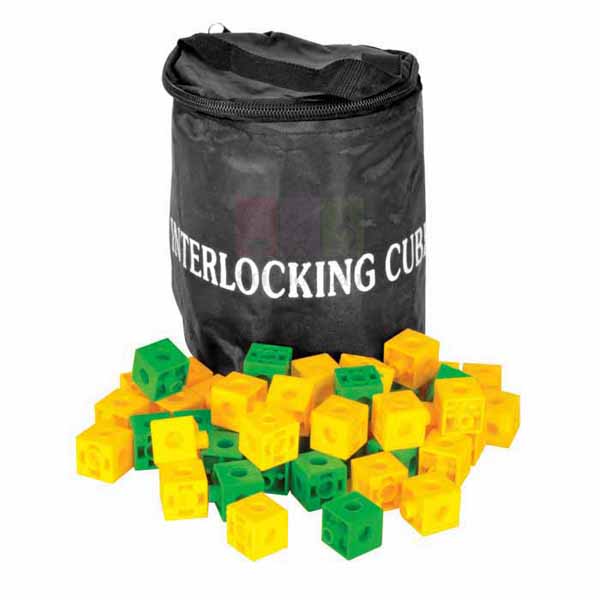
Interlocking Cubes
Interlocking Cubes (Product Code: SLE/MAT/41) are 2 cm linking cubes used to teach number, measurement, patterns and probability in primary maths. Their variety of colours lets teachers run colour-based probability experiments, while linking the cubes together builds hand-eye coordination. They are made by Jain Scientific Equipments Pvt Ltd (ScienceLab), an OEM school laboratory equipment manufacturer, at its own factory in Ambala, as part of its range of mathematics lab kits in India.
Specifications
| Parameter | Detail |
|---|---|
| Cube size | 2 cm (L) x 2 cm (W) x 2 cm (H) |
| Colours | Variety of colours |
| Joining | Interlocking; cubes link together |
| Topics | Number, measurement, patterns, probability, abstraction |
| Other uses | Hand-eye coordination, sensory development and occupational-therapy activities |
| Product code | SLE/MAT/41 |
| Manufacturer | Jain Scientific Equipments Pvt Ltd (ScienceLab) — OEM |
| Country of origin | India (made in Ambala, Haryana) |
What Are Interlocking Cubes Used For?
Because every cube is the same 2 cm size, a train of linked cubes becomes a simple measuring unit: pupils measure objects in cubes, compare lengths and see why a common unit matters. Groups of ten linked cubes model place value, and snapping cubes on or off shows addition, subtraction and number bonds in a form children can hold, which helps them move from concrete objects to abstract numbers.
The range of colours supports pattern work, where students create, identify and extend a colour sequence, and simple probability experiments in which cubes are drawn from a bag and results are tallied. Beyond maths lessons, joining and separating the cubes is used in sensory-development and occupational-therapy activities because it exercises hand-eye coordination.
OEM Manufacturer
Interlocking Cubes are manufactured by Jain Scientific Equipments Private Limited, which trades as ScienceLab and is the OEM (original equipment manufacturer) for this item. The cubes are made at the company's own licensed factory at Saha, Ambala, Haryana, India, and supplied factory-direct to schools, early-learning and therapy centres, dealers and importers. When a growing class needs more cubes, the reorder goes straight to the maker, so ask us for a quotation. Read the ScienceLab company profile for background.
Related Maths Lab Equipment
These counting and number resources work alongside the cubes:
- Linking Cubes — another cube set for number and pattern work
- Base Ten Blocks — for moving from cube trains to place-value blocks
- Probability Kit — for extending colour-draw experiments
- Stacking Counters — for counting and sorting activities
See more number and measurement items in Maths Lab Equipment.
Frequently Asked Questions
What size are Interlocking Cubes?
Interlocking Cubes measure 2 cm in length, 2 cm in width and 2 cm in height. The uniform size lets pupils use a line of linked cubes as a measuring unit and compare lengths, areas and volumes by counting cubes.
What maths topics can Interlocking Cubes teach?
Interlocking Cubes teach number and measurement concepts, patterns and probability, and help students build abstraction by moving from physical cubes to written numbers. Pupils create, identify and extend patterns, and the colours make simple probability experiments possible.
How many cubes come in a pack of Interlocking Cubes?
The pack quantity and colour assortment of Interlocking Cubes are not stated in the listing. Tell us how many cubes or sets you need through the contact page, and the quotation will confirm the exact quantity and colours supplied.
Can Interlocking Cubes be used outside maths lessons?
Yes. Interlocking Cubes are also used in sensory-development and occupational-therapy activities, because linking and separating the cubes exercises hand-eye coordination. They remain primarily a maths resource for number, measurement and pattern work in school classrooms.
Who manufactures Interlocking Cubes?
Interlocking Cubes are manufactured by Jain Scientific Equipments Pvt Ltd (ScienceLab), the OEM, at its own licensed factory in Saha, Ambala, Haryana, India. Schools, dealers and importers in India and international markets buy directly from the manufacturer.
Request a Quote
For a quotation on Interlocking Cubes, use the contact page or add them to the enquiry cart. The quote comes directly from ScienceLab as the manufacturer and covers the quantity you specify.
Last updated: 24 September 2026
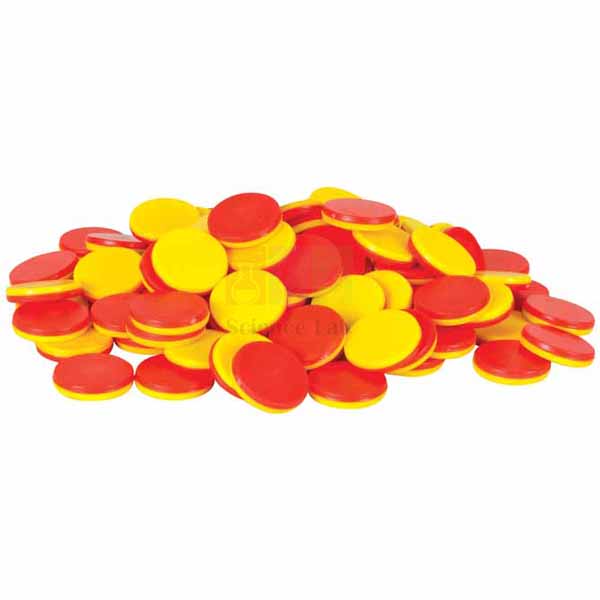
Integer Counters
Integer Counters (Product Code: SLE/MAT/42) is a set of two-colour plastic counters used to model positive and negative numbers in school maths lessons and maths labs. Each 30 mm counter is red on one face and yellow on the other, so pupils flip a chip to change its sign while they add, subtract, multiply and divide integers. The counters are made by Jain Scientific Equipments Pvt Ltd (ScienceLab), an OEM manufacturer of mathematics lab kits in India, at its own factory in Ambala.
Specifications
| Parameter | Detail |
|---|---|
| Type | Double-sided integer counters (two-colour chips) |
| Colours | Red on one side, yellow on the other side |
| Material | Plastic |
| Diameter | 30 mm |
| Operations covered | Addition, subtraction, multiplication and division of integers |
| Other use | Introducing basic ideas of probability |
| Product code | SLE/MAT/42 |
| Manufacturer | Jain Scientific Equipments Pvt Ltd (ScienceLab) — OEM |
| Country of origin | India (made in Ambala, Haryana) |
What Are Integer Counters Used For?
Integer counters turn the rules for signed numbers into something pupils can see and move. A common convention is to let one colour stand for +1 and the other for -1. A statement such as -2 + 3 is then modelled by laying out two chips of the negative colour and three of the positive colour, and removing each positive-negative pair as a “zero pair” until one positive counter remains.
Subtraction becomes taking counters away, adding zero pairs first when there are not enough of the colour needed, and multiplication can be shown as repeated groups of chips. Because every counter has two faces, a handful tossed onto a desk also gives a quick first experiment in chance: pupils tally how many land red side up and how many land yellow.
OEM Manufacturer
Integer Counters are produced by Jain Scientific Equipments Private Limited, which trades as ScienceLab, as the original equipment manufacturer (OEM). They are made at the company’s own licensed factory at 449, HSIIDC Industrial Area, Saha, Ambala, Haryana, so schools, maths resource centres, dealers and importers buy them factory-direct instead of through a trading middleman. For vendor registration, tender and institutional buyers can quote GSTIN 06AAECJ8618A1ZT and LEI 3358004HRD1JIVXKYX49. More about the company is on the ScienceLab company profile.
Related Maths Lab Equipment
These items from the same maths range carry integer work from counters into games, dice and algebra:
- Integer Board Game — practise the same addition and subtraction rules as a board game.
- Integer Dice — roll integer questions for pupils to model with the counters.
- Stacking Counters — for counting, sorting and grouping before signed numbers are introduced.
- Algebra Tiles — move on from number work to algebraic expressions.
Browse the full Maths Lab Equipment range for more manipulatives and teaching aids for number work.
Frequently Asked Questions
What colours are the Integer Counters?
Integer Counters are double-sided plastic chips, red on one side and yellow on the other. Teachers usually let one colour represent positive units and the other negative units, and a counter is flipped over to show the opposite sign.
What size are the Integer Counters?
Each Integer Counter has a diameter of 30 mm, which is large enough for small hands to pick up and flip, and for a teacher to arrange clear rows of positive and negative chips on a desk or tray.
Which topics can Integer Counters teach?
Integer Counters support addition, subtraction, multiplication and division of integers, including modelling statements such as -2 + 3 with two-colour chips. The same set can also introduce basic probability, for example by tossing counters and recording which colour lands face up.
How many counters come in one pack of Integer Counters?
The pack quantity of Integer Counters is not stated on this page. Please tell us how many counters you need per pupil or group through the contact page, and ScienceLab will confirm the quantity in its quotation.
Who manufactures the Integer Counters?
Integer Counters are manufactured by Jain Scientific Equipments Pvt Ltd (ScienceLab), the OEM, at its own licensed factory in Saha, Ambala, Haryana, India. New orders, repeat orders and requests for extra counters are all handled directly by the manufacturer.
Can schools order Integer Counters in bulk or for export?
Yes. Integer Counters can be quoted for a single classroom, for bulk orders covering several schools, or for dealers and importers in India and international markets. Send the quantity and delivery location so the manufacturer can prepare a quotation.
How should Integer Counters be cleaned and stored?
Integer Counters can be wiped with a damp cloth and mild soap, dried, and kept in a closed box or bag so none go missing between lessons. Counting them back after each class is a quick way to keep every set complete.
Request a Quote
To order Integer Counters, send your quantity and delivery details through the ScienceLab contact page or add them to the enquiry cart. Quotations come direct from the manufacturer, Jain Scientific Equipments Pvt Ltd (ScienceLab).
Last updated: 24 September 2026
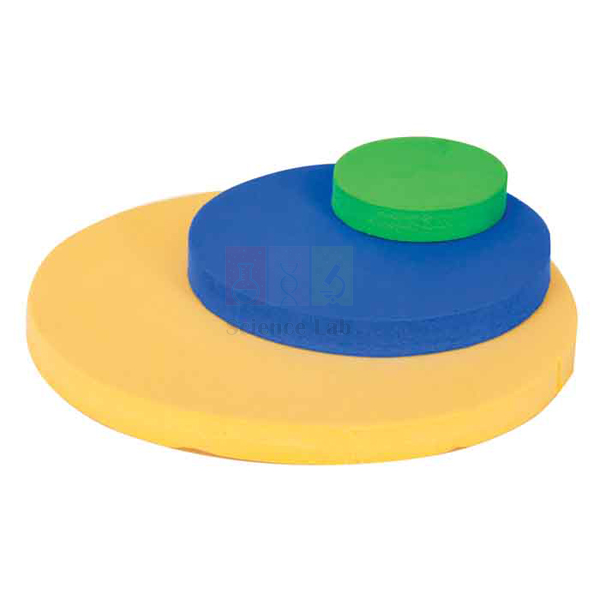
Circle Kit
Circle Kit (Product Code: SLE/MAT/43) is a set of three foam circular discs used to teach radius, diameter and circumference in school maths classrooms. The discs have diameters of 15 cm, 10 cm and 5 cm, so pupils can stack them as concentric circles and compare how the circumference grows with the diameter. It is made by Jain Scientific Equipments Pvt Ltd (ScienceLab), an OEM school lab equipment manufacturer, at its own factory in Ambala, India.
Specifications
| Parameter | Detail |
|---|---|
| Contents | Set of three circular discs of different radius |
| Disc diameters | 15 cm, 10 cm and 5 cm |
| Material | Foam |
| Concepts covered | Circles, concentric circles, radius, diameter, circumference and derivation of Pi |
| Product code | SLE/MAT/43 |
| Manufacturer | Jain Scientific Equipments Pvt Ltd (ScienceLab) — OEM |
| Country of origin | India (made in Ambala, Haryana) |
What Is the Circle Kit Used For?
The Circle Kit gives pupils real circles to handle instead of drawings. Stacking the three discs, largest at the bottom and centres lined up, shows concentric circles. Measuring straight across each disc through its centre gives the diameter, and halving it gives the radius, which clears up the common mix-up between the two terms.
For circumference, pupils wrap a string or paper strip once around the edge of each disc, straighten it and measure it. Dividing each circumference by its diameter gives nearly the same value for all three discs, and that constant is Pi. Because the discs are foam, they are light and durable enough for repeated group work, and easy for teachers to pass around the class.
OEM Manufacturer
The Circle Kit is an original ScienceLab product. Jain Scientific Equipments Private Limited, which trades as ScienceLab, is its OEM and makes the kit at its own licensed factory in Saha, Ambala, Haryana. Because the manufacturer deals with buyers directly, schools and distributors can ask the factory itself about repeat orders or replacement discs. Learn more on the ScienceLab company profile.
Related Maths Lab Equipment
Pair the Circle Kit with these items for drawing, measuring and graphing circles:
- Geometrical Instruments Set — for drawing and measuring circles on paper after handling the discs.
- Half Meter Scale — to measure the unwrapped string or strip for each circumference.
- Graph Board — to plot circumference against diameter for the three discs.
- Advanced Geometry — for further geometry topics once circle basics are secure.
More geometry and measurement aids are listed in the Maths Lab Equipment category.
Frequently Asked Questions
What sizes of discs are in the Circle Kit?
The Circle Kit contains three circular discs with diameters of 15 cm, 10 cm and 5 cm. Having three sizes lets pupils compare radius, diameter and circumference across circles instead of drawing conclusions from a single example.
What material is the Circle Kit made of?
The discs of the Circle Kit are made of foam. Foam discs are light, soft to handle and durable enough for repeated use, which makes them easy for teachers to hand around a class during circle lessons.
Can the Circle Kit be used to show the value of Pi?
Yes. With the Circle Kit, pupils measure the circumference of each disc using a string or strip and divide it by the diameter. All three discs give nearly the same ratio, which introduces Pi through measurement rather than memorisation.
Which lessons is the Circle Kit suitable for?
The Circle Kit suits lessons where circles, radius, diameter, circumference and concentric circles are introduced. Teachers can use it for demonstration at the front of the room or give one kit to each small group for hands-on measuring.
Who manufactures the Circle Kit?
The Circle Kit is manufactured by Jain Scientific Equipments Pvt Ltd (ScienceLab) as the OEM at its licensed factory in Saha, Ambala, Haryana, India, and quotations are issued directly by the manufacturer rather than by a reseller.
What should a quotation request for the Circle Kit include?
A quotation request for the Circle Kit should state the number of kits, the delivery city or country, and whether the order is for one school, a tender or resale. Send these details through the contact page so ScienceLab can prepare the quote.
Request a Quote
Ask for a quotation on the Circle Kit through the ScienceLab contact form, or place it in the enquiry cart together with other maths lab items. Your quote is prepared by the manufacturer itself.
Last updated: 24 September 2026
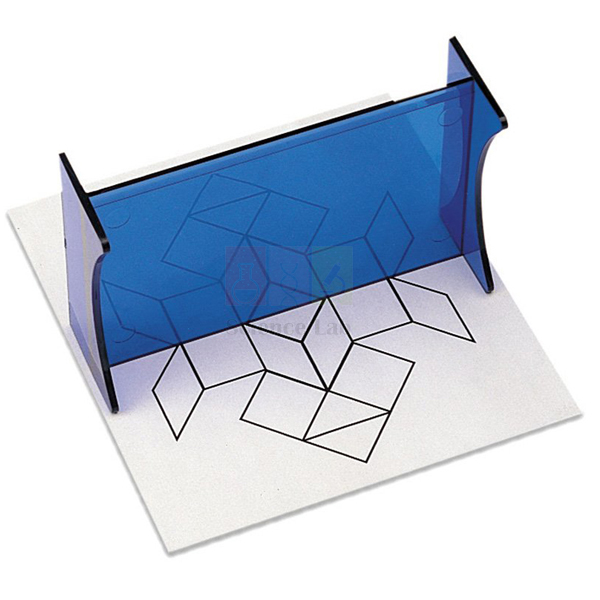
Geo Reflector Mirror
Geo Reflector Mirror (Product Code: SLE/MAT/44) is a see-through plastic reflector used to explore reflection, symmetry and congruence in school geometry lessons. It comes as a set of 24 Geo Reflectors with a teaching guide, so a whole class can work in pairs or small groups at the same time. The set is made by Jain Scientific Equipments Pvt Ltd (ScienceLab), an OEM manufacturer of educational laboratory equipment in India, at its own factory in Ambala.
Key Details
| Parameter | Detail |
|---|---|
| Set quantity | 24 Geo Reflectors |
| Surface | See-through plastic with special reflective qualities |
| Included | Teaching guide |
| Concepts | Geometry, symmetry and congruence through viewing, moving and drawing images |
| Product code | SLE/MAT/44 |
| Manufacturer | Jain Scientific Equipments Pvt Ltd (ScienceLab) — OEM |
| Country of origin | India (made in Ambala, Haryana) |
What Is the Geo Reflector Mirror Used For?
A Geo Reflector is held upright on paper beside a shape. Because its plastic is both reflective and see-through, a pupil sees the reflected image of the shape and, at the same time, the paper behind the reflector, so the image can be traced exactly where it appears. Line symmetry, reflection and congruent figures can then be checked by drawing rather than by guessing.
Typical activities include finding lines of symmetry in letters and polygons, completing half-drawn figures, and sliding the reflector to test whether two shapes are congruent. The teaching guide in the set helps teachers who are planning these lessons for the first time, and a set of 24 fits easily into a school maths lab setup.
OEM Manufacturer
Jain Scientific Equipments Private Limited, trading as ScienceLab, is the original equipment manufacturer of the Geo Reflector Mirror set and makes it at its own licensed factory at Saha, Ambala, Haryana, India. Schools, teacher-training centres and distributors who order from ScienceLab deal with the maker, not a trader, so questions about repeat sets or replacement reflectors go to the people who produce them. See the ScienceLab company profile for more about the company.
Related Maths Lab Equipment
These geometry aids work well alongside the Geo Reflector Mirror:
- Geo Geometry Sticks — build polygons to reflect and test for symmetry.
- Geometrical Instruments Set — measure angles and lengths to confirm that reflected figures are congruent.
- Coordinate Board — extend reflection work to points and shapes on coordinate axes.
- Advanced Geometry — continue to further geometry topics.
Explore the rest of the Maths Lab Equipment range for more geometry and shape resources.
Frequently Asked Questions
How many reflectors are in the Geo Reflector Mirror set?
The Geo Reflector Mirror set contains 24 Geo Reflectors, enough for a class to work in pairs or small groups. A teaching guide is included in the set to help teachers plan symmetry and reflection activities.
How is a Geo Reflector Mirror different from an ordinary mirror?
A Geo Reflector Mirror has a see-through plastic surface with reflective qualities, so pupils see the reflected image and the paper behind it together. An ordinary mirror is opaque, so its image cannot be traced in place in the same way.
Which geometry topics does the Geo Reflector Mirror support?
The Geo Reflector Mirror supports intuitive work on geometry, symmetry and congruence. Pupils view, move and draw images to find lines of symmetry, complete reflected figures and compare shapes to decide whether they are congruent.
How should the Geo Reflector Mirror be cleaned?
Clean each Geo Reflector Mirror with a soft, damp cloth and dry it gently, avoiding abrasive pads that could scratch the plastic. Storing the reflectors flat and away from sharp instruments keeps the surface clear for accurate tracing.
Who manufactures the Geo Reflector Mirror?
The Geo Reflector Mirror is manufactured by Jain Scientific Equipments Pvt Ltd (ScienceLab), the OEM, at its licensed factory in Saha, Ambala, Haryana, India. Buyers receive quotations and after-sales answers straight from the manufacturer.
Can the Geo Reflector Mirror be ordered for several schools or for export?
Yes. The Geo Reflector Mirror can be quoted for one classroom, several schools under a single order, or dealers and importers in India and international markets. State the number of sets and the delivery destination when you ask for a quotation.
Request a Quote
Request a price for the Geo Reflector Mirror set on the ScienceLab contact page or add it to the enquiry cart. As the manufacturer, ScienceLab quotes you directly.
Last updated: 24 September 2026
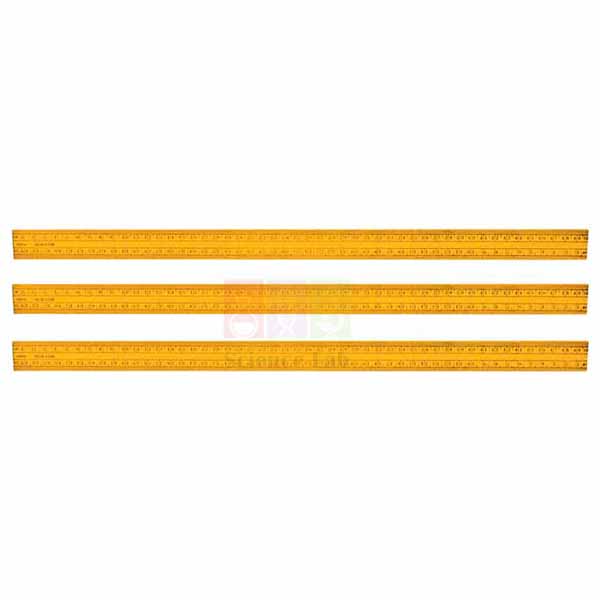
Half Meter Scale
Half Meter Scale (Product Code: SLE/MAT/45) is a wooden ruler used to measure any length up to half a metre in school maths and science classrooms. Its markings run up to 50 cm, a handy length between a short desk ruler and a full metre stick. The scale is made by Jain Scientific Equipments Pvt Ltd (ScienceLab), an OEM and scientific lab equipment manufacturer in Ambala, India, at its own factory there.
Specifications
| Parameter | Detail |
|---|---|
| Material | Wood |
| Marked length | Up to 50 cm |
| Measuring range | Any length up to half a metre |
| Product code | SLE/MAT/45 |
| Manufacturer | Jain Scientific Equipments Pvt Ltd (ScienceLab) — OEM |
| Country of origin | India (made in Ambala, Haryana) |
What Is the Half Meter Scale Used For?
The Half Meter Scale is used for everyday length measurement in the maths lab: measuring books, desks and cut-out shapes, drawing long straight lines on charts, and checking edges that are too long for a short desk ruler. In mensuration lessons pupils record the measured sides and use them to work out perimeter and area.
For accurate readings, lay the scale flat against the object, line up the zero mark with one end, and read the marking with your eye directly above it to avoid parallax error. Lengths longer than half a metre can be measured by marking the end point and moving the scale along, which is itself a useful lesson on how measurement errors add up.
OEM Manufacturer
ScienceLab is the trading name of Jain Scientific Equipments Private Limited, the original equipment manufacturer of this Half Meter Scale. The company makes it at its own licensed factory in Saha, Ambala, Haryana, and sells factory-direct to schools, colleges, dealers and importers. Visit the ScienceLab company profile to learn more about the company.
Related Maths Lab Equipment
For measuring tasks shorter or longer than half a metre, these items complete the set:
- Folding Meter Stick — for lengths up to a full metre that still fold away for storage.
- Meter Stick, White — a full-length metre stick for longer measurements.
- Windup Meter Tapes — for measuring room, corridor and field distances.
- T-Square — for drawing straight and perpendicular lines on charts.
- Geometrical Instruments Set — for smaller constructions on paper.
See the complete Maths Lab Equipment category for more measuring and drawing tools.
Frequently Asked Questions
What length does the Half Meter Scale measure?
The Half Meter Scale measures any length up to half a metre. It is marked up to 50 cm, so longer objects are measured by marking the end point and moving the scale along, then adding the readings together.
What is the Half Meter Scale made of?
The Half Meter Scale is made of wood. A wooden scale is rigid enough to rule straight lines and lies flat on a desk, which makes it a practical classroom measuring tool for pupils and teachers alike.
What are the smallest divisions on the Half Meter Scale?
The smallest graduation interval of the Half Meter Scale is not listed on this page. Please ask through the contact page and ScienceLab will confirm the marking details before you place an order.
Is a calibration certificate available for the Half Meter Scale?
The Half Meter Scale is a classroom measuring scale, and no calibration certificate is listed with it. If your institution needs traceable calibration documents, please discuss the requirement with ScienceLab before ordering so it can be confirmed in writing.
Who manufactures the Half Meter Scale?
The Half Meter Scale is manufactured by Jain Scientific Equipments Pvt Ltd (ScienceLab), which is the OEM and produces it at its own licensed factory in Saha, Ambala, Haryana, India, for buyers across India and abroad.
How should a school order Half Meter Scales in quantity?
To order Half Meter Scales in quantity, send the number required, the delivery address and whether the order is for a school, tender or resale. ScienceLab quotes directly as the manufacturer for buyers in India and international markets.
Request a Quote
Send your Half Meter Scale requirement through the ScienceLab contact page or add the scale to the enquiry cart. You will receive a quotation from the manufacturer, not a middleman.
Last updated: 24 September 2026
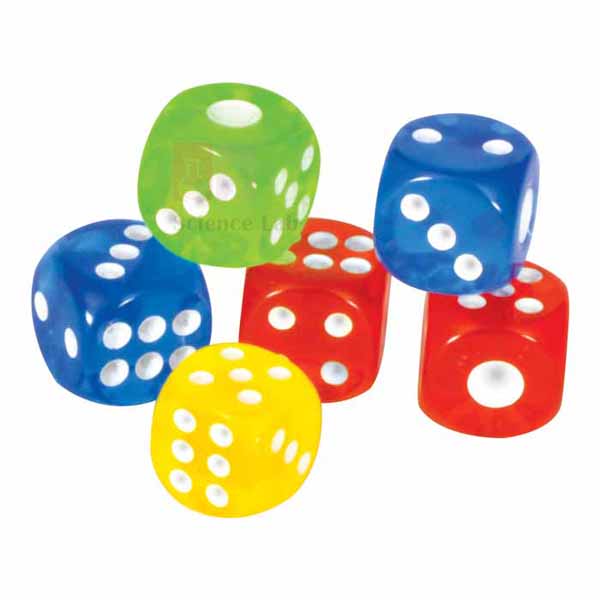
Transparent Dice
Transparent Dice (Product Code: SLE/MAT/46) are see-through cast acrylic dice used to generate random numbers for probability, counting and number games in school maths lessons. They have rounded corners and come in three sizes, 1¼ inch, 2 inch and 2¾ inch, and five colours: green, blue, yellow, red and clear. They are made by Jain Scientific Equipments Pvt Ltd (ScienceLab), an OEM lab equipment manufacturer in India, at its own factory in Ambala.
Specifications
| Parameter | Detail |
|---|---|
| Material | Transparent cast acrylic |
| Corners | Rounded |
| Sizes | 1¼ inch, 2 inch, 2¾ inch |
| Colours | Green, blue, yellow, red and clear |
| Product code | SLE/MAT/46 |
| Manufacturer | Jain Scientific Equipments Pvt Ltd (ScienceLab) — OEM |
| Country of origin | India (made in Ambala, Haryana) |
What Are Transparent Dice Used For?
Transparent Dice are used wherever a lesson needs a fair, random outcome: probability experiments, number games, mental-arithmetic practice and board games. Pupils roll a die many times, tally the results and compare how often each face appears with the theoretical probability.
The larger sizes are easy for a teacher to hold up during a demonstration and for the whole class to read, while the smallest size suits group games at a desk. Using different colours lets pupils roll two or more dice together and still keep each result separate, a simple way to introduce combined events and sample spaces.
What to Specify When Ordering
- Size: 1¼ inch, 2 inch or 2¾ inch, or a mix of sizes
- Colour: green, blue, yellow, red, clear, or assorted
- Quantity per class, group or pupil
- Whether the order is for a school, a tender or resale
OEM Manufacturer
Jain Scientific Equipments Private Limited (CIN U29309HR2020PTC087597), which trades as ScienceLab, is the original equipment manufacturer of these Transparent Dice. The dice are made at the company’s licensed factory at 449, HSIIDC Industrial Area, Saha, Ambala, which operates under Factory Licence AMB-ONLINE-CHD-J-414. Buying from the manufacturer means your choice of size and colour is confirmed by the maker itself, and repeat orders come from the same source. Read more on the ScienceLab company profile.
Related Maths Lab Equipment
Other dice and probability resources from the same range:
- Plastic Dice — a plain plastic option for board games and number practice.
- Fraction Dice — for rolling fractions instead of whole numbers.
- Integer Dice — for practising operations with positive and negative numbers.
- Probability Kit — a fuller probability set with a spinner, coins, cards and marbles.
Find more games and manipulatives in the Maths Lab Equipment category.
Frequently Asked Questions
What sizes do the Transparent Dice come in?
Transparent Dice are available in three sizes: 1¼ inch, 2 inch and 2¾ inch. The larger dice suit teacher demonstrations at the front of the class, while the smaller size is convenient for pupils rolling dice at their desks.
Which colours are available for the Transparent Dice?
Transparent Dice are offered in green, blue, yellow, red and clear. Mixing colours in one lesson helps pupils keep track of several dice rolled at once, for example when recording combined outcomes in a probability experiment.
What material are the Transparent Dice made from?
The Transparent Dice are made of transparent cast acrylic with rounded corners. The rounded corners help the dice tumble freely when rolled and make them comfortable for young hands, and the acrylic can be wiped clean with a damp cloth.
How many Transparent Dice should a class order?
The number of Transparent Dice depends on the activity: one or two per group for probability experiments, or one per pupil for individual games. State your class size and preferred sizes and colours, and ScienceLab will quote the quantity you need.
Who manufactures the Transparent Dice?
Transparent Dice are manufactured by Jain Scientific Equipments Pvt Ltd (ScienceLab), the OEM, at its own licensed factory in Saha, Ambala, Haryana, India. Quotations and repeat orders are handled by the manufacturer itself.
Are Transparent Dice available for export orders?
Yes. Transparent Dice can be quoted for schools, dealers and importers in India and international markets. Include the sizes, colours, quantities and delivery country in your enquiry so the quotation matches your order exactly.
Request a Quote
To get a quotation for Transparent Dice, list the sizes, colours and quantities on the ScienceLab contact page or use the enquiry cart. Quotes are issued directly by the manufacturer.
Last updated: 24 September 2026
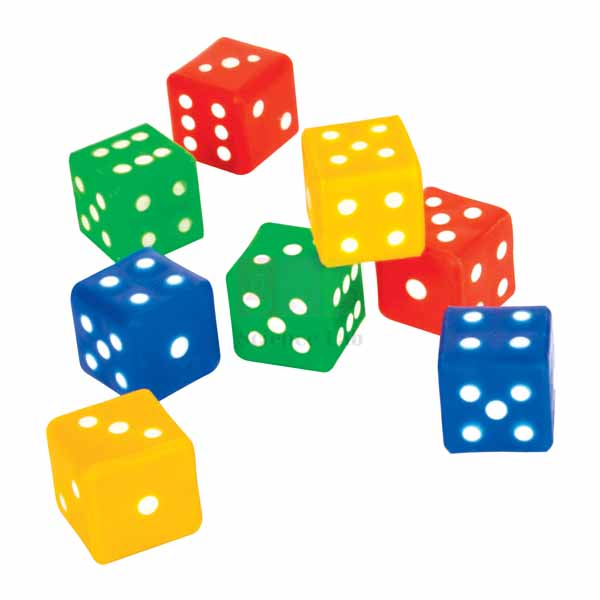
Plastic Dice
Plastic Dice (Product Code: SLE/MAT/47) are everyday plastic dice used to turn number practice into games for addition, subtraction, integers and probability in school maths lessons. Pupils use them to play board games and to create random numbers for practice questions, which keeps drill work lively. They are made by Jain Scientific Equipments Pvt Ltd (ScienceLab), an OEM manufacturer of lab equipment for schools, at its own factory in Ambala, India.
Key Details
| Parameter | Detail |
|---|---|
| Material | Plastic |
| Uses | Board games; practice in probability, addition, subtraction and integers |
| Size and pack quantity | Please confirm in your enquiry |
| Product code | SLE/MAT/47 |
| Manufacturer | Jain Scientific Equipments Pvt Ltd (ScienceLab) — OEM |
| Country of origin | India (made in Ambala, Haryana) |
What Are Plastic Dice Used For?
Plastic Dice make simple resources into games. Two dice rolled together give numbers to add or subtract, and treating one die as positive and the other as negative turns the same roll into an integer question. Recording many rolls builds a frequency table for a first lesson on probability.
Teachers often pair dice with counters, number lines or game boards so that each roll moves a pupil forward or back. Because the dice are plastic, they are light and easy to wash after shared use, which suits busy classrooms where the same set passes between many groups.
OEM Manufacturer
Plastic Dice in this listing are made by Jain Scientific Equipments Private Limited, trading as ScienceLab, as the original equipment manufacturer. Manufacturing is carried out at the company’s own licensed factory in Saha, Ambala, Haryana, and orders go straight from the factory to schools, coaching centres, dealers and importers. For company background, see the ScienceLab company profile.
Related Maths Lab Equipment
Use these with Plastic Dice to build complete number games:
- Transparent Dice — cast acrylic dice in three sizes and five colours.
- Fraction Dice — for fraction games and comparisons.
- Integer Board Game — a ready-made game using dice and counters for integer addition and subtraction.
- Integer Counters — two-colour chips to model the integer sums a roll produces.
The Maths Lab Equipment category lists more games and hands-on resources for number work.
Frequently Asked Questions
What are the Plastic Dice made of?
The Plastic Dice are made of plastic, which keeps them light, easy to handle and simple to wash after shared classroom use. For a see-through acrylic option in several colours and sizes, ScienceLab also makes Transparent Dice.
Which maths topics can Plastic Dice support?
Plastic Dice support board games and practice in probability, addition, subtraction and integers. Teachers use the rolled numbers to set quick questions, run tally-chart experiments and play number games that keep pupils engaged.
What size and quantity are the Plastic Dice?
The size and pack quantity of the Plastic Dice are not listed on this page. Tell ScienceLab how many dice you need and for which age group through the contact page, and the details will be confirmed in the quotation.
How are Plastic Dice different from Transparent Dice?
Plastic Dice are a general-purpose plastic option for games and number work, while Transparent Dice are made of transparent cast acrylic with rounded corners in three sizes and five colours. Choose by the activity and the look you need.
Who manufactures the Plastic Dice?
The Plastic Dice are manufactured by Jain Scientific Equipments Pvt Ltd (ScienceLab), the OEM, at its licensed factory at Saha, Ambala, Haryana, India. Buyers deal directly with the manufacturer for quotations and repeat orders.
Can Plastic Dice be ordered in bulk?
Yes. Plastic Dice can be quoted in classroom quantities or in bulk for several schools, dealers and importers in India and international markets. Share the quantity and delivery location through the contact page to receive a quotation.
Request a Quote
Enquire about Plastic Dice on the ScienceLab contact page, or collect them with other items in the enquiry cart and send one enquiry. The manufacturer replies with the quotation.
Last updated: 24 September 2026
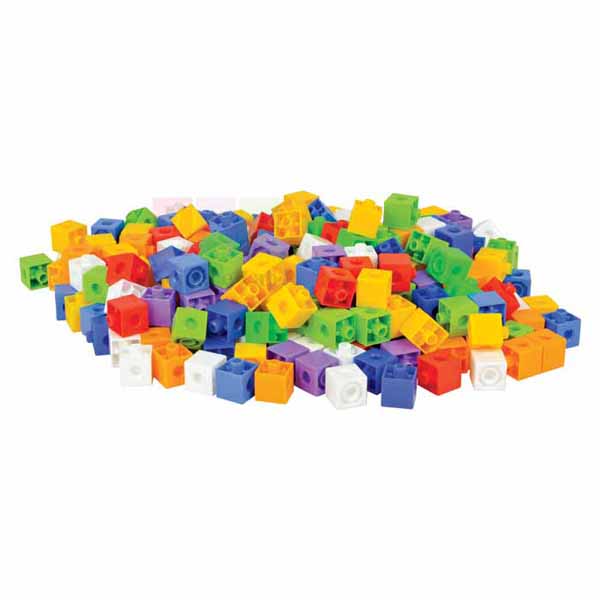
Linking Cubes
Linking Cubes (Product Code: SLE/MAT/48) are connecting cube manipulatives used to build, count and measure in early-years and school maths lessons. They connect easily, so the same set moves from counting and sorting with toddlers to place value, patterns, area and volume with older pupils. They are made by Jain Scientific Equipments Pvt Ltd (ScienceLab), an OEM manufacturer of educational science equipment, at its own factory in Ambala, India.
Key Details
| Parameter | Detail |
|---|---|
| Type | Linking (connecting) cubes |
| Handling | Easy to connect, stack and build |
| Concepts | Counting, place value, measurement, number operations, sorting, patterns, algebra and mensuration |
| Also explores | Numbers, area, volume and geometry |
| Early-years benefit | Supports motor skill development in toddlers |
| Product code | SLE/MAT/48 |
| Manufacturer | Jain Scientific Equipments Pvt Ltd (ScienceLab) — OEM |
| Country of origin | India (made in Ambala, Haryana) |
What Are Linking Cubes Used For?
Linking Cubes let children see numbers as objects they can join and break apart. Young learners build trains of cubes to count, compare lengths and repeat patterns, while pushing cubes together builds finger strength and hand control.
Older pupils use the same cubes for place value by grouping trains of ten, for measuring length in cube units, and for mensuration by building cuboids to count volume and covering flat faces to find area. In algebra lessons, growing cube patterns help pupils write a general rule for any term in the pattern.
OEM Manufacturer
Jain Scientific Equipments Private Limited, known by its trading name ScienceLab, manufactures Linking Cubes as the OEM at its own licensed factory in Saha, Ambala, Haryana, India. Pre-schools, primary schools, special educators, distributors and importers can order from the factory rather than a middleman, and questions about replacement cubes for incomplete sets go straight to the maker. More details are on the ScienceLab company profile.
Related Maths Lab Equipment
These items extend Linking Cubes into place value and fine-motor work:
- Interlocking Cubes — 2 cm cubes for similar counting, pattern and measurement activities.
- Base Ten Blocks — the next step from grouped cubes to formal place value.
- Beads – Bobbles & Laces — a threading and counting activity for young learners.
- Maths Kit Junior — a wider set of maths resources for junior classes.
Browse the Maths Lab Equipment range for more manipulatives for early and primary maths.
Frequently Asked Questions
What can children learn with Linking Cubes?
Linking Cubes support counting, place value, measurement, number operations, sorting, patterns, algebra and mensuration. Pupils can also use them to explore numbers, area, volume and geometry, so one set serves many topics across different class levels.
Are Linking Cubes suitable for toddlers?
Linking Cubes are easy to connect and support motor skill development in toddlers, which makes them useful in early-years settings. As with any small manipulative, young children should use Linking Cubes under adult supervision.
What is the cube size and number of cubes in a set of Linking Cubes?
The cube size and pack quantity of Linking Cubes are not stated on this page. Please ask through the contact page and ScienceLab will confirm the details and suggest a quantity for your class.
How are Linking Cubes different from Interlocking Cubes?
Linking Cubes and Interlocking Cubes are both joining-cube manipulatives in ScienceLab’s maths range. Linking Cubes are described for counting, place value, algebra and mensuration at all levels, while Interlocking Cubes are listed as 2 cm cubes; ask ScienceLab which suits your lessons.
Who manufactures Linking Cubes?
Linking Cubes are manufactured by Jain Scientific Equipments Pvt Ltd (ScienceLab), the OEM, at its own licensed factory at Saha, Ambala, Haryana, India. Quotations, repeat orders and requests for replacement cubes are handled by the manufacturer.
Can Linking Cubes be ordered for many classrooms?
Yes. Linking Cubes can be quoted for a single classroom, a whole school, or larger orders from dealers and importers in India and international markets. Give the number of sets and the delivery location in your enquiry.
Request a Quote
For a Linking Cubes quotation, write to us through the ScienceLab contact page or add the cubes to the enquiry cart. Pricing comes straight from the manufacturer.
Last updated: 24 September 2026
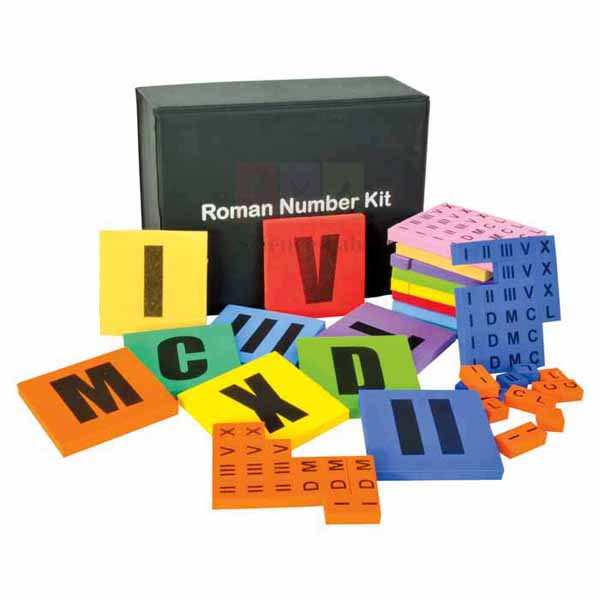
Roman Numbers Kit
Roman Numbers Kit (Product Code: SLE/MAT/49) is a set of printed square tiles used to build and read Roman numerals in primary maths classrooms. It pairs 14 large magnetic demonstration tiles for the teacher with 270 small activity tiles for pupils, so the whole class can follow one example and then practise on their own. The kit is made by Jain Scientific Equipments Pvt Ltd (ScienceLab), an OEM manufacturer, at its own factory in Ambala, India.
Specifications
| Parameter | Detail |
|---|---|
| Tiles | Square tiles printed with Roman numerals |
| Teacher demonstration tiles | 14 pcs, big, magnetic |
| Student activity tiles | 270 pcs, small |
| Purpose | Representing any number in Roman numerals; number recognition and number names |
| Product code | SLE/MAT/49 |
| Manufacturer | Jain Scientific Equipments Pvt Ltd (ScienceLab) — OEM |
| Country of origin | India (made in Ambala, Haryana) |
What Is the Roman Numbers Kit Used For?
The Roman Numbers Kit teaches pupils to build numbers from Roman symbols rather than memorise a chart. The teacher places the big magnetic tiles on a magnetic surface, such as a steel whiteboard, to show how symbols combine, and pupils copy and extend the example with their own small tiles.
Typical activities include converting a given number to Roman form and back, spotting the subtraction rule when a smaller symbol comes before a larger one, and reading Roman numerals on clock faces, book chapters and building dates. Saying each number aloud as it is built also reinforces number recognition and the words for different numbers.
OEM Manufacturer
Jain Scientific Equipments Private Limited, which trades as ScienceLab, is the original equipment manufacturer of the Roman Numbers Kit and produces it at its own licensed factory in Saha, Ambala, Haryana. As one of the school lab equipment manufacturers in India that sells factory-direct, it quotes schools, education departments, dealers and importers without a trading layer in between. Company details are on the ScienceLab company profile.
Related Maths Lab Equipment
These number resources pair well with the Roman Numbers Kit:
- Ascending Card Game — practise ordering numbers from smallest to largest.
- Descending Card Game — practise ordering numbers from largest to smallest.
- Abacus Upright — show the same numbers in the place-value system.
- Base Ten Blocks — compare Roman symbols with base-ten grouping.
More number-sense resources are listed under Maths Lab Equipment.
Frequently Asked Questions
What is included in the Roman Numbers Kit?
The Roman Numbers Kit includes 14 big magnetic teacher demonstration tiles and 270 small student activity tiles. All tiles are square and printed with Roman numerals, so pupils can arrange them to represent numbers in Roman form.
Are the teacher tiles in the Roman Numbers Kit magnetic?
Yes. The 14 teacher demonstration tiles in the Roman Numbers Kit are big magnetic tiles, so they can be displayed on a magnetic surface such as a steel whiteboard while the class follows along with the smaller student tiles.
What skills does the Roman Numbers Kit develop?
The Roman Numbers Kit helps pupils represent any number in Roman numerals by arranging tiles, recognise the words for different numbers, and reinforce number recognition through repeated hands-on practice with the student activity tiles.
How many pupils can use one Roman Numbers Kit?
One Roman Numbers Kit has 270 student activity tiles, which can be shared among small groups working at the same time. For individual practice across a whole class, tell ScienceLab your class size and it will suggest how many kits to quote.
Who manufactures the Roman Numbers Kit?
The Roman Numbers Kit is manufactured by Jain Scientific Equipments Pvt Ltd (ScienceLab), the OEM, at its licensed factory in Saha, Ambala, Haryana, India. Orders and follow-up requests are handled directly by the manufacturer.
What should a quotation request for the Roman Numbers Kit include?
A quotation request for the Roman Numbers Kit should give the number of kits, the delivery address or country, and whether the purchase is for a school, a tender or resale. Send it through the contact page or the enquiry cart.
Request a Quote
Order the Roman Numbers Kit by sending your requirement through the ScienceLab contact page or adding it to the enquiry cart. ScienceLab, as the manufacturer, prepares the quotation.
Last updated: 24 September 2026
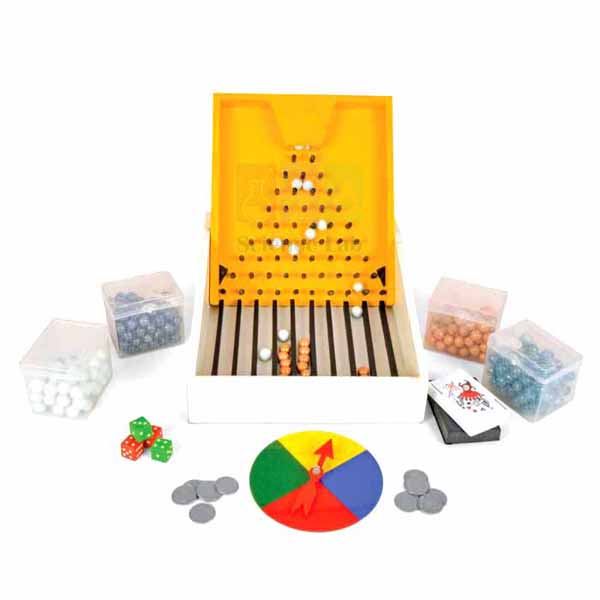
Probability Kit
Probability Kit (Product Code: SLE/MAT/50) is a classroom set of chance devices used to run hands-on probability experiments in school maths lessons. It combines a wooden probability board, a spinner, 4 dice in different colours, 20 coins, playing cards and 400 marbles in 4 colours, so pupils can test many kinds of events with one kit. It is made by Jain Scientific Equipments Pvt Ltd (ScienceLab), an OEM manufacturer of mathematics lab equipment, at its own factory in Ambala, India.
Specifications
| Parameter | Detail |
|---|---|
| Probability board | 1, wooden |
| Spinner | 1 |
| Dice | 4, in 4 different colours |
| Coins | 20 |
| Playing cards | Included |
| Marbles | 4 boxes, 400 pcs in 4 colours |
| Concepts | Sample space, event space, dependent, independent and mutually exclusive events, random probability |
| Product code | SLE/MAT/50 |
| Manufacturer | Jain Scientific Equipments Pvt Ltd (ScienceLab) — OEM |
| Country of origin | India (made in Ambala, Haryana) |
What Is the Probability Kit Used For?
The Probability Kit lets pupils discover probability by experiment before meeting the formulas. Tossing coins and rolling dice give equally likely outcomes for listing a sample space, while drawing marbles of different colours shows how the chance of an event depends on how many favourable items there are.
The same materials demonstrate harder ideas. Drawing two marbles without putting the first back shows dependent events, a coin toss followed by a spin shows independent events, and a single playing card that cannot be both a heart and a spade illustrates mutually exclusive events. Groups can then compare their recorded frequencies with the theoretical probabilities.
OEM Manufacturer
The Probability Kit is an original product of Jain Scientific Equipments Private Limited, which trades as ScienceLab and acts as its OEM. The company puts the kit together at its own licensed factory in Saha, Ambala, Haryana, India, and quotes schools, colleges, dealers and importers directly. If a kit later needs replacement marbles, coins or dice, ask the manufacturer about them. See the ScienceLab company profile.
Related Maths Lab Equipment
Add these items to extend probability lessons:
- Transparent Dice — extra acrylic dice in several sizes and colours for larger experiments.
- Plastic Dice — additional dice for group games and tally experiments.
- Graph Board — for plotting results as bar charts and frequency graphs.
- Calculator Simple/Hand — for working out relative frequencies from tallies.
- Genes & Probability Lab — to apply probability to inheritance in biology.
For more data-handling and number resources, visit the Maths Lab Equipment category.
Frequently Asked Questions
What does the Probability Kit contain?
The Probability Kit contains one wooden probability board, one spinner, 4 dice in 4 different colours, 20 coins, playing cards, and 4 boxes holding 400 marbles in 4 colours. Together they cover coin, dice, spinner, card and marble experiments.
Which probability concepts can be taught with the Probability Kit?
The Probability Kit is used to teach sample space, event space, dependent events, independent events, mutually exclusive events and random probability. Pupils explore each idea through experiments before applying the formulas.
How many marbles are in the Probability Kit?
The Probability Kit includes 400 marbles packed in 4 boxes and in 4 colours. Different colours let pupils set up bags with known proportions and compare predicted and observed results when drawing marbles.
Can one Probability Kit be shared by a whole class?
Yes. The Probability Kit has enough separate items, including coins, dice, cards, marbles and a spinner, for different groups to run different experiments at the same time and then swap. For every group to have its own kit, order one per group.
Who manufactures the Probability Kit?
The Probability Kit is manufactured by Jain Scientific Equipments Pvt Ltd (ScienceLab), the OEM, at its licensed factory in Saha, Ambala, Haryana, India. Quotations come straight from the manufacturer, which also handles requests for replacement items.
Can the Probability Kit be ordered for export?
Yes. The Probability Kit can be quoted for schools, dealers and importers in India and international markets. Include the number of kits and the destination country in your enquiry so ScienceLab can prepare the quotation.
Request a Quote
Tell us how many Probability Kits you need on the ScienceLab contact page or add the kit to the enquiry cart. The quotation comes directly from the manufacturer.
Last updated: 24 September 2026

Number Mat
Number Mat (Product Code: SLE/MAT/51) is a floor number line showing the numbers 1 to 25, used for active counting and early arithmetic in pre-primary and primary classrooms. Children hop along the mat to count forwards and backwards, skip count and add or subtract, so number facts are learnt through movement and play. It is made by Jain Scientific Equipments Pvt Ltd (ScienceLab), an OEM manufacturer and school laboratory equipment supplier in India, at its own factory in Ambala.
Key Details
| Parameter | Detail |
|---|---|
| Number range | 1 to 25 |
| Format | Mat for children to hop on as a number line |
| Activities | Forward and backward counting, skip counting, just before and just after, simple addition and subtraction on a number line |
| Product code | SLE/MAT/51 |
| Manufacturer | Jain Scientific Equipments Pvt Ltd (ScienceLab) — OEM |
| Country of origin | India (made in Ambala, Haryana) |
What Is the Number Mat Used For?
The Number Mat turns a number line into a playing space. A child stands on a number and hops forwards to add or backwards to subtract, so 7 + 3 becomes three hops on from 7. Asking which number comes just before or just after the one a child is standing on builds number sense without worksheets.
Skip-counting games, such as hopping only on every second number, prepare children for multiplication tables. Teachers can run team relay games, or ask the class to predict where a classmate will land before the hops begin, making the mat a lively part of a junior maths corner.
OEM Manufacturer
The Number Mat is made by Jain Scientific Equipments Private Limited, which trades as ScienceLab, as the original equipment manufacturer at its own licensed factory in Saha, Ambala, Haryana. The company is a registered MSME with manufacturing as its major activity (Udyam UDYAM-HR-01-0003714) and ships export orders under Importer-Exporter Code AAECJ8618A issued by DGFT. Nurseries, schools, dealers and importers receive quotes directly from the manufacturer; read more on the ScienceLab company profile.
Related Maths Lab Equipment
Combine the Number Mat with these early-number resources:
- Number Card (101 cards) — number cards for matching and ordering beside the mat.
- Number Sticks — for counting and comparing quantities at a desk.
- Number Ball — a ball game that keeps number practice active.
- Place Value Mat with Stacking Counters — for the next step from counting to place value.
See the wider Maths Lab Equipment range for more counting and number-line resources.
Frequently Asked Questions
Which numbers are on the Number Mat?
The Number Mat shows the numbers 1 to 25 in order as a number line. This range covers early counting, just-before and just-after questions, skip counting and simple addition and subtraction for young learners.
What activities can children do on the Number Mat?
On the Number Mat, children hop to count forwards and backwards, skip count, find the number just before or after a given number, and solve simple addition and subtraction by moving along the number line.
What size and material is the Number Mat?
The size and material of the Number Mat are not stated on this page. Please ask through the contact page and ScienceLab will confirm them, so you can check that the mat suits your classroom floor space.
How should the Number Mat be used safely?
Lay the Number Mat flat on a clean, dry floor that is not slippery, and let children hop one at a time under adult supervision. Wiping the Number Mat and storing it neatly between lessons helps it stay in good condition.
Who manufactures the Number Mat?
The Number Mat is manufactured by Jain Scientific Equipments Pvt Ltd (ScienceLab), the OEM, at its licensed factory in Saha, Ambala, Haryana, India. Schools and resellers get their quotations directly from the manufacturer.
Can the Number Mat be ordered for several schools?
Yes. The Number Mat can be quoted for a single classroom, for multi-school orders, or for dealers and importers in India and international markets. Send the quantity and delivery address to receive a quotation.
Request a Quote
To buy the Number Mat, send your quantity through the ScienceLab contact page or place it in the enquiry cart. Quotes are prepared by the manufacturer itself.
Last updated: 24 September 2026
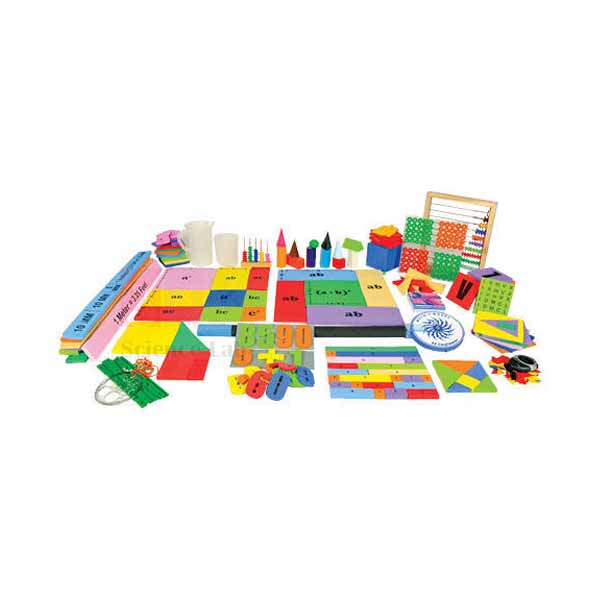
Upper Primary Maths Kit
Upper Primary Maths Kit (Product Code: SLE/MAT/52) is a maths teaching kit used to build elementary mathematics skills through simple learning methods and games in upper primary classrooms. Primary schools and institutions use it for hands-on activities, and the kit is offered in several specifications to suit their requirements. It is made by Jain Scientific Equipments Pvt Ltd (ScienceLab), an OEM educational laboratory equipment manufacturer, at its own factory in Ambala, India.
Key Details
| Parameter | Detail |
|---|---|
| Level | Upper primary classes |
| Purpose | Elementary mathematics through simple learning methods and games |
| Users | Primary schools and institutions |
| Specifications | Offered in several specifications as per school or institution requirements |
| Kit contents | Depend on the specification chosen; confirm with ScienceLab |
| Product code | SLE/MAT/52 |
| Manufacturer | Jain Scientific Equipments Pvt Ltd (ScienceLab) — OEM |
| Country of origin | India (made in Ambala, Haryana) |
What Is the Upper Primary Maths Kit Used For?
The Upper Primary Maths Kit is intended for pupils who are building on early number skills. Its simple learning methods and games let teachers introduce an elementary mathematics idea through activity first, so children see why a method works before practising it on paper.
Because the kit is offered in several specifications, a school should decide which topics and how many pupils it must cover before ordering. Keeping the kit in a maths corner or lab, with a checklist of its parts, makes it easy to share across several classes as part of a school lab setup.
What to Specify When Ordering
- The specification or topic list your school needs
- Number of kits, per class or per group
- Class level and the number of pupils using each kit
- Delivery location, and whether the order is for a school, tender or resale
OEM Manufacturer
ScienceLab, the trading name of Jain Scientific Equipments Private Limited, is the OEM of the Upper Primary Maths Kit and both manufactures and trades it. The kit is produced at the company’s own licensed factory in Saha, Ambala, Haryana, so the specification you agree is quoted and made by the same company. Learn more on the ScienceLab company profile.
Related Maths Lab Equipment
Other maths kits and aids for primary and later classes:
- Maths Kit Junior — for earlier primary years.
- Senior Maths Kit — for pupils moving on to higher classes.
- Maths Teaching Kit — another teaching kit option from ScienceLab’s educational kits range.
- Primary Shapes Template Set — for drawing and recognising basic shapes.
Compare more kits and single manipulatives in the Maths Lab Equipment category.
Frequently Asked Questions
What topics does the Upper Primary Maths Kit cover?
The Upper Primary Maths Kit teaches elementary mathematics through simple learning methods and games. Its exact topic list depends on the specification chosen, so please ask ScienceLab through the contact page for the contents of the version you want.
Is the Upper Primary Maths Kit available in different versions?
Yes. The Upper Primary Maths Kit is available in several specifications to match the requirements of schools and institutions. Share your class level, syllabus topics and number of pupils, and ScienceLab will quote the specification that fits.
Who uses the Upper Primary Maths Kit?
The Upper Primary Maths Kit is used by primary schools and institutions that want pupils to learn elementary mathematics through activities and games rather than textbook exercises alone. It suits both classroom teaching and maths lab sessions.
Who manufactures the Upper Primary Maths Kit?
The Upper Primary Maths Kit is manufactured by Jain Scientific Equipments Pvt Ltd (ScienceLab), the OEM, at its own licensed factory in Saha, Ambala, Haryana, India. The company both makes and trades the kit, so quotations come straight from the maker.
What information is needed for an Upper Primary Maths Kit quotation?
For an Upper Primary Maths Kit quotation, give the specification or topics required, the number of kits, the delivery location, and whether it is for a school, tender or resale. Send these through the contact page or the enquiry cart.
Can the Upper Primary Maths Kit be ordered for export?
Yes. The Upper Primary Maths Kit can be quoted for dealers, importers and institutions in India and international markets. Include the destination country and the specification you need so the quotation is complete.
Request a Quote
Describe the Upper Primary Maths Kit specification you need on the ScienceLab contact page, or add the kit to the enquiry cart. The manufacturer will reply with a matching quotation.
Last updated: 24 September 2026
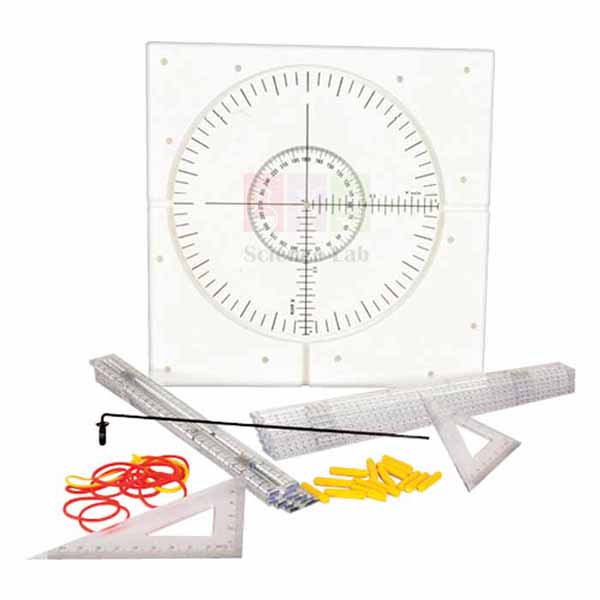
Trigonometry Board
Trigonometry Board (Product Code: SLE/MAT/53) is a 26 × 26 cm board used to build triangles and circle figures for learning sine, cosine and tangent in school maths labs. It comes with geo sticks, connectors, pins, rubber bands and other accessories, so pupils construct figures and prove trigonometric results rather than only read them. It is made by Jain Scientific Equipments Pvt Ltd (ScienceLab), an OEM manufacturer and lab equipment exporter, at its own factory in Ambala, India.
Specifications
| Parameter | Detail |
|---|---|
| Board size | 26 × 26 cm |
| Accessories | Geo sticks, connectors, pins, rubber bands and other accessories |
| Concepts | Sine, cosine and tangent; congruent and similar triangles; results related to the circle |
| Reasoning | Inductive and deductive |
| Product code | SLE/MAT/53 |
| Manufacturer | Jain Scientific Equipments Pvt Ltd (ScienceLab) — OEM |
| Country of origin | India (made in Ambala, Haryana) |
What Is the Trigonometry Board Used For?
On the Trigonometry Board, pupils use pins, geo sticks and rubber bands to build right-angled triangles, then compare the lengths of the sides to see how sine, cosine and tangent are defined. Building two triangles with equal angles but different sizes shows that their side ratios stay the same, the link between similar triangles and trigonometric ratios.
Figures based on a circle, such as a radius turned through different angles, help pupils visualise how the ratios change and support circle results and problem solving. Teachers can let pupils spot a pattern first by inductive reasoning and then prove it by deductive reasoning, the approach the board is designed to encourage.
OEM Manufacturer
Jain Scientific Equipments Private Limited, trading as ScienceLab, is the OEM behind the Trigonometry Board and makes it at its own licensed factory at Saha, Ambala, Haryana, India. It quotes schools, teacher-training colleges, dealers and importers directly, and missing pins or bands can be discussed with the maker itself. See the ScienceLab company profile.
Related Maths Lab Equipment
Use these with the Trigonometry Board to move from building to calculating:
- Theodolite Model — to apply trigonometric ratios to heights and distances.
- Calculator Scientific — to check the sine, cosine and tangent values found on the board.
- Geometrical Instruments Set — to measure the angles and sides of the triangles built.
- Geo Geometry Sticks — extra sticks for building more triangles and polygons.
More secondary-level geometry aids are available in the Maths Lab Equipment category.
Frequently Asked Questions
What size is the Trigonometry Board?
The Trigonometry Board measures 26 × 26 cm. This size fits comfortably on a pupil’s desk while leaving room to build right-angled triangles and circle figures with the pins, geo sticks and rubber bands.
What accessories come with the Trigonometry Board?
The Trigonometry Board is provided with geo sticks, connectors, pins, rubber bands and other accessories. These parts are used to construct triangles and circle figures on the board and to prove trigonometric equations by hands-on building.
Which topics can be taught with the Trigonometry Board?
The Trigonometry Board helps teach sine, cosine and tangent, congruent and similar triangles, and results related to the circle. It builds geometric visualisation and supports both inductive and deductive reasoning in solving trigonometry problems.
How should the Trigonometry Board accessories be stored?
Keep the pins, connectors, geo sticks and rubber bands of the Trigonometry Board in a closed box or pouch after each lesson, and count them back in. Rubber bands last longer when stored away from direct sunlight and heat.
Who manufactures the Trigonometry Board?
The Trigonometry Board is manufactured by Jain Scientific Equipments Pvt Ltd (ScienceLab), the OEM, at its licensed factory in Saha, Ambala, Haryana, India. Quotations and repeat orders are handled directly by the manufacturer.
Can the Trigonometry Board be ordered for a whole class?
Yes. The Trigonometry Board can be quoted as one board per pupil, per pair or per group, and for dealers and importers in India and international markets. State the quantity and delivery location when you send your enquiry.
Request a Quote
Request a Trigonometry Board quotation through the ScienceLab contact page or add it to the enquiry cart with your other maths lab items. Quotes come direct from the manufacturer.
Last updated: 24 September 2026
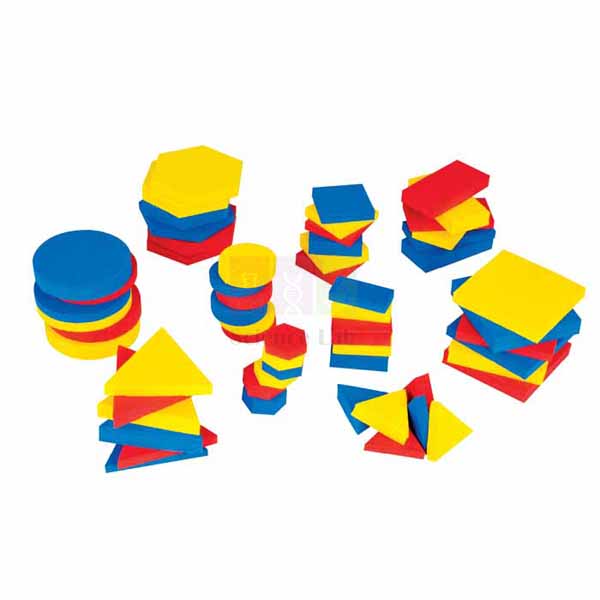
Attribute Blocks
Attribute Blocks (Product Code: SLE/MAT/54) are a set of shapes that differ in colour, size and thickness, used for sorting and classifying activities in pre-primary and early primary maths. Each set has 5 shapes in 3 colours, so children learn to describe each block by its shape, colour, size and thickness together. They are made by Jain Scientific Equipments Pvt Ltd (ScienceLab), an OEM school educational lab equipment manufacturer, at its own factory in Ambala, for its range of mathematics lab kits in India.
Key Details
| Parameter | Detail |
|---|---|
| Set composition | 5 shapes in 3 colours |
| Attributes | Colour, shape, size (big/small) and thickness (thick/thin) |
| Concepts | Sorting and classifying, patterns, linear measurement, fractions, shapes and pictures |
| Learning outcomes | Pre-number sense and maths vocabulary |
| Product code | SLE/MAT/54 |
| Manufacturer | Jain Scientific Equipments Pvt Ltd (ScienceLab) — OEM |
| Country of origin | India (made in Ambala, Haryana) |
What Are Attribute Blocks Used For?
Attribute Blocks are a sorting tool before they are a counting tool. Children group blocks by one attribute, such as colour, and then by two or three at once, learning words like thick, thin, big and small along the way. This is the pre-number sense and maths vocabulary that later counting depends on.
Popular activities include difference trains, where each block must differ from the last by exactly one attribute, and sorting into two overlapping hoops. Older children can use the blocks to make repeating patterns and pictures and to explore simple measurement and fraction ideas.
OEM Manufacturer
Attribute Blocks are produced by Jain Scientific Equipments Private Limited, known as ScienceLab, which is their original equipment manufacturer. The company makes them at its own licensed factory in Saha, Ambala, Haryana, India, and deals directly with pre-schools, primary schools, dealers and importers. More about the company is on the ScienceLab company profile.
Related Maths Lab Equipment
These shape and block sets extend sorting into patterns and place value:
- Attribute Blocks Desk Set — a desk set for individual or small-group sorting work.
- Plastic Pattern Blocks — for building patterns and pictures from shapes.
- Brights Pattern Blocks — another pattern-block option for shape activities.
- Dienes Blocks Plastic — for moving on from sorting to place value.
Browse the Maths Lab Equipment category for more early-years maths manipulatives.
Frequently Asked Questions
How many shapes and colours are in a set of Attribute Blocks?
Each set of Attribute Blocks has 5 shapes in 3 colours, with the shapes also varying in size and thickness. This mix lets children sort and classify blocks by colour, shape, big or small, and thick or thin.
What age group are Attribute Blocks suitable for?
Attribute Blocks suit pre-primary and early primary learners who are building pre-number sense and maths vocabulary. Older pupils can continue using Attribute Blocks for patterns, measurement, fractions and logical sorting problems.
What skills do Attribute Blocks develop?
Attribute Blocks develop sorting and classifying skills, pre-number sense and maths vocabulary through hands-on learning. Children also examine patterns, linear measurement, fractions, shapes and pictures while comparing and grouping the blocks.
What material are the Attribute Blocks made of?
The material of the Attribute Blocks is not stated on this page. Please ask through the contact page and ScienceLab will confirm the material and block sizes before you place an order.
Who manufactures Attribute Blocks?
Attribute Blocks are manufactured by Jain Scientific Equipments Pvt Ltd (ScienceLab), the OEM, at its own licensed factory in Saha, Ambala, Haryana, India. Schools and resellers receive quotations directly from the manufacturer, which also handles repeat orders.
Can Attribute Blocks be ordered for many classrooms?
Yes. Attribute Blocks can be quoted for a single classroom or for bulk orders covering several schools, as well as for dealers and importers in India and international markets. Share the number of sets and the delivery location in your enquiry.
Request a Quote
Ask for Attribute Blocks pricing through the ScienceLab contact page or add the set to the enquiry cart. The manufacturer sends the quotation directly.
Last updated: 24 September 2026
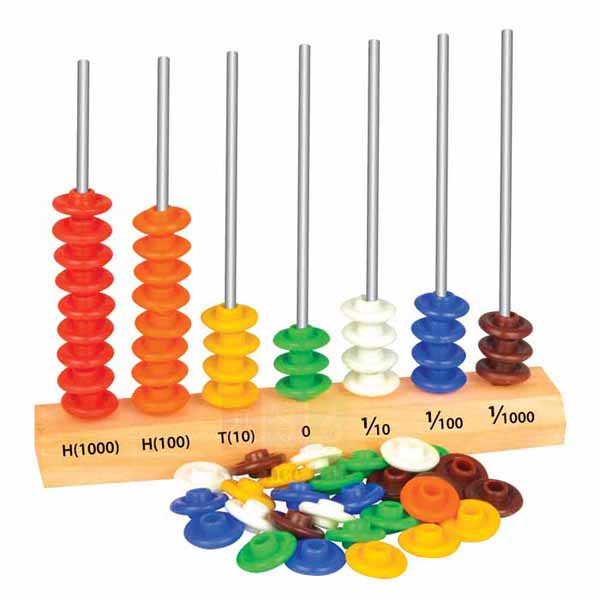
Decimal Abacus
Decimal Abacus (Product Code: SLE/MAT/55) is a wooden spike abacus used to teach decimal numbers and their place value in primary and middle-school maths. With 70 beads across 7 spikes, it lets pupils show whole-number and decimal places side by side and add or subtract decimals by moving beads. It is made by Jain Scientific Equipments Pvt Ltd (ScienceLab), an OEM laboratory equipment manufacturer in India, at its own factory in Ambala.
Specifications
| Parameter | Detail |
|---|---|
| Material | Wood |
| Spikes | 7 |
| Beads | 70 |
| Purpose | Decimal numbers and place value; addition and subtraction of whole and decimal numbers |
| Product code | SLE/MAT/55 |
| Manufacturer | Jain Scientific Equipments Pvt Ltd (ScienceLab) — OEM |
| Country of origin | India (made in Ambala, Haryana) |
What Is the Decimal Abacus Used For?
A Decimal Abacus makes the decimal point something pupils can see. Some spikes stand for whole-number places such as ones and tens, and the rest for tenths, hundredths and smaller places, with the decimal point marked between them, for example with a paper label. Beads placed on a spike show how many of that place value a number has.
When adding two decimals, pupils build the first number, add the second bead by bead, and exchange ten beads on the tenths spike for one bead on the ones spike, the carrying step that often confuses children on paper. Subtraction works the same way in reverse, exchanging one bead for ten on the spike to the right.
OEM Manufacturer
The Decimal Abacus is a ScienceLab product made by Jain Scientific Equipments Private Limited, the original equipment manufacturer, at its own licensed factory in Saha, Ambala, Haryana. Buying from the factory means schools, dealers and importers receive a quotation from the same company that builds the abacus, and questions about replacement beads go straight to the maker. Visit the ScienceLab company profile for company details.
Related Maths Lab Equipment
These place-value resources work alongside the Decimal Abacus:
- Decimal Kit — further decimal activities for primary classes.
- Abacus Upright — for whole-number place value before decimals.
- Abacus Desk/Table — a desk abacus for individual counting practice.
- Base Ten Blocks — to show the same place values with blocks.
- Game of Place Value — a U-shaped wire abacus for place value up to lakh.
More abacus and place-value tools are listed in the Maths Lab Equipment category.
Frequently Asked Questions
How many beads and spikes does the Decimal Abacus have?
The Decimal Abacus is a set of 70 beads with 7 spikes. The spikes let pupils represent several place values at once, including places to the right of the decimal point, while the beads show the digit in each place.
What is the Decimal Abacus made of?
The Decimal Abacus is a wooden abacus. Wood gives a sturdy base for the spikes and makes the abacus comfortable for pupils to handle while they build, add and subtract whole and decimal numbers in class.
What can pupils learn with the Decimal Abacus?
With the Decimal Abacus, pupils learn decimal numbers and their place value, and perform addition and subtraction on whole numbers and decimals. It establishes the relationship between a number and its place value in decimal notation.
How is the Decimal Abacus different from an ordinary abacus?
An ordinary counting abacus usually shows whole numbers only, while the Decimal Abacus is used to extend place value past the decimal point into tenths and smaller places. This makes it suitable once pupils move from whole numbers to decimals.
Who manufactures the Decimal Abacus?
The Decimal Abacus is manufactured by Jain Scientific Equipments Pvt Ltd (ScienceLab), the OEM, at its licensed factory in Saha, Ambala, Haryana, India. Quotations come directly from the manufacturer, which also handles repeat orders.
Can the Decimal Abacus be ordered in quantity?
Yes. The Decimal Abacus can be quoted for single classrooms, whole schools, tenders, and dealers or importers in India and international markets. Send the number of pieces and the delivery location through the contact page.
Request a Quote
Get a quotation for the Decimal Abacus by writing through the ScienceLab contact page or adding it to the enquiry cart. The manufacturer prepares your quote.
Last updated: 24 September 2026
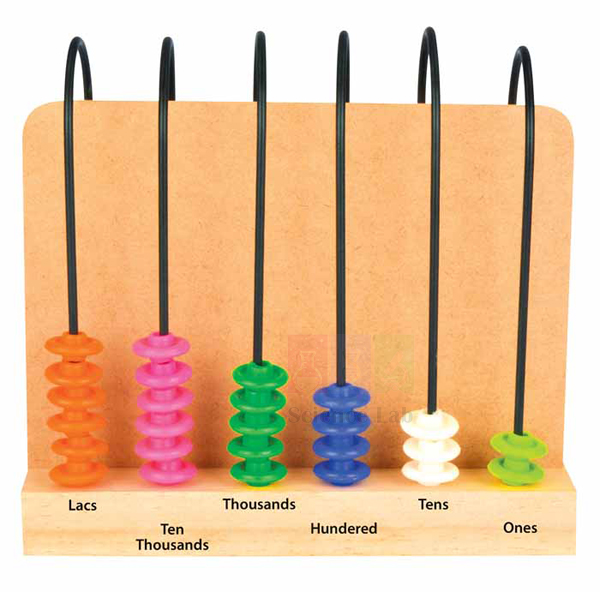
Game of Place Value
Game of Place Value (Product Code: SLE/MAT/56) is a U-shaped wire abacus used to teach the place value of numbers up to lakh in primary maths classrooms. Its 6 wires each hold 9 beads, 54 beads in all, on a compact 20 cm × 7 cm unit, so pupils can build, read and compare six-digit numbers at their desks. It is made by Jain Scientific Equipments Pvt Ltd (ScienceLab), an OEM manufacturer, at its own factory in Ambala, India.
Specifications
| Parameter | Detail |
|---|---|
| Type | U-shaped wire abacus |
| Wires | 6 |
| Beads | 9 per wire, 54 in total |
| Size | 20 cm × 7 cm |
| Place value range | Up to lakh |
| Product code | SLE/MAT/56 |
| Manufacturer | Jain Scientific Equipments Pvt Ltd (ScienceLab) — OEM |
| Country of origin | India (made in Ambala, Haryana) |
What Is the Game of Place Value Used For?
Each wire of the Game of Place Value stands for one place: ones, tens, hundreds, thousands, ten thousands and lakhs in the Indian system. With at most nine beads on a wire, a place can never hold more than nine, which is exactly the rule pupils need to learn. Building a number bead by bead shows why the same digit is worth more on a wire further to the left.
The game comes from digit challenges: given a set of digits, pupils form the greatest and the smallest possible number, then compare answers with a partner. Teachers can also call out a number in words for pupils to build, or build a number and ask for its expanded form.
OEM Manufacturer
Jain Scientific Equipments Private Limited (CIN U29309HR2020PTC087597) trades as ScienceLab and is the original equipment manufacturer of the Game of Place Value. The abacus is produced at the company’s own premises at 449, HSIIDC Industrial Area, Saha, Ambala, which hold Haryana Factory Licence AMB-ONLINE-CHD-J-414. Schools, dealers and importers buy it factory-direct; for more about the company, see the ScienceLab company profile.
Related Maths Lab Equipment
These resources build on the Game of Place Value:
- Place Value Mat with Stacking Counters — build numbers with counters on a mat as a companion activity.
- Place Value Board Multiplication — for multiplying whole numbers once place value is secure.
- Decimal Abacus — to extend place value past the decimal point.
- Abacus Upright — an upright abacus for counting and place-value work.
- Base Ten Blocks — another model of place value using blocks.
Find more place-value and number games in the Maths Lab Equipment category.
Frequently Asked Questions
How many wires and beads does the Game of Place Value have?
The Game of Place Value has 6 wires with 9 beads on each wire, a set of 54 beads in total. Six wires let pupils represent numbers up to the lakh place in the Indian number system.
What size is the Game of Place Value?
The Game of Place Value measures 20 cm × 7 cm. Its compact U-shaped wire design fits on a pupil’s desk, so each child or pair can build and compare numbers during the lesson.
What skills does the Game of Place Value teach?
The Game of Place Value teaches the place value of numbers up to lakh, and helps pupils form numbers from given digits and build the greatest and smallest possible numbers. These activities turn number formation into a quick, competitive game.
Why does each wire of the Game of Place Value hold only 9 beads?
Each wire of the Game of Place Value holds 9 beads because a single place in a number can only hold a digit from zero to nine. When pupils need a tenth bead, they must regroup onto the next wire, which reinforces carrying.
Who manufactures the Game of Place Value?
The Game of Place Value is manufactured by Jain Scientific Equipments Pvt Ltd (ScienceLab), the OEM, at its licensed factory in Saha, Ambala, Haryana, India. Schools and resellers receive quotations directly from the manufacturer.
Can schools order the Game of Place Value for every pupil?
Yes. The Game of Place Value can be quoted in class-set quantities so that every pupil or pair has one, and also for dealers and importers in India and international markets. State the quantity and delivery location in your enquiry.
Request a Quote
Order the Game of Place Value through the ScienceLab contact page or add it to the enquiry cart with other place-value resources. Quotations come direct from the manufacturer.
Last updated: 24 September 2026
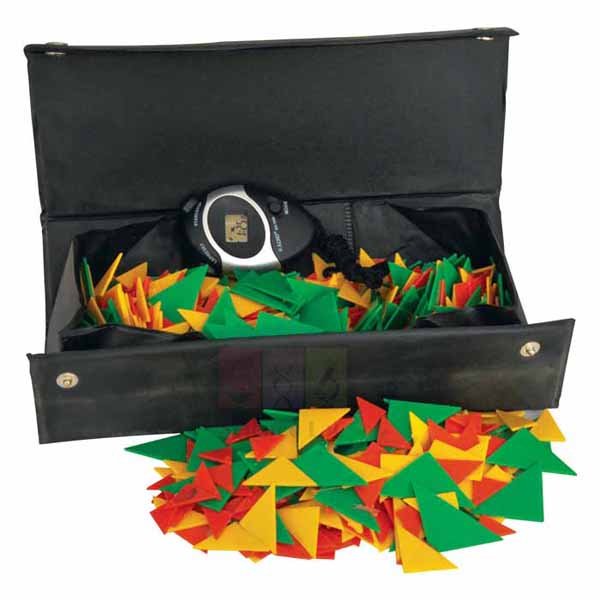
Time and Work Kit
Time and Work Kit (Product Code: SLE/MAT/57) is a maths lab kit used to measure and compare the work that different groups complete in the same time span in school classrooms. It combines assorted colour right-angle triangles with a single digital stopwatch, turning time-and-work word problems into a timed group activity. Jain Scientific Equipments Pvt Ltd (ScienceLab), an OEM manufacturer, makes it at its own factory in Ambala, India, as one of its mathematics lab kits for schools in India.
Key Details
| Parameter | Detail |
|---|---|
| Kit contents | Assorted colour right-angle triangles with one digital stopwatch |
| Timer | Single digital stopwatch |
| Work pieces | Right-angle triangles in assorted colours |
| Learning objective | Calculating the work done in the same time span by different groups |
| Product code | SLE/MAT/57 |
| Manufacturer | Jain Scientific Equipments Pvt Ltd (ScienceLab) — OEM |
| Country of origin | India (made in Ambala, Haryana) |
What Is the Time and Work Kit Used For?
The kit gives pupils a concrete entry point into the time-and-work chapter. Each group receives the same task — for example, sorting or arranging the coloured triangles into a set pattern — while one pupil runs the digital stopwatch. When the round ends, groups compare how much they finished in the same time span, express it as work per minute and use that rate to predict how long a combined team would take.
Agree on what counts as one unit of work before starting, and use the same stopwatch for every round so the timings stay comparable. Recording each group's output in a table lets the class move from the activity to unitary-method and efficiency calculations. The kit fits easily into a school lab setup in India where maths activity periods run alongside regular lessons.
OEM Manufacturer
Jain Scientific Equipments Private Limited, which trades as ScienceLab, is the OEM (original equipment manufacturer) of the Time and Work Kit. The company makes and assembles the kit at its own licensed factory at Saha, Ambala, Haryana, India, rather than sourcing it from a trader. Schools, colleges, institutions, dealers and importers are supplied factory-direct, and questions about replacement triangles or stopwatches go straight to the maker — just ask us. Learn more on our company profile.
Related Maths Lab Equipment
Teachers running timed maths activities often combine the Time and Work Kit with these items:
- Stopwatch, Digital — an extra timer so two groups can be timed at once.
- Bench Stopwatch — a desk-top timer the whole class can follow during a round.
- Junior Pythagoras Theorem — another right-angle triangle activity for the same classes.
- Upper Primary Maths Kit — a broader kit for equipping a full maths activity corner.
See the complete Maths Lab Equipment range for more classroom manipulatives.
Frequently Asked Questions
What is included in the Time and Work Kit?
The Time and Work Kit includes assorted colour right-angle triangles and a single digital stopwatch. The triangles act as the units of work that each group handles, and the stopwatch times every round so that output over the same time span can be compared fairly.
How is the Time and Work Kit used to teach time and work problems?
The Time and Work Kit is used by giving every group the same task and time limit, timing it with the digital stopwatch and comparing how many triangles each group handled. Pupils then turn the results into work per unit time and solve combined-work questions.
How many triangles are in the Time and Work Kit?
The Time and Work Kit is listed with assorted colour right-angle triangles, and our catalogue description does not fix a piece count. Please ask through our contact page for the current number of triangles and colours before you place an order.
Who manufactures the Time and Work Kit?
The Time and Work Kit is manufactured by Jain Scientific Equipments Pvt Ltd (ScienceLab), the OEM, at its own licensed factory at Saha, Ambala, Haryana, India. Quotations, repeat orders and replacement-part questions are handled directly by the manufacturer.
Can the Time and Work Kit be ordered in bulk or for export?
Yes, the Time and Work Kit can be quoted in class-set quantities for schools, institutions and dealers in India and international markets. Tell us how many kits you need and the delivery location, and we will prepare a quotation for you.
What details does a quotation for the Time and Work Kit need?
A quotation for the Time and Work Kit needs the product code SLE/MAT/57, the number of kits, the delivery address and any related items you want quoted together. Send these through the contact page or add the kit to the enquiry cart.
Request a Quote
To order the Time and Work Kit, send your quantity and delivery location through our contact page or add it to the enquiry cart. Quotations come direct from the manufacturer, so you deal with the team that makes the kit.
Last updated: 24 September 2026
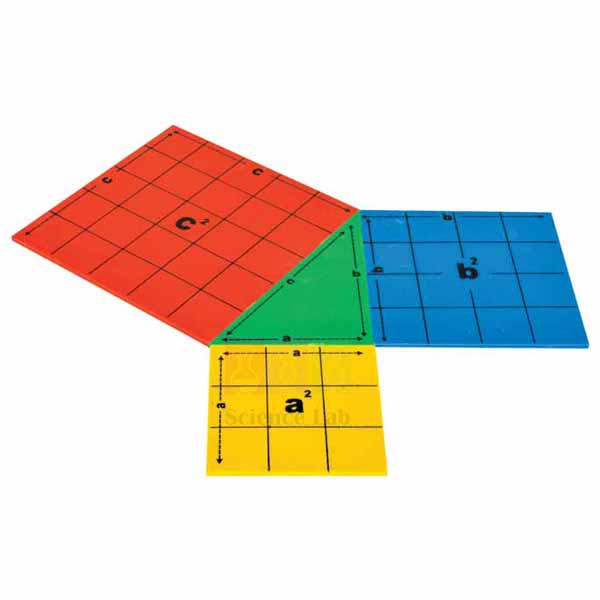
Junior Pythagoras Theorem
Junior Pythagoras Theorem (Product Code: SLE/MAT/58) is a hands-on geometry kit used to verify that, in a right triangle, the square of the hypotenuse equals the sum of the squares of the other two sides in school maths labs. It pairs one plastic right-angle triangle measuring (3-4) inches with a gridded square for each of its three sides. Jain Scientific Equipments Pvt Ltd (ScienceLab), an OEM school lab equipment manufacturer, makes it at its own factory in Ambala, India.
Specifications
| Parameter | Detail |
|---|---|
| Purpose | Verifying that the square of the hypotenuse equals the sum of the squares of the other two sides |
| Triangle | One plastic right-angle triangle, measure (3-4) inch |
| Squares | Set of squares, one for each of the 3 sides of the triangle |
| Grid | Square-inch grid printed on each square |
| Product code | SLE/MAT/58 |
| Manufacturer | Jain Scientific Equipments Pvt Ltd (ScienceLab) — OEM |
| Country of origin | India (made in Ambala, Haryana) |
What Is the Junior Pythagoras Theorem Kit Used For?
The kit turns Pythagoras' theorem from a formula into something pupils can see and count. Learners place each gridded square against its matching side of the plastic triangle, count the square-inch cells in every square, and discover that the two squares on the shorter sides together hold exactly as many cells as the square on the hypotenuse.
Work on a flat desk and line each square up edge to edge with the triangle so the picture stays accurate. After the counting activity, pupils can repeat the idea on graph paper with other right triangles and then move to the algebraic statement. As hands-on educational lab equipment in India, one kit per small group keeps every pupil involved in the counting.
OEM Manufacturer
ScienceLab is the trading name of Jain Scientific Equipments Private Limited, the original equipment manufacturer (OEM) of the Junior Pythagoras Theorem kit. The triangle and its gridded squares are produced at the company's own licensed factory at Saha, Ambala, Haryana, India, and kits reach schools, colleges and dealers factory-direct instead of passing through a chain of traders. If a square is lost or damaged, ask us about a replacement piece. More about the company is on our profile page.
Related Maths Lab Equipment
These items extend the right-triangle work started with the Junior Pythagoras Theorem kit:
- Trigonometry Board — the next step, from side lengths to trigonometric ratios.
- Graph Board — for drawing further right triangles and their squares on a grid.
- Set Square, Blackboard, 45-45-90 degrees — lets the teacher draw accurate right angles on the board.
- Geometry Set — for constructing and measuring triangles by hand.
Explore more geometry aids in our Maths Lab Equipment category.
Frequently Asked Questions
What does the Junior Pythagoras Theorem kit contain?
The Junior Pythagoras Theorem kit contains one plastic right-angle triangle with the measure (3-4) inches and a set of squares, one for each of the three sides, each printed with a square-inch grid so pupils can count areas directly.
How do students verify Pythagoras' theorem with this kit?
Students verify the theorem with the Junior Pythagoras Theorem kit by placing each gridded square against its side of the triangle, counting the square-inch cells, and showing that the two smaller squares together match the square on the hypotenuse.
What size is the triangle in the Junior Pythagoras Theorem kit?
The Junior Pythagoras Theorem kit uses a plastic right-angle triangle listed with the measure (3-4) inches, and its companion squares carry square-inch grids. For the overall dimensions of each square, please ask us through our contact page.
Which classes is the Junior Pythagoras Theorem kit suitable for?
The Junior Pythagoras Theorem kit suits classes meeting the theorem for the first time, usually in middle and secondary school, because counting printed square-inch cells makes the area relationship visible before pupils move on to formal algebraic proofs.
Who manufactures the Junior Pythagoras Theorem kit?
The Junior Pythagoras Theorem kit is manufactured by Jain Scientific Equipments Pvt Ltd (ScienceLab), the OEM, at its own licensed factory at Saha, Ambala, Haryana, India, and is supplied directly by the manufacturer to schools, institutions, dealers and importers.
Can the Junior Pythagoras Theorem kit be ordered for a whole class?
Yes, the Junior Pythagoras Theorem kit can be quoted singly or in class quantities for schools, institutions and dealers in India and international markets. Share the number of kits and the delivery location to receive a quotation.
Request a Quote
For a price on the Junior Pythagoras Theorem kit, write to us through the contact page or place it in the enquiry cart with your quantity. Your quotation comes straight from the manufacturer.
Last updated: 24 September 2026
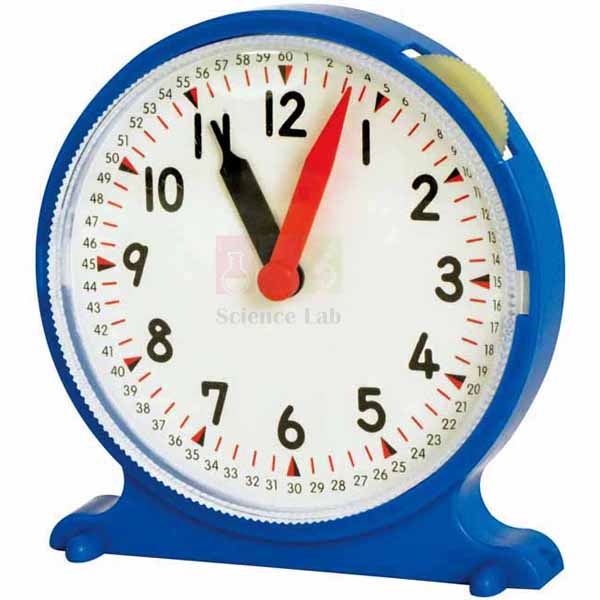
Geared Student Clock
Geared Student Clock (Product Code: SLE/MAT/59) is a geared practice clock used to develop children's time-telling skills in primary classrooms and maths labs. Hidden gears link its moveable hands, so turning the minute hand carries the hour hand accurately to the hours, and the bright colour hands are easy to read. Jain Scientific Equipments Pvt Ltd (ScienceLab), an OEM manufacturer, makes it at its own factory in Ambala, India.
Key Details
| Parameter | Detail |
|---|---|
| Mechanism | Hidden gears maintain the correct hour and minute relationship as the hands are moved |
| Hour hand | Accurate to the hours with the movement of the minute hand |
| Hands | Moveable, bright colour clock hands, easy to read |
| Learning objective | Developing a child's time-telling skill |
| Product code | SLE/MAT/59 |
| Manufacturer | Jain Scientific Equipments Pvt Ltd (ScienceLab) — OEM |
| Country of origin | India (made in Ambala, Haryana) |
What Is the Geared Student Clock Used For?
Because the gears keep both hands in step, the clock always shows a time that could really occur: at half past, the hour hand sits midway between two numbers, just as on a wall clock. Teachers call out a time, pupils set it on their own clocks, and a quick look around the room shows who has understood o'clock, half past and quarter times.
Once reading is secure, the same clock supports elapsed-time questions such as "what time will it be in three quarters of an hour?", with pupils turning the minute hand and watching the hour hand follow. It works well as part of a junior lab kit in primary school, where each child can hold and turn a clock rather than watching the teacher alone.
OEM Manufacturer
The Geared Student Clock is produced by Jain Scientific Equipments Private Limited, trading as ScienceLab, as the OEM (original equipment manufacturer). The clocks are made and assembled at the company's own licensed factory at Saha, Ambala, Haryana, India, so schools, dealers and importers buy from the maker rather than from a reseller. Repeat class sets can be ordered from the same source — ask us for current availability. Read more on our company profile.
Related Maths Lab Equipment
Pair the Geared Student Clock with these items when teaching time:
- Clock, Teaching, Wood — a teacher's demonstration clock for the front of the class.
- Dummy Clock — a lightweight fiber-sheet clock with movable hands for extra practice.
- Roman Numbers Kit — helps pupils read clock faces marked with Roman numerals.
- Stopwatch, Digital — for measuring short intervals once pupils can read the clock.
More time and number resources are listed under Maths Lab Equipment.
Frequently Asked Questions
How does the Geared Student Clock keep the hands in step?
The Geared Student Clock uses hidden gears that connect the minute and hour hands, so when a pupil turns the minute hand the hour hand moves accurately to the hours. This keeps the correct hour and minute relationship for every time that is set.
Which pupils is the Geared Student Clock meant for?
The Geared Student Clock is meant for children developing time-telling skills, so it suits early-years and primary classes learning o'clock, half past and quarter times, as well as older pupils practising elapsed-time problems.
Why choose a geared clock over a basic teaching clock?
The Geared Student Clock moves the hour hand together with the minute hand through its hidden gears, so pupils cannot set an impossible time and always see a correct hour and minute relationship, which avoids reinforcing mistakes during practice.
Are the hands on the Geared Student Clock easy to read?
Yes, the Geared Student Clock has bright colour hands that are easy to read, which helps young children follow each hand clearly while they practise setting and reading times at their desks.
What size is the Geared Student Clock?
The dimensions of the Geared Student Clock are not stated in our catalogue description. Please ask through our contact page for the dial size before ordering, especially if it needs to match other classroom clocks.
Who manufactures the Geared Student Clock?
The Geared Student Clock is manufactured by Jain Scientific Equipments Pvt Ltd (ScienceLab), the OEM, at its own licensed factory at Saha, Ambala, Haryana, India. Quotations and repeat orders are handled directly by the manufacturer.
Can Geared Student Clocks be ordered for a whole class?
Yes, Geared Student Clocks can be quoted in class sets for schools, dealers and institutions in India and international markets, including school lab equipment bulk supply orders. Tell us the quantity and delivery location to receive a quotation.
Request a Quote
Send your required number of Geared Student Clocks through our contact page, or add the clock to the enquiry cart. You will receive a quotation directly from the manufacturer.
Last updated: 24 September 2026
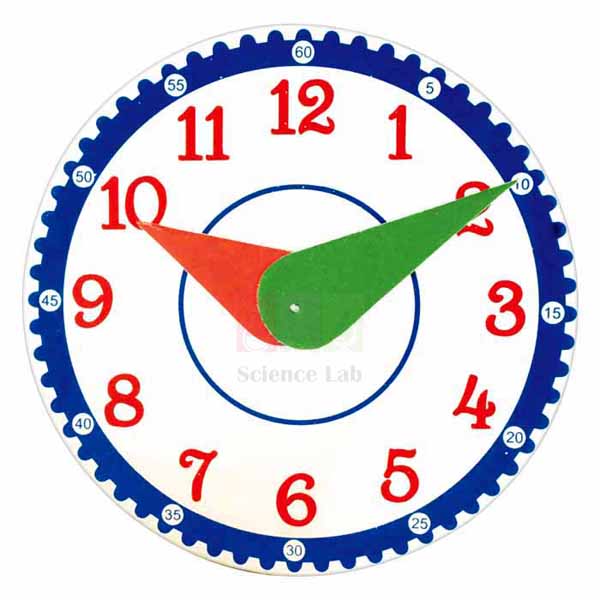
Dummy Clock
Dummy Clock (Product Code: SLE/MAT/60) is a lightweight model clock used to develop and reinforce time-telling skills in pre-primary and primary classrooms. Made of light fiber sheet with movable hour and minute hands, it is easy for young children to hold, set and read, making it a simple addition to any preschool kit in India. Jain Scientific Equipments Pvt Ltd (ScienceLab), an OEM manufacturer of educational laboratory equipment in India, makes it at its own factory in Ambala.
Key Details
| Parameter | Detail |
|---|---|
| Material | Lightweight fiber sheet |
| Hands | Movable hour and minute hands |
| Handling | Light weight, easy to handle |
| Learning objective | Developing and reinforcing time-telling skill |
| Product code | SLE/MAT/60 |
| Manufacturer | Jain Scientific Equipments Pvt Ltd (ScienceLab) — OEM |
| Country of origin | India (made in Ambala, Haryana) |
What Is the Dummy Clock Used For?
Children use the Dummy Clock to show the times that shape their day — assembly, lunch, games period, home time — and to copy times the teacher calls out or writes on the board. Working in pairs, one child sets a time and the other reads it aloud, which reinforces both setting and reading.
A useful tip: when pupils set half past or quarter past, ask them to move the hour hand slightly beyond the number, since this is where most early errors appear. When planning a complete maths lab setup for a school in India, teachers often keep a class set of these light clocks so every child can practise at the same time.
OEM Manufacturer
Jain Scientific Equipments Private Limited operates under the ScienceLab name and is the OEM (original equipment manufacturer) of the Dummy Clock. The clock is made at the company's own licensed factory at Saha, Ambala, Haryana, India, and dispatched factory-direct to schools, colleges, institutions and distributors in India and international markets. Quotations are issued by the manufacturer itself, with no trading middleman. Find out more on our company profile.
Related Maths Lab Equipment
These resources work well alongside the Dummy Clock in early maths lessons:
- Geared Student Clock — hidden gears keep its hour and minute hands in step for older learners.
- Clock, Teaching, Wood — a teacher's clock for whole-class demonstration.
- Dummy Currency Notes — another everyday-life maths resource for role-play lessons.
- Number Mat — number-recognition practice that supports reading a clock face.
Browse all Maths Lab Equipment for more early-years maths aids.
Frequently Asked Questions
What is the Dummy Clock made of?
The Dummy Clock is made of lightweight fiber sheet, which keeps it light and easy to handle for young children. It carries movable hour and minute hands so pupils can set and read times during lessons and group activities.
Does the Dummy Clock have a gear mechanism?
The Dummy Clock is described with movable hour and minute hands and does not list a gear mechanism. For hands linked by hidden gears, choose the Geared Student Clock, or ask us through our contact page which suits your class.
Which children is the Dummy Clock suitable for?
The Dummy Clock suits pre-primary and primary pupils who are learning to tell the time, because the light fiber sheet is easy for small hands to hold and the movable hands let each child practise setting times independently.
What size is the Dummy Clock?
The dimensions of the Dummy Clock are not given in our catalogue description. Please contact us with your requirement and we will confirm the current size before you order, so the clock suits desk work or display as you intend.
Who manufactures the Dummy Clock?
The Dummy Clock is manufactured by Jain Scientific Equipments Pvt Ltd (ScienceLab), the OEM, at its own licensed factory at Saha, Ambala, Haryana, India. Schools and dealers receive quotations and repeat supplies directly from the manufacturer.
Can the Dummy Clock be ordered in class sets?
Yes, the Dummy Clock can be quoted in class-set quantities for schools, institutions and dealers in India and international markets. Share the number of clocks and the delivery location, and we will send a quotation.
Request a Quote
Ask for a Dummy Clock quotation through our contact page, or add it to the enquiry cart together with other maths aids. Prices are quoted direct by the manufacturer.
Last updated: 24 September 2026
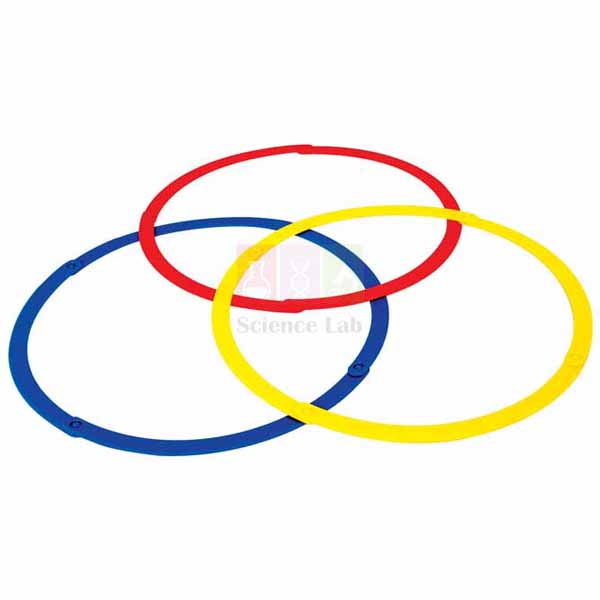
Sorting Ring
Sorting Ring (Product Code: SLE/MAT/61) is a foldable plastic circle ring used for grouping objects, teaching set theory and demonstrating Venn diagrams in school maths classrooms. The same rings serve learners from elementary to higher secondary level, from simple sorting by colour to overlapping sets. Jain Scientific Equipments Pvt Ltd (ScienceLab), an OEM and one of the educational laboratory equipment manufacturers based in Ambala, makes them at its own factory in India.
Key Details
| Parameter | Detail |
|---|---|
| Material | Plastic |
| Form | Foldable circle rings |
| Uses | Grouping, set theory and Venn diagram demonstration |
| Class levels | Elementary to higher secondary |
| Product code | SLE/MAT/61 |
| Manufacturer | Jain Scientific Equipments Pvt Ltd (ScienceLab) — OEM |
| Country of origin | India (made in Ambala, Haryana) |
What Is the Sorting Ring Used For?
In the lower classes, children place blocks, counters or picture cards inside a ring to form a group — all the red items, all the triangles — and discuss what belongs outside it. Overlapping two rings then shows items that share both properties, which is the first concrete picture of an intersection.
With older students the rings become a physical Venn diagram: two or three overlapping circles model union, intersection and complement, and help solve counting problems before the notation is introduced. Lay the rings on a large table or the floor and label each with a card. For many schools the Sorting Ring earns a place on the school lab instruments list for maths because one set covers so many class levels.
OEM Manufacturer
Jain Scientific Equipments Private Limited, known by its trading name ScienceLab, is the OEM (original equipment manufacturer) of the Sorting Ring. The rings are produced at the company's own licensed factory at Saha, Ambala, Haryana, India, and supplied directly to schools, colleges, institutions, dealers and importers. Buying from the manufacturer means repeat orders and replacement rings can be discussed with the same team — just ask us. Visit our company profile for background.
Related Maths Lab Equipment
Objects and kits that teachers commonly sort with the Sorting Ring:
- Attribute Blocks — shapes that differ in several properties, ideal for sorting into rings.
- Sorting Kits Triangle — triangle pieces for classifying by type inside the rings.
- Sorting Kit Quadrilateral — quadrilaterals for overlapping-set activities.
- Interlocking Cubes — coloured cubes for grouping and counting within each set.
Find further sorting and set-theory aids in Maths Lab Equipment.
Frequently Asked Questions
What is the Sorting Ring used for?
The Sorting Ring is used for grouping objects, teaching set theory and demonstrating Venn diagrams. Pupils place items inside or across the foldable plastic rings to show sets, overlaps and the items that belong to neither group.
Which classes can use the Sorting Ring?
The Sorting Ring can be used from elementary to higher secondary level. Younger children sort objects by a single property, while older students model unions, intersections and complements of sets and work through Venn diagram counting problems.
Is the Sorting Ring foldable?
Yes, the Sorting Ring is a plastic foldable circle ring, so the rings can be folded away between lessons and opened out again on a desk or the floor whenever a sorting or Venn diagram activity begins.
How many rings come in a set, and what size are they?
The ring count and diameter of the Sorting Ring are not stated in our catalogue description. Please ask through our contact page and we will confirm the current set contents and size before you place an order.
Who manufactures the Sorting Ring?
The Sorting Ring is manufactured by Jain Scientific Equipments Pvt Ltd (ScienceLab), the OEM, at its own licensed factory at Saha, Ambala, Haryana, India. Quotations and repeat supplies come straight from the manufacturer.
Can the Sorting Ring be supplied in bulk or exported?
Yes, the Sorting Ring can be quoted in bulk for schools, institutions and dealers in India and international markets. Send the quantity required and the delivery location, and we will prepare a quotation for you.
Request a Quote
To request a price for the Sorting Ring, use our contact page or add the item to the enquiry cart. Quotations are sent directly by the manufacturer.
Last updated: 24 September 2026
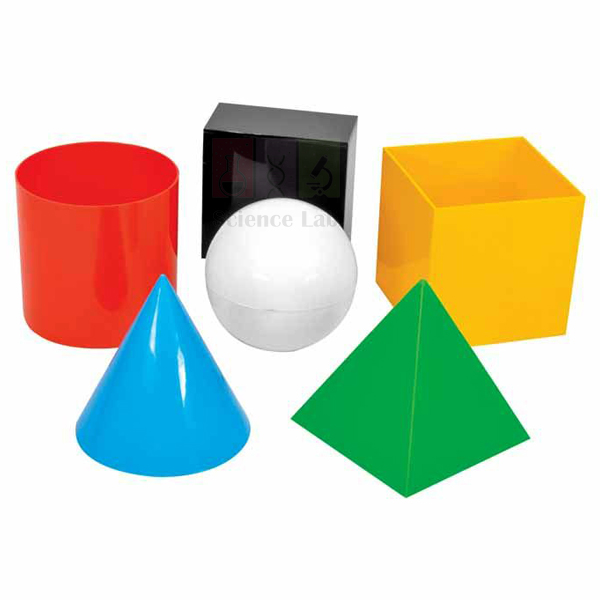
3D Colour Solid Set
3D Colour Solid Set (Product Code: SLE/MAT/62) is a set of colourful geometric solids used to connect 3D shapes with their 2D representations and to deduce surface area and volume formulae in school maths lessons. Listed at a length of 10 cm, it serves pre-schoolers meeting shapes for the first time as well as older pupils starting mensuration. Jain Scientific Equipments Pvt Ltd (ScienceLab), an OEM among mathematics lab equipment manufacturers in India, makes it at its own factory in Ambala.
Specifications
| Parameter | Detail |
|---|---|
| Length | 10 cm |
| Finish | Colourful solids |
| Learning objectives | Connecting 3D solids with their 2D representations; deducing formulae for surface areas and volumes |
| Early years use | Introducing different geometric shapes to pre-schoolers |
| Product code | SLE/MAT/62 |
| Manufacturer | Jain Scientific Equipments Pvt Ltd (ScienceLab) — OEM |
| Country of origin | India (made in Ambala, Haryana) |
What Is the 3D Colour Solid Set Used For?
For young children, the bright solids are something to hold, name and compare: which shapes roll, which stack, which have flat faces. Tracing round a face on paper is a simple first step in linking a 3D solid to its 2D outline, and the colours help keep the attention of a whole group.
Older pupils use the same pieces to count faces, edges and vertices, measure dimensions and work out surface area and volume before the formulae are given, so the rule is deduced rather than memorised. Among laboratory equipment for schools in India, a solid set like this can serve from pre-school right through to middle-school mensuration.
OEM Manufacturer
The 3D Colour Solid Set comes from Jain Scientific Equipments Private Limited, trading as ScienceLab, which acts as the OEM (original equipment manufacturer) for it. Production takes place at the company's own licensed factory at Saha, Ambala, Haryana, India, and sets go out factory-direct to schools, institutions, dealers and importers. Quotations come straight from the maker, and questions about replacing a lost piece can be raised with the same team. Read our company profile.
Related Maths Lab Equipment
Teachers often combine the 3D Colour Solid Set with these geometry aids:
- Transparent 3D Solid Set — see-through solids for studying edges, faces and volume from the inside.
- 2D Shapes — flat shapes to match against each face of a solid.
- Folding Geometric Shapes — for exploring how solids open into flat nets.
- Wooden Geometric Solids — a wooden alternative for handling and display.
See more shape resources in Maths Lab Equipment.
Frequently Asked Questions
What does the 3D Colour Solid Set help children learn?
The 3D Colour Solid Set helps children connect 3D solids with their 2D representations and deduce formulae for surface areas and volumes. For pre-schoolers it is a colourful introduction to different geometric shapes that holds their attention.
What size are the pieces in the 3D Colour Solid Set?
The 3D Colour Solid Set is listed with a length of 10 cm. For the exact dimensions of each individual shape, please ask through our contact page and we will confirm them before you order.
Which shapes are included in the 3D Colour Solid Set?
The shape list of the 3D Colour Solid Set is not itemised in our catalogue description. Contact us for the current contents and piece count, so you can check the set covers the solids in your syllabus before placing an order.
Is the 3D Colour Solid Set suitable for pre-school classes?
Yes, the 3D Colour Solid Set is intended as a colourful resource for introducing geometric shapes to pre-schoolers, and the same pieces later support surface area and volume work, so one set can serve several age groups.
Who manufactures the 3D Colour Solid Set?
The 3D Colour Solid Set is manufactured by Jain Scientific Equipments Pvt Ltd (ScienceLab), the OEM, at its own licensed factory at Saha, Ambala, Haryana, India. Schools and dealers are supplied and quoted directly by the manufacturer.
Can the 3D Colour Solid Set be ordered for several classrooms?
Yes, the 3D Colour Solid Set can be quoted in multiple sets for schools, institutions and dealers in India and international markets. Let us know the number of sets and the delivery location to receive a quotation.
Request a Quote
Request a price for the 3D Colour Solid Set through our contact page or add it to the enquiry cart. The quotation is prepared directly by the manufacturer.
Last updated: 24 September 2026
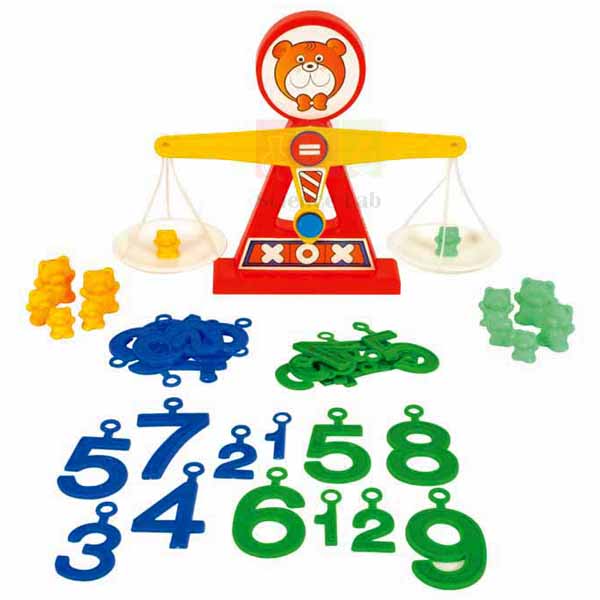
Dish Balance with Weight Number
Dish Balance with Weight Number (Product Code: SLE/MAT/63) is a durable plastic two-pan balance used by children to measure and compare weights in primary maths and early science lessons. It comes with a set of bear family weights and weighted numbers 1 to 9 in 2 colours, so pupils can see what they are measuring and relate what they observe to the measured result. Jain Scientific Equipments Pvt Ltd (ScienceLab), an OEM manufacturer and school laboratory equipment supplier in India, makes it at its own factory in Ambala.
Specifications
| Parameter | Detail |
|---|---|
| Material | Durable plastic |
| Pans | 2 pans with hanger |
| Bear family weights | Set provided, listed as 3 g – 6 pcs; 6 g, 9 g and 12 g – 2 pcs each |
| Weighted numbers | 1, 2, 3, 4, 5, 6 – 4 pcs each; 7, 8, 9 – 2 pcs each; in 2 colours |
| Learning objective | Measuring and comparing weights; relating visual and measured observation |
| Product code | SLE/MAT/63 |
| Manufacturer | Jain Scientific Equipments Pvt Ltd (ScienceLab) — OEM |
| Country of origin | India (made in Ambala, Haryana) |
What Is the Dish Balance with Weight Number Used For?
Children start by predicting which side will go down, then test it: a bear on one pan, two smaller bears on the other, and the class describes the result as heavier, lighter or equal. Because the dishes are open, every child can see what is being compared, which makes the step from "looks bigger" to "weighs more" much clearer.
The weighted numbers take the balance into early number work. Teachers typically ask pupils to place 3 and 4 on one pan and 7 on the other and test whether the sides balance, which turns addition and missing-number problems into something physical. Check that the balance sits level with empty pans before each activity. It makes a practical addition to mathematics lab kits in India for primary classes.
OEM Manufacturer
ScienceLab is the brand under which Jain Scientific Equipments Private Limited makes the Dish Balance with Weight Number as its OEM (original equipment manufacturer). The balance and its accessories are produced at the company's own licensed factory at Saha, Ambala, Haryana, India, and reach schools, dealers and importers without a trading intermediary. If a weight or number piece goes missing, ask the manufacturer directly about a replacement. More on our company profile.
Related Maths Lab Equipment
These balances and aids suit the same measuring and number lessons:
- Number Balance — a dedicated balance for exploring equality with numbers.
- Balance Mathematical — another maths balance for equation and equality work.
- Balance Simple Beam — a simple beam balance for comparing classroom objects.
- Hanging Pan Balance — for older pupils moving on to measured weighing.
The full range is in our Maths Lab Equipment category.
Frequently Asked Questions
What comes with the Dish Balance with Weight Number?
The Dish Balance with Weight Number comes with 2 pans with hanger, a set of bear family weights listed as 3 g (6 pcs) and 6 g, 9 g and 12 g (2 pcs each), and weighted numbers 1 to 9 in 2 colours.
How many weighted numbers are included?
The Dish Balance with Weight Number includes weighted numbers 1, 2, 3, 4, 5 and 6 with 4 pieces of each, and 7, 8 and 9 with 2 pieces of each, provided in 2 colours so that teams or pairs can work side by side.
What is the Dish Balance with Weight Number made of?
The Dish Balance with Weight Number is made of durable plastic. Its open dishes let children see exactly what they are weighing, so they can relate what they observe to the measured result during each comparison.
Which classes is the Dish Balance with Weight Number meant for?
The Dish Balance with Weight Number is aimed at children learning to measure and compare weights, usually in pre-primary and primary classes, and its weighted numbers extend the same balance into early addition and equality activities.
Who manufactures the Dish Balance with Weight Number?
The Dish Balance with Weight Number is manufactured by Jain Scientific Equipments Pvt Ltd (ScienceLab), the OEM, at its own licensed factory at Saha, Ambala, Haryana, India. Quotations and replacement-piece questions go directly to the manufacturer.
How do I get a quotation for the Dish Balance with Weight Number?
To get a quotation for the Dish Balance with Weight Number, send the product code SLE/MAT/63, the number of sets and the delivery location through our contact page. We quote schools, dealers and importers in India and international markets.
Request a Quote
Ask for a Dish Balance with Weight Number quotation via the contact page, or add it to the enquiry cart with other maths items. Prices come direct from the manufacturer.
Last updated: 24 September 2026
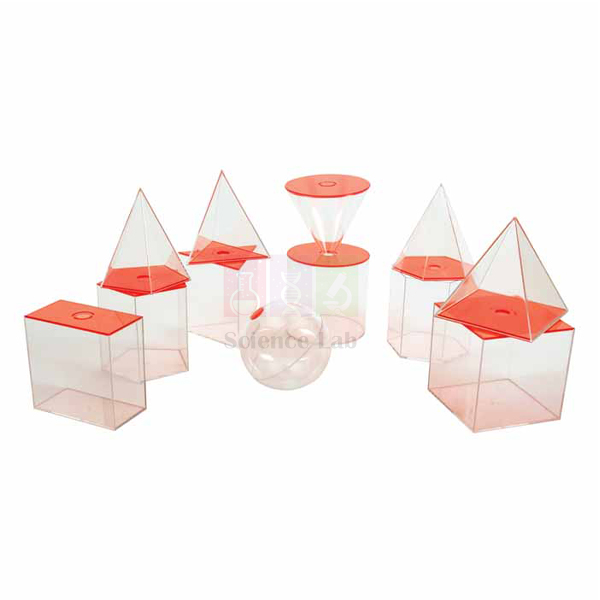
Transparent 3D Solid Set
Transparent 3D Solid Set (Product Code: SLE/MAT/64) is a set of large, see-through plastic solids used to introduce solid geometry and to show the relationships between area, volume, shape and size in school maths labs. Its shapes include a cone, cylinder, cube, cuboid, sphere, rectangular prism and square base pyramid, so students can investigate faces, vertices, edges, curves and angles. Jain Scientific Equipments Pvt Ltd (ScienceLab), an OEM manufacturer, makes it at its own factory in Ambala, India.
Key Details
| Parameter | Detail |
|---|---|
| Material | Transparent plastic solids |
| Shapes included | Cone, cylinder, cube, cuboid, sphere, rectangular prism, square base pyramid and others |
| Size | Large solids for tactile classroom use |
| Features to investigate | Shapes, faces, vertices, edges, curves and angles |
| Concepts illustrated | Relationships between area, volume, shape and size |
| Product code | SLE/MAT/64 |
| Manufacturer | Jain Scientific Equipments Pvt Ltd (ScienceLab) — OEM |
| Country of origin | India (made in Ambala, Haryana) |
What Is the Transparent 3D Solid Set Used For?
Because the solids are see-through, students can count every edge and vertex at once, including the ones at the back that are hidden on an opaque model. That makes it easier to tabulate faces, edges and vertices for each shape and to spot patterns such as Euler's relationship for polyhedra, while the cone, cylinder and sphere open up a discussion of curved surfaces.
A good exercise is to stand a solid on paper and view it from the top, front and side, then sketch its plan and elevations. Handling the large pieces adds a tactile element that helps students connect the shape and size of a solid with its surface area and volume. The set suits a complete maths lab setup for schools in India, from middle school to senior secondary.
OEM Manufacturer
Jain Scientific Equipments Private Limited, whose trading name is ScienceLab, manufactures the Transparent 3D Solid Set as the OEM (original equipment manufacturer). The solids are made at the company's own licensed factory at Saha, Ambala, Haryana, India, and shipped factory-direct to schools, colleges, institutions, dealers and importers. Because you deal with the maker, questions about a replacement piece or a repeat order are answered by the same team — just ask. See our company profile.
Related Maths Lab Equipment
Extend solid-geometry lessons with these items:
- 3D Colour Solid Set — colourful solids for linking 3D shapes to their 2D outlines.
- Volume Relation Between Cone and Cylinder — shows how cone and cylinder volumes compare.
- Relational GeoSolids — hollow shapes that can be filled to compare volumes.
- Folding Geometric Shapes — for exploring the nets that fold into each solid.
Browse the rest of our Maths Lab Equipment range.
Frequently Asked Questions
Which shapes are in the Transparent 3D Solid Set?
The Transparent 3D Solid Set includes shapes such as a cone, cylinder, cube, cuboid, sphere, rectangular prism and square base pyramid, among others. For the complete piece list of the current set, please ask us through our contact page.
Why use transparent solids instead of solid-colour ones?
The Transparent 3D Solid Set lets students see every edge and vertex at the same time, including those at the back of the shape, which makes counting features and picturing the inside of a solid much easier than with opaque models.
What can students investigate with the Transparent 3D Solid Set?
With the Transparent 3D Solid Set, students investigate shapes, faces, vertices, edges, curves and angles, and explore how area, volume, shape and size relate to one another across the different solids in the set.
How large are the solids in the Transparent 3D Solid Set?
The Transparent 3D Solid Set is described as a set of large solids for tactile classroom use, but exact dimensions are not stated in our catalogue. Contact us for the measurements of each shape before placing an order.
Who manufactures the Transparent 3D Solid Set?
The Transparent 3D Solid Set is manufactured by Jain Scientific Equipments Pvt Ltd (ScienceLab), the OEM, at its own licensed factory at Saha, Ambala, Haryana, India, and is quoted and dispatched directly by the manufacturer.
Can the Transparent 3D Solid Set be supplied to several schools at once?
Yes, the Transparent 3D Solid Set can be quoted in bulk for school groups, institutions and dealers in India and international markets. Share the quantity and delivery locations and we will prepare a combined quotation.
Request a Quote
For a Transparent 3D Solid Set quotation, write to us through the contact page or add it to the enquiry cart. You receive the price directly from the manufacturer.
Last updated: 24 September 2026
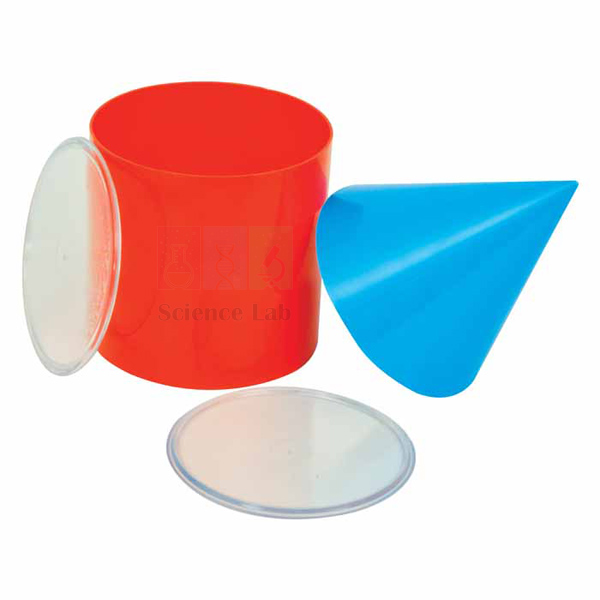
Volume Relation Between Cone and Cylinder
Volume Relation Between Cone and Cylinder (Product Code: SLE/MAT/65) is a two-piece demonstration set used to show how the volume of a cone compares with that of a cylinder of the same base and the same height in school maths labs. The set of 2 pieces comes with a lid and is listed at 10 cm x 10 cm. Jain Scientific Equipments Pvt Ltd (ScienceLab), an OEM school lab equipment manufacturer, makes it at its own factory in Ambala, India.
Specifications
| Parameter | Detail |
|---|---|
| Set contents | 2 pieces (cone and cylinder) with lid |
| Size | 10 cm x 10 cm |
| Geometry | Cone and cylinder of the same base and the same height |
| Purpose | Demonstrating the volume relationship between a cone and a cylinder |
| Product code | SLE/MAT/65 |
| Manufacturer | Jain Scientific Equipments Pvt Ltd (ScienceLab) — OEM |
| Country of origin | India (made in Ambala, Haryana) |
What Is the Cone and Cylinder Volume Set Used For?
The set answers a question students often ask: where does the one-third in the cone formula come from? A student fills the cone level to the rim with sand or rice and empties it into the cylinder, repeating until the cylinder is full. Because both pieces share the same base and height, the count of cone-fulls shows directly that the cone holds one third of the cylinder's volume.
Ask students to predict the number of pours before they start, and to level each cone-full with a ruler so the result is clean. Dry fillers pour neatly and are easy to collect afterwards. The activity links naturally to the formulae for the volume of a cylinder and a cone, and fits mensuration units in middle and secondary school.
OEM Manufacturer
ScienceLab, the trading name of Jain Scientific Equipments Private Limited, is the OEM (original equipment manufacturer) of the Volume Relation Between Cone and Cylinder set. The cone, cylinder and lid are produced at the company's own licensed factory at Saha, Ambala, Haryana, India, and sold factory-direct to schools, institutions, dealers and importers. For tender and vendor registration, the company's GSTIN is 06AAECJ8618A1ZT and its LEI is 3358004HRD1JIVXKYX49. More details are on our company profile.
Related Maths Lab Equipment
Useful companions for volume and mensuration lessons:
- Relational GeoSolids — fillable hollow shapes for comparing more volume relationships.
- Transparent 3D Solid Set — see-through solids for studying faces, edges and vertices.
- Measuring Cylinder, Polypropylene — for measuring the volume poured in each step.
- Volume Measuring Set — for general capacity and volume practice.
Explore more in our Maths Lab Equipment category.
Frequently Asked Questions
What does the Volume Relation Between Cone and Cylinder set demonstrate?
The Volume Relation Between Cone and Cylinder set demonstrates the volume relationship between a cone and a cylinder of the same base and the same height. Students fill the cone and pour it into the cylinder to find that the cylinder holds three cone-fulls.
What is included in the Volume Relation Between Cone and Cylinder set?
The Volume Relation Between Cone and Cylinder set is a set of 2 pieces, a cone and a cylinder, supplied with a lid. Its listed size is 10 cm x 10 cm, and both pieces share the same base and height.
What should I fill the cone and cylinder with?
Dry materials such as sand or rice work well with the Volume Relation Between Cone and Cylinder set because they pour cleanly and are easy to level. Ask us through our contact page before using water or other liquids.
Which classes use the Volume Relation Between Cone and Cylinder set?
The Volume Relation Between Cone and Cylinder set is used when classes study mensuration of solids, usually in middle and secondary school, to show where the one-third in the cone volume formula comes from before students apply it.
Who manufactures the Volume Relation Between Cone and Cylinder set?
The Volume Relation Between Cone and Cylinder set is manufactured by Jain Scientific Equipments Pvt Ltd (ScienceLab), the OEM, at its own licensed factory at Saha, Ambala, Haryana, India. Quotations and repeat orders come directly from the manufacturer.
Can the set be ordered in bulk for schools or export?
Yes, the Volume Relation Between Cone and Cylinder set can be quoted in bulk for schools, institutions and dealers in India and international markets. Send the quantity and delivery location to receive a quotation.
Request a Quote
Request a price for the Volume Relation Between Cone and Cylinder set through our contact page, or add it to the enquiry cart. Quotations are issued directly by the manufacturer.
Last updated: 24 September 2026
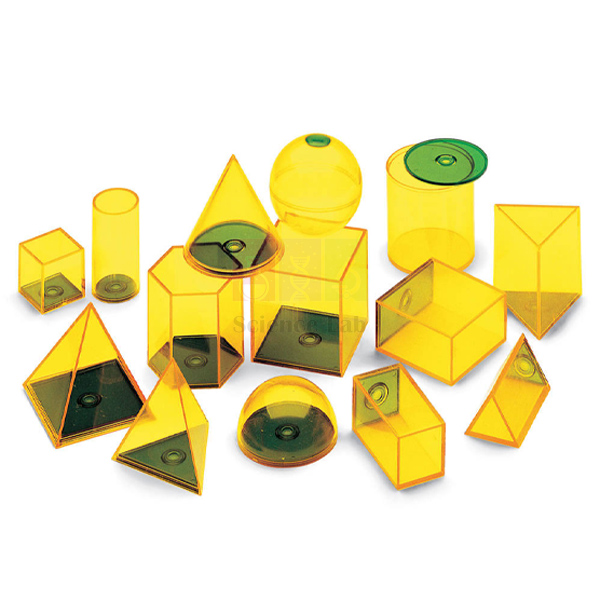
Relational GeoSolids
Relational GeoSolids (Product Code: SLE/MAT/66) is a set of 14 clear plastic, hollow geometric shapes used to demonstrate the relationship between shape, size and volume in school maths classrooms. Each shape has a removable stopper, so students can fill it with rice or sand and compare capacities directly, and a teaching guide is included. The set is supplied by Jain Scientific Equipments Pvt Ltd (ScienceLab), Ambala, a school lab equipment supplier, as part of its mathematics lab kits in India.
Specifications
| Parameter | Detail |
|---|---|
| Set size | 14 clear plastic geometric shapes |
| Construction | Hollow shapes with removable stoppers |
| Shapes | Cylinders, cubes, size-related spheres, cones, rectangular shapes, pyramids and polyhedra |
| Fill material | Rice or sand |
| Included | Teaching guide |
| Product code | SLE/MAT/66 |
| Supplied by | Jain Scientific Equipments Pvt Ltd (ScienceLab), Ambala, India |
What Are Relational GeoSolids Used For?
Relational GeoSolids let students test volume ideas by pouring rather than by formula alone. A typical lesson starts with two related shapes — say a cone and a cylinder — and a prediction of which holds more; one shape is filled with rice or sand through its stopper opening and emptied into the other, and the class records how many fills it takes.
Working over a tray keeps spills contained, and replacing each stopper before shapes are stacked away keeps the filler inside. Because the shapes are clear, everyone can watch the level rise. The set is flexible laboratory equipment for schools in India, supporting early capacity work as well as later mensuration and the teaching guide's suggested activities.
Supplier
Jain Scientific Equipments Private Limited, which trades as ScienceLab, supplies the Relational GeoSolids set from Ambala, Haryana, India. The company sources the set and handles quotations, order coordination and dispatch for schools, colleges, institutions and dealers in India and international markets. For background on the company, visit our company profile.
Related Maths Lab Equipment
These items complement Relational GeoSolids in volume and capacity lessons:
- Volume Relation Between Cone and Cylinder — a focused two-piece set for the cone and cylinder result.
- Transparent 3D Solid Set — see-through solids for counting faces, edges and vertices.
- Volume Measuring Set — for measuring and comparing capacities in standard units.
- Measuring Cylinder, Polypropylene — for reading off the volume of filler poured.
Browse further aids in our Maths Lab Equipment category.
Frequently Asked Questions
What is in the Relational GeoSolids set?
The Relational GeoSolids set contains 14 clear plastic geometric shapes — hollow cylinders, cubes, size-related spheres, cones, rectangular shapes, pyramids and polyhedra — each with a removable stopper, together with a teaching guide for classroom activities.
What are Relational GeoSolids filled with?
Relational GeoSolids are filled with rice or sand through their removable stoppers. Students fill one shape and pour it into another to compare volumes, which shows how shape and size affect how much each solid holds.
Do Relational GeoSolids come with teaching material?
Yes, the Relational GeoSolids set includes a teaching guide, which helps teachers plan activities on the relationship between shape, size and volume and makes the set easier to introduce in lessons.
What size are the Relational GeoSolids shapes?
The individual dimensions of the Relational GeoSolids shapes are not stated in our catalogue description. Please ask through our contact page and we will confirm the sizes of the current set before you order.
Who supplies the Relational GeoSolids set?
The Relational GeoSolids set is supplied by Jain Scientific Equipments Pvt Ltd (ScienceLab), Ambala, Haryana, India, which quotes and dispatches it to schools, institutions and dealers in India and international markets.
What information do you need to quote Relational GeoSolids?
To quote Relational GeoSolids we need the product code SLE/MAT/66, the number of sets required and the delivery location. Send these through the contact page or add the set to the enquiry cart to start your request.
Request a Quote
For a price on Relational GeoSolids, contact us through the contact page or add the set to the enquiry cart with your quantity and delivery location.
Last updated: 24 September 2026
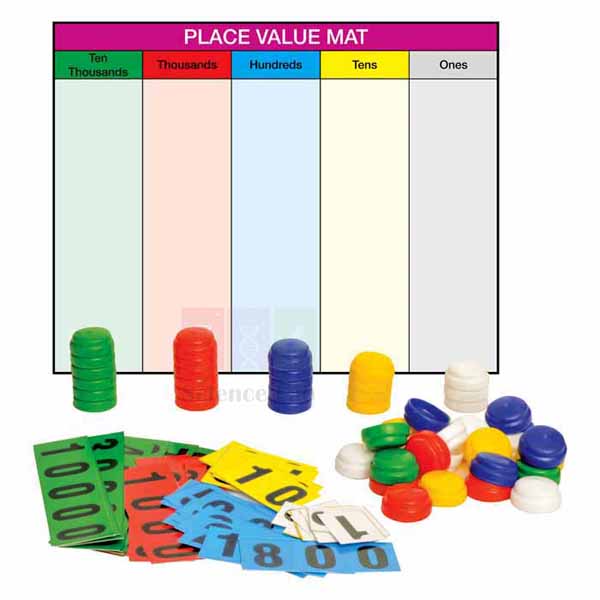
Place Value Mat with Stacking Counters
Place Value Mat with Stacking Counters (Product Code: SLE/MAT/67) is a place value kit used to help children visualise place value as they build numbers from 1 to 99,999 in primary maths lessons. It combines a place value mat, 45 place value cards and 125 colour-coded stacking counters in 5 colours that snap together vertically. Jain Scientific Equipments Pvt Ltd (ScienceLab), an OEM manufacturer, makes it at its own factory in Ambala, India, as part of its mathematics lab kits range.
Specifications
| Parameter | Detail |
|---|---|
| Number range | 1 to 99,999 |
| Stacking counters | 125 counters in 5 colours, colour coded; snap together vertically |
| Place value cards | Set of 45 cards |
| Mat | Place value mat included |
| Size | 30 cm x 27 cm |
| Learning objectives | Numeric, written and expanded forms of a number; number operations |
| Product code | SLE/MAT/67 |
| Manufacturer | Jain Scientific Equipments Pvt Ltd (ScienceLab) — OEM |
| Country of origin | India (made in Ambala, Haryana) |
What Is the Place Value Mat with Stacking Counters Used For?
A child draws a place value card, reads the number and builds it on the mat by stacking the right number of counters in each place. The colour coding keeps each place visually separate, so the difference between the tens stack and the thousands stack is obvious at a glance. The largest number, 99,999, is simply nine counters in every place.
From there, pupils say the number aloud, write it in words and record its expanded form, covering all three representations in one activity. The counters also model operations: when a place reaches ten counters in an addition, they are exchanged for one counter in the next place to the left, which makes regrouping concrete. The kit works well in a junior lab kit collection for the primary school maths room.
What to Specify When Ordering
- Number of kits — for example one per pupil pair or small group, based on class size.
- Contents check — each kit is listed with a place value mat, 45 cards and 125 counters in 5 colours.
- Extra counters — the separate Stacking Counters item can be quoted alongside if you need more.
- Desk space — the listed size is 30 cm x 27 cm.
OEM Manufacturer
Jain Scientific Equipments Private Limited, trading as ScienceLab, is the OEM (original equipment manufacturer) of the Place Value Mat with Stacking Counters. The kit is produced and packed as a set at the company's own licensed factory at Saha, Ambala, Haryana, India, and supplied factory-direct to schools, institutions, distributors and importers. Buyers get their quotation from the maker itself, and lost counters or cards can be discussed with the same team. Read more on our company profile.
Related Maths Lab Equipment
These place value resources extend the same lessons:
- Stacking Counters — additional counters for larger groups or bigger numbers.
- Game of Place Value — a game format for practising place value after building numbers.
- Base Ten Blocks — a proportional model showing the size of ones, tens and hundreds.
- Decimal Abacus — carries place value ideas on to decimals.
See all number and place value aids in Maths Lab Equipment.
Frequently Asked Questions
What is included in the Place Value Mat with Stacking Counters?
The Place Value Mat with Stacking Counters includes a place value mat, a set of 45 place value cards and 125 stacking counters in 5 colours. The listed size of the kit is 30 cm x 27 cm.
What number range does the Place Value Mat with Stacking Counters cover?
The Place Value Mat with Stacking Counters lets children build numbers from 1 to 99,999, so it covers place values from ones up to ten thousands and suits the number work taught across the primary years.
How do the stacking counters work?
The counters in the Place Value Mat with Stacking Counters snap together vertically and are stacked in the appropriate place on the mat. They are colour coded in 5 colours, which helps children keep each place value separate while they build numbers.
Which concepts does the Place Value Mat with Stacking Counters teach?
The Place Value Mat with Stacking Counters supports learning the numeric, written and expanded forms of a number, as well as number operations such as addition with regrouping, all through hands-on building on the mat.
Who manufactures the Place Value Mat with Stacking Counters?
The Place Value Mat with Stacking Counters is manufactured by Jain Scientific Equipments Pvt Ltd (ScienceLab), the OEM, at its own licensed factory at Saha, Ambala, Haryana, India, and is quoted directly by the manufacturer.
Can schools order the Place Value Mat with Stacking Counters in bulk?
Yes, the Place Value Mat with Stacking Counters can be quoted in class quantities for schools, institutions and dealers in India and international markets. Send the number of kits and the delivery location through our contact page.
Request a Quote
To order the Place Value Mat with Stacking Counters, send your requirement via our contact page or add it to the enquiry cart. Quotations come direct from the manufacturer.
Last updated: 24 September 2026
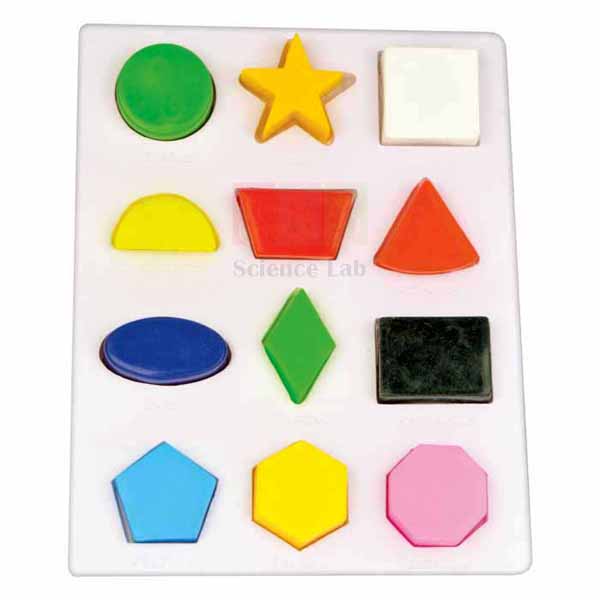
Plastic Moulds
Plastic Moulds (Product Code: SLE/MAT/68) is a set of 12 hollow plastic shape moulds used with clay so that children can make various geometrical figures in pre-primary and primary maths lessons. Provided with clay and listed at 20 cm length and 25 cm width, the set turns shape learning into a hands-on, enjoyable activity and fits neatly into a preschool kit or early maths corner. Jain Scientific Equipments Pvt Ltd (ScienceLab), an OEM manufacturer, makes it at its own factory in Ambala, India.
Specifications
| Parameter | Detail |
|---|---|
| Set contents | 12 hollow shapes with clay |
| Material | Plastic moulds |
| Length | 20 cm |
| Width | 25 cm |
| Purpose | Making various geometrical figures while learning through play |
| Product code | SLE/MAT/68 |
| Manufacturer | Jain Scientific Equipments Pvt Ltd (ScienceLab) — OEM |
| Country of origin | India (made in Ambala, Haryana) |
What Are Plastic Moulds Used For?
Children press clay into each hollow mould, ease it out and hold a finished geometrical figure they have made themselves. The teacher then asks them to name the shape, count its sides and corners, and compare it with the shapes their neighbours have made, so vocabulary and observation grow together.
Once several shapes are ready, pupils can arrange them into pictures, patterns or size orders on the desk. Press the clay in firmly and remove it gently so edges stay sharp, and keep the clay covered between lessons so it stays workable. The moulds suit any school lab setup in India that includes an early-years maths or activity corner.
OEM Manufacturer
Plastic Moulds are made by Jain Scientific Equipments Private Limited, operating as ScienceLab, which is the OEM (original equipment manufacturer) for this set. Manufacturing is carried out at the company's own licensed factory at Saha, Ambala, Haryana, India, and schools, colleges, dealers and importers buy direct from the factory rather than through traders. Repeat orders and replacement moulds can be discussed with the manufacturer — just ask. Find out more on our company profile.
Related Maths Lab Equipment
Shape resources that pair well with Plastic Moulds:
- Plastic Pattern Blocks — ready-made shapes for building and copying patterns.
- 2D Shapes — flat shapes for naming and comparing with the clay figures.
- Primary Shapes Template Set — templates for tracing the same shapes on paper.
- Geometric Shapes Building Set — for constructing shapes from parts.
Find more early maths aids in Maths Lab Equipment.
Frequently Asked Questions
What is included in the Plastic Moulds set?
The Plastic Moulds set includes 12 hollow shapes provided with clay, so children can start making figures straight away. The set is listed with a length of 20 cm and a width of 25 cm.
How do children use Plastic Moulds?
Children use Plastic Moulds by pressing clay into each hollow shape and easing it out to make a geometrical figure, then naming it, counting its sides and corners and comparing it with other shapes made in the class.
Which shapes are in the Plastic Moulds set?
The individual shapes in the Plastic Moulds set are not itemised in our catalogue description. Please ask through our contact page for the current list of the 12 shapes before placing your order.
Which age group are Plastic Moulds suitable for?
Plastic Moulds suit pre-primary and early primary children who are learning to recognise and name geometrical figures, because shaping clay by hand keeps young learners engaged while they build shape vocabulary.
Who manufactures Plastic Moulds?
Plastic Moulds are manufactured by Jain Scientific Equipments Pvt Ltd (ScienceLab), the OEM, at its own licensed factory at Saha, Ambala, Haryana, India. Quotations and repeat supplies are handled directly by the manufacturer.
Can Plastic Moulds be ordered for several classrooms?
Yes, Plastic Moulds can be quoted for school lab equipment bulk supply to schools, institutions and dealers in India and international markets. Tell us the number of sets and the delivery location to receive a quotation.
Request a Quote
Ask for a Plastic Moulds quotation through our contact page or add the set to the enquiry cart. The price is quoted directly by the manufacturer.
Last updated: 24 September 2026
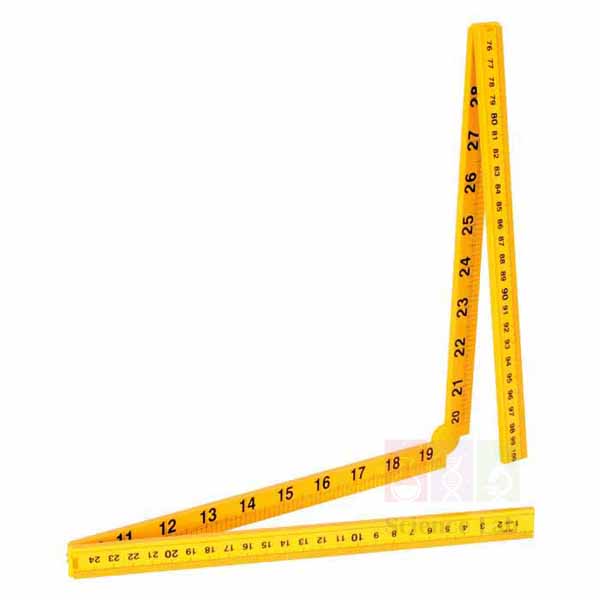
Folding Meter Stick
Folding Meter Stick (Product Code: SLE/MAT/69) is a folding metric measuring stick used to measure the length of objects in school maths and science labs. It folds into fourths on three hinges for easy storage and is calibrated only in centimetres and millimetres, with no inch scale. Jain Scientific Equipments Pvt Ltd (ScienceLab), an OEM and scientific lab equipment manufacturer in Ambala, makes it at its own factory as educational laboratory equipment in India.
Specifications
| Parameter | Detail |
|---|---|
| Folding | Folds into fourths on three hinges |
| Graduation | Metric units — centimetres and millimetres |
| Inch scale | Not included (customary units are not marked) |
| Storage | Folds for easy storage |
| Purpose | Measuring the length of objects |
| Product code | SLE/MAT/69 |
| Manufacturer | Jain Scientific Equipments Pvt Ltd (ScienceLab) — OEM |
| Country of origin | India (made in Ambala, Haryana) |
What Is the Folding Meter Stick Used For?
Pupils use the stick to measure desks, doorways, their own height or the length of a jump, first estimating and then checking. Because it reads only in centimetres and millimetres, it keeps the whole lesson in metric units and makes conversions between millimetres, centimetres and metres a natural next step.
Before reading, open all three hinges fully so the sections lie straight, start from the zero end and read at eye level to avoid parallax. For distances longer than the stick, mark the end point and move it along. It also doubles as physics lab equipment in schools in India, for example when setting a pendulum length.
What to Specify When Ordering
- Quantity — how many sticks you need per class, group or lab.
- Scale — this stick is metric only (centimetres and millimetres), with no inch markings.
- Format — whether a folding stick suits your storage, or a rigid stick such as the Meter Stick, White is preferred.
OEM Manufacturer
Jain Scientific Equipments Private Limited (CIN U29309HR2020PTC087597) trades as ScienceLab and is the OEM (original equipment manufacturer) of the Folding Meter Stick. The stick is produced at the company's licensed factory at 449, HSIIDC Industrial Area, Saha, Ambala, Haryana, India, which holds Factory Licence AMB-ONLINE-CHD-J-414. Schools, institutions, dealers and importers buy direct from this factory, and quotations come from the manufacturer itself. See our company profile for more.
Related Maths Lab Equipment
Other measuring tools often ordered with the Folding Meter Stick:
- Half Meter Scale — a shorter scale for desk-top measuring.
- Meter Stick, White — a rigid alternative for board work and demonstrations.
- Windup Meter Tapes — for measuring longer distances outdoors or across the room.
More measuring and geometry tools are in Maths Lab Equipment.
Frequently Asked Questions
How does the Folding Meter Stick fold?
The Folding Meter Stick folds into fourths on three hinges, so it packs down into four sections for easy storage in a cupboard or kit box and opens out again to its full length for measuring.
Which units are marked on the Folding Meter Stick?
The Folding Meter Stick is calibrated in metric units, centimetres and millimetres only. Inches, which belong to the customary system, are not included on this stick, so it suits lessons taught entirely in metric measurement.
What material is the Folding Meter Stick made of?
The material of the Folding Meter Stick is not stated in our catalogue description. Please ask through our contact page and we will confirm the material and finish of the current model before you order.
Is a calibration certificate available for the Folding Meter Stick?
Calibration-certificate requirements for the Folding Meter Stick should be discussed with us before ordering. Tell us through the contact page what documentation your lab or tender needs, and we will advise what can be provided with your order.
Who manufactures the Folding Meter Stick?
The Folding Meter Stick is manufactured by Jain Scientific Equipments Pvt Ltd (ScienceLab), the OEM, at its own licensed factory at Saha, Ambala, Haryana, India. Orders and quotations are handled directly by the manufacturer.
Can the Folding Meter Stick be ordered in bulk for schools?
Yes, the Folding Meter Stick can be quoted in bulk for schools, institutions and dealers in India and international markets. Share the quantity and delivery location, and we will prepare a quotation.
Request a Quote
For a Folding Meter Stick quotation, use our contact page or add it to the enquiry cart. Prices are provided directly by the manufacturer.
Last updated: 24 September 2026
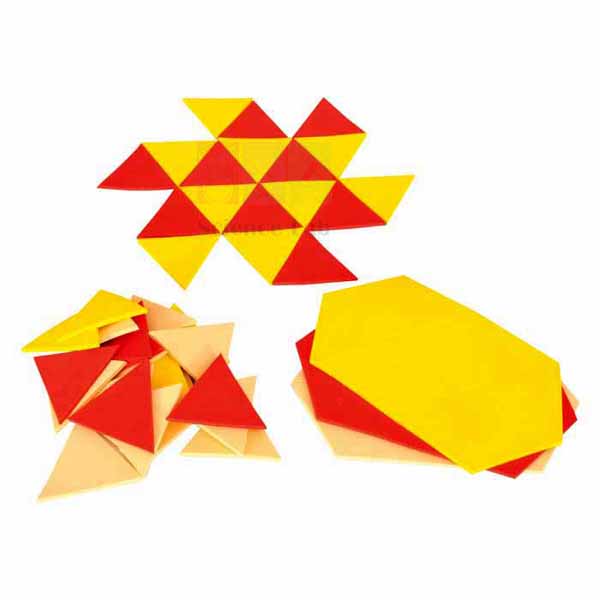
Designer Fraction
Designer Fraction (Product Code: SLE/MAT/70) is a set of 72 equilateral triangles in 3 colours used to help children understand fractions by building patterns and imaginative shapes in primary maths lessons. Because every piece is the same equilateral triangle, the colours in a finished design can be read directly as fractions of the whole. Jain Scientific Equipments Pvt Ltd (ScienceLab), an OEM among educational lab equipment manufacturers in India, makes it at its own factory in Ambala.
Specifications
| Parameter | Detail |
|---|---|
| Pieces | 72 equilateral triangles |
| Colours | 3 different colours |
| Purpose | Developing and designing different types of fractions and patterns |
| Type | Visual, hands-on fraction manipulative |
| Product code | SLE/MAT/70 |
| Manufacturer | Jain Scientific Equipments Pvt Ltd (ScienceLab) — OEM |
| Country of origin | India (made in Ambala, Haryana) |
What Is the Designer Fraction Set Used For?
Six triangles fit together into a hexagon, so each triangle becomes one sixth of that shape. If two of the six are one colour, children can see that the coloured part is two sixths — and, by regrouping, one third — which makes equivalent fractions something they discover rather than memorise. Larger designs extend the same idea to other fractions of a whole.
Set challenges such as "build a shape that is half one colour" or "make a design where a third of the pieces match", then ask pupils to explain their fraction. Recording finished designs on triangular dot paper keeps a lasting record. As hands-on educational lab equipment in India, the set also supports pattern and symmetry work beyond fractions.
OEM Manufacturer
The Designer Fraction set is manufactured by Jain Scientific Equipments Private Limited, known commercially as ScienceLab, in its role as OEM (original equipment manufacturer). The triangles are produced at the company's own licensed factory at Saha, Ambala, Haryana, India, and reach schools, colleges, dealers and importers straight from the factory. Because the maker handles your order, top-up pieces and repeat sets can be discussed directly — ask us. Learn more on our company profile.
Related Maths Lab Equipment
Fraction and pattern resources that work alongside Designer Fraction:
- Fraction Dice — adds a game element to fraction practice.
- Non Magnetic Fraction Disc — shows fractions as parts of a circle for comparison.
- Fraction Kit — a broader kit for building and comparing fractions.
- Plastic Pattern Blocks — mixed shapes for pattern and symmetry work.
Browse more in our Maths Lab Equipment category.
Frequently Asked Questions
How many pieces are in the Designer Fraction set?
The Designer Fraction set contains 72 equilateral triangles in 3 different colours, giving a small group enough identical pieces to build several patterns and compare the fractions each colour represents.
How does the Designer Fraction set teach fractions?
The Designer Fraction set teaches fractions by letting children construct shapes from identical triangles; the number of triangles of one colour, compared with the total in the shape, shows the fraction directly and makes equivalent fractions easy to see.
What size are the triangles in the Designer Fraction set?
The triangle size of the Designer Fraction set is not stated in our catalogue description. Please ask through our contact page for the dimensions and colours of the current set before placing an order.
Which classes is the Designer Fraction set suitable for?
The Designer Fraction set suits primary classes being introduced to fractions and patterns, and it remains useful in later years for equivalent fractions, symmetry and tessellation activities built from equilateral triangles.
Who manufactures the Designer Fraction set?
The Designer Fraction set is manufactured by Jain Scientific Equipments Pvt Ltd (ScienceLab), the OEM, at its own licensed factory at Saha, Ambala, Haryana, India. Quotations and repeat orders come straight from the manufacturer.
Can the Designer Fraction set be ordered for several classes?
Yes, the Designer Fraction set can be quoted in multiple sets for schools, institutions and dealers in India and international markets. Send the number of sets and delivery location, and we will prepare a quotation.
Request a Quote
Request a Designer Fraction quotation through our contact page or add it to the enquiry cart. Your price comes direct from the manufacturer.
Last updated: 24 September 2026

Dummy Currency Notes
Dummy Currency Notes (Product Code: SLE/MAT/71) is a realistic play money set used to teach money handling and everyday arithmetic through shop role-play in primary classrooms. The set contains dummy currency notes from 1 to 2000, so children can act as customer and seller, transact amounts and combine different notes to pay a given sum. It is supplied by Jain Scientific Equipments Pvt Ltd (ScienceLab), Ambala, India, alongside its junior lab kit range for primary schools.
Key Details
| Parameter | Detail |
|---|---|
| Type | Realistic play money set |
| Denominations | Dummy currency notes from 1 to 2000 |
| Activities | Acting as customer and seller; transacting with amounts; combining various notes to pay an amount |
| Learning focus | Money handling and everyday arithmetic through play |
| Product code | SLE/MAT/71 |
| Supplied by | Jain Scientific Equipments Pvt Ltd (ScienceLab), Ambala, India |
What Are Dummy Currency Notes Used For?
The classic activity is a class shop: items get price labels, one child pays with the notes and another checks the amount and gives change. Children soon discover there are several ways to make the same amount, and comparing those combinations builds addition, subtraction and mental arithmetic in a setting they recognise from real life.
Start with small amounts and a few denominations, then widen the range as confidence grows. Keeping the notes sorted by denomination in trays or envelopes speeds up setting out and tidying away. Children enjoy role-play with realistic notes, and the set pairs naturally with other educational lab equipment in India for early number work.
Supplier
Jain Scientific Equipments Private Limited, which trades as ScienceLab, supplies Dummy Currency Notes from Ambala, Haryana, India. The company sources the set and handles quotations, order coordination and dispatch for schools, colleges, institutions and dealers across India and international markets, so money resources can be ordered together with other maths lab items. Read about the company on our company profile.
Related Maths Lab Equipment
Items that complete a classroom money corner:
- Dummy Coins — lets children pay and give change with notes and coins together.
- Currency — another money resource listed in our primary range.
- Calculator Simple/Hand — for checking totals once mental calculation is done.
See more in our Maths Lab Equipment category.
Frequently Asked Questions
Which denominations are included in Dummy Currency Notes?
Dummy Currency Notes cover denominations from 1 to 2000. The exact denomination list and the number of notes per set are not itemised in our catalogue description, so please ask through our contact page before ordering.
How are Dummy Currency Notes used in class?
Dummy Currency Notes are used in role-play where children act as customer and seller, transact with amounts and combine various notes to pay a given sum, which builds addition, subtraction and money-handling skills in a realistic setting.
Can Dummy Currency Notes be used with coins?
Yes, Dummy Currency Notes can be used together with our Dummy Coins so that children work with notes and coins in the same shop role-play. Ask us to quote both items together when you send your enquiry.
Which age group are Dummy Currency Notes suitable for?
Dummy Currency Notes suit pre-primary and primary children who are learning to recognise money, count amounts and make simple payments, and older pupils can use the higher denominations for larger totals and change problems.
Who supplies Dummy Currency Notes?
Dummy Currency Notes are supplied by Jain Scientific Equipments Pvt Ltd (ScienceLab), Ambala, Haryana, India, which quotes and dispatches them to schools, institutions and dealers in India and international markets.
What details are needed to quote Dummy Currency Notes?
To quote Dummy Currency Notes we need the product code SLE/MAT/71, the number of sets and the delivery location. Send these through the contact page or add the item to the enquiry cart to start your request.
Request a Quote
To request a price for Dummy Currency Notes, write to us through the contact page or add them to the enquiry cart along with any related money resources.
Last updated: 24 September 2026
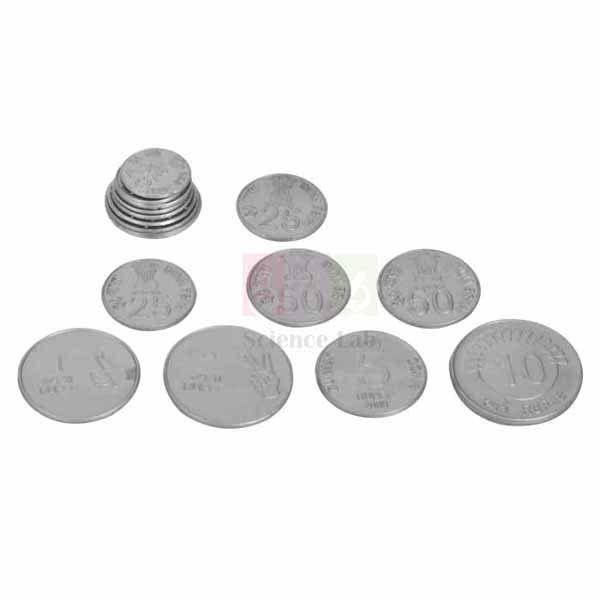
Dummy Coins
Dummy Coins (Product Code: SLE/MAT/72) is a set of eight play coins used to teach money handling, coin recognition and adding or subtracting amounts in primary maths lessons. Teachers use it for buyer-and-seller role play, and the set spans six denominations from 25 paise to 10 rupees, each coin 2.5 cm across. It is made by Jain Scientific Equipments Pvt Ltd (ScienceLab), an OEM manufacturer and school laboratory equipment supplier in India, at its own factory in Ambala, as part of its mathematics lab kits.
Specifications
| Parameter | Detail |
|---|---|
| Coins per set | 8 |
| Denominations | 25 paise and 50 paise (2 pieces each); 1 rupee, 2 rupee, 5 rupee and 10 rupee (1 piece each) |
| Coin diameter | 2.5 cm (25 mm) |
| Learning focus | Currency awareness, making an amount from a combination of coins, addition and subtraction, everyday money transactions |
| Typical activity | Buyer-and-seller role play with real amounts |
| Product code | SLE/MAT/72 |
| Manufacturer | Jain Scientific Equipments Pvt Ltd (ScienceLab) — OEM |
| Country of origin | India (made in Ambala, Haryana) |
What Are Dummy Coins Used For?
Dummy coins turn an abstract sum into something a child can hold. In a pretend shop, one learner prices an item, another pays with a mix of coins, and together they work out the change — practising addition and subtraction with real denominations instead of bare numbers. Asking pupils to find different coin combinations for the same amount builds number sense and early problem-solving.
Because each set holds only eight coins, many classrooms plan one set per pair or small group so that every child handles the money. Counting the coins back into their set after each lesson keeps sets complete, and the same coins work later for word problems about spending, saving and change.
What to Specify When Ordering
- Number of sets needed (each set contains 8 coins).
- Whether the standard denomination mix — two each of 25 and 50 paise, one each of 1, 2, 5 and 10 rupees — suits your lesson plan.
- Other maths aids, such as dummy currency notes, that should be quoted on the same order.
- Delivery location, for a single school or school lab equipment bulk supply to several sites.
OEM Manufacturer
Dummy Coins are produced by ScienceLab, the trading name of Jain Scientific Equipments Private Limited, which is the OEM (original equipment manufacturer) of this money-teaching set. The sets are made at the company’s own licensed factory at Saha, Ambala, Haryana, India, and go factory-direct to schools, teacher-training institutes, dealers and importers instead of passing through a trader. For repeat orders or extra coins, ask us — the manufacturer handles them itself. Read more on the ScienceLab company profile.
Related Maths Lab Equipment
Money lessons usually draw on a few other maths aids for counting and checking totals:
- Dummy Currency Notes — paper-money companion for purchases paid with notes.
- Calculator Simple/Hand — lets older pupils check the totals they worked out with coins.
- Abacus Desk/Table — supports the addition and subtraction behind giving change.
- Place Value Mat with Stacking Counters — builds the place-value sense that money sums depend on.
See the full Maths Lab Equipment range for more classroom maths manipulatives.
Frequently Asked Questions
What is included in the Dummy Coins set?
The Dummy Coins set (SLE/MAT/72) contains 8 coins: two 25 paise, two 50 paise, and one each of the 1 rupee, 2 rupee, 5 rupee and 10 rupee denominations. Every coin measures 2.5 cm in diameter, a comfortable size for young hands.
Which classes are Dummy Coins suited to?
Dummy Coins suit early-years and primary classes where children first learn to recognise currency, make up amounts and add or subtract money. Older pupils can reuse the same set for word problems on change and budgeting. As with any small classroom pieces, supervise very young children during use.
Who manufactures the Dummy Coins?
Dummy Coins are manufactured by Jain Scientific Equipments Pvt Ltd, trading as ScienceLab, which is the OEM for this set. Production takes place at the company’s own factory at Saha, Ambala, Haryana, India, and every quotation comes straight from the manufacturer.
Can Dummy Coins be used with dummy currency notes?
Yes. Dummy Coins cover small values up to a 10 rupee coin, so schools often pair them with ScienceLab’s Dummy Currency Notes. Using both lets children act out realistic purchases in which a note is handed over and the change is returned in coins.
How should Dummy Coins be stored between lessons?
Keep each set of Dummy Coins in its own bag or box and count the eight coins back after every lesson so that no group runs short. Wipe the coins with a dry or slightly damp cloth when they need cleaning, and store them away from direct heat.
What should a quotation request for Dummy Coins include?
For a Dummy Coins quotation, state the number of sets (each holds 8 coins), any other maths items for the same order, and the delivery location in India or abroad. Send these details through the ScienceLab contact page or the enquiry cart.
Are Dummy Coins available in bulk for schools and export?
Yes. ScienceLab supplies Dummy Coins in quantities for single classrooms, whole schools, education projects, dealers and importers, in India and international markets. Share your quantity and destination on the contact page and the manufacturer will quote directly.
Request a Quote
To order Dummy Coins (SLE/MAT/72), send your quantity and delivery details through our contact page or add the item to the enquiry cart. Quotations come direct from the manufacturer in Ambala.
Last updated: 24 September 2026
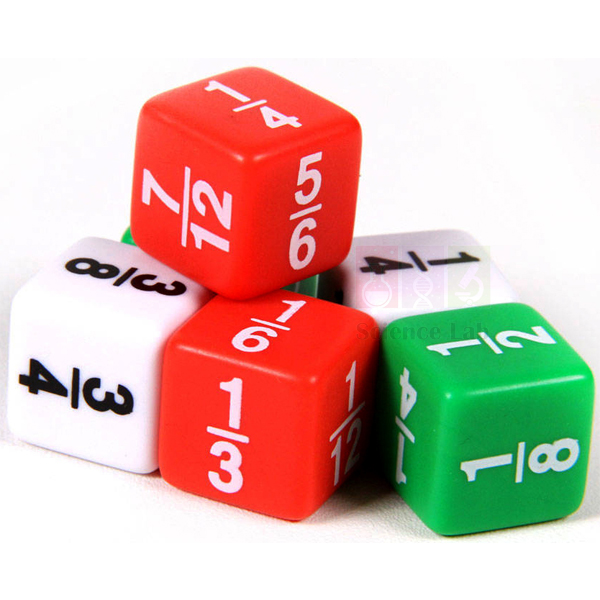
Fraction Dice
Fraction Dice (Product Code: SLE/MAT/73) is a set of six small dice used to teach fractional relationships through roll-and-compare games in school maths lessons. Primary and middle-school teachers use it on its own or with existing fraction kits, and the set covers the fractions 1/2, 1/3, 1/4, 1/5, 1/6, 1/8 and 1/12 on dice 5/8 inch (about 16 mm) in size. It is made by Jain Scientific Equipments Pvt Ltd (ScienceLab), an OEM manufacturer, at its own factory in Ambala, India.
Specifications
| Parameter | Detail |
|---|---|
| Dice per set | 6 |
| Die size | 5/8 inch (about 16 mm) |
| Fractions covered | 1/2, 1/3, 1/4, 1/5, 1/6, 1/8 and 1/12 |
| Teaching use | Fractional relationships; add-on for existing kits that need a variety of fractions |
| Product code | SLE/MAT/73 |
| Manufacturer | Jain Scientific Equipments Pvt Ltd (ScienceLab) — OEM |
| Country of origin | India (made in Ambala, Haryana) |
What Are Fraction Dice Used For?
Rolling a fraction instead of a whole number gives children a quick reason to compare and order fractions. In a simple two-player game, each pupil rolls, the pair decide whose fraction is larger and explain why — for instance, that one third beats one quarter because the whole is shared among fewer parts. Older pupils can roll two dice and add, subtract or find a common denominator for the results.
The dice also slot into fraction kits a school already owns whenever an activity needs a random choice of fraction, turning a fraction-wall or fraction-circle lesson into a game. Working in small groups keeps every child rolling and reasoning, which is why many schools keep a few sets with their mathematics lab equipment.
What to Specify When Ordering
- Number of sets required (each set holds 6 dice).
- Whether the dice will be used alone or with an existing fraction kit, so the fractions suit your activities.
- Any other fraction or probability aids to be quoted on the same order.
OEM Manufacturer
ScienceLab, the trading name of Jain Scientific Equipments Private Limited, is the original equipment manufacturer (OEM) of these Fraction Dice. They are produced at the company’s own licensed factory at Saha, Ambala, Haryana, India, so schools, distributors and importers deal with the maker itself rather than a reseller. The company is a registered MSME whose major activity is manufacturing (Udyam UDYAM-HR-01-0003714), and export consignments move under Importer-Exporter Code AAECJ8618A (DGFT). Company background is on the ScienceLab profile page.
Related Maths Lab Equipment
These items extend the fraction and chance work that starts with the dice:
- Designer Fraction — another fraction aid for building and comparing the parts rolled on the dice.
- Non Magnetic Fraction Disc — foam fraction circles for modelling a rolled fraction as part of a whole.
- Probability Kit — carries dice games on into chance and probability lessons.
- Plastic Dice — ordinary number dice for mixed games with whole numbers and fractions.
More classroom maths aids are listed under Maths Lab Equipment.
Frequently Asked Questions
Which fractions are on the Fraction Dice?
The Fraction Dice set (SLE/MAT/73) covers the fractions 1/2, 1/3, 1/4, 1/5, 1/6, 1/8 and 1/12 across its six dice. If you need the exact face layout of each die for a lesson plan, ask us through the contact page before ordering.
How many Fraction Dice are in a set, and how big are they?
Each Fraction Dice set contains 6 dice, and every die measures 5/8 inch, which is about 16 mm. The small size keeps the dice easy to roll on a desk and quick to share within a group of pupils.
Can Fraction Dice be used with other fraction kits?
Yes. Fraction Dice teach fractional relationships on their own and also add variety to existing kits that need a range of fractions, such as fraction circles or fraction strips, turning those materials into roll-and-compare games for the class.
Who manufactures the Fraction Dice?
Fraction Dice are manufactured by Jain Scientific Equipments Pvt Ltd, trading as ScienceLab, which is the OEM for this item. They are made at the company’s own factory at Saha, Ambala, Haryana, India, and buyers receive quotations directly from the manufacturer.
Which pupils are Fraction Dice suitable for?
Fraction Dice suit primary and middle-school pupils learning to name, compare and combine fractions. Younger learners use one die to decide which fraction is larger, while older pupils roll two dice and add or subtract the results. Supervise young children, because the dice are small.
What should a Fraction Dice quotation request include?
When requesting a Fraction Dice quotation, give the number of sets (six dice per set), any fraction or probability aids to be quoted alongside, and the delivery address in India or overseas. Both the contact page and the enquiry cart reach the manufacturer directly.
Are Fraction Dice supplied in bulk and for export?
Yes. ScienceLab supplies Fraction Dice for single classrooms, school groups, education programmes, distributors and importers in India and international markets. Send your quantity and destination through the contact page for a quotation from the manufacturer.
Request a Quote
For Fraction Dice (SLE/MAT/73) pricing, write to us on the contact page or place the item in the enquiry cart with your quantity. You will receive a quotation direct from the manufacturer.
Last updated: 24 September 2026
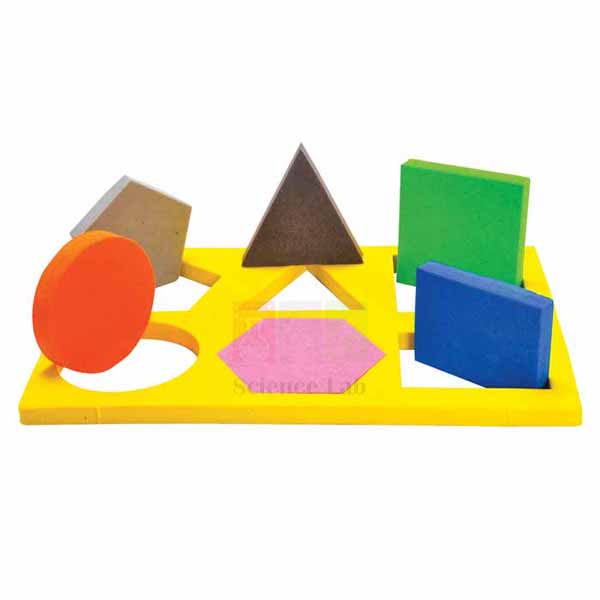
2D Shapes
2D Shapes (Product Code: SLE/MAT/74) is a shape-matching teaching aid used to introduce two-dimensional geometry — shape names, properties and construction — to young children in pre-primary and primary classrooms. Teachers use it for play-way activities in which learners match and fit the right shapes, making an early geometry topic hands-on. It is made by Jain Scientific Equipments Pvt Ltd (ScienceLab), an OEM manufacturer, at its own factory in Ambala, India.
Key Details
| Parameter | Detail |
|---|---|
| Topic | Two-dimensional (plane) shapes |
| Activity | Matching and fixing the right shapes |
| Learning outcomes | Shape names and properties; understanding how shapes are constructed |
| Teaching approach | Hands-on, play-way learning for young children |
| Contents and material | Not listed in the product description — ask us for details |
| Product code | SLE/MAT/74 |
| Manufacturer | Jain Scientific Equipments Pvt Ltd (ScienceLab) — OEM |
| Country of origin | India (made in Ambala, Haryana) |
What Is the 2D Shapes Set Used For?
Young children learn shapes fastest when they can hold them. With this set, a teacher names a shape, asks a child to find it and fit it into place, then talks about what makes it that shape — how many sides, how many corners, straight edges or curved. Matching tasks like these turn a vital early maths topic into a game little learners want to repeat.
Once the names are secure, the same pieces support sorting by property, simple pattern-making and discussion of how a shape is built from its sides and corners. Short, frequent sessions in small groups suit pre-primary and early primary classes, and the set leads naturally on to shape templates and pattern blocks in later years.
OEM Manufacturer
The 2D Shapes set is manufactured by ScienceLab — the brand of Jain Scientific Equipments Private Limited — acting as OEM (original equipment manufacturer). It is produced at the company’s licensed factory in Saha, Ambala, Haryana, India, and supplied straight from the factory to pre-schools, primary schools, teacher-training colleges, dealers and importers. For matching items or repeat sets for more classrooms, ask us and the manufacturer will respond directly. Learn more on the company profile.
Related Maths Lab Equipment
Early geometry lessons often continue with these aids:
- Primary Shapes Template Set — for tracing and drawing the shapes children have learned to match.
- Attribute Blocks — for sorting and classifying shapes by their attributes.
- Plastic Pattern Blocks — for building patterns and pictures from plane shapes.
- Geometric Shapes Building Set — for constructing shapes once their names are familiar.
Explore the complete Maths Lab Equipment range for more early-years and primary maths aids.
Frequently Asked Questions
What does the 2D Shapes set teach?
The 2D Shapes set (SLE/MAT/74) teaches young children the names and properties of two-dimensional shapes through matching and fitting activities. It also helps them understand how shapes are constructed, laying a foundation for later work on perimeter, area and symmetry.
Which shapes and how many pieces does the 2D Shapes set include?
The product description of the 2D Shapes set does not list the individual shapes, piece count or material. Please ask us through the contact page for the current contents before ordering, so that the set can be matched to your curriculum.
Which age group is the 2D Shapes set suitable for?
The 2D Shapes set is intended for little learners in pre-primary and early primary classes who are meeting geometrical shapes for the first time. Its play-way matching format keeps them engaged while they learn names and properties. Supervise young children with any small classroom pieces.
Who manufactures the 2D Shapes set?
The 2D Shapes set is manufactured by Jain Scientific Equipments Pvt Ltd, trading as ScienceLab, the OEM for this teaching aid. It is made at the company’s own factory at Saha, Ambala, Haryana, India, and quotations are issued directly by the manufacturer.
How can teachers use the 2D Shapes set in a lesson?
Teachers typically name a shape, ask a child to find and fit it, then discuss its sides and corners. The 2D Shapes set also supports sorting games, pattern-making and quick recall quizzes, so one set serves several short activities across a term.
What should a 2D Shapes quotation request include?
For a 2D Shapes quotation, state the number of sets you need, the classes or schools they are for, any related early-maths aids to include, and the delivery location in India or abroad. Send the request through the contact page or the enquiry cart.
Is the 2D Shapes set available in bulk and for export?
Yes. ScienceLab supplies the 2D Shapes set for single classrooms, school chains, pre-school programmes, dealers and importers across India and international markets. Share your quantity and destination on the contact page for a direct quotation from the manufacturer.
Request a Quote
Request a price for 2D Shapes (SLE/MAT/74) through our contact page, or add it to the enquiry cart together with other maths items. The quotation comes straight from the manufacturer.
Last updated: 24 September 2026
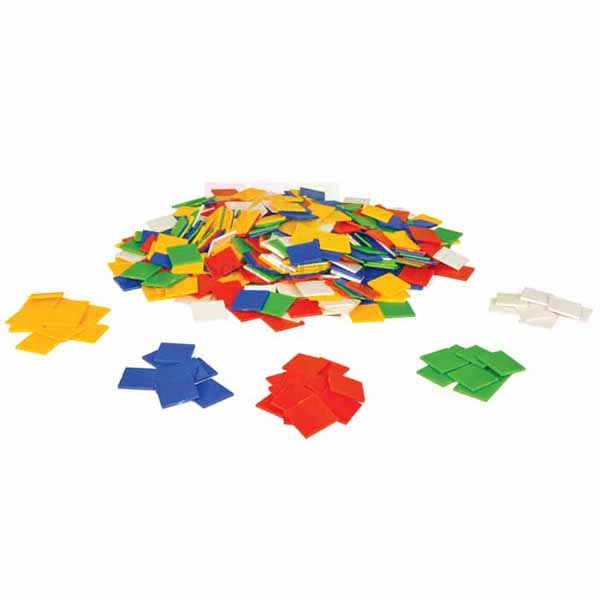
Colour Tile
Colour Tile (Product Code: SLE/MAT/75) is a set of multicoloured plastic square tiles used to teach area, perimeter, counting and patterns in school maths lessons. Teachers from pre-primary to middle school use the tiles because one versatile set covers colour recognition, sorting, number operations and measurement of shapes. It is made by Jain Scientific Equipments Pvt Ltd (ScienceLab), an OEM manufacturer of mathematics lab kits in India, at its own factory in Ambala.
Key Details
| Parameter | Detail |
|---|---|
| Material | Plastic |
| Tile shape | Square |
| Colours | Multicoloured |
| Main topics | Area and perimeter |
| Other concepts | Colour recognition, sorting, counting, patterns, number operations |
| Tile size and quantity | Not listed in the product description — ask us |
| Product code | SLE/MAT/75 |
| Manufacturer | Jain Scientific Equipments Pvt Ltd (ScienceLab) — OEM |
| Country of origin | India (made in Ambala, Haryana) |
What Are Colour Tiles Used For?
Square tiles make area and perimeter visible. A pupil builds a rectangle, counts the tiles inside it to find the area in square units, then counts the tile edges around the outside for the perimeter. Rearranging the same tiles into a new shape shows that two figures can share an area yet have different perimeters — a discovery that stays with children far longer than a formula alone.
Younger children start with the colours: naming them, sorting tiles into groups, counting each group and continuing repeating patterns. As skills grow, the tiles become counters for addition and subtraction and rows-and-columns arrays for early multiplication, so a single set of these mathematics lab kits serves several years of the curriculum.
OEM Manufacturer
Colour Tiles are made by ScienceLab, the trading name of Jain Scientific Equipments Private Limited, which is the OEM (original equipment manufacturer) of this maths manipulative rather than a reseller. Production takes place at the company’s own licensed factory at Saha, Ambala, Haryana, India, and schools, NGOs, distributors and importers buy directly from that factory. Extra tiles for classroom sets and repeat orders are handled by the manufacturer itself — just ask us. Company details are on the ScienceLab profile.
Related Maths Lab Equipment
To take area, pattern and counting work further, schools often add:
- Double Sided Geoboard — compares tile-built areas with shapes stretched on a pin grid.
- Interlocking Cubes — moves pupils from flat area to counting volume in cubes.
- Graph Board — for plotting and recording tile shapes on a grid.
- Base Ten Blocks — extends counting into place value and larger number operations.
Browse all Maths Lab Equipment for more hands-on maths resources.
Frequently Asked Questions
What are Colour Tiles made of?
Colour Tiles (SLE/MAT/75) are multicoloured square tiles made of plastic. The smooth plastic is easy to wipe clean, and the square shape lets tiles sit edge to edge without gaps, which is exactly what area and perimeter activities need.
How do Colour Tiles help teach area and perimeter?
With Colour Tiles, pupils build a shape, count the tiles inside it for the area in square units and count the outer edges for the perimeter. Rearranging the same tiles shows that equal areas can have different perimeters, backing the formulas with hands-on evidence.
What size are Colour Tiles, and how many come in a set?
The product description of Colour Tiles does not state the tile size, the number of tiles or the exact colours included. Contact us through the contact page and we will confirm the current specification of the set before you place an order.
Which age groups can use Colour Tiles?
Colour Tiles work across a wide range: young children use them for colour recognition, sorting, counting and patterns, while older pupils use them for number operations, area and perimeter. That versatility lets one set serve pre-primary through middle-school maths lessons.
Who manufactures Colour Tiles?
Colour Tiles are manufactured by Jain Scientific Equipments Pvt Ltd, trading as ScienceLab, the OEM of this product. They are made at the company’s own factory at Saha, Ambala, Haryana, India, and every quotation is prepared directly by the manufacturer.
What should a Colour Tile quotation request include?
A Colour Tile quotation request should state how many sets you need, which classes will use them, any related maths aids to include, and the delivery city or country. Use the ScienceLab contact page or add the item to the enquiry cart.
Can Colour Tiles be ordered in bulk or for export?
Yes. ScienceLab supplies Colour Tiles in classroom and whole-school quantities to schools, education projects, distributors and importers in India and international markets. Send your requirement through the contact page to receive a quotation from the manufacturer.
Request a Quote
Ask for a Colour Tile (SLE/MAT/75) quotation on our contact page or collect it with other items in the enquiry cart. Prices are quoted direct by the manufacturer.
Last updated: 24 September 2026
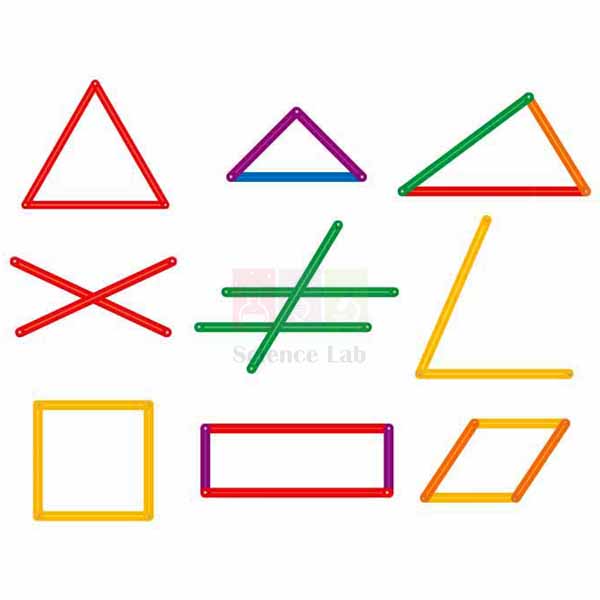
Geo Geometry Sticks
Geo Geometry Sticks (Product Code: SLE/MAT/76) is a set of snap-together sticks used to build polygons and explore plane geometry in school maths classrooms. Pupils work with them on a desk or on a magnetic board, and teachers use them to investigate angles, the triangle inequality theorem and the mid-point theorem. It is made by Jain Scientific Equipments Pvt Ltd (ScienceLab), an OEM manufacturer, at its own factory in Ambala, India.
Key Details
| Parameter | Detail |
|---|---|
| Joining method | Sticks snap together |
| Working surface | Desk or magnetic board |
| Stick lengths | Activities compare shapes built from equal-length and different-length sticks |
| Topics | Plane geometry, polygons, triangle inequality theorem, mid-point theorem, angles |
| Teacher use | Measurement of angles; construction and analysis of shapes |
| Stick count and material | Not listed in the product description — ask us |
| Product code | SLE/MAT/76 |
| Manufacturer | Jain Scientific Equipments Pvt Ltd (ScienceLab) — OEM |
| Country of origin | India (made in Ambala, Haryana) |
What Are Geo Geometry Sticks Used For?
Geo Geometry Sticks let pupils build a polygon, test it and rebuild it in seconds. For the triangle inequality theorem, learners try to snap three sticks into a triangle and find that it only closes when the two shorter sides together are longer than the third. Building polygons first from equal sticks and then from mixed lengths shows how side lengths change a shape and its angles.
For the mid-point theorem, pupils build a triangle, locate the mid-points of two sides and compare the segment joining them with the third side — parallel to it and half as long. Teachers also use the sticks for measuring angles and analysing quadrilaterals, with shapes laid out on desks or shown on a magnetic board to the whole class, making them a practical part of any school maths lab.
OEM Manufacturer
ScienceLab — legally Jain Scientific Equipments Private Limited — is the OEM (original equipment manufacturer) of Geo Geometry Sticks. The sets come from the company’s own licensed factory at Saha, Ambala, Haryana, India, so maths departments, teacher-training institutes, dealers and importers receive their quotation from the maker, not a middleman. For additional sticks or repeat classroom sets, ask us. The ScienceLab company profile has more background.
Related Maths Lab Equipment
Geometry work with the sticks links naturally to these items:
- Anglegs Transparent Student Set — another polygon-building set for exploring sides and angles.
- Geometric Shapes Building Set — for constructing further shapes and comparing their properties.
- Geometrical Instruments Set — for formal constructions on paper after the hands-on stage.
- Professional Protractor — for measuring the angles formed where sticks meet.
The full Maths Lab Equipment range lists more geometry and measurement aids.
Frequently Asked Questions
How do Geo Geometry Sticks join together?
Geo Geometry Sticks (SLE/MAT/76) snap together, so learners can join them into polygons and take them apart again quickly. Shapes can be built flat on a desk or on a magnetic board, letting a teacher show the class what pupils are building individually.
Which theorems can Geo Geometry Sticks demonstrate?
Geo Geometry Sticks are suited to investigating the triangle inequality theorem and the mid-point theorem, as well as angle concepts. Pupils compare polygons built from equal-length and different-length sticks to see how side lengths decide whether and how a shape closes.
How many sticks are in a Geo Geometry Sticks set, and what lengths?
The product description of Geo Geometry Sticks does not list the number of sticks, their exact lengths or the material. Please ask us through the contact page for the current set contents so that you can plan activities and class quantities.
Who manufactures Geo Geometry Sticks?
Geo Geometry Sticks are manufactured by Jain Scientific Equipments Pvt Ltd, trading as ScienceLab, which is the OEM for this product. Manufacturing takes place at the company’s own factory at Saha, Ambala, Haryana, India, and quotations come directly from the manufacturer.
Which classes are Geo Geometry Sticks suitable for?
Geo Geometry Sticks suit upper-primary and secondary pupils studying plane geometry, polygons, angles and triangle properties. Teachers also use them for magnetic-board demonstrations when introducing the construction and analysis of shapes to a whole class.
What should a Geo Geometry Sticks quotation request include?
To quote for Geo Geometry Sticks, we need the number of sets, the classes that will use them, any related geometry items such as protractors, and the delivery location in India or abroad. Send these details through the contact page or the enquiry cart.
Are Geo Geometry Sticks supplied in bulk and for export?
Yes. ScienceLab supplies Geo Geometry Sticks for individual classrooms, whole schools, maths labs, distributors and importers across India and international markets. Use the contact page to share quantities and receive a quotation from the manufacturer.
Request a Quote
To price Geo Geometry Sticks (SLE/MAT/76) for your school, use the contact page or add them to the enquiry cart. Your quotation is prepared directly by the manufacturer.
Last updated: 24 September 2026
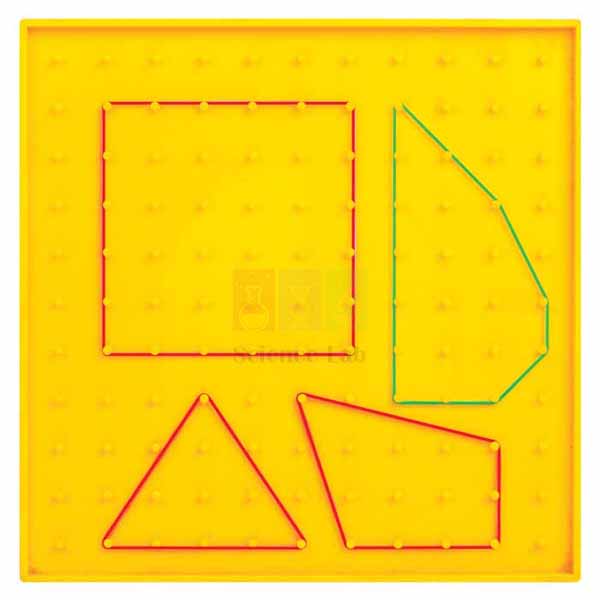
Double Sided Geoboard
Double Sided Geoboard (Product Code: SLE/MAT/77) is a plastic pin board used with rubber bands to explore shapes, area, perimeter, symmetry, angles and coordinates in school maths lessons. Its distinguishing feature is two layouts in one board — an 11 x 11 pin grid on one side and a 24-pin circular pattern on the other — so a class can move from grid work to circle geometry without changing equipment. It is made by Jain Scientific Equipments Pvt Ltd (ScienceLab), an OEM manufacturer, at its own factory in Ambala, India.
Specifications
| Parameter | Detail |
|---|---|
| Material | Plastic |
| Side one | 11 x 11 pin grid |
| Side two | 24-pin circular pattern |
| Used with | Rubber bands (inclusion not stated — ask us) |
| Topics | Shapes, designs, spatial relationships, angles, fractions, area, perimeter, symmetry, coordinates |
| Product code | SLE/MAT/77 |
| Manufacturer | Jain Scientific Equipments Pvt Ltd (ScienceLab) — OEM |
| Country of origin | India (made in Ambala, Haryana) |
What Is the Double Sided Geoboard Used For?
Stretching rubber bands between pins lets pupils draw shapes they can change instantly. On the square side, the 11 x 11 grid supports counting-unit area and perimeter, reflection across a line of symmetry and plotting points as coordinates. A favourite task is the area of a triangle: pupils complete the triangle into a rectangle, see that it is half of that rectangle, and then verify the answer with the formula.
Turn the board over and the 24-pin circular pattern opens up circle work — chords, regular polygons whose corners sit on the circle, angles and fractions of a circle. Having both layouts on one board saves storage space in a school maths lab and keeps each pupil working on the same familiar tool throughout a geometry unit.
What to Specify When Ordering
- Number of boards — one per pupil or one per pair is common for class work.
- Whether rubber bands should be quoted along with the boards.
- Any single-layout geoboards (isometric or assorted) needed for the same lab.
OEM Manufacturer
ScienceLab, the trading name of Jain Scientific Equipments Private Limited, is the OEM (original equipment manufacturer) of the Double Sided Geoboard. Boards are produced at the company’s own licensed factory at Saha, Ambala, Haryana, India, and supplied from there to schools, maths labs, dealers and importers without a trading intermediary. Institutional buyers completing vendor registration can use the company’s GSTIN 06AAECJ8618A1ZT and LEI 3358004HRD1JIVXKYX49. For repeat orders, ask us — the manufacturer handles them directly. See the ScienceLab profile for more.
Related Maths Lab Equipment
Other boards and kits that extend geoboard lessons:
- 10 Isometric Grid Pattern Geoboard — an isometric layout for triangle- and hexagon-based shapes.
- 5 Assorted Geoboards — several layouts for rotating group activities.
- Coordinate Board — dedicated plotting of ordered pairs once grid work is familiar.
- Circle Kit — further circle geometry beyond the 24-pin side.
Find more boards and manipulatives in Maths Lab Equipment.
Frequently Asked Questions
What is on each side of the Double Sided Geoboard?
The Double Sided Geoboard (SLE/MAT/77) has an 11 x 11 pin grid on one side and a 24-pin circular pattern on the other. The grid side suits area, perimeter, symmetry and coordinates, while the circular side supports angles, fractions and circle geometry.
Are rubber bands included with the Double Sided Geoboard?
The product description of the Double Sided Geoboard says shapes are made with rubber bands but does not state whether bands are supplied with the board. Mention rubber bands in your enquiry and we will confirm what can be included in the quotation.
What is the Double Sided Geoboard made of?
The Double Sided Geoboard is made of plastic, which is easy to wipe clean after lessons. Remove the rubber bands after use and store the boards flat so that the pins and the bands both stay in good condition from one term to the next.
How does the Double Sided Geoboard help find the area of a triangle?
On the Double Sided Geoboard, pupils complete a triangle into a rectangle with rubber bands, find the rectangle’s area by counting squares and halve it. They then verify the result with the area-of-a-triangle formula, linking hands-on counting to the formula.
Who manufactures the Double Sided Geoboard?
The Double Sided Geoboard is manufactured by Jain Scientific Equipments Pvt Ltd, trading as ScienceLab, the OEM of this product. It is made at the company’s own factory at Saha, Ambala, Haryana, India, and schools and dealers receive quotations directly from the manufacturer.
What should a Double Sided Geoboard quotation request include?
A Double Sided Geoboard quotation needs the number of boards, whether rubber bands should be quoted, any other geoboards or maths aids for the same order, and the delivery location in India or abroad. Send the details through the contact page or the enquiry cart.
Is the Double Sided Geoboard available in bulk and for export?
Yes. ScienceLab supplies the Double Sided Geoboard in classroom sets and larger quantities to schools, education projects, distributors and importers across India and international markets. Share your requirement on the contact page for a quotation from the manufacturer.
Request a Quote
Send your Double Sided Geoboard (SLE/MAT/77) requirement through the contact page or add it to the enquiry cart. Quotations are issued directly by the manufacturer in Ambala.
Last updated: 24 September 2026
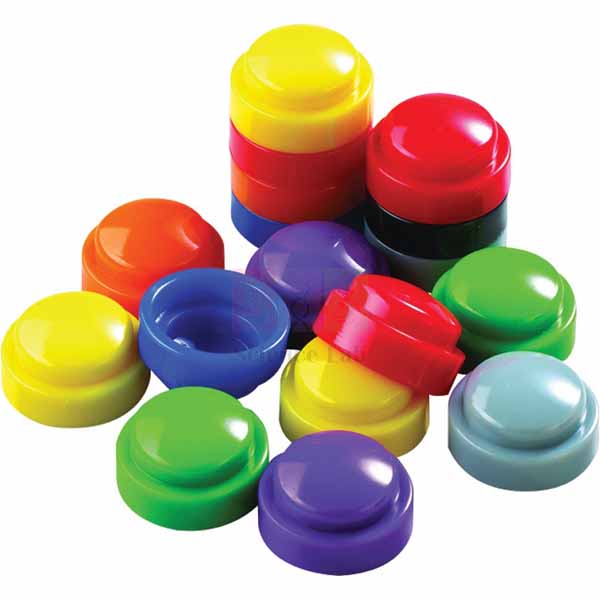
Stacking Counters
Stacking Counters (Product Code: SLE/MAT/78) is a set of plastic counters used for sorting, counting, comparing numbers and early arithmetic in pre-primary and primary maths lessons. Teachers choose them because the counters come in 5 colours and stack into towers, making number size, grouping and multiplication visible; each counter is 2 cm in diameter. They are made by Jain Scientific Equipments Pvt Ltd (ScienceLab), an OEM manufacturer of educational laboratory equipment in India, at its own factory in Ambala.
Specifications
| Parameter | Detail |
|---|---|
| Material | Plastic |
| Colours | 5 |
| Counter diameter | 2 cm (20 mm) |
| Key feature | Counters stack on one another |
| Concepts | Sorting, counting, basic arithmetic operations, number patterns, comparing and ordering numbers, grouping, multiplication |
| Counters per pack | Not listed in the product description — ask us |
| Product code | SLE/MAT/78 |
| Manufacturer | Jain Scientific Equipments Pvt Ltd (ScienceLab) — OEM |
| Country of origin | India (made in Ambala, Haryana) |
What Are Stacking Counters Used For?
Because they stack, these counters turn numbers into towers children can see and compare. A tower of seven stands visibly taller than a tower of four, so comparing and ordering numbers becomes a matter of looking, and the gap between two towers is a subtraction problem made physical. Sorting by the five colours gives young learners an easy first classification task before counting begins.
For grouping and multiplication, pupils build several towers of equal height and count the total, seeing multiplication as repeated addition. Colour patterns within a stack introduce number patterns and sequences, and the compact 2 cm size keeps a full class set manageable on small desks — a practical choice for mathematics lab kits in the early years.
OEM Manufacturer
Stacking Counters come from ScienceLab — Jain Scientific Equipments Private Limited — as the OEM (original equipment manufacturer). They are made at the company’s own licensed factory in Saha, Ambala, Haryana, India, and supplied factory-direct to schools, play schools, NGOs, distributors and importers. Because the maker supplies them itself, extra counters for classroom sets and repeat orders can simply be requested from us. Company background is on the ScienceLab profile page.
Related Maths Lab Equipment
Counting and number-sense lessons often combine the counters with:
- Place Value Mat with Stacking Counters — adds a mat for place-value work with stacked counters.
- Integer Counters — counters for introducing positive and negative numbers later on.
- Sorting Ring — for grouping counters by colour or number during sorting tasks.
- Interlocking Cubes — another hands-on counting aid for patterns and measurement.
All counting and number aids are grouped under Maths Lab Equipment.
Frequently Asked Questions
What size and colours are the Stacking Counters?
Stacking Counters (SLE/MAT/78) are plastic counters 2 cm in diameter, supplied in 5 colours. The colours support sorting and pattern work, while the stacking design lets children build towers to compare, group and order numbers.
How many Stacking Counters come in a pack?
The product description of Stacking Counters does not state how many counters come in a pack or how many there are of each colour. Tell us how many you need per class through the contact page and we will confirm the pack contents in our quotation.
How do Stacking Counters help teach multiplication?
With Stacking Counters, pupils build equal towers — for example three towers of four — and count the total, seeing multiplication as repeated addition. Rearranging the same counters into different equal groups also introduces factors and early division.
Which age group are Stacking Counters suitable for?
Stacking Counters suit pre-primary and primary children learning to sort, count, compare and order numbers, and later to add, subtract and multiply. Because the counters are small, young children should use them under adult supervision.
Who manufactures Stacking Counters?
Stacking Counters are manufactured by Jain Scientific Equipments Pvt Ltd, trading as ScienceLab, the OEM for this counting aid. Production is at the company’s own factory at Saha, Ambala, Haryana, India, and quotations are sent directly by the manufacturer.
What should a Stacking Counters quotation request include?
To quote for Stacking Counters, we need the total number of counters or classroom sets required, whether a place value mat is also wanted, and the delivery location in India or abroad. Send your request through the contact page or the enquiry cart.
Can Stacking Counters be ordered in bulk or for export?
Yes. ScienceLab supplies Stacking Counters in quantities for single classrooms, entire schools, education projects, distributors and importers in India and international markets. Share your requirement on the contact page for a quotation from the manufacturer.
Request a Quote
For Stacking Counters (SLE/MAT/78), send the quantity you need via the contact page or add the item to the enquiry cart. The manufacturer will quote you directly.
Last updated: 24 September 2026
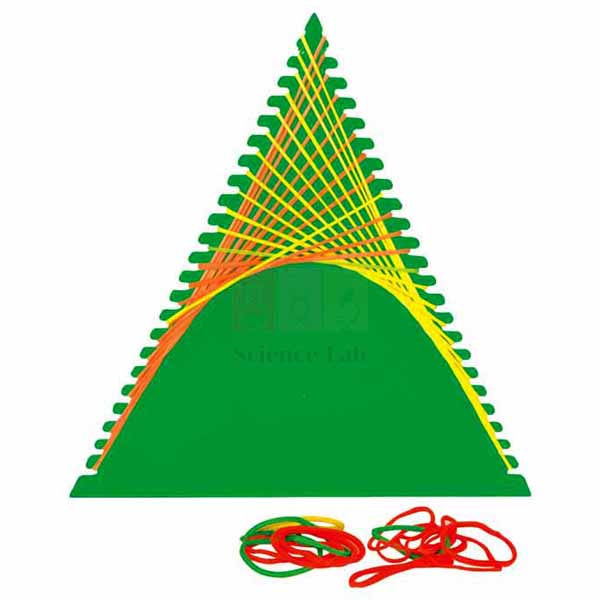
Construction of Parabola
Construction of Parabola (Product Code: SLE/MAT/79) is a plastic triangular plate used to construct a parabola from straight lines of rubber band in senior-secondary maths lessons on conic sections. Teachers and students use it because its equally marked slots — 24 on each side of a 19 cm x 20 cm plate — turn an abstract curve into a hands-on build. It is made by Jain Scientific Equipments Pvt Ltd (ScienceLab), an OEM manufacturer, at its own factory in Ambala, India.
Specifications
| Parameter | Detail |
|---|---|
| Material | Plastic |
| Form | Triangular plate |
| Slots | 24 equally marked slots on each side |
| Size | 19 cm x 20 cm |
| Construction method | Slots joined with rubber bands to form a parabola |
| Rubber bands | Inclusion not stated — ask us |
| Product code | SLE/MAT/79 |
| Manufacturer | Jain Scientific Equipments Pvt Ltd (ScienceLab) — OEM |
| Country of origin | India (made in Ambala, Haryana) |
What Is the Construction of Parabola Plate Used For?
The plate shows that a curve can be built entirely from straight lines. Pupils stretch a rubber band from the first slot on one side to the last slot on the other, then from the second slot to the second-last, and continue along the slots. Each band touches the curve as a tangent, and together the bands outline a smooth parabola — the method known as curve stitching, or the envelope of lines.
Students of conic sections can then compare the stitched curve with the focus-and-directrix definition of a parabola, identify its axis of symmetry and discuss why parabolic shapes appear in reflectors and arches. Because the plate is reusable, the construction can be repeated quickly for teacher demonstrations or small-group practicals in a school maths lab.
OEM Manufacturer
Construction of Parabola is made by ScienceLab (Jain Scientific Equipments Private Limited), which is the OEM (original equipment manufacturer) of this maths demonstration plate. It is produced at the company’s own licensed factory at Saha, Ambala, Haryana, India, so senior-secondary schools, colleges, dealers and importers buy from the maker itself. Extra plates and repeat orders are handled by the manufacturer — ask us. More is on the ScienceLab profile.
Related Maths Lab Equipment
Senior maths lessons on curves and geometry also draw on:
- Graph Board — for plotting a parabola from its equation and comparing it with the stitched curve.
- Trigonometry Board — another senior-secondary board for angle and ratio work.
- Advanced Geometry — for further geometry topics at senior level.
- Senior Maths Kit — a broader collection of aids for senior classes.
See more senior and junior aids in Maths Lab Equipment.
Frequently Asked Questions
How does the Construction of Parabola plate form a parabola?
The Construction of Parabola plate (SLE/MAT/79) has equally marked slots along its sides. Rubber bands joined between matching slots on two sides form straight lines that together outline a parabola, showing how a curve emerges as the envelope of straight lines.
What size is the Construction of Parabola plate, and how many slots does it have?
The Construction of Parabola plate measures 19 cm x 20 cm and has 24 equally marked slots on each side. It is a plastic triangular plate, compact enough for a desk while giving a clearly visible curve for group work.
Are rubber bands supplied with Construction of Parabola?
The product description of Construction of Parabola explains that rubber bands join the slots, but it does not say whether bands are packed with the plate. Ask us through the contact page and we will confirm exactly what the quotation includes.
Which classes use Construction of Parabola?
Construction of Parabola suits senior-secondary students studying conic sections and coordinate geometry, and it also makes an engaging enrichment activity for middle-school maths clubs. Teachers use it for demonstrations as well as hands-on group practicals.
Who manufactures Construction of Parabola?
Construction of Parabola is manufactured by Jain Scientific Equipments Pvt Ltd, trading as ScienceLab, the OEM for this teaching aid. It is produced at the company’s own factory at Saha, Ambala, Haryana, India, and schools receive quotations directly from the manufacturer.
What should a Construction of Parabola quotation request include?
For a Construction of Parabola quotation, tell us how many plates you need, whether rubber bands should be included, any other senior maths aids for the same order, and the delivery location in India or abroad. Use the contact page or the enquiry cart.
Is Construction of Parabola available in bulk and for export?
Yes. ScienceLab supplies Construction of Parabola plates for single schools, maths labs, colleges, distributors and importers across India and international markets. Share quantities on the contact page and the manufacturer will quote directly.
Request a Quote
To buy Construction of Parabola (SLE/MAT/79), send your requirement through the contact page or the enquiry cart. You will receive a quotation direct from the manufacturer.
Last updated: 24 September 2026
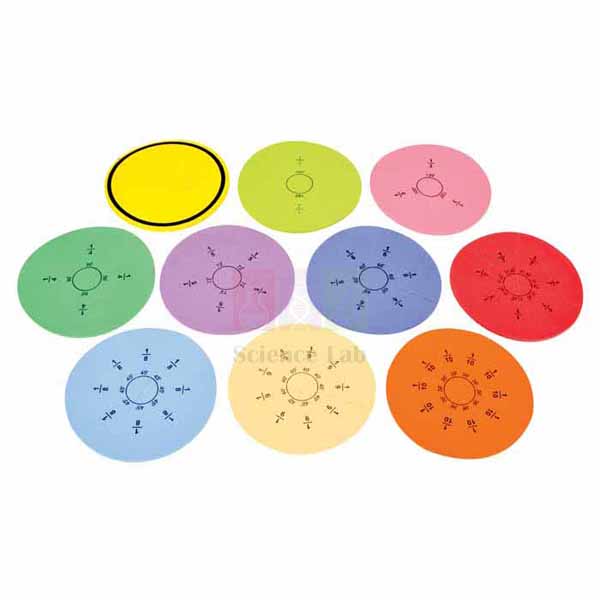
Non Magnetic Fraction Disc
Non Magnetic Fraction Disc (Product Code: SLE/MAT/80) is a set of soft foam fraction circles used to teach fractions and equivalent fractions through hands-on games and activities in primary maths. Teachers value its 55 colour-coded, easy-to-grip pieces, which show a whole and every family from halves to tenths so children can see, feel and compare the parts. It is made by Jain Scientific Equipments Pvt Ltd (ScienceLab), an OEM manufacturer, at its own factory in Ambala, India.
Specifications
| Parameter | Detail |
|---|---|
| Material | Soft foam |
| Magnetic | No (non-magnetic) |
| Number of pieces | 55 proportional pieces |
| Fractions shown | Whole, halves, thirds, fourths, fifths, sixths, sevenths, eighths, ninths and tenths |
| Piece design | Colourful, colour-coded, easy to grip |
| Teaching use | Fraction games and activities; seeing, feeling and comparing equivalent fractions |
| Product code | SLE/MAT/80 |
| Manufacturer | Jain Scientific Equipments Pvt Ltd (ScienceLab) — OEM |
| Country of origin | India (made in Ambala, Haryana) |
What Is the Non Magnetic Fraction Disc Used For?
Fraction circles let children see that two quarters cover exactly the same space as one half. With these foam pieces, a pupil lays one colour over another to find equivalent fractions, compares sizes side by side — one fifth against one sixth — and builds a whole from mixed pieces to discover that the parts add up to one. Colour coding lets children tell the halves from the thirds at a glance.
The soft, easy-to-grip foam suits younger hands and table or floor games, and because the set is non-magnetic it works on any surface without a board. Later, the same pieces support ordering fractions, adding fractions with like and unlike denominators, and introducing decimals through tenths — one reason fraction circles feature in most mathematics lab kits.
OEM Manufacturer
ScienceLab, the brand of Jain Scientific Equipments Private Limited, is the OEM (original equipment manufacturer) of the Non Magnetic Fraction Disc. The sets are made at the company’s own licensed factory at Saha, Ambala, Haryana, India, and dispatched factory-direct to schools, tutoring centres, dealers and importers. If a piece goes missing or you need repeat sets, ask us — the manufacturer deals with it directly. See the ScienceLab company profile.
Related Maths Lab Equipment
Fraction lessons with the discs pair well with:
- Designer Fraction — another fraction manipulative for comparing parts of a whole.
- Fraction Dice — roll-and-compare fraction games to play alongside the discs.
- Circle Kit — further work with circles and their parts.
- Maths Kit Junior — a broader set of aids for junior maths classes.
Browse more fraction and number aids under Maths Lab Equipment.
Frequently Asked Questions
What is included in the Non Magnetic Fraction Disc set?
The Non Magnetic Fraction Disc set (SLE/MAT/80) includes 55 proportional soft foam pieces representing a whole, halves, thirds, fourths, fifths, sixths, sevenths, eighths, ninths and tenths. The pieces are colour coded, so each fraction family is easy to identify.
Is the Non Magnetic Fraction Disc magnetic?
No. As its name states, the Non Magnetic Fraction Disc is a soft foam set without magnets, so the pieces are used on a desk, table or floor rather than on a magnetic whiteboard. If your lessons need board display, discuss it with us through the contact page.
How does the Non Magnetic Fraction Disc teach equivalent fractions?
With the Non Magnetic Fraction Disc, pupils lay smaller pieces over a larger one — for example two quarters on one half — to see that both cover the same area. Colour coding makes it easy to record which combinations are equivalent.
Which pupils is the Non Magnetic Fraction Disc suitable for?
The Non Magnetic Fraction Disc suits primary pupils meeting fractions for the first time and older pupils revising equivalence, ordering and addition of fractions. The soft, easy-to-grip foam is comfortable for young hands; supervise small children during use.
Who manufactures the Non Magnetic Fraction Disc?
The Non Magnetic Fraction Disc is manufactured by Jain Scientific Equipments Pvt Ltd, trading as ScienceLab, which is the OEM for this set. It is made at the company’s own factory at Saha, Ambala, Haryana, India, and quotations come straight from the manufacturer.
How should the Non Magnetic Fraction Disc be cleaned and stored?
Wipe Non Magnetic Fraction Disc pieces with a slightly damp cloth and let them dry flat, away from heat and sharp objects that could mark the soft foam. Store each set together so that all 55 pieces stay complete for the next lesson.
Can the Non Magnetic Fraction Disc be ordered in bulk or for export?
Yes. ScienceLab supplies the Non Magnetic Fraction Disc to classrooms, schools, education projects, distributors and importers across India and international markets. Send the number of sets and your delivery location through the contact page for a quotation from the manufacturer.
Request a Quote
Request a Non Magnetic Fraction Disc (SLE/MAT/80) quotation through the contact page, or list it in the enquiry cart with other maths items. Quotes come direct from the manufacturer.
Last updated: 24 September 2026