- Physics Lab Equipment
- Chemistry Lab Equipment
- Biology Lab Equipment
- Anatomical Lab Equipment
- Learning
- Educational Lab Equipment
- Magnets
- Agriculture
- Astronomy
- Earth Science
- Geography Lab Equipment
- Safety Lab Coat
- Laboratory
- Meteorological
- Electricity & Magnetism
- Heat
- School Lab Equipment
- Lab Glassware
- Science Lab Equipment
- Tvet Lab Equipment
- Robotics Kits Supplier and Manufacturer for Schools India
- Math Lab Equipment Manufacturers and Exporters in Ambala
- STEM Kits Manufacturers and Supplier India
- Engineering Lab Equipment
- Hospital Lab Equipment
- Water, Sanitation & Hygiene Supplies
- Cold Chain, Solar & Communication Equipment
- Nutrition
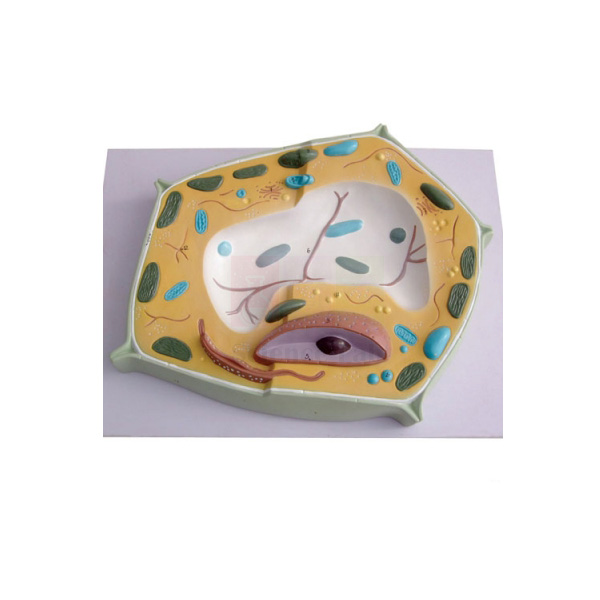
Plant Cell Model
Plant Cell Model (Product Code: SLE/ECB/03) is a hugely enlarged teaching model of a typical plant cell, used to show all types of organelle in one view during secondary-school and college biology lessons. Enlarged 20,000 times and measuring 42 x 30 x 8 cm, it is big enough for a teacher to point out each structure to the whole class. It is made by Jain Scientific Equipments Pvt Ltd (ScienceLab), an OEM manufacturer, at its own factory in Ambala, India, as part of its botany lab equipment.
Specifications
| Parameter | Detail |
|---|---|
| Type | Enlarged plant cell model |
| Enlargement | 20,000 times |
| Size | 42 x 30 x 8 cm |
| Shows | Typical plant cell structure with all types of organelle |
| Product code | SLE/ECB/03 |
| Manufacturer | Jain Scientific Equipments Pvt Ltd (ScienceLab) — OEM |
| Country of origin | India (made in Ambala, Haryana) |
What Is the Plant Cell Model Used For?
Teachers use this model when introducing the cell as the basic unit of life, walking through the features that make a plant cell distinctive, such as the rigid cell wall, chloroplasts and the large central vacuole, alongside the nucleus, mitochondria and membrane systems it shares with animal cells. Because every organelle type is shown on one enlarged cell, students can see how the parts fit together rather than learning them as a list.
It works well as the reference point for an onion-peel or leaf-epidermis practical: students look at the model first, then find the cell wall, nucleus and vacuole in real cells under the microscope, and finally draw and label what they saw. As part of school biology lab equipment in India it also serves for quick revision before examinations and for comparison lessons with an animal cell model.
OEM Manufacturer
The Plant Cell Model is produced by Jain Scientific Equipments Private Limited, which operates under the ScienceLab brand and is the model's OEM (original equipment manufacturer). It is made at the company's own licensed factory at Saha, Ambala, Haryana, India, and sent factory-direct to schools, colleges, dealers and importers, so quotations and follow-up orders come from the maker rather than an intermediary. Read more on our company profile.
Related Cell Biology Equipment
Items that support a complete plant cell topic:
- Plant Cell Plaque — a relief plaque with key cards identifying its structures
- Chloroplast Model — zooms in on a single organelle to show its internal membranes
- Animal Cell Model — for side-by-side comparison of plant and animal cells
- Plant Cell Study Kit — hands-on material for the practical session
- Monocular Biological Microscope 400x, LED — for observing real plant cells
Explore more models in our Cell Biology Equipment range.
Frequently Asked Questions
How much is the Plant Cell Model enlarged?
The Plant Cell Model shows a typical plant cell enlarged 20,000 times, so organelles that are invisible to the naked eye become large, clearly separated features that students can identify from their seats.
What are the dimensions of the Plant Cell Model?
The Plant Cell Model measures 42 x 30 x 8 cm. At that size a teacher can hold it up or place it at the front of the room and point out each organelle to the whole class.
Which organelles does the Plant Cell Model show?
The Plant Cell Model shows typical plant cell structure with all types of organelle. If you need the exact list of labelled parts, or want to know whether a key is supplied, please contact us before ordering.
Is the Plant Cell Model free-standing or wall-mounted?
The mounting style and material of the Plant Cell Model are not stated in our current product information. We can confirm both when you enquire, so that you can plan where the model will be displayed in the classroom.
How should the Plant Cell Model be looked after?
Dust the Plant Cell Model gently with a soft brush or dry cloth, keep it away from prolonged direct sunlight and heat, and store it on a stable shelf where it cannot be knocked or dropped.
Who manufactures the Plant Cell Model?
The Plant Cell Model is manufactured by Jain Scientific Equipments Pvt Ltd (ScienceLab), the OEM, at its own factory in Saha, Ambala, Haryana, India. Schools, colleges and distributors order it directly from the manufacturer.
Do you supply several Plant Cell Models for different classrooms?
Yes. The Plant Cell Model is supplied in bulk to schools, colleges and distributors across India and international markets. Share the quantity and delivery details, and the manufacturer will send a quotation for the full order.
Request a Quote
For the manufacturer's price or bulk supply, contact us or add the Plant Cell Model to your enquiry cart.
Last updated: 24 September 2026