- Physics Lab Equipment
- Chemistry Lab Equipment
- Biology Lab Equipment
- Anatomical Lab Equipment
- Learning
- Educational Lab Equipment
- Magnets
- Agriculture
- Astronomy
- Earth Science
- Geography Lab Equipment
- Safety Lab Coat
- Laboratory
- Meteorological
- Electricity & Magnetism
- Heat
- School Lab Equipment
- Lab Glassware
- Science Lab Equipment
- Tvet Lab Equipment
- Robotics Kits Supplier and Manufacturer for Schools India
- Math Lab Equipment Manufacturers and Exporters in Ambala
- STEM Kits Manufacturers and Supplier India
- Engineering Lab Equipment
- Hospital Lab Equipment
- Water, Sanitation & Hygiene Supplies
- Cold Chain, Solar & Communication Equipment
- Nutrition
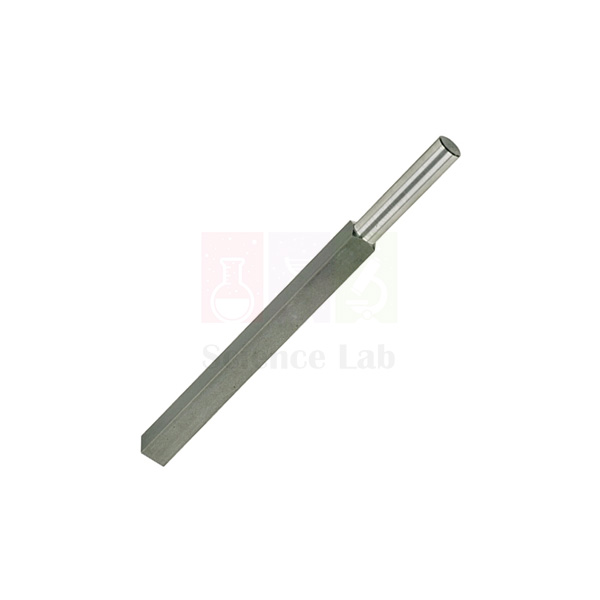
Tamping Bar
Tamping Bar (Product Code: SLE/CE/36) is a square-section steel bar with a handle, used to compact fresh concrete into cube moulds by hand in concrete testing and civil engineering laboratories. The bar is 25 mm square and 380 mm long, giving a flat ramming face and a short, easily controlled length for bench work. Jain Scientific Equipments Pvt Ltd (ScienceLab) is its OEM manufacturer and makes it at its own factory in Ambala, India.
Specifications
| Parameter | Detail |
|---|---|
| Use | Compacting concrete into cube moulds |
| Material | Steel bar |
| Cross-section | 25 mm square |
| Length | 380 mm |
| Handle | Fitted with a handle |
| Product code | SLE/CE/36 |
| Manufacturer | Jain Scientific Equipments Pvt Ltd (ScienceLab) — OEM |
| Country of origin | India (made in Ambala, Haryana) |
What Is a Tamping Bar Used For?
Concrete cubes are only as reliable as their compaction. With the tamping bar, the operator holds the handle and rams the square end down onto each layer in the cube mould, working methodically across the surface so no area is missed. The flat square face consolidates the concrete and helps bring entrapped air to the top, while the handle gives a secure grip for a steady rhythm.
Hand tamping suits laboratories that cast a modest number of cubes per batch; where many specimens must be prepared, mechanical options such as an internal vibrator or vibrating table save effort. Use the number of layers and blows stated in your test standard, and clean and dry the bar after every session. It belongs in the basic concrete kit of any engineering lab equipment set-up in India or abroad.
OEM Manufacturer
The Tamping Bar is manufactured by Jain Scientific Equipments Private Limited, the company behind the ScienceLab brand, which acts as its OEM (original equipment manufacturer). Production is carried out at its own licensed factory in Saha, Ambala, Haryana, so polytechnics, universities, contractors' laboratories, dealers and importers buy directly from the maker instead of through a trading house. Company details are on the ScienceLab profile.
Related Civil Engineering Lab Equipment
Pair the tamping bar with these items when casting and compacting specimens:
- Concrete Cube Mould — the mould filled and compacted with the bar.
- Tamping Rod — a round-rod alternative for rodding concrete layers.
- Poker Vibrator — internal vibration when many specimens need compacting.
- Vibrating Table — table vibration for moulds as an alternative to hand tamping.
More products are listed under Civil Engineering Lab Equipment.
Frequently Asked Questions
What are the dimensions of the Tamping Bar?
The Tamping Bar (SLE/CE/36) is made from steel bar with a 25 mm square cross-section and a length of 380 mm, and it is fitted with a handle. Confirm that this size matches the compacting tool named in the test method your laboratory follows.
What is the Tamping Bar used for?
The Tamping Bar is used for compacting fresh concrete into cube moulds by hand. Each layer is rammed with the square end of the bar to consolidate it and release entrapped air, so that the finished cubes give representative compressive strength results.
Should I choose a tamping bar or a vibrator?
A Tamping Bar is simple, needs no power and suits a moderate number of cubes. When a laboratory compacts large numbers of specimens every day, a poker vibrator or vibrating table may be quicker; many labs keep a tamping bar as well for small batches and teaching.
How do I keep the tamping bar in good condition?
Remove fresh concrete from the Tamping Bar immediately after use, rinse it, dry it thoroughly and store it in a dry place. Keeping the square face clean and free of hardened paste ensures it contacts the concrete evenly each time it is used.
Who manufactures the Tamping Bar?
The Tamping Bar is manufactured by Jain Scientific Equipments Pvt Ltd (ScienceLab), the OEM, at its own licensed factory in Saha, Ambala, Haryana, India. Institutions and dealers order it factory-direct, and repeat or spare requirements are handled by the manufacturer on request.
What should my enquiry include?
For the Tamping Bar, state how many bars you need, the institution or company name, and the delivery address in India or overseas. If you are also buying cube moulds or other concrete equipment, list them so one consolidated quotation can be prepared.
Request a Quote
Get a price for the Tamping Bar by writing to us on the contact page or by adding it to the enquiry cart. The quotation comes directly from the manufacturer.
Last updated: 24 September 2026