- Physics Lab Equipment
- Chemistry Lab Equipment
- Biology Lab Equipment
- Anatomical Lab Equipment
- Learning
- Educational Lab Equipment
- Magnets
- Agriculture
- Astronomy
- Earth Science
- Geography Lab Equipment
- Safety Lab Coat
- Laboratory
- Meteorological
- Electricity & Magnetism
- Heat
- School Lab Equipment
- Lab Glassware
- Science Lab Equipment
- Tvet Lab Equipment
- Robotics Kits Supplier and Manufacturer for Schools India
- Math Lab Equipment Manufacturers and Exporters in Ambala
- STEM Kits Manufacturers and Supplier India
- Engineering Lab Equipment
- Hospital Lab Equipment
- Water, Sanitation & Hygiene Supplies
- Cold Chain, Solar & Communication Equipment
- Nutrition
Civil Engineering Lab Equipment is the apparatus used to test concrete, cement, soil, bitumen and aggregates in the construction-materials laboratories of civil engineering colleges, polytechnics and ITIs. Jain Scientific Equipments Pvt Ltd (ScienceLab), Ambala makes most of this civil engineering lab equipment, from moulds and tamping rods to soil, aggregate and bitumen apparatus, at its own licensed factory in Ambala, and supplies the automatic compression, CBR and Marshall test machines and the non-destructive testers.
What Does the Civil Engineering Lab Equipment Range Include?
| Topic | What it covers | Example products |
|---|---|---|
| Fresh concrete and workability | Slump, compaction, flow and self-compacting concrete tests | Slump Test Apparatus, Vee Bee Consistometer, L-Box Apparatus |
| Hardened concrete and moulds | Casting, curing and strength testing of cubes, cylinders and beams | Concrete Cube Mould, Flexure Testing Machine Digital, Accelerated Curing Tank |
| Non-destructive concrete testing | Rebound, pulse velocity, cover and crack measurement on structures | Concrete Test Hammer, Concrete cover meter, Crack Measuring Microscope |
| Cement and mortar | Consistency, setting time, soundness and mortar flow | Le Chatelier moulds, Automatic Vicat apparatus, Flow tables for mortar and building lime |
| Soil mechanics | Index properties, shear strength, consolidation, permeability and CBR | Liquid limit devices (Casagrande), Consolidation Test Apparatus, Falling head permeability apparatus |
| Bitumen and bituminous mixes | Softening point, penetration, viscosity and binder extraction | Ring And Ball Apparatus (Electrical), Standard penetrometer, Kinematic Viscometer Bath |
| Aggregates and rock | Crushing, abrasion, shape and rock-strength tests | Aggregate Crushing Value Apparatus, Flakiness Sieve Set, Digital Point Load Test Apparatus |
| Sieving and general lab items | Grading, specific gravity and moisture determination | Test Sieves, Electromagnetic Digital Sieve Shaker, Specific Gravity Bottles |
Featured Civil Engineering Lab Equipment
| Product | Product Code | Typical Use |
|---|---|---|
| Automatic digital compression testing machine | SLE/CE/01 | Compressive strength testing of concrete cubes and cylinders |
| Slump Test Apparatus | SLE/CE/07 | Workability of fresh concrete on site or in the lab |
| Vicat Needle Apparatus With Dashpot | SLE/CE/50 | Consistency and setting time of cement paste |
| Direct Shear test Apparatus | SLE/CE/58 | Shear strength parameters of soil samples |
| Automatic CBR Test Apparatus | SLE/CE/63 | California Bearing Ratio of subgrade soils for pavement design |
| Automatic Marshall Stability Test Machine | SLE/CE/81 | Stability and flow of bituminous paving mixes |
| Aggregate Impact Tester | SLE/CE/94 | Toughness of road aggregates under impact loading |
| Ultrasonic Pulse Velocity Tester | SLE/CE/42 | Non-destructive assessment of concrete uniformity |
OEM Manufacturing & Supply
ScienceLab (Jain Scientific Equipments Private Limited) is the OEM for most of this range and makes it at its own licensed factory at 449, HSIIDC Industrial Area, Saha, Ambala, Haryana: concrete moulds and tamping rods, self-compacting concrete apparatus, cement apparatus such as the Vicat needle and Le Chatelier moulds, most soil mechanics apparatus, bitumen apparatus such as the ring-and-ball and standard penetrometer, aggregate crushing, impact and abrasion testers, sieves and general items. The automatic compression, CBR and Marshall test machines, the digital flexure testing machine, non-destructive testers such as the concrete test hammers, cover meter and ultrasonic pulse velocity tester, the slump test apparatus, the automatic Vicat apparatus, the electromagnetic sieve shaker, the kinematic viscometer bath, mixers, vibrators, core drilling machines, moisture meters and curing and humidity cabinets are supplied rather than made in-house. Civil engineering departments, polytechnics, ITIs, construction-material labs, dealers, tender buyers and importers in India and international markets are served directly, and every quotation comes straight from the company. The company is a registered MSME (Udyam UDYAM-HR-01-0003714), and its Saha premises work under Factory Licence AMB-ONLINE-CHD-J-414.
Related Ranges
- Engineering Lab Equipment – the parent hub for every engineering sub-range, from fluids to control trainers.
- Materials Testing and Properties – mechanical-engineering apparatus for stress, strain and hardness of metals and springs, rather than construction materials.
- General Products – structures and statics apparatus (beams, frames, arches) that pairs with a civil materials lab.
- Fluid Mechanics – hydraulics apparatus such as flumes, culverts and sluice gates for the civil hydraulics lab.
Frequently Asked Questions
What does the Civil Engineering Lab Equipment range include?
The Civil Engineering Lab Equipment range includes apparatus for fresh and hardened concrete, non-destructive concrete testing, cement and mortar, soil mechanics, bitumen, aggregates and rock, plus sieves, moulds and general items such as moisture tins and scoops.
Is this civil engineering lab equipment suitable for polytechnics as well as degree colleges?
Yes. Civil engineering lab equipment in this range is used in degree colleges, polytechnics and ITIs. Manual and digital versions of several machines are listed, for example the manual and digital flexure testing machines, so each institute can match its syllabus.
Who manufactures ScienceLab civil engineering lab equipment?
Jain Scientific Equipments Private Limited, trading as ScienceLab, manufactures most civil engineering lab equipment in this range, including the moulds and the soil, aggregate and bitumen apparatus, at its licensed factory at 449, HSIIDC Industrial Area, Saha, Ambala. Automatic compression, CBR and Marshall machines and the non-destructive testers are supplied.
Can you equip a complete concrete, soil or highway materials lab?
Yes. Civil engineering lab equipment can be quoted lab by lab: send your list of experiments for the concrete, soil or highway materials laboratory and the matching apparatus is grouped into one quotation.
What should a quotation request for civil engineering lab equipment include?
A quotation request for civil engineering lab equipment should list product codes (for example SLE/CE/07), quantities, the delivery destination and whether the order is for a tender, so the quotation can be prepared correctly.
Request a Quote or Catalogue
To request a quotation or the civil engineering catalogue, send your item list through the contact page or add products to the enquiry cart.
Last updated: 24 September 2026
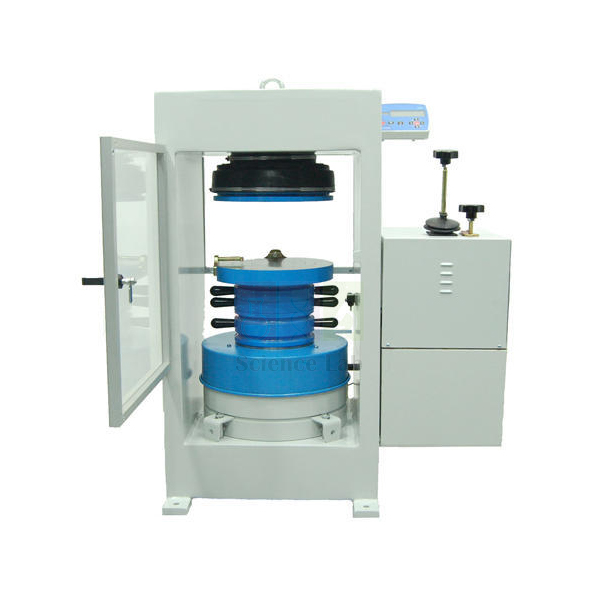
Automatic digital compression testing machine
Automatic digital compression testing machine (Product Code: SLE/CE/01) is a hydraulic load frame with a digital controller used to crush hardened concrete specimens and record their compressive strength in civil engineering and materials testing laboratories. It is offered in 2000 kN and 3000 kN capacities, and once the specimen parameters are entered a single press of the start button runs the complete automatic test cycle. This engineering lab equipment is supplied by Jain Scientific Equipments Pvt Ltd (ScienceLab), Ambala, India.
Specifications
| Parameter | Detail |
|---|---|
| Capacity | 2000 kN or 3000 kN |
| Test cycle | Fully automatic with standard rapid approach; closed-loop digital readout |
| Control system | Graphical LCD data acquisition and control system with menu-driven software |
| Load rate control | 1 kN/s to 20 kN/s; control accuracy listed as ±5 |
| Load accuracy | Class 1 from 10% of full range |
| Live display | Load vs time plot and instantaneous load rate |
| Data storage | Up to 256 tests |
| Output | RS 232 port for printer or PC |
| PC software | For test control and advanced report printout (confirm inclusion in your quotation) |
| Main parts | Load frame, power pack, data acquisition and control system |
| Power | 750 W |
| Oil capacity | 20 L |
| Upper and lower platen diameter | 300 mm |
| Piston diameter | 250 mm or 300 mm, depending on version |
| Maximum piston movement | 50 mm |
| Horizontal clearance | 360 mm or 425 mm, depending on version |
| Maximum vertical clearance between platens | 340 mm |
| Maximum working pressure | 410 bar |
| Platen surface roughness | ≤ 3.2 µm (loading and auxiliary platens) |
| Dimensions (W x L x H) | 810 x 500 x 970 mm |
| Weight | 795 kg or 1095 kg, depending on version |
| Product code | SLE/CE/01 |
| Supplied by | Jain Scientific Equipments Pvt Ltd (ScienceLab), Ambala, India |
What Is the Compression Testing Machine Used For?
The machine determines the compressive strength of concrete cubes and cylinders after they have been cast and cured. The operator enters the specimen details, presses start, and the controller closes the gap quickly before loading the specimen at the selected rate until it fails. The load-versus-time curve and the live load rate stay on screen, and each result is stored in memory for later printing or transfer to a PC over RS 232.
For consistent results, centre each specimen on the 300 mm platen, wipe the platens clean between tests and check that the specimen fits within the 340 mm vertical clearance. Given a weight of up to 1095 kg, plan a level, rigid floor before delivery. Laboratories buying test and measurement instruments in India for concrete quality control, college practicals or project-site labs use this class of machine as their main strength tester.
What to Specify When Ordering
- Capacity: 2000 kN or 3000 kN.
- The specimen shapes and sizes you will test, so the set-up and clearances can be confirmed.
- Whether you need the RS 232 printer or PC connection and the PC software.
- Your mains supply details and the delivery city or port.
Supplier
Jain Scientific Equipments Private Limited trades as ScienceLab and supplies this compression testing machine from Ambala, Haryana, to engineering colleges, polytechnics, construction material laboratories and dealers in India and international markets. The company sources the machine for your order and remains your single point of contact for the quotation, dispatch documents and after-sales questions such as spare parts — just ask us. More about the company is on the ScienceLab company profile.
Related Civil Engineering Lab Equipment
These items complete a concrete strength-testing set-up around the compression machine:
- Concrete Cube Mould — casts the cube specimens that the machine crushes.
- Cylindrical Mould — forms cylinder specimens for compressive testing.
- Accelerated Curing Tank — cures cubes before early strength testing.
- Flexure Testing Machine Digital — adds flexural tests on beams, kerbs and pavers.
- Longitudinal Compressometer — measures cylinder strain during compression.
See the complete Civil Engineering Lab Equipment range for concrete, cement, soil and aggregate testing.
Frequently Asked Questions
What capacities is the Automatic digital compression testing machine available in?
The Automatic digital compression testing machine is listed in 2000 kN and 3000 kN capacities. Both use a 750 W power pack, 20 L of oil and 300 mm platens, while piston diameter, horizontal clearance and weight differ between the two versions.
How is the loading rate controlled on this compression testing machine?
The loading rate of the Automatic digital compression testing machine is set in its menu-driven software and held by closed-loop control between 1 kN/s and 20 kN/s, with control accuracy listed as ±5. The instantaneous rate is displayed throughout the test.
Can the machine store and print test results?
Yes. The Automatic digital compression testing machine stores up to 256 tests and has an RS 232 output for a printer or PC. PC software for test control and advanced report printout is listed with the machine, so please confirm it in your quotation.
Who supplies the Automatic digital compression testing machine?
Jain Scientific Equipments Pvt Ltd (ScienceLab) of Ambala, Haryana, India supplies the Automatic digital compression testing machine to colleges, testing laboratories and dealers in India and international markets, and handles quotations, dispatch and after-sales queries directly.
Is a calibration certificate available with the machine?
Calibration-certificate availability for the Automatic digital compression testing machine should be discussed with us before you order. Tell us what your laboratory or client requires through the contact page and we will confirm what can be provided.
How much space does the compression testing machine need?
The Automatic digital compression testing machine measures 810 x 500 x 970 mm (W x L x H) and weighs 795 kg or 1095 kg depending on version, so it needs a level, rigid floor and clear access for handling. Ask us for packed dimensions before shipping.
What details does a quotation request need?
To quote the Automatic digital compression testing machine we need the capacity (2000 kN or 3000 kN), the quantity, the delivery city or port, and whether you want the printer or PC connection and software. Send these details through our contact page or the enquiry cart.
Request a Quote
For price and availability of the Automatic digital compression testing machine, write to us through the contact page or add it to your enquiry cart together with the other concrete testing items you need. Institutional, dealer and export enquiries are all welcome.
Last updated: 24 September 2026
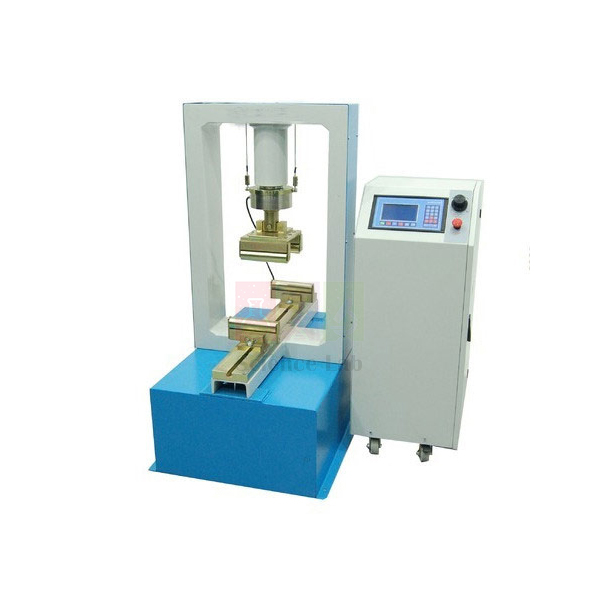
Flexure Testing Machine Digital
Flexure Testing Machine Digital (Product Code: SLE/CE/02) is an automatic, digitally controlled load frame used to measure the flexural and transverse strength of concrete beams, kerbs, flagstones and interlocking pavers in civil engineering laboratories. It comes with a 100 kN or 200 kN welded steel frame and a dual-stage power pack that loads specimens at 1 kN/s to 20 kN/s. It is supplied by Jain Scientific Equipments Pvt Ltd (ScienceLab), Ambala, India, for college and quality-control labs.
Specifications
| Parameter | Detail |
|---|---|
| Frame capacity | 100 kN or 200 kN |
| Tests | Flexural test on standard concrete beams; transverse test on kerbs and flagstones; indirect tensile test on concrete and interlocking pavers |
| Test cycle | Automatic with standard rapid approach; closed-loop digital readout; one-button start after entering specimen parameters |
| Control system | Graphical LCD data acquisition and control system, menu-driven software |
| Load rate control | 1 kN/s to 20 kN/s; control accuracy listed as ±5 |
| Load accuracy | Class 1 from 10% of full range |
| Live display | Load vs time plot and instantaneous load rate |
| Data storage | Up to 256 tests |
| Frame construction | Welded steel fabrication with the ram fitted to the upper crosshead; designed for minimum deflection at maximum load |
| Load measurement | Load cell |
| Piston stroke | 75 mm and 100 mm, with safety limit switch |
| Piston return | By dead weight |
| Power pack | Dual-stage: high-delivery low-pressure pump for rapid approach, low-delivery high-pressure radial piston pump for testing; maximum pressure valve against overloading |
| Power | 750 W |
| Oil capacity | 25 litres |
| Fast approach speed | 60–100 mm/min |
| Product code | SLE/CE/02 |
| Supplied by | Jain Scientific Equipments Pvt Ltd (ScienceLab), Ambala, India |
What Is the Digital Flexure Testing Machine Used For?
Pavement slabs, kerbs and beams fail in bending long before they crush, so their flexural strength matters as much as cube strength. With the right accessory fitted to the frame, this machine loads a beam in bending, a kerb or flagstone transversely, or a paver in indirect tension, and the controller holds the chosen rate until failure while plotting load against time.
The power pack uses a low-pressure pump to bring the ram quickly onto the specimen and then switches to a high-pressure radial piston pump for the test itself, which keeps loading smooth and quiet. Because the ram returns under dead weight rather than by pumped pressure, the load cell reading is not disturbed. Laboratories looking for engineering lab equipment in India can also link the frame to a compatible compression testing machine as a second frame.
What to Specify When Ordering
- Frame capacity: 100 kN or 200 kN.
- The tests you will run (beams, kerbs, flagstones, pavers) so the matching accessories can be quoted.
- Whether the frame will work alone or as a second frame on a compression machine you already own.
- Quantity and delivery city or port.
Supplier
This flexure testing machine is supplied by Jain Scientific Equipments Private Limited, the company that trades as ScienceLab from Ambala, Haryana. ScienceLab sources the machine and its test accessories for civil engineering departments, road and building material laboratories and dealers in India and international markets, and coordinates quotation, packing and dispatch in one place. Questions about spare parts or accessories later on can also be sent to us. Read more on the ScienceLab company profile.
Related Civil Engineering Lab Equipment
Items commonly used with a flexure frame in the same concrete testing workflow:
- Beam Mould — casts the concrete beams tested in flexure.
- Vibrating Table — compacts concrete in beam moulds before curing.
- Automatic digital compression testing machine — compressive strength tests alongside flexural ones.
- Flexure Testing Machine Manual — a proving-ring alternative for mortar prisms.
Browse all Civil Engineering Lab Equipment for concrete, cement and aggregate testing.
Frequently Asked Questions
Which tests can the Flexure Testing Machine Digital perform?
The Flexure Testing Machine Digital runs flexural tests on standard concrete beams, transverse tests on kerbs and flagstones, and indirect tensile tests on concrete and interlocking pavers. Each test needs its own accessory fitted to the frame, so tell us which tests you plan.
What frame capacities are available?
The Flexure Testing Machine Digital is offered with a 100 kN or a 200 kN frame. Both are welded steel assemblies with the ram in the upper crosshead, load-cell measurement and dead-weight piston return; piston stroke is listed as 75 mm and 100 mm.
Can the flexure frame be connected to a compression testing machine?
Yes, the frame of the Flexure Testing Machine Digital is designed to be connected to a compatible compression testing machine as a second frame. Tell us the make and model of your existing machine so compatibility can be confirmed before you order.
Are the flexural and transverse test accessories included?
The Flexure Testing Machine Digital frame accepts the accessories for flexural and transverse tests, but the set supplied depends on the specimens you test. List your beam, kerb, flagstone or paver sizes in the enquiry and the quotation will state exactly what is included.
Who supplies the Flexure Testing Machine Digital?
Jain Scientific Equipments Pvt Ltd (ScienceLab), based in Ambala, Haryana, India, supplies the Flexure Testing Machine Digital to engineering colleges, material testing laboratories and dealers in India and international markets, handling quotations and dispatch directly.
Is a calibration certificate provided?
Calibration-certificate availability for the Flexure Testing Machine Digital should be discussed with us before ordering. Share your laboratory's requirement through the contact page and we will confirm what documentation can accompany the machine.
What power pack does the machine use?
The Flexure Testing Machine Digital uses a quiet 750 W dual-stage power pack holding 25 litres of oil, with a fast approach speed of 60–100 mm/min and a maximum pressure valve that protects the frame from overloading.
Request a Quote
To receive a quotation for the Flexure Testing Machine Digital, send the frame capacity, required accessories and quantity through the contact page, or add the machine to the enquiry cart with the rest of your concrete lab list.
Last updated: 24 September 2026
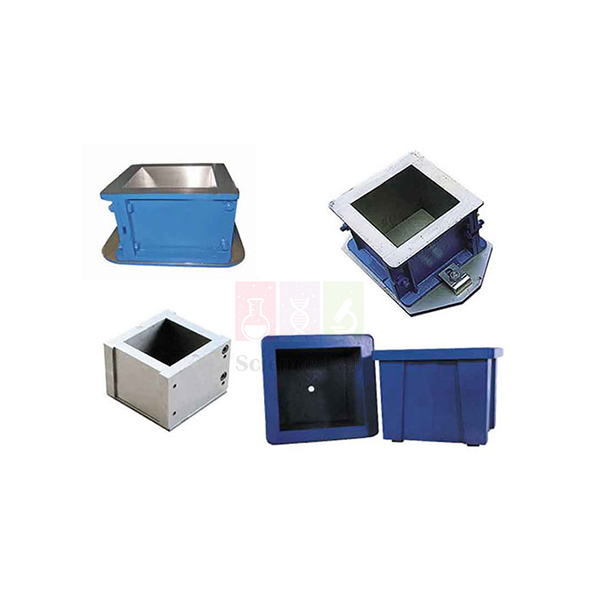
Concrete Cube Mould
Concrete Cube Mould (Product Code: SLE/CE/03) is a machined metal mould used to cast concrete, mortar and cement cube specimens for compressive strength testing in civil engineering laboratories. It is made in sizes from 50 mm to 150 mm in cast iron or mild steel, and every mould comes complete with its base plate, with metric faces machined flat to ±0.2 mm. It is made by Jain Scientific Equipments Pvt Ltd (ScienceLab), an OEM engineering lab equipment manufacturer, at its own factory in Ambala, India.
Specifications
| Parameter | Detail |
|---|---|
| Cube sizes | 50 mm, 70.6 mm, 75 mm, 100 mm and 150 mm (metric); inch-size moulds also listed |
| Materials | Cast iron (concrete and mortar moulds); mild steel (three gang cement mould) |
| Face flatness, metric moulds | Machined flat to ±0.2 mm and finished to within 0.2 mm |
| Face flatness, inch moulds | Machined flat to ±0.01 in, finished to within 0.01 in |
| Base plate | Supplied with every mould (loose base plate on the three gang 70.6 mm mould) |
| Standards referenced | BS and IS patterns |
| Product code | SLE/CE/03 |
| Manufacturer | Jain Scientific Equipments Pvt Ltd (ScienceLab) — OEM |
| Country of origin | India (made in Ambala, Haryana) |
Available versions:
- 50 mm single gang cube mould, cast iron, for mortar
- 70.6 mm three gang cube mould, mild steel, for cement, with loose base plate
- 75 mm single gang cube mould
- 100 mm light weight cube mould
- 100 mm clamp type four-part cube mould (8.5 kg)
- 150 mm light weight cube mould (8 kg)
- 150 mm clamp type four-part cube mould (18 kg)
- 150 mm clamp type two-part cube mould (16 kg)
What Is the Concrete Cube Mould Used For?
Cube moulds turn a fresh batch of concrete or mortar into identical test specimens. The mould is assembled on its base plate, lightly oiled inside, filled in layers and compacted by hand rod or on a vibrating table, then struck off level. After initial setting the sides are released, the cube is cured, and it is finally crushed in a compression testing machine to report strength.
The 150 mm and 100 mm moulds suit concrete, while the 70.6 mm three gang mould casts three cement mortar cubes at once and the 50 mm cast iron mould is intended for mortar. Clamp type moulds open into two or four parts for easy stripping; light weight versions are easier to carry between site and lab. Clean and dry each mould after use to keep the machined faces true.
What to Specify When Ordering
- Cube size: 50, 70.6, 75, 100 or 150 mm, or an inch size.
- Type: light weight, clamp type four-part, clamp type two-part, single gang or three gang.
- Material preference where options exist (cast iron or mild steel).
- Number of moulds per size, matched to how many cubes you cast per batch.
OEM Manufacturer
ScienceLab is the trading name of Jain Scientific Equipments Private Limited, the OEM (original equipment manufacturer) of these cube moulds. The moulds are machined and assembled at the company's own licensed factory at Saha, Ambala, Haryana, India, not bought in from a trader, and go factory-direct to engineering colleges, polytechnics, testing laboratories, contractors, dealers and importers.
Because the manufacturer handles your order itself, replacement base plates or clamps and repeat orders in matching sizes can be arranged with the same team — just ask us. For vendor records, the company is a registered MSME with manufacturing as its major activity (Udyam UDYAM-HR-01-0003714) and exports under Importer-Exporter Code AAECJ8618A issued by DGFT. See the ScienceLab company profile.
Related Civil Engineering Lab Equipment
Equipment used before and after casting cubes:
- Vibrating Table — compacts concrete in the moulds without hand rodding.
- Tamping Bar — for hand compaction of each layer.
- Accelerated Curing Tank — holds 150 mm and 70.6 mm cube moulds for accelerated curing.
- Automatic digital compression testing machine — crushes the cured cubes.
More concrete, cement and soil testing items are in the Civil Engineering Lab Equipment category.
Frequently Asked Questions
What sizes of Concrete Cube Mould are available?
The Concrete Cube Mould is available in 50 mm, 70.6 mm, 75 mm, 100 mm and 150 mm metric sizes, with inch-size moulds also listed. The 100 mm and 150 mm sizes come in light weight and clamp type versions; tell us the size and type you need.
Is the base plate included with the cube mould?
Yes. Every Concrete Cube Mould is supplied complete with its base plate, so it is ready to fill on arrival. The 70.6 mm three gang mild steel mould for cement is supplied with a loose base plate that separates from the mould body.
How accurately are the cube mould faces machined?
On metric Concrete Cube Moulds the faces are machined flat to ±0.2 mm and finished to within 0.2 mm. On inch-size moulds the faces are machined flat to ±0.01 in, which keeps specimen dimensions consistent from cube to cube.
Should I choose a clamp type or a light weight cube mould?
Clamp type Concrete Cube Moulds open into four or two parts (8.5 kg for 100 mm; 18 kg or 16 kg for 150 mm) for easy stripping, while the 150 mm light weight mould weighs 8 kg and is easier to carry between site and laboratory.
Who manufactures the Concrete Cube Mould?
The Concrete Cube Mould is manufactured by Jain Scientific Equipments Pvt Ltd (ScienceLab) as the OEM, at its own licensed factory at Saha, Ambala, Haryana, India. Quotations, repeat orders and replacement parts are handled directly by the manufacturer.
Which standards do the cube moulds follow?
The Concrete Cube Mould range is made to BS and IS patterns. Please state the exact standard your laboratory or project specification follows when you enquire, so the correct size and pattern is confirmed in the quotation.
Can cube moulds be ordered in bulk or for export?
Yes, Concrete Cube Moulds are supplied in quantity to institutions, contractors, dealers and importers in India and international markets. List each size, type and quantity on the contact page and the quotation comes straight from the manufacturer.
Request a Quote
Ask for a factory-direct quotation on the Concrete Cube Mould through the contact page, or add the sizes you need to the enquiry cart. Quotes come directly from the manufacturer in Ambala.
Last updated: 24 September 2026
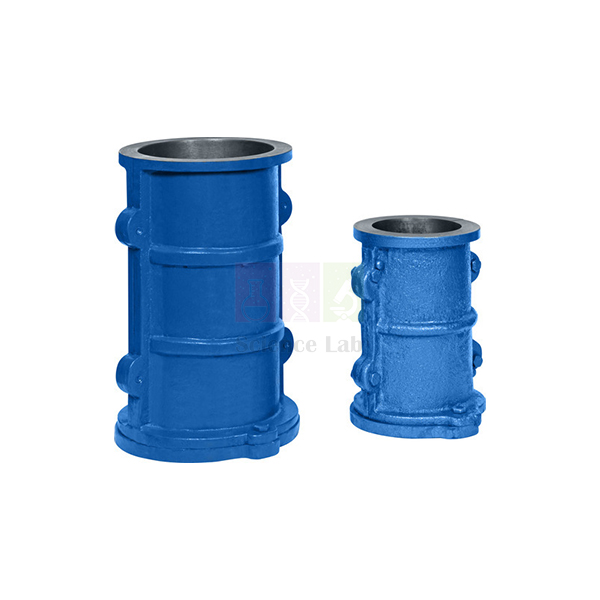
Cylindrical Mould
Cylindrical Mould (Product Code: SLE/CE/04) is a cast iron mould, split vertically into two halves, used to cast cylindrical concrete specimens for strength testing in civil engineering and construction material laboratories. Five sizes run from 100 mm dia x 200 mm to 300 mm dia x 600 mm, with the mean internal diameter held within ±0.2 mm and base and top plates machined flat to ±0.03 mm. The mould is made by Jain Scientific Equipments Pvt Ltd (ScienceLab), an OEM manufacturer of lab equipment for technical institutes, at its own factory in Ambala, India.
Specifications
| Parameter | Detail |
|---|---|
| Material | Cast iron |
| Construction | Split vertically into two parts |
| Sizes (dia x height) | 100 x 200 mm; 150 x 150 mm; 150 x 300 mm; 160 x 320 mm; 300 x 600 mm |
| Mean internal diameter tolerance | Within ±0.2 mm |
| Height tolerance | Within ±1 mm |
| Ends | Machined to a ±0.05 tolerance |
| Base plate and top plate | Machined flat to ±0.03 mm |
| Product code | SLE/CE/04 |
| Manufacturer | Jain Scientific Equipments Pvt Ltd (ScienceLab) — OEM |
| Country of origin | India (made in Ambala, Haryana) |
What Is the Cylindrical Mould Used For?
Where a specification calls for cylinders instead of cubes, this mould produces them. The two halves are clamped together on the base plate, the inside is lightly oiled, and fresh concrete is placed and compacted in layers before the top is finished level. Once the concrete has set, the halves are separated so the cylinder comes out without chipping its edges, ready for curing and then compression or other strength tests.
The 150 x 300 mm and 100 x 200 mm sizes give the usual height-to-diameter ratio of two, the 150 x 150 mm mould gives a short cylinder, and the large 300 x 600 mm mould suits concrete made with bigger aggregate. Keep the machined joint faces clean so the halves close tightly and the specimen stays true to size.
What to Specify When Ordering
- Size (dia x height): 100 x 200, 150 x 150, 150 x 300, 160 x 320 or 300 x 600 mm.
- Number of moulds per size, based on how many cylinders you cast per batch.
- The test standard your project follows, so the right size is confirmed.
OEM Manufacturer
Jain Scientific Equipments Private Limited, trading as ScienceLab, is the original equipment manufacturer (OEM) of this cylindrical mould. Casting halves, base plates and top plates are machined and assembled at the company's own licensed factory at Saha, Ambala, Haryana, India, and the finished moulds are shipped factory-direct to colleges, polytechnics, commercial testing laboratories, dealers and importers.
Dealing with the maker means one contact for quotations, repeat orders in matching sizes and replacement parts — ask us about the part you need. Learn more on the ScienceLab company profile.
Related Civil Engineering Lab Equipment
Items that work with concrete cylinders:
- Automatic digital compression testing machine — tests the cured cylinders to failure.
- Longitudinal Compressometer — records axial strain on a cylinder under load.
- Lateral Extensometer — measures lateral strain during the same test.
- Vibrating Table — compacts concrete in the mould.
Explore the full Civil Engineering Lab Equipment range.
Frequently Asked Questions
What sizes of Cylindrical Mould are available?
The Cylindrical Mould is made in five sizes (diameter x height): 100 x 200 mm, 150 x 150 mm, 150 x 300 mm, 160 x 320 mm and 300 x 600 mm. State the size and quantity you need so we can prepare the quotation.
Why is the cylindrical mould split into two parts?
The Cylindrical Mould is split vertically into two halves so the hardened concrete cylinder can be released by opening the mould instead of pushing it out, which protects the specimen's edges and surfaces before curing and testing.
What dimensional tolerances does the mould hold?
The Cylindrical Mould keeps its mean internal diameter within ±0.2 mm and its height within ±1 mm, with the ends machined to a ±0.05 tolerance and the base and top plates machined flat to ±0.03 mm.
What material is the Cylindrical Mould made from?
The Cylindrical Mould is made of cast iron, a rigid material that holds its shape during compaction. Clean the mould and apply a thin film of oil after use to protect the machined surfaces from rust between casts.
Who manufactures the Cylindrical Mould?
The Cylindrical Mould is manufactured by Jain Scientific Equipments Pvt Ltd (ScienceLab), the OEM, at its own licensed factory at Saha, Ambala, Haryana, India, and is supplied factory-direct to institutions, laboratories, dealers and importers.
Are the base plate and top plate included?
The Cylindrical Mould specification covers a base plate and a top plate, each machined flat to ±0.03 mm. Please confirm plate inclusion for your chosen size when you request a quotation through the contact page.
Can cylindrical moulds be supplied in bulk or for export?
Yes, the Cylindrical Mould can be ordered in quantity by colleges, contractors, dealers and importers in India and international markets. Send each size and quantity, plus the delivery city or port, and the manufacturer will quote directly.
Request a Quote
Request a factory-direct quotation for the Cylindrical Mould via the contact page, or place the sizes you need in the enquiry cart. Quotations come straight from the manufacturer.
Last updated: 24 September 2026

Beam Mould
Beam Mould (Product Code: SLE/CE/05) is a four-plate metal mould used to cast rectangular concrete beams for flexural strength testing in civil engineering laboratories. It is made in cast iron or mild steel in five sizes from 100 x 100 x 500 mm to 150 x 150 x 750 mm, each supplied complete with a base plate and with faces machined flat to ±0.2 mm. The mould is produced by Jain Scientific Equipments Pvt Ltd (ScienceLab), an OEM technical educational equipment manufacturer, at its own factory in Ambala, India.
Specifications
| Parameter | Detail |
|---|---|
| Material | Cast iron or mild steel |
| Construction | Four plates assembled together on a base plate |
| Base plate | Supplied with each mould |
| Face accuracy | Machined flat to ±0.2 mm and finished in size to 0.2 mm |
| Sizes (internal) | 100 x 100 x 500 mm; 100 x 150 x 600 mm; 150 x 150 x 600 mm; 150 x 150 x 700 mm; 150 x 150 x 750 mm |
| Product code | SLE/CE/05 |
| Manufacturer | Jain Scientific Equipments Pvt Ltd (ScienceLab) — OEM |
| Country of origin | India (made in Ambala, Haryana) |
What Is the Beam Mould Used For?
Concrete for pavements, slabs and precast units is judged on how well it resists bending, and that is measured on beam specimens. The four side plates are assembled on the base plate, the inner faces are lightly oiled, and concrete is placed in layers and compacted on a vibrating table or with a poker vibrator. The surface is then struck off with a straight edge.
After setting, the plates are released one by one so the beam can be lifted out without cracking, then cured and broken in a flexure testing machine. The 100 x 100 x 500 mm size suits smaller aggregate and student practicals, while the 150 x 150 mm sections in 600, 700 or 750 mm lengths cover larger aggregate and project testing. Clean the joint faces after every use so the mould closes square.
What to Specify When Ordering
- Beam size, from the five listed sizes.
- Material: cast iron or mild steel.
- Number of moulds per size, based on beams cast per batch.
- The flexural test standard your laboratory follows.
OEM Manufacturer
ScienceLab is the brand of Jain Scientific Equipments Private Limited, the OEM (original equipment manufacturer) of this beam mould. Plates are cut, machined and assembled at the company's own licensed factory at Saha, Ambala, Haryana, India, so buyers deal with the maker rather than a trading intermediary. Moulds are dispatched factory-direct to engineering colleges, material testing laboratories, contractors, dealers and importers.
If a plate or base plate is lost or damaged later, or you need more moulds in the same size, contact the manufacturer directly and ask us about it. Company background is on the ScienceLab company profile.
Related Civil Engineering Lab Equipment
Items used to cast and test concrete beams:
- Flexure Testing Machine Digital — tests the cured beams in flexure.
- Vibrating Table — compacts concrete in the beam mould.
- Poker Vibrator — an alternative way to compact fresh concrete.
- Straight Edge — strikes off and levels the top surface.
See every item in Civil Engineering Lab Equipment.
Frequently Asked Questions
What sizes of Beam Mould are available?
The Beam Mould is made in five internal sizes: 100 x 100 x 500 mm, 100 x 150 x 600 mm, 150 x 150 x 600 mm, 150 x 150 x 700 mm and 150 x 150 x 750 mm. Tell us the size your test method specifies.
Is the Beam Mould made of cast iron or mild steel?
The Beam Mould is available in cast iron or mild steel. Both are rigid enough to hold the beam shape during compaction; mention your preference in the enquiry and we will confirm which material is offered in your chosen size.
How is the beam removed from the mould?
The Beam Mould is made of four plates assembled on a base plate. Once the concrete has set, the plates are loosened and removed one at a time so the beam can be lifted out without damage to its edges.
How accurate are the Beam Mould faces?
The faces of the Beam Mould are machined flat to ±0.2 mm and finished in size to 0.2 mm, giving beams with consistent cross-sections so that flexural results from different specimens can be compared.
Who manufactures the Beam Mould?
The Beam Mould is manufactured by Jain Scientific Equipments Pvt Ltd (ScienceLab), the OEM, at its own licensed factory at Saha, Ambala, Haryana, India. Quotations, repeat orders and replacement plates are handled directly by the manufacturer.
Can Beam Moulds be ordered in bulk or for export?
Yes, the Beam Mould is supplied in quantity to institutions, contractors, dealers and importers in India and international markets. Send sizes, material and quantities through the contact page for a factory-direct quotation.
Request a Quote
For a quotation on the Beam Mould, use the contact page or add it to the enquiry cart with the sizes you need. You receive the quote directly from the manufacturer.
Last updated: 24 September 2026
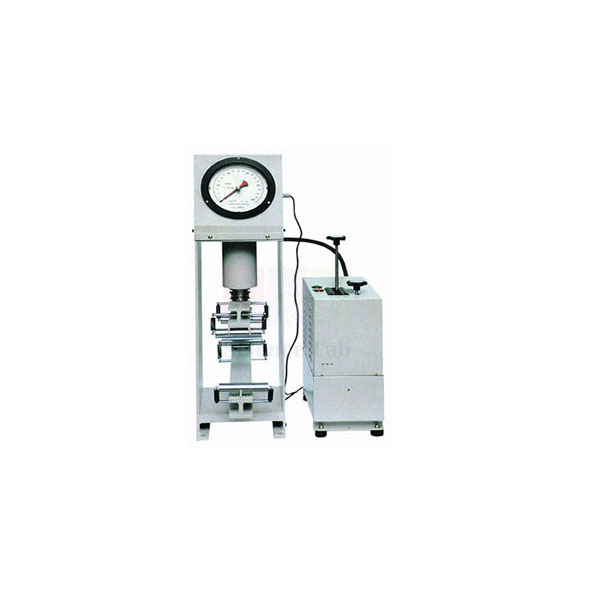
Flexure Testing Machine Manual
Flexure Testing Machine Manual (Product Code: SLE/CE/06) is a motorised mechanical tester used to determine the flexural strength of 40 x 40 x 160 mm mortar prisms by single-point loading in cement and concrete laboratories. Load is applied through a three-roller attachment at 4 to 6 kg/s and read on a proving ring fitted with a sensitive dial gauge, so no electronics are needed to take a reading. It is made by Jain Scientific Equipments Pvt Ltd (ScienceLab), an OEM TVET lab equipment manufacturer, at its own factory in Ambala, India.
Specifications
| Parameter | Detail |
|---|---|
| Capacity | 500 kN (as listed; confirm the proving ring range for your specimens) |
| Type | Motorised, mechanical unit |
| Specimen | 40 x 40 x 160 mm mortar prisms |
| Loading method | Single-point loading for flexural strength |
| Rate of loading | Speed adjusted so load increases at 4 to 6 kg/s |
| Flexure attachment | Supplied; two 10 mm diameter support rollers spaced 100 mm apart, plus a third 10 mm roller equidistant from them that transmits load to the opposite face of the prism |
| Load measurement | Proving ring with sensitive dial gauge |
| Power supply | 230 V, single phase, 50 cycles AC |
| Product code | SLE/CE/06 |
| Manufacturer | Jain Scientific Equipments Pvt Ltd (ScienceLab) — OEM |
| Country of origin | India (made in Ambala, Haryana) |
What Is the Mortar Flexure Testing Machine Used For?
Cement and mortar are graded partly on flexural strength, measured on small prisms. The prism is laid across the two lower rollers, the third roller is brought down onto its centre, and the motor drives the load up at a steady rate until the prism snaps. The operator notes the dial gauge reading at failure and converts it to load for that proving ring, from which flexural strength is worked out.
Because the machine is purely mechanical, it suits polytechnic and university practicals where students should see how load, deflection and strength relate. Keep the rollers clean and free of mortar crumbs, set the loading speed before each series, and handle the proving ring and dial gauge with care, since they carry the measurement.
OEM Manufacturer
This flexure testing machine is built by Jain Scientific Equipments Private Limited, which trades as ScienceLab and is the OEM (original equipment manufacturer). The frame, drive and roller attachment are made and assembled at the company's own licensed factory at Saha, Ambala, Haryana, India, and each machine is supplied factory-direct to engineering colleges, cement and construction laboratories, dealers and importers.
Ordering from the manufacturer means spares such as rollers, repeat units and technical questions are dealt with by the people who build the machine — ask us. Company details are on the ScienceLab company profile.
Related Civil Engineering Lab Equipment
Other equipment for the mortar prism test sequence:
- Prism Mould Three Gang — casts three 40 x 40 x 160 mm prisms at a time.
- Jolting Apparatus — compacts mortar in the prism mould.
- Cement curing bench-type cabinet — keeps specimens humid while they cure.
- Flexure Testing Machine Digital — automatic frames for concrete beams, kerbs and pavers.
Browse the whole Civil Engineering Lab Equipment range.
Frequently Asked Questions
What specimen does the Flexure Testing Machine Manual test?
The Flexure Testing Machine Manual tests 40 x 40 x 160 mm mortar prisms for flexural strength by single-point loading. The prism rests on two 10 mm rollers 100 mm apart while a third roller loads it at the centre of the opposite face.
How is load measured on this flexure machine?
On the Flexure Testing Machine Manual, load is measured with a proving ring fitted with a sensitive dial gauge. The dial reading at failure is converted to load for that ring, so the machine needs no electronic display.
Is the Flexure Testing Machine Manual motor driven?
Yes. Despite the word manual in its name, the Flexure Testing Machine Manual is a motorised mechanical unit; the speed is adjusted so the load on the specimen rises at 4 to 6 kg/s. The load itself is read by eye on the proving ring dial gauge.
What power supply does the machine need?
The Flexure Testing Machine Manual runs on a 230 V, single phase, 50 cycles AC supply. If your laboratory uses a different mains supply, mention it in your enquiry so we can confirm what can be offered.
Who manufactures the Flexure Testing Machine Manual?
The Flexure Testing Machine Manual is manufactured by Jain Scientific Equipments Pvt Ltd (ScienceLab), the OEM, at its own licensed factory at Saha, Ambala, Haryana, India, and is supplied factory-direct to institutions, laboratories, dealers and importers.
Is a calibration certificate available for the proving ring?
Calibration-certificate availability for the proving ring on the Flexure Testing Machine Manual should be discussed with us before ordering. Tell us your laboratory's requirement through the contact page and we will confirm what can be supplied.
Request a Quote
Ask for a quotation on the Flexure Testing Machine Manual through the contact page, or add it to the enquiry cart. Quotations come directly from the manufacturer, and bulk orders for colleges or dealers are welcome.
Last updated: 24 September 2026
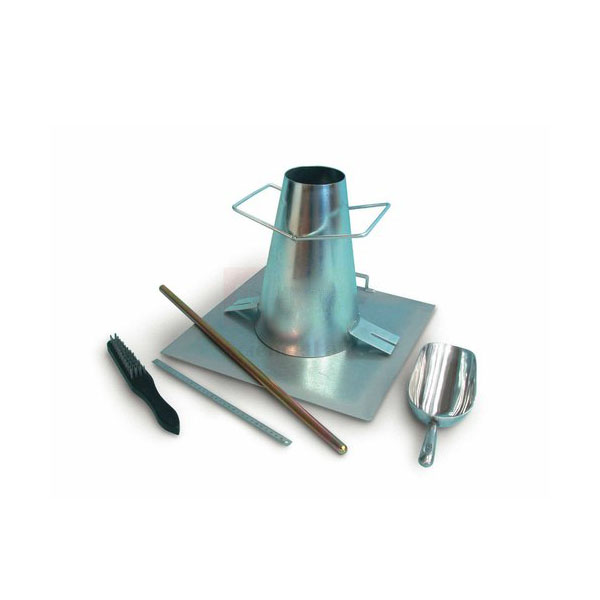
Slump Test Apparatus
Slump Test Apparatus (Product Code: SLE/CE/07) is a slump cone set used to measure the workability of fresh concrete on construction sites and in civil engineering laboratories. The cone measures 200 mm across the base, 100 mm across the top and 300 mm in height; it clamps to a base plate with a lifting handle and comes with a 16 mm x 600 mm steel rod graduated in millimetres. The set is supplied by Jain Scientific Equipments Pvt Ltd (ScienceLab), Ambala, India, a laboratory equipment supplier in India for colleges and site labs.
Specifications
| Parameter | Detail |
|---|---|
| Slump cone (internal) | 200 mm base diameter, 100 mm top diameter, 300 mm height |
| Cone fixing | Foot pieces fix to clamps on the base plate |
| Base plate | With lifting handle for easy transport |
| Graduated rod | One steel rod, 16 mm diameter x 600 mm long, rounded at both ends, graduated in mm |
| Product code | SLE/CE/07 |
| Supplied by | Jain Scientific Equipments Pvt Ltd (ScienceLab), Ambala, India |
What Is the Slump Cone Used For?
The slump test is the quickest check that a concrete batch has the consistency the mix design intended. The cone is clamped to the dampened base plate, filled in layers, and each layer is rodded with the rounded end of the steel rod before the top is struck off. The cone is then lifted straight up, and the drop of the concrete below the cone height is measured with the millimetre graduations on the rod.
The shape of the slumped concrete also tells you something: an even drop shows a cohesive mix, while a sheared or collapsed heap points to a lean or over-wet batch. Carry the set by the base-plate handle, and wash cone, plate and rod before the concrete hardens on them. For very stiff mixes, a Vee Bee or compaction factor test gives more useful readings.
Supplier
Jain Scientific Equipments Private Limited, known by its trading name ScienceLab, supplies this slump test set from Ambala, Haryana, to schools of engineering, ready-mix and site laboratories, contractors and dealers across India and international markets. The company sources the set to your order and remains your contact for quotations, spare rods or cones and repeat orders — just ask. For vendor registration, the supplying company's details are GSTIN 06AAECJ8618A1ZT and LEI 3358004HRD1JIVXKYX49. More on the ScienceLab company profile.
Related Civil Engineering Lab Equipment
Other items used for fresh-concrete workability testing:
- Scoops — for filling the cone with fresh concrete.
- Vee Bee Consistometer — measures workability of stiffer mixes.
- Compaction Factor Test Apparatus — another workability method for low-slump concrete.
- K-Slump Tester — in-situ readings that can be correlated with the slump test.
Find more in Civil Engineering Lab Equipment.
Frequently Asked Questions
What are the dimensions of the slump cone?
The cone in the Slump Test Apparatus has internal dimensions of 200 mm diameter at the base, 100 mm diameter at the top and 300 mm height. Its foot pieces fix to clamps on the base plate so the cone stays put while it is filled.
What is included in the Slump Test Apparatus?
The Slump Test Apparatus includes the slump cone, a base plate with clamps and a lifting handle, and one steel rod of 16 mm diameter and 600 mm length, rounded at both ends and graduated in millimetres. Other tools such as scoops are ordered separately.
How is the slump value read?
With the Slump Test Apparatus, the slump is read after lifting the cone: the rod's millimetre graduations measure how far the concrete has dropped below the original 300 mm cone height, giving a direct reading without a separate ruler.
Who supplies the Slump Test Apparatus?
Jain Scientific Equipments Pvt Ltd (ScienceLab), Ambala, Haryana, India supplies the Slump Test Apparatus to colleges, site and ready-mix laboratories, contractors and dealers in India and international markets, and handles quotations and dispatch directly.
Can spare rods or cones be ordered separately?
Spare parts for the Slump Test Apparatus, such as an extra graduated rod or cone, can be requested through the contact page. Tell us what you need and the quantity so availability can be confirmed.
Is the Slump Test Apparatus available in bulk for institutions?
Yes, the Slump Test Apparatus can be quoted in quantity for engineering colleges, polytechnics, contractors and dealers, including export orders. Send the number of sets and the delivery city or port with your enquiry.
Request a Quote
For a quotation on the Slump Test Apparatus, contact us through the contact page or add it to the enquiry cart along with any other workability testing items.
Last updated: 24 September 2026
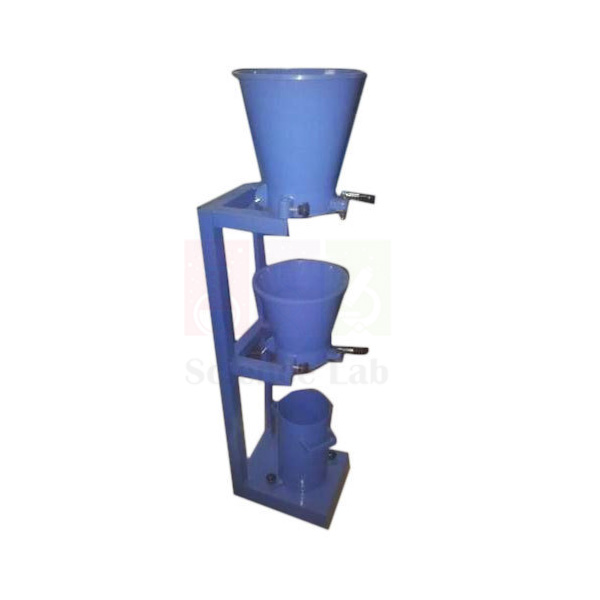
Compaction Factor Test Apparatus
Compaction Factor Test Apparatus (Product Code: SLE/CE/08) is a concrete workability test set used to compare how densely fresh concrete packs under its own weight with how it packs when fully compacted, in civil engineering laboratories and site labs. It is particularly suited to low-workability mixes, and the listed set includes trowels, a 15.2 cm hand scoop, a 1.6 cm x 61 cm rod rounded at one end and a balance. It is made by Jain Scientific Equipments Pvt Ltd (ScienceLab), an OEM supplier of engineering educational equipments in India, at its own factory in Ambala.
Specifications
| Parameter | Detail |
|---|---|
| Trowels | Included in the listed set |
| Hand scoop | 15.2 cm long |
| Rod | Steel or other suitable material, 1.6 cm diameter, 61 cm long, rounded at one end |
| Balance | Included in the listed set, for weighing the concrete |
| Scope of supply | Confirm the complete scope, including the main test assembly, in your quotation |
| Product code | SLE/CE/08 |
| Manufacturer | Jain Scientific Equipments Pvt Ltd (ScienceLab) — OEM |
| Country of origin | India (made in Ambala, Haryana) |
What Is the Compaction Factor Apparatus Used For?
Stiff concrete for pavements, precast units or heavily vibrated sections often shows almost no slump, so the slump cone cannot tell one mix from another. The compaction factor test solves this by letting the concrete fall under gravity into a container, weighing it, and then weighing the same container filled with fully compacted concrete. The ratio of the two weights is the compaction factor: the closer it is to one, the more workable the mix.
The hand scoop loads the concrete, the trowels strike off the surplus level with the container rim, the rod compacts the concrete for the full-compaction reading, and the balance provides both weights. Keep all surfaces clean and damp but free of standing water, and complete each test promptly so the concrete does not stiffen between steps.
OEM Manufacturer
Jain Scientific Equipments Private Limited, which trades as ScienceLab, is the OEM (original equipment manufacturer) of this compaction factor test apparatus. It is produced at the company's own licensed factory at Saha, Ambala, Haryana, India, and supplied factory-direct to engineering colleges, polytechnics, construction laboratories, dealers and importers rather than through a chain of traders.
Working with the maker keeps things simple after delivery too: questions about replacement scoops, rods or other parts and repeat orders go straight to the manufacturer — ask us. See the ScienceLab company profile for more.
Related Civil Engineering Lab Equipment
Other workability tests often run alongside compaction factor:
- Slump Test Apparatus — the standard check for medium and high workability.
- Vee Bee Consistometer — times vibration for very stiff mixes.
- Flow Table — measures the flow of fresh mortar.
- Scoops — spare scoops in several capacities for sampling.
See the complete Civil Engineering Lab Equipment range.
Frequently Asked Questions
What does the Compaction Factor Test Apparatus measure?
The Compaction Factor Test Apparatus measures the workability of fresh concrete as the ratio between the weight of concrete compacted under its own falling weight and the weight of the same volume fully compacted. Values closer to one indicate a more workable mix.
What is included with the Compaction Factor Test Apparatus?
The listed set for the Compaction Factor Test Apparatus includes trowels, a 15.2 cm hand scoop, a 1.6 cm x 61 cm rod rounded at one end, and a balance. Please confirm the complete scope of supply, including the main test assembly, in your quotation.
What is the rod in the set used for?
The rod in the Compaction Factor Test Apparatus, 1.6 cm in diameter and 61 cm long with one rounded end, is used to compact the concrete fully for the second weighing. It is made of steel or another suitable material.
When should I use compaction factor instead of a slump test?
The Compaction Factor Test Apparatus is the better choice for low-workability concrete that shows little or no slump, because it still separates mixes by how well they compact. For medium and high workability, the slump test is usually quicker.
Who manufactures the Compaction Factor Test Apparatus?
The Compaction Factor Test Apparatus is manufactured by Jain Scientific Equipments Pvt Ltd (ScienceLab), the OEM, at its own licensed factory at Saha, Ambala, Haryana, India, and supplied factory-direct to institutions, laboratories, dealers and importers.
What should I include in a quotation request?
For the Compaction Factor Test Apparatus, tell us the number of sets, the delivery city or port, and any standard your laboratory follows so the scope of supply can be confirmed. Send details through the contact page.
Request a Quote
Request a factory-direct price for the Compaction Factor Test Apparatus on the contact page, or add it to the enquiry cart. The quotation comes straight from the manufacturer in Ambala.
Last updated: 24 September 2026
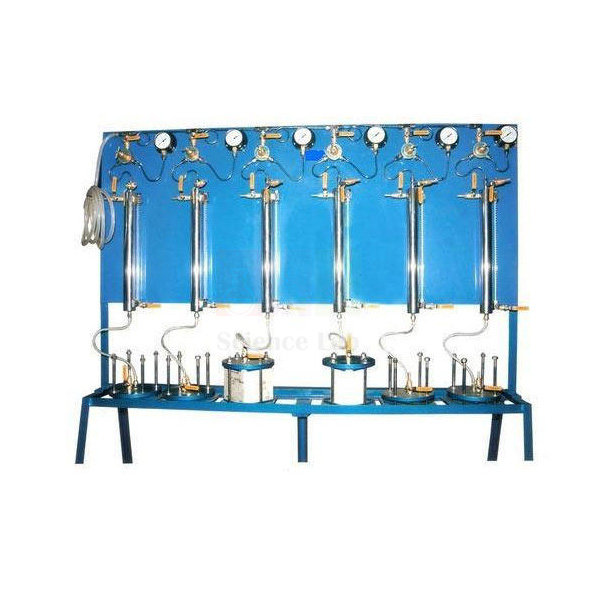
Concrete Permeability Test Apparatus
Concrete Permeability Test Apparatus (Product Code: SLE/CE/09) is a pressure-cell test unit used to determine how deep water penetrates into concrete and mortar specimens under pressure, a key durability check in civil engineering and material testing laboratories. It is offered in 3-cell and 1-cell models for 100 mm and 150 mm cubes and for 100, 150 and 300 mm cylinders, and accepts specimens cast in the lab or cores cut from existing structures. It is made by Jain Scientific Equipments Pvt Ltd (ScienceLab), an OEM laboratory equipment manufacturer in India, at its own factory in Ambala.
Specifications
| Parameter | Detail |
|---|---|
| Test | Depth of penetration of water under pressure in concrete specimens |
| Specimen clamping | Between two flanges with special circular gaskets |
| Specimen shapes | Cubic, cylindrical or prismatic; edge length or diameter not less than 150 mm for this clamping method |
| Specimen sources | Mortar and concrete specimens cast in the laboratory, or cores cut from existing structures |
| Models | 3 cell for 100 mm cube; 3 cell for 100 mm cylinder; 3 cell for 150 mm cube; 1 cell for 150 mm cylinder; 1 cell for 300 mm cylinder; 3 cell for 150 mm cube as per DIN standard |
| Product code | SLE/CE/09 |
| Manufacturer | Jain Scientific Equipments Pvt Ltd (ScienceLab) — OEM |
| Country of origin | India (made in Ambala, Haryana) |
What Is the Concrete Permeability Apparatus Used For?
A mix is designed not only for strength but for durability in the conditions at the site, and resistance to water flow is one of the most important durability properties. In this test the specimen is sealed between two flanges with circular gaskets, water under pressure is applied to one face for the period your method specifies, and the specimen is then split to measure how far the water has travelled.
Three-cell models let a laboratory run a set of three specimens together, while the single-cell models take the larger 150 mm and 300 mm cylinders. Because cores from existing structures can be tested as well as laboratory-cast specimens, the apparatus serves both mix-design research and condition surveys. Seat each specimen squarely on its gasket so water can only enter through the test face.
What to Specify When Ordering
- Model: number of cells (1 or 3) and specimen type and size.
- Whether you need the version for 150 mm cubes as per DIN standard.
- Whether you will test laboratory-cast specimens, site cores or both.
- Quantity and delivery city or port.
OEM Manufacturer
This permeability apparatus is manufactured by Jain Scientific Equipments Private Limited, which trades as ScienceLab and is the OEM (original equipment manufacturer). It is built at the company's own licensed factory at Saha, Ambala, Haryana, India, and shipped factory-direct to engineering colleges, research and quality-control laboratories, dealers and importers.
Buying from the manufacturer gives you one point of contact for choosing the right cell configuration, for replacement gaskets or other parts, and for adding cells later — ask us. Read more on the ScienceLab company profile.
Related Civil Engineering Lab Equipment
Equipment for preparing specimens and assessing concrete durability:
- Concrete Cube Mould — casts the cube specimens for the cells.
- Cylindrical Mould — casts cylinder specimens in matching sizes.
- Core Drilling Machine (Motorised) — cuts cores from existing structures.
- Rapid Chloride Permeability Tester — assesses resistance to chloride ion penetration.
- Initial Surface Absorption Test Apparatus — measures water absorption at the concrete surface.
Browse all Civil Engineering Lab Equipment.
Frequently Asked Questions
What does the Concrete Permeability Test Apparatus measure?
The Concrete Permeability Test Apparatus measures the depth to which water under pressure penetrates a concrete or mortar specimen. Lower penetration indicates concrete that better resists water flow, an important durability property.
Which models of the permeability apparatus are available?
The Concrete Permeability Test Apparatus comes as 3-cell models for 100 mm cubes, 100 mm cylinders and 150 mm cubes (including a DIN version), and as 1-cell models for 150 mm and 300 mm cylinders. Choose by specimen type and how many you test at once.
What specimens can be tested?
The Concrete Permeability Test Apparatus takes cubic, cylindrical or prismatic specimens clamped between two flanges with circular gaskets; the clamping method is described for an edge or diameter of at least 150 mm. Confirm your specimen size so the right model is quoted.
Can cores from existing structures be tested?
Yes. The Concrete Permeability Test Apparatus accepts mortar and concrete specimens cast in the laboratory as well as cores cut from existing structures, so it can be used for new mix designs and for checking concrete already in service.
Who manufactures the Concrete Permeability Test Apparatus?
The Concrete Permeability Test Apparatus is manufactured by Jain Scientific Equipments Pvt Ltd (ScienceLab), the OEM, at its own licensed factory at Saha, Ambala, Haryana, India, and is supplied factory-direct to institutions, laboratories, dealers and importers.
What details do you need for a quotation?
To quote the Concrete Permeability Test Apparatus we need the model (number of cells and specimen size), whether the DIN version is required, the quantity and the delivery city or port. Send these through the contact page.
Request a Quote
Get a quotation for the Concrete Permeability Test Apparatus direct from the manufacturer via the contact page, or add your chosen model to the enquiry cart.
Last updated: 24 September 2026
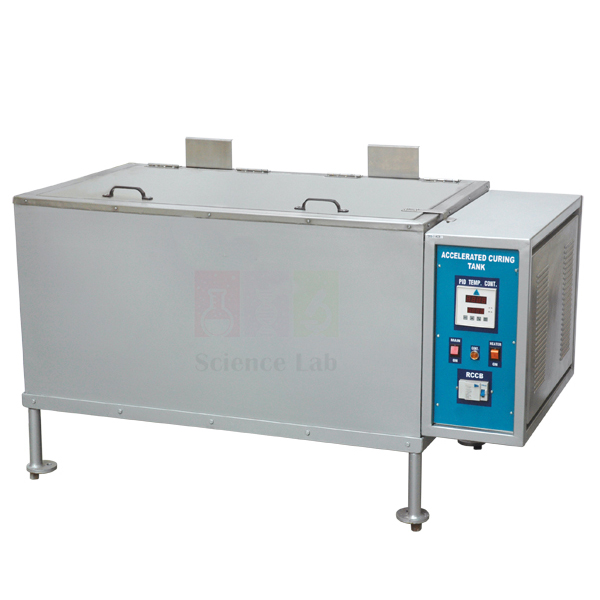
Accelerated Curing Tank
Accelerated Curing Tank (Product Code: SLE/CE/10) is an insulated, temperature-controlled curing tank used for hot water or steam curing of concrete cubes in accelerated strength testing, in civil engineering and concrete quality-control laboratories. It holds 150 mm or 70.6 mm cube moulds on two removable racks, from 6/12 up to 36/72 moulds by model, and controls curing at 35 °C or 100 °C ± 2 °C for concrete or 27 °C ± 2 °C for grey cement. It is made by Jain Scientific Equipments Pvt Ltd (ScienceLab), an OEM scientific equipment manufacturer, at its own factory in Ambala, India.
Specifications
| Parameter | Detail |
|---|---|
| Mould size accepted | 150 mm or 70.6 mm cube moulds |
| Capacity by model | 6/12, 12/24, 24/48 or 36/72 moulds (150 mm / 70.6 mm) |
| Curing temperature, concrete | Controlled at 35 °C or 100 °C ± 2 °C |
| Curing temperature, grey cement | Controlled at 27 °C ± 2 °C |
| Temperature note | Set temperature is held except for the 15 minutes after freshly made specimens are immersed |
| Heating and cooling | Immersion heater under normal conditions; refrigeration system for grey cement curing |
| Curing modes | Hot water curing or steam curing |
| Cycle | 24 hour cycle from time of mixing |
| Programmer | Electronic; controls up to four test cycles with different thermal gradients and curing times for a fully automatic curing cycle |
| Printer | 28 column thermal printer on the control panel |
| Construction | Stainless steel interior; fully insulated; hinged lid |
| Fitted equipment | Heater, thermostat and re-circulating pump; pump, drain valves and electrical equipment housed in a compartment at one end |
| Racks | Two removable racks allowing free water circulation around each mould |
| Product code | SLE/CE/10 |
| Manufacturer | Jain Scientific Equipments Pvt Ltd (ScienceLab) — OEM |
| Country of origin | India (made in Ambala, Haryana) |
What Is the Accelerated Curing Tank Used For?
Waiting weeks for normally cured cubes slows down mix approval and site decisions. Accelerated curing shortens that wait: freshly cast cubes, still in their moulds, are placed on the racks in hot water or steam at a controlled temperature, and after the 24 hour cycle from mixing they are tested so that the concrete's later strength can be judged much sooner.
The electronic programmer stores up to four cycles with their own heating gradients and curing times, and the thermal printer records each run for the lab file. With the refrigeration system the same tank can hold grey cement specimens at 27 °C. Keep the racks loosely loaded so water circulates around every mould, and drain and clean the stainless steel interior regularly.
What to Specify When Ordering
- Capacity: 6/12, 12/24, 24/48 or 36/72 moulds.
- Cube size you cure most: 150 mm or 70.6 mm.
- Curing duty: concrete at 35 °C or 100 °C, grey cement at 27 °C, or both.
- Your mains supply details and the delivery city or port.
OEM Manufacturer
ScienceLab, the trading name of Jain Scientific Equipments Private Limited, is the OEM (original equipment manufacturer) of this accelerated curing tank. The tank is fabricated and assembled at the company's own licensed factory at Saha, Ambala, Haryana, India, and delivered factory-direct to engineering colleges, ready-mix and precast plants' laboratories, dealers and importers.
Since you deal with the maker, questions on sizing, replacement racks, heaters or pumps and repeat orders are answered by the team that builds the tank — ask us. More about the company is on the ScienceLab company profile.
Related Civil Engineering Lab Equipment
Items used before and after accelerated curing:
- Concrete Cube Mould — 150 mm and 70.6 mm moulds that sit on the tank racks.
- Automatic digital compression testing machine — tests the cured cubes.
- Cement curing bench-type cabinet — humid curing for cement specimens.
- Circulating water bath with cooler unit — conditions specimens at a set temperature.
Explore the full Civil Engineering Lab Equipment range.
Frequently Asked Questions
How many cube moulds does the Accelerated Curing Tank hold?
The Accelerated Curing Tank is made in four capacities: 6/12, 12/24, 24/48 and 36/72 moulds, where the first figure is for 150 mm cube moulds and the second for 70.6 mm moulds. The largest model cures up to 36 or 72 moulds in one go.
What curing temperatures can the tank hold?
The Accelerated Curing Tank controls concrete curing at 35 °C or 100 °C ± 2 °C and grey cement curing at 27 °C ± 2 °C. The set temperature is maintained throughout the cycle except for the 15 minutes after fresh specimens are immersed.
Can the Accelerated Curing Tank be used for grey cement?
Yes. Besides the immersion heater used for concrete, the Accelerated Curing Tank has a refrigeration system that holds grey cement specimens at 27 °C ± 2 °C, so one tank covers both duties.
What does the electronic programmer do?
The programmer on the Accelerated Curing Tank controls up to four test cycles, each with its own thermal gradient and curing time to a defined temperature, running the curing cycle automatically. A 28 column thermal printer on the control panel prints the record.
Who manufactures the Accelerated Curing Tank?
The Accelerated Curing Tank is manufactured by Jain Scientific Equipments Pvt Ltd (ScienceLab), the OEM, at its own licensed factory at Saha, Ambala, Haryana, India, and supplied factory-direct to colleges, laboratories, dealers and importers.
How is the tank built?
The Accelerated Curing Tank has a stainless steel interior, full insulation and a hinged lid, with heater, thermostat and re-circulating pump. The pump, drain valves and electrical equipment sit in a compartment at one end, and two removable racks let water flow around each mould.
Request a Quote
For a factory-direct quotation on the Accelerated Curing Tank, send the capacity and curing duty you need through the contact page, or add it to the enquiry cart. The quote comes straight from the manufacturer.
Last updated: 24 September 2026
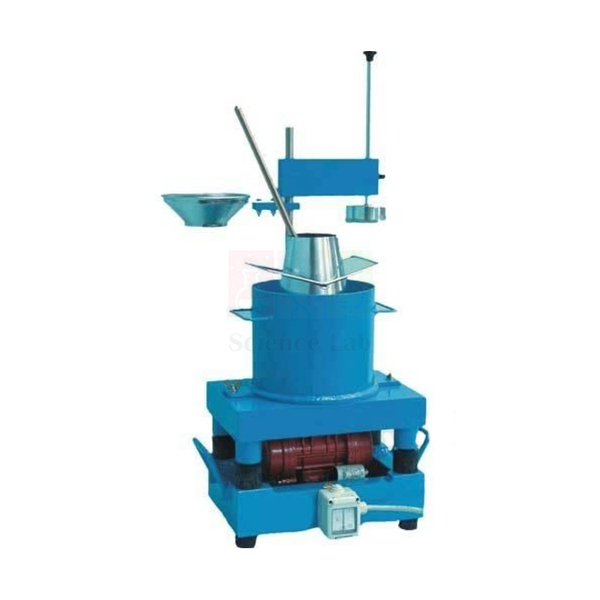
Vee Bee Consistometer
Vee Bee Consistometer (Product Code: SLE/CE/11) is a vibration-based workability tester used to measure the consistency of fresh concrete in Vee Bee degrees (seconds) in civil engineering and concrete technology laboratories. The set combines a 380 x 260 mm vibrating table with a sheet metal container, a slump cone, a swivel arm carrying a funnel and acrylic disc, and a 16 mm x 600 mm graduated tamping rod. It is built by Jain Scientific Equipments Pvt Ltd (ScienceLab), an OEM supplier of engineering lab equipment in India, at its own factory in Ambala.
Specifications
| Parameter | Detail |
|---|---|
| Measurement | Workability in Vee Bee degrees: time in seconds of vibration until fresh concrete contacts the entire face of the acrylic disc; slump in mm |
| Vibrating table | 380 mm long x 260 mm wide, on elastic supports about 305 mm above the floor, with start/stop switch, cord and plug |
| Container | Sheet metal, with lifting handles; fixes to the vibrating table |
| Swivel arm | Telescopes into a holder fixed to the base; carries funnel and guide; detachable from the vibrating table |
| Slump cone | Open at both ends, with lifting handles |
| Tamping rod | 16 mm diameter x 600 mm long, rounded at both ends; scale divisions record slump in mm |
| Acrylic disc | Included for reading the Vee Bee time |
| Product code | SLE/CE/11 |
| Manufacturer | Jain Scientific Equipments Pvt Ltd (ScienceLab) — OEM |
| Country of origin | India (made in Ambala, Haryana) |
What Is the Vee Bee Consistometer Used For?
Very stiff concrete barely slumps, so the Vee Bee test measures how much vibration it takes to remould it. A slump cone is filled and rodded inside the container on the table, then lifted away; the slump can be read on the graduated rod. The swivel arm lowers the transparent acrylic disc onto the concrete, the table is switched on, and the operator times how long it takes for concrete to cover the whole underside of the disc.
That time in seconds is the Vee Bee value: a longer time means a stiffer, less workable mix. The test suits dry mixes for pavements, precast work and roller-compacted concrete. Stand the table on a level floor, make sure the container is fixed firmly before vibrating, and wipe the disc clean after each test so the contact line stays easy to see.
OEM Manufacturer
Jain Scientific Equipments Private Limited, trading as ScienceLab, is the OEM (original equipment manufacturer) of this Vee Bee consistometer and supplies it factory-direct to engineering colleges, polytechnics, construction laboratories, dealers and importers. The table, container, swivel arm and cone are made and assembled at the company's own factory, licensed under Factory Licence AMB-ONLINE-CHD-J-414, at 449, HSIIDC Industrial Area, Saha, Ambala, Haryana, India; the company is incorporated under CIN U29309HR2020PTC087597.
Spare cones, discs or rods and repeat orders are handled by the manufacturer itself — ask us for what you need. See the ScienceLab company profile.
Related Civil Engineering Lab Equipment
Other workability tests and tools for the same concrete lab:
- Slump Test Apparatus — for medium and high workability mixes.
- Compaction Factor Test Apparatus — another method for low-workability concrete.
- Tamping Rod — a spare rod for rodding the cone.
- Flow Table — measures the spread of more fluid mixes.
Browse the full Civil Engineering Lab Equipment range.
Frequently Asked Questions
What does the Vee Bee Consistometer measure?
The Vee Bee Consistometer measures concrete workability in Vee Bee degrees, the time in seconds of vibration needed for fresh concrete to flow out and contact the entire face of the acrylic disc. It also allows the slump to be read on the graduated rod.
What is included with the Vee Bee Consistometer?
The Vee Bee Consistometer includes a 380 x 260 mm vibrating table with switch, cord and plug, a sheet metal container, a holder and swivel arm with funnel and guide, an acrylic disc, a slump cone with handles, and a 16 mm x 600 mm tamping rod.
How is the vibrating table mounted?
The vibrating table of the Vee Bee Consistometer measures 380 mm by 260 mm and rests on elastic supports about 305 mm above the floor. The container fixes to the table top, and the swivel arm can be detached when not in use.
Which concrete is the Vee Bee test suited to?
The Vee Bee Consistometer is best suited to stiff, low-workability concrete such as mixes for pavements and precast units, where the slump is too small to separate one mix from another. For fluid mixes, a slump or flow test is more useful.
Who manufactures the Vee Bee Consistometer?
The Vee Bee Consistometer is manufactured by Jain Scientific Equipments Pvt Ltd (ScienceLab), the OEM, at its own licensed factory at Saha, Ambala, Haryana, India, and is supplied factory-direct to institutions, laboratories, dealers and importers.
What electrical supply does the vibrating table need?
The Vee Bee Consistometer's vibrating table comes with a start/stop switch, cord and plug. Tell us the mains voltage and plug type used in your laboratory through the contact page so the correct electrical fitting can be confirmed.
Request a Quote
Request a quotation for the Vee Bee Consistometer through the contact page or add it to the enquiry cart. Quotations come direct from the manufacturer, including for bulk and export orders.
Last updated: 24 September 2026
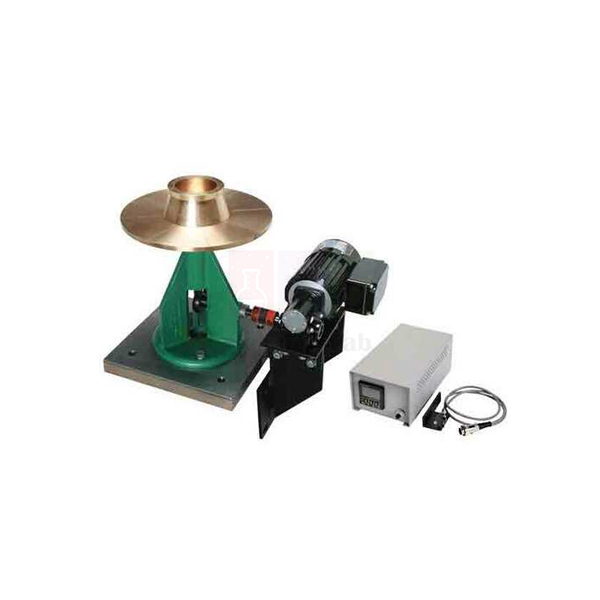
Flow Table
Flow Table (Product Code: SLE/CE/12) is a drop table with a conical mould used to measure the flow, or consistency, of fresh mortar in cement and civil engineering laboratories. It comes in manual and motorized versions, with a 254 mm or 300 mm table, a cone of 100 mm base and 70 mm top diameter, and a drop height of 12.7 mm or 10 mm. It is made by Jain Scientific Equipments Pvt Ltd (ScienceLab), an OEM maker of lab equipments for technical institutes, at its own factory in Ambala, India.
Specifications
| Parameter | Detail |
|---|---|
| Versions | Manual and motorized |
| Table diameter | 254 mm or 300 mm |
| Cone base / top diameter | 100.0 mm / 70.0 mm |
| Cone height | 50.0 mm or 60.0 mm |
| Drop height | 12.7 mm or 10.0 mm |
| Dimensions, manual | 260 x 260 x 270 mm |
| Dimensions, motorized | 470 x 360 x 350 mm |
| Weight (approx.) | Manual 13 kg; motorized 36 kg |
| Power (motorized) | 180 W |
| Product code | SLE/CE/12 |
| Manufacturer | Jain Scientific Equipments Pvt Ltd (ScienceLab) — OEM |
| Country of origin | India (made in Ambala, Haryana) |
What Is the Flow Table Used For?
The flow test tells you whether a mortar has the right water content for its job. The cone is placed at the centre of the table, filled with fresh mortar and tamped, then struck off and lifted clear. The table is raised and dropped a set number of times through the fixed drop height, and the diameter of the spread mortar is measured to give its flow.
The compact manual table weighs about 13 kg and suits teaching labs, while the 180 W motorized version keeps the drop rate uniform for routine testing. Choose the 254 mm or 300 mm table to match the method your laboratory follows, set the unit on a firm, level bench, and wipe the table top and cone clean and dry between tests.
What to Specify When Ordering
- Version: manual or motorized.
- Table diameter: 254 mm or 300 mm (with the matching cone height and drop height).
- For the motorized version, your mains supply details.
- Quantity and delivery city or port.
OEM Manufacturer
ScienceLab is the trading name of Jain Scientific Equipments Private Limited, which is the OEM (original equipment manufacturer) of this flow table. Tables, cones and drive mechanisms are produced at the company's own licensed factory at Saha, Ambala, Haryana, India, and each unit is supplied factory-direct to cement and concrete laboratories, colleges, dealers and importers instead of through resellers.
Spare cones and other parts, as well as repeat units, are arranged by the manufacturer — just ask us. Company information is on the ScienceLab company profile.
Related Civil Engineering Lab Equipment
Other items for mortar and cement testing:
- Flow tables for mortar and building lime — an alternative flow table model with digital drop counter.
- Vicat Needle Apparatus With Dashpot — checks cement paste consistency and setting time.
- Prism Mould Three Gang — casts mortar prisms for strength tests.
- Scoops — for handling fresh mortar samples.
See all items in Civil Engineering Lab Equipment.
Frequently Asked Questions
What does the Flow Table measure?
The Flow Table measures the flow of fresh mortar: after the cone is lifted, the table is dropped a set number of times and the spread diameter of the mortar is measured. The result shows whether the mix has the intended consistency.
What is the difference between the manual and motorized Flow Table?
The manual Flow Table measures 260 x 260 x 270 mm and weighs about 13 kg. The motorized Flow Table measures 470 x 360 x 350 mm, weighs about 36 kg and uses 180 W, giving a uniform drop rate for routine testing.
What are the cone dimensions?
The cone supplied with the Flow Table has a base diameter of 100.0 mm and a top diameter of 70.0 mm, with a height of 50.0 mm or 60.0 mm depending on the table version you choose.
Which table diameter and drop height should I choose?
The Flow Table is listed with a 254 mm or 300 mm table and a drop height of 12.7 mm or 10.0 mm. Choose the combination your test method specifies, and tell us that method when you enquire so the right version is quoted.
Who manufactures the Flow Table?
The Flow Table is manufactured by Jain Scientific Equipments Pvt Ltd (ScienceLab), the OEM, at its own licensed factory at Saha, Ambala, Haryana, India, and supplied factory-direct to institutions, laboratories, dealers and importers.
Can the Flow Table be ordered in bulk or for export?
Yes, the Flow Table can be supplied in quantity to colleges, testing laboratories, dealers and importers in India and international markets. Send the version, table size, quantity and delivery city or port through the contact page.
Request a Quote
For a quotation straight from the manufacturer, contact us about the Flow Table through the contact page or add it to the enquiry cart.
Last updated: 24 September 2026
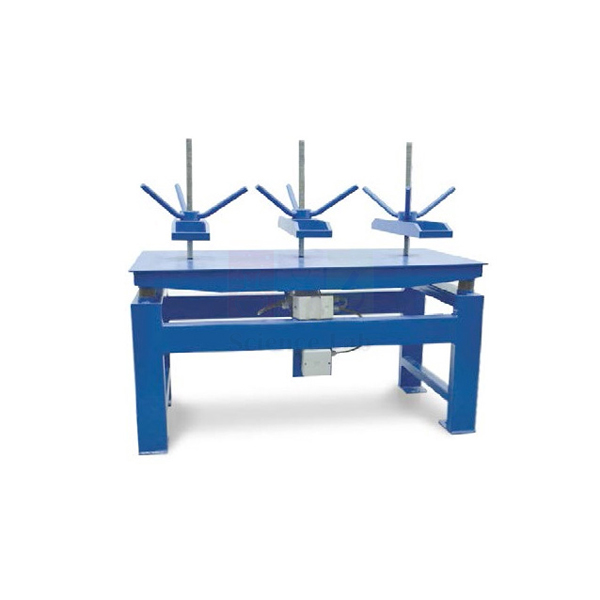
Vibrating Table
Vibrating Table (Product Code: SLE/CE/13) is a motor-driven vibration table used to compact fresh concrete in test moulds in civil engineering laboratories and site labs. Its 500 x 500 mm top carries up to 140 kg, and a speed regulation handle sets the frequency anywhere from 2600 to 3600 vibrations per minute. The table is made by Jain Scientific Equipments Pvt Ltd (ScienceLab), an OEM scientific lab equipment manufacturer in Ambala, at its own factory in India.
Specifications
| Parameter | Detail |
|---|---|
| Table top | 500 x 500 mm, with stops along the edges so moulds cannot walk off during vibration |
| Load capacity | 140 kg |
| Vibration frequency | Adjustable from a maximum of 3600 down to 2600 vibrations per minute |
| Drive | Motor with variable pitch pulley, housed in a cabinet |
| Vibration mechanism | Off-balance masses rotating on the shaft of a vibrator clamped to the underside of the table top |
| Controls | Switch for starting the motor; speed regulation handle for increasing or decreasing frequency |
| Mould holding | Cross arm adjustable on a vertical rod at the centre of the table |
| Power supply | 230 V AC, single phase, 50 cycles |
| Product code | SLE/CE/13 |
| Manufacturer | Jain Scientific Equipments Pvt Ltd (ScienceLab) — OEM |
| Country of origin | India (made in Ambala, Haryana) |
What Is the Vibrating Table Used For?
Trapped air weakens concrete specimens and makes test results scatter, so moulds are vibrated rather than only hand-rodded. Filled cube, cylinder or beam moulds are set on the table, held down by the cross arm on the central rod, and the motor is started; vibration continues until the concrete surface settles and air bubbles stop rising.
Stiffer mixes need more energy, which is why the frequency can be turned up towards 3600 vibrations per minute, while more fluid mixes are compacted at the lower end to avoid segregation. Keep the total load within 140 kg, check that the cross arm is tight before switching on, and scrape off spilt concrete before it hardens on the table top.
OEM Manufacturer
This vibrating table is built by Jain Scientific Equipments Private Limited, trading as ScienceLab, as the OEM (original equipment manufacturer). Frame, table top, drive cabinet and vibrator assembly are made and put together at the company's own licensed factory at Saha, Ambala, Haryana, India, and each table is supplied factory-direct to colleges, construction and precast laboratories, dealers and importers.
Because you buy from the maker, spares such as the pulley or vibrator parts and repeat orders are handled by the same team — ask us. Find out more on the ScienceLab company profile.
Related Civil Engineering Lab Equipment
Moulds and compaction tools used with the table:
- Concrete Cube Mould — cube specimens compacted on the table.
- Cylindrical Mould — cylinder specimens for strength tests.
- Beam Mould — beam specimens for flexural tests.
- Poker Vibrator — internal compaction when many specimens are cast.
Browse all Civil Engineering Lab Equipment.
Frequently Asked Questions
What load can the Vibrating Table carry?
The Vibrating Table is designed to carry a load of 140 kg on its 500 x 500 mm top. Spread moulds evenly across the table and keep the combined weight of moulds and concrete within this limit.
What vibration frequency does the Vibrating Table give?
The Vibrating Table runs between a maximum of 3600 and a minimum of 2600 vibrations per minute. A speed regulation handle acting on the variable pitch pulley increases or decreases the frequency to suit the mix.
How are moulds held in place during vibration?
On the Vibrating Table, stops along the edges of the table top prevent moulds from walking off, and a cross arm adjustable on a vertical rod at the centre of the table holds the moulds down while the table runs.
How does the Vibrating Table produce vibration?
The Vibrating Table uses off-balance masses rotating on the shaft of a vibrator clamped to the underside of the top. The shaft is driven by a motor with a variable pitch pulley housed in a cabinet, started by a switch.
What power supply does the Vibrating Table need?
The Vibrating Table operates on 230 V AC, single phase, 50 cycles. If your site or laboratory uses a different supply, mention it on the contact page so we can confirm what can be offered.
Who manufactures the Vibrating Table?
The Vibrating Table is manufactured by Jain Scientific Equipments Pvt Ltd (ScienceLab), the OEM, at its own licensed factory at Saha, Ambala, Haryana, India, and supplied factory-direct to institutions, laboratories, dealers and importers.
Request a Quote
Ask for a factory-direct quotation on the Vibrating Table through the contact page, or add it to the enquiry cart along with your moulds. Bulk and export enquiries are welcome.
Last updated: 24 September 2026
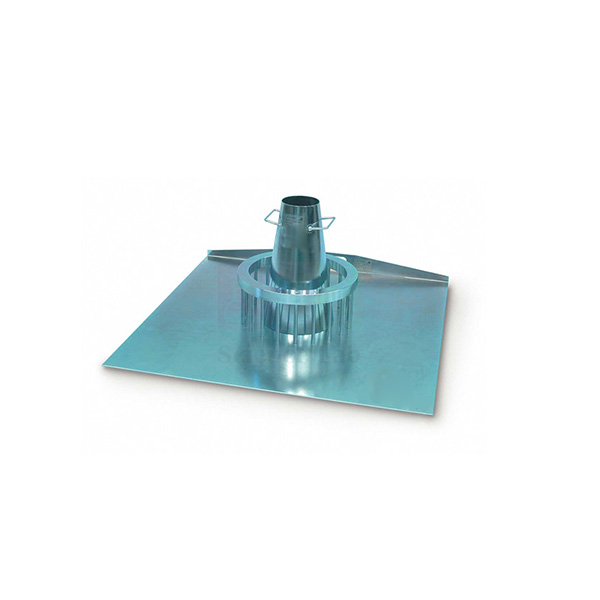
J Ring Apparatus
J Ring Apparatus (Product Code: SLE/CE/14) is a ring of vertical steel bars used with a slump cone to determine the passing ability, flow spread and flow time of self-compacting concrete in civil engineering and concrete technology laboratories. Its narrow-gap ring carries 16 smooth stainless steel bars of 18 mm diameter and is used on a 900 x 900 x 3 mm stainless steel base plate engraved with 200 mm and 500 mm circles. It is made by Jain Scientific Equipments Pvt Ltd (ScienceLab), an OEM vocational training lab equipment manufacturer in India, at its own factory in Ambala.
Specifications
| Parameter | Detail |
|---|---|
| Test | Passing ability, flow spread and flow time of self-compacting concrete |
| J-Ring | Narrow gap, 16 smooth bars of 18 mm diameter, stainless steel |
| Base plate | 900 x 900 x 3 mm square, stainless steel, engraved circles of 200 mm and 500 mm diameter |
| Slump cone | Sheet steel protected against corrosion; top 100 mm, base 200 mm, height 300 mm |
| Weighted collar | Steel; stabilises the slump cone during J-Ring or slump flow tests |
| Minimum apparatus | J-Ring with narrow gap and slump cone |
| Product code | SLE/CE/14 |
| Manufacturer | Jain Scientific Equipments Pvt Ltd (ScienceLab) — OEM |
| Country of origin | India (made in Ambala, Haryana) |
What Is the J Ring Test Used For?
Self-compacting concrete has to flow through closely spaced reinforcement on its own, without blocking or leaving aggregate behind. The J-Ring recreates that situation: the slump cone stands on the engraved 200 mm circle of the damp base plate, surrounded by the ring of bars, and is held down by the weighted collar while it is filled. When the cone is lifted, the concrete spreads out through the bars.
The operator records the time for the concrete to reach the 500 mm circle, measures the final spread, and compares it with a slump flow test without the ring to judge passing ability. Coarse aggregate heaped behind the bars is a warning sign of blocking. Keep the base plate level and clean it straight after each test so the engraved circles stay readable.
What to Specify When Ordering
- Components required: J-Ring, slump cone, base plate and weighted collar (the J-Ring and slump cone are the minimum).
- Number of sets for your laboratory or class.
- Any other self-compacting concrete tests you plan, so a complete set can be quoted.
OEM Manufacturer
Jain Scientific Equipments Private Limited, whose trading name is ScienceLab, is the OEM (original equipment manufacturer) of this J-Ring apparatus. The ring, base plate, cone and collar are fabricated at the company's own licensed factory at Saha, Ambala, Haryana, India, and supplied factory-direct to engineering colleges, ready-mix and research laboratories, dealers and importers.
With the manufacturer as your supplier, a replacement cone, collar or base plate and repeat sets can be arranged directly — ask us. Read about the company on the ScienceLab company profile.
Related Civil Engineering Lab Equipment
Other self-compacting concrete tests that complement the J-Ring:
- U Shape Box Apparatus — checks filling and passing ability through a gate of rebars.
- L-Box Apparatus — measures passing ability with adjustable bar spacing.
- V Funnel Test Apparatus — evaluates flow time through a funnel.
- Fill Box Apparatus — assesses filling ability in a transparent container.
See all Civil Engineering Lab Equipment.
Frequently Asked Questions
What does the J Ring Apparatus measure?
The J Ring Apparatus determines the passing ability, flow spread and flow time of self-compacting concrete as it flows from a lifted slump cone through a ring of vertical bars, showing whether the mix can pass reinforcement without blocking.
What bars does the J-Ring have?
The J Ring Apparatus uses a narrow-gap ring with 16 smooth bars of 18 mm diameter, made from stainless steel. The bars represent reinforcement that self-compacting concrete must flow through in a real structure.
What components make up the J Ring Apparatus?
The J Ring Apparatus comprises the narrow-gap J-Ring, a slump cone, a 900 x 900 x 3 mm stainless steel base plate and a steel weighted collar. The J-Ring and slump cone are the minimum apparatus, so tell us which components you need.
What is the weighted collar for?
The steel weighted collar in the J Ring Apparatus sits on the slump cone and stabilises it while the cone is filled, both in the J-Ring test and in a plain slump flow test, so the operator does not have to hold the cone down.
Who manufactures the J Ring Apparatus?
The J Ring Apparatus is manufactured by Jain Scientific Equipments Pvt Ltd (ScienceLab), the OEM, at its own licensed factory at Saha, Ambala, Haryana, India, and supplied factory-direct to institutions, laboratories, dealers and importers.
Can the J Ring Apparatus be ordered with other SCC test equipment?
Yes, the J Ring Apparatus can be quoted together with other self-compacting concrete test items for institutions, dealers and importers in India and international markets. List the items and quantities on the contact page.
Request a Quote
For a quotation on the J Ring Apparatus straight from the manufacturer, write to us through the contact page or add it to the enquiry cart.
Last updated: 24 September 2026
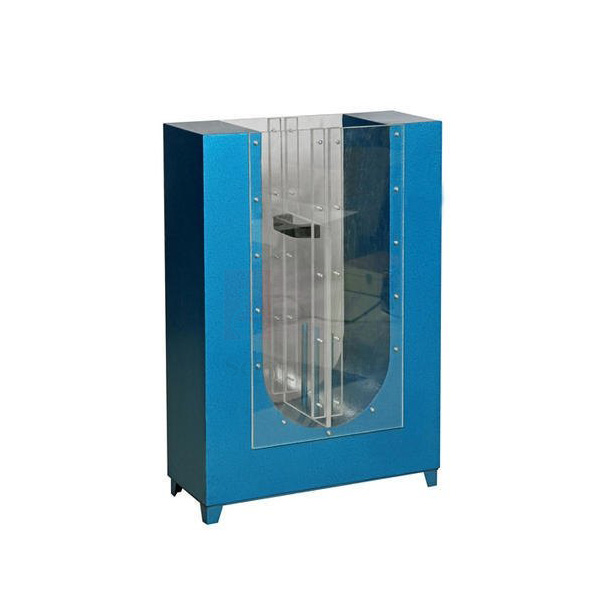
U Shape Box Apparatus
U Shape Box Apparatus (Product Code: SLE/CE/15) is a two-section stainless steel box used to determine the filling and passing ability of self-compacting concrete (SCC) in civil engineering and concrete technology laboratories. About 20 litres of concrete placed in one section flows up through a gate fitted with three 12 mm rebars into the other, and the concrete heights in both sections are then measured. It is made by Jain Scientific Equipments Pvt Ltd (ScienceLab), an OEM scientific laboratory apparatus manufacturer in India, at its own factory in Ambala.
Specifications
| Parameter | Detail |
|---|---|
| Test | Filling and passing ability of self-compacting concrete |
| Box material | Stainless steel (a stiff, non-absorbing material) |
| Mounting | On a frame with a fixing mechanism |
| Gate reinforcement | Three 12 mm diameter rebars, listed at 50 mm centre-to-centre with 35 mm clear spacing (confirm the exact gate configuration when ordering) |
| Concrete per test | About 20 litres, filled into the left-hand section |
| Measurement | Height of concrete in both sections after the gate is lifted |
| Other equipment for the test | Scoop, trowel and stopwatch |
| Product code | SLE/CE/15 |
| Manufacturer | Jain Scientific Equipments Pvt Ltd (ScienceLab) — OEM |
| Country of origin | India (made in Ambala, Haryana) |
What Is the U-Box Test Used For?
Self-compacting concrete has to fill every corner of the formwork and pass between bars under nothing but its own weight. The U-box checks both properties at once. The left-hand section is filled with about 20 litres of fresh concrete using the scoop and trowel, the gate is lifted, and the concrete flows through the rebars and rises into the right-hand section.
Once the flow stops, the concrete height in each section is measured; the closer the two heights, the better the mix fills and passes. The stopwatch lets the lab note how quickly the concrete moves. Dampen the inside of the box before each test, set the frame on firm, level ground, and wash the box out before the concrete sets.
OEM Manufacturer
ScienceLab, the trading name of Jain Scientific Equipments Private Limited, is the OEM (original equipment manufacturer) of this U-box. The stainless steel box, gate and frame are fabricated at the company's own licensed factory at Saha, Ambala, Haryana, India, and the apparatus is supplied factory-direct to engineering colleges, ready-mix and precast laboratories, dealers and importers.
Gate parts, repeat units and technical queries are handled by the manufacturer directly — ask us. On the paperwork side, the company's Udyam registration (UDYAM-HR-01-0003714) records manufacturing as its major activity, and export consignments move under its DGFT Importer-Exporter Code AAECJ8618A. More on the ScienceLab company profile.
Related Civil Engineering Lab Equipment
Other self-compacting concrete tests and tools:
- J Ring Apparatus — passing ability, flow spread and flow time with a ring of bars.
- L-Box Apparatus — passing ability with adjustable bar spacing.
- V Funnel Test Apparatus — flow time of fresh SCC through a funnel.
- Scoops — for filling the box with fresh concrete.
Explore the complete Civil Engineering Lab Equipment range.
Frequently Asked Questions
What does the U Shape Box Apparatus measure?
The U Shape Box Apparatus measures the filling and passing ability of self-compacting concrete. Concrete flows from one section, through a gate of rebars, up into the other section, and the concrete heights in the two sections show how well the mix fills and passes.
How much concrete does a U-box test need?
A test in the U Shape Box Apparatus uses about 20 litres of fresh concrete, filled into the left-hand section before the gate is lifted. Prepare a little extra so the section can be filled completely in one go.
What reinforcement is fitted at the gate?
The gate of the U Shape Box Apparatus is fitted with three 12 mm diameter rebars, listed at 50 mm centre-to-centre with 35 mm clear spacing. Please confirm the exact gate configuration your test method requires when you request a quotation.
What other equipment is needed for the U-box test?
Besides the U Shape Box Apparatus itself, the test calls for a scoop, a trowel and a stopwatch. Tell us through the contact page if you want these quoted with the box.
Who manufactures the U Shape Box Apparatus?
The U Shape Box Apparatus is manufactured by Jain Scientific Equipments Pvt Ltd (ScienceLab), the OEM, at its own licensed factory at Saha, Ambala, Haryana, India, and supplied factory-direct to institutions, laboratories, dealers and importers.
What is the U-box made of?
The U Shape Box Apparatus is made of stainless steel, a stiff and non-absorbing material that does not draw water out of the concrete, and is mounted on a frame with a fixing mechanism that holds the box steady during the test.
Request a Quote
Request a quotation for the U Shape Box Apparatus direct from the manufacturer through the contact page, or add it to the enquiry cart. Bulk and export enquiries are welcome.
Last updated: 24 September 2026
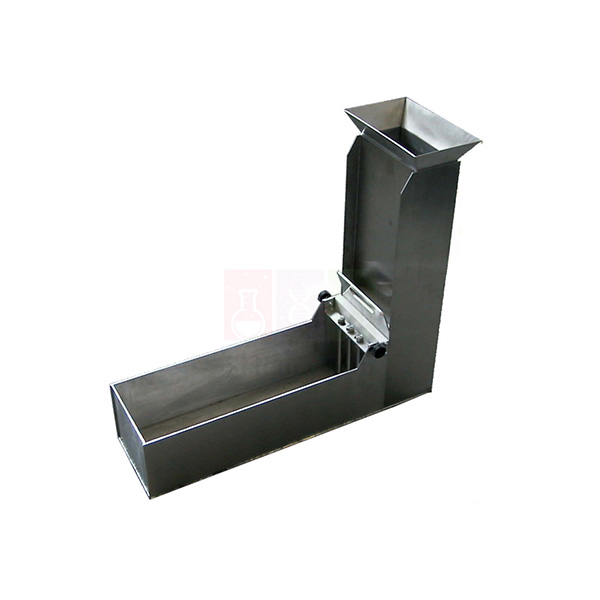
L-Box Apparatus
L-Box Apparatus (Product Code: SLE/CE/16) is an L-shaped test box used to measure the passing ability of freshly mixed self-compacting concrete in civil engineering and concrete technology laboratories. Colleges, research labs and site quality teams use it to see whether an SCC mix can flow through a screen of 12 mm diameter bars set 41 ± 1 mm or 59 ± 1 mm apart. It is made by Jain Scientific Equipments Pvt Ltd (ScienceLab), an OEM manufacturer of engineering lab equipment in India, at its own factory in Ambala.
Specifications
| Parameter | Detail |
|---|---|
| Test property | Passing ability of freshly mixed self-compacting concrete (SCC) |
| Obstacle bars | 12 mm diameter |
| Distance between bars | Can be set at 41 ± 1 mm or 59 ± 1 mm |
| Hoppers | Vertical and horizontal hoppers designed for ease of cleaning |
| Supplied complete with | Filling hopper and base |
| Product code | SLE/CE/16 |
| Manufacturer | Jain Scientific Equipments Pvt Ltd (ScienceLab) — OEM |
| Country of origin | India (made in Ambala, Haryana) |
What Is the L-Box Used For?
The L-box test shows whether self-compacting concrete will pass between closely spaced reinforcement without blocking or separating. The fresh sample is placed in the vertical section; once released, it flows through the bar screen and along the horizontal section, and the concrete heights at the two ends of that horizontal run are compared to express passing ability.
The 41 mm gap imitates more congested reinforcement and is the more demanding setting, while the 59 mm gap suits less congested sections, so set the spacing your mix design or test method calls for. Stand the box on a firm, level surface and wash both hoppers straight after each test so hardened paste does not affect the next result. It is a core item of engineering educational equipment in India for SCC mix trials and final-year project work.
OEM Manufacturer
ScienceLab is the trading name of Jain Scientific Equipments Private Limited, and the company is the OEM (original equipment manufacturer) of this L-Box Apparatus. The box is made and assembled at its own licensed factory at Saha, Ambala, Haryana, India, rather than bought in from a trader. Engineering colleges, polytechnics, research laboratories, dealers and importers therefore deal directly with the maker for supply, repeat orders and replacement parts — just ask us. Read more on the ScienceLab company profile.
Related Civil Engineering Lab Equipment
Self-compacting concrete is normally judged with several fresh-concrete tests, so these items from the same range are often ordered with the L-box for a complete SCC test bench.
- J Ring Apparatus — a second passing-ability check that works together with the slump-flow test.
- V Funnel Test Apparatus — times the flow of the same SCC batch.
- U Shape Box Apparatus — an alternative box test for SCC.
- Fill Box Apparatus — checks how well the mix fills a container under its own weight.
- Slump Test Apparatus — for routine workability checks on fresh concrete.
Browse the full Civil Engineering Lab Equipment range for concrete, cement, soil and aggregate testing.
Frequently Asked Questions
What does the L-Box Apparatus measure?
The L-Box Apparatus measures the passing ability of freshly mixed self-compacting concrete: how well the mix flows through a screen of 12 mm diameter bars into the horizontal section without blocking, which tells a lab whether the SCC will pass congested reinforcement.
What bar spacing can be set on the L-Box Apparatus?
The distance between the 12 mm diameter bars of the L-Box Apparatus can be set at 41 ± 1 mm or 59 ± 1 mm. The narrower gap gives the more severe passing test; the wider gap suits concrete meant for less congested reinforcement.
What is supplied with the L-Box Apparatus?
The L-Box Apparatus is supplied complete with its filling hopper and base, and its vertical and horizontal hoppers are designed for ease of cleaning. If you also need other SCC test apparatus, list it in the same enquiry so everything is quoted together.
Who manufactures the L-Box Apparatus?
The L-Box Apparatus is manufactured by Jain Scientific Equipments Pvt Ltd (ScienceLab) as the OEM, at the company's own licensed factory at Saha, Ambala, Haryana, India. Quotations, repeat supply and replacement-part enquiries are handled directly by the manufacturer.
How should the L-Box Apparatus be cleaned after a test?
Clean the L-Box Apparatus immediately after each test, before the cement paste starts to set. Its vertical and horizontal hoppers are designed for ease of cleaning, so washing the hoppers and bar screen with water and a soft brush keeps later readings dependable.
What should a quotation request for the L-Box Apparatus include?
A quotation request for the L-Box Apparatus should state the product code SLE/CE/16, the quantity, the delivery location and any other self-compacting concrete test apparatus you need. Send it through the contact page or the enquiry cart for a reply from the manufacturer.
Does ScienceLab supply the L-Box Apparatus for export?
Yes. ScienceLab supplies the L-Box Apparatus to laboratories, institutions, dealers and importers in India and international markets. For bulk or export orders, share the quantity and destination country in your enquiry so the quotation can cover delivery.
Request a Quote
To order the L-Box Apparatus (SLE/CE/16), send your requirement through the contact page or add it to the enquiry cart. Quotations come straight from the manufacturer, Jain Scientific Equipments Pvt Ltd (ScienceLab), Ambala.
Last updated: 24 September 2026
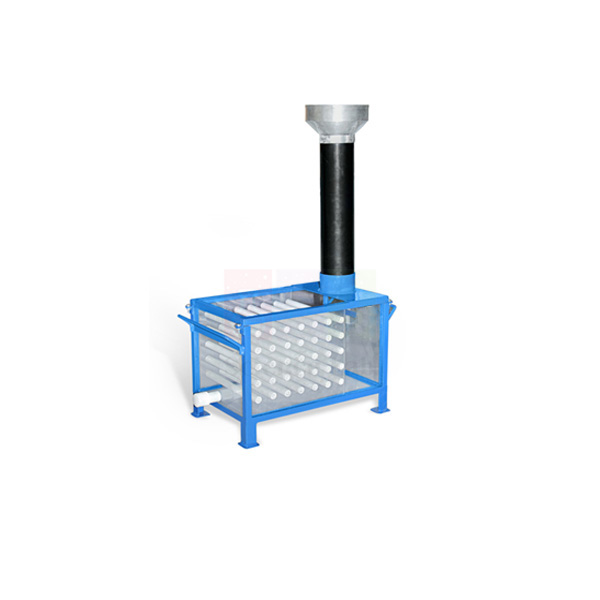
Fill Box Apparatus
Fill Box Apparatus (Product Code: SLE/CE/17) is a transparent test container used to measure the filling ability of self-compacting concrete in concrete technology and civil engineering laboratories. It is intended for SCC with a maximum aggregate size of 20 mm, and its see-through walls let students and technicians watch how completely the mix fills the box. Jain Scientific Equipments Pvt Ltd (ScienceLab) builds it as the OEM at its own factory in Ambala, India.
Specifications
| Parameter | Detail |
|---|---|
| Test property | Filling ability of self-compacting concrete |
| Maximum aggregate size | 20 mm |
| Container | Transparent, with a flat and smooth surface |
| Dimensions | 500 × 300 × 900 mm |
| Weight (approx.) | 5 kg |
| Product code | SLE/CE/17 |
| Manufacturer | Jain Scientific Equipments Pvt Ltd (ScienceLab) — OEM |
| Country of origin | India (made in Ambala, Haryana) |
What Is the Fill Box Used For?
Filling ability describes how well self-compacting concrete flows into and fills every part of a formwork space under its own weight, with no vibration. In the fill box test the mix is poured into the container and allowed to settle by itself; because the walls are transparent, the operator can see voids, blockages or uneven levels and compare one mix design with another.
Before testing, confirm the coarse aggregate is within the 20 mm limit, since larger stones make the result meaningless. At about 5 kg the box is easy to carry between the mixing area and the wash-down point, but clean it with water and soft cloths rather than scrapers so the flat, smooth surface stays clear. Labs choosing an engineering lab equipment manufacturer for SCC work often order the fill box together with the related apparatus listed below.
OEM Manufacturer
Jain Scientific Equipments Private Limited, which trades as ScienceLab, is the original equipment manufacturer (OEM) of the Fill Box Apparatus and produces it at its licensed factory in Saha, Ambala, Haryana. Because the box comes factory-direct, engineering colleges, testing laboratories, dealers and importers receive quotations and follow-up support from the people who make it. Questions about matching repeat orders or replacement parts can be sent straight to us. Company background is on the ScienceLab company profile.
Related Civil Engineering Lab Equipment
A fill box result is usually read alongside other self-compacting concrete tests carried out on the same batch.
- L-Box Apparatus — checks passing ability through a screen of bars.
- V Funnel Test Apparatus — records flow time as an indicator of viscosity.
- U Shape Box Apparatus — another box-type SCC test for comparison.
- Test Sieves — confirm the aggregate is within the 20 mm limit before testing.
- Scoops — for sampling and transferring fresh concrete.
See every item in Civil Engineering Lab Equipment for fresh and hardened concrete testing.
Frequently Asked Questions
What does the Fill Box Apparatus test?
The Fill Box Apparatus tests the filling ability of self-compacting concrete, showing how completely a mix flows into and fills a confined space under its own weight. The transparent container lets the operator see gaps or uneven filling directly.
What aggregate size is the Fill Box Apparatus suitable for?
The Fill Box Apparatus is used for self-compacting concrete with a maximum aggregate size of 20 mm. Sieve the aggregate first if you are unsure, because stones larger than 20 mm fall outside the scope of this fill box test.
What are the dimensions and weight of the Fill Box Apparatus?
The Fill Box Apparatus measures 500 × 300 × 900 mm and weighs approximately 5 kg. The container is transparent with a flat and smooth surface, so it is light enough to move and easy to inspect during a test.
Who manufactures the Fill Box Apparatus?
Jain Scientific Equipments Pvt Ltd (ScienceLab) manufactures the Fill Box Apparatus as the OEM at its own licensed factory in Saha, Ambala, Haryana, India, and supplies it factory-direct to laboratories, colleges, dealers and importers.
How should the transparent Fill Box Apparatus be cared for?
Wash the Fill Box Apparatus with water and a soft cloth as soon as the test ends, before cement paste hardens. Avoid scrapers or abrasive pads, which can scratch the flat, smooth transparent surface and make later observations harder.
What details are needed for a Fill Box Apparatus quotation?
For a Fill Box Apparatus quotation, give the product code SLE/CE/17, the number of units, the delivery address and any companion SCC apparatus you need. Send the request via the contact page and the manufacturer will reply directly.
Request a Quote
Request a quotation for the Fill Box Apparatus (SLE/CE/17) through the contact page, or add it to the enquiry cart with your other items. Quotations are issued direct by the manufacturer, Jain Scientific Equipments Pvt Ltd (ScienceLab).
Last updated: 24 September 2026
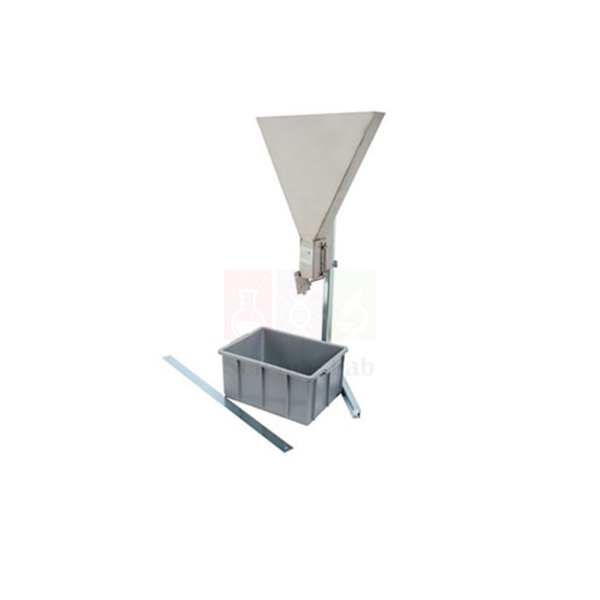
V Funnel Test Apparatus
V Funnel Test Apparatus (Product Code: SLE/CE/18) is a stainless steel funnel on a supporting stand used to evaluate the flow time of freshly mixed self-compacting concrete in concrete testing laboratories. Mix designers and students use the flow time as a practical indicator of SCC flowability; the test is not suitable when the maximum aggregate size exceeds 22.4 mm. It is manufactured by Jain Scientific Equipments Pvt Ltd (ScienceLab), the OEM, at its own factory in Ambala, India.
Specifications
| Parameter | Detail |
|---|---|
| Test property | Flow time of freshly mixed self-compacting concrete |
| Funnel | Stainless steel, placed vertically on a supporting stand |
| Discharge | Equipped with a lid that can be momentarily opened |
| Aggregate limit | Not suitable when the maximum aggregate size exceeds 22.4 mm |
| Product code | SLE/CE/18 |
| Manufacturer | Jain Scientific Equipments Pvt Ltd (ScienceLab) — OEM |
| Country of origin | India (made in Ambala, Haryana) |
What Is the V Funnel Test Used For?
The funnel is filled with fresh self-compacting concrete while the discharge lid is closed. The lid is then opened and the time taken for the concrete to flow out is recorded: a short flow time points to a very fluid mix, while a long time suggests a more viscous concrete or one that is starting to block at the outlet.
Dampen the inside of the funnel before filling so a dry surface does not hold back the first part of the flow, and keep a stopwatch ready for the moment the lid opens. Some laboratories repeat the test after the concrete has rested in the funnel to look for signs of segregation. As test and measurement instruments in India go, the V funnel is one of the simplest ways to compare SCC mixes side by side.
OEM Manufacturer
ScienceLab is the brand name of Jain Scientific Equipments Private Limited, the OEM that makes this V Funnel Test Apparatus at its own licensed factory at Saha, Ambala, Haryana, India. Buying from the original equipment manufacturer means one point of contact for the funnel, its stand and any later replacement parts, so ask us whenever you need them. The company supplies civil engineering departments, testing labs, dealers and importers directly. Find out more on the ScienceLab company profile.
Related Civil Engineering Lab Equipment
The V funnel is one part of a self-compacting concrete test programme; these related items cover the other properties usually checked on the same batch.
- Slump Test Apparatus — for slump-type workability checks on fresh concrete.
- L-Box Apparatus — measures passing ability through reinforcement bars.
- J Ring Apparatus — a quick passing-ability check.
- U Shape Box Apparatus — a box test for comparing SCC mixes.
- Scoops — for filling the funnel with the fresh sample.
The complete Civil Engineering Lab Equipment range lists apparatus for concrete, cement, soil and bitumen testing.
Frequently Asked Questions
What does the V Funnel Test Apparatus measure?
The V Funnel Test Apparatus measures the flow time of freshly mixed self-compacting concrete, meaning the time the concrete takes to run out of the stainless steel funnel once the discharge lid is opened. Flow time helps compare the flowability of SCC mixes.
What aggregate size can be tested in the V Funnel Test Apparatus?
The V Funnel Test Apparatus is not suitable for concrete whose maximum aggregate size exceeds 22.4 mm. For mixes with larger stones, choose a different workability test, because oversized aggregate can block the funnel outlet and distort the flow time.
What is the V Funnel Test Apparatus made of?
The V Funnel Test Apparatus consists of a stainless steel funnel placed vertically on a supporting stand. Its discharge is equipped with a lid that can be momentarily opened, which lets the operator start the flow at a precise moment for timing.
Who manufactures the V Funnel Test Apparatus?
The V Funnel Test Apparatus is manufactured by Jain Scientific Equipments Pvt Ltd (ScienceLab), the OEM, at its licensed factory at Saha, Ambala, Haryana, India. Quotations and replacement-part enquiries come directly from the manufacturer.
What else is needed to run a V funnel test?
To run a test with the V Funnel Test Apparatus you also need a stopwatch to time the discharge, a container to catch the concrete, and a scoop or bucket to fill the funnel. Mention any of these you need in the same enquiry.
How do I get a quotation for the V Funnel Test Apparatus?
To get a quotation for the V Funnel Test Apparatus, send the product code SLE/CE/18, quantity and delivery location through the contact page or the enquiry cart. Buyers in India and international markets receive the quote directly from the manufacturer.
Request a Quote
For a quotation on the V Funnel Test Apparatus (SLE/CE/18), use the contact page or the enquiry cart. Quotations and supply terms come direct from the manufacturer, Jain Scientific Equipments Pvt Ltd (ScienceLab), Ambala.
Last updated: 24 September 2026
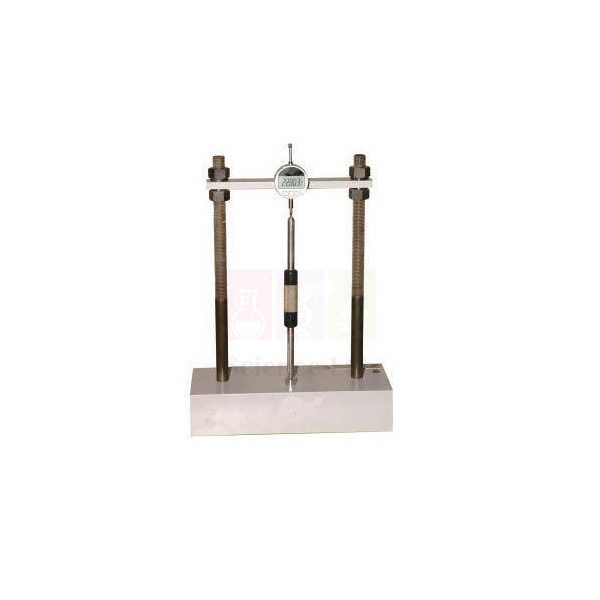
Volume Change Apparatus
Volume Change Apparatus (Product Code: SLE/CE/19) is a mould-and-comparator set used to measure the change in length of cement mortar and concrete specimens as they shrink or expand, in materials testing laboratories. It combines a specimen mould with base plate and four reference pins with a length comparator frame whose dial gauge reads 0.002 mm over 5 mm. Jain Scientific Equipments Pvt Ltd (ScienceLab) makes the set as the OEM at its own factory in Ambala, India.
Specifications
| Parameter | Detail |
|---|---|
| Mould | One mould (effective gauge length) complete with base plate |
| Reference pins | Four |
| Length comparator frame | One |
| Reference bar | One stainless reference bar with insulated grip |
| Dial gauge | One, 0.002 mm × 5 mm |
| Product code | SLE/CE/19 |
| Manufacturer | Jain Scientific Equipments Pvt Ltd (ScienceLab) — OEM |
| Country of origin | India (made in Ambala, Haryana) |
What Is the Volume Change Apparatus Used For?
Volume change in hardened cement mortar and concrete is usually tracked as a change in specimen length. The reference pins are set into the ends of the specimen when it is cast, giving fixed gauge points; after demoulding, the specimen is placed in the comparator frame and its length is read on the dial gauge, then read again at intervals as it dries, cures or is exposed to test conditions.
Zero the comparator with the stainless reference bar before each set of readings. The insulated grip matters: holding the bar or specimen with bare hands warms it and adds error at the 0.002 mm level. Keep the comparator in the same room as the specimens. Buyers comparing lab instruments manufacturers in India will find the complete set saves matching a mould and comparator from different sources.
OEM Manufacturer
ScienceLab is the trading name of Jain Scientific Equipments Private Limited, the OEM (original equipment manufacturer) of the Volume Change Apparatus. The mould, pins, comparator frame and reference bar are supplied as one set from the company's own licensed factory at Saha, Ambala, Haryana, India, so the parts are matched from the start. For institutional and tender buyers who need vendor details, the company is registered under GSTIN 06AAECJ8618A1ZT and holds LEI 3358004HRD1JIVXKYX49. More about the company is on the ScienceLab company profile.
Related Civil Engineering Lab Equipment
These items support the same shrinkage and length-change workflow, from casting and curing specimens to taking repeat measurements.
- Length Comparator Digital — a standalone comparator for additional specimens.
- Prism Mould Three Gang — for casting mortar prisms.
- Beam Mould — for casting concrete beam specimens.
- Cement curing bench-type cabinet — keeps specimens in controlled conditions between readings.
- Demountable Mechanical Strain Gauge — measures length variation on larger elements.
Explore the wider Civil Engineering Lab Equipment range for cement, mortar and concrete testing.
Frequently Asked Questions
What does the Volume Change Apparatus measure?
The Volume Change Apparatus measures the change in length of cement mortar or concrete specimens over time, which indicates shrinkage or expansion. Readings are taken between reference pins in the specimen using a length comparator frame and dial gauge.
What is included in the Volume Change Apparatus set?
The Volume Change Apparatus comprises one mould complete with base plate, four reference pins, one length comparator frame, one stainless reference bar with insulated grip and one dial gauge of 0.002 mm × 5 mm.
What is the resolution of the Volume Change Apparatus dial gauge?
The dial gauge supplied with the Volume Change Apparatus reads 0.002 mm and has a travel of 5 mm. That resolution is fine enough to follow small shrinkage or expansion movements in mortar and concrete specimens.
What gauge length does the Volume Change Apparatus mould have?
The effective gauge length of the Volume Change Apparatus mould is not stated in this listing. Tell us the test method or specimen size you work to through the contact page, and the gauge length will be confirmed in writing with your quotation.
Who manufactures the Volume Change Apparatus?
The Volume Change Apparatus is manufactured by Jain Scientific Equipments Pvt Ltd (ScienceLab) as the OEM at its own licensed factory in Saha, Ambala, Haryana, India. The company handles quotations, repeat supply and spare-part enquiries itself.
Is a calibration certificate available for the Volume Change Apparatus dial gauge?
Calibration-certificate availability for the Volume Change Apparatus dial gauge should be discussed with us before ordering. Mention the requirement in your enquiry through the contact page so it can be addressed in the quotation.
Request a Quote
To buy the Volume Change Apparatus (SLE/CE/19), send your quantity and delivery details via the contact page or the enquiry cart. Quotations are prepared directly by the manufacturer, Jain Scientific Equipments Pvt Ltd (ScienceLab).
Last updated: 24 September 2026
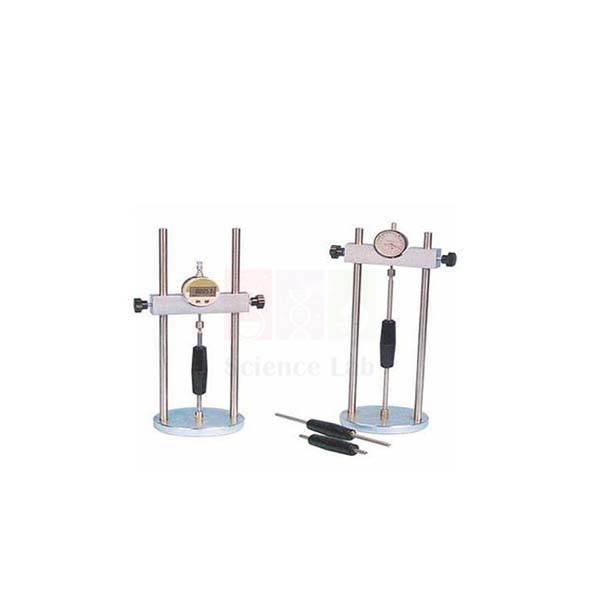
Length Comparator Digital
Length Comparator Digital (Product Code: SLE/CE/20) is a bench measuring frame used to record small changes in the length of mortar and concrete specimens in materials testing laboratories. It locates the specimen on 6.5 mm diameter balls or other reference points, reads length on a gauge graduated to 0.002 mm over 5 mm, and can take an electronic dial gauge when requested at the time of order. Jain Scientific Equipments Pvt Ltd (ScienceLab) produces it as the OEM at its own factory in Ambala, India.
Specifications
| Parameter | Detail |
|---|---|
| Base | Channelled or round base with two vertical pillars |
| Top | Adjustable cross plate |
| Specimen seating | Recessed seating on the base for a second ball or reference point in the specimen |
| Gauge | Dial gauge reading to 0.002 mm × 5 mm; balls mounted in the ends |
| Reference point | Locates on a 6.5 mm diameter ball or other reference point cemented in the specimen |
| Standardisation bar | Stainless steel, with insulated grip and 6.5 mm diameter |
| Electronic option | Electronic dial gauge available as an optional extra, if indicated when the order is placed |
| Product code | SLE/CE/20 |
| Manufacturer | Jain Scientific Equipments Pvt Ltd (ScienceLab) — OEM |
| Country of origin | India (made in Ambala, Haryana) |
What Is the Length Comparator Used For?
A length comparator measures a specimen between two fixed reference points, usually balls or studs cemented into the ends of a mortar or concrete bar. The specimen sits in the recessed seating on the base while the gauge on the adjustable cross plate bears on the upper reference point, so the same length can be re-measured accurately over days or weeks of drying, wetting or expansion testing.
Before each series, set the reading with the stainless steel standardisation bar and hold it only by its insulated grip so hand warmth does not change its length. Laboratories that prefer digital measuring instruments in India can ask for the electronic dial gauge instead of the standard dial, but it must be stated when ordering.
What to Specify When Ordering
- Base style: channelled or round.
- Gauge type: the standard dial gauge reading to 0.002 mm × 5 mm, or the optional electronic dial gauge.
- Reference points used in your specimens: 6.5 mm diameter balls or another type of cemented reference point.
- Number of comparators needed for your specimen programme.
OEM Manufacturer
Jain Scientific Equipments Private Limited, trading as ScienceLab, manufactures the Length Comparator Digital as an OEM product at its licensed factory at Saha, Ambala, Haryana. Because the comparator comes straight from the original equipment manufacturer, questions about the base style, the electronic gauge option or later replacement parts go to the team that makes it. Schools of engineering, testing laboratories, dealers and importers are all supplied factory-direct. See the ScienceLab company profile for company details.
Related Civil Engineering Lab Equipment
Specimen casting, conditioning and measurement all feed into the same length-change results; these related items fill the other steps.
- Volume Change Apparatus — a complete set with mould, reference pins and comparator frame.
- Prism Mould Three Gang — for casting mortar prisms to be measured.
- Demountable Mechanical Strain Gauge — for length variation on larger elements.
- Humidity Chamber — for conditioning specimens between readings.
- Cement curing bench-type cabinet — for curing specimens before measurement.
The Civil Engineering Lab Equipment category lists further apparatus for cement, concrete and soil laboratories.
Frequently Asked Questions
What does the Length Comparator Digital measure?
The Length Comparator Digital measures small changes in the length of mortar or concrete specimens between two reference points, such as 6.5 mm diameter balls cemented in the ends. Repeated readings show shrinkage or expansion over time.
Does the Length Comparator Digital come with an electronic gauge?
The Length Comparator Digital is listed with a dial gauge reading to 0.002 mm × 5 mm. An electronic dial gauge can be supplied as an optional extra, but only if it is indicated at the time of placing the order.
What base options does the Length Comparator Digital have?
The Length Comparator Digital is built on a channelled or a round base carrying two vertical pillars and an adjustable cross plate. State which base you prefer in your enquiry so the quotation matches your laboratory layout.
What is the standardisation bar used for on the Length Comparator Digital?
The stainless steel standardisation bar sets the reference reading of the Length Comparator Digital before specimens are measured. Its insulated grip stops hand warmth from changing the bar length, which matters when readings are taken to 0.002 mm.
Who manufactures the Length Comparator Digital?
The Length Comparator Digital is manufactured by Jain Scientific Equipments Pvt Ltd (ScienceLab) as the OEM at its licensed factory in Saha, Ambala, Haryana, India, and is supplied factory-direct to institutions, dealers and importers.
Can a calibration certificate be provided with the Length Comparator Digital?
Whether a calibration certificate can accompany the Length Comparator Digital should be discussed with us before you order. Mention it in your enquiry on the contact page so it is covered in the quotation.
Request a Quote
Ask for a quotation on the Length Comparator Digital (SLE/CE/20) through the contact page or the enquiry cart, stating the base style and gauge type you need. The quote comes direct from the manufacturer, Jain Scientific Equipments Pvt Ltd (ScienceLab).
Last updated: 24 September 2026
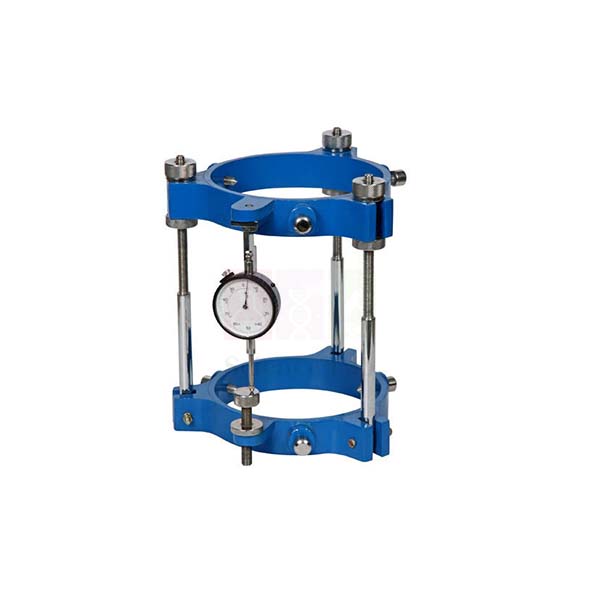
Longitudinal Compressometer
Longitudinal Compressometer (Product Code: SLE/CE/21) is a ring-type strain-measuring frame used to record the axial shortening of concrete cylinders under compressive load in structural and materials testing laboratories. Students and testing engineers clamp its top and bottom rings onto the cylinder and read deformation on a 0.002 mm dial gauge, the data needed for a stress–strain curve. It is made by Jain Scientific Equipments Pvt Ltd (ScienceLab), an OEM manufacturer, at its own factory in Ambala, India.
Specifications
| Parameter | Detail |
|---|---|
| Frame | Bottom ring and top ring |
| Clamping | Tightening screws clamp the compressometer firmly over the cylinder |
| Dial gauge | 0.002 mm × 5 mm, mounted on the upper ring |
| Gauge contact | Dial gauge tip rests on an anvil |
| Zero setting | By adjusting the anvil screw |
| Case | Supplied in a wooden carrying case |
| Product code | SLE/CE/21 |
| Manufacturer | Jain Scientific Equipments Pvt Ltd (ScienceLab) — OEM |
| Country of origin | India (made in Ambala, Haryana) |
What Is the Longitudinal Compressometer Used For?
The compressometer is fitted to a concrete cylinder before it goes into the compression testing machine. As load is applied in steps, the rings move closer together and the dial gauge shows the shortening between them; dividing that change by the gauge length gives strain, and plotting stress against strain gives the static modulus of elasticity of the concrete.
Tighten the ring screws evenly so the frame sits square on the cylinder, then set zero with the anvil screw before loading starts. Remove the instrument before the specimen is taken to failure to protect the gauge. Used with a lateral extensometer on the same cylinder, it also supports Poisson's ratio experiments — one reason civil engineering colleges often order both from the same scientific instruments manufacturer in India.
OEM Manufacturer
ScienceLab, the trading name of Jain Scientific Equipments Private Limited, is the OEM of the Longitudinal Compressometer and makes it at its own licensed factory at Saha, Ambala, Haryana, India. Buying from the original manufacturer means the rings, screws and gauge mounting come from one source, and requests for replacement parts or repeat units go straight to the maker — ask us. The company supplies universities, polytechnics, testing laboratories, dealers and importers directly. Visit the ScienceLab company profile for more.
Related Civil Engineering Lab Equipment
A modulus-of-elasticity test needs specimens, a loading machine and strain measurement; these related products complete the set-up.
- Lateral Extensometer — records lateral strain on the same cylinder for Poisson's ratio.
- Automatic digital compression testing machine — applies the compressive load.
- Cylindrical Mould — for casting the concrete cylinders.
- Accelerated Curing Tank — for curing specimens before testing.
- Demountable Mechanical Strain Gauge — an alternative way to measure surface strain.
More strength and deformation testing apparatus is listed under Civil Engineering Lab Equipment.
Frequently Asked Questions
What is the Longitudinal Compressometer used for?
The Longitudinal Compressometer is used to measure the axial shortening of a concrete cylinder while it is loaded in compression. The readings give strain values from which the stress–strain curve and static modulus of elasticity of the concrete are worked out.
What dial gauge is fitted to the Longitudinal Compressometer?
The Longitudinal Compressometer carries a dial gauge of 0.002 mm × 5 mm mounted on its upper ring. The gauge tip rests on an anvil, so any movement between the rings shows directly on the dial.
How is the Longitudinal Compressometer set to zero?
The zero of the Longitudinal Compressometer dial gauge is set by adjusting the anvil screw on which the gauge tip rests. Set zero after clamping the frame to the cylinder and before any load is applied.
How is the Longitudinal Compressometer attached to the specimen?
The Longitudinal Compressometer has a bottom ring and a top ring fitted with tightening screws, which clamp the frame firmly over the concrete cylinder. Tighten the screws evenly so the rings sit square to the specimen axis.
Who manufactures the Longitudinal Compressometer?
The Longitudinal Compressometer is manufactured by Jain Scientific Equipments Pvt Ltd (ScienceLab) as the OEM at its licensed factory at Saha, Ambala, Haryana, India, and is sold factory-direct to institutions, dealers and importers.
What cylinder size does the Longitudinal Compressometer fit?
The cylinder size for the Longitudinal Compressometer is not stated in this listing. Give your specimen diameter and height in the enquiry through the contact page so the manufacturer can confirm the fit before quoting.
How is the Longitudinal Compressometer packed?
The Longitudinal Compressometer is supplied in a wooden carrying case, which protects the rings and the dial gauge during transport and storage. Returning it to the case after each test also helps keep the gauge in good condition.
Request a Quote
To request a quotation for the Longitudinal Compressometer (SLE/CE/21), use the contact page or the enquiry cart. Quotations are issued directly by the manufacturer, Jain Scientific Equipments Pvt Ltd (ScienceLab), Ambala.
Last updated: 24 September 2026
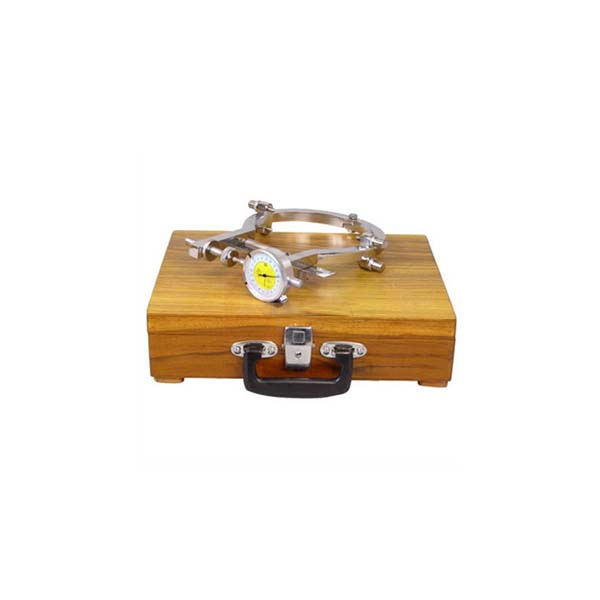
Lateral Extensometer
Lateral Extensometer (Product Code: SLE/CE/22) is a hinged strain-measuring frame used to measure the lateral extension of a concrete specimen under compressive load in materials testing laboratories. Built from two movable frames pivoted at one end, it shows sideways movement on a 0.002 mm dial gauge so that students and engineers can pair lateral readings with axial strain. Jain Scientific Equipments Pvt Ltd (ScienceLab) manufactures it as the OEM at its own factory in Ambala, India.
Specifications
| Parameter | Detail |
|---|---|
| Frames | Two movable frames pivoted at one end |
| Fixing | Fixed to the specimen with tightening screws |
| Dial gauge | 0.002 mm × 5 mm; indicates the lateral extension |
| Gauge contact | Dial gauge tip rests on an anvil |
| Zero setting | By adjusting the anvil screw |
| Case | Supplied in a wooden carrying case |
| Product code | SLE/CE/22 |
| Manufacturer | Jain Scientific Equipments Pvt Ltd (ScienceLab) — OEM |
| Country of origin | India (made in Ambala, Haryana) |
What Is the Lateral Extensometer Used For?
When a concrete specimen is squeezed along its axis it also bulges slightly sideways. The two frames of the lateral extensometer are screwed to the specimen and hinge apart as it expands, and the dial gauge records that movement. Comparing lateral strain with longitudinal strain from a compressometer gives Poisson's ratio, a key input in structural analysis.
Fix the frames with the tightening screws, check they are not touching the machine platens, then zero the gauge with the anvil screw before loading. Take readings at the same load steps used for the compressometer so the two data sets line up. It is a practical test and measuring instrument in India for concrete technology and strength-of-materials practicals.
OEM Manufacturer
Jain Scientific Equipments Private Limited trades as ScienceLab and is the OEM (original equipment manufacturer) of this Lateral Extensometer, producing it at the company's own licensed factory at Saha, Ambala, Haryana, India. Laboratories, colleges, dealers and importers buy it factory-direct, which keeps quotations, repeat orders and spare-part questions with the manufacturer itself. If a component needs replacing, ask us. Company information is on the ScienceLab company profile.
Related Civil Engineering Lab Equipment
Lateral strain readings are normally taken alongside axial strain on the same loaded specimen, so these items are commonly ordered together.
- Longitudinal Compressometer — measures axial strain for the Poisson's ratio calculation.
- Automatic digital compression testing machine — loads the specimen in compression.
- Cylindrical Mould — for casting cylinder specimens.
- Tamping Rod — for compacting concrete in the moulds.
Find more concrete and materials testing apparatus in the Civil Engineering Lab Equipment category.
Frequently Asked Questions
What does the Lateral Extensometer measure?
The Lateral Extensometer measures the lateral (sideways) extension of a concrete specimen as it is loaded in compression. Its reading, taken with axial strain from a compressometer, is used to calculate the Poisson's ratio of the concrete.
How is the Lateral Extensometer attached to the specimen?
The Lateral Extensometer is fixed to the specimen with tightening screws. Its two movable frames are pivoted at one end, so they open as the specimen expands sideways and the dial gauge records that movement.
What reading does the Lateral Extensometer dial gauge give?
The Lateral Extensometer uses a dial gauge of 0.002 mm × 5 mm to indicate lateral extension. The gauge tip rests on an anvil, and the zero is set by adjusting the anvil screw before loading begins.
Can the Lateral Extensometer be used with a compressometer?
Yes. The Lateral Extensometer is normally used together with a longitudinal compressometer on the same specimen, so lateral and axial strains are recorded at the same load steps for a Poisson's ratio determination.
Who manufactures the Lateral Extensometer?
The Lateral Extensometer is manufactured by Jain Scientific Equipments Pvt Ltd (ScienceLab), the OEM, at its own licensed factory at Saha, Ambala, Haryana, India. Quotations and spare-part enquiries are handled by the manufacturer directly.
How is the Lateral Extensometer supplied?
The Lateral Extensometer is supplied in a wooden carrying case that protects the frames and dial gauge. Keep it in the case between tests and give the specimen size you test when you request a quotation through the contact page.
Request a Quote
Send your enquiry for the Lateral Extensometer (SLE/CE/22) through the contact page or the enquiry cart. The quotation comes direct from the manufacturer, Jain Scientific Equipments Pvt Ltd (ScienceLab), Ambala, India.
Last updated: 24 September 2026
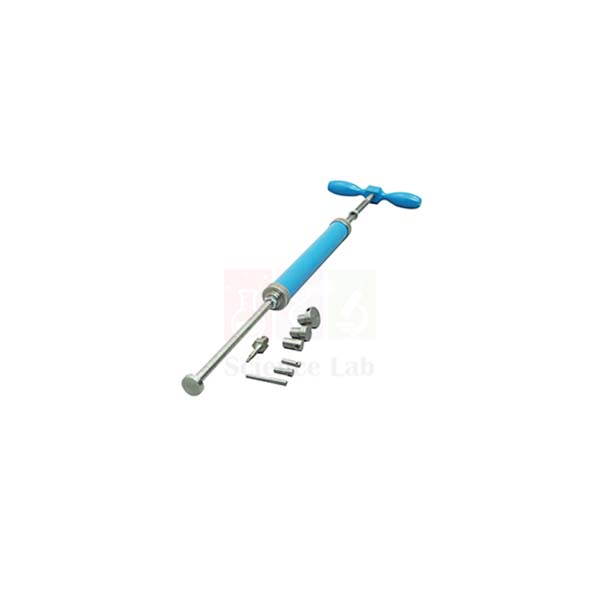
Concrete Penetrometer Spring Type
Concrete Penetrometer Spring Type (Product Code: SLE/CE/23) is a spring-loaded penetration device used to find the rate of hardening of mortar sieved from fresh concrete in concrete testing laboratories and on site. Technicians press one of its six interchangeable needles 25 mm into the mortar and read the force from a sliding ring on the graduated stem. Jain Scientific Equipments Pvt Ltd (ScienceLab) makes it as the OEM at its own factory in Ambala, India, as part of its engineering lab equipment in India range.
Specifications
| Parameter | Detail |
|---|---|
| Application | Rate of hardening of mortar sieved from concrete |
| Operating principle | Spring-loaded device; the force needed to penetrate the mortar by 25 mm is shown by a sliding ring on the graduated stem |
| Load scale | Graduated 1 to 100 daN (the listing also gives a stem graduated 0–70 kg × 1 kg; the scale fitted is confirmed on the quotation) |
| Penetration needles | Six, interchangeable; bearing areas listed as approx. 645–650, 323–325, 160, 65, 32 and 16 mm² |
| Needle shank marking | Every 12.5 mm |
| Weight (approx.) | 5 kg |
| Supplied with | Carrying case |
| Product code | SLE/CE/23 |
| Manufacturer | Jain Scientific Equipments Pvt Ltd (ScienceLab) — OEM |
| Country of origin | India (made in Ambala, Haryana) |
What Is the Concrete Penetrometer Used For?
Mortar is sieved out of a fresh concrete sample and placed in a container. At regular intervals a needle is pushed into the mortar to a depth of 25 mm — two of the 12.5 mm marks on the shank — and the sliding ring records the force reached. Dividing that force by the needle area gives penetration resistance, and plotting it against elapsed time shows how quickly the concrete is setting.
Start with the largest needle while the mortar is soft and change to smaller needles as it stiffens, so the force stays within the scale. Reset the sliding ring before each reading and wipe the needle clean. The results help plan finishing, formwork removal and the effect of admixtures in hot or cold weather.
What to Specify When Ordering
- The load scale you need: 1–100 daN, or a stem graduated 0–70 kg × 1 kg.
- The number of penetrometers for your laboratory or site teams.
- Any sieve needed to separate mortar from the concrete sample, and other setting-time equipment to quote together.
OEM Manufacturer
ScienceLab is the trading name of Jain Scientific Equipments Private Limited (CIN U29309HR2020PTC087597), the OEM of the Concrete Penetrometer Spring Type. The penetrometer is produced at the company's licensed factory at 449, HSIIDC Industrial Area, Saha, Ambala (Factory Licence AMB-ONLINE-CHD-J-414), and supplied factory-direct to laboratories, contractors' site labs, colleges, dealers and importers. For spare needles or a repeat order, ask us. The ScienceLab company profile gives more background on the company.
Related Civil Engineering Lab Equipment
Setting-time work on concrete and cement draws on several other items from the same range.
- Pocket Concrete Penetrometer — a compact alternative for quick setting checks.
- Test Sieves — for separating mortar from the concrete sample.
- Vicat Needle Apparatus With Dashpot — setting time of cement paste.
- Bleeding Of Freshly Mixed Concrete — another test on the fresh concrete sample.
- Slump Test Apparatus — workability check before setting tests begin.
Browse the Civil Engineering Lab Equipment range for more fresh and hardened concrete apparatus.
Frequently Asked Questions
What is the Concrete Penetrometer Spring Type used for?
The Concrete Penetrometer Spring Type is used to find the rate of hardening of mortar sieved from fresh concrete. It measures the force needed to push a needle 25 mm into the mortar at intervals, showing how the setting of the concrete progresses.
How many needles come with the Concrete Penetrometer Spring Type?
The Concrete Penetrometer Spring Type is supplied with six interchangeable penetration needles, with bearing areas listed as approximately 645–650, 323–325, 160, 65, 32 and 16 mm². The needle shanks are marked at every 12.5 mm.
How is the reading taken on the Concrete Penetrometer Spring Type?
On the Concrete Penetrometer Spring Type, the needle is pressed 25 mm into the mortar and a sliding ring on the graduated stem stops at the maximum force reached. Penetration resistance is that force divided by the needle area.
Which load scale does the Concrete Penetrometer Spring Type have?
The Concrete Penetrometer Spring Type is listed with a spring scale graduated from 1 to 100 daN, and the listing also mentions a stem graduated 0–70 kg × 1 kg. Confirm the scale you need in your enquiry.
Who manufactures the Concrete Penetrometer Spring Type?
Jain Scientific Equipments Pvt Ltd (ScienceLab) manufactures the Concrete Penetrometer Spring Type as the OEM at its licensed factory at Saha, Ambala, Haryana, India, and supplies it directly to laboratories, institutions, dealers and importers.
Is a calibration certificate available for the Concrete Penetrometer Spring Type?
Ask us before ordering: whether a calibration certificate can be provided for the Concrete Penetrometer Spring Type is confirmed case by case. Note the requirement in your enquiry through the contact page and it will be answered in the quotation.
What is supplied with the Concrete Penetrometer Spring Type?
The Concrete Penetrometer Spring Type comes complete with its six interchangeable needles and a carrying case, and weighs approximately 5 kg. The case keeps the spring device and needles together for site and laboratory use.
Request a Quote
For a quotation on the Concrete Penetrometer Spring Type (SLE/CE/23), send your scale preference, quantity and delivery location via the contact page or the enquiry cart. Quotes come direct from the manufacturer, Jain Scientific Equipments Pvt Ltd (ScienceLab).
Last updated: 24 September 2026
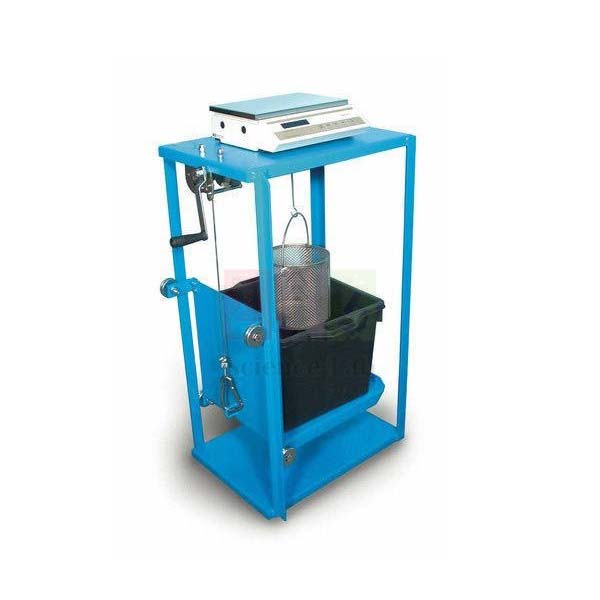
Buoyancy Balance
Buoyancy Balance (Product Code: SLE/CE/24) is a weighing system used to determine the density of concrete by weighing a specimen in air and then in water, in civil engineering and materials testing laboratories. Its rigid support frame carries a platform-mounted water tank that a mechanical lifting device raises to immerse the specimen hanging below the balance. The system is developed and made by Jain Scientific Equipments Pvt Ltd (ScienceLab), an OEM manufacturer, at its own factory in Ambala, India.
Key Details
| Parameter | Detail |
|---|---|
| Method | Sample weighed in air and in water to calculate the density of concrete |
| Frame | Rigid support frame |
| Water tank | Mounted on a platform |
| Lifting | Mechanical lifting device raises the water tank through the frame height |
| Specimen position | Suspended below the balance, which is fixed on a cradle |
| Balance use | The balance supplied can also be used as a standard weighing device |
| Product code | SLE/CE/24 |
| Manufacturer | Jain Scientific Equipments Pvt Ltd (ScienceLab) — OEM |
| Country of origin | India (made in Ambala, Haryana) |
What Is the Buoyancy Balance Used For?
The buoyancy method relies on Archimedes' principle: a specimen weighs less in water than in air by the weight of water it displaces. From the two weighings the laboratory calculates the specimen volume and then its density, without needing to measure an irregular shape with callipers.
Because the water tank is lifted up to the specimen rather than the specimen being lowered by hand, the sample stays steady and the reading settles quickly. Check that no air bubbles cling to the specimen and note the water temperature for each test. When the frame is not in use for density work, the balance serves as an everyday laboratory weighing device, a space-saving arrangement for labs sourcing test and measurement instruments in India.
OEM Manufacturer
ScienceLab, the trading name of Jain Scientific Equipments Private Limited, developed this buoyancy balance system and is its OEM. The frame, tank platform and lifting arrangement are built at the company's own licensed factory at Saha, Ambala, Haryana, India, and the complete system is supplied factory-direct to engineering colleges, testing laboratories, dealers and importers. Ask us about replacement parts or matching units for a second test bay. Background is on the ScienceLab company profile.
Related Civil Engineering Lab Equipment
These items are used before, during or alongside buoyancy weighing of concrete and aggregate samples.
- Buoyancy Balance Apparatus — a related listing of the buoyancy weighing system to compare before ordering.
- Density Basket — for holding aggregate samples under water.
- Specific Gravity And Water Absorption of Aggregates — a related density test on aggregates.
- Concrete Cube Mould — for casting concrete specimens.
- Cylindrical Measures — for bulk density measurements.
See the full Civil Engineering Lab Equipment range for density, strength and durability testing.
Frequently Asked Questions
What is the Buoyancy Balance used for?
The Buoyancy Balance is used to find the density of concrete. A specimen is weighed in air and then in water, and the difference between the two weights gives its volume, from which density is calculated without measuring the specimen shape.
How does the Buoyancy Balance immerse the specimen?
The Buoyancy Balance uses a mechanical lifting device to raise the platform-mounted water tank through the frame height. The specimen, suspended below the balance on its cradle, is immersed smoothly without being lowered or disturbed by hand.
Can the Buoyancy Balance be used for ordinary weighing?
Yes. The balance supplied with the Buoyancy Balance can also be used as a standard weighing device, giving the laboratory a versatile weighing system for routine work when density tests are not running.
What is the capacity of the Buoyancy Balance?
The balance capacity and readability for the Buoyancy Balance are not stated in this listing. Tell us your maximum specimen weight and required resolution through the contact page, and the manufacturer will confirm a suitable configuration in the quotation.
Who manufactures the Buoyancy Balance?
The Buoyancy Balance system is developed and manufactured by Jain Scientific Equipments Pvt Ltd (ScienceLab) as the OEM at its licensed factory at Saha, Ambala, Haryana, India, and supplied directly to institutions, dealers and importers.
What should a Buoyancy Balance quotation request include?
A Buoyancy Balance quotation request should state the product code SLE/CE/24, the specimen types and weights you test, the quantity and the delivery location. Use the contact page or the enquiry cart to send it.
Request a Quote
To order the Buoyancy Balance (SLE/CE/24), send your specimen details and quantity through the contact page or the enquiry cart. Quotations come directly from the manufacturer, Jain Scientific Equipments Pvt Ltd (ScienceLab), Ambala.
Last updated: 24 September 2026
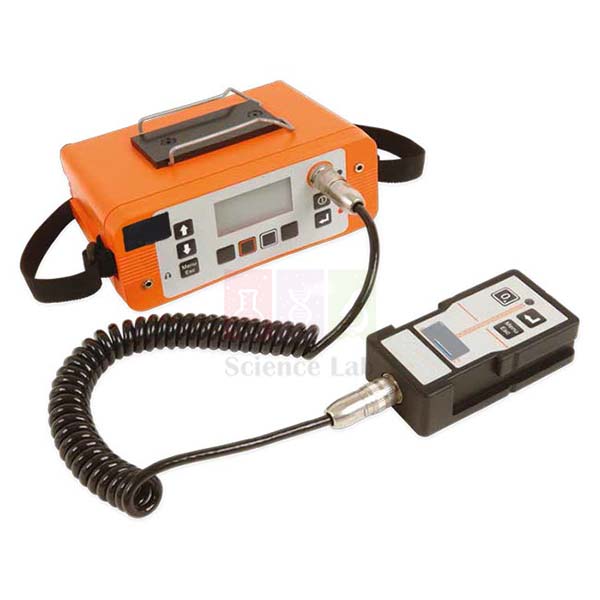
Concrete cover meter
Concrete cover meter (Product Code: SLE/CE/25) is a portable pulse-induction instrument used to locate reinforcing bars and measure the concrete cover over them during structural surveys and in civil engineering laboratories. Site engineers, testing labs and colleges use it for non-destructive checks; its standard search head identifies a 40 mm diameter bar up to about 95 mm deep. It is supplied by Jain Scientific Equipments Pvt Ltd (ScienceLab), Ambala, India.
Specifications
| Parameter | Detail |
|---|---|
| Measuring technique | Pulse induction |
| Case | Rugged, waterproof IP65 case with probe storage |
| Power | Rechargeable battery pack; can be charged inside or outside the gauge |
| Standard search head | Identifies 40 mm dia. bar up to 95 mm depth (approx.) and 8 mm dia. bar up to 70 mm depth (approx.) |
| Sensing area | 120 × 60 mm |
| Supplied complete with | Main unit, standard search head, PC cable, battery pack and charger, shoulder strap, earphone, carry case and instruction manual |
| Product code | SLE/CE/25 |
| Supplied by | Jain Scientific Equipments Pvt Ltd (ScienceLab), Ambala, India |
What Is the Concrete Cover Meter Used For?
Concrete cover — the depth of concrete between the surface and the nearest reinforcing bar — protects steel from corrosion and fire, so engineers check it on new work and during condition surveys. The cover meter also maps where bars run before core drilling, chasing or fixing anchors, so reinforcement is not cut by mistake.
Scan slowly across the expected bar direction and mark the peaks on the surface. The listed ranges show why bar size matters: a thin 8 mm bar is detectable only to about 70 mm, while a 40 mm bar can be found to about 95 mm. The earphone helps on noisy sites and the PC cable moves readings to a computer for reporting. Among test and measurement instruments in India, it is a standard tool for durability audits.
Supplier
Jain Scientific Equipments Private Limited, which trades as ScienceLab, supplies this concrete cover meter from Ambala, Haryana, to engineering colleges, testing laboratories, consultants, dealers and importers. The company sources the instrument and handles the quotation, packing and dispatch for buyers in India and international markets. Ask us before ordering if you need a spare battery pack or other accessories, and availability will be confirmed in the quotation. Company details are on the ScienceLab company profile.
Related Civil Engineering Lab Equipment
Cover measurement is usually one part of a wider non-destructive assessment of a concrete structure.
- Concrete Test Hammer — rebound testing of surface hardness.
- Ultrasonic Pulse Velocity Tester — checks internal quality and uniformity.
- Crack Measuring Microscope — measures crack widths found during the survey.
- Core Drilling Machine (Motorised) — for taking cores clear of located bars.
- Cementometer Moisture Meter — for moisture checks on concrete and screeds.
More field and laboratory testing equipment is listed under Civil Engineering Lab Equipment.
Frequently Asked Questions
What does the Concrete cover meter measure?
The Concrete cover meter locates steel reinforcing bars inside concrete and measures the cover, meaning the depth of concrete above each bar. It uses the pulse induction technique, so the check is non-destructive and needs no drilling.
How deep can the Concrete cover meter detect bars?
With its standard search head, the Concrete cover meter identifies a 40 mm diameter bar up to about 95 mm deep and an 8 mm bar up to about 70 mm deep. The search head has a sensing area of 120 × 60 mm.
What is supplied with the Concrete cover meter?
The Concrete cover meter comes with the main unit, standard search head, PC cable, battery pack and charger, shoulder strap, earphone, carry case and instruction manual, so it is ready for site surveys straight out of the case.
Is the Concrete cover meter suitable for site use?
Yes. The Concrete cover meter has a rugged, waterproof IP65 case with probe storage, a shoulder strap and a rechargeable battery pack that can be charged inside or outside the gauge, which suits work away from the laboratory.
Who supplies the Concrete cover meter?
The Concrete cover meter is supplied by Jain Scientific Equipments Pvt Ltd (ScienceLab), Ambala, Haryana, India, to laboratories, colleges, consultants, dealers and importers in India and international markets.
Is a calibration certificate available for the Concrete cover meter?
For the Concrete cover meter, calibration-certificate availability is confirmed on request rather than assumed. Raise it with us before you order through the contact page, and the reply will come with your quotation.
Request a Quote
For a quotation on the Concrete cover meter (SLE/CE/25), send your quantity and delivery location through the contact page or add it to the enquiry cart. Jain Scientific Equipments Pvt Ltd (ScienceLab) will reply with a quotation and supply details.
Last updated: 24 September 2026
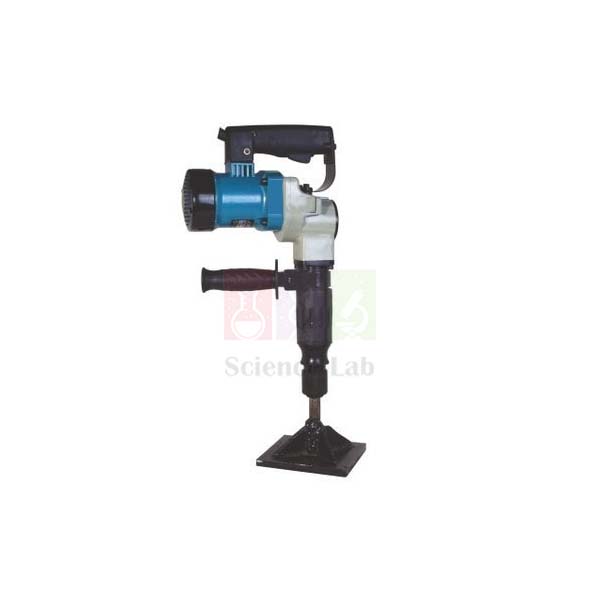
DLC Vibrating Hammer For Concrete Mould
DLC Vibrating Hammer For Concrete Mould (Product Code: SLE/CE/26) is a vibratory compaction hammer used to compact concrete samples in moulds, including dry lean concrete (DLC) specimens, in highway and civil engineering laboratories. Road-materials labs choose it because vibratory compaction is generally much faster than impact hammering; the unit comes with one tamping foot and one shank. The hammer is supplied by Jain Scientific Equipments Pvt Ltd (ScienceLab), Ambala, India.
Specifications
| Parameter | Detail |
|---|---|
| Application | Compaction of concrete samples in a mould |
| Dimensions | 290 × 255 × 350 mm |
| Weight (approx.) | 6 kg |
| Supplied with | 1 tamping foot and 1 shank |
| Compaction speed | Generally much faster than compaction by impact hammering |
| Product code | SLE/CE/26 |
| Supplied by | Jain Scientific Equipments Pvt Ltd (ScienceLab), Ambala, India |
What Is the DLC Vibrating Hammer Used For?
Dry lean concrete is a stiff, low-water mix used as a sub-base under rigid pavements. It is too dry to consolidate properly by rodding, so laboratories compact DLC cubes or cylinders with a vibrating hammer fitted with a tamping foot, working in layers until each layer is dense and its surface closes.
Hold the hammer upright with the tamping foot flat on the concrete, move it steadily across the layer and avoid resting it against the mould walls. Check the foot and shank for wear before each batch, since a worn foot leaves uneven layers. At about 6 kg the hammer is manageable for repeated specimen making, a practical point for engineering lab equipment in India used by student groups.
Supplier
ScienceLab is the trading name of Jain Scientific Equipments Private Limited, which supplies the DLC Vibrating Hammer For Concrete Mould from Ambala, Haryana, India. The company sources the hammer with its tamping foot and shank and delivers it to highway laboratories, engineering colleges, contractors, dealers and importers. Ask us about a spare tamping foot or shank when you request your quotation. Further company information is on the ScienceLab company profile.
Related Civil Engineering Lab Equipment
A vibrating hammer is one part of the specimen-making workflow; these moulds and compaction tools are used with or instead of it.
- Concrete Cube Mould — moulds for the compacted cube specimens.
- Cylindrical Mould — for cylinder specimens.
- Vibrating Table — an alternative way to compact concrete in moulds.
- Poker Vibrator — internal vibration for larger pours.
- Tamping Bar — for manual compaction where vibration is not specified.
Find further moulds, compaction tools and testing machines under Civil Engineering Lab Equipment.
Frequently Asked Questions
What is the DLC Vibrating Hammer For Concrete Mould used for?
The DLC Vibrating Hammer For Concrete Mould is used to compact concrete samples in a mould, especially stiff dry lean concrete that cannot be compacted properly by rodding. It produces dense specimens for later strength testing.
What accessories come with the DLC Vibrating Hammer For Concrete Mould?
The DLC Vibrating Hammer For Concrete Mould is supplied with one tamping foot and one shank. If your test programme needs a different foot size or spares, mention it in the enquiry so it can be checked before quoting.
What are the size and weight of the DLC Vibrating Hammer For Concrete Mould?
The DLC Vibrating Hammer For Concrete Mould measures 290 × 255 × 350 mm and weighs approximately 6 kg, so one technician can handle it comfortably while compacting several specimens in a session.
Why use the DLC Vibrating Hammer For Concrete Mould instead of hand compaction?
The DLC Vibrating Hammer For Concrete Mould is generally a much faster method than impact hammering, and vibration consolidates dry, harsh mixes more evenly. That gives more consistent specimens and saves time when many moulds are filled.
What power supply does the DLC Vibrating Hammer For Concrete Mould need?
The electrical rating of the DLC Vibrating Hammer For Concrete Mould is not stated in this listing. Tell us your local supply voltage through the contact page and the details will be confirmed with your quotation.
Who supplies the DLC Vibrating Hammer For Concrete Mould?
The DLC Vibrating Hammer For Concrete Mould is supplied by Jain Scientific Equipments Pvt Ltd (ScienceLab), Ambala, Haryana, India, to laboratories, colleges, contractors, dealers and importers in India and international markets.
Request a Quote
Request a quotation for the DLC Vibrating Hammer For Concrete Mould (SLE/CE/26) through the contact page or the enquiry cart, stating quantity and supply voltage. Jain Scientific Equipments Pvt Ltd (ScienceLab) will reply with a quotation and delivery details.
Last updated: 24 September 2026
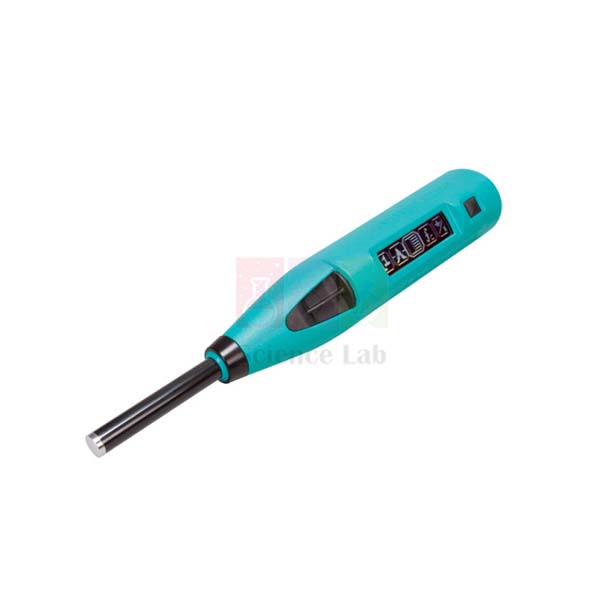
Concrete Test Hammer
Concrete Test Hammer (Product Code: SLE/CE/27) is a rebound-type hammer used to assess the surface hardness and estimate the compressive strength of hardened concrete without damaging it, in structural surveys and civil engineering laboratories. With an impact energy of 2.207 Nm and a measurement range of 10 to 70 N/mm², it gives engineers, testing labs and students a quick screening tool. This rebound hammer is supplied by Jain Scientific Equipments Pvt Ltd (ScienceLab), Ambala, India.
Specifications
| Parameter | Detail |
|---|---|
| Impact energy | 2.207 Nm |
| Measurement range | 10 to 70 N/mm² |
| Case | Aluminium; 190 × 100 × 350 mm |
| Weight (approx.) | 1.5 kg |
| Supplied with | Carrying case, grinding stone and instruction manual |
| Product code | SLE/CE/27 |
| Supplied by | Jain Scientific Equipments Pvt Ltd (ScienceLab), Ambala, India |
What Is the Concrete Test Hammer Used For?
A spring-driven mass inside the hammer strikes the concrete through a plunger and rebounds; the rebound value depends on surface hardness, which is correlated with compressive strength. Engineers use it to check uniformity across slabs, beams and columns, to find weak zones and to decide where cores should be taken.
Smooth the test spot with the grinding stone, hold the hammer at right angles to the surface and take a group of readings at each location, avoiding honeycombed areas and exposed aggregate. Treat the results as an estimate and confirm critical areas with cores or cube tests. It is a widely used test and measuring instrument in India for quick condition surveys.
Supplier
Jain Scientific Equipments Private Limited, trading as ScienceLab, supplies the Concrete Test Hammer from Ambala, Haryana, India, to testing laboratories, engineering colleges, consultants, dealers and importers. For vendor registration, the supplying company is registered with Importer-Exporter Code AAECJ8618A (DGFT) and GSTIN 06AAECJ8618A1ZT. Quotations, packing and dispatch are handled by the company for buyers in India and international markets. See the ScienceLab company profile for more.
Related Civil Engineering Lab Equipment
Rebound testing is usually combined with other non-destructive and laboratory tests to build a full picture of concrete quality.
- Concrete Test Hammer Schmidt Hammer N-Type — an N-type rebound hammer listed separately.
- Ultrasonic Pulse Velocity Tester — assesses internal quality alongside surface hardness.
- Concrete cover meter — locates reinforcement before testing or coring.
- Automatic digital compression testing machine — for cube tests that confirm rebound estimates.
- Core Drilling Machine (Motorised) — for extracting cores from suspect areas.
Explore all Civil Engineering Lab Equipment for non-destructive and laboratory concrete testing.
Frequently Asked Questions
What does the Concrete Test Hammer measure?
The Concrete Test Hammer measures the rebound of a spring-driven mass from the concrete surface. The rebound value reflects surface hardness and is used to estimate compressive strength and check uniformity without damaging the structure.
What is the measurement range of the Concrete Test Hammer?
The Concrete Test Hammer covers a measurement range of 10 to 70 N/mm² and has an impact energy of 2.207 Nm, which suits routine assessment of hardened concrete in buildings, bridges and precast elements.
What is supplied with the Concrete Test Hammer?
The Concrete Test Hammer comes with a carrying case, a grinding stone and an instruction manual. Its aluminium case measures 190 × 100 × 350 mm, and the listed weight is approximately 1.5 kg.
What is the grinding stone for on the Concrete Test Hammer?
The grinding stone supplied with the Concrete Test Hammer smooths rough or dusty concrete at each test spot. A flat, clean surface gives more consistent rebound readings than laitance, trowel marks or loose particles.
Who supplies the Concrete Test Hammer?
The Concrete Test Hammer is supplied by Jain Scientific Equipments Pvt Ltd (ScienceLab), Ambala, Haryana, India, to testing laboratories, colleges, consultants, dealers and importers in India and international markets.
Is a calibration certificate available for the Concrete Test Hammer?
Whether the Concrete Test Hammer can be supplied with a calibration certificate is something to discuss with us before ordering. Mention it when you send your enquiry through the contact page so the quotation can address it.
Request a Quote
To request a quotation for the Concrete Test Hammer (SLE/CE/27), use the contact page or add it to the enquiry cart. Jain Scientific Equipments Pvt Ltd (ScienceLab) will send quotation and supply details.
Last updated: 24 September 2026
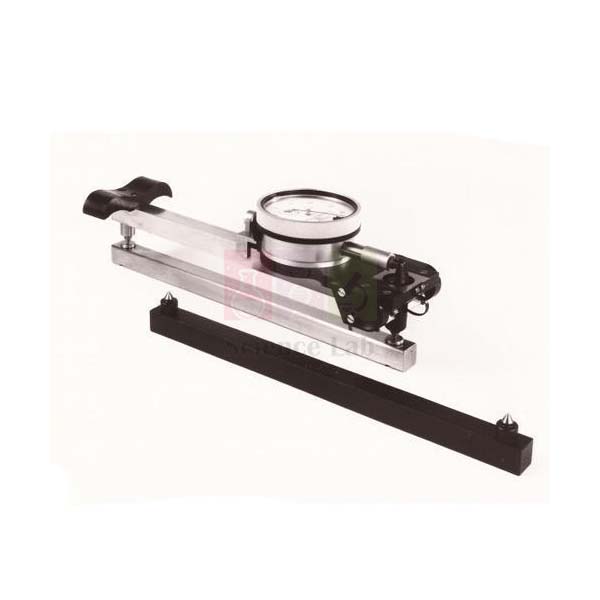
Demountable Mechanical Strain Gauge
Demountable Mechanical Strain Gauge (Product Code: SLE/CE/28) is a portable strain gauge used to measure length variation between fixed points on concrete and other structural specimens in materials testing laboratories and field monitoring. It is listed with 100 mm and 300 mm measuring bases, each with a 5 mm range, and a digital gauge of 0.001 mm resolution with PC output. The gauge is produced by Jain Scientific Equipments Pvt Ltd (ScienceLab) as the OEM at its own Ambala factory in India.
Specifications
| Parameter | Detail |
|---|---|
| Purpose | Measurement of length variation |
| Measuring base | 100 mm × 5 mm range, or 300 mm × 5 mm range |
| Gauge | Digital, 0.001 mm resolution |
| Data output | Output for PC connection (special cable required, listed as an accessory) |
| Dimensions | 300 × 400 × 110 mm |
| Weight (approx.) | 2.1 kg |
| Product code | SLE/CE/28 |
| Manufacturer | Jain Scientific Equipments Pvt Ltd (ScienceLab) — OEM |
| Country of origin | India (made in Ambala, Haryana) |
What Is the Demountable Strain Gauge Used For?
A demountable strain gauge is not left on the specimen. Pairs of reference points are fixed to the surface at the measuring-base spacing, and the gauge is placed on them each time a reading is needed, so one instrument can monitor many locations over weeks or months. Typical uses include shrinkage and creep of concrete, strain in beams during load tests and movement across cracks.
Choose the 100 mm base for small specimens or closely spaced points and the 300 mm base for averaging strain over coarser concrete. Take every reading with the same hand pressure and record the temperature. The 0.001 mm digital gauge with PC output makes it a useful option among digital measuring instruments in India for student projects and research.
What to Specify When Ordering
- Measuring base: 100 mm or 300 mm (each with a 5 mm range).
- Whether you need the special cable for PC connection.
- The number of gauges for your monitoring programme.
OEM Manufacturer
ScienceLab is the trading name of Jain Scientific Equipments Private Limited, the OEM that makes the Demountable Mechanical Strain Gauge at its own licensed factory at Saha, Ambala, Haryana, India. Research groups, engineering colleges, testing laboratories, dealers and importers are supplied factory-direct, so questions on base length, the PC cable or replacement parts go to the manufacturer. Just ask us. Details of the company appear on the ScienceLab company profile.
Related Civil Engineering Lab Equipment
Strain and length-change measurements tie in with specimen casting, loading and crack inspection.
- Volume Change Apparatus — length change of cast specimens in a comparator.
- Length Comparator Digital — bench measurement of specimen length.
- Beam Mould — for casting beam specimens to instrument.
- Flexure Testing Machine Digital — loads beams while strain is recorded.
- Crack Measuring Microscope — measures crack widths near gauge points.
Discover further measuring and testing apparatus in Civil Engineering Lab Equipment.
Frequently Asked Questions
What is the Demountable Mechanical Strain Gauge used for?
The Demountable Mechanical Strain Gauge is used to measure length variation between fixed reference points on concrete and other structural specimens. Because it is removed after each reading, one gauge can monitor many locations over a long test.
Which measuring bases are available for the Demountable Mechanical Strain Gauge?
The Demountable Mechanical Strain Gauge is listed with a 100 mm measuring base and a 300 mm measuring base, each with a 5 mm range. State which base you need when you request a quotation.
What resolution does the Demountable Mechanical Strain Gauge have?
The Demountable Mechanical Strain Gauge uses a digital gauge with 0.001 mm resolution and an output for PC connection, so readings can be transferred to a computer rather than written down by hand.
Is the PC cable included with the Demountable Mechanical Strain Gauge?
The PC connection on the Demountable Mechanical Strain Gauge needs a special cable, which is listed as an accessory. Ask for it in your enquiry if you plan to log readings on a computer.
What are the size and weight of the Demountable Mechanical Strain Gauge?
The Demountable Mechanical Strain Gauge measures 300 × 400 × 110 mm and weighs approximately 2.1 kg, making it easy to carry between laboratory specimens and field monitoring points.
Who manufactures the Demountable Mechanical Strain Gauge?
The Demountable Mechanical Strain Gauge is manufactured by Jain Scientific Equipments Pvt Ltd (ScienceLab) as the OEM at its licensed factory at Saha, Ambala, Haryana, India, and supplied directly to institutions, dealers and importers.
Request a Quote
For a quotation on the Demountable Mechanical Strain Gauge (SLE/CE/28), send your measuring base, cable requirement and quantity via the contact page or the enquiry cart. The manufacturer, Jain Scientific Equipments Pvt Ltd (ScienceLab), replies with the quotation directly.
Last updated: 24 September 2026
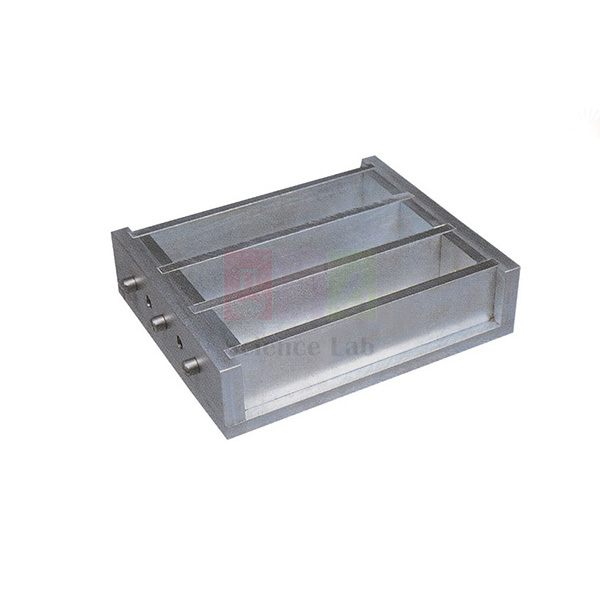
Prism Mould Three Gang
Prism Mould Three Gang (Product Code: SLE/CE/29) is a three-compartment mould used to cast mortar prism specimens for strength testing of cement and mortar in civil engineering laboratories. It casts three 40.1 × 40 × 160 mm prisms at once, comes complete with base, and every part carries an identification number so it goes back together correctly. Jain Scientific Equipments Pvt Ltd (ScienceLab) makes it as the OEM at its own factory in Ambala, India.
Specifications
| Parameter | Detail |
|---|---|
| Compartments | Three (three-gang) |
| Size | 40.1 × 40 × 160 mm |
| Base | Supplied complete with base |
| Assembly | All parts marked with an identification number for correct assembly |
| Product code | SLE/CE/29 |
| Manufacturer | Jain Scientific Equipments Pvt Ltd (ScienceLab) — OEM |
| Country of origin | India (made in Ambala, Haryana) |
What Is the Three Gang Prism Mould Used For?
Mortar prisms are the standard specimen for many cement strength tests: each prism is broken in flexure, and the two halves are then crushed in compression, so one three-gang mould yields a full set of results from a single mix. The mortar is placed in layers and compacted, often on a jolting apparatus, then struck off level and cured before demoulding.
Clean and lightly oil the inner faces before each casting, and reassemble the parts by their identification numbers so the compartments stay square and the prisms come out to size. Tighten the mould evenly on its base to stop mortar leaking at the joints. A well-kept mould is a long-term asset, which is why labs buy from an engineering lab equipment manufacturer that can supply matching repeat units.
OEM Manufacturer
Jain Scientific Equipments Private Limited, trading as ScienceLab, is the OEM of the Prism Mould Three Gang and produces it at its licensed factory at Saha, Ambala, Haryana, India. The moulds are supplied factory-direct to cement and concrete laboratories, engineering colleges, dealers and importers, so extra moulds for a larger testing programme can be ordered from the same source. For replacement parts, ask us. Learn more on the ScienceLab company profile.
Related Civil Engineering Lab Equipment
Casting, compacting, curing and testing mortar prisms uses several other items from the same range.
- Jolting Apparatus — compacts mortar in the prism mould.
- Laboratory digital planetary mixer — mixes the mortar before casting.
- Cement curing bench-type cabinet — cures the prisms before demoulding.
- Flexure Testing Machine Manual — for flexural strength testing.
- Straight Edge — strikes off surplus mortar level with the mould.
See the whole Civil Engineering Lab Equipment range for cement, mortar and concrete testing.
Frequently Asked Questions
What is the Prism Mould Three Gang used for?
The Prism Mould Three Gang is used to cast three mortar prisms at a time for cement and mortar strength testing. The prisms are typically broken in flexure and their halves tested in compression, giving a complete result set from one mix.
What size prisms does the Prism Mould Three Gang cast?
The Prism Mould Three Gang is listed with a size of 40.1 × 40 × 160 mm for each prism. If your test method needs a particular tolerance, mention it in the enquiry so it can be confirmed.
Is a base included with the Prism Mould Three Gang?
Yes. The Prism Mould Three Gang is supplied complete with its base, so the three compartments can be assembled, filled and compacted without buying a separate base plate.
How is the Prism Mould Three Gang assembled correctly?
Every part of the Prism Mould Three Gang is marked with an identification number. Matching the numbered parts during reassembly keeps each compartment square and the prisms true to size after every cleaning.
Who manufactures the Prism Mould Three Gang?
The Prism Mould Three Gang is manufactured by Jain Scientific Equipments Pvt Ltd (ScienceLab) as the OEM at its own licensed factory at Saha, Ambala, Haryana, India, and supplied factory-direct to laboratories, dealers and importers.
How should the Prism Mould Three Gang be maintained?
Clean the Prism Mould Three Gang soon after demoulding, remove hardened mortar from the joints, and apply a thin coat of release oil before storage. This protects the faces and keeps the numbered parts fitting together properly.
Request a Quote
To order the Prism Mould Three Gang (SLE/CE/29), send the number of moulds and delivery details through the contact page or the enquiry cart. Every quotation is prepared by the manufacturer itself, Jain Scientific Equipments Pvt Ltd (ScienceLab), Ambala.
Last updated: 24 September 2026
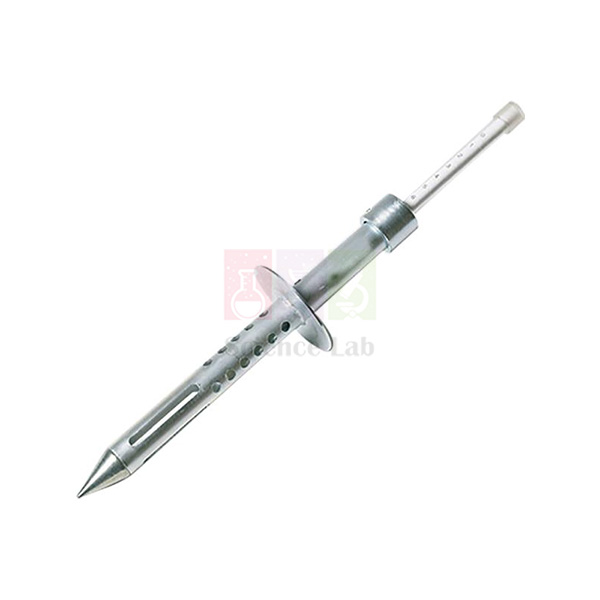
K-Slump Tester
K-Slump Tester (Product Code: SLE/CE/30) is a probe-type tester used to determine the workability and degree of compaction of fresh concrete in place, inside forms and test moulds, on site and in concrete laboratories. Engineers and students insert its 20 mm diameter calibrated hollow tube into the concrete and read the K-slump directly after 60 seconds. It comes from Jain Scientific Equipments Pvt Ltd (ScienceLab), which makes it as an OEM manufacturer at its own factory in Ambala, India.
Specifications
| Parameter | Detail |
|---|---|
| Measures | Workability and degree of compaction of fresh concrete after placing in forms |
| Where used | In-situ measurements, or inside test moulds and forms |
| Calibrated hollow tube | 20 mm diameter |
| Total length | 300 mm |
| Weight (approx.) | 500 g |
| Reading | After 60 seconds, a measuring rod is lowered onto the concrete and the K-slump is read directly on a scale |
| Supplied with | Correlation chart and instructions |
| Product code | SLE/CE/30 |
| Manufacturer | Jain Scientific Equipments Pvt Ltd (ScienceLab) — OEM |
| Country of origin | India (made in Ambala, Haryana) |
What Is the K-Slump Tester Used For?
The tester is pushed into the fresh concrete up to the level of its disc. Over the next 60 seconds mortar flows into the hollow tube; the measuring rod is then lowered onto the concrete surface inside the tube and the K-slump is read straight off the scale. Using the correlation chart, the reading can be related to the conventional slump test.
Because it works in the formwork itself, the K-slump tester checks concrete where it has actually been placed, with no need to take a separate sample. Take readings at several points, clean the tube between insertions and test before the concrete begins to stiffen. Light at about 500 g, it is a handy addition to engineering educational equipments in India for site-practice sessions.
OEM Manufacturer
ScienceLab is the trading name of Jain Scientific Equipments Private Limited, the OEM (original equipment manufacturer) of the K-Slump Tester, which is made at the company's own licensed factory at Saha, Ambala, Haryana, India. Site laboratories, polytechnics, colleges, dealers and importers buy it factory-direct and deal with the manufacturer for quotations and repeat supply. If you need a replacement correlation chart or part, ask us. Visit the ScienceLab company profile.
Related Civil Engineering Lab Equipment
These workability tests are often run alongside the K-slump tester or used to build its correlation.
- Slump Test Apparatus — the conventional slump test for correlation.
- Compaction Factor Test Apparatus — workability of low-slump mixes.
- Vee Bee Consistometer — consistency of stiff concrete.
- Flow Table — flow of fresh concrete.
- Poker Vibrator — compacts the concrete in the forms being checked.
The Civil Engineering Lab Equipment category has further fresh-concrete and site-testing apparatus.
Frequently Asked Questions
What does the K-Slump Tester measure?
The K-Slump Tester measures the workability and degree of compaction of fresh concrete after it has been placed in forms or test moulds. It gives a direct K-slump reading that can be correlated with the standard slump test.
How long does a K-Slump Tester reading take?
A K-Slump Tester reading takes about one minute. The tester is inserted up to its disc, and after 60 seconds the measuring rod is lowered onto the concrete and the K-slump is read directly on the scale.
Can K-Slump Tester results be compared with the slump test?
Yes. K-Slump Tester results can be correlated against the conventional slump test, and the tester includes a correlation chart and instructions so readings can be interpreted in familiar slump terms.
What are the dimensions of the K-Slump Tester?
The K-Slump Tester has a total length of 300 mm, a calibrated hollow tube of 20 mm diameter and weighs approximately 500 g, so it fits easily in a site kit or laboratory drawer.
Can the K-Slump Tester be used inside formwork?
Yes. The K-Slump Tester is designed for in-situ measurements and can be used inside forms and test moulds, so it checks the concrete where it has actually been placed rather than a separate sample.
Who manufactures the K-Slump Tester?
The K-Slump Tester is manufactured by Jain Scientific Equipments Pvt Ltd (ScienceLab) as the OEM at its licensed factory at Saha, Ambala, Haryana, India, and is supplied factory-direct to institutions, dealers and importers.
Request a Quote
For a quotation on the K-Slump Tester (SLE/CE/30), send the quantity and delivery location via the contact page or the enquiry cart. You will receive the quotation straight from Jain Scientific Equipments Pvt Ltd (ScienceLab), the manufacturer.
Last updated: 24 September 2026
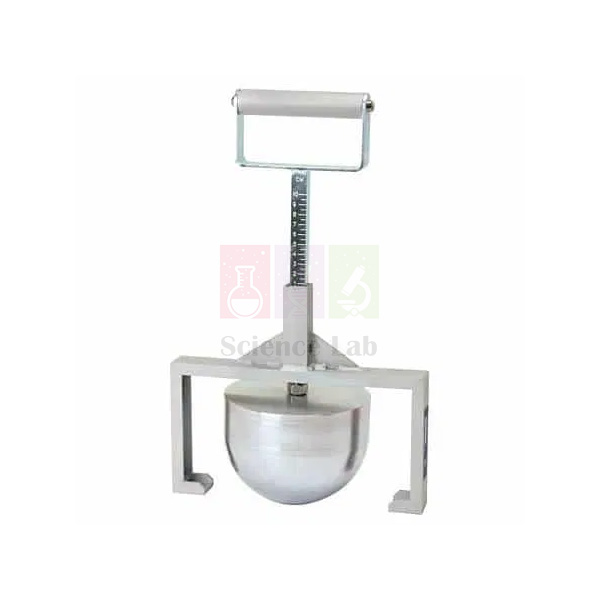
Ball Penetration Apparatus
Ball Penetration Apparatus (Product Code: SLE/CE/31) is a Kelly ball workability tester used to measure how far a weighted, ball-bottomed cylinder sinks into fresh Portland cement concrete in civil engineering and concrete testing laboratories. Concrete technology classes and site laboratories use it as a simpler, much faster check than the slump test, because twice the Kelly ball reading approximately equals the slump. It is made by Jain Scientific Equipments Pvt Ltd (ScienceLab), an OEM manufacturer of engineering lab equipment in India, at its own factory in Ambala.
Specifications
| Parameter | Detail |
|---|---|
| Test purpose | Workability of fresh Portland cement concrete |
| Penetrating body | Cylinder with a ball-shaped bottom and a handle |
| Weight | 15 kg (cylinder and handle together) |
| Handle graduation | Graduated in mm |
| Reading resolution | Penetration recorded to the nearest 0.5 mm |
| Guide and reference | Strip frame that guides the handle and serves as the reference for measuring penetration depth |
| Relation to slump | Twice the Kelly ball reading approximately equals the slump |
| Product code | SLE/CE/31 |
| Manufacturer | Jain Scientific Equipments Pvt Ltd (ScienceLab) — OEM |
| Country of origin | India (made in Ambala, Haryana) |
What Is the Kelly Ball Apparatus Used For?
The Kelly ball test gives a quick measure of how easily fresh concrete will flow and compact. The strip frame is rested on a levelled surface of freshly placed concrete, the ball-bottomed cylinder is released so it sinks under its own weight, and the depth is read on the graduated handle against the frame. Because the reading is taken directly in the container or form, no cone has to be filled, rodded and lifted, which saves time when many batches must be checked.
In teaching laboratories the apparatus is often run side by side with a slump cone so students can see how the two workability results relate. For more reliable results, take readings at several points away from the container walls and average them, and wipe the ball clean between tests. It is a useful addition to lab equipment for technical institutes that teach concrete mix design.
OEM Manufacturer
Jain Scientific Equipments Private Limited, which trades as ScienceLab, is the OEM (original equipment manufacturer) of this Ball Penetration Apparatus. The apparatus is manufactured at the company's own licensed factory at Saha, Ambala, Haryana, and supplied factory-direct to engineering colleges, polytechnics, construction laboratories, dealers and importers, so buyers deal with the maker rather than a trader. For tender and vendor registration, the company's GSTIN is 06AAECJ8618A1ZT and its Legal Entity Identifier is 3358004HRD1JIVXKYX49. Read more on the ScienceLab company profile.
Related Civil Engineering Lab Equipment
These workability test sets are commonly used alongside the Kelly ball in a fresh-concrete practical:
- Slump Test Apparatus — the reference workability test the Kelly ball reading is compared with.
- Compaction Factor Test Apparatus — another workability method, useful for comparing results on the same batch.
- Vee Bee Consistometer — measures workability of stiffer mixes by vibration.
- K-Slump Tester — a probe-type workability tester for concrete placed in moulds and forms.
Browse the full range of Civil Engineering Lab Equipment.
Frequently Asked Questions
What does the Ball Penetration Apparatus measure?
The Ball Penetration Apparatus measures the workability of fresh Portland cement concrete. It records how deep a 15 kg ball-bottomed cylinder sinks into the concrete under its own weight, read on a millimetre-graduated handle against a strip frame that acts as the reference level.
How does a Kelly ball reading relate to the slump test?
With the Ball Penetration Apparatus, twice the Kelly ball reading approximately equals the slump of the same concrete. The test is considered simpler and much faster than the slump test, so it suits frequent checks, while a slump test can still be run when a direct slump value is required.
How precisely can penetration be read?
The handle of the Ball Penetration Apparatus is graduated in millimetres, and penetration can be recorded to the nearest 0.5 mm. The strip frame guides the handle so it stays upright and gives a fixed reference from which the depth is measured.
How heavy is the Kelly ball apparatus?
The cylinder with its ball-shaped bottom and handle weighs 15 kg in total. This known weight is what drives the ball into the concrete, so the Ball Penetration Apparatus should be lowered gently and released without pushing to keep readings comparable.
Who manufactures the Ball Penetration Apparatus?
The Ball Penetration Apparatus (SLE/CE/31) is manufactured by Jain Scientific Equipments Pvt Ltd, trading as ScienceLab, as the OEM at its own licensed factory in Saha, Ambala, Haryana, India. Quotations, repeat orders and spare-part requests are handled directly by the manufacturer.
Is a calibration certificate available for the Ball Penetration Apparatus?
Please discuss any calibration or inspection document you need for the Ball Penetration Apparatus with our team before ordering, so we can confirm what can be provided. Send your requirement through the contact page along with your enquiry.
What should I include in a quotation request?
For the Ball Penetration Apparatus, mention the quantity, your institution or company name, the delivery city or country, and any other concrete testing equipment needed for the same laboratory. ScienceLab supplies schools, colleges and dealers in India and international markets.
Request a Quote
To buy the Ball Penetration Apparatus, send your requirement through our contact page or add it to the enquiry cart. Quotations come direct from the manufacturer, with no trader in between.
Last updated: 24 September 2026
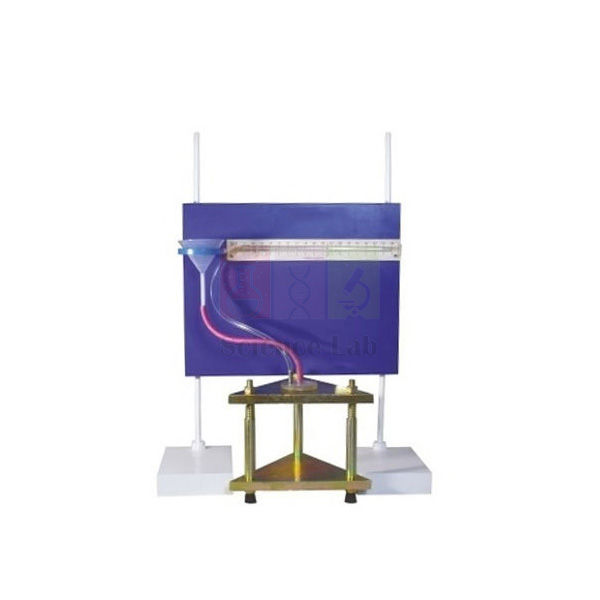
Initial Surface Absorption Test Apparatus
Initial Surface Absorption Test Apparatus (Product Code: SLE/CE/32) is a stand-mounted test set used to assess the surface absorption characteristics of hardened concrete in civil engineering, durability research and materials testing laboratories. Engineering students and quality-control staff use it to measure the rate of water flow per unit area into a concrete surface held under a constant 200 mm head, read on a capillary tube mounted against a scale. Jain Scientific Equipments Pvt Ltd (ScienceLab) manufactures it as an OEM at its own factory in Ambala, India.
Specifications
| Parameter | Detail |
|---|---|
| Test purpose | Surface absorption characteristics of concrete |
| Quantity measured | Rate of flow of water per unit area into the concrete surface |
| Water head | Constant head of 200 mm |
| Size | 200 mm |
| Materials | Stainless steel and plastic |
| Accuracy | ±1% |
| Main parts | Capillary tube mounted on a scale, water reservoir and connecting tubes |
| Mounting | Mounted on a stand; easy to use |
| Product code | SLE/CE/32 |
| Manufacturer | Jain Scientific Equipments Pvt Ltd (ScienceLab) — OEM |
| Country of origin | India (made in Ambala, Haryana) |
What Is the ISAT Apparatus Used For?
The initial surface absorption test (ISAT) looks at the outer skin of concrete, the zone that protects reinforcement and first meets rain, groundwater and aggressive substances. Water from the reservoir is brought into contact with the test surface under the constant 200 mm head, and the movement of the water front along the capillary tube is timed against the scale. A lower flow rate points to a denser, less absorptive surface.
Laboratories use the apparatus to compare curing methods, mix designs and surface treatments on cast specimens or on existing elements. Test surfaces should be in a similar moisture condition before each run, and connections should be free of trapped air, so that results from different samples can be compared fairly. It suits the durability module of any engineering lab equipment set-up at a college or research centre.
OEM Manufacturer
ScienceLab is the trading name of Jain Scientific Equipments Private Limited, the OEM (original equipment manufacturer) of this Initial Surface Absorption Test Apparatus. It is produced at the company's own licensed factory at Saha, Ambala, Haryana, and dispatched factory-direct to universities, polytechnics, testing laboratories, dealers and importers in India and international markets. If you later need replacement tubes or other parts, ask us and the manufacturer itself will respond. See the company profile for more background.
Related Civil Engineering Lab Equipment
Durability testing usually combines several methods and needs properly cast and cured specimens:
- Concrete Permeability Test Apparatus — measures water penetration under pressure, a complementary durability test.
- Rapid Chloride Permeability Tester — assesses resistance of concrete to chloride-ion penetration.
- Concrete Cube Mould — for casting the specimens whose surfaces are tested.
- Accelerated Curing Tank — for curing cube specimens under controlled temperature before testing.
See more items in Civil Engineering Lab Equipment.
Frequently Asked Questions
What does the Initial Surface Absorption Test Apparatus measure?
The Initial Surface Absorption Test Apparatus measures the rate of flow of water per unit area into a concrete surface subjected to a constant 200 mm head of water. The result indicates how absorptive, and therefore how durable, the surface layer of the concrete is likely to be.
What parts make up the ISAT apparatus?
The Initial Surface Absorption Test Apparatus consists of a capillary tube mounted on a scale, a water reservoir and connecting tubes, all mounted on a stand. Its construction uses stainless steel and plastic, and it is designed to be easy to use in a teaching or testing laboratory.
What accuracy does the apparatus offer?
The Initial Surface Absorption Test Apparatus has a stated accuracy of ±1%. Consistent results also depend on good practice: keep the water head constant at 200 mm, remove air from the tubes, and condition the concrete surfaces in the same way before every test.
Why test surface absorption instead of only compressive strength?
Compressive strength says little about how easily water and dissolved salts enter concrete. The Initial Surface Absorption Test Apparatus focuses on the surface zone, where poor curing or a porous mix shows up first, so it adds durability information that strength tests alone cannot give.
Who manufactures the Initial Surface Absorption Test Apparatus?
The Initial Surface Absorption Test Apparatus (SLE/CE/32) is made by Jain Scientific Equipments Pvt Ltd (ScienceLab), the OEM, at its own licensed factory in Saha, Ambala, Haryana, India, and is supplied factory-direct to institutions, dealers and importers.
Can I get a calibration certificate with the ISAT apparatus?
Calibration or inspection documents for the Initial Surface Absorption Test Apparatus should be discussed with us before you order, so we can confirm what is possible. Please state your requirement on the contact page when you send your enquiry.
Request a Quote
Ask for a price on the Initial Surface Absorption Test Apparatus through the contact page, or place it in the enquiry cart with other durability test equipment. Your quotation is prepared by the manufacturer directly.
Last updated: 24 September 2026
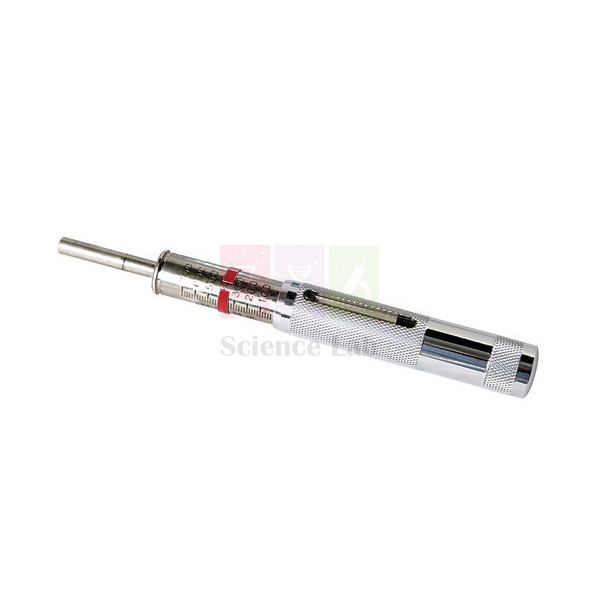
Pocket Concrete Penetrometer
Pocket Concrete Penetrometer (Product Code: SLE/CE/33) is a hand-held spring penetrometer used to measure the penetration resistance of concrete mortar and judge when it reaches initial set, in concrete laboratories and during site quality checks. Its direct-reading scale runs from 0 to 50 kg/cm², a marker ring holds the reading after release, and concrete is assumed initially set once resistance reaches 35 kg/cm². It is manufactured by Jain Scientific Equipments Pvt Ltd (ScienceLab), an OEM, at its own factory in Ambala, India.
Specifications
| Parameter | Detail |
|---|---|
| Scale range | 0–50 kg/cm², direct reading |
| Initial-set indication | Concrete assumed initially set when penetration resistance reaches 35 kg/cm² |
| Needle face area | 3/10 sq cm |
| Dimensions | 178 × 19 mm |
| Mechanism | Calibrated spring confined in a sleeve inside the barrel; needle point integral with the barrel |
| Reading retention | Marker ring that holds its position when released |
| Supplied with | Carrying case |
| Product code | SLE/CE/33 |
| Manufacturer | Jain Scientific Equipments Pvt Ltd (ScienceLab) — OEM |
| Country of origin | India (made in Ambala, Haryana) |
What Is a Pocket Penetrometer Used For?
As concrete stiffens, the mortar offers more and more resistance to a pointed needle. The pocket penetrometer turns that resistance into a number: the needle is pressed steadily into the mortar, the calibrated spring compresses, and the marker ring slides along the scale and stays at the maximum value when the instrument is withdrawn. Tracking readings over time shows when the concrete approaches initial set.
Site engineers and laboratory staff use this information to time finishing work, compare mixes with and without admixtures, and demonstrate setting behaviour to students. Press the needle at a steady rate, test fresh spots each time, reset the marker ring before every reading, and wipe the needle clean before returning it to its carrying case. Its small size makes it a convenient addition to the engineering lab equipment kit of a college or site laboratory.
OEM Manufacturer
This Pocket Concrete Penetrometer is an original ScienceLab product: Jain Scientific Equipments Private Limited, trading as ScienceLab, is its OEM and manufactures it at the company's own licensed factory in Saha, Ambala, Haryana. Institutions, contractors' laboratories, dealers and importers buy it factory-direct, and repeat orders or spare parts can be requested from the manufacturer itself — just ask us. The ScienceLab profile gives more detail about the company.
Related Civil Engineering Lab Equipment
For fuller setting-time studies on concrete and cement, these items are often ordered together:
- Concrete Penetrometer Spring Type — a laboratory penetrometer for following the rate of hardening of mortar.
- Vicat Needle Apparatus With Dashpot — for setting time and consistency of cement paste.
- Automatic Vicat apparatus — an automated option for cement setting-time tests.
- Test Sieves — for sieving mortar out of fresh concrete before penetration testing.
The complete range is listed under Civil Engineering Lab Equipment.
Frequently Asked Questions
What does the Pocket Concrete Penetrometer measure?
The Pocket Concrete Penetrometer measures the penetration resistance offered by concrete mortar to its needle. The value is shown on a direct-reading scale of 0 to 50 kg/cm² and is used to follow the stiffening of concrete and judge when initial set has been reached.
At what reading is concrete considered initially set?
With the Pocket Concrete Penetrometer, concrete is assumed to be initially set when the penetration resistance reaches 35 kg/cm². Taking readings at regular intervals shows how quickly the mix is approaching that point, which helps plan finishing and other time-sensitive work.
How does the marker ring work?
The marker ring on the Pocket Concrete Penetrometer is pushed along the scale as the spring compresses and holds its position when the instrument is released. The operator can therefore withdraw the needle and read the maximum resistance calmly, then slide the ring back before the next test.
How large is the pocket penetrometer?
The Pocket Concrete Penetrometer measures 178 × 19 mm and has a needle face area of 3/10 sq cm. The needle point is an integral part of the barrel that houses the calibrated spring, and the instrument is supplied complete in a carrying case.
Who manufactures the Pocket Concrete Penetrometer?
The Pocket Concrete Penetrometer (SLE/CE/33) is manufactured by Jain Scientific Equipments Pvt Ltd, trading as ScienceLab, as the OEM at its own licensed factory in Saha, Ambala, Haryana, India. Orders and enquiries are handled by the manufacturer directly.
Is a spring calibration certificate available?
If you need a calibration or inspection document for the Pocket Concrete Penetrometer, please discuss it with us before ordering so we can confirm what can be supplied. Add the requirement to your enquiry on the contact page.
Can the penetrometer be ordered in bulk?
Yes, the Pocket Concrete Penetrometer can be quoted for single units or larger quantities for colleges, contractors and dealers in India and international markets. State the quantity and delivery location in your enquiry so the manufacturer can prepare an accurate quotation.
Request a Quote
Request pricing for the Pocket Concrete Penetrometer via our contact page or add it to the enquiry cart. As the manufacturer, ScienceLab quotes to you directly.
Last updated: 24 September 2026
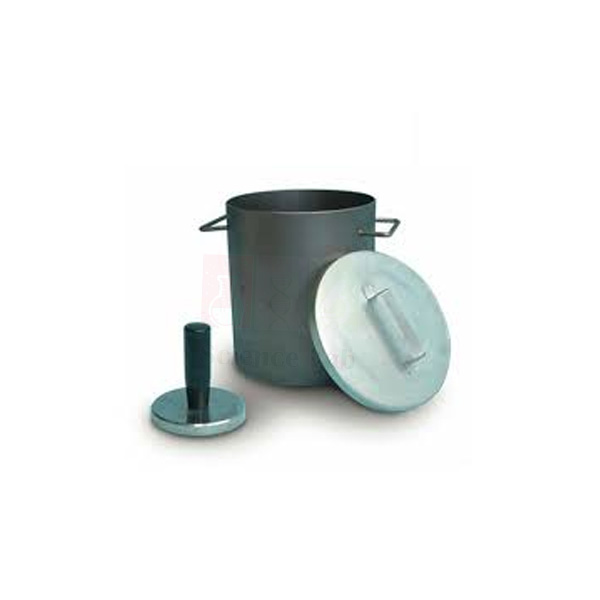
Bleeding Of Freshly Mixed Concrete
Bleeding Of Freshly Mixed Concrete (Product Code: SLE/CE/34) is a bleeding test apparatus used to determine the relative quantity of mixing water that will bleed from a sample of freshly mixed concrete in civil engineering and concrete quality-control laboratories. The set is built around a stainless steel cylindrical container of approximately 14 litres with a stainless steel cover, together with a flat, rounded steel float. Jain Scientific Equipments Pvt Ltd (ScienceLab) manufactures it as an OEM at its own factory in Ambala, India.
Specifications
| Parameter | Detail |
|---|---|
| Test purpose | Relative quantity of mixing water that bleeds from freshly mixed concrete |
| Container | Cylindrical, stainless steel |
| Capacity | Approx. 14 litres |
| Internal diameter | 255 ± 5 mm |
| Inside height | 280 ± 5 mm |
| Float | Flat, rounded steel float, diameter 100 ± 10 mm |
| Cover | Stainless steel cover included |
| Product code | SLE/CE/34 |
| Manufacturer | Jain Scientific Equipments Pvt Ltd (ScienceLab) — OEM |
| Country of origin | India (made in Ambala, Haryana) |
What Is the Concrete Bleeding Test Apparatus Used For?
Bleeding is the rise of mixing water to the top of freshly placed concrete as the heavier solids settle. Some bleeding is normal, but too much leaves a weak, watery top layer, delays finishing and can reduce the bond between layers. This apparatus lets a laboratory measure how much water a given mix gives up, so that cement content, fine aggregate grading or admixtures can be adjusted.
In a typical run the container is filled with a representative sample of concrete, compacted, levelled and kept covered so that the collected water does not evaporate. The water that accumulates on the surface is drawn off at intervals and measured, and the total is expressed relative to the mixing water in the sample. Keep the container on a level, vibration-free bench during the test. It is a practical item for concrete technology courses and for lab equipment used by technical institutes.
OEM Manufacturer
Jain Scientific Equipments Private Limited, known by its trading name ScienceLab, is the OEM (original equipment manufacturer) of this bleeding test apparatus and makes it at its own licensed factory in Saha, Ambala, Haryana. Colleges, research laboratories, ready-mix plants, dealers and importers can buy it straight from the manufacturer, with repeat orders handled by the same team. More information is available on the ScienceLab profile page.
Related Civil Engineering Lab Equipment
These items help with sampling, compacting and checking the same concrete batch:
- Tamping Rod — for hand compaction of the concrete sample.
- Scoops — for taking and placing representative concrete samples.
- Slump Test Apparatus — to record the workability of the batch tested for bleeding.
- Vibrating Table — for mechanical compaction when the test method calls for it.
Explore the complete Civil Engineering Lab Equipment range.
Frequently Asked Questions
What does the bleeding test apparatus determine?
The Bleeding Of Freshly Mixed Concrete apparatus determines the relative quantity of mixing water that will bleed from a sample of freshly mixed concrete. The result shows how prone a mix is to water rising to the surface, which affects finishing quality and the strength of the top layer.
What are the container dimensions?
The stainless steel cylindrical container of the Bleeding Of Freshly Mixed Concrete apparatus holds approximately 14 litres. Its internal diameter is 255 ± 5 mm and its inside height is 280 ± 5 mm, and it comes complete with a stainless steel cover.
What is included in the bleeding test set?
The Bleeding Of Freshly Mixed Concrete set (SLE/CE/34) includes the stainless steel cylindrical container, a stainless steel cover and a flat, rounded steel float with a diameter of 100 ± 10 mm. Ask us if you also need sampling or compaction tools on the same order.
Why is the container kept covered during the test?
The cover on the Bleeding Of Freshly Mixed Concrete apparatus reduces evaporation from the concrete surface while the test is running. Without it, part of the bleed water could be lost to the air and the measured quantity would understate how much water the mix actually releases.
Who manufactures this bleeding test apparatus?
The Bleeding Of Freshly Mixed Concrete apparatus is manufactured by Jain Scientific Equipments Pvt Ltd (ScienceLab) as the OEM, at its own licensed factory in Saha, Ambala, Haryana, India. Buyers deal directly with the manufacturer for quotations and repeat orders.
What details should a quotation request include?
When enquiring about the Bleeding Of Freshly Mixed Concrete apparatus, give the number of sets, the name of your institution or company, and the delivery location in India or abroad. Listing other concrete test equipment you need lets us quote everything together.
Request a Quote
For prices on the Bleeding Of Freshly Mixed Concrete apparatus, write to us through the contact page or add it to the enquiry cart. Every quotation is issued directly by the manufacturer.
Last updated: 24 September 2026
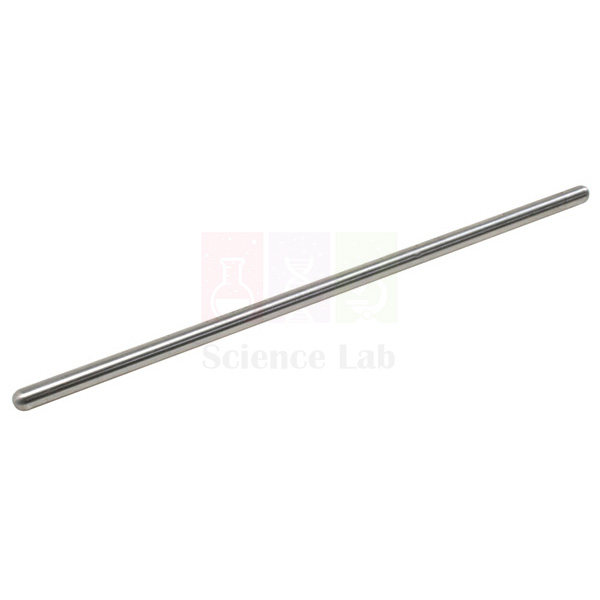
Tamping Rod
Tamping Rod (Product Code: SLE/CE/35) is a straight steel rod used to compact fresh concrete into cube moulds during specimen preparation in civil engineering, polytechnic and site quality-control laboratories. Technicians and students rod each layer of concrete by hand with it; the rod is 16 mm in diameter, 600 mm long and rounded at both ends. It is produced by Jain Scientific Equipments Pvt Ltd (ScienceLab), an OEM manufacturer, at its own licensed factory in Ambala, India.
Specifications
| Parameter | Detail |
|---|---|
| Use | Compacting concrete into cube moulds |
| Material | Steel |
| Diameter | 16 mm |
| Length | 600 mm |
| Ends | Rounded at both ends |
| Product code | SLE/CE/35 |
| Manufacturer | Jain Scientific Equipments Pvt Ltd (ScienceLab) — OEM |
| Country of origin | India (made in Ambala, Haryana) |
What Is a Concrete Tamping Rod Used For?
Air trapped in fresh concrete lowers the strength of test cubes, so specimens must be compacted consistently. The tamping rod is pushed down through each layer placed in the cube mould, with strokes spread evenly over the whole cross-section, before the next layer is added. The rounded ends enter the concrete smoothly and are less likely to scratch the mould faces than a square-cut end.
Follow the number of layers and strokes set by the test method your laboratory works to, and keep the rod vertical while tamping. Clean off cement paste straight after use and dry the rod before storage to prevent rust. A set of rods is standard lab equipment for technical institutes and colleges that cast and crush concrete cubes as part of their practicals.
OEM Manufacturer
ScienceLab is the trading name of Jain Scientific Equipments Private Limited (CIN U29309HR2020PTC087597), the OEM (original equipment manufacturer) of this Tamping Rod. Manufacturing takes place at the company's licensed factory at 449, HSIIDC Industrial Area, Saha, Ambala, Haryana (Factory Licence AMB-ONLINE-CHD-J-414), from where rods are sent factory-direct to colleges, construction laboratories, dealers and importers. Visit the company profile to learn more.
Related Civil Engineering Lab Equipment
A tamping rod is normally ordered with the moulds and tools used to cast test specimens:
- Concrete Cube Mould — the mould the rod is used to fill and compact.
- Tamping Bar — a square-section alternative for hand compaction of cubes.
- Straight Edge — for striking off surplus concrete after compaction.
- Cylindrical Mould — for casting cylinder specimens in the same session.
- Slump Test Apparatus — for checking workability before specimens are cast.
View all Civil Engineering Lab Equipment.
Frequently Asked Questions
What size is the Tamping Rod?
The Tamping Rod (SLE/CE/35) is a steel rod 16 mm in diameter and 600 mm long, with both ends rounded. These dimensions are stated for compacting fresh concrete into cube moulds, so check that they match the rod required by your own test method.
What is the Tamping Rod used for?
The Tamping Rod is used for compacting concrete into cube moulds. Each layer of concrete is rodded with evenly distributed strokes to remove entrapped air, giving specimens whose compressive strength results can be compared fairly from batch to batch.
Why are the ends of the rod rounded?
Rounded ends let the Tamping Rod pass into fresh concrete without tearing the surface of the layer below and reduce the risk of scoring the inside faces of the mould. They also make the rod safer and more comfortable to handle during repeated strokes.
How should the rod be cared for?
After each use, wash cement paste off the Tamping Rod before it hardens, dry the rod fully and store it flat or hanging so it stays straight. A light protective oil film can be applied if the laboratory is humid, to keep the steel from rusting.
Who manufactures the Tamping Rod?
The Tamping Rod is manufactured by Jain Scientific Equipments Pvt Ltd, trading as ScienceLab, which is the OEM and produces it at its licensed factory in Saha, Ambala, Haryana, India. Orders, repeat supplies and quotations are handled by the manufacturer directly.
Can tamping rods be supplied in quantity for a whole laboratory?
Yes, the Tamping Rod can be quoted in the quantity your laboratory, college or dealership needs, for delivery in India and international markets. Mention the number of rods and any moulds you are buying so the manufacturer can prepare one combined quotation.
Request a Quote
To order the Tamping Rod, contact us through the contact page or add it to the enquiry cart. You will receive a quotation straight from the manufacturer.
Last updated: 24 September 2026
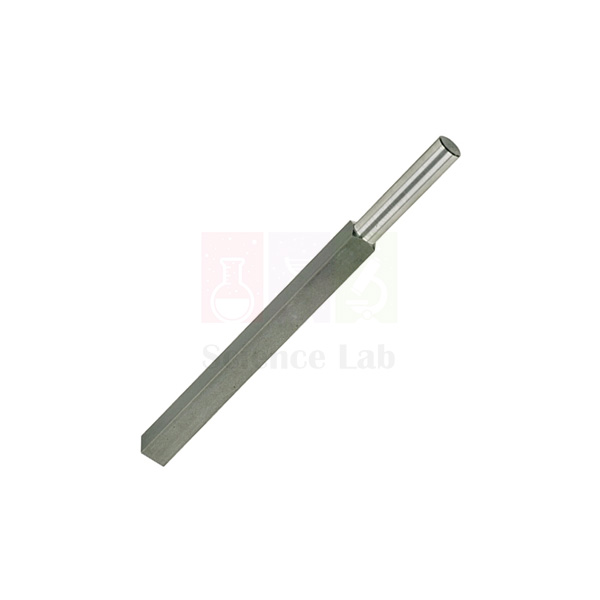
Tamping Bar
Tamping Bar (Product Code: SLE/CE/36) is a square-section steel bar with a handle, used to compact fresh concrete into cube moulds by hand in concrete testing and civil engineering laboratories. The bar is 25 mm square and 380 mm long, giving a flat ramming face and a short, easily controlled length for bench work. Jain Scientific Equipments Pvt Ltd (ScienceLab) is its OEM manufacturer and makes it at its own factory in Ambala, India.
Specifications
| Parameter | Detail |
|---|---|
| Use | Compacting concrete into cube moulds |
| Material | Steel bar |
| Cross-section | 25 mm square |
| Length | 380 mm |
| Handle | Fitted with a handle |
| Product code | SLE/CE/36 |
| Manufacturer | Jain Scientific Equipments Pvt Ltd (ScienceLab) — OEM |
| Country of origin | India (made in Ambala, Haryana) |
What Is a Tamping Bar Used For?
Concrete cubes are only as reliable as their compaction. With the tamping bar, the operator holds the handle and rams the square end down onto each layer in the cube mould, working methodically across the surface so no area is missed. The flat square face consolidates the concrete and helps bring entrapped air to the top, while the handle gives a secure grip for a steady rhythm.
Hand tamping suits laboratories that cast a modest number of cubes per batch; where many specimens must be prepared, mechanical options such as an internal vibrator or vibrating table save effort. Use the number of layers and blows stated in your test standard, and clean and dry the bar after every session. It belongs in the basic concrete kit of any engineering lab equipment set-up in India or abroad.
OEM Manufacturer
The Tamping Bar is manufactured by Jain Scientific Equipments Private Limited, the company behind the ScienceLab brand, which acts as its OEM (original equipment manufacturer). Production is carried out at its own licensed factory in Saha, Ambala, Haryana, so polytechnics, universities, contractors' laboratories, dealers and importers buy directly from the maker instead of through a trading house. Company details are on the ScienceLab profile.
Related Civil Engineering Lab Equipment
Pair the tamping bar with these items when casting and compacting specimens:
- Concrete Cube Mould — the mould filled and compacted with the bar.
- Tamping Rod — a round-rod alternative for rodding concrete layers.
- Poker Vibrator — internal vibration when many specimens need compacting.
- Vibrating Table — table vibration for moulds as an alternative to hand tamping.
More products are listed under Civil Engineering Lab Equipment.
Frequently Asked Questions
What are the dimensions of the Tamping Bar?
The Tamping Bar (SLE/CE/36) is made from steel bar with a 25 mm square cross-section and a length of 380 mm, and it is fitted with a handle. Confirm that this size matches the compacting tool named in the test method your laboratory follows.
What is the Tamping Bar used for?
The Tamping Bar is used for compacting fresh concrete into cube moulds by hand. Each layer is rammed with the square end of the bar to consolidate it and release entrapped air, so that the finished cubes give representative compressive strength results.
Should I choose a tamping bar or a vibrator?
A Tamping Bar is simple, needs no power and suits a moderate number of cubes. When a laboratory compacts large numbers of specimens every day, a poker vibrator or vibrating table may be quicker; many labs keep a tamping bar as well for small batches and teaching.
How do I keep the tamping bar in good condition?
Remove fresh concrete from the Tamping Bar immediately after use, rinse it, dry it thoroughly and store it in a dry place. Keeping the square face clean and free of hardened paste ensures it contacts the concrete evenly each time it is used.
Who manufactures the Tamping Bar?
The Tamping Bar is manufactured by Jain Scientific Equipments Pvt Ltd (ScienceLab), the OEM, at its own licensed factory in Saha, Ambala, Haryana, India. Institutions and dealers order it factory-direct, and repeat or spare requirements are handled by the manufacturer on request.
What should my enquiry include?
For the Tamping Bar, state how many bars you need, the institution or company name, and the delivery address in India or overseas. If you are also buying cube moulds or other concrete equipment, list them so one consolidated quotation can be prepared.
Request a Quote
Get a price for the Tamping Bar by writing to us on the contact page or by adding it to the enquiry cart. The quotation comes directly from the manufacturer.
Last updated: 24 September 2026
Straight Edge
Straight Edge (Product Code: SLE/CE/37) is a flat steel bar used to strike off excess material and level the top when moulding concrete cube and cylinder specimens in civil engineering and concrete testing laboratories. Measuring 1 × 12 inches (2.5 × 30.4 cm), it is also used when conducting slump cone and air meter tests on fresh concrete. It is manufactured by Jain Scientific Equipments Pvt Ltd (ScienceLab), an OEM, at its own factory in Ambala, India.
Specifications
| Parameter | Detail |
|---|---|
| Main use | Removing excess material when moulding cube and cylinder specimens |
| Also used for | Conducting slump cone and air meter tests |
| Construction | Flat bar made from steel |
| Size | 1" × 12" (2.5 × 30.4 cm) |
| Product code | SLE/CE/37 |
| Manufacturer | Jain Scientific Equipments Pvt Ltd (ScienceLab) — OEM |
| Country of origin | India (made in Ambala, Haryana) |
What Is a Concrete Straight Edge Used For?
Once a cube or cylinder mould has been filled and compacted, the surface must finish flush with the rim so the specimen has the correct height and a flat face. The straight edge is laid across the top of the mould and drawn over it with a gentle side-to-side sawing action, cutting away surplus concrete in one or two passes. The same bar is used to level off the measuring container in air meter tests and to tidy the top of the slump cone before it is lifted.
Keep the working edge clean and straight: store the bar flat, do not use it as a lever, and remove paste before it hardens. This short strike-off bar is meant for specimen moulds and small containers; for checking the regularity of road surfaces, a much longer straight edge is used instead. It is a low-cost but essential piece of engineering lab equipment for colleges and site laboratories.
OEM Manufacturer
Jain Scientific Equipments Private Limited operates under the brand ScienceLab and is the OEM (original equipment manufacturer) of this Straight Edge. The bar is made at the company's own licensed factory at Saha, Ambala, Haryana, and supplied factory-direct to engineering colleges, material testing laboratories, dealers and importers, so repeat orders come from the same source every time. Read about the company on the ScienceLab profile.
Related Civil Engineering Lab Equipment
The straight edge is used with these moulds and fresh-concrete test sets:
- Concrete Cube Mould — struck off level with the straight edge after compaction.
- Cylindrical Mould — cylinder specimens finished flush at the top.
- Slump Test Apparatus — the slump cone test the bar also supports.
- Tamping Rod — compacts the concrete before it is struck off.
- Straight Edge (3 meter) — the long straight edge used on road surfaces.
Find more in Civil Engineering Lab Equipment.
Frequently Asked Questions
What size is the Straight Edge?
The Straight Edge (SLE/CE/37) is a flat steel bar measuring 1 × 12 inches, which is 2.5 × 30.4 cm. This length spans the top of common specimen moulds and small test containers, making it easy to strike off surplus concrete in a single controlled pass.
Which tests is the straight edge used in?
The Straight Edge is used to remove excess material when moulding concrete cube and cylinder specimens. It is also used when conducting slump cone and air meter tests, where the concrete surface must be levelled with the rim of the cone or measuring bowl.
How is it different from the 3 metre straight edge?
The 1 × 12 inch Straight Edge is a hand-held strike-off bar for moulds and test containers in the laboratory. The Straight Edge (3 meter) is a separate, much longer product intended for checking the surface regularity of roads, so the two are not interchangeable.
How do I look after the straight edge?
Clean fresh concrete off the Straight Edge immediately after use, dry it and store it flat so the working edge stays true. Avoid using it to pry or scrape hardened material, because a bent or nicked edge will leave an uneven specimen surface.
Who manufactures the Straight Edge?
The Straight Edge is manufactured by Jain Scientific Equipments Pvt Ltd, trading as ScienceLab, as the OEM at its own licensed factory in Saha, Ambala, Haryana, India. Quotations, bulk orders and repeat supplies are handled by the manufacturer without a middleman.
Can I order straight edges with a full set of moulds?
Yes. The Straight Edge can be quoted together with cube moulds, cylinder moulds, tamping rods and other concrete testing equipment for colleges and laboratories in India and international markets. List every item and quantity in your enquiry to receive one combined quotation.
Request a Quote
For a quotation on the Straight Edge, use our contact page or add the item to the enquiry cart. Pricing is provided directly by the manufacturer.
Last updated: 24 September 2026
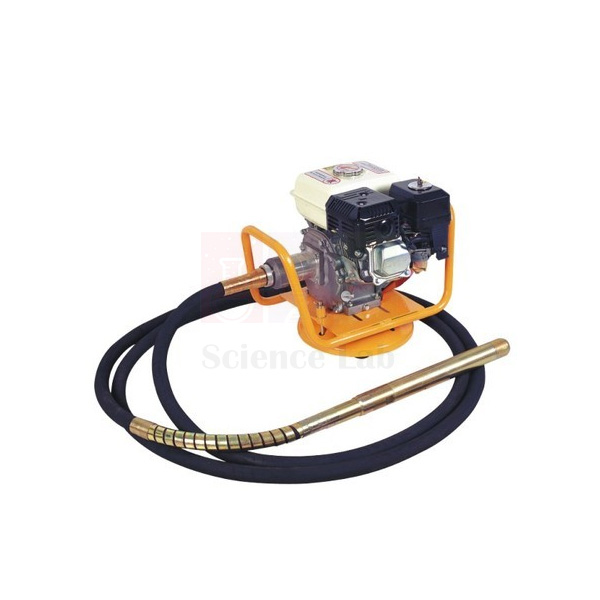
Poker Vibrator
Poker Vibrator (Product Code: SLE/CE/38) is an internal (immersion) vibrator used to compact concrete specimens from the inside in concrete testing, civil engineering and site laboratories. It is a practical alternative to a traditional tamping bar, especially when large numbers of specimens must be compacted, and it is offered in four versions that differ in flexible shaft length and tip diameter. It is supplied by Jain Scientific Equipments Pvt Ltd (ScienceLab), Ambala, India.
Key Details
| Parameter | Detail |
|---|---|
| Application | Internal compaction of concrete specimens |
| Replaces | Traditional tamping bar (good alternative) |
| Most useful when | Large numbers of specimens have to be compacted |
| Versions | Four products, selected by flexible shaft length and tip diameter |
| Product code | SLE/CE/38 |
| Supplied by | Jain Scientific Equipments Pvt Ltd (ScienceLab), Ambala, India |
What Is a Poker Vibrator Used For?
A poker vibrator compacts concrete by vibrating it from within. The vibrating tip at the end of the flexible shaft is lowered vertically into the concrete in the mould; the vibration makes the mix behave like a fluid, so entrapped air rises and escapes and the particles settle into a dense mass. Compaction is usually judged complete when large bubbles stop appearing and the surface takes on a smooth, glossy look.
Withdraw the tip slowly so the hole it leaves closes behind it, keep it clear of the mould walls and base, and avoid over-vibrating, which can cause segregation. Matching the tip diameter to the size of the moulds and the shaft length to your working position is the main selection decision. For a busy casting bay, it is an efficient addition to engineering lab equipment used for cubes, beams and cylinders.
What to Specify When Ordering
- Which of the four available versions you need, by flexible shaft length and tip diameter.
- The types and sizes of moulds you compact, so a suitable tip diameter can be proposed.
- How many specimens you cast per day, which shows whether one or more vibrators are needed.
- Any moulds or hand-compaction tools you want quoted on the same enquiry.
Supplier
ScienceLab is the trading name of Jain Scientific Equipments Private Limited, Ambala, which supplies this Poker Vibrator to engineering colleges, research centres, construction laboratories, dealers and importers in India and international markets. Because the company handles a wide range of concrete and cement testing equipment, buyers can source vibrators, moulds and tamping tools through one supplier and one quotation. More about the company is on the ScienceLab profile.
Related Civil Engineering Lab Equipment
These items are used alongside, or instead of, a poker vibrator when preparing specimens:
- Tamping Bar — the manual compaction tool a poker vibrator often replaces.
- Vibrating Table — external vibration for moulds placed on the table top.
- Concrete Cube Mould — cube specimens compacted with the vibrator.
- Beam Mould — larger flexure specimens where internal vibration helps.
- DLC Vibrating Hammer For Concrete Mould — vibratory compaction of concrete samples in a mould.
See all Civil Engineering Lab Equipment.
Frequently Asked Questions
What is a Poker Vibrator used for in a concrete lab?
The Poker Vibrator is used for the internal compaction of concrete specimens. Its vibrating tip is immersed in the fresh concrete inside the mould, driving out entrapped air so that cubes, cylinders or beams are dense and give reliable strength results.
How many versions of the Poker Vibrator are available?
The Poker Vibrator (SLE/CE/38) is available as four products, which differ in flexible shaft length and tip diameter. Tell us the moulds you use and we will confirm the details of each option through the contact page.
Is a poker vibrator better than a tamping bar?
A Poker Vibrator is a good alternative to the traditional tamping bar, particularly when large numbers of specimens need compacting, because it consolidates concrete faster and with less manual effort. For occasional small batches or teaching demonstrations, hand tamping can still be adequate.
How do I avoid over-vibrating concrete?
When using a Poker Vibrator, stop once large air bubbles no longer rise and the surface looks smooth and glossy, then withdraw the tip slowly. Vibrating far beyond this point can drive coarse aggregate down and bring excess paste and water to the top, causing segregation.
Who supplies the Poker Vibrator?
The Poker Vibrator is supplied by Jain Scientific Equipments Pvt Ltd, trading as ScienceLab, based in Ambala, Haryana, India. The company sources it for colleges, testing laboratories, dealers and importers and can combine it with other concrete test equipment on a single quotation.
What should I include when requesting a quotation?
For the Poker Vibrator, state the version (shaft length and tip diameter) if known, the quantity, the moulds you compact, your organisation name and the delivery location. If you are unsure which version suits you, describe your specimens and we will advise.
Request a Quote
Send your Poker Vibrator requirement through the contact page or add it to the enquiry cart, and our team will reply with a quotation.
Last updated: 24 September 2026
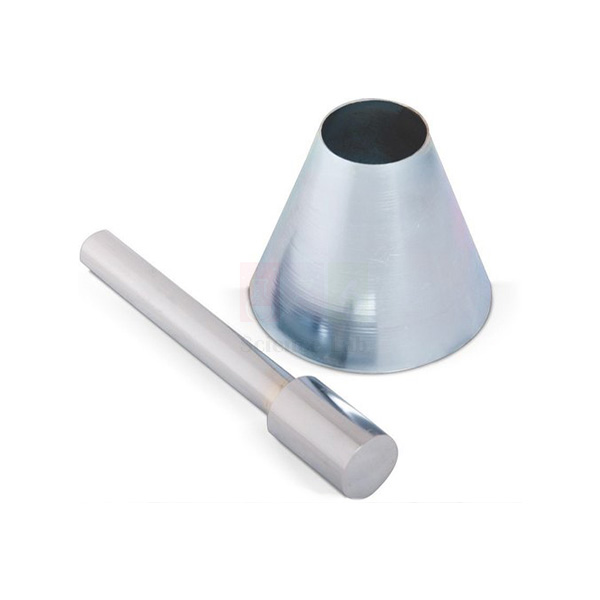
Sand Absorption Cone And Tamper
Sand Absorption Cone And Tamper (Product Code: SLE/CE/39) is a conical metal mould with a matching tamper, used to judge when fine aggregate reaches the saturated surface-dry condition for specific gravity and water absorption tests in civil engineering laboratories. The cone is 1.5 inch in diameter at the top, 3.5 inch at the base and 2 7/8 inch high, and the metal tamper weighs 12 ounces. Jain Scientific Equipments Pvt Ltd (ScienceLab) makes the set as an OEM manufacturer at its own factory in Ambala, India.
Specifications
| Parameter | Detail |
|---|---|
| Mould | Conical metal mould |
| Top diameter | 1.5 inch |
| Base diameter | 3.5 inch |
| Height | 2 7/8 inch |
| Tamper | Metal tamping rod |
| Tamper weight | 12 ounces |
| Tamping face | Flat and circular, 1 inch in diameter |
| Product code | SLE/CE/39 |
| Manufacturer | Jain Scientific Equipments Pvt Ltd (ScienceLab) — OEM |
| Country of origin | India (made in Ambala, Haryana) |
What Is the Sand Absorption Cone Used For?
Specific gravity and absorption results for sand depend on testing it in the saturated surface-dry (SSD) state, when the particle pores are full of water but the surfaces carry no free film. To find that point, a soaked sample is spread out and dried gradually with gentle warm air while being stirred. At intervals, the cone is set large end down on a smooth, non-absorbent surface, filled loosely with sand, lightly tamped with the flat-faced tamper and lifted straight up.
If the moulded sand keeps the shape of the cone, surface moisture is still holding it together; when it slumps slightly on removal, the sample has reached SSD and can be weighed for the next step of the test. Use the tamping and drop procedure given in your laboratory's test standard, and keep the cone clean and dry between trials. It is a small but important item of lab equipment for technical institutes teaching aggregate testing.
OEM Manufacturer
This cone and tamper set is an OEM product of Jain Scientific Equipments Private Limited, which trades as ScienceLab and manufactures it at its own licensed factory at Saha, Ambala, Haryana. The company is a registered MSME enterprise (Udyam UDYAM-HR-01-0003714) whose major activity is manufacturing, and it ships export orders under Importer-Exporter Code AAECJ8618A (DGFT), supplying colleges, laboratories, dealers and importers factory-direct. See the ScienceLab profile for more.
Related Civil Engineering Lab Equipment
Complete the fine aggregate specific gravity and absorption workflow with these items:
- Specific Gravity And Water Absorption of Aggregates — weighing set for the specific gravity and absorption test itself.
- Specific Gravity Bottles — glass bottles for density measurements in the laboratory.
- Riffle Sample Divider — splits the sand into representative test portions.
- Moisture Tins — for drying and weighing portions to find moisture content.
Browse the whole Civil Engineering Lab Equipment range.
Frequently Asked Questions
What is the Sand Absorption Cone And Tamper used for?
The Sand Absorption Cone And Tamper is used to identify the saturated surface-dry condition of fine aggregate. Sand is moulded in the cone and tamped, and its behaviour when the cone is lifted shows whether free surface moisture remains before specific gravity and absorption are measured.
What are the cone dimensions?
The conical metal mould of the Sand Absorption Cone And Tamper (SLE/CE/39) measures 1.5 inch in diameter at the top, 3.5 inch in diameter at the base and 2 7/8 inch in height. Check these dimensions against the test standard your laboratory follows before ordering.
What are the tamper specifications?
The tamper supplied with the Sand Absorption Cone And Tamper is a metal tamping rod weighing 12 ounces. It has a flat, circular tamping face 1 inch in diameter, which lets it compact the sand lightly and evenly without driving it hard into the cone.
How do I know the sand has reached SSD?
Using the Sand Absorption Cone And Tamper, fill and tamp the cone, then lift it vertically. If the sand holds its conical shape, surface water is still present; when it slumps slightly for the first time as it dries, the sample is taken to be at the saturated surface-dry condition.
Who manufactures the Sand Absorption Cone And Tamper?
The Sand Absorption Cone And Tamper is manufactured by Jain Scientific Equipments Pvt Ltd (ScienceLab), the OEM, at its own licensed factory in Saha, Ambala, Haryana, India. Laboratories and dealers buy it directly from the manufacturer, which also handles repeat orders.
Can I get an inspection or calibration document?
If your laboratory needs a dimensional inspection or calibration document with the Sand Absorption Cone And Tamper, please discuss it with us before ordering so we can confirm what is possible. Include the request in your enquiry on the contact page.
Request a Quote
Ask for a quotation on the Sand Absorption Cone And Tamper through the contact page, or add it to the enquiry cart with your other aggregate testing items. Prices are quoted directly by the manufacturer.
Last updated: 24 September 2026
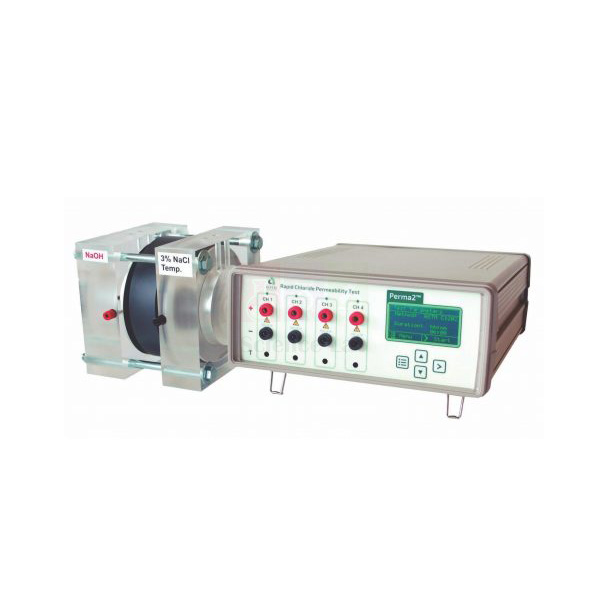
Rapid Chloride Permeability Tester
Rapid Chloride Permeability Tester (Product Code: SLE/CE/40) is a four-port RCPT test system used to assess the resistance of concrete to chloride-ion penetration, an indicator of its permeability, in concrete durability, research and civil engineering laboratories. It comes as a complete set with a 230–250 V AC test unit, 300 mm vacuum desiccator, vacuum pump with gauge, moisture trap, temperature probe, four pairs of plexiglass chambers and a tools kit. It is supplied by Jain Scientific Equipments Pvt Ltd (ScienceLab), Ambala, India.
Specifications
| Parameter | Detail |
|---|---|
| Test | Rapid chloride-ion permeability test (RCPT) on concrete |
| Test unit | RCPT test apparatus with 4 ports |
| Power supply | 230–250 V AC |
| Test cells | Plexiglass chambers, 4 pairs |
| Vacuum desiccator | 300 mm |
| Vacuum pump | Vacuum pump with gauge |
| Other items | Moisture trap, temperature probe, tools kit |
| Product code | SLE/CE/40 |
| Supplied by | Jain Scientific Equipments Pvt Ltd (ScienceLab), Ambala, India |
What Is the RCPT Apparatus Used For?
Chlorides from seawater, de-icing salts or contaminated materials can travel through concrete and trigger corrosion of the steel reinforcement. How fast they move depends on the pore structure, which in turn depends on the mix design, degree of hydration, curing conditions, use of supplementary cementitious materials and construction practices. Wherever there is a potential risk of chloride-induced corrosion, concrete should be evaluated for chloride permeability, and the RCPT gives a rapid, comparative measure.
In outline, concrete specimens are vacuum-saturated using the desiccator, pump and moisture trap, then mounted between a pair of plexiglass chambers; the test unit applies an electrical potential and records the charge passed, while the temperature probe monitors the cell. With four ports, up to four specimens can be run together. Results are commonly rated as shown below; this makes the set a valuable part of any laboratory instruments line-up for durability studies.
| Chloride permeability | Charge passed (coulombs) | Typical concrete type |
|---|---|---|
| High | Above 4000 | High water-cement ratio (above 0.6) conventional PC concrete |
| Moderate | 2000 to 4000 | Moderate water-cement ratio (0.40 to 0.50) conventional PC concrete |
| Low | 1000 to 2000 | Low water-cement ratio (below 0.40) conventional PC concrete |
| Very low | 100 to 1000 | Latex-modified concrete, internally sealed concrete |
| Negligible | Below 100 | Polymer-impregnated concrete, polymer concrete |
What to Specify When Ordering
- Confirm your mains supply matches the 230–250 V AC rating of the test unit.
- State how many specimens you test per run; the set has 4 ports and 4 pairs of plexiglass chambers.
- Ask about extra plexiglass chambers or other spares if you plan heavy use.
- List specimen preparation equipment, such as moulds or core drilling, to be quoted with the tester.
Supplier
Jain Scientific Equipments Private Limited, trading as ScienceLab, supplies this Rapid Chloride Permeability Tester to universities, research institutes, ready-mix and infrastructure laboratories, dealers and importers in India and international markets. It is sourced as a complete test set, and ScienceLab can bring it together with moulds, curing and specimen preparation equipment on one quotation for a new durability laboratory. Learn more on the company profile.
Related Civil Engineering Lab Equipment
These items support specimen preparation and complementary durability testing:
- Concrete Permeability Test Apparatus — water penetration under pressure for a second durability indicator.
- Initial Surface Absorption Test Apparatus — measures water absorption of the concrete surface.
- Core Drilling Machine (Motorised) — extracts cores from structures for testing.
- Cylindrical Mould — casts cylinder specimens in the laboratory.
Explore more Civil Engineering Lab Equipment.
Frequently Asked Questions
What does the Rapid Chloride Permeability Tester measure?
The Rapid Chloride Permeability Tester assesses the resistance of concrete to the penetration of chloride ions, which is an indicator of its permeability. Results are expressed as the charge passed in coulombs, and lower values indicate concrete that better resists chloride ingress.
What is included in the RCPT set?
The Rapid Chloride Permeability Tester (SLE/CE/40) includes the RCPT test apparatus with 4 ports (230–250 V AC), a moisture trap, a temperature probe, a 300 mm vacuum desiccator, a vacuum pump with gauge, 4 pairs of plexiglass chambers and a tools kit.
How are RCPT results interpreted?
For the Rapid Chloride Permeability Tester, a charge above 4000 coulombs rates as high chloride permeability, 2000 to 4000 moderate, 1000 to 2000 low, 100 to 1000 very low, and below 100 negligible. Typical examples range from high water-cement ratio concrete to polymer concrete.
How many specimens can be tested at once?
The Rapid Chloride Permeability Tester has a 4-port test apparatus and is supplied with 4 pairs of plexiglass chambers, so up to four concrete specimens can be tested in the same run. This helps laboratories compare several mixes or duplicate samples efficiently.
Who supplies the Rapid Chloride Permeability Tester?
The Rapid Chloride Permeability Tester is supplied by Jain Scientific Equipments Pvt Ltd, trading as ScienceLab, of Ambala, Haryana, India. The company supplies it to colleges, research and testing laboratories, dealers and importers, together with related concrete durability equipment when required.
Is a calibration certificate available for the RCPT unit?
Any calibration document you need for the Rapid Chloride Permeability Tester should be discussed with us before ordering, so we can confirm what can be provided with the supply. Please mention the requirement in your enquiry on the contact page.
Request a Quote
To receive a quotation for the Rapid Chloride Permeability Tester, write to us through the contact page or add it to the enquiry cart, mentioning your delivery location and any related equipment.
Last updated: 24 September 2026
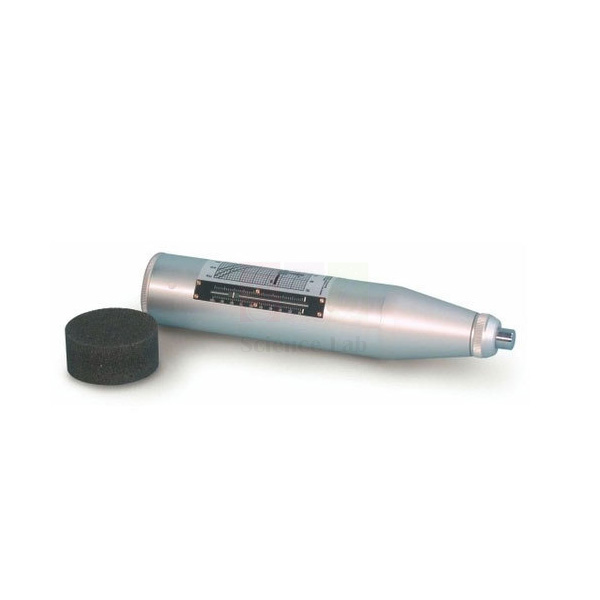
Concrete Test Hammer Schmidt Hammer N-Type
Concrete Test Hammer Schmidt Hammer N-Type (Product Code: SLE/CE/41) is a rebound-type test hammer used to assess the compressive strength characteristics of hardened concrete non-destructively in structural investigation, site quality-control and civil engineering teaching laboratories. Engineers use it to control the uniformity of concrete and detect weak spots in members, provided the test object is at least 100 mm thick. It is supplied by Jain Scientific Equipments Pvt Ltd (ScienceLab), Ambala, India.
Key Details
| Parameter | Detail |
|---|---|
| Type | Concrete test hammer, Schmidt hammer N-type |
| Test method | Non-destructive, on hardened concrete |
| Applications | Compressive strength characteristics, uniform quality control, detection of weak spots |
| Minimum test object thickness | 100 mm |
| Product code | SLE/CE/41 |
| Supplied by | Jain Scientific Equipments Pvt Ltd (ScienceLab), Ambala, India |
What Is a Schmidt Hammer Used For?
The quality of concrete is judged mainly by its compressive strength, which directly affects the load-bearing capacity and durability of a structure. A rebound hammer gives a quick, non-destructive indication: a spring-driven mass strikes a plunger held against the concrete, and the distance it rebounds reflects the hardness of the surface layer. Because nothing is cut or broken, the same member can be tested at many points and re-tested later.
Typical uses include comparing concrete quality across columns, slabs and walls, locating weak or poorly compacted zones, and deciding where cores should be taken. For meaningful results, test on smooth, clean surfaces, take a set of readings at each location, avoid areas directly over reinforcement, and relate rebound values to crushing tests on the same concrete. It is a core item among test and measurement instruments for structural audits in India and abroad.
Supplier
ScienceLab, the trading name of Jain Scientific Equipments Private Limited in Ambala, supplies this N-type Schmidt concrete test hammer to engineering colleges, consultants, structural audit teams, dealers and importers in India and international markets. It is offered alongside other non-destructive and destructive concrete testing equipment, so a complete assessment kit can be sourced through one supplier. The company profile has more information.
Related Civil Engineering Lab Equipment
Rebound testing is most useful when combined with these methods and tools:
- Ultrasonic Pulse Velocity Tester — checks internal uniformity and defects to complement surface rebound values.
- Concrete cover meter — locates reinforcement so readings can be taken away from bars.
- Concrete Test Hammer — another concrete test hammer listed in the range.
- Automatic digital compression testing machine — crushes cubes or cores to correlate rebound numbers with strength.
See the full Civil Engineering Lab Equipment range.
Frequently Asked Questions
What does the Concrete Test Hammer Schmidt Hammer N-Type measure?
The Concrete Test Hammer Schmidt Hammer N-Type measures the compressive strength characteristics of hardened concrete non-destructively. It is used to control uniform concrete quality and detect weak spots in structures, giving a quick indication without cutting or breaking the member.
What is the minimum thickness of concrete that can be tested?
With the Concrete Test Hammer Schmidt Hammer N-Type, the test object should have a minimum thickness of 100 mm. Thinner or small elements may move or vibrate under the impact, which can distort the reading, so they need a different approach.
Does a rebound hammer replace cube or core testing?
No. The Concrete Test Hammer Schmidt Hammer N-Type gives a non-destructive estimate based on surface hardness. For reliable strength values, rebound readings should be correlated with compression tests on cubes or cores from the same concrete, then used to survey larger areas quickly.
How should readings be taken?
Hold the Concrete Test Hammer Schmidt Hammer N-Type perpendicular to a smooth, clean, dry surface and take several impacts at each test location, spaced apart and clear of edges and reinforcement. Record the orientation of the hammer, because the direction of impact also influences the rebound value.
Who supplies the Concrete Test Hammer Schmidt Hammer N-Type?
The Concrete Test Hammer Schmidt Hammer N-Type is supplied by Jain Scientific Equipments Pvt Ltd, trading as ScienceLab, Ambala, Haryana, India. It is available to colleges, laboratories, consultants, dealers and importers, and can be quoted with other concrete testing equipment.
Is a calibration certificate supplied with the hammer?
Please discuss any calibration or verification document needed for the Concrete Test Hammer Schmidt Hammer N-Type with us before ordering, so we can confirm what can be provided with the supply. Send the requirement through our contact page.
Request a Quote
For price and availability of the Concrete Test Hammer Schmidt Hammer N-Type, contact us via the contact page or add it to the enquiry cart together with any other test equipment you need.
Last updated: 24 September 2026
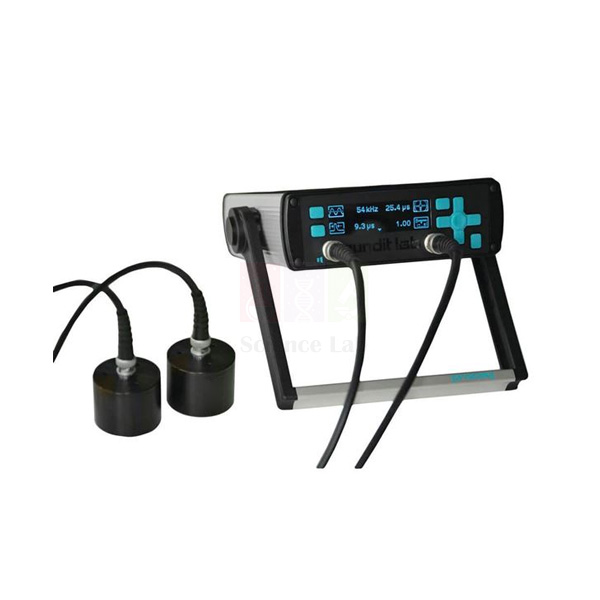
Ultrasonic Pulse Velocity Tester
Ultrasonic Pulse Velocity Tester (Product Code: SLE/CE/42) is a non-destructive testing instrument used to measure the transit time of ultrasonic waves through concrete, so that its uniformity, internal defects and strength can be evaluated in structural testing and civil engineering laboratories. It works with 52 kHz transducers designed to send and receive signals effectively in highly attenuative materials such as concrete, wood, stone and plastic. It is supplied by Jain Scientific Equipments Pvt Ltd (ScienceLab), Ambala, India.
Specifications
| Parameter | Detail |
|---|---|
| Measurement | Ultrasonic transit time through the material |
| Transducer frequency | 52 kHz concrete transducers |
| Suitable materials | Highly attenuative materials including concrete, wood, stone and plastic |
| Pulse generation | High voltage applied to the transmitting transducer; wave received by the receiving transducer through the concrete |
| Investigations | Uniformity, cavities, cracks, fire or frost damage, delamination, deterioration and strength |
| Principle | Higher elastic property or strength gives a shorter transit time; weaker material gives a lower velocity |
| Product code | SLE/CE/42 |
| Supplied by | Jain Scientific Equipments Pvt Ltd (ScienceLab), Ambala, India |
What Is a UPV Tester Used For?
The velocity of an ultrasonic wave in concrete depends on the material's elastic properties and strength. The tester applies a high-voltage pulse to the transmitting transducer, the wave travels through the concrete to the receiving transducer, and the instrument measures the transit time accurately. Dividing the path length by that time gives the pulse velocity: sound, dense concrete returns short transit times, while cracks, voids or weak zones slow the wave down.
Engineers use it to map uniformity across a structure, locate cavities and cracks, assess fire or frost damage and delamination, and track deterioration over time. Couple the transducers to clean, smooth surfaces with a suitable couplant, measure the path length carefully, and compare readings taken the same way. Paired with a rebound hammer, it forms a practical set of test and measurement instruments for condition surveys in India and international markets.
Supplier
Jain Scientific Equipments Private Limited, which trades as ScienceLab, supplies this Ultrasonic Pulse Velocity Tester from Ambala to universities, structural consultants, testing laboratories, dealers and importers. Buyers building a non-destructive testing kit can source it together with rebound hammers, cover meters and other concrete equipment, and technical questions before purchase can be sent to our team. Read the ScienceLab profile for company details.
Related Civil Engineering Lab Equipment
Pulse velocity readings are strongest when combined with other assessment methods:
- Concrete Test Hammer Schmidt Hammer N-Type — surface rebound testing to combine with internal pulse velocity.
- Concrete cover meter — finds reinforcement that can affect ultrasonic paths.
- Crack Measuring Microscope — measures the surface width of cracks found during the survey.
- Core Drilling Machine (Motorised) — takes cores to confirm results at suspect locations.
View the complete Civil Engineering Lab Equipment range.
Frequently Asked Questions
What does the Ultrasonic Pulse Velocity Tester measure?
The Ultrasonic Pulse Velocity Tester measures the transit time of an ultrasonic wave passing through concrete between a transmitting and a receiving transducer. From this, pulse velocity is calculated to evaluate uniformity, internal defects and the elastic properties and strength of the material non-destructively.
What transducer frequency does the tester use?
The Ultrasonic Pulse Velocity Tester uses 52 kHz concrete transducers. They are designed to send and receive ultrasonic signals effectively in highly attenuative materials, which makes them suitable for concrete as well as wood, stone and plastic.
Which defects can the UPV tester help detect?
The Ultrasonic Pulse Velocity Tester helps investigate uniformity, cavities, cracks, fire or frost damage, delamination and general deterioration in concrete. Zones where the wave slows down, or where the transit time rises sharply, point to areas that deserve closer inspection or coring.
How does pulse velocity relate to concrete strength?
For the Ultrasonic Pulse Velocity Tester, higher elastic property or strength means a shorter transit time and higher velocity, while weaker or damaged concrete gives a lower velocity. Converting velocity into strength values requires correlation with tests on the same concrete.
Who supplies the Ultrasonic Pulse Velocity Tester?
The Ultrasonic Pulse Velocity Tester is supplied by Jain Scientific Equipments Pvt Ltd, trading as ScienceLab, Ambala, Haryana, India. The company supplies it to colleges, laboratories, consultants, dealers and importers, and can quote it alongside other non-destructive testing equipment.
Is a calibration certificate available with the tester?
Calibration or verification documents for the Ultrasonic Pulse Velocity Tester should be discussed with us before ordering, so we can confirm what can be provided with the supply. Please add the requirement to your enquiry on the contact page.
Request a Quote
Request a quotation for the Ultrasonic Pulse Velocity Tester through the contact page or by adding it to the enquiry cart, and include any other non-destructive testing items you are planning to buy.
Last updated: 24 September 2026
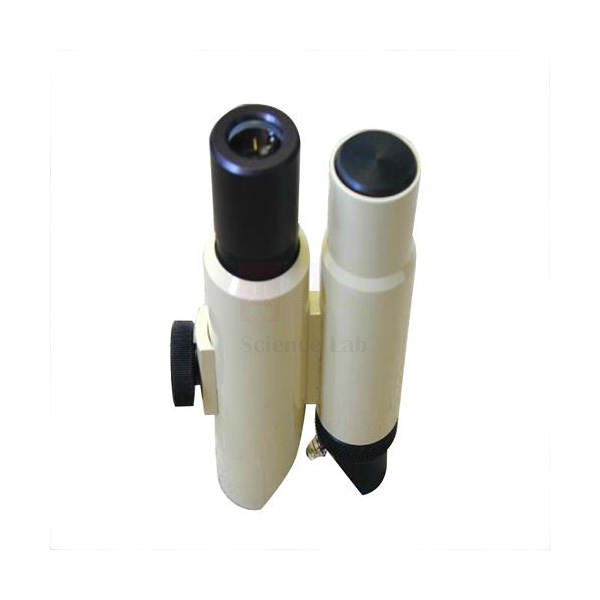
Crack Measuring Microscope
Crack Measuring Microscope (Product Code: SLE/CE/43) is an optical instrument used to measure the width of cracks in concrete members, masonry walls and other structures during condition surveys and civil engineering laboratory work. An adjustable lamp unit lights the crack, a knob brings the image into focus, and the eyepiece scale turns through 360° to line up with the crack direction. Jain Scientific Equipments Pvt Ltd (ScienceLab) makes it as an OEM manufacturer at its own factory in Ambala, India.
Key Details
| Parameter | Detail |
|---|---|
| Application | Measuring crack widths in concrete members, masonry walls and other structures |
| Illumination | Adjustable lamp unit |
| Focusing | Image focused by turning a knob |
| Eyepiece scale | Rotates through 360° to align with the direction of the crack or pitch under examination |
| Product code | SLE/CE/43 |
| Manufacturer | Jain Scientific Equipments Pvt Ltd (ScienceLab) — OEM |
| Country of origin | India (made in Ambala, Haryana) |
What Is a Crack Width Microscope Used For?
Crack width is one of the first things an engineer records when assessing a building, bridge or retaining wall, because it helps separate harmless shrinkage cracking from damage that needs repair. The microscope is placed on the surface over the crack, the lamp is adjusted to light the edges clearly, and the image is focused with the knob. The eyepiece scale is then rotated until its graduations sit square across the crack, and the width is read directly.
Marking each measured point and repeating readings at intervals shows whether cracks are stable or still opening, which guides repair decisions. The same instrument lets students see crack patterns from load tests on beams and slabs in the laboratory. Keep the optics clean, store the unit in a dry place, and check the lamp before site visits. It is a practical choice for engineering lab equipment used in structural and materials courses.
OEM Manufacturer
ScienceLab is the brand of Jain Scientific Equipments Private Limited, the OEM (original equipment manufacturer) that produces this Crack Measuring Microscope at its own licensed factory in Saha, Ambala, Haryana. Colleges, survey consultants, testing laboratories, dealers and importers are supplied factory-direct, and follow-up orders or parts requests go straight to the maker — ask us. Buyers completing vendor forms can use GSTIN 06AAECJ8618A1ZT and LEI 3358004HRD1JIVXKYX49. Company background is on the profile page.
Related Civil Engineering Lab Equipment
Crack surveys are usually carried out with a small set of complementary instruments:
- Demountable Mechanical Strain Gauge — tracks changes in length between fixed points, for example across a crack.
- Ultrasonic Pulse Velocity Tester — investigates cracks and defects inside the concrete.
- Concrete Test Hammer — checks surface strength and uniformity around cracked areas.
- Concrete cover meter — locates reinforcement near cracks.
Browse all Civil Engineering Lab Equipment.
Frequently Asked Questions
What is the Crack Measuring Microscope used for?
The Crack Measuring Microscope is used to measure crack widths in concrete members, masonry walls and other structures. Engineers and students use it during condition surveys, repair assessments and laboratory load tests to record how wide cracks are and whether they change over time.
How is the scale lined up with a crack?
The eyepiece scale of the Crack Measuring Microscope can be turned through 360°, so it can be aligned with the direction of the crack or pitch under examination. This allows the width to be read squarely across the crack, whatever its orientation on the surface.
Does the microscope have its own lighting?
Yes. The Crack Measuring Microscope operates with an adjustable lamp unit that illuminates the crack, which helps when working in shaded areas, inside buildings or under bridges. The image is then sharpened by turning the focusing knob before the reading is taken.
What magnification and scale division does it have?
Magnification and scale-division details for the Crack Measuring Microscope are not listed on this page. Please ask our team through the contact page, mentioning the smallest crack width you need to measure, and we will confirm the specification before you order.
Who manufactures the Crack Measuring Microscope?
The Crack Measuring Microscope is manufactured by Jain Scientific Equipments Pvt Ltd, trading as ScienceLab, as the OEM at its own licensed factory in Saha, Ambala, Haryana, India. Quotations and repeat orders are handled directly by the manufacturer.
Is a calibration certificate available for the scale?
If you need a calibration or verification document for the Crack Measuring Microscope scale, please discuss it with us before ordering so we can confirm what can be provided. Include this requirement in your enquiry through the contact page.
Request a Quote
Price the Crack Measuring Microscope by contacting us on the contact page or adding it to the enquiry cart. Quotations are issued by the manufacturer itself.
Last updated: 24 September 2026
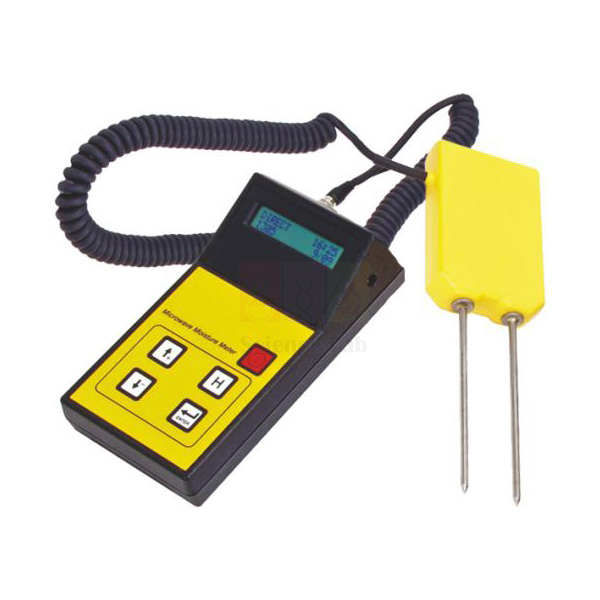
Cementometer Moisture Meter
Cementometer Moisture Meter (Product Code: SLE/CE/44) is a microwave moisture meter used to measure the moisture content of wet concrete by sensing its complex dielectric constant through a prong probe, in concrete laboratories and quality-control work. Two units cover the water/cement ratios found in wet concrete: the two-prong Type R for approximately 0.35 to 0.65, and a five-prong version for low ratios of approximately 0.25 to 0.5. It is supplied by Jain Scientific Equipments Pvt Ltd (ScienceLab), Ambala, India.
Specifications
| Parameter | Detail |
|---|---|
| Measuring principle | Microwave sensing of the complex dielectric constant of material in contact with the prongs |
| Display | Integrated microprocessor; moisture content displayed directly |
| Type R | Two-prong probe; normal water/cement ratios, approx. 0.35 to 0.65 |
| Low-ratio unit | Five-prong probe; low water/cement ratios, approx. 0.25 to 0.5 |
| Pre-set calibration | Standard Type I, II and III cements |
| User programs | Up to ten different mix designs; created with a built-in calibration process, no external computing device needed |
| Readings per test | An average of five to ten readings is normally taken |
| Memory | Over 150 readings, stored with time and date |
| Data transfer | USB interface to a personal computer running the Cementometer software |
| Product code | SLE/CE/44 |
| Supplied by | Jain Scientific Equipments Pvt Ltd (ScienceLab), Ambala, India |
What Is a Cementometer Used For?
The water content of fresh concrete governs its strength and durability, yet it can drift from the design through wet aggregates or added water at the mixer. Because the dielectric constant of water is four to eight times greater than that of most aggregates and cements, changes in water content directly affect the sensor output. The Cementometer converts that output with its microprocessor and shows the moisture reading at once, so a batch can be checked before it is placed.
Insert the probe fully into a representative sample and take five to ten readings to obtain a valid average. For the highest accuracy, program the unit for the materials you actually use; the calibration routine creates these user programs on the meter itself. Stored readings, complete with time and date, can later be downloaded over USB for records. It is a useful moisture meter for any concrete laboratory looking to tighten mix control.
What to Specify When Ordering
- Which unit you need: the two-prong Type R (approx. 0.35 to 0.65 w/c), the five-prong low-ratio unit (approx. 0.25 to 0.5 w/c), or both.
- The cement types in your mixes, since the units come calibrated for standard Type I, II and III cements.
- Whether you will download readings to a PC over USB, so the software and USB connection can be confirmed on the quotation.
- The quantity and the delivery location.
Supplier
Jain Scientific Equipments Private Limited, trading as ScienceLab from Ambala, supplies the Cementometer Moisture Meter to concrete laboratories, ready-mix producers, research institutes, dealers and importers in India and international markets. As it is a branded instrument, our team sources it for you and can quote it together with fresh-concrete test sets and moulds from the ScienceLab range. See the ScienceLab profile to learn more about the company.
Related Civil Engineering Lab Equipment
Moisture readings are most meaningful when read alongside other fresh-concrete checks:
- Slump Test Apparatus — confirms workability of the batch whose water content was measured.
- Bleeding Of Freshly Mixed Concrete — shows how much mixing water rises out of the same concrete.
- K-Slump Tester — in-place workability reading in moulds and forms.
- Concrete Cube Mould — for casting cubes to link water content with strength.
Visit the Civil Engineering Lab Equipment category for more.
Frequently Asked Questions
What does the Cementometer Moisture Meter measure?
The Cementometer Moisture Meter measures the moisture content of wet concrete using a microwave sensor that reads the complex dielectric constant of the material between its prongs. An integrated microprocessor converts this and displays the moisture content directly, relating it to the water/cement ratio of the mix.
Which Cementometer unit do I need?
Two Cementometer Moisture Meter units are available. The Type R, with a two-prong probe, handles normal water/cement ratios of approximately 0.35 to 0.65, while the five-prong unit handles low ratios of approximately 0.25 to 0.5. Choose according to the mixes your laboratory tests.
Which cements is the meter calibrated for?
The Cementometer Moisture Meter units come calibrated for standard Type I, II and III cements. For the highest accuracy, the user should program the unit for the actual materials; up to ten different mix designs can be stored using the meter's own calibration process.
How many readings should be taken per sample?
With the Cementometer Moisture Meter, an average of five to ten readings is normally taken to ensure a valid result. Taking readings at different points in the sample evens out local variations caused by coarse aggregate particles near the prongs.
Can the Cementometer store and transfer data?
Yes. The Cementometer Moisture Meter can store over 150 readings, each with the time and date for future reference. Data can be recalled through a USB interface to a personal computer running the Cementometer software, which simplifies record keeping for quality-control files.
Who supplies the Cementometer Moisture Meter?
The Cementometer Moisture Meter is supplied by Jain Scientific Equipments Pvt Ltd, trading as ScienceLab, Ambala, Haryana, India. The company sources it for laboratories, producers, dealers and importers and can combine it with other concrete testing equipment on one quotation.
Request a Quote
To get a quotation for the Cementometer Moisture Meter, tell us which unit you need through the contact page or add it to the enquiry cart.
Last updated: 24 September 2026
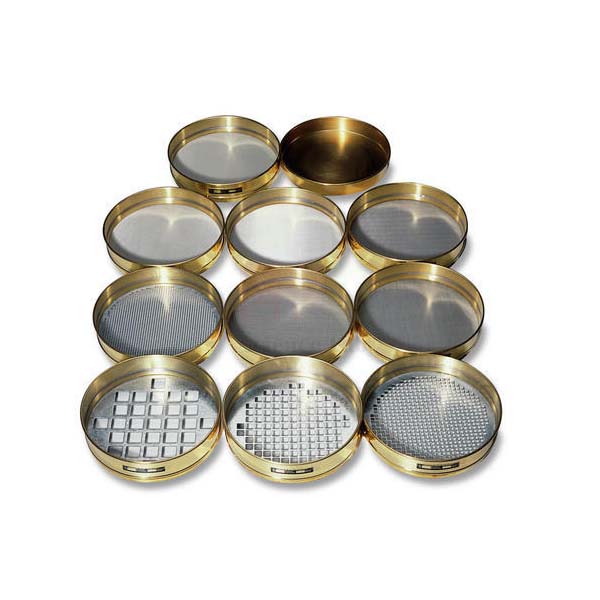
Test Sieves
Test Sieves (Product Code: SLE/CE/45) are woven-wire or perforated-metal sieve pans used for sifting, filtration and particle-size grading of soils, sand, aggregates and powders in civil engineering and materials testing laboratories. They are made in sizes of 76, 100, 150, 200, 250, 300, 350 and 400 mm, among others, with frame and mesh generally in stainless steel or brass. They are manufactured by Jain Scientific Equipments Pvt Ltd (ScienceLab), an OEM, at its own factory in Ambala, India.
Specifications
| Parameter | Detail |
|---|---|
| Sieving medium | Woven wire cloth or perforated metal |
| Construction | Wire cloth placed between two die-formed frames |
| Frame and mesh material | Stainless steel or brass |
| Frame sheet | Frames stamped from 22 ga sheet metal |
| Sizes | 76, 100, 150, 200, 250, 300, 350 and 400 mm, and other sizes |
| Uses | Sifting and filtration |
| Product code | SLE/CE/45 |
| Manufacturer | Jain Scientific Equipments Pvt Ltd (ScienceLab) — OEM |
| Country of origin | India (made in Ambala, Haryana) |
What Are Test Sieves Used For?
Grading, the distribution of particle sizes, controls how soils compact and how aggregates pack in concrete and bituminous mixes. In a sieve analysis, a stack of sieves is arranged with the coarsest opening at the top, the dried sample is poured in and shaken by hand or on a sieve shaker, and the material retained on each sieve is weighed. The percentages passing each opening are then plotted as a grading curve.
Beyond grading, the sieves are used to sift fines out of a sample, to separate mortar or cement from coarser particles, and for simple filtration tasks. Avoid overloading any single sieve, brush the mesh gently from the underside to clear trapped particles, and dry the sieves fully before stacking them away. They are basic lab equipment for colleges, polytechnics and site laboratories in India and international markets.
What to Specify When Ordering
- The sieve size required (76, 100, 150, 200, 250, 300, 350 or 400 mm, or another size).
- Frame and mesh material: stainless steel or brass.
- Woven wire mesh or perforated metal, with the aperture openings your test method calls for.
- The number of sieves per set and the number of sets for your laboratory.
OEM Manufacturer
Jain Scientific Equipments Private Limited, which sells under the name ScienceLab, is the OEM (original equipment manufacturer) of these Test Sieves and makes them at its own licensed factory at Saha, Ambala, Haryana. Engineering colleges, soil and aggregate laboratories, dealers and importers buy them factory-direct, and replacement sieves for an existing stack can be ordered from the same manufacturer — ask us. Learn more on the ScienceLab profile.
Related Civil Engineering Lab Equipment
These items complete a typical sieve analysis set-up:
- Electromagnetic Digital Sieve Shaker — shakes a stack of sieves for consistent, hands-free grading.
- Brass frame sieves — an alternative sieve range for aggregate testing.
- Riffle Sample Divider — reduces a bulk sample to a representative test portion before sieving.
- Flakiness Sieve Set — for particle-shape testing after grading.
See every item in Civil Engineering Lab Equipment.
Frequently Asked Questions
What sizes are the Test Sieves available in?
Test Sieves (SLE/CE/45) are available in sizes of 76, 100, 150, 200, 250, 300, 350 and 400 mm, and other sizes can be discussed. Choose the size that suits your sample quantity and any sieve shaker you already use.
What materials are the sieves made of?
Stainless steel or brass is generally used for both the frame and the woven wire mesh of the Test Sieves. The sieve frames are stamped from 22 ga sheet metal, and the wire cloth is held accurately between two die-formed frames.
What is the difference between woven wire and perforated metal sieves?
Test Sieves with woven wire cloth have square openings formed by the weave and are generally used for finer particles, while perforated metal plates have punched holes and are typically used for coarser material. State which type and aperture openings you need when ordering.
How should test sieves be cleaned and stored?
Clean Test Sieves with a soft brush from the underside, never by pushing particles through the mesh with force or sharp tools. Wash if needed, dry them completely, and store them nested in a dry place so the mesh stays taut and undamaged.
Who manufactures the Test Sieves?
Test Sieves (SLE/CE/45) are manufactured by Jain Scientific Equipments Pvt Ltd, trading as ScienceLab, as the OEM at its own licensed factory in Saha, Ambala, Haryana, India. Quotations for single sieves or full sets come directly from the manufacturer.
Can a calibration or inspection certificate be provided?
If your laboratory needs an inspection or calibration document with the Test Sieves, please discuss it with us before ordering so we can confirm what can be provided for the sizes you choose. Add the requirement to your enquiry on the contact page.
Request a Quote
To order Test Sieves, list the sizes, materials and quantities on our contact page or add them to the enquiry cart. Your quotation comes straight from the manufacturer.
Last updated: 24 September 2026
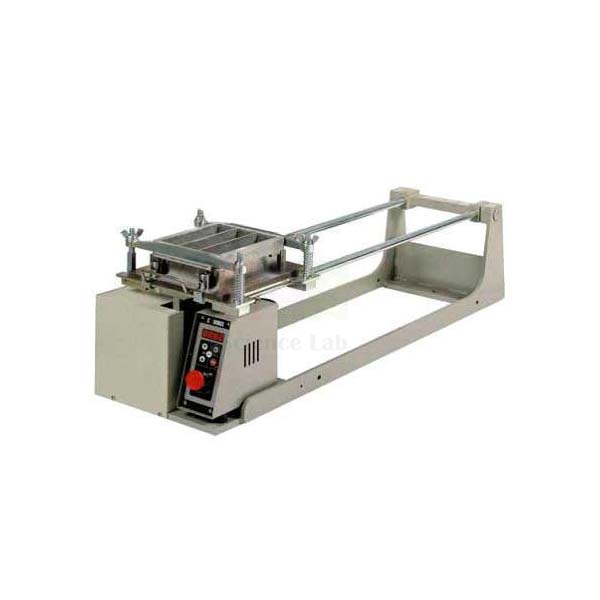
Jolting Apparatus
Jolting Apparatus (Product Code: SLE/CE/46) is a motor-driven compaction machine used to compact cement mortar test prisms in a three-compartment mould in cement and civil engineering laboratories. Materials-testing labs choose it because a cam turning at 60 rev/min lifts and drops the table, and a micro-switch stroke counter stops the machine automatically after 60 jolts. It is made by Jain Scientific Equipments Pvt Ltd (ScienceLab), an OEM and engineering lab equipment manufacturer, at its own factory in Ambala, India.
Specifications
| Parameter | Detail |
|---|---|
| Table and arms | Rectangular table rigidly connected by two support arms to a spindle |
| Spindle distance | 800 mm horizontal distance from the centre of the table |
| Drive | Cam connected to a motor and gearbox through a V-belt and pulleys |
| Cam speed | 60 rev/min |
| Drop action | Table is raised by the cam and allowed to fall freely onto a stop; a projecting lug with a plane face is provided on the table, with a stop with a rounded upper surface beneath it |
| Jolt control | Stroke counter with micro-switch stops the machine after 60 jolts |
| Mould mounting | Locating pins for the mould compartments; mould and hopper clamp rigidly to the table |
| Supplied with | Mould and hopper |
| Mould | Steel mould with base plate, three compartments, each 40 × 40 × 160 mm internal |
| Other listed accessory | Apparatus for de-moulding the specimen |
| Optional | Digital preset counter (extra-cost option) |
| Power supply | 230 V, single phase, AC |
| Product code | SLE/CE/46 |
| Manufacturer | Jain Scientific Equipments Pvt Ltd (ScienceLab) — OEM |
| Country of origin | India (made in Ambala, Haryana) |
What Is the Jolting Apparatus Used For?
Freshly mixed cement mortar is placed in the three-compartment 40 × 40 × 160 mm mould with the hopper fitted on top, and the jolting apparatus compacts it by repeatedly lifting the table and letting it fall onto the stop. Because the cam speed and jolt count are fixed by the machine, every set of prisms receives the same compaction effort, which removes the operator-to-operator variation of hand tamping. The compacted prisms are then cured and tested for flexural and compressive strength.
It is a core item of lab equipment for technical institutes that teach cement and concrete technology, as well as for plant and project quality-control labs. Before each session, clamp the mould and hopper firmly, keep the lug and the rounded stop free of mortar so each fall ends cleanly, and confirm that the counter halts the table at 60 jolts. Use the de-moulding apparatus to release the prisms without chipping their edges.
What to Specify When Ordering
- Number of jolting units, and whether the optional digital preset counter is required
- Number of additional three-compartment steel moulds (40 × 40 × 160 mm) for casting several batches in a day
- Whether the apparatus for de-moulding the specimen should be included in the quotation
- Confirmation that a 230 V single-phase AC supply is available where the machine will stand
OEM Manufacturer
ScienceLab is the trading name of Jain Scientific Equipments Private Limited, and the Jolting Apparatus is one of the cement-testing machines the company builds as the original equipment manufacturer. It is fabricated and assembled at the company’s own licensed factory at Saha, Ambala, Haryana, so buyers deal with the maker rather than a trading house.
Colleges, testing laboratories, dealers and importers are supplied factory-direct, and questions about replacement moulds or stroke-counter spares go straight to the people who build the machine — just ask us. More background is on the ScienceLab company profile.
Related Civil Engineering Lab Equipment
These items from the same range complete the mortar-prism workflow around the jolting apparatus:
- Prism Mould Three Gang — an additional three-gang prism mould for casting more sets of specimens
- Straight Edge — for striking off surplus mortar level with the top of the mould
- Cement curing bench-type cabinet — humid, temperature-controlled storage for prisms after casting
- Circulating water bath with cooler unit — water curing of 40 × 40 × 160 mm cement specimens at a set temperature
- Cement samplers — for drawing the cement sample from bulk storage before mixing
Browse the full Civil Engineering Lab Equipment category for concrete, cement, soil and aggregate testing apparatus.
Frequently Asked Questions
What is included with the Jolting Apparatus?
The Jolting Apparatus (SLE/CE/46) is supplied complete with a mould and hopper. The listed mould is a steel mould with base plate and three compartments, each 40 × 40 × 160 mm internally; an apparatus for de-moulding the specimen is also listed, so mention it in your enquiry.
How many jolts does the Jolting Apparatus apply?
The Jolting Apparatus applies 60 jolts per cycle. Its cam turns at 60 rev/min, and a stroke counter fitted with a micro-switch stops the machine automatically after the 60th jolt, so each mould receives the same compaction. A digital preset counter can be added as an optional extra.
What power supply does the Jolting Apparatus need?
The Jolting Apparatus runs on a 230 V, single-phase AC supply, with the motor driving the cam through a gearbox, V-belt and pulleys. If your laboratory or export destination uses a different supply, state it when you request a quotation.
Who manufactures the Jolting Apparatus?
The Jolting Apparatus is manufactured by Jain Scientific Equipments Pvt Ltd (ScienceLab) as the OEM, at its own factory at Saha, Ambala, Haryana, India. Buyers deal directly with the manufacturer for quotations, repeat orders and replacement moulds.
Is a calibration certificate available for the Jolting Apparatus?
Calibration-certificate availability for the Jolting Apparatus should be discussed with us before ordering. Tell us which checks your laboratory needs, such as jolt count or cam speed, through the contact page and we will confirm what can be provided.
Can the Jolting Apparatus be supplied for export?
Yes. The Jolting Apparatus is supplied to laboratories in India and international markets. For an export enquiry, give the quantity, the destination and the electrical supply at site, and the quotation will come directly from the manufacturer.
Request a Quote
For a quotation on the Jolting Apparatus (SLE/CE/46), send your quantity and any optional items through the contact page or add the product to the enquiry cart. Quotes come direct from the manufacturer.
Last updated: 24 September 2026
599.jpg)
Tensile Strength Tester (Electrically Operated)
Tensile Strength Tester (Electrically Operated) (Product Code: SLE/CE/47) is a double-lever testing machine used to measure the tensile strength of cement mortar briquettes in cement and building-materials laboratories. Engineering colleges and testing labs use it for its 900 kg capacity and a micro-switch that stops the machine the instant the briquette fails. It is produced by Jain Scientific Equipments Pvt Ltd (ScienceLab), an OEM manufacturer, at its own factory in Ambala, India.
Specifications
| Parameter | Detail |
|---|---|
| Loading system | Friction-free double lever system; load applied by a sliding weight on the top lever |
| Capacity | 900 kg |
| Load at failure | Tensile load read accurately to 0.5 kg |
| Zero setting | Marker on the sliding weight for returning it to the zero position |
| Operation | Briquette is fixed in the jaws and the machine is switched on; the sliding weight travels along the calibrated lever, applying tension to the specimen |
| Automatic stop | Micro-switch stops the machine instantly on failure of the briquette |
| Power supply | 230 V, 50 Hz (50 cycles), single phase, AC |
| Supplied with | One brass briquette mould and one base plate |
| Product code | SLE/CE/47 |
| Manufacturer | Jain Scientific Equipments Pvt Ltd (ScienceLab) — OEM |
| Country of origin | India (made in Ambala, Haryana) |
What Is the Cement Briquette Tensile Strength Tester Used For?
The tester measures direct tensile strength on mortar briquettes cast in the brass briquette mould. After the briquette is clamped in the jaws and the machine is switched on, the sliding weight moves steadily along the top lever, and the double lever multiplies its effect so that tension on the specimen rises smoothly until it breaks. The lever arrangement therefore lets a moving weight build up loads to the full 900 kg capacity.
In cement technology practicals, students cast briquettes, cure them for different periods and compare the failure loads to see how strength develops with age. As engineering lab equipment in India for diploma and degree courses, it is simple to operate: reset the sliding weight to zero with its marker before each test, keep the jaws free of mortar crumbs so the briquette sits centrally, and read the load as soon as the micro-switch stops the machine.
What to Specify When Ordering
- Number of testers required for the laboratory
- Number of additional brass briquette moulds and base plates for casting several specimens per mix
- Confirmation that a 230 V, 50 Hz single-phase AC supply is available at the bench
OEM Manufacturer
The Tensile Strength Tester is built by Jain Scientific Equipments Private Limited, which trades as ScienceLab and is the original equipment manufacturer of this machine. It is manufactured and assembled at the company’s licensed factory at Saha, Ambala, Haryana, and dispatched factory-direct to colleges, polytechnics, dealers and importers.
The company is incorporated under CIN U29309HR2020PTC087597, and its production premises at 449, HSIIDC Industrial Area, Saha, Ambala hold Factory Licence AMB-ONLINE-CHD-J-414. Company details are on the ScienceLab profile page.
Related Civil Engineering Lab Equipment
Laboratories setting up briquette tensile testing usually add these items from the same range:
- Vicat Needle Apparatus With Dashpot — for finding cement paste consistency when working out mixing water
- Cement curing bench-type cabinet — keeps briquettes in humid, temperature-controlled conditions before testing
- Circulating water bath with cooler unit — for water curing of cement specimens at a controlled temperature
- Cement samplers — for taking a representative sample from bulk cement stock
See the complete Civil Engineering Lab Equipment category for other cement, concrete and soil testing machines.
Frequently Asked Questions
What is the capacity of the Tensile Strength Tester (Electrically Operated)?
The Tensile Strength Tester (Electrically Operated) has a capacity of 900 kg, applied through a friction-free double lever system by a sliding weight on the top lever. The tensile load at the moment of briquette failure is read accurately to 0.5 kg.
What comes with the Tensile Strength Tester?
The Tensile Strength Tester (SLE/CE/47) is supplied complete with one brass briquette mould and one base plate. Laboratories that cast several briquettes from each mix usually order additional moulds, so state the number you need when requesting a quotation.
How does the Tensile Strength Tester stop when the briquette breaks?
A micro-switch on the Tensile Strength Tester (Electrically Operated) stops the machine instantly when the briquette fails, so the operator can take the load reading before returning the sliding weight to its zero position using the marker provided.
What electrical supply does the Tensile Strength Tester require?
The Tensile Strength Tester (Electrically Operated) operates on 230 V, 50 Hz (50 cycles), single-phase AC. For sites with a different voltage or frequency, mention the local supply in your enquiry so it can be addressed in the quotation.
Who manufactures the Tensile Strength Tester (Electrically Operated)?
Jain Scientific Equipments Pvt Ltd (ScienceLab) is the OEM manufacturer of the Tensile Strength Tester (Electrically Operated), producing it at its own licensed factory at Saha, Ambala, Haryana, India. Quotations, repeat orders and spare-part enquiries are handled directly by the manufacturer.
Can I get a calibration certificate with the Tensile Strength Tester?
Calibration-certificate availability for the Tensile Strength Tester (Electrically Operated) should be discussed with us before you order. Tell us what verification your laboratory or tender requires through the contact page and we will confirm what can be provided.
Request a Quote
To request a quotation for the Tensile Strength Tester (Electrically Operated), use the contact page or place it in the enquiry cart with your quantity and any extra briquette moulds. Your quotation comes straight from the manufacturer.
Last updated: 24 September 2026
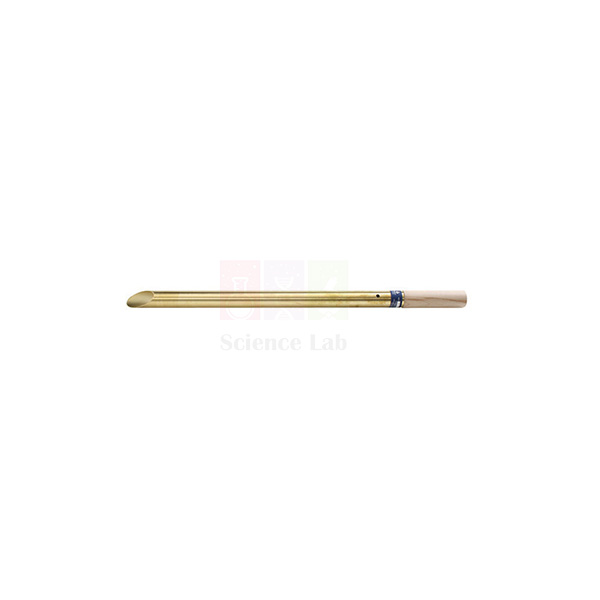
Cement samplers
Cement samplers (Product Code: SLE/CE/48) are slotted brass sampling tubes used to draw cement from bulk storage or bulk shipments for laboratory testing. Site, plant and college laboratories use them because the inner tube rotates to close the slots, trapping about 3 litres of cement taken from within the stock rather than just the surface. They are made by Jain Scientific Equipments Pvt Ltd (ScienceLab), an OEM manufacturer of engineering lab equipment in India, at its own factory in Ambala.
Specifications
| Parameter | Detail |
|---|---|
| Purpose | Sampling cement in bulk storage or bulk shipments |
| Construction | Two concentric brass tubes with slots |
| Operation | Inner tube rotates to close the slots and take the sample |
| Capacity | 3 litres (approx.) |
| Weight | 1 kg (approx.) |
| Product code | SLE/CE/48 |
| Manufacturer | Jain Scientific Equipments Pvt Ltd (ScienceLab) — OEM |
| Country of origin | India (made in Ambala, Haryana) |
What Is the Cement Sampler Used For?
Test results are only as reliable as the sample, and cement held in silos, bins or a bulk consignment can vary from one point to another. The sampler is pushed into the cement with its slots open so material flows into the inner tube along its length; the inner tube is then turned to close the slots, and the sampler is withdrawn with the cement held inside. Several draws from different points are usually combined into one composite sample.
That composite sample then goes to tests such as consistency, setting time, soundness and fineness. The brass tubes are easy to wipe clean between lots, which helps keep samples from different consignments separate, and at about 1 kg the sampler is easy to carry between storage points. It also belongs in technical educational equipment sets for cement technology courses.
OEM Manufacturer
Jain Scientific Equipments Private Limited, known by its trading name ScienceLab, manufactures these brass cement samplers as the OEM at its own factory at Saha, Ambala, Haryana. Buying from the producer means sampling tools for a new plant laboratory, a construction project or an engineering department are quoted and dispatched factory-direct, without a trading intermediary.
Repeat orders for additional samplers are handled by the manufacturer itself. Company background is available on the ScienceLab profile.
Related Civil Engineering Lab Equipment
Once a cement sample has been drawn, these related items help divide, handle and test it:
- Riffle Sample Divider — splits a composite sample into representative portions
- Scoops — for transferring sampled material into containers and apparatus
- Bulk density of cement — measures the loose bulk density of the sampled cement
- Vicat Needle Apparatus With Dashpot — for consistency and setting-time tests on the sample
More cement, concrete and soil apparatus is listed in the Civil Engineering Lab Equipment category.
Frequently Asked Questions
What are cement samplers used for?
Cement samplers are used to take representative samples of cement from bulk storage or bulk shipments. The ScienceLab cement sampler (SLE/CE/48) is pushed into the cement with its slots open, then the inner tube is rotated to close the slots and hold the sample for withdrawal.
How much cement does the cement sampler hold?
The ScienceLab cement sampler holds approximately 3 litres of cement per draw and weighs about 1 kg. For a larger composite sample, take several draws from different points in the stock and combine them before testing.
What are the cement samplers made of?
The cement samplers are made of brass, as two concentric brass tubes with matching slots. The inner tube turns inside the outer one to open or close the slots, and the smooth brass surfaces are easy to wipe clean between different cement lots.
Who manufactures these cement samplers?
Jain Scientific Equipments Pvt Ltd (ScienceLab) manufactures the cement samplers as the OEM at its own factory at Saha, Ambala, Haryana, India, and supplies them factory-direct to laboratories, contractors, dealers and importers in India and international markets.
What should a quotation request for cement samplers include?
A quotation request for cement samplers should state the quantity, the delivery location and any other cement-testing apparatus needed at the same time. Send it through the contact page or the enquiry cart, and the manufacturer will reply with a quotation.
Request a Quote
Ask for a quotation on the Cement samplers (SLE/CE/48) through the contact page, or add them to the enquiry cart together with other cement-testing items. Quotations are issued directly by the manufacturer.
Last updated: 24 September 2026
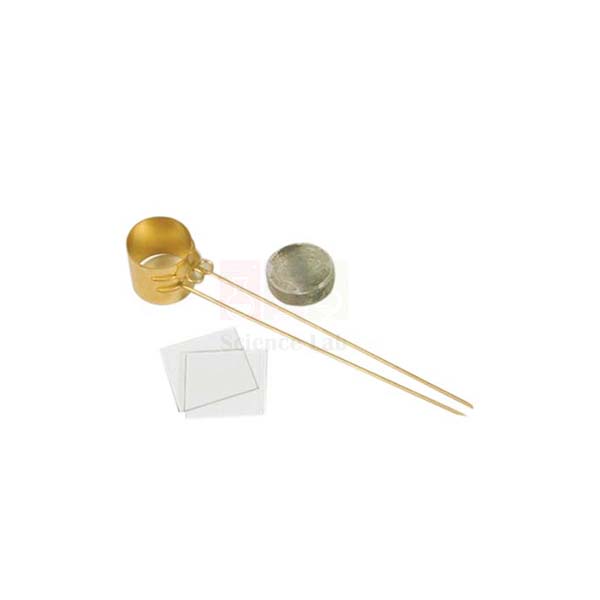
Le Chatelier moulds
Le Chatelier moulds (Product Code: SLE/CE/49) are spring-tensioned split-cylinder moulds used to measure the expansion (soundness) of cement in cement testing laboratories. Each mould is 30 mm in internal diameter and 30 mm high, with two indicator stems whose points are 165 mm from the cylinder’s centre line, so a slight opening of the split shows up clearly at the pointers. Jain Scientific Equipments Pvt Ltd (ScienceLab), an OEM manufacturer, makes them at its own factory in Ambala, India.
Specifications
| Parameter | Detail |
|---|---|
| Test | Expansion of cement |
| Mould type | Spring-tensioned split cylinder |
| Internal diameter | 30 mm |
| Height | 30 mm |
| Indicator stems | Two, measuring 165 mm from the points to the centre line of the cylinder |
| Moulds per test | Two or three |
| Kit consists of | Le Chatelier moulds; glass plates, 50 mm square |
| Kit scope | Includes the accessories to perform the test and to check the conformity of the moulds |
| Product code | SLE/CE/49 |
| Manufacturer | Jain Scientific Equipments Pvt Ltd (ScienceLab) — OEM |
| Country of origin | India (made in Ambala, Haryana) |
What Is the Le Chatelier Mould Used For?
Unsound cement contains constituents that keep expanding after the cement has set, which can crack hardened mortar and concrete; the Le Chatelier test detects this. The mould is set on a glass plate, filled with cement paste, covered with a second plate and stored, then heated in water, and the increase in distance between the indicator points shows how far the cement has expanded. The long stems magnify the tiny movement of the split so it can be read with an ordinary scale.
Because two or three moulds are needed for each test, laboratories normally keep moulds in sets. Before use, check that the split edges close evenly and the stems are straight, and lightly oil the inside so the hardened paste releases cleanly. The moulds are standard technical educational equipment for building-materials practicals in civil engineering diploma and degree courses.
What to Specify When Ordering
- Number of moulds: two or three are needed for each test, multiplied by the number of cement samples tested at once
- Number of 50 mm square glass plates, since each mould sits between a lower and an upper plate
- Whether a water bath or curing cabinet for the storage and heating stages should be quoted at the same time
OEM Manufacturer
The Le Chatelier moulds are manufactured by Jain Scientific Equipments Private Limited, trading as ScienceLab, which acts as the OEM and produces them at its own licensed factory at Saha, Ambala, Haryana. Cement plants, engineering colleges, dealers and importers therefore source them direct from the maker.
Replacement moulds and repeat orders are handled by the manufacturer, so a laboratory can match additional moulds to the ones already in use — ask us when you enquire. Read more about the company on the ScienceLab company profile.
Related Civil Engineering Lab Equipment
A cement soundness test also needs paste of standard consistency and controlled storage, supported by these items:
- Vicat Needle Apparatus With Dashpot — determines the standard-consistency paste used to fill the moulds
- Water Bath (6 Holes) — for the stage in which the moulds are heated in water
- Cement curing bench-type cabinet — humid, temperature-controlled storage before the heating stage
- Cement samplers — for taking the cement sample to be tested
Other cement and concrete testing apparatus is listed in the Civil Engineering Lab Equipment category.
Frequently Asked Questions
How many Le Chatelier moulds are needed for one test?
Two or three Le Chatelier moulds are required for each cement expansion test, and the readings are averaged. Laboratories testing several cement lots at the same time should multiply that number when ordering Le Chatelier moulds from ScienceLab.
What are the dimensions of the Le Chatelier mould?
The Le Chatelier mould is a spring-tensioned split cylinder 30 mm in internal diameter and 30 mm high. Its two indicator stems measure 165 mm from their points to the centre line of the cylinder, which magnifies any expansion of the cement paste.
What is included in the Le Chatelier mould kit?
The Le Chatelier mould kit (SLE/CE/49) consists of Le Chatelier moulds and glass plates 50 mm square, and is described as including the accessories to perform the test and check the moulds. Confirm the number of moulds and plates required in your quotation.
Who manufactures the Le Chatelier moulds?
Jain Scientific Equipments Pvt Ltd (ScienceLab) is the OEM manufacturer of these Le Chatelier moulds, making them at its own factory at Saha, Ambala, Haryana, India. Repeat orders and replacement moulds are handled directly by the manufacturer.
Can Le Chatelier moulds be supplied in bulk for export?
Yes. Le Chatelier moulds can be supplied in quantity to laboratories, institutions, dealers and importers in India and international markets. Send the number of moulds and the destination through the contact page so the manufacturer can prepare a quotation.
Request a Quote
For a quotation on Le Chatelier moulds (SLE/CE/49), tell us how many moulds and glass plates you need via the contact page, or add the item to the enquiry cart. You receive the quotation directly from the manufacturer.
Last updated: 24 September 2026
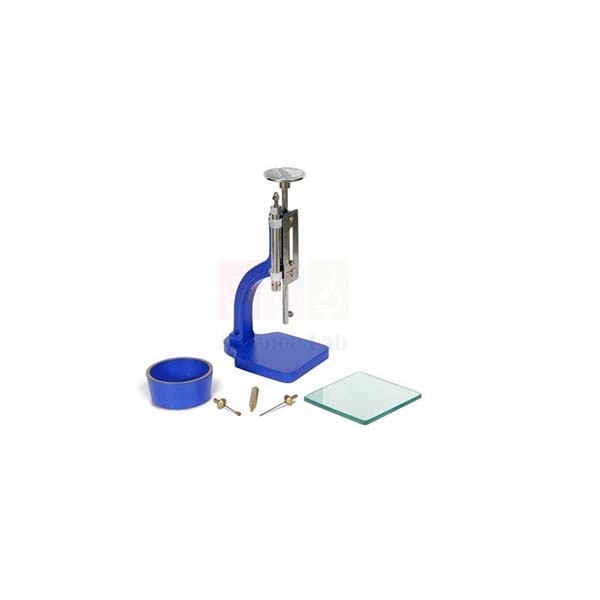
Vicat Needle Apparatus With Dashpot
Vicat Needle Apparatus With Dashpot (Product Code: SLE/CE/50) is a frame-mounted penetration instrument used to determine the standard consistency and the initial and final setting times of cement paste in construction-materials laboratories. Its distinguishing feature is a dashpot that lowers the needles gently onto the paste, and it comes with an initial needle, final needle and consistency plunger. It is built by Jain Scientific Equipments Pvt Ltd (ScienceLab), an OEM manufacturer, at its own factory in Ambala, India.
Specifications
| Parameter | Detail |
|---|---|
| Frame | Metallic frame bearing a freely movable rod with a cap at the top |
| Dashpot | Provided for gentle lowering of the needles |
| Needle set | One each: initial setting needle, final setting needle, consistency plunger |
| Vicat mould | Brass, 40 mm high; 80 mm internal diameter at the base and 70 mm at the top |
| Base plates | Glass base plate; mild steel base plate 5 in × 5 in (approx. 127 × 127 mm) |
| Product code | SLE/CE/50 |
| Manufacturer | Jain Scientific Equipments Pvt Ltd (ScienceLab) — OEM |
| Country of origin | India (made in Ambala, Haryana) |
What Is the Vicat Needle Apparatus Used For?
Three linked cement tests use the same frame. The consistency plunger first finds the water content that gives paste of standard consistency; the initial setting needle is then lowered at intervals until the paste starts to resist penetration, and the final setting needle shows when the paste has hardened so that it barely marks the surface. These results set the water content for mortar and soundness specimens and tell site engineers how long cement stays workable.
The dashpot damps the fall so each needle meets the paste without impact, making readings more repeatable between students and operators. It is a core piece of lab equipment for technical institutes teaching building materials. Clean the needle after every penetration, keep the moving rod free-running, and position the mould so that each test point is clear of earlier marks and of the mould edge.
What to Specify When Ordering
- Number of apparatus sets required for your class or testing bench
- Spare needles: initial setting needle, final setting needle or consistency plunger
- Extra brass Vicat moulds, and whether glass or 5 in × 5 in mild steel base plates are preferred
OEM Manufacturer
Jain Scientific Equipments Private Limited, which trades as ScienceLab, is the OEM of the Vicat Needle Apparatus With Dashpot and makes it at its own licensed factory at Saha, Ambala, Haryana. The apparatus reaches colleges, cement and construction laboratories, dealers and importers straight from the factory, with no middleman in the supply chain.
Since the apparatus comes straight from its maker, spare needles, moulds and plates for an existing set can be requested directly — ask us with your order details. See the company profile for more about ScienceLab.
Related Civil Engineering Lab Equipment
These items are commonly used alongside the Vicat apparatus in a cement testing bench:
- Automatic Vicat apparatus — an automated alternative for unattended setting-time runs
- Le Chatelier moulds — for the soundness test using standard-consistency paste
- Cement curing bench-type cabinet — holds moulds in humid, controlled conditions between penetrations
- Straight Edge — for levelling the paste flush with the top of the mould
Find more cement, concrete and soil apparatus in the Civil Engineering Lab Equipment category.
Frequently Asked Questions
What is the dashpot on the Vicat Needle Apparatus for?
The dashpot on the Vicat Needle Apparatus With Dashpot (SLE/CE/50) lets the initial needle, final needle or consistency plunger be lowered gently onto the cement paste instead of dropping abruptly, which helps give consistent penetration readings between operators.
Which needles come with the Vicat Needle Apparatus With Dashpot?
The Vicat Needle Apparatus With Dashpot is supplied with one set of needles — an initial setting needle, a final setting needle and a consistency plunger — together with one Vicat mould and a glass base plate.
What size is the Vicat mould supplied with the apparatus?
The Vicat mould listed with the Vicat Needle Apparatus With Dashpot is brass, 40 mm high, with an internal diameter of 80 mm at the base and 70 mm at the top. A 5 in × 5 in mild steel base plate is listed among the accessories.
Who manufactures the Vicat Needle Apparatus With Dashpot?
Jain Scientific Equipments Pvt Ltd (ScienceLab) manufactures the Vicat Needle Apparatus With Dashpot as the OEM at its own factory at Saha, Ambala, Haryana, India, and supplies it directly to colleges, testing laboratories, dealers and importers.
Is a calibration certificate available for the Vicat apparatus?
Calibration-certificate availability for the Vicat Needle Apparatus With Dashpot should be discussed with us before ordering. Describe the checks your laboratory requires through the contact page and we will confirm what documentation can accompany the apparatus.
What details does a quotation for the Vicat apparatus need?
A quotation for the Vicat Needle Apparatus With Dashpot needs the number of sets, any extra moulds, base plates or spare needles, and the delivery location in India or abroad. Send these through the contact page or add the item to the enquiry cart.
Request a Quote
Ask for a quotation on the Vicat Needle Apparatus With Dashpot through the contact page, or add it to the enquiry cart with any spare needles or moulds. Quotes are prepared directly by the manufacturer.
Last updated: 24 September 2026
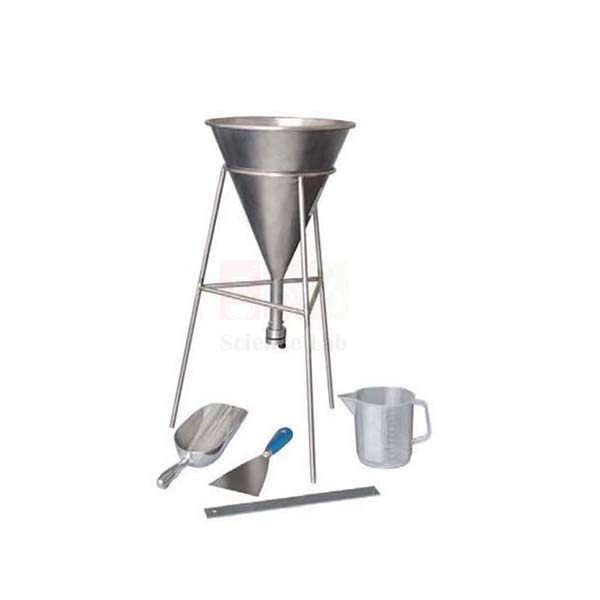
Bulk density of cement
Bulk density of cement (Product Code: SLE/CE/51) is a bulk density apparatus used to determine the loose bulk density, or unit weight, of cement in materials-testing laboratories across India and abroad. The set combines a sieve funnel on a tripod with a 1 litre unit weight measure and a straightedge, so cement falls into the measure in a consistent, uncompacted state. Jain Scientific Equipments Pvt Ltd (ScienceLab), an OEM manufacturer, produces the set at its own factory in Ambala, India.
Specifications
| Parameter | Detail |
|---|---|
| Components | Sieve funnel, unit weight measure, tripod and straightedge |
| Measure capacity | 1 litre |
| Dimensions | 350 × 350 × 520 mm |
| Weight | 3 kg (approx.) |
| Product code | SLE/CE/51 |
| Manufacturer | Jain Scientific Equipments Pvt Ltd (ScienceLab) — OEM |
| Country of origin | India (made in Ambala, Haryana) |
What Is the Cement Bulk Density Apparatus Used For?
Bulk density tells a laboratory or batching plant how much a given volume of loose cement weighs, which matters when cement is proportioned by volume, when storage bins are sized and when consignments are checked. Cement is passed through the sieve funnel, which breaks up lumps and lets it fall freely into the 1 litre measure standing beneath; the heap is struck off level with the straightedge and the filled measure is weighed. With a measure of 1 litre capacity, the net mass gives bulk density directly.
Avoid tapping or jolting the measure while it fills, since vibration packs the cement and raises the result, and weigh the empty measure first. Repeating the determination two or three times shows whether readings agree. At 350 × 350 × 520 mm and about 3 kg, it is convenient lab equipment for technical institutes where bench space is shared between several experiments.
OEM Manufacturer
ScienceLab is the trading name of Jain Scientific Equipments Private Limited, the OEM that manufactures this cement bulk density set at its own licensed factory at Saha, Ambala, Haryana. Laboratories, contractors, dealers and importers deal with the maker itself for quotations and repeat supply.
The company is a registered MSME enterprise (Udyam UDYAM-HR-01-0003714) with manufacturing as its major activity, and export shipments are handled under Importer-Exporter Code AAECJ8618A issued by the DGFT. More information is on the ScienceLab company profile.
Related Civil Engineering Lab Equipment
These related items support sampling and density testing of cement and aggregates:
- Cement samplers — for drawing the cement sample from bulk storage
- Cylindrical Measures — for the bulk density or unit weight of aggregates
- Scoops — for handling cement when loading the sieve funnel
- Vicat Needle Apparatus With Dashpot — for consistency and setting-time tests on the same cement
The full Civil Engineering Lab Equipment category lists further cement, concrete and aggregate apparatus.
Frequently Asked Questions
What does the Bulk density of cement apparatus consist of?
The Bulk density of cement apparatus (SLE/CE/51) consists of a sieve funnel, a unit weight measure of 1 litre capacity, a tripod and a straightedge. The straightedge strikes off excess cement level with the measure before it is weighed.
What is the capacity of the measure in the Bulk density of cement set?
The unit weight measure in the Bulk density of cement set has a capacity of 1 litre, so the net mass of cement in kilograms equals its bulk density in kilograms per litre, which multiplies by 1000 to give kg/m³.
How big is the Bulk density of cement apparatus?
The Bulk density of cement apparatus measures 350 × 350 × 520 mm and weighs approximately 3 kg, so it fits on a standard laboratory bench and can be moved easily between work areas or stored in a cupboard.
Who manufactures the Bulk density of cement apparatus?
Jain Scientific Equipments Pvt Ltd (ScienceLab) manufactures the Bulk density of cement apparatus as the OEM at its own factory at Saha, Ambala, Haryana, India, and supplies institutions, laboratories, dealers and importers directly.
Do I need a balance with the Bulk density of cement apparatus?
Yes, a weighing balance is needed to weigh the empty and filled 1 litre measure, and it is not listed as part of the Bulk density of cement apparatus. Ask us through the contact page if you would like a balance included in the quotation.
Request a Quote
Send your requirement for the Bulk density of cement apparatus (SLE/CE/51) through the contact page or add it to the enquiry cart. The quotation is issued directly by the manufacturer.
Last updated: 24 September 2026
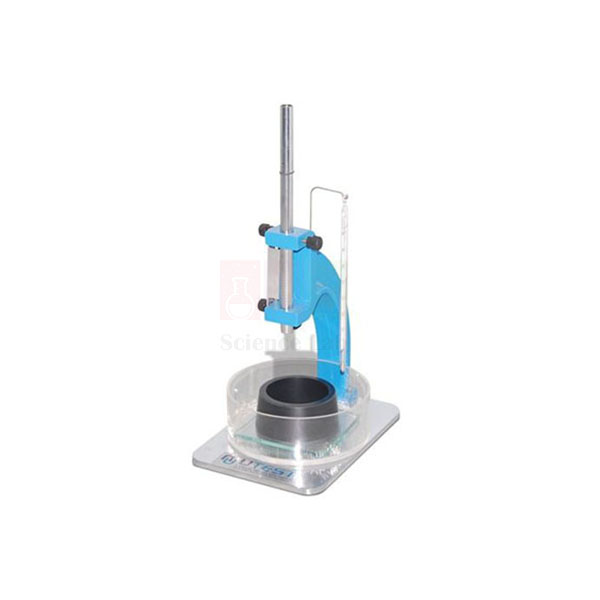
Plunger penetration apparatus
Plunger penetration apparatus (Product Code: SLE/CE/52) is a drop-plunger instrument used to determine the consistency of masonry cement and building limes in construction-materials laboratories. A 90 g plunger assembly falls 100 mm into mortar held in an 80 mm diameter test cup, and the penetration depth shows how stiff or fluid the mix is. It is made by Jain Scientific Equipments Pvt Ltd (ScienceLab), an OEM manufacturer of engineering lab equipment, at its own factory in Ambala, India.
Specifications
| Parameter | Detail |
|---|---|
| Application | Consistency of masonry cement and building limes |
| Height of drop | 100 mm |
| Plunger assembly mass | 90 g |
| Base | Steel base with a recess to house the test cup |
| Column | Vertical column holding the penetration plunger assembly |
| Test cup | 80 mm diameter × 70 mm deep |
| Supplied with | Test cup and tamper |
| Weight | 6 kg (approx.) |
| Product code | SLE/CE/52 |
| Manufacturer | Jain Scientific Equipments Pvt Ltd (ScienceLab) — OEM |
| Country of origin | India (made in Ambala, Haryana) |
What Is the Plunger Penetration Apparatus Used For?
Masonry cement and lime mortars must be brought to a standard workability before their other properties are tested, and this apparatus puts a number on that workability. Fresh mortar is filled into the test cup in layers with the tamper and levelled, the cup is placed in the recess of the steel base, and the plunger is released from 100 mm above the surface. The water content is adjusted until the penetration falls within the range your test procedure specifies.
Students quickly see how a small change in water alters penetration, which makes it useful technical educational equipment for building-materials practicals. Keep the plunger shaft clean and dry so it falls freely, release it without pushing, and wipe the cup between mixes so old mortar does not change the next reading.
What to Specify When Ordering
- Number of apparatus units required
- Additional test cups (80 mm diameter × 70 mm deep) for testing several mixes in sequence
- Whether a spare tamper should be included
OEM Manufacturer
Jain Scientific Equipments Private Limited trades as ScienceLab and manufactures the Plunger penetration apparatus as the OEM at its licensed factory at Saha, Ambala, Haryana. Buyers therefore order from the maker itself, and consignments are dispatched factory-direct to colleges, testing labs, dealers and importers.
Additional test cups and tampers for units already in service can be requested from the manufacturer — ask us with your order reference. The manufacturer’s background is described on the ScienceLab profile page.
Related Civil Engineering Lab Equipment
For a complete mortar consistency bench, consider these items from the same range:
- Flow tables for mortar and building lime — the spread-based consistency test for mortars and building lime
- Vicat Needle Apparatus With Dashpot — consistency and setting time of cement paste
- Straight Edge — for levelling mortar flush with the rim of the test cup
- Scoops — for transferring mortar into the test cup
Explore the Civil Engineering Lab Equipment category for more cement and mortar testing apparatus.
Frequently Asked Questions
What does the Plunger penetration apparatus measure?
The Plunger penetration apparatus (SLE/CE/52) measures the consistency of masonry cement and building lime mortars by how far a 90 g plunger assembly penetrates the mortar after dropping from a height of 100 mm.
What is supplied with the Plunger penetration apparatus?
The Plunger penetration apparatus is supplied complete with a test cup 80 mm in diameter and 70 mm deep and a tamper. The steel base has a recess that locates the cup, and the vertical column carries the plunger assembly.
How heavy is the Plunger penetration apparatus?
The Plunger penetration apparatus weighs approximately 6 kg. Its steel base keeps it steady on the bench while the plunger drops, yet it is light enough to move between laboratory work areas or store in a cupboard.
How is the plunger penetration test different from a flow table test?
Both assess mortar consistency, but the Plunger penetration apparatus reads the depth a falling plunger sinks into the mortar, while a flow table measures how far mortar spreads after repeated drops. Your test specification decides which method applies.
Who manufactures the Plunger penetration apparatus?
Jain Scientific Equipments Pvt Ltd (ScienceLab) is the OEM manufacturer of the Plunger penetration apparatus, producing it at its own factory at Saha, Ambala, Haryana, India, and supplying buyers in India and international markets directly.
What should I include in a quotation request for the Plunger penetration apparatus?
For a Plunger penetration apparatus quotation, include the number of units, any extra test cups or tampers, and the delivery location. Send the request through the contact page or add the product to the enquiry cart.
Request a Quote
Request a quotation for the Plunger penetration apparatus (SLE/CE/52) via the contact page, or add it to the enquiry cart with other mortar-testing items. The manufacturer quotes you directly.
Last updated: 24 September 2026
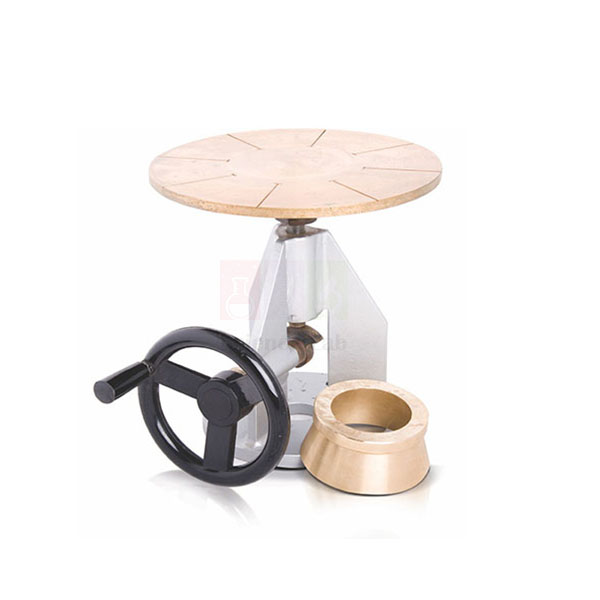
Flow tables for mortar and building lime
Flow tables for mortar and building lime (Product Code: SLE/CE/53) are drop tables used to determine the consistency of fresh mortars and building lime by how far a moulded sample spreads after a set number of drops. They come in EN and ASTM versions, manual or motor operated, and motor models stop automatically when a digital counter reaches the preset number of drops. Both versions are made by Jain Scientific Equipments Pvt Ltd (ScienceLab), an OEM manufacturer, at its own factory in Ambala, India.
Specifications
| Parameter | Detail |
|---|---|
| Application | Consistency of mortars and building lime |
| Versions | EN and ASTM versions; manual or motor operated |
| Motor-operated drive | Motor speed reducer; number of drops preset on a digital counter that stops the machine at the end of the cycle |
| Power (motor models) | 180 W |
| Table diameter | 300 mm (steel) or 254 mm (bronze), according to version |
| Height (drop) | 10 mm or 12.7 mm, according to version |
| Total mass of movable parts | 4.2 to 4.5 kg |
| Flow mould | 100 mm base, 70 mm top, 60 mm height |
| Dimensions (L × D × H) | 421 × 310 × 390 mm |
| Weight | 10 kg (approx.) |
| Supplied with | Flow mould and tamper; EN versions also include the filling hopper |
| Product code | SLE/CE/53 |
| Manufacturer | Jain Scientific Equipments Pvt Ltd (ScienceLab) — OEM |
| Country of origin | India (made in Ambala, Haryana) |
What Is the Mortar Flow Table Used For?
The flow mould is placed at the centre of the table, filled with fresh mortar in layers using the tamper, and lifted away to leave a cone of mortar. The table is then raised and dropped the specified number of times, and the diameter of the spread is measured; a wider spread means a more fluid mix. Laboratories use the result to fix the water content for mortar specimens and to compare lime, masonry and cement mortars.
A manual table suits teaching labs with modest throughput, while motor-operated models remove variation in drop rate because the digital counter ends each cycle automatically. For engineering lab equipment in India that must serve students and project testing, keep the table top clean, dry and level, and wipe the flow mould between tests.
What to Specify When Ordering
- The version your test procedure follows: EN or ASTM (EN versions include the filling hopper)
- Manual or motor-operated model; motor models have the 180 W drive and digital preset counter
- Table type that matches your procedure: 300 mm steel or 254 mm bronze
- Quantity, and any spare flow moulds or tampers
OEM Manufacturer
ScienceLab, the trading name of Jain Scientific Equipments Private Limited, is the OEM that builds these flow tables at its own licensed factory at Saha, Ambala, Haryana. Because the manufacturer supplies both EN and ASTM versions, a laboratory can settle the version, drive type and accessories directly with the people who make the table.
Institutions, dealers and importers receive factory-direct supply, and replacement flow moulds or tampers can be requested from the maker — ask us. More about the company: ScienceLab company profile.
Related Civil Engineering Lab Equipment
These items from the same range support mortar consistency and specimen preparation:
- Plunger penetration apparatus — the penetration method for masonry cement and building lime consistency
- Flow Table — another flow table listing with manual and motorised models
- Straight Edge — for striking off mortar level with the top of the flow mould
- Jolting Apparatus — compacts mortar prisms once the mix consistency is settled
All related apparatus is grouped in the Civil Engineering Lab Equipment category.
Frequently Asked Questions
What is the difference between the EN and ASTM flow tables?
The Flow tables for mortar and building lime come in EN and ASTM versions to suit the procedure your laboratory follows. Listed table options are 300 mm steel or 254 mm bronze with drop heights of 10 mm or 12.7 mm, and EN versions include a filling hopper.
Is the mortar flow table manual or motorised?
Both are available. The Flow tables for mortar and building lime are offered as manual or motor-operated models; motor-operated models use a motor speed reducer and a digital counter preset to the number of drops, which stops the machine automatically at the end of the cycle.
What are the flow mould dimensions?
The flow mould supplied with the Flow tables for mortar and building lime measures 100 mm at the base, 70 mm at the top and 60 mm in height. A tamper is supplied with every table, and EN versions also include the filling hopper.
What are the size and weight of the flow table?
The Flow tables for mortar and building lime are listed at 421 × 310 × 390 mm overall with an approximate weight of 10 kg, and the total mass of the movable parts is 4.2 to 4.5 kg. Motor-operated models are rated at 180 W.
Who manufactures the Flow tables for mortar and building lime?
Jain Scientific Equipments Pvt Ltd (ScienceLab) manufactures the Flow tables for mortar and building lime as the OEM at its own factory at Saha, Ambala, Haryana, India, and supplies them factory-direct to laboratories, institutions, dealers and importers.
Can the flow tables be supplied for export?
Yes. The Flow tables for mortar and building lime are supplied to India and international markets. State the version, manual or motor operation, quantity and destination through the contact page, and the manufacturer will send a quotation.
Request a Quote
To get a quotation for the Flow tables for mortar and building lime, specify EN or ASTM and manual or motor operation via the contact page, or add the item to the enquiry cart. Quotes come direct from the manufacturer.
Last updated: 24 September 2026
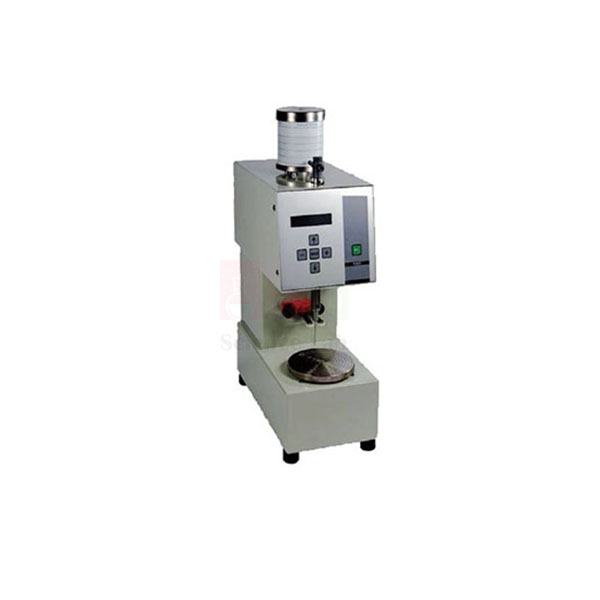
Automatic Vicat apparatus
Automatic Vicat apparatus (Product Code: SLE/CE/54) is a programmable touch-screen instrument used to run cement setting-time tests without an operator in cement plant, research and construction-materials laboratories. It can repeat penetrations as often as every 10 seconds and calculates initial and final setting times at user-programmed penetration depth limits. It is supplied by Jain Scientific Equipments Pvt Ltd (ScienceLab), Ambala, India, a laboratory equipment supplier in India for local and overseas buyers.
Specifications
| Parameter | Detail |
|---|---|
| Display | 4.3 in colour touch screen |
| Power | 50 W |
| Dimensions (L × W × H) | 200 × 400 × 410 mm |
| Weight | 10 kg (approx.) |
| Minimum penetration rate | 10 seconds |
| Setting time | Automatic calculation of initial and final setting time at programmable penetration depth limits |
| Test procedures | Can be customised and stored to match user-defined requirements |
| Data storage | USB port for data storage on pen drive (pen drive included) |
| Networking | LAN port for direct PC connection, or to a LAN hub for a network of up to 32 independent units controlled by one PC; 1 LAN cable included |
| Printer | Can incorporate an integrated graphic printer showing the test result and setting-time plot |
| Test space | Large test space with easy accessibility |
| Accessories available | EN and ASTM/AASHTO parts, in-water testing kit, needle cleaning device, integrated printer, probes for testing consistency and gypsum |
| Product code | SLE/CE/54 |
| Supplied by | Jain Scientific Equipments Pvt Ltd (ScienceLab), Ambala, India |
What Is the Automatic Vicat Apparatus Used For?
A manual Vicat test needs someone to lower the needle and note the result at regular intervals for hours; the automatic apparatus performs the penetrations itself and records the depth each time, so initial and final setting times are read consistently. It suits cement plants, ready-mix and research laboratories, and university departments that run many setting-time tests or need electronic records.
For buyers comparing test and measurement instruments in India, the practical points are data handling and expansion. Results can be saved to the supplied pen drive, printed on the optional integrated printer, or sent to a PC, and a LAN hub lets up to 32 units run from a single computer. Keep the needle clean between runs, using the needle cleaning device where fitted, and confirm the accessory pattern for your standard before testing.
What to Specify When Ordering
- Accessory pattern: EN or ASTM/AASHTO parts
- Whether the integrated graphic printer is required
- Optional kits: in-water testing kit, needle cleaning device, consistency or gypsum probes
- Number of units and whether they will be networked to one PC through a LAN hub
Supplier
Jain Scientific Equipments Private Limited, which trades as ScienceLab, supplies the Automatic Vicat apparatus to cement, construction and academic laboratories. Buyers get one point of contact for the instrument, its standard-specific accessories and the rest of a cement-testing bench, from moulds to curing equipment.
Questions about configuration, accessories and documentation are answered by our team before an order is placed. Company details are on the ScienceLab profile.
Related Civil Engineering Lab Equipment
These related items are often ordered with an automatic Vicat for a complete setting-time workflow:
- Vicat Needle Apparatus With Dashpot — a manual Vicat frame for consistency and setting-time tests
- Circulating water bath with cooler unit — holds water at a steady temperature for conditioning cement samples
- Cement curing bench-type cabinet — humid, temperature-controlled storage for cement specimens
- Le Chatelier moulds — for the soundness test on the same cement
More apparatus for cement, concrete and soil testing is in the Civil Engineering Lab Equipment category.
Frequently Asked Questions
What does the Automatic Vicat apparatus calculate?
The Automatic Vicat apparatus (SLE/CE/54) automatically calculates the initial and final setting times of cement at penetration depth limits that the user programs. With the optional integrated graphic printer, it can print the test result and the setting-time plot.
How often can the Automatic Vicat apparatus make a penetration?
The Automatic Vicat apparatus has a minimum penetration rate of 10 seconds, so penetrations can be repeated as often as every 10 seconds. Test procedures can be customised and stored to match user-defined requirements.
Can several Automatic Vicat units be connected to one computer?
Yes. The Automatic Vicat apparatus has a LAN port for direct connection to a PC, or to a LAN hub creating a network of up to 32 independent units controlled by a single PC. One LAN cable is included, and data can also be saved to the supplied pen drive.
What accessories are available for the Automatic Vicat apparatus?
Accessories listed for the Automatic Vicat apparatus include EN and ASTM/AASHTO parts, an in-water testing kit, a needle cleaning device, an integrated printer, and probes for testing consistency and gypsum. State the ones you need so they appear in the quotation.
Who supplies the Automatic Vicat apparatus?
The Automatic Vicat apparatus is supplied by Jain Scientific Equipments Pvt Ltd (ScienceLab), Ambala, Haryana, India, to laboratories in India and international markets. Quotations, accessory selection and delivery are arranged through the contact page.
Is a calibration certificate provided with the Automatic Vicat apparatus?
Calibration-certificate availability for the Automatic Vicat apparatus should be discussed with us before ordering. Tell us your laboratory’s documentation requirements when you send an enquiry, and we will confirm what can be provided with the instrument.
Request a Quote
For a quotation on the Automatic Vicat apparatus (SLE/CE/54), list the accessories you need and send them through the contact page, or add the item to the enquiry cart.
Last updated: 24 September 2026
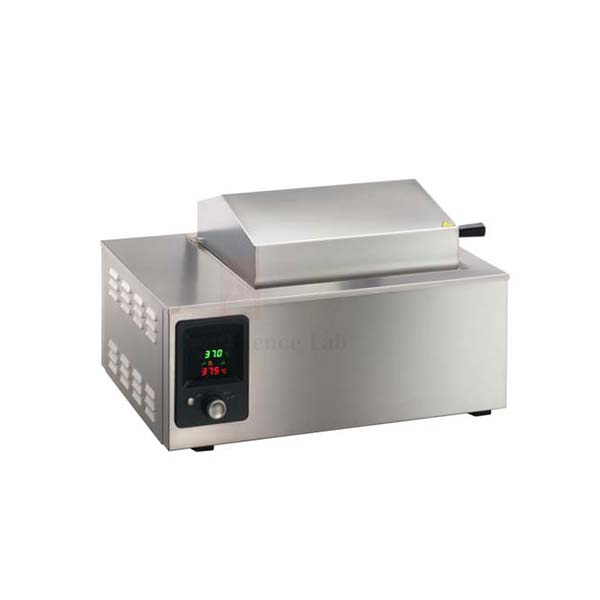
Circulating water bath with cooler unit
Circulating water bath with cooler unit (Product Code: SLE/CE/55) is a 40 litre heated and cooled water bath used to hold test specimens at a steady temperature for cement and asphalt testing. Its two-channel electronic thermoregulator controls both heating and cooling across +5 to +60 °C, while a re-circulating unit keeps the temperature uniform through the tank. This digital water bath is supplied by Jain Scientific Equipments Pvt Ltd (ScienceLab), Ambala, India.
Specifications
| Parameter | Detail |
|---|---|
| Capacity | 40 L |
| Power | 2000 W |
| Temperature range | +5 to +60 °C |
| Accuracy | ± 1% |
| Inside dimensions | 550 × 360 × 200 mm |
| Outside dimensions | 830 × 480 × 950 mm |
| Weight | 62 kg (approx.) |
| Temperature control | Two-channel electronic thermoregulator (heating/cooling) with digital display; automatically maintains the set temperature |
| Circulation | Re-circulating unit for temperature uniformity |
| Construction | Polished stainless steel internal surfaces; insulated sheet steel outer case |
| Cement use | Curing 40 × 40 × 160 mm cement specimens in water; storing hydrated samples at 20 °C |
| Asphalt use | Conditioning at temperatures from 25 to 60 °C |
| Product code | SLE/CE/55 |
| Supplied by | Jain Scientific Equipments Pvt Ltd (ScienceLab), Ambala, India |
What Is the Circulating Water Bath with Cooler Used For?
Cement mortar prisms of 40 × 40 × 160 mm are cured under water at a controlled temperature, and hydrated samples may need to be stored at 20 °C — often below the room temperature of a laboratory, which is why this bath has a cooler as well as a heater. For asphalt work, specimens are conditioned in water at temperatures from 25 to 60 °C before testing, so one multi-purpose bath can serve both the cement and bitumen sections of a lab.
Fill the tank with clean water and let the thermoregulator settle at the set point before loading specimens. Leave space between specimens so the re-circulating flow can reach all faces, and drain and wipe the stainless steel tank periodically to keep it clean. The unit’s 830 × 480 × 950 mm footprint and about 62 kg weight should be planned into the lab layout.
What to Specify When Ordering
- Intended use: cement specimen curing, storage of hydrated samples at 20 °C, or asphalt conditioning
- Space and handling for the 830 × 480 × 950 mm, approx. 62 kg unit
- The mains supply at your site for a 2000 W unit, so the quotation can address it
Supplier
Jain Scientific Equipments Private Limited, trading as ScienceLab, supplies this circulating water bath with cooler unit to cement, concrete and bitumen testing laboratories as a laboratory instruments supplier in India, alongside the moulds and compaction apparatus that prepare the specimens it holds.
For vendor registration, the supplying company is GST-registered in Haryana (GSTIN 06AAECJ8618A1ZT) and holds Legal Entity Identifier 3358004HRD1JIVXKYX49. Company details are on the ScienceLab company profile.
Related Civil Engineering Lab Equipment
These related items prepare or store the specimens that go into the water bath:
- Prism Mould Three Gang — casts the cement prisms that are cured in water
- Jolting Apparatus — compacts mortar in the 40 × 40 × 160 mm three-compartment mould
- Cement curing bench-type cabinet — humid storage before specimens go into water
- Accelerated Curing Tank — a curing tank for concrete and cement cube moulds
See the Civil Engineering Lab Equipment category for more cement, concrete and bitumen testing apparatus.
Frequently Asked Questions
What temperature range does the Circulating water bath with cooler unit cover?
The Circulating water bath with cooler unit (SLE/CE/55) covers +5 to +60 °C with a listed accuracy of ±1%. Its two-channel electronic thermoregulator handles both heating and cooling and automatically maintains the set temperature.
What is the capacity and size of the circulating water bath?
The Circulating water bath with cooler unit holds 40 litres. Inside dimensions are 550 × 360 × 200 mm, outside dimensions are 830 × 480 × 950 mm, and the unit weighs approximately 62 kg, so plan floor or bench space accordingly.
Can the Circulating water bath with cooler unit be used for curing cement prisms?
Yes. The Circulating water bath with cooler unit is listed for curing 40 × 40 × 160 mm cement specimens in water and for storing hydrated samples at 20 °C. It also serves asphalt testing, where conditioning temperatures of 25 to 60 °C are required.
What is the Circulating water bath with cooler unit made of?
The internal surfaces of the Circulating water bath with cooler unit are polished stainless steel, and the outer case is insulated sheet steel. The insulation helps the bath hold its set temperature, and the smooth stainless steel tank is easy to drain and clean.
Who supplies the Circulating water bath with cooler unit?
The Circulating water bath with cooler unit is supplied by Jain Scientific Equipments Pvt Ltd (ScienceLab), Ambala, Haryana, India, to laboratories in India and international markets. Enquiries and quotations are handled through the contact page.
What power does the Circulating water bath with cooler unit need?
The Circulating water bath with cooler unit is rated at 2000 W. Please state your mains voltage and frequency when you enquire, so the supply arrangement can be confirmed in the quotation before the unit is dispatched.
Request a Quote
Send your enquiry for the Circulating water bath with cooler unit through the contact page, or add it to the enquiry cart with any related curing equipment.
Last updated: 24 September 2026
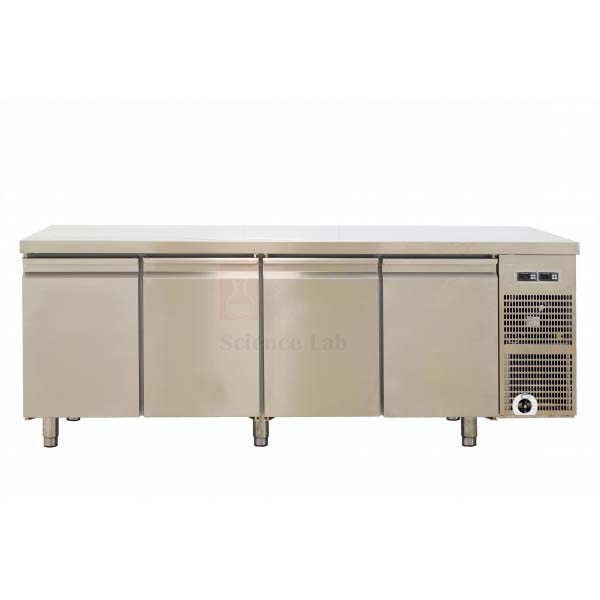
Cement curing bench-type cabinet
Cement curing bench-type cabinet (Product Code: SLE/CE/56) is a refrigerated curing cabinet used to store cement and mortar specimens at a controlled temperature and 95% ± 5% relative humidity in testing laboratories. The unit has four cells with a total capacity of about 400 litres, and its internal temperature can be set between 18 and 30 °C with ±1 °C accuracy. It is supplied by Jain Scientific Equipments Pvt Ltd (ScienceLab), Ambala, India, to cement and construction laboratories.
Specifications
| Parameter | Detail |
|---|---|
| Capacity | 400 litres (approx.) |
| Cells | 4, with 1 shelf included per cell (4 in total) |
| Power rating | 310 W total |
| Internal temperature range | 18 to 30 °C |
| Temperature accuracy | ±1 °C |
| Ambient temperature (min/max) | 18 / 28 °C |
| Internal humidity | 95% ± 5% RH |
| Shelf plan dimensions | 310 × 530 mm (W × D) |
| Internal height | Approx. 530 mm |
| Shelf guides | Stainless steel, allowing shelf positioning every 70 mm |
| Max load per shelf | 40 kg |
| Max shelves per cell | 5 (1 included), at 70 mm spacing |
| Overall dimensions (L × W × H) | 2400 × 700 × 860 mm |
| Weight | 210 kg (approx.) |
| Water supply | Connection to the water mains required; inlet water 5 to 36 °C |
| Temperature control | Electronic system with digital display and keyboard to set the curing temperature |
| Cooling system | Refrigeration unit with hermetic piston compressor, charged with HFC refrigerant |
| Humidity saturation | Water evaporation system (no water nebuliser): water collecting bath, immersed re-circulating pump and hydraulic circuit |
| Product code | SLE/CE/56 |
| Supplied by | Jain Scientific Equipments Pvt Ltd (ScienceLab), Ambala, India |
What Is the Cement Curing Cabinet Used For?
Freshly cast cement and mortar specimens need a saturated, temperature-controlled atmosphere between casting and demoulding, before any water curing begins. The cabinet provides this with a refrigeration unit and an evaporation-based humidity system, so specimens neither dry out nor get wetted by spray. Prisms, cubes and moulds for tests such as setting time and soundness can all be stored on its adjustable shelves.
Before installation, check that a water mains connection is available with inlet water between 5 and 36 °C, and that the room stays within 18 to 28 °C. Keep each shelf within its 40 kg limit and use the 70 mm shelf spacing to fit taller moulds. For engineering lab equipment in India serving both teaching and commercial testing, the four separate cells make it easy to keep batches apart.
What to Specify When Ordering
- Number of extra shelves (up to 5 per cell; 1 per cell included)
- Curing temperature your procedure requires within the 18 to 30 °C range
- Site conditions: water mains connection, inlet water 5 to 36 °C, ambient 18 to 28 °C
- Floor space and handling for the 2400 × 700 × 860 mm, approx. 210 kg cabinet
Supplier
ScienceLab, the trading name of Jain Scientific Equipments Private Limited, supplies the Cement curing bench-type cabinet to cement plants, construction laboratories and engineering institutions. Buyers can source the cabinet together with the moulds, compaction apparatus and test frames used around it, through one supplier.
Our team can review site conditions and shelf requirements with you before an order is confirmed. Company background is on the ScienceLab profile page.
Related Civil Engineering Lab Equipment
These items from the same range feed specimens into, or complement, the curing cabinet:
- Jolting Apparatus — compacts cement mortar prisms before they go into the cabinet
- Prism Mould Three Gang — three-gang moulds for cement prisms
- Circulating water bath with cooler unit — for water curing once specimens are demoulded
- Humidity Chamber — a separate humidity-controlled chamber for other conditioning work
The Civil Engineering Lab Equipment category lists further curing and testing equipment.
Frequently Asked Questions
What temperature and humidity does the Cement curing bench-type cabinet maintain?
The Cement curing bench-type cabinet (SLE/CE/56) holds an internal temperature settable from 18 to 30 °C with ±1 °C accuracy and an internal humidity of 95% ± 5% RH, set through an electronic controller with digital display and keyboard.
How many shelves does the Cement curing bench-type cabinet hold?
The Cement curing bench-type cabinet has four cells with one shelf included in each, four in total. Each cell accepts up to five shelves on stainless steel guides at 70 mm spacing, and each shelf carries a maximum of 40 kg.
Does the Cement curing bench-type cabinet need a water connection?
Yes. The Cement curing bench-type cabinet must be connected to the water mains, with inlet water between 5 and 36 °C. Humidity is produced by evaporation from a water collecting bath with an immersed re-circulating pump, not by a nebuliser.
What room conditions does the curing cabinet require?
The Cement curing bench-type cabinet is specified for ambient temperatures between 18 and 28 °C. It measures 2400 × 700 × 860 mm and weighs about 210 kg, so check floor space and access routes before delivery.
Who supplies the Cement curing bench-type cabinet?
The Cement curing bench-type cabinet is supplied by Jain Scientific Equipments Pvt Ltd (ScienceLab), Ambala, Haryana, India, to laboratories in India and international markets. Quotations and delivery details are arranged through the contact page.
What should a quotation request for the curing cabinet include?
A quotation request for the Cement curing bench-type cabinet should include the quantity, any extra shelves, the curing temperature you need, your site water and power arrangements, and the delivery location in India or abroad.
Request a Quote
Request a quotation for the Cement curing bench-type cabinet (SLE/CE/56) through the contact page, or add it to the enquiry cart with any extra shelves.
Last updated: 24 September 2026
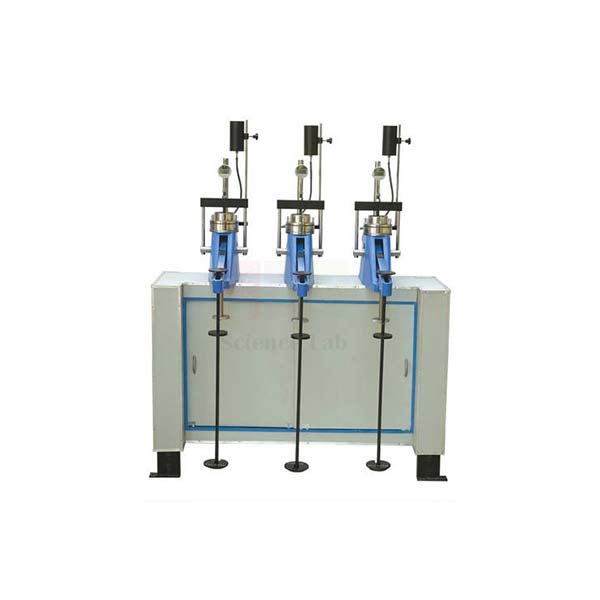
Consolidation Test Apparatus
Consolidation Test Apparatus (Product Code: SLE/CE/57) is a three-station steel loading bench used to consolidate soil specimens ahead of triaxial testing in geotechnical and soil mechanics laboratories. It consolidates three triaxial specimens at the same time for CU and CD tests under anisotropic conditions, which shortens testing time when only one compression machine is available. It is fabricated by Jain Scientific Equipments Pvt Ltd (ScienceLab), an OEM and engineering lab equipment manufacturer, at its own factory in Ambala, India, for university and consultancy laboratories.
Specifications
| Parameter | Detail |
|---|---|
| Purpose | Consolidation stage of three triaxial specimens at the same time, for CU and CD tests in anisotropic conditions |
| Construction | Steel bench with three load frames and centering platens |
| Triaxial cells | For specimens 35 to 100 mm diameter |
| Other makes of cell | Usable if the cell has a centering hole 13 mm dia. × 3 mm deep |
| Loading | Weights on the centre hanger and on the lever hanger; frames kept light so no counterbalance is required |
| Overall dimensions (L × D × H) | 1300 × 800 × 970 mm |
| Weight | 145 kg (approx.) |
| Dial gauge | 0.002 mm × 10 mm |
| Extension piece | 40 mm long |
| Test forms | Pads of 50 for Consolidation Test Plot and for one-dimensional consolidation |
| Weight set | Gives 10 kg/cm² on a 60 mm dia. specimen: 7 × 0.05, 5 × 0.1, 6 × 0.2, 6 × 0.5 and 5 × 1.0 kg/cm² |
| To complete the set-up | Axial displacement gauges or transducers, beam loading device(s) and slotted weights |
| Product code | SLE/CE/57 |
| Manufacturer | Jain Scientific Equipments Pvt Ltd (ScienceLab) — OEM |
| Country of origin | India (made in Ambala, Haryana) |
What Is the Consolidation Test Apparatus Used For?
In consolidated-undrained (CU) and consolidated-drained (CD) triaxial tests, each specimen must first be consolidated under a controlled stress, a stage that can take many hours and would otherwise tie up the compression machine. Moving that stage onto this three-frame bench frees the compression machine for the shearing stage, so a laboratory with a single machine keeps three specimens progressing in parallel.
Anisotropic consolidation is achieved by adding weights to the hangers to raise the axial stress above the confining pressure in the cell. The listed dial gauge, weight set and test form pads also support one-dimensional consolidation work on 60 mm diameter specimens. As lab equipment for research in India, it suits postgraduate projects as well as consultancy testing; level the bench, seat each cell on its centering platen and add weights gently.
What to Specify When Ordering
- Triaxial cell sizes in use (specimens 35 to 100 mm), and for other makes, confirmation of the 13 mm × 3 mm centering hole
- Axial measurement: dial gauges or displacement transducers, and how many
- Beam loading device(s) and slotted weights needed to complete the set-up
- Extra test form pads or weight sets
OEM Manufacturer
The Consolidation Test Apparatus is manufactured by Jain Scientific Equipments Private Limited, trading as ScienceLab, as the OEM at its own licensed factory at Saha, Ambala, Haryana. Each bench is delivered factory-direct to universities, geotechnical laboratories, dealers and importers.
Because the apparatus usually needs gauges, loading devices and weights to complete it, you can agree the full configuration directly with the maker before ordering — ask us. Company details: ScienceLab company profile.
Related Civil Engineering Lab Equipment
These soil testing items from the same range are used alongside the consolidation bench:
- Direct Shear test Apparatus — shear strength of soil on square specimens
- Unconfined Compression Tester (Motorised) — compressive strength of cohesive soil samples
- Soil extruder, motor operated — extrudes samples from sampling tubes before trimming
- Moisture Tins — for moisture content determination before and after testing
Browse the Civil Engineering Lab Equipment category for further soil, concrete and cement apparatus.
Frequently Asked Questions
How many specimens can the Consolidation Test Apparatus handle at once?
The Consolidation Test Apparatus (SLE/CE/57) consolidates three triaxial specimens at the same time, using three load frames with centering platens on one steel bench, for CU and CD tests under anisotropic conditions.
Which triaxial cells does the Consolidation Test Apparatus accept?
The Consolidation Test Apparatus suits triaxial cells for specimens from 35 to 100 mm diameter. It can also be used with other makes of triaxial cell, provided they have a centering hole 13 mm in diameter and 3 mm deep.
What accessories are listed with the Consolidation Test Apparatus?
Listed accessories for the Consolidation Test Apparatus are a 0.002 mm × 10 mm dial gauge, a 40 mm extension piece, test form pads of 50, and a weight set giving 10 kg/cm² on a 60 mm diameter specimen. Confirm the included items in your quotation.
Does the Consolidation Test Apparatus need a counterbalance?
No. The load frames of the Consolidation Test Apparatus are kept as light as possible, so a counterbalance is not required. Weights can be placed on both the centre hanger and the lever hanger to apply the consolidation load.
Who manufactures the Consolidation Test Apparatus?
Jain Scientific Equipments Pvt Ltd (ScienceLab) is the OEM manufacturer of the Consolidation Test Apparatus, building it at its own factory at Saha, Ambala, Haryana, India, and supplying laboratories in India and international markets directly.
What are the size and weight of the Consolidation Test Apparatus?
The Consolidation Test Apparatus measures 1300 × 800 × 970 mm overall and weighs approximately 145 kg, so it needs a level floor area with enough room around the bench to load weights on all three frames.
Request a Quote
For a quotation on the Consolidation Test Apparatus, list your cell sizes and the gauges, loading devices and weights required, and send them through the contact page or the enquiry cart. The manufacturer quotes directly.
Last updated: 24 September 2026
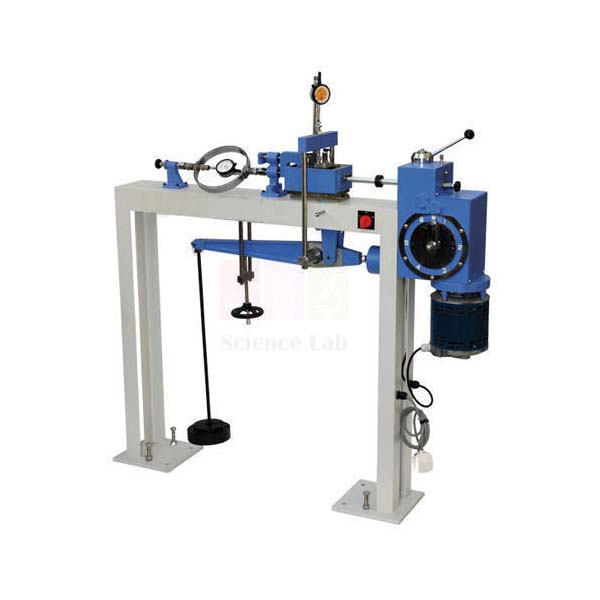
Direct Shear test Apparatus
Direct Shear test Apparatus (Product Code: SLE/CE/58) is a split shear box with a loading unit used to measure the shear strength of soil on 60 × 60 × 25 mm specimens in soil mechanics laboratories. Normal stress up to 8 kg/cm² is applied directly or through a counter-balanced lever, and a 200 kg proving ring with dial gauges records the response. The apparatus is made by Jain Scientific Equipments Pvt Ltd (ScienceLab), an OEM manufacturer, at its own factory in Ambala, India.
Specifications
| Parameter | Detail |
|---|---|
| Shear box | Two halves, for a square specimen 60 × 60 × 25 mm |
| Gripper plates | One pair plain, one pair perforated |
| Porous stones | One pair |
| Loading pad | One top loading pad |
| Shear box housing | Accommodates the shear box assembly; complete with two ball roller strips |
| Specimen cutter | For cutting 60 × 60 × 25 mm specimens from larger samples |
| Weights | Set giving a normal stress of 3 kg/cm² |
| Loading unit | Load yoke with direct and lever system; counter-balanced detachable lever |
| Normal stress capacity | 8 kg/cm² |
| Load application | Through a steel ball recessed in the loading pad, or directly through a boss on the loading yoke |
| Movement | V strips and roller strips for frictionless movement of the shear box housing |
| Proving ring | High-sensitivity compression proving ring, capacity 200 kg |
| Dial gauges | One consolidation dial gauge 0.01 mm × 25 mm; one strain dial gauge 0.01 mm × 25 mm |
| Optional accessories | Additional weights for a normal stress of 5 kg/cm²; soil sampler for 60 × 60 mm specimens; test form pad of 50; spare porous stones in pairs |
| Product code | SLE/CE/58 |
| Manufacturer | Jain Scientific Equipments Pvt Ltd (ScienceLab) — OEM |
| Country of origin | India (made in Ambala, Haryana) |
What Is the Direct Shear Test Apparatus Used For?
The direct shear test gives a soil’s cohesion and angle of shearing resistance, the two parameters used in foundation, slope and retaining-wall design. A specimen trimmed with the cutter is placed between gripper plates and porous stones in the two-part box, the normal load is applied through the yoke, and one half of the box is displaced relative to the other so the soil fails along the horizontal plane. The proving ring measures shear force while the dial gauges record horizontal and vertical movement.
Repeating the test at several normal stresses plots the failure envelope. Perforated gripper plates with porous stones allow drainage, while plain plates suit undrained work. It is standard engineering lab equipment in India for geotechnical practicals; keep the roller strips clean, check the porous stones are not clogged, and zero both dial gauges before each run.
What to Specify When Ordering
- Normal stress range: the standard 3 kg/cm² weight set, or also the additional set for 5 kg/cm²
- Soil sampler for 60 × 60 mm specimens and test form pads
- Spare porous stones (supplied in pairs)
- Number of complete apparatus sets for your laboratory
OEM Manufacturer
ScienceLab is the brand of Jain Scientific Equipments Private Limited, the OEM that manufactures this Direct Shear test Apparatus at its own licensed factory at Saha, Ambala, Haryana. The shear box, housing and loading unit are supplied factory-direct to engineering colleges, geotechnical consultants, dealers and importers.
Spares such as porous stones and gripper plates are handled by the manufacturer itself, so replacements can be matched to your existing box — ask us. Read the ScienceLab profile for company details.
Related Civil Engineering Lab Equipment
These soil mechanics items from the same range complement direct shear testing:
- Consolidation Test Apparatus — consolidates triaxial specimens before shearing
- Vane Shear Apparatus (Motorised) — shear strength of soft cohesive soils by the vane method
- Unconfined Compression Tester (Motorised) — compressive strength of cohesive soil samples
- Moisture Tins — moisture content of the specimen before and after shear
More soil and material testing apparatus is available in the Civil Engineering Lab Equipment category.
Frequently Asked Questions
What specimen size does the Direct Shear test Apparatus use?
The Direct Shear test Apparatus (SLE/CE/58) tests square specimens 60 × 60 × 25 mm in a two-part shear box. A specimen cutter for trimming 60 × 60 × 25 mm specimens from larger samples is included, and a soil sampler is available as an option.
What normal stress can the Direct Shear test Apparatus apply?
The loading unit of the Direct Shear test Apparatus has a normal stress capacity of 8 kg/cm². The standard weight set gives 3 kg/cm², an additional set for 5 kg/cm² is optional, and load is applied directly or through the counter-balanced detachable lever.
What is included with the Direct Shear test Apparatus?
The Direct Shear test Apparatus includes the two-part shear box, plain and perforated gripper plates, porous stones, a top loading pad, the housing with two ball roller strips, a specimen cutter and weights, plus a 200 kg proving ring and two 0.01 mm × 25 mm dial gauges.
Are spare porous stones available for the Direct Shear test Apparatus?
Yes. Spare porous stones for 60 × 60 mm samples are listed as available in pairs for the Direct Shear test Apparatus. Stones can clog with fine soil over time, so laboratories that test often usually keep a spare pair ready.
Who manufactures the Direct Shear test Apparatus?
Jain Scientific Equipments Pvt Ltd (ScienceLab) manufactures the Direct Shear test Apparatus as the OEM at its own factory at Saha, Ambala, Haryana, India, and supplies it factory-direct to buyers in India and international markets.
Is a calibration certificate available for the proving ring?
Calibration-certificate availability for the proving ring and dial gauges of the Direct Shear test Apparatus should be discussed with us before ordering. Tell us your documentation needs through the contact page and we will confirm what can be provided.
Request a Quote
To obtain a quotation for the Direct Shear test Apparatus, state the weight sets and optional accessories you need via the contact page, or add it to the enquiry cart. The quotation comes directly from the manufacturer.
Last updated: 24 September 2026
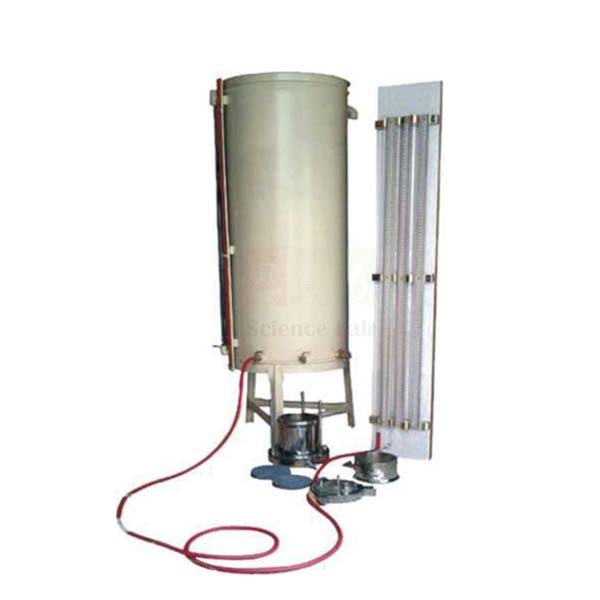
Constant Head permeability apparatus
Constant Head permeability apparatus (Product Code: SLE/CE/59) is a Perspex permeameter cell used to measure the permeability of relatively coarse-grained soils such as sands and gravel in soil mechanics laboratories. It is offered in 75 mm and 114 mm nominal cell diameters, with pressure points at different levels that connect to a manometer stand and a constant level tank. Jain Scientific Equipments Pvt Ltd (ScienceLab), the OEM manufacturer, makes it at its own factory in Ambala, India.
Specifications
| Parameter | Detail |
|---|---|
| Method | Constant head; the apparatus is used for laboratory determination of soil permeability using a constant or a variable head |
| Suitable soils | Relatively coarse-grained soils such as sands and gravel |
| Permeability cell | Perspex, mounted on a detachable aluminium base and head |
| Models | 75 mm and 114 mm nominal cell diameter |
| Maximum particle size | 10 mm |
| Recommended permeability range | 10-3 to 10-7 cm/s (as listed) |
| Connections | Pressure points at different levels, to be connected to the manometer stand and the constant level tank |
| Product code | SLE/CE/59 |
| Manufacturer | Jain Scientific Equipments Pvt Ltd (ScienceLab) — OEM |
| Country of origin | India (made in Ambala, Haryana) |
What Is the Constant Head Permeability Apparatus Used For?
Water flows through the soil specimen in the cell under a head kept steady by the constant level tank. Once flow is steady, the volume collected over a measured time and the head difference read on the manometer between two pressure points give the coefficient of permeability through Darcy’s law. The transparent Perspex cell lets students watch saturation and spot air pockets or piping.
Coarse soils are free-draining, so the constant head method gives a measurable flow in a short time; for fine-grained clay-like or silty soils, the falling head method is recommended instead. Keep particles to 10 mm or less, use de-aired water and saturate the specimen fully before readings. Students and consultants use this engineering lab equipment in India for drainage, filter and earth-dam design exercises.
What to Specify When Ordering
- Cell size: 75 mm or 114 mm nominal diameter
- Whether the manometer stand and constant level tank should be quoted with the cell
- Number of cells for parallel testing
- Whether a falling head permeability apparatus is also needed for fine-grained soils
OEM Manufacturer
Registered as Jain Scientific Equipments Private Limited (CIN U29309HR2020PTC087597) and trading as ScienceLab, the company is the original equipment manufacturer of this permeameter. Production takes place at its licensed factory premises at 449, HSIIDC Industrial Area, Saha, Ambala, under Factory Licence AMB-ONLINE-CHD-J-414.
Universities, polytechnics, geotechnical consultants, dealers and importers are supplied factory-direct, and repeat-order or spare-part enquiries go straight to the manufacturer. Visit the company profile for more about ScienceLab.
Related Civil Engineering Lab Equipment
These soil testing items from the same range are used with the constant head permeameter:
- Falling head permeability apparatus — the variable-head method for fine-grained soils
- Test Sieves — for grading the sample and removing particles over 10 mm
- Relative density test apparatus — determines the density state of the sand being tested
- Moisture Tins — for moisture content of the soil sample
See the full Civil Engineering Lab Equipment category for further soil, cement and concrete apparatus.
Frequently Asked Questions
What soils is the Constant Head permeability apparatus suitable for?
The Constant Head permeability apparatus (SLE/CE/59) is suited to relatively coarse-grained soils such as sands and gravel, with a maximum particle size of 10 mm. For fine-grained clay-like or silty soils, the Falling head permeability apparatus is recommended.
What cell sizes are available for the Constant Head permeability apparatus?
The Constant Head permeability apparatus is available with 75 mm and 114 mm nominal cell diameters. The Perspex cell is mounted on a detachable aluminium base and head, so it can be dismantled for filling and cleaning.
What permeability range does the Constant Head permeability apparatus cover?
The listed recommended range for the Constant Head permeability apparatus is a coefficient of permeability of 10-3 to 10-7 cm/s. Because the constant head method suits free-draining soils, describe your soil to us so the right cell and method can be confirmed.
Are the manometer stand and constant level tank included?
The Constant Head permeability apparatus has pressure points that must be connected to a manometer stand and a constant level tank. Whether these form part of your supply should be confirmed in the quotation, so mention them when you enquire through the contact page.
Who manufactures the Constant Head permeability apparatus?
Jain Scientific Equipments Pvt Ltd (ScienceLab) is the OEM manufacturer of the Constant Head permeability apparatus, producing it at its own licensed factory at Saha, Ambala, Haryana, India, and supplying buyers in India and international markets directly.
Request a Quote
For a Constant Head permeability apparatus quotation, state the cell size and any manometer stand or tank required via the contact page, or add it to the enquiry cart. Quotes come straight from the manufacturer.
Last updated: 24 September 2026
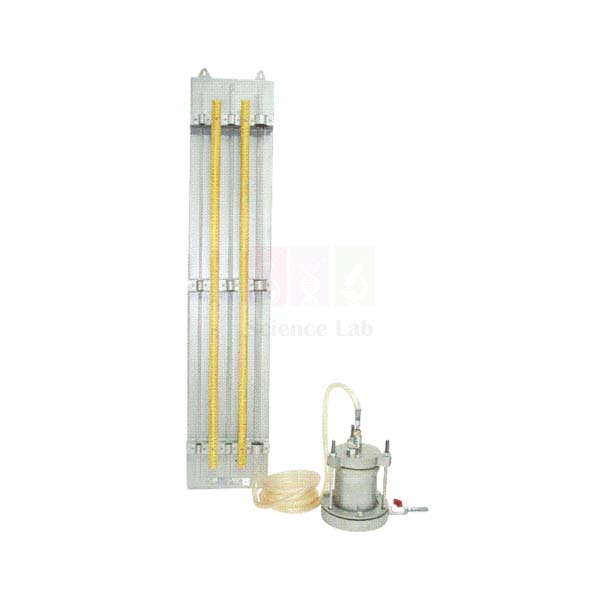
Falling head permeability apparatus
Falling head permeability apparatus (Product Code: SLE/CE/60) is a soil permeameter used to determine the coefficient of permeability of soil by timing how quickly water falls in a standpipe as it seeps through the specimen. It is recommended for soils with permeability from 10-3 to 10-7 cm/s and particles no larger than 10 mm, and it can also be used with a constant head. It comes from Jain Scientific Equipments Pvt Ltd (ScienceLab), an OEM manufacturer that makes it at its own factory in Ambala, India.
Specifications
| Parameter | Detail |
|---|---|
| Method | Falling (variable) head; also usable with a constant head |
| Recommended permeability range | 10-3 to 10-7 cm/s |
| Maximum particle size | 10 mm |
| Product code | SLE/CE/60 |
| Manufacturer | Jain Scientific Equipments Pvt Ltd (ScienceLab) — OEM |
| Country of origin | India (made in Ambala, Haryana) |
What Is the Falling Head Permeability Apparatus Used For?
In silts, clays and fine sands, water moves so slowly that collecting a measurable volume at constant head would take too long. Instead, water is allowed to fall in a narrow standpipe above the specimen, and the time taken for the level to drop between two marks, together with the standpipe area and the specimen length and area, gives the coefficient of permeability.
The results feed into the design of clay liners, earth dams, foundations and drainage, and students can compare compacted and undisturbed samples of the same soil. It is useful engineering educational equipment for soil mechanics practicals. Saturate the specimen fully, use de-aired water, check joints for leaks before timing, and keep particles to 10 mm or less.
OEM Manufacturer
Jain Scientific Equipments Private Limited, trading as ScienceLab, manufactures the Falling head permeability apparatus as the OEM at its own licensed factory at Saha, Ambala, Haryana. Engineering colleges, research laboratories, dealers and importers buy it direct from the maker instead of through a trading company.
Details not shown here, such as specimen size and standpipe arrangement, can be confirmed with the manufacturer before you order — ask us. More about the company is on the ScienceLab company profile.
Related Civil Engineering Lab Equipment
These soil testing items from the same range are used alongside the falling head permeameter:
- Constant Head permeability apparatus — the constant-head method for sands and gravel
- Liquid limit devices (Casagrande) — for classifying the fine-grained soils being tested
- Soil extruder, motor operated — extrudes undisturbed samples from sampling tubes
- Moisture Tins — moisture content of the specimen before and after the test
Browse the Civil Engineering Lab Equipment category for more soil mechanics and materials testing apparatus.
Frequently Asked Questions
What soils is the Falling head permeability apparatus suitable for?
The Falling head permeability apparatus (SLE/CE/60) is recommended for soils with a coefficient of permeability of 10-3 to 10-7 cm/s, typically fine sands, silts and clay-like soils, with a maximum particle size of 10 mm.
Can the Falling head permeability apparatus also run constant head tests?
Yes. The Falling head permeability apparatus is described for laboratory determination of soil permeability using either a constant or a variable head. For free-draining coarse soils, the Constant Head permeability apparatus is the dedicated option.
What is the maximum particle size for the Falling head permeability apparatus?
The maximum particle size of soil that can be tested in the Falling head permeability apparatus mould is 10 mm. Larger particles should be screened out before the specimen is prepared, since they can create flow paths along the mould wall.
What are the cell dimensions of the Falling head permeability apparatus?
The cell dimensions and materials of the Falling head permeability apparatus are not listed on this page. Please ask through the contact page and we will confirm the specimen size, standpipe arrangement and included accessories before you order.
Who manufactures the Falling head permeability apparatus?
Jain Scientific Equipments Pvt Ltd (ScienceLab) is the OEM manufacturer of the Falling head permeability apparatus, making it at its own factory at Saha, Ambala, Haryana, India, and supplying buyers in India and international markets directly.
What should I include in a quotation request for the falling head permeameter?
A quotation request for the Falling head permeability apparatus should include the quantity, the soil types you plan to test, whether a constant head set-up is also needed, and the delivery location in India or abroad.
Request a Quote
Request a quotation for the Falling head permeability apparatus (SLE/CE/60) through the contact page, or add it to the enquiry cart with other soil testing items. The manufacturer quotes you directly.
Last updated: 24 September 2026
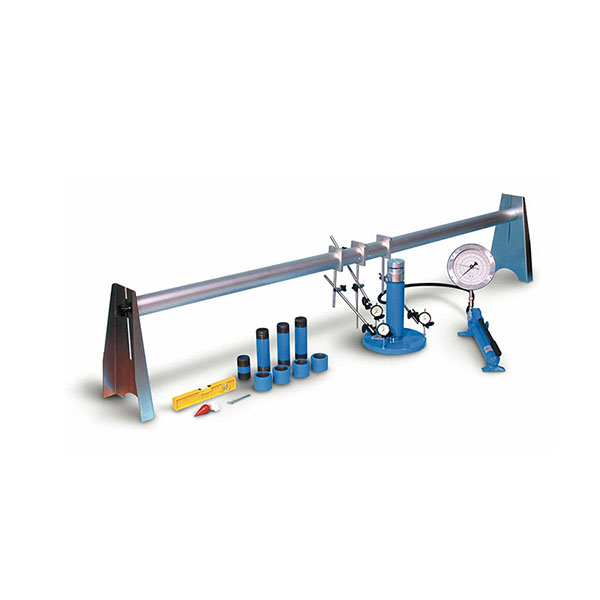
Plate load bearing test apparatus
Plate load bearing test apparatus (Product Code: SLE/CE/61) is a hydraulic field loading set used to estimate the bearing capacity of soil beneath a loading plate at a chosen depth of embedment on construction and pavement sites. Geotechnical engineers, highway and airport pavement designers and civil engineering colleges use it with 300 mm and 450 mm diameter plates and a 200 kN or 500 kN piston assembly. It is made by Jain Scientific Equipments Pvt Ltd (ScienceLab), an OEM manufacturer of engineering lab equipment in India, at its own factory in Ambala.
Specifications
| Parameter | Detail |
|---|---|
| Test purpose | Estimating soil bearing capacity under field loading conditions for a specific loading plate and depth of embedment |
| Pavement application | Load tests on soil and flexible pavement components for the evaluation and design of airport and highway pavements |
| Piston assembly capacity | 200 kN or 500 kN |
| Loading system | Hydraulic hand pump with pressure transducer |
| Load readout | Battery-operated digital readout unit |
| Datum bar | 2.4 m long |
| Settlement gauges | 3 digital dial gauges, 25 mm travel x 0.01 mm, with dial supports |
| Loading plates | 300 mm and 450 mm diameter |
| Product code | SLE/CE/61 |
| Manufacturer | Jain Scientific Equipments Pvt Ltd (ScienceLab) — OEM |
| Country of origin | India (made in Ambala, Haryana) |
What Is the Plate Load Bearing Test Apparatus Used For?
The set reproduces a foundation or wheel load directly on the ground. The loading plate is bedded on the prepared test level, the hydraulic piston is jacked against a reaction load provided on site, and pressure is raised in increments with the hand pump while the digital readout shows the applied load. After each increment the three dial gauges, held from the 2.4 m datum bar, record how far the plate settles.
Plotting load against settlement lets students and site engineers judge the safe bearing pressure of a foundation stratum or the support offered by a subgrade and flexible pavement layers. As lab equipment for technical institutes, it also gives civil engineering students first-hand experience of a full-scale field test. Keep the datum bar supports well clear of the loaded area so the gauges read true plate movement.
What to Specify When Ordering
- Piston assembly capacity: 200 kN or 500 kN
- Loading plates required: 300 mm diameter, 450 mm diameter or both
- Number of complete sets for your department or site teams
- Any additional digital dial gauges or dial supports you want quoted alongside the set
OEM Manufacturer
ScienceLab is the trading name of Jain Scientific Equipments Private Limited, the original equipment manufacturer (OEM) of this plate load bearing test apparatus. The set is made and assembled at the company's own licensed factory at Saha, Ambala, Haryana, India, rather than bought in from a trader, and it is supplied factory-direct to engineering colleges, polytechnics, testing laboratories, dealers and importers.
Because the manufacturer handles repeat business itself, you can ask us about replacement loading plates or dial supports whenever your field kit needs attention. Read more about the company on our company profile.
Related Civil Engineering Lab Equipment
A plate load test is usually one stage of a wider site investigation. These items support the work before and after the load test:
- Field CBR test set — in-situ bearing ratio of the same subgrade for road design
- Core cutters — in-place density and moisture content of the soil at test level
- Soil Augers — exploratory holes to check the soil layers below the plate
- Load ring penetrometer — quick bearing-strength checks to choose test locations
- Consolidation Test Apparatus — laboratory settlement behaviour of clay samples from the site
See the complete Civil Engineering Lab Equipment range for soil, concrete and pavement testing.
Frequently Asked Questions
What is included with the plate load bearing test apparatus?
The plate load bearing test apparatus includes a hydraulic piston assembly (200 kN or 500 kN), a hydraulic hand pump, a pressure transducer, a battery-operated digital readout unit, a 2.4 m datum bar, three digital dial gauges with supports, and 300 mm and 450 mm loading plates.
What load capacity does the plate load bearing test apparatus offer?
The plate load bearing test apparatus is listed with a piston assembly of 200 kN or 500 kN capacity. Choose the capacity to suit the bearing pressures you expect and the plate size you will use, and state it in your enquiry so the quotation matches your set.
How is settlement measured with the plate load bearing test apparatus?
Settlement in the plate load bearing test apparatus is read on three digital dial gauges with 25 mm travel and 0.01 mm resolution. They are mounted on dial supports from the 2.4 m datum bar so readings stay independent of the loaded plate.
Who manufactures the plate load bearing test apparatus?
The plate load bearing test apparatus is manufactured by Jain Scientific Equipments Pvt Ltd, trading as ScienceLab, as the OEM at its own factory at Saha, Ambala, Haryana, India. Quotations, spare parts enquiries and repeat orders are handled directly by the manufacturer.
Is a calibration certificate available for the plate load bearing test apparatus?
Calibration documents for the plate load bearing test apparatus, for example for the pressure transducer and readout, should be discussed with us before you order. Describe your requirement on our contact page and we will advise what can be provided.
Can the plate load bearing test apparatus be ordered in bulk or for export?
Yes, the plate load bearing test apparatus can be quoted as a single set, as multiple sets for institutions, or for export to India and international markets. Share the quantity, piston capacity and delivery destination so a complete quotation can be prepared.
Request a Quote
For a quotation on the plate load bearing test apparatus, send your requirements through our contact page or add the product to the enquiry cart. Quotes come direct from the manufacturer; please mention piston capacity, plate sizes, quantity and delivery location.
Last updated: 24 September 2026
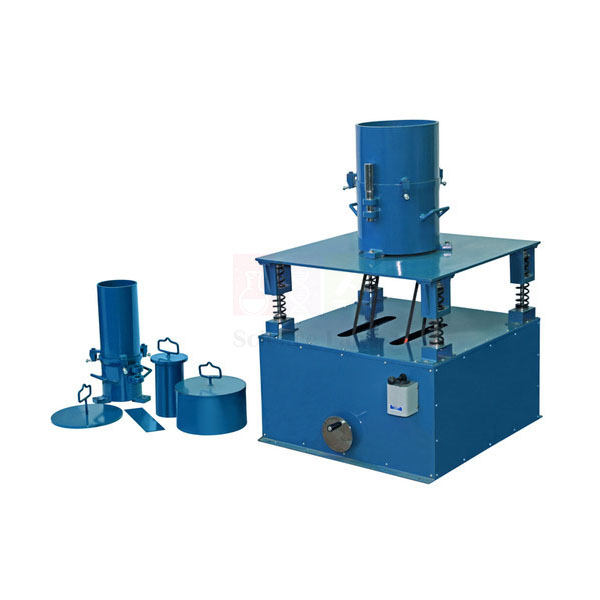
Relative density test apparatus
Relative density test apparatus (Product Code: SLE/CE/62) is a vibratory table and mould assembly used to compact free-draining sands and gravels to their densest state so their relative density can be calculated in soil mechanics laboratories. Geotechnical labs and civil engineering colleges use it with 3000 ml and 15000 ml unit weight moulds on a cushioned steel deck of about 75 cm x 75 cm. It is made by Jain Scientific Equipments Pvt Ltd (ScienceLab), an OEM and TVET lab equipment manufacturer in India, at its own factory in Ambala.
Specifications
| Parameter | Detail |
|---|---|
| Vibratory table deck | Cushioned steel vibrating deck, about 75 cm x 75 cm |
| Power supply | 415 V, three phase |
| Vibration frequency | Approximately 3600 vibrations per minute under an 11.5 kg load |
| Amplitude | Variable in three ranges: 0.05 to 0.25 mm, 0.25 to 0.45 mm and 0.45 to 0.65 mm |
| Unit weight moulds | Cylindrical metal moulds, 3000 ml and 15000 ml capacity |
| Mould accessories | Guide sleeve with clamp assembly, surcharge base plate, handle for the surcharge base plate, surcharge weight |
| Dial gauge | 0.01 mm x 50 mm travel, with 25 mm extension piece |
| Product code | SLE/CE/62 |
| Manufacturer | Jain Scientific Equipments Pvt Ltd (ScienceLab) — OEM |
| Country of origin | India (made in Ambala, Haryana) |
What Is the Relative Density Test Apparatus Used For?
Clean sands and gravels do not give a clear peak in a normal compaction test, so their state of packing is described by relative density instead. With this apparatus, dry soil is placed in the mould, the guide sleeve is clamped on, and the surcharge base plate and weight are seated on top. The table then vibrates the filled mould, and the dial gauge with its extension piece records how far the surcharge plate has settled, giving the compacted volume.
Comparing the field density of a sand fill with its maximum and minimum densities tells engineers how loose or dense the deposit is, which matters for foundations, backfill behind walls and embankments. For colleges buying from an engineering lab equipment manufacturer, it turns a textbook index into a practical exercise. Bolt the table to a firm floor so vibration goes into the specimen, not the bench.
What to Specify When Ordering
- Mould capacity: 3000 ml, 15000 ml or both, based on the particle size of your soils
- Confirmation that a 415 V three-phase supply is available where the table will stand
- Extra surcharge weights, guide sleeves or dial gauges you would like quoted
- Number of complete sets required
OEM Manufacturer
Jain Scientific Equipments Private Limited, which trades as ScienceLab, is the OEM for this relative density test apparatus. The company produces it at its own licensed factory at Saha, Ambala, Haryana, India, and sells it factory-direct, so there is no trading middleman between the maker and your laboratory.
Engineering colleges, research labs, dealers and importers receive quotations straight from the manufacturer, and follow-up orders for moulds or surcharge parts are handled by the same team — just ask us. Background on the company is on our company profile.
Related Civil Engineering Lab Equipment
Relative density results are most useful when combined with grading, moisture and field density data. These items complete the workflow:
- Core cutters — in-place density of the soil for comparison with the laboratory limits
- Test Sieves — grading to confirm the soil is a free-draining sand or gravel
- Moisture Tins — moisture content checks on field and laboratory samples
- Constant Head permeability apparatus — permeability of the same granular soils
- Direct Shear test Apparatus — shear strength of sand prepared at a known density
Browse all Civil Engineering Lab Equipment for soil, concrete and highway laboratories.
Frequently Asked Questions
What is included with the relative density test apparatus?
The relative density test apparatus includes a vibratory table, cylindrical unit weight moulds of 3000 ml and 15000 ml, a guide sleeve with clamp assembly, surcharge base plate with handle, surcharge weight, and a 0.01 mm x 50 mm dial gauge with a 25 mm extension piece.
What power supply does the relative density test apparatus need?
The relative density test apparatus runs on a 415 V three-phase supply. Check that your laboratory has a suitable three-phase outlet near a solid floor before installation, and contact us if you need guidance on connection details.
What vibration settings does the relative density test apparatus offer?
The relative density test apparatus vibrates at approximately 3600 vibrations per minute under an 11.5 kg load, with amplitude adjustable in three ranges from 0.05 to 0.25 mm, 0.25 to 0.45 mm and 0.45 to 0.65 mm.
Which soils is the relative density test apparatus meant for?
The relative density test apparatus is meant for cohesionless, free-draining soils such as clean sands and gravels, where density is better described by relative density than by a compaction curve. Clays and silts are normally tested with other methods.
Who manufactures the relative density test apparatus?
The relative density test apparatus is manufactured by Jain Scientific Equipments Pvt Ltd (ScienceLab) as the OEM at its own factory at Saha, Ambala, Haryana, India. Buyers deal with the manufacturer directly for quotations and later parts.
What should a quotation request for the relative density test apparatus include?
A quotation request for the relative density test apparatus should state the mould capacities needed, the number of sets, confirmation of a 415 V three-phase supply and the delivery address, whether in India or international markets.
Request a Quote
To price the relative density test apparatus, write to us through the contact page or place it in the enquiry cart. Your quotation comes direct from the manufacturer.
Last updated: 24 September 2026
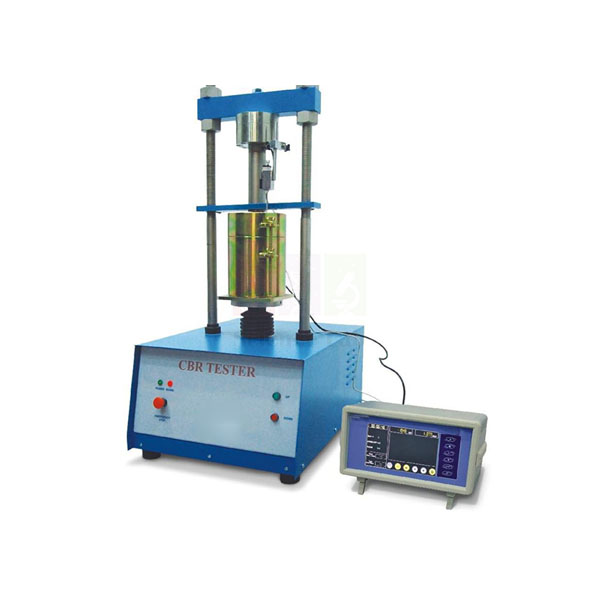
Automatic CBR Test Apparatus
Automatic CBR Test Apparatus (Product Code: SLE/CE/63) is a motorised load frame used to drive a penetration piston into a compacted soil sample at a constant rate and record load against penetration to find the California Bearing Ratio in highway and soil laboratories. Road research labs and civil engineering departments choose it for its 50 kN load cell, 0.5 to 5 mm/min ram speed and touchscreen unit that works out CBR at 2.5 mm and 5 mm automatically. It is supplied by Jain Scientific Equipments Pvt Ltd (ScienceLab), Ambala, India.
Specifications
| Parameter | Detail |
|---|---|
| Test principle | Loads the penetration piston into the soil sample at a constant rate and measures applied load and piston penetration at predetermined intervals |
| Ram speed | Adjustable from 0.5 to 5 mm/min through the digital readout unit |
| Test methods | Speed range allows the same machine to be set up for BS, EN, ASTM or AASHTO CBR procedures |
| Platen adjustment | Rapid up and down buttons on the front panel |
| Load cell | 50 kN |
| Displacement transducer | Linear potentiometric, 25 mm x 0.001 mm, with connection part |
| CBR calculation | Corrected CBR % at 2.5 mm and 5 mm calculated and saved automatically; load values corrected for the linear region of the curve are also saved |
| Stored load points | Load saved at user-defined displacements such as 0.625, 1.25, 1.875, 2.5, 3.75, 5, 7.5, 10 and 12.5 mm |
| Control modes | Displacement control and limited load control |
| Data acquisition | 4 analogue channels (2 active for CBR), 1/256000 points resolution and 10 data per second per channel |
| Display | 800 x 480 resolution, 65535-colour TFT-LCD industrial touchscreen with real-time test graph |
| Processor and memory | 32-bit ARM RISC CPU card; permanent storage of up to 10000 test results |
| Interface | 4 main function keys, multi-language support, real-time clock and date, result visualisation and memory management screens |
| Units | kN, ton or lb |
| Connectivity and software | Ethernet for computer interface and remote connection; computer software with advanced report generation; connection cable |
| Dimensions | 480 x 650 x 1150 mm |
| Weight | Approx. 110 kg |
| Power | 370 W |
| Product code | SLE/CE/63 |
| Supplied by | Jain Scientific Equipments Pvt Ltd (ScienceLab), Ambala, India |
Supplied complete with: 50 kN load cell, penetration piston, linear potentiometric displacement transducer with connection part, computer software and connection cable.
What Is the Automatic CBR Test Apparatus Used For?
The California Bearing Ratio compares the load needed to push a standard piston into a soil or granular base with the load for a reference material, and it is widely used to size flexible pavement layers. A compacted specimen in its mould is set on the platen, the piston is brought into contact with the up and down buttons, and the machine then penetrates at the chosen constant rate while logging load and displacement.
Because the readout stores load at your chosen penetration points, applies the curve correction and reports CBR at 2.5 mm and 5 mm, operators no longer read a proving ring dial by eye. Results can be exported over Ethernet for reports, which suits busy highway labs looking for test and measurement instruments in India. Zero the transducer after seating the piston so the first readings are clean.
What to Specify When Ordering
- Number of machines and the delivery destination
- Preferred unit system (kN, ton or lb) and whether the unit will be networked to a laboratory PC over Ethernet
- CBR moulds, rammers and surcharge weights are not in the listed scope of supply — ask us if you want them quoted
Supplier
ScienceLab is the trading name of Jain Scientific Equipments Private Limited, which supplies this automatic CBR test apparatus from Ambala, Haryana, India to universities, highway and materials laboratories, dealers and importers. We source the machine for your order and coordinate the quotation and delivery with you as a single point of contact.
For vendor registration and export documentation, the supplying company is Jain Scientific Equipments Private Limited (IEC AAECJ8618A, GSTIN 06AAECJ8618A1ZT). More about the company is on our company profile.
Related Civil Engineering Lab Equipment
A CBR programme needs sample preparation and field checks as well as the load frame. These products fit the same workflow:
- Field CBR test set — in-situ CBR on the subgrade to compare with laboratory values
- Soil extruder, motor operated — removing compacted specimens from moulds after testing
- Moisture Tins — moisture content of the compacted specimen
- Test Sieves — preparing and grading the soil before compaction
- Plate load bearing test apparatus — field bearing capacity of subgrade and pavement layers
Explore the full Civil Engineering Lab Equipment category.
Frequently Asked Questions
What is supplied with the Automatic CBR Test Apparatus?
The Automatic CBR Test Apparatus is supplied with a 50 kN load cell, a penetration piston, a 25 x 0.001 mm linear potentiometric displacement transducer with connection part, computer software and a connection cable. CBR moulds and surcharge weights are not in the listed scope.
What penetration speed does the Automatic CBR Test Apparatus offer?
The Automatic CBR Test Apparatus has a ram speed adjustable from 0.5 to 5 mm/min, set through the digital readout unit. You enter the constant rate required by the CBR method your laboratory follows within that range.
Does the Automatic CBR Test Apparatus calculate CBR by itself?
Yes, the Automatic CBR Test Apparatus automatically calculates and saves the corrected CBR % at 2.5 mm and 5 mm penetration, records load at user-defined displacement points and stores up to 10000 test results in permanent memory.
Can the Automatic CBR Test Apparatus connect to a computer?
Yes, the Automatic CBR Test Apparatus has an Ethernet connection for a computer interface and remote connection, and it comes with computer software offering advanced report generation, so results can be archived and printed from a laboratory PC.
Who supplies the Automatic CBR Test Apparatus?
The Automatic CBR Test Apparatus is supplied by Jain Scientific Equipments Pvt Ltd (ScienceLab), Ambala, India. For questions about the machine's origin, service arrangements or terms, please ask us through the contact page before ordering.
Is a calibration certificate available for the Automatic CBR Test Apparatus?
Calibration documents for the Automatic CBR Test Apparatus load cell and displacement transducer should be discussed with us before you order. Tell us your requirement on the contact page and we will confirm what can be provided with the machine.
How much space and power does the Automatic CBR Test Apparatus need?
The Automatic CBR Test Apparatus measures 480 x 650 x 1150 mm, weighs about 110 kg and is rated at 370 W. Plan a level, sturdy position near a mains outlet and allow room to load moulds onto the platen.
Request a Quote
Ask for a quotation on the Automatic CBR Test Apparatus through our contact page, or add it to the enquiry cart together with any moulds or accessories you need. Please include quantity and delivery location.
Last updated: 24 September 2026
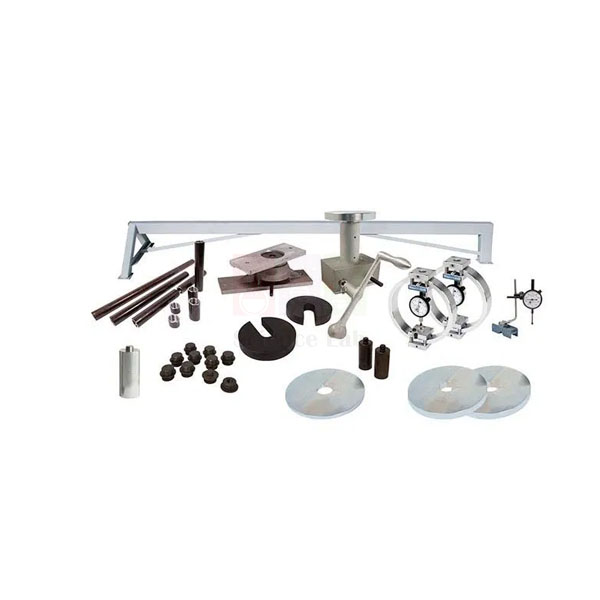
Field CBR test set
Field CBR test set (Product Code: SLE/CE/64) is a portable mechanical jacking and load-measuring kit used to determine the California Bearing Ratio of soils in place on road construction sites. Highway engineers and civil engineering colleges use its 50 kN mechanical jack and 40 kN load ring in the field, or assemble the frame in the laboratory as a hand-operated CBR machine. It is made by Jain Scientific Equipments Pvt Ltd (ScienceLab), an OEM laboratory equipment manufacturer in India, at its own factory in Ambala.
Specifications
| Parameter | Detail |
|---|---|
| Test locations | In-situ on site, or in the laboratory when the frame is assembled with the main components as a hand-operated CBR machine |
| Field application | Used with a vehicle bracket for in-situ bearing capacity of soils used in road construction |
| Mechanical jack | 50 kN capacity |
| Load ring | 40 kN capacity |
| Slotted surcharges | One 9 kg and one 4.5 kg |
| Penetration piston | Adjustable CBR penetration piston |
| Penetration dial gauge | 30 x 0.01 mm, with adjustable dial gauge holder |
| Extension rods | Set of 3 extension rods with adapters |
| Datum bar assembly | Two tripod stands and a 1220 mm long aluminium bar |
| Spare parts | Every component can be purchased individually as a spare |
| Product code | SLE/CE/64 |
| Manufacturer | Jain Scientific Equipments Pvt Ltd (ScienceLab) — OEM |
| Country of origin | India (made in Ambala, Haryana) |
What Is the Field CBR Test Set Used For?
On site, a loaded vehicle gives the reaction: the mechanical jack is fixed beneath it through the vehicle bracket, and the extension rods carry the force down to the penetration piston resting on the prepared subgrade. Slotted surcharge weights placed around the piston stand in for the pavement layers above, the jack is turned steadily, and the load ring shows the force while the dial gauge on the aluminium datum bar records penetration.
Testing in place avoids disturbing the soil and shows how the subgrade actually behaves at its natural moisture and density, which helps engineers confirm a pavement design. Colleges can move the same parts indoors and build a hand-operated laboratory CBR machine, so one purchase of engineering lab equipment in India covers both site and classroom work. Level the tripod stands well away from the piston before zeroing the gauge.
What to Specify When Ordering
- Whether you need the vehicle bracket for field reaction quoted with the set
- Whether you also want the laboratory frame to use the set as a hand-operated CBR machine
- Any individual spares required, such as an extra load ring, dial gauge or extension rods
- Number of complete sets for your field teams or laboratory
OEM Manufacturer
The Field CBR test set is an original ScienceLab product. Jain Scientific Equipments Private Limited, which trades under the ScienceLab name, manufactures it as the OEM at its licensed factory at Saha, Ambala, Haryana, India, and ships it factory-direct to highway departments' laboratories, engineering colleges, dealers and importers.
Since each part of the set is also sold on its own, a replacement jack, load ring or surcharge weight can be quoted by the manufacturer itself whenever you need one — simply ask us. Company information is available on our company profile.
Related Civil Engineering Lab Equipment
Field CBR results are usually read alongside laboratory CBR values and density checks. These items support the same road investigation:
- Automatic CBR Test Apparatus — laboratory CBR on compacted samples for comparison
- Plate load bearing test apparatus — plate bearing tests on subgrade and pavement layers
- Core cutters — in-place density at each CBR test point
- Moisture Tins — moisture content of soil taken from the test spot
- Load ring penetrometer — quick strength checks to choose CBR locations
View every item in Civil Engineering Lab Equipment.
Frequently Asked Questions
What components are in the Field CBR test set?
The Field CBR test set contains a 50 kN mechanical jack, a 40 kN load ring, 9 kg and 4.5 kg slotted surcharges, an adjustable penetration piston, an adjustable dial gauge holder, a 30 x 0.01 mm dial gauge, three extension rods with adapters and a tripod-supported 1220 mm aluminium bar.
Can the Field CBR test set be used in the laboratory?
Yes, the Field CBR test set can be used indoors: its main components can be assembled in a frame to create a hand-operated laboratory CBR machine. Mention this use in your enquiry so the frame is included in the quotation.
What provides the reaction load when using the Field CBR test set on site?
The Field CBR test set is used with a vehicle bracket, so a loaded vehicle provides the reaction for the 50 kN mechanical jack. Tell us whether you need the bracket quoted along with the set.
Can I buy spare parts for the Field CBR test set?
Yes, every component of the Field CBR test set can be purchased individually as a spare part, from the mechanical jack and load ring to the surcharge weights, dial gauge and extension rods. List the parts you need when you contact us.
Who manufactures the Field CBR test set?
The Field CBR test set is manufactured by Jain Scientific Equipments Pvt Ltd (ScienceLab) as the OEM at its own factory at Saha, Ambala, Haryana, India. Quotations, spares and repeat orders come directly from the manufacturer.
What should a quotation request for the Field CBR test set include?
A quotation request for the Field CBR test set should give the number of sets, whether the vehicle bracket and laboratory frame are needed, any extra spares and the delivery location in India or international markets.
Request a Quote
Send your Field CBR test set requirements through our contact page or add the set to the enquiry cart. The quotation is prepared directly by the manufacturer.
Last updated: 24 September 2026
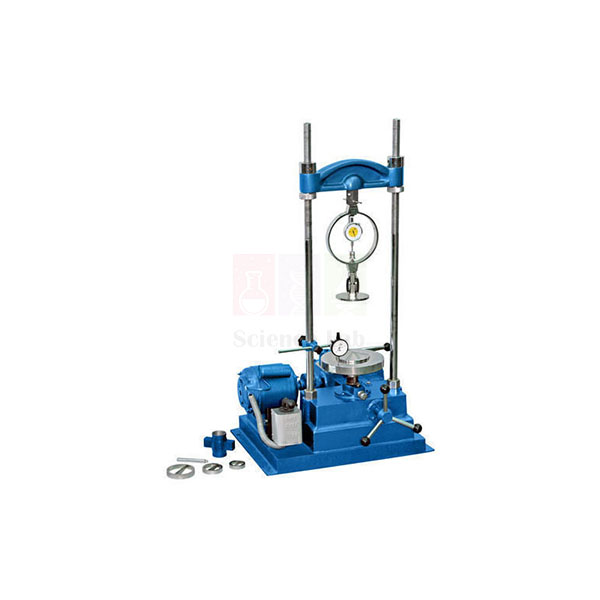
Unconfined Compression Tester (Motorised)
Unconfined Compression Tester (Motorised) (Product Code: SLE/CE/65) is a motor-driven screw load frame used to measure the unconfined compressive strength of cohesive soil specimens in geotechnical and civil engineering laboratories. Its 5000 kg capacity frame and gearbox give three rates of strain — 1.25, 1.5 and 2.5 mm/min — for testing cylindrical clay samples. It is made by Jain Scientific Equipments Pvt Ltd (ScienceLab), an OEM technical educational equipment manufacturer, at its own factory in Ambala, India.
Specifications
| Parameter | Detail |
|---|---|
| Load frame | Screw operated, capacity 5000 kg |
| Drive | Gear box with motor drive |
| Rates of strain | 1.25, 1.5 and 2.5 mm/min |
| Fittings | Pair of cone seatings, adaptor for proving ring, strain dial gauge bracket |
| Power supply | 230 V, single phase AC |
| Coning tools supplied | One pair (male and female) for 38 mm diameter samples |
| Not included | Proving ring and dial gauge |
| Optional accessories | Coning tools in male and female pairs for 38, 50, 75 and 100 mm diameter samples |
| Product code | SLE/CE/65 |
| Manufacturer | Jain Scientific Equipments Pvt Ltd (ScienceLab) — OEM |
| Country of origin | India (made in Ambala, Haryana) |
What Is the Unconfined Compression Tester Used For?
A trimmed cylinder of clay, with its ends shaped by the coning tools, is set between the cone seatings and squeezed axially with no side support. The motor drives the platen at the selected strain rate while a proving ring, fitted through the adaptor, shows the load and a dial gauge on the strain bracket shows how much the specimen shortens. The peak stress reached is the unconfined compressive strength.
Because roughly half of that value approximates the undrained shear strength of saturated clay, the test is a quick input for foundation and slope checks, and comparing undisturbed with remoulded samples shows how sensitive a clay is. For lab equipments for technical institutes, the motor drive keeps the strain rate steady from one student group to the next. Record readings at regular strain intervals until the load clearly falls.
What to Specify When Ordering
- Sample diameters you test: 38 mm coning tools are supplied; 50, 75 and 100 mm pairs are optional accessories
- Whether you want a proving ring and dial gauge quoted, as they are not included
- Confirmation of a 230 V single-phase supply at the test bench
- Number of testers required
OEM Manufacturer
This unconfined compression tester is built by Jain Scientific Equipments Private Limited, the company behind the ScienceLab brand, acting as the original equipment manufacturer. The motorised frame is made at the company's own licensed factory at Saha, Ambala, Haryana, India, and reaches universities, soil laboratories, dealers and importers without an intermediary.
Coning tools for other sample sizes and repeat orders are handled by the same manufacturer, so ask us whenever your testing range grows. Learn more on our company profile.
Related Civil Engineering Lab Equipment
Unconfined compression testing sits within a wider clay testing programme. These products are used alongside it:
- Soil extruder, motor operated — pushing specimens out of sampling tubes before trimming
- Vane Shear Apparatus (Motorised) — undrained strength of very soft clays that cannot stand unsupported
- Direct Shear test Apparatus — shear strength parameters under normal load
- Consolidation Test Apparatus — compressibility of the same clay
- Moisture Tins — water content of the specimen after failure
See the complete Civil Engineering Lab Equipment range.
Frequently Asked Questions
What is included with the Unconfined Compression Tester (Motorised)?
The Unconfined Compression Tester (Motorised) includes the 5000 kg screw load frame with gear box and motor, a pair of cone seatings, a proving ring adaptor, a strain dial gauge bracket and one pair of 38 mm coning tools. The proving ring and dial gauge are not included.
Which strain rates does the Unconfined Compression Tester (Motorised) provide?
The Unconfined Compression Tester (Motorised) provides three rates of strain through its gear box: 1.25, 1.5 and 2.5 mm/min. Select the rate that suits your specimen size and test procedure before starting the motor.
What sample sizes can the Unconfined Compression Tester (Motorised) test?
The Unconfined Compression Tester (Motorised) is supplied with male and female coning tools for 38 mm diameter samples. Coning tool pairs for 50, 75 and 100 mm diameter samples are available as optional accessories for larger specimens.
What power supply does the Unconfined Compression Tester (Motorised) use?
The Unconfined Compression Tester (Motorised) operates on a 230 V single-phase AC supply, so it can run from a normal laboratory power point without three-phase wiring.
Who manufactures the Unconfined Compression Tester (Motorised)?
The Unconfined Compression Tester (Motorised) is manufactured by Jain Scientific Equipments Pvt Ltd (ScienceLab) as the OEM at its own factory at Saha, Ambala, Haryana, India. You receive quotations and accessory support directly from the manufacturer.
Is a calibration certificate available for the Unconfined Compression Tester (Motorised)?
Load readings on the Unconfined Compression Tester (Motorised) depend on the proving ring used, which is not included. Discuss proving ring and calibration document needs with us through the contact page before ordering.
Request a Quote
Request pricing for the Unconfined Compression Tester (Motorised) via our contact page or add it to the enquiry cart. Quotes are issued directly by the manufacturer; list any extra coning tools you need.
Last updated: 24 September 2026
843.jpg)
Liquid limit devices (Casagrande)
Liquid limit devices (Casagrande) (Product Code: SLE/CE/66) are cam-operated brass cup instruments used to determine the liquid limit of fine-grained soils in soil mechanics and civil engineering laboratories. Students and testing staff use them to find the water content at which a grooved soil pat closes over 1.25 cm under 25 blows, with a built-in counter recording every drop. They are made by Jain Scientific Equipments Pvt Ltd (ScienceLab), an OEM among lab instruments manufacturers in India, at its own factory in Ambala.
Specifications
| Parameter | Detail |
|---|---|
| Cup | Brass cup held on an adjustable bracket |
| Height of fall | Cup adjustable for a fall of 1 cm |
| Mechanism | Cup raised and dropped by cam action onto a rubber base of standard hardness |
| Blow counter | Counter registers the number of blows |
| Grooving tools | One Casagrande grooving tool and one ASTM grooving tool |
| Height gauge | Height gauge block for setting the drop |
| Liquid limit definition | Water content at which soil cut by a groove of standard dimensions flows together for 1.25 cm under 25 blows |
| Soil strength at liquid limit | About 0.17 N/cm² (17 g/cm²) |
| Product code | SLE/CE/66 |
| Manufacturer | Jain Scientific Equipments Pvt Ltd (ScienceLab) — OEM |
| Country of origin | India (made in Ambala, Haryana) |
What Is the Casagrande Liquid Limit Device Used For?
Moist soil paste is spread in the brass cup, a groove is cut through it with one of the grooving tools, and the handle is turned at a steady pace so the cam lifts and drops the cup onto the rubber base. The counter tallies each blow until the two halves of the pat flow together over 1.25 cm. Repeating this at several water contents and plotting blows against moisture gives the water content at 25 blows — the liquid limit.
At that moisture the soil is just passing from a liquid to a plastic state, so the liquid limit, together with the plastic limit, is used to classify clays and silts and to anticipate their compressibility. For colleges sourcing from an engineering lab equipment manufacturer, it is one of the first soil tests students perform. Check the 1 cm drop with the gauge block before each session and keep the rubber base clean and dry.
OEM Manufacturer
Jain Scientific Equipments Private Limited, known to customers as ScienceLab, is the OEM for these Casagrande liquid limit devices, which are manufactured at its licensed factory at Saha, Ambala, Haryana, India. Soil laboratories, polytechnics, universities, dealers and importers order them straight from the factory rather than through a trader.
The manufacturer can also quote extra grooving tools or height gauge blocks when you need them — just ask us. More background is on our company profile.
Related Civil Engineering Lab Equipment
The liquid limit is one of the Atterberg limits, and these items complete the set of consistency tests:
- Plastic limit set — the lower consistency limit, needed for the plasticity index
- Shrinkage limit set — the water content below which soil stops shrinking
- Moisture Tins — oven-drying the samples taken from each trial
- Brass frame sieves — separating the fine soil fraction before mixing
Find more soil, concrete and pavement testing items in Civil Engineering Lab Equipment.
Frequently Asked Questions
What is included with the Liquid limit devices (Casagrande)?
Each Casagrande liquid limit device includes a brass cup on an adjustable bracket, a cam-operated drop mechanism with rubber base, a blow counter, one Casagrande grooving tool, one ASTM grooving tool and a height gauge block for setting the fall.
How is the drop height set on the Casagrande liquid limit device?
The Casagrande liquid limit device cup is adjustable for a fall of 1 cm. Place the supplied height gauge block under the raised cup, adjust the bracket until the cup just touches it, then lock the setting before testing.
What does the liquid limit measured with the Casagrande device mean?
The liquid limit found with the Casagrande device is the water content at which a standard groove closes over 1.25 cm under 25 blows. At this point the soil passes from liquid to plastic behaviour and has a strength of about 0.17 N/cm².
Why does the Casagrande liquid limit device come with two grooving tools?
The Casagrande liquid limit device includes both a Casagrande grooving tool and an ASTM grooving tool, so your laboratory can cut the groove shape called for by the test procedure it follows.
Who manufactures the Liquid limit devices (Casagrande)?
The Liquid limit devices (Casagrande) are manufactured by Jain Scientific Equipments Pvt Ltd (ScienceLab) as the OEM at its own factory at Saha, Ambala, Haryana, India, and are sold factory-direct with quotations issued by the manufacturer.
Can Casagrande liquid limit devices be ordered for a full teaching lab or for export?
Yes, Casagrande liquid limit devices can be quoted in the quantity your teaching laboratory needs and shipped within India and to international markets. State the number of devices, any companion Atterberg sets and the delivery destination.
Request a Quote
For a quote on the Liquid limit devices (Casagrande), contact us through the contact page or add them to the enquiry cart. Pricing comes direct from the manufacturer.
Last updated: 24 September 2026
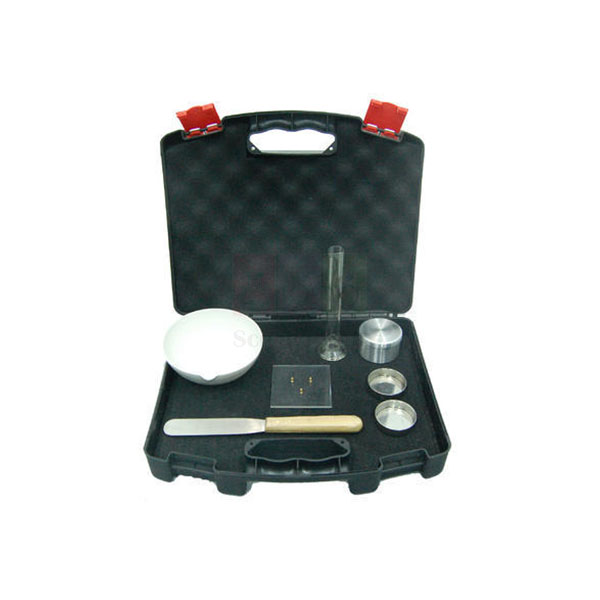
Shrinkage limit set
Shrinkage limit set (Product Code: SLE/CE/67) is a kit of dishes, a glass cup and a pronged Perspex plate used to measure the shrinkage limit of cohesive soils — the water content below which further drying no longer reduces soil volume. Civil engineering colleges and testing labs use it to calculate shrinkage ratio, shrinkage index and volumetric shrinkage; the set is supplied without mercury. It is made by Jain Scientific Equipments Pvt Ltd (ScienceLab), an OEM vocational training lab equipment manufacturer in India, at its own factory in Ambala.
Specifications
| Parameter | Detail |
|---|---|
| Test purpose | Determining shrinkage limit and calculating shrinkage ratio, shrinkage index and volumetric shrinkage |
| Porcelain evaporating dish | 1 |
| Shrinkage dish | 1 |
| Glass cup | 1 |
| Perspex plate | 1, with three metal prongs |
| Flexible spatula | 1, 100 mm |
| Glass cylinder | 1, 25 ml x 1 ml |
| Plastic wash bottle | 1, 500 ml |
| Mercury | Not included; optional accessory in a 500 g bottle, quoted separately |
| Product code | SLE/CE/67 |
| Manufacturer | Jain Scientific Equipments Pvt Ltd (ScienceLab) — OEM |
| Country of origin | India (made in Ambala, Haryana) |
What Is the Shrinkage Limit Set Used For?
As a wet clay dries it shrinks, but only down to a certain water content; after that, air enters the voids and the volume stays constant. To find that point, a wet soil pat is dried in the shrinkage dish and its dry volume is measured by mercury displacement: the glass cup is filled with mercury, levelled with the Perspex plate, and the dry pat is pressed under the surface with the three metal prongs so the displaced mercury can be measured.
Soils with a low shrinkage limit and high volumetric shrinkage tend to crack on drying and heave on wetting, which matters for foundations, canal linings and pavements. Mercury is toxic, so work over a tray, avoid skin contact and follow your institution's handling and disposal rules. The set suits teaching labs that want a complete Atterberg-limits bench.
What to Specify When Ordering
- Whether the optional 500 g bottle of mercury should be quoted, subject to your institution's rules on its use
- Number of sets, for example one per student group
- Any companion liquid limit or plastic limit apparatus for the same bench
OEM Manufacturer
Jain Scientific Equipments Private Limited trades as ScienceLab and is the OEM of this shrinkage limit set, which is made up as a complete kit at the company's own licensed factory at Saha, Ambala, Haryana, India. It goes factory-direct to engineering colleges, soil testing laboratories, dealers and importers, with quotations prepared by the manufacturer itself.
For tender and vendor registration, the company's details are GSTIN 06AAECJ8618A1ZT and LEI 3358004HRD1JIVXKYX49. If a dish or plate needs replacing later, ask us. See our company profile for more.
Related Civil Engineering Lab Equipment
The shrinkage limit is normally reported with the other consistency limits. These items are used on the same bench:
- Liquid limit devices (Casagrande) — the upper consistency limit of the same soil
- Plastic limit set — the plastic limit for the plasticity index
- Moisture Tins — water content of the wet soil pat
- Test Sieves — preparing the fine fraction before mixing
Browse the full Civil Engineering Lab Equipment category.
Frequently Asked Questions
What is included in the Shrinkage limit set?
The Shrinkage limit set includes one each of a porcelain evaporating dish, a shrinkage dish, a glass cup, a Perspex plate with three metal prongs, a 100 mm flexible spatula, a 25 ml x 1 ml glass cylinder and a 500 ml plastic wash bottle.
Does the Shrinkage limit set include mercury?
No, the Shrinkage limit set is supplied without mercury. Mercury is available as an optional accessory in a 500 g bottle, quoted separately, and should be used only where your institution's safety rules allow it.
What results can be calculated with the Shrinkage limit set?
The Shrinkage limit set is used to determine the shrinkage limit of a soil and to calculate its shrinkage ratio, shrinkage index and volumetric shrinkage from the wet and dry masses and volumes of the soil pat.
What is the Perspex plate with three prongs used for in the Shrinkage limit set?
In the Shrinkage limit set, the Perspex plate with three metal prongs levels the mercury in the glass cup and then pushes the dry soil pat below the surface, so its volume can be found from the mercury it displaces.
Who manufactures the Shrinkage limit set?
The Shrinkage limit set is manufactured by Jain Scientific Equipments Pvt Ltd (ScienceLab) as the OEM at its own factory at Saha, Ambala, Haryana, India, and is supplied factory-direct to institutions, dealers and importers.
What should I include in a quotation request for the Shrinkage limit set?
A quotation request for the Shrinkage limit set should state the number of sets, whether optional mercury is wanted, any companion Atterberg apparatus and the delivery destination in India or international markets.
Request a Quote
Ask for Shrinkage limit set pricing through our contact page or add it to the enquiry cart. The quotation comes direct from the manufacturer.
Last updated: 24 September 2026
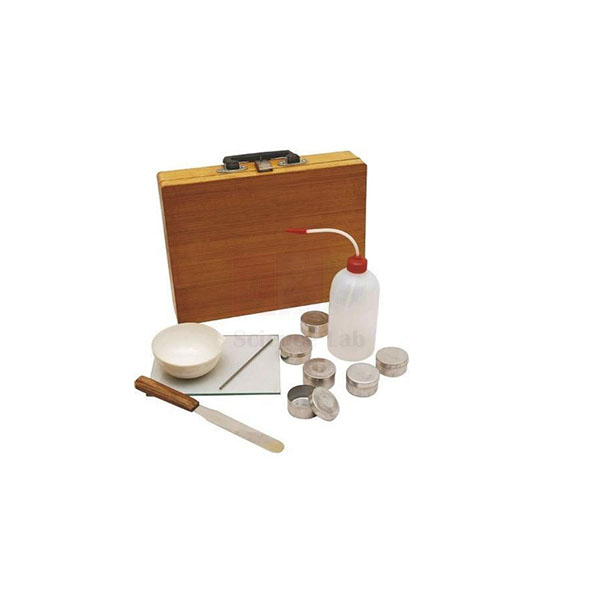
Plastic limit set
Plastic limit set (Product Code: SLE/CE/68) is a bench kit used to find the plastic limit of fine-grained soils — the water content at which a rolled soil thread just begins to crumble at 3 mm diameter — in soil mechanics laboratories. Students and technicians roll threads on its 20 cm x 15 cm glass plate, compare them with a 3 mm reference rod and dry the crumbs in six moisture containers. It is made by Jain Scientific Equipments Pvt Ltd (ScienceLab), an OEM scientific laboratory apparatus manufacturer in India, at its own factory in Ambala.
Specifications
| Parameter | Detail |
|---|---|
| Glass plate | 20 cm x 15 cm, with round ends |
| Reference rod | Brass or stainless steel, 3 mm diameter x 150 mm long |
| Flexible spatula | 15 cm |
| Moisture containers | Set of 6 |
| Porcelain basin | 150 mm diameter |
| Plastic wash bottle | 500 ml |
| Quantity | One of each item per set (moisture containers as one set of 6) |
| Product code | SLE/CE/68 |
| Manufacturer | Jain Scientific Equipments Pvt Ltd (ScienceLab) — OEM |
| Country of origin | India (made in Ambala, Haryana) |
What Is the Plastic Limit Set Used For?
Fine soil is mixed with water in the porcelain basin using the spatula, with the wash bottle adding water a little at a time. A small ball is then rolled under the palm on the glass plate into a thread; when it reaches the thickness of the 3 mm rod without breaking, it is kneaded and rolled again. As the soil dries it eventually crumbles at that diameter, and those crumbs go into the moisture containers for oven-drying. Their average water content is the plastic limit.
Subtracting the plastic limit from the liquid limit gives the plasticity index, the key figure for classifying clays and silts on a plasticity chart. The kit is a staple of educational laboratory equipment in India for diploma and degree soil mechanics courses. Keep the glass plate clean and dry and roll with even pressure so results repeat between students.
What to Specify When Ordering
- Reference rod material: brass or stainless steel
- Number of sets, usually one per student group
- Whether you want extra moisture containers quoted for repeat trials
OEM Manufacturer
ScienceLab is the brand of Jain Scientific Equipments Private Limited, which manufactures this plastic limit set as the OEM at its own licensed factory at Saha, Ambala, Haryana, India. Buying from the maker means the plate, rod, basin and containers arrive together as one set, sent factory-direct to colleges, polytechnics, soil laboratories, dealers and importers.
Additional sets for new student batches can be reordered from the same manufacturer — ask us whenever you expand the lab. Read about the company on our company profile.
Related Civil Engineering Lab Equipment
The plastic limit is only meaningful beside the other consistency limits. These items complete the soil classification bench:
- Liquid limit devices (Casagrande) — the liquid limit needed for the plasticity index
- Shrinkage limit set — the third Atterberg limit for the same sample
- Moisture Tins — extra containers for oven-drying repeat trials
- Brass frame sieves — preparing the fine fraction of the soil
See all items in Civil Engineering Lab Equipment.
Frequently Asked Questions
What does the Plastic limit set contain?
The Plastic limit set contains a 20 cm x 15 cm round-ended glass plate, a brass or stainless steel rod of 3 mm diameter and 150 mm length, a 15 cm flexible spatula, a set of six moisture containers, a 150 mm porcelain basin and a 500 ml plastic wash bottle.
What is the 3 mm rod in the Plastic limit set for?
The 3 mm rod in the Plastic limit set is a thickness reference. Students lay the rolled soil thread beside it to judge when the thread has reached 3 mm diameter, the point at which crumbling defines the plastic limit.
Is the reference rod in the Plastic limit set brass or stainless steel?
The reference rod in the Plastic limit set is offered in brass or stainless steel, both 3 mm in diameter and 150 mm long. State your preferred material in the enquiry so the quotation matches.
How is the plastic limit from this set used with the liquid limit?
The plastic limit measured with the Plastic limit set is subtracted from the liquid limit to give the plasticity index, which is used with the liquid limit to classify fine-grained soils and compare their plastic behaviour.
Who manufactures the Plastic limit set?
The Plastic limit set is manufactured by Jain Scientific Equipments Pvt Ltd (ScienceLab) as the OEM at its own factory at Saha, Ambala, Haryana, India. Quotations and repeat orders come directly from the manufacturer.
Can the Plastic limit set be ordered in class quantities or for export?
Yes, the Plastic limit set can be quoted in class quantities for colleges and shipped within India or to international markets. Give the number of sets, the rod material and the delivery destination in your request.
Request a Quote
Request a Plastic limit set quotation through our contact page or use the enquiry cart. You will receive pricing directly from the manufacturer.
Last updated: 24 September 2026
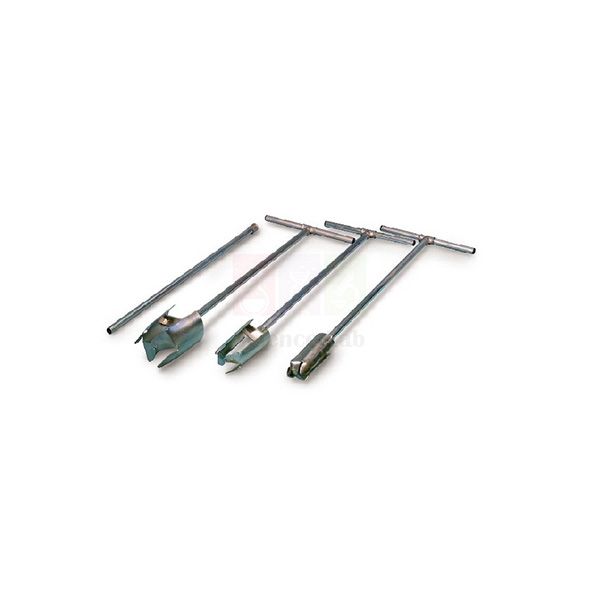
Soil Augers
Soil Augers (Product Code: SLE/CE/69) are hand-turned boring tools used to drill shallow holes and bring up disturbed soil samples for site investigation, soil surveys and environmental sampling. Field engineers and teaching labs choose between clay, standard, mud (Dutch) and sand patterns in 76 mm or 102 mm diameter, joined to a T-handle by quick-connect extensions. They are made by Jain Scientific Equipments Pvt Ltd (ScienceLab), an OEM manufacturer and laboratory equipment exporter from India, at its own factory in Ambala.
Specifications
| Parameter | Detail |
|---|---|
| Construction | Lightweight but sturdy augers, T-handle and extensions, easy to transport |
| Connections | Precision quick-connect fittings of high-strength steel on augers and extensions |
| Bits | Heat-treated super alloy bits that can be rebuilt when worn |
| Clay auger | Open bit for cohesive soils; 3 in (76 mm) or 4 in (102 mm) diameter |
| Standard soil auger | Open bit for most soil types; 76 mm or 102 mm diameter |
| Mud (Dutch) auger | Open design for muck-like, boggy and root-bound soils; 76 mm diameter only |
| Sand auger | Closed bit that retains cuttings in looser granular soils; 76 mm or 102 mm diameter |
| One-piece soil sampler | Steel construction with T-handle for tougher soils; 11 in (279 mm) or 14 in (360 mm) long |
| Handles and extensions | T-design handles; extensions from 2 to 5 ft (610 to 1,524 mm) long |
| Other versions | Threaded-connector systems and stainless steel systems for environmental sampling |
| Product code | SLE/CE/69 |
| Manufacturer | Jain Scientific Equipments Pvt Ltd (ScienceLab) — OEM |
| Country of origin | India (made in Ambala, Haryana) |
What Is the Soil Auger Used For?
The auger head is twisted into the ground with the T-handle, lifted out every few turns, and the soil caught in the bit is laid out in order of depth to build a simple log of the layers. Extensions are clicked on as the hole deepens. Open bits release sticky clay and moist soil easily, the closed sand bit stops dry granular soil from falling back down the hole, and the Dutch pattern cuts through wet, root-bound ground.
Typical jobs include preliminary checks before plate load or CBR tests, locating the water table, and collecting samples for moisture and Atterberg limit tests back in the lab. Stainless steel versions suit environmental sampling where contamination matters. Rugged, portable and easy to teach with, they are a practical part of engineering lab equipment in India for field-survey classes.
What to Specify When Ordering
- Auger type: clay, standard, mud (Dutch), sand, or one-piece soil sampler
- Diameter: 76 mm or 102 mm (the mud auger is 76 mm only)
- Handle and number of extensions, from 610 to 1,524 mm long, for your target depth
- Quick-connect steel, threaded-connector or stainless steel versions for environmental work
OEM Manufacturer
Jain Scientific Equipments Private Limited, trading as ScienceLab, is the original equipment manufacturer of these soil augers and makes them at its own licensed factory at Saha, Ambala, Haryana, India. Survey teams, universities, agricultural institutes, dealers and importers buy directly from the factory instead of through resellers.
Because the bits are designed to be rebuilt when worn, ask the manufacturer about replacement or reconditioned bits for your set rather than replacing the whole auger. Company details are on our company profile.
Related Civil Engineering Lab Equipment
Augering is usually the first step of a soil investigation. These items handle the samples it produces:
- Core cutters — undisturbed cores for in-place density once the target level is reached
- Moisture Tins — sealed containers for moisture content samples
- Sample Splitter — reducing bulky field samples to test size
- Scoops — transferring loose soil into containers and trays
- Garden Auger Soil — a simpler auger for school garden and biology field work
Explore the whole Civil Engineering Lab Equipment range.
Frequently Asked Questions
Which types of Soil Augers are available?
Soil Augers are available as clay augers and standard augers with open bits, mud (Dutch) augers for boggy or root-bound ground, and sand augers with closed bits. One-piece soil samplers with a T-handle are also offered for tougher soils.
What diameters do the Soil Augers come in?
Soil Augers in the clay, standard and sand patterns come in 76 mm (3 in) and 102 mm (4 in) diameters. The mud (Dutch) auger is made in 76 mm diameter only, so choose the size that suits your sample volume.
How can I increase the depth reached with Soil Augers?
Soil Augers reach greater depth when extensions are added between the auger and the T-handle. Extensions range from 610 to 1,524 mm (2 to 5 ft) in length; the achievable depth also depends on the soil, so tell us your target depth.
What connection system do the Soil Augers use?
Soil Augers and their extensions use precision quick-connect fittings made of high-strength steel, designed to join more quickly than conventional threaded joints. Threaded-connector and stainless steel systems are also available for environmental sampling.
Who manufactures the Soil Augers?
The Soil Augers are manufactured by Jain Scientific Equipments Pvt Ltd (ScienceLab) as the OEM at its own factory at Saha, Ambala, Haryana, India. Quotations, bit enquiries and repeat orders are handled by the manufacturer directly.
What should a quotation request for Soil Augers include?
A quotation request for Soil Augers should list each auger type and diameter, the number and length of extensions, the connection style, the quantity and the delivery location in India or international markets.
Request a Quote
Send your Soil Augers selection through the contact page or add it to the enquiry cart. Quotes are prepared by the manufacturer itself.
Last updated: 24 September 2026
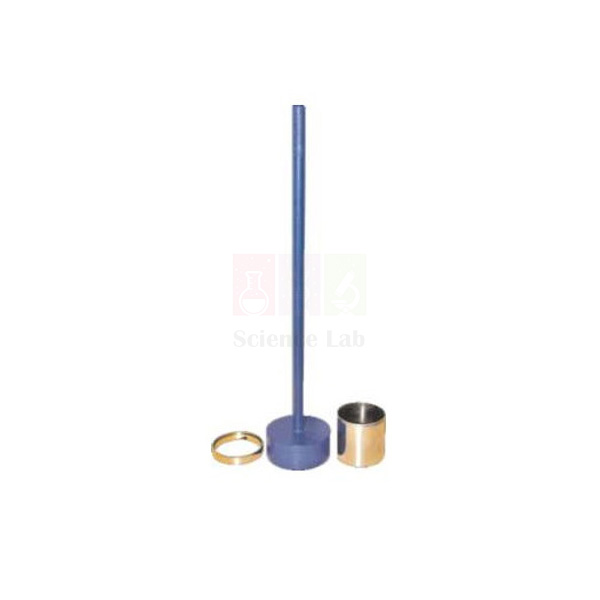
Core cutters
Core cutters (Product Code: SLE/CE/70) are open steel cylinders driven into the ground to cut out an intact soil core of known volume, used to measure the in-place density and moisture content of compacted fills and natural soils. Highway and building site laboratories use the set — core cutter, driving dolly and driving rammer — in 100 x 130 mm or 150 x 180 mm sizes. They are made by Jain Scientific Equipments Pvt Ltd (ScienceLab), an OEM scientific equipment manufacturer in India, at its own factory in Ambala.
Specifications
| Parameter | Detail |
|---|---|
| Material | Steel, protected against corrosion |
| Set contents | Core cutter, driving dolly and driving rammer |
| Sizes | 100 mm diameter x 130 mm high, or 150 mm diameter x 180 mm |
| Method | Cutter driven into the soil with the rammer; core dug out, trimmed, weighed and dried to calculate density and moisture content |
| Product code | SLE/CE/70 |
| Manufacturer | Jain Scientific Equipments Pvt Ltd (ScienceLab) — OEM |
| Country of origin | India (made in Ambala, Haryana) |
What Is the Core Cutter Used For?
A small patch of the layer is levelled, the cutter is stood upright with the dolly on top, and the rammer drives both down until the cutter is completely filled. The dolly protects the cutter's rim and lets it sink just below the surface. The cutter is then dug out, its ends trimmed flush, and the core weighed; a portion is dried to find the moisture content, from which the dry density follows.
Comparing that field dry density with the laboratory maximum shows whether an embankment, subgrade or earth-fill layer has been compacted enough. The method suits fine-grained soils that hold together in the cutter; stony or loose dry soils need other techniques. Institutions buying from an engineering lab equipment manufacturer often order several cutters so student teams can test different fill layers at once.
What to Specify When Ordering
- Size: 100 x 130 mm or 150 x 180 mm, or both
- Number of complete sets (cutter, dolly and rammer) and any extra cutters
- Delivery location for site laboratories or college campuses
OEM Manufacturer
Jain Scientific Equipments Private Limited, known to customers as ScienceLab, manufactures these core cutters as the OEM at its own licensed factory at Saha, Ambala, Haryana, India. They go factory-direct to site laboratories, contractors' test labs, engineering colleges, dealers and importers.
If you run several field teams, extra cutters, dollies or rammers can be quoted by the manufacturer directly — just ask us. Find out more on our company profile.
Related Civil Engineering Lab Equipment
Field density work links site sampling with laboratory results. These items are used in the same checks:
- Soil Augers — exploring the layers before choosing where to take cores
- Moisture Tins — holding the moisture sample taken from each core
- Relative density test apparatus — density limits for sands and gravels
- Field CBR test set — in-situ bearing ratio at the same test points
- Plate load bearing test apparatus — field bearing capacity of the compacted layer
Browse every item in Civil Engineering Lab Equipment.
Frequently Asked Questions
What is included in a Core cutters set?
A Core cutters set includes the core cutter itself, a driving dolly that sits on top of the cutter, and a driving rammer used to drive the assembly into the soil. All are steel, protected against corrosion.
What sizes are the Core cutters available in?
Core cutters are available in two versions: 100 mm diameter x 130 mm high, and 150 mm diameter x 180 mm. The larger cutter takes a bigger core, which can be useful when a layer's density varies from spot to spot.
How is dry density calculated from a Core cutters sample?
With Core cutters, the mass of soil in the cutter divided by the cutter's internal volume gives the bulk density. Dividing that by one plus the moisture content, measured on a dried portion of the core, gives the dry density.
Which soils are suitable for testing with Core cutters?
Core cutters work best in fine-grained, cohesive soils without stones, which stay in the cutter when it is dug out. Gravelly, stony or loose dry sandy soils tend to fall out or damage the rim, so other field density methods are preferred there.
Who manufactures the Core cutters?
The Core cutters are manufactured by Jain Scientific Equipments Pvt Ltd (ScienceLab) as the OEM at its own factory at Saha, Ambala, Haryana, India, and are sold factory-direct with quotations issued by the manufacturer.
Can Core cutters be ordered in bulk or for export?
Yes, Core cutters can be quoted in multiple sets for contractors and institutions and shipped within India or to international markets. Include the sizes, number of sets and delivery destination in your enquiry.
Request a Quote
For Core cutters pricing, contact us via the contact page or add them to the enquiry cart. Quotations come straight from the manufacturer.
Last updated: 24 September 2026
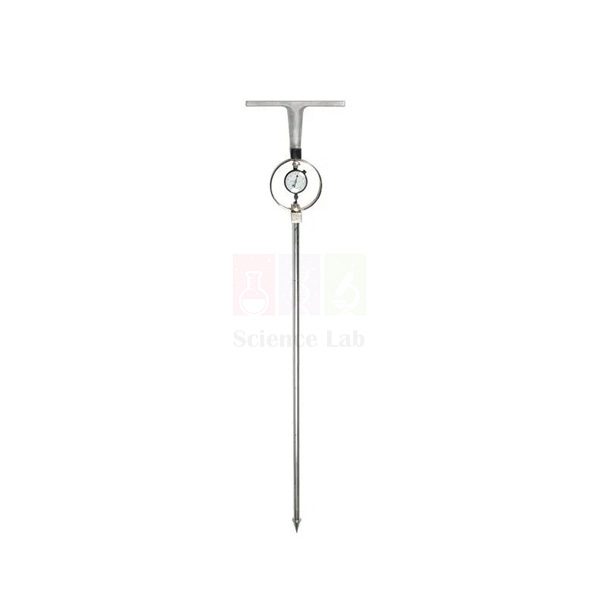
Load ring penetrometer
Load ring penetrometer (Product Code: SLE/CE/71) is a hand-pushed cone penetrometer used to measure the bearing strength and degree of compaction of soils on site and in soil laboratories. Engineers and students push its 30° cone, with a 645 mm² base area, into the ground by a T-handle while a 1 kN (100 kgf) load ring with a maximum-load pointer captures the peak resistance. It is made by Jain Scientific Equipments Pvt Ltd (ScienceLab), an OEM laboratory instrument manufacturer in India, at its own factory in Ambala.
Specifications
| Parameter | Detail |
|---|---|
| Purpose | Measuring the bearing strength and compaction degree of soils |
| Cone | 30° end cone, area 645 mm² (1 sq in) |
| Load ring | 1 kN (100 kgf) capacity, with maximum load pointer |
| Handle | T-shaped handle connected to the load ring |
| Extension rod | Five 100 mm graduations |
| Supplied with | Calibration chart |
| Weight | Approx. 4 kg |
| Product code | SLE/CE/71 |
| Manufacturer | Jain Scientific Equipments Pvt Ltd (ScienceLab) — OEM |
| Country of origin | India (made in Ambala, Haryana) |
What Is the Load Ring Penetrometer Used For?
The operator stands over the test spot, grips the T-handle and pushes the cone steadily into the soil. The graduations on the extension rod show how deep the cone has gone in 100 mm steps, while the maximum-load pointer stays at the highest reading on the ring so it can be noted after the cone is withdrawn. The calibration chart converts that reading into force, and dividing by the cone area gives the penetration resistance.
Because a reading takes only moments, the instrument is ideal for mapping how evenly a fill or subgrade has been compacted, finding soft spots before CBR or plate load tests, and checking ground conditions for vehicle access or farm soil studies. As educational laboratory equipment in India, it gives students a quick, hands-on feel for soil strength. Keep the rod vertical and push at an even speed for comparable results.
OEM Manufacturer
Jain Scientific Equipments Private Limited (CIN U29309HR2020PTC087597) trades as ScienceLab and is the OEM of this load ring penetrometer. The instrument is manufactured at the company's licensed factory at 449, HSIIDC Industrial Area, Saha, Ambala, Haryana (Factory Licence AMB-ONLINE-CHD-J-414).
It is supplied factory-direct to highway laboratories, agricultural and engineering colleges, dealers and importers, and questions about replacement cones or extension rods go straight to the manufacturer — ask us. See our company profile for more.
Related Civil Engineering Lab Equipment
Penetration readings are often combined with other quick field and laboratory tests. These instruments work alongside it:
- Proctor penetrometer — moisture versus penetration resistance of fine-grained soils
- Dial penetrometers — pocket-size readings of sand friction and clay cohesion
- Field CBR test set — in-situ bearing ratio where the penetrometer shows weak ground
- Core cutters — in-place density to confirm the degree of compaction
See the complete Civil Engineering Lab Equipment range.
Frequently Asked Questions
What does the Load ring penetrometer measure?
The Load ring penetrometer measures the resistance of soil to a pushed cone, which is used to judge the bearing strength and degree of compaction of soils in fills, subgrades and natural ground, both on site and in the laboratory.
What size is the cone on the Load ring penetrometer?
The Load ring penetrometer uses a 30° end cone with a base area of 645 mm², equal to 1 square inch. That known area lets the ring reading be converted into penetration resistance per unit area.
What load capacity does the Load ring penetrometer have?
The Load ring penetrometer has a 1 kN (100 kgf) capacity load ring fitted with a maximum-load pointer, so the peak force reached during each push stays displayed until you reset it.
How is penetration depth read on the Load ring penetrometer?
Penetration depth on the Load ring penetrometer is read from its extension rod, which carries five graduations spaced 100 mm apart, so readings can be taken at set depths below the surface.
Is the Load ring penetrometer supplied with calibration data?
Yes, the Load ring penetrometer is supplied complete with a calibration chart for converting ring readings to load. If you need a separate calibration certificate, discuss it with us on the contact page before ordering.
Who manufactures the Load ring penetrometer?
The Load ring penetrometer is manufactured by Jain Scientific Equipments Pvt Ltd (ScienceLab) as the OEM at its own licensed factory at Saha, Ambala, Haryana, India. Quotations and repeat orders come directly from the manufacturer.
Is the Load ring penetrometer easy to carry on site?
Yes, the Load ring penetrometer weighs about 4 kg, so one person can carry it across a site and take many readings in a short time without any power supply.
Request a Quote
Request a Load ring penetrometer quotation through our contact page or add it to the enquiry cart. Quotes are issued directly by the manufacturer; mention quantity and delivery location.
Last updated: 24 September 2026
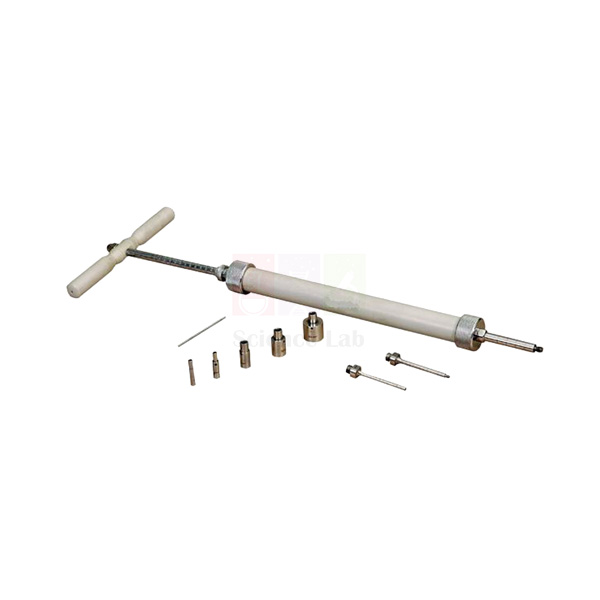
Proctor penetrometer
Proctor penetrometer (Product Code: SLE/CE/72) is a spring-dynamometer needle penetrometer used to establish the relationship between moisture content and penetration resistance of fine-grained soils, in compaction testing and for checking rolled fills. Soil laboratories use it with nine interchangeable needles, from 28.55 mm down to 4.52 mm diameter, reading the push on a 0 to 55 kg scale. It is made by Jain Scientific Equipments Pvt Ltd (ScienceLab), an OEM engineering lab equipment manufacturer, at its own factory in Ambala, India.
Specifications
| Parameter | Detail |
|---|---|
| Purpose | Establishing the moisture content – penetration resistance relationship of fine-grained soils |
| Measuring system | Special spring dynamometer with pressure-indicating scale on the stem of the handle |
| Load scale | 0 to 55 kg, 1 kg subdivisions |
| Maximum reading | Sliding ring on the stem indicates the maximum pressure reached |
| Interchangeable needles | Diameters 28.55, 24.79, 20.22, 16.54, 12.83, 9.07, 6.40, 5.23 and 4.52 mm |
| Weight | Approx. 3.5 kg |
| Product code | SLE/CE/72 |
| Manufacturer | Jain Scientific Equipments Pvt Ltd (ScienceLab) — OEM |
| Country of origin | India (made in Ambala, Haryana) |
What Is the Proctor Penetrometer Used For?
In the laboratory, a needle is pushed steadily into each compacted specimen as the compaction test proceeds, and the maximum force — held by the sliding ring — is divided by the needle's end area to give penetration resistance. Plotting resistance against water content produces a curve that sits alongside the compaction curve. On site, a quick push into the rolled fill can then be compared with that curve to judge whether the fill was placed too wet or too dry.
Swapping needles keeps readings within the 0 to 55 kg scale: broad needles for soft, wet soil and slender ones for stiff, dry soil. For lab equipments for technical institutes, it shows students clearly how moisture changes soil strength. Clean each needle after use and store the set in order of size so the right end area is always used in calculations.
OEM Manufacturer
ScienceLab, the trading name of Jain Scientific Equipments Private Limited, manufactures the Proctor penetrometer as its own OEM product at its licensed factory at Saha, Ambala, Haryana, India. It is shipped factory-direct to soil laboratories, universities, polytechnics, dealers and importers.
The same manufacturer can quote extra or replacement needles if yours wear or go missing — ask us. Details of the company are on our company profile.
Related Civil Engineering Lab Equipment
Moisture control of compacted soil draws on several simple instruments. These items complement the penetrometer:
- Load ring penetrometer — cone resistance and compaction checks with a 1 kN load ring
- Dial penetrometers — lightweight pocket readings on sand and clay
- Moisture Tins — oven-dry water content of each tested specimen
- Core cutters — field density of the same rolled fill
View all Civil Engineering Lab Equipment.
Frequently Asked Questions
What is the Proctor penetrometer used for?
The Proctor penetrometer is used to establish the moisture content versus penetration resistance relationship of fine-grained soils, so the moisture condition of compacted soil can be checked quickly in the laboratory or on a rolled fill.
What is the load range of the Proctor penetrometer?
The Proctor penetrometer reads from 0 to 55 kg in 1 kg subdivisions on a pressure-indicating scale along the stem of its handle, with a maximum load indicator to hold the peak value.
Which needle sizes are listed for the Proctor penetrometer?
The Proctor penetrometer is listed with nine interchangeable needles of 28.55, 24.79, 20.22, 16.54, 12.83, 9.07, 6.40, 5.23 and 4.52 mm diameter, allowing you to match the needle to the stiffness of the soil.
How does the Proctor penetrometer keep the maximum reading?
The Proctor penetrometer has a sliding ring on its stem that is pushed along by the scale and stays at the maximum pressure reached, so the operator can read the result after withdrawing the needle.
Who manufactures the Proctor penetrometer?
The Proctor penetrometer is manufactured by Jain Scientific Equipments Pvt Ltd (ScienceLab) as the OEM at its own factory at Saha, Ambala, Haryana, India. Buyers receive quotations and needle enquiries directly from the manufacturer.
How portable is the Proctor penetrometer?
The Proctor penetrometer weighs approximately 3.5 kg and needs no power, so it can be carried to the compaction bench or out to an embankment and used by one person.
Request a Quote
Ask for a Proctor penetrometer quotation via the contact page or place it in the enquiry cart. Quotes come direct from the manufacturer, for single units, class sets or export to international markets.
Last updated: 24 September 2026
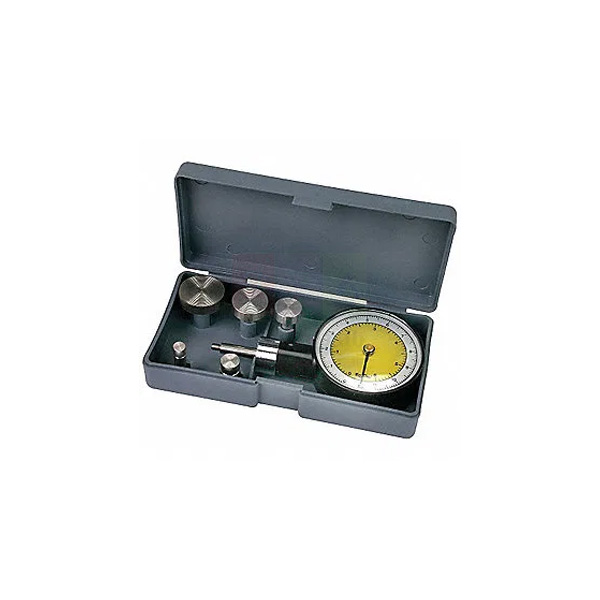
Dial penetrometers
Dial penetrometers (Product Code: SLE/CE/73) are compact handheld penetrometers used to evaluate the angle of internal friction of sandy soils and the cohesion of clay soils in trial pits, sample tubes and soil laboratories. Engineers and students press one of five plungers, from 6.35 mm to 25 mm tip diameter, into the soil and read a 60 mm dial that holds the peak value. They are made by Jain Scientific Equipments Pvt Ltd (ScienceLab), an OEM scientific instruments manufacturer in India, at its own factory in Ambala.
Specifications
| Parameter | Detail |
|---|---|
| Purpose | Evaluating the angle of internal friction of sandy soil and the cohesion in clay soils |
| Plungers | 5 different plungers with tip diameters of 6.35, 10, 15, 20 and 25 mm |
| Scale | 0 to 14 kgf/cm², or dual 0 to 6 / 0 to 11 kgf/cm² |
| Peak hold | Included on all versions, with zero setting by push button |
| Dial diameter | 60 mm |
| Weight | Approx. 300 g |
| Product code | SLE/CE/73 |
| Manufacturer | Jain Scientific Equipments Pvt Ltd (ScienceLab) — OEM |
| Country of origin | India (made in Ambala, Haryana) |
What Is the Dial Penetrometer Used For?
Choose a plunger to suit the ground — a broad tip for soft clay or loose sand, a slender one for stiff material — then hold the instrument square to the soil face and press it in with a steady push. The peak hold keeps the highest reading on the dial after the plunger is withdrawn, and a press of the button returns the needle to zero for the next test. Readings are then related to cohesion in clays or friction angle in sands.
Because it weighs only about 300 g, the instrument fits in a field bag for logging trial pits, checking the ends of sample tubes or comparing layers in an excavation. It is an index test that complements, rather than replaces, laboratory shear tests. Among laboratory instruments in India for soil teaching, it is one of the quickest ways to show strength differences. Take several readings at each spot and average them.
What to Specify When Ordering
- Scale version: 0 to 14 kgf/cm² or dual 0 to 6 / 0 to 11 kgf/cm²
- Number of instruments for your field teams or student groups
- Any additional plungers of particular tip sizes you would like quoted for heavy use
OEM Manufacturer
Dial penetrometers are produced by Jain Scientific Equipments Private Limited, the company trading as ScienceLab, acting as OEM at its own licensed factory at Saha, Ambala, Haryana, India. Field investigation teams, universities, polytechnics, dealers and importers order them factory-direct.
If you need a mix of both scale versions or extra plungers, the manufacturer prepares one combined quotation — ask us. More about the company is on our company profile.
Related Civil Engineering Lab Equipment
Quick penetration readings are usually checked against fuller strength tests. These products cover the next steps:
- Load ring penetrometer — deeper cone readings with a 1 kN load ring
- Proctor penetrometer — moisture control of compacted fine-grained soils
- Vane Shear Apparatus (Motorised) — laboratory undrained strength of soft clay
- Unconfined Compression Tester (Motorised) — compressive strength of cohesive specimens
- Direct Shear test Apparatus — friction angle and cohesion under controlled loads
See more in Civil Engineering Lab Equipment.
Frequently Asked Questions
What are Dial penetrometers used for?
Dial penetrometers are used to evaluate the angle of internal friction of sandy soils and the cohesion of clay soils by pressing a plunger into the soil and reading the peak resistance on the dial, giving a fast index of soil strength.
What scale ranges do the Dial penetrometers offer?
Dial penetrometers are offered with a single 0 to 14 kgf/cm² scale or a dual 0 to 6 / 0 to 11 kgf/cm² scale. State which version you need, as both share the same 60 mm dial size.
Which plungers come with the Dial penetrometers?
Dial penetrometers come complete with five different plungers whose tip diameters are 6.35, 10, 15, 20 and 25 mm, so the operator can select a tip that keeps readings within the scale for soft or stiff soils.
How does the peak hold work on the Dial penetrometers?
All Dial penetrometers include a peak hold feature: the dial keeps showing the maximum reading after the plunger is withdrawn, and a push button resets the needle to zero before the next test.
How large and heavy are the Dial penetrometers?
Dial penetrometers have a 60 mm diameter dial and weigh approximately 300 g, light enough to carry in a pocket or field bag and use with one hand.
Who manufactures the Dial penetrometers?
The Dial penetrometers are manufactured by Jain Scientific Equipments Pvt Ltd (ScienceLab) as the OEM at its own factory at Saha, Ambala, Haryana, India, and quotations come directly from the manufacturer.
Request a Quote
For Dial penetrometers pricing, reach us through the contact page or add them to the enquiry cart. The manufacturer quotes directly for delivery in India and international markets.
Last updated: 24 September 2026
633.jpg)
Vane Shear Apparatus (Motorised)
Vane Shear Apparatus (Motorised) (Product Code: SLE/CE/74) is a laboratory vane tester used to measure the undrained shear strength of soft, saturated clay specimens that are too weak to trim for other strength tests. Soil laboratories and civil engineering colleges use its 230 V motor and worm gear to turn the vane at a slow 1/60 rpm through a calibrated torsion spring, reading torque on a degree dial. It is made by Jain Scientific Equipments Pvt Ltd (ScienceLab), an OEM lab equipment manufacturer in India, at its own factory in Ambala.
Specifications
| Parameter | Detail |
|---|---|
| Torque head | Adjustable in height by a lead screw rotated by a drive wheel, to lower the vane into the specimen |
| Drive | Single-phase electric drive operating a worm gear that turns the upper end of a calibrated torsion spring |
| Rate of rotation | 1/60 rpm (one revolution per hour, 6° per minute) |
| Power supply | 230 V AC |
| Torque reading | Vane shaft attached through the hollow upper shaft to a resettable pointer on a dial graduated in degrees |
| Torque calculation | Dial reading multiplied by the spring factor gives the torque |
| Sample container | Container for the soil sample supplied; a sampling tube of 38 mm i.d. x 150 mm long can also be used as the container |
| Product code | SLE/CE/74 |
| Manufacturer | Jain Scientific Equipments Pvt Ltd (ScienceLab) — OEM |
| Country of origin | India (made in Ambala, Haryana) |
What Is the Vane Shear Apparatus Used For?
The clay sample, in the supplied container or still in its 38 mm sampling tube, is set beneath the torque head, and the drive wheel lowers the vane into it. When the motor is switched on, the worm gear slowly winds the torsion spring, which in turn twists the vane. Once the clay shears, the pointer stays at the largest angle reached; multiplying that reading by the spring factor gives the torque, from which the shear strength is worked out using the vane dimensions.
The method suits very soft marine, alluvial and organic clays that would slump in an unconfined compression test, and repeating it on remoulded soil shows the clay's sensitivity. It is a regular part of engineering educational equipments in India for geotechnical practicals. Push the vane in gently and start rotation promptly so the soil around the blades is not disturbed or allowed to consolidate.
OEM Manufacturer
The motorised vane shear apparatus is an OEM product of Jain Scientific Equipments Private Limited, which trades as ScienceLab and makes it at its own licensed factory at Saha, Ambala, Haryana, India. Soil mechanics laboratories, universities, research institutes, dealers and importers receive it factory-direct.
Questions about additional torsion springs or sample containers go straight to the manufacturer — ask us and we will advise. Read more on our company profile.
Related Civil Engineering Lab Equipment
Vane shear results are usually compared with other clay strength and compressibility tests. These items are used in the same laboratory:
- Unconfined Compression Tester (Motorised) — strength of stiffer clay specimens that can stand unsupported
- Soil extruder, motor operated — pushing samples out of tubes after testing
- Consolidation Test Apparatus — settlement behaviour of the same soft clay
- Dial penetrometers — quick strength readings on the ends of sample tubes
- Moisture Tins — water content of the tested clay
Browse all Civil Engineering Lab Equipment.
Frequently Asked Questions
What does the Vane Shear Apparatus (Motorised) measure?
The Vane Shear Apparatus (Motorised) measures the torque needed to shear a soft clay specimen with a rotating vane, from which the undrained shear strength of the clay is calculated. It is especially useful for clays too soft for unconfined compression testing.
At what speed does the Vane Shear Apparatus (Motorised) rotate the vane?
The Vane Shear Apparatus (Motorised) rotates the vane at 1/60 rpm, which is one revolution per hour, using an electric drive and worm gear that turn the upper end of the calibrated torsion spring.
How is torque read on the Vane Shear Apparatus (Motorised)?
On the Vane Shear Apparatus (Motorised), a resettable pointer linked to the vane shaft shows the torsion angle on a dial graduated in degrees. Multiplying the dial reading by the spring factor gives the torque applied to the soil.
What sample container does the Vane Shear Apparatus (Motorised) use?
The Vane Shear Apparatus (Motorised) is supplied with a container for the soil sample. A sampling tube of 38 mm internal diameter and 150 mm length can also be used as the container, so tube samples can be tested directly.
What power supply does the Vane Shear Apparatus (Motorised) need?
The Vane Shear Apparatus (Motorised) operates on a 230 V single-phase AC supply, so it can be installed on a normal laboratory bench near a standard power outlet.
What vane dimensions and spring factor does the Vane Shear Apparatus (Motorised) have?
The vane size and spring factor of the Vane Shear Apparatus (Motorised) are needed to convert torque into shear strength. Please ask us for the vane and spring details of the unit you are quoted via our contact page.
Who manufactures the Vane Shear Apparatus (Motorised)?
The Vane Shear Apparatus (Motorised) is manufactured by Jain Scientific Equipments Pvt Ltd (ScienceLab) as the OEM at its own factory at Saha, Ambala, Haryana, India, with quotations and after-sales questions handled by the manufacturer.
Request a Quote
Get a Vane Shear Apparatus (Motorised) quotation through our contact page or the enquiry cart. The manufacturer quotes directly for single units, multiple labs or export to international markets.
Last updated: 24 September 2026
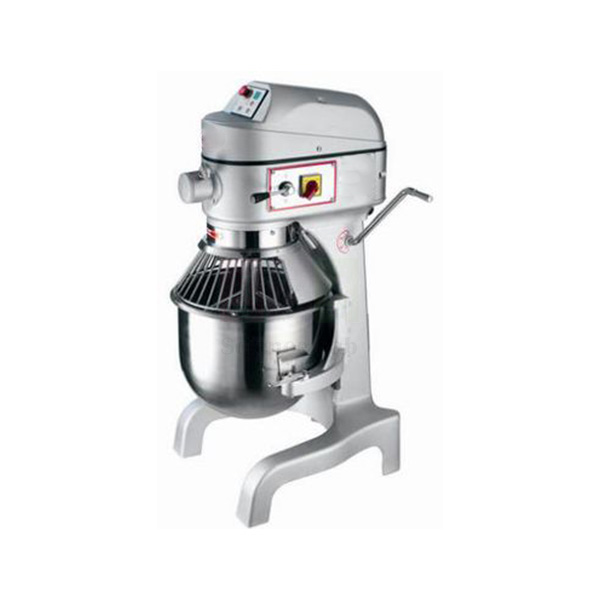
Laboratory digital planetary mixer
Laboratory digital planetary mixer (Product Code: SLE/CE/75) is a table-mounted planetary mixer used to blend asphalt mixes evenly for specimen preparation in highway and materials testing laboratories. Road research labs and engineering colleges use its 5 litre bowl and whisk with user-set planetary speeds of 5 to 65 rpm, and a front grill that stops the machine as soon as it is opened. It is supplied by Jain Scientific Equipments Pvt Ltd (ScienceLab), Ambala, India, a laboratory equipment supplier for highway and materials labs.
Specifications
| Parameter | Detail |
|---|---|
| Application | Mixing asphalt mixes; can be used as part of a Superpave performance-based testing programme |
| Mounting and action | Table-mounted unit with planetary mixing action |
| Bowl capacity | 5 litres |
| Supplied with | Bowl and whisk, both easily fitted and removed |
| Planetary speed | User-defined, 5 to 65 rpm |
| Whisk speed | User-defined, 12 to 149 rpm |
| Speed control | Easily selected and adjustable during mixing |
| Controls | Dedicated display and keyboard interface; alphanumeric display, 2 x 16 characters |
| Safety | Opening the front grill automatically stops the machine |
| Overall dimensions | 465 x 540 x 620 mm (l x d x h) |
| Weight | Approx. 35 kg |
| Power | 370 W |
| Product code | SLE/CE/75 |
| Supplied by | Jain Scientific Equipments Pvt Ltd (ScienceLab), Ambala, India |
What Is the Digital Planetary Mixer Used For?
Every trial blend in an asphalt mix design has to be mixed thoroughly so the binder coats all the aggregate before specimens are compacted, and doing that by hand in a pan is slow and varies from person to person. In a planetary mixer the whisk spins on its own axis while also travelling around the bowl, so it reaches the whole batch. The operator keys in planetary and whisk speeds on the display and can change them while the batch is running.
Mixed batches then move on to compaction and to tests such as stability and maximum density, including within a Superpave performance-based programme. For buyers comparing laboratory instruments supplier in India options, the grill cut-out is a practical safety point for student labs. Weigh batches to suit the 5 litre bowl and clean the bowl and whisk promptly after each run.
What to Specify When Ordering
- Number of mixers and the delivery destination
- Whether extra bowls or whisks should be quoted for back-to-back batches
- The mains voltage and plug type at your laboratory, so we can confirm electrical compatibility
Supplier
ScienceLab is the trading name of Jain Scientific Equipments Private Limited, which supplies this laboratory digital planetary mixer from Ambala, Haryana, India to highway research laboratories, engineering colleges, contractors' test labs, dealers and importers. We source the mixer against your order and remain your single contact for the quotation, paperwork and delivery.
Buyers completing vendor onboarding or import formalities can use the company's Importer-Exporter Code AAECJ8618A (DGFT) and GSTIN 06AAECJ8618A1ZT. Learn more on our company profile.
Related Civil Engineering Lab Equipment
A mixer is one link in the bituminous testing chain. These items handle the binder and the mixed material before and after it:
- Automatic Marshall Stability Test Machine — stability and flow of compacted mix specimens
- Mixer Theoretical Density Meter — theoretical density of the loose mix by the vacuum method
- Centrifuge Extractor – Motorised — checking binder content of mixed samples
- Standard penetrometer — penetration testing of the bitumen before mixing
- Ring And Ball Apparatus (Electrical) — softening point of the binder
Explore the full Civil Engineering Lab Equipment range.
Frequently Asked Questions
What is supplied with the Laboratory digital planetary mixer?
The Laboratory digital planetary mixer is supplied complete with a 5 litre bowl and a whisk, both designed to be fitted and removed easily for loading, emptying and cleaning between asphalt batches.
What speed range does the Laboratory digital planetary mixer offer?
The Laboratory digital planetary mixer has user-defined planetary speeds from 5 to 65 rpm and whisk speeds from 12 to 149 rpm. Speeds are set on the keyboard, shown on a 2 x 16 character display and can be adjusted during mixing.
What safety feature does the Laboratory digital planetary mixer have?
The Laboratory digital planetary mixer has a front grill that automatically stops the machine when it is opened, protecting the operator's hands from the moving whisk while loading or checking a batch.
Can the Laboratory digital planetary mixer be used for Superpave testing?
Yes, the Laboratory digital planetary mixer can be used as part of a Superpave performance-based testing programme. If your procedure sets particular mixing requirements, share them with us before ordering so we can confirm suitability.
How much space and power does the Laboratory digital planetary mixer need?
The Laboratory digital planetary mixer is a table-mounted unit measuring 465 x 540 x 620 mm (l x d x h), weighing about 35 kg and rated at 370 W, so it needs a sturdy bench near a power outlet.
Who supplies the Laboratory digital planetary mixer?
The Laboratory digital planetary mixer is supplied by Jain Scientific Equipments Pvt Ltd (ScienceLab), Ambala, India, to buyers in India and international markets. For questions about its origin or service support, please ask us through the contact page.
Request a Quote
To request pricing for the Laboratory digital planetary mixer, use our contact page or add it to the enquiry cart, listing quantity, any spare bowls or whisks, and the delivery location.
Last updated: 24 September 2026
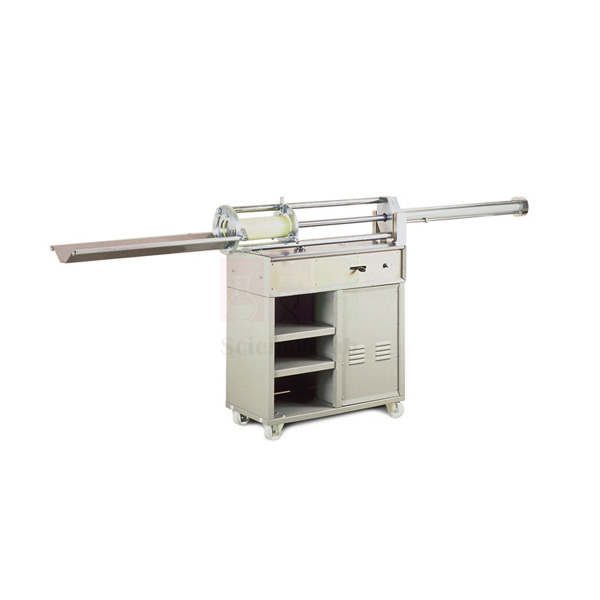
Soil extruder, motor operated
Soil extruder, motor operated (Product Code: SLE/CE/76) is a hydraulic sample extruder used to push soil samples out of sampling tubes in geotechnical and civil engineering laboratories. Soil mechanics labs at universities, polytechnics and site-investigation firms use it for tubes up to 160 mm external diameter, with a 60 kN maximum load and a 900 mm ram stroke. It is made by Jain Scientific Equipments Pvt Ltd (ScienceLab), an OEM manufacturer of engineering lab equipment in India, at its own factory in Ambala.
Specifications
| Parameter | Detail |
|---|---|
| Drive | Motor operated hydraulic system; a lever controls the extruding speed and the hydraulic valve for the extrusion or return movement |
| Power | 750 W |
| Maximum load | 60 kN |
| Maximum ram stroke | 900 mm |
| Maximum working ram speed | 6 mm/s |
| Maximum external diameter of sample tubes | 160 mm |
| Working position | Vertical or horizontal; sampling tubes are held by an adjustable V-shape bearing |
| Stop control | Ram can be stopped at any point of its travel |
| Overall dimensions, horizontal (l × w × h) | 2730 × 409 × 1180 mm |
| Overall dimensions, vertical (l × w × h) | 1025 × 409 × 1080 mm, without accessories |
| Weight | Approx. 160 kg |
| Space saving | Hydraulic cylinder assembly and receiving table can be lowered alongside the machine when not in use |
| Tube adaptors | Not included; a range of standard adaptors is ordered separately |
| Product code | SLE/CE/76 |
| Manufacturer | Jain Scientific Equipments Pvt Ltd (ScienceLab) — OEM |
| Country of origin | India (made in Ambala, Haryana) |
What Is the Soil Extruder Used For?
Soil samples taken in the field are usually brought to the laboratory still inside their sampling tubes. The extruder's hydraulic ram pushes the soil out in a steady, controlled stroke so that specimens can be trimmed for unconfined compression, consolidation, shear or density tests with as little disturbance as possible. Because the ram can be halted anywhere in its travel, the operator can push a short length straight into a smaller sample tube, or cut off one specimen and then continue.
Use the vertical position when floor space is tight and the horizontal position for long tubes that are easier to handle lying down. Fit the adaptor that matches the tube, set a gentle speed with the lever for soft soils, and wipe the ram and V-bearing clean after each sample. As heavy-duty lab equipment for technical institutes, it lets students see how field samples become test specimens.
What to Specify When Ordering
- External diameter of every sampling tube you use (up to 160 mm), so the right tube adaptors can be quoted
- Whether you will work in the vertical position, the horizontal position or both
- The electrical supply available at your laboratory for the 750 W drive
- Floor space for up to 2730 mm length in the horizontal position and a weight of approx. 160 kg
OEM Manufacturer
Jain Scientific Equipments Private Limited, which trades as ScienceLab, is the original equipment manufacturer (OEM) of this motor-operated soil extruder. It is made and assembled at the company's own licensed factory at Saha, Ambala, Haryana, India, rather than bought in from a trader.
Geotechnical departments, testing laboratories, dealers and importers are supplied factory-direct. Adaptor orders, spare parts and repeat units are handled by the manufacturer itself — ask us for what you need. More about the company is on the ScienceLab company profile.
Related Civil Engineering Lab Equipment
These soil testing items are used before or after extrusion in the same laboratory workflow:
- Soil Augers — for boring down to the depth where samples are taken
- Core cutters — another way of obtaining soil cores in the field
- Unconfined Compression Tester (Motorised) — tests cylindrical specimens trimmed from extruded soil
- Consolidation Test Apparatus — for consolidation specimens cut from the sample
- Direct Shear test Apparatus — shear strength testing of the extruded soil
Browse the complete Civil Engineering Lab Equipment category for soil, cement, concrete and bitumen apparatus.
Frequently Asked Questions
What is the largest sample tube the Soil extruder, motor operated can take?
The Soil extruder, motor operated (SLE/CE/76) accepts sampling tubes up to 160 mm external diameter and has a maximum ram stroke of 900 mm, so a long tube can be emptied in one pass. A suitable tube adaptor is needed for each tube size.
Are tube adaptors included with the motor-operated soil extruder?
No. The motor-operated soil extruder is supplied without tube adaptors, which have to be ordered separately. Tell us the external diameter of every sampling tube you use and we will quote matching adaptors together with the extruder.
How fast does the soil extruder push the sample out?
The Soil extruder, motor operated reaches a maximum working ram speed of 6 mm per second, and a lever lets the operator set the extruding speed. The ram can be stopped at any point, which helps when cutting short specimens or filling smaller tubes.
Can the soil extruder be used horizontally as well as vertically?
Yes. On the Soil extruder, motor operated, tubes sit in an adjustable V-shape bearing and can be extruded vertically or horizontally. Overall size is about 1025 × 409 × 1080 mm in the vertical position and 2730 × 409 × 1180 mm in the horizontal position.
Who manufactures the Soil extruder, motor operated?
The Soil extruder, motor operated is manufactured by Jain Scientific Equipments Pvt Ltd (ScienceLab), the OEM, at its own factory at Saha, Ambala, Haryana, India. Quotations, adaptor orders and spare-part enquiries are handled directly by the manufacturer.
What should a quotation request for the soil extruder include?
For the Soil extruder, motor operated, state the quantity, the diameters of the sampling tubes you use, your preferred working position, your electrical supply and the delivery location in India or abroad. Send these through the contact page for a manufacturer's quotation.
Is the motor-operated soil extruder supplied outside India?
Yes. Jain Scientific Equipments Pvt Ltd (ScienceLab) supplies the Soil extruder, motor operated to laboratories in India and international markets. As the machine weighs about 160 kg, include the delivery destination in your enquiry so that freight can be discussed with the quotation.
Request a Quote
For price and availability of the Soil extruder, motor operated and its tube adaptors, write to us through the contact page or add the item to the enquiry cart. Quotations come direct from the manufacturer in Ambala.
Last updated: 24 September 2026
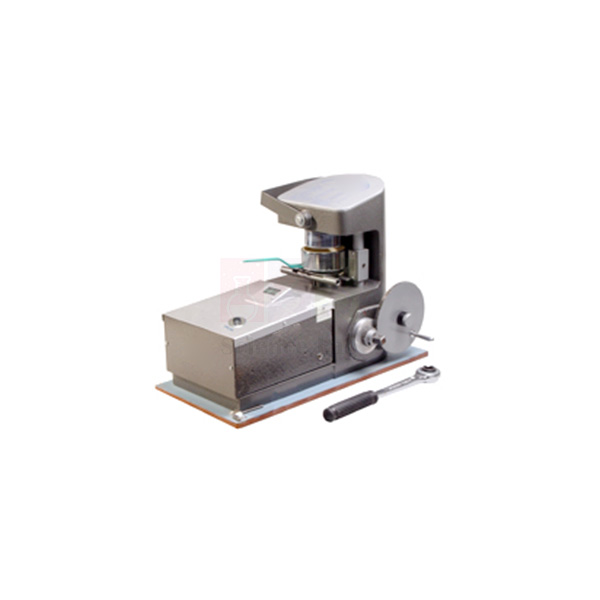
Universal moisture tester
Universal moisture tester (Product Code: SLE/CE/77) is a digital grain-type moisture meter used to take quick moisture-content readings on samples in testing and teaching laboratories. Materials labs, colleges and quality-control rooms use it for fast checks, reading 0 to 70% moisture on a digital display. It is supplied by Jain Scientific Equipments Pvt Ltd (ScienceLab), Ambala, India, a source of test and measurement instruments in India.
Specifications
| Parameter | Detail |
|---|---|
| Type | Digital grain moisture meter |
| Measuring range | 0 to 70% moisture |
| Temperature range | −10 to 60 °C (as listed) |
| Material | Mild steel |
| Display | Digital |
| Product code | SLE/CE/77 |
| Supplied by | Jain Scientific Equipments Pvt Ltd (ScienceLab), Ambala, India |
What Is the Universal Moisture Tester Used For?
Moisture content changes how granular materials weigh, store and behave, so laboratories often need a reading before a sample is batched, stored or tested further. The Universal moisture tester gives that reading directly on its digital display, which is handy for screening many samples in one session or for demonstrating to students how moisture is expressed as a percentage.
In soil and aggregate laboratories, oven drying in moisture tins remains the usual reference method; a direct-reading meter complements it for quick checks rather than replacing it. Take a representative portion, keep the sample and the instrument within the listed temperature range, and repeat readings to confirm consistency. Like other laboratory instruments in India, it should be matched to the materials you test, so tell us your sample types when enquiring.
Supplier
Jain Scientific Equipments Private Limited, trading as ScienceLab from Ambala, Haryana, sources and supplies this digital moisture tester for laboratory buyers. The company can quote it together with sampling and moisture-content items from its civil engineering range, so one enquiry covers the whole bench set-up.
Colleges, testing laboratories, contractors, dealers and importers receive quotations and dispatch from Ambala. Read the ScienceLab profile to learn more about the company.
Related Civil Engineering Lab Equipment
These items support moisture-content work alongside the Universal moisture tester:
- Moisture Tins — for the oven-drying reference method
- Cementometer Moisture Meter — a meter for moisture in building materials
- Digital Moisture Meter — an alternative digital meter from the agriculture range
- Riffle Sample Divider — to split out a representative test portion
- Scoops — for taking and handling samples
See the full Civil Engineering Lab Equipment category for soil, aggregate and concrete testing apparatus.
Frequently Asked Questions
What does the Universal moisture tester measure?
The Universal moisture tester (SLE/CE/77) is a digital grain moisture meter that shows moisture content over a measuring range of 0 to 70%. It gives a direct reading on its digital display, which suits quick checks alongside slower oven-drying methods.
What is the temperature range of the Universal moisture tester?
The Universal moisture tester is listed with a temperature range of −10 to 60 °C. If you need to know whether this refers to the operating environment or to the sample, ask us through the contact page before ordering.
Can the Universal moisture tester be used on soil, sand or aggregates?
The Universal moisture tester is described as a digital grain moisture meter, so its suitability for soil, sand or aggregate samples should be confirmed before purchase. Tell us the materials you test and we will confirm what the instrument can measure.
How does the tester compare with oven drying in moisture tins?
The Universal moisture tester gives a direct digital reading, whereas oven drying in moisture tins takes longer but is the reference method in most soil laboratories. Many labs use a meter for quick screening and confirm critical results by oven drying.
Is a calibration certificate available for the Universal moisture tester?
Calibration-certificate availability for the Universal moisture tester should be discussed with us at enquiry stage. Mention whether your laboratory records need one, and we will tell you what can be provided with the instrument you are quoted.
Who supplies the Universal moisture tester?
The Universal moisture tester is supplied by Jain Scientific Equipments Pvt Ltd (ScienceLab), Ambala, Haryana, India, to colleges, testing laboratories, dealers and importers in India and international markets. Quotations are sent in reply to enquiries through the contact page or enquiry cart.
Request a Quote
To receive a quotation for the Universal moisture tester, send your quantity and the materials you plan to test through the contact page, or add it to the enquiry cart with other items you need.
Last updated: 24 September 2026
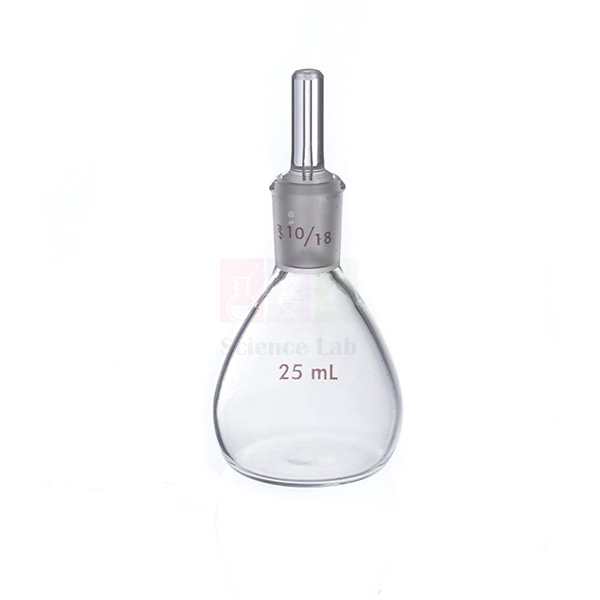
Specific Gravity Bottles
Specific Gravity Bottles (Product Code: SLE/CE/78) are borosilicate glass density bottles used to determine the density and specific gravity of liquid samples in civil engineering, chemistry and materials laboratories. Offered in 10 mL and 25 mL (approx.) capacities, each has a capillary stopper seated in a ground 10/18 standard taper joint that reduces evaporation. They are made by Jain Scientific Equipments Pvt Ltd (ScienceLab), an OEM manufacturer, at its own factory in Ambala, India.
Specifications
| Parameter | Detail |
|---|---|
| Purpose | Determining the density of liquid samples |
| Glass | Borosilicate |
| Capacities | 10 mL and 25 mL (approx.) |
| Stopper | Capillary stopper |
| Joint | Ground standard taper joint, 10/18 on both sizes, to reduce evaporation |
| Volume adjustment | Unadjusted (not adjusted to an exact nominal volume) |
| Product code | SLE/CE/78 |
| Manufacturer | Jain Scientific Equipments Pvt Ltd (ScienceLab) — OEM |
| Country of origin | India (made in Ambala, Haryana) |
What Is the Specific Gravity Bottle Used For?
The bottle is weighed empty, then filled with distilled water, then with the test liquid, and the capillary stopper is pushed home each time so that surplus liquid escapes through the capillary. Every fill therefore holds the same volume, and the ratio of the liquid mass to the water mass gives its specific gravity. Because the bottles are unadjusted, each one is first calibrated by weighing it full of water at a known temperature.
Students use the method to compare liquids such as oils, solutions and liquid admixtures, and to see why temperature control matters in density work. Handle the bottle by the neck to avoid warming it, wipe the outside dry before weighing and keep each stopper with the bottle it was calibrated with. As borosilicate laboratory glassware in India, the bottles stand up well to routine washing and drying.
What to Specify When Ordering
- Capacity: 10 mL or 25 mL (approx.), or both
- Number of bottles of each capacity, for example one per student group
- Whether spare bottles for breakage should be included in the same quotation
OEM Manufacturer
ScienceLab is the trading name of Jain Scientific Equipments Private Limited, the OEM for these specific gravity bottles. They are produced at the company's own licensed factory at Saha, Ambala, Haryana, India, so buyers deal with the maker of the glassware rather than a reseller.
Schools, colleges, testing laboratories, dealers and importers can order factory-direct, and repeat orders for matching sizes are handled by the manufacturer itself — ask us for the quantities you need. The company profile has more background on ScienceLab.
Related Civil Engineering Lab Equipment
These items cover other density and specific gravity tests in the same laboratory:
- Specific Gravity And Water Absorption of Aggregates — the equivalent test for aggregates
- Density Basket — for weighing coarse aggregate in water
- Buoyancy Balance Apparatus — the balance set-up used with a density basket
- Water Bath (6 Holes) — to bring filled bottles to a steady temperature
For more soil, aggregate and concrete apparatus, see the Civil Engineering Lab Equipment category.
Frequently Asked Questions
What capacities do the Specific Gravity Bottles come in?
Specific Gravity Bottles (SLE/CE/78) are offered in 10 mL and 25 mL (approx.) capacities, both with a 10/18 ground standard taper joint and a capillary stopper. The larger bottle suits work where plenty of sample is available, as small weighing errors matter less.
What does unadjusted mean for these specific gravity bottles?
Unadjusted means the Specific Gravity Bottles are not set to an exact nominal volume. Each bottle's volume is found by weighing it filled with distilled water at a known temperature, and that calibration is then used for every liquid tested in the same bottle.
Why do the Specific Gravity Bottles have capillary stoppers?
The capillary stopper lets surplus liquid escape as it is pushed home, so the Specific Gravity Bottles hold the same volume on every fill. The ground standard taper joint also seals the neck, reducing evaporation while the bottle is being weighed.
What glass are the Specific Gravity Bottles made of?
The Specific Gravity Bottles are made of borosilicate glass, which copes well with laboratory chemicals and with washing and drying. Keep each capillary stopper with the bottle it was calibrated with, because swapping stoppers can change the calibrated volume.
Who manufactures the Specific Gravity Bottles?
Specific Gravity Bottles (SLE/CE/78) are manufactured by Jain Scientific Equipments Pvt Ltd (ScienceLab), the OEM, at its own factory at Saha, Ambala, Haryana, India. Schools, colleges, testing laboratories, dealers and importers can order them direct from the manufacturer.
What should a quotation request for Specific Gravity Bottles include?
For Specific Gravity Bottles, state the capacity (10 mL or 25 mL), the number of each size and the delivery location in India or international markets. Bulk quantities for teaching laboratories and dealers can be quoted together through the contact page.
Request a Quote
Send your sizes and quantities of Specific Gravity Bottles through the contact page or the enquiry cart. You receive the quotation straight from the manufacturer.
Last updated: 24 September 2026
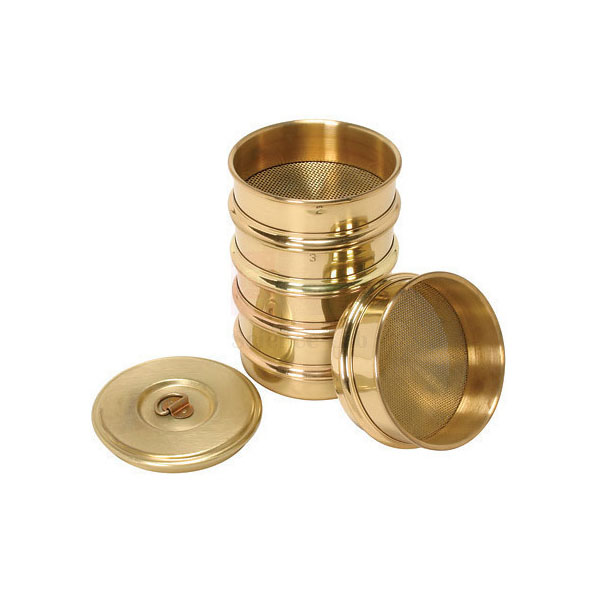
Brass frame sieves
Brass frame sieves (Product Code: SLE/CE/79) are full-depth laboratory test sieves used to grade aggregates, sand and soil by particle size in civil engineering and materials testing laboratories. The range covers 200, 250, 300, 315 and 450 mm diameters, with stainless steel wire cloth or tinned steel perforated plates, and sieves of the same diameter nest into one stack. They are manufactured by Jain Scientific Equipments Pvt Ltd (ScienceLab), an OEM, at its own factory in Ambala, India.
Specifications
| Parameter | Detail |
|---|---|
| Type | Full-depth testing sieves |
| Diameters | 200, 250, 300, 315 and 450 mm |
| Frame | Brass; the listing names the 450 mm diameter as an exception, with sheet-steel construction (confirm when ordering) |
| Wire cloth sieves | Stainless steel wire cloth |
| Perforated plate sieves | Tinned steel perforated plates |
| Nesting | Sieves of the same nominal diameter nest one in another |
| Sample load, 200 mm (8 in) sieve | Up to 1000 g of aggregates |
| Sample load, 300 mm (12 in) sieve | Up to 3000 g of aggregates |
| Product code | SLE/CE/79 |
| Manufacturer | Jain Scientific Equipments Pvt Ltd (ScienceLab) — OEM |
| Country of origin | India (made in Ambala, Haryana) |
What Is the Brass Frame Sieve Used For?
Sieve analysis is the basic grading test for aggregates and soils. A stack of sieves is arranged with the largest aperture on top, a weighed sample is placed in the top sieve, and the stack is shaken by hand or on a sieve shaker. The mass retained on each sieve is weighed and expressed as a percentage to draw the grading curve used in concrete mix design, road material selection and soil classification.
Perforated plates usually cover the coarser aggregate sizes and wire cloth the finer fractions. Stay within the listed loads — up to 1000 g on a 200 mm sieve and 3000 g on a 300 mm sieve — so that particles are not forced through an overloaded mesh. Brush the mesh clean from below, never push particles through by hand, and dry the sieves before stacking them away. Looked after this way, a sieve set from an engineering lab equipment manufacturer gives repeatable grading results across many student batches.
What to Specify When Ordering
- Diameter: 200, 250, 300, 315 or 450 mm
- The aperture sizes you need, and whether each is stainless steel wire cloth or tinned steel perforated plate
- Number of sieves per stack and number of stacks for your laboratory
- Whether the sieves will run on a sieve shaker, so the diameter suits the shaker
- For the 450 mm size, confirmation of the frame material you require
OEM Manufacturer
These brass frame sieves are made by Jain Scientific Equipments Private Limited, trading as ScienceLab, as the original equipment manufacturer. Production is at the company's own licensed factory at Saha, Ambala, Haryana, India, and orders are supplied factory-direct to engineering colleges, polytechnics, testing laboratories, dealers and importers.
Replacement sieves and additional sizes for an existing stack can be requested from the manufacturer itself — just ask us. Institutions and tender buyers registering the company as a vendor can use its GSTIN 06AAECJ8618A1ZT and LEI 3358004HRD1JIVXKYX49. See the ScienceLab company profile for more.
Related Civil Engineering Lab Equipment
These items complete a sieve analysis set-up:
- Electromagnetic Digital Sieve Shaker — mechanical shaking of a sieve stack
- Test Sieves — another sieve range for grading work
- Riffle Sample Divider — reduces a field sample to a test portion
- Grid Sieves — used in aggregate shape testing
- Flakiness Sieve Set — for flakiness tests on graded aggregate
Explore the complete Civil Engineering Lab Equipment category for aggregate, soil and concrete apparatus.
Frequently Asked Questions
What diameters are the Brass frame sieves available in?
Brass frame sieves (SLE/CE/79) are full-depth testing sieves available in 200, 250, 300, 315 and 450 mm diameters. Sieves of the same nominal diameter nest into one another, so a complete grading stack can be built in each size.
Which mesh materials are used in the Brass frame sieves?
Brass frame sieves are offered with stainless steel wire cloth or with tinned steel perforated plates. Perforated plates generally suit coarser aggregate sizes and wire cloth the finer fractions, so list the apertures you need when asking for a quotation.
How much aggregate can one Brass frame sieve take?
A 200 mm (8 inch) Brass frame sieve can test up to 1000 g of aggregates, and a 300 mm (12 inch) sieve up to 3000 g. Staying within these loads avoids overloading the mesh and helps give reliable grading results.
Does the 450 mm size also have a brass frame?
The listing for the Brass frame sieves names the 450 mm diameter as an exception to the brass frames and refers to sheet-steel construction. If the frame material of the 450 mm size matters to your laboratory, please confirm it with us before ordering.
Can the Brass frame sieves be used on a sieve shaker?
Yes. Brass frame sieves of the same diameter nest into a stack that can be shaken by hand or on a mechanical sieve shaker. Check the shaker's accepted diameters and stack height, or ask us to match sieves and shaker in one quotation.
Who manufactures the Brass frame sieves?
Brass frame sieves (SLE/CE/79) are manufactured by Jain Scientific Equipments Pvt Ltd (ScienceLab), the OEM, at its own factory at Saha, Ambala, Haryana, India. Laboratories, dealers and importers in India and international markets can order them direct from the manufacturer.
Is a calibration certificate available for the Brass frame sieves?
Calibration-certificate availability for Brass frame sieves should be discussed with us when you enquire. Tell us the diameters and apertures you are ordering and whether your laboratory needs documentation, and we will confirm what can be provided.
Request a Quote
List the diameters, apertures and quantities of Brass frame sieves you need and send them through the contact page, or add the item to the enquiry cart. The quotation comes direct from the manufacturer.
Last updated: 24 September 2026
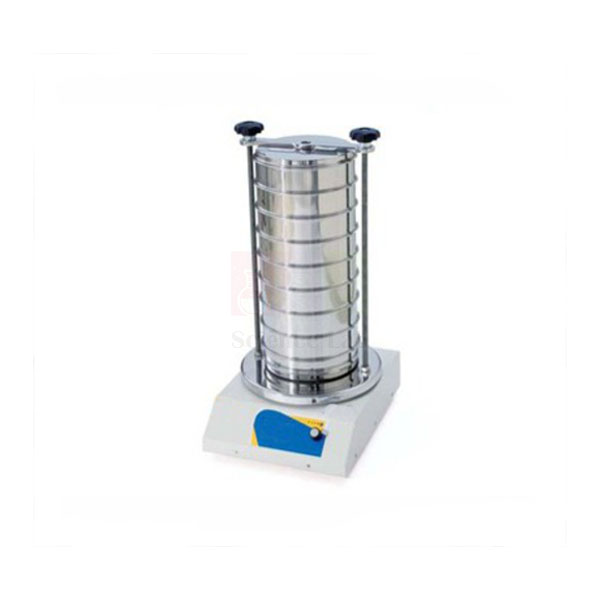
Electromagnetic Digital Sieve Shaker
Electromagnetic Digital Sieve Shaker (Product Code: SLE/CE/80) is a laboratory sieve shaker that uses an electromagnetic drive to give a vertical sieving motion for grading sand and aggregates in civil engineering labs. It holds up to 12 sieves of 200 mm or 8 sieves of 300 mm diameter, comes with a timer, and with its upper plate removed doubles as a vibrating table for one concrete specimen. It is supplied by Jain Scientific Equipments Pvt Ltd (ScienceLab), Ambala, India.
Specifications
| Parameter | Detail |
|---|---|
| Drive | Electromagnetic unit giving a vertical sieving motion |
| Designed for | Sand and aggregates |
| Sieve capacity, 200 mm (8 in) | 12 sieves |
| Sieve capacity, 300 mm (12 in) | 8 sieves |
| Timer | Supplied complete with timer |
| Second use | Vibrating table for one concrete specimen when the upper plate is removed |
| Power | 400 W |
| Dimensions | 495 × 405 × 945 mm |
| Weight | Approx. 30 kg |
| Product code | SLE/CE/80 |
| Supplied by | Jain Scientific Equipments Pvt Ltd (ScienceLab), Ambala, India |
What Is the Electromagnetic Sieve Shaker Used For?
Hand sieving is tiring and varies from one operator to the next. A mechanical shaker applies the same motion for the same time to every sample, so grading results can be compared between batches, shifts and student groups. The nest of sieves is loaded with the largest aperture on top and the pan at the bottom, secured on the shaker, the timer is set and the electromagnetic drive does the rest.
Removing the upper plate turns the unit into a small vibrating table for compacting one concrete specimen, which helps laboratories with limited bench space. Keep each sieve within its recommended load, place the shaker on a firm, level surface and use the same shaking time for every run. For colleges setting up engineering lab equipment in India, one unit covers both sieve analysis and specimen compaction practicals.
What to Specify When Ordering
- The sieve diameter you use: 200 mm (up to 12 sieves) or 300 mm (up to 8 sieves)
- Whether test sieves should be quoted with the shaker
- The electrical supply at your laboratory for the 400 W unit
- Whether you will use it as a vibrating table, and the specimen mould you plan to use
Supplier
Jain Scientific Equipments Private Limited, which trades as ScienceLab, sources and supplies this electromagnetic sieve shaker from Ambala, Haryana. Buyers can combine it with sieves, sample dividers and other aggregate apparatus from the company's civil engineering range in a single quotation.
Engineering colleges, polytechnics, testing laboratories, dealers and importers in India and international markets are served from Ambala. Find out more on the ScienceLab company profile.
Related Civil Engineering Lab Equipment
These items are used with the sieve shaker in aggregate and concrete testing:
- Brass frame sieves — full-depth sieves in 200 and 300 mm diameters among other sizes
- Test Sieves — a further sieve range for grading work
- Riffle Sample Divider — prepares a representative portion before sieving
- Sample Splitter — another way to reduce a bulk sample
- Vibrating Table — a dedicated table for compacting concrete specimens
Visit the Civil Engineering Lab Equipment category for the full range of aggregate, soil and concrete apparatus.
Frequently Asked Questions
How many sieves does the Electromagnetic Digital Sieve Shaker hold?
The Electromagnetic Digital Sieve Shaker (SLE/CE/80) holds up to 12 sieves of 200 mm (8 inch) diameter or up to 8 sieves of 300 mm (12 inch) diameter. Choose the sieve size to suit your sample quantity and the grading series you run.
Can the sieve shaker also be used as a vibrating table?
Yes. With its upper plate removed, the Electromagnetic Digital Sieve Shaker can be used as a vibrating table for one concrete specimen. Tell us the mould you plan to use so that the arrangement can be confirmed before you order.
Which materials is the Electromagnetic Digital Sieve Shaker designed for?
The electromagnetic unit of the Electromagnetic Digital Sieve Shaker is designed for sieving sand and aggregates with a vertical motion. For other materials such as soils or powders, describe your samples in the enquiry and we will advise on suitability.
What are the power, size and weight of the sieve shaker?
The Electromagnetic Digital Sieve Shaker is rated at 400 W, measures 495 × 405 × 945 mm and weighs approximately 30 kg. Place it on a firm, level bench or floor position close to a suitable power outlet for steady operation.
Is a timer included with the Electromagnetic Digital Sieve Shaker?
Yes. The Electromagnetic Digital Sieve Shaker is supplied complete with a timer, so every sample can be shaken for the same set period. Using one fixed time for all runs makes grading results easier to compare between batches.
Who supplies the Electromagnetic Digital Sieve Shaker?
The Electromagnetic Digital Sieve Shaker is supplied by Jain Scientific Equipments Pvt Ltd (ScienceLab), Ambala, Haryana, India, to colleges, testing laboratories, dealers and importers in India and international markets. Send your enquiry through the contact page.
Request a Quote
For a quotation on the Electromagnetic Digital Sieve Shaker, with or without sieves, use the contact page or add it to the enquiry cart together with the other apparatus you need.
Last updated: 24 September 2026
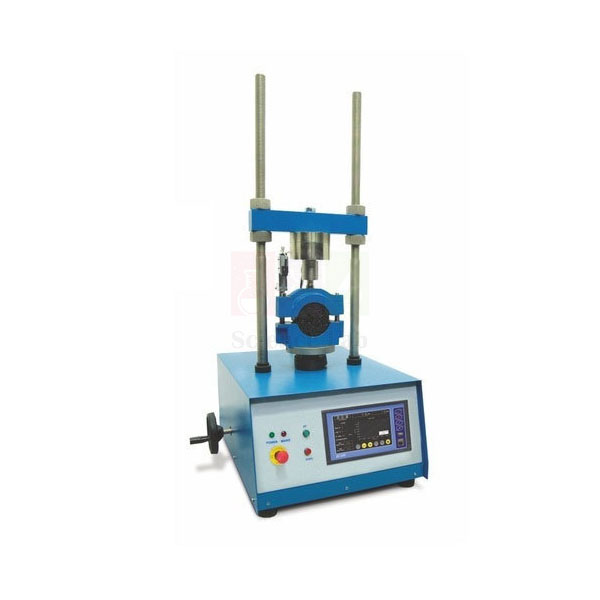
Automatic Marshall Stability Test Machine
Automatic Marshall Stability Test Machine (Product Code: SLE/CE/81) is a 50 kN bench-mounted compression frame used to determine the maximum load (stability) and flow values of bituminous mixtures in highway and civil engineering laboratories. Its data acquisition and control unit sets the platen speed from 6 to 60 mm/min, plots the test graph in real time and calculates stability and flow automatically. It is supplied by Jain Scientific Equipments Pvt Ltd (ScienceLab), Ambala, India, a laboratory equipment supplier in India.
Specifications
| Parameter | Detail |
|---|---|
| Capacity | 50 kN |
| Test | Maximum load (stability) and flow of bituminous mixtures |
| Frame | Compact two-column bench-mounting compression frame with adjustable upper cross beam; motor and worm gear housed in the base |
| Lower platen speed | Adjustable from 6 mm/min to 60 mm/min via the data acquisition and control unit |
| Platen controls | Up and down buttons on the front panel for rapid adjustment; limit switches restrict up and down travel for safety |
| Manual operation | Lateral hand wheel for calibration purposes |
| Control modes | Displacement control and limited load control |
| Results | Automatic calculation of flow and stability values; real-time display of the test graph |
| Processor | CPU card with 32-bit ARM RISC architecture |
| Memory | Permanent storage of up to 10000 test results |
| Analogue channels | 4, of which 2 are active for the Marshall test |
| Sensor inputs | Programmable digital gain for load cells, pressure transducers, strain-gauge based sensors, potentiometric sensors, and voltage and current transmitters |
| Resolution | 1/256000 points per channel |
| Sample rate | 10 data per second for each channel |
| Product code | SLE/CE/81 |
| Supplied by | Jain Scientific Equipments Pvt Ltd (ScienceLab), Ambala, India |
What Is the Marshall Stability Test Machine Used For?
The Marshall test is a standard step in designing bituminous paving mixes. Compacted cylindrical specimens made at different binder contents are conditioned and then loaded to failure at a constant rate of deformation. The peak load is recorded as stability and the deformation at that peak as flow; plotted together with density and void results, they help engineers choose the binder content for a road mix.
On this machine the operator sets the loading rate your test method specifies within the 6–60 mm/min range, starts the test and watches the load curve build on screen, while the unit stores each result for later reporting. The hand wheel allows slow manual movement when the load system is being calibrated. Keep the platens clean of bitumen, check the limit switches before each session and run the frame on a firm, level bench.
What to Specify When Ordering
- The test method and specimen size you work to, so that accessories can be confirmed in the quotation
- The loading rate or rates you need within 6–60 mm/min
- The sensors you intend to connect, such as load cells or displacement transducers
- The electrical supply available at your laboratory
Supplier
Jain Scientific Equipments Private Limited, trading as ScienceLab from Ambala, Haryana, sources and supplies the Automatic Marshall Stability Test Machine to highway engineering departments, polytechnics, road-testing laboratories, dealers and importers. It can be quoted together with the bitumen and mix-testing apparatus a Marshall laboratory needs.
Quotations cover buyers in India and international markets. Learn more about the company on the ScienceLab profile page.
Related Civil Engineering Lab Equipment
These items support the other tests in a bituminous mix design laboratory:
- Mixer Theoretical Density Meter — theoretical density of the mix for void calculations
- Centrifuge Extractor – Motorised — checks the binder content of a mix
- Centrifuge Extractor Hand Operated — a manual option for binder extraction
- Standard penetrometer — penetration grading of the bitumen
- Ring And Ball Apparatus (Electrical) — softening point of the binder
The Civil Engineering Lab Equipment category lists further bitumen, aggregate, soil and concrete apparatus.
Frequently Asked Questions
What does the Automatic Marshall Stability Test Machine measure?
The Automatic Marshall Stability Test Machine (SLE/CE/81) determines the maximum load, or stability, and the flow value of bituminous mixture specimens. Its control unit calculates both values automatically and shows the test graph in real time while the specimen is loaded.
What capacity and speed range does the Marshall machine offer?
The Automatic Marshall Stability Test Machine has a 50 kN capacity, and the speed of its lower platen can be adjusted from 6 mm/min to 60 mm/min through the data acquisition and control unit. Tests can run under displacement control or limited load control.
How many test results can the Marshall machine store?
The Automatic Marshall Stability Test Machine permanently stores up to 10000 test results. Its CPU card uses a 32-bit ARM RISC architecture, with four analogue channels (two active for the Marshall test), 1/256000-point resolution and 10 data per second per channel.
How is the Automatic Marshall Stability Test Machine calibrated?
For calibration, the Automatic Marshall Stability Test Machine can be driven by hand through a lateral hand wheel. Whether a calibration certificate can be provided for the load and displacement sensors should be discussed with us when you request a quotation.
What safety features does the Marshall machine have?
On the Automatic Marshall Stability Test Machine, limit switches restrict the up and down travel of the lower platen, and rapid platen positioning uses up and down buttons on the front panel. The motor and worm gear are enclosed in the base of the bench frame.
Are Marshall moulds and a breaking head included?
The listing for the Automatic Marshall Stability Test Machine describes the loading frame and the control unit only; it does not state which specimen moulds or breaking heads are included. Tell us your test method and specimen size and the quotation will confirm the accessories.
Who supplies the Automatic Marshall Stability Test Machine?
The Automatic Marshall Stability Test Machine is supplied by Jain Scientific Equipments Pvt Ltd (ScienceLab), Ambala, Haryana, India, to laboratories, dealers and importers in India and international markets. Enquiries can be sent through the contact page.
Request a Quote
Share your test method, specimen size and quantity through the contact page, or add the Automatic Marshall Stability Test Machine to the enquiry cart, and we will send a quotation.
Last updated: 24 September 2026
830.jpg)
Core Drilling Machine (Petrol)
Core Drilling Machine (Petrol) (Product Code: SLE/CE/82) is a wheel-mounted pavement core drill used to cut cores up to 200 mm diameter from concrete, asphalt and similar hard construction materials. Road and building testing teams use it where mains power is not at hand, because it runs on a 6.5 HP four-stroke petrol engine (190 cc) with drill speeds of 900 and 350 rpm. It is supplied by Jain Scientific Equipments Pvt Ltd (ScienceLab), Ambala, India.
Specifications
| Parameter | Detail |
|---|---|
| Application | Cutting cores from concrete, asphalt and similar hard construction materials |
| Maximum core diameter | 200 mm |
| Engine | 6.5 HP four-stroke petrol engine, 190 cc |
| Drill speeds | 900 rpm for soft samples; 350 rpm for hard samples |
| Feed | Ball screw mechanism for close control of drilling pressure and rapid return |
| Column | Vertical support column carrying the drill head and engine assembly |
| Head travel on rack | 500 mm |
| Water | Water spraying assembly mounted on the machine; water swivel built in |
| Base | Rigid wheel-mounted metal base frame with levelling and fixing facility for operation; approx. 625 × 900 mm |
| Height | Approx. 1300 mm |
| Accessories listed | Thin-wall diamond bits; core barrel (coring bits are ordered separately — confirm in the quotation) |
| Product code | SLE/CE/82 |
| Supplied by | Jain Scientific Equipments Pvt Ltd (ScienceLab), Ambala, India |
What Is the Petrol Core Drilling Machine Used For?
Cores drilled from hardened concrete and bituminous pavements let engineers check what was actually built: layer thickness, compaction, density and, after trimming, compressive strength in the laboratory. The drill head runs down the column under ball-screw control, so the operator can apply steady pressure through the cut and then return the head quickly. Water fed through the built-in swivel cools the diamond bit and flushes out cuttings.
Choose 900 rpm for softer layers such as asphalt and 350 rpm for hard concrete. Level and fix the wheeled base before starting, keep the water flowing throughout the cut, and wear eye and hearing protection around the running engine. For civil engineering departments buying engineering lab equipment in India, a petrol core drill also gives students real field-sampling practice.
What to Specify When Ordering
- The core diameters you need (up to 200 mm), so that bits and core barrels can be quoted
- Which accessories to include: thin-wall diamond bits, core barrel
- The materials you will drill: concrete, asphalt or both
- Quantity and delivery location in India or abroad
Supplier
Jain Scientific Equipments Private Limited, which trades as ScienceLab, sources and supplies the petrol-driven core drilling machine from Ambala, Haryana. Highway departments, contractors' laboratories, engineering colleges, dealers and importers can have it quoted along with the laboratory apparatus used to test the cores.
Buyers in India and international markets are served from Ambala. The ScienceLab company profile gives more background.
Related Civil Engineering Lab Equipment
These items are used before or after coring in pavement and structure investigations:
- Core Drilling Machine (Motorised) — an electrically driven alternative
- Automatic digital compression testing machine — for compression tests on concrete cores
- Ultrasonic Pulse Velocity Tester — non-destructive survey to help choose core locations
- Travelling Beam Device — measures road surface irregularity
- Straight Edge (3 meter) — quick checks of pavement surface regularity
See the Civil Engineering Lab Equipment category for more concrete, bitumen and soil testing apparatus.
Frequently Asked Questions
What core size can the Core Drilling Machine (Petrol) cut?
The Core Drilling Machine (Petrol) (SLE/CE/82) cuts cores up to 200 mm diameter from concrete, asphalt and similar hard construction materials. The drill head travels 500 mm on its rack, and a ball screw gives close control of the drilling pressure.
What engine powers the petrol core drilling machine?
The Core Drilling Machine (Petrol) is driven by a 6.5 HP four-stroke petrol engine, listed as 190 cc. Because it needs no mains supply, it suits road and site work away from electricity, with the machine moved on its wheel-mounted base.
Which drill speed should be used on the core drilling machine?
The Core Drilling Machine (Petrol) offers 900 rpm for soft samples and 350 rpm for hard samples. Use the higher speed for materials such as asphalt and the lower speed for hard concrete, with water flowing through the built-in swivel.
Are coring bits included with the Core Drilling Machine (Petrol)?
The listing for the Core Drilling Machine (Petrol) says coring bits should be ordered separately, and lists thin-wall diamond bits and a core barrel as accessories. Tell us your core diameters and the quotation will state exactly which bits and barrels are included.
How is the core drilling machine set up on site?
The Core Drilling Machine (Petrol) comes on a rigid wheel-mounted metal base frame, about 625 × 900 mm, with levelling and fixing facility during operation. It stands about 1300 mm high and carries its own water spraying assembly.
Who supplies the Core Drilling Machine (Petrol)?
The Core Drilling Machine (Petrol) is supplied by Jain Scientific Equipments Pvt Ltd (ScienceLab), Ambala, Haryana, India, to highway departments, laboratories, dealers and importers in India and international markets. Enquiries can be sent through the contact page.
Request a Quote
Tell us the core sizes and accessories you need for the Core Drilling Machine (Petrol) through the contact page, or add it to the enquiry cart, and we will prepare a quotation.
Last updated: 24 September 2026

Centrifuge Extractor – Motorised
Centrifuge Extractor – Motorised (Product Code: SLE/CE/83) is an electrically driven centrifuge used to wash bitumen out of bituminous paving mix samples with a solvent, so that binder content can be determined in highway and civil engineering laboratories. It takes samples of up to 1500 g and runs at 2,400 to 3,600 rpm, with a dimmer stat for speed control. It is made at its own Ambala factory by Jain Scientific Equipments Pvt Ltd (ScienceLab), an OEM engineering lab equipment manufacturer in India.
Specifications
| Parameter | Detail |
|---|---|
| Operation | Electrical (motorised) |
| Speed control | Dimmer stat |
| Speed range | 2,400 to 3,600 rpm |
| Capacity | 1500 g |
| Power supply | 230 V, 50 Hz, single phase, AC |
| Product code | SLE/CE/83 |
| Manufacturer | Jain Scientific Equipments Pvt Ltd (ScienceLab) — OEM |
| Country of origin | India (made in Ambala, Haryana) |
What Is the Motorised Centrifuge Extractor Used For?
Checking how much bitumen a mix really contains is a routine quality test on road projects. A weighed sample of loose mix is placed in the extractor bowl and soaked in solvent until the binder dissolves; the bowl is then spun so the solvent carrying the bitumen is thrown out and drained away. Washing and spinning are repeated until the solvent runs clear, and the dried aggregate left behind is weighed — the loss in mass gives the binder content.
The recovered aggregate can then be sieved to confirm the grading of the mix. With the dimmer stat, bring the speed up gradually rather than switching straight to full speed, so solvent does not splash. Work in a well-ventilated area, keep the lid secured while the bowl turns and wait for it to stop before opening. Laboratories comparing a laboratory centrifuge in India for bitumen work should match the 1500 g capacity to their usual sample size.
What to Specify When Ordering
- Confirmation that your laboratory supply is 230 V, 50 Hz, single phase AC
- Number of extractors needed for your student batches or daily sample load
- Whether filter papers or rings for the bowl should be quoted — ask us what is included
OEM Manufacturer
ScienceLab is the trading name of Jain Scientific Equipments Private Limited (CIN U29309HR2020PTC087597), the OEM that makes this motorised centrifuge extractor. It is produced at the company's licensed factory premises at 449, HSIIDC Industrial Area, Saha, Ambala, which operate under Factory Licence AMB-ONLINE-CHD-J-414.
Highway laboratories, engineering colleges, dealers and importers buy direct from the factory, and requests for spare parts or repeat units go to the manufacturer itself — just ask us. The company profile describes ScienceLab in more detail.
Related Civil Engineering Lab Equipment
These items belong to the same bituminous mix testing workflow:
- Centrifuge Extractor Hand Operated — the manual version for sites without power
- Automatic Marshall Stability Test Machine — stability and flow of the same mix
- Mixer Theoretical Density Meter — theoretical density for void calculations
- Brass frame sieves — grading the aggregate recovered after extraction
For more bitumen, aggregate and concrete apparatus, browse the Civil Engineering Lab Equipment category.
Frequently Asked Questions
What is the Centrifuge Extractor – Motorised used for?
The Centrifuge Extractor – Motorised (SLE/CE/83) is used to extract bitumen from bituminous mix samples with a solvent, so the binder content can be worked out from the loss in mass. The aggregate recovered afterwards can also be sieved to check its grading.
What sample capacity and speed range does the motorised extractor have?
The Centrifuge Extractor – Motorised takes samples of up to 1500 g and runs at speeds from 2,400 to 3,600 rpm. The speed is adjusted with a dimmer stat, which lets the operator raise it gradually at the start of each spin.
What power supply does the Centrifuge Extractor – Motorised need?
The Centrifuge Extractor – Motorised works on a 230 V, 50 Hz, single-phase AC supply. If your laboratory uses a different voltage or frequency, tell us when you enquire so that we can advise before the order is placed.
How does the motorised extractor differ from the hand-operated model?
The Centrifuge Extractor – Motorised is driven electrically with dimmer-stat speed control, so the speed does not depend on turning a handle and stays more even over repeated washes. The Centrifuge Extractor Hand Operated suits locations without an electricity supply.
Who manufactures the Centrifuge Extractor – Motorised?
The Centrifuge Extractor – Motorised is manufactured by Jain Scientific Equipments Pvt Ltd (ScienceLab), the OEM, at its own factory at Saha, Ambala, Haryana, India. It is supplied factory-direct to laboratories, dealers and importers in India and international markets.
What precautions apply when using the motorised centrifuge extractor?
Use the Centrifuge Extractor – Motorised in a well-ventilated area because extraction solvents give off vapours. Raise the speed gradually with the dimmer stat, keep the lid secured while the bowl turns, and let it stop completely before opening or adding more solvent.
Request a Quote
Ask for a quotation on the Centrifuge Extractor – Motorised through the contact page, or add it to the enquiry cart. Prices and terms are quoted directly by the manufacturer.
Last updated: 24 September 2026
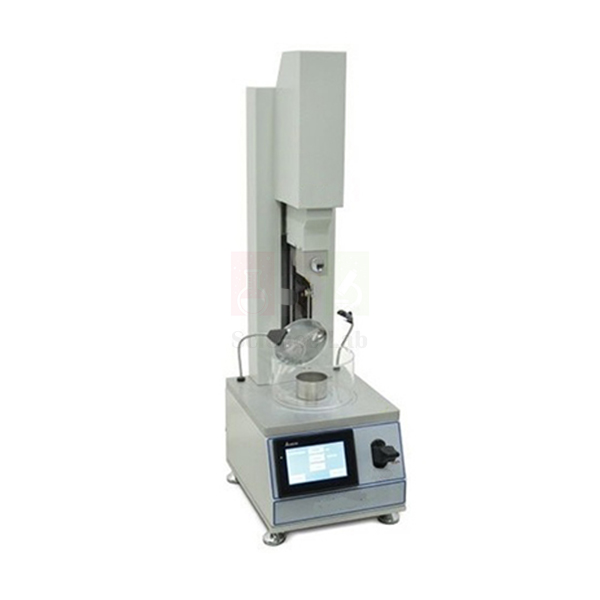
Digital Penetrometer
Digital Penetrometer (Product Code: SLE/CE/84) is a microprocessor-controlled bench instrument used to measure how far a test probe penetrates a sample, for example in bitumen penetration testing in highway and materials laboratories. It resolves penetration to 0.01 mm over a 0–50 mm range, moves automatically to the test start point and plots the penetration/time curve on a 6-inch touch screen. It is supplied by Jain Scientific Equipments Pvt Ltd (ScienceLab), Ambala, India.
Specifications
| Parameter | Detail |
|---|---|
| Control | Microprocessor with 6-inch lateral touch screen display |
| Display | Penetration/time curve; up to 6 tests displayed simultaneously and averaged |
| Penetration range | 0–50 mm |
| Penetration resolution | 0.01 mm |
| Programmable penetration time | 0–9999 s |
| Programmable delay time | 0–999 s |
| Programmable reference positions for holder assembly | 8 |
| Start point | Reached automatically |
| Lighting | Integrated LED lamp |
| Connections | USB port for the test database; LAN port for PC connection |
| Overall dimensions (w × d × h) | 360 × 410 × 680 mm |
| Weight | Approx. 21 kg |
| Product code | SLE/CE/84 |
| Supplied by | Jain Scientific Equipments Pvt Ltd (ScienceLab), Ambala, India |
What Is the Digital Penetrometer Used For?
Penetration is the depth a loaded probe sinks into a sample in a set time at a controlled temperature, and for paving bitumen it is one of the main grading tests. On a manual penetrometer the operator lowers the needle to the surface, releases it and reads a dial. This instrument automates those steps: it finds the start point, times the penetration and the delay, records the depth to 0.01 mm and draws the penetration/time curve.
The eight programmable holder positions let several points on a sample be tested in sequence, and up to six results can be shown side by side and averaged. Results go to a database via USB, or to a PC over LAN, for reports. Bring samples to the required test temperature before testing, clean the probe between readings and use the LED lamp to check contact with the surface. It suits laboratories adding modern test and measurement instruments in India to their bitumen section.
What to Specify When Ordering
- The test method or methods you follow, so that needles, weights and holders can be confirmed
- Whether sample conditioning equipment should be quoted as well
- Whether you will use the USB database, the LAN link to a PC, or both
- The electrical supply at your laboratory
Supplier
Jain Scientific Equipments Private Limited, trading as ScienceLab from Ambala, Haryana, sources and supplies this digital penetrometer for highway and materials laboratories. It can be quoted together with the other bitumen test apparatus in the company's civil engineering range, keeping a laboratory set-up to a single supplier.
Engineering colleges, road-testing laboratories, dealers and importers in India and international markets are served from Ambala. See the ScienceLab profile for more.
Related Civil Engineering Lab Equipment
These items cover the companion tests in a bitumen testing laboratory:
- Standard penetrometer — the manual alternative for penetration tests
- Ring And Ball Apparatus (Electrical) — softening point, usually reported with penetration
- Kinematic Viscometer Bath — viscosity testing of binders
- Cut Back Bitumen Distillation Equipment — separates the residue of cutback bitumen for further tests
- Automatic Marshall Stability Test Machine — stability and flow of the finished mix
Browse the Civil Engineering Lab Equipment category for further bitumen, soil and concrete apparatus.
Frequently Asked Questions
What penetration range and resolution does the Digital Penetrometer have?
The Digital Penetrometer (SLE/CE/84) measures penetration over a range of 0–50 mm with a resolution of 0.01 mm. It reaches the test start point automatically and has an integrated LED lamp to light the sample surface.
Which tests is the Digital Penetrometer used for?
The listing for the Digital Penetrometer does not name specific test methods. Instruments of this type are commonly used for needle penetration tests on bitumen, so tell us your method and the needles, weights and holders you need, and the quotation will confirm them.
Can the penetration time and delay be programmed?
Yes. On the Digital Penetrometer, penetration time is programmable from 0 to 9999 seconds and delay time from 0 to 999 seconds. Eight reference positions for the holder assembly can also be programmed, so several points are tested in sequence.
How does the Digital Penetrometer display and store results?
The Digital Penetrometer shows the penetration/time curve on a 6-inch lateral touch screen and can display and average up to six tests at once. A USB port holds the test database, and a LAN port connects the instrument to a PC.
How large and heavy is the Digital Penetrometer?
The Digital Penetrometer is a compact bench instrument measuring 360 × 410 × 680 mm (width × depth × height) and weighing approximately 21 kg. Allow bench space around it for sample containers and for connecting a PC by LAN if required.
Is a calibration certificate available for the Digital Penetrometer?
Calibration-certificate availability for the Digital Penetrometer should be discussed with us at the enquiry stage. Let us know what documentation your laboratory needs, and we will confirm what can be provided with the instrument you are quoted.
Who supplies the Digital Penetrometer?
The Digital Penetrometer is supplied by Jain Scientific Equipments Pvt Ltd (ScienceLab), Ambala, Haryana, India, to laboratories, dealers and importers in India and international markets. Enquiries can be sent through the contact page.
Request a Quote
Send your test method and quantity for the Digital Penetrometer through the contact page, or add it to the enquiry cart, to receive a quotation.
Last updated: 24 September 2026
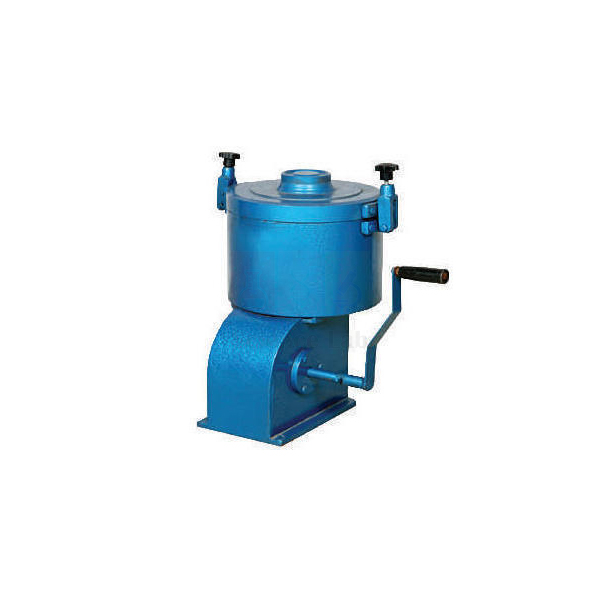
Centrifuge Extractor Hand Operated
Centrifuge Extractor Hand Operated (Product Code: SLE/CE/85) is a manually driven bitumen extractor used to determine and check the bitumen percentage in bituminous mixes in road site laboratories and civil engineering teaching labs. A handle turns enclosed gears in its cast body to spin a removable 1500 g aluminium rotor bowl, and solvent can be added mid-test through holes in the housing cap. It is manufactured by Jain Scientific Equipments Pvt Ltd (ScienceLab), an OEM and technical educational equipment manufacturer, at its own factory in Ambala, India.
Specifications
| Parameter | Detail |
|---|---|
| Purpose | Determination and checking of bitumen percentage in bituminous mix |
| Principle | Mix is treated with solvent and the dissolved bitumen is removed by centrifugal action |
| Drive | Hand operated; a handle turns enclosed gears in the cast body to rotate the shaft and bowl fast |
| Bowl | Removable aluminium rotor bowl, capacity 1500 g, with cap and tightening nut |
| Mounting | Bowl assembly on a vertical shaft protruding from a cast housing |
| Solvent addition | Through holes in the cap of the housing, during the test |
| Drain | Collects the dissolved bitumen thrown from the rotating bowl into the housing |
| Power | Manual — no electrical supply needed |
| Product code | SLE/CE/85 |
| Manufacturer | Jain Scientific Equipments Pvt Ltd (ScienceLab) — OEM |
| Country of origin | India (made in Ambala, Haryana) |
What Is the Hand-Operated Centrifuge Extractor Used For?
Site laboratories near a hot-mix plant often need a quick binder content check where electricity is limited. The operator weighs the loose mix into the aluminium bowl, pours in solvent, fits the cap and tightening nut and turns the handle. The enclosed gears spin the bowl fast, throwing out solvent that carries the dissolved bitumen; it collects in the housing and leaves through the drain.
Fresh solvent is added through the holes in the housing cap while the bowl keeps turning, until the liquid coming out runs clear. The aggregate left in the bowl is then dried and weighed, and the loss in mass gives the bitumen percentage. Tighten the nut firmly before spinning, turn the handle at a steady pace, work in a well-ventilated space and wipe the bowl and housing clean after each test.
OEM Manufacturer
The hand-operated centrifuge extractor is made by Jain Scientific Equipments Private Limited, known by its trading name ScienceLab, as the original equipment manufacturer. It is produced at the company's own licensed factory at Saha, Ambala, Haryana, India, and supplied directly to highway site laboratories, engineering colleges, dealers and importers.
Replacement bowls, caps and nuts can be requested from the manufacturer itself — ask us about availability when you enquire. The ScienceLab profile explains more about the company.
Related Civil Engineering Lab Equipment
These items are used alongside binder extraction in bituminous mix testing:
- Centrifuge Extractor – Motorised — the electrically driven version for laboratories with mains power
- Riffle Sample Divider — reduces a mix sample to a representative portion
- Brass frame sieves — grading of the recovered aggregate
- Automatic Marshall Stability Test Machine — stability and flow testing of the mix
- Mixer Theoretical Density Meter — theoretical density of loose mix
The full Civil Engineering Lab Equipment category covers further bitumen, aggregate and concrete apparatus.
Frequently Asked Questions
What does the Centrifuge Extractor Hand Operated determine?
The Centrifuge Extractor Hand Operated (SLE/CE/85) is used to determine and check the bitumen percentage in a bituminous mix. Solvent dissolves the bitumen, centrifugal action removes it from the bowl, and the aggregate left behind is weighed to calculate the binder content.
What is the bowl capacity of the hand-operated extractor?
The Centrifuge Extractor Hand Operated has a removable aluminium rotor bowl with a capacity of 1500 g. A cap and tightening nut hold the sample in place while the bowl spins, and the bowl lifts off the shaft for emptying and cleaning.
How is the bowl of the Centrifuge Extractor Hand Operated turned?
On the Centrifuge Extractor Hand Operated, a handle drives enclosed gears in the cast body, which rotate the vertical shaft and bowl fast. No electrical supply is needed, which makes the extractor convenient for site laboratories.
Can solvent be added while the extractor is running?
Yes. The Centrifuge Extractor Hand Operated has holes in the cap of its housing through which solvent is introduced during the test. A drain collects the dissolved bitumen that is thrown out of the rotating bowl into the housing.
Who manufactures the Centrifuge Extractor Hand Operated?
The Centrifuge Extractor Hand Operated is manufactured by Jain Scientific Equipments Pvt Ltd (ScienceLab), the OEM, at its own factory at Saha, Ambala, Haryana, India. Laboratories, dealers and importers in India and international markets can order it direct from the manufacturer.
Should I choose the hand-operated or the motorised centrifuge extractor?
Choose the Centrifuge Extractor Hand Operated where power is unreliable or unavailable, such as at road sites. The motorised model suits laboratories with a steady supply that prefer electrical speed control; ask us to compare the two for your sample load.
Request a Quote
To order the Centrifuge Extractor Hand Operated, send your quantity and delivery location through the contact page or use the enquiry cart. The quotation is issued directly by the manufacturer.
Last updated: 24 September 2026
Mixer Theoretical Density Meter
Mixer Theoretical Density Meter (Product Code: SLE/CE/86) is a vacuum apparatus used to determine the theoretical density of asphalt mix in highway and civil engineering laboratories. It tests 2 samples at a time in acrylic vacuum containers over a 0–100 kPa (0–750 mm Hg) vacuum range, while a vibratory table with manual and automatic modes helps release entrapped air. It is supplied by Jain Scientific Equipments Pvt Ltd (ScienceLab), Ambala, a laboratory instruments supplier in India.
Specifications
| Parameter | Detail |
|---|---|
| Test | Theoretical density of asphalt mix by the vacuum method |
| Applications | Asphalt mix design; road condition investigation; calculation of porosity and compactness in road construction quality management |
| Vacuum containers | 2, made of acrylic pipe |
| Samples per test | 2 |
| Vacuum gauge | Fitted on the main body; Wika make, Germany (as listed) |
| Vacuum range | 0–100 kPa (0–750 mm Hg) |
| Vibratory table | Under the containers; manual and automatic modes to release entrapped air from the samples |
| Vibration loading | 10 kg |
| Controls | Complete control panel |
| Power supply | 230 V AC, single phase, 50 Hz |
| Product code | SLE/CE/86 |
| Supplied by | Jain Scientific Equipments Pvt Ltd (ScienceLab), Ambala, India |
What Is the Theoretical Density Meter Used For?
Theoretical density is the density an asphalt mix would have with no air voids at all. Comparing it with the bulk density of compacted specimens or cores gives the air void content, or porosity, and shows how well a pavement layer has been compacted. It is therefore needed both when a mix is designed and when finished road layers are checked.
Loose mix is placed in the acrylic containers, the vessels are sealed and vacuum is applied while the vibratory table agitates them, so that air trapped between the coated particles escapes; the transparent containers let the operator watch it happen. Check that the gauge reads zero before each run, keep the load on the table within 10 kg, and clean the acrylic vessels with a soft cloth rather than abrasives. Testing two samples together speeds up duplicate determinations.
What to Specify When Ordering
- Whether a vacuum pump or other vacuum source should be quoted with the apparatus
- The test method you follow, so that container and accessory details can be confirmed
- Confirmation that your supply is 230 V AC, single phase, 50 Hz
- Number of units needed (each tests 2 samples at a time)
Supplier
Jain Scientific Equipments Private Limited, which trades as ScienceLab, sources and supplies this theoretical density apparatus from Ambala, Haryana. Highway laboratories can have it quoted together with extraction, Marshall and coring equipment from the same civil engineering range.
Road-testing laboratories, engineering colleges, dealers and importers in India and international markets receive quotations and dispatch from Ambala. The company profile has more on ScienceLab.
Related Civil Engineering Lab Equipment
These items work with theoretical density testing in asphalt mix design and quality control:
- Automatic Marshall Stability Test Machine — stability and flow of compacted mix specimens
- Centrifuge Extractor – Motorised — binder content of the same mix
- Centrifuge Extractor Hand Operated — manual binder extraction for site labs
- Core Drilling Machine (Petrol) — cores whose density is compared with the theoretical value
- Vacuum Pump, Electric — a vacuum source; ask us about compatibility
See the Civil Engineering Lab Equipment category for further bitumen, aggregate and concrete apparatus.
Frequently Asked Questions
What does the Mixer Theoretical Density Meter measure?
The Mixer Theoretical Density Meter (SLE/CE/86) determines the theoretical density of asphalt mix by the vacuum method. The result is used in asphalt mix design, road condition investigation and the calculation of porosity and compactness in road construction quality management.
How many samples can the theoretical density meter test at once?
The Mixer Theoretical Density Meter tests 2 samples at a time in two vacuum containers made of acrylic pipe. The containers sit on a vibratory table with a complete control panel, and the vibration loading is 10 kg.
What vacuum range does the Mixer Theoretical Density Meter use?
The Mixer Theoretical Density Meter works over a vacuum range of 0–100 kPa (0–750 mm Hg). Vacuum is read on a Wika-make gauge from Germany, as listed, which is fitted on the main body of the apparatus.
Is a vacuum pump included with the Mixer Theoretical Density Meter?
The listing for the Mixer Theoretical Density Meter describes the main body, gauge, containers, vibratory table and control panel, but does not mention a vacuum pump. Ask us whether a pump is included or should be quoted separately for your set-up.
Why does the theoretical density meter have a vibratory table?
The vibratory table of the Mixer Theoretical Density Meter shakes the vessels under vacuum to release air trapped in the asphalt sample. It runs in manual or automatic mode, and thorough air removal is essential for a reliable theoretical density.
What power supply does the Mixer Theoretical Density Meter need?
The Mixer Theoretical Density Meter is suitable for 230 V AC, single phase, 50 Hz. If your laboratory has a different supply, mention it when you enquire so that we can advise before an order is placed.
Who supplies the Mixer Theoretical Density Meter?
The Mixer Theoretical Density Meter is supplied by Jain Scientific Equipments Pvt Ltd (ScienceLab), Ambala, Haryana, India, to laboratories, dealers and importers in India and international markets. Enquiries can be sent through the contact page.
Request a Quote
For a quotation on the Mixer Theoretical Density Meter, with or without a vacuum source, write to us through the contact page or add it to the enquiry cart.
Last updated: 24 September 2026
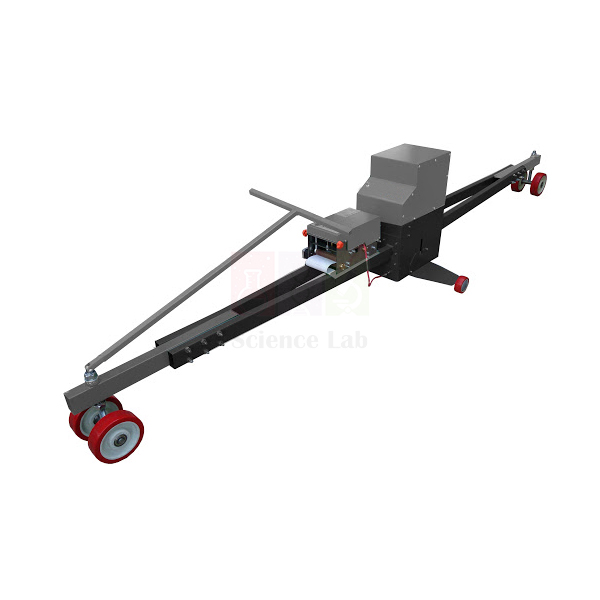
Travelling Beam Device
Travelling Beam Device (Product Code: SLE/CE/87) is a wheeled 3 m profile beam used to detect surface irregularity of concrete and asphalt road pavements in construction checks and highway engineering practicals. A middle wheel measures vertical deviation from the line between the two end wheels, up to ±25 mm, and a recording unit draws a graph of the deviations. It is made by Jain Scientific Equipments Pvt Ltd (ScienceLab), an OEM supplying engineering educational equipment in India, at its own factory in Ambala.
Specifications
| Parameter | Detail |
|---|---|
| Purpose | Detecting road surface irregularity on concrete or asphalt pavements |
| Construction | Beam with rigid wheels at both ends and a measuring wheel at the middle |
| Beam length | 3 m |
| Measurement | Vertical deviation of the surface from the straight line between the end wheels |
| Scale | 2 mm increments up to 10 mm; 5 mm increments from 10 to 25 mm |
| Maximum vertical deviation | ±25 mm |
| Recording | Supplied complete with recording unit to obtain a graph of vertical deviations |
| Weight | Approx. 55 kg |
| Product code | SLE/CE/87 |
| Manufacturer | Jain Scientific Equipments Pvt Ltd (ScienceLab) — OEM |
| Country of origin | India (made in Ambala, Haryana) |
What Is the Travelling Beam Device Used For?
How smoothly a road rides depends on how regular its surface is along the direction of travel. The travelling beam is pushed along a lane: its two end wheels set a 3 m reference line, while the middle wheel rises over bumps and drops into dips. The movement is shown on the scale and traced by the recording unit, so the graph reveals exactly where the surface departs from a true line and by how much.
Because it rolls continuously, the beam surveys a whole length of new pavement in one pass instead of one spot at a time. Use it on freshly laid layers before acceptance, and on existing roads for condition surveys. Keep the wheels clean of bitumen and grit, check the scale reading on a flat reference surface before starting, and move the approx. 55 kg beam with two people.
What to Specify When Ordering
- Number of beams needed for your survey teams or student groups
- Whether spare recording charts or parts for the recording unit should be quoted — ask us
- Whether a 3 m straight edge for spot checks should be included in the same quotation
OEM Manufacturer
ScienceLab is the trading name of Jain Scientific Equipments Private Limited, a registered MSME enterprise (Udyam UDYAM-HR-01-0003714) whose major activity is manufacturing. The company is the OEM of this travelling beam device, which is produced at its own licensed factory at Saha, Ambala, Haryana, India.
Highway departments, engineering colleges, dealers and importers are supplied factory-direct, and export consignments are handled under Importer-Exporter Code AAECJ8618A (DGFT). For replacement wheels or recording-unit parts, ask the manufacturer directly. Read more on the ScienceLab profile.
Related Civil Engineering Lab Equipment
These items are used in pavement surface and layer investigations:
- Straight Edge (3 meter) — spot checks of surface regularity with wedges
- Skid Resistance And Friction Tester — surface friction of the same pavement
- Core Drilling Machine (Petrol) — cores for layer thickness and density checks
- Core Drilling Machine (Motorised) — electrically driven coring
For further road, soil and concrete apparatus, visit the Civil Engineering Lab Equipment category.
Frequently Asked Questions
What does the Travelling Beam Device measure?
The Travelling Beam Device (SLE/CE/87) detects road surface irregularity by measuring how far the pavement deviates vertically from the straight line between the two end wheels of its 3 m beam. It can be used on both concrete and asphalt pavements.
What measuring range and scale does the travelling beam have?
The Travelling Beam Device measures a maximum vertical deviation of ±25 mm. Its scale is marked in 2 mm increments up to 10 mm and in 5 mm increments from 10 to 25 mm, which suits both small ripples and larger dips.
Does the Travelling Beam Device record its readings?
Yes. The Travelling Beam Device is supplied complete with a recording unit that produces a graph of vertical deviations as the beam moves. The trace gives a continuous record of the surveyed length that can be kept with the site report.
How is the travelling beam different from a 3 m straight edge?
A 3 m straight edge checks the surface at one position at a time, whereas the Travelling Beam Device is rolled along the pavement and records deviations continuously. Many highway laboratories use the straight edge for quick spot checks and the beam for longer runs.
How heavy is the Travelling Beam Device?
The Travelling Beam Device weighs approximately 55 kg. It runs on its own wheels during a survey, but two people should lift it on and off a vehicle, and it should be stored so that the beam and wheels are not knocked out of line.
Who manufactures the Travelling Beam Device?
The Travelling Beam Device is manufactured by Jain Scientific Equipments Pvt Ltd (ScienceLab), the OEM, at its own factory at Saha, Ambala, Haryana, India. Quotations come directly from the manufacturer for buyers in India and international markets.
Is a calibration certificate available for the Travelling Beam Device?
Calibration-certificate availability for the Travelling Beam Device should be discussed with us when you enquire. Tell us what your contract or laboratory records require, and we will confirm what documentation can accompany the beam.
Request a Quote
Request a price for the Travelling Beam Device through the contact page or the enquiry cart. You will receive the quotation straight from the manufacturer.
Last updated: 24 September 2026
Straight Edge (3 meter)
Straight Edge (3 meter) (Product Code: SLE/CE/88) is a lightweight beam approximately 3 m long used to check the lateral surface regularity of roads and pavements on site and in highway engineering practicals. Made of mild steel or aluminium, it rests on supports at both ends that hold it at a set height above the surface, and irregularities are read with incremented wedges. It is made by Jain Scientific Equipments Pvt Ltd (ScienceLab), an OEM and engineering lab equipment manufacturer, at its own factory in Ambala, India.
Key Details
| Parameter | Detail |
|---|---|
| Length | Approx. 3 m |
| Purpose | Determining lateral surface regularity of a road surface |
| Material | Mild steel or aluminium |
| Build | Lightweight |
| Support | Equally supported at both ends, giving a set height between the road surface and the beam |
| Measurement | Vertical irregularity measured using incremented wedges |
| Product code | SLE/CE/88 |
| Manufacturer | Jain Scientific Equipments Pvt Ltd (ScienceLab) — OEM |
| Country of origin | India (made in Ambala, Haryana) |
What Is the 3 m Straight Edge Used For?
The straight edge is laid across the road surface on its two end supports, so the beam sits at a known height above a perfectly flat line. Wherever the pavement dips or rises, the gap under the beam changes; sliding an incremented wedge into the gap at that point shows how large the irregularity is. Readings are taken at intervals across the lane to build up a picture of the cross-section, for example where wheel paths have worn or settled.
The method needs no power and very little training, which makes it a practical first exercise in pavement evaluation for students and a quick acceptance check for site engineers. The aluminium version is easier to carry between test points, while mild steel suits heavier handling. Store the beam flat or hung along its length so it does not bend, wipe off bitumen and dust after use, and check it against a flat reference now and then.
What to Specify When Ordering
- Material: mild steel or aluminium
- Number of straight edges needed for your survey teams or student groups
- Whether incremented measuring wedges should be quoted with the beam — ask us what is included
OEM Manufacturer
Jain Scientific Equipments Private Limited trades as ScienceLab and is the original equipment manufacturer of this 3 m straight edge. The beam is made at the company's own licensed factory at Saha, Ambala, Haryana, India, and is supplied factory-direct to highway departments, engineering colleges, polytechnics, dealers and importers.
Repeat orders and replacement supports or wedges are handled by the manufacturer itself — ask us for what you need. More about ScienceLab is on the company profile page.
Related Civil Engineering Lab Equipment
These items are used with the straight edge in road surface and pavement investigations:
- Travelling Beam Device — continuous recording of surface irregularity along a lane
- Skid Resistance And Friction Tester — surface friction of the pavement
- Core Drilling Machine (Petrol) — cores to check layer thickness where defects are found
- Core Drilling Machine (Motorised) — electrically driven coring
Browse the Civil Engineering Lab Equipment category for further road, soil and concrete apparatus.
Frequently Asked Questions
What is the Straight Edge (3 meter) used for?
The Straight Edge (3 meter) (SLE/CE/88) is used to determine the lateral surface regularity of a road surface. The approximately 3 m beam stands on supports at both ends, and vertical irregularities beneath it are measured with incremented wedges.
What material is the 3 m straight edge made of?
The Straight Edge (3 meter) is made of mild steel or aluminium and is designed as a lightweight apparatus. State which material you prefer when you enquire; aluminium is easier to carry, while mild steel tolerates rougher handling on site.
How are irregularities measured with the Straight Edge (3 meter)?
The end supports of the Straight Edge (3 meter) hold the beam at a set height above the road. An incremented wedge is slid into the gap at the point being checked, and the wedge reading shows how far the surface deviates from a true line.
Are measuring wedges supplied with the straight edge?
The listing for the Straight Edge (3 meter) states that irregularity is measured with incremented wedges but does not say whether they are supplied with the beam. Ask us to include wedges in the quotation if you need them.
When should a straight edge be chosen over a travelling beam?
The Straight Edge (3 meter) suits quick spot readings across a lane, needs no recording unit and is easy for students to handle. A travelling beam is better when a continuous record along a long stretch of road is required.
Who manufactures the Straight Edge (3 meter)?
The Straight Edge (3 meter) is manufactured by Jain Scientific Equipments Pvt Ltd (ScienceLab), the OEM, at its own factory at Saha, Ambala, Haryana, India. It is supplied factory-direct to buyers in India and international markets.
Request a Quote
Tell us the material and quantity of Straight Edge (3 meter) you need through the contact page, or add it to the enquiry cart. Quotations are sent directly by the manufacturer.
Last updated: 24 September 2026
747.jpg)
Ring And Ball Apparatus (Electrical)
Ring And Ball Apparatus (Electrical) (Product Code: SLE/CE/89) is an electrically heated test set used to determine the softening point of bitumen and similar binders by the ring and ball method in highway and civil engineering laboratories. Each unit comes with a heat-resistant glass bath, tapered rings, a 9.5 mm steel ball, a ring holder and an electric hot plate with energy regulator. It is made by Jain Scientific Equipments Pvt Ltd (ScienceLab), the OEM and a scientific lab equipment manufacturer in Ambala, India, at its own factory.
Specifications
| Parameter | Detail |
|---|---|
| Test method | Ring and ball softening point |
| Heating | Electrical, with heater and energy regulator |
| Power supply | 230 V, 50 Hz, single phase, AC |
| Bath | Heat-resistant glass, supplied with each unit |
| Rings | Tapered rings |
| Ball | Steel ball, 9.5 mm diameter |
| Ring holder | Included |
| Heater | Electric heater (hot plate) |
| Product code | SLE/CE/89 |
| Manufacturer | Jain Scientific Equipments Pvt Ltd (ScienceLab) — OEM |
| Country of origin | India (made in Ambala, Haryana) |
What Is the Ring and Ball Apparatus Used For?
Bitumen has no sharp melting point; it softens gradually as it warms. The ring and ball test puts a number on this behaviour: molten binder is cast into the tapered rings, a steel ball is placed on each disc, and the assembly in the ring holder is heated in the glass bath. The temperature at which the softened binder lets the ball sink through and reach the base is recorded as the softening point, which is used with penetration to grade paving bitumen.
The energy regulator lets the operator hold a steady, controlled rate of heating, which matters because a faster rise gives a misleading result. Stir the bath liquid gently for an even temperature, keep the balls centred on the discs, and read the temperature on a thermometer placed near the rings. The clear glass bath lets students watch the binder sag, which makes it a clear demonstration piece among engineering lab equipment in India for highway practicals.
What to Specify When Ordering
- Number of sets needed for your laboratory or student batches
- Whether a thermometer should be quoted, and the range your method requires
- Whether spare tapered rings or steel balls should be included — ask us
- Confirmation that your supply is 230 V, 50 Hz, single phase AC
OEM Manufacturer
This ring and ball apparatus is an original ScienceLab product: Jain Scientific Equipments Private Limited, which trades as ScienceLab, is its OEM and makes it at the company's own licensed factory at Saha, Ambala, Haryana, India. Laboratories deal directly with the maker instead of a trading intermediary.
Colleges, highway laboratories, dealers and importers are supplied factory-direct, and repeat orders or replacement rings, balls and glass baths can be requested from the manufacturer — just ask us. See the company profile for more about ScienceLab.
Related Civil Engineering Lab Equipment
These items cover the other routine tests on bituminous binders:
- Standard penetrometer — penetration test, reported alongside softening point
- Digital Penetrometer — automated penetration measurement
- Kinematic Viscometer Bath — viscosity grading of binders
- Cut Back Bitumen Distillation Equipment — recovers the residue of cutbacks for further testing
- Immersion Thermometer — for reading bath temperature; confirm the range you need
Explore the Civil Engineering Lab Equipment category for more bitumen, soil and concrete apparatus.
Frequently Asked Questions
What is the Ring And Ball Apparatus (Electrical) used for?
The Ring And Ball Apparatus (Electrical) (SLE/CE/89) is used to determine the softening point of bitumen and similar binders. Binder cast in tapered rings is loaded with a steel ball and heated in a glass bath until the ball sinks through.
What is included with the ring and ball apparatus?
Each Ring And Ball Apparatus (Electrical) is supplied with a heat-resistant glass bath, tapered rings, a steel ball of 9.5 mm diameter, a ring holder and an electric heater (hot plate) with energy regulator. A thermometer is not listed and can be quoted separately.
What power supply does the Ring And Ball Apparatus (Electrical) need?
The Ring And Ball Apparatus (Electrical) operates on a 230 V, 50 Hz, single-phase AC supply. Its heater has an energy regulator, so the operator can keep the rate of temperature rise steady throughout the test.
Why does the apparatus use a heat-resistant glass bath?
The heat-resistant glass bath of the Ring And Ball Apparatus (Electrical) withstands heating on the hot plate and lets the operator see the balls and binder clearly as they sink. Let the bath cool before washing it to avoid thermal shock.
Who manufactures the Ring And Ball Apparatus (Electrical)?
The Ring And Ball Apparatus (Electrical) is manufactured by Jain Scientific Equipments Pvt Ltd (ScienceLab), the OEM, at its own factory at Saha, Ambala, Haryana, India. Buyers in India and international markets receive quotations directly from the manufacturer.
What should an enquiry for the ring and ball apparatus include?
For the Ring And Ball Apparatus (Electrical), state the number of sets, whether a thermometer and spare rings or balls are needed, and your delivery location. Send the details through the contact page for a quotation.
Request a Quote
Ask for a quotation on the Ring And Ball Apparatus (Electrical) via the contact page, or add it to the enquiry cart with your other bitumen testing items. Quotations come direct from the manufacturer.
Last updated: 24 September 2026
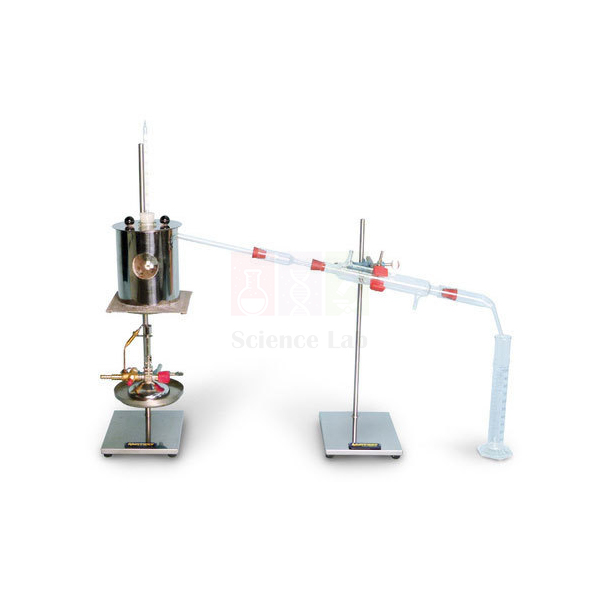
Cut Back Bitumen Distillation Equipment
Cut Back Bitumen Distillation Equipment (Product Code: SLE/CE/90) is a distillation set used to separate the volatile fraction of cutback bitumen from its residue, so the distillate can be measured and the residue tested further in highway laboratories. It comprises a heavy-gauge shield with chimney, an electric hot plate with energy regulator, a 500 ml distillation flask and a 100 ml Crow receiver. It is made by Jain Scientific Equipments Pvt Ltd (ScienceLab), an OEM maker of laboratory distillation apparatus in India, at its own factory in Ambala.
Specifications
| Parameter | Detail |
|---|---|
| Shield | Heavy-gauge shield with a lagged cover in two parts, and wire gauze |
| Platform | Supports the shield; chimney arranged for fitting to a stand |
| Heating | Electric hot plate with energy regulator |
| Distillation flask | One, 500 ml |
| Receiver | One Crow receiver, 100 ml |
| Thermometer | Not included; specified type ASTM 8C, −2 to +400 °C, 1 °C subdivisions |
| Product code | SLE/CE/90 |
| Manufacturer | Jain Scientific Equipments Pvt Ltd (ScienceLab) — OEM |
| Country of origin | India (made in Ambala, Haryana) |
What Is the Cutback Bitumen Distillation Apparatus Used For?
Cutback bitumen is bitumen thinned with a volatile solvent so it can be sprayed or mixed at lower temperatures; once laid, the solvent evaporates and the binder hardens. The distillation test shows how much volatile material a cutback contains and leaves behind the residue that will remain on the road. A measured sample is heated in the 500 ml flask inside the shield, and the distillate is collected in the 100 ml Crow receiver so that its volume can be read at the stages your method specifies.
The residue left in the flask is then tested for properties such as penetration or softening point. Use the energy regulator to keep the distillation rate steady, and the shield to protect the flask from draughts. Solvent vapours are flammable, so work in a fume cupboard, keep ignition sources away and let the set cool before dismantling. An ASTM 8C thermometer (−2 to +400 °C) must be fitted, as none is supplied.
What to Specify When Ordering
- Whether the specified ASTM 8C thermometer should be quoted, as it is not included
- Spare 500 ml distillation flasks and 100 ml Crow receivers, if required
- Whether a stand, condenser or other fittings should be quoted — ask us what is included
- The electrical supply at your laboratory for the hot plate
OEM Manufacturer
Jain Scientific Equipments Private Limited, trading as ScienceLab, is the original equipment manufacturer of this cutback bitumen distillation set. It is manufactured at the company's own licensed factory at Saha, Ambala, Haryana, India, so buyers get their quotation and product answers from the maker itself.
Highway laboratories, engineering colleges, dealers and importers are supplied factory-direct, and replacement flasks, receivers or shield parts can be requested from the manufacturer — ask us about availability. The ScienceLab company profile has further details.
Related Civil Engineering Lab Equipment
These items are used to test the distillation residue and other bituminous binders:
- Standard penetrometer — penetration of the residue
- Ring And Ball Apparatus (Electrical) — softening point of the residue
- Kinematic Viscometer Bath — viscosity testing of cutbacks and binders
- Digital Penetrometer — automated penetration measurement
- Distillation Flask — laboratory distillation flasks; confirm the size matches your set
Visit the Civil Engineering Lab Equipment category for more bitumen, aggregate and concrete apparatus.
Frequently Asked Questions
What is the Cut Back Bitumen Distillation Equipment used for?
The Cut Back Bitumen Distillation Equipment (SLE/CE/90) separates the volatile fraction of cutback bitumen from its residue by distillation. The distillate collects in a 100 ml Crow receiver for measurement, and the residue in the flask can be tested further.
What is included with the cutback distillation equipment?
The Cut Back Bitumen Distillation Equipment includes a heavy-gauge shield with lagged two-part cover and wire gauze, a platform with chimney arranged for fitting to a stand, an electric hot plate with energy regulator, one 500 ml distillation flask and one 100 ml Crow receiver.
Which thermometer does the Cut Back Bitumen Distillation Equipment need?
The Cut Back Bitumen Distillation Equipment is specified with an ASTM 8C thermometer covering −2 to +400 °C in 1 °C subdivisions. The set is supplied without a thermometer, so ask us to quote one if your laboratory does not already have it.
Why is the flask enclosed in a shield?
In the Cut Back Bitumen Distillation Equipment, the heavy-gauge lagged shield keeps draughts away from the flask so that it heats evenly and the distillation proceeds at a steady rate. The two-part cover also makes it easier to fit and remove the flask.
Who manufactures the Cut Back Bitumen Distillation Equipment?
The Cut Back Bitumen Distillation Equipment is manufactured by Jain Scientific Equipments Pvt Ltd (ScienceLab), the OEM, at its own factory at Saha, Ambala, Haryana, India. It is supplied factory-direct to laboratories, dealers and importers in India and international markets.
What safety precautions apply to cutback distillation?
Cutback solvents give off flammable vapours, so run the Cut Back Bitumen Distillation Equipment in a fume cupboard away from ignition sources. Heat gently with the energy regulator, keep the receiver in view throughout, and allow the whole set to cool before dismantling it.
Request a Quote
Request a quotation for the Cut Back Bitumen Distillation Equipment, with or without the thermometer, through the contact page or the enquiry cart. The manufacturer quotes you directly.
Last updated: 24 September 2026
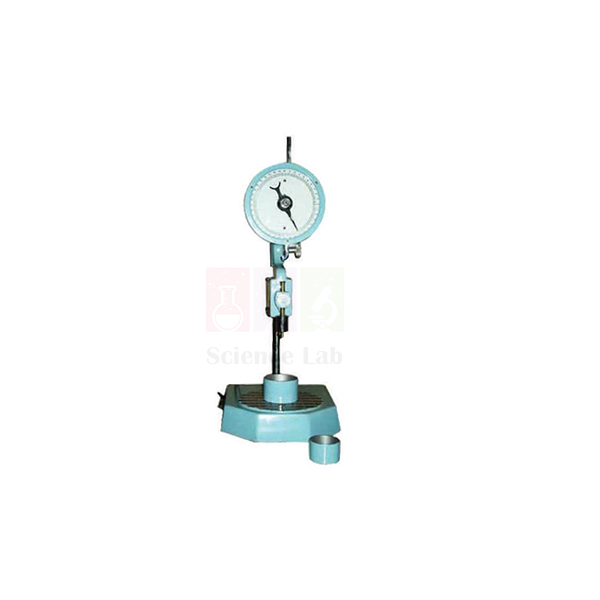
Standard penetrometer
Standard penetrometer (Product Code: SLE/CE/91) is a dial-type needle penetration instrument used to measure the consistency of bitumen and similar semi-solid materials in civil engineering and highway materials laboratories. Engineering colleges, polytechnics and road-materials labs use it for penetration tests, reading needle depth on a dial graduated in 400 divisions of 0.1 mm. It is made by Jain Scientific Equipments Pvt Ltd (ScienceLab), an OEM manufacturer of engineering lab equipment in India, at its own factory in Ambala.
Specifications
| Parameter | Detail |
|---|---|
| Construction | Vertical pillar mounted on a base fitted with levelling screws |
| Fine adjustment | Rack-and-pinion and pointer assembly to bring the needle or cone tip onto the sample |
| Reading and reset | Clutch mechanism for simple reading of penetration and resetting between tests |
| Dial | Graduated in 400 divisions of 1/10 mm with millimetre subdivisions; needle pointer reads against figures |
| Measuring head | Head with dial, plunger rod and cone or needle slides on the pillar and clamps at any desired height |
| Supplied with | 1 bitumen penetration needle; ring weights of 50 g and 100 g (one each); 2 sample containers |
| Accessory | Penetration cone for empirical estimation of penetration of lubricating grease, petroleum jelly and similar materials |
| Product code | SLE/CE/91 |
| Manufacturer | Jain Scientific Equipments Pvt Ltd (ScienceLab) — OEM |
| Country of origin | India (made in Ambala, Haryana) |
What Is the Bitumen Penetrometer Used For?
In a bitumen penetration test, the conditioned sample in its container is placed under the needle and the tip is lowered with the rack-and-pinion adjustment until it just touches the surface. The needle is then released for the time set by the test method, and the dial shows how far it sank in tenths of a millimetre. Harder grades give lower readings, so students and technicians use the result to compare and classify paving bitumen. The 50 g and 100 g ring weights let the operator make up the load the method calls for.
Fitted with the accessory penetration cone, the same stand gives empirical penetration values for lubricating grease and petroleum jelly, which makes it useful lab equipment for technical institutes that teach both highway materials and petroleum products. Level the base with its screws before each series, keep the needle clean and straight, and use the clutch to return the dial to zero.
What to Specify When Ordering
- Number of complete penetrometer stands required for your laboratory
- Whether the penetration cone for grease and petroleum jelly is needed
- Any spare bitumen penetration needles or sample containers beyond the supplied set (ask us)
- Any additional 50 g or 100 g ring weights
OEM Manufacturer
The Standard penetrometer is an OEM product of Jain Scientific Equipments Private Limited, the company that trades as ScienceLab. Its pillar stand, measuring head and fittings are made and assembled at the company's own licensed factory at Saha, Ambala, Haryana, India, rather than bought in from a trader.
Units are supplied factory-direct to engineering colleges, polytechnics, testing laboratories, dealers and importers. For institutional vendor registration, the company's details are GSTIN 06AAECJ8618A1ZT and LEI 3358004HRD1JIVXKYX49. Learn more on the ScienceLab company profile, and ask the manufacturer directly about replacement needles or containers.
Related Civil Engineering Lab Equipment
These items are often used alongside the penetrometer when a laboratory tests bitumen and bituminous materials:
- Ring And Ball Apparatus (Electrical) — for the softening point test on the same bitumen grades
- Kinematic Viscometer Bath — for viscosity measurements that complement penetration results
- Cut Back Bitumen Distillation Equipment — for separating cutback bitumen before residue testing
- Water Bath (6 Holes) — a laboratory bath for holding samples at a steady temperature
See the full range of Civil Engineering Lab Equipment for concrete, soil, aggregate and bitumen testing.
Frequently Asked Questions
What is supplied with the Standard penetrometer?
The Standard penetrometer (SLE/CE/91) is supplied with one bitumen penetration needle, one 50 g and one 100 g ring weight and two sample containers, on its pillar stand with levelling base. The penetration cone for grease and petroleum jelly is listed separately as an accessory.
How is penetration read on the Standard penetrometer?
Penetration on the Standard penetrometer is read from a dial graduated in 400 divisions of one-tenth of a millimetre, with millimetre subdivisions and a needle pointer against figures. A clutch mechanism makes taking the reading and resetting the dial for the next test simple.
Can the Standard penetrometer test grease or petroleum jelly?
Yes. With the accessory penetration cone fitted in place of the needle, the Standard penetrometer gives empirical penetration estimates for lubricating grease, petroleum jelly and similar materials. Mention the cone in your enquiry, because it is an accessory rather than part of the standard supply.
Who manufactures the Standard penetrometer?
The Standard penetrometer is manufactured by Jain Scientific Equipments Pvt Ltd (ScienceLab) as the OEM, at its own licensed factory in Saha, Ambala, Haryana, India. Buyers deal directly with the manufacturer for quotations, repeat orders and questions about replacement needles or containers.
Is a calibration certificate available for the Standard penetrometer?
Calibration-certificate availability for the Standard penetrometer is not stated in its listing, so please discuss your requirement with us through the contact page before ordering. Tell us the test method your laboratory follows so we can reply accurately.
What should a quotation request for the Standard penetrometer include?
A quotation request for the Standard penetrometer should state the quantity, whether the grease penetration cone is required, any spare needles, ring weights or sample containers, and the delivery location in India or abroad. Send it through the enquiry cart or the contact page.
Request a Quote
To price the Standard penetrometer (SLE/CE/91), send your quantity and accessory needs through our contact page or add the item to the enquiry cart. Quotations come direct from the manufacturer, for institutions and dealers in India and international markets.
Last updated: 24 September 2026
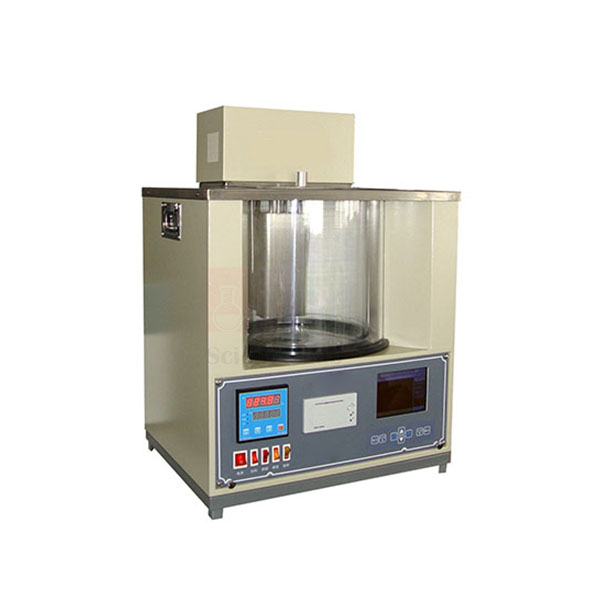
Kinematic Viscometer Bath
Kinematic Viscometer Bath (Product Code: SLE/CE/92) is a temperature-controlled glass bath used to hold capillary viscometer tubes while the kinematic viscosity of bitumen, oils and other liquids is measured in materials and petroleum testing laboratories. Civil engineering, chemistry and polytechnic labs choose it for its high-precision digital display, electric stirrer and compact desktop all-in-one design. It is supplied by Jain Scientific Equipments Pvt Ltd (ScienceLab), Ambala, India.
Key Details
| Parameter | Detail |
|---|---|
| Bath vessel | Durable glass bath designed for good heat retention |
| Temperature control | Controller for accurate bath temperature, with intelligent signal sampling for data measurement and parameter reading |
| Display | High-precision digital display |
| Stirring | Electric stirrer to keep the bath temperature uniform |
| Tube handling | Allows easy cleaning and drying of viscometer tubes |
| Layout | Desktop all-in-one design for easy operation and portability |
| Product code | SLE/CE/92 |
| Supplied by | Jain Scientific Equipments Pvt Ltd (ScienceLab), Ambala, India |
What Is the Kinematic Viscometer Bath Used For?
Kinematic viscosity is found by timing how long a fixed volume of liquid takes to flow through a calibrated glass capillary viscometer kept at a constant temperature. This bath provides that stable, stirred environment: the viscometer tube is suspended in the glass bath, the sample is allowed to reach bath temperature, and the flow time between the timing marks is multiplied by the tube constant. Highway materials labs use it for bitumen and cutback binders, while chemistry and petroleum courses use it for lubricating oils.
For repeatable readings, let the bath settle with the stirrer running before inserting tubes, keep the glass walls clean so the meniscus stays easy to see, and clean and dry each viscometer tube between samples. As a laboratory instruments supplier in India, we can advise on the tube type your method needs when you enquire.
Supplier
Jain Scientific Equipments Private Limited, which trades as ScienceLab, supplies the Kinematic Viscometer Bath as part of its range of materials-testing instruments for engineering colleges, polytechnics and testing laboratories. The company sources the unit and handles quotations and dispatch from Ambala, Haryana, for buyers in India and international markets. Read more on the ScienceLab company profile.
Related Civil Engineering Lab Equipment
Laboratories that measure bitumen viscosity usually run these related tests and baths as well:
- Standard penetrometer — measures bitumen consistency by needle penetration
- Ring And Ball Apparatus (Electrical) — finds the softening point of the same binder
- Cut Back Bitumen Distillation Equipment — separates cutback bitumen into distillate and residue
- Circulating water bath with cooler unit — an alternative bath where cooling is also required
Browse all Civil Engineering Lab Equipment for bitumen, aggregate, soil and concrete testing.
Frequently Asked Questions
What is the Kinematic Viscometer Bath used for?
The Kinematic Viscometer Bath holds glass capillary viscometer tubes at a steady, uniform temperature while the flow time of bitumen, oil or another liquid is measured, so that kinematic viscosity can be calculated from the tube constant in a materials or petroleum testing laboratory.
How does the Kinematic Viscometer Bath keep the temperature uniform?
The Kinematic Viscometer Bath uses an electric stirrer to circulate the bath liquid and keep its temperature even, with a controller that samples the signal and shows readings on a high-precision digital display. Its durable glass bath also helps retain heat during a test series.
Are viscometer tubes included with the Kinematic Viscometer Bath?
The listing for the Kinematic Viscometer Bath does not state which viscometer tubes or holders are included. Please confirm the tube type and quantity you need through our contact page when you request a quotation, and we will state the scope clearly.
What temperature range and power supply does the Kinematic Viscometer Bath need?
The temperature range and electrical rating of the Kinematic Viscometer Bath are not given in its listing. Ask us through the contact page and mention the test temperatures your method uses, and we will confirm the details of the unit we quote before you order.
Who supplies the Kinematic Viscometer Bath?
The Kinematic Viscometer Bath is supplied by Jain Scientific Equipments Pvt Ltd (ScienceLab), Ambala, Haryana, India. The company sources it for engineering, chemistry and petroleum-testing laboratories and quotes it to institutions and dealers in India and international markets.
Is a calibration certificate available for the Kinematic Viscometer Bath?
Calibration-certificate availability for the Kinematic Viscometer Bath and its temperature controller is not stated in the listing, so please discuss it with us before ordering. Send your requirement through the contact page together with the quantity you need.
Request a Quote
For a price on the Kinematic Viscometer Bath (SLE/CE/92), tell us your quantity, test temperatures and any viscometer tubes needed through the contact page, or add it to the enquiry cart. We respond to laboratories and dealers in India and international markets.
Last updated: 24 September 2026
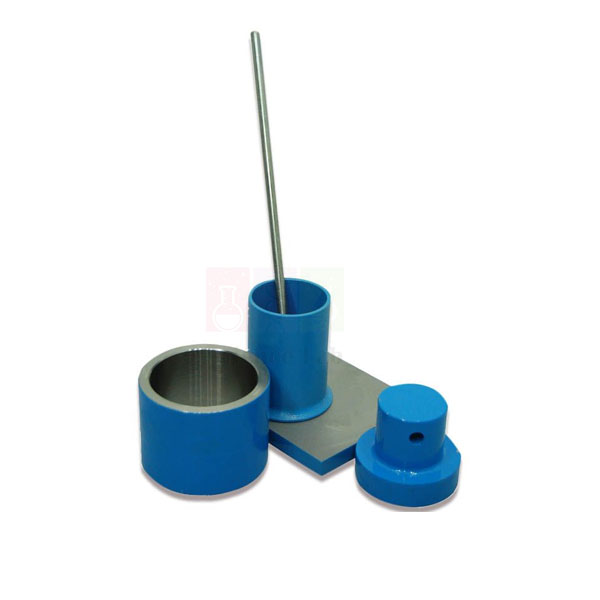
Aggregate Crushing Value Apparatus
Aggregate Crushing Value Apparatus (Product Code: SLE/CE/93) is a steel cylinder-and-plunger set used to find how much coarse aggregate breaks down under a gradually applied compressive load in civil engineering and highway materials laboratories. Engineering colleges and testing labs use it with a compression testing machine, and the set is built around a 150 mm diameter mild steel cylinder with a 148 mm plunger. It is made by Jain Scientific Equipments Pvt Ltd (ScienceLab), an OEM manufacturer, at its own factory in Ambala, India.
Specifications
| Parameter | Detail |
|---|---|
| Cylindrical container | Mild steel, 150 mm ±0.5 mm diameter × 130 mm to 140 mm high |
| Base plate | 200 mm to 230 mm square × 6 mm thick |
| Plunger | 148 mm ±0.5 mm diameter × 100 mm to 115 mm high |
| Metal measure | 115 ±0.5 mm diameter × 180 ±0.5 mm high |
| Tamping rod | 16 mm diameter × 600 mm long, both ends rounded (1 no.) |
| Set contents | Steel cylinder, plunger, base plate, cylindrical measure and tamping rod |
| Material and finish | Powder-coated or galvanized steel parts, heat treated and ground for durability |
| Product code | SLE/CE/93 |
| Manufacturer | Jain Scientific Equipments Pvt Ltd (ScienceLab) — OEM |
| Country of origin | India (made in Ambala, Haryana) |
What Is the Aggregate Crushing Value Apparatus Used For?
The aggregate crushing value (ACV) test rates how well road stone and concrete aggregate resist crushing. A graded sample is first measured in the metal measure, filled in layers and tamped with the rounded rod, then transferred to the 150 mm cylinder on its base plate and levelled. The plunger is placed on top and the assembly is loaded steadily in a compression testing machine to the load the test method specifies.
After loading, the crushed sample is sieved and the fines are expressed as a percentage of the original mass; a lower value indicates a stronger aggregate. Because the set is simple and robust, it is common engineering lab equipment in polytechnics and TVET workshops, where students compare aggregates from different quarries. Keep the plunger and cylinder bore clean so the plunger moves freely.
What to Specify When Ordering
- Number of complete sets (cylinder, plunger, base plate, measure and tamping rod)
- Any spare tamping rods or metal measures
- Whether you also need a compression testing machine to apply the load
OEM Manufacturer
ScienceLab is the trading name of Jain Scientific Equipments Private Limited, and this Aggregate Crushing Value Apparatus is one of its own OEM products. The cylinder, plunger, base plate and measure are made at the company's licensed factory at Saha, Ambala, Haryana, India, not sourced from a trader.
Because the maker quotes directly, colleges, materials-testing laboratories, dealers and importers get factory-direct supply and can ask the manufacturer itself about repeat orders or replacement parts. Find out more about the company on the ScienceLab profile page.
Related Civil Engineering Lab Equipment
These items complete a typical aggregate strength testing bench:
- Automatic digital compression testing machine — applies the crushing load to the cylinder and plunger
- Test Sieves — for grading the sample and separating fines after crushing
- Aggregate Impact Tester — the companion test for resistance to sudden impact
- Tamping Rod — a spare rod for compacting samples in layers
View the complete range of Civil Engineering Lab Equipment.
Frequently Asked Questions
What does the Aggregate Crushing Value Apparatus set include?
Each Aggregate Crushing Value Apparatus set includes a steel cylinder, a base plate, a plunger, a cylindrical metal measure and one tamping rod. The cylinder is 150 mm ±0.5 mm in diameter, the plunger 148 mm ±0.5 mm, and the rod 16 mm by 600 mm with rounded ends.
What size is the metal measure in the Aggregate Crushing Value Apparatus?
The metal measure in the Aggregate Crushing Value Apparatus is 115 ±0.5 mm in diameter and 180 ±0.5 mm high. It is used to measure out the aggregate sample, filled in layers and tamped with the rod, before the sample goes into the test cylinder.
Does the Aggregate Crushing Value Apparatus include a loading machine?
No. The Aggregate Crushing Value Apparatus is the cylinder, plunger, base plate, measure and tamping rod set. The crushing load is applied with a separate compression testing machine, which you can include in the same enquiry if your laboratory does not already have one.
What finish do the parts of the Aggregate Crushing Value Apparatus have?
Parts of the Aggregate Crushing Value Apparatus are powder-coated or galvanized steel, and the listing notes they are heat treated and ground for durability. Wipe the cylinder and plunger clean and dry after each test to keep them in good condition.
Who manufactures the Aggregate Crushing Value Apparatus?
The Aggregate Crushing Value Apparatus is manufactured by Jain Scientific Equipments Pvt Ltd (ScienceLab), the OEM, at its own licensed factory in Saha, Ambala, Haryana, India. Quotations, repeat orders and replacement-part questions are handled by the manufacturer directly.
What should a quotation request for the Aggregate Crushing Value Apparatus include?
A quotation request for the Aggregate Crushing Value Apparatus should give the number of sets, any spare tamping rods or measures, whether a compression testing machine is also needed, and the delivery location. Send it through our contact page or the enquiry cart.
Request a Quote
Ask for a price on the Aggregate Crushing Value Apparatus (SLE/CE/93) through our contact page, or add it to the enquiry cart with other aggregate test items. Quotes come direct from the manufacturer for buyers in India and international markets.
Last updated: 24 September 2026
Aggregate Impact Tester
Aggregate Impact Tester (Product Code: SLE/CE/94) is a drop-hammer apparatus used to determine the aggregate impact value, a relative measure of how well road and concrete aggregate resists sudden shock, in civil engineering laboratories. Highway materials labs and engineering colleges use it for toughness testing, and its 13.75 kg hammer falls freely through an adjustable 380 mm height between two vertical guides. It is made by Jain Scientific Equipments Pvt Ltd (ScienceLab), an OEM manufacturer, at its own factory in Ambala, India.
Specifications
| Parameter | Detail |
|---|---|
| Frame | Circular base with two vertical guides |
| Hammer weight | 13.75 ±0.25 kg, raised and released to fall freely down the guides |
| Height of fall | Adjustable through 380 ±5 mm |
| Hammer locking | Locking arrangement provided; hammer is removable |
| Blow counter | Fitted at the top of the equipment to count the number of strokes |
| Metal measure | 75 mm diameter × 50 mm high (supplied) |
| Tamping rod | 230 mm long × 10 mm diameter (supplied) |
| Product code | SLE/CE/94 |
| Manufacturer | Jain Scientific Equipments Pvt Ltd (ScienceLab) — OEM |
| Country of origin | India (made in Ambala, Haryana) |
What Is the Aggregate Impact Tester Used For?
The aggregate impact value (AIV) test shows how an aggregate behaves under the repeated shocks that traffic and compaction apply to road layers. A sized sample is measured out in the 75 mm × 50 mm metal measure, compacted with the 10 mm tamping rod and set in position on the base. The hammer is lifted to the set height and dropped the number of times the method specifies, with the blow counter keeping the tally.
The crushed sample is then sieved, and the fines produced are expressed as a percentage of the original mass; a lower figure means a tougher aggregate. Colleges often run this test alongside the crushing value test so students can compare static and dynamic strength. This robust frame is typical of the engineering lab equipment in India used by polytechnics and TVET centres; always engage the hammer lock while placing or removing the sample.
What to Specify When Ordering
- Number of Aggregate Impact Testers required
- Any spare metal measures or tamping rods beyond those supplied
- Whether test sieves for the sieving step are also needed
OEM Manufacturer
The Aggregate Impact Tester is built by Jain Scientific Equipments Private Limited, which trades as ScienceLab, acting as the original equipment manufacturer. Its base, guides, hammer and counter mounting are produced and assembled at the company's own licensed factory at Saha, Ambala, Haryana, India.
Engineering institutions, testing laboratories, dealers and importers buy direct from the maker, so questions on spares or repeat orders go straight to the people who build it. Read about the company on the ScienceLab company profile.
Related Civil Engineering Lab Equipment
These items are used in the same aggregate quality programme:
- Aggregate Crushing Value Apparatus — measures resistance to a slowly applied crushing load
- Test Sieves — for preparing the sized sample and sieving out fines after impact
- Digital Los Angles Abrasion Testing Machine — checks resistance to abrasion and wear
- Flakiness Sieve Set — assesses particle shape, which affects impact results
See all Civil Engineering Lab Equipment for aggregate, soil and concrete testing.
Frequently Asked Questions
What hammer weight and drop height does the Aggregate Impact Tester use?
The Aggregate Impact Tester uses a hammer weighing 13.75 ±0.25 kg that falls freely down two vertical guides. The height of fall can be adjusted through 380 ±5 mm, so the drop can be set to the height your test method requires.
What accessories are supplied with the Aggregate Impact Tester?
The Aggregate Impact Tester is supplied complete with a metal measure 75 mm in diameter and 50 mm high, and a tamping rod 230 mm long and 10 mm in diameter. A blow counter is fitted at the top of the frame to count the strokes.
How is the hammer made safe while loading the Aggregate Impact Tester?
The hammer of the Aggregate Impact Tester has a locking arrangement, so it can be held in the raised position while the sample is placed or removed. Release the lock only when hands are clear and the sample is in position on the base.
What does the aggregate impact value tell a laboratory?
The aggregate impact value from the Aggregate Impact Tester is a relative measure of an aggregate's resistance to sudden shock or impact. It is reported as the percentage of fines produced, so a lower value indicates a tougher aggregate for road and concrete use.
Who manufactures the Aggregate Impact Tester?
The Aggregate Impact Tester is manufactured by Jain Scientific Equipments Pvt Ltd (ScienceLab) as the OEM, at its own licensed factory at Saha, Ambala, Haryana, India. Quotations and spare-part questions are answered by the manufacturer directly.
Is a calibration certificate available for the Aggregate Impact Tester?
Calibration-certificate availability for the Aggregate Impact Tester is not stated in its listing, so please raise it with us through the contact page before ordering. Mention the test method you follow so we can give a clear answer.
Request a Quote
To receive a quotation for the Aggregate Impact Tester (SLE/CE/94), send the quantity and any extra measures or rods through our contact page, or use the enquiry cart. Prices come direct from the manufacturer for India and international markets.
Last updated: 24 September 2026
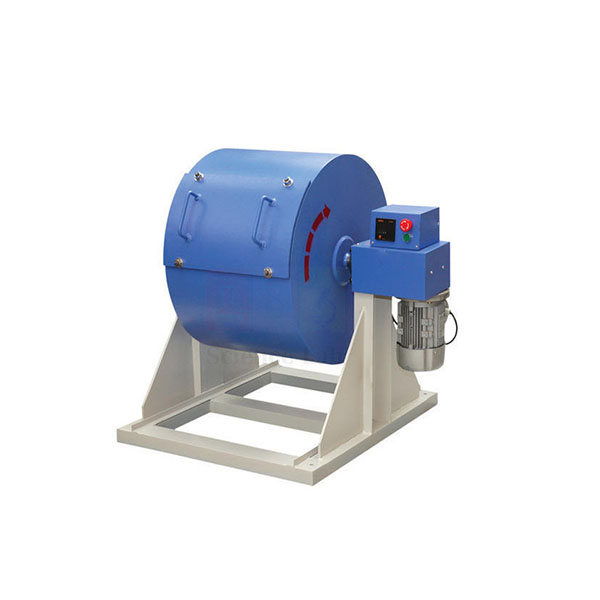
Digital Los Angles Abrasion Testing Machine
Digital Los Angles Abrasion Testing Machine (Product Code: SLE/CE/95) is a rotating steel-drum machine used to measure how much coarse aggregate wears down under abrasion and impact in civil engineering and highway materials laboratories. Road-materials labs and engineering colleges use it for the Los Angeles abrasion test, and its electronic control unit stops the 711 mm diameter drum automatically at a preset revolution count. It is made by Jain Scientific Equipments Pvt Ltd (ScienceLab), an OEM manufacturer, at its own factory in Ambala, India.
Specifications
| Parameter | Detail |
|---|---|
| Drum | Rolled steel, 711 mm inside diameter × 508 mm internal length |
| Drum speed | 31–33 rpm |
| Control | Electronic control unit |
| Revolution counter | Automatic counter; the machine stops by itself when the preset revolution count is reached |
| Drum interlock | Interlock device lets the operator lock the drum in position |
| Product code | SLE/CE/95 |
| Manufacturer | Jain Scientific Equipments Pvt Ltd (ScienceLab) — OEM |
| Country of origin | India (made in Ambala, Haryana) |
What Is the Los Angeles Abrasion Machine Used For?
The Los Angeles abrasion test indicates whether a road stone or concrete aggregate is hard enough to resist the grinding and knocking it will meet in service. A graded sample is loaded into the drum together with the abrasive charge the test method specifies, the counter is set, and the drum turns at 31–33 rpm until the machine stops on its own at the preset count. The sample is then sieved and the loss is reported as a percentage of the original mass.
Automatic stopping removes counting errors and frees the operator during long runs, which is valuable in teaching labs where several groups share one machine. Use the interlock to hold the drum steady while loading and emptying it. For institutes building a highway materials lab, this is core engineering lab equipment in India alongside impact and crushing value tests.
OEM Manufacturer
ScienceLab is the trading name of Jain Scientific Equipments Private Limited (CIN U29309HR2020PTC087597), the OEM behind this machine. The rolled steel drum, frame and control mounting are produced at the company's licensed factory at 449, HSIIDC Industrial Area, Saha, Ambala (Factory Licence AMB-ONLINE-CHD-J-414).
Colleges, testing laboratories, dealers and importers buy factory-direct, and repeat orders or spare-part questions are handled by the manufacturer itself. More about the company is on the ScienceLab profile.
Related Civil Engineering Lab Equipment
Laboratories testing aggregate durability usually pair this machine with the following:
- Los Angeles Abrasion Testing Machine — an alternative model for the same test
- Test Sieves — for grading the sample before and after the run
- Aggregate Impact Tester — measures toughness under sudden impact
- Devel Attrition Tester — another wear test for road aggregate
Explore the full Civil Engineering Lab Equipment range.
Frequently Asked Questions
What are the drum size and speed of the Digital Los Angles Abrasion Testing Machine?
The Digital Los Angles Abrasion Testing Machine has a rolled steel drum with an inside diameter of 711 mm and an internal length of 508 mm. The drum is rotated at 31–33 rpm by the machine's drive under the electronic control unit.
How does the automatic counter on the Digital Los Angles Abrasion Testing Machine work?
The Digital Los Angles Abrasion Testing Machine has an automatic counter on which the operator presets the required number of revolutions. When that count is reached, the machine stops automatically, so runs end at the same point every time without manual counting.
What is the interlock on the Digital Los Angles Abrasion Testing Machine for?
The interlock device on the Digital Los Angles Abrasion Testing Machine lets the operator lock the drum into position. This keeps the drum steady while the sample and abrasive charge are loaded or emptied, making handling easier and safer.
Is the abrasive charge included with the Digital Los Angles Abrasion Testing Machine?
The listing for the Digital Los Angles Abrasion Testing Machine does not state whether the abrasive charge is included. Please confirm what you need through our contact page, and the quotation will state the scope of supply clearly.
Who manufactures the Digital Los Angles Abrasion Testing Machine?
The Digital Los Angles Abrasion Testing Machine is manufactured by Jain Scientific Equipments Pvt Ltd (ScienceLab) as the OEM, at its licensed factory in Saha, Ambala, Haryana, India. Buyers receive quotations and after-sales answers direct from the manufacturer.
What power supply does the Digital Los Angles Abrasion Testing Machine need?
The electrical rating of the Digital Los Angles Abrasion Testing Machine is not given in its listing. Tell us your laboratory's supply voltage and phase when you enquire, and we will confirm the rating of the machine we quote before you place an order.
Request a Quote
Request pricing for the Digital Los Angles Abrasion Testing Machine (SLE/CE/95) through our contact page, or add it to the enquiry cart. Quotations come direct from the manufacturer for buyers in India and international markets.
Last updated: 24 September 2026
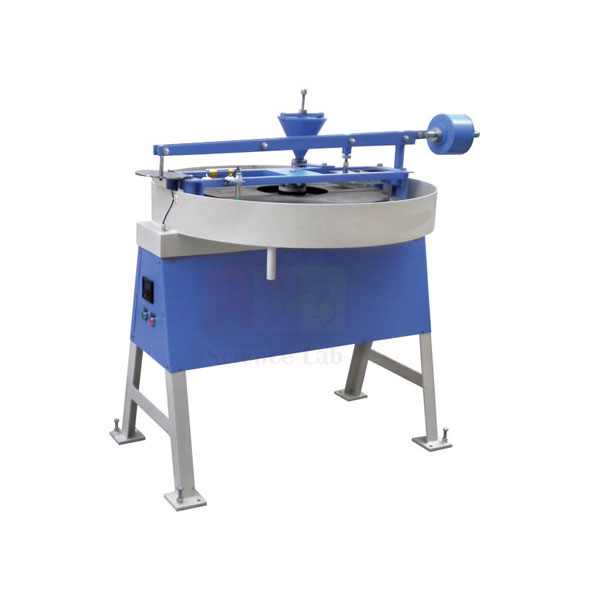
Dorry Abrasion Testing Machine
Dorry Abrasion Testing Machine (Product Code: SLE/CE/96) is a motor-driven rotating disc machine used to measure the abrasion resistance of stone and aggregate specimens pressed against it while sand is fed as the abrasive, in civil engineering and geology laboratories. Engineering colleges and materials labs use it to compare building stones and road aggregates, and its two hoppers and two weighted containers let two specimens run at once. It is made by Jain Scientific Equipments Pvt Ltd (ScienceLab), an OEM manufacturer, at its own factory in Ambala, India.
Specifications
| Parameter | Detail |
|---|---|
| Drive | Disc rotating about a shaft connected to a reduction gear box coupled to a motor |
| Disc speed | 28–30 RPM |
| Sand feed | Two conical hoppers on a bracket fixed to the circular tray, with an arrangement to start and stop the sand flow |
| Sand removal | Tray under the rotating disc with an outlet for removing used sand |
| Specimen loading | Two containers with weights keep the specimens pressed against the disc |
| Power supply | 220 V, 50 cycles, AC |
| Product code | SLE/CE/96 |
| Manufacturer | Jain Scientific Equipments Pvt Ltd (ScienceLab) — OEM |
| Country of origin | India (made in Ambala, Haryana) |
What Is the Dorry Abrasion Tester Used For?
The Dorry test grades the hardness of rock and stone by how quickly it wears when rubbed against a turning disc under a steady stream of sand. Each specimen sits in its weighted container so that it bears on the disc with a constant pressure, the hoppers are opened to feed sand, and the disc turns at 28–30 RPM for the number of revolutions the test calls for. Loss of mass or thickness after the run shows how the stone would resist foot traffic, wheels or flowing water.
Weigh specimens carefully before and after the test, keep the sand dry so it flows evenly from the hoppers, and empty the tray outlet between runs. This machine suits geology and highway-materials teaching in engineering colleges, as well as quality checks on paving and flooring stone at technical institutes.
OEM Manufacturer
Jain Scientific Equipments Private Limited, trading as ScienceLab, makes the Dorry Abrasion Testing Machine as its own OEM product. The disc drive, circular tray, hopper bracket and weighted containers are manufactured and assembled at the company's licensed factory at Saha, Ambala, Haryana, India.
Because buyers deal with the maker rather than a reseller, engineering colleges, laboratories, dealers and importers can take up repeat orders and questions about wear parts directly with the factory. Learn about the company on the ScienceLab profile page.
Related Civil Engineering Lab Equipment
Other wear and abrasion tests often set up in the same laboratory:
- Tile abrasion testing machine — measures wear of floor tiles on a grinding path
- Digital Los Angles Abrasion Testing Machine — drum test for coarse aggregate wear
- Wide Wheel Abrasion Testing Machine — an abrasion test for paving units
- Core Drilling Machine (Motorised) — for cutting stone cores to prepare specimens
Browse the full Civil Engineering Lab Equipment category.
Frequently Asked Questions
How many specimens can the Dorry Abrasion Testing Machine test at once?
The Dorry Abrasion Testing Machine has two conical sand hoppers and is supplied with two containers with weights, so two specimens can be pressed against the rotating disc in the same run. This helps laboratories compare two stones or duplicate a sample.
At what speed does the disc of the Dorry Abrasion Testing Machine rotate?
The disc of the Dorry Abrasion Testing Machine rotates at 28–30 RPM. It is driven through a shaft connected to a reduction gear box that is coupled to the motor, giving a steady, slow speed suited to abrasion testing.
How is sand fed and removed on the Dorry Abrasion Testing Machine?
On the Dorry Abrasion Testing Machine, sand is fed from two conical hoppers mounted on a bracket fixed to the circular tray, with an arrangement to start and stop the flow. Used sand collects in a tray under the disc and leaves through an outlet.
What power supply does the Dorry Abrasion Testing Machine use?
The Dorry Abrasion Testing Machine is suitable for operation on a 220 V, 50 cycles, AC supply. Buyers with a different mains supply should mention it in their enquiry so that we can discuss the requirement before quoting.
Who manufactures the Dorry Abrasion Testing Machine?
The Dorry Abrasion Testing Machine is manufactured by Jain Scientific Equipments Pvt Ltd (ScienceLab) as the OEM, at its own licensed factory in Saha, Ambala, Haryana, India. Quotations and replacement-part questions are handled by the manufacturer directly.
Is abrasive sand supplied with the Dorry Abrasion Testing Machine?
The listing for the Dorry Abrasion Testing Machine does not say that abrasive sand is included. Please confirm your needs through our contact page, and the quotation will list exactly what is supplied with the machine.
Request a Quote
For a quotation on the Dorry Abrasion Testing Machine (SLE/CE/96), send your quantity and supply voltage through our contact page or add the machine to the enquiry cart. Quotes come straight from the manufacturer for India and international markets.
Last updated: 24 September 2026
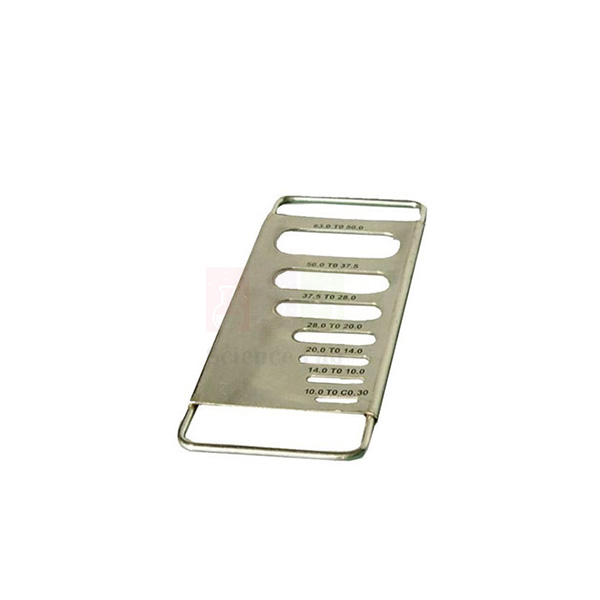
Thickness gauge
Thickness gauge (Product Code: SLE/CE/97) is a slotted gauge used to decide whether individual aggregate particles are flaky, meaning thinner than 0.6 of their nominal size, in civil engineering and highway materials laboratories. Materials labs and engineering colleges use it for flakiness index work; it has seven slots from 4.9 × 30 mm to 33.9 × 100 mm on a 310 × 130 × 10 mm body. It is made by Jain Scientific Equipments Pvt Ltd (ScienceLab), an OEM manufacturer, at its own factory in Ambala, India.
Specifications
| Parameter | Detail |
|---|---|
| Purpose | Identifies flaky aggregate particles (thickness less than 0.6 of nominal size) |
| Number of slots | 7 |
| Slot sizes | 4.9 × 30 mm, 7.2 × 40 mm, 10.2 × 50 mm, 14.4 × 60 mm, 19.7 × 80 mm, 26.3 × 90 mm and 33.9 × 100 mm |
| Dimensions | 310 × 130 × 10 mm |
| Weight | 0.4 kg (approx.) |
| Product code | SLE/CE/97 |
| Manufacturer | Jain Scientific Equipments Pvt Ltd (ScienceLab) — OEM |
| Country of origin | India (made in Ambala, Haryana) |
What Is the Aggregate Thickness Gauge Used For?
Flaky particles break easily under rollers and traffic and reduce the workability of concrete, so specifications limit how many a coarse aggregate may contain. For the flakiness index, the sample is first sieved into size fractions, and each particle of a fraction is tried by hand in the slot that matches that fraction. Particles that pass through the slot are flaky; their total mass as a percentage of the sample mass gives the flakiness index.
The gauge is light and small enough to use at a bench or on site, and one gauge covers all seven fractions. Keep the slot edges clean and free of burrs, and test one fraction at a time to avoid mixing results. It is a practical piece of lab equipment for technical institutes teaching highway materials and concrete technology.
OEM Manufacturer
This Thickness gauge is an OEM item from Jain Scientific Equipments Private Limited, which operates under the ScienceLab name. It is made at the company's own licensed factory at Saha, Ambala, Haryana, India, and supplied factory-direct rather than through a trading intermediary.
Colleges, testing laboratories, dealers and importers can place repeat orders with the manufacturer itself, which is useful when several benches need matching gauges. Read more on the ScienceLab company profile.
Related Civil Engineering Lab Equipment
Aggregate shape testing usually needs these items too:
- Flakiness Sieve Set — slotted sieves for checking whole fractions at once
- Test Sieves — for separating the sample into size fractions first
- Electromagnetic Digital Sieve Shaker — for faster, repeatable grading of the sample
- Shape Index Caliper — another method for assessing particle shape
See the complete range of Civil Engineering Lab Equipment.
Frequently Asked Questions
What slot sizes does the Thickness gauge have?
The Thickness gauge has seven slots: 4.9 × 30 mm, 7.2 × 40 mm, 10.2 × 50 mm, 14.4 × 60 mm, 19.7 × 80 mm, 26.3 × 90 mm and 33.9 × 100 mm. Each slot is used for one size fraction of the aggregate sample.
When is an aggregate particle flaky according to the Thickness gauge?
With the Thickness gauge, a particle is treated as flaky when its thickness is less than 0.6 of its nominal size, which shows up when it passes through the slot for its fraction. The mass of flaky particles gives the flakiness index.
How big and heavy is the Thickness gauge?
The Thickness gauge measures 310 × 130 × 10 mm and weighs about 0.4 kg. Its compact size makes it easy to use at a laboratory bench or to carry to a quarry or site for quick checks.
What is the difference between the Thickness gauge and a flakiness sieve set?
The Thickness gauge is used to test particles individually by hand in its seven slots, which suits teaching and small samples. A flakiness sieve set uses slotted sieves to check a whole fraction at once, which is quicker for larger routine samples.
Who manufactures the Thickness gauge?
The Thickness gauge is manufactured by Jain Scientific Equipments Pvt Ltd (ScienceLab) as the OEM, at its own licensed factory in Saha, Ambala, Haryana, India. Quotations and repeat orders are handled directly by the manufacturer.
What should a quotation request for the Thickness gauge include?
A quotation request for the Thickness gauge should give the number of gauges, any test sieves or related shape-test items you need, and the delivery location. Send it through our contact page or the enquiry cart.
Request a Quote
Get a price for the Thickness gauge (SLE/CE/97) by writing to us through the contact page, or add it to the enquiry cart with your other aggregate test items. Quotes come direct from the manufacturer for India and international markets.
Last updated: 24 September 2026
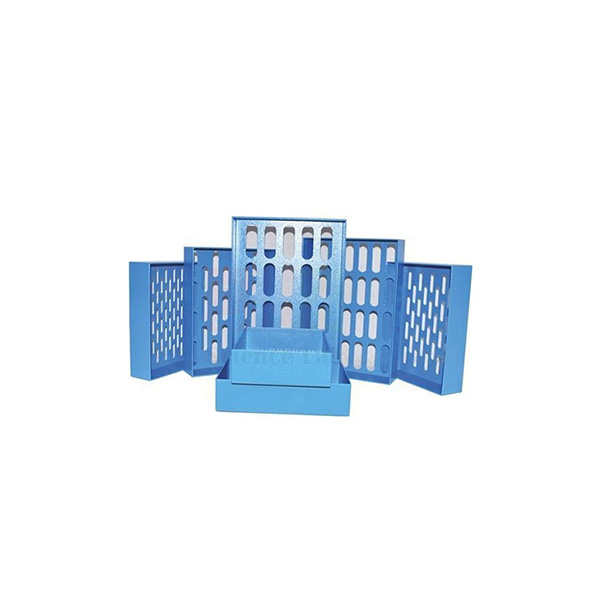
Flakiness Sieve Set
Flakiness Sieve Set (Product Code: SLE/CE/98) is a set of seven slotted steel sieves used to separate flaky particles, those thinner than 0.6 of their mean sieve size, from each size fraction of coarse aggregate in civil engineering and highway materials laboratories. Testing labs and engineering colleges use it for flakiness index testing across fractions from 6.3 to 63 mm, with slot sizes accurate to better than 0.1 mm. It is made by Jain Scientific Equipments Pvt Ltd (ScienceLab), an OEM manufacturer, at its own factory in Ambala, India.
Specifications
| Parameter | Detail |
|---|---|
| Number of sieves | 7 |
| Flakiness criterion | Particle thickness less than 0.6 of its mean sieve size |
| Size fractions covered | Seven fractions from 6.3 mm to 63 mm, each examined separately |
| Aperture sizes listed | 6.3, 10, 14, 20, 28, 37.5, 50 and 63 mm |
| Slot accuracy | Better than 0.1 mm |
| Construction | Heavy gauge steel sheet |
| Finish | Electrostatic paint coating |
| Product code | SLE/CE/98 |
| Manufacturer | Jain Scientific Equipments Pvt Ltd (ScienceLab) — OEM |
| Country of origin | India (made in Ambala, Haryana) |
What Is the Flakiness Sieve Set Used For?
Road and concrete specifications cap the proportion of flat, flaky stones because they crush easily and pack poorly. With this set, the aggregate is first graded into its seven fractions between 6.3 mm and 63 mm; each fraction is then shaken on the slotted sieve made for it, and whatever passes through the slots is flaky. Adding the flaky mass from every fraction and dividing by the total gives the flakiness index.
Because a whole fraction is checked in one go, the set is faster than hand gauging for routine or large samples in commercial and college labs. Brush the slots clear after each use and store the sieves flat so the slot widths stay true. It is dependable engineering lab equipment for institutes preparing students for quality-control work on highways.
What to Specify When Ordering
- Number of complete 7-sieve sets required
- Whether you also need standard test sieves for the initial grading into fractions
- Whether a sieve shaker is wanted for the grading step
OEM Manufacturer
The Flakiness Sieve Set is produced by Jain Scientific Equipments Private Limited, known in the market as ScienceLab, which acts as the OEM. The slotted sieves are formed from heavy gauge steel sheet and finished at the company's own licensed factory at Saha, Ambala, Haryana, India.
Laboratories, colleges, dealers and importers order direct from the manufacturer, and can ask the factory itself about matching repeat sets. For company background, visit the ScienceLab profile.
Related Civil Engineering Lab Equipment
These items complete a flakiness and grading workstation:
- Thickness gauge — a slotted hand gauge for testing particles one by one
- Test Sieves — for dividing the sample into size fractions before slot testing
- Electromagnetic Digital Sieve Shaker — for consistent mechanical grading
- Riffle Sample Divider — for reducing a field sample to test size
Browse all Civil Engineering Lab Equipment.
Frequently Asked Questions
How many sieves are in the Flakiness Sieve Set?
The Flakiness Sieve Set consists of 7 sieves, one for each of the seven aggregate fractions between 6.3 mm and 63 mm. The aperture sizes listed for the set are 6.3, 10, 14, 20, 28, 37.5, 50 and 63 mm.
How accurate are the slots of the Flakiness Sieve Set?
The slot size of each sieve in the Flakiness Sieve Set is accurate to better than 0.1 mm. Accurate slots matter because the test separates particles thinner than 0.6 of their mean sieve size, so small errors would change the flakiness index.
What are the Flakiness Sieve Set sieves made of?
Each sieve in the Flakiness Sieve Set is made from heavy gauge steel sheet and coated with electrostatic paint. The painted finish protects the steel in regular laboratory use; clean and dry the sieves after testing wet or dusty aggregate.
Is the Flakiness Sieve Set used instead of a thickness gauge?
The Flakiness Sieve Set and a thickness gauge do the same job in different ways. The sieve set checks a whole size fraction at once, suiting larger routine samples, while a thickness gauge tests particles one by one, which suits teaching and small samples.
Who manufactures the Flakiness Sieve Set?
The Flakiness Sieve Set is manufactured by Jain Scientific Equipments Pvt Ltd (ScienceLab) as the OEM, at its own licensed factory in Saha, Ambala, Haryana, India. Buyers get quotations and repeat-order support directly from the manufacturer.
What should a quotation request for the Flakiness Sieve Set include?
A quotation request for the Flakiness Sieve Set should state the number of sets, whether grading sieves or a sieve shaker are also needed, and the delivery location. Send the details through our contact page or the enquiry cart.
Request a Quote
To price the Flakiness Sieve Set (SLE/CE/98), contact us through the contact page or add it to the enquiry cart. Quotations come direct from the manufacturer for laboratories and dealers in India and international markets.
Last updated: 24 September 2026
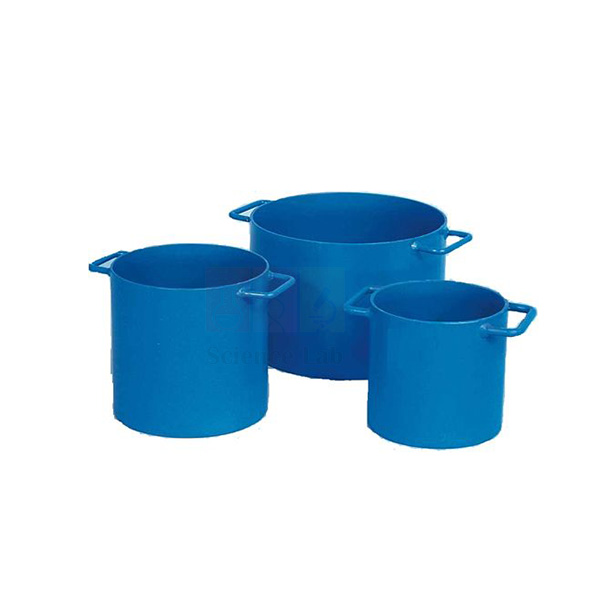
Cylindrical Measures
Cylindrical Measures (Product Code: SLE/CE/99) are calibrated sheet-iron containers of known volume used to determine the bulk density, or unit weight, of fine and coarse aggregates in civil engineering and concrete technology laboratories. Engineering colleges, ready-mix and site labs pick a size to suit the aggregate, choosing from capacities of 3, 5, 7, 10, 15, 20 and 30 litres, each with carrying handles. They are made by Jain Scientific Equipments Pvt Ltd (ScienceLab), an OEM manufacturer, at its own factory in Ambala, India.
Specifications
| Parameter | Detail |
|---|---|
| Purpose | Determination of bulk density (unit weight) of aggregates |
| Construction | Calibrated cylindrical measures of sheet iron with handles |
| Capacities available | 3, 5, 7, 10, 15, 20 and 30 litres |
| Supplied with | One tamping rod, 16 mm diameter × 600 mm long |
| Product code | SLE/CE/99 |
| Manufacturer | Jain Scientific Equipments Pvt Ltd (ScienceLab) — OEM |
| Country of origin | India (made in Ambala, Haryana) |
What Are Cylindrical Measures Used For?
Bulk density tells a mix designer how much aggregate by mass fills a given volume, which is needed to convert between mass and volume batching and to estimate the voids that cement paste must fill. The empty measure is weighed, filled with aggregate either loosely or in layers compacted with the 16 mm tamping rod, struck off level with the rim, and weighed again. Dividing the aggregate mass by the known capacity gives the bulk density.
Larger measures are chosen for coarser aggregate so that the sample represents the material fairly, which is why the range runs from 3 up to 30 litres. Keep the measures dry and dent-free, since damage changes their volume. A full set is practical equipment for laboratories in technical institutes that teach concrete mix design.
What to Specify When Ordering
- Which capacities you need: 3, 5, 7, 10, 15, 20 or 30 litres
- Quantity of each capacity
- Any extra 16 mm × 600 mm tamping rods beyond the one supplied
OEM Manufacturer
Cylindrical Measures in this range are manufactured by Jain Scientific Equipments Private Limited under its ScienceLab brand, as the OEM. The sheet-iron measures and their handles are fabricated at the company's own licensed factory at Saha, Ambala, Haryana, India.
ScienceLab is registered as an MSME manufacturer (Udyam UDYAM-HR-01-0003714), and export shipments are handled under Importer-Exporter Code AAECJ8618A (DGFT). Buyers therefore deal with the maker for quotations and repeat orders; see the ScienceLab company profile for more.
Related Civil Engineering Lab Equipment
Items typically used with these measures in aggregate testing:
- Tamping Rod — a spare rod for compacting aggregate in layers
- Scoops — for filling the measure evenly without segregation
- Density Basket — for weighing aggregate in water to find particle density
- Specific Gravity And Water Absorption of Aggregates — the companion test used in mix design
View the complete Civil Engineering Lab Equipment range.
Frequently Asked Questions
What capacities do the Cylindrical Measures come in?
The Cylindrical Measures are available in capacities of 3, 5, 7, 10, 15, 20 and 30 litres. Smaller measures suit fine aggregate and small samples, while the larger sizes are chosen for coarse aggregate so that the test sample is representative.
What are the Cylindrical Measures made of?
The Cylindrical Measures are calibrated measures made of sheet iron and fitted with handles for lifting when full. Keep them clean, dry and free from dents, because any change in shape alters the internal volume used in the bulk density calculation.
Is a tamping rod included with the Cylindrical Measures?
Yes. The Cylindrical Measures are supplied complete with one tamping rod, 16 mm in diameter and 600 mm long, for compacting the aggregate in layers during the rodded bulk density test. Extra rods can be added to the same quotation.
How is bulk density calculated with the Cylindrical Measures?
With the Cylindrical Measures, bulk density is the mass of aggregate that fills the measure, found by weighing it empty and full, divided by the measure's known capacity. The result is used in concrete mix design and in estimating voids.
Who manufactures the Cylindrical Measures?
The Cylindrical Measures are manufactured by Jain Scientific Equipments Pvt Ltd (ScienceLab) as the OEM, at its own licensed factory in Saha, Ambala, Haryana, India. Quotations, repeat orders and mixed-size orders are handled by the manufacturer directly.
Is a calibration certificate available for the Cylindrical Measures?
Calibration-certificate availability for the Cylindrical Measures is not stated in the listing, so please discuss it with us through the contact page before ordering, naming the capacities you plan to buy.
Request a Quote
Send the capacities and quantities of Cylindrical Measures (SLE/CE/99) you need through our contact page, or add them to the enquiry cart. Quotations come direct from the manufacturer for buyers in India and international markets.
Last updated: 24 September 2026
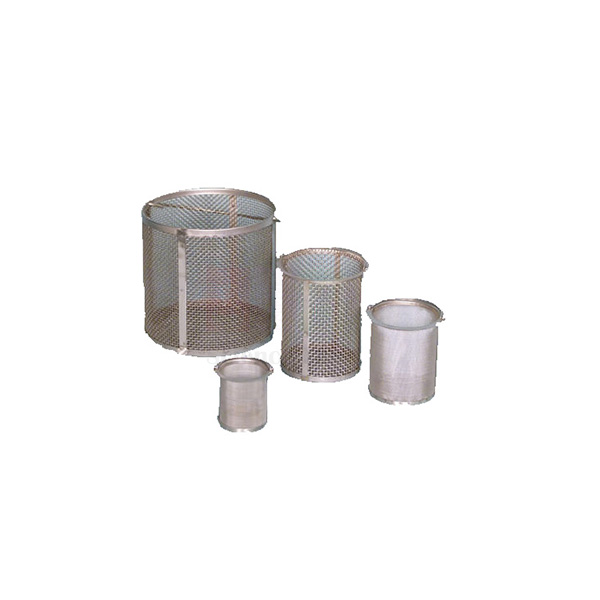
Density Basket
Density Basket (Product Code: SLE/CE/100) is a wire-mesh basket used to hold coarse aggregate while it is weighed under water for specific gravity, density and water absorption tests in civil engineering laboratories. Materials labs and engineering colleges hang it from a buoyancy balance; it is built in brass or GI with 6.3 mm or 4.75 mm stainless steel wire mesh, about 203 mm across and high. It is made by Jain Scientific Equipments Pvt Ltd (ScienceLab), an OEM manufacturer, at its own factory in Ambala, India.
Specifications
| Parameter | Detail |
|---|---|
| Frame material | Brass or GI, ruggedly constructed |
| Mesh | Stainless steel wire mesh, 6.3 mm or 4.75 mm size |
| Construction | Reinforced No. 8 wire mesh |
| Size | Approx. 20 cm diameter × 20 cm high (8 in × 8 in, 203 × 203 mm) |
| Handle | Bail-type handle |
| Net weight | 2 lb (0.91 kg) |
| Product code | SLE/CE/100 |
| Manufacturer | Jain Scientific Equipments Pvt Ltd (ScienceLab) — OEM |
| Country of origin | India (made in Ambala, Haryana) |
What Is the Density Basket Used For?
To find the specific gravity and water absorption of coarse aggregate, a soaked sample is placed in the basket, lowered into water and weighed while fully immersed. The same sample is then surface-dried and weighed in air, and finally oven-dried and weighed again. From these three weights the laboratory calculates particle density, specific gravity and the percentage of water the aggregate absorbs, all of which feed into concrete mix design.
The bail-type handle lets the basket hang freely from the balance hook so it does not touch the sides of the water tank. Choose the 4.75 mm mesh when finer coarse particles must be retained, shake off trapped air before weighing, and rinse the basket after use. It suits engineering lab equipment set-ups in colleges and polytechnics that teach aggregate testing.
What to Specify When Ordering
- Frame material: brass or GI
- Mesh size: 6.3 mm or 4.75 mm stainless steel wire mesh
- Number of baskets required
- Whether a buoyancy balance and water tank are also needed
OEM Manufacturer
ScienceLab, the trading name of Jain Scientific Equipments Private Limited, is the OEM for this Density Basket. The frame, mesh and handle are assembled at the company's own licensed factory at Saha, Ambala, Haryana, India, and sold factory-direct.
Laboratories, institutions, dealers and importers can order mixed materials and mesh sizes from the maker in one quotation and come back to the same manufacturer for repeat baskets. Company background is on the ScienceLab profile.
Related Civil Engineering Lab Equipment
The basket works as part of this specific gravity set-up:
- Buoyancy Balance Apparatus — weighs the basket and sample suspended in water
- Specific Gravity And Water Absorption of Aggregates — the full test set for this procedure
- Cylindrical Measures — for the related bulk density test
- Moisture Tins — for drying and weighing samples
See all Civil Engineering Lab Equipment.
Frequently Asked Questions
What is the Density Basket made of?
The Density Basket is made of brass or GI with stainless steel wire mesh in 6.3 mm or 4.75 mm size, and is described as reinforced No. 8 wire mesh construction. State the frame material and mesh size you prefer when you request a quotation.
What size is the Density Basket?
The Density Basket is approximately 20 cm in diameter and 20 cm high, listed as 8 in by 8 in (203 by 203 mm). Its net weight is 2 lb (0.91 kg), light enough to hang from a balance hook with the sample inside.
What is the Density Basket used for in aggregate testing?
The Density Basket holds a soaked coarse aggregate sample while it is weighed under water. Combined with its saturated surface-dry and oven-dry weights, this gives the aggregate's specific gravity, density and water absorption for concrete mix design.
Does the Density Basket come with a handle?
Yes, the Density Basket comes complete with a bail-type handle. The handle lets the basket hang freely from the balance so that it stays fully immersed without touching the sides or bottom of the water tank during weighing.
Who manufactures the Density Basket?
The Density Basket is manufactured by Jain Scientific Equipments Pvt Ltd (ScienceLab) as the OEM, at its own licensed factory in Saha, Ambala, Haryana, India. Quotations and repeat orders come directly from the manufacturer.
What should a quotation request for the Density Basket include?
A quotation request for the Density Basket should give the frame material, mesh size, number of baskets and delivery location, plus any buoyancy balance or water tank needed. Send it through our contact page or the enquiry cart.
Request a Quote
To get pricing for the Density Basket (SLE/CE/100), share your material, mesh size and quantity on our contact page, or add it to the enquiry cart. Quotations come direct from the manufacturer for India and international markets.
Last updated: 24 September 2026
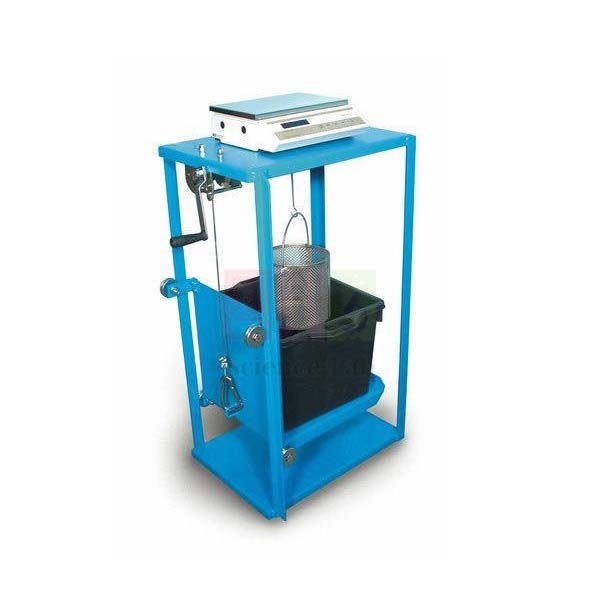
Buoyancy Balance Apparatus
Buoyancy Balance Apparatus (Product Code: SLE/CE/101) is a weighing system that measures a specimen in air and then suspended in water, used to find the specific gravity, density and water absorption of aggregates, concrete and rock in civil engineering laboratories. Materials-testing labs and engineering colleges choose it for its 6000 g capacity with 0.1 g readability and a mechanical lift that raises the water tank to the specimen. It is made by Jain Scientific Equipments Pvt Ltd (ScienceLab), an OEM manufacturer, at its own factory in Ambala, India.
Specifications
| Parameter | Detail |
|---|---|
| Balance capacity × readability | 6000 g × 0.1 g |
| Frame | Rigid support frame incorporating a water tank mounted on a platform |
| Immersion method | Mechanical lifting device raises the water tank through the frame height to immerse the specimen suspended below the balance |
| Dual use | Balance can also be used as a standard weighing device |
| Supplied with | Frame, water tank and suspension hook |
| Power supply | 220–240 V AC, 50–60 Hz, 80 W |
| Product code | SLE/CE/101 |
| Manufacturer | Jain Scientific Equipments Pvt Ltd (ScienceLab) — OEM |
| Country of origin | India (made in Ambala, Haryana) |
What Is the Buoyancy Balance Used For?
The apparatus applies Archimedes' principle: a specimen weighs less in water by exactly the weight of water it displaces, so weighing it in air and immersed gives its volume and hence its density. The specimen, or a wire basket of soaked aggregate, hangs from the suspension hook beneath the balance. After the reading in air, the lifting device raises the tank until the specimen is fully submerged, and the immersed reading is taken without disturbing the hook.
Raising the water rather than lowering the sample keeps the load steady and the readings repeatable, which matters with 0.1 g resolution. When density work is finished, the balance serves as an everyday weighing device, so one bench unit covers both jobs. This makes it versatile laboratory equipment for technical institutes running aggregate, concrete and rock tests.
What to Specify When Ordering
- Number of complete systems (balance, frame, water tank and suspension hook)
- Whether density baskets for aggregate samples are also required
- Confirmation that your mains supply matches 220–240 V AC, 50–60 Hz
OEM Manufacturer
Jain Scientific Equipments Private Limited, which trades as ScienceLab, is the OEM for the Buoyancy Balance Apparatus. The system is made and assembled at the company's own licensed factory at Saha, Ambala, Haryana, India, and supplied direct from there.
Engineering colleges, testing laboratories, dealers and importers receive quotations from the manufacturer itself and can raise questions on spares or additional systems with the same team. Read about the company on the ScienceLab company profile.
Related Civil Engineering Lab Equipment
These items are used with the balance for density and absorption testing:
- Density Basket — holds coarse aggregate on the suspension hook under water
- Specific Gravity And Water Absorption of Aggregates — the complete test set for aggregates
- Buoyancy Balance — an alternative listing for concrete density work
- Concrete Cube Mould — for casting concrete specimens that can be weighed in water
Explore the full Civil Engineering Lab Equipment category.
Frequently Asked Questions
What are the capacity and readability of the Buoyancy Balance Apparatus?
The Buoyancy Balance Apparatus uses a balance with a capacity of 6000 g and a readability of 0.1 g. That range suits aggregate samples in a density basket as well as small concrete or rock specimens weighed in air and in water.
What is supplied with the Buoyancy Balance Apparatus?
The Buoyancy Balance Apparatus is supplied with the balance, a rigid support frame, a water tank mounted on a platform and a suspension hook. A density basket for aggregate is a separate item and can be added to the same quotation.
How is the specimen immersed in the Buoyancy Balance Apparatus?
In the Buoyancy Balance Apparatus, a mechanical lifting device raises the water tank through the height of the frame until the specimen hanging below the balance is fully immersed. The specimen stays on the hook, so the reading is not disturbed.
Can the Buoyancy Balance Apparatus be used for ordinary weighing?
Yes. The balance supplied with the Buoyancy Balance Apparatus may also be used as a standard weighing device, making it a versatile weighing system for the laboratory when density tests are not being run.
What power supply does the Buoyancy Balance Apparatus need?
The Buoyancy Balance Apparatus operates on 220–240 V AC at 50–60 Hz, with a power rating of 80 W. Let us know in your enquiry if your laboratory uses a different mains supply.
Who manufactures the Buoyancy Balance Apparatus?
The Buoyancy Balance Apparatus is manufactured by Jain Scientific Equipments Pvt Ltd (ScienceLab) as the OEM, at its own licensed factory in Saha, Ambala, Haryana, India. For calibration-certificate questions, please ask us through the contact page before ordering.
Request a Quote
For a quotation on the Buoyancy Balance Apparatus (SLE/CE/101), send your quantity and any density baskets needed via our contact page, or add it to the enquiry cart. Quotes come direct from the manufacturer for India and international markets.
Last updated: 24 September 2026
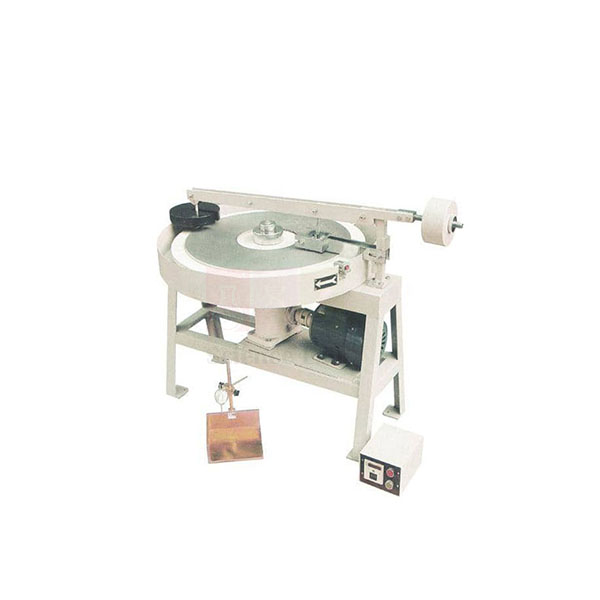
Tile abrasion testing machine
Tile abrasion testing machine (Product Code: SLE/CE/102) is a rotating grinding-path machine used to measure the wear resistance of floor and paving tiles pressed under a set load against an abrasive-strewn track, in civil engineering and building materials laboratories. Tile makers' quality labs and engineering colleges use it for abrasion tests, with the grinding path turning at 30 ±1 revolutions per minute and a counter-balanced lever applying the load. It is made by Jain Scientific Equipments Pvt Ltd (ScienceLab), an OEM manufacturer, at its own factory in Ambala, India.
Specifications
| Parameter | Detail |
|---|---|
| Grinding path | Replaceable grinding path fitted onto a disc rotating on its vertical axis |
| Speed | 30 ±1 revolutions per minute |
| Specimen holding | Bracket holds the tile specimen against the grinding path |
| Loading | Counter-balanced lever; one 7.5 kg weight supplied |
| Abrasive charging | Funnel for spreading abrasive powder on the grinding path |
| Enclosure | Circular tray around the rotating disc and grinding path |
| Counter | Automatic pre-set revolution counter (supplied) |
| Not included | Abrasive powder and thickness gauge |
| Power supply | 230 V, single phase, AC |
| Product code | SLE/CE/102 |
| Manufacturer | Jain Scientific Equipments Pvt Ltd (ScienceLab) — OEM |
| Country of origin | India (made in Ambala, Haryana) |
What Is the Tile Abrasion Tester Used For?
Floor tiles in corridors, factories and public buildings must resist the scouring of grit carried on shoes and wheels, and this machine reproduces that wear in a controlled way. The tile is clamped in the bracket, loaded through the counter-balanced lever with the 7.5 kg weight, and pressed onto the grinding path while abrasive powder is fed through the funnel. The counter is preset so the disc stops after the required number of revolutions.
Wear is found by measuring the tile's thickness before and after the run with a thickness gauge, which you add separately. Spread the abrasive evenly, clean the tray between specimens and replace the grinding path when it becomes worn. The machine is useful engineering lab equipment for building materials courses as well as for factory quality checks on tiles.
What to Specify When Ordering
- Number of machines required
- Whether you need abrasive powder, which is not included (ask us)
- Whether a thickness gauge for measuring tile wear is required, as it is not included
- Any spare grinding paths or extra weights (ask us)
OEM Manufacturer
The Tile abrasion testing machine is produced by Jain Scientific Equipments Private Limited, which trades as ScienceLab, acting as the OEM. The disc drive, grinding path, lever loading and tray are manufactured and assembled at the company's own licensed factory at Saha, Ambala, Haryana, India.
Tile manufacturers, colleges, testing laboratories, dealers and importers buy direct from the factory, and replacement grinding paths or repeat machines can be discussed with the manufacturer itself. Visit the ScienceLab profile for company details.
Related Civil Engineering Lab Equipment
Other surface wear and friction tests used on flooring and paving materials:
- Wide Wheel Abrasion Testing Machine — an abrasion test for paving blocks and flags
- Dorry Abrasion Testing Machine — sand-fed disc test for stone specimens
- Skid Resistance And Friction Tester — measures the slip resistance of finished surfaces
Browse the complete Civil Engineering Lab Equipment range.
Frequently Asked Questions
At what speed does the Tile abrasion testing machine run?
The grinding path of the Tile abrasion testing machine revolves at 30 ±1 revolutions per minute. It is a replaceable path fitted on a disc that rotates on its vertical axis, enclosed by a circular tray that contains the abrasive.
How is the load applied in the Tile abrasion testing machine?
The Tile abrasion testing machine applies load through a counter-balanced lever that presses the tile, held in a bracket, against the grinding path. One 7.5 kg weight is supplied with the machine for loading the specimen.
What is not included with the Tile abrasion testing machine?
The Tile abrasion testing machine is supplied without abrasive powder and without a thickness gauge. It comes complete with an automatic pre-set revolution counter and one 7.5 kg weight; ask us if you need the other items quoted.
How is tile wear measured after testing on the Tile abrasion testing machine?
After a run on the Tile abrasion testing machine, wear is measured with a thickness gauge by comparing the tile's thickness before and after abrasion. The gauge is not part of the supply, so add one to your enquiry if needed.
What power supply does the Tile abrasion testing machine need?
The Tile abrasion testing machine is suitable for operation on a 230 V, single phase, AC supply. Mention your local mains supply in the enquiry if it differs, so we can discuss it before quoting.
Who manufactures the Tile abrasion testing machine?
The Tile abrasion testing machine is manufactured by Jain Scientific Equipments Pvt Ltd (ScienceLab) as the OEM, at its own licensed factory in Saha, Ambala, Haryana, India. Quotations and spare-part queries are handled by the manufacturer directly.
Request a Quote
To receive a price for the Tile abrasion testing machine (SLE/CE/102), send your quantity and any accessories needed through our contact page, or add it to the enquiry cart. Quotes come direct from the manufacturer for India and international markets.
Last updated: 24 September 2026
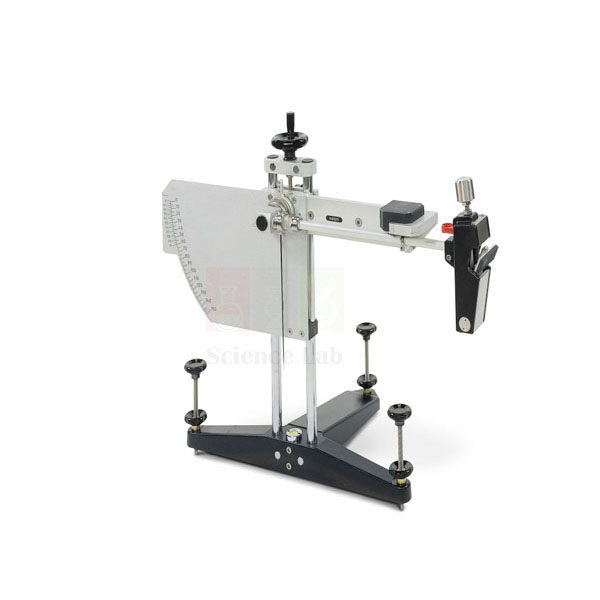
Skid Resistance And Friction Tester
Skid Resistance And Friction Tester (Product Code: SLE/CE/103) is a swinging-arm friction tester used to measure the surface friction and skid resistance of roads, footways, floors and polished aggregate specimens, on site and in civil engineering laboratories. Highway labs and engineering colleges use it for field checks and for polished stone value tests on curved specimens from accelerated polishing, using its additional scale and six rubber sliders. It is made by Jain Scientific Equipments Pvt Ltd (ScienceLab), an OEM manufacturer, at its own factory in Ambala, India.
Specifications
| Parameter | Detail |
|---|---|
| Application | Surface friction measurement on site and in the laboratory; polished stone value tests on curved specimens from accelerated polishing |
| Rocker weight | 1500 ±30 g |
| Rocking centre to centre of gravity | 410 ±5 mm |
| Dimensions listed (with base plate) | 700 × 360 × 70 mm |
| Thermometer | −10 to +110 °C |
| Supplied with | Additional scale for polished stone value specimens; 6 rubber sliders; 1 litre washing bottle for surface wetting; tool set with case for machine assembly; thermometer |
| Product code | SLE/CE/103 |
| Manufacturer | Jain Scientific Equipments Pvt Ltd (ScienceLab) — OEM |
| Country of origin | India (made in Ambala, Haryana) |
What Is the Skid Resistance Tester Used For?
A road, ramp or floor that feels grippy when dry can become dangerous when wet, so engineers measure friction on a wetted surface. The arm carrying a rubber slider is released and swings down so that the slider sweeps across the test surface; the more friction the surface offers, the less the arm rises on the far side, and the pointer records a skid resistance value on the scale. The surface is wetted from the 1 litre washing bottle and its temperature is noted with the thermometer, since rubber behaviour changes with temperature.
In the laboratory, curved aggregate specimens that have been through an accelerated polishing machine are clamped and tested with the additional scale to give the polished stone value, which shows how quickly a road stone will lose its grip under traffic. Check the slider edge before each series and change sliders when worn. The tester is useful engineering lab equipment in India for highway courses and pavement survey teams.
What to Specify When Ordering
- Number of testers required for laboratory or site teams
- Any spare rubber sliders beyond the 6 supplied (ask us)
- Whether an accelerated polishing machine is needed to prepare polished stone value specimens
OEM Manufacturer
ScienceLab, the brand of Jain Scientific Equipments Private Limited, is the original equipment manufacturer of this Skid Resistance And Friction Tester. It is made and assembled at the company's own licensed factory at Saha, Ambala, Haryana, India, and shipped factory-direct.
Institutional buyers completing vendor forms can use GSTIN 06AAECJ8618A1ZT and LEI 3358004HRD1JIVXKYX49. Colleges, highway laboratories, dealers and importers can take up spare sliders or repeat orders with the manufacturer itself; more is on the ScienceLab profile.
Related Civil Engineering Lab Equipment
These items support pavement surface and aggregate polishing tests:
- Accelerated Polishing Machine — prepares the curved polished specimens for the PSV test
- Straight Edge (3 meter) — checks surface regularity on the same pavement
- Travelling Beam Device — for surveying road surface evenness
- Tile abrasion testing machine — measures wear of flooring tiles whose slip resistance is also tested
See all Civil Engineering Lab Equipment.
Frequently Asked Questions
What is supplied with the Skid Resistance And Friction Tester?
The Skid Resistance And Friction Tester is supplied with an additional scale for polished stone value specimens, 6 rubber sliders, a 1 litre washing bottle for wetting the surface, a tool set with case for assembling the machine, and a thermometer reading −10 to +110 °C.
Can the Skid Resistance And Friction Tester be used on site?
Yes. The Skid Resistance And Friction Tester is suitable for both site and laboratory applications, so it can measure the friction of roads, footways and floors in place, and of prepared specimens on the bench.
What is the polished stone value scale on the Skid Resistance And Friction Tester?
The additional scale on the Skid Resistance And Friction Tester is used when testing curved aggregate specimens taken from accelerated polishing tests. The reading gives the polished stone value, which indicates how well a road stone keeps its grip as traffic polishes it.
What are the key pendulum dimensions of the Skid Resistance And Friction Tester?
The Skid Resistance And Friction Tester has a rocker weight of 1500 ±30 g, and the distance between its rocking centre and centre of gravity is 410 ±5 mm. The dimensions listed with its base plate are 700 × 360 × 70 mm.
Who manufactures the Skid Resistance And Friction Tester?
The Skid Resistance And Friction Tester is manufactured by Jain Scientific Equipments Pvt Ltd (ScienceLab) as the OEM, at its own licensed factory in Saha, Ambala, Haryana, India. Quotations and spare-slider questions go directly to the manufacturer.
Is a calibration certificate available for the Skid Resistance And Friction Tester?
Calibration-certificate availability for the Skid Resistance And Friction Tester is not stated in its listing. Please discuss your requirement with us through the contact page before ordering, and mention the test method you follow.
Request a Quote
Request a quotation for the Skid Resistance And Friction Tester (SLE/CE/103) through our contact page, or add it to the enquiry cart. Prices come direct from the manufacturer for buyers in India and international markets.
Last updated: 24 September 2026
326.jpg)
Core Drilling Machine (Motorised)
Core Drilling Machine (Motorised) (Product Code: SLE/CE/104) is an electric core drill used to cut cylindrical cores from hardened concrete, masonry and rock for strength testing and structural inspection in civil engineering laboratories and on construction sites. Testing labs, consultants and engineering colleges use it with core bits from 25 mm to 150 mm in diameter, driven by a 2800 W motor running at 840 rpm without load. It is supplied by Jain Scientific Equipments Pvt Ltd (ScienceLab), Ambala, India.
Specifications
| Parameter | Detail |
|---|---|
| Bit capacity | 25 mm to 150 mm diameter |
| Max. bit diameter (as listed) | Ø50 mm / 100 mm / 150 mm |
| Rated voltage | ~220 V / 50 Hz |
| Power input | 2800 W |
| No-load speed | 840 rpm |
| Spindle thread | 1 1/4″ UNC (male) |
| Protection | Friction clutch and overload current protection for the motor |
| Gearing | High-strength gear for long periods of continuous drilling |
| Water swivel | Externally set water swivel seal for easy replacement when worn |
| Build | Compact and light, designed for safe, smooth and stable drilling |
| Product code | SLE/CE/104 |
| Supplied by | Jain Scientific Equipments Pvt Ltd (ScienceLab), Ambala, India |
What Is the Motorised Core Drill Used For?
Cores drilled from an existing slab, beam, column or pavement are the most direct way to check the strength and quality of concrete in a finished structure. The drill cuts an annular groove with a hollow core bit, and the cylinder left inside is broken off and taken to the laboratory for compression testing, density or depth checks. Water fed through the swivel cools the bit and flushes out cutting slurry while the drill runs.
Choose the bit diameter to suit the aggregate size and the test you plan, from 25 mm for small checks to 150 mm for larger cores. Keep the water supply steady, feed the bit gently rather than forcing it, and let the friction clutch slip if the bit binds. Replace the swivel seal once it starts to leak. As a laboratory instruments supplier in India, we quote this drill to colleges and testing labs alongside the equipment used to test the cores.
What to Specify When Ordering
- Number of drilling machines required
- Core bit diameters you need within the 25–150 mm capacity (ask us about bits)
- Confirmation that your site or lab supply is ~220 V / 50 Hz
- Any spare water swivel seals (ask us)
Supplier
Jain Scientific Equipments Private Limited, trading as ScienceLab, supplies the Core Drilling Machine (Motorised) as part of its civil engineering testing range for institutions, laboratories and contractors. The company sources the drill and handles enquiries, quotations and dispatch from Ambala, Haryana, for buyers across India and international markets. Read more about the company on the ScienceLab company profile.
Related Civil Engineering Lab Equipment
Items commonly used before and after coring a concrete structure:
- Core Drilling Machine (Petrol) — an alternative for sites without mains power
- Concrete cover meter — helps locate reinforcement before choosing where to drill
- Automatic digital compression testing machine — for crushing the extracted cores
- Ultrasonic Pulse Velocity Tester — non-destructive testing to guide core locations
Browse the full Civil Engineering Lab Equipment range.
Frequently Asked Questions
What core bit sizes can the Core Drilling Machine (Motorised) take?
The Core Drilling Machine (Motorised) has a bit capacity of 25 mm to 150 mm diameter, and its maximum bit diameter is listed as Ø50 mm / 100 mm / 150 mm. The spindle has a 1 1/4″ UNC male thread for fitting the core bit.
What power does the Core Drilling Machine (Motorised) need?
The Core Drilling Machine (Motorised) is rated for ~220 V / 50 Hz with a power input of 2800 W, and its no-load speed is 840 rpm. Check that your site generator or laboratory supply can deliver this load before drilling.
How is the motor of the Core Drilling Machine (Motorised) protected?
The Core Drilling Machine (Motorised) is equipped with a friction clutch and overload current protection to protect the motor. If the bit jams in hard aggregate or steel, the clutch slips instead of passing the full shock to the gearbox and motor.
Are core bits included with the Core Drilling Machine (Motorised)?
The listing for the Core Drilling Machine (Motorised) does not state which core bits are included. Please tell us the diameters you need through our contact page, and the quotation will state exactly what is supplied.
Who supplies the Core Drilling Machine (Motorised)?
The Core Drilling Machine (Motorised) is supplied by Jain Scientific Equipments Pvt Ltd (ScienceLab), Ambala, Haryana, India. The company sources it for engineering colleges, testing laboratories and contractors and quotes it to buyers in India and international markets.
Request a Quote
To get a price for the Core Drilling Machine (Motorised) (SLE/CE/104), send the quantity and bit sizes you need through our contact page, or add it to the enquiry cart. We quote to buyers in India and international markets.
Last updated: 24 September 2026
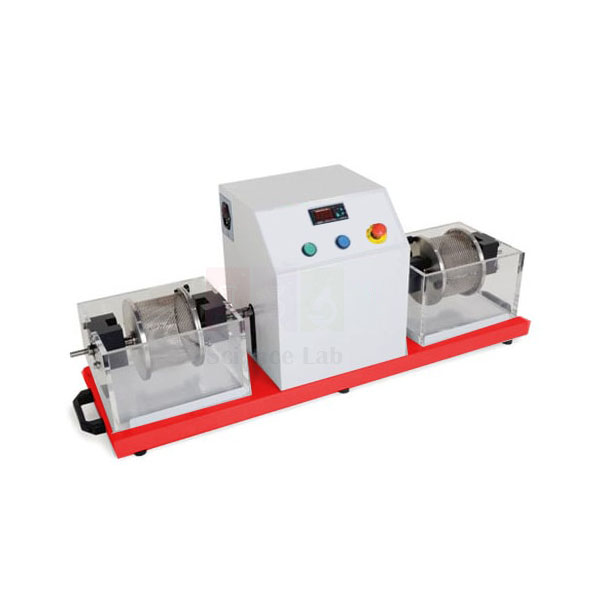
Slake Durability Test Apparatus
Slake Durability Test Apparatus (Product Code: SLE/CE/105) is a motorised drum-tumbling apparatus used to measure how well shale and similar soft rocks resist breaking down during wetting and drying cycles, in civil engineering, geotechnical and geology laboratories. Rock mechanics labs and engineering colleges use it to assess material for embankments and other construction work; its drive turns two or four 2.00 mm mesh drums at 20 rpm through water. It is made by Jain Scientific Equipments Pvt Ltd (ScienceLab), an OEM manufacturer, at its own factory in Ambala, India.
Specifications
| Parameter | Detail |
|---|---|
| Drive unit | Motorised drive mounted on a baseplate |
| Drums driven | Two or four drums |
| Drum speed | 20 rpm |
| Test drums | 2.00 mm mesh, 140 mm diameter × 100 mm long |
| Water level | Tank assemblies filled with water to 20 mm below the drum axis |
| Test cycle | Samples tumbled in the mesh drums through water and oven-dried, for two cycles |
| Result | Slake durability index, calculated from the sample's dry mass before and after the cycles |
| Product code | SLE/CE/105 |
| Manufacturer | Jain Scientific Equipments Pvt Ltd (ScienceLab) — OEM |
| Country of origin | India (made in Ambala, Haryana) |
What Is the Slake Durability Apparatus Used For?
Some rocks look sound when freshly excavated but crumble once they are exposed to rain and sun, which can undermine embankments, cuttings and fills. The slake durability test simulates this weathering. Oven-dried rock lumps are weighed and placed in a mesh drum, the drum turns at 20 rpm in its water tank with the water 20 mm below the axis, and fragments smaller than the 2.00 mm mesh wash out. The retained material is oven-dried and weighed, and the cycle is repeated a second time.
The change in dry mass across the two cycles gives the slake durability index, a simple figure for comparing how different shales and mudstones will behave in service. Running four drums lets a class or lab test several samples together. Brush the mesh clean after each test so the openings stay clear, and use a suitable laboratory oven for the drying stages.
What to Specify When Ordering
- Whether you need the drive set up for two drums or four drums
- Number of spare 2.00 mm mesh test drums (ask us)
- Whether a laboratory oven for the drying stages is also required
OEM Manufacturer
This Slake Durability Test Apparatus is manufactured by Jain Scientific Equipments Private Limited, whose trading name is ScienceLab, as the OEM. The drive unit, baseplate, tanks and mesh drums are produced at the company's own licensed factory at Saha, Ambala, Haryana, India.
Universities, geotechnical laboratories, dealers and importers order direct from the maker, which means extra drums or repeat units can be discussed with the factory itself. More company information is on the ScienceLab profile page.
Related Civil Engineering Lab Equipment
Rock testing laboratories often use these alongside the slake durability test:
- Digital Point Load Test Apparatus — measures rock strength on irregular lumps or cores
- Oven, 43 litre — a laboratory oven for drying samples between cycles
- Moisture Tins — for holding and weighing samples during drying
- Dorry Abrasion Testing Machine — assesses the abrasion resistance of harder stone
View all Civil Engineering Lab Equipment.
Frequently Asked Questions
How many drums can the Slake Durability Test Apparatus run?
The Slake Durability Test Apparatus has a motorised drive unit on a baseplate that can rotate two or four drums at a speed of 20 rpm. Four drums let a laboratory test several rock samples at the same time.
What size are the drums of the Slake Durability Test Apparatus?
The test drums of the Slake Durability Test Apparatus are made from 2.00 mm mesh and measure 140 mm in diameter by 100 mm long. Rock fragments smaller than the mesh wash out through the drum during tumbling.
How much water goes into the Slake Durability Test Apparatus tanks?
The tank assemblies of the Slake Durability Test Apparatus are filled with water to a level 20 mm below the drum axis. The drums therefore turn partly submerged, so the sample is repeatedly wetted as it tumbles.
What rocks is the Slake Durability Test Apparatus used for?
The Slake Durability Test Apparatus is used for shale and similar soft rocks that are used in embankments and other construction applications. The test simulates weathering to show their abrasion resistance during wetting and drying cycles.
Who manufactures the Slake Durability Test Apparatus?
The Slake Durability Test Apparatus is manufactured by Jain Scientific Equipments Pvt Ltd (ScienceLab) as the OEM, at its own licensed factory in Saha, Ambala, Haryana, India. Quotations and spare-drum questions are handled by the manufacturer directly.
What should a quotation request for the Slake Durability Test Apparatus include?
A quotation request for the Slake Durability Test Apparatus should state the two-drum or four-drum set-up, the number of units, any spare drums and the delivery location. Send it through our contact page or the enquiry cart.
Request a Quote
For a price on the Slake Durability Test Apparatus (SLE/CE/105), send your drum configuration and quantity via our contact page, or add it to the enquiry cart. Quotations come direct from the manufacturer for India and international markets.
Last updated: 24 September 2026
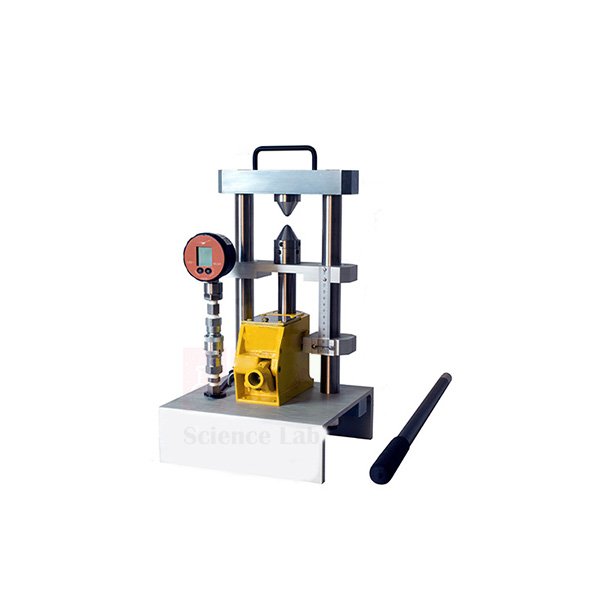
Digital Point Load Test Apparatus
Digital Point Load Test Apparatus (Product Code: SLE/CE/106) is a rock-strength testing frame used to split core and lump specimens between two conical platens and record the failure load in rock mechanics and civil engineering laboratories. Engineering colleges and geotechnical labs use it for quick strength-index testing, and its 60 kN hand-pump load frame adjusts for samples up to 102 mm in diameter. It is made by Jain Scientific Equipments Pvt Ltd (ScienceLab), an OEM and engineering lab equipment manufacturer, at its own factory in Ambala, India.
Specifications
| Parameter | Detail |
|---|---|
| Load frame capacity | 60 kN |
| Loading system | Hydraulic loading ram driven by a hand pump |
| Platens | Conical platens |
| Platen distance measurement | Ruler assembled on the frame for direct reading before and after the test |
| Specimen size | Adjustable frame for samples up to 102 mm diameter |
| Load sensing | Pressure transducer connected to a digital display unit |
| Load range | 0–60 kN |
| Digital display | 2 x 16 characters |
| Resolution | 32 000 divisions |
| Accuracy | ± 1% |
| Load pacer | Included |
| Measurement units | Load in kN and stress in MPa |
| Data output | Serial port for PC connection |
| Product code | SLE/CE/106 |
| Manufacturer | Jain Scientific Equipments Pvt Ltd (ScienceLab) — OEM |
| Country of origin | India (made in Ambala, Haryana) |
What Is the Point Load Test Apparatus Used For?
The point load test is a fast way to estimate the strength of rock without cutting and grinding specimens to precise shapes. A core or lump is seated between the conical platens, the hand pump drives the hydraulic ram until the specimen splits, and the peak load together with the platen separation is used to work out the point load strength index. Students see rock failure within minutes, and site-investigation labs use the result to screen cores before slower compressive-strength testing.
For consistent results, note the platen gap on the frame-mounted ruler before loading and again after failure, and use the load pacer to keep the loading rate steady. The display shows load in kN or stress in MPa, and the serial port lets readings pass to a PC for lab reports — useful where engineering lab equipment in India is shared by large student batches.
What to Specify When Ordering
- Quantity of apparatus per laboratory and the delivery location.
- The largest specimen you will test (the frame adjusts for samples up to 102 mm diameter).
- Whether you will log results on a PC through the serial port, so we can confirm connection requirements.
- Any spare conical platens you want quoted with the apparatus.
OEM Manufacturer
ScienceLab is the trading name of Jain Scientific Equipments Private Limited, the OEM (original equipment manufacturer) of this Digital Point Load Test Apparatus. The apparatus is made and assembled at the company's own licensed factory at Saha, Ambala, Haryana, India, so buyers deal with the manufacturer rather than a trader.
Engineering colleges, polytechnics, testing laboratories, dealers and importers in India and international markets are supplied factory-direct. If you need spare platens or a repeat order later, ask us and the manufacturer handles it directly. Learn more on the ScienceLab company profile.
Related Civil Engineering Lab Equipment
Rock and aggregate test programmes usually pair the point load test with the following apparatus:
- Slake Durability Test Apparatus — checks how weak rocks resist wetting and drying, alongside strength-index results.
- Core Drilling Machine (Motorised) — extracts cores that can then be tested in the point load frame.
- Automatic Digital Compression Testing Machine — for full compressive-strength tests on prepared specimens.
- Aggregate Crushing Value Apparatus — assesses crushed rock intended for road and concrete aggregate.
Browse the complete Civil Engineering Lab Equipment range for soil, concrete, cement and rock testing.
Frequently Asked Questions
What does the Digital Point Load Test Apparatus measure?
The Digital Point Load Test Apparatus measures the load at which a rock specimen fails between two conical platens, over a 0–60 kN range, while a ruler on the frame gives the platen distance before and after the test for calculating the strength index.
What specimen size can the Digital Point Load Test Apparatus test?
The Digital Point Load Test Apparatus has an adjustable frame that accepts samples up to 102 mm in diameter. If your cores or lumps are larger, contact us with their dimensions before ordering so we can advise on suitability.
How accurate is the digital readout?
The Digital Point Load Test Apparatus reads load through a pressure transducer with ± 1% accuracy and a resolution of 32 000 divisions, shown on a 2 x 16 character display in kN or MPa, with a load pacer to help keep loading steady.
Can the Digital Point Load Test Apparatus connect to a computer?
Yes. The Digital Point Load Test Apparatus has a serial port for PC connection, so readings can be transferred for record keeping and lab reports. Tell us which computer setup you use when requesting a quote so we can confirm the connection details.
Who manufactures the Digital Point Load Test Apparatus?
The Digital Point Load Test Apparatus is manufactured by Jain Scientific Equipments Pvt Ltd (ScienceLab), an OEM that makes it at its own licensed factory at Saha, Ambala, Haryana, India, and supplies it factory-direct to colleges, laboratories, dealers and importers.
Is a calibration certificate available for this apparatus?
Calibration-certificate availability for the Digital Point Load Test Apparatus should be discussed with us before you order. Share your documentation requirement through our contact page and we will confirm what can be provided with your quotation.
What should a quotation request for the point load tester include?
A quotation request for the Digital Point Load Test Apparatus should state the quantity, the largest specimen size you test, whether PC connection is needed and the delivery location in India or abroad, so the manufacturer can quote accurately.
Request a Quote
To order the Digital Point Load Test Apparatus, send your requirement through our contact page or add it to the enquiry cart. Quotations come direct from the manufacturer for single units, college laboratory set-ups and export orders.
Last updated: 24 September 2026
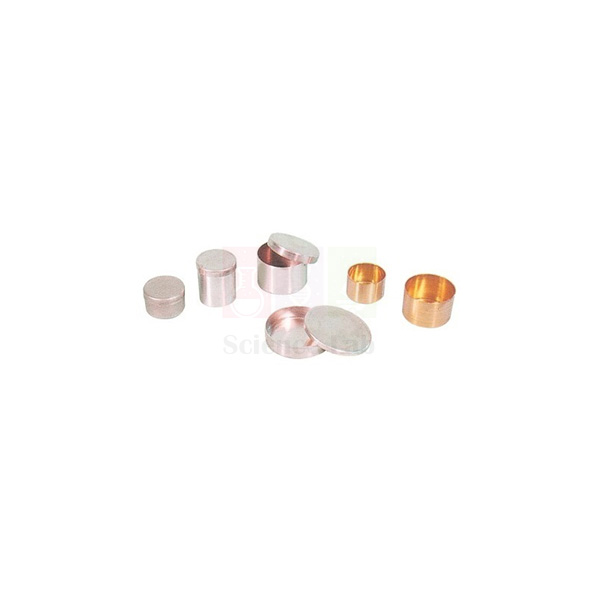
Moisture Tins
Moisture Tins (Product Code: SLE/CE/107) are small metal sample containers used to determine the moisture content of soil and other materials by weighing and oven drying in civil engineering and soil mechanics laboratories. Geotechnical labs, colleges and site laboratories use them in sets, choosing aluminium or stainless steel in five diameters from 25 mm to 100 mm. They are made by Jain Scientific Equipments Pvt Ltd (ScienceLab), an OEM and technical educational equipment manufacturer, at its own factory in Ambala, India.
Specifications
| Parameter | Detail |
|---|---|
| Purpose | Determining the moisture content of soil and other materials |
| Material | Aluminium or stainless steel |
| Sizes available | 25 mm, 50 mm, 75 mm, 80 mm and 100 mm diameter |
| Product code | SLE/CE/107 |
| Manufacturer | Jain Scientific Equipments Pvt Ltd (ScienceLab) — OEM |
| Country of origin | India (made in Ambala, Haryana) |
What Is the Moisture Tin Used For?
Moisture content is one of the most frequently measured soil properties, and the oven-drying method depends on a clean, numbered container. The empty tin is weighed, the wet sample is added and weighed, and the tin goes into a drying oven until the mass stops changing. After cooling it is weighed again, and the water lost divided by the dry soil mass gives the moisture content as a percentage.
Students meet this step in liquid limit and plastic limit tests, compaction tests and field density work with core cutters. Mark each tin and record its empty mass before use; smaller 25 mm and 50 mm tins suit the few grams taken in limit tests, while 80 mm and 100 mm tins hold larger or coarser samples. Colleges usually buy them in quantity, as routine lab equipment for college soil laboratories in India, so that several groups can dry samples at the same time.
What to Specify When Ordering
- Diameter: 25, 50, 75, 80 or 100 mm (several sizes can be combined in one order).
- Material: aluminium or stainless steel.
- Quantity required for each size, based on the number of student groups or daily samples.
- Delivery location, for freight planning within India or for export.
OEM Manufacturer
Jain Scientific Equipments Private Limited, trading as ScienceLab, is the OEM (original equipment manufacturer) of these Moisture Tins. ScienceLab is the trading name of the company (CIN U29309HR2020PTC087597), and the tins are produced at its licensed factory at 449, HSIIDC Industrial Area, Saha, Ambala, Haryana (Factory Licence AMB-ONLINE-CHD-J-414).
Because the tins come straight from the manufacturer, soil laboratories, engineering colleges, dealers and importers in India and international markets can order mixed sizes factory-direct, and add matching tins to an existing set later — just ask us. More about the company is on the ScienceLab company profile.
Related Civil Engineering Lab Equipment
A moisture content determination also needs drying, weighing and cooling equipment, and moisture tins are used in several soil tests:
- Oven, 43 litre — dries the filled tins to constant mass.
- Compact Balance — weighs small tins before and after drying.
- Vacuum Desiccator — lets dried samples cool without picking up moisture from the air.
- Liquid limit devices (Casagrande) — a consistency-limit test whose samples go into moisture tins.
- Core cutters — field density sampling that also calls for a moisture content check.
See the full Civil Engineering Lab Equipment range for more soil testing apparatus.
Frequently Asked Questions
What sizes do the Moisture Tins come in?
Moisture Tins are available in 25 mm, 50 mm, 75 mm, 80 mm and 100 mm diameters, so a laboratory can match the tin to the sample quantity each soil test needs and keep several sizes on hand for different procedures.
What materials are the Moisture Tins made from?
Moisture Tins are made from aluminium or stainless steel. Aluminium tins are light to handle in large numbers, while stainless steel gives a harder-wearing option; state which material you prefer when you ask for a quotation.
How are Moisture Tins used to find soil moisture content?
Moisture Tins are weighed empty, weighed again with the wet sample, then oven dried until the mass is constant and reweighed after cooling. The water lost divided by the dry soil mass, multiplied by 100, gives the moisture content in percent.
Can Moisture Tins be used for materials other than soil?
Yes. Moisture Tins are intended for determining the moisture content of soil and other materials, so the same containers can be used for other granular samples that are dried and weighed in a civil engineering or materials laboratory.
Who manufactures the Moisture Tins?
The Moisture Tins are manufactured by Jain Scientific Equipments Pvt Ltd (ScienceLab), which makes them as the OEM at its own licensed factory at Saha, Ambala, Haryana, India, and supplies them factory-direct to laboratories, colleges, dealers and importers.
What should a quotation request for Moisture Tins include?
A quotation request for Moisture Tins should list the diameters needed, aluminium or stainless steel, the quantity for each size and the delivery location in India or abroad, so the manufacturer can quote a complete set in one reply.
Request a Quote
Send your Moisture Tins requirement through our contact page or add the item to the enquiry cart. You receive the quotation directly from the manufacturer, whether you need one size for a single lab or mixed sets for several institutions.
Last updated: 24 September 2026
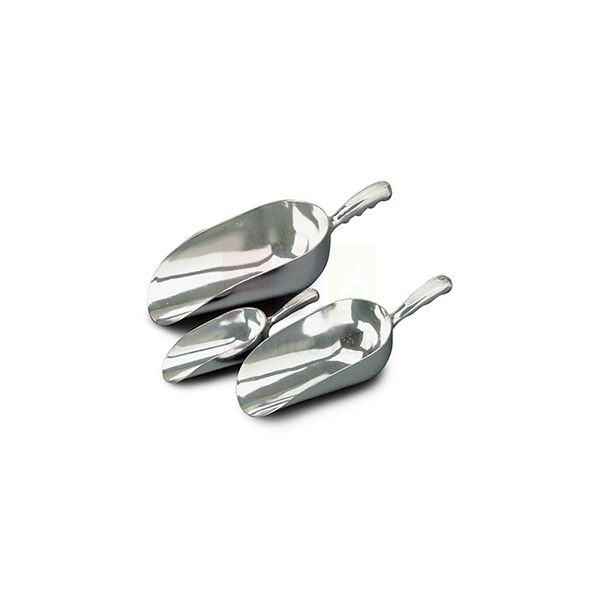
Scoops
Scoops (Product Code: SLE/CE/108) are hand scoops used to transfer soil, sand, aggregate and cement between bags, sample dividers, sieves, measures and moulds in civil engineering and materials testing laboratories. College and site labs keep several sizes, from 325 cc for small portions up to 5000 cc for bulk aggregate, in stainless steel or aluminium. They are made by Jain Scientific Equipments Pvt Ltd (ScienceLab), an OEM lab equipment manufacturer in India, at its own factory in Ambala.
Specifications
| Parameter | Detail |
|---|---|
| Capacities available | 325 cc, 500 cc, 1000 cc, 2000 cc and 5000 cc |
| Material of construction | Stainless steel or aluminium |
| Product code | SLE/CE/108 |
| Manufacturer | Jain Scientific Equipments Pvt Ltd (ScienceLab) — OEM |
| Country of origin | India (made in Ambala, Haryana) |
What Is the Laboratory Scoop Used For?
In soil, concrete and highway testing, a sample is handled many times: from the sack or stockpile into a sample divider, then into sieves, measures, moulds and drying trays. A scoop keeps that handling tidy and helps avoid losing fine particles, which can change test results. The 325 cc and 500 cc sizes suit cement, sand and fine soil portions, while the 2000 cc and 5000 cc sizes move coarse aggregate quickly, for example when filling a cylindrical measure for bulk density.
Keep separate scoops for cement and for soil so that one material does not contaminate the next test, and clean and dry each scoop after use. Stainless steel suits wet samples and frequent washing, while aluminium keeps the larger sizes light. Scoops are easy to leave off a lab equipment list, so colleges often order them together with sieves, measures and sample dividers.
What to Specify When Ordering
- Capacity: 325, 500, 1000, 2000 or 5000 cc (sizes can be mixed).
- Material: stainless steel or aluminium.
- Quantity for each size, based on the number of test benches or student groups.
- Other apparatus you want quoted at the same time, such as sieves or measures.
OEM Manufacturer
These Scoops are produced by Jain Scientific Equipments Private Limited, the company behind the ScienceLab name, acting as OEM (original equipment manufacturer) at its own licensed factory at Saha, Ambala, Haryana, India. They are not bought in from a trader: the same company that makes them issues your quotation.
Soil and concrete laboratories, engineering colleges, dealers and importers in India and international markets order them factory-direct, and matching sizes for a repeat order can be requested from the manufacturer at any time — just ask us. Read more on the ScienceLab company profile.
Related Civil Engineering Lab Equipment
Scoops are used with the apparatus that holds, divides and measures samples:
- Riffle Sample Divider — splits a scooped bulk sample into representative halves.
- Test Sieves — receive the divided sample for grading.
- Cylindrical Measures — filled with aggregate by scoop for bulk density checks.
- Bulk density of cement — a cement test where small scoops are handy for filling.
- Moisture Tins — hold scooped soil portions for oven drying.
Explore the full Civil Engineering Lab Equipment range for soil, aggregate and concrete testing.
Frequently Asked Questions
What capacities are the Scoops available in?
The Scoops are available in 325 cc, 500 cc, 1000 cc, 2000 cc and 5000 cc capacities, so a laboratory can use small sizes for cement and fine soil portions and the larger sizes for coarse aggregate batches.
What are the Scoops made of?
The Scoops are made of stainless steel or aluminium. Stainless steel is a good match for wet samples and regular washing, while aluminium keeps the bigger scoops lighter to handle; mention your preferred material when you enquire.
Which scoop size should a civil engineering lab choose?
Most civil engineering labs keep more than one size of Scoops: 325 cc or 500 cc for cement and fine material, 1000 cc or 2000 cc for general soil work, and 5000 cc for bulk aggregate. Tell us which tests you run and we can suggest a mix.
How should Scoops be looked after between tests?
Scoops should be emptied fully, cleaned and dried after every use so that residue from one sample does not enter the next. Keeping separate scoops for cement and soil further reduces the risk of contaminating test samples.
Who manufactures the Scoops?
The Scoops are manufactured by Jain Scientific Equipments Pvt Ltd (ScienceLab), an OEM that makes them at its own licensed factory at Saha, Ambala, Haryana, India, and supplies them factory-direct to laboratories, colleges, dealers and importers.
Can Scoops be ordered in bulk for several laboratories?
Yes. Scoops can be ordered in mixed capacities and materials for several laboratories, dealers or institutional orders. Share the sizes, quantities and delivery location in India or abroad, and the manufacturer will prepare a single quotation.
Request a Quote
For a price on Scoops, write to us through the contact page or place them in the enquiry cart with any other items you need. The quotation is prepared directly by the manufacturer.
Last updated: 24 September 2026
30.jpg)
Water Bath (6 Holes)
Water Bath (6 Holes) (Product Code: SLE/CE/109) is a double-walled, thermostatically controlled water bath used to hold flasks, bottles and small containers at a set temperature up to 100 °C in civil engineering, chemistry and materials testing laboratories. Its six openings with 75 mm concentric-ring lids let several samples be conditioned side by side over a stainless steel inner tank. It is made by Jain Scientific Equipments Pvt Ltd (ScienceLab), an OEM manufacturer, at its own factory in Ambala, India.
Specifications
| Parameter | Detail |
|---|---|
| Number of holes | 6 (this listing); 4-hole and 12-hole versions are also listed |
| Lid | Concentric rings, 75 mm diameter |
| Temperature range | +5 to 100 °C (as listed) |
| Temperature controller | Thermostatic rotary knob |
| Display | LED display |
| Construction | Double walled |
| Inner material | Stainless steel |
| External material | Powder coated GI sheet |
| Power supply | 220 V, 50 Hz |
| Product code | SLE/CE/109 |
| Manufacturer | Jain Scientific Equipments Pvt Ltd (ScienceLab) — OEM |
| Country of origin | India (made in Ambala, Haryana) |
What Is the 6-Hole Water Bath Used For?
Many civil engineering and materials tests require a sample, bottle or solution to reach a known temperature before a reading is taken. A multi-hole water bath does this gently and evenly: specific gravity bottles can be brought to test temperature, and bitumen or other samples conditioned before physical tests. The concentric rings let each opening be reduced to suit smaller vessels, and unused openings stay covered to limit heat loss and evaporation.
Fill the tank with water before switching on, set the rotary thermostat and watch the LED display while the bath settles; a separate thermometer in the water confirms the actual temperature. Distilled water helps reduce scale on the stainless steel tank, which should be drained and wiped dry after use. When planning a water bath for a lab in India or abroad, the six-hole size sits between the 4-hole and 12-hole versions, trading capacity against bench space.
What to Specify When Ordering
- Number of holes: 6 for this listing, or ask about the 4-hole and 12-hole versions.
- The working temperature your tests need, within the listed +5 to 100 °C range.
- Your mains supply, since the bath is listed for 220 V, 50 Hz.
- Quantity and delivery location in India or abroad.
OEM Manufacturer
The Water Bath (6 Holes) is manufactured by Jain Scientific Equipments Private Limited, which trades as ScienceLab and is the OEM (original equipment manufacturer) for this model. The double-walled bath is made and assembled at the company's own licensed factory at Saha, Ambala, Haryana, India.
Schools, colleges, testing laboratories, dealers and importers in India and international markets buy it factory-direct. Replacement concentric rings or additional baths for an existing lab can be requested from the manufacturer itself — ask us. The ScienceLab company profile has more about the company.
Related Civil Engineering Lab Equipment
These items are often used with, or instead of, a multi-hole water bath:
- Specific Gravity Bottles — brought to test temperature in the bath before weighing.
- Digital Thermometer — an independent check of the water temperature.
- Kinematic Viscometer Bath — a dedicated bath for viscosity testing of bitumen and oils.
- Circulating water bath with cooler unit — the choice when tests need temperatures below room temperature.
See the full Civil Engineering Lab Equipment range, or compare other models in the Water Bath category.
Frequently Asked Questions
How many holes does the Water Bath (6 Holes) have?
The Water Bath (6 Holes) has six openings, each closed by concentric rings of 75 mm diameter that can be removed to fit different vessels. Four-hole and twelve-hole versions are also listed, so ask us if another size suits your lab better.
What temperature range does the Water Bath (6 Holes) cover?
The Water Bath (6 Holes) is listed for +5 to 100 °C, set with a thermostatic rotary knob and shown on an LED display. For a heating-only bath the lower figure is normally read as 5 °C above room temperature, so confirm low set points with us.
What is the Water Bath (6 Holes) made of?
The Water Bath (6 Holes) has double-walled construction with a stainless steel inner tank that holds the water and an outer body of powder coated GI sheet, a combination suited to daily use on laboratory benches.
What power supply does the Water Bath (6 Holes) need?
The Water Bath (6 Holes) is listed for a 220 V, 50 Hz power supply. If your laboratory or export destination uses different mains, mention it in your enquiry so the manufacturer can advise before you order.
Who manufactures the Water Bath (6 Holes)?
The Water Bath (6 Holes) is manufactured by Jain Scientific Equipments Pvt Ltd (ScienceLab), the OEM, at its own licensed factory at Saha, Ambala, Haryana, India, and is supplied factory-direct to schools, colleges, laboratories, dealers and importers.
Is a calibration certificate available for the Water Bath (6 Holes)?
Calibration-certificate availability for the Water Bath (6 Holes) should be discussed with us before ordering. Explain your documentation needs through the contact page and we will confirm what can accompany your quotation.
Request a Quote
Ask for a quotation for the Water Bath (6 Holes) through our contact page, or add it to the enquiry cart together with bottles or thermometers. Quotes come direct from the manufacturer.
Last updated: 24 September 2026
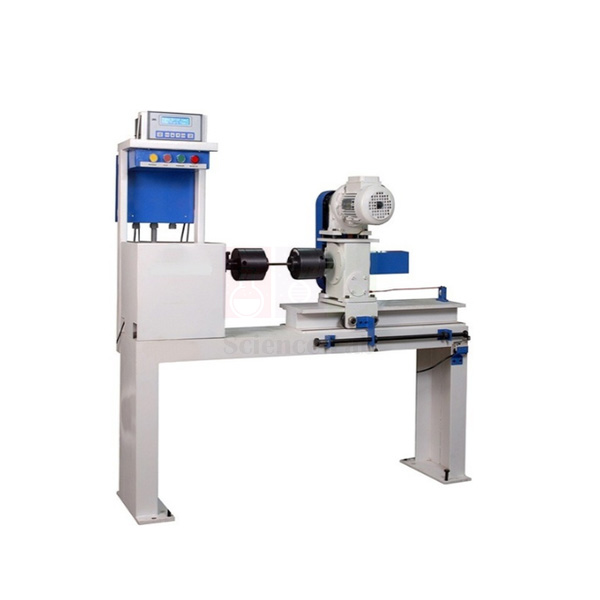
Digital Torsion Testing Machine
Digital Torsion Testing Machine (Product Code: SLE/CE/110) is a motorised test machine used to twist round and flat bar specimens while recording torque and angle of twist, in strength of materials and civil engineering laboratories. Engineering colleges use it to study torsional strength and shear behaviour, and it is listed in five capacities from 100 Nm to 2000 Nm with ± 1% torque accuracy. It is made by Jain Scientific Equipments Pvt Ltd (ScienceLab), an OEM producing lab equipment for technical institutes, at its own factory in Ambala, India.
Specifications
| Parameter | Detail |
|---|---|
| Torque measurement | Torque cell; one range with high resolution throughout |
| Angle of twist measurement | Rotary encoder, read to 0.1 degree |
| Drive | Geared motor applying torque to the specimen through a gear box |
| Display | Torque and angle of twist on the LCD of the Data Acquisition System (DAS) |
| PC connection | Facility to connect the DAS panel to a PC |
| Torque accuracy | ± 1% from 4% to 100% of machine capacity |
| Maximum torque capacity | 100, 200, 500, 1000 or 2000 Nm |
| Torque resolution | 0.01, 0.02, 0.05, 0.1 or 0.2 Nm (same model order) |
| Distance between grips | 0–400, 0–450, 0–500, 0–600 or 0–1000 mm (same model order) |
| Torsion speed and direction | 1.5 RPM, with reverse |
| Grips for round bars | 4–50 mm diameter |
| Grips for flat bars | 2–60 mm (thickness and width, as listed) |
| Power supply | 3 phase, 440 V, 50 Hz, AC motor (rating to be confirmed at quotation) |
| Product code | SLE/CE/110 |
| Manufacturer | Jain Scientific Equipments Pvt Ltd (ScienceLab) — OEM |
| Country of origin | India (made in Ambala, Haryana) |
What Is the Torsion Testing Machine Used For?
In a torsion test the specimen is clamped at both ends and one grip is turned slowly by the geared motor while the torque cell measures the resisting torque and the encoder tracks the angle of twist. Plotting torque against angle shows the elastic region, the onset of yielding and the maximum torque before fracture, from which students work out the modulus of rigidity and torsional strength. It connects classroom theory on shafts and twisting members with real material behaviour.
Choose a capacity so that the expected failure torque falls between 4% and 100% of the machine rating, the band in which the ± 1% accuracy applies. Measure specimen diameter or thickness before clamping, set the grip spacing to suit the specimen length, and connect the DAS panel to a PC when you want to keep torque-angle records for reports. The machine needs a 3 phase, 440 V supply, so check the laboratory wiring in advance.
What to Specify When Ordering
- Maximum torque capacity: 100, 200, 500, 1000 or 2000 Nm, matched to your strongest specimen.
- Specimen types: round bars of 4–50 mm diameter and/or flat bars in the 2–60 mm range.
- Grip spacing you need (up to 1000 mm on the largest listed model).
- Whether you will connect the DAS panel to a PC, and that a 3 phase, 440 V supply is available.
OEM Manufacturer
ScienceLab is the trading name of Jain Scientific Equipments Private Limited, the OEM (original equipment manufacturer) of the Digital Torsion Testing Machine. The machine is built at the company's own licensed factory at Saha, Ambala, Haryana, India, so colleges deal directly with the maker rather than a reseller.
Universities, polytechnics, testing laboratories, dealers and importers in India and international markets are supplied factory-direct, and questions about grips, spare parts or additional machines go straight to the manufacturer — just ask us. The ScienceLab company profile explains more about the company.
Related Civil Engineering Lab Equipment
A strength of materials laboratory usually runs torsion tests alongside these machines and tools:
- Tensile strength testing machine — measures tensile strength and elongation of the same bar materials.
- Impact Testing Machine-Digital — adds toughness results to the materials comparison.
- Flexure Testing Machine Digital — covers bending strength of beam and prism specimens.
- Caliper Vernier (Metal) — for measuring specimen diameter and thickness before each test.
Find more apparatus in Civil Engineering Lab Equipment and in Materials Testing and Properties.
Frequently Asked Questions
What torque capacities does the Digital Torsion Testing Machine come in?
The Digital Torsion Testing Machine is listed with maximum torque capacities of 100, 200, 500, 1000 and 2000 Nm, with torque resolution from 0.01 Nm on the smallest model to 0.2 Nm on the largest. Choose the capacity that suits your strongest specimens.
How accurate is the Digital Torsion Testing Machine?
The Digital Torsion Testing Machine measures torque with a torque cell to ± 1% accuracy between 4% and 100% of machine capacity, and reads the angle of twist through a rotary encoder to 0.1 degree, both shown on the DAS display.
What specimens can the Digital Torsion Testing Machine grip?
The Digital Torsion Testing Machine has grips for round bars of 4–50 mm diameter and for flat bars in the 2–60 mm range, with a distance between grips of up to 400 mm on the smallest model and up to 1000 mm on the largest.
Can torsion test data be saved to a computer?
Yes. The Digital Torsion Testing Machine has a facility for connecting its Data Acquisition System panel to a PC, while the LCD on the panel shows torque and angle of twist live during the test. Tell us your PC setup when you request a quote.
What power supply does the Digital Torsion Testing Machine need?
The Digital Torsion Testing Machine runs on a 3 phase, 440 V, 50 Hz supply through an AC motor. The motor rating is not stated in the current listing, so ask us to confirm it for the capacity you choose before planning the installation.
Who manufactures the Digital Torsion Testing Machine?
The Digital Torsion Testing Machine is manufactured by Jain Scientific Equipments Pvt Ltd (ScienceLab), the OEM, at its own licensed factory at Saha, Ambala, Haryana, India, and supplied factory-direct to colleges, laboratories, dealers and importers.
Is a calibration certificate available with the torsion testing machine?
Calibration-certificate availability for the Digital Torsion Testing Machine should be discussed with us before ordering. Send your documentation requirement through the contact page and we will confirm what can be supplied with the quotation.
Request a Quote
Request a quotation for the Digital Torsion Testing Machine through our contact page or the enquiry cart, stating the capacity and specimen sizes you need. The quotation comes straight from the manufacturer.
Last updated: 24 September 2026
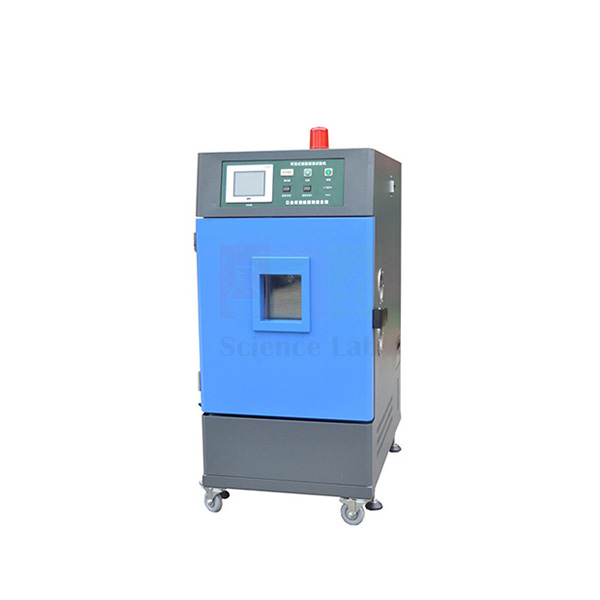
Humidity Chamber
Humidity Chamber (Product Code: SLE/CE/111) is a temperature- and humidity-controlled cabinet used to keep specimens and materials at a set relative humidity for conditioning and observation in civil engineering, materials and research laboratories. Testing labs and colleges rely on it when conditions must stay steady over long periods; it creates humidity by steam injection, cools with a hermetically sealed compressor and has a 112 L base capacity. It is supplied by Jain Scientific Equipments Pvt Ltd (ScienceLab), Ambala, India.
Specifications
| Parameter | Detail |
|---|---|
| Capacity | 112 L (4 cu ft) |
| Inner size options (W x D x H) | 455 x 410 x 610 mm, 505 x 415 x 830 mm, 570 x 550 x 875 mm, 650 x 580 x 900 mm |
| Humidity | 55% to 90% RH, ± 5% |
| Humidity range at cool temperatures | 5% above ambient, from 55% to 95% RH, ± 3% RH |
| Humidity creation | Steam injection |
| Humidity controller | Digital humidity indicator-cum-controller |
| Temperature control | Microprocessor-based digital temperature controller cum indicator; PID control with Pt 100 sensor; automatic |
| Temperature range | To be confirmed at quotation (not clearly stated in the current listing) |
| Air circulation | Forced convection type, with precision air ducting for positive air flow |
| Cooling | Hermetically sealed compressor with CFC-free refrigerant |
| Inner chamber | Highly polished stainless steel sheet, with stainless steel adjustable shelves |
| Outer body | Mild steel, powder coated |
| Insulation | PUF insulation between inner and outer walls to limit thermal loss |
| Doors | Two doors: inner full-length transparent door, and double-walled main door with sturdy hinges and magnetic gasket |
| Electric supply | 220/230 V AC, 50/60 Hz |
| Product code | SLE/CE/111 |
| Supplied by | Jain Scientific Equipments Pvt Ltd (ScienceLab), Ambala, India |
What Is the Humidity Chamber Used For?
Many construction and engineering materials change their behaviour as they gain or lose moisture, so specimens often have to be held at a known humidity before, or during, a test. A humidity chamber provides that controlled atmosphere: steam injection raises the relative humidity, the compressor and forced-convection ducting keep temperature and air movement steady across the shelves, and the digital controllers hold the set points automatically. Typical uses include conditioning cement, mortar and other building material specimens and observing how samples respond to damp conditions over time.
Let the chamber stabilise at its set points before loading, and leave space between items on the adjustable shelves so air can circulate. The inner transparent door lets you inspect specimens without fully disturbing the conditions, and the magnetic gasket on the main door should be kept clean for a good seal. When adding lab equipment for research or teaching, check your 220/230 V AC supply and the floor space needed for the inner size you choose.
What to Specify When Ordering
- Inner size: 455 x 410 x 610, 505 x 415 x 830, 570 x 550 x 875 or 650 x 580 x 900 mm.
- The humidity and temperature set points your tests need, so we can confirm suitability.
- Your electric supply (the chamber is listed for 220/230 V AC, 50/60 Hz).
- Quantity and delivery location in India or abroad.
Supplier
ScienceLab is the trading name of Jain Scientific Equipments Private Limited, which supplies this Humidity Chamber to colleges, research institutions, testing laboratories, dealers and importers in India and international markets. One enquiry covers the chamber together with the specimen moulds and curing equipment a civil engineering laboratory usually needs.
For vendor registration, the supplying company holds Importer-Exporter Code AAECJ8618A (DGFT) and GSTIN 06AAECJ8618A1ZT. More about the company is on the ScienceLab company profile.
Related Civil Engineering Lab Equipment
These items are commonly used with a humidity chamber in materials and concrete laboratories:
- Cement curing bench-type cabinet — a dedicated moist-curing cabinet for cement specimens.
- Accelerated Curing Tank — for water-based accelerated curing of concrete cubes.
- Concrete Cube Mould — casts the specimens that are later conditioned and tested.
- Oven, 43 litre — for drying samples when a test calls for dry rather than humid conditions.
Browse the full Civil Engineering Lab Equipment range for curing, conditioning and testing apparatus.
Frequently Asked Questions
What humidity range does the Humidity Chamber provide?
The Humidity Chamber is listed for 55% to 90% RH with ± 5% tolerance, and for 55% to 95% RH at ± 3% RH at cool temperatures, starting from 5% above ambient. Humidity is created by steam injection and held by a digital indicator-cum-controller.
What sizes is the Humidity Chamber available in?
The Humidity Chamber has a listed capacity of 112 L (4 cu ft), and inner sizes (W x D x H) of 455 x 410 x 610 mm, 505 x 415 x 830 mm, 570 x 550 x 875 mm and 650 x 580 x 900 mm are offered.
What temperature range does the Humidity Chamber cover?
The temperature range of the Humidity Chamber is not clearly stated in the current listing, so please ask us to confirm it for the model you choose. Temperature is held automatically by a microprocessor-based PID controller with a Pt 100 sensor.
How does the Humidity Chamber keep conditions uniform?
The Humidity Chamber uses forced convection with precision air ducting for positive air flow, PUF insulation between its walls, a hermetically sealed compressor with CFC-free refrigerant and a double-walled main door with magnetic gasket to hold conditions steady.
Who supplies the Humidity Chamber?
The Humidity Chamber is supplied by Jain Scientific Equipments Pvt Ltd (ScienceLab), Ambala, India, to colleges, research institutions, testing laboratories, dealers and importers in India and international markets, with quotations issued on request.
Is a calibration certificate available for the Humidity Chamber?
Calibration-certificate availability for the Humidity Chamber should be discussed with us before ordering. Share your documentation needs through the contact page and we will confirm what can be provided with the quotation.
Request a Quote
To receive a quotation for the Humidity Chamber, contact us through the contact page or add it to the enquiry cart, mentioning the inner size and set points you require.
Last updated: 24 September 2026
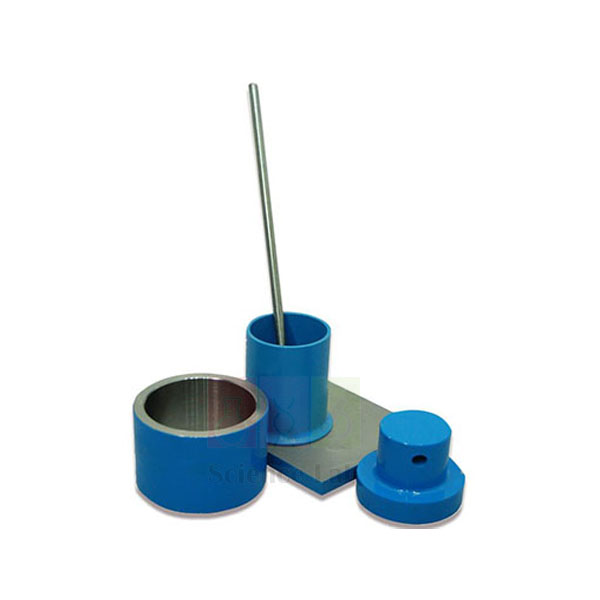
Aggregate Crushing Value Apparatus.
Aggregate Crushing Value Apparatus (Product Code: SLE/AG/01) is a steel cylinder-and-plunger test set used to measure the relative resistance of coarse aggregate to crushing under a gradually applied compressive load in civil engineering laboratories. Polytechnics and highway labs use this engineering lab equipment to compare stone sources; its 150 mm cylinder takes a 148 mm plunger, with base plate, metal measure and tamping rod included. It is made by Jain Scientific Equipments Pvt Ltd (ScienceLab), an OEM manufacturer, at its own factory in Ambala, India.
Specifications
| Parameter | Detail |
|---|---|
| Test purpose | Relative measure of the resistance of an aggregate to crushing under a gradually applied compressive load |
| Set consists of | Steel cylinder, plunger, base plate, cylindrical measure and tamping rod |
| Cylinder | M.S. cylindrical container, 150 mm ± 0.5 mm dia x 130 mm to 140 mm high |
| Base plate | 200 to 230 mm square x 6 mm thick |
| Plunger | 148 mm ± 0.5 mm dia x 100 to 115 mm high |
| Metal measure | 1 no., 115 ± 0.5 mm dia x 180 ± 0.5 mm high |
| Tamping rod | 16 mm dia x 600 mm long, both ends rounded |
| Construction | All parts powder coated or galvanized steel, heat treated and ground before manufacturing for durability |
| Product code | SLE/AG/01 |
| Manufacturer | Jain Scientific Equipments Pvt Ltd (ScienceLab) — OEM |
| Country of origin | India (made in Ambala, Haryana) |
What Is the Aggregate Crushing Value Apparatus Used For?
The metal measure is filled with prepared aggregate to fix the quantity used for each test. That aggregate is placed in the cylinder in layers, each compacted with the tamping rod, and the plunger is seated level on the surface. The assembly on its base plate goes into a compression testing machine and the load is applied steadily as your test method sets out. After unloading, the crushed material is sieved and the fines are weighed; fines as a percentage of the original sample mass give the crushing value, so a lower figure means a tougher aggregate.
Because the set is simple and robust, it is common lab equipment for technical institutes where students run the test in groups. Use the same measure and tamping routine for every sample so results can be compared, keep the cylinder bore and plunger face free of grit so the plunger does not bind, and wipe all parts dry after cleaning.
OEM Manufacturer
ScienceLab is the trading name of Jain Scientific Equipments Private Limited, the OEM (original equipment manufacturer) of this crushing value set. The apparatus is made at the company's own licensed factory at Saha, Ambala, Haryana, India, rather than bought in from a trader, and it is supplied factory-direct to colleges, testing laboratories, dealers and importers. If you later need a replacement plunger or tamping rod, ask us and the request goes straight to the maker. Read more on the ScienceLab company profile.
Related Civil Engineering Lab Equipment
A crushing value test depends on a representative dry sample, a loading machine and careful sieving. These items fit the same workflow:
- Automatic digital compression testing machine — a compression machine of the kind used to apply the gradually increasing load to the cylinder and plunger.
- Aggregate Impact Tester — a companion toughness test in which a falling hammer strikes the aggregate instead of a slow load.
- Riffle Sample Divider — reduces a large field sample to a representative portion before it goes into the measure.
- Test Sieves — for separating the fines produced by crushing so they can be weighed.
- Oven, 43 litre — dries the aggregate before testing so moisture does not distort the result.
For more aggregate, concrete and soil testing apparatus, browse the Civil Engineering Lab Equipment category.
Frequently Asked Questions
What is included with the Aggregate Crushing Value Apparatus?
The Aggregate Crushing Value Apparatus consists of a steel cylinder, a plunger, a base plate, one cylindrical metal measure of 115 ± 0.5 mm dia x 180 ± 0.5 mm high, and a tamping rod 16 mm in diameter and 600 mm long with both ends rounded.
Is a compression testing machine supplied with the Aggregate Crushing Value Apparatus?
No. The Aggregate Crushing Value Apparatus is the cylinder, plunger and accessories only; the load is applied with a separate compression testing machine. If you need help matching the set to the machine in your laboratory, contact us before ordering.
How do the cylinder and plunger of the Aggregate Crushing Value Apparatus fit together?
The cylinder of the Aggregate Crushing Value Apparatus is 150 mm ± 0.5 mm in diameter and the plunger is 148 mm ± 0.5 mm, so the plunger slides inside the cylinder and bears evenly on the compacted aggregate during loading.
How should the Aggregate Crushing Value Apparatus be looked after?
Brush all fines out of the Aggregate Crushing Value Apparatus after each test, wash off any mud, dry every part fully and store the plunger beside the cylinder so that its face and the cylinder bore are not knocked or scratched.
Who manufactures the Aggregate Crushing Value Apparatus?
The Aggregate Crushing Value Apparatus is manufactured by Jain Scientific Equipments Pvt Ltd (ScienceLab), the OEM, at its own licensed factory at Saha, Ambala, Haryana, India. Quotations, repeat orders and replacement-part requests are handled directly by the manufacturer.
Can a calibration or inspection certificate be provided with the Aggregate Crushing Value Apparatus?
Please discuss documentation for the Aggregate Crushing Value Apparatus with us through our contact page before ordering. We will confirm what can be supplied with your specific order rather than promise a document in advance.
What should a quotation request for the Aggregate Crushing Value Apparatus include?
Give the product code SLE/AG/01, the number of sets, the delivery address in India or abroad and any tender specification the Aggregate Crushing Value Apparatus must match, so the dimensions can be checked against your requirement.
Request a Quote
For pricing and availability, send your requirement through our contact page or add this apparatus to the enquiry cart with the other items for your material testing lab. Quotations come directly from ScienceLab as the manufacturer.
Last updated: 24 September 2026
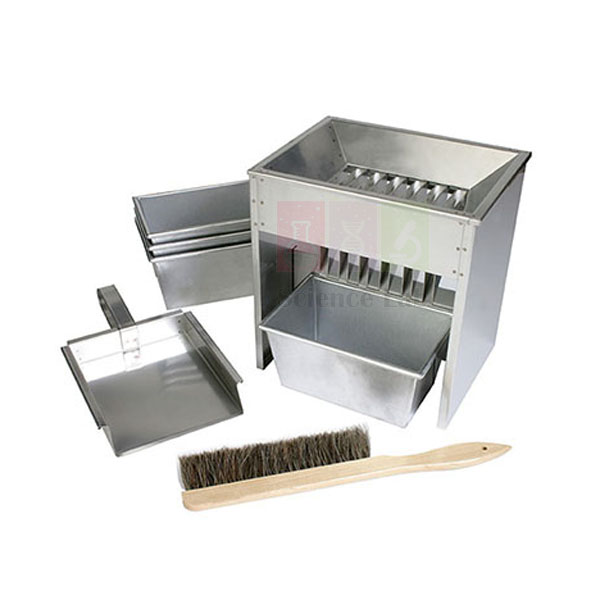
Sample Splitter
Sample Splitter (Product Code: SLE/AG/02) is a hopper-fed sample divider used to reduce test samples that are too large in volume to be handled conveniently in aggregate and soil testing laboratories. Site labs and engineering colleges choose it for bulky material, because its 30 litre clam shell hopper takes anything from sand sizes up to 108 mm. It is made by Jain Scientific Equipments Pvt Ltd (ScienceLab), an OEM lab equipment manufacturer in India, at its own factory in Ambala.
Specifications
| Parameter | Detail |
|---|---|
| Purpose | Reduction of test samples too large in volume to be conveniently handled |
| Material size handled | Any material from sand sizes up to 108 mm dia. |
| Hopper | Clam shell hopper, 30 litres capacity |
| Supplied with | Two collecting pans |
| Finish | Totally cadmium plated for rust protection |
| Construction | Very sturdily constructed |
| Product code | SLE/AG/02 |
| Manufacturer | Jain Scientific Equipments Pvt Ltd (ScienceLab) — OEM |
| Country of origin | India (made in Ambala, Haryana) |
What Is the Sample Splitter Used For?
The bulk sample is mixed and spread evenly in the clam shell hopper while it is closed. Opening the hopper releases the load in one even stream, and the splitter divides it into two halves, each caught in its own collecting pan. One pan is set aside and the other is passed through again until the portion is about the size the test method asks for. Splitting this way keeps the grading of the smaller portion close to that of the original stockpile, which is far more reliable than scooping material off the surface of a bag.
Colleges setting up a highway or concrete materials course usually buy a splitter early, since sieve analysis, specific gravity and crushing tests all start from a reduced sample. Load the hopper evenly across its full width, and empty both pans completely between passes so that no fines are lost.
OEM Manufacturer
Jain Scientific Equipments Private Limited, which trades as ScienceLab, is the original equipment manufacturer (OEM) of this Sample Splitter. The unit is built at the company's own licensed factory at Saha, Ambala, Haryana, India, and dispatched from there to laboratories, contractors, dealers and importers. Because you deal with the maker directly, questions about the hopper, the pans or a repeat order are answered by the people who build the splitter. Company background is on the ScienceLab profile page.
Related Civil Engineering Lab Equipment
Once a bulk sample has been reduced, these items carry the work forward:
- Riffle Sample Divider — a chute-type divider offered in sizes from 7 mm to 75 mm for smaller or finer portions.
- Test Sieves — for grading the reduced portion by particle size.
- Electromagnetic Digital Sieve Shaker — gives a vertical sieving motion designed for sand and aggregates.
- Aggregate Crushing Value Apparatus — a strength test that needs a representative coarse aggregate portion.
- Scoops — stainless steel or aluminium scoops for loading and handling the sample.
Other aggregate, concrete and soil testing products are listed in the Civil Engineering Lab Equipment category.
Frequently Asked Questions
What particle sizes can the Sample Splitter handle?
The Sample Splitter handles any material from sand sizes up to 108 mm diameter, so a single unit can reduce fine sand as well as coarse aggregate and crushed stone samples collected from a stockpile or site.
How much material does the Sample Splitter hopper hold?
The clam shell hopper of the Sample Splitter has a capacity of 30 litres. Larger stockpile samples can be reduced in more than one batch, provided every batch is split in the same way.
What is supplied with the Sample Splitter?
The Sample Splitter is supplied complete with two collecting pans, one for each half of the divided sample, so the retained half can be passed through the splitter again straight away.
Will the Sample Splitter rust in a wet site laboratory?
The Sample Splitter is totally cadmium plated for rust protection and very sturdily constructed. Even so, brush out damp material after use and store the unit dry so that the plated finish stays in good condition.
Should I choose the Sample Splitter or the Riffle Sample Divider?
The Sample Splitter suits bulky samples, with its 30 litre hopper and material up to 108 mm, while the Riffle Sample Divider is offered in a range of sizes for smaller portions. If unsure, tell us your material and sample sizes.
Who manufactures the Sample Splitter?
The Sample Splitter is manufactured by Jain Scientific Equipments Pvt Ltd (ScienceLab), the OEM, at its own licensed factory in Saha, Ambala, Haryana, India, and is supplied factory-direct to laboratories, contractors, dealers and importers.
Can you supply several Sample Splitters for a project or tender?
Yes. ScienceLab quotes Sample Splitters in quantity for institutions, contractors and dealers across India and international markets; share the number of units and the delivery location for a consolidated quotation from the manufacturer.
Request a Quote
Send your enquiry for the Sample Splitter through our contact form, or add it to the enquiry cart with the rest of your aggregate testing list. Your quotation comes direct from the manufacturer.
Last updated: 24 September 2026
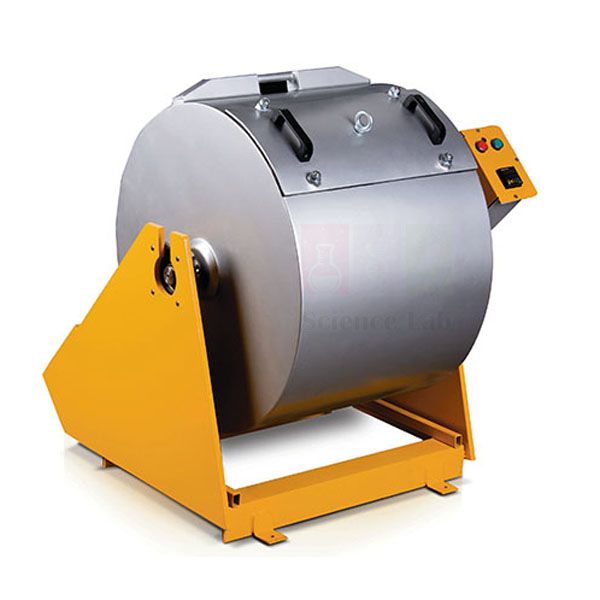
Los Angeles Abrasion Testing Machine
Los Angeles Abrasion Testing Machine (Product Code: SLE/AG/03) is a motor-driven rotating drum used to measure the resistance of coarse aggregate to abrasion and impact in highway and civil engineering laboratories. Road research labs, colleges and quarries run it with a charge of twelve hardened steel balls of about 48 mm, the drum turning at 30–33 rpm through a heavy reduction gear. It is made by Jain Scientific Equipments Pvt Ltd (ScienceLab), an OEM engineering lab equipment manufacturer, at its own factory in Ambala, India.
Specifications
| Parameter | Detail |
|---|---|
| Drum | Hollow cylinder mounted horizontally on a sturdy frame, running on ball bearings |
| Charging opening | Opening closed with a dust-tight cover for charging and discharging the drum |
| Internal shelf | Detachable shelf extending throughout the inside length of the drum; catches the abrasive charge and stops it falling on the cover |
| Drive | Electric motor through a heavy reduction gear |
| Drum speed | 30–33 rpm |
| Revolution counter | Fitted to the frame |
| Abrasive charge | Set of twelve hardened steel balls, approximately 48 mm dia. |
| Collection tray | Supplied, for collecting the material at the end of the test |
| Electrical supply | 440 V, 3 phase, 50 cycles, A.C. |
| Product code | SLE/AG/03 |
| Manufacturer | Jain Scientific Equipments Pvt Ltd (ScienceLab) — OEM |
| Country of origin | India (made in Ambala, Haryana) |
What Is the Los Angeles Abrasion Machine Used For?
A dried, graded sample is weighed and loaded through the charging opening together with the number of steel balls your test method specifies for that grading. With the dust-tight cover closed, the drum runs for the required number of revolutions, read from the counter. On every turn the internal shelf lifts the stones and balls and drops them across the drum, combining impact with grinding. The contents are then emptied into the collection tray, the balls removed and the material sieved; the loss in mass as a percentage of the starting mass is reported as the abrasion value.
Because the test gives a single, easily compared number, the machine sits alongside other test and measurement instruments in India's highway and materials labs as a routine acceptance check for road and concrete aggregate. Keep the shelf fixings tight, check that the cover closes dust-tight before each run so fines are not lost, and inspect the balls periodically for wear.
OEM Manufacturer
ScienceLab is the trading name of Jain Scientific Equipments Private Limited, the OEM (original equipment manufacturer) of this Los Angeles machine. It is fabricated and assembled at the company's own licensed factory at Saha, Ambala, Haryana, India, and supplied factory-direct to engineering colleges, highway laboratories, dealers and importers. Buying from the maker means a request for replacement steel balls or a spare shelf reaches the same people who built the machine, so simply ask us. The ScienceLab company profile has more about the business.
Related Civil Engineering Lab Equipment
Laboratories that run the Los Angeles test usually also need:
- Digital Los Angles Abrasion Testing Machine — the version with an electronic control unit and an automatic counter that stops at a preset count.
- Devel Attrition Tester — a wear test using twin inclined cylinders, for comparing results by a second method.
- Aggregate Impact Tester — measures toughness under hammer blows, completing the aggregate strength picture.
- Sample Splitter — divides the bulk stockpile sample down to a representative portion for grading.
- Test Sieves — for grading the charge before the run and sieving it afterwards.
The full range of aggregate and road material testing items is in the Civil Engineering Lab Equipment category.
Frequently Asked Questions
Is the steel ball charge included with the Los Angeles Abrasion Testing Machine?
Yes. The Los Angeles Abrasion Testing Machine comes complete with an abrasive charge of twelve hardened steel balls of approximately 48 mm diameter, plus a tray for collecting the material at the end of the test.
What electrical supply does the Los Angeles Abrasion Testing Machine need?
The Los Angeles Abrasion Testing Machine is built for a 440 V, 3 phase, 50 cycles A.C. supply. If your laboratory has a different supply, contact us before ordering so the requirement can be discussed with the manufacturer.
How are revolutions controlled on the Los Angeles Abrasion Testing Machine?
The drum of the Los Angeles Abrasion Testing Machine turns at 30–33 rpm through a heavy reduction gear, and a revolution counter fitted to the frame shows the completed turns so the operator can stop the run at the required count.
Why does the Los Angeles Abrasion Testing Machine drum have an internal shelf?
The detachable shelf runs the full inside length of the Los Angeles Abrasion Testing Machine drum. It catches the abrasive charge on each revolution, lifting and dropping it with the stones, and stops the balls from falling onto the cover.
How does this Los Angeles Abrasion Testing Machine differ from the digital model?
This Los Angeles Abrasion Testing Machine uses a revolution counter on the frame, while the Digital Los Angles Abrasion Testing Machine has an electronic control unit and an automatic counter that stops at a preset count. Choose according to how you want runs controlled.
Who manufactures the Los Angeles Abrasion Testing Machine?
The Los Angeles Abrasion Testing Machine is manufactured by Jain Scientific Equipments Pvt Ltd (ScienceLab), the OEM, and assembled at its own licensed factory at Saha, Ambala, Haryana, India. Quotations and spare-part enquiries go directly to the manufacturer.
Is a calibration certificate available for the Los Angeles Abrasion Testing Machine?
Please raise any calibration or inspection document requirement for the Los Angeles Abrasion Testing Machine through our contact page before ordering, and we will confirm what can be provided with your particular order.
What details help us quote for the Los Angeles Abrasion Testing Machine?
Send the product code SLE/AG/03, the quantity, the delivery location and your site power supply, plus any tender document the Los Angeles Abrasion Testing Machine must follow; the quotation then comes straight from the manufacturer.
Request a Quote
Request pricing via our contact page, or place the machine in the enquiry cart along with the other equipment for your highway materials lab. As the manufacturer, ScienceLab quotes you directly.
Last updated: 24 September 2026
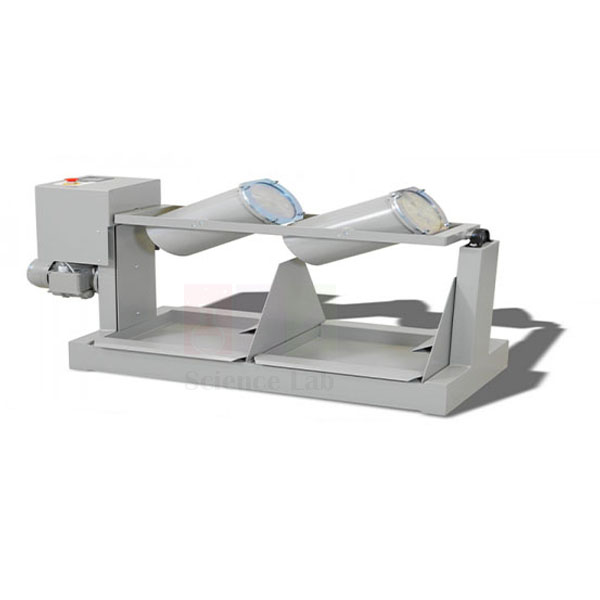
Devel Attrition Tester
Devel Attrition Tester (Product Code: SLE/AG/04) is a twin-cylinder rotating machine used to measure how much coarse aggregate wears away by attrition in road and civil engineering laboratories. Known in many specifications as the Deval test, it suits road research labs, quarries and colleges, and its two hollow cylinders, set at an angle on one shaft, let two samples run together. It is made by Jain Scientific Equipments Pvt Ltd (ScienceLab), an OEM technical educational equipment manufacturer, at its own factory in Ambala, India.
Specifications
| Parameter | Detail |
|---|---|
| Cylinders | Two hollow cylinders, closed at one end and provided with fitting covers |
| Mounting | Cylinders mounted on a shaft, inclined to the axis of rotation of the shaft |
| Drive | Motor through a reduction gear |
| Shaft speed | 30–33 RPM |
| Revolution counter | Provided |
| Abrasive charge | 12 nos. hardened steel balls of 48 mm dia. |
| Electrical supply | 440 Volts, three phase, 50 cycles, A.C. |
| Product code | SLE/AG/04 |
| Manufacturer | Jain Scientific Equipments Pvt Ltd (ScienceLab) — OEM |
| Country of origin | India (made in Ambala, Haryana) |
What Is the Devel Attrition Tester Used For?
A weighed, graded aggregate sample is placed in a cylinder together with the steel balls the test method calls for, and the fitting cover is secured. Because each cylinder sits at an angle to the shaft, the contents slide from end to end as well as tumbling on every revolution, so the stones grind against one another rather than simply falling. After the set number of revolutions, read from the counter, the sample is removed, sieved and reweighed, and the material lost is expressed as a percentage of the original mass.
With two cylinders on the same shaft, a class can compare two aggregates, or run a duplicate, in a single session, which makes the tester practical engineering educational equipment in India's polytechnics and colleges where lab time is limited. Before each run, check that both covers are tight and that the cylinders are loaded evenly to keep the shaft balanced.
OEM Manufacturer
Jain Scientific Equipments Private Limited trades as ScienceLab and is the OEM (original equipment manufacturer) behind this Devel Attrition Tester. The tester is built at the company's own licensed factory at Saha, Ambala, Haryana, India, and goes factory-direct to polytechnics, road laboratories, dealers and importers, with no trading intermediary in between. For a second set of steel balls or other parts later on, ask us and the manufacturer will respond itself. Learn more on our company profile.
Related Civil Engineering Lab Equipment
These products belong to the same aggregate durability workflow:
- Los Angeles Abrasion Testing Machine — a single-drum abrasion and impact test often specified alongside or instead of the attrition test.
- Dorry Abrasion Testing Machine — a rotating-disc test with sand fed from conical hoppers, giving another view of wear resistance.
- Riffle Sample Divider — splits the field sample into representative portions for each cylinder.
- Test Sieves — for grading the sample beforehand and sieving out the worn fines afterwards.
- Oven, 43 litre — brings samples to a dry state before the starting and final weighings.
More equipment of this type is listed in the Civil Engineering Lab Equipment category.
Frequently Asked Questions
How is the Devel Attrition Tester different from the Los Angeles abrasion machine?
The Devel Attrition Tester uses two hollow cylinders set at an angle on a rotating shaft, while the Los Angeles machine uses one horizontal drum with an internal shelf. The two methods load the stone differently, so check which one your specification names.
Are the steel balls supplied with the Devel Attrition Tester?
Yes. The Devel Attrition Tester comes complete with an abrasive charge of 12 hardened steel balls of 48 mm diameter, so it is ready to run once the aggregate sample has been prepared and weighed.
Can the Devel Attrition Tester run two samples at once?
Yes. Both cylinders of the Devel Attrition Tester are mounted on the same shaft and turn together, so two samples, or a duplicate of one sample, can run in a single session, provided each cylinder is loaded as the method requires.
What power supply does the Devel Attrition Tester need?
The motor of the Devel Attrition Tester is suitable for 440 Volts, three phase, 50 cycles A.C. supply. Discuss any other supply with us through the contact page before ordering so the manufacturer can advise.
How should the Devel Attrition Tester be maintained?
Empty and brush out both cylinders of the Devel Attrition Tester after every test, keep the reduction gear lubricated, and check that the fitting covers close firmly so that no fines escape during a run.
Who manufactures the Devel Attrition Tester?
The Devel Attrition Tester is manufactured by Jain Scientific Equipments Pvt Ltd (ScienceLab), the OEM, at its own licensed factory at Saha, Ambala, Haryana, India. Replacement steel balls or other parts can be requested directly from the manufacturer; just ask us.
Do you ship the Devel Attrition Tester outside India?
Yes. ScienceLab supplies the Devel Attrition Tester to laboratories in India and international markets. Include the destination and quantity with your enquiry so that packing and shipping can be quoted by the manufacturer.
Request a Quote
To receive a quotation direct from the manufacturer, write to us from the contact page or add the tester to the enquiry cart and submit your list in one go.
Last updated: 24 September 2026
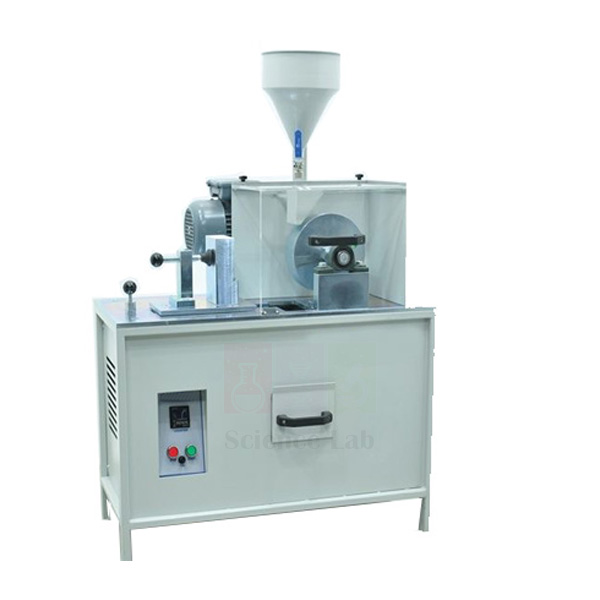
Wide Wheel Abrasion Testing Machine
Wide Wheel Abrasion Testing Machine (Product Code: SLE/AG/05) is a rotating-wheel wear tester used to determine the resistance to abrasion of natural stones and concrete products used for paving in construction material laboratories. Paving block producers and civil engineering departments rely on its 70 mm thick wheel turning at 75 rpm, with a digital counter that stops the machine at a preset number of revolutions. It is made by Jain Scientific Equipments Pvt Ltd (ScienceLab), an OEM scientific equipment manufacturer in India, at its own factory in Ambala.
Specifications
| Parameter | Detail |
|---|---|
| Application | Resistance to abrasion/wear of natural stones and concrete products used for paving |
| Abrasion wheel thickness | 70 mm |
| Wheel speed | 75 rpm |
| Control | Digital counter that stops the machine at the end of a preset number of revolutions |
| Consumables listed | Abrasive corundum sand, calibration marble |
| Dimensions | 620 x 670 x 1350 mm |
| Weight (approx.) | 130 kg |
| Power | 370 W |
| Product code | SLE/AG/05 |
| Manufacturer | Jain Scientific Equipments Pvt Ltd (ScienceLab) — OEM |
| Country of origin | India (made in Ambala, Haryana) |
What Is the Wide Wheel Abrasion Tester Used For?
The specimen is clamped with its wearing face against the 70 mm wide wheel, abrasive corundum sand is allowed to flow into the gap, and the required revolution count is entered on the digital counter. The machine stops by itself when the count is reached, so every specimen receives the same amount of wear without the operator timing the run. The groove cut into the surface is then measured, and a shorter groove indicates a harder-wearing paving material. The calibration marble is used to confirm that the machine and abrasive produce the expected reference groove before a series of tests.
Keeping the abrasive dry and free of lumps gives an even flow and more repeatable grooves. Buyers often order extra corundum sand along with their lab equipment accessories in India, because it is consumed in every test. Wipe abrasive dust from the wheel and clamp after each session.
What to Specify When Ordering
- The model: this Wide Wheel machine (70 mm wheel) for natural stone and concrete paving, or the Narrow Wheel version (10 mm wheel) described for unglazed tiles, grouts and clay pavers — ask us to confirm availability.
- The quantity of abrasive corundum sand and calibration marble you want with the machine, based on your expected number of tests.
- Your supply voltage and frequency, so we can confirm the 370 W machine suits your laboratory.
- The number of machines and the delivery address; at approx. 130 kg each, freight is quoted to your location.
OEM Manufacturer
ScienceLab, the trading name of Jain Scientific Equipments Private Limited, is the OEM (original equipment manufacturer) of this Wide Wheel Abrasion Testing Machine and builds it at the company's own licensed factory at Saha, Ambala, Haryana, India. Paving manufacturers, testing laboratories, dealers and importers buy it factory-direct rather than through a trader. Follow-up needs such as further corundum sand or a replacement part are handled by the manufacturer itself, so ask us whenever you need them. Visit the company profile to learn more.
Related Civil Engineering Lab Equipment
To measure grooves accurately and cover other surface properties of paving materials, consider:
- Tile abrasion testing machine — measures the wear of tiles pressed against an abrasive grinding path.
- Dorry Abrasion Testing Machine — a rotating-disc abrasion test with sand fed from conical hoppers.
- Accelerated Polishing Machine — evaluates how road stone polishes, which complements the wear result.
- Caliper Vernier (Metal) — for reading the length of the abraded groove on each specimen.
- Safety Goggles — protect the eyes from abrasive grit while loading and cleaning the machine.
Browse related testing products in the Civil Engineering Lab Equipment category.
Frequently Asked Questions
Which materials is the Wide Wheel Abrasion Testing Machine intended for?
The Wide Wheel Abrasion Testing Machine is designed for determining the resistance to abrasion and wear of natural stones and concrete products used for paving, such as slabs and blocks, where durability under traffic matters.
How is test length controlled on the Wide Wheel Abrasion Testing Machine?
A digital counter on the Wide Wheel Abrasion Testing Machine stops it automatically at the end of a preset number of revolutions, so the operator sets the count once and every specimen receives the same amount of wear.
Is there a narrow wheel version of the Wide Wheel Abrasion Testing Machine for tiles?
A Narrow Wheel Abrasion Testing Machine with a 10 mm thick wheel is described for unglazed tiles, grouts used for tiles and clay pavers, whereas the Wide Wheel Abrasion Testing Machine has a 70 mm wheel. Please contact us to confirm its availability.
Are corundum sand and calibration marble supplied with the Wide Wheel Abrasion Testing Machine?
Abrasive corundum sand and calibration marble are listed with the Wide Wheel Abrasion Testing Machine. Ask us to state the quantities in your quotation, and whether additional abrasive is advisable for your expected number of tests.
What space and power does the Wide Wheel Abrasion Testing Machine need?
The Wide Wheel Abrasion Testing Machine measures 620 x 670 x 1350 mm, weighs about 130 kg and is rated at 370 W, so plan a firm, level floor position near a power point and confirm your supply voltage when ordering.
Who manufactures the Wide Wheel Abrasion Testing Machine?
The Wide Wheel Abrasion Testing Machine is manufactured by Jain Scientific Equipments Pvt Ltd (ScienceLab), the OEM, at its own licensed factory in Saha, Ambala, Haryana, India, and supplied factory-direct to laboratories, paving producers, dealers and importers.
Can a calibration certificate be supplied with the Wide Wheel Abrasion Testing Machine?
Documentation needs for the Wide Wheel Abrasion Testing Machine should be discussed with us through the contact page before ordering; we will confirm what is available for your order rather than assume a particular document.
Request a Quote
Use our contact page to request a price, or add this machine to the enquiry cart with any consumables and measuring tools you need. The quotation is prepared directly by ScienceLab as the manufacturer.
Last updated: 24 September 2026
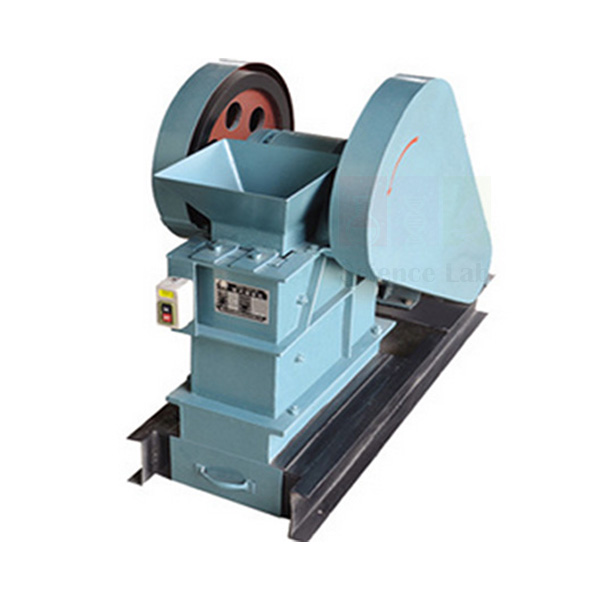
Jaw Crusher
Jaw Crusher (Product Code: SLE/AG/06) is a motor-driven primary crusher used to break rock, stone and ore samples between manganese steel jaws in geology, mining and construction material laboratories. Labs and small production units choose from five jaw sizes, from 4″ x 6″ at 150–200 kg/hr up to 15″ x 24″ at 1 ton/hr, all for a 440 V three phase supply. It is made by Jain Scientific Equipments Pvt Ltd (ScienceLab), an OEM laboratory equipment manufacturer in India, at its own factory in Ambala.
Specifications
| Parameter | Detail |
|---|---|
| Jaws | Manganese steel, adjustable up to 6 mm opening |
| Discharge opening adjustment range | 3–10 mm |
| Throughput (general) | 250 kg of material can be crushed in approx. eight hours |
| Frame | Supported on a strong steel frame |
| Design | Compact and rugged, designed for speed crushing; for laboratory and small production units |
| Voltage | 440 V, three phase A.C. supply |
| Product code | SLE/AG/06 |
| Manufacturer | Jain Scientific Equipments Pvt Ltd (ScienceLab) — OEM |
| Country of origin | India (made in Ambala, Haryana) |
Available laboratory jaw crusher sizes:
| Jaw crusher size | Feed size | Discharge size | Motor | Capacity |
|---|---|---|---|---|
| 4″ x 6″ (100 x 150 mm) | 25 to 30 mm | 6 mm to 20 mm | 3 H.P., 3 Ph. | 150–200 kg/hr |
| 6″ x 8″ (150 x 200 mm) | 45 to 50 mm | 10 mm to 22 mm | 5 H.P., 3 Ph. | 300–400 kg/hr |
| 8″ x 12″ (200 x 300 mm) | 65 to 70 mm | 12 mm to 25 mm | 7.5 H.P., 3 Ph. | 400–500 kg/hr |
| 12″ x 16″ (300 x 400 mm) | 90 to 100 mm | 15 mm to 30 mm | 10 H.P., 3 Ph. | 600–750 kg/hr |
| 15″ x 24″ (375 x 600 mm) | 100 to 150 mm | 25 mm to 55 mm | 15 H.P., 3 Ph. | 1 ton/hr |
Discharge setting and output depend on the size chosen and on the material being crushed; please confirm the figures for your chosen size in the quotation.
What Is the Laboratory Jaw Crusher Used For?
Lumps within the feed size of the chosen model are fed into the mouth of the jaws while the motor runs. The moving jaw presses each piece against the fixed jaw until it is small enough to fall through the discharge opening, which is set before starting to control the product size. Crushed material is collected below, divided to a laboratory portion and, where a fine powder is needed for chemical or mineral analysis, passed on to a pulveriser.
In lab equipment for research in India, such as ore beneficiation studies or aggregate trials, a jaw crusher is usually the first reduction stage. Feed with a scoop rather than by hand, never reach into the jaws while the machine is running, wear eye protection, and brush the jaws clean between samples so that material is not carried from one sample into the next.
What to Specify When Ordering
- The jaw crusher size (4″ x 6″, 6″ x 8″, 8″ x 12″, 12″ x 16″ or 15″ x 24″) that accepts your largest feed lumps.
- The product size you need, checked against the discharge range listed for that size.
- The throughput you expect per hour or per day, compared with the listed capacity.
- Confirmation that a 440 V three phase supply is available for the motor rating of your chosen size.
- The material to be crushed, so the size and setting can be discussed with the manufacturer.
OEM Manufacturer
Jain Scientific Equipments Private Limited, trading as ScienceLab, is the OEM (original equipment manufacturer) of this Jaw Crusher range. Each size is built at the company's own licensed factory at Saha, Ambala, Haryana, India, and supplied factory-direct to laboratories, small production units, dealers and importers. Because the manufacturer handles your enquiry, questions about replacement jaws or other parts, and repeat orders, go straight to the people who make the machine — just ask us. The company profile gives an overview of the business.
Related Civil Engineering Lab Equipment
A typical sample preparation line built around the crusher includes:
- Pulveriser — takes 6 mm input and grinds it finer for analysis, the usual next stage after crushing.
- Riffle Sample Divider — splits the crushed output into representative portions.
- Test Sieves — for checking the size of the crushed product.
- Scoops — for feeding lumps into the jaws without putting hands near them.
- Safety Goggles — eye protection against flying fragments during feeding.
See the Civil Engineering Lab Equipment category for further sample preparation and testing equipment.
Frequently Asked Questions
Which sizes of Jaw Crusher can I order?
The Jaw Crusher is listed in five sizes: 4″ x 6″, 6″ x 8″, 8″ x 12″, 12″ x 16″ and 15″ x 24″, with capacities ranging from 150–200 kg/hr on the smallest model to 1 ton/hr on the largest.
How large can the feed lumps for the Jaw Crusher be?
Feed size for the Jaw Crusher depends on the model: from 25 to 30 mm for the 4″ x 6″ size up to 100 to 150 mm for the 15″ x 24″ size. Choose the size that accepts your largest lumps.
What motor and supply does the Jaw Crusher need?
Every Jaw Crusher size runs on a 440 V three phase A.C. supply, with motor ratings from 3 H.P. on the 4″ x 6″ size up to 15 H.P. on the 15″ x 24″ size.
What are the jaws of the Jaw Crusher made from?
The jaws of the Jaw Crusher are manganese steel, a tough and wear-resistant choice for hard rock and ore, and the crusher is supported on a strong steel frame for steady running in the laboratory.
How fine will the Jaw Crusher crush?
A discharge opening adjustment range of 3–10 mm is listed for the Jaw Crusher, and the size table gives a discharge range for each model. For powder, follow it with a pulveriser; tell us your target size and we will advise.
Who manufactures the Jaw Crusher?
The Jaw Crusher is manufactured by Jain Scientific Equipments Pvt Ltd (ScienceLab), the OEM, at its own licensed factory at Saha, Ambala, Haryana, India. Quotations, repeat orders and replacement-part enquiries are answered directly by the manufacturer.
What should a quotation request for the Jaw Crusher include?
State the Jaw Crusher size, the material to be crushed, the output you expect per hour or per day, the delivery location in India or abroad, and confirmation that your site has a three phase supply.
Request a Quote
Ask for a price on any size through our contact page, or add the Jaw Crusher to the enquiry cart and note the size you need in your message. Quotations come straight from ScienceLab as the manufacturer.
Last updated: 24 September 2026
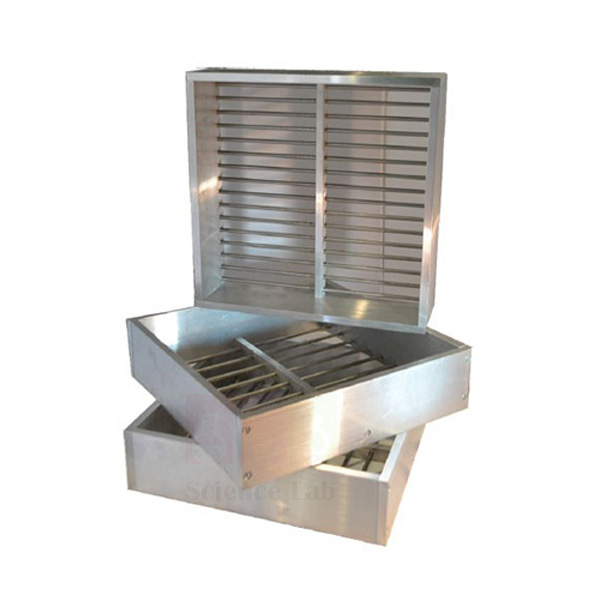
Grid Sieves
Grid Sieves (Product Code: SLE/AG/07) are slotted bar sieves used to determine particle shape, namely the flakiness index and elongation of aggregates, in highway, concrete and quarry laboratories. Supplied as a set of 14 with slot widths from 50.0 mm down to 2.50 mm, they have aluminium frames and 5 mm stainless steel rods and are meant for hand sieving. They are made by Jain Scientific Equipments Pvt Ltd (ScienceLab), an OEM scientific laboratory apparatus manufacturer, at its own factory in Ambala, India.
Specifications
| Parameter | Detail |
|---|---|
| Purpose | Determination of particle shape: flakiness index and elongation of aggregates |
| Frame | Aluminium |
| Grid | Stainless steel rods, 5 mm dia. |
| Slot widths | 50.0, 40.0, 31.5, 25.0, 20.0, 16.0, 12.5, 10.0, 8.00, 6.30, 5.00, 4.00, 3.15 and 2.50 mm |
| Supplied as | Set of 14 pcs |
| Sieving method | Suitable only for hand sieving |
| Product code | SLE/AG/07 |
| Manufacturer | Jain Scientific Equipments Pvt Ltd (ScienceLab) — OEM |
| Country of origin | India (made in Ambala, Haryana) |
What Is the Grid Sieve Set Used For?
The aggregate is first separated into size fractions on ordinary test sieves. Each fraction is then shaken by hand on the grid sieve whose slot width the test method assigns to it. Particles that pass through the slots are the flaky ones, and their combined mass as a percentage of the total gives the flakiness index. Elongation is assessed fraction by fraction in a similar way, so having all 14 slot widths in one set lets a single operator work through a complete grading without borrowing sieves.
Shake gently and let particles find the slots on their own; forcing stones through bends the rods and changes the slot width. Many labs buy the set together with a shape index caliper from the same scientific lab equipment manufacturer, so both shape tests are available on one bench. After use, brush trapped particles out along the slots and store the sieves flat.
OEM Manufacturer
These sieves come from Jain Scientific Equipments Private Limited, which trades as ScienceLab and is their OEM (original equipment manufacturer). The set is made at the company's own licensed factory at Saha, Ambala, Haryana, India, and supplied factory-direct to highway laboratories, colleges, dealers and importers rather than through a middleman. If a sieve is damaged later, ask us about a replacement and the maker will handle the request. For background on the company, see our profile.
Related Civil Engineering Lab Equipment
Particle shape testing usually draws on these items as well:
- Flakiness Sieve Set — a slotted set of seven sieves in heavy gauge steel, an alternative format for the flakiness test.
- Thickness gauge — a slotted gauge for deciding whether individual particles count as flaky.
- Shape Index Caliper — measures individual particles to find the shape factor, a complementary shape test.
- Average Least Dimension — ALD box and spacer sets for the least-dimension approach to chip shape.
- Test Sieves — separate the aggregate into size fractions before each fraction goes on a grid sieve.
Explore other aggregate testing items in the Civil Engineering Lab Equipment category.
Frequently Asked Questions
How many sieves are in the Grid Sieves set?
The Grid Sieves set has fourteen sieves, with slot widths of 50.0, 40.0, 31.5, 25.0, 20.0, 16.0, 12.5, 10.0, 8.00, 6.30, 5.00, 4.00, 3.15 and 2.50 mm, covering the full shape-testing range in one purchase.
What materials are the Grid Sieves made from?
The Grid Sieves have aluminium frames and grids made of 5 mm diameter stainless steel rods. Stainless rods resist corrosion when washed or damp aggregate is tested, and the light frames are easy to handle during hand sieving.
Can Grid Sieves be used on a mechanical sieve shaker?
No. The Grid Sieves are suitable only for hand sieving, which lets each particle turn and find the slots on its own. A mechanical shaker belongs to the preliminary size grading on ordinary test sieves, not to this step.
Can I buy only some slot sizes of the Grid Sieves?
The standard supply of Grid Sieves is the set of 14 pieces. If you need individual slot widths, send us the sizes and we will check what can be offered for your order.
How do I keep the slots of the Grid Sieves accurate?
Never push particles through the Grid Sieves by hand or with a tool, avoid dropping the sieves, and clean them with a soft brush along the rods rather than across them so that the rods stay straight.
Who manufactures the Grid Sieves?
The Grid Sieves are manufactured by Jain Scientific Equipments Pvt Ltd (ScienceLab), the OEM, at its own licensed factory at Saha, Ambala, Haryana, India, and supplied factory-direct to laboratories, colleges, dealers and importers.
Is a measurement report for the Grid Sieves slot widths available?
Please discuss any inspection or calibration document you need for the Grid Sieves with us before ordering, through the contact page. We will confirm what can be supplied with your specific order.
Do you supply Grid Sieves sets for multiple labs?
Yes. Grid Sieves sets for colleges, project sites and tenders in India and international markets can be quoted together; mention the number of sets required and the delivery address in your enquiry.
Request a Quote
For a quotation on the Grid Sieves set, contact us through the enquiry form or add it to the enquiry cart with your other shape-testing equipment. Prices are quoted directly by the manufacturer.
Last updated: 24 September 2026
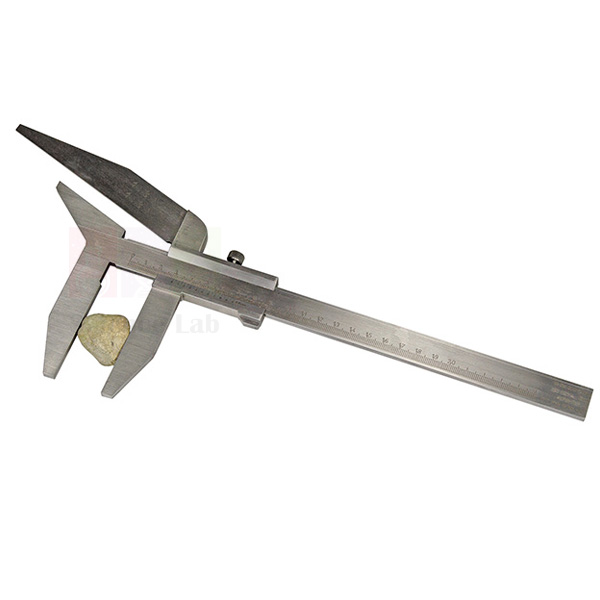
Shape Index Caliper
Shape Index Caliper (Product Code: SLE/AG/08) is a measuring caliper used for the determination of the shape factor of aggregate particles in road construction and concrete laboratories. Engineering students and mix designers use it to identify non-cubical particles; it reads over a 200 mm range in 0.05 mm increments and weighs about 0.4 kg. It is made by Jain Scientific Equipments Pvt Ltd (ScienceLab), an OEM laboratory instrument manufacturer in India, at its own factory in Ambala.
Specifications
| Parameter | Detail |
|---|---|
| Purpose | Determination of the shape factor of aggregates |
| Measurement range | 200 mm |
| Graduation | 0.05 mm increments |
| Dimensions | 450 x 150 x 50 mm |
| Weight (approx.) | 0.4 kg |
| Product code | SLE/AG/08 |
| Manufacturer | Jain Scientific Equipments Pvt Ltd (ScienceLab) — OEM |
| Country of origin | India (made in Ambala, Haryana) |
What Is the Shape Index Caliper Used For?
A representative test portion is taken and each particle is measured in turn: first its longest dimension, then its thickness. The ratio of the two is compared with the limit given in the method your laboratory follows, and every particle beyond that limit is set aside as non-cubical. The mass of the non-cubical particles as a percentage of the whole portion is reported as the shape index. The fine 0.05 mm graduation over a 200 mm range covers everything from small chippings to large coarse aggregate.
At about 0.4 kg the caliper is light enough for students to use through a long practical, which makes it a sensible addition to lab equipments for technical institutes running highway materials courses. Hold each particle in its natural resting position, close the jaws gently without forcing, and wipe dust from the scale so readings stay clear.
OEM Manufacturer
ScienceLab is the trading name of Jain Scientific Equipments Private Limited, the OEM (original equipment manufacturer) of this Shape Index Caliper, which is produced at the company's own licensed factory at Saha, Ambala, Haryana, India. The company is a registered MSME manufacturer (Udyam UDYAM-HR-01-0003714) and ships export orders under Importer-Exporter Code AAECJ8618A issued by DGFT. Calipers go factory-direct to colleges, road laboratories, dealers and importers, and repeat orders are handled by the maker itself. More details are on the company profile.
Related Civil Engineering Lab Equipment
For a complete aggregate shape study, pair the caliper with:
- Grid Sieves — a slotted set of 14 for the flakiness index and elongation, the sieve-based shape tests.
- Thickness gauge — a slotted gauge for quickly deciding whether particles count as flaky.
- Average Least Dimension — ALD box with spacer sets, used where chip shape is expressed as a least dimension.
- Sample Splitter — reduces the stockpile sample to a manageable number of particles to measure.
- Precision Balance — weighs the non-cubical particles and the full test portion.
Further testing equipment is listed in the Civil Engineering Lab Equipment category.
Frequently Asked Questions
What range and graduation does the Shape Index Caliper have?
The Shape Index Caliper measures up to 200 mm and is graduated in 0.05 mm increments, which covers small chippings as well as large coarse aggregate particles with a reading fine enough for shape-factor work.
How large and heavy is the Shape Index Caliper?
The Shape Index Caliper measures 450 x 150 x 50 mm and weighs approximately 0.4 kg, so it can be used for long sessions on any lab bench or carried to a site laboratory.
How does the Shape Index Caliper differ from grid sieves?
Grid sieves sort particles by passing them through slots, while the Shape Index Caliper measures each particle directly to find its shape factor. Specifications may call for one test or both, so check your method before ordering.
How should the Shape Index Caliper be cared for?
Keep the scale and jaws of the Shape Index Caliper clean and dry, avoid dropping it, and store it flat when not in use so the jaws stay aligned and the graduations remain easy to read.
Who manufactures the Shape Index Caliper?
The Shape Index Caliper is manufactured by Jain Scientific Equipments Pvt Ltd (ScienceLab), the OEM, at its own licensed factory at Saha, Ambala, Haryana, India. Quotations and repeat orders are handled directly by the manufacturer.
Is a calibration certificate available for the Shape Index Caliper?
Please ask about calibration documents for the Shape Index Caliper when you enquire through our contact page; we will confirm what can be arranged for your order before you place it.
What should a tender enquiry for the Shape Index Caliper include?
Include the product code SLE/AG/08, the quantity of Shape Index Calipers, the delivery address in India or abroad and any vendor registration details your institution needs from the manufacturer.
Request a Quote
Request a price for the Shape Index Caliper through the contact page, or add it to the enquiry cart along with sieves and balances for your aggregate lab. You receive the quotation directly from the manufacturer.
Last updated: 24 September 2026
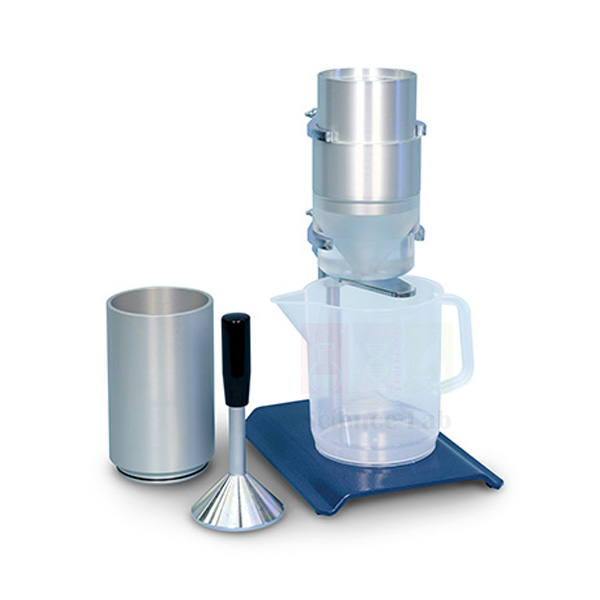
Efflux Index Apparatus
Efflux Index Apparatus (Product Code: SLE/AG/09) is a funnel-and-hopper flow tester used to measure the flow coefficient of fine aggregates, which gives information on grain shape and angularity, in concrete and highway laboratories. The result is simply the time in seconds for a specified volume of sand to pass a given opening, and the set includes two funnels with different openings. It is made by Jain Scientific Equipments Pvt Ltd (ScienceLab), an OEM science apparatus manufacturer in India, at its own factory in Ambala.
Specifications
| Parameter | Detail |
|---|---|
| Purpose | Flow coefficient (efflux index) of fine aggregates; information on grain shape and angularity |
| Components | Two funnels with different openings, cylindrical hopper, metal stand with a shutter, metal container |
| Result expressed as | Time in seconds for a specified volume of aggregate to flow through a given opening |
| Weight capacity | 5 kg |
| Dimensions | 150 x 180 x 410 mm |
| Product code | SLE/AG/09 |
| Manufacturer | Jain Scientific Equipments Pvt Ltd (ScienceLab) — OEM |
| Country of origin | India (made in Ambala, Haryana) |
What Is the Efflux Index Apparatus Used For?
The apparatus is set up on a level bench with the chosen funnel fitted below the cylindrical hopper and the metal container placed underneath. With the shutter closed, dry fine aggregate is poured into the hopper; the shutter is then opened and a stopwatch started at the same moment, and timing stops when the flow finishes. The time recorded is the flow coefficient, and repeat runs on the same sample should agree closely before a result is reported. Comparing sands from different pits, or natural sand with manufactured sand, shows at a glance which will give a more workable mix.
As low-cost engineering lab equipment in India's concrete technology courses, the test is quick and needs no power, so many samples can be run in one session. Always use completely dry sand, because damp grains clump and give a falsely long time, and wipe the funnels and shutter after each run.
OEM Manufacturer
Jain Scientific Equipments Private Limited, known by its brand ScienceLab, is the OEM (original equipment manufacturer) of the Efflux Index Apparatus. The complete set is made at the company's own licensed factory at Saha, Ambala, Haryana, India, and dispatched factory-direct to concrete laboratories, colleges, dealers and importers. Should a funnel or container need replacing, ask us: spares and repeat orders are dealt with by the manufacturer, not a reseller. The company profile explains who we are and what we make.
Related Civil Engineering Lab Equipment
To prepare and time a fine aggregate sample properly you will also need:
- Stopwatch, Digital — measures to the nearest 1/100th second for timing each flow.
- Oven, 43 litre — dries the sand fully so moisture does not slow the flow.
- Riffle Sample Divider — divides the sand into representative portions for repeat runs.
- Test Sieves — separate the fine fraction before it is tested.
- Sand Absorption Cone And Tamper — another fine aggregate test, used to judge the saturated surface-dry condition of sand.
You can view the complete range in the Civil Engineering Lab Equipment category.
Frequently Asked Questions
What parts make up the Efflux Index Apparatus?
The Efflux Index Apparatus consists of two funnels with different openings, a cylindrical hopper, a metal stand with a shutter and a metal container that receives the sand as it flows out of the funnel.
What does the result from the Efflux Index Apparatus tell me?
The Efflux Index Apparatus gives the flow time in seconds for a set volume of fine aggregate. A longer time points to more angular or rougher grains, and a shorter time to more rounded grains that flow freely.
Why does the Efflux Index Apparatus have two funnels?
The two funnels of the Efflux Index Apparatus have different openings, so the apparatus can be set up as your test method requires for the particular fine aggregate being examined.
Is a stopwatch included with the Efflux Index Apparatus?
A stopwatch is not listed among the parts of the Efflux Index Apparatus. A separate digital stopwatch is recommended for timing each flow, and you can add one to the same enquiry.
How much sand can the Efflux Index Apparatus take, and how big is it?
The Efflux Index Apparatus has a weight capacity of 5 kg and measures 150 x 180 x 410 mm, so it fits easily on a standard laboratory bench beside the balance and stopwatch.
Who manufactures the Efflux Index Apparatus?
The Efflux Index Apparatus is manufactured by Jain Scientific Equipments Pvt Ltd (ScienceLab), the OEM, at its own licensed factory at Saha, Ambala, Haryana, India, and supplied factory-direct to laboratories, colleges, dealers and importers.
Can you supply several Efflux Index Apparatus sets for a teaching lab?
Yes. Classroom quantities of the Efflux Index Apparatus are quoted for institutions in India and international markets; include the number of sets and the delivery address, and the quotation comes straight from the manufacturer.
Request a Quote
Send an enquiry for the Efflux Index Apparatus via our contact page, or add it and a stopwatch to the enquiry cart. ScienceLab quotes you directly as the manufacturer.
Last updated: 24 September 2026
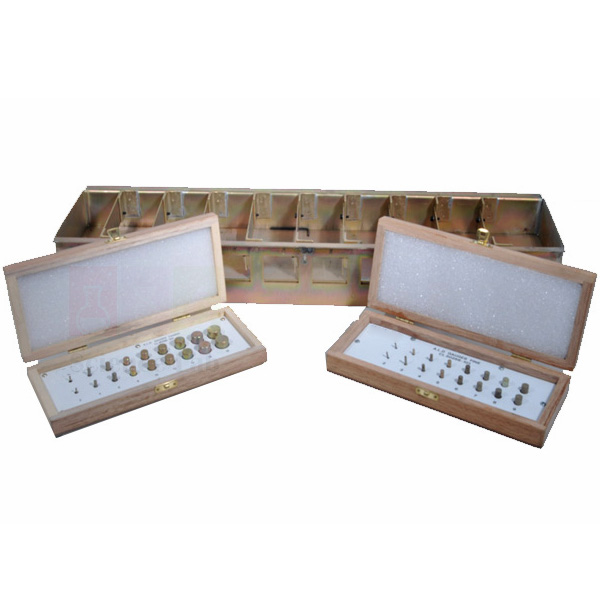
Average Least Dimension
Average Least Dimension (Product Code: SLE/AG/10) is an ALD device used to find the average least dimension of aggregate chippings for surface dressing design in highway laboratories. Road research units and civil engineering colleges receive the ALD box with an adjustable spacer for 2–9 mm fine aggregates, a spare spacer case and an extension set for 10–18 mm. It is made by Jain Scientific Equipments Pvt Ltd (ScienceLab), an OEM TVET lab equipment manufacturer in India, at its own factory in Ambala.
Specifications
| Parameter | Detail |
|---|---|
| Type | Average Least Dimension (ALD) device |
| Main unit | Average Least Dimension box |
| Adjustable spacer | For fine aggregates, 2–9 mm |
| Spare case | 1 x spacer set (fine aggregates) spare case |
| Spacer set extension | 10–18 mm |
| Product code | SLE/AG/10 |
| Manufacturer | Jain Scientific Equipments Pvt Ltd (ScienceLab) — OEM |
| Country of origin | India (made in Ambala, Haryana) |
What Is the Average Least Dimension Device Used For?
A representative sample of chippings is prepared and the spacer is adjusted to suit the chip size under test: the standard adjustable spacer covers fine aggregates from 2 to 9 mm, and the extension set takes the range from 10 to 18 mm. The chips are then assessed in the ALD box following the procedure of the method your laboratory uses, and the readings are averaged to give the ALD of the sample. That figure helps the designer choose binder and chip spread rates that hold the stone firmly without flooding the surface.
Road and highway departments keep the device with their other engineering lab equipment in India so that chippings from each new source can be checked before a surfacing contract begins. Keep the spacer sets in their case between tests, check that adjustments are locked before each reading, and brush dust out of the box so it does not build up in the corners.
OEM Manufacturer
The ALD device is made by Jain Scientific Equipments Private Limited, which operates as ScienceLab and is the OEM (original equipment manufacturer) of the box and its spacer sets. Production takes place at the company's own licensed factory at Saha, Ambala, Haryana, India, and highway departments, colleges, dealers and importers buy direct from there. If a spacer set is lost or damaged, ask us for a replacement; the request goes to the maker, not a trader. See the company profile for more information.
Related Civil Engineering Lab Equipment
Chip shape and size are usually studied with several tools together:
- Grid Sieves — the flakiness index from these slotted sieves is often reported alongside the ALD.
- Flakiness Sieve Set — a seven-sieve slotted set for the flakiness test on coarser fractions.
- Shape Index Caliper — measures length and thickness of individual particles for the shape factor.
- Thickness gauge — a slotted gauge for a quick check of whether chips are flaky.
- Sample Splitter — reduces a stockpile sample of chippings to a representative test portion.
Find other road and aggregate testing items in the Civil Engineering Lab Equipment category.
Frequently Asked Questions
What is supplied with the Average Least Dimension device?
The Average Least Dimension device comes with the ALD box, an adjustable spacer for fine aggregates of 2–9 mm, one spacer set (fine aggregates) spare case and a spacer set extension covering 10–18 mm.
Which chip sizes can the Average Least Dimension device assess?
The Average Least Dimension device covers fine aggregates from 2 to 9 mm with its standard adjustable spacer and chips from 10 to 18 mm with the spacer set extension, so one box serves both size ranges.
What is the average least dimension used for?
The value measured with the Average Least Dimension device is mainly used in designing surface dressings, where the typical thickness of the laid chips guides how much binder and stone to spread on the road.
Which test method does the Average Least Dimension device suit?
Please tell us the method or specification you work to, and we will confirm whether the Average Least Dimension device matches it before you order, rather than assume one standard for every laboratory.
What else do I need alongside the Average Least Dimension device?
Alongside the Average Least Dimension device you need a way to obtain a representative sample, such as a sample splitter, and suitable sieves to prepare the chip size under test. A balance may be needed depending on your procedure.
Who manufactures the Average Least Dimension device?
The Average Least Dimension device is manufactured by Jain Scientific Equipments Pvt Ltd (ScienceLab), the OEM, at its own licensed factory at Saha, Ambala, Haryana, India. Replacement spacer sets and repeat orders are handled directly by the manufacturer.
How should the spacer sets of the Average Least Dimension device be stored?
Return the spacers of the Average Least Dimension device to their case after every use and keep them dry, so that the settings stay accurate and no parts go missing between tests.
Request a Quote
To get a price, contact us through the contact page or add the ALD device to the enquiry cart with any other items you need. The quotation comes direct from the manufacturer.
Last updated: 24 September 2026
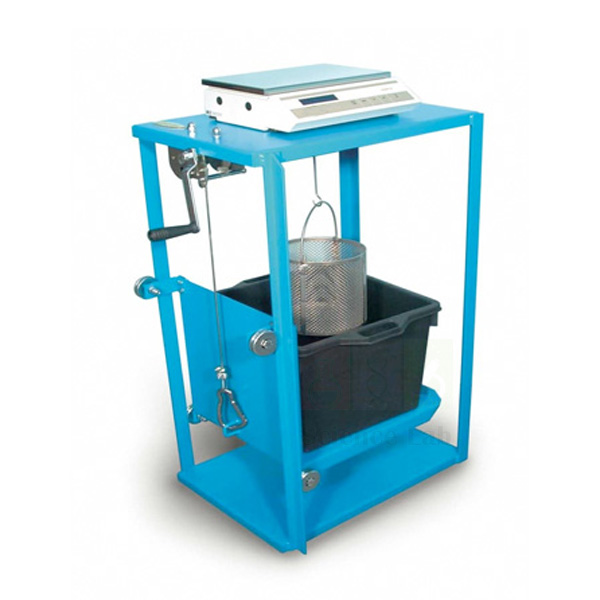
Specific Gravity And Water Absorption of Aggregates
Specific Gravity And Water Absorption of Aggregates (Product Code: SLE/AG/11) is a buoyancy balance system used to weigh aggregate in air and in water to calculate specific gravity and water absorption in concrete and highway laboratories. This engineering lab equipment pairs a rigid frame and water tank, raised by a mechanical lifting device, with a 6000 g x 0.1 g balance. The frame-and-tank system is made by Jain Scientific Equipments Pvt Ltd (ScienceLab), an OEM manufacturer, at its own factory in Ambala, India, and supplied with the balance.
Specifications
| Parameter | Detail |
|---|---|
| System | Buoyancy balance system |
| Frame | Rigid support frame incorporating a water tank mounted on a platform |
| Tank movement | Mechanical lifting device raises the water tank through the frame height, immersing the specimen suspended below the balance |
| Balance | 6000 g x 0.1 g; may also be used as a standard weighing device |
| Supplied with | Frame, water tank and suspension hook |
| Product code | SLE/AG/11 |
| Manufacturer | Jain Scientific Equipments Pvt Ltd (ScienceLab) — OEM |
| Country of origin | India (made in Ambala, Haryana) |
What Is the Specific Gravity and Water Absorption Set Used For?
After soaking as the test method requires, the aggregate is placed in a suitable container hung from the suspension hook beneath the balance. Operating the mechanical lifting device raises the water tank until the specimen is fully immersed, and the weight in water is read without lifting the sample by hand. The tank is lowered, the aggregate is surface-dried and weighed in air, then oven-dried and weighed again. From these three masses the laboratory calculates the specific gravity and the percentage of water absorbed.
Because the lifting device moves the water rather than the specimen, readings are steadier and spills fewer than with a bucket held by hand. As lab equipment for technical institutes the set is also versatile, since the balance can serve as an ordinary weighing device when the frame is not in use. Fill the tank with clean water before each session, and drain and dry it at the end of the day.
OEM Manufacturer
Jain Scientific Equipments Private Limited, trading as ScienceLab, is the OEM (original equipment manufacturer) of this buoyancy balance system, which is built at its own licensed factory at Saha, Ambala, Haryana, India, and supplied complete with the 6000 g x 0.1 g balance. For institutional and tender buyers who need vendor registration details, the company's GSTIN is 06AAECJ8618A1ZT and its Legal Entity Identifier (LEI) is 3358004HRD1JIVXKYX49. Sets go factory-direct to laboratories, colleges, dealers and importers, and follow-up requests such as a spare suspension hook are handled by the manufacturer, so just ask us. Read more on the company profile.
Related Civil Engineering Lab Equipment
Specific gravity and absorption testing also relies on:
- Density Basket — a wire mesh basket with handle for holding the aggregate while it is weighed in water.
- Oven, 43 litre — for the oven-dry mass that completes the absorption calculation.
- Riffle Sample Divider — obtains a representative test portion from the delivered aggregate.
- Sand Absorption Cone And Tamper — used to judge the saturated surface-dry condition of fine aggregate.
- Efflux Index Apparatus — assesses grain shape of the fine aggregate going into the same mix design.
Visit the Civil Engineering Lab Equipment category for other items in this range.
Frequently Asked Questions
What is included with the Specific Gravity And Water Absorption of Aggregates set?
The Specific Gravity And Water Absorption of Aggregates set includes a 6000 g x 0.1 g balance supplied with the rigid frame, the water tank and a suspension hook, with a mechanical lifting device to raise the tank.
What capacity and readability does the balance in this set have?
The balance in the Specific Gravity And Water Absorption of Aggregates set weighs up to 6000 g in steps of 0.1 g, which suits coarse aggregate samples as well as smaller portions of material.
How is the sample immersed in the Specific Gravity And Water Absorption of Aggregates set?
A mechanical lifting device raises the water tank through the height of the frame, so the specimen hanging below the balance of the Specific Gravity And Water Absorption of Aggregates set is immersed without being lifted by hand.
Is a sample basket included with the set?
The listed supply of the Specific Gravity And Water Absorption of Aggregates set is the balance, frame, water tank and suspension hook. A Density Basket is listed separately in our range; ask us to include one in your quotation.
Can the balance be used for other work?
Yes. The balance supplied with the Specific Gravity And Water Absorption of Aggregates set may also be used as a standard weighing device, giving the laboratory a versatile weighing system when density tests are not running.
Who manufactures the Specific Gravity And Water Absorption of Aggregates set?
The Specific Gravity And Water Absorption of Aggregates set is manufactured by Jain Scientific Equipments Pvt Ltd (ScienceLab), the OEM, at its own licensed factory at Saha, Ambala, Haryana, India, and supplied complete with its balance.
Can a calibration certificate be provided for the balance?
Please discuss calibration document requirements for the Specific Gravity And Water Absorption of Aggregates set with us through the contact page before ordering, and we will confirm what can be supplied with your order.
Request a Quote
Ask for a quotation through our contact page, or add this buoyancy balance set to the enquiry cart together with a density basket and an oven. Prices come directly from ScienceLab as the manufacturer.
Last updated: 24 September 2026
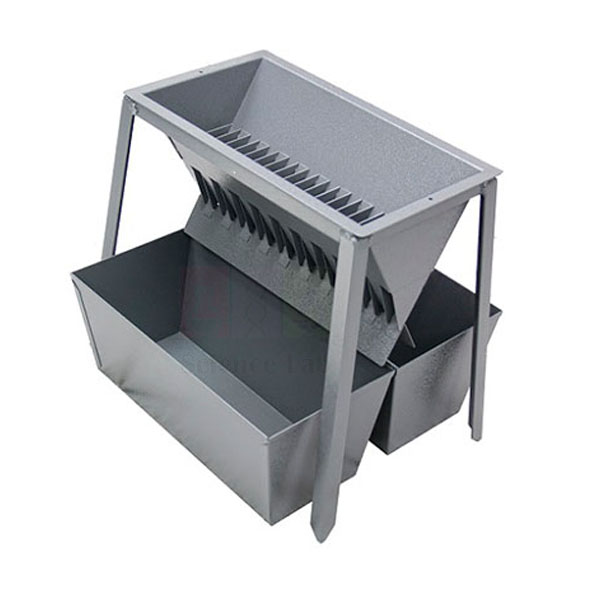
Riffle Sample Divider
Riffle Sample Divider (Product Code: SLE/AG/12) is a chute-type sample splitter used to divide granular material into two representative halves in aggregate, soil and mineral testing laboratories. Its sheet metal box on legs carries a series of equal-width chutes that discharge alternately into separate pans, and it is offered in sizes from 7 mm to 75 mm. It is made by Jain Scientific Equipments Pvt Ltd (ScienceLab), an OEM laboratory equipment manufacturer in India, at its own factory in Ambala.
Specifications
| Parameter | Detail |
|---|---|
| Construction | Sheet metal box mounted on legs |
| Chutes | Series of chutes of equal width, steep enough to allow rapid flowing of the material |
| Discharge | Alternately in opposite directions into separate pans |
| Sizes offered | Range of sizes from 7 mm to 75 mm |
| Product code | SLE/AG/12 |
| Manufacturer | Jain Scientific Equipments Pvt Ltd (ScienceLab) — OEM |
| Country of origin | India (made in Ambala, Haryana) |
What Is the Riffle Sample Divider Used For?
The sample is spread evenly in a scoop or pan the same width as the riffle and poured steadily along the full length of the chutes. Because neighbouring chutes point in opposite directions, every other slice of the stream goes to one pan and the rest to the other, so each pan receives a fair half. One half is kept and the process is repeated with it until the portion reaches the mass the test needs. The steep chutes keep material moving so that fines and damp particles do not hang up inside.
Choose the size according to the largest particle in your material, since stones must pass freely through the chutes; labs that test both sand and coarse aggregate often keep two sizes. From aggregate work to mineral studies and seed or grain analysis, the riffle is the everyday tool for fair sub-sampling and standard educational laboratory equipment in India's civil engineering colleges. Tap the box lightly after pouring so no grains stay behind, and brush the chutes clean between samples.
What to Specify When Ordering
- The riffle size, chosen from the range of 7 mm to 75 mm to suit the largest particle in your material.
- Whether you need two sizes, for example one for sand and one for coarse aggregate.
- The collecting pans you want with each size, so we can confirm what is included.
- The quantity per laboratory and the delivery address in India or abroad.
OEM Manufacturer
Jain Scientific Equipments Private Limited produces the Riffle Sample Divider under the ScienceLab name as its OEM (original equipment manufacturer). Every size is made at the company's own licensed factory at Saha, Ambala, Haryana, India, so laboratories, contractors, dealers and importers buy directly from the maker instead of a trading house. Need extra pans or a second size later? Ask us and the manufacturer will quote it; our profile page has more about the company.
Related Civil Engineering Lab Equipment
Sub-sampling sits between sample collection and testing. These items connect to it:
- Sample Splitter — a larger splitter with a 30 litre clam shell hopper for bulky samples up to 108 mm.
- Jaw Crusher — reduces rock and ore lumps before they are riffled into laboratory portions.
- Test Sieves — for grading each divided portion by particle size.
- Electromagnetic Digital Sieve Shaker — a timer-controlled shaker for sieving sand and aggregate portions.
- Specific Gravity And Water Absorption of Aggregates — a density test that starts from a representative sub-sample.
For the full product family, open the Civil Engineering Lab Equipment category.
Frequently Asked Questions
How does the Riffle Sample Divider split a sample?
The equal-width chutes of the Riffle Sample Divider send alternate slices of the poured material in opposite directions into separate pans, giving two matching halves; repeating the pass with one half reduces the sample further.
Which sizes of Riffle Sample Divider are available?
The Riffle Sample Divider is offered in a range of sizes from 7 mm to 75 mm. Tell us the largest particle size in your samples and we will suggest a suitable size for your laboratory.
Can one Riffle Sample Divider handle both sand and coarse aggregate?
Only if the chutes of the Riffle Sample Divider are wide enough for the coarsest stones without being too coarse to split fine material fairly, which is why many laboratories keep a smaller and a larger size.
What is the Riffle Sample Divider made of?
The Riffle Sample Divider is a sheet metal box mounted on legs, with a series of equal-width chutes built into the box that are steep enough to let material flow rapidly into the pans.
Are collecting pans supplied with the Riffle Sample Divider?
The Riffle Sample Divider discharges into separate pans; please confirm which pans are included for your chosen size when you request a quotation, so the set arrives ready for use.
Who manufactures the Riffle Sample Divider?
The Riffle Sample Divider is manufactured by Jain Scientific Equipments Pvt Ltd (ScienceLab), the OEM, at its own licensed factory at Saha, Ambala, Haryana, India, and supplied factory-direct in every listed size.
How do I avoid bias when splitting with the Riffle Sample Divider?
Pour slowly and evenly along the full length of the Riffle Sample Divider chutes, never from one end, and alternate which pan you keep between passes so that neither side is favoured.
Request a Quote
Tell us the size you need through our contact page, or add the Riffle Sample Divider to the enquiry cart for a combined quotation issued directly by the manufacturer.
Last updated: 24 September 2026
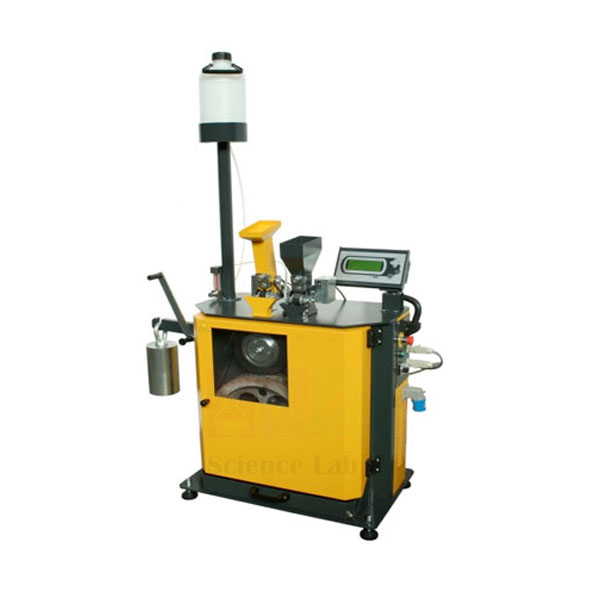
Accelerated Polishing Machine
Accelerated Polishing Machine (Product Code: SLE/AG/13) is a road-wheel machine used to simulate the polishing of road surfacing aggregate by tyre traffic in highway and quarry laboratories. Fourteen specimens sit around a road wheel running at 320 ± 5 rev/min while a rubber-tyred wheel bears on them with a 725 ± 10 N load. It is made by Jain Scientific Equipments Pvt Ltd (ScienceLab), an OEM manufacturer of scientific & laboratory instruments, at its own factory in Ambala, India.
Specifications
| Parameter | Detail |
|---|---|
| Specimens | 14 specimens located on the road wheel by rubber rings and held by simple side fixing |
| Road wheel speed | 320 ± 5 rev/min |
| Tyred wheel set diameter | 200 ± 3 mm |
| Tyred wheel set width | 38 ± 2 mm |
| Tyred wheel hardness | 69 ± 3 IRHD |
| Applied load on the wheel | 725 ± 10 N |
| Tyre positioning | Loaded tyre raised and lowered to the running surface by a mechanical lifting device |
| Drive | Inverter drive to motor for precise speed control; adjustable 3 phase motor speed control with adjustable timing belt drive, reducing power consumption and improving control |
| Controls | Digital display preset timer and revolution counter |
| Spindle | High ground steel main spindle in precision sealed ball bearings, additionally protected by a labyrinth seal; spindle axially loaded to eliminate end play |
| Frame | Robust welded steel mainframe standing on adjustable pads |
| Water feed | Gravity fed from a high level tank through a calibrated flow meter; water tank height 155 cm |
| Waste collection | Used abrasive and water collected in an easily removable tray |
| Specimen moulds | Precision machined moulds; specimens easily removed |
| Guards | Protective covers and guards easily removed for maintenance |
| Electrical supply | 230 V / 110 V, 50/60 Hz, single phase, 13 amp |
| Dimensions (W x D x H) | 810 x 790 x 1230 mm |
| Palletised dimensions (W x D x H) | 1200 x 800 x 1280 mm |
| Weight (max) | 210 kg |
| Product code | SLE/AG/13 |
| Manufacturer | Jain Scientific Equipments Pvt Ltd (ScienceLab) — OEM |
| Country of origin | India (made in Ambala, Haryana) |
What Is the Accelerated Polishing Machine Used For?
Selected chippings are packed into the precision machined moulds and bonded to form curved specimens, which release easily once set. Fourteen specimens are fitted around the road wheel, located by rubber rings and secured with the side fixing. The loaded tyre is then lowered onto the running surface with the mechanical lifting device, and the timer or revolution count is preset.
During the run the wheel turns at 320 ± 5 rev/min while abrasive and water are fed onto the contact; water flows by gravity from the high level tank through the calibrated flow meter, so the feed stays steady. Afterwards the specimens are removed and their skid resistance is measured with a separate friction tester to give the polished stone value.
For lab equipment installation in India, plan a level floor area for the 810 x 790 x 1230 mm machine, room for the elevated tank and a single phase socket; the adjustable pads take up small floor irregularities. Empty the waste tray after each run so abrasive does not dry into a crust, and lift off the guards periodically to clean around the wheel.
What to Specify When Ordering
- Your mains supply: 230 V or 110 V, 50 or 60 Hz, single phase (13 amp).
- Floor space for the 810 x 790 x 1230 mm machine plus the high level water tank (155 cm).
- The delivery address, as the machine ships palletised at 1200 x 800 x 1280 mm and up to 210 kg.
- Any friction tester or other test equipment you want quoted together with the machine.
OEM Manufacturer
ScienceLab is the brand of Jain Scientific Equipments Private Limited, and the company is the OEM (original equipment manufacturer) of this Accelerated Polishing Machine. The machine is fabricated and assembled at its own licensed factory at Saha, Ambala, Haryana, India, then supplied factory-direct to highway authorities, quarry laboratories, research institutions, dealers and importers. When replacement rubber rings, moulds or other parts are needed later, ask us: the enquiry is answered by the manufacturer rather than a reseller. The company profile gives further background.
Related Civil Engineering Lab Equipment
Surfacing aggregate evaluation commonly combines the polishing test with:
- Skid Resistance And Friction Tester — measures surface friction and suits polished stone value tests on curved specimens from accelerated polishing.
- Wide Wheel Abrasion Testing Machine — measures wear resistance of paving stone and concrete products.
- Los Angeles Abrasion Testing Machine — checks the toughness of the same aggregate under impact and abrasion.
- Grid Sieves — help screen out flaky chippings when preparing specimen material.
- Safety Goggles — for operators handling abrasive and removing guards.
More road material testing equipment is available in the Civil Engineering Lab Equipment category.
Frequently Asked Questions
How many specimens does the Accelerated Polishing Machine take per run?
The Accelerated Polishing Machine takes fourteen specimens around its road wheel, located by rubber rings and held by simple side fixing, so a full set can be polished together under identical conditions.
What power supply does the Accelerated Polishing Machine use?
The Accelerated Polishing Machine is specified for 230 V / 110 V, 50/60 Hz single phase at 13 amp, and an inverter drive handles motor speed control. State your supply when ordering so it can be confirmed in the quotation.
How is the load applied to the specimens on the Accelerated Polishing Machine?
A tyred wheel of 200 ± 3 mm diameter and 38 ± 2 mm width, with 69 ± 3 IRHD hardness, bears on the specimens of the Accelerated Polishing Machine with a load of 725 ± 10 N; a mechanical lifting device raises and lowers it.
How is the run length set on the Accelerated Polishing Machine?
The Accelerated Polishing Machine has a digital display with a preset timer and revolution counter, so each run can be ended after a fixed time or after a fixed number of road wheel revolutions.
How is water delivered and collected on the Accelerated Polishing Machine?
Water for the Accelerated Polishing Machine is gravity fed from a high level tank, 155 cm high, through a calibrated flow meter, and used abrasive and water drain into an easily removable tray.
Who manufactures the Accelerated Polishing Machine?
The Accelerated Polishing Machine is manufactured by Jain Scientific Equipments Pvt Ltd (ScienceLab), the OEM, at its own licensed factory at Saha, Ambala, Haryana, India. Quotations and spare-part enquiries are handled directly by the manufacturer.
What size and weight should I plan for when shipping the Accelerated Polishing Machine?
The Accelerated Polishing Machine ships palletised at 1200 x 800 x 1280 mm with a maximum weight of 210 kg. Share your delivery address in India or abroad for a freight quotation from the manufacturer.
Is a calibration certificate available for the Accelerated Polishing Machine?
Please raise documentation requirements for the Accelerated Polishing Machine with us via the contact page before ordering; we will confirm what can be supplied with your particular order.
Request a Quote
Send your enquiry through the contact page or add the machine to the enquiry cart with any related test equipment. Pricing comes straight from ScienceLab as the manufacturer.
Last updated: 24 September 2026
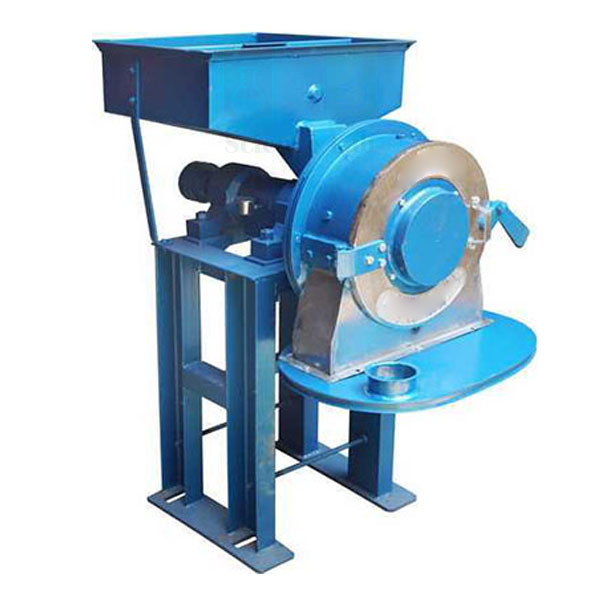
Pulveriser
Pulveriser (Product Code: SLE/AG/14) is a self-contained disc grinder used to turn small crushed pieces of rock, ore and similar hard material into fine powder for analysis in geology, mining and soil laboratories. Its rotating disc with planetary movement works against a 175 mm high carbon steel wheel, reducing about 450 g of quartz type material to 100 mesh in one minute. It is made by Jain Scientific Equipments Pvt Ltd (ScienceLab), an OEM manufacturer and lab equipment exporter, at its own factory in Ambala, India.
Specifications
| Parameter | Detail |
|---|---|
| Type | Self-contained grinder with a rotating disc having planetary movement in the vertical plane |
| Grinding wheel diameter | 175 mm |
| Grinding wheel material | High carbon steel, 53–60 HRC hardness |
| Input of material | 6 mm |
| Output | Reduces about 450 g of quartz type material to 100 mesh in one minute |
| Electrical supply | 440 V, three phase, A.C. |
| Product code | SLE/AG/14 |
| Manufacturer | Jain Scientific Equipments Pvt Ltd (ScienceLab) — OEM |
| Country of origin | India (made in Ambala, Haryana) |
What Is the Laboratory Pulveriser Used For?
Material is first crushed to meet the 6 mm input size, usually in a jaw crusher, and then divided to the quantity required. The portion is fed into the pulveriser, where the planetary action of the disc grinds it between hardened steel surfaces until it reaches the fineness needed for analysis. With quartz type material the machine reaches 100 mesh in about a minute for a 450 g charge; softer or harder materials behave differently, so check fineness with a sieve the first time a new material is prepared.
In busy sample preparation rooms, good upkeep of laboratory instruments in India starts with cleaning: brush out the grinding chamber and wipe the wheel between samples so no powder is carried into the next one. Operators should wear eye protection and keep the covers closed while the disc is turning.
OEM Manufacturer
Jain Scientific Equipments Private Limited, trading as ScienceLab, is the OEM (original equipment manufacturer) of this Pulveriser. It is assembled at the company's own licensed factory at Saha, Ambala, Haryana, India, and supplied factory-direct to laboratories, dealers and importers rather than via a trading house. Replacement grinding wheels and other parts are handled by the manufacturer too, so ask us with the product code whenever you need one. Details about the company are on the ScienceLab profile.
Related Civil Engineering Lab Equipment
A complete crushing and grinding line typically includes:
- Jaw Crusher — primary crushing of lumps down towards the 6 mm feed size.
- Riffle Sample Divider — splits crushed material to the charge you want to pulverise.
- Test Sieves — for checking the fineness of the ground powder.
- Pestle And Mortar — for very small quantities or for finishing a few grams by hand.
- Safety Goggles — eye protection while loading and emptying the grinder.
See more sample preparation equipment in the Civil Engineering Lab Equipment category.
Frequently Asked Questions
What size of material can be fed into the Pulveriser?
The Pulveriser accepts an input of 6 mm material. Larger pieces should first be reduced in a jaw crusher and then divided to the quantity you need before they are fed into the grinder.
How fine and how fast does the Pulveriser grind?
The Pulveriser reduces about 450 g of quartz type material to 100 mesh in one minute. Grinding time for other materials depends on their hardness and on the fineness your analysis needs.
What is the grinding wheel of the Pulveriser made of?
The grinding wheel of the Pulveriser is 175 mm in diameter and made of high carbon steel with 53–60 HRC hardness, chosen to withstand abrasive minerals such as quartz during repeated grinding.
What electrical supply does the Pulveriser require?
The Pulveriser operates on a 440 V, three phase A.C. supply. Please confirm your site supply when you send an enquiry, so the manufacturer can check it before preparing your quotation.
How do I prevent contamination between samples in the Pulveriser?
Clean the chamber and wheel of the Pulveriser thoroughly after every sample, and keep a record of the material ground last, so that trace analyses on the next sample can be interpreted correctly.
Who manufactures the Pulveriser?
The Pulveriser is manufactured by Jain Scientific Equipments Pvt Ltd (ScienceLab), the OEM, at its own licensed factory at Saha, Ambala, Haryana, India. Replacement grinding wheels and repeat orders are handled directly by the manufacturer; just ask us.
What should a quotation request for the Pulveriser include?
Give the product code SLE/AG/14, the quantity, the material you intend to grind, your three phase supply details and the delivery location in India or abroad, and the Pulveriser quotation will come directly from the manufacturer.
Request a Quote
Send your requirement through the contact page or place the Pulveriser in the enquiry cart, together with a jaw crusher if you are setting up a full sample preparation line. You will be quoted directly by the manufacturer.
Last updated: 24 September 2026