- Physics Lab Equipment
- Chemistry Lab Equipment
- Biology Lab Equipment
- Anatomical Lab Equipment
- Learning
- Educational Lab Equipment
- Magnets
- Agriculture
- Astronomy
- Earth Science
- Geography Lab Equipment
- Safety Lab Coat
- Laboratory
- Meteorological
- Electricity & Magnetism
- Heat
- School Lab Equipment
- Lab Glassware
- Science Lab Equipment
- Tvet Lab Equipment
- Robotics Kits Supplier and Manufacturer for Schools India
- Math Lab Equipment Manufacturers and Exporters in Ambala
- STEM Kits Manufacturers and Supplier India
- Engineering Lab Equipment
- Hospital Lab Equipment
- Water, Sanitation & Hygiene Supplies
- Cold Chain, Solar & Communication Equipment
- Nutrition
Materials Testing and Properties apparatus lets engineering and polytechnic students measure how materials behave in tension, compression, bending, torsion, impact, fatigue and hardness tests, using bench-scale teaching machines built for strength of materials and mechanics of solids laboratories. Jain Scientific Equipments Pvt Ltd (ScienceLab), Ambala makes the tensile, impact, fatigue and strain-gauge rigs and kits at its licensed factory and supplies the hardness testers, metallography machines and specimens. It also includes engineering science kits for introductory mechanics, so one engineering educational equipments source covers both introductory and degree-level materials practicals.
What Does the Materials Testing and Properties Range Include?
| Topic | What it covers | Example products |
|---|---|---|
| Tension, compression and shear | Compression, double shear and sheet-metal cupping tests using testing-machine accessories and specimens | Compression Cage, Double Shear Test Specimens, Cupping Experiment |
| Hardness | Vickers hardness testing and ball indentation for Brinell hardness numbers | Vickers Hardness Tester, Brinell Indenter |
| Stiffness, springs and strain | Beam stiffness, heavy-duty coil and disc spring tests, and a sixteen-channel strain readout | Stiffness - Bending and Torsion, Coil Spring, Disc Spring, Digital Strain Display |
| Pressure vessels, plates and cantilevers | Hoop and radial stresses in cylinders, diaphragm strains and deflection of an unsymmetrical section | Thick Cylinder, Diaphragm, Unsymmetrical Cantilever |
| Engineering science kits | Desk-top kits on a perforated work panel for moments, gear trains and potential and kinetic energy | Engineering Science Work Panel, Moments Kit, Gear Trains Kit, Potential And Energy Kit |
Featured Materials Testing and Properties Apparatus
| Product | Product Code | Typical Use |
|---|---|---|
| Bench Top Tensile Testing Machine | SLE/ETP/19 | Hand-driven tensile tests of metal specimens up to 20 kN |
| Universal Hardness Tester | SLE/ETP/09 | Vickers, Brinell and Rockwell hardness measurements on one bench-top tester |
| Rotating Fatigue Machine | SLE/ETP/05 | Demonstrating low- and high-cycle fatigue failure under alternating stress |
| Energy Absorbed At Fracture | SLE/ETP/03 | Safe, enclosed notched-bar pendulum impact testing |
| Strain Gauge Trainer | SLE/ETP/12 | Showing how resistance strain gauges respond on bending, torsion and tension structures |
| Thin Cylinder | SLE/ETP/14 | Stresses and strains in an oil-pressurised thin-walled aluminium cylinder |
| Hook's Law And Spring Rate | SLE/ETP/04 | Finding spring properties with masses and a scale on a levelling frame |
| Tensile Tester Kit | SLE/ETP/21 | Introductory tensile tests on specimens of different materials |
OEM Manufacturing & Supply
Materials Testing and Properties is a mixed range. ScienceLab (Jain Scientific Equipments Private Limited) is the OEM for the teaching rigs made at its own licensed factory at 449, HSIIDC Industrial Area, Saha, Ambala, Haryana: tensile, impact, fatigue and creep testing machines, the muffle furnace, Young's modulus, stiffness, spring, cylinder, diaphragm and cantilever apparatus, the strain gauge trainer, the compression cage, cupping and Brinell indenter accessories, and the engineering science kits and work panel. The hardness testers, the electronic spring tension machine, metallography preparation machines (polishing, hand grinding and cut-off), test specimens, the digital strain display and specimen trays are supplied. The company is registered with the Ministry of Corporate Affairs under CIN U29309HR2020PTC087597, and its export consignments move under Importer-Exporter Code AAECJ8618A (DGFT). Both made and supplied items are quoted to colleges, polytechnics, dealers, tender buyers and importers in India and international markets.
Related Ranges
- Engineering Lab Equipment — the parent category for all engineering and TVET laboratory ranges.
- Testing Equipments — melt flow, tensile, impact and friction machines for plastics and films rather than metals.
- General Products — structures and statics apparatus, where beams, frames and trusses are studied as structures rather than as material samples.
- Civil Engineering Lab Equipment — concrete, cement, soil and aggregate testing for construction materials.
- Theory of Machines — governors, cams and vibration apparatus.
Frequently Asked Questions
What does the Materials Testing and Properties range include?
The Materials Testing and Properties range includes a bench-top tensile machine, compression, shear and cupping test accessories, hardness testers, a fatigue machine, an impact tester, spring, stiffness, strain-gauge and cylinder apparatus, plus engineering science kits on a work panel.
How does Materials Testing and Properties differ from Testing Equipments?
Materials Testing and Properties is teaching apparatus for the mechanics of materials, mainly metals, springs and structural sections, while Testing Equipments covers plastics and film testing machines such as melt flow index, Izod impact and VSP & HDT apparatus.
Does the range suit introductory engineering science as well as degree labs?
Yes. The Materials Testing and Properties range pairs desk-top kits for moments, gear trains, energy and simple tensile tests with bench machines for hardness, fatigue, impact and thick- and thin-cylinder experiments used in later strength of materials courses.
Who makes and supplies the Materials Testing and Properties range?
The Materials Testing and Properties range is partly manufactured and partly supplied by Jain Scientific Equipments Private Limited (ScienceLab): the tensile, impact, fatigue, creep and strain-gauge rigs and the engineering science kits are made at its licensed factory in Saha, Ambala, while hardness testers, metallography machines and test specimens are supplied.
What should a Materials Testing and Properties quotation include?
A Materials Testing and Properties quotation request should list the SLE/ETP product codes, quantities, which accessories and specimens are needed, the delivery destination and whether the purchase is for a tender or an export order.
Request a Quote or Catalogue
Send your experiment list through the contact page or the shopping cart for a quotation or catalogue.
Last updated: 24 September 2026
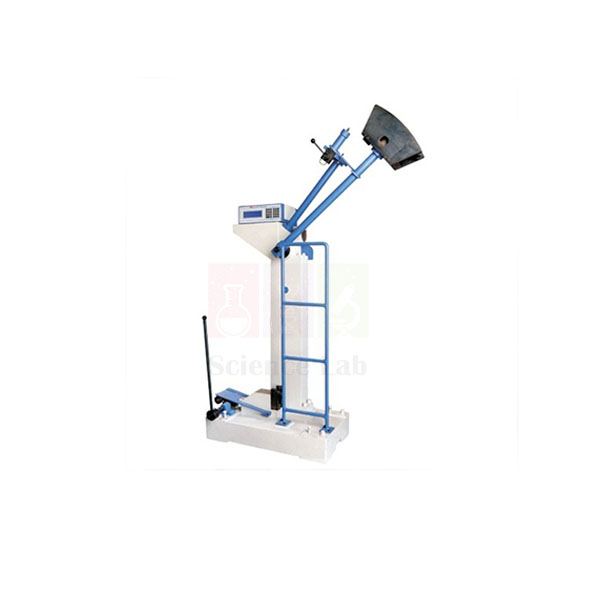
Impact Testing Machine-Digital
Impact Testing Machine-Digital (Product Code: SLE/MCE/14) is a pendulum impact tester used to measure the energy a notched specimen absorbs as it fractures, in the materials testing laboratories of engineering colleges and industry. It runs both Charpy and Izod tests, with 300 J initial potential energy for Charpy and an electronic digital display of the result. It is made by Jain Scientific Equipments Pvt Ltd (ScienceLab), an OEM engineering lab equipment manufacturer, at its own factory in Ambala, India.
Specifications
| Parameter | Detail |
|---|---|
| Test methods | Charpy and Izod impact tests on various materials |
| Initial potential energy | Charpy 300 J; Izod 170 J (the listing also gives Izod capacity as 168 J — confirm at quotation) |
| Display resolution | 0.5 J |
| Minimum scale graduation | 2 J |
| Pendulum drop angle | Charpy 140°; Izod 90° |
| Display | Electronic digital display |
| Position marking | Interchangeable stickers for Izod and Charpy positions |
| Pendulum lock | Positive lock in Izod and Charpy positions |
| Braking | Braking arrangement for stopping the pendulum |
| Strikers and support blocks | Special alloy steels, duly heat-treated |
| Operator safety | Safety guard provided |
| Frame | Rigid design so the machine itself absorbs minimum energy during fracture |
| Changeover | Simple pendulum construction for switching between Izod and Charpy set-ups |
| Overall height | 1.65 m (approx.) |
| Net weight | 375 kg (approx.) |
| Product code | SLE/MCE/14 |
| Manufacturer | Jain Scientific Equipments Pvt Ltd (ScienceLab) — OEM |
| Country of origin | India (made in Ambala, Haryana) |
What Is the Impact Testing Machine-Digital Used For?
Charpy and Izod tests compare toughness — how much energy a material absorbs before it breaks under a sudden blow. For Charpy the notched bar rests as a simple beam and the pendulum falls from 140°; for Izod the bar is gripped as a cantilever and the drop is from 90°. After release, the energy absorbed appears on the digital display, so students can compare steels, cast irons or the same steel before and after heat treatment and see brittle and ductile behaviour side by side.
Lock the pendulum before placing each specimen, keep everyone outside the swing path behind the safety guard, and use the brake to stop the pendulum once the reading is taken. When switching methods, change the position stickers so the markings match the set-up. For polytechnics and colleges, it is core lab equipment for technical institutes teaching strength of materials.
What to Specify When Ordering
- Whether you will run Charpy tests, Izod tests or both
- The specimen materials and notch types you plan to test, so suitability can be confirmed
- Installation space and floor: about 1.65 m tall and 375 kg net
- Number of machines and delivery destination
OEM Manufacturer
ScienceLab is the trading name of Jain Scientific Equipments Private Limited, and the company is the OEM (original equipment manufacturer) of this Impact Testing Machine-Digital. It is built at the company's own licensed factory at Saha, Ambala, Haryana, India, rather than bought in from a trader, and goes factory-direct to engineering colleges, testing laboratories, dealers and importers.
Dealing with the manufacturer means one point of contact for the quotation, for later questions about strikers or support blocks, and for repeat orders — just ask us. Read more on the ScienceLab company profile.
Related Materials Testing and Properties Equipment
Combine impact results with these tests for a fuller picture of mechanical properties:
- Tensile strength testing machine — adds strength and elongation data to toughness results.
- Brinell Hardness Tester — hardness readings on the same material batches.
- Energy Absorbed At Fracture — a small bench-mounting notched-bar impact tester for introductory classes.
- Computerised Izod Impact Tester — an alternative dedicated to Izod testing.
- Muffle Furnace — heat-treats specimens so toughness can be compared before and after.
Explore the Materials Testing and Properties category for more.
Frequently Asked Questions
Which tests can the Impact Testing Machine-Digital perform?
The Impact Testing Machine-Digital performs both Charpy and Izod impact tests on various materials. Interchangeable stickers mark the two positions and the pendulum locks positively in either, so one machine covers both methods in a teaching or testing laboratory.
What impact energy does the Impact Testing Machine-Digital provide?
The Impact Testing Machine-Digital provides 300 J initial potential energy for Charpy tests. For Izod the listing gives 170 J and also 168 J, so please confirm the Izod figure with us at quotation. Display resolution is 0.5 J and minimum scale graduation is 2 J.
How is the operator protected on the Impact Testing Machine-Digital?
The Impact Testing Machine-Digital has a safety guard for the operator, a positive pendulum lock and a braking arrangement to stop the pendulum after each blow. Staff should still keep students outside the swing zone during every test.
Who manufactures the Impact Testing Machine-Digital?
The Impact Testing Machine-Digital is manufactured by Jain Scientific Equipments Pvt Ltd (ScienceLab), the OEM, at its own licensed factory in Saha, Ambala, Haryana, India. Quotations, spares enquiries and repeat orders are handled directly by the manufacturer.
How much space does the Impact Testing Machine-Digital need?
The Impact Testing Machine-Digital stands about 1.65 m tall and has a net weight of about 375 kg, so it needs a firm, level floor and clear space around the pendulum. Ask us for layout guidance before delivery.
Is a calibration certificate available for the Impact Testing Machine-Digital?
Calibration-certificate availability for the Impact Testing Machine-Digital should be discussed with us before ordering. Mention the requirement on your enquiry through the contact page and the quotation will state what can be provided.
Can ScienceLab supply the Impact Testing Machine-Digital for export or multiple labs?
Yes, ScienceLab quotes the Impact Testing Machine-Digital for single laboratories, multi-lab projects and dealers in India and international markets. Share the quantity and delivery destination and the manufacturer will prepare the quotation.
Request a Quote
Quotations for the Impact Testing Machine-Digital come direct from the manufacturer. Send your requirement through the ScienceLab contact page or add the machine to the enquiry cart, stating test types, quantity and delivery location.
Last updated: 24 September 2026
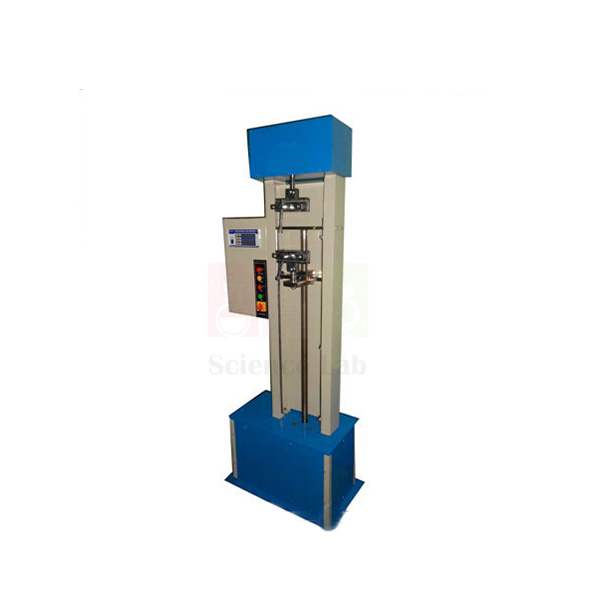
Tensile strength testing machine
Tensile strength testing machine (Product Code: SLE/MCE/15) is a motor-driven tester used to measure the tensile strength and elongation of metals and non-metals in engineering, textile and materials laboratories. Colleges and quality labs use it on anything from foam, rubber and plastic to wires, ropes, yarns and belts, reading loads up to 250 kg to 0.1 kg and elongation up to 900 mm on digital displays. It is made by Jain Scientific Equipments Pvt Ltd (ScienceLab), an OEM manufacturer, at its own factory in Ambala, India.
Specifications
| Parameter | Detail |
|---|---|
| Load range | 250 kg |
| Load least count | 0.1 kg, digital display |
| Elongation | Up to 900 mm |
| Elongation least count | 0.1 mm, digital display |
| Drive motor | ½ HP, 1425 rpm induction motor |
| Power supply | 220 V AC, single phase |
| Raw materials tested | Metals and non-metals such as foam, rubber, textiles, plastic and paper |
| Finished products tested | Rods, wires, ropes, yarns, belts and similar items |
| Product code | SLE/MCE/15 |
| Manufacturer | Jain Scientific Equipments Pvt Ltd (ScienceLab) — OEM |
| Country of origin | India (made in Ambala, Haryana) |
What Is the Tensile Strength Testing Machine Used For?
Tensile strength and elongation are the two prime characteristics of most raw materials, and they often decide whether a material suits a particular application. Students grip a specimen, run the motor to stretch it and note the peak load and the extension at break from the two digital displays. With 900 mm of elongation travel, the machine handles very stretchy materials such as rubber and yarn as well as wires and rods.
Choose specimen sizes so the expected breaking load stays within 250 kg, mark a gauge length before each test to work out percentage elongation, and note the load at regular extension intervals if you want a load–extension graph. It is practical engineering lab equipment for mechanical and civil departments that also serves textile, polymer and packaging courses.
What to Specify When Ordering
- The materials and product forms you will test, e.g. wire, yarn, rubber sheet or paper strip
- Expected breaking loads, to confirm they fall within the 250 kg range
- Grip or clamp requirements for your specimens — ask us what suits them
- Availability of a 220 V AC single-phase supply, plus quantity and delivery location
OEM Manufacturer
Jain Scientific Equipments Private Limited, trading as ScienceLab, is the OEM (original equipment manufacturer) of the Tensile strength testing machine. The machine is made and assembled at the company's own licensed factory at Saha, Ambala, Haryana, India, and supplied factory-direct to colleges, polytechnics, textile and quality laboratories, dealers and importers.
Since quotations come straight from the manufacturer, questions about grips, replacement parts or repeat units reach the people who build the machine — ask us any time. See the ScienceLab profile for more about the company.
Related Materials Testing and Properties Equipment
These items extend a tensile testing set-up or offer alternatives:
- Bench Top Tensile Testing Machine — a bench-scale alternative for demonstrating tensile tests.
- Tensile Tester Kit — a teaching kit for introductory tensile experiments.
- Impact Testing Machine-Digital — adds toughness data to strength and elongation results.
- Creep Testing Machine — shows slow extension under constant load over time.
Find more in Materials Testing and Properties.
Frequently Asked Questions
What is the capacity of the Tensile strength testing machine?
The Tensile strength testing machine has a 250 kg load range with a 0.1 kg least count on its digital display. It measures elongation up to 900 mm with a 0.1 mm least count, also shown digitally.
Which materials can the Tensile strength testing machine test?
The Tensile strength testing machine tests metals and non-metals such as foam, rubber, textiles, plastic and paper, as well as finished products like rods, wires, ropes, yarns and belts, provided the breaking load stays within 250 kg.
What motor and power supply does the Tensile strength testing machine use?
The Tensile strength testing machine is driven by a ½ HP, 1425 rpm induction motor running on a 220 V AC single-phase supply. Confirm a suitable socket and bench position in your laboratory before installation.
Who manufactures the Tensile strength testing machine?
The Tensile strength testing machine is manufactured by Jain Scientific Equipments Pvt Ltd (ScienceLab), the OEM, at its own licensed factory in Saha, Ambala, Haryana, India. Buyers deal directly with the manufacturer for quotations and follow-up.
Are specimen grips included with the Tensile strength testing machine?
The listing for the Tensile strength testing machine does not detail the grips supplied. Tell us which specimens you test — wire, yarn, rubber or paper, for example — through the contact page and we will confirm what is included.
Is a calibration certificate available for the Tensile strength testing machine?
Calibration-certificate availability for the Tensile strength testing machine should be discussed with us at the enquiry stage. State the requirement when you ask for a quotation and the manufacturer will confirm what documentation can accompany the machine.
Request a Quote
Get a quotation for the Tensile strength testing machine direct from the manufacturer through the ScienceLab contact page, or add it to the enquiry cart. Include the materials you test, quantity and delivery location.
Last updated: 24 September 2026
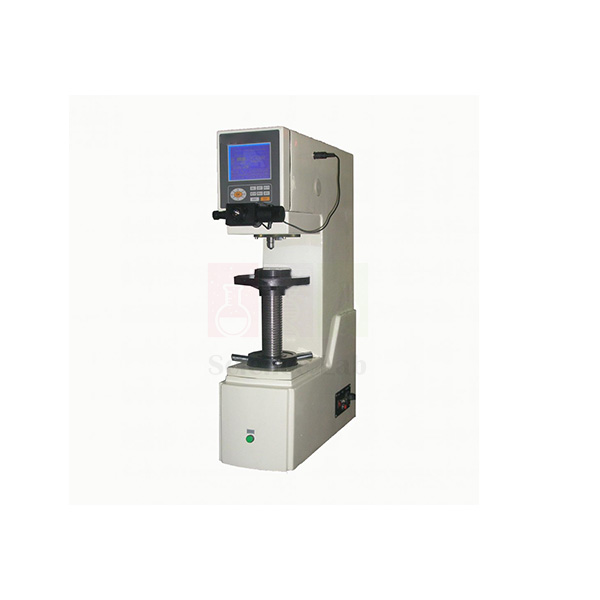
Brinell Hardness Tester
Brinell Hardness Tester (Product Code: SLE/MCE/16) is a digital hardness testing instrument used to measure the Brinell hardness of metals in materials testing, metallurgy and workshop laboratories. Engineering colleges and quality-control labs use it for a fully automatic load, hold and unload cycle across 8–650 HBW, with test loads chosen on a keyboard and results shown on a large LCD screen. It is supplied by Jain Scientific Equipments Pvt Ltd (ScienceLab), Ambala, India.
Specifications
| Parameter | Detail |
|---|---|
| Measuring range | 8–650 HBW |
| Test cycle | Fully automatic load application, holding and unloading |
| Load selection and display | Keyboard with large LCD screen showing indenter, load and other test information |
| Load dwell time | 2 to 99 s, can be set and stored |
| Ball indenters | Tungsten carbide, 10 mm, 5 mm and 2.5 mm |
| Reading | Direct digital reading |
| Microscope magnification | 20X |
| Microscope resolution | 0.005 mm |
| Maximum measurable height | 230 mm |
| Maximum measurable depth | 140 mm |
| Standard blocks | 125–350 HBW10/3000 and 125–350 HBW10/1000 |
| Weight advantage | About 50% lighter than a traditional dead-weight type tester |
| Power supply | 220/110 V, 50/60 Hz, 4 A |
| Dimensions (L x W x H) | 530 x 260 x 750 mm |
| Weight | 110 kg |
| Product code | SLE/MCE/16 |
| Supplied by | Jain Scientific Equipments Pvt Ltd (ScienceLab), Ambala, India |
What Is the Brinell Hardness Tester Used For?
In the Brinell method a hard ball is pressed into the metal under a set load, and the diameter of the round impression, measured through the 20X microscope, gives the hardness number. Because this tester applies, holds and removes the load automatically, the operator no longer influences the result, which greatly improves reproducibility from one student or shift to the next. Three ball sizes let the laboratory match the indenter and load to soft non-ferrous alloys, castings or steels.
For good readings, prepare a flat, clean test surface, keep each impression well away from the edge and from earlier dents, and check the tester on a standard block at the start of a session. A tester of this kind is a staple for polytechnics and quality departments, and ScienceLab works as a laboratory instruments supplier in India for such buyers.
What to Specify When Ordering
- Which ball indenters you need: 10 mm, 5 mm and/or 2.5 mm
- The largest parts you will test, against the 230 mm height and 140 mm depth limits
- Your mains supply: 220 V or 110 V, 50 Hz or 60 Hz
- Quantity and delivery destination
Supplier
The Brinell Hardness Tester is supplied by Jain Scientific Equipments Private Limited, which trades as ScienceLab from Ambala, Haryana. For vendor registration, the supplying company's details are CIN U29309HR2020PTC087597 and GSTIN 06AAECJ8618A1ZT.
The company sources the tester and handles quotations, packing and shipping for engineering colleges, testing laboratories, dealers and importers. For later questions about indenters or standard blocks, ask us. Read more on the ScienceLab profile page.
Related Materials Testing and Properties Equipment
These items fit around Brinell testing in a materials laboratory:
- Brinell Indenter — a steel-ball indenter with hand-held magnifier for introducing the Brinell principle.
- Vickers Hardness Tester — an alternative hardness method for comparison.
- Universal Hardness Tester — an option when several hardness methods are needed.
- Single Disc Polishing Machine — prepares a flat, smooth test surface.
- Cut Off Wheel Machine — sections samples to fit under the indenter.
See all items in Materials Testing and Properties.
Frequently Asked Questions
What is the measuring range of the Brinell Hardness Tester?
The Brinell Hardness Tester measures from 8 to 650 HBW with direct digital reading. It uses tungsten carbide ball indenters of 10 mm, 5 mm and 2.5 mm, and a 20X microscope with 0.005 mm resolution to read the impression.
How does the automatic cycle of the Brinell Hardness Tester help?
The Brinell Hardness Tester applies, holds and removes the load fully automatically, with a dwell time settable from 2 to 99 s. Removing operator influence in this way greatly improves the reproducibility of results between users.
What is the largest specimen the Brinell Hardness Tester can take?
The Brinell Hardness Tester accepts specimens up to 230 mm high, with a maximum measurable depth of 140 mm. If your parts are larger or irregular, send us their dimensions before ordering so suitability can be checked.
What power supply and space does the Brinell Hardness Tester need?
The Brinell Hardness Tester runs on 220/110 V, 50/60 Hz at 4 A. It measures 530 x 260 x 750 mm and weighs 110 kg, about 50% less than a traditional dead-weight type tester, so it still needs a sturdy bench.
Who supplies the Brinell Hardness Tester?
The Brinell Hardness Tester is supplied by Jain Scientific Equipments Pvt Ltd (ScienceLab) of Ambala, Haryana, India. The company quotes and dispatches it to institutions, laboratories, dealers and importers in India and international markets.
Is a calibration certificate available for the Brinell Hardness Tester?
Standard blocks of 125–350 HBW10/3000 and 125–350 HBW10/1000 are listed with the Brinell Hardness Tester. Availability of a calibration certificate should be discussed with us; raise it through the contact page when you request a quote.
Request a Quote
Send your Brinell Hardness Tester requirement through the ScienceLab contact page or place it in the enquiry cart. State the indenters you need, your mains supply and the delivery location.
Last updated: 24 September 2026
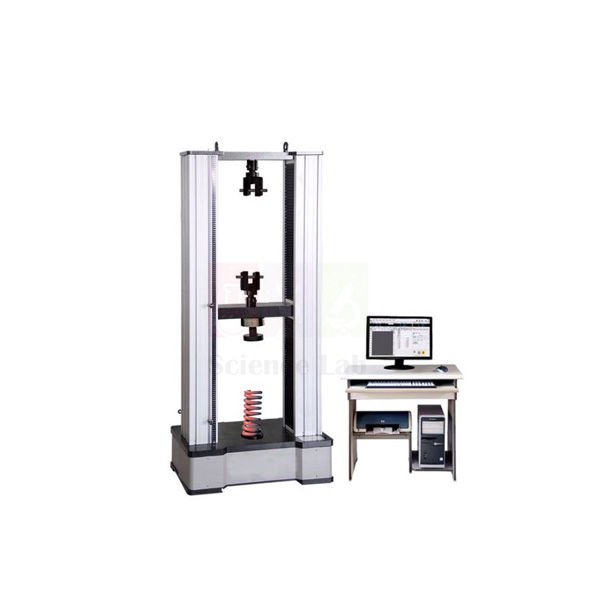
Electronic Spring Tension Machine
Electronic Spring Tension Machine (Product Code: SLE/MCE/17) is a four-column, floor-type spring testing machine used to measure spring force at set heights and deflections in engineering laboratories and spring quality control. Engineering colleges and spring users choose it for automatic control by test force, speed or displacement, a 0.01 mm displacement resolution and maximum test force options from 10 kN up to 300 kN. It is supplied by Jain Scientific Equipments Pvt Ltd (ScienceLab), Ambala, India.
Specifications
| Parameter | Detail |
|---|---|
| Maximum test force options | 10 kN, 20 kN, 30 kN, 50 kN, 100 kN, 200 kN, 300 kN |
| Structure | Four columns, floor type |
| Control method | Automatic control by test force, test speed, displacement and other modes |
| Test accuracy | Class 1 |
| Test force relative error | ≤ ±1% |
| Displacement relative error | ≤ ±1% |
| Deformation relative error | ≤ ±(50 + 0.15L) µm |
| Speed error | ≤ ±1% |
| Speed adjustment range | 0.05–300 mm/min |
| Displacement resolution | 0.01 mm |
| Effective tensile space | 800 (unit not stated in the listing; confirm with us) |
| Effective compression space | 700 (unit not stated in the listing; confirm with us) |
| Pressure plate size (as listed) | 400, 500, 550 |
| Pressure plate diameter | 110 mm |
| Detection points | Up to 10 per test |
| Power supply | AC 220 V ±10%, 50 Hz |
| Product code | SLE/MCE/17 |
| Supplied by | Jain Scientific Equipments Pvt Ltd (ScienceLab), Ambala, India |
Main control features:
- Automatic clearing of test force and displacement whenever needed
- Automatic range shifting to keep load readings accurate
- Automatic calibration routine for the accuracy value
- Settable spring remaining height, at which the test force P is detected
- Settable pre-compression height, with any number of pre-compressions
- Sensor deformation compensated, so machine stiffness does not affect displacement accuracy; deformation is taken from contact with the working pressure plate
What Is the Electronic Spring Tension Machine Used For?
Springs are specified by the force they deliver at a working height, so the machine is set to a remaining height and reads the load there directly. With up to 10 detection points in one run, it builds a force–height profile of the spring, and the pre-compression setting lets new springs settle before measurement. Students see Hooke's law on real components and learn how spring rate is verified in production.
Pick the maximum force model that covers your stiffest spring with a margin, centre each spring on the 110 mm pressure plate and clear force and displacement before starting. As test and measurement instruments in India go, a machine like this links a mechanics course directly to industrial quality practice.
What to Specify When Ordering
- Maximum test force model: 10, 20, 30, 50, 100, 200 or 300 kN
- Largest spring dimensions, so fit within the tensile and compression spaces can be confirmed
- Whether you test tension springs, compression springs or both
- Power available: AC 220 V, 50 Hz
- Quantity and delivery destination
Supplier
Jain Scientific Equipments Private Limited, known to customers by its ScienceLab brand, supplies the Electronic Spring Tension Machine from Ambala, Haryana. The company sources the machine for engineering institutions, spring users, dealers and importers, and prepares the quotation, packing and shipment itself.
Because the choice of force range matters, our team can talk through your spring sizes before you order. More about the company is on the ScienceLab profile.
Related Materials Testing and Properties Equipment
These items support spring and elasticity studies alongside the machine:
- Hook's Law And Spring Rate — a teaching-scale introduction to spring stiffness.
- Coil Spring — sample springs for rate experiments.
- Disc Spring — a different spring form for comparing load–deflection behaviour.
- Tensile strength testing machine — tests the wire and rod stock that springs are made from.
More items are listed in Materials Testing and Properties.
Frequently Asked Questions
What force ranges does the Electronic Spring Tension Machine come in?
The Electronic Spring Tension Machine is offered with maximum test forces of 10 kN, 20 kN, 30 kN, 50 kN, 100 kN, 200 kN and 300 kN. Choose the model that comfortably covers the stiffest spring you need to test.
How accurate is the Electronic Spring Tension Machine?
The Electronic Spring Tension Machine is listed as test accuracy class 1, with test force, displacement and speed relative errors each within ±1%. Displacement resolution is 0.01 mm, and deformation relative error is within ±(50 + 0.15L) µm.
Can the Electronic Spring Tension Machine test at several heights in one run?
Yes, the Electronic Spring Tension Machine can be set with up to 10 detection points, reading the spring test force at each remaining height. Pre-compression height and the number of pre-compressions can also be set before measurement.
What speed range does the Electronic Spring Tension Machine offer?
The Electronic Spring Tension Machine adjusts test speed from 0.05 to 300 mm/min, with speed error within ±1%. Slow speeds suit careful measurements at detection points, while faster speeds shorten approach and return moves.
Who supplies the Electronic Spring Tension Machine?
The Electronic Spring Tension Machine is supplied by Jain Scientific Equipments Pvt Ltd (ScienceLab), Ambala, Haryana, India. The company quotes and ships it to colleges, spring users, dealers and importers in India and international markets.
Is a calibration certificate available with the Electronic Spring Tension Machine?
The Electronic Spring Tension Machine has an automatic calibration routine for its accuracy value, but availability of a calibration certificate should be discussed with us. Mention it on your enquiry through the contact page.
Request a Quote
Ask for a quotation on the Electronic Spring Tension Machine through the ScienceLab contact page or add it to the enquiry cart. Include the force model, your spring sizes and the delivery location.
Last updated: 24 September 2026
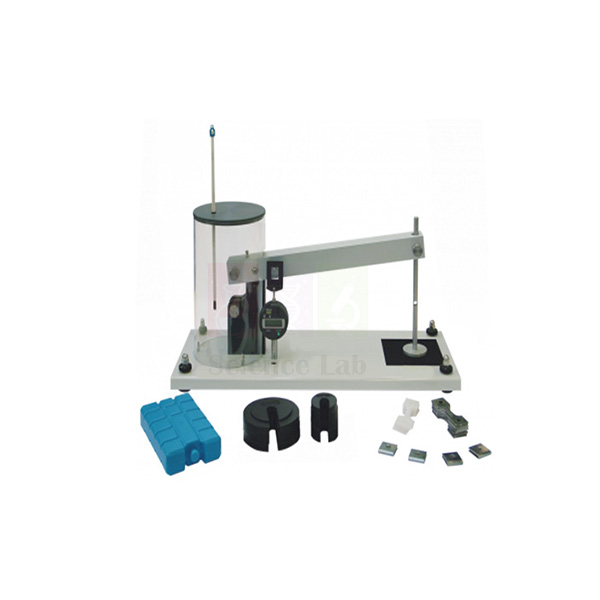
Creep Testing Machine
Creep Testing Machine (Product Code: SLE/MCE/18) is a compact teaching machine used to show how materials slowly keep extending under a constant load, in engineering and materials science laboratories. Students test lead and plastic specimens, which creep noticeably at room temperature and under low loads, using a simple 8:1 lever load beam and a digital indicator that reads the extension. It is made by Jain Scientific Equipments Pvt Ltd (ScienceLab), an OEM manufacturer, at its own factory in Ambala, India.
Specifications
| Parameter | Detail |
|---|---|
| Specimen materials | Lead and different plastics that creep significantly at room temperature |
| Loading system | Simple lever (load beam) with a mechanical advantage of 8:1 |
| Load type | Steady, uniform tensile load |
| Load beam pivot | Ball-bearing pivot for correct loading of the specimen |
| Load application | Weights added to a weight hanger |
| Extension measurement | Digital indicator |
| Temperature tests | Frozen or heated cool-pack placed next to the specimen |
| Enclosure | Transparent enclosure preserves the temperature around the specimen |
| Product code | SLE/MCE/18 |
| Manufacturer | Jain Scientific Equipments Pvt Ltd (ScienceLab) — OEM |
| Country of origin | India (made in Ambala, Haryana) |
What Is the Creep Testing Machine Used For?
Creep is the slow, time-dependent stretching of a material held under constant stress. It governs the life of turbine blades, boiler tubes, lead sheathing and plastic parts, but in metals it normally needs high temperatures and long tests. Lead and plastics creep at room temperature, so this machine brings the whole curve into an ordinary lab session: students hang weights on the hanger, the 8:1 lever multiplies the load on the specimen, and they log time against extension from the digital indicator to plot primary, secondary and tertiary creep.
To study the effect of temperature, freeze or warm the cool-pack, set it beside the specimen and fit the transparent enclosure before loading; then compare creep rates with a room-temperature run. Use specimens from the same batch and read at fixed time intervals so groups can pool results. It suits colleges looking for engineering lab equipment that demonstrates a hard-to-see failure mode quickly.
What to Specify When Ordering
- Number of machines, based on how many student groups test at once
- Lead and plastic specimens you want quoted with the machine — ask us about supply
- Weights for the weight hanger — confirm what is included at quotation
- Delivery destination in India or abroad
OEM Manufacturer
The Creep Testing Machine is an OEM product of Jain Scientific Equipments Private Limited, the company behind the ScienceLab brand. It is produced at the company's own licensed factory at Saha, Ambala, Haryana, India, and supplied direct to universities, engineering colleges, polytechnics, dealers and importers without a trading middleman.
As the maker, ScienceLab can answer questions on specimens, weights or replacement parts itself — ask us whenever you need them. Visit the ScienceLab profile to learn more about the company.
Related Materials Testing and Properties Equipment
These items build a wider picture of how materials deform and fail:
- Tensile strength testing machine — the short-term strength counterpart to long-term creep.
- Bench Top Tensile Testing Machine — a bench-scale tensile test for the same classes.
- Rotating Fatigue Machine — another time-dependent failure mode, driven by cyclic loading.
- Youngs Modulus Apparatus — contrasts elastic wire extension with creep.
See the complete Materials Testing and Properties range.
Frequently Asked Questions
Which specimens does the Creep Testing Machine use?
The Creep Testing Machine uses specimens of lead and different plastics. These materials creep significantly at room temperature and under low loads, so students can record a full creep curve within a normal laboratory session.
How does the Creep Testing Machine apply load?
The Creep Testing Machine applies load through a simple lever, or load beam, with a mechanical advantage of 8:1. Weights added to a weight hanger give a steady, uniform tensile load, and a ball-bearing pivot ensures the specimen is loaded correctly.
Can the Creep Testing Machine show the effect of temperature?
Yes. With the Creep Testing Machine, students freeze or heat a cool-pack, place it next to the specimen and fit the transparent enclosure, which preserves the temperature around the specimen during the test for comparison with room-temperature results.
How is creep measured on the Creep Testing Machine?
On the Creep Testing Machine, a digital indicator measures the extension of the specimen under load while students record the elapsed time. Plotting extension against time shows the stages of creep and the steady creep rate.
Who manufactures the Creep Testing Machine?
The Creep Testing Machine is manufactured by Jain Scientific Equipments Pvt Ltd (ScienceLab), the OEM, at its own licensed factory at Saha, Ambala, Haryana, India. Quotations and follow-up come straight from the manufacturer.
Are weights and specimens included with the Creep Testing Machine?
The listing for the Creep Testing Machine does not state which weights or specimens are included. Please ask through the contact page and the quotation will list exactly what comes with the machine.
Request a Quote
Quotes for the Creep Testing Machine come straight from the manufacturer. Use the ScienceLab contact page or add the machine to the enquiry cart, and mention the number of units and any specimens or weights required.
Last updated: 24 September 2026
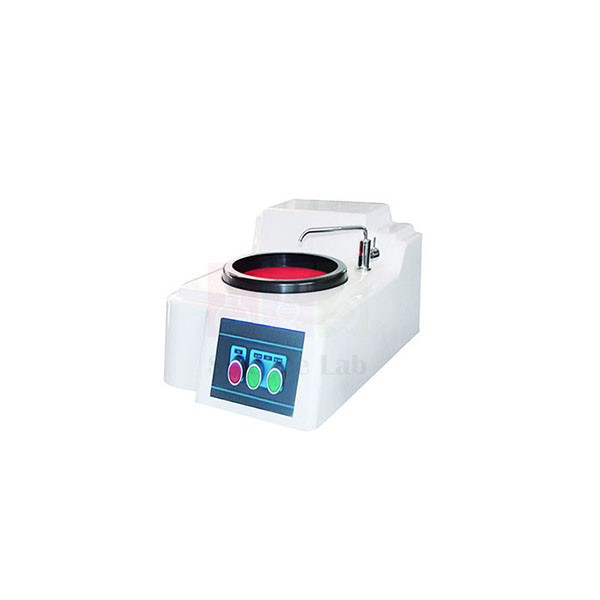
Single Disc Polishing Machine
Single Disc Polishing Machine (Product Code: SLE/MCE/19) is a motorised grinding and polishing machine used to prepare metallographic specimens for microscopic examination in materials and metallurgy laboratories. Research institutions, college labs and industrial quality labs rely on its single 203 mm disc, which runs at 150 or 300 rpm, and on a cooling system that stops the specimen overheating during pre-grinding. It is supplied by Jain Scientific Equipments Pvt Ltd (ScienceLab), Ambala, India.
Specifications
| Parameter | Detail |
|---|---|
| Grinding / polishing disc diameter | 203 mm |
| Disc control | Single disc |
| Rotation speed | 150 rpm and 300 rpm |
| Input power | 370 W |
| Input voltage | AC 380 V, 50 Hz, 3 phase (confirm your site supply with us) |
| Cooling | Built-in cooling system to protect the metallographic structure during pre-grinding |
| Operation | Easy to operate, reliable performance |
| Dimensions | 740 x 400 x 310 mm |
| Weight | 30 kg |
| Product code | SLE/MCE/19 |
| Supplied by | Jain Scientific Equipments Pvt Ltd (ScienceLab), Ambala, India |
What Is the Single Disc Polishing Machine Used For?
After a specimen has been mounted, it is wet ground to reveal the true metal surface and then taken through finer and finer abrasive media until it can be polished and etched. Silicon carbide abrasive paper was the first grinding medium used this way and remains common today, fixed to the rotating disc. The two speeds give the operator a choice: the slower setting is easier to control on delicate final steps, while the faster one removes material more quickly during early grinding.
Keep the coolant running whenever you grind so the specimen stays cool and its microstructure is not changed by heat. Hold the sample flat with steady, light pressure, clean it between abrasive steps and change the paper or cloth as soon as it loads up. For institutions equipping a metallography room, it pairs naturally with other laboratory equipment from a single supplier in India, which simplifies ordering and follow-up.
What to Specify When Ordering
- Your available power supply, since the listed input is AC 380 V, 50 Hz, 3 phase
- Number of machines for your student groups or sample volume
- Abrasive papers or polishing cloths you would like quoted with the machine — ask us what is available
- Delivery destination in India or abroad
Supplier
Jain Scientific Equipments Private Limited, which trades as ScienceLab from Ambala, Haryana, supplies the Single Disc Polishing Machine to colleges, universities, research centres and industrial laboratories. The company sources the machine and handles quotation, packing and shipment to customers, dealers and importers in India and international markets.
If you later need consumables or help identifying a replacement part, contact the same team and we will check what can be arranged. Learn more on the ScienceLab company profile.
Related Materials Testing and Properties Equipment
Complete the specimen preparation and testing sequence with these items:
- Cut Off Wheel Machine — cuts the sample from the parent material before mounting.
- Metallography Hand Grinder — a water-cooled roll grinder for the coarse grinding stages.
- Vickers Hardness Tester — benefits from the smooth, flat surface a polished specimen provides.
- Muffle Furnace — heat-treats samples whose changed structure you then prepare and examine.
Browse more under Materials Testing and Properties.
Frequently Asked Questions
What disc size and speeds does the Single Disc Polishing Machine have?
The Single Disc Polishing Machine has one grinding and polishing disc of 203 mm diameter that rotates at 150 rpm or 300 rpm. The single-disc layout suits one operator preparing specimens in sequence.
What power supply does the Single Disc Polishing Machine need?
The Single Disc Polishing Machine is listed with an AC 380 V, 50 Hz, 3 phase input and 370 W input power. Please confirm the supply available in your laboratory when you enquire so the quotation matches your site.
Does the Single Disc Polishing Machine have a cooling system?
Yes, the Single Disc Polishing Machine is equipped with a cooling system that cools the specimen during pre-grinding. This prevents overheating that could damage the metallographic structure you are trying to examine.
How big and heavy is the Single Disc Polishing Machine?
The Single Disc Polishing Machine measures 740 x 400 x 310 mm and weighs 30 kg. It needs a stable bench with space for coolant handling and for laying out specimens between grinding and polishing steps.
Who supplies the Single Disc Polishing Machine?
The Single Disc Polishing Machine is supplied by Jain Scientific Equipments Pvt Ltd (ScienceLab), Ambala, Haryana, India. The company quotes and ships it for institutions, laboratories, dealers and importers in India and international markets.
Are abrasive papers included with the Single Disc Polishing Machine?
The listing for the Single Disc Polishing Machine does not specify included abrasive papers or polishing cloths. Tell us the grits and cloths you need through the contact page and we will confirm what can be quoted.
Request a Quote
Request pricing for the Single Disc Polishing Machine through the ScienceLab contact page, or add it to the enquiry cart with any other items for your metallography lab. Include your power supply and delivery location.
Last updated: 24 September 2026
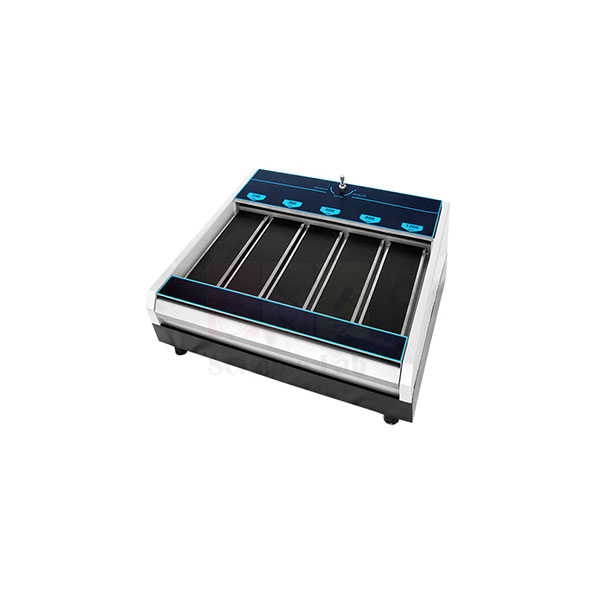
Metallography Hand Grinder
Metallography Hand Grinder (Product Code: SLE/MCE/20) is a manual, water-cooled roll grinder used to grind metallographic specimens flat and progressively finer in materials testing laboratories. Metallurgy students and quality-control technicians use it because its five grinding stations hold 240, 360, 600, 800 and 1200 grit silicon carbide rolls, so a sample moves through every grit on one compact unit. It is supplied by Jain Scientific Equipments Pvt Ltd (ScienceLab), Ambala, India.
Specifications
| Parameter | Detail |
|---|---|
| Grinding stations | Five, for 240, 360, 600, 800 and 1200 grit silicon carbide rolls |
| Abrasive roll size | 3-7/16 inch wide x 60 feet long, on a 1 inch core |
| Cooling / rinse system | Water |
| Construction | Stainless steel with a cast aluminium base |
| Rollers and plates | Hard-coat anodised rollers with paper support plates |
| Roll handling | Abrasive rolls are easy to advance and change |
| Dimensions | 565 x 535 x 200 mm |
| Weight | 25 kg |
| Product code | SLE/MCE/20 |
| Supplied by | Jain Scientific Equipments Pvt Ltd (ScienceLab), Ambala, India |
What Is the Metallography Hand Grinder Used For?
Before a metal sample can be polished, etched and examined under a microscope, the saw marks and deformed layer left by sectioning have to be ground away. On this grinder the operator holds the specimen face-down and draws it along the 240 grit strip first, then works through 360, 600 and 800 grit to the 1200 grit finish. Water running over the strips carries away debris and keeps the surface cool, so the microstructure is not altered by heat.
A useful habit is to turn the specimen through a right angle at each new grit and keep going until the scratches from the previous step have gone. Rinse the sample between stations so coarse particles are not dragged onto the finer rolls. As engineering lab equipment in India goes, a roll grinder like this is a low-maintenance first stage for college metallography courses and workshop quality labs.
What to Specify When Ordering
- Number of grinders needed for your student groups or sample throughput
- Spare silicon carbide rolls and the grits you want (240, 360, 600, 800 or 1200) — ask us about availability
- Bench space of 565 x 535 mm with a water supply and drain nearby
- Delivery location in India or abroad, for packing and freight
Supplier
The Metallography Hand Grinder reaches customers through Jain Scientific Equipments Private Limited, the Ambala company that trades as ScienceLab. The company sources the grinder and takes care of the quotation, packing and dispatch for colleges, research institutions, dealers and importers. For overseas orders, export shipments are handled under Importer-Exporter Code AAECJ8618A (DGFT), and the company is GST-registered in Haryana under GSTIN 06AAECJ8618A1ZT.
Questions about replacement rolls or support plates come to the same team, so ask us whenever you need them. Company background is on the ScienceLab profile page.
Related Materials Testing and Properties Equipment
These items cover the steps before and after hand grinding in a specimen preparation workflow:
- Cut Off Wheel Machine — sections the sample to size before grinding.
- Single Disc Polishing Machine — takes the ground specimen on to a polished finish.
- Vickers Hardness Tester — needs a well-prepared, flat surface for clear indentations.
- Brinell Hardness Tester — hardness testing on the same prepared samples.
See the full range under Materials Testing and Properties.
Frequently Asked Questions
Which grits does the Metallography Hand Grinder use?
The Metallography Hand Grinder has five grinding stations for 240, 360, 600, 800 and 1200 grit silicon carbide rolls. Specimens are normally ground from the coarse end of the unit to the fine end, finishing at 1200 grit ready for polishing.
What size abrasive rolls fit the Metallography Hand Grinder?
The Metallography Hand Grinder takes silicon carbide rolls 3-7/16 inch wide and 60 feet long on a 1 inch core. The rolls are easy to advance as they wear and simple to change when a strip is used up.
Why is the Metallography Hand Grinder water-cooled?
The Metallography Hand Grinder uses water as its cooling and rinse medium so heat from grinding does not alter the specimen's microstructure. The water also washes away abrasive and metal debris, which helps keep each grit station cutting cleanly.
What is the Metallography Hand Grinder made of?
The Metallography Hand Grinder is built from stainless steel with a cast aluminium base, and it has hard-coat anodised rollers with paper support plates. It measures 565 x 535 x 200 mm and weighs 25 kg, so it sits easily on a laboratory bench.
Who supplies the Metallography Hand Grinder?
The Metallography Hand Grinder is supplied by Jain Scientific Equipments Pvt Ltd (ScienceLab) of Ambala, Haryana, India. The company quotes, packs and ships it for colleges, laboratories, dealers and importers in India and international markets.
What should a quotation request for the Metallography Hand Grinder include?
A quotation request for the Metallography Hand Grinder should state the number of units, any spare silicon carbide rolls and grits you need, and the delivery destination. Send these details through the contact page for a complete quote.
Request a Quote
To price the Metallography Hand Grinder, send your requirement through the ScienceLab contact page or add it to the enquiry cart. Mention quantity, spare rolls and delivery location for a faster reply.
Last updated: 24 September 2026
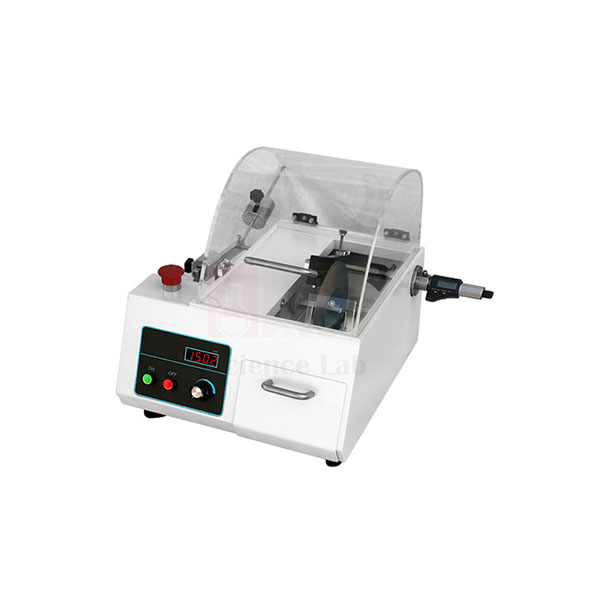
Cut Off Wheel Machine
Cut Off Wheel Machine (Product Code: SLE/MCE/22) is an abrasive cutting machine used to section metal samples for metallographic testing in college, university and industrial laboratories. Sample-preparation staff choose it because it cuts round workpieces up to 80 mm in diameter and rectangular specimens up to 70 mm high and 100 mm deep, with coolant to prevent burning of the cut face. It is supplied by Jain Scientific Equipments Pvt Ltd (ScienceLab), Ambala, India.
Specifications
| Parameter | Detail |
|---|---|
| Round workpiece capacity | Up to 80 mm diameter |
| Rectangular specimen capacity | Up to 70 mm height and 100 mm depth |
| Main parts | Main unit, electric control box, cutting chamber, motor, cooling system and abrasive cutting wheel |
| Cooling | Cooling system to prevent overheating and burning while cutting |
| Cutting speed | Adjustable to suit different specimens |
| Cutting mode | Manual or automatic, selected by the operator |
| Cutting chamber | Large chamber for convenient loading |
| Product code | SLE/MCE/22 |
| Supplied by | Jain Scientific Equipments Pvt Ltd (ScienceLab), Ambala, India |
What Is the Cut Off Wheel Machine Used For?
Every metallographic examination starts with a clean, representative cross-section, and this machine produces it. A rod, bar, weld or casting is clamped in the cutting chamber and parted with the abrasive wheel while coolant floods the cut, so the heat that would otherwise temper or burn the edge is carried away. Being able to set the cutting speed for each material improves the quality of the cut sample, and automatic mode gives a steadier feed than cutting by hand.
Clamp the workpiece firmly so it cannot twist, let the wheel cut without forcing it, and check that coolant is reaching the cut before starting. For engineering colleges building up engineering lab equipment in India, this machine is the natural first station in a line that continues with grinding, polishing and hardness testing.
What to Specify When Ordering
- The largest section you need to cut, compared with the 80 mm round and 70 x 100 mm rectangular capacities
- The electrical supply in your laboratory, so we can confirm the matching machine
- Spare abrasive cutting wheels for the materials you cut — ask us about availability
- Quantity and delivery destination
Supplier
The Cut Off Wheel Machine is supplied by Jain Scientific Equipments Private Limited, a company in Ambala, Haryana, that does business under the ScienceLab name. It sources the machine and looks after quotations, export packing and dispatch for universities, colleges, industry laboratories, dealers and importers.
Need cutting wheels later, or advice on a worn part? Ask us and the team will check what can be supplied. See the ScienceLab profile for more about the company.
Related Materials Testing and Properties Equipment
After sectioning, specimens usually move on to these items:
- Metallography Hand Grinder — removes cutting marks with graded silicon carbide rolls.
- Single Disc Polishing Machine — brings the section to a polished finish for microscopy.
- Brinell Hardness Tester — measures hardness on the cut and prepared piece.
- Muffle Furnace — heat treatment of samples before or after sectioning.
More equipment is listed under Materials Testing and Properties.
Frequently Asked Questions
What size of sample can the Cut Off Wheel Machine cut?
The Cut Off Wheel Machine cuts round workpieces up to 80 mm in diameter and rectangular specimens up to 70 mm in height and 100 mm in depth. Larger parts should be reduced first or discussed with us before ordering.
Does the Cut Off Wheel Machine have manual and automatic cutting?
Yes, the Cut Off Wheel Machine lets the operator choose manual or automatic cutting, and the cutting speed can be set for different specimens. Matching speed to the material improves the quality of the cut samples.
Why does the Cut Off Wheel Machine need a cooling system?
The Cut Off Wheel Machine includes a cooling system because abrasive cutting generates heat that can overheat and burn the specimen. Cooling keeps the cut face representative of the original material, which matters for metallographic examination.
What parts make up the Cut Off Wheel Machine?
The Cut Off Wheel Machine is made up of the main unit, an electric control box, the cutting chamber, motor, cooling system and abrasive cutting wheel. Its large cutting chamber makes loading and unloading specimens convenient.
Who supplies the Cut Off Wheel Machine?
The Cut Off Wheel Machine is supplied by Jain Scientific Equipments Pvt Ltd (ScienceLab) of Ambala, Haryana, India, to laboratories, dealers and importers in India and international markets. Quotations and dispatch are handled by the same team.
What power supply does the Cut Off Wheel Machine need?
The electrical rating of the Cut Off Wheel Machine is not given in this listing. Please share your laboratory's supply details through the contact page and we will confirm the requirement in the quotation.
Request a Quote
For a quotation on the Cut Off Wheel Machine, write to us via the ScienceLab contact page or add it to the enquiry cart. Please include the sample sizes you cut, your power supply and the delivery location.
Last updated: 24 September 2026
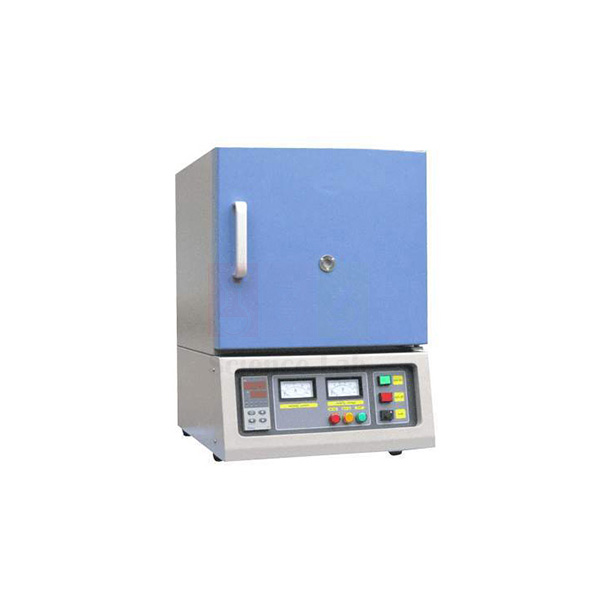
Muffle Furnace
Muffle Furnace (Product Code: SLE/MCE/21) is a high-temperature laboratory furnace used to heat-treat, anneal and ash samples in materials testing, metallurgy and chemistry laboratories. It is available in 1100°C and 1400°C versions with a programmable PID temperature controller, SCR power control, silicon carbide heating rods and 42 or 56 litre chambers. It is made by Jain Scientific Equipments Pvt Ltd (ScienceLab), an OEM laboratory equipment manufacturer, at its own factory in Ambala, India.
Specifications
| Parameter | Detail |
|---|---|
| Maximum temperature | 1100°C or 1400°C versions |
| Continuous operating temperature | 1000°C (1100°C version); 1300°C (1400°C version) |
| Heating elements | Silicon carbide (SiC) rods |
| Thermocouple | K type, R type |
| Temperature controller | Programmable PID controller with SCR power control |
| Insulation | Ceramic fibre blanket |
| Chamber material | Ceramic fibre board, ceramic zirconium board |
| Exterior | Mild steel, powder coated |
| Chamber size and volume | 300 x 300 x 457 mm (42 litres); 300 x 300 x 609 mm (56 litres) |
| Power supply | 220 V, 50 Hz; or 3 phase, 440 V, 50 Hz |
| Other features | Uniform heating rate, safety devices fitted, rugged construction for long runs |
| Product code | SLE/MCE/21 |
| Manufacturer | Jain Scientific Equipments Pvt Ltd (ScienceLab) — OEM |
| Country of origin | India (made in Ambala, Haryana) |
What Is the Muffle Furnace Used For?
In a materials testing lab the furnace hardens, tempers, normalises and anneals steel specimens, so students can measure how hardness and toughness change with heat treatment. Chemistry, soil and food laboratories use the same furnace to ash samples in crucibles and to dry or ignite residues at controlled temperatures. The programmable controller lets staff set a heating profile and leave it to run, while the uniform heating rate helps specimens in different parts of the chamber receive similar treatment.
Load and unload with long crucible tongs and heat-resistant gloves, avoid opening the door at full temperature, and never place wet or volatile material straight into a hot chamber. Choose the 1400°C version only if your work needs it, as the 1100°C unit covers most heat treatment and ashing. For institutions comparing a laboratory equipment manufacturer in India, buying a furnace from the maker simplifies later support.
What to Specify When Ordering
- Maximum temperature: 1100°C or 1400°C version
- Chamber size: 300 x 300 x 457 mm (42 litres) or 300 x 300 x 609 mm (56 litres)
- Power supply at site: 220 V, 50 Hz, or 3 phase 440 V, 50 Hz
- Thermocouple type (K or R) to suit your working temperature
- Quantity and delivery destination
OEM Manufacturer
Jain Scientific Equipments Private Limited, which trades as ScienceLab, is the OEM (original equipment manufacturer) of this Muffle Furnace. The furnace is fabricated and assembled at the company's own licensed factory at Saha, Ambala, Haryana, India, and supplied direct to colleges, research laboratories, industry, dealers and importers.
Heating rods, thermocouples and controllers eventually need attention in any furnace, and with ScienceLab you raise those questions with the manufacturer itself — ask us about spares. The ScienceLab profile has more about the company.
Related Materials Testing and Properties Equipment
These items are used with the furnace or test what it produces:
- Crucible with lid — holds samples during ashing and ignition.
- Crucible & Beaker Tongs — for handling crucibles in and out of the chamber.
- Impact Testing Machine-Digital — compares toughness before and after heat treatment.
- Brinell Hardness Tester — checks the hardness change produced by heat treatment.
More items are in Materials Testing and Properties.
Frequently Asked Questions
What temperatures does the Muffle Furnace reach?
The Muffle Furnace is available in 1100°C and 1400°C versions. Their continuous operating temperatures are 1000°C and 1300°C respectively, so choose the version whose continuous rating covers the temperature your process holds for long periods.
What chamber sizes are available for the Muffle Furnace?
The Muffle Furnace is offered with a 300 x 300 x 457 mm chamber of 42 litres or a 300 x 300 x 609 mm chamber of 56 litres. The larger chamber suits batches of specimens or several crucibles at once.
How is temperature controlled in the Muffle Furnace?
The Muffle Furnace uses a programmable PID temperature controller with SCR power control and a K type or R type thermocouple. This gives a uniform heating rate and steady holding temperature for heat treatment and ashing work.
What is the Muffle Furnace built from?
The Muffle Furnace has silicon carbide heating rods, a chamber of ceramic fibre board and ceramic zirconium board, ceramic fibre blanket insulation and a powder-coated mild steel exterior. It is fitted with safety devices and built for long runs.
Who manufactures the Muffle Furnace?
The Muffle Furnace is manufactured by Jain Scientific Equipments Pvt Ltd (ScienceLab), the OEM, at its own licensed factory in Saha, Ambala, Haryana, India. Buyers get quotations and spares support directly from the manufacturer.
What power supply does the Muffle Furnace need?
The Muffle Furnace is listed for 220 V, 50 Hz or 3 phase 440 V, 50 Hz supply. Tell us which supply your laboratory has, together with the temperature and chamber size you need, so the quotation matches your site.
Is a calibration certificate available for the Muffle Furnace?
Calibration-certificate availability for the Muffle Furnace controller and thermocouple should be discussed with us before you order. Raise it on your enquiry through the contact page so the quotation can address it.
Request a Quote
Quotations for the Muffle Furnace come direct from the manufacturer. Send the temperature version, chamber size, power supply and quantity through the ScienceLab contact page, or add it to the enquiry cart.
Last updated: 24 September 2026
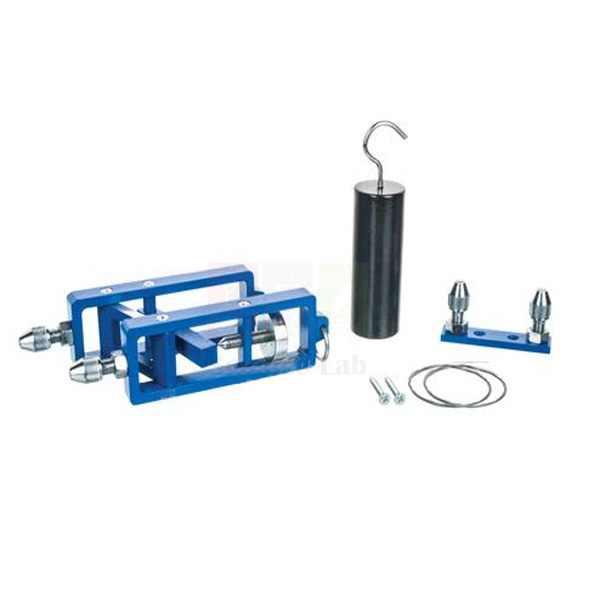
Youngs Modulus Apparatus
Youngs Modulus Apparatus (Product Code: SLE/MCE/31) is a wire-extension apparatus used to find the relationship between the load on a wire and its resulting extension, and from it Young's modulus, in physics and engineering laboratories. Students read the extension on an engraved brass 0 to 30 mm scale with a movable vernier readable to 0.1 mm, while a ceiling clamp holds the wires from an overhead beam. It is made by Jain Scientific Equipments Pvt Ltd (ScienceLab), an OEM manufacturer, at its own factory in Ambala, India.
Specifications
| Parameter | Detail |
|---|---|
| Purpose | Relationship between load applied to a wire and the resulting extension |
| Scale | Engraved brass scale plate, 0 to 30 mm |
| Vernier | Movable vernier, readable to 0.1 mm |
| Wire clamping | Scale plate and vernier each have bars with clamping screws for the wires |
| Hooks | For the tension weight and the loading masses |
| Tension weight | Mass about 1.3 kg, supplied with the apparatus |
| Ceiling clamp | Holds the upper ends of the wires; a pair of large wood screws fixes it to an overhead beam, door frame or similar |
| Product code | SLE/MCE/31 |
| Manufacturer | Jain Scientific Equipments Pvt Ltd (ScienceLab) — OEM |
| Country of origin | India (made in Ambala, Haryana) |
What Is the Youngs Modulus Apparatus Used For?
Two wires hang side by side from the ceiling clamp, one carrying the scale plate and the other the vernier. The tension weight keeps the wires taut, and as loading masses are added to the test wire its end moves down against the scale, so the vernier gives the extension directly to 0.1 mm. Because both wires share the same support and surroundings, sagging of the support or temperature drift affects both equally and largely cancels out.
Add masses in equal steps, wait a moment for each reading to settle, and take readings again while unloading to check the wire stayed elastic. Measure the wire diameter at several points and its length from the clamp, then plot load against extension; the slope gives Young's modulus. It is a staple of physics lab equipment in India for both school and first-year engineering practicals.
What to Specify When Ordering
- Number of sets for your practical groups
- Test wires (material and diameter) you would like quoted, as wires are not listed with the apparatus
- Slotted loading masses for the hooks — ask us to include them if needed
- A suitable overhead beam or door frame for fixing the ceiling clamp
OEM Manufacturer
This Youngs Modulus Apparatus is an OEM product of Jain Scientific Equipments Private Limited, better known by its trading name ScienceLab. The scale plate, vernier carrier and clamp are made at the company's own licensed factory at Saha, Ambala, Haryana, India, so schools, colleges, dealers and importers buy from the manufacturer rather than through a trader.
Need extra tension weights, replacement clamps or a repeat batch next term? Ask us and the manufacturer will quote directly. The ScienceLab profile gives more background on the company.
Related Materials Testing and Properties Equipment
These items complete a Young's modulus practical or extend it:
- Steel Wire — test wire for extension experiments.
- Hangers with Slotted Weights — for adding load in equal steps.
- Micrometer Screw Gauge, Lock Type — measures the wire diameter for the stress calculation.
- Apparatus Young Modulus Searle’s — a Searle’s pattern alternative from the physics range.
- Tensile strength testing machine — takes wire beyond its elastic limit to breaking.
Browse Materials Testing and Properties for more.
Frequently Asked Questions
What does the Youngs Modulus Apparatus measure?
The Youngs Modulus Apparatus measures the extension of a wire as load is applied, giving the load–extension relationship. With the wire's length and diameter, students use these readings to calculate the Young's modulus of the wire material.
How precise is the scale on the Youngs Modulus Apparatus?
The Youngs Modulus Apparatus has an engraved brass scale plate reading 0 to 30 mm and a movable vernier readable to 0.1 mm. That resolution suits the small extensions produced by thin wires under laboratory loads.
What comes with the Youngs Modulus Apparatus?
The Youngs Modulus Apparatus comes with the scale plate and vernier, each with wire-clamping bars and hooks, a ceiling clamp with a pair of large wood screws, and a tension weight of about 1.3 kg. Wires and loading masses are not listed.
How is the Youngs Modulus Apparatus mounted?
The Youngs Modulus Apparatus hangs from a ceiling clamp that holds the upper ends of the wires. The clamp is fixed with two large wood screws to a convenient overhead beam, door frame or similar rigid support.
Who manufactures the Youngs Modulus Apparatus?
The Youngs Modulus Apparatus is manufactured by Jain Scientific Equipments Pvt Ltd (ScienceLab), the OEM, at its own licensed factory in Saha, Ambala, Haryana, India. Schools and colleges receive quotations directly from the manufacturer.
What should a quotation request for the Youngs Modulus Apparatus include?
A quotation request for the Youngs Modulus Apparatus should give the number of sets, any test wires and loading masses you want added, and the delivery location. Send it through the contact page for a prompt reply.
Request a Quote
Quotes for the Youngs Modulus Apparatus come direct from the manufacturer. Request one through the ScienceLab contact page or add the apparatus to the enquiry cart, listing sets, wires and masses required.
Last updated: 24 September 2026
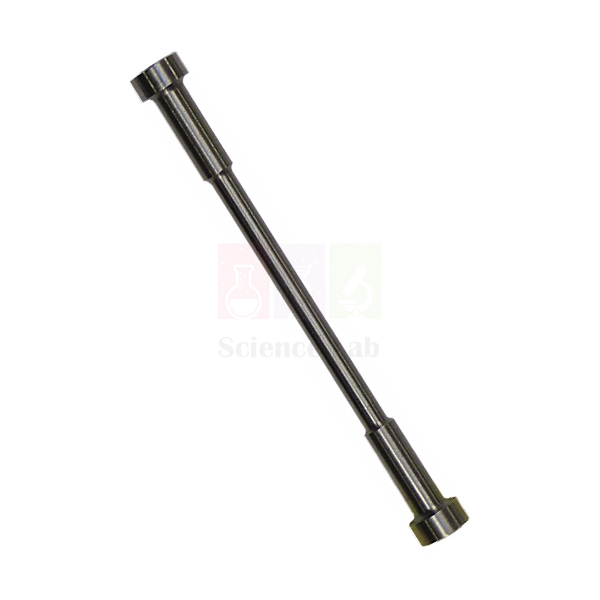
Specimen
Specimen (Product Code: SLE/ETP/01) is a long-style tensile test specimen made of 0.1% carbon steel, used for pull-to-failure tests on the Bench Top Tensile Testing Machine in engineering and materials science laboratories. It is intended for use with that machine in combination with its Extensometer, so students can record extension accurately as the load rises. It is supplied by Jain Scientific Equipments Pvt Ltd (ScienceLab), Ambala, India, to colleges building up their engineering lab equipment in India.
Specifications
| Parameter | Detail |
|---|---|
| Specimen style | Long style |
| Material | 0.1% carbon steel |
| For use with | Bench Top Tensile Testing Machine, in combination with the Extensometer |
| Test type | Tensile test |
| Product code | SLE/ETP/01 |
| Supplied by | Jain Scientific Equipments Pvt Ltd (ScienceLab), Ambala, India |
What Is the Carbon Steel Tensile Specimen Used For?
In a tensile test the specimen is clamped in the machine's grips and pulled steadily until it breaks. With the Extensometer attached, students log load against extension and turn the results into a stress–strain curve, from which they read the elastic modulus, yield or proof stress, ultimate tensile strength and elongation at fracture. Measuring the broken ends also gives the reduction of area.
A carbon content of 0.1% places this specimen among the low-carbon steels, which are ductile and usually show clear yielding, a long plastic region and visible necking before they fail. That makes it a good reference material: run it first so students recognise a ductile curve, then compare other materials against it. Record the specimen's dimensions before each test, and remember that every specimen is used once, as it is broken during the test.
What to Specify When Ordering
- The number of specimens — one for every tensile test planned
- The tensile machine and extensometer you will use, so we can confirm the Specimen suits your set-up
- Whether other test specimens are needed on the same quotation
Supplier
Jain Scientific Equipments Private Limited, which trades as ScienceLab, supplies the Specimen from Ambala, Haryana, to engineering colleges, polytechnics, training institutes and dealers in India and international markets. It can be quoted alongside the tensile testing apparatus it is used with.
Find out more about the company on our company profile.
Related Materials Testing and Properties Equipment
Machines and specimens used in the same tensile-testing work:
- Bench Top Tensile Testing Machine — the bench machine this Specimen is intended for.
- Tensile Tester Kit — a cased tester for introductory stretch-to-failure tests.
- Tensile strength testing machine — another machine for tensile strength work.
- Double Shear Test Specimens — copper specimens for shear-strength tests.
Browse the Materials Testing and Properties category for more apparatus.
Frequently Asked Questions
What material is the Specimen made of?
The Specimen (SLE/ETP/01) is made of 0.1% carbon steel, a low-carbon steel that is ductile, which makes it well suited to showing yielding, necking and elongation in a teaching-lab tensile test.
Which machine is the Specimen designed for?
The Specimen is intended for the Bench Top Tensile Testing Machine used in combination with the Extensometer. If you plan to use it on a different tensile tester, send us the machine details through the contact page so we can check suitability.
Can a Specimen be used more than once?
No. A Specimen is pulled until it fractures during a tensile test, so each one can only be used once. Order at least one Specimen for every test you plan, plus a few extra for practice runs.
What are the dimensions of the Specimen?
The Specimen is described as long style, but its exact dimensions are not listed on this page. Ask us through the contact page and share your machine's grip details so the right Specimen can be quoted.
Who supplies the Specimen?
The Specimen is supplied by Jain Scientific Equipments Pvt Ltd, trading as ScienceLab, from Ambala, Haryana, India, to engineering colleges, polytechnics, training institutes and dealers in India and international markets.
Can specimens be ordered in bulk?
Yes. ScienceLab quotes the Specimen in quantities to match a semester of tensile tests for colleges, training institutes and dealers. State the number of specimens and your delivery city or port when you send the enquiry.
Request a Quote
To get a price for the Specimen, send your quantity and machine details through our contact page, or add it to the enquiry cart with the tensile apparatus you need.
Last updated: 24 September 2026
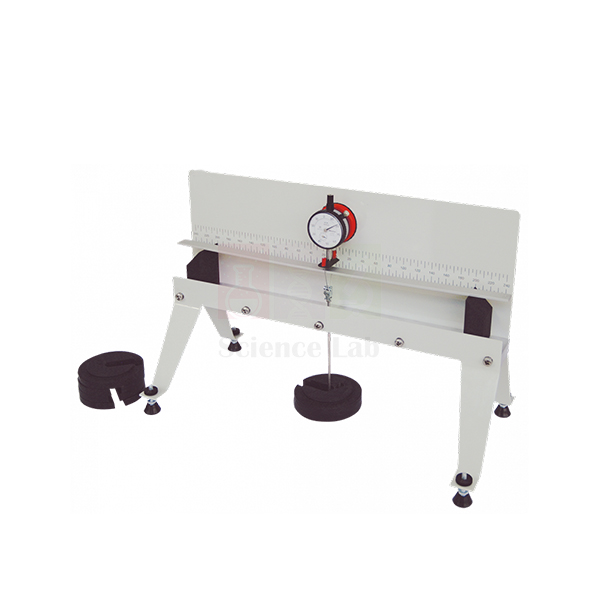
Stiffness - Bending and Torsion
Stiffness - Bending and Torsion (Product Code: SLE/ETP/02) is a compact, bench-mounted frame used to investigate how stiff beams of different materials and cross-sections are in bending — and, with optional kits, in torsion — in engineering and materials science labs. The standard kit pairs a rigid metal frame with two adjustable knife edges, weights, a magnetic dial gauge, a set of beams and a vernier gauge. It is made by Jain Scientific Equipments Pvt Ltd (ScienceLab), an OEM manufacturer, at its own factory in Ambala, India.
Specifications
| Parameter | Detail |
|---|---|
| Frame | Compact, bench-mounting rigid metal frame |
| Beam supports | Two adjustable knife edges acting as simple supports |
| Positioning | Linear scale on the back panel for accurate placing of the knife edges |
| Deflection measurement | Magnetic dial gauge |
| Loading | Weights, included in the kit |
| Test beams | Set of beams of different materials and cross-sections |
| Specimen measurement | Vernier gauge for measuring beam dimensions |
| Optional kits | Different beam fixings; torsional stiffness |
| Product code | SLE/ETP/02 |
| Manufacturer | Jain Scientific Equipments Pvt Ltd (ScienceLab) — OEM |
| Country of origin | India (made in Ambala, Haryana) |
What Is the Bending and Torsion Stiffness Apparatus Used For?
Students set the two knife edges to a chosen span using the linear scale, measure the width and depth of a beam with the vernier gauge, and rest the beam across the supports. Weights are then added step by step while the magnetic dial gauge records how far the beam deflects. Plotting load against deflection gives a straight line whose slope is the beam's bending stiffness.
Repeating the test with the other beams separates the two things that control stiffness: the material, through its elastic modulus, and the shape of the cross-section, through its second moment of area. Changing the span shows how quickly deflection grows as supports move apart. The optional kits take the same frame further, into other beam fixings and into twisting tests that measure torsional stiffness — core topics for mechanics lab equipment in India.
What to Specify When Ordering
- Whether you need the standard bending kit only, or the optional beam-fixings and torsional-stiffness kits as well
- The number of frames, based on how many student groups test at the same time
- Whether a calibration certificate for the dial gauge is needed — discuss this with us before ordering
OEM Manufacturer
Jain Scientific Equipments Private Limited, trading as ScienceLab, is the OEM that makes the Stiffness - Bending and Torsion apparatus at its own licensed factory at Saha, Ambala, Haryana, India. Engineering colleges, polytechnics, universities, dealers and importers buy it factory-direct, and questions about optional kits, spare beams or repeat orders go straight to the manufacturer.
For institutional and tender buyers who need vendor registration details: GSTIN 06AAECJ8618A1ZT, LEI 3358004HRD1JIVXKYX49. More about the company is on our company profile.
Related Materials Testing and Properties Equipment
Apparatus that extends beam-stiffness and torsion work:
- Youngs Modulus Apparatus — measures the elastic modulus that governs beam stiffness.
- Unsymmetrical Cantilever — extends bending studies to unsymmetrical sections.
- Torsion of Circular Sections — dedicated apparatus for twisting circular shafts.
- Bending Stress In a Beam — links beam bending to the stresses inside it.
See the full Materials Testing and Properties category for more apparatus.
Frequently Asked Questions
What comes in the standard Stiffness - Bending and Torsion kit?
The standard Stiffness - Bending and Torsion kit (SLE/ETP/02) includes a rigid metal bench frame with a linear scale, two adjustable knife edges, weights, a magnetic dial gauge, a set of beams of different materials and cross-sections, and a vernier gauge.
Can the apparatus test torsion as well as bending?
Yes, with an optional kit. The Stiffness - Bending and Torsion apparatus handles bending tests as standard, while optional additional kits allow investigations into torsional stiffness and into different beam fixings using the same frame.
How is beam deflection measured?
On the Stiffness - Bending and Torsion apparatus, beam deflection is read with the magnetic dial gauge supplied in the kit, while the linear scale on the back panel lets students place the knife-edge supports accurately.
Is a calibration certificate available for the dial gauge?
Whether a calibration certificate can be provided with the Stiffness - Bending and Torsion apparatus should be discussed with us before ordering. Please raise it through the contact page with your other requirements.
Who manufactures the Stiffness - Bending and Torsion apparatus?
The Stiffness - Bending and Torsion apparatus is manufactured by Jain Scientific Equipments Pvt Ltd (ScienceLab) as the OEM, at its own licensed factory in Saha, Ambala, Haryana, India, and supplied factory-direct to colleges, dealers and importers.
What should a quotation request include?
For the Stiffness - Bending and Torsion apparatus, tell us the number of frames, whether the optional beam-fixing and torsion kits are required, and the delivery city or port. ScienceLab supplies institutions in India and international markets.
Request a Quote
Quotations for the Stiffness - Bending and Torsion apparatus come direct from the manufacturer. Send your requirements through our contact page, or add the apparatus to the enquiry cart along with any related equipment.
Last updated: 24 September 2026
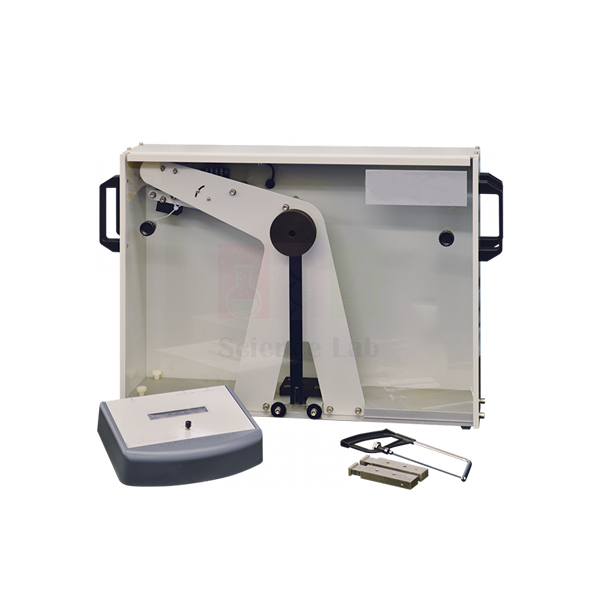
Energy Absorbed At Fracture
Energy Absorbed At Fracture (Product Code: SLE/ETP/03) is a small-scale, bench-mounted notched-bar impact tester used to measure how much energy a material absorbs as it breaks, in engineering and materials science teaching labs. A pendulum on low-friction bearings, an angular encoder at the pivot, an instrumentation unit and a power supply work together behind an interlocked guard, giving students a safe introduction to impact testing. It is made by Jain Scientific Equipments Pvt Ltd (ScienceLab), an OEM manufacturer, at its own factory in Ambala, India.
Key Details
| Parameter | Detail |
|---|---|
| Type | Small-scale, bench-mounting notched-bar impact tester |
| Main parts | Main unit, instrumentation unit and power supply |
| Pendulum | Supported in a rigid frame by low-friction bearings |
| Angle measurement | Angular encoder in the pivot measures the pendulum's position over its range of movement |
| Guarding | Fully enclosed, with an interlocked guard covering all moving parts |
| Levelling | Adjustable feet on the base |
| Investigations | Resistance of materials to crack propagation; principles of common impact testing techniques |
| Product code | SLE/ETP/03 |
| Manufacturer | Jain Scientific Equipments Pvt Ltd (ScienceLab) — OEM |
| Country of origin | India (made in Ambala, Haryana) |
What Is the Notched Bar Impact Tester Used For?
A notched bar is placed in the tester, the pendulum is raised and released, and it swings down to strike and break the specimen. The pendulum rises less on the far side than it would have with nothing in its path, and that shortfall in height is the energy the specimen soaked up as it fractured. The angular encoder tracks the pendulum's position throughout the swing, so the angles are measured electronically instead of being read from a pointer by eye.
Testing different materials, or the same material with different notches, shows why some parts fail in a tough, ductile way and others snap in a brittle manner — the practical question behind the impact tests used in industry. Level the frame with its adjustable feet before a session, keep the interlocked guard closed during every swing, and examine each fracture surface afterwards alongside the recorded energy.
What to Specify When Ordering
- The mains supply at your laboratory, so the power supply can be confirmed
- The notched specimens you plan to test — ask us which specimens suit the tester
- The number of testers needed for your student groups
OEM Manufacturer
ScienceLab is the trading name of Jain Scientific Equipments Private Limited, the OEM that produces the Energy Absorbed At Fracture tester at its own licensed factory at Saha, Ambala, Haryana, India. Engineering colleges, polytechnics, technical institutes, dealers and importers buy it directly from the maker rather than through a trading house.
Because the tester comes factory-direct, questions about specimens, spare parts or additional units are answered by the manufacturer — just ask us. Read more on our company profile.
Related Materials Testing and Properties Equipment
Other apparatus for studying how materials fail:
- Impact Testing Machine-Digital — a digital impact tester for further impact work.
- Computerised Izod Impact Tester — a computerised alternative for impact testing.
- Tensile Tester Kit — compares slow tensile failure with sudden impact failure.
- Rotating Fatigue Machine — shows failure under repeated alternating stress.
The Materials Testing and Properties category lists more engineering lab equipment.
Frequently Asked Questions
What does the Energy Absorbed At Fracture tester measure?
The Energy Absorbed At Fracture tester (SLE/ETP/03) measures the energy a notched specimen absorbs when a swinging pendulum breaks it. An angular encoder at the pivot tracks the pendulum's position so the energy absorbed can be found from its swing.
What is supplied with the Energy Absorbed At Fracture tester?
The Energy Absorbed At Fracture apparatus consists of a main unit with the pendulum in a rigid frame, an instrumentation unit and a power supply. Ask us through the contact page about suitable test specimens for your course.
Is the impact tester safe for student use?
The Energy Absorbed At Fracture tester is fully enclosed, with an interlocked guard covering all moving parts, making it a safe way to introduce impact testing. Students should still work under supervision and follow the lab's safety rules.
How is the tester levelled?
The Energy Absorbed At Fracture tester has adjustable feet on its base. Set the unit level on a firm bench before testing so the pendulum swings true and the readings from the angular encoder remain consistent.
Who manufactures the Energy Absorbed At Fracture tester?
The Energy Absorbed At Fracture tester is manufactured by Jain Scientific Equipments Pvt Ltd (ScienceLab) as the OEM, at its own licensed factory in Saha, Ambala, Haryana, India, and supplied factory-direct to colleges, dealers and importers.
Is a calibration certificate available?
Whether a calibration certificate can be supplied with the Energy Absorbed At Fracture tester should be discussed with us at the enquiry stage. Mention it in your request on the contact page along with your quantity.
Can ScienceLab quote the tester for export?
Yes. ScienceLab quotes the Energy Absorbed At Fracture tester direct from the manufacturer for institutions and dealers in India and international markets. Share the quantity, mains supply and delivery city or port through the contact page.
Request a Quote
Quotations for the Energy Absorbed At Fracture tester come straight from the manufacturer. Send your requirements through our contact page, or add it to the enquiry cart with other materials testing apparatus.
Last updated: 24 September 2026
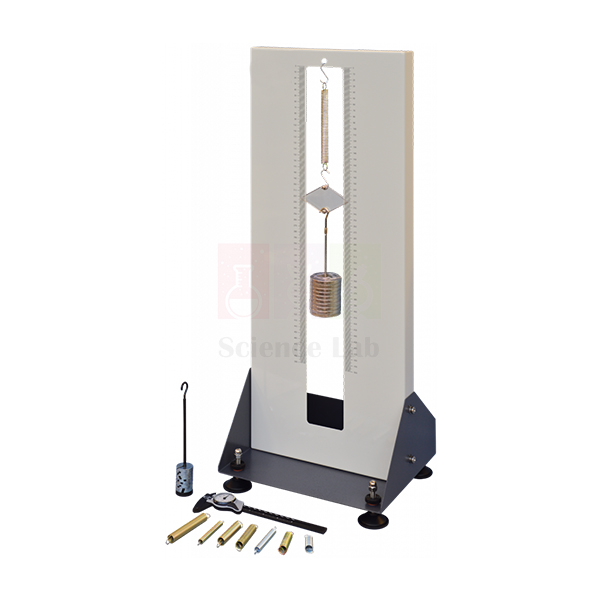
Hook's Law And Spring Rate
Hook's Law And Spring Rate (Product Code: SLE/ETP/04) is a spring testing apparatus used to verify Hooke's law and find the spring rate of extension springs in physics and engineering laboratories. A compact metal frame with adjustable feet carries a metric scale on each side of the slot where the test spring hangs, and a set of extension springs is supplied, making it a practical Hooke's law spring kit. It is made by Jain Scientific Equipments Pvt Ltd (ScienceLab), an OEM manufacturer, at its own factory in Ambala, India.
Key Details
| Parameter | Detail |
|---|---|
| Frame | Compact metal frame with adjustable feet for levelling |
| Scales | Metric scale on each side of a large slot where the test spring hangs |
| Test method | Variable mass and scale measurement |
| Springs supplied | A set of extension (tension) springs |
| Storage | Storage area at the back of the frame for springs and masses |
| Typical uses | Teaching spring properties and basic physics laws; workshop checks of springs before or after use |
| Product code | SLE/ETP/04 |
| Manufacturer | Jain Scientific Equipments Pvt Ltd (ScienceLab) — OEM |
| Country of origin | India (made in Ambala, Haryana) |
What Is the Spring Testing Apparatus Used For?
The method is deliberately simple. Level the frame with its feet, hang a spring in the slot and note its starting position on the scale, then add masses one at a time and read the new position after each. Plotting the load against the extension gives a straight line for as long as the spring behaves elastically — Hooke's law — and the slope of that line is the spring rate, the force needed for each unit of stretch.
Because several extension springs are supplied, students can compare spring rates across different spring sizes and work out the basic rules of spring design for themselves. The same frame earns its place in a workshop too, where a spring can be checked before it is fitted or after it has been in service to see whether it has lost stiffness. Return springs and masses to the storage area at the back after each class.
What to Specify When Ordering
- The number of apparatus sets, based on how many student groups work at once
- Whether you need a set of masses quoted with it — ask us to confirm what is packed
- Any additional springs you would like to discuss for comparison tests
OEM Manufacturer
Jain Scientific Equipments Private Limited, trading as ScienceLab, manufactures the Hook's Law And Spring Rate apparatus as the OEM at its own licensed factory at Saha, Ambala, Haryana, India. Schools, engineering colleges, ITIs, dealers and importers buy it straight from the manufacturer.
Replacement springs and repeat orders are handled by the maker itself — ask us with your requirement. More about ScienceLab is on our company profile.
Related Materials Testing and Properties Equipment
Springs and loading equipment for further spring and elasticity work:
- Coil Spring — a further spring experiment in the same range.
- Disc Spring — introduces a different spring form for comparison.
- Electronic Spring Tension Machine — an electronic machine for spring load testing.
- Hangers with Slotted Weights — slotted masses for loading a spring step by step.
Visit the Materials Testing and Properties category for more apparatus.
Frequently Asked Questions
What does the Hook's Law And Spring Rate apparatus measure?
The Hook's Law And Spring Rate apparatus (SLE/ETP/04) measures how far a spring extends as masses are added, so students can confirm Hooke's law and calculate the spring rate from the slope of a load–extension graph.
Which springs are supplied with the apparatus?
The Hook's Law And Spring Rate apparatus is supplied with a set of extension, or tension, springs so that different spring sizes and rates can be compared. Ask us through the contact page for details of the springs in the set.
Are masses included?
The Hook's Law And Spring Rate frame has a storage area for springs and masses, but the mass set is not detailed on this page. Please confirm with us whether masses are packed, or add slotted weights to your quotation.
Can the apparatus be used outside the classroom?
Yes. Besides teaching, the Hook's Law And Spring Rate apparatus is a useful workshop tool for checking the properties of a spring before it is used, or after it has been in service, to see whether it has changed.
Who manufactures the Hook's Law And Spring Rate apparatus?
The Hook's Law And Spring Rate apparatus is manufactured by Jain Scientific Equipments Pvt Ltd (ScienceLab) as the OEM, at its own licensed factory in Saha, Ambala, Haryana, India, and supplied factory-direct to schools, colleges and dealers.
What should I send for a quotation?
For the Hook's Law And Spring Rate apparatus, send the number of sets, whether masses or extra springs are needed, and the delivery city or port. ScienceLab supplies institutions and dealers in India and international markets.
Request a Quote
Quotations for the Hook's Law And Spring Rate apparatus come directly from the manufacturer. Use our contact page to send your requirement, or add it to the enquiry cart together with any masses or springs.
Last updated: 24 September 2026
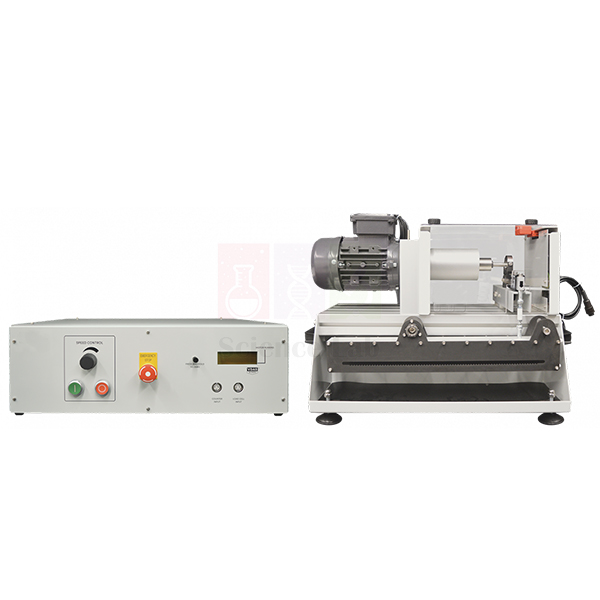
Rotating Fatigue Machine
Rotating Fatigue Machine (Product Code: SLE/ETP/05) is a bench-mounted rotating-bending fatigue tester used to show how materials fail under alternating stress, covering both low- and high-cycle fatigue, in engineering and materials science laboratories. A variable speed motor spins the specimen in a collet chuck while a dead weight on a load arm bends it, and a separate unit displays the load, cycle rate and number of cycles. It is made by Jain Scientific Equipments Pvt Ltd (ScienceLab), an OEM manufacturer, at its own factory in Ambala, India.
Key Details
| Parameter | Detail |
|---|---|
| Mounting | Bench-mounted machine |
| Test | Failure under alternating stress; low-cycle and high-cycle fatigue |
| Drive | Motor with variable speed drive for a safe, gradual increase in cycle rate; compliant coupling; precision shaft in sturdy bearings |
| Specimen holding | Collet-type chuck for accurate concentricity; gimbal-mounted self-aligning bearing at the free end |
| Loading | Short load arm linked by a load cell to a longer load arm with an integral moveable dead weight; applies a purely vertical load even as the specimen deflects |
| Sensors | Load cell for load; electronic sensor for shaft rotation |
| Control and display | Separate control and instrumentation unit showing load, speed (cycle rate) and number of cycles |
| Specimens | Special design that puts the point of maximum stress at the midpoint rather than the end |
| Product code | SLE/ETP/05 |
| Manufacturer | Jain Scientific Equipments Pvt Ltd (ScienceLab) — OEM |
| Country of origin | India (made in Ambala, Haryana) |
What Is the Rotating Fatigue Machine Used For?
Parts such as axles and shafts rarely fail from one heavy load; they crack after thousands or millions of smaller ones. This machine recreates that in a lesson. The specimen is gripped in the chuck and loaded at its free end, so as it spins every point on its surface moves from tension to compression and back once per revolution — one complete stress cycle. Students set the load by sliding the dead weight along the arm, raise the speed gradually and let the counter log cycles until the specimen breaks.
Running specimens at several loads and plotting stress against cycles to failure builds the classic fatigue (S–N) curve: heavy loads give low-cycle failures, lighter loads high-cycle ones. Because the specimens concentrate stress at their midpoint, the crack starts away from the chuck, and the broken faces are well worth examining for the smooth fatigue zone and the rough final fracture.
What to Specify When Ordering
- The number of test specimens and the materials you plan to test — ask us about suitable specimens
- The mains supply at your laboratory for the motor and control unit
- Whether a calibration certificate for the load cell is required — discuss this with us
OEM Manufacturer
ScienceLab, the trading name of Jain Scientific Equipments Private Limited, is the OEM manufacturer of the Rotating Fatigue Machine and builds it at the company's own licensed factory at Saha, Ambala, Haryana, India. Engineering colleges, universities, polytechnics, dealers and importers buy the machine factory-direct.
Specimen supply, spare parts and follow-up orders are handled by the manufacturer itself, so ask us whenever you need them. Our company profile has more about the business.
Related Materials Testing and Properties Equipment
Other machines for studying how materials fail:
- Creep Testing Machine — failure under steady load over time.
- Energy Absorbed At Fracture — failure under a sudden impact.
- Bench Top Tensile Testing Machine — failure under a single, steadily rising pull.
- Tensile strength testing machine — for measuring the static strength that fatigue results are compared with.
Browse the Materials Testing and Properties category for more mechanics lab equipment.
Frequently Asked Questions
What does the Rotating Fatigue Machine demonstrate?
The Rotating Fatigue Machine (SLE/ETP/05) demonstrates how materials fail when subjected to an alternating stress, showing both low-cycle and high-cycle fatigue as a loaded specimen rotates until it breaks.
How is the load applied and measured?
On the Rotating Fatigue Machine, an integral moveable dead weight on the longer load arm sets the load. A load cell linking the short and long load arms measures it, and the linkage applies a purely vertical load even when the specimen deflects.
What does the control unit display?
The separate control and instrumentation unit of the Rotating Fatigue Machine shows the applied load, the speed or cycle rate, and the number of cycles, with an electronic sensor measuring shaft rotation.
Why do the specimens have a special design?
Specimens for the Rotating Fatigue Machine are designed so the point of maximum stress falls at their midpoint rather than at their end. The failure therefore happens away from the chuck, giving cleaner and more meaningful results.
Are test specimens supplied with the machine?
The specimen supply for the Rotating Fatigue Machine is not detailed on this page. Tell us the materials and quantity you plan to test through the contact page and we will advise on specimens.
Who manufactures the Rotating Fatigue Machine?
The Rotating Fatigue Machine is manufactured by Jain Scientific Equipments Pvt Ltd (ScienceLab) as the OEM, at its own licensed factory in Saha, Ambala, Haryana, India, and supplied factory-direct to colleges, dealers and importers.
Can ScienceLab quote the machine for export?
Yes. ScienceLab quotes the Rotating Fatigue Machine direct from the manufacturer for institutions and dealers in India and international markets. Share your quantity, mains supply and delivery city or port through the contact page.
Request a Quote
Quotations for the Rotating Fatigue Machine come straight from the manufacturer. Send your requirements through our contact page, or add the machine to the enquiry cart with other testing apparatus.
Last updated: 24 September 2026
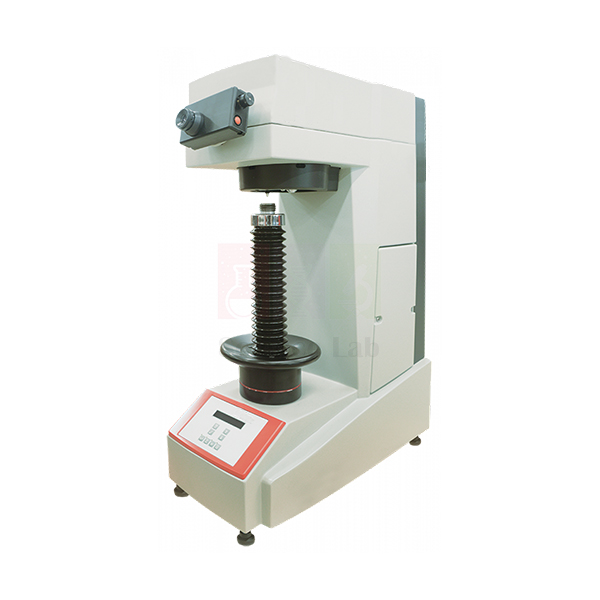
Vickers Hardness Tester
Vickers Hardness Tester (Product Code: SLE/ETP/06) is an industrial instrument that performs the Vickers hardness test, used to measure the hardness of metals and other materials in materials testing laboratories, workshops and engineering colleges. An LCD display shows measured hardness results, the progress of each test and set-up information, and a serial interface sends results to a standard printer or a PC. It is supplied by Jain Scientific Equipments Pvt Ltd (ScienceLab), Ambala, India, among its test and measurement instruments for Indian laboratories.
Key Details
| Parameter | Detail |
|---|---|
| Test method | Vickers hardness test |
| Display | LCD — measured hardness results, test progress and set-up information for a variety of parameters |
| Data output | Serial interface for printing results on a standard printer or sending data to a PC |
| Instrument class | Industrial instrument |
| Care | Used according to its instructions and given reasonable care, it maintains accurate and reliable hardness scales |
| Product code | SLE/ETP/06 |
| Supplied by | Jain Scientific Equipments Pvt Ltd (ScienceLab), Ambala, India |
What Is the Vickers Hardness Tester Used For?
In the Vickers method a square-based diamond pyramid is pressed into a prepared surface under a set load. When the load is removed, the two diagonals of the square impression are measured, and the Vickers hardness number is calculated from the load and the mean diagonal. Because the indenter shape stays the same whatever the load, the method covers soft and hard materials on one scale, which makes it popular for comparing heat-treated and untreated steels, checking welds and testing thin sections.
Good results start with the sample: cut it square, grind and polish the test face flat, and support it firmly on the anvil. Use the LCD to set the test parameters and follow each test's progress, then print the results or transfer them to a PC through the serial interface so every reading goes straight into the lab record. Keep the tester clean and follow its operating instructions for routine care.
Supplier
Jain Scientific Equipments Private Limited, trading as ScienceLab, supplies the Vickers Hardness Tester from Ambala, Haryana, to engineering colleges, polytechnics, industrial training institutes, workshops and dealers in India and international markets. It can be quoted together with the sample-preparation equipment a hardness lab needs.
For vendor registration, the supplying company is Jain Scientific Equipments Private Limited (IEC AAECJ8618A, GSTIN 06AAECJ8618A1ZT). More about us is on our company profile.
Related Materials Testing and Properties Equipment
Hardness testers and preparation equipment for the same laboratory:
- Brinell Hardness Tester — a ball-indenter method for comparing results on softer metals.
- Universal Hardness Tester — an alternative for labs running several hardness methods.
- Cut Off Wheel Machine — sections samples to size before testing.
- Single Disc Polishing Machine — polishes the test face flat for a clear indentation.
The Materials Testing and Properties category lists more testing apparatus.
Frequently Asked Questions
What does the LCD on the Vickers Hardness Tester show?
The LCD on the Vickers Hardness Tester (SLE/ETP/06) displays the measured hardness results, monitors the progress of each test, and shows the information needed when setting the machine up for a variety of parameters.
Can results be printed or sent to a computer?
Yes. The Vickers Hardness Tester has a serial interface that can print results on a standard printer or communicate the data to a PC, so readings can be stored with the rest of your laboratory records.
What test loads and ranges does it offer?
Test loads and measuring ranges for the Vickers Hardness Tester are not listed on this page. Send your sample materials and testing needs through the contact page and we will provide the details with the quotation.
How do I keep the readings reliable?
The Vickers Hardness Tester is an industrial instrument that maintains accurate and reliable hardness scales when used according to its instructions and given reasonable care. Whether a calibration certificate is available should be discussed with us.
How should samples be prepared for Vickers testing?
Samples for the Vickers Hardness Tester should have a flat, finely polished test face and sit firmly on the anvil, because the small indentation is measured across its diagonals and a rough surface makes those edges hard to read.
Who supplies the Vickers Hardness Tester?
The Vickers Hardness Tester is supplied by Jain Scientific Equipments Pvt Ltd, trading as ScienceLab, from Ambala, Haryana, India, to colleges, training institutes, workshops and dealers in India and international markets.
What information does a quotation need?
To quote the Vickers Hardness Tester, tell us the materials you will test, the number of units, any sample-preparation equipment required and the delivery city or port. Send the request through the contact page or the enquiry cart.
Request a Quote
To receive a quotation for the Vickers Hardness Tester, share your requirements through our contact page, or add it to the enquiry cart together with any preparation equipment.
Last updated: 24 September 2026
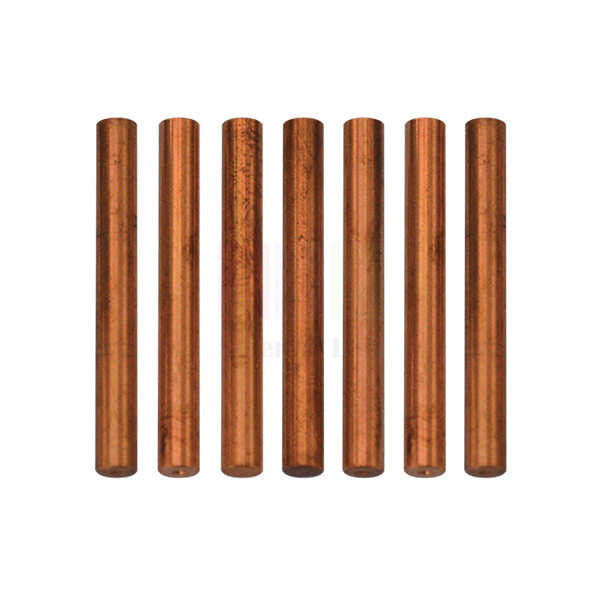
Double Shear Test Specimens
Double Shear Test Specimens (Product Code: SLE/ETP/07) are copper test pieces used to measure a material's shear strength in double-shear tests in engineering and materials testing laboratories. Each specimen is 50 mm long with a diameter of 5.65 to 6 mm, and in the test it is cut across two planes at once, which gives a balanced loading arrangement for student practicals. They are supplied by Jain Scientific Equipments Pvt Ltd (ScienceLab), Ambala, India, as consumables for engineering lab equipment in India.
Specifications
| Parameter | Detail |
|---|---|
| Material | Copper |
| Length | 50 mm |
| Diameter | 5.65 to 6 mm |
| Test type | Double shear |
| Product code | SLE/ETP/07 |
| Supplied by | Jain Scientific Equipments Pvt Ltd (ScienceLab), Ambala, India |
What Are Double Shear Test Specimens Used For?
In a double-shear test the specimen passes through a fixture so that its middle section is pushed one way while both ends are held, and it fails by shearing across two planes at the same time. The shear strength is the maximum load divided by twice the specimen's cross-sectional area, since two faces carry the load. Pins, rivets, bolts and clevis joints are loaded in just this way in real machines, so the test links classroom results to everyday design.
Copper is ductile, so students usually see the specimen bend and deform before it separates, and the sheared faces make a good discussion point. Because the diameter can fall anywhere between 5.65 and 6 mm, measure each specimen with a micrometer or vernier caliper before testing and use that value when working out the area. Each specimen is destroyed in the test, so plan one for every result you need.
What to Specify When Ordering
- The number of specimens — one per test, plus spares for practice runs
- The testing machine and shear fixture you will use, so we can confirm the specimens suit it
- Any other test specimens needed on the same quotation
Supplier
Jain Scientific Equipments Private Limited, trading as ScienceLab, supplies the Double Shear Test Specimens from Ambala, Haryana, to engineering colleges, polytechnics, training institutes and dealers in India and international markets. They can be ordered in quantities to cover a term's practical classes.
Learn more about the company on our company profile.
Related Materials Testing and Properties Equipment
Machines and specimens used in the same strength-testing work:
- Tensile strength testing machine — a machine for strength tests on metal specimens.
- Bench Top Tensile Testing Machine — a small bench machine for student strength tests.
- Specimen — carbon steel tensile specimens to compare with shear results.
- Tensile Tester Kit — an introductory kit for stretching specimens to failure.
See all apparatus in the Materials Testing and Properties category.
Frequently Asked Questions
What are the Double Shear Test Specimens made of?
The Double Shear Test Specimens (SLE/ETP/07) are made of copper, a ductile metal that deforms noticeably before it shears, which makes the failure easy for students to observe and discuss.
What size are the Double Shear Test Specimens?
Each Double Shear Test Specimen is 50 mm long, with a diameter between 5.65 and 6 mm. Measure every specimen's actual diameter before testing, because the cross-sectional area is needed to calculate shear strength.
How is shear strength calculated from a double-shear test?
For Double Shear Test Specimens, divide the maximum load by twice the cross-sectional area worked out from the measured diameter. The factor of two appears because the specimen shears across two planes at the same time.
Which machine are the specimens used on?
The machine and fixture for the Double Shear Test Specimens are not specified on this page. Send your testing machine and shear fixture details through the contact page so we can confirm that the specimens are suitable.
Can a specimen be reused?
No. Each Double Shear Test Specimen is sheared through during the test and cannot be used again. Order one specimen for every test planned, with a few extra for demonstrations or repeat readings.
Who supplies the Double Shear Test Specimens?
The Double Shear Test Specimens are supplied by Jain Scientific Equipments Pvt Ltd, trading as ScienceLab, from Ambala, Haryana, India, to engineering colleges, polytechnics, training institutes and dealers in India and international markets.
Request a Quote
For a quotation on the Double Shear Test Specimens, send the quantity and your testing set-up through our contact page, or add them to the enquiry cart with other materials testing items.
Last updated: 24 September 2026
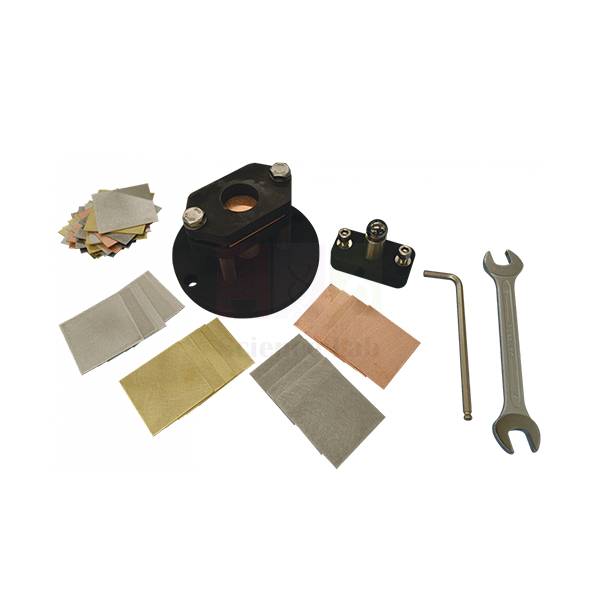
Cupping Experiment
Cupping Experiment (Product Code: SLE/ETP/08) is a sheet-metal forming accessory used to judge the ductility of thin metal specimens by pressing a lubricated steel sphere into them until they rupture, in strength-of-materials laboratories. Engineering students load it through a universal testing machine and watch the cup form and split in an angled mirror below the die plate. It is made by Jain Scientific Equipments Pvt Ltd (ScienceLab), an OEM manufacturer of engineering lab equipment in India, at its own factory in Ambala.
Key Details
| Parameter | Detail |
|---|---|
| Penetrator | Hardened steel sphere, lubricated before it is pressed into the specimen |
| Specimen holding | Cupping specimen clamped between the clamping plate and the die plate |
| Viewing arrangement | Angled mirror placed below the die plate for easy viewing of the specimen as it ruptures |
| Loading | Penetrator pressed into the specimen using the Universal Testing Machine |
| Test result | A cup-shaped indentation that deepens as pressure rises until the specimen ruptures |
| Product code | SLE/ETP/08 |
| Manufacturer | Jain Scientific Equipments Pvt Ltd (ScienceLab) — OEM |
| Country of origin | India (made in Ambala, Haryana) |
What Is the Cupping Experiment Used For?
A cupping test tells students how well a sheet metal will cope with stretch-forming work such as pressing and drawing. The sheet is clamped between the clamping plate and the die plate, the hardened steel sphere is lubricated, and the testing machine pushes the sphere into the sheet. The specimen bulges into a cup and eventually splits, and the angled mirror lets the whole group see the underside at the moment of rupture.
Repeating the test on different sheet materials, or on the same material before and after heat treatment, gives a clear practical ranking of formability that complements tensile data. Lubricate the sphere the same way for every specimen so friction does not vary, tighten the clamping plate evenly, and record the machine reading at the instant the crack appears in the mirror.
OEM Manufacturer
The Cupping Experiment is an OEM (original equipment manufacturer) product of Jain Scientific Equipments Private Limited, which trades as ScienceLab. It is produced at the company's own licensed factory at Saha, Ambala, Haryana, India, rather than bought from a trader and resold. Engineering colleges, polytechnics, dealers and importers therefore deal with the maker itself for technical questions and repeat orders. Read more on the ScienceLab company profile.
Related Materials Testing and Properties Equipment
Apparatus that fits alongside a cupping test in a materials laboratory:
- Tensile strength testing machine — adds strength and elongation figures for the same sheet material.
- Compression Cage — another testing-machine ancillary, for experiments that need a compressive load.
- Brinell Indenter — a ball-indentation accessory that measures hardness instead of formability.
- Muffle Furnace — anneals sheet specimens so students can compare cupping before and after heat treatment.
Browse the full Materials Testing and Properties range for more strength-of-materials apparatus.
Frequently Asked Questions
What does the Cupping Experiment show students?
The Cupping Experiment shows how much stretch-forming a thin metal sheet can take before it splits. A lubricated hardened steel sphere is pressed into the clamped specimen until a cup forms and ruptures, giving a visual comparison of ductility between materials.
Which machine loads the Cupping Experiment?
The Cupping Experiment is loaded by a universal testing machine, which presses the penetrator sphere into the specimen. Tell us which testing machine your laboratory already has, so the fit can be discussed before a quotation is prepared.
How do students see the specimen rupture?
The Cupping Experiment has an angled mirror placed below the die plate. As pressure rises and the cup deepens, students watch the underside of the specimen in the mirror and see the moment it ruptures without leaning under the loaded machine.
Why is the penetrator sphere lubricated?
Lubricating the penetrator sphere of the Cupping Experiment reduces friction between the steel ball and the sheet, so the metal stretches over the sphere instead of tearing early at the contact point. Applying the lubricant the same way each time keeps results comparable.
Who manufactures the Cupping Experiment?
The Cupping Experiment is manufactured by Jain Scientific Equipments Pvt Ltd (ScienceLab) as the OEM, at its own licensed factory at Saha, Ambala, Haryana, India. Replacement parts and repeat orders are handled by the manufacturer directly, so ask us about spares when you enquire.
What should a quotation request for the Cupping Experiment include?
For a Cupping Experiment quotation, give the product code SLE/ETP/08, the number of sets, the testing machine it will be used with and the delivery destination in India or abroad. Send these details through our contact page or the enquiry cart.
Request a Quote
To request a quotation for the Cupping Experiment, send your requirement through the contact page or add it to the enquiry cart. Quotations come direct from the manufacturer, for institutions, dealers and importers in India and international markets.
Last updated: 24 September 2026
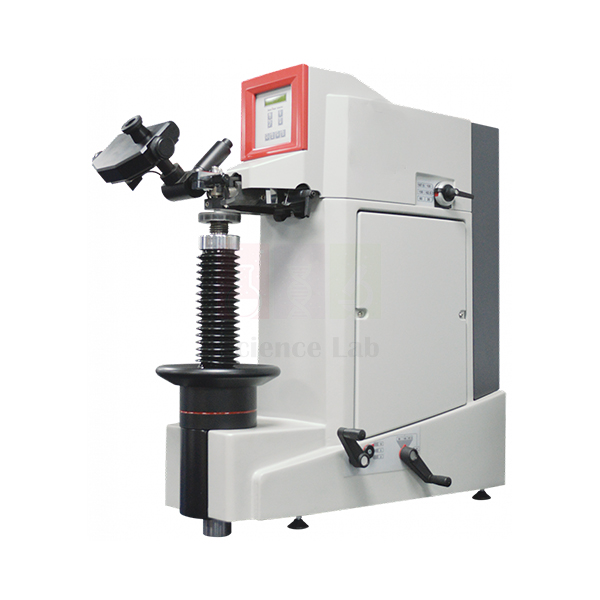
Universal Hardness Tester
Universal Hardness Tester (Product Code: SLE/ETP/09) is a bench-top hardness testing instrument used to measure Vickers, Brinell and Rockwell hardness of materials in engineering, metallurgy and industrial training laboratories. One instrument covers all three methods, and its backlit LCD shows measured results, test progress and the settings needed for each set-up. It is supplied by Jain Scientific Equipments Pvt Ltd (ScienceLab), Ambala, India, as one of the test and measurement instruments in India it sources for colleges and training centres.
Key Details
| Parameter | Detail |
|---|---|
| Hardness methods | Vickers, Brinell and Rockwell |
| Format | Bench-top tester of industrial type |
| Display | Backlit LCD |
| Display functions | Shows measured hardness results, monitors the progress of each test and shows the information needed when setting up the machine for a variety of parameters |
| Product code | SLE/ETP/09 |
| Supplied by | Jain Scientific Equipments Pvt Ltd (ScienceLab), Ambala, India |
What Is the Universal Hardness Tester Used For?
Hardness is a quick, almost non-destructive guide to a material's strength, heat-treatment condition and wear resistance. The Universal Hardness Tester lets one laboratory run the three most widely taught methods: Brinell, where a ball leaves a broad dent that suits softer or coarse-grained metals; Vickers, where a pyramid-shaped indentation is measured across its diagonals; and Rockwell, where hardness is read from the depth of penetration.
Students can test the same specimen by each method and discuss why the numbers differ, or follow how quenching and tempering change hardness. For reliable readings, use a flat, clean and well-supported specimen, keep indentations away from edges and from one another, and check the set-up information on the LCD before each series of tests.
What to Specify When Ordering
- Which of the Vickers, Brinell and Rockwell methods you will use most, so the indenters and test loads in the quotation can be confirmed with you.
- The materials and typical specimen sizes your students will test.
- Whether you also need specimen preparation equipment for cutting and polishing.
- The number of testers and the delivery destination.
Supplier
Jain Scientific Equipments Private Limited, trading as ScienceLab from Ambala, Haryana, supplies the Universal Hardness Tester to engineering colleges, polytechnics, industrial training institutes, dealers and importers. We source the instrument for your application and confirm its configuration with you before quoting. Company details are on the ScienceLab profile page.
Related Materials Testing and Properties Equipment
Dedicated testers and specimen preparation items that sit alongside a universal hardness tester:
- Vickers Hardness Tester — a dedicated machine for labs that run mainly Vickers tests.
- Brinell Hardness Tester — a dedicated Brinell machine for heavier routine testing.
- Brinell Indenter — a simple ball indenter with graticule magnifier for introducing the Brinell method.
- Cut Off Wheel Machine — sections specimens to a size that sits firmly on the test anvil.
- Single Disc Polishing Machine — gives the smooth, flat surface needed to read small indentations.
See the complete Materials Testing and Properties category for other hardness and strength apparatus.
Frequently Asked Questions
Which hardness methods does the Universal Hardness Tester cover?
The Universal Hardness Tester measures Vickers, Brinell and Rockwell hardness on one bench-top instrument. This lets a laboratory teach and compare all three methods without buying a separate machine for each, which also saves bench space.
What does the display of the Universal Hardness Tester show?
The Universal Hardness Tester has a backlit LCD that shows the measured hardness result, monitors the progress of each test and displays the information needed when the machine is set up for different test parameters.
How should specimens be prepared for hardness testing?
Specimens for the Universal Hardness Tester should be flat, clean and firmly supported, with a smooth surface where small indentations must be read. Keep each test point clear of edges and of earlier indentations so the surrounding metal is not already deformed.
Is a calibration certificate available with the Universal Hardness Tester?
Whether a calibration certificate can be provided with the Universal Hardness Tester should be discussed with us before ordering. Please raise it on the contact page with your enquiry, so the answer is part of your quotation.
Who supplies the Universal Hardness Tester?
The Universal Hardness Tester is supplied by Jain Scientific Equipments Pvt Ltd (ScienceLab), Ambala, Haryana, India, to colleges, training institutes, dealers and importers in India and international markets. Send us your requirement and we will confirm the configuration.
What details are needed for a Universal Hardness Tester quotation?
For a Universal Hardness Tester quotation, give the product code SLE/ETP/09, the hardness methods you need most, the materials you will test, the quantity and the delivery destination. Add the item to the enquiry cart or write to us.
Request a Quote
Ask for a quotation for the Universal Hardness Tester through the contact page, or add it to the enquiry cart together with any specimen preparation items you need.
Last updated: 24 September 2026
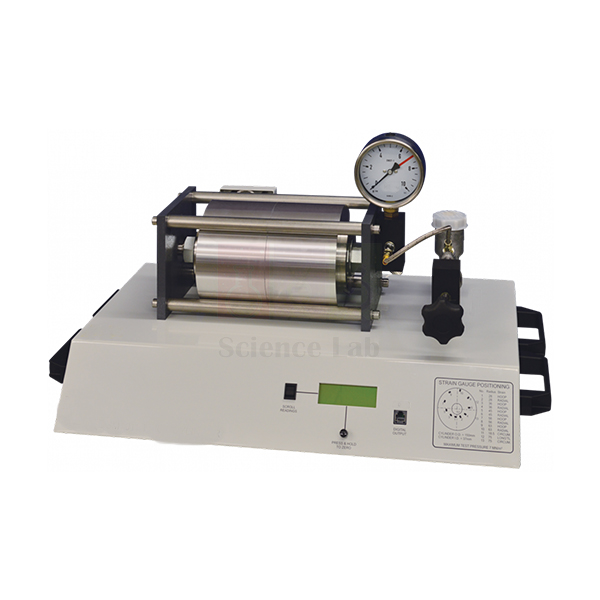
Thick Cylinder
Thick Cylinder (Product Code: SLE/ETP/10) is a self-contained, bench-mounting stress analysis apparatus used to investigate how radial and hoop stresses and strains vary through the wall of a pressurised thick-walled cylinder, in strength-of-materials laboratories. A core item of lab equipment for technical institutes, it carries ten strain gauges inside the wall so students can compare measured strains with theory. It is made by Jain Scientific Equipments Pvt Ltd (ScienceLab), an OEM manufacturer, at its own factory in Ambala, India.
Specifications
| Parameter | Detail |
|---|---|
| Type | Self-contained, bench-mounting experimental apparatus |
| Cylinder | Thick-walled aluminium cylinder held in a robust frame |
| Construction | Cylinder made in two halves, cemented together |
| Gauges inside the wall | Ten strain gauges at precise radii and orientation, in an eccentric shallow groove on one face of the joint; jointing cement fills the groove |
| Through-wall measurement | Radial and hoop strains |
| Wall-surface gauges | Strain gauges on the inner and outer walls measure longitudinal and circumferential strains |
| Pressurisation | Oil inside the cylinder, pressurised by the student with a hydraulic hand-pump |
| Product code | SLE/ETP/10 |
| Manufacturer | Jain Scientific Equipments Pvt Ltd (ScienceLab) — OEM |
| Country of origin | India (made in Ambala, Haryana) |
What Is the Thick Cylinder Apparatus Used For?
Hydraulic rams, high-pressure pipes and gun barrels have walls too thick for simple thin-wall formulas, because stress changes from the bore to the outside surface. Lamé's theory predicts that hoop stress is greatest at the bore and that radial stress falls from the internal pressure at the bore to zero at the outer surface. The Thick Cylinder lets students test that prediction directly.
Students raise the oil pressure in steps with the hand-pump, read the ten embedded gauges and the inner and outer wall gauges, and convert the strains to stresses. Plotting them against radius and overlaying the theoretical curves is a classic exercise in engineering lab equipment courses. Zero every gauge before pumping, let readings settle at each pressure step, and release pressure fully at the end of the session.
What to Specify When Ordering
- How you plan to read the embedded and wall-surface strain gauges, so a suitable multi-channel strain readout can be discussed.
- The number of Thick Cylinder sets required for your laboratory groups.
- Whether you also want the Thin Cylinder for comparing thin-wall and thick-wall behaviour.
OEM Manufacturer
Jain Scientific Equipments Private Limited, trading as ScienceLab, is the OEM (original equipment manufacturer) of the Thick Cylinder apparatus. The unit is built and assembled at the company's own licensed factory at Saha, Ambala, Haryana, and supplied factory-direct to universities, engineering colleges, dealers and importers. Because the maker quotes directly, questions on set-up and later spares come straight to the people who build it. See the company profile for background.
Related Materials Testing and Properties Equipment
Apparatus often used in the same pressure-vessel and strain-measurement practicals:
- Thin Cylinder — the thin-walled counterpart, for comparing hoop and longitudinal stresses with thin-wall theory.
- Digital Strain Display — a sixteen-channel readout that gives direct strain readings from metal-foil gauges.
- Diaphragm — studies strain and deflection of a clamped diaphragm under oil pressure.
- Strain Gauge Trainer — introduces bridge circuits before students move on to pressure-vessel work.
More stress-analysis apparatus is in the Materials Testing and Properties category.
Frequently Asked Questions
What can students measure with the Thick Cylinder?
With the Thick Cylinder, students measure radial and hoop strains through the wall using ten embedded gauges, plus longitudinal and circumferential strains on the inner and outer walls, then compare the resulting stresses with thick-cylinder theory.
How are strain gauges placed inside the cylinder wall?
The Thick Cylinder is made in two halves cemented together. One face of the joint has an eccentric shallow groove holding ten strain gauges at precise radii and orientation, and jointing cement fills the groove around them.
How is the Thick Cylinder pressurised?
The Thick Cylinder contains oil. To stress the cylinder, students pressurise that oil with a hydraulic hand-pump, which lets them raise the pressure in controlled steps and take strain readings at each level.
What is the Thick Cylinder made of?
The Thick Cylinder uses a thick-walled aluminium cylinder held in a robust frame. The whole apparatus is self-contained and bench-mounting, so it can be set up on a standard laboratory bench for group practicals.
Who manufactures the Thick Cylinder?
The Thick Cylinder is manufactured by Jain Scientific Equipments Pvt Ltd (ScienceLab), the OEM, at its own licensed factory in Saha, Ambala, Haryana, India. Quotations, repeat orders and spare-part requests go directly to the manufacturer.
What information helps us quote for the Thick Cylinder?
To quote for the Thick Cylinder, we need the product code SLE/ETP/10, the number of sets, how you intend to read the strain gauges and the delivery destination. Adding related apparatus to the same enquiry lets us quote everything together.
Request a Quote
Send your Thick Cylinder enquiry through the contact page or add it to the enquiry cart. You receive the quotation directly from the manufacturer, whether you are an institution in India or an importer in international markets.
Last updated: 24 September 2026
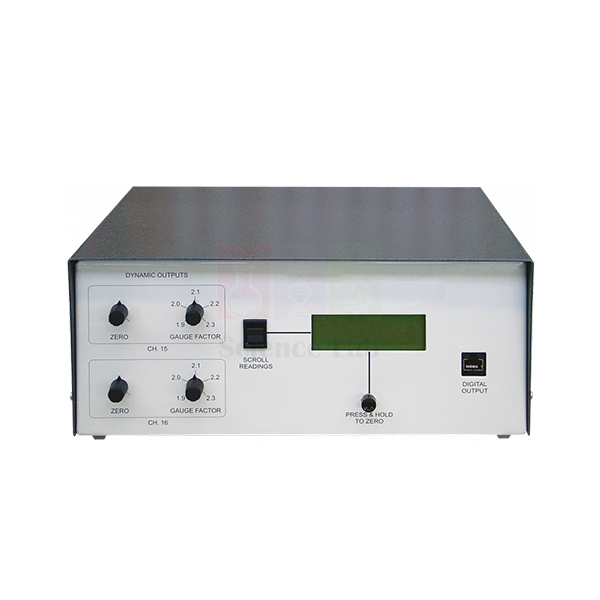
Digital Strain Display
Digital Strain Display (Product Code: SLE/ETP/11) is a sixteen-channel strain indicator used to give direct readings of strain from metal-foil strain gauges in stress-analysis and materials testing laboratories. It accepts up to 16 channels wired in quarter, half or full bridge and is fully programmable to match each gauge and bridge connection. It is supplied by Jain Scientific Equipments Pvt Ltd (ScienceLab), Ambala, India, among the test and measurement instruments in India that it provides for engineering colleges.
Specifications
| Parameter | Detail |
|---|---|
| Channels | Up to 16 strain gauge channels |
| Gauge types | Industry-standard strain gauges; most types of metal-foil strain gauges |
| Bridge connections | Quarter, half or full bridge; connects to most types of strain bridge connections |
| Programming | Fully programmable to match the strain gauges and their bridge connections |
| Half-bridge support | Precision internal make-up resistors |
| Dynamic outputs | Two channels include additional, individually adjusted dynamic outputs |
| Readout | Direct readings of strain |
| Connectors | Self-locking, secure connectors that need no soldering |
| Tool included | Crimping tool for fitting the connectors to the cable |
| Product code | SLE/ETP/11 |
| Supplied by | Jain Scientific Equipments Pvt Ltd (ScienceLab), Ambala, India |
What Is the Digital Strain Display Used For?
A bonded strain gauge changes resistance by a tiny amount as the surface beneath it stretches, and a Wheatstone bridge turns that change into a small voltage. The Digital Strain Display reads the bridge outputs and shows the result directly as strain, so students spend lab time on analysis rather than on conversions. With sixteen inputs it can log a whole set of gauges on a beam, cylinder or plate at once.
Typical uses include pressure-vessel and diaphragm experiments, beam bending tests and student projects on custom-gauged parts. The two channels with dynamic outputs can pass a changing strain signal on to another instrument. Enter the details of each gauge and its bridge type before testing, zero the readings with the structure unloaded, and label cables so each channel matches its gauge position.
What to Specify When Ordering
- How many of the 16 channels you expect to use, and on which apparatus.
- The bridge arrangement for your gauges: quarter, half or full bridge.
- Whether you need the dynamic outputs on two channels for another instrument.
- Quantity required and delivery destination.
Supplier
ScienceLab is the trading name of Jain Scientific Equipments Private Limited, Ambala, Haryana, which supplies the Digital Strain Display to universities, engineering colleges, dealers and importers. For vendor registration, the supplying company is Jain Scientific Equipments Private Limited (CIN U29309HR2020PTC087597, GSTIN 06AAECJ8618A1ZT). More about the company is on the ScienceLab profile page.
Related Materials Testing and Properties Equipment
Strain-gauged apparatus and demonstration items that need a strain readout:
- Thick Cylinder — ten embedded gauges plus wall gauges for radial and hoop strain studies.
- Thin Cylinder — surface gauges on a pressurised thin-walled aluminium cylinder.
- Strain Gauge Trainer — bending, torsion and tension structures for learning bridge connections.
- Strain Gauge — a single gauge bonded to a steel strip for demonstrating the principle.
Find more stress-analysis apparatus under Materials Testing and Properties.
Frequently Asked Questions
How many strain gauges can the Digital Strain Display read?
The Digital Strain Display accepts up to 16 channels from strain gauges connected in quarter, half or full bridge, and gives a direct reading of strain for each, so a complete gauged structure can be read from one instrument.
Which strain gauges work with the Digital Strain Display?
The Digital Strain Display is for use with most types of metal-foil strain gauges and connects to most types of strain bridge connections. It is fully programmable to match the gauges and their bridge arrangement; share your gauge details with us to confirm.
Can half-bridge circuits be used without extra resistors?
Yes. The Digital Strain Display includes precision internal make-up resistors, so half-bridge connections can be completed inside the instrument when needed, without wiring separate resistors on the apparatus.
Do the connectors on the Digital Strain Display need soldering?
No. The Digital Strain Display uses self-locking, secure connectors that need no soldering, and a crimping tool for fitting the connectors to the cable is also supplied, which makes rewiring gauges between experiments quick.
Is a calibration certificate available for the Digital Strain Display?
Whether a calibration certificate can be provided with the Digital Strain Display should be discussed with us before you order. Mention it on the contact page so the answer is included with your quotation.
Who supplies the Digital Strain Display?
The Digital Strain Display is supplied by Jain Scientific Equipments Pvt Ltd (ScienceLab), Ambala, Haryana, India, to engineering institutions, dealers and importers in India and international markets. Send your channel and bridge requirements with your enquiry.
Request a Quote
Request a Digital Strain Display quotation through the contact page, or add it to the enquiry cart with the strain-gauged apparatus it will serve.
Last updated: 24 September 2026
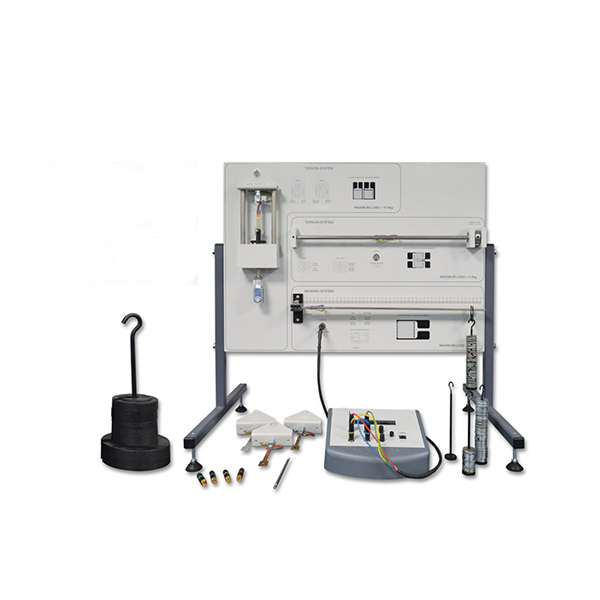
Strain Gauge Trainer
Strain Gauge Trainer (Product Code: SLE/ETP/12) is a compact bench or desktop trainer used to show how resistance strain gauges work on three different structures in engineering and technical education labs. Bending, torsion and tension systems are loaded with a small and a large set of masses, and students compare measured strains with values calculated from theory. It is made by Jain Scientific Equipments Pvt Ltd (ScienceLab), a technical educational equipment manufacturer and OEM, at its own factory in Ambala, India.
Key Details
| Parameter | Detail |
|---|---|
| Format | Compact trainer that fits on a bench or desktop |
| Structures | Three: bending system, torsion system and tension system |
| Bending system | Gauges measure direct tensile and compression strain |
| Torsion system | Demonstrates shear/torque strain gauges |
| Loading masses | Small set of masses for the bending and torsion systems; large set of masses for the tension system |
| Bridge connections | Quarter, half and full-bridge connections can be made and compared on each structure |
| Contents | Everything needed to show students how resistance strain gauges work on the three structures |
| Product code | SLE/ETP/12 |
| Manufacturer | Jain Scientific Equipments Pvt Ltd (ScienceLab) — OEM |
| Country of origin | India (made in Ambala, Haryana) |
What Is the Strain Gauge Trainer Used For?
Strain gauges sit inside load cells, torque sensors and structural monitoring systems, so every mechanical or instrumentation engineer needs to know how they behave. On this trainer, students hang masses on each structure, use the known dimensions to calculate stress and strain by hand, and then check their answers against the gauge readings. The bending beam shows tension on one face and compression on the other, while the torsion system shows how gauges set at an angle to a shaft pick up shear strain.
The most valuable exercise is rewiring the same structure as a quarter, half and full bridge and comparing the outputs, which shows why multi-gauge bridges give larger signals and better temperature compensation. Load and unload in equal steps to check that readings return to zero, and use the small masses for bending and torsion and the large ones only for tension.
OEM Manufacturer
ScienceLab is the name under which Jain Scientific Equipments Private Limited trades, and it is the OEM (original equipment manufacturer) of the Strain Gauge Trainer. The trainer is assembled at the company's own licensed factory in Saha, Ambala, Haryana, and goes factory-direct to polytechnics, engineering colleges, TVET centres, dealers and importers. Ask us about replacement masses or other parts; the manufacturer handles those requests itself. Read the ScienceLab profile for more.
Related Materials Testing and Properties Equipment
Items that extend strain-gauge teaching beyond the trainer:
- Digital Strain Display — a sixteen-channel readout for larger strain-gauged experiments.
- Thin Cylinder — applies gauge skills to a pressurised thin-walled cylinder.
- Stiffness - Bending and Torsion — measures beam deflection to complement strain readings in bending.
- Mini Strain Gauge — a single gauge on a flexible strip for a quick classroom demonstration.
The Materials Testing and Properties category lists further stress and strain apparatus.
Frequently Asked Questions
Which structures are included in the Strain Gauge Trainer?
The Strain Gauge Trainer includes three structures: a bending system with gauges for direct tensile and compression strain, a torsion system with shear/torque gauges, and a tension system. Each can be loaded and measured separately.
How are the structures loaded?
The Strain Gauge Trainer comes with two sets of masses. Students use the small set to load the bending and torsion systems and the large set to load the tension system, then compare measured strains with calculated values.
Can students compare different bridge circuits on the Strain Gauge Trainer?
Yes. On the Strain Gauge Trainer, students can connect quarter, half and full-bridge strain gauge circuits on each of the three structures and compare their performance, which is central to understanding practical strain measurement.
How much space does the Strain Gauge Trainer need?
The Strain Gauge Trainer is compact and fits on a bench or desktop, so it suits classrooms as well as laboratories. For exact dimensions and packed size, please ask us through the contact page before planning your room layout.
Who manufactures the Strain Gauge Trainer?
The Strain Gauge Trainer is manufactured by Jain Scientific Equipments Pvt Ltd (ScienceLab), the OEM, at its own licensed factory in Ambala, Haryana, India. Institutions and dealers buy it directly from the manufacturer rather than through a trader.
What should an enquiry for the Strain Gauge Trainer include?
An enquiry for the Strain Gauge Trainer should state the product code SLE/ETP/12, the number of trainers, whether you also need a multi-channel strain readout, and the delivery destination in India or overseas.
Request a Quote
Get a Strain Gauge Trainer quotation straight from the manufacturer: use the contact page or add the trainer to the enquiry cart. We supply institutions and dealers in India and international markets.
Last updated: 24 September 2026
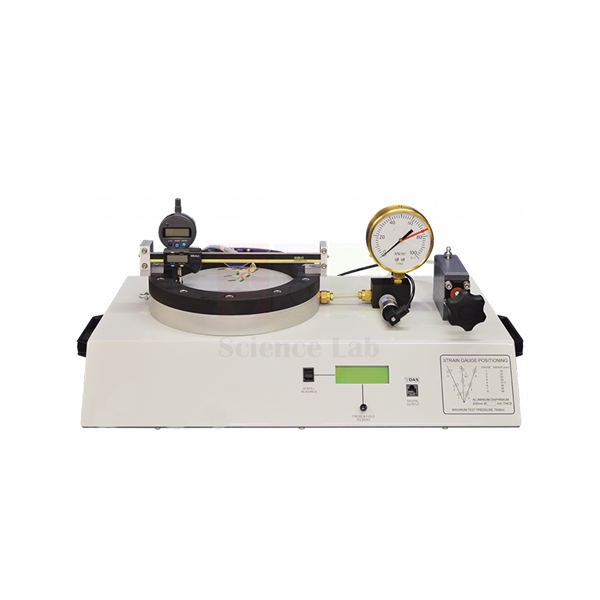
Diaphragm
Diaphragm (Product Code: SLE/ETP/13) is a self-contained, bench-mounting apparatus used to investigate how pressure changes the surface profile of a clamped diaphragm and how circumferential and radial strains are distributed across it, in engineering stress-analysis laboratories. Eight strain gauges at different radii and a traversing digital dial gauge let students map strain and deflection on the same plate. It is made by Jain Scientific Equipments Pvt Ltd (ScienceLab), an OEM engineering lab equipment manufacturer, at its own factory in Ambala, India.
Specifications
| Parameter | Detail |
|---|---|
| Type | Self-contained, bench-mounting experimental apparatus |
| Edge condition | Two heavy flanges clamp the edge of the diaphragm to provide built-in edge conditions |
| Pressure medium | Oil in the area directly under the diaphragm |
| Strain gauges | Eight, cemented to the upper surface of the diaphragm in various positions and at different radii |
| Gauge circuits | Each strain gauge circuit is a full bridge with high-stability resistors |
| Strain readout | Signals from each strain gauge shown on a digital display |
| Profile measurement | Digital dial gauge fitted to a digital position indicator, traversed across the diaphragm to measure its surface profile |
| Product code | SLE/ETP/13 |
| Manufacturer | Jain Scientific Equipments Pvt Ltd (ScienceLab) — OEM |
| Country of origin | India (made in Ambala, Haryana) |
What Is the Diaphragm Apparatus Used For?
Flat circular plates under pressure appear in pressure transducers, pump and valve diaphragms, tank ends and inspection covers. Plate theory for a diaphragm with a clamped, built-in edge predicts a dished deflection profile and a radial strain that changes sign between the centre and the edge, while circumferential strain behaves differently. This apparatus lets students see both effects on a real plate.
With pressure acting through the oil beneath the diaphragm, students traverse the digital dial gauge across the surface, noting deflection against position, and read the eight gauges on the digital display. Plotting deflection and each strain component against radius, then overlaying the theoretical curves, makes a strong final-year or diploma practical. Zero the dial gauge and strain readings before applying pressure, and traverse in the same direction each time to avoid backlash.
OEM Manufacturer
This Diaphragm apparatus comes from Jain Scientific Equipments Private Limited, trading as ScienceLab, which acts as its OEM (original equipment manufacturer). It is manufactured at the company's own licensed factory at Saha, Ambala, Haryana, so universities, technical institutes, dealers and importers buy it from the maker rather than from a reseller. Repeat orders and replacement-part queries are handled by the same team; ask us when you need them. Company background is on the profile page.
Related Materials Testing and Properties Equipment
Other pressure and strain experiments that pair well with the diaphragm:
- Thick Cylinder — through-wall radial and hoop strains in a pressurised thick-walled cylinder.
- Thin Cylinder — hoop and longitudinal strain in a thin-walled aluminium cylinder.
- Strain Gauge Trainer — teaches the full-bridge circuits used on the diaphragm gauges.
- Unsymmetrical Cantilever — a deflection-measurement experiment on beams of unsymmetrical section.
Explore the Materials Testing and Properties category for the complete stress-analysis range.
Frequently Asked Questions
What does the Diaphragm apparatus measure?
The Diaphragm apparatus measures how pressure changes the surface profile of a clamped diaphragm and how circumferential and radial strains are distributed across it, using eight strain gauges and a traversing digital dial gauge.
Where are the strain gauges on the Diaphragm?
The Diaphragm has eight strain gauges cemented to its upper surface in various positions and at different radii. Each gauge circuit is a full bridge with high-stability resistors, and the signals are shown on a digital display.
How is the surface profile of the Diaphragm measured?
On the Diaphragm apparatus, a digital dial gauge is fitted to a digital position indicator. Students traverse the dial gauge across the diaphragm and record deflection against position to build up the surface profile under pressure.
What edge condition does the Diaphragm have?
The edge of the Diaphragm is clamped between two heavy flanges, which gives built-in edge conditions. This matches the clamped-edge case in plate theory, so students can compare their results with standard textbook equations.
Who manufactures the Diaphragm apparatus?
The Diaphragm apparatus is manufactured by Jain Scientific Equipments Pvt Ltd (ScienceLab) as the OEM, at its own licensed factory in Saha, Ambala, Haryana, India, and is supplied directly to institutions and dealers.
What should I include when requesting a Diaphragm quotation?
When requesting a Diaphragm quotation, include the product code SLE/ETP/13, the number of units, your institution name and the delivery destination. Mention any other stress-analysis apparatus you need so we can quote them together.
Request a Quote
For a Diaphragm quotation direct from the manufacturer, write to us through the contact page or place it in the enquiry cart. We serve institutions, dealers and importers across India and international markets.
Last updated: 24 September 2026
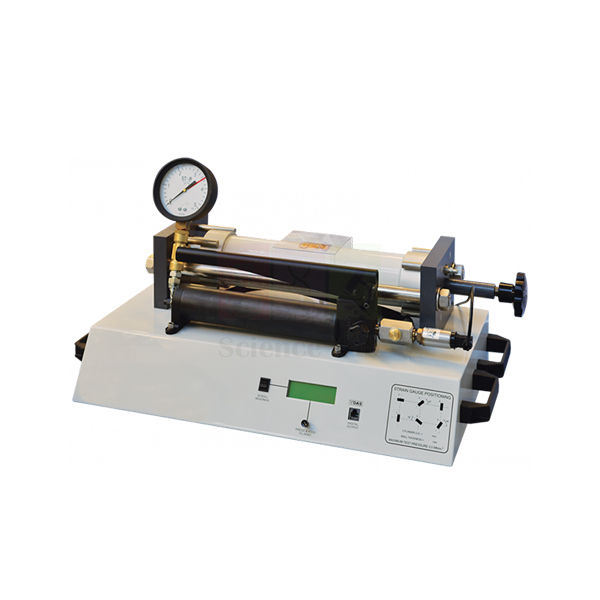
Thin Cylinder
Thin Cylinder (Product Code: SLE/ETP/14) is a bench-mounting pressure vessel apparatus used to investigate and analyse the stresses and strains in a pressurised thin-walled cylinder, in mechanical and civil engineering laboratories. Its thin-walled aluminium cylinder sits in a robust frame that leaves it free to move along its axis, while surface strain gauges and an electronic pressure sensor record its response. It is made by Jain Scientific Equipments Pvt Ltd (ScienceLab), an OEM and TVET lab equipment manufacturer in India, at its own factory in Ambala.
Specifications
| Parameter | Detail |
|---|---|
| Type | Bench-mounting apparatus for stress and strain analysis of a pressurised thin-walled cylinder |
| Cylinder | Thin-walled aluminium cylinder |
| Frame | Robust frame that holds the cylinder so it is free to move along its axis |
| Pressure medium | Oil inside the cylinder |
| Pressurisation | Hydraulic hand pump operated by the students |
| Strain measurement | Strain gauges on the cylinder surface |
| Pressure measurement | A gauge and an electronic sensor measure the hydraulic pressure |
| Product code | SLE/ETP/14 |
| Manufacturer | Jain Scientific Equipments Pvt Ltd (ScienceLab) — OEM |
| Country of origin | India (made in Ambala, Haryana) |
What Is the Thin Cylinder Apparatus Used For?
Boilers, gas bottles, water mains and aircraft fuselages are all treated as thin cylinders, where the wall is thin enough for stress to be taken as uniform through it. Simple theory then gives a hoop stress twice the longitudinal stress, and this apparatus lets students check that relationship with real measurements rather than accept it on trust.
Students pump the oil up in steps, record pressure from the gauge and electronic sensor, and read the surface strain gauges at each step. From the strain-pressure graphs they can work out hoop and longitudinal stresses and estimate the elastic constants of the aluminium, a core exercise for engineering lab equipment in India used on diploma and degree courses. Because the frame leaves the cylinder free to move along its axis, the frame itself does not add axial load. Pump slowly, let each reading settle, and release pressure fully after the test.
OEM Manufacturer
The Thin Cylinder is an original product of Jain Scientific Equipments Private Limited, which trades as ScienceLab and is its OEM (original equipment manufacturer). It is made at the company's own licensed factory at Saha, Ambala, Haryana, India, and sold factory-direct to engineering colleges, polytechnics, dealers and importers. Quotations, repeat orders and spares questions all come straight from the manufacturer. Learn more on the ScienceLab profile.
Related Materials Testing and Properties Equipment
Apparatus that complements thin-cylinder work in a stress-analysis lab:
- Thick Cylinder — shows how stress varies through a wall too thick for thin-cylinder theory.
- Digital Strain Display — multi-channel direct strain readings from metal-foil gauges.
- Diaphragm — strain and deflection of a clamped diaphragm under oil pressure.
- Youngs Modulus Apparatus — finds elastic modulus by wire extension, for comparison with cylinder results.
See all apparatus in Materials Testing and Properties.
Frequently Asked Questions
What can students work out with the Thin Cylinder?
With the Thin Cylinder, students measure surface strains at known oil pressures and use them to find hoop and longitudinal stresses, compare the results with thin-cylinder theory and estimate the elastic properties of the aluminium cylinder.
How is pressure applied and measured on the Thin Cylinder?
The Thin Cylinder contains oil that students pressurise with a hydraulic hand pump. The hydraulic pressure is measured by a gauge and by an electronic sensor, while strain gauges on the cylinder surface measure strain.
Why is the Thin Cylinder free to move along its axis?
The frame holds the Thin Cylinder so that it is free to move along its axis. This keeps the frame from adding its own axial force to the cylinder, so measured strains come from the internal oil pressure alone.
How does the Thin Cylinder differ from the Thick Cylinder?
The Thin Cylinder has a thin wall with strain gauges on its surface, suited to thin-wall theory. The Thick Cylinder has gauges embedded through a thick wall to show how radial and hoop stresses vary from bore to outside.
Who manufactures the Thin Cylinder?
The Thin Cylinder is manufactured by Jain Scientific Equipments Pvt Ltd (ScienceLab), the OEM, at its own licensed factory in Saha, Ambala, Haryana, India. Buyers deal directly with the manufacturer for quotations and follow-up orders.
What do you need to quote for the Thin Cylinder?
To quote for the Thin Cylinder, please send the product code SLE/ETP/14, the number of sets, whether you need a strain readout as well, and the delivery destination. Use the contact page or add the item to the enquiry cart.
Request a Quote
Ask the manufacturer for a Thin Cylinder quotation through the contact page, or add it to the enquiry cart. Supply is available to institutions and dealers in India and international markets.
Last updated: 24 September 2026
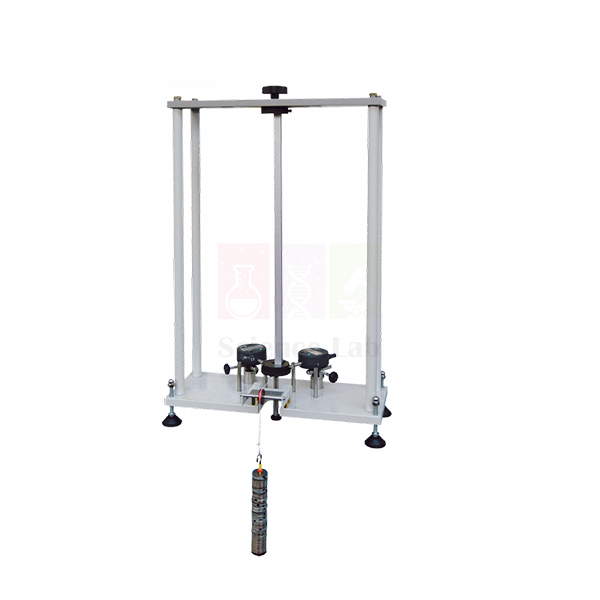
Unsymmetrical Cantilever
Unsymmetrical Cantilever (Product Code: SLE/ETP/15) is a frame-mounted structures apparatus used to load a cantilever and measure its deflection in any coplanar direction, so students can study bending of unsymmetrical sections in strength-of-materials labs. The test beam hangs vertically from a holding ring that rotates through 360 degrees, and a cross-piece at the free end locates the shear centre. It is made by Jain Scientific Equipments Pvt Ltd (ScienceLab), an OEM manufacturer of lab equipment for technical institutes, at its own factory in Ambala, India.
Key Details
| Parameter | Detail |
|---|---|
| Beam mounting | Test beam mounted vertically in a frame |
| Holding ring | Upper end of the test beam fixes to a holding ring that can rotate through 360 degrees |
| Measurement | Deflection of the loaded cantilever in any coplanar direction |
| Loading method | Loads applied to the beam in set increments while displacement is recorded |
| Analysis | Mohr's circle method to find the principal second moments of area of each section |
| Shear centre | Cross-piece attached to the free end lets loads be applied at different positions across and outside the section |
| Product code | SLE/ETP/15 |
| Manufacturer | Jain Scientific Equipments Pvt Ltd (ScienceLab) — OEM |
| Country of origin | India (made in Ambala, Haryana) |
What Is the Unsymmetrical Cantilever Used For?
Angles, channels and other sections without two axes of symmetry do not simply bend in the direction they are pushed. A load that is not aligned with a principal axis also makes the beam deflect sideways, and a load that misses the shear centre makes it twist as well. The Unsymmetrical Cantilever turns these abstract ideas from the textbook into measurements students can see.
Students apply loads in set increments, record the displacement, then rotate the beam on its holding ring and repeat. Plotting the results and using Mohr's circle gives the principal second moments of area of each section. For the shear centre, a cross-piece on the free end lets loads be moved across and outside the section until the twisting disappears. Take readings on loading and unloading, and keep loads within the elastic range of the beam.
OEM Manufacturer
Jain Scientific Equipments Private Limited, which trades as ScienceLab, is the OEM (original equipment manufacturer) of the Unsymmetrical Cantilever and makes it at its own licensed factory at Saha, Ambala, Haryana. The company is a registered MSME with manufacturing as its major activity (Udyam UDYAM-HR-01-0003714), and export orders are shipped under Importer-Exporter Code AAECJ8618A (DGFT). Engineering colleges, dealers and importers buy directly from the maker; see the company profile.
Related Materials Testing and Properties Equipment
Beam and section experiments that build on unsymmetrical bending:
- Stiffness - Bending and Torsion — bending stiffness of beams of different materials and cross-sections.
- Torsion of Circular Sections — measures torque and twist, useful before studying twisting about the shear centre.
- Hangers with Slotted Weights — convenient masses for applying loads in equal increments.
- Strain Gauge Trainer — adds strain measurement in bending, torsion and tension.
More structures apparatus is available in Materials Testing and Properties.
Frequently Asked Questions
What does the Unsymmetrical Cantilever demonstrate?
The Unsymmetrical Cantilever demonstrates how beams of unsymmetrical section deflect under load in directions other than the load line. Students measure deflection in any coplanar direction and find principal second moments of area and the shear centre.
How is the beam orientation changed on the Unsymmetrical Cantilever?
On the Unsymmetrical Cantilever, the upper end of the vertical test beam fixes to a holding ring that can rotate through 360 degrees. Students rotate the beam to a new position and repeat the loading to build a full picture.
How do students find the shear centre with the Unsymmetrical Cantilever?
To find the shear centre with the Unsymmetrical Cantilever, students attach a cross-piece to the free end of the test beam. It allows loads to be applied at different positions across and outside the section while twisting is observed.
How are the principal second moments of area found?
With the Unsymmetrical Cantilever, students apply loads in set increments, record the displacements and then use the Mohr's circle method on the results to find the principal second moments of area of each beam section.
Who manufactures the Unsymmetrical Cantilever?
The Unsymmetrical Cantilever is manufactured by Jain Scientific Equipments Pvt Ltd (ScienceLab) as the OEM, at its own licensed factory in Ambala, Haryana, India. Enquiries about test beams and spare parts go directly to the manufacturer.
What should a quotation request for the Unsymmetrical Cantilever state?
A quotation request for the Unsymmetrical Cantilever should state the product code SLE/ETP/15, the number of units, which beam sections you want to test and the delivery destination, so we can confirm what the quotation covers.
Request a Quote
Receive an Unsymmetrical Cantilever quotation direct from the manufacturer by writing through the contact page or adding it to the enquiry cart. We supply institutions, dealers and importers in India and international markets.
Last updated: 24 September 2026
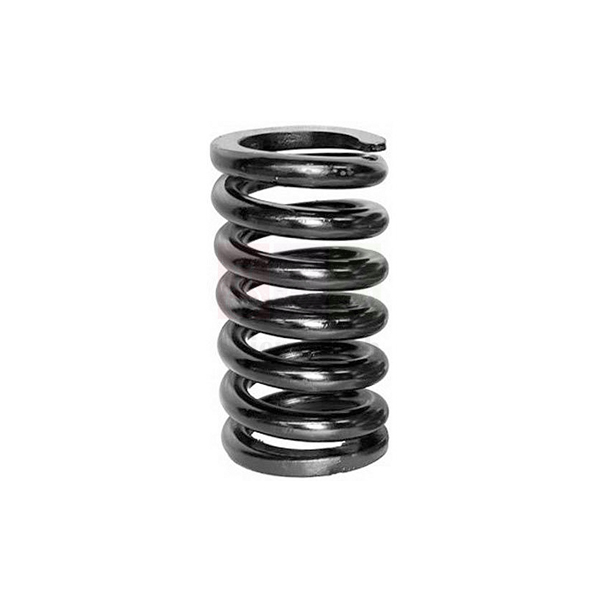
Coil Spring
Coil Spring (Product Code: SLE/ETP/16) is a heavy-duty compression spring test accessory used to find the spring rate of a real suspension-type coil spring on a testing machine, in mechanics and automotive engineering labs. The spring shares its design with those used in vehicle suspensions and is held securely between two metal bosses while the machine compresses it. It is made by Jain Scientific Equipments Pvt Ltd (ScienceLab), an OEM manufacturer, at its own factory in Ambala, India, as part of its mechanics lab equipment in India.
Key Details
| Parameter | Detail |
|---|---|
| Spring | Heavy-duty coil spring of the same design as those used in vehicle suspensions |
| Mounting | Two metal bosses hold the spring securely in the testing machine |
| Loading | Spring compressed by the testing machine |
| Measurement | The testing machine's digital indicator measures the change in spring length (displacement) for a given change in applied force |
| Outcome | Actual spring rate compared with the theoretical value based on the spring dimensions; demonstrates Hooke's Law |
| Product code | SLE/ETP/16 |
| Manufacturer | Jain Scientific Equipments Pvt Ltd (ScienceLab) — OEM |
| Country of origin | India (made in Ambala, Haryana) |
What Is the Coil Spring Test Used For?
Classroom springs are light and forgiving; a suspension spring is not. Testing a heavy-duty spring of vehicle-suspension design shows students how the same Hooke's Law relationship holds for a real engineering component, and how closely the design formula predicts its stiffness. It links strength-of-materials theory to automotive and machine design.
Students measure the wire diameter, mean coil diameter and number of active coils, calculate the theoretical spring rate, then fit the spring between the metal bosses and compress it on the testing machine. Plotting force against displacement from the digital indicator gives the actual rate as the slope of the line. Apply a small seating load first, take readings on both loading and unloading, and stay well within the elastic range.
What to Specify When Ordering
- The testing machine in your laboratory that will compress the spring, so fitting of the metal bosses can be discussed.
- The number of Coil Spring sets needed for your student groups.
- Whether you also want other spring experiments, such as the Disc Spring, in the same order.
OEM Manufacturer
ScienceLab, the trading name of Jain Scientific Equipments Private Limited, is the OEM (original equipment manufacturer) of this Coil Spring experiment. It is produced and put together at the company's own licensed factory at Saha, Ambala, Haryana, then supplied factory-direct to engineering colleges, automotive training centres, dealers and importers. Replacement bosses or extra springs can be requested from the manufacturer itself; just ask us. Visit the ScienceLab profile to learn about the company.
Related Materials Testing and Properties Equipment
Other spring and elasticity experiments for the same course:
- Hook's Law And Spring Rate — a compact frame with masses for introductory spring tests.
- Disc Spring — compares stacked disc springs in series and parallel.
- Electronic Spring Tension Machine — a dedicated machine for routine spring load testing.
- Compression Cage — adapts the Bench Top Tensile Testing Machine for compressive loads.
Find more in the Materials Testing and Properties category.
Frequently Asked Questions
What does the Coil Spring experiment show?
The Coil Spring experiment shows Hooke's Law on a heavy-duty spring. Students compare the actual spring rate, found from force and displacement readings, with the theoretical value calculated from the spring's dimensions.
What kind of spring is used in the Coil Spring experiment?
The Coil Spring experiment uses a heavy-duty spring of the same design as those used in vehicle suspensions, so students test a realistic engineering component rather than a light laboratory spring.
How is the Coil Spring held during testing?
Two metal bosses hold the Coil Spring securely in the testing machine, which compresses it. The machine's digital indicator then measures the change in spring length for each change in applied force.
How is the theoretical spring rate of the Coil Spring calculated?
The theoretical rate of the Coil Spring comes from its dimensions: wire diameter, mean coil diameter and number of active coils, together with the shear modulus of the spring material, using the standard helical spring formula from textbooks.
Who manufactures the Coil Spring experiment?
The Coil Spring experiment is manufactured by Jain Scientific Equipments Pvt Ltd (ScienceLab), the OEM, at its own licensed factory in Ambala, Haryana, India. Orders and spare-part requests are handled by the manufacturer directly.
What details should a Coil Spring enquiry include?
A Coil Spring enquiry should include the product code SLE/ETP/16, the quantity, the testing machine you will use it with and the delivery destination in India or abroad, sent through our contact page or enquiry cart.
Request a Quote
For a Coil Spring quotation from the manufacturer, use the contact page or add it to the enquiry cart. We supply colleges, training institutes, dealers and importers in India and international markets.
Last updated: 24 September 2026
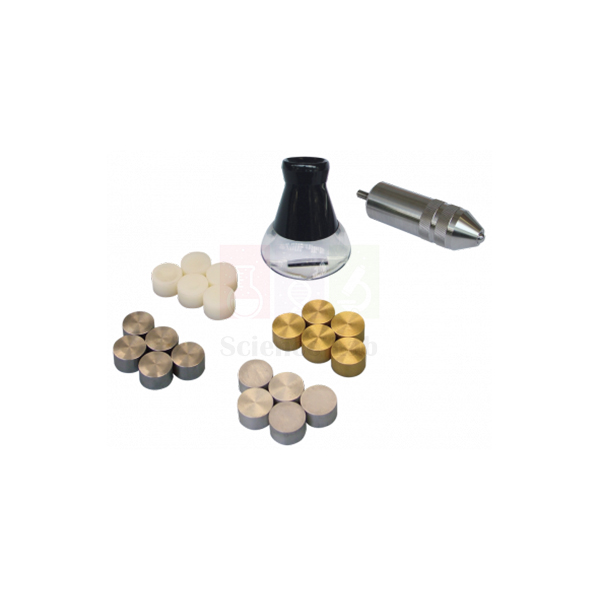
Brinell Indenter
Brinell Indenter (Product Code: SLE/ETP/17) is a ball-type hardness indenter used to find the Brinell hardness number of metal specimens in materials testing and workshop technology laboratories. A hardened steel ball in a holder is pushed onto the specimen to leave a small dent, which students then measure with a hand-held magnifier carrying a graticule scale. It is made by Jain Scientific Equipments Pvt Ltd (ScienceLab), an OEM manufacturer of engineering educational equipment in India, at its own factory in Ambala.
Key Details
| Parameter | Detail |
|---|---|
| Indenter | Hardened steel ball in a holder |
| Action | Pushes down onto a suitable test specimen and creates a small dent |
| Measuring aid | Hand-held magnifier with a measurement scale (graticule) for measuring the dent |
| Result | Brinell hardness number, from the dent dimensions, the indenter ball and the applied force |
| Product code | SLE/ETP/17 |
| Manufacturer | Jain Scientific Equipments Pvt Ltd (ScienceLab) — OEM |
| Country of origin | India (made in Ambala, Haryana) |
What Is the Brinell Indenter Used For?
The Brinell test is one of the oldest and most intuitive ways to compare metals: a hard ball pressed in with a known force leaves a bigger dent in a softer material. Because the ball spreads the load over a relatively large area, the method suits castings, forgings and other metals with a coarse structure, and it gives students a clear, hands-on picture of what a hardness number means.
After the indenter has made its dent, students read the dent diameter through the graticule magnifier, then combine it with the ball size and applied force in the Brinell formula. Measure each dent across two directions at right angles and average them, test on a flat and clean surface, and space the dents well apart and away from the specimen edge.
OEM Manufacturer
The Brinell Indenter is manufactured by Jain Scientific Equipments Private Limited, known by its trading name ScienceLab, which is the OEM (original equipment manufacturer) for this item. Production is at its own licensed factory in Saha, Ambala, Haryana, and polytechnics, engineering colleges, dealers and importers order it directly from there instead of through a trader. If you need a replacement magnifier or indenter later, the manufacturer handles it; ask us. Details are on the company profile page.
Related Materials Testing and Properties Equipment
Items used with or instead of a manual Brinell indenter:
- Compression Cage — an ancillary for the Brinell Hardness Test Set that adapts a tensile machine for compressive loading.
- Brinell Hardness Tester — a dedicated machine for labs with frequent Brinell testing.
- Vickers Hardness Tester — the pyramid-indentation method, for comparison with Brinell results.
- Single Disc Polishing Machine — prepares a smooth surface so dent edges are easy to read.
For other hardness apparatus, visit the Materials Testing and Properties category.
Frequently Asked Questions
How does the Brinell Indenter give a hardness number?
The Brinell Indenter presses a hardened steel ball onto the specimen to make a small dent. Using the dent dimensions, the indenter ball and the force applied, students calculate the Brinell hardness number of the specimen material.
What comes with the Brinell Indenter?
The Brinell Indenter consists of a hardened steel ball in a holder and a hand-held magnifier with a measurement scale, or graticule, for measuring the dent. Please confirm any further items with us when you request a quotation.
How is the dent measured with the Brinell Indenter?
Students measure the dent left by the Brinell Indenter with the hand-held magnifier and its graticule scale. Reading the dent diameter in two directions at right angles and averaging them gives a more reliable hardness value.
What applies the force to the Brinell Indenter?
The Brinell Indenter needs a known force to push the ball into the specimen, normally from a testing machine. Tell us which machine your laboratory uses so the loading arrangement can be discussed before we quote.
Who manufactures the Brinell Indenter?
The Brinell Indenter is manufactured by Jain Scientific Equipments Pvt Ltd (ScienceLab), the OEM, at its own licensed factory in Ambala, Haryana, India. Institutions and dealers buy directly from the manufacturer.
What should I send to get a Brinell Indenter quotation?
For a Brinell Indenter quotation, send the product code SLE/ETP/17, the quantity, the testing machine it will be used with and your delivery destination, through the contact page or the enquiry cart.
Request a Quote
Quotations for the Brinell Indenter come direct from the manufacturer. Send your requirement through the contact page or add it to the enquiry cart; we supply buyers in India and international markets.
Last updated: 24 September 2026
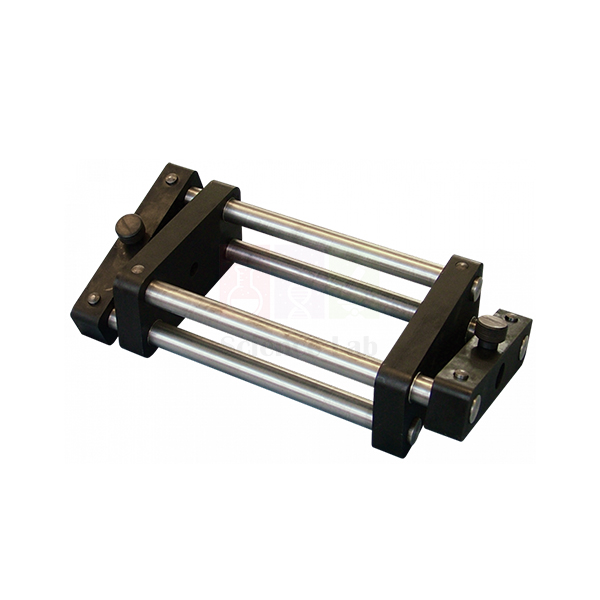
Compression Cage
Compression Cage (Product Code: SLE/ETP/18) is a testing-machine ancillary used to adapt the Bench Top Tensile Testing Machine for experiments that need a compressive load, in materials testing laboratories. It measures 100 mm square by 130 mm high, fits into the machine's tensile test area, and is an essential ancillary to the Brinell Hardness Test Set. It is made by Jain Scientific Equipments Pvt Ltd (ScienceLab), an OEM and technical educational equipment manufacturer, at its own factory in Ambala, India.
Specifications
| Parameter | Detail |
|---|---|
| Size | 100 mm square and 130 mm high |
| Function | Adapts the testing machine for experiments that need a compressive load |
| Fits | Tensile test area of the Bench Top Tensile Testing Machine |
| Used with | Essential ancillary to the Brinell Hardness Test Set |
| Product code | SLE/ETP/18 |
| Manufacturer | Jain Scientific Equipments Pvt Ltd (ScienceLab) — OEM |
| Country of origin | India (made in Ambala, Haryana) |
What Is the Compression Cage Used For?
A tensile machine is built to pull, but many useful experiments need a push. A compression cage solves this by turning the pulling action of the machine into a squeezing action on whatever is placed inside the cage. That lets one bench-top machine cover both tension and compression work, which makes good use of bench space in a teaching lab.
Its main role is Brinell hardness testing, where the indenter must be pressed into a specimen with a known load, but the same principle applies to other compressive-load experiments set up on the machine. Seat the cage squarely in the tensile test area, centre the specimen inside it, and apply load slowly so students can watch the machine's load reading rise.
What to Specify When Ordering
- Whether your laboratory already has the Bench Top Tensile Testing Machine, whose tensile test area the cage fits.
- Whether you also need the Brinell indenter and magnifier for hardness testing.
- The number of cages, usually one per testing machine.
OEM Manufacturer
Jain Scientific Equipments Private Limited, trading as ScienceLab, manufactures the Compression Cage as its OEM (original equipment manufacturer) alongside the Bench Top Tensile Testing Machine it fits. It is made at the company's own licensed factory at Saha, Ambala, Haryana, and supplied factory-direct to colleges, institutes, dealers and importers. Because machine and ancillary come from the same maker, fitting questions go straight to the people who build both. More on the ScienceLab profile.
Related Materials Testing and Properties Equipment
The machine and accessories used with the Compression Cage:
- Bench Top Tensile Testing Machine — the machine whose tensile test area the cage fits.
- Brinell Indenter — hardened steel ball indenter with graticule magnifier for Brinell hardness tests.
- Speciman — long-style tensile specimen for the tension side of the same machine.
- Coil Spring — another compression experiment, measuring the rate of a heavy-duty spring.
All related apparatus is listed under Materials Testing and Properties.
Frequently Asked Questions
What size is the Compression Cage?
The Compression Cage is 100 mm square and 130 mm high. This compact size lets it fit into the tensile test area of the Bench Top Tensile Testing Machine without changing the machine itself.
Which machine does the Compression Cage fit?
The Compression Cage fits into the tensile test area of the Bench Top Tensile Testing Machine. If you have a different testing machine, send us its details and we will discuss whether the cage can be used with it.
Why is the Compression Cage needed for Brinell tests?
The Compression Cage is an essential ancillary to the Brinell Hardness Test Set because a Brinell test needs a compressive load to press the ball into the specimen, while the machine's tensile area on its own only pulls.
How does a Compression Cage work?
A Compression Cage converts the pulling movement of a tensile machine into compression on the item placed inside it. The Compression Cage therefore adds compressive-load experiments to a machine designed for tensile tests.
Who manufactures the Compression Cage?
The Compression Cage is manufactured by Jain Scientific Equipments Pvt Ltd (ScienceLab), the OEM, at its own licensed factory in Ambala, Haryana, India, the same maker as the Bench Top Tensile Testing Machine it fits.
What should a Compression Cage quotation request include?
A Compression Cage quotation request should give the product code SLE/ETP/18, the quantity, whether you have the Bench Top Tensile Testing Machine, and the delivery destination. Send it through our contact page or the enquiry cart.
Request a Quote
Request your Compression Cage quotation directly from the manufacturer through the contact page, or add it to the enquiry cart together with the testing machine. We supply India and international markets.
Last updated: 24 September 2026
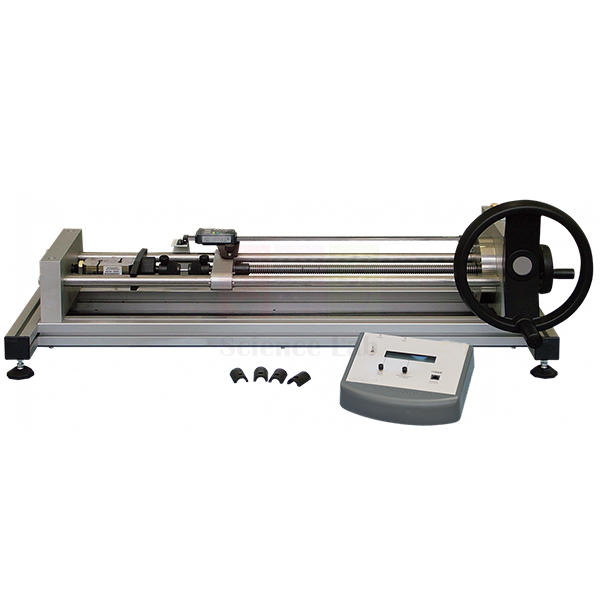
Bench Top Tensile Testing Machine
Bench Top Tensile Testing Machine (Product Code: SLE/ETP/19) is a small-scale, hand-operated tensile tester used to run simple tensile tests on metal specimens up to a maximum load of 20 kN in engineering teaching laboratories. A worm-and-wheel drive with about 400 mm of lead-screw travel, a strain-gauged load cell with peak hold and a sliding digital extension display make it practical lab equipment for technical institutes. It is made by Jain Scientific Equipments Pvt Ltd (ScienceLab), an OEM manufacturer, at its own factory in Ambala, India.
Specifications
| Parameter | Detail |
|---|---|
| Maximum load | 20 kN |
| Specimens | Metal specimens, for simple tensile tests |
| Format | Small-scale machine that fits on a benchtop |
| Load application | Hand-driven worm-and-wheel gearbox driving a lead screw |
| Lead screw travel | Approximately 400 mm |
| Bearings | Low-friction bearings with a large handwheel; ball races and self-aligning ball thrust races in the direction of loading |
| Operation | Smooth and progressive, helping the user apply a steady strain rate; maximum load reached with minimum effort |
| Load measurement | Strain-gauged load cell connected to a microprocessor-controlled digital display |
| Peak hold | Registers the maximum load before the specimen breaks |
| Extension measurement | Sliding digital display measures tensile displacement over the entire movement |
| Product code | SLE/ETP/19 |
| Manufacturer | Jain Scientific Equipments Pvt Ltd (ScienceLab) — OEM |
| Country of origin | India (made in Ambala, Haryana) |
What Is the Bench Top Tensile Tester Used For?
The tensile test is the foundation of materials science: from one specimen, students obtain yield strength, ultimate tensile strength, elongation and a full load-extension curve. This machine brings that test onto an ordinary laboratory bench, so every group can run its own specimens instead of watching a single large machine from a distance.
Students turn the handwheel steadily, reading load from the digital display and extension from the sliding digital display at regular intervals. The peak-hold function keeps the maximum load on screen after the specimen breaks, so it is never missed. Mark the gauge length before testing, keep the handwheel speed even for a steady strain rate, and make sure everyone nearby wears eye protection in case of sudden fracture.
What to Specify When Ordering
- The metals you plan to test, so specimen types can be discussed within the 20 kN maximum load.
- Whether you need the Compression Cage for compressive-load and Brinell experiments.
- How many specimens you need for your student groups.
- The number of machines and the delivery destination.
OEM Manufacturer
ScienceLab is the trading name of Jain Scientific Equipments Private Limited, the OEM (original equipment manufacturer) of the Bench Top Tensile Testing Machine. The machine is made and assembled at the company's own licensed factory at Saha, Ambala, Haryana, and supplied factory-direct to engineering colleges, polytechnics, dealers and importers. As the manufacturer, the company also handles follow-up orders for ancillaries and spare parts; ask us what you need. See the company profile.
Related Materials Testing and Properties Equipment
Ancillaries, specimens and alternatives for bench-top tensile testing:
- Compression Cage — fits the tensile test area to add compressive-load experiments.
- Speciman — long-style carbon steel tensile specimen listed for this machine.
- Double Shear Test Specimens — copper specimens for shear experiments.
- Tensile Tester Kit — a cased introductory kit for younger students.
The Materials Testing and Properties category has the full range of testing apparatus.
Frequently Asked Questions
What is the maximum load of the Bench Top Tensile Testing Machine?
The Bench Top Tensile Testing Machine carries out simple tensile tests of metal specimens up to a maximum load of 20 kN. It is a small-scale machine that fits on a benchtop in a teaching laboratory.
How is load applied on the Bench Top Tensile Testing Machine?
Load on the Bench Top Tensile Testing Machine is applied by hand through a worm-and-wheel gearbox driving a lead screw with approximately 400 mm of travel. Low-friction bearings and a large handwheel let the user reach maximum load with minimum effort.
How are load and extension measured?
The Bench Top Tensile Testing Machine measures load with a strain-gauged load cell and a microprocessor-controlled digital display with peak hold, while a sliding digital display measures extension over the entire movement.
Is a calibration certificate available for the Bench Top Tensile Testing Machine?
Whether a calibration certificate can be supplied with the Bench Top Tensile Testing Machine should be discussed with us before ordering. Mention it through the contact page so it is addressed in your quotation.
Who manufactures the Bench Top Tensile Testing Machine?
The Bench Top Tensile Testing Machine is manufactured by Jain Scientific Equipments Pvt Ltd (ScienceLab), the OEM, at its own licensed factory in Saha, Ambala, Haryana, India. Quotations and spares come from the manufacturer directly.
What should a Bench Top Tensile Testing Machine enquiry include?
A Bench Top Tensile Testing Machine enquiry should include the product code SLE/ETP/19, the quantity, the metals you plan to test, any ancillaries such as the Compression Cage, and the delivery destination in India or abroad.
Request a Quote
To receive a Bench Top Tensile Testing Machine quotation from the manufacturer, write through the contact page or add it to the enquiry cart. We supply institutions, dealers and importers in India and international markets.
Last updated: 24 September 2026
Disc Spring
Disc Spring (Product Code: SLE/ETP/20) is a spring-testing accessory used to study how disc springs stacked in series, in parallel or in a combination of both respond to a compressive load, in machine design and strength-of-materials labs. A disc guide and a compression cylinder fit the platens of a pump-operated testing machine, so students can compare the deflection rates of different stack arrangements. It is made by Jain Scientific Equipments Pvt Ltd (ScienceLab), an OEM and scientific lab equipment manufacturer in Ambala, India, at its own factory.
Key Details
| Parameter | Detail |
|---|---|
| Parts used | Disc springs, a disc guide and a compression cylinder |
| Fitting | Disc guide fitted to the lower compression platen; compression cylinder fitted to the upper platen |
| Stack arrangements | In parallel, in series, or a combination of series and parallel, stacked on the disc guide |
| Loading | Pump operated to raise the ram and compress the springs |
| Typical application | Uses that need a small deflection at high force levels |
| Product code | SLE/ETP/20 |
| Manufacturer | Jain Scientific Equipments Pvt Ltd (ScienceLab) — OEM |
| Country of origin | India (made in Ambala, Haryana) |
What Is the Disc Spring Experiment Used For?
Disc springs are common in many industries, from bolted joints and clutches to valves and heavy tooling, wherever a large force must be carried in a very small deflection. Their big advantage is flexibility of design: the same discs can be stacked in different ways to change the deflection rate. This experiment lets students discover those rules by measurement.
Students stack the discs on the disc guide in the chosen combination, operate the pump to raise the ram, and record force against deflection. Discs stacked in series give more deflection for the same force, discs in parallel carry more force for the same deflection, and mixed stacks fall in between. Keep the stack centred on the guide, raise the ram slowly, and repeat each arrangement to check consistency.
What to Specify When Ordering
- The testing machine in your laboratory, with its compression platens and pump-operated ram, so fitting can be confirmed.
- The stack arrangements you intend to teach: series, parallel or combined.
- The number of Disc Spring sets needed.
OEM Manufacturer
The Disc Spring experiment is made by ScienceLab, the trading name of Jain Scientific Equipments Private Limited, which is its OEM (original equipment manufacturer). Manufacturing takes place at the company's own licensed factory at Saha, Ambala, Haryana, and the finished sets go factory-direct to engineering colleges, polytechnics, dealers and importers. For extra discs or other spares later, ask us: the manufacturer deals with those requests itself. Background is on the ScienceLab profile.
Related Materials Testing and Properties Equipment
Spring experiments that pair naturally with disc springs:
- Coil Spring — a heavy-duty helical spring for comparing spring rates with disc stacks.
- Hook's Law And Spring Rate — introductory spring testing with masses and a scale.
- Electronic Spring Tension Machine — a dedicated machine for spring load measurement.
- Compression Cage — adds compressive-load experiments to the Bench Top Tensile Testing Machine.
Browse more under Materials Testing and Properties.
Frequently Asked Questions
What is the Disc Spring experiment used for?
The Disc Spring experiment is used to study how stacking disc springs in series, in parallel or in combination changes their deflection rate under a compressive load, and why disc springs suit small deflections at high force.
How can the disc springs be stacked?
In the Disc Spring experiment, the spring discs can be stacked on the disc guide in parallel, in series or in a combination of series and parallel, so students can compare several arrangements with the same set of discs.
How is the load applied in the Disc Spring experiment?
For the Disc Spring experiment, the disc guide is fitted to the lower compression platen and the compression cylinder to the upper platen. The pump is then operated to raise the ram and compress the springs.
Where are disc springs used in practice?
Disc springs, like those in the Disc Spring experiment, are used in many industries where a small deflection must carry a high force, for example in bolted joints, clutches, valves and tooling, because stacking lets designers tune the deflection rate.
Who manufactures the Disc Spring experiment?
The Disc Spring experiment is manufactured by Jain Scientific Equipments Pvt Ltd (ScienceLab), the OEM, at its own licensed factory in Ambala, Haryana, India. Orders and spare-part requests are handled by the manufacturer directly.
What should a Disc Spring quotation request include?
A Disc Spring quotation request should include the product code SLE/ETP/20, the number of sets, details of the testing machine it will be used on and the delivery destination, sent through our contact page or enquiry cart.
Request a Quote
Ask for a Disc Spring quotation direct from the manufacturer through the contact page, or add it to the enquiry cart. We supply institutions, dealers and importers in India and international markets.
Last updated: 24 September 2026
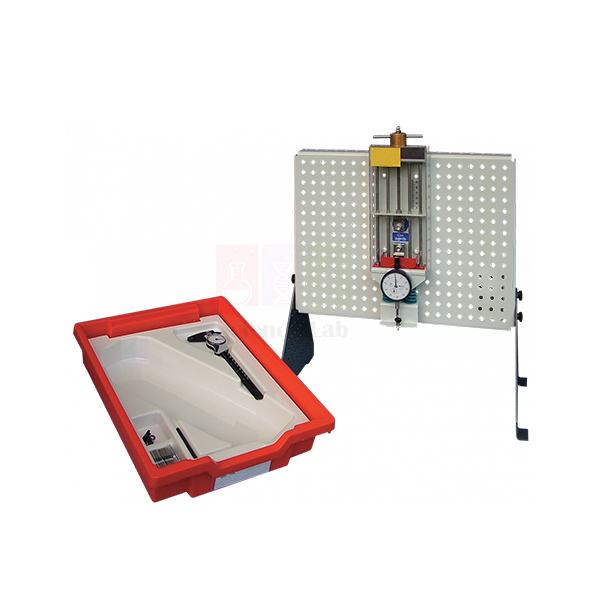
Tensile Tester Kit
Tensile Tester Kit (Product Code: SLE/ETP/21) is a cased, hands-on kit used to introduce students to tensile testing by stretching specimens of different materials to destruction while measuring extension and force, in engineering science and technical education classes. It gives learners first contact with yield properties, tensile strength, elongation and overall stress and strain. It is made by Jain Scientific Equipments Pvt Ltd (ScienceLab), an OEM and vocational training lab equipment manufacturer in India, at its own factory in Ambala.
Key Details
| Parameter | Detail |
|---|---|
| Kit contents | A cased tensile tester with specimens of different materials |
| Test method | Specimens stretched to destruction while extension and force are measured |
| Terms introduced | Yield properties; tensile strength; elongation; overall stress and strain |
| Product code | SLE/ETP/21 |
| Manufacturer | Jain Scientific Equipments Pvt Ltd (ScienceLab) — OEM |
| Country of origin | India (made in Ambala, Haryana) |
What Is the Tensile Tester Kit Used For?
Before students meet a full-size testing machine, they need a feel for what happens when a material is pulled apart. The Tensile Tester Kit gives them that experience at desk level: each group loads a specimen, stretches it until it breaks, and records force and extension along the way. Comparing specimens of different materials shows at once why some stretch a long way and others snap suddenly.
From their readings, students plot force against extension, convert the results to stress and strain using the specimen dimensions, and identify yield, tensile strength and elongation. These are the same terms they will use later in materials science and design courses. Measure each specimen before testing, pull steadily rather than in jerks, and wear eye protection when a specimen is close to breaking.
What to Specify When Ordering
- The number of kits, usually one per student group.
- Replacement specimens, since every specimen is stretched to destruction; ask us what is available.
- Whether you want storage trays or other engineering science kits in the same order.
OEM Manufacturer
Jain Scientific Equipments Private Limited, trading as ScienceLab, is the OEM (original equipment manufacturer) of the Tensile Tester Kit and makes it at its own licensed factory at Saha, Ambala, Haryana, India. Schools with technical streams, polytechnics, colleges, dealers and importers buy it factory-direct, not through a trading intermediary. Replacement specimens and repeat kits are requested from the manufacturer itself; tell us your quantities. See the ScienceLab company profile.
Related Materials Testing and Properties Equipment
Next steps and companions for the kit:
- Bench Top Tensile Testing Machine — the next step up, with load cell and digital displays for metal specimens.
- Moments Kit — a rigid-beam kit on moments, levers and beams for the same engineering science course.
- Set Of 5 trays And Lids — trays and lids for storing kit parts and printed material.
- Speciman — long-style carbon steel tensile specimen for machine testing.
More kits and apparatus are in the Materials Testing and Properties category.
Frequently Asked Questions
What is included in the Tensile Tester Kit?
The Tensile Tester Kit includes a cased tensile tester with specimens of different materials. Students stretch the specimens to destruction while measuring extension and force. Please confirm the exact specimen assortment with us when requesting a quotation.
Which concepts does the Tensile Tester Kit teach?
The Tensile Tester Kit introduces students to tensile test terms including yield properties, tensile strength, elongation, and overall stress and strain, giving them a practical basis for later materials science work.
Can the specimens in the Tensile Tester Kit be reused?
No. Specimens in the Tensile Tester Kit are stretched to destruction, so each one is used once. Plan for replacement specimens for repeat classes and ask us about availability when you order.
How does the Tensile Tester Kit differ from the Bench Top Tensile Testing Machine?
The Tensile Tester Kit is a cased introductory kit for first lessons on tensile testing. The Bench Top Tensile Testing Machine is a larger machine for metal specimens with a load cell and digital displays, suited to degree-level practicals.
Who manufactures the Tensile Tester Kit?
The Tensile Tester Kit is manufactured by Jain Scientific Equipments Pvt Ltd (ScienceLab), the OEM, at its own licensed factory in Ambala, Haryana, India, and is supplied directly by the manufacturer to institutions and dealers.
What should a Tensile Tester Kit enquiry include?
A Tensile Tester Kit enquiry should include the product code SLE/ETP/21, the number of kits, any replacement specimens you need and the delivery destination in India or abroad, sent through our contact page or enquiry cart.
Request a Quote
Quotations for the Tensile Tester Kit come straight from the manufacturer. Send your requirement through the contact page or add it to the enquiry cart; we supply India and international markets.
Last updated: 24 September 2026
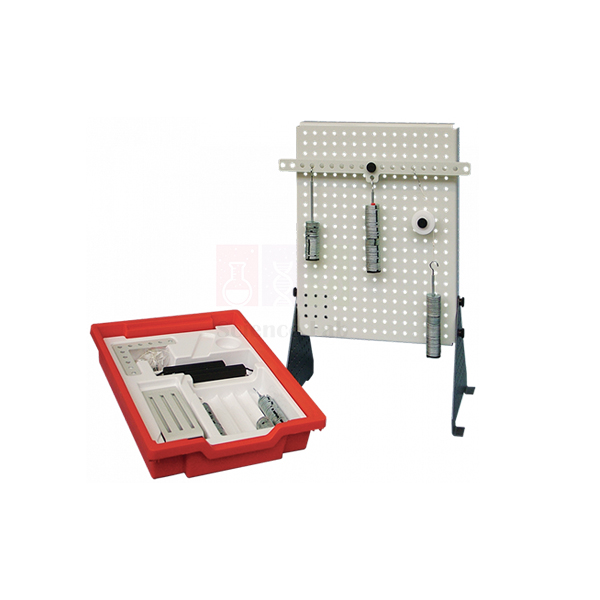
Moments Kit
Moments Kit (Product Code: SLE/ETP/22) is an engineering science kit used to teach the principle of moments, extending to levers and beams, in polytechnic and technical college laboratories. Built around a rigid beam, it adds a pulley for oblique-force experiments and an L-shape plate for bell crank levers, and works with spring balances to show beam reactions. It is made by Jain Scientific Equipments Pvt Ltd (ScienceLab), an OEM manufacturer of school and college lab equipment, at its own factory in Ambala, India.
Key Details
| Parameter | Detail |
|---|---|
| Main part | Rigid beam for experiments in the principle of moments, extending to levers and beams |
| Pulley | Allows extra experiments with moments caused by oblique forces |
| Bell crank plate | L-shape plate for experiments in bell crank levers |
| Lever types | Shows the three main lever types |
| Beam balance | Uses moments to find unknown weights, creating simple beam balances |
| Beam reactions | Works with spring balances to show reaction forces on beams with point loads and uniformly distributed loads |
| Product code | SLE/ETP/22 |
| Manufacturer | Jain Scientific Equipments Pvt Ltd (ScienceLab) — OEM |
| Country of origin | India (made in Ambala, Haryana) |
What Is the Moments Kit Used For?
Moments explain why a spanner with a longer handle is easier to turn, how a crowbar lifts heavy loads and how bridge supports share a load. With the Moments Kit, students balance the rigid beam with known weights to confirm that clockwise and anticlockwise moments are equal, then use the same rule to find an unknown weight, turning the beam into a simple beam balance.
The kit then moves on to the three main lever types, the bell crank lever on the L-shape plate, and moments from oblique forces using the pulley. With spring balances as supports, students measure reaction forces on a beam under point loads and uniformly distributed loads and compare them with their calculations. Level the beam before each reading and keep string lines clear of the beam edges.
What to Specify When Ordering
- The number of kits needed for your student groups.
- Whether spring balances are needed for the beam-reaction experiments; ask us what the kit includes.
- Whether you want storage trays or other engineering science kits in the same order.
OEM Manufacturer
The Moments Kit is made by Jain Scientific Equipments Private Limited, trading as ScienceLab, as its OEM (original equipment manufacturer). Production takes place at the company's licensed factory at 449, HSIIDC Industrial Area, Saha, Ambala (Factory Licence AMB-ONLINE-CHD-J-414), and the company is incorporated under CIN U29309HR2020PTC087597. Colleges, dealers and importers therefore order direct from the manufacturer. Company details are on the ScienceLab profile.
Related Materials Testing and Properties Equipment
Companion items for moments and lever practicals:
- Force Meter/Spring Balance — spring balances for measuring beam reaction forces.
- Engineering Science Work Panel — a perforated metal desk panel on which Engineering Science kit parts can be fitted in any position.
- Gear Trains Kit — spur, bevel and worm gears for studying mechanical advantage and velocity ratio.
- Set Of 5 trays And Lids — trays and lids for storing kit parts between lessons.
Find more engineering science kits in Materials Testing and Properties.
Frequently Asked Questions
What experiments can be done with the Moments Kit?
The Moments Kit covers the principle of moments, finding unknown weights with a simple beam balance, the three main lever types, bell crank levers, moments from oblique forces and reaction forces on beams under point and uniformly distributed loads.
Does the Moments Kit cover all three lever types?
Yes. The Moments Kit shows the three main lever types using its rigid beam, and it also includes an L-shape plate so students can carry out experiments on bell crank levers.
What is the pulley in the Moments Kit for?
The pulley in the Moments Kit allows extra experiments with moments caused by oblique forces, where the force acts at an angle to the beam and students must use its perpendicular component to calculate the moment.
Are spring balances needed with the Moments Kit?
The Moments Kit works with spring balances to show reaction forces on beams with point loads and uniformly distributed loads. Ask us whether spring balances are included in your quotation or should be ordered separately.
Who manufactures the Moments Kit?
The Moments Kit is manufactured by Jain Scientific Equipments Pvt Ltd (ScienceLab), the OEM, at its own licensed factory in Saha, Ambala, Haryana, India. Quotations and repeat orders come straight from the manufacturer.
What should a Moments Kit quotation request include?
A Moments Kit quotation request should include the product code SLE/ETP/22, the number of kits, whether you need spring balances or storage trays, and the delivery destination, sent through the contact page or enquiry cart.
Request a Quote
Request a Moments Kit quotation direct from the manufacturer through the contact page, or add it to the enquiry cart. We supply institutions, dealers and importers in India and international markets.
Last updated: 24 September 2026
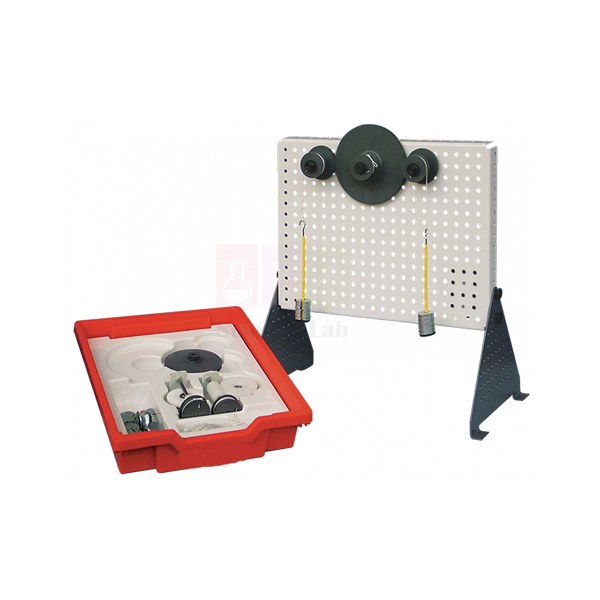
Gear Trains Kit
Gear Trains Kit (Product Code: SLE/ETP/23) is an engineering science teaching kit of spur, bevel and worm gears used to investigate how different gear sets transmit motion in school, polytechnic and college engineering labs. Lecturers use it to introduce gear ratio, efficiency, mechanical advantage and velocity ratio, and its double-toothed spur gears allow compound gear train experiments. The kit is made by Jain Scientific Equipments Pvt Ltd (ScienceLab), an OEM manufacturer, at its own factory in Ambala, India, as part of its engineering lab equipment range.
Key Details
| Parameter | Detail |
|---|---|
| Gears included | Spur gears, a bevel gear and a worm drive |
| Spur gear design | Two sets of teeth on the same shaft, allowing extra experiments in compound gear trains |
| Engineering terms introduced | Gear ratio, efficiency, mechanical advantage, velocity ratio |
| Real-world link | Gear sets similar to those in automobile gear boxes, domestic and industrial hand tools and clockwork instruments |
| Student activity | Test each gear set and note the differences in its characteristics |
| Product code | SLE/ETP/23 |
| Manufacturer | Jain Scientific Equipments Pvt Ltd (ScienceLab) — OEM |
| Country of origin | India (made in Ambala, Haryana) |
What Is the Gear Trains Kit Used For?
In a mechanics practical, students mesh one gear pair at a time, turn the input by hand and count the turns of the output to work out the velocity ratio. Comparing the effort applied with the load moved then shows mechanical advantage, and the gap between ideal and measured results explains why efficiency is always below one hundred percent.
The bevel gear shows how a drive can be turned through an angle, while the worm drive demonstrates a large speed reduction in a single stage. Joining the double-toothed spur gears into a compound train lets the class see how individual ratios multiply. A chalk or marker spot on one tooth of each gear makes counting turns much easier. As mechanics lab equipment, the kit links textbook formulas to the gearboxes and hand tools students already know.
OEM Manufacturer
ScienceLab is the trading name of Jain Scientific Equipments Private Limited, which produces the Gear Trains Kit as the original equipment manufacturer at its own licensed factory at Saha, Ambala, Haryana, India. Because the kit is made and assembled there rather than sourced from a trader, schools, polytechnics, engineering colleges, dealers and importers receive it factory-direct. Replacement gears and repeat orders are handled by the manufacturer itself — ask us about the parts you need. Read more on the ScienceLab company profile.
Related Laboratory Equipment
These items from the same engineering science range help build a complete mechanisms and statics practical.
- Engineering Science Work Panel — perforated metal bench panel made for engineering science kits; confirm your set-up with us.
- Moments Kit — continues from gears into turning-effect and lever experiments.
- Potential And Energy Kit — pendulum, spring and flywheel experiments on energy transfer.
- Set Of 5 trays And Lids — stackable trays for keeping gears and small parts together between lessons.
- Gear Train Model — a gear train demonstration model from the Theory of Machines range.
Browse the full Materials Testing and Properties range for more engineering teaching equipment.
Frequently Asked Questions
What gears are included in the Gear Trains Kit?
The Gear Trains Kit includes spur gears, a bevel gear and a worm drive. Its spur gears carry two sets of teeth on the same shaft, so students can build compound gear trains as well as simple gear pairs and compare how each arrangement behaves.
Which engineering terms does the Gear Trains Kit teach?
The Gear Trains Kit introduces gear ratio, efficiency, mechanical advantage and velocity ratio. Students test each gear set, record what they observe and compare the characteristics, linking theory to gear boxes, hand tools and clockwork mechanisms.
Who manufactures the Gear Trains Kit?
The Gear Trains Kit is manufactured by Jain Scientific Equipments Pvt Ltd (ScienceLab) as the OEM at its own licensed factory at Saha, Ambala, Haryana, India, so institutions, dealers and importers buy it directly from the maker.
Which courses can use the Gear Trains Kit?
The Gear Trains Kit suits any course that introduces gear ratio and mechanical advantage, from senior school technology and physics to diploma and engineering mechanics practicals. The teacher or lecturer decides how deep the calculations go for each group.
How should the Gear Trains Kit be looked after?
Keep the Gear Trains Kit clean and dry, store the gears in a tray between lessons and check the teeth for chips before each practical. Dust and grit add friction and distort efficiency results. For replacement parts, ask ScienceLab.
What should a quotation request for the Gear Trains Kit include?
For a Gear Trains Kit quotation, state the number of kits, any related engineering science items you want with them, and the delivery address in India or abroad. Send the details through the contact page and the quote comes straight from the manufacturer.
Can the Gear Trains Kit be ordered in bulk or for export?
Yes. ScienceLab supplies the Gear Trains Kit in quantity to institutions and dealers in India and international markets. Share your quantity and destination through the contact page to receive a quotation.
Request a Quote
To order the Gear Trains Kit, send your quantity and delivery location through the contact page or add it to the enquiry cart. Quotations come direct from the manufacturer, ScienceLab in Ambala.
Last updated: 24 September 2026
Set Of 5 trays And Lids
Set Of 5 trays And Lids (Product Code: SLE/ETP/24) is a pack of five lidded storage trays used to keep kit ancillaries, writing materials and A4 printed sheets safe and organised in engineering science teaching labs. Because the trays are identical to those used for the engineering science kits, they fit and stack in the same way as the kit trays already on the shelf. This lab equipment accessory is supplied by Jain Scientific Equipments Pvt Ltd (ScienceLab), Ambala, India.
Key Details
| Parameter | Detail |
|---|---|
| Contents | Five trays with lids |
| Suitable for storing | Ancillaries, writing materials or A4 size printed material |
| Compatibility | Identical to the trays used for the kits, so they fit and stack in the same way |
| Product code | SLE/ETP/24 |
| Supplied by | Jain Scientific Equipments Pvt Ltd (ScienceLab), Ambala, India |
What Are the Trays and Lids Used For?
In a shared lab, small ancillaries tend to drift from one kit to another and go missing by the end of term. Giving each bench group its own lidded tray keeps those pieces together, and worksheets or lecturer notes printed on A4 paper stay flat and clean under the lid instead of getting creased in a drawer.
Since the trays match the kit trays, a technician can stack spare trays on top of the kits and keep a tidy, uniform shelf. A simple label on each lid (group name, lab number or contents) speeds up issue and return during a practical session. For a school lab setup that is growing kit by kit, the set is an easy way to add storage that looks and stacks like the rest of the range.
Supplier
ScienceLab is the trading name of Jain Scientific Equipments Private Limited, which supplies this set of trays and lids to accompany its engineering science kits. Buyers can combine the trays with kits and other laboratory items in a single enquiry, which keeps purchasing simple for schools, colleges, dealers and importers. Company details are on the ScienceLab profile page.
Related Laboratory Equipment
The trays are most useful alongside the engineering science kits and panel they are designed to sit with.
- Engineering Science Work Panel — the perforated metal bench panel on which engineering science kits are set up.
- Gear Trains Kit — spur, bevel and worm gears whose small parts benefit from tray storage.
- Potential And Energy Kit — pendulum, spring and flywheel kit for energy experiments.
- Moments Kit — another engineering science kit for turning-effect experiments.
- Tensile Tester Kit — a materials-testing kit from the same product series.
See all items in the Materials Testing and Properties category.
Frequently Asked Questions
How many trays are in the Set Of 5 trays And Lids?
The Set Of 5 trays And Lids contains five trays, each with a matching lid. One set can give five bench groups their own storage tray, or hold a lab's worksheets and small parts in separate labelled trays.
What can be stored in the Set Of 5 trays And Lids?
The Set Of 5 trays And Lids is intended for ancillaries, writing materials or A4 size printed material. Typical uses are keeping small kit parts together, holding pens and rulers for a group, and storing printed worksheets flat.
Do these trays stack with the engineering science kit trays?
Yes. The trays in the Set Of 5 trays And Lids are identical to those used for the kits, so they fit and stack in the same way. Labs can add them to existing kit storage without mixing different tray shapes.
Who supplies the Set Of 5 trays And Lids?
The Set Of 5 trays And Lids is supplied by Jain Scientific Equipments Pvt Ltd (ScienceLab), Ambala, Haryana, India, which also offers the engineering science kits and work panel that the trays accompany.
What are the dimensions and material of the trays?
The listing for the Set Of 5 trays And Lids does not state exact dimensions or material, only that the trays hold A4 size printed material. Ask through the contact page and we will confirm the details with your quotation.
How do I order the Set Of 5 trays And Lids with other kits?
List the number of Set Of 5 trays And Lids you need together with any kits or panels in one enquiry, plus your delivery address in India or abroad. ScienceLab will return a single quotation covering all items.
Request a Quote
Send the quantity of tray sets you need through the contact page, or add this item to the enquiry cart with the kits you are ordering, and ScienceLab will reply with a quotation.
Last updated: 24 September 2026
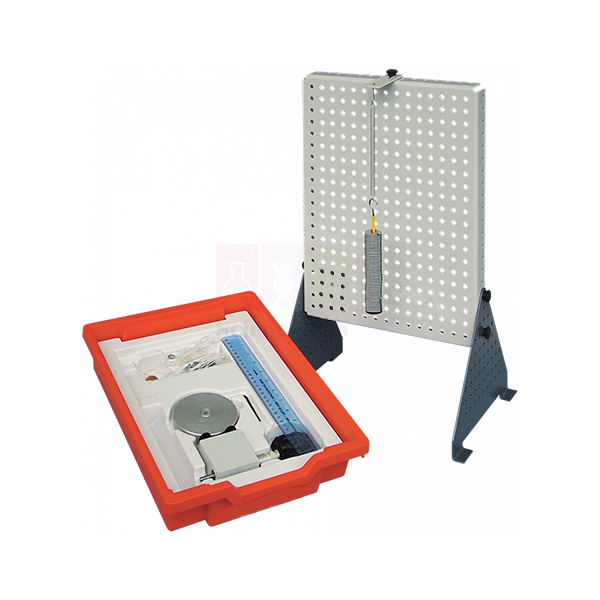
Potential And Energy Kit
Potential And Energy Kit (Product Code: SLE/ETP/25) is an engineering science kit containing a pendulum, a spring and a flywheel, used to study potential and kinetic energy and the transfer of energy from one form to another in school and college labs. Students and lecturers mount its parts on the Work Panel, and the kit introduces terms such as moment of inertia and elastic potential energy. It is produced by Jain Scientific Equipments Pvt Ltd (ScienceLab), an OEM manufacturer, at its own factory in Ambala, India.
Key Details
| Parameter | Detail |
|---|---|
| Kit parts | A pendulum, a spring and a flywheel |
| Topics | Difference between potential and kinetic energy; transfer of energy from one form to another |
| Engineering terms introduced | Moment of inertia, elastic potential energy |
| Mounting | Parts fit to the Engineering Science Work Panel |
| Range | Part of a series of kits that allows many experiments using different arrangements of their parts |
| Product code | SLE/ETP/25 |
| Manufacturer | Jain Scientific Equipments Pvt Ltd (ScienceLab) — OEM |
| Country of origin | India (made in Ambala, Haryana) |
What Is the Potential And Energy Kit Used For?
Each part isolates one kind of energy store. Raising the pendulum bob gives it gravitational potential energy that turns into kinetic energy at the bottom of the swing and back again; stretching or compressing the spring stores elastic potential energy that is released as motion; and the spinning flywheel shows that a rotating body carries kinetic energy whose size depends on its moment of inertia.
Working through the three parts in one session lets students compare how energy is stored and passed on, which is the core idea behind a flywheel experiment or a moment of inertia kit in any mechanics syllabus. Fix the Work Panel firmly to the bench before starting, keep fingers and loose sleeves clear of the flywheel while it spins, and repeat each observation so the class can discuss losses to friction.
OEM Manufacturer
Jain Scientific Equipments Private Limited, which trades as ScienceLab, builds the Potential And Energy Kit as the original equipment manufacturer at its own licensed factory in Saha, Ambala, Haryana, India. Schools and colleges therefore deal with the company that makes the kit, and dealers and importers are supplied factory-direct rather than through a trading intermediary. If a spring or another part needs replacing later, ask us and the request goes straight to the maker. The ScienceLab profile has more about the company.
Related Laboratory Equipment
Pair the kit with its mounting panel and with other engineering science kits that extend the same mechanics course.
- Engineering Science Work Panel — the perforated metal panel the kit parts are fitted to.
- Gear Trains Kit — spur, bevel and worm gears for gear ratio and efficiency work.
- Moments Kit — turning-effect experiments that complement energy topics.
- Hook's Law And Spring Rate — takes the spring idea further into load and extension measurements.
- Set Of 5 trays And Lids — matching trays for storing kit parts between classes.
More engineering teaching apparatus is listed under Materials Testing and Properties.
Frequently Asked Questions
What parts come in the Potential And Energy Kit?
The Potential And Energy Kit contains a pendulum, a spring and a flywheel. Students test each part to see the difference between potential and kinetic energy and to follow how energy transfers from one form to another.
Does the Potential And Energy Kit need the Engineering Science Work Panel?
Yes, the Potential And Energy Kit is designed so that students, teachers or lecturers fit its parts to the Work Panel. If your lab does not already have a panel, include the Engineering Science Work Panel in the same enquiry.
Which engineering terms does the Potential And Energy Kit introduce?
The Potential And Energy Kit introduces moment of inertia and elastic potential energy, alongside the basic contrast between potential and kinetic energy. These terms prepare students for later work on flywheels, springs and energy storage in machines.
Can the kit parts be rearranged for other experiments?
Yes. The Potential And Energy Kit belongs to a versatile series of kits that allows many experiments using different arrangements of their parts, so a lecturer can adapt set-ups to the engineering science topic being taught.
Who manufactures the Potential And Energy Kit?
The Potential And Energy Kit is manufactured by Jain Scientific Equipments Pvt Ltd (ScienceLab), the OEM, at its own licensed factory in Saha, Ambala, Haryana, India, and is supplied directly to institutions, dealers and importers.
How should the Potential And Energy Kit be handled safely?
Mount the Potential And Energy Kit on a firmly fixed panel, keep hands clear of the spinning flywheel, and avoid over-stretching the spring. Store the parts dry in a tray after each practical so they stay ready for the next class.
How can I get a quotation for the Potential And Energy Kit?
Send the number of Potential And Energy Kits, whether you need Work Panels too, and your delivery address in India or international markets through the contact page. The quotation is issued directly by the manufacturer.
Request a Quote
Ask for pricing on the Potential And Energy Kit through the contact page or place it in the enquiry cart. You receive the quote directly from the manufacturer in Ambala.
Last updated: 24 September 2026
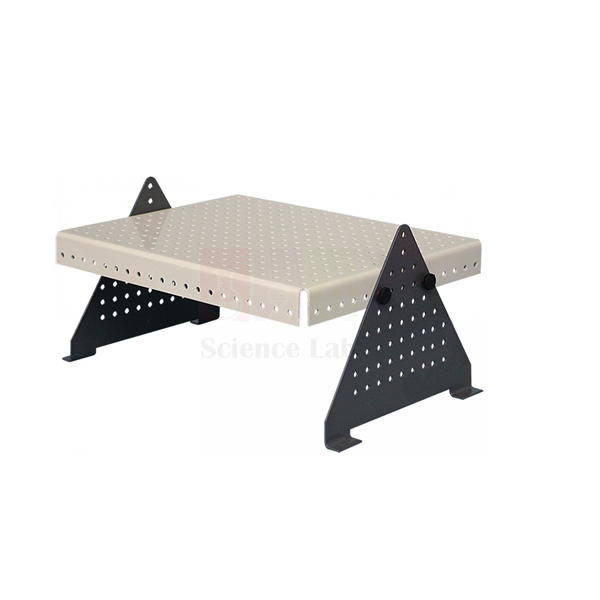
Engineering Science Work Panel
Engineering Science Work Panel (Product Code: SLE/ETP/26) is a bench-top mounting frame of thick perforated metal used to hold the parts of engineering science kits in any position an experiment needs, in school, polytechnic and college labs. It consists of a main panel and two supports, fits on any standard desk or bench top, and comes with a CD-ROM plus reproducible worksheets, guidance notes and lecturer notes with answers. The panel is made by Jain Scientific Equipments Pvt Ltd (ScienceLab), an OEM manufacturer, at its own factory in Ambala, India.
Key Details
| Parameter | Detail |
|---|---|
| Construction | Main panel and two supports |
| Material | Thick perforated metal (panel and supports) |
| Placement | Fits on any standard desk or bench top |
| Use with | Engineering Science kits; kit parts can be fixed in any position suitable for the experiment |
| Teaching resources | Reproducible worksheets, guidance notes and lecturer notes (with answers) for typical experiments with each kit |
| Media | CD-ROM supplied with the Work Panel |
| Product code | SLE/ETP/26 |
| Manufacturer | Jain Scientific Equipments Pvt Ltd (ScienceLab) — OEM |
| Country of origin | India (made in Ambala, Haryana) |
What Is the Engineering Science Work Panel Used For?
The Work Panel is the common base for the engineering science kits. Students, teachers or lecturers fix the parts of a kit through the perforations wherever the experiment requires, so the same panel can carry a gear train one week and an energy or moments set-up the next. Held on its two supports at the bench, it keeps the whole set-up in view of the group.
Because the choice of fixing points is wide, lecturers can go beyond the standard worksheets and extend experiments to a greater range of arrangements. The reproducible worksheets and lecturer notes with answers make it practical lab equipment for technical institutes, where several groups run the same practical and staff need consistent marking guidance.
What to Specify When Ordering
- Number of Work Panels — usually one per bench group that will run kits at the same time.
- Which engineering science kits will be mounted on the panels, so they can be quoted together.
- Whether you need extra storage, such as the matching sets of trays and lids.
- Delivery address and any institutional paperwork your purchase process requires.
OEM Manufacturer
The Engineering Science Work Panel is fabricated by Jain Scientific Equipments Private Limited, known by its trading name ScienceLab, as the original equipment manufacturer at its own licensed factory at Saha, Ambala, Haryana, India. Institutions, dealers and importers buy it straight from the factory instead of through a reseller, and follow-up orders for extra panels come back to the same maker. The company is a registered MSME with manufacturing as its major activity (Udyam UDYAM-HR-01-0003714), and export consignments move under its DGFT Importer-Exporter Code AAECJ8618A. See the ScienceLab company profile.
Related Laboratory Equipment
These engineering science kits and accessories are set up on, or stored alongside, the Work Panel.
- Gear Trains Kit — spur, bevel and worm gears for gear ratio and velocity ratio experiments.
- Potential And Energy Kit — pendulum, spring and flywheel whose parts fit the panel.
- Moments Kit — turning-effect experiments from the same kit series.
- Tensile Tester Kit — introductory materials-testing kit in the same code series.
- Set Of 5 trays And Lids — stackable trays for kit parts and printed worksheets.
View the complete Materials Testing and Properties category.
Frequently Asked Questions
What is included with the Engineering Science Work Panel?
The Engineering Science Work Panel comes as a main panel with two supports, plus a CD-ROM and reproducible worksheets, guidance notes and lecturer notes with answers covering typical experiments with each engineering science kit.
What is the Engineering Science Work Panel made of?
The main panel and both supports of the Engineering Science Work Panel are made from thick perforated metal. The perforations let users fix kit parts, and the panel itself, in any position that suits the experiment.
Will the Engineering Science Work Panel fit our lab benches?
The Engineering Science Work Panel is designed to fit on any standard desk or bench top, so no special furniture is needed. If your benches are unusual, describe them through the contact page and we will advise.
Can lecturers go beyond the supplied worksheets?
Yes. With the Engineering Science Work Panel, the wide choice of fixing points and the selection of kit parts let teachers or lecturers extend the experiments to an even greater range than the standard worksheets describe.
Who manufactures the Engineering Science Work Panel?
Jain Scientific Equipments Pvt Ltd (ScienceLab) manufactures the Engineering Science Work Panel as the OEM at its own licensed factory in Saha, Ambala, Haryana, India, supplying institutions, dealers and importers directly.
Is the Engineering Science Work Panel available for bulk and export orders?
Yes. ScienceLab quotes the Engineering Science Work Panel in quantity for institutions and dealers in India and international markets. Share the number of panels, the kits required and the destination through the contact page.
Request a Quote
Request a price for the Engineering Science Work Panel, with or without kits, through the contact page or the enquiry cart. The quotation is prepared directly by the manufacturer.
Last updated: 24 September 2026