- Physics Lab Equipment
- Chemistry Lab Equipment
- Biology Lab Equipment
- Anatomical Lab Equipment
- Learning
- Educational Lab Equipment
- Magnets
- Agriculture
- Astronomy
- Earth Science
- Geography Lab Equipment
- Safety Lab Coat
- Laboratory
- Meteorological
- Electricity & Magnetism
- Heat
- School Lab Equipment
- Lab Glassware
- Science Lab Equipment
- Tvet Lab Equipment
- Robotics Kits Supplier and Manufacturer for Schools India
- Math Lab Equipment Manufacturers and Exporters in Ambala
- STEM Kits Manufacturers and Supplier India
- Engineering Lab Equipment
- Hospital Lab Equipment
- Water, Sanitation & Hygiene Supplies
- Cold Chain, Solar & Communication Equipment
- Nutrition
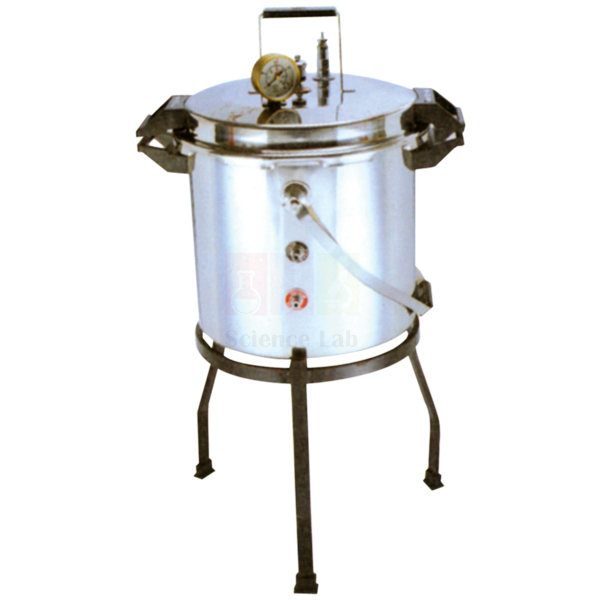
Autoclave Stainless Steel
Autoclave Stainless Steel (Product Code: SLE/LA/02) is a seamless stainless steel pressure sterilizer used to sterilise glassware, instruments and media in laboratories that cannot rely on a single heat source. It works on charcoal, kerosene, gas or electricity, which makes it a flexible autoclave sterilizer in India for rural schools, colleges and field laboratories. It is made by Jain Scientific Equipments Pvt Ltd (ScienceLab), an OEM manufacturer, at its own factory in Ambala, India.
Specifications
| Parameter | Detail |
|---|---|
| Construction | Seamless stainless steel sterilizer |
| Gasket | Thermally insulated, vulcanized polychloroprene (synthetic rubber) |
| Heat source | Works on any fuel — charcoal, kerosene, gas or electricity |
| Size | 350 mm (diameter) × 300–325 mm (height) |
| Handling | Designed for easy and safe handling |
| Product code | SLE/LA/02 |
| Manufacturer | Jain Scientific Equipments Pvt Ltd (ScienceLab) — OEM |
| Country of origin | India (made in Ambala, Haryana) |
What Is the Stainless Steel Autoclave Used For?
In biology and microbiology practicals this sterilizer prepares dissecting instruments, test tubes, flasks of nutrient media and reusable glassware before class, and treats contaminated material afterwards. Because the body is seamless, there are no welded joints inside the vessel to trap residue, and the stainless steel wipes clean after each run. Load items loosely so steam can reach every surface, seat the gasket evenly before closing, and always let the vessel cool and release pressure fully before opening it.
Its any-fuel design is the main practical advantage: a rural school can run it on a kerosene stove or charcoal, while a college can place it on a gas ring or electric heater. That flexibility makes it dependable microbiology lab equipment in India for teaching labs, mobile field units and training centres with changing utilities.
OEM Manufacturer
Jain Scientific Equipments Private Limited, trading as ScienceLab, is the OEM (original equipment manufacturer) of the Autoclave Stainless Steel and makes it at its own licensed factory at Saha, Ambala, Haryana, India. Because the sterilizer comes straight from its maker rather than a trading house, schools, colleges, dealers and importers deal directly with the people who build it. Ask us about replacement gaskets or repeat orders at any time. Read the company profile for background on our range.
Related Autoclave Lab Equipment
Items commonly ordered with this sterilizer for the same sterilising workflow:
- Autoclave Tape — for sealing and marking wrapped packs before a sterilising run
- Autoclave Basket — keeps small instruments and tubes together while loading and unloading
- Gas Autoclave — an aluminium alternative with pressure gauge and double safety valve for gas-fired labs
- Autoclave, Stainless Steel, 15 Litre — an electrically heated model with thermostatic control for labs with steady power
See all sterilizers in the Autoclave Lab Equipment category.
Frequently Asked Questions
Which heat sources can the Autoclave Stainless Steel be used with?
The Autoclave Stainless Steel works on any fuel: charcoal, kerosene, gas or electricity. Choose whichever heat source is available in your laboratory, place the sterilizer on a stable stove or heater, and follow the operating instructions supplied for that heat source.
How big is the Autoclave Stainless Steel?
The Autoclave Stainless Steel measures 350 mm in diameter and 300–325 mm in height. A capacity in litres is not stated in the current product details, so please contact us if you need it for planning bench or storage space.
Does the Autoclave Stainless Steel have a pressure gauge or safety valve?
Lid fittings for the Autoclave Stainless Steel are not listed in the current documentation for this model. Please confirm the pressure gauge and safety valve configuration with us through the contact page before ordering, so the unit matches your laboratory’s safety procedure.
How do I look after the gasket of the Autoclave Stainless Steel?
Wipe the polychloroprene gasket of the Autoclave Stainless Steel clean after each run and let it dry. Keep it free of grease and grit, seat it evenly before closing, and replace it if it cracks or loses shape — ask us about replacement gaskets.
Who manufactures the Autoclave Stainless Steel?
The Autoclave Stainless Steel is manufactured by Jain Scientific Equipments Private Limited (ScienceLab), its OEM, at the company’s own licensed factory at Saha, Ambala, Haryana, India. Buyers therefore deal directly with the manufacturer for quotations, repeat orders and spare parts.
Can a calibration certificate be supplied with the Autoclave Stainless Steel?
Calibration certificate availability for the Autoclave Stainless Steel should be discussed with us at the time of enquiry. Tell us your requirement on the contact page and we will confirm what documentation can accompany your order.
What should a quotation request for the Autoclave Stainless Steel include?
A quotation request for the Autoclave Stainless Steel should give product code SLE/LA/02, the number of units, the heat source you plan to use, the delivery address and any paperwork your purchase procedure needs. We supply bulk and export orders to India and international markets.
Request a Quote
To price the Autoclave Stainless Steel (SLE/LA/02), send your requirement through our contact page or add it to the enquiry cart with other items for your laboratory. Your quotation comes direct from the manufacturer.
Last updated: 24 September 2026
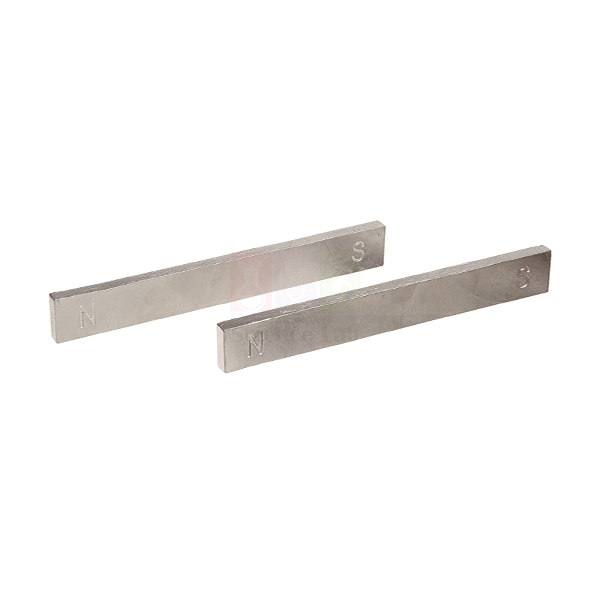
Bar Magnets, Unpainted
Bar Magnets, Unpainted (Product Code: SLE/MG/02) are plain-finish bar magnets used to show magnetic lines of force and pole behaviour in school physics practicals. They are sized for use with the Magnetic Field Demonstrator, and their poles are stamped rather than colour-coded, so north and south stay identifiable. They are made by Jain Scientific Equipments Pvt Ltd (ScienceLab), an OEM manufacturer, at its own factory in Ambala, India, and sold in pairs as a bar magnet for school labs in India.
Key Details
| Parameter | Detail |
|---|---|
| Finish | Unpainted |
| Pole marking | Poles stamped for easy identification |
| Sold as | Pairs |
| Sizes | Available in 2 sizes (ask us for the dimensions of each) |
| Intended use | Showing magnetic lines of force with the ScienceLab Magnetic Field Demonstrator |
| Product code | SLE/MG/02 |
| Manufacturer | Jain Scientific Equipments Pvt Ltd (ScienceLab) — OEM |
| Country of origin | India (made in Ambala, Haryana) |
What Are Unpainted Bar Magnets Used For?
The main job of these magnets is making field lines visible. Placed under or beside the Magnetic Field Demonstrator, a single magnet shows the looping pattern from pole to pole, while two magnets laid end to end show how the lines bunch together between unlike poles and push apart between like poles. The same pair also covers the usual CBSE-style practicals: locating poles, testing which materials are attracted, and tracing field lines with a plotting compass.
Because the poles are stamped into the magnet, the markings do not wear away the way painted ends can after years of handling, which suits labs where the same magnets are passed between many classes. Store each pair side by side with opposite poles together, keep them away from phones and cards, and avoid dropping them.
What to Specify When Ordering
- Which of the 2 sizes you need, or both
- The number of pairs, for example one pair per student group
- Whether the Magnetic Field Demonstrator or plotting compasses should be quoted with the magnets
OEM Manufacturer
These unpainted bar magnets come from Jain Scientific Equipments Private Limited, which trades as ScienceLab and is the original equipment manufacturer of the item. Production is at the company's own licensed factory at Saha, Ambala, Haryana, India, so schools, colleges, dealers and importers deal with the maker rather than a trading intermediary.
Buyers completing vendor registration can use the company's GSTIN 06AAECJ8618A1ZT and LEI 3358004HRD1JIVXKYX49. Replacement pairs for a lab that already uses these magnets can be requested from the same source; ask us. More about the business is on our company profile.
Related Magnets
Items used alongside these bar magnets in field-line lessons:
- Magnetic Field Demonstrator — the viewer these magnets are sized for.
- Economy Alnico Bar Magnets — painted alnico pairs with keepers, if colour-coded poles are preferred.
- Compass Plotting (Clear) — for tracing field lines point by point.
- Magnetic Field Tube — another way to show the field in three dimensions.
Browse the Magnets category for the full range of teaching magnets.
Frequently Asked Questions
How are the poles marked on the Bar Magnets, Unpainted?
The poles on the Bar Magnets, Unpainted (SLE/MG/02) are stamped into the magnet for easy identification. Stamped marks do not rely on paint, so students can still tell north from south after the magnets have been handled for many lessons.
What sizes do the unpainted bar magnets come in?
The Bar Magnets, Unpainted are available in 2 sizes. Dimensions for each size are not listed on this page, so please ask through our contact page and we will confirm them with your quotation.
Are the unpainted bar magnets sold singly or in pairs?
The Bar Magnets, Unpainted are sold in pairs. A pair lets students compare like and unlike poles side by side, so most labs order one pair for each working group plus a spare pair for the teacher.
Can these magnets be used with the Magnetic Field Demonstrator?
Yes. The Bar Magnets, Unpainted are sized and strong enough for use with the ScienceLab Magnetic Field Demonstrator to show magnetic lines of force, and both items can be included in one quotation.
Who manufactures the Bar Magnets, Unpainted?
Jain Scientific Equipments Pvt Ltd (ScienceLab) is the OEM manufacturer of the Bar Magnets, Unpainted (SLE/MG/02), producing them at its own licensed factory at Saha, Ambala, Haryana, India, and selling direct to schools, dealers and importers.
Can you supply these bar magnets in bulk or for export?
Yes, the Bar Magnets, Unpainted can be quoted in class-set and bulk quantities for schools, tenders and dealers in India and international markets. Tell us the size, number of pairs and delivery location when you enquire.
Request a Quote
Quotations for the Bar Magnets, Unpainted come straight from the manufacturer. Send your requirement through the contact page or add the item to the enquiry cart with other magnetism equipment.
Last updated: 24 September 2026
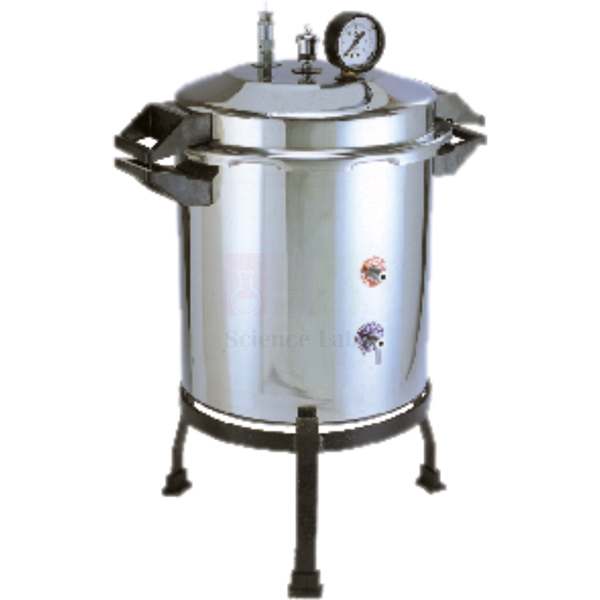
Portable Autoclave Single Drum
Portable Autoclave Single Drum (Product Code: SLE/LA/03) is a portable steam sterilizer used to sterilise glassware, instruments and culture media in school, college and small testing laboratories. Its single container is formed seamless from thick stainless steel, and the unit is simple to operate and economical to use — a practical laboratory autoclave sterilizer in India for labs without a fixed sterilising room. It is made by Jain Scientific Equipments Pvt Ltd (ScienceLab), an OEM manufacturer, at its own factory in Ambala, India.
Key Details
| Parameter | Detail |
|---|---|
| Type | Portable autoclave, single-drum design |
| Container | Seamless, made of thick stainless steel |
| Operation | Very simple to operate |
| Running cost | Economical to use |
| Purpose | Steam sterilisation designed to meet routine laboratory requirements |
| Product code | SLE/LA/03 |
| Manufacturer | Jain Scientific Equipments Pvt Ltd (ScienceLab) — OEM |
| Country of origin | India (made in Ambala, Haryana) |
What Is the Portable Autoclave Used For?
Teachers and lab assistants use a portable autoclave to prepare sterile Petri dishes, pipettes, inoculating tools and media flasks ahead of a practical, and to make used cultures safe before washing or disposal. Because it is portable, the unit can be set up in the prep room for a session and stored afterwards, which suits labs that share space between subjects. Fill to the level given in the supplied instructions, loosen the caps on bottles so steam can enter, and never open the lid until the vessel has cooled and depressurised.
For a new microbiology lab setup in India, a single-drum unit keeps things simple: the seamless thick-walled stainless steel drum has no inner seams to collect residue, and it rinses clean after each cycle, keeping maintenance to a minimum.
OEM Manufacturer
Jain Scientific Equipments Private Limited — the company behind the ScienceLab name — is the OEM (original equipment manufacturer) of the Portable Autoclave Single Drum. The unit is made and assembled at the company’s own licensed factory at Saha, Ambala, Haryana, India, and goes factory-direct to schools, colleges, dealers and importers. Quotations, repeat orders and replacement-part requests come straight from the manufacturer, so simply ask us. More about us is on the company profile page.
Related Autoclave Lab Equipment
Useful additions when sterilising with a portable unit:
- Autoclave Bag — collects used cultures and disposables so they can be sterilised before disposal
- Autoclave Tape — closes and labels wrapped items going into the drum
- Electric Autoclave — an electrically heated option for labs that prefer a mains-powered unit
- Autoclave Stainless Steel — a 350 mm diameter sterilizer that runs on charcoal, kerosene, gas or electricity
Compare every model in the Autoclave Lab Equipment category.
Frequently Asked Questions
What is the Portable Autoclave Single Drum made of?
The Portable Autoclave Single Drum has a container made of thick stainless steel, formed seamless so there are no welded joints inside the sterilising drum to trap residue. The stainless steel rinses clean after each cycle, keeping routine maintenance simple.
What is the capacity and size of the Portable Autoclave Single Drum?
Capacity and dimensions of the Portable Autoclave Single Drum are not published in the current listing. We share them with the quotation, so ask through the contact page and mention the largest flasks or trays you need to sterilise.
Is the Portable Autoclave Single Drum heated electrically or on a stove?
The heat source of the Portable Autoclave Single Drum is not stated in the present product details, so please confirm it with us before ordering. If you specifically need a unit that runs on charcoal, kerosene, gas or electricity, see the Autoclave Stainless Steel.
What can be sterilised in the Portable Autoclave Single Drum?
The Portable Autoclave Single Drum is suited to heat-resistant glassware, metal instruments, culture media in loosely capped bottles and autoclavable plastics. Do not load sealed containers, flammable solvents or any item that is not rated for steam sterilisation.
Who manufactures the Portable Autoclave Single Drum?
Jain Scientific Equipments Private Limited, trading as ScienceLab, manufactures the Portable Autoclave Single Drum as its OEM. The unit is made and assembled at the company’s own licensed factory at Saha, Ambala, Haryana, India, and supplied factory-direct to schools, colleges, dealers and importers.
What warranty applies to the Portable Autoclave Single Drum?
Warranty terms for the Portable Autoclave Single Drum are confirmed in writing with each quotation rather than published here. Request them through our contact page, together with any questions about replacement parts for the unit.
Can several Portable Autoclave Single Drum units be supplied to a school network or distributor?
Yes. Multi-unit and export orders for the Portable Autoclave Single Drum are supplied to school networks, distributors and importers in India and international markets. Include product code SLE/LA/03 and the quantity in your enquiry to receive a quotation from the manufacturer.
Request a Quote
Ask for a quotation on the Portable Autoclave Single Drum through our contact page, or place it in the enquiry cart with the rest of your sterilisation requirements. The quotation comes direct from the manufacturer.
Last updated: 24 September 2026
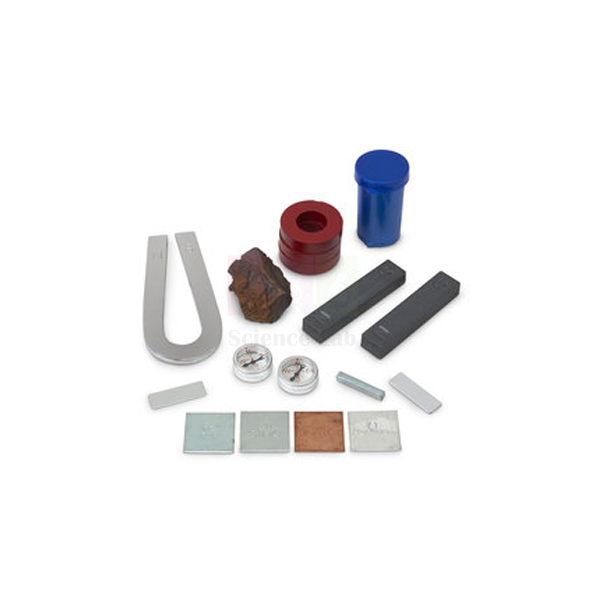
Economy Magnet Kit
Economy Magnet Kit (Product Code: SLE/MG/03) is a boxed magnetism experiment kit used to teach the basics of magnetism in school science classes. It brings together horseshoe, bar and donut magnets with metal test squares, iron filings, a natural lodestone and two compasses, plus instructions and a storage case. The kit is made by Jain Scientific Equipments Pvt Ltd (ScienceLab), an OEM manufacturer, at its own factory in Ambala, India, as an economy-level magnetism experiment kit for Indian schools.
Specifications
| Parameter | Detail |
|---|---|
| Horseshoe magnet | 1, steel |
| Bar magnets | 2, ceramic |
| Donut magnets | 3, ceramic |
| Metal test squares | 4: iron, copper, aluminium and zinc |
| Iron filings | 1 pack |
| Lodestone | Natural lodestone (included) |
| Magnetic compasses | 2 |
| Also included | Instructions and storage case |
| Product code | SLE/MG/03 |
| Manufacturer | Jain Scientific Equipments Pvt Ltd (ScienceLab) — OEM |
| Country of origin | India (made in Ambala, Haryana) |
What Is the Economy Magnet Kit Used For?
The kit covers a full introductory sequence on magnetism. Students start with the four metal squares: only the iron square is pulled by the magnets, which shows that copper, aluminium and zinc are metals but not magnetic. They then compare the steel horseshoe magnet with the ceramic bar magnets, slide the donut magnets onto a pencil to watch like poles push apart, and sprinkle iron filings on paper over a magnet to reveal its field pattern.
The natural lodestone links the lesson to history, since magnetite rock was the first magnet people knew, and the two compasses show how a freely turning needle lines up with a magnet or with the Earth's field. Keep the filings in their pack when not in use and return every magnet to the storage case so pieces do not stray between classes.
What to Specify When Ordering
- The number of kits, for example one per group of students
- Any extra single items you want quoted with the kits, such as additional compasses or iron filings (ask us)
- Whether the kits are for one school, several schools or an export consignment
OEM Manufacturer
Jain Scientific Equipments Private Limited, known by its trading name ScienceLab, is the OEM behind the Economy Magnet Kit. The company manufactures at its own licensed factory at Saha, Ambala, Haryana, India, and the kit leaves that factory complete with its case and instructions, ready for the classroom.
Because you buy from the manufacturer, questions about replacement parts for kits already in use, or repeat orders for new sections, go to the people who make it; just ask us. Our company profile gives the background on ScienceLab.
Related Magnets
Products that extend or complement this kit:
- Steel Horseshoe Magnet — extra horseshoe magnets in three lengths.
- Materials Collection for Magnetism Studies — a wider range of magnetic and non-magnetic samples to test.
- Compass Plotting (Clear) — more compasses for plotting field lines.
- Iron Filling — iron filings in a shaker jar for refilling class sets.
- Early Magnetism Kit — a larger whole-class magnetism kit.
See all teaching magnets and kits in the Magnets category.
Frequently Asked Questions
What is included in the Economy Magnet Kit?
The Economy Magnet Kit (SLE/MG/03) contains one steel horseshoe magnet, 2 ceramic bar magnets, 3 ceramic donut magnets, 4 metal squares, a pack of iron filings, a natural lodestone and 2 magnetic compasses, with instructions and a storage case.
Which metals are the test squares made of?
The four test squares in the Economy Magnet Kit are iron, copper, aluminium and zinc. Students find that only the iron square is attracted, a quick way to show that being a metal does not make a material magnetic.
Does the Economy Magnet Kit come with instructions?
Yes. The Economy Magnet Kit includes instructions along with a storage case that holds the magnets, test squares, filings, lodestone and compasses, so a teacher can run the activities and pack everything away after the lesson.
What is the lodestone in the kit for?
The lodestone in the Economy Magnet Kit is a natural magnetic rock. It lets students see that magnetism occurs in nature and compare a natural magnet with the manufactured steel and ceramic magnets in the same kit.
Who manufactures the Economy Magnet Kit?
Jain Scientific Equipments Pvt Ltd (ScienceLab) is the OEM manufacturer of the Economy Magnet Kit (SLE/MG/03). The company makes it at its own licensed factory at Saha, Ambala, Haryana, India, and supplies schools, dealers and importers directly.
Can the Economy Magnet Kit be ordered in bulk?
Yes, the Economy Magnet Kit can be quoted for a single school, for multi-school or tender lots, and for export to international markets. Share the number of kits and delivery location through our contact page.
Request a Quote
Your quotation for the Economy Magnet Kit comes direct from the manufacturer. Use the contact page or place the kit in the enquiry cart together with any other magnetism items you need.
Last updated: 24 September 2026
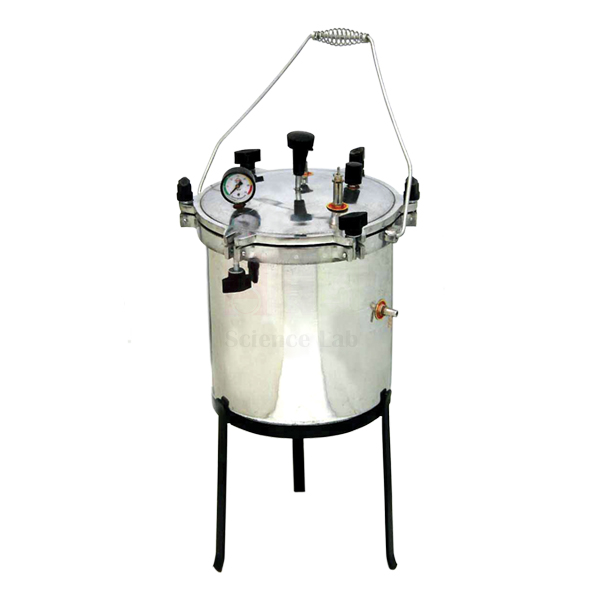
Gas Autoclave
Gas Autoclave (Product Code: SLE/LA/04) is a gas-heated autoclave sterilizer used to sterilise media, glassware and instruments in school, college and teaching laboratories that run on natural or bottled gas. Its seamless aluminium body and lid are sealed airtight by a rubber gasket and tightening bolts, and the lid carries a pressure gauge and double safety valve for work at 15 psi. It is made by Jain Scientific Equipments Pvt Ltd (ScienceLab), an OEM manufacturer, at its own factory in Ambala, India.
Specifications
| Parameter | Detail |
|---|---|
| Body and lid | Seamless aluminium |
| Pressure | 15 psi |
| Lid fittings | Pressure gauge and double safety valve |
| Sealing | Rubber gasket; lid and body made airtight with tightening bolts and nuts |
| Heat source | Suitable for natural or bottled gas |
| Product code | SLE/LA/04 |
| Manufacturer | Jain Scientific Equipments Pvt Ltd (ScienceLab) — OEM |
| Country of origin | India (made in Ambala, Haryana) |
What Is the Gas Autoclave Used For?
Built on the familiar pressure cooker autoclave pattern used across India, the unit sits on a gas ring or burner and sterilises agar media, broth tubes, glass Petri dishes, forceps and scalpels for microbiology and biology practicals, then decontaminates used cultures at the end of a session. The gauge lets the teacher watch the build-up to 15 psi and time the holding period, while the double safety valve provides a second route for excess pressure. When closing, tighten the bolts a little at a time in opposite pairs so the rubber gasket compresses evenly and the lid seals all round.
Colleges setting up microbiology lab equipment in buildings without a heavy electrical supply often prefer a gas-fired model, since heating does not load the mains. After the run, turn off the gas, allow the gauge to return to zero and only then loosen the bolts.
OEM Manufacturer
ScienceLab, the trading name of Jain Scientific Equipments Private Limited, is the OEM (original equipment manufacturer) of the Gas Autoclave. Each unit is made and assembled at the company’s own licensed factory at Saha, Ambala, Haryana, India, not bought in from a trader, so gaskets, bolts and other replacement parts can be requested from the manufacturer itself — just ask us. Institutions, dealers and importers receive factory-direct quotations. Company background is on our company profile.
Related Autoclave Lab Equipment
Other items that fit into a gas-heated sterilising routine:
- Gas Lighter, Piezo Electric — a flameless way to light the gas burner beneath the autoclave
- Autoclave Bag Disposable — single-use bags for collecting culture waste before decontamination
- Autoclave Basket — lets you lift tubes and instruments out of the hot vessel in one go
- Electric Autoclave — the choice for rooms with no gas connection
More sterilizers are listed in the Autoclave Lab Equipment category.
Frequently Asked Questions
Which gas supply does the Gas Autoclave need?
The Gas Autoclave is suitable for natural gas or bottled gas. Place it on a stable burner or gas stove sized to carry the loaded vessel, and keep the flame steady so pressure builds evenly to the 15 psi working level.
Is a gas burner supplied with the Gas Autoclave?
A burner is not listed as part of the standard supply of the Gas Autoclave. If you need one quoted alongside it, tell us on the contact page; a Gas Lighter, Piezo Electric is also available for lighting the burner safely.
How is the lid of the Gas Autoclave sealed?
The Gas Autoclave lid is sealed by a rubber gasket that makes lid and body airtight when the tightening bolts and nuts are done up. Tighten them a little at a time in opposite pairs so the gasket compresses evenly all round.
What pressure does the Gas Autoclave work at?
The Gas Autoclave works at 15 psi, monitored on the pressure gauge fitted to the lid, while the double safety valve gives a second route for excess pressure. Turn off the gas and wait for the gauge to read zero before loosening the bolts.
What is the chamber capacity of the Gas Autoclave?
Chamber capacity is not stated in the current listing for the Gas Autoclave. We confirm it with the quotation on request, so mention the size of flasks, tube racks or baskets you plan to load when you contact us.
Who manufactures the Gas Autoclave?
The Gas Autoclave is manufactured by ScienceLab (Jain Scientific Equipments Private Limited) as the OEM, at its own licensed factory at Saha, Ambala, Haryana, India. Because you deal with the manufacturer directly, replacement gaskets, bolts and repeat orders can be requested from the same source.
Can the pressure gauge of the Gas Autoclave be supplied with a calibration certificate?
Calibration certificate availability for the Gas Autoclave pressure gauge should be discussed with us before you order. Mention the requirement in your enquiry and we will confirm what documentation can accompany the unit.
Do you handle bulk and export orders for the Gas Autoclave?
Yes. The Gas Autoclave is supplied to institutions, dealers and importers in India and international markets. Include the quantity, destination and product code SLE/LA/04 in your enquiry so the manufacturer can prepare the quotation.
Request a Quote
For pricing and delivery of the Gas Autoclave, write to us through the contact page or add it to your enquiry cart. Quotations are issued direct by the manufacturer.
Last updated: 24 September 2026
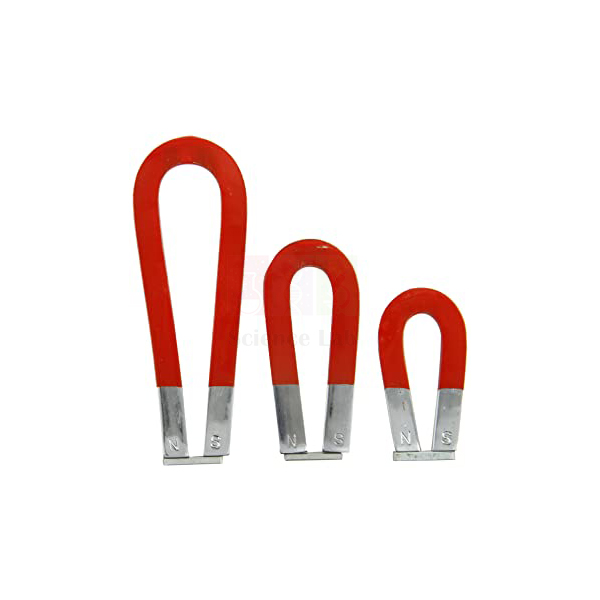
Steel Horseshoe Magnet
Steel Horseshoe Magnet (Product Code: SLE/MG/04) is a U-shaped steel permanent magnet used to demonstrate the strong, concentrated field between two close poles in school and college physics labs. It is painted red with silver poles, comes with a keeper, and is offered in 75 mm, 100 mm and 150 mm lengths. It is manufactured by Jain Scientific Equipments Pvt Ltd (ScienceLab), an OEM manufacturer, at its own factory in Ambala, India, for school physics lab equipment in India and abroad.
Specifications
| Parameter | Detail |
|---|---|
| Material | Steel |
| Shape | Horseshoe |
| Finish | Painted red, with silver poles |
| Keeper | Included |
| Lengths | 75 mm, 100 mm, 150 mm |
| Offered as | Horseshoe steel magnet set |
| Product code | SLE/MG/04 |
| Manufacturer | Jain Scientific Equipments Pvt Ltd (ScienceLab) — OEM |
| Country of origin | India (made in Ambala, Haryana) |
What Is the Steel Horseshoe Magnet Used For?
Bending a magnet into a horseshoe brings its north and south poles side by side, so the field in the gap between them is strong and fairly uniform. Teachers use this to show why horseshoe magnets lift more than bar magnets of similar size, to map the field in the gap with iron filings or a plotting compass, and to place a current-carrying wire between the poles for simple motor-effect demonstrations. With three lengths, students can also compare how the size of the magnet changes what it can pick up.
The silver ends mark the poles clearly against the red body. Always put the keeper back across the poles after use; it closes the magnetic circuit and helps a steel magnet hold its strength. Store the magnets dry, away from heat, and do not drop or hammer them. These are standard physics lab instruments in India for Class 6 to Class 12 magnetism work.
What to Specify When Ordering
- The length you need: 75 mm, 100 mm or 150 mm
- Whether you want single lengths or the set covering all three lengths (confirm the set make-up with us)
- The quantity for each length, for example one per student group
OEM Manufacturer
The Steel Horseshoe Magnet is a ScienceLab product, and ScienceLab is the trading name of Jain Scientific Equipments Private Limited (CIN U29309HR2020PTC087597). As the original equipment manufacturer, the company produces its range at its licensed factory at 449, HSIIDC Industrial Area, Saha, Ambala, Haryana (Factory Licence AMB-ONLINE-CHD-J-414).
Schools, colleges, dealers and importers therefore buy from the maker, not from a reseller. If you need replacement keepers or want to match magnets you bought earlier, ask us. Read more on our company profile.
Related Magnets
Items that pair with a horseshoe magnet in magnetism practicals:
- Economy Alnico Bar Magnets — bar magnets for comparing field shapes with the horseshoe.
- Magnet Set of 4 — alnico bar and small horseshoe magnets with keepers.
- Magnet Set — for comparing bar, short horseshoe and long horseshoe magnet strength.
- Iron Filling — for showing the field pattern between the poles.
- Plotting Compass, Single Glass Face — for tracing field direction around the magnet.
The Magnets category lists every teaching magnet we offer.
Frequently Asked Questions
What lengths does the Steel Horseshoe Magnet come in?
The Steel Horseshoe Magnet (SLE/MG/04) is offered in three lengths: 75 mm, 100 mm and 150 mm. State the length, or lengths, and the quantity of each when you ask for a quotation so the order matches your lab plan.
Does the Steel Horseshoe Magnet include a keeper?
Yes, the Steel Horseshoe Magnet includes a keeper. Placing the keeper across the silver poles after every lesson completes the magnetic path and helps the steel magnet keep its strength while it is stored.
How can students tell the poles apart?
The Steel Horseshoe Magnet is painted red with silver poles, so the pole ends stand out clearly. Students can identify north and south by testing each pole with a plotting compass or a freely suspended bar magnet.
Why use a horseshoe magnet instead of a bar magnet?
A Steel Horseshoe Magnet brings both poles close together, giving a concentrated field in the gap. That makes it better for lifting demonstrations and for placing a wire or small coil between the poles than a straight bar magnet.
Who manufactures the Steel Horseshoe Magnet?
Jain Scientific Equipments Pvt Ltd (ScienceLab) is the OEM manufacturer of the Steel Horseshoe Magnet (SLE/MG/04), producing it at its own licensed factory at Saha, Ambala, Haryana, India, and supplying buyers factory-direct.
What should a quotation request include?
For the Steel Horseshoe Magnet, include the length or lengths needed, the quantity of each, the delivery location and whether the order is for a school, a tender or export. Send it through our contact page.
Request a Quote
Quotes for the Steel Horseshoe Magnet are issued directly by the manufacturer. Contact us through the contact page or add the magnet to your enquiry cart.
Last updated: 24 September 2026
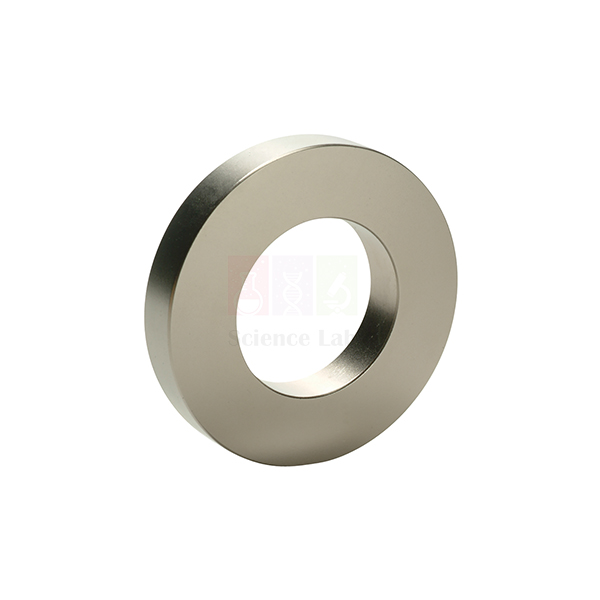
Neodymium Magnets
Neodymium Magnets (Product Code: SLE/MG/05) are rare-earth permanent magnets used to demonstrate very strong magnetic forces in school, college and university physics labs. Made of neodymium, iron and boron, they are many times stronger than ordinary magnets and more durable than ceramic magnets, which makes them useful where a small magnet must do a big job. They are supplied by Jain Scientific Equipments Pvt Ltd (ScienceLab), Ambala, India, a physics instruments supplier in India for educational buyers.
Key Details
| Parameter | Detail |
|---|---|
| Magnet type | Rare-earth permanent magnet |
| Composition | Neodymium (Nd), iron (Fe) and boron (B) |
| Strength | Many times the strength of ordinary magnets |
| Durability | More durable than ceramic magnets |
| Shape and size | Not listed; confirm with us before ordering |
| Product code | SLE/MG/05 |
| Supplied by | Jain Scientific Equipments Pvt Ltd (ScienceLab), Ambala, India |
What Are Neodymium Magnets Used For?
In teaching labs, neodymium magnets make effects visible that weaker magnets barely show. A typical sequence is to let one fall through a copper or aluminium tube and watch eddy currents slow it down, to show that magnetic force acts through a book or a thin sheet of wood, or to compare how far away each type of magnet can still move a paper clip. They are also handy for building simple motors and generators and for holding worksheets on steel boards.
Their strength calls for care. Two neodymium magnets can snap together hard enough to pinch skin or chip the magnets, so slide them apart rather than pulling. Keep them away from phones, bank cards, computers and anyone with an implanted medical device, and store them separated with a spacer.
Supplier
Neodymium Magnets are supplied by Jain Scientific Equipments Private Limited, which trades under the name ScienceLab from Ambala, Haryana, India. The company sources these rare-earth magnets for schools, colleges, laboratories and dealers, and can combine them with other magnetism items on one quotation.
If you need a particular shape, size or quantity, tell us and we will confirm what can be supplied. Background on the company is on our company profile.
Related Magnets
Other items for strong-magnet demonstrations:
- Neodymium Wand — neodymium button magnets set in acrylic wands for safer pupil handling.
- Magnetic Attraction — apparatus for measuring attraction between neodymium magnets against separation.
- Magnetic Repulsion — for investigating the repulsive force between two neodymium magnets.
- Plastic-Covered Ceramic Magnets, Pair — ceramic magnets for comparing strength with neodymium.
More teaching magnets are listed in the Magnets category.
Frequently Asked Questions
What are Neodymium Magnets made of?
Neodymium Magnets (SLE/MG/05) are made of neodymium (Nd), iron (Fe) and boron (B). This rare-earth composition gives them many times the strength of ordinary magnets, which is why they are used for strong-force classroom demonstrations.
How do neodymium magnets compare with ceramic magnets?
Neodymium Magnets are much stronger than ordinary ceramic magnets and are also more durable than ceramic magnets. Students can see the difference quickly by comparing how many paper clips each type holds or from how far each attracts a steel object.
What shapes and sizes of Neodymium Magnets are available?
The shape and size of the Neodymium Magnets (SLE/MG/05) are not listed on this page. Tell us the experiment or the dimensions you have in mind through our contact page, and we will confirm what can be supplied.
Are neodymium magnets safe for students to handle?
Neodymium Magnets can be handled by students under teacher supervision, with sensible care. Their strong pull can pinch fingers or chip the magnets if two snap together, so students should slide them apart, keep them away from electronics and store them separated.
Who supplies the Neodymium Magnets?
Neodymium Magnets (SLE/MG/05) are supplied by Jain Scientific Equipments Pvt Ltd (ScienceLab), Ambala, Haryana, India, to schools, colleges, laboratories and dealers in India and international markets.
Can Neodymium Magnets be supplied in bulk or for export?
Yes, Neodymium Magnets can be quoted in class-set and bulk quantities for schools and dealers, and for export shipments. Include the size or shape, quantity and delivery location in your enquiry so the quotation is accurate.
Request a Quote
To request a quotation for Neodymium Magnets, send your requirement through the contact page or add them to the enquiry cart with any other lab items you need.
Last updated: 24 September 2026

Bunsen Burners
Bunsen Burners (Product Code: SLE/B/10) are standard laboratory gas burners used for general heating, sterilising and flame tests in school, college and teaching labs. Each burner has a 100 x 12 mm nickel-plated tube with an adjustable screwed air regulator, stands 125 mm tall on an 80 mm stove-enamelled pressed steel base, and comes with one spare jet. These Bunsen burners for schools in India and abroad are made by Jain Scientific Equipments Pvt Ltd (ScienceLab), an OEM manufacturer, at its own factory in Ambala, India.
Specifications
| Parameter | Detail |
|---|---|
| Overall height | 125 mm |
| Burner tube | Nickel plated, 100 x 12 mm |
| Air control | Adjustable screwed air regulator |
| Gas inlet | Riffled connector |
| Base | Stove-enamelled pressed steel, wide base of 80 mm diameter |
| Supplied with | One spare jet |
| Product code | SLE/B/10 |
| Manufacturer | Jain Scientific Equipments Pvt Ltd (ScienceLab) — OEM |
| Country of origin | India (made in Ambala, Haryana) |
What Are Bunsen Burners Used For?
The Bunsen burner is the workhorse of chemistry and biology practicals. Students use it to heat test tubes held in a holder, boil water in beakers, evaporate solutions to dryness, sterilise wire loops and carry out flame tests for metal ions. Push burner tubing onto the riffled connector, light the gas with the air regulator closed, then screw the regulator open until the yellow luminous flame turns into a steady blue cone.
For beakers and flasks, place the burner under a tripod stand and wire gauze so the flame spreads beneath the vessel. The 80 mm pressed steel base keeps the burner steady on the bench; even so, turn the gas off at the tap after each session and let the nickel-plated tube cool before the burner is put away.
OEM Manufacturer
Jain Scientific Equipments Private Limited, the company behind the ScienceLab name, is the OEM (original equipment manufacturer) of these Bunsen burners. They are produced at its own licensed factory at Saha, Ambala, Haryana, India, and supplied factory-direct to schools, colleges, dealers and importers, so class sets and top-up orders come from the maker rather than a trader. If you need further spare jets for burners already in use, ask us. See the company profile for an overview.
Related Laboratory Equipment
Equipment used with this burner in a typical heating practical:
- Burner Tubing — connects the riffled inlet to the bench gas tap.
- Tripod Stand 200mm — holds vessels above the flame.
- Gauze Wire — spreads the heat under beakers and flasks.
- Test Tube Holder — for heating test tubes directly in the flame.
- Bunsen Burner with Stopcock — the same burner design with gas shut-off at the inlet.
Compare other burner types on the Burners category page.
Frequently Asked Questions
What comes with each of the SLE/B/10 Bunsen Burners?
Each of the Bunsen Burners (SLE/B/10) is supplied with one spare jet. Gas tubing is not part of the burner and is listed separately as Burner Tubing, so add it to your enquiry if the bench taps need new hoses.
What is the spare jet on these Bunsen Burners for?
Jets on Bunsen Burners can become blocked or damaged over years of classroom use. The spare jet supplied with each SLE/B/10 burner lets the lab swap it in and keep the burner working without waiting for a replacement part.
How do I switch the Bunsen burner between a yellow and a blue flame?
Turn the screwed air regulator on the Bunsen Burners. Closed, it gives the yellow luminous flame used as a visible standby; opened, it admits air for the hotter blue flame used for heating test tubes, beakers and flame tests.
How tall are the Bunsen Burners and how big is the base?
The Bunsen Burners (SLE/B/10) stand 125 mm tall overall, with a 100 x 12 mm nickel-plated burner tube mounted on a wide stove-enamelled pressed steel base of 80 mm diameter for steadiness on the bench.
Do these Bunsen Burners run on natural gas or LPG?
The gas type is not stated in our product details for the Bunsen Burners (SLE/B/10). Tell us which gas your laboratory uses through the contact page so we can confirm the right set-up before dispatch.
Who manufactures the SLE/B/10 Bunsen Burners?
Jain Scientific Equipments Pvt Ltd, trading as ScienceLab, is the OEM manufacturer of the Bunsen Burners (SLE/B/10). They are made at the company's own licensed factory at Saha, Ambala, Haryana, India, and quoted directly for class sets and export orders.
Request a Quote
Request pricing for Bunsen Burners through our contact page, or add them to the enquiry cart with tubing and stands. Share the quantity, gas type and delivery location, and the quotation will come straight from the manufacturer.
Last updated: 24 September 2026