- Physics Lab Equipment
- Chemistry Lab Equipment
- Biology Lab Equipment
- Anatomical Lab Equipment
- Learning
- Educational Lab Equipment
- Magnets
- Agriculture
- Astronomy
- Earth Science
- Geography Lab Equipment
- Safety Lab Coat
- Laboratory
- Meteorological
- Electricity & Magnetism
- Heat
- School Lab Equipment
- Lab Glassware
- Science Lab Equipment
- Tvet Lab Equipment
- Robotics Kits Supplier and Manufacturer for Schools India
- Math Lab Equipment Manufacturers and Exporters in Ambala
- STEM Kits Manufacturers and Supplier India
- Engineering Lab Equipment
- Hospital Lab Equipment
- Water, Sanitation & Hygiene Supplies
- Cold Chain, Solar & Communication Equipment
- Nutrition
Last updated: 22 October 2026
Quick Answer
Jain Scientific Equipments Pvt Ltd (ScienceLab), Ambala, Haryana, a laboratory glassware supplier in India, lists 16 items in this bottle range for reagent shelves, indicator stations, water testing and microbiology, arranged in 4 groups from clear and amber reagent and dropping bottles to BOD, gas washing and McCartney bottles, aspirator and wash bottles, and cleaning brushes. 13 of the items are manufactured by ScienceLab at its factory at Saha, Ambala, and 3 are supplied by ScienceLab. Each item has its own product page, linked from the product listing under this description. The company supplies buyers in India and in 110 countries.
Quick links: Request a quotation · Jump to specifications by group · Open your enquiry cart
Explore the Glassware Bottles Range
| Range | Items | What it covers |
|---|---|---|
| Reagent and dropping bottles | 6 | Narrow-mouth reagent bottles in clear borosilicate glass with a pressed flat stopper and in amber glass with a PE stopper, screw-cap dropping bottles in clear and amber glass, and clear and amber pipette dropper bottles with vinyl teats. |
| BOD, gas washing and McCartney bottles | 4 | 60 ml borosilicate BOD bottles with a pennyhead or robotic stopper, a gas washing bottle with interchangeable joints in 100 to 500 ml, and a 1 oz clear glass McCartney bottle. |
| Aspirator, wash bottles and delivery tubes | 3 | Polypropylene aspirator bottles with a leakproof spigot from 0.5 L to 20 L, a narrow-mouth LDPE wash bottle in 250 ml and 500 ml, and a set of four 6 mm glass delivery tubes. |
| Cleaning brushes | 3 | A nylon bottle brush with a metal handle, a nylon beaker brush on a 40 cm wooden handle and a fan-shaped bristle test tube brush. |
| Total | 16 | All items listed in the Glassware Bottles range |
Glassware Bottles Specifications
Key specifications below are taken from each product's own page; open a product for its full specifications and product code.
Reagent and dropping bottles (6)
| Product | Key specification |
|---|---|
| Amber Dropping Bottle | Dispensing: Glass dropper fitted to the screw cap; Material: Amber glass; Colour: Amber |
| Dropper Bottle, Amber | Material: Borosilicate glass; Colour: Amber; Dropper: Glass pipette dropper with vinyl teat |
| Dropper Bottle, Clear | Material: Borosilicate glass; Colour: Clear; Dropper: Glass dropper with vinyl teat |
| Dropping Bottles | Closure: Screw cap with glass dropper; Material: Borosilicate glass; Colour: Clear (flint) |
| Reagent Bottle Narrow Mouth, Amber Glass | Mouth: Narrow mouth; Stopper: PE (polyethylene) stopper; Material: Amber glass |
| Reagent Bottle, Narrow Mouth | Mouth: Narrow mouth; Closure: Pressed flat stopper; Material: Borosilicate glass |
BOD, gas washing and McCartney bottles (4)
| Product | Key specification |
|---|---|
| BOD Bottles with Penny Head Stopper | Capacity: 60 ml; Material: Borosilicate glass; Stopper: Pennyhead |
| BOD Bottles with Penny Robotic Stopper | Capacity: 60 ml; Material: Borosilicate glass; Stopper type: Robotic |
| Bottle, McCartney | Capacity: 1 oz (29.5 ml); Height: 3.1 in; Diameter: 1.3 in |
| Gas Washing Bottle | Capacities: 100 ml, 125 ml, 250 ml, 500 ml; Material: Borosilicate glass; Joints: Interchangeable |
Aspirator, wash bottles and delivery tubes (3)
| Product | Key specification |
|---|---|
| Aspirator Bottles | Capacities: 0.5 L, 1.5 L, 5 L, 10 L, 20 L; Material: Polypropylene (much lighter than glass); Build: Sturdy and dependable |
| Delivery Tube | Supplied as: Set of 4 glass delivery tubes; Outer diameter: 6 mm; Material: Glass |
| Wash Bottle LDPE with Narrow Mouth | Capacities: 250 ml, 500 ml; Material: LDPE (low-density polyethylene); Mouth: Narrow mouth |
Cleaning brushes (3)
| Product | Key specification |
|---|---|
| Bottle Brush | Bristle material: Nylon; Bristle colour: White; Handle: Metal |
| Brush, Beaker, Nylon | Handle: Wooden, 40 cm long; Head size: 65 x 45 x 150 mm; Pack: Pack of 10 |
| Brush, Bristle Test Tube Fan Shape | Diameter: 16–25 mm; Pack: Pack of 10; Bristles: Bristle, fanned at the tip |
Related Equipment in Other ScienceLab Ranges
Buyers of these bottles often also need these items, which are listed in other ScienceLab ranges:
Who Buys This Range
Schools stock reagent shelves and student stations with narrow-mouth reagent bottles, dropping bottles for indicators and wash bottles. Colleges and universities add gas washing bottles, delivery tubes and amber bottles for light-sensitive reagents in chemistry practicals. Water-testing and microbiology laboratories use the BOD bottles for oxygen-demand tests and McCartney bottles for culture media and stock cultures. Laboratory dealers and distributors order mixed capacities, cleaning brushes and tender quantities.
Other ScienceLab Equipment Ranges
| Range | What it covers |
|---|---|
| Glassware Burettes | Class-A and Class-B burettes with glass-key or PTFE stopcocks |
| Glassware Flasks | Conical, round-bottom, distillation, filter, iodine and culture flasks |
| Glassware Beaker | Glass, Pyrex and polypropylene beakers, beaker sets and tongs |
| Glassware Funnels | Glass and plastic funnels, Buchner funnels and separatory funnels |
| Scientific Lab Plasticware | Plastic beakers, wash bottles, carboys, dropper bottle trays and racks |
| Measuring Cylinders | Glass and polypropylene measuring cylinders from 10 to 1000 ml and gas jars |
| Laboratory Instruments | Laboratory instruments such as a UV-VIS spectrophotometer, colorimeter, DO meter, fume cupboards and an incubator |
Frequently Asked Questions
What does the Glassware Bottles range include?
16 items in 4 groups: clear and amber reagent bottles, dropping and dropper bottles, BOD, gas washing and McCartney bottles, aspirator and wash bottles, glass delivery tubes, and bottle, beaker and test tube brushes.
Which bottles does ScienceLab manufacture?
13 of the 16 items are manufactured by ScienceLab, including the reagent, dropping, BOD, gas washing and McCartney bottles, the polypropylene aspirator bottles, the LDPE wash bottle and the glass delivery tubes.
Which items are supplied rather than manufactured?
The 3 items supplied by ScienceLab are cleaning brushes: a nylon bottle brush, a nylon beaker brush with a 40 cm wooden handle and a fan-shaped test tube brush.
When should I choose amber glass?
Amber glass cuts down the light reaching the solution: the Amber Dropping Bottle is intended for reagents that lose strength in light, and the amber narrow-mouth reagent bottle is listed for light-sensitive solutions such as potassium permanganate, silver nitrate and iodine. Clear dropper bottles let students watch the reagent level and colour.
Which capacities are available?
The amber narrow-mouth reagent bottle is offered in seven capacities from 30 ml to 2000 ml, the gas washing bottle in 100, 125, 250 and 500 ml, the BOD bottles in 60 ml, the McCartney bottle in 1 oz (29.5 ml), the wash bottle in 250 and 500 ml and the aspirator bottles from 0.5 L to 20 L.
What are the BOD bottles used for?
They hold water or wastewater samples sealed from the air during biochemical oxygen demand (BOD) testing. Both are 60 ml clear borosilicate glass bottles, one with a pennyhead stopper (SLE/GBO/04) and one with a robotic-type stopper (SLE/GBO/05).
Do you accept bulk, tender and export orders?
Yes. Bulk quantities, including packs of dropper bottles for student stations, tender enquiries and export orders are accepted; product specifications are provided on request.
What should I include in a quotation request?
Product names or codes (for example SLE/GBO/09 for the Reagent Bottle, Narrow Mouth), the capacity and quantity of each bottle, the delivery location and any tender specification.
Request a Quote
Send product names or codes and quantities through the contact page, or add items to your enquiry cart and submit it.
ScienceLab (Jain Scientific Equipments Pvt Ltd)
1226/1-5, Bengali Mohalla, Science Market, Ambala Cantt, Haryana 133001, India
Phone: +91-7082934803
Email: sales@scilabexport.com
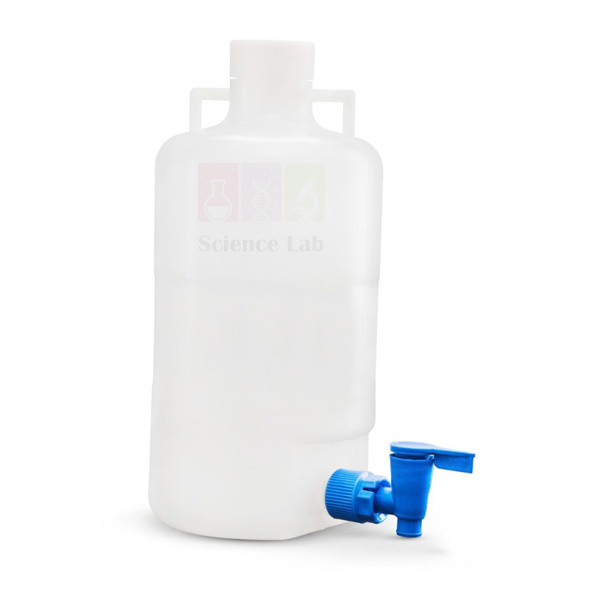
Aspirator Bottles
Aspirator Bottles (Product Code: SLE/GBO/01) are polypropylene storage bottles fitted with a leakproof spigot, used for storing and dispensing water and laboratory solutions. Being polypropylene, they are much lighter than glass aspirators, and they are autoclavable, sturdy and dependable in daily use. Five capacities — 0.5, 1.5, 5, 10 and 20 litre — cover everything from a bench reagent to a central distilled-water reservoir. They are made by Jain Scientific Equipments Pvt Ltd (ScienceLab), Ambala, for chemistry, biology and microbiology lab setups in India and international markets.
Specifications
| Parameter | Detail |
|---|---|
| Material | Polypropylene (much lighter than glass) |
| Capacities | 0.5 L, 1.5 L, 5 L, 10 L, 20 L |
| Outlet | Leakproof spigot screwed to the bottle body; simply turned to open or shut |
| Sterilisation | Autoclavable; threads must be fully disengaged (loosened) before autoclaving |
| Build | Sturdy and dependable |
| Used for | Storing or dispensing water and laboratory solutions |
Typical Use
The larger sizes make a convenient distilled or deionised water reservoir on a side bench: students fill wash bottles or flasks from the spigot without lifting a heavy container. Smaller bottles hold buffers, dilute acids or bases and other working solutions at the point of use, while autoclaved bottles can keep sterile water or rinse solution ready for microbiology practicals. Because polypropylene is light and resists breakage, the bottles are also easier to move for cleaning and refilling than glass.
Before autoclaving, fully loosen the threads so that pressure can equalise and the bottle does not deform. Label each bottle with its contents and preparation date, and place it on a stable shelf edge or stand so a beaker or flask fits under the spigot.
Manufacturer
The aspirator bottles are made by Jain Scientific Equipments Private Limited, an Ambala, Haryana company whose products carry the ScienceLab name, for storage and dispensing needs in teaching, testing and research labs. Read the company profile to find out more.
Related Laboratory Equipment
Alternatives and companions for liquid storage and sterile work:
- Aspirator Bottles Borosilicate — a glass aspirator for liquids better kept in glass
- Aspirator Polythene — a polythene aspirator alternative
- Aspirator with stopcock — an aspirator with a stopcock outlet
- Electric Autoclave — for sterilising the bottles and their contents
- Wash Bottle LDPE with Narrow Mouth — filled from the aspirator for bench rinsing
See all bottles in the Glassware Bottles category.
Frequently Asked Questions
Which capacities are available?
0.5, 1.5, 5, 10 and 20 litre. State each size and quantity when you enquire.
Can the bottles be autoclaved?
Yes, they are autoclavable. Disengage the threads completely before autoclaving so the bottle is not sealed under pressure.
How does the spigot work?
The leakproof spigot is screwed to the bottle body and is simply turned to open or shut. For replacement spigots, please contact us.
Should I choose polypropylene or glass?
Polypropylene is much lighter and harder to break, which suits water and most aqueous solutions. For liquids that are not compatible with plastics, choose a borosilicate aspirator instead.
Can it store distilled water?
Yes — storing and dispensing water is one of its main purposes. Keep the bottle closed and clean it periodically to keep the water quality consistent.
Do you supply aspirators in bulk or for export?
Yes. We quote for schools, colleges, testing labs and distributors in India and international markets; include sizes, quantities and the delivery location.
Request a Quote
For prices on one or more capacities, contact us or add the bottles to your enquiry cart.
Last updated: 24 September 2026
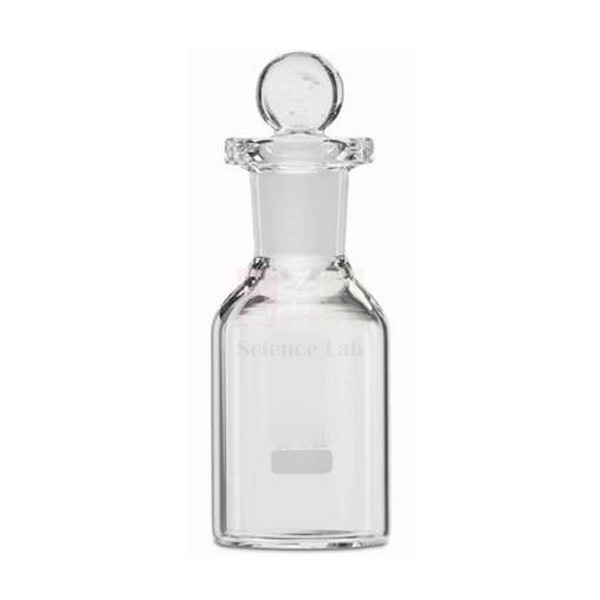
BOD Bottles with Penny Head Stopper
BOD Bottles with Penny Head Stopper (Product Code: SLE/GBO/04) are 60 ml clear borosilicate glass bottles closed with a pennyhead stopper — the flat, coin-like head that is easy to grip and twist into place. They hold water or wastewater samples sealed from the air during biochemical oxygen demand (BOD) testing and related dissolved-oxygen work. Heat and chemical resistant, they are made by Jain Scientific Equipments Pvt Ltd (ScienceLab), Ambala, for environmental, water-quality and chemistry laboratories that need BOD apparatus in India and abroad.
Specifications
| Parameter | Detail |
|---|---|
| Material | Borosilicate glass |
| Capacity | 60 ml |
| Stopper | Pennyhead |
| Heat resistance | Heat resistant |
| Chemical resistance | Chemical resistant |
| Colour | Clear |
| Application | Chemical laboratory; BOD and dissolved-oxygen testing |
Typical Use
In a BOD determination, each bottle is filled to overflowing with the sample or a diluted sample so that no air bubble is trapped, and the stopper is inserted. The dissolved oxygen in one set of bottles is measured straight away, either by Winkler titration or with a DO probe, while a matching set is incubated in the dark; the drop in oxygen after incubation shows how much oxygen micro-organisms consumed. Clear glass lets the analyst check for trapped bubbles before the bottle goes into the incubator.
These bottles hold 60 ml. If you follow a standard method that specifies a particular bottle volume, check that this size fits your procedure before ordering. Wash bottles thoroughly and rinse with distilled water between tests, since detergent or organic residues can themselves consume oxygen and distort results.
Manufacturer
Jain Scientific Equipments Private Limited produces these BOD bottles in Ambala, Haryana, and markets them, like the rest of its glassware, under the ScienceLab brand. Our company profile has more about the company.
Related Laboratory Equipment
Items used in the same oxygen-demand workflow:
- BOD Bottles with Penny Robotic Stopper — the same bottle listing with a robotic-type stopper
- Digital Dissolved Oxygen Meter — measures oxygen in the sample electronically
- Burette, Class-B, with Glass Key — for Winkler titration of dissolved oxygen
- Reagent Bottle, Narrow Mouth — stores the titration and fixing reagents
- Bottle Brush — cleans the bottles between tests
More storage and sampling bottles are in the Glassware Bottles category.
Frequently Asked Questions
What is the capacity of these BOD bottles?
60 ml. If your method calls for a different bottle volume, contact us before ordering.
What is a penny head stopper?
A stopper with a flat, disc-shaped head that is easy to grip when inserting and removing it. A version with a robotic-type stopper is also listed.
Why borosilicate glass?
Borosilicate is heat and chemical resistant, so the bottles tolerate repeated washing and contact with the fixing reagents used in oxygen determination.
Will my DO probe fit the neck?
Neck dimensions are not listed on this page. Send us your probe model or diameter through the contact page and we will check.
Are the stoppers matched or numbered to each bottle?
This is not specified in our listing; please ask when you enquire if your lab requires matched or numbered pairs.
Can you supply larger quantities for water-testing labs?
Yes. We supply laboratories, colleges and distributors in India and international markets; share the quantity and delivery location for a quotation.
Request a Quote
To price these bottles, contact us or add them to your enquiry cart.
Last updated: 24 September 2026
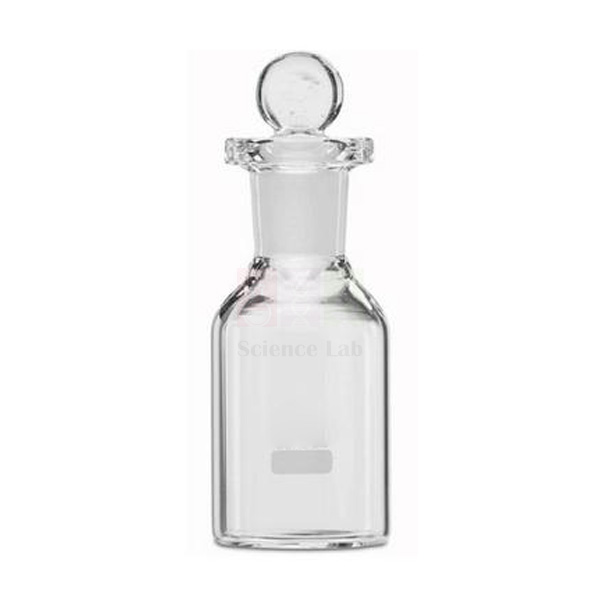
BOD Bottles with Penny Robotic Stopper
BOD Bottles with Penny Robotic Stopper (Product Code: SLE/GBO/05) are clear borosilicate glass bottles of 60 ml capacity, fitted with a stopper that our listing specifies as the robotic type — the alternative stopper style to our penny head BOD bottle. They are used where water and wastewater samples must be sealed without air between the first and final oxygen readings of a biochemical oxygen demand (BOD) test. Heat resistant and chemical resistant, they are made by Jain Scientific Equipments Pvt Ltd (ScienceLab), Ambala, for chemical and environmental laboratories.
Specifications
| Parameter | Detail |
|---|---|
| Material | Borosilicate glass |
| Capacity | 60 ml |
| Stopper type | Robotic |
| Heat resistance | Heat resistant |
| Chemical resistance | Chemical resistant |
| Colour | Clear |
| Used in | Chemical laboratory (BOD work) |
Typical Use
A BOD run usually needs a batch of bottles at once: blanks of dilution water, several dilutions of each sample and duplicate sets for the initial and incubated readings. Labs therefore order these bottles in quantity, label each one clearly and keep a log that links every bottle to its sample and dilution. Many water-testing labs now take the oxygen readings with a dissolved oxygen meter, which India's environmental and effluent labs use alongside the classical titration method.
If you plan to use the bottles with automated or semi-automated BOD equipment, confirm the stopper profile with us first so that it matches your system. Fill each bottle completely so no bubble remains under the stopper, and store incubating bottles in the dark to stop algae from producing oxygen during the test.
Manufacturer
These BOD bottles are manufactured by Jain Scientific Equipments Private Limited of Ambala, Haryana, which trades as ScienceLab and supplies water-testing glassware to laboratories in India and international markets. Visit our company profile for background.
Related Laboratory Equipment
Useful companions for a BOD and dissolved-oxygen bench:
- BOD Bottles with Penny Head Stopper — the same bottle with a flat penny head stopper
- Digital Dissolved Oxygen Meter — electronic oxygen readings for each bottle
- Burettes with PTFE Needle Valve Stopcock — fine titrant control for the Winkler method
- Reagent Bottle Narrow Mouth, Amber Glass — protects light-sensitive titration reagents
- Drying Rack — drains washed bottles before the next run
Browse more bottles in the Glassware Bottles category.
Frequently Asked Questions
How does this differ from the penny head version?
Both are listed as 60 ml clear borosilicate BOD bottles; the difference is the stopper, which here is the robotic type. If you need a particular stopper profile, send us the details before ordering.
Is it compatible with my automated BOD analyser?
Compatibility with specific automated systems is not stated in our listing. Share the make and model of your equipment through our contact page so we can advise.
What volume does each bottle hold?
60 ml. Confirm that this suits the method your lab follows.
How should the bottles be cleaned between tests?
Wash them thoroughly, rinse well with distilled water and let them drain; any leftover detergent or organic matter can consume oxygen and bias the next result.
Can I buy replacement stoppers separately?
Please ask us; availability of loose stoppers is confirmed at the time of enquiry.
What information is needed for a laboratory quotation?
The number of bottles, the stopper type, the delivery location in India or abroad, and any paperwork your purchase department needs.
Request a Quote
Request pricing through our contact form or list the bottles in your enquiry cart.
Last updated: 24 September 2026
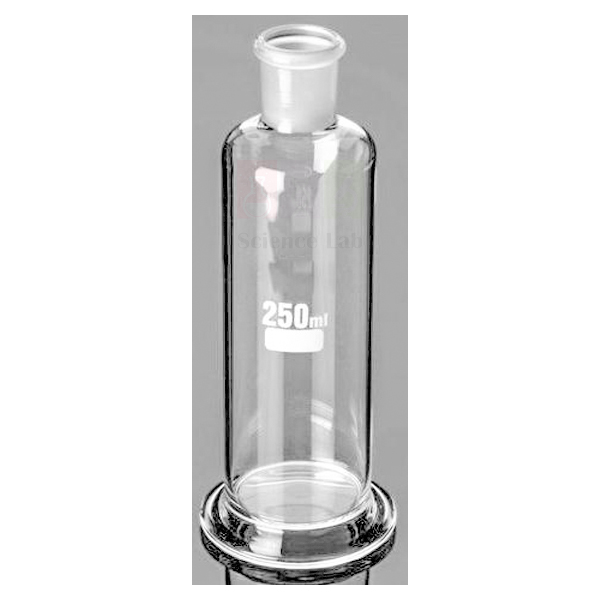
Gas Washing Bottle
Gas Washing Bottle (Product Code: SLE/GBO/06) is a clear borosilicate glass bottle with interchangeable joints, through which a stream of gas is bubbled via a liquid to remove impurities, dry the gas or absorb one of its components. It is offered in 100 ml, 125 ml, 250 ml and 500 ml capacities and is heat and chemical resistant for routine chemical laboratory use. It is made by Jain Scientific Equipments Pvt Ltd (ScienceLab), Ambala, as borosilicate laboratory glassware in India, and is a standard part of gas collection apparatus in school, college and industrial labs.
Specifications
| Parameter | Detail |
|---|---|
| Material | Borosilicate glass |
| Capacities | 100 ml, 125 ml, 250 ml, 500 ml |
| Joints | Interchangeable |
| Heat resistance | Heat resistant |
| Chemical resistance | Chemical resistant |
| Colour | Clear |
| Application | Chemical laboratory |
Typical Use
A common teaching set-up passes carbon dioxide from a Kipp's apparatus or other gas generator through water in a gas washing bottle to strip out acid spray, then through a second bottle of concentrated sulphuric acid to dry it before collection. The same bottle can bubble a gas through limewater or another reagent to show absorption, or scrub unwanted fumes from an exhaust line. Clear glass lets students watch the bubbling and see when the liquid needs replacing.
Connect the incoming gas to the tube that dips below the liquid and take the outlet from the space above it; reversing the connections can push liquid back into the generator. Clamp the bottle to a retort stand, use flexible tubing on the connections, and never fill it more than the dip tube needs.
Manufacturer
This gas washing bottle is one of the borosilicate glass items manufactured by Jain Scientific Equipments Private Limited, the Ambala (Haryana) company that trades as ScienceLab. For a wider view of the business, visit our company profile.
Related Laboratory Equipment
Parts that complete a gas washing and drying train:
- Delivery Tube — carries gas from the generator to the bottle
- Rubber Tubing — flexible connections between glass parts
- Calcium Chloride Tube, Borosilicate Glass — a further drying stage after washing
- Retort Stand — holds the bottle steady on the bench
- Three Prong Swivel Clamp — grips the bottle neck on the stand
More bottles for storage and gas work are in the Glassware Bottles category.
Frequently Asked Questions
Which capacities can I order?
100, 125, 250 and 500 ml. Larger bottles give more contact time between gas and liquid; smaller ones suit low flow rates and small set-ups.
What does interchangeable joints mean for me?
The joints are interchangeable, so a replacement part fits without matching by hand. Joint size is confirmed on enquiry — contact us if you need it to fit existing glassware.
Which way should the gas flow?
In through the tube that reaches below the liquid surface and out from the headspace above it. Reversing the flow can force liquid out of the bottle.
What liquid should I put in it?
That depends on the job: water removes water-soluble impurities, concentrated sulphuric acid dries many gases (but not basic gases such as ammonia), and specific reagents absorb particular gases.
Is the head with the inlet tube included?
The exact configuration supplied with each capacity is confirmed on the quotation; please state what you need when you enquire.
Do you supply schools and export customers?
Yes. We supply schools, colleges, industrial labs and distributors in India and international markets; share quantities and the delivery location.
Request a Quote
For a price, contact us or add the gas washing bottle to your enquiry cart.
Last updated: 24 September 2026
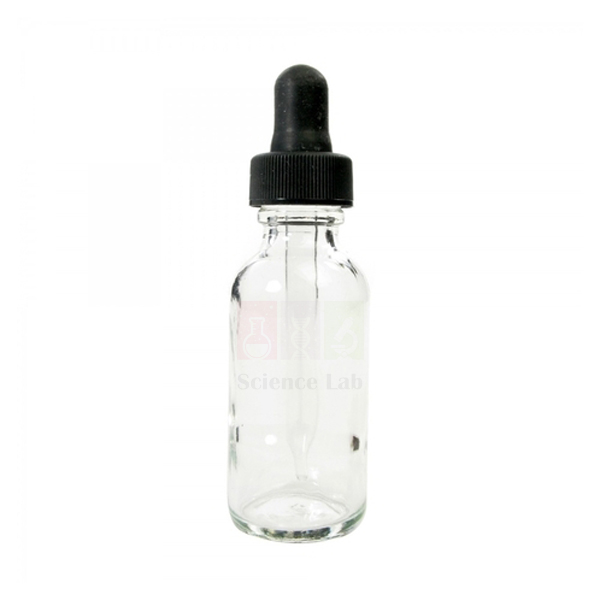
Dropping Bottles
Dropping Bottles (Product Code: SLE/GBO/07) are clear glass bottles closed with a screw cap that carries a glass dropper, so a reagent can be stored and released a few drops at a time from the same container. Chemistry teachers, laboratory assistants and analysts keep them on the bench for indicators and test solutions that are used in small quantities, and the four capacities let a lab match each bottle to how quickly its solution is consumed. They are made by Jain Scientific Equipments Pvt Ltd (ScienceLab), Ambala, as part of its range of borosilicate laboratory glassware in India.
Specifications
| Parameter | Detail |
|---|---|
| Type | Dropping bottle |
| Closure | Screw cap with glass dropper |
| Material | Borosilicate glass |
| Colour | Clear (flint) |
| Heat resistance | Heat resistant |
| Chemical resistance | Chemical resistant |
| Glass surface | Non-porous, allowing easy cleaning or autoclaving |
| Capacities | 30 ml, 60 ml, 120 ml, 250 ml |
Typical Use
In school and college practicals, dropping bottles hold the indicators and test reagents that students add dropwise — phenolphthalein or methyl orange during acid–base titrations, for example, or the reagents used in qualitative tests. Because the glass is clear, a teacher can check the liquid level and colour at a glance and spot a contaminated or exhausted solution before the class begins. The 30 ml and 60 ml sizes suit a student reagent shelf where many different solutions are needed in small amounts, while the 120 ml and 250 ml sizes suit a preparation room or a shared teaching bench.
Label every bottle with the reagent name and preparation date, and return each dropper to its own bottle so that solutions are never cross-contaminated. Do not lay the dropper on the bench between uses. When refilling, rinse the bottle and dropper with distilled water first; the non-porous glass makes this quick. Clear bottles are not the right choice for light-sensitive solutions — use the amber version for those. A labelled row of dropping bottles is one of the simplest ways to organise school chemistry lab equipment in India so that practicals run smoothly.
Manufacturer
These bottles are produced by Jain Scientific Equipments Private Limited, the Ambala, Haryana company that trades under the ScienceLab name and supplies teaching and laboratory glassware to institutions in India and international markets. The company is a registered MSME enterprise (Udyam UDYAM-HR-01-0003714), and its export consignments are handled under Importer-Exporter Code AAECJ8618A issued by the DGFT. Background on the business is available on the company profile page.
Related Glassware Bottles
Items usually ordered alongside dropping bottles when a reagent shelf is being set up or restocked:
- Amber Dropping Bottle — the same screw-cap dropper design in amber glass for light-sensitive reagents.
- Dropper Bottle Tray — keeps rows of small bottles upright and grouped on the bench.
- Reagent Bottle, Narrow Mouth — holds the larger stock solution from which dropping bottles are refilled.
- Wash Bottle LDPE with Narrow Mouth — for rinsing droppers and bottles with distilled water between refills.
- Bottle Brush — for scrubbing out residues before a bottle is reused.
See the full range in our Glassware Bottles category.
Frequently Asked Questions
Which capacities can I order?
Four sizes are listed: 30 ml, 60 ml, 120 ml and 250 ml. Mention the quantity required for each size in your enquiry.
Does each bottle come with its dropper?
Yes. The screw cap carries a glass dropper, so the bottle is ready to fill and dispense as delivered.
Can the bottles be autoclaved?
The glass is non-porous and is described as suitable for easy cleaning or autoclaving. Before sterilising the complete assembly, please contact us to confirm that the cap suits your cycle.
Are these suitable for light-sensitive solutions?
Not ideally, because the glass is clear. For solutions that degrade in light, choose the Amber Dropping Bottle, which has the same capacities and closure.
What should an institutional quotation request include?
List the sizes and quantities, the delivery location, and any other glassware you want quoted at the same time, so that one consolidated quotation can be prepared.
Do you supply in bulk and for export?
Yes. Bulk orders for schools, colleges and laboratories in India and international markets are handled through our contact page.
Request a Quote
To price Dropping Bottles for your laboratory, send the sizes and quantities through our contact page, or add the item to the enquiry cart together with the other glassware you need.
Last updated: 24 September 2026
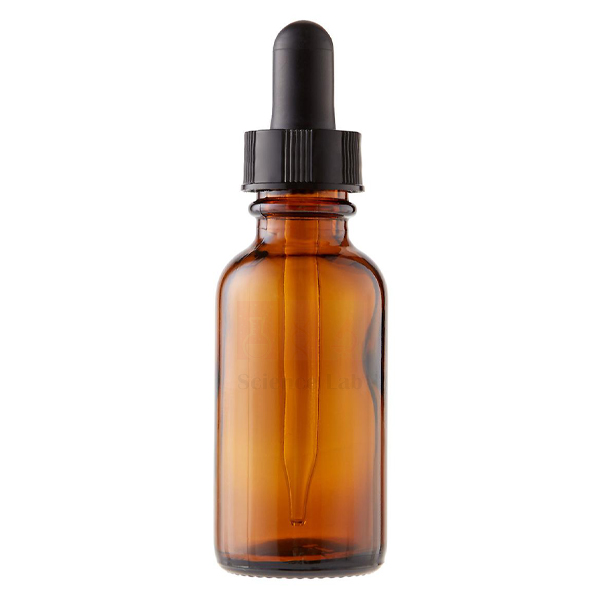
Amber Dropping Bottle
The Amber Dropping Bottle (Product Code: SLE/GBO/08) is a brown-tinted glass bottle with a screw cap and glass dropper, intended for reagents that lose strength when exposed to light. The amber glass cuts down the light, particularly ultraviolet, that reaches the solution, so laboratories rely on it for photosensitive stains, indicators and test reagents that must be dispensed in drops. Made by Jain Scientific Equipments Pvt Ltd (ScienceLab), Ambala, it is a routine piece of chemistry lab glassware in India for schools, colleges and testing laboratories.
Specifications
| Parameter | Detail |
|---|---|
| Type | Dropping bottle with screw cap |
| Dispensing | Glass dropper fitted to the screw cap |
| Material | Amber glass |
| Colour | Amber |
| Heat resistance | Heat resistant |
| Chemical resistance | Chemical resistant |
| Capacities | 30 ml, 60 ml, 120 ml, 250 ml |
Typical Use
Silver nitrate solution for chloride tests, iodine solution for starch tests and many biological stains darken or decompose when left in daylight, so they are normally kept in amber bottles. With a dropper built into the cap, the reagent is dispensed straight from its protective container onto a slide, into a test tube or onto a spot plate, and the bottle is closed again within seconds. The 30 ml and 60 ml sizes are convenient for individual student benches; the 120 ml and 250 ml sizes suit a teacher’s demonstration table or the preparation room.
Because the brown glass makes the contents harder to see, hold the bottle up to a light source to check the level, and label each one clearly with the reagent name and date — colour alone will not identify the contents. Amber glass reduces light exposure but does not eliminate it, so store the bottles in a cupboard away from direct sunlight. Schools buying from a single lab glassware supplier in India often order the clear and amber versions together so that every reagent has a suitable bottle.
Manufacturer
Jain Scientific Equipments Private Limited is the registered company behind the ScienceLab brand. From its base in Ambala, Haryana, it makes and dispatches laboratory glassware and teaching equipment for customers in India and international markets. You can read about the company on its profile page.
Related Glassware Bottles
Other bottles and accessories that work with amber dropping bottles on a reagent shelf:
- Dropping Bottles — the clear version in the same capacities, for reagents whose colour or level you need to see.
- Reagent Bottle Narrow Mouth, Amber Glass — a larger amber stock bottle for the same light-sensitive solution.
- Dropper Bottle, Amber — a pipette-style amber dropper bottle with teat, sold in packs of 6.
- Dropper Bottle Tray — holds small bottles upright so they are not knocked over.
- Bottle Brush — for cleaning bottles before they are refilled with a fresh batch.
Browse all storage and dispensing bottles in the Glassware Bottles category.
Frequently Asked Questions
What sizes are available?
30 ml, 60 ml, 120 ml and 250 ml. Smaller sizes suit student benches; larger ones suit shared or preparation-room use.
How is this different from the clear Dropping Bottles?
Both have a screw cap with glass dropper and the same capacities. The amber glass reduces the light reaching the solution; the clear bottle is better when you need to watch the colour or level of the reagent.
Which reagents should go in an amber bottle?
Any solution that is affected by light, such as silver nitrate, iodine solutions and certain stains. For aggressive solvents, ask us to confirm that the cap and dropper suit the chemical.
How can I check how much reagent is left?
Hold the bottle against a window or lamp; the level shows through the tinted glass. Checking before each practical avoids running out mid-session.
Can I order spare droppers or caps?
Availability of spares is confirmed at the time of enquiry. Please list the size and number of spares needed when you contact us.
Can you supply large quantities or export orders?
Yes. We quote for school, college and laboratory orders in India and international markets; include sizes, quantities and destination in your request.
Request a Quote
Send your size-wise quantities for the Amber Dropping Bottle through our contact page, or place it in the enquiry cart with any other items you would like quoted.
Last updated: 24 September 2026
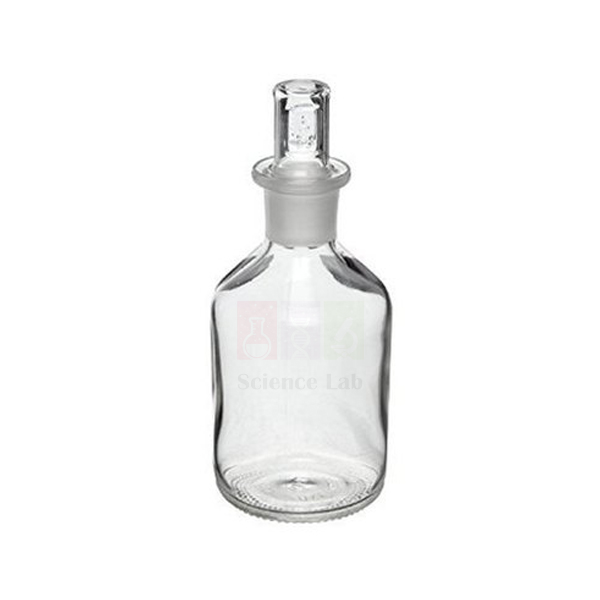
Reagent Bottle, Narrow Mouth
The Reagent Bottle, Narrow Mouth (Product Code: SLE/GBO/09) is a clear borosilicate glass storage bottle closed with a pressed flat stopper, used to keep stock solutions, distilled water and prepared liquid reagents on the laboratory shelf. Its narrow neck limits evaporation and gives a controlled pour, which is why this pattern is a staple of borosilicate glassware in India’s school, college and research laboratories. It is manufactured by Jain Scientific Equipments Pvt Ltd (ScienceLab), Ambala, in five capacities from 125 ml to 2000 ml.
Specifications
| Parameter | Detail |
|---|---|
| Mouth | Narrow mouth |
| Closure | Pressed flat stopper |
| Material | Borosilicate glass |
| Colour | Clear |
| Heat resistance | Heat resistant |
| Chemical resistance | Chemical resistant |
| Capacities | 125 ml, 250 ml, 500 ml, 1000 ml, 2000 ml |
Typical Use
A typical chemistry laboratory keeps its dilute acids, alkalis, salt solutions and indicator stocks in narrow-mouth reagent bottles. The 1000 ml and 2000 ml sizes are used in the preparation room for bulk stock, while 125 ml, 250 ml and 500 ml bottles are placed on student benches or reagent racks so that each group has its own supply. Clear glass lets staff see at once whether a solution has turned cloudy, changed colour or dropped to a low level.
Fill the bottles through a funnel to avoid wetting the neck, and wipe the neck before inserting the stopper. Label each bottle with the contents, concentration and date. Stoppers that stay in contact with strong alkali solutions can stick, so rinse spills from the neck promptly; a plastic-stoppered bottle may be more convenient for such solutions. Institutions stocking a new reagent shelf often buy all five sizes from one laboratory glassware supplier in India so that the bottles match.
Manufacturer
ScienceLab is the brand name used by Jain Scientific Equipments Private Limited, a laboratory equipment maker based in Ambala, Haryana. The company produces glassware, apparatus and teaching aids for educational and scientific institutions and serves buyers in India and international markets. Company details are on the ScienceLab profile page.
Related Glassware Bottles
Items that complete a reagent storage set-up built around narrow-mouth bottles:
- Reagent Bottle Narrow Mouth, Amber Glass — the amber alternative for solutions that must be protected from light.
- Bottle Reagent, W.M. Glass — a wide-mouth bottle that is easier to use for solids and powders.
- Glass Funnel — for refilling the narrow neck without spills.
- Dropping Bottles — to decant a small working quantity that is dispensed drop by drop.
- Bottle Brush — for scrubbing the inside of the bottle when it is emptied and cleaned.
More storage options are listed in the Glassware Bottles category.
Frequently Asked Questions
Which capacities are made?
125 ml, 250 ml, 500 ml, 1000 ml and 2000 ml. You can combine sizes in a single order.
What kind of closure does it have?
Each bottle comes with a pressed flat stopper. If you need details of the stopper material for a particular chemical, please contact us.
Should I choose a narrow or wide mouth bottle?
Narrow mouth bottles are intended for liquids because they pour steadily and reduce evaporation. For solids, a wide-mouth reagent bottle is easier to fill and empty with a spatula.
Can the bottles be washed in hot water or dried in an oven?
The borosilicate glass is heat resistant, so hot washing and oven drying of the empty bottle are practical. Never heat a bottle with the stopper in place, and avoid sudden temperature changes.
What details should a school or college include in a quotation request?
The quantity of each size, the delivery address and any related items such as funnels or dropping bottles, so that everything can be quoted together.
Is bulk or export supply possible?
Yes. We supply institutions in India and international markets; send your requirement through the contact page.
Request a Quote
For a quotation on the Reagent Bottle, Narrow Mouth, write to us via the contact page or add it to the enquiry cart with the sizes you need.
Last updated: 24 September 2026
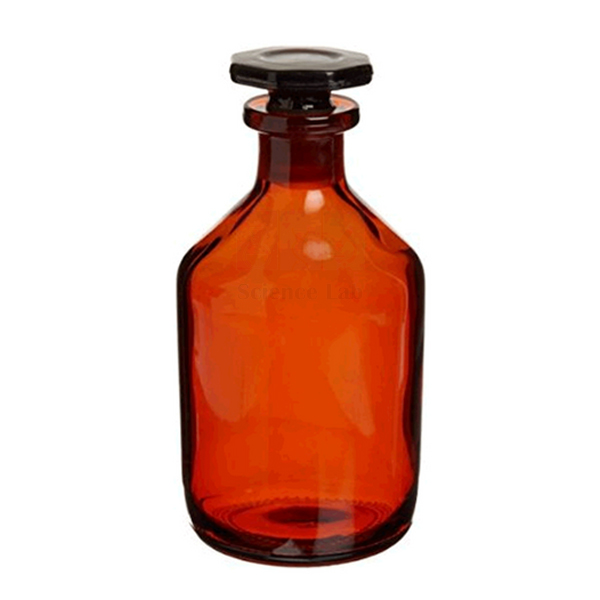
Reagent Bottle Narrow Mouth, Amber Glass
Reagent Bottle Narrow Mouth, Amber Glass (Product Code: SLE/GBO/10) is a brown glass storage bottle with a narrow neck and a PE (polyethylene) stopper, offered in seven capacities from 30 ml to 2000 ml. The amber tint shields light-sensitive solutions such as potassium permanganate, silver nitrate and iodine from daylight and room lighting, helping them keep their strength between practicals. It is made by Jain Scientific Equipments Pvt Ltd (ScienceLab), an Ambala-based laboratory glassware manufacturer serving schools, colleges and testing laboratories.
Specifications
| Parameter | Detail |
|---|---|
| Mouth | Narrow mouth |
| Stopper | PE (polyethylene) stopper |
| Material | Amber glass |
| Colour | Amber |
| Heat resistance | Heat resistant |
| Chemical resistance | Chemical resistant |
| Capacities | 30 ml, 50 ml, 100 ml, 250 ml, 500 ml, 1000 ml, 2000 ml |
Typical Use
Standard solutions used in volumetric analysis — potassium permanganate for redox titrations or silver nitrate for chloride determinations — are normally prepared in quantity and then stored in amber bottles until the titration is run. The 1000 ml and 2000 ml sizes hold this stock in the preparation room, the 250 ml and 500 ml sizes serve a bench or a burette-filling station, and the 30 ml, 50 ml and 100 ml bottles are handy for small amounts of expensive or rarely used reagents and for teacher demonstrations. Such bottles are a standard item of chemistry lab equipment in India, from senior secondary schools to university departments.
A polyethylene stopper does not bond to the neck the way a glass-to-glass joint sometimes can, which makes the bottle easy to open even after long storage. Check the compatibility of PE with strong oxidisers and organic solvents before storing them, and let hot solutions cool before the stopper is inserted. Keep the bottles in a closed cupboard, since amber glass reduces light exposure rather than blocking it entirely.
Manufacturer
Jain Scientific Equipments Private Limited, which operates under the ScienceLab name, manufactures this bottle in Ambala, Haryana. The company works with educational institutions, laboratories and distributors in India and international markets. Visit the company profile to learn more.
Related Glassware Bottles
Products that fit into the same storage and titration workflow:
- Reagent Bottle, Narrow Mouth — clear borosilicate version with a pressed flat stopper for solutions that are not light-sensitive.
- Bottle Reagent, W.M. Glass Amber Colour — a wide-mouth amber bottle for light-sensitive solids.
- Amber Dropping Bottle — for dispensing small portions of the same reagent drop by drop.
- Glass Funnel — to fill the narrow neck cleanly from a larger vessel.
- Burettes — the burette into which a stored standard solution is transferred for titration.
View all bottles in our Glassware Bottles category.
Frequently Asked Questions
Which sizes are available?
Seven: 30 ml, 50 ml, 100 ml, 250 ml, 500 ml, 1000 ml and 2000 ml.
What is the stopper made of?
The stopper is PE (polyethylene). It is easy to remove and does not seize in the neck, but check its compatibility with any strong oxidiser or solvent you intend to store.
When should I choose amber rather than clear?
Choose amber for any solution that degrades in light. For solutions where you need to see colour or clarity at a glance, the clear narrow-mouth bottle is more convenient.
Can I pour in a freshly prepared hot solution?
The glass is heat resistant, but allow the solution to cool before fitting the PE stopper, so the plastic is not softened and pressure does not build up.
What should I include when requesting a quotation?
Quantities for each of the seven sizes, the delivery location and whether you also need funnels, dropping bottles or burettes, so one quotation covers the set.
Do you handle large institutional and export orders?
Yes. Orders for India and international markets are quoted on request through our contact page.
Request a Quote
Tell us the sizes and quantities you need via the contact page, or add this bottle to the enquiry cart and submit it with the rest of your glassware list.
Last updated: 24 September 2026
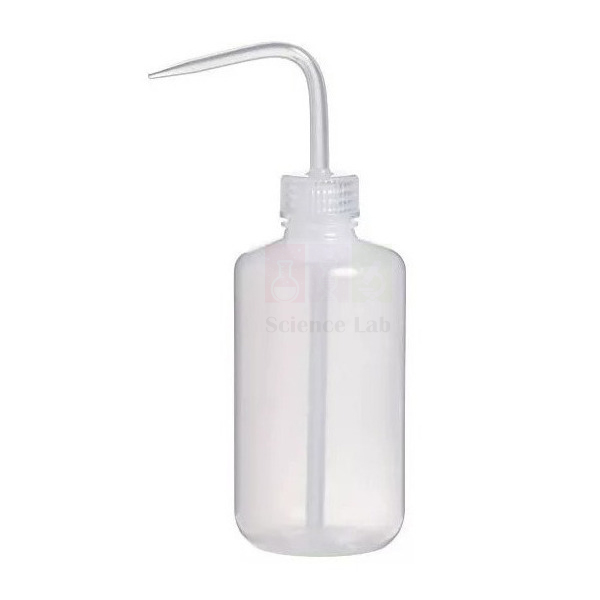
Wash Bottle LDPE with Narrow Mouth
The Wash Bottle LDPE with Narrow Mouth (Product Code: SLE/GBO/12) is a transparent, low-density polyethylene bottle with a screw cap, used to deliver a controlled stream of distilled water or rinse solution when washing glassware, transferring precipitates or making a solution up to the mark. LDPE is soft and flexible, so a gentle squeeze of the body is enough to dispense the liquid, and the narrow mouth keeps refilling tidy. It is made by Jain Scientific Equipments Pvt Ltd (ScienceLab), Ambala, for hospital and laboratory use, and is a regular item for institutions buying from a lab plastic ware supplier in India.
Specifications
| Parameter | Detail |
|---|---|
| Material | LDPE (low-density polyethylene) |
| Mouth | Narrow mouth |
| Cap type | Screw cap |
| Colour | Transparent |
| Chemical resistance | Chemical resistant |
| Capacities | 250 ml, 500 ml |
| Usage | Hospital and laboratory |
Typical Use
During a titration, a short squeeze washes titrant from the inner wall of the conical flask back into the solution so that none is left unreacted. Before a burette or pipette is filled, the wash bottle rinses it with distilled water; during filtration it carries the last particles of a precipitate from the beaker onto the filter paper. In hospital and clinical settings the same bottle is used for rinsing and routine cleaning tasks at the bench. The 250 ml size is easy to handle at an individual student place, while the 500 ml size needs refilling less often on a shared bench.
Keep a separate, clearly labelled bottle for each liquid — distilled water, ethanol or a specific rinse solution — and never top one up with a different liquid. Refill with fresh distilled water regularly rather than letting water stand for weeks. LDPE is not meant for heating, so keep the bottle away from hot plates and burner flames. Wash bottles are a basic part of chemistry lab equipment for schools in India, and most labs keep several in reserve.
Manufacturer
This bottle comes from Jain Scientific Equipments Private Limited, the Ambala, Haryana manufacturer that trades as ScienceLab. Alongside its glass bottles, the company offers plastic labware for schools, colleges, hospitals and laboratories in India and international markets. Read more on the company profile.
Related Laboratory Equipment
Glassware and alternatives that a wash bottle is used with day to day:
- Conical Flask — its walls are washed down with the bottle during titrations.
- Burettes — rinsed with distilled water from the wash bottle before being filled with titrant.
- Glass Funnel — used in filtration, where the bottle rinses residue onto the filter paper.
- Widemouthed Wash Bottles — an alternative with a wider opening for quicker refilling.
- Polythene Wash Bottles — another polythene wash bottle option from our plasticware range.
This item is listed in our Glassware Bottles category.
Frequently Asked Questions
Which sizes are available?
250 ml and 500 ml.
Can the bottle be heated or autoclaved?
Heat resistance is not part of this product’s listing, and LDPE softens at relatively low temperatures, so do not heat it. If you need a bottle for sterilisation, please contact us before ordering.
Which liquids can it hold?
It is listed as chemical resistant and is routinely used for distilled water and common aqueous rinse solutions. For organic solvents, confirm compatibility with us before use.
Why a narrow mouth?
The narrow opening reduces spillage when the bottle is refilled and is closed by a screw cap. If quick refilling matters more, a wide-mouth wash bottle may suit you better.
Is it suitable for hospitals?
Yes, the listed usage is hospital and laboratory, for general rinsing and cleaning at the bench.
Can I order in bulk?
Yes. Send the quantity of each size and your delivery location; we quote for institutions in India and international markets.
Request a Quote
Ask for a price on the Wash Bottle LDPE with Narrow Mouth through our contact page, or add it to the enquiry cart along with the glassware it will be used with.
Last updated: 24 September 2026
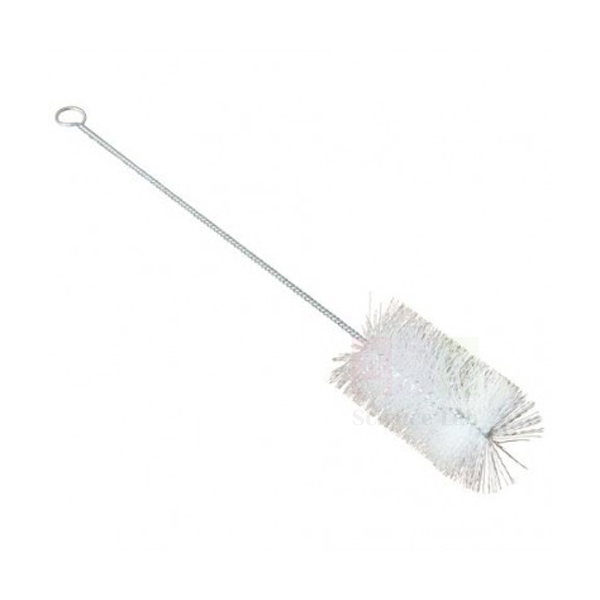
Bottle Brush
The Bottle Brush (Product Code: SLE/GBO/13) is a cleaning brush with white nylon bristles set on a metal handle, used to scrub the inside walls and base of laboratory bottles that a cloth or sponge cannot reach. Lab assistants use it to remove dried reagent films, deposits and residues from reagent, dropping and storage bottles before they are rinsed and reused. It is supplied by Jain Scientific Equipments Pvt Ltd (ScienceLab), Ambala, a lab consumables supplier in India that also offers the bottles it is meant to clean.
Key Details
| Parameter | Detail |
|---|---|
| Type | Bottle cleaning brush |
| Bristle material | Nylon |
| Bristle colour | White |
| Handle | Metal |
| Purpose | Cleaning bottles |
Typical Use
After a bottle has been emptied, rinse it with tap water, add a little laboratory detergent solution, then insert the brush and work it up and down while turning it so the bristles sweep the shoulder, walls and base. Finish with several tap-water rinses followed by a distilled-water rinse, and leave the bottle upside down to drain. White bristles make it easy to see when residue is being lifted off and when the brush itself needs rinsing.
Do not force the brush into a neck that is narrower than its head, and avoid jabbing the metal handle tip against the glass base, which can scratch or crack it. Rinse the brush after each use, shake out the water and hang it to dry; replace it once the bristles splay or flatten. Schools ordering glassware from a lab glassware supplier in India often add a few brushes so that wash-up can start the day the bottles arrive.
Supplier
ScienceLab is the trading name of Jain Scientific Equipments Private Limited, headquartered in Ambala, Haryana. The company supplies cleaning accessories such as this brush together with its laboratory glassware to buyers in India and international markets. Its vendor registration details are CIN U29309HR2020PTC087597 and GSTIN 06AAECJ8618A1ZT. See the company profile for more.
Related Laboratory Equipment
Brushes and bottles that belong to the same wash-up routine:
- Brush, Beaker, Nylon — a larger-headed brush for wide-bodied beakers.
- Brush, Bristle Test Tube Fan Shape — a fan-tipped brush that reaches the rounded base of test tubes.
- Burette Brush — for the long, narrow bore of burettes.
- Reagent Bottle, Narrow Mouth — one of the bottles this brush is used to clean.
- Wash Bottle LDPE with Narrow Mouth — for the final distilled-water rinse after brushing.
This brush is listed in our Glassware Bottles category.
Frequently Asked Questions
What are the bristles and handle made of?
The bristles are white nylon and the handle is metal.
Will it fit my bottles?
Brush dimensions are not given in this listing. Tell us the neck opening and depth of the bottles you want to clean via our contact page, and we will confirm suitability.
Can I use it with cleaning solutions?
Use it with ordinary laboratory detergent solutions. For strong acid or oxidising cleaning mixtures, ask us first, because the bristles and metal handle may not tolerate them.
How do I make the brush last?
Rinse it after use, shake off excess water, hang it to dry and keep it away from heat. Replace it when the bristles lose their shape.
How is it packed?
Pack quantities are not stated here; include the number of brushes you need in your enquiry and we will confirm how they are supplied.
Can you include brushes in a larger school or export order?
Yes. Brushes can be added to glassware orders for institutions in India and international markets.
Request a Quote
To order the Bottle Brush, send the quantity through our contact page or add it to the enquiry cart with the bottles and glassware on your list.
Last updated: 24 September 2026
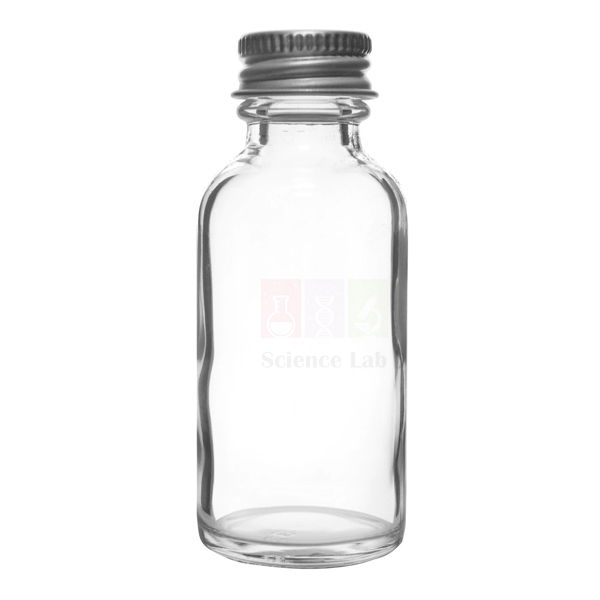
Bottle, McCartney
The Bottle, McCartney (Product Code: SLE/GBO/14) is a small clear-glass bottle of 1 oz (29.5 ml) capacity in the traditional McCartney pattern, used in microbiology for storing culture media, stock cultures and small liquid samples. An aluminium screw cap with a foam liner closes the 12 mm mouth, giving a firmer seal than a cotton plug. It is manufactured by Jain Scientific Equipments Pvt Ltd (ScienceLab), Ambala, as a practical culture media bottle for laboratories in India and abroad.
Specifications
| Parameter | Detail |
|---|---|
| Type | McCartney bottle |
| Material | Glass |
| Colour | Clear |
| Capacity | 1 oz (29.5 ml) |
| Height | 3.1 in |
| Diameter | 1.3 in |
| Mouth inner diameter | 12 mm |
| Closure | Aluminium screw cap with foam liner |
| Heat resistance | Heat resistant |
| Chemical resistance | Chemical resistant |
Typical Use
McCartney bottles are the everyday containers of a microbiology teaching or diagnostic lab. Molten agar can be dispensed into them and set at an angle to make slopes for maintaining pure cultures, broth can be stored ready for inoculation, and small water, milk or food samples can be collected and carried to the bench. The clear glass lets students see turbidity or colonies without opening the bottle, and the compact size keeps a large number of cultures in a small rack or refrigerator shelf. They are a routine item in any microbiology lab setup in India, from college practical classes to quality-control rooms.
Work near a flame or in a clean cabinet when opening the bottle, and flame the neck briefly before and after transfer. Screw caps are normally loosened slightly during sterilisation and tightened once the bottle has cooled; if you plan to sterilise filled bottles, confirm with us that the cap liner suits your cycle. Label each bottle with the organism or medium and the date.
Manufacturer
Jain Scientific Equipments Private Limited, trading as ScienceLab, is a laboratory equipment company in Ambala, Haryana. It produces glassware and apparatus for biology, chemistry and microbiology teaching and serves customers in India and international markets. Details are on the company profile page.
Related Laboratory Equipment
Equipment used with McCartney bottles in a culture and media workflow:
- Bottle McCARTNEY, BIJOU — a companion McCartney/Bijou bottle listed in our chemistry range.
- Universal Bottle Pp Cap — an alternative universal bottle with a polypropylene cap.
- Autoclave Basket — holds a batch of small bottles together inside the autoclave.
- Electric Autoclave — for sterilising culture media before it is dispensed.
- Petri Dish Glass With Lid — for plating out cultures kept in the bottles.
Find more bottles in the Glassware Bottles category.
Frequently Asked Questions
What are the bottle’s capacity and dimensions?
It holds 1 oz (29.5 ml), stands 3.1 in tall, is 1.3 in in diameter and has a mouth with an inner diameter of 12 mm.
What kind of cap is fitted?
An aluminium screw cap with a foam liner.
Can filled bottles go into an autoclave?
The glass is heat resistant. Please contact us to confirm the cap and liner suit your sterilisation cycle before you autoclave filled bottles.
What do labs usually keep in McCartney bottles?
Agar slopes, broths, stock cultures and small liquid samples for testing. The screw cap limits evaporation and contamination during storage.
Are other sizes available?
This listing covers the 1 oz (29.5 ml) bottle. For a different size, see the McCartney/Bijou bottle or ask us.
How should I request a quotation?
Send the number of bottles, your delivery location and any related items such as autoclave baskets. We supply institutions in India and international markets.
Request a Quote
For prices on the Bottle, McCartney, use our contact page or add it to the enquiry cart with the rest of your microbiology requirements.
Last updated: 24 September 2026
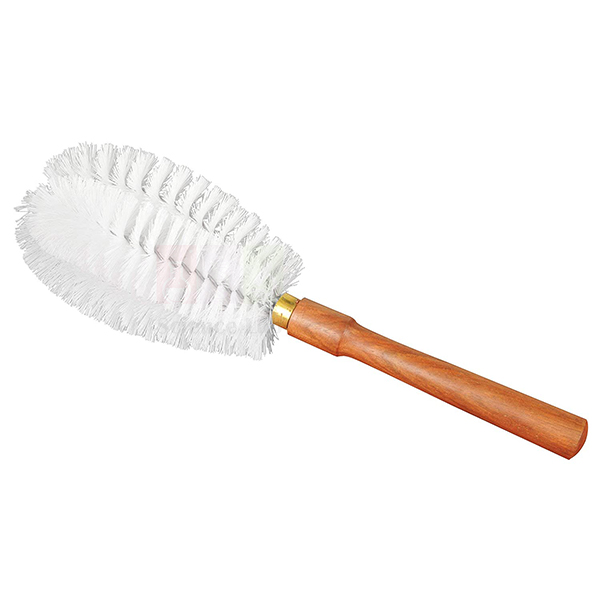
Brush, Beaker, Nylon
Brush, Beaker, Nylon (Product Code: SLE/GBO/15) is a large-headed cleaning brush for beakers, with nylon bristles on a 40 cm long wooden handle. The 65 x 45 x 150 mm head covers a wide area of the beaker wall and base with each stroke, and the long handle keeps hands clear of dirty water and detergent in the sink. It comes in packs of 10 and is supplied by Jain Scientific Equipments Pvt Ltd (ScienceLab), Ambala, a chemistry consumables supplier in India for schools, colleges and laboratories.
Specifications
| Parameter | Detail |
|---|---|
| Bristle material | Nylon |
| Handle | Wooden, 40 cm long |
| Head size | 65 x 45 x 150 mm |
| Use | Cleaning beakers |
| Pack | Pack of 10 |
Typical Use
Beakers collect some of the most stubborn residues in a teaching lab: crusts left after evaporating a solution, precipitates from salt reactions, and dye or stain films from biology practicals. With its broad head, this brush scrubs these deposits off the flat base and straight walls quickly, so a class set of beakers can be cleaned in one wash-up session. Because the head measures 65 x 45 x 150 mm, it suits medium and large beakers; compare it with the internal diameter of your smallest beakers, and use a smaller brush where it will not enter comfortably.
Soak dried residues in warm detergent solution first, then scrub, rinse with tap water and finish with distilled water. Avoid abrasive powders, which can dull glass and scratch plastic beakers. After use, rinse the brush, shake it out and hang it head-down so water drains away from the wooden handle; do not leave it standing in water. A pack of 10 allows one brush per sink or bench group, which is useful when schools replace a full beaker set for school practicals in India at the start of term.
Supplier
Jain Scientific Equipments Private Limited sells this brush under its ScienceLab name from Ambala, Haryana, as a cleaning accessory for the beakers and other glassware it provides to laboratories in India and international markets. Company information is available on the ScienceLab profile page.
Related Laboratory Equipment
Beakers and brushes that go with this item in a lab wash-up:
- Beaker Brush — an alternative beaker brush listed in our beaker range.
- Glass Beaker — the glassware this brush is designed to clean.
- Bottle Brush — for narrow-necked bottles that the broad beaker head cannot enter.
- Brush, Bristle Test Tube Fan Shape — for test tubes washed in the same session.
- Wash Bottle LDPE with Narrow Mouth — for the final distilled-water rinse.
This brush is part of our Glassware Bottles category.
Frequently Asked Questions
How many brushes are in a pack?
Ten brushes per pack.
Will the head fit my beakers?
The head measures 65 x 45 x 150 mm, so it is intended for beakers with a wide enough opening. If you are unsure, send us the sizes of your beakers through the contact page.
How long is the handle?
The wooden handle is 40 cm long, which keeps your hand away from the beaker and the wash water.
Can it be used on plastic beakers?
Yes, nylon bristles are routinely used on both glass and plastic beakers. Use it with detergent solution rather than abrasive cleaners on plastic.
How should the brushes be stored?
Rinse, shake off the water and hang them to dry. Leaving the wooden handle soaking for long periods shortens its life.
Do you supply larger quantities for institutions?
Yes. Tell us how many packs you need and where they should be delivered; we supply buyers in India and international markets.
Request a Quote
Request pricing for Brush, Beaker, Nylon via our contact page, or add the packs you need to the enquiry cart.
Last updated: 24 September 2026
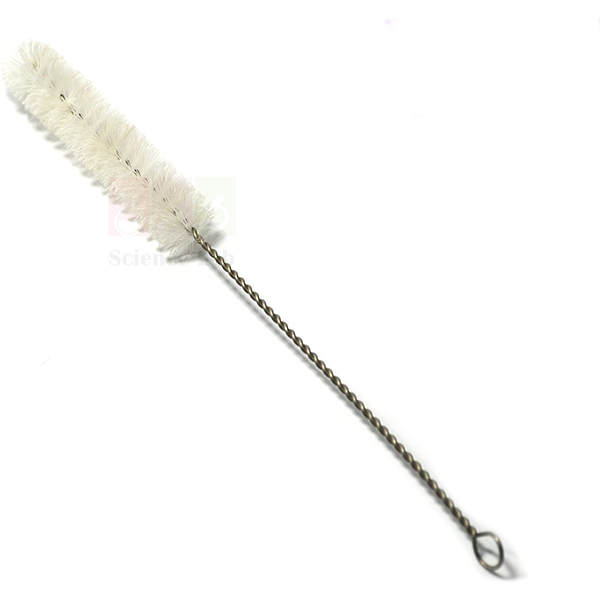
Brush, Bristle Test Tube Fan Shape
Brush, Bristle Test Tube Fan Shape (Product Code: SLE/GBO/16) is a test tube brush whose bristles spread into a fanned tip at the end of a galvanised steel wire handle. The fan of bristles reaches into the rounded bottom of a test tube, where residues from heating and precipitation reactions tend to collect, while the bristled length scrubs the walls. It is supplied in packs of 10 by Jain Scientific Equipments Pvt Ltd (ScienceLab), Ambala, and is well suited to school lab equipment bulk supply orders.
Specifications
| Parameter | Detail |
|---|---|
| Type | Test tube brush with fan-shaped tip |
| Bristles | Bristle, fanned at the tip |
| Handle | Galvanised steel wire |
| Diameter | 16–25 mm |
| Pack | Pack of 10 |
Typical Use
Where a school salt analysis kit is used across several practical sessions, dozens of test tubes come back to the sink stained with charred residue, precipitates and dried reagent. A straight-ended brush tends to leave a ring of deposit at the curved base; the fanned tip is shaped to sweep that area. Wet the tube, add a little detergent solution, insert the brush and rotate it while moving it gently in and out, then rinse with tap water followed by distilled water.
Choose tubes whose bore matches the listed 16–25 mm brush diameter so the bristles make firm contact without forcing. Push gently: pressing hard against the base of a thin or still-warm tube can crack it. Let the tubes drain upside down on a rack with drying pegs, and rinse and dry the brush after the session so the wire handle stays in good condition.
Supplier
This brush is supplied by Jain Scientific Equipments Private Limited, the Ambala, Haryana company that trades as ScienceLab. For institutions that need vendor registration details, the company is registered under GSTIN 06AAECJ8618A1ZT and holds the Legal Entity Identifier 3358004HRD1JIVXKYX49. It serves laboratories in India and international markets; more on the company profile.
Related Laboratory Equipment
Tubes, racks and alternative brushes used in the same cleaning routine:
- Brush Test Tube — a conventional test tube brush from our chemistry range.
- Test Tube Brush Nylon — an alternative with nylon bristles.
- Test Tubes with Rim — the glassware this brush is used to clean.
- Test Tube Rack With Drying Pegs — for draining washed tubes upside down.
- Bottle Brush — for reagent bottles cleaned in the same wash-up.
It is listed in our Glassware Bottles category.
Frequently Asked Questions
What diameter is the brush?
The listed diameter is 16–25 mm. If you are not sure it matches your tubes, send us their size through the contact page.
How many brushes come in a pack?
Ten.
What is the advantage of the fan-shaped tip?
The spread bristles at the end reach into the rounded base of the tube, where residue collects and where a plain-ended brush often misses.
Will the wire handle rust?
The handle is galvanised steel wire, which has a protective zinc coating. Rinsing and drying the brush after use helps it last.
Can it clean boiling tubes or other narrow glassware?
It can be used on any glassware whose bore suits the 16–25 mm brush diameter. For other sizes, ask us about alternative brushes.
What should a bulk or export enquiry include?
The number of packs, delivery location and any tubes or racks you want quoted together. We handle orders for India and international markets.
Request a Quote
Send your requirement for the Brush, Bristle Test Tube Fan Shape via the contact page, or add it to the enquiry cart with your other cleaning and glassware items.
Last updated: 24 September 2026
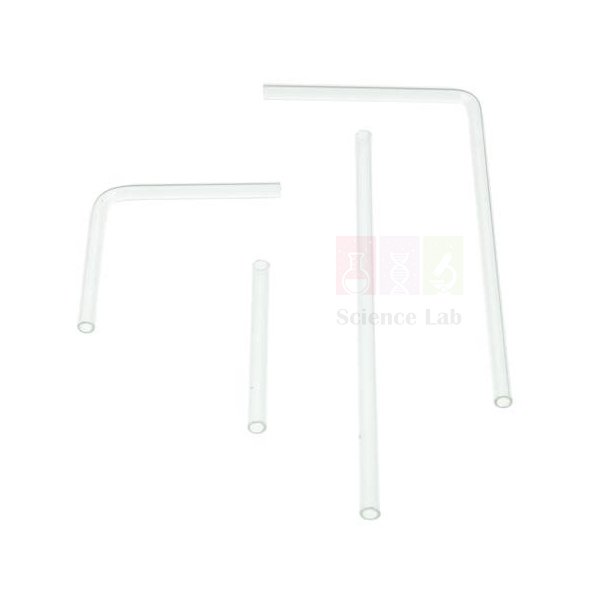
Delivery Tube
The Delivery Tube (Product Code: SLE/GBO/17) set contains four clear glass tubes of 6 mm outer diameter — two straight and two bent at 90° — used to lead a gas from a reaction vessel into a collecting jar, a test solution or a water trough. Fitted through a bored stopper, these tubes form the link in the gas collection apparatus used in India’s school and college labs. The set is manufactured by Jain Scientific Equipments Pvt Ltd (ScienceLab), Ambala.
Specifications
| Parameter | Detail |
|---|---|
| Supplied as | Set of 4 glass delivery tubes |
| Material | Glass |
| Colour | Clear |
| Outer diameter | 6 mm |
| Heat resistance | Heat resistant |
| Chemical resistance | Chemical resistant |
Each set comprises:
- 1 x short, straight tube, 70 mm long
- 1 x long, straight tube, 170 mm long
- 1 x 90° bend with both arms 60 mm long
- 1 x 90° bend with arms of 60 mm and 160 mm
Typical Use
Many of the gas experiments in a science lab kit for class 10 depend on a delivery tube: carbon dioxide is generated in a flask or boiling tube and bubbled through lime water, hydrogen is collected over water, and oxygen is led into an inverted gas jar. The bend with one 160 mm arm can reach down to the bottom of a gas jar or into a trough, while the short 60 mm bend sits neatly on a stopper; the 70 mm and 170 mm straight tubes serve as connectors, thistle-funnel extensions or simple outlets. Having all four shapes in one set means a teacher can assemble the common arrangements without cutting and bending tubing.
To fit a tube into a bored rubber stopper, wet the glass with water, hold the tube close to the stopper with a cloth around your hand, and twist it in gently rather than pushing. Never force a tube; this is how most cuts in school labs happen. When a heated reaction is being stopped, remove the delivery tube from the water trough before removing the heat so that water is not sucked back into the hot vessel.
Manufacturer
Jain Scientific Equipments Private Limited makes this set in Ambala, Haryana, and markets it under the ScienceLab name. The company supplies chemistry glassware and apparatus to schools, colleges and laboratories in India and international markets. For company background, see the profile page.
Related Laboratory Equipment
Parts needed to build a complete gas preparation and collection set-up:
- Rubber stoppers with holes of different diameters — to seat a tube securely in the mouth of a flask or test tube.
- Rubber Tubing — for flexible joints between glass tubes.
- Gas Jar, Glass — to collect the gas delivered by the tube.
- Conical Flask — a common reaction vessel for generating the gas.
- Boiling Tube — for heating small quantities of reactants.
This set is listed in our Glassware Bottles category.
Frequently Asked Questions
What is included in the set?
Four glass tubes: a 70 mm straight tube, a 170 mm straight tube, a 90° bend with two 60 mm arms, and a 90° bend with arms of 60 mm and 160 mm.
What diameter stopper hole do I need?
The tubes have an outer diameter of 6 mm, so choose stoppers bored to suit that size. The inner diameter is not listed; contact us if you need it.
Can I heat or reshape the tubes?
The glass is heat resistant, but the tubes are supplied ready-shaped. If you need other lengths or angles, ask us rather than re-working them in a flame.
Are single tubes available separately?
This item is a set of 4. For individual shapes or extra quantities of one shape, please ask when you enquire.
How do I clean the tubes?
Flush them with water immediately after use, then rinse with distilled water and let them drain. A narrow pipe cleaner or brush helps with the bends.
Can you supply class sets or export quantities?
Yes. State the number of sets and the delivery location; we supply schools and laboratories in India and international markets.
Request a Quote
To order the Delivery Tube set, send the number of sets through our contact page or add it to the enquiry cart along with stoppers, tubing and gas jars.
Last updated: 24 September 2026
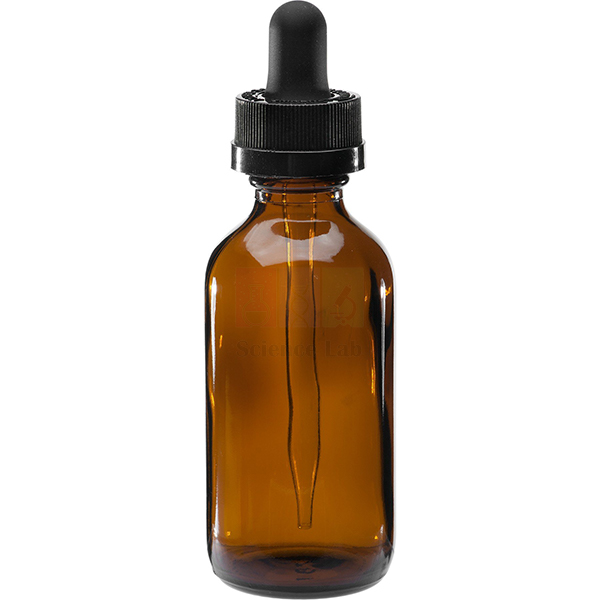
Dropper Bottle, Amber
The Dropper Bottle, Amber (Product Code: SLE/GBO/18) is a pipette-type dropping bottle in amber borosilicate glass that comes in packs of 6. Each bottle has a glass pipette dropper held in a high density polythene stopper with a dust-proof head and topped with a vinyl teat, so a reagent can be drawn up and released drop by drop without the bottle being left open. Made by Jain Scientific Equipments Pvt Ltd (ScienceLab), Ambala, a maker of borosilicate laboratory glassware in India, it is a natural home for the light-sensitive solutions in an acid base indicator kit or a biology stain set.
Specifications
| Parameter | Detail |
|---|---|
| Type | Pipette dropping bottle |
| Material | Borosilicate glass |
| Colour | Amber |
| Dropper | Glass pipette dropper with vinyl teat |
| Stopper | High density polythene, with dust-proof head |
| Stopper and teat resistance | Resistant to acids and alkalis |
| Heat resistance | Heat resistant |
| Chemical resistance | Chemical resistant |
| Pack | Pack of 6 |
Typical Use
The pipette design works differently from a screw-cap dropper: the user squeezes the vinyl teat, lowers the pipette into the liquid, releases to draw it up and then presses the teat gently to deliver single drops. The dust-proof head keeps the pipette clean when the bottle is closed, which is valuable on student benches where bottles are opened dozens of times in a practical. Amber glass protects photosensitive indicators, stains and silver-salt solutions, and a pack of 6 gives one bench or one group a matched, labelled set.
Squeeze the teat before the pipette enters the liquid, not after, to avoid blowing bubbles into the reagent. Never turn a bottle upside down or lay it on its side with liquid in the pipette, as the solution will run into the teat. Refill from the stock bottle rather than topping up with a different batch, and keep the bottles in a tray so they stay upright. These small items see heavy daily handling, which is why they appear on almost every list of educational laboratory equipment in India.
Manufacturer
ScienceLab bottles are produced by Jain Scientific Equipments Private Limited in Ambala, Haryana. The company equips chemistry and biology laboratories in schools, colleges and research institutions across India and international markets. Visit the company profile for background.
Related Glassware Bottles
Bottles and accessories that pair with amber dropper bottles:
- Dropper Bottle, Clear — the same pipette design in clear glass for reagents that are not light-sensitive.
- Dropper Bottle Tray — keeps a set of dropper bottles upright and together.
- Amber Dropping Bottle — a screw-cap amber alternative offered in 30 to 250 ml sizes.
- Reagent Bottle Narrow Mouth, Amber Glass — an amber stock bottle for refilling the dropper bottles.
See all bottles in the Glassware Bottles category.
Frequently Asked Questions
How much does each bottle hold?
The capacity is not stated in this listing. Please contact us and we will confirm the size before you order.
What is included in a pack?
Six amber borosilicate glass bottles, each with a glass pipette dropper, a high density polythene stopper with dust-proof head and a vinyl teat.
Will the stopper and teat stand up to acids and alkalis?
Yes, both are described as resistant to acids and alkalis. For organic solvents, check with us before use.
Can I get replacement teats?
Teats can wear with frequent use. Ask about spares when you enquire so they can be quoted with the bottles.
Should I choose amber or clear?
Amber for any reagent that is affected by light; clear when students need to see the colour or level of the solution.
Can you supply packs in bulk?
Yes. Send the number of packs and your delivery location; we quote for institutions in India and international markets.
Request a Quote
For a quotation on the Dropper Bottle, Amber, use our contact page or add it to the enquiry cart together with trays and stock bottles.
Last updated: 24 September 2026
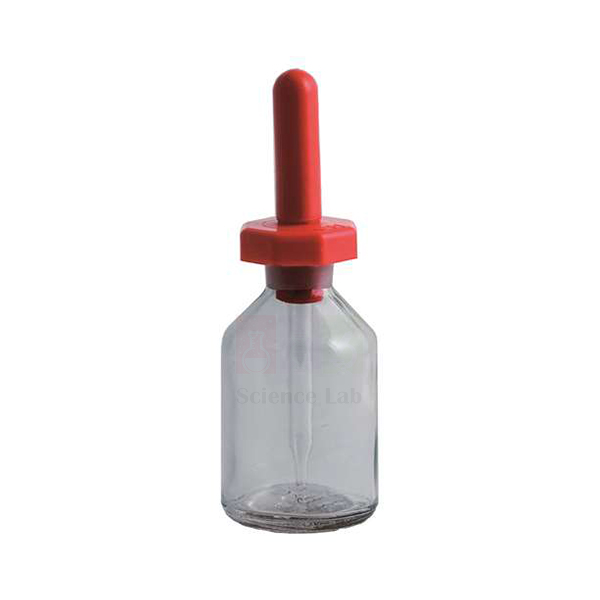
Dropper Bottle, Clear
Dropper Bottle, Clear (Product Code: SLE/GBO/19) is a borosilicate glass pipette dropping bottle in clear glass, packed six to a pack, with a glass dropper set in a dust-proof high density polythene stopper and topped with a vinyl teat. Clear glass lets students watch the reagent level and colour, which matters when the appearance of a solution tells you whether it is still usable. It is made in Ambala by Jain Scientific Equipments Pvt Ltd (ScienceLab), a lab glassware manufacturer in India serving schools, colleges and testing laboratories.
Specifications
| Parameter | Detail |
|---|---|
| Type | Pipette dropping bottle |
| Material | Borosilicate glass |
| Colour | Clear |
| Dropper | Glass dropper with vinyl teat |
| Stopper | High density polythene with dust-proof head |
| Acid and alkali resistance | Stopper and teat both resistant to acids and alkalis |
| Heat resistance | Heat resistant |
| Chemical resistance | Chemical resistant |
| Pack | Pack of 6 |
Typical Use
In qualitative analysis, reagents are added one drop at a time and the result is read from a colour change or a precipitate, so a bottle that shows its own contents clearly is a real help. A school salt analysis kit typically includes a row of such bottles for dilute acids, ammonia solution and group reagents, each placed within reach of the student. The same bottles serve microscale chemistry on spot plates, where a few drops replace test-tube quantities, and biology practicals where water or mounting fluid is added to slides.
Label every bottle, as clear solutions such as dilute acids and water look identical. Keep one pipette per bottle and never swap them, since cross-contamination can ruin a set of test results. If a solution turns cloudy or changes colour in storage, empty and clean the bottle before refilling with a fresh batch. Remove the stopper assembly before washing the glass in hot water.
Manufacturer
Jain Scientific Equipments Private Limited produces these bottles under its ScienceLab brand at Ambala, Haryana. The company provides laboratory glassware and teaching equipment for institutions in India and international markets, and its background is described on the profile page.
Related Glassware Bottles
Items that work with clear dropper bottles in analysis and microscale practicals:
- Dropper Bottle, Amber — the amber version for light-sensitive reagents.
- Dropper Bottle Tray — holds a set of bottles upright on the bench.
- Micro Test Plates — spot plates for drop-scale reactions.
- Dropping Bottles — screw-cap clear dropping bottles when a choice of capacities is needed.
- Reagent Bottle, Narrow Mouth — clear stock bottles from which the dropper bottles are refilled.
Explore the Glassware Bottles category for more options.
Frequently Asked Questions
What is the capacity of each bottle?
Capacity is not specified in this listing; please ask us to confirm it before ordering.
How does a pipette dropper bottle differ from a screw-cap dropping bottle?
Here the glass dropper sits in a push-in polythene stopper with a vinyl teat for drawing up liquid; a screw-cap dropping bottle carries its dropper in a threaded cap. Both dispense drops, so choose by preference and the reagent involved.
Are they suitable for acids?
Yes. The glass is chemical resistant, and the stopper and teat are both described as resistant to acids and alkalis.
Can the bottles be heated or sterilised?
The borosilicate glass is heat resistant, but the polythene stopper and vinyl teat should be removed first. Ask us before any sterilisation routine.
How many bottles are in a pack?
Six, each complete with dropper, stopper and teat.
What should an institutional quotation request include?
The number of packs, delivery location, and whether you also need trays or stock bottles. We supply buyers in India and international markets.
Request a Quote
Ask for a price on the Dropper Bottle, Clear through our contact page, or add it to the enquiry cart with your other bottle requirements.
Last updated: 24 September 2026