- Physics Lab Equipment
- Chemistry Lab Equipment
- Biology Lab Equipment
- Anatomical Lab Equipment
- Learning
- Educational Lab Equipment
- Magnets
- Agriculture
- Astronomy
- Earth Science
- Geography Lab Equipment
- Safety Lab Coat
- Laboratory
- Meteorological
- Electricity & Magnetism
- Heat
- School Lab Equipment
- Lab Glassware
- Science Lab Equipment
- Tvet Lab Equipment
- Robotics Kits Supplier and Manufacturer for Schools India
- Math Lab Equipment Manufacturers and Exporters in Ambala
- STEM Kits Manufacturers and Supplier India
- Engineering Lab Equipment
- Hospital Lab Equipment
- Water, Sanitation & Hygiene Supplies
- Cold Chain, Solar & Communication Equipment
- Nutrition
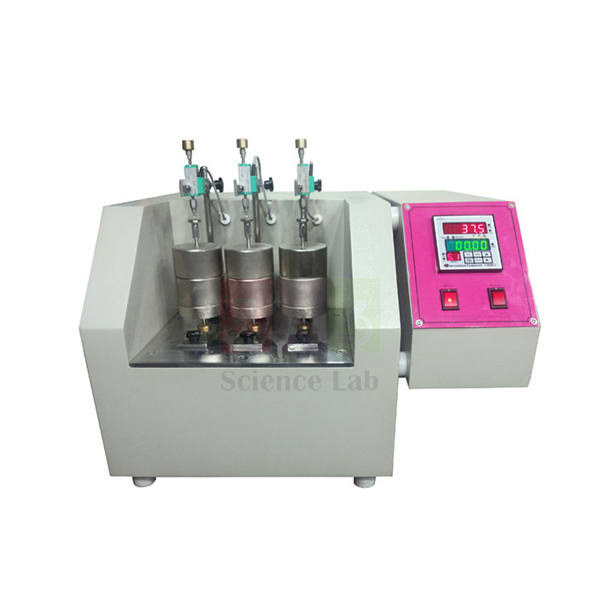
Computerised VSP & HDT Apparatus
Computerised VSP & HDT Apparatus (Product Code: SLE/ET/05) is a heated-bath testing instrument used to find the Vicat softening point (VSP) and heat deflection temperature (HDT) of plastics in polymer testing and quality-control laboratories. Loaded specimens are heated from ambient to 300 °C at 120 °C/hour or 50 °C/hour while sensors with 0.01 mm resolution follow them, and 2 to 6 stations can be specified. It is supplied by Jain Scientific Equipments Pvt Ltd (ScienceLab), Ambala, India, among its test and measurement instruments in India.
Specifications
| Parameter | Detail |
|---|---|
| Temperature range | Ambient to 300 °C |
| Rate of heating | 120 °C/hour and 50 °C/hour |
| Number of stations | Options from 2 to 6 stations |
| Sensor | Range up to 10 mm, resolution 0.01 mm |
| Weights | Set ranging from 5 g to 2000 g for incremental loads |
| Inner bath | Stainless steel |
| Outer body | Mild steel |
| Direct display | VSP and HDT results, through microcontroller |
| PC output | Penetration/deflection vs temperature graph and numeric reports of Vicat softening temperature and heat deflection temperature, printed by attaching a printer to the PC |
| Power supply | 230 V, 50 Hz, single phase |
| Product code | SLE/ET/05 |
| Supplied by | Jain Scientific Equipments Pvt Ltd (ScienceLab), Ambala, India |
What Is the VSP & HDT Apparatus Used For?
Both tests show how a plastic behaves as it warms under load. In the Vicat test a flat-ended needle rests on the specimen under a set load, and the bath temperature at which it penetrates a specified depth is taken as the softening point; in the HDT test a bar is loaded in bending, and the temperature at which it deflects by a specified amount is recorded. The microcontroller shows both results directly, and the PC software plots penetration or deflection against temperature.
Material suppliers, moulders and polymer courses use these results to compare grades and judge the temperature limit of a moulded part. Choose the heating rate your method requires, build the load from the 5 g to 2000 g weight set, and zero each sensor before heating begins. With several stations, specimens from one batch run side by side under identical heating, which makes the unit a productive choice among polymer laboratory instruments in India.
What to Specify When Ordering
- Number of stations, from 2 to 6
- Heating rate required: 120 °C/hour, 50 °C/hour or both
- The loads your method needs, so the 5 g to 2000 g weight set can be checked against it
- Whether a PC and printer for graphs and reports should be quoted (confirm with us)
- Quantity and delivery location
Supplier
ScienceLab is the name under which Jain Scientific Equipments Private Limited of Ambala, Haryana, trades. The company supplies this VSP and HDT apparatus to plastics compounders, packaging and moulding units, engineering colleges and research laboratories in India and international markets.
Station count, heating-rate options and extra weights can be discussed with us before a quotation is issued. Read about the company on the ScienceLab profile page.
Related Testing Equipment
Instruments that complete a polymer property testing set-up:
- Melt Flow Index Tester — measures how the same grade flows when molten, another heat-related property.
- Computerised Izod Impact Tester — adds impact toughness to the thermal results.
- Computerised Tensile Tester — records tensile strength and elongation of the material.
More instruments are listed under Testing Equipments.
Frequently Asked Questions
What do VSP and HDT stand for?
VSP is the Vicat softening point and HDT is the heat deflection temperature. The Computerised VSP & HDT Apparatus measures both, recording the temperature at which a loaded plastic specimen penetrates or deflects by a set amount as its bath heats up.
What temperature range and heating rates does it offer?
The Computerised VSP & HDT Apparatus heats from ambient to 300 °C at either 120 °C/hour or 50 °C/hour, so the rate can be chosen to suit the test method your laboratory follows.
How many specimens can be tested at once?
The Computerised VSP & HDT Apparatus is offered with options from 2 to 6 stations, so two to six specimens can be tested in a single heating run. State the number of stations you need when you enquire.
Which weights are supplied with the apparatus?
A set of weights ranging from 5 grams to 2000 grams is supplied with the Computerised VSP & HDT Apparatus for applying incremental loads to the specimens at each station.
How fine are the displacement sensors?
Each sensor on the Computerised VSP & HDT Apparatus has a range up to 10 mm and a resolution of 0.01 mm, which is fine enough to follow the small penetrations and deflections these tests measure.
Who supplies the Computerised VSP & HDT Apparatus?
The Computerised VSP & HDT Apparatus is supplied by Jain Scientific Equipments Pvt Ltd (ScienceLab), Ambala, Haryana, India, to polymer, packaging and engineering laboratories in India and international markets.
Is a calibration certificate available?
Calibration-certificate availability for the Computerised VSP & HDT Apparatus, including its temperature and displacement sensors, should be discussed with us before ordering. Send your documentation needs through the contact page for confirmation.
Request a Quote
Tell us the number of stations, heating rates and quantity you need through the contact page, or add the apparatus to the enquiry cart, and ScienceLab will send a quotation.
Last updated: 24 September 2026
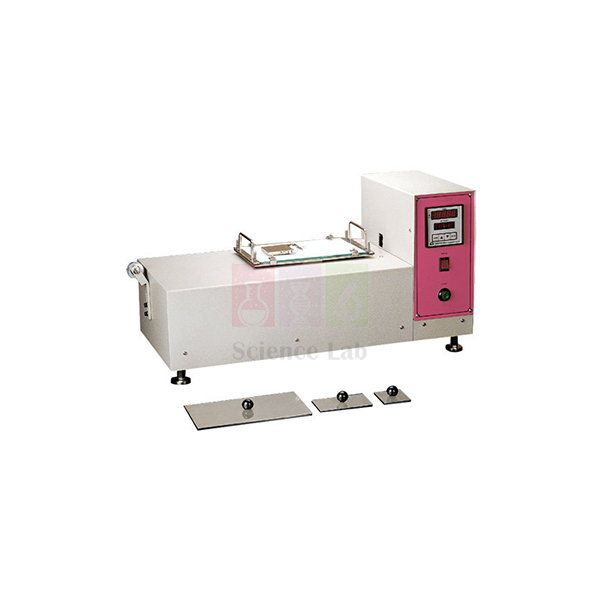
Static and Kinetic Friction Tester
Static and Kinetic Friction Tester (Product Code: SLE/ET/06) is a motorised coefficient-of-friction instrument used to measure the force needed to start, and then keep, a sled sliding over a film, sheet or other flat sample in packaging and materials testing laboratories. A 200 gram sled is drawn at 150 mm/minute, readings go up to 9.999 kg, and static and kinetic friction values appear directly on the display. It is supplied by Jain Scientific Equipments Pvt Ltd (ScienceLab), Ambala, India, for buyers of laboratory instruments in India and abroad.
Specifications
| Parameter | Detail |
|---|---|
| Capacity | Up to 9.999 kg |
| Test speed | 150 mm/minute |
| Sled weight | 200 g |
| Direct display | Static and kinetic friction values |
| Accessories | Three stainless steel (S.S) templates |
| Computerised model | Micro-controller with RS 232 communication in place of the digital controller; interface software offered for installation on the user’s PC |
| Power supply | 230 V, 50 Hz, single phase |
| Product code | SLE/ET/06 |
| Supplied by | Jain Scientific Equipments Pvt Ltd (ScienceLab), Ambala, India |
What Is the Static and Kinetic Friction Tester Used For?
Packaging films, laminates, papers and coated sheets must slide neither too easily nor too reluctantly on filling lines and in stacks, so their coefficient of friction is checked routinely. In a typical test one piece of material is held flat, a second piece is fitted to the 200 gram sled, and the sled is pulled across at a constant 150 mm/minute; the force needed to break it free gives the static value and the steadier force while sliding gives the kinetic value.
Quality-control labs use it to accept incoming film batches and compare slip additives, while engineering students use it to see the real difference between static and kinetic friction. Keep the sled face and templates clean, avoid touching the test surfaces, and let samples settle to room conditions first, since dust or handling can shift the reading. On the computerised model, the RS 232 link and interface software let results be kept on a PC.
What to Specify When Ordering
- Standard digital-controller model, or computerised model with micro-controller, RS 232 communication and PC interface software
- A PC to run the interface software, if you choose the computerised model
- Any templates needed beyond the three stainless steel templates included (ask us)
- Quantity and delivery location
Supplier
Jain Scientific Equipments Private Limited, which trades as ScienceLab from Ambala, Haryana, supplies this friction tester to packaging converters, film producers, engineering colleges and testing laboratories in India and international markets.
Buyers who need vendor registration details can use the supplying company’s GSTIN 06AAECJ8618A1ZT and Legal Entity Identifier (LEI) 3358004HRD1JIVXKYX49. The ScienceLab company profile gives more background.
Related Testing Equipment
Useful companions in a packaging or friction testing laboratory:
- Inclined Plane Tester — measures film friction by tilting a plane instead of pulling the sled.
- Heat Sealer — prepares sealed film samples in the same packaging laboratory.
- Computerised Tensile Tester — measures the strength and elongation of the same films.
- Friction Slide Apparatus — a teaching apparatus for introducing the principles of sliding friction.
See the whole Testing Equipments range.
Frequently Asked Questions
What does the Static and Kinetic Friction Tester measure?
The Static and Kinetic Friction Tester measures the force needed to start a sled moving and to keep it sliding over a sample, and it displays the resulting static and kinetic friction values directly for film, sheet and similar materials.
What are the sled weight and test speed?
The Static and Kinetic Friction Tester uses a 200 gram sled pulled at 150 mm/minute. Keeping the sled weight and speed fixed makes results from different samples, operators and days directly comparable.
What is the capacity of the Static and Kinetic Friction Tester?
The Static and Kinetic Friction Tester has a capacity of up to 9.999 kg, covering the friction forces produced by its 200 gram sled on films, papers and other flat samples.
Is a computerised version available?
Yes. In the computerised model of the Static and Kinetic Friction Tester, the digital controller is replaced by a micro-controller with RS 232 communication, and interface software is offered for installation on the user’s PC.
Which accessories are included?
The Static and Kinetic Friction Tester comes with three stainless steel templates as accessories. If your laboratory needs additional templates or a spare sled, ask us when you request a quotation.
Who supplies the Static and Kinetic Friction Tester?
The Static and Kinetic Friction Tester is supplied by Jain Scientific Equipments Pvt Ltd (ScienceLab), Ambala, Haryana, India, to packaging, film and engineering laboratories in India and international markets.
What does a quotation request need?
For a Static and Kinetic Friction Tester quotation, tell us whether you need the standard or computerised model, the quantity and the delivery location. Send the details through the contact page or add the product to the enquiry cart.
Request a Quote
Request pricing for the Static and Kinetic Friction Tester through the contact page, or add it to the enquiry cart with any other packaging test instruments, stating the model you prefer.
Last updated: 24 September 2026
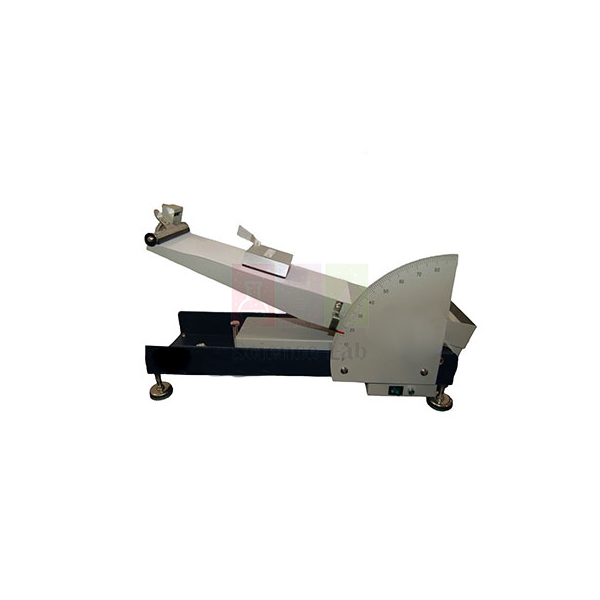
Inclined Plane Tester
Inclined Plane Tester (Product Code: SLE/ET/07) is a tilting-plane friction instrument used to determine the coefficient of friction between film and film, film and metal, and film and glass in packaging and plastics laboratories. The plane rises at 1.5° to 2.0° per second beneath a 750 gram sled measuring 4 inch × 2 inch, and two stainless steel templates are included. It is supplied by Jain Scientific Equipments Pvt Ltd (ScienceLab), Ambala, India, a laboratory equipment exporter from India serving domestic and overseas buyers.
Specifications
| Parameter | Detail |
|---|---|
| Purpose | Coefficients of friction: film to film, film to metal, film to glass |
| Speed (plane tilt) | 1.5° to 2.0° per second |
| Sled weight | 750 g |
| Sled size | 4 inch × 2 inch |
| Accessories | 2 stainless steel (S.S) templates |
| Power supply | 230 V, 50 Hz, single phase |
| Product code | SLE/ET/07 |
| Supplied by | Jain Scientific Equipments Pvt Ltd (ScienceLab), Ambala, India |
What Is the Inclined Plane Tester Used For?
The inclined plane method finds static friction without a force gauge. The sled, faced with the sample, rests on the plane, which tilts steadily at 1.5° to 2.0° per second until the sled starts to slide; the tangent of that angle is the static coefficient of friction between the two surfaces. Because the instrument is intended for film-to-film, film-to-metal and film-to-glass pairs, one set-up compares a packaging film against itself and against the surfaces it meets on machines and shelves.
Film converters use it to set slip specifications and check production batches, while physics and engineering courses use it to show the angle of friction on real materials. Fit the film smoothly to the 750 gram sled without creases, clean metal or glass surfaces before each run, and repeat on fresh sample areas before averaging the slip angle. Laboratories that also own the horizontal-pull Static and Kinetic Friction Tester can compare the two methods directly.
What to Specify When Ordering
- The material pairs you will test: film to film, film to metal and/or film to glass
- Extra stainless steel templates or a spare sled, if needed (ask us)
- Site supply (listed: 230 V, 50 Hz, single phase)
- Quantity and delivery location
Supplier
ScienceLab is the trading name of Jain Scientific Equipments Private Limited, based in Ambala, Haryana. It supplies the Inclined Plane Tester to flexible-packaging firms, film extruders, polytechnics and university laboratories in India and international markets, often together with other friction and packaging test instruments.
Ask us about spare templates when you send an enquiry. The ScienceLab profile page describes the company.
Related Testing Equipment
Instruments and teaching apparatus that pair well with this tester:
- Static and Kinetic Friction Tester — pulls a sled horizontally and also reports kinetic friction.
- Heat Sealer — seals film samples for other packaging tests in the same lab.
- Friction Slide Apparatus — a teaching apparatus on sliding friction.
- Inclined Plane With Accessories — a physics-lab inclined plane for teaching forces on a slope.
Explore the Testing Equipments category for more instruments.
Frequently Asked Questions
Which material combinations can the Inclined Plane Tester measure?
The Inclined Plane Tester is intended to determine the coefficient of friction between film and film, film and metal, and film and glass, so a packaging film can be checked against itself and against common contact surfaces.
How fast does the plane tilt?
The plane of the Inclined Plane Tester tilts at 1.5° to 2.0° per second. A slow, steady rise lets the sled start sliding at a well-defined angle, which is then used to work out the static coefficient of friction.
What are the sled weight and size?
The Inclined Plane Tester uses a 750 gram sled measuring 4 inch × 2 inch. The film sample is fitted smoothly to the sled face before each test so that contact with the counter-surface is even.
How is the coefficient of friction worked out?
On the Inclined Plane Tester, the static coefficient of friction equals the tangent of the plane angle at the moment the sled begins to slide, so a steeper slip angle indicates a higher-friction pair of surfaces.
How does it differ from the Static and Kinetic Friction Tester?
The Inclined Plane Tester finds static friction from the angle at which a sled slips, while the Static and Kinetic Friction Tester pulls a sled horizontally and reports both static and kinetic values. Many packaging laboratories use both methods.
Who supplies the Inclined Plane Tester?
The Inclined Plane Tester is supplied by Jain Scientific Equipments Pvt Ltd (ScienceLab), Ambala, Haryana, India, to packaging, plastics and teaching laboratories in India and international markets.
What does a quotation request need?
For an Inclined Plane Tester quotation, list the quantity, delivery location and the material pairs you plan to test, plus any extra templates. Send the request through the contact page or add the instrument to the enquiry cart.
Request a Quote
For pricing on the Inclined Plane Tester, use the contact page or add it to the enquiry cart; ScienceLab replies with a quotation and delivery details for your location.
Last updated: 24 September 2026
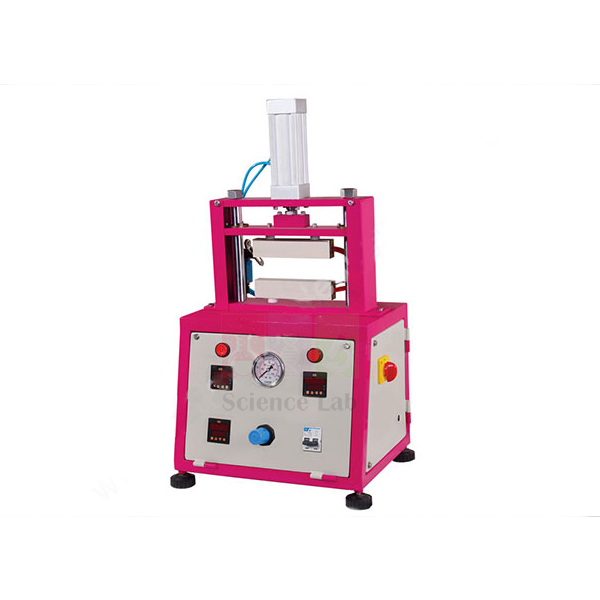
Heat Sealer
Heat Sealer (Product Code: SLE/ET/08) is a table-top laboratory sealing instrument used to make controlled heat seals on plastic films and flexible packaging samples for seal and package testing. Two temperature zones are held by an auto-tuned PID controller up to 200 °C with 0.1 °C resolution, and a pneumatically moved jaw closes against a fixed jaw to form a 150 mm × 20 mm seal. It is supplied by Jain Scientific Equipments Pvt Ltd (ScienceLab), Ambala, India, to packaging laboratories and colleges looking for laboratory instruments in India.
Specifications
| Parameter | Detail |
|---|---|
| Temperature zones | Two |
| Controller | Auto-tuned PID; temperature range up to 200 °C; resolution 0.1 °C |
| Sealing dimensions | Length 150 mm × width 20 mm |
| Clamping jaws | One fixed; the second moved by pneumatic action |
| Speed | 300 mm/minute |
| Daylight | 50 mm |
| Mounting | Table top |
| Power supply | 230 V, 60 Hz, single phase, 15 A (as listed; confirm your site supply with us) |
| Product code | SLE/ET/08 |
| Supplied by | Jain Scientific Equipments Pvt Ltd (ScienceLab), Ambala, India |
What Is the Heat Sealer Used For?
Seal quality depends on temperature, pressure and contact time, and a laboratory heat sealer lets each of these be repeated from one sample to the next. The operator places two layers of film between the jaws, the pneumatic jaw closes against the fixed jaw, and the heated zones fuse a strip 150 mm long and 20 mm wide. Because the PID controller works to 0.1 °C resolution, seals made on different days can be compared with confidence.
Packaging developers use it to find the lowest temperature that gives a sound seal on a new laminate, and quality laboratories prepare seal strips that are later pulled apart on a tensile tester to judge seal strength. Start low and raise the temperature in small steps, keep the jaw faces free of melted residue, and let the zones stabilise after every change. It also suits film and pouch exercises in engineering and packaging courses.
What to Specify When Ordering
- Mains supply at your site (listed supply: 230 V, 60 Hz, single phase, 15 A)
- Compressed-air availability for the pneumatic jaw (discuss with us)
- Whether the 150 mm × 20 mm seal size suits your sample format
- Quantity and delivery location
Supplier
Jain Scientific Equipments Private Limited, trading as ScienceLab in Ambala, Haryana, supplies this heat sealer to flexible-packaging developers, film converters, packaging test laboratories and engineering institutes in India and international markets.
Questions about jaw faces, controller settings or site services such as compressed air can be raised with us before ordering. The ScienceLab company profile has more about the business.
Related Testing Equipment
Instruments often used with sealed film samples:
- Computerised Tensile Tester — can pull sealed strips apart when seal strength is checked.
- Static and Kinetic Friction Tester — checks the slip of the same packaging films.
- Inclined Plane Tester — measures film friction from the slip angle.
- Melt Flow Index Tester — characterises the melt flow of sealant polymer grades.
All instruments in this group are on the Testing Equipments page.
Frequently Asked Questions
What seal size does the Heat Sealer produce?
The Heat Sealer produces a seal 150 mm long and 20 mm wide between one fixed jaw and one pneumatically moved jaw, which suits strip samples for peel and seal-strength testing of films and laminates.
What temperature control does the Heat Sealer have?
The Heat Sealer uses an auto-tuned PID controller with a temperature range up to 200 °C and a resolution of 0.1 °C, serving two temperature zones so that sealing conditions can be repeated closely.
How are the jaws operated?
On the Heat Sealer one clamping jaw is fixed and the second is moved by pneumatic action to close on the film. Confirm compressed-air availability at your laboratory with us when you request a quotation.
What power supply does the Heat Sealer need?
The Heat Sealer is listed for a 230 volt, 60 Hz, single-phase supply rated at 15 amperes. Confirm your site’s voltage and frequency with us before ordering so any difference can be resolved before dispatch.
Is the Heat Sealer a bench unit?
Yes. The Heat Sealer is table-top mounted with a daylight of 50 mm, so it sits on a laboratory bench beside other packaging test instruments rather than needing floor space.
Who supplies the Heat Sealer?
The Heat Sealer is supplied by Jain Scientific Equipments Pvt Ltd (ScienceLab), Ambala, Haryana, India, to packaging, film and engineering laboratories in India and international markets.
What does a quotation request need?
For a Heat Sealer quotation, state the quantity, delivery location, your mains supply and whether compressed air is available on site. Send these details through the contact page or add the product to the enquiry cart.
Request a Quote
To price the Heat Sealer for your laboratory, contact us through the contact page or add it to the enquiry cart, and ScienceLab will respond with a quotation.
Last updated: 24 September 2026
Expansion Apparatus
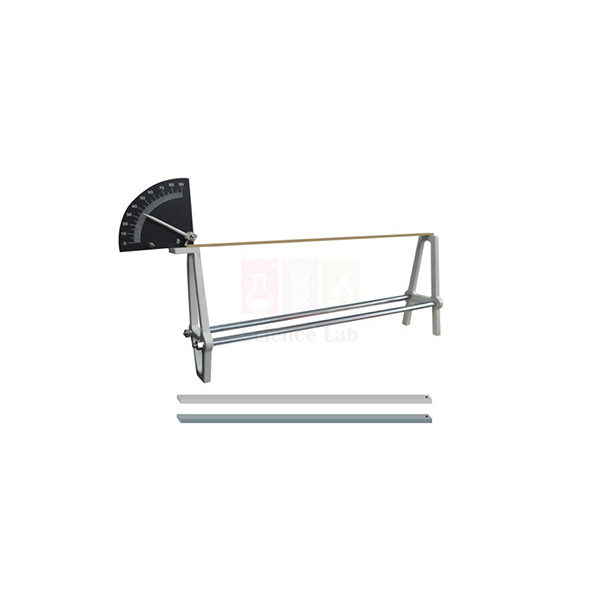
Expansion Apparatus (Product Code: SLE/H/17) demonstrates the linear expansion of solids by turning a very small change in a bar's length into a visible pointer movement. An expansion bar sits across the top of two cast-metal uprights: one end is fixed, the other rests beneath a friction pointer that moves along a scale reading 0 to 90 as the bar lengthens. It is used in school and college heat lessons, and it is made by Jain Scientific Equipments Pvt Ltd (ScienceLab), Ambala, a physics instruments supplier to institutions in India and international markets.
Specifications
| Parameter | Detail |
|---|---|
| Purpose | Demonstrates the linear expansion of solids |
| Frame | Two cast-metal uprights linked by a pair of parallel plated metal support rods |
| Expansion bar | Supported at the top; fixed to one upright and resting beneath a friction pointer on the other |
| Indicator | Friction pointer moving along a scale |
| Scale reading | 0 to 90 |
Typical Use
With the pointer noted at its starting position, the teacher warms the expansion bar with a flame moved steadily along its length. Because one end of the bar is held fast, all of the lengthening appears at the free end, which drags the friction pointer across the 0 to 90 scale. Students record the pointer movement as heating continues and then watch it respond again as the bar cools and contracts. The demonstration makes a good starting point for discussing why railway lines, bridges and pipelines are designed with room to expand.
The cast uprights and paired support rods keep the bar steady during heating, so the reading reflects expansion rather than wobble. Heat evenly rather than at one spot, allow the bar to cool completely before handling it, and keep the scale area free of soot for clear readings. As a demonstration model for the physics lab it works well at the front bench, where the pointer can be seen by a group gathered around it.
Manufacturer
Jain Scientific Equipments Private Limited manufactures the Expansion Apparatus in Ambala, Haryana, and markets its equipment under the ScienceLab name to schools, colleges and distributors. Visit our company profile for an overview of the business.
Related Laboratory Equipment
Apparatus that extends a thermal-expansion lesson:
- Bunsen Burner — a flame source for heating the expansion bar
- Expansion Of Liquids Apparatus — carries the same idea from solids on to liquids
- Apparatus Bar & Gauge — a second way of showing that heated solids grow in size
- Conductivity of Metal Apparatus — follows on with how quickly heat travels through different metals
For more heat apparatus, visit the Heat category.
Frequently Asked Questions
What does the apparatus demonstrate?
The linear expansion of a solid bar when it is heated, shown by a pointer moving along a 0 to 90 scale.
Does the scale read in millimetres?
The scale is marked 0 to 90; its units are not stated in our listing, so it is best used to compare expansion. Contact us if you need scale details.
Are bars of different metals included?
The apparatus is described with one expansion bar. If you want to compare several metals, please ask us about options before ordering.
What heat source should I use?
A heat source is not listed among the supplied items; a laboratory burner is commonly used to warm the bar along its length.
How is the bar held in place?
It is fixed to one cast-metal upright and rests beneath the friction pointer on the other, with a pair of plated metal rods linking the uprights.
Can you supply this in quantity for several schools?
Yes, we handle bulk orders for institutions and distributors in India and international markets. Share quantities and destination; warranty terms are confirmed in the quotation.
Request a Quote
For pricing on the Expansion Apparatus, reach us through the contact page or add it to your enquiry cart.
Last updated: 24 September 2026
Melting Point Apparatus Simple
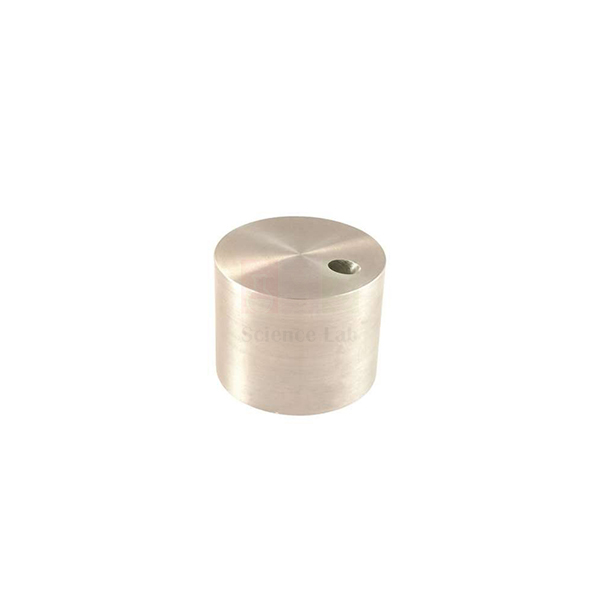
Melting Point Apparatus Simple (Product Code: SLE/H/18) is a very simple device for determining the melting point of amorphous solids. It consists of an aluminium cylinder with an obliquely drilled hole at its top that holds a thermometer; a thin layer of the test substance is sprinkled on the top face, the block is heated gently, and the temperature at which the substance melts is read straight from the thermometer. It suits introductory chemistry and physics practicals, and it is made by Jain Scientific Equipments Pvt Ltd (ScienceLab), Ambala, as part of its school chemistry lab equipment for India and international markets.
Key Details
| Parameter | Detail |
|---|---|
| Type | Simple block-type melting point apparatus |
| Purpose | Determination of the melting point of amorphous solids |
| Body | Aluminium cylinder |
| Thermometer mounting | Obliquely drilled hole at the top for accommodating thermometers |
| Method | Very thin layer of substance sprinkled on top of the block, heated gently; melting temperature read directly from the thermometer |
Typical Use
The block is set on a stand above a small, gentle flame and a thermometer is slid into the oblique hole so its bulb lies inside the aluminium close to the top face. A pinch of the powdered sample is spread in a very thin layer on that face. As the block warms, students watch the powder closely and note the thermometer reading at the moment it turns to liquid. Because aluminium carries heat quickly, the top face and the thermometer bulb stay at similar temperatures, which is what makes a direct reading possible. For substances that soften gradually, it is worth recording both the point where softening starts and where the layer becomes fully liquid.
Heat slowly as the expected melting point approaches, clean the top face between samples once the block has cooled, and use a fresh thin layer for each reading so results can be repeated. Its simplicity makes it popular as low-maintenance lab equipment for college and school practical rooms where a quick, visual melting-point check is needed.
Manufacturer
The apparatus is manufactured by Jain Scientific Equipments Private Limited, trading as ScienceLab and based in Ambala, Haryana. Registered with the Ministry of Corporate Affairs under CIN U29309HR2020PTC087597, the company produces its range at a licensed factory in HSIIDC Industrial Area, Saha, Ambala (Factory Licence AMB-ONLINE-CHD-J-414). More detail is in our company profile.
Related Laboratory Equipment
Items used with the block or as alternatives for melting-point work:
- Laboratory Thermometer — for the oblique thermometer hole; confirm stem size with us when ordering together
- Micro Burner — a small flame that suits the gentle heating the method calls for
- Tripod Stand 200mm — to hold the block steadily above the flame
- Melting-Point Tubes — for the capillary method when a sharper reading is needed
- Digital Melting Point Apparatus — an electronic alternative for higher-level courses
See related thermal apparatus in the Heat category.
Frequently Asked Questions
Is a thermometer included?
A thermometer is not listed as part of the apparatus. The oblique hole is made to accommodate one — contact us if you want a matching thermometer quoted.
Which substances is it intended for?
It is designed for determining the melting point of amorphous solids. For sharp melting points of pure crystalline compounds, the capillary or digital methods linked above are the usual choice.
What heat source do I need?
Any source that allows gentle, controllable heating, such as a small burner or spirit lamp; a heat source is not listed among the supplied items.
How do I clean the block?
Let it cool, then wipe the top face free of residue before the next sample, without scratching the surface.
Is a calibration certificate available?
Readings come from the thermometer you use. If you need calibration paperwork for the thermometer or apparatus, please discuss it with us via the contact page.
Can you supply multiple units for a lab or export order?
Yes. We supply schools, colleges and distributors across India and international markets; warranty terms and lead time are confirmed in your quotation.
Request a Quote
To order the Melting Point Apparatus Simple, contact our team or add it to the enquiry cart with any accessories you need.
Last updated: 24 September 2026
Conductivity Apparatus
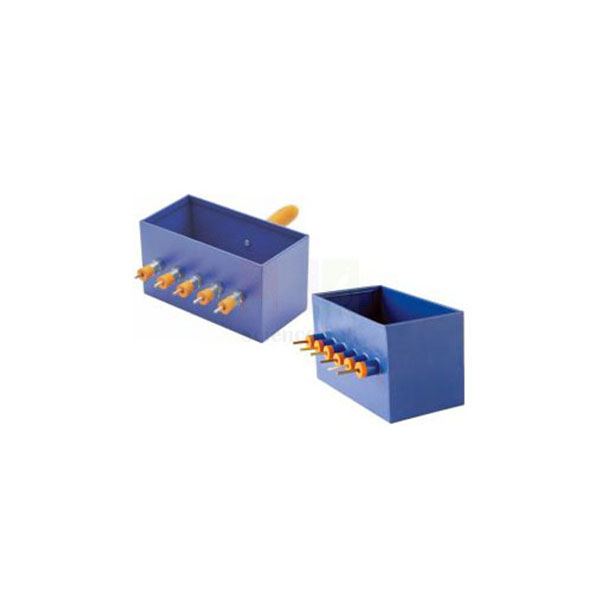
Conductivity Apparatus (Product Code: SLE/H/19) lets students compare how well six different metals conduct heat, side by side and under the same conditions. It carries six metal rods — one each of copper, iron, lead, aluminium, steel and zinc — fixed horizontally through holed rubber bungs in a sheet-metal body, so all six can be heated together and their behaviour compared at a glance. It is widely used as physics lab equipment for schools in India and abroad, and it is made by Jain Scientific Equipments Pvt Ltd (ScienceLab), Ambala, a science apparatus manufacturer in India.
Specifications
| Parameter | Detail |
|---|---|
| Metal rods | Six: one each of copper, iron, lead, aluminium, steel and zinc |
| Rod mounting | Fixed horizontally through holed rubber bungs |
| Body | Sheet metal, with six holes on one side |
| Sizes listed | 150 x 90 x 100 mm; 150 x 3 mm |
| Handle | Plastic handle and wooden handle both listed — version confirmed at quotation |
Typical Use
One end of every rod sits in the sheet-metal body, so all six are heated from the same place at the same time. A common classroom method is to coat the exposed lengths of the rods with a thin film of wax before heating; as heat travels outward, the wax melts back along each rod, and after a few minutes students can see which metals have carried heat furthest. Copper and aluminium usually lead clearly, while lead and steel lag behind, giving an easy-to-read ranking that students can record in a table and explain in terms of thermal conductivity.
Having six metals in a single fixture makes this a stronger comparison than testing rods one at a time, because the heat input is shared. Keep the rods clean and free of old wax before a new run, use the handle to move the apparatus while it is warm, and let it cool before storing. Teachers building a school physics practical set for heat topics often keep it alongside a simpler strip-type conductivity demonstration for younger classes.
Manufacturer
This apparatus is made in Ambala, Haryana, by Jain Scientific Equipments Private Limited, whose products are sold under the ScienceLab brand to education and training institutions. Learn more in our company profile.
Related Laboratory Equipment
Supplies and alternatives for conduction experiments:
- Wax — for coating the rods so the spread of heat becomes visible
- Conductivity of Metal Apparatus — a four-strip, centre-heated version for simpler comparisons
- Thermal Conductivity Bars — another bar set for comparing conduction in metals
- Apparatus Heat/Thermal Conductivity — a thermal conductivity apparatus from our physics range
Browse the full Heat equipment range.
Frequently Asked Questions
Which metals are included?
Six rods: copper, iron, lead, aluminium, steel and zinc, one of each.
What are the dimensions?
The listing gives 150 x 90 x 100 mm and 150 x 3 mm. If you need a dimensioned drawing showing which part each size refers to, contact us.
Does it come with a plastic or a wooden handle?
Both handle types appear in our listing; the version supplied is confirmed when we quote.
Is wax supplied for the experiment?
Wax is not listed among the included items. It can be ordered separately — see the Wax link above.
Why does the set include lead and zinc as well as copper?
A wide spread of metals gives a clearer ranking; good conductors such as copper stand out sharply against poorer ones such as lead.
Is bulk or export supply possible?
Yes. We supply institutions and distributors in India and international markets; quote quantity and destination, and warranty terms will be stated in the quotation.
Request a Quote
Request pricing for the Conductivity Apparatus on our contact page or through the enquiry cart.
Last updated: 24 September 2026
Measuring Vapor Apparatus
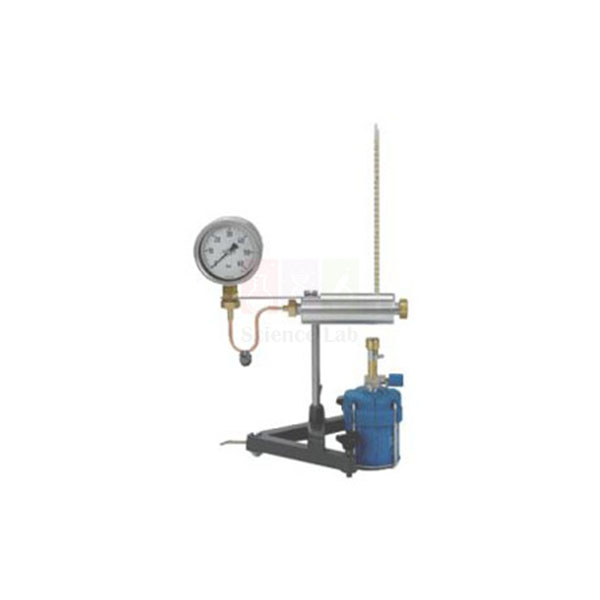
Measuring Vapor Apparatus (Product Code: SLE/H/20) is a high-pressure steam apparatus in which water is heated inside a closed pressure chamber at constant volume, so that liquid and vapour settle into equilibrium and the steam pressure can be measured across a temperature range of 100–250 °C. From those readings, students determine the heat of vaporisation at various temperatures and study the behaviour of real gases and vapours. It is intended for college and university thermodynamics laboratories and is made by Jain Scientific Equipments Pvt Ltd (ScienceLab), Ambala, a laboratory instruments supplier in India serving international markets as well.
Specifications
| Parameter | Detail |
|---|---|
| Type | High-pressure steam apparatus |
| Operating principle | Water heated in a closed pressure chamber at constant volume |
| Steam pressure measurement range | 100–250 °C |
| Phase behaviour | Typical equilibrium states between gas and liquid phases can be set up |
| Investigations | Real gases and vapours; vapour pressure as a function of temperature; heat of vaporisation at various temperatures |
Typical Use
In a standard experiment the chamber is heated in stages, and at each stage the class waits for liquid and vapour to reach equilibrium before recording the temperature and the steam pressure. Repeating this across the 100–250 °C range produces a vapour-pressure curve. Plotting the natural logarithm of pressure against the reciprocal of absolute temperature turns that curve into a near-straight line whose slope, through the Clausius–Clapeyron relation, gives the heat of vaporisation; comparing slopes over different parts of the range shows how that value changes with temperature.
Because the chamber works above atmospheric pressure and at high temperature, the apparatus belongs in supervised college or university sessions. Follow the operating instructions for filling and heating, wear eye protection, and let the unit cool and depressurise fully before any handling. It fits well into physics lab equipment for thermodynamics and heat-engine courses, giving students measured data on real, non-ideal vapour behaviour.
Manufacturer
Jain Scientific Equipments Private Limited builds this steam apparatus in Ambala, Haryana, and supplies it under its ScienceLab trade name to teaching and training laboratories. See our company profile for more about the company.
Related Laboratory Equipment
Apparatus that supports a thermodynamics and pressure-measurement syllabus:
- Thermoelectric Effects Apparatus — for studying how the temperatures in such experiments are measured and controlled
- Calibration of a Pressure Gauge — teaches how pressure readings are checked against a reference
- Pressure Measurement Bench — broader practice with pressure-measuring devices
- Safety Goggles — eye protection when working near hot, pressurised equipment
Further apparatus is listed under Heat.
Frequently Asked Questions
Over what temperature range can steam pressure be measured?
From 100 to 250 °C, with water heated in the closed chamber at constant volume.
What quantities can students determine?
Vapour pressure as a function of temperature and, from it, the heat of vaporisation at various temperatures.
Why is the chamber kept at constant volume?
In a sealed chamber the liquid and its vapour reach equilibrium, so the measured pressure depends on temperature alone — the condition needed for a clean vapour-pressure curve.
Is it suitable for school classes?
It is better suited to supervised college and university work because it operates at high temperature and above atmospheric pressure.
How is pressure read, and what power supply is needed?
Our listing does not give the gauge type or electrical requirements. Please contact us for the full datasheet before ordering.
Can a calibration certificate be supplied?
Calibration paperwork is not part of the standard listing; discuss any requirement with us through the contact page.
Do you ship to institutions outside India?
Yes, we supply universities and distributors in India and international markets; warranty terms are confirmed with each quotation.
Request a Quote
To discuss the Measuring Vapor Apparatus for your laboratory, use our contact page or add it to the enquiry cart.
Last updated: 24 September 2026