- Physics Lab Equipment
- Chemistry Lab Equipment
- Biology Lab Equipment
- Anatomical Lab Equipment
- Learning
- Educational Lab Equipment
- Magnets
- Agriculture
- Astronomy
- Earth Science
- Geography Lab Equipment
- Safety Lab Coat
- Laboratory
- Meteorological
- Electricity & Magnetism
- Heat
- School Lab Equipment
- Lab Glassware
- Science Lab Equipment
- Tvet Lab Equipment
- Robotics Kits Supplier and Manufacturer for Schools India
- Math Lab Equipment Manufacturers and Exporters in Ambala
- STEM Kits Manufacturers and Supplier India
- Engineering Lab Equipment
- Hospital Lab Equipment
- Water, Sanitation & Hygiene Supplies
- Cold Chain, Solar & Communication Equipment
- Nutrition
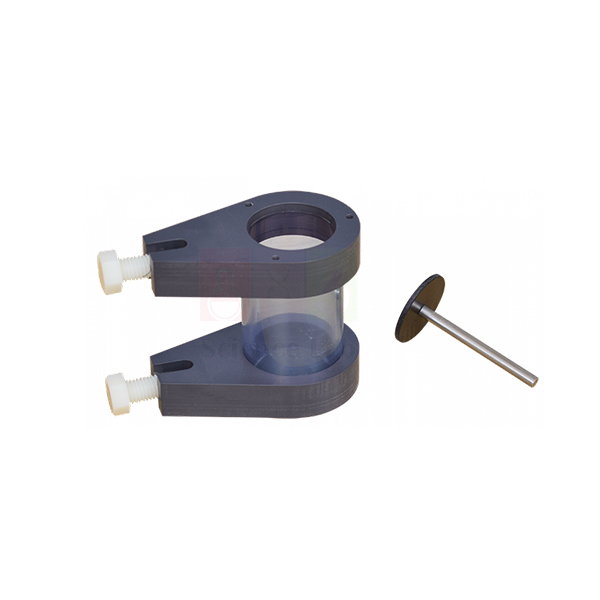
Damper Kit For Mass/Spring
Damper Kit For Mass/Spring (Product Code: SLE/ETM/07) is a dash-pot damping accessory used to add viscous damping to a mass-spring vibration experiment, fitting to the guide rods under its platform, in theory of machines laboratories. Its piston disc and cylinder work with easily found non-toxic fluids, so students can move from light to heavy damping simply by changing the fluid. It is produced by Jain Scientific Equipments Pvt Ltd (ScienceLab), an OEM scientific equipment manufacturer in India, at its own factory in Ambala.
Key Details
| Parameter | Detail |
|---|---|
| Type | Dash-pot damper formed by a piston disc and cylinder |
| Mounting | Fits to the guide rods under the platform of the mass-spring experiment |
| Damping fluid | Works with easily found non-toxic fluids, chosen for different damping levels |
| Project work | Students may try their own fluids and their own piston discs |
| Data analysis | With a data acquisition system, displayed data can be fitted to underdamped and overdamped viscous damping models |
| Product code | SLE/ETM/07 |
| Manufacturer | Jain Scientific Equipments Pvt Ltd (ScienceLab) — OEM |
| Country of origin | India (made in Ambala, Haryana) |
What Is the Mass-Spring Damper Kit Used For?
A mass bouncing on a spring is the textbook single-degree-of-freedom system, and adding a dash-pot turns it into the damped model used for vehicle suspensions and machine mounts. Mounted on the guide rods beneath the platform, the piston disc moves through fluid in the cylinder each time the mass oscillates, taking energy out of the motion. With a thin fluid the platform rings down gradually (underdamped); with a thick one it creeps back without overshooting (overdamped).
When the motion is recorded with a data acquisition system, the displayed data can be fitted to underdamped and overdamped viscous damping models, so students can extract a damping coefficient and compare it with theory. Try a series of non-toxic fluids of increasing thickness, fill the cylinder to the same level each time, and clean the piston disc between fluids. Students may also design their own piston discs, which makes the kit a good base for project work.
What to Specify When Ordering
- The mass-spring experiment the kit will be fitted to (it mounts on the guide rods under the platform)
- Whether data acquisition for fitting damping models is required (ask us about options)
- Number of kits for your student groups
OEM Manufacturer
The Damper Kit For Mass/Spring is manufactured by ScienceLab — the trading name of Jain Scientific Equipments Private Limited — which is its OEM and makes it at its own licensed factory at Saha, Ambala, Haryana, India. Because the related vibration apparatus comes from the same manufacturer, colleges, training institutes, dealers and importers can order the damper and the experiments it serves factory-direct from one source.
Additional piston discs or kits for extra student groups can be requested directly from the maker — ask us. See the ScienceLab profile for company background.
Related Theory of Machines Equipment
Other vibration apparatus for damping and oscillation studies:
- Damper Kit — the dashpot version that fits under the beam on the Test Frame.
- Free and Forced Vibration Apparatus — spring, mass and damper behaviour including forced vibration.
- Free And Forced Vibrations — a further apparatus on free and forced vibration.
- Vibration Of Spiral Spring Apparatus — the torsional counterpart of a mass-spring system.
Browse the Theory of Machines category for more.
Frequently Asked Questions
What is the Damper Kit For Mass/Spring?
The Damper Kit For Mass/Spring is a dash-pot damper made from a piston disc and cylinder. It fits to the guide rods under the platform of a mass-spring vibration experiment and adds viscous damping to its motion.
How is the damping level changed?
The damping level of the Damper Kit For Mass/Spring is changed by the fluid in the cylinder. It works with easily found non-toxic fluids, so thinner fluids give light damping and thicker fluids give heavier damping.
Can the results be fitted to damping models?
Yes. When the Damper Kit For Mass/Spring is used with a data acquisition system, the displayed data can be fitted to underdamped and overdamped viscous damping models. Ask us about data acquisition options for your laboratory.
How does it differ from the Damper Kit for the beam?
The Damper Kit For Mass/Spring fits to the guide rods under a mass-spring platform, whereas the separate Damper Kit fits to the Test Frame under a beam. Both use a simple piston disc and cylinder dash-pot.
Is damping fluid included?
The Damper Kit For Mass/Spring is designed for easily found non-toxic fluids, so laboratories can usually source their own. Ask us whether any fluid is included when you request a quotation.
Who manufactures the Damper Kit For Mass/Spring?
The Damper Kit For Mass/Spring is manufactured by Jain Scientific Equipments Pvt Ltd (ScienceLab), the OEM, at its own licensed factory in Saha, Ambala, Haryana, India, and supplied factory-direct in India and international markets.
What does a quotation request need?
For a Damper Kit For Mass/Spring quotation, give the number of kits, the mass-spring experiment it will be used with, any data acquisition needs, and the delivery location, through the contact page or the enquiry cart.
Request a Quote
The manufacturer quotes the Damper Kit For Mass/Spring directly. Send your enquiry through the contact page or add the kit to the enquiry cart.
Last updated: 24 September 2026
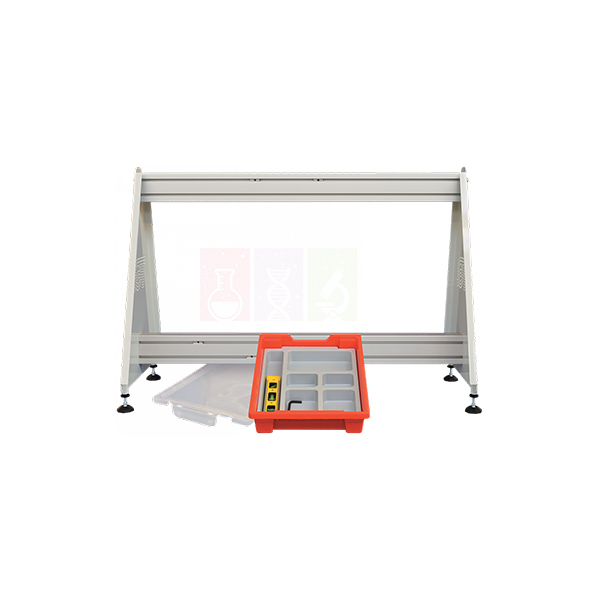
Free Vibrations Test Frame
Free Vibrations Test Frame (Product Code: SLE/ETM/08) is a bench-mounted frame used to hold free vibration experiments steady and level in theory of machines laboratories. Two extruded alloy members with slotted fixing points on all four sides span two triangular ends with adjustable levelling feet, and a storage tray, lid, hexagon tool and spirit level come with it. It is manufactured by Jain Scientific Equipments Pvt Ltd (ScienceLab), an OEM maker of engineering lab equipment in India, at its own factory in Ambala.
Key Details
| Parameter | Detail |
|---|---|
| Use | Mounting frame for free vibrations experiments |
| Placement | Fits on any standard desk or bench |
| Horizontal members | Two extruded alloy members, each with slotted fixing points on all four sides |
| Ends | Two triangular sides, each with adjustable levelling feet |
| Included | Storage tray and lid; hexagon tool; spirit level |
| Construction | Sturdy, for accurate results and a long service life |
| Portability | Light enough for two people to move around the classroom |
| Product code | SLE/ETM/08 |
| Manufacturer | Jain Scientific Equipments Pvt Ltd (ScienceLab) — OEM |
| Country of origin | India (made in Ambala, Haryana) |
What Is the Free Vibrations Test Frame Used For?
Vibration measurements are only repeatable when the structure holding the experiment neither flexes nor rocks. Students, teachers or lecturers fix the back panel of each free vibration experiment to the slotted alloy members, level the frame with its adjustable feet and the spirit level, and then run the test; changing to another experiment means removing one panel and fitting the next.
One frame can therefore serve a sequence of experiments, including the beam-spring, cantilever and damper studies, which saves bench space and makes it practical lab equipment for technical institutes. The storage tray and lid keep tools and small parts of optional experiments together so they are not lost or damaged between classes. Two people can carry the frame around the classroom, but recheck the level with the spirit level whenever it is moved.
What to Specify When Ordering
- Which free vibration experiments will be fitted, for example the beam-spring, cantilever or Damper Kit
- Number of frames, usually one for each student group working at the same time
- Delivery location in India or abroad
OEM Manufacturer
ScienceLab is the trading name of Jain Scientific Equipments Private Limited (CIN U29309HR2020PTC087597), the OEM that manufactures this test frame at its licensed factory at 449, HSIIDC Industrial Area, Saha, Ambala, Haryana (Factory Licence AMB-ONLINE-CHD-J-414). The frame and the experiments that mount on it are supplied factory-direct to engineering colleges, universities, polytechnics, dealers and importers in India and international markets.
Additional frames for extra student groups, or replacement tools and levelling feet, can be quoted by the manufacturer — ask us. More details are on the company profile.
Related Theory of Machines Equipment
Experiments and accessories that mount on or complement this frame:
- Free Vibration Of Beam Spring — fixes to the frame through its back panel.
- Free Vibrations Of A Cantilever — clamps its beam on a back panel fitted to the frame.
- Damper Kit — mounts to the frame beneath the beam for damping studies.
- Free and Forced Vibration Apparatus — for forced vibration and resonance studies.
See all apparatus in the Theory of Machines category.
Frequently Asked Questions
What is the Free Vibrations Test Frame used for?
The Free Vibrations Test Frame is a bench-mounted frame for free vibration experiments. Students, teachers or lecturers fit the parts of each experiment to it, and its stable, level construction gives repeatable and accurate vibration results.
What is included with the Free Vibrations Test Frame?
The Free Vibrations Test Frame includes a storage tray and lid, a hexagon tool for assembly and a spirit level for levelling. The tray keeps tools and smaller parts of optional experiments together to prevent loss or damage.
How is the frame levelled?
Each of the two triangular sides of the Free Vibrations Test Frame has adjustable levelling feet. Using the supplied spirit level, users adjust the feet until the frame is level, which is essential for repeatable vibration measurements.
Does the frame need a special bench?
No. The Free Vibrations Test Frame fits on any standard desk or bench, and despite its sturdy construction it is light enough for two people to move around the classroom.
Which experiments fit the frame?
Experiments with a back panel for the Test Frame, such as the Free Vibration Of Beam Spring and the Free Vibrations Of A Cantilever, fix to the Free Vibrations Test Frame’s slotted alloy members, as does the Damper Kit.
Who manufactures the Free Vibrations Test Frame?
The Free Vibrations Test Frame is manufactured by Jain Scientific Equipments Pvt Ltd (ScienceLab), the OEM, at its own licensed factory in Saha, Ambala, Haryana, India, and is supplied factory-direct with or without the experiments it carries.
What does a quotation request need?
For a Free Vibrations Test Frame quotation, give the number of frames, the experiments you plan to mount, and the delivery location. The manufacturer quotes directly through the contact page or the enquiry cart.
Request a Quote
Quotations for the Free Vibrations Test Frame come directly from the manufacturer. Contact us through the contact page or add the frame to the enquiry cart together with its experiments.
Last updated: 24 September 2026
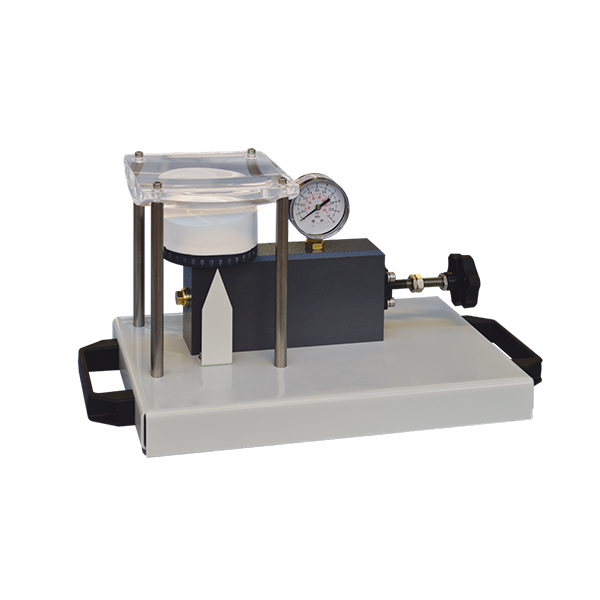
Hertzian Contact Apparatus
Hertzian Contact Apparatus (Product Code: SLE/ETM/09) is a self-contained bench unit used to show how two curved surfaces meet under load, so that measured contact shapes can be checked against Hertz’s original theories in engineering laboratories. Mechanical engineering students use it because the lower pad rotates against a pointer, turning the contact zone from circular to elliptical. It is made by Jain Scientific Equipments Pvt Ltd (ScienceLab), an OEM manufacturer, at its own factory in Ambala, India.
Key Details
| Parameter | Detail |
|---|---|
| Type | Self-contained, easy-to-use contact mechanics unit |
| Loading | Hand-operated hydraulic pump and cylinder force the two pads together |
| Contact pads | Two pads with curved contact surfaces; the upper pad has compound radii |
| Lower pad | Rotatable, with a pointer showing the angle of rotation |
| Contact zone | Circular or elliptical, depending on the relative angular position of the pads |
| Measuring aid | Transparent scale (supplied) to measure contact shape and angle |
| Overload protection | Locknuts on the pump threads limit the maximum pressure |
| Theory compared | Hertz’s original contact theories |
| Product code | SLE/ETM/09 |
| Manufacturer | Jain Scientific Equipments Pvt Ltd (ScienceLab) — OEM |
| Country of origin | India (made in Ambala, Haryana) |
What Is the Hertzian Contact Apparatus Used For?
Whenever a ball meets its race, a gear tooth meets its mate or a wheel rolls on a rail, the load passes through a very small patch of contact, and the size and shape of that patch decide the contact stress. This apparatus lets a class see that patch for itself. The hydraulic cylinder presses the two curved pads together, students read the contact outline with the transparent scale, and the result is compared with the size predicted by Hertz theory.
Turning the lower pad changes the relative curvature of the two surfaces, because the upper pad has compound radii. At some angles the contact is circular; at others it stretches into an ellipse, which makes the unit a practical piece of engineering lab equipment in India for tribology, machine design and theory of machines courses. Record the pointer angle for every reading, and leave the pump locknuts at their set position so the maximum pressure stays limited.
OEM Manufacturer
The Hertzian Contact Apparatus is built by Jain Scientific Equipments Private Limited, which trades as ScienceLab, at its own licensed factory at Saha, Ambala, Haryana, India. Because the maker supplies it factory-direct, engineering colleges, polytechnics, dealers and importers deal with the people who assemble the pads, pump and scale — for quotations, repeat orders and replacement parts, ask us.
Company background is on the ScienceLab profile.
Related Theory of Machines Equipment
Contact, bearing and gearing experiments that fit the same course:
- Journal Bearing Demonstration — moves from dry contact to a lubricated rotating bearing.
- Michell Pad Apparatus — shows how an oil film carries load in a tilting pad bearing.
- Cam Analysis Machine — a cam and follower is another curved contact under changing load.
- Gear Train Model — for discussing where gear teeth touch and transmit force.
Browse the full Theory of Machines range.
Frequently Asked Questions
What does the Hertzian Contact Apparatus demonstrate?
The Hertzian Contact Apparatus demonstrates the nature of contact between two curved surfaces under load. Students measure the contact shape and compare it with predictions from Hertz’s original theories, and they see how changing the relative curvature changes the contact zone.
How is the load applied?
On the Hertzian Contact Apparatus SLE/ETM/09, a hand-operated hydraulic pump and cylinder force the two pads together. Locknuts on the threads of the pump limit the maximum pressure, which protects the pads and the rest of the equipment from damage.
Why does the contact zone change from circular to elliptical?
In the Hertzian Contact Apparatus, the upper pad has compound radii, so rotating the lower pad changes the relative curvature at the point of contact. Depending on the angle shown by the pointer, the contact zone is circular or elliptical.
What is included with the Hertzian Contact Apparatus?
The Hertzian Contact Apparatus comprises two pads with curved contact surfaces, a rotatable lower pad with pointer, and a hand-operated hydraulic pump and cylinder. A transparent scale for measuring the contact shape and angle is supplied with it.
Who manufactures the Hertzian Contact Apparatus?
Jain Scientific Equipments Pvt Ltd, trading as ScienceLab, is the OEM manufacturer of the Hertzian Contact Apparatus SLE/ETM/09. It is produced at the company’s own licensed factory at Saha, Ambala, Haryana, India, and sold direct by the maker.
Can I get a calibration certificate with the Hertzian Contact Apparatus?
Calibration paperwork for the Hertzian Contact Apparatus is not described in its listing. If your institution needs a calibration certificate, mention it when you request a quotation and we will discuss what can be provided.
What should I include in a quotation request?
For the Hertzian Contact Apparatus SLE/ETM/09, state the number of units, the institution or dealer name and the delivery location in India or abroad. Send these details through the ScienceLab contact page and the quotation comes straight from the manufacturer.
Request a Quote
To order the Hertzian Contact Apparatus (SLE/ETM/09), send your requirement through the contact page or add it to the enquiry cart. Quotations are issued directly by the manufacturer, for single labs, bulk orders and export.
Last updated: 24 September 2026
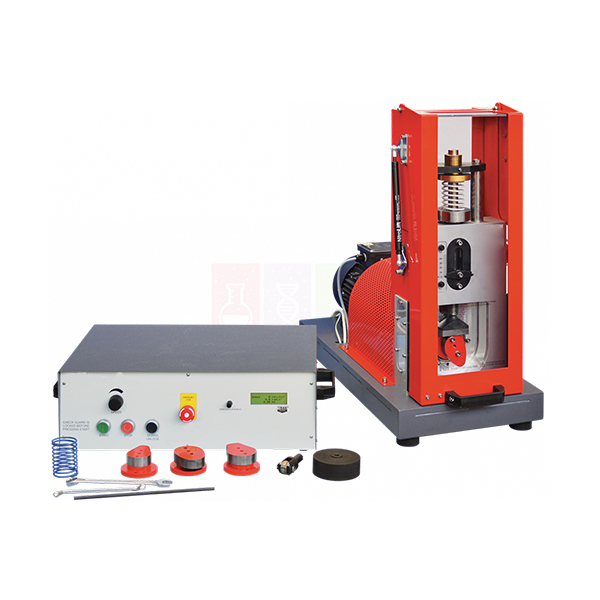
Cam Analysis Machine
Cam Analysis Machine (Product Code: SLE/ETM/10) is a motor-driven test machine used to study how a follower responds to a rotating cam at different speeds, spring preloads and follower masses in engineering laboratories. Mechanical engineering students use it because the precision machined heavy steel base carries a high-torque direct-drive variable-speed motor and a flywheel that steadies the drive. It is made by Jain Scientific Equipments Pvt Ltd (ScienceLab), an OEM manufacturer, at its own factory in Ambala, India.
Key Details
| Parameter | Detail |
|---|---|
| Base | Precision machined heavy steel base |
| Drive | High-torque direct-drive variable-speed motor, coupled to the main shaft |
| Main shaft | Supported by self-aligning heavy-duty bearings; carries a substantial flywheel |
| Flywheel | Reduces speed variations as torque demand changes during the cam cycle |
| Cam mounting | Cam fits to the end of the main shaft, accurately mounted axially and radially for repeatability |
| Follower | Fits to the bottom of a vertical shaft running in low-friction linear bearings |
| Followers | Choice of two, with a tool for easy changeover |
| Springs | Choice of two compression springs with adjustable preload |
| Follower mass | Adjustable by adding different masses |
| Product code | SLE/ETM/10 |
| Manufacturer | Jain Scientific Equipments Pvt Ltd (ScienceLab) — OEM |
| Country of origin | India (made in Ambala, Haryana) |
What Is the Cam Analysis Machine Used For?
Cams open engine valves, index machine tools and drive packaging lines, and at speed a follower may no longer track the cam profile faithfully. The Cam Analysis Machine lets students explore that behaviour on the bench: they choose a cam and follower, set the motor speed, and watch how the follower responds as the speed rises. The flywheel on the main shaft keeps the drive speed steady even though the torque demand changes through each rotation.
The follower is held against the cam face by its own weight, the weight of the vertical shaft and, when fitted, one of the two compression springs. Changing the spring, adjusting its preload or adding masses changes the force on the cam, so a class can compare several set-ups in one session. This makes it useful mechanics lab equipment in India for theory of machines and machine dynamics practicals.
What to Specify When Ordering
- The number of machines for your laboratory.
- Which cams you need — the listing does not state how many cams come with the machine, so ask us.
- Whether you need extra masses for the follower, beyond what is quoted.
- Your mains supply, so we can confirm the motor arrangement.
OEM Manufacturer
ScienceLab is the trading name of Jain Scientific Equipments Private Limited, the OEM that produces the Cam Analysis Machine at its own licensed factory at Saha, Ambala, Haryana, India. Institutes buy it from the manufacturer rather than a reseller, so questions about cams, followers, springs and later replacement parts are answered by the maker — ask us.
See the ScienceLab profile for more about the company.
Related Theory of Machines Equipment
Other mechanism and dynamics apparatus for the same laboratory:
- Cam Mechanism — a simpler set-up for introducing cam and follower profiles.
- Governor — another speed-dependent mechanism study.
- Four Bar Chain Apparatus — linkage motion to compare with cam-driven motion.
- Hertzian Contact Apparatus — looks at the contact between curved surfaces such as a cam and follower.
See all items in the Theory of Machines category.
Frequently Asked Questions
What can students investigate with the Cam Analysis Machine?
With the Cam Analysis Machine, students investigate how a follower behaves on a rotating cam as motor speed, follower type, spring preload and follower mass change. The selection of springs, followers and cams allows a wide range of investigations.
Why does the Cam Analysis Machine have a flywheel?
The Cam Analysis Machine SLE/ETM/10 has a substantial flywheel on its main shaft because the torque needed to turn the cam changes during each rotation. The flywheel reduces the resulting speed variations, so test conditions stay steadier.
How many followers and springs are provided?
The Cam Analysis Machine offers a choice of two followers, with a tool for easy changeover, and a choice of two compression springs whose preload can be adjusted. Different masses can also be added to change the follower mass.
How is the cam mounted?
On the Cam Analysis Machine SLE/ETM/10, the cam under test fits to the end of the main shaft and is accurately mounted both axially and radially. This helps ensure repeatable results when cams are changed between experiments.
Who manufactures the Cam Analysis Machine?
The Cam Analysis Machine is manufactured by Jain Scientific Equipments Pvt Ltd (ScienceLab), the OEM, at its licensed factory in Saha, Ambala, Haryana, India. Orders, repeat purchases and spare-part enquiries are handled by the manufacturer itself.
Can the Cam Analysis Machine be supplied in quantity or exported?
Yes, the Cam Analysis Machine SLE/ETM/10 is supplied to engineering colleges, dealers and importers across India and international markets. Share the quantity and delivery destination on the contact page to receive a quotation.
Request a Quote
Ask for a quotation on the Cam Analysis Machine (SLE/ETM/10) using the contact page, or add it to the enquiry cart with other laboratory items. Your quote comes directly from the manufacturer.
Last updated: 24 September 2026
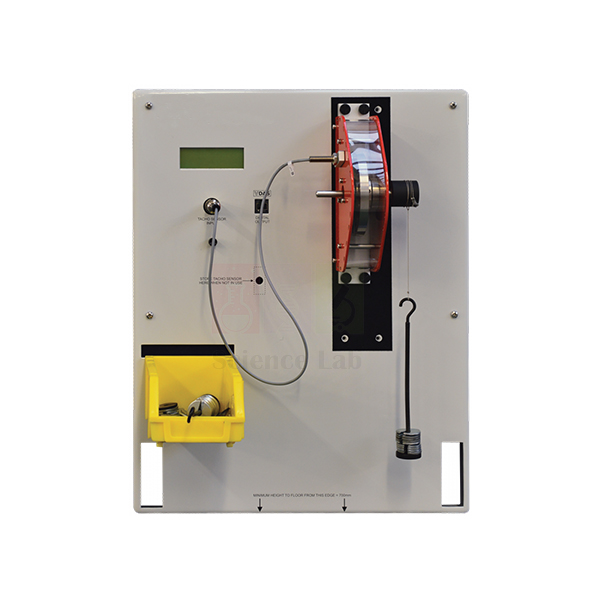
Acceleration & Static Test Stand
Acceleration & Static Test Stand (Product Code: SLE/ETM/11) is a separate bench stand used to measure angular acceleration, find inertia by experiment and run static efficiency tests on a gear drive in engineering laboratories. Students use it alongside dynamic gear-drive tests, because a sensor and multiline display calculate the flywheel’s angular acceleration automatically. It is made by Jain Scientific Equipments Pvt Ltd (ScienceLab), an OEM manufacturer, at its own factory in Ambala, India.
Key Details
| Parameter | Detail |
|---|---|
| Experiments | Angular acceleration, inertia by experiment, static efficiency of a gear drive |
| Loading | Sets of weights apply turning forces to the flywheel shaft |
| Flywheel | A simplified version of one of the gears in the gear drive |
| Measurement | Sensor and multiline display that automatically calculate angular acceleration |
| Storage | Slot at the front holds a tray for the weights and other loose items |
| Comparison | Static efficiency results can be compared with dynamic tests on the base unit |
| Product code | SLE/ETM/11 |
| Manufacturer | Jain Scientific Equipments Pvt Ltd (ScienceLab) — OEM |
| Country of origin | India (made in Ambala, Haryana) |
What Is the Acceleration & Static Test Stand Used For?
Before students can predict how quickly a gearbox speeds up, they need a feel for rotational inertia. On this stand a set of weights applies a known turning force to the flywheel shaft, the sensor follows the flywheel as it speeds up, and the multiline display works out the angular acceleration. From the applied torque and the measured acceleration, the class calculates the flywheel’s inertia and checks it against theory.
Because the flywheel is a simplified version of one of the gears in the gear drive, the experiment is a stepping stone to inertia calculations for complete gear trains. The same stand also runs simple static efficiency tests on the gear drive, giving a second set of figures to set beside dynamic results from the base unit — a useful comparison for moment of inertia and flywheel experiment work in Indian engineering colleges. Keep the weights in the front tray between runs so none go missing.
What to Specify When Ordering
- Whether you already own the gear drive and base unit, or need them quoted with the stand.
- The number of stands, based on how many student groups work at once.
- Your mains supply, so the sensor and display arrangement can be confirmed.
OEM Manufacturer
Jain Scientific Equipments Private Limited, known by its trading name ScienceLab, makes the Acceleration & Static Test Stand as the original equipment manufacturer at its licensed factory at Saha, Ambala, Haryana, India. Colleges that add the stand to an existing gear-drive set-up can talk directly to the maker about matching items, extra weights or replacement parts — ask us.
More about the company: ScienceLab profile.
Related Theory of Machines Equipment
Items that pair with inertia and gear-drive experiments:
- Geared Systems — the base unit for dynamic gear-drive tests, for comparison with the stand’s static results.
- Rotational Moment of Inertia Apparatus — a further way to measure rotational inertia.
- Gear Trainer Demonstrator — shows gear arrangements before efficiency testing.
- Static and Dynamic Balancing Apparatus — another static-versus-dynamic comparison on rotating parts.
The complete range is in the Theory of Machines category.
Frequently Asked Questions
What experiments does the Acceleration & Static Test Stand add?
The Acceleration & Static Test Stand adds experiments in measuring angular acceleration, finding inertia by experiment and testing the static efficiency of a gear drive. Its static results can be compared with those from dynamic tests on the base unit.
How is angular acceleration measured?
On the Acceleration & Static Test Stand SLE/ETM/11, a sensor and a multiline display automatically calculate the angular acceleration of the flywheel while sets of weights apply turning forces to its shaft. Students then use the result to find inertia.
Does the Acceleration & Static Test Stand work with the Geared Systems base unit?
The Acceleration & Static Test Stand is described as a separate stand whose static gear-drive results are compared with dynamic tests on the base unit, such as Geared Systems SLE/ETM/12. Confirm the exact combination you need with us before ordering.
Why is the flywheel shaped like a gear?
The flywheel of the Acceleration & Static Test Stand forms a simplified version of one of the gears in the gear drive. That gives students a starting point for understanding the inertia calculations of more complex gear drives.
Who manufactures the Acceleration & Static Test Stand?
Jain Scientific Equipments Pvt Ltd (ScienceLab) manufactures the Acceleration & Static Test Stand SLE/ETM/11 as the OEM, at its own licensed factory in Saha, Ambala, Haryana, India. Quotations and follow-up orders come directly from the manufacturer.
Can I order the stand for several laboratories or for export?
Yes, the Acceleration & Static Test Stand is supplied to institutions, dealers and importers in India and international markets. Tell us the number of stands, whether gear drives are also needed, and the delivery destination.
Request a Quote
Send your requirement for the Acceleration & Static Test Stand (SLE/ETM/11) through the contact page or place it in the enquiry cart. The manufacturer replies with the quotation directly.
Last updated: 24 September 2026
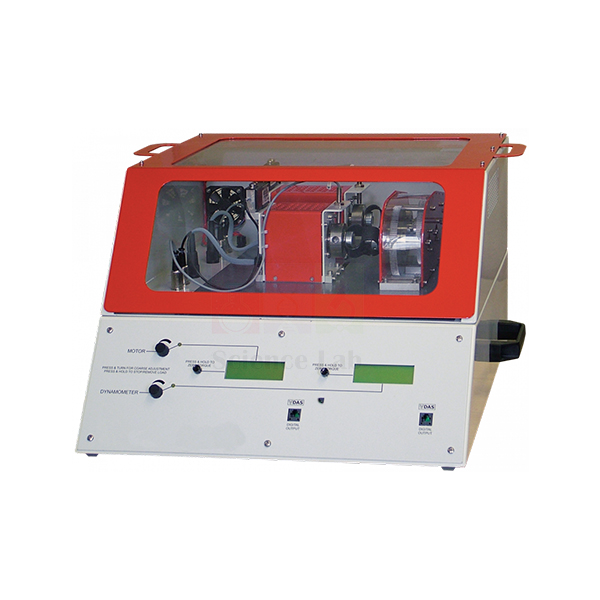
Geared Systems
Geared Systems (Product Code: SLE/ETM/12) is a bench-mounting base unit used to test the performance and efficiency of gear drives and other drive units under power in engineering laboratories. Students measure power in from a variable-speed, low-voltage motor and power out to an electromagnetic hysteresis dynamometer, and a three-shaft gear drive unit comes as standard. It is made by Jain Scientific Equipments Pvt Ltd (ScienceLab), an OEM manufacturer, at its own factory in Ambala, India.
Key Details
| Parameter | Detail |
|---|---|
| Base unit | Bench-mounting; the main part of this set of products |
| Input (effort) | Variable-speed, low-voltage motor driving the input shaft |
| Output (load) | Dynamometer using electromagnetic braking and a hysteresis effect: variable load at constant torque irrespective of speed |
| Sensors | On the motor and dynamometer, measuring shaft speed and torque, and therefore power in and out |
| Torque measurement | Motor and dynamometer held in axial trunnions with race bearings, rotating freely against load cell sensors |
| Couplings | Flexible couplings with collets for quick and accurate alignment of the drive unit |
| Standard drive unit | Three-shaft gear drive unit |
| Other drive units | Optional (ask us) |
| Product code | SLE/ETM/12 |
| Manufacturer | Jain Scientific Equipments Pvt Ltd (ScienceLab) — OEM |
| Country of origin | India (made in Ambala, Haryana) |
What Is the Geared Systems Base Unit Used For?
Efficiency is the question every drive designer asks: how much of the power put into a gearbox actually reaches the output shaft? In a dynamic test on this base unit, the motor turns the input of the drive unit at a chosen speed while its input power is measured, and the dynamometer brakes the output while the output power is measured. Dividing one by the other gives efficiency, and repeating the run at other speeds and loads builds a full performance picture.
Because the hysteresis dynamometer holds a constant torque regardless of speed, students can change speed without the load drifting. The motor and dynamometer sit in trunnions and push against load cells, so torque readings come from the reaction on the housing. Flexible couplings with collets make it quick to swap the standard three-shaft gear drive for optional drive units, which suits engineering lab equipment for technical institutes that run several groups in one session.
What to Specify When Ordering
- Which optional drive units you want in addition to the standard three-shaft gear drive — ask us what is offered.
- Whether the Acceleration & Static Test Stand should be quoted with the base unit.
- Your mains supply, so the motor and sensor arrangement can be confirmed.
- The number of base units for your laboratory.
OEM Manufacturer
Geared Systems is manufactured by Jain Scientific Equipments Private Limited, trading as ScienceLab, at the company’s own licensed factory at Saha, Ambala, Haryana, India. As the OEM, the company quotes the base unit, the standard gear drive and add-on units together, and handles repeat orders and replacement parts itself — ask us.
The company is a registered MSME whose major activity is manufacturing (Udyam UDYAM-HR-01-0003714), and its export shipments are handled under Importer-Exporter Code AAECJ8618A (DGFT). See the ScienceLab profile.
Related Theory of Machines Equipment
Apparatus that complements drive-efficiency testing:
- Acceleration & Static Test Stand — static gear-drive efficiency and inertia tests to compare with dynamic results.
- Gear Train Model — for explaining gear ratios before testing a powered drive.
- Internal Gear Pinion Drive — another gearing arrangement for the same course.
- Pulley Demonstration Set — a simple mechanical-advantage comparison with geared drives.
Explore the Theory of Machines category for more.
Frequently Asked Questions
What does the Geared Systems base unit measure?
The Geared Systems base unit measures shaft speed and torque at both the motor and the dynamometer, and therefore the power into and out of the drive unit. Students use these measurements to find the performance and efficiency of the drive.
How does the dynamometer load the drive?
The dynamometer on Geared Systems SLE/ETM/12 uses electromagnetic braking and a hysteresis effect to provide a variable load at a constant torque, irrespective of speed. It supplies the output braking force while its sensors measure the output power.
Which drive unit comes with Geared Systems?
Geared Systems is supplied with a three-shaft gear drive unit as standard. The base unit can also dynamically test other optional drive units; ask us which ones are available and include them in your quotation request.
How is torque measured accurately?
In Geared Systems, axial trunnions with race bearings hold the motor and the dynamometer so they rotate freely against their load cell sensors. The reaction on each load cell gives an accurate torque reading at input and output.
Who manufactures Geared Systems SLE/ETM/12?
Geared Systems SLE/ETM/12 is manufactured by Jain Scientific Equipments Pvt Ltd (ScienceLab), the OEM, at its own licensed factory in Saha, Ambala, Haryana, India. The company supplies it factory-direct to institutions, dealers and importers.
Is a calibration certificate available for the sensors?
The Geared Systems listing does not describe calibration paperwork for its speed and torque sensors. If your institution needs a calibration certificate, raise it in your enquiry and we will discuss what can be arranged.
Request a Quote
For a quotation on Geared Systems (SLE/ETM/12), with or without optional drive units, use the contact page or the enquiry cart. Quotes are issued directly by the manufacturer, for orders within India and for export.
Last updated: 24 September 2026
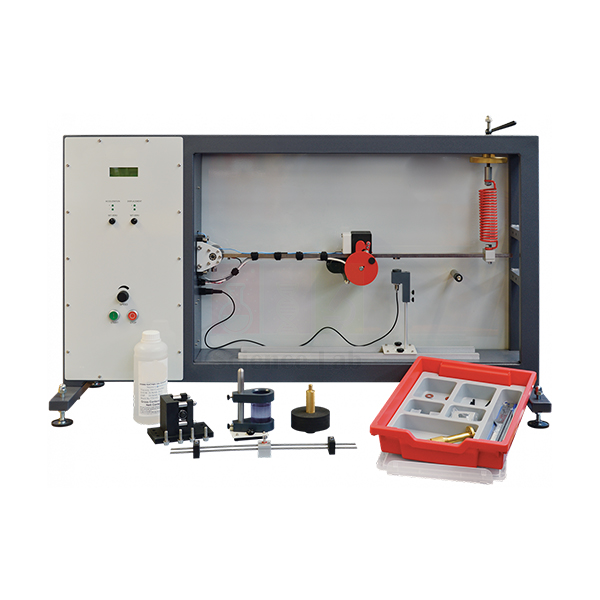
Free And Forced Vibrations
Free And Forced Vibrations (Product Code: SLE/ETM/13) is a beam vibration apparatus used to study free, forced and damped oscillations in engineering and theory of machines laboratories. Students can set the beam vibrating by hand or force it with a variable-speed servomotor driving a rotating offset mass, while a non-contacting sensor records displacement without adding damping. It is made by Jain Scientific Equipments Pvt Ltd (ScienceLab), an OEM manufacturer, at its own factory in Ambala, India.
Key Details
| Parameter | Detail |
|---|---|
| Beam | High-grade ground steel |
| Pivots | High-quality ball races for lowest friction and incidental damping |
| Excitation | Manual, or a variable-speed servomotor driving a rotating offset mass (‘exciter’) |
| Speed control | Servomotor with its own encoder and advanced controller for accurate speed regulation |
| Exciter position | Encoder linked to the rotating exciter mass measures its dynamic position |
| Displacement sensing | Non-contacting sensor with no physical contact with the oscillating system |
| Acceleration sensing | Accelerometer built into the exciter assembly |
| Damping | Variable-area viscous dashpot damper, with non-toxic fluid of stable viscosity (supplied) |
| Set-up | Simple and quick set-up and changeover; designed for repeatable results over a range of ambient temperatures |
| Analysis | Software compares measured acceleration with that derived from displacement |
| Product code | SLE/ETM/13 |
| Manufacturer | Jain Scientific Equipments Pvt Ltd (ScienceLab) — OEM |
| Country of origin | India (made in Ambala, Haryana) |
What Is the Free And Forced Vibrations Apparatus Used For?
Engines, pumps and building floors all vibrate, and engineers need to know the natural frequency of a structure and how strongly it responds when something drives it near that frequency. With this apparatus, a class first plucks the beam by hand to watch free vibration die away, then switches on the exciter and raises the servomotor speed step by step to trace the forced response and find resonance.
Fitting the dashpot and changing its open area adds controlled viscous damping, so students can see how damping lowers the resonant peak. Because the displacement sensor never touches the beam and the pivots run on ball races, very little unwanted damping creeps in. The accelerometer in the exciter shows the phase between displacement and acceleration — a strong SHM and vibration practical for mechanics lab equipment in India.
What to Specify When Ordering
- The computer arrangement for the software — ask us what the software runs on.
- Your mains supply, so the servomotor controller arrangement can be confirmed.
- Whether you need extra dashpot fluid with the order.
- The number of units for your vibration laboratory.
OEM Manufacturer
Jain Scientific Equipments Private Limited, which sells under the ScienceLab name, is the OEM for the Free And Forced Vibrations apparatus and produces it at its own licensed factory at Saha, Ambala, Haryana, India. Engineering colleges and dealers deal with the maker itself for quotations, repeat orders and parts such as the dashpot or sensors — ask us.
Read about the company on the ScienceLab profile.
Related Theory of Machines Equipment
Other vibration apparatus for building a complete practical set:
- Free and Forced Vibration Apparatus — a separate ScienceLab model to compare when choosing equipment.
- Free Vibrations Of A Cantilever — free vibration of a cantilever beam.
- Damper Kit — for further damping experiments.
- Whirling of Shaft Apparatus — resonance of rotating shafts.
All models are listed in the Theory of Machines category.
Frequently Asked Questions
How are vibrations produced on the Free And Forced Vibrations apparatus?
On the Free And Forced Vibrations apparatus, students may vibrate the system manually for free vibration, or force it using a variable-speed servomotor driving a rotating offset mass. The servomotor has its own encoder and controller for accurate speed regulation.
Why is a non-contacting displacement sensor used?
The Free And Forced Vibrations apparatus SLE/ETM/13 measures beam displacement with a non-contacting sensor, so the sensor has no physical contact with the oscillating system. That keeps added damping negligible and the measured response closer to the true behaviour of the beam.
What does the accelerometer show?
The accelerometer built into the exciter assembly of the Free And Forced Vibrations apparatus shows the phase relationship between beam displacement and acceleration. The software also compares measured acceleration with acceleration derived from the displacement readings.
Is damping included?
Yes. The Free And Forced Vibrations apparatus includes a variable-area viscous dashpot damper for use with a non-toxic fluid of stable viscosity, and the fluid is supplied. Changing the damper area lets students compare different levels of damping.
Who manufactures the Free And Forced Vibrations apparatus?
Jain Scientific Equipments Pvt Ltd (ScienceLab) is the OEM manufacturer of the Free And Forced Vibrations apparatus SLE/ETM/13, producing it at its own licensed factory in Saha, Ambala, Haryana, India, and selling it direct.
What computer does the software need?
The Free And Forced Vibrations listing refers to software for comparing acceleration with displacement but does not state its computer requirements. Ask us through the contact page, and include your preferred set-up when you request a quotation.
Request a Quote
Request a quotation for the Free And Forced Vibrations apparatus (SLE/ETM/13) on the contact page or add it to your enquiry cart. The manufacturer answers directly, for Indian and export orders alike.
Last updated: 24 September 2026
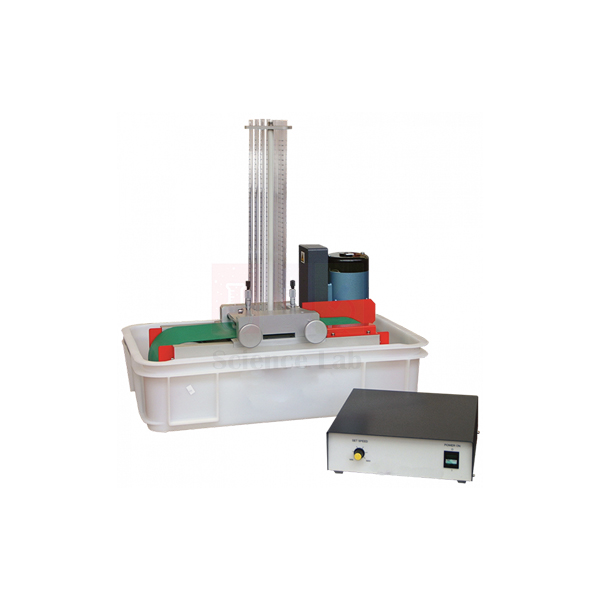
Michell Pad Apparatus
Michell Pad Apparatus (Product Code: SLE/ETM/14) is a bench-mounted, self-contained apparatus used to demonstrate the pressure distribution across the oil film in a Michell tilting pad slider bearing in engineering laboratories. Students read oil pressure on a set of thirteen graduated tubes while adjusting pad tilt and belt speed. It is made by Jain Scientific Equipments Pvt Ltd (ScienceLab), an OEM manufacturer, at its own factory in Ambala, India.
Specifications
| Parameter | Detail |
|---|---|
| Type | Bench-mounted, self-contained Michell tilting pad slider bearing demonstration |
| Pad | Aluminium plate mounted above a continuous loop flat belt |
| Pad adjustment | Held on two eccentric shafts to set the angle of tilt |
| Pressure readout | Set of 13 graduated tubes showing oil pressure across and along the film |
| Pad position | Micrometers measure leading and trailing edge positions |
| Belt drive | Motor with variable speed control |
| Included | Container of oil and a viscometer for measuring oil viscosity |
| Product code | SLE/ETM/14 |
| Manufacturer | Jain Scientific Equipments Pvt Ltd (ScienceLab) — OEM |
| Country of origin | India (made in Ambala, Haryana) |
What Is the Michell Pad Apparatus Used For?
Large thrust bearings in turbines and ship propeller shafts rely on the tilting pad principle: a slightly inclined pad drags oil into a converging gap, and the wedge of oil builds enough pressure to carry the load without metal-to-metal contact. On this apparatus the moving flat belt plays the part of the runner, the aluminium pad sits above it, and the oil film forms in between, so the whole effect can be seen and measured on a bench.
Students set a tilt with the eccentric shafts, record the leading and trailing edge positions with the micrometers, and read the thirteen tubes to plot pressure under the pad. Changing the belt speed and measuring the oil with the included viscometer then links sliding speed, viscosity and film thickness to pressure distribution — a clear viscosity measurement and lubrication practical for engineering colleges. Keep the oil container closed between sessions so the oil stays clean.
OEM Manufacturer
The Michell Pad Apparatus comes from Jain Scientific Equipments Private Limited, trading as ScienceLab, which manufactures it as the OEM at its own licensed factory at Saha, Ambala, Haryana, India. Laboratories, dealers and importers order it straight from the manufacturer, and questions about oil, tubes or other replacement parts go to the same team — ask us.
Company details are on the ScienceLab profile.
Related Theory of Machines Equipment
Bearing and lubrication apparatus that extend the same topic:
- Journal Bearing Demonstration — hydrodynamic lubrication in a rotating journal bearing.
- Air Bearing Apparatus — a bearing that uses a film of air instead of oil.
- Hertzian Contact Apparatus — dry contact between curved surfaces, for contrast with a full oil film.
- Friction Slide Apparatus — sliding friction without lubrication.
Find more in the Theory of Machines category.
Frequently Asked Questions
What does the Michell Pad Apparatus demonstrate?
The Michell Pad Apparatus demonstrates the pressure distribution across the film of oil in a Michell tilting pad slider bearing. Students find how pressure distribution relates to film thickness, sliding speed and oil viscosity.
How is the oil pressure measured?
On the Michell Pad Apparatus SLE/ETM/14, a set of thirteen graduated tubes shows the oil pressure across and along the film under the pad. Readings from all the tubes let students plot the pressure profile for each set-up.
Can the pad angle and belt speed be changed?
Yes. On the Michell Pad Apparatus, two eccentric shafts hold the pad so the angle of tilt can be adjusted, and micrometers measure the leading and trailing edge positions. A variable speed control sets the speed of the motor that turns the belt.
Is oil supplied with the Michell Pad Apparatus?
Yes. A container of oil and a viscometer to measure the viscosity of the oil are included with the Michell Pad Apparatus. For repeat supplies of oil, ask us when you place or plan your order.
Who manufactures the Michell Pad Apparatus?
The Michell Pad Apparatus SLE/ETM/14 is manufactured by Jain Scientific Equipments Pvt Ltd (ScienceLab), the OEM, at its licensed factory at Saha, Ambala, Haryana, India. Quotations and after-sales enquiries are handled by the maker directly.
What details should a quotation request include?
When asking for a Michell Pad Apparatus quotation, give the quantity, your mains supply, the institution or dealer name and the delivery location in India or abroad. Send them through the contact page for a reply from the manufacturer.
Request a Quote
Get a quotation for the Michell Pad Apparatus (SLE/ETM/14) via the contact page, or collect it with other items in the enquiry cart. Quotes come straight from the manufacturer.
Last updated: 24 September 2026