- Physics Lab Equipment
- Chemistry Lab Equipment
- Biology Lab Equipment
- Anatomical Lab Equipment
- Learning
- Educational Lab Equipment
- Magnets
- Agriculture
- Astronomy
- Earth Science
- Geography Lab Equipment
- Safety Lab Coat
- Laboratory
- Meteorological
- Electricity & Magnetism
- Heat
- School Lab Equipment
- Lab Glassware
- Science Lab Equipment
- Tvet Lab Equipment
- Robotics Kits Supplier and Manufacturer for Schools India
- Math Lab Equipment Manufacturers and Exporters in Ambala
- STEM Kits Manufacturers and Supplier India
- Engineering Lab Equipment
- Hospital Lab Equipment
- Water, Sanitation & Hygiene Supplies
- Cold Chain, Solar & Communication Equipment
- Nutrition
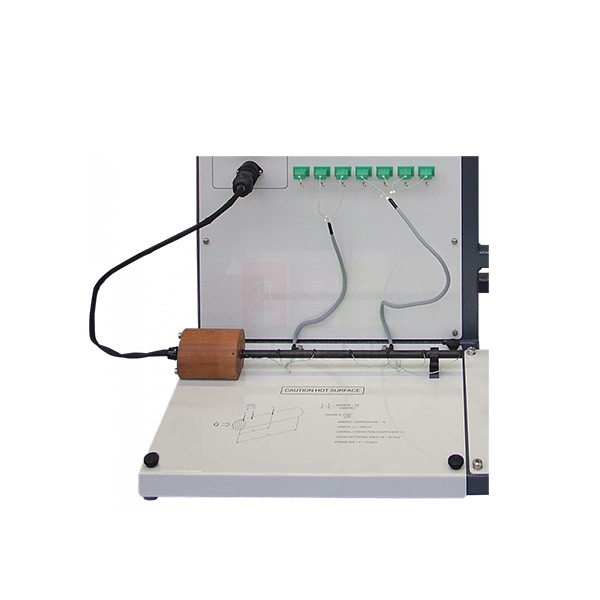
Extended Surface Heat Transfer
Extended Surface Heat Transfer (Product Code: SLE/EA/24) is a fin experiment used to study how heat conducts along a thin solid bar and escapes to the surroundings by natural convection and radiation in engineering laboratories. The bar is heated at one end, has a matt black coating for a predictable emissivity, and carries thermocouples at equally spaced intervals along its surface. It is made by Jain Scientific Equipments Pvt Ltd (ScienceLab), an OEM manufacturer of lab equipment for technical institutes, at its own factory in Ambala, India.
Key Details
| Parameter | Detail |
|---|---|
| Test piece | Thin solid bar with an electric heater at one end |
| Surface finish | Matt black coating for a consistent and predictable emissivity value |
| Temperature measurement | Thermocouples along the bar surface at equally spaced intervals |
| Heat transfer modes | Conduction along the bar; loss to the local surroundings by natural convection and radiation |
| Mounting | Base plate with a clear schematic of the experiment layout |
| Connections | Heater and thermocouples connect to sockets on the Heat Transfer Experiments Base Unit |
| Learning approach | Initial test results are used to predict temperatures and heat flow along the bar |
| Product code | SLE/EA/24 |
| Manufacturer | Jain Scientific Equipments Pvt Ltd (ScienceLab) — OEM |
| Country of origin | India (made in Ambala, Haryana) |
What Is the Extended Surface Heat Transfer Apparatus Used For?
Fins on engine cylinders and heat sinks on electronics work on the same principle as this bar. Students connect the heater and thermocouples to the base unit, let the bar reach a steady state and record the temperature at each point, then plot the temperature profile along its length and compare it with fin theory, including fin efficiency.
Because the matt black coating gives a known emissivity, the radiation share of the heat loss can be calculated and separated from natural convection. Students then use their first results to predict temperatures and heat flow for a new condition and test the prediction, which makes it dependable lab equipment for college heat transfer courses in India.
What to Specify When Ordering
- Whether you need the Heat Transfer Experiments Base Unit, since the heater and thermocouples plug into its sockets.
- Which other experiments from the same base-unit range you want to add.
- The number of experiment sets required for your laboratory.
OEM Manufacturer
Jain Scientific Equipments Private Limited (CIN U29309HR2020PTC087597) trades as ScienceLab and is the OEM (original equipment manufacturer) of this extended surface experiment. It is produced at the company's licensed factory at 449, HSIIDC Industrial Area, Saha, Ambala, Haryana, which operates under Factory Licence AMB-ONLINE-CHD-J-414. Laboratories can order the bar together with its base unit and companion experiments straight from the manufacturer, and spares enquiries are handled the same way. Visit the company profile to learn more.
Related Thermodynamics & Heat Transfer Lab Equipment
Base unit and companion experiments for a complete heat transfer bench:
- Heat Transfer — the base unit of this experiment range, with heater supply and thermocouple sockets.
- Radial Heat Conduction Experiment — a companion base-plate experiment on radial conduction.
- Emissivity Natural Convection And Radiation — isolates radiation from convection at different pressures.
- Free and Force Convection Apparatus — convection from heated surfaces in still and moving air.
The full selection is in Thermodynamics & Heat Transfer Lab Equipment.
Frequently Asked Questions
What is an extended surface?
An extended surface, or fin, is a part that projects from a hot body to increase its heat loss. The Extended Surface Heat Transfer apparatus models one as a thin solid bar heated at one end, losing heat along its length.
Why is the bar coated matt black?
The matt black coating on the Extended Surface Heat Transfer bar gives a consistent and predictable emissivity value, so students can calculate the heat lost by radiation with confidence and separate it from the heat lost by natural convection.
How are temperatures measured along the bar?
Thermocouples on the Extended Surface Heat Transfer apparatus measure the temperature along the surface of the bar at equally spaced intervals, which lets students plot a clear temperature profile from the heated end to the tip.
Does it need the Heat Transfer Experiments Base Unit?
Yes. The heater and thermocouples of the Extended Surface Heat Transfer apparatus connect to sockets on the Heat Transfer Experiments Base Unit. Ask us through the contact page to quote both together.
How does heat leave the bar?
In the Extended Surface Heat Transfer apparatus, heat conducts along the bar from the heater and then transfers to the local surroundings by natural convection and radiation, the combination that governs real fins in still air.
Who manufactures the Extended Surface Heat Transfer apparatus?
Jain Scientific Equipments Pvt Ltd (ScienceLab) is the OEM of the Extended Surface Heat Transfer apparatus and manufactures it at its own licensed factory in Saha, Ambala, India, supplying colleges, dealers and importers directly.
Request a Quote
For a quotation on the Extended Surface Heat Transfer apparatus, with or without its base unit, write to us via the contact page or add it to the enquiry cart. Quotes come direct from the manufacturer for India and international markets.
Last updated: 24 September 2026
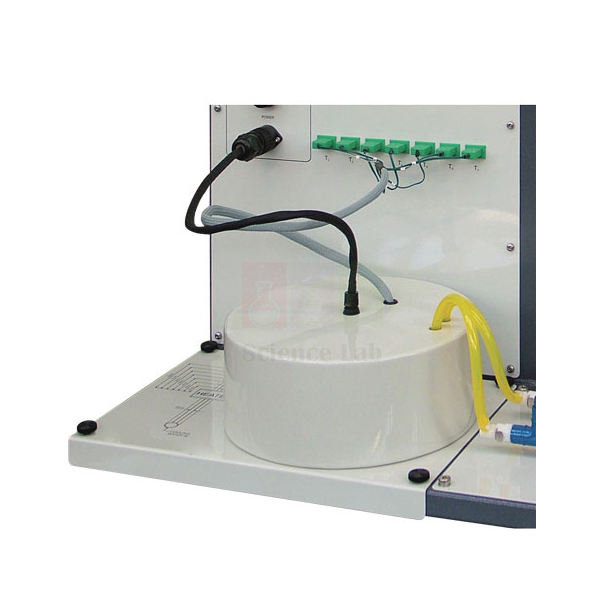
Radial Heat Conduction Experiment
Radial Heat Conduction Experiment (Product Code: SLE/EA/25) is a teaching module used to study steady-state heat conduction outwards through a solid disc in engineering heat transfer laboratories. Mechanical engineering students use it to map the radial temperature profile, read by seven thermocouples set at equally spaced radii on a solid brass disc heated at its centre. It is made by Jain Scientific Equipments Pvt Ltd (ScienceLab), an OEM manufacturer of engineering lab equipment in India, at its own factory in Ambala.
Specifications
| Parameter | Detail |
|---|---|
| Test piece | Solid brass disc |
| Heat source | Electric heater at the centre of the disc |
| Heat sink | Circular cross-section cooling tube around the circumference of the disc |
| Temperature sensors | Seven thermocouples at equally spaced radii on the disc |
| Insulation | Around the disc, reducing heat loss by convection and radiation |
| Mounting | Base plate with a clear schematic of the experiment layout |
| Electrical connections | Heater and thermocouples plug into sockets on the Heat Transfer Experiments Base Unit |
| Cooling water | Cold water feed and drain for the heat sink, provided through the base unit |
| Product code | SLE/EA/25 |
| Manufacturer | Jain Scientific Equipments Pvt Ltd (ScienceLab) — OEM |
| Country of origin | India (made in Ambala, Haryana) |
What Is the Radial Heat Conduction Experiment Used For?
Students turn on the cooling water flow through the rim tube, then adjust the heater power and wait until the disc reaches equilibrium. At steady state, the seven thermocouple readings give temperature against radius from the hot centre to the cooled edge. Because the heat spreads through an ever-larger circumference as the radius grows, the temperature does not fall in a straight line, and students compare their curve with the logarithmic profile that Fourier's law predicts for radial conduction.
Typical practicals include estimating the thermal conductivity of the brass from the heater power and the measured temperature gradient, then repeating the test at a second heater setting to check consistency. The insulation around the disc limits convection and radiation losses, so results should match simple radial conduction theory — a good check on careful technique. The module suits lab equipment for technical institutes, polytechnics and university heat transfer courses.
What to Specify When Ordering
- Whether you already have the Heat Transfer Experiments Base Unit, since the module's heater and thermocouples connect to its sockets.
- The number of radial conduction modules needed for your student groups.
- Whether a cold water feed and drain are available at the bench for the heat sink.
- Any other optional experiments you plan to run on the same base unit.
OEM Manufacturer
Jain Scientific Equipments Private Limited, which trades as ScienceLab, is the OEM (original equipment manufacturer) of the Radial Heat Conduction Experiment and makes it at its own licensed factory at Saha, Ambala, Haryana, India. Buying from the maker rather than a trader means the quotation, technical questions and any later request for replacement thermocouples or spare parts go to the people who manufacture the module — just ask us. Colleges, institutions, dealers and importers are supplied factory-direct. Learn more on the ScienceLab company profile.
Related Thermodynamics & Heat Transfer Lab Equipment
These items are often ordered with the radial conduction module to build a complete heat transfer practical bench.
- Heat Transfer — the base unit that supplies cold water, heater power and multi-line temperature displays to optional heat transfer experiments.
- Extended Surface Heat Transfer — another experiment that plugs into the Heat Transfer Experiments Base Unit, studying heat flow along a thin bar.
- Unsteady State Heat Transfer — moves students from steady conduction to transient temperature changes in immersed test shapes.
- Computerized Thermal Conductivity of Powder — extends conductivity measurement from solid metal to powdered materials.
See the full Thermodynamics & Heat Transfer Lab Equipment range for heat exchangers, convection and radiation apparatus.
Frequently Asked Questions
What is included with the Radial Heat Conduction Experiment?
The Radial Heat Conduction Experiment includes a solid brass disc with a central electric heater, a circular cross-section cooling tube around its rim as the heat sink, seven thermocouples at equally spaced radii, insulation around the disc and a base plate showing the experiment layout.
Can the Radial Heat Conduction Experiment be used on its own?
No. The Radial Heat Conduction Experiment connects its heater and thermocouples to sockets on the Heat Transfer Experiments Base Unit, which also provides the cold water feed and drain for the heat sink. Tell us whether you already own a base unit when you request a quotation.
Why is the disc of the Radial Heat Conduction Experiment insulated?
The insulation around the brass disc of the Radial Heat Conduction Experiment reduces heat loss by convection and radiation, so heat travels mainly by radial conduction from the central heater to the cooled rim and student results should match simple radial conduction theory.
How many temperature points does the Radial Heat Conduction Experiment measure?
The Radial Heat Conduction Experiment measures temperature at seven points, using seven thermocouples placed at equally spaced radii on the brass disc. Together they give students a temperature-versus-radius profile from the heated centre to the water-cooled edge once the disc reaches equilibrium.
Who manufactures the Radial Heat Conduction Experiment?
The Radial Heat Conduction Experiment is manufactured by Jain Scientific Equipments Pvt Ltd (ScienceLab), the OEM, at its own licensed factory at Saha, Ambala, Haryana, India. It is supplied factory-direct to colleges, institutions, dealers and importers in India and international markets.
Is a calibration certificate available for the Radial Heat Conduction Experiment?
Calibration-certificate availability for the Radial Heat Conduction Experiment and its thermocouples should be discussed with us before ordering. Please raise it through our contact page so the documentation that can accompany your order is confirmed in the quotation.
What information is needed for a Radial Heat Conduction Experiment quotation?
For a Radial Heat Conduction Experiment quotation, send the product code SLE/EA/25, the quantity, whether the Heat Transfer Experiments Base Unit is also required, and your delivery destination. We quote institutions and dealers across India and international markets.
Request a Quote
To buy the Radial Heat Conduction Experiment, send your requirement through the contact page or add it to the enquiry cart. Your quotation comes direct from the manufacturer, without a trader in between.
Last updated: 24 September 2026
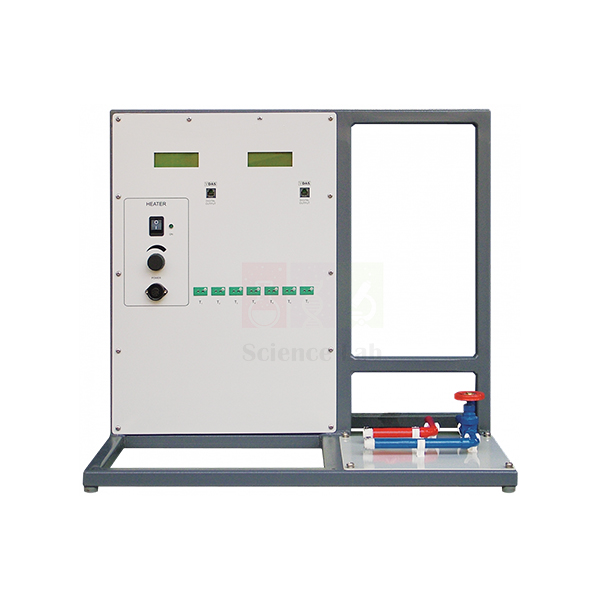
Heat Transfer
Heat Transfer (Product Code: SLE/EA/26) is a base unit used to supply cold water, heater power and temperature measurement to optional heat transfer experiments in engineering teaching laboratories. Lab instructors connect each optional experiment to it and read temperatures and heater power on clear, multi-line digital displays, while a safety switch stops the heater from becoming too hot. It is supplied by Jain Scientific Equipments Pvt Ltd (ScienceLab), Ambala, India, within its range of lab equipment for technical institutes.
Specifications
| Parameter | Detail |
|---|---|
| Role in the range | Core unit serving the optional heat transfer experiments |
| Water system | Connects to a suitable cold water supply and drain |
| Water flow control | Hand-operated valve for a controllable flow, with a simple return pipe (both colour-coded) |
| Water connections to experiments | Self-sealing quick connectors |
| Thermocouple inputs | Sockets for the thermocouples built into each optional experiment |
| Heater supply | Variable and measured electrical current to the heater in each experiment |
| Heater protection | Works with a safety switch to stop the heater from becoming too hot |
| Displays | Clear, multi-line digital displays of temperatures and heater power |
| Expansion space | Spare area to the right of the frame for fitting optional data-acquisition hardware |
| Optional experiments | Each on a bedplate with a clear schematic of connections and measuring point positions |
| Product code | SLE/EA/26 |
| Supplied by | Jain Scientific Equipments Pvt Ltd (ScienceLab), Ambala, India |
What Is the Heat Transfer Base Unit Used For?
The base unit turns a single bench into a heat transfer teaching station. Each optional experiment sits on its own bedplate; students link its water lines through the self-sealing quick connectors, plug its thermocouples into the sockets, set the heater current and watch the displays until the temperatures settle. They then record temperatures and heater power for their calculations, and because one unit serves every experiment in the range, a department can add experiments over time without duplicating the water supply and instruments.
The colour-coded valve and return pipe help students route water correctly, and the schematic printed on each bedplate shows where every connection and measuring point sits, which cuts set-up mistakes in busy practical sessions. For colleges and polytechnics sourcing engineering educational equipment in India, a shared base unit is a practical way to cover conduction and other heat transfer topics on one bench.
What to Specify When Ordering
- Which optional experiments you want with the base unit, for example the Radial Heat Conduction Experiment.
- How many base units you need for the student groups working at the same time.
- Confirmation that a cold water supply and drain are available where the unit will stand.
- Whether you plan to fit optional data-acquisition hardware in the spare area of the frame.
Supplier
ScienceLab is the trading name of Jain Scientific Equipments Private Limited, which supplies this Heat Transfer base unit from Ambala, Haryana, India, as the core of a range of optional heat transfer experiments. Because the base unit and the experiments that connect to it can be quoted together, you can ask us about adding experiments, replacement parts or repeat orders in a single enquiry. Engineering colleges, polytechnics, dealers and importers can request quotations directly from us. Read more on our company profile page.
Related Thermodynamics & Heat Transfer Lab Equipment
Pair the base unit with these experiments and apparatus from the same heat transfer range.
- Radial Heat Conduction Experiment — an optional module whose heater and thermocouples plug into the base unit sockets for radial conduction tests on a brass disc.
- Extended Surface Heat Transfer — another experiment that connects to the base unit, for heat flow along a thin bar.
- Free and Force Convection Apparatus — adds convection studies from heated elements in an air flow.
- Unsteady State Heat Transfer — covers transient heating of immersed test shapes.
Browse the Thermodynamics & Heat Transfer Lab Equipment category for heat exchangers, refrigeration trainers and more.
Frequently Asked Questions
What does the Heat Transfer base unit provide to each experiment?
The Heat Transfer base unit (SLE/EA/26) provides cold water, a variable and measured heater current, sockets for the experiment's thermocouples and clear multi-line digital displays of temperatures and heater power, so each optional experiment has the instruments needed to measure its performance.
Are experiments included with the Heat Transfer base unit?
The experiments used with the Heat Transfer base unit are optional items, each mounted on its own bedplate with a schematic diagram of connections and measuring points. List the experiments you need, such as the Radial Heat Conduction Experiment, when you ask for a quotation.
What water supply does the Heat Transfer base unit need?
The Heat Transfer base unit needs a suitable cold water supply and a drain. A hand-operated valve gives a controllable flow, a colour-coded return pipe carries water away, and self-sealing quick connectors link the water to each optional experiment safely and simply.
How is the heater protected on the Heat Transfer base unit?
The Heat Transfer base unit works with a safety switch that stops an experiment's heater from becoming too hot, while its variable, measured electrical current lets students set and record the heater power used in each test.
Who supplies the Heat Transfer base unit?
The Heat Transfer base unit (SLE/EA/26) is supplied by Jain Scientific Equipments Pvt Ltd (ScienceLab), Ambala, Haryana, India, which also quotes the optional experiments that connect to it, so one enquiry can cover the base unit and the modules your laboratory needs.
Can a calibration certificate be supplied with the Heat Transfer base unit?
Calibration-certificate availability for the Heat Transfer base unit's temperature and power displays should be discussed with us at the enquiry stage. Raise it through our contact page and we will tell you what documentation can be offered with your quotation.
Do you supply the Heat Transfer base unit for export?
Yes, the Heat Transfer base unit is quoted for institutions, dealers and importers in India and international markets. Share product code SLE/EA/26, the quantity, the optional experiments required and the delivery destination so the quotation is complete.
Request a Quote
Send your Heat Transfer base unit enquiry, together with the optional experiments you want, through the contact page, or add the item to the enquiry cart. We reply with a quotation covering the base unit and each experiment you list.
Last updated: 24 September 2026

Gay-Lussac's Law
Gay-Lussac's Law (Product Code: SLE/EA/27) is a bench-mounted apparatus used to show how the pressure of a fixed volume of air rises with temperature in engineering thermodynamics and physics laboratories. Students heat the air in a low-pressure vessel surrounded by an insulated heater under electronic control, then read absolute pressure, two air temperatures and their average on a digital display. It is made by Jain Scientific Equipments Pvt Ltd (ScienceLab), an OEM and engineering lab equipment manufacturer, at its own factory in Ambala, India.
Specifications
| Parameter | Detail |
|---|---|
| Mounting | Bench-mounting, with a back plate that holds the vessel |
| Vessel | Low-pressure vessel holding a fixed volume of air |
| Heating | Insulated heater around the vessel, controlled by an electronic temperature controller |
| Controller sensor | Thermocouple measuring the heater surface temperature |
| Air temperature | Two thermocouples measuring the air inside the vessel |
| Pressure measurement | Pressure transducer measuring the pressure of the heated air |
| Display | Digital display of absolute pressure, both air temperatures and their average |
| Venting | Hand-operated valve at the bottom of the vessel to normalise the air to ambient conditions |
| Working gas | Normal clean, dry air (behaves as an ideal gas over the pressure range used) |
| Product code | SLE/EA/27 |
| Manufacturer | Jain Scientific Equipments Pvt Ltd (ScienceLab) — OEM |
| Country of origin | India (made in Ambala, Haryana) |
What Is the Gay-Lussac's Law Apparatus Used For?
Gay-Lussac's law, often called the pressure law, states that for a fixed mass of gas held at constant volume, pressure is directly proportional to absolute temperature. With this apparatus, students first open the hand-operated valve at the bottom of the vessel to bring the trapped air to ambient conditions, close it, and set the electronic controller for the temperature range the experiment needs. As the insulated heater warms the air, they record pressure from the transducer against the average of the two air thermocouples, then plot the results to prove the law.
Converting the readings to kelvin gives a straight line through the origin, while extending a plot of pressure against Celsius temperature back to zero pressure gives an estimate of absolute zero — a classic extension exercise. Ordinary clean, dry air is used because it behaves as an ideal gas over the pressure range of this equipment, so no special gas supply is needed. The unit suits engineering thermodynamics courses as well as colleges looking for advanced physics lab equipment in India.
OEM Manufacturer
Jain Scientific Equipments Private Limited trades as ScienceLab and is the OEM (original equipment manufacturer) of this Gay-Lussac's Law apparatus, which it makes at its own licensed factory at Saha, Ambala, Haryana, India. Dealing with the manufacturer directly helps when you need matching gas-law equipment for several benches, a repeat order for a later session or advice on spare parts — ask us and we will guide you. Institutions, dealers and importers are quoted factory-direct. Company background is on the ScienceLab profile.
Related Thermodynamics & Heat Transfer Lab Equipment
These gas-law and temperature-measurement items support the same practical sessions.
- Boyle's Law — the companion bench apparatus that studies the pressure–volume relationship of trapped air.
- Boyle’s Law – Simple Type — a simple syringe-based demonstration for introductory gas-law lessons.
- Temperature Measurement and Calibration Apparatus — helps students understand the temperature sensors behind their readings.
- Gas Laws Poster — a wall reference for the gas laws beside the bench.
More thermodynamics apparatus is listed in the Thermodynamics & Heat Transfer Lab Equipment category.
Frequently Asked Questions
What does the Gay-Lussac's Law apparatus measure?
The Gay-Lussac's Law apparatus measures the absolute pressure of the heated air with a pressure transducer and its temperature with two thermocouples; a digital display shows the pressure, both air temperatures and their average. A further thermocouple on the heater surface feeds the temperature controller.
Why does the Gay-Lussac's Law apparatus use ordinary air?
The Gay-Lussac's Law apparatus uses normal clean, dry air because air behaves as an ideal gas over the range of pressures used in this equipment, so results follow the pressure law closely without any special gas supply.
What is the valve at the bottom of the Gay-Lussac's Law vessel for?
The hand-operated valve at the bottom of the Gay-Lussac's Law apparatus vessel lets students normalise the trapped air to ambient conditions before a run, so each test starts from room pressure and temperature.
Can students choose the temperature range on the Gay-Lussac's Law apparatus?
Yes. Students set the electronic temperature controller of the Gay-Lussac's Law apparatus for the range of temperatures needed during the experiment, and the insulated heater around the vessel warms the fixed volume of air through that range while they record the pressure changes.
Who manufactures the Gay-Lussac's Law apparatus?
The Gay-Lussac's Law apparatus (SLE/EA/27) is manufactured by Jain Scientific Equipments Pvt Ltd (ScienceLab), the OEM, at its own licensed factory at Saha, Ambala, Haryana, India, and it is supplied factory-direct to institutions, dealers and importers.
Is a calibration certificate available for the Gay-Lussac's Law apparatus?
Calibration-certificate availability for the Gay-Lussac's Law apparatus, including its pressure transducer and thermocouples, should be discussed with us before you order. Please ask through the contact page so the answer is included with your quotation.
What should a Gay-Lussac's Law apparatus quotation request include?
A quotation request for the Gay-Lussac's Law apparatus should state product code SLE/EA/27, the number of units, whether the companion Boyle's Law apparatus is also needed, and the delivery destination in India or in international markets.
Request a Quote
For a Gay-Lussac's Law apparatus quotation direct from the manufacturer, write to us through the contact page or place the item in the enquiry cart.
Last updated: 24 September 2026

Boyle's Law
Boyle's Law (Product Code: SLE/EA/28) is a bench-mounted apparatus used to prove that the pressure of trapped air varies inversely with its volume in engineering and physics laboratories. Students work hand-operated pumps that pressurise one of two clear-walled oil cylinders and so move a 'liquid piston' of oil in the other, while a mechanical gauge, a digital indicator and a thermocouple record pressure, air-column height and temperature. This Boyle law apparatus is made in India by Jain Scientific Equipments Pvt Ltd (ScienceLab), an OEM manufacturer, at its own factory in Ambala.
Specifications
| Parameter | Detail |
|---|---|
| Mounting | Bench-mounting, with a back plate |
| Cylinders | Two clear-walled cylinders containing oil |
| Pressure control | Hand-operated pumps to increase or decrease the pressure in the left-hand cylinder |
| Liquid piston | Oil moving in the right-hand cylinder compresses or decompresses a trapped column of air in the test cylinder |
| Volume measurement | Digital indicator for the change in height of the trapped air column (height change × cross-sectional area = volume change) |
| Pressure measurement | Mechanical pressure gauge on the trapped air |
| Temperature measurement | Thermocouple and digital display for the trapped air temperature |
| Working gas | Normal, clean, dry air (behaves as an ideal gas over the pressure range used) |
| Product code | SLE/EA/28 |
| Manufacturer | Jain Scientific Equipments Pvt Ltd (ScienceLab) — OEM |
| Country of origin | India (made in Ambala, Haryana) |
What Is the Boyle's Law Apparatus Used For?
Boyle's law says that, for a fixed mass of gas at constant temperature, pressure multiplied by volume stays constant. Students pump in steps, reading the trapped-air pressure on the mechanical gauge and the change in air-column height on the digital indicator; multiplying that height change by the column's cross-sectional area gives the change in volume. Plotting pressure against the reciprocal of volume should give a straight line, confirming the inverse relationship.
The thermocouple matters because compressing air warms it: students watch the air temperature and pause between steps so it stays constant, which is the condition the law requires. The same readings let a teacher demonstrate how the air temperature changes during a quick compression or expansion. The apparatus is equally suited to university thermodynamics courses and to institutes sourcing TVET lab equipment in India.
OEM Manufacturer
The Boyle's Law apparatus is manufactured by its OEM, Jain Scientific Equipments Private Limited (trading as ScienceLab), at the company's own licensed factory at Saha, Ambala, Haryana, India. The company is a registered MSME whose major activity is manufacturing (Udyam UDYAM-HR-01-0003714), and export consignments are handled under Importer-Exporter Code AAECJ8618A issued by the DGFT. Buying straight from the maker keeps quotations, repeat orders and questions about replacement parts with the people who build the apparatus — just ask us. See the ScienceLab profile for more about the company.
Related Thermodynamics & Heat Transfer Lab Equipment
Useful companions and alternatives for gas-law practicals:
- Gay-Lussac's Law — the companion bench apparatus relating pressure and temperature at constant volume.
- Boyle’s Law – Simple Type — a simple syringe-based alternative for introductory classes.
- Apparatus for Demonstrating the Boil-Marriott Law — a horizontal-tube alternative with a pressure gauge for the same pressure–volume relationship.
- Two Stage Compressor Test Set — takes air compression from the gas-law bench to a working machine test.
The complete Thermodynamics & Heat Transfer Lab Equipment category lists further thermodynamics apparatus.
Frequently Asked Questions
How does the Boyle's Law apparatus change the air volume?
The Boyle's Law apparatus changes the air volume with a 'liquid piston' of oil: hand-operated pumps raise or lower the pressure in the left-hand cylinder, pushing the oil in the right-hand cylinder up or down to compress or decompress the trapped air column.
How is volume measured on the Boyle's Law apparatus?
Volume on the Boyle's Law apparatus is worked out from the air-column height: a digital indicator measures the change in height, and multiplying it by the cross-sectional area of the column gives the change in volume, while a mechanical gauge reads the pressure.
Why does the Boyle's Law apparatus have a thermocouple?
The thermocouple and digital display on the Boyle's Law apparatus show the trapped air temperature, so students can keep it constant during tests as the law requires; the readings also help to demonstrate how air temperature changes during compression.
What gas does the Boyle's Law apparatus use?
The Boyle's Law apparatus uses normal, clean, dry air, which behaves as an ideal gas over the range of pressures used in this equipment, so no gas cylinder or special filling is needed for the experiment.
Who manufactures the Boyle's Law apparatus?
The Boyle's Law apparatus (SLE/EA/28) is made by its OEM, Jain Scientific Equipments Pvt Ltd (ScienceLab), at the company's own licensed factory at Saha, Ambala, Haryana, India, and is sold factory-direct to colleges, institutions, dealers and importers.
Is a calibration certificate available for the Boyle's Law apparatus?
Calibration-certificate availability for the Boyle's Law apparatus pressure gauge, digital indicator and thermocouple should be discussed with us before ordering. Send the question through the contact page and the reply will accompany your quotation.
What details are needed to quote the Boyle's Law apparatus?
To quote the Boyle's Law apparatus we need product code SLE/EA/28, the quantity, whether the Gay-Lussac's Law apparatus is wanted as well, and the delivery destination; vendor-registration details can be shared for institutional purchases in India and international markets.
Request a Quote
Ask for a Boyle's Law apparatus quotation through the contact page, or add it to the enquiry cart together with other gas-law items; the manufacturer replies with the quotation directly.
Last updated: 24 September 2026
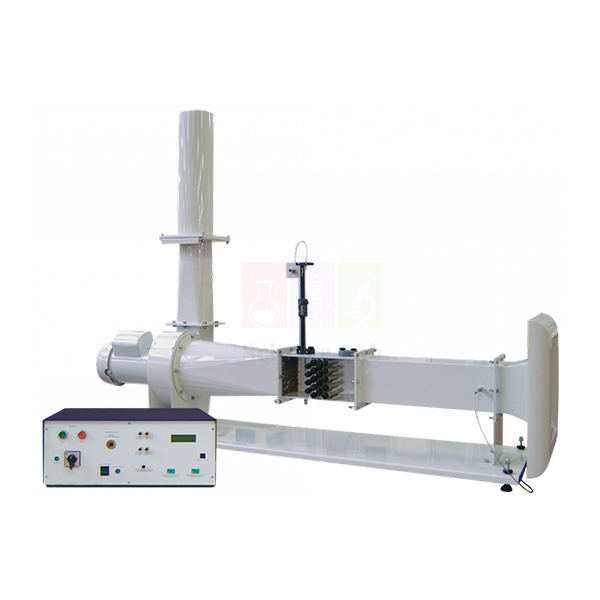
Cross Flow Heat Exchangers
Cross Flow Heat Exchangers (Product Code: SLE/EA/29) is a horizontal wind tunnel apparatus used to measure forced-convection heat transfer from a cylinder in a bank of rods in engineering heat transfer laboratories. Students replace any one rod of the working-section matrix with a copper element of known thermal capacity and a built-in thermocouple, then monitor how quickly it cools in the air flow. It is made by Jain Scientific Equipments Pvt Ltd (ScienceLab), an OEM supplying lab equipment for technical institutes, at its own factory in Ambala, India.
Specifications
| Parameter | Detail |
|---|---|
| Configuration | Horizontal wind tunnel |
| Tunnel sections | Contraction cone, working section, diffuser, constant speed fan and exhaust with silencer |
| Air flow control | Variable slide valve |
| Working section | Series of rods arranged in a matrix at right angles to the air flow; any one rod can be removed |
| Test element | Cylindrical copper element of known thermal capacity with a built-in thermocouple |
| Inlet air temperature | Second thermocouple at the wind tunnel inlet |
| Air velocity | Pitot traverse measuring velocity at any vertical point, before or after the rods |
| Pressure tappings | Two static pressure tappings in the base of the working section, one before and one after the rods |
| Product code | SLE/EA/29 |
| Manufacturer | Jain Scientific Equipments Pvt Ltd (ScienceLab) — OEM |
| Country of origin | India (made in Ambala, Haryana) |
What Is the Cross Flow Heat Exchanger Used For?
In a cross flow heat exchanger one fluid passes at right angles to tubes carrying the other, and this apparatus models the air side of that arrangement with a rod bank inside a wind tunnel. Students place the copper element in the rod matrix, set the air flow with the slide valve and log the element temperature as it cools, while the inlet thermocouple gives the temperature of the incoming air. Because the element's thermal capacity is known, its rate of cooling gives the forced-convection heat transfer rate quickly, without a long wait for steady conditions.
Moving the element to different positions in the matrix shows how upstream rods disturb the flow and change heat transfer deeper in the bank. The pitot traverse maps air velocity at any height before or after the rods, and the two static pressure tappings give the pressure difference across the bank, so students can relate heat transfer to flow and pressure loss. It gives mechanical and chemical engineering departments a practical link between heat transfer theory and measurement, alongside our other engineering lab equipment in India.
OEM Manufacturer
Jain Scientific Equipments Private Limited, trading as ScienceLab, is the OEM (original equipment manufacturer) of the Cross Flow Heat Exchangers apparatus and produces it at its own licensed factory at Saha, Ambala, Haryana, India. Because the wind tunnel, rod matrix and copper test element come from one manufacturer, questions about extra copper elements, replacement rods or repeat orders can be settled directly with the maker — just ask us. Universities, polytechnics, dealers and importers receive factory-direct quotations. More about the company is on the ScienceLab profile page.
Related Thermodynamics & Heat Transfer Lab Equipment
Buyers equipping a heat exchanger laboratory often add these items.
- Water To Air Heat Exchangers — a water-to-air exchanger with thermocouples on both fluid streams, for comparing a full exchanger with the single-element test.
- Parallel and Counter Flow Heat Exchanger — lets students compare parallel and counter flow arrangements with cross flow.
- Free and Force Convection Apparatus — convection from heating elements of different geometries in an air duct.
- Flow Visualisation Wind Tunnel — shows air flow patterns, complementing the pitot traverse readings.
View all items in the Thermodynamics & Heat Transfer Lab Equipment category.
Frequently Asked Questions
How does the Cross Flow Heat Exchangers apparatus measure heat transfer?
The Cross Flow Heat Exchangers apparatus measures heat transfer by monitoring how quickly a copper element of known thermal capacity, fitted with a built-in thermocouple, cools in the air flow; a second thermocouple at the tunnel inlet records the air temperature for the calculation.
Can the copper element be tested at different positions in the Cross Flow Heat Exchangers apparatus?
Yes. Students can remove any one rod from the matrix in the Cross Flow Heat Exchangers working section and replace it with the cylindrical copper element, so heat transfer can be compared at different positions within the rod bank.
How is air velocity controlled and measured in the Cross Flow Heat Exchangers apparatus?
On the Cross Flow Heat Exchangers apparatus a variable slide valve controls the air flow from the constant speed fan, and a pitot traverse measures air velocity at any vertical point in the working section, before or after the rods.
Can students measure the pressure drop across the rods?
Yes. The base of the Cross Flow Heat Exchangers working section has two static pressure tappings, one before the rods and one after, which let students measure the static pressure difference across the rod bank.
Who manufactures the Cross Flow Heat Exchangers apparatus?
Jain Scientific Equipments Pvt Ltd (ScienceLab) is the OEM that manufactures the Cross Flow Heat Exchangers apparatus at its own licensed factory at Saha, Ambala, Haryana, India; engineering colleges, dealers and importers buy it factory-direct.
Is a calibration certificate available for the Cross Flow Heat Exchangers apparatus?
Calibration-certificate availability for the Cross Flow Heat Exchangers apparatus, including its thermocouples, should be discussed with us before you place an order. Reach us through the contact page and we will clarify what documentation can come with the quotation.
Is the Cross Flow Heat Exchangers apparatus available for export?
Yes, the Cross Flow Heat Exchangers apparatus is offered to buyers in India and international markets. Include product code SLE/EA/29, the number of units and the delivery destination in your enquiry so the manufacturer can prepare an accurate quotation.
Request a Quote
Request a Cross Flow Heat Exchangers quotation straight from the manufacturer through the contact page, or save the item to your enquiry cart while you plan the rest of your heat transfer lab.
Last updated: 24 September 2026
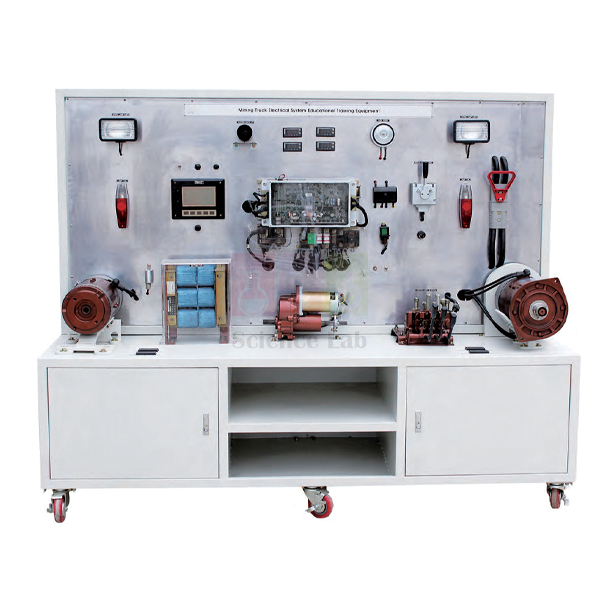
Electric Forklift Electric Circuit Training Simulator
Electric Forklift Electric Circuit Training Simulator (Product Code: SLE/ATE/23) is a training panel built from the electrical circuit device of a left-seat type electric forklift, used to teach inspection and troubleshooting of battery-electric material-handling vehicles. Its battery, levers, relays, instrument panel and motors are opened out, and the voltage and current of the driven rotor and hydraulic rotor can be measured during operation. The simulator is made by Jain Scientific Equipments Pvt Ltd (ScienceLab), the OEM manufacturer, at its own factory in Ambala, India.
Specifications
| Parameter | Detail |
|---|---|
| Basis | Electrical circuit device of a left-seat type electric forklift |
| Composition | Battery, operating lever, light system, horn, hydraulic lever, instrument panel, starter motor, battery connector, relay, digital meters, etc. |
| Live measurements | Voltage and current of the driven rotor and hydraulic rotor during operation |
| Layout | Components hidden on an actual forklift are opened out to show operating state and location |
| Weight | Approx. 350 kg |
| Size | Approx. 2,000 × 600 × 1,700 mm |
| Training content | Measuring the input/output data in each component |
| Product code | SLE/ATE/23 |
| Manufacturer | Jain Scientific Equipments Pvt Ltd (ScienceLab) — OEM |
| Country of origin | India (made in Ambala, Haryana) |
What Is the Electric Forklift Circuit Trainer Used For?
Battery-electric forklifts are common in warehouses and manufacturing plants, and their faults are usually electrical: a weak battery, a failed relay or a motor drawing abnormal current. This simulator lets trainees run the drive and hydraulic functions from the operating and hydraulic levers and watch the voltage and current of each rotor change with demand. Comparing the two rotors side by side shows why lifting and travelling place different loads on the battery.
A typical practical asks learners to record normal input/output values at every component and then use them as the reference when tracing a fault. As an entry point to electric-vehicle concepts, it gives vocational colleges a practical industrial example before students progress to road-vehicle EV systems, making it useful vocational training lab equipment for material-handling courses. Always isolate the battery connector before touching terminals or wiring.
OEM Manufacturer
The Electric Forklift Electric Circuit Training Simulator is built by its OEM (original equipment manufacturer), Jain Scientific Equipments Private Limited, which trades as ScienceLab. Assembly takes place at the company's own licensed factory at Saha, Ambala, Haryana, India.
Vocational colleges, industrial training centres, dealers and importers buy it factory-direct, and they can go back to the manufacturer for a matching unit or replacement parts later — ask us. Read more about the company on our company profile.
Related Automotive Training Equipment
Related trainers for electrical and electrified-vehicle courses:
- Electric Vehicle Energy Management Training Equipment — the next step into battery energy management on electric vehicles
- Excavator Electric Circuit Training Simulator — circuit training on a construction machine
- Wheel Loaders Electric Circuit Training Simulator — a wheel loader system with ECU for comparison
- Advanced Digital Multimeter — for independent voltage and current checks by each student
See more in our Automotive Training Equipment category.
Frequently Asked Questions
What can be measured on the Electric Forklift Electric Circuit Training Simulator?
The Electric Forklift Electric Circuit Training Simulator lets students measure voltage and current on the driven rotor and the hydraulic rotor during operation, as well as input and output data at each component of the circuit.
What is the battery voltage and capacity?
A battery is included in the Electric Forklift Electric Circuit Training Simulator, but its voltage and capacity are not stated in our product documentation. Contact us for the rating of the unit quoted before you plan charging arrangements.
Does it include a mast or forks?
No mast or forks are listed for the Electric Forklift Electric Circuit Training Simulator. It covers the forklift's electrical circuit, including the hydraulic lever and measurement of the hydraulic rotor, rather than the lifting mechanism itself.
How much space should we plan for?
Allow approximately 2,000 × 600 × 1,700 mm and about 350 kg for the Electric Forklift Electric Circuit Training Simulator, with room in front for students to operate the levers and take meter readings.
Who manufactures the Electric Forklift Electric Circuit Training Simulator?
The Electric Forklift Electric Circuit Training Simulator is manufactured by Jain Scientific Equipments Private Limited, trading as ScienceLab, as the OEM at its own licensed factory at Saha, Ambala, Haryana, India. Quotations and repeat orders come straight from the manufacturer.
Can it support an introductory electric-vehicle course?
Yes. The Electric Forklift Electric Circuit Training Simulator gives a practical industrial example of a battery-electric vehicle circuit, and it pairs well with our separate Electric Vehicle Energy Management Training Equipment for road-vehicle energy management.
Request a Quote
For a quotation from the manufacturer, contact us or add this simulator to your enquiry cart.
Last updated: 24 September 2026
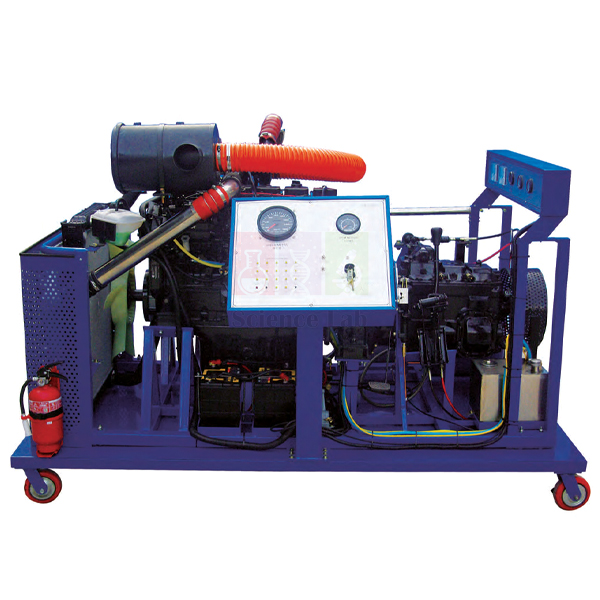
Large Yard Tractor Engine Fault Diagnosis System
Large Yard Tractor Engine Fault Diagnosis System (Product Code: SLE/ATE/24) is a heavy-duty engine simulator built on a Cummins diesel engine assembly of 400HP or more, used to teach fault diagnosis and maintenance of large diesel engines in heavy-vehicle training centres. Check terminals on the electrical circuit and sensors, a 20-port diagnosis terminal and an Auto Fault function support structured fault finding. The system is supplied by Jain Scientific Equipments Pvt Ltd (ScienceLab), Ambala, India.
Specifications
| Parameter | Detail |
|---|---|
| Engine | Cummins diesel engine assembly, 400HP or more |
| Fuel and electrical | Fuel filter, fuel tank (removable), fuel pump, fuel, battery, generator |
| Cooling | Radiator, electric fan cooling system, overflow tanks, antifreeze; stand for the radiator |
| Exhaust | Exhaust components such as an exhaust silencer |
| Controls | Ignition switch (key switch), control box, accelerator lever |
| Control panel | Meter, oil pressure gauge, power switch, power lamp, 20-port diagnosis terminal, voltmeter, ampere meter |
| Fault function | Auto Fault |
| Frame and protection | Stainless steel molded-type guards; laser processing protection panel; anti-vibration dampers; urethane wheels |
| Weight | Approx. 650 kg |
| Size | Approx. 2,400 × 1,500 × 1,500 mm |
| Product code | SLE/ATE/24 |
| Supplied by | Jain Scientific Equipments Pvt Ltd (ScienceLab), Ambala, India |
Training contents:
- Exhaust measurement; cylinder compression pressure measurement and inspection
- Connector-checking socket for inspection of sensors and actuators
- Fuel pump operation test; oil pressure measurement and inspection
- Measurement and adjustment of belt tension
- Inspection of automotive electrical parts, fuel system, ECU, sensors and actuators
- Radiator cap pressure measurement, radiator leak test and inspection
- Inspection of every part of the suction and exhaust system
- Inspection of the cooling system, belts and all kinds of pumps
- Inspection of the remaining parts
- Voltage and current measurement and inspection of circuits such as the charging circuit and maneuver circuit
What Is the Yard Tractor Engine Fault Simulator Used For?
Port terminals, logistics yards and heavy-vehicle service centres rely on technicians who can diagnose large diesel engines quickly, and practising on a full-size engine is the most direct way to build that skill. On this system, trainees start the engine from the key switch, monitor oil pressure, voltage and current on the control panel, and use the 20-port diagnosis terminal and connector-checking socket to test sensors, actuators and the ECU. Mechanical checks — compression, belt tension, radiator cap pressure and leak testing — complete a service routine that mirrors real workshop practice.
Because the engine is much larger than those on passenger-car trainers, it gives students a realistic feel for heavy-duty cooling, fuel and charging systems. Use it as the capstone unit of a TVET heavy-vehicle curriculum, after learners have covered smaller diesel engines. Run it only with good ventilation or exhaust extraction, keep the stainless guards fitted, and let the cooling system cool before opening the radiator cap.
Supplier
Jain Scientific Equipments Private Limited, which trades as ScienceLab from Ambala, Haryana, India, supplies the Large Yard Tractor Engine Fault Diagnosis System to heavy-vehicle training centres, colleges, dealers and importers. As the system is built around a Cummins engine, the company sources it and manages the quotation and delivery for buyers in India and international markets.
To learn more about ScienceLab, visit our company profile.
Related Automotive Training Equipment
Useful trainers for a heavy-vehicle workshop:
- Diesel Engine Fault Diagnosis Training Equipment Auto Fault — a smaller diesel fault trainer to prepare students first
- Trailer Air Brake Training Equipment — air brake and ABS training for the trucks and trailers these tractors move
- Heavy Duty Vehicles Differential Gear Model — the heavy-duty driveline downstream of the engine
- Digital Multimeter — for charging and maneuver circuit voltage and current checks
View all Automotive Training Equipment.
Frequently Asked Questions
What engine is installed in the Large Yard Tractor Engine Fault Diagnosis System?
The Large Yard Tractor Engine Fault Diagnosis System is built on a Cummins diesel engine assembly of 400HP or more, with its fuel, cooling, suction and exhaust systems, battery and generator mounted on the same stand.
What instruments are on the control panel?
The control panel of the Large Yard Tractor Engine Fault Diagnosis System carries a meter, oil pressure gauge, voltmeter, ampere meter, power switch, power lamp and a 20-port diagnosis terminal for sensor and circuit testing.
What faults can be set with the Auto Fault function?
Auto Fault is listed as a feature of the Large Yard Tractor Engine Fault Diagnosis System, but the list of fault conditions is not given in our current documentation. Contact us for the fault list before ordering if your assessment plan depends on it.
How large and heavy is the system?
The Large Yard Tractor Engine Fault Diagnosis System measures approximately 2,400 × 1,500 × 1,500 mm and weighs about 650 kg. Urethane wheels with anti-vibration dampers let it be moved across a level workshop floor.
What site services should we prepare?
Because the engine of the Large Yard Tractor Engine Fault Diagnosis System runs, plan for good ventilation or exhaust extraction. Fuel and electrical requirements are not detailed in our documentation, so ask us to confirm them before installation.
Who supplies the Large Yard Tractor Engine Fault Diagnosis System?
Jain Scientific Equipments Private Limited, trading as ScienceLab from Ambala, Haryana, India, supplies the Large Yard Tractor Engine Fault Diagnosis System to heavy-vehicle training centres, colleges, dealers and importers in India and international markets.
Is a calibration certificate available for the gauges and meters?
Calibration-certificate availability for the gauges and meters on the Large Yard Tractor Engine Fault Diagnosis System depends on the order. Please mention the requirement through our contact page when you request a quotation.
Request a Quote
For a quotation and delivery details, contact us or add this system to your enquiry cart.
Last updated: 24 September 2026