- Physics Lab Equipment
- Chemistry Lab Equipment
- Biology Lab Equipment
- Anatomical Lab Equipment
- Learning
- Educational Lab Equipment
- Magnets
- Agriculture
- Astronomy
- Earth Science
- Geography Lab Equipment
- Safety Lab Coat
- Laboratory
- Meteorological
- Electricity & Magnetism
- Heat
- School Lab Equipment
- Lab Glassware
- Science Lab Equipment
- Tvet Lab Equipment
- Robotics Kits Supplier and Manufacturer for Schools India
- Math Lab Equipment Manufacturers and Exporters in Ambala
- STEM Kits Manufacturers and Supplier India
- Engineering Lab Equipment
- Hospital Lab Equipment
- Water, Sanitation & Hygiene Supplies
- Cold Chain, Solar & Communication Equipment
- Nutrition
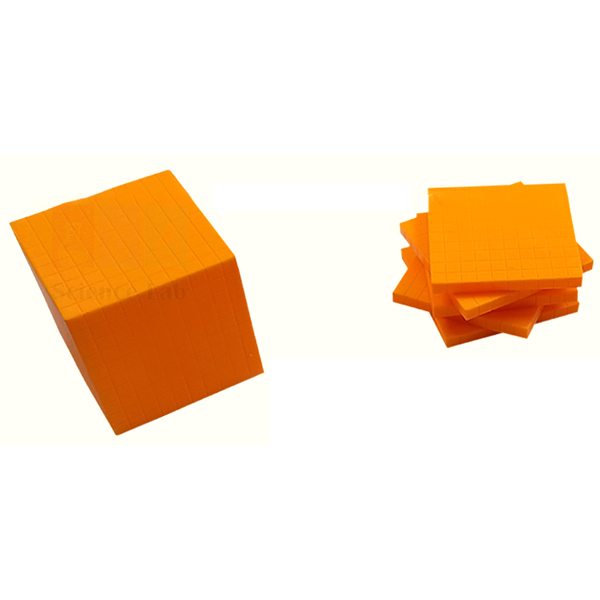
Dienes Blocks Rubber
Dienes Blocks Rubber (Product Code: SLE/LP/12) is a base-ten block kit used to consolidate place value and to introduce algebraic identities in school maths. The kit holds 100 small cubes, 20 rods, 5 plates and 1 large cube for a group of 4 children aged 6–14 years, and it works for decimal as well as whole-number place value. It is supplied by Jain Scientific Equipments Pvt Ltd (ScienceLab), Ambala, India, as one of its mathematics lab kits.
Specifications
| Parameter | Detail |
|---|---|
| Small cubes | 100 |
| Rods | 20 |
| Plates | 5 |
| Large cube | 1 |
| Group size | 4 children |
| Age | 6–14 years |
| Activity guide | Write-up with details of the activities |
| Uses | Whole-number and decimal place value and related operations; addition and subtraction algorithm; decimals in expanded form; algebraic identities and factorisation |
| Product code | SLE/LP/12 |
| Supplied by | Jain Scientific Equipments Pvt Ltd (ScienceLab), Ambala, India |
What Are Dienes Blocks (Rubber) Used For?
In the usual base-ten arrangement, a rod stands for ten small cubes, a plate for ten rods and the large cube for ten plates. When children add, they physically trade ten cubes for a rod; when they subtract, they break a rod back into cubes. Carrying and borrowing stop being rules to memorise and become actions they can see.
The same pieces take on new values for decimals: if the large cube is chosen as one whole, plates, rods and cubes become tenths, hundredths and thousandths, which makes the expanded form of a decimal easy to picture. In later years, plates and rods arranged into rectangles give an area model for algebraic identities and factorisation, so one kit can stay in use across a wide age range.
What to Specify When Ordering
- The version you need — Dienes Blocks Rubber or Dienes Blocks Plastic.
- The number of kits — each kit is for a group of 4 children.
- A request to confirm the block material in the quotation.
- Any vendor-registration forms your institution needs completed.
Supplier
Dienes Blocks Rubber is supplied by Jain Scientific Equipments Private Limited, the company that operates under the ScienceLab name in Ambala, Haryana, to schools, maths labs, teacher-education colleges and dealers in India and international markets. For vendor registration, institutions can record the supplying company’s GSTIN 06AAECJ8618A1ZT and its Importer-Exporter Code AAECJ8618A issued by DGFT. More background is on the ScienceLab profile.
Related Primary Maths Kits
Place-value materials that work alongside this block set:
- Dienes Blocks Plastic — the plastic version of the same place-value set.
- Base Ten Blocks — another base-ten set in the maths lab range.
- Place Value Mat with Stacking Counters — a mat for organising place-value columns.
- Number Sticks — bundling tens with sticks before moving to blocks.
- Decimal Kit — decimal games with blocks, cards and dice.
The full Primary range has further number kits.
Frequently Asked Questions
What is in the Dienes Blocks Rubber kit?
The Dienes Blocks Rubber kit contains 100 small cubes, 20 rods, 5 plates and 1 large cube, along with a write-up giving details of the activities for place value, decimals and algebra.
What age group is Dienes Blocks Rubber for?
Dienes Blocks Rubber is designed for a group of 4 children aged 6–14 years, so the same kit carries from early place-value lessons in primary classes to algebraic identities and factorisation in later school years.
Can Dienes Blocks Rubber be used for decimals?
Yes. Dienes Blocks Rubber can be used to teach decimal as well as whole-number place value, to show the quantity behind decimal numbers and to write decimals in expanded form, in addition to its use for algebra.
How is Dienes Blocks Rubber different from Dienes Blocks Plastic?
Dienes Blocks Rubber and Dienes Blocks Plastic list the same 100 small cubes, 20 rods, 5 plates and 1 large cube. Ask us through the contact page to confirm the material of each and which version best suits your class.
Who supplies Dienes Blocks Rubber?
Dienes Blocks Rubber is supplied by Jain Scientific Equipments Pvt Ltd (ScienceLab), Ambala, Haryana, India. Schools, maths labs and dealers in India and international markets can order it as single kits or in class quantities.
What details does a Dienes Blocks Rubber quotation need?
A Dienes Blocks Rubber quotation needs the number of kits (each for 4 children), the delivery address and any vendor-registration forms your institution uses. Send these through the contact page and we will reply with a quotation.
Request a Quote
Request prices for Dienes Blocks Rubber by sending the kit quantity and delivery details through the contact page, or save it in the enquiry cart with other place-value kits.
Last updated: 24 September 2026
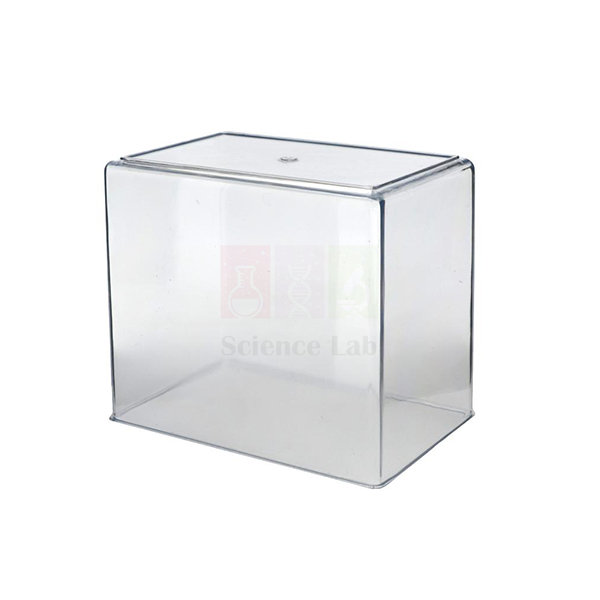
Mini Aquarium Tank
Mini Aquarium Tank (Product Code: SLE/EZ/13) is a clear polystyrene pan used as a small, temporary aquarium for observing aquatic animals and plants in school biology lessons and field sessions. It has a rounded rim and is sturdy enough to use over and over, yet economical enough to discard after a messy experiment; ordering two lets one serve as a cover. It is supplied by Jain Scientific Equipments Pvt Ltd (ScienceLab), Ambala, India.
Specifications
| Parameter | Detail |
|---|---|
| Material | Clear polystyrene |
| Form | Pan with rounded rim |
| Wall thickness | Listed as 0.03 (unit not stated — ask us to confirm) |
| Size | Listed as 4.5 x 8 in with a further 3 in figure — ask us to confirm length, width and depth |
| Reuse | Reusable, or economical enough to discard |
| Cover | No separate lid; order two and use one as a cover |
| Product code | SLE/EZ/13 |
| Supplied by | Jain Scientific Equipments Pvt Ltd (ScienceLab), Ambala, India |
What Is the Mini Aquarium Tank Used For?
A clear, shallow tank lets a group watch pond snails, water fleas, tadpoles or insect larvae up close, from the side as well as from above. Teachers use these tanks for short observation sessions after pond dipping, for recording how animals move and feed, and for simple water-plant experiments on the classroom windowsill. Because each tank is inexpensive, every group can have its own instead of crowding around one large aquarium.
Fill the tank with pond water rather than tap water, and keep it out of direct sunlight so the water does not overheat. Polystyrene is not meant for hot liquids or solvent cleaners, so wash it with mild soap and cool water. When a lid is needed to keep in humidity or stop insects escaping, invert a second tank over the first. These tanks suit schools building up an ecology or environmental science kit on a modest budget.
What to Specify When Ordering
- The number of tanks, counting two per group if each tank needs a matching cover.
- Confirmation of the exact tank dimensions and wall thickness if they matter for your set-up.
- Any nets or trays you want with the tanks for the same field or lab session.
Supplier
This mini aquarium tank is supplied by Jain Scientific Equipments Private Limited, which trades as ScienceLab, from Ambala, Haryana, India. Schools, colleges, nature clubs and distributors can order it in class quantities, alongside nets and sampling trays, with shipment across India and to international markets. See the company profile for more about the company.
Related Zoology Equipment
Equipment that works with the mini aquarium tank in pond and aquatic-life studies:
- Aquarium Dip Net — a small net for moving animals into and out of the tank.
- Net, Basic Fish Dip — for collecting the animals from a pond or stream.
- Bucket Aerator — keeps collected water oxygenated before it is shared into tanks.
- Invertebrate Sampling Tray — a larger flat tray for the first sort of the catch.
Explore the Zoology category for more aquatic and field equipment.
Frequently Asked Questions
Does the Mini Aquarium Tank come with a lid?
No separate lid is supplied with the Mini Aquarium Tank. The listing suggests ordering two tanks and inverting one over the other as a cover, which keeps in moisture and stops small animals climbing out.
Is the Mini Aquarium Tank reusable?
Yes. The Mini Aquarium Tank is substantial enough to be washed and used again, yet economical enough to discard after a messy or contaminated experiment. Clean it with mild soap and cool water, never with solvents.
What material is the Mini Aquarium Tank made from?
The Mini Aquarium Tank is a clear polystyrene pan with a rounded rim. Polystyrene gives good clarity for viewing animals, but it should be kept away from hot water, strong sunlight and solvent cleaners.
What size is the Mini Aquarium Tank?
The listing gives the Mini Aquarium Tank as 4.5 x 8 in with a further 3 in figure, which is not clearly labelled. Ask through our contact page and we will confirm the exact dimensions before you order.
Which animals can be kept in the Mini Aquarium Tank?
The Mini Aquarium Tank suits small aquatic animals for short observation, such as pond snails, water fleas, tadpoles and insect larvae. Return animals to their habitat after the lesson rather than keeping them for long periods.
Who supplies the Mini Aquarium Tank?
The Mini Aquarium Tank is supplied by Jain Scientific Equipments Pvt Ltd (ScienceLab), Ambala, Haryana, India, to schools, colleges and dealers in India and international markets. Class quantities can be quoted together with nets and trays.
Request a Quote
For a quotation on the Mini Aquarium Tank, send the number of tanks and your delivery location through the contact page, or add them to the enquiry cart.
Last updated: 24 September 2026
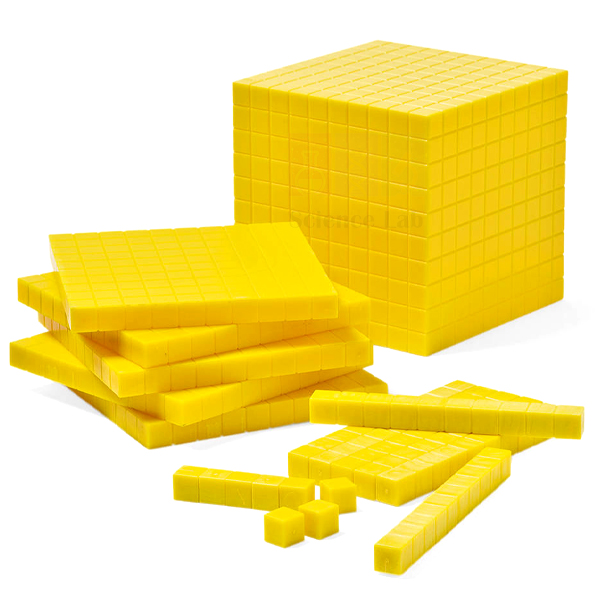
Dienes Blocks Plastic
Dienes Blocks Plastic (Product Code: SLE/LP/13) is a plastic base-ten block kit used to teach place value, decimals, algebraic identities and measurement in school maths labs. Each small cube weighs exactly 1 gram, has a volume of one cubic centimetre and faces of one square centimetre, so the same pieces serve as units of weight, volume and area. It is supplied by Jain Scientific Equipments Pvt Ltd (ScienceLab), Ambala, India, as educational lab equipment for groups of up to 4 children aged 6–14 years.
Specifications
| Parameter | Detail |
|---|---|
| Contents | 100 small cubes, 20 rods, 5 plates and 1 large cube |
| Material | Plastic |
| Small cube weight | 1 g each |
| Small cube volume | 1 cm³ each |
| Small cube face area | 1 cm² per face |
| Group size and age | Up to 4 children, 6–14 years |
| Activity guide | Write-up with details of the activities |
| Number topics | Whole-number and decimal place value; addition and subtraction algorithm; decimals in expanded form; algebraic identities and factorisation |
| Measurement topics | Units for volume, area and weight activities |
| Product code | SLE/LP/13 |
| Supplied by | Jain Scientific Equipments Pvt Ltd (ScienceLab), Ambala, India |
What Are Dienes Blocks (Plastic) Used For?
What sets this kit apart is that its smallest piece is also a standard unit. Children cover a flat shape with small cubes to find its area, first as a count of uniform units and later in square centimetres. They stack cubes to build a volume they can read in cubic centimetres, and place cubes on a balance pan to weigh light objects in grams.
In number lessons the rods, plates and large cube model whole-number and decimal place value, and they help pupils follow each step of the addition and subtraction algorithm. Older students arrange plates and rods into rectangles to show algebraic identities and factorisation. Having one set serve both number and measurement makes it practical educational laboratory equipment in India for schools stocking a maths lab on a single budget line.
Supplier
Jain Scientific Equipments Private Limited — known to schools as ScienceLab — supplies Dienes Blocks Plastic from Ambala, Haryana. Maths departments, combined science-and-maths labs and dealers in India and international markets order it singly or by the class. Visit the ScienceLab profile for company details.
Related Primary Maths Kits
Useful alongside the plastic Dienes set:
- Dienes Blocks Rubber — the rubber listing of the same set of pieces.
- Volume Measuring Set — further material for volume lessons.
- Decimal Kit — games on decimal notation and place value.
- Base Ten Blocks — an alternative base-ten set in the maths lab range.
Browse the Primary category for related kits.
Frequently Asked Questions
What does each small cube in Dienes Blocks Plastic weigh?
Each small cube in Dienes Blocks Plastic weighs exactly 1 gram. It also has a volume of one cubic centimetre, and each face has an area of one square centimetre, so the cubes double as measuring units.
What does the Dienes Blocks Plastic kit contain?
The Dienes Blocks Plastic kit contains 100 small cubes, 20 rods, 5 plates and 1 large cube, all made from plastic, together with a write-up describing place-value, algebra and measurement activities.
Can Dienes Blocks Plastic be used for measurement lessons?
Yes. Dienes Blocks Plastic is used in measurement activities: the small cubes act as 1 cm³ units of volume, 1 cm² units of area and 1 gram units of weight, moving children from uniform units to standard units.
What age group is Dienes Blocks Plastic suitable for?
Dienes Blocks Plastic is suitable for up to 4 children aged 6–14 years, from early place-value and addition-subtraction work to decimal expanded form, algebraic identities and factorisation in later years.
Who supplies Dienes Blocks Plastic?
Jain Scientific Equipments Pvt Ltd (ScienceLab) of Ambala, Haryana, India, supplies Dienes Blocks Plastic to schools, maths labs and dealers in India and international markets, as single kits or in class quantities.
Request a Quote
Tell us how many Dienes Blocks Plastic kits you need and where to deliver them through the contact page, or list them in the enquiry cart with any measurement items.
Last updated: 24 September 2026
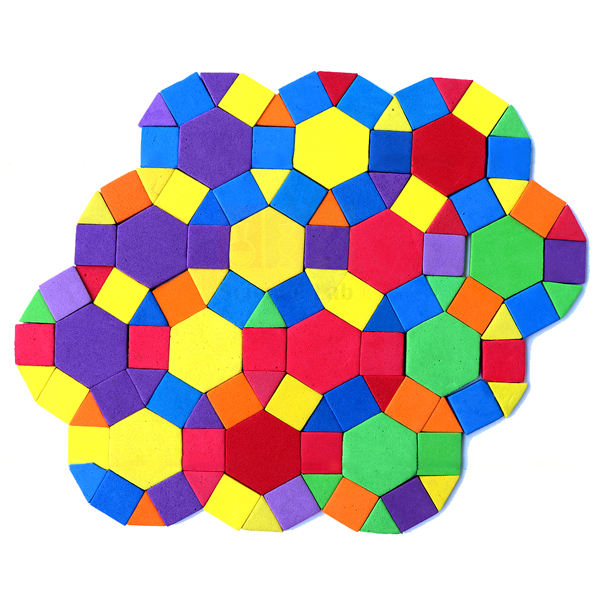
Tessellation Kit
Tessellation Kit (Product Code: SLE/LP/14) is a set of coloured rubber polygon tiles used to explore tiling, shape sense and the angle properties of polygons in school maths. It includes triangles, squares, small rhombi, pentagons, hexagons, heptagons, octagons and dodecagons, and the pieces stick to any smooth surface once they are wetted. It is supplied by Jain Scientific Equipments Pvt Ltd (ScienceLab), Ambala, India, as school lab equipment for groups of up to 4 learners aged 8–16 years.
Specifications
| Parameter | Detail |
|---|---|
| Shapes | Triangles, squares, small rhombi, pentagons, hexagons, heptagons, octagons and dodecagons |
| Material | Rubber |
| Colours and size | Different colours; pieces of the same size |
| Mounting | Can be pasted on any smooth surface after making the pieces wet |
| Group size and age | Up to 4 children, 8–16 years |
| Suitable for | Group work and maths labs |
| Activity guide | Write-up with details of the activities |
| Concepts | Tiling a region with one shape; shapes that do and do not tessellate; polygon properties and angles; combinations in which regular polygons tessellate; pattern and design making |
| Product code | SLE/LP/14 |
| Supplied by | Jain Scientific Equipments Pvt Ltd (ScienceLab), Ambala, India |
What Is a Tessellation Kit Used For?
Children begin by trying to cover a region with copies of just one shape. Squares, triangles and hexagons fit together without gaps, but pentagons will not, however they are turned. Asking why leads straight to angles: the corners that meet at a point must together make a full turn, and a pentagon's angle does not divide that turn evenly.
Older students then mix shapes to discover every combination in which regular polygons can tile a surface — octagons with squares is a classic first find — and record the angle facts that make each one work. Because the wetted rubber pieces cling to a whiteboard, window or tabletop, a group's pattern can be displayed and discussed without glue, making the kit a flexible part of a school lab setup for geometry.
Supplier
Jain Scientific Equipments Private Limited supplies the Tessellation Kit under its ScienceLab trade name from Ambala, Haryana. Schools setting up maths labs, maths and art clubs, and dealers in India and international markets order it as single kits or in sets for several groups. The ScienceLab profile describes the company.
Related Primary Maths Kits
Shape aids that complement tessellation work:
- Plastic Pattern Blocks — more shape tiles for pattern making.
- Brights Pattern Blocks — coloured pattern blocks for design work.
- Sorting Kits Triangle — classifying the triangles met in tiling.
- Sorting Kit Quadrilateral — classifying squares, rhombi and other four-sided shapes.
- Straws Base Kit — building polygons from sides and angles.
See the whole Primary range for further geometry kits.
Frequently Asked Questions
Which shapes are included in the Tessellation Kit?
The Tessellation Kit includes triangles, squares, small rhombi, pentagons, hexagons, heptagons, octagons and dodecagons, made in different colours and of the same size, so children can test which shapes tile a surface.
How do the Tessellation Kit pieces stick to a surface?
The rubber pieces of the Tessellation Kit can be pasted on any smooth surface after they are made wet, so designs can be built on a board, table or window without glue and lifted off again afterwards.
What age group is the Tessellation Kit for?
The Tessellation Kit is intended for up to 4 children aged 8–16 years. Younger pupils use it for shape sense and pattern making, while older students investigate angle properties and the combinations in which regular polygons tessellate.
Why do some Tessellation Kit shapes not tile?
Some Tessellation Kit shapes, such as the pentagons, do not tessellate because their angles cannot fit together around a point without leaving gaps or overlapping. Discovering this helps pupils understand the angle properties of polygons.
Who supplies the Tessellation Kit?
The Tessellation Kit is supplied by Jain Scientific Equipments Pvt Ltd (ScienceLab), Ambala, Haryana, India, to schools, maths labs and dealers in India and international markets, in single kits or larger quantities for class groups.
Request a Quote
Send the number of Tessellation Kits and the groups they will serve through the contact page, or add the kit to the enquiry cart together with other shape and geometry aids.
Last updated: 24 September 2026
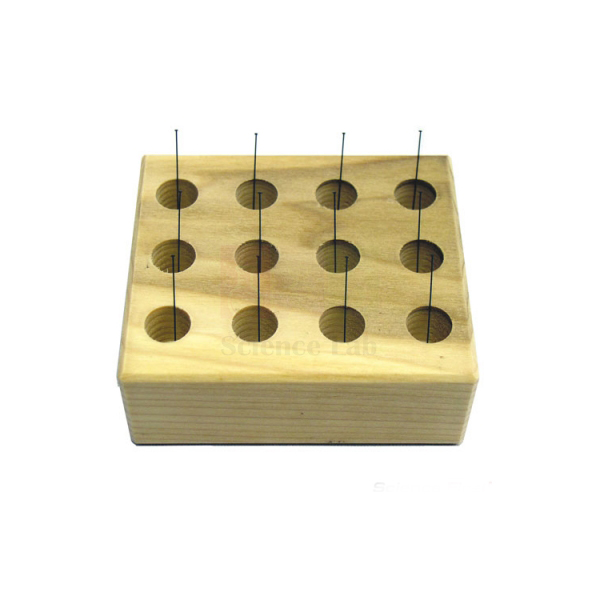
Insect Pin Holder
Insect Pin Holder (Product Code: SLE/EZ/14) is a 12-hole wooden block used to keep entomology pins of different sizes, and other small objects, sorted and within reach while insects are being mounted. Students, teachers and collection curators use it at the pinning bench; its bevelled sides and corners and 9 x 10 x 4 cm size make it easy to handle. It is made by Jain Scientific Equipments Pvt Ltd (ScienceLab), an OEM manufacturer, at its own factory in Ambala, India.
Specifications
| Parameter | Detail |
|---|---|
| Material | Wood |
| Holes | 12 |
| Edges | Bevelled sides and corners |
| Size | 9 x 10 x 4 cm |
| Holds | Many pin sizes and other small objects |
| Product code | SLE/EZ/14 |
| Manufacturer | Jain Scientific Equipments Pvt Ltd (ScienceLab) — OEM |
| Country of origin | India (made in Ambala, Haryana) |
What Is the Insect Pin Holder Used For?
Mounting an insect collection means switching between pins of several thicknesses, and loose pins on a bench are easily mixed up or spilled. With one size in each of the twelve holes, students can pick the right pin at a glance, and the block keeps every pin upright and ready while they work over a pinning board. Spare holes can take other small items, such as a fine brush, a labelling pen or a spare needle.
Write the pin size beside each hole with a fine marker so the sorting stays consistent from one class to the next. Keep the holder on the side of the bench away from the specimen so hands do not reach across fragile insects. As a wooden item it should be kept dry and wiped rather than washed. It is a small but useful part of an insect collection kit for school and college biology labs.
OEM Manufacturer
ScienceLab is the trading name of Jain Scientific Equipments Private Limited, the original equipment manufacturer (OEM) of this insect pin holder. It is produced at the company's own licensed factory at Saha, Ambala, Haryana, India, and supplied direct from the manufacturer to schools, colleges, museums, dealers and importers, not through a trading middleman. Repeat orders for matching lab sets are handled by the factory team, so ask us. Background is on the company profile page.
Related Zoology Equipment
Tools that sit alongside the pin holder when insects are collected and mounted:
- Dissecting T-Pins — pins to sort into the holder for pinning and spreading work.
- Forceps (Tweezers) — for positioning legs and wings once the insect is pinned.
- Insect Net, Economy — for collecting the specimens in the first place.
- Insect Mount Set — ready-made reference specimens to compare with student collections.
More entomology and animal-study items are in the Zoology category.
Frequently Asked Questions
How many holes does the Insect Pin Holder have?
The Insect Pin Holder has 12 holes in a wooden block measuring 9 x 10 x 4 cm. That is enough to keep several pin sizes apart, with spare holes for a brush, marker or other small tools used during mounting.
Does the Insect Pin Holder come with pins?
The listing for the Insect Pin Holder describes the wooden holder only and does not mention pins. Insect or T-pins can be quoted separately; tell us the sizes and quantities you need when you send an enquiry.
Can the Insect Pin Holder hold different pin sizes?
Yes. The Insect Pin Holder is described as useful for many pin sizes and other objects, so one block can hold a full range of entomology pins, one size per hole, for quick selection at the bench.
Who manufactures the Insect Pin Holder?
The Insect Pin Holder is manufactured by Jain Scientific Equipments Pvt Ltd (ScienceLab), the OEM, at its own licensed factory in Saha, Ambala, Haryana, India. Quotations and repeat orders come straight from the manufacturer.
How should the Insect Pin Holder be cleaned?
Wipe the Insect Pin Holder with a dry or slightly damp cloth and let it air-dry. Do not soak the wooden block or put it in a dishwasher, and store it in a dry drawer with the pins in place.
Can schools order the Insect Pin Holder in class sets?
Yes. Schools and colleges often order one Insect Pin Holder per workstation. Send the number of stations and delivery location, and we will quote the holders together with any pins or collecting equipment you need.
Request a Quote
Prices for the Insect Pin Holder come direct from the manufacturer. Share your quantity and delivery location through our contact page, or add it to the enquiry cart.
Last updated: 24 September 2026
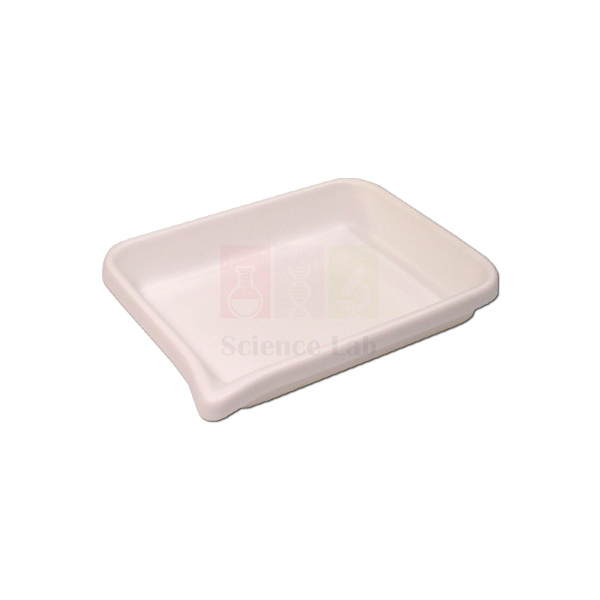
Sorting Tray
Sorting Tray (Product Code: SLE/EZ/15) is a small white, flat-bottomed pan used to spread out and sort pond, stream or leaf-litter samples in the field or the classroom. Made of high density polyethylene, it measures 5 x 7 in and has a moulded pour spout and a generous lift rim on all sides, which suits students working in pairs. It is supplied by Jain Scientific Equipments Pvt Ltd (ScienceLab), Ambala, India, for school and college biology fieldwork.
Specifications
| Parameter | Detail |
|---|---|
| Colour | White |
| Base | Flat-bottomed |
| Material | High density polyethylene (HDPE) |
| Features | Moulded pour spout; generous lift rim on all sides |
| Size | 5 x 7 in |
| Use | Field or class |
| Product code | SLE/EZ/15 |
| Supplied by | Jain Scientific Equipments Pvt Ltd (ScienceLab), Ambala, India |
What Is the Sorting Tray Used For?
After a net sweep, the catch is tipped into a little water in a white tray, where dark-bodied animals such as snails, larvae and beetles stand out clearly against the pale base. Students then separate them by type using a spoon or pipette, count each group, and identify them with a key. At this 5 x 7 in size, each pair can have its own tray, which keeps sorting quick and reduces crowding at the pond edge.
The moulded pour spout lets students drain excess water or tip animals gently back into the pond, and the lift rim gives a secure grip when the tray is moved while full. Use only a shallow layer of water, keep trays in the shade so the water stays cool, and rinse them in clean water after each session. They are handy, low-cost pieces of school biology lab equipment for ecology practicals.
Supplier
Jain Scientific Equipments Private Limited, known by its trading name ScienceLab, supplies the sorting tray from Ambala, Haryana, India. Schools, colleges, outdoor-education centres and distributors can source it in class sets with other pond-dipping equipment, for delivery across India and to international markets. Company background is on the company profile page.
Related Zoology Equipment
Items used with the sorting tray during a pond or stream survey:
- Invertebrate Sampling Tray — a larger tray for the first spread-out of the whole catch.
- Net, Basic Fish Dip — for sweeping through water plants to collect the sample.
- Key to Identifying Water Invertebrates — for naming the animals once they are sorted.
- Lens — a 3x and 6x magnifier for checking small features.
Visit the Zoology category for more fieldwork equipment.
Frequently Asked Questions
What size is the Sorting Tray?
The Sorting Tray measures 5 x 7 in and has a flat bottom, so it sits steadily on a bench or on level ground. The small size suits one pair of students sorting a share of the catch.
What is the Sorting Tray made of?
The Sorting Tray is made of high density polyethylene (HDPE) in white. The white surface makes small, dark aquatic animals easy to see, and the plastic can be rinsed clean after each fieldwork session.
What is the pour spout on the Sorting Tray for?
The moulded pour spout on the Sorting Tray lets students drain excess water or return animals gently to the pond without spilling over the side. It also helps when combining samples from several trays.
Can the Sorting Tray be used outdoors?
Yes. The Sorting Tray is intended for use in the field or in class. Its lift rim on all sides gives a firm grip when carrying a tray of water, and it is light enough to pack into a field kit.
How does the Sorting Tray differ from the Invertebrate Sampling Tray?
The Sorting Tray is a small 5 x 7 in HDPE pan for sorting by pairs, while the Invertebrate Sampling Tray is a much larger fibreglass tray for spreading out a whole sample. Many schools use both together.
Who supplies the Sorting Tray?
The Sorting Tray is supplied by Jain Scientific Equipments Pvt Ltd (ScienceLab), Ambala, Haryana, India. The company quotes class sets to schools, colleges and dealers in India and international markets, together with nets and identification keys.
Request a Quote
To order Sorting Trays, send the quantity and delivery location through our contact page, or list them with other pond-dipping items in the enquiry cart.
Last updated: 24 September 2026
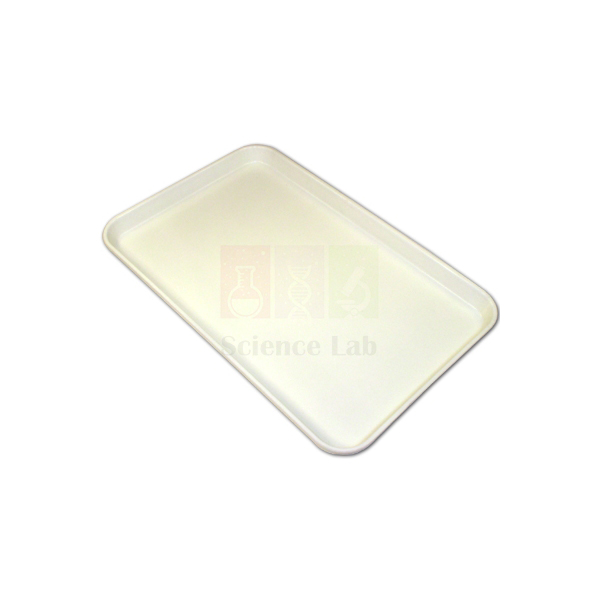
Invertebrate Sampling Tray
Invertebrate Sampling Tray (Product Code: SLE/EZ/16) is a large, flat-bottomed fibreglass pan used for hand-picking macroinvertebrates and other small critters from stream and pond samples in biology fieldwork. Measuring 11-7/16 x 17-3/4 x 3/4 in, it has metal reinforcement rods that stop it warping, so the sample stays evenly spread. It is supplied by Jain Scientific Equipments Pvt Ltd (ScienceLab), Ambala, India, for schools, colleges and environmental study groups.
Specifications
| Parameter | Detail |
|---|---|
| Material | Fibreglass |
| Reinforcement | Metal rods to prevent warping |
| Base | Flat-bottomed |
| Size | 11-7/16 x 17-3/4 x 3/4 in |
| Intended use | Hand-picking macroinvertebrates or other small critters |
| Product code | SLE/EZ/16 |
| Supplied by | Jain Scientific Equipments Pvt Ltd (ScienceLab), Ambala, India |
What Is the Invertebrate Sampling Tray Used For?
In a stream survey, a kick sample or net sweep brings up gravel, leaves and a mix of animals such as mayfly and caddisfly larvae, snails and worms. Spreading that sample thinly over a broad, flat tray gives students room to see every animal and pick it out by hand with soft forceps or a pipette. Because some of these animals tolerate pollution and others do not, the picked sample can be used to judge the water quality of the site.
The reinforcing rods keep the base flat, so a shallow layer of water covers the sample evenly instead of pooling at one end. Set the tray on level ground in the shade, add just enough water to cover the debris, and move picked animals to smaller sorting trays for counting. Rinse it after use and avoid dropping it on rocks, which can chip fibreglass. It is a sturdy piece of zoology lab equipment for field courses in India and abroad.
Supplier
This invertebrate sampling tray is supplied by Jain Scientific Equipments Private Limited, trading as ScienceLab, from Ambala, Haryana, India. Schools, universities, environmental monitoring projects and dealers can order it with nets, sorting trays and identification keys on one quotation, for delivery within India or to international markets. Learn more on the company profile page.
Related Zoology Equipment
Equipment that completes a macroinvertebrate sampling workflow:
- Net, Basic Fish Dip — a D-shaped net for collecting the sample from the stream bed.
- Sorting Tray — small white trays for separating the picked animals by type.
- Forceps (Tweezers) — for lifting delicate larvae out of the debris.
- Key to Identifying Water Invertebrates — for naming what has been found.
The Zoology category lists more nets, trays and field items.
Frequently Asked Questions
What are the dimensions of the Invertebrate Sampling Tray?
The Invertebrate Sampling Tray measures 11-7/16 x 17-3/4 x 3/4 in. The large, shallow area lets a whole net sample be spread thinly, so students can see and hand-pick every small animal in it.
What is the Invertebrate Sampling Tray made of?
The Invertebrate Sampling Tray is a fibreglass pan with metal reinforcement rods. The rods prevent warping, so the tray stays flat and water spreads evenly across the base during sorting.
What are macroinvertebrates and why pick them with this tray?
Macroinvertebrates are animals without backbones that are large enough to see without a microscope, such as insect larvae, snails and worms. The Invertebrate Sampling Tray gives a flat, open surface for hand-picking them from stream or pond debris.
Can the Invertebrate Sampling Tray be used in the lab as well as outdoors?
Yes. The Invertebrate Sampling Tray works on a lab bench for sorting samples brought back from the field, and outdoors on level ground beside the water. Keep it in the shade so the sample stays cool.
Who supplies the Invertebrate Sampling Tray?
The Invertebrate Sampling Tray is supplied by Jain Scientific Equipments Pvt Ltd (ScienceLab) of Ambala, Haryana, India. Schools, colleges, research groups and dealers in India and international markets can request a quotation.
What should I include in an enquiry for the Invertebrate Sampling Tray?
For an Invertebrate Sampling Tray quotation, include the number of trays, your delivery location and any nets, sorting trays or keys you need with them. You can send this through the contact page or the enquiry cart.
Request a Quote
Ask for a price on the Invertebrate Sampling Tray through our contact page, or add it to the enquiry cart with other stream-survey equipment.
Last updated: 24 September 2026
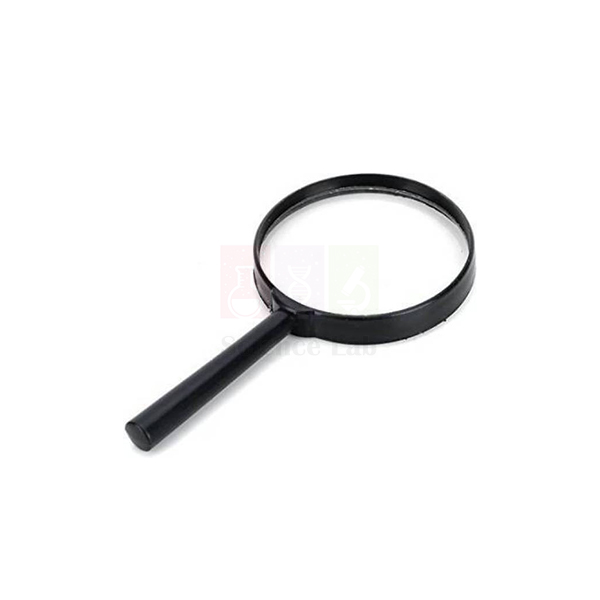
Lens
Lens (Product Code: SLE/EZ/17) is a rimless bifocal hand magnifier used to examine insects, skeletons, leaves and other specimens in biology classrooms and on field trips. It combines 3x and 6x magnification in a 175 mm diameter lens, has a highly polished chrome handle listed in 8 in, 5 in and 3 in lengths, and comes with a neoprene carrying case. It is supplied by Jain Scientific Equipments Pvt Ltd (ScienceLab), Ambala, India.
Specifications
| Parameter | Detail |
|---|---|
| Type | Rimless bifocal magnifier |
| Magnification | 3x and 6x |
| Lens diameter | 175 mm |
| Handle | Highly polished chrome |
| Handle length | 8 in, 5 in, 3 in (as listed) |
| Case | Neoprene carrying case |
| Product code | SLE/EZ/17 |
| Supplied by | Jain Scientific Equipments Pvt Ltd (ScienceLab), Ambala, India |
What Is the Bifocal Lens Used For?
Two powers in one lens let students move from an overview to fine detail without changing tools: 3x shows the whole of a beetle, leaf or small skull, while 6x brings out hairs, veins, scales or tooth rows. The rimless design leaves the edge of the field of view clear, which helps when scanning across a tray of pond animals or a pinned insect. It is a convenient hand lens magnifier for school labs in India and for teachers leading nature walks.
For the sharpest image, hold the lens steady and move the object, or your head, until it comes into focus. Never leave a magnifier lying in direct sunlight, as it can focus the sun's rays and scorch surfaces. Wipe the lens with a soft lens cloth, keep fingers off the optical surface, and return it to its neoprene case after each session to protect it from scratches.
What to Specify When Ordering
- The handle length you need — 8 in, 5 in or 3 in, as listed.
- The quantity, for example one per group or one per student for field trips.
- Any lens cloths or specimen sets to be quoted alongside the magnifiers.
Supplier
Jain Scientific Equipments Private Limited, under its ScienceLab trading name, supplies this bifocal lens from Ambala, Haryana, India. Schools, colleges, nature education centres and resellers can order it singly or in class quantities, with delivery across India and to international markets. More about the company is on the company profile page.
Related Zoology Equipment
Other magnifiers and items to use with the lens:
- Hand Lens — a simpler alternative for issuing to every student.
- Magnifying Glass — another magnifier option for general classroom viewing.
- Microfiber Lens Cloth — for cleaning the lens without scratching it.
- Insect Mount Set — ready-made specimens that reward close inspection at 6x.
Browse the Zoology category for more specimen and fieldwork equipment.
Frequently Asked Questions
What magnification does the Lens (SLE/EZ/17) give?
The Lens (SLE/EZ/17) is a bifocal magnifier offering both 3x and 6x magnification. Use 3x to view a whole specimen and 6x to study small features such as insect mouthparts, leaf veins or fine bones.
What is the diameter of the Lens (SLE/EZ/17)?
The Lens (SLE/EZ/17) is listed with a 175 mm diameter. A large lens like this lets two students look through it together, which is handy for group work at a specimen station.
Which handle lengths are available for the Lens (SLE/EZ/17)?
The Lens (SLE/EZ/17) is listed with handle lengths of 8 in, 5 in and 3 in, with a highly polished chrome finish. Please state the length you want when you ask for a quotation.
Does the Lens (SLE/EZ/17) come with a case?
Yes. The Lens (SLE/EZ/17) comes with a neoprene carrying case, which protects the lens from scratches in a field bag or drawer. Return the magnifier to the case after each use.
How should the Lens (SLE/EZ/17) be cleaned?
Clean the Lens (SLE/EZ/17) with a soft microfibre or lens cloth, breathing lightly on the surface if needed. Avoid paper towels and abrasive cleaners, and do not leave the magnifier in direct sunlight.
Who supplies the Lens (SLE/EZ/17)?
The Lens (SLE/EZ/17) is supplied by Jain Scientific Equipments Pvt Ltd (ScienceLab), Ambala, Haryana, India. The company quotes single pieces and class sets to schools, colleges and dealers in India and international markets.
Request a Quote
For a quotation on the Lens, tell us the handle length, quantity and delivery location through our contact page, or add it to the enquiry cart.
Last updated: 24 September 2026