- Physics Lab Equipment
- Chemistry Lab Equipment
- Biology Lab Equipment
- Anatomical Lab Equipment
- Learning
- Educational Lab Equipment
- Magnets
- Agriculture
- Astronomy
- Earth Science
- Geography Lab Equipment
- Safety Lab Coat
- Laboratory
- Meteorological
- Electricity & Magnetism
- Heat
- School Lab Equipment
- Lab Glassware
- Science Lab Equipment
- Tvet Lab Equipment
- Robotics Kits Supplier and Manufacturer for Schools India
- Math Lab Equipment Manufacturers and Exporters in Ambala
- STEM Kits Manufacturers and Supplier India
- Engineering Lab Equipment
- Hospital Lab Equipment
- Water, Sanitation & Hygiene Supplies
- Cold Chain, Solar & Communication Equipment
- Nutrition
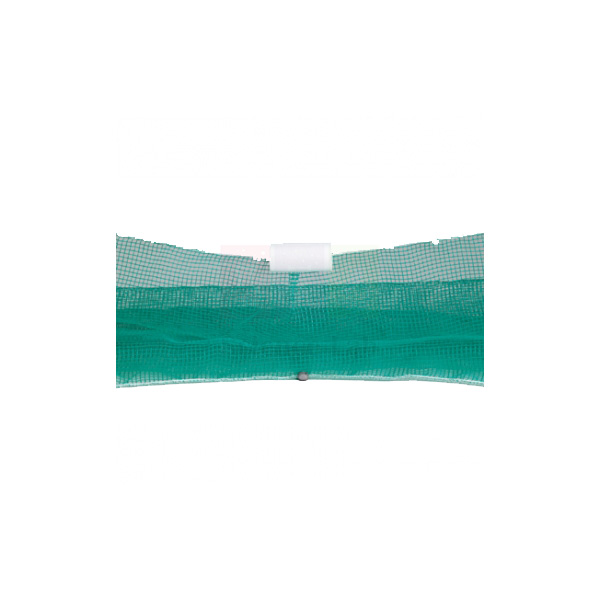
Minnow Seine, Thrifty
Minnow Seine, Thrifty (Product Code: SLE/EZ/09) is a small seine net used to capture minnows and other small fish in lakes, streams and ponds during school and college field studies. Built from green knotless nylon mesh with floats and weights, it is 4 ft long with a 1/4 in mesh; poles are not included. It is made by Jain Scientific Equipments Pvt Ltd (ScienceLab), an OEM manufacturer, at its own factory in Ambala, India.
Specifications
| Parameter | Detail |
|---|---|
| Purpose | Capturing minnows and other small fish in lakes, streams or ponds |
| Net material | Green knotless nylon mesh |
| Fittings | Floats and weights |
| Length | 4 ft |
| Mesh size | 1/4 in |
| Poles | Not included |
| Product code | SLE/EZ/09 |
| Manufacturer | Jain Scientific Equipments Pvt Ltd (ScienceLab) — OEM |
| Country of origin | India (made in Ambala, Haryana) |
What Is the Minnow Seine Used For?
A seine is a wall of netting held upright in the water: the floats keep the top edge at the surface while the weights hold the bottom edge on the bed. Two students each hold one end, wade slowly through shallow water and sweep the net towards the bank, then lift both ends together so the small fish collect in the middle. The catch is counted, identified and returned, which makes the seine a practical tool for fish diversity surveys and ecology projects.
Knotless mesh is gentler on scales and fins than knotted netting, which matters when fish are to be released. Choose calm, shallow water with a firm bottom, keep the weighted edge down during the sweep, and move the catch quickly into a bucket of water. Always supervise students near open water, and rinse and fully dry the net before storing it away from sunlight.
What to Specify When Ordering
- The number of seines needed, usually one for every pair of students in the field group.
- Poles for each end, since they are not included with the net — ask us if you want them quoted.
- Companion items such as a fish dip net, a measuring board or a bucket aerator for the same trip.
OEM Manufacturer
Jain Scientific Equipments Private Limited, trading as ScienceLab, is the original equipment manufacturer (OEM) of this minnow seine. The company makes its field-study nets at its own licensed factory at Saha, Ambala, Haryana, India, rather than sourcing them from a trader, and supplies them factory-direct to schools, colleges, field-study centres, dealers and importers. Replacement nets and repeat orders are handled by the manufacturer itself, so just ask us. See the company profile for more.
Related Zoology Equipment
Other items that complete a small-fish sampling kit:
- Net, Basic Fish Dip — for scooping fish and invertebrates from margins and weed beds.
- Gee Minnow Trap — a passive trap that can be left in place while the seine is used.
- Mini Fish Measuring Board — for recording the length of each fish before release.
- Bucket Aerator — keeps the holding bucket oxygenated while the catch is processed.
See the full Zoology category for more nets, traps and trays.
Frequently Asked Questions
Does the Minnow Seine, Thrifty come with poles?
No. The Minnow Seine, Thrifty is supplied as the net with its floats and weights, and poles are not included. Schools often use two straight wooden or metal poles, one at each end; ask us if you would like poles added to the quotation.
What are the length and mesh size of the Minnow Seine, Thrifty?
The Minnow Seine, Thrifty is 4 ft long and has a 1/4 in knotless nylon mesh. That size suits minnows and other small fish in shallow ponds, streams and lake margins, where a short net is easy for two students to handle.
Why does the Minnow Seine, Thrifty use knotless mesh?
Knotless nylon mesh, as used on the Minnow Seine, Thrifty, has a smoother surface than knotted net, so it is less likely to rub scales or catch fins and debris. That helps keep fish in good condition for counting and release.
How many people are needed to use the Minnow Seine, Thrifty?
Two people are normally needed for the Minnow Seine, Thrifty, one holding each end. They sweep the net through shallow water towards the bank with the weighted edge on the bottom, then lift both ends together to bring in the catch.
Who manufactures the Minnow Seine, Thrifty?
The Minnow Seine, Thrifty is manufactured by Jain Scientific Equipments Pvt Ltd (ScienceLab), the OEM, at its own licensed factory in Saha, Ambala, Haryana, India. Quotations, repeat orders and replacement nets come straight from the manufacturer.
How should the Minnow Seine, Thrifty be stored after fieldwork?
Rinse the Minnow Seine, Thrifty in clean water to remove mud and plant matter, let it dry completely, and store it loosely folded away from direct sunlight. Drying before storage helps prevent odour and mildew on the netting.
Request a Quote
Quotations for the Minnow Seine, Thrifty come direct from the manufacturer. Send the quantity and delivery location through our contact page, or add the seine and its companion items to the enquiry cart.
Last updated: 24 September 2026
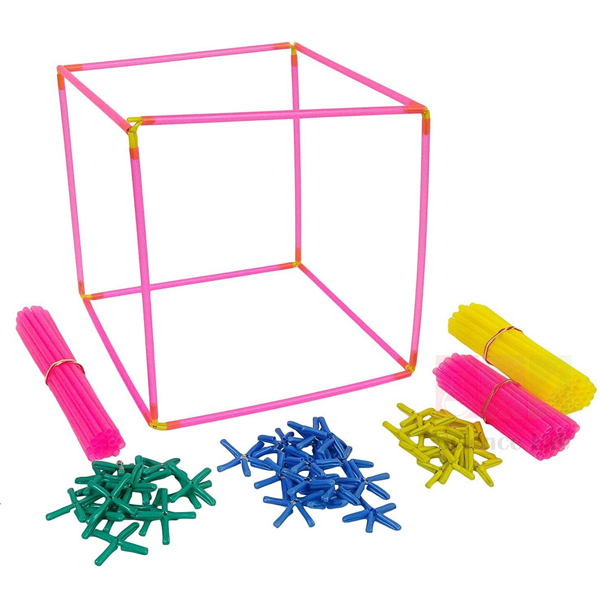
Straws Base Kit
Straws Base Kit (Product Code: SLE/LP/08) is a construction set of straws and multi-way connectors used to build 2D shapes and 3D models for geometry lessons in primary schools. It combines 120 straws in four colours and three lengths with three-way, four-way and five-way connectors, and suits groups of up to 4 children aged 5 years and above. It is supplied by Jain Scientific Equipments Pvt Ltd (ScienceLab), Ambala, India, as a junior lab kit for primary school geometry.
Specifications
| Parameter | Detail |
|---|---|
| Straws | 120 straws in four colours and three types of length |
| Three-way connectors | 32 |
| Four-way connectors | 12 |
| Five-way connectors | 12 |
| Activity guide | Write-up with details of the activities |
| Group size and age | Up to 4 children, age 5 years and above |
| 2D concepts | Identifying and categorising 2D shapes by their properties; constructing triangles, quadrilaterals and polygons from sides and angles; open and closed figures |
| Angles | Introduction to angles, comparison of angles, right angles |
| 3D concepts | Making and identifying cuboids, cubes and pyramids; faces, vertices and edges of polyhedra; spatial sense |
| Product code | SLE/LP/08 |
| Supplied by | Jain Scientific Equipments Pvt Ltd (ScienceLab), Ambala, India |
What Is the Straws Base Kit Used For?
Younger children start flat. Joining straws end to end, they make open and closed figures, then squares, rectangles and triangles, and quickly notice that the lengths they choose decide which shapes are possible. Comparing the corners they have made is a natural first look at angles and at what makes a right angle.
Older pupils lift the same pieces into three dimensions. The three-, four- and five-way connectors let them build cubes, cuboids and pyramids, then count faces, vertices and edges directly on the model instead of on a drawing. Free building, where children design 3D shapes of their own imagination, develops spatial sense and gives a hands-on route into the vocabulary of polyhedra.
Supplier
Straws Base Kit is supplied by Jain Scientific Equipments Private Limited, the Ambala-based company known by its ScienceLab trading name. Pre-primary and primary schools, activity centres and dealers in India and international markets order it for maths labs and geometry corners. Company details are on the ScienceLab profile.
Related Primary Maths Kits
Shape and space aids that extend straw-building work:
- Solid Shapes — ready-made solids to compare with straw models.
- Geoboard — another way to make and compare flat shapes.
- Geo Geometry Sticks — stick-based construction of polygons.
- Tessellation Kit — polygon tiles for further work on angles.
- Sorting Kits Triangle — classifying the triangles children have built.
For more geometry and number kits, visit the Primary category.
Frequently Asked Questions
What comes in the Straws Base Kit?
The Straws Base Kit comes with 120 straws in four colours and three lengths, 32 three-way connectors, 12 four-way connectors and 12 five-way connectors, together with a write-up that describes the 2D and 3D geometry activities.
What age is the Straws Base Kit suitable for?
The Straws Base Kit is suitable for children aged 5 years and above, in groups of up to 4. Younger children make flat shapes, while older pupils use the connectors to build polyhedra and study their faces, edges and vertices.
Which 3D shapes can be built with the Straws Base Kit?
With the Straws Base Kit, children can make and identify 3D shapes such as cubes, cuboids and pyramids, as well as other polyhedra and free-form structures of their own design, using the three-, four- and five-way connectors.
How does the Straws Base Kit help with angles?
The Straws Base Kit introduces angles by letting children see the opening between two joined straws, compare angles in different shapes and identify right angles, before constructing triangles, quadrilaterals and polygons from given sides and angles.
What should a quotation request for the Straws Base Kit include?
A Straws Base Kit quotation request should state the number of kits (each for up to 4 children), the delivery address and any other primary geometry kits you want on the same order. Send it through the contact page.
Who supplies the Straws Base Kit?
Jain Scientific Equipments Pvt Ltd (ScienceLab) of Ambala, Haryana, India, supplies the Straws Base Kit. Schools and dealers in India and international markets can order single kits or several for a class.
Request a Quote
Tell us how many Straws Base Kits your classes need via the contact page, or put them in the enquiry cart with other geometry kits and send one enquiry.
Last updated: 24 September 2026
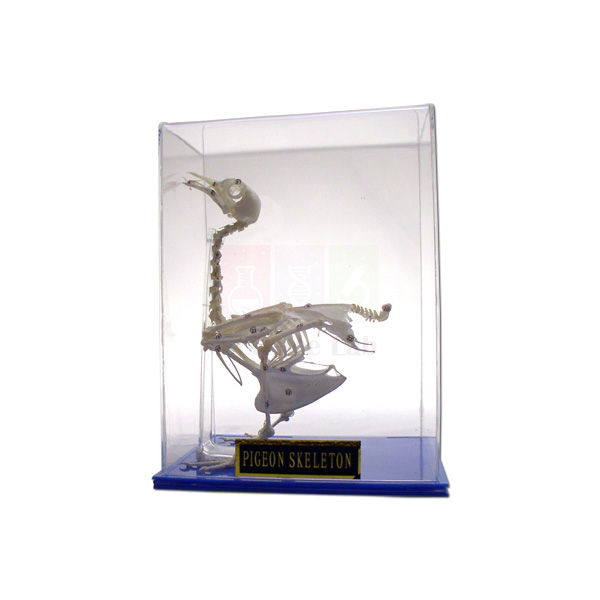
Pigeon Skeleton
Pigeon Skeleton (Product Code: SLE/EZ/10) is a real bird skeleton used to show the skeletal adaptations for flight in school biology and college zoology classes. The pigeon is the standard bird type in many Indian syllabi, and this natural-bone mount stands on a base under an acrylic cover in a 150 x 130 x 210 mm case. It is supplied by Jain Scientific Equipments Pvt Ltd (ScienceLab), Ambala, India, among its zoology lab equipment for institutions.
Specifications
| Parameter | Detail |
|---|---|
| Specimen | Natural bone, mounted |
| Display | On a base with an acrylic cover |
| Case size | 150 x 130 x 210 mm |
| Product code | SLE/EZ/10 |
| Supplied by | Jain Scientific Equipments Pvt Ltd (ScienceLab), Ambala, India |
What Is the Pigeon Skeleton Used For?
Birds carry a set of skeletal features that make flight possible, and a pigeon skeleton shows them in one place. Students can find the deep keel on the breastbone that anchors the flight muscles, the wishbone formed by the fused collarbones, the stiff, partly fused back and hip region, and the short tail bone that supports the tail feathers. The toothless beak and large eye sockets are easy talking points as well.
The specimen works well in lessons on the classification of vertebrates and in practical exams where students name a bone and explain its role in flight. Place it beside a bat skeleton to discuss how birds and mammals arrived at flight in different ways. Stand the case on a stable, level surface, view it at eye level, and keep it in a dry cupboard away from direct sunlight.
Supplier
Jain Scientific Equipments Private Limited supplies the pigeon skeleton under its ScienceLab name from Ambala, Haryana, India. It is available to schools, colleges, universities and resellers as a single display piece or as part of a vertebrate skeleton collection, for delivery within India and to international markets. Read about the company on the company profile page.
Related Zoology Equipment
Pair the pigeon skeleton with these items for a comparative vertebrate display:
- Bat Skeleton — a flying mammal for comparing wing structure with the bird's.
- Lizard Skeleton — a reptile for discussing features birds share with their relatives.
- Frog Skeleton — an amphibian that completes a class-by-class comparison.
- Magnifying Glass — for inspecting the keel, wishbone and fused bones in detail.
The Zoology category has more skeletons and animal-study resources.
Frequently Asked Questions
Is the Pigeon Skeleton a natural specimen?
Yes. The Pigeon Skeleton (SLE/EZ/10) is made of natural bone and mounted on a base with an acrylic cover. As it comes from a real bird, its exact size and bone detail can vary a little between pieces.
What size is the Pigeon Skeleton case?
The Pigeon Skeleton case measures 150 x 130 x 210 mm. Check that your display shelf or cupboard has room for these dimensions before the specimen arrives.
Which flight adaptations can be seen on the Pigeon Skeleton?
On the Pigeon Skeleton students can see the keeled breastbone, the wishbone, the fused bones of the back and hip, and the short tail bone. Together these give a light but rigid frame and anchor the flight muscles.
Does the Pigeon Skeleton include a key card?
The listing for the Pigeon Skeleton does not mention a key card or labels. If you need one for student use, ask through our contact page and we will confirm the details before quoting.
How should the Pigeon Skeleton be cleaned?
Clean only the outside of the Pigeon Skeleton case, wiping the acrylic cover with a soft, dry cloth. Avoid solvents that can cloud acrylic, and keep the case closed so dust does not settle on the fine bones.
Who supplies the Pigeon Skeleton?
The Pigeon Skeleton is supplied by Jain Scientific Equipments Pvt Ltd (ScienceLab) of Ambala, Haryana, India. Schools, colleges and dealers in India and international markets can request a quotation for single pieces or class collections.
Request a Quote
For a Pigeon Skeleton quotation, send the quantity and delivery location through our contact page, or place it in the enquiry cart with other skeletons.
Last updated: 24 September 2026
391.jpg)
Number Card (101 cards)
Number Card (101 cards) (Product Code: SLE/LP/09) is a set of 101 number cards showing the numbers 0 to 100, with hooks to hang them, used to support numeral recognition in early primary maths. Hung in sequence, the cards give children a constant reference for where each number sits and help them connect a written numeral to the quantity it represents. The set is supplied by Jain Scientific Equipments Pvt Ltd (ScienceLab), Ambala, India, as part of its school lab equipment range for early-years classrooms.
Key Details
| Parameter | Detail |
|---|---|
| Cards | 101 number cards |
| Numbers | 0 to 100 |
| Display | Hooks to hang the cards |
| Concepts | Numeral recognition; consolidating number location; connecting symbol to quantity |
| Product code | SLE/LP/09 |
| Supplied by | Jain Scientific Equipments Pvt Ltd (ScienceLab), Ambala, India |
What Is the Number Card Set Used For?
Hung in order along a line or wall, the 101 cards form a number line from 0 to 100 that stays in view all day. Children point to numbers as they count, find a number's neighbours, and notice that every tenth card begins a new decade — the pattern that later supports place value.
Because each card hangs on its own hook, the teacher can take a few down and ask which numbers are missing, or mix up a short stretch and have pupils rehang it in the right order. Both are quick ways to consolidate number location. Matching a card with a group of counters or other objects links the numeral to the amount it stands for.
Supplier
The Number Card (101 cards) set is supplied by Jain Scientific Equipments Private Limited, which trades as ScienceLab from Ambala in Haryana. Nursery and primary schools, remedial-learning programmes and dealers in India and international markets order it for classroom walls and maths corners. Company information is on the ScienceLab profile.
Related Primary Maths Kits
Number-sense materials that follow on from the hanging number line:
- Empty Number Card (Set of 5) — a companion card set from the same Primary range.
- Number Sticks — grouping tens and ones once numbers to 100 are familiar.
- Digit cards — building 3-digit and 4-digit numbers as the next step.
- Number Mat — another number-recognition aid in the maths lab range.
The Primary category lists the rest of the range.
Frequently Asked Questions
How many cards are in the Number Card (101 cards) set?
The Number Card (101 cards) set has 101 cards, one for each number from 0 to 100, so the full sequence can be displayed as a continuous classroom number line and used for counting and ordering activities.
Can the Number Card (101 cards) be hung on a wall?
Yes. The Number Card (101 cards) set comes with hooks to hang the cards, so they can be displayed in order along a wall or line and taken down one at a time for activities.
What does the Number Card (101 cards) set teach?
The Number Card (101 cards) set supports numeral recognition, consolidates where each number is located in the sequence from 0 to 100, and helps children connect a written symbol to the quantity it stands for.
What size are the cards in the Number Card (101 cards) set?
The card size and material of the Number Card (101 cards) set are not given in its description. Please ask through the contact page and we will confirm both details in your quotation before you order.
Who supplies the Number Card (101 cards) set?
Jain Scientific Equipments Pvt Ltd (ScienceLab), Ambala, Haryana, India, supplies the Number Card (101 cards) set to schools and dealers in India and international markets, either alone or with other number-sense materials for early grades.
Request a Quote
Ask for a quotation for the Number Card (101 cards) set, stating how many classrooms need one, through the contact page, or add it to the enquiry cart alongside your other early-maths items.
Last updated: 24 September 2026
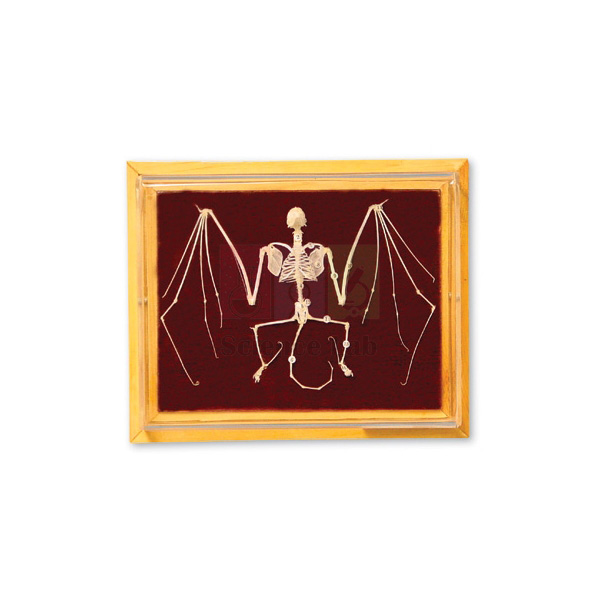
Bat Skeleton
Bat Skeleton (Product Code: SLE/EZ/11) is a natural-bone bat skeleton used to show how a mammal's forelimb has been modified into a wing, in school biology and university zoology teaching. Mounted on a base with an acrylic cover, it comes with a key card that helps students put names to the bones. It is supplied by Jain Scientific Equipments Pvt Ltd (ScienceLab), Ambala, India, for classrooms and teaching collections.
Key Details
| Parameter | Detail |
|---|---|
| Specimen | Natural bone, mounted |
| Display | On a base with an acrylic cover |
| Included | Key card |
| Product code | SLE/EZ/11 |
| Supplied by | Jain Scientific Equipments Pvt Ltd (ScienceLab), Ambala, India |
What Is the Bat Skeleton Used For?
A bat's wing is essentially a hand: the upper arm and forearm bones are followed by greatly lengthened finger bones that stretch the wing membrane, while the short thumb stays free. Seeing this on a real skeleton gives students a clear example of homologous structures, the same basic set of bones reshaped for different jobs. The hind limbs, turned so the knees face backwards, also explain how bats hang upside down at rest.
Teachers use the bat skeleton in evolution lessons alongside a human hand and a horse forelimb, and in flight comparisons with a bird skeleton, where the wings look similar but are built very differently. The key card turns the specimen into a self-guided station for group work. Keep the cover closed, since the finger bones are slender, and store the mount somewhere dry and shaded.
Supplier
ScienceLab, the trading name of Jain Scientific Equipments Private Limited in Ambala, Haryana, supplies this bat skeleton to schools, colleges, universities and education dealers. It can be combined with other natural skeletons and comparative anatomy models in one consignment for customers in India and international markets. Visit the company profile to learn more.
Related Zoology Equipment
Specimens and models that support a homology or flight lesson with the bat skeleton:
- Pigeon Skeleton — a bird wing for comparing two independent routes to flight.
- Horse Forelimb Skeleton — a forelimb built for running, from the same basic bone plan.
- Human Skeletal Hand Model — the human version of the bones that form the bat's wing.
- Lizard Skeleton — a reptile limb plan to widen the comparison across vertebrate classes.
Find more in the Zoology category.
Frequently Asked Questions
What is included with the Bat Skeleton?
The Bat Skeleton (SLE/EZ/11) comes as a natural-bone skeleton mounted on a base with an acrylic cover, together with a key card. The key card helps students identify the bones without opening the cover.
Is the Bat Skeleton real bone or a replica?
The Bat Skeleton is real, natural bone rather than a plastic replica. Because every specimen comes from an individual animal, slight differences in size, posture and bone detail between pieces are to be expected.
What are the dimensions of the Bat Skeleton case?
The listing does not give case dimensions for the Bat Skeleton. If you need the size for shelving or display planning, ask through our contact page and we will confirm it with the quotation.
How does the Bat Skeleton help teach homologous structures?
The Bat Skeleton shows the same upper-arm, forearm and finger bones found in a human hand, stretched to carry a wing membrane. Setting it beside a human hand or horse forelimb lets students see one bone plan adapted for different uses.
How should the Bat Skeleton be stored?
Store the Bat Skeleton flat in a dry, shaded cupboard with the acrylic cover closed, as the wing bones are slender. Keep the key card with the specimen and clean the cover with a soft, dry cloth only.
Who supplies the Bat Skeleton?
The Bat Skeleton is supplied by Jain Scientific Equipments Pvt Ltd (ScienceLab), Ambala, Haryana, India. The company quotes schools, colleges, universities and resellers in India and international markets, singly or with other vertebrate skeletons.
Request a Quote
To receive a price for the Bat Skeleton, send your quantity and delivery location through the contact page, or add it to the enquiry cart with other specimens.
Last updated: 24 September 2026
981.jpg)
Number Catchers I (3 to 10)
Number Catchers I (3 to 10) (Product Code: SLE/LP/10) is a set of 8 semi-cylindrical bamboo holders used to practise skip counting and multiplication in primary classrooms. Each holder takes exactly a fixed number of beads, from 3 to 10, so children see equal groups as they count in threes, fours and beyond; one set serves a class of 7–12-year-olds. It is supplied by Jain Scientific Equipments Pvt Ltd (ScienceLab), Ambala, India, among its mathematics lab kits.
Specifications
| Parameter | Detail |
|---|---|
| Holders | 8 semi-cylindrical holders |
| Material | Bamboo |
| Capacity | Each holder holds an exact number of beads, covering 3 to 10 |
| Quantity per class | 1 per class |
| Age | 7–12 years |
| Early concepts | Skip counting up to 10; pre-multiplication practice; unit formation; multiplication through the idea of ‘times’; tables with visualisation |
| Later concepts | Patterns in multiplication; splitting numbers to find a product; distributive property; 2-digit multiplication |
| Number theory | Factors and common factors; multiples and common multiples; finding prime numbers |
| Product code | SLE/LP/10 |
| Supplied by | Jain Scientific Equipments Pvt Ltd (ScienceLab), Ambala, India |
What Are Number Catchers I Used For?
A holder filled with beads becomes a single unit — “one five” or “one seven” — and that idea of a group counted as one is the step from counting in ones to multiplication. Children lay several full holders of the same size side by side and skip count along them, so “4 times 6” is literally four catchers of six beads each.
The same holders carry on into upper-primary topics. Splitting 7 × 8 into 7 × 5 and 7 × 3 with two holders shows the distributive property at work. Testing whether a pile of beads fills holders of one size exactly, with none left over, reveals factors and multiples, and numbers that refuse to split into equal groups lead pupils to prime numbers.
What to Specify When Ordering
- Whether you need Number Catchers I (3 to 10), Number Catchers II (11 to 15), or both to cover groups from 3 to 15.
- The number of classes to equip — one set is intended per class.
- Whether beads are required, as the description does not list beads as part of the set.
Supplier
Number Catchers I (3 to 10) is supplied by Jain Scientific Equipments Private Limited, trading as ScienceLab, from Ambala, Haryana. Since one set equips a whole class, schools can order class by class, and requirements for several schools or a district can be quoted together; dealers in India and international markets also stock it. See the company profile for more.
Related Primary Maths Kits
Other aids in the same multiplication sequence:
- Number Catchers II (11 to 15) — the same bead-holder method for 11 to 15.
- Taming The Tables — a card-and-dice game for recalling the facts built with the catchers.
- Place Value Board Multiplication — multi-digit multiplication after 2-digit work.
- Number Sticks — grouping and regrouping in tens before multiplication.
All kits in this range are listed under Primary.
Frequently Asked Questions
How many holders are in Number Catchers I (3 to 10)?
Number Catchers I (3 to 10) has 8 semi-cylindrical holders made from bamboo. Each holder takes an exact number of beads, and together they cover every number from 3 to 10 for skip counting and multiplication.
Are beads included with Number Catchers I (3 to 10)?
The description of Number Catchers I (3 to 10) states that the holders hold exactly 3 to 10 beads but does not list beads as part of the set. Please confirm through the contact page whether beads will be included in your quotation.
What age group uses Number Catchers I (3 to 10)?
Number Catchers I (3 to 10) is intended for children aged 7–12 years, with one set per class. Younger pupils use it for skip counting and tables, and older pupils for factors, multiples and prime numbers.
What is the difference between Number Catchers I and Number Catchers II?
Number Catchers I (3 to 10) has 8 bamboo holders for 3 to 10 beads and starts from skip counting, while Number Catchers II has 5 holders for 11 to 15 beads for larger tables. Used together, the two sets cover 3 to 15.
Who supplies Number Catchers I (3 to 10)?
Number Catchers I (3 to 10) is supplied by Jain Scientific Equipments Pvt Ltd (ScienceLab), based in Ambala, Haryana, India, to schools, maths labs and dealers in India and international markets, one set per class or in larger lots.
Request a Quote
Send the number of classes, whether you also want Number Catchers II and whether beads are needed through the contact page, or add the set to the enquiry cart for a combined quotation.
Last updated: 24 September 2026
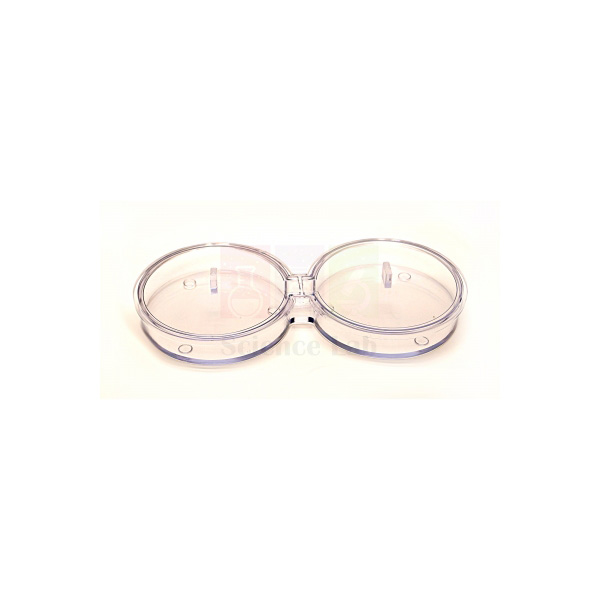
Chamber with Lid
Chamber with Lid (Product Code: SLE/EZ/12) is a two-chamber container used to hold small animals and observe how they choose between conditions in school biology and animal behaviour practicals. The two chambers are joined by an escape-proof passageway, and a tight-fitting lid keeps the critters contained while students watch. It is supplied by Jain Scientific Equipments Pvt Ltd (ScienceLab), Ambala, India, as part of its zoology equipment for schools.
Key Details
| Parameter | Detail |
|---|---|
| Layout | Two chambers connected by a passageway |
| Passageway | Escape-proof |
| Closure | Tight-fitting lid to contain the critters |
| Supplied with | Lid |
| Product code | SLE/EZ/12 |
| Supplied by | Jain Scientific Equipments Pvt Ltd (ScienceLab), Ambala, India |
What Is the Chamber with Lid Used For?
Two linked chambers let a class run a simple choice experiment: make conditions different on each side, release a few small animals, and record where they settle over time. Typical comparisons are damp against dry, dark against light, or two different food sources. Because the animals can move freely through the passageway but cannot escape, the results reflect their own preference, which leads naturally into discussions of habitat and survival.
Woodlice, beetles and other small invertebrates collected in the school grounds suit this kind of test. Line each chamber with a paper towel, moisten one or cover one to darken it, and count the animals in each side at regular intervals. Move animals with a soft brush or spoon, keep the lid closed between counts, and release them where they were found afterwards. It is a low-cost way to add insect collection and behaviour work to school biology lab equipment.
Supplier
Jain Scientific Equipments Private Limited, trading as ScienceLab, supplies the chamber with lid from Ambala, Haryana, India. Schools, science centres, colleges and distributors can order single units or class quantities, and add collecting nets and trays to the same quotation, with delivery across India and to international markets. More information is on the company profile page.
Related Zoology Equipment
Items for collecting and observing the animals used in the chamber:
- Bug Box, Gridded — for holding and measuring individual minibeasts after collection.
- Insect Net, Economy — for catching flying and grass-dwelling insects to study.
- Sorting Tray — a white tray for sorting the catch before it goes into the chamber.
- Giant Ant Farm — for a longer study of ant tunnelling and colony behaviour.
The Zoology category lists more animal-study equipment.
Frequently Asked Questions
How many chambers does the Chamber with Lid have?
The Chamber with Lid has two chambers joined by an escape-proof passageway. Animals can move between the two sides freely, which is what makes it suitable for choice and preference experiments in biology classes.
Will small animals escape from the Chamber with Lid?
The Chamber with Lid is designed to contain them: it has a tight-fitting lid and the passageway between chambers is escape-proof. Keep the lid closed between observations and check it is seated properly after each count.
Which animals can be used in the Chamber with Lid?
The Chamber with Lid suits small invertebrates such as woodlice, beetles and other minibeasts found around the school. Use only a few animals at a time, keep them for a short session, and release them where they were collected.
What are the material and dimensions of the Chamber with Lid?
The listing does not state the material or size of the Chamber with Lid. Please ask through our contact page and we will confirm both before you place an order.
Who supplies the Chamber with Lid?
The Chamber with Lid is supplied by Jain Scientific Equipments Pvt Ltd (ScienceLab), Ambala, Haryana, India. It is available to schools, colleges and dealers in India and international markets, alone or with other zoology items.
What information is needed to quote the Chamber with Lid?
For a Chamber with Lid quotation, tell us how many units you need, your delivery location, and any collecting equipment you want with them. The enquiry cart lets you list several zoology items in one request.
Request a Quote
To order the Chamber with Lid, send the quantity and delivery details through our contact page, or build a list in the enquiry cart.
Last updated: 24 September 2026
923.jpg)
Number Catchers II (11 to 15)
Number Catchers II (11 to 15) (Product Code: SLE/LP/11) is a set of 5 semi-cylindrical bamboo holders used to extend multiplication and table work to groups of 11 to 15 in primary maths. Each holder takes exactly one of those quantities of beads, which suits 2-digit multiplication, the distributive property and work on factors and multiples with children aged 7–12 years. It is supplied by Jain Scientific Equipments Pvt Ltd (ScienceLab), Ambala, India, among its mathematics lab kits, with one set intended per class.
Specifications
| Parameter | Detail |
|---|---|
| Holders | 5 semi-cylindrical holders |
| Material | Bamboo |
| Capacity | Each holder holds an exact number of beads, covering 11 to 15 |
| Quantity per class | 1 per class |
| Age | 7–12 years |
| Multiplication | Multiplication and tables; visualising patterns; 2-digit multiplication; splitting numbers conveniently to find a product; distributive property |
| Number theory | Multiples and common multiples; factors and common factors; finding prime numbers |
| Product code | SLE/LP/11 |
| Supplied by | Jain Scientific Equipments Pvt Ltd (ScienceLab), Ambala, India |
What Are Number Catchers II Used For?
Tables beyond 10 are hard to memorise by rote, and this set shows children that they do not have to. A full holder of 12 beads can be seen as 10 and 2, so 12 × 3 becomes 10 × 3 plus 2 × 3. Splitting a number into convenient parts like this is the distributive property in action, and it is exactly the reasoning behind 2-digit multiplication.
For common multiples, pupils lay out rows of two different holders, for example 12s and 15s, adding one holder at a time until both rows hold the same total of beads. For factors, they check which holder sizes a quantity fills exactly. A quantity that no holder size divides evenly, other than one group or single beads, points pupils towards prime numbers. Seen this way, the set is useful educational lab equipment for number theory, not only for tables.
Supplier
Jain Scientific Equipments Private Limited, which trades as ScienceLab from Ambala, Haryana, supplies Number Catchers II (11 to 15) to primary and middle schools, maths resource centres and dealers in India and international markets. It can be quoted on its own or together with the 3 to 10 set. Further company information is on the ScienceLab profile.
Related Primary Maths Kits
Kits that pair well with the larger number catchers:
- Number Catchers I (3 to 10) — the first set, for skip counting from 3 to 10.
- Taming The Tables — a practice game for tables up to 9.
- Dienes Blocks Plastic — place-value blocks for checking 2-digit products.
- Digit cards — mental multiplication games with larger numbers.
Find more multiplication and number aids in the Primary category.
Frequently Asked Questions
What does Number Catchers II (11 to 15) contain?
Number Catchers II (11 to 15) contains 5 semi-cylindrical holders made from bamboo, each holding exactly one quantity of beads from 11 to 15, for multiplication, factors and multiples in class.
Who is Number Catchers II (11 to 15) meant for?
Number Catchers II (11 to 15) is meant for children aged 7–12 years, with one set per class. It suits pupils who already skip count confidently and are ready for larger tables and 2-digit multiplication.
How does Number Catchers II (11 to 15) help with prime numbers?
Number Catchers II (11 to 15) helps children find prime numbers by testing whether a quantity of beads can be arranged into equal groups; a number that can only be made as one whole group or as single beads is prime.
Are beads supplied with Number Catchers II (11 to 15)?
Beads are not listed in the description of Number Catchers II (11 to 15), which only states that the holders take exactly 11 to 15 beads. Ask through the contact page and the quotation will state whether beads are included.
Who supplies Number Catchers II (11 to 15)?
Number Catchers II (11 to 15) comes from Jain Scientific Equipments Pvt Ltd (ScienceLab), Ambala, Haryana, India, which supplies schools and dealers in India and international markets, either alone or together with Number Catchers I (3 to 10).
Request a Quote
For a quotation, send the number of classes and say whether beads and Number Catchers I should be included, using the contact page; the enquiry cart lets you list several kits in one request.
Last updated: 24 September 2026