- Physics Lab Equipment
- Chemistry Lab Equipment
- Biology Lab Equipment
- Anatomical Lab Equipment
- Learning
- Educational Lab Equipment
- Magnets
- Agriculture
- Astronomy
- Earth Science
- Geography Lab Equipment
- Safety Lab Coat
- Laboratory
- Meteorological
- Electricity & Magnetism
- Heat
- School Lab Equipment
- Lab Glassware
- Science Lab Equipment
- Tvet Lab Equipment
- Robotics Kits Supplier and Manufacturer for Schools India
- Math Lab Equipment Manufacturers and Exporters in Ambala
- STEM Kits Manufacturers and Supplier India
- Engineering Lab Equipment
- Hospital Lab Equipment
- Water, Sanitation & Hygiene Supplies
- Cold Chain, Solar & Communication Equipment
- Nutrition
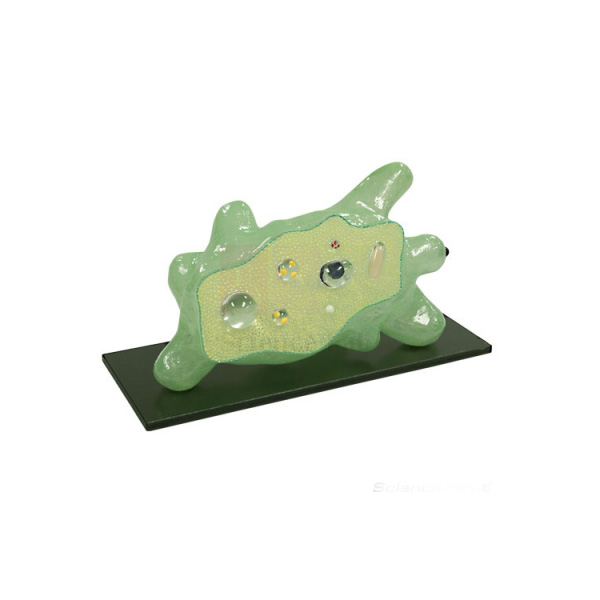
Amoeba Model
Amoeba Model (Product Code: SLE/ECB/13) is a translucent, enlarged model of Amoeba used to teach the structure, feeding and movement of a unicellular protozoan in school zoology and college biology. Its pseudopods are positioned to show the direction of travel, and food vacuoles holding diatoms and bacteria illustrate how the cell feeds. It is made by Jain Scientific Equipments Pvt Ltd (ScienceLab), an OEM manufacturer, at its own factory in Ambala, India, and fits naturally among animal models for a biology lab.
Specifications
| Parameter | Detail |
|---|---|
| Construction | Translucent model |
| Structures shown | Nucleus, food vacuoles containing diatoms and bacteria, contractile vacuole, fat droplet, granular and clear zones of cytoplasm |
| Movement | Position of the pseudopods indicates the amoeba's movement |
| Dimensions | 16-1/2 in wide x 10 in high x 8 in deep (42 x 25 x 20 cm) |
| Weight | 2.2 kg |
| Product code | SLE/ECB/13 |
| Manufacturer | Jain Scientific Equipments Pvt Ltd (ScienceLab) — OEM |
| Country of origin | India (made in Ambala, Haryana) |
What Is the Amoeba Model Used For?
Amoeba is the classic example of a cell that changes shape to move and feed, and the model makes that process easy to explain. Teachers can trace how the cytoplasm flows into the advancing pseudopods, distinguish the granular inner zone from the clear outer zone, and then point to food vacuoles that already contain diatoms and bacteria to illustrate engulfing prey by phagocytosis. The contractile vacuole leads into a discussion of osmoregulation in freshwater organisms, and the fat droplet gives an example of stored food reserves.
For practical classes, keep the model on the bench while students search pond or hay-infusion samples under the microscope, since live amoebae are slow, colourless and easy to miss. Many schools order it together with a Euglena model so students can compare pseudopod and flagellum movement, and at 2.2 kg it is light enough to carry between classrooms.
OEM Manufacturer
ScienceLab is the brand under which Jain Scientific Equipments Private Limited makes the Amoeba Model as its OEM (original equipment manufacturer), at the company's own licensed factory at Saha, Ambala, Haryana, India. Schools, colleges and overseas importers buy it factory-direct, and follow-up orders or questions about the model are answered by the maker itself — ask us. The company is a registered MSME with manufacturing as its major activity (Udyam UDYAM-HR-01-0003714), and its export orders ship under Importer-Exporter Code AAECJ8618A issued by the DGFT. Further details are on our company profile.
Related Cell Biology Equipments
Items that teachers commonly use alongside the Amoeba Model:
- Euglena Model — a flagellated protist for comparing modes of movement and nutrition.
- Student Monocular Microscope — for finding live amoebae in pond-water samples.
- Microscope Slides Depression — cavity slides that give live protozoa room to move while being observed.
- Visualising Osmosis & Diffusion Investigation — a class activity on membrane transport that explains why the contractile vacuole is needed.
More options are listed in our Cell Biology Equipments category.
Frequently Asked Questions
What structures does the Amoeba Model include?
The Amoeba Model includes the nucleus, food vacuoles containing diatoms and bacteria, the contractile vacuole, a fat droplet, and granular and clear zones of cytoplasm. Its pseudopods are arranged to show the direction in which the amoeba is moving.
How big is the Amoeba Model?
The Amoeba Model measures 16-1/2 in wide, 10 in high and 8 in deep (42 x 25 x 20 cm) and weighs 2.2 kg, a size that suits front-of-class display in an average classroom and is easy to carry.
Can the Amoeba Model be used to teach osmoregulation?
Yes. The Amoeba Model shows the contractile vacuole, so teachers can use it to explain how a freshwater protozoan collects and expels the water that keeps entering its cell by osmosis.
How should the Amoeba Model be cleaned and stored?
Clean the Amoeba Model with a soft, dry or lightly damp cloth and keep it covered when not in use to reduce dust. Avoid solvents and direct sunlight, which can dull or discolour a translucent finish.
Who manufactures the Amoeba Model?
The Amoeba Model is manufactured by Jain Scientific Equipments Pvt Ltd (ScienceLab), the OEM, at its own licensed factory at Saha, Ambala, Haryana, India. Institutions and distributors get the model and its quotation directly from the manufacturer.
What information helps prepare an institutional quote for the Amoeba Model?
For an Amoeba Model quotation, send product code SLE/ECB/13, the quantity, the delivery address and any vendor documents your purchase department needs. Orders are handled for buyers in India and international markets.
Request a Quote
For a quotation on the Amoeba Model, contact us directly or use the enquiry cart to send it with the other models on your list. Quotations are issued by the manufacturer.
Last updated: 24 September 2026
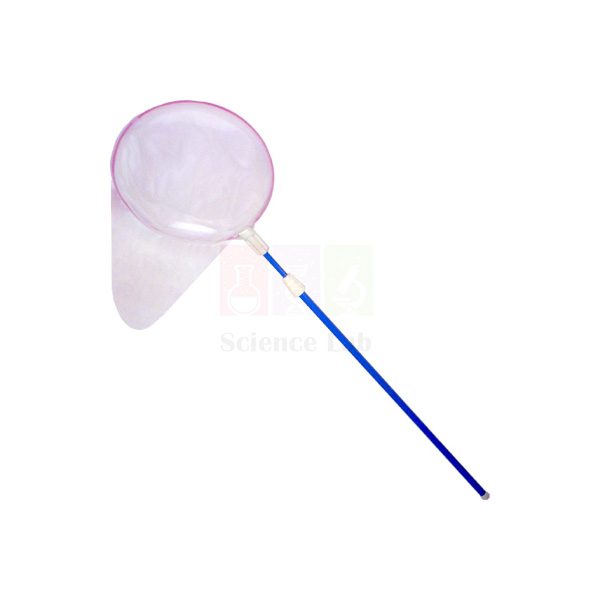
Collapsible Handle Economy Model
Collapsible Handle Economy Model (Product Code: SLE/EZ/01) is an economy-model field collecting net with a collapsible handle, used to catch insects and other small animals during zoology and ecology fieldwork. It has a diameter of about 14.5 in, a length of about 38.5 in, and a handle that adjusts between 14.5 and 30 in, so it packs down small for travel and extends for sweeping. This zoology lab equipment is made by Jain Scientific Equipments Pvt Ltd (ScienceLab), the OEM, at its licensed factory at 449, HSIIDC Industrial Area, Saha, Ambala, India.
Specifications
| Parameter | Detail |
|---|---|
| Model | Economy |
| Handle | Collapsible |
| Handle length | 14.5 in to 30 in |
| Diameter | 14.5 in approx. |
| Length | 38.5 in approx. |
| Product code | SLE/EZ/01 |
| Manufacturer | Jain Scientific Equipments Pvt Ltd (ScienceLab) — OEM |
| Country of origin | India (made in Ambala, Haryana) |
What Is the Collapsible Handle Net Used For?
Field nets are the basic tool for studying insect diversity outdoors. Students sweep the net through grass and low plants, or swing it to catch flying insects, then transfer what they catch to viewing boxes or collecting jars for identification, counting and release. A collapsible handle is the practical feature here: shortened, the net fits in a school bag or kit box for field trips; extended to its full 30 in, it gives more reach into vegetation and over water margins.
For a class survey, give each group one net and a viewing box, agree a fixed number of sweeps per habitat so results can be compared, and empty the net carefully by turning the bag over into a container. Shake out debris and let the net dry after use. As an economical piece of biology teaching equipment in India, it lets a school equip a whole class for insect-sampling practicals.
What to Specify When Ordering
- The number of nets required, for example one per student group.
- Any matching items for the same field trip, such as bug boxes, sorting trays or an insect lab kit.
- If you need details beyond the listed dimensions (net material or mesh), ask us before ordering.
OEM Manufacturer
ScienceLab, the trading name of Jain Scientific Equipments Private Limited, is the OEM of this economy-model net and makes it at its own licensed factory at Saha, Ambala, Haryana, India. Schools, colleges, nature education centres and dealers in India and international markets buy it factory-direct rather than through a trader.
Nets can be combined with viewing and mounting items in one consignment, and repeat orders or questions about spares are handled by the manufacturer itself — ask us. See the ScienceLab profile page for company details.
Related Zoology Equipment
Complete an insect field-study set with these items:
- Insect Net, Economy — another economy net for comparing options.
- Bug Box, Gridded — for viewing and measuring catches under magnification.
- Sorting Tray — for sorting the contents of the net back at the bench.
- Insect Lab Kit — pins, spreading board and mounts for preparing a collection.
See more field and specimen equipment in the Zoology category.
Frequently Asked Questions
What are the dimensions of the Collapsible Handle Economy Model?
The Collapsible Handle Economy Model has a diameter of about 14.5 in and a length of about 38.5 in. Its collapsible handle adjusts from 14.5 in to 30 in, so it can be shortened for carrying and extended for use in the field.
What is the Collapsible Handle Economy Model used for?
The Collapsible Handle Economy Model is a field collecting net for catching insects and other small animals during outdoor biology lessons, ecology surveys and zoology practicals. Catches are usually moved to viewing boxes or jars for study and then released.
Why choose a collapsible handle?
A collapsible handle, as on the Collapsible Handle Economy Model, shortens to 14.5 in for storage and transport in kit boxes or bags, then extends to 30 in for reaching into tall grass, shrubs or pond edges during sampling.
What is the net made of?
The listing for the Collapsible Handle Economy Model does not state the net fabric or mesh size. If your practical needs a particular mesh, for example for very small insects, please ask us through the contact page before placing an order.
Who manufactures the Collapsible Handle Economy Model?
Jain Scientific Equipments Pvt Ltd (ScienceLab) is the OEM manufacturer of the Collapsible Handle Economy Model, making it at its licensed factory at 449, HSIIDC Industrial Area, Saha, Ambala, Haryana, India, and supplying it factory-direct to schools, colleges and distributors, singly or in class quantities.
Request a Quote
To order class quantities, contact us through the contact page, or add the Collapsible Handle Economy Model to the enquiry cart with your other field equipment. Quotations come directly from the manufacturer.
Last updated: 24 September 2026
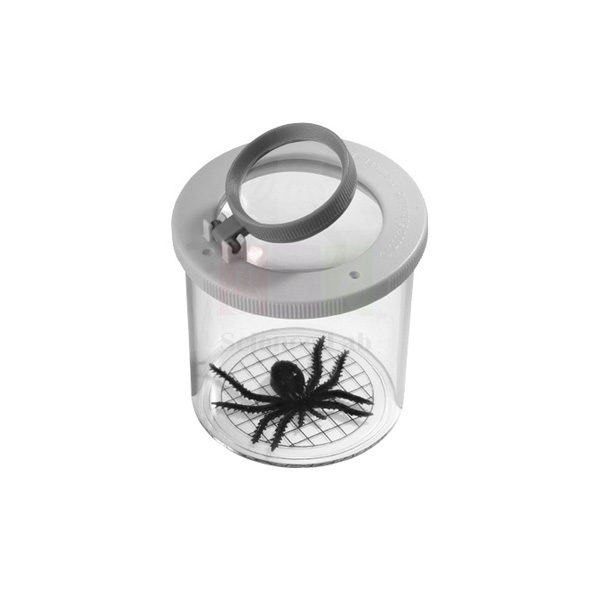
Bug Box, Gridded
Bug Box, Gridded (Product Code: SLE/EZ/02) is a small acrylic viewing jar with magnifying lenses, used to hold live insects and other minibeasts so students can examine and measure them in the classroom or the field. The first lens gives 2x magnification, a second fold-down lens raises it to 4x, and a measuring grid on the bottom of the 6 cm jar lets learners estimate body length. It is supplied by Jain Scientific Equipments Pvt Ltd (ScienceLab), Ambala, India, a biology lab equipment supplier in India.
Specifications
| Parameter | Detail |
|---|---|
| Jar material | Acrylic |
| Jar diameter | 6 cm |
| Magnification | 2x; 4x with the second lens folded down |
| Base | Measuring grid on the bottom |
| Product code | SLE/EZ/02 |
| Supplied by | Jain Scientific Equipments Pvt Ltd (ScienceLab), Ambala, India |
What Is the Gridded Bug Box Used For?
A bug box lets children and students look closely at a living insect, spider or snail without handling it. Start at 2x to find the animal and watch how it moves, then fold down the second lens for a 4x view of legs, mouthparts, wing veins or body segments. The grid printed on the base turns observation into measurement: learners can count squares to estimate the animal’s length and record it alongside a sketch, which suits primary science, middle-school biology and ecology survey work.
Keep the box out of direct sun, observe for a short time and release animals where they were found. Wipe the acrylic with a soft damp cloth rather than solvents to avoid clouding. Used with a collecting net and a sorting tray, gridded bug boxes give each group a simple kit for insect study, and a class set is a useful biology teaching aid for schools in India.
What to Specify When Ordering
- The number of bug boxes, for example one per student or per pair.
- Whether you also need collecting nets or sorting trays for field sessions.
- The delivery location and any packing requirements for classroom sets.
Supplier
Jain Scientific Equipments Private Limited, trading as ScienceLab, supplies the Bug Box, Gridded from Ambala, Haryana, to primary and secondary schools, colleges, nature clubs and distributors in India and international markets. Class quantities can be quoted together with other zoology field items on one order. Read more on the company profile page.
Related Zoology Equipment
Items that complete a minibeast study session:
- Collapsible Handle Economy Model — a field net for catching insects to view.
- Sorting Tray — for sorting catches before choosing animals to examine.
- Bug Box — a simpler viewing pot for younger children.
- Centered Magnifier for Insects — an alternative hand-held insect viewer.
Find more items in the Zoology category.
Frequently Asked Questions
What magnification does the Bug Box, Gridded give?
The Bug Box, Gridded magnifies insects 2x through its first lens. Folding down the second lens increases the magnification to 4x, so students can first locate the animal and then look at fine details such as legs and wing veins.
How big is the Bug Box, Gridded?
The Bug Box, Gridded has an acrylic jar 6 cm in diameter, which suits small beetles, ants, spiders and caterpillars from the school grounds while still fitting easily in a child’s hand or a field bag.
What is the grid on the Bug Box, Gridded for?
The measuring grid on the bottom of the Bug Box, Gridded lets students estimate the size of the animal inside by counting grid squares, so they can record measurements and compare specimens during a survey.
How should the Bug Box, Gridded be cleaned?
Clean the Bug Box, Gridded with a soft cloth and mild soapy water, then rinse and dry it. Avoid solvents and abrasive cleaners, which can cloud or scratch the acrylic jar and lenses.
Who supplies the Bug Box, Gridded?
Jain Scientific Equipments Pvt Ltd (ScienceLab), Ambala, Haryana, India supplies the Bug Box, Gridded in single units or class sets to schools, colleges and dealers in India and international markets.
Request a Quote
Send your required quantity through our contact page, or add the Bug Box, Gridded to the enquiry cart with other field-study items.
Last updated: 24 September 2026
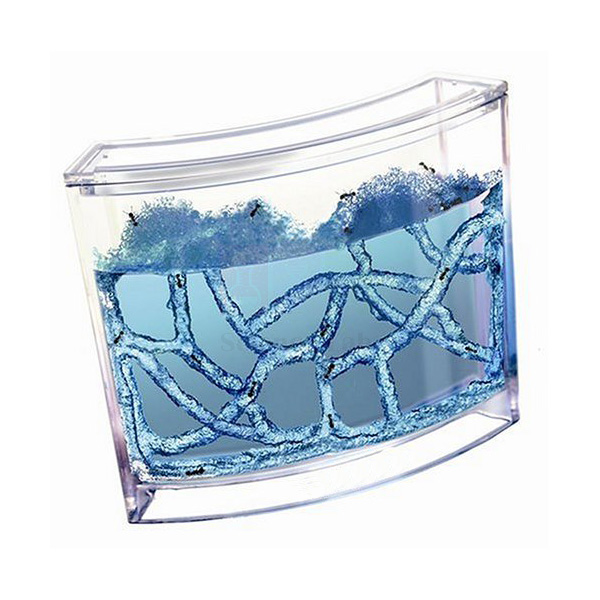
Antworks Deluxe Kit
Antworks Deluxe Kit (Product Code: SLE/EZ/03) is a clear ant habitat filled with translucent nutrient gel, used to let students watch ants dig and extend a 3-D tunnel network in classrooms and science clubs. Instead of sand or soil, the habitat uses a highly nutritious, non-toxic gel, so every tunnel stays visible from the sides. This branded observation kit is supplied by Jain Scientific Equipments Pvt Ltd (ScienceLab), Ambala, India, as one of its biology teaching aids for India.
Key Details
| Parameter | Detail |
|---|---|
| Type | Ant habitat (AntWorks), deluxe kit |
| Tunnelling medium | Translucent, highly nutritious, non-toxic gel |
| Closure | Lid, secured after the ants are inserted |
| Set-up | Prod small starting-point holes in the gel to start the tunnel network |
| Observation | 3-D tunnelling visible through the gel |
| Product code | SLE/EZ/03 |
| Supplied by | Jain Scientific Equipments Pvt Ltd (ScienceLab), Ambala, India |
What Is the AntWorks Kit Used For?
An ant habitat turns animal behaviour into something a class can watch over days and weeks. Once ants are placed on the gel and the lid is secured, they start excavating; because the gel is translucent, students can follow each tunnel as it branches and deepens, note how the ants share work, and see how they carry excavated gel to the surface. It supports lessons on social insects, habitats, animal behaviour and the scientific method, with students keeping observation diaries and drawing the tunnel system as it develops.
To set up, use a thin probe to make a few small starting holes in the gel surface, add a small group of ants collected from one colony, and close the lid. Keep the habitat at room temperature, out of direct sunlight and away from heaters. Local rules on collecting and keeping insects should be followed, and ants should be released near where they were found at the end of the study.
What to Specify When Ordering
- The number of kits, for example one per class or per science club group.
- Whether you want related viewing items, such as bug boxes or hand lenses, on the same order.
- Ask us to confirm the full contents of the deluxe kit before ordering, as they are not itemised in the listing.
Supplier
The Antworks Deluxe Kit is a third-party branded product that ScienceLab, the trading name of Jain Scientific Equipments Private Limited, Ambala, Haryana, sources and supplies to schools, colleges, hobby science centres and dealers in India and international markets. We can add it to a wider zoology or science kit order. Company information is on the ScienceLab profile page.
Related Zoology Equipment
Other items for studying ants and small invertebrates:
- Giant Ant Farm — a sand-based ant farm with a connecting tube for longer projects.
- Bug Box, Gridded — for collecting ants and looking at them under 2x or 4x.
- Hand Lens — for close observation of tunnel walls and individual ants.
- Chamber with Lid — a closed chamber for keeping other small invertebrates.
Browse more items in the Zoology category.
Frequently Asked Questions
How does the Antworks Deluxe Kit work?
The Antworks Deluxe Kit is an ant habitat filled with a translucent, non-toxic nutrient gel. You make small starting holes in the gel, insert ants and secure the lid; the ants then dig a 3-D tunnel network that stays visible through the gel.
Are live ants included with the Antworks Deluxe Kit?
The listing for the Antworks Deluxe Kit does not say that live ants are included, so plan to collect a small group of local ants from one colony. Please confirm the kit contents with us through the contact page before ordering.
What is the gel in the Antworks Deluxe Kit?
The Antworks Deluxe Kit uses a highly nutritious, non-toxic, translucent gel in place of sand or soil. It serves as the material the ants tunnel through and as a nutrient source, and its clarity lets students see every tunnel.
Which age groups is the Antworks Deluxe Kit suitable for?
The Antworks Deluxe Kit suits primary and secondary classes and science clubs studying insects and behaviour, with adult supervision for collecting and inserting ants. Its listing gives no age grading, so teachers should judge suitability for their students.
Who supplies the Antworks Deluxe Kit?
Jain Scientific Equipments Pvt Ltd (ScienceLab), Ambala, Haryana, India supplies the Antworks Deluxe Kit, a third-party branded ant habitat, to schools, colleges and dealers in India and international markets.
Request a Quote
Ask for a quotation through our contact page, or add the Antworks Deluxe Kit to the enquiry cart with other biology teaching items.
Last updated: 24 September 2026
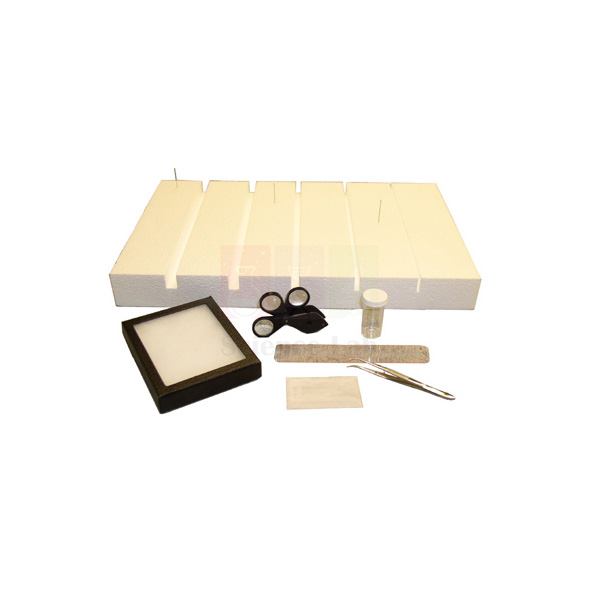
Insect Lab Kit
Insect Lab Kit (Product Code: SLE/EZ/04) is a class kit of entomology tools and consumables used to collect, pin, spread, label and study insects in school and college zoology practicals. Sized for groups of 12 to 24 students, it combines insect pins, a spreading board, entomology forceps, rulers, 3-lens magnifiers, vials, glassine envelopes and a small Riker mount, making it a ready insect collection kit for schools. It is supplied by Jain Scientific Equipments Pvt Ltd (ScienceLab), Ambala, India.
Key Details
| Parameter | Detail |
|---|---|
| Group size | For groups of 12–24 |
| Pins | Insect pins, sizes 1, 2 and 3 |
| Mounting | Spreading board; Riker mount, small |
| Handling | Entomology forceps |
| Measuring and viewing | Clear plastic rulers; 3-lens magnifiers |
| Storage | Clear plastic vials; glassine envelopes, medium |
| Product code | SLE/EZ/04 |
| Supplied by | Jain Scientific Equipments Pvt Ltd (ScienceLab), Ambala, India |
Kit contents as listed:
- Insect pins, 1, 2, 3
- Spreading board
- Entomology forceps
- Clear plastic rulers
- 3-lens magnifiers
- Clear plastic vials
- Glassine envelopes, medium
- Riker mount, small
What Is the Insect Lab Kit Used For?
Building an insect collection teaches classification, anatomy and careful technique in one project. After specimens are collected in the field, students handle them with the entomology forceps, examine features such as antennae, mouthparts and wing venation through the 3-lens magnifiers, and measure body and wing length with the plastic rulers. Hard-bodied insects are pinned with the appropriately sized insect pin, while butterflies and moths are set on the spreading board so the wings dry in a flat, open position.
Small or soft specimens go into the clear vials, and folded glassine envelopes keep butterfly and dragonfly wings intact until they can be spread. Finished specimens can be displayed in the Riker mount for the class reference collection. Divide the pins, envelopes and vials among groups at the start of the lesson and collect the forceps and magnifiers at the end, so the kit can be reused for the next class.
What to Specify When Ordering
- Your class or group size, so that the number of kits matches the 12–24 student range.
- Whether you need extra consumables, such as more pins, vials or envelopes, for repeat classes.
- Ask us for item quantities within the kit, as they are not given in the listing.
Supplier
ScienceLab, the trading name of Jain Scientific Equipments Private Limited, Ambala, Haryana, supplies the Insect Lab Kit to schools, colleges, universities and science distributors in India and international markets. Institutions adding us as a vendor can use GSTIN 06AAECJ8618A1ZT and Legal Entity Identifier 3358004HRD1JIVXKYX49 for Jain Scientific Equipments Private Limited. Company background is on the ScienceLab profile page.
Related Zoology Equipment
These items extend an insect collection project:
- Collapsible Handle Economy Model — a field net for collecting specimens.
- Insect Pin Holder — keeps pins of different sizes sorted at the bench.
- Sorting Tray — for sorting catches before pinning.
- Insect Mount Set — a ready-made reference set for identification practice.
More items are listed in the Zoology category.
Frequently Asked Questions
What is included in the Insect Lab Kit?
The Insect Lab Kit includes insect pins in sizes 1, 2 and 3, a spreading board, entomology forceps, clear plastic rulers, 3-lens magnifiers, clear plastic vials, medium glassine envelopes and a small Riker mount. Ask us for the quantity of each item.
How many students can use one Insect Lab Kit?
One Insect Lab Kit is designed for groups of 12 to 24 students. For larger classes or several sections, order additional kits or extra consumables such as pins, vials and envelopes so every group has enough material.
What is the spreading board in the Insect Lab Kit for?
The spreading board in the Insect Lab Kit holds butterflies, moths and other winged insects while their wings are pinned open and left to dry flat, so the wing pattern is displayed clearly for identification and display.
Are live or preserved insects supplied with the Insect Lab Kit?
No insects are listed in the Insect Lab Kit; it contains tools and consumables for students to prepare their own specimens. For ready-made specimens, see the Insect Mount Set or ask us through the contact page.
Who supplies the Insect Lab Kit?
Jain Scientific Equipments Pvt Ltd (ScienceLab), Ambala, Haryana, India supplies the Insect Lab Kit to schools, colleges and dealers in India and international markets, together with nets, trays and other zoology equipment when required.
Request a Quote
Send your class size and number of kits through our contact page, or add the Insect Lab Kit to the enquiry cart with related field equipment.
Last updated: 24 September 2026
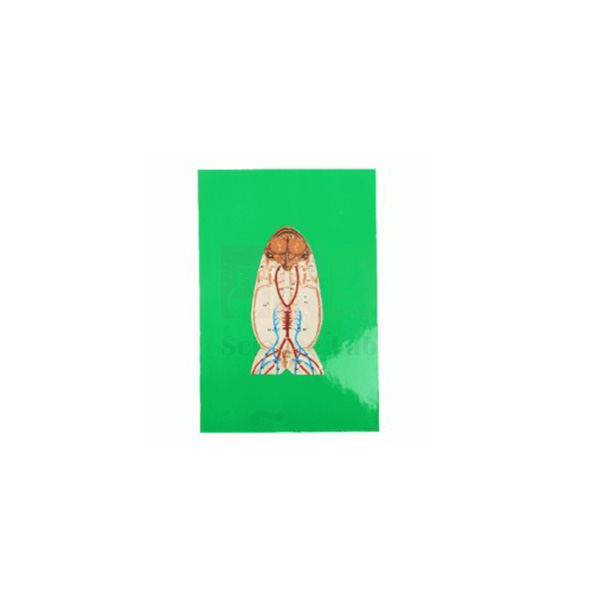
Mi-Own Frog Model
Mi-Own Frog Model (Product Code: SLE/EZ/05) is a life-sized, take-apart frog anatomy model used to teach amphibian external and internal structure to students in grades 6 to 12. The 8 in high model has 22 removable parts referenced on a key card and comes with reproducible student worksheets and a teacher’s guide, so it works as a reusable, dissection-free lesson. It is supplied by Jain Scientific Equipments Pvt Ltd (ScienceLab), Ambala, India, among its animal models for biology labs.
Specifications
| Parameter | Detail |
|---|---|
| Grade level | Grades 6–12 |
| Scale | Life-sized |
| Height | 8 in |
| Removable parts | 22, referenced on a key card |
| Durability | Washable and reusable; will not chip, tear or break |
| Teaching materials | Reproducible student worksheets, teacher’s guide, key card |
| Product code | SLE/EZ/05 |
| Supplied by | Jain Scientific Equipments Pvt Ltd (ScienceLab), Ambala, India |
What Is the Mi-Own Frog Model Used For?
The frog is the classic vertebrate for teaching organ systems, and this model lets students take one apart and put it back together as often as needed. Working in small groups, learners remove the 22 parts in sequence, match each to the key card, and see how the internal organs sit in relation to one another. Because the model is life-sized, students get a realistic sense of scale before, or instead of, a preserved-specimen dissection.
The reproducible worksheets give each student a record of what they identified, and the teacher’s guide helps plan the lesson and check answers. After class, the model can simply be washed and stored. It suits middle and high school biology, and colleges that want a durable, dissection-free alternative among their animal models for the biology lab.
What to Specify When Ordering
- The number of models, for example one per group of students.
- Whether you also need a frog skeleton or anatomy chart for the same unit.
- The delivery address for your school, college or dealership.
Supplier
The Mi-Own Frog Model is sourced and supplied by ScienceLab, the trading name of Jain Scientific Equipments Private Limited, Ambala, Haryana. The company supplies zoology models, skeletons and specimens to schools, colleges and dealers in India and international markets, so a complete amphibian teaching set can be ordered together. More about the company is on the ScienceLab profile page.
Related Zoology Equipment
Other frog teaching resources that pair well with this model:
- Frog Skeleton — shows the bones that support the organs seen in the model.
- Frog Dissection Model — an enlarged, sectioned view of the internal organs.
- Anatomy Of Frog — a wall chart for whole-class explanation.
- Frog Dissection — a preserved dissected specimen for comparison with the model.
Explore more in the Zoology category.
Frequently Asked Questions
How many parts does the Mi-Own Frog Model have?
The Mi-Own Frog Model has 22 removable parts. A key card that comes with the model references each part, so students can identify the organs as they take the model apart and reassemble it.
What size is the Mi-Own Frog Model?
The Mi-Own Frog Model is life-sized and 8 in high, which gives students a realistic sense of the size of a frog’s organs while still being easy to handle on a desk.
What teaching materials come with the Mi-Own Frog Model?
The Mi-Own Frog Model comes with reproducible student worksheets and a teacher’s guide, as well as the key card for the 22 parts. The worksheets can be copied for every student in the class.
Which grades is the Mi-Own Frog Model designed for?
The Mi-Own Frog Model is designed for grades 6 to 12, covering middle-school introductions to vertebrate anatomy through to more detailed high school biology on amphibian organ systems.
How durable is the Mi-Own Frog Model?
The Mi-Own Frog Model is washable and reusable, and its parts will not chip, tear or break with normal classroom use. Wipe or wash the parts after handling and store them together with the key card.
Who supplies the Mi-Own Frog Model?
Jain Scientific Equipments Pvt Ltd (ScienceLab), Ambala, Haryana, India supplies the Mi-Own Frog Model to schools, colleges and dealers in India and international markets, alongside frog skeletons, charts and other zoology teaching aids.
Request a Quote
Request a quotation through our contact page, or add the Mi-Own Frog Model to the enquiry cart with other zoology items.
Last updated: 24 September 2026
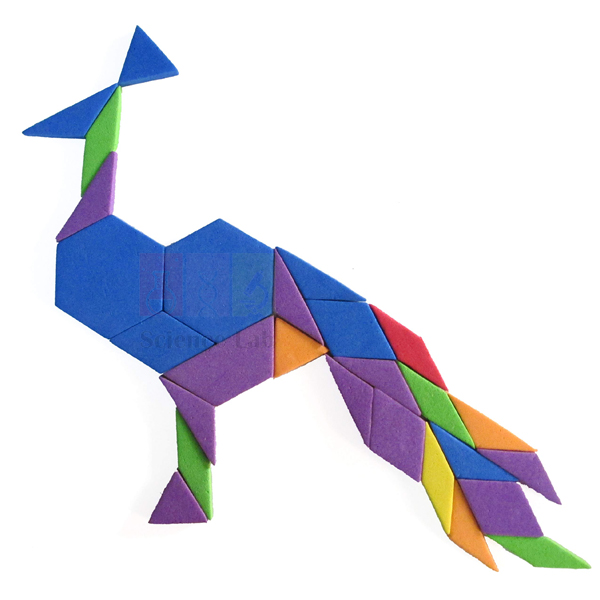
Rangometry
Rangometry (Product Code: SLE/LP/01) is a set of coloured rubber shape pieces used to explore 2-D shapes, patterns, tessellation and early counting in primary-school maths lessons. It contains over 350 pieces in eight shapes, with sides and angles designed in proportion so children can discover how the shapes relate to one another. It is supplied by Jain Scientific Equipments Pvt Ltd (ScienceLab), Ambala, India, as part of its range of mathematics lab kits.
Key Details
| Parameter | Detail |
|---|---|
| Material | Rubber |
| Number of pieces | Over 350 |
| Shapes (8) | Hexagon, trapezium, small rhombus, big rhombus, equilateral triangle, isosceles triangle, square and rectangle |
| Colours | Each shape in a different colour |
| Design | Angles and sides in proportion, for exploring geometric relations |
| Display use | Pieces can be pasted on any smooth surface after being made wet |
| Included | Write-up with details of activities |
| Concepts | Shapes, patterns and number sense |
| Product code | SLE/LP/01 |
| Supplied by | Jain Scientific Equipments Pvt Ltd (ScienceLab), Ambala, India |
What Is Rangometry Used For?
Younger children start by making colourful pictures and telling stories with the pieces, then count them to build basic number sense. From there, the activities move to recognising each 2-D shape by its angles and sides, sorting the pieces, and making and continuing patterns based on shape, colour and number.
Older primary pupils use Rangometry for tessellation, covering a given region with tiles of one shape and checking for gaps or overlaps, and for open-ended geometrical problem-solving. Because the sides and angles are proportioned, children can compare edges and corners and find combinations that fit together, learning shape properties intuitively rather than by memorising definitions. Wet pieces stick to a whiteboard, window or other smooth surface, so a teacher can demonstrate a pattern for the whole class, making it a flexible junior lab kit for primary school maths corners.
Supplier
Rangometry reaches schools through Jain Scientific Equipments Private Limited, which trades as ScienceLab from Ambala, Haryana. Activity-based classrooms, maths labs, teacher-training programmes and dealers can order it alone or with geoboards and sorting kits to build a complete shape-and-space collection. More information is on the ScienceLab company profile.
Related Primary Maths Kits
These kits extend the shape, pattern and tiling work:
- Tessellation Kit — further tiling activities once pupils know the idea.
- Sorting Kits Triangle — classifying triangles, following on from the two triangle shapes.
- Sorting Kit Quadrilateral — sorting four-sided shapes such as squares, rectangles and rhombuses.
- Geoboard — building and comparing shapes on a pegboard.
- Tangram — a shape puzzle for earlier years.
See the whole range in Primary.
Frequently Asked Questions
What is included in Rangometry?
Rangometry includes over 350 rubber pieces in eight shapes, each shape in a different colour, together with a write-up that details the activities. The write-up helps teachers plan lessons on shapes, patterns, counting and tessellation without extra preparation.
Which shapes are in the Rangometry set?
The Rangometry set has eight shapes: hexagon, trapezium, small rhombus, big rhombus, equilateral triangle, isosceles triangle, square and rectangle. Their angles and sides are designed in proportion so children can explore how the shapes relate and fit together.
How do the Rangometry pieces stick to a board or wall?
Rangometry pieces can be pasted on any smooth surface after making them wet, so they hold on a whiteboard, glass or tiled surface without glue. This lets teachers build patterns and tessellations at the front of the class for everyone to see.
Which maths concepts does Rangometry cover?
Rangometry covers shapes, patterns and number sense: counting, recognising 2-D shapes by their angles and sides, making and identifying patterns, tessellating a region with one shape, discovering shape properties intuitively and geometrical problem-solving.
Which primary classes can use Rangometry?
Rangometry is part of our primary learning range, and its activities run from simple counting and picture-making to angles, sides and tessellation, so it can serve several primary levels. The listing gives no age band; ask us if you want advice for a particular class.
Who supplies Rangometry and how do I get a quote?
Jain Scientific Equipments Pvt Ltd (ScienceLab), Ambala, India supplies Rangometry to schools, maths labs and dealers in India and international markets. Send code SLE/LP/01, the number of sets and your delivery location through the contact page or enquiry cart.
Request a Quote
Request a quotation through the contact page, or add Rangometry to the enquiry cart with other primary maths kits for one combined quote.
Last updated: 24 September 2026
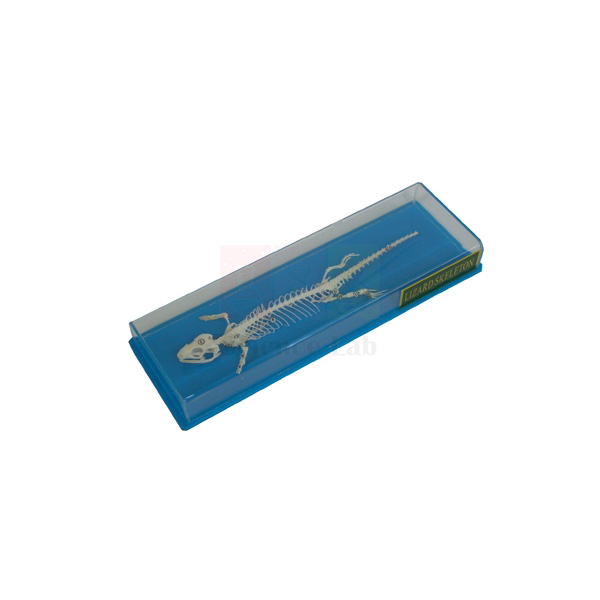
Lizard Skeleton
Lizard Skeleton (Product Code: SLE/EZ/06) is a real lizard skeleton, mounted in its natural position, used to teach reptile anatomy in school and college zoology laboratories. Teachers and students use it to study the skull, backbone, ribs and sprawling limbs of a reptile, presented on a base under an acrylic cover in a 230 x 77 x 30 mm case. It is supplied by Jain Scientific Equipments Pvt Ltd (ScienceLab), Ambala, India, as part of its zoology lab equipment range.
Specifications
| Parameter | Detail |
|---|---|
| Specimen | Natural bone |
| Mounting | Mounted in natural position |
| Presentation | On a base with acrylic cover |
| Case size | 230 x 77 x 30 mm |
| Product code | SLE/EZ/06 |
| Supplied by | Jain Scientific Equipments Pvt Ltd (ScienceLab), Ambala, India |
What Is the Lizard Skeleton Used For?
In a vertebrate practical, the lizard skeleton lets students pick out the features that mark a reptile: limbs that project sideways from the body, a long tail built from many small vertebrae, and ribs running along much of the trunk. Because the bones are mounted in the animal's natural stance, learners can see how the shoulder and hip girdles hold the body close to the ground, and relate that posture to how lizards move and hunt.
Teachers often place it next to amphibian and snake skeletons so a class can sort the three by limb structure and body plan, which makes it a practical lab specimen for biology teaching in India and elsewhere. Pass the case around rather than opening it, and use a hand lens for the fine toe bones and teeth. Keep it away from direct sunlight, and dust the acrylic with a soft, dry cloth.
Supplier
Jain Scientific Equipments Private Limited, which trades as ScienceLab, supplies this natural lizard skeleton from Ambala, Haryana. Schools, colleges, universities and distributors can source it together with other vertebrate skeletons and zoology teaching aids, for delivery across India and to international markets. More about the company is on the company profile page.
Related Zoology Equipment
Items that pair well with the lizard skeleton in a vertebrate comparison lesson:
- Snake Skeleton — a limbless reptile to compare with the lizard's four limbs and girdles.
- Frog Skeleton — an amphibian skeleton for contrasting ribs, spine and limb proportions.
- Lizard Dissection — a preserved specimen showing the soft organs the skeleton supports.
- Magnifying Glass — for close viewing of small bones such as toes and teeth.
The Zoology category lists more skeletons, nets, trays and field-study equipment.
Frequently Asked Questions
Is the Lizard Skeleton made from real bone?
Yes. The Lizard Skeleton (SLE/EZ/06) is natural bone, mounted in the animal's natural position rather than cast in plastic. As with any real specimen, small differences in size and bone detail from one piece to the next are normal.
What size is the Lizard Skeleton case?
The Lizard Skeleton is presented on a base with an acrylic cover in a case measuring 230 x 77 x 30 mm. The compact case suits bench-top display and can be passed around a class for close viewing.
Can students handle the bones of the Lizard Skeleton?
The Lizard Skeleton is meant to be viewed through its acrylic cover rather than handled. Keeping the cover in place protects the fine limb, toe and tail bones, so the same specimen can serve many classes over the years.
Which lizard species is used for the Lizard Skeleton?
The listing does not name the species used for the Lizard Skeleton. If your syllabus needs a particular species, ask through our contact page before ordering and we will tell you what can be supplied.
How should the Lizard Skeleton be stored?
Store the Lizard Skeleton in a dry cupboard away from heat and direct sunlight, and clean only the acrylic cover with a soft, dry cloth. Avoid solvent cleaners, which can cloud acrylic, and keep the cover closed.
Who supplies the Lizard Skeleton?
The Lizard Skeleton is supplied by Jain Scientific Equipments Pvt Ltd (ScienceLab), Ambala, Haryana, India. The company quotes single pieces and sets of vertebrate skeletons to schools, colleges and dealers in India and international markets.
What does a quotation request for the Lizard Skeleton need?
To quote the Lizard Skeleton we need the quantity, the delivery city or country, and any other zoology specimens you want on the same order. Send these details through the contact page or add the item to the enquiry cart.
Request a Quote
For a quotation on the Lizard Skeleton, send the quantity and delivery location through our contact page, or add it with other specimens to the enquiry cart.
Last updated: 24 September 2026