- Physics Lab Equipment
- Chemistry Lab Equipment
- Biology Lab Equipment
- Anatomical Lab Equipment
- Learning
- Educational Lab Equipment
- Magnets
- Agriculture
- Astronomy
- Earth Science
- Geography Lab Equipment
- Safety Lab Coat
- Laboratory
- Meteorological
- Electricity & Magnetism
- Heat
- School Lab Equipment
- Lab Glassware
- Science Lab Equipment
- Tvet Lab Equipment
- Robotics Kits Supplier and Manufacturer for Schools India
- Math Lab Equipment Manufacturers and Exporters in Ambala
- STEM Kits Manufacturers and Supplier India
- Engineering Lab Equipment
- Hospital Lab Equipment
- Water, Sanitation & Hygiene Supplies
- Cold Chain, Solar & Communication Equipment
- Nutrition
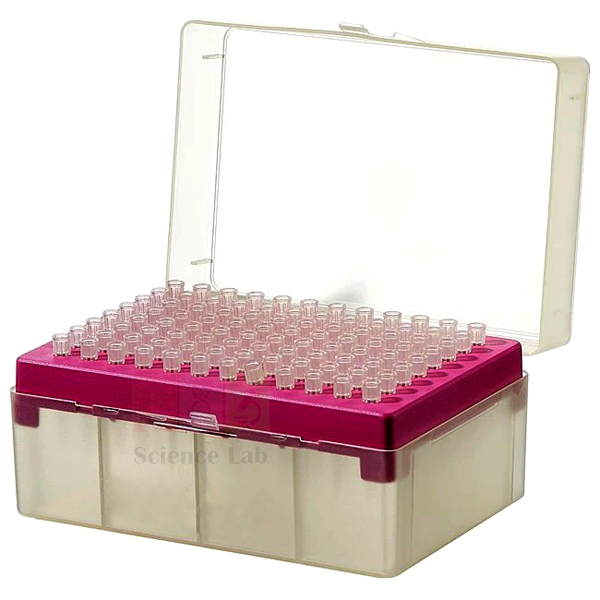
Micro Tip Box
Micro Tip Box (Product Code: SLE/CH/72) is a racked, lidded box that holds micropipette tips upright so they can be picked up directly on the pipette shaft without being touched by hand. Two capacities are offered: one box takes 96 micro tips of 2-200 µl and the other takes 100 micro tips of 200-1000 µl. The box is made by Jain Scientific Equipments Pvt Ltd (ScienceLab), Ambala, for biology, biotechnology and analytical labs that buy from a lab plastic ware supplier in India, and for international markets.
Specifications
| Parameter | Detail |
|---|---|
| Type | Box for micropipette tips |
| Capacity, small-volume tips | 96 micro tips of 2-200 µl |
| Capacity, large-volume tips | 100 micro tips of 200-1000 µl |
Typical Use
Loose tips in a bag are easily contaminated and slow to fit. In a tip box each tip stands in its own hole, so the user presses the pipette straight down onto a tip and lifts it out without contact from gloves or fingers. Keep the lid closed between uses to keep dust out, and work across the box row by row so partly used boxes are easy to top up.
Match the box to the pipette on the bench: the 2-200 µl box for small-volume work such as reagent additions and ELISA loading, and the 200-1000 µl box for larger transfers and dilutions. Labs usually keep a filled box for each pipette and refill from bulk tips, so repeat orders to a lab consumables supplier in India stay simple and predictable.
Manufacturer
Jain Scientific Equipments Private Limited is the company behind the ScienceLab brand; from its base in Ambala, Haryana it produces laboratory plasticware, instruments and educational apparatus. The company profile gives an overview of its work.
Related Laboratory Equipment
Pipettes and tips that go with this box:
- Micropipette Tips — tips for filling and refilling the box
- Filtered Micropipette Tips — for work where aerosol carry-over must be avoided
- Micropipette — the instrument that picks tips from the box
- Micro Test Plates — the plates often loaded using these tips
Browse related bench supplies in Chemistry Lab Equipment.
Frequently Asked Questions
Which box do I need?
Pick the 96-tip box for 2-200 µl tips, or the 100-tip box for 200-1000 µl tips, to match the pipettes you use.
Are tips supplied with the box?
The listing describes the box and its capacity. Tips are available as separate items; confirm in your enquiry if you want the boxes filled.
Is the box available in different colours?
Our original listing mentions colour options for sample identification. Please confirm which colours are currently available when you request a quote.
Can the box be autoclaved?
Autoclave suitability is not stated here. Ask us before sterilising so we can confirm for the box being supplied.
How many boxes should a lab keep?
A common approach is one box per pipette in use, plus spares for rotation while others are refilled.
Do you take bulk and export orders?
Yes, from institutions and distributors in India and international markets.
Request a Quote
Tell us which capacity you need and how many boxes through the contact page, or add them to the enquiry cart with your tips and pipettes.
Last updated: 24 September 2026
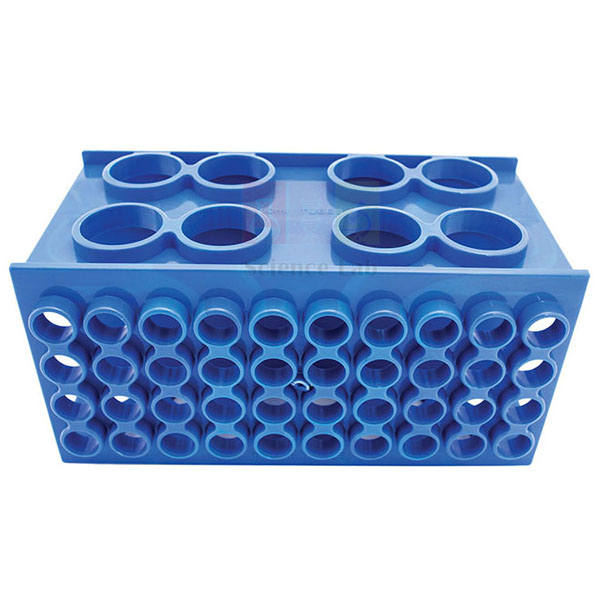
Universal Multi Rack
Universal Multi Rack (Product Code: SLE/CH/73) is a single rack that holds four different test tube sizes, so narrow tubes, standard tubes and wide tubes can share one compact footprint on the bench or in a cupboard. It is made from thick, sturdy plastic and designed for efficient storage. The rack is made by Jain Scientific Equipments Pvt Ltd (ScienceLab), Ambala, and is a practical test tube rack for school labs in India and international markets where mixed tube sizes are in daily use.
Specifications
| Parameter | Detail |
|---|---|
| Material | Thick, sturdy plastic |
| Tube sizes held | Four different sizes |
| 12 mm dia. tubes | 40 places |
| 15 mm outer dia. tubes | 24 places |
| 20 mm dia. tubes | 20 places |
| 50 mm dia. tubes | 8 places |
| Dimensions | 100 mm L x 95 mm W x 115 mm H |
| Design | Compact, for efficient storage |
Typical Use
Most practicals use more than one kind of tube — small tubes for spot reactions, standard test tubes for qualitative tests, larger tubes for heating or culture work. Instead of setting out several racks, one Universal Multi Rack keeps the whole set together, which frees bench space and makes it easier to see at a glance whether every tube has been returned after class.
The 40 small positions suit a full set of narrow tubes for a class demonstration, while the eight large positions take wide tubes or small bottles. Place the rack on a level surface away from the burner, and let hot tubes cool a little before standing them in the plastic. Labs that buy from a lab plastic ware supplier in India often pair it with single-size racks for bulk tube storage.
Manufacturer
ScienceLab is a brand of Jain Scientific Equipments Private Limited, registered with the Ministry of Corporate Affairs under CIN U29309HR2020PTC087597. The company manufactures laboratory and educational apparatus at its licensed factory in Saha, Ambala, Haryana, which holds Factory Licence AMB-ONLINE-CHD-J-414. Our company profile has further details.
Related Chemistry Lab Equipment
Tubes and accessories that go with a multi-size rack:
- Test Tube — standard tubes to fill the rack
- Universal Tube Rack — another rack option in our plasticware range
- Test Tube Holder — for handling tubes during heating
- Brush Test Tube — cleans tubes before they go back in the rack
- Drying Rack — drains washed tubes and glassware
See all racks and stands in the Chemistry Lab Equipment category.
Frequently Asked Questions
How many tubes does it hold?
It has 40 places for 12 mm tubes, 24 for 15 mm outer-diameter tubes, 20 for 20 mm tubes and 8 for 50 mm tubes.
Will my tubes fit?
Compare your tube outer diameters with the four sizes listed. If your tubes are close to a size limit, send us the diameters and we will confirm the fit before dispatch.
How much space does it take?
The rack measures 100 mm long, 95 mm wide and 115 mm high.
Can hot tubes go straight into it?
It is a plastic rack, so let tubes cool first rather than placing them in straight from the flame.
How should it be cleaned?
Wash with warm water and a mild detergent, rinse, and air-dry.
Can you share company registration details with a tender or purchase order?
Yes. Our CIN and factory licence details can be provided with the quotation for your records.
Do you supply class sets and export orders?
Yes, to schools, colleges and distributors across India and international markets.
Request a Quote
Ask for a price on the Universal Multi Rack via the contact page, or add it to the enquiry cart with the tubes and brushes you need.
Last updated: 24 September 2026
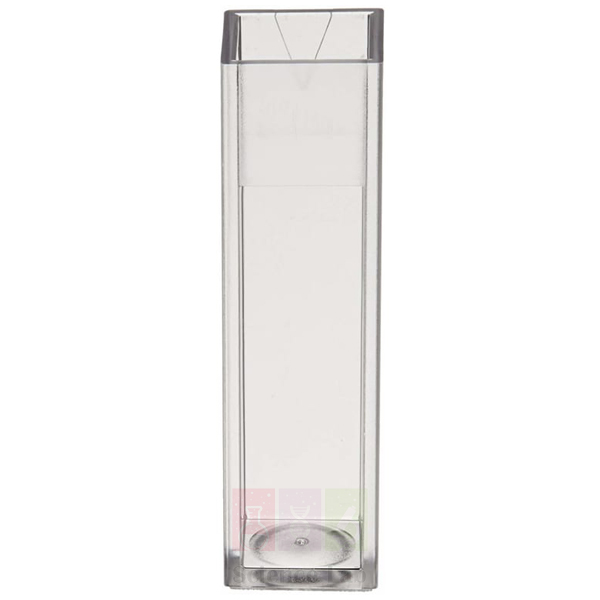
Cuvettes, Plastic
Cuvettes, Plastic (Product Code: SLE/CH/74) are small, clear-walled sample cells that hold a liquid in the light beam of a colorimeter or spectrophotometer, so its colour or absorbance can be measured. They are used in school, college and research labs for concentration measurements, reaction-rate studies and biochemical assays. These cuvettes are supplied by Jain Scientific Equipments Pvt Ltd (ScienceLab), Ambala, for labs that rely on a chemistry consumables supplier in India and international markets.
Key Details
| Parameter | Detail |
|---|---|
| Type | Plastic sample cuvette |
| Purpose | Holding liquid samples for colour and absorbance measurement |
| Suitable for | Colorimeters and spectrophotometers with a matching cuvette holder |
| Supplied as | Size, volume, path length and pack quantity confirmed on enquiry |
Typical Use
A classic practical is plotting a calibration line for a coloured solution such as copper sulphate: a blank cuvette of solvent sets the zero, then standards of known concentration are read one after another, and an unknown is measured against the resulting graph. Cuvettes are equally useful for following a colour change over time in rate experiments, or for reading enzyme and protein assays in biology and biochemistry.
Hold a cuvette only by the faces that are not in the light path, fill it to a consistent level, and wipe the clear faces with lint-free tissue before inserting it. Turn it the same way round in the holder every time. Plastic cuvettes are generally chosen for visible-light work; check with us before using them for UV measurements. Most labs keep a stock of them alongside other items from a lab consumables supplier in India.
Supplier
Plastic cuvettes are supplied by Jain Scientific Equipments Private Limited, which trades as ScienceLab from Ambala, Haryana, and manufactures a wide range of laboratory and teaching equipment. Visit our company profile to find out more.
Related Laboratory Equipment
Instruments and accessories used with cuvettes:
- Colorimeter — measures the colour intensity of the sample in the cuvette
- Digital Photo Colorimeter 5 Filters — a filter-based colorimeter for class practicals
- Single Beam Microprocessor UV-VIS Spectrophotometer — for wavelength-specific absorbance readings
- Plastic Microchemistry Pipets — for filling cuvettes cleanly
- Plastic Cuvettes — a further plastic cuvette listing in our measuring range
Further lab supplies are listed under Chemistry Lab Equipment.
Frequently Asked Questions
Will these cuvettes fit my instrument?
They are intended for colorimeters and spectrophotometers with a matching holder. Send us your instrument model through the contact page and we will confirm the fit.
Can they be used for UV readings?
Plastic cuvettes are typically used in the visible range. The wavelength range is not stated on this page, so ask us before planning UV work.
What volume and path length are they?
These details are not listed here and are confirmed on enquiry.
Are they reusable?
They can be rinsed and reused for routine classroom readings if the clear faces stay unscratched; replace any cuvette that is scratched or clouded, as it will affect results.
How are they packed and can I order in bulk?
Pack sizes are given in the quotation, and bulk quantities are supplied to institutions and distributors in India and international markets.
Request a Quote
Send your instrument model and required quantity via the contact page, or add Cuvettes, Plastic to the enquiry cart with any other lab supplies you need.
Last updated: 24 September 2026

Open Manometer
The Open Manometer (Product Code: SLE/CH/75) is a borosilicate glass manometer tube with a long 50 cm arm and a funnel top, offered as the replacement tube for an open-type manometer. It turns an invisible pressure difference into a visible difference in liquid level, which is why teachers in school and college laboratories use it for practicals on gas and liquid pressure. It is made by Jain Scientific Equipments Pvt Ltd (ScienceLab), Ambala, as part of its chemistry lab equipment in India for schools, colleges and distributors.
Specifications
| Parameter | Detail |
|---|---|
| Type | Open manometer tube (replacement tube for the Open Manometer) |
| Material | Borosilicate glass |
| Arm length | 50 cm (19.7 in) |
| Top end | Funnel top for filling the manometric liquid |
| Supplied as | Glass tube; a stand, scale or tubing is not listed as included |
Typical Use
An open manometer compares a pressure with the atmosphere: one side is connected to the source under test while the other stays open to the air, and the gap between the two liquid levels shows how far the pressure is above or below atmospheric. The funnel top lets students pour in the liquid without spilling, and the 50 cm arm leaves enough height for a level difference that the whole class can read during demonstrations of gas supply pressure, breath pressure or pressure below a liquid surface.
For a steady reading, clamp the tube upright on a retort stand, tint the water with a few drops of food colouring, and connect the source with a short length of rubber tubing. Borosilicate laboratory glassware is chosen for its resistance to common laboratory chemicals and repeated washing; rinse the tube after each session and store it with the long arm supported so it cannot be knocked or bent under its own weight.
Manufacturer
This tube is produced by Jain Scientific Equipments Private Limited, which trades as ScienceLab and is based in Ambala, Haryana, India. The company makes laboratory glassware and teaching apparatus for educational institutions and distributors; read more on the company profile page.
Related Laboratory Equipment
Items usually set up alongside an open manometer for pressure demonstrations:
- Manometer, Glass — a complete glass manometer for physics pressure measurement
- U Tube Manometer — an alternative U-tube design for comparing two pressures
- Rubber Tube (Laboratory) — flexible tubing to connect the manometer to the source under test
- Retort Stand — holds the long arm vertical so levels are read correctly
- Food Colouring Blue — tints the water so the liquid levels stand out
See the complete Chemistry Lab Equipment range for more glassware, clamps and supports.
Frequently Asked Questions
What exactly is supplied under this listing?
The borosilicate manometer tube with a 50 cm (19.7 in) arm and funnel top, described as the replacement tube for the Open Manometer. A stand, scale and tubing are not listed as included, so please contact us to confirm the scope of supply before ordering.
Can it replace a broken tube on a manometer we already own?
That is its intended purpose. Whether it fits your existing board or clamps depends on your current mounting, so share its dimensions or a photo with us and we will advise.
Which liquid should be used inside?
Coloured water is the usual choice for school demonstrations because it is safe and easy to see. If your experiment needs a different manometric liquid, discuss it with your laboratory in-charge and with us before use.
How should the tube be cleaned?
Rinse it with clean water after every use. For stubborn residue, use a mild laboratory detergent, rinse thoroughly and let it drain dry in an upright position.
Is a calibration certificate available?
This is a direct-reading teaching item. If your institution needs any documentation, including calibration certificate availability, please raise it with us at the enquiry stage.
Do you supply schools in bulk or overseas?
Yes. ScienceLab supplies schools, colleges and distributors across India and international markets; tell us the quantity and delivery location for a quotation.
What warranty applies?
Warranty terms are confirmed with each quotation — contact us for current terms.
Request a Quote
To receive pricing for the Open Manometer, contact us with the quantity you need, or add it to your enquiry cart together with other laboratory items.
Last updated: 24 September 2026
144.jpg)
Steam Trap (Water Trap)
The Steam Trap (Water Trap) (Product Code: SLE/CH/76) is a standard component fitted into laboratory glassware set-ups to discharge condensate and non-condensable gases from a steam line. By catching the water that forms as steam cools in the connecting tubing, it keeps the flow of steam to the next vessel steady and stops that vessel from slowly flooding. Chemistry teachers, college demonstrators and research technicians use it when assembling steam distillation trains and similar laboratory distillation apparatus in India. It is made by Jain Scientific Equipments Pvt Ltd (ScienceLab), Ambala.
Key Details
| Parameter | Detail |
|---|---|
| Type | Steam trap, also called a water trap |
| Purpose | Discharges condensates and non-condensable gases |
| Used in | Laboratory glassware set-ups that carry steam |
| Suitable for | Teaching laboratories, college practicals and routine distillation work |
| Size and connections | Confirmed on enquiry |
Typical Use
In steam distillation, steam produced in one flask travels through tubing into a second flask that holds the mixture being separated. Some of that steam condenses on the way, and without a trap the water collects in the distilling flask and dilutes the charge. Placed between the steam source and the distilling flask, the trap separates this condensate, and also lets air and other gases that will not condense leave the line so the steam flow is not interrupted.
Mount the trap at a low point of the steam line so condensate drains into it naturally, keep the connecting tubing short, and empty the collected water between runs. Students should handle it with care once the set-up is hot, because steam burns can occur even when the glass looks clear. Pairing a trap with a Liebig condenser and a two-neck round bottom flask gives a complete, classroom-friendly distillation train.
Manufacturer
ScienceLab is the brand name of Jain Scientific Equipments Private Limited, a manufacturer of laboratory and teaching equipment located in Ambala, Haryana, India. Details of the company and its product lines are available on our company profile.
Related Chemistry Lab Equipment
Other parts of a steam or simple distillation train:
- Distillation Apparatus — the core distillation set into which the steam line feeds
- Fractional Distillation Assembly — for separating liquids with closer boiling points
- Liebig Condenser — condenses the distillate after the distilling flask
- Round Bottom Flask With Two Neck — allows steam inlet and vapour outlet on one flask
- Silicone Tube — flexible tubing for connecting the steam line
Browse all Chemistry Lab Equipment for further glassware and accessories.
Frequently Asked Questions
What does a steam trap do in a glassware set-up?
It removes condensate and non-condensable gases from the steam line, so mostly steam reaches the next vessel and the flow remains steady.
Where should it be placed?
Between the steam generator and the flask receiving the steam, ideally at a low point so the condensed water runs into it.
What size and joint type is it?
Dimensions, material details and connection type are not stated in our current listing. Please contact us with details of your apparatus so we can confirm a compatible trap.
Is it suitable for school practicals?
Yes, it is a standard item for glassware set-ups and suits supervised school and college distillation work.
How is it cleaned after use?
Let it cool completely, drain the water, rinse with clean water and allow it to dry before storage.
What information do you need for an institutional quotation?
Send the quantity, the rest of your distillation set-up, and the delivery location through our contact page or enquiry cart.
Can you ship it outside India?
Yes, we supply customers across India and international markets; shipping arrangements are confirmed with the quotation.
Request a Quote
For prices and availability of the Steam Trap (Water Trap), please send us an enquiry or place it in the enquiry cart with the rest of your distillation equipment.
Last updated: 24 September 2026
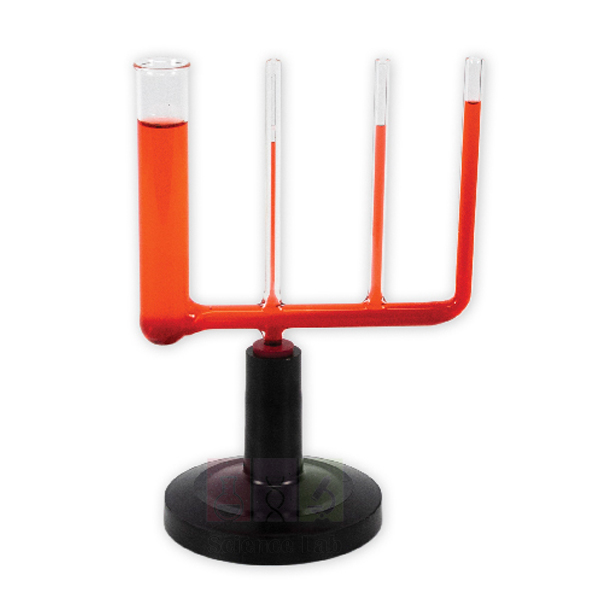
Capillary Tube Set
The Capillary Tube Set (Product Code: SLE/CH/77) is a ready-mounted demonstration piece in which 4 glass capillary tubes of different inner diameters rise from a common, larger reservoir tube. Pour in a liquid and the class sees at once that it climbs highest in the narrowest bore, giving students the evidence they need to draw their own conclusions about capillary action. Designed for middle-school and secondary science teachers, it is made by Jain Scientific Equipments Pvt Ltd (ScienceLab), Ambala, and arrives on its own stand with a Teacher’s Guide.
Specifications
| Parameter | Detail |
|---|---|
| Number of capillary tubes | 4, each with a different inner diameter |
| Tube material | Glass |
| Reservoir | Larger tube from which the capillaries rise |
| Tube height | Approx. 150 mm (6 in) |
| Mounting | Mounted on its own stand |
| Documentation | Teacher’s Guide included |
Typical Use
Because all four capillaries share one reservoir, the liquid starts at the same level in each, so any height difference can only come from the tube width. That makes the set a clear, fair-test capillary tube experiment: students record the level in each tube, rank them by bore, and relate the result to adhesion between water and glass and to surface tension. The same observation helps explain how water rises through soil, paper towels and the xylem of plants, linking chemistry and physics lessons to biology.
Stand the set on a level bench, fill the reservoir slowly so no air bubbles lodge in the narrow tubes, and add a drop of food colouring so the columns can be seen from the back of the room. Comparing plain water with soapy water is a simple extension that shows how lowering surface tension changes the rise.
Manufacturer
The set is made by Jain Scientific Equipments Private Limited, trading as ScienceLab, from its base in Ambala, Haryana, India, where it produces glass apparatus and demonstration equipment for science teaching. The company is a registered MSME enterprise (Udyam UDYAM-HR-01-0003714) and holds Importer-Exporter Code AAECJ8618A from the Directorate General of Foreign Trade for export consignments. Visit the company profile to learn more.
Related Laboratory Equipment
Useful additions for capillarity and surface-tension lessons:
- Food Colouring Red — colours the water so each liquid column is easy to read
- Dropper Bottle, 10 ml — for adding colouring or detergent a drop at a time
- Capillary Tube Apparatus — a physics set-up for measuring capillary rise in more detail
- Set of Capillary Tubes — loose capillaries for student group work
More demonstration apparatus is listed under Chemistry Lab Equipment.
Frequently Asked Questions
How many capillary tubes are in the set?
Four glass capillary tubes, each with a different inner diameter, rising from one larger reservoir tube.
Does it need a separate stand?
No. The set comes mounted on its own stand, so it can be placed directly on the bench.
Is teaching guidance included?
Yes, a Teacher’s Guide is supplied with the set to help plan the demonstration and discussion.
What liquid works best?
Coloured water is ideal for classrooms. Avoid leaving coloured or sugary liquids to dry inside the narrow tubes, as residue can block them.
How do I clean the capillaries?
Flush the reservoir with clean water several times so fresh water rises through each capillary, then let the set drain and dry upright.
Can you supply sets for every lab in a school group?
Yes, bulk orders for schools, colleges and distributors in India and international markets are welcome — share quantities through our contact page.
What about warranty on the glass parts?
Warranty terms are confirmed at quotation. Contact us for details.
Request a Quote
Ask for a price on the Capillary Tube Set through our contact form, or collect it in the enquiry cart with your other science lab requirements.
Last updated: 24 September 2026
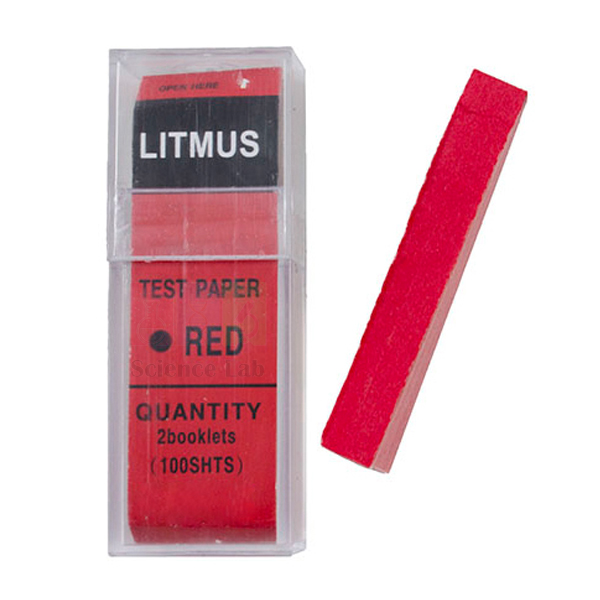
Red Litmus Paper
Red Litmus Paper (Product Code: SLE/CH/78) is an indicator test strip used to show whether a solution is alkaline in introductory acid–base lessons in school and college chemistry laboratories. The easy-to-use strips turn blue when dipped into an alkaline or basic solution and come 100 strips per vial, a staple among litmus paper for school labs in India. They are supplied by Jain Scientific Equipments Pvt Ltd (ScienceLab), Ambala, India.
Specifications
| Parameter | Detail |
|---|---|
| Type | Red litmus test strips |
| Indication | Turns blue in alkaline/basic solutions |
| Pack | 100 strips per vial |
| Handling | Easy to use; no preparation needed |
| Suitable for | Introductory acid–base lessons and quick bench tests |
| Shelf life | Depends on the chemical, its grade and storage conditions; ask us for the expiry date of the batch you are quoted |
| Product code | SLE/CH/78 |
| Supplied by | Jain Scientific Equipments Pvt Ltd (ScienceLab), Ambala, India |
What Is Red Litmus Paper Used For?
Red litmus answers one question: is this sample a base? Students touch a strip with a drop of the test liquid on a clean glass rod, and a blue patch confirms an alkaline solution such as soap water, lime water or a solution of baking soda. If the strip stays red, the sample is either acidic or neutral, which is why teachers pair it with blue litmus in an acid base indicator activity to sort samples into all three groups. Moistened red litmus held at the mouth of a test tube is also the classic check for alkaline gases such as ammonia.
Tear strips in half to make a vial last through more lab sessions, use a fresh piece for every sample, and keep the vial tightly closed and away from bottles of ammonia or other alkalis, because vapours in the air can turn unused strips blue. Handle strips with dry fingers or forceps so moisture does not spoil the rest of the vial.
Supplier
Red Litmus Paper is supplied by Jain Scientific Equipments Private Limited, which trades as ScienceLab from Ambala, Haryana, India. Indicator papers and other chemistry consumables are sourced for schools, colleges and distributors and can be quoted together with laboratory apparatus for India and international markets. Find out more on the company profile.
Related Chemistry Lab Equipment
Items used in the same acid–base testing activities:
- Blue Litmus Paper — the partner strip that identifies acids
- Paper, Universal, pH 1-14 — shows how strongly acidic or basic a sample is
- Stirring Rod, Glass — transfers a single drop of sample onto the strip
- Dropper Bottle, 10 ml — holds test solutions at each student station
- Magnesium Ribbon — burn it and test the dissolved ash with red litmus to show a basic oxide
The full Chemistry Lab Equipment range has more indicators and bench tools.
Frequently Asked Questions
How many strips are in one vial of Red Litmus Paper?
Each vial of Red Litmus Paper contains 100 strips. Tearing strips in half stretches a vial across more practical sessions, so tell us how many vials each lab needs when you request a quotation.
What does a colour change on Red Litmus Paper mean?
A change from red to blue on Red Litmus Paper means the sample is alkaline (basic). If the strip stays red, the sample is either acidic or neutral, and blue litmus paper is then used to tell those two apart.
Can Red Litmus Paper give a pH value?
No. Red Litmus Paper only shows whether a sample is basic; it does not indicate how strongly acidic or alkaline it is. For an approximate pH number, use universal indicator paper or solution read against a pH chart.
Can Red Litmus Paper detect gases?
Yes. When moistened with distilled water, Red Litmus Paper responds to alkaline gases, and holding it at the mouth of a test tube to detect ammonia is the common example in school salt analysis.
What is the shelf life of Red Litmus Paper?
Shelf life depends on the chemical, its grade and storage conditions, so no blanket period is given for Red Litmus Paper. Ask us for the expiry date of the batch you are quoted, and keep vials closed, dry and away from ammonia fumes.
Who supplies Red Litmus Paper?
Red Litmus Paper is supplied by Jain Scientific Equipments Pvt Ltd (ScienceLab), Ambala, Haryana, India, in vials of 100 strips, for schools, colleges and distributors in India and international markets, alongside other indicators and chemistry consumables.
Can you supply Red Litmus Paper for a whole school or distributor?
Yes. Red Litmus Paper is supplied in larger quantities to institutions and distributors across India and international markets. Share the number of vials and your delivery location through the contact page to receive a quotation.
Request a Quote
To order Red Litmus Paper, contact us with the number of vials needed or add it to the enquiry cart along with other chemistry consumables.
Last updated: 24 September 2026
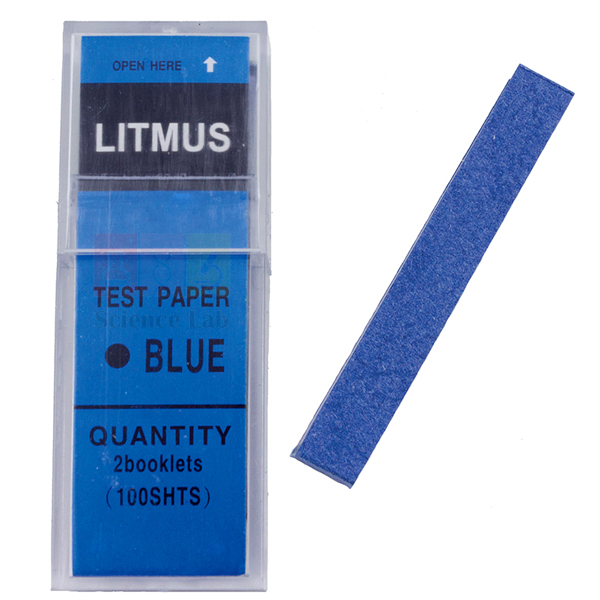
Blue Litmus Paper
Blue Litmus Paper (Product Code: SLE/CH/79) is a vial of easy-to-use indicator strips that turn red when dipped into an acidic solution. Students in their first acids-and-bases unit use it to confirm that vinegar, lemon juice or a dilute mineral acid really is acidic, and laboratory staff keep it on hand as a fast pH indicator paper for spotting acid spills and residues. Each vial holds 100 strips, supplied by Jain Scientific Equipments Pvt Ltd (ScienceLab), Ambala.
Specifications
| Parameter | Detail |
|---|---|
| Type | Blue litmus test strips |
| Indication | Turns red in acidic solutions |
| Quantity | 100 strips per vial |
| Ease of use | Dip-and-read, no preparation |
| Intended for | Introductory chemistry lessons on acids and bases |
Typical Use
A common starter practical gives each group a tray of household and laboratory liquids and asks them to find the acids. A strip that turns red identifies an acid; a strip that stays blue tells students the sample is neutral or basic, and a second test with red litmus separates those two. Moistened blue litmus also responds to acidic gases, so it is used during gas tests in qualitative analysis, for example over a test tube releasing hydrogen chloride.
Place a strip on a white tile and add the sample with a clean dropper or glass rod rather than dipping the whole strip into a stock bottle, which avoids contaminating reagents. Store vials capped and well away from acid bottles, as acidic fumes in a busy lab can redden strips before they are used. For a class set, a single vial can be shared between several groups by cutting strips into shorter pieces.
Supplier
Blue Litmus Paper is supplied by Jain Scientific Equipments Private Limited under its trading name ScienceLab. The company is based in Ambala, Haryana, India, and equips school and college laboratories; more is on our company profile.
Related Chemistry Lab Equipment
Pair these with blue litmus when setting up an acid identification practical:
- Red Litmus Paper — completes the test by identifying bases
- Paper, Universal — for estimating how acidic a sample is
- Blue Litmus Solution — the liquid indicator form for test-tube work
- Dropper Bottle, Clear — dispenses samples a drop at a time
- Test Tube Racks — keeps labelled sample tubes upright during testing
Explore more indicators and glassware in Chemistry Lab Equipment.
Frequently Asked Questions
What colour change shows an acid?
The strip turns from blue to red when the sample is acidic.
What if the strip does not change colour?
The sample is neutral or basic. Test it with red litmus paper, which turns blue for bases.
How many strips does a vial contain?
100 strips per vial.
Is blue litmus paper enough to measure pH?
No, it only tells you whether a sample is acidic. Universal indicator paper gives an approximate pH value.
Why have some strips turned red in the vial?
They have been exposed to acidic fumes or moisture. Keep the vial closed and stored away from acids.
What should an institutional enquiry include?
The number of vials, whether you also need red litmus or universal paper, and your delivery location in India or overseas. Send it via our contact page.
Request a Quote
For Blue Litmus Paper pricing, get in touch or add the vials to your enquiry cart and submit them with the rest of your order.
Last updated: 24 September 2026