- Physics Lab Equipment
- Chemistry Lab Equipment
- Biology Lab Equipment
- Anatomical Lab Equipment
- Learning
- Educational Lab Equipment
- Magnets
- Agriculture
- Astronomy
- Earth Science
- Geography Lab Equipment
- Safety Lab Coat
- Laboratory
- Meteorological
- Electricity & Magnetism
- Heat
- School Lab Equipment
- Lab Glassware
- Science Lab Equipment
- Tvet Lab Equipment
- Robotics Kits Supplier and Manufacturer for Schools India
- Math Lab Equipment Manufacturers and Exporters in Ambala
- STEM Kits Manufacturers and Supplier India
- Engineering Lab Equipment
- Hospital Lab Equipment
- Water, Sanitation & Hygiene Supplies
- Cold Chain, Solar & Communication Equipment
- Nutrition
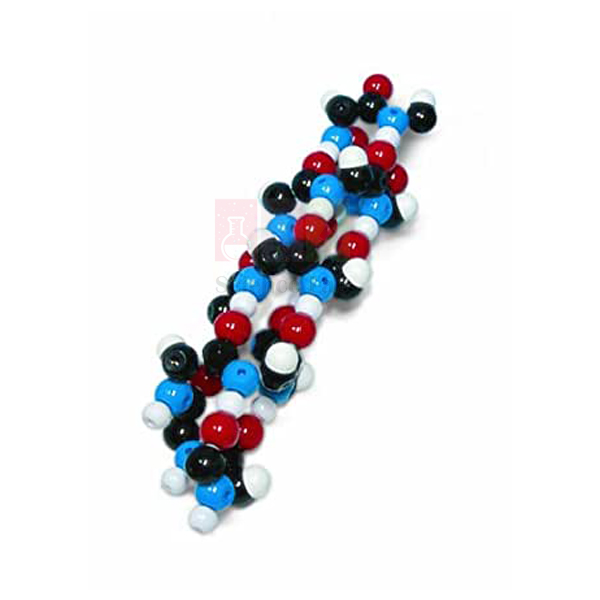
Alpha Helix Molecular Model Kit
Alpha Helix Molecular Model Kit (Product Code: SLE/Mo/07) is a self-build model kit used to construct the alpha helix, a coiled protein secondary structure, in biology and biochemistry classes. Its joining pieces hold the assembled coil firmly enough to be passed around the room, and the parts live in a durable case with compartments — a practical molecular model for chemistry and biology teaching in India. The kit is made by Jain Scientific Equipments Pvt Ltd (ScienceLab), an OEM manufacturer, at its own factory in Ambala, India.
Key Details
| Parameter | Detail |
|---|---|
| Model subject | Alpha helix (protein secondary structure) |
| Construction | Moulded parts with joining pieces designed for a firmly constructed model |
| Moulds and materials | Precision-engineered |
| Storage | Durable storage case with compartments to keep parts segregated |
| Part count and assembled size | Not stated in this listing — confirmed with your quotation |
| Product code | SLE/Mo/07 |
| Manufacturer | Jain Scientific Equipments Pvt Ltd (ScienceLab) — OEM |
| Country of origin | India (made in Ambala, Haryana) |
What Is the Alpha Helix Model Kit Used For?
In an alpha helix, the backbone of a polypeptide chain twists into a right-handed coil. Each backbone C=O group forms a hydrogen bond with the N–H group of the amino acid four positions further along, and the side chains point outwards from the coil. Ribbon diagrams in textbooks hide most of this detail, so building the helix by hand makes the pattern far easier to see.
Students usually assemble the coil in pairs or small groups, then trace where the hydrogen bonds sit and how the side chains project. Because the joins are firm, the finished helix can travel round the class for discussion, for example when comparing it with a flat beta sheet. After the lesson, sorting each piece back into its compartment keeps the kit complete for the next biochemistry group.
OEM Manufacturer
Jain Scientific Equipments Private Limited, which trades as ScienceLab, is the OEM (original equipment manufacturer) of the Alpha Helix Molecular Model Kit. The kits are produced at the company's own licensed factory at Saha, Ambala, Haryana, India, and sold factory-direct to schools, universities, dealers and importers.
If a storage case or individual parts need replacing after years of classroom use, ask us — the manufacturer deals with such requests itself. Company background is on the ScienceLab profile page.
Related Molecule Models
Other models and materials for a unit on proteins:
- Polypeptide Molecular Model Kit — builds the peptide-bonded chain that folds into a helix.
- Molecular Model Set, 20 Amino Acid Collection — for studying the side chains that project from the coil.
- Protein Model — a wider view of protein structure beyond a single helix.
- Biuret Reagent (Protein Test) — links the model to a practical test for proteins in food samples.
Browse more biomolecule kits in the Molecule category.
Frequently Asked Questions
What does the Alpha Helix Molecular Model Kit show?
The Alpha Helix Molecular Model Kit shows how a polypeptide chain coils into an alpha helix, one of the main secondary structures in proteins. The built model lets students trace the backbone and see where hydrogen bonds hold each turn of the coil in place.
Will the assembled alpha helix hold together when students handle it?
Yes, the Alpha Helix Molecular Model Kit uses joining pieces designed so the finished model stays firmly assembled. It can be passed from student to student during a lesson without falling apart, which suits group work and class discussion.
How are the parts of the alpha helix kit stored?
The Alpha Helix Molecular Model Kit comes in a durable storage case with compartments that keep different parts segregated. Sorting the pieces back into their compartments after each class makes it quick to check the kit is complete for the next group.
How many parts are in the Alpha Helix Molecular Model Kit?
The part count and assembled size of the Alpha Helix Molecular Model Kit are not given in this listing. Ask us through the contact page and the exact contents will be confirmed in your quotation before you order.
Who manufactures the Alpha Helix Molecular Model Kit?
The Alpha Helix Molecular Model Kit is manufactured by Jain Scientific Equipments Pvt Ltd (ScienceLab) as the OEM, at its own licensed factory in Saha, Ambala, India. Quotations, repeat orders and replacement-part requests are handled directly by the manufacturer.
Which courses is the Alpha Helix Molecular Model Kit suited to?
The Alpha Helix Molecular Model Kit suits senior-secondary biology, undergraduate biochemistry and life-science courses where protein structure is taught. It is most effective once students know how amino acids join through peptide bonds.
Request a Quote
For a quotation on the Alpha Helix Molecular Model Kit, tell us the number of kits you need through the contact page, or place it in the enquiry cart. You will hear back directly from the manufacturer.
Last updated: 24 September 2026
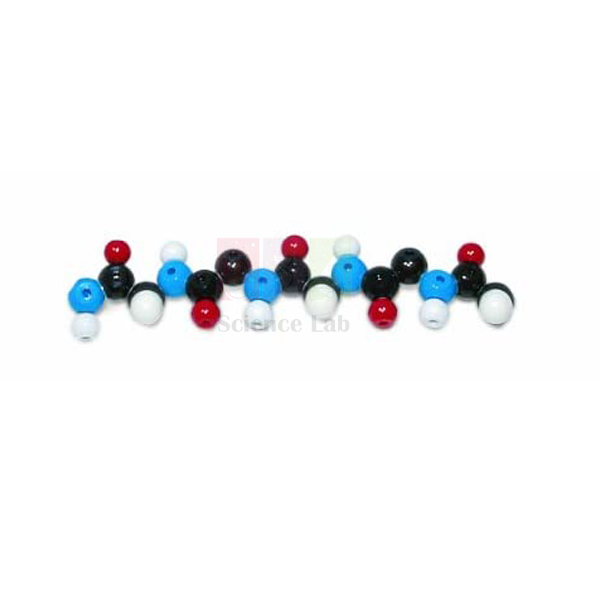
Polypeptide Molecular Model Kit
Polypeptide Molecular Model Kit (Product Code: SLE/Mo/08) is a self-assembly kit used to build and demonstrate the molecular structure of a polypeptide chain in biology and chemistry lessons. Designed for students, it contains five peptide units, 30 atom parts, 12 NV links and one tool, giving learners a hands-on way into protein chemistry. Jain Scientific Equipments Pvt Ltd (ScienceLab), an OEM manufacturer, makes this kit at its own factory in Ambala, India.
Specifications
| Parameter | Detail |
|---|---|
| Model type | Self-assembly molecular model |
| Peptide units | 5 |
| Atom parts | 30 |
| NV links | 12 |
| Tool | 1 |
| Intended users | Students |
| Product code | SLE/Mo/08 |
| Manufacturer | Jain Scientific Equipments Pvt Ltd (ScienceLab) — OEM |
| Country of origin | India (made in Ambala, Haryana) |
What Is the Polypeptide Model Kit Used For?
A polypeptide is a chain of amino acids joined by peptide bonds, each formed in a condensation reaction that releases water. The order of amino acids along the chain decides how it folds and therefore what the finished protein does. Building the chain unit by unit shows the repeating backbone and the peptide bond that links one unit to the next.
A typical lesson starts with students identifying a single peptide unit, then joining all five into a short chain with the links. Teachers can then ask how changing one unit might alter the shape and function of the molecule, which leads naturally into protein folding and enzymes. The single tool included in this biology model kit should stay with the parts so the next group has everything it needs.
What to Specify When Ordering
- Number of kits — each kit holds five peptide units for one self-assembly build.
- How many student groups will work at the same time.
- Any amino acid or alpha helix models you want quoted in the same order.
OEM Manufacturer
ScienceLab is the brand under which Jain Scientific Equipments Private Limited makes the Polypeptide Molecular Model Kit as its OEM (original equipment manufacturer). The kits are made at the company's own licensed factory at Saha, Ambala, Haryana, India, and go factory-direct to schools, colleges, dealers and importers.
The company is a registered MSME enterprise with manufacturing as its major activity (Udyam UDYAM-HR-01-0003714), and export orders are shipped under Importer-Exporter Code AAECJ8618A issued by DGFT. See the ScienceLab profile for company details.
Related Molecule Models
Pair the polypeptide kit with these models and reagents for a complete protein topic:
- Alpha Helix Molecular Model Kit — shows the coil that a longer polypeptide chain can fold into.
- Molecular Model Set, 7 Amino Acid Collection — individual amino acids to discuss before linking them into a chain.
- Protein Biosynthesis — explains how cells assemble polypeptides from genetic instructions.
- Biuret Reagent (Protein Test) — a practical test that responds to peptide bonds.
More kits for biochemistry teaching are listed under Molecule.
Frequently Asked Questions
What is included in the Polypeptide Molecular Model Kit?
The Polypeptide Molecular Model Kit includes five peptide units, 30 atom parts, 12 NV links and one tool. Together these parts let students self-assemble a short polypeptide chain and study how its units are joined.
Is the Polypeptide Molecular Model Kit pre-assembled?
No, the Polypeptide Molecular Model Kit is a self-assembly model: students put the peptide units, atom parts and links together themselves. Building the chain is part of the learning, because it shows how each unit connects to the next.
What topics can be taught with the polypeptide model?
The Polypeptide Molecular Model Kit supports lessons on peptide bonds, amino acid sequence and how the structure of a polypeptide relates to its function. It is a good lead-in to protein folding, enzymes and protein synthesis in biology and chemistry courses.
Who manufactures the Polypeptide Molecular Model Kit?
The Polypeptide Molecular Model Kit is manufactured by Jain Scientific Equipments Pvt Ltd (ScienceLab), the OEM, at its own licensed factory in Saha, Ambala, Haryana, India. Buyers receive quotations directly from the manufacturer rather than from a reseller.
How many Polypeptide Molecular Model Kits does a class need?
The number of Polypeptide Molecular Model Kits depends on group size, as each kit contains five peptide units for one build. Tell us your class size and number of groups through the contact page, and we will quote the matching quantity.
Can the Polypeptide Molecular Model Kit be supplied in bulk or for export?
Yes, the Polypeptide Molecular Model Kit can be quoted in bulk for schools, colleges and dealers in India and international markets. Share the quantity and destination on the contact page so packing and delivery are included in the quotation.
Request a Quote
Request a quotation for the Polypeptide Molecular Model Kit via the contact page or the enquiry cart. Quotations are issued directly by the manufacturer.
Last updated: 24 September 2026
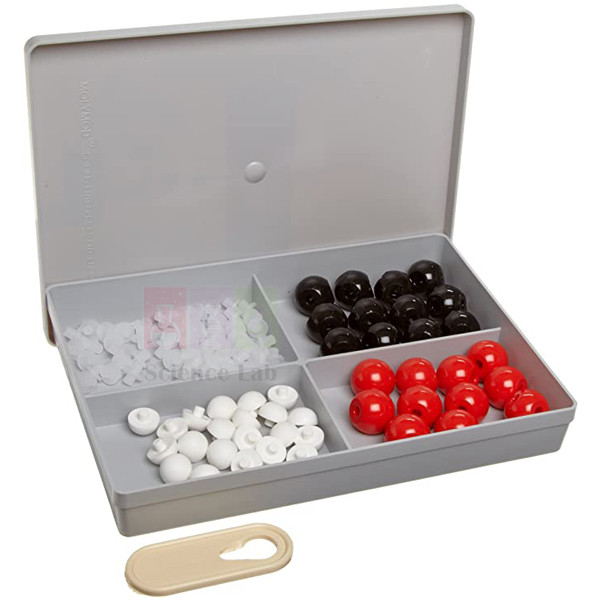
Sucrose Molecular Model
Sucrose Molecular Model (Product Code: SLE/Mo/09) is a self-assembly kit used to build a three-dimensional model of one sucrose molecule for chemistry and biology teaching. With 45 atom-parts and 46 NV links, this 3D science model kit lets students see how a glucose ring and a fructose ring join to form table sugar, making it a clear visual aid for carbohydrate lessons. This model is made by Jain Scientific Equipments Pvt Ltd (ScienceLab), an OEM manufacturer, at its own factory in Ambala, India.
Specifications
| Parameter | Detail |
|---|---|
| Model type | Self-assembly molecular model kit |
| Molecule | Sucrose — one molecule, shown in 3D |
| Atom parts | 45 |
| NV links | 46 |
| Tool | 1 |
| Product code | SLE/Mo/09 |
| Manufacturer | Jain Scientific Equipments Pvt Ltd (ScienceLab) — OEM |
| Country of origin | India (made in Ambala, Haryana) |
What Is the Sucrose Model Used For?
Sucrose is a disaccharide: one glucose unit and one fructose unit joined by a glycosidic bond, with a molecule of water removed when the bond forms. A sucrose molecule contains 45 atoms of carbon, hydrogen and oxygen, so the 45 atom-parts build one complete molecule, and the 46 links match the number of bonds that hold those atoms together.
Teachers use the model to show the condensation reaction that forms sucrose, its hydrolysis back into glucose and fructose, and why sucrose does not give a positive result in reducing-sugar tests: the glycosidic bond ties up the groups that would otherwise react. Building the two rings separately before joining them makes the structure easier to follow, and the tool supplied should be kept with the parts.
OEM Manufacturer
Jain Scientific Equipments Private Limited, known to customers as ScienceLab, is the OEM (original equipment manufacturer) of the Sucrose Molecular Model. It is made at the company's own licensed factory at Saha, Ambala, Haryana, India, and supplied direct to schools, colleges, teacher-training institutes, dealers and importers without a trading middleman.
The same manufacturer makes the glucose and fat kits in this range, so a set of carbohydrate and lipid models can be quoted together. Find out more on the ScienceLab profile.
Related Molecule Models
Useful companions for a carbohydrate lesson built around the sucrose model:
- Molecular Model Kit, Glucose — the monosaccharide that forms one half of sucrose.
- Sucrose — laboratory sucrose for the practical tests that follow the model work.
- Fehling A Solution — used with Fehling B in reducing-sugar tests that show how sucrose differs from glucose.
- Molecular Model Set, Biochemistry — for building a wider biochemistry teaching collection.
All molecular model kits are listed in the Molecule category.
Frequently Asked Questions
How many parts are in the Sucrose Molecular Model?
The Sucrose Molecular Model contains 45 atom-parts, 46 NV links and one tool. These parts assemble into one complete sucrose molecule, so each kit gives a group a full 3D model to study.
Does the Sucrose Molecular Model come assembled?
No, the Sucrose Molecular Model is a self-assembly kit. Students build the molecule from the atom-parts and links, which helps them understand exactly how the glucose and fructose rings are connected by the glycosidic bond.
Which lessons use the Sucrose Molecular Model?
The Sucrose Molecular Model is used in lessons on carbohydrates, disaccharides, glycosidic bonds and the hydrolysis of sugars. It also helps explain why sucrose behaves differently from glucose in reducing-sugar tests such as Benedict's or Fehling's.
Who manufactures the Sucrose Molecular Model?
The Sucrose Molecular Model is manufactured by Jain Scientific Equipments Pvt Ltd (ScienceLab) as the OEM, at its own licensed factory in Saha, Ambala, India. Enquiries and repeat orders go straight to the manufacturer.
Can I order the Sucrose Molecular Model with other sugar models?
Yes, the Sucrose Molecular Model can be quoted together with the glucose kit and other models from the Molecule range. List the models and quantities you need on the contact page to receive one combined quotation.
Is the Sucrose Molecular Model available for export?
Yes, Jain Scientific Equipments Pvt Ltd (ScienceLab) supplies the Sucrose Molecular Model to schools, colleges and distributors in India and international markets. Send your quantity and destination through the contact page for an export quotation.
Request a Quote
Ask for a quotation on the Sucrose Molecular Model through the contact page, or collect several models in the enquiry cart and send one enquiry. The manufacturer replies directly.
Last updated: 24 September 2026

Mini DNA 22 layer base pair Molecular Model
Mini DNA 22 layer base pair Molecular Model (Product Code: SLE/Mo/10) is a compact DNA model kit used to give students an easy-to-understand introduction to the structure of the DNA double helix. Its 22 base-pair layers are built from abstract, colour-coded parts for the nitrogenous bases, pentagonal sugars and pyramidal phosphates, making it a handy DNA model kit for schools across India. It is produced by Jain Scientific Equipments Pvt Ltd (ScienceLab), an OEM manufacturer, at its own factory in Ambala, India.
Key Details
| Parameter | Detail |
|---|---|
| Model | Mini DNA molecular model kit (double helix) |
| Length of helix | 22 base-pair layers (as named) |
| Parts | Abstract-shaped, colour-coded parts |
| Components represented | Nitrogenous bases, pentagonal sugar and pyramidal phosphate |
| Assembled size and part count | Not stated in this listing — ask us |
| Product code | SLE/Mo/10 |
| Manufacturer | Jain Scientific Equipments Pvt Ltd (ScienceLab) — OEM |
| Country of origin | India (made in Ambala, Haryana) |
What Is the Mini DNA Model Used For?
The abstract shapes strip away atom-level detail so beginners can focus on the three building blocks of every nucleotide — sugar, phosphate and base — and on how bases pair across the helix. The pentagonal sugar pieces echo the five-membered deoxyribose ring, and the pyramidal phosphates link the sugars along each backbone.
With 22 layers, the finished model follows the helix through about two full turns, so students can see the twist repeat. Teachers use the colour-coding to check complementary pairing (adenine with thymine, guanine with cytosine), to point out that the two strands run in opposite directions, and to separate the strands when introducing replication. Writing the colour key on the board before building saves time.
OEM Manufacturer
The Mini DNA 22 layer base pair Molecular Model is made by Jain Scientific Equipments Private Limited, trading as ScienceLab, which is its OEM (original equipment manufacturer). Production takes place at the company's own licensed factory at Saha, Ambala, Haryana, India, and schools, colleges, dealers and importers buy direct from the factory.
Repeat orders for additional classrooms are handled by the manufacturer itself — ask us when you need more kits to add to those already in use. Read about the company on the ScienceLab profile.
Related Molecule Models
Other DNA models to build on this introduction:
- Molecular Model Kit, Ten Layer DNA — a shorter helix of about one turn for quick group builds.
- Molecular Model Kit, Two Layer DNA — a minimal segment for close study of base pairing.
- Medical DNA Model — a larger PVC model for the teacher's demonstration.
- Molecular Model, RNA 12 Base — for comparing DNA with a strand of RNA.
Explore the complete Molecule range for more DNA and biomolecule models.
Frequently Asked Questions
What does "22 layer base pair" mean for this model?
In the Mini DNA 22 layer base pair Molecular Model, each layer is one base pair spanning the two strands, so the finished double helix has 22 stacked base pairs. That length shows the helix twisting through about two full turns.
How are the DNA components shown in the Mini DNA model?
The Mini DNA 22 layer base pair Molecular Model uses abstract, colour-coded parts: nitrogenous bases, pentagonal sugar pieces and pyramidal phosphate pieces. The simplified shapes make the double helix easy to follow for students meeting DNA for the first time.
Is the Mini DNA model suitable for beginners?
Yes, the Mini DNA 22 layer base pair Molecular Model is intended as an easy-to-understand introduction to DNA structure. Its abstract parts avoid atom-by-atom detail, so secondary school students can concentrate on base pairing and the double-helix shape.
Who makes the Mini DNA 22 layer base pair Molecular Model?
Jain Scientific Equipments Pvt Ltd (ScienceLab) manufactures the Mini DNA 22 layer base pair Molecular Model as the OEM at its own licensed factory in Saha, Ambala, Haryana, India, and quotes buyers directly without a middleman.
What size is the assembled Mini DNA model?
The assembled dimensions and part count of the Mini DNA 22 layer base pair Molecular Model are not stated in this listing. Contact us through the contact page and the details will be confirmed in your quotation.
How does the Mini DNA model compare with the ten-layer DNA kit?
The Mini DNA 22 layer base pair Molecular Model builds a longer helix of 22 base pairs, while the Ten Layer DNA kit builds a shorter segment. Choose the 22-layer model when students need to see the helix repeat over more than one full turn.
Request a Quote
Send your required quantity of the Mini DNA 22 layer base pair Molecular Model through the contact page, or add it to the enquiry cart. The quotation comes straight from the manufacturer.
Last updated: 24 September 2026
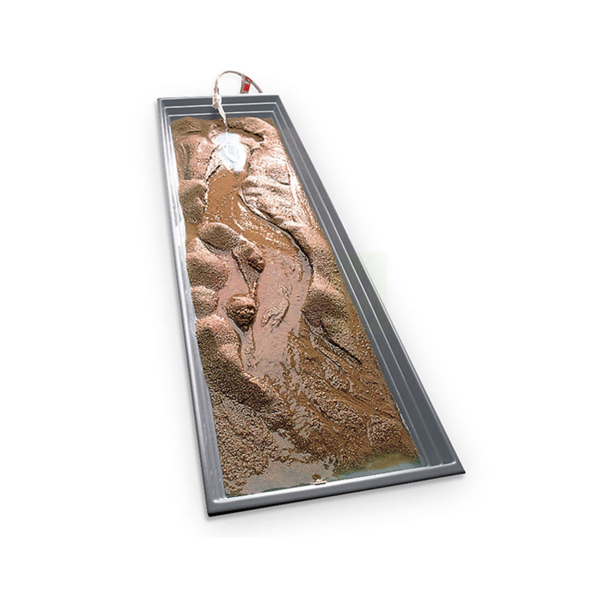
Economy Stream Table Kit
The Economy Stream Table Kit (Product Code: SLE/ES/20) lets students model how running water shapes land: they build a sediment slope in a long plastic tray, send a controlled flow down it and watch channels, meanders and deposits form. Its sturdy tray is large enough for a group demonstration or for individual investigations, which makes it a practical environmental science kit for secondary geography, earth science and teacher-training classrooms. It is made by Jain Scientific Equipments Pvt Ltd (ScienceLab), Ambala.
Specifications
| Parameter | Detail |
|---|---|
| Tray | Heavy plastic, 48 in x 14 in x 3 in, with drain |
| Outlet | Outlet assembly |
| Hoses | Inlet and outlet hoses, 36 in x 2 in |
| Trough | Special trough for relating the rate of erosion to slope and stream volume |
| Siphon | 72 in x 1/4 in siphon tube with clamp |
| Suitable for | Group study or individual investigations |
Typical Use
Fill the upper part of the tray with damp sand or fine soil, shape a gentle slope towards the drain end, and start a steady flow using the inlet hose or the siphon tube from a raised container; the clamp on the siphon lets you slow or stop the water. Within minutes students can see a channel cut into the sediment, bends develop into meanders, and eroded material settle as a small delta near the outlet. Raising the head of the tray or opening the flow further shows directly how slope and stream volume change the rate of erosion – the relationship the trough is designed to explore.
Because each run takes only a few minutes, classes can repeat trials with different gradients and record channel width or sediment loss, turning the tray into a strong science fair project kit as well as a lesson demonstration. Work near a sink or outdoors, direct the outlet hose into a bucket, and wash out and dry the tray before storing it so sediment does not block the drain.
Manufacturer
Jain Scientific Equipments Private Limited, known to schools as ScienceLab, is based in Ambala, Haryana, and builds apparatus for geography, earth science and general science teaching. The company ships to institutions in India and international markets; see our company profile for more about how it works.
Related Earth Science Equipment
Teachers often combine stream-table work with these landform and weathering resources:
- Miniature Landform Models Set — compare the features students create with finished landform models.
- Landform Relief Maps — link tray observations to real river valleys and deltas.
- Acid Rain, Weathering & Erosion — adds chemical weathering to the physical erosion seen in the tray.
- Introductory Earth Science Collection — rock and sediment context for the same unit.
For globes, fossils and mineral sets, visit the Earth Science category.
Frequently Asked Questions
What parts come with the kit?
A 48 in x 14 in x 3 in heavy plastic tray with drain, an outlet assembly, 36 in x 2 in inlet and outlet hoses, a trough, and a 72 in x 1/4 in siphon tube with clamp.
Is sand or soil included?
No sediment is listed in the contents. Clean, fine sand or sieved soil from local sources works well; avoid stones that can block the drain.
Can it be used without a tap connection?
Yes. The siphon tube can draw water from a bucket placed higher than the tray, and its clamp controls the flow, so the kit can run in rooms or outdoor areas without plumbing.
How much bench space does it need?
Allow for the 48 in tray length plus room at the head end for the water container and at the drain end for a collecting bucket.
Is a warranty offered?
Warranty and after-sales terms are set out in each quotation; please ask through our contact page for the terms on your order.
What should we include in a tender or bulk enquiry?
Give the product code SLE/ES/20, the number of kits, the delivery location and any related items you want quoted together. We supply schools and institutions in India and international markets.
Request a Quote
For a quotation on the Economy Stream Table Kit, write to us via the contact page or add it to the enquiry cart alongside other earth science apparatus.
Last updated: 24 September 2026
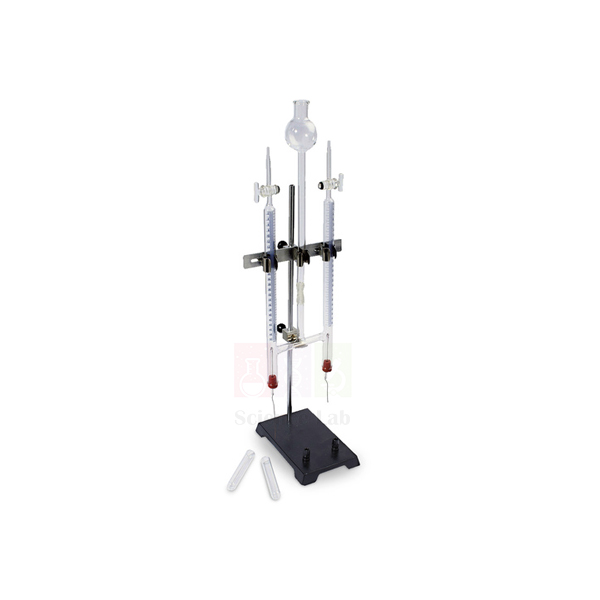
Hoffman Electrolysis Apparatus
Hoffman Electrolysis Apparatus (Product Code: SLE/EM/16) is the three-limbed glass apparatus used to electrolyse water and other solutions while collecting the gas released at each electrode in its own side tube, so the volumes can be compared and the gases drawn off for testing. The glassware is borosilicate 3.3 grade and clearly labelled, and the set comes with two electrode options — 2 platinum electrodes and 2 carbon electrodes, each mounted in rubber stoppers — plus PTFE stopcocks. Manufactured by Jain Scientific Equipments Pvt Ltd (ScienceLab), Ambala, it is a standard piece of electrolysis apparatus in India’s school and college chemistry laboratories.
Specifications
| Parameter | Detail |
|---|---|
| Glass | Borosilicate 3.3 grade glassware, clearly labelled |
| Platinum electrodes | 2 included, in rubber stoppers |
| Carbon electrodes | 2 included, in rubber stoppers |
| Stopcocks | PTFE |
| Supplied items | Hoffman electrolysis apparatus; platinum electrodes in rubber stoppers; carbon electrodes in rubber stoppers; PTFE stopcocks |
| Not included | Ring stand and clamp (a metal ware set is recommended) |
Typical Use
For the electrolysis of water, the apparatus is clamped upright, the PTFE stopcocks are opened and acidified water or another suitable electrolyte is poured into the central reservoir until both side tubes are full; the stopcocks are then closed and a DC supply is connected to the electrodes. Gas collects at the top of each side tube, with roughly twice as much hydrogen at the cathode as oxygen at the anode, and each gas can be released through its stopcock for the lighted-splint and glowing-splint tests. Platinum electrodes stay inert in most electrolytes, while the carbon electrodes are a practical choice for chloride solutions such as brine, where students can compare the products at each electrode.
After each practical, drain the electrolyte, rinse the apparatus and electrodes with distilled water and leave the stopcocks open to dry. Handle the platinum electrodes gently. The borosilicate construction is the same type used in borosilicate glassware across India’s laboratories, so the apparatus copes with routine rinsing and the temperature changes of normal use.
Manufacturer
ScienceLab is the brand of Jain Scientific Equipments Private Limited, a laboratory equipment manufacturer located in Ambala, Haryana. For supplier onboarding and tender paperwork, the company can be identified by GSTIN 06AAECJ8618A1ZT and LEI 3358004HRD1JIVXKYX49. Further details are on our company profile.
Related Laboratory Equipment
Items needed to set up and run the apparatus, plus an alternative design:
- Retort Stand — cast-iron base and rod to hold the apparatus upright, since no stand is included
- Retort Clamp Three Finger — rubber-covered jaws that grip the glass limbs securely
- Precision Variable Power Supply — a regulated DC source for driving the electrolysis
- Electrode Platinum — a pair of platinum foil electrodes in glass tubes with screw terminals
- Brownlee Electrolysis Apparatus — a simpler test-tube design for lecture-table or student work
Explore more in our Electricity Equipments range.
Frequently Asked Questions
What is included with the Hoffman Electrolysis Apparatus?
The Hoffman apparatus, 2 platinum electrodes and 2 carbon electrodes in rubber stoppers, and PTFE stopcocks.
Is a stand or clamp included?
No. A ring stand and clamp are needed and are not part of the set; a metal ware set is recommended for mounting.
Should I use the platinum or the carbon electrodes?
Use platinum for water electrolysis and other work where an inert electrode matters; use carbon for chloride solutions and routine class demonstrations.
What glass is it made from?
Borosilicate 3.3 grade glass, with the glassware clearly labelled.
Does it come with a power supply?
No. Connect a low-voltage DC laboratory supply or battery to the electrodes; contact us if you would like a suitable supply quoted with it.
Can I order replacement electrodes or stopcocks?
Please ask through the contact page and we will advise on replacement parts.
Do you supply larger orders and export?
Yes. We supply schools, colleges and distributors in India and international markets.
Request a Quote
For a quotation on the Hoffman Electrolysis Apparatus with or without stand and power supply, reach us via the contact page or add everything to the enquiry cart.
Last updated: 24 September 2026

Holder for 'D' Dry Cells
Holder for 'D' Dry Cells (Product Code: SLE/EM/17) is a snap-fit aluminium cell holder used to hold 33 mm diameter dry cells in school circuit experiments. Fahnestock clips on both sides take bare wires and leads in seconds, holes let it be fixed to a board or panel, and any number of holders can be linked in series or parallel. It is made by Jain Scientific Equipments Pvt Ltd (ScienceLab), an OEM manufacturer, at its own factory in Ambala, India.
Specifications
| Parameter | Detail |
|---|---|
| Cell size | Dry cells of 33 mm diameter ('D' cells) |
| Material | Aluminium |
| Cell retention | Snap-fit |
| Terminals | Fahnestock clips on both sides for external connections |
| Mounting | Holes provided for attaching to a board or panel |
| Configuration | Any number of cells can be connected in series or parallel |
| Product code | SLE/EM/17 |
| Manufacturer | Jain Scientific Equipments Pvt Ltd (ScienceLab) — OEM |
| Country of origin | India (made in Ambala, Haryana) |
What Is the D Cell Holder Used For?
In a school circuits lesson, each group snaps a cell into a holder and clips its wires to the Fahnestock clips to power a lamp, buzzer or small motor. Adding a second and third holder in series raises the voltage and the brighter lamp makes the result obvious, while linking holders in parallel keeps the voltage the same but lets the battery last longer. Screwing a row of holders to a baseboard turns them into a permanent, reusable battery for a demonstration panel or an electricity experiment kit.
Observe cell polarity when snapping cells in, and make sure the clips grip clean, bare wire for a good contact. Remove the cells before storing the holders so that any leakage cannot corrode the aluminium or the clips.
OEM Manufacturer
Jain Scientific Equipments Private Limited, which trades as ScienceLab, is the OEM (original equipment manufacturer) of this D-cell holder and produces it at its own licensed factory at Saha, Ambala, Haryana, India. Schools, dealers and importers order class quantities factory-direct, so repeat orders are handled by the manufacturer itself rather than a trader; just ask us. Read about the company on our company profile.
Related Electricity Equipment
Components that complete a simple battery circuit:
- Lamp Holder (Economy Switch) — a plastic-base lamp holder that also uses Fahnestock clips.
- Receptacle for Miniature Lamp — a brass-shell receptacle with screw terminals for flash-lamp bulbs.
- Banana/Alligator Cords — alligator clips grip the Fahnestock clips for quick connections.
- Digital Multimeter — for checking cell and battery voltage in series and parallel.
- Battery Holder, C — a single-cell holder for C-size batteries.
See more in our Electricity Equipments category.
Frequently Asked Questions
Which cells fit the Holder for 'D' Dry Cells?
The Holder for 'D' Dry Cells takes dry cells of 33 mm diameter, the size commonly sold as D cells, and holds each one in a snap-fit aluminium body so it stays in place during experiments.
Are cells included with the Holder for 'D' Dry Cells?
Cells are not listed as part of the Holder for 'D' Dry Cells, so plan to order them separately. Ask us through the contact page if you would like cells quoted on the same order as the holders.
How do I build a battery from several holders?
To build a battery, link the Fahnestock clips of neighbouring Holder for 'D' Dry Cells units with short wires: positive to negative for series, like to like for parallel. Any number of cells can be combined this way.
Can the Holder for 'D' Dry Cells be fixed to a board?
Yes. The Holder for 'D' Dry Cells has holes for attaching it to a board or panel, so several holders can be screwed down side by side to form a permanent battery for a demonstration or circuit board.
Who manufactures the Holder for 'D' Dry Cells?
Jain Scientific Equipments Pvt Ltd (ScienceLab) is the OEM manufacturer of the Holder for 'D' Dry Cells, making it at its own licensed factory at Saha, Ambala, Haryana, India, and supplying schools and distributors directly.
What should a bulk enquiry include?
For the Holder for 'D' Dry Cells, state product code SLE/EM/17, the number of holders, any lamp holders, leads or meters to be quoted with them, and the delivery address in India or international markets.
Request a Quote
To price class sets of the Holder for 'D' Dry Cells directly from the manufacturer, message us on the contact page or add them to your enquiry cart.
Last updated: 24 September 2026
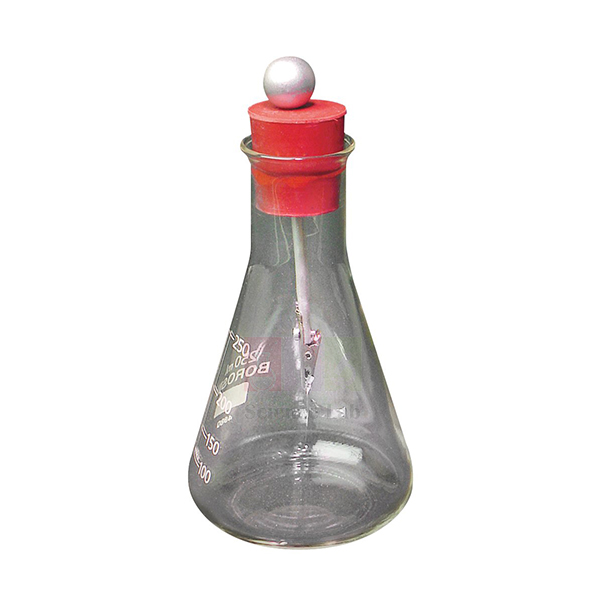
Electroscope, Flask Type
Electroscope, Flask Type (Product Code: SLE/EM/18) is a leaf electroscope built inside a 250mL Erlenmeyer flask, which protects the delicate leaves from draughts while keeping them fully visible. A plated rod topped with a knob of 16mm (2/3in) diameter passes through a rubber stopper, and a pair of aluminium leaves hangs from its lower end; when charge reaches the knob, the leaves take the same charge, repel each other and spread apart. Manufactured by Jain Scientific Equipments Pvt Ltd (ScienceLab), Ambala, it is an inexpensive item of junior science lab equipment for introducing static electricity and charge detection.
Specifications
| Parameter | Detail |
|---|---|
| Enclosure | Erlenmeyer flask, 250mL |
| Leaves | A pair of aluminium leaves suspended from the rod |
| Rod and knob | Plated rod with a knob of 16mm (2/3in) diameter |
| Seal | Rod passes through a rubber stopper |
Typical Use
Students rub a friction rod with a cloth or fur, touch it to the knob and watch the leaves diverge — the basic proof that the rod has become charged. Bringing a charged rod near the knob without touching shows charging by induction, and touching the knob with a finger earths the electroscope so the leaves collapse. Once the electroscope holds a known charge, an unknown charged object brought close will make the leaves open wider (same sign) or close (opposite sign), so the class can identify the type of charge. Touching the knob with different materials also separates conductors, which discharge it at once, from insulators, which do not.
Static experiments work best on dry days; in humid weather charge leaks away and the leaves fall quickly, so warm and dry the flask and rods before the lesson. Keep the flask upright and move it gently, as the aluminium leaves are thin and easily creased. From a science apparatus manufacturer in India, it gives each bench group its own charge detector at modest cost.
Manufacturer
Jain Scientific Equipments Private Limited produces this electroscope in Ambala, Haryana, where it operates under the ScienceLab trading name as a maker of physics and general science apparatus for schools and colleges. Our company profile has more information.
Related Electricity Equipment
Friction rods for charging, and other electroscope designs:
- Friction Rod, Brass/Ebonite — a friction rod for producing charge in static electricity experiments
- Friction Rod, Perspex — a Perspex rod for comparing the charge produced by a different material
- Electroscope in Flask, Gold Leaf — a flask electroscope with gold leaf for more sensitive detection
- Electroscope, Needle — a vane-and-scale electroscope for comparing the amount of charge
Browse our Electricity Equipments range for more apparatus.
Frequently Asked Questions
What size is the flask?
It is a 250mL Erlenmeyer (conical) flask.
What are the leaves made of?
A pair of aluminium leaves hangs from the plated rod. Replacement leaves are not listed separately; contact us if you need spares.
How big is the knob?
The knob on top of the rod is 16mm (2/3in) in diameter.
Are friction rods included?
No. Friction rods and cloths are ordered separately; see the related items above.
Why do the leaves collapse quickly on some days?
Moist air lets charge leak away. Drying the flask and rods, and working in a dry room, keeps the leaves open for longer.
How does it differ from a gold-leaf electroscope?
Aluminium leaves are more robust for everyday class use, while gold leaf is thinner and responds to smaller charges.
Can you supply several units for a class?
Yes. We supply schools, colleges and distributors in India and international markets.
Request a Quote
For prices on the Electroscope, Flask Type, get in touch through the contact page or add it to the enquiry cart together with friction rods.
Last updated: 24 September 2026