- Physics Lab Equipment
- Chemistry Lab Equipment
- Biology Lab Equipment
- Anatomical Lab Equipment
- Learning
- Educational Lab Equipment
- Magnets
- Agriculture
- Astronomy
- Earth Science
- Geography Lab Equipment
- Safety Lab Coat
- Laboratory
- Meteorological
- Electricity & Magnetism
- Heat
- School Lab Equipment
- Lab Glassware
- Science Lab Equipment
- Tvet Lab Equipment
- Robotics Kits Supplier and Manufacturer for Schools India
- Math Lab Equipment Manufacturers and Exporters in Ambala
- STEM Kits Manufacturers and Supplier India
- Engineering Lab Equipment
- Hospital Lab Equipment
- Water, Sanitation & Hygiene Supplies
- Cold Chain, Solar & Communication Equipment
- Nutrition
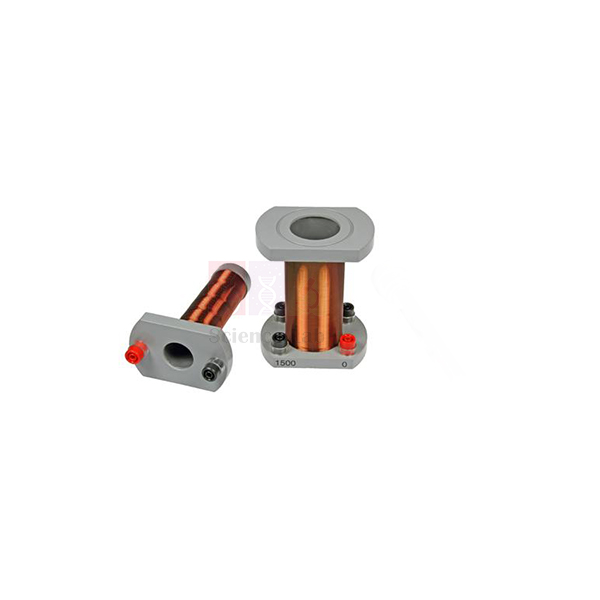
Primary and Secondary Coil Set
Primary and Secondary Coil Set (Product Code: SLE/EM/19) is a pair of nested induction coils — a heavy-wire primary and a fine-wire secondary, both wound with enamelled copper wire on plastic spools — used to show how a changing current in one coil induces a voltage in the other. Physics teachers in schools, junior colleges and teacher-training institutes build their electromagnetic induction kit around a set like this for mutual-induction and transformer lessons. It is made by Jain Scientific Equipments Pvt Ltd (ScienceLab), Ambala, India.
Specifications
| Parameter | Detail |
|---|---|
| Construction | Two coils wound with enamelled copper wire over heavy plastic spools, one fitting inside the other |
| Primary coil (inner) | 1250 turns of heavy wire |
| Secondary coil (outer) | 250 turns of fine wire |
| Turns ratio | 1250 : 250 (the primary has five times as many turns as the secondary) |
| Connections | Binding posts on both coils |
| Core | Soft iron core for induction studies |
| Mounting | Square supports of thick insulating material, for vertical or horizontal mounting |
Typical Use
The classic demonstration is mutual induction. Connect the primary through a key to a low-voltage DC source and the secondary to a centre-zero galvanometer. Closing the key gives a brief deflection one way, opening it gives a deflection the other way, and a steady current gives none — so students see that only a changing magnetic field induces an emf. Sliding the soft iron core into the inner spool links the two coils more strongly and makes the kick noticeably larger, which lets a class compare air-cored and iron-cored coupling in a single period.
Fed from a low-voltage AC supply, the same set doubles as a simple transformer experiment kit for school labs: with the 1250-turn coil as primary and the 250-turn coil as secondary it works as a step-down arrangement, and students can measure input and output voltages with a multimeter and compare their ratio with the turns ratio. Keep the supply at low voltage, switch off before changing connections, and use the insulating square supports to stand the set upright for class viewing or lay it flat on the bench.
Manufacturer
The Primary and Secondary Coil Set comes from Jain Scientific Equipments Private Limited, an Ambala, Haryana company that trades as ScienceLab and makes physics, chemistry and biology teaching apparatus for schools and colleges in India and international markets. You can read more about us on our company profile.
Related Electricity Equipments
Items that complete an induction or transformer set-up:
- Primary-Secondary Coils — another coil pair in the same category, useful if you are comparing options
- Galvanometer, Centre Zero Universal Meter — shows the direction and size of the brief induced current when the primary is switched
- Switched Power Supply — low-voltage AC and DC outputs for driving the primary coil
- Digital Multimeter — measures primary and secondary voltages in turns-ratio work
- Banana/Alligator Cords — leads for connecting the binding posts to the supply and meter
See every item in our Electricity Equipments category.
Frequently Asked Questions
How many turns do the two coils have?
The inner primary coil has 1250 turns of heavy wire and the outer secondary coil has 250 turns of fine wire, a turns ratio of 1250 : 250.
Is the soft iron core included?
Yes. The set is listed with a soft iron core for induction studies, and both coils carry their own binding posts.
Can the coils be connected straight to the mains?
No. Use a low-voltage laboratory supply or cells. Coil resistance and maximum current are not given in our current listing, so contact us for these before planning higher-current work.
Can the set be used upright as well as flat?
Yes. Square supports made of thick insulating material allow either vertical or horizontal mounting.
What else is needed for a mutual-induction demonstration?
A low-voltage DC source with a key, a centre-zero galvanometer and connecting leads; for transformer work, a low-voltage AC supply and a voltmeter or multimeter. These are not part of the coil set as listed and can be quoted together.
What warranty applies?
Warranty terms are confirmed with each quotation — please ask us for current terms.
Do you supply coil sets in quantity for institutions or export?
Yes. We supply schools, colleges, distributors and tender buyers in India and international markets; send the quantity and delivery location and we will quote.
Request a Quote
For pricing on the Primary and Secondary Coil Set, send your requirement through our contact page or add it to the enquiry cart together with any meters or supplies you need.
Last updated: 24 September 2026
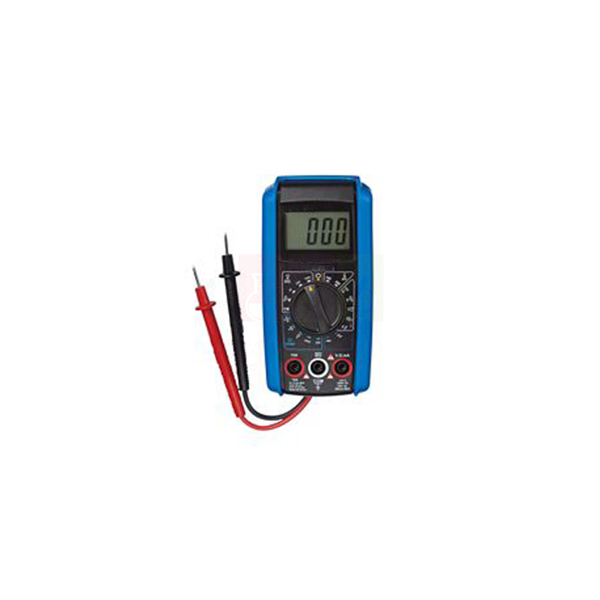
Digital Multimeter
Digital Multimeter (Product Code: SLE/EM/20) is a multi-function digital meter that measures DC voltage, DC current, AC voltage and resistance and also offers a diode test, so a single instrument can stand in for a separate voltmeter, ammeter and ohmmeter at each student bench. Schools, colleges, polytechnics and ITIs use it throughout practical electricity and electronics work. It is made by Jain Scientific Equipments Pvt Ltd (ScienceLab), Ambala, India.
Specifications
| Parameter | Detail |
|---|---|
| Functions | DC voltage, DC current, AC voltage, resistance, diode test |
| DC voltage ranges | 200mV, 2000mV, 20V, 200V, 1000V |
| DC current ranges | 200µA, 2000µA, 200mA, 10A |
| AC voltage ranges | 200V, 750V |
| Resistance ranges | 200 Ω, 2kΩ, 20kΩ, 200kΩ, 2000kΩ |
| Diode test | Yes |
| Display | Digital; display size 12.83mm |
Typical Use
In AC DC circuits experiments the meter changes role at the turn of the selector: read the potential difference across a resistor on a DC voltage range, switch to DC current to complete an Ohm’s law table, then check the resistor’s value directly on the resistance ranges. The 200mV and 200µA ranges suit small signals such as those from a photocell or thermocouple, while the 10A range covers heavier loads like small motors and lamp banks. The diode test identifies the anode and cathode of diodes and LEDs before they go into a rectifier or indicator circuit.
Good habits make the meter last: start on the highest range and step down until the reading is well resolved, check that the leads are in the sockets meant for the function you have selected, and never measure resistance in a live circuit. The 200V and 750V AC ranges are for trained users; students should work on low-voltage supplies under supervision.
Manufacturer
This multimeter belongs to the range of Jain Scientific Equipments Private Limited, which trades as ScienceLab and operates from Ambala, Haryana. The company is incorporated under CIN U29309HR2020PTC087597 and manufactures at its licensed factory at 449, HSIIDC Industrial Area, Saha, Ambala (Factory Licence AMB-ONLINE-CHD-J-414). Our company profile gives the wider background.
Related Laboratory Equipment
Equipment often ordered with a bench multimeter:
- Standard Digital Multimeter — another multimeter model in our physics range, for comparison
- Advanced Digital Multimeter — a further option if your syllabus needs different functions
- Resistance Substitution Box — known resistance values for practising resistance and current readings
- Precision Variable Power Supply — a regulated DC source for the circuits being measured
- Banana/Alligator Cords — leads for connecting circuit components during measurement
Browse the complete Electricity Equipments range for more circuit apparatus.
Frequently Asked Questions
What can this multimeter measure?
DC voltage from 200mV up to 1000V over five ranges, AC voltage on 200V and 750V ranges, DC current up to 10A, and resistance from 200 Ω to 2000kΩ, plus a diode test.
How large is the display?
Our listing gives the digital display size as 12.83mm.
What is the accuracy on each range?
Accuracy figures are not part of our current listing; contact us for the detailed datasheet before ordering if your specification requires them.
Are test leads and a battery included?
The listing does not state the accessories supplied, so please confirm the package contents when you request a quotation.
Is a calibration certificate available?
Please discuss calibration certificate requirements with us at the enquiry stage — contact us with your needs.
What warranty is offered?
Warranty terms are set out in the quotation; ask us for the current terms.
Can you supply multimeters in bulk for a lab or tender?
Yes. We supply institutions and distributors in India and international markets; share the quantity, delivery location and any tender specification and we will respond with a quotation.
Request a Quote
To price the Digital Multimeter for your lab, please contact us or place it in the enquiry cart with the quantity you need.
Last updated: 24 September 2026
42.jpg)
Lamp Holder (Economy Switch)
Lamp Holder (Economy Switch) (Product Code: SLE/EM/21) is a round plastic base, 53mm across, fitted with two plated brass Fahnestock clips for connecting wires to a miniature lamp bulb holder. Primary and middle-school teachers use it for first circuit lessons, where pupils push bare wire ends into spring clips instead of tightening screws, and it sits comfortably in an electricity experiment kit for school classes. It is made by Jain Scientific Equipments Pvt Ltd (ScienceLab), Ambala, India.
Specifications
| Parameter | Detail |
|---|---|
| Diameter | 53mm |
| Base | Plastic |
| Terminals | Two plated brass Fahnestock clips |
| Purpose | Connecting wires to a miniature lamp bulb holder |
Typical Use
A Fahnestock clip is a springy brass strip: press it, slip a stripped wire end through the opening and let go, and the wire is gripped firmly. That makes this holder quick to wire for younger classes — a cell, the lamp holder and two wires show a complete circuit, and pulling one wire out shows an open circuit straight away. With several holders on a bench, groups can compare lamps in series and in parallel, or bridge a gap in the circuit with different materials to sort conductors from insulators.
For reliable contact, strip enough insulation for the wire to seat fully in each clip, and avoid bending the brass clips beyond their natural spring. The holder’s own voltage rating is not given in our listing, so pair it with the low-voltage cells normally used in school work and match the bulb to that supply.
Manufacturer
Jain Scientific Equipments Private Limited, based in Ambala, Haryana, makes this lamp holder and sells it under its ScienceLab trading name together with the rest of its electricity teaching accessories. The company profile describes the business and its product families.
Related Electricity Equipments
Parts that go with it in a first-circuits lesson:
- Receptacle for Miniature Lamp — a brass-shell receptacle with screw terminals, for flash lamp bulbs
- Holder for ‘D’ Dry Cells — holds the cells that power the lamp circuit
- Contact Key (Push Switch) — adds a switch so pupils can open and close the circuit
- Connecting Wire — wire for linking the clips to the rest of the circuit
- Simple Circuit Module Lamp Holder — a module-style alternative from the Simple Circuit Modules series
More circuit accessories are in the Electricity Equipments category.
Frequently Asked Questions
Does the holder have a built-in switch?
Our listing describes the plastic base and two Fahnestock clips only; no separate switch is described despite the “Economy Switch” in the name. Please contact us to confirm the exact configuration, or add a push-switch key to the circuit.
Is a lamp bulb included?
Bulb supply is not stated in the listing, so mention whether you need bulbs when you ask for a quotation.
How big is it?
The base is 53mm in diameter.
How are wires attached?
Through the two plated brass Fahnestock clips — press the clip, insert the bare wire end and release. No screwdriver is needed.
What supply voltage can be used?
A voltage rating is not given in our current listing; use low-voltage cells as in normal school circuit work and ask us if you need a stated rating.
Can I order class sets?
Yes. Holders can be supplied in quantity to schools, distributors and tender buyers in India and international markets.
Request a Quote
Tell us how many lamp holders you need via the contact page, or add them to the enquiry cart along with cells, wire and switches.
Last updated: 24 September 2026

Oersted's Law Apparatus
Oersted's Law Apparatus (Product Code: SLE/EM/22) is a demonstration apparatus used to show the magnetic effect of an electric current in secondary school physics. In this 15 cm apparatus, a permanent magnetic needle free to rotate at the centre of an aluminium frame swings as current flows over or under it in either direction, making it a compact physics demonstration kit piece. It is made by Jain Scientific Equipments Pvt Ltd (ScienceLab), an OEM manufacturer, at its own factory in Ambala, India.
Specifications
| Parameter | Detail |
|---|---|
| Size | 15 cm |
| Needle | Permanent magnetic needle, free to rotate |
| Frame | Aluminium, with the needle at its centre |
| Current path | Connected so that current can flow over or under the needle, in either direction |
| Product code | SLE/EM/22 |
| Manufacturer | Jain Scientific Equipments Pvt Ltd (ScienceLab) — OEM |
| Country of origin | India (made in Ambala, Haryana) |
What Is the Oersted's Law Apparatus Used For?
With no current flowing, turn the apparatus until the needle lies along the frame. Pass current along the conductor above the needle and it deflects one way; reverse the current, or route it beneath the needle instead, and the deflection reverses. Students record the four combinations in a table and use them to arrive at a rule, such as the right-hand grip rule, that links current direction to the magnetic field around a wire.
Aluminium is non-magnetic, so the frame itself does not pull the needle off line and any deflection comes from the current alone. Keep bar magnets, steel stands and other current-carrying leads away from the bench, pass current in short bursts through a key with a rheostat in series so cells are not drained, and let the needle settle before each observation.
OEM Manufacturer
ScienceLab is the trading name of Jain Scientific Equipments Private Limited, the OEM (original equipment manufacturer) that builds this Oersted's law apparatus at its own licensed factory at Saha, Ambala, Haryana, India. School science departments, teacher-training colleges, dealers and importers buy it factory-direct. Repeat orders, or a replacement needle if one is ever needed, can be requested from the manufacturer itself; ask us. Find out more on our profile page.
Related Electricity Equipment
Useful alongside it when teaching the magnetic effect of current:
- Ampere's Rule Apparatus — maps the field around a straight wire with seven compasses.
- Oersted's Apparatus — an alternative version with a pivoted needle inside a rectangular frame.
- Holder for 'D' Dry Cells — a simple low-voltage source for the demonstration.
- Contact Key (Push Switch) — lets you pass current only while readings are taken.
- Rheostat — limits and adjusts the current through the frame.
See the rest of our Electricity Equipments category.
Frequently Asked Questions
What does the Oersted's Law Apparatus demonstrate?
The Oersted's Law Apparatus demonstrates that an electric current produces a magnetic field: the needle deflects when current flows, and the direction depends on the current's direction and on whether it passes over or under the needle.
How large is the Oersted's Law Apparatus?
The Oersted's Law Apparatus is listed as 15 cm in size, compact enough for a front-bench demonstration or for pairs of students working at their own benches during a practical period.
Why is the frame of the Oersted's Law Apparatus made of aluminium?
The frame of the Oersted's Law Apparatus is aluminium because the metal is non-magnetic: it carries the current without attracting the needle, so any deflection students see comes from the current alone.
What power source does the Oersted's Law Apparatus need?
The Oersted's Law Apparatus needs a low-voltage DC source such as a cell holder, used with a key and preferably a rheostat. A current rating is not given in our product details, so contact us for a recommended value.
Can students see the deflection reverse?
Yes. The Oersted's Law Apparatus is connected so current can be sent over or under the needle in either direction, giving four combinations for students to compare and record while deriving the rule.
Who manufactures the Oersted's Law Apparatus?
Jain Scientific Equipments Pvt Ltd, trading as ScienceLab, is the OEM manufacturer of the Oersted's Law Apparatus, making it at its own licensed factory at Saha, Ambala, Haryana, India, for schools, colleges and dealers.
Do you supply schools in bulk and overseas?
Yes. The Oersted's Law Apparatus is supplied to schools, colleges and distributors in India and international markets; share product code SLE/EM/22, the quantity and delivery details, and the quotation comes straight from the manufacturer.
Request a Quote
For manufacturer-direct prices on the Oersted's Law Apparatus, contact us or add it to your enquiry cart.
Last updated: 24 September 2026
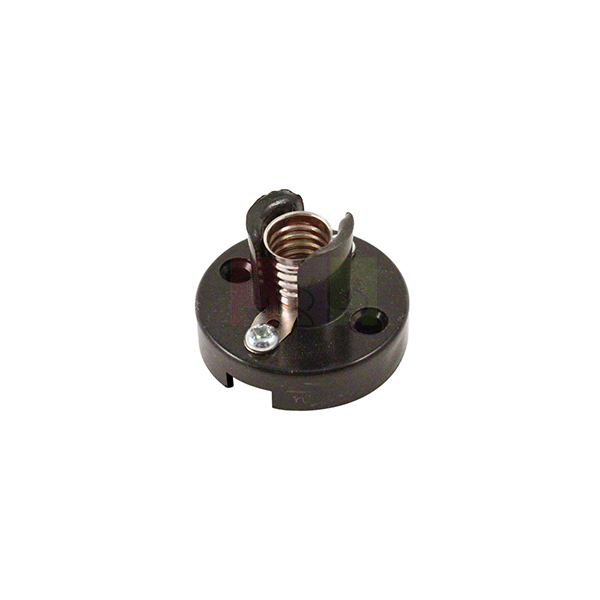
Receptacle for Miniature Lamp
Receptacle for Miniature Lamp (Product Code: SLE/EM/23) is a compact receptacle for flash lamp bulbs: a rolled brass shell set in a plastic base, 29mm in diameter and 16mm high, with two screw terminals for secure wire connections. Students and teachers use it when building bench circuits that need to stay firmly wired, and it is a routine item of school physics lab equipment in India. It is made by Jain Scientific Equipments Pvt Ltd (ScienceLab), Ambala, India.
Specifications
| Parameter | Detail |
|---|---|
| Suitable bulbs | Flash lamp bulbs |
| Diameter | 29mm |
| Height | 16mm |
| Voltage | Up to 50V A.C. |
| Lamp socket | Rolled brass shell |
| Base | Plastic |
| Terminals | Two screw terminal connections |
Typical Use
Screw terminals give a firm joint that stays put when a circuit board is moved around the bench, so this receptacle suits experiments that are measured rather than simply watched — for instance, recording current and voltage for a lamp to show that its resistance rises as the filament heats, or comparing brightness in series and parallel combinations with meters in circuit. Its small footprint lets several receptacles sit side by side on one board.
Screw the flash lamp bulb into the brass shell until it seats, wrap each wire end under a terminal and tighten. Although the receptacle is listed for voltages up to 50V A.C., the bulb sets the working voltage in practice: match the bulb to your supply and keep student circuits on low-voltage sources.
Manufacturer
Made by Jain Scientific Equipments Private Limited — known to customers as ScienceLab — the receptacle is one of the company’s electricity accessories from Ambala, Haryana. Our company profile gives the full picture of who we are.
Related Electricity Equipments
Other parts for lamp circuits and measurements:
- Lamp Holder (Economy Switch) — a plastic-base holder with spring Fahnestock clips for tool-free wiring
- Simple Circuit Module Lamp Holder — a lamp module from the Simple Circuit Modules series
- Holder for ‘D’ Dry Cells — a cell holder for powering lamp circuits
- Digital Multimeter — measures lamp current and voltage
- Connecting Wire — wire for the screw terminals
Explore our full Electricity Equipments category.
Frequently Asked Questions
Which bulbs fit this receptacle?
It is made for flash lamp bulbs, which screw into the rolled brass shell.
What is the maximum voltage?
The receptacle is listed for voltages up to 50V A.C. The bulb’s own rating should always match the supply you use.
What are its dimensions?
29mm in diameter and 16mm high.
How do I connect wires?
Through the two screw terminals on the plastic base; a small screwdriver helps tighten them.
Does it come with a bulb?
Bulb supply is not stated in our listing, so please mention bulbs in your enquiry if you need them.
How does it differ from the Lamp Holder (Economy Switch)?
This receptacle uses screw terminals and a brass shell for flash lamp bulbs; the economy lamp holder uses spring Fahnestock clips for quicker, tool-free wiring.
Can you quote for class quantities?
Yes. We supply schools, colleges and distributors in India and international markets; send the quantity and delivery location.
Request a Quote
Ask for pricing through our contact page or add the receptacle to your enquiry cart.
Last updated: 24 September 2026
619.jpg)
Pencil Jockey (Knife Edge Jockey)
Pencil Jockey (Knife Edge Jockey) (Product Code: SLE/EM/24) is the sliding contact used to locate balance points on Wheatstone bridges and potentiometers: a brass knife edge at one end of an insulated, pencil-style handle, with a 4mm socket binding post terminal at the other. At 100mm overall it sits comfortably in one hand during senior-secondary and undergraduate practicals, and it is a standard companion to meter bridge and potentiometer lab work across India. It is made by Jain Scientific Equipments Pvt Ltd (ScienceLab), Ambala, India.
Specifications
| Parameter | Detail |
|---|---|
| For use with | Wheatstone bridges and potentiometers |
| Overall length | 100mm |
| Contact | Brass metal knife edge |
| Handle | Insulated, with the knife edge mounted at one end |
| Terminal | 4mm socket binding post terminal at the other end |
Typical Use
In a meter bridge or slide-wire Wheatstone bridge experiment, the jockey is connected through a galvanometer and touched at points along the bridge wire until the galvanometer shows no deflection; the balancing length then gives the unknown resistance. In a potentiometer experiment the same null method is used to compare the emfs of two cells or to find a cell’s internal resistance. Because the knife edge meets the wire along a narrow line, the balance point can be read closely against the scale — the reason a knife-edge jockey is preferred over a blunt contact in these experiments.
Press the jockey gently and lift it before moving to a new point. Dragging the edge along the wire scrapes it and changes its resistance per unit length, which spoils later readings. Run the lead from the 4mm socket to the galvanometer, keep the brass edge clean and straight, and store the jockey where the edge will not be knocked.
Manufacturer
The Pencil Jockey is made by Jain Scientific Equipments Private Limited, which trades as ScienceLab from Ambala, Haryana. The company is a registered MSME enterprise (Udyam UDYAM-HR-01-0003714), and its export orders are shipped under Importer-Exporter Code AAECJ8618A issued by the DGFT. Read more on our company profile.
Related Laboratory Equipment
Apparatus the jockey is used with in null-method experiments:
- Meter Bridge — the slide-wire bridge for finding unknown resistance
- Wheatstone Bridge Four Gap — a four-gap bridge for resistance comparison
- Potentiometer — for emf comparison and internal-resistance experiments
- Galvanometer, Centre Zero Universal Meter — the null detector connected in series with the jockey
- Jockey with Insulated Handle (Single) — an alternative jockey style in our physics range
Find more in our Electricity Equipments category.
Frequently Asked Questions
Which instruments is this jockey meant for?
Wheatstone bridges (including meter bridges) and potentiometers, where it is used to find the null or balance point on the wire.
How is it connected to the circuit?
Through the 4mm socket binding post terminal at the end of the handle, so a lead with a 4mm plug or a bare wire can be used.
How long is it?
100mm overall.
Why a knife edge rather than a rounded tip?
A knife edge touches the wire along a narrow line, which makes the balance point easier to locate and read precisely.
How do I avoid damaging the bridge wire?
Tap the jockey on and off the wire instead of sliding it while pressed, and use light pressure.
Can you supply jockeys in bulk or for export?
Yes. We supply schools, colleges and distributors in India and international markets; include quantity and destination in your enquiry.
Request a Quote
For a quotation, contact us or add the Pencil Jockey to the enquiry cart with your bridge and potentiometer requirements.
Last updated: 24 September 2026
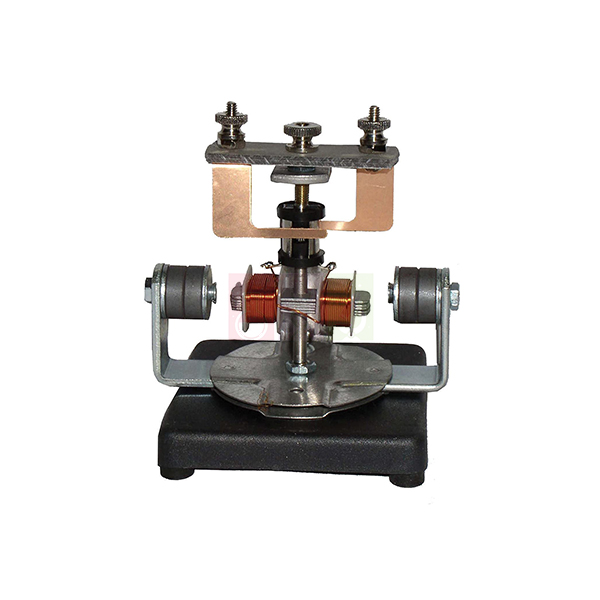
St. Louis Motor
St. Louis Motor (Product Code: SLE/EM/25) is a demonstration DC motor of open construction, so every working part — the 2-pole armature, the split commutator and the two permanent magnets — stays in plain view while it runs. Teachers use it to show how a current-carrying coil in a magnetic field is kept turning, and it is a long-standing demonstration model in physics labs at school and college level. It works on a 6V D.C. power source and is made by Jain Scientific Equipments Pvt Ltd (ScienceLab), Ambala, India.
Specifications
| Parameter | Detail |
|---|---|
| Armature | 2-pole D.C. armature with coils |
| Armature mounting | Aluminium bracket with two binding posts and 4mm socket binding post terminals |
| Bearings | Brass cone bearings |
| Commutator | Split commutator fitted on the shaft |
| Field magnets | Two permanent magnets in adjustable holders |
| Base | Bakelite, about 173 x 97mm (l x w) |
| Power source | 6V D.C. |
Typical Use
Connect a 6V D.C. supply to the terminals and, if the armature has stopped at a dead point, give it a light flick; it then keeps turning because the split commutator reverses the current in the coils every half-turn. The motor is used to explain the motor effect and Fleming’s left-hand rule, and to show why a DC motor needs a commutator at all. Reversing the supply leads reverses the direction of rotation, and moving the magnets in their adjustable holders closer to or further from the armature shows how the strength of the field affects speed — a useful talking point in any electromagnetic kit for schools.
Before switching on, check that the armature turns freely on its brass cone bearings. Keep the commutator clean, switch off promptly if the armature stalls so the coils do not overheat, and use the 4mm sockets with plug leads for quick, secure connection during class demonstrations.
Manufacturer
Jain Scientific Equipments Private Limited trades as ScienceLab and makes motor demonstrators such as this one in Ambala, Haryana, for classrooms in India and international markets. Visit our company profile for the company background.
Related Laboratory Equipment
Items that pair well with a motor demonstration:
- Demonstration Electric Motor — another motor demonstrator from our Electricity and Magnetism range
- Switched Power Supply — a stepped low-voltage DC source for running the motor
- Digital Multimeter — measures the motor current as conditions change
- Banana/Alligator Cords — leads for connecting the supply to the terminals
- Simple Circuit Module Motor — a small motor module for student circuit building
Browse more apparatus in the Electricity Equipments category.
Frequently Asked Questions
What supply does the motor need?
A 6V D.C. power source, connected to the binding posts or the 4mm socket terminals.
Can it run on AC?
It is specified for 6V D.C.; the split commutator is designed for direct current, so use a DC supply.
How large is the base?
The bakelite base measures about 173 x 97mm (length x width).
Can the magnets be adjusted?
Yes. The two permanent magnets sit in adjustable holders, so their position relative to the armature can be changed.
Why does the armature sometimes need a push to start?
With a 2-pole armature there are positions where the turning effect is zero; a light flick moves it past that point and the commutator keeps it turning.
Are spare parts and warranty available?
Spares and warranty terms are confirmed at quotation — please contact us.
What should an institutional enquiry include?
Quantity, delivery location in India or abroad, and any accompanying items such as power supplies or leads, so we can quote in one go.
Request a Quote
Send your St. Louis Motor enquiry through our contact page or add it to the enquiry cart.
Last updated: 24 September 2026
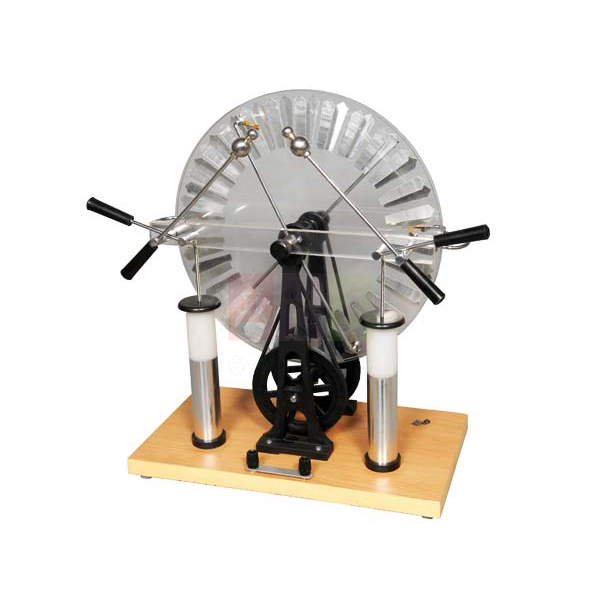
Wimshurst Machine
Wimshurst Machine (Product Code: SLE/EM/26) is a hand-cranked electrostatic generator. Two high-resistance plastic discs carrying equally spaced metal sectors turn in opposite directions, and a system of collecting brushes gathers the induced charge into Leyden jar capacitors and onto metal spheres until a spark jumps between the ball-ended electrodes. Physics departments use it as a centrepiece of their electrostatics teaching and as a striking physics demonstration kit item for open days. It is made by Jain Scientific Equipments Pvt Ltd (ScienceLab), Ambala, India.
Specifications
| Parameter | Detail |
|---|---|
| Discs | Two high-resistance plastic discs with equally spaced metal sectors |
| Drive | Hand crank; the discs rotate in opposite directions |
| Disc supports | Two rigid upright supports |
| Charge collection | System of induced-charge collecting brushes |
| Electrodes | Adjustable ball-ended electrodes |
| Capacitors | Cylindrical Leyden jar capacitors, for obtaining higher potential |
| Charge storage | Substantial opposite charges collect in the capacitors and on metal spheres |
| Base | Insulated wooden base |
Typical Use
Turning the crank builds up opposite charges on the two Leyden jars and the metal spheres; once the potential difference is large enough, a spark crosses the gap between the ball-ended electrodes. Widening the gap gives longer, less frequent sparks. Lowering the system’s capacitance produces a rapid sequence of sparks instead, so students can see directly how stored charge and capacitance govern the discharge. The machine is also used to show charging by induction, electric wind and the ionisation of air, and to charge electroscopes and other electrostatics apparatus — standard topics wherever physics lab equipment in India is used for senior classes.
Electrostatic demonstrations are most reliable in dry air, so wipe the discs and supports free of dust and moisture before use. Always discharge the Leyden jars by bringing the electrodes together before touching any part of the machine, keep sparks away from flammable vapours, and keep anyone with a cardiac pacemaker at a distance from the demonstration.
Manufacturer
This Wimshurst Machine is a ScienceLab product, made by Jain Scientific Equipments Private Limited of Ambala, Haryana, for schools, colleges and science centres in India and international markets. The company profile tells you more about us.
Related Electricity Equipments
Apparatus for building a full electrostatics session around the machine:
- Van de Graaff Generator — a belt-driven electrostatic generator for comparison
- Electroscope, Flask Type — detects and compares the charge produced
- E-Field Detector — shows the polarity and size of a charge on an LED display
- Proof Plane 20mm Dia — transfers small charge samples to a detector
- Wilmshurst Electrostatic Machine (for lyceum) — another electrostatic machine in our range
See the full Electricity Equipments category.
Frequently Asked Questions
How is the machine operated?
By a hand crank that turns the two discs in opposite directions; no electrical supply is needed.
What do the Leyden jars do?
They are cylindrical capacitors that store the opposite charges, allowing a higher potential and larger sparks to build up.
What size are the discs?
Please confirm the disc diameter with us before ordering — contact us and we will provide current dimensions.
Why does it spark less on humid days?
Moisture on the discs and supports lets charge leak away. Wipe the surfaces dry and, if possible, run demonstrations in a dry room.
Is it safe for students to use?
Yes, under supervision. Discharge the electrodes and Leyden jars before touching the machine, and follow the precautions above.
What warranty and spares support is available?
These are confirmed with each quotation; please ask us.
Do you supply to institutions abroad?
Yes. We supply schools, colleges and distributors in India and international markets; share your quantity and destination for a quotation.
Request a Quote
To request pricing for the Wimshurst Machine, use our contact page or add it to the enquiry cart.
Last updated: 24 September 2026