- Physics Lab Equipment
- Chemistry Lab Equipment
- Biology Lab Equipment
- Anatomical Lab Equipment
- Learning
- Educational Lab Equipment
- Magnets
- Agriculture
- Astronomy
- Earth Science
- Geography Lab Equipment
- Safety Lab Coat
- Laboratory
- Meteorological
- Electricity & Magnetism
- Heat
- School Lab Equipment
- Lab Glassware
- Science Lab Equipment
- Tvet Lab Equipment
- Robotics Kits Supplier and Manufacturer for Schools India
- Math Lab Equipment Manufacturers and Exporters in Ambala
- STEM Kits Manufacturers and Supplier India
- Engineering Lab Equipment
- Hospital Lab Equipment
- Water, Sanitation & Hygiene Supplies
- Cold Chain, Solar & Communication Equipment
- Nutrition

Bacterial Pollution Kit
Bacterial Pollution Kit (Product Code: SLE/EB/04) is a classroom microbiological water testing kit used to detect E. coli and total bacteria in up to 20 natural water samples in school and college biology and environmental science lessons. A sterile, ready-to-heat culture medium and sterile Bi-Petri dishes let students check local water for coliform bacteria within one 45-minute class period. It is supplied by Jain Scientific Equipments Pvt Ltd (ScienceLab), Ambala, India.
Key Details
| Parameter | Detail |
|---|---|
| Purpose | Detection of E. coli and total bacteria in natural water; testing for the presence of coliform bacteria |
| Sample capacity | Up to 20 natural water samples |
| Class time | One 45-minute class period |
| Culture medium | Sterile, ready to heat |
| Culture vessels | Sterile Bi-Petri dishes |
| Shelf life | Depends on the culture medium, its grade and storage conditions; ask us for the expiry date of the batch you are quoted |
| Product code | SLE/EB/04 |
| Supplied by | Jain Scientific Equipments Pvt Ltd (ScienceLab), Ambala, India |
What Is the Bacterial Pollution Kit Used For?
Students collect water from sources such as a pond, stream, well, rain barrel or tap, then plate each sample on the prepared medium in the Bi-Petri dishes. Because E. coli is widely used as an indicator of faecal contamination, comparing colonies from different sites opens up discussion of sewage, animal waste, runoff and why drinking water is treated. With capacity for 20 samples, a class can split into teams, each testing its own source, and pool the results into a simple map or bar chart of local water quality.
Good microbiology habits matter: collect samples in clean containers, label every dish before plating, keep lids closed after inoculation and wash hands afterwards. Colonies need time to develop after the class session, so plan a second, shorter look at the dishes; treat all grown cultures as potentially harmful and dispose of them through your school’s biological waste routine. As a microbiology teaching kit it is meant for education, not as a substitute for professional drinking-water analysis.
What to Specify When Ordering
- The number of kits, allowing up to 20 water samples per kit.
- Whether you also need an incubator, extra Petri dishes or a colony counter for the same practical.
- When you plan to run the practical, so the expiry date of the quoted batch can be checked against it.
Supplier
Jain Scientific Equipments Private Limited trades as ScienceLab from Ambala, Haryana, India, and supplies the Bacterial Pollution Kit to schools, colleges and environmental education programmes in India and international markets. Because the kit contains a sterile culture medium, ask us for the batch details when you request a quotation; one enquiry can also cover incubators, Petri dishes and colony counters for the same practical. Read about us on the company profile page.
Related Biology Kits
Equipment that supports water microbiology investigations:
- Laboratory Incubator With Visibility Door — keeps plated dishes at a steady temperature while colonies develop.
- Digital Colony Counter — helps students count colonies accurately when comparing sites.
- Petri Dish — extra dishes for repeat tests or control plates.
- Water And Soil Analysis Kit — adds chemical water-quality tests to the biological results.
- Microbe Scavenger Hunt — a companion activity on where microbes are found around the school.
Find more activity kits in the Biology Kits category.
Frequently Asked Questions
How many water samples can one kit test?
One Bacterial Pollution Kit tests up to 20 natural water samples for E. coli and total bacteria, so a class can split into teams, each checking a different pond, stream, well or tap, and then compare results.
How long does the practical take?
The Bacterial Pollution Kit is designed for one 45-minute class period to set up the tests. Colonies then need time to grow before they can be examined, so plan a shorter follow-up observation of the dishes afterwards.
Who supplies the Bacterial Pollution Kit?
The Bacterial Pollution Kit is supplied by Jain Scientific Equipments Pvt Ltd, trading as ScienceLab, of Ambala, Haryana, India. The company quotes schools, colleges, education departments and dealers in India and international markets through its contact page and enquiry cart.
What is the shelf life of the culture medium?
For the Bacterial Pollution Kit, shelf life depends on the culture medium, its grade and storage conditions; ask us for the expiry date of the batch you are quoted, and plan the practical so the kit is used within that date.
Do I need an incubator?
An incubator is not listed as part of the Bacterial Pollution Kit. Please contact us for guidance on incubation conditions and on whether your classroom set-up is suitable before you order the kit.
How is the culture medium prepared?
The culture medium in the Bacterial Pollution Kit is supplied sterile and ready to heat, so it only needs warming before it is used; there is no weighing or mixing of dehydrated powders in the classroom.
Can the results be used to declare water safe to drink?
No. The Bacterial Pollution Kit is an educational screen for E. coli and total bacteria; decisions about drinking water should rely on professional laboratory testing, not on classroom results from this kit.
Request a Quote
For a quotation on the Bacterial Pollution Kit, contact us or add it to your enquiry cart with any incubators or dishes you need.
Last updated: 24 September 2026

Smoking Experiment
Smoking Experiment (Product Code: SLE/EB/05) is a simple demonstration apparatus used to draw smoke from a lighted cigarette through a white fibreglass filter, revealing the amount and nature of the tars and nicotine it carries, in school and college health education lessons. The residue is compared with a calibrated colour chart, and 25 filters are included. It is made by Jain Scientific Equipments Pvt Ltd (ScienceLab), an OEM manufacturer, at its own factory in Ambala, India.
Key Details
| Parameter | Detail |
|---|---|
| Type | Smoking demonstration apparatus |
| Principle | Smoke from a lighted cigarette is drawn through a white fibreglass filter |
| What it shows | The amount and nature of tars and nicotine produced by cigarettes |
| Assessment | Residue compared with a calibrated colour chart |
| Filters included | 25 |
| Suitable for | Students from elementary to college level |
| Product code | SLE/EB/05 |
| Manufacturer | Jain Scientific Equipments Pvt Ltd (ScienceLab) — OEM |
| Country of origin | India (made in Ambala, Haryana) |
What Is the Smoking Experiment Used For?
The experiment is usually run by the teacher as a demonstration during lessons on the respiratory system, addiction or personal health. As the apparatus pulls smoke through the filter, the white surface darkens; the class then matches the stain against the colour chart and discusses what the same deposit would mean inside the airways and lungs of a smoker. With 25 filters, a teacher can repeat the test for several classes or compare the residue from different numbers of puffs.
Carry out the demonstration in a well-ventilated room or under an extraction hood, keep the lighted cigarette under adult control at all times, and have a non-combustible dish ready to extinguish it. Follow your institution’s policy on tobacco on the premises. Used filters can be kept in labelled envelopes as a lasting visual record for later biology teaching and health lessons.
What to Specify When Ordering
- The number of apparatus sets, bearing in mind that each includes 25 filters.
- Whether additional filters should be quoted for a full year of demonstrations.
- Any related health education models you want included in the same quotation.
OEM Manufacturer
The Smoking Experiment is made by Jain Scientific Equipments Private Limited, the OEM (original equipment manufacturer) that trades as ScienceLab, at its own licensed factory at Saha, Ambala, Haryana, India. Schools, colleges, training centres, dealers and importers buy the apparatus factory-direct rather than through a trader, and questions about extra filters or repeat orders go to the same manufacturer — just ask us. Our company profile has further information.
Related Biology Kits
Resources that build on the smoking demonstration:
- Effects of Smoking Model — shows the physical damage smoking can cause to body organs.
- Microslide Smoking & Health — microscope slides for examining tissue changes linked to smoking.
- Human Lung Model in Bell Jar — demonstrates how breathing draws air, and smoke, into the lungs.
- Lung Capacity Gauge — lets students measure their own lung capacity in a follow-up activity.
- Kit on the Consequences of Smoking — another teaching kit on the health effects of tobacco.
Browse all kits in our Biology Kits category.
Frequently Asked Questions
How many filters are supplied?
The Smoking Experiment includes 25 filters, enough for a teacher to repeat the demonstration for several classes or to compare the residue left on the white fibreglass filter by different numbers of puffs.
Who manufactures the Smoking Experiment?
The Smoking Experiment is manufactured by Jain Scientific Equipments Pvt Ltd (ScienceLab), the OEM, at its own licensed factory at Saha, Ambala, Haryana, India. Schools, training centres and dealers receive their quotation directly from the manufacturer.
Are cigarettes included?
No. Cigarettes are not listed among the contents of the Smoking Experiment; the school provides the cigarette used in the demonstration, in line with its own policy on tobacco on the premises.
What does the colour chart measure?
The calibrated colour chart used in the Smoking Experiment gives a visual scale for comparing the tar and nicotine residue on each filter, so results can be described consistently between classes and repeat demonstrations.
Which age groups is it suitable for?
The Smoking Experiment is easy to perform and intended for students from elementary to college level, with the teacher operating the apparatus and handling the lighted cigarette throughout the demonstration.
Can replacement filters be ordered?
Please contact us about additional filters for the Smoking Experiment; availability and pack sizes are confirmed on request, so mention how many demonstrations you plan to run each year.
Do you supply schools outside India?
Yes. The Smoking Experiment is supplied to schools, colleges and training centres in India and international markets; include your quantity and destination in the enquiry so the manufacturer can quote directly.
Request a Quote
To order the Smoking Experiment, send a request via our contact page or add it to the enquiry cart with related health education models; quotes come direct from the manufacturer.
Last updated: 24 September 2026

Cell Structure
Cell Structure (Product Code: SLE/EB/06) is a biology lab kit used to introduce students to the working parts of cells through staining and microscope observation in school and college practical classes. Teachers use it to stain mitochondria and storage inclusions, show cell walls, chloroplasts and starch granules, and compare plant with animal cells; one kit serves up to 30 students over two 45-minute periods. It is supplied by Jain Scientific Equipments Pvt Ltd (ScienceLab), Ambala, India, as part of its cell biology equipment range.
Specifications
| Parameter | Detail |
|---|---|
| Type | Introductory cell biology staining kit |
| Staining activities | Staining of mitochondria and storage inclusions |
| Plant cell features observed | Cell walls, chloroplasts and starch granules |
| Other activities | Identification of cell components; comparison of plant and animal cells; cell membrane function |
| Class size | Serves up to 30 students |
| Time required | Two 45-minute class periods |
| Shelf life | Shelf life depends on the chemical, its grade and storage conditions; ask us for the expiry date of the batch you are quoted |
| Product code | SLE/EB/06 |
| Supplied by | Jain Scientific Equipments Pvt Ltd (ScienceLab), Ambala, India |
What Is the Cell Structure Kit Used For?
The kit gives a class its first close look at what a cell is made of. A convenient plan is to use the first period for staining, so that students bring out mitochondria and storage inclusions and begin labelling the components they can identify. The second period turns to plant material — cell walls, chloroplasts and starch granules — which students set beside animal cells before discussing what the cell membrane does in each. Asking everyone to sketch at the same magnification makes the plant-versus-animal comparison much easier to talk through at the end.
Because one kit covers up to 30 students, a single order equips a typical class section, and the practical makes a strong opening to a cell unit before osmosis or cell division is taught. As a biology experiment kit for students, it also builds microscope handling, slide preparation and careful recording habits. Unless your packing list shows otherwise, have a compound microscope for each student or pair, clean slides and coverslips ready before the lesson.
Supplier
Jain Scientific Equipments Private Limited trades under the ScienceLab name from Ambala, Haryana, India, and supplies this cell biology kit to schools, colleges, training institutes and distributors. For vendor registration, the supplying company can be listed under Importer-Exporter Code AAECJ8618A (DGFT) and GSTIN 06AAECJ8618A1ZT. More about the business is on the ScienceLab company profile.
Related Laboratory Equipment
These items from our catalogue complete the set-up for a cell structure practical:
- Monocular Biological Microscope 400x, LED — a student microscope for viewing the stained cells in both class periods.
- Microscope Slides Glass — spare slides so every student can mount both plant and animal samples.
- Glass Cover Slips — keep stained preparations flat and protect the objective lens.
- Iodine Sol — a familiar classroom stain for making starch granules stand out in plant cells.
- Animal Cell & Plant Cell — reference material for the closing plant-versus-animal discussion.
Explore more hands-on practicals in our Biology Kits category.
Frequently Asked Questions
How many students can use one Cell Structure kit?
One Cell Structure kit (SLE/EB/06) serves up to 30 students. For larger year groups or several sections, order one kit for every 30 students, or ask us for a combined quotation covering all your classes.
How much lesson time does the Cell Structure practical need?
The Cell Structure practical needs two class periods of 45 minutes each. Schools with a longer laboratory block can run both parts in a single session, as long as enough time is left for the staining steps.
Which cell structures will students observe with the Cell Structure kit?
With the Cell Structure kit, students stain mitochondria and storage inclusions and observe cell walls, chloroplasts and starch granules in plant material. The activities also cover identifying cell components, comparing plant and animal cells and cell membrane function.
Is a microscope included with the Cell Structure kit?
No microscope is listed for the Cell Structure kit, so plan for one compound microscope per student or pair, along with clean slides and coverslips. Please contact us for the current packing list before you order.
How long do the stains in the Cell Structure kit last?
No fixed period is stated for the Cell Structure kit: shelf life depends on the chemical, its grade and storage conditions. Ask us for the expiry date of the batch you are quoted, and store the kit as its labels direct.
Who supplies the Cell Structure kit?
The Cell Structure kit is supplied by Jain Scientific Equipments Pvt Ltd, trading as ScienceLab, from Ambala, Haryana, India. The company quotes directly to schools, colleges and distributors and serves institutions in India and international markets.
What should a quotation request for the Cell Structure kit include?
A quotation request for the Cell Structure kit should give the number of kits or students, the delivery address, any microscopes, slides or coverslips you also need, and your billing details, so a complete quotation can be sent in one step.
Request a Quote
To order Cell Structure kits for your school or college, contact our team with your quantity, or add the kit to the enquiry cart together with any other items you need.
Last updated: 24 September 2026

DNA extraction lab kit
DNA extraction lab kit (Product Code: SLE/EB/07) is a biology practical kit used to let students release DNA from cells and see it with the naked eye in school and college laboratories. It suits biology and biotechnology teachers who want a hands-on activity that turns the idea of genetic material into white strands students can lift out on a glass rod. It is supplied by Jain Scientific Equipments Pvt Ltd (ScienceLab), Ambala, India, for teachers looking for a DNA extraction kit for school labs.
Key Details
| Parameter | Detail |
|---|---|
| Type | Biology practical kit |
| Purpose | Classroom DNA extraction activity |
| Subject area | Molecular biology, genetics and biotechnology teaching |
| Suitable for | School and college biology practicals |
| Contents | Current contents list supplied on request with your quotation |
| Shelf life | Shelf life depends on the chemical, its grade and storage conditions; ask us for the expiry date of the batch you are quoted |
| Product code | SLE/EB/07 |
| Supplied by | Jain Scientific Equipments Pvt Ltd (ScienceLab), Ambala, India |
What Is the DNA Extraction Lab Kit Used For?
It is used for the classic classroom extraction, which follows three stages. First, cells are broken open, usually by mashing soft plant tissue in a detergent and salt solution. Next, the liquid is separated from solid debris. Finally, cold alcohol is layered on top so that DNA comes out of solution as fine white strands that can be spooled onto a rod, and students compare how much material different samples give.
The activity links naturally to lessons on chromosome structure and on how DNA is studied in research, which is why it often opens a biotechnology lab kit sequence in senior classes. Contents differ between kit versions, so confirm with us which reagents and consumables are included and prepare any extra items, such as chilled alcohol or glassware, before the practical.
Supplier
This kit is supplied by Jain Scientific Equipments Private Limited, the Ambala, Haryana company that trades as ScienceLab and serves schools, colleges and training institutes with educational laboratory equipment. Because kit versions differ, the reagents and consumables are confirmed in writing with each quotation. Read about the company on our company profile page.
Related Laboratory Equipment
Teachers planning a DNA practical often order these items with the kit:
- Cellulose Enzyme (DNA Separation) — an enzyme listed in our range for DNA separation work with plant material.
- Protease Enzyme (DNA Separation) — helps break down the proteins that surround DNA during an extraction.
- Ethanol — alcohol for the precipitation step in which the DNA strands become visible.
- Pestle And Mortar — for grinding soft plant or fruit tissue before extraction.
- Molecular Model Kit, Two Layer DNA — lets students connect the extracted strands to the double-helix structure.
Other ready-to-teach practicals are grouped under Biology Kits.
Frequently Asked Questions
What is included in the DNA extraction lab kit?
The current contents of the DNA extraction lab kit, including reagents, consumables and quantities, are confirmed in writing with each quotation. Please contact us for the list before ordering so you can plan any extra glassware or chilled alcohol.
Which samples suit the DNA extraction lab kit?
Soft plant material such as fruit or onion is the usual choice for a school practical with the DNA extraction lab kit, because it gives visible DNA without special equipment. Our team can advise on samples that suit this particular kit.
Does the DNA extraction lab kit need a centrifuge?
Introductory classroom extractions like those done with the DNA extraction lab kit are usually carried out without a centrifuge, relying on filtering and alcohol precipitation. Confirm the method for this kit with us if your laboratory has no centrifuge.
Is the DNA extraction lab kit safe for school students?
Yes, with normal laboratory precautions, DNA extraction activities like this one are routinely run in schools. Students using the DNA extraction lab kit should wear eye protection, keep alcohol away from open flames and follow the safety notes supplied and your school's lab rules.
How long do the reagents in the DNA extraction lab kit last?
No fixed period is stated for the DNA extraction lab kit, because shelf life depends on the chemical, its grade and storage conditions. Ask us for the expiry date of the batch you are quoted and store the kit as its labels direct.
How many students does one DNA extraction lab kit serve?
The class size for one DNA extraction lab kit is confirmed with your quotation. Tell us how many students will take part and we will state the number of kits needed for your practical.
Who supplies the DNA extraction lab kit?
Jain Scientific Equipments Pvt Ltd, trading as ScienceLab in Ambala, Haryana, India, supplies the DNA extraction lab kit to schools, colleges and district buyers, and handles combined orders for several institutions in India and international markets.
Request a Quote
For a quotation and the current contents of the DNA extraction lab kit, send us an enquiry or place it in the enquiry cart along with related consumables.
Last updated: 24 September 2026

Ob-Scertainer Kit
Ob-Scertainer Kit (Product Code: SLE/EB/08) is a reusable activity kit used to teach the scientific method through indirect observation in school science classrooms. With 24 steel balls, 50 student worksheets and various moulded parts, students design an experiment, build a model to explain what they cannot see directly, test a hypothesis and draw conclusions. It is supplied by Jain Scientific Equipments Pvt Ltd (ScienceLab), Ambala, India, as a hands-on STEM science kit for India and international markets.
Specifications
| Parameter | Detail |
|---|---|
| Type | Scientific method and indirect observation activity kit |
| Skills taught | Experimental design; using a model to explain indirect observation; testing a hypothesis; drawing conclusions |
| Steel balls | 24 |
| Student worksheets | 50 |
| Other components | Various moulded parts |
| Reusable | Yes |
| Product code | SLE/EB/08 |
| Supplied by | Jain Scientific Equipments Pvt Ltd (ScienceLab), Ambala, India |
What Is the Ob-Scertainer Kit Used For?
The kit works well as an early-term lesson on how science comes to know things. Students gather clues with the steel balls and moulded parts, record what they notice on the worksheets, and propose a model that explains their observations. They then test that model with further trials, revise it when the evidence disagrees, and defend their conclusions to the class — the same cycle researchers followed when they inferred the structure of the atom or the interior of the Earth from indirect evidence.
With 50 worksheets in the box, a teacher can run the activity for a large class or across two sections, and because the hardware is reusable the kit can come back out every year. As a STEM science kit it also opens up discussion of uncertainty, the value of repeated trials, and why two groups can reach different yet defensible conclusions from the same evidence.
Supplier
ScienceLab is the trading name of Jain Scientific Equipments Private Limited, an educational laboratory supply company in Ambala, Haryana, India, which supplies this kit to schools, colleges and distributors. Repeat orders and questions about extra worksheets are handled by the same team. Our profile page describes the company and its range.
Related Biology Kits
These kits and resources build on the same investigative skills:
- Concepts Of Classification Kit — another process-skills kit, in which students define objects by their traits.
- Investigating Spontaneous Generation Lab Investigation — a historical experiment for practising hypothesis testing with a proper control.
- Genes & Probability Lab — carries prediction and testing into inheritance problems.
- Probability Kit — a maths lab resource for discussing chance and repeated trials alongside the worksheets.
See the full range of Biology Kits for more classroom investigations.
Frequently Asked Questions
What comes in the Ob-Scertainer Kit?
The Ob-Scertainer Kit contains 24 steel balls, 50 student worksheets and various moulded parts. The worksheets are the only items students write on; the steel balls and moulded parts are reusable from one class to the next.
Can the Ob-Scertainer Kit be reused with new classes?
Yes, the Ob-Scertainer Kit is designed to be reusable. Store the steel balls in a closed container after each lesson and count them before packing away, so the kit stays complete for the next group of students.
Which age group is the Ob-Scertainer Kit meant for?
No grade level is set for the Ob-Scertainer Kit. Its skills — experimental design, modelling and hypothesis testing — are usually taught from middle school onward, and teachers can deepen the discussion for older students.
Is the Ob-Scertainer Kit a biology activity or a general science one?
The Ob-Scertainer Kit teaches general scientific reasoning that applies equally to physics, chemistry and biology, which makes it a good first lesson on how scientists work before any subject-specific practical begins.
Can extra worksheets be ordered for the Ob-Scertainer Kit?
Please contact us to check whether extra worksheets for the Ob-Scertainer Kit are available before your order is finalised; each kit already includes 50 student worksheets.
Who supplies the Ob-Scertainer Kit?
Jain Scientific Equipments Pvt Ltd, which trades as ScienceLab from Ambala, Haryana, India, supplies the Ob-Scertainer Kit to schools, colleges and distributors in India and international markets, with quotations issued directly by the company.
What details are needed for an Ob-Scertainer Kit quotation?
For an Ob-Scertainer Kit quotation, give the number of kits, the delivery location and any other items you want included. Bulk orders covering several schools or sections can be combined into one quotation.
Request a Quote
To add the Ob-Scertainer Kit to your science department, get in touch with us or use the enquiry cart to collect items for a single quotation.
Last updated: 24 September 2026

Concepts Of Classification Kit
Concepts Of Classification Kit (Product Code: SLE/EB/09) is a classroom sorting kit used to teach students how to classify objects by their characteristics in science and biology lessons. It holds 15 sets of 10 numbered blue figures and 15 sets of 10 numbered red figures — 20 different items varying in shape, size, edges, structure and number of sides — plus 30 student worksheets. It is supplied by Jain Scientific Equipments Pvt Ltd (ScienceLab), Ambala, India, among its biology teaching aids.
Specifications
| Parameter | Detail |
|---|---|
| Purpose | Classifying objects by their characteristics: labelling traits, defining objects by those traits and determining groups |
| Variety | 20 different items with varying shapes, sizes, edges, structure and number of sides |
| Blue figures | 15 sets of 10 numbered figures |
| Red figures | 15 sets of 10 numbered figures |
| Printed material | 30 student worksheets, plus guides and instructions |
| Product code | SLE/EB/09 |
| Supplied by | Jain Scientific Equipments Pvt Ltd (ScienceLab), Ambala, India |
What Is the Concepts of Classification Kit Used For?
It is used to turn classification into something students do rather than memorise. They begin with a mixed pile of figures and look for one feature that splits it into two groups — colour, number of sides, straight or curved edges. Repeating the split inside each group produces a branching key, and the numbers on the figures let the class check that everyone's key leads to the same item. The exercise mirrors the way biologists build dichotomous keys and arrange organisms into ranks.
With 15 sets of each colour and 30 worksheets, a practical arrangement is 15 pairs sharing figures while every student completes an individual worksheet. The lesson is a natural lead-in to classifying living organisms, and it makes a wall-mounted classification chart for biology far easier for students to read and question.
Supplier
The kit is supplied by Jain Scientific Equipments Private Limited, which operates as ScienceLab from Ambala in Haryana and serves schools, colleges and distributors in India and international markets. Additional worksheets and repeat orders can be discussed with the same team. Visit the company profile for background on the business.
Related Biology Kits
Use these alongside the kit to move from sorting shapes to classifying living things:
- Classification of Living Things Lab Investigation — the next step: applying a dichotomous key to illustrated life forms across the Five Kingdoms.
- Classification of Living Things Poster — a classroom display that anchors the vocabulary of groups and ranks.
- Key to Identifying Water Invertebrates — a field-style key for practising identification on real animals.
- Ob-Scertainer Kit — develops the observation and reasoning skills that good classification relies on.
More activity kits are listed in our Biology Kits category.
Frequently Asked Questions
How are the figures in the Concepts Of Classification Kit packed?
The Concepts Of Classification Kit packs its figures as 15 sets of 10 numbered blue figures and 15 sets of 10 numbered red figures, so a whole class can work in several groups at the same time.
What printed material comes with the Concepts Of Classification Kit?
The Concepts Of Classification Kit includes 30 student worksheets, together with guides and instructions for the teacher, so each student in a class of 30 can keep an individual record of the sorting activity.
Which characteristics can students use to sort the figures?
In the Concepts Of Classification Kit, the 20 different items vary in shape, size, edges, structure and number of sides, and the blue and red colours give students an easy first split before finer groupings.
Is the Concepts Of Classification Kit only useful in biology?
No. The Concepts Of Classification Kit teaches classifying by traits, a general science and reasoning skill; biology teachers value it most as preparation for taxonomy, dichotomous keys and classifying living organisms.
How should the Concepts Of Classification Kit be stored between classes?
Keep each numbered set of the Concepts Of Classification Kit in its own bag or box and check the count at the end of every lesson, so all 15 blue and 15 red sets stay complete for the next group.
Can extra worksheets be supplied with the Concepts Of Classification Kit?
Ask us through our contact page about extra worksheets for the Concepts Of Classification Kit; availability of additional printed material is confirmed together with your quotation, alongside the 30 worksheets already included.
Who supplies the Concepts Of Classification Kit?
The Concepts Of Classification Kit is supplied by Jain Scientific Equipments Pvt Ltd, trading as ScienceLab from Ambala, Haryana, India. The company quotes directly for single sections, whole schools and multi-school orders in India and international markets.
Request a Quote
For a quotation on the Concepts Of Classification Kit, write to our sales team or add it to the enquiry cart with the other resources you need.
Last updated: 24 September 2026

Kidneys And Blood Filtration kit
Kidneys And Blood Filtration kit (Product Code: SLE/EB/10) is a human-biology practical kit used to model how the kidney filters blood and removes wastes in school and college classrooms. Students build artificial kidneys from dialysis tubing, fill them with simulated blood from the kit's 100 mL bottle and chemically test the filtrate, linking the result to the work of the nephrons. It is supplied by Jain Scientific Equipments Pvt Ltd (ScienceLab), Ambala, India, as a biology experiment kit for students.
Specifications
| Parameter | Detail |
|---|---|
| Topic | The kidney in blood filtration and waste removal; tasks performed by nephrons |
| Activities | Create an artificial kidney model; filter simulated blood; chemically test the filtrate for possible wastes removed |
| Simulated unfiltered blood | 1 bottle, 100 mL |
| Dialysis tubing | 15 pieces |
| Plastic cups | 15 |
| Pipettes | 15, each 1 mL |
| Shelf life | Shelf life depends on the chemical, its grade and storage conditions; ask us for the expiry date of the batch you are quoted |
| Product code | SLE/EB/10 |
| Supplied by | Jain Scientific Equipments Pvt Ltd (ScienceLab), Ambala, India |
What Is the Kidney and Blood Filtration Kit Used For?
It is used to make kidney function visible. In a typical set-up, students close one end of a piece of dialysis tubing, add simulated blood with a pipette, seal the top and suspend the tubing in a plastic cup of water. Over the lesson, small molecules move through the tubing wall into the water while larger components stay inside — much as blood cells and proteins are held back in the nephron. Students then test the water in the cup to find out which wastes their model kidney has removed.
Because filtration happens across a membrane, the practical doubles as an osmosis experiment kit for school classes studying diffusion. The contents are arranged in fifteens, so up to 15 groups can each have their own tubing, cup and 1 mL pipette while sharing the 100 mL bottle of simulated blood. Rinse the cups and pipettes after the lesson if you plan to reuse them, and keep the bottle capped and stored as directed on its label.
Supplier
Jain Scientific Equipments Private Limited, trading as ScienceLab from Ambala, Haryana, India, supplies this filtration kit together with the kidney models and membrane tubing that teachers often order with it. Institutional buyers can learn more on the ScienceLab profile.
Related Laboratory Equipment
These items help students connect the model to real anatomy and extend the practical:
- Human Kidney, Nephron, and Glomerulus Model Set — shows the real structures that the tubing model imitates.
- Visking Tubing, 30m — extra membrane tubing for repeat runs or additional groups.
- Visking Tubing Clips — a quick way to seal the ends of the tubing without knots.
- Human Excretory System — reference material for placing the kidney within the whole excretory system.
Find related practicals in the Biology Kits section.
Frequently Asked Questions
What is included in the Kidneys And Blood Filtration kit?
The Kidneys And Blood Filtration kit includes one 100 mL bottle of simulated unfiltered blood, 15 pieces of dialysis tubing, 15 plastic cups and 15 pipettes of 1 mL each, so up to 15 groups can work at once.
Why does the Kidneys And Blood Filtration kit use dialysis tubing?
The Kidneys And Blood Filtration kit uses dialysis tubing because it is a partially permeable membrane: small particles pass through its pores while larger ones stay inside, the same size-based sorting that happens when blood is filtered in the nephron.
Are the filtrate test reagents included in the Kidneys And Blood Filtration kit?
The contents list of the Kidneys And Blood Filtration kit does not name test reagents. Please ask us which chemical tests the kit is designed for and whether those reagents are supplied or should be ordered separately.
Can the dialysis tubing in the Kidneys And Blood Filtration kit be reused?
Tubing from the Kidneys And Blood Filtration kit that has been wetted, tied and filled is normally treated as single-use. For repeat lessons, order extra tubing so that each group starts with a fresh piece.
How long does the simulated blood in the Kidneys And Blood Filtration kit last?
No fixed period is stated for the simulated blood in the Kidneys And Blood Filtration kit, because shelf life depends on the chemical, its grade and storage conditions. Ask us for the expiry date of the batch you are quoted.
Who supplies the Kidneys And Blood Filtration kit?
Jain Scientific Equipments Pvt Ltd, trading as ScienceLab from Ambala, Haryana, India, supplies the Kidneys And Blood Filtration kit to schools and colleges in India and international markets. Refill availability and quotations come directly from the company.
What should a purchase request for the Kidneys And Blood Filtration kit include?
A purchase request for the Kidneys And Blood Filtration kit should state the number of kits, any extra tubing or kidney models you need and the delivery address, so a single quotation can cover the whole practical.
Request a Quote
Ready to order the Kidneys And Blood Filtration kit? Contact ScienceLab for a quotation or add the kit to the enquiry cart.
Last updated: 24 September 2026
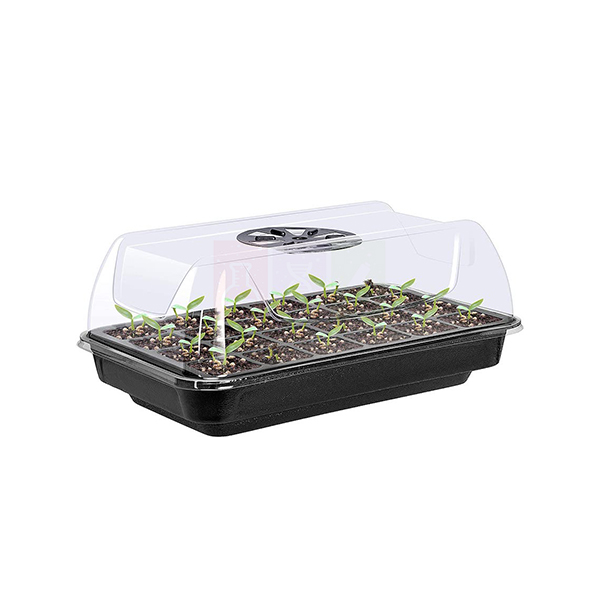
Plant Propagation Kit
Plant Propagation Kit (Product Code: SLE/EBT/01) is a botany teaching kit used to study how new plants are raised from seeds and from parts of an existing plant in school and college practicals. Biology teachers use it to turn propagation into a hands-on project, and the current contents list is confirmed with every quotation. It is supplied by Jain Scientific Equipments Pvt Ltd (ScienceLab), Ambala, India, as part of its botany lab equipment for schools.
Key Details
| Parameter | Detail |
|---|---|
| Type | Botany teaching kit |
| Purpose | Classroom study of plant propagation |
| Contents | Current contents list confirmed on enquiry |
| Suitable for | School and college botany and biology practicals |
| Product code | SLE/EBT/01 |
| Supplied by | Jain Scientific Equipments Pvt Ltd (ScienceLab), Ambala, India |
What Is the Plant Propagation Kit Used For?
Propagation lessons usually compare two routes to a new plant. Sexual propagation starts from seed, which brings genetic variation. Vegetative propagation starts from a stem cutting, a leaf cutting, a runner, a bulb or a divided clump, and produces plants identical to the parent. A practical project lets students take cuttings, watch roots form and record which methods succeed for which plants, turning a textbook topic into a plant growth experiment carried out over several weeks.
Good results depend on simple habits: clean cuts, a moist but well-drained medium, steady warmth and indirect light, and a daily observation log with dates and measurements. Teachers often split a class into groups, give each group a different method, and compare rooting time and survival at the end of the unit. The work links naturally to lessons on plant hormones, nutrition and plant reproduction.
Supplier
Jain Scientific Equipments Private Limited, which trades as ScienceLab, supplies this propagation kit from Ambala, Haryana, to schools and colleges in India and international markets. Because kit contents can change, the company sends the current contents list with each quotation so buyers know exactly what will arrive before they order. Learn more on the company profile.
Related Botany Equipment
These items support the same propagation and plant growth lessons:
- Plant Hormones Set — experiments include rooting cuttings and breaking seed dormancy.
- Greenbox Repl. Planting Tray — a polypropylene tray with drain holes for raising seedlings and cuttings.
- Hydroponic Tray — soil-free growing to compare with soil propagation.
- Seed Identification Kit — real tree seeds and a sprouting seed kit for the seed side of the topic.
- Sach’s Water Culture Mineral Deficiency — shows how nutrients affect young plant growth.
Find more teaching aids in the Botany category.
Frequently Asked Questions
What is included in the Plant Propagation Kit?
The contents of the Plant Propagation Kit (SLE/EBT/01) are confirmed with each quotation rather than listed on this page. Ask through the contact page and ScienceLab will send the current contents list before you place an order.
Which propagation methods can students study with the kit?
Plant propagation lessons normally cover seed sowing and vegetative methods such as stem and leaf cuttings, layering and division. Tell us which methods your syllabus requires, and we will explain how the Plant Propagation Kit supports them before you order.
Does the Plant Propagation Kit include live plants or seeds?
Whether the Plant Propagation Kit includes seeds or plant material is shown on the contents list sent with your quotation. For cuttings, many schools also use fresh local plants so the material is in good condition on the day of the lesson.
Which classes is the Plant Propagation Kit suitable for?
The Plant Propagation Kit is intended for school and college botany and biology practicals on plant reproduction and growth. Share the grade level and class size in your enquiry and we will confirm whether the kit suits your course.
Who supplies the Plant Propagation Kit?
The Plant Propagation Kit is supplied by Jain Scientific Equipments Pvt Ltd (ScienceLab) of Ambala, Haryana, India, which serves schools, colleges and institutions in India and international markets and confirms the current kit contents with every quotation.
What should a quotation request for the kit include?
A quotation request for the Plant Propagation Kit should state code SLE/EBT/01, the number of kits, how many students each kit must serve and the delivery location, so the contents list and price can be matched to your class.
Request a Quote
To receive the contents list and a price for the Plant Propagation Kit, contact ScienceLab or add it to the enquiry cart with other botany items.
Last updated: 24 September 2026