- Physics Lab Equipment
- Chemistry Lab Equipment
- Biology Lab Equipment
- Anatomical Lab Equipment
- Learning
- Educational Lab Equipment
- Magnets
- Agriculture
- Astronomy
- Earth Science
- Geography Lab Equipment
- Safety Lab Coat
- Laboratory
- Meteorological
- Electricity & Magnetism
- Heat
- School Lab Equipment
- Lab Glassware
- Science Lab Equipment
- Tvet Lab Equipment
- Robotics Kits Supplier and Manufacturer for Schools India
- Math Lab Equipment Manufacturers and Exporters in Ambala
- STEM Kits Manufacturers and Supplier India
- Engineering Lab Equipment
- Hospital Lab Equipment
- Water, Sanitation & Hygiene Supplies
- Cold Chain, Solar & Communication Equipment
- Nutrition
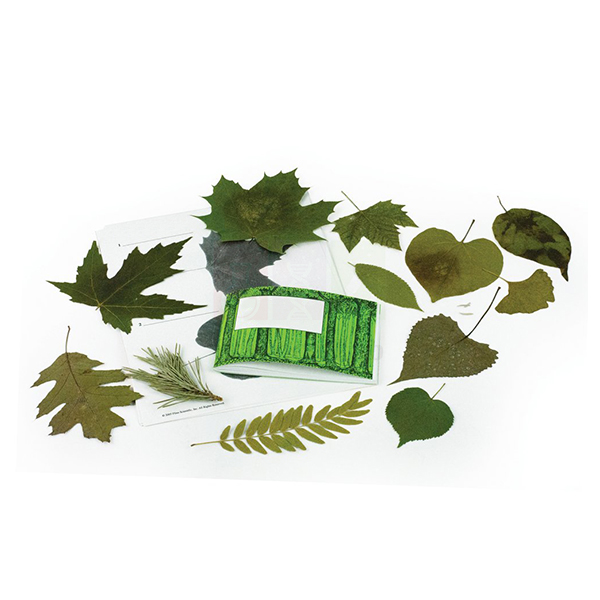
Leaf Identification Kit
Leaf Identification Kit (Product Code: SLE/EBT/02) is a set of real tree leaf specimens used to teach students to classify and identify trees from their leaves in school biology and nature-study lessons. Designed for grades 3-12, it holds 39 carded, labelled and bagged tree leaves with a 61-page Tree Finder book and a leaf key. It is supplied by Jain Scientific Equipments Pvt Ltd (ScienceLab), Ambala, India, among its biology teaching aids.
Specifications
| Parameter | Detail |
|---|---|
| Grade level | Grades 3-12 |
| Specimens | 39 real tree leaves |
| Specimen presentation | Carded, labelled and bagged |
| Reference book | 61-page Tree Finder book |
| Identification aid | Leaf key |
| Learning activity | Classify and identify real leaves |
| Product code | SLE/EBT/02 |
| Supplied by | Jain Scientific Equipments Pvt Ltd (ScienceLab), Ambala, India |
What Is the Leaf Identification Kit Used For?
Identifying a tree from its leaf teaches careful observation. Students look at whether a leaf is simple or compound, how leaflets are arranged, the shape of the blade, the margin (smooth, toothed or lobed) and the pattern of veins, then follow the leaf key step by step, choosing between paired descriptions until they reach a name. The Tree Finder book supports the same process and helps students check their answers. Because the kit deals with the real world around students, it keeps learners of all ages engaged.
Younger classes can sort the carded specimens into groups by shape or margin before using the key; older students can time themselves against the key, discuss where it was ambiguous, or build their own simple dichotomous key. The labels give the teacher an instant answer check. As part of the botany lab equipment for a classification unit, the kit also prepares students for a schoolyard or park walk to identify local trees. Keep specimens in their bags between lessons so they stay flat and intact.
Supplier
ScienceLab is the trading name of Jain Scientific Equipments Private Limited, an Ambala, Haryana company that supplies natural-specimen resources such as this leaf collection to schools and colleges in India and international markets. Buyers can have the kit quoted together with microscopes, models and other botany items in a single enquiry. Read more on the company profile.
Related Botany Equipment
Teachers often combine the leaf kit with these items in a plant classification unit:
- Seed Identification Kit — the matching kit of real tree seeds with a seed key.
- Leaf & Seed Games — leaf and seed activities for the youngest grades.
- Plant Dicot Leaf — an enlarged dicot leaf model on a solid base for whole-class discussion.
- Key to Identifying Dispersal of Fruits & Seeds — a laminated identification guide for field use.
- Hand Lens — for looking closely at veins, margins and leaf hairs.
More resources are in the Botany category.
Frequently Asked Questions
What is included in the Leaf Identification Kit?
The Leaf Identification Kit (SLE/EBT/02) includes 39 real tree leaves, each carded, labelled and bagged, together with a 61-page Tree Finder book and a leaf key that students follow step by step to name each specimen.
Which grades is the Leaf Identification Kit designed for?
The Leaf Identification Kit is designed for grades 3-12. Younger pupils sort the carded leaves by shape and edge, while older students work through the leaf key and the Tree Finder book independently to reach a name.
Which tree species are in the kit?
The species list for the Leaf Identification Kit is not published in this listing. Ask through the contact page and ScienceLab will share the names of the 39 tree leaves with your quotation, so you can check them against your syllabus.
How should the leaf specimens be stored?
Store the Leaf Identification Kit specimens flat in their bags, away from damp and direct sunlight, and handle the cards by their edges. Dried leaves become brittle, so careful storage keeps all 39 specimens usable for future classes.
Who supplies the Leaf Identification Kit?
The Leaf Identification Kit is supplied by Jain Scientific Equipments Pvt Ltd (ScienceLab), Ambala, Haryana, India. The company serves schools and colleges in India and international markets and can quote the kit together with other botany resources.
How many kits does a class need?
The number of Leaf Identification Kits a class needs depends on group size; many teachers plan one kit per group. Tell us your class size and code SLE/EBT/02 in your enquiry and we will suggest a suitable quantity.
Request a Quote
For a price on the Leaf Identification Kit, contact ScienceLab or add it to the enquiry cart along with other botany resources.
Last updated: 24 September 2026
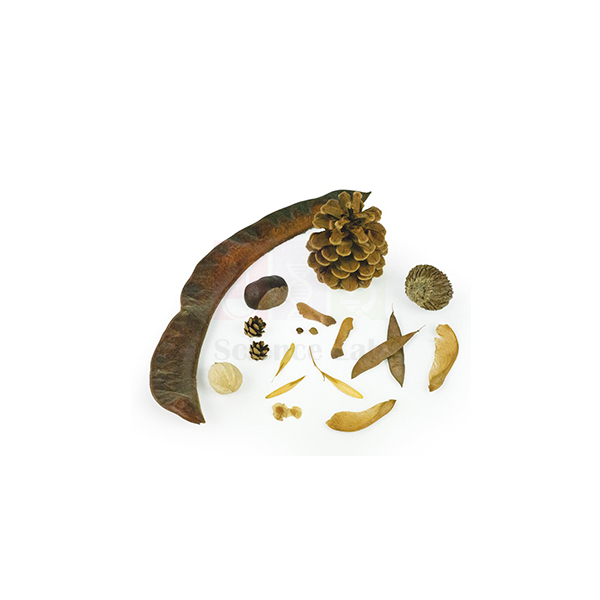
Seed Identification Kit
Seed Identification Kit (Product Code: SLE/EBT/03) is a collection of real tree seeds used to teach students to classify and identify seeds, from nuts and acorns to berries, in school botany lessons. Built for grades 3-12, it pairs 39 carded, labelled and bagged tree seeds with a seed key, a sprouting seed kit and a Teachers' Guide, so it also works as a seed germination kit for school classes. It is supplied by Jain Scientific Equipments Pvt Ltd (ScienceLab), Ambala, India.
Specifications
| Parameter | Detail |
|---|---|
| Grade level | Grades 3-12 |
| Specimens | 39 real tree seeds, carded, labelled and bagged |
| Seed types | Nuts, berries, acorns and other tree seeds |
| Identification aid | Seed key |
| Practical component | Sprouting seed kit |
| Teacher support | Teachers' Guide with hands-on activities |
| Product code | SLE/EBT/03 |
| Supplied by | Jain Scientific Equipments Pvt Ltd (ScienceLab), Ambala, India |
What Is the Seed Identification Kit Used For?
Seeds vary enormously, and that variety is the lesson. Students compare size, shape, colour and seed coat, then look for adaptations for dispersal: hard shells that animals carry and bury, fleshy berries that are eaten, or wings and hooks that catch the wind or fur. Working through the seed key, they narrow each specimen down to its tree, and the labels on the cards let them check their own answers.
The sprouting seed kit takes the class from identification to life cycle. Students set up seeds to germinate, record when the root and shoot appear, and connect what they see to the seed parts studied earlier. The Teachers' Guide suggests hands-on activities for different ages, so one kit can serve a primary nature lesson and a senior plant biology practical alike. Return specimens to their bags after use so the collection stays complete.
Supplier
Jain Scientific Equipments Private Limited trades as ScienceLab and supplies this seed collection from Ambala, Haryana, to schools and colleges in India and international markets. For vendor registration, the supplying company is Jain Scientific Equipments Private Limited (CIN U29309HR2020PTC087597, GSTIN 06AAECJ8618A1ZT). More background is on the company profile.
Related Botany Equipment
Items that extend a seed study into dispersal, germination and physiology:
- Leaf Identification Kit — the companion kit of real tree leaves with a leaf key.
- Key to Identifying Dispersal of Fruits & Seeds — an illustrated key focused on how seeds travel.
- Enzymes In Seeds Kit — pea and bean seeds for investigating enzyme activity during germination.
- Kit for Demonstrating Seed Respiration in Germination — shows that germinating seeds respire.
- Hand Magnifier — for examining seed coats and surface features.
Browse more in the Botany category.
Frequently Asked Questions
What comes in the Seed Identification Kit?
The Seed Identification Kit (SLE/EBT/03) contains 39 real tree seeds, carded, labelled and bagged, including nuts, berries and acorns, plus a seed key, a sprouting seed kit and a Teachers' Guide with hands-on activities.
Which grades can use the Seed Identification Kit?
The Seed Identification Kit is designed for grades 3-12. Its Teachers' Guide offers hands-on activities that let one kit serve a primary lesson on seed shapes as well as a senior practical on seed structure and germination.
Can the specimen seeds be planted?
The carded seeds in the Seed Identification Kit are reference specimens for identification; germination work uses the separate sprouting seed kit. Keep the specimens on their cards so the labelled collection stays complete for future classes.
Is a list of the tree species available?
A species list for the 39 tree seeds in the Seed Identification Kit is not given in this listing. ScienceLab can share it with your quotation on request through the contact page.
Who supplies the Seed Identification Kit?
The Seed Identification Kit is supplied by Jain Scientific Equipments Pvt Ltd (ScienceLab), Ambala, Haryana, India, to schools and colleges in India and international markets, and it can be quoted together with the Leaf Identification Kit for a complete classification unit.
How should the Seed Identification Kit be stored?
Store the Seed Identification Kit in a dry, cool cupboard with every specimen in its bag, away from insects and moisture. Check the cards after each lesson so the collection of 39 seeds stays complete.
Request a Quote
For pricing on the Seed Identification Kit, contact ScienceLab or add it to the enquiry cart with the Leaf Identification Kit and other botany items.
Last updated: 24 September 2026
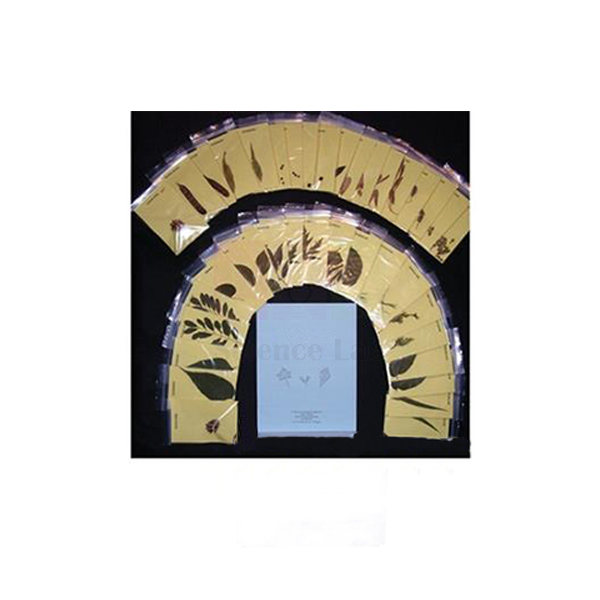
Leaf & Seed Games
Leaf & Seed Games (Product Code: SLE/EBT/04) is a science activity kit used to teach young children to predict, classify, measure and collect data with real leaves and seeds in pre-primary and primary classrooms. Aimed at grades Pre-K to 4, it offers a series of 8 games built around 20 leaf and 20 seed specimens, with instructions and an activity guide. It is supplied by Jain Scientific Equipments Pvt Ltd (ScienceLab), Ambala, India.
Specifications
| Parameter | Detail |
|---|---|
| Grade level | Pre-K to grade 4 |
| Games | Series of 8 games |
| Leaf specimens | 20 |
| Seed specimens | 20 |
| Specimen presentation | Carded, labelled and bagged |
| Teacher support | Instructions and a guide with hands-on activities |
| Skills practised | Predicting, classifying, measuring and collecting data |
| Product code | SLE/EBT/04 |
| Supplied by | Jain Scientific Equipments Pvt Ltd (ScienceLab), Ambala, India |
What Are Leaf & Seed Games Used For?
At this age, science is about noticing and sorting. Games built around real leaves and seeds invite children to guess which seed belongs to which kind of plant, group leaves by shape or edge, line specimens up from smallest to largest, and count or tally what they find. Each game turns a basic science skill into play, and across the series of eight children practise predicting, classifying, measuring and recording data with objects they can also find in their own playground.
Teachers can run a game as a whole-class circle activity, set up stations for small groups, or send pairs outside to find similar leaves and compare them with the cards. As a hands-on science kit for primary school classrooms, it works well before a nature walk or a seed-planting activity. Supervise the youngest children so that seeds are not put in mouths, and return each specimen to its bag after play.
Supplier
ScienceLab, the trading name of Jain Scientific Equipments Private Limited in Ambala, Haryana, supplies this game set to nurseries, primary schools and early-years centres in India and international markets. Buyers can combine it with other primary science resources in one quotation. See the company profile for more about the company.
Related Botany Equipment
Resources that follow on from the games as children grow:
- Leaf Identification Kit — real tree leaves with a leaf key for grades 3-12.
- Seed Identification Kit — real tree seeds, a seed key and a sprouting kit for older pupils.
- Magnifier, Foldable — an upright magnifier for looking at specimens.
- Typical Flower Model — a large flower model with removable parts to show where seeds form.
See more in the Botany category.
Frequently Asked Questions
How many games and specimens come in Leaf & Seed Games?
Leaf & Seed Games (SLE/EBT/04) contains a series of 8 games with 20 leaf specimens and 20 seed specimens, all carded, labelled and bagged, plus instructions and a guide with hands-on activities for the teacher.
What age group is Leaf & Seed Games for?
Leaf & Seed Games is aimed at grades Pre-K to 4. Teachers choose the games that match the skill their class is practising, whether that is predicting, sorting into groups, comparing sizes or recording simple data.
Are the specimens safe for small children?
The Leaf & Seed Games specimens are real natural leaves and seeds, carded and bagged. Adult supervision is recommended with young children so that seeds are not put in mouths, and each specimen should go back in its bag after play.
How do I keep the set complete?
To keep Leaf & Seed Games complete, count the 20 leaf and 20 seed specimens back into their bags after each session and store the kit in a dry cupboard, away from damp that can spoil natural material.
Who supplies Leaf & Seed Games?
Leaf & Seed Games is supplied by Jain Scientific Equipments Pvt Ltd (ScienceLab), Ambala, Haryana, India, to nurseries, primary schools and education departments in India and international markets, alongside the company's other early-years science resources.
Can I see the game instructions before buying?
Details of the Leaf & Seed Games instructions can be requested before purchase. Ask through the contact page, quoting code SLE/EBT/04, and ScienceLab will share what is available with your quotation.
Request a Quote
To order Leaf & Seed Games, contact ScienceLab for a price or add it to the enquiry cart with other early-years science resources.
Last updated: 24 September 2026
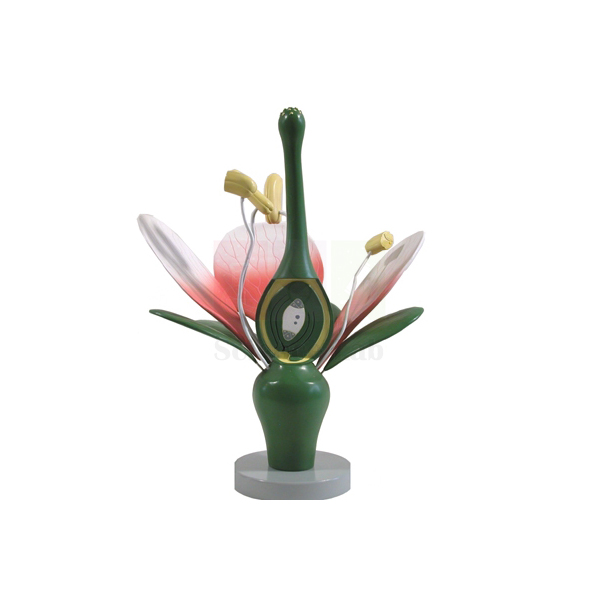
Plant Dicot Flower
Plant Dicot Flower (Product Code: SLE/EBT/05) is an enlarged botany model used to teach the structure of a dicotyledonous flower to whole classes in school and college biology labs. Teachers choose it because it shows the flower at 8x magnification and is listed at 460 x 350 x 300 overall, large enough to be seen from the back of the room. It is made by Jain Scientific Equipments Pvt Ltd (ScienceLab), an OEM manufacturer, at its own factory in Ambala, India.
Specifications
| Parameter | Detail |
|---|---|
| Type | Enlarged model of a dicot flower |
| Magnification | 8x |
| Size (as listed) | 460 x 350 x 300 (unit not stated in our listing) |
| Product code | SLE/EBT/05 |
| Manufacturer | Jain Scientific Equipments Pvt Ltd (ScienceLab) — OEM |
| Country of origin | India (made in Ambala, Haryana) |
What Is the Dicot Flower Model Used For?
A real flower is small and fragile, and by the time it is passed round a class it is often damaged. An 8x enlarged model gives every student the same clear view while the teacher names the parts from outside to inside: sepals, petals, the stamens with their anthers and filaments, and the pistil with its stigma, style and ovary. From there the lesson moves to how pollen reaches the stigma, how the ovary develops into a fruit and how ovules become seeds.
The model is especially useful for the dicot-versus-monocot comparison. Dicot flowers typically have floral parts in fours or fives, while monocot flowers have them in threes; students can count parts on the model, then check real flowers from the school garden. As one of a set of plant anatomy models, it also helps revision before practical exams. Dust it with a soft brush and keep it covered in a cupboard when not in use.
OEM Manufacturer
Jain Scientific Equipments Private Limited, trading as ScienceLab, is the OEM (original equipment manufacturer) of the Plant Dicot Flower and produces it at its own licensed factory at Saha, Ambala, Haryana. Schools, colleges, dealers and importers buy it factory-direct, so questions about finish, packing or the matching leaf, stem and bundle models in the same dicot series are answered by the maker, not a middleman. See the company profile.
Related Botany Equipment
Models and slides that teachers use in the same flower and plant structure lessons:
- Plant Dicot Leaf — a matching enlarged dicot leaf model on a solid base.
- Plant Monocot Stem — monocot anatomy for dicot-versus-monocot comparison.
- Typical Flower V.S. Model — a vertical section of a flower mounted on a base.
- Dicotyledonous Flower Pattern — a model for teaching pollen and pollination.
- Basic Plant Anatomy Slide Set — microscope slides including anther and ovary sections.
More models are in the Botany category.
Frequently Asked Questions
How large is the Plant Dicot Flower model?
The Plant Dicot Flower model is listed at 460 x 350 x 300 overall, with the flower shown at 8x magnification. The unit is not stated in our listing, so ask through the contact page if you need confirmed dimensions or the packed carton size.
What does 8x magnification mean on this model?
On the Plant Dicot Flower, 8x magnification means the flower is represented at eight times its natural size, so sepals, petals, stamens and pistil can be pointed out to a whole class. It is a teaching model, not an optical instrument.
Does the model come apart?
The listing for the Plant Dicot Flower (SLE/EBT/05) does not describe dissectible parts. If a take-apart flower is essential, compare the Typical Flower Model with removable parts, or ask us to confirm the construction with photographs before ordering.
Who manufactures the Plant Dicot Flower?
The Plant Dicot Flower model is manufactured by Jain Scientific Equipments Pvt Ltd (ScienceLab), the OEM, at its own licensed factory in Saha, Ambala, Haryana, India, and is supplied factory-direct to schools, colleges, dealers and importers.
How should the model be cleaned?
Clean the Plant Dicot Flower model with a soft, dry brush or a lightly damp cloth, avoid solvents, and store it covered and away from direct sunlight so its colours and fine surface detail stay clear for future lessons.
Can you supply several models or export orders?
Yes. The Plant Dicot Flower can be ordered in quantity for several schools or for export; send code SLE/EBT/05, the number of models and the destination, and ScienceLab will quote directly as the manufacturer for India and international markets.
Request a Quote
For a price on the Plant Dicot Flower model, contact ScienceLab or add it to the enquiry cart together with other botany models; the quotation comes straight from the manufacturer.
Last updated: 24 September 2026
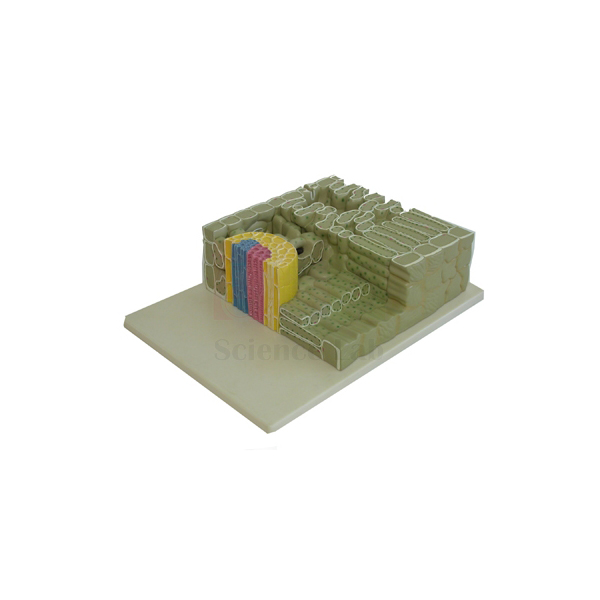
Plant Dicot Leaf
Plant Dicot Leaf (Product Code: SLE/EBT/06) is an enlarged plant anatomy model of a dicotyledonous leaf used to teach leaf structure in school, college and teacher-training botany labs. Magnified 8x and measuring 420 x 300 x 112 mm on a solid base, it gives students a large, steady reference to set beside their own microscope sections. It is made by Jain Scientific Equipments Pvt Ltd (ScienceLab), an OEM manufacturer, at its own factory in Ambala, India.
Specifications
| Parameter | Detail |
|---|---|
| Type | Enlarged model of a dicot (dicotyledonous) plant leaf |
| Magnification | 8x |
| Size | 420 x 300 x 112 mm |
| Mounting | Solid base |
| Product code | SLE/EBT/06 |
| Manufacturer | Jain Scientific Equipments Pvt Ltd (ScienceLab) — OEM |
| Country of origin | India (made in Ambala, Haryana) |
What Is the Dicot Leaf Model Used For?
In secondary and undergraduate botany lessons the model usually sits on the demonstration bench while students prepare and examine their own leaf sections under a microscope. Moving between the 8x model and real tissue helps learners recognise how a dicot leaf is organised and why its structure suits photosynthesis and gas exchange. It also works well for revision sessions, open-day displays and viva practice, where a large, steady model saves time compared with drawing on the board.
For comparative lessons, pair it with a monocot specimen and ask students to list the differences they notice, such as the net-like venation typical of dicot leaves against the parallel venation of monocots. Schools building up their botany lab equipment often keep it beside other plant models so comparisons can be made in one session. The solid base lets it stand on a shelf without extra support; keep it out of strong direct sunlight when not in use.
OEM Manufacturer
ScienceLab is the trading name of Jain Scientific Equipments Private Limited, the OEM (original equipment manufacturer) behind this leaf model. The company builds its plant anatomy models at its own licensed factory in Saha, Ambala, Haryana, and sends them direct to schools, colleges, teacher-training institutes and overseas importers with no trader in between. Enquiries about additional units or companion dicot models are answered by the manufacturer itself. The company profile has more.
Related Botany Equipment
These items are often used in the same plant anatomy lessons as the Plant Dicot Leaf model:
- Plant Dicot Cnct Bundle — a companion 8x model for moving from the leaf to other dicot plant tissues.
- Plant Dicot Flower — extends the dicot series to reproductive structures.
- Ts Of Dicot Leaf — a transverse-section item to compare against the enlarged model.
- Monocular Biological Microscope 400x — for examining real leaf sections after the model demonstration.
- Leaf Identification Kit — connects internal structure with the leaf shapes students find outdoors.
See the complete Botany category for more plant study models and kits.
Frequently Asked Questions
What does the 8x magnification mean?
The Plant Dicot Leaf is represented at eight times natural scale, so features that are tiny in a real leaf become large enough to identify from across a classroom. The 8x figure describes the model's scale; it is not an optical instrument.
What are the dimensions of the Plant Dicot Leaf model?
The Plant Dicot Leaf model measures 420 x 300 x 112 mm and is fixed to a solid base, so it stands on an ordinary laboratory bench or cupboard shelf without any extra support or clamp.
Are labels or a key card included?
Labelling and an accompanying key are not specified in the listing for the Plant Dicot Leaf (SLE/EBT/06). Ask through our contact page and we will confirm exactly what is supplied with the model before you order.
Can the model replace microscope practicals?
No. The Plant Dicot Leaf model supports microscope work by giving students a large reference view of leaf structure, but examining real stained leaf sections remains essential for developing practical skills and for most exam syllabuses.
Who manufactures the Plant Dicot Leaf model?
The Plant Dicot Leaf model is manufactured by Jain Scientific Equipments Pvt Ltd (ScienceLab), which is the OEM and makes it at its own licensed factory at Saha, Ambala, Haryana, India. Quotations and repeat orders come straight from the manufacturer.
Is a calibration certificate provided?
A calibration certificate does not apply to the Plant Dicot Leaf, because it is a teaching model rather than a measuring instrument. If your purchase process needs other documents, list them in your enquiry through the contact page.
Can schools order several units or have them shipped overseas?
Yes. The Plant Dicot Leaf can be ordered in multiples for departments or shipped to international markets; include the quantity and destination in your enquiry so ScienceLab can quote packing and freight with the price.
Request a Quote
To receive a quotation for the Plant Dicot Leaf model direct from the manufacturer, send your quantity, institution name and delivery address through our contact page, or add it to the enquiry cart together with other botany items you need.
Last updated: 24 September 2026
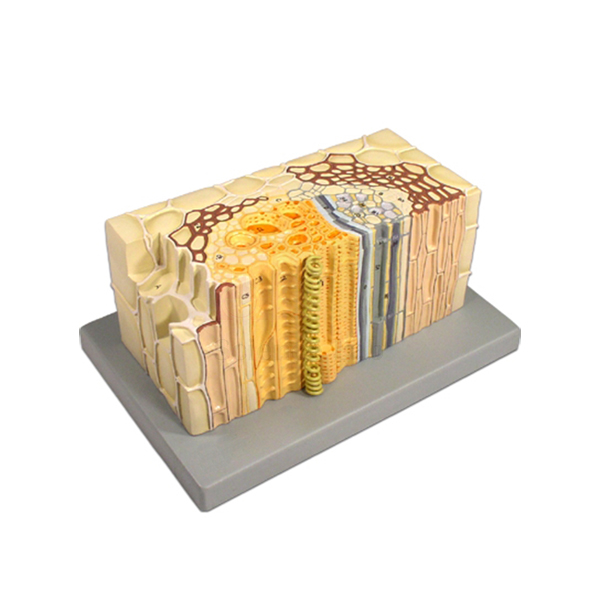
Plant Dicot Cnct Bundle
Plant Dicot Cnct Bundle (Product Code: SLE/EBT/07) is a bench-sized botany model used to show how tissues are grouped into bundles inside dicotyledonous plants during school and college lessons. It presents the bundle at 8x magnification on a base stand measuring 300 x 200 x 138 mm, a compact piece of plant biology lab equipment that fits on a group table beside microscopes. It is made by Jain Scientific Equipments Pvt Ltd (ScienceLab), an OEM manufacturer, at its own factory in Ambala, India.
Specifications
| Parameter | Detail |
|---|---|
| Type | Enlarged model of a dicot plant bundle |
| Magnification | 8x |
| Size | 300 x 200 x 138 mm |
| Mounting | On base stand |
| Product code | SLE/EBT/07 |
| Manufacturer | Jain Scientific Equipments Pvt Ltd (ScienceLab) — OEM |
| Country of origin | India (made in Ambala, Haryana) |
What Is the Dicot Bundle Model Used For?
In dicotyledonous plants, the tissues that carry water and dissolved food are grouped into bundles, and the way these bundles are built is a regular topic in school and first-year college botany. This model gives students a large, fixed example to examine before they move to thin sections under the microscope, which makes it easier to recognise the same arrangement in real tissue. Many teachers pass it between groups during a practical so each table can sketch it while waiting for microscope time.
Because it stands on its own base stand and measures 300 x 200 x 138 mm, it sits comfortably on a student bench without crowding microscopes and slide boxes. For a fuller set of biology teaching aids, combine it with leaf and stem models so learners can follow tissue systems through the whole plant body. Handle it by the base rather than the model itself, and store it covered to keep dust off fine surface detail.
OEM Manufacturer
Jain Scientific Equipments Private Limited, trading as ScienceLab, is the OEM (original equipment manufacturer) of this bundle model and makes it at its own licensed factory at 449, HSIIDC Industrial Area, Saha, Ambala. The company is a registered MSME manufacturer (Udyam UDYAM-HR-01-0003714) and ships export orders under DGFT Importer-Exporter Code AAECJ8618A. Education buyers, dealers and importers deal with the factory directly, including for repeat orders; see the company profile.
Related Botany Equipment
Items that complement this model in lessons on dicot and monocot plant tissues:
- Plant Dicot Leaf — a larger 8x model in the same series for leaf structure.
- Plant Monocot Stem — for contrasting dicot and monocot tissue arrangement.
- T.S Dicot Stem, Root, Leaf — section material for matching the model to real dicot organs.
- Basic Plant Anatomy Slide Set — prepared slides for the microscope stage of the lesson.
- Monocular Microscope 1000x, LED light — to view those sections in detail.
More plant study models, kits and apparatus are listed in the Botany category.
Frequently Asked Questions
What does "Cnct" in the product name refer to?
"Cnct" is an abbreviation carried in the catalogue name of the Plant Dicot Cnct Bundle. To confirm exactly which tissues the model shows, request a product photograph through our contact page before ordering.
How large is the Plant Dicot Cnct Bundle?
The Plant Dicot Cnct Bundle measures 300 x 200 x 138 mm including its base stand, which makes it one of the more compact models in the dicot series and easy to place on a student group table.
What magnification is used?
The Plant Dicot Cnct Bundle shows the tissue bundle at 8x, which keeps the internal arrangement large enough to discuss in class while the overall model remains bench-sized and easy to pass between groups.
Can it be used alongside prepared slides?
Yes. The Plant Dicot Cnct Bundle works best when students compare it directly with stained sections of dicot stems or roots under a microscope, matching each region on the model to what they see on the slide.
Who manufactures the Plant Dicot Cnct Bundle?
The Plant Dicot Cnct Bundle is manufactured by Jain Scientific Equipments Pvt Ltd (ScienceLab) as the OEM, at its own licensed factory in Saha, Ambala, Haryana, India, and is sold factory-direct to schools, colleges, dealers and importers.
What should an institutional enquiry include?
An enquiry for the Plant Dicot Cnct Bundle should give code SLE/EBT/07, the quantity, the delivery city or country and any vendor-registration forms you need completed; ScienceLab supplies buyers in India and international markets.
Request a Quote
For pricing, write to us through the contact page or place the Plant Dicot Cnct Bundle in the enquiry cart along with any matching models or slides. Quotations are issued directly by the manufacturer.
Last updated: 24 September 2026
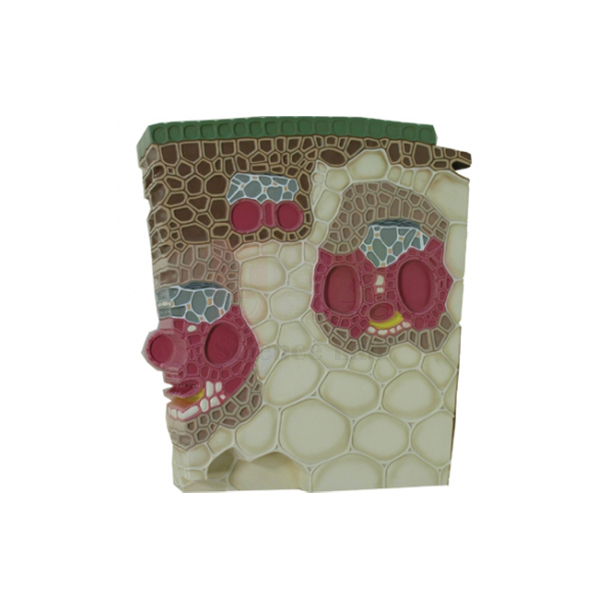
Plant Monocot Stem
Plant Monocot Stem (Product Code: SLE/EBT/08) is a sectional botany model used to teach the cellular anatomy of a generalized monocot stem in school and college laboratories. Presented as a longitudinal cross section and measuring 420 x 300 x 115 mm, it lets students follow tissues along the stem as well as across it. It is made by Jain Scientific Equipments Pvt Ltd (ScienceLab), an OEM manufacturer, at its own factory in Ambala, India, as one of its biology teaching aids.
Specifications
| Parameter | Detail |
|---|---|
| Type | Sectional model of a monocot plant stem |
| Section shown | Longitudinal cross section |
| Depicts | Cellular anatomy of a generalized monocot |
| Size | 420 x 300 x 115 mm |
| Product code | SLE/EBT/08 |
| Manufacturer | Jain Scientific Equipments Pvt Ltd (ScienceLab) — OEM |
| Country of origin | India (made in Ambala, Haryana) |
What Is the Monocot Stem Model Used For?
Monocot stems, such as those of grasses and maize, are organised differently from dicot stems: their vascular bundles are generally scattered through the ground tissue instead of forming a single ring, and most do not show the secondary thickening seen in woody dicots. A model built around a generalized monocot lets teachers point out these shared features without tying the lesson to one species, and the longitudinal view helps students understand that the cells in a thin transverse slice actually run as long strands through the stem.
A common lesson plan is to display the model first, then have students cut or examine sections of a grass or maize stem and match what they see to the model. At 420 x 300 x 115 mm it is large enough for a lecture-room demonstration, making it a practical addition to the botany lab equipment of schools and colleges preparing students for plant anatomy practicals. Place it next to a dicot model on the same bench to set up a quick compare-and-contrast exercise.
OEM Manufacturer
Jain Scientific Equipments Private Limited, which trades as ScienceLab, manufactures the Plant Monocot Stem as the OEM at its own licensed factory in Saha, Ambala, Haryana. Its botany and zoology models go straight from that factory to schools, colleges, distributors and importers in India and international markets, so repeat orders and matching models are arranged with the maker itself rather than through a reseller. More on the company profile.
Related Botany Equipment
Products that support the same monocot stem practical, from section material to microscopes:
- Ts Of Monocot Stem — transverse-section material to match against the longitudinal model.
- T.S Monocot Root, Stem, Leaf — extends the study to other monocot organs.
- Plant Dicot Cnct Bundle — a dicot model for side-by-side comparison.
- Dissecting Set, Student — tools for students cutting their own hand sections of grass or maize stems.
- Monocular Microscope, 400x, With Coaxial Knobs — for viewing those sections at cell level.
Browse the Botany category for further plant anatomy models and experiment kits.
Frequently Asked Questions
What does "generalized monocot" mean on this model?
On the Plant Monocot Stem, "generalized monocot" means the model shows features common to monocot stems in general rather than copying one species, so it suits any syllabus that teaches monocot stem anatomy, whatever local examples the class uses.
Which section of the stem is shown?
The Plant Monocot Stem model is described as a longitudinal cross section showing cellular anatomy. For a photograph of the exact cut and colouring before you order, ask through our contact page and quote code SLE/EBT/08.
How big is the Plant Monocot Stem model?
The Plant Monocot Stem measures 420 x 300 x 115 mm, a size that works for front-of-class demonstration in a lecture room as well as close study by a small group on a laboratory bench.
Is a dicot model available for comparison?
Yes. The Plant Dicot Cnct Bundle and other dicot models in the Botany range pair well with the Plant Monocot Stem, letting students set scattered monocot vascular bundles beside the dicot arrangement in one practical.
Who manufactures the Plant Monocot Stem?
The Plant Monocot Stem is manufactured by Jain Scientific Equipments Pvt Ltd (ScienceLab), the OEM, at its own licensed factory in Saha, Ambala, Haryana, India. Departments order it factory-direct, and questions about companion models go straight to the maker.
How should the model be stored?
Keep the Plant Monocot Stem on a stable shelf, covered or in its carton, away from direct sunlight and damp. Clean it with a soft dry cloth only, since solvents can dull the fine surface detail of the cells.
Can you supply several models for a department or an overseas buyer?
Yes. ScienceLab handles department and bulk orders of the Plant Monocot Stem for India and international markets; state the quantity and destination when you enquire so packing and freight can be quoted with the price.
Request a Quote
Ask for a manufacturer's price on the Plant Monocot Stem model via our contact page, or collect it with related models and slides in the enquiry cart and send one combined request.
Last updated: 24 September 2026
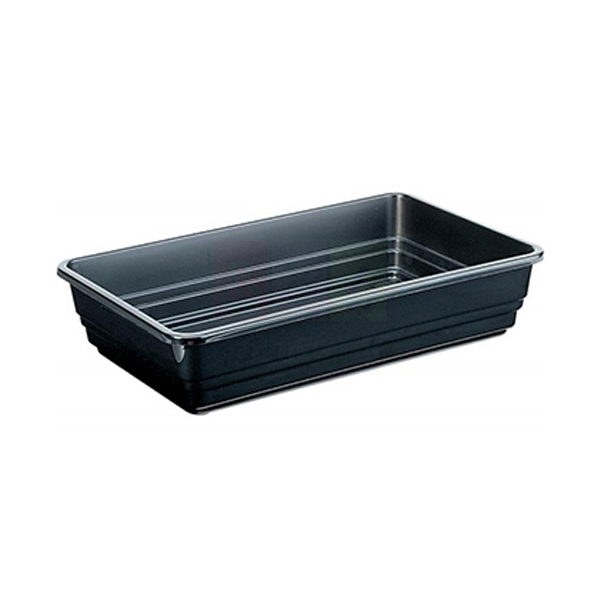
Greenbox Repl. Planting Tray
Greenbox Repl. Planting Tray (Product Code: SLE/EBT/09) is a replacement polypropylene tray used to sow seeds and raise seedlings in Greenbox growing activities in school and college botany classes. Made from resistant polypropylene with drain holes, it keeps the growing medium from waterlogging and stays rigid and stable when students carry it, which suits any plant growth experiment. It is supplied by Jain Scientific Equipments Pvt Ltd (ScienceLab), Ambala, India.
Key Details
| Parameter | Detail |
|---|---|
| Type | Replacement planting tray (Greenbox) |
| Material | Resistant polypropylene |
| Drainage | Comes with drain holes |
| Construction | Provides rigidity and stability |
| Suitable for | Seed sowing, germination and early seedling growth activities |
| Product code | SLE/EBT/09 |
| Supplied by | Jain Scientific Equipments Pvt Ltd (ScienceLab), Ambala, India |
What Is the Greenbox Planting Tray Used For?
Students fill the tray with compost or potting mix, sow their seeds and water from above or below. The drain holes stop water collecting at the bottom, which matters because waterlogged compost starves roots of air and can make seeds rot before they germinate. A rigid, stable tray is also easier for young learners to carry between the windowsill and the bench without flexing, so seedlings are not disturbed when groups check and record growth each day.
For a seed germination kit in a school setting, the tray makes a convenient unit for comparing conditions: one tray in light and one in shade, or trays watered on different schedules. Stand it on a saucer or shallow dish to catch drainage, and label the rim with the group name and sowing date. Replacement trays let a school swap out worn or cracked ones, or add trays so more groups can sow at the same time.
What to Specify When Ordering
- The details of your Greenbox unit, so the fit of the replacement tray can be confirmed.
- The number of trays needed, for example one per student group.
- Whether you also need compost, seeds or drip trays, which are not listed with the tray.
Supplier
This tray is supplied by Jain Scientific Equipments Private Limited, the Ambala, Haryana company that trades as ScienceLab. Because it is a replacement part for Greenbox growing units, ScienceLab sources it and supplies it with the rest of its botany range, so schools in India and international markets can keep seed-growing activities running from one source. See the company profile for more about ScienceLab.
Related Botany Equipment
Other items used in seed-raising and plant growth projects:
- Plant Propagation Kit — for extending sowing work to propagation of new plants.
- Hydroponic Tray — a soil-free growing system for comparison experiments.
- Plant Hormones Set — for investigating how hormones affect seedling growth.
- Soil Analysis Kit — for testing the growing medium before sowing.
More growing, plant study and identification products are in the Botany category.
Frequently Asked Questions
Will this tray fit my existing Greenbox unit?
The Greenbox Repl. Planting Tray is listed as a replacement tray for Greenbox units. Because tray sizes can differ, send your unit details through our contact page so ScienceLab can confirm the fit before dispatch.
What is the tray made of?
The Greenbox Repl. Planting Tray is made from resistant polypropylene, a light plastic that is easy to wash between projects and gives the tray the rigidity and stability students need when carrying seedlings.
Does the tray have drainage?
Yes. The Greenbox Repl. Planting Tray comes with drain holes so excess water can escape from the compost. Stand it on a saucer or drip tray when it is used indoors on a windowsill or bench.
What are the dimensions and how many cells does it have?
Dimensions and cell count for the Greenbox Repl. Planting Tray are not stated in the current listing. Contact ScienceLab with code SLE/EBT/09 and we will share the measurements before you place an order.
Who supplies the Greenbox Repl. Planting Tray?
The Greenbox Repl. Planting Tray is supplied by Jain Scientific Equipments Pvt Ltd (ScienceLab), Ambala, Haryana, India, as a replacement part for schools and colleges in India and international markets running Greenbox seed-growing activities.
How should the tray be cleaned between projects?
Empty the Greenbox Repl. Planting Tray after each project, brush out old compost, wash it in warm soapy water, rinse and let it dry completely so fungus is not carried into the next sowing.
Request a Quote
For a quotation on replacement trays, contact us through the enquiry form or add the Greenbox Repl. Planting Tray to the enquiry cart with any other growing supplies you need.
Last updated: 24 September 2026