- Physics Lab Equipment
- Chemistry Lab Equipment
- Biology Lab Equipment
- Anatomical Lab Equipment
- Learning
- Educational Lab Equipment
- Magnets
- Agriculture
- Astronomy
- Earth Science
- Geography Lab Equipment
- Safety Lab Coat
- Laboratory
- Meteorological
- Electricity & Magnetism
- Heat
- School Lab Equipment
- Lab Glassware
- Science Lab Equipment
- Tvet Lab Equipment
- Robotics Kits Supplier and Manufacturer for Schools India
- Math Lab Equipment Manufacturers and Exporters in Ambala
- STEM Kits Manufacturers and Supplier India
- Engineering Lab Equipment
- Hospital Lab Equipment
- Water, Sanitation & Hygiene Supplies
- Cold Chain, Solar & Communication Equipment
- Nutrition
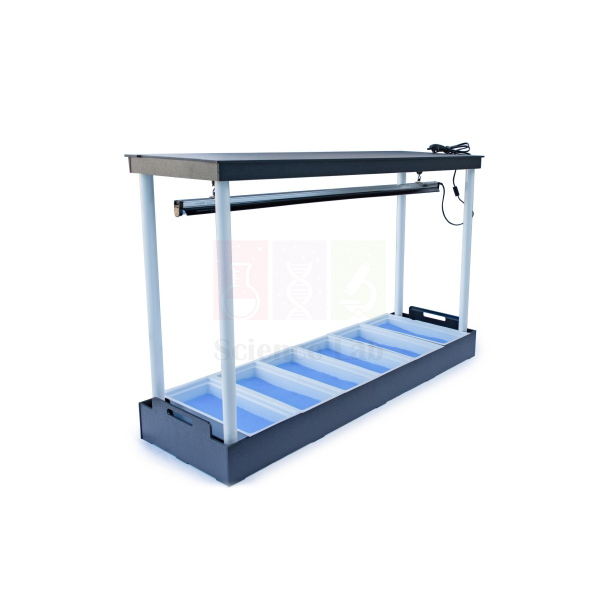
Hydroponic Tray
Hydroponic Tray (Product Code: SLE/EBT/10) is a watertight, all-plastic growing unit with its own 54 watt fluorescent grow light, used to raise seedlings and grow plants without soil in school and college botany labs. It offers 700 square inches of growing space, comes with 6 seed trays holding 12 seedlings each, and accepts up to 12 Root Tanks for a complete plant growth experiment kit. It is made by Jain Scientific Equipments Pvt Ltd (ScienceLab), an OEM manufacturer, at its own factory in Ambala, India.
Specifications
| Parameter | Detail |
|---|---|
| Growing space | 700 square inches |
| Grow light | 54 watt fluorescent, high power, fitted on mounting arms |
| Seed trays | 6 included, each holds 12 seedlings; removable seed tray |
| Root Tank capacity | Holds up to 12 Root Tanks (available separately) |
| Watertightness | Fully watertight for hydroponics farming |
| Construction | Robust, all plastic; easy to clean; impervious to rot and rust |
| Assembly | Assembles in minutes |
| Product code | SLE/EBT/10 |
| Manufacturer | Jain Scientific Equipments Pvt Ltd (ScienceLab) — OEM |
| Country of origin | India (made in Ambala, Haryana) |
What Is the Hydroponic Tray Used For?
Hydroponics grows plants with their roots in a nutrient solution instead of soil, so students can watch root growth directly and change one factor at a time. A typical project begins with seeds sown in the seed trays under the grow light; once the seedlings are established they can be moved into Root Tanks, where groups compare growth in different nutrient mixtures, record height and leaf number, and relate the results to what plants normally take from the soil. Because the unit carries its own light, the work does not depend on a sunny window and can continue in any season.
The all-plastic body will not rot or rust under constant moisture and can simply be rinsed between crops. Keep the light's electrical parts dry, top up solutions carefully rather than overfilling, and give each student group its own seed tray so observations stay organised. For a school biology lab setup that needs a year-round growing station, the tray offers a controlled space that is quick to assemble and easy to supervise.
What to Specify When Ordering
- The number of Hydroponic Tray units required for your lab or classes.
- Whether Root Tanks should be quoted with the tray, and how many (the tray holds up to 12).
- Your country and mains supply, so the configuration of the grow light can be confirmed.
OEM Manufacturer
Jain Scientific Equipments Private Limited, which trades as ScienceLab, is the OEM (original equipment manufacturer) of the Hydroponic Tray and produces it at its own licensed factory at Saha, Ambala, Haryana, India, rather than reselling a trader's stock. Schools, colleges, dealers and importers in India and international markets buy it factory-direct, and questions about replacement seed trays or repeat orders are answered by the manufacturer itself — just ask us. Read more on the ScienceLab company profile.
Related Laboratory Equipment
Useful additions for soil-free and nutrient experiments:
- Sach’s Water Culture Mineral Deficiency — a water-culture study of how missing minerals affect plants, a natural extension of hydroponic work.
- Greenbox Repl. Planting Tray — for running a soil-grown control group alongside the hydroponic plants.
- Plant Propagation Kit — for raising additional plants to transfer into the system.
- Digital Thermometer — for logging the temperature of the growing area alongside growth data.
More growing and plant physiology equipment is listed in the Botany category.
Frequently Asked Questions
Are Root Tanks included with the Hydroponic Tray?
No. The Hydroponic Tray holds up to 12 Root Tanks, but they are available separately and are not part of the standard unit. Mention how many Root Tanks you need when you request a quotation so they can be priced together with the tray.
How many seedlings can the Hydroponic Tray start at once?
The Hydroponic Tray comes with 6 seed trays, and each seed tray holds 12 seedlings, so a whole class can sow seeds in a single session. The seed tray is removable, which makes it easy to move seedlings on once they are established.
What kind of light does the Hydroponic Tray use?
The Hydroponic Tray uses a high power 54 watt fluorescent grow light carried on mounting arms above its 700 square inch growing area, so plants can be grown indoors without relying on daylight from a classroom window.
Who manufactures the Hydroponic Tray?
The Hydroponic Tray is manufactured by Jain Scientific Equipments Pvt Ltd (ScienceLab), the OEM, at its own licensed factory at Saha, Ambala, Haryana, India. Buyers deal directly with the manufacturer for quotations, repeat orders and questions about replacement parts.
What mains supply does the Hydroponic Tray grow light need?
The operating voltage of the Hydroponic Tray grow light is not stated in the product listing. Tell us your country and mains supply through our contact page so the correct configuration can be confirmed before you order.
Is a nutrient solution supplied with the Hydroponic Tray?
A nutrient solution is not listed among the Hydroponic Tray contents, so plan to prepare or buy a suitable plant nutrient solution separately. Contact us if you would like advice on solutions for school use when you request your quotation.
How is the Hydroponic Tray cleaned between crops?
The Hydroponic Tray has an all-plastic construction that is easy to clean and impervious to rot and rust. Empty and rinse the trays between crops, and keep the grow light and its cable dry while cleaning and refilling.
Request a Quote
Quotations for the Hydroponic Tray come straight from the manufacturer. Send the quantity and delivery location through our contact page, or add the tray to the enquiry cart together with any Root Tanks or accessories you need.
Last updated: 24 September 2026
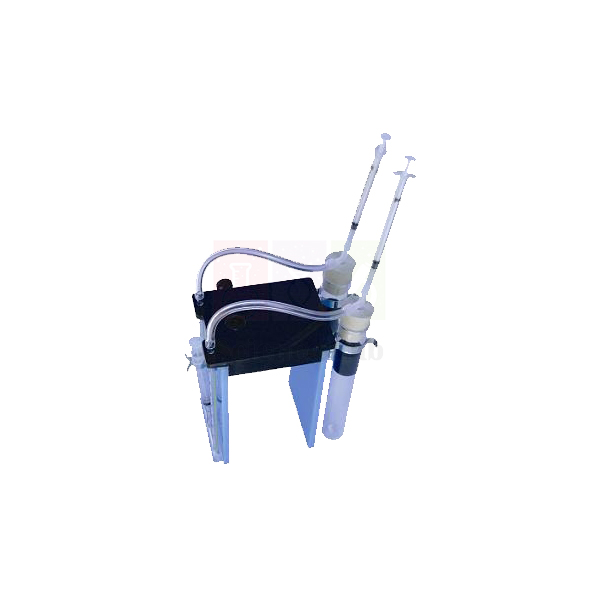
Volumeter Respirometer
Volumeter Respirometer (Product Code: SLE/EBT/11) is a closed-system gas-volume apparatus used to measure oxygen consumption over time by small plants and animals in school and college biology practicals. Its control and experimental test tubes sit side by side, clipped to a plastic frame, so both share the same conditions during a respiration run. It is made by Jain Scientific Equipments Pvt Ltd (ScienceLab), an OEM manufacturer, at its own factory in Ambala, India, as part of its biology lab equipment range.
Specifications
| Parameter | Detail |
|---|---|
| Measuring principle | Changes in gas volume within a closed system |
| Main measurement | Volume of oxygen consumption over time |
| Applications | Metabolic rate of small plants and animals; fermentation rates; photosynthesis |
| Tube arrangement | Side-by-side control and experimental test tubes |
| Frame | Test tubes clipped to a plastic frame |
| Product code | SLE/EBT/11 |
| Manufacturer | Jain Scientific Equipments Pvt Ltd (ScienceLab) — OEM |
| Country of origin | India (made in Ambala, Haryana) |
What Is the Volumeter Respirometer Used For?
In a standard respiration practical, germinating seeds or small invertebrates go into the experimental tube, usually with a carbon dioxide absorbent, while the control tube holds an equal volume of inert material. As the organisms take up oxygen and the carbon dioxide they release is absorbed, the gas volume in the closed system falls, and students record the change at fixed intervals. With both tubes on the same frame, warmth from hands or a drift in room temperature affects them equally and can be subtracted from the result.
The same apparatus supports follow-up investigations: comparing respiration at different temperatures, measuring gas production by fermenting yeast, or observing volume changes when green plant material photosynthesises in light. Let the tubes settle to room temperature before the first reading, keep the frame still during a run, and return any animals to their habitat promptly afterwards.
OEM Manufacturer
The Volumeter Respirometer is an original product of Jain Scientific Equipments Private Limited, the company behind the ScienceLab name, which acts as OEM and builds it at its own licensed factory at Saha, Ambala, Haryana, India. Because there is no trading intermediary, schools, universities, dealers and importers receive quotations and repeat supplies directly from the maker. For institutional and tender buyers who need vendor registration details, the company's GSTIN is 06AAECJ8618A1ZT and its Legal Entity Identifier is 3358004HRD1JIVXKYX49. See the company profile for background.
Related Laboratory Equipment
Equipment commonly used in the same respiration and gas-exchange practicals:
- Respirometer — an alternative respirometer design for comparing methods.
- Kit for Demonstrating Seed Respiration in Germination — a demonstration kit built around germinating seeds, a typical respirometer specimen.
- Photosynthesis Apparatus — for measuring gas evolved by aquatic plants in the complementary photosynthesis practical.
- Stopwatch, Digital — for timing readings at regular intervals.
For further plant physiology apparatus, visit the Botany category.
Frequently Asked Questions
What does the Volumeter Respirometer measure?
The Volumeter Respirometer measures changes in gas volume within a closed system. In respiration practicals this shows the volume of oxygen consumed by small plants or animals over time, from which students compare metabolic rates.
Why does the Volumeter Respirometer have two test tubes?
The Volumeter Respirometer uses side-by-side control and experimental test tubes clipped to one plastic frame. Because both tubes experience the same temperature and pressure, students can subtract any change seen in the control and attribute the remaining change to the organisms.
Can the Volumeter Respirometer be used for fermentation or photosynthesis?
Yes. Besides metabolic rate studies of small plants and animals, the Volumeter Respirometer can be used to determine fermentation rates and to follow gas volume changes linked to photosynthesis in green plant material.
Are chemicals or specimens included with the Volumeter Respirometer?
No carbon dioxide absorbent, seeds or organisms are listed with the Volumeter Respirometer. Schools normally prepare these locally; contact us if you would like suitable consumables quoted alongside the apparatus.
Who manufactures the Volumeter Respirometer?
The Volumeter Respirometer is manufactured by Jain Scientific Equipments Pvt Ltd (ScienceLab), acting as the OEM, at its own licensed factory at Saha, Ambala, Haryana, India. Quotations, repeat orders and spare-part questions are handled directly by the manufacturer.
Is a calibration certificate available for the Volumeter Respirometer?
The product listing for the Volumeter Respirometer does not state a scale value or mention a calibration certificate. Please ask through our contact page if your institution needs calibration documentation, and we will discuss what can be arranged.
Can the Volumeter Respirometer be ordered as class sets or for export?
Yes. The Volumeter Respirometer can be quoted in class-set quantities for schools and colleges in India and international markets. State the number of units and the delivery destination in your enquiry so we can prepare an accurate quotation.
Request a Quote
Pricing for the Volumeter Respirometer comes direct from the manufacturer: send your requirement through the contact page, or add it to the enquiry cart if you are building a complete respiration and photosynthesis practical set.
Last updated: 24 September 2026
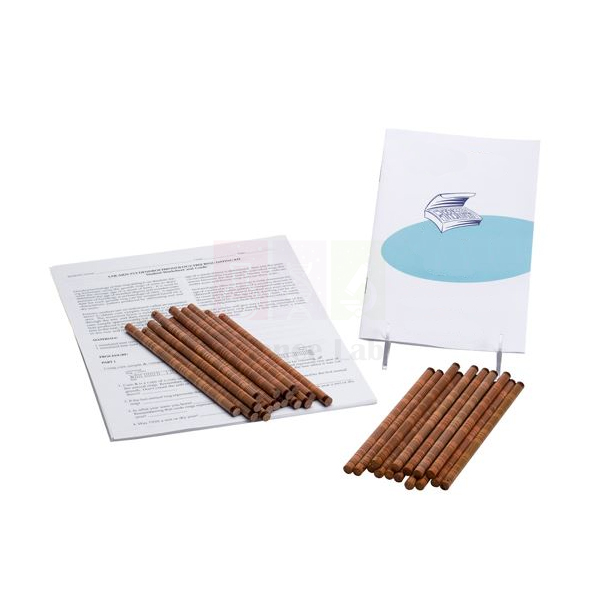
Tree Ring Dating Kit
Tree Ring Dating Kit (Product Code: SLE/EBT/12) is a classroom dendrochronology kit used to teach how the annual growth rings of trees record age and past growing conditions, using simulated tree cores instead of drilled wood. It contains 15 Type A and 15 Type B simulated cores, 30 student worksheets and an instruction manual, making it a ready-to-run environmental science kit for schools. It is made by Jain Scientific Equipments Pvt Ltd (ScienceLab), an OEM manufacturer, at its own factory in Ambala, India.
Specifications
| Parameter | Detail |
|---|---|
| Topic | Dendrochronology (tree ring dating) |
| Type A simulated tree cores | 15 |
| Type B simulated tree cores | 15 |
| Student worksheets | 30 |
| Instruction manual | Included |
| Product code | SLE/EBT/12 |
| Manufacturer | Jain Scientific Equipments Pvt Ltd (ScienceLab) — OEM |
| Country of origin | India (made in Ambala, Haryana) |
What Is the Tree Ring Dating Kit Used For?
In temperate climates a tree usually adds one growth ring each year, and the width of that ring reflects how favourable the season was: wide rings suggest good rainfall and growth, narrow rings point to drought or stress. Working from the simulated cores, students count rings, note bands of wide and narrow growth, and compare cores to find matching sequences, the technique scientists call cross-dating. The worksheets lead them from simple counting to interpreting what a pattern says about past climate, and the instruction manual explains how the Type A and Type B cores are used.
The lesson links naturally to plant growth, climate change and the use of evidence in science, and runs in an ordinary classroom without specialist apparatus. A ruler and a hand lens help students measure and inspect narrow rings. Collect the cores at the end of each lesson and keep them together in the kit so the full set is ready for the next group.
OEM Manufacturer
ScienceLab is the trading name of Jain Scientific Equipments Private Limited, the OEM that makes the Tree Ring Dating Kit at its own licensed factory at Saha, Ambala, Haryana, India. Because the kit is assembled by the manufacturer rather than sourced from a trader, schools, education departments, dealers and importers can buy it factory-direct and ask the same team about additional components or repeat orders. Company details are on the ScienceLab profile page.
Related Laboratory Equipment
Products that pair well with a tree ring investigation:
- Tilia (Linden Tree), 1-year-old Stalk, Cross Section — shows how growth tissue looks in a real woody stem.
- Tilia (Linden Tree), 3-year-old stalk, Cross Section — lets students see annual growth layers building up.
- Magnifying Glass — for examining narrow rings on the cores.
- Ruler, White Vinyl — for measuring ring widths when recording data.
Find more plant science kits in the Botany category.
Frequently Asked Questions
What is included in the Tree Ring Dating Kit?
The Tree Ring Dating Kit contains 15 Type A simulated tree cores, 15 Type B simulated tree cores, 30 student worksheets and an instruction manual, so a class can work through the dendrochronology activity in small groups.
Why does the Tree Ring Dating Kit use simulated cores rather than real wood?
The Tree Ring Dating Kit uses simulated tree cores so every group gets consistent, readable samples without boring into living trees. The cores are not used up by the activity, so they can be collected after the lesson and used again.
What is the difference between the Type A and Type B cores?
The Tree Ring Dating Kit supplies two core types, 15 of each, so students can compare samples; the instruction manual explains how each type is used in the activity. Contact us before ordering if you need more detail on the two core types.
Who manufactures the Tree Ring Dating Kit?
The Tree Ring Dating Kit is manufactured by Jain Scientific Equipments Pvt Ltd (ScienceLab), the OEM, at its own licensed factory at Saha, Ambala, Haryana, India, and is supplied factory-direct to schools, colleges, dealers and importers.
What else is needed to run the Tree Ring Dating Kit activity?
Only basic classroom items are needed with the Tree Ring Dating Kit: pencils for the worksheets, a ruler for measuring ring widths and, ideally, a magnifier for inspecting narrow rings. No specialist laboratory apparatus is required.
Which subjects can use the Tree Ring Dating Kit?
The Tree Ring Dating Kit fits biology lessons on plant growth, geography and environmental studies on past climate, and general science lessons on dating methods and the use of evidence, from secondary school to introductory college level.
Can extra worksheets or cores be ordered for the Tree Ring Dating Kit?
Ask us about additional worksheets or simulated cores for the Tree Ring Dating Kit when you enquire through our contact page. As the manufacturer, we can confirm which components can be quoted separately for your order.
Request a Quote
For a price on the Tree Ring Dating Kit, straight from the manufacturer, send your requirements through our contact page or add the kit to the enquiry cart with any magnifiers or rulers your classes need.
Last updated: 24 September 2026
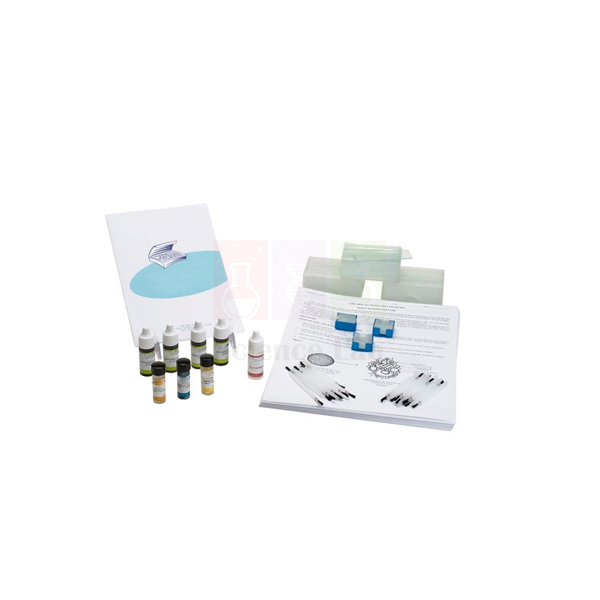
Plant Cell Study Kit
Plant Cell Study Kit (Product Code: SLE/EBT/13) is a microscopy kit used to prepare and examine temporary mounts of plant tissue in school and college biology practicals. It combines vials of monocot and dicot cross sections and macerated stem tissue with 90 slides, 90 cover slips, 30 transfer brushes, four bottles of stain and glycerine, making it a complete temporary slides biology kit. It is supplied by Jain Scientific Equipments Pvt Ltd (ScienceLab), Ambala, India.
Specifications
| Parameter | Detail |
|---|---|
| Specimen vials | Monocot cross section (1 vial); dicot cross section (1 vial); macerated stem tissues (1 vial) |
| Microscope slides | 90 |
| Cover slips | 90 |
| Tissue transfer brushes | 30 |
| Stain | 4 drop-controlled bottles |
| Glycerine | 1 drop-controlled bottle |
| Student worksheets | 30 |
| Documentation | Instruction manual with MSDS |
| Shelf life | Shelf life depends on the chemical, its grade and storage conditions; ask us for the expiry date of the batch you are quoted. |
| Product code | SLE/EBT/13 |
| Supplied by | Jain Scientific Equipments Pvt Ltd (ScienceLab), Ambala, India |
What Is the Plant Cell Study Kit Used For?
Working in pairs or small groups, students lift a section or a little macerated tissue from a vial onto a clean slide with a tissue transfer brush, add a drop of stain from one of the drop-controlled bottles, and then a drop of glycerine as the mounting medium. Lowering the cover slip at an angle from one edge pushes out air and avoids bubbles. Under the microscope, the monocot and dicot cross sections let learners compare how vascular tissue is arranged in the two plant groups, while the macerated stem tissue separates individual cells so their shapes and wall thickening are easy to see.
The worksheets structure observation and labelled drawing, so the kit delivers a plant cell and tissue practical without hand-cutting sections. Read the MSDS in the instruction manual before the lesson, have students wear gloves and aprons when handling stains, and keep the bottles capped between uses. Collect used slides and cover slips in a separate container for safe disposal of broken glass.
Supplier
Jain Scientific Equipments Private Limited, which trades as ScienceLab from Ambala, Haryana, supplies the Plant Cell Study Kit as part of the specimens, stains and consumables it sources for schools and colleges, so a biology department can order the kit, microscopes and refills through one enquiry. Buyers in India and international markets can read more on the company profile.
Related Laboratory Equipment
A microscope is needed for this kit, and these items help with refills and follow-up lessons:
- Monocular Biological Microscope 400x, LED — a student microscope for viewing the stained mounts.
- Microscope Slides Glass — extra slides once the kit's supply is used.
- Glass Cover Slips — replacement cover slips for further practicals.
- Plant Cell Model — a three-dimensional model for explaining the cell structures students see.
Explore the Botany category for more plant study kits and models.
Frequently Asked Questions
What does the Plant Cell Study Kit contain?
The Plant Cell Study Kit contains one vial each of monocot cross section, dicot cross section and macerated stem tissues, 90 microscope slides, 90 cover slips, 30 tissue transfer brushes, 4 drop-controlled stain bottles, a drop-controlled glycerine bottle, 30 student worksheets and an instruction manual with MSDS.
Is a microscope included with the Plant Cell Study Kit?
No. The Plant Cell Study Kit does not include a microscope; a compound microscope is needed to view the stained mounts. Student microscopes can be quoted separately in the same enquiry if your lab needs them.
Which stains come with the Plant Cell Study Kit?
The Plant Cell Study Kit includes four drop-controlled bottles of stain, but the individual stains are not named in the product listing. Ask through our contact page if your syllabus requires particular stains, and we will confirm before quoting.
What is the shelf life of the stains in the Plant Cell Study Kit?
Shelf life of the Plant Cell Study Kit stains and glycerine depends on the chemical, its grade and storage conditions, so no single expiry period applies. Ask us for the expiry date of the batch you are quoted, and store the bottles capped, upright and away from sunlight.
Who supplies the Plant Cell Study Kit?
The Plant Cell Study Kit is supplied by Jain Scientific Equipments Pvt Ltd (ScienceLab), Ambala, Haryana, India, which sources specimens, stains and consumables so that schools can order complete practical kits and related laboratory items from one supplier.
Is safety information provided with the Plant Cell Study Kit?
Yes. The Plant Cell Study Kit comes with an instruction manual that includes MSDS information. Teachers should read it before the lesson and make sure students wear gloves and aprons when handling the stains.
Can the Plant Cell Study Kit be shipped outside India?
The Plant Cell Study Kit can be quoted for India and international markets. Because it contains stains and glycerine, tell us the destination country so the packing and shipping method can be checked before the quotation is issued.
Request a Quote
To price the Plant Cell Study Kit, with or without microscopes, use our contact page or place the items in the enquiry cart and submit them as one request.
Last updated: 24 September 2026
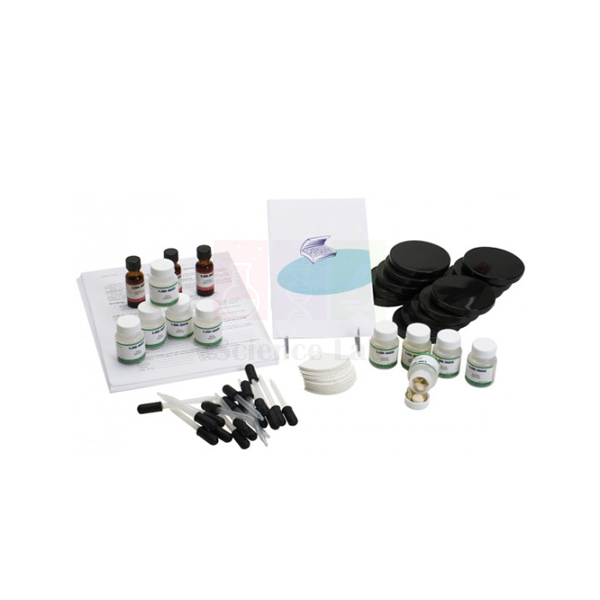
Enzymes In Seeds Kit
Enzymes In Seeds Kit (Product Code: SLE/EBT/14) is a class practical kit used to show how enzymes break down stored starch in germinating seeds in secondary and pre-university biology labs. Students test pea and bean seeds with Lugol's solution in 15 three-part plastic test dishes, guided by 30 worksheets, which makes it a ready enzyme experiment kit for school classes. It is supplied by Jain Scientific Equipments Pvt Ltd (ScienceLab), Ambala, India.
Specifications
| Parameter | Detail |
|---|---|
| 3-part plastic test dishes | 15 |
| Pans with pea seeds | 5 |
| Pans with bean seeds | 5 |
| Absorbent paper | Included |
| Lugol's solution | 3 bottles |
| Student worksheets | 30 |
| Shelf life | Shelf life depends on the chemical, its grade and storage conditions; ask us for the expiry date of the batch you are quoted. |
| Product code | SLE/EBT/14 |
| Supplied by | Jain Scientific Equipments Pvt Ltd (ScienceLab), Ambala, India |
What Is the Enzymes In Seeds Kit Used For?
Seeds store food largely as starch, and when they take up water and start to germinate, enzymes such as amylase convert that starch into sugars the young plant can use. The worksheets set out the procedure; a typical approach is to place seeds on moist absorbent paper, leave some to soak and sprout while others stay dry, and then test cut seeds with a drop of Lugol's solution. Iodine turns blue-black where starch is present, so a paler reaction in germinating seeds is visible evidence that enzymes have been at work. The three compartments of each test dish hold dry, soaked and sprouting seeds side by side for a fair comparison.
Testing both peas and beans adds a second variable and prompts discussion about differences between seed types. As an enzyme activity kit for biology classes, it links neatly to lessons on digestion, where the same starch-to-sugar reaction occurs. Lugol's solution stains skin and clothing, so students should wear gloves and eye protection, and seeds used in experiments must not be eaten.
What to Specify When Ordering
- The number of kits, bearing in mind each kit has 15 test dishes and 30 worksheets.
- Whether extra iodine reagent is wanted beyond the 3 bottles of Lugol's solution in each kit.
- The delivery country, since the kit contains a reagent and seeds that may be subject to import rules.
- Any safety documentation your school requires for the reagent.
Supplier
This kit is supplied by Jain Scientific Equipments Private Limited, the Ambala, Haryana company trading as ScienceLab. It brings together a reagent, seeds and simple plasticware sourced for schools and colleges in India and international markets, so a teacher can order a complete enzyme practical in one step. The company profile has more information.
Related Botany Equipment
Refills and companion kits for seed and germination practicals:
- Potassium Iodine-Iodine Solution — an iodine reagent for further starch tests once the kit's bottles run low.
- Kit for Demonstrating Seed Respiration in Germination — shows what germinating seeds do with the sugars released.
- Kit for Demonstrating CO2 Emission and Heat Production in Germinating Seeds — extends the topic to carbon dioxide and heat output.
- Seed Identification Kit — for comparing seed structure across species before testing.
Further plant physiology kits are listed in the Botany category.
Frequently Asked Questions
What does the Enzymes In Seeds Kit demonstrate?
The Enzymes In Seeds Kit demonstrates enzyme activity in seeds: as pea and bean seeds germinate, their stored starch is broken down into sugars, and students detect the change because Lugol's solution stains starch blue-black.
What is included in the kit?
The Enzymes In Seeds Kit includes 15 three-part plastic test dishes, 5 pans with pea seeds, 5 pans with bean seeds, absorbent paper, 3 bottles of Lugol's solution and 30 student worksheets.
How many students can use it at once?
With 15 test dishes and 30 worksheets, the Enzymes In Seeds Kit suits a class of 30 working in pairs, each pair using one three-part dish to compare seeds side by side.
What is the shelf life of the Lugol's solution?
Shelf life of the Lugol's solution in the Enzymes In Seeds Kit depends on the chemical, its grade and storage conditions. Ask us for the expiry date of the batch you are quoted, and keep bottles tightly capped away from light.
Who supplies the Enzymes In Seeds Kit?
The Enzymes In Seeds Kit is supplied by Jain Scientific Equipments Pvt Ltd (ScienceLab), Ambala, Haryana, India, which sources reagents, seeds and apparatus as ready-to-use practical kits for schools and colleges in India and international markets.
Are safety data sheets available?
Safety documentation is not listed among the Enzymes In Seeds Kit contents. If your school requires a safety data sheet for the Lugol's solution, request it through our contact page when you ask for a quotation.
Can the kit be exported?
Yes. The Enzymes In Seeds Kit can be supplied to international markets; because it contains a reagent and seeds, share the destination country in your enquiry so ScienceLab can advise on packing and any import requirements.
Request a Quote
Send your quantity and delivery details for the Enzymes In Seeds Kit through the contact page, or add it to the enquiry cart with any refill reagents you would like quoted.
Last updated: 24 September 2026
896.jpg)
Forceps (Tweezers)
Forceps (Tweezers) (Product Code: SLE/EDE/08) are 125 mm stainless steel forceps with a fine point, designed for picking up and holding small, delicate material that fingers cannot manage cleanly. Students use them to peel epidermis, lower cover slips, lift thin sections and move seeds or small insects, which makes them a standard item in any temporary slides biology kit. They are made by Jain Scientific Equipments Pvt Ltd (ScienceLab), Ambala, for schools, colleges and research laboratories.
Specifications
| Parameter | Detail |
|---|---|
| Product type | Forceps (tweezers) |
| Material | Stainless steel |
| Size | 125 mm |
| Tip | Fine point |
| Suitable for | Slide preparation, handling small specimens and fine dissection work |
Typical Use
The classic first practical for these tweezers is the onion peel mount: the fine point grips the thin inner layer of a scale leaf, peels it away in one strip and lays it flat in a drop of water on the slide. The same tips then hold a cover slip at an angle and lower it slowly to keep air bubbles out. In dissection, they lift membranes and small organs, and in ecology or plant biology lab equipment sets they pick up seeds, leaf fragments and minibeasts for closer study.
Hold the forceps like a pen and apply gentle pressure; fine points are for gripping, not for prying or levering, which can spring the tips out of line. Wipe them clean after each use, dry them, and store them so the points are not knocking against other steel instruments in a drawer.
Manufacturer
ScienceLab is the brand of Jain Scientific Equipments Private Limited (CIN U29309HR2020PTC087597), an incorporated private limited company headquartered in Ambala, Haryana. The company manufactures at its licensed factory at 449, HSIIDC Industrial Area, Saha, Ambala (Factory Licence AMB-ONLINE-CHD-J-414). Learn more on the company profile page.
Related Dissection Equipment
Other gripping tools and slide items that work alongside these forceps:
- Forceps (Tweezers) Bent — a curved fine-point version for reaching around tissue.
- Forceps — shorter stainless steel forceps with precision ground points.
- Forceps, Nylon — a non-metal option where steel should not touch the sample.
- Microscope Slide Cover Forceps — specialised forceps for handling slides and cover glasses.
- Cover Glass Slide — cover glasses for the temporary mounts these tweezers help prepare.
For more instruments, visit the Dissection Equipment category.
Frequently Asked Questions
What length and material are these tweezers?
They are 125 mm long and made of stainless steel, with a fine point at the tip.
Should I choose these or the bent version?
Choose these for general picking, peeling and slide work. The bent version has a curved tip that is easier to use when the item sits under or behind other tissue.
Are they suitable for handling cover slips?
Yes. The fine point holds the edge of a cover slip securely so it can be lowered onto a mount at an angle.
How can the fine points be protected?
Avoid dropping them or using them to pry. Store them in a case, rack or separate compartment so the tips do not bend.
Can they be disinfected between classes?
Stainless steel can be wiped or washed and dried between uses. If your lab follows a specific sterilisation routine, check its suitability with us through the contact page.
Can you quote for class and bulk quantities?
Yes. Send the quantity and delivery address, and we will quote for schools, colleges and distributors in India and international markets.
Request a Quote
For a quotation on Forceps (Tweezers), reach us through the contact page or add them to the enquiry cart with the rest of your slide-preparation items.
Last updated: 24 September 2026
 Bent734.jpg)
Forceps (Tweezers) Bent
Forceps (Tweezers) Bent (Product Code: SLE/EDE/09) have a curved, fine-point tip on a 125 mm stainless steel body. The bend lets the user keep the hand and wrist out of the line of sight, so the tip stays visible while it reaches under a flap of tissue, into a body cavity or around a mounted specimen. These tweezers are made by Jain Scientific Equipments Pvt Ltd (ScienceLab), Ambala, for teaching and practical laboratories.
Specifications
| Parameter | Detail |
|---|---|
| Product type | Forceps (tweezers), bent |
| Tip | Fine point, curved |
| Size | 125 mm long |
| Material | Stainless steel |
| Suitable for | Angled gripping during dissection, slide work and specimen handling |
Typical Use
Curved tweezers come into their own once a specimen is open and pinned: the tip can slip beneath an organ to lift it clear, draw a thread of tissue out from under a membrane, or retrieve a small part from the corner of a dish without scraping the bottom. On the microscope bench, the angled tip makes it easier to pick up a section floating in a watch glass and place it on a slide.
They are equally handy away from dissection, for example when sorting specimens into vials as part of an insect collection kit for school projects. Rinse the tips after contact with preservative, dry them, and store them so the curve is not pressed against other tools. Schools buying from a biology lab equipment supplier in India commonly stock bent and straight tweezers side by side so students can choose the right grip for each task.
Manufacturer
These forceps are made by Jain Scientific Equipments Private Limited, whose products carry the ScienceLab name. The company operates from Ambala, Haryana, and supplies teaching laboratories with instruments and apparatus; details are on the company profile page.
Related Dissection Equipment
Tools that are used with curved tweezers in the same practical:
- Forceps (Tweezers) — the fine-point companion for general picking and peeling.
- Probe & Hook — separates and lifts structures before the tweezers take hold.
- Dissecting Hook & Chain Set — keeps the specimen open so both hands are free.
- Forceps, Plastic — a non-metal alternative for younger students and general handling.
Explore the complete Dissection Equipment range for more instruments.
Frequently Asked Questions
Why choose a curved tip instead of a straight one?
A curved tip reaches under and around structures and keeps the working point in view, which helps in cavities and crowded dissections. Straight tips are simpler for general picking and slide work.
What are the length and material?
The bent forceps are 125 mm long and made of stainless steel, with a fine, curved point.
Can left-handed students use them?
Yes. Tweezers work in either hand; the user simply turns them so the curve points in the most convenient direction.
Can they be used with preserved specimens?
Yes. Rinse them in water after contact with preservative and dry them fully before storage to keep the steel in good condition.
Are warranty terms available?
Yes, the terms for each order are confirmed in our quotation. Ask through the contact page if you need them before placing a purchase order.
How do I order for a whole lab or for resale?
Send code SLE/EDE/09, the quantity and your delivery address; we supply institutions and distributors in India and international markets.
Request a Quote
Get a quotation for Forceps (Tweezers) Bent by writing to us through the contact page, or add them to the enquiry cart with any other dissection tools you need.
Last updated: 24 September 2026
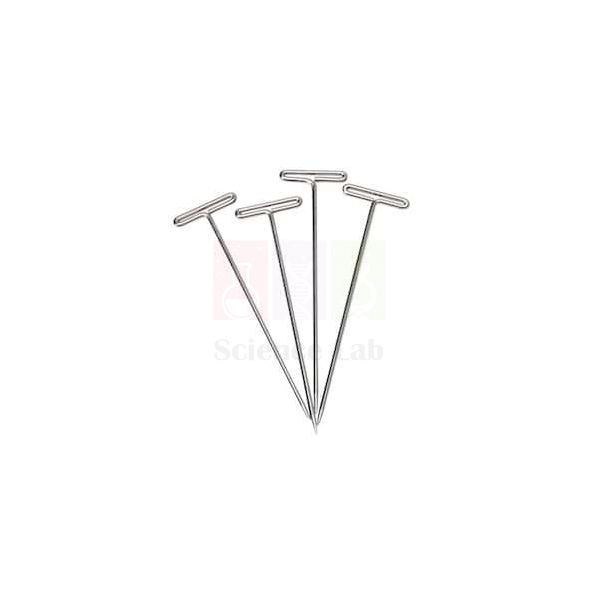
Dissecting T-Pins
Dissecting T-Pins (Product Code: SLE/EDE/10) are 2" long pins made of nickel-plated steel, each with a T head that allows a firm grip when pushing the pin in or pulling it out. A box contains about 100 pins, enough to pin out specimens for a full class on a dissection tray in school labs across India. They are supplied by Jain Scientific Equipments Pvt Ltd (ScienceLab), Ambala, as part of its dissection equipment range.
Specifications
| Parameter | Detail |
|---|---|
| Product type | Dissecting pins, T-head |
| Head | T head for a firm grip |
| Length | 2" |
| Material | Nickel-plated steel |
| Pack | Box of about 100 pins |
Typical Use
T-pins anchor a specimen to a wax pan, wax tray or soft dissecting pad so it does not slide while being cut. Pins are usually pushed in at a slant, leaning away from the specimen, so their heads stay clear of the working area; after the first incision, further pins hold the skin or body wall folded back so internal organs are exposed. The cross-bar head spreads the pressure of the thumb, which makes pinning into firm wax easier for students.
At the end of the practical, pull the pins straight out by the head, wash and dry them, and return them to the box. Counting pins out and back in is a simple habit that keeps loose sharps off the floor and benches. Teachers stocking consumables for zoology lab equipment in India often keep a spare box on hand, since pins go missing over a term.
Supplier
ScienceLab, the trading name of Jain Scientific Equipments Private Limited in Ambala, Haryana, supplies these pins together with the pans, trays and instruments they are used with, so a school can source a complete dissection bench from one place. More about the company is on the company profile page.
Related Dissection Equipment
Surfaces and tools used together with T-pins:
- Dissection Pan — black wax pan that takes and holds the pins.
- Dissecting Tray with Wax — an alternative wax-filled tray for pinning.
- Dissection Replacement Pad — a fresh pinning pad when an old one is worn.
- Dissecting Hook & Chain Set — holds walls open where pins alone are not enough.
See pans, boards and instruments in the Dissection Equipment category.
Frequently Asked Questions
How many pins are in a box?
Each box contains about 100 pins. The count is approximate, so please allow for small variation when planning class quantities.
What are the pins made of and how long are they?
They are nickel-plated steel and 2" long, with a T-shaped head.
Which surfaces do they work with?
They are intended for wax pans, wax trays and soft dissecting pads or boards. Very hard surfaces are not suitable for pinning.
Can the pins be reused?
Yes. Wash and dry them after each practical and return them to the box; discard any pin that has bent or lost its point.
Why a T head rather than a round head?
The cross-bar gives the thumb and fingers more to grip, so pins are easier to press into wax and to pull out again without slipping.
Can I order several boxes or ship overseas?
Yes. Tell us the number of boxes and destination through the contact page; we supply buyers in India and international markets.
Request a Quote
To price Dissecting T-Pins, send the number of boxes you need via the contact page, or add them to the enquiry cart along with pans or trays.
Last updated: 24 September 2026