- Physics Lab Equipment
- Chemistry Lab Equipment
- Biology Lab Equipment
- Anatomical Lab Equipment
- Learning
- Educational Lab Equipment
- Magnets
- Agriculture
- Astronomy
- Earth Science
- Geography Lab Equipment
- Safety Lab Coat
- Laboratory
- Meteorological
- Electricity & Magnetism
- Heat
- School Lab Equipment
- Lab Glassware
- Science Lab Equipment
- Tvet Lab Equipment
- Robotics Kits Supplier and Manufacturer for Schools India
- Math Lab Equipment Manufacturers and Exporters in Ambala
- STEM Kits Manufacturers and Supplier India
- Engineering Lab Equipment
- Hospital Lab Equipment
- Water, Sanitation & Hygiene Supplies
- Cold Chain, Solar & Communication Equipment
- Nutrition
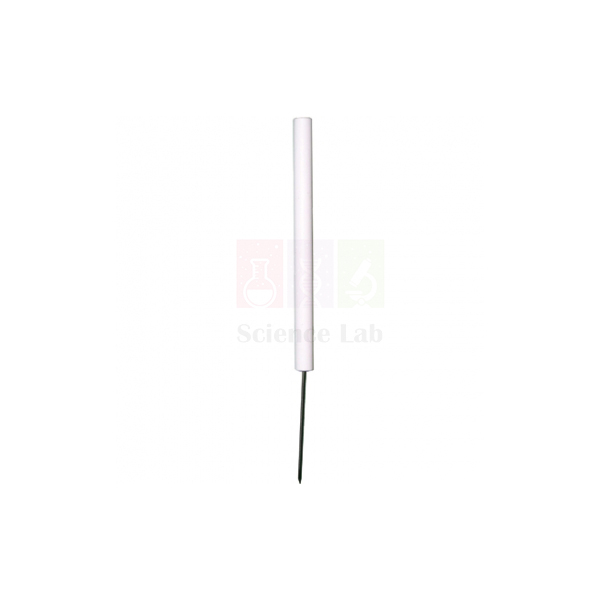
Dissecting Needle Plastic Handle
The Dissecting Needle Plastic Handle (Product Code: SLE/EDE/19) combines a 40mm stainless steel needle with a 100mm plastic handle. It is the fine-point tool students reach for when material has to be teased apart, spread out on a slide or lifted with precision, and it is a basic piece of biology lab equipment in India for both zoology and botany practicals. The instrument is manufactured by Jain Scientific Equipments Pvt Ltd (ScienceLab), Ambala.
Specifications
| Parameter | Detail |
|---|---|
| Needle material | Stainless steel |
| Needle length | 40mm |
| Handle | Plastic |
| Handle length | 100mm |
Typical Use
Much of this needle's work happens at the microscope stage rather than on the dissecting tray. Students use it to tease plant or animal tissue into thin strands in a drop of water or stain, to spread cells evenly before a cover slip goes on, and to lower the cover slip at an angle so that air bubbles are pushed out. On the tray it lifts fine membranes and separates muscle fibres or nerve threads that forceps would crush.
Because it turns up in almost every mounting exercise, the needle is a natural part of a temporary slides biology kit for school and college labs. The plastic handle keeps the tool light in the hand; for the same reason it should not be held in or near a burner flame. Wipe the needle clean after each use, dry it, and store it with the point protected so it stays straight and sharp.
Manufacturer
ScienceLab is the brand name of Jain Scientific Equipments Private Limited, a laboratory equipment maker headquartered in Ambala, Haryana, which supplies teaching institutions across India and in international markets. For background on the company, visit our company profile.
Related Dissection Equipment
Items that pair well with this needle for slide preparation and fine dissection:
- Needle, Stainless Steel — straight stainless steel dissecting needles sold in packs, for group work
- Dissecting Needle — an alternative needle style from the same range
- Petri Dish Glass With Lid — to hold tissue in liquid while it is teased apart
- Hand Lens — for checking fine separations before mounting
- Dissecting Microscope — for teasing very small structures under magnification
More needles, probes and instrument sets are listed under Dissection Equipment.
Frequently Asked Questions
How long are the needle and handle?
The stainless steel needle is 40mm long and the plastic handle is 100mm long.
Can the needle be sterilised in a flame?
Flaming is not recommended, because heat can damage the plastic handle. Clean the needle with water or a suitable laboratory disinfectant and dry it instead.
How is it used when mounting a slide?
Place the edge of the cover slip on the slide beside the specimen, support it with the needle, and lower it slowly so the liquid spreads without trapping air bubbles.
Is the needle replaceable if it bends?
Replacement needle details are not given in the product listing; please contact us and we will advise on spares or a replacement instrument.
How many needles come in one order unit?
The listing describes a single needle with plastic handle. Tell us how many you need for a class and we will quote the quantity accordingly.
Do you deliver to colleges outside India?
Yes, ScienceLab ships dissection instruments within India and to international markets. Include the product code SLE/EDE/19 and your destination in the enquiry.
Request a Quote
For prices and delivery on the Dissecting Needle Plastic Handle, write to us via the contact page or collect items in the enquiry cart and submit them together for one consolidated quotation.
Last updated: 24 September 2026
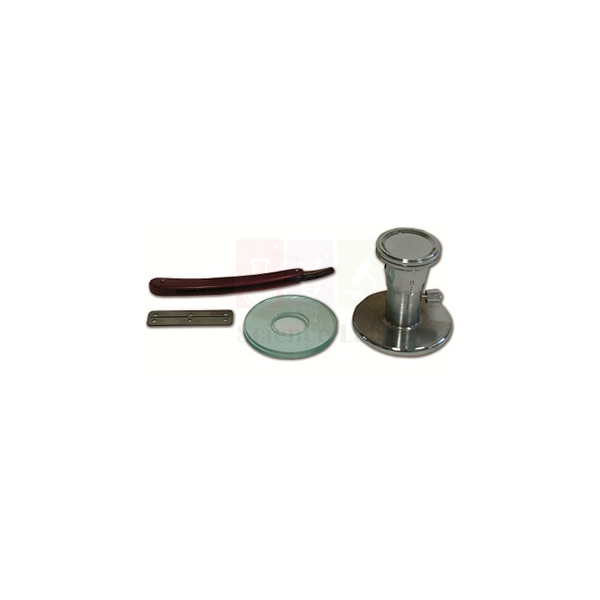
Microtome, Simple
Microtome, Simple (Product Code: SLE/M/92) is a basic sectioning device used to cut thin, uniform sections of specimens for examination under a microscope in school and college biology labs. It lets students prepare their own sections of stems, roots and leaves instead of relying only on prepared slides. It is made by Jain Scientific Equipments Pvt Ltd (ScienceLab), an OEM manufacturer, at its own factory in Ambala, India, as part of its botany lab equipment range.
Key Details
| Parameter | Detail |
|---|---|
| Type | Simple microtome |
| Purpose | Cutting thin, uniform sections of specimens |
| Used with | A microscope, for examining the cut sections |
| Product code | SLE/M/92 |
| Manufacturer | Jain Scientific Equipments Pvt Ltd (ScienceLab) — OEM |
| Country of origin | India (made in Ambala, Haryana) |
What Is the Simple Microtome Used For?
Section cutting is a core practical in plant anatomy: transverse sections of monocot and dicot stems and roots, and sections through leaves, show vascular bundles, cortex and other tissues that cannot be seen in a whole specimen. Cutting freehand with a blade gives uneven slices of varying thickness. A simple microtome holds the specimen steady and helps students take thinner, more even sections, so more of them are usable once stained and mounted.
In general the specimen is held firmly, raised a little at a time, and a sharp blade is drawn across it in one smooth stroke for each slice. Soft material is often supported in pith or a similar holder, and cut sections are floated in water in a watch glass before the best ones are stained and mounted on a glass slide under a cover glass. Keep the blade wet and sharp, cut away from the fingers, and clean and dry the microtome after each class.
OEM Manufacturer
Jain Scientific Equipments Private Limited, which trades as ScienceLab, is the OEM (original equipment manufacturer) of the Microtome, Simple. The company manufactures it at its own licensed factory at Saha, Ambala, Haryana, India, rather than buying it in from a trader, and supplies it factory-direct to schools, colleges, institutions, dealers and importers. Quotations, repeat orders and questions about replacement parts come straight to the manufacturer — just ask us.
ScienceLab is the trading name of Jain Scientific Equipments Private Limited (CIN U29309HR2020PTC087597), and production takes place at its licensed factory at 449, HSIIDC Industrial Area, Saha, Ambala (Factory Licence AMB-ONLINE-CHD-J-414). Read more on our company profile.
Related Microscope Products
Items used in the same section-cutting and mounting practical:
- Microtome — another microtome model in our range to compare.
- Watch Glass — for floating and staining cut sections.
- Microscope Slides Glass — for mounting the best sections.
- Cover Glasses — to cover mounted sections.
- Student Monocular Microscope — for examining the finished slides.
Browse our Microscope category for more.
Frequently Asked Questions
What is the Microtome, Simple used for?
The Microtome, Simple is used to cut thin, uniform sections of specimens so they can be stained, mounted on a glass slide and examined under a microscope, most often in plant anatomy practicals on stems, roots and leaves.
Who manufactures the Microtome, Simple?
Jain Scientific Equipments Pvt Ltd (ScienceLab) is the OEM manufacturer of the Microtome, Simple, producing it at its own licensed factory at Saha, Ambala, Haryana, India. Quotations, repeat orders and spare-part questions are handled directly by the manufacturer.
Is a blade supplied with the Microtome, Simple?
Blade and accessory details for the Microtome, Simple are not listed on this page. Please ask us through the contact page what comes with the unit, so that you can order blades, slides and cover glasses together if needed.
How thin are the sections cut with the Microtome, Simple?
The section thickness range of the Microtome, Simple is not stated on this page. Thin, even sections depend on a sharp blade, a firmly held specimen and a smooth cutting stroke; ask us for the current specification before ordering.
Is a microscope needed with the Microtome, Simple?
Yes. The Microtome, Simple is designed for use with a microscope: it prepares the sections, and a compound microscope is then needed to examine the stained tissue. Schools can have both items quoted together on one ScienceLab enquiry.
Can the Microtome, Simple be supplied in bulk or for export?
Yes. The Microtome, Simple is supplied factory-direct in class and bulk quantities to schools, colleges, institutions, dealers and importers in India and international markets. Share quantity and destination through the contact page for a manufacturer’s quotation.
Request a Quote
Quotations for the Microtome, Simple (SLE/M/92) come direct from the manufacturer. Send your quantity and delivery details through our contact page, or add it to the enquiry cart with slides and microscopes.
Last updated: 24 September 2026
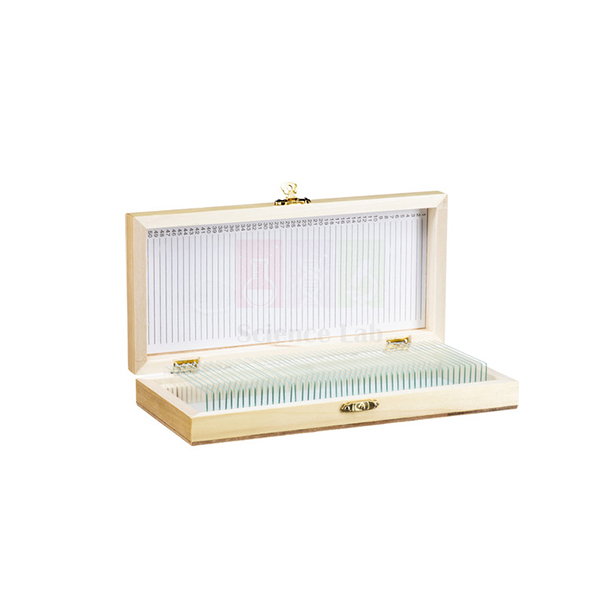
Microscope Slide Case
Microscope Slide Case (Product Code: SLE/M/93) is a plastic storage case used to hold and protect up to 50 microscope slides in school, college and laboratory slide collections. It is listed for slides 0.04 inch (1.0 mm) thick, and keeps prepared and student-made slides organised, protected and easy to carry between the store room and the microscope bench. It is supplied by Jain Scientific Equipments Pvt Ltd (ScienceLab), Ambala, India.
Specifications
| Parameter | Detail |
|---|---|
| Capacity | 50 slides |
| Material | Plastic |
| Slide thickness | 0.04 inch / 1.0 mm |
| Product code | SLE/M/93 |
| Supplied by | Jain Scientific Equipments Pvt Ltd (ScienceLab), Ambala, India |
What Is the Microscope Slide Case Used For?
Slides left loose in drawers get scratched, chipped and mixed up, and a single dropped tray can undo years of collecting. A dedicated case keeps a class set together: one case per topic — plant tissues, animal tissues, microorganisms — makes it quick to hand out the right slides for each practical and to check that all of them come back. It is equally useful for a student’s own practical record of temporary and permanent mounts.
Store only fully dry slides with the mounting medium set, labels facing the same way, and keep the case in a cool, dry cupboard away from direct sunlight, which can fade stains. Before filling it, check your slide thickness against the listed 1.0 mm; thicker slides should be confirmed with us first. A well-organised case is the simplest way to protect a microscope slides set for school labs in India.
What to Specify When Ordering
- The thickness of the slides you will store (the case is listed for 0.04 inch / 1.0 mm).
- Number of cases, for example one per topic or per class set.
- Any blank or prepared slides to quote on the same order.
Supplier
Jain Scientific Equipments Private Limited, which trades as ScienceLab in Ambala, Haryana, supplies the Microscope Slide Case. We source it for schools, colleges, laboratories and dealers who are building or reorganising slide collections, and it can be quoted with slides, cabinets and microscopes. Company information is on our profile page.
Related Microscope Products
Other ways to store and organise microscope slides:
- Wooden Slide Case — a wooden alternative for slide storage.
- Slide Box — another slide box option in our range.
- Slide Tray Cabinet, Polypropylene — for larger departmental collections.
- Slide Dispenser, Automatic — keeps unused blank slides clean before mounting.
See the Microscope category and our Prepared Slides range.
Frequently Asked Questions
How many slides does the Microscope Slide Case hold?
The Microscope Slide Case holds 50 slides. That is a convenient size for one class set of prepared slides or a single student’s practical collection, and small enough to carry from the store room to the microscope bench.
What slide thickness does the Microscope Slide Case take?
The Microscope Slide Case is listed for slides 0.04 inch (1.0 mm) thick. If your slides are thicker, send us their dimensions through the contact page so we can confirm they will fit before you order.
What is the Microscope Slide Case made of?
The Microscope Slide Case is made of plastic, which keeps it light to carry and easy to wipe clean. Keep it away from direct heat and sunlight, which can warp plastic and fade stained specimens over time.
How should slides be stored in the case?
Place only fully dry slides in the Microscope Slide Case, with the mounting medium set and labels facing the same way. Keep the closed case in a cool, dry cupboard to help protect specimens from dust and damp.
Who supplies the Microscope Slide Case?
Jain Scientific Equipments Pvt Ltd (ScienceLab), Ambala, India, supplies the Microscope Slide Case to schools, colleges, laboratories and dealers in India and international markets, and can quote it together with blank or prepared slides.
What details are needed for a Microscope Slide Case quotation?
For a Microscope Slide Case quotation, give product code SLE/M/93, the number of cases, the thickness of your slides and the delivery location. Send the details through the contact page or add the item to the enquiry cart.
Request a Quote
Ask for the Microscope Slide Case (SLE/M/93) through our contact page, or place it in the enquiry cart together with slides and other storage items.
Last updated: 24 September 2026
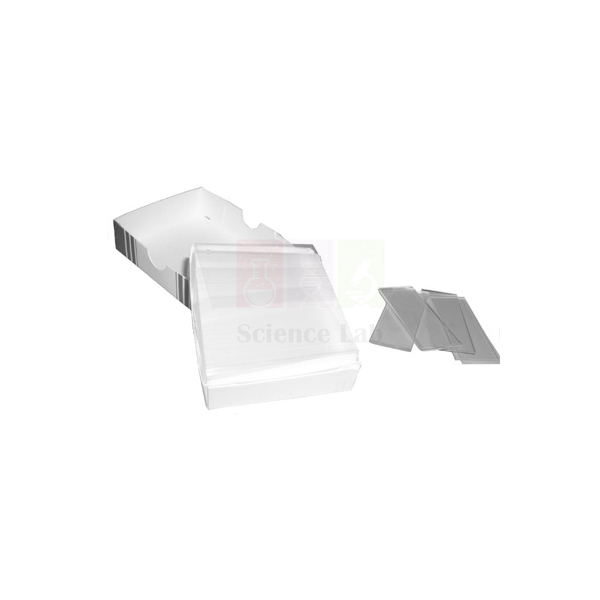
Microscope Slides Glass
Microscope Slides Glass (Product Code: SLE/M/94) are plain glass slides used to mount wet preparations, smears and sections for viewing under a microscope in school, college and laboratory work. Each pack contains 72 clear glass slides with ground edges, measuring 25 mm × 75 mm × 1.2 mm, ready for everyday temporary slides in biology practicals. They are supplied by Jain Scientific Equipments Pvt Ltd (ScienceLab), Ambala, India.
Specifications
| Parameter | Detail |
|---|---|
| Pack size | 72 slides |
| Material | Clear glass |
| Edges | Ground |
| Size | 25 mm × 75 mm |
| Thickness | 1.2 mm |
| Product code | SLE/M/94 |
| Supplied by | Jain Scientific Equipments Pvt Ltd (ScienceLab), Ambala, India |
What Are Glass Microscope Slides Used For?
Plain slides are the base of almost every microscopy practical: onion-peel and cheek-cell mounts, leaf peels for stomata, pond-water drops, stained bacterial smears and hand-cut plant sections. Clear glass lets light from the microscope’s condenser pass through evenly, and the ground edges are smoother to hold than raw-cut glass and less prone to chipping when slides are handled in large classes.
Hold slides by the edges, wipe each one with a lint-free cloth before use, and place the specimen in the centre so it lines up with the objective. For wet mounts, lower a cover glass at an angle to avoid trapping air bubbles. Slides used for temporary mounts can be washed, rinsed and dried for reuse if they are undamaged; put chipped or broken glass straight into a dedicated glass-waste container. A pack of 72 covers a full class for several practical sessions.
What to Specify When Ordering
- Number of packs of 72 slides.
- Whether cover glasses should be quoted with the slides.
- Any slide storage cases or dispensers needed on the same order.
Supplier
These Microscope Slides Glass are a laboratory consumable supplied by Jain Scientific Equipments Private Limited, the Ambala, Haryana company that trades as ScienceLab. We source them for schools, colleges, laboratories and dealers, and they are regularly packed with microscopes, cover glasses and staining supplies for complete practical orders. See our profile page for company details.
Related Microscope Products
Items used with plain glass slides in the same practical:
- Cover Glasses — to cover wet mounts and stained preparations.
- Microscope Slides Depression — cavity slides for live, swimming specimens.
- Microscope Slide Cover Forceps — for handling cover glasses cleanly.
- Slide Dispenser, Automatic — keeps blank slides clean on the bench.
- Concavity Slides — another cavity-slide option in our range.
Browse the Microscope category and our Prepared Slides range.
Frequently Asked Questions
How many slides are in a pack of Microscope Slides Glass?
Each pack of Microscope Slides Glass (SLE/M/94) contains 72 slides. That is enough for a full class to prepare temporary mounts across several practical sessions, with spares for breakages and repeat attempts.
What size are the Microscope Slides Glass?
The Microscope Slides Glass measure 25 mm × 75 mm and are 1.2 mm thick. They are made of clear glass, so light from the microscope passes through evenly for bright, uniform viewing of the specimen.
Why do the slides have ground edges?
The Microscope Slides Glass have ground edges, which are smoother to hold than raw-cut glass and less likely to chip. This makes them more comfortable and safer for students handling many slides during a practical.
Can the Microscope Slides Glass be reused?
Microscope Slides Glass used for temporary mounts can be washed and reused as long as they are not scratched or chipped. Soak off stain and mountant, wash, rinse and dry them fully before storing them again.
Are cover glasses included with the Microscope Slides Glass?
Cover glasses are not listed as part of the Microscope Slides Glass pack of 72. Order Cover Glasses separately, and mention both items on your enquiry so they can be quoted and shipped together.
Who supplies Microscope Slides Glass in bulk?
Jain Scientific Equipments Pvt Ltd (ScienceLab), Ambala, India, supplies Microscope Slides Glass in bulk packs to schools, colleges, laboratories and distributors in India and international markets. Send the number of packs through our contact page.
Request a Quote
Request Microscope Slides Glass (SLE/M/94) by stating the number of packs through our contact page, or add them to the enquiry cart with cover glasses and other consumables.
Last updated: 24 September 2026
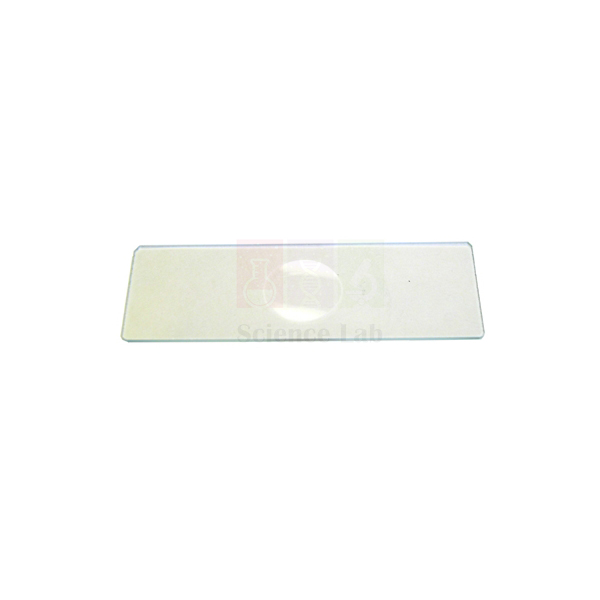
Microscope Slides Depression
Microscope Slides Depression (Product Code: SLE/M/95) are glass cavity slides used to hold a drop of liquid so that living organisms such as protozoa, water fleas and small larvae can be watched moving under a microscope without being crushed. Each pack contains 12 glass slides of 25 × 75 mm, 1.3 mm thick, each with a 15 mm wide depression. They are supplied by Jain Scientific Equipments Pvt Ltd (ScienceLab), Ambala, India, for microbiology and biology lab work.
Specifications
| Parameter | Detail |
|---|---|
| Pack size | 12 slides |
| Material | Glass |
| Size | 25 × 75 mm |
| Thickness | 1.3 mm |
| Depression | 15 mm wide |
| Product image | For illustration; the image may vary from the slides supplied |
| Product code | SLE/M/95 |
| Supplied by | Jain Scientific Equipments Pvt Ltd (ScienceLab), Ambala, India |
What Are Depression Slides Used For?
A flat slide squeezes a drop of pond water into a thin film, which traps or flattens anything larger than a few cells. The shallow well in a depression slide holds a deeper drop, so Paramecium, rotifers, Daphnia, mosquito larvae or brine shrimp can swim freely while students watch feeding, movement and heartbeat. The same slides are used for observing yeast in a sugar solution, germinating pollen, or small crystals growing from a solution.
In microbiology, depression slides are the classic choice for the hanging-drop method: a drop of culture is placed on a cover glass, a thin ring of petroleum jelly is applied around the cavity, and the slide is inverted onto the cover glass so the drop hangs in the well for checking motility. Clean the cavity carefully after use, since residue collects in the curve. They make a practical addition to microbiology lab equipment for schools and colleges in India.
What to Specify When Ordering
- Number of packs of 12 slides.
- Whether cover glasses and plain slides should be quoted on the same order.
- Depth of depression, if your method needs it — ask us, as it is not listed here.
Supplier
Jain Scientific Equipments Private Limited, trading under the ScienceLab name in Ambala, Haryana, supplies Microscope Slides Depression as a laboratory consumable. We source them for schools, colleges, microbiology labs and dealers, and they can be combined with plain slides, cover glasses and microscopes on one quotation. The ScienceLab profile has more about the company.
Related Microscope Products
Items used alongside cavity slides for live-specimen work:
- Cover Glasses — to cover the well or make a hanging drop.
- Microscope Slides Glass — flat slides for stained and fixed preparations.
- Concavity Slides — another cavity slide listing to compare.
- Student Microscope with Movable Condenser — condenser control helps with transparent live organisms.
More items are in the Microscope category.
Frequently Asked Questions
How many slides are in a pack of Microscope Slides Depression?
Each pack of Microscope Slides Depression (SLE/M/95) contains 12 glass slides. A pack is usually enough for a small class to work in pairs on live pond-water or culture observations during one practical.
What size is the depression on these slides?
Each of the Microscope Slides Depression has a 15 mm wide depression in a 25 × 75 mm slide that is 1.3 mm thick. The depth of the cavity is not listed, so please ask us if your method depends on it.
How are depression slides different from flat slides?
Microscope Slides Depression have a shallow well that holds a deeper drop of liquid than a flat slide. Living organisms can therefore move freely without being squashed, which is ideal for watching swimming protozoa, water fleas and larvae.
Can the depression slides be used for the hanging-drop method?
Yes. Microscope Slides Depression are the usual choice for hanging-drop preparations: the drop sits on a cover glass sealed over the cavity and hangs in the well, allowing students to check the motility of bacteria or other small organisms.
Why does the listing say the image may vary?
The photo shown for Microscope Slides Depression is for illustration, and the image may vary from the slides supplied. The listed details — 12 glass slides, 25 × 75 mm, 1.3 mm thick, 15 mm wide depression — describe what is quoted.
Who supplies Microscope Slides Depression?
Jain Scientific Equipments Pvt Ltd (ScienceLab), Ambala, India, supplies Microscope Slides Depression to schools, colleges, microbiology labs and distributors in India and international markets, and can quote them with cover glasses and plain slides.
Request a Quote
For Microscope Slides Depression (SLE/M/95), send the number of packs and delivery details through our contact page, or add them to the enquiry cart.
Last updated: 24 September 2026
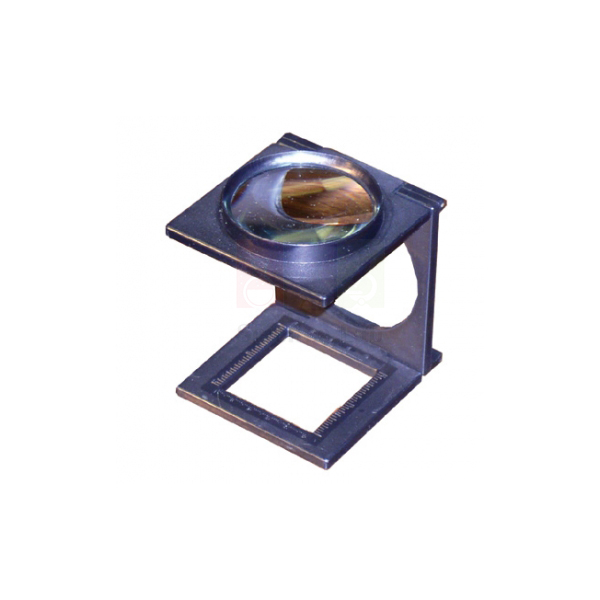
Magnifier, Foldable
Magnifier, Foldable (Product Code: SLE/M/96) is an upright plastic stand magnifier used to enlarge small objects 2x for hands-free observation in school science and nature-study lessons. Its large 4-inch (about 10 cm) plastic lens locks into place when opened, and an inch/centimetre grid gives learners a scale for judging size. This hand lens magnifier for schools in India is supplied by Jain Scientific Equipments Pvt Ltd (ScienceLab), Ambala, India.
Specifications
| Parameter | Detail |
|---|---|
| Type | Upright, foldable stand magnifier that locks into place |
| Lens | Plastic, 4 in (approx. 10 cm) diameter |
| Magnification | 2x |
| Reference scale | Inch/centimetre grid |
| Product code | SLE/M/96 |
| Supplied by | Jain Scientific Equipments Pvt Ltd (ScienceLab), Ambala, India |
What Is the Foldable Magnifier Used For?
Young learners use a 2x stand magnifier to look closely at leaves, seeds, insects, fabric weave, printed dots, soil and sand grains without having to hold a lens steady. Because the lens stays upright once it is locked open, a pupil can turn a specimen with one hand and sketch it with the other, and a small group can take turns at the same object on the desk.
The inch/centimetre grid turns looking into measuring: line up a seed or a small insect against the grid and estimate its length in both units. Plastic lenses scratch more easily than glass, so wipe the lens with a soft cloth rather than paper towel and fold the magnifier flat for storage in a tray or drawer. When pupils need to see cells or fine structures, a microscope is the natural next step.
Supplier
Jain Scientific Equipments Private Limited trades as ScienceLab and supplies this foldable plastic magnifier from Ambala, Haryana, to primary and middle schools, nature clubs, science centres, dealers and importers in India and international markets. Classroom quantities can be quoted together with other observation tools, so a teacher can equip a whole class in one enquiry. Read more about the company on our company profile page.
Related Laboratory Equipment
Items that pair well with the foldable magnifier in observation and nature-study lessons:
- Pocket Magnifier — a hand-held lens pupils can carry outdoors
- Minibeast Magnifier — for watching small creatures up close
- Leaf Identification Kit — leaves to examine and classify under the lens
- Insect Lab Kit — for insect-study activities that follow on from magnifier work
- Rock Study Kit — extends close observation to rocks and their grains
See the full Microscope category for magnifiers and student microscopes.
Frequently Asked Questions
What magnification does the Magnifier, Foldable give?
The Magnifier, Foldable (SLE/M/96) magnifies 2x through a large plastic lens of 4 inches, or about 10 cm, in diameter. A low power with a wide lens gives a broad, easy-to-find view, which suits young learners looking at whole leaves, insects or printed text.
How does the foldable magnifier stand up?
The Magnifier, Foldable is an upright plastic magnifier that locks into place when opened, so it stands on the desk without being held. Folding it back down makes it easier to store between lessons or pack for a field trip.
What is the grid on the Magnifier, Foldable for?
The Magnifier, Foldable carries an inch/centimetre grid for reference. Pupils can line up a small object against the grid to estimate its size, which links a simple observation activity to measurement and to comparing metric and imperial units.
Is the lens of the foldable magnifier glass or plastic?
The lens of the Magnifier, Foldable is plastic, which is lighter than glass and less likely to shatter if a child drops it. Clean it with a soft, dry cloth and store it folded to help protect the lens surface from scratches.
Who supplies the Magnifier, Foldable?
Jain Scientific Equipments Pvt Ltd, trading as ScienceLab in Ambala, Haryana, India, supplies the Magnifier, Foldable (SLE/M/96) to schools, science centres, dealers and importers in India and international markets. Quotations are prepared on request through the contact page.
What should a quote request for the Magnifier, Foldable include?
A quote request for the Magnifier, Foldable should give product code SLE/M/96, the number of magnifiers needed (for example one per pupil or one per group), the delivery address and any other observation items you want quoted alongside it.
Request a Quote
To order the Magnifier, Foldable for a classroom or nature club, send the quantity and delivery location through our contact page, or add it to the enquiry cart with other observation items and submit a single enquiry.
Last updated: 24 September 2026
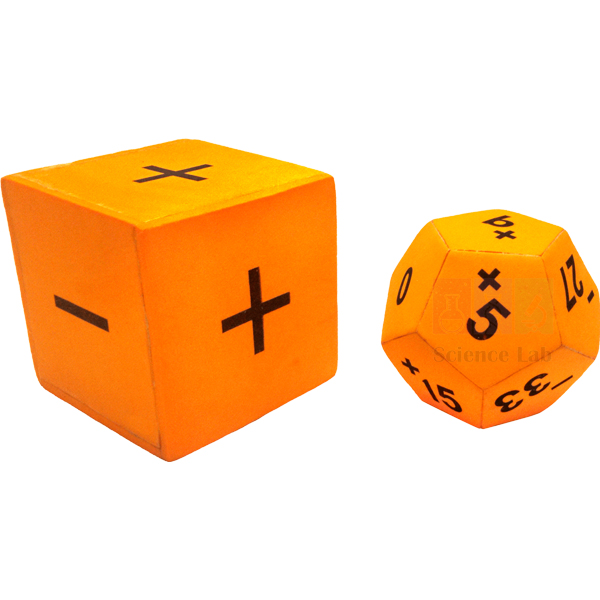
Integer Dice
Integer Dice (Product Code: SLE/LMS/02) is a maths learning aid used to generate positive and negative numbers for practising integer operations in middle school classrooms. Rolling the dice turns adding, subtracting and multiplying signed numbers into quick games that give every pupil plenty of practice. It is made by Jain Scientific Equipments Pvt Ltd (ScienceLab), an OEM school lab equipment manufacturer, at its own factory in Ambala, India.
Key Details
| Parameter | Detail |
|---|---|
| Type | Dice for positive and negative number (integer) practice |
| Range | Middle School learning aids |
| Product code | SLE/LMS/02 |
| Manufacturer | Jain Scientific Equipments Pvt Ltd (ScienceLab) — OEM |
| Country of origin | India (made in Ambala, Haryana) |
What Are Integer Dice Used For?
Integers are often the first topic where middle school pupils meet rules that feel counter-intuitive, such as subtracting a negative number. Dice make practice quick and varied: pupils roll, write the resulting integer sentence, solve it and check with a partner, so many different examples come up in a single lesson. Games such as racing along a number line from zero, or scoring the largest product, keep the whole class involved.
Pair the dice with a number line or two-colour integer counters so that pupils can model each roll before calculating, then move on to mental methods once the rules are secure. Give each group its own dice and a tray or cup to roll into, which keeps noise down and stops dice going missing. As the listing does not state the number of dice, faces or number range, confirm these details with us before planning activities around them.
What to Specify When Ordering
- The quantity you need, for example one set per group of pupils
- The number range and faces you expect, so we can confirm the current design
- Whether integer counters or an integer board game should be quoted together
OEM Manufacturer
ScienceLab is the trading name of Jain Scientific Equipments Private Limited, the OEM (original equipment manufacturer) of these Integer Dice, which it makes at its licensed factory at Saha, Ambala, Haryana. Schools, tutoring centres, dealers and importers in India and international markets buy them direct from the manufacturer, usually alongside other maths manipulatives, and repeat or follow-up orders are handled by the same team. Read more on our company profile page.
Related Middle School Learning Aids
Other aids for integer and number work:
- Integer Counters — to model positive and negative values physically
- Integer Board Game — game-based practice with signed numbers
- Fraction Dice — dice for fraction activities
- Transparent Dice — general-purpose dice for probability and games
- Attribute Blocks Desk Set — sorting and logic work from the same range
Browse the Middle School category, or the wider Maths Lab Equipment range.
Frequently Asked Questions
What are Integer Dice?
Integer Dice (SLE/LMS/02) are a maths learning aid from the ScienceLab Middle School range, used to generate positive and negative numbers so pupils can practise integer addition, subtraction and multiplication through games and quick-fire exercises.
How many Integer Dice are in a set and which numbers do they show?
The current listing for Integer Dice does not state the number of dice, the number of faces or the range of numbers printed on them. Please ask us through the contact page for these details before you plan activities or order class quantities.
How are Integer Dice used in a lesson?
With Integer Dice, pupils roll to create an integer sentence, such as adding or subtracting two signed numbers, solve it and check the answer with a partner. Modelling each roll on a number line or with integer counters helps pupils see why the sign rules work.
Which classes are Integer Dice suited to?
Integer Dice belong to the ScienceLab Middle School range, the stage at which integers and signed-number operations are usually introduced. They also work well for revision with older pupils and for enrichment with confident younger learners.
Who manufactures the Integer Dice?
Jain Scientific Equipments Pvt Ltd (ScienceLab) manufactures the Integer Dice as the OEM at its licensed factory at Saha, Ambala, Haryana, India. Schools, dealers and importers in India and international markets can order them direct from the manufacturer.
What should a quotation request for Integer Dice include?
A quotation request for Integer Dice should give product code SLE/LMS/02, the quantity or number of groups, your delivery location and any related items such as integer counters, so that the whole order can be quoted together.
Request a Quote
Quotes for Integer Dice come straight from the manufacturer: send the quantity and delivery details through our contact page, or add them to the enquiry cart with other maths learning aids.
Last updated: 24 September 2026
714.jpg)
Blocks (50Pcs)
Blocks (50Pcs) (Product Code: SLE/LMS/03) is a set of 50 snap-on cubes that connect on all six sides, used to build number, pattern and shape models in primary and middle school maths. One set serves a group of 4 children aged 2 to 16 years, covering concepts from counting and one-to-one correspondence to area, volume, HCF, LCM and algebraic identities. It is made by Jain Scientific Equipments Pvt Ltd (ScienceLab), an OEM manufacturer, at its own factory in Ambala, India.
Specifications
| Parameter | Detail |
|---|---|
| Pieces | 50 snap-on cubes |
| Connection | Can be connected on all six sides |
| Group size | For 4 children |
| Age range | 2–16 years; used in primary and middle classes |
| Number concepts | Sense of numberness; counting and operations of numbers; patterns in different ways of splitting a number; addition and subtraction facts; odd and even numbers and their properties; factors, prime numbers, HCF, LCM |
| Algebra and properties | Commutativity, distributivity; squares and cubes geometrically and as numbers; algebraic identities |
| Measurement | Area, perimeter, volume |
| Early number sense | Recognising colours, classifying by colour, making patterns, counting, one-to-one correspondence, comparing numbers |
| Product code | SLE/LMS/03 |
| Manufacturer | Jain Scientific Equipments Pvt Ltd (ScienceLab) — OEM |
| Country of origin | India (made in Ambala, Haryana) |
What Are the 50-Piece Snap-On Blocks Used For?
Because the cubes snap together on every face, pupils can build rods, flat rectangles and solid shapes rather than just towers. Rows of equal rods show multiplication as repeated groups and make commutativity visible, rectangles give area and perimeter by counting faces and edges, and building larger cubes links cube numbers to volume. Splitting a train of cubes in different ways explores number bonds and the difference between odd and even numbers.
For younger children the same set supports colour recognition, sorting by colour, simple patterns and one-to-one counting, while older pupils picture algebraic identities as squares built from smaller blocks and find factors, primes, HCF and LCM by arranging cubes into rectangles. As one of our mathematics lab kits for Indian schools, a set of 50 is sized for a group of 4 children, so order one set per group for whole-class work.
What to Specify When Ordering
- The number of sets, allowing one set per group of 4 children
- The classes or age groups using them, so we can suggest matching manipulatives
- Whether items such as base ten blocks or algebra tiles should be quoted together
OEM Manufacturer
The Blocks (50Pcs) set is made by Jain Scientific Equipments Private Limited, trading as ScienceLab, which is the OEM (original equipment manufacturer) and produces it at its licensed factory at Saha, Ambala, Haryana. Buying from the manufacturer means schools, dealers and importers in India and international markets get quotations and repeat supplies directly, without a trading intermediary. Ask us about extra cubes for sets already in use. More on the company is on our company profile page.
Related Middle School Learning Aids
Manipulatives often used alongside snap-on cubes:
- Linking Cubes — another cube set to compare for counting and measuring
- Interlocking Cubes — an alternative connecting-cube option
- Base Ten Blocks — for place value and larger numbers
- Algebra Tiles — for modelling algebraic expressions and identities
- Integer Dice — integer practice from the same range
Browse the Middle School category, or the wider Maths Lab Equipment range.
Frequently Asked Questions
How many cubes are in Blocks (50Pcs)?
Blocks (50Pcs), product code SLE/LMS/03, contains 50 snap-on cubes that can be connected on all six sides. The set is intended for a group of 4 children, so schools usually order one set per group for whole-class activities.
What age range are Blocks (50Pcs) for?
Blocks (50Pcs) are listed for ages 2 to 16 years and are used in both primary and middle classes. Young children count, sort colours and make patterns, while older pupils model area, volume, factors, square and cube numbers and algebraic identities.
Which maths topics can be taught with Blocks (50Pcs)?
According to its concept list, Blocks (50Pcs) supports number sense, addition and subtraction facts, odd and even numbers, multiplication, area, perimeter, volume, commutativity, distributivity, squares and cubes, algebraic identities, factors, prime numbers, HCF, LCM and pattern work.
How are these cubes different from ordinary building blocks?
The cubes in Blocks (50Pcs) snap on at all six faces, so they form rods, flat arrays and solid shapes that hold together when picked up. That makes it easy to show multiplication arrays, measure area and build cubes for volume work.
Who manufactures Blocks (50Pcs)?
Jain Scientific Equipments Pvt Ltd (ScienceLab) manufactures Blocks (50Pcs) as the OEM at its licensed factory at Saha, Ambala, Haryana, India. Schools, dealers and importers in India and international markets can order the set direct from the manufacturer.
What should a quotation request for Blocks (50Pcs) include?
A quotation request for Blocks (50Pcs) should give product code SLE/LMS/03, the number of sets (one per group of 4 children), the classes using them and your delivery location, plus any other maths manipulatives to be quoted together.
Request a Quote
Quotations for Blocks (50Pcs) come direct from the manufacturer: send the number of sets and delivery details through our contact page, or add the set to the enquiry cart with other maths learning aids.
Last updated: 24 September 2026