- Physics Lab Equipment
- Chemistry Lab Equipment
- Biology Lab Equipment
- Anatomical Lab Equipment
- Learning
- Educational Lab Equipment
- Magnets
- Agriculture
- Astronomy
- Earth Science
- Geography Lab Equipment
- Safety Lab Coat
- Laboratory
- Meteorological
- Electricity & Magnetism
- Heat
- School Lab Equipment
- Lab Glassware
- Science Lab Equipment
- Tvet Lab Equipment
- Robotics Kits Supplier and Manufacturer for Schools India
- Math Lab Equipment Manufacturers and Exporters in Ambala
- STEM Kits Manufacturers and Supplier India
- Engineering Lab Equipment
- Hospital Lab Equipment
- Water, Sanitation & Hygiene Supplies
- Cold Chain, Solar & Communication Equipment
- Nutrition
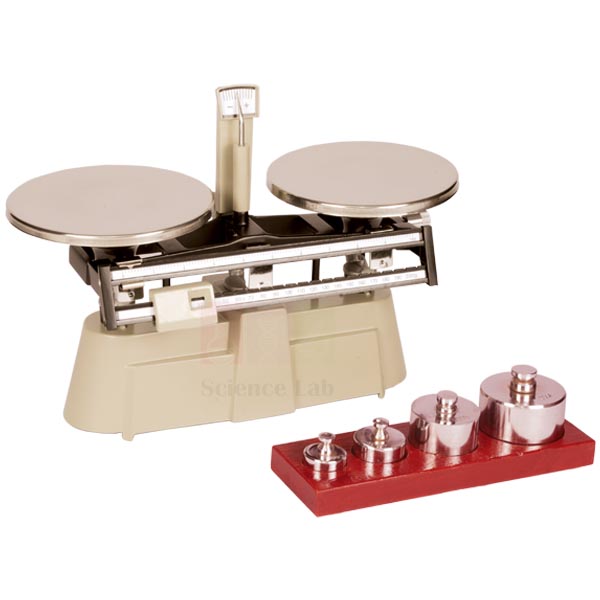
Double Beam Balance
Double Beam Balance (Product Code: SLE/LB/01) is a two-pan mechanical balance used for accurate, rapid weighing of samples in school and college science laboratories. Its two beams with centre-reading sliding masses read 0–200 g × 10 g and 0–10 g × 0.1 g (210 g in total), and supplementary masses extend the range to 2 kg — a dependable item of school chemistry lab equipment in India. It is made by Jain Scientific Equipments Pvt Ltd (ScienceLab), an OEM manufacturer, at its own factory in Ambala, India.
Specifications
| Parameter | Detail |
|---|---|
| Type | Two-pan balance with two beams |
| Beam ranges | 0–200 g × 10 g and 0–10 g × 0.1 g |
| Total on beams | 210 g |
| Extended range | Up to 2 kg with supplementary masses |
| Sliding masses | Centre reading |
| Zero adjustment | Spring-loaded zero adjuster |
| Damping | Magnetic damping |
| Pans | Stainless steel, 150 mm diameter |
| Product code | SLE/LB/01 |
| Manufacturer | Jain Scientific Equipments Pvt Ltd (ScienceLab) — OEM |
| Country of origin | India (made in Ambala, Haryana) |
What Is the Double Beam Balance Used For?
In a school practical, the balance is used to weigh salts for preparing solutions, to find the mass of objects before density calculations, and to compare the masses of samples. Students set the larger beam in 10 g steps, then fine-tune on the smaller beam to 0.1 g; the magnetic damping stops the pointer swinging for long, so a whole group can take readings in turn during a single period. For heavier items such as soil samples or apparatus parts, supplementary masses take the capacity up to 2 kg.
Before each session, check that the empty pans read zero and correct with the spring-loaded adjuster. Weigh powders on weighing paper or in a weighing boat rather than directly on the steel pans, and wipe the 150 mm pans dry after use. Pharmacy and food science labs also use a double beam balance of this kind for routine weighing where an electronic readout is not essential.
What to Specify When Ordering
- Quantity — how many balances you need per lab or class set.
- Supplementary masses — whether the masses that extend the range to 2 kg should be quoted with each balance.
- Calibration documentation — whether your institution needs any, so it can be discussed before ordering.
- Delivery location — for packing and freight within India or for export.
OEM Manufacturer
ScienceLab is the brand of Jain Scientific Equipments Private Limited, the OEM (original equipment manufacturer) of this Double Beam Balance. The balance is made and assembled at the company’s own licensed factory at Saha, Ambala, Haryana, India, and goes factory-direct to schools, colleges, dealers and importers. Need a matching unit later for the same lab? Ask us — repeat orders are handled by the manufacturer itself, as described on our company profile.
Related Balances
Accessories and alternatives for the weighing bench:
- Triple-Beam Balance — a three-beam alternative for general weighing
- Balance Single Pan — a four-beam single pan model that needs no extra masses and includes a density platform
- Weighing Paper — keeps powders off the pans and simplifies transfer
- Plastic Weighing Boats — for granular or damp samples
- Balance Anti-Vibration Table — a steady surface for more consistent readings
Compare every weighing option in our Balances category.
Frequently Asked Questions
What is the finest reading on the Double Beam Balance?
The finest reading on the Double Beam Balance is 0.1 g, taken on its 0–10 g beam. The second beam covers 0–200 g in 10 g steps, giving 210 g on the beams before any supplementary masses are added.
Can the Double Beam Balance weigh more than 210 g?
Yes. Supplementary masses extend the Double Beam Balance to 2 kg. Whether those masses are packed with the balance is not stated in its listing, so confirm it on your quotation when you enquire.
What are the Double Beam Balance pans made of?
The Double Beam Balance has stainless steel pans of 150 mm diameter. They wipe clean easily between groups, but powders should still be weighed on weighing paper or in a weighing boat rather than directly on the pan.
How is the Double Beam Balance zeroed?
The Double Beam Balance is zeroed with its spring-loaded zero adjuster, set while both pans are empty. Magnetic damping then brings the pointer to rest quickly, so each reading can be taken without a long wait.
Who manufactures the Double Beam Balance?
Jain Scientific Equipments Pvt Ltd (ScienceLab) manufactures the Double Beam Balance as the OEM, at its own licensed factory at Saha, Ambala, Haryana, India. Schools, colleges and dealers receive quotations directly from the maker, not through a trading intermediary.
Is a calibration certificate available for the Double Beam Balance?
A calibration certificate is not listed for the Double Beam Balance. If your laboratory needs calibration documentation, discuss it with our team through the contact page before ordering so we can advise what is possible for this model.
Can schools order the Double Beam Balance in class sets?
Yes. ScienceLab supplies the Double Beam Balance (SLE/LB/01) in class sets to schools, colleges and distributors in India and international markets; include the quantity and delivery location in your enquiry.
Request a Quote
Request a quotation for the Double Beam Balance through our contact page, or add it to the enquiry cart along with weighing accessories. Quotes come straight from the manufacturer.
Last updated: 24 September 2026
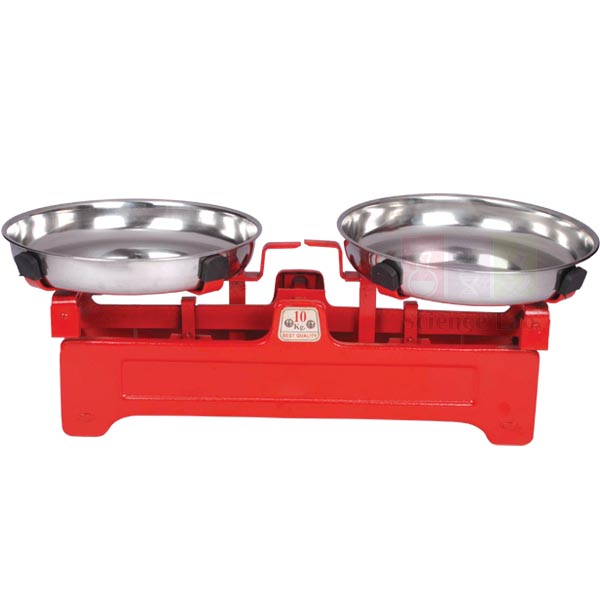
Beranger Balance
Beranger Balance (Product Code: SLE/LB/02) is a two-pan comparison balance used to teach mass comparison and weighing against standard masses in school science and mathematics classrooms. Its beam rests on a central knife edge with a pointer that shows when both sides are level, and a heavy base keeps it steady as pupils load the pans. It is made by Jain Scientific Equipments Pvt Ltd (ScienceLab), an OEM manufacturer of school lab equipment in India, at its own factory in Ambala.
Key Details
| Parameter | Detail |
|---|---|
| Type | Beranger-pattern two-pan balance |
| Pans | Two |
| Base | Heavy base |
| Beam | Pivots on a central knife edge |
| Indicator | Pointer |
| Purpose | Comparing masses and weighing objects against standard masses |
| Product code | SLE/LB/02 |
| Manufacturer | Jain Scientific Equipments Pvt Ltd (ScienceLab) — OEM |
| Country of origin | India (made in Ambala, Haryana) |
What Is the Beranger Balance Used For?
Younger pupils first use the balance to decide which of two objects is heavier, then move on to finding a mass by adding standard masses to the second pan until the pointer settles at the centre. Older students can use the central knife edge to discuss the principle of moments: with equal arms, the beam balances only when the loads on both sides are equal. It is also handy for simple measurement activities with classroom materials such as seeds, sand or small toys.
Place the balance on a firm, level table and check that the pointer rests centrally with both pans empty before a lesson. Lower loads gently rather than dropping them, pick up small masses with forceps, and keep the knife edge free of dust so the beam swings freely. As school physics lab equipment in India, it is simple enough for different class groups to share through the day.
OEM Manufacturer
Jain Scientific Equipments Private Limited trades as ScienceLab and is the OEM (original equipment manufacturer) of the Beranger Balance, which it makes at its own licensed factory at Saha, Ambala, Haryana, India. The company is a registered MSME with manufacturing as its major activity (Udyam UDYAM-HR-01-0003714), and its export consignments move under Importer-Exporter Code AAECJ8618A issued by the DGFT. Schools, dealers and importers buy factory-direct; more about us is on the company profile page.
Related Balances
Items to use with this comparison balance:
- Mass Set, Brass, 1000g — standard masses to place on the second pan
- Mass Weighing Set on Tray — an organised set of masses for class groups
- Roberval Balance — another traditional two-pan design, with a steel plate body
- Plastic Weighing Boats — hold loose materials such as sand or seeds on the pan
See all mechanical and electronic models in our Balances range.
Frequently Asked Questions
What is a Beranger Balance used for?
A Beranger Balance is used to compare the masses of two objects, or to find the mass of an object by balancing it against standard masses placed on the other pan until the pointer shows that the beam is level.
Are masses included with the Beranger Balance?
Masses are not listed as part of the Beranger Balance. A separate set such as the Mass Set, Brass, 1000g can be ordered with it for weighing against standard masses on the second pan.
What are the capacity and sensitivity of the Beranger Balance?
Capacity and sensitivity are not stated in the current documentation for the Beranger Balance. Please ask through our contact page before ordering, and our team will give you the details for the model being quoted.
Why does the Beranger Balance have a heavy base?
The heavy base keeps the Beranger Balance stable while the pans are loaded and unloaded, which matters with younger pupils who may press on a pan or place objects unevenly during a class activity.
Who manufactures the Beranger Balance?
Jain Scientific Equipments Pvt Ltd (ScienceLab) is the OEM manufacturer of the Beranger Balance (SLE/LB/02), making it at its own licensed factory at Saha, Ambala, Haryana, India, and supplying it factory-direct to schools, dealers and importers.
How should the Beranger Balance be looked after?
Keep the Beranger Balance on a firm, level table, lower loads gently rather than dropping them, store it covered, and keep the central knife edge clean and dry so that the beam continues to swing freely between lessons.
Can the Beranger Balance be ordered in class sets?
Yes. ScienceLab supplies the Beranger Balance in class sets to schools and distributors in India and international markets; share the code SLE/LB/02, the quantity and the delivery location to receive a quotation.
Request a Quote
Ask for a quotation on the Beranger Balance through our contact page, or add it to the enquiry cart together with a mass set. The quotation comes directly from the manufacturer.
Last updated: 24 September 2026
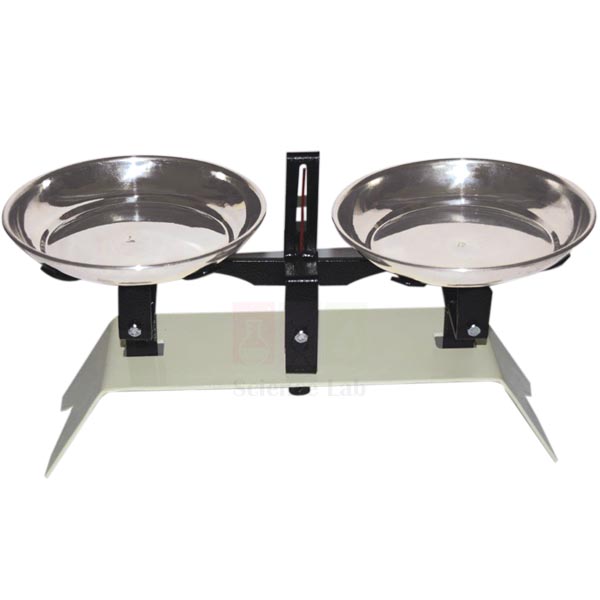
Roberval Balance
Roberval Balance (Product Code: SLE/LB/03) is a simple-model two-pan balance used to introduce mass comparison and weighing against standard masses in primary and middle school classrooms. Its body is made of steel plate and its pans are metal, so it stands up well to being passed between groups. It is made by Jain Scientific Equipments Pvt Ltd (ScienceLab), an OEM school laboratory equipment manufacturer, at its own factory in Ambala, India.
Key Details
| Parameter | Detail |
|---|---|
| Type | Roberval balance, simple model |
| Body | Steel plate |
| Pans | Metal |
| Purpose | Comparing masses and weighing against standard masses |
| Product code | SLE/LB/03 |
| Manufacturer | Jain Scientific Equipments Pvt Ltd (ScienceLab) — OEM |
| Country of origin | India (made in Ambala, Haryana) |
What Is the Roberval Balance Used For?
Teachers use the Roberval balance to introduce measurement of mass: pupils place an object on one pan and add standard masses to the other until the two sides are level. A popular demonstration is Roberval’s “paradox” — move the same object from the centre to the edge of its pan and the balance stays level, which leads naturally into a discussion of how the parallel linkage works. The steel plate body and metal pans suit a busy classroom where the balance is passed between groups.
For wet or dusty materials, weigh on a sheet of weighing paper so the metal pans stay clean and dry, and wipe them after use. Keep the balance on a level surface during lessons and store it away from damp. It is a straightforward addition to lab equipments for school science corners, where a first hands-on weighing experience matters more than fine precision.
OEM Manufacturer
ScienceLab is the trading name of Jain Scientific Equipments Private Limited, the OEM (original equipment manufacturer) of this Roberval Balance. Its steel plate body and metal pans are made and assembled at the company’s own licensed factory at Saha, Ambala, Haryana, India, rather than sourced from a trader. Schools, dealers and importers get quotations straight from the manufacturer; learn more on our company profile.
Related Balances
Useful additions for classroom weighing activities:
- Mass Set, Brass, 250g — standard masses for balancing objects on the second pan
- Beranger Balance — a two-pan comparison balance on a heavy base with a pointer
- Compression Balance — a dial scale for contrasting beam balances with direct-reading weighing
- Weighing Paper — keeps the metal pans clean when weighing powders or soil
Find more models in our Balances category.
Frequently Asked Questions
Why is it called a Roberval Balance?
The Roberval Balance is named after the French mathematician Gilles Personne de Roberval, who devised the parallel linkage that keeps both pans horizontal as they move, so the reading does not depend on where an object sits on the pan.
What is the Roberval Balance made of?
The Roberval Balance has a body made of steel plate and metal pans. This simple construction suits classroom use, but wet or dusty materials should be weighed on paper to keep the pans clean and dry.
What load can the Roberval Balance take?
Capacity and sensitivity are not listed in the current documentation for the Roberval Balance. Please ask for the figures through our contact page before ordering, so you can confirm it suits your classroom activities.
Does the Roberval Balance come with masses?
Masses are not listed with the Roberval Balance. A separate set such as the Mass Set, Brass, 250g can be ordered with it, so pupils can balance objects against standard masses on the second pan.
Is the Roberval Balance suitable for chemistry practicals?
The Roberval Balance is a simple model intended for general mass comparison rather than fine reagent weighing. For chemistry practicals, a chemical or analytical balance from our Balances range is the better choice.
Who manufactures the Roberval Balance?
Jain Scientific Equipments Pvt Ltd (ScienceLab) manufactures the Roberval Balance (SLE/LB/03) as the OEM, at its own licensed factory at Saha, Ambala, Haryana, India. Bulk orders for schools in India and international markets are quoted directly by the manufacturer.
Request a Quote
For a quotation on the Roberval Balance, reach us through the contact page or add it to the enquiry cart with any mass sets you need. You will be quoted directly by the manufacturer.
Last updated: 24 September 2026
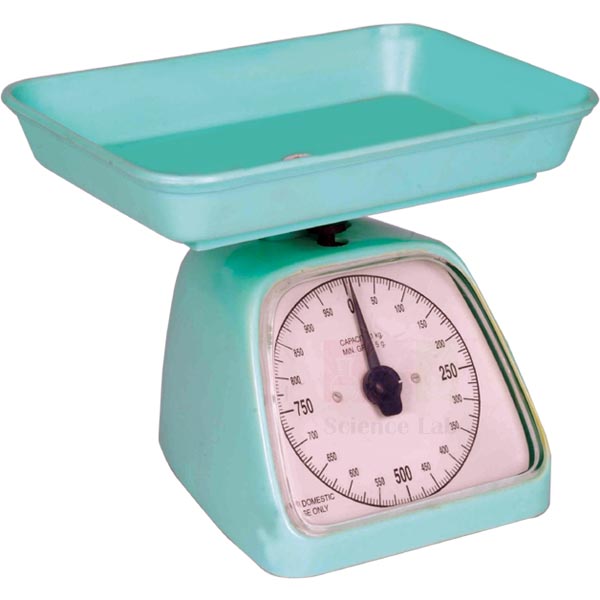
Compression Balance
Compression Balance (Product Code: SLE/LB/04) is a direct-reading dial scale used for quick weighing of everyday objects and samples in school science, home science and maths classrooms. A wide view dial lets a whole group see the reading, the large pan takes bulky items, and the body is plastic moulded. It is supplied by Jain Scientific Equipments Pvt Ltd (ScienceLab), Ambala, a school laboratory equipment supplier in India.
Key Details
| Parameter | Detail |
|---|---|
| Type | Compression (dial) balance |
| Dial | Wide view |
| Pan | Large |
| Body | Plastic moulded |
| Purpose | Quick, direct-reading weighing of everyday objects and samples |
| Product code | SLE/LB/04 |
| Supplied by | Jain Scientific Equipments Pvt Ltd (ScienceLab), Ambala, India |
What Is the Compression Balance Used For?
Pupils can estimate the mass of fruit, vegetables, books or bags of sand and then check their guesses on the dial, a simple way to build a feel for grams and kilograms. The wide view dial lets a teacher show the reading to a group rather than one child at a time, and the large pan accepts bulky items that would not fit on a laboratory beam balance. In upper classes, the compression balance is a good starting point for discussing the difference between weight, the force that compresses the spring, and mass, which a beam balance compares.
Place the load in the middle of the pan and let the pointer settle before reading straight on, not from an angle. Check that the pointer returns to zero after each use, avoid overloading, and wipe the plastic moulded body with a damp cloth. As general physics lab equipment for lower grades, it complements rather than replaces a precision balance.
Supplier
ScienceLab is the trading name of Jain Scientific Equipments Private Limited, Ambala, Haryana, India, which supplies the Compression Balance to schools, colleges and distributors alongside its wider range of weighing instruments. For more about the company, see our company profile.
Related Balances
Other items for teaching weighing and force:
- Force Meter/Spring Balance — a hanging spring instrument that shows the same spring principle in tension
- Spring Balance, Tubular — a compact spring balance for individual student use
- Roberval Balance — a two-pan balance for comparing masses against standard weights
- Mass Weighing Set on Tray — known masses for checking dial readings during lessons
The full Balances category lists mechanical and electronic options.
Frequently Asked Questions
How does a Compression Balance work?
A Compression Balance works by letting the load on the pan compress a spring inside the body; that movement turns the pointer across the wide view dial, so the reading appears at once without sliding masses or standard weights.
What are the capacity and graduation of the Compression Balance?
Capacity and scale divisions are not stated in the current documentation for the Compression Balance. Please ask for them through our contact page before ordering, so you can check it covers the objects your classes will weigh.
How is the Compression Balance cleaned?
The Compression Balance has a plastic moulded body that can be wiped with a damp cloth after lessons involving sand, soil or food items; keep water away from the dial and let the pan dry before the next use.
Is the Compression Balance accurate enough for chemistry practicals?
The Compression Balance is meant for quick, general weighing rather than precise reagent work. For chemistry practicals, choose a chemical, single pan or analytical balance from our Balances range instead.
Can the Compression Balance reading be checked in class?
Yes. You can check a Compression Balance by placing known masses, such as a mass set, on the pan and comparing the dial reading; this is also a useful class exercise on the difference between weight and mass.
Who supplies the Compression Balance?
Jain Scientific Equipments Pvt Ltd (ScienceLab), Ambala, India, supplies the Compression Balance (SLE/LB/04) to schools and distributors in India and international markets. Quote the product code, quantity and delivery location to receive a quotation.
Request a Quote
Request a quotation for the Compression Balance on our contact page or add it to the enquiry cart with any other classroom weighing items you need.
Last updated: 24 September 2026
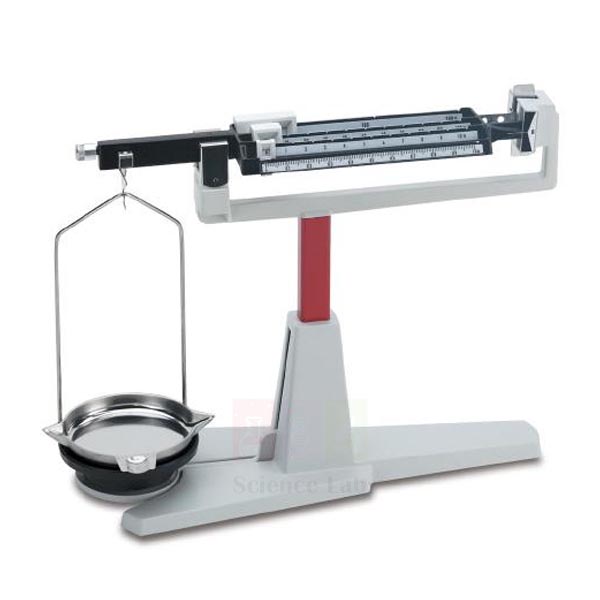
Balance Single Pan
Balance Single Pan (Product Code: SLE/LB/05) is a four-beam mechanical balance used for weighing up to 311 g with 10 mg readability, and for density determination, in school and college laboratories. It is a popular item of school physics lab equipment in India because each beam carries a non-removable slider, so no additional masses are needed. It is made by OEM manufacturer Jain Scientific Equipments Pvt Ltd (ScienceLab) at its own factory in Ambala, India.
Specifications
| Parameter | Detail |
|---|---|
| Capacity | 311 g |
| Readability | 10 mg |
| Beams | 4, each with a non-removable slider |
| Beam graduations | 0–200 g × 100 g; 0–100 g × 10 g; 0–10 g × 1 g; 0–1 g × 10 mg |
| Additional masses | Not required |
| Zero | Zero adjustment provided |
| Pan | Stainless steel, 90 mm diameter, with 2 pouring spouts and handle |
| Damping | Magnetically damped beam movement |
| Density work | Platform housed in the base for density determination |
| Product code | SLE/LB/05 |
| Manufacturer | Jain Scientific Equipments Pvt Ltd (ScienceLab) — OEM |
| Country of origin | India (made in Ambala, Haryana) |
What Is the Single Pan Balance Used For?
Because the sliders stay on the beams, students weigh by moving them from the largest to the smallest graduation — 100 g, 10 g, 1 g and finally the 10 mg beam — and simply add the four readings. There are no loose masses to lose or mix up between groups, which keeps practical sessions moving. The two pouring spouts let a weighed powder or liquid be tipped straight into a beaker or flask, and the handle lifts the pan off without fingers touching the sample.
For density and relative density experiments, the platform housed in the base allows an object to be weighed in air and then while immersed in water, following Archimedes’ principle, without a separate stand. Return all four sliders to zero after each use and check the zero adjustment at the start of a lesson. Chemistry and biology practicals use the same balance for routine weighing, so one instrument covers several subjects.
OEM Manufacturer
Jain Scientific Equipments Private Limited, known in the market as ScienceLab, is the OEM (original equipment manufacturer) of the Balance Single Pan. The four-beam balance, with its sliders, damping and density platform, is made and assembled at the company’s own licensed factory at Saha, Ambala, Haryana, India, and supplied factory-direct to schools, colleges, dealers and importers. For repeat orders or replacement parts, ask us directly. Our company profile gives more detail.
Related Balances
Items that pair with this balance in weighing and density practicals:
- Metal Density Cube Set — samples for density determination on the base platform
- Plastic Weighing Boats — for samples that should not touch the steel pan
- Double Beam Balance — a two-pan option whose range extends to 2 kg with supplementary masses
- Triple-Beam Balance — a three-beam alternative for general weighing
Browse our Balances category for further models.
Frequently Asked Questions
Do I need to buy a mass set for the Balance Single Pan?
No. The Balance Single Pan does not need a mass set, because its four beams with non-removable sliders cover the full 311 g capacity; students simply add the four slider readings to get the mass.
What is the smallest reading on the Balance Single Pan?
The smallest reading on the Balance Single Pan is 10 mg, taken on the 0–1 g beam. The other beams are graduated 0–200 g × 100 g, 0–100 g × 10 g and 0–10 g × 1 g.
How is density measured with the Balance Single Pan?
The Balance Single Pan measures density with a platform housed in its base: the object is weighed in air, then weighed while immersed in water, and the two readings give its density by Archimedes’ principle.
What is the pan of the Balance Single Pan like?
The Balance Single Pan has a stainless steel pan of 90 mm diameter with two pouring spouts and a handle, so a weighed powder or liquid can be tipped straight into a beaker without touching the sample.
Why is the beam of the Balance Single Pan magnetically damped?
The beam of the Balance Single Pan is magnetically damped, which brings it to rest quickly after a load is added, so students can take readings rapidly rather than waiting for long swings to die away.
Who manufactures the Balance Single Pan?
Jain Scientific Equipments Pvt Ltd (ScienceLab) is the OEM manufacturer of the Balance Single Pan (SLE/LB/05), producing it at its own licensed factory at Saha, Ambala, Haryana, India. Quotations for schools in India and international markets come straight from the manufacturer.
Is a calibration certificate available for the Balance Single Pan?
A calibration certificate is not listed for the Balance Single Pan. Talk to our team through the contact page before ordering if calibration documentation is required, and we will explain what can be provided for this balance.
Request a Quote
Get a quotation for the Balance Single Pan via our contact page, or add it to the enquiry cart with density cubes and weighing boats. The quotation is issued directly by the manufacturer.
Last updated: 24 September 2026
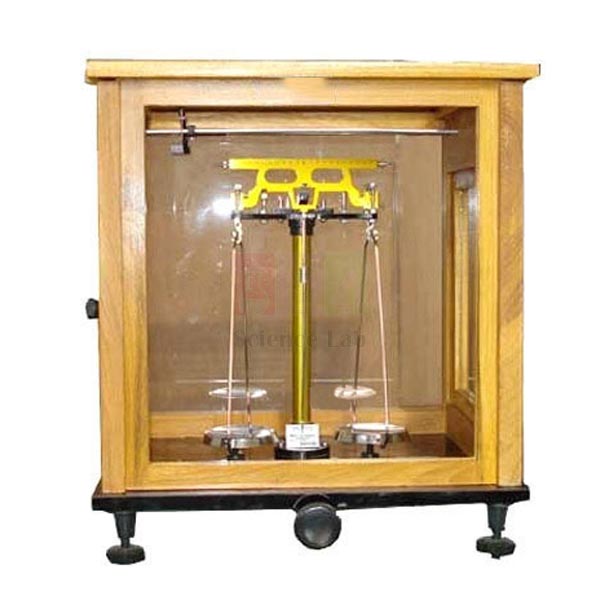
Chemical Balance
Chemical Balance (Product Code: SLE/LB/06) is a beam balance used to weigh reagents, primary standards and precipitates for quantitative chemistry practicals in senior schools and colleges. It offers 200 g capacity and 0.5 mg sensitivity, with a beam engraved with a rider scale for a 10 mg rider, agate bearings and knife edges, all in a polished wooden case. It is made by OEM manufacturer Jain Scientific Equipments Pvt Ltd (ScienceLab) at its own factory in Ambala, India.
Specifications
| Parameter | Detail |
|---|---|
| Capacity | 200 g |
| Sensitivity | 0.5 mg |
| Beam | Engraved with a rider scale, for use with a 10 mg rider |
| Adjustment | Balancing nuts |
| Bearings | Agate bearings and knife edges |
| Mounting | Fitted on a wooden board |
| Case | Polished wooden case |
| Product code | SLE/LB/06 |
| Manufacturer | Jain Scientific Equipments Pvt Ltd (ScienceLab) — OEM |
| Country of origin | India (made in Ambala, Haryana) |
What Is the Chemical Balance Used For?
The chemical balance is the traditional instrument for weighing primary standards such as oxalic acid or sodium carbonate when students prepare standard solutions for titration, and for weighing crucibles and precipitates in simple gravimetric work. Standard masses from a weight box bring the beam close to balance, and the final milligrams are found by sliding the 10 mg rider along the engraved scale, so fractional weights are rarely needed.
Good practice keeps readings consistent: level the balance, set the empty beam with the balancing nuts, keep the case closed while reading to shut out draughts, and let the beam come to rest before adding or removing a load so the agate bearings and knife edges are not jolted. Weigh chemicals on weighing paper or in a watch glass, never directly on the pan. For schools setting up chemistry lab equipment in India for Class 11 and 12 practicals, this balance covers the standard weighing exercises.
OEM Manufacturer
ScienceLab is the trade name of Jain Scientific Equipments Private Limited, the OEM (original equipment manufacturer) of this Chemical Balance. The balance is mounted on its wooden board and cased at the company’s own licensed factory at Saha, Ambala, Haryana, India, not bought in from a trader. Purchase departments registering the vendor can use GSTIN 06AAECJ8618A1ZT and Legal Entity Identifier (LEI) 3358004HRD1JIVXKYX49. Read our company profile for more.
Related Balances
Accessories used with a chemical balance in titration and gravimetric practicals:
- Fractional Weight With Rider — rider and small fractional masses for the final adjustment
- Weight Box — standard masses for bringing the beam close to balance
- Weighing Paper — keeps reagents off the pans
- Analytical Balance — a 0.1 mg sensitivity option for more demanding quantitative work
All weighing instruments are listed in our Balances category.
Frequently Asked Questions
Is the 10 mg rider included with the Chemical Balance?
The Chemical Balance beam is engraved for use with a 10 mg rider, but whether a rider is packed with the balance is not stated. Confirm it on your quotation; riders are also available with our Fractional Weight With Rider.
Does the Chemical Balance come with a weight box?
A weight box is not listed as part of the Chemical Balance. Standard masses can be ordered separately, for example our Weight Box, to bring the beam close to balance before the rider is used.
How does the Chemical Balance differ from the Analytical Balance?
The Chemical Balance has 200 g capacity and 0.5 mg sensitivity for routine student weighing, while the Analytical Balance is the more sensitive choice, with a fully glazed case, for finer quantitative work in college laboratories.
Why does the Chemical Balance use agate bearings?
The Chemical Balance uses agate bearings because agate is a very hard, smooth stone, so the knife edges pivot on it with little friction and wear slowly, which helps the balance keep its sensitivity with regular use.
Who manufactures the Chemical Balance?
Jain Scientific Equipments Pvt Ltd (ScienceLab) is the OEM manufacturer of the Chemical Balance (SLE/LB/06), made at its own licensed factory at Saha, Ambala, Haryana, India. Colleges and dealers receive factory-direct quotations and can ask the manufacturer about repeat orders.
Is a calibration certificate available for the Chemical Balance?
A calibration certificate is not listed for the Chemical Balance. Calibration documentation should be discussed with our team before ordering, through the contact page, so that we can advise what is possible for this model.
Can colleges order several Chemical Balances at once?
Yes. Colleges can order several Chemical Balances at once; send the code SLE/LB/06, the quantity and the delivery location. ScienceLab supplies institutions in India and international markets.
Request a Quote
Request pricing for the Chemical Balance through the contact page, or add it to the enquiry cart together with a weight box and rider. Quotes come direct from the manufacturer.
Last updated: 24 September 2026
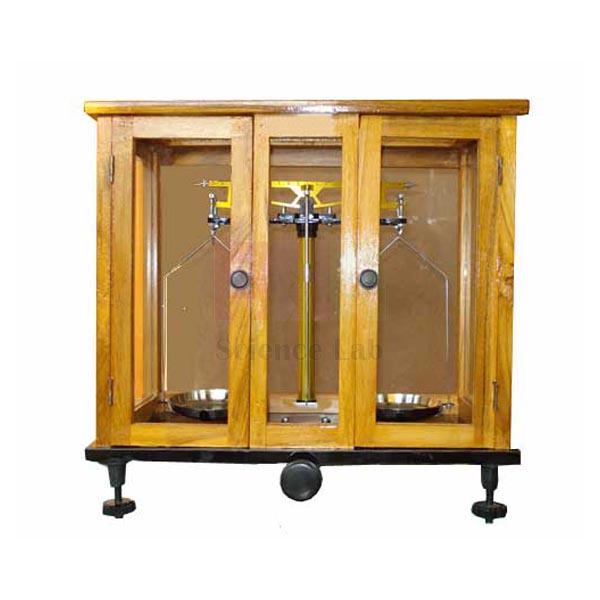
Analytical Balance
Analytical Balance (Product Code: SLE/LB/07) is a mechanical beam balance used for precise weighing in quantitative analysis at college, university and advanced school laboratories. It combines 200 g capacity and 0.1 mg sensitivity with a short triangular beam and rider scale, removable stirrup-hung pans and extended beam supports that relieve the agate knife edges at rest, in a fully glazed wooden case. It is made by Jain Scientific Equipments Pvt Ltd (ScienceLab), an OEM laboratory instrument manufacturer in India, at its own Ambala factory.
Specifications
| Parameter | Detail |
|---|---|
| Capacity | 200 g |
| Sensitivity | 0.1 mg |
| Beam | Short triangular beam with rider scale |
| Knife edges | Agate; relieved by extended beam supports when at rest |
| Pans | Removable, suspended by stirrups from double hooks |
| Pillar | Highly finished |
| Complete with | Rider slide and levelling screws |
| Case | Polished wooden case, fully glazed |
| Product code | SLE/LB/07 |
| Manufacturer | Jain Scientific Equipments Pvt Ltd (ScienceLab) — OEM |
| Country of origin | India (made in Ambala, Haryana) |
What Is the Analytical Balance Used For?
With 0.1 mg sensitivity, this balance handles the small, exact masses needed in quantitative analysis: weighing ignited precipitates in gravimetric estimations, preparing accurately known standard solutions, and determining the mass of small samples in B.Sc. and M.Sc. practicals. The rider slide and rider scale let the analyst find the final fraction of a milligram without adding tiny loose weights to the pan.
Place the balance on a firm, vibration-free bench and level it with the levelling screws before each session. Let hot crucibles cool to room temperature before weighing, handle masses only with forceps, and allow the beam supports to take the load off the knife edges whenever the pans are loaded or unloaded. The fully glazed case keeps dust and draughts away from the pans — a basic requirement for analytical lab instruments in India used for precise work.
OEM Manufacturer
Jain Scientific Equipments Private Limited, which carries the ScienceLab brand, is the OEM (original equipment manufacturer) of this Analytical Balance. Beam, pillar, stirrup pans and glazed case are made and assembled at the company’s own licensed factory at Saha, Ambala, Haryana, India. Universities, colleges and dealers deal with the maker directly, including for replacement parts or matching units later — details are on our company profile.
Related Balances
Items a quantitative analysis lab typically orders with this balance:
- Analytical Balance Mass Set — masses matched to analytical weighing
- Analytical Weight Box — a boxed set of weights for the balance room
- Balance Anti-Vibration Table — reduces bench vibration that disturbs sensitive readings
- Watch Glass — a clean container for weighing solids
- Chemical Balance — a 0.5 mg sensitivity model for routine student weighing
Compare all models in the Balances category.
Frequently Asked Questions
What are the capacity and sensitivity of the Analytical Balance?
The Analytical Balance has a capacity of 200 g and a sensitivity of 0.1 mg, which suits quantitative analysis such as gravimetric estimations and the preparation of accurately known standard solutions in college laboratories.
How are the knife edges of the Analytical Balance protected?
The Analytical Balance protects its agate knife edges with extended beam supports, which take the load off the knife edges whenever the balance is at rest and so reduce wear on these critical surfaces.
Why is the Analytical Balance case fully glazed?
The Analytical Balance has a fully glazed case so that the beam and pointer can be watched with the case closed, keeping draughts and dust away from the pans while a reading is being taken.
Are weights included with the Analytical Balance?
Weights are not listed as part of the Analytical Balance. The Analytical Balance Mass Set is available separately and can be quoted together with the balance for a complete weighing station.
Can the pans of the Analytical Balance be removed?
Yes. The pans of the Analytical Balance are removable and hang by stirrups from double hooks, so they can be lifted off for careful cleaning and rehung before the balance is levelled again with its levelling screws.
Who manufactures the Analytical Balance?
Jain Scientific Equipments Pvt Ltd (ScienceLab) manufactures the Analytical Balance (SLE/LB/07) as the OEM at its own licensed factory at Saha, Ambala, Haryana, India. Colleges, universities and dealers in India and international markets receive quotations straight from the manufacturer.
Is a calibration certificate available for the Analytical Balance?
A calibration certificate is not listed for the Analytical Balance. Please raise any calibration documentation requirement with our team through the contact page before ordering, and we will tell you what can be arranged.
Request a Quote
To obtain a quotation for the Analytical Balance, use our contact page or add it to the enquiry cart along with a mass set. Quotations are issued by the manufacturer directly.
Last updated: 24 September 2026
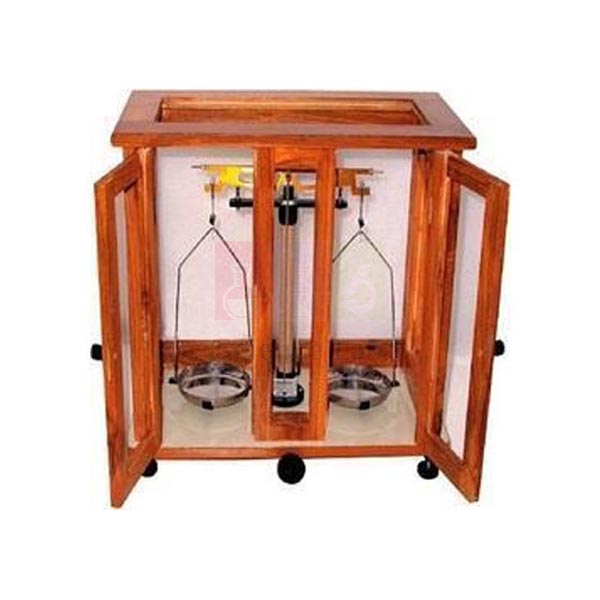
Physical Balance
Physical Balance (Product Code: SLE/LB/08) is a general purpose beam balance used by students to find mass and specific gravity in school and college physics practicals. It takes up to 250 g at 2 mg sensitivity, and its hangers carry double hooks so an object can be weighed while suspended in water. It is made by OEM manufacturer Jain Scientific Equipments Pvt Ltd (ScienceLab) at its own factory in Ambala, as part of its physics lab equipment in India.
Specifications
| Parameter | Detail |
|---|---|
| Capacity | 250 g |
| Sensitivity | 2 mg |
| Beam | Cast alloy, fitted with balancing nuts |
| Bearings | Agate bearings and knife edges |
| Pans | Detachable, nickel plated brass |
| Hangers | Double hooks for specific gravity experiments |
| Pillar | Enamelled central pillar |
| Levelling | Plumb line and levelling screws |
| Case | Polished wooden case |
| Product code | SLE/LB/08 |
| Manufacturer | Jain Scientific Equipments Pvt Ltd (ScienceLab) — OEM |
| Country of origin | India (made in Ambala, Haryana) |
What Is the Physical Balance Used For?
Physics students use this balance to find the mass of solids and, most often, to determine specific gravity (relative density). The object is first weighed in air from the pan; it is then hung by a thread from the lower hook of the double-hook hanger so that it sits fully immersed in a beaker of water placed beneath, and weighed again. The loss in weight gives the upthrust, and the ratio of the two readings gives the specific gravity — a classic Archimedes’ principle experiment for mechanics lab equipment in India.
Before each practical, adjust the levelling screws until the plumb line hangs centrally, then use the balancing nuts to bring the empty beam to zero. Load masses with forceps, starting with the largest, and let the pointer swing evenly on both sides of centre rather than waiting for it to stop. Detach and wipe the nickel plated brass pans after use, and store the balance with its case closed.
OEM Manufacturer
ScienceLab is the brand under which Jain Scientific Equipments Private Limited sells the Physical Balance, and the company is its OEM (original equipment manufacturer). The cast alloy beam, nickel plated brass pans and polished wooden case are brought together at the company’s own licensed factory at Saha, Ambala, Haryana, India. The balance goes factory-direct to schools, colleges, dealers and importers; read our company profile to learn more.
Related Balances
Items used with the physical balance in mass and specific gravity practicals:
- Physical Balance Mass Set — chrome-plated brass masses with forceps and fractional weights
- Metal Density Cube Set — ready-made samples for specific gravity and density experiments
- Physical Balance (Digital) — an electronic alternative for quick direct readings
- Chemical Balance — a 0.5 mg sensitivity beam balance for chemistry weighing
See more weighing instruments in our Balances category.
Frequently Asked Questions
Can the Physical Balance be used for specific gravity experiments?
Yes. The Physical Balance is suited to specific gravity experiments because its hangers have double hooks, so an object can hang below the pan and be weighed while fully immersed in a beaker of water.
How do I level the Physical Balance?
Level the Physical Balance by turning its levelling screws until the plumb line hangs centrally, then use the balancing nuts on the cast alloy beam to bring the empty beam to zero before any weighing begins.
What are the capacity and sensitivity of the Physical Balance?
The Physical Balance has a capacity of 250 g and a sensitivity of 2 mg, which covers the mass and specific gravity practicals commonly set for school and undergraduate physics students.
Are masses supplied with the Physical Balance?
Masses are not listed with the Physical Balance. The matching Physical Balance Mass Set, with chrome plated brass masses, forceps and light metal fractional weights in a lidded case, is available separately.
How is the Physical Balance different from a chemical balance?
The Physical Balance takes up to 250 g at 2 mg sensitivity and has double-hook hangers for specific gravity work, while our Chemical Balance is more sensitive and has a rider scale for finer chemistry weighing.
Who manufactures the Physical Balance?
Jain Scientific Equipments Pvt Ltd (ScienceLab) is the OEM manufacturer of the Physical Balance (SLE/LB/08). It is made at the company’s own licensed factory at Saha, Ambala, Haryana, India, and quoted factory-direct to schools, colleges and distributors.
Is a calibration certificate available for the Physical Balance?
A calibration certificate is not listed for the Physical Balance. If your lab needs calibration documentation, discuss it with our team through the contact page before ordering so we can advise what is possible.
Request a Quote
Request a quotation for the Physical Balance through our contact page, or add it and a mass set to the enquiry cart. Your quote comes straight from the manufacturer.
Last updated: 24 September 2026