- Physics Lab Equipment
- Chemistry Lab Equipment
- Biology Lab Equipment
- Anatomical Lab Equipment
- Learning
- Educational Lab Equipment
- Magnets
- Agriculture
- Astronomy
- Earth Science
- Geography Lab Equipment
- Safety Lab Coat
- Laboratory
- Meteorological
- Electricity & Magnetism
- Heat
- School Lab Equipment
- Lab Glassware
- Science Lab Equipment
- Tvet Lab Equipment
- Robotics Kits Supplier and Manufacturer for Schools India
- Math Lab Equipment Manufacturers and Exporters in Ambala
- STEM Kits Manufacturers and Supplier India
- Engineering Lab Equipment
- Hospital Lab Equipment
- Water, Sanitation & Hygiene Supplies
- Cold Chain, Solar & Communication Equipment
- Nutrition
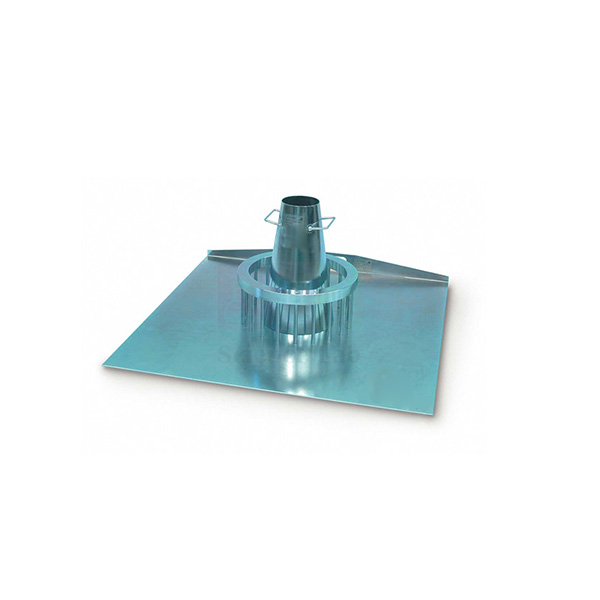
J Ring Apparatus
J Ring Apparatus (Product Code: SLE/CE/14) is a ring of vertical steel bars used with a slump cone to determine the passing ability, flow spread and flow time of self-compacting concrete in civil engineering and concrete technology laboratories. Its narrow-gap ring carries 16 smooth stainless steel bars of 18 mm diameter and is used on a 900 x 900 x 3 mm stainless steel base plate engraved with 200 mm and 500 mm circles. It is made by Jain Scientific Equipments Pvt Ltd (ScienceLab), an OEM vocational training lab equipment manufacturer in India, at its own factory in Ambala.
Specifications
| Parameter | Detail |
|---|---|
| Test | Passing ability, flow spread and flow time of self-compacting concrete |
| J-Ring | Narrow gap, 16 smooth bars of 18 mm diameter, stainless steel |
| Base plate | 900 x 900 x 3 mm square, stainless steel, engraved circles of 200 mm and 500 mm diameter |
| Slump cone | Sheet steel protected against corrosion; top 100 mm, base 200 mm, height 300 mm |
| Weighted collar | Steel; stabilises the slump cone during J-Ring or slump flow tests |
| Minimum apparatus | J-Ring with narrow gap and slump cone |
| Product code | SLE/CE/14 |
| Manufacturer | Jain Scientific Equipments Pvt Ltd (ScienceLab) — OEM |
| Country of origin | India (made in Ambala, Haryana) |
What Is the J Ring Test Used For?
Self-compacting concrete has to flow through closely spaced reinforcement on its own, without blocking or leaving aggregate behind. The J-Ring recreates that situation: the slump cone stands on the engraved 200 mm circle of the damp base plate, surrounded by the ring of bars, and is held down by the weighted collar while it is filled. When the cone is lifted, the concrete spreads out through the bars.
The operator records the time for the concrete to reach the 500 mm circle, measures the final spread, and compares it with a slump flow test without the ring to judge passing ability. Coarse aggregate heaped behind the bars is a warning sign of blocking. Keep the base plate level and clean it straight after each test so the engraved circles stay readable.
What to Specify When Ordering
- Components required: J-Ring, slump cone, base plate and weighted collar (the J-Ring and slump cone are the minimum).
- Number of sets for your laboratory or class.
- Any other self-compacting concrete tests you plan, so a complete set can be quoted.
OEM Manufacturer
Jain Scientific Equipments Private Limited, whose trading name is ScienceLab, is the OEM (original equipment manufacturer) of this J-Ring apparatus. The ring, base plate, cone and collar are fabricated at the company's own licensed factory at Saha, Ambala, Haryana, India, and supplied factory-direct to engineering colleges, ready-mix and research laboratories, dealers and importers.
With the manufacturer as your supplier, a replacement cone, collar or base plate and repeat sets can be arranged directly — ask us. Read about the company on the ScienceLab company profile.
Related Civil Engineering Lab Equipment
Other self-compacting concrete tests that complement the J-Ring:
- U Shape Box Apparatus — checks filling and passing ability through a gate of rebars.
- L-Box Apparatus — measures passing ability with adjustable bar spacing.
- V Funnel Test Apparatus — evaluates flow time through a funnel.
- Fill Box Apparatus — assesses filling ability in a transparent container.
See all Civil Engineering Lab Equipment.
Frequently Asked Questions
What does the J Ring Apparatus measure?
The J Ring Apparatus determines the passing ability, flow spread and flow time of self-compacting concrete as it flows from a lifted slump cone through a ring of vertical bars, showing whether the mix can pass reinforcement without blocking.
What bars does the J-Ring have?
The J Ring Apparatus uses a narrow-gap ring with 16 smooth bars of 18 mm diameter, made from stainless steel. The bars represent reinforcement that self-compacting concrete must flow through in a real structure.
What components make up the J Ring Apparatus?
The J Ring Apparatus comprises the narrow-gap J-Ring, a slump cone, a 900 x 900 x 3 mm stainless steel base plate and a steel weighted collar. The J-Ring and slump cone are the minimum apparatus, so tell us which components you need.
What is the weighted collar for?
The steel weighted collar in the J Ring Apparatus sits on the slump cone and stabilises it while the cone is filled, both in the J-Ring test and in a plain slump flow test, so the operator does not have to hold the cone down.
Who manufactures the J Ring Apparatus?
The J Ring Apparatus is manufactured by Jain Scientific Equipments Pvt Ltd (ScienceLab), the OEM, at its own licensed factory at Saha, Ambala, Haryana, India, and supplied factory-direct to institutions, laboratories, dealers and importers.
Can the J Ring Apparatus be ordered with other SCC test equipment?
Yes, the J Ring Apparatus can be quoted together with other self-compacting concrete test items for institutions, dealers and importers in India and international markets. List the items and quantities on the contact page.
Request a Quote
For a quotation on the J Ring Apparatus straight from the manufacturer, write to us through the contact page or add it to the enquiry cart.
Last updated: 24 September 2026
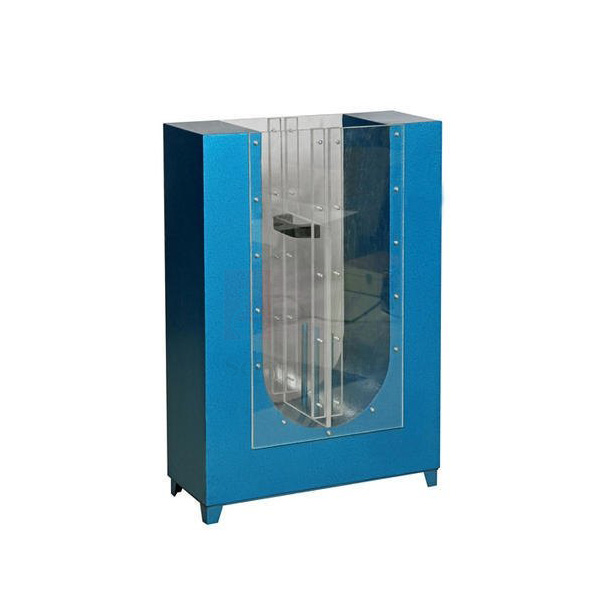
U Shape Box Apparatus
U Shape Box Apparatus (Product Code: SLE/CE/15) is a two-section stainless steel box used to determine the filling and passing ability of self-compacting concrete (SCC) in civil engineering and concrete technology laboratories. About 20 litres of concrete placed in one section flows up through a gate fitted with three 12 mm rebars into the other, and the concrete heights in both sections are then measured. It is made by Jain Scientific Equipments Pvt Ltd (ScienceLab), an OEM scientific laboratory apparatus manufacturer in India, at its own factory in Ambala.
Specifications
| Parameter | Detail |
|---|---|
| Test | Filling and passing ability of self-compacting concrete |
| Box material | Stainless steel (a stiff, non-absorbing material) |
| Mounting | On a frame with a fixing mechanism |
| Gate reinforcement | Three 12 mm diameter rebars, listed at 50 mm centre-to-centre with 35 mm clear spacing (confirm the exact gate configuration when ordering) |
| Concrete per test | About 20 litres, filled into the left-hand section |
| Measurement | Height of concrete in both sections after the gate is lifted |
| Other equipment for the test | Scoop, trowel and stopwatch |
| Product code | SLE/CE/15 |
| Manufacturer | Jain Scientific Equipments Pvt Ltd (ScienceLab) — OEM |
| Country of origin | India (made in Ambala, Haryana) |
What Is the U-Box Test Used For?
Self-compacting concrete has to fill every corner of the formwork and pass between bars under nothing but its own weight. The U-box checks both properties at once. The left-hand section is filled with about 20 litres of fresh concrete using the scoop and trowel, the gate is lifted, and the concrete flows through the rebars and rises into the right-hand section.
Once the flow stops, the concrete height in each section is measured; the closer the two heights, the better the mix fills and passes. The stopwatch lets the lab note how quickly the concrete moves. Dampen the inside of the box before each test, set the frame on firm, level ground, and wash the box out before the concrete sets.
OEM Manufacturer
ScienceLab, the trading name of Jain Scientific Equipments Private Limited, is the OEM (original equipment manufacturer) of this U-box. The stainless steel box, gate and frame are fabricated at the company's own licensed factory at Saha, Ambala, Haryana, India, and the apparatus is supplied factory-direct to engineering colleges, ready-mix and precast laboratories, dealers and importers.
Gate parts, repeat units and technical queries are handled by the manufacturer directly — ask us. On the paperwork side, the company's Udyam registration (UDYAM-HR-01-0003714) records manufacturing as its major activity, and export consignments move under its DGFT Importer-Exporter Code AAECJ8618A. More on the ScienceLab company profile.
Related Civil Engineering Lab Equipment
Other self-compacting concrete tests and tools:
- J Ring Apparatus — passing ability, flow spread and flow time with a ring of bars.
- L-Box Apparatus — passing ability with adjustable bar spacing.
- V Funnel Test Apparatus — flow time of fresh SCC through a funnel.
- Scoops — for filling the box with fresh concrete.
Explore the complete Civil Engineering Lab Equipment range.
Frequently Asked Questions
What does the U Shape Box Apparatus measure?
The U Shape Box Apparatus measures the filling and passing ability of self-compacting concrete. Concrete flows from one section, through a gate of rebars, up into the other section, and the concrete heights in the two sections show how well the mix fills and passes.
How much concrete does a U-box test need?
A test in the U Shape Box Apparatus uses about 20 litres of fresh concrete, filled into the left-hand section before the gate is lifted. Prepare a little extra so the section can be filled completely in one go.
What reinforcement is fitted at the gate?
The gate of the U Shape Box Apparatus is fitted with three 12 mm diameter rebars, listed at 50 mm centre-to-centre with 35 mm clear spacing. Please confirm the exact gate configuration your test method requires when you request a quotation.
What other equipment is needed for the U-box test?
Besides the U Shape Box Apparatus itself, the test calls for a scoop, a trowel and a stopwatch. Tell us through the contact page if you want these quoted with the box.
Who manufactures the U Shape Box Apparatus?
The U Shape Box Apparatus is manufactured by Jain Scientific Equipments Pvt Ltd (ScienceLab), the OEM, at its own licensed factory at Saha, Ambala, Haryana, India, and supplied factory-direct to institutions, laboratories, dealers and importers.
What is the U-box made of?
The U Shape Box Apparatus is made of stainless steel, a stiff and non-absorbing material that does not draw water out of the concrete, and is mounted on a frame with a fixing mechanism that holds the box steady during the test.
Request a Quote
Request a quotation for the U Shape Box Apparatus direct from the manufacturer through the contact page, or add it to the enquiry cart. Bulk and export enquiries are welcome.
Last updated: 24 September 2026
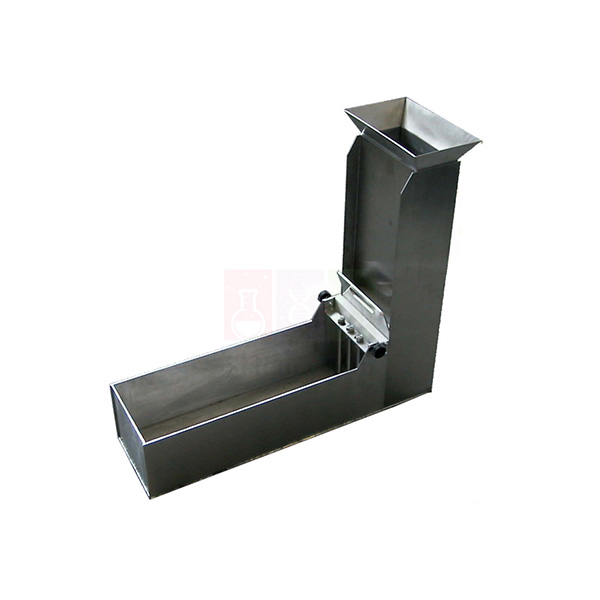
L-Box Apparatus
L-Box Apparatus (Product Code: SLE/CE/16) is an L-shaped test box used to measure the passing ability of freshly mixed self-compacting concrete in civil engineering and concrete technology laboratories. Colleges, research labs and site quality teams use it to see whether an SCC mix can flow through a screen of 12 mm diameter bars set 41 ± 1 mm or 59 ± 1 mm apart. It is made by Jain Scientific Equipments Pvt Ltd (ScienceLab), an OEM manufacturer of engineering lab equipment in India, at its own factory in Ambala.
Specifications
| Parameter | Detail |
|---|---|
| Test property | Passing ability of freshly mixed self-compacting concrete (SCC) |
| Obstacle bars | 12 mm diameter |
| Distance between bars | Can be set at 41 ± 1 mm or 59 ± 1 mm |
| Hoppers | Vertical and horizontal hoppers designed for ease of cleaning |
| Supplied complete with | Filling hopper and base |
| Product code | SLE/CE/16 |
| Manufacturer | Jain Scientific Equipments Pvt Ltd (ScienceLab) — OEM |
| Country of origin | India (made in Ambala, Haryana) |
What Is the L-Box Used For?
The L-box test shows whether self-compacting concrete will pass between closely spaced reinforcement without blocking or separating. The fresh sample is placed in the vertical section; once released, it flows through the bar screen and along the horizontal section, and the concrete heights at the two ends of that horizontal run are compared to express passing ability.
The 41 mm gap imitates more congested reinforcement and is the more demanding setting, while the 59 mm gap suits less congested sections, so set the spacing your mix design or test method calls for. Stand the box on a firm, level surface and wash both hoppers straight after each test so hardened paste does not affect the next result. It is a core item of engineering educational equipment in India for SCC mix trials and final-year project work.
OEM Manufacturer
ScienceLab is the trading name of Jain Scientific Equipments Private Limited, and the company is the OEM (original equipment manufacturer) of this L-Box Apparatus. The box is made and assembled at its own licensed factory at Saha, Ambala, Haryana, India, rather than bought in from a trader. Engineering colleges, polytechnics, research laboratories, dealers and importers therefore deal directly with the maker for supply, repeat orders and replacement parts — just ask us. Read more on the ScienceLab company profile.
Related Civil Engineering Lab Equipment
Self-compacting concrete is normally judged with several fresh-concrete tests, so these items from the same range are often ordered with the L-box for a complete SCC test bench.
- J Ring Apparatus — a second passing-ability check that works together with the slump-flow test.
- V Funnel Test Apparatus — times the flow of the same SCC batch.
- U Shape Box Apparatus — an alternative box test for SCC.
- Fill Box Apparatus — checks how well the mix fills a container under its own weight.
- Slump Test Apparatus — for routine workability checks on fresh concrete.
Browse the full Civil Engineering Lab Equipment range for concrete, cement, soil and aggregate testing.
Frequently Asked Questions
What does the L-Box Apparatus measure?
The L-Box Apparatus measures the passing ability of freshly mixed self-compacting concrete: how well the mix flows through a screen of 12 mm diameter bars into the horizontal section without blocking, which tells a lab whether the SCC will pass congested reinforcement.
What bar spacing can be set on the L-Box Apparatus?
The distance between the 12 mm diameter bars of the L-Box Apparatus can be set at 41 ± 1 mm or 59 ± 1 mm. The narrower gap gives the more severe passing test; the wider gap suits concrete meant for less congested reinforcement.
What is supplied with the L-Box Apparatus?
The L-Box Apparatus is supplied complete with its filling hopper and base, and its vertical and horizontal hoppers are designed for ease of cleaning. If you also need other SCC test apparatus, list it in the same enquiry so everything is quoted together.
Who manufactures the L-Box Apparatus?
The L-Box Apparatus is manufactured by Jain Scientific Equipments Pvt Ltd (ScienceLab) as the OEM, at the company's own licensed factory at Saha, Ambala, Haryana, India. Quotations, repeat supply and replacement-part enquiries are handled directly by the manufacturer.
How should the L-Box Apparatus be cleaned after a test?
Clean the L-Box Apparatus immediately after each test, before the cement paste starts to set. Its vertical and horizontal hoppers are designed for ease of cleaning, so washing the hoppers and bar screen with water and a soft brush keeps later readings dependable.
What should a quotation request for the L-Box Apparatus include?
A quotation request for the L-Box Apparatus should state the product code SLE/CE/16, the quantity, the delivery location and any other self-compacting concrete test apparatus you need. Send it through the contact page or the enquiry cart for a reply from the manufacturer.
Does ScienceLab supply the L-Box Apparatus for export?
Yes. ScienceLab supplies the L-Box Apparatus to laboratories, institutions, dealers and importers in India and international markets. For bulk or export orders, share the quantity and destination country in your enquiry so the quotation can cover delivery.
Request a Quote
To order the L-Box Apparatus (SLE/CE/16), send your requirement through the contact page or add it to the enquiry cart. Quotations come straight from the manufacturer, Jain Scientific Equipments Pvt Ltd (ScienceLab), Ambala.
Last updated: 24 September 2026
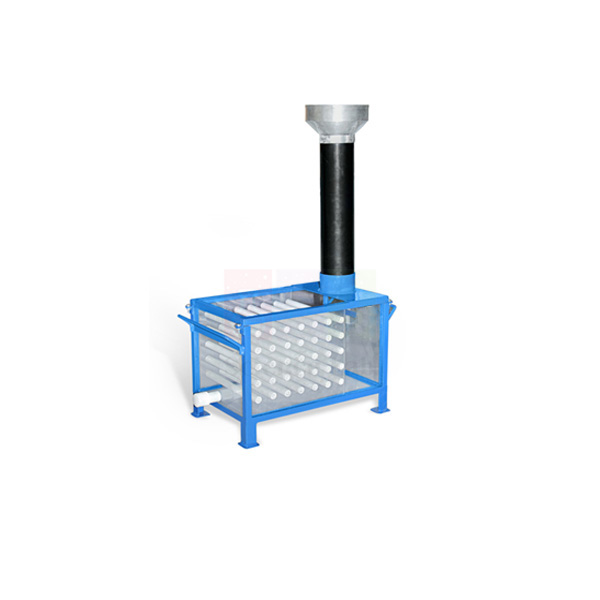
Fill Box Apparatus
Fill Box Apparatus (Product Code: SLE/CE/17) is a transparent test container used to measure the filling ability of self-compacting concrete in concrete technology and civil engineering laboratories. It is intended for SCC with a maximum aggregate size of 20 mm, and its see-through walls let students and technicians watch how completely the mix fills the box. Jain Scientific Equipments Pvt Ltd (ScienceLab) builds it as the OEM at its own factory in Ambala, India.
Specifications
| Parameter | Detail |
|---|---|
| Test property | Filling ability of self-compacting concrete |
| Maximum aggregate size | 20 mm |
| Container | Transparent, with a flat and smooth surface |
| Dimensions | 500 × 300 × 900 mm |
| Weight (approx.) | 5 kg |
| Product code | SLE/CE/17 |
| Manufacturer | Jain Scientific Equipments Pvt Ltd (ScienceLab) — OEM |
| Country of origin | India (made in Ambala, Haryana) |
What Is the Fill Box Used For?
Filling ability describes how well self-compacting concrete flows into and fills every part of a formwork space under its own weight, with no vibration. In the fill box test the mix is poured into the container and allowed to settle by itself; because the walls are transparent, the operator can see voids, blockages or uneven levels and compare one mix design with another.
Before testing, confirm the coarse aggregate is within the 20 mm limit, since larger stones make the result meaningless. At about 5 kg the box is easy to carry between the mixing area and the wash-down point, but clean it with water and soft cloths rather than scrapers so the flat, smooth surface stays clear. Labs choosing an engineering lab equipment manufacturer for SCC work often order the fill box together with the related apparatus listed below.
OEM Manufacturer
Jain Scientific Equipments Private Limited, which trades as ScienceLab, is the original equipment manufacturer (OEM) of the Fill Box Apparatus and produces it at its licensed factory in Saha, Ambala, Haryana. Because the box comes factory-direct, engineering colleges, testing laboratories, dealers and importers receive quotations and follow-up support from the people who make it. Questions about matching repeat orders or replacement parts can be sent straight to us. Company background is on the ScienceLab company profile.
Related Civil Engineering Lab Equipment
A fill box result is usually read alongside other self-compacting concrete tests carried out on the same batch.
- L-Box Apparatus — checks passing ability through a screen of bars.
- V Funnel Test Apparatus — records flow time as an indicator of viscosity.
- U Shape Box Apparatus — another box-type SCC test for comparison.
- Test Sieves — confirm the aggregate is within the 20 mm limit before testing.
- Scoops — for sampling and transferring fresh concrete.
See every item in Civil Engineering Lab Equipment for fresh and hardened concrete testing.
Frequently Asked Questions
What does the Fill Box Apparatus test?
The Fill Box Apparatus tests the filling ability of self-compacting concrete, showing how completely a mix flows into and fills a confined space under its own weight. The transparent container lets the operator see gaps or uneven filling directly.
What aggregate size is the Fill Box Apparatus suitable for?
The Fill Box Apparatus is used for self-compacting concrete with a maximum aggregate size of 20 mm. Sieve the aggregate first if you are unsure, because stones larger than 20 mm fall outside the scope of this fill box test.
What are the dimensions and weight of the Fill Box Apparatus?
The Fill Box Apparatus measures 500 × 300 × 900 mm and weighs approximately 5 kg. The container is transparent with a flat and smooth surface, so it is light enough to move and easy to inspect during a test.
Who manufactures the Fill Box Apparatus?
Jain Scientific Equipments Pvt Ltd (ScienceLab) manufactures the Fill Box Apparatus as the OEM at its own licensed factory in Saha, Ambala, Haryana, India, and supplies it factory-direct to laboratories, colleges, dealers and importers.
How should the transparent Fill Box Apparatus be cared for?
Wash the Fill Box Apparatus with water and a soft cloth as soon as the test ends, before cement paste hardens. Avoid scrapers or abrasive pads, which can scratch the flat, smooth transparent surface and make later observations harder.
What details are needed for a Fill Box Apparatus quotation?
For a Fill Box Apparatus quotation, give the product code SLE/CE/17, the number of units, the delivery address and any companion SCC apparatus you need. Send the request via the contact page and the manufacturer will reply directly.
Request a Quote
Request a quotation for the Fill Box Apparatus (SLE/CE/17) through the contact page, or add it to the enquiry cart with your other items. Quotations are issued direct by the manufacturer, Jain Scientific Equipments Pvt Ltd (ScienceLab).
Last updated: 24 September 2026
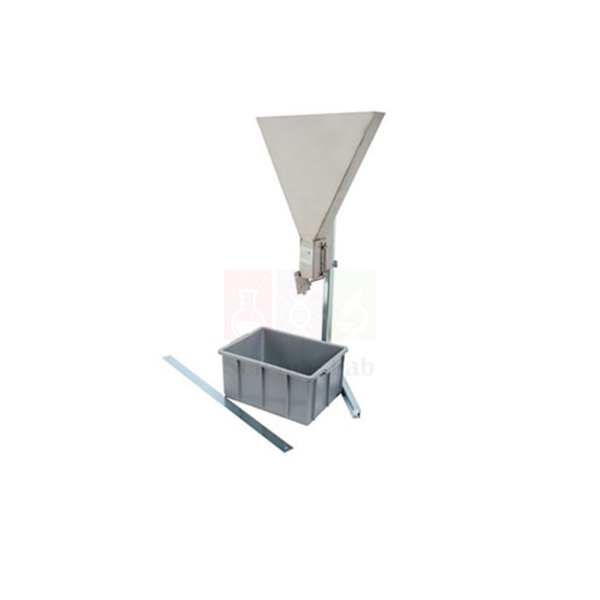
V Funnel Test Apparatus
V Funnel Test Apparatus (Product Code: SLE/CE/18) is a stainless steel funnel on a supporting stand used to evaluate the flow time of freshly mixed self-compacting concrete in concrete testing laboratories. Mix designers and students use the flow time as a practical indicator of SCC flowability; the test is not suitable when the maximum aggregate size exceeds 22.4 mm. It is manufactured by Jain Scientific Equipments Pvt Ltd (ScienceLab), the OEM, at its own factory in Ambala, India.
Specifications
| Parameter | Detail |
|---|---|
| Test property | Flow time of freshly mixed self-compacting concrete |
| Funnel | Stainless steel, placed vertically on a supporting stand |
| Discharge | Equipped with a lid that can be momentarily opened |
| Aggregate limit | Not suitable when the maximum aggregate size exceeds 22.4 mm |
| Product code | SLE/CE/18 |
| Manufacturer | Jain Scientific Equipments Pvt Ltd (ScienceLab) — OEM |
| Country of origin | India (made in Ambala, Haryana) |
What Is the V Funnel Test Used For?
The funnel is filled with fresh self-compacting concrete while the discharge lid is closed. The lid is then opened and the time taken for the concrete to flow out is recorded: a short flow time points to a very fluid mix, while a long time suggests a more viscous concrete or one that is starting to block at the outlet.
Dampen the inside of the funnel before filling so a dry surface does not hold back the first part of the flow, and keep a stopwatch ready for the moment the lid opens. Some laboratories repeat the test after the concrete has rested in the funnel to look for signs of segregation. As test and measurement instruments in India go, the V funnel is one of the simplest ways to compare SCC mixes side by side.
OEM Manufacturer
ScienceLab is the brand name of Jain Scientific Equipments Private Limited, the OEM that makes this V Funnel Test Apparatus at its own licensed factory at Saha, Ambala, Haryana, India. Buying from the original equipment manufacturer means one point of contact for the funnel, its stand and any later replacement parts, so ask us whenever you need them. The company supplies civil engineering departments, testing labs, dealers and importers directly. Find out more on the ScienceLab company profile.
Related Civil Engineering Lab Equipment
The V funnel is one part of a self-compacting concrete test programme; these related items cover the other properties usually checked on the same batch.
- Slump Test Apparatus — for slump-type workability checks on fresh concrete.
- L-Box Apparatus — measures passing ability through reinforcement bars.
- J Ring Apparatus — a quick passing-ability check.
- U Shape Box Apparatus — a box test for comparing SCC mixes.
- Scoops — for filling the funnel with the fresh sample.
The complete Civil Engineering Lab Equipment range lists apparatus for concrete, cement, soil and bitumen testing.
Frequently Asked Questions
What does the V Funnel Test Apparatus measure?
The V Funnel Test Apparatus measures the flow time of freshly mixed self-compacting concrete, meaning the time the concrete takes to run out of the stainless steel funnel once the discharge lid is opened. Flow time helps compare the flowability of SCC mixes.
What aggregate size can be tested in the V Funnel Test Apparatus?
The V Funnel Test Apparatus is not suitable for concrete whose maximum aggregate size exceeds 22.4 mm. For mixes with larger stones, choose a different workability test, because oversized aggregate can block the funnel outlet and distort the flow time.
What is the V Funnel Test Apparatus made of?
The V Funnel Test Apparatus consists of a stainless steel funnel placed vertically on a supporting stand. Its discharge is equipped with a lid that can be momentarily opened, which lets the operator start the flow at a precise moment for timing.
Who manufactures the V Funnel Test Apparatus?
The V Funnel Test Apparatus is manufactured by Jain Scientific Equipments Pvt Ltd (ScienceLab), the OEM, at its licensed factory at Saha, Ambala, Haryana, India. Quotations and replacement-part enquiries come directly from the manufacturer.
What else is needed to run a V funnel test?
To run a test with the V Funnel Test Apparatus you also need a stopwatch to time the discharge, a container to catch the concrete, and a scoop or bucket to fill the funnel. Mention any of these you need in the same enquiry.
How do I get a quotation for the V Funnel Test Apparatus?
To get a quotation for the V Funnel Test Apparatus, send the product code SLE/CE/18, quantity and delivery location through the contact page or the enquiry cart. Buyers in India and international markets receive the quote directly from the manufacturer.
Request a Quote
For a quotation on the V Funnel Test Apparatus (SLE/CE/18), use the contact page or the enquiry cart. Quotations and supply terms come direct from the manufacturer, Jain Scientific Equipments Pvt Ltd (ScienceLab), Ambala.
Last updated: 24 September 2026
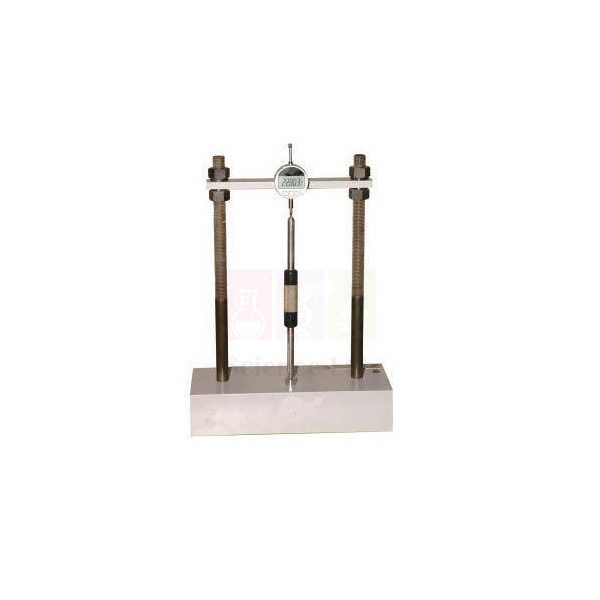
Volume Change Apparatus
Volume Change Apparatus (Product Code: SLE/CE/19) is a mould-and-comparator set used to measure the change in length of cement mortar and concrete specimens as they shrink or expand, in materials testing laboratories. It combines a specimen mould with base plate and four reference pins with a length comparator frame whose dial gauge reads 0.002 mm over 5 mm. Jain Scientific Equipments Pvt Ltd (ScienceLab) makes the set as the OEM at its own factory in Ambala, India.
Specifications
| Parameter | Detail |
|---|---|
| Mould | One mould (effective gauge length) complete with base plate |
| Reference pins | Four |
| Length comparator frame | One |
| Reference bar | One stainless reference bar with insulated grip |
| Dial gauge | One, 0.002 mm × 5 mm |
| Product code | SLE/CE/19 |
| Manufacturer | Jain Scientific Equipments Pvt Ltd (ScienceLab) — OEM |
| Country of origin | India (made in Ambala, Haryana) |
What Is the Volume Change Apparatus Used For?
Volume change in hardened cement mortar and concrete is usually tracked as a change in specimen length. The reference pins are set into the ends of the specimen when it is cast, giving fixed gauge points; after demoulding, the specimen is placed in the comparator frame and its length is read on the dial gauge, then read again at intervals as it dries, cures or is exposed to test conditions.
Zero the comparator with the stainless reference bar before each set of readings. The insulated grip matters: holding the bar or specimen with bare hands warms it and adds error at the 0.002 mm level. Keep the comparator in the same room as the specimens. Buyers comparing lab instruments manufacturers in India will find the complete set saves matching a mould and comparator from different sources.
OEM Manufacturer
ScienceLab is the trading name of Jain Scientific Equipments Private Limited, the OEM (original equipment manufacturer) of the Volume Change Apparatus. The mould, pins, comparator frame and reference bar are supplied as one set from the company's own licensed factory at Saha, Ambala, Haryana, India, so the parts are matched from the start. For institutional and tender buyers who need vendor details, the company is registered under GSTIN 06AAECJ8618A1ZT and holds LEI 3358004HRD1JIVXKYX49. More about the company is on the ScienceLab company profile.
Related Civil Engineering Lab Equipment
These items support the same shrinkage and length-change workflow, from casting and curing specimens to taking repeat measurements.
- Length Comparator Digital — a standalone comparator for additional specimens.
- Prism Mould Three Gang — for casting mortar prisms.
- Beam Mould — for casting concrete beam specimens.
- Cement curing bench-type cabinet — keeps specimens in controlled conditions between readings.
- Demountable Mechanical Strain Gauge — measures length variation on larger elements.
Explore the wider Civil Engineering Lab Equipment range for cement, mortar and concrete testing.
Frequently Asked Questions
What does the Volume Change Apparatus measure?
The Volume Change Apparatus measures the change in length of cement mortar or concrete specimens over time, which indicates shrinkage or expansion. Readings are taken between reference pins in the specimen using a length comparator frame and dial gauge.
What is included in the Volume Change Apparatus set?
The Volume Change Apparatus comprises one mould complete with base plate, four reference pins, one length comparator frame, one stainless reference bar with insulated grip and one dial gauge of 0.002 mm × 5 mm.
What is the resolution of the Volume Change Apparatus dial gauge?
The dial gauge supplied with the Volume Change Apparatus reads 0.002 mm and has a travel of 5 mm. That resolution is fine enough to follow small shrinkage or expansion movements in mortar and concrete specimens.
What gauge length does the Volume Change Apparatus mould have?
The effective gauge length of the Volume Change Apparatus mould is not stated in this listing. Tell us the test method or specimen size you work to through the contact page, and the gauge length will be confirmed in writing with your quotation.
Who manufactures the Volume Change Apparatus?
The Volume Change Apparatus is manufactured by Jain Scientific Equipments Pvt Ltd (ScienceLab) as the OEM at its own licensed factory in Saha, Ambala, Haryana, India. The company handles quotations, repeat supply and spare-part enquiries itself.
Is a calibration certificate available for the Volume Change Apparatus dial gauge?
Calibration-certificate availability for the Volume Change Apparatus dial gauge should be discussed with us before ordering. Mention the requirement in your enquiry through the contact page so it can be addressed in the quotation.
Request a Quote
To buy the Volume Change Apparatus (SLE/CE/19), send your quantity and delivery details via the contact page or the enquiry cart. Quotations are prepared directly by the manufacturer, Jain Scientific Equipments Pvt Ltd (ScienceLab).
Last updated: 24 September 2026
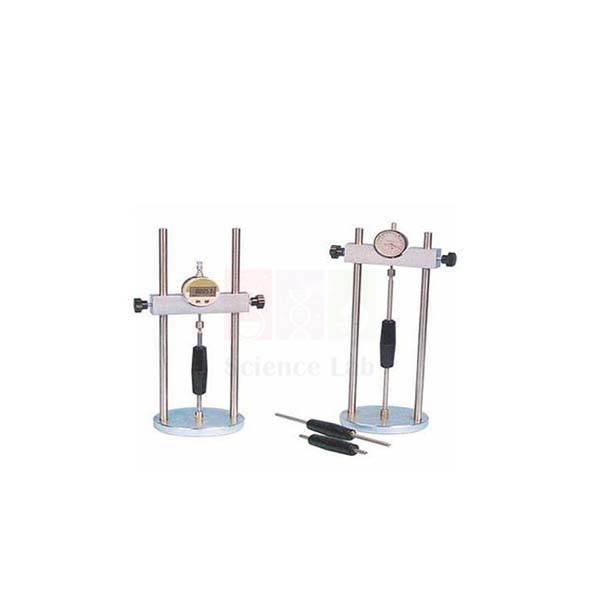
Length Comparator Digital
Length Comparator Digital (Product Code: SLE/CE/20) is a bench measuring frame used to record small changes in the length of mortar and concrete specimens in materials testing laboratories. It locates the specimen on 6.5 mm diameter balls or other reference points, reads length on a gauge graduated to 0.002 mm over 5 mm, and can take an electronic dial gauge when requested at the time of order. Jain Scientific Equipments Pvt Ltd (ScienceLab) produces it as the OEM at its own factory in Ambala, India.
Specifications
| Parameter | Detail |
|---|---|
| Base | Channelled or round base with two vertical pillars |
| Top | Adjustable cross plate |
| Specimen seating | Recessed seating on the base for a second ball or reference point in the specimen |
| Gauge | Dial gauge reading to 0.002 mm × 5 mm; balls mounted in the ends |
| Reference point | Locates on a 6.5 mm diameter ball or other reference point cemented in the specimen |
| Standardisation bar | Stainless steel, with insulated grip and 6.5 mm diameter |
| Electronic option | Electronic dial gauge available as an optional extra, if indicated when the order is placed |
| Product code | SLE/CE/20 |
| Manufacturer | Jain Scientific Equipments Pvt Ltd (ScienceLab) — OEM |
| Country of origin | India (made in Ambala, Haryana) |
What Is the Length Comparator Used For?
A length comparator measures a specimen between two fixed reference points, usually balls or studs cemented into the ends of a mortar or concrete bar. The specimen sits in the recessed seating on the base while the gauge on the adjustable cross plate bears on the upper reference point, so the same length can be re-measured accurately over days or weeks of drying, wetting or expansion testing.
Before each series, set the reading with the stainless steel standardisation bar and hold it only by its insulated grip so hand warmth does not change its length. Laboratories that prefer digital measuring instruments in India can ask for the electronic dial gauge instead of the standard dial, but it must be stated when ordering.
What to Specify When Ordering
- Base style: channelled or round.
- Gauge type: the standard dial gauge reading to 0.002 mm × 5 mm, or the optional electronic dial gauge.
- Reference points used in your specimens: 6.5 mm diameter balls or another type of cemented reference point.
- Number of comparators needed for your specimen programme.
OEM Manufacturer
Jain Scientific Equipments Private Limited, trading as ScienceLab, manufactures the Length Comparator Digital as an OEM product at its licensed factory at Saha, Ambala, Haryana. Because the comparator comes straight from the original equipment manufacturer, questions about the base style, the electronic gauge option or later replacement parts go to the team that makes it. Schools of engineering, testing laboratories, dealers and importers are all supplied factory-direct. See the ScienceLab company profile for company details.
Related Civil Engineering Lab Equipment
Specimen casting, conditioning and measurement all feed into the same length-change results; these related items fill the other steps.
- Volume Change Apparatus — a complete set with mould, reference pins and comparator frame.
- Prism Mould Three Gang — for casting mortar prisms to be measured.
- Demountable Mechanical Strain Gauge — for length variation on larger elements.
- Humidity Chamber — for conditioning specimens between readings.
- Cement curing bench-type cabinet — for curing specimens before measurement.
The Civil Engineering Lab Equipment category lists further apparatus for cement, concrete and soil laboratories.
Frequently Asked Questions
What does the Length Comparator Digital measure?
The Length Comparator Digital measures small changes in the length of mortar or concrete specimens between two reference points, such as 6.5 mm diameter balls cemented in the ends. Repeated readings show shrinkage or expansion over time.
Does the Length Comparator Digital come with an electronic gauge?
The Length Comparator Digital is listed with a dial gauge reading to 0.002 mm × 5 mm. An electronic dial gauge can be supplied as an optional extra, but only if it is indicated at the time of placing the order.
What base options does the Length Comparator Digital have?
The Length Comparator Digital is built on a channelled or a round base carrying two vertical pillars and an adjustable cross plate. State which base you prefer in your enquiry so the quotation matches your laboratory layout.
What is the standardisation bar used for on the Length Comparator Digital?
The stainless steel standardisation bar sets the reference reading of the Length Comparator Digital before specimens are measured. Its insulated grip stops hand warmth from changing the bar length, which matters when readings are taken to 0.002 mm.
Who manufactures the Length Comparator Digital?
The Length Comparator Digital is manufactured by Jain Scientific Equipments Pvt Ltd (ScienceLab) as the OEM at its licensed factory in Saha, Ambala, Haryana, India, and is supplied factory-direct to institutions, dealers and importers.
Can a calibration certificate be provided with the Length Comparator Digital?
Whether a calibration certificate can accompany the Length Comparator Digital should be discussed with us before you order. Mention it in your enquiry on the contact page so it is covered in the quotation.
Request a Quote
Ask for a quotation on the Length Comparator Digital (SLE/CE/20) through the contact page or the enquiry cart, stating the base style and gauge type you need. The quote comes direct from the manufacturer, Jain Scientific Equipments Pvt Ltd (ScienceLab).
Last updated: 24 September 2026
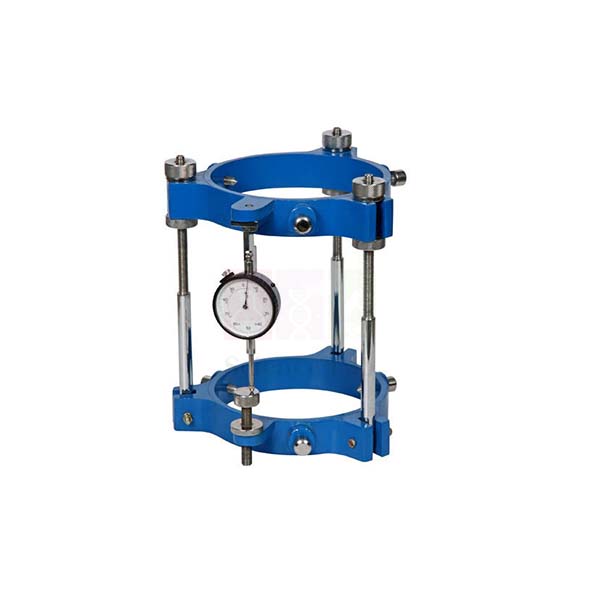
Longitudinal Compressometer
Longitudinal Compressometer (Product Code: SLE/CE/21) is a ring-type strain-measuring frame used to record the axial shortening of concrete cylinders under compressive load in structural and materials testing laboratories. Students and testing engineers clamp its top and bottom rings onto the cylinder and read deformation on a 0.002 mm dial gauge, the data needed for a stress–strain curve. It is made by Jain Scientific Equipments Pvt Ltd (ScienceLab), an OEM manufacturer, at its own factory in Ambala, India.
Specifications
| Parameter | Detail |
|---|---|
| Frame | Bottom ring and top ring |
| Clamping | Tightening screws clamp the compressometer firmly over the cylinder |
| Dial gauge | 0.002 mm × 5 mm, mounted on the upper ring |
| Gauge contact | Dial gauge tip rests on an anvil |
| Zero setting | By adjusting the anvil screw |
| Case | Supplied in a wooden carrying case |
| Product code | SLE/CE/21 |
| Manufacturer | Jain Scientific Equipments Pvt Ltd (ScienceLab) — OEM |
| Country of origin | India (made in Ambala, Haryana) |
What Is the Longitudinal Compressometer Used For?
The compressometer is fitted to a concrete cylinder before it goes into the compression testing machine. As load is applied in steps, the rings move closer together and the dial gauge shows the shortening between them; dividing that change by the gauge length gives strain, and plotting stress against strain gives the static modulus of elasticity of the concrete.
Tighten the ring screws evenly so the frame sits square on the cylinder, then set zero with the anvil screw before loading starts. Remove the instrument before the specimen is taken to failure to protect the gauge. Used with a lateral extensometer on the same cylinder, it also supports Poisson's ratio experiments — one reason civil engineering colleges often order both from the same scientific instruments manufacturer in India.
OEM Manufacturer
ScienceLab, the trading name of Jain Scientific Equipments Private Limited, is the OEM of the Longitudinal Compressometer and makes it at its own licensed factory at Saha, Ambala, Haryana, India. Buying from the original manufacturer means the rings, screws and gauge mounting come from one source, and requests for replacement parts or repeat units go straight to the maker — ask us. The company supplies universities, polytechnics, testing laboratories, dealers and importers directly. Visit the ScienceLab company profile for more.
Related Civil Engineering Lab Equipment
A modulus-of-elasticity test needs specimens, a loading machine and strain measurement; these related products complete the set-up.
- Lateral Extensometer — records lateral strain on the same cylinder for Poisson's ratio.
- Automatic digital compression testing machine — applies the compressive load.
- Cylindrical Mould — for casting the concrete cylinders.
- Accelerated Curing Tank — for curing specimens before testing.
- Demountable Mechanical Strain Gauge — an alternative way to measure surface strain.
More strength and deformation testing apparatus is listed under Civil Engineering Lab Equipment.
Frequently Asked Questions
What is the Longitudinal Compressometer used for?
The Longitudinal Compressometer is used to measure the axial shortening of a concrete cylinder while it is loaded in compression. The readings give strain values from which the stress–strain curve and static modulus of elasticity of the concrete are worked out.
What dial gauge is fitted to the Longitudinal Compressometer?
The Longitudinal Compressometer carries a dial gauge of 0.002 mm × 5 mm mounted on its upper ring. The gauge tip rests on an anvil, so any movement between the rings shows directly on the dial.
How is the Longitudinal Compressometer set to zero?
The zero of the Longitudinal Compressometer dial gauge is set by adjusting the anvil screw on which the gauge tip rests. Set zero after clamping the frame to the cylinder and before any load is applied.
How is the Longitudinal Compressometer attached to the specimen?
The Longitudinal Compressometer has a bottom ring and a top ring fitted with tightening screws, which clamp the frame firmly over the concrete cylinder. Tighten the screws evenly so the rings sit square to the specimen axis.
Who manufactures the Longitudinal Compressometer?
The Longitudinal Compressometer is manufactured by Jain Scientific Equipments Pvt Ltd (ScienceLab) as the OEM at its licensed factory at Saha, Ambala, Haryana, India, and is sold factory-direct to institutions, dealers and importers.
What cylinder size does the Longitudinal Compressometer fit?
The cylinder size for the Longitudinal Compressometer is not stated in this listing. Give your specimen diameter and height in the enquiry through the contact page so the manufacturer can confirm the fit before quoting.
How is the Longitudinal Compressometer packed?
The Longitudinal Compressometer is supplied in a wooden carrying case, which protects the rings and the dial gauge during transport and storage. Returning it to the case after each test also helps keep the gauge in good condition.
Request a Quote
To request a quotation for the Longitudinal Compressometer (SLE/CE/21), use the contact page or the enquiry cart. Quotations are issued directly by the manufacturer, Jain Scientific Equipments Pvt Ltd (ScienceLab), Ambala.
Last updated: 24 September 2026