- Physics Lab Equipment
- Chemistry Lab Equipment
- Biology Lab Equipment
- Anatomical Lab Equipment
- Learning
- Educational Lab Equipment
- Magnets
- Agriculture
- Astronomy
- Earth Science
- Geography Lab Equipment
- Safety Lab Coat
- Laboratory
- Meteorological
- Electricity & Magnetism
- Heat
- School Lab Equipment
- Lab Glassware
- Science Lab Equipment
- Tvet Lab Equipment
- Robotics Kits Supplier and Manufacturer for Schools India
- Math Lab Equipment Manufacturers and Exporters in Ambala
- STEM Kits Manufacturers and Supplier India
- Engineering Lab Equipment
- Hospital Lab Equipment
- Water, Sanitation & Hygiene Supplies
- Cold Chain, Solar & Communication Equipment
- Nutrition
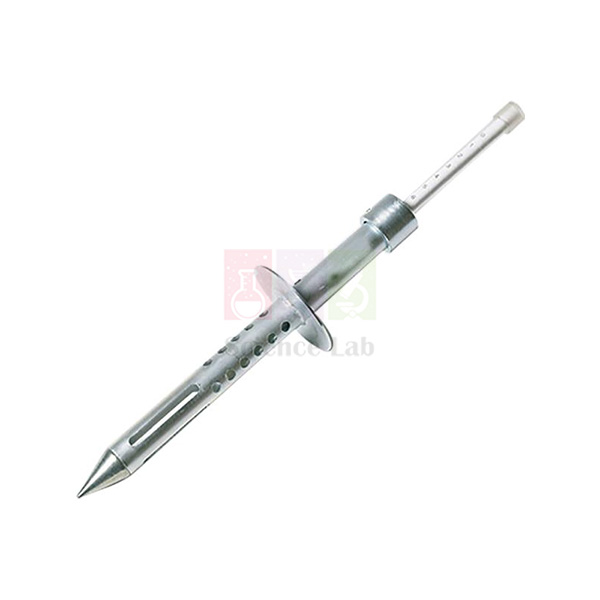
K-Slump Tester
K-Slump Tester (Product Code: SLE/CE/30) is a probe-type tester used to determine the workability and degree of compaction of fresh concrete in place, inside forms and test moulds, on site and in concrete laboratories. Engineers and students insert its 20 mm diameter calibrated hollow tube into the concrete and read the K-slump directly after 60 seconds. It comes from Jain Scientific Equipments Pvt Ltd (ScienceLab), which makes it as an OEM manufacturer at its own factory in Ambala, India.
Specifications
| Parameter | Detail |
|---|---|
| Measures | Workability and degree of compaction of fresh concrete after placing in forms |
| Where used | In-situ measurements, or inside test moulds and forms |
| Calibrated hollow tube | 20 mm diameter |
| Total length | 300 mm |
| Weight (approx.) | 500 g |
| Reading | After 60 seconds, a measuring rod is lowered onto the concrete and the K-slump is read directly on a scale |
| Supplied with | Correlation chart and instructions |
| Product code | SLE/CE/30 |
| Manufacturer | Jain Scientific Equipments Pvt Ltd (ScienceLab) — OEM |
| Country of origin | India (made in Ambala, Haryana) |
What Is the K-Slump Tester Used For?
The tester is pushed into the fresh concrete up to the level of its disc. Over the next 60 seconds mortar flows into the hollow tube; the measuring rod is then lowered onto the concrete surface inside the tube and the K-slump is read straight off the scale. Using the correlation chart, the reading can be related to the conventional slump test.
Because it works in the formwork itself, the K-slump tester checks concrete where it has actually been placed, with no need to take a separate sample. Take readings at several points, clean the tube between insertions and test before the concrete begins to stiffen. Light at about 500 g, it is a handy addition to engineering educational equipments in India for site-practice sessions.
OEM Manufacturer
ScienceLab is the trading name of Jain Scientific Equipments Private Limited, the OEM (original equipment manufacturer) of the K-Slump Tester, which is made at the company's own licensed factory at Saha, Ambala, Haryana, India. Site laboratories, polytechnics, colleges, dealers and importers buy it factory-direct and deal with the manufacturer for quotations and repeat supply. If you need a replacement correlation chart or part, ask us. Visit the ScienceLab company profile.
Related Civil Engineering Lab Equipment
These workability tests are often run alongside the K-slump tester or used to build its correlation.
- Slump Test Apparatus — the conventional slump test for correlation.
- Compaction Factor Test Apparatus — workability of low-slump mixes.
- Vee Bee Consistometer — consistency of stiff concrete.
- Flow Table — flow of fresh concrete.
- Poker Vibrator — compacts the concrete in the forms being checked.
The Civil Engineering Lab Equipment category has further fresh-concrete and site-testing apparatus.
Frequently Asked Questions
What does the K-Slump Tester measure?
The K-Slump Tester measures the workability and degree of compaction of fresh concrete after it has been placed in forms or test moulds. It gives a direct K-slump reading that can be correlated with the standard slump test.
How long does a K-Slump Tester reading take?
A K-Slump Tester reading takes about one minute. The tester is inserted up to its disc, and after 60 seconds the measuring rod is lowered onto the concrete and the K-slump is read directly on the scale.
Can K-Slump Tester results be compared with the slump test?
Yes. K-Slump Tester results can be correlated against the conventional slump test, and the tester includes a correlation chart and instructions so readings can be interpreted in familiar slump terms.
What are the dimensions of the K-Slump Tester?
The K-Slump Tester has a total length of 300 mm, a calibrated hollow tube of 20 mm diameter and weighs approximately 500 g, so it fits easily in a site kit or laboratory drawer.
Can the K-Slump Tester be used inside formwork?
Yes. The K-Slump Tester is designed for in-situ measurements and can be used inside forms and test moulds, so it checks the concrete where it has actually been placed rather than a separate sample.
Who manufactures the K-Slump Tester?
The K-Slump Tester is manufactured by Jain Scientific Equipments Pvt Ltd (ScienceLab) as the OEM at its licensed factory at Saha, Ambala, Haryana, India, and is supplied factory-direct to institutions, dealers and importers.
Request a Quote
For a quotation on the K-Slump Tester (SLE/CE/30), send the quantity and delivery location via the contact page or the enquiry cart. You will receive the quotation straight from Jain Scientific Equipments Pvt Ltd (ScienceLab), the manufacturer.
Last updated: 24 September 2026
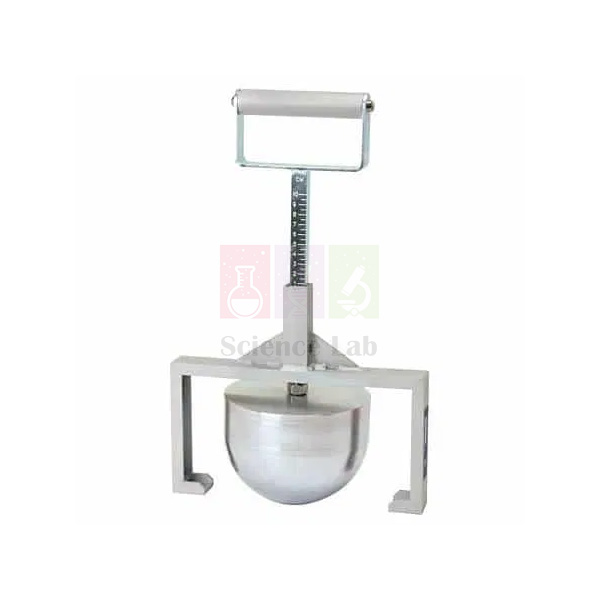
Ball Penetration Apparatus
Ball Penetration Apparatus (Product Code: SLE/CE/31) is a Kelly ball workability tester used to measure how far a weighted, ball-bottomed cylinder sinks into fresh Portland cement concrete in civil engineering and concrete testing laboratories. Concrete technology classes and site laboratories use it as a simpler, much faster check than the slump test, because twice the Kelly ball reading approximately equals the slump. It is made by Jain Scientific Equipments Pvt Ltd (ScienceLab), an OEM manufacturer of engineering lab equipment in India, at its own factory in Ambala.
Specifications
| Parameter | Detail |
|---|---|
| Test purpose | Workability of fresh Portland cement concrete |
| Penetrating body | Cylinder with a ball-shaped bottom and a handle |
| Weight | 15 kg (cylinder and handle together) |
| Handle graduation | Graduated in mm |
| Reading resolution | Penetration recorded to the nearest 0.5 mm |
| Guide and reference | Strip frame that guides the handle and serves as the reference for measuring penetration depth |
| Relation to slump | Twice the Kelly ball reading approximately equals the slump |
| Product code | SLE/CE/31 |
| Manufacturer | Jain Scientific Equipments Pvt Ltd (ScienceLab) — OEM |
| Country of origin | India (made in Ambala, Haryana) |
What Is the Kelly Ball Apparatus Used For?
The Kelly ball test gives a quick measure of how easily fresh concrete will flow and compact. The strip frame is rested on a levelled surface of freshly placed concrete, the ball-bottomed cylinder is released so it sinks under its own weight, and the depth is read on the graduated handle against the frame. Because the reading is taken directly in the container or form, no cone has to be filled, rodded and lifted, which saves time when many batches must be checked.
In teaching laboratories the apparatus is often run side by side with a slump cone so students can see how the two workability results relate. For more reliable results, take readings at several points away from the container walls and average them, and wipe the ball clean between tests. It is a useful addition to lab equipment for technical institutes that teach concrete mix design.
OEM Manufacturer
Jain Scientific Equipments Private Limited, which trades as ScienceLab, is the OEM (original equipment manufacturer) of this Ball Penetration Apparatus. The apparatus is manufactured at the company's own licensed factory at Saha, Ambala, Haryana, and supplied factory-direct to engineering colleges, polytechnics, construction laboratories, dealers and importers, so buyers deal with the maker rather than a trader. For tender and vendor registration, the company's GSTIN is 06AAECJ8618A1ZT and its Legal Entity Identifier is 3358004HRD1JIVXKYX49. Read more on the ScienceLab company profile.
Related Civil Engineering Lab Equipment
These workability test sets are commonly used alongside the Kelly ball in a fresh-concrete practical:
- Slump Test Apparatus — the reference workability test the Kelly ball reading is compared with.
- Compaction Factor Test Apparatus — another workability method, useful for comparing results on the same batch.
- Vee Bee Consistometer — measures workability of stiffer mixes by vibration.
- K-Slump Tester — a probe-type workability tester for concrete placed in moulds and forms.
Browse the full range of Civil Engineering Lab Equipment.
Frequently Asked Questions
What does the Ball Penetration Apparatus measure?
The Ball Penetration Apparatus measures the workability of fresh Portland cement concrete. It records how deep a 15 kg ball-bottomed cylinder sinks into the concrete under its own weight, read on a millimetre-graduated handle against a strip frame that acts as the reference level.
How does a Kelly ball reading relate to the slump test?
With the Ball Penetration Apparatus, twice the Kelly ball reading approximately equals the slump of the same concrete. The test is considered simpler and much faster than the slump test, so it suits frequent checks, while a slump test can still be run when a direct slump value is required.
How precisely can penetration be read?
The handle of the Ball Penetration Apparatus is graduated in millimetres, and penetration can be recorded to the nearest 0.5 mm. The strip frame guides the handle so it stays upright and gives a fixed reference from which the depth is measured.
How heavy is the Kelly ball apparatus?
The cylinder with its ball-shaped bottom and handle weighs 15 kg in total. This known weight is what drives the ball into the concrete, so the Ball Penetration Apparatus should be lowered gently and released without pushing to keep readings comparable.
Who manufactures the Ball Penetration Apparatus?
The Ball Penetration Apparatus (SLE/CE/31) is manufactured by Jain Scientific Equipments Pvt Ltd, trading as ScienceLab, as the OEM at its own licensed factory in Saha, Ambala, Haryana, India. Quotations, repeat orders and spare-part requests are handled directly by the manufacturer.
Is a calibration certificate available for the Ball Penetration Apparatus?
Please discuss any calibration or inspection document you need for the Ball Penetration Apparatus with our team before ordering, so we can confirm what can be provided. Send your requirement through the contact page along with your enquiry.
What should I include in a quotation request?
For the Ball Penetration Apparatus, mention the quantity, your institution or company name, the delivery city or country, and any other concrete testing equipment needed for the same laboratory. ScienceLab supplies schools, colleges and dealers in India and international markets.
Request a Quote
To buy the Ball Penetration Apparatus, send your requirement through our contact page or add it to the enquiry cart. Quotations come direct from the manufacturer, with no trader in between.
Last updated: 24 September 2026
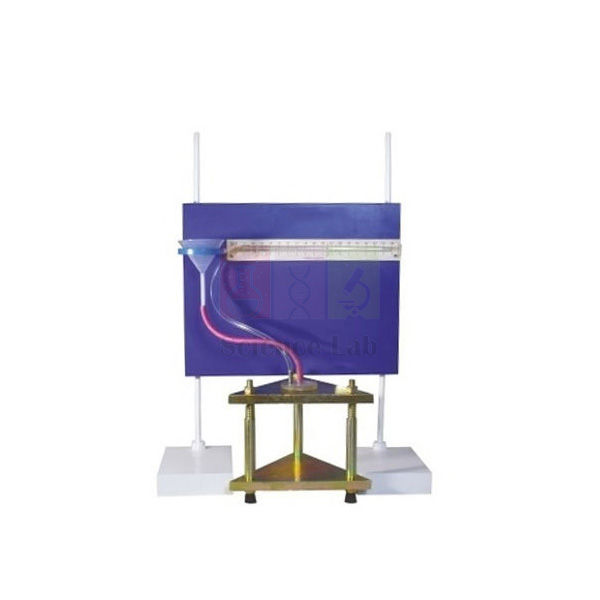
Initial Surface Absorption Test Apparatus
Initial Surface Absorption Test Apparatus (Product Code: SLE/CE/32) is a stand-mounted test set used to assess the surface absorption characteristics of hardened concrete in civil engineering, durability research and materials testing laboratories. Engineering students and quality-control staff use it to measure the rate of water flow per unit area into a concrete surface held under a constant 200 mm head, read on a capillary tube mounted against a scale. Jain Scientific Equipments Pvt Ltd (ScienceLab) manufactures it as an OEM at its own factory in Ambala, India.
Specifications
| Parameter | Detail |
|---|---|
| Test purpose | Surface absorption characteristics of concrete |
| Quantity measured | Rate of flow of water per unit area into the concrete surface |
| Water head | Constant head of 200 mm |
| Size | 200 mm |
| Materials | Stainless steel and plastic |
| Accuracy | ±1% |
| Main parts | Capillary tube mounted on a scale, water reservoir and connecting tubes |
| Mounting | Mounted on a stand; easy to use |
| Product code | SLE/CE/32 |
| Manufacturer | Jain Scientific Equipments Pvt Ltd (ScienceLab) — OEM |
| Country of origin | India (made in Ambala, Haryana) |
What Is the ISAT Apparatus Used For?
The initial surface absorption test (ISAT) looks at the outer skin of concrete, the zone that protects reinforcement and first meets rain, groundwater and aggressive substances. Water from the reservoir is brought into contact with the test surface under the constant 200 mm head, and the movement of the water front along the capillary tube is timed against the scale. A lower flow rate points to a denser, less absorptive surface.
Laboratories use the apparatus to compare curing methods, mix designs and surface treatments on cast specimens or on existing elements. Test surfaces should be in a similar moisture condition before each run, and connections should be free of trapped air, so that results from different samples can be compared fairly. It suits the durability module of any engineering lab equipment set-up at a college or research centre.
OEM Manufacturer
ScienceLab is the trading name of Jain Scientific Equipments Private Limited, the OEM (original equipment manufacturer) of this Initial Surface Absorption Test Apparatus. It is produced at the company's own licensed factory at Saha, Ambala, Haryana, and dispatched factory-direct to universities, polytechnics, testing laboratories, dealers and importers in India and international markets. If you later need replacement tubes or other parts, ask us and the manufacturer itself will respond. See the company profile for more background.
Related Civil Engineering Lab Equipment
Durability testing usually combines several methods and needs properly cast and cured specimens:
- Concrete Permeability Test Apparatus — measures water penetration under pressure, a complementary durability test.
- Rapid Chloride Permeability Tester — assesses resistance of concrete to chloride-ion penetration.
- Concrete Cube Mould — for casting the specimens whose surfaces are tested.
- Accelerated Curing Tank — for curing cube specimens under controlled temperature before testing.
See more items in Civil Engineering Lab Equipment.
Frequently Asked Questions
What does the Initial Surface Absorption Test Apparatus measure?
The Initial Surface Absorption Test Apparatus measures the rate of flow of water per unit area into a concrete surface subjected to a constant 200 mm head of water. The result indicates how absorptive, and therefore how durable, the surface layer of the concrete is likely to be.
What parts make up the ISAT apparatus?
The Initial Surface Absorption Test Apparatus consists of a capillary tube mounted on a scale, a water reservoir and connecting tubes, all mounted on a stand. Its construction uses stainless steel and plastic, and it is designed to be easy to use in a teaching or testing laboratory.
What accuracy does the apparatus offer?
The Initial Surface Absorption Test Apparatus has a stated accuracy of ±1%. Consistent results also depend on good practice: keep the water head constant at 200 mm, remove air from the tubes, and condition the concrete surfaces in the same way before every test.
Why test surface absorption instead of only compressive strength?
Compressive strength says little about how easily water and dissolved salts enter concrete. The Initial Surface Absorption Test Apparatus focuses on the surface zone, where poor curing or a porous mix shows up first, so it adds durability information that strength tests alone cannot give.
Who manufactures the Initial Surface Absorption Test Apparatus?
The Initial Surface Absorption Test Apparatus (SLE/CE/32) is made by Jain Scientific Equipments Pvt Ltd (ScienceLab), the OEM, at its own licensed factory in Saha, Ambala, Haryana, India, and is supplied factory-direct to institutions, dealers and importers.
Can I get a calibration certificate with the ISAT apparatus?
Calibration or inspection documents for the Initial Surface Absorption Test Apparatus should be discussed with us before you order, so we can confirm what is possible. Please state your requirement on the contact page when you send your enquiry.
Request a Quote
Ask for a price on the Initial Surface Absorption Test Apparatus through the contact page, or place it in the enquiry cart with other durability test equipment. Your quotation is prepared by the manufacturer directly.
Last updated: 24 September 2026
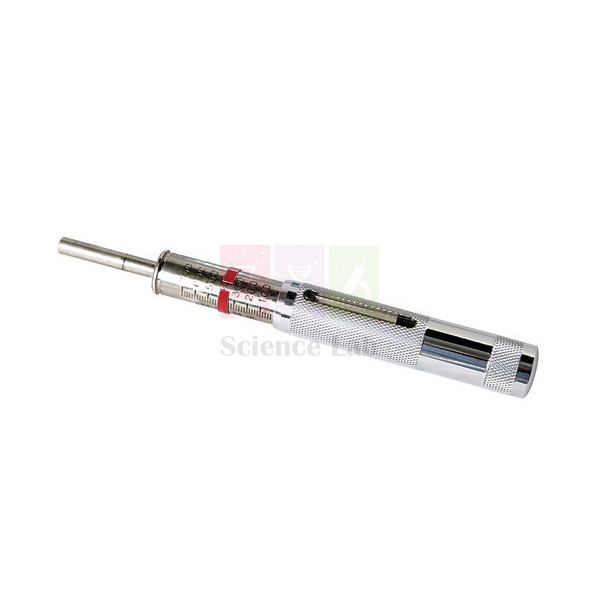
Pocket Concrete Penetrometer
Pocket Concrete Penetrometer (Product Code: SLE/CE/33) is a hand-held spring penetrometer used to measure the penetration resistance of concrete mortar and judge when it reaches initial set, in concrete laboratories and during site quality checks. Its direct-reading scale runs from 0 to 50 kg/cm², a marker ring holds the reading after release, and concrete is assumed initially set once resistance reaches 35 kg/cm². It is manufactured by Jain Scientific Equipments Pvt Ltd (ScienceLab), an OEM, at its own factory in Ambala, India.
Specifications
| Parameter | Detail |
|---|---|
| Scale range | 0–50 kg/cm², direct reading |
| Initial-set indication | Concrete assumed initially set when penetration resistance reaches 35 kg/cm² |
| Needle face area | 3/10 sq cm |
| Dimensions | 178 × 19 mm |
| Mechanism | Calibrated spring confined in a sleeve inside the barrel; needle point integral with the barrel |
| Reading retention | Marker ring that holds its position when released |
| Supplied with | Carrying case |
| Product code | SLE/CE/33 |
| Manufacturer | Jain Scientific Equipments Pvt Ltd (ScienceLab) — OEM |
| Country of origin | India (made in Ambala, Haryana) |
What Is a Pocket Penetrometer Used For?
As concrete stiffens, the mortar offers more and more resistance to a pointed needle. The pocket penetrometer turns that resistance into a number: the needle is pressed steadily into the mortar, the calibrated spring compresses, and the marker ring slides along the scale and stays at the maximum value when the instrument is withdrawn. Tracking readings over time shows when the concrete approaches initial set.
Site engineers and laboratory staff use this information to time finishing work, compare mixes with and without admixtures, and demonstrate setting behaviour to students. Press the needle at a steady rate, test fresh spots each time, reset the marker ring before every reading, and wipe the needle clean before returning it to its carrying case. Its small size makes it a convenient addition to the engineering lab equipment kit of a college or site laboratory.
OEM Manufacturer
This Pocket Concrete Penetrometer is an original ScienceLab product: Jain Scientific Equipments Private Limited, trading as ScienceLab, is its OEM and manufactures it at the company's own licensed factory in Saha, Ambala, Haryana. Institutions, contractors' laboratories, dealers and importers buy it factory-direct, and repeat orders or spare parts can be requested from the manufacturer itself — just ask us. The ScienceLab profile gives more detail about the company.
Related Civil Engineering Lab Equipment
For fuller setting-time studies on concrete and cement, these items are often ordered together:
- Concrete Penetrometer Spring Type — a laboratory penetrometer for following the rate of hardening of mortar.
- Vicat Needle Apparatus With Dashpot — for setting time and consistency of cement paste.
- Automatic Vicat apparatus — an automated option for cement setting-time tests.
- Test Sieves — for sieving mortar out of fresh concrete before penetration testing.
The complete range is listed under Civil Engineering Lab Equipment.
Frequently Asked Questions
What does the Pocket Concrete Penetrometer measure?
The Pocket Concrete Penetrometer measures the penetration resistance offered by concrete mortar to its needle. The value is shown on a direct-reading scale of 0 to 50 kg/cm² and is used to follow the stiffening of concrete and judge when initial set has been reached.
At what reading is concrete considered initially set?
With the Pocket Concrete Penetrometer, concrete is assumed to be initially set when the penetration resistance reaches 35 kg/cm². Taking readings at regular intervals shows how quickly the mix is approaching that point, which helps plan finishing and other time-sensitive work.
How does the marker ring work?
The marker ring on the Pocket Concrete Penetrometer is pushed along the scale as the spring compresses and holds its position when the instrument is released. The operator can therefore withdraw the needle and read the maximum resistance calmly, then slide the ring back before the next test.
How large is the pocket penetrometer?
The Pocket Concrete Penetrometer measures 178 × 19 mm and has a needle face area of 3/10 sq cm. The needle point is an integral part of the barrel that houses the calibrated spring, and the instrument is supplied complete in a carrying case.
Who manufactures the Pocket Concrete Penetrometer?
The Pocket Concrete Penetrometer (SLE/CE/33) is manufactured by Jain Scientific Equipments Pvt Ltd, trading as ScienceLab, as the OEM at its own licensed factory in Saha, Ambala, Haryana, India. Orders and enquiries are handled by the manufacturer directly.
Is a spring calibration certificate available?
If you need a calibration or inspection document for the Pocket Concrete Penetrometer, please discuss it with us before ordering so we can confirm what can be supplied. Add the requirement to your enquiry on the contact page.
Can the penetrometer be ordered in bulk?
Yes, the Pocket Concrete Penetrometer can be quoted for single units or larger quantities for colleges, contractors and dealers in India and international markets. State the quantity and delivery location in your enquiry so the manufacturer can prepare an accurate quotation.
Request a Quote
Request pricing for the Pocket Concrete Penetrometer via our contact page or add it to the enquiry cart. As the manufacturer, ScienceLab quotes to you directly.
Last updated: 24 September 2026
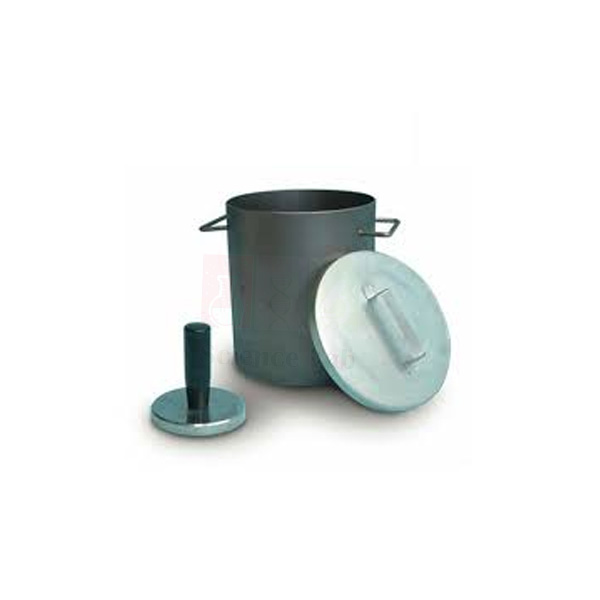
Bleeding Of Freshly Mixed Concrete
Bleeding Of Freshly Mixed Concrete (Product Code: SLE/CE/34) is a bleeding test apparatus used to determine the relative quantity of mixing water that will bleed from a sample of freshly mixed concrete in civil engineering and concrete quality-control laboratories. The set is built around a stainless steel cylindrical container of approximately 14 litres with a stainless steel cover, together with a flat, rounded steel float. Jain Scientific Equipments Pvt Ltd (ScienceLab) manufactures it as an OEM at its own factory in Ambala, India.
Specifications
| Parameter | Detail |
|---|---|
| Test purpose | Relative quantity of mixing water that bleeds from freshly mixed concrete |
| Container | Cylindrical, stainless steel |
| Capacity | Approx. 14 litres |
| Internal diameter | 255 ± 5 mm |
| Inside height | 280 ± 5 mm |
| Float | Flat, rounded steel float, diameter 100 ± 10 mm |
| Cover | Stainless steel cover included |
| Product code | SLE/CE/34 |
| Manufacturer | Jain Scientific Equipments Pvt Ltd (ScienceLab) — OEM |
| Country of origin | India (made in Ambala, Haryana) |
What Is the Concrete Bleeding Test Apparatus Used For?
Bleeding is the rise of mixing water to the top of freshly placed concrete as the heavier solids settle. Some bleeding is normal, but too much leaves a weak, watery top layer, delays finishing and can reduce the bond between layers. This apparatus lets a laboratory measure how much water a given mix gives up, so that cement content, fine aggregate grading or admixtures can be adjusted.
In a typical run the container is filled with a representative sample of concrete, compacted, levelled and kept covered so that the collected water does not evaporate. The water that accumulates on the surface is drawn off at intervals and measured, and the total is expressed relative to the mixing water in the sample. Keep the container on a level, vibration-free bench during the test. It is a practical item for concrete technology courses and for lab equipment used by technical institutes.
OEM Manufacturer
Jain Scientific Equipments Private Limited, known by its trading name ScienceLab, is the OEM (original equipment manufacturer) of this bleeding test apparatus and makes it at its own licensed factory in Saha, Ambala, Haryana. Colleges, research laboratories, ready-mix plants, dealers and importers can buy it straight from the manufacturer, with repeat orders handled by the same team. More information is available on the ScienceLab profile page.
Related Civil Engineering Lab Equipment
These items help with sampling, compacting and checking the same concrete batch:
- Tamping Rod — for hand compaction of the concrete sample.
- Scoops — for taking and placing representative concrete samples.
- Slump Test Apparatus — to record the workability of the batch tested for bleeding.
- Vibrating Table — for mechanical compaction when the test method calls for it.
Explore the complete Civil Engineering Lab Equipment range.
Frequently Asked Questions
What does the bleeding test apparatus determine?
The Bleeding Of Freshly Mixed Concrete apparatus determines the relative quantity of mixing water that will bleed from a sample of freshly mixed concrete. The result shows how prone a mix is to water rising to the surface, which affects finishing quality and the strength of the top layer.
What are the container dimensions?
The stainless steel cylindrical container of the Bleeding Of Freshly Mixed Concrete apparatus holds approximately 14 litres. Its internal diameter is 255 ± 5 mm and its inside height is 280 ± 5 mm, and it comes complete with a stainless steel cover.
What is included in the bleeding test set?
The Bleeding Of Freshly Mixed Concrete set (SLE/CE/34) includes the stainless steel cylindrical container, a stainless steel cover and a flat, rounded steel float with a diameter of 100 ± 10 mm. Ask us if you also need sampling or compaction tools on the same order.
Why is the container kept covered during the test?
The cover on the Bleeding Of Freshly Mixed Concrete apparatus reduces evaporation from the concrete surface while the test is running. Without it, part of the bleed water could be lost to the air and the measured quantity would understate how much water the mix actually releases.
Who manufactures this bleeding test apparatus?
The Bleeding Of Freshly Mixed Concrete apparatus is manufactured by Jain Scientific Equipments Pvt Ltd (ScienceLab) as the OEM, at its own licensed factory in Saha, Ambala, Haryana, India. Buyers deal directly with the manufacturer for quotations and repeat orders.
What details should a quotation request include?
When enquiring about the Bleeding Of Freshly Mixed Concrete apparatus, give the number of sets, the name of your institution or company, and the delivery location in India or abroad. Listing other concrete test equipment you need lets us quote everything together.
Request a Quote
For prices on the Bleeding Of Freshly Mixed Concrete apparatus, write to us through the contact page or add it to the enquiry cart. Every quotation is issued directly by the manufacturer.
Last updated: 24 September 2026
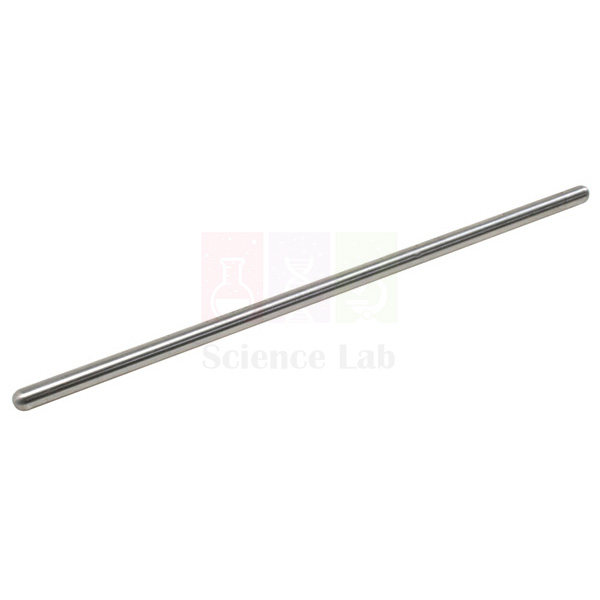
Tamping Rod
Tamping Rod (Product Code: SLE/CE/35) is a straight steel rod used to compact fresh concrete into cube moulds during specimen preparation in civil engineering, polytechnic and site quality-control laboratories. Technicians and students rod each layer of concrete by hand with it; the rod is 16 mm in diameter, 600 mm long and rounded at both ends. It is produced by Jain Scientific Equipments Pvt Ltd (ScienceLab), an OEM manufacturer, at its own licensed factory in Ambala, India.
Specifications
| Parameter | Detail |
|---|---|
| Use | Compacting concrete into cube moulds |
| Material | Steel |
| Diameter | 16 mm |
| Length | 600 mm |
| Ends | Rounded at both ends |
| Product code | SLE/CE/35 |
| Manufacturer | Jain Scientific Equipments Pvt Ltd (ScienceLab) — OEM |
| Country of origin | India (made in Ambala, Haryana) |
What Is a Concrete Tamping Rod Used For?
Air trapped in fresh concrete lowers the strength of test cubes, so specimens must be compacted consistently. The tamping rod is pushed down through each layer placed in the cube mould, with strokes spread evenly over the whole cross-section, before the next layer is added. The rounded ends enter the concrete smoothly and are less likely to scratch the mould faces than a square-cut end.
Follow the number of layers and strokes set by the test method your laboratory works to, and keep the rod vertical while tamping. Clean off cement paste straight after use and dry the rod before storage to prevent rust. A set of rods is standard lab equipment for technical institutes and colleges that cast and crush concrete cubes as part of their practicals.
OEM Manufacturer
ScienceLab is the trading name of Jain Scientific Equipments Private Limited (CIN U29309HR2020PTC087597), the OEM (original equipment manufacturer) of this Tamping Rod. Manufacturing takes place at the company's licensed factory at 449, HSIIDC Industrial Area, Saha, Ambala, Haryana (Factory Licence AMB-ONLINE-CHD-J-414), from where rods are sent factory-direct to colleges, construction laboratories, dealers and importers. Visit the company profile to learn more.
Related Civil Engineering Lab Equipment
A tamping rod is normally ordered with the moulds and tools used to cast test specimens:
- Concrete Cube Mould — the mould the rod is used to fill and compact.
- Tamping Bar — a square-section alternative for hand compaction of cubes.
- Straight Edge — for striking off surplus concrete after compaction.
- Cylindrical Mould — for casting cylinder specimens in the same session.
- Slump Test Apparatus — for checking workability before specimens are cast.
View all Civil Engineering Lab Equipment.
Frequently Asked Questions
What size is the Tamping Rod?
The Tamping Rod (SLE/CE/35) is a steel rod 16 mm in diameter and 600 mm long, with both ends rounded. These dimensions are stated for compacting fresh concrete into cube moulds, so check that they match the rod required by your own test method.
What is the Tamping Rod used for?
The Tamping Rod is used for compacting concrete into cube moulds. Each layer of concrete is rodded with evenly distributed strokes to remove entrapped air, giving specimens whose compressive strength results can be compared fairly from batch to batch.
Why are the ends of the rod rounded?
Rounded ends let the Tamping Rod pass into fresh concrete without tearing the surface of the layer below and reduce the risk of scoring the inside faces of the mould. They also make the rod safer and more comfortable to handle during repeated strokes.
How should the rod be cared for?
After each use, wash cement paste off the Tamping Rod before it hardens, dry the rod fully and store it flat or hanging so it stays straight. A light protective oil film can be applied if the laboratory is humid, to keep the steel from rusting.
Who manufactures the Tamping Rod?
The Tamping Rod is manufactured by Jain Scientific Equipments Pvt Ltd, trading as ScienceLab, which is the OEM and produces it at its licensed factory in Saha, Ambala, Haryana, India. Orders, repeat supplies and quotations are handled by the manufacturer directly.
Can tamping rods be supplied in quantity for a whole laboratory?
Yes, the Tamping Rod can be quoted in the quantity your laboratory, college or dealership needs, for delivery in India and international markets. Mention the number of rods and any moulds you are buying so the manufacturer can prepare one combined quotation.
Request a Quote
To order the Tamping Rod, contact us through the contact page or add it to the enquiry cart. You will receive a quotation straight from the manufacturer.
Last updated: 24 September 2026
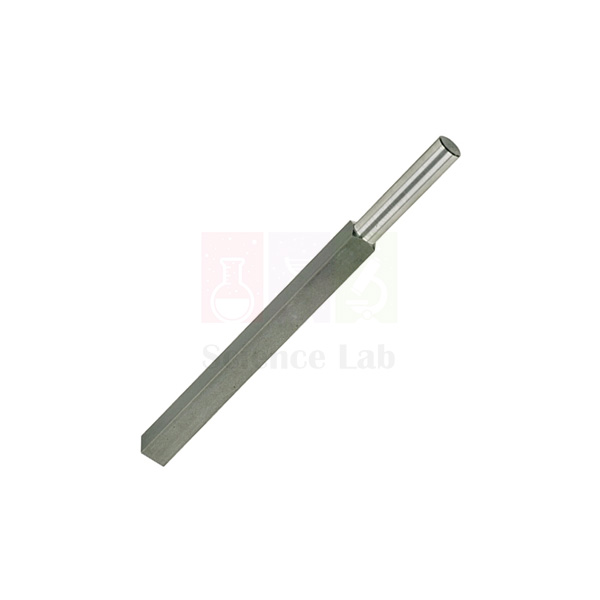
Tamping Bar
Tamping Bar (Product Code: SLE/CE/36) is a square-section steel bar with a handle, used to compact fresh concrete into cube moulds by hand in concrete testing and civil engineering laboratories. The bar is 25 mm square and 380 mm long, giving a flat ramming face and a short, easily controlled length for bench work. Jain Scientific Equipments Pvt Ltd (ScienceLab) is its OEM manufacturer and makes it at its own factory in Ambala, India.
Specifications
| Parameter | Detail |
|---|---|
| Use | Compacting concrete into cube moulds |
| Material | Steel bar |
| Cross-section | 25 mm square |
| Length | 380 mm |
| Handle | Fitted with a handle |
| Product code | SLE/CE/36 |
| Manufacturer | Jain Scientific Equipments Pvt Ltd (ScienceLab) — OEM |
| Country of origin | India (made in Ambala, Haryana) |
What Is a Tamping Bar Used For?
Concrete cubes are only as reliable as their compaction. With the tamping bar, the operator holds the handle and rams the square end down onto each layer in the cube mould, working methodically across the surface so no area is missed. The flat square face consolidates the concrete and helps bring entrapped air to the top, while the handle gives a secure grip for a steady rhythm.
Hand tamping suits laboratories that cast a modest number of cubes per batch; where many specimens must be prepared, mechanical options such as an internal vibrator or vibrating table save effort. Use the number of layers and blows stated in your test standard, and clean and dry the bar after every session. It belongs in the basic concrete kit of any engineering lab equipment set-up in India or abroad.
OEM Manufacturer
The Tamping Bar is manufactured by Jain Scientific Equipments Private Limited, the company behind the ScienceLab brand, which acts as its OEM (original equipment manufacturer). Production is carried out at its own licensed factory in Saha, Ambala, Haryana, so polytechnics, universities, contractors' laboratories, dealers and importers buy directly from the maker instead of through a trading house. Company details are on the ScienceLab profile.
Related Civil Engineering Lab Equipment
Pair the tamping bar with these items when casting and compacting specimens:
- Concrete Cube Mould — the mould filled and compacted with the bar.
- Tamping Rod — a round-rod alternative for rodding concrete layers.
- Poker Vibrator — internal vibration when many specimens need compacting.
- Vibrating Table — table vibration for moulds as an alternative to hand tamping.
More products are listed under Civil Engineering Lab Equipment.
Frequently Asked Questions
What are the dimensions of the Tamping Bar?
The Tamping Bar (SLE/CE/36) is made from steel bar with a 25 mm square cross-section and a length of 380 mm, and it is fitted with a handle. Confirm that this size matches the compacting tool named in the test method your laboratory follows.
What is the Tamping Bar used for?
The Tamping Bar is used for compacting fresh concrete into cube moulds by hand. Each layer is rammed with the square end of the bar to consolidate it and release entrapped air, so that the finished cubes give representative compressive strength results.
Should I choose a tamping bar or a vibrator?
A Tamping Bar is simple, needs no power and suits a moderate number of cubes. When a laboratory compacts large numbers of specimens every day, a poker vibrator or vibrating table may be quicker; many labs keep a tamping bar as well for small batches and teaching.
How do I keep the tamping bar in good condition?
Remove fresh concrete from the Tamping Bar immediately after use, rinse it, dry it thoroughly and store it in a dry place. Keeping the square face clean and free of hardened paste ensures it contacts the concrete evenly each time it is used.
Who manufactures the Tamping Bar?
The Tamping Bar is manufactured by Jain Scientific Equipments Pvt Ltd (ScienceLab), the OEM, at its own licensed factory in Saha, Ambala, Haryana, India. Institutions and dealers order it factory-direct, and repeat or spare requirements are handled by the manufacturer on request.
What should my enquiry include?
For the Tamping Bar, state how many bars you need, the institution or company name, and the delivery address in India or overseas. If you are also buying cube moulds or other concrete equipment, list them so one consolidated quotation can be prepared.
Request a Quote
Get a price for the Tamping Bar by writing to us on the contact page or by adding it to the enquiry cart. The quotation comes directly from the manufacturer.
Last updated: 24 September 2026
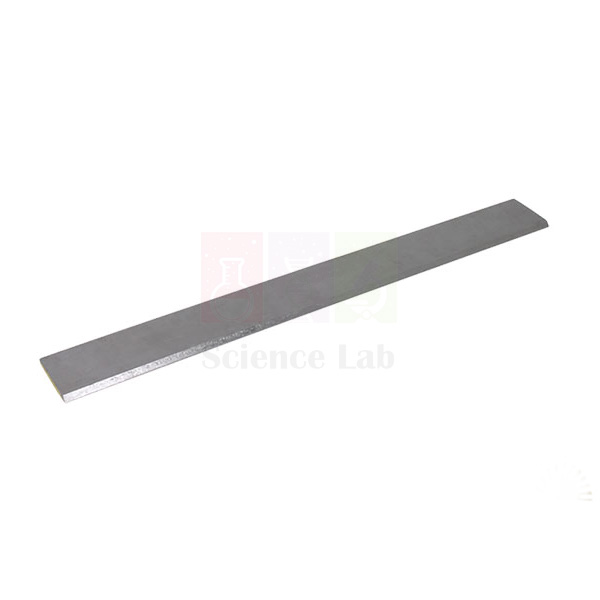
Straight Edge
Straight Edge (Product Code: SLE/CE/37) is a flat steel bar used to strike off excess material and level the top when moulding concrete cube and cylinder specimens in civil engineering and concrete testing laboratories. Measuring 1 × 12 inches (2.5 × 30.4 cm), it is also used when conducting slump cone and air meter tests on fresh concrete. It is manufactured by Jain Scientific Equipments Pvt Ltd (ScienceLab), an OEM, at its own factory in Ambala, India.
Specifications
| Parameter | Detail |
|---|---|
| Main use | Removing excess material when moulding cube and cylinder specimens |
| Also used for | Conducting slump cone and air meter tests |
| Construction | Flat bar made from steel |
| Size | 1" × 12" (2.5 × 30.4 cm) |
| Product code | SLE/CE/37 |
| Manufacturer | Jain Scientific Equipments Pvt Ltd (ScienceLab) — OEM |
| Country of origin | India (made in Ambala, Haryana) |
What Is a Concrete Straight Edge Used For?
Once a cube or cylinder mould has been filled and compacted, the surface must finish flush with the rim so the specimen has the correct height and a flat face. The straight edge is laid across the top of the mould and drawn over it with a gentle side-to-side sawing action, cutting away surplus concrete in one or two passes. The same bar is used to level off the measuring container in air meter tests and to tidy the top of the slump cone before it is lifted.
Keep the working edge clean and straight: store the bar flat, do not use it as a lever, and remove paste before it hardens. This short strike-off bar is meant for specimen moulds and small containers; for checking the regularity of road surfaces, a much longer straight edge is used instead. It is a low-cost but essential piece of engineering lab equipment for colleges and site laboratories.
OEM Manufacturer
Jain Scientific Equipments Private Limited operates under the brand ScienceLab and is the OEM (original equipment manufacturer) of this Straight Edge. The bar is made at the company's own licensed factory at Saha, Ambala, Haryana, and supplied factory-direct to engineering colleges, material testing laboratories, dealers and importers, so repeat orders come from the same source every time. Read about the company on the ScienceLab profile.
Related Civil Engineering Lab Equipment
The straight edge is used with these moulds and fresh-concrete test sets:
- Concrete Cube Mould — struck off level with the straight edge after compaction.
- Cylindrical Mould — cylinder specimens finished flush at the top.
- Slump Test Apparatus — the slump cone test the bar also supports.
- Tamping Rod — compacts the concrete before it is struck off.
- Straight Edge (3 meter) — the long straight edge used on road surfaces.
Find more in Civil Engineering Lab Equipment.
Frequently Asked Questions
What size is the Straight Edge?
The Straight Edge (SLE/CE/37) is a flat steel bar measuring 1 × 12 inches, which is 2.5 × 30.4 cm. This length spans the top of common specimen moulds and small test containers, making it easy to strike off surplus concrete in a single controlled pass.
Which tests is the straight edge used in?
The Straight Edge is used to remove excess material when moulding concrete cube and cylinder specimens. It is also used when conducting slump cone and air meter tests, where the concrete surface must be levelled with the rim of the cone or measuring bowl.
How is it different from the 3 metre straight edge?
The 1 × 12 inch Straight Edge is a hand-held strike-off bar for moulds and test containers in the laboratory. The Straight Edge (3 meter) is a separate, much longer product intended for checking the surface regularity of roads, so the two are not interchangeable.
How do I look after the straight edge?
Clean fresh concrete off the Straight Edge immediately after use, dry it and store it flat so the working edge stays true. Avoid using it to pry or scrape hardened material, because a bent or nicked edge will leave an uneven specimen surface.
Who manufactures the Straight Edge?
The Straight Edge is manufactured by Jain Scientific Equipments Pvt Ltd, trading as ScienceLab, as the OEM at its own licensed factory in Saha, Ambala, Haryana, India. Quotations, bulk orders and repeat supplies are handled by the manufacturer without a middleman.
Can I order straight edges with a full set of moulds?
Yes. The Straight Edge can be quoted together with cube moulds, cylinder moulds, tamping rods and other concrete testing equipment for colleges and laboratories in India and international markets. List every item and quantity in your enquiry to receive one combined quotation.
Request a Quote
For a quotation on the Straight Edge, use our contact page or add the item to the enquiry cart. Pricing is provided directly by the manufacturer.
Last updated: 24 September 2026