- Physics Lab Equipment
- Chemistry Lab Equipment
- Biology Lab Equipment
- Anatomical Lab Equipment
- Learning
- Educational Lab Equipment
- Magnets
- Agriculture
- Astronomy
- Earth Science
- Geography Lab Equipment
- Safety Lab Coat
- Laboratory
- Meteorological
- Electricity & Magnetism
- Heat
- School Lab Equipment
- Lab Glassware
- Science Lab Equipment
- Tvet Lab Equipment
- Robotics Kits Supplier and Manufacturer for Schools India
- Math Lab Equipment Manufacturers and Exporters in Ambala
- STEM Kits Manufacturers and Supplier India
- Engineering Lab Equipment
- Hospital Lab Equipment
- Water, Sanitation & Hygiene Supplies
- Cold Chain, Solar & Communication Equipment
- Nutrition
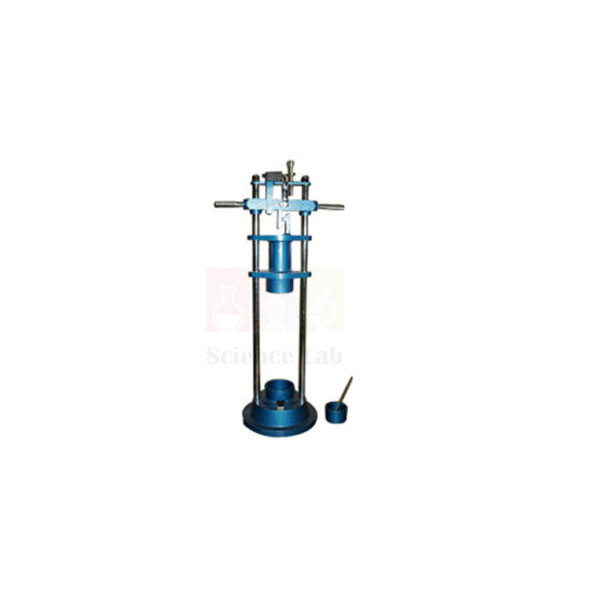
Aggregate Impact Tester
Aggregate Impact Tester (Product Code: SLE/CE/94) is a drop-hammer apparatus used to determine the aggregate impact value, a relative measure of how well road and concrete aggregate resists sudden shock, in civil engineering laboratories. Highway materials labs and engineering colleges use it for toughness testing, and its 13.75 kg hammer falls freely through an adjustable 380 mm height between two vertical guides. It is made by Jain Scientific Equipments Pvt Ltd (ScienceLab), an OEM manufacturer, at its own factory in Ambala, India.
Specifications
| Parameter | Detail |
|---|---|
| Frame | Circular base with two vertical guides |
| Hammer weight | 13.75 ±0.25 kg, raised and released to fall freely down the guides |
| Height of fall | Adjustable through 380 ±5 mm |
| Hammer locking | Locking arrangement provided; hammer is removable |
| Blow counter | Fitted at the top of the equipment to count the number of strokes |
| Metal measure | 75 mm diameter × 50 mm high (supplied) |
| Tamping rod | 230 mm long × 10 mm diameter (supplied) |
| Product code | SLE/CE/94 |
| Manufacturer | Jain Scientific Equipments Pvt Ltd (ScienceLab) — OEM |
| Country of origin | India (made in Ambala, Haryana) |
What Is the Aggregate Impact Tester Used For?
The aggregate impact value (AIV) test shows how an aggregate behaves under the repeated shocks that traffic and compaction apply to road layers. A sized sample is measured out in the 75 mm × 50 mm metal measure, compacted with the 10 mm tamping rod and set in position on the base. The hammer is lifted to the set height and dropped the number of times the method specifies, with the blow counter keeping the tally.
The crushed sample is then sieved, and the fines produced are expressed as a percentage of the original mass; a lower figure means a tougher aggregate. Colleges often run this test alongside the crushing value test so students can compare static and dynamic strength. This robust frame is typical of the engineering lab equipment in India used by polytechnics and TVET centres; always engage the hammer lock while placing or removing the sample.
What to Specify When Ordering
- Number of Aggregate Impact Testers required
- Any spare metal measures or tamping rods beyond those supplied
- Whether test sieves for the sieving step are also needed
OEM Manufacturer
The Aggregate Impact Tester is built by Jain Scientific Equipments Private Limited, which trades as ScienceLab, acting as the original equipment manufacturer. Its base, guides, hammer and counter mounting are produced and assembled at the company's own licensed factory at Saha, Ambala, Haryana, India.
Engineering institutions, testing laboratories, dealers and importers buy direct from the maker, so questions on spares or repeat orders go straight to the people who build it. Read about the company on the ScienceLab company profile.
Related Civil Engineering Lab Equipment
These items are used in the same aggregate quality programme:
- Aggregate Crushing Value Apparatus — measures resistance to a slowly applied crushing load
- Test Sieves — for preparing the sized sample and sieving out fines after impact
- Digital Los Angles Abrasion Testing Machine — checks resistance to abrasion and wear
- Flakiness Sieve Set — assesses particle shape, which affects impact results
See all Civil Engineering Lab Equipment for aggregate, soil and concrete testing.
Frequently Asked Questions
What hammer weight and drop height does the Aggregate Impact Tester use?
The Aggregate Impact Tester uses a hammer weighing 13.75 ±0.25 kg that falls freely down two vertical guides. The height of fall can be adjusted through 380 ±5 mm, so the drop can be set to the height your test method requires.
What accessories are supplied with the Aggregate Impact Tester?
The Aggregate Impact Tester is supplied complete with a metal measure 75 mm in diameter and 50 mm high, and a tamping rod 230 mm long and 10 mm in diameter. A blow counter is fitted at the top of the frame to count the strokes.
How is the hammer made safe while loading the Aggregate Impact Tester?
The hammer of the Aggregate Impact Tester has a locking arrangement, so it can be held in the raised position while the sample is placed or removed. Release the lock only when hands are clear and the sample is in position on the base.
What does the aggregate impact value tell a laboratory?
The aggregate impact value from the Aggregate Impact Tester is a relative measure of an aggregate's resistance to sudden shock or impact. It is reported as the percentage of fines produced, so a lower value indicates a tougher aggregate for road and concrete use.
Who manufactures the Aggregate Impact Tester?
The Aggregate Impact Tester is manufactured by Jain Scientific Equipments Pvt Ltd (ScienceLab) as the OEM, at its own licensed factory at Saha, Ambala, Haryana, India. Quotations and spare-part questions are answered by the manufacturer directly.
Is a calibration certificate available for the Aggregate Impact Tester?
Calibration-certificate availability for the Aggregate Impact Tester is not stated in its listing, so please raise it with us through the contact page before ordering. Mention the test method you follow so we can give a clear answer.
Request a Quote
To receive a quotation for the Aggregate Impact Tester (SLE/CE/94), send the quantity and any extra measures or rods through our contact page, or use the enquiry cart. Prices come direct from the manufacturer for India and international markets.
Last updated: 24 September 2026
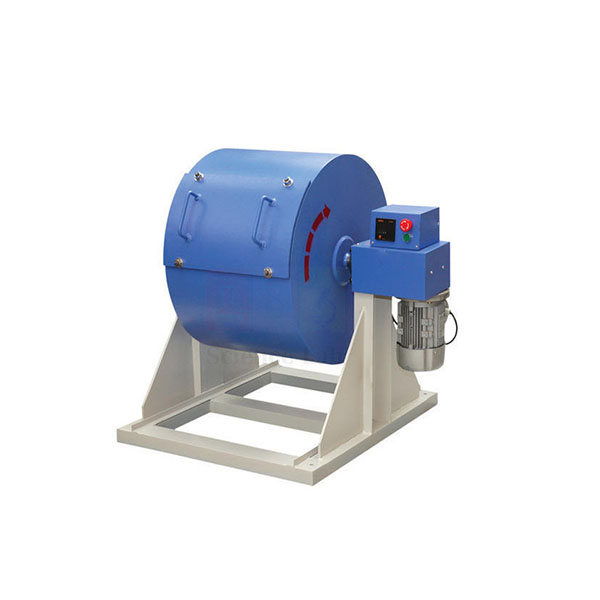
Digital Los Angles Abrasion Testing Machine
Digital Los Angles Abrasion Testing Machine (Product Code: SLE/CE/95) is a rotating steel-drum machine used to measure how much coarse aggregate wears down under abrasion and impact in civil engineering and highway materials laboratories. Road-materials labs and engineering colleges use it for the Los Angeles abrasion test, and its electronic control unit stops the 711 mm diameter drum automatically at a preset revolution count. It is made by Jain Scientific Equipments Pvt Ltd (ScienceLab), an OEM manufacturer, at its own factory in Ambala, India.
Specifications
| Parameter | Detail |
|---|---|
| Drum | Rolled steel, 711 mm inside diameter × 508 mm internal length |
| Drum speed | 31–33 rpm |
| Control | Electronic control unit |
| Revolution counter | Automatic counter; the machine stops by itself when the preset revolution count is reached |
| Drum interlock | Interlock device lets the operator lock the drum in position |
| Product code | SLE/CE/95 |
| Manufacturer | Jain Scientific Equipments Pvt Ltd (ScienceLab) — OEM |
| Country of origin | India (made in Ambala, Haryana) |
What Is the Los Angeles Abrasion Machine Used For?
The Los Angeles abrasion test indicates whether a road stone or concrete aggregate is hard enough to resist the grinding and knocking it will meet in service. A graded sample is loaded into the drum together with the abrasive charge the test method specifies, the counter is set, and the drum turns at 31–33 rpm until the machine stops on its own at the preset count. The sample is then sieved and the loss is reported as a percentage of the original mass.
Automatic stopping removes counting errors and frees the operator during long runs, which is valuable in teaching labs where several groups share one machine. Use the interlock to hold the drum steady while loading and emptying it. For institutes building a highway materials lab, this is core engineering lab equipment in India alongside impact and crushing value tests.
OEM Manufacturer
ScienceLab is the trading name of Jain Scientific Equipments Private Limited (CIN U29309HR2020PTC087597), the OEM behind this machine. The rolled steel drum, frame and control mounting are produced at the company's licensed factory at 449, HSIIDC Industrial Area, Saha, Ambala (Factory Licence AMB-ONLINE-CHD-J-414).
Colleges, testing laboratories, dealers and importers buy factory-direct, and repeat orders or spare-part questions are handled by the manufacturer itself. More about the company is on the ScienceLab profile.
Related Civil Engineering Lab Equipment
Laboratories testing aggregate durability usually pair this machine with the following:
- Los Angeles Abrasion Testing Machine — an alternative model for the same test
- Test Sieves — for grading the sample before and after the run
- Aggregate Impact Tester — measures toughness under sudden impact
- Devel Attrition Tester — another wear test for road aggregate
Explore the full Civil Engineering Lab Equipment range.
Frequently Asked Questions
What are the drum size and speed of the Digital Los Angles Abrasion Testing Machine?
The Digital Los Angles Abrasion Testing Machine has a rolled steel drum with an inside diameter of 711 mm and an internal length of 508 mm. The drum is rotated at 31–33 rpm by the machine's drive under the electronic control unit.
How does the automatic counter on the Digital Los Angles Abrasion Testing Machine work?
The Digital Los Angles Abrasion Testing Machine has an automatic counter on which the operator presets the required number of revolutions. When that count is reached, the machine stops automatically, so runs end at the same point every time without manual counting.
What is the interlock on the Digital Los Angles Abrasion Testing Machine for?
The interlock device on the Digital Los Angles Abrasion Testing Machine lets the operator lock the drum into position. This keeps the drum steady while the sample and abrasive charge are loaded or emptied, making handling easier and safer.
Is the abrasive charge included with the Digital Los Angles Abrasion Testing Machine?
The listing for the Digital Los Angles Abrasion Testing Machine does not state whether the abrasive charge is included. Please confirm what you need through our contact page, and the quotation will state the scope of supply clearly.
Who manufactures the Digital Los Angles Abrasion Testing Machine?
The Digital Los Angles Abrasion Testing Machine is manufactured by Jain Scientific Equipments Pvt Ltd (ScienceLab) as the OEM, at its licensed factory in Saha, Ambala, Haryana, India. Buyers receive quotations and after-sales answers direct from the manufacturer.
What power supply does the Digital Los Angles Abrasion Testing Machine need?
The electrical rating of the Digital Los Angles Abrasion Testing Machine is not given in its listing. Tell us your laboratory's supply voltage and phase when you enquire, and we will confirm the rating of the machine we quote before you place an order.
Request a Quote
Request pricing for the Digital Los Angles Abrasion Testing Machine (SLE/CE/95) through our contact page, or add it to the enquiry cart. Quotations come direct from the manufacturer for buyers in India and international markets.
Last updated: 24 September 2026
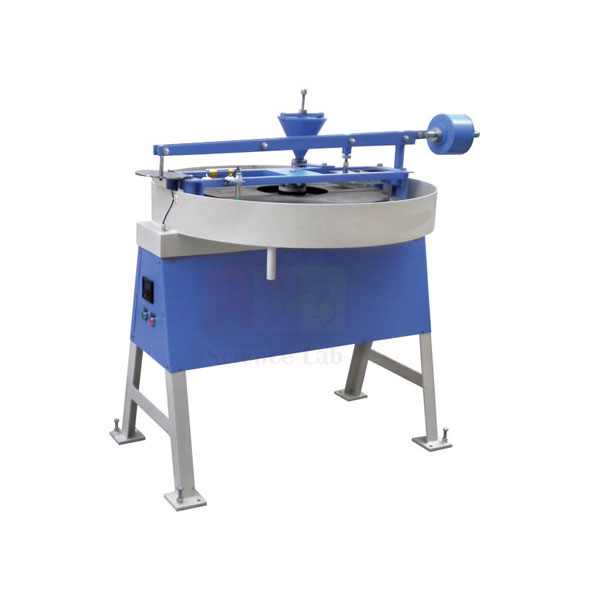
Dorry Abrasion Testing Machine
Dorry Abrasion Testing Machine (Product Code: SLE/CE/96) is a motor-driven rotating disc machine used to measure the abrasion resistance of stone and aggregate specimens pressed against it while sand is fed as the abrasive, in civil engineering and geology laboratories. Engineering colleges and materials labs use it to compare building stones and road aggregates, and its two hoppers and two weighted containers let two specimens run at once. It is made by Jain Scientific Equipments Pvt Ltd (ScienceLab), an OEM manufacturer, at its own factory in Ambala, India.
Specifications
| Parameter | Detail |
|---|---|
| Drive | Disc rotating about a shaft connected to a reduction gear box coupled to a motor |
| Disc speed | 28–30 RPM |
| Sand feed | Two conical hoppers on a bracket fixed to the circular tray, with an arrangement to start and stop the sand flow |
| Sand removal | Tray under the rotating disc with an outlet for removing used sand |
| Specimen loading | Two containers with weights keep the specimens pressed against the disc |
| Power supply | 220 V, 50 cycles, AC |
| Product code | SLE/CE/96 |
| Manufacturer | Jain Scientific Equipments Pvt Ltd (ScienceLab) — OEM |
| Country of origin | India (made in Ambala, Haryana) |
What Is the Dorry Abrasion Tester Used For?
The Dorry test grades the hardness of rock and stone by how quickly it wears when rubbed against a turning disc under a steady stream of sand. Each specimen sits in its weighted container so that it bears on the disc with a constant pressure, the hoppers are opened to feed sand, and the disc turns at 28–30 RPM for the number of revolutions the test calls for. Loss of mass or thickness after the run shows how the stone would resist foot traffic, wheels or flowing water.
Weigh specimens carefully before and after the test, keep the sand dry so it flows evenly from the hoppers, and empty the tray outlet between runs. This machine suits geology and highway-materials teaching in engineering colleges, as well as quality checks on paving and flooring stone at technical institutes.
OEM Manufacturer
Jain Scientific Equipments Private Limited, trading as ScienceLab, makes the Dorry Abrasion Testing Machine as its own OEM product. The disc drive, circular tray, hopper bracket and weighted containers are manufactured and assembled at the company's licensed factory at Saha, Ambala, Haryana, India.
Because buyers deal with the maker rather than a reseller, engineering colleges, laboratories, dealers and importers can take up repeat orders and questions about wear parts directly with the factory. Learn about the company on the ScienceLab profile page.
Related Civil Engineering Lab Equipment
Other wear and abrasion tests often set up in the same laboratory:
- Tile abrasion testing machine — measures wear of floor tiles on a grinding path
- Digital Los Angles Abrasion Testing Machine — drum test for coarse aggregate wear
- Wide Wheel Abrasion Testing Machine — an abrasion test for paving units
- Core Drilling Machine (Motorised) — for cutting stone cores to prepare specimens
Browse the full Civil Engineering Lab Equipment category.
Frequently Asked Questions
How many specimens can the Dorry Abrasion Testing Machine test at once?
The Dorry Abrasion Testing Machine has two conical sand hoppers and is supplied with two containers with weights, so two specimens can be pressed against the rotating disc in the same run. This helps laboratories compare two stones or duplicate a sample.
At what speed does the disc of the Dorry Abrasion Testing Machine rotate?
The disc of the Dorry Abrasion Testing Machine rotates at 28–30 RPM. It is driven through a shaft connected to a reduction gear box that is coupled to the motor, giving a steady, slow speed suited to abrasion testing.
How is sand fed and removed on the Dorry Abrasion Testing Machine?
On the Dorry Abrasion Testing Machine, sand is fed from two conical hoppers mounted on a bracket fixed to the circular tray, with an arrangement to start and stop the flow. Used sand collects in a tray under the disc and leaves through an outlet.
What power supply does the Dorry Abrasion Testing Machine use?
The Dorry Abrasion Testing Machine is suitable for operation on a 220 V, 50 cycles, AC supply. Buyers with a different mains supply should mention it in their enquiry so that we can discuss the requirement before quoting.
Who manufactures the Dorry Abrasion Testing Machine?
The Dorry Abrasion Testing Machine is manufactured by Jain Scientific Equipments Pvt Ltd (ScienceLab) as the OEM, at its own licensed factory in Saha, Ambala, Haryana, India. Quotations and replacement-part questions are handled by the manufacturer directly.
Is abrasive sand supplied with the Dorry Abrasion Testing Machine?
The listing for the Dorry Abrasion Testing Machine does not say that abrasive sand is included. Please confirm your needs through our contact page, and the quotation will list exactly what is supplied with the machine.
Request a Quote
For a quotation on the Dorry Abrasion Testing Machine (SLE/CE/96), send your quantity and supply voltage through our contact page or add the machine to the enquiry cart. Quotes come straight from the manufacturer for India and international markets.
Last updated: 24 September 2026
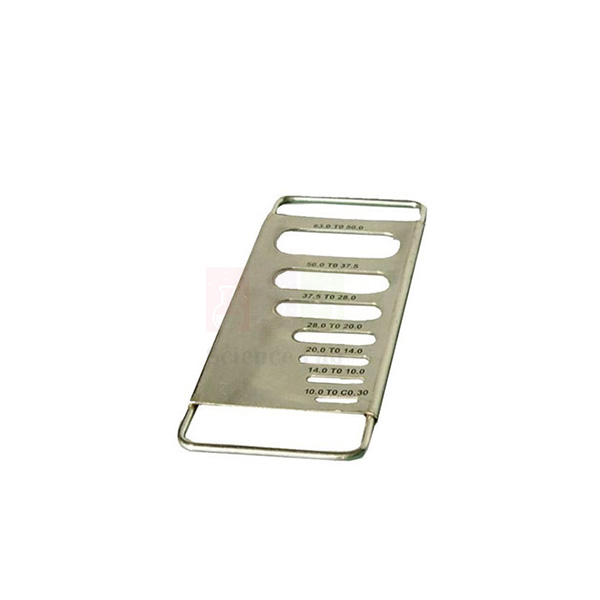
Thickness gauge
Thickness gauge (Product Code: SLE/CE/97) is a slotted gauge used to decide whether individual aggregate particles are flaky, meaning thinner than 0.6 of their nominal size, in civil engineering and highway materials laboratories. Materials labs and engineering colleges use it for flakiness index work; it has seven slots from 4.9 × 30 mm to 33.9 × 100 mm on a 310 × 130 × 10 mm body. It is made by Jain Scientific Equipments Pvt Ltd (ScienceLab), an OEM manufacturer, at its own factory in Ambala, India.
Specifications
| Parameter | Detail |
|---|---|
| Purpose | Identifies flaky aggregate particles (thickness less than 0.6 of nominal size) |
| Number of slots | 7 |
| Slot sizes | 4.9 × 30 mm, 7.2 × 40 mm, 10.2 × 50 mm, 14.4 × 60 mm, 19.7 × 80 mm, 26.3 × 90 mm and 33.9 × 100 mm |
| Dimensions | 310 × 130 × 10 mm |
| Weight | 0.4 kg (approx.) |
| Product code | SLE/CE/97 |
| Manufacturer | Jain Scientific Equipments Pvt Ltd (ScienceLab) — OEM |
| Country of origin | India (made in Ambala, Haryana) |
What Is the Aggregate Thickness Gauge Used For?
Flaky particles break easily under rollers and traffic and reduce the workability of concrete, so specifications limit how many a coarse aggregate may contain. For the flakiness index, the sample is first sieved into size fractions, and each particle of a fraction is tried by hand in the slot that matches that fraction. Particles that pass through the slot are flaky; their total mass as a percentage of the sample mass gives the flakiness index.
The gauge is light and small enough to use at a bench or on site, and one gauge covers all seven fractions. Keep the slot edges clean and free of burrs, and test one fraction at a time to avoid mixing results. It is a practical piece of lab equipment for technical institutes teaching highway materials and concrete technology.
OEM Manufacturer
This Thickness gauge is an OEM item from Jain Scientific Equipments Private Limited, which operates under the ScienceLab name. It is made at the company's own licensed factory at Saha, Ambala, Haryana, India, and supplied factory-direct rather than through a trading intermediary.
Colleges, testing laboratories, dealers and importers can place repeat orders with the manufacturer itself, which is useful when several benches need matching gauges. Read more on the ScienceLab company profile.
Related Civil Engineering Lab Equipment
Aggregate shape testing usually needs these items too:
- Flakiness Sieve Set — slotted sieves for checking whole fractions at once
- Test Sieves — for separating the sample into size fractions first
- Electromagnetic Digital Sieve Shaker — for faster, repeatable grading of the sample
- Shape Index Caliper — another method for assessing particle shape
See the complete range of Civil Engineering Lab Equipment.
Frequently Asked Questions
What slot sizes does the Thickness gauge have?
The Thickness gauge has seven slots: 4.9 × 30 mm, 7.2 × 40 mm, 10.2 × 50 mm, 14.4 × 60 mm, 19.7 × 80 mm, 26.3 × 90 mm and 33.9 × 100 mm. Each slot is used for one size fraction of the aggregate sample.
When is an aggregate particle flaky according to the Thickness gauge?
With the Thickness gauge, a particle is treated as flaky when its thickness is less than 0.6 of its nominal size, which shows up when it passes through the slot for its fraction. The mass of flaky particles gives the flakiness index.
How big and heavy is the Thickness gauge?
The Thickness gauge measures 310 × 130 × 10 mm and weighs about 0.4 kg. Its compact size makes it easy to use at a laboratory bench or to carry to a quarry or site for quick checks.
What is the difference between the Thickness gauge and a flakiness sieve set?
The Thickness gauge is used to test particles individually by hand in its seven slots, which suits teaching and small samples. A flakiness sieve set uses slotted sieves to check a whole fraction at once, which is quicker for larger routine samples.
Who manufactures the Thickness gauge?
The Thickness gauge is manufactured by Jain Scientific Equipments Pvt Ltd (ScienceLab) as the OEM, at its own licensed factory in Saha, Ambala, Haryana, India. Quotations and repeat orders are handled directly by the manufacturer.
What should a quotation request for the Thickness gauge include?
A quotation request for the Thickness gauge should give the number of gauges, any test sieves or related shape-test items you need, and the delivery location. Send it through our contact page or the enquiry cart.
Request a Quote
Get a price for the Thickness gauge (SLE/CE/97) by writing to us through the contact page, or add it to the enquiry cart with your other aggregate test items. Quotes come direct from the manufacturer for India and international markets.
Last updated: 24 September 2026
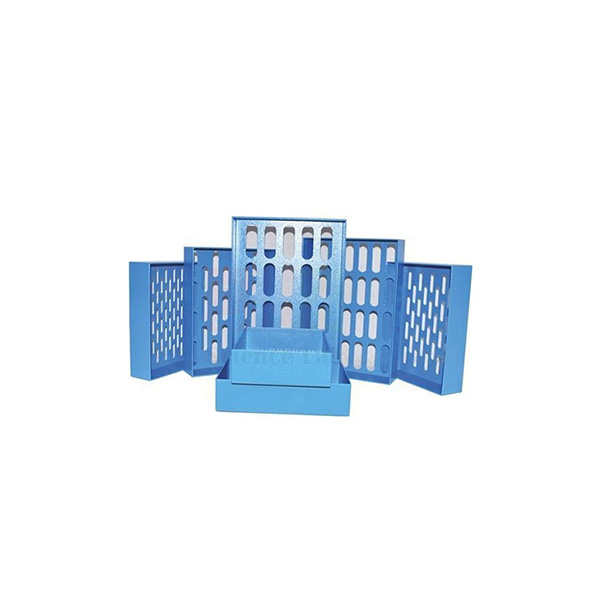
Flakiness Sieve Set
Flakiness Sieve Set (Product Code: SLE/CE/98) is a set of seven slotted steel sieves used to separate flaky particles, those thinner than 0.6 of their mean sieve size, from each size fraction of coarse aggregate in civil engineering and highway materials laboratories. Testing labs and engineering colleges use it for flakiness index testing across fractions from 6.3 to 63 mm, with slot sizes accurate to better than 0.1 mm. It is made by Jain Scientific Equipments Pvt Ltd (ScienceLab), an OEM manufacturer, at its own factory in Ambala, India.
Specifications
| Parameter | Detail |
|---|---|
| Number of sieves | 7 |
| Flakiness criterion | Particle thickness less than 0.6 of its mean sieve size |
| Size fractions covered | Seven fractions from 6.3 mm to 63 mm, each examined separately |
| Aperture sizes listed | 6.3, 10, 14, 20, 28, 37.5, 50 and 63 mm |
| Slot accuracy | Better than 0.1 mm |
| Construction | Heavy gauge steel sheet |
| Finish | Electrostatic paint coating |
| Product code | SLE/CE/98 |
| Manufacturer | Jain Scientific Equipments Pvt Ltd (ScienceLab) — OEM |
| Country of origin | India (made in Ambala, Haryana) |
What Is the Flakiness Sieve Set Used For?
Road and concrete specifications cap the proportion of flat, flaky stones because they crush easily and pack poorly. With this set, the aggregate is first graded into its seven fractions between 6.3 mm and 63 mm; each fraction is then shaken on the slotted sieve made for it, and whatever passes through the slots is flaky. Adding the flaky mass from every fraction and dividing by the total gives the flakiness index.
Because a whole fraction is checked in one go, the set is faster than hand gauging for routine or large samples in commercial and college labs. Brush the slots clear after each use and store the sieves flat so the slot widths stay true. It is dependable engineering lab equipment for institutes preparing students for quality-control work on highways.
What to Specify When Ordering
- Number of complete 7-sieve sets required
- Whether you also need standard test sieves for the initial grading into fractions
- Whether a sieve shaker is wanted for the grading step
OEM Manufacturer
The Flakiness Sieve Set is produced by Jain Scientific Equipments Private Limited, known in the market as ScienceLab, which acts as the OEM. The slotted sieves are formed from heavy gauge steel sheet and finished at the company's own licensed factory at Saha, Ambala, Haryana, India.
Laboratories, colleges, dealers and importers order direct from the manufacturer, and can ask the factory itself about matching repeat sets. For company background, visit the ScienceLab profile.
Related Civil Engineering Lab Equipment
These items complete a flakiness and grading workstation:
- Thickness gauge — a slotted hand gauge for testing particles one by one
- Test Sieves — for dividing the sample into size fractions before slot testing
- Electromagnetic Digital Sieve Shaker — for consistent mechanical grading
- Riffle Sample Divider — for reducing a field sample to test size
Browse all Civil Engineering Lab Equipment.
Frequently Asked Questions
How many sieves are in the Flakiness Sieve Set?
The Flakiness Sieve Set consists of 7 sieves, one for each of the seven aggregate fractions between 6.3 mm and 63 mm. The aperture sizes listed for the set are 6.3, 10, 14, 20, 28, 37.5, 50 and 63 mm.
How accurate are the slots of the Flakiness Sieve Set?
The slot size of each sieve in the Flakiness Sieve Set is accurate to better than 0.1 mm. Accurate slots matter because the test separates particles thinner than 0.6 of their mean sieve size, so small errors would change the flakiness index.
What are the Flakiness Sieve Set sieves made of?
Each sieve in the Flakiness Sieve Set is made from heavy gauge steel sheet and coated with electrostatic paint. The painted finish protects the steel in regular laboratory use; clean and dry the sieves after testing wet or dusty aggregate.
Is the Flakiness Sieve Set used instead of a thickness gauge?
The Flakiness Sieve Set and a thickness gauge do the same job in different ways. The sieve set checks a whole size fraction at once, suiting larger routine samples, while a thickness gauge tests particles one by one, which suits teaching and small samples.
Who manufactures the Flakiness Sieve Set?
The Flakiness Sieve Set is manufactured by Jain Scientific Equipments Pvt Ltd (ScienceLab) as the OEM, at its own licensed factory in Saha, Ambala, Haryana, India. Buyers get quotations and repeat-order support directly from the manufacturer.
What should a quotation request for the Flakiness Sieve Set include?
A quotation request for the Flakiness Sieve Set should state the number of sets, whether grading sieves or a sieve shaker are also needed, and the delivery location. Send the details through our contact page or the enquiry cart.
Request a Quote
To price the Flakiness Sieve Set (SLE/CE/98), contact us through the contact page or add it to the enquiry cart. Quotations come direct from the manufacturer for laboratories and dealers in India and international markets.
Last updated: 24 September 2026
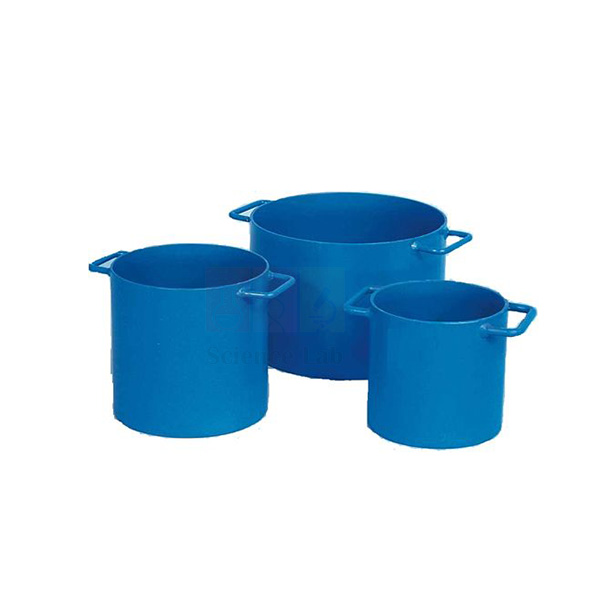
Cylindrical Measures
Cylindrical Measures (Product Code: SLE/CE/99) are calibrated sheet-iron containers of known volume used to determine the bulk density, or unit weight, of fine and coarse aggregates in civil engineering and concrete technology laboratories. Engineering colleges, ready-mix and site labs pick a size to suit the aggregate, choosing from capacities of 3, 5, 7, 10, 15, 20 and 30 litres, each with carrying handles. They are made by Jain Scientific Equipments Pvt Ltd (ScienceLab), an OEM manufacturer, at its own factory in Ambala, India.
Specifications
| Parameter | Detail |
|---|---|
| Purpose | Determination of bulk density (unit weight) of aggregates |
| Construction | Calibrated cylindrical measures of sheet iron with handles |
| Capacities available | 3, 5, 7, 10, 15, 20 and 30 litres |
| Supplied with | One tamping rod, 16 mm diameter × 600 mm long |
| Product code | SLE/CE/99 |
| Manufacturer | Jain Scientific Equipments Pvt Ltd (ScienceLab) — OEM |
| Country of origin | India (made in Ambala, Haryana) |
What Are Cylindrical Measures Used For?
Bulk density tells a mix designer how much aggregate by mass fills a given volume, which is needed to convert between mass and volume batching and to estimate the voids that cement paste must fill. The empty measure is weighed, filled with aggregate either loosely or in layers compacted with the 16 mm tamping rod, struck off level with the rim, and weighed again. Dividing the aggregate mass by the known capacity gives the bulk density.
Larger measures are chosen for coarser aggregate so that the sample represents the material fairly, which is why the range runs from 3 up to 30 litres. Keep the measures dry and dent-free, since damage changes their volume. A full set is practical equipment for laboratories in technical institutes that teach concrete mix design.
What to Specify When Ordering
- Which capacities you need: 3, 5, 7, 10, 15, 20 or 30 litres
- Quantity of each capacity
- Any extra 16 mm × 600 mm tamping rods beyond the one supplied
OEM Manufacturer
Cylindrical Measures in this range are manufactured by Jain Scientific Equipments Private Limited under its ScienceLab brand, as the OEM. The sheet-iron measures and their handles are fabricated at the company's own licensed factory at Saha, Ambala, Haryana, India.
ScienceLab is registered as an MSME manufacturer (Udyam UDYAM-HR-01-0003714), and export shipments are handled under Importer-Exporter Code AAECJ8618A (DGFT). Buyers therefore deal with the maker for quotations and repeat orders; see the ScienceLab company profile for more.
Related Civil Engineering Lab Equipment
Items typically used with these measures in aggregate testing:
- Tamping Rod — a spare rod for compacting aggregate in layers
- Scoops — for filling the measure evenly without segregation
- Density Basket — for weighing aggregate in water to find particle density
- Specific Gravity And Water Absorption of Aggregates — the companion test used in mix design
View the complete Civil Engineering Lab Equipment range.
Frequently Asked Questions
What capacities do the Cylindrical Measures come in?
The Cylindrical Measures are available in capacities of 3, 5, 7, 10, 15, 20 and 30 litres. Smaller measures suit fine aggregate and small samples, while the larger sizes are chosen for coarse aggregate so that the test sample is representative.
What are the Cylindrical Measures made of?
The Cylindrical Measures are calibrated measures made of sheet iron and fitted with handles for lifting when full. Keep them clean, dry and free from dents, because any change in shape alters the internal volume used in the bulk density calculation.
Is a tamping rod included with the Cylindrical Measures?
Yes. The Cylindrical Measures are supplied complete with one tamping rod, 16 mm in diameter and 600 mm long, for compacting the aggregate in layers during the rodded bulk density test. Extra rods can be added to the same quotation.
How is bulk density calculated with the Cylindrical Measures?
With the Cylindrical Measures, bulk density is the mass of aggregate that fills the measure, found by weighing it empty and full, divided by the measure's known capacity. The result is used in concrete mix design and in estimating voids.
Who manufactures the Cylindrical Measures?
The Cylindrical Measures are manufactured by Jain Scientific Equipments Pvt Ltd (ScienceLab) as the OEM, at its own licensed factory in Saha, Ambala, Haryana, India. Quotations, repeat orders and mixed-size orders are handled by the manufacturer directly.
Is a calibration certificate available for the Cylindrical Measures?
Calibration-certificate availability for the Cylindrical Measures is not stated in the listing, so please discuss it with us through the contact page before ordering, naming the capacities you plan to buy.
Request a Quote
Send the capacities and quantities of Cylindrical Measures (SLE/CE/99) you need through our contact page, or add them to the enquiry cart. Quotations come direct from the manufacturer for buyers in India and international markets.
Last updated: 24 September 2026
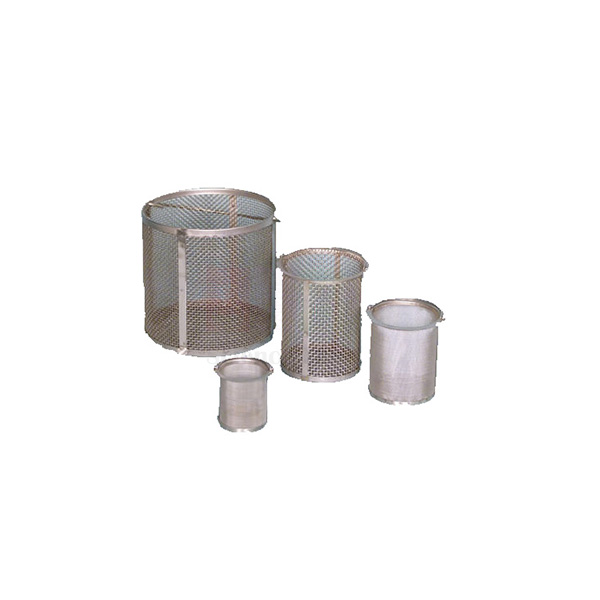
Density Basket
Density Basket (Product Code: SLE/CE/100) is a wire-mesh basket used to hold coarse aggregate while it is weighed under water for specific gravity, density and water absorption tests in civil engineering laboratories. Materials labs and engineering colleges hang it from a buoyancy balance; it is built in brass or GI with 6.3 mm or 4.75 mm stainless steel wire mesh, about 203 mm across and high. It is made by Jain Scientific Equipments Pvt Ltd (ScienceLab), an OEM manufacturer, at its own factory in Ambala, India.
Specifications
| Parameter | Detail |
|---|---|
| Frame material | Brass or GI, ruggedly constructed |
| Mesh | Stainless steel wire mesh, 6.3 mm or 4.75 mm size |
| Construction | Reinforced No. 8 wire mesh |
| Size | Approx. 20 cm diameter × 20 cm high (8 in × 8 in, 203 × 203 mm) |
| Handle | Bail-type handle |
| Net weight | 2 lb (0.91 kg) |
| Product code | SLE/CE/100 |
| Manufacturer | Jain Scientific Equipments Pvt Ltd (ScienceLab) — OEM |
| Country of origin | India (made in Ambala, Haryana) |
What Is the Density Basket Used For?
To find the specific gravity and water absorption of coarse aggregate, a soaked sample is placed in the basket, lowered into water and weighed while fully immersed. The same sample is then surface-dried and weighed in air, and finally oven-dried and weighed again. From these three weights the laboratory calculates particle density, specific gravity and the percentage of water the aggregate absorbs, all of which feed into concrete mix design.
The bail-type handle lets the basket hang freely from the balance hook so it does not touch the sides of the water tank. Choose the 4.75 mm mesh when finer coarse particles must be retained, shake off trapped air before weighing, and rinse the basket after use. It suits engineering lab equipment set-ups in colleges and polytechnics that teach aggregate testing.
What to Specify When Ordering
- Frame material: brass or GI
- Mesh size: 6.3 mm or 4.75 mm stainless steel wire mesh
- Number of baskets required
- Whether a buoyancy balance and water tank are also needed
OEM Manufacturer
ScienceLab, the trading name of Jain Scientific Equipments Private Limited, is the OEM for this Density Basket. The frame, mesh and handle are assembled at the company's own licensed factory at Saha, Ambala, Haryana, India, and sold factory-direct.
Laboratories, institutions, dealers and importers can order mixed materials and mesh sizes from the maker in one quotation and come back to the same manufacturer for repeat baskets. Company background is on the ScienceLab profile.
Related Civil Engineering Lab Equipment
The basket works as part of this specific gravity set-up:
- Buoyancy Balance Apparatus — weighs the basket and sample suspended in water
- Specific Gravity And Water Absorption of Aggregates — the full test set for this procedure
- Cylindrical Measures — for the related bulk density test
- Moisture Tins — for drying and weighing samples
See all Civil Engineering Lab Equipment.
Frequently Asked Questions
What is the Density Basket made of?
The Density Basket is made of brass or GI with stainless steel wire mesh in 6.3 mm or 4.75 mm size, and is described as reinforced No. 8 wire mesh construction. State the frame material and mesh size you prefer when you request a quotation.
What size is the Density Basket?
The Density Basket is approximately 20 cm in diameter and 20 cm high, listed as 8 in by 8 in (203 by 203 mm). Its net weight is 2 lb (0.91 kg), light enough to hang from a balance hook with the sample inside.
What is the Density Basket used for in aggregate testing?
The Density Basket holds a soaked coarse aggregate sample while it is weighed under water. Combined with its saturated surface-dry and oven-dry weights, this gives the aggregate's specific gravity, density and water absorption for concrete mix design.
Does the Density Basket come with a handle?
Yes, the Density Basket comes complete with a bail-type handle. The handle lets the basket hang freely from the balance so that it stays fully immersed without touching the sides or bottom of the water tank during weighing.
Who manufactures the Density Basket?
The Density Basket is manufactured by Jain Scientific Equipments Pvt Ltd (ScienceLab) as the OEM, at its own licensed factory in Saha, Ambala, Haryana, India. Quotations and repeat orders come directly from the manufacturer.
What should a quotation request for the Density Basket include?
A quotation request for the Density Basket should give the frame material, mesh size, number of baskets and delivery location, plus any buoyancy balance or water tank needed. Send it through our contact page or the enquiry cart.
Request a Quote
To get pricing for the Density Basket (SLE/CE/100), share your material, mesh size and quantity on our contact page, or add it to the enquiry cart. Quotations come direct from the manufacturer for India and international markets.
Last updated: 24 September 2026
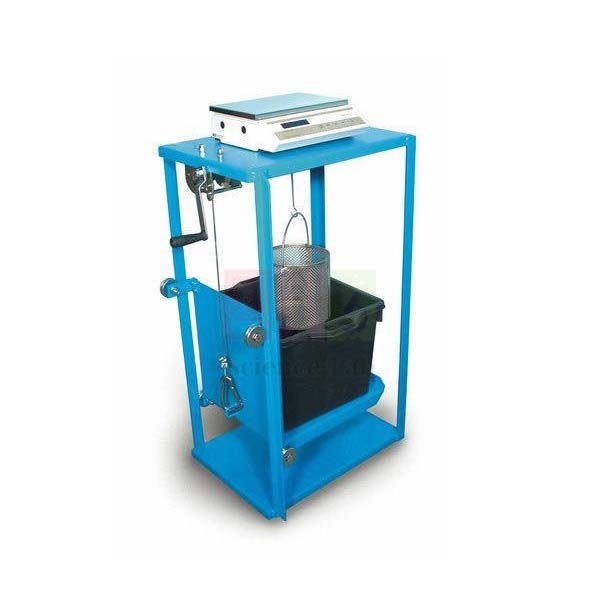
Buoyancy Balance Apparatus
Buoyancy Balance Apparatus (Product Code: SLE/CE/101) is a weighing system that measures a specimen in air and then suspended in water, used to find the specific gravity, density and water absorption of aggregates, concrete and rock in civil engineering laboratories. Materials-testing labs and engineering colleges choose it for its 6000 g capacity with 0.1 g readability and a mechanical lift that raises the water tank to the specimen. It is made by Jain Scientific Equipments Pvt Ltd (ScienceLab), an OEM manufacturer, at its own factory in Ambala, India.
Specifications
| Parameter | Detail |
|---|---|
| Balance capacity × readability | 6000 g × 0.1 g |
| Frame | Rigid support frame incorporating a water tank mounted on a platform |
| Immersion method | Mechanical lifting device raises the water tank through the frame height to immerse the specimen suspended below the balance |
| Dual use | Balance can also be used as a standard weighing device |
| Supplied with | Frame, water tank and suspension hook |
| Power supply | 220–240 V AC, 50–60 Hz, 80 W |
| Product code | SLE/CE/101 |
| Manufacturer | Jain Scientific Equipments Pvt Ltd (ScienceLab) — OEM |
| Country of origin | India (made in Ambala, Haryana) |
What Is the Buoyancy Balance Used For?
The apparatus applies Archimedes' principle: a specimen weighs less in water by exactly the weight of water it displaces, so weighing it in air and immersed gives its volume and hence its density. The specimen, or a wire basket of soaked aggregate, hangs from the suspension hook beneath the balance. After the reading in air, the lifting device raises the tank until the specimen is fully submerged, and the immersed reading is taken without disturbing the hook.
Raising the water rather than lowering the sample keeps the load steady and the readings repeatable, which matters with 0.1 g resolution. When density work is finished, the balance serves as an everyday weighing device, so one bench unit covers both jobs. This makes it versatile laboratory equipment for technical institutes running aggregate, concrete and rock tests.
What to Specify When Ordering
- Number of complete systems (balance, frame, water tank and suspension hook)
- Whether density baskets for aggregate samples are also required
- Confirmation that your mains supply matches 220–240 V AC, 50–60 Hz
OEM Manufacturer
Jain Scientific Equipments Private Limited, which trades as ScienceLab, is the OEM for the Buoyancy Balance Apparatus. The system is made and assembled at the company's own licensed factory at Saha, Ambala, Haryana, India, and supplied direct from there.
Engineering colleges, testing laboratories, dealers and importers receive quotations from the manufacturer itself and can raise questions on spares or additional systems with the same team. Read about the company on the ScienceLab company profile.
Related Civil Engineering Lab Equipment
These items are used with the balance for density and absorption testing:
- Density Basket — holds coarse aggregate on the suspension hook under water
- Specific Gravity And Water Absorption of Aggregates — the complete test set for aggregates
- Buoyancy Balance — an alternative listing for concrete density work
- Concrete Cube Mould — for casting concrete specimens that can be weighed in water
Explore the full Civil Engineering Lab Equipment category.
Frequently Asked Questions
What are the capacity and readability of the Buoyancy Balance Apparatus?
The Buoyancy Balance Apparatus uses a balance with a capacity of 6000 g and a readability of 0.1 g. That range suits aggregate samples in a density basket as well as small concrete or rock specimens weighed in air and in water.
What is supplied with the Buoyancy Balance Apparatus?
The Buoyancy Balance Apparatus is supplied with the balance, a rigid support frame, a water tank mounted on a platform and a suspension hook. A density basket for aggregate is a separate item and can be added to the same quotation.
How is the specimen immersed in the Buoyancy Balance Apparatus?
In the Buoyancy Balance Apparatus, a mechanical lifting device raises the water tank through the height of the frame until the specimen hanging below the balance is fully immersed. The specimen stays on the hook, so the reading is not disturbed.
Can the Buoyancy Balance Apparatus be used for ordinary weighing?
Yes. The balance supplied with the Buoyancy Balance Apparatus may also be used as a standard weighing device, making it a versatile weighing system for the laboratory when density tests are not being run.
What power supply does the Buoyancy Balance Apparatus need?
The Buoyancy Balance Apparatus operates on 220–240 V AC at 50–60 Hz, with a power rating of 80 W. Let us know in your enquiry if your laboratory uses a different mains supply.
Who manufactures the Buoyancy Balance Apparatus?
The Buoyancy Balance Apparatus is manufactured by Jain Scientific Equipments Pvt Ltd (ScienceLab) as the OEM, at its own licensed factory in Saha, Ambala, Haryana, India. For calibration-certificate questions, please ask us through the contact page before ordering.
Request a Quote
For a quotation on the Buoyancy Balance Apparatus (SLE/CE/101), send your quantity and any density baskets needed via our contact page, or add it to the enquiry cart. Quotes come direct from the manufacturer for India and international markets.
Last updated: 24 September 2026