- Physics Lab Equipment
- Chemistry Lab Equipment
- Biology Lab Equipment
- Anatomical Lab Equipment
- Learning
- Educational Lab Equipment
- Magnets
- Agriculture
- Astronomy
- Earth Science
- Geography Lab Equipment
- Safety Lab Coat
- Laboratory
- Meteorological
- Electricity & Magnetism
- Heat
- School Lab Equipment
- Lab Glassware
- Science Lab Equipment
- Tvet Lab Equipment
- Robotics Kits Supplier and Manufacturer for Schools India
- Math Lab Equipment Manufacturers and Exporters in Ambala
- STEM Kits Manufacturers and Supplier India
- Engineering Lab Equipment
- Hospital Lab Equipment
- Water, Sanitation & Hygiene Supplies
- Cold Chain, Solar & Communication Equipment
- Nutrition
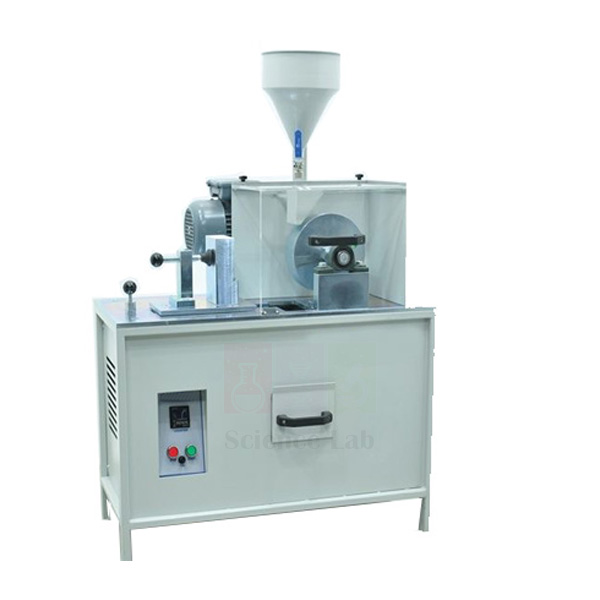
Wide Wheel Abrasion Testing Machine
Wide Wheel Abrasion Testing Machine (Product Code: SLE/AG/05) is a rotating-wheel wear tester used to determine the resistance to abrasion of natural stones and concrete products used for paving in construction material laboratories. Paving block producers and civil engineering departments rely on its 70 mm thick wheel turning at 75 rpm, with a digital counter that stops the machine at a preset number of revolutions. It is made by Jain Scientific Equipments Pvt Ltd (ScienceLab), an OEM scientific equipment manufacturer in India, at its own factory in Ambala.
Specifications
| Parameter | Detail |
|---|---|
| Application | Resistance to abrasion/wear of natural stones and concrete products used for paving |
| Abrasion wheel thickness | 70 mm |
| Wheel speed | 75 rpm |
| Control | Digital counter that stops the machine at the end of a preset number of revolutions |
| Consumables listed | Abrasive corundum sand, calibration marble |
| Dimensions | 620 x 670 x 1350 mm |
| Weight (approx.) | 130 kg |
| Power | 370 W |
| Product code | SLE/AG/05 |
| Manufacturer | Jain Scientific Equipments Pvt Ltd (ScienceLab) — OEM |
| Country of origin | India (made in Ambala, Haryana) |
What Is the Wide Wheel Abrasion Tester Used For?
The specimen is clamped with its wearing face against the 70 mm wide wheel, abrasive corundum sand is allowed to flow into the gap, and the required revolution count is entered on the digital counter. The machine stops by itself when the count is reached, so every specimen receives the same amount of wear without the operator timing the run. The groove cut into the surface is then measured, and a shorter groove indicates a harder-wearing paving material. The calibration marble is used to confirm that the machine and abrasive produce the expected reference groove before a series of tests.
Keeping the abrasive dry and free of lumps gives an even flow and more repeatable grooves. Buyers often order extra corundum sand along with their lab equipment accessories in India, because it is consumed in every test. Wipe abrasive dust from the wheel and clamp after each session.
What to Specify When Ordering
- The model: this Wide Wheel machine (70 mm wheel) for natural stone and concrete paving, or the Narrow Wheel version (10 mm wheel) described for unglazed tiles, grouts and clay pavers — ask us to confirm availability.
- The quantity of abrasive corundum sand and calibration marble you want with the machine, based on your expected number of tests.
- Your supply voltage and frequency, so we can confirm the 370 W machine suits your laboratory.
- The number of machines and the delivery address; at approx. 130 kg each, freight is quoted to your location.
OEM Manufacturer
ScienceLab, the trading name of Jain Scientific Equipments Private Limited, is the OEM (original equipment manufacturer) of this Wide Wheel Abrasion Testing Machine and builds it at the company's own licensed factory at Saha, Ambala, Haryana, India. Paving manufacturers, testing laboratories, dealers and importers buy it factory-direct rather than through a trader. Follow-up needs such as further corundum sand or a replacement part are handled by the manufacturer itself, so ask us whenever you need them. Visit the company profile to learn more.
Related Civil Engineering Lab Equipment
To measure grooves accurately and cover other surface properties of paving materials, consider:
- Tile abrasion testing machine — measures the wear of tiles pressed against an abrasive grinding path.
- Dorry Abrasion Testing Machine — a rotating-disc abrasion test with sand fed from conical hoppers.
- Accelerated Polishing Machine — evaluates how road stone polishes, which complements the wear result.
- Caliper Vernier (Metal) — for reading the length of the abraded groove on each specimen.
- Safety Goggles — protect the eyes from abrasive grit while loading and cleaning the machine.
Browse related testing products in the Civil Engineering Lab Equipment category.
Frequently Asked Questions
Which materials is the Wide Wheel Abrasion Testing Machine intended for?
The Wide Wheel Abrasion Testing Machine is designed for determining the resistance to abrasion and wear of natural stones and concrete products used for paving, such as slabs and blocks, where durability under traffic matters.
How is test length controlled on the Wide Wheel Abrasion Testing Machine?
A digital counter on the Wide Wheel Abrasion Testing Machine stops it automatically at the end of a preset number of revolutions, so the operator sets the count once and every specimen receives the same amount of wear.
Is there a narrow wheel version of the Wide Wheel Abrasion Testing Machine for tiles?
A Narrow Wheel Abrasion Testing Machine with a 10 mm thick wheel is described for unglazed tiles, grouts used for tiles and clay pavers, whereas the Wide Wheel Abrasion Testing Machine has a 70 mm wheel. Please contact us to confirm its availability.
Are corundum sand and calibration marble supplied with the Wide Wheel Abrasion Testing Machine?
Abrasive corundum sand and calibration marble are listed with the Wide Wheel Abrasion Testing Machine. Ask us to state the quantities in your quotation, and whether additional abrasive is advisable for your expected number of tests.
What space and power does the Wide Wheel Abrasion Testing Machine need?
The Wide Wheel Abrasion Testing Machine measures 620 x 670 x 1350 mm, weighs about 130 kg and is rated at 370 W, so plan a firm, level floor position near a power point and confirm your supply voltage when ordering.
Who manufactures the Wide Wheel Abrasion Testing Machine?
The Wide Wheel Abrasion Testing Machine is manufactured by Jain Scientific Equipments Pvt Ltd (ScienceLab), the OEM, at its own licensed factory in Saha, Ambala, Haryana, India, and supplied factory-direct to laboratories, paving producers, dealers and importers.
Can a calibration certificate be supplied with the Wide Wheel Abrasion Testing Machine?
Documentation needs for the Wide Wheel Abrasion Testing Machine should be discussed with us through the contact page before ordering; we will confirm what is available for your order rather than assume a particular document.
Request a Quote
Use our contact page to request a price, or add this machine to the enquiry cart with any consumables and measuring tools you need. The quotation is prepared directly by ScienceLab as the manufacturer.
Last updated: 24 September 2026
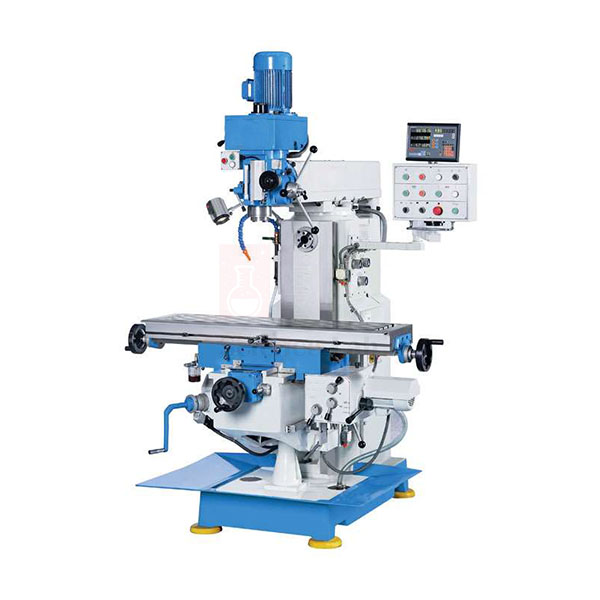
Universal Milling Machine
Universal Milling Machine (Product Code: SLE/MCE/03) is a conventional milling machine with a swivelling table used to machine horizontal, vertical, angular, grooved and helical surfaces in workshop training and in single-piece or serial production. Its 800 x 175 mm table swivels 45 degrees either side, and the machine offers 6 spindle speeds with a 1, 1.5 or 2 HP main motor. It is supplied by Jain Scientific Equipments Pvt Ltd (ScienceLab), Ambala, India.
Specifications
| Parameter | Detail |
|---|---|
| Surfaces produced | Horizontal, vertical, helical, grooved, slotted and angular |
| Cutter types | Cylindrical, disc, end and angular milling cutters, among others |
| Table surface | 800 x 175 mm |
| T-slots | 3, size ½ inch |
| Table swivel | 45 degrees either side |
| Longitudinal traverse | 475–675 mm |
| Cross traverse | 150 mm |
| Vertical traverse | 400 mm |
| Longitudinal table feeds | 2 |
| Number of spindle speeds | 6 |
| Spindle speed range | Listed as 40 RPM; full range to be confirmed at quotation |
| Spindle diameter | 50–90 mm |
| Diameter (listed without further description) | 25.4 mm |
| Main motor | 1, 1.5 or 2 HP |
| Weight | 450 kg |
| Product code | SLE/MCE/03 |
| Supplied by | Jain Scientific Equipments Pvt Ltd (ScienceLab), Ambala, India |
What Is the Universal Milling Machine Used For?
Milling removes metal with a rotating multi-tooth cutter while the work is fed past it on the table. What makes a universal machine different from a plain miller is the swivelling table: set at an angle to the cutter, it allows helical and angular work in addition to ordinary flat faces, steps, slots and grooves. Changing between cylindrical, disc, end and angular cutters lets one machine cover most of the milling exercises in a workshop syllabus.
Trainees learn to clamp work in the T-slots, choose a spindle speed and feed, and use the cross and vertical traverses to position the cut. At 450 kg the machine needs a firm, level floor and suitable lifting for installation. For technical institutes planning a conventional machining section, this machine is a natural companion to lathes and drills before students move on to CNC.
What to Specify When Ordering
- Main motor rating: 1, 1.5 or 2 HP.
- Longitudinal traverse required, within the listed 475–675 mm.
- Any cutters, arbors or work-holding accessories you want quoted with the machine.
- The power supply in your workshop, as it is not stated in the current listing.
- Quantity and delivery location.
Supplier
ScienceLab, the trading name of Jain Scientific Equipments Private Limited, supplies the Universal Milling Machine to engineering colleges, polytechnics, ITIs, fabrication workshops, dealers and importers in India and international markets. Buyers can combine it with other workshop machines and lab apparatus in one quotation.
For vendor registration, the supplying company is Jain Scientific Equipments Private Limited (CIN U29309HR2020PTC087597, GSTIN 06AAECJ8618A1ZT). Details are on the ScienceLab company profile.
Related Workshop Machine Tools
These machines and tools support milling work in the same workshop:
- Tool And Cutter Grinding Machine — resharpens cylindrical, side-and-face and angular milling cutters.
- CNC milling Machine — the next step once students have mastered manual milling.
- Radial Drill Machine — drills and taps holes in milled parts.
- Caliper Vernier (Metal) — measures slot widths, steps and finished sizes.
View the complete Workshop Machine Tools range.
Frequently Asked Questions
What surfaces can the Universal Milling Machine produce?
The Universal Milling Machine can produce horizontal, vertical, helical, grooved, slotted and angular surfaces, using cylindrical, disc, end and angular milling cutters, which suits both single-piece jobs and serial production in a training workshop.
What is the table size and travel of the Universal Milling Machine?
The Universal Milling Machine has an 800 x 175 mm table with three ½ inch T-slots that swivels 45 degrees either side, with 475–675 mm longitudinal, 150 mm cross and 400 mm vertical traverse.
What motor and spindle speeds does the Universal Milling Machine have?
The Universal Milling Machine is offered with a 1, 1.5 or 2 HP main motor and 6 spindle speeds, plus 2 longitudinal feeds. The spindle speed range is listed only as 40 RPM, so ask us to confirm the full range.
How heavy is the Universal Milling Machine?
The Universal Milling Machine weighs 450 kg, so it needs a firm, level floor and suitable lifting equipment for unloading and positioning. Share your site details and we can advise on delivery arrangements.
Who supplies the Universal Milling Machine?
The Universal Milling Machine is supplied by Jain Scientific Equipments Pvt Ltd (ScienceLab), Ambala, India, to colleges, training institutes, workshops, dealers and importers in India and international markets.
What should a quotation request for the Universal Milling Machine include?
A quotation request for the Universal Milling Machine should state the motor rating, longitudinal traverse, any cutters or accessories needed, your workshop power supply, the quantity and the delivery location in India or abroad.
Request a Quote
Send your Universal Milling Machine requirement through our contact page or add it to the enquiry cart to receive a quotation.
Last updated: 24 September 2026
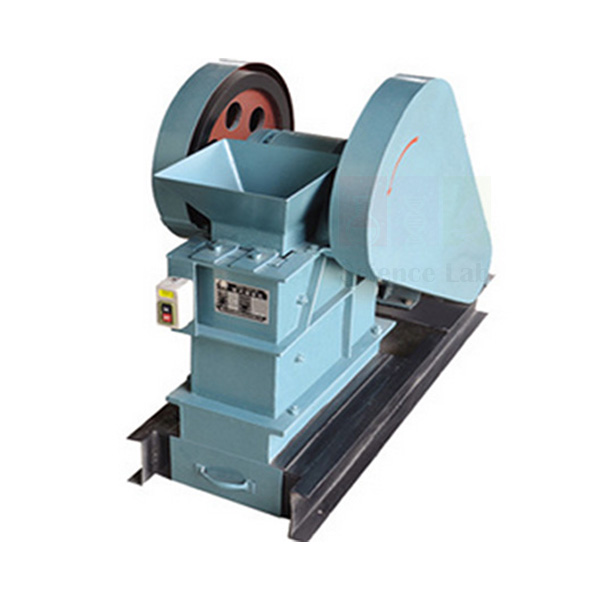
Jaw Crusher
Jaw Crusher (Product Code: SLE/AG/06) is a motor-driven primary crusher used to break rock, stone and ore samples between manganese steel jaws in geology, mining and construction material laboratories. Labs and small production units choose from five jaw sizes, from 4″ x 6″ at 150–200 kg/hr up to 15″ x 24″ at 1 ton/hr, all for a 440 V three phase supply. It is made by Jain Scientific Equipments Pvt Ltd (ScienceLab), an OEM laboratory equipment manufacturer in India, at its own factory in Ambala.
Specifications
| Parameter | Detail |
|---|---|
| Jaws | Manganese steel, adjustable up to 6 mm opening |
| Discharge opening adjustment range | 3–10 mm |
| Throughput (general) | 250 kg of material can be crushed in approx. eight hours |
| Frame | Supported on a strong steel frame |
| Design | Compact and rugged, designed for speed crushing; for laboratory and small production units |
| Voltage | 440 V, three phase A.C. supply |
| Product code | SLE/AG/06 |
| Manufacturer | Jain Scientific Equipments Pvt Ltd (ScienceLab) — OEM |
| Country of origin | India (made in Ambala, Haryana) |
Available laboratory jaw crusher sizes:
| Jaw crusher size | Feed size | Discharge size | Motor | Capacity |
|---|---|---|---|---|
| 4″ x 6″ (100 x 150 mm) | 25 to 30 mm | 6 mm to 20 mm | 3 H.P., 3 Ph. | 150–200 kg/hr |
| 6″ x 8″ (150 x 200 mm) | 45 to 50 mm | 10 mm to 22 mm | 5 H.P., 3 Ph. | 300–400 kg/hr |
| 8″ x 12″ (200 x 300 mm) | 65 to 70 mm | 12 mm to 25 mm | 7.5 H.P., 3 Ph. | 400–500 kg/hr |
| 12″ x 16″ (300 x 400 mm) | 90 to 100 mm | 15 mm to 30 mm | 10 H.P., 3 Ph. | 600–750 kg/hr |
| 15″ x 24″ (375 x 600 mm) | 100 to 150 mm | 25 mm to 55 mm | 15 H.P., 3 Ph. | 1 ton/hr |
Discharge setting and output depend on the size chosen and on the material being crushed; please confirm the figures for your chosen size in the quotation.
What Is the Laboratory Jaw Crusher Used For?
Lumps within the feed size of the chosen model are fed into the mouth of the jaws while the motor runs. The moving jaw presses each piece against the fixed jaw until it is small enough to fall through the discharge opening, which is set before starting to control the product size. Crushed material is collected below, divided to a laboratory portion and, where a fine powder is needed for chemical or mineral analysis, passed on to a pulveriser.
In lab equipment for research in India, such as ore beneficiation studies or aggregate trials, a jaw crusher is usually the first reduction stage. Feed with a scoop rather than by hand, never reach into the jaws while the machine is running, wear eye protection, and brush the jaws clean between samples so that material is not carried from one sample into the next.
What to Specify When Ordering
- The jaw crusher size (4″ x 6″, 6″ x 8″, 8″ x 12″, 12″ x 16″ or 15″ x 24″) that accepts your largest feed lumps.
- The product size you need, checked against the discharge range listed for that size.
- The throughput you expect per hour or per day, compared with the listed capacity.
- Confirmation that a 440 V three phase supply is available for the motor rating of your chosen size.
- The material to be crushed, so the size and setting can be discussed with the manufacturer.
OEM Manufacturer
Jain Scientific Equipments Private Limited, trading as ScienceLab, is the OEM (original equipment manufacturer) of this Jaw Crusher range. Each size is built at the company's own licensed factory at Saha, Ambala, Haryana, India, and supplied factory-direct to laboratories, small production units, dealers and importers. Because the manufacturer handles your enquiry, questions about replacement jaws or other parts, and repeat orders, go straight to the people who make the machine — just ask us. The company profile gives an overview of the business.
Related Civil Engineering Lab Equipment
A typical sample preparation line built around the crusher includes:
- Pulveriser — takes 6 mm input and grinds it finer for analysis, the usual next stage after crushing.
- Riffle Sample Divider — splits the crushed output into representative portions.
- Test Sieves — for checking the size of the crushed product.
- Scoops — for feeding lumps into the jaws without putting hands near them.
- Safety Goggles — eye protection against flying fragments during feeding.
See the Civil Engineering Lab Equipment category for further sample preparation and testing equipment.
Frequently Asked Questions
Which sizes of Jaw Crusher can I order?
The Jaw Crusher is listed in five sizes: 4″ x 6″, 6″ x 8″, 8″ x 12″, 12″ x 16″ and 15″ x 24″, with capacities ranging from 150–200 kg/hr on the smallest model to 1 ton/hr on the largest.
How large can the feed lumps for the Jaw Crusher be?
Feed size for the Jaw Crusher depends on the model: from 25 to 30 mm for the 4″ x 6″ size up to 100 to 150 mm for the 15″ x 24″ size. Choose the size that accepts your largest lumps.
What motor and supply does the Jaw Crusher need?
Every Jaw Crusher size runs on a 440 V three phase A.C. supply, with motor ratings from 3 H.P. on the 4″ x 6″ size up to 15 H.P. on the 15″ x 24″ size.
What are the jaws of the Jaw Crusher made from?
The jaws of the Jaw Crusher are manganese steel, a tough and wear-resistant choice for hard rock and ore, and the crusher is supported on a strong steel frame for steady running in the laboratory.
How fine will the Jaw Crusher crush?
A discharge opening adjustment range of 3–10 mm is listed for the Jaw Crusher, and the size table gives a discharge range for each model. For powder, follow it with a pulveriser; tell us your target size and we will advise.
Who manufactures the Jaw Crusher?
The Jaw Crusher is manufactured by Jain Scientific Equipments Pvt Ltd (ScienceLab), the OEM, at its own licensed factory at Saha, Ambala, Haryana, India. Quotations, repeat orders and replacement-part enquiries are answered directly by the manufacturer.
What should a quotation request for the Jaw Crusher include?
State the Jaw Crusher size, the material to be crushed, the output you expect per hour or per day, the delivery location in India or abroad, and confirmation that your site has a three phase supply.
Request a Quote
Ask for a price on any size through our contact page, or add the Jaw Crusher to the enquiry cart and note the size you need in your message. Quotations come straight from ScienceLab as the manufacturer.
Last updated: 24 September 2026
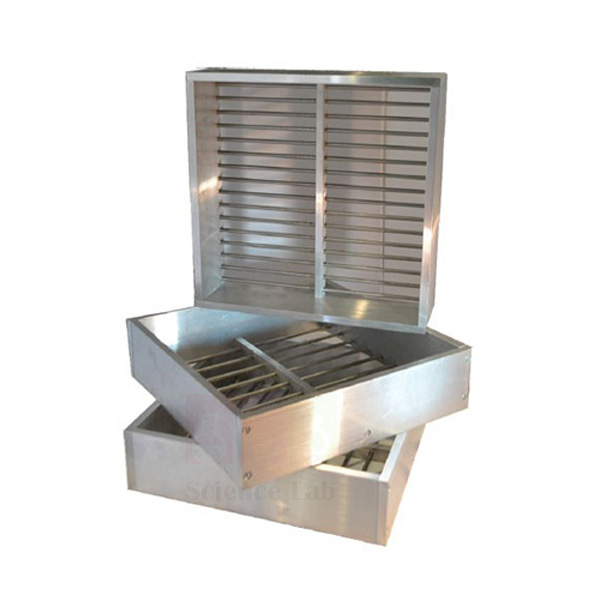
Grid Sieves
Grid Sieves (Product Code: SLE/AG/07) are slotted bar sieves used to determine particle shape, namely the flakiness index and elongation of aggregates, in highway, concrete and quarry laboratories. Supplied as a set of 14 with slot widths from 50.0 mm down to 2.50 mm, they have aluminium frames and 5 mm stainless steel rods and are meant for hand sieving. They are made by Jain Scientific Equipments Pvt Ltd (ScienceLab), an OEM scientific laboratory apparatus manufacturer, at its own factory in Ambala, India.
Specifications
| Parameter | Detail |
|---|---|
| Purpose | Determination of particle shape: flakiness index and elongation of aggregates |
| Frame | Aluminium |
| Grid | Stainless steel rods, 5 mm dia. |
| Slot widths | 50.0, 40.0, 31.5, 25.0, 20.0, 16.0, 12.5, 10.0, 8.00, 6.30, 5.00, 4.00, 3.15 and 2.50 mm |
| Supplied as | Set of 14 pcs |
| Sieving method | Suitable only for hand sieving |
| Product code | SLE/AG/07 |
| Manufacturer | Jain Scientific Equipments Pvt Ltd (ScienceLab) — OEM |
| Country of origin | India (made in Ambala, Haryana) |
What Is the Grid Sieve Set Used For?
The aggregate is first separated into size fractions on ordinary test sieves. Each fraction is then shaken by hand on the grid sieve whose slot width the test method assigns to it. Particles that pass through the slots are the flaky ones, and their combined mass as a percentage of the total gives the flakiness index. Elongation is assessed fraction by fraction in a similar way, so having all 14 slot widths in one set lets a single operator work through a complete grading without borrowing sieves.
Shake gently and let particles find the slots on their own; forcing stones through bends the rods and changes the slot width. Many labs buy the set together with a shape index caliper from the same scientific lab equipment manufacturer, so both shape tests are available on one bench. After use, brush trapped particles out along the slots and store the sieves flat.
OEM Manufacturer
These sieves come from Jain Scientific Equipments Private Limited, which trades as ScienceLab and is their OEM (original equipment manufacturer). The set is made at the company's own licensed factory at Saha, Ambala, Haryana, India, and supplied factory-direct to highway laboratories, colleges, dealers and importers rather than through a middleman. If a sieve is damaged later, ask us about a replacement and the maker will handle the request. For background on the company, see our profile.
Related Civil Engineering Lab Equipment
Particle shape testing usually draws on these items as well:
- Flakiness Sieve Set — a slotted set of seven sieves in heavy gauge steel, an alternative format for the flakiness test.
- Thickness gauge — a slotted gauge for deciding whether individual particles count as flaky.
- Shape Index Caliper — measures individual particles to find the shape factor, a complementary shape test.
- Average Least Dimension — ALD box and spacer sets for the least-dimension approach to chip shape.
- Test Sieves — separate the aggregate into size fractions before each fraction goes on a grid sieve.
Explore other aggregate testing items in the Civil Engineering Lab Equipment category.
Frequently Asked Questions
How many sieves are in the Grid Sieves set?
The Grid Sieves set has fourteen sieves, with slot widths of 50.0, 40.0, 31.5, 25.0, 20.0, 16.0, 12.5, 10.0, 8.00, 6.30, 5.00, 4.00, 3.15 and 2.50 mm, covering the full shape-testing range in one purchase.
What materials are the Grid Sieves made from?
The Grid Sieves have aluminium frames and grids made of 5 mm diameter stainless steel rods. Stainless rods resist corrosion when washed or damp aggregate is tested, and the light frames are easy to handle during hand sieving.
Can Grid Sieves be used on a mechanical sieve shaker?
No. The Grid Sieves are suitable only for hand sieving, which lets each particle turn and find the slots on its own. A mechanical shaker belongs to the preliminary size grading on ordinary test sieves, not to this step.
Can I buy only some slot sizes of the Grid Sieves?
The standard supply of Grid Sieves is the set of 14 pieces. If you need individual slot widths, send us the sizes and we will check what can be offered for your order.
How do I keep the slots of the Grid Sieves accurate?
Never push particles through the Grid Sieves by hand or with a tool, avoid dropping the sieves, and clean them with a soft brush along the rods rather than across them so that the rods stay straight.
Who manufactures the Grid Sieves?
The Grid Sieves are manufactured by Jain Scientific Equipments Pvt Ltd (ScienceLab), the OEM, at its own licensed factory at Saha, Ambala, Haryana, India, and supplied factory-direct to laboratories, colleges, dealers and importers.
Is a measurement report for the Grid Sieves slot widths available?
Please discuss any inspection or calibration document you need for the Grid Sieves with us before ordering, through the contact page. We will confirm what can be supplied with your specific order.
Do you supply Grid Sieves sets for multiple labs?
Yes. Grid Sieves sets for colleges, project sites and tenders in India and international markets can be quoted together; mention the number of sets required and the delivery address in your enquiry.
Request a Quote
For a quotation on the Grid Sieves set, contact us through the enquiry form or add it to the enquiry cart with your other shape-testing equipment. Prices are quoted directly by the manufacturer.
Last updated: 24 September 2026
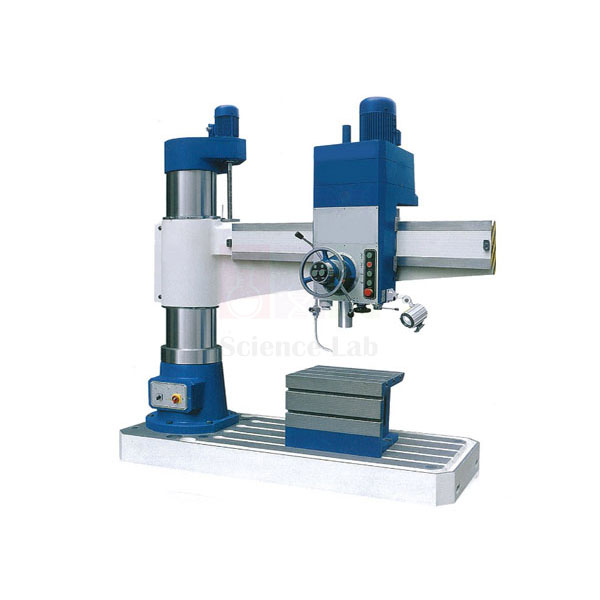
Radial Drill Machine
Radial Drill Machine (Product Code: SLE/MCE/04) is a column-and-arm drilling machine used to drill and tap large holes in big or heavy workpieces without repositioning the work, in engineering workshops, fabrication shops and technical training institutes. It drills up to 65 mm (70 mm in cast iron) and taps up to 50 mm in steel, with the spindle reaching 700 to 1700 mm from the column centre. It is supplied by Jain Scientific Equipments Pvt Ltd (ScienceLab), Ambala, India.
Specifications
| Parameter | Detail |
|---|---|
| Drilling capacity | 65 mm |
| Drilling capacity in cast iron | 70 mm |
| Tapping in steel | 50 mm |
| Spindle travel | 300 mm |
| Spindle speeds | 9 speeds, 50–805 rpm |
| Range of power feed | 0–115 (as listed) |
| Optional feed | 0.13–1.10 (as listed) |
| Column diameter | 330 mm |
| Horizontal movement of radial arm | 660 mm |
| Horizontal movement of drilling head | 1000 mm |
| Spindle nose to base plate (max / min) | 1120 / 460 mm |
| Spindle centre to column centre (max / min) | 1700 / 700 mm |
| Box table | Working surface 560 x 460 mm; height 400 mm |
| Base plate | 2050 x 990 mm (L x W); working surface 1400 x 850 mm; height 210 mm |
| Drilling head motor | 5 HP, 1440 RPM |
| Elevator motor | 3 HP, 1440 RPM |
| Total height of machine | 2440 mm (approx.) |
| Product code | SLE/MCE/04 |
| Supplied by | Jain Scientific Equipments Pvt Ltd (ScienceLab), Ambala, India |
What Is the Radial Drill Used For?
On a radial drill the drilling head slides along an arm that swings around a vertical column, and the elevator motor raises or lowers the arm. The operator can therefore bring the spindle over any hole position on a large casting, plate, flange or machine base clamped on the base plate or box table, instead of moving a heavy workpiece under a fixed spindle. The same machine handles drilling, enlarging and tapping of large holes.
In workshop training, students learn to choose among the 9 spindle speeds to suit drill size and material, engage the power feed for steady penetration, and lock the arm and head before cutting. Plan the installation carefully: the base plate measures 2050 x 990 mm and the machine stands about 2440 mm tall, so floor space and overhead clearance both matter.
What to Specify When Ordering
- The largest hole you need to drill or tap, compared with the listed 65 mm, 70 mm (cast iron) and 50 mm (tapping) capacities.
- Your largest workpiece, checked against the 700–1700 mm spindle reach and 460–1120 mm spindle-to-base range.
- The electrical supply for the 5 HP and 3 HP motors, as voltage is not stated in the listing.
- Quantity and delivery location in India or abroad.
Supplier
Jain Scientific Equipments Private Limited trades as ScienceLab and supplies the Radial Drill Machine to engineering colleges, polytechnics, ITIs, maintenance and fabrication workshops, dealers and importers in India and international markets. Workshop machines can be quoted together with laboratory apparatus in a single offer.
Learn more about the company on the ScienceLab company profile.
Related Workshop Machine Tools
These machines complement a radial drill in a machining or fabrication workshop:
- Pillar Drilling Machine — a smaller drill for everyday holes up to 25 mm.
- Boring machine — enlarges and finishes bores to a precise diameter.
- Universal Milling Machine — machines faces and slots on the same heavy parts.
- Tool And Cutter Grinding Machine — can regrind drill points with extra accessories.
Browse all Workshop Machine Tools.
Frequently Asked Questions
What is the drilling capacity of the Radial Drill Machine?
The Radial Drill Machine is listed with a drilling capacity of 65 mm, rising to 70 mm in cast iron, and can tap holes up to 50 mm in steel, with 300 mm of spindle travel for deep holes.
How far can the Radial Drill Machine reach?
The Radial Drill Machine places the spindle centre between 700 mm and 1700 mm from the column centre, with 1000 mm horizontal movement of the drilling head and a spindle nose 460 mm to 1120 mm above the base plate.
What speeds and feeds does the Radial Drill Machine offer?
The Radial Drill Machine has 9 spindle speeds from 50 to 805 rpm. Its power feed range is listed as 0–115 and an optional feed as 0.13–1.10, without units, so ask us to confirm the feed details.
What motors does the Radial Drill Machine use?
The Radial Drill Machine uses a 5 HP, 1440 RPM drilling head motor and a 3 HP, 1440 RPM elevator motor that raises and lowers the arm. The supply voltage is not listed, so confirm your workshop supply with us.
How much space does the Radial Drill Machine need?
The Radial Drill Machine has a 2050 x 990 mm base plate with a 1400 x 850 mm working surface, a 560 x 460 mm box table and a total height of about 2440 mm, so check floor area and ceiling clearance.
Who supplies the Radial Drill Machine?
The Radial Drill Machine is supplied by Jain Scientific Equipments Pvt Ltd (ScienceLab), Ambala, India, to engineering colleges, training institutes, workshops, dealers and importers in India and international markets.
Request a Quote
To get a price for the Radial Drill Machine, contact us via the contact page or add it to the enquiry cart with your capacity and delivery details.
Last updated: 24 September 2026
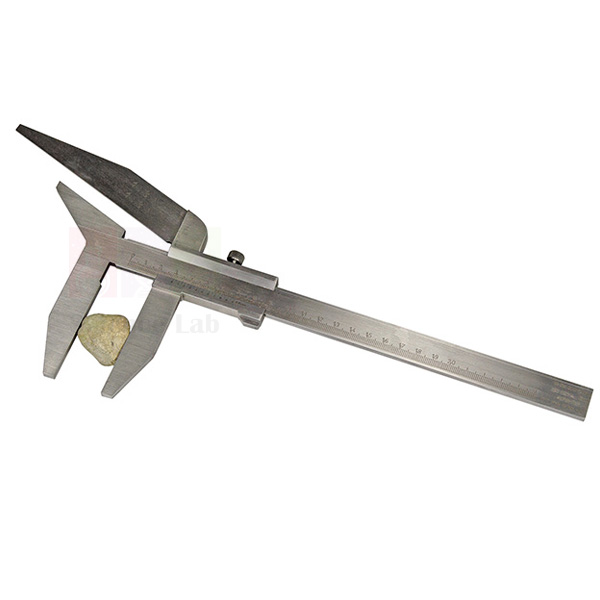
Shape Index Caliper
Shape Index Caliper (Product Code: SLE/AG/08) is a measuring caliper used for the determination of the shape factor of aggregate particles in road construction and concrete laboratories. Engineering students and mix designers use it to identify non-cubical particles; it reads over a 200 mm range in 0.05 mm increments and weighs about 0.4 kg. It is made by Jain Scientific Equipments Pvt Ltd (ScienceLab), an OEM laboratory instrument manufacturer in India, at its own factory in Ambala.
Specifications
| Parameter | Detail |
|---|---|
| Purpose | Determination of the shape factor of aggregates |
| Measurement range | 200 mm |
| Graduation | 0.05 mm increments |
| Dimensions | 450 x 150 x 50 mm |
| Weight (approx.) | 0.4 kg |
| Product code | SLE/AG/08 |
| Manufacturer | Jain Scientific Equipments Pvt Ltd (ScienceLab) — OEM |
| Country of origin | India (made in Ambala, Haryana) |
What Is the Shape Index Caliper Used For?
A representative test portion is taken and each particle is measured in turn: first its longest dimension, then its thickness. The ratio of the two is compared with the limit given in the method your laboratory follows, and every particle beyond that limit is set aside as non-cubical. The mass of the non-cubical particles as a percentage of the whole portion is reported as the shape index. The fine 0.05 mm graduation over a 200 mm range covers everything from small chippings to large coarse aggregate.
At about 0.4 kg the caliper is light enough for students to use through a long practical, which makes it a sensible addition to lab equipments for technical institutes running highway materials courses. Hold each particle in its natural resting position, close the jaws gently without forcing, and wipe dust from the scale so readings stay clear.
OEM Manufacturer
ScienceLab is the trading name of Jain Scientific Equipments Private Limited, the OEM (original equipment manufacturer) of this Shape Index Caliper, which is produced at the company's own licensed factory at Saha, Ambala, Haryana, India. The company is a registered MSME manufacturer (Udyam UDYAM-HR-01-0003714) and ships export orders under Importer-Exporter Code AAECJ8618A issued by DGFT. Calipers go factory-direct to colleges, road laboratories, dealers and importers, and repeat orders are handled by the maker itself. More details are on the company profile.
Related Civil Engineering Lab Equipment
For a complete aggregate shape study, pair the caliper with:
- Grid Sieves — a slotted set of 14 for the flakiness index and elongation, the sieve-based shape tests.
- Thickness gauge — a slotted gauge for quickly deciding whether particles count as flaky.
- Average Least Dimension — ALD box with spacer sets, used where chip shape is expressed as a least dimension.
- Sample Splitter — reduces the stockpile sample to a manageable number of particles to measure.
- Precision Balance — weighs the non-cubical particles and the full test portion.
Further testing equipment is listed in the Civil Engineering Lab Equipment category.
Frequently Asked Questions
What range and graduation does the Shape Index Caliper have?
The Shape Index Caliper measures up to 200 mm and is graduated in 0.05 mm increments, which covers small chippings as well as large coarse aggregate particles with a reading fine enough for shape-factor work.
How large and heavy is the Shape Index Caliper?
The Shape Index Caliper measures 450 x 150 x 50 mm and weighs approximately 0.4 kg, so it can be used for long sessions on any lab bench or carried to a site laboratory.
How does the Shape Index Caliper differ from grid sieves?
Grid sieves sort particles by passing them through slots, while the Shape Index Caliper measures each particle directly to find its shape factor. Specifications may call for one test or both, so check your method before ordering.
How should the Shape Index Caliper be cared for?
Keep the scale and jaws of the Shape Index Caliper clean and dry, avoid dropping it, and store it flat when not in use so the jaws stay aligned and the graduations remain easy to read.
Who manufactures the Shape Index Caliper?
The Shape Index Caliper is manufactured by Jain Scientific Equipments Pvt Ltd (ScienceLab), the OEM, at its own licensed factory at Saha, Ambala, Haryana, India. Quotations and repeat orders are handled directly by the manufacturer.
Is a calibration certificate available for the Shape Index Caliper?
Please ask about calibration documents for the Shape Index Caliper when you enquire through our contact page; we will confirm what can be arranged for your order before you place it.
What should a tender enquiry for the Shape Index Caliper include?
Include the product code SLE/AG/08, the quantity of Shape Index Calipers, the delivery address in India or abroad and any vendor registration details your institution needs from the manufacturer.
Request a Quote
Request a price for the Shape Index Caliper through the contact page, or add it to the enquiry cart along with sieves and balances for your aggregate lab. You receive the quotation directly from the manufacturer.
Last updated: 24 September 2026
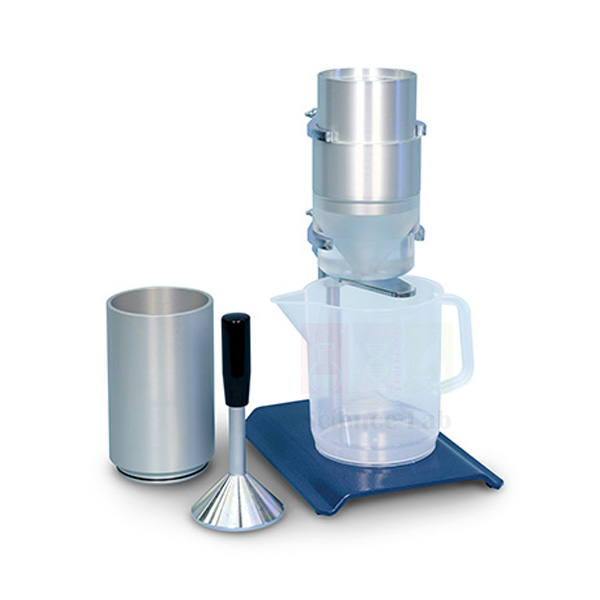
Efflux Index Apparatus
Efflux Index Apparatus (Product Code: SLE/AG/09) is a funnel-and-hopper flow tester used to measure the flow coefficient of fine aggregates, which gives information on grain shape and angularity, in concrete and highway laboratories. The result is simply the time in seconds for a specified volume of sand to pass a given opening, and the set includes two funnels with different openings. It is made by Jain Scientific Equipments Pvt Ltd (ScienceLab), an OEM science apparatus manufacturer in India, at its own factory in Ambala.
Specifications
| Parameter | Detail |
|---|---|
| Purpose | Flow coefficient (efflux index) of fine aggregates; information on grain shape and angularity |
| Components | Two funnels with different openings, cylindrical hopper, metal stand with a shutter, metal container |
| Result expressed as | Time in seconds for a specified volume of aggregate to flow through a given opening |
| Weight capacity | 5 kg |
| Dimensions | 150 x 180 x 410 mm |
| Product code | SLE/AG/09 |
| Manufacturer | Jain Scientific Equipments Pvt Ltd (ScienceLab) — OEM |
| Country of origin | India (made in Ambala, Haryana) |
What Is the Efflux Index Apparatus Used For?
The apparatus is set up on a level bench with the chosen funnel fitted below the cylindrical hopper and the metal container placed underneath. With the shutter closed, dry fine aggregate is poured into the hopper; the shutter is then opened and a stopwatch started at the same moment, and timing stops when the flow finishes. The time recorded is the flow coefficient, and repeat runs on the same sample should agree closely before a result is reported. Comparing sands from different pits, or natural sand with manufactured sand, shows at a glance which will give a more workable mix.
As low-cost engineering lab equipment in India's concrete technology courses, the test is quick and needs no power, so many samples can be run in one session. Always use completely dry sand, because damp grains clump and give a falsely long time, and wipe the funnels and shutter after each run.
OEM Manufacturer
Jain Scientific Equipments Private Limited, known by its brand ScienceLab, is the OEM (original equipment manufacturer) of the Efflux Index Apparatus. The complete set is made at the company's own licensed factory at Saha, Ambala, Haryana, India, and dispatched factory-direct to concrete laboratories, colleges, dealers and importers. Should a funnel or container need replacing, ask us: spares and repeat orders are dealt with by the manufacturer, not a reseller. The company profile explains who we are and what we make.
Related Civil Engineering Lab Equipment
To prepare and time a fine aggregate sample properly you will also need:
- Stopwatch, Digital — measures to the nearest 1/100th second for timing each flow.
- Oven, 43 litre — dries the sand fully so moisture does not slow the flow.
- Riffle Sample Divider — divides the sand into representative portions for repeat runs.
- Test Sieves — separate the fine fraction before it is tested.
- Sand Absorption Cone And Tamper — another fine aggregate test, used to judge the saturated surface-dry condition of sand.
You can view the complete range in the Civil Engineering Lab Equipment category.
Frequently Asked Questions
What parts make up the Efflux Index Apparatus?
The Efflux Index Apparatus consists of two funnels with different openings, a cylindrical hopper, a metal stand with a shutter and a metal container that receives the sand as it flows out of the funnel.
What does the result from the Efflux Index Apparatus tell me?
The Efflux Index Apparatus gives the flow time in seconds for a set volume of fine aggregate. A longer time points to more angular or rougher grains, and a shorter time to more rounded grains that flow freely.
Why does the Efflux Index Apparatus have two funnels?
The two funnels of the Efflux Index Apparatus have different openings, so the apparatus can be set up as your test method requires for the particular fine aggregate being examined.
Is a stopwatch included with the Efflux Index Apparatus?
A stopwatch is not listed among the parts of the Efflux Index Apparatus. A separate digital stopwatch is recommended for timing each flow, and you can add one to the same enquiry.
How much sand can the Efflux Index Apparatus take, and how big is it?
The Efflux Index Apparatus has a weight capacity of 5 kg and measures 150 x 180 x 410 mm, so it fits easily on a standard laboratory bench beside the balance and stopwatch.
Who manufactures the Efflux Index Apparatus?
The Efflux Index Apparatus is manufactured by Jain Scientific Equipments Pvt Ltd (ScienceLab), the OEM, at its own licensed factory at Saha, Ambala, Haryana, India, and supplied factory-direct to laboratories, colleges, dealers and importers.
Can you supply several Efflux Index Apparatus sets for a teaching lab?
Yes. Classroom quantities of the Efflux Index Apparatus are quoted for institutions in India and international markets; include the number of sets and the delivery address, and the quotation comes straight from the manufacturer.
Request a Quote
Send an enquiry for the Efflux Index Apparatus via our contact page, or add it and a stopwatch to the enquiry cart. ScienceLab quotes you directly as the manufacturer.
Last updated: 24 September 2026
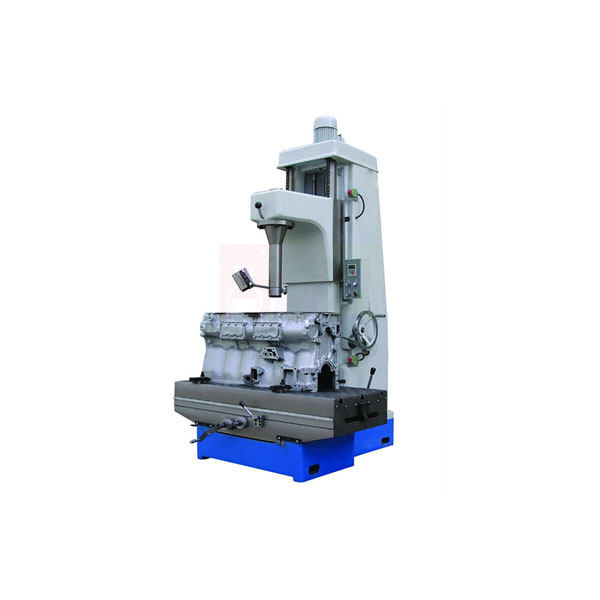
Boring machine
Boring machine (Product Code: SLE/MCE/05) is a compact boring machine used to enlarge existing holes and true cylindrical bores to an accurate diameter in automotive, maintenance and training workshops. It is listed in two sizes covering bores of 65–140 mm and 80–165 mm, up to 300 mm or 400 mm deep, and weighs only 62 kg or 85 kg. It is supplied by Jain Scientific Equipments Pvt Ltd (ScienceLab), Ambala, India.
Specifications
| Parameter | Detail |
|---|---|
| Boring diameter | 65–140 mm or 80–165 mm (two sizes) |
| Maximum boring depth | 300 mm or 400 mm |
| Spindle speed | 250 or 380 r/min |
| Spindle feed | 0.11 or 0.12 mm per revolution |
| Spindle quick reset | 636 mm/sec |
| Overall dimensions | 320 x 330 x 850 mm (as listed) |
| Machine weight | 62 kg or 85 kg |
| Product code | SLE/MCE/05 |
| Supplied by | Jain Scientific Equipments Pvt Ltd (ScienceLab), Ambala, India |
What Is the Boring Machine Used For?
Drilling makes a hole; boring finishes it. A boring machine passes a single-point cutter through an existing bore so that it becomes round, straight and exactly the intended diameter. Compact machines of this kind are commonly used to rebore worn cylinders, such as engine cylinder bores in automotive workshops, and in training institutes to show how precision holes are finished after rough machining.
In use, the machine is aligned over the bore, the cutter is set to the target diameter and the spindle is run at 250 or 380 r/min with a fine automatic feed of 0.11 or 0.12 mm per revolution. After each pass the quick reset returns the spindle at 636 mm/sec, saving time between cuts. Measure the bore after every pass and take light final cuts to reach size.
What to Specify When Ordering
- Bore diameter range: 65–140 mm or 80–165 mm.
- Maximum bore depth: 300 mm or 400 mm.
- Your electrical supply, which is not stated in the current listing.
- Any cutters or setting accessories you want included in the quotation.
- Quantity and delivery location.
Supplier
The Boring machine is supplied by ScienceLab, the trading name of Jain Scientific Equipments Private Limited, to automotive training institutes, engineering colleges, polytechnics, maintenance workshops, dealers and importers in India and international markets. It can be quoted together with other workshop machines on a single offer.
The ScienceLab company profile has more about the company.
Related Workshop Machine Tools
Hole-making and finishing in a workshop usually involves these machines as well:
- Radial Drill Machine — drills the large holes that are later bored to size.
- Pillar Drilling Machine — for smaller drilled holes and pilot holes.
- CNC Lathe Machine — bores and turns small components held in a chuck.
- Caliper Vernier (Metal) — its inside jaws give a quick check of bore diameter.
See the full range of Workshop Machine Tools.
Frequently Asked Questions
What bore sizes can the Boring machine handle?
The Boring machine is listed in two sizes: one bores diameters of 65–140 mm and the other 80–165 mm, with maximum boring depths of 300 mm and 400 mm. Tell us your largest bore so we can confirm the right size.
What spindle speed and feed does the Boring machine use?
The Boring machine runs its spindle at 250 or 380 r/min with an automatic feed of 0.11 or 0.12 mm per revolution, and a quick reset returns the spindle at 636 mm/sec after each pass.
How large and heavy is the Boring machine?
The Boring machine is listed with overall dimensions of 320 x 330 x 850 mm and a weight of 62 kg or 85 kg depending on the size, making it a compact unit compared with floor-standing machine tools.
What is the Boring machine typically used for?
The Boring machine is used to enlarge and true existing cylindrical holes to an accurate diameter; compact machines like this are commonly used for reboring worn cylinders in automotive workshops and for teaching precision hole finishing.
What power supply does the Boring machine need?
The power supply for the Boring machine is not stated in the current listing. Please tell us the supply available in your workshop when you enquire, and we will confirm the electrical requirement before you order.
Who supplies the Boring machine?
The Boring machine is supplied by Jain Scientific Equipments Pvt Ltd (ScienceLab), Ambala, India, to training institutes, colleges, workshops, dealers and importers in India and international markets.
Request a Quote
Request a Boring machine quotation through the contact page or add it to the enquiry cart, stating the bore range and quantity you need.
Last updated: 24 September 2026