- Physics Lab Equipment
- Chemistry Lab Equipment
- Biology Lab Equipment
- Anatomical Lab Equipment
- Learning
- Educational Lab Equipment
- Magnets
- Agriculture
- Astronomy
- Earth Science
- Geography Lab Equipment
- Safety Lab Coat
- Laboratory
- Meteorological
- Electricity & Magnetism
- Heat
- School Lab Equipment
- Lab Glassware
- Science Lab Equipment
- Tvet Lab Equipment
- Robotics Kits Supplier and Manufacturer for Schools India
- Math Lab Equipment Manufacturers and Exporters in Ambala
- STEM Kits Manufacturers and Supplier India
- Engineering Lab Equipment
- Hospital Lab Equipment
- Water, Sanitation & Hygiene Supplies
- Cold Chain, Solar & Communication Equipment
- Nutrition
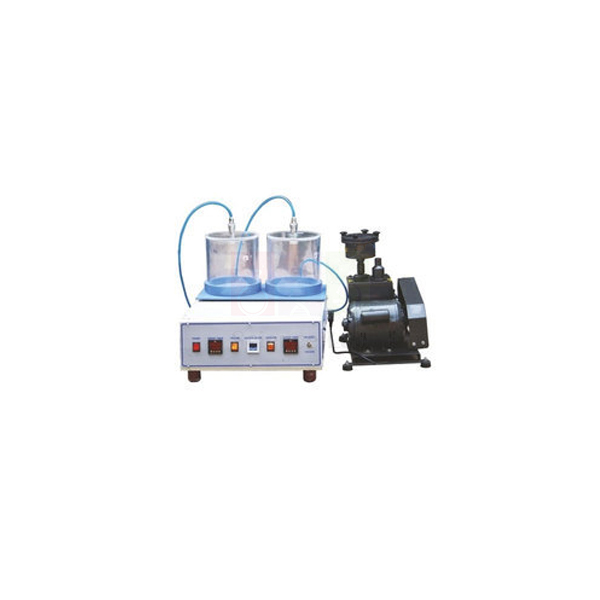
Mixer Theoretical Density Meter
Mixer Theoretical Density Meter (Product Code: SLE/CE/86) is a vacuum apparatus used to determine the theoretical density of asphalt mix in highway and civil engineering laboratories. It tests 2 samples at a time in acrylic vacuum containers over a 0–100 kPa (0–750 mm Hg) vacuum range, while a vibratory table with manual and automatic modes helps release entrapped air. It is supplied by Jain Scientific Equipments Pvt Ltd (ScienceLab), Ambala, a laboratory instruments supplier in India.
Specifications
| Parameter | Detail |
|---|---|
| Test | Theoretical density of asphalt mix by the vacuum method |
| Applications | Asphalt mix design; road condition investigation; calculation of porosity and compactness in road construction quality management |
| Vacuum containers | 2, made of acrylic pipe |
| Samples per test | 2 |
| Vacuum gauge | Fitted on the main body; Wika make, Germany (as listed) |
| Vacuum range | 0–100 kPa (0–750 mm Hg) |
| Vibratory table | Under the containers; manual and automatic modes to release entrapped air from the samples |
| Vibration loading | 10 kg |
| Controls | Complete control panel |
| Power supply | 230 V AC, single phase, 50 Hz |
| Product code | SLE/CE/86 |
| Supplied by | Jain Scientific Equipments Pvt Ltd (ScienceLab), Ambala, India |
What Is the Theoretical Density Meter Used For?
Theoretical density is the density an asphalt mix would have with no air voids at all. Comparing it with the bulk density of compacted specimens or cores gives the air void content, or porosity, and shows how well a pavement layer has been compacted. It is therefore needed both when a mix is designed and when finished road layers are checked.
Loose mix is placed in the acrylic containers, the vessels are sealed and vacuum is applied while the vibratory table agitates them, so that air trapped between the coated particles escapes; the transparent containers let the operator watch it happen. Check that the gauge reads zero before each run, keep the load on the table within 10 kg, and clean the acrylic vessels with a soft cloth rather than abrasives. Testing two samples together speeds up duplicate determinations.
What to Specify When Ordering
- Whether a vacuum pump or other vacuum source should be quoted with the apparatus
- The test method you follow, so that container and accessory details can be confirmed
- Confirmation that your supply is 230 V AC, single phase, 50 Hz
- Number of units needed (each tests 2 samples at a time)
Supplier
Jain Scientific Equipments Private Limited, which trades as ScienceLab, sources and supplies this theoretical density apparatus from Ambala, Haryana. Highway laboratories can have it quoted together with extraction, Marshall and coring equipment from the same civil engineering range.
Road-testing laboratories, engineering colleges, dealers and importers in India and international markets receive quotations and dispatch from Ambala. The company profile has more on ScienceLab.
Related Civil Engineering Lab Equipment
These items work with theoretical density testing in asphalt mix design and quality control:
- Automatic Marshall Stability Test Machine — stability and flow of compacted mix specimens
- Centrifuge Extractor – Motorised — binder content of the same mix
- Centrifuge Extractor Hand Operated — manual binder extraction for site labs
- Core Drilling Machine (Petrol) — cores whose density is compared with the theoretical value
- Vacuum Pump, Electric — a vacuum source; ask us about compatibility
See the Civil Engineering Lab Equipment category for further bitumen, aggregate and concrete apparatus.
Frequently Asked Questions
What does the Mixer Theoretical Density Meter measure?
The Mixer Theoretical Density Meter (SLE/CE/86) determines the theoretical density of asphalt mix by the vacuum method. The result is used in asphalt mix design, road condition investigation and the calculation of porosity and compactness in road construction quality management.
How many samples can the theoretical density meter test at once?
The Mixer Theoretical Density Meter tests 2 samples at a time in two vacuum containers made of acrylic pipe. The containers sit on a vibratory table with a complete control panel, and the vibration loading is 10 kg.
What vacuum range does the Mixer Theoretical Density Meter use?
The Mixer Theoretical Density Meter works over a vacuum range of 0–100 kPa (0–750 mm Hg). Vacuum is read on a Wika-make gauge from Germany, as listed, which is fitted on the main body of the apparatus.
Is a vacuum pump included with the Mixer Theoretical Density Meter?
The listing for the Mixer Theoretical Density Meter describes the main body, gauge, containers, vibratory table and control panel, but does not mention a vacuum pump. Ask us whether a pump is included or should be quoted separately for your set-up.
Why does the theoretical density meter have a vibratory table?
The vibratory table of the Mixer Theoretical Density Meter shakes the vessels under vacuum to release air trapped in the asphalt sample. It runs in manual or automatic mode, and thorough air removal is essential for a reliable theoretical density.
What power supply does the Mixer Theoretical Density Meter need?
The Mixer Theoretical Density Meter is suitable for 230 V AC, single phase, 50 Hz. If your laboratory has a different supply, mention it when you enquire so that we can advise before an order is placed.
Who supplies the Mixer Theoretical Density Meter?
The Mixer Theoretical Density Meter is supplied by Jain Scientific Equipments Pvt Ltd (ScienceLab), Ambala, Haryana, India, to laboratories, dealers and importers in India and international markets. Enquiries can be sent through the contact page.
Request a Quote
For a quotation on the Mixer Theoretical Density Meter, with or without a vacuum source, write to us through the contact page or add it to the enquiry cart.
Last updated: 24 September 2026
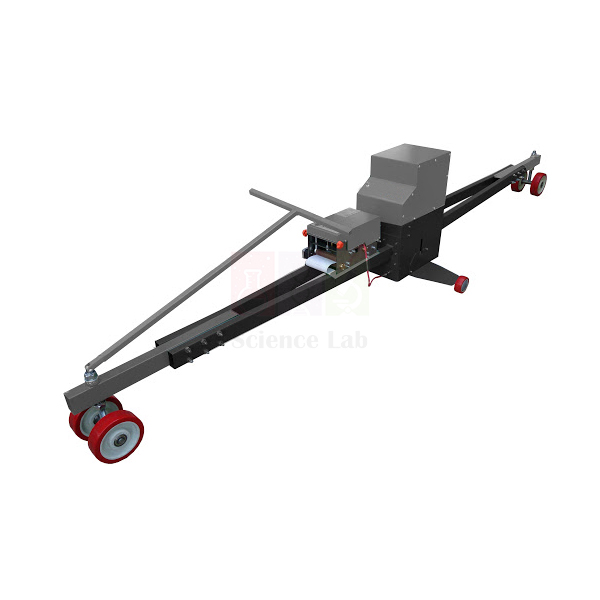
Travelling Beam Device
Travelling Beam Device (Product Code: SLE/CE/87) is a wheeled 3 m profile beam used to detect surface irregularity of concrete and asphalt road pavements in construction checks and highway engineering practicals. A middle wheel measures vertical deviation from the line between the two end wheels, up to ±25 mm, and a recording unit draws a graph of the deviations. It is made by Jain Scientific Equipments Pvt Ltd (ScienceLab), an OEM supplying engineering educational equipment in India, at its own factory in Ambala.
Specifications
| Parameter | Detail |
|---|---|
| Purpose | Detecting road surface irregularity on concrete or asphalt pavements |
| Construction | Beam with rigid wheels at both ends and a measuring wheel at the middle |
| Beam length | 3 m |
| Measurement | Vertical deviation of the surface from the straight line between the end wheels |
| Scale | 2 mm increments up to 10 mm; 5 mm increments from 10 to 25 mm |
| Maximum vertical deviation | ±25 mm |
| Recording | Supplied complete with recording unit to obtain a graph of vertical deviations |
| Weight | Approx. 55 kg |
| Product code | SLE/CE/87 |
| Manufacturer | Jain Scientific Equipments Pvt Ltd (ScienceLab) — OEM |
| Country of origin | India (made in Ambala, Haryana) |
What Is the Travelling Beam Device Used For?
How smoothly a road rides depends on how regular its surface is along the direction of travel. The travelling beam is pushed along a lane: its two end wheels set a 3 m reference line, while the middle wheel rises over bumps and drops into dips. The movement is shown on the scale and traced by the recording unit, so the graph reveals exactly where the surface departs from a true line and by how much.
Because it rolls continuously, the beam surveys a whole length of new pavement in one pass instead of one spot at a time. Use it on freshly laid layers before acceptance, and on existing roads for condition surveys. Keep the wheels clean of bitumen and grit, check the scale reading on a flat reference surface before starting, and move the approx. 55 kg beam with two people.
What to Specify When Ordering
- Number of beams needed for your survey teams or student groups
- Whether spare recording charts or parts for the recording unit should be quoted — ask us
- Whether a 3 m straight edge for spot checks should be included in the same quotation
OEM Manufacturer
ScienceLab is the trading name of Jain Scientific Equipments Private Limited, a registered MSME enterprise (Udyam UDYAM-HR-01-0003714) whose major activity is manufacturing. The company is the OEM of this travelling beam device, which is produced at its own licensed factory at Saha, Ambala, Haryana, India.
Highway departments, engineering colleges, dealers and importers are supplied factory-direct, and export consignments are handled under Importer-Exporter Code AAECJ8618A (DGFT). For replacement wheels or recording-unit parts, ask the manufacturer directly. Read more on the ScienceLab profile.
Related Civil Engineering Lab Equipment
These items are used in pavement surface and layer investigations:
- Straight Edge (3 meter) — spot checks of surface regularity with wedges
- Skid Resistance And Friction Tester — surface friction of the same pavement
- Core Drilling Machine (Petrol) — cores for layer thickness and density checks
- Core Drilling Machine (Motorised) — electrically driven coring
For further road, soil and concrete apparatus, visit the Civil Engineering Lab Equipment category.
Frequently Asked Questions
What does the Travelling Beam Device measure?
The Travelling Beam Device (SLE/CE/87) detects road surface irregularity by measuring how far the pavement deviates vertically from the straight line between the two end wheels of its 3 m beam. It can be used on both concrete and asphalt pavements.
What measuring range and scale does the travelling beam have?
The Travelling Beam Device measures a maximum vertical deviation of ±25 mm. Its scale is marked in 2 mm increments up to 10 mm and in 5 mm increments from 10 to 25 mm, which suits both small ripples and larger dips.
Does the Travelling Beam Device record its readings?
Yes. The Travelling Beam Device is supplied complete with a recording unit that produces a graph of vertical deviations as the beam moves. The trace gives a continuous record of the surveyed length that can be kept with the site report.
How is the travelling beam different from a 3 m straight edge?
A 3 m straight edge checks the surface at one position at a time, whereas the Travelling Beam Device is rolled along the pavement and records deviations continuously. Many highway laboratories use the straight edge for quick spot checks and the beam for longer runs.
How heavy is the Travelling Beam Device?
The Travelling Beam Device weighs approximately 55 kg. It runs on its own wheels during a survey, but two people should lift it on and off a vehicle, and it should be stored so that the beam and wheels are not knocked out of line.
Who manufactures the Travelling Beam Device?
The Travelling Beam Device is manufactured by Jain Scientific Equipments Pvt Ltd (ScienceLab), the OEM, at its own factory at Saha, Ambala, Haryana, India. Quotations come directly from the manufacturer for buyers in India and international markets.
Is a calibration certificate available for the Travelling Beam Device?
Calibration-certificate availability for the Travelling Beam Device should be discussed with us when you enquire. Tell us what your contract or laboratory records require, and we will confirm what documentation can accompany the beam.
Request a Quote
Request a price for the Travelling Beam Device through the contact page or the enquiry cart. You will receive the quotation straight from the manufacturer.
Last updated: 24 September 2026
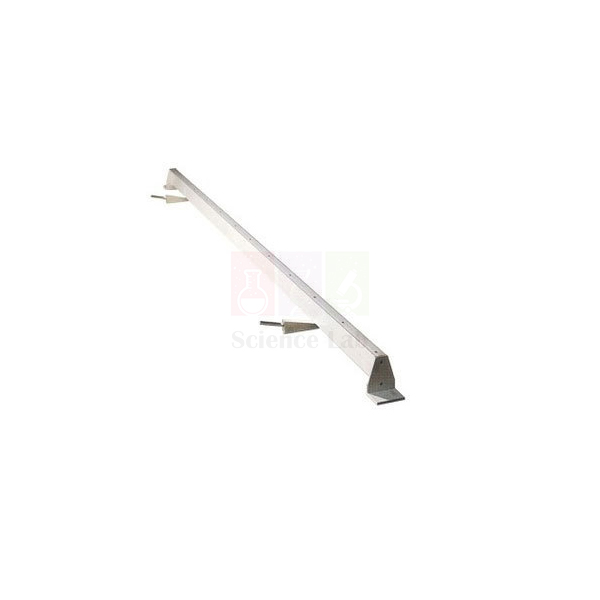
Straight Edge (3 meter)
Straight Edge (3 meter) (Product Code: SLE/CE/88) is a lightweight beam approximately 3 m long used to check the lateral surface regularity of roads and pavements on site and in highway engineering practicals. Made of mild steel or aluminium, it rests on supports at both ends that hold it at a set height above the surface, and irregularities are read with incremented wedges. It is made by Jain Scientific Equipments Pvt Ltd (ScienceLab), an OEM and engineering lab equipment manufacturer, at its own factory in Ambala, India.
Key Details
| Parameter | Detail |
|---|---|
| Length | Approx. 3 m |
| Purpose | Determining lateral surface regularity of a road surface |
| Material | Mild steel or aluminium |
| Build | Lightweight |
| Support | Equally supported at both ends, giving a set height between the road surface and the beam |
| Measurement | Vertical irregularity measured using incremented wedges |
| Product code | SLE/CE/88 |
| Manufacturer | Jain Scientific Equipments Pvt Ltd (ScienceLab) — OEM |
| Country of origin | India (made in Ambala, Haryana) |
What Is the 3 m Straight Edge Used For?
The straight edge is laid across the road surface on its two end supports, so the beam sits at a known height above a perfectly flat line. Wherever the pavement dips or rises, the gap under the beam changes; sliding an incremented wedge into the gap at that point shows how large the irregularity is. Readings are taken at intervals across the lane to build up a picture of the cross-section, for example where wheel paths have worn or settled.
The method needs no power and very little training, which makes it a practical first exercise in pavement evaluation for students and a quick acceptance check for site engineers. The aluminium version is easier to carry between test points, while mild steel suits heavier handling. Store the beam flat or hung along its length so it does not bend, wipe off bitumen and dust after use, and check it against a flat reference now and then.
What to Specify When Ordering
- Material: mild steel or aluminium
- Number of straight edges needed for your survey teams or student groups
- Whether incremented measuring wedges should be quoted with the beam — ask us what is included
OEM Manufacturer
Jain Scientific Equipments Private Limited trades as ScienceLab and is the original equipment manufacturer of this 3 m straight edge. The beam is made at the company's own licensed factory at Saha, Ambala, Haryana, India, and is supplied factory-direct to highway departments, engineering colleges, polytechnics, dealers and importers.
Repeat orders and replacement supports or wedges are handled by the manufacturer itself — ask us for what you need. More about ScienceLab is on the company profile page.
Related Civil Engineering Lab Equipment
These items are used with the straight edge in road surface and pavement investigations:
- Travelling Beam Device — continuous recording of surface irregularity along a lane
- Skid Resistance And Friction Tester — surface friction of the pavement
- Core Drilling Machine (Petrol) — cores to check layer thickness where defects are found
- Core Drilling Machine (Motorised) — electrically driven coring
Browse the Civil Engineering Lab Equipment category for further road, soil and concrete apparatus.
Frequently Asked Questions
What is the Straight Edge (3 meter) used for?
The Straight Edge (3 meter) (SLE/CE/88) is used to determine the lateral surface regularity of a road surface. The approximately 3 m beam stands on supports at both ends, and vertical irregularities beneath it are measured with incremented wedges.
What material is the 3 m straight edge made of?
The Straight Edge (3 meter) is made of mild steel or aluminium and is designed as a lightweight apparatus. State which material you prefer when you enquire; aluminium is easier to carry, while mild steel tolerates rougher handling on site.
How are irregularities measured with the Straight Edge (3 meter)?
The end supports of the Straight Edge (3 meter) hold the beam at a set height above the road. An incremented wedge is slid into the gap at the point being checked, and the wedge reading shows how far the surface deviates from a true line.
Are measuring wedges supplied with the straight edge?
The listing for the Straight Edge (3 meter) states that irregularity is measured with incremented wedges but does not say whether they are supplied with the beam. Ask us to include wedges in the quotation if you need them.
When should a straight edge be chosen over a travelling beam?
The Straight Edge (3 meter) suits quick spot readings across a lane, needs no recording unit and is easy for students to handle. A travelling beam is better when a continuous record along a long stretch of road is required.
Who manufactures the Straight Edge (3 meter)?
The Straight Edge (3 meter) is manufactured by Jain Scientific Equipments Pvt Ltd (ScienceLab), the OEM, at its own factory at Saha, Ambala, Haryana, India. It is supplied factory-direct to buyers in India and international markets.
Request a Quote
Tell us the material and quantity of Straight Edge (3 meter) you need through the contact page, or add it to the enquiry cart. Quotations are sent directly by the manufacturer.
Last updated: 24 September 2026
747.jpg)
Ring And Ball Apparatus (Electrical)
Ring And Ball Apparatus (Electrical) (Product Code: SLE/CE/89) is an electrically heated test set used to determine the softening point of bitumen and similar binders by the ring and ball method in highway and civil engineering laboratories. Each unit comes with a heat-resistant glass bath, tapered rings, a 9.5 mm steel ball, a ring holder and an electric hot plate with energy regulator. It is made by Jain Scientific Equipments Pvt Ltd (ScienceLab), the OEM and a scientific lab equipment manufacturer in Ambala, India, at its own factory.
Specifications
| Parameter | Detail |
|---|---|
| Test method | Ring and ball softening point |
| Heating | Electrical, with heater and energy regulator |
| Power supply | 230 V, 50 Hz, single phase, AC |
| Bath | Heat-resistant glass, supplied with each unit |
| Rings | Tapered rings |
| Ball | Steel ball, 9.5 mm diameter |
| Ring holder | Included |
| Heater | Electric heater (hot plate) |
| Product code | SLE/CE/89 |
| Manufacturer | Jain Scientific Equipments Pvt Ltd (ScienceLab) — OEM |
| Country of origin | India (made in Ambala, Haryana) |
What Is the Ring and Ball Apparatus Used For?
Bitumen has no sharp melting point; it softens gradually as it warms. The ring and ball test puts a number on this behaviour: molten binder is cast into the tapered rings, a steel ball is placed on each disc, and the assembly in the ring holder is heated in the glass bath. The temperature at which the softened binder lets the ball sink through and reach the base is recorded as the softening point, which is used with penetration to grade paving bitumen.
The energy regulator lets the operator hold a steady, controlled rate of heating, which matters because a faster rise gives a misleading result. Stir the bath liquid gently for an even temperature, keep the balls centred on the discs, and read the temperature on a thermometer placed near the rings. The clear glass bath lets students watch the binder sag, which makes it a clear demonstration piece among engineering lab equipment in India for highway practicals.
What to Specify When Ordering
- Number of sets needed for your laboratory or student batches
- Whether a thermometer should be quoted, and the range your method requires
- Whether spare tapered rings or steel balls should be included — ask us
- Confirmation that your supply is 230 V, 50 Hz, single phase AC
OEM Manufacturer
This ring and ball apparatus is an original ScienceLab product: Jain Scientific Equipments Private Limited, which trades as ScienceLab, is its OEM and makes it at the company's own licensed factory at Saha, Ambala, Haryana, India. Laboratories deal directly with the maker instead of a trading intermediary.
Colleges, highway laboratories, dealers and importers are supplied factory-direct, and repeat orders or replacement rings, balls and glass baths can be requested from the manufacturer — just ask us. See the company profile for more about ScienceLab.
Related Civil Engineering Lab Equipment
These items cover the other routine tests on bituminous binders:
- Standard penetrometer — penetration test, reported alongside softening point
- Digital Penetrometer — automated penetration measurement
- Kinematic Viscometer Bath — viscosity grading of binders
- Cut Back Bitumen Distillation Equipment — recovers the residue of cutbacks for further testing
- Immersion Thermometer — for reading bath temperature; confirm the range you need
Explore the Civil Engineering Lab Equipment category for more bitumen, soil and concrete apparatus.
Frequently Asked Questions
What is the Ring And Ball Apparatus (Electrical) used for?
The Ring And Ball Apparatus (Electrical) (SLE/CE/89) is used to determine the softening point of bitumen and similar binders. Binder cast in tapered rings is loaded with a steel ball and heated in a glass bath until the ball sinks through.
What is included with the ring and ball apparatus?
Each Ring And Ball Apparatus (Electrical) is supplied with a heat-resistant glass bath, tapered rings, a steel ball of 9.5 mm diameter, a ring holder and an electric heater (hot plate) with energy regulator. A thermometer is not listed and can be quoted separately.
What power supply does the Ring And Ball Apparatus (Electrical) need?
The Ring And Ball Apparatus (Electrical) operates on a 230 V, 50 Hz, single-phase AC supply. Its heater has an energy regulator, so the operator can keep the rate of temperature rise steady throughout the test.
Why does the apparatus use a heat-resistant glass bath?
The heat-resistant glass bath of the Ring And Ball Apparatus (Electrical) withstands heating on the hot plate and lets the operator see the balls and binder clearly as they sink. Let the bath cool before washing it to avoid thermal shock.
Who manufactures the Ring And Ball Apparatus (Electrical)?
The Ring And Ball Apparatus (Electrical) is manufactured by Jain Scientific Equipments Pvt Ltd (ScienceLab), the OEM, at its own factory at Saha, Ambala, Haryana, India. Buyers in India and international markets receive quotations directly from the manufacturer.
What should an enquiry for the ring and ball apparatus include?
For the Ring And Ball Apparatus (Electrical), state the number of sets, whether a thermometer and spare rings or balls are needed, and your delivery location. Send the details through the contact page for a quotation.
Request a Quote
Ask for a quotation on the Ring And Ball Apparatus (Electrical) via the contact page, or add it to the enquiry cart with your other bitumen testing items. Quotations come direct from the manufacturer.
Last updated: 24 September 2026
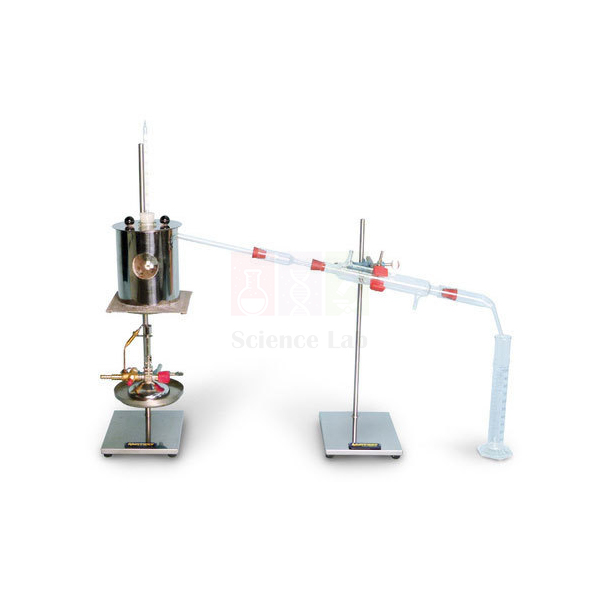
Cut Back Bitumen Distillation Equipment
Cut Back Bitumen Distillation Equipment (Product Code: SLE/CE/90) is a distillation set used to separate the volatile fraction of cutback bitumen from its residue, so the distillate can be measured and the residue tested further in highway laboratories. It comprises a heavy-gauge shield with chimney, an electric hot plate with energy regulator, a 500 ml distillation flask and a 100 ml Crow receiver. It is made by Jain Scientific Equipments Pvt Ltd (ScienceLab), an OEM maker of laboratory distillation apparatus in India, at its own factory in Ambala.
Specifications
| Parameter | Detail |
|---|---|
| Shield | Heavy-gauge shield with a lagged cover in two parts, and wire gauze |
| Platform | Supports the shield; chimney arranged for fitting to a stand |
| Heating | Electric hot plate with energy regulator |
| Distillation flask | One, 500 ml |
| Receiver | One Crow receiver, 100 ml |
| Thermometer | Not included; specified type ASTM 8C, −2 to +400 °C, 1 °C subdivisions |
| Product code | SLE/CE/90 |
| Manufacturer | Jain Scientific Equipments Pvt Ltd (ScienceLab) — OEM |
| Country of origin | India (made in Ambala, Haryana) |
What Is the Cutback Bitumen Distillation Apparatus Used For?
Cutback bitumen is bitumen thinned with a volatile solvent so it can be sprayed or mixed at lower temperatures; once laid, the solvent evaporates and the binder hardens. The distillation test shows how much volatile material a cutback contains and leaves behind the residue that will remain on the road. A measured sample is heated in the 500 ml flask inside the shield, and the distillate is collected in the 100 ml Crow receiver so that its volume can be read at the stages your method specifies.
The residue left in the flask is then tested for properties such as penetration or softening point. Use the energy regulator to keep the distillation rate steady, and the shield to protect the flask from draughts. Solvent vapours are flammable, so work in a fume cupboard, keep ignition sources away and let the set cool before dismantling. An ASTM 8C thermometer (−2 to +400 °C) must be fitted, as none is supplied.
What to Specify When Ordering
- Whether the specified ASTM 8C thermometer should be quoted, as it is not included
- Spare 500 ml distillation flasks and 100 ml Crow receivers, if required
- Whether a stand, condenser or other fittings should be quoted — ask us what is included
- The electrical supply at your laboratory for the hot plate
OEM Manufacturer
Jain Scientific Equipments Private Limited, trading as ScienceLab, is the original equipment manufacturer of this cutback bitumen distillation set. It is manufactured at the company's own licensed factory at Saha, Ambala, Haryana, India, so buyers get their quotation and product answers from the maker itself.
Highway laboratories, engineering colleges, dealers and importers are supplied factory-direct, and replacement flasks, receivers or shield parts can be requested from the manufacturer — ask us about availability. The ScienceLab company profile has further details.
Related Civil Engineering Lab Equipment
These items are used to test the distillation residue and other bituminous binders:
- Standard penetrometer — penetration of the residue
- Ring And Ball Apparatus (Electrical) — softening point of the residue
- Kinematic Viscometer Bath — viscosity testing of cutbacks and binders
- Digital Penetrometer — automated penetration measurement
- Distillation Flask — laboratory distillation flasks; confirm the size matches your set
Visit the Civil Engineering Lab Equipment category for more bitumen, aggregate and concrete apparatus.
Frequently Asked Questions
What is the Cut Back Bitumen Distillation Equipment used for?
The Cut Back Bitumen Distillation Equipment (SLE/CE/90) separates the volatile fraction of cutback bitumen from its residue by distillation. The distillate collects in a 100 ml Crow receiver for measurement, and the residue in the flask can be tested further.
What is included with the cutback distillation equipment?
The Cut Back Bitumen Distillation Equipment includes a heavy-gauge shield with lagged two-part cover and wire gauze, a platform with chimney arranged for fitting to a stand, an electric hot plate with energy regulator, one 500 ml distillation flask and one 100 ml Crow receiver.
Which thermometer does the Cut Back Bitumen Distillation Equipment need?
The Cut Back Bitumen Distillation Equipment is specified with an ASTM 8C thermometer covering −2 to +400 °C in 1 °C subdivisions. The set is supplied without a thermometer, so ask us to quote one if your laboratory does not already have it.
Why is the flask enclosed in a shield?
In the Cut Back Bitumen Distillation Equipment, the heavy-gauge lagged shield keeps draughts away from the flask so that it heats evenly and the distillation proceeds at a steady rate. The two-part cover also makes it easier to fit and remove the flask.
Who manufactures the Cut Back Bitumen Distillation Equipment?
The Cut Back Bitumen Distillation Equipment is manufactured by Jain Scientific Equipments Pvt Ltd (ScienceLab), the OEM, at its own factory at Saha, Ambala, Haryana, India. It is supplied factory-direct to laboratories, dealers and importers in India and international markets.
What safety precautions apply to cutback distillation?
Cutback solvents give off flammable vapours, so run the Cut Back Bitumen Distillation Equipment in a fume cupboard away from ignition sources. Heat gently with the energy regulator, keep the receiver in view throughout, and allow the whole set to cool before dismantling it.
Request a Quote
Request a quotation for the Cut Back Bitumen Distillation Equipment, with or without the thermometer, through the contact page or the enquiry cart. The manufacturer quotes you directly.
Last updated: 24 September 2026
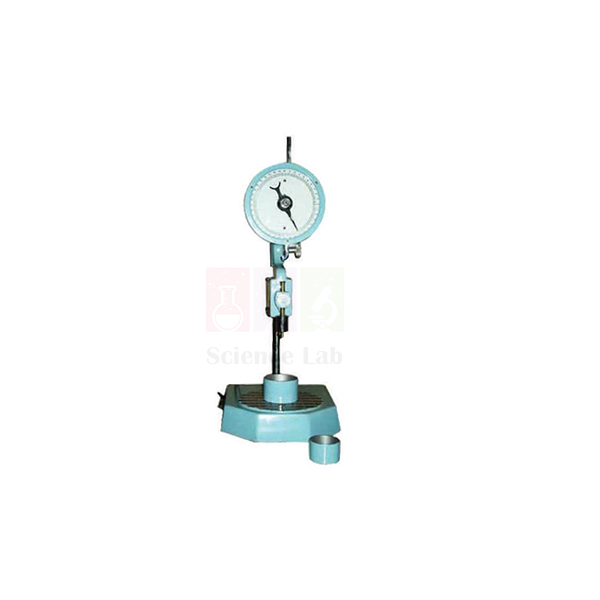
Standard penetrometer
Standard penetrometer (Product Code: SLE/CE/91) is a dial-type needle penetration instrument used to measure the consistency of bitumen and similar semi-solid materials in civil engineering and highway materials laboratories. Engineering colleges, polytechnics and road-materials labs use it for penetration tests, reading needle depth on a dial graduated in 400 divisions of 0.1 mm. It is made by Jain Scientific Equipments Pvt Ltd (ScienceLab), an OEM manufacturer of engineering lab equipment in India, at its own factory in Ambala.
Specifications
| Parameter | Detail |
|---|---|
| Construction | Vertical pillar mounted on a base fitted with levelling screws |
| Fine adjustment | Rack-and-pinion and pointer assembly to bring the needle or cone tip onto the sample |
| Reading and reset | Clutch mechanism for simple reading of penetration and resetting between tests |
| Dial | Graduated in 400 divisions of 1/10 mm with millimetre subdivisions; needle pointer reads against figures |
| Measuring head | Head with dial, plunger rod and cone or needle slides on the pillar and clamps at any desired height |
| Supplied with | 1 bitumen penetration needle; ring weights of 50 g and 100 g (one each); 2 sample containers |
| Accessory | Penetration cone for empirical estimation of penetration of lubricating grease, petroleum jelly and similar materials |
| Product code | SLE/CE/91 |
| Manufacturer | Jain Scientific Equipments Pvt Ltd (ScienceLab) — OEM |
| Country of origin | India (made in Ambala, Haryana) |
What Is the Bitumen Penetrometer Used For?
In a bitumen penetration test, the conditioned sample in its container is placed under the needle and the tip is lowered with the rack-and-pinion adjustment until it just touches the surface. The needle is then released for the time set by the test method, and the dial shows how far it sank in tenths of a millimetre. Harder grades give lower readings, so students and technicians use the result to compare and classify paving bitumen. The 50 g and 100 g ring weights let the operator make up the load the method calls for.
Fitted with the accessory penetration cone, the same stand gives empirical penetration values for lubricating grease and petroleum jelly, which makes it useful lab equipment for technical institutes that teach both highway materials and petroleum products. Level the base with its screws before each series, keep the needle clean and straight, and use the clutch to return the dial to zero.
What to Specify When Ordering
- Number of complete penetrometer stands required for your laboratory
- Whether the penetration cone for grease and petroleum jelly is needed
- Any spare bitumen penetration needles or sample containers beyond the supplied set (ask us)
- Any additional 50 g or 100 g ring weights
OEM Manufacturer
The Standard penetrometer is an OEM product of Jain Scientific Equipments Private Limited, the company that trades as ScienceLab. Its pillar stand, measuring head and fittings are made and assembled at the company's own licensed factory at Saha, Ambala, Haryana, India, rather than bought in from a trader.
Units are supplied factory-direct to engineering colleges, polytechnics, testing laboratories, dealers and importers. For institutional vendor registration, the company's details are GSTIN 06AAECJ8618A1ZT and LEI 3358004HRD1JIVXKYX49. Learn more on the ScienceLab company profile, and ask the manufacturer directly about replacement needles or containers.
Related Civil Engineering Lab Equipment
These items are often used alongside the penetrometer when a laboratory tests bitumen and bituminous materials:
- Ring And Ball Apparatus (Electrical) — for the softening point test on the same bitumen grades
- Kinematic Viscometer Bath — for viscosity measurements that complement penetration results
- Cut Back Bitumen Distillation Equipment — for separating cutback bitumen before residue testing
- Water Bath (6 Holes) — a laboratory bath for holding samples at a steady temperature
See the full range of Civil Engineering Lab Equipment for concrete, soil, aggregate and bitumen testing.
Frequently Asked Questions
What is supplied with the Standard penetrometer?
The Standard penetrometer (SLE/CE/91) is supplied with one bitumen penetration needle, one 50 g and one 100 g ring weight and two sample containers, on its pillar stand with levelling base. The penetration cone for grease and petroleum jelly is listed separately as an accessory.
How is penetration read on the Standard penetrometer?
Penetration on the Standard penetrometer is read from a dial graduated in 400 divisions of one-tenth of a millimetre, with millimetre subdivisions and a needle pointer against figures. A clutch mechanism makes taking the reading and resetting the dial for the next test simple.
Can the Standard penetrometer test grease or petroleum jelly?
Yes. With the accessory penetration cone fitted in place of the needle, the Standard penetrometer gives empirical penetration estimates for lubricating grease, petroleum jelly and similar materials. Mention the cone in your enquiry, because it is an accessory rather than part of the standard supply.
Who manufactures the Standard penetrometer?
The Standard penetrometer is manufactured by Jain Scientific Equipments Pvt Ltd (ScienceLab) as the OEM, at its own licensed factory in Saha, Ambala, Haryana, India. Buyers deal directly with the manufacturer for quotations, repeat orders and questions about replacement needles or containers.
Is a calibration certificate available for the Standard penetrometer?
Calibration-certificate availability for the Standard penetrometer is not stated in its listing, so please discuss your requirement with us through the contact page before ordering. Tell us the test method your laboratory follows so we can reply accurately.
What should a quotation request for the Standard penetrometer include?
A quotation request for the Standard penetrometer should state the quantity, whether the grease penetration cone is required, any spare needles, ring weights or sample containers, and the delivery location in India or abroad. Send it through the enquiry cart or the contact page.
Request a Quote
To price the Standard penetrometer (SLE/CE/91), send your quantity and accessory needs through our contact page or add the item to the enquiry cart. Quotations come direct from the manufacturer, for institutions and dealers in India and international markets.
Last updated: 24 September 2026
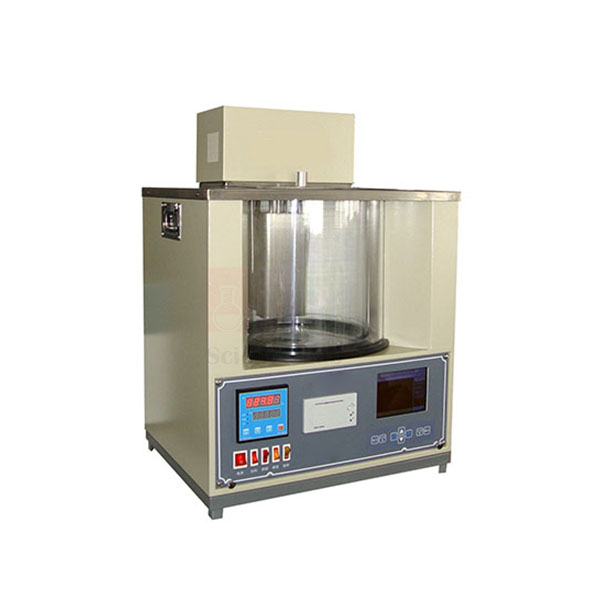
Kinematic Viscometer Bath
Kinematic Viscometer Bath (Product Code: SLE/CE/92) is a temperature-controlled glass bath used to hold capillary viscometer tubes while the kinematic viscosity of bitumen, oils and other liquids is measured in materials and petroleum testing laboratories. Civil engineering, chemistry and polytechnic labs choose it for its high-precision digital display, electric stirrer and compact desktop all-in-one design. It is supplied by Jain Scientific Equipments Pvt Ltd (ScienceLab), Ambala, India.
Key Details
| Parameter | Detail |
|---|---|
| Bath vessel | Durable glass bath designed for good heat retention |
| Temperature control | Controller for accurate bath temperature, with intelligent signal sampling for data measurement and parameter reading |
| Display | High-precision digital display |
| Stirring | Electric stirrer to keep the bath temperature uniform |
| Tube handling | Allows easy cleaning and drying of viscometer tubes |
| Layout | Desktop all-in-one design for easy operation and portability |
| Product code | SLE/CE/92 |
| Supplied by | Jain Scientific Equipments Pvt Ltd (ScienceLab), Ambala, India |
What Is the Kinematic Viscometer Bath Used For?
Kinematic viscosity is found by timing how long a fixed volume of liquid takes to flow through a calibrated glass capillary viscometer kept at a constant temperature. This bath provides that stable, stirred environment: the viscometer tube is suspended in the glass bath, the sample is allowed to reach bath temperature, and the flow time between the timing marks is multiplied by the tube constant. Highway materials labs use it for bitumen and cutback binders, while chemistry and petroleum courses use it for lubricating oils.
For repeatable readings, let the bath settle with the stirrer running before inserting tubes, keep the glass walls clean so the meniscus stays easy to see, and clean and dry each viscometer tube between samples. As a laboratory instruments supplier in India, we can advise on the tube type your method needs when you enquire.
Supplier
Jain Scientific Equipments Private Limited, which trades as ScienceLab, supplies the Kinematic Viscometer Bath as part of its range of materials-testing instruments for engineering colleges, polytechnics and testing laboratories. The company sources the unit and handles quotations and dispatch from Ambala, Haryana, for buyers in India and international markets. Read more on the ScienceLab company profile.
Related Civil Engineering Lab Equipment
Laboratories that measure bitumen viscosity usually run these related tests and baths as well:
- Standard penetrometer — measures bitumen consistency by needle penetration
- Ring And Ball Apparatus (Electrical) — finds the softening point of the same binder
- Cut Back Bitumen Distillation Equipment — separates cutback bitumen into distillate and residue
- Circulating water bath with cooler unit — an alternative bath where cooling is also required
Browse all Civil Engineering Lab Equipment for bitumen, aggregate, soil and concrete testing.
Frequently Asked Questions
What is the Kinematic Viscometer Bath used for?
The Kinematic Viscometer Bath holds glass capillary viscometer tubes at a steady, uniform temperature while the flow time of bitumen, oil or another liquid is measured, so that kinematic viscosity can be calculated from the tube constant in a materials or petroleum testing laboratory.
How does the Kinematic Viscometer Bath keep the temperature uniform?
The Kinematic Viscometer Bath uses an electric stirrer to circulate the bath liquid and keep its temperature even, with a controller that samples the signal and shows readings on a high-precision digital display. Its durable glass bath also helps retain heat during a test series.
Are viscometer tubes included with the Kinematic Viscometer Bath?
The listing for the Kinematic Viscometer Bath does not state which viscometer tubes or holders are included. Please confirm the tube type and quantity you need through our contact page when you request a quotation, and we will state the scope clearly.
What temperature range and power supply does the Kinematic Viscometer Bath need?
The temperature range and electrical rating of the Kinematic Viscometer Bath are not given in its listing. Ask us through the contact page and mention the test temperatures your method uses, and we will confirm the details of the unit we quote before you order.
Who supplies the Kinematic Viscometer Bath?
The Kinematic Viscometer Bath is supplied by Jain Scientific Equipments Pvt Ltd (ScienceLab), Ambala, Haryana, India. The company sources it for engineering, chemistry and petroleum-testing laboratories and quotes it to institutions and dealers in India and international markets.
Is a calibration certificate available for the Kinematic Viscometer Bath?
Calibration-certificate availability for the Kinematic Viscometer Bath and its temperature controller is not stated in the listing, so please discuss it with us before ordering. Send your requirement through the contact page together with the quantity you need.
Request a Quote
For a price on the Kinematic Viscometer Bath (SLE/CE/92), tell us your quantity, test temperatures and any viscometer tubes needed through the contact page, or add it to the enquiry cart. We respond to laboratories and dealers in India and international markets.
Last updated: 24 September 2026
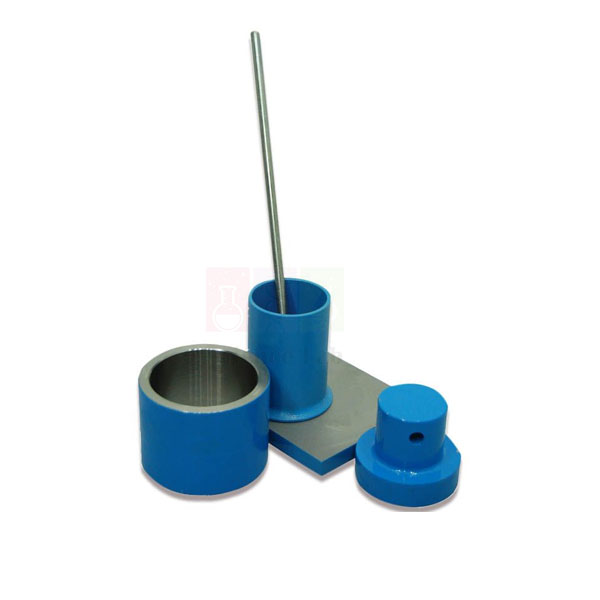
Aggregate Crushing Value Apparatus
Aggregate Crushing Value Apparatus (Product Code: SLE/CE/93) is a steel cylinder-and-plunger set used to find how much coarse aggregate breaks down under a gradually applied compressive load in civil engineering and highway materials laboratories. Engineering colleges and testing labs use it with a compression testing machine, and the set is built around a 150 mm diameter mild steel cylinder with a 148 mm plunger. It is made by Jain Scientific Equipments Pvt Ltd (ScienceLab), an OEM manufacturer, at its own factory in Ambala, India.
Specifications
| Parameter | Detail |
|---|---|
| Cylindrical container | Mild steel, 150 mm ±0.5 mm diameter × 130 mm to 140 mm high |
| Base plate | 200 mm to 230 mm square × 6 mm thick |
| Plunger | 148 mm ±0.5 mm diameter × 100 mm to 115 mm high |
| Metal measure | 115 ±0.5 mm diameter × 180 ±0.5 mm high |
| Tamping rod | 16 mm diameter × 600 mm long, both ends rounded (1 no.) |
| Set contents | Steel cylinder, plunger, base plate, cylindrical measure and tamping rod |
| Material and finish | Powder-coated or galvanized steel parts, heat treated and ground for durability |
| Product code | SLE/CE/93 |
| Manufacturer | Jain Scientific Equipments Pvt Ltd (ScienceLab) — OEM |
| Country of origin | India (made in Ambala, Haryana) |
What Is the Aggregate Crushing Value Apparatus Used For?
The aggregate crushing value (ACV) test rates how well road stone and concrete aggregate resist crushing. A graded sample is first measured in the metal measure, filled in layers and tamped with the rounded rod, then transferred to the 150 mm cylinder on its base plate and levelled. The plunger is placed on top and the assembly is loaded steadily in a compression testing machine to the load the test method specifies.
After loading, the crushed sample is sieved and the fines are expressed as a percentage of the original mass; a lower value indicates a stronger aggregate. Because the set is simple and robust, it is common engineering lab equipment in polytechnics and TVET workshops, where students compare aggregates from different quarries. Keep the plunger and cylinder bore clean so the plunger moves freely.
What to Specify When Ordering
- Number of complete sets (cylinder, plunger, base plate, measure and tamping rod)
- Any spare tamping rods or metal measures
- Whether you also need a compression testing machine to apply the load
OEM Manufacturer
ScienceLab is the trading name of Jain Scientific Equipments Private Limited, and this Aggregate Crushing Value Apparatus is one of its own OEM products. The cylinder, plunger, base plate and measure are made at the company's licensed factory at Saha, Ambala, Haryana, India, not sourced from a trader.
Because the maker quotes directly, colleges, materials-testing laboratories, dealers and importers get factory-direct supply and can ask the manufacturer itself about repeat orders or replacement parts. Find out more about the company on the ScienceLab profile page.
Related Civil Engineering Lab Equipment
These items complete a typical aggregate strength testing bench:
- Automatic digital compression testing machine — applies the crushing load to the cylinder and plunger
- Test Sieves — for grading the sample and separating fines after crushing
- Aggregate Impact Tester — the companion test for resistance to sudden impact
- Tamping Rod — a spare rod for compacting samples in layers
View the complete range of Civil Engineering Lab Equipment.
Frequently Asked Questions
What does the Aggregate Crushing Value Apparatus set include?
Each Aggregate Crushing Value Apparatus set includes a steel cylinder, a base plate, a plunger, a cylindrical metal measure and one tamping rod. The cylinder is 150 mm ±0.5 mm in diameter, the plunger 148 mm ±0.5 mm, and the rod 16 mm by 600 mm with rounded ends.
What size is the metal measure in the Aggregate Crushing Value Apparatus?
The metal measure in the Aggregate Crushing Value Apparatus is 115 ±0.5 mm in diameter and 180 ±0.5 mm high. It is used to measure out the aggregate sample, filled in layers and tamped with the rod, before the sample goes into the test cylinder.
Does the Aggregate Crushing Value Apparatus include a loading machine?
No. The Aggregate Crushing Value Apparatus is the cylinder, plunger, base plate, measure and tamping rod set. The crushing load is applied with a separate compression testing machine, which you can include in the same enquiry if your laboratory does not already have one.
What finish do the parts of the Aggregate Crushing Value Apparatus have?
Parts of the Aggregate Crushing Value Apparatus are powder-coated or galvanized steel, and the listing notes they are heat treated and ground for durability. Wipe the cylinder and plunger clean and dry after each test to keep them in good condition.
Who manufactures the Aggregate Crushing Value Apparatus?
The Aggregate Crushing Value Apparatus is manufactured by Jain Scientific Equipments Pvt Ltd (ScienceLab), the OEM, at its own licensed factory in Saha, Ambala, Haryana, India. Quotations, repeat orders and replacement-part questions are handled by the manufacturer directly.
What should a quotation request for the Aggregate Crushing Value Apparatus include?
A quotation request for the Aggregate Crushing Value Apparatus should give the number of sets, any spare tamping rods or measures, whether a compression testing machine is also needed, and the delivery location. Send it through our contact page or the enquiry cart.
Request a Quote
Ask for a price on the Aggregate Crushing Value Apparatus (SLE/CE/93) through our contact page, or add it to the enquiry cart with other aggregate test items. Quotes come direct from the manufacturer for buyers in India and international markets.
Last updated: 24 September 2026