- Physics Lab Equipment
- Chemistry Lab Equipment
- Biology Lab Equipment
- Anatomical Lab Equipment
- Learning
- Educational Lab Equipment
- Magnets
- Agriculture
- Astronomy
- Earth Science
- Geography Lab Equipment
- Safety Lab Coat
- Laboratory
- Meteorological
- Electricity & Magnetism
- Heat
- School Lab Equipment
- Lab Glassware
- Science Lab Equipment
- Tvet Lab Equipment
- Robotics Kits Supplier and Manufacturer for Schools India
- Math Lab Equipment Manufacturers and Exporters in Ambala
- STEM Kits Manufacturers and Supplier India
- Engineering Lab Equipment
- Hospital Lab Equipment
- Water, Sanitation & Hygiene Supplies
- Cold Chain, Solar & Communication Equipment
- Nutrition
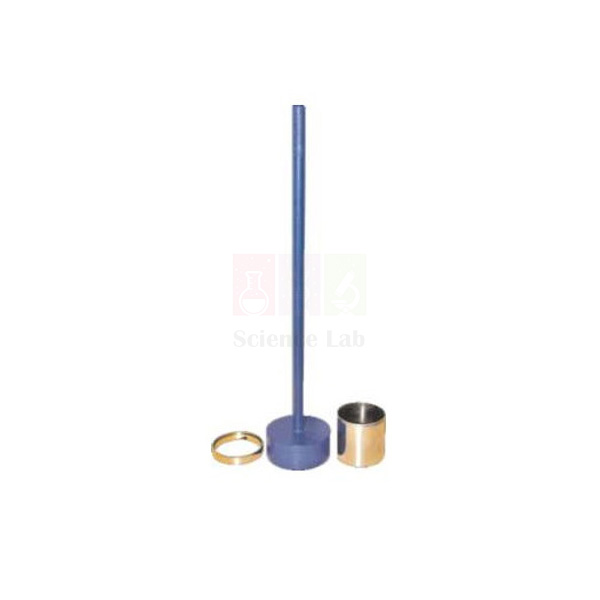
Core cutters
Core cutters (Product Code: SLE/CE/70) are open steel cylinders driven into the ground to cut out an intact soil core of known volume, used to measure the in-place density and moisture content of compacted fills and natural soils. Highway and building site laboratories use the set — core cutter, driving dolly and driving rammer — in 100 x 130 mm or 150 x 180 mm sizes. They are made by Jain Scientific Equipments Pvt Ltd (ScienceLab), an OEM scientific equipment manufacturer in India, at its own factory in Ambala.
Specifications
| Parameter | Detail |
|---|---|
| Material | Steel, protected against corrosion |
| Set contents | Core cutter, driving dolly and driving rammer |
| Sizes | 100 mm diameter x 130 mm high, or 150 mm diameter x 180 mm |
| Method | Cutter driven into the soil with the rammer; core dug out, trimmed, weighed and dried to calculate density and moisture content |
| Product code | SLE/CE/70 |
| Manufacturer | Jain Scientific Equipments Pvt Ltd (ScienceLab) — OEM |
| Country of origin | India (made in Ambala, Haryana) |
What Is the Core Cutter Used For?
A small patch of the layer is levelled, the cutter is stood upright with the dolly on top, and the rammer drives both down until the cutter is completely filled. The dolly protects the cutter's rim and lets it sink just below the surface. The cutter is then dug out, its ends trimmed flush, and the core weighed; a portion is dried to find the moisture content, from which the dry density follows.
Comparing that field dry density with the laboratory maximum shows whether an embankment, subgrade or earth-fill layer has been compacted enough. The method suits fine-grained soils that hold together in the cutter; stony or loose dry soils need other techniques. Institutions buying from an engineering lab equipment manufacturer often order several cutters so student teams can test different fill layers at once.
What to Specify When Ordering
- Size: 100 x 130 mm or 150 x 180 mm, or both
- Number of complete sets (cutter, dolly and rammer) and any extra cutters
- Delivery location for site laboratories or college campuses
OEM Manufacturer
Jain Scientific Equipments Private Limited, known to customers as ScienceLab, manufactures these core cutters as the OEM at its own licensed factory at Saha, Ambala, Haryana, India. They go factory-direct to site laboratories, contractors' test labs, engineering colleges, dealers and importers.
If you run several field teams, extra cutters, dollies or rammers can be quoted by the manufacturer directly — just ask us. Find out more on our company profile.
Related Civil Engineering Lab Equipment
Field density work links site sampling with laboratory results. These items are used in the same checks:
- Soil Augers — exploring the layers before choosing where to take cores
- Moisture Tins — holding the moisture sample taken from each core
- Relative density test apparatus — density limits for sands and gravels
- Field CBR test set — in-situ bearing ratio at the same test points
- Plate load bearing test apparatus — field bearing capacity of the compacted layer
Browse every item in Civil Engineering Lab Equipment.
Frequently Asked Questions
What is included in a Core cutters set?
A Core cutters set includes the core cutter itself, a driving dolly that sits on top of the cutter, and a driving rammer used to drive the assembly into the soil. All are steel, protected against corrosion.
What sizes are the Core cutters available in?
Core cutters are available in two versions: 100 mm diameter x 130 mm high, and 150 mm diameter x 180 mm. The larger cutter takes a bigger core, which can be useful when a layer's density varies from spot to spot.
How is dry density calculated from a Core cutters sample?
With Core cutters, the mass of soil in the cutter divided by the cutter's internal volume gives the bulk density. Dividing that by one plus the moisture content, measured on a dried portion of the core, gives the dry density.
Which soils are suitable for testing with Core cutters?
Core cutters work best in fine-grained, cohesive soils without stones, which stay in the cutter when it is dug out. Gravelly, stony or loose dry sandy soils tend to fall out or damage the rim, so other field density methods are preferred there.
Who manufactures the Core cutters?
The Core cutters are manufactured by Jain Scientific Equipments Pvt Ltd (ScienceLab) as the OEM at its own factory at Saha, Ambala, Haryana, India, and are sold factory-direct with quotations issued by the manufacturer.
Can Core cutters be ordered in bulk or for export?
Yes, Core cutters can be quoted in multiple sets for contractors and institutions and shipped within India or to international markets. Include the sizes, number of sets and delivery destination in your enquiry.
Request a Quote
For Core cutters pricing, contact us via the contact page or add them to the enquiry cart. Quotations come straight from the manufacturer.
Last updated: 24 September 2026
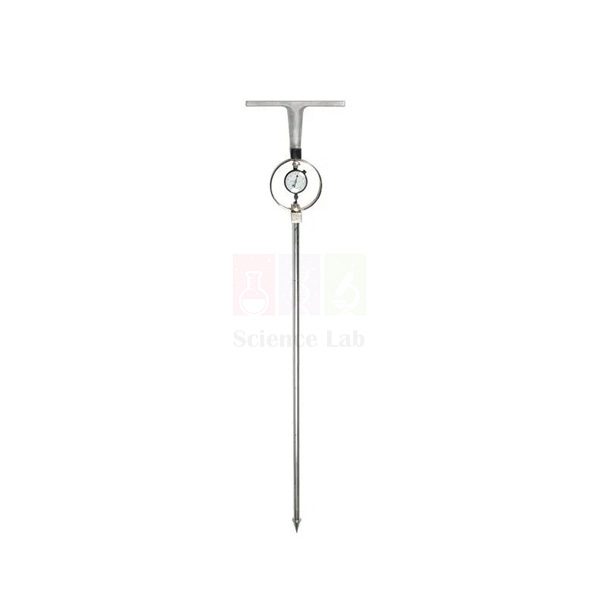
Load ring penetrometer
Load ring penetrometer (Product Code: SLE/CE/71) is a hand-pushed cone penetrometer used to measure the bearing strength and degree of compaction of soils on site and in soil laboratories. Engineers and students push its 30° cone, with a 645 mm² base area, into the ground by a T-handle while a 1 kN (100 kgf) load ring with a maximum-load pointer captures the peak resistance. It is made by Jain Scientific Equipments Pvt Ltd (ScienceLab), an OEM laboratory instrument manufacturer in India, at its own factory in Ambala.
Specifications
| Parameter | Detail |
|---|---|
| Purpose | Measuring the bearing strength and compaction degree of soils |
| Cone | 30° end cone, area 645 mm² (1 sq in) |
| Load ring | 1 kN (100 kgf) capacity, with maximum load pointer |
| Handle | T-shaped handle connected to the load ring |
| Extension rod | Five 100 mm graduations |
| Supplied with | Calibration chart |
| Weight | Approx. 4 kg |
| Product code | SLE/CE/71 |
| Manufacturer | Jain Scientific Equipments Pvt Ltd (ScienceLab) — OEM |
| Country of origin | India (made in Ambala, Haryana) |
What Is the Load Ring Penetrometer Used For?
The operator stands over the test spot, grips the T-handle and pushes the cone steadily into the soil. The graduations on the extension rod show how deep the cone has gone in 100 mm steps, while the maximum-load pointer stays at the highest reading on the ring so it can be noted after the cone is withdrawn. The calibration chart converts that reading into force, and dividing by the cone area gives the penetration resistance.
Because a reading takes only moments, the instrument is ideal for mapping how evenly a fill or subgrade has been compacted, finding soft spots before CBR or plate load tests, and checking ground conditions for vehicle access or farm soil studies. As educational laboratory equipment in India, it gives students a quick, hands-on feel for soil strength. Keep the rod vertical and push at an even speed for comparable results.
OEM Manufacturer
Jain Scientific Equipments Private Limited (CIN U29309HR2020PTC087597) trades as ScienceLab and is the OEM of this load ring penetrometer. The instrument is manufactured at the company's licensed factory at 449, HSIIDC Industrial Area, Saha, Ambala, Haryana (Factory Licence AMB-ONLINE-CHD-J-414).
It is supplied factory-direct to highway laboratories, agricultural and engineering colleges, dealers and importers, and questions about replacement cones or extension rods go straight to the manufacturer — ask us. See our company profile for more.
Related Civil Engineering Lab Equipment
Penetration readings are often combined with other quick field and laboratory tests. These instruments work alongside it:
- Proctor penetrometer — moisture versus penetration resistance of fine-grained soils
- Dial penetrometers — pocket-size readings of sand friction and clay cohesion
- Field CBR test set — in-situ bearing ratio where the penetrometer shows weak ground
- Core cutters — in-place density to confirm the degree of compaction
See the complete Civil Engineering Lab Equipment range.
Frequently Asked Questions
What does the Load ring penetrometer measure?
The Load ring penetrometer measures the resistance of soil to a pushed cone, which is used to judge the bearing strength and degree of compaction of soils in fills, subgrades and natural ground, both on site and in the laboratory.
What size is the cone on the Load ring penetrometer?
The Load ring penetrometer uses a 30° end cone with a base area of 645 mm², equal to 1 square inch. That known area lets the ring reading be converted into penetration resistance per unit area.
What load capacity does the Load ring penetrometer have?
The Load ring penetrometer has a 1 kN (100 kgf) capacity load ring fitted with a maximum-load pointer, so the peak force reached during each push stays displayed until you reset it.
How is penetration depth read on the Load ring penetrometer?
Penetration depth on the Load ring penetrometer is read from its extension rod, which carries five graduations spaced 100 mm apart, so readings can be taken at set depths below the surface.
Is the Load ring penetrometer supplied with calibration data?
Yes, the Load ring penetrometer is supplied complete with a calibration chart for converting ring readings to load. If you need a separate calibration certificate, discuss it with us on the contact page before ordering.
Who manufactures the Load ring penetrometer?
The Load ring penetrometer is manufactured by Jain Scientific Equipments Pvt Ltd (ScienceLab) as the OEM at its own licensed factory at Saha, Ambala, Haryana, India. Quotations and repeat orders come directly from the manufacturer.
Is the Load ring penetrometer easy to carry on site?
Yes, the Load ring penetrometer weighs about 4 kg, so one person can carry it across a site and take many readings in a short time without any power supply.
Request a Quote
Request a Load ring penetrometer quotation through our contact page or add it to the enquiry cart. Quotes are issued directly by the manufacturer; mention quantity and delivery location.
Last updated: 24 September 2026
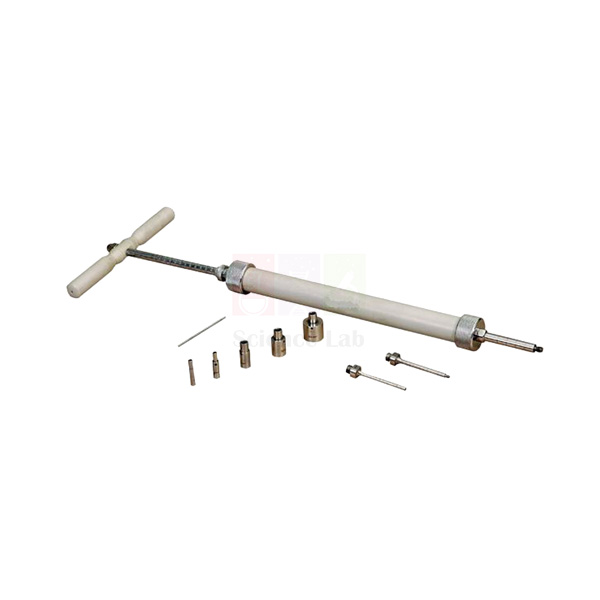
Proctor penetrometer
Proctor penetrometer (Product Code: SLE/CE/72) is a spring-dynamometer needle penetrometer used to establish the relationship between moisture content and penetration resistance of fine-grained soils, in compaction testing and for checking rolled fills. Soil laboratories use it with nine interchangeable needles, from 28.55 mm down to 4.52 mm diameter, reading the push on a 0 to 55 kg scale. It is made by Jain Scientific Equipments Pvt Ltd (ScienceLab), an OEM engineering lab equipment manufacturer, at its own factory in Ambala, India.
Specifications
| Parameter | Detail |
|---|---|
| Purpose | Establishing the moisture content – penetration resistance relationship of fine-grained soils |
| Measuring system | Special spring dynamometer with pressure-indicating scale on the stem of the handle |
| Load scale | 0 to 55 kg, 1 kg subdivisions |
| Maximum reading | Sliding ring on the stem indicates the maximum pressure reached |
| Interchangeable needles | Diameters 28.55, 24.79, 20.22, 16.54, 12.83, 9.07, 6.40, 5.23 and 4.52 mm |
| Weight | Approx. 3.5 kg |
| Product code | SLE/CE/72 |
| Manufacturer | Jain Scientific Equipments Pvt Ltd (ScienceLab) — OEM |
| Country of origin | India (made in Ambala, Haryana) |
What Is the Proctor Penetrometer Used For?
In the laboratory, a needle is pushed steadily into each compacted specimen as the compaction test proceeds, and the maximum force — held by the sliding ring — is divided by the needle's end area to give penetration resistance. Plotting resistance against water content produces a curve that sits alongside the compaction curve. On site, a quick push into the rolled fill can then be compared with that curve to judge whether the fill was placed too wet or too dry.
Swapping needles keeps readings within the 0 to 55 kg scale: broad needles for soft, wet soil and slender ones for stiff, dry soil. For lab equipments for technical institutes, it shows students clearly how moisture changes soil strength. Clean each needle after use and store the set in order of size so the right end area is always used in calculations.
OEM Manufacturer
ScienceLab, the trading name of Jain Scientific Equipments Private Limited, manufactures the Proctor penetrometer as its own OEM product at its licensed factory at Saha, Ambala, Haryana, India. It is shipped factory-direct to soil laboratories, universities, polytechnics, dealers and importers.
The same manufacturer can quote extra or replacement needles if yours wear or go missing — ask us. Details of the company are on our company profile.
Related Civil Engineering Lab Equipment
Moisture control of compacted soil draws on several simple instruments. These items complement the penetrometer:
- Load ring penetrometer — cone resistance and compaction checks with a 1 kN load ring
- Dial penetrometers — lightweight pocket readings on sand and clay
- Moisture Tins — oven-dry water content of each tested specimen
- Core cutters — field density of the same rolled fill
View all Civil Engineering Lab Equipment.
Frequently Asked Questions
What is the Proctor penetrometer used for?
The Proctor penetrometer is used to establish the moisture content versus penetration resistance relationship of fine-grained soils, so the moisture condition of compacted soil can be checked quickly in the laboratory or on a rolled fill.
What is the load range of the Proctor penetrometer?
The Proctor penetrometer reads from 0 to 55 kg in 1 kg subdivisions on a pressure-indicating scale along the stem of its handle, with a maximum load indicator to hold the peak value.
Which needle sizes are listed for the Proctor penetrometer?
The Proctor penetrometer is listed with nine interchangeable needles of 28.55, 24.79, 20.22, 16.54, 12.83, 9.07, 6.40, 5.23 and 4.52 mm diameter, allowing you to match the needle to the stiffness of the soil.
How does the Proctor penetrometer keep the maximum reading?
The Proctor penetrometer has a sliding ring on its stem that is pushed along by the scale and stays at the maximum pressure reached, so the operator can read the result after withdrawing the needle.
Who manufactures the Proctor penetrometer?
The Proctor penetrometer is manufactured by Jain Scientific Equipments Pvt Ltd (ScienceLab) as the OEM at its own factory at Saha, Ambala, Haryana, India. Buyers receive quotations and needle enquiries directly from the manufacturer.
How portable is the Proctor penetrometer?
The Proctor penetrometer weighs approximately 3.5 kg and needs no power, so it can be carried to the compaction bench or out to an embankment and used by one person.
Request a Quote
Ask for a Proctor penetrometer quotation via the contact page or place it in the enquiry cart. Quotes come direct from the manufacturer, for single units, class sets or export to international markets.
Last updated: 24 September 2026
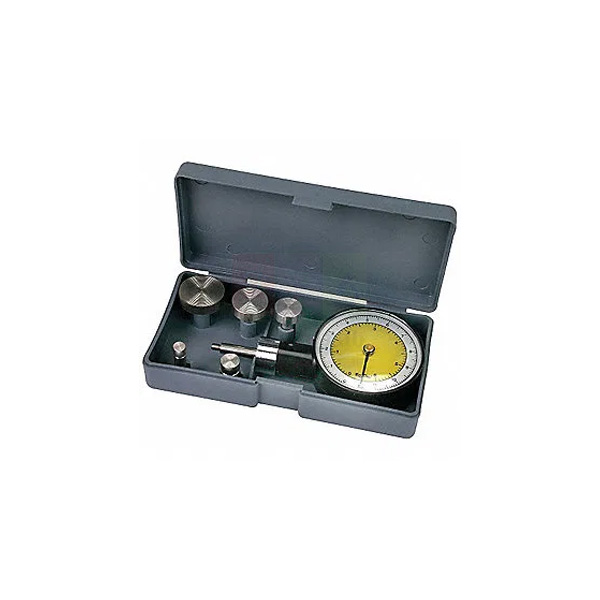
Dial penetrometers
Dial penetrometers (Product Code: SLE/CE/73) are compact handheld penetrometers used to evaluate the angle of internal friction of sandy soils and the cohesion of clay soils in trial pits, sample tubes and soil laboratories. Engineers and students press one of five plungers, from 6.35 mm to 25 mm tip diameter, into the soil and read a 60 mm dial that holds the peak value. They are made by Jain Scientific Equipments Pvt Ltd (ScienceLab), an OEM scientific instruments manufacturer in India, at its own factory in Ambala.
Specifications
| Parameter | Detail |
|---|---|
| Purpose | Evaluating the angle of internal friction of sandy soil and the cohesion in clay soils |
| Plungers | 5 different plungers with tip diameters of 6.35, 10, 15, 20 and 25 mm |
| Scale | 0 to 14 kgf/cm², or dual 0 to 6 / 0 to 11 kgf/cm² |
| Peak hold | Included on all versions, with zero setting by push button |
| Dial diameter | 60 mm |
| Weight | Approx. 300 g |
| Product code | SLE/CE/73 |
| Manufacturer | Jain Scientific Equipments Pvt Ltd (ScienceLab) — OEM |
| Country of origin | India (made in Ambala, Haryana) |
What Is the Dial Penetrometer Used For?
Choose a plunger to suit the ground — a broad tip for soft clay or loose sand, a slender one for stiff material — then hold the instrument square to the soil face and press it in with a steady push. The peak hold keeps the highest reading on the dial after the plunger is withdrawn, and a press of the button returns the needle to zero for the next test. Readings are then related to cohesion in clays or friction angle in sands.
Because it weighs only about 300 g, the instrument fits in a field bag for logging trial pits, checking the ends of sample tubes or comparing layers in an excavation. It is an index test that complements, rather than replaces, laboratory shear tests. Among laboratory instruments in India for soil teaching, it is one of the quickest ways to show strength differences. Take several readings at each spot and average them.
What to Specify When Ordering
- Scale version: 0 to 14 kgf/cm² or dual 0 to 6 / 0 to 11 kgf/cm²
- Number of instruments for your field teams or student groups
- Any additional plungers of particular tip sizes you would like quoted for heavy use
OEM Manufacturer
Dial penetrometers are produced by Jain Scientific Equipments Private Limited, the company trading as ScienceLab, acting as OEM at its own licensed factory at Saha, Ambala, Haryana, India. Field investigation teams, universities, polytechnics, dealers and importers order them factory-direct.
If you need a mix of both scale versions or extra plungers, the manufacturer prepares one combined quotation — ask us. More about the company is on our company profile.
Related Civil Engineering Lab Equipment
Quick penetration readings are usually checked against fuller strength tests. These products cover the next steps:
- Load ring penetrometer — deeper cone readings with a 1 kN load ring
- Proctor penetrometer — moisture control of compacted fine-grained soils
- Vane Shear Apparatus (Motorised) — laboratory undrained strength of soft clay
- Unconfined Compression Tester (Motorised) — compressive strength of cohesive specimens
- Direct Shear test Apparatus — friction angle and cohesion under controlled loads
See more in Civil Engineering Lab Equipment.
Frequently Asked Questions
What are Dial penetrometers used for?
Dial penetrometers are used to evaluate the angle of internal friction of sandy soils and the cohesion of clay soils by pressing a plunger into the soil and reading the peak resistance on the dial, giving a fast index of soil strength.
What scale ranges do the Dial penetrometers offer?
Dial penetrometers are offered with a single 0 to 14 kgf/cm² scale or a dual 0 to 6 / 0 to 11 kgf/cm² scale. State which version you need, as both share the same 60 mm dial size.
Which plungers come with the Dial penetrometers?
Dial penetrometers come complete with five different plungers whose tip diameters are 6.35, 10, 15, 20 and 25 mm, so the operator can select a tip that keeps readings within the scale for soft or stiff soils.
How does the peak hold work on the Dial penetrometers?
All Dial penetrometers include a peak hold feature: the dial keeps showing the maximum reading after the plunger is withdrawn, and a push button resets the needle to zero before the next test.
How large and heavy are the Dial penetrometers?
Dial penetrometers have a 60 mm diameter dial and weigh approximately 300 g, light enough to carry in a pocket or field bag and use with one hand.
Who manufactures the Dial penetrometers?
The Dial penetrometers are manufactured by Jain Scientific Equipments Pvt Ltd (ScienceLab) as the OEM at its own factory at Saha, Ambala, Haryana, India, and quotations come directly from the manufacturer.
Request a Quote
For Dial penetrometers pricing, reach us through the contact page or add them to the enquiry cart. The manufacturer quotes directly for delivery in India and international markets.
Last updated: 24 September 2026
633.jpg)
Vane Shear Apparatus (Motorised)
Vane Shear Apparatus (Motorised) (Product Code: SLE/CE/74) is a laboratory vane tester used to measure the undrained shear strength of soft, saturated clay specimens that are too weak to trim for other strength tests. Soil laboratories and civil engineering colleges use its 230 V motor and worm gear to turn the vane at a slow 1/60 rpm through a calibrated torsion spring, reading torque on a degree dial. It is made by Jain Scientific Equipments Pvt Ltd (ScienceLab), an OEM lab equipment manufacturer in India, at its own factory in Ambala.
Specifications
| Parameter | Detail |
|---|---|
| Torque head | Adjustable in height by a lead screw rotated by a drive wheel, to lower the vane into the specimen |
| Drive | Single-phase electric drive operating a worm gear that turns the upper end of a calibrated torsion spring |
| Rate of rotation | 1/60 rpm (one revolution per hour, 6° per minute) |
| Power supply | 230 V AC |
| Torque reading | Vane shaft attached through the hollow upper shaft to a resettable pointer on a dial graduated in degrees |
| Torque calculation | Dial reading multiplied by the spring factor gives the torque |
| Sample container | Container for the soil sample supplied; a sampling tube of 38 mm i.d. x 150 mm long can also be used as the container |
| Product code | SLE/CE/74 |
| Manufacturer | Jain Scientific Equipments Pvt Ltd (ScienceLab) — OEM |
| Country of origin | India (made in Ambala, Haryana) |
What Is the Vane Shear Apparatus Used For?
The clay sample, in the supplied container or still in its 38 mm sampling tube, is set beneath the torque head, and the drive wheel lowers the vane into it. When the motor is switched on, the worm gear slowly winds the torsion spring, which in turn twists the vane. Once the clay shears, the pointer stays at the largest angle reached; multiplying that reading by the spring factor gives the torque, from which the shear strength is worked out using the vane dimensions.
The method suits very soft marine, alluvial and organic clays that would slump in an unconfined compression test, and repeating it on remoulded soil shows the clay's sensitivity. It is a regular part of engineering educational equipments in India for geotechnical practicals. Push the vane in gently and start rotation promptly so the soil around the blades is not disturbed or allowed to consolidate.
OEM Manufacturer
The motorised vane shear apparatus is an OEM product of Jain Scientific Equipments Private Limited, which trades as ScienceLab and makes it at its own licensed factory at Saha, Ambala, Haryana, India. Soil mechanics laboratories, universities, research institutes, dealers and importers receive it factory-direct.
Questions about additional torsion springs or sample containers go straight to the manufacturer — ask us and we will advise. Read more on our company profile.
Related Civil Engineering Lab Equipment
Vane shear results are usually compared with other clay strength and compressibility tests. These items are used in the same laboratory:
- Unconfined Compression Tester (Motorised) — strength of stiffer clay specimens that can stand unsupported
- Soil extruder, motor operated — pushing samples out of tubes after testing
- Consolidation Test Apparatus — settlement behaviour of the same soft clay
- Dial penetrometers — quick strength readings on the ends of sample tubes
- Moisture Tins — water content of the tested clay
Browse all Civil Engineering Lab Equipment.
Frequently Asked Questions
What does the Vane Shear Apparatus (Motorised) measure?
The Vane Shear Apparatus (Motorised) measures the torque needed to shear a soft clay specimen with a rotating vane, from which the undrained shear strength of the clay is calculated. It is especially useful for clays too soft for unconfined compression testing.
At what speed does the Vane Shear Apparatus (Motorised) rotate the vane?
The Vane Shear Apparatus (Motorised) rotates the vane at 1/60 rpm, which is one revolution per hour, using an electric drive and worm gear that turn the upper end of the calibrated torsion spring.
How is torque read on the Vane Shear Apparatus (Motorised)?
On the Vane Shear Apparatus (Motorised), a resettable pointer linked to the vane shaft shows the torsion angle on a dial graduated in degrees. Multiplying the dial reading by the spring factor gives the torque applied to the soil.
What sample container does the Vane Shear Apparatus (Motorised) use?
The Vane Shear Apparatus (Motorised) is supplied with a container for the soil sample. A sampling tube of 38 mm internal diameter and 150 mm length can also be used as the container, so tube samples can be tested directly.
What power supply does the Vane Shear Apparatus (Motorised) need?
The Vane Shear Apparatus (Motorised) operates on a 230 V single-phase AC supply, so it can be installed on a normal laboratory bench near a standard power outlet.
What vane dimensions and spring factor does the Vane Shear Apparatus (Motorised) have?
The vane size and spring factor of the Vane Shear Apparatus (Motorised) are needed to convert torque into shear strength. Please ask us for the vane and spring details of the unit you are quoted via our contact page.
Who manufactures the Vane Shear Apparatus (Motorised)?
The Vane Shear Apparatus (Motorised) is manufactured by Jain Scientific Equipments Pvt Ltd (ScienceLab) as the OEM at its own factory at Saha, Ambala, Haryana, India, with quotations and after-sales questions handled by the manufacturer.
Request a Quote
Get a Vane Shear Apparatus (Motorised) quotation through our contact page or the enquiry cart. The manufacturer quotes directly for single units, multiple labs or export to international markets.
Last updated: 24 September 2026
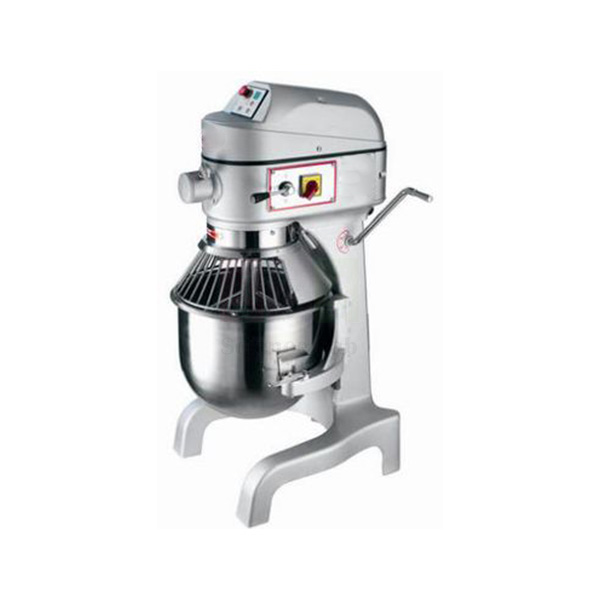
Laboratory digital planetary mixer
Laboratory digital planetary mixer (Product Code: SLE/CE/75) is a table-mounted planetary mixer used to blend asphalt mixes evenly for specimen preparation in highway and materials testing laboratories. Road research labs and engineering colleges use its 5 litre bowl and whisk with user-set planetary speeds of 5 to 65 rpm, and a front grill that stops the machine as soon as it is opened. It is supplied by Jain Scientific Equipments Pvt Ltd (ScienceLab), Ambala, India, a laboratory equipment supplier for highway and materials labs.
Specifications
| Parameter | Detail |
|---|---|
| Application | Mixing asphalt mixes; can be used as part of a Superpave performance-based testing programme |
| Mounting and action | Table-mounted unit with planetary mixing action |
| Bowl capacity | 5 litres |
| Supplied with | Bowl and whisk, both easily fitted and removed |
| Planetary speed | User-defined, 5 to 65 rpm |
| Whisk speed | User-defined, 12 to 149 rpm |
| Speed control | Easily selected and adjustable during mixing |
| Controls | Dedicated display and keyboard interface; alphanumeric display, 2 x 16 characters |
| Safety | Opening the front grill automatically stops the machine |
| Overall dimensions | 465 x 540 x 620 mm (l x d x h) |
| Weight | Approx. 35 kg |
| Power | 370 W |
| Product code | SLE/CE/75 |
| Supplied by | Jain Scientific Equipments Pvt Ltd (ScienceLab), Ambala, India |
What Is the Digital Planetary Mixer Used For?
Every trial blend in an asphalt mix design has to be mixed thoroughly so the binder coats all the aggregate before specimens are compacted, and doing that by hand in a pan is slow and varies from person to person. In a planetary mixer the whisk spins on its own axis while also travelling around the bowl, so it reaches the whole batch. The operator keys in planetary and whisk speeds on the display and can change them while the batch is running.
Mixed batches then move on to compaction and to tests such as stability and maximum density, including within a Superpave performance-based programme. For buyers comparing laboratory instruments supplier in India options, the grill cut-out is a practical safety point for student labs. Weigh batches to suit the 5 litre bowl and clean the bowl and whisk promptly after each run.
What to Specify When Ordering
- Number of mixers and the delivery destination
- Whether extra bowls or whisks should be quoted for back-to-back batches
- The mains voltage and plug type at your laboratory, so we can confirm electrical compatibility
Supplier
ScienceLab is the trading name of Jain Scientific Equipments Private Limited, which supplies this laboratory digital planetary mixer from Ambala, Haryana, India to highway research laboratories, engineering colleges, contractors' test labs, dealers and importers. We source the mixer against your order and remain your single contact for the quotation, paperwork and delivery.
Buyers completing vendor onboarding or import formalities can use the company's Importer-Exporter Code AAECJ8618A (DGFT) and GSTIN 06AAECJ8618A1ZT. Learn more on our company profile.
Related Civil Engineering Lab Equipment
A mixer is one link in the bituminous testing chain. These items handle the binder and the mixed material before and after it:
- Automatic Marshall Stability Test Machine — stability and flow of compacted mix specimens
- Mixer Theoretical Density Meter — theoretical density of the loose mix by the vacuum method
- Centrifuge Extractor – Motorised — checking binder content of mixed samples
- Standard penetrometer — penetration testing of the bitumen before mixing
- Ring And Ball Apparatus (Electrical) — softening point of the binder
Explore the full Civil Engineering Lab Equipment range.
Frequently Asked Questions
What is supplied with the Laboratory digital planetary mixer?
The Laboratory digital planetary mixer is supplied complete with a 5 litre bowl and a whisk, both designed to be fitted and removed easily for loading, emptying and cleaning between asphalt batches.
What speed range does the Laboratory digital planetary mixer offer?
The Laboratory digital planetary mixer has user-defined planetary speeds from 5 to 65 rpm and whisk speeds from 12 to 149 rpm. Speeds are set on the keyboard, shown on a 2 x 16 character display and can be adjusted during mixing.
What safety feature does the Laboratory digital planetary mixer have?
The Laboratory digital planetary mixer has a front grill that automatically stops the machine when it is opened, protecting the operator's hands from the moving whisk while loading or checking a batch.
Can the Laboratory digital planetary mixer be used for Superpave testing?
Yes, the Laboratory digital planetary mixer can be used as part of a Superpave performance-based testing programme. If your procedure sets particular mixing requirements, share them with us before ordering so we can confirm suitability.
How much space and power does the Laboratory digital planetary mixer need?
The Laboratory digital planetary mixer is a table-mounted unit measuring 465 x 540 x 620 mm (l x d x h), weighing about 35 kg and rated at 370 W, so it needs a sturdy bench near a power outlet.
Who supplies the Laboratory digital planetary mixer?
The Laboratory digital planetary mixer is supplied by Jain Scientific Equipments Pvt Ltd (ScienceLab), Ambala, India, to buyers in India and international markets. For questions about its origin or service support, please ask us through the contact page.
Request a Quote
To request pricing for the Laboratory digital planetary mixer, use our contact page or add it to the enquiry cart, listing quantity, any spare bowls or whisks, and the delivery location.
Last updated: 24 September 2026
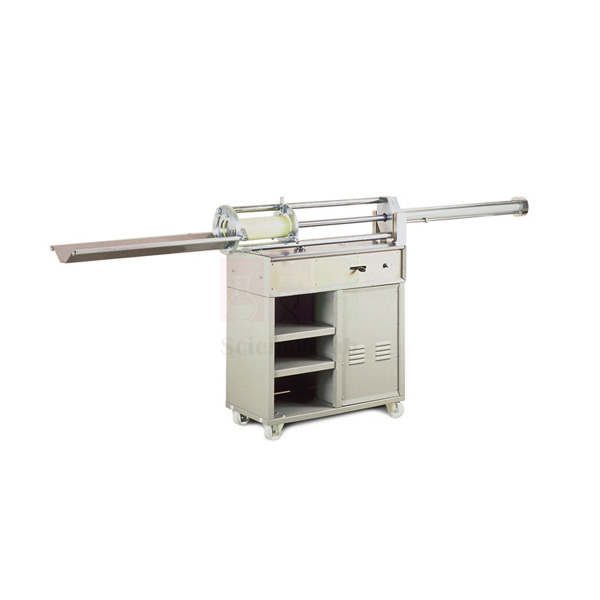
Soil extruder, motor operated
Soil extruder, motor operated (Product Code: SLE/CE/76) is a hydraulic sample extruder used to push soil samples out of sampling tubes in geotechnical and civil engineering laboratories. Soil mechanics labs at universities, polytechnics and site-investigation firms use it for tubes up to 160 mm external diameter, with a 60 kN maximum load and a 900 mm ram stroke. It is made by Jain Scientific Equipments Pvt Ltd (ScienceLab), an OEM manufacturer of engineering lab equipment in India, at its own factory in Ambala.
Specifications
| Parameter | Detail |
|---|---|
| Drive | Motor operated hydraulic system; a lever controls the extruding speed and the hydraulic valve for the extrusion or return movement |
| Power | 750 W |
| Maximum load | 60 kN |
| Maximum ram stroke | 900 mm |
| Maximum working ram speed | 6 mm/s |
| Maximum external diameter of sample tubes | 160 mm |
| Working position | Vertical or horizontal; sampling tubes are held by an adjustable V-shape bearing |
| Stop control | Ram can be stopped at any point of its travel |
| Overall dimensions, horizontal (l × w × h) | 2730 × 409 × 1180 mm |
| Overall dimensions, vertical (l × w × h) | 1025 × 409 × 1080 mm, without accessories |
| Weight | Approx. 160 kg |
| Space saving | Hydraulic cylinder assembly and receiving table can be lowered alongside the machine when not in use |
| Tube adaptors | Not included; a range of standard adaptors is ordered separately |
| Product code | SLE/CE/76 |
| Manufacturer | Jain Scientific Equipments Pvt Ltd (ScienceLab) — OEM |
| Country of origin | India (made in Ambala, Haryana) |
What Is the Soil Extruder Used For?
Soil samples taken in the field are usually brought to the laboratory still inside their sampling tubes. The extruder's hydraulic ram pushes the soil out in a steady, controlled stroke so that specimens can be trimmed for unconfined compression, consolidation, shear or density tests with as little disturbance as possible. Because the ram can be halted anywhere in its travel, the operator can push a short length straight into a smaller sample tube, or cut off one specimen and then continue.
Use the vertical position when floor space is tight and the horizontal position for long tubes that are easier to handle lying down. Fit the adaptor that matches the tube, set a gentle speed with the lever for soft soils, and wipe the ram and V-bearing clean after each sample. As heavy-duty lab equipment for technical institutes, it lets students see how field samples become test specimens.
What to Specify When Ordering
- External diameter of every sampling tube you use (up to 160 mm), so the right tube adaptors can be quoted
- Whether you will work in the vertical position, the horizontal position or both
- The electrical supply available at your laboratory for the 750 W drive
- Floor space for up to 2730 mm length in the horizontal position and a weight of approx. 160 kg
OEM Manufacturer
Jain Scientific Equipments Private Limited, which trades as ScienceLab, is the original equipment manufacturer (OEM) of this motor-operated soil extruder. It is made and assembled at the company's own licensed factory at Saha, Ambala, Haryana, India, rather than bought in from a trader.
Geotechnical departments, testing laboratories, dealers and importers are supplied factory-direct. Adaptor orders, spare parts and repeat units are handled by the manufacturer itself — ask us for what you need. More about the company is on the ScienceLab company profile.
Related Civil Engineering Lab Equipment
These soil testing items are used before or after extrusion in the same laboratory workflow:
- Soil Augers — for boring down to the depth where samples are taken
- Core cutters — another way of obtaining soil cores in the field
- Unconfined Compression Tester (Motorised) — tests cylindrical specimens trimmed from extruded soil
- Consolidation Test Apparatus — for consolidation specimens cut from the sample
- Direct Shear test Apparatus — shear strength testing of the extruded soil
Browse the complete Civil Engineering Lab Equipment category for soil, cement, concrete and bitumen apparatus.
Frequently Asked Questions
What is the largest sample tube the Soil extruder, motor operated can take?
The Soil extruder, motor operated (SLE/CE/76) accepts sampling tubes up to 160 mm external diameter and has a maximum ram stroke of 900 mm, so a long tube can be emptied in one pass. A suitable tube adaptor is needed for each tube size.
Are tube adaptors included with the motor-operated soil extruder?
No. The motor-operated soil extruder is supplied without tube adaptors, which have to be ordered separately. Tell us the external diameter of every sampling tube you use and we will quote matching adaptors together with the extruder.
How fast does the soil extruder push the sample out?
The Soil extruder, motor operated reaches a maximum working ram speed of 6 mm per second, and a lever lets the operator set the extruding speed. The ram can be stopped at any point, which helps when cutting short specimens or filling smaller tubes.
Can the soil extruder be used horizontally as well as vertically?
Yes. On the Soil extruder, motor operated, tubes sit in an adjustable V-shape bearing and can be extruded vertically or horizontally. Overall size is about 1025 × 409 × 1080 mm in the vertical position and 2730 × 409 × 1180 mm in the horizontal position.
Who manufactures the Soil extruder, motor operated?
The Soil extruder, motor operated is manufactured by Jain Scientific Equipments Pvt Ltd (ScienceLab), the OEM, at its own factory at Saha, Ambala, Haryana, India. Quotations, adaptor orders and spare-part enquiries are handled directly by the manufacturer.
What should a quotation request for the soil extruder include?
For the Soil extruder, motor operated, state the quantity, the diameters of the sampling tubes you use, your preferred working position, your electrical supply and the delivery location in India or abroad. Send these through the contact page for a manufacturer's quotation.
Is the motor-operated soil extruder supplied outside India?
Yes. Jain Scientific Equipments Pvt Ltd (ScienceLab) supplies the Soil extruder, motor operated to laboratories in India and international markets. As the machine weighs about 160 kg, include the delivery destination in your enquiry so that freight can be discussed with the quotation.
Request a Quote
For price and availability of the Soil extruder, motor operated and its tube adaptors, write to us through the contact page or add the item to the enquiry cart. Quotations come direct from the manufacturer in Ambala.
Last updated: 24 September 2026
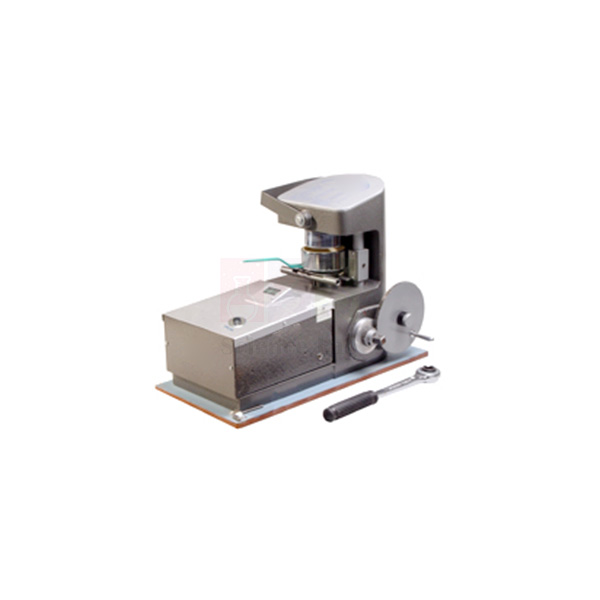
Universal moisture tester
Universal moisture tester (Product Code: SLE/CE/77) is a digital grain-type moisture meter used to take quick moisture-content readings on samples in testing and teaching laboratories. Materials labs, colleges and quality-control rooms use it for fast checks, reading 0 to 70% moisture on a digital display. It is supplied by Jain Scientific Equipments Pvt Ltd (ScienceLab), Ambala, India, a source of test and measurement instruments in India.
Specifications
| Parameter | Detail |
|---|---|
| Type | Digital grain moisture meter |
| Measuring range | 0 to 70% moisture |
| Temperature range | −10 to 60 °C (as listed) |
| Material | Mild steel |
| Display | Digital |
| Product code | SLE/CE/77 |
| Supplied by | Jain Scientific Equipments Pvt Ltd (ScienceLab), Ambala, India |
What Is the Universal Moisture Tester Used For?
Moisture content changes how granular materials weigh, store and behave, so laboratories often need a reading before a sample is batched, stored or tested further. The Universal moisture tester gives that reading directly on its digital display, which is handy for screening many samples in one session or for demonstrating to students how moisture is expressed as a percentage.
In soil and aggregate laboratories, oven drying in moisture tins remains the usual reference method; a direct-reading meter complements it for quick checks rather than replacing it. Take a representative portion, keep the sample and the instrument within the listed temperature range, and repeat readings to confirm consistency. Like other laboratory instruments in India, it should be matched to the materials you test, so tell us your sample types when enquiring.
Supplier
Jain Scientific Equipments Private Limited, trading as ScienceLab from Ambala, Haryana, sources and supplies this digital moisture tester for laboratory buyers. The company can quote it together with sampling and moisture-content items from its civil engineering range, so one enquiry covers the whole bench set-up.
Colleges, testing laboratories, contractors, dealers and importers receive quotations and dispatch from Ambala. Read the ScienceLab profile to learn more about the company.
Related Civil Engineering Lab Equipment
These items support moisture-content work alongside the Universal moisture tester:
- Moisture Tins — for the oven-drying reference method
- Cementometer Moisture Meter — a meter for moisture in building materials
- Digital Moisture Meter — an alternative digital meter from the agriculture range
- Riffle Sample Divider — to split out a representative test portion
- Scoops — for taking and handling samples
See the full Civil Engineering Lab Equipment category for soil, aggregate and concrete testing apparatus.
Frequently Asked Questions
What does the Universal moisture tester measure?
The Universal moisture tester (SLE/CE/77) is a digital grain moisture meter that shows moisture content over a measuring range of 0 to 70%. It gives a direct reading on its digital display, which suits quick checks alongside slower oven-drying methods.
What is the temperature range of the Universal moisture tester?
The Universal moisture tester is listed with a temperature range of −10 to 60 °C. If you need to know whether this refers to the operating environment or to the sample, ask us through the contact page before ordering.
Can the Universal moisture tester be used on soil, sand or aggregates?
The Universal moisture tester is described as a digital grain moisture meter, so its suitability for soil, sand or aggregate samples should be confirmed before purchase. Tell us the materials you test and we will confirm what the instrument can measure.
How does the tester compare with oven drying in moisture tins?
The Universal moisture tester gives a direct digital reading, whereas oven drying in moisture tins takes longer but is the reference method in most soil laboratories. Many labs use a meter for quick screening and confirm critical results by oven drying.
Is a calibration certificate available for the Universal moisture tester?
Calibration-certificate availability for the Universal moisture tester should be discussed with us at enquiry stage. Mention whether your laboratory records need one, and we will tell you what can be provided with the instrument you are quoted.
Who supplies the Universal moisture tester?
The Universal moisture tester is supplied by Jain Scientific Equipments Pvt Ltd (ScienceLab), Ambala, Haryana, India, to colleges, testing laboratories, dealers and importers in India and international markets. Quotations are sent in reply to enquiries through the contact page or enquiry cart.
Request a Quote
To receive a quotation for the Universal moisture tester, send your quantity and the materials you plan to test through the contact page, or add it to the enquiry cart with other items you need.
Last updated: 24 September 2026