- Physics Lab Equipment
- Chemistry Lab Equipment
- Biology Lab Equipment
- Anatomical Lab Equipment
- Learning
- Educational Lab Equipment
- Magnets
- Agriculture
- Astronomy
- Earth Science
- Geography Lab Equipment
- Safety Lab Coat
- Laboratory
- Meteorological
- Electricity & Magnetism
- Heat
- School Lab Equipment
- Lab Glassware
- Science Lab Equipment
- Tvet Lab Equipment
- Robotics Kits Supplier and Manufacturer for Schools India
- Math Lab Equipment Manufacturers and Exporters in Ambala
- STEM Kits Manufacturers and Supplier India
- Engineering Lab Equipment
- Hospital Lab Equipment
- Water, Sanitation & Hygiene Supplies
- Cold Chain, Solar & Communication Equipment
- Nutrition
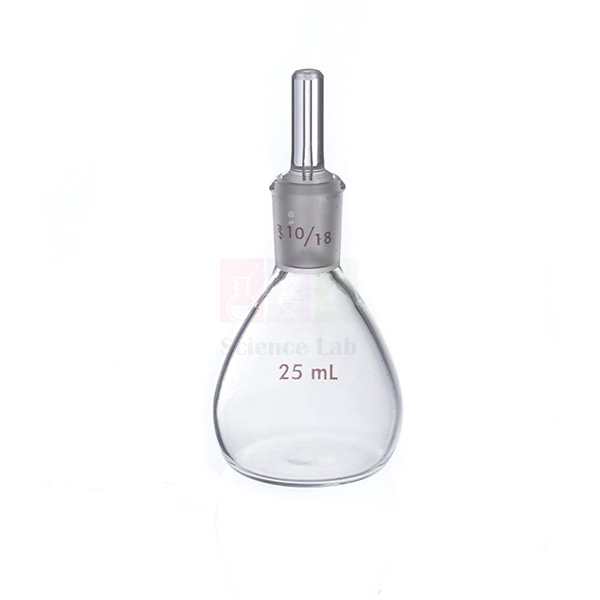
Specific Gravity Bottles
Specific Gravity Bottles (Product Code: SLE/CE/78) are borosilicate glass density bottles used to determine the density and specific gravity of liquid samples in civil engineering, chemistry and materials laboratories. Offered in 10 mL and 25 mL (approx.) capacities, each has a capillary stopper seated in a ground 10/18 standard taper joint that reduces evaporation. They are made by Jain Scientific Equipments Pvt Ltd (ScienceLab), an OEM manufacturer, at its own factory in Ambala, India.
Specifications
| Parameter | Detail |
|---|---|
| Purpose | Determining the density of liquid samples |
| Glass | Borosilicate |
| Capacities | 10 mL and 25 mL (approx.) |
| Stopper | Capillary stopper |
| Joint | Ground standard taper joint, 10/18 on both sizes, to reduce evaporation |
| Volume adjustment | Unadjusted (not adjusted to an exact nominal volume) |
| Product code | SLE/CE/78 |
| Manufacturer | Jain Scientific Equipments Pvt Ltd (ScienceLab) — OEM |
| Country of origin | India (made in Ambala, Haryana) |
What Is the Specific Gravity Bottle Used For?
The bottle is weighed empty, then filled with distilled water, then with the test liquid, and the capillary stopper is pushed home each time so that surplus liquid escapes through the capillary. Every fill therefore holds the same volume, and the ratio of the liquid mass to the water mass gives its specific gravity. Because the bottles are unadjusted, each one is first calibrated by weighing it full of water at a known temperature.
Students use the method to compare liquids such as oils, solutions and liquid admixtures, and to see why temperature control matters in density work. Handle the bottle by the neck to avoid warming it, wipe the outside dry before weighing and keep each stopper with the bottle it was calibrated with. As borosilicate laboratory glassware in India, the bottles stand up well to routine washing and drying.
What to Specify When Ordering
- Capacity: 10 mL or 25 mL (approx.), or both
- Number of bottles of each capacity, for example one per student group
- Whether spare bottles for breakage should be included in the same quotation
OEM Manufacturer
ScienceLab is the trading name of Jain Scientific Equipments Private Limited, the OEM for these specific gravity bottles. They are produced at the company's own licensed factory at Saha, Ambala, Haryana, India, so buyers deal with the maker of the glassware rather than a reseller.
Schools, colleges, testing laboratories, dealers and importers can order factory-direct, and repeat orders for matching sizes are handled by the manufacturer itself — ask us for the quantities you need. The company profile has more background on ScienceLab.
Related Civil Engineering Lab Equipment
These items cover other density and specific gravity tests in the same laboratory:
- Specific Gravity And Water Absorption of Aggregates — the equivalent test for aggregates
- Density Basket — for weighing coarse aggregate in water
- Buoyancy Balance Apparatus — the balance set-up used with a density basket
- Water Bath (6 Holes) — to bring filled bottles to a steady temperature
For more soil, aggregate and concrete apparatus, see the Civil Engineering Lab Equipment category.
Frequently Asked Questions
What capacities do the Specific Gravity Bottles come in?
Specific Gravity Bottles (SLE/CE/78) are offered in 10 mL and 25 mL (approx.) capacities, both with a 10/18 ground standard taper joint and a capillary stopper. The larger bottle suits work where plenty of sample is available, as small weighing errors matter less.
What does unadjusted mean for these specific gravity bottles?
Unadjusted means the Specific Gravity Bottles are not set to an exact nominal volume. Each bottle's volume is found by weighing it filled with distilled water at a known temperature, and that calibration is then used for every liquid tested in the same bottle.
Why do the Specific Gravity Bottles have capillary stoppers?
The capillary stopper lets surplus liquid escape as it is pushed home, so the Specific Gravity Bottles hold the same volume on every fill. The ground standard taper joint also seals the neck, reducing evaporation while the bottle is being weighed.
What glass are the Specific Gravity Bottles made of?
The Specific Gravity Bottles are made of borosilicate glass, which copes well with laboratory chemicals and with washing and drying. Keep each capillary stopper with the bottle it was calibrated with, because swapping stoppers can change the calibrated volume.
Who manufactures the Specific Gravity Bottles?
Specific Gravity Bottles (SLE/CE/78) are manufactured by Jain Scientific Equipments Pvt Ltd (ScienceLab), the OEM, at its own factory at Saha, Ambala, Haryana, India. Schools, colleges, testing laboratories, dealers and importers can order them direct from the manufacturer.
What should a quotation request for Specific Gravity Bottles include?
For Specific Gravity Bottles, state the capacity (10 mL or 25 mL), the number of each size and the delivery location in India or international markets. Bulk quantities for teaching laboratories and dealers can be quoted together through the contact page.
Request a Quote
Send your sizes and quantities of Specific Gravity Bottles through the contact page or the enquiry cart. You receive the quotation straight from the manufacturer.
Last updated: 24 September 2026
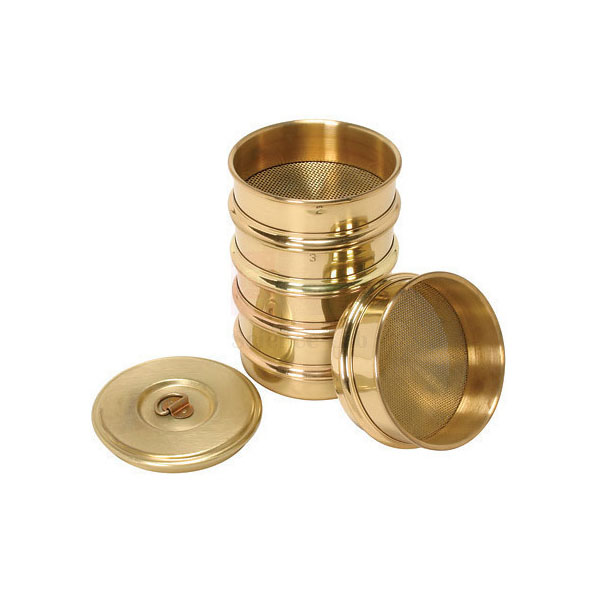
Brass frame sieves
Brass frame sieves (Product Code: SLE/CE/79) are full-depth laboratory test sieves used to grade aggregates, sand and soil by particle size in civil engineering and materials testing laboratories. The range covers 200, 250, 300, 315 and 450 mm diameters, with stainless steel wire cloth or tinned steel perforated plates, and sieves of the same diameter nest into one stack. They are manufactured by Jain Scientific Equipments Pvt Ltd (ScienceLab), an OEM, at its own factory in Ambala, India.
Specifications
| Parameter | Detail |
|---|---|
| Type | Full-depth testing sieves |
| Diameters | 200, 250, 300, 315 and 450 mm |
| Frame | Brass; the listing names the 450 mm diameter as an exception, with sheet-steel construction (confirm when ordering) |
| Wire cloth sieves | Stainless steel wire cloth |
| Perforated plate sieves | Tinned steel perforated plates |
| Nesting | Sieves of the same nominal diameter nest one in another |
| Sample load, 200 mm (8 in) sieve | Up to 1000 g of aggregates |
| Sample load, 300 mm (12 in) sieve | Up to 3000 g of aggregates |
| Product code | SLE/CE/79 |
| Manufacturer | Jain Scientific Equipments Pvt Ltd (ScienceLab) — OEM |
| Country of origin | India (made in Ambala, Haryana) |
What Is the Brass Frame Sieve Used For?
Sieve analysis is the basic grading test for aggregates and soils. A stack of sieves is arranged with the largest aperture on top, a weighed sample is placed in the top sieve, and the stack is shaken by hand or on a sieve shaker. The mass retained on each sieve is weighed and expressed as a percentage to draw the grading curve used in concrete mix design, road material selection and soil classification.
Perforated plates usually cover the coarser aggregate sizes and wire cloth the finer fractions. Stay within the listed loads — up to 1000 g on a 200 mm sieve and 3000 g on a 300 mm sieve — so that particles are not forced through an overloaded mesh. Brush the mesh clean from below, never push particles through by hand, and dry the sieves before stacking them away. Looked after this way, a sieve set from an engineering lab equipment manufacturer gives repeatable grading results across many student batches.
What to Specify When Ordering
- Diameter: 200, 250, 300, 315 or 450 mm
- The aperture sizes you need, and whether each is stainless steel wire cloth or tinned steel perforated plate
- Number of sieves per stack and number of stacks for your laboratory
- Whether the sieves will run on a sieve shaker, so the diameter suits the shaker
- For the 450 mm size, confirmation of the frame material you require
OEM Manufacturer
These brass frame sieves are made by Jain Scientific Equipments Private Limited, trading as ScienceLab, as the original equipment manufacturer. Production is at the company's own licensed factory at Saha, Ambala, Haryana, India, and orders are supplied factory-direct to engineering colleges, polytechnics, testing laboratories, dealers and importers.
Replacement sieves and additional sizes for an existing stack can be requested from the manufacturer itself — just ask us. Institutions and tender buyers registering the company as a vendor can use its GSTIN 06AAECJ8618A1ZT and LEI 3358004HRD1JIVXKYX49. See the ScienceLab company profile for more.
Related Civil Engineering Lab Equipment
These items complete a sieve analysis set-up:
- Electromagnetic Digital Sieve Shaker — mechanical shaking of a sieve stack
- Test Sieves — another sieve range for grading work
- Riffle Sample Divider — reduces a field sample to a test portion
- Grid Sieves — used in aggregate shape testing
- Flakiness Sieve Set — for flakiness tests on graded aggregate
Explore the complete Civil Engineering Lab Equipment category for aggregate, soil and concrete apparatus.
Frequently Asked Questions
What diameters are the Brass frame sieves available in?
Brass frame sieves (SLE/CE/79) are full-depth testing sieves available in 200, 250, 300, 315 and 450 mm diameters. Sieves of the same nominal diameter nest into one another, so a complete grading stack can be built in each size.
Which mesh materials are used in the Brass frame sieves?
Brass frame sieves are offered with stainless steel wire cloth or with tinned steel perforated plates. Perforated plates generally suit coarser aggregate sizes and wire cloth the finer fractions, so list the apertures you need when asking for a quotation.
How much aggregate can one Brass frame sieve take?
A 200 mm (8 inch) Brass frame sieve can test up to 1000 g of aggregates, and a 300 mm (12 inch) sieve up to 3000 g. Staying within these loads avoids overloading the mesh and helps give reliable grading results.
Does the 450 mm size also have a brass frame?
The listing for the Brass frame sieves names the 450 mm diameter as an exception to the brass frames and refers to sheet-steel construction. If the frame material of the 450 mm size matters to your laboratory, please confirm it with us before ordering.
Can the Brass frame sieves be used on a sieve shaker?
Yes. Brass frame sieves of the same diameter nest into a stack that can be shaken by hand or on a mechanical sieve shaker. Check the shaker's accepted diameters and stack height, or ask us to match sieves and shaker in one quotation.
Who manufactures the Brass frame sieves?
Brass frame sieves (SLE/CE/79) are manufactured by Jain Scientific Equipments Pvt Ltd (ScienceLab), the OEM, at its own factory at Saha, Ambala, Haryana, India. Laboratories, dealers and importers in India and international markets can order them direct from the manufacturer.
Is a calibration certificate available for the Brass frame sieves?
Calibration-certificate availability for Brass frame sieves should be discussed with us when you enquire. Tell us the diameters and apertures you are ordering and whether your laboratory needs documentation, and we will confirm what can be provided.
Request a Quote
List the diameters, apertures and quantities of Brass frame sieves you need and send them through the contact page, or add the item to the enquiry cart. The quotation comes direct from the manufacturer.
Last updated: 24 September 2026
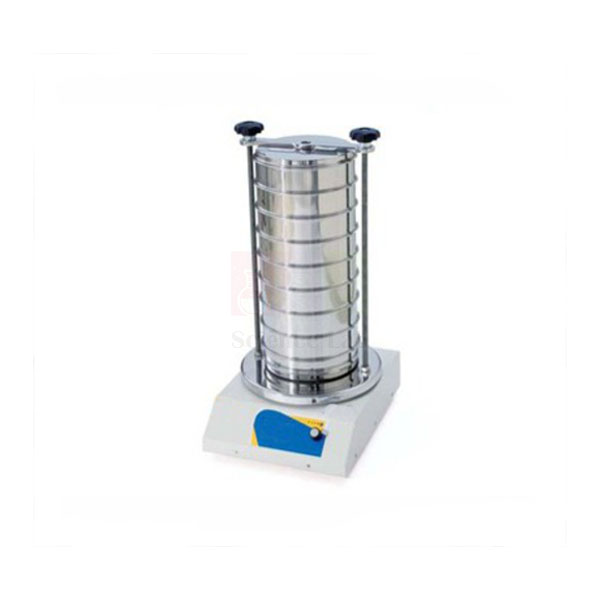
Electromagnetic Digital Sieve Shaker
Electromagnetic Digital Sieve Shaker (Product Code: SLE/CE/80) is a laboratory sieve shaker that uses an electromagnetic drive to give a vertical sieving motion for grading sand and aggregates in civil engineering labs. It holds up to 12 sieves of 200 mm or 8 sieves of 300 mm diameter, comes with a timer, and with its upper plate removed doubles as a vibrating table for one concrete specimen. It is supplied by Jain Scientific Equipments Pvt Ltd (ScienceLab), Ambala, India.
Specifications
| Parameter | Detail |
|---|---|
| Drive | Electromagnetic unit giving a vertical sieving motion |
| Designed for | Sand and aggregates |
| Sieve capacity, 200 mm (8 in) | 12 sieves |
| Sieve capacity, 300 mm (12 in) | 8 sieves |
| Timer | Supplied complete with timer |
| Second use | Vibrating table for one concrete specimen when the upper plate is removed |
| Power | 400 W |
| Dimensions | 495 × 405 × 945 mm |
| Weight | Approx. 30 kg |
| Product code | SLE/CE/80 |
| Supplied by | Jain Scientific Equipments Pvt Ltd (ScienceLab), Ambala, India |
What Is the Electromagnetic Sieve Shaker Used For?
Hand sieving is tiring and varies from one operator to the next. A mechanical shaker applies the same motion for the same time to every sample, so grading results can be compared between batches, shifts and student groups. The nest of sieves is loaded with the largest aperture on top and the pan at the bottom, secured on the shaker, the timer is set and the electromagnetic drive does the rest.
Removing the upper plate turns the unit into a small vibrating table for compacting one concrete specimen, which helps laboratories with limited bench space. Keep each sieve within its recommended load, place the shaker on a firm, level surface and use the same shaking time for every run. For colleges setting up engineering lab equipment in India, one unit covers both sieve analysis and specimen compaction practicals.
What to Specify When Ordering
- The sieve diameter you use: 200 mm (up to 12 sieves) or 300 mm (up to 8 sieves)
- Whether test sieves should be quoted with the shaker
- The electrical supply at your laboratory for the 400 W unit
- Whether you will use it as a vibrating table, and the specimen mould you plan to use
Supplier
Jain Scientific Equipments Private Limited, which trades as ScienceLab, sources and supplies this electromagnetic sieve shaker from Ambala, Haryana. Buyers can combine it with sieves, sample dividers and other aggregate apparatus from the company's civil engineering range in a single quotation.
Engineering colleges, polytechnics, testing laboratories, dealers and importers in India and international markets are served from Ambala. Find out more on the ScienceLab company profile.
Related Civil Engineering Lab Equipment
These items are used with the sieve shaker in aggregate and concrete testing:
- Brass frame sieves — full-depth sieves in 200 and 300 mm diameters among other sizes
- Test Sieves — a further sieve range for grading work
- Riffle Sample Divider — prepares a representative portion before sieving
- Sample Splitter — another way to reduce a bulk sample
- Vibrating Table — a dedicated table for compacting concrete specimens
Visit the Civil Engineering Lab Equipment category for the full range of aggregate, soil and concrete apparatus.
Frequently Asked Questions
How many sieves does the Electromagnetic Digital Sieve Shaker hold?
The Electromagnetic Digital Sieve Shaker (SLE/CE/80) holds up to 12 sieves of 200 mm (8 inch) diameter or up to 8 sieves of 300 mm (12 inch) diameter. Choose the sieve size to suit your sample quantity and the grading series you run.
Can the sieve shaker also be used as a vibrating table?
Yes. With its upper plate removed, the Electromagnetic Digital Sieve Shaker can be used as a vibrating table for one concrete specimen. Tell us the mould you plan to use so that the arrangement can be confirmed before you order.
Which materials is the Electromagnetic Digital Sieve Shaker designed for?
The electromagnetic unit of the Electromagnetic Digital Sieve Shaker is designed for sieving sand and aggregates with a vertical motion. For other materials such as soils or powders, describe your samples in the enquiry and we will advise on suitability.
What are the power, size and weight of the sieve shaker?
The Electromagnetic Digital Sieve Shaker is rated at 400 W, measures 495 × 405 × 945 mm and weighs approximately 30 kg. Place it on a firm, level bench or floor position close to a suitable power outlet for steady operation.
Is a timer included with the Electromagnetic Digital Sieve Shaker?
Yes. The Electromagnetic Digital Sieve Shaker is supplied complete with a timer, so every sample can be shaken for the same set period. Using one fixed time for all runs makes grading results easier to compare between batches.
Who supplies the Electromagnetic Digital Sieve Shaker?
The Electromagnetic Digital Sieve Shaker is supplied by Jain Scientific Equipments Pvt Ltd (ScienceLab), Ambala, Haryana, India, to colleges, testing laboratories, dealers and importers in India and international markets. Send your enquiry through the contact page.
Request a Quote
For a quotation on the Electromagnetic Digital Sieve Shaker, with or without sieves, use the contact page or add it to the enquiry cart together with the other apparatus you need.
Last updated: 24 September 2026
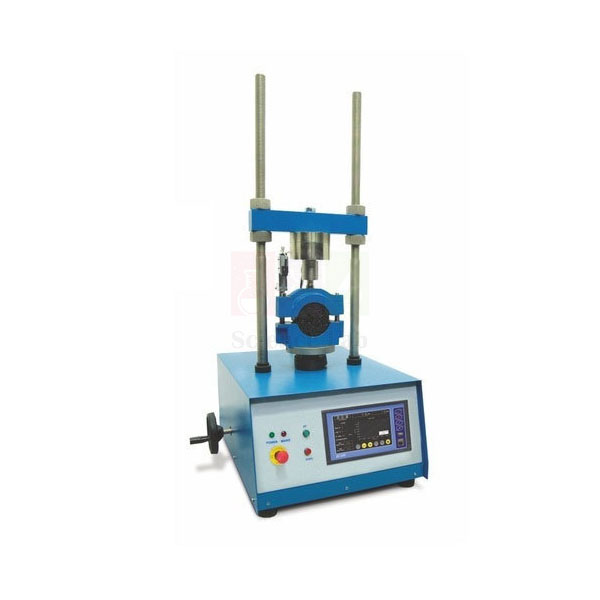
Automatic Marshall Stability Test Machine
Automatic Marshall Stability Test Machine (Product Code: SLE/CE/81) is a 50 kN bench-mounted compression frame used to determine the maximum load (stability) and flow values of bituminous mixtures in highway and civil engineering laboratories. Its data acquisition and control unit sets the platen speed from 6 to 60 mm/min, plots the test graph in real time and calculates stability and flow automatically. It is supplied by Jain Scientific Equipments Pvt Ltd (ScienceLab), Ambala, India, a laboratory equipment supplier in India.
Specifications
| Parameter | Detail |
|---|---|
| Capacity | 50 kN |
| Test | Maximum load (stability) and flow of bituminous mixtures |
| Frame | Compact two-column bench-mounting compression frame with adjustable upper cross beam; motor and worm gear housed in the base |
| Lower platen speed | Adjustable from 6 mm/min to 60 mm/min via the data acquisition and control unit |
| Platen controls | Up and down buttons on the front panel for rapid adjustment; limit switches restrict up and down travel for safety |
| Manual operation | Lateral hand wheel for calibration purposes |
| Control modes | Displacement control and limited load control |
| Results | Automatic calculation of flow and stability values; real-time display of the test graph |
| Processor | CPU card with 32-bit ARM RISC architecture |
| Memory | Permanent storage of up to 10000 test results |
| Analogue channels | 4, of which 2 are active for the Marshall test |
| Sensor inputs | Programmable digital gain for load cells, pressure transducers, strain-gauge based sensors, potentiometric sensors, and voltage and current transmitters |
| Resolution | 1/256000 points per channel |
| Sample rate | 10 data per second for each channel |
| Product code | SLE/CE/81 |
| Supplied by | Jain Scientific Equipments Pvt Ltd (ScienceLab), Ambala, India |
What Is the Marshall Stability Test Machine Used For?
The Marshall test is a standard step in designing bituminous paving mixes. Compacted cylindrical specimens made at different binder contents are conditioned and then loaded to failure at a constant rate of deformation. The peak load is recorded as stability and the deformation at that peak as flow; plotted together with density and void results, they help engineers choose the binder content for a road mix.
On this machine the operator sets the loading rate your test method specifies within the 6–60 mm/min range, starts the test and watches the load curve build on screen, while the unit stores each result for later reporting. The hand wheel allows slow manual movement when the load system is being calibrated. Keep the platens clean of bitumen, check the limit switches before each session and run the frame on a firm, level bench.
What to Specify When Ordering
- The test method and specimen size you work to, so that accessories can be confirmed in the quotation
- The loading rate or rates you need within 6–60 mm/min
- The sensors you intend to connect, such as load cells or displacement transducers
- The electrical supply available at your laboratory
Supplier
Jain Scientific Equipments Private Limited, trading as ScienceLab from Ambala, Haryana, sources and supplies the Automatic Marshall Stability Test Machine to highway engineering departments, polytechnics, road-testing laboratories, dealers and importers. It can be quoted together with the bitumen and mix-testing apparatus a Marshall laboratory needs.
Quotations cover buyers in India and international markets. Learn more about the company on the ScienceLab profile page.
Related Civil Engineering Lab Equipment
These items support the other tests in a bituminous mix design laboratory:
- Mixer Theoretical Density Meter — theoretical density of the mix for void calculations
- Centrifuge Extractor – Motorised — checks the binder content of a mix
- Centrifuge Extractor Hand Operated — a manual option for binder extraction
- Standard penetrometer — penetration grading of the bitumen
- Ring And Ball Apparatus (Electrical) — softening point of the binder
The Civil Engineering Lab Equipment category lists further bitumen, aggregate, soil and concrete apparatus.
Frequently Asked Questions
What does the Automatic Marshall Stability Test Machine measure?
The Automatic Marshall Stability Test Machine (SLE/CE/81) determines the maximum load, or stability, and the flow value of bituminous mixture specimens. Its control unit calculates both values automatically and shows the test graph in real time while the specimen is loaded.
What capacity and speed range does the Marshall machine offer?
The Automatic Marshall Stability Test Machine has a 50 kN capacity, and the speed of its lower platen can be adjusted from 6 mm/min to 60 mm/min through the data acquisition and control unit. Tests can run under displacement control or limited load control.
How many test results can the Marshall machine store?
The Automatic Marshall Stability Test Machine permanently stores up to 10000 test results. Its CPU card uses a 32-bit ARM RISC architecture, with four analogue channels (two active for the Marshall test), 1/256000-point resolution and 10 data per second per channel.
How is the Automatic Marshall Stability Test Machine calibrated?
For calibration, the Automatic Marshall Stability Test Machine can be driven by hand through a lateral hand wheel. Whether a calibration certificate can be provided for the load and displacement sensors should be discussed with us when you request a quotation.
What safety features does the Marshall machine have?
On the Automatic Marshall Stability Test Machine, limit switches restrict the up and down travel of the lower platen, and rapid platen positioning uses up and down buttons on the front panel. The motor and worm gear are enclosed in the base of the bench frame.
Are Marshall moulds and a breaking head included?
The listing for the Automatic Marshall Stability Test Machine describes the loading frame and the control unit only; it does not state which specimen moulds or breaking heads are included. Tell us your test method and specimen size and the quotation will confirm the accessories.
Who supplies the Automatic Marshall Stability Test Machine?
The Automatic Marshall Stability Test Machine is supplied by Jain Scientific Equipments Pvt Ltd (ScienceLab), Ambala, Haryana, India, to laboratories, dealers and importers in India and international markets. Enquiries can be sent through the contact page.
Request a Quote
Share your test method, specimen size and quantity through the contact page, or add the Automatic Marshall Stability Test Machine to the enquiry cart, and we will send a quotation.
Last updated: 24 September 2026
830.jpg)
Core Drilling Machine (Petrol)
Core Drilling Machine (Petrol) (Product Code: SLE/CE/82) is a wheel-mounted pavement core drill used to cut cores up to 200 mm diameter from concrete, asphalt and similar hard construction materials. Road and building testing teams use it where mains power is not at hand, because it runs on a 6.5 HP four-stroke petrol engine (190 cc) with drill speeds of 900 and 350 rpm. It is supplied by Jain Scientific Equipments Pvt Ltd (ScienceLab), Ambala, India.
Specifications
| Parameter | Detail |
|---|---|
| Application | Cutting cores from concrete, asphalt and similar hard construction materials |
| Maximum core diameter | 200 mm |
| Engine | 6.5 HP four-stroke petrol engine, 190 cc |
| Drill speeds | 900 rpm for soft samples; 350 rpm for hard samples |
| Feed | Ball screw mechanism for close control of drilling pressure and rapid return |
| Column | Vertical support column carrying the drill head and engine assembly |
| Head travel on rack | 500 mm |
| Water | Water spraying assembly mounted on the machine; water swivel built in |
| Base | Rigid wheel-mounted metal base frame with levelling and fixing facility for operation; approx. 625 × 900 mm |
| Height | Approx. 1300 mm |
| Accessories listed | Thin-wall diamond bits; core barrel (coring bits are ordered separately — confirm in the quotation) |
| Product code | SLE/CE/82 |
| Supplied by | Jain Scientific Equipments Pvt Ltd (ScienceLab), Ambala, India |
What Is the Petrol Core Drilling Machine Used For?
Cores drilled from hardened concrete and bituminous pavements let engineers check what was actually built: layer thickness, compaction, density and, after trimming, compressive strength in the laboratory. The drill head runs down the column under ball-screw control, so the operator can apply steady pressure through the cut and then return the head quickly. Water fed through the built-in swivel cools the diamond bit and flushes out cuttings.
Choose 900 rpm for softer layers such as asphalt and 350 rpm for hard concrete. Level and fix the wheeled base before starting, keep the water flowing throughout the cut, and wear eye and hearing protection around the running engine. For civil engineering departments buying engineering lab equipment in India, a petrol core drill also gives students real field-sampling practice.
What to Specify When Ordering
- The core diameters you need (up to 200 mm), so that bits and core barrels can be quoted
- Which accessories to include: thin-wall diamond bits, core barrel
- The materials you will drill: concrete, asphalt or both
- Quantity and delivery location in India or abroad
Supplier
Jain Scientific Equipments Private Limited, which trades as ScienceLab, sources and supplies the petrol-driven core drilling machine from Ambala, Haryana. Highway departments, contractors' laboratories, engineering colleges, dealers and importers can have it quoted along with the laboratory apparatus used to test the cores.
Buyers in India and international markets are served from Ambala. The ScienceLab company profile gives more background.
Related Civil Engineering Lab Equipment
These items are used before or after coring in pavement and structure investigations:
- Core Drilling Machine (Motorised) — an electrically driven alternative
- Automatic digital compression testing machine — for compression tests on concrete cores
- Ultrasonic Pulse Velocity Tester — non-destructive survey to help choose core locations
- Travelling Beam Device — measures road surface irregularity
- Straight Edge (3 meter) — quick checks of pavement surface regularity
See the Civil Engineering Lab Equipment category for more concrete, bitumen and soil testing apparatus.
Frequently Asked Questions
What core size can the Core Drilling Machine (Petrol) cut?
The Core Drilling Machine (Petrol) (SLE/CE/82) cuts cores up to 200 mm diameter from concrete, asphalt and similar hard construction materials. The drill head travels 500 mm on its rack, and a ball screw gives close control of the drilling pressure.
What engine powers the petrol core drilling machine?
The Core Drilling Machine (Petrol) is driven by a 6.5 HP four-stroke petrol engine, listed as 190 cc. Because it needs no mains supply, it suits road and site work away from electricity, with the machine moved on its wheel-mounted base.
Which drill speed should be used on the core drilling machine?
The Core Drilling Machine (Petrol) offers 900 rpm for soft samples and 350 rpm for hard samples. Use the higher speed for materials such as asphalt and the lower speed for hard concrete, with water flowing through the built-in swivel.
Are coring bits included with the Core Drilling Machine (Petrol)?
The listing for the Core Drilling Machine (Petrol) says coring bits should be ordered separately, and lists thin-wall diamond bits and a core barrel as accessories. Tell us your core diameters and the quotation will state exactly which bits and barrels are included.
How is the core drilling machine set up on site?
The Core Drilling Machine (Petrol) comes on a rigid wheel-mounted metal base frame, about 625 × 900 mm, with levelling and fixing facility during operation. It stands about 1300 mm high and carries its own water spraying assembly.
Who supplies the Core Drilling Machine (Petrol)?
The Core Drilling Machine (Petrol) is supplied by Jain Scientific Equipments Pvt Ltd (ScienceLab), Ambala, Haryana, India, to highway departments, laboratories, dealers and importers in India and international markets. Enquiries can be sent through the contact page.
Request a Quote
Tell us the core sizes and accessories you need for the Core Drilling Machine (Petrol) through the contact page, or add it to the enquiry cart, and we will prepare a quotation.
Last updated: 24 September 2026

Centrifuge Extractor – Motorised
Centrifuge Extractor – Motorised (Product Code: SLE/CE/83) is an electrically driven centrifuge used to wash bitumen out of bituminous paving mix samples with a solvent, so that binder content can be determined in highway and civil engineering laboratories. It takes samples of up to 1500 g and runs at 2,400 to 3,600 rpm, with a dimmer stat for speed control. It is made at its own Ambala factory by Jain Scientific Equipments Pvt Ltd (ScienceLab), an OEM engineering lab equipment manufacturer in India.
Specifications
| Parameter | Detail |
|---|---|
| Operation | Electrical (motorised) |
| Speed control | Dimmer stat |
| Speed range | 2,400 to 3,600 rpm |
| Capacity | 1500 g |
| Power supply | 230 V, 50 Hz, single phase, AC |
| Product code | SLE/CE/83 |
| Manufacturer | Jain Scientific Equipments Pvt Ltd (ScienceLab) — OEM |
| Country of origin | India (made in Ambala, Haryana) |
What Is the Motorised Centrifuge Extractor Used For?
Checking how much bitumen a mix really contains is a routine quality test on road projects. A weighed sample of loose mix is placed in the extractor bowl and soaked in solvent until the binder dissolves; the bowl is then spun so the solvent carrying the bitumen is thrown out and drained away. Washing and spinning are repeated until the solvent runs clear, and the dried aggregate left behind is weighed — the loss in mass gives the binder content.
The recovered aggregate can then be sieved to confirm the grading of the mix. With the dimmer stat, bring the speed up gradually rather than switching straight to full speed, so solvent does not splash. Work in a well-ventilated area, keep the lid secured while the bowl turns and wait for it to stop before opening. Laboratories comparing a laboratory centrifuge in India for bitumen work should match the 1500 g capacity to their usual sample size.
What to Specify When Ordering
- Confirmation that your laboratory supply is 230 V, 50 Hz, single phase AC
- Number of extractors needed for your student batches or daily sample load
- Whether filter papers or rings for the bowl should be quoted — ask us what is included
OEM Manufacturer
ScienceLab is the trading name of Jain Scientific Equipments Private Limited (CIN U29309HR2020PTC087597), the OEM that makes this motorised centrifuge extractor. It is produced at the company's licensed factory premises at 449, HSIIDC Industrial Area, Saha, Ambala, which operate under Factory Licence AMB-ONLINE-CHD-J-414.
Highway laboratories, engineering colleges, dealers and importers buy direct from the factory, and requests for spare parts or repeat units go to the manufacturer itself — just ask us. The company profile describes ScienceLab in more detail.
Related Civil Engineering Lab Equipment
These items belong to the same bituminous mix testing workflow:
- Centrifuge Extractor Hand Operated — the manual version for sites without power
- Automatic Marshall Stability Test Machine — stability and flow of the same mix
- Mixer Theoretical Density Meter — theoretical density for void calculations
- Brass frame sieves — grading the aggregate recovered after extraction
For more bitumen, aggregate and concrete apparatus, browse the Civil Engineering Lab Equipment category.
Frequently Asked Questions
What is the Centrifuge Extractor – Motorised used for?
The Centrifuge Extractor – Motorised (SLE/CE/83) is used to extract bitumen from bituminous mix samples with a solvent, so the binder content can be worked out from the loss in mass. The aggregate recovered afterwards can also be sieved to check its grading.
What sample capacity and speed range does the motorised extractor have?
The Centrifuge Extractor – Motorised takes samples of up to 1500 g and runs at speeds from 2,400 to 3,600 rpm. The speed is adjusted with a dimmer stat, which lets the operator raise it gradually at the start of each spin.
What power supply does the Centrifuge Extractor – Motorised need?
The Centrifuge Extractor – Motorised works on a 230 V, 50 Hz, single-phase AC supply. If your laboratory uses a different voltage or frequency, tell us when you enquire so that we can advise before the order is placed.
How does the motorised extractor differ from the hand-operated model?
The Centrifuge Extractor – Motorised is driven electrically with dimmer-stat speed control, so the speed does not depend on turning a handle and stays more even over repeated washes. The Centrifuge Extractor Hand Operated suits locations without an electricity supply.
Who manufactures the Centrifuge Extractor – Motorised?
The Centrifuge Extractor – Motorised is manufactured by Jain Scientific Equipments Pvt Ltd (ScienceLab), the OEM, at its own factory at Saha, Ambala, Haryana, India. It is supplied factory-direct to laboratories, dealers and importers in India and international markets.
What precautions apply when using the motorised centrifuge extractor?
Use the Centrifuge Extractor – Motorised in a well-ventilated area because extraction solvents give off vapours. Raise the speed gradually with the dimmer stat, keep the lid secured while the bowl turns, and let it stop completely before opening or adding more solvent.
Request a Quote
Ask for a quotation on the Centrifuge Extractor – Motorised through the contact page, or add it to the enquiry cart. Prices and terms are quoted directly by the manufacturer.
Last updated: 24 September 2026
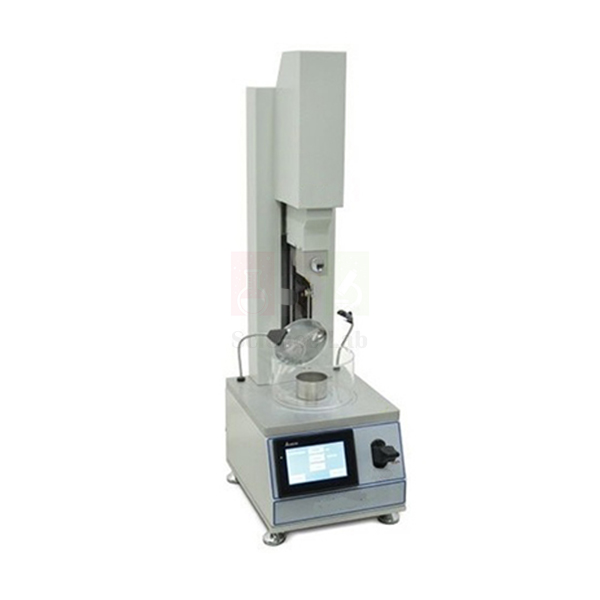
Digital Penetrometer
Digital Penetrometer (Product Code: SLE/CE/84) is a microprocessor-controlled bench instrument used to measure how far a test probe penetrates a sample, for example in bitumen penetration testing in highway and materials laboratories. It resolves penetration to 0.01 mm over a 0–50 mm range, moves automatically to the test start point and plots the penetration/time curve on a 6-inch touch screen. It is supplied by Jain Scientific Equipments Pvt Ltd (ScienceLab), Ambala, India.
Specifications
| Parameter | Detail |
|---|---|
| Control | Microprocessor with 6-inch lateral touch screen display |
| Display | Penetration/time curve; up to 6 tests displayed simultaneously and averaged |
| Penetration range | 0–50 mm |
| Penetration resolution | 0.01 mm |
| Programmable penetration time | 0–9999 s |
| Programmable delay time | 0–999 s |
| Programmable reference positions for holder assembly | 8 |
| Start point | Reached automatically |
| Lighting | Integrated LED lamp |
| Connections | USB port for the test database; LAN port for PC connection |
| Overall dimensions (w × d × h) | 360 × 410 × 680 mm |
| Weight | Approx. 21 kg |
| Product code | SLE/CE/84 |
| Supplied by | Jain Scientific Equipments Pvt Ltd (ScienceLab), Ambala, India |
What Is the Digital Penetrometer Used For?
Penetration is the depth a loaded probe sinks into a sample in a set time at a controlled temperature, and for paving bitumen it is one of the main grading tests. On a manual penetrometer the operator lowers the needle to the surface, releases it and reads a dial. This instrument automates those steps: it finds the start point, times the penetration and the delay, records the depth to 0.01 mm and draws the penetration/time curve.
The eight programmable holder positions let several points on a sample be tested in sequence, and up to six results can be shown side by side and averaged. Results go to a database via USB, or to a PC over LAN, for reports. Bring samples to the required test temperature before testing, clean the probe between readings and use the LED lamp to check contact with the surface. It suits laboratories adding modern test and measurement instruments in India to their bitumen section.
What to Specify When Ordering
- The test method or methods you follow, so that needles, weights and holders can be confirmed
- Whether sample conditioning equipment should be quoted as well
- Whether you will use the USB database, the LAN link to a PC, or both
- The electrical supply at your laboratory
Supplier
Jain Scientific Equipments Private Limited, trading as ScienceLab from Ambala, Haryana, sources and supplies this digital penetrometer for highway and materials laboratories. It can be quoted together with the other bitumen test apparatus in the company's civil engineering range, keeping a laboratory set-up to a single supplier.
Engineering colleges, road-testing laboratories, dealers and importers in India and international markets are served from Ambala. See the ScienceLab profile for more.
Related Civil Engineering Lab Equipment
These items cover the companion tests in a bitumen testing laboratory:
- Standard penetrometer — the manual alternative for penetration tests
- Ring And Ball Apparatus (Electrical) — softening point, usually reported with penetration
- Kinematic Viscometer Bath — viscosity testing of binders
- Cut Back Bitumen Distillation Equipment — separates the residue of cutback bitumen for further tests
- Automatic Marshall Stability Test Machine — stability and flow of the finished mix
Browse the Civil Engineering Lab Equipment category for further bitumen, soil and concrete apparatus.
Frequently Asked Questions
What penetration range and resolution does the Digital Penetrometer have?
The Digital Penetrometer (SLE/CE/84) measures penetration over a range of 0–50 mm with a resolution of 0.01 mm. It reaches the test start point automatically and has an integrated LED lamp to light the sample surface.
Which tests is the Digital Penetrometer used for?
The listing for the Digital Penetrometer does not name specific test methods. Instruments of this type are commonly used for needle penetration tests on bitumen, so tell us your method and the needles, weights and holders you need, and the quotation will confirm them.
Can the penetration time and delay be programmed?
Yes. On the Digital Penetrometer, penetration time is programmable from 0 to 9999 seconds and delay time from 0 to 999 seconds. Eight reference positions for the holder assembly can also be programmed, so several points are tested in sequence.
How does the Digital Penetrometer display and store results?
The Digital Penetrometer shows the penetration/time curve on a 6-inch lateral touch screen and can display and average up to six tests at once. A USB port holds the test database, and a LAN port connects the instrument to a PC.
How large and heavy is the Digital Penetrometer?
The Digital Penetrometer is a compact bench instrument measuring 360 × 410 × 680 mm (width × depth × height) and weighing approximately 21 kg. Allow bench space around it for sample containers and for connecting a PC by LAN if required.
Is a calibration certificate available for the Digital Penetrometer?
Calibration-certificate availability for the Digital Penetrometer should be discussed with us at the enquiry stage. Let us know what documentation your laboratory needs, and we will confirm what can be provided with the instrument you are quoted.
Who supplies the Digital Penetrometer?
The Digital Penetrometer is supplied by Jain Scientific Equipments Pvt Ltd (ScienceLab), Ambala, Haryana, India, to laboratories, dealers and importers in India and international markets. Enquiries can be sent through the contact page.
Request a Quote
Send your test method and quantity for the Digital Penetrometer through the contact page, or add it to the enquiry cart, to receive a quotation.
Last updated: 24 September 2026
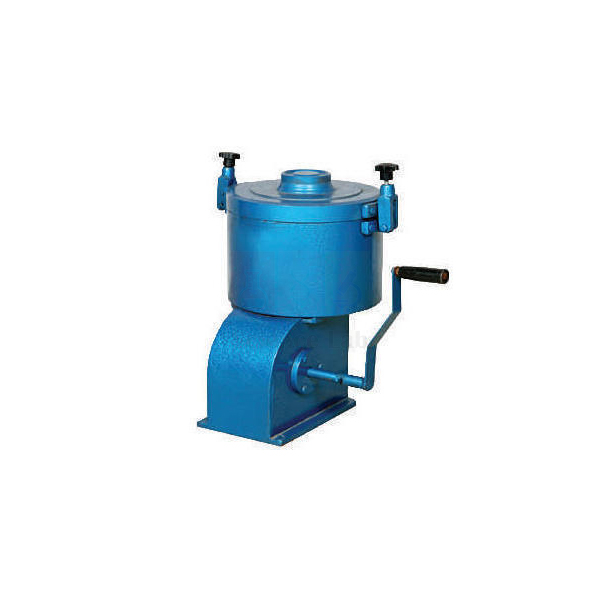
Centrifuge Extractor Hand Operated
Centrifuge Extractor Hand Operated (Product Code: SLE/CE/85) is a manually driven bitumen extractor used to determine and check the bitumen percentage in bituminous mixes in road site laboratories and civil engineering teaching labs. A handle turns enclosed gears in its cast body to spin a removable 1500 g aluminium rotor bowl, and solvent can be added mid-test through holes in the housing cap. It is manufactured by Jain Scientific Equipments Pvt Ltd (ScienceLab), an OEM and technical educational equipment manufacturer, at its own factory in Ambala, India.
Specifications
| Parameter | Detail |
|---|---|
| Purpose | Determination and checking of bitumen percentage in bituminous mix |
| Principle | Mix is treated with solvent and the dissolved bitumen is removed by centrifugal action |
| Drive | Hand operated; a handle turns enclosed gears in the cast body to rotate the shaft and bowl fast |
| Bowl | Removable aluminium rotor bowl, capacity 1500 g, with cap and tightening nut |
| Mounting | Bowl assembly on a vertical shaft protruding from a cast housing |
| Solvent addition | Through holes in the cap of the housing, during the test |
| Drain | Collects the dissolved bitumen thrown from the rotating bowl into the housing |
| Power | Manual — no electrical supply needed |
| Product code | SLE/CE/85 |
| Manufacturer | Jain Scientific Equipments Pvt Ltd (ScienceLab) — OEM |
| Country of origin | India (made in Ambala, Haryana) |
What Is the Hand-Operated Centrifuge Extractor Used For?
Site laboratories near a hot-mix plant often need a quick binder content check where electricity is limited. The operator weighs the loose mix into the aluminium bowl, pours in solvent, fits the cap and tightening nut and turns the handle. The enclosed gears spin the bowl fast, throwing out solvent that carries the dissolved bitumen; it collects in the housing and leaves through the drain.
Fresh solvent is added through the holes in the housing cap while the bowl keeps turning, until the liquid coming out runs clear. The aggregate left in the bowl is then dried and weighed, and the loss in mass gives the bitumen percentage. Tighten the nut firmly before spinning, turn the handle at a steady pace, work in a well-ventilated space and wipe the bowl and housing clean after each test.
OEM Manufacturer
The hand-operated centrifuge extractor is made by Jain Scientific Equipments Private Limited, known by its trading name ScienceLab, as the original equipment manufacturer. It is produced at the company's own licensed factory at Saha, Ambala, Haryana, India, and supplied directly to highway site laboratories, engineering colleges, dealers and importers.
Replacement bowls, caps and nuts can be requested from the manufacturer itself — ask us about availability when you enquire. The ScienceLab profile explains more about the company.
Related Civil Engineering Lab Equipment
These items are used alongside binder extraction in bituminous mix testing:
- Centrifuge Extractor – Motorised — the electrically driven version for laboratories with mains power
- Riffle Sample Divider — reduces a mix sample to a representative portion
- Brass frame sieves — grading of the recovered aggregate
- Automatic Marshall Stability Test Machine — stability and flow testing of the mix
- Mixer Theoretical Density Meter — theoretical density of loose mix
The full Civil Engineering Lab Equipment category covers further bitumen, aggregate and concrete apparatus.
Frequently Asked Questions
What does the Centrifuge Extractor Hand Operated determine?
The Centrifuge Extractor Hand Operated (SLE/CE/85) is used to determine and check the bitumen percentage in a bituminous mix. Solvent dissolves the bitumen, centrifugal action removes it from the bowl, and the aggregate left behind is weighed to calculate the binder content.
What is the bowl capacity of the hand-operated extractor?
The Centrifuge Extractor Hand Operated has a removable aluminium rotor bowl with a capacity of 1500 g. A cap and tightening nut hold the sample in place while the bowl spins, and the bowl lifts off the shaft for emptying and cleaning.
How is the bowl of the Centrifuge Extractor Hand Operated turned?
On the Centrifuge Extractor Hand Operated, a handle drives enclosed gears in the cast body, which rotate the vertical shaft and bowl fast. No electrical supply is needed, which makes the extractor convenient for site laboratories.
Can solvent be added while the extractor is running?
Yes. The Centrifuge Extractor Hand Operated has holes in the cap of its housing through which solvent is introduced during the test. A drain collects the dissolved bitumen that is thrown out of the rotating bowl into the housing.
Who manufactures the Centrifuge Extractor Hand Operated?
The Centrifuge Extractor Hand Operated is manufactured by Jain Scientific Equipments Pvt Ltd (ScienceLab), the OEM, at its own factory at Saha, Ambala, Haryana, India. Laboratories, dealers and importers in India and international markets can order it direct from the manufacturer.
Should I choose the hand-operated or the motorised centrifuge extractor?
Choose the Centrifuge Extractor Hand Operated where power is unreliable or unavailable, such as at road sites. The motorised model suits laboratories with a steady supply that prefer electrical speed control; ask us to compare the two for your sample load.
Request a Quote
To order the Centrifuge Extractor Hand Operated, send your quantity and delivery location through the contact page or use the enquiry cart. The quotation is issued directly by the manufacturer.
Last updated: 24 September 2026