- Physics Lab Equipment
- Chemistry Lab Equipment
- Biology Lab Equipment
- Anatomical Lab Equipment
- Learning
- Educational Lab Equipment
- Magnets
- Agriculture
- Astronomy
- Earth Science
- Geography Lab Equipment
- Safety Lab Coat
- Laboratory
- Meteorological
- Electricity & Magnetism
- Heat
- School Lab Equipment
- Lab Glassware
- Science Lab Equipment
- Tvet Lab Equipment
- Robotics Kits Supplier and Manufacturer for Schools India
- Math Lab Equipment Manufacturers and Exporters in Ambala
- STEM Kits Manufacturers and Supplier India
- Engineering Lab Equipment
- Hospital Lab Equipment
- Water, Sanitation & Hygiene Supplies
- Cold Chain, Solar & Communication Equipment
- Nutrition
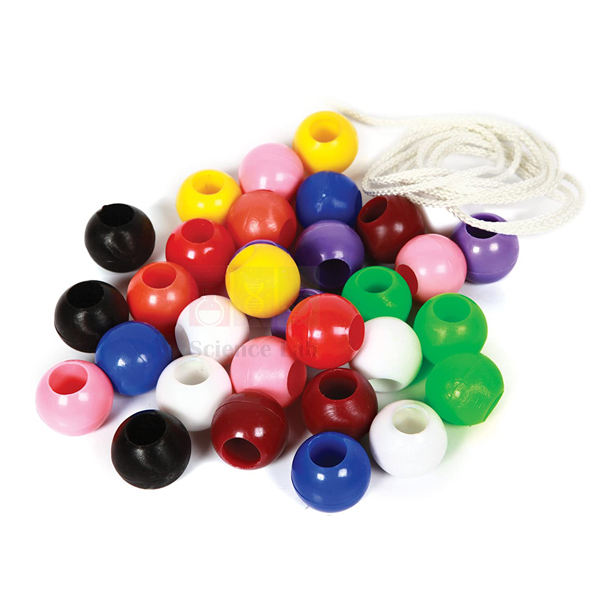
Stringing Beads
Stringing Beads (Product Code: SLE/PP/01) is a threading activity set used to build colour sorting, counting, pattern making and fine motor control in nursery, kindergarten and early primary classrooms. One set holds beads in 7 colours and 3 threads, and is stated for 4 children aged 3 to 9 years, so it suits small-group corners. It is supplied by Jain Scientific Equipments Pvt Ltd (ScienceLab), Ambala, India, as a hands-on preschool kit for schools in India and abroad.
Key Details
| Parameter | Detail |
|---|---|
| Contents | Beads in 7 colours; a set of 3 threads for stringing activities |
| Teacher support | Write-up with details of activities |
| Group size | For 4 children |
| Age range | 3 to 9 years |
| Concepts | Classifying by colour; counting and quantity sense; patterns and number sense; eye-hand coordination and fine motor skills; one-to-one correspondence; making different patterns |
| Product code | SLE/PP/01 |
| Supplied by | Jain Scientific Equipments Pvt Ltd (ScienceLab), Ambala, India |
What Are Stringing Beads Used For?
Pushing a thread through each bead trains the pincer grip and eye-hand coordination that children later need for holding a pencil. The same beads carry early maths: children sort them into colour groups, string one colour and count the result, or say one number word for each bead to practise one-to-one correspondence. Repeating patterns such as red-blue-red-blue lead naturally into predicting what comes next.
With 3 threads for a group of 4, one child can act as the pattern checker while the others thread, and roles then rotate. The activity write-up gives teachers ready tasks, which helps the set fit alongside other mathematics lab kits in India's pre-primary sections. Keep an adult close to the youngest children, as with any small loose pieces, and store the beads in a closed container after use.
What to Specify When Ordering
- Number of sets: each set serves 4 children, so divide the class size by 4.
- The age group using it (the set is stated for ages 3 to 9).
- Any other Pre-Primary aids to be quoted in the same order.
Supplier
ScienceLab is the trading name of Jain Scientific Equipments Private Limited, which supplies Stringing Beads and other early-years learning aids from Ambala, Haryana, to nurseries, kindergartens, schools and early-childhood programmes in India and international markets. For export paperwork and vendor forms, the company holds Importer-Exporter Code AAECJ8618A (DGFT) and GSTIN 06AAECJ8618A1ZT. Company details are on the ScienceLab profile.
Related Pre-Primary Learning Aids
These aids continue the same colour, counting and fine-motor work:
- Mathmat 5X5 — colour patterns with plugs on rubber mats.
- Flexi Wire — another fine-motor activity for small hands.
- Beads, Wood — wooden beads for further threading and counting.
- Beads – Bobbles & Laces — lacing beads used in maths activities.
- Rack Single Rod (Student) — moves counting on to beads grouped in fives.
See every item in the Pre-Primary range.
Frequently Asked Questions
What is included in Stringing Beads?
Stringing Beads includes beads in 7 colours, a set of 3 threads for stringing activities and a write-up describing the activities. The write-up helps teachers plan sorting, counting and pattern tasks without preparing their own worksheets.
What age group is Stringing Beads for?
Stringing Beads is stated for children aged 3 to 9 years. Younger children use it for colour sorting and threading practice, while older ones use it for counting, one-to-one correspondence and building longer repeating patterns.
How many children can use one Stringing Beads set?
One Stringing Beads set is intended for 4 children working together. With 3 threads in the set, teachers often rotate roles so that one child sorts beads or checks patterns while the others thread.
Which concepts does Stringing Beads develop?
Stringing Beads develops classifying by colour, counting and quantity sense, pattern and number sense, one-to-one correspondence, and eye-hand coordination with fine motor skills. Making different patterns also builds early reasoning about what comes next.
Who supplies Stringing Beads?
Stringing Beads is supplied by Jain Scientific Equipments Pvt Ltd (ScienceLab), Ambala, Haryana, India. The company provides it to nurseries, kindergartens, schools and early-childhood programmes in India and international markets, along with other pre-primary aids.
How should I order Stringing Beads for a whole class?
To order Stringing Beads for a whole class, divide the number of children by 4 to find the number of sets needed, then send that quantity and your delivery location through the contact page for a quotation.
Request a Quote
Send the number of Stringing Beads sets you need through the contact page, or add them to the enquiry cart with other classroom aids for one quotation.
Last updated: 24 September 2026
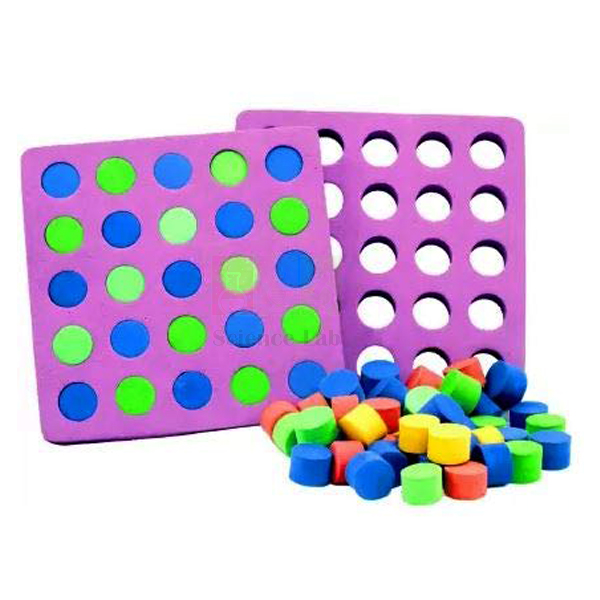
Mathmat 5X5
Mathmat 5X5 (Product Code: SLE/PP/02) is a rubber mat and plug set used to teach patterns, counting, colour sorting and number facts up to 5 in preschool and kindergarten classes. It contains two specially designed 5×5 rubber mats with 60 plugs in 4 colours, and is stated for 2 children aged 2 to 6 years. It is supplied by Jain Scientific Equipments Pvt Ltd (ScienceLab), Ambala, India, as a practical KG activity kit for schools in India and abroad.
Key Details
| Parameter | Detail |
|---|---|
| Mats | Two specially designed 5×5 rubber mats |
| Plugs | 60 plugs in 4 colours |
| Teacher support | Write-up with details of activities |
| Group size | For 2 children |
| Age range | 2 to 6 years (suitable for preschool) |
| Concepts | Patterns and counting; one-to-one correspondence; eye-hand coordination and small motor skills; number facts up to 5; number sense; small-number addition and subtraction; recognising and classifying colours |
| Product code | SLE/PP/02 |
| Supplied by | Jain Scientific Equipments Pvt Ltd (ScienceLab), Ambala, India |
What Is the Mathmat Used For?
Each row of five holes lets a child see a number as part of a full row. Plugging 3 holes and noticing the 2 still empty turns the number facts to 5 into something visible, and adding or pulling out plugs shows simple addition and subtraction. Plugs in 4 colours also support colour naming, sorting and repeating patterns across the rows.
Because the set has two mats, pairs can work together: one child builds a pattern or a number and the partner copies it on the other mat, then both check. Teachers can call out a quantity and ask children to show it. Counting all 60 plugs back into their container makes a useful tidy-up routine, and adult supervision is sensible with the youngest children because the plugs are small.
What to Specify When Ordering
- Number of sets: one set serves 2 children.
- Age of the group (the set is stated for 2 to 6 years).
- Other Pre-Primary aids to be included in the same quotation.
Supplier
Jain Scientific Equipments Private Limited supplies the Mathmat 5X5 under its ScienceLab trading name from Ambala, Haryana. Preschools, kindergartens, primary schools and education programmes in India and international markets order it with other number-sense aids, and quotations can cover one classroom or several centres. Learn more about the company on the ScienceLab profile.
Related Pre-Primary Learning Aids
These items support the same counting and pattern lessons:
- Number Mat — another mat-based aid for number work.
- Stacking Counters — loose counters for extending the same counting tasks.
- Matching Matching — numeral and dot cards for matching quantities.
- Stringing Beads — colour sorting and patterns with beads.
- Rack Single Rod (Student) — the next step to structured numbers with beads in fives.
Browse the complete Pre-Primary range for more early-years aids.
Frequently Asked Questions
What is included in the Mathmat 5X5?
The Mathmat 5X5 includes two specially designed 5×5 rubber mats, 60 plugs in 4 colours and a write-up with details of activities. The mats and plugs together let children build patterns and show small numbers.
What age is the Mathmat 5X5 suitable for?
The Mathmat 5X5 is stated for children aged 2 to 6 years and is described as suitable for preschool. Very young children start with colour recognition and plugging, while older ones use it for number facts to 5.
How many children can use one Mathmat 5X5 set?
One Mathmat 5X5 set is designed for 2 children, one mat each. A common routine is for one child to build a pattern and the partner to copy it, before both check the result together.
Which maths concepts does the Mathmat 5X5 cover?
The Mathmat 5X5 covers patterns and counting, one-to-one correspondence, number sense, number facts up to 5, small-number addition and subtraction, and recognising and classifying colours. Eye-hand coordination and small motor skills develop as children press in the plugs.
Who supplies the Mathmat 5X5?
The Mathmat 5X5 is supplied by Jain Scientific Equipments Pvt Ltd (ScienceLab), Ambala, Haryana, India. It is available to preschools, schools and early-childhood programmes in India and international markets, individually or as part of a wider pre-primary order.
How do I request a quotation for the Mathmat 5X5?
To request a quotation for the Mathmat 5X5, send the number of sets (one set per 2 children), the age group and your delivery location through the contact page. Adding other pre-primary items to the same enquiry gives one combined quote.
Request a Quote
Ask for Mathmat 5X5 pricing on the contact page, or collect it in the enquiry cart with other pre-primary aids to send one request.
Last updated: 24 September 2026
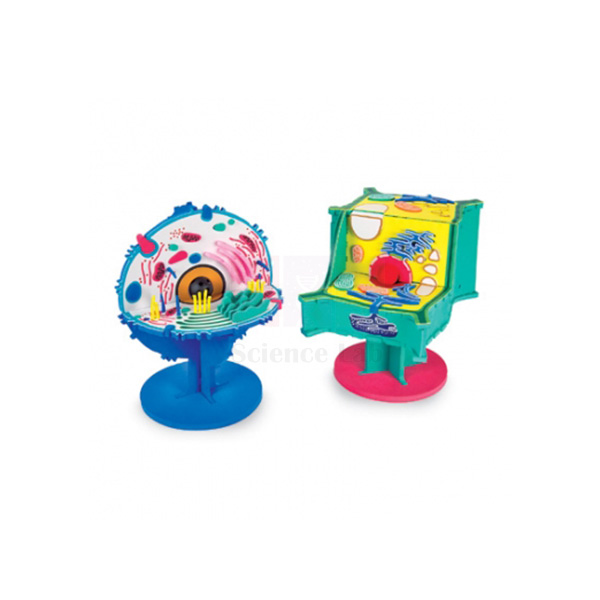
Hands-On Cell Model Act-Plant
Hands-On Cell Model Act-Plant (Product Code: SLE/ECB/01) is a tactile plant cell model used to teach cell structure to Grades 3 to 8 through an activity in which pupils lift out, name and replace each part. It is made of resilient, colourful EVA foam with removable parts, shows the plant cell only, and comes with reproducible worksheets and cross-curricular labs. It is supplied by Jain Scientific Equipments Pvt Ltd (ScienceLab), Ambala, India, as primary and middle-school biology lab equipment.
Key Details
| Parameter | Detail |
|---|---|
| Type | Hands-on cell model with removable parts |
| Cell shown | Plant cell only |
| Material | Resilient, colourful EVA foam |
| Suitable for | Grades 3 to 8 |
| Teaching support | Reproducible worksheets and cross-curricular labs |
| Product code | SLE/ECB/01 |
| Supplied by | Jain Scientific Equipments Pvt Ltd (ScienceLab), Ambala, India |
What Is the Hands-On Plant Cell Model Used For?
Younger learners understand a cell far better when they can take it apart. Teachers pass the model around a group, ask pupils to remove each part, say what it does, and fit it back in the right place, turning the lesson on plant cell structure into an activity rather than a diagram to copy. Because the parts are foam, they are light, quiet on the desk and easy for small hands to manage.
The reproducible worksheets let the same model serve several sections of a class, and the cross-curricular labs link cell biology with other subjects in the timetable. For schools choosing a plant cell model in India for the junior classes, it works well at the start of a unit, before pupils progress to observing real plant cells, such as onion peel, under a microscope. Keep the removable parts together in a labelled box after each lesson so that none go missing.
Supplier
ScienceLab is the trading name of Jain Scientific Equipments Private Limited, Ambala, Haryana, India, which supplies this hands-on plant cell model to schools, education departments and distributors in India and international markets. Teachers can order it together with animal cell models, posters and microscopes in one enquiry to equip a complete cell-biology unit. Visit our company profile to learn more.
Related Cell Biology Equipment
Resources that extend a hands-on plant cell lesson:
- Animal Cell Model — the animal counterpart, for comparing plant and animal cells
- Plant Cell Model — an enlarged display model of plant cell organelles for teacher demonstration
- Plant Cell Study Kit — a practical kit for studying plant cells directly
- Visualising Cells Poster — a wall reference to keep up during the unit
- Monocular Biological Microscope 400x — for moving on to real cells under magnification
Browse all cell models, plaques and activities in our Cell Biology Equipment range.
Frequently Asked Questions
Does the Hands-On Cell Model Act-Plant include an animal cell?
No. The Hands-On Cell Model Act-Plant shows the plant cell only. For lessons that compare plant and animal cells, pair it with our Animal Cell Model so pupils can see the differences side by side.
Which classes is the Hands-On Cell Model Act-Plant designed for?
The Hands-On Cell Model Act-Plant is intended for Grades 3 to 8, when pupils first meet cells and their parts. The removable foam pieces suit group activities where children take the cell apart and rebuild it.
What teaching material comes with the Hands-On Cell Model Act-Plant?
Reproducible worksheets and cross-curricular labs come with the Hands-On Cell Model Act-Plant. If you need to know their format or language before ordering, please contact us and we will confirm the details.
How should the foam model be cleaned and stored?
Wipe the parts of the Hands-On Cell Model Act-Plant with a slightly damp cloth and let them dry naturally. Store the model away from direct heat and sunlight, and keep all removable pieces together in a labelled box between lessons.
What are the dimensions of the Hands-On Cell Model Act-Plant?
The overall size of the Hands-On Cell Model Act-Plant is not given in our current product information. Ask us and we will confirm the dimensions before you place an order.
Who supplies the Hands-On Cell Model Act-Plant?
The Hands-On Cell Model Act-Plant is supplied by Jain Scientific Equipments Pvt Ltd (ScienceLab), Ambala, Haryana, India, to schools, education departments and distributors in India and international markets, often alongside other cell biology models.
Can we order models for several classrooms?
Yes. The Hands-On Cell Model Act-Plant can be supplied in bulk to schools, education departments and distributors in India and international markets. Include the quantity and delivery location in your enquiry for a quotation.
Request a Quote
For pricing or classroom quantities, contact us or add the Hands-On Cell Model Act-Plant to your enquiry cart.
Last updated: 24 September 2026
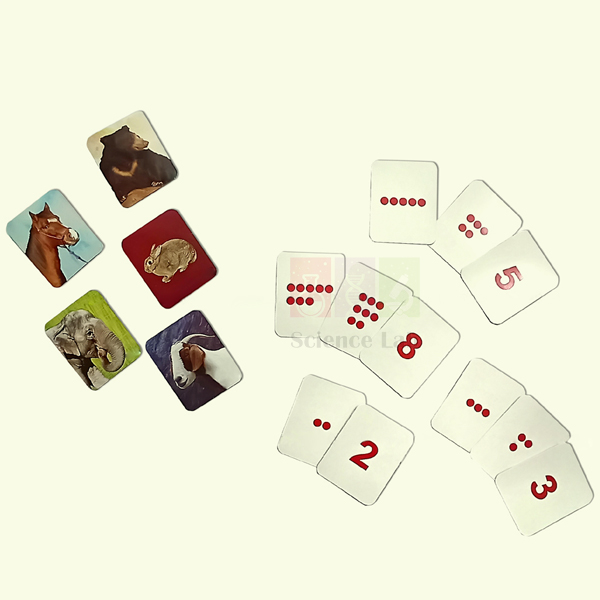
Matching Matching
Matching Matching (Product Code: SLE/PP/03) is a card game set used to connect numerals with quantities through counting and matching games in nursery and kindergarten classes. It holds 2 sets of numeral and dot cards up to 10, with the dots laid out in 2 different patterns and animal pictures on the reverse, for 2–3 children aged 3 to 6 years. It is supplied by Jain Scientific Equipments Pvt Ltd (ScienceLab), Ambala, India, as an early maths kit for kindergartens in India and abroad.
Key Details
| Parameter | Detail |
|---|---|
| Cards | 2 sets of numeral and dot cards up to 10 |
| Dot arrangements | Dot card sets show dots in 2 different patterns |
| Reverse side | Animal pictures |
| Teacher support | Write-up with details of activities |
| Group size | 2–3 children |
| Age range | 3 to 6 years |
| Concepts | Counting and matching games; games for number combinations; seeing the pattern of 5 and doubling; quantity sense and comparing numbers; linking numerals with quantity |
| Product code | SLE/PP/03 |
| Supplied by | Jain Scientific Equipments Pvt Ltd (ScienceLab), Ambala, India |
What Are Matching Matching Cards Used For?
The simplest game lays the cards animal-side up: a child turns a numeral card, then hunts for the dot card showing the same quantity. Because the dot sets use 2 different layouts, children discover that six dots are still six however they are arranged, which moves them from memorising pictures to real quantity sense. Teachers also use the cards to point out groups of five and doubles hidden in the dot patterns.
Older children play comparison games, where each player flips a card and the larger number wins, or look for two dot cards that together make 10 to practise number combinations. With three-year-olds, start with the cards up to 5 and add the rest as confidence grows. The animal pictures on the back make it easy to keep cards face down and to sort sets after play.
Supplier
The ScienceLab name belongs to Jain Scientific Equipments Private Limited of Ambala, Haryana, which supplies Matching Matching card sets to nurseries, kindergartens, primary schools and early-learning programmes in India and international markets. Orders can be combined with dice, bead racks and other number aids from the same range. The ScienceLab profile has more about the company.
Related Pre-Primary Learning Aids
These aids build on the numeral and quantity work started with the cards:
- Number Card (101 cards) — a bigger numeral card set for later number work.
- Digit cards — numeral cards for place-value games in primary classes.
- Dice Set I — numeral and dot dice for similar matching.
- Dice Set II — dice games with larger numerals.
- Mathmat 5X5 — building quantities with plugs on rubber mats.
The full Pre-Primary range lists every early-years aid.
Frequently Asked Questions
What is in the Matching Matching set?
The Matching Matching set contains 2 sets of numeral and dot cards up to 10, with animal pictures on the reverse side, plus a write-up with details of activities. The dot cards come in 2 different dot patterns.
Why do the Matching Matching dot cards use 2 patterns?
The Matching Matching dot cards use 2 different patterns so children learn that a quantity stays the same however its dots are arranged. Matching both layouts to one numeral builds real quantity sense rather than memory of a single picture.
What age group is Matching Matching for?
Matching Matching is stated for children aged 3 to 6 years. Younger children can begin with simple matching of small numbers, and older ones move on to number combinations, doubles and comparing which card shows more.
How many children can play with one Matching Matching set?
One Matching Matching set is meant for 2 to 3 children playing together. For a whole class, divide the number of children by three to estimate how many sets to order, and round up for spare sets.
Who supplies Matching Matching?
Matching Matching is supplied by Jain Scientific Equipments Pvt Ltd (ScienceLab), Ambala, Haryana, India. It is available to nurseries, kindergartens, schools and early-learning programmes in India and international markets, alone or with other pre-primary aids.
What should a Matching Matching quotation request include?
A quotation request for Matching Matching should include the number of sets, the age group of the children and the delivery location. Mention any other pre-primary aids you need so one quotation can be prepared through the contact page.
Request a Quote
To order Matching Matching, send the number of sets through the contact page or save it in the enquiry cart while you choose other early-years items.
Last updated: 24 September 2026
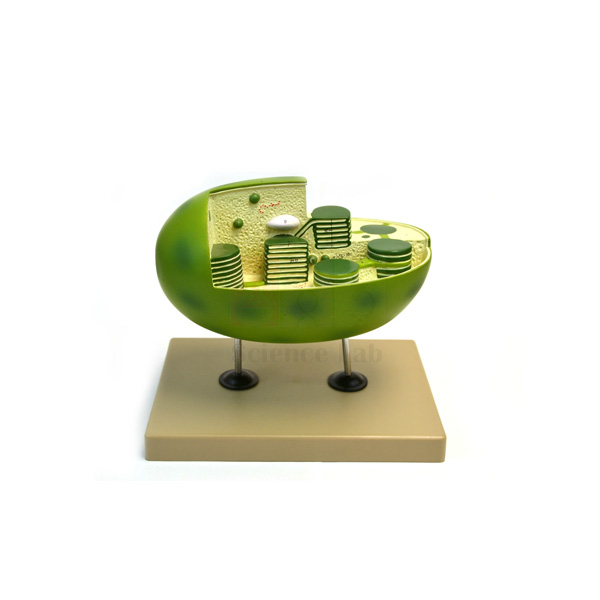
Chloroplast Model
Chloroplast Model (Product Code: SLE/ECB/02) is an enlarged teaching model of the plant cell's fundamental organelle, used to show how a chloroplast is built for photosynthesis in senior-school and college biology classes. Handcrafted in translucent fibre-reinforced resin at approximately 50,000X, it has a cutaway face exposing the thylakoid space and cross-cut grana, and comes with four reproducible keycards. It is made by Jain Scientific Equipments Pvt Ltd (ScienceLab), an OEM manufacturer, at its own factory in Ambala, India.
Specifications
| Parameter | Detail |
|---|---|
| Type | Enlarged chloroplast (plant cell organelle) model |
| Magnification | Approx. 50,000X |
| Material | Translucent fibre-reinforced resin, handcrafted |
| Structures shown | Circular chromosomes, outer and inner organelle membranes, inter-membrane space, starch granules, lipid inclusions and ribosomes |
| Cutaway face | Exposes the thylakoid space and membranes of cross-cut grana |
| Grana | Protruding grana demonstrate their reticulated structure |
| Key cards | Four reproducible keycards: colour and black-and-white, labelled and unlabelled |
| Size (approx.) | 24 x 23 x 18 cm (9.5 x 9 x 7 in) |
| Weight | 2.4 kg |
| Product code | SLE/ECB/02 |
| Manufacturer | Jain Scientific Equipments Pvt Ltd (ScienceLab) — OEM |
| Country of origin | India (made in Ambala, Haryana) |
What Is the Chloroplast Model Used For?
Teachers use the model to connect structure with function in photosynthesis: the stacked thylakoid membranes of the grana, seen on the cutaway face, are where the light-dependent reactions take place, while the surrounding fluid region is where carbon is fixed into sugars and later stored as the starch granules visible on the model. The circular chromosomes and ribosomes also give a concrete starting point for discussing why chloroplasts are thought to have evolved from free-living bacteria.
A practical way to run the lesson is to project or photocopy the labelled colour keycard during teaching, then hand out the unlabelled black-and-white card as a quick identification test. As a piece of plant biology lab equipment, the model pairs naturally with a photosynthesis practical, so that students measure oxygen output or starch formation and then see on the model where each process happens.
OEM Manufacturer
Jain Scientific Equipments Private Limited, trading as ScienceLab, is the OEM (original equipment manufacturer) of the Chloroplast Model and makes it at its own licensed factory at Saha, Ambala, Haryana, India. Biology departments, dealers and importers buy it factory-direct, and the manufacturer itself answers questions about the model and handles repeat orders for additional classrooms. Institutions setting up a new vendor can use the company's GSTIN 06AAECJ8618A1ZT and Legal Entity Identifier 3358004HRD1JIVXKYX49. More about the company is on our company profile.
Related Cell Biology Equipment
Models and practical resources that complement a chloroplast lesson:
- Mitochondrion Model — the respiration organelle, for comparing the two energy-converting organelles
- Plant Cell Model — shows where chloroplasts sit within the whole plant cell
- Photosynthesis Apparatus — for the practical side of the same topic
- Microslide Photosynthesis — prepared microscope slide material on the same topic
See more organelle and cell models in our Cell Biology Equipment range.
Frequently Asked Questions
How much is the Chloroplast Model enlarged?
The Chloroplast Model is made at approximately 50,000X magnification, which turns a microscopic organelle into a desk-sized model whose membranes, grana and inclusions can be pointed out to a whole class.
What is on the four keycards supplied with the Chloroplast Model?
The Chloroplast Model comes with four reproducible keycards: colour and black-and-white versions, each labelled and unlabelled. Teachers typically use the labelled cards for teaching and the unlabelled ones as a quick identification test.
Can students see inside the grana on the Chloroplast Model?
Yes. A cutaway face on the Chloroplast Model exposes the thylakoid space and the membranes of cross-cut grana, while protruding grana show their reticulated structure from the outside, so both views can be compared.
Which structures does the Chloroplast Model show?
The Chloroplast Model shows circular chromosomes, outer and inner organelle membranes, the inter-membrane space, starch granules, lipid inclusions and ribosomes, together with the thylakoid membranes and grana revealed by its cutaway face.
How big and heavy is the Chloroplast Model?
The Chloroplast Model measures approximately 24 x 23 x 18 cm (9.5 x 9 x 7 in) and weighs 2.4 kg, a convenient size for a teacher's desk, a demonstration bench or a group table.
How should the resin Chloroplast Model be cared for?
Dust the Chloroplast Model with a soft, dry cloth and avoid solvents or abrasive cleaners that could cloud the translucent resin. Store it covered on a stable shelf, away from long exposure to direct sunlight.
Who manufactures the Chloroplast Model?
The Chloroplast Model is manufactured by Jain Scientific Equipments Pvt Ltd (ScienceLab), the OEM, at its own factory in Saha, Ambala, Haryana, India. Schools, colleges and distributors in India and international markets receive quotations directly from the manufacturer.
Request a Quote
Quotations for the Chloroplast Model come directly from the manufacturer: contact us or add the model to your enquiry cart.
Last updated: 24 September 2026
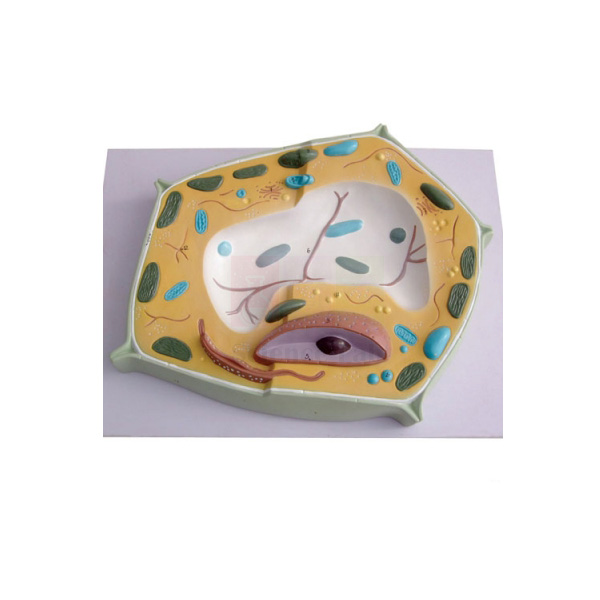
Plant Cell Model
Plant Cell Model (Product Code: SLE/ECB/03) is a hugely enlarged teaching model of a typical plant cell, used to show all types of organelle in one view during secondary-school and college biology lessons. Enlarged 20,000 times and measuring 42 x 30 x 8 cm, it is big enough for a teacher to point out each structure to the whole class. It is made by Jain Scientific Equipments Pvt Ltd (ScienceLab), an OEM manufacturer, at its own factory in Ambala, India, as part of its botany lab equipment.
Specifications
| Parameter | Detail |
|---|---|
| Type | Enlarged plant cell model |
| Enlargement | 20,000 times |
| Size | 42 x 30 x 8 cm |
| Shows | Typical plant cell structure with all types of organelle |
| Product code | SLE/ECB/03 |
| Manufacturer | Jain Scientific Equipments Pvt Ltd (ScienceLab) — OEM |
| Country of origin | India (made in Ambala, Haryana) |
What Is the Plant Cell Model Used For?
Teachers use this model when introducing the cell as the basic unit of life, walking through the features that make a plant cell distinctive, such as the rigid cell wall, chloroplasts and the large central vacuole, alongside the nucleus, mitochondria and membrane systems it shares with animal cells. Because every organelle type is shown on one enlarged cell, students can see how the parts fit together rather than learning them as a list.
It works well as the reference point for an onion-peel or leaf-epidermis practical: students look at the model first, then find the cell wall, nucleus and vacuole in real cells under the microscope, and finally draw and label what they saw. As part of school biology lab equipment in India it also serves for quick revision before examinations and for comparison lessons with an animal cell model.
OEM Manufacturer
The Plant Cell Model is produced by Jain Scientific Equipments Private Limited, which operates under the ScienceLab brand and is the model's OEM (original equipment manufacturer). It is made at the company's own licensed factory at Saha, Ambala, Haryana, India, and sent factory-direct to schools, colleges, dealers and importers, so quotations and follow-up orders come from the maker rather than an intermediary. Read more on our company profile.
Related Cell Biology Equipment
Items that support a complete plant cell topic:
- Plant Cell Plaque — a relief plaque with key cards identifying its structures
- Chloroplast Model — zooms in on a single organelle to show its internal membranes
- Animal Cell Model — for side-by-side comparison of plant and animal cells
- Plant Cell Study Kit — hands-on material for the practical session
- Monocular Biological Microscope 400x, LED — for observing real plant cells
Explore more models in our Cell Biology Equipment range.
Frequently Asked Questions
How much is the Plant Cell Model enlarged?
The Plant Cell Model shows a typical plant cell enlarged 20,000 times, so organelles that are invisible to the naked eye become large, clearly separated features that students can identify from their seats.
What are the dimensions of the Plant Cell Model?
The Plant Cell Model measures 42 x 30 x 8 cm. At that size a teacher can hold it up or place it at the front of the room and point out each organelle to the whole class.
Which organelles does the Plant Cell Model show?
The Plant Cell Model shows typical plant cell structure with all types of organelle. If you need the exact list of labelled parts, or want to know whether a key is supplied, please contact us before ordering.
Is the Plant Cell Model free-standing or wall-mounted?
The mounting style and material of the Plant Cell Model are not stated in our current product information. We can confirm both when you enquire, so that you can plan where the model will be displayed in the classroom.
How should the Plant Cell Model be looked after?
Dust the Plant Cell Model gently with a soft brush or dry cloth, keep it away from prolonged direct sunlight and heat, and store it on a stable shelf where it cannot be knocked or dropped.
Who manufactures the Plant Cell Model?
The Plant Cell Model is manufactured by Jain Scientific Equipments Pvt Ltd (ScienceLab), the OEM, at its own factory in Saha, Ambala, Haryana, India. Schools, colleges and distributors order it directly from the manufacturer.
Do you supply several Plant Cell Models for different classrooms?
Yes. The Plant Cell Model is supplied in bulk to schools, colleges and distributors across India and international markets. Share the quantity and delivery details, and the manufacturer will send a quotation for the full order.
Request a Quote
For the manufacturer's price or bulk supply, contact us or add the Plant Cell Model to your enquiry cart.
Last updated: 24 September 2026
901.jpg)
Rack Single Rod (Student)
Rack Single Rod (Student) (Product Code: SLE/PP/04) is a wooden bead rack used to help young children structure numbers in fives and tens and add and subtract mentally up to 20. Each rack carries 20 beads in alternating groups of 5 white and 5 red, with a rubber clip for marking a number, and is stated for 1 child aged 5 to 7 years. It is supplied by Jain Scientific Equipments Pvt Ltd (ScienceLab), Ambala, India, as a hands-on maths aid for pre-primary and primary school classes.
Key Details
| Parameter | Detail |
|---|---|
| Rack | Wooden rack with 20 beads |
| Bead structure | Alternating groups of 5 white and 5 red beads |
| Marker | Rubber clip for locating numbers on the rack |
| Teacher support | Write-up with details of activities |
| Group size | For 1 child |
| Age range | 5 to 7 years |
| Concepts | Structuring numbers with the pattern of five; doubles and near doubles (such as 6 and 6, 6 and 7); halving numbers such as 6, 8, 10 and 12; mental addition and subtraction up to 20; quantity sense and number sequence to 20; number combinations of 10 |
| Product code | SLE/PP/04 |
| Supplied by | Jain Scientific Equipments Pvt Ltd (ScienceLab), Ambala, India |
What Is the Single Rod Bead Rack Used For?
Because the beads change colour every five, a child can show 8 as five white and three red in a single push instead of counting one bead at a time. This structure of five and ten is the key to quick mental arithmetic: to add 8 and 5, the child fills up to 10 and sees 3 more beyond it. Number combinations of 10 become visible too, as a group of 10 beads splits into 7 and 3 or 6 and 4.
Doubles such as 6 and 6, and near doubles such as 6 and 7, can be built and compared along the rod, while halving 8, 10 or 12 means splitting the beads into two equal parts. Give each child a rack, call out a sum, and ask everyone to hold up their answer with the clip marking the result, so the teacher can check the whole class at a glance.
What to Specify When Ordering
- Number of racks: each rack is for 1 child.
- Whether the Rack Double Rod (Student) is also wanted for doubles work.
- Delivery location and any other early-maths aids for the same quotation.
Supplier
Jain Scientific Equipments Private Limited, trading as ScienceLab, supplies the Rack Single Rod (Student) from Ambala, Haryana. Primary schools, pre-primary sections, tutoring centres and education departments in India and international markets order it by the class set, usually one rack per learner. More about the company is on the ScienceLab profile.
Related Pre-Primary Learning Aids
These aids support the same mental-maths and number-structure lessons:
- Rack Double Rod (Student) — two rods of beads for side-by-side doubles and halving.
- Abacus Desk/Table — a counting frame for place value beyond 20.
- Number Ball — a numeral dice for number games.
- Dice Set II — dice for generating sums to show on the rack.
- Number Card (101 cards) — numeral cards to pair with bead work.
Find more early-years aids in the Pre-Primary range.
Frequently Asked Questions
How many beads are on the Rack Single Rod (Student)?
The Rack Single Rod (Student) has 20 beads on one wooden rack, arranged in alternating groups of 5 white and 5 red. This colour structure lets children read quantities in fives and tens instead of counting every bead.
What is the rubber clip on the Rack Single Rod (Student) for?
The rubber clip on the Rack Single Rod (Student) is used to locate and mark a number on the wooden rack. Children place it to hold a starting value, show an answer or split the beads into two parts.
What age is the Rack Single Rod (Student) meant for?
The Rack Single Rod (Student) is stated for one child aged 5 to 7 years. It suits the stage when children move from counting objects one by one to mental addition and subtraction up to 20.
Which skills does the Rack Single Rod (Student) develop?
The Rack Single Rod (Student) develops structuring numbers with the pattern of five, doubles and near doubles, halving, number combinations of 10, quantity sense and number sequence to 20, and mental addition and subtraction up to 20.
How is the Rack Single Rod (Student) different from the double rod version?
The Rack Single Rod (Student) puts all 20 beads on one rod, so children count and calculate along a single line to 20. The Rack Double Rod (Student) uses two rods of beads instead, which suits side-by-side doubles and halving.
Who supplies the Rack Single Rod (Student)?
The Rack Single Rod (Student) is supplied by Jain Scientific Equipments Pvt Ltd (ScienceLab), Ambala, Haryana, India. Schools and programmes in India and international markets can order it in class sets, typically one rack per child, with the activity write-up included.
Request a Quote
Tell us how many Rack Single Rod (Student) units you need on the contact page, or add them to the enquiry cart with other number aids for a combined quotation.
Last updated: 24 September 2026
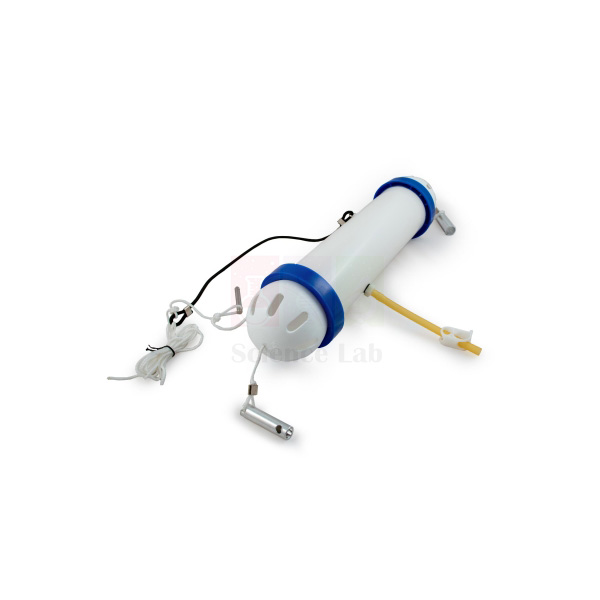
Water Sampler
Water Sampler (Product Code: SLE/ECB/04) is a flow-through field sampler used to collect a 1.5 litre water sample from any convenient depth in lakes, rivers and ponds for ecology and environmental science work. A single 14 metre line, supplied with it, both lowers the sampler and triggers the collection, so there are no tangled lines at the water's edge. It is supplied by Jain Scientific Equipments Pvt Ltd (ScienceLab), Ambala, India, for schools, colleges and environmental monitoring courses.
Specifications
| Parameter | Detail |
|---|---|
| Type | Flow-through water sampler |
| Sample volume | 1.5 litre |
| Line supplied | 14 metre |
| Operation | A single line deploys the sampler and triggers sample collection |
| Sampling depth | Any convenient depth within reach of the line |
| Suitable for | Lakes, rivers and ponds |
| Sample quality | Flow-through design allows valid sampling for temperature and water-quality measurement |
| Product code | SLE/ECB/04 |
| Supplied by | Jain Scientific Equipments Pvt Ltd (ScienceLab), Ambala, India |
What Is the Water Sampler Used For?
Surface water alone rarely tells the full story of a pond or lake. With this sampler, students collect water from the surface, the middle and near the bottom of the same site, then compare temperature, pH, dissolved oxygen and the small organisms present at each depth. As field biology lab equipment, it suits college limnology and ecology practicals, school eco-club surveys, and project work on environmental monitoring of local water bodies.
Lower the sampler on its line to the chosen depth, trigger the collection, then raise it steadily and pour the water into clean, labelled bottles. Read the temperature straight away, before the sample warms or cools. Always work in pairs near deep or flowing water, sample from a secure bank, jetty or boat, and rinse the sampler and line in clean water afterwards, letting the line dry before it is coiled for storage.
Supplier
ScienceLab is the trade name used by Jain Scientific Equipments Private Limited, based in Ambala, Haryana, India, which supplies the Water Sampler with its 14 metre line to schools, colleges and research groups in India and international markets. Field kits can be completed in the same enquiry with thermometers, meters and sample bottles from the wider range. See our company profile for details.
Related Laboratory Equipment
Instruments and containers used on the same water survey:
- Immersion Thermometer — for reading the sample temperature on site
- Waterproof pH Meter — measures acidity of each depth sample
- Digital Dissolved Oxygen Meter — compares oxygen levels between depths
- Bottle, Polyethylene, Widemouthed — for carrying labelled samples back to the laboratory
- Key to Identifying Water Invertebrates — for naming organisms found in the samples
This sampler is listed in our Cell Biology Equipment range.
Frequently Asked Questions
How much water does the Water Sampler collect each time?
The Water Sampler collects a 1.5 litre sample on each deployment, which is enough water to divide between separate tests for temperature, pH, dissolved oxygen and organisms once the sample is back on the bank or in the laboratory.
How deep can I sample with the Water Sampler?
The Water Sampler comes with a 14 metre line and can take water from any convenient depth within that reach, so students can compare samples from the surface, mid-water and near the bottom of the same site.
Do I need a second line to close the Water Sampler?
No. On the Water Sampler, the same single line lowers the sampler and triggers the collection. This keeps handling simple for student groups and avoids the tangled lines that can slow down fieldwork at the water's edge.
Is the Water Sampler's sample suitable for temperature and water-quality tests?
Yes. The flow-through design of the Water Sampler allows a valid sample for measuring temperature and water quality. Take the temperature reading immediately after the sampler is raised, before the water warms or cools in the air.
Can the Water Sampler be used in seawater?
Our product information for the Water Sampler covers lakes, rivers and ponds and does not state its construction material. Contact us before ordering if you plan marine or estuary work, so we can confirm suitability.
Who supplies the Water Sampler?
The Water Sampler is supplied by Jain Scientific Equipments Pvt Ltd (ScienceLab), Ambala, Haryana, India, to schools, colleges and environmental science departments in India and international markets, together with related field and laboratory equipment if required.
What should a quotation request for the Water Sampler include?
For the Water Sampler, include the number of samplers, any spare lines needed and the delivery address in India or abroad. Mention any other field equipment you need so that everything can be quoted together.
Request a Quote
For pricing and availability, contact us or add the Water Sampler to your enquiry cart.
Last updated: 24 September 2026